The Vikings in Ireland
A couple of years back I was asked to create some images for a group of Co.Kerry based Re-enactors and they selected the Vikings as there historic period, this shoot was great fun to do for the day. We selected the remains and grounds of an old church yard and this worked very well.
I have posted some history of the Vikings in Ireland at the bottom of the images.
Nigel


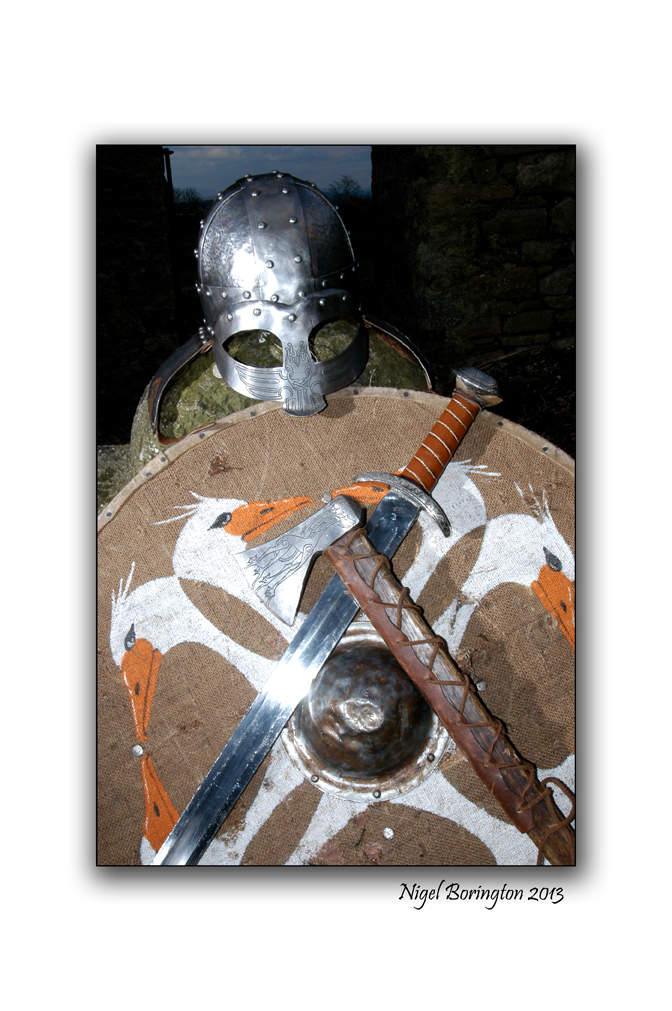
At the end of the eighth century the first Viking raiders appeared in Irish waters. These raiders came exclusively from Norway. The first recorded raid was in 795 on Rathlin Island off the coast of Antrim where the church was burned. On the west coast the monasteries on Inismurray and Inisbofin were plundered possibly by the same raiders. The Scottish island of Iona was also attacked in the same year.
For the first four decades, 795-c.836, the raids followed a clear pattern of hit-and -run affairs by small, probably independent, free-booters. Attacks were usually on coastal targets no Viking raid is recorded for areas further inland than about twenty miles. These attacks were difficult to defend but the Vikings were sometimes defeated. In 811 a raiding party was slaughtered by the Ulaid and the following year raiding parties were defeated by the men of Umall and the king of Eóganacht Locha Léin. By 823 the Vikings had raided around all the coast and in 824 the island monastery of Sceilg, off the Kerry coast, was attacked. The monastic city of Armagh was attacked three times in 832.
In the first quarter century of Viking attacks only twenty-six plunderings by Vikings are recorded in the Irish Annals. During the same time eighty-seven raids by the Irish themselves are recorded. An average of one Viking raid a year can have caused no great disorder or distress in Irish society. Attacks on Irish monasteries were common before the Viking Age. The burning of churches also was an integral part of Irish warfare. Wars and battles between monasteries also occurred in Ireland before the coming of the Vikings. Irish monasteries had become wealthy and politically important with considerable populations. The Vikings attacked the monasteries because they were rich in land, stock and provisions. They also took valuable objects but this was not their primary concern.
Intensified Raids and Settlements
From c. 830 Viking raids became more intense in Ireland. In 832 for instance, there were extensive plunderings in the lands of the Cianachta who lived near the sea in Louth. In 836 the Vikings attacked the land of the Uí Néill of southern Brega and attacked the lands of Connacht. In 837 a fleet of sixty ships appeared on the Boyne and a similar fleet on the Liffey. Soon afterwards Vikings made their way up the Shannon and the Erne and put a fleet on Lough Neagh.
The Vikings wintered for the first time on Lough Neagh in 840-41. In 841 they established a longphort at Annagassan in Louth and at Dublin and used these bases for attacks on the south and west. They wintered for the first time at Dublin in 841-842 and in 842 another large fleet arrived. Also in this year there is the first reference to co-operation between Vikings and the Irish though this may have occurred previously. A fleet was based on Lough Ree and the Shannon and built a fortified position on the shores of Lough Ree from where they ravaged the surrounding countryside in 844. Máel Seachnaill, overking of the Uí Néill attacked the Vikings, captured a leader called Turgesius and drowned him in Lough Owel in Westmeath.
From now on Irish kings began to fiercely fight back against the Vikings. Because they now had fixed settlements or fortified positions they were vulnerable to attack. Máel Seachnaill routed a Viking force near Skreen, County Meath and killed 700 of them. At Castledermot, in Kildare, the joint armies of the kings of Munster and Leinster defeated a large force of Vikings. The newly founded Viking settlement at Cork was destroyed and in 849 the Norse territory of Dublin was ravaged by Máel Seachnaill. The Vikings were now a factor in the internal politics of Ireland and were accepted as such. Norse-Irish alliances became commonplace.
During the years 849-852 new Vikings, probably from Denmark, arrived in the Irish Sea area and many battles took place between the new arrivals and the more established Vikings. In 853 Olaf the White arrived in Dublin and with Ivar, another Viking, assumed sovereignity of the Viking settlement there. Along the Irish coast were other Viking settlements. Vikings at Waterford attacked the King of Osraige but were slaughtered in 860. There was a longphort settlement at Youghal which was destroyed in 866. In 887 the Limerick Vikings were slaughtered by Connachtmen and in 892 the Vikings of Waterford, Wexford and St. Mullins were defeated.
Ivar, joint king of Dublin died in 873 and there were struggles and division in Dublin for the next two decades. In 902 the kings of Brega and of Leinster combined again the Norse of Dublin and defeated them, destroyed their settlement and expelled them from Ireland. By his time extensive cultural assimilation had taken place between the Irish and the Norse. Olaf, king of Dublin in the middle of the ninth century was married to the daughter of Áed Finnliath, king of the northern Uí Néill. The Hiberno-Norse also had gradually become christianised. The annals in recording the death of Ivar in 872 said that “he rested in Christ”.
The Second Phase of Viking Attacks on Ireland
By the first decades of the tenth century opportunities for Vikings in Britain and the Europe were limited. It is not surprising that they chose to attack Ireland again. From 914 large fleets again began to attack Ireland, these Vikings came from those already settled elsewhere in Britain. Munster was ravaged widely in 915 and the king of Tara was defeated when he went to the aid of the Munstermen. The king of Leinster was killed in a battle with Vikings under the leadership of Sitric at Leixlip. The king of Tara was killed in a combined Irish attack on the Norse of Dublin in 919. For the next two decades the Norse kings of Dublin were also trying to establish their power in York. Their activities in Ireland gradually became more confined to Dublin and its immediate hinterland. The Irish began to counter attack with growing success. Dublin was burned by the king of Tara in 936 and was sacked in 944. Its power had declined considerably by the second half of the tenth century.
The Wars of the Great Dynasties
One of the great leaders of this period was Brian Boru of Dál Cais in County Clare. He had defeated the Vikings of Munster. His great rival was Máel Sechnaill 2, King of Tara who had defeated the Norse of Dublin in 980. Brian at times made alliances with Norse as in 984 when the Norse of Waterford attacked Leinster by sea while he attacked by land. In 977 an agreement was made between Brian and Máel Sechnaill that the former would be king of the southern part of Ireland while the latter would be king of the northern part. In 998 the two kings co-operated in an attack on the Norse of Dublin.
A sculpture of Máel Seachnaill in Trim, Co. Meath, by James McKenna.
The next year the Dublin Norse allied with the Leinstermen revolted and were defeated by Brian. He spent January and February 1000 in Dublin, plundering the city and destroying its fortress. He expelled Sitric, king of Norse Dublin who could find refuge nowhere else in Ireland. He returned, gave hostages to Brian and was restored. Brian now claimed the kingship of the whole island and Máel Sechnaill submitted.
In 1012 Leinster revolted against Brian and the Norse of Dublin assisted them. Brian and Máel Sechnaill together attacked Leinster and blockaded the city of Dublin from September to Christmas before returning home. Knowing that the attack would be renewed the Norse set about getting help from allies. Sitric, king of Dublin visited Sigurd, earl of the Orkneys who agreed to be in Dublin on Palm Sunday 1014. Sitric then went to the Isle of Man and persuaded two Viking leaders Brodar and Ospak to support him.
Brian and Máel Sechnaill marched to Dublin but a dispute arose between them and Máel Sechnaill took no part in the battle. Battle was joined at Clontarf on Good Friday 1014 and after a long battle Brian’s forces were victorious. Brian himself was killed. Sigurd and Brodar were also killed though Sitric who remained inside the town during the battle survived.
In subsequent traditions, both Irish and Norse, Clontarf became a heroic battle of saga and story-telling. Fearsome portents and visions were said to have been seen by both sides on the eve of the battle. A fairy woman appeared to Brian’s followers and foretold disaster. Saint Senan appeared to Brian’s followers the night before the battle demanding compensation for an attack by Brian on a monastery years before. In the Isle of Man there were ghostly assaults on Brodar’s ships and ravens with iron beaks and claws attacked his followers. Evil portents were seen throughout the Norse world even in Iceland. Everyone wished his ancestors to have participated in the great battle.
While the battle of Clontarf was not a simple Irish against Norse battle it did signal the end of the power of Norse Dublin and the effective end of the Viking Age in Ireland.
Wild Garlic

Nikon D7000
I captured these photographs in Glenbawn Woods, Clonmel, Co Tipperary in April 2012, these woods are on the banks of the river Suir.
Wild Garlic grows very well in many Irish woodlands it needs a dark and wet part of the wood, In this wood part of the walk passed along the banks of the river. This area if covered with Garlic and the smell as you walk through the carpet of it is overpowering an wonderful. I took a large bag with me and collected enough to last me sometime.
Wild Garlic has been used throughout history as a health and healing food and it heals many complaints, this year I will be back again and its out very soon!
Ramsons Wild Garlic
(Allium ursinum)
Description:
Tall hairless perennial plant, with erect unbranched stem; usually found growing in large colonies. The leaves, normally 2, are upto 20cm long and are broad, pointed and long-stalked. The flowers are white star-shaped with 6 segments. It is readily identified by its strong scent of garlic, particularly if bruised or crushed.
The glossy green leaves of Ramsons, or Wild Garlic are delicious in sandwiches, used sparingly in salads, or added to sauces and dressings. It also makes splendid pesto. The bulb can also be eaten raw or cooked, and can be harvested all year round, though is best used when the plant is dormant from July to December or January. It has a fairly strong garlic flavour, though it is quite small and fiddly to harvest.
Flowers – raw or cooked. These are somewhat stronger than the leaves, in small quantities they make a decorative and very tasty addition to salads. The flowering heads can still be eaten as the seed pods are forming, though the flavour gets even stronger as the seeds ripen.
“maye very well be eaten in April and Maie with butter, of such as are of a strong constitution, and labouring men” – Gerard
Size: 50cm
Distribution: Throughout UK
Flowering months: April – June
Habitat: Damp woods, hedges, shady damp meadows, streamsides.
Folk Names: Broad-Leaved Garlic, Wild Garlic, Ramsons, Wood Garlic, Roman Garlic
Active ingredients; essential oils, vitamin C, allicin, iron.
Used to treat digestive problems, rheumatism, high blood pressure and asthma. When applied to the skin, this species is rubefacient. Externally, the bruised leaves may be applied to abscesses and boils. It may help the circulation and also be antiviral. A popular cure for the kidney stone and for purifying and strengthening the blood. Alone or with other ingredients it was also used in poultices and as a diuretic.
Ref : Wild Garlic
Film Photography kit

Film Development kit…
Its Arrived my new film development tank, ordered from ebay about a week ago.
All I need now is the chemicals and someone has told me that a photography shop in Waterford sells everything I need, so when I get time I will drive down to them. After that I am ready to go, I am very excited about this its years since I developed a film and I cannot wait to see how it turns out!
Five go up a hill and come down a mountain

Some time back Five of us (Breda, Tess, Andrew his brother Steve along with Myself) all headed from north London to Melfort Village, Argyll, Scotland for the week. At the time I owned a time share week here and the visit to such a wonderful location each March was more than welcome.
One Morning with myself and Steve both being into photography, the others just wanting a good walk we packed the bags and headed up the hills at the back of the Melford estate, the below images I hope do something to document this walk and the resulting Photographs.
I only found these pictures again last week as I am scanning all my old negatives….


All images taken on a Nikon F90x and on Kodak 200iso colour film as you can see…
Kate Rusby
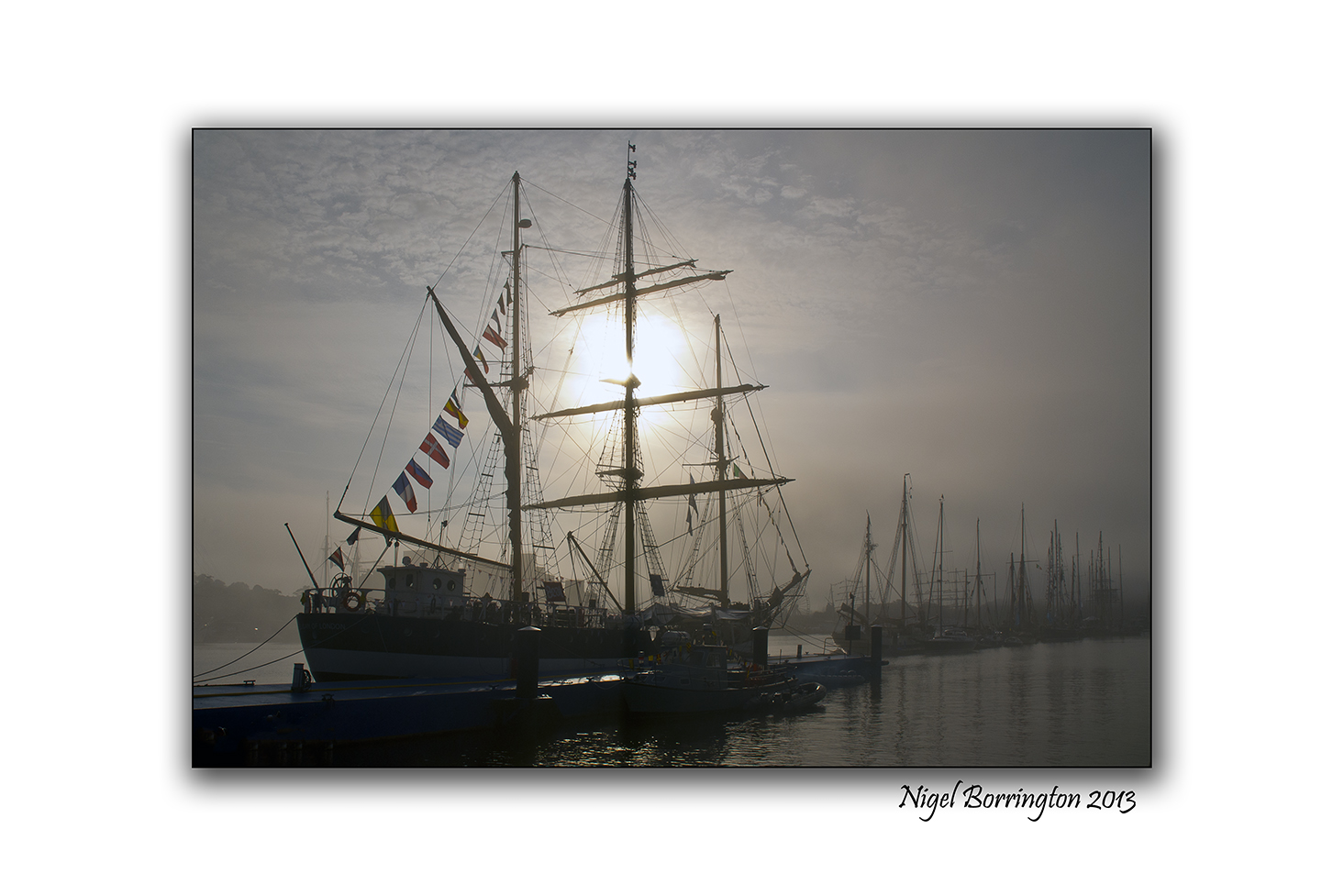
Fujifilm X100
I Courted A Sailor
I courted a sailor for six months and many,
I courted a sailor, now he’s far from me.
I courted a sailor for six months and many,
I courted a sailor, now he’s far from me.
On a fine summer’s evening he said his heart was grieving
On a fine summer’s evening these words he said to me
CHORUS
Oh I’m bound for the waves, the waves dearest Annie,
I’m bound for the waves, the waves upon the sea.
Oh I’m bound for the waves, the waves dearest Annie,
I’m bound for the waves, the captain calleth me.
CHORUS
Me heart has been yours now for six months and many,
Me heart has been yours now and will always remain.
Me heart has been yours now for six months and many,
Me heart has been yours now and will always remain.
Take with you me ring and me heart you’ll always bring,
Take with you me ring when you sail away to sea.
CHORUS
I’ll wait for me sailor for six months and many,
I’ll wait for me sailor till he comes home from sea.
I’ll wait for me sailor for six months and many,
I’ll wait for me sailor till he comes home from sea.
I’ll wait for you me dear, for time we’ll know no fear.
I’ll wait for you me dear till you come home from the sea.
CHORUS
I’ve married me sailor for six months and many,
I’ve married me sailor now he’s safe with me.
I’ve married me sailor for six months and many,
I’ve married me sailor no more he’ll say to me
You tube performance : http://www.youtube.com/watch?v=ybRPZAqN7WA
Kilkenny Castle

Fujifilm X100
Landscape Photographer : Nigel Borrington
Over the years since I came to live in Kilkenny I have spend many hours in the grounds of this Castle, the above images are from just some of the times I have taken a camera with me and taken a few shots.
If you do visit Kilkenny, the Castle and its grounds just have to be on your list of places to visit…
Kilkenny Castle (Irish: Caisleán Chill Chainnigh) is a castle in Kilkenny, Ireland built in 1195 by William Marshal, 1st Earl of Pembroke to control a fording-point of the River Nore and the junction of several routeways. It was a symbol of Norman occupation and in its original thirteenth-century condition it would have formed an important element of the defences of the town with four large circular corner towers and a massive ditch, part of which can still be seen today on the Parade.
The property was transferred to the people of Kilkenny in 1967 for £50[1] and the castle and grounds are now managed by the Office of Public Works. The gardens and parkland adjoining the castle are open to the public. The Parade Tower is a conference venue. Awards and conferring ceremonies of the graduates of “Kilkenny Campus” of National University of Ireland, Maynooth have been held there since 2002.
Contents
Previous owners of the castle
Earls of Pembroke
Kilkenny Castle has been an important site since Richard de Clare, 2nd Earl of Pembroke, commonly known as Strongbow constructed the first castle, probably a wooden structure, in the 12th century. The Anglo-Normans had established a castle in 1173, possibly on the site of an earlier residence of the Mac Giolla Phádraig kings of Osraighe. Kilkenny formed part of the lordship of Leinster, which was granted to Strongbow. Strongbow’s daughter and heiress, Isabel married William Marshall in 1189. The Earl Marshall owned large estates in Ireland, England, Wales and France and managed them effectively. He appointed Geoffrey fitz Robert as seneschal of Leinster and so began a major phase of development in Kilkenny, including the construction of Kilkenny Castle and the agreement of rents and privileges with burgesses or citizens of the borough. The first stone castle on the site, was completed in 1213. This was a square-shaped castle with towers at each corner; three of these original four towers survive to this day
Butler dynasty
James Butler, 3rd Earl of Ormonde, bought the castle in 1391 and established himself as ruler of the area. The Butler dynasty then ruled the surrounding area for centuries. They were Earls, Marquesses and Dukes of Ormonde and lived in the castle for over five hundred years. Among the many notable, Lady Margaret Butler (c. 1454 or 1465–1539) the Irish noblewoman, the daughter Thomas Butler, 7th Earl of Ormond. Lady Margret Butler was born in Kilkenny Castle. She married Sir William Boleyn and was the paternal grandmother of Anne Boleyn, second wife of King Henry VIII of England.
The Castle became the seat to the very powerful family, the Butlers of Ormonde or Butler family, who lived there until 1935.
Kilkenny castle was the venue for the meeting of the General Assembly, or parliament, of the Confederate Ireland government in the 1640s.
The Irish State
The last member of the Butler family sold the castle to the local Castle Restoration Committee in the middle of the 20th century for £50. Shortly afterward it was handed over to the State, and has since been refurbished and is open to visitors. There are ornamental gardens on the city side of the castle, and extensive land and gardens to the front. It has become one of the most visited tourist sites in Ireland. Now a property in state care. Part of the National Art Gallery is on display in the castle.
History
Richard de Clare (also known as Strongbow) and other Norman knights came to Kilkenny in 1172, the high ground beside the River Nore was as an ideal site on which to build a wooden tower. He built a wooden castle of the type known as motte-and-bailey.
This strategic site was where the local Kings of Osraige had their chief residence before the Norman invasion.
Twenty years later, de Clare’s son-in-law, William Marshal, Earl of Pembroke, built the first stone castle on the site, of which three towers still remain.
The castle was owned by the seneschal of Kilkenny Sir Gilbert De Bohun who inherited the county of Kilkenny and castle from his mother in 1270, in 1300 he was outlawed by Edward I but was reinstated in 1303, he held the castle until his death in 1381. It was not granted to his heir Joan, but seized by the crown and sold to the Butler family.
Butlers of Ormond
The Castle became the seat to a very powerful family, the Butlers of Ormonde or Butler family. They were a remarkable family, resilient, politically astute and faithful to the crown and to Ireland. These loyalties determined their fortunes and career. The Butler family arrived in Ireland with the Norman invasion, and originally settled in Gowran. They changed their name from FitzWalter in 1185 to Butler. The family had become wealthy, and James Butler, 3rd Earl of Ormonde, bought the castle in 1391 and established himself as ruler of the area. The Butler dynasty then ruled the surrounding area for centuries.
By the 18th century, the castle had become run down, reflecting the failing fortunes of the Butler family. However, some restoration was carried out by Anne Wandesford of Castlecomer, who brought wealth back into the family upon marrying John Butler, 17th Earl of Ormonde.
In the 19th century, the Butlers then attempted to restore it to its original medieval appearance, also rebuilding the north wing and extending the south curtain wall. More extensions were added in 1854.
The Butler family remained living in the castle until 1935, when they sold its contents for £6,000, moved to London, and abandoned it for thirty years. The impact of rising taxes, death duties, economic depression and living costs had taken their toll. While the Ormondes had received £22,000 in rental income in the 1880s, investment income in the 1930s was in the region of £9,000 and by 1950 these investments yielded only £850. They disposed of the bulk of their tenanted estates in Tipperary and Kilkenny, 21,000 acres (85 km²), by 1915 for £240,000. Death duties and expenses following the death of James Butler, 3rd Marquess of Ormonde in 1919 amounted to £166,000.[2]
Auction Catalogue, 1935
In 1967, Arthur Butler, 6th Marquess and 24th Earl of Ormonde, sold the abandoned and deteriorating castle to the Castle Restoration Committee for £50, with the statement: “The people of Kilkenny, as well as myself and my family, feel a great pride in the Castle, and we have not liked to see this deterioration. We determined that it should not be allowed to fall into ruins. There are already too many ruins in Ireland.” He also bought the land in front of the castle from the trustees “in order that it should never be built on and the castle would be seen in all its dignity and splendour”. Mick Jagger and Marianne Faithfull turned up at the castle hand over party, with Jagger telling the newspapers “We just came to loon about
Kate Rusby
The Lark ( Kate Rusby )

Nikon F90x film camera
Kodak 200iso colour film
A view over Melfort Village, Argyll, Scotland
Nigel Borrington
Out in the field where the lark it flies,
Over the earth where my heart it lies,
Oh how it sings when the west wind blows,
Out in the field where no-one goes.
Oh how I’m cold will you let me in,
If you could hear me speak, where I would begin,
Time it is past now and I roam free,
Is it wrong to wish you still need me,
is it wrong to wish you still need me.
Out in the field where the lark it sings,
There I was waiting for all love brings,
There I stood and there I fell,
Out in the field that I know well.
Oh how I’m cold will you let me in,
If you could hear me speak, where I would begin,
Time it is past now and I roam free,
Is it wrong to wish you still need me,
is it wrong to wish you still need me.
Out in the field where the lark resides,
Here I’ll remain where my heart can hide,
Only the lark and the west wind know,
I’m in this field where no-one goes.
Oh how I’m cold will you let me in,
If you could hear me speak, where I would begin,
Time it is past now and I roam free,
Is it wrong to wish you still need me,
is it wrong to wish you still need me
You Tube, Live performance : http://www.youtube.com/watch?v=imLg8DVAuHU
Good Morning Chicken !
Good Morning!
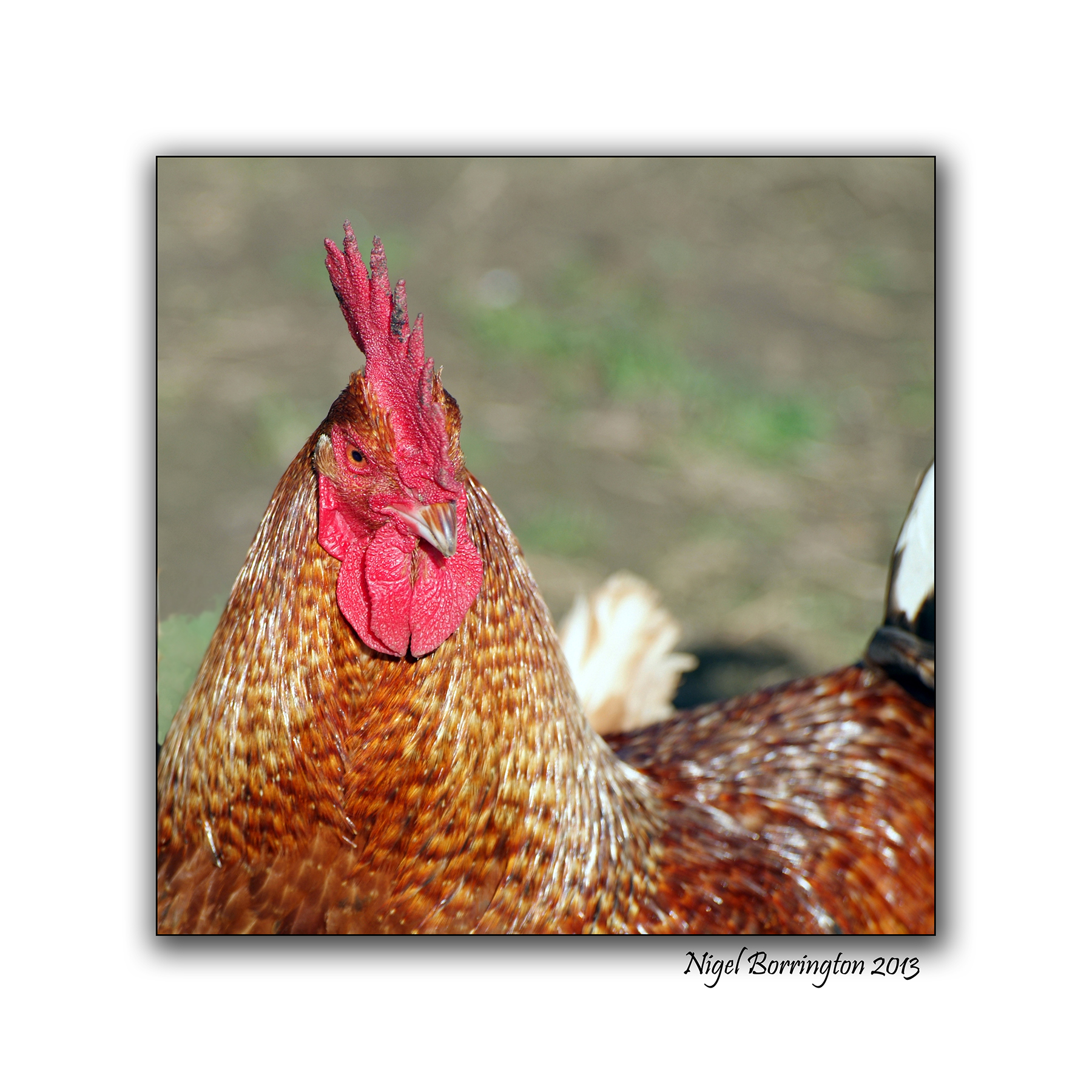
Every now and then we look after a friends farm house while they go on holiday. One of the biggest Jobs is putting the chickens away in the evening, having to collect up everyone of them and shut them in for the night is Great fun!!!
This job is balanced very well though when the next morning you have to let them out and give them some feed, they look very pleased to be set free for the day!

Fujifilm X100
Fujifilm X100
Fujifilm X100

Fujifilm X100

Contax G2 electronic rangefinder camera
For many years I owned and enjoyed using a contax G2 film camera with three lenses and a flash unit. I trusted this camera completely and it helped me photograph many different subjects in many different locations.
However from about 1999 onwards I took to digital photography with a Nikon D1x then followed this with a Nikon D200 and on, my Contax G2 was still landing in my camera bag with some rolls of film but became less and less used. I was telling myself that black and white film was still better than converting digital images taken in colour. Digital sensors however have become better and better and it’s now almost impossible to tell the difference any more.
So last year I had to make a decision and the G2 got sold on ebay along with the lenses and flash, all getting a very good price. This however left a gap in my camera kit, the need for a light range-finder type camera.
A camera I could have as a backup to an SLR and that I could carry anywhere with me. After some reading and looking for what was available, I found that I had chosen just the right time to sell my old G2 as Fuji film a manufacturer I have long admired for both cameras and film had released their new X100 model. In the end I ordered an ex demo/reconditioned example from the fujifilm shop website at a good price along with a twelve month guarantee.

This article is my opinion (not a technical review) of this camera after having used it for some months.
Firstly let me say that from the moment I took this camera out of the box I fell in love with its looks and also its instant appeal to someone who owned more advanced slr and medium format cameras.
It has all the key features that a beginner and advanced photographer needs, no fussy dials or buttons with a thousand and one possible subjects from sunlight to hanging off a mountain upside down etc…
It’s just good old fashioned photography here,

An aperture dial on the lens going from f2 to f16

a shutter speed dial with speeds from B to 1/4000 of a second along with a T setting that when used with the lcd screen can select speeds down to 30 seconds.

Next to the shutter release and the shutter speed dial is exposure compensation dial that lets you make a shift in exposure from -2 to +2 in 1/3 stops.
These three are the grass roots of a good camera going back years and have been placed on professional (slr, rangefinder and medium format) cameras all this time. When you begin to know your subjects and how to photograph them these are all you will ever need.
One final point here and that’s that both the shutter speed dial and aperture dial include an A-automatic setting so that you can work in (Manual, Aperture priority, shutter priority and fully automatic) exposure modes. (If you’re not sure about these setting follow this link).
The fuji X100 viewfinder

Now you will read a lot of X100 reviews on the internet and the built in viewfinder has been talked about a lot and for good reason. It’s simply a little miracle, this for me is the single biggest reason that this camera is the best compact camera on the new and second hand market today.
You can look at lots of other reviews and articles to see samples of the view finder layout so I am not going to go into fine detail here but I have the following observations to make.
This view finder is wonderful as you can see all the exposure settings on a digital overlay. This is all the exposure and framing information you will ever need and it can be displayed both optically and when using the electronic view finder option.

I loved this finder and all the information that it provides but the real point about this to me is the eye sensor that lets you see exactly the same information you get on the rear LCD screen.

All you do is place your eye to the optical viewfinder and it instantly gives you the LCD screens view and information in full detail.
This is just simply wonderful, you can spend all day photographing any subject you like with this eye sensor option enabled, when using a tripod I found this just fantastic. This is what a great digital camera should be about.
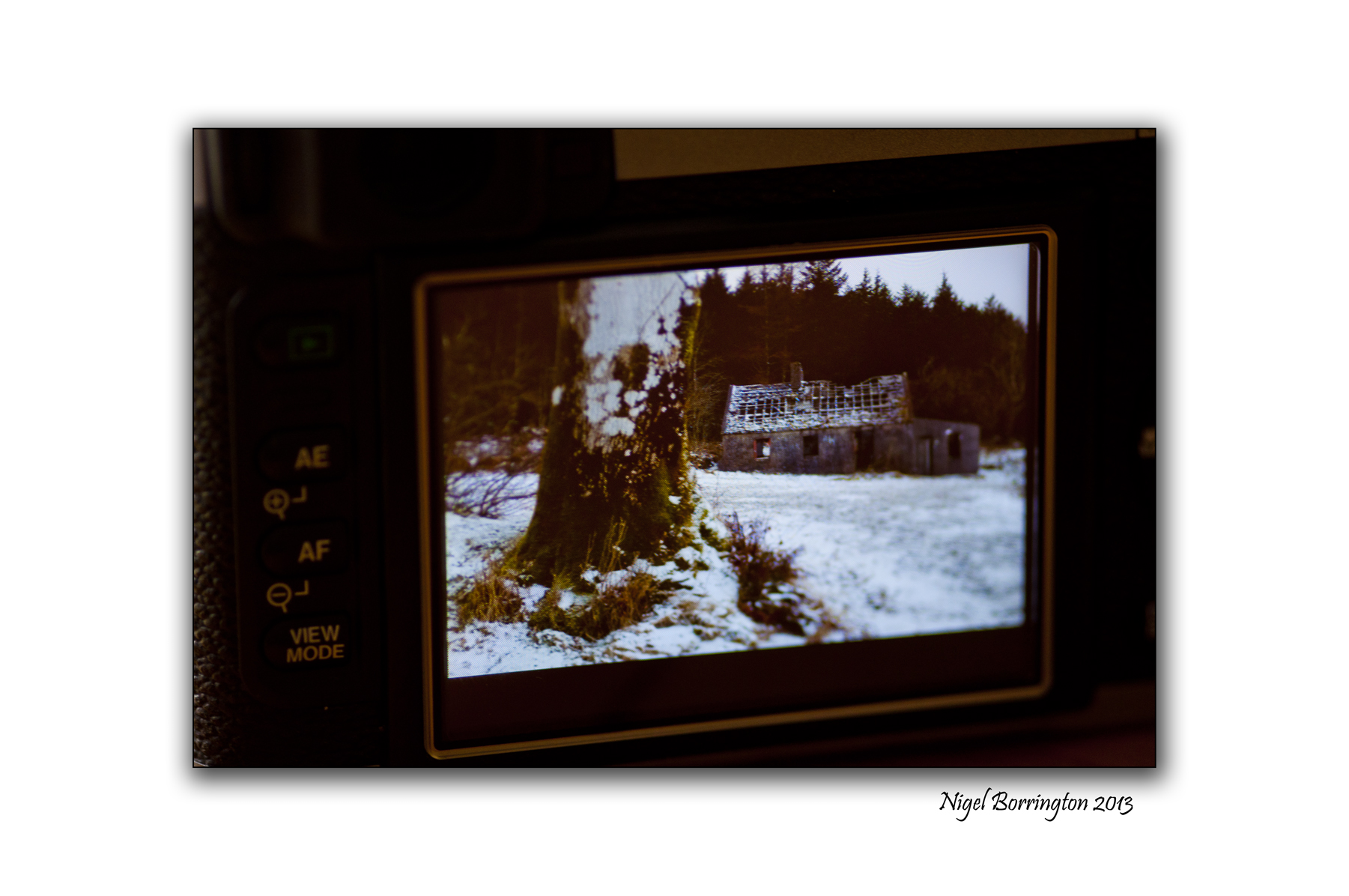
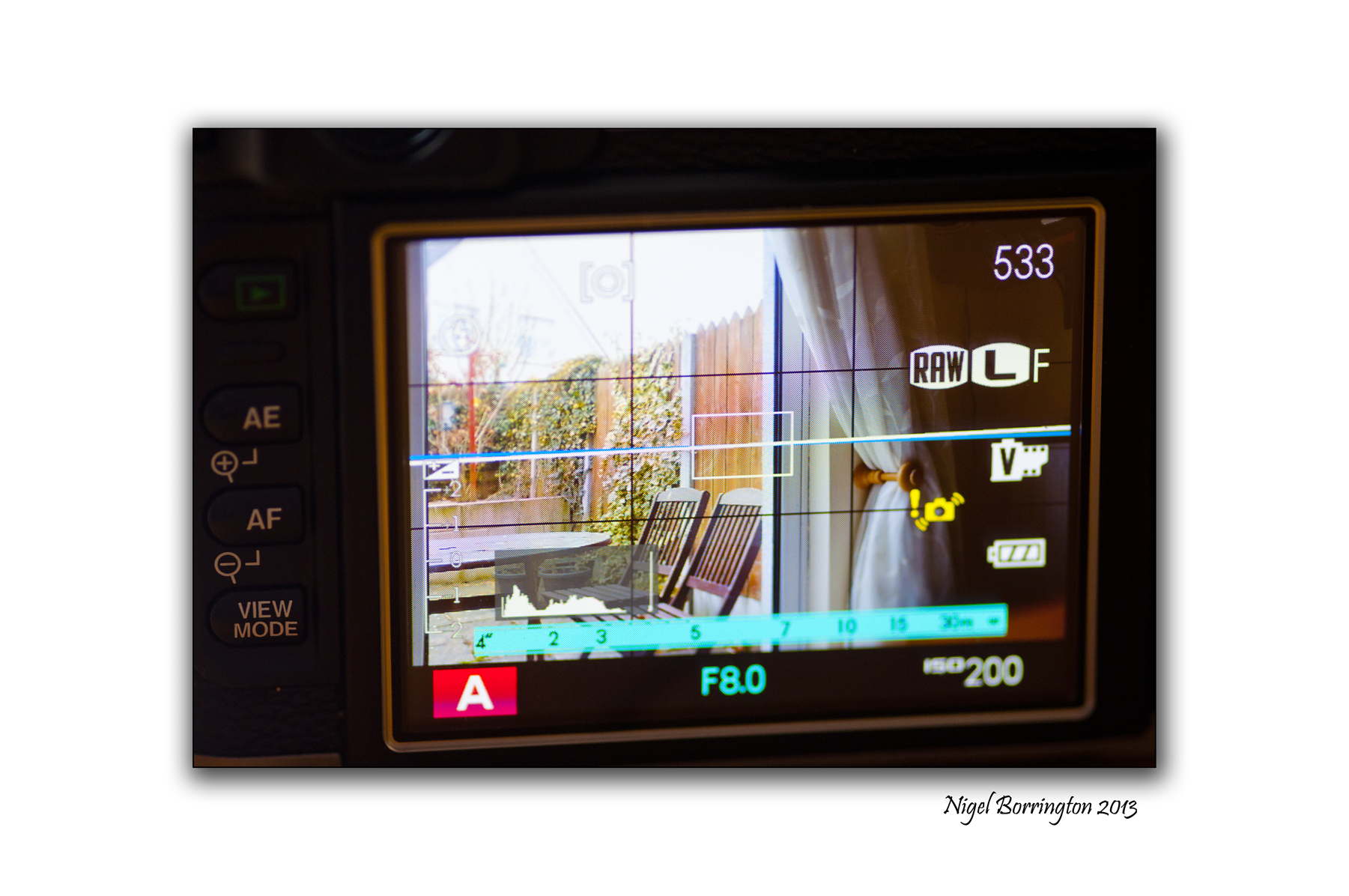
I have spent a full day from dawn to dusk and never once felt that I didn’t know what the camera was doing from (f-stop, shutter speed, iso or even focus distance and depth of field) its all there in front of you even when you have the camera on a tripod.
The fuji x100 LCD screen itself is a little smaller that a pro level slr but it works in all situations and I never once felt that I could not see it even from extreme angles.
The X100 in your hands

I have owned a few digital cameras all slr’s since 1999 and I cannot explain just how much I love using the X100, you can read all the reviews you like about the X100 being slow to focus (Slow but correct is better that fast but out of focus), and about card write times. Many firmware upgrade have improved these problem so if you get a early X100 make sure you upgrade.
Actually none of this matters at all to me, it’s passed every test in my own book, it’s not only great to hold and to use, it also hit the mark on image quality and reliability time after time, day after day.
Fujifilm have just released an upgrade to the X100 the X100s but it will be sometime before I go out to get one because this version, the one I already have is wonderful and It will only be the day that Fujifilm say that a repair is too costly to justify, that I will get the new model.
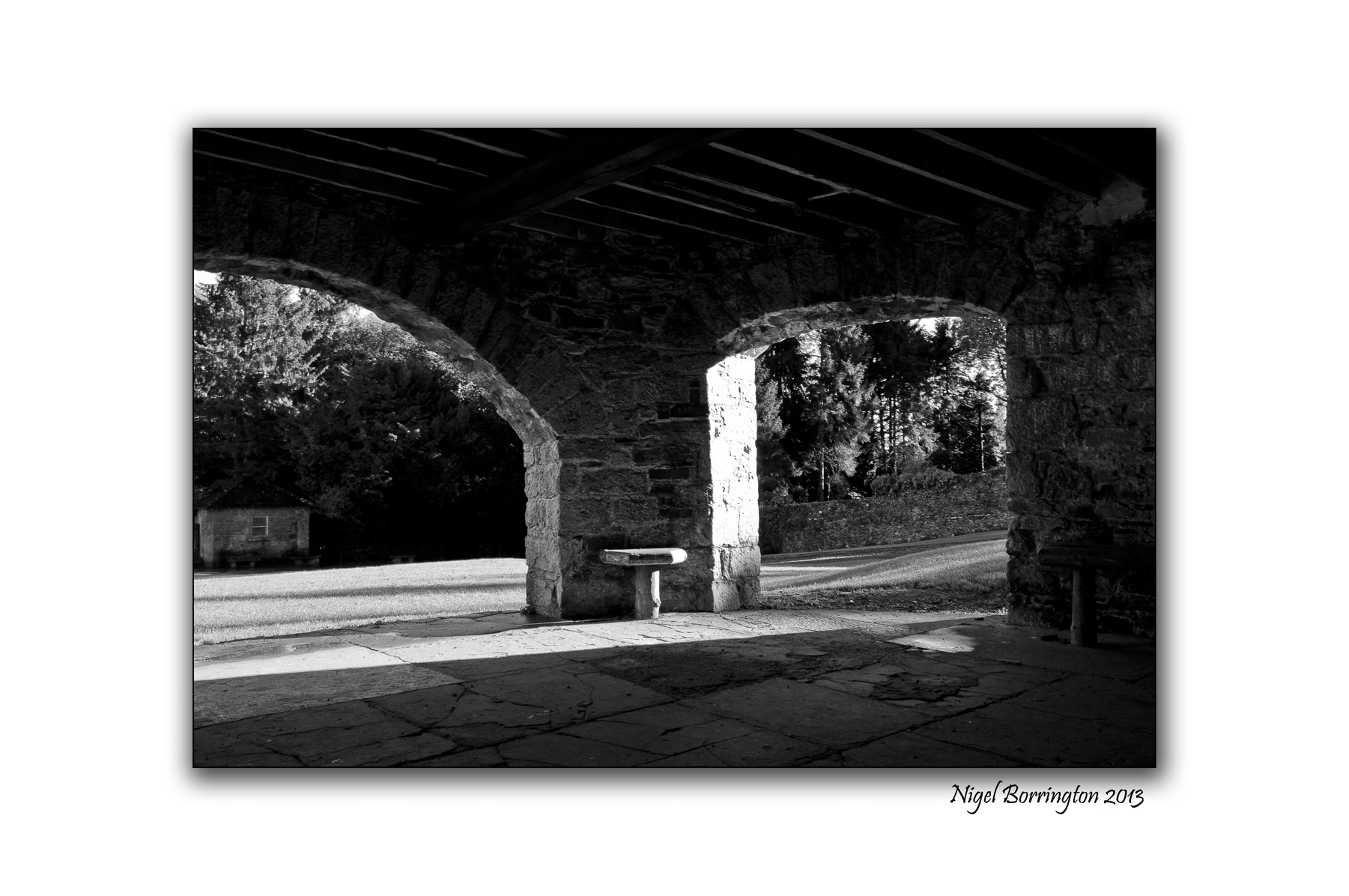
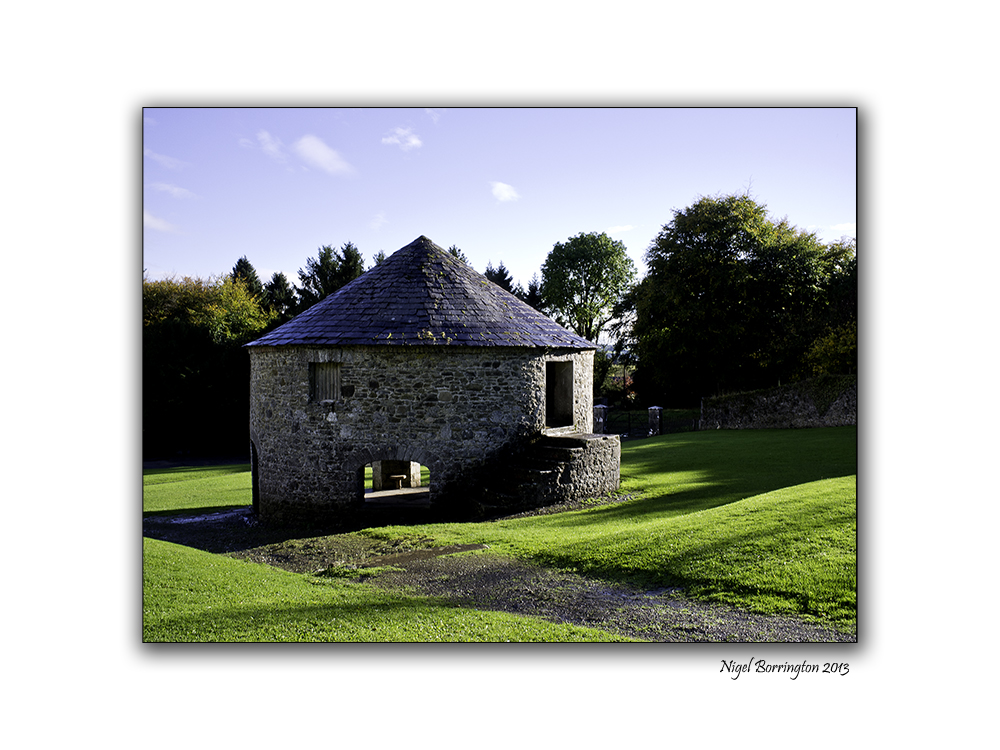
The following are some images from this camera and I hope you can see why I am so happy with it!
Fuji X100 Samples


Windermere

A view of Windermere
Contax G2, 45mm lens
Kodak, iso 200 colour film
Landscape photographer : Nigel Borrington
Hook head Lighthouse

Hook head – Lighthouse, Nikon D7000
Back in 2011 I started a project of capturing photos and information about the history and lives of the Lighthouse keepers of Ireland.
I just want to share a small amount in this post.

This area is renowned as the location of Hook Lighthouse. Hook Head is the oldest lighthouse in Ireland, and one of the oldest in Europe still operating. In the 5th century St Dubhán set up a fire beacon on the headland as a warning to mariners. After his death his monks kept the beacon going for another 600 years. Between 1170 and 1184 the Normans built the present lighthouse. It was built from local limestone and burned lime mixed with ox’s blood. Even today traces of the blood-lime mix can be seen coming through the paintwork. The walls are 9 to 13 feet thick and 80 feet above the ground.[1] In 1665 King Charles II granted letters patent to Sir Robert Reading to erect six lighthouses on the coast of Ireland, one of which was at Hook Head on the site of the older lighthouse, the others being at Howth, one to mark the land, the other to lead over the bar; the Old Head of Kinsale, Barry Oge’s castle (now Charlesfort, near Kinsale), and the Isle of Magee.

Hookhead web cams
North view : http://www.teknet.ie/webcamNorth.html,
West view : http://www.teknet.ie/webcamWest.html
Video
I have posted this video before but its well worth doing so again, its a wonderful short film …..
The Lighthouse Keeper’s videos:
Train to Dublin
– Louis MacNeice

Nikon Fm2n
Nikon 50mm f1.4 lens
Kodak film
Our half-thought thoughts divide in sifted wisps
Against the basic facts repatterned without pause,
I can no more gather my mind up in my fist
Than the shadow of the smoke of this train upon the grass –
This is the way that animals’ lives pass.
The train’s rhythm never relents, the telephone posts
Go striding backwards like the legs of time to where
In a Georgian house you turn at the carpet’s edge
Turning a sentence while, outside my window here,
The smoke makes broken queries in the air.
The train keeps moving and the rain holds off,
I count the buttons on the seat, I hear a shell
Held hollow to the ear, the mere
Reiteration of integers, the bell
That tolls and tolls, the monotony of fear.
At times we are doctrinaire, at times we are frivolous,
Plastering over the cracks, a gesture making good,
But the strength of us does not come out of us.
It is we, I think, are the idols and it is God
Has set us up as men who are painted wood,
And the trains carry us about. But not consistently so,
For during a tiny portion of our lives we are not in trains,
The idol living for a moment, not muscle-bound
But walking freely through the slanting rain,
Its ankles wet, its grimace relaxed again.
Poem by : Louis MacNeice
Full version of the Poem
Its the weekend
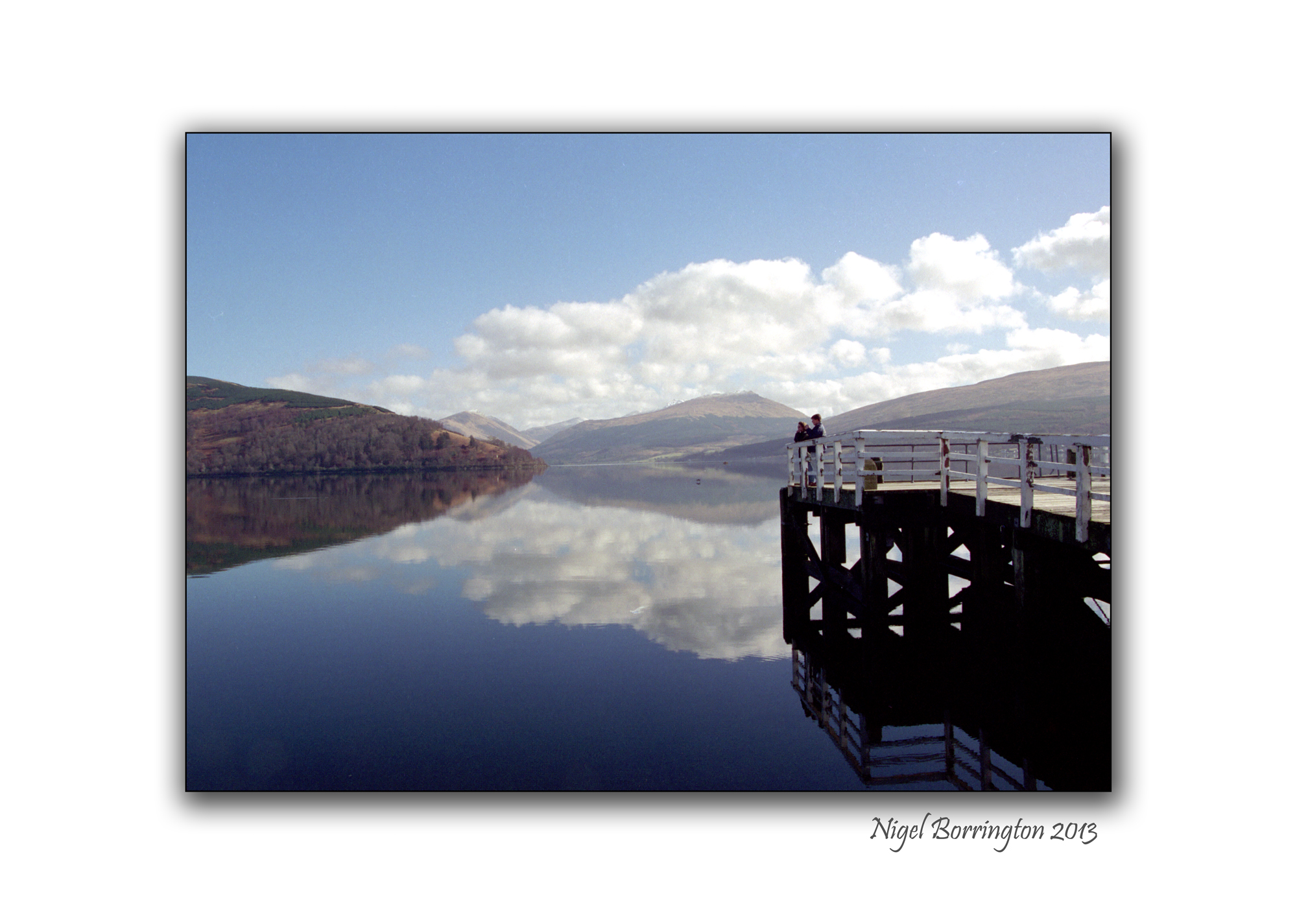
Nikon f90x
Kodak film
50mm f1.4 lens
Its the weekend so find a place with a view and relax
Artic Penguin – Inveraray
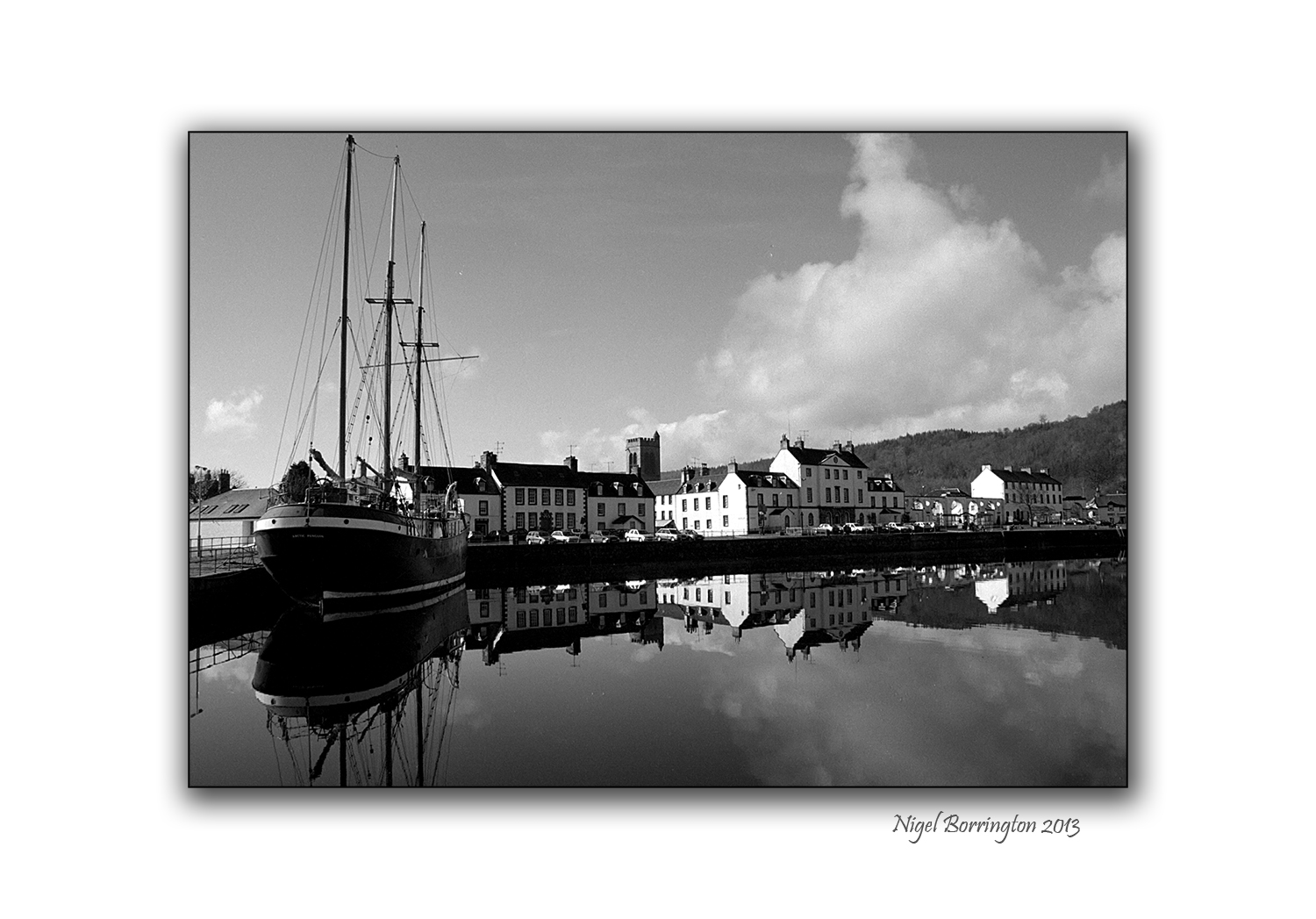
Nikon F90x
Ilford XP2
Nikon 50mm f1.4 lens
Sitting on the quays at Inveraray in Argyll and Bute, Scotland, the Artic Penguin now rests.
She had the following History
History
1910 Named: PENGUIN as lightship for the Irish Lighthouse Service – cost £7,230. Flag: Ireland
1966 Sold to T.E. McSweeney and converted into a Youth Adventure Sea Training Vessel Renamed: HALLOWE’EN Flag: United Kingdom
1982 Sold to Mr D. Norris and converted to a schooner. Cruise Boat Renamed: ARCTIC PENGUIN Moored close to the eastern shore of The Gareloch where her new owner single-handedly fitted her with twin diesel engines. All the work, the boring out of the stern propellor tubes, the fitting of the necessary external propellor shaft brackets, the propellor shafts and the propellors was all done without the ship being docked or slipped.
1995 Maritime Museum at Inveraray Pier
Today she enjoys one of the best views Scotland has to offer.

Nikon F90x
Ilford XP2
Nikon 50mm f1.4 lens
Inveraray sits on the A83 between Glasgow and Oban/Argyll, I have driven this route many times and stopping to look at the Artic Penguin and loch Fyne was something I did every time, just a fantastic view.
I am planning to return in November this year and cannot wait!

Nikon F90x
Ilford XP2
Nikon 50mm f1.4 lens
Nigel …
Wild Sorrel

Wild Sorrel in the irish woodland
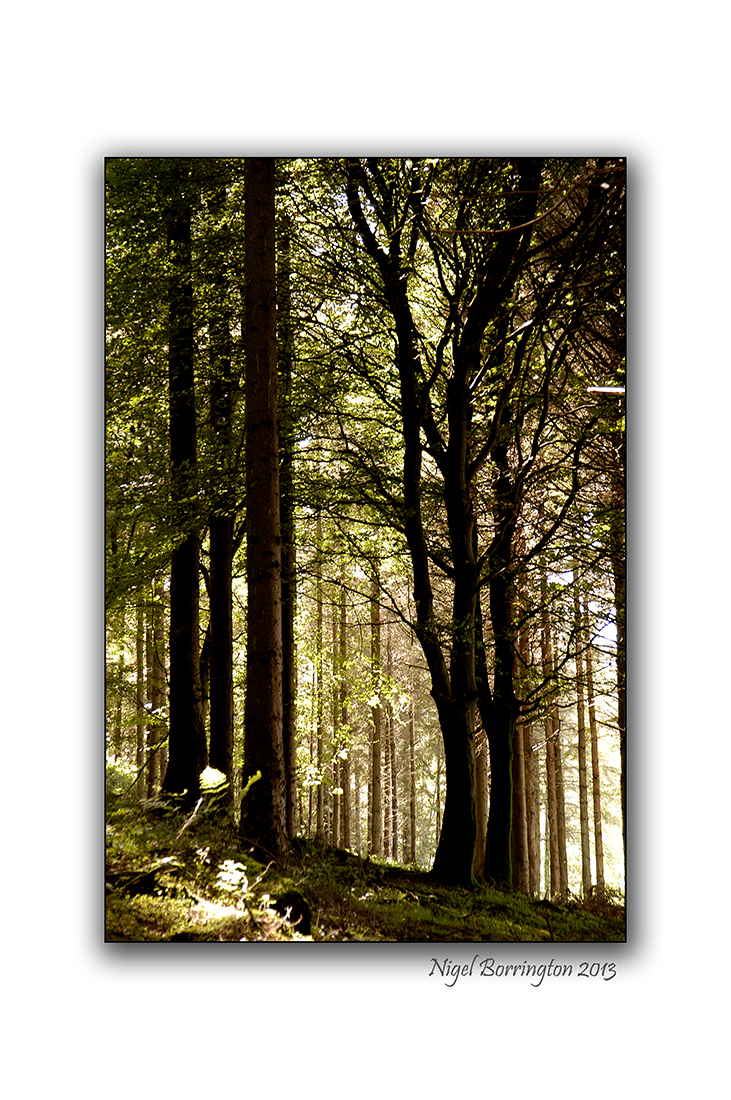
From the Middle of April until the Summer many of Irelands wood-land floors come to life with lots of different plants, Wild Sorrel is one if these that can be fully enjoyed. It can be picked and eaten on your walk or collected and taken home for you fridge.
The leafs of this plant can add to any meal that you are preparing. I love the moment when I first see wild sorrel coming out, its the start of the woodlands bursting into life after a long cold winter.
This web page has a great discription… http://www.wildflowersofireland.net/plant_detail.php?id_flower=243
“Carpeting old, undisturbed woodlands in spring, this pretty downy perennial also grows on moss-covered trees and shady walls and is widespread throughout the country. Each pretty white five-petalled bell-shaped flower (10 – 15 mm) is held solitarily on a stem which comes directly from the roots. The petals are lined with a tracery of pink veins through to the golden centre of the flower. The leaves are trifoliate, each leaflet heart-shaped and these fold up towards late afternoon or in rain as do the fragile flowers. They have a sharp taste of oxalic acid. This flower blooms from April to June, is a native plant and belongs to the family Oxalidaceae.
Also known as Wood Shamrock and Wood Sour, the leaves of this plant were used to make an ointment by early herbalists. Some people eat these leaves in salads or soups but beware, as large doses may cause oxalate poisoning. “
Pilgrim Hill
Pilgrim Hill – A Movie about the true side of farming life
Yesterday I watched a great review about a new film Pilgrim hill that has been made by young film maker Gerard Barrett in the above video he talks to RTE’s Nationwide about Pilgrim Hill. In cinemas April 12th 2013. Pilgrim Hill is the debut film from Gerard Barrett, winner of the 2013 Irish Film and Television Academy Rising Star Award.
“Jimmy Walsh is a farmer in rural Ireland. Like the landscape he inhabits, his life is bleak and hard. Looking after an ageing sick father, life is passing him by as he comes to terms with his changing circumstances. Loneliness and isolation are his continual companions, along with his modest herd of cattle.
A young twenty something neighbour is one of the only links Jimmy has to the real world. In him, Jimmy sees what he could have been, as he realizes what he is, a middle aged bachelor farmer with vanishing opportunities and on the verge of living the rest of his life alone on the side of a cold un-nourishing hill.
A final blow is dealt to Jimmy when it seems that life can’t get any worse. He is barely able to articulate his situation, yet his honesty and vulnerability speak to the loneliness that haunts the human condition in all of us”

In and around the area I live in Ireland, Co.Kilkenny there are many Jimmy walsh’s including members of my own family.

Sean a family friend is one of them, older than Jimmy but he will have travelled through many of the same things in his time.
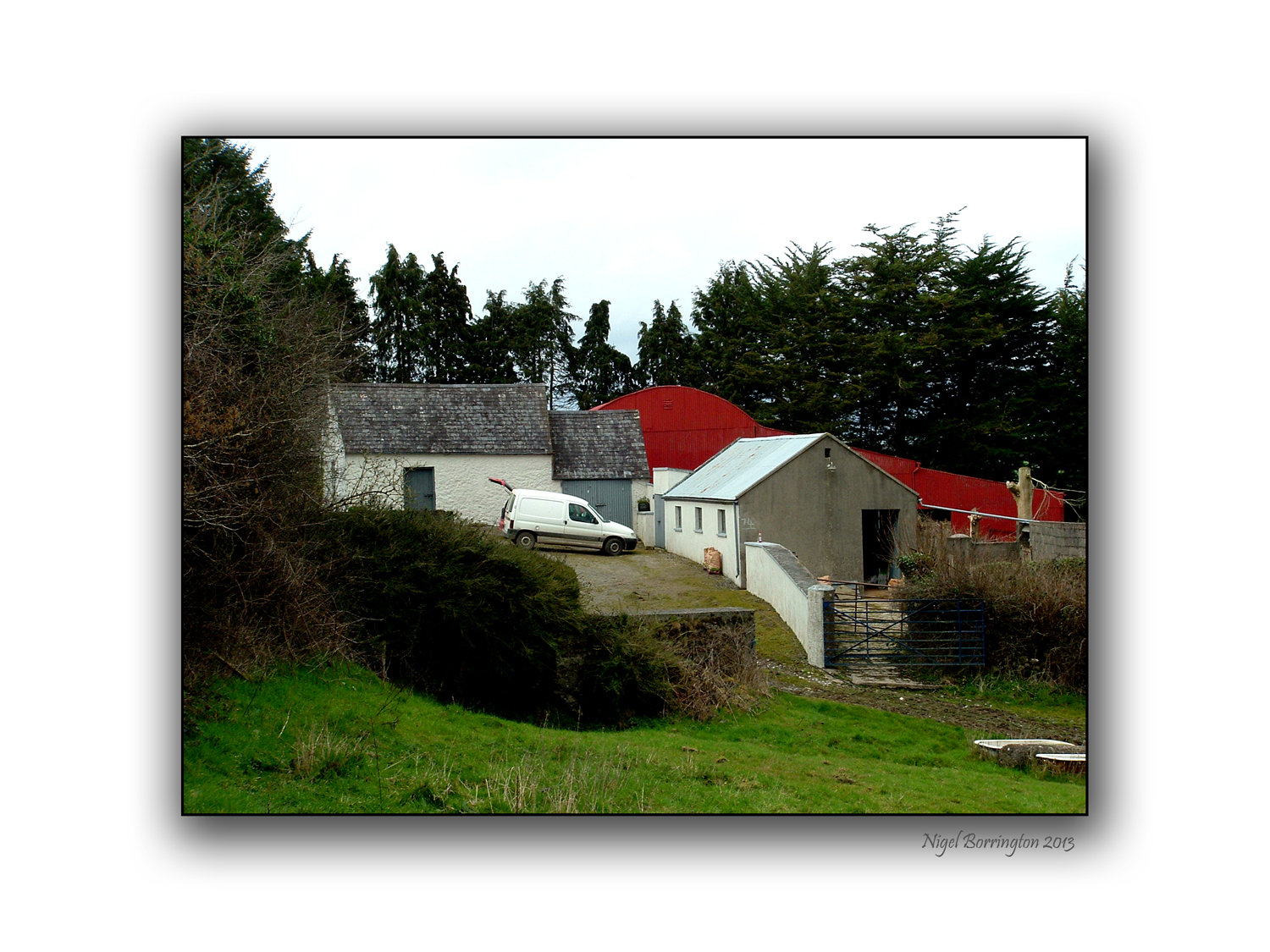
Many of these farmers never got married and lived out their lives in remote places like this farm Burnchurch in Co.Tipperary.
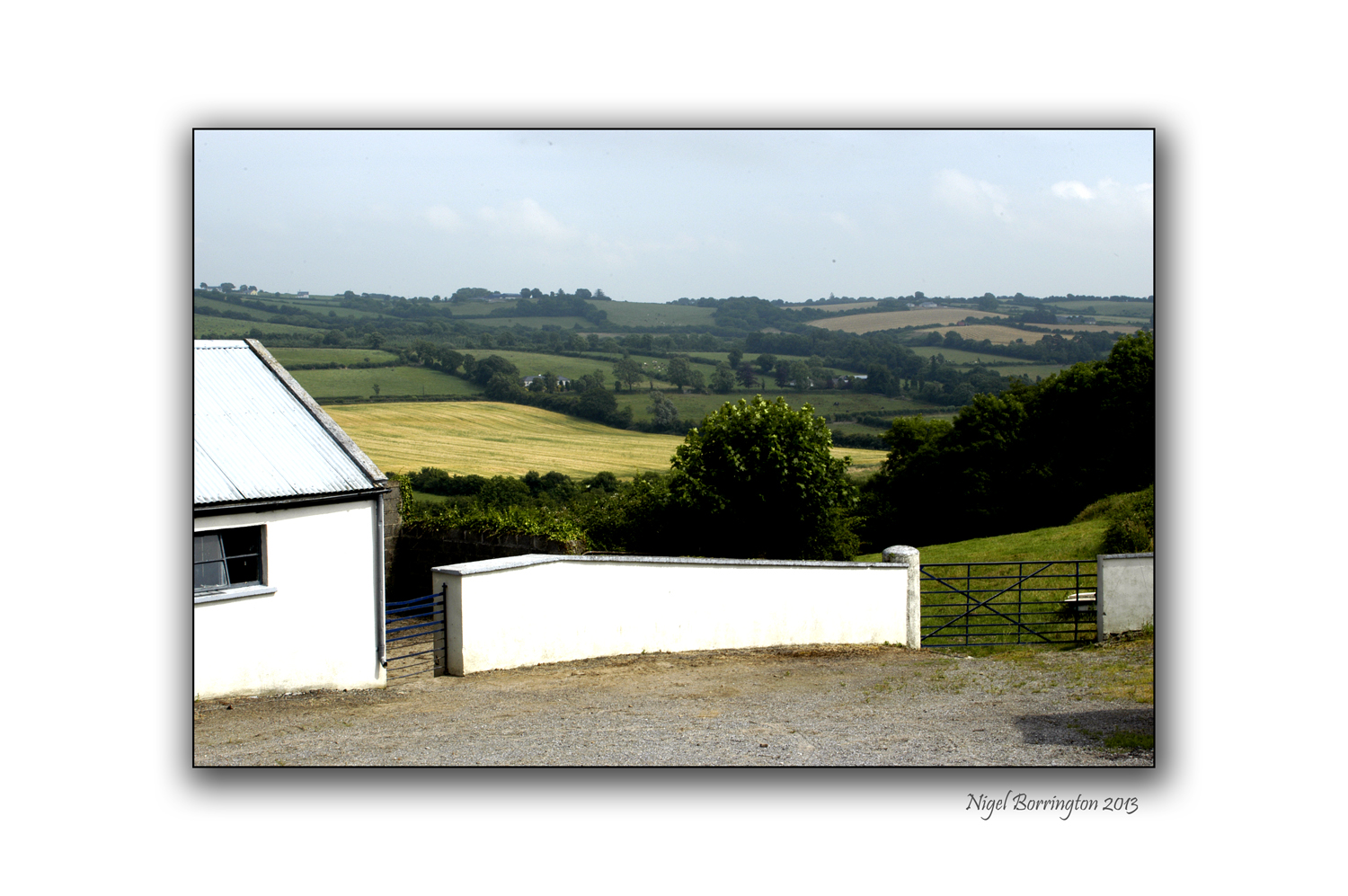
Watching the review of the film last night, I wondered why these men’s lives have not been shown and received much more coverage than they have. Many other nation like the America have shown the hard lives their own famers have lived on the screen for many years, it time these mens live got the same exposure, please go a watch this movie if you can.
Nigel
The Church window (North Mimms church)

The window at North mimms church
Ilford XP2, 35mm film
Nikon FM2n
50mm f1.8 lens
The wonderful darks and contrasts in this shot is one of the biggest reasons I want to have a small go at using film again.
I will never use film again as my main medium but I am going to include it in a planned way for the most appropriate subjects and with black and white film only.
Film photography
New Film photography category 
It has been some time since I loaded a film into this old camera and shot all of 36 exposures and then sent it off to be processed or had a go myself.
For many years I have been using Nikon/fujifilm digital equipment and photoshop to process all resulting images but in the last few week I had a request to scan some old slides and film, I had a Minolta film scanner in the loft so down it came and I set it up again.
After I finished doing this work for them I left the scanner sitting there and kept looking at it for a little time then I found lots of my old film stock. I could not resist the need to see them again so I scanned many of them back in to my pc.
The only remaining film camera I had was a fully manual Nikon Fm2n that I also had in the loft. So I realised that a return to using film is well within my grasp. This along with my father’s old Agfa camera (Post…) will be great fun to use.
I have created a new film photography category on my blog menu in order to share this journey with you as I hopefully begin to enjoy this form of photography again. I hope also that you find this area useful if you want to do the same.
Nigel
The Sea
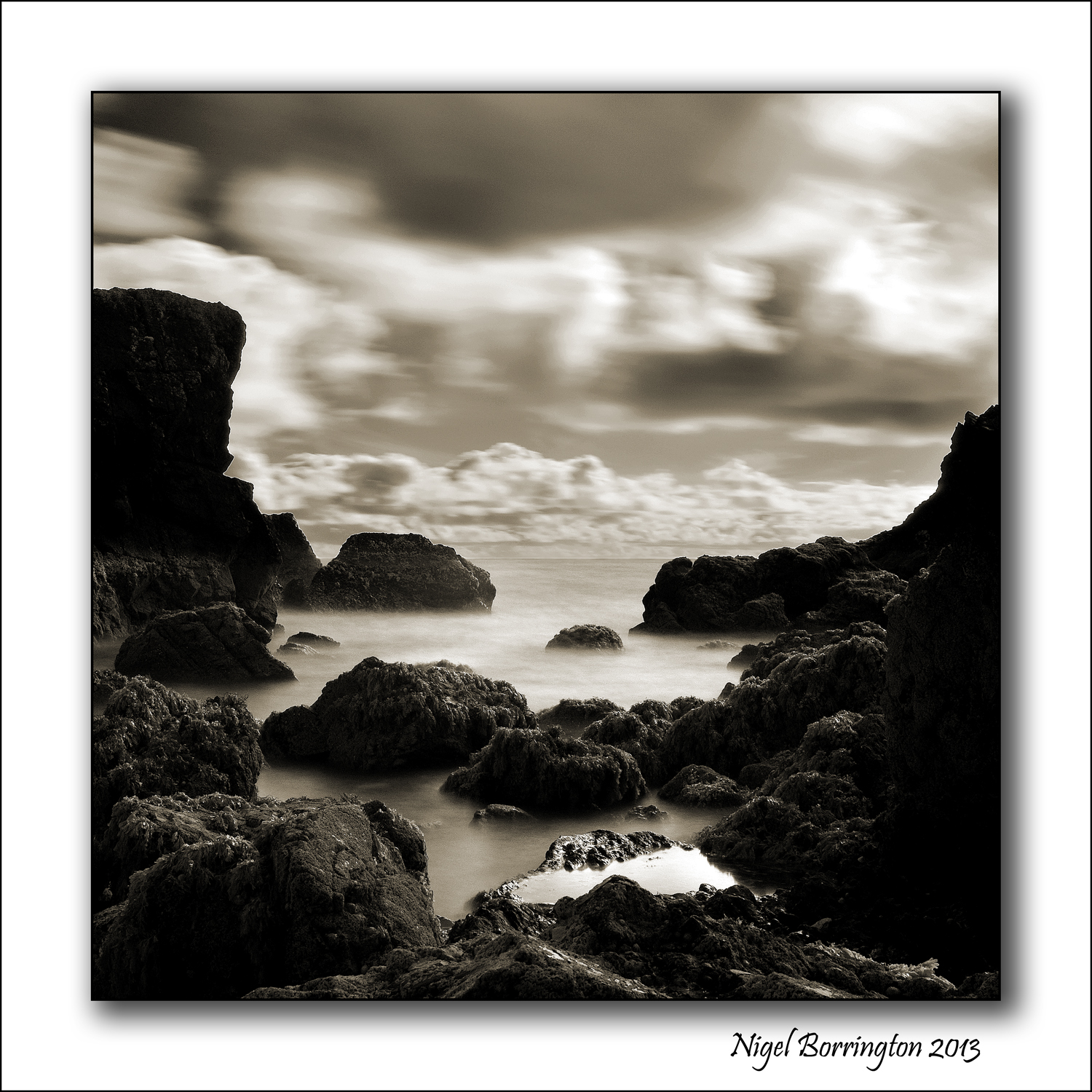
The sea is a hungry dog,
Giant and grey.
He rolls on the beach all day.
With his clashing teeth and shaggy jaws
Hour upon hour he gnaws
The rumbling, tumbling stones,
And ‘Bones, bones, bones, bones! ‘
The giant sea-dog moans,
Licking his greasy paws.
And when the night wind roars
And the moon rocks in the stormy cloud,
He bounds to his feet and snuffs and sniffs,
Shaking his wet sides over the cliffs,
And howls and hollos long and loud.
But on quiet days in May or June,
When even the grasses on the dune
Play no more their reedy tune,
With his head between his paws
He lies on the sandy shores,
So quiet, so quiet, he scarcely snores.
The sea is a hungry dog,
Giant and grey.
He rolls on the beach all day.
With his clashing teeth and shaggy jaws
Hour upon hour he gnaws
The rumbling, tumbling stones,
And ‘Bones, bones, bones, bones! ‘
The giant sea-dog moans,
Licking his greasy paws.
And when the night wind roars
And the moon rocks in the stormy cloud,
He bounds to his feet and snuffs and sniffs,
Shaking his wet sides over the cliffs,
And howls and hollos long and loud.
But on quiet days in May or June,
When even the grasses on the dune
Play no more their reedy tune,
With his head between his paws
He lies on the sandy shores,
So quiet, so quiet, he scarcely snores.
James Reeves
Pet’s, Just how good are they for you?

Molly our 10 year old Golden retriever
My mother loved Golden retrievers, we owned cats….
She would always say that you should never truly trust someone who’s not into pets, while I don’t hold to this I kinda get what she was talking about.
You don’t have to own a pet to love them in fact you can show you love them by being honest to yourself if your not in a position to look after them correctly. You are then free to love and look after other peoples pets.
But just how good are they for us, well I found this article and it look like they are very very good for us!
http://stress.about.com/od/lowstresslifestyle/a/petsandstress.htm
When thinking of ways to reduce stress in life, usually techniques like meditation, yoga and journaling come to mind. These are great techniques, to be sure. But getting a new best friend can also have many stress relieving and health benefits. While human friends provide great social support and come with some fabulous benefits, this article focuses on the benefits of furry friends: cats and dogs! Research shows that, unless you’re someone who really dislikes animals or is absolutely too busy to care for one properly, pets can provide excellent social support, stress relief and other health benefits—perhaps more than people! Here are more health benefits of pets:
Pets Can Improve Your Mood:
For those who love animals, it’s virtually impossible to stay in a bad mood when a pair of loving puppy eyes meets yours, or when a super-soft cat rubs up against your hand. Research supports the mood-enhancing benefits of pets. A recent study found that men with AIDS were less likely to suffer from depression if they owned a pet. (According to one study, men with AIDS who did not own a pet were about three times more likely to report symptoms of depression than men who did not have AIDS. But men with AIDS who had pets were only about 50 percent more likely to report symptoms of depression, as compared to men in the study who did not have AIDS.)
Pets Control Blood Pressure Better Than Drugs:
Yes, it’s true. While ACE inhibiting drugs can generally reduce blood pressure, they aren’t as effective on controlling spikes in blood pressure due to stress and tension. However, in a recent study, groups of hypertensive New York stockbrokers who got dogs or cats were found to have lower blood pressure and heart rates than those who didn’t get pets. When they heard of the results, most of those in the non-pet group went out and got pets!
Pets Encourage You To Get Out And Exercise:
Whether we walk our dogs because they need it, or are more likely to enjoy a walk when we have companionship, dog owners do spend more time walking than non-pet owners, at least if we live in an urban setting. Because exercise is good for stress management and overall health, owning a dog can be credited with increasing these benefits.
Pets Can Help With Social Support:
When we’re out walking, having a dog with us can make us more approachable and give people a reason to stop and talk, thereby increasing the number of people we meet, giving us an opportunity to increase our network of friends and acquaintances, which also has great stress management benefits.
Pets Stave Off Loneliness and Provide Unconditional Love:
Pets can be there for you in ways that people can’t. They can offer love and companionship, and can also enjoy comfortable silences, keep secrets and are excellent snugglers. And they could be the best antidote to loneliness. In fact, research shows that nursing home residents reported less loneliness when visited by dogs than when they spent time with other people! All these benefits can reduce the amount of stress people experience in response to feelings of social isolation and lack of social support from people.
Pets Can Reduce Stress—Sometimes More Than People:
While we all know the power of talking about your problems with a good friend who’s also a good listener, recent research shows that spending time with a pet may be even better! Recent research shows that, when conducting a task that’s stressful, people actually experienced less stress when their pets were with them than when a supportive friend or even their spouse was present! (This may be partially due to the fact that pets don’t judge us; they just love us.)
It’s important to realize that owning a pet isn’t for everyone. Pets do come with additional work and responsibility, which can bring its own stress. However, for most people, the benefits of having a pet outweigh the drawbacks. Having a furry best friend can reduce stress in your life and bring you support when times get tough.
The Pagan tree and forest plants

Trees, herbs, and plants are very important to Druids. They represent their sacred alphabet, they are used for healing, and many Druids name themselves after trees. Trees are the connection between the realms. Ireland was said to be divided into four lands, each occupied by a sacred tree with a fifth tree at the center.
The five most important trees are the oak, rowan, birch, apple, and yew:
The oak is connected with strength, protection, and stability. Some say that the very word Druid derives from duir, the old word for oak.
The rowan is useful for protection, youth, and prophecy.
The birch is symbolic of beginnings, renewal, regeneration, and cleansing. It is also associated with the bard.
The apple tree is the tree of life and is said to reside at the center of the otherworld.
The yew is associated with death and decay because it is very poisonous, but this unique evergreen tree also lives for thousands of years. It is related to the ovate and is frequently found near sacred wells.
Other trees, such as the ash, willow, and hawthorn also frequently appear in mythology and legend.

Foremost among the herbs and plants most revered by Druids is mistletoe. Mistletoe is a parasite frequently found growing on oaks. It is said that mistletoe, which grows off trees rather than from roots in the earth, must never be allowed to touch the earth. It is sometimes called all-heal, but it is poisonous, so use it with caution. Verbena, or vervain, is gathered at Midsummer, whereas mistletoe is gathered at Midwinter. It is used as an offering to the gods. It is also considered a cure-all and is said to ward against evil spirits.

HERB ROBERT, GERANIUM ROBERTIANUM
This herb has been used in medicine for centuries, although in the 20th century, particularly in Portugal it was hailed as a folk cancer remedy when the powdered leaves were taken with a raw, fresh egg yolk. Of course this has not been proven to work. Dioscorides described it and it was known to the old herbalists, who used it mainly for blood problems, as the stalks and leaves turn bright red in autumn, a sign to these old herbalists that it was good for the blood.
This plant is known by around a hundred names some of which refer to other plants more often, such as bloodwort (red dock), and red robin (not ragged robin) and cranesbill, which is native to the US and poisonous. However Stinking Bob is a name given to this herb which is unique to it, and refers to the smell given off by its bruised leaves. It is also called the Fox Geranium, some say because of its “foxy” smell after rain. It is native to hedgerows and woodland in Europe the British isles included, and to temperate Asia as it grows as far east as Japan and in the Himalayan regions.
No one really knows how it became Herb Robert, although there are several contenders for being its namesake, including Robert Duke of Normandy, who died in 1134, St Robert of Molesme, a French monk who died in 1110, and Robin Goodfellow or Puck, the mischievous elf who has a role in Shakespeare’s play “A Midsummer Night’s Dream.” The Latin name Robertianum might be a corruption of ruber meaning red, rather than referring to any specific Robert, Robin or Rupert, names that seemed to have been linked to this plant.
The leaves of Herb Robert are the main part of the plant used for medicinal purposes and an infusion of these has been drunk and used as a wash for the skin, and for inflammation of the eyes. A poultice of the leaves has been used to relieve hardened breasts, to increase lactation in nursing mothers, to relieve irritated skin and the pain of rheumatism and reduce bruising, as well as being applied to herpes sores and ulcers. The infusion can also be used for the same external purposes.
Wild Woodbine

Wild Woodbine
Joan McBreen
Wild woodbine was beyond my reach
in the thick hedges round Lough Gill.
The heavy scent filled the house for days
when my father brought it in
and it stayed fresh far longer
then meadowsweet.
Because I loved the delicate
pink and white wild rose
he picked it too, cursing the thorns, muttering
“it dies too soon,
you’d be better leaving it alone”.
Yet once, when my mother
swept its petals from the floor
I saw him rescue one
and place it carefully
in the small wallet
where he kept her photograph.
Hampton Court
A day with Black and white film.
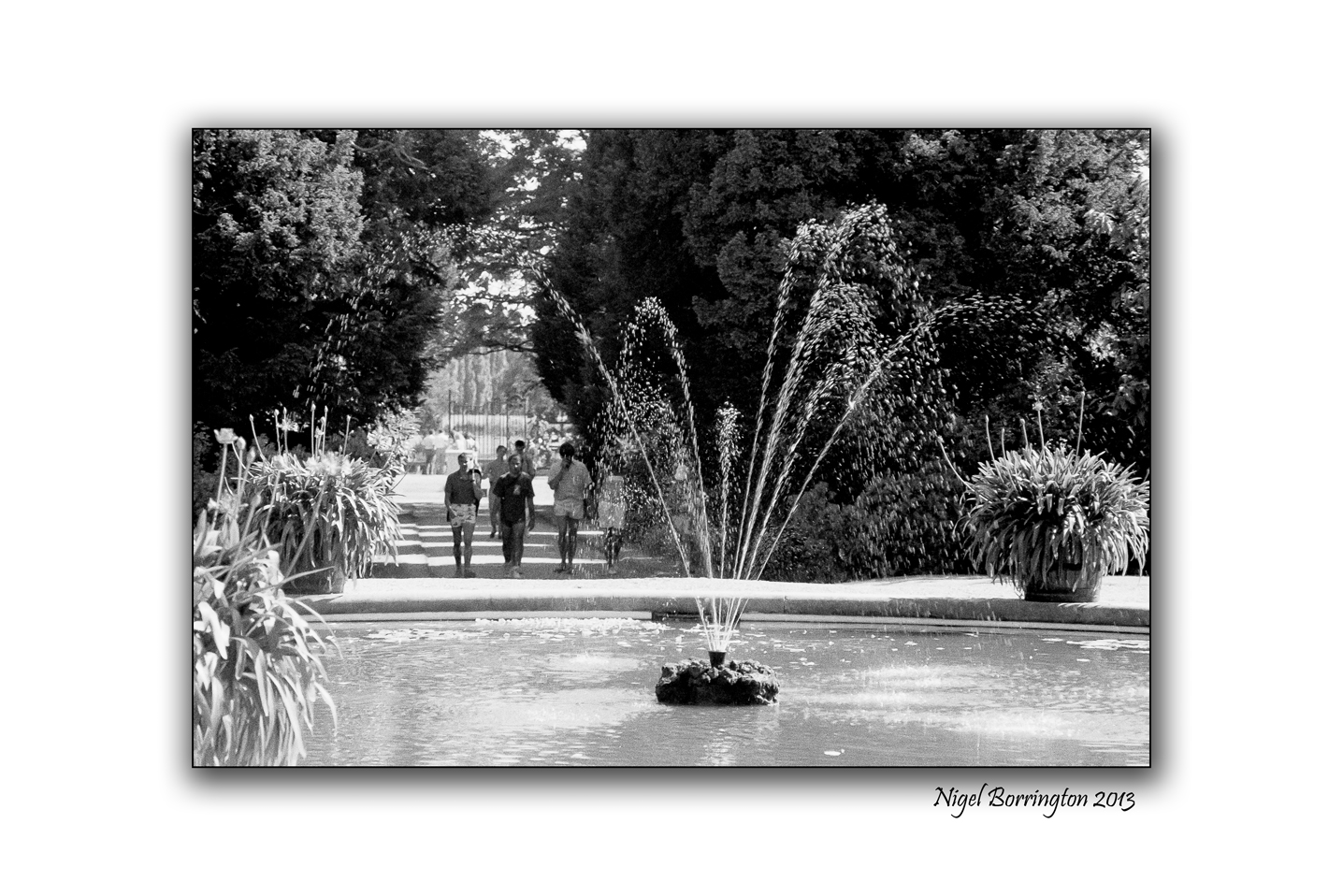
Nikon FM2n, Ilford’s HP5
Nigel Borrington
Some years ago myself and my brother and a friend Neil, headed to Hampton court to do some photography. It was the first time I had loaded Black and white film into my Nikon FM2 camera in a location like this so full of colour from the June flowers on display.
However Neil owned his own black and white dark room so Ilford’s HP5 it was. We spent about four hours at Hampton Court and then some hours processing the film making some prints and drinking a lot from what I can remember.

The images here are some of the results, I cannot find anything else. The prints are long gone so I have scanned any negatives I can find.
I am more than happy with these images and it’s very interesting to look back and think about what I felt made a good image way back then.


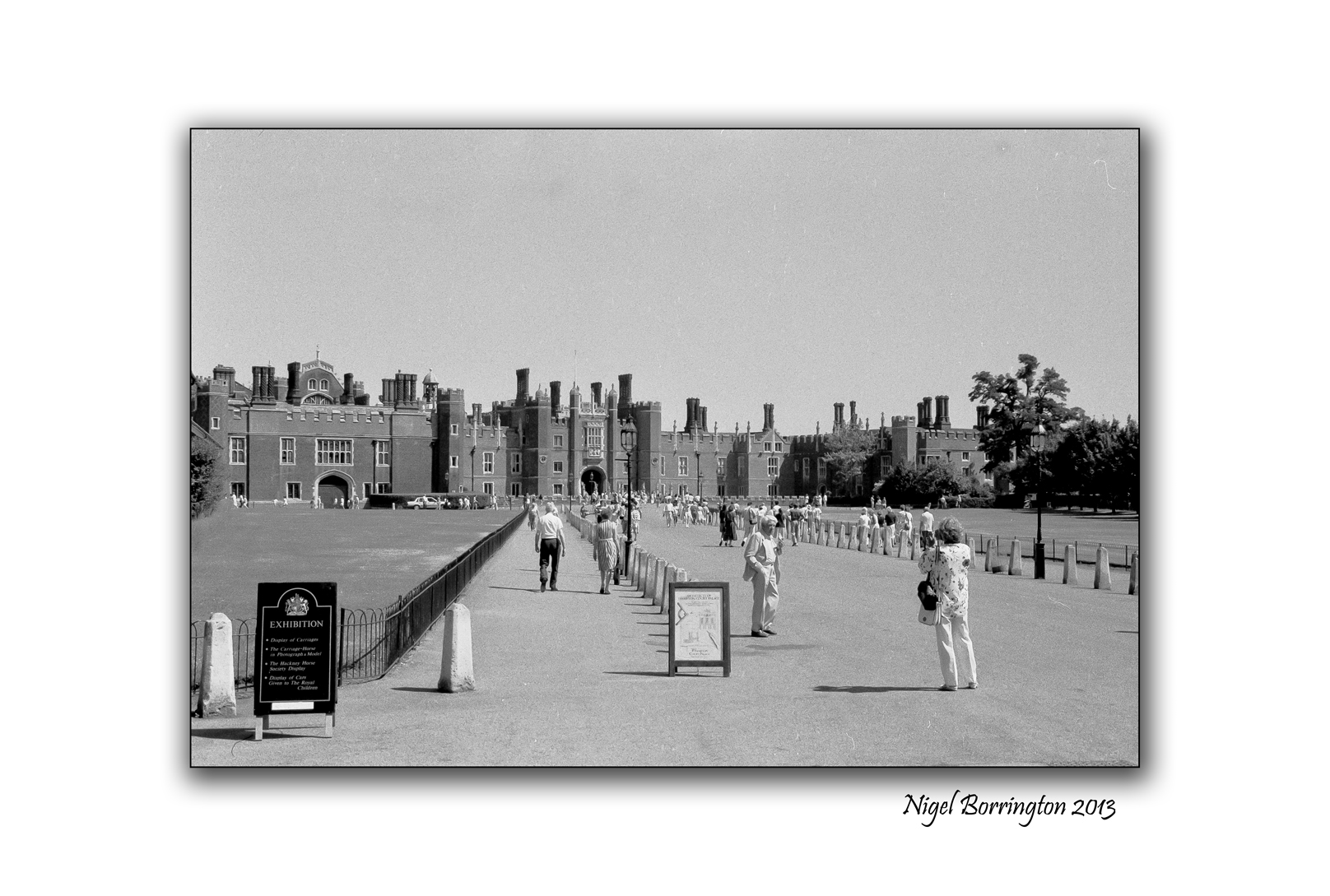
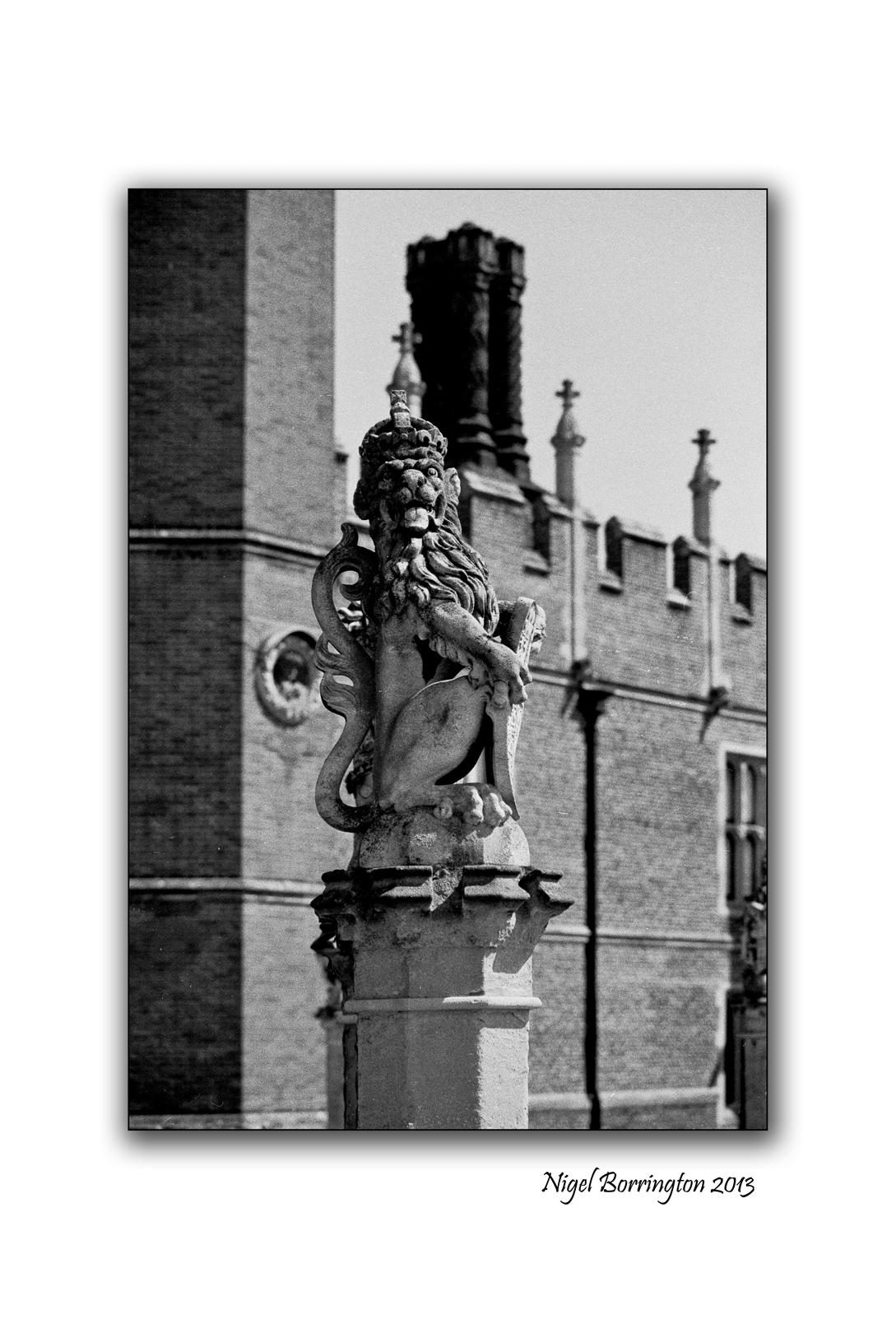

Nikon FM2n, Ilford’s HP5
Nigel Borrington
 Nigel Borrington
Sister and Brother
Sister and Brother
There is some 25 years between the photos here on the left and the two images on the right and these two characters are my niece and nephew, Louise and James.
I took the first image on a visit home to (Timperley, chesire) after I had moved to live in London some 3 years before.
The images on the right are the two of them at Louise’s wedding last year in Alderly edge, Chesire. I was asked to do the main photography for Louise and it was a pleasure…
Again I only found this image of the two of them on the left, while scanning some old films.
I hope they enjoy this set!
Nigel
Share this:
April 18, 2013 | Categories: Comment, Solo images, Wedding album design | Tags: family, sister and brother, Wedding, Wedding photography | 8 Comments