Last night I walked along the river, after the rain – Images and a Poem
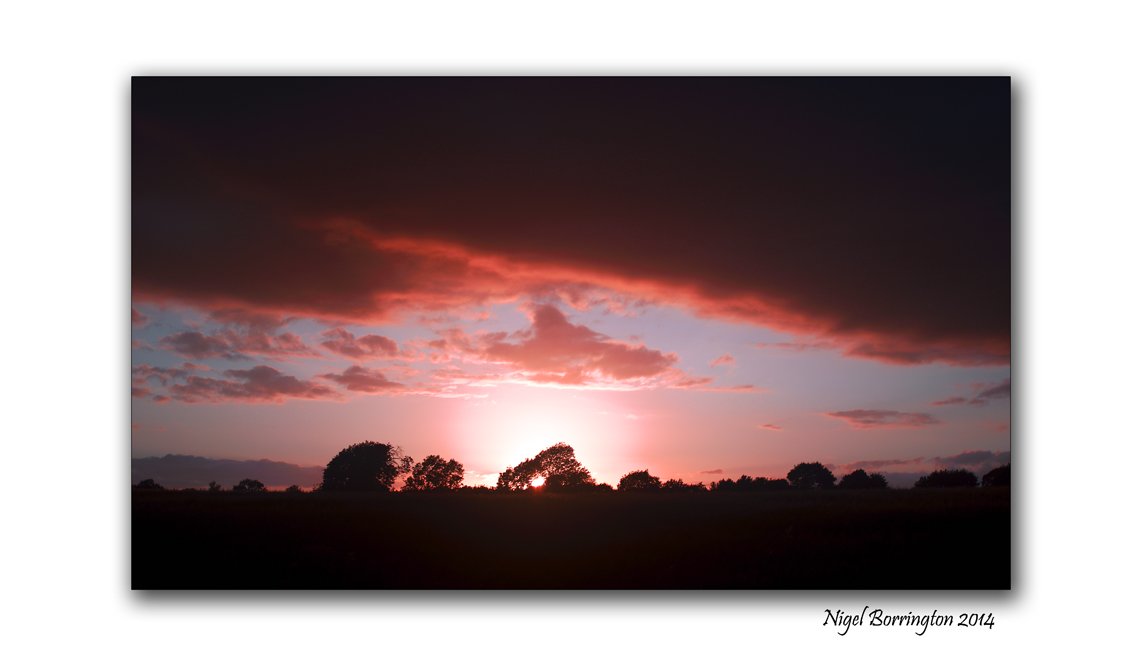
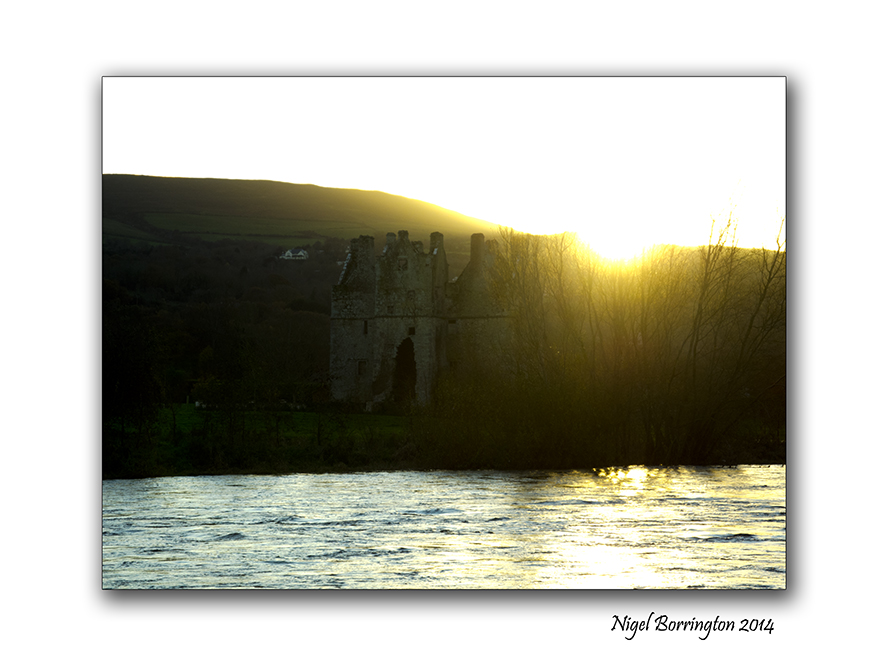
Sunset along the river Suir, County Tipperary
Landscape photography : Nigel Borrington
Sometimes when I am out walking and taking pictures, I also use my phone to jot down some words then later use these to write a Poem.
I feel that words and poems – along with images are connected with one another in a big way. I love to share both here on this blog and I often share poems from people who share their work on poetry web sites, matching them to what I feel are related images I have taken.
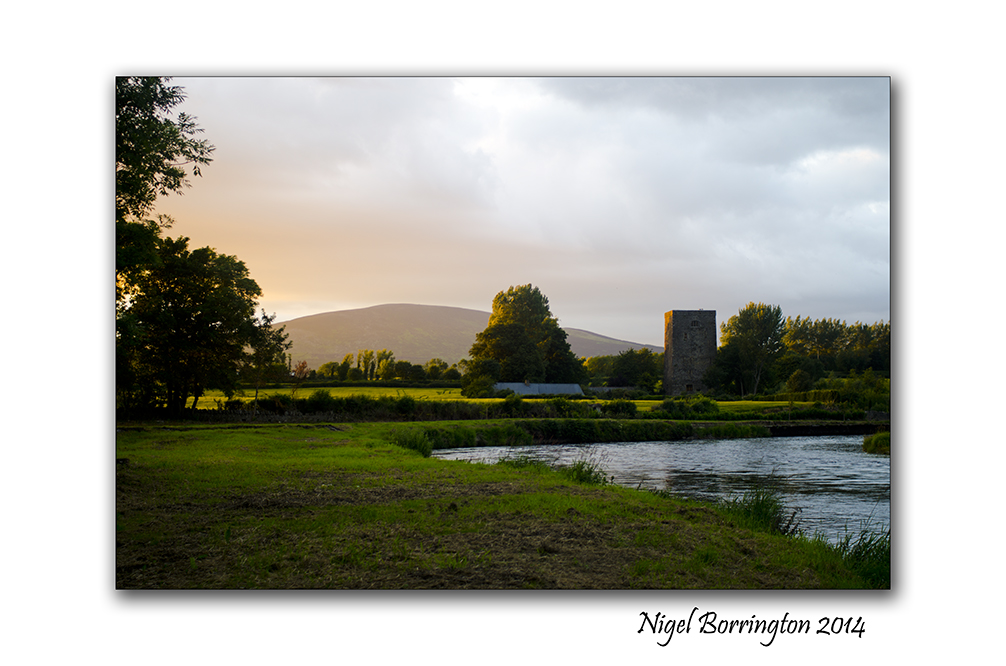
This time the post is mixing my own Poem and Images from an evening walk along the river Suir, after a rain storm at the start of June.
————————————
Last night I Walked along the river after the rain
Last night in my dreams along the river I walked,
it rained and rained, The floods of June.
There will always be sunshine after the rain
Perhaps I walked , perhaps even ran,
Towards the Setting evening Sun.
 .
.
It lights up the river, I see every rushing and flowing drop,
The warmth from its light can calm every dreaming fear.
After it sets below the trees,
my dreams much deeper,
still linger throughout the night,
But suddenly vanish at dawn’s early light.

Poem and images : Nigel Borrington
Teifi Marshes Nature Reserve, Cardigan, Pembrokeshire, South Wales
Teifi MarshesNature Reserve
Landscape and Nature Photography : Nigel Borrington
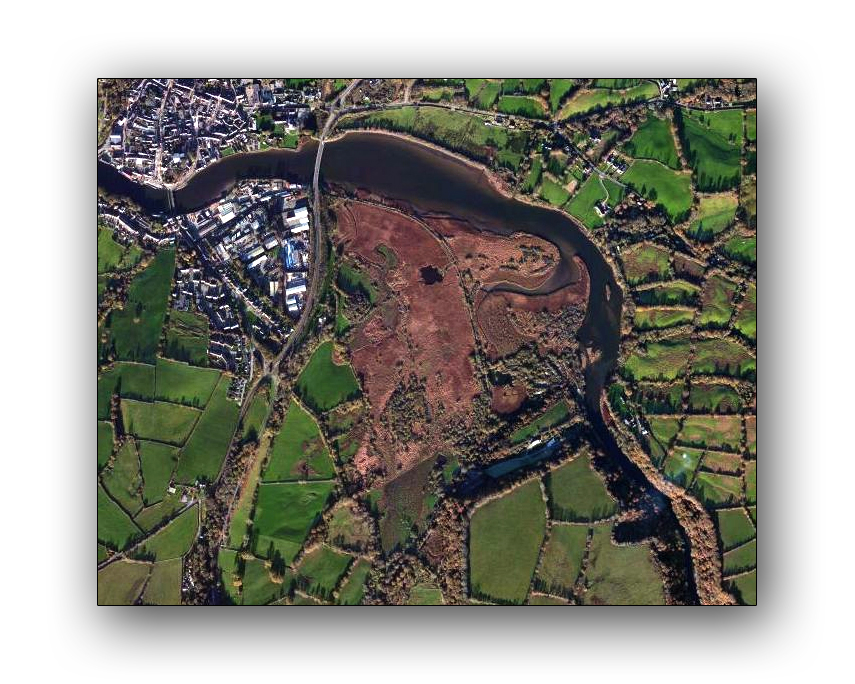
Teifi MarshesNature Reserve
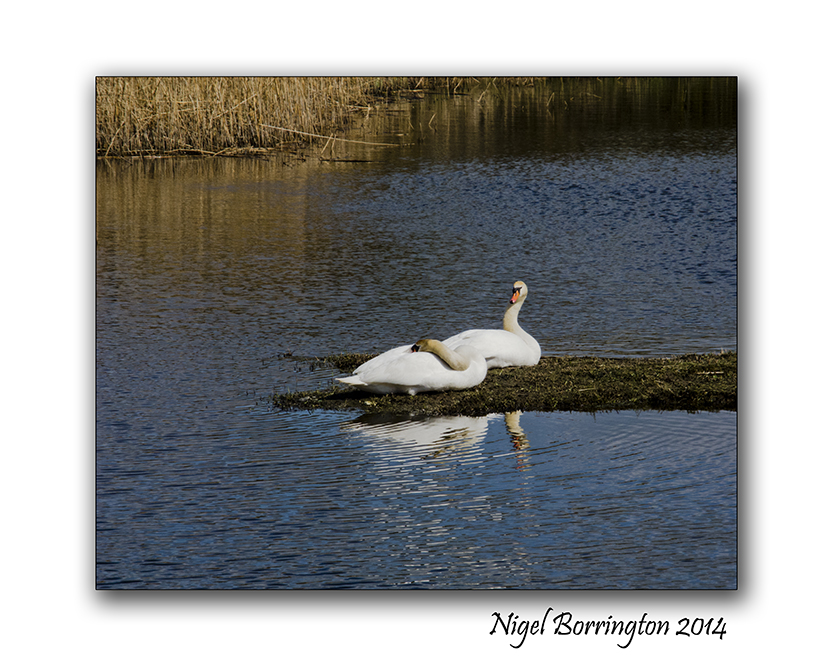
I am getting out of Ireland for this Monday and posting about one of my favourite wildlife and nature reserves just across the water in south west Wales.
Last year I visited the reserve in the early summer time and it was just full of life, the observation huts located around the long paths offer some great views of the river and lake birds that nest here.
There is a wonderful visitors centre and restaurant so you can make a full days visit, stopping at lunch and then if the welsh weather will allow you can return to the outside afterwards. The hides around the reserve do however offer you shelter from the rain so it is possible to visit in the winter as well so you can view the wintering birds that arrive here from much colder countries.
The two very different seasonal ‘faces’ of Teifi Marshes Nature Reserve make this an excellent place to visit all year round. In winter the marsh is subject to extensive flooding and becomes a haven for numerous wildfowl, whilst in summer a visit to the reserve reveals an entirely different range of habitats and wildlife.
The site is owned by the Wildlife Trust of South and West Wales, and is also home to their Welsh Wildlife Centre. This magnificent building, constructed mainly of wood, won an award for its architecture when it was built in 1993.
Teifi Marches Gallery

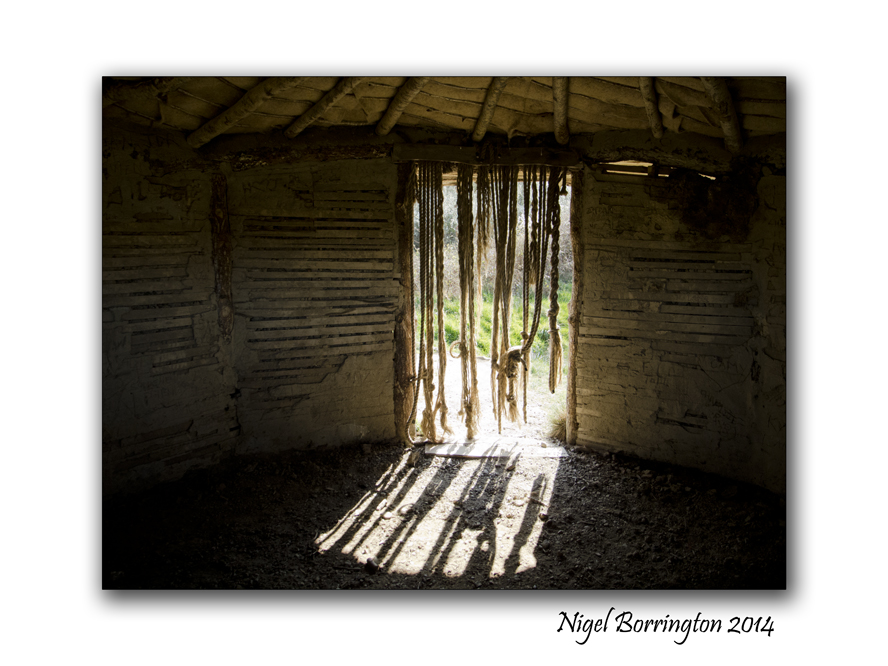


A Grain Of Sand, Poem by Robert William Service
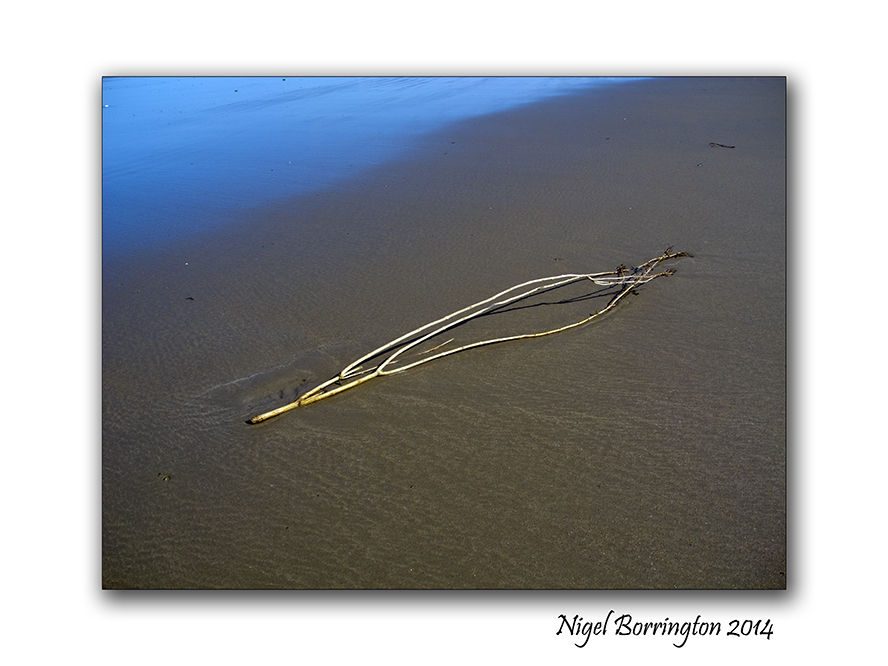
Landscape Photography : Nigel Borrington
A Grain Of Sand
Poem by Robert William Service
If starry space no limit knows
And sun succeeds to sun,
There is no reason to suppose
Our earth the only one.
‘Mid countless constellations cast
A million worlds may be,
With each a God to bless or blast
And steer to destiny.
Just think! A million gods or so
To guide each vital stream,
With over all to boss the show
A Deity supreme.
Such magnitudes oppress my mind;
From cosmic space it swings;
So ultimately glad to find
Relief in little things.
For look! Within my hollow hand,
While round the earth careens,
I hold a single grain of sand
And wonder what it means.
Ah! If I had the eyes to see,
And brain to understand,
I think Life’s mystery might be
Solved in this grain of sand.
A local walk through History, Megolithic – Ring forts, Tombs and Standing stones.

Ring fort on the Hill, County Kilkenny
Landscape photography : Nigel Borrington
A local walk through History, Megolithic – Ring forts, Tombs and standing stones.
Last Month I posted the following two articles talking about the history of some historic remains and geology around the area where I live, on the County Kilkenny and Tipperary Boarders.
Pagan ring forts and passage tombs , From Kerry to kilkenny
Landscape and Geology around Slievenamon, county Tipperary
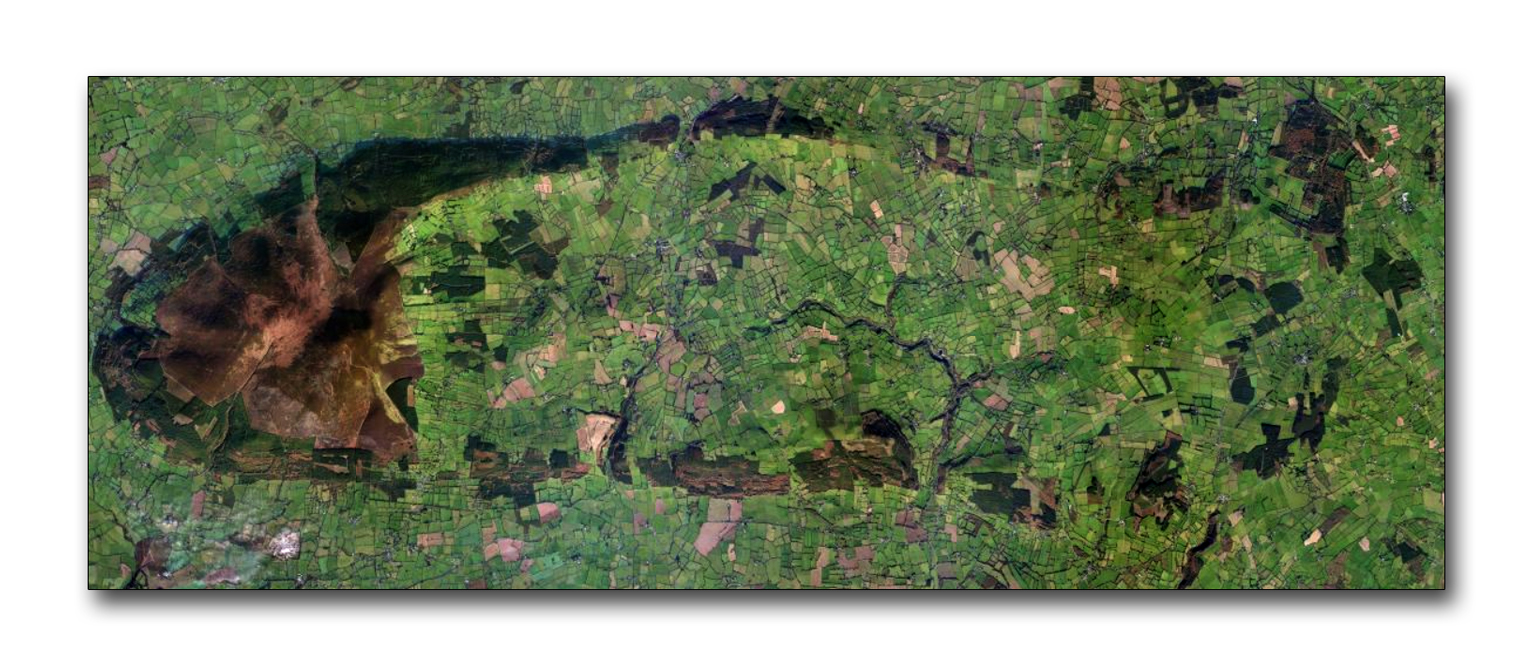
The image below shows the area around the mountain of Slievenamon, County Tipperary ( left ) and the foot hills that flow to the right and form the shape of an oval from the north and south of the mountain.
The Boarder between county kilkenny and Tipperary flows about half way through this image from north to south.
 .
.
Over the last few weeks and during the summer of 2014, I want to study and post about the Stone age – Iron age, pre Christian remains that can be found in almost every one of the woods that can be seen in the above image ( Mainly visible as dark green) along with the remains on the mountain of slievenamon itself.
I have lived here in county Kilkenny for about 11 years , moving from the UK in 2003, from the very first walks I took locally it was clear that this area is full a history in the form of old buildings, farms, churches and grave yards.
The remains that interested me the most have been those of pre-Christian times, Ireland became a Christian country between 300 to 400 Ad. These local pre-Christian remains then date from betweem 300Ad to 6000 or 8000 years ago.
The remains that can be found locally take the form of (Ring forts, Graves and tombs, Standing stones and stone circles) all can be found within the area covered in the pictures above.

South Kilkenny. Woodlands
During last weekend and this week, I have been visiting the above woodland to the south east of the larger area I am studying and have marked on the image below the types of remains I have found :

The remains that I have walk past on woodland paths and the ones that I have looked for by going deeper into the woods are by themselves amazing but by themselves do not tell you a story of who these people were and how they lived.
Over the next few weeks I want to uses four areas in total including the mountain of Slievenamon, to draw a picture of how I feel the people who built these structures lived.
How they worked this land, how they built their homes and how they buried and remembered their ancestors.
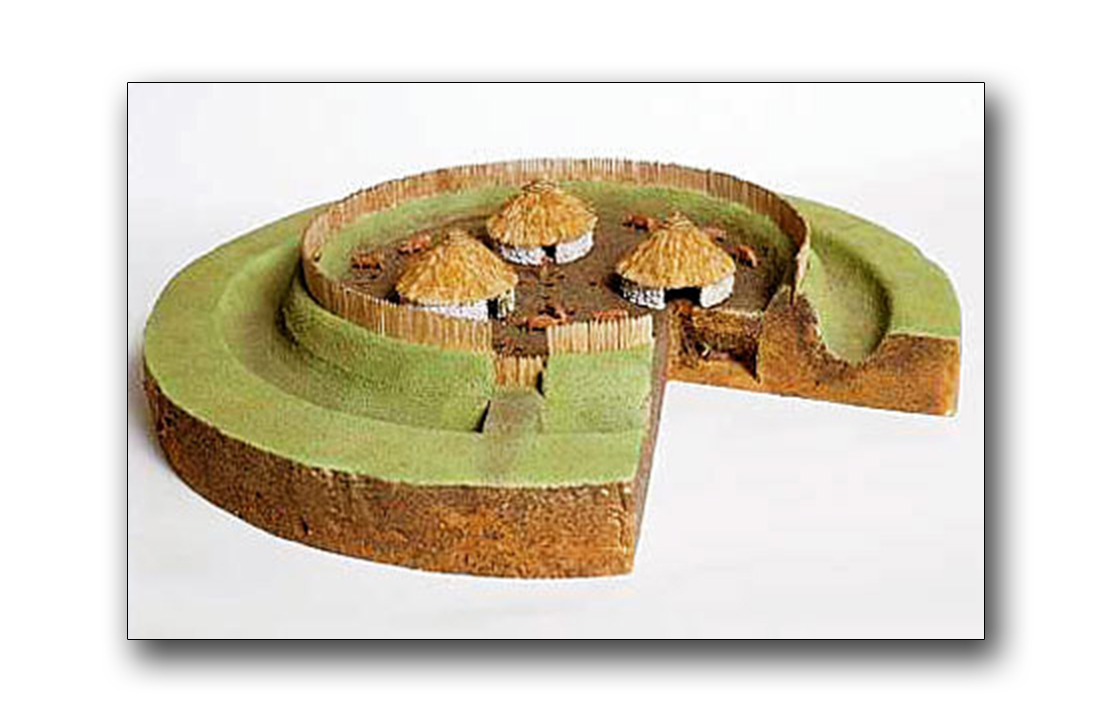
Structure of a ring fort
Image Gallerys
The Images below are all pictures of the structures and remains I have found in the woodland area shown and labelled in the images above, I have split them into groups as follows:
Ring forts, these were used for – homes and cattle pens.
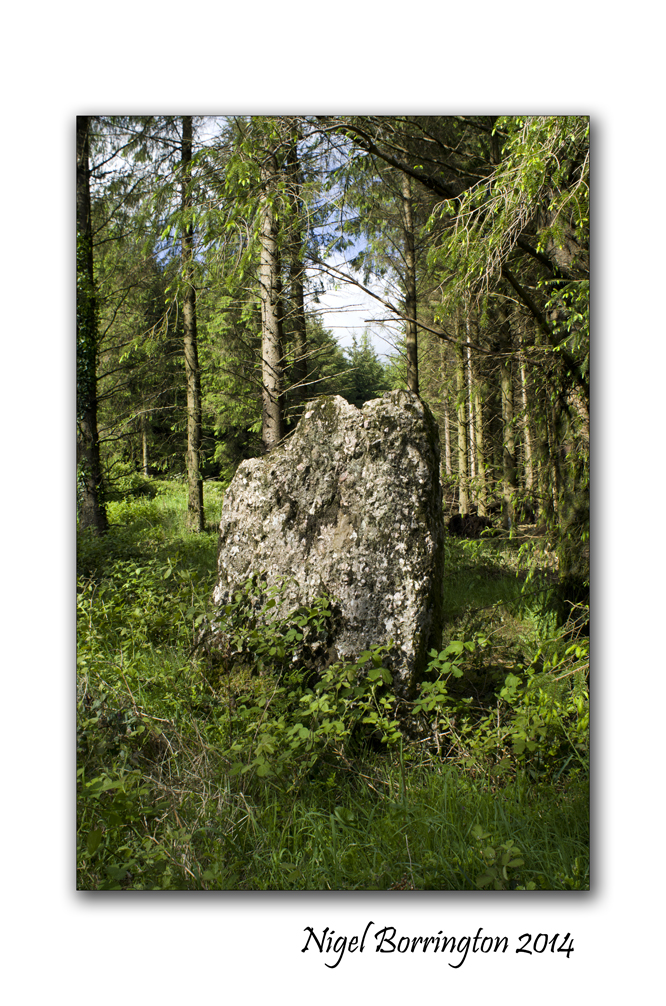
Standing stones, used to record time and mark areas.
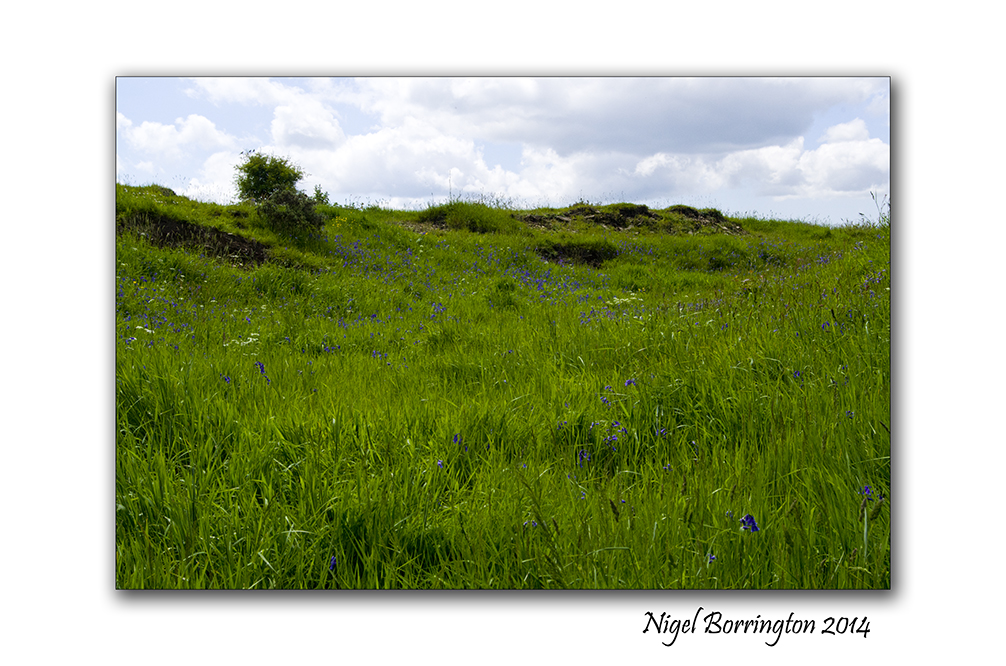
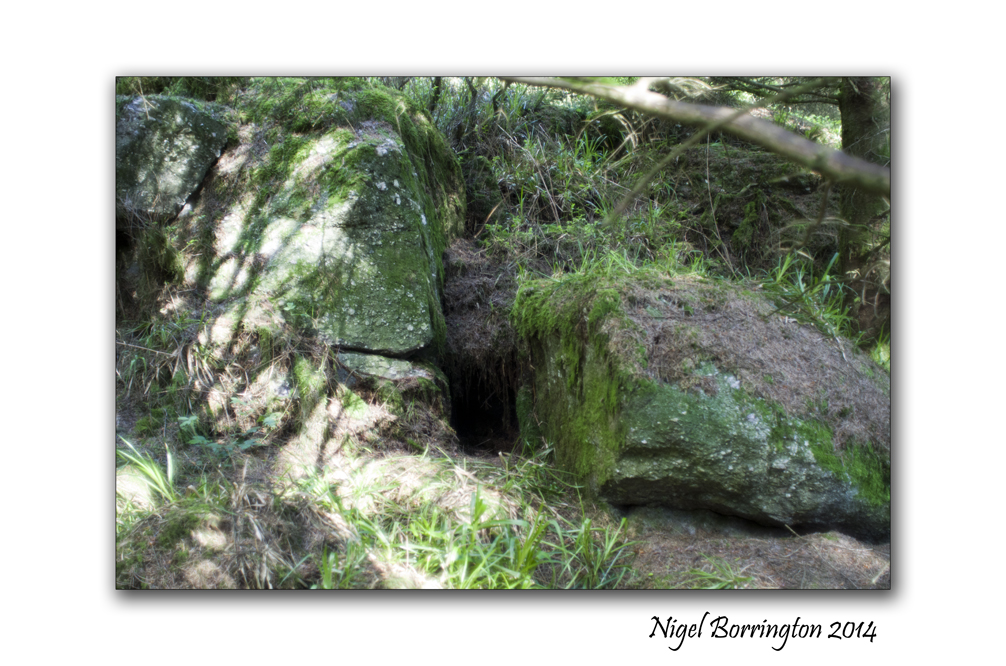
Graves and tombs, Hill top Burial grounds .
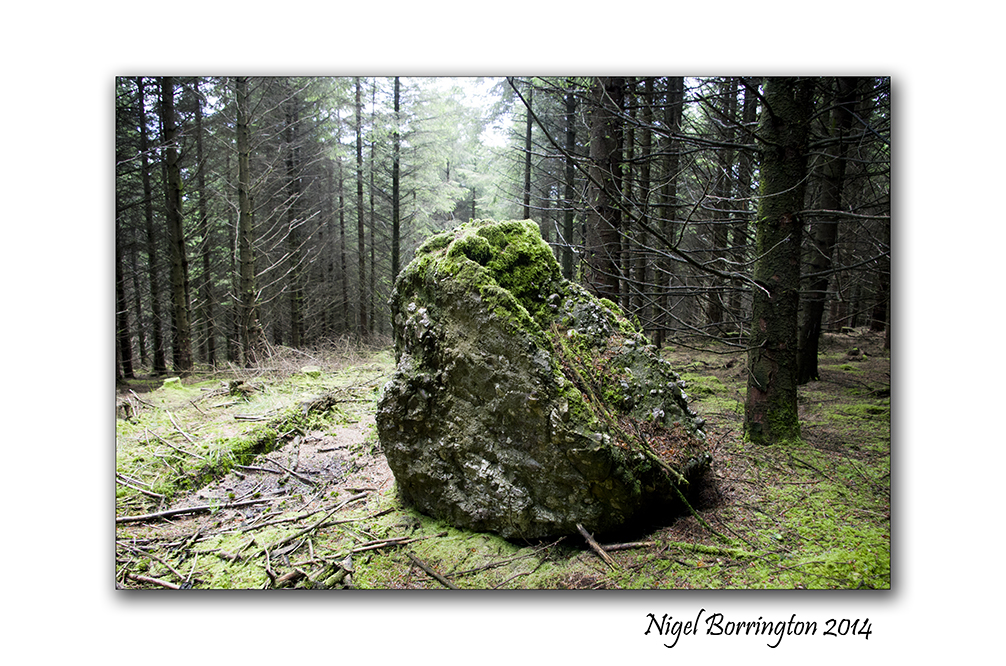
One last thing worth pointing out is that below in the Grave Gallery are two large tomb cap stones, shown in the first two images.
When I first found the stone in the first image, I wondered if it could be anything more than just a large stone left from ice sheets, during the ice age some 10,000 years ago. However I then found the stone in the second image a couple of days later, both these stones are almost the exact same dimensions. It is very unlikely then that these stones can be the result of the ice age and that they are cap stones to large tombs lying underneath.
This web sites show some examples of excavated tombs from this period : Mesolithic tombs
I also have a great example of a tomb like this here : The passage tomb of olioll olum king of munster
Image gallery of the ring fort
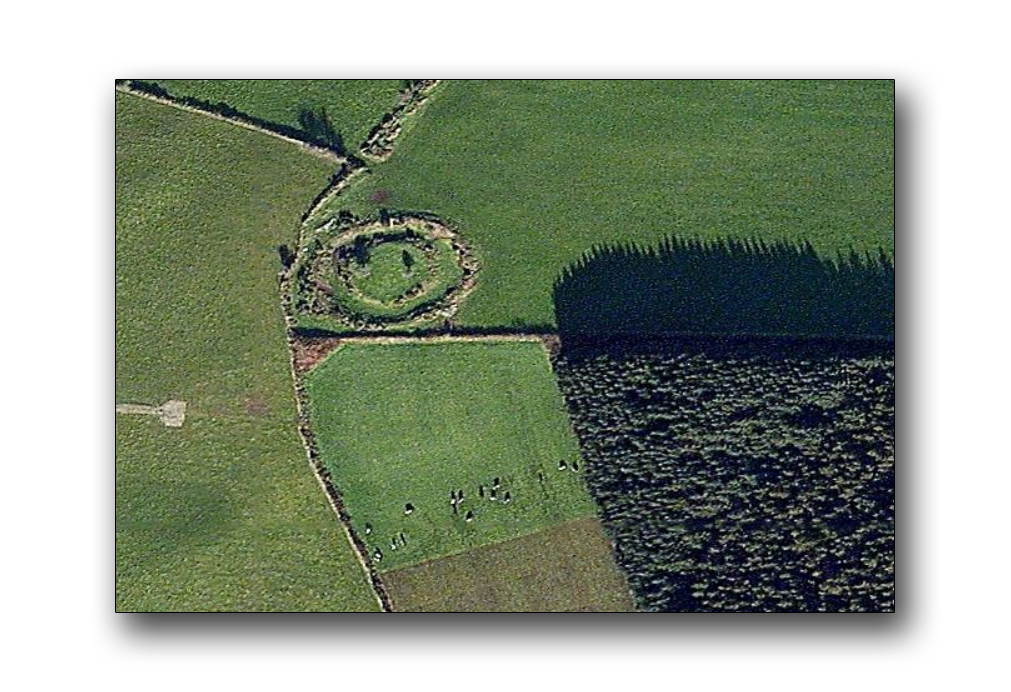
Ring fort, marked above the woods


Gallery of Standing stones within the woods


Gallery of Graves and Cap stones within the woods


Between The Sunflowers , Poem by : Andrew Lea
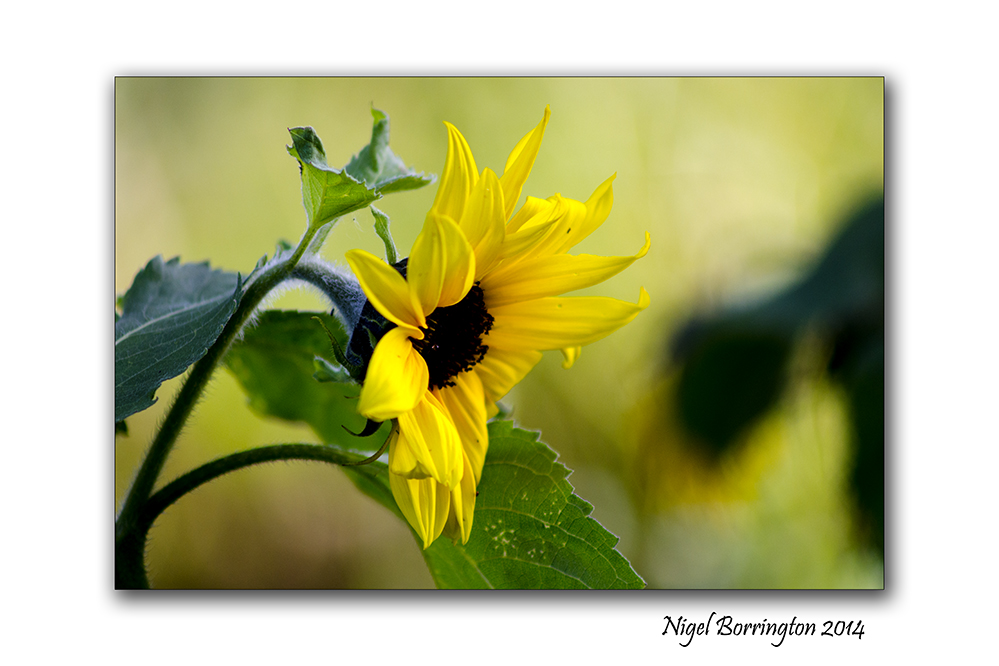
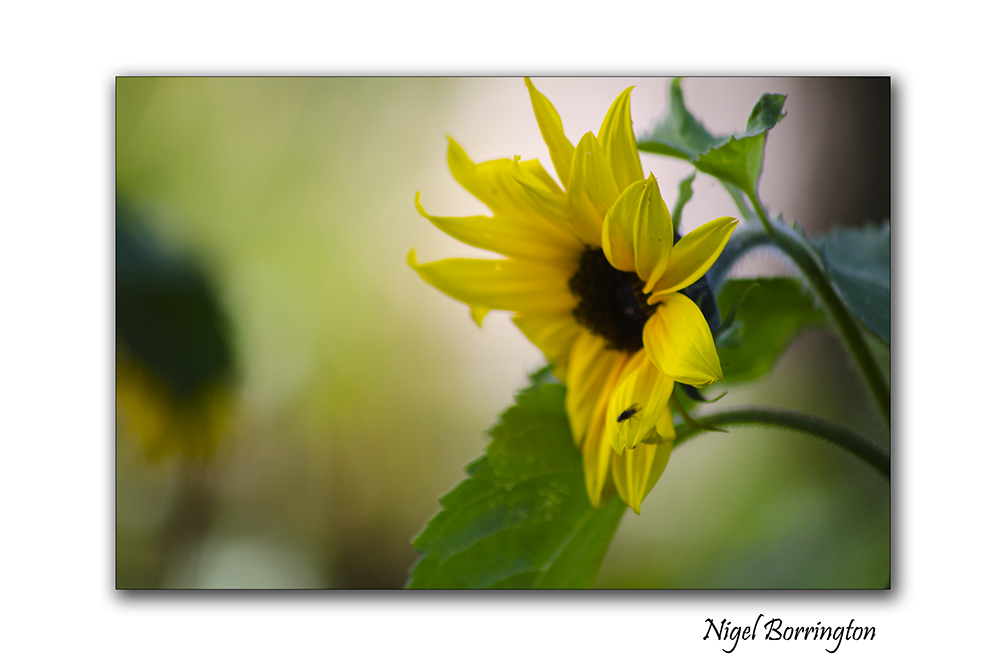
Sunflowers from the Garden
Photography : Nigel Borrington
Between The Sunflowers
He sat between the sunflowers, counting the ants as they crawled across his toes. “27”…”28″—He paused, swearing that he’d seen this one before. “What the hell, 29.”
He sat beneath the oak tree in his back yard, sticky from sunflower sap. The sun, hot and high, rested in the sky strait above him. He would often stare at it, until his eyes stung and he could see the purple spots even after he looked away.
 .
.
He was running, through the halls in the decaying house. Running from the invisible phantoms with their malevolent smiles and sinister goals. Running from the silhouette at the end which was shaped much like his father, only far too tall. Running, with starving lungs and heavy feet as the floor screamed and walls shook, as the windows began to fracture and the entire foundation was torn from the earth under the weight of his fear.
Running, towards the sunflowers, which stood and beautiful under the afternoon sun.
A walk along the beach , Images and a Poem

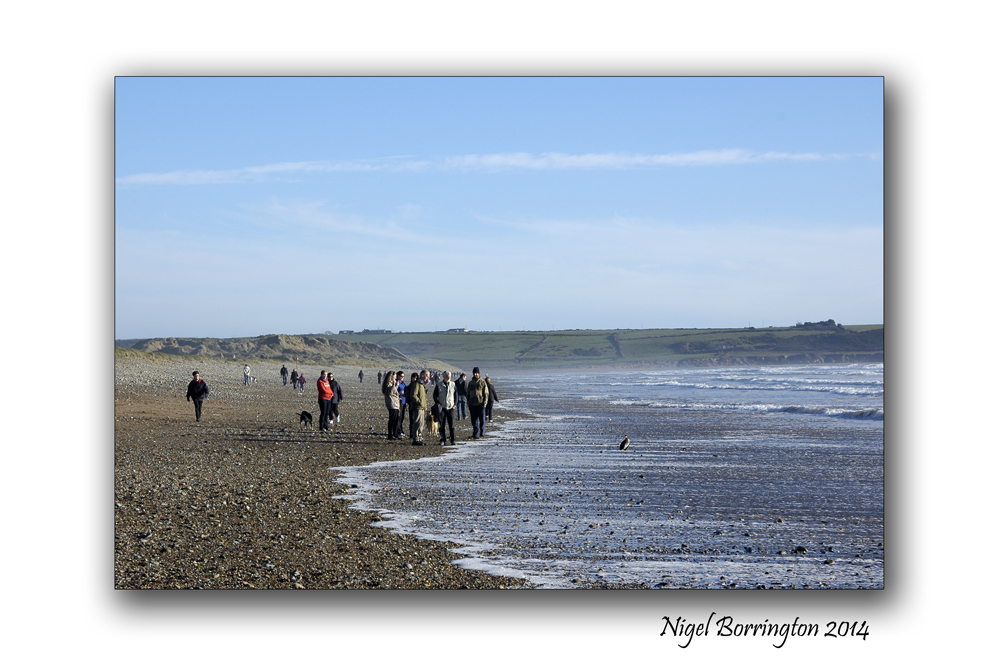
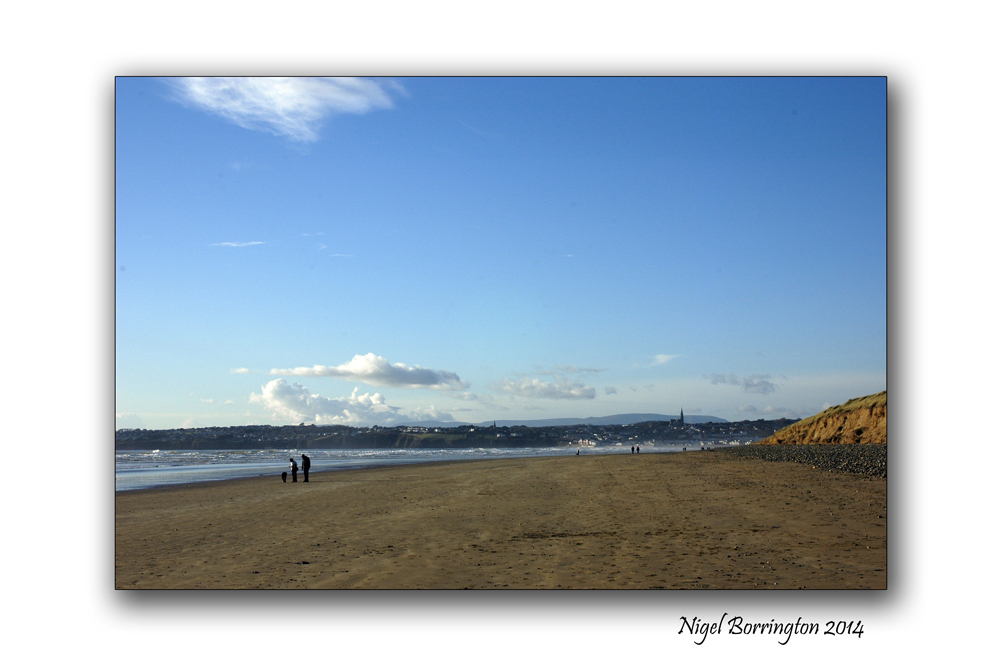
A walk along the beach at Tramore, County Waterford
Landscape photography : Nigel Borrington
A walk along the beach at Tramore
The sight of sunlight shining on the water just dazzling,
The sound of waves breaking delicately on the sand,
The feeling of the suns warming my skin,
The cool wetness of the sand between my toes.
Fellow dog walkers passing by,
Saying hello and talking for a while,
Their dogs swim and bring back sticks,
The marks they level in the sand,
Smoothed again by the waves.
 .
.
The fresh breeze moving through me,
Slipping across the water a sea bird gliding silently,
The salty sea air carrying her to deeper waters.
Above me seagulls friends swirl singing their daily song,
Before diving down into the sea to snatch a fish.
The breeze and warming sun feeding my soul,
The enchanting pleasures of sight and sounds,
I breathe in the wonderful scent of salt water that fills the air,
The intoxicating aroma of wildflowers thick along the dunes,
A feeling of contentment fills every corner of my being,
As I walk along the beach I realise… Life has true beauty…
A Farmer by Trade, Poem By : Kevin Pace
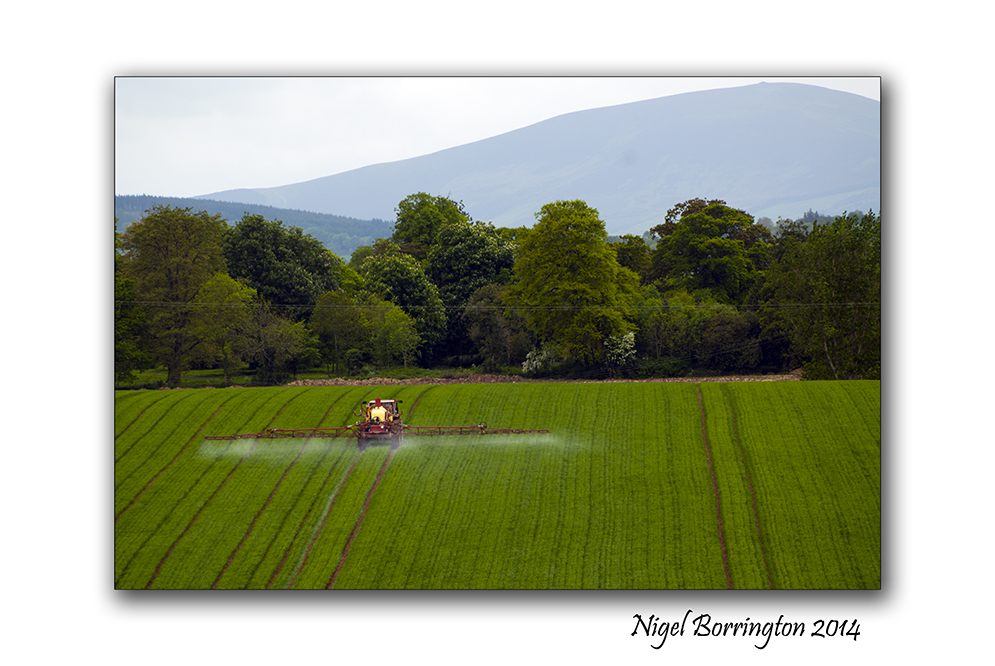
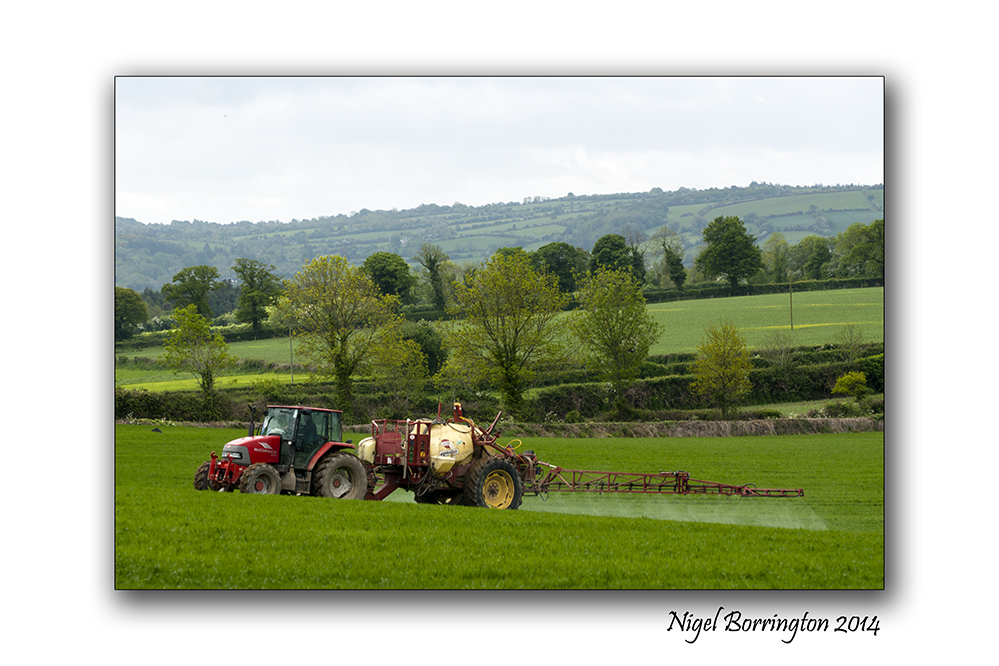 A Farmer by Trade
Ballytobin, County Kilkenny
Landscape Photography : Nigel Borrington
A Farmer by Trade
Poem By : Kevin Pace
He worked on the land, a farmer by trade.
He never will know the impact he made.
When plowing the fields, his mind would be filled
with lessons in life he taught and instilled.
“Life’s pretty simple” my grandpa would claim,
“The rules we should live by are always the same.”
He delivered his thoughts in a wry kind of style.
You’d think he was mad, but then he would smile.
 .
.
He was always profound, a man of his word.
He would always look forward despite what occurred.
“I’ve never reaped anything I didn’t first sow.
The seeds that you plant is the crop that will grow.
Fix your eyes on a spot, if you want to plow straight.
If you need to start over, it’s never too late.”
One thing I remember, he often would share,
“Don’t tear down a fence, ‘til you know why it’s there.
Some fences are built to keep danger away,
some fences are built so we’ll know where to stay.”
His philosophy in life was to, “Let people be.
I’m not here to judge, lest they should judge me.”
“Some things are better off left on the ground,
manure doesn’t stink ‘til you stir it around.”
The best thing he taught me was how I could find
the answer to anything crossing my mind.
Whatever I’d ask him, he’d get out the Book,
saying, “God wrote it down, if you take time to look.”
He understood things that few understand.
A farmer by trade, he worked on the land.
Butler House, Kilkenny

Butler House , County Kilkenny
Irish landscape Photography : Nigel Borrington
There can be few better places to visit on an early June weekend than the gardens at the Butler House in the Centre of KIlkenny city, the Roses are in Bloom and the pond in the middle of the garden offers a cool and relaxing place to visit.
I just love taking in a book or just walking around and taking time to view all the flowers and hidden wooded areas.
The history of Butler house is described below and flowed by some of the many images I have taken here.
The History of Butler House
Butler House is the Dower House of Kilkenny Castle and has always been associated with the Butler Family, Dukes & Earls of Ormonde who resided at Kilkenny Castle for 500 years.
18th Century
The house was home to Lady Eleanor Butler who lived here after the death of her husband Walter in 1783. Lady Eleanor Butler was the mother of John, the 17th Earl of Ormonde and her daughter, also Eleanor, was one of the famous “ladies of Langollen”.
19th Century
James, Earl of Ormonde resided in the house while the Castle was under reconstruction in 1831.
A soup kitchen was run from here during the cholera epidemic of 1832.
The Royal historical and Archaeological Association of Ireland held their meetings in Butler House in 1870.
20th Century
Kilkenny Design, the state design agency, restored Butler House in 1972.
The decor and furnishings reflect a certain 1970s Art Deco style, which because of the muted colours and natural fabrics used, proved sympathetic to the original features of the house. In 1989, the Kilkenny Civic Trust acquired both Butler House and the Castle Stables. The house was then opened to the public as a guesthouse and conference centre.
In 2000, The Kilkenny Civic Trust had the gardens at Butler House landscaped, in order to return them to their original splendour. The gardens have since become an attraction for the many visitors to Kilkenny.
Butler house Gallery


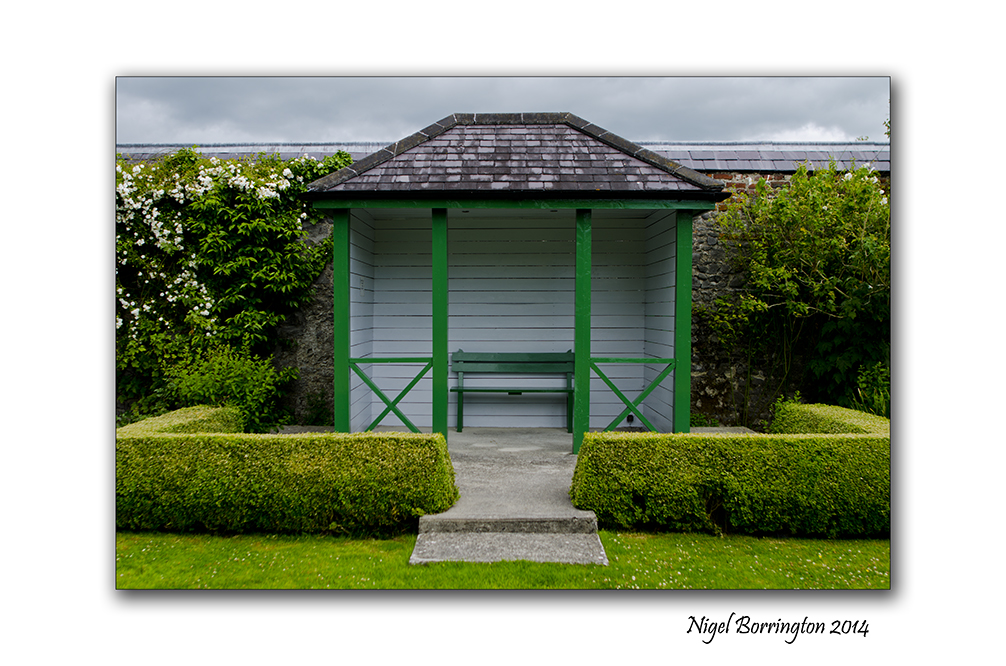


The Bridge Builder , Poem by : Will Allen Dromgoole

The Bridge at the Vee, County Tipperary
Photography : Nigel Borrington
The Bridge Builder
By Will Allen Dromgoole
An old man going a lone highway,
Came, at the evening cold and gray,
To a Valley vast and deep and wide.
Through which was flowing a sullen stream
The old man crossed in the twilight dim,
The sullen stream had no fear for him;
But he turned when safe on the other side
And built a bridge to span the tide.
“Old man,” said a fellow pilgrim near,
“You are wasting your strength with building here;
Your journey will end with the ending day,
You never again will pass this way;
You’ve crossed the chasm, deep and wide,
Why build this bridge at evening tide?”

The builder lifted his old gray head;
“Good friend, in the path I have come,” he said,
“There followed after me to-day
A person whose feet must pass this way.
This chasm that has been as naught to me
To that fair-haired person may a pitfall be;
They, too, must cross in the twilight dim;
Good friend, I am building this bridge for him!”

National Botanic Gardens – Dublin

National Botanic Gardens – Dublin
Photography : Nigel Borrington
National Botanic Gardens – Dublin
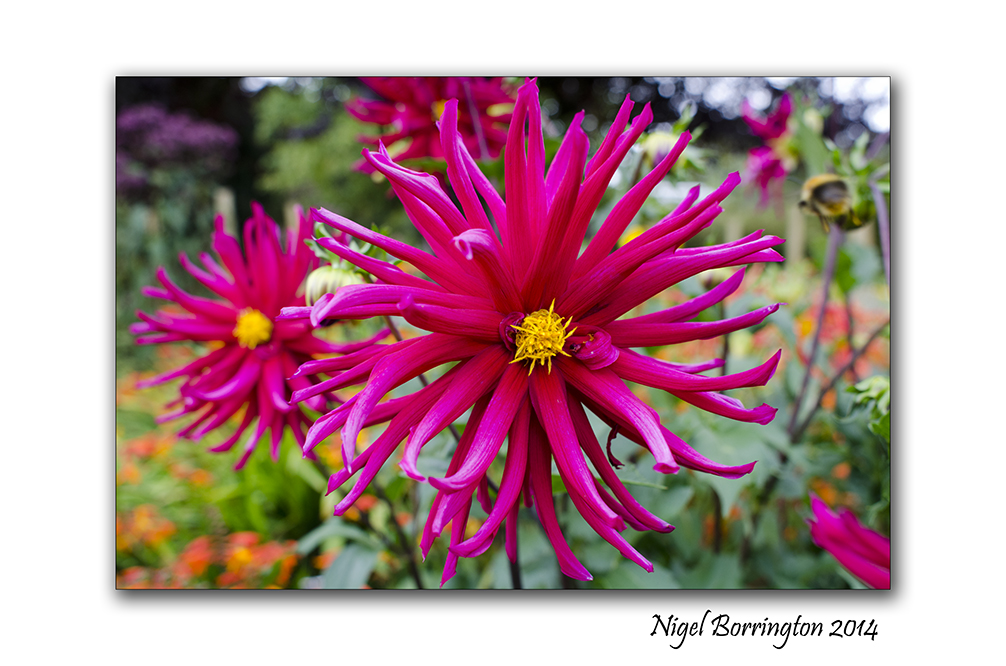
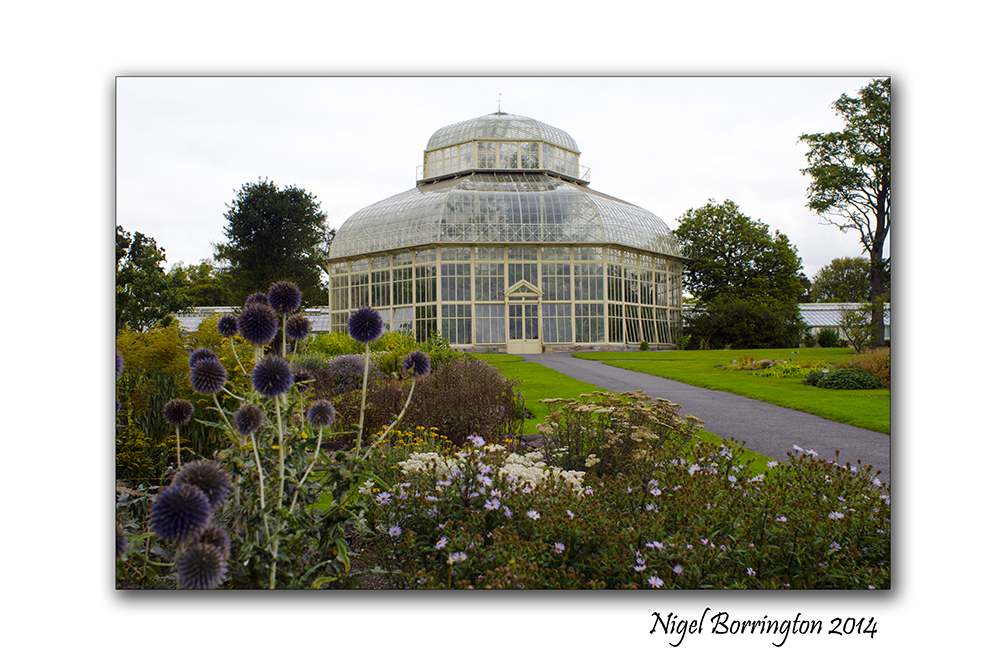
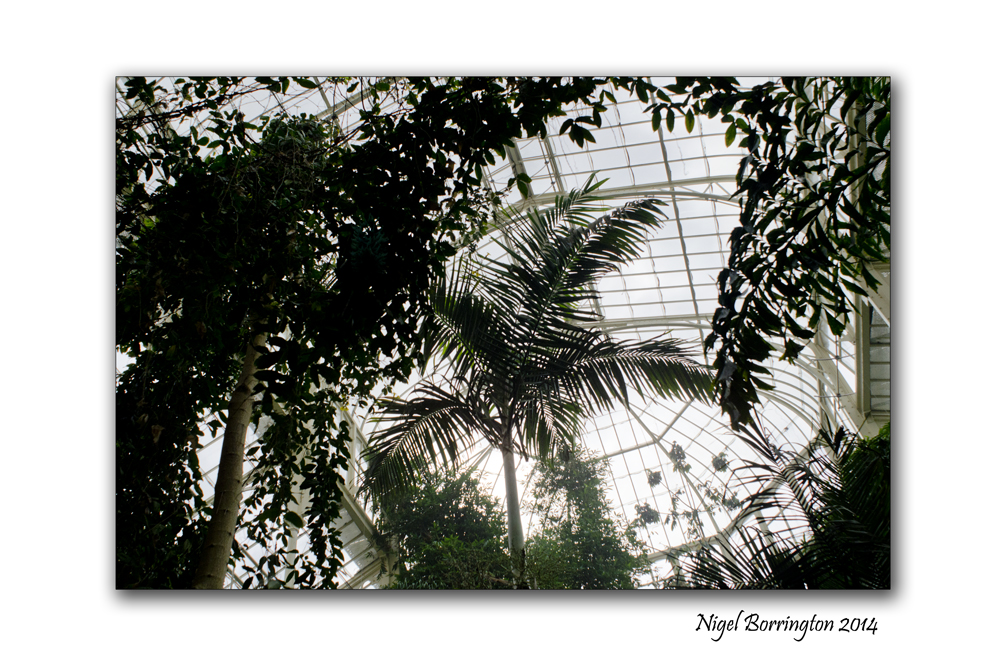
The images here were taken during a visit to the Botanic Gardens Dublin.
These Gardens are one of the best in the country and a wonderful location for flower and nature photography during the summer months.
The following web page is the official site and is a great source for all activities and descriptions of the history and purpose of these internationally respected gardens.
National Botanic Gardens – Dublin
The images I posted here are from a days visit , late summer 2013. There are many great things to see and places to eat here so you can spend a full day just browsing and learning.
Gallery



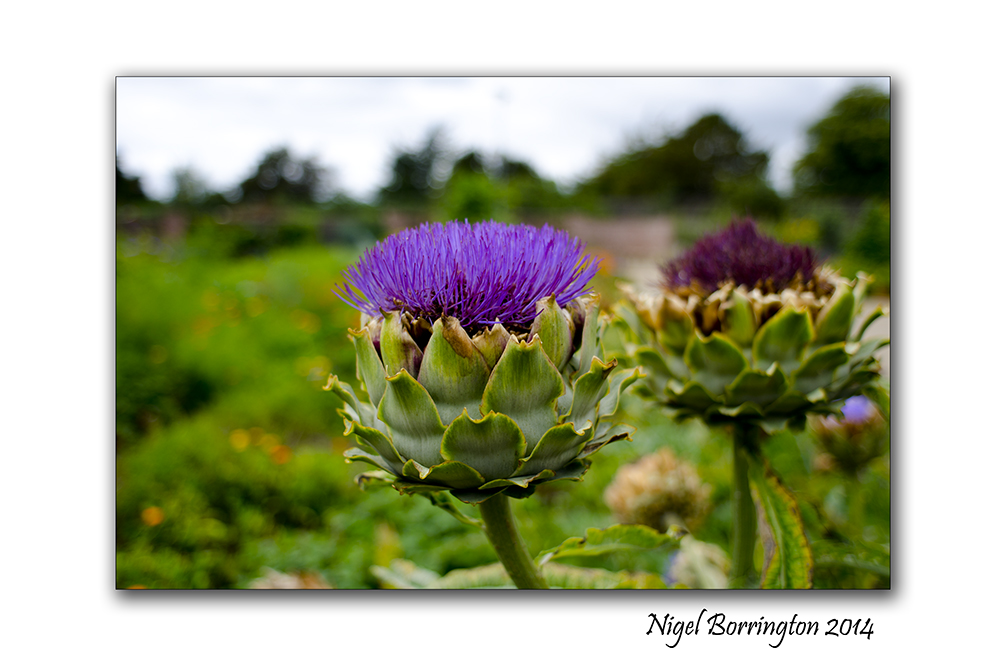


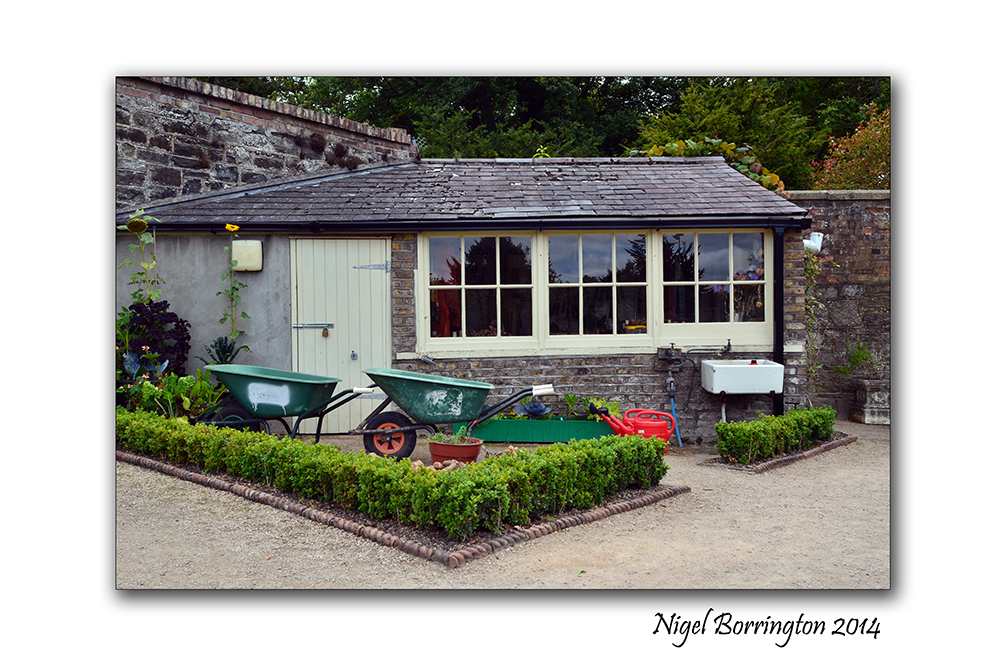

Pagan ring forts and passage tombs , From Kerry to kilkenny
 Knockroe passage tomb, county Kilkenny
Irish landscape Photography : Nigel Borrington
Pagan ring forts and passage tombs , From Kerry to kilkenny
During July last year 2013, I visited two ring forts near Cahersiveen, County Kerry and posted on them as below :
 .
.
Cahergall ring fort is a massive stone construction, built between 400BC and 500AD, It can be found close to Cahersiveen, County Kerry. Leacanabuaile feels very much more like a dwelling place for people to both live and keep themselves safe from the surrounding Environment. This included raiders and wild animals stealing cattle.
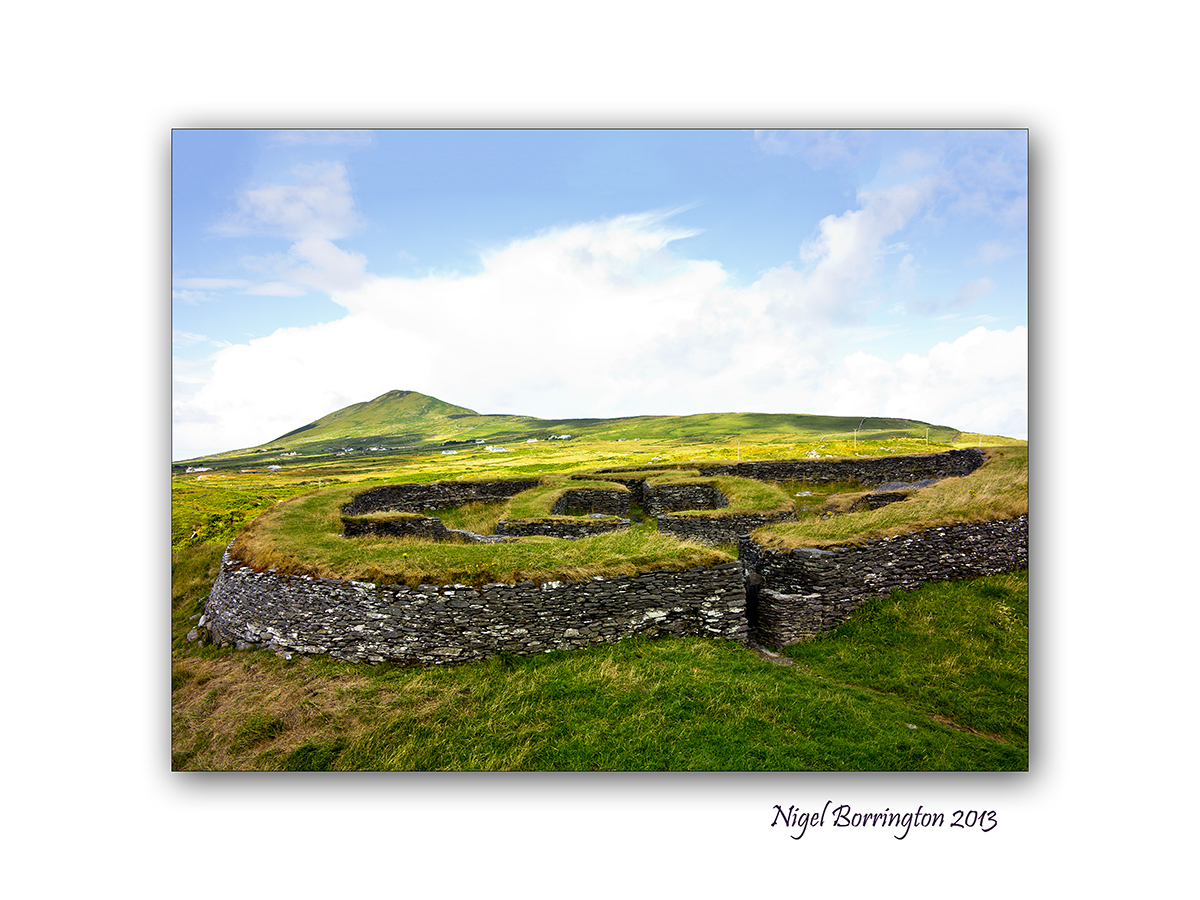
Leacanabuaile, stone ring Fort
Sitting on a hill side near Cahersiveen in County Kerry is Leacanabuaile Stone Fort, it is considered one of the best examples of an Irish ring fort.
The name translates to ‘Hillside of the Summer Pasturage’.
Returning home
The visit to both these locations was one of the most interesting history trips I have ever done and left me with a great sense of the History of Europe and of the people who lived here before Christian times.
On returning to county Kilkenny I fell like I was living in a place with a much more limited sense of history, Tipperary and Kilkenny feel much less remote than the coast line and mountains of county Kerry and their history seems to be much more modern.
Well it has taken me almost a year since the visit to Cahergall and Leacanabuaile to realise that this impression of my local area is far from true. Apart from the location of Knockroe (Post here), I have started to visit and find more and more local remains of Ireland’s past and it clearly goes way beyond the days of St Patrick and the early church.
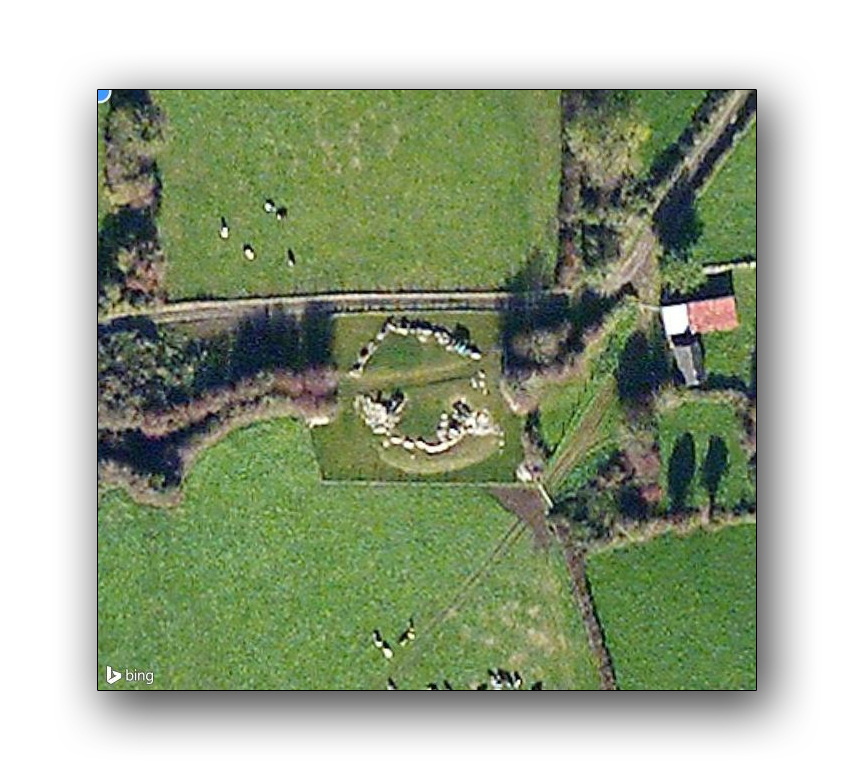
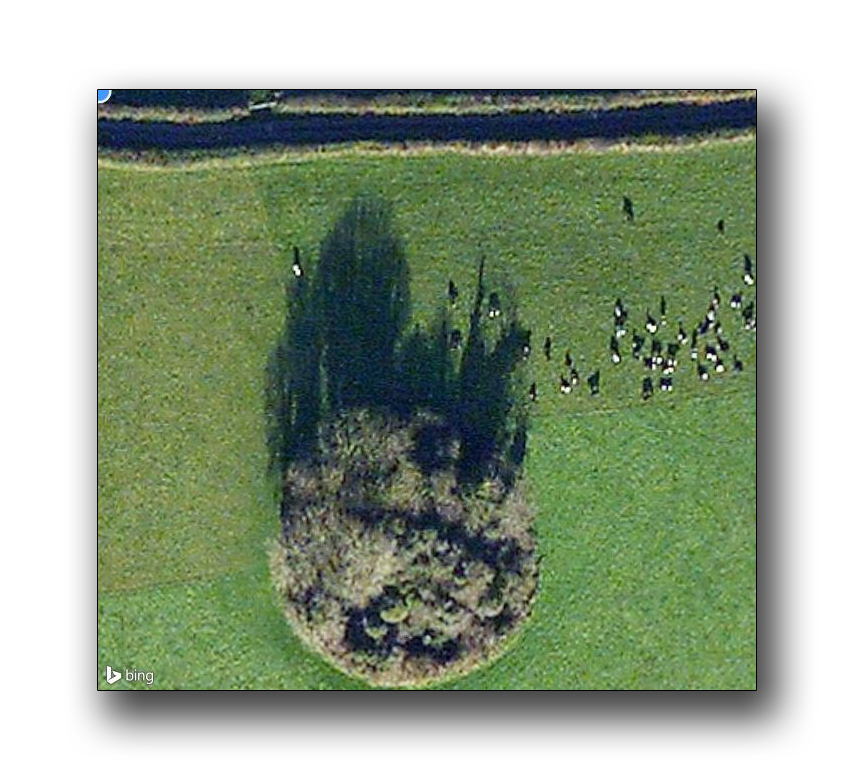
The images below are satellite images of many passage tombs and ring forts, within 10km of our home :


 .
.
Finding these locations was a real eye opener and showed to me that these forts and passage tombs must have been located through out the country.
The forts in Kerry have been restored over the last 5 years and may well have been in the same poor condition as the local ones here.
It is more than likely that the stone from these locations has been used in more modern times to build local Churches, Farms and stone walls on farm land, Yesterday I posted on the high cross at Kilkamerry and talked about this re-use of Pagan sites to build Christian locations.
It is very likely then that current church yards and grave yards have also been constructed on more of these sites, many more circular features exist on the local landscape and are possibly also ring forts but for these ones time has made things a little less clear.
What does becomes clear from looking deeper is that the pagan history of Ireland was extensive and that the pre-Christian population of this Island was as big as any other location on the European continent.
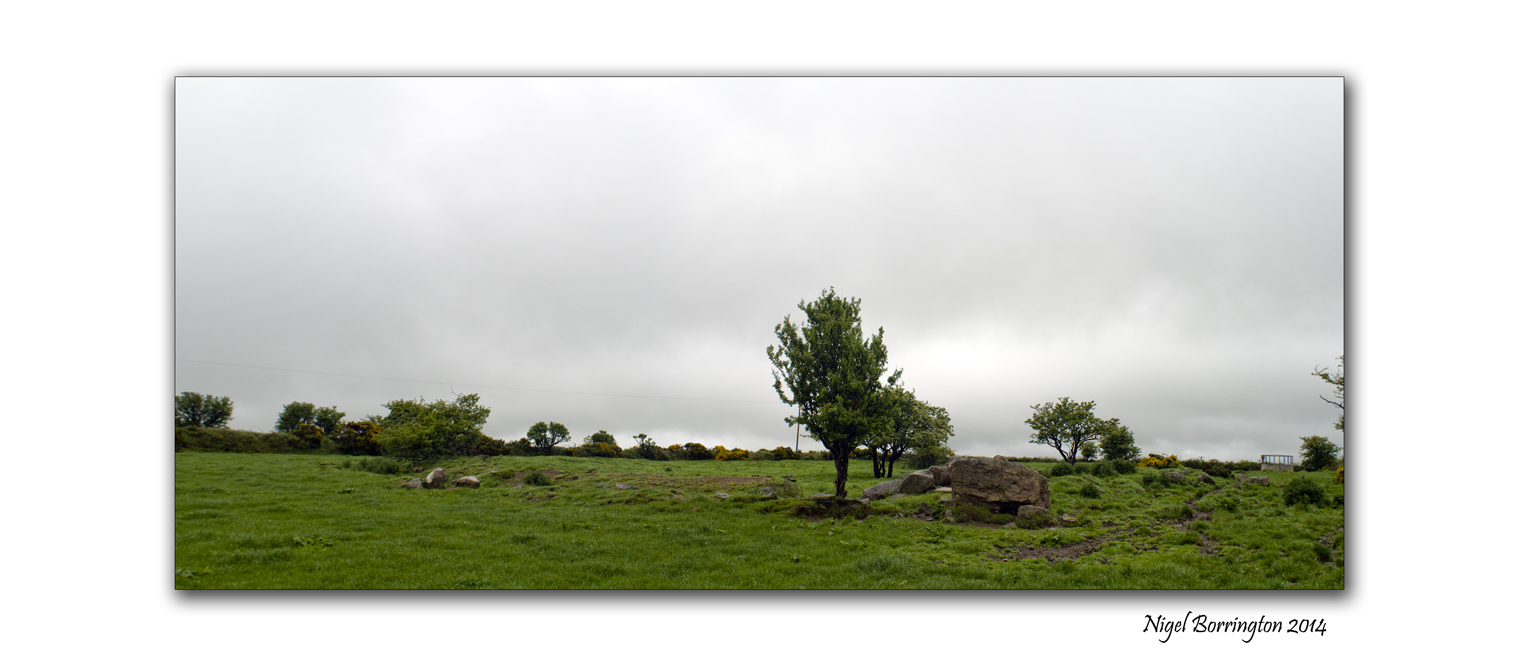
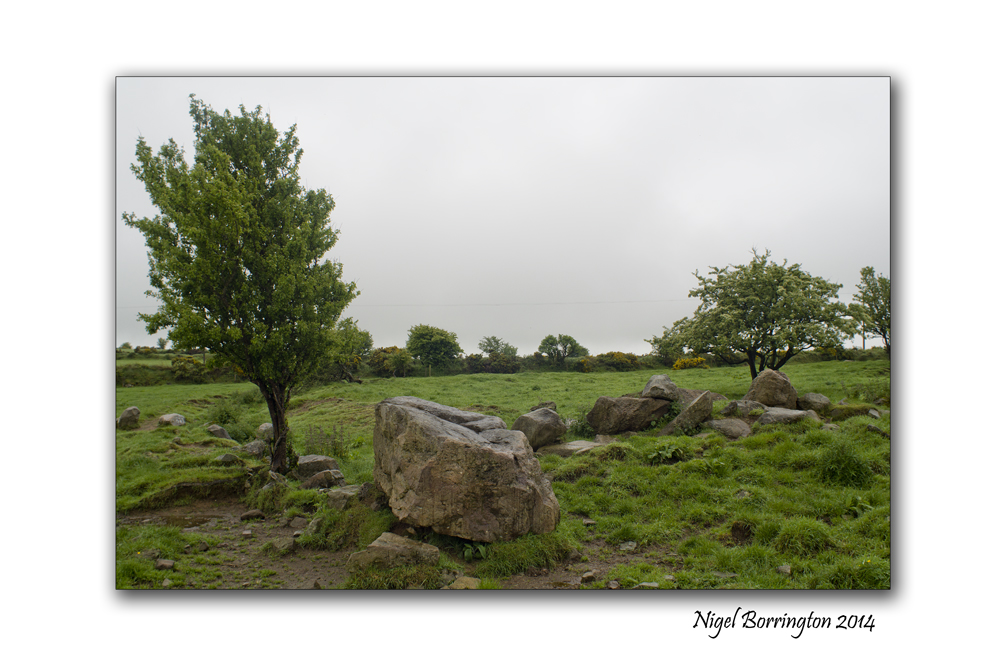
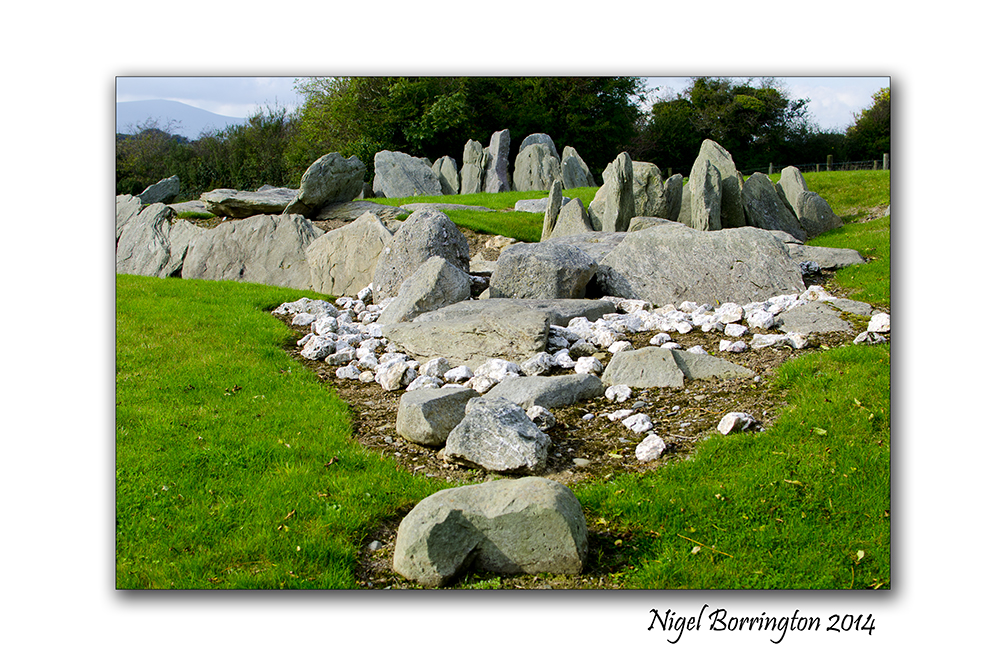
The images here are of the tomb or ring fort on Ballinlinagh hill, county Kilkenny and of the passage tomb of Knockroe :
Gallery

 —————–

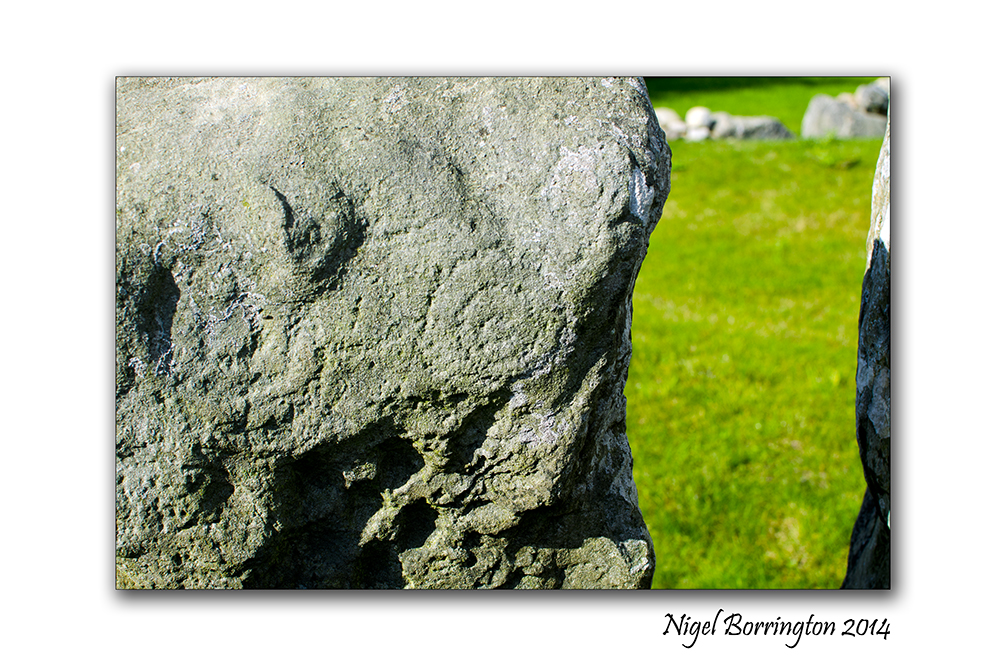
Killamery High Cross

Killamery High Cross, County Kilkenny, Ireland
Landscape Photography, Nigel Borrington
Killamery High Cross
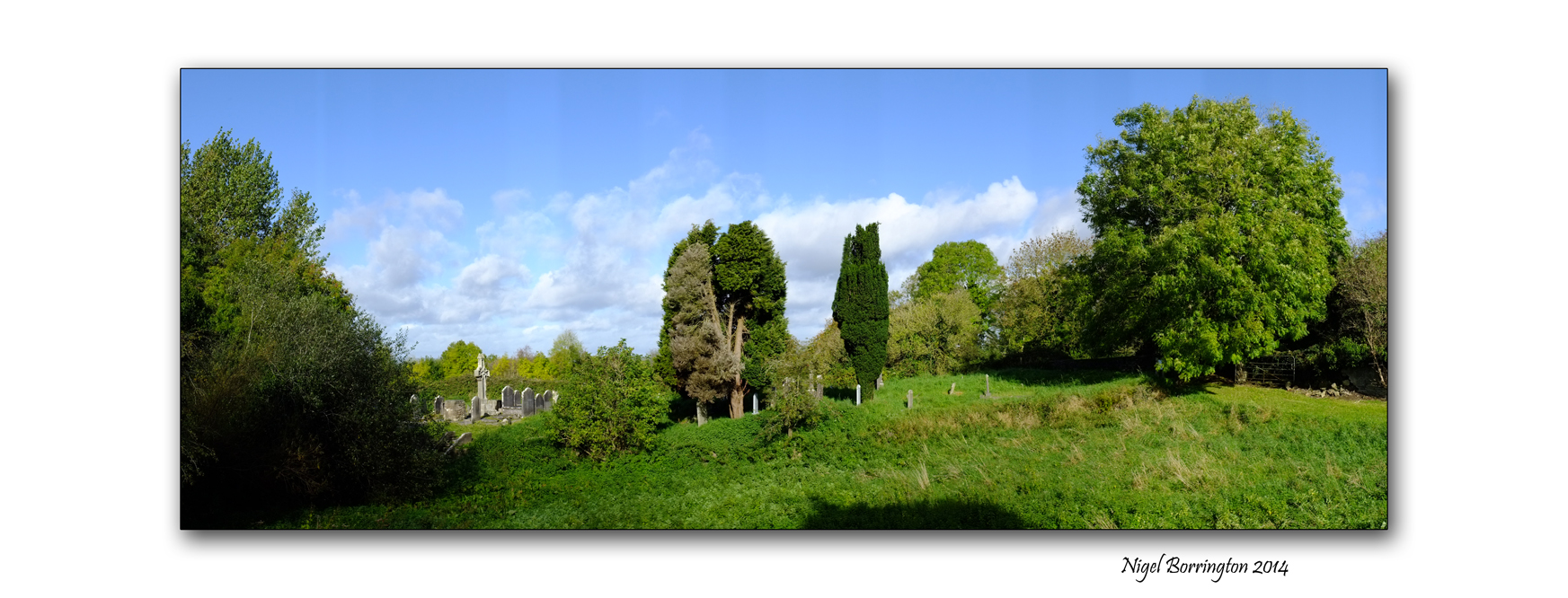
Located in an old grave yard very near the county Kilkenny and Tipperary border, is one of the most impressive of the Irish High crosses. There was a unique early Medieval tradition in Ireland and Britain of raising large sculpted stone crosses, usually outdoors.
These probably developed from earlier traditions using wood, perhaps with metalwork attachments, and earlier pagan Celtic memorial stones; the Pictish stones of Scotland may also have influenced the form.
The earliest surviving examples seem to come from the territory of the Anglo-Saxon kingdom of Northumbria, which had been converted to Christianity by Irish missionaries; it remains unclear whether the form first developed in Ireland or Britain.
The Killamery High Cross, is one of the western Ossory group of crosses. The cross stands at 3.65 metres high and the west face of the cross bears most of the figure sculpture. The east face pictured right, is decorated with three marigolds on the shaft and has a boss in the centre of the head surrounded by intertwining serpents with an open mouthed dragon above the boss.
The cross is known as the Snake-Dragon cross and has a gabled cap-stone and the narrow sides have double mouldings. At the end of the southern arm of the cross there is a panel depicting Noah in the Ark and the end of the northern arm features four scenes centered around John the Baptist. There is also a worn inscription on the base of the western side of the cross which is said to read as ‘OR DO MAELSECHNAILL’ a prayer for Maelsechnaill. Maelsechnaill was the High King of Ireland from 846 to 862.
The western face has a Sun Swastika at the centre and has figure sculpture around the whorl, to the left is a hunting scene and to the right a chariot scene above the whorl is scene showing a figure holding a Baby with another figure to the right of them, below the sun disc is a crucifixion scene. The shaft of this face bears two ornate panels. The top one is a fret pattern and the lower panel is a key pattern.
County kilkenny has five such high crosses, most a likely still in their original setting but being over a thousand years old must of their location will have changed.
Some people have a theory that these high crosses were originally larger standing stones used in pagan stones circles or passage tombs, the form of the cross being sculpted into them during the times of the pagan’s conversion to Christianity. In Ireland this would have been during the time of Saint Patrick.
It was felt much more effective when converting people to Christianity to convert original locations for the use of the early church, including fresh water springs.

Fallen standing stone marking a well/spring
In Ireland most springs would have been the location of worship to river or fresh water gods or goddess, in post pagan times many of these locations became holy wells dedicated to a Christian saint. Most even the forgotten spring above still have the original pagan standing stone in place , used to help find and mark the location of the spring and to leave offerings to the gods and goddesses ( Well dressing ).
Gallery

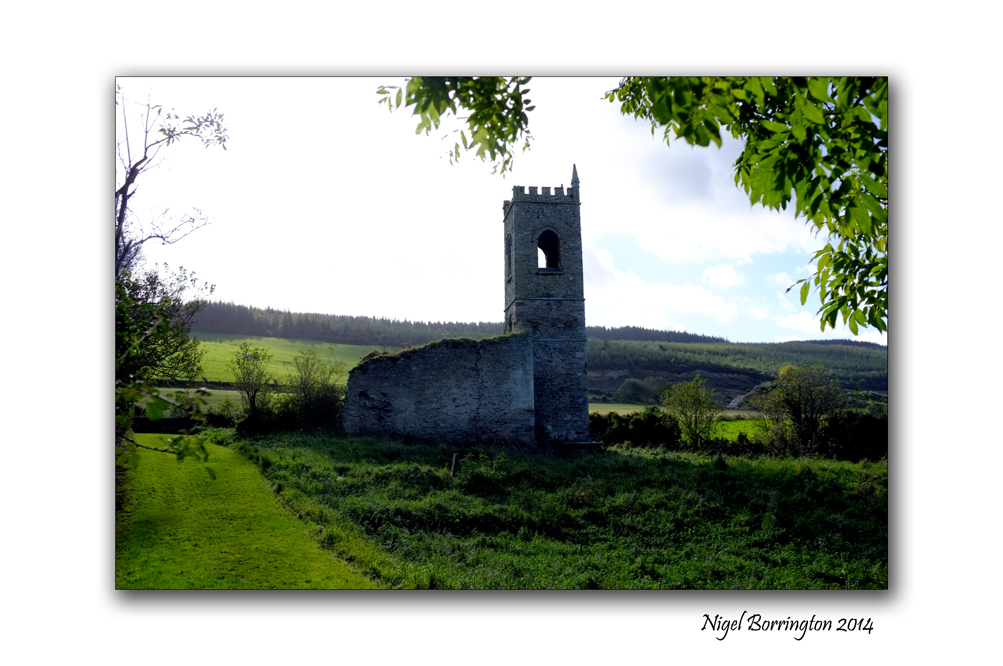

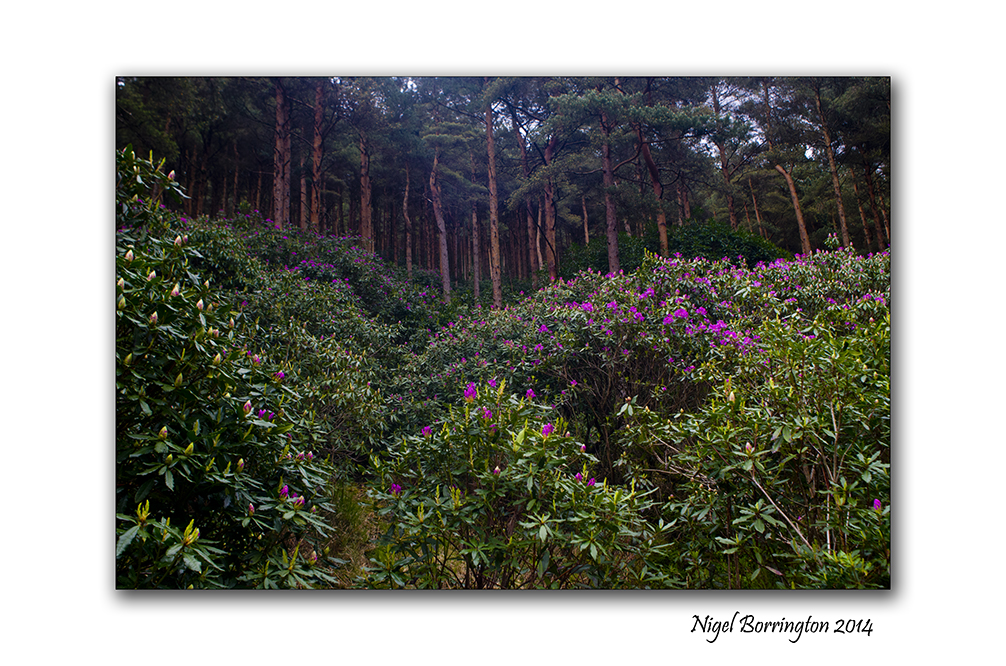
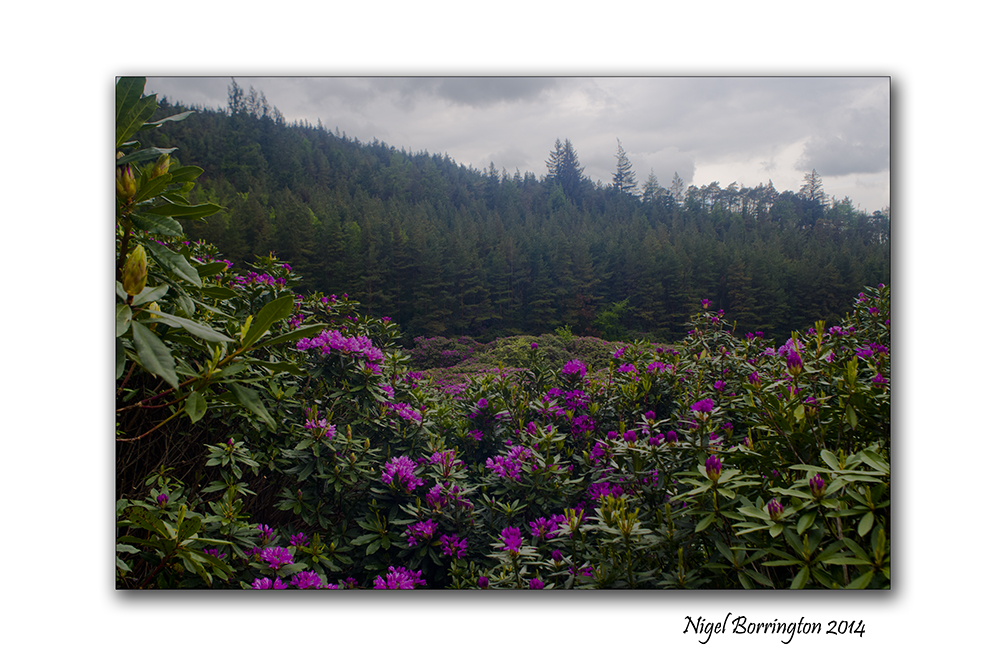
Rhododendron laden hillsides, Poem and Image gallery.

Rhododendron at the Vee, County Tipperary
Landscape Photography : Nigel Borrington
Rhododendron laden hillsides
Summer
Comes ’round again,
Bringing life back to flow’rs.
Roses shall start to bloom once more,
And mighty White Oaks shall be green with leaves.
Rhododendron laden hillsides
And Lady Slippers nod:
Slowly fading
Summer.
~Timothy~
Rhododendron hills , Image Gallery




Ghost house , Poem By : Robert Frost – 1915

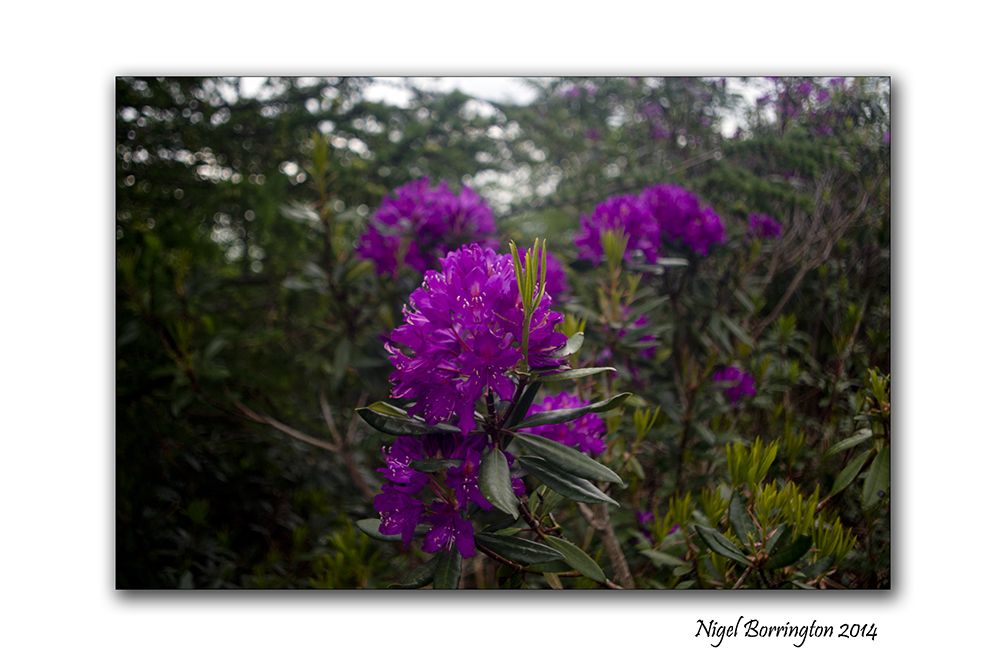
Derelict old house at Durrow , Co Laois, Ireland.
Irish landscape photography : Nigel Borrington
Ghost House
Robert Frost (1915)
I dwell in a lonely house I know
That vanished many a summer ago,
And left no trace but the cellar walls,
And a cellar in which the daylight falls,
And the purple-stemmed wild raspberries grow.
O’er ruined fences the grape-vines shield
The woods come back to the mowing field;
The orchard tree has grown one copse
Of new wood and old where the woodpecker chops;
The footpath down to the well is healed.
 .
.
I dwell with a strangely aching heart
In that vanished abode there far apart
On that disused and forgotten road
That has no dust-bath now for the toad.
Night comes; the black bats tumble and dart;
The whippoorwill is coming to shout
And hush and cluck and flutter about:
I hear him begin far enough away
Full many a time to say his say
Before he arrives to say it out.
 .
.
It is under the small, dim, summer star.
I know not who these mute folk are
Who share the unlit place with me—
Those stones out under the low-limbed tree
Doubtless bear names that the mosses mar.
They are tireless folk, but slow and sad,
Though two, close-keeping, are lass and lad,—
With none among them that ever sings,
And yet, in view of how many things,
As sweet companions as might be had.

Sunset over the mountain of Slievenamon , Star break and Poem.

Sunset over slievenamon, County Tipperary
Landscape Photography : Nigel Borrington
Evening walks near the mountain of Slievenamon, county Tipperary can bring some great evening views, the sun sets right over the top on the mountain where there is a cairn, a burial place of a king dating back over six thousand year.
On one of these walks I was lucky enough to get these sunset images and I put some words to them in this poem:
Star break, a Poem
Behind the High cloud the sun is coiling and uncoiling
a dragon wrapped around itself spitting fire behind the mountain top
For a moment as I think of older days it is eclipsed entirely
aith a hidden God in the ground where six thousand years ago
A star fell from nowhere and lit up this very mountain’s top
turning westward by day, into oblivion leaving its mark.
 .
.
A king wise in these things called this a “star break”
and of no danger to the integrity of his vision
Star, soon the mountain will shrug you off you will drop below
the ragged edge line into tomorrow while I take the only path.
I came to find what I left, now ahead of me and waiting behind
a light of dawn, time of ages drifting through the night.
Me…..
Changing light as the river flows.

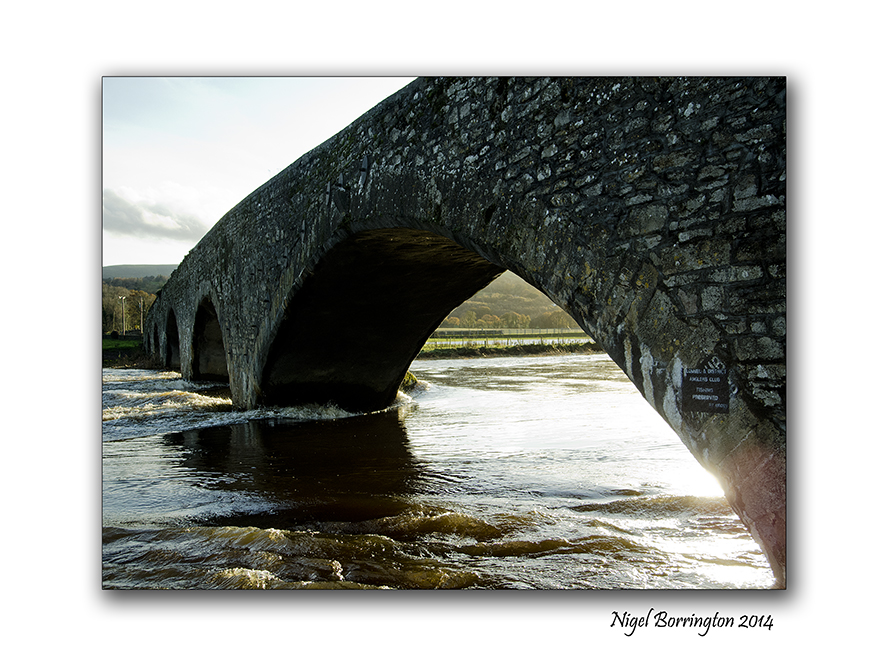
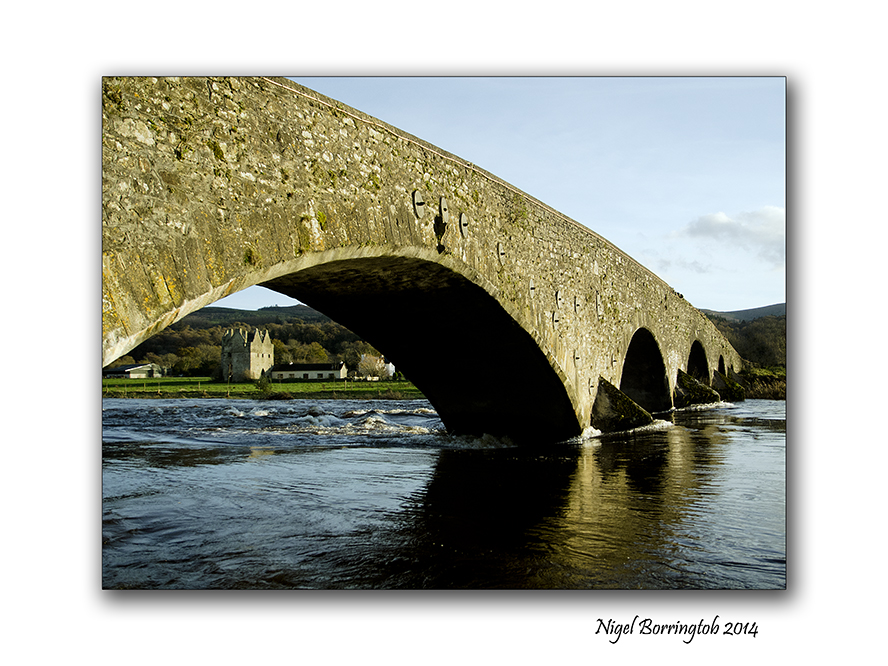
Sir Thomas bridge, clonmel, County kilkenny
Landscape photography : Nigel Borrington
The changing light as the river flows
Walking along the river Suir on a springtime evening with the sun about to set, is a wonderful experience by itself but one of the things I love the most is the changing light. The light changes almost moment by moment and the reflections of the sun from the water is just amazing as you walk past some of the many bridges.
One of the best things about photography however is the ability to capture just how much this light does change, I recently put together this small collection of images and I think they show the way the light changes as the sun sets.
The entire landscape changes from yellows and and olive greens to deep blues and blue – greens.
I personally feel that the type of sun light and the different colours it brings is one of the most powerful tools in the art of photography and taking a little time to record your most loved locations at different times of day and weather conditions is a powerful learning tool for getting strong images and for you to have fun with and enjoy yourself.
The changing light as the river flows, Gallery

Images from a field of blue bells – Poem : ‘The Bright Field’ by R. S. Thomas

Our dog Molly, In the Blue bells field, Slievenamon, County Tipperary
Landscape Photography : Nigel Borrington
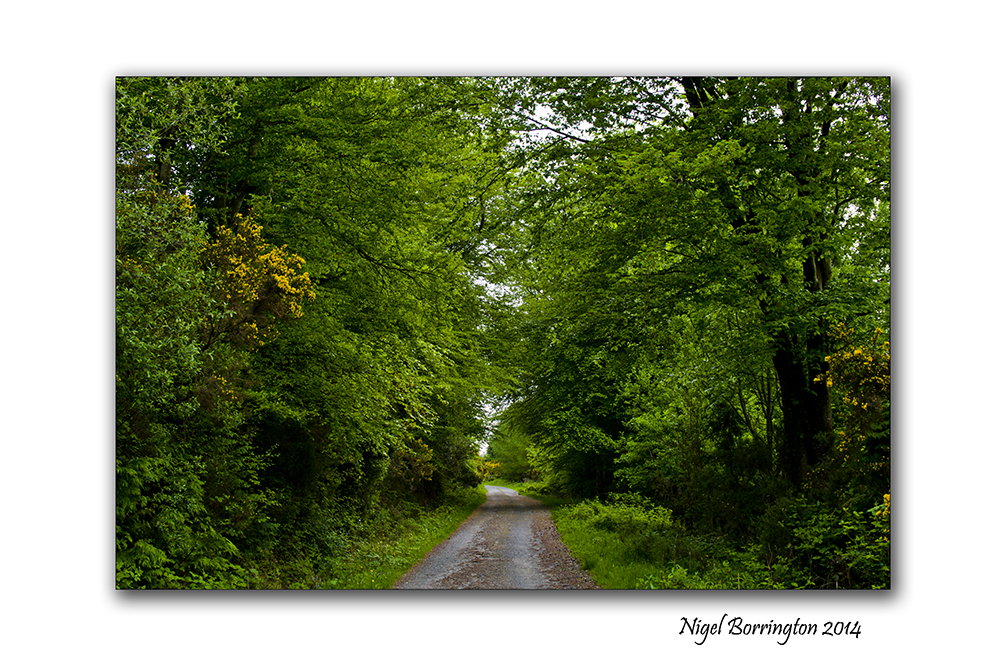
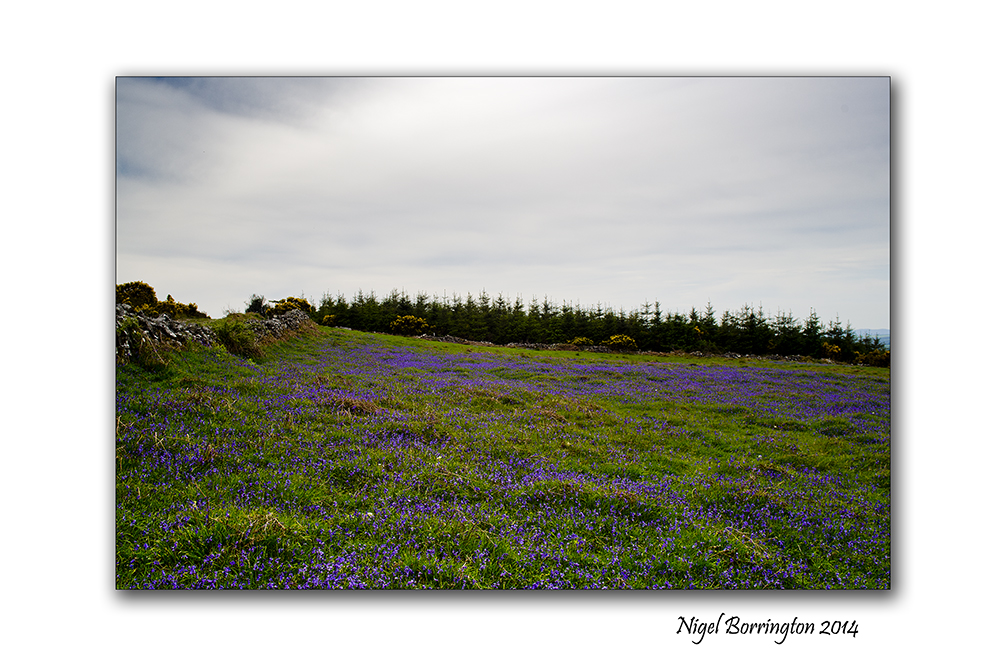
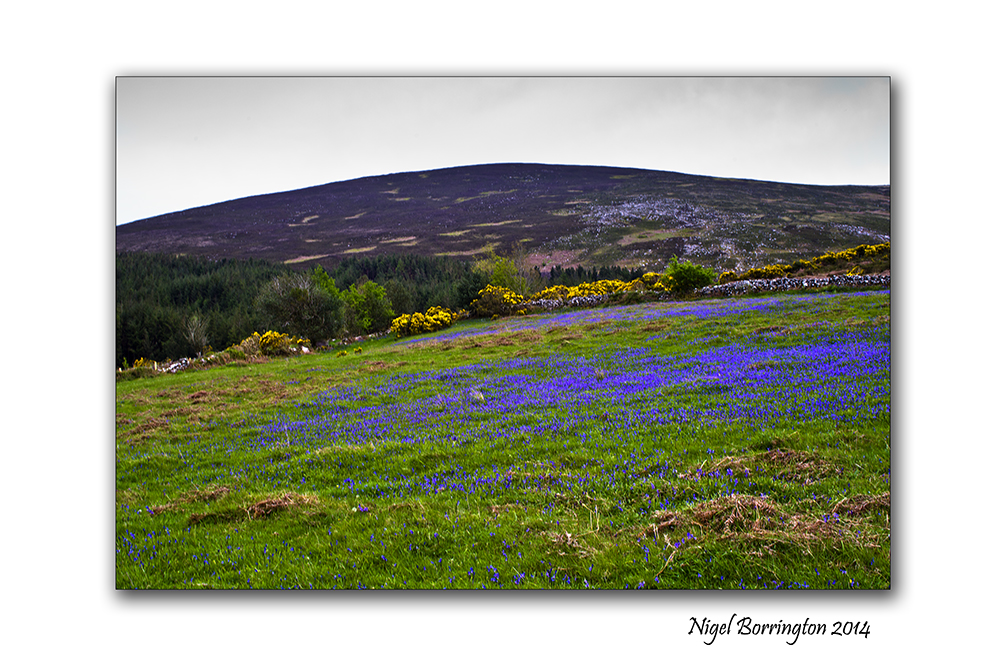
Located on the west slopes of Slievenamon , County Tipperary, is a small yet wonderful little field .
To reach it you have to walk some thirty minutes through wood-lands and up a mountain track, finally reaching a gate. The site that welcomes you in May is that of a field full of blue bells and an old derelict farm cottage. This cottage would be able to tell some amazing stories and if it only could!
Above the field are the mountain slopes that I am much more use to seeing, with mountain heather and scrub lands, streams and baths.
I have visited this field many times, its a great location during the summer and a wonderful escape and resting place after a walk to the top of the mountain.
I just wanted to share one of my most loved local locations here and also one of my most loved Poems by R. S. Thomas, which I feel is perfect for this post ….
The Bright Field
by R. S. Thomas
I have seen the sun break through
to illuminate a small field
for a while, and gone my way
and forgotten it. But that was the
pearl of great price, the one field that had
treasure in it. I realise now
that I must give all that I have
to possess it. Life is not hurrying
on to a receding future, nor hankering after
an imagined past. It is the turning
aside like Moses to the miracle
of the lit bush, to a brightness
that seemed as transitory as your youth
once, but is the eternity that awaits you.
The field a Gallery



Kilkenny, Ireland , 500 million years ago
Landscape view of the kilkenny/Tipperary boarders
Irish Landscape photography : Nigel Borrington
Kilkenny, Ireland 500 Million years ago
During the week I posted an article about the area around the mountain of Slievenamon, County Kilkenny.
I hope over the summer to post many times about this area and show many of the foot hills along with the main mountain itself. A fellow blogger margaret, suggested that the formation of the mountain and the oval shape of the extending foot hills could be volcanic in their origins, I do think at some point in the long distant past this could be true.
I found the following summary of the geological history of county Kilkenny so I am going to share it here as I found it fascinating to think of some 500 million years of history of Ireland and its Geology.
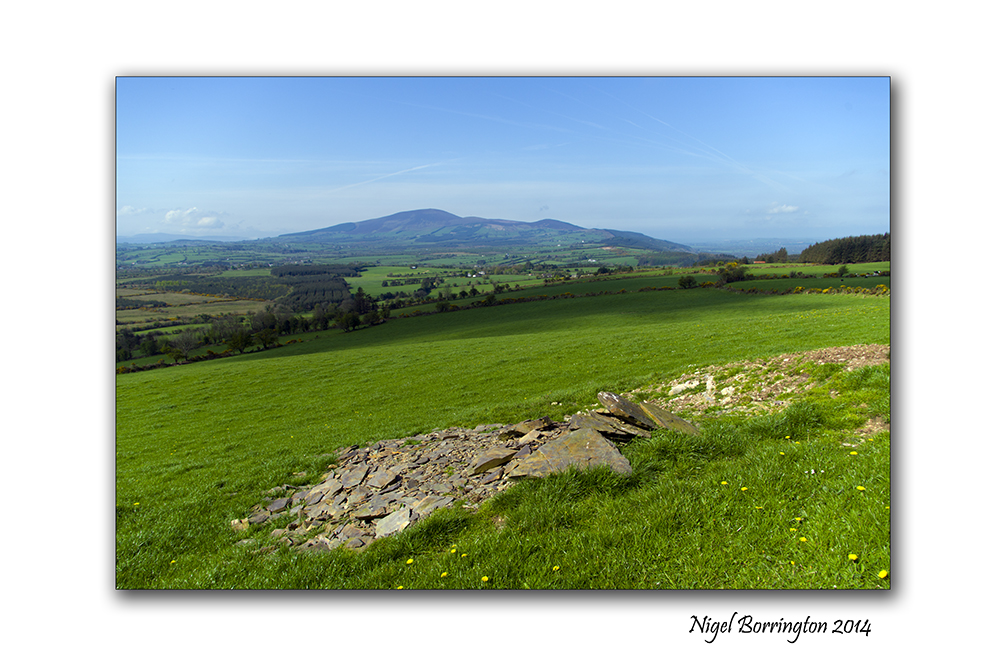
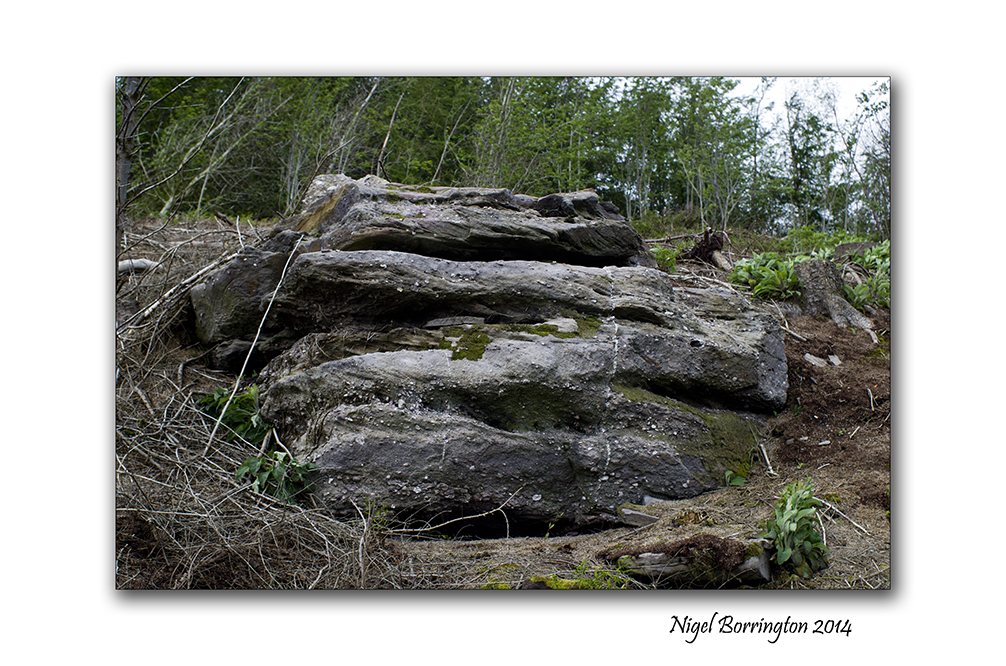
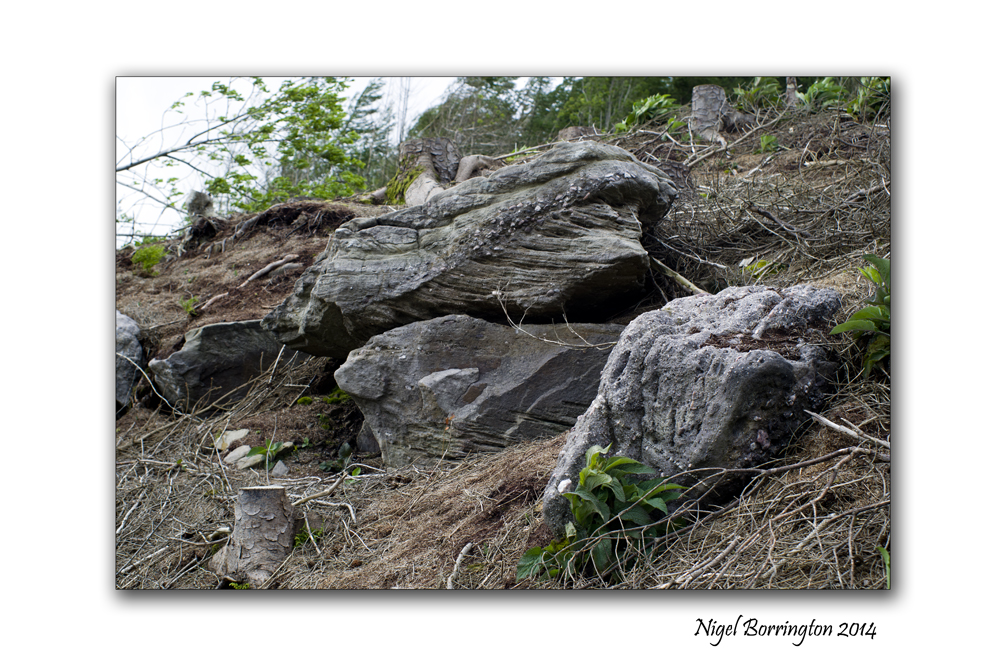
Also a Gallery of images that show some of the amazing ice age rocks and landscape formations that can be found through out this great little part of the world.
Geologic History of Kilkenny
500 Million years ago – Sedimentary rock formed under parts of eastern Kilkenny, which was
under the sea.
400 Million years ago – the two parts of Ireland, the island, were fused together under the ocean.
400 Million years ago – the mountains at Brandon and the uplands at Tullogher were formed, again
under the sea.
350 Million years ago – Kilkenny was at a dry land stage with plant life that fossilized into the
yellow sandstones of Kiltorcan.
345 Million years ago – Kilkenny was submerged for about 20 Million years under a tropical shallow
ocean. Lime deposits from this era eventually became the limestone found commonly in
Kilkenny and Ireland. The polished limestone provides the famous Kilkenny marble.
320 million years ago – Kilkenny covered by a muddy delta and swamps, with deposits eventually
forming todays sandstones and coal.
250 Million years ago – a mountain building era resulting in the east-west mountains of Munster,
and the Walsh Mountain area between Millinavat and Slievenamon.
2 Million years ago – Ice age glacial periods intermixed with cold and warm periods begin.
500,000 years ago – A warm period known as the Gortian. Kilkenny is covered by forest of birch,
oak, pine, leder, fir, holly, yew, heather and grass.
200,000 years ago – A cold period lasting 70,000 years called the Munsterian. All of Kilkenny (and
Ireland) is covered by a sea of ice. Movement of Glaciers helped form the soil of today.
130,000 years ago – A warm period known as the Glenavian lasting about 60,000 years with climate
much like today.
70,000 years ago – A cold phase lasting about 60,000 years known as the Midlandian stage. Ice
sheets covered the northern half of Kilkenny, from Callan to Goresbridge. The southern have
would have included tundra grasslands and some woodland. Animal life is noted during this
time, including wooly mammoths, wolf, arctic fox, brown bear, the giant Irish Elk, reindeer
and lemmings.
10,000 years ago – The ice begins to melt, sea levels begin to rise and plants begin to reappear
in all of Kilkenny.
9,000 years ago – A birch dominated forest covers much of Kilkenny.
8,000 years ago – Hazel and pine become part of the forest population.
Landscape and Geological Gallery


Slievenamon on May mornings. Poem By : John Milton
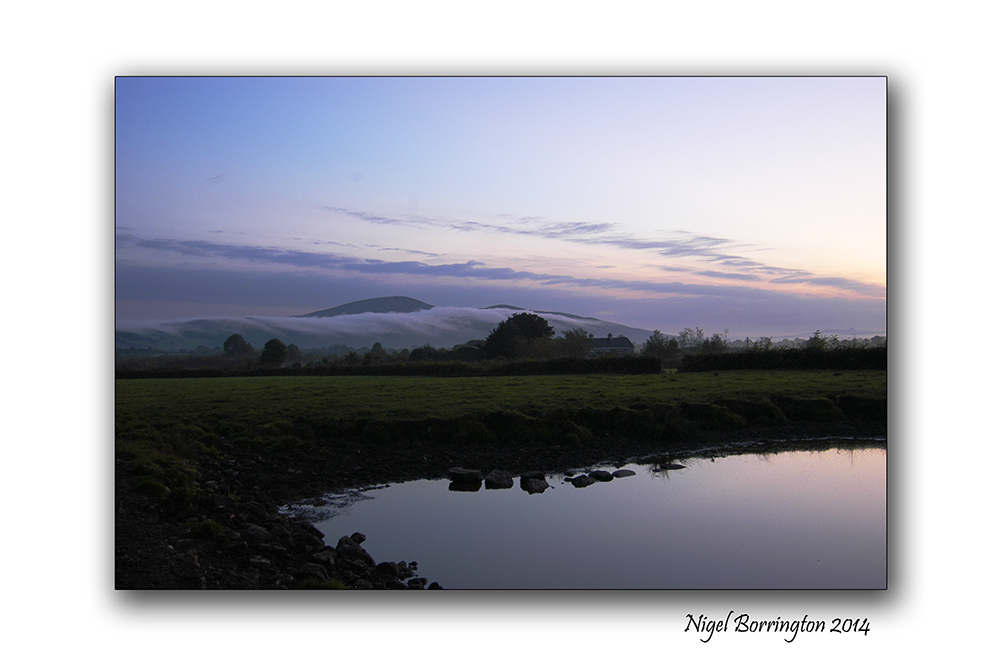
Fields around Slievenamon, early Morning mist
Landscape Photography : Nigel Borrington
On May mornings.
Poem By : John Milton
Now the bright morning Sun,
Comes dancing from the East.
leading with her the Flowers of May,
who from her green lap throws
The Cowslip, and the pale Primrose.
Hail bounteous May that dost inspire
Mirth and youth, and warm desire,
Woods and Groves, are of thy dressing,
Hill and valley, doth boast a blessing.
Thus we salute thee with our early Song,
And welcome you, and then wish you a so long.
A May Morning Gallery




Landscape and Geology around Slievenamon, county Tipperary

Panoramic Landscape of Slievenamon, county Tipperary
Forty square miles around Slievenamon
The Mountain of Slievenamon is located about 10km from our home and over the last few years I have walked up and around the this mountain a lot.
It is an area I am very taken by and love exploring.
For anyone who has visited the mountain and surrounding area, something that you may not have noticed however it the complete scale and geology of the mountain. When you look at the area from a satellite image (Like the one below) the geology of the area becomes a bit clearer.
To the left of the image above is the main mountain peek of Slievenamon, itself Rising up some 721m above the landscape below, however this is not the full extent of the mountain, spreading out towards the east and from the north and south of the mountain run two ridges of hills. These ridges them selves form an oval shape that meets some eight miles away from the mountain top.
Photographic project
Over the summer I want to record this complete area returning to the top of the mountain and then walking and recording as much of the ridge’s as possible.
History and Megalithic locations
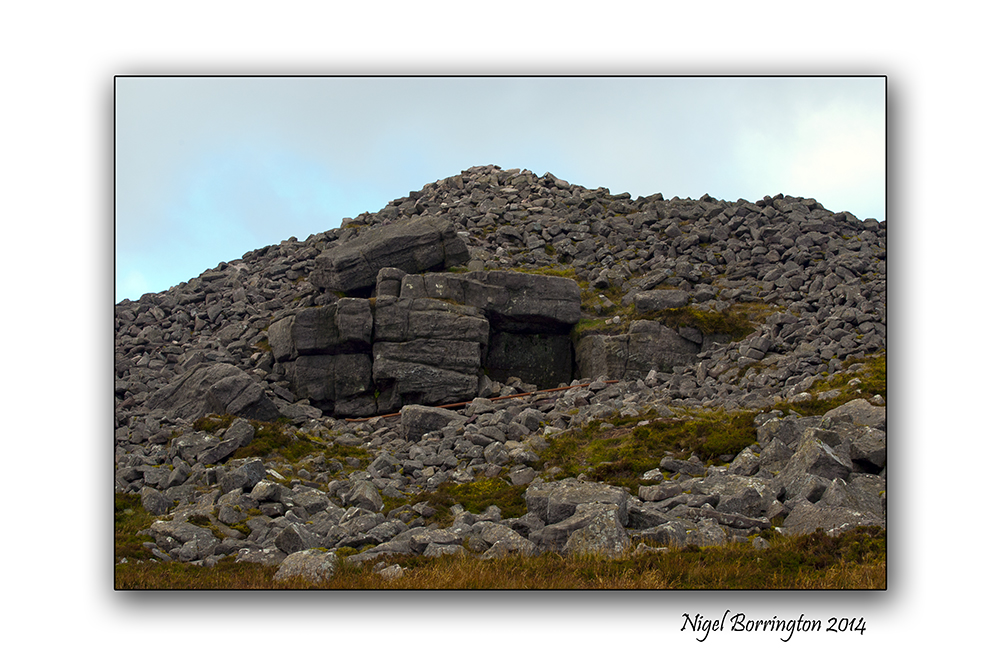
One of the main reason I have for starting this project on the blog, is that for sometime I have noticed that both at the very top of Sleivenamon and around the oval of the extended foot hills are many Megalithic sites ( Stone circles, Passage tombs, Graves and Standing stones).
I will come back to the satellite image above and mark the location of any landscape images I post.
Above all I just want to share the landscape that I live in and reflect upon some of its history and enjoy myself getting to know it as much as I can.
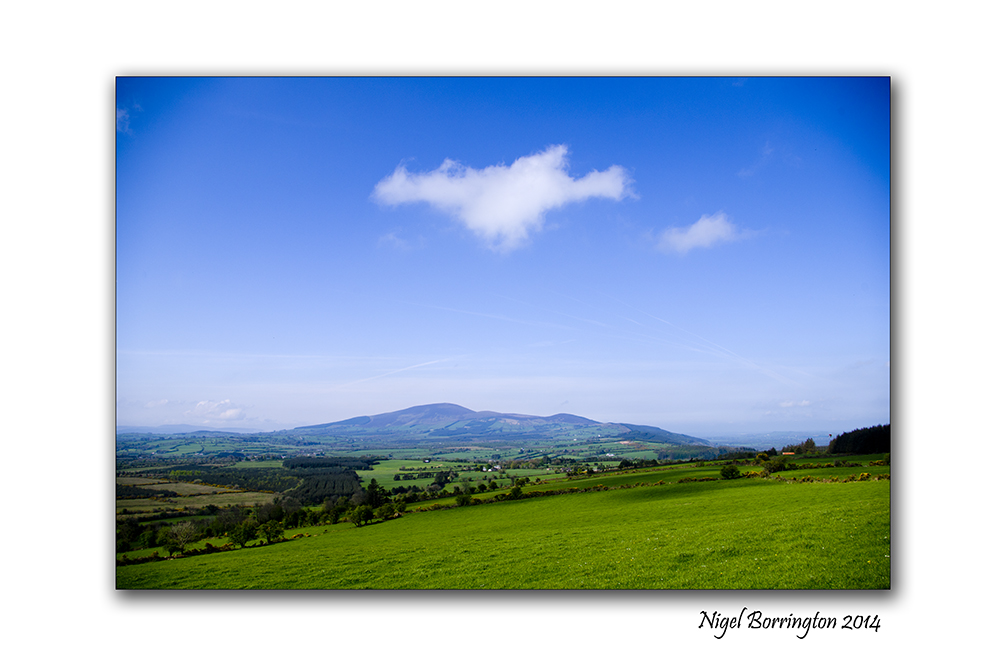
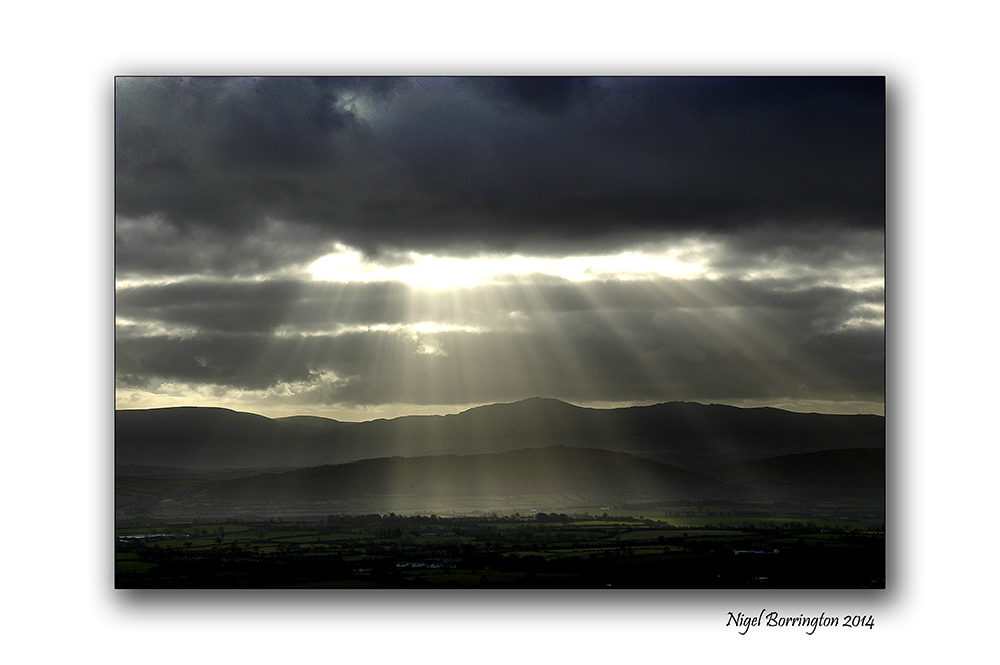
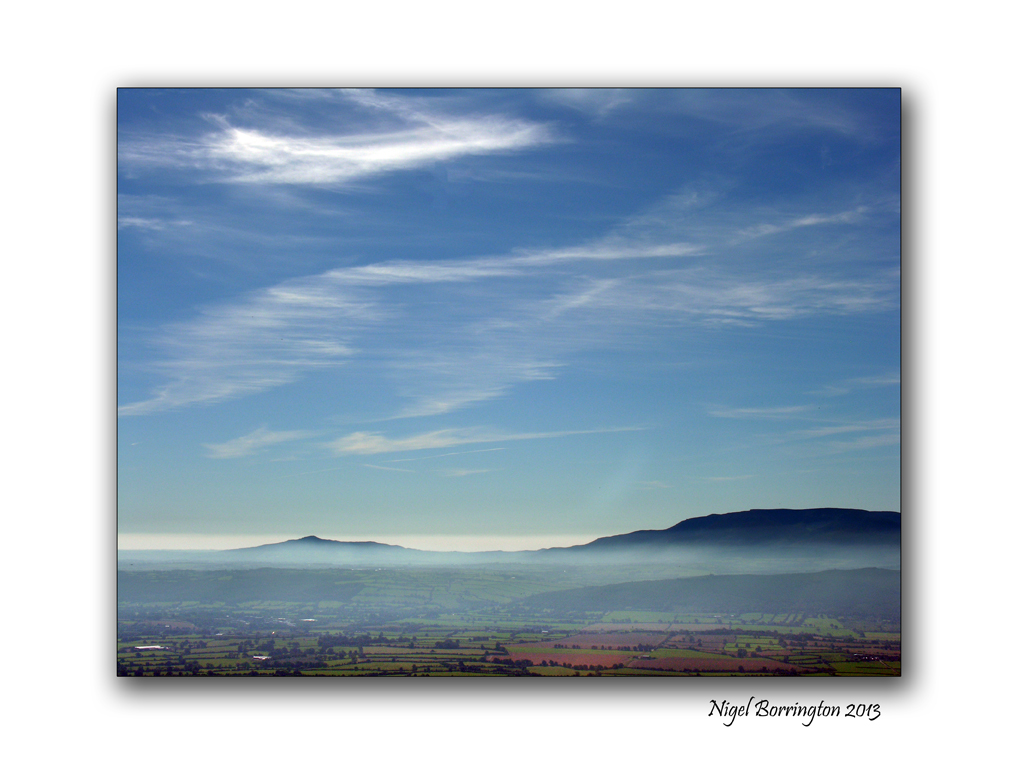
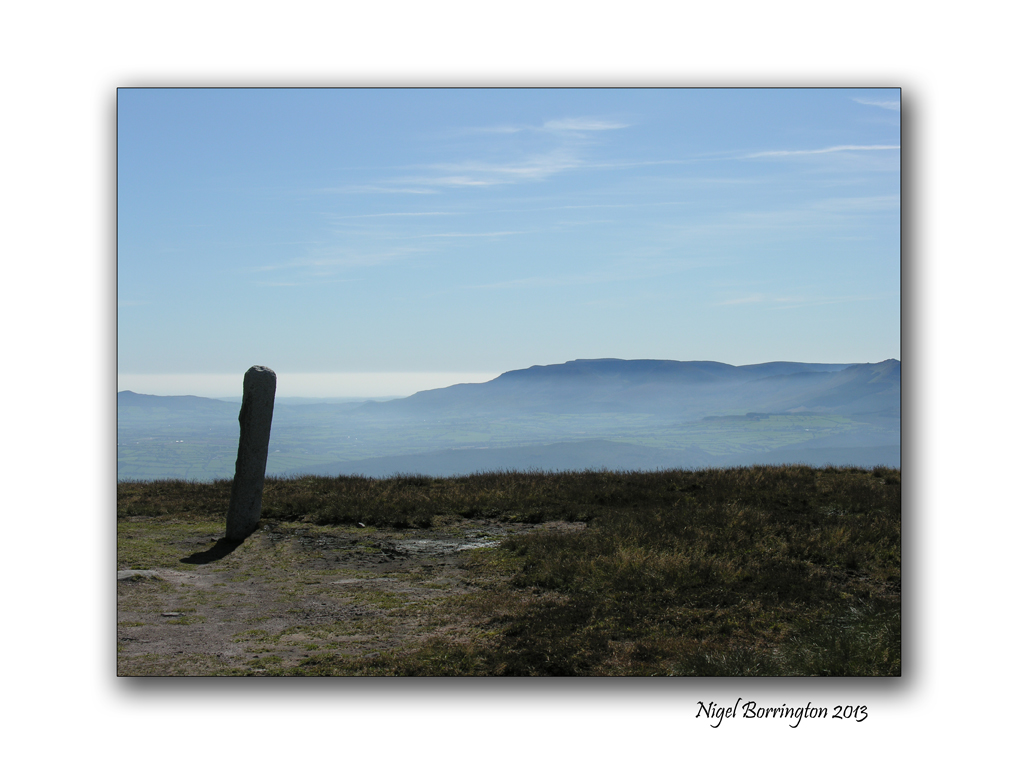
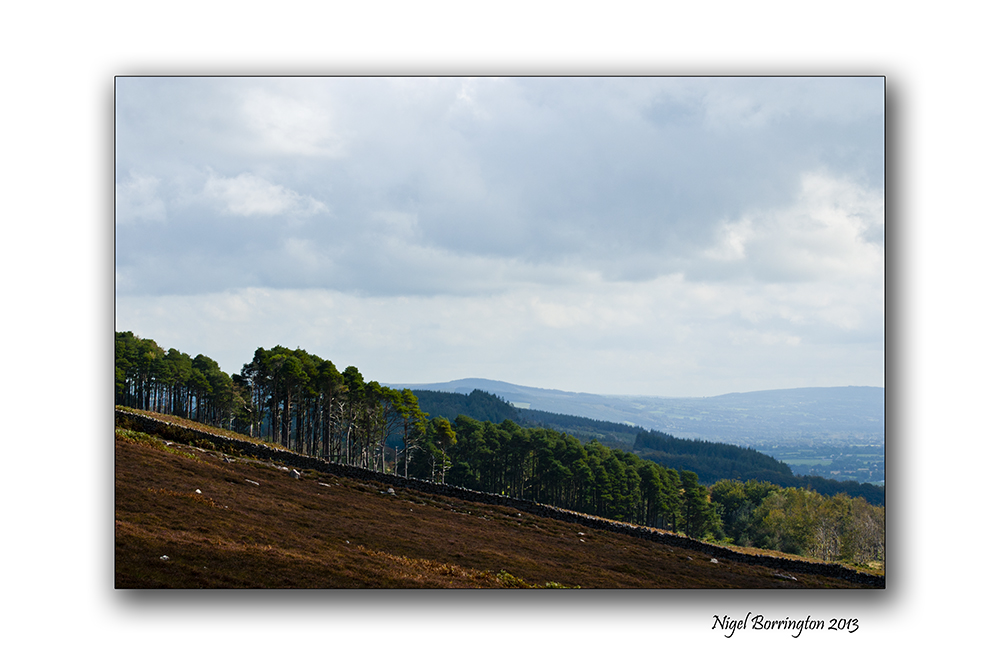
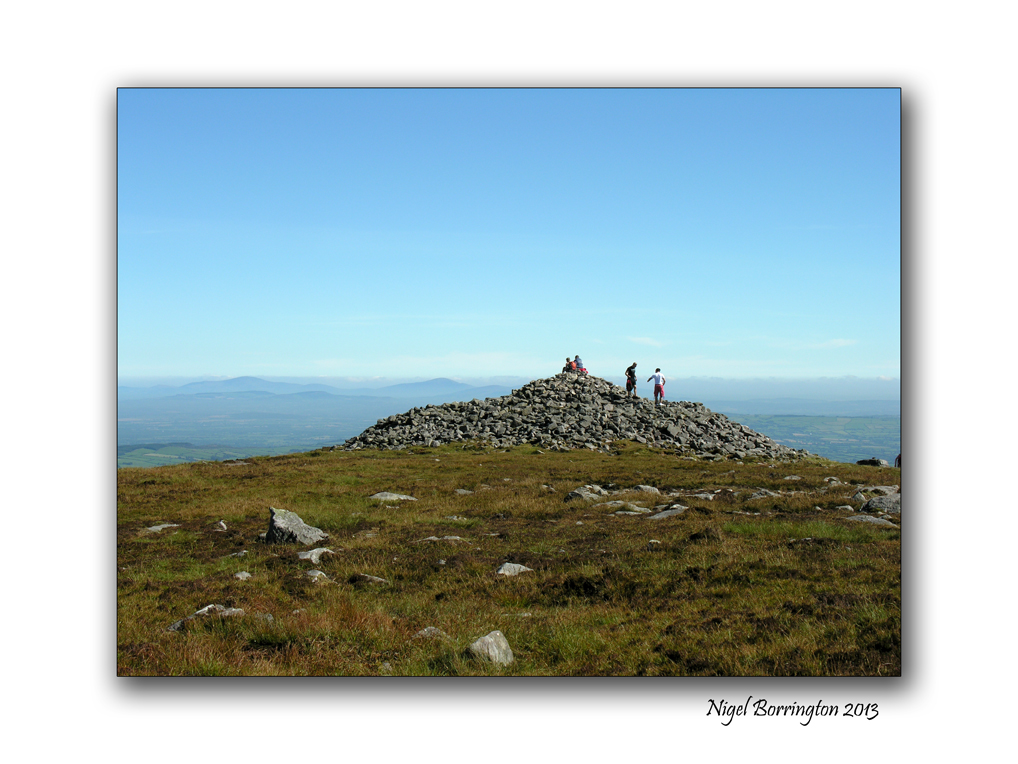
The Landscape of Slievenamon
The Blue Monday’s of May – Sitting in the Bluebells
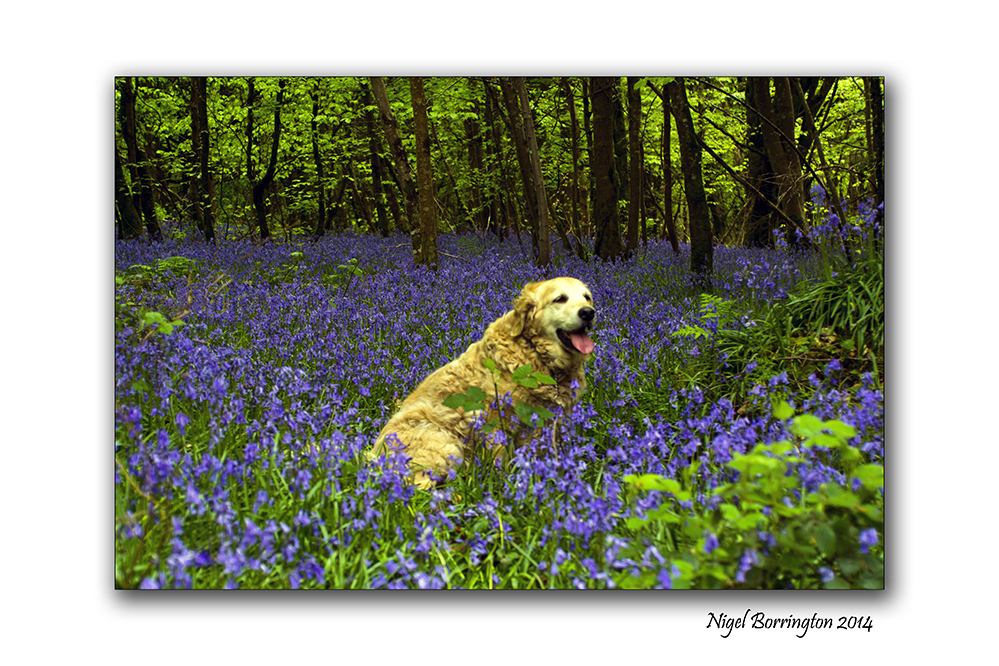
Bluebell Monday in Knockadrina woods, County Kilkenny
Landscape photography : Nigel Borrington
Blue Monday’s of May
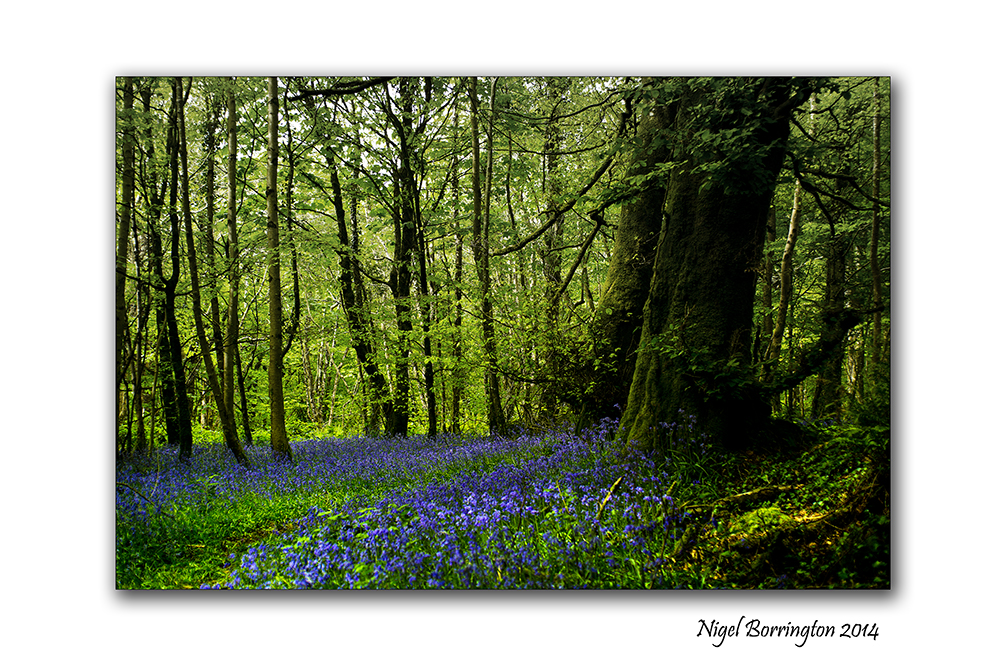
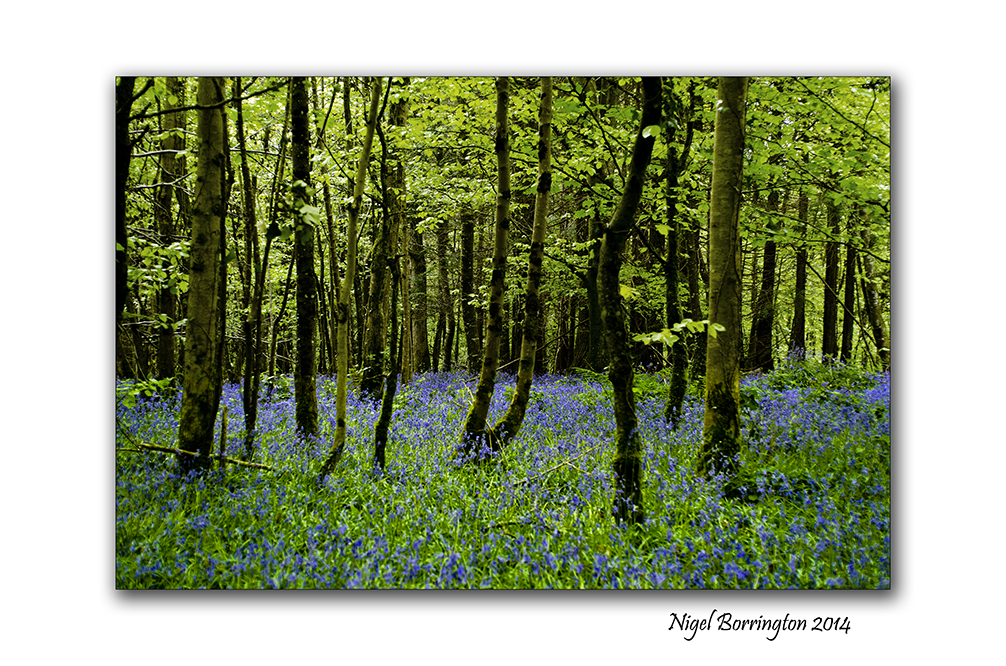
Monday again and the month of May is truly in full flight in our local woodlands, In an effort to get my week started I took Molly for a walk in the woods and found the entire woodland floor covered in Blue bells.
Each Springtime these wonderful flower, fill the woods with the colour blue and its just a fantastic moment. It easy to forget just how green the these place are for most of the year. We get the odd purple orchid and yellow of other flowers but only during May do we get the colour blue filling the forest floor in every direction.
The Month of May – a blue month…….


The greens of these trees these leaves, poem by : Shalom Freedman

Landscape view of Ballyhenebery. County Kilkenny
Irish Landscape photography : Nigel Borrington
The greens of these trees these leaves
By : Shalom Freedman
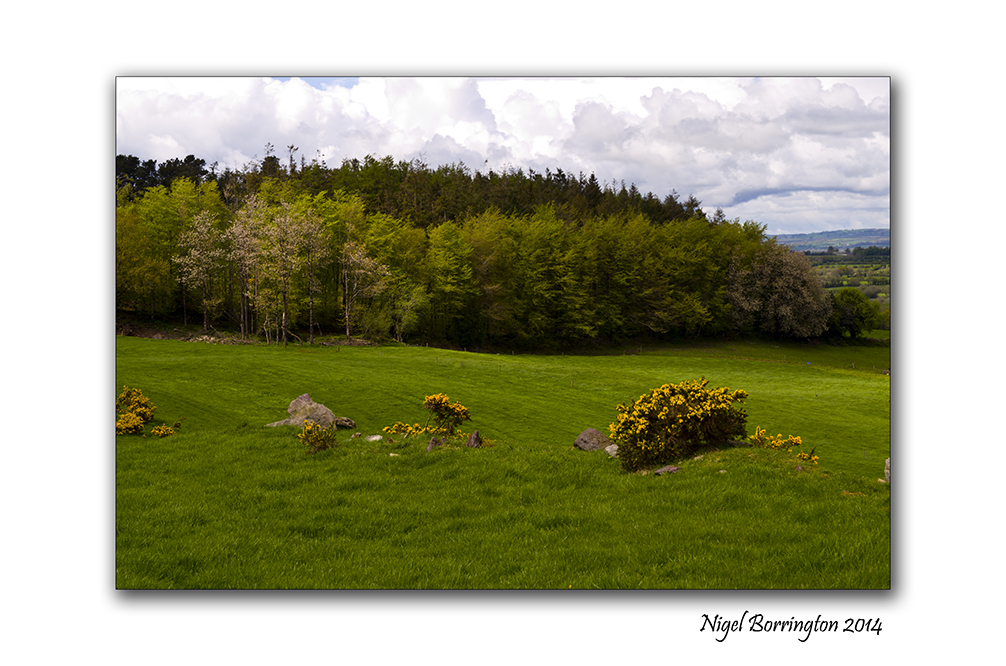
The greens of these trees these leaves
The many shades of green-
Olive green and deep dark green and yellow green
And greens I see but have no name for-
So many shades of light and beauty in green
And I with my eyes loving them all
And delighted and made happy by them all-
 .
.
Wondering why and how this world
Has so so much Beauty
Just in green alone –
And being deep in happiness
At being alive
And loving them more
In wondering why and how
I will not one day
be able to see them all again..
Finding the Silver light of other days , Gallery and a Poem by : Thomas Moore

Memories of silver light, Glencommon, County Kilkenny
Landscape photography : Nigel Borrington
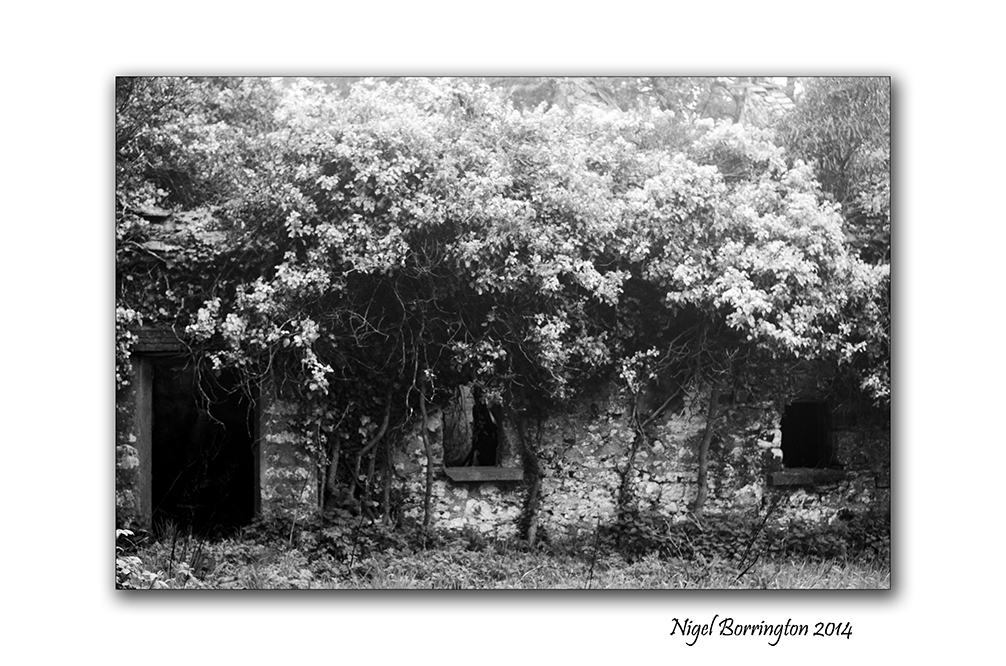
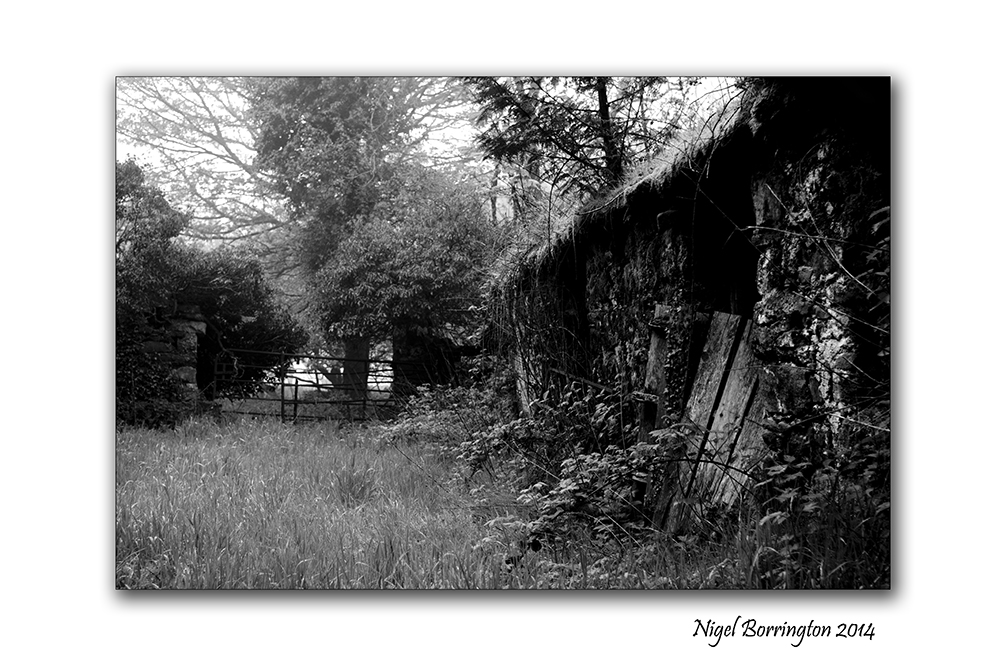
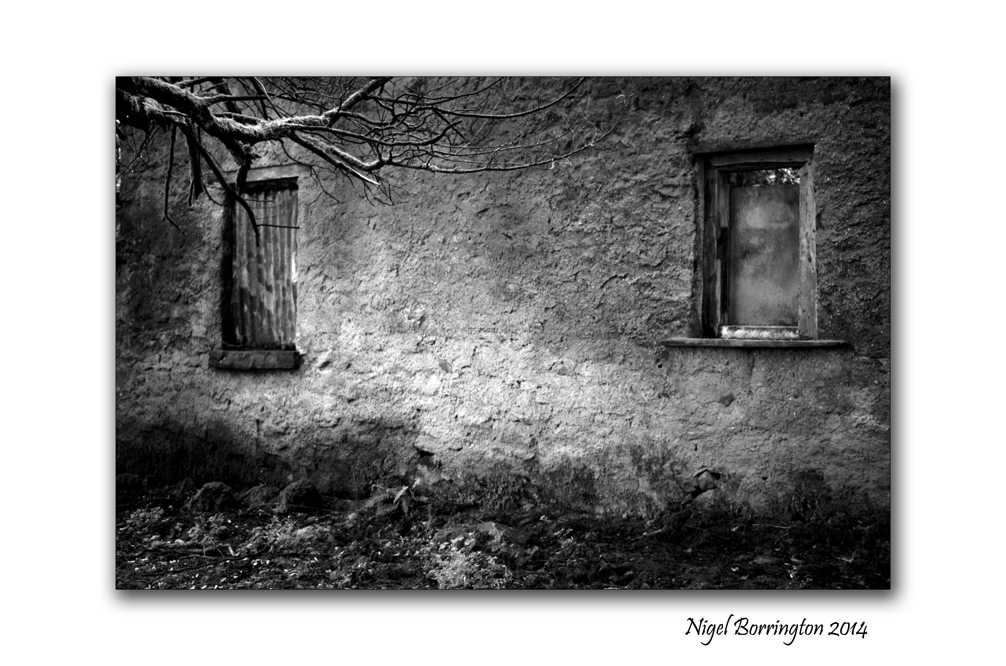
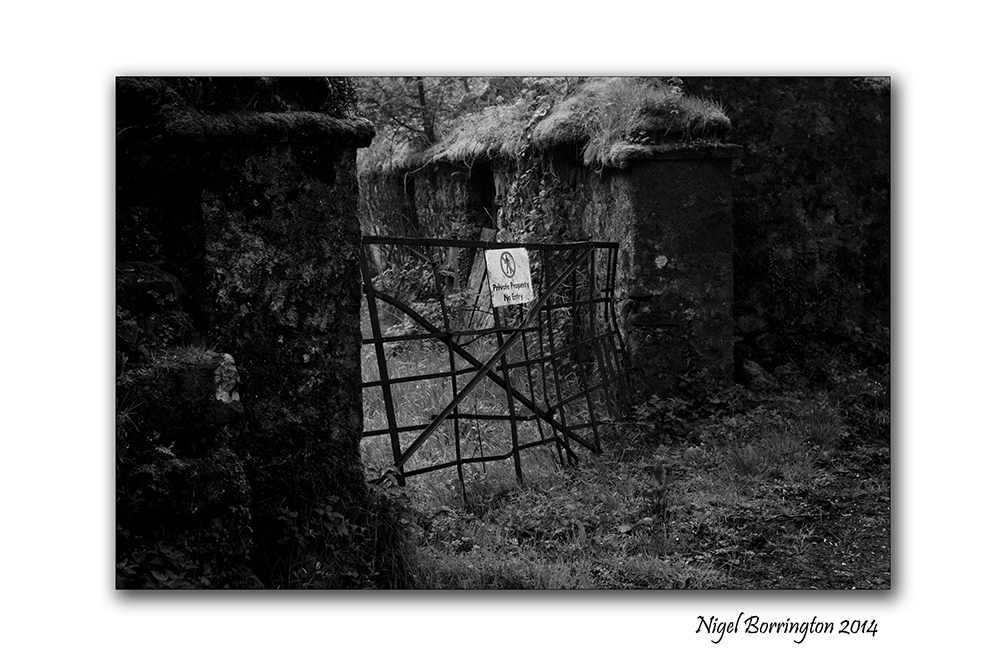
On the top of the hill at Glencommon, county Kilkenny is the Ghostly remains of an old farm.
Last Sunday morning I took a walk up the hill in the mist with my camera and took these images, it was a very haunting experience but one I really enjoyed.
The poem below by Thomas Moore came to mind as the mist of the day seamed to recreate the past of this wonderful old place, how many memories it must hold yet all of them lost in the mists of time.
The Light of Other Days
By Thomas Moore
1779-1852
Often, in the stilly night,
Ere slumber’s chain has bound me,
Fond Memory brings the light
Of other days around me:
The smiles, the tears
Of boyhood’s years,
The words of love then spoken;
The eyes that shone,
Now dimm’d and gone,
The cheerful hearts now broken!
Thus, in the stilly night,
Ere slumber’s chain has bound me,
Sad Memory brings the light
Of other days around me.
When I remember all
The friends, so link’d together,
I’ve seen around me fall
Like leaves in wintry weather,
I feel like one
Who treads alone
Some banquet-hall deserted,
Whose lights are fled,
Whose garlands dead,
And all but he departed!
Thus, in the stilly night,
Ere slumber’s chain has bound me.
Sad Memory brings the light
Of other days around me.
Finding memories in the silver light , Gallery




World wide megalithic Portal tomb’s a connection to county Kilkenny .

portal tomb at NewMarket, county Kilkenny
Landscape Photography : Nigel Borrington
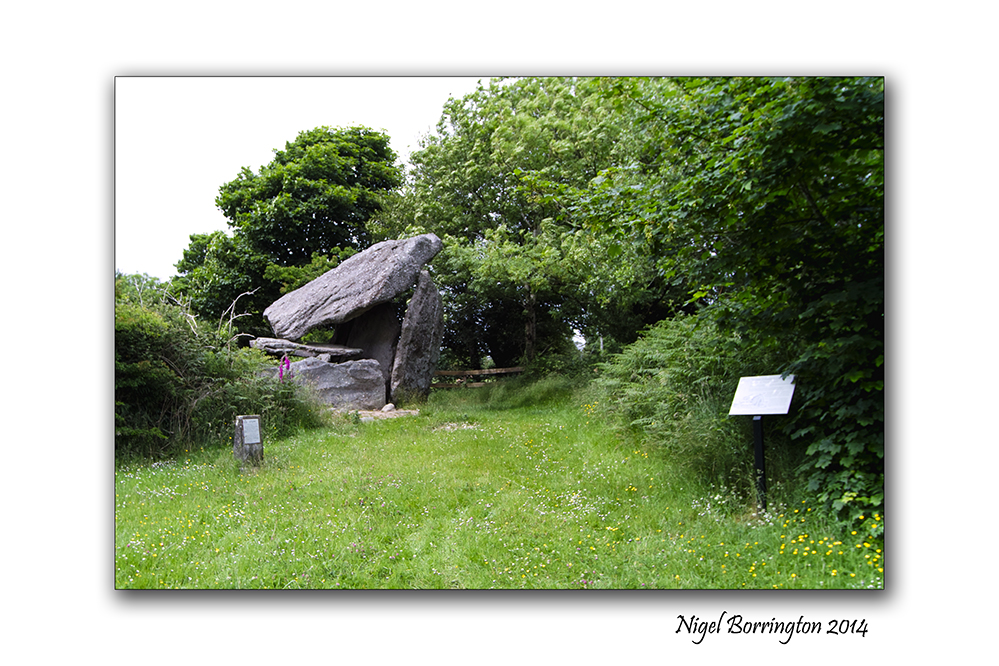
Portal tombs, Dolmen’s, portal graves or quoit are a type of single-chamber megalithic tomb, usually consisting of two or more upright stones supporting a large flat horizontal capstone (table), although there are also more complex variants. Most date from the early Neolithic period (4000 to 3000 BC). Dolmens were typically covered with earth or smaller stones to form a barrow. In many instances, that covering has weathered away, leaving only the stone “skeleton” of the burial mound intact.
It remains unclear when, why, and by whom the earliest tomb’s were made. The oldest known tomb’s are in Western Europe, where they were set in place around 7000 years ago.
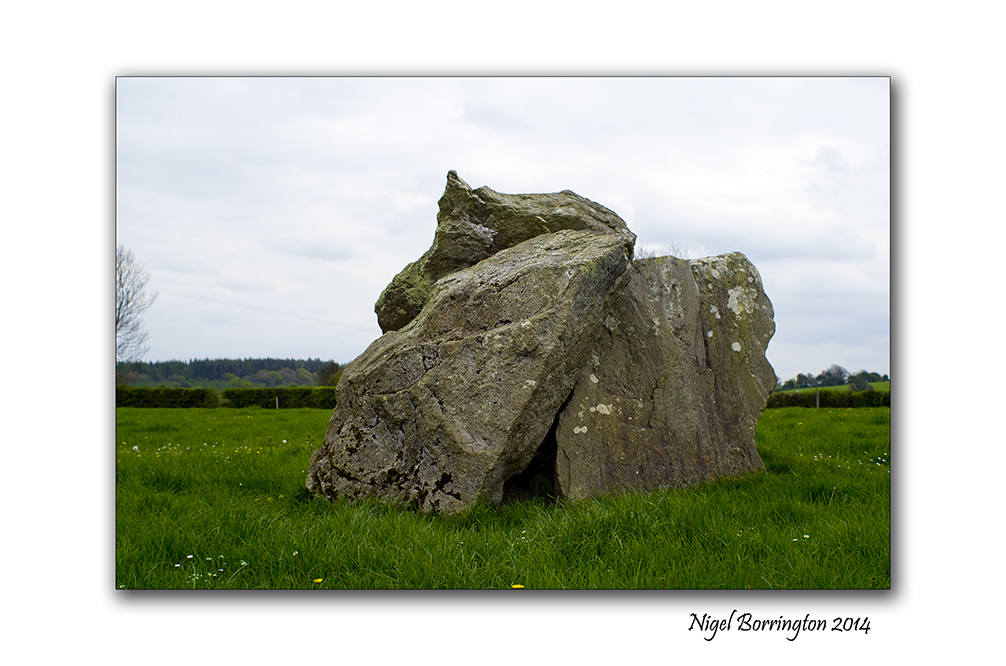
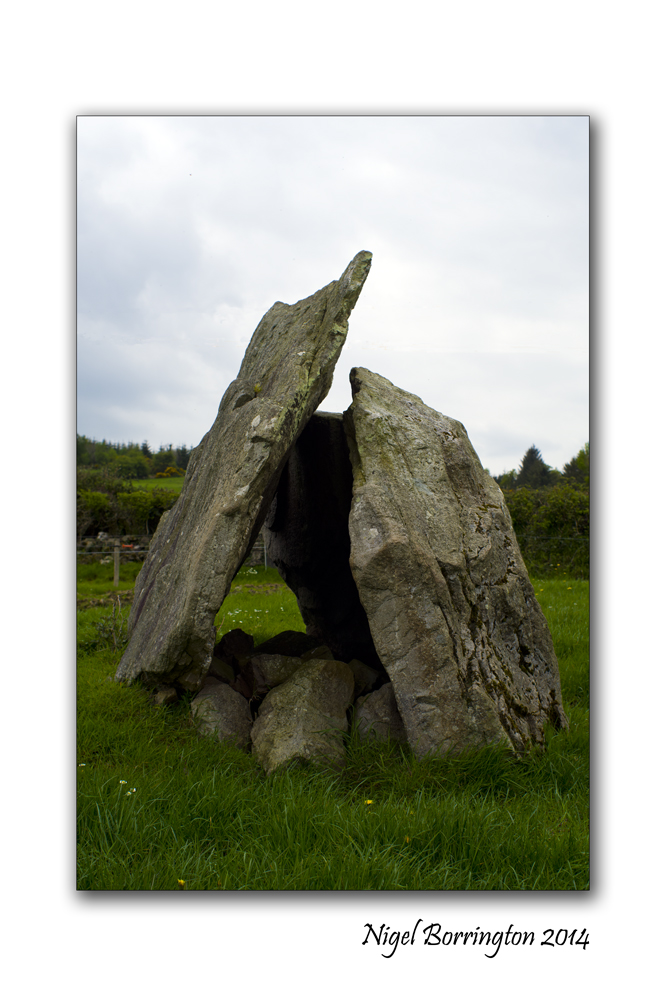
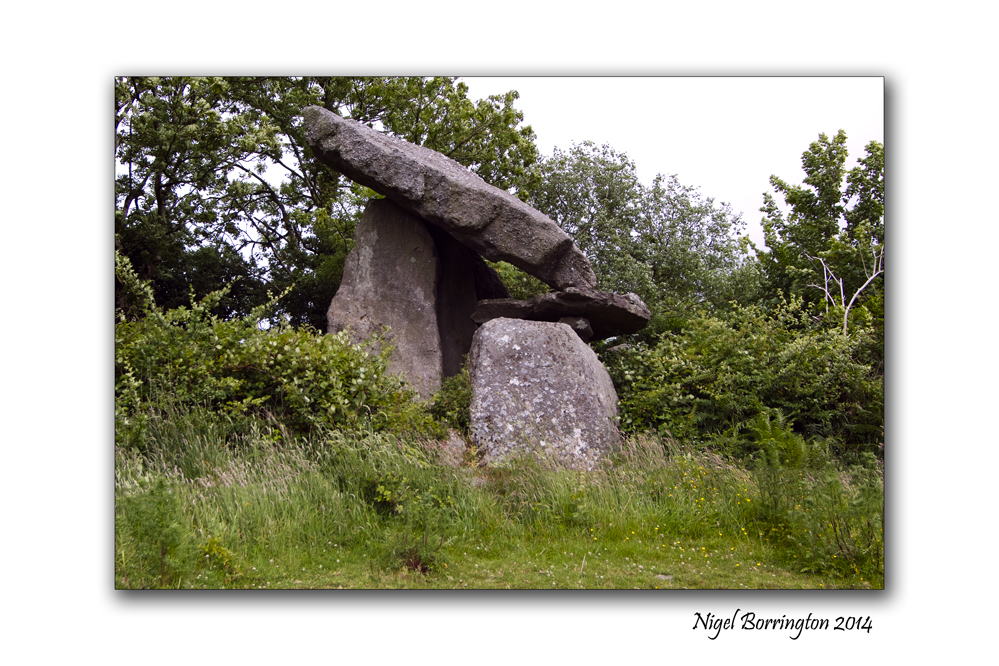
County Kilkenny has two such Tombs , the Newmarket tomb and the Kilmogue Portal Tomb at Harristown, both are dated to some 6000 years of age.
I did a little more reading on these tombs and it is very clear that they are very widely spread through out the world as the link below details :
http://en.wikipedia.org/wiki/Dolmen
The link shows their world wide locations as :
3.1 Asia
3.1.1 Korea
3.1.2 India
3.1.3 Eurasia (North Western Caucasus) Circassia
3.1.4 Middle East
3.2 Africa
3.2.1 Horn of Africa
3.2.2 North Africa
3.3 Europe
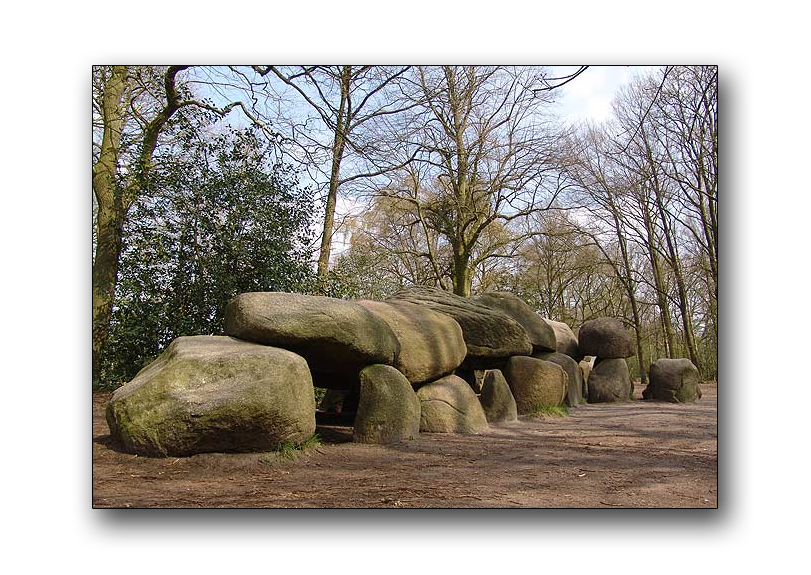
T-shaped Hunebed D27 in Borger-Odoorn, Netherlands.
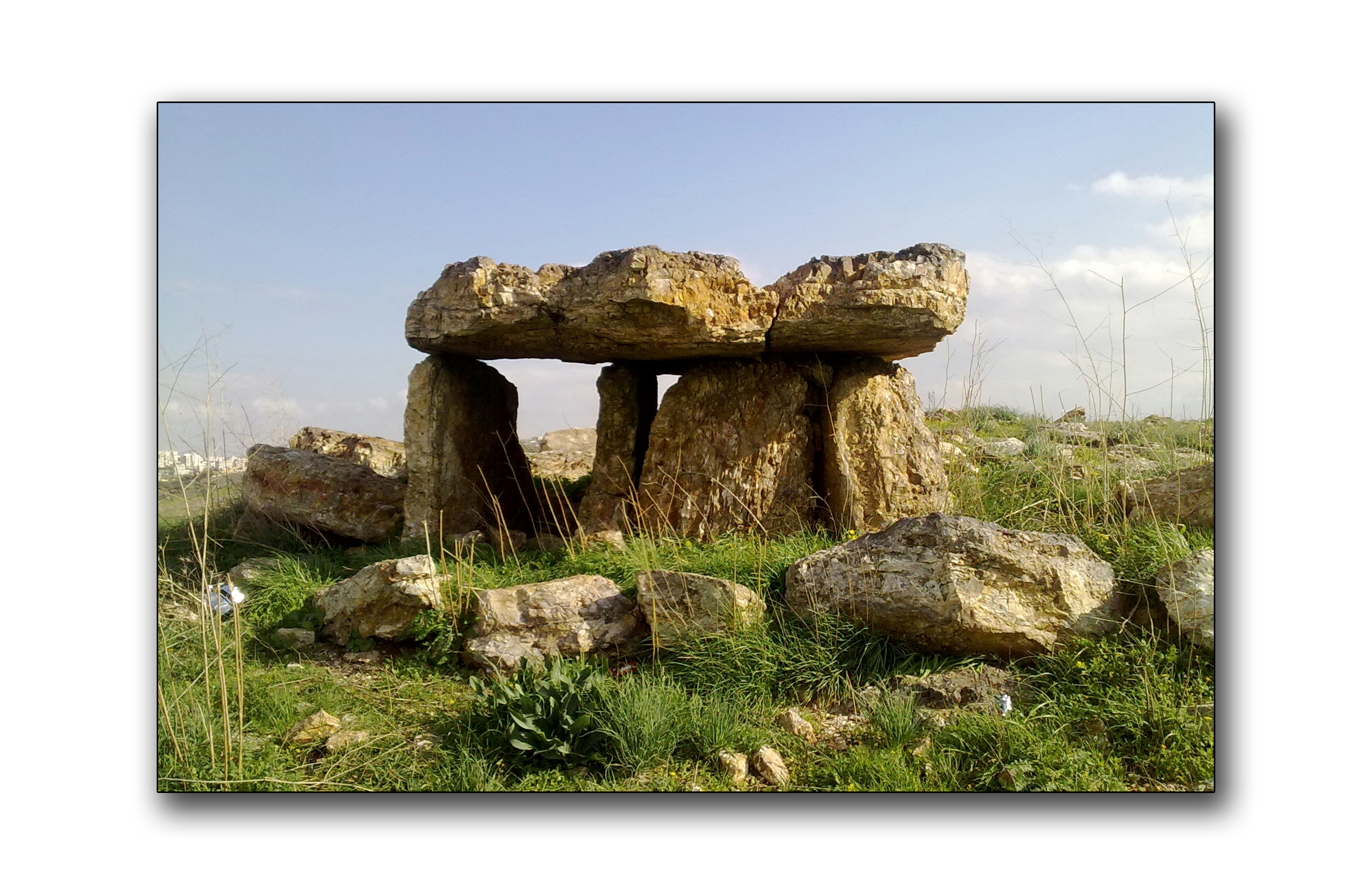
Flint Dolmen in Johfiyeh, Jordan
You can see the full details by the link above!
I have been visiting these sites in Ireland for sometime as in Ireland we have many passage tombs through out the country.
Understanding however just how international these locations are is very fascinating.
It needs to be remembered that some 6000 years ago very few of the nations we know, if any existed and people travelled without boarders.
The first time anyone gave Ireland a name as such, it was called “Hibernia”.
Hibernia is the Classical Latin name for the island of Ireland. The name Hibernia was taken from Greek geographical accounts. During exploration of northwest Europe (c. 320 BC), Pytheas of Massilia called the island Iérnē (written Ἰέρνη). In his book Geographia (c. 150 AD), Claudius Ptolemaeus (“Ptolemy”) called the island Iouerníā (written Ἰουερνία, where “ου”-ou stands for w). The Roman historian Tacitus, in his book Agricola (c. 98 AD), uses the name Hibernia. The Romans also sometimes used Scotia, “land of the Scoti”, as a geographical term for Ireland in general, as well as just the part inhabited by those people.
Something that becomes very clear is that the peoples who lived in many different world wide locations often shared the same culture, they lived very closely to and with their environment, they were clearly pagan in their beliefs and as such very close to their surroundings.
Life would have been completely different from the life we know, they lived and moved to the cycles of the seasons, they eat and lived of the wildlife and nature that surrounded them, in some season they would have little food if any.
They clearly had Gods and figure heads, yet we have a tendency to place our own modern religious understanding on-to what this meant to them directly.
It is likely that their Gods were Mythical in nature and derived from memories of real people who they connected with different elements and forces of life that affected the way they lived and survived.
This wikipedia page lists some of the celtic Gods and Goddesses and shows the forces of life and nature that they were related to.
Kilkenny Portal tomb Gallery
NewMarket Portal Tomb
 .
.
Kilmogue Portal Tomb


 Nigel Borrington
You must be logged in to post a comment.