The Kings river (Abhainn Rí), Kilkenny Landscape photography
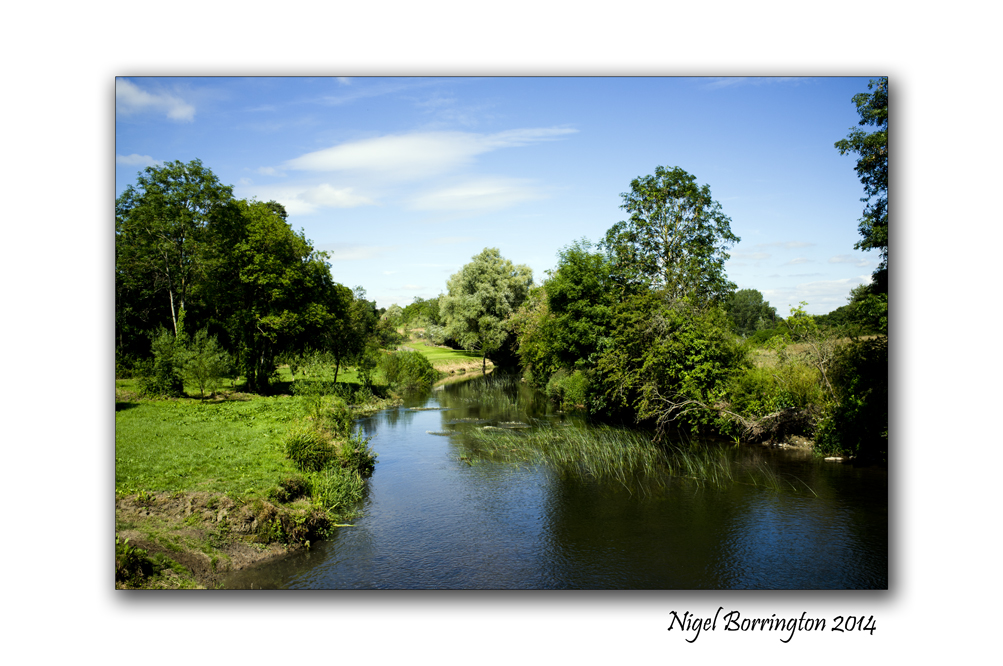
The Kings River (Irish: Abhainn Rí)
Landscape Photography : Nigel Borrington
The Kings River (Irish: Abhainn Rí)
The Kings river is one county Kilkenny’s many rivers, for me personally it is one of the most picturesque.
It has its source in the Slieveardagh Hills in south County Tipperary, having many tributaries of its own of which there are three main. These tributaries are not named, one started as a spring in the townsland of Ballyphilip, the two remaining tributaries rise in the townsland of Gurteen.
The Abhainn Rí flows south-east from the hills and crosses into County Kilkenny. It is joined by the Munster River before passing through the town of Callan. It continues eastwards from Callan, past Kells and joins the River Nore west of Thomastown.
The following images are taken at the old bridge at Ennisnag and show just how green the Landscape of county Kilkenny becomes down by its rivers in July.
Gallery


Dzogchen Beara, Retreat Centre, Beara Peninsula, West Cork

Dzogchen Retreat center, Beara Peninsula” title=”Dzogchen Beara
Landscape Photography : Nigel Borrington
The last time I visited Allihies in West Cork someone Suggested calling into the Dzogchen centre. Its located on the south side of the Beara Peninsula and as you can see, it is located in one of the most peaceful locations in Ireland, I was a great place to produce some landscape images and a fascinating centre to visit.
One day soon I may stay for a little longer?
About
“Dzogchen Beara is a long-term retreat centre for Rigpa, and is registered as a Charitable Trust in Ireland. Sogyal Rinpoche is the spiritual director of Dzogchen Beara.
The Centre is situated on the wild and beautiful Beara Peninsula in south-west Ireland, and sits high on cliffs overlooking the Atlantic Ocean with breathtaking views of sea and sky. Many Tibetan masters, and almost everyone who visits, comment on the extraordinary qualities of Dzogchen Beara – its beautiful natural environment and atmosphere of profound peace which comes from deep spiritual practice. We welcome everyone, from all walks of life and of any faith or none, and offer many different ways to visit Dzogchen Beara. ”
Ref: Dzogchen Beara
What grows on the old bridge at Ennisnag.

What grows on the bridge at Ennisnag, county Kilkenny
Nature and Landscape Photography : Nigel Borrington
What grows on the old bridge at Ennisnag.
Early yesterday evening while out Walking molly , our Golden retriever I crossed the old bridge at Ennisnag, county Kilkenny, the foot path goes down along side the kings river, below the bridge and looking up I noticed lots of herbs and plants growing out of the stone work.
The Sun was lighting these plants and they look fantastic with this light behind them.
These plants included (Herb Robert, wild Blackberry and Dandelion)
On the old bridge at Ennisnag, Gallery


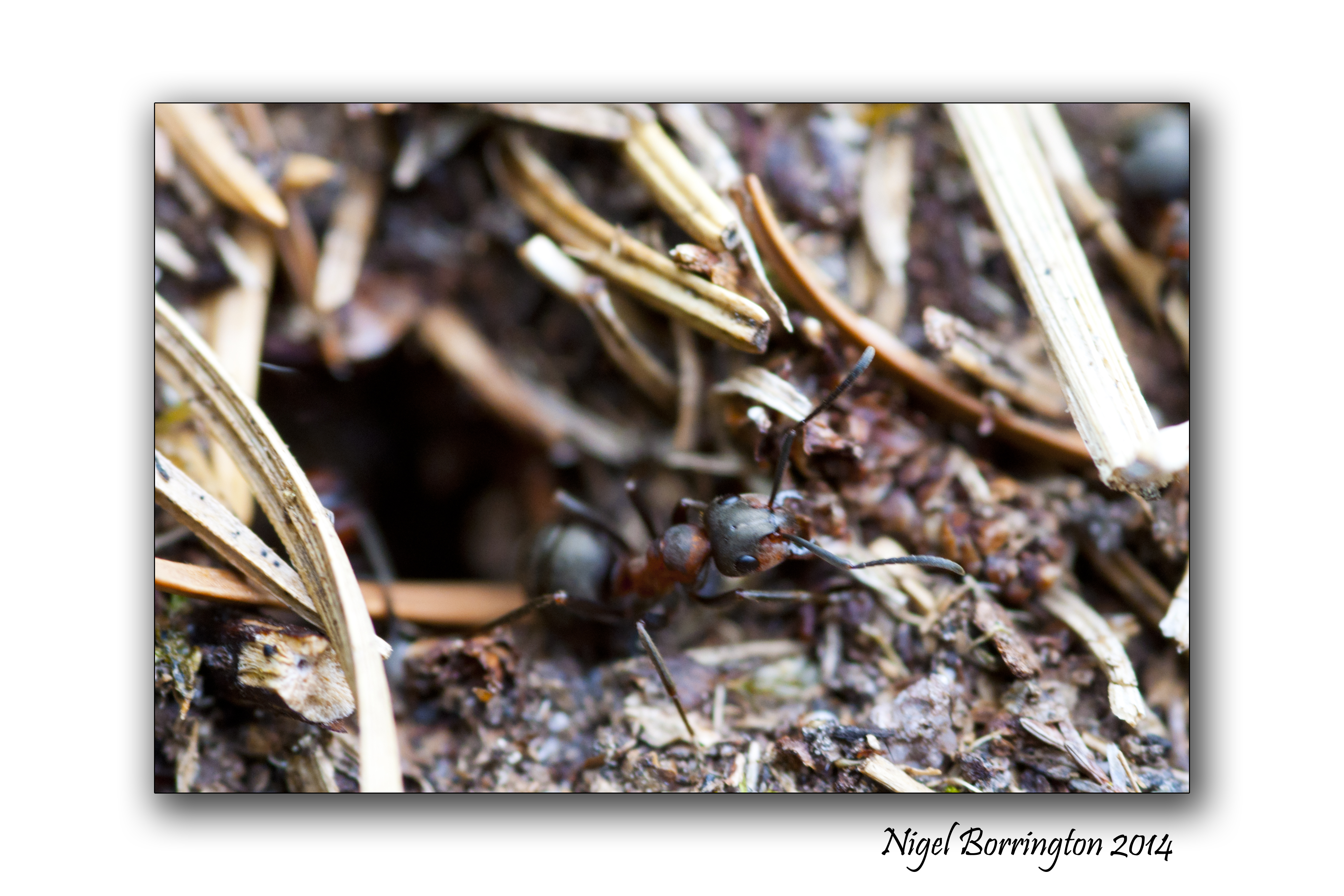
Hairy Wood Ants (Formica lugubris) , Irish woodland wildlife.
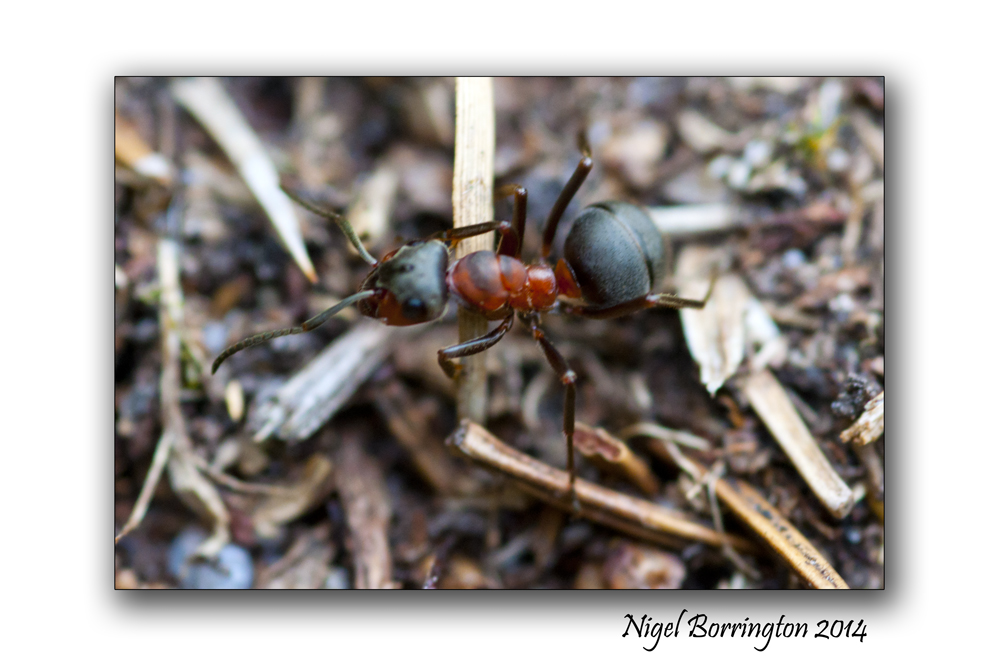
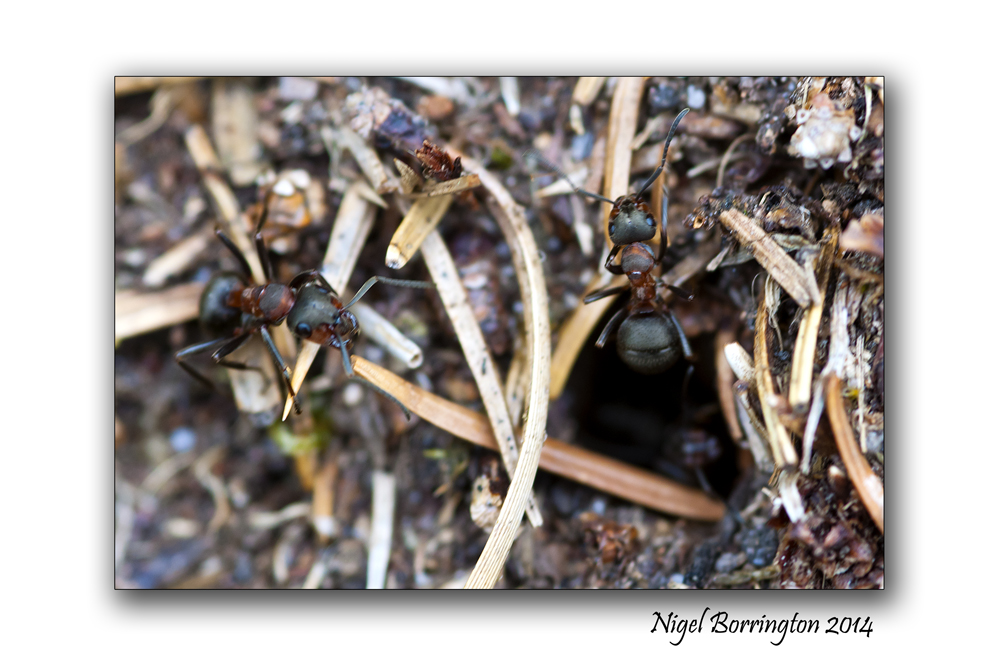
Hairy Wood Ants( Formica lugubris)
Wildlife and Nature photography : Nigel Borrington
Hairy Wood Ants (Formica lugubris) photographic project
Recently I been involved working on a project around Ireland to photograph nests of Irish Wood Ants, this has been one of the most interesting photo project I have ever worked on.
These Ants are on the international endangered species list and exist in locations that are kept reasonably private, just to find and get to see these nests themselves is a task and an amazing feeling.
When you get closer to the nests for the first time you will notice just how large they are (3 feet off the ground) and how many Ants that each colony contains, each nest can hold tens of thousands of Ants, the entire surface of the nest is on the move with Ants coming and going from small entrance holes. This flow of movement is 24 hours long during the months that the Ants are active.
They create a clear trail through the woods as they clear a path, travelling both outwards from the nest and returning again with food for the Queen Ant living deep in the ground under the nest itself.
It is thought she lives in a protected area some two meters underground.
In order to protect themselves and nest with its queen, they can shoot out acid some four feet from their bodies.
I will be working on this project most of this summer and look forward to each return, watching these wonderful Wood Ants is an amazing experience and working around them with a camera is great fun.
Gallery




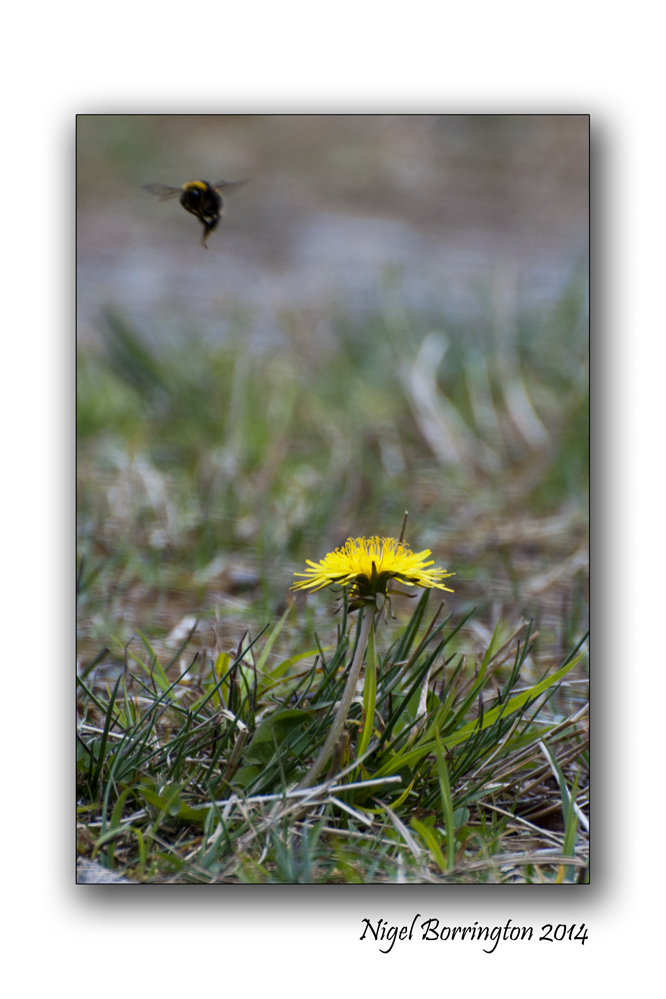
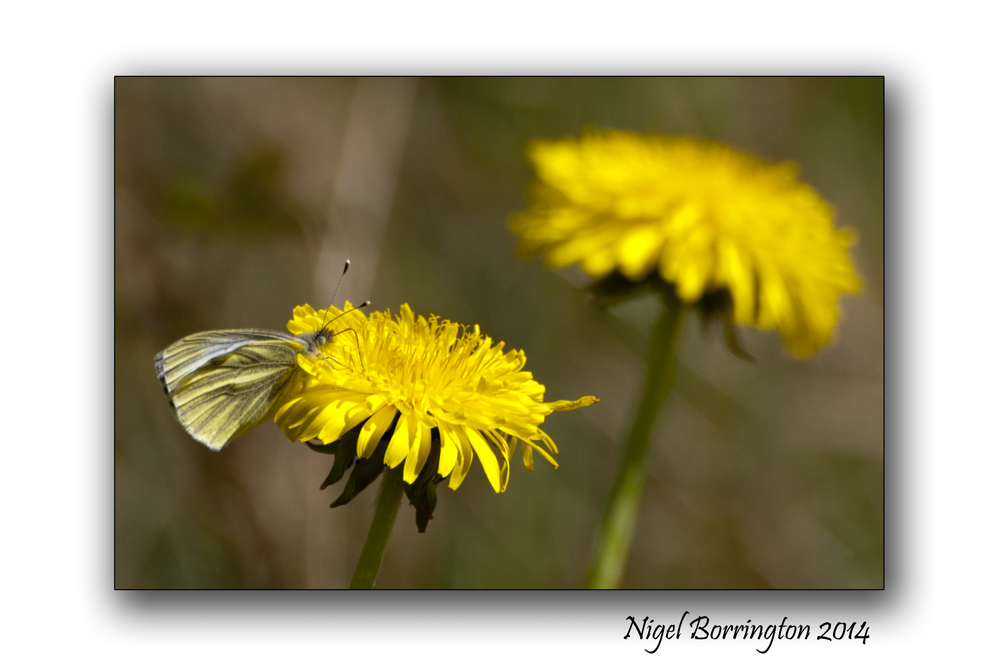
Feeding from the Dandelion, Image Gallery

Feeding from the Dandelion, County Kilkenny
Wildlife and Nature photography : Nigel Borrington
A few days ago while out walking , I took a rest and sat-down for a while in the corner of a field.
I noticed these Dandelions and that they were providing a feast for all kinds of insects, so I took lots of images a few of which I post here.
I love this time of year as life is everywhere, so why not just take a moment or two and take a look at all that surround you.
Gallery



Flight of the Hoverfly

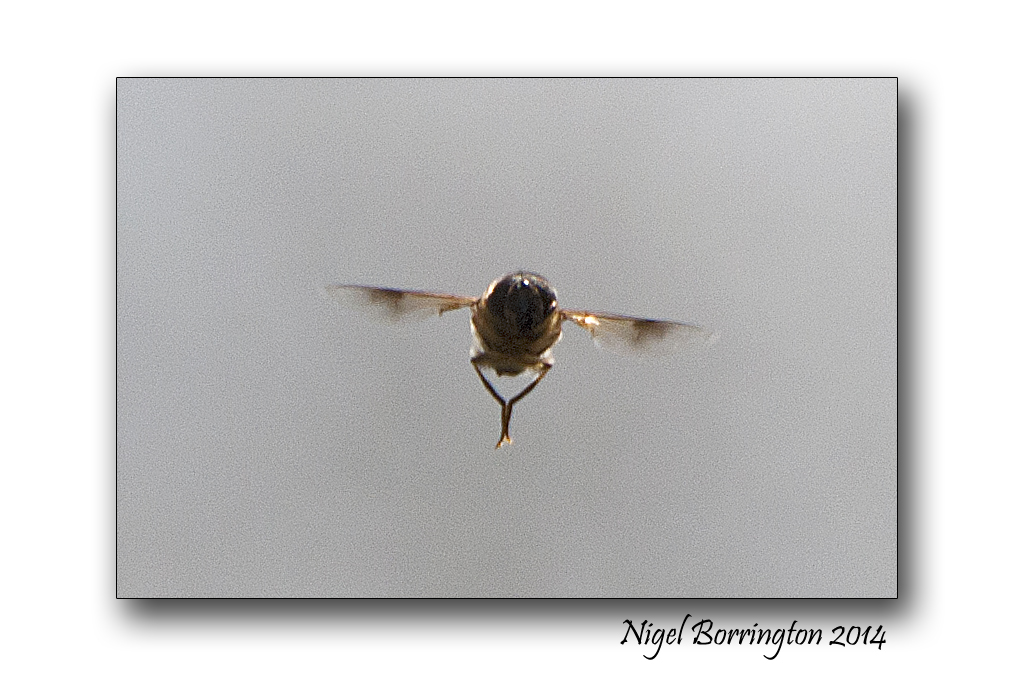
Flight of the Hoverfly
Wildlife Photography : Nigel Borrington
1st July and our local woodlands and fields are full of life ( Bees, Hoverflys and butterflys ) are everywhere.
For sometime I have been trying to capture these great insects in flight, using a macro lens and a high shutter speed, the images I post here are of a Hover-fly as it fixed its motion for a few seconds in front of my lens.
Its was a great feeling to look at these images at home for the very first time, freezing the movement of this fly that appeared in-front of me to never stop its motion as it went about its life and fleeting tasks.

Sunday evening poem : Rippling stream’s circle
River Lingaun, County Tipperary
Landscape photography : Nigel Borrington
Rippling stream’s circle
By: Chris Matt
Out here watching the water flow by.
Talking to the wind, waiting for a reply.
I don’t know what it is about this stream I admire.
Like camping and gathering around watching the fire.
There is something about these inanimate objects.
It maybe the simplicity of beauty it reflects.
How it unconditionally forms over all in its liquidity.
It is the foundation of life being perfect in its ubiquity.

Watching this stream, there is so much to learn and gain.
This water can teach you, watch, as it starts as rain.
High above in the clouds, then it falls to the top of the peak.
As it slowly drips to the bottom, it mixes in with a creek.
It flows in a small brook, then ends up in this stream,
but it will one day rise up again to the clouds, as steam.
Like waters circle of life, we need to come together as one.
The lessons that we’ve learned here, have only just begun.
Saturday Morning walk on coolagh hill, county Kilkenny : Gallery

Coolagh old church on the hill, County Kilkenny
Landscape Photography : Nigel Borrington
It’s the weekend so why not get out and about and do some walking in your local area.
Often when you walk you will find places and views that you never knew existed just driving past in a car.
What ever you do I hope you have a great last weekend of June 2014.
Coolagh Kilkenny a Gallery


Kilkenny’s Standing stones, Time – a Poem by : Anthony Zeigler

Standing stone at Owning, County Kilkenny
Landscape photography : Nigel Borrington
County Kilkenny has many Standing stones, often located on farm land and hidden from public eyes.
They are a reminder of times past, long ago, so long few know their original purpose or anything about the people who first erected them.
It is thought that they were used to mark the passing of time , the Hours, days and months of the year.
Time
By : Anthony Zeigler
Time is where we are
And time is where we’ve been
Time is being lost
And found again
Time is the day we were born
the day we die
Time is the hours that pass
As they come just then fly
Time is what we know
what we learn
Time is what it is
Some times it will hunt and some times it will burn
Time is all we have
Though it seems so little
Time is all around us
We are caught in the middle
Time is when we’re there
what we’ve missed
Time is our biggest fear
But we try to make the best of it

Sunlight in the Glen , Sunday evening Poem by : Jan Allison And Mel Merrill

Cahirabbey woods, Cahir, County Tipperary
Landscape photography : Nigel Borrington
This evening I went for a Sunday walk in Cahirabbey woods, county Tipperary, the evening light was shining through the trees in the glen and it reminded me of the below poem that I found recently.
Sunlight in the Glen
Collaboration Poem By Jan Allison And Mel Merrill
Dappled sunlight dancing among the trees in the wooded glen
Lingering amongst the wood where it has ancient been
She dances fast, and sometimes slow, the tempo ever changing.
Gentle breeze she stirs the trees; the mood is scintillating
The crystal clear water sparkles with a silvery light
Like diamonds splayed on velvet, or a starry, starry night
Shafts of sunlight fall on the crumbling old stone wall
Shedding light on these, the wall and trees, near brook and waterfall
Nature’s beauty, boundless, in this timeless timid wood
We walk the paths so often trod where ancient feet have stood
Each scattered ray comes out to play in primordial den
How privileged I, that I could spy, this sunlight in the glen
Celebrating Mid summers day 2014

Mid summers sunset over Slievenamon, county tipperary,
Landscape photography : Nigel Borrington
Mid summers day 2014
Happy Mid summers day !!!
This mornings sunrise over slievenamon county Tipperary was at 04:57am and by the time it sets again on the other side to the west the time will be 21:57 , thats seventeen hours of sun light and the most anyone can witness during the suns movement across the sky during any one year.
Today is also called the Summer Solstice
Solstice, or Litha means a stopping or standing still of the sun. It is the longest day of the year and the time when the sun is at its maximum elevation.
Wiccan blessing for Summer
As the sun spirals its longest dance,
Cleanse us
As nature shows bounty and fertility
Bless us
Let all things live with loving intent
And to fulfill their truest destiny
This date has had spiritual significance for thousands of years as humans have been amazed by the great power of the sun. The Celts celebrated with bonfires that would add to the sun’s energy, Christians placed the feast of St John the Baptist towards the end of June and it is also the festival of Li, the Chinese Goddess of light.
Pagans are in awe of the incredible strength of the sun and the divine powers that create life. For Pagans this spoke in the Wheel of the Year is a significant point. The Goddess took over the earth from the horned God at the beginning of spring and she is now at the height of her power and fertility. For some Pagans the Summer Solstice marks the marriage of the God and Goddess and see their union as the force that creates the harvest’s fruits.
This is a time to celebrate growth and life but for Pagans, who see balance in the world and are deeply aware of the ongoing shifting of the seasons it is also time to acknowledge that the sun will now begin to decline once more towards winter.
Lugh (Celtic) god of the summer soltice
Similar to the Roman god Mercury, Lugh was known as a god of both skill and the distribution of talent. He is associated with midsummer because of his role as a harvest god, and during the summer solstice the crops are flourishing, waiting to be plucked from the ground at Lughnasadh.
The Harbour, Poem By : Winifred Mary Letts
The Harbour, Poem
By : Winifred Mary Letts
I think if I lay dying in some land
Where Ireland is no more than just a name,
My soul would travel back to find that strand
From whence it came.
I’d see the harbour in the evening light,
The old men staring at some distant ship,
The fishing boats they fasten left and right
Beside the slip.

The fishing boat rests along the shore,
The grey thorn bushes growing in the sand,
Our Wexford coast from Arklow to Cahore –
My native land.

The little houses climbing up the hill
Sea daises growing in the sandy grass,
The tethered goats that wait large -eyed and still
To watch you pass.
The women at the well with dripping pails,
Their men colloguing by the harbour wall,
The coils of rope, the nets, the old brown sails,
I’d know them all.
And then the sun- I’d surely see
The disk against a golden sky.
Would let me be at my rest.

Kindred Spirits, Poem By : M s. Simpson

Sea gull flying over the sea, county Waterford
Photography : Nigel Borrington
Kindred Spirits
By : M s. Simpson
I’ll meet you there,
at the horizon,
when the glowing orange tip
of god’s pen writes
a sunset on the sea.
I’ll be soaring free
a seabird
sunset fires upon my wings.
I’ll know you by the colors
your imagination brings
let’s fly awhile
together where the clouds
like angels sing.
Callan, Kilkenny. Remembering the Workhouse and Cherryfields Grave yard.

Cherryfields, Grave yard for the poor of the Callan workhouse.
Photography : Nigel Borrington
Remembering the Workhouse and its uncounted and unnamed dead.
During the years between 1841 and 1922 the Callan workhouse operated as a place to house and offer support to may of the poor and fallen people who lived in the surrounding areas.
I want to share here some images and facts about both the workhouse and the associated grave yard that is located just one kilometre south of the town of Callan.
Both these site still exist today and a visit to them is both very moving and haunting.
The Workhouse now operates as a home for people with special needs and many feel that this is a great outcome considering its original use and its history.
A visit to Cherryfields Grave yard is very moving, I have included some written details below with some recent images, the thing that personally hits me the most about this place is that no one knows how many people lay at rest here as there is not one single name to be found anywhere.
My final Gallery at the bottom of the post reflects on the contrast between cherryfields and other local grave yards, where all the graves are marks with stones, the only technical difference being the level of finance you or your family possessed.
The Callan Work house

The Callan Union of workhouses was situated partly in Co Kilkenny and partly in Co Tipperary. It comprised an area of 106,633 statute acres with a population of 42,707.
The Callan workhouse was contracted for on May 29, 1840 and was completed in 1841.
The management of the workhouse was as follows: Master, matron, clerk chaplain, schoolmaster, porter.
It cost £5,500 to build and $1,140 to fit out. The entire complex, situated at the south end of the town, covered an area of six and a quarter acres. It was built to accommodate 600 people and its first admission took place on March 25, 1842.
Thirty-three Poor Law Guardians, elected from various areas in the Union, had overall responsibility for the workhouse.
In its first years of operation, the Callan Workhouse functioned very well, but the catastrophe of the Great Famine (1845-48) totally overwhelmed it, reducing its functions to utter chaos.
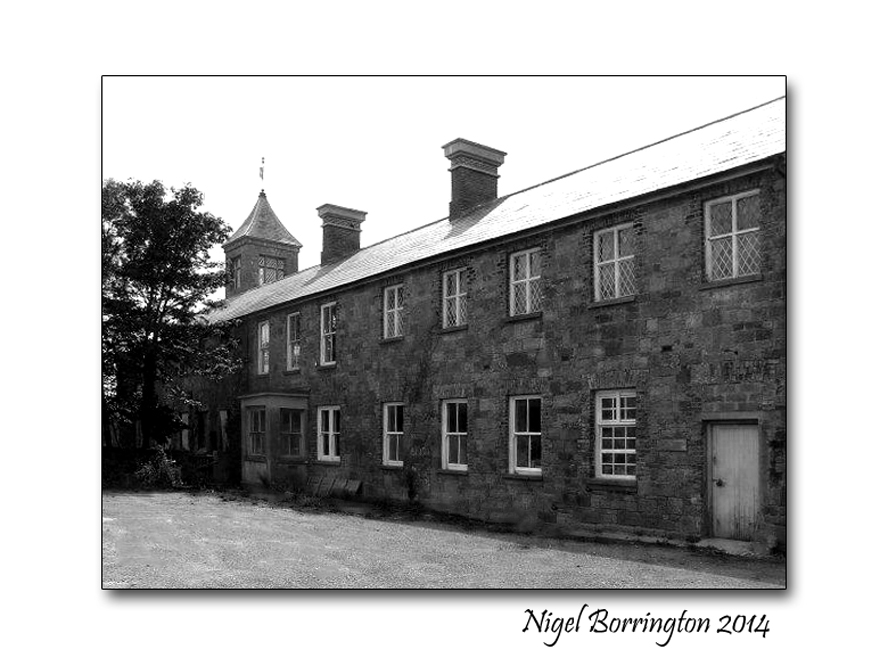
Built, as mentioned to accommodate 600 people, it had at the height of the Famine thousands of unfortunates clamouring for admittance. Even by 1851 it was still crammed to over capacity. The census for that year lists 2,102 people as residing in it.
The statistics for the Famine in the Callan area are grim and mind-boggling. Between 1841 and 1851 a total of 1,411 people, 688 males and 723 females, died in Callan Workhouse, and 2,104, 1,050 males and 1,054 females died in the temporary fever sheds, a grand total of 3,515 people. These virtually all died during the years of 1846 to 1850.

After the famine years, the workhouse settled back into a more normal level of operation and continued to function right up until the 1920s. In 1922 it was garrisoned by Free State troops during the Civil War.
It was later sold to private individuals and public bodies.
CherryFields Grave Yard
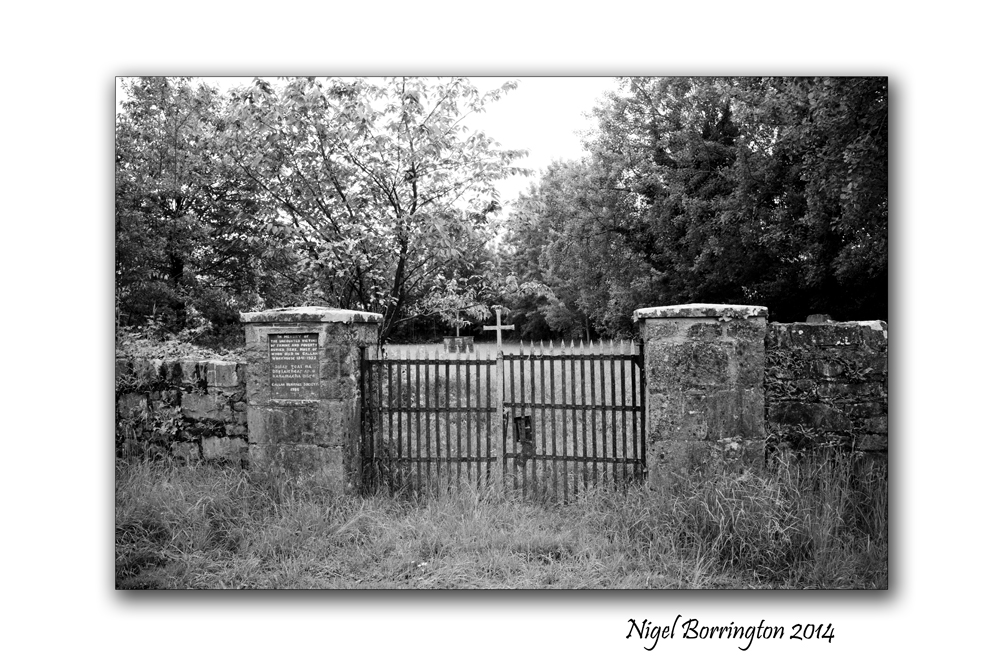
on approaching Cherryfields – Callan, A plaque on a pillar at the graveyard reads: In memory of the uncounted victims of famine and poverty buried here, most of whom died in Callan Workhouse 1841-1922. The Plaque was erected in 1986 by Callan Heritage Society.
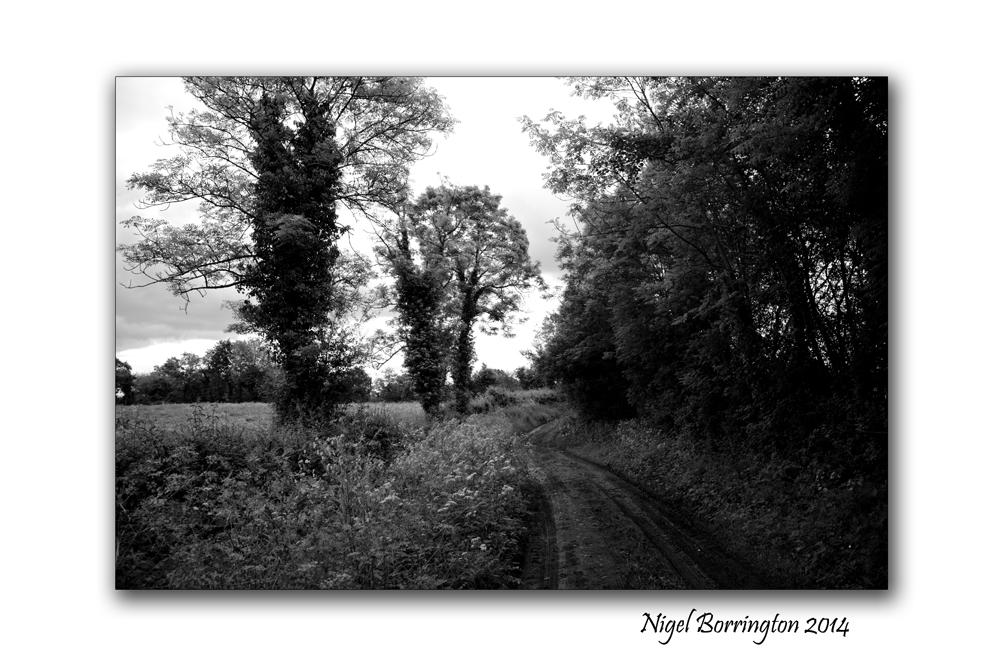
The now disused burial ground is the resting place of those who died in Callan Workhouse and who had no family or friends to claim them.
It is located in a remote one and a quarter acre site about one and a half miles south-east of the town off the Clonmel Road in the townland of Baunta Commons.

Because cherries grew three in times gone by it is still popularly known as Cherryfield.
Most of those buried in Cherryfield were victims of the Great Hunger which devastated Ireland during the 1840s. The Callan area of Co Kilkenny was severely affected by this catastrophe.
Tales have been passed down about the endless procession of funerals from the Workhouse. It is said that often up to six bodies at a time were carted out for burial, and that it was not uncommon for corpses to fall off the ‘funeral cart’ because the boreen into Cherryfield was so rough and muddy.
Originally it was intended to have a ‘pauper’s graveyard’, as the terminology of the time called it, located in less remote place as Lord Clifden proposed, but because Baunta Commons consisted of large areas of poor agricultural common land there was little problem in acquiring a cheap site.
The graveyard was crudely fenced off for many years but was fully enclosed by a wall in the 1860s. A substantial gate and entry piers were also erected at that time.
Gallery


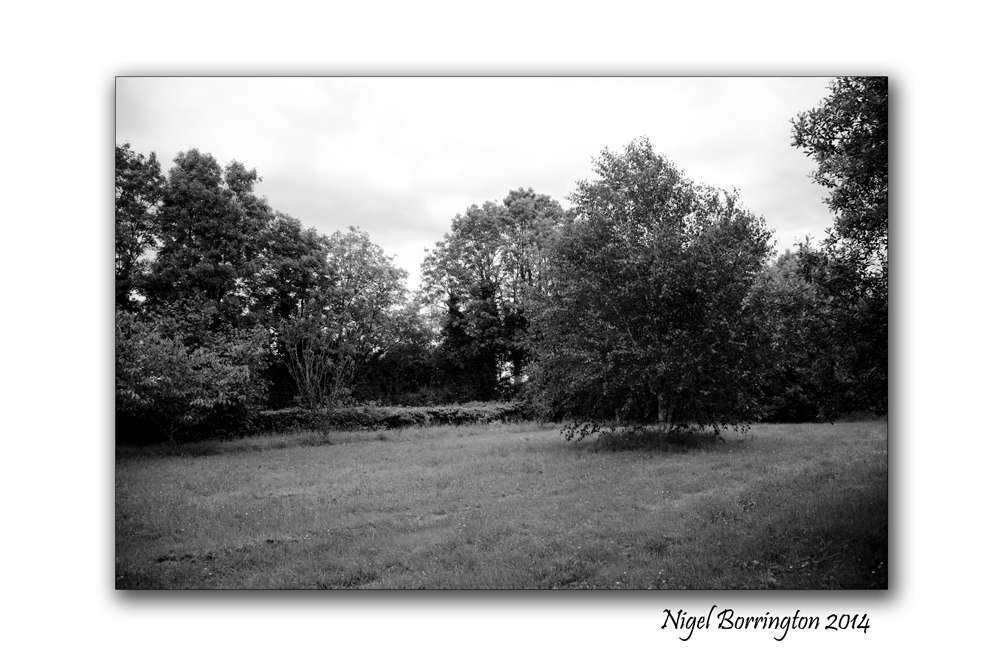
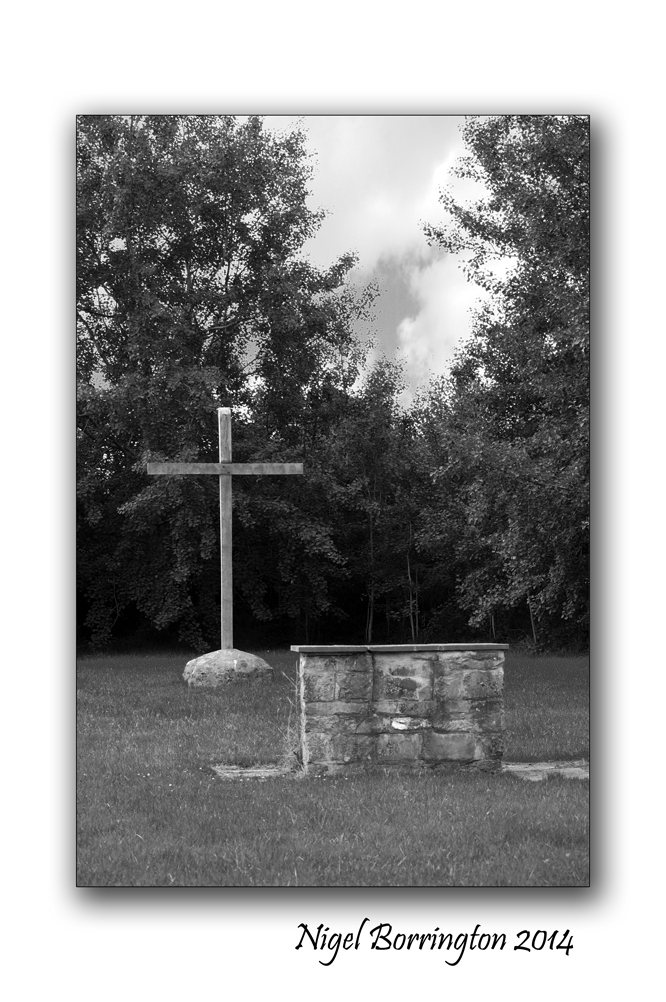
Contrast of Cherryfields to other local Grave yards
The surrounding areas of south Kilkenny, contain many old grave yards all of which are wonderful to visit, they hold great records of the people who lived locally and now rest in these places.


Reflections on the river Barrow.
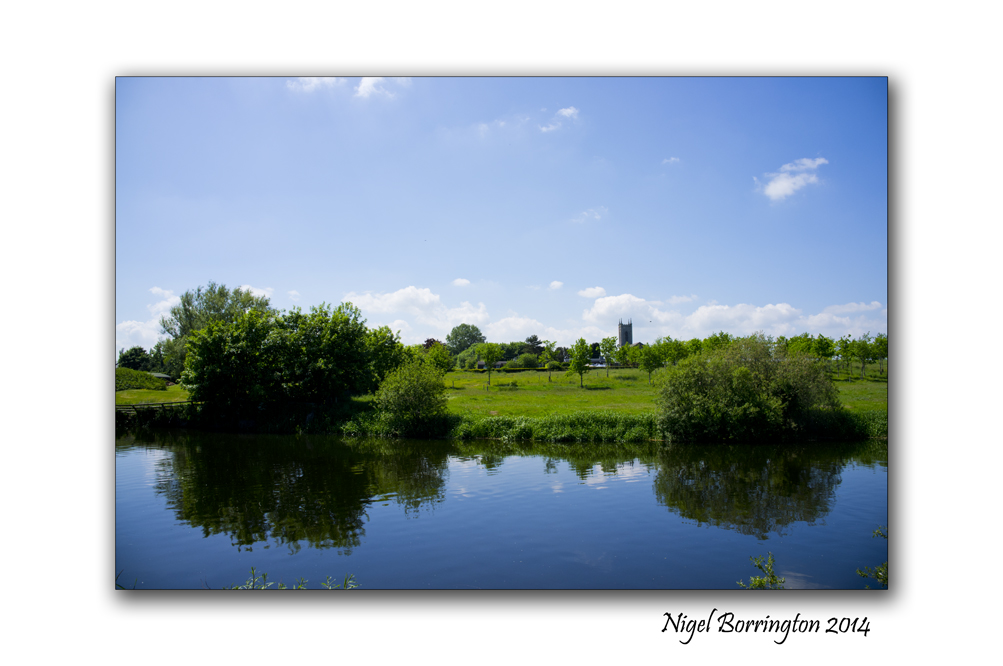
The River Barrow, Goresbridge, county Kilkenny
Landscape photography : Nigel Borrington
The River Barrow flows from its source at Glenbarrow in the Slieve Bloom Mountains, County Laois to the Celtic Sea at the harbour of Waterford.
The river also forms a natural border between parts of counties Kilkenny and Carlow and Kilkenny and Wexford.
I Completed walking all the stages of the river last year, my favourite part of the river however is around the Goresbridge area, county Kilkenny.
The images below are just some taken at Goresbridge, during June of 2014.
River Barrow Gallery


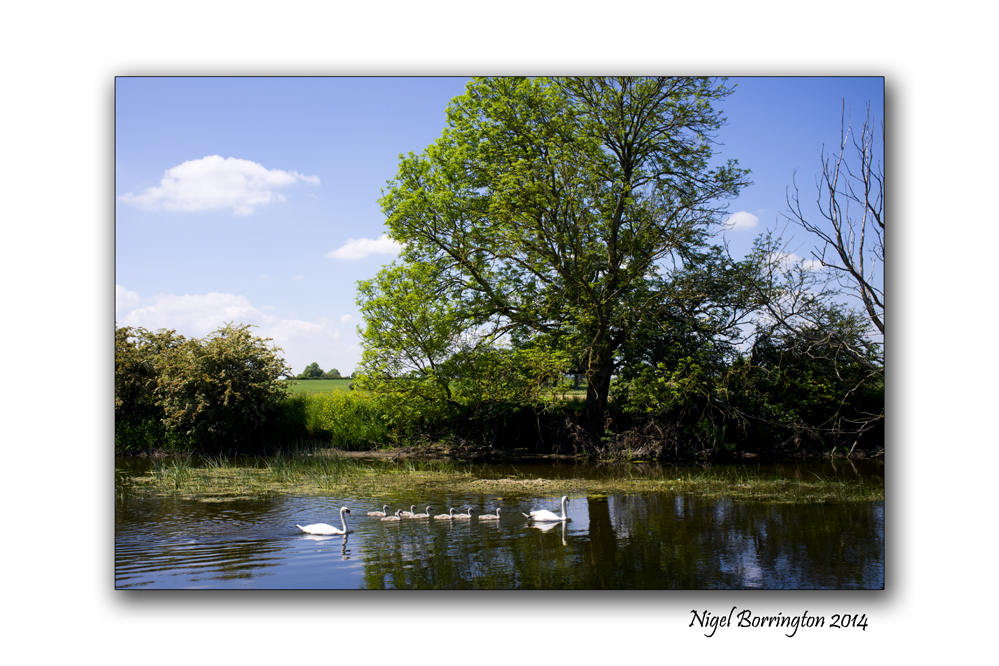

Last night I walked along the river, after the rain – Images and a Poem
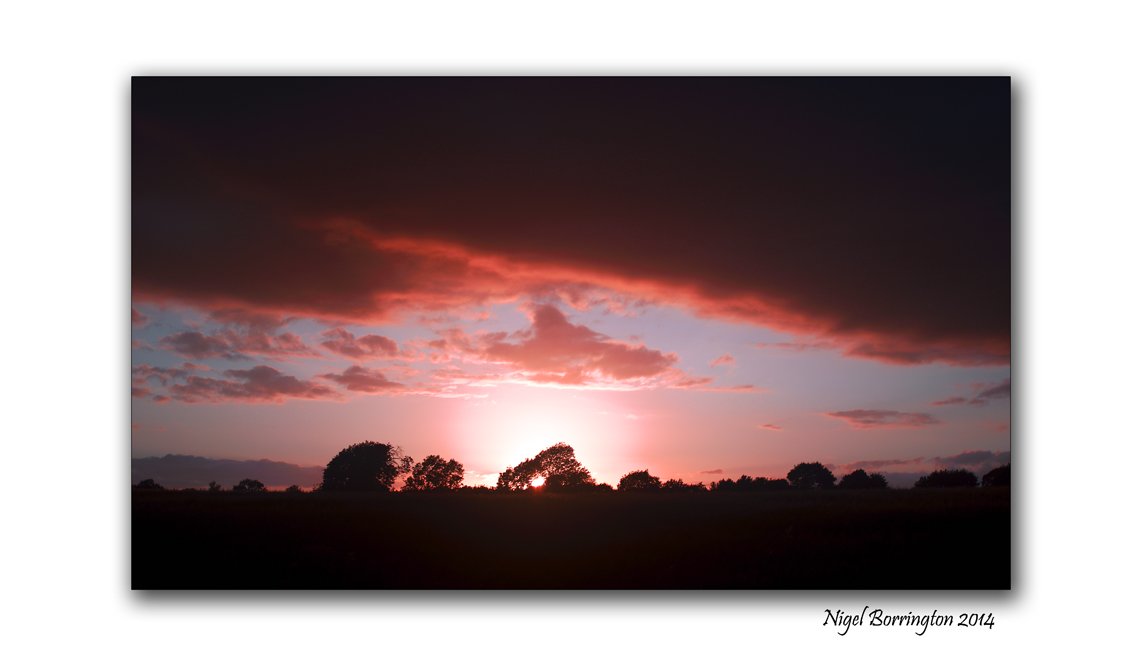
Sunset along the river Suir, County Tipperary
Landscape photography : Nigel Borrington
Sometimes when I am out walking and taking pictures, I also use my phone to jot down some words then later use these to write a Poem.
I feel that words and poems – along with images are connected with one another in a big way. I love to share both here on this blog and I often share poems from people who share their work on poetry web sites, matching them to what I feel are related images I have taken.
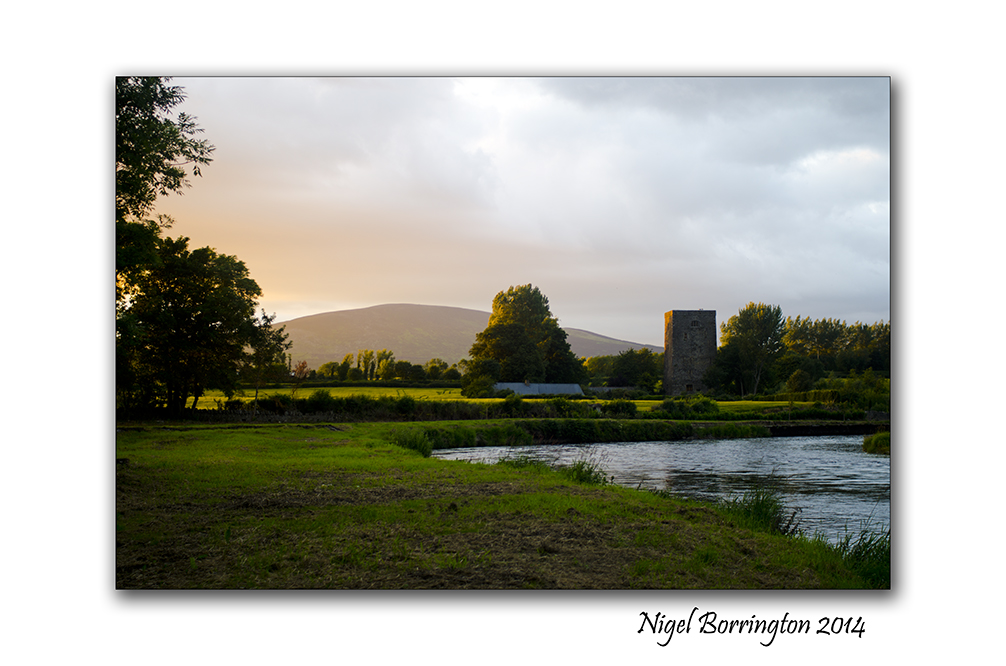
This time the post is mixing my own Poem and Images from an evening walk along the river Suir, after a rain storm at the start of June.
————————————
Last night I Walked along the river after the rain
Last night in my dreams along the river I walked,
it rained and rained, The floods of June.
There will always be sunshine after the rain
Perhaps I walked , perhaps even ran,
Towards the Setting evening Sun.
 .
.
It lights up the river, I see every rushing and flowing drop,
The warmth from its light can calm every dreaming fear.
After it sets below the trees,
my dreams much deeper,
still linger throughout the night,
But suddenly vanish at dawn’s early light.

Poem and images : Nigel Borrington
A local walk through History, Megolithic – Ring forts, Tombs and Standing stones.

Ring fort on the Hill, County Kilkenny
Landscape photography : Nigel Borrington
A local walk through History, Megolithic – Ring forts, Tombs and standing stones.
Last Month I posted the following two articles talking about the history of some historic remains and geology around the area where I live, on the County Kilkenny and Tipperary Boarders.
Pagan ring forts and passage tombs , From Kerry to kilkenny
Landscape and Geology around Slievenamon, county Tipperary
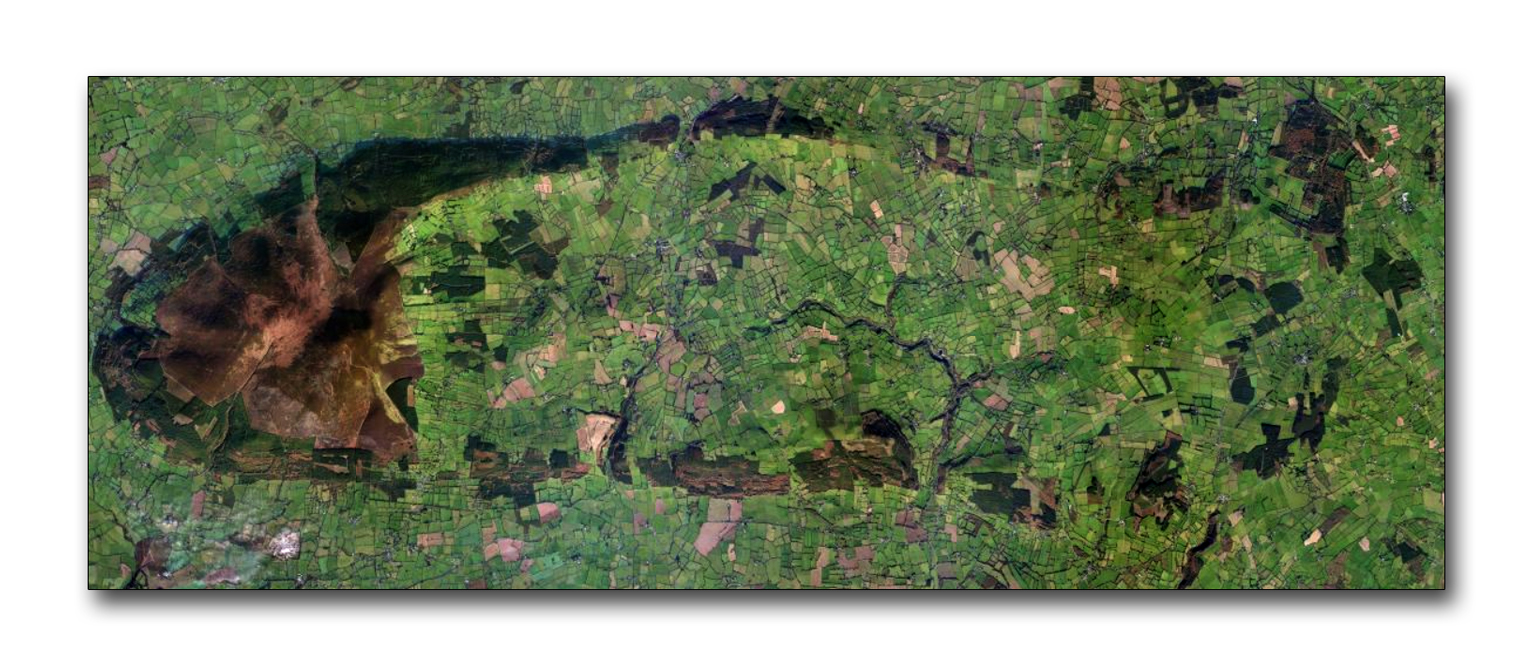
The image below shows the area around the mountain of Slievenamon, County Tipperary ( left ) and the foot hills that flow to the right and form the shape of an oval from the north and south of the mountain.
The Boarder between county kilkenny and Tipperary flows about half way through this image from north to south.
 .
.
Over the last few weeks and during the summer of 2014, I want to study and post about the Stone age – Iron age, pre Christian remains that can be found in almost every one of the woods that can be seen in the above image ( Mainly visible as dark green) along with the remains on the mountain of slievenamon itself.
I have lived here in county Kilkenny for about 11 years , moving from the UK in 2003, from the very first walks I took locally it was clear that this area is full a history in the form of old buildings, farms, churches and grave yards.
The remains that interested me the most have been those of pre-Christian times, Ireland became a Christian country between 300 to 400 Ad. These local pre-Christian remains then date from betweem 300Ad to 6000 or 8000 years ago.
The remains that can be found locally take the form of (Ring forts, Graves and tombs, Standing stones and stone circles) all can be found within the area covered in the pictures above.

South Kilkenny. Woodlands
During last weekend and this week, I have been visiting the above woodland to the south east of the larger area I am studying and have marked on the image below the types of remains I have found :

The remains that I have walk past on woodland paths and the ones that I have looked for by going deeper into the woods are by themselves amazing but by themselves do not tell you a story of who these people were and how they lived.
Over the next few weeks I want to uses four areas in total including the mountain of Slievenamon, to draw a picture of how I feel the people who built these structures lived.
How they worked this land, how they built their homes and how they buried and remembered their ancestors.
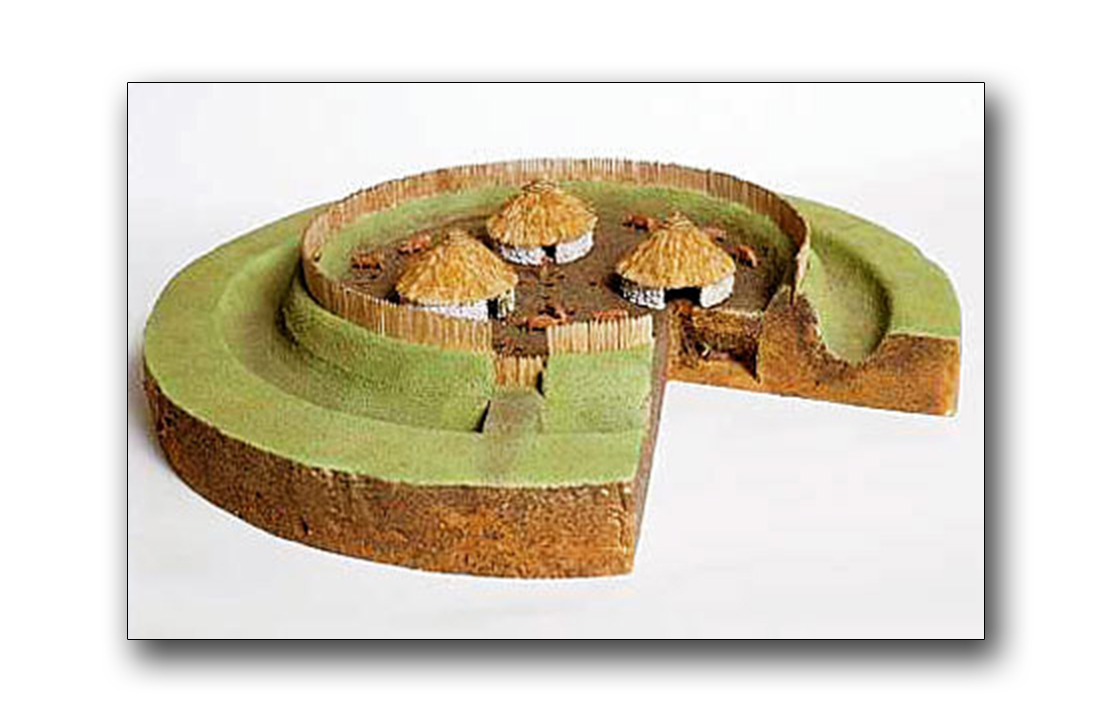
Structure of a ring fort
Image Gallerys
The Images below are all pictures of the structures and remains I have found in the woodland area shown and labelled in the images above, I have split them into groups as follows:
Ring forts, these were used for – homes and cattle pens.
Standing stones, used to record time and mark areas.
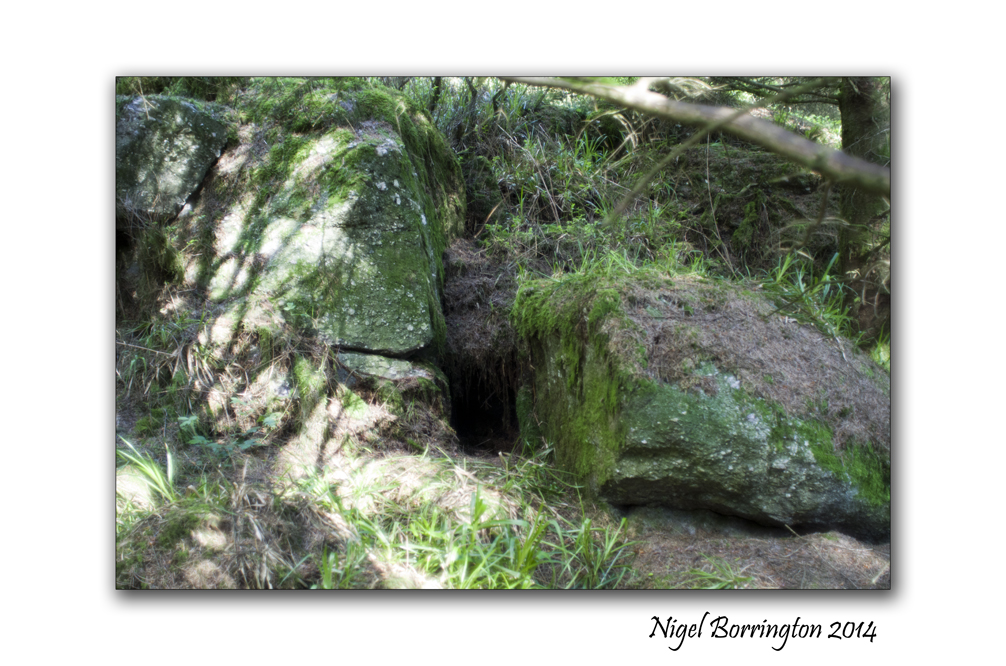
Graves and tombs, Hill top Burial grounds .
One last thing worth pointing out is that below in the Grave Gallery are two large tomb cap stones, shown in the first two images.
When I first found the stone in the first image, I wondered if it could be anything more than just a large stone left from ice sheets, during the ice age some 10,000 years ago. However I then found the stone in the second image a couple of days later, both these stones are almost the exact same dimensions. It is very unlikely then that these stones can be the result of the ice age and that they are cap stones to large tombs lying underneath.
This web sites show some examples of excavated tombs from this period : Mesolithic tombs
I also have a great example of a tomb like this here : The passage tomb of olioll olum king of munster
Image gallery of the ring fort
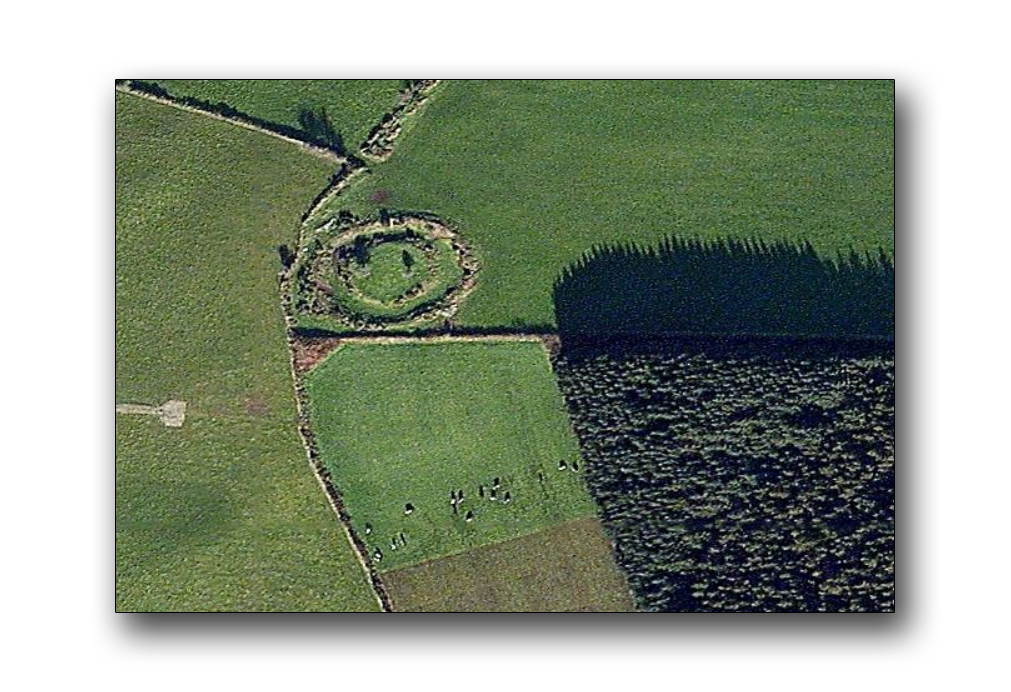
Ring fort, marked above the woods


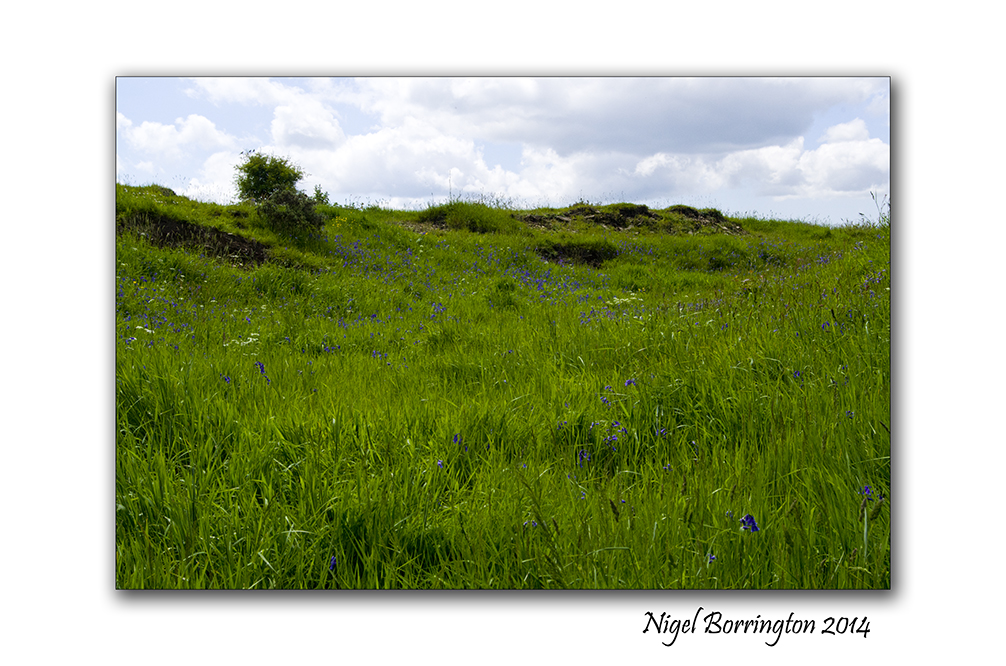
Gallery of Standing stones within the woods

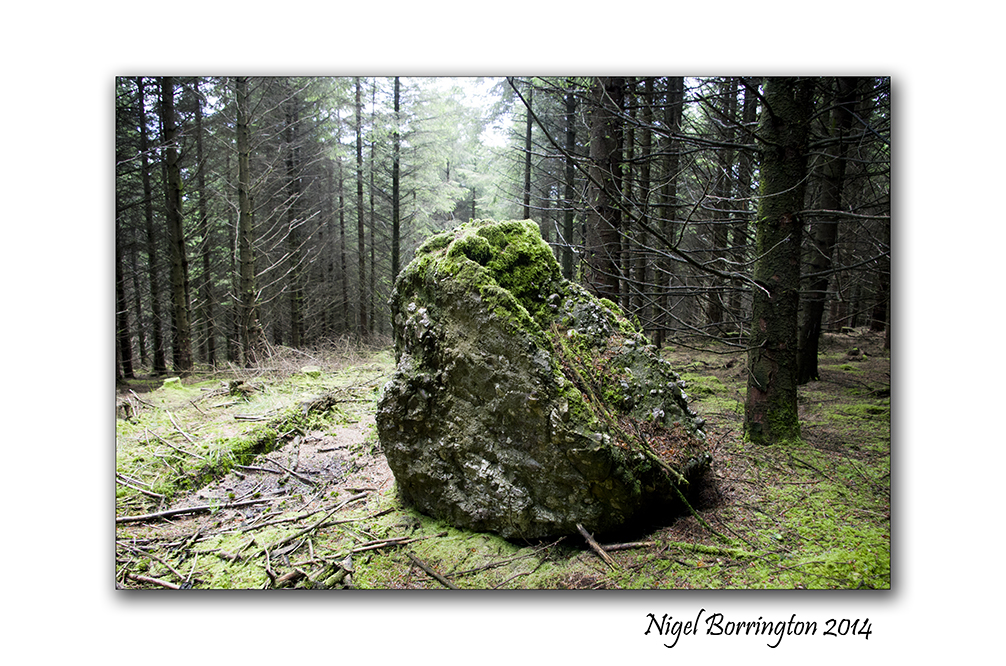

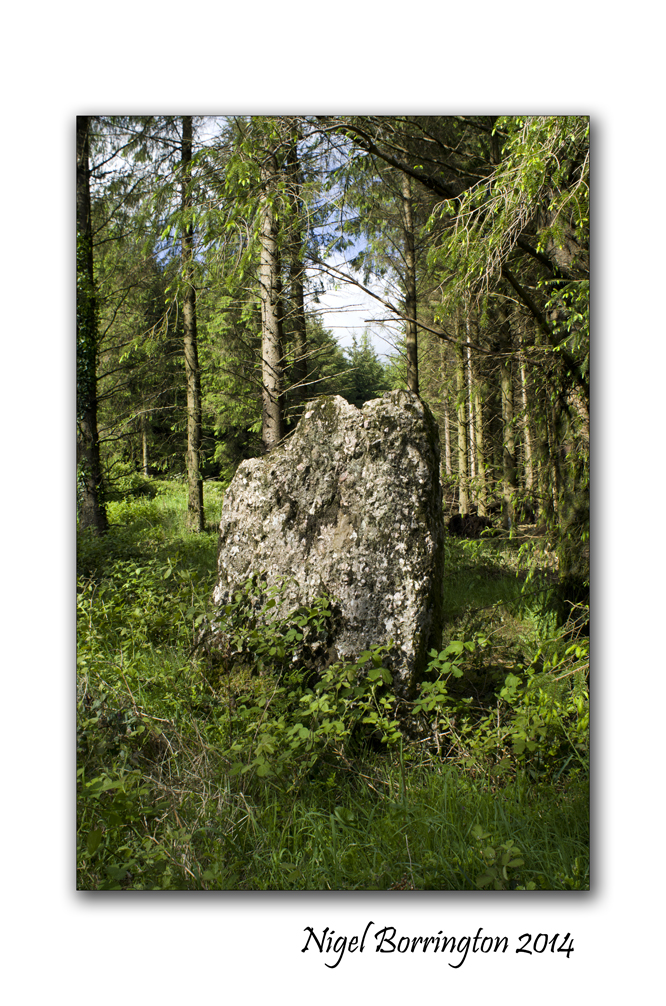
Gallery of Graves and Cap stones within the woods


A walk along the beach , Images and a Poem

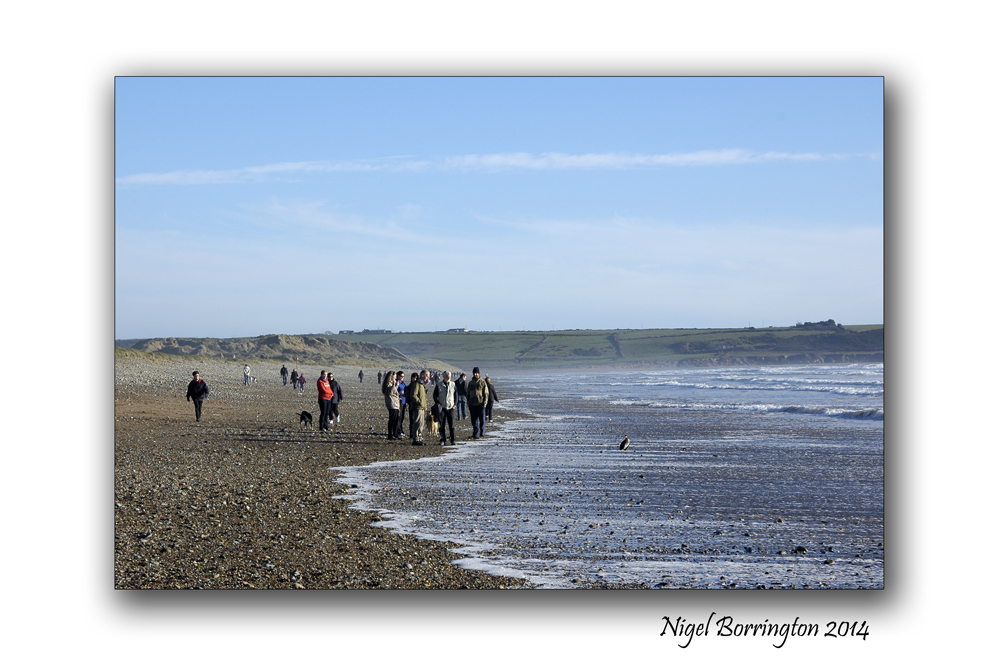
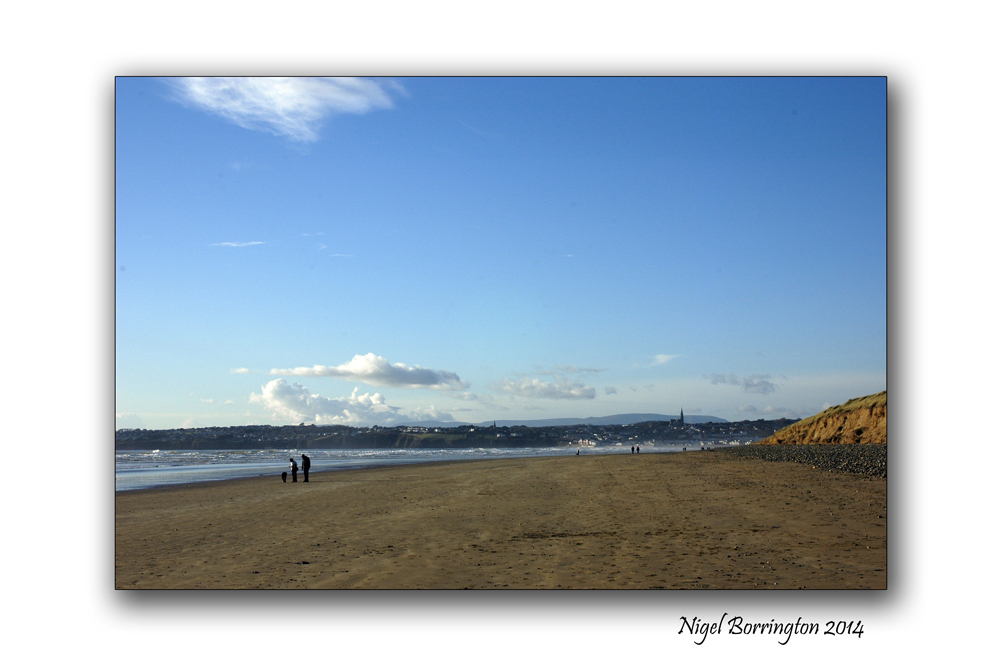
A walk along the beach at Tramore, County Waterford
Landscape photography : Nigel Borrington
A walk along the beach at Tramore
The sight of sunlight shining on the water just dazzling,
The sound of waves breaking delicately on the sand,
The feeling of the suns warming my skin,
The cool wetness of the sand between my toes.
Fellow dog walkers passing by,
Saying hello and talking for a while,
Their dogs swim and bring back sticks,
The marks they level in the sand,
Smoothed again by the waves.
 .
.
The fresh breeze moving through me,
Slipping across the water a sea bird gliding silently,
The salty sea air carrying her to deeper waters.
Above me seagulls friends swirl singing their daily song,
Before diving down into the sea to snatch a fish.
The breeze and warming sun feeding my soul,
The enchanting pleasures of sight and sounds,
I breathe in the wonderful scent of salt water that fills the air,
The intoxicating aroma of wildflowers thick along the dunes,
A feeling of contentment fills every corner of my being,
As I walk along the beach I realise… Life has true beauty…
A Farmer by Trade, Poem By : Kevin Pace
 A Farmer by Trade
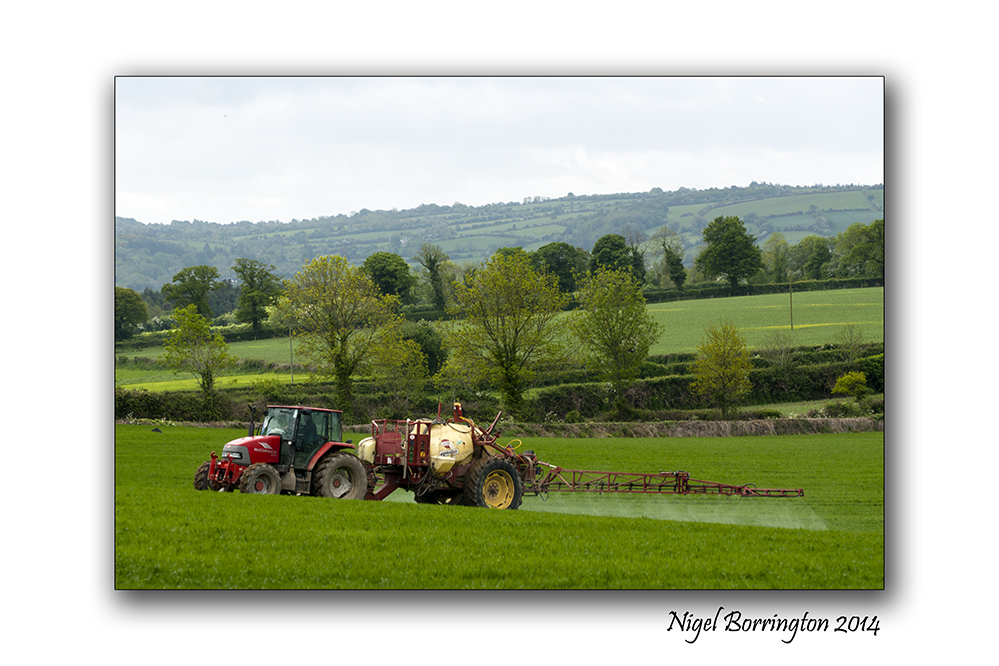
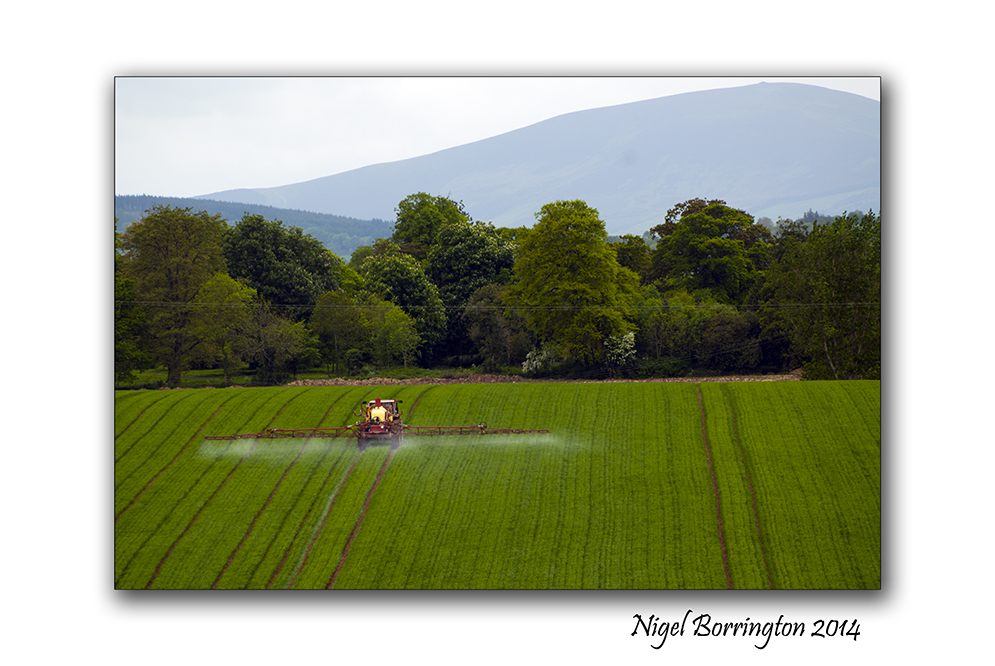
Ballytobin, County Kilkenny
Landscape Photography : Nigel Borrington
A Farmer by Trade
Poem By : Kevin Pace
He worked on the land, a farmer by trade.
He never will know the impact he made.
When plowing the fields, his mind would be filled
with lessons in life he taught and instilled.
“Life’s pretty simple” my grandpa would claim,
“The rules we should live by are always the same.”
He delivered his thoughts in a wry kind of style.
You’d think he was mad, but then he would smile.
 .
.
He was always profound, a man of his word.
He would always look forward despite what occurred.
“I’ve never reaped anything I didn’t first sow.
The seeds that you plant is the crop that will grow.
Fix your eyes on a spot, if you want to plow straight.
If you need to start over, it’s never too late.”
One thing I remember, he often would share,
“Don’t tear down a fence, ‘til you know why it’s there.
Some fences are built to keep danger away,
some fences are built so we’ll know where to stay.”
His philosophy in life was to, “Let people be.
I’m not here to judge, lest they should judge me.”
“Some things are better off left on the ground,
manure doesn’t stink ‘til you stir it around.”
The best thing he taught me was how I could find
the answer to anything crossing my mind.
Whatever I’d ask him, he’d get out the Book,
saying, “God wrote it down, if you take time to look.”
He understood things that few understand.
A farmer by trade, he worked on the land.
Butler House, Kilkenny

Butler House , County Kilkenny
Irish landscape Photography : Nigel Borrington
There can be few better places to visit on an early June weekend than the gardens at the Butler House in the Centre of KIlkenny city, the Roses are in Bloom and the pond in the middle of the garden offers a cool and relaxing place to visit.
I just love taking in a book or just walking around and taking time to view all the flowers and hidden wooded areas.
The history of Butler house is described below and flowed by some of the many images I have taken here.
The History of Butler House
Butler House is the Dower House of Kilkenny Castle and has always been associated with the Butler Family, Dukes & Earls of Ormonde who resided at Kilkenny Castle for 500 years.
18th Century
The house was home to Lady Eleanor Butler who lived here after the death of her husband Walter in 1783. Lady Eleanor Butler was the mother of John, the 17th Earl of Ormonde and her daughter, also Eleanor, was one of the famous “ladies of Langollen”.
19th Century
James, Earl of Ormonde resided in the house while the Castle was under reconstruction in 1831.
A soup kitchen was run from here during the cholera epidemic of 1832.
The Royal historical and Archaeological Association of Ireland held their meetings in Butler House in 1870.
20th Century
Kilkenny Design, the state design agency, restored Butler House in 1972.
The decor and furnishings reflect a certain 1970s Art Deco style, which because of the muted colours and natural fabrics used, proved sympathetic to the original features of the house. In 1989, the Kilkenny Civic Trust acquired both Butler House and the Castle Stables. The house was then opened to the public as a guesthouse and conference centre.
In 2000, The Kilkenny Civic Trust had the gardens at Butler House landscaped, in order to return them to their original splendour. The gardens have since become an attraction for the many visitors to Kilkenny.
Butler house Gallery


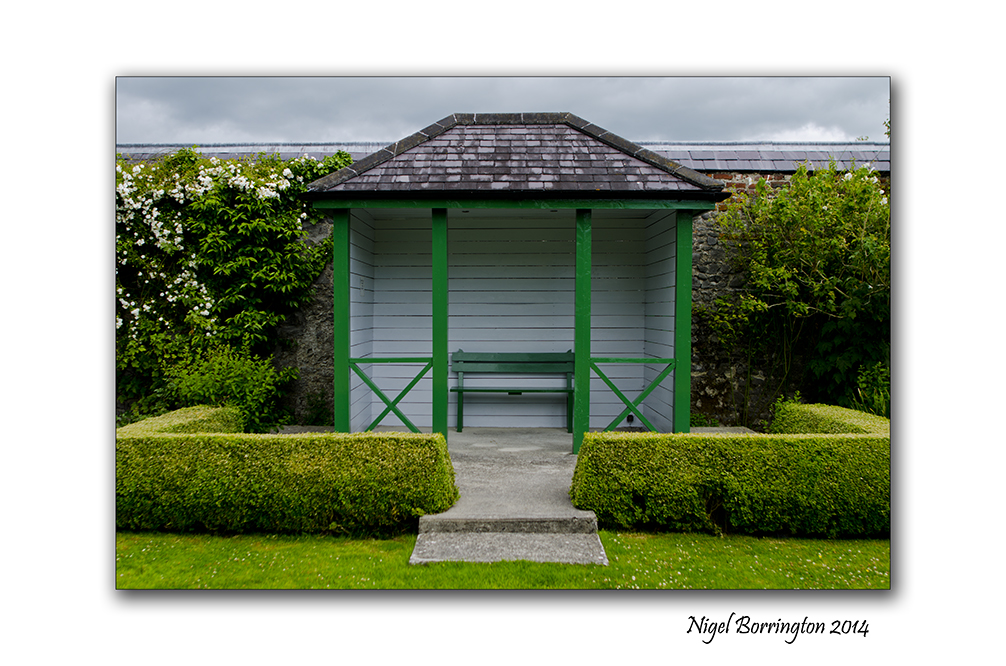


The Bridge Builder , Poem by : Will Allen Dromgoole

The Bridge at the Vee, County Tipperary
Photography : Nigel Borrington
The Bridge Builder
By Will Allen Dromgoole
An old man going a lone highway,
Came, at the evening cold and gray,
To a Valley vast and deep and wide.
Through which was flowing a sullen stream
The old man crossed in the twilight dim,
The sullen stream had no fear for him;
But he turned when safe on the other side
And built a bridge to span the tide.
“Old man,” said a fellow pilgrim near,
“You are wasting your strength with building here;
Your journey will end with the ending day,
You never again will pass this way;
You’ve crossed the chasm, deep and wide,
Why build this bridge at evening tide?”

The builder lifted his old gray head;
“Good friend, in the path I have come,” he said,
“There followed after me to-day
A person whose feet must pass this way.
This chasm that has been as naught to me
To that fair-haired person may a pitfall be;
They, too, must cross in the twilight dim;
Good friend, I am building this bridge for him!”

Pagan ring forts and passage tombs , From Kerry to kilkenny
 Knockroe passage tomb, county Kilkenny
Irish landscape Photography : Nigel Borrington
Pagan ring forts and passage tombs , From Kerry to kilkenny
During July last year 2013, I visited two ring forts near Cahersiveen, County Kerry and posted on them as below :
 .
.
Cahergall ring fort is a massive stone construction, built between 400BC and 500AD, It can be found close to Cahersiveen, County Kerry. Leacanabuaile feels very much more like a dwelling place for people to both live and keep themselves safe from the surrounding Environment. This included raiders and wild animals stealing cattle.
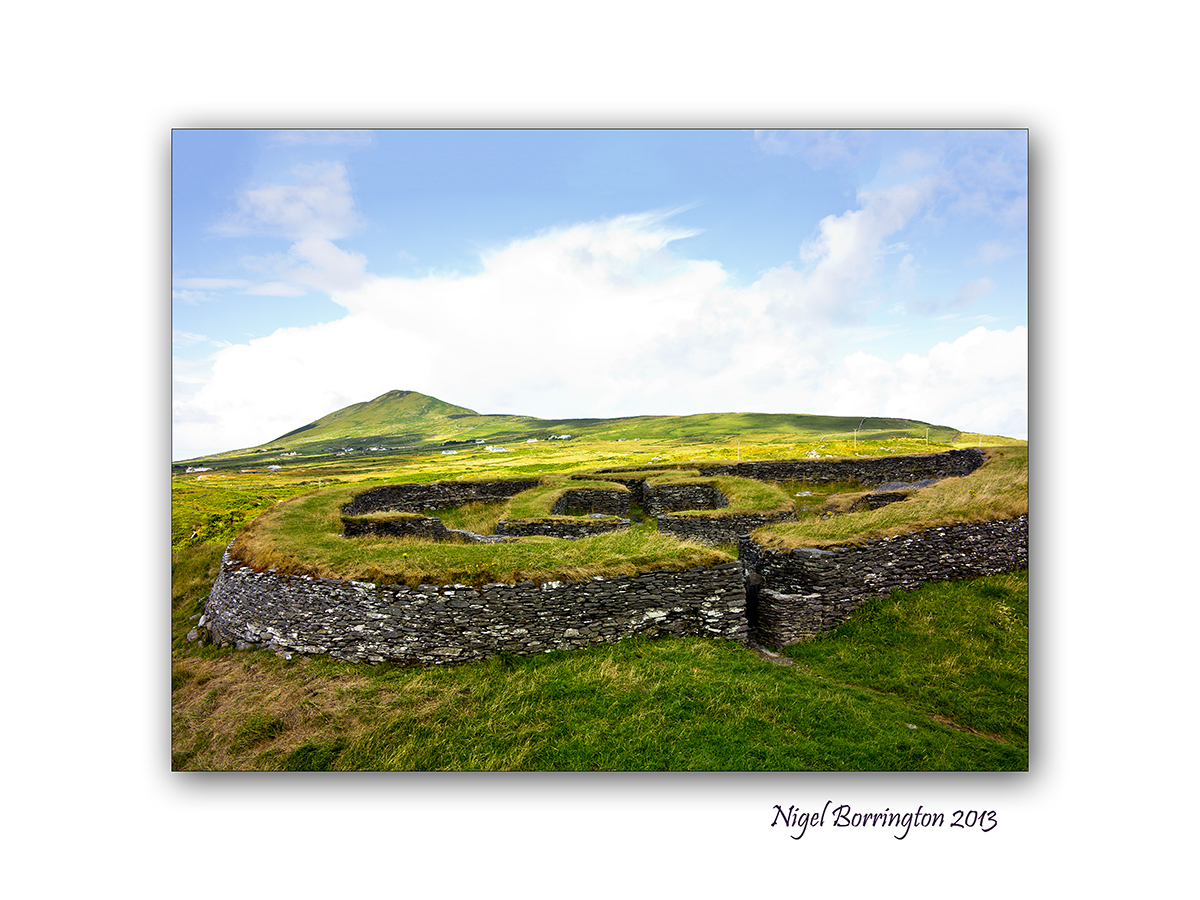
Leacanabuaile, stone ring Fort
Sitting on a hill side near Cahersiveen in County Kerry is Leacanabuaile Stone Fort, it is considered one of the best examples of an Irish ring fort.
The name translates to ‘Hillside of the Summer Pasturage’.
Returning home
The visit to both these locations was one of the most interesting history trips I have ever done and left me with a great sense of the History of Europe and of the people who lived here before Christian times.
On returning to county Kilkenny I fell like I was living in a place with a much more limited sense of history, Tipperary and Kilkenny feel much less remote than the coast line and mountains of county Kerry and their history seems to be much more modern.
Well it has taken me almost a year since the visit to Cahergall and Leacanabuaile to realise that this impression of my local area is far from true. Apart from the location of Knockroe (Post here), I have started to visit and find more and more local remains of Ireland’s past and it clearly goes way beyond the days of St Patrick and the early church.
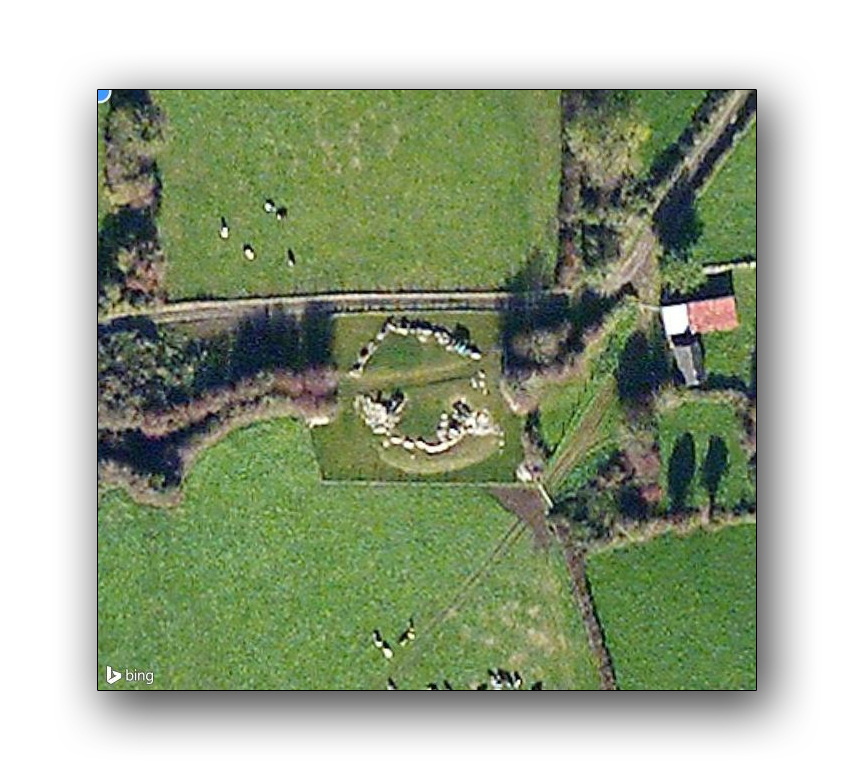
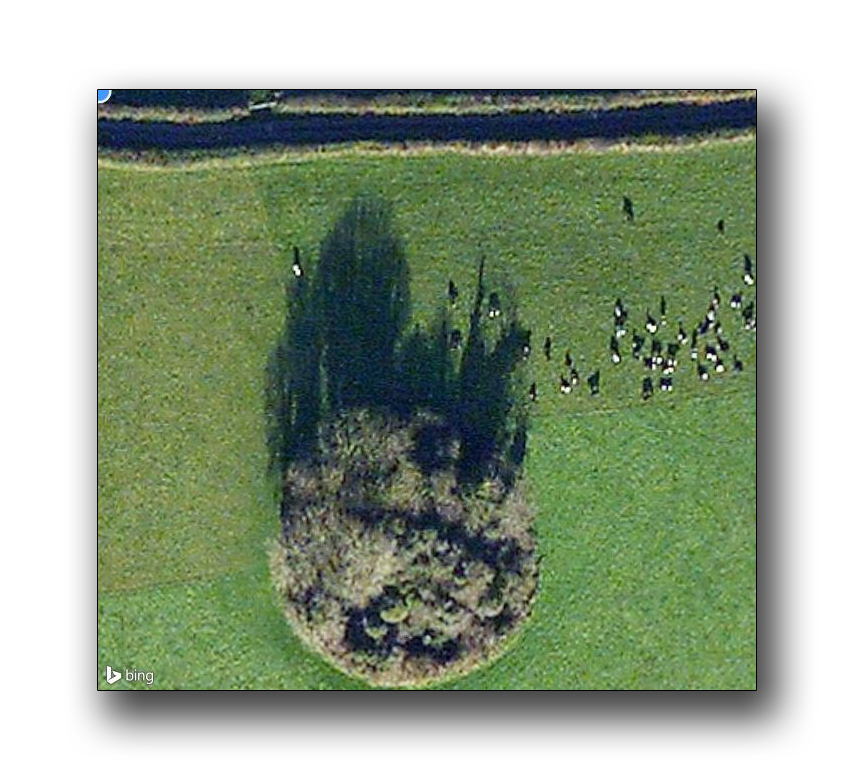
The images below are satellite images of many passage tombs and ring forts, within 10km of our home :


 .
.
Finding these locations was a real eye opener and showed to me that these forts and passage tombs must have been located through out the country.
The forts in Kerry have been restored over the last 5 years and may well have been in the same poor condition as the local ones here.
It is more than likely that the stone from these locations has been used in more modern times to build local Churches, Farms and stone walls on farm land, Yesterday I posted on the high cross at Kilkamerry and talked about this re-use of Pagan sites to build Christian locations.
It is very likely then that current church yards and grave yards have also been constructed on more of these sites, many more circular features exist on the local landscape and are possibly also ring forts but for these ones time has made things a little less clear.
What does becomes clear from looking deeper is that the pagan history of Ireland was extensive and that the pre-Christian population of this Island was as big as any other location on the European continent.
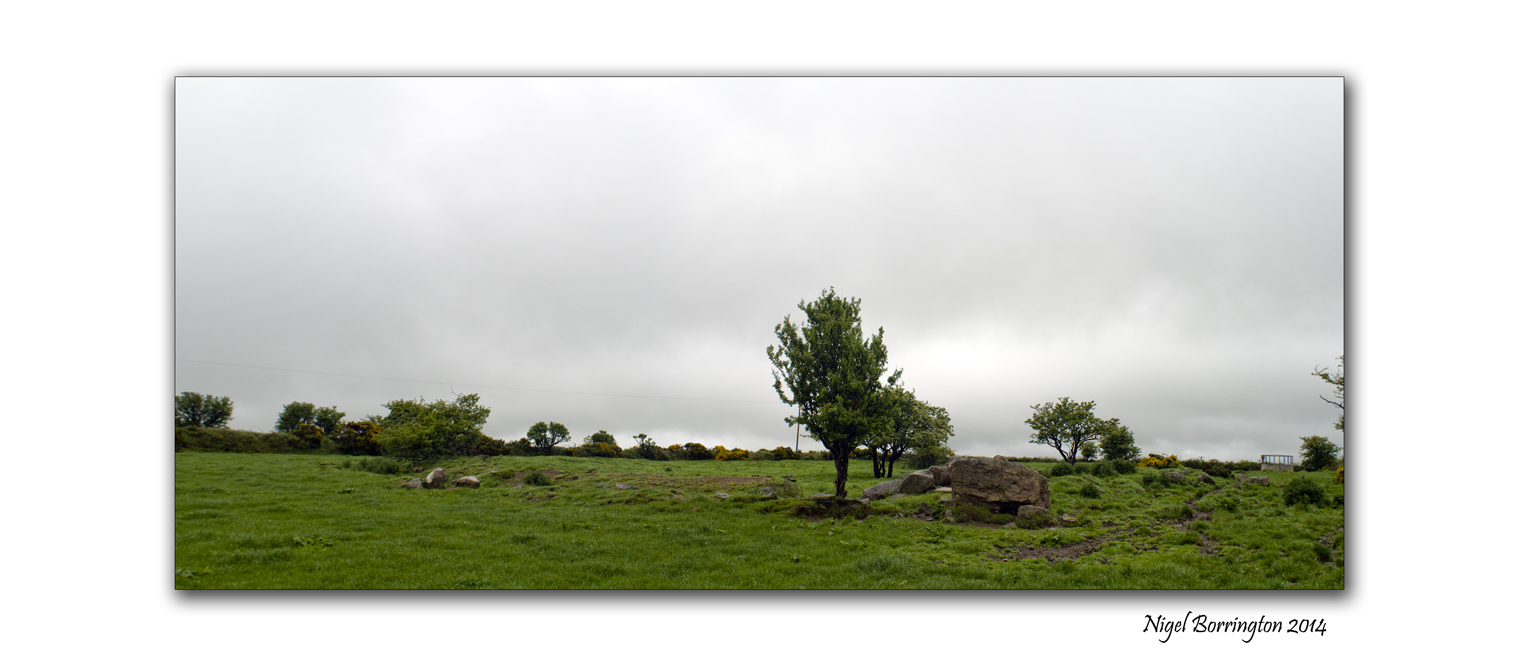
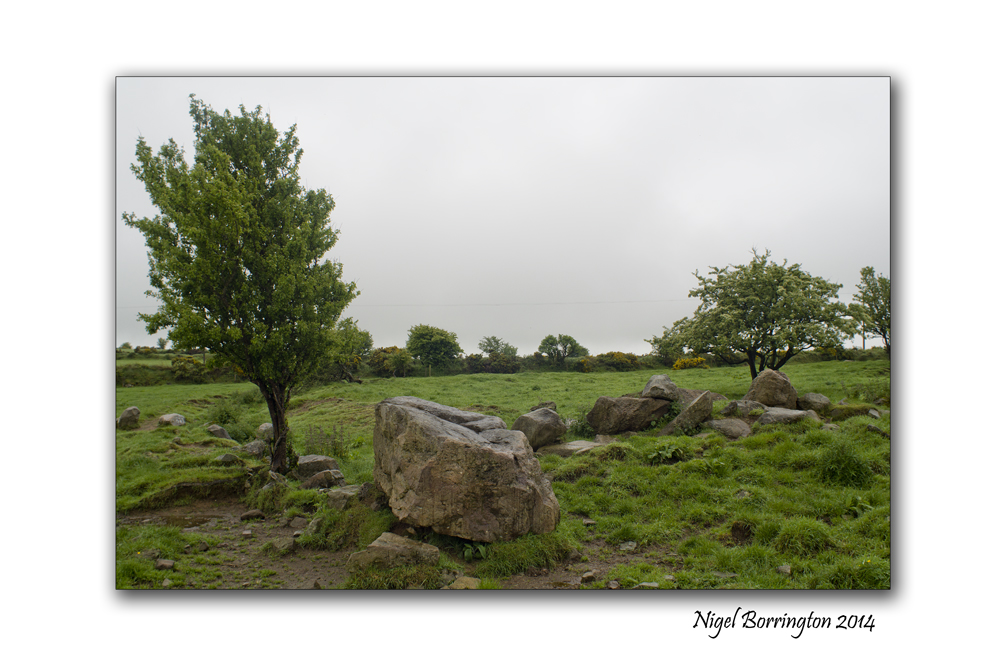
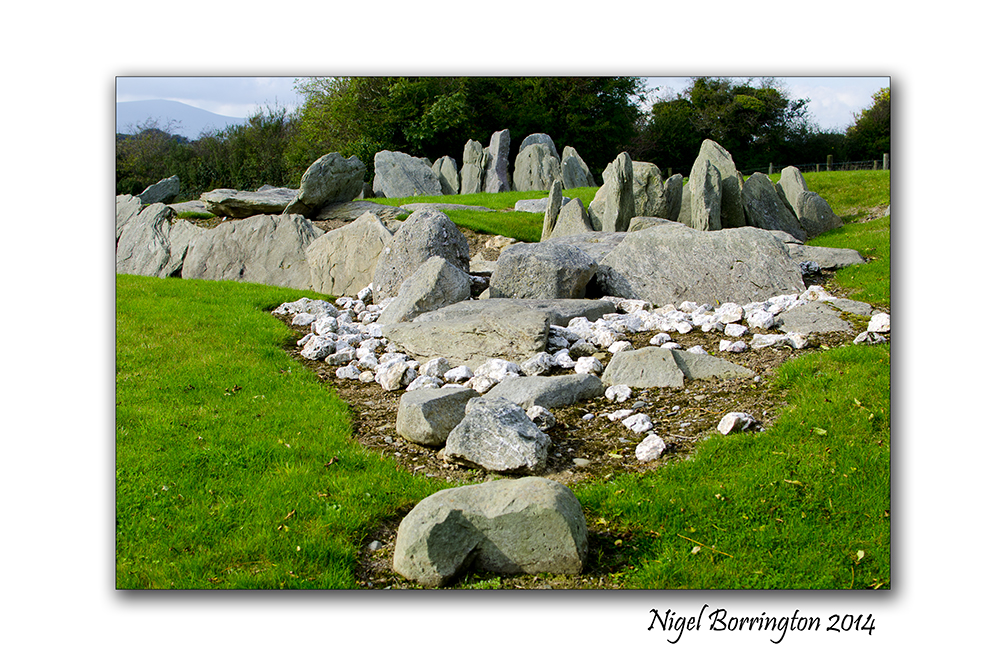
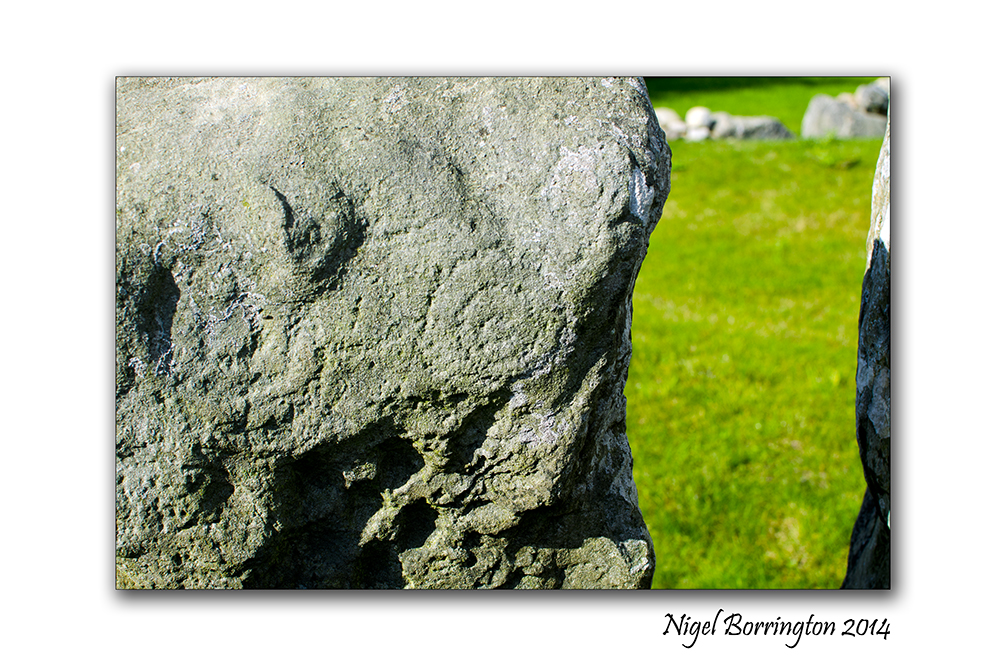
The images here are of the tomb or ring fort on Ballinlinagh hill, county Kilkenny and of the passage tomb of Knockroe :
Gallery

 —————–

Killamery High Cross

Killamery High Cross, County Kilkenny, Ireland
Landscape Photography, Nigel Borrington
Killamery High Cross
Located in an old grave yard very near the county Kilkenny and Tipperary border, is one of the most impressive of the Irish High crosses. There was a unique early Medieval tradition in Ireland and Britain of raising large sculpted stone crosses, usually outdoors.
These probably developed from earlier traditions using wood, perhaps with metalwork attachments, and earlier pagan Celtic memorial stones; the Pictish stones of Scotland may also have influenced the form.
The earliest surviving examples seem to come from the territory of the Anglo-Saxon kingdom of Northumbria, which had been converted to Christianity by Irish missionaries; it remains unclear whether the form first developed in Ireland or Britain.
The Killamery High Cross, is one of the western Ossory group of crosses. The cross stands at 3.65 metres high and the west face of the cross bears most of the figure sculpture. The east face pictured right, is decorated with three marigolds on the shaft and has a boss in the centre of the head surrounded by intertwining serpents with an open mouthed dragon above the boss.
The cross is known as the Snake-Dragon cross and has a gabled cap-stone and the narrow sides have double mouldings. At the end of the southern arm of the cross there is a panel depicting Noah in the Ark and the end of the northern arm features four scenes centered around John the Baptist. There is also a worn inscription on the base of the western side of the cross which is said to read as ‘OR DO MAELSECHNAILL’ a prayer for Maelsechnaill. Maelsechnaill was the High King of Ireland from 846 to 862.
The western face has a Sun Swastika at the centre and has figure sculpture around the whorl, to the left is a hunting scene and to the right a chariot scene above the whorl is scene showing a figure holding a Baby with another figure to the right of them, below the sun disc is a crucifixion scene. The shaft of this face bears two ornate panels. The top one is a fret pattern and the lower panel is a key pattern.
County kilkenny has five such high crosses, most a likely still in their original setting but being over a thousand years old must of their location will have changed.
Some people have a theory that these high crosses were originally larger standing stones used in pagan stones circles or passage tombs, the form of the cross being sculpted into them during the times of the pagan’s conversion to Christianity. In Ireland this would have been during the time of Saint Patrick.
It was felt much more effective when converting people to Christianity to convert original locations for the use of the early church, including fresh water springs.

Fallen standing stone marking a well/spring
In Ireland most springs would have been the location of worship to river or fresh water gods or goddess, in post pagan times many of these locations became holy wells dedicated to a Christian saint. Most even the forgotten spring above still have the original pagan standing stone in place , used to help find and mark the location of the spring and to leave offerings to the gods and goddesses ( Well dressing ).
Gallery

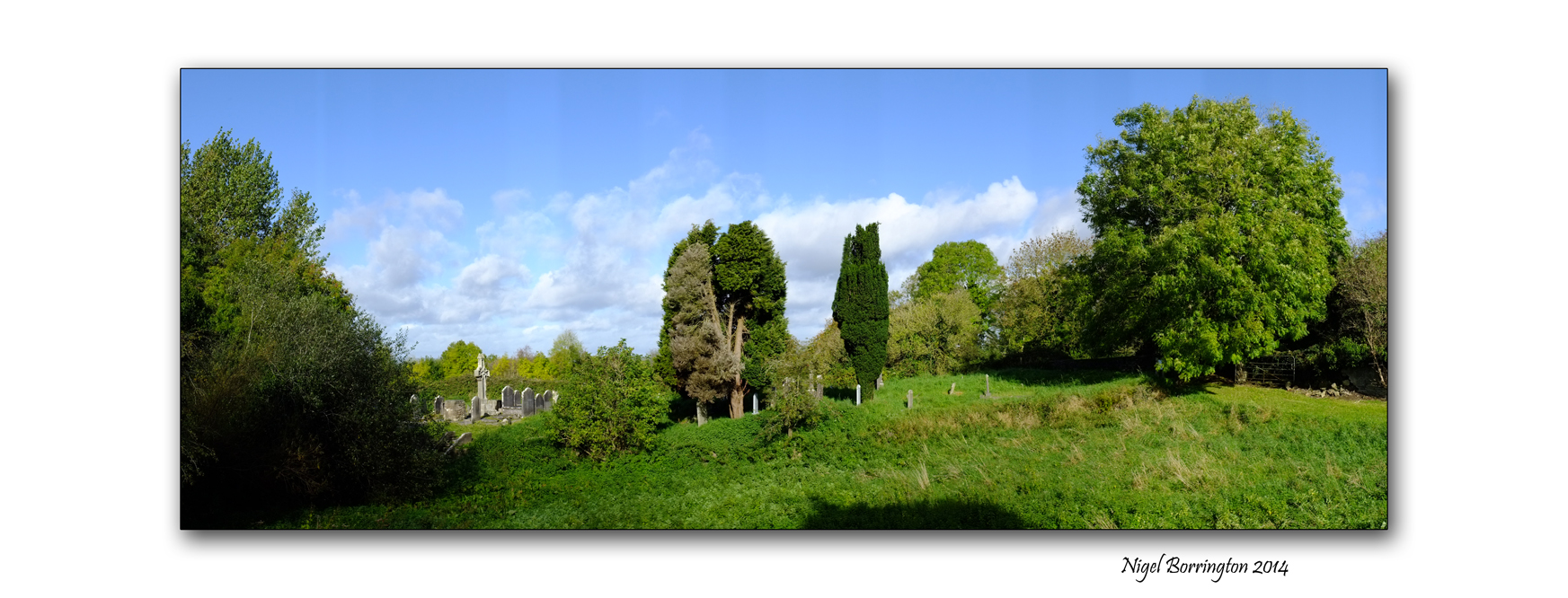
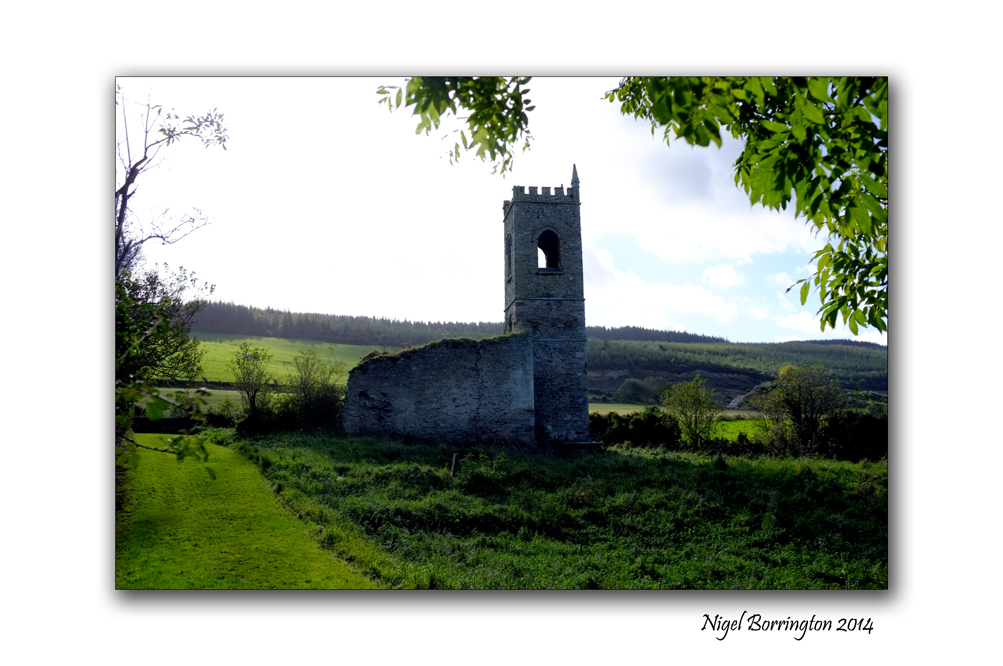

Rhododendron laden hillsides, Poem and Image gallery.

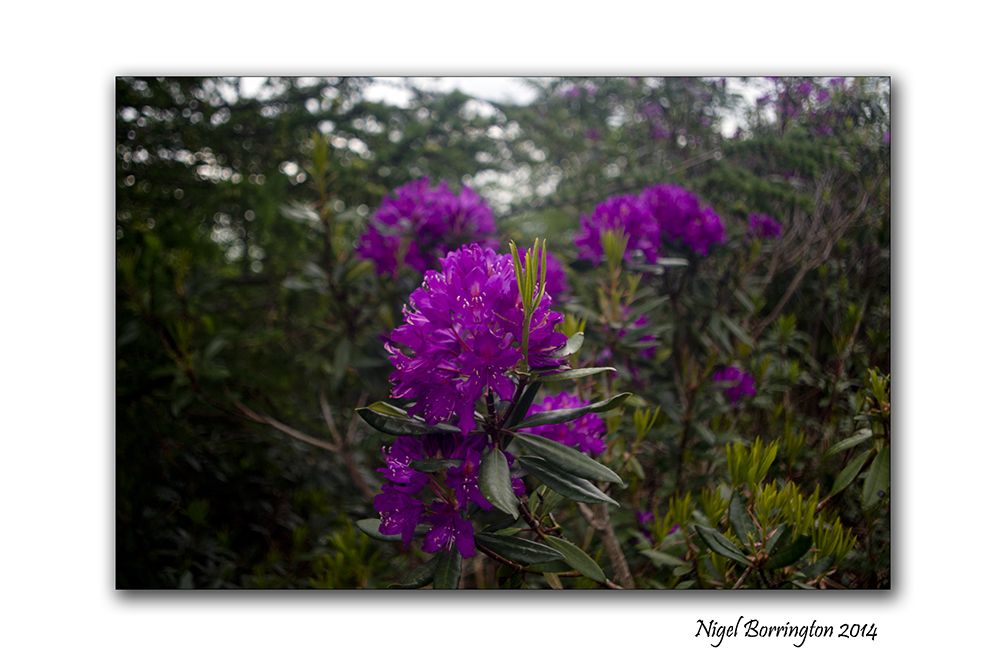
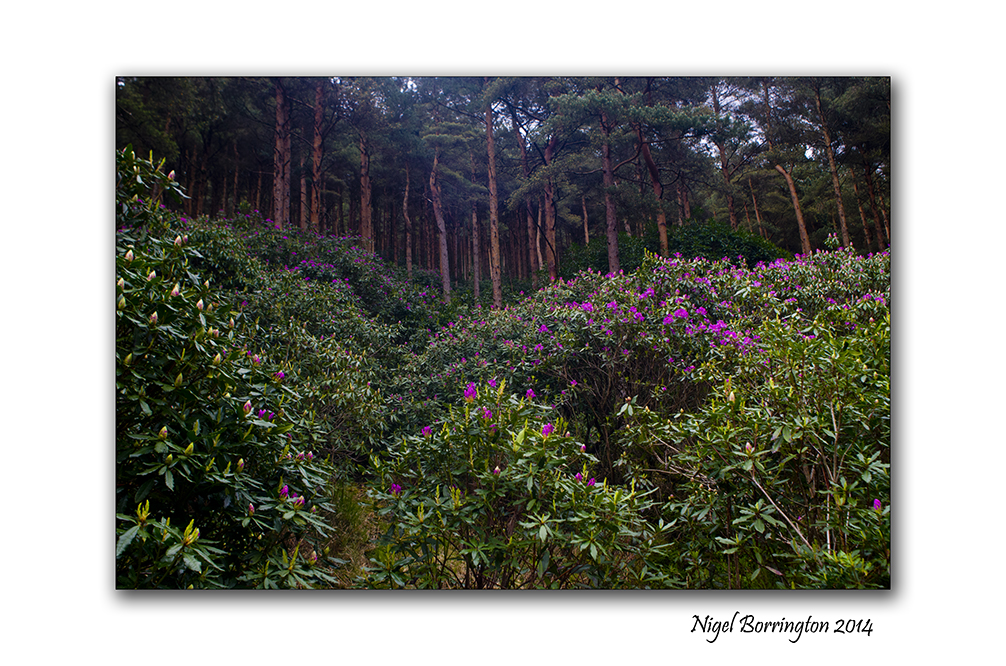
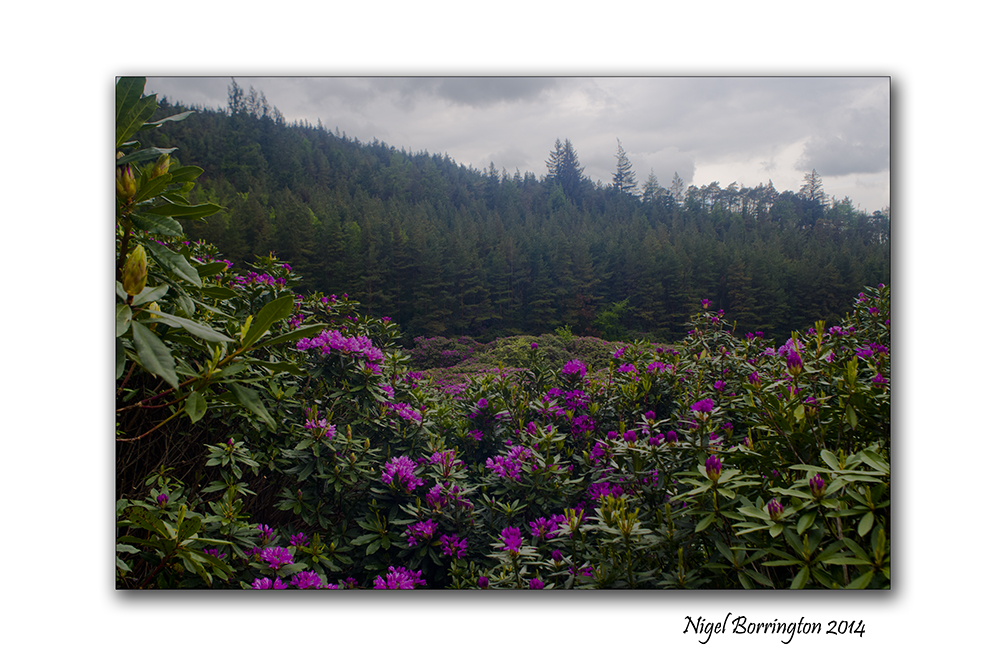
Rhododendron at the Vee, County Tipperary
Landscape Photography : Nigel Borrington
Rhododendron laden hillsides
Summer
Comes ’round again,
Bringing life back to flow’rs.
Roses shall start to bloom once more,
And mighty White Oaks shall be green with leaves.
Rhododendron laden hillsides
And Lady Slippers nod:
Slowly fading
Summer.
~Timothy~
Rhododendron hills , Image Gallery




 Nigel Borrington
You must be logged in to post a comment.