The Manor Farm, By Edward Thomas

On the Farm
Irish landscapes
Nigel Borrington
The rock-like mud unfroze a little and rills
Ran and sparkled down each side of the road
Under the catkins wagging in the hedge.
But earth would have her sleep out, spite of the sun;
Nor did I value that thin glilding beam
More than a pretty February thing
Till I came down to the old Manor Farm,
And church and yew-tree opposite, in age
Its equals and in size. The church and yew
And farmhouse slept slept in a Sunday silentness.
The air raised not a straw. The steep farm roof,
With tiles duskily glowing, entertained
The mid-day sun; and up and down the roof
White pigeons nestled. There was no sound but one.
Three cart-horses were looking over a gate
Drowsily through their forelocks, swishing their tails
Against a fly, a solitary fly.

The Winter’s cheek flushed as if he had drained
Spring, Summer, and Autumn at a drought
And smiled quietly. But ’twas not Winter—
Rather a season of bliss unchangeable
Awakened from farm and church where it had lain
Safe under tile and thatch for ages since
This country, Old already, was called Happy.
Edward Thomas
Plaza de España, Seville, Spain

Plaza de España, Seville
Nigel Borrington
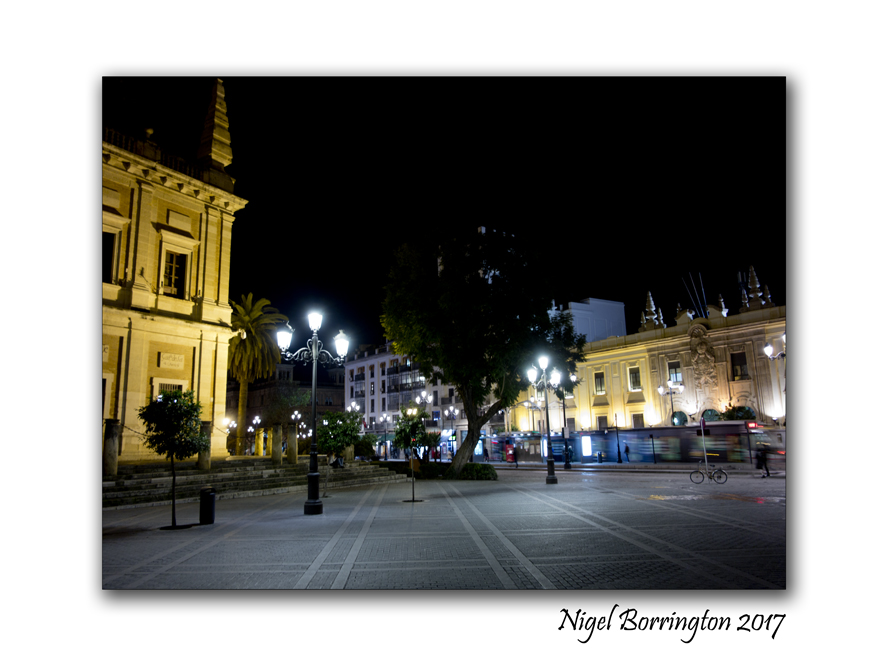
The Plaza De Espana is simply one of the most amazing locations to visit in Seville, the images here are taken from our visit at the end of last month (January 2017). It was late afternoon by the time we arrived, having already visited many of the cities great locations and the Plaza was the perfect way to end a great day.
Here are some basic details, including the buildings amazing history …
The Plaza de España
(“Spain Square”, in English) is a plaza in the Parque de María Luisa (Maria Luisa Park), in Seville, Spain, built in 1928 for the Ibero-American Exposition of 1929. It is a landmark example of the Regionalism Architecture, mixing elements of the Renaissance Revival and Moorish Revival (Neo-Mudéjar) styles of Spanish architecture.
The Plaza de España, designed by Aníbal González, was a principal building built on the Maria Luisa Park’s edge to showcase Spain’s industry and technology exhibits. González combined a mix of 1920s Art Deco and “mock Mudejar”, and Neo-Mudéjar styles. The Plaza de España complex is a huge half-circle with buildings continually running around the edge accessible over the moat by numerous bridges representing the four ancient kingdoms of Spain. In the center is the Vicente Traver fountain. By the walls of the Plaza are many tiled alcoves, each representing a different province of Spain.
Today the Plaza de España mainly consists of Government buildings. The central government departments, with sensitive adaptive redesign, are located within it. The Plaza’s tiled Alcoves of the Provinces are backdrops for visitors portrait photographs, taken in their own home province’s alcove. Towards the end of the park, the grandest mansions from the fair have been adapted as museums. The farthest contains the city’s archaeology collections. The main exhibits are Roman mosaics and artefacts from nearby Italica.
The Plaza de España has been used as a filming location, including scenes for the 1962 film Lawrence of Arabia. The building was used as a location in the Star Wars movie series Star Wars: Episode II – Attack of the Clones (2002) — in which it featured in exterior shots of the City of Theed on the Planet Naboo. It also featured in the 2012 film The Dictator.
Gallery


Three poems about sunlight …
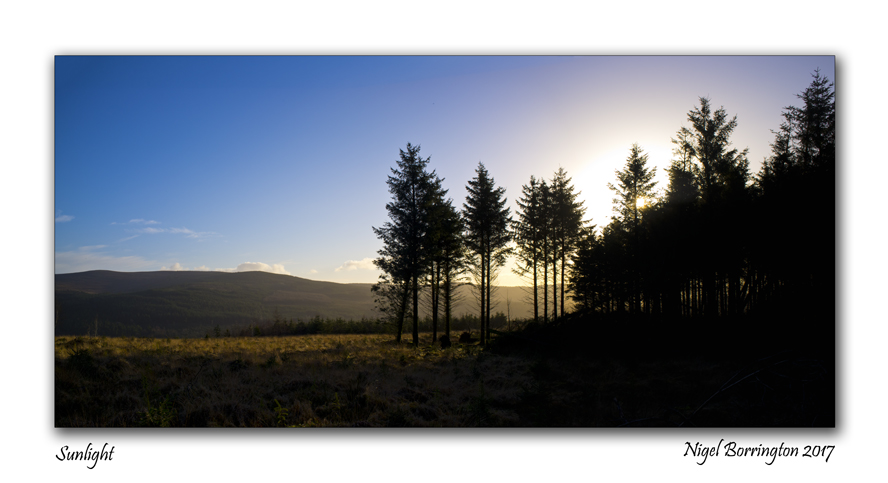
Landscape in Sunlight
Nigel Borrington
Phoebe Hynes
Dec 5, 2016
A response to sunlight
You came to me in what I thought was a dream,
but it was actually the mundane,
and the secrets my conscious brain,
was keeping from me.
You were a part of reality all along,
it’s just taken me a bit to realize it.
Sunlight can be blinding,
and raindrops are more obvious.
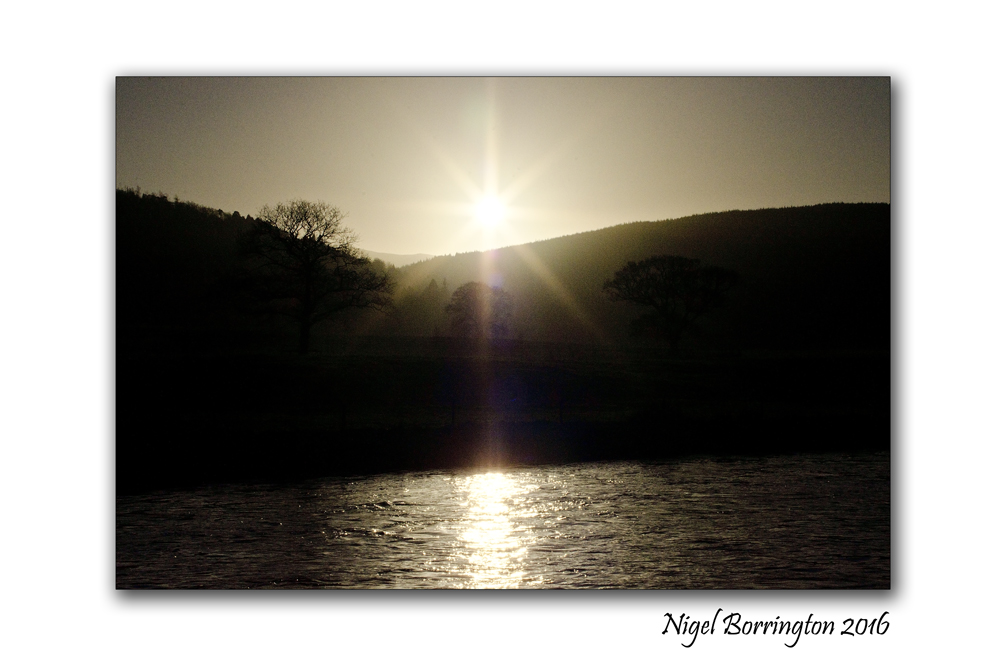
Russell
May 7, 2016
The Filter of Sunlight
The drops of gold
Break through
The cover of leaves
I’m hiding behind
Peeking through
Touching me
Warming me
Making me realize
All the good
I’m hiding from
All the things
I should be happy about
The yellow rays
Burning the bad
Purifying my thoughts
Changing my mind
And I run out
Wanting to make a memory
Of this happy
Golden moment.

Ramisa R
Sep 25, 2014
Springtime Creativity
Lilacs bloom; birds sing
sunlight falls–
enlightening these
blank pages


Landscape drawing, Boolabrien lower, nier valley, county Waterford.

The view of
boolabrien lower
nier valley
ireland
nigel borrington
The Nire valley in county waterford offers some of the most amazing landscape views in the south east of Ireland, I used a Wacom MobileStudio Pro tablet to draw this sketch of one of my favorite positions, sitting on an old stone seat that looks across at the farm fields as they slowly make their way up into the hills above.
His Dream Of Skyland, A poem by : Li Po

His Dream Of Skyland
Nigel Borrington
His Dream Of Skyland
The seafarers tell of the Eastern Isle of Bliss,
It is lost in a wilderness of misty sea waves.
But the Sky-land of the south, the Yueh-landers say,
May be seen through cracks of the glimmering cloud.
This land of the sky stretches across the leagues of heaven;
It rises above the Five Mountains and towers over the Scarlet Castle,
While, as if staggering before it, the Tien-tai Peak
Of forty-eight thousand feet leans toward the southeast.
So, longing to dream of the southlands of Wu and Yueh,
I flew across the Mirror Lake one night under the moon.

The moon in the lake followed my flight,
Followed me to the town of Yen-chi.
Here still stands the mansion of Prince Hsieh.
I saw the green waters curl and heard the monkeys’ shrill cries.
I climbed, putting on the clogs of the prince,
Skyward on a ladder of clouds,
And half-way up from the sky-wall I saw the morning sun,
And heard the heaven’s cock crowing in the mid-air.
Now among a thousand precipices my way wound round and round;
Flowers choked the path; I leaned against a rock; I swooned.
Roaring bears and howling dragons roused me –
Oh, the clamorous waters of the rapids!
I trembled in the deep forest, and shuddered at the overhanging crags,
one heaped upon another.
Clouds on clouds gathered above, threatening rain;
The waters gushed below, breaking into mist.
A peal of blasting thunder!
The mountains crumbled.
The stone gate of the hollow heaven
Opened wide, revealing
A vasty realm of azure without bottom,
Sun and moon shining together on gold and silver palaces.

Clad in rainbow and riding on the wind,
The ladies of the air descended like flower, flakes;
The faery lords trooping in, they were thick as hemp-stalks in the fields.
Phoenix birds circled their cars, and panthers played upon harps.
Bewilderment filled me, and terror seized on my heart.
I lifted myself in amazement, and alas!
I woke and found my bed and pillow –
Gone was the radiant world of gossamer.
So with all pleasures of life.
All things pass with the east-flowing water.
I leave you and go – when shall I return?
Let the white roe feed at will among the green crags,
Let me ride and visit the lovely mountains!
How can I stoop obsequiously and serve the mighty ones!
It stifles my soul.
– Li Po. Translated by: Shigeyoshi Obata
The river Suir , county Tipperary

A winters morning
The river Suir
County Tipperary
February 2017
Nigel Borrington
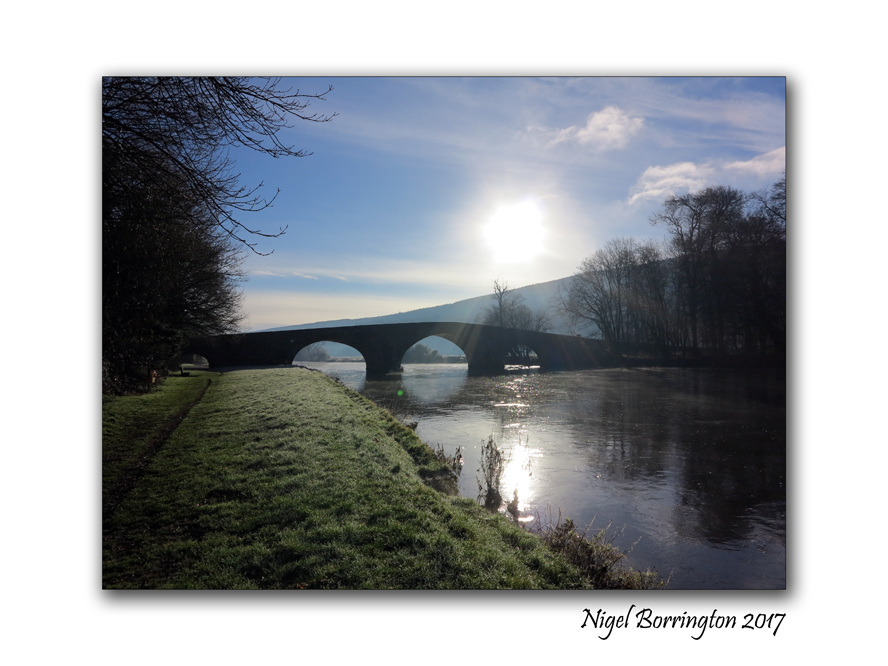
A winters morning along the river Suir county Tipperary ….
February and while sometimes it can feel like spring is just around the corner, some mornings can be as cold the coldest the winter can offer here. With this cold weather can come some of the most stunning views of the season along the river banks here in the south of Ireland, frost and mist and the deep blue of a morning sky …..


A New Wind farm, Ballybeigh, county Kilkenny

The Mountain of Slievenamon
County Tipperary
Ireland
Nigel Borrington
Wind Farms, Love them or hate them ?
They must be one of the most controversial additions to the modern landscape, many like them but more people dislike and protests against their construction.
Here in Ireland, over the last decade or so we have seen a massive growth in their development with our landscape increasingly covered with them !!

My personal feelings are more neutral than some, I feel it has to be remembered that Ireland has few natural energy resources and sourcing them from around the world is expensive.
There are also much more damaging methods of creating energy than these modern windmills.
The area of the hills above Kilmanagh, county kilkenny is currently having two news wind farms developed, these images below show one of them. The image at the top of this post shows the views of the area before the development started, clearly very stunning!, yet I still find the construction of these massive towers more interesting than not.
Wind farms, I guess – they are always going to be loved and hated at the same time !!!
New wind farm, county Kilkenny


2 hour painting, The town of Allihies west cork, Ireland

Allihies copper Mines and town
Irish landscape painting
Nigel Borrington
Allihies in west county cork is one of my favorite locations to visit in Ireland.
The town is located at the far end of the Béara Peninsula, west cork, the landscape scenery here is just stunning. The town itself is about as remote as it gets in this part of the world. There are many coastal walks along with paths that wind through the hills. The town is also well known for its copper mining history with many of the old mines still standing in the hills acting as a backdrop for the town.
There is a museum that you can visit details here : Allihies copper mine visitors center
My painting / sketch here was painted digitally using a combination of PC applications and taken from some sketches and photos I came home with on the return from my last visit.
Bogland – Poem by Seamus Heaney
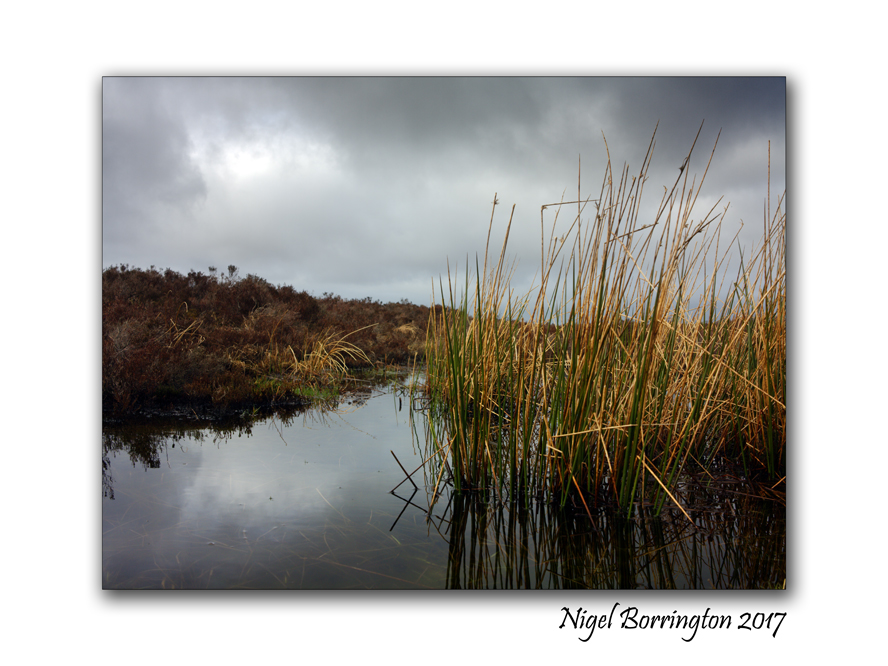
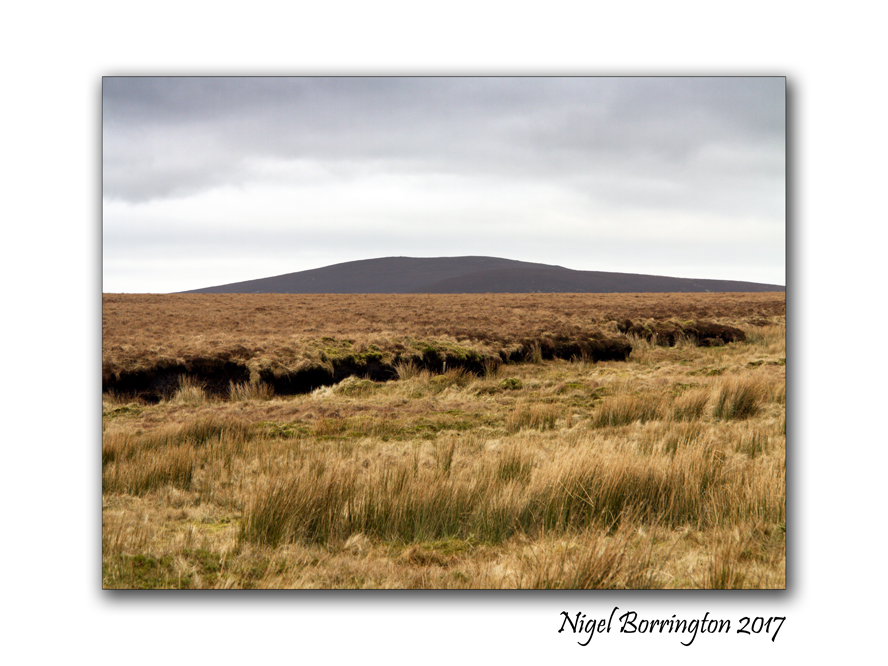
Bogland – Poem by Seamus Heaney
Image – Nigel Borrington
We have no prairies
To slice a big sun at evening–
Everywhere the eye concedes to
Encrouching horizon,
Is wooed into the cyclops’ eye
Of a tarn. Our un-fenced country
Is bog that keeps crusting
Between the sights of the sun.

They’ve taken the skeleton
Of the Great Irish Elk
Out of the peat, set it up
An astounding crate full of air.
Butter sunk under
More than a hundred years
Was recovered salty and white.
The ground itself is kind, black butter
Melting and opening underfoot,
Missing its last definition
By millions of years.
They’ll never dig coal here,
Only the waterlogged trunks
Of great firs, soft as pulp.
Our pioneers keep striking
Inwards and downwards,
Every layer they strip
Seems camped on before.
The bogholes might be Atlantic seepage.
The wet centre is bottomless.
Tamron SP 35-210mm f3.5-f4.2 – Classic lenses

Tarmon SP 35mm-210mm f3.5-4.2
Classic Lenses
Nigel Borrington
Using classic Camera lenses
In the world of Digital photography it feels like a new bit of equipment is released almost every month, new Camera bodies, lenses, flash guns etc….
In the last few years however the image quality of digital cameras has begun to reach such high standards that its hard to see as bigger need than every before to keep upgrading your SLR camera body. I remember so clearly the day I first purchased a digital SLR, it was a Nikon D100, a body that was very closely based on the Nikon F80. I also remember reading sometime later that for a digital Camera to match the print size of 35mm film you would need 24 million pixels, a target that was reached sometime back in the Nikon range and surpassed with the 36mp Nikon D800.
Looking back at Film cameras, most of the end print size and quality came from the type of film you selected to use. The camera bodies themselves offered different levels of capture capabilities, some bodies offered all you needed to take landscape images while other more advanced bodies allowed you to capture fast action activities such as sports.
Once you had the camera body that you needed, for the type of photography you worked with, there was little need to upgrade until you had almost worked your camera into the ground.
Today in 2017, it is a very legitimate question to ask if at last after many years of the megapixel race, have we not now reached the point that you can purchase a camera body and keep it for life or until you finish it off by using it so much ?
What about Lenses ?
In the first years of digital SLR cameras it was not always possible to use all your old lenses with your new wonderful Digital body, Many Cameras would only for example allow you to use the latest Auto-focus lenses.
Over time the manufacturers started to launch bodies at the top end of their range that allowed you to use many older lenses including Manual focus lenses. Once this happened many photographers started to look backwards at the classic lens market, to workout what lenses from the past still offered great performance on modern cameras.
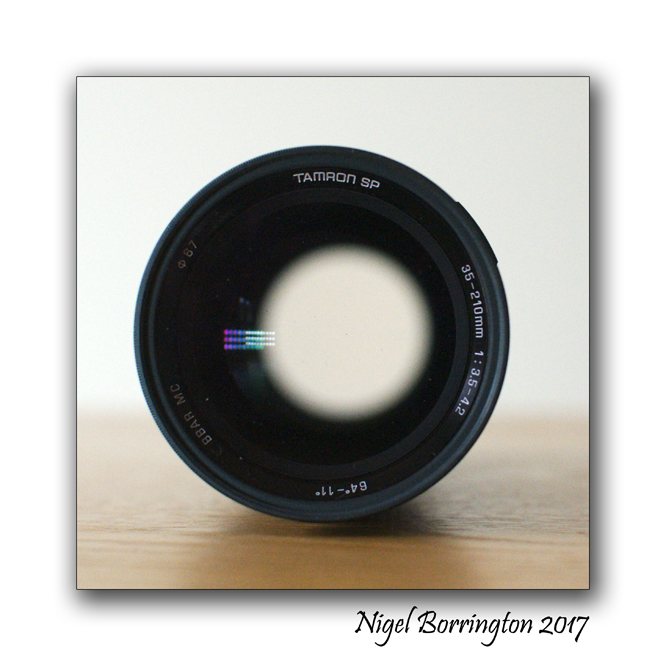
Personally I love using classic lenses and the Tarmon Sp 35mm-210mm F3.5-4.2, is one of the lenses I love using the most, produced by Tamron in Japan in the early 1980’s and only ended production in late 1987, it was available new well into the 1990’s.

This lens is one of the best made Zoom lenses of all time and even includes a Macro mode, offering a close focus of 11.8″ (0.3m), for a zoom lens this is very good. It is also very fast and falls into the professional level of F3.5 at 35mm to F4.2 at 210mm, on a current Digital slr with its low ISO noise this speed is excellent. It also has some amazing Lens flare that when used in video mode is amazing !
For times when I can use manual focus and want a zoom lens that has a great focus distant range and is fast, I am more than happy to have this lens with me. Its sharp at all F-stops, feels just amazing to use and can take any kind of usage in any type of conditions.

I will let the images below do the rest of the talking here, its fair to say however that not all old camera equipment is outdated and not worth using anymore. Great Lenses like these ones, if looked after last for ever.
When new this lens would have cost top money and for a reason!
Lens Gallery


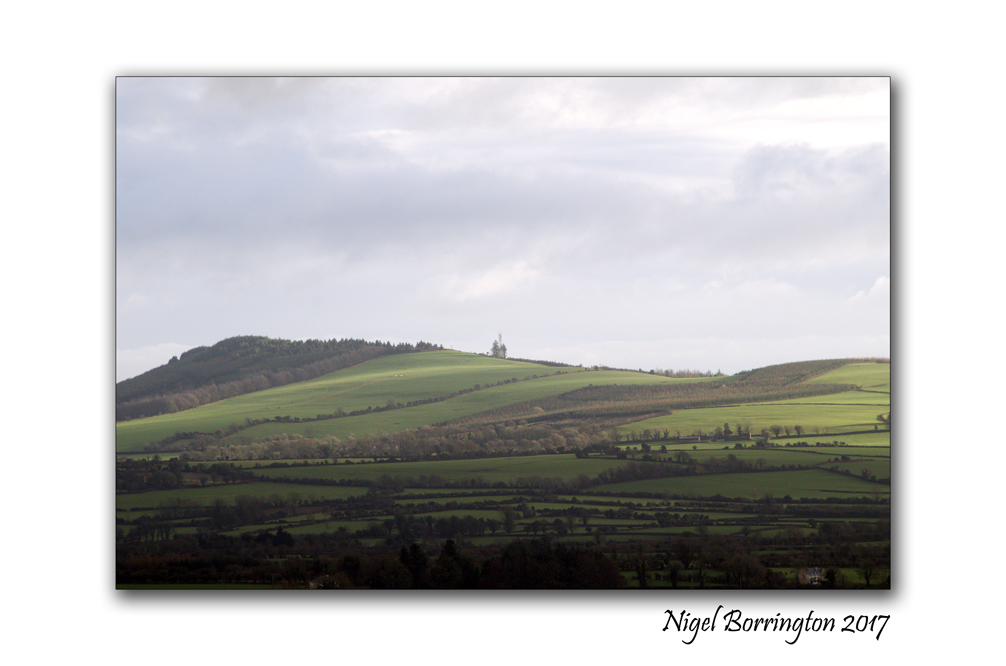


Arley Hall, a country house in the village of Arley, Cheshire, England,
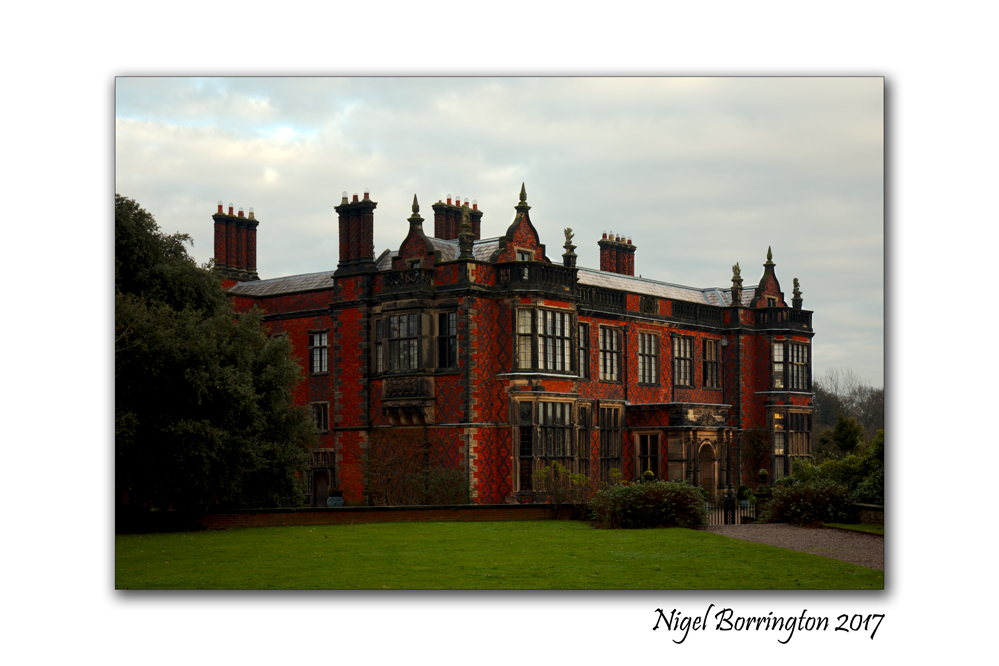
Arley Hall
country house
village of Arley, Cheshire, England,
If you looking for a place to visit in the UK, the county of Chesire has many great country houses and estate lands that you can visit, including Dunham Massey Hall, Tatton Park and Arley Hall.
Over the Christmas and New year period I visited Arley Hall and its great Gardens
Arley Hall is a country house in the village of Arley, Cheshire, England, about 4 miles (6 km) south of Lymm and 5 miles (8 km) north of Northwich. It is home to the owner, Viscount Ashbrook and his family. The house is a Grade II* listed building, as is its adjacent chapel. Formal gardens to the southwest of the hall are also listed at Grade II* on the National Register of Historic Parks and Gardens. In the grounds are more listed buildings, a cruck barn being listed as Grade I, and the other buildings as Grade II.
The hall was built for Rowland Egerton-Warburton between 1832 and 1845, to replace an earlier house on the site. Local architect George Latham designed the house in a style which has become known as Jacobethan, copying elements of Elizabethan architecture. A Gothic Revival chapel designed by Anthony Salvin was subsequently built next to the hall. By the mid-20th century parts of the house were in poor condition and were demolished, to be replaced by five private homes in a matching architectural style.

Arley Hall, Gardens
The present gardens were created in the 1830s, and were developed during the 20th century. The garden’s Herbaceous Border was one of the first of its type in Britain, and remains one of the finest. The house and its gardens have been open to the public since the 1960s, and have also been used as a film location. Stockley Farm, part of the Arley estate, is an additional visitor attraction for children and families.

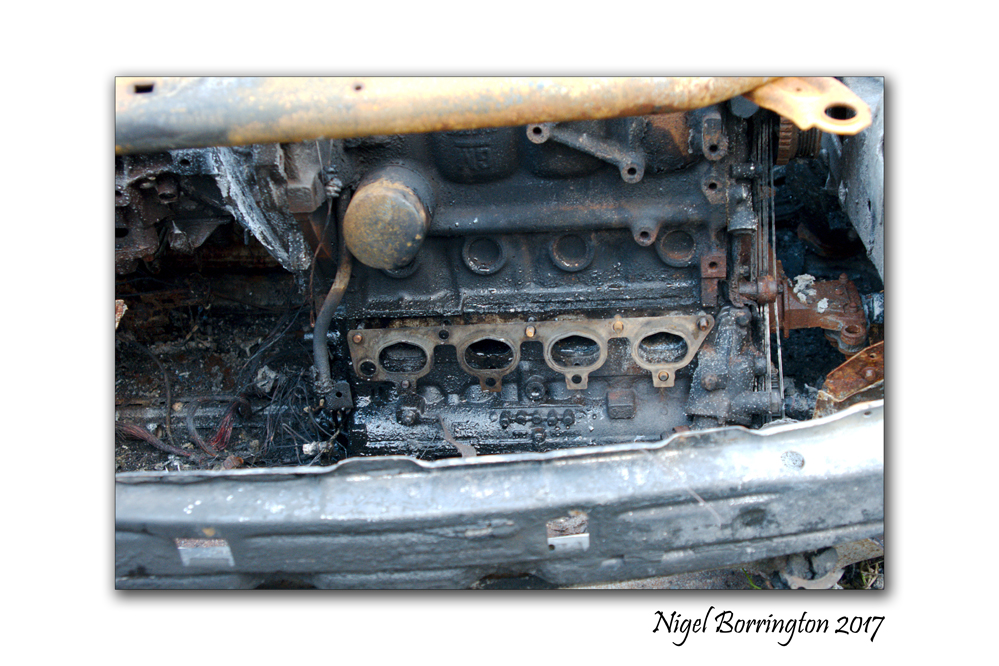
Burnt out and left in the woods
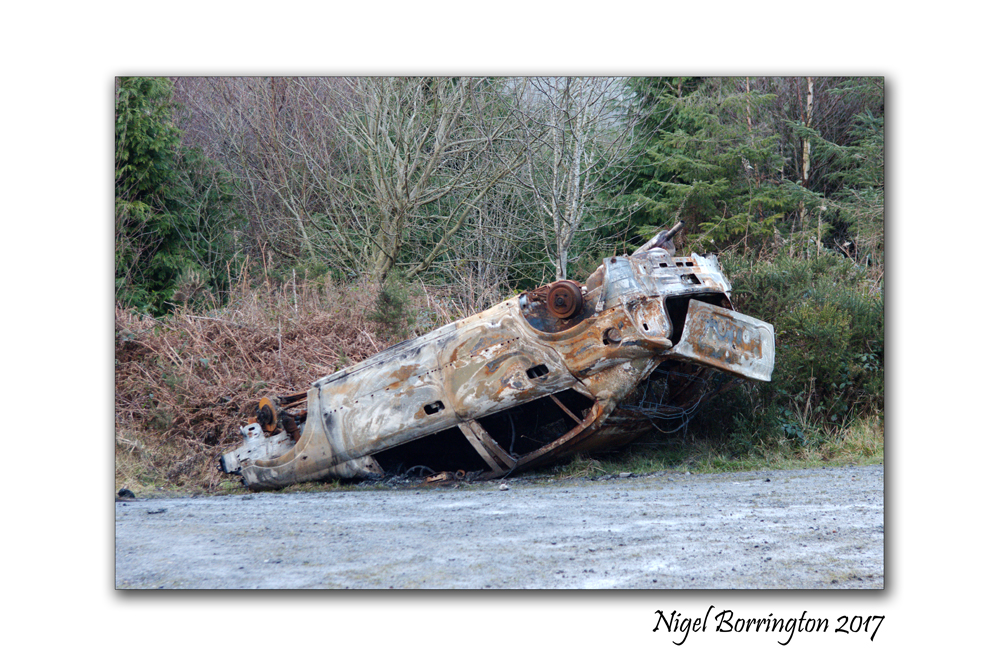
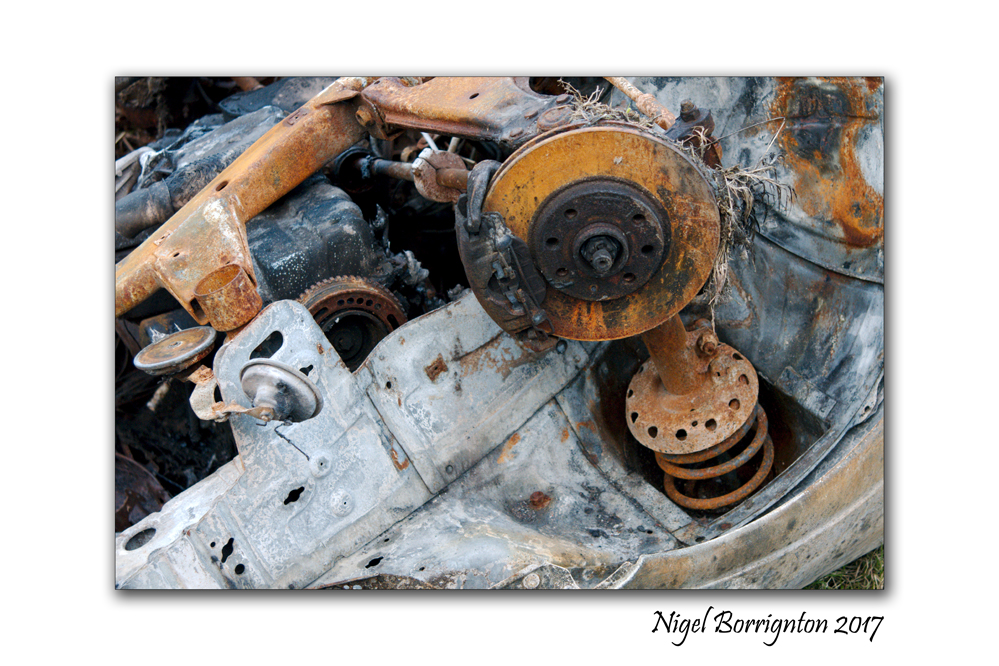
Sometimes when out on a walk you find things that ask questions in your mind, old cookers or TV’s, items long past there use. At the weekend I came across this burnt out car, turned over and then burnt until all that remains is a twisted rusting shell.
I my mind it is most likely stolen but then it has its own story to tell !


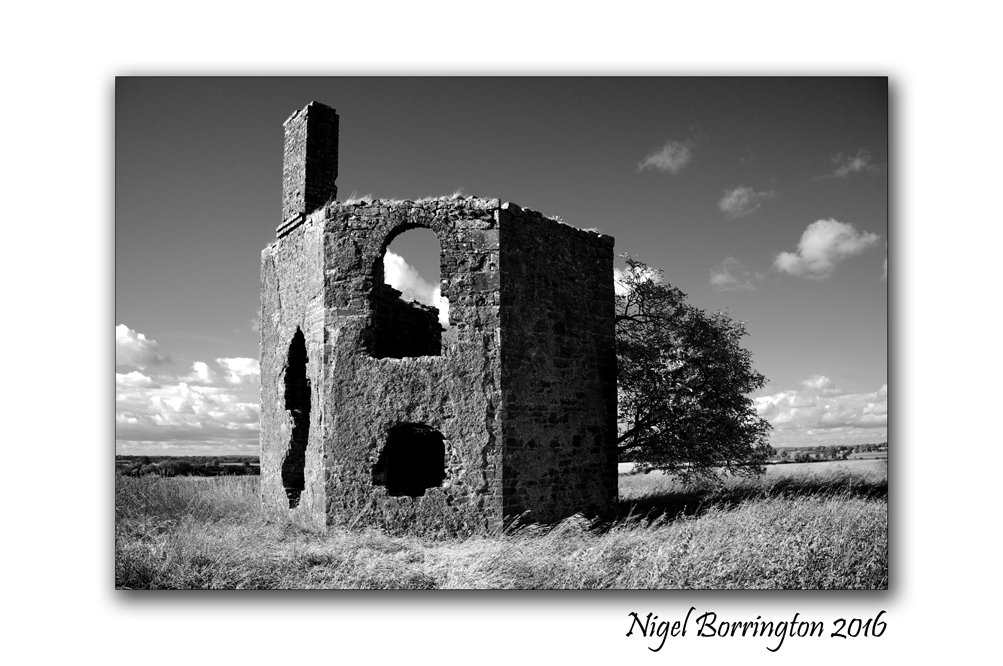
The House on the Hill, By : Edwin Arlington Robinson

The Old house on the hill
County Kilkenny
Ireland
Nigel Borrington
The House on the Hill
Edwin Arlington Robinson
They are all gone away,
The House is shut and still,
There is nothing more to say.
Through broken walls and gray
The winds blow bleak and shrill:
They are all gone away.
Nor is there one to-day
To speak them good or ill:
There is nothing more to say.
Why is it then we stray
Around the sunken sill?
They are all gone away,
And our poor fancy-play
For them is wasted skill:
There is nothing more to say.
There is ruin and decay
In the House on the Hill:
They are all gone away,
There is nothing more to say.
Pencil and Watercolour Sketching, the great outdoors

Watercolour Sketch
County Kilkenny
Ireland
Sketching in the great outdoors
This year I hope to use other forms of recording the landscape that I find around me other than photography alone, I love creating images using my camera but I want to dig in a little deeper and spent a lot more time at each location.
There are so many art based media that can be used to create a sketch, such as (Pastels, pens, pencils, charcoal and paint).
Personally I love using Pencils and Waterolour paints, both are very simple to use and very easy to carry around. Pencil is the most direct and very easy to always have with you in a bag. Watercolour paints requires you to have a supply of water and a palette for mixing colours, both simple to have available and easy to use. A monotone Watercolour sketch is a great way to make use of this medium, used to capture all the tones that you can see in the landscape in-front of you and a lot faster than using a pencil to record the lights and dark’s in your image.
I find that the process of starting and finishing a sketch outside to be the perfect way of relaxing, its very hard to think about anything else on your mind from the moment you start working and by the time you have finished, your mind is filled with little else other than how you can use you finished sketch later for a painting or more detailed drawing.
Add your sketch to some photographs you took and you have the perfect set of images available to create larger works in oil or acrylic paints.
The sketches here are a small sample of some work produced during an art course I completed a while back …..


Happy Christmas and New year to everyone ! .. A 2016 Gallery
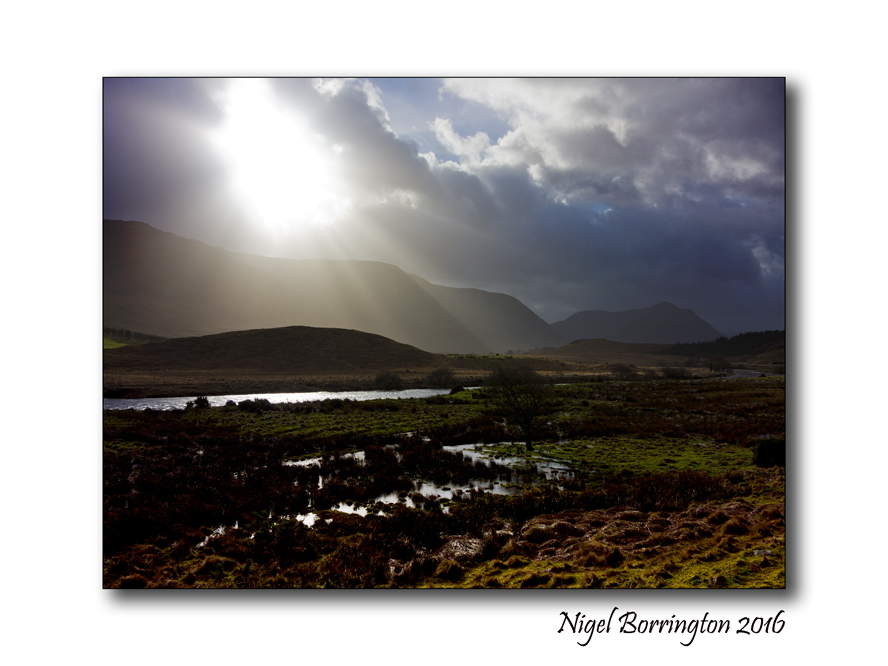
January 2016
Happy Christmas and a happy new year for 2017 to everyone 🙂
Todays post is my last for the year, I want to spend sometime off line with my family for the holidays.
I also want to say a very big thank you for such a great 2016 to everyone here in the word-press community, it has been great fun sharing posts with you all and reading your own posts!!!, its a great thrill to know so many great people and blogger’s here !!
Have a great Christmas time and a wonderful new year period, I look forward to sharing some on-line time with you all again in January 2017 – 🙂 🙂 🙂
A gallery of images from 2016
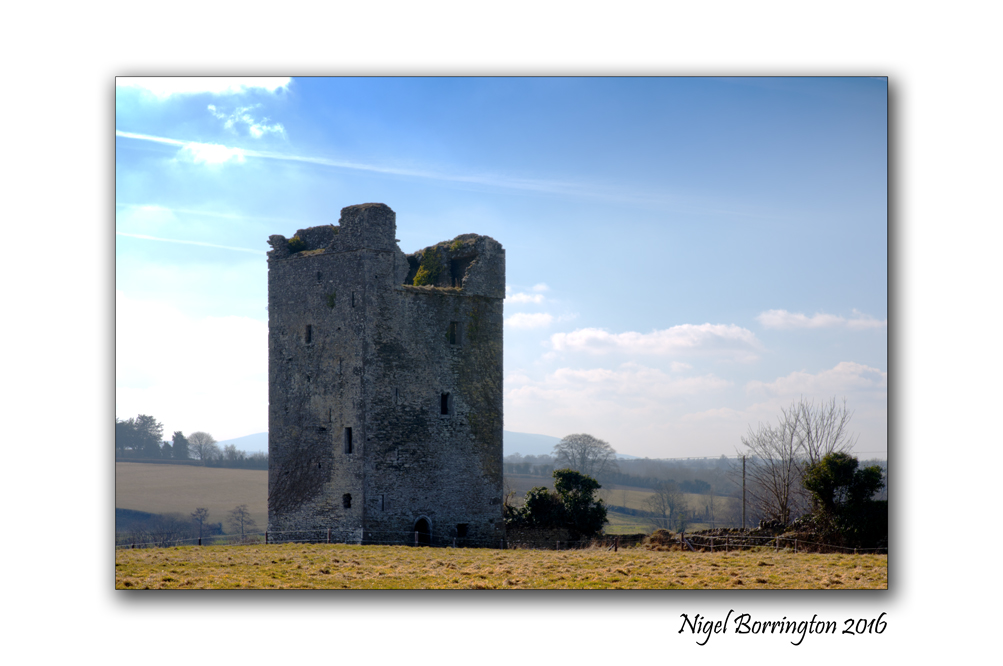
January 2016
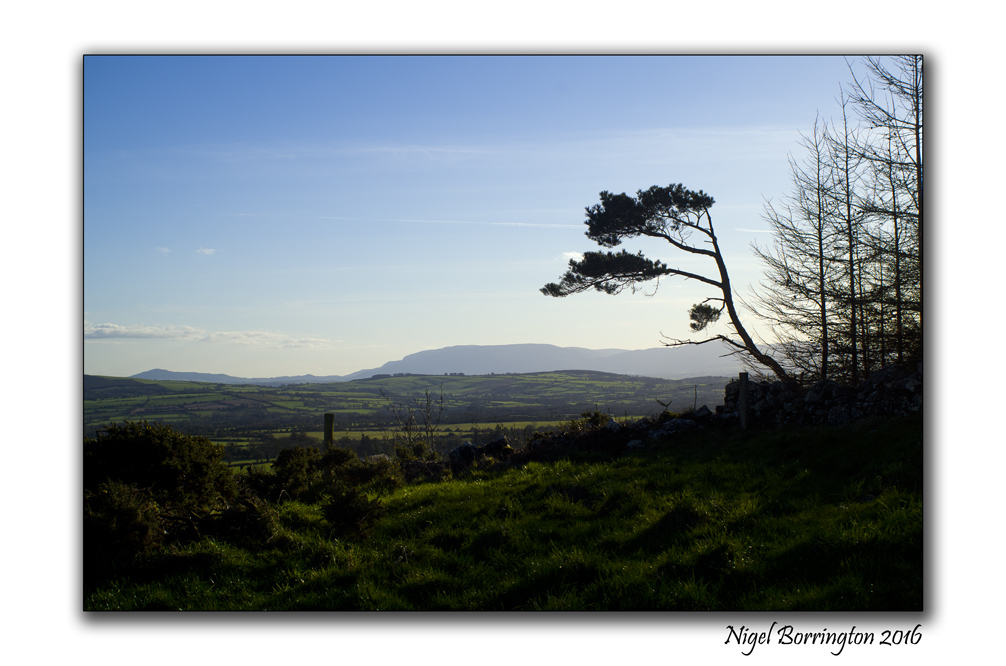
February 2016
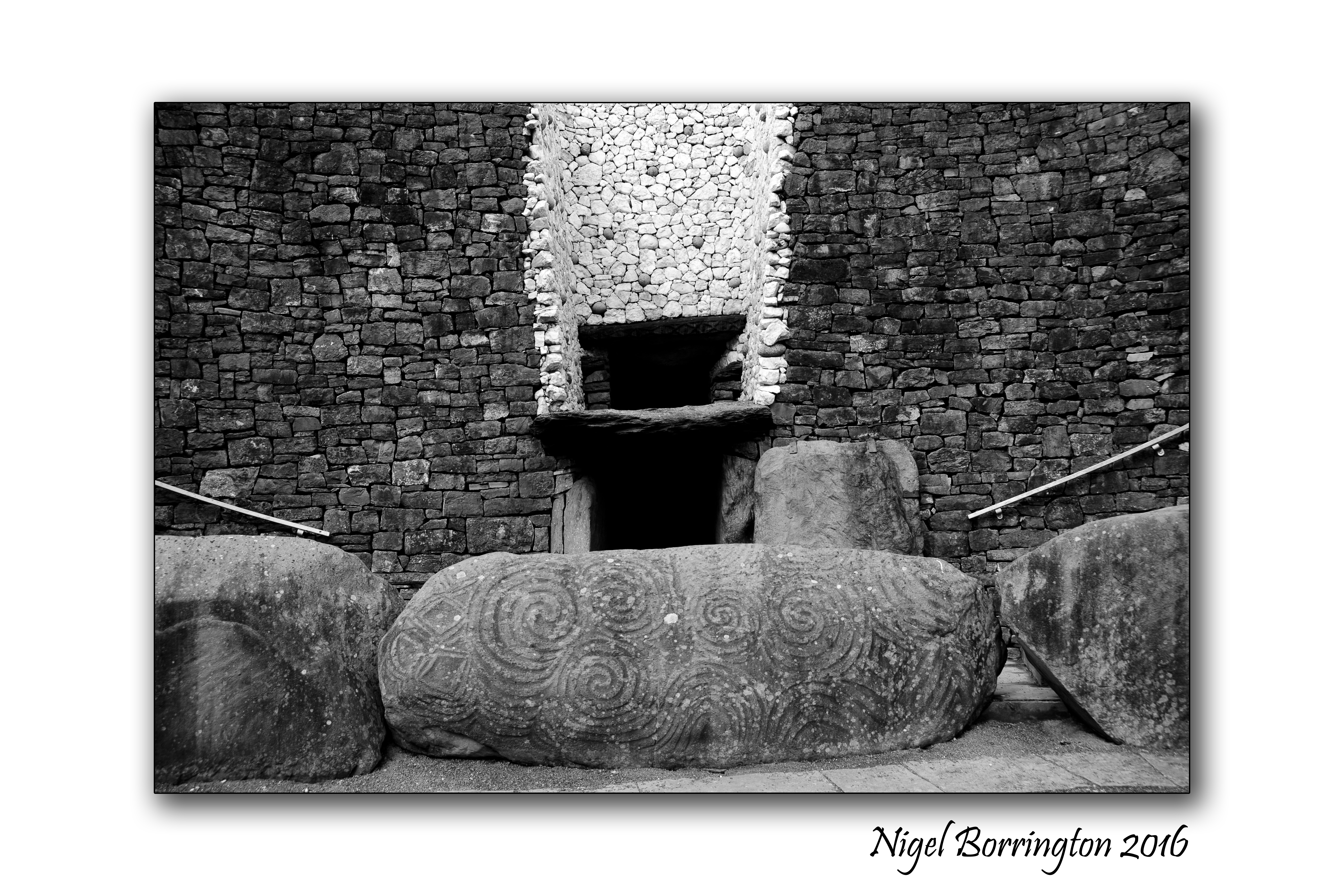
March 2016
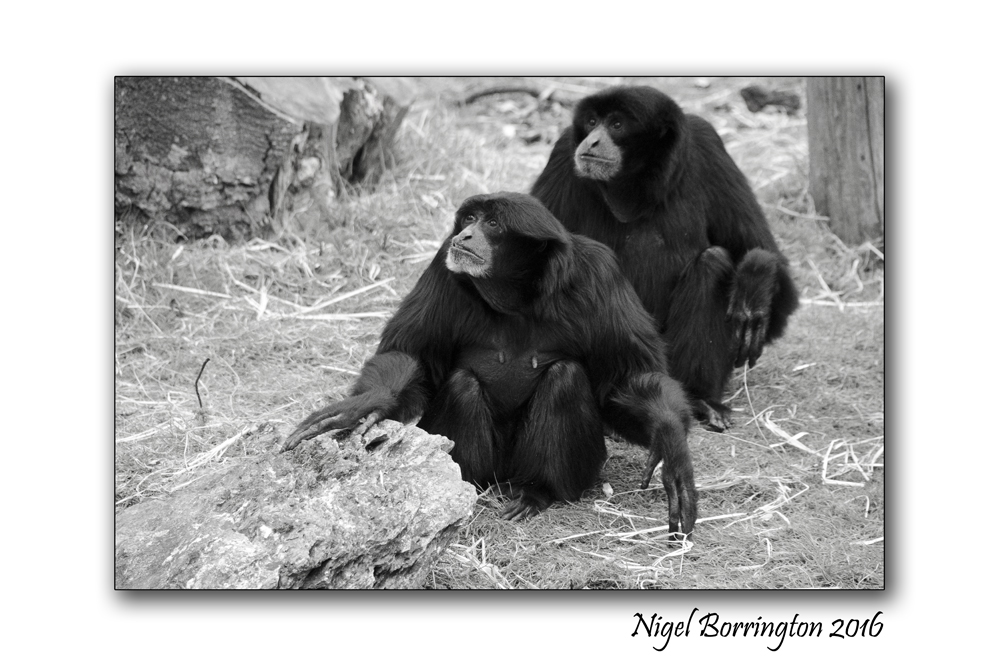
April 2016
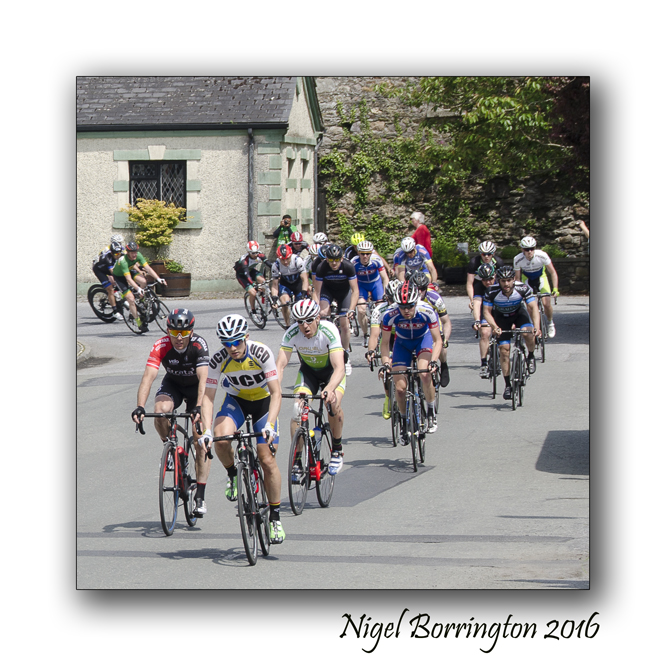
May 2016
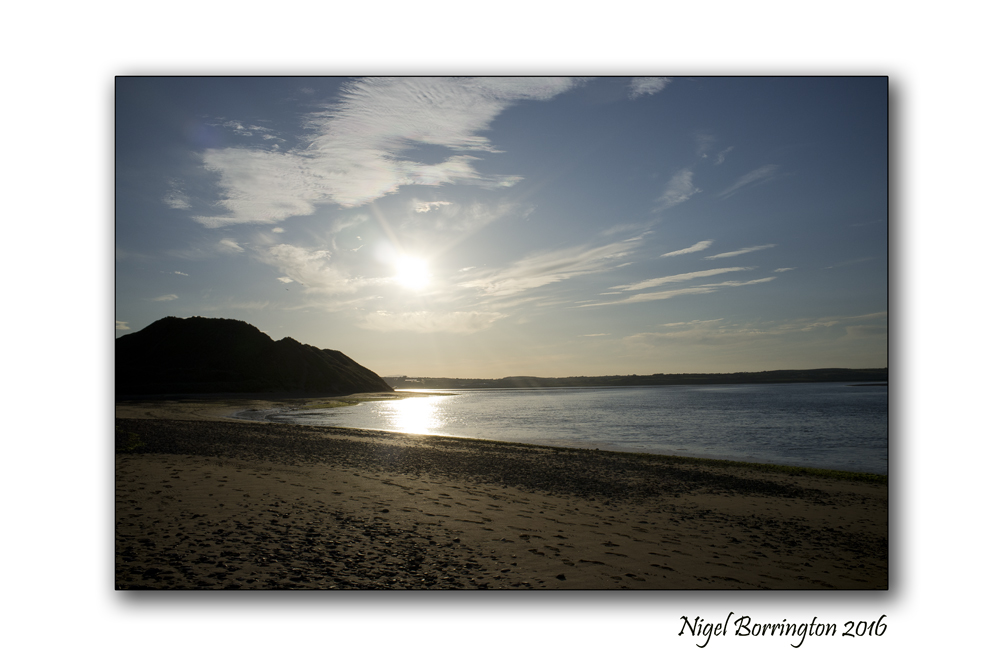
June 2016

July 2016
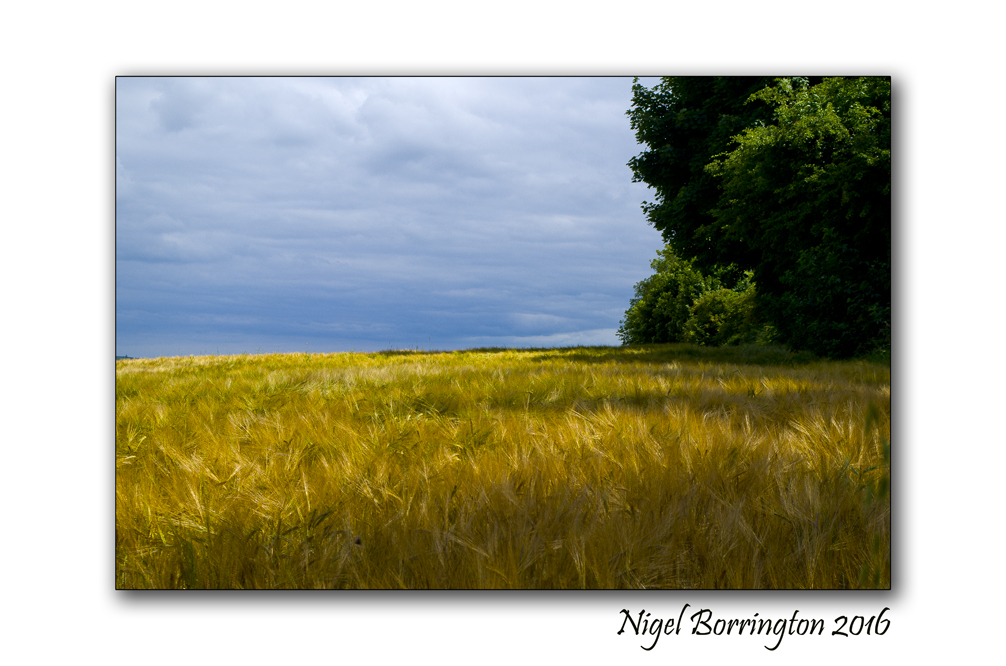
August 2016

September 2016
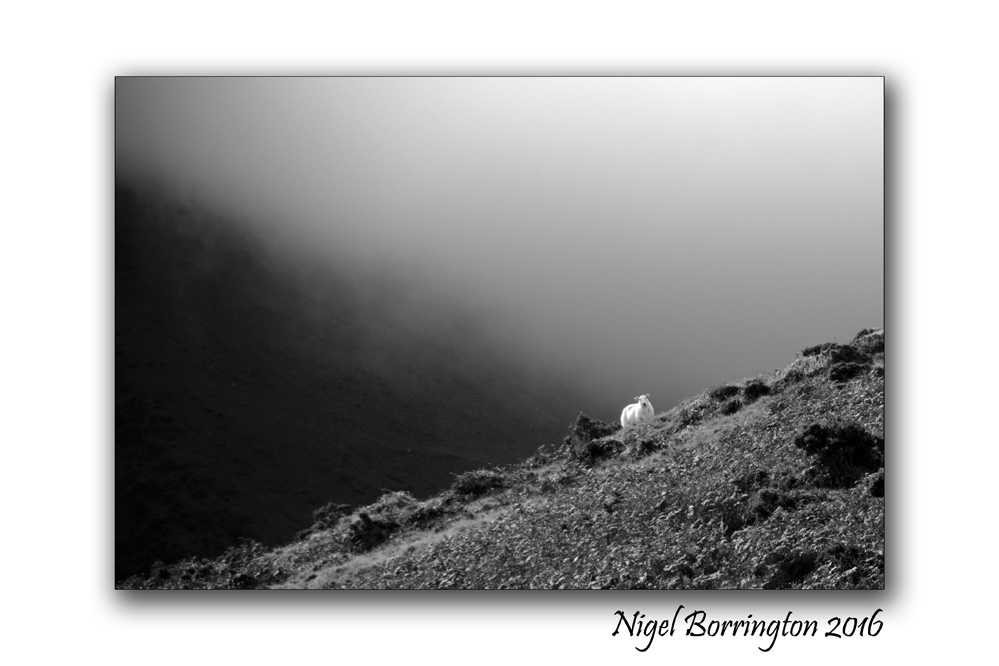
October 2016
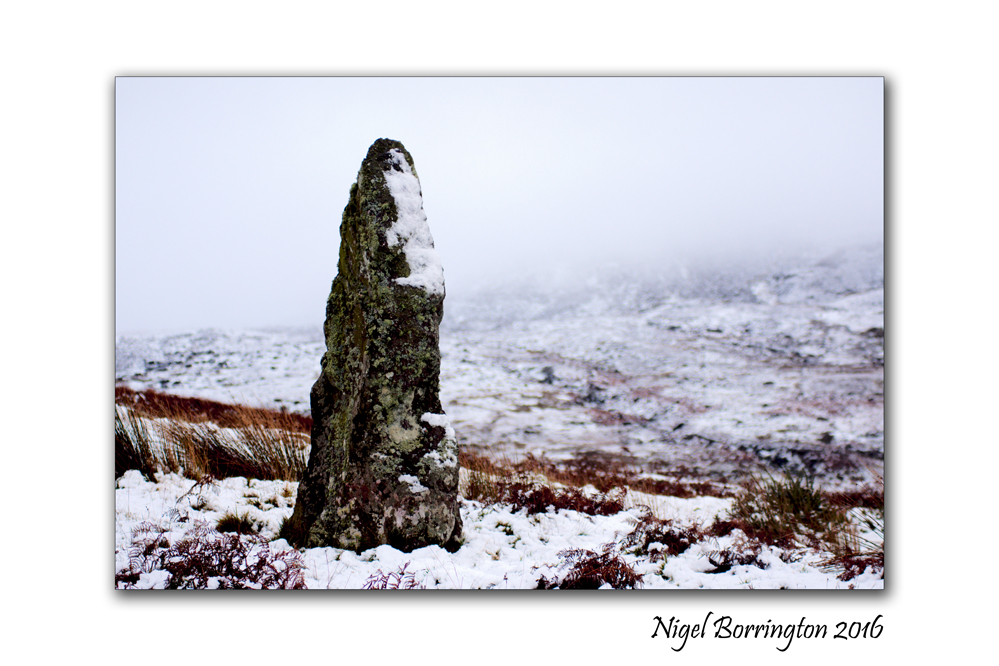
November 2016

December 2016
Marking Midwinter’s day, Pagan beliefs – Gods the Goddess of the winter solstice
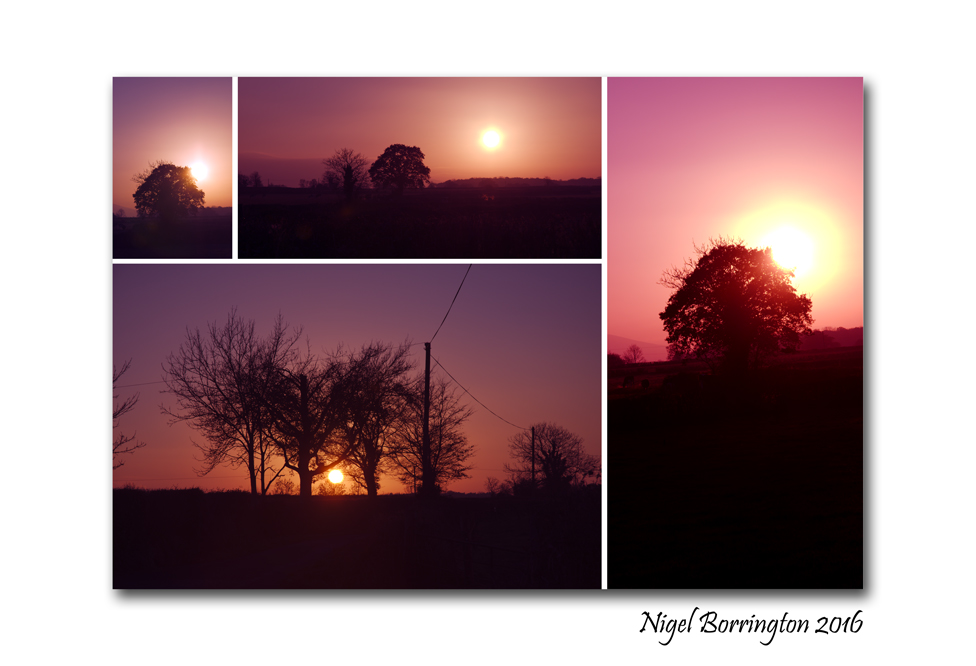
Midwinters day 2016
Nigel Borrington
Today is Mid winters day or the Winter Solstice.
History and cultural significance
The solstice itself may have been a special moment of the annual cycle of the year even during neolithic times. Astronomical events, which during ancient times controlled the mating of animals, sowing of crops and metering of winter reserves between harvests, show how various cultural mythologies and traditions have arisen. This is attested by physical remains in the layouts of late Neolithic and Bronze Age archaeological sites, such as Stonehenge in Britain and Newgrange in Ireland. The primary axes of both of these monuments seem to have been carefully aligned on a sight-line pointing to the winter solstice sunrise (Newgrange) and the winter solstice sunset (Stonehenge). Significant in respect of Stonehenge is the fact that the Great Trilithon was erected outwards from the centre of the monument, i.e., its smooth flat face was turned towards the midwinter Sun.
The winter solstice may have been immensely important because communities were not certain of living through the winter, and had to be prepared during the previous nine months. Starvation was common during the first months of the winter, January to April (northern hemisphere) or July to October (southern hemisphere), also known as “the famine months”. In temperate climates, the midwinter festival was the last feast celebration, before deep winter began. Most cattle were slaughtered so they would not have to be fed during the winter, so it was almost the only time of year when a supply of fresh meat was available. The majority of wine and beer made during the year was finally fermented and ready for drinking at this time. The concentration of the observances were not always on the day commencing at midnight or at dawn, but the beginning of the pre-Romanized day, which falls on the previous eve.

Since the event is seen as the reversal of the Sun’s ebbing presence in the sky, concepts of the birth or rebirth of sun gods have been common and, in cultures using winter solstice based cyclic calendars, the year as reborn has been celebrated with regard to life-death-rebirth deities or new beginnings such as Hogmanay’s redding, a New Year cleaning tradition. Also reversal is yet another usual theme as in Saturnalia’s slave and master reversals.

CAILLEACH BHEUR : The Celtic Goddess of winter
CAILLEACH BHEUR : Scottish, Irish, Manx, Great Goddess in her Destroyer aspect; called “Veiled One”. Another name is Scota, from which Scotland comes. In parts of Britain she is the Goddess of Winter. She was an ancient Goddess of the pre-Celtic peoples of Ireland. She controlled the seasons and the weather; and was the goddess of earth and sky, moon and sun.
Other Gods
Saturn (Roman): Every December, the Romans threw a week-long celebration of debauchery and fun, called Saturnalia in honor of their agricultural god, Saturn. Roles were reversed, and slaves became the masters, at least temporarily. This is where the tradition of the Lord of Misrule originated
Alcyone (Greek): Alcyone is the Kingfisher goddess. She nests every winter for two weeks, and while she does, the wild seas become calm and peaceful.
Ameratasu (Japan): In feudal Japan, worshipers celebrated the return of Ameratasu, the sun goddess, who slept in a cold, remote cave. When the other gods woke her with a loud celebration, she looked out of the cave and saw an image of herself in a mirror. The other gods convinced her to emerge from her seclusion and return sunlight to the universe.
Baldur (Norse): Baldur is associated with the legend of the mistletoe. His mother, Frigga, honored Baldur and asked all of nature to promise not to harm him. Unfortunately, in her haste, Frigga overlooked the mistletoe plant, so Loki – the resident trickster – took advantage of the opportunity and fooled Baldur’s blind twin, Hodr, into killing him with a spear made of mistletoe. Baldur was later restored to life.
Bona Dea (Roman): This fertility goddess was worshiped in a secret temple on the Aventine hill in Rome, and only women were permitted to attend her rites. Her annual festival was held early in December.
Demeter (Greek): Through her daughter, Persephone, Demeter is linked strongly to the changing of the seasons and is often connected to the image of the Dark Mother in winter. When Persephone was abducted by Hades, Demeter’s grief caused the earth to die for six months, until her daughter’s return.
Dionysus (Greek): A festival called Brumalia was held every December in honor of Dionysus and his fermented grape wine. The event proved so popular that the Romans adopted it as well in their celebrations of Bacchus.
Holly King (British/Celtic): The Holly King is a figure found in British tales and folklore. He is similar to the Green Man, the archetype of the forest. In modern Pagan religion, the Holly King battles the Oak King for supremacy throughout the year. At the winter solstice, the Holly King is defeated.
Horus (Egyptian): Horus was one of the solar deities of the ancient Egyptians. He rose and set every day, and is often associated with Nut, the sky god. Horus later became connected with another sun god, Ra.
La Befana (Italian): This character from Italian folklore is similar to St. Nicholas, in that she flies around delivering candy to well-behaved children in early January. She is depicted as an old woman on a broomstick, wearing a black shawl.
Lord of Misrule (British): The custom of appointing a Lord of Misrule to preside over winter holiday festivities actually has its roots in antiquity, during the Roman week of Saturnalia.
Mithras (Roman): Mithras was celebrated as part of a mystery religion in ancient Rome. He was a god of the sun, who was born around the time of the winter solstice and then experienced a resurrection around the spring equinox.
Odin (Norse): In some legends, Odin bestowed gifts at Yuletide upon his people, riding a magical flying horse across the sky. This legend may have combined with that of St. Nicholas to create the modern Santa Claus.
THE TREE SINGS TO THE RIVER – By Lea Goldberg

The tree sings to the river
Irish landscapes
Nigel Borrington
He who carried my golden autumn,
Swept away my blood with the leaf fall,
He who shall see my spring when it returns
To him with the turning of the year.
My brother, the river, who is forever lost,
New each day and different and one,
My brother the stream between his two shores
Who flows as I do between spring and fall.
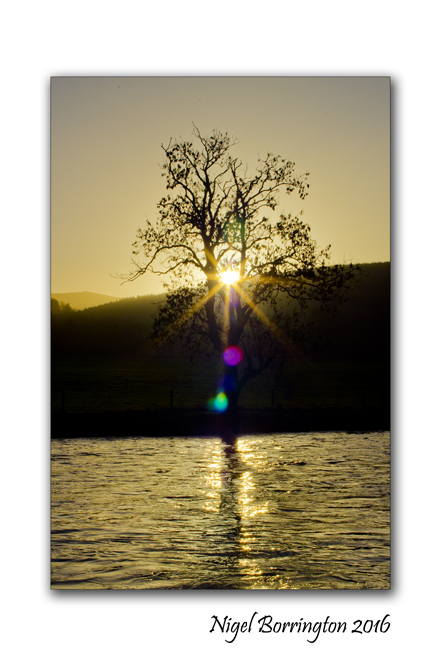
For I am the bud and I am the fruit,
I am my future and I am my past,
I am the solitary tree trunk,
And you — you are my time and my song.
Song of Sunset on the River by Bai Juyi, Image of the river Suir at Sunset
Sunset over the river
River Suir
Tipperary
Song of Sunset on the River
by Bai Juyi
A length setting sun spread water in
Half river emerald half river red
Love ninth month first three night
Dew like pearl moon like bow
A strip of water’s spread in the setting sun,
Half the river’s emerald, half is red.
I love the third night of the ninth month,
The dew is like pearl; the moon like a bow.
A weekend with wildlife, Otters of the river Suir

Wildlife weekend
Otters on the River Suir
County Tipperary
Nigel Borrington
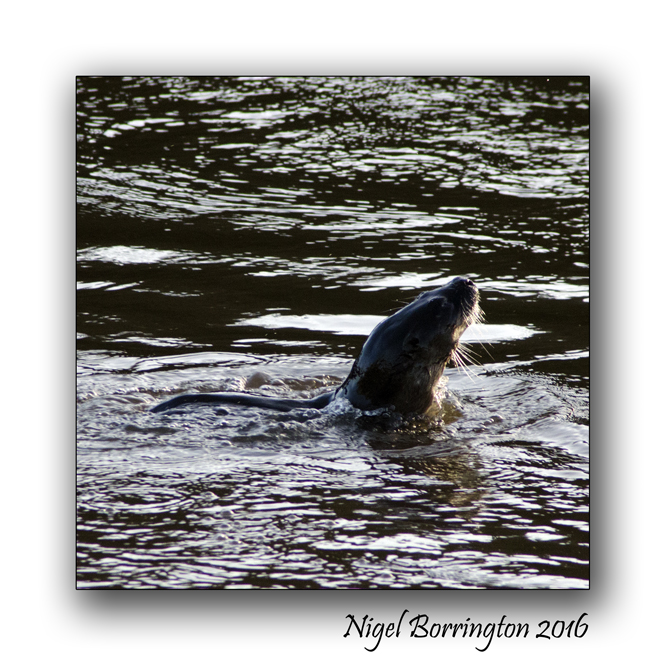
My study of an Otter family on the river Suir, county Tipperary continued today Friday, Each time I visit this family I manage to get closer and closer, today being the most noticeable.
I managed to spend 40min with this one adult Otter as he or she hunted the river for fish, this process involved diving as deep as possible and spending about a minute below the water before coming back up for breath, during the 40 minutes I think two fish in total were retrieved.
I hope to keep returning many times of the winter months to monitor just how they are all doing, ist amazing to be able to get so close and exciting to study such wonderful wild animals.



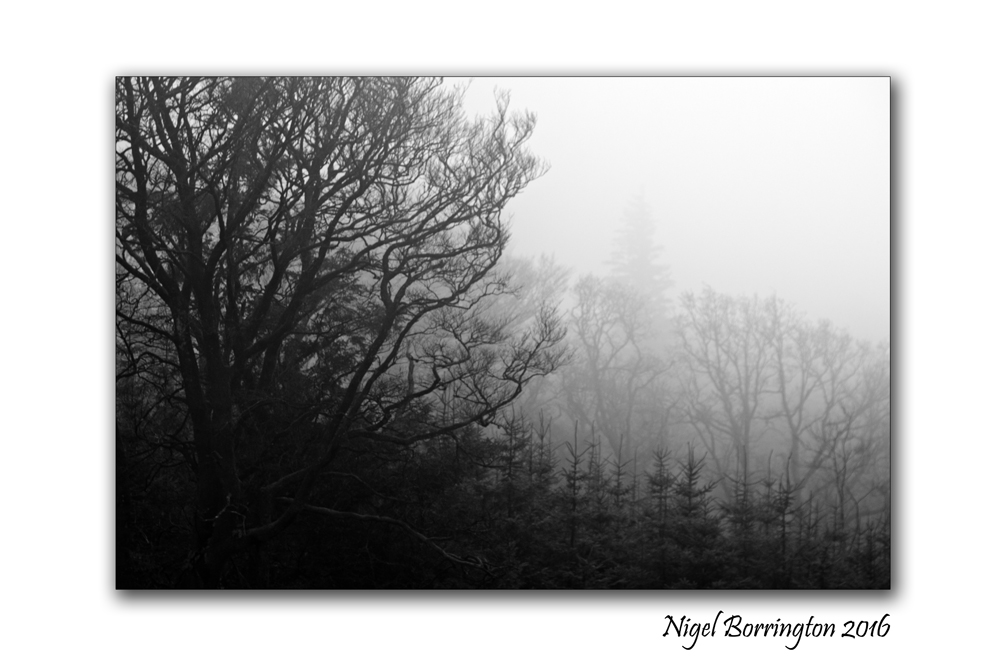
Irish Landscape images, county Kilkenny : The fog after the rain, a poem

Irish landscape images
County Kilkenny
after the rain
The fog after the rain , a poem
Rain falls all day in the old valley,
All the woodlands swimming underneath the steaming fog.
What peaceful sound I hear,
softly rings out of the sparkling
Woods and fields,
song of a thousand winter birds
announcing the setting sun,
Who sings loudest, after the rains.
In the bleak midwinter – Poem By Christina Rossetti
In the bleak midwinter
By Christina Rossetti
In the bleak midwinter, frosty wind made moan,
Earth stood hard as iron, water like a stone;
Snow had fallen, snow on snow, snow on snow,
In the bleak midwinter, long ago.
Our God, Heaven cannot hold Him, nor earth sustain;
Heaven and earth shall flee away when He comes to reign.
In the bleak midwinter a stable place sufficed
The Lord God Almighty, Jesus Christ.

Enough for Him, whom cherubim, worship night and day,
Breastful of milk, and a mangerful of hay;
Enough for Him, whom angels fall before,
The ox and ass and camel which adore.
Angels and archangels may have gathered there,
Cherubim and seraphim thronged the air;
But His mother only, in her maiden bliss,
Worshipped the beloved with a kiss.

What can I give Him, poor as I am?
If I were a shepherd, I would bring a lamb;
If I were a Wise Man, I would do my part;
Yet what I can I give Him: give my heart.
Landscape art and Painters , Artist: Fred Cuming

Landscape painter
Fred cuming
Landscape painting and photography
Painting as an art form for myself feels very much like a natural progression from the art of landscape photography which is the act of recording a representation of the view you find yourself located in.
I often find myself asking what it was about an image I capture with my camera or in a sketch / painting that I liked so much that I went to the effort of working with that location in different forms and media.
This is a quote from one of my favourite landscape painters Fred Cuming, Talking about his paintings Cuming says: ‘I am not interested in pure representation. My work is about responses to the moods and atmospheres generated by landscape’
Although there are many forms of landscape art all as valid as each other, Contemporary landscape painting tends to fall into the areas of semi abstracted to completely abstract, in that each work is making an effort to extract from the selected landscape location a sense of atmosphere or a mood. This mood and atmosphere can involve colour or light or texture, or all of these things and more.
This artistic process, from pure representation or abstraction can in a completely valid way start with photography and in fact many current artists have replaced the sketch book with the film/digital camera. The question as to if this is the best thing or not will continue for a long time, some feeling that a photo simply cannot capture a good enough sense of the location or at least not in the same way as spending time in that location with a sketch book can.
Personally I feel photographs are a very important tool and can in a very valid way capture the mood and sense of a place. However I feel that you need to spend a good amount of time with your camera exploring as much as you can while your on site, walking around and finding all the different views and angles along with all the small details you can find. The aim is to return home with as complete a memory of your landscape as you can.
Here are some details of Fred Cuming as an artist along with some more of his painting…..
Artist: Fred Cuming
Fred Cuming is a painter of International standing. Born in 1930 he studied Art at Sidcup School of Art from 1945 to 1949. After completing his National Service he studied at the Royal College of Art from 1951 to 1955 where he gained a Rome Scholarship and an Abbey Minor Scholarship.
Fred was elected a Royal Academician in 1974. He has also been a member of the New English Art Club since 1960 and is the recipient of many art awards including: the Grand Prix Fine Art (1977); the Royal Academy’s House & Garden Award and the Sir Brinsley Ford Prize (New English Art Club, 1986).
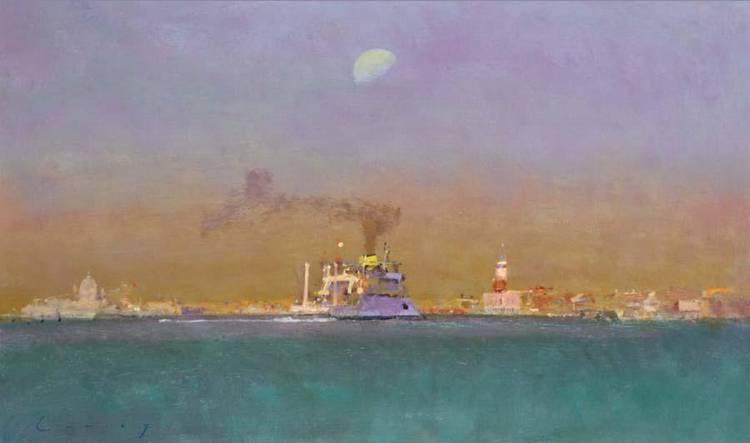
Fred Cuming has exhibited his contemporary paintings world wide. His paintings feature in many private and public modern art collections. These include: Montecarlo Museum; Royal Academy of Arts; and the Guinness Collection.
Fred Cuming paintings offer a moment for reflection. Cuming creates a relationship with nature and light – inducing observers to appreciate the calming atmosphere and realisation of the beauty around us. Many of his paintings feature the counties of Kent and Sussex where the Fred Cuming artist studio is located.
Talking about his paintings Cuming says: ‘I am not interested in pure representation. My work is about responses to the moods and atmospheres generated by landscape, still life or interior. My philosophy is that the more I work the more I discover. Drawing is essential as a tool of discovery; skill and mastery of technique are also essential, but only as a vocabulary and a means towards an idea. I struggle to keep an open mind.’

Fred Cuming has exhibited at other leading British Art Galleries. In 2001 Cuming was the featured artist at the Royal Academy Summer Exhibition with an entire gallery dedicated to his art work.In 2004 he was awarded an honourary doctorate from the University of Kent.Like all Red Rag British art and Contemporary art Fred Cuming purchases can be shipped worldwide.

 Nigel Borrington
A week in Seville , Spain
Seville
Spain
Nigel Borrington
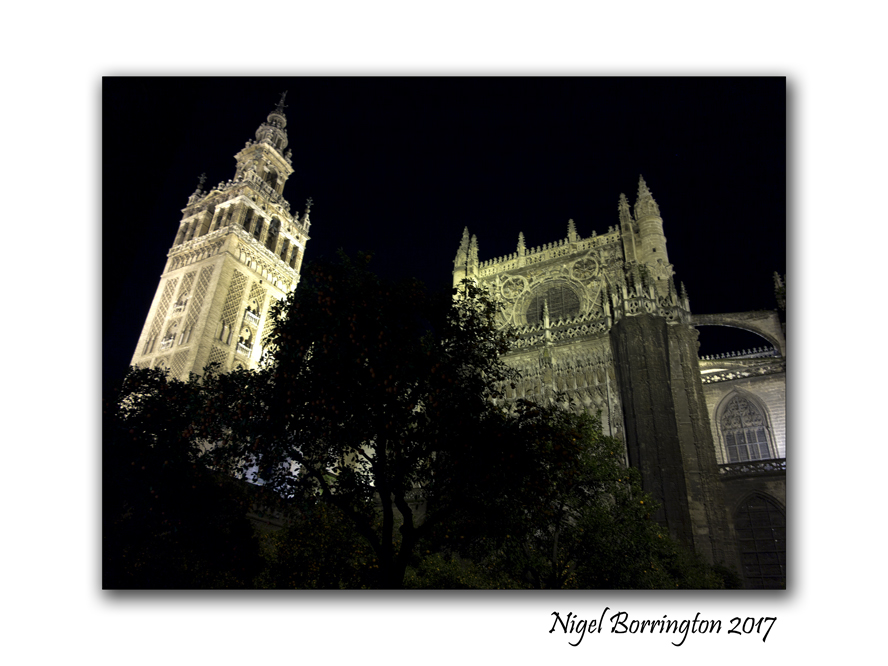
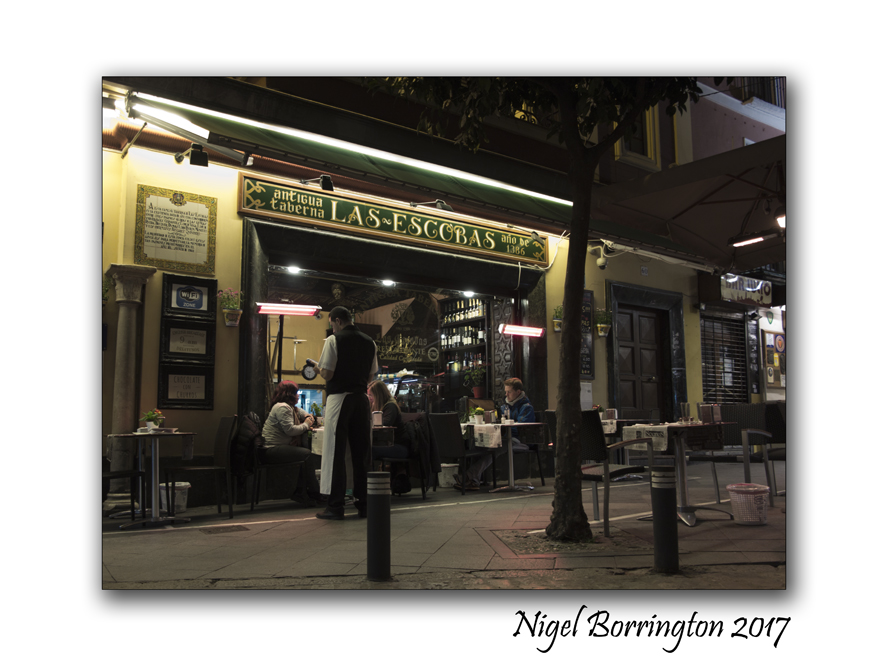
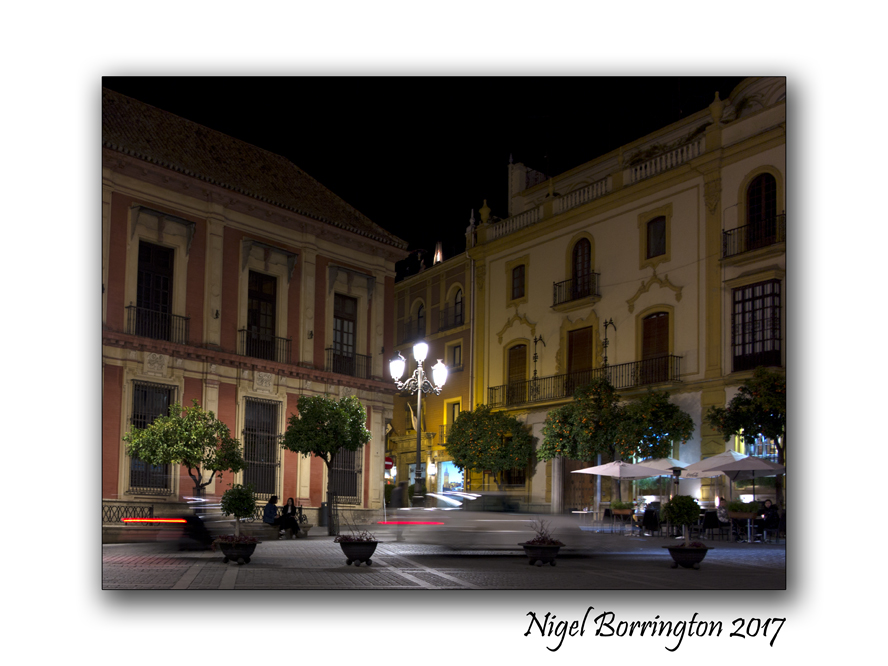
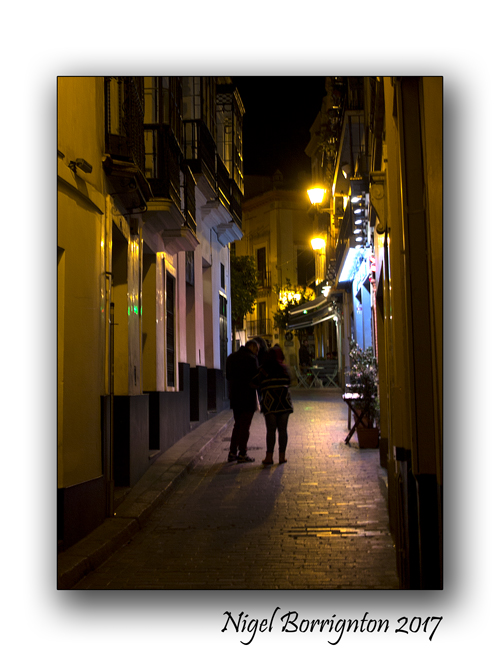
Just returned from a great weeks Holiday in Seville , Spain.
What a wonderful and historic city it is with its great cycle friendly streets, churches, royal palaces and rivers. I will post more on individual places but for now here are just some on the many places I visited and images I took.
Share this:
February 7, 2017 | Categories: Cityscape, Comment, Seville, Travel Locations | Tags: city visits, holidays, Nigel Borrington, Seville, spain | 3 Comments