Otters of the River Suir , County Tipperary

Otters of the River Suir
County Tipperary
Nigel Borrington
Last weekend while on walk between Clonmel and Carrick-on-suir, both in county Tipperary, We came across a family of Otters, they had made one of the rivers contributor’s their home ( A Holt or Couch in otter terms ). We spent about an hour with them watching as two adults and four pups hunted and play in the waters. One of the Pups managed to catch a fish and then share this food with the other three pups on the river bank.
For a long time I have hopped to have an encounter with these otters, I knew they were around this location but had never been in luck when it came to seeing them, so this hour was a truly special time and one I will not forget 🙂 , it changes the way you feel about a river when you have the chance to view its wild life for such a long period of time.
Here are some basic facts about the otter in Ireland …..
Written by Dr Mathieu Lundy
The otter (Lutra lutra) is regarded as one of Ireland’s most charismatic native mammal species.
The otter is highly secretive and although widespread people tend to only get rare glimpses of the species in the wild. Otter populations declined throughout Europe after the 1960s and the species is now very rare or absent from many parts of its former range. The Irish otter population appears to have remained largely stable and is regarded as a European stronghold. In Ireland otters are found in a diverse array of aquatic habitats, from small streams to major rivers, upland lakes to coastal lagoons and sandy beaches. However, otters that live at the coast do need access to some freshwater habitat to bathe. Within these habitats otters feed on a range of both aquatic and terrestrial prey. Much of the information regarding distribution, habitat use and diet comes from spotting otter tracks and signs. Individual otters are highly territorial, using droppings called spraints to mark their home ranges. Favoured locations for leaving spraints are in-stream boulders, bridge footings and grass tussocks, these are called seats. These territorial signs are an ideal way to tell if otters are using an area. Within its territory an otter may have a number of resting sites, called couches and underground denning sites called holts, which can be a considerable distance (up to 1km) from a river, lake or the seashore.

Distribution
The species of otter that occurs in Ireland is called the Eurasian otter and is found in Europe and across Asia to China and Japan. In other regions the otter shares aquatic habitats with species specialised to different habitats such as sea otters, but in Ireland the otters that live at the coast and those that occupy our rivers are the same species.
In Ireland the otter population is geographically widely spread. In local areas its presence will depend on the provision of suitable aquatic habitats, sufficient food and cover for resting and breeding. During different seasons male otters and juvenile otters will disperse and otter signs may be observed in areas where they have not been present hitherto.
Home ranging behaviour
The territories of otters can stretch for several kilometres; the total length of the home range depends on the availability of food. The smallest territories are thought to occur at coastal sites, where territories may be as small as 2km. The longest territories occur in upland streams where an individual may have to range more than 20km to find sufficient food. The territories of males tend to be larger than females and indeed may overlap with a number of female otters. The availability of suitable territories along the coast and inland at lakes and rivers is thought to maintain the otter population of Ireland. The entire population is estimated to be in the region of 10,000 adults.
Within their territories an individual otter may utilise a number of holts. These tend to be natural crevices, associated with the roots of trees growing along river and lake banks. These natural recesses provide the otter with a holt that has multiple entrances from which the otter can escape if disturbed. Whilst individual otters rarely dig their own holts they will use burrows made by other animals such as rabbits and foxes. It is possible to build artificial holts to attract otters to use certain areas. Artificial holts are built to resemble natural holts, with a resting compartment and multiple entrances, these are particularly important where the natural bank side vegetation has been removed.
Other resting sites are also used, frequently in dense vegetation and may be associated with frequently used runs and slides into the water.

Reproduction
Although otters can breed at any time of year most seem do so in spring or early summer. Scent markings by the females signal to male otters that the females are ready to mate. The pregnancy lasts for around two months after which a litter of cubs is born, usually two or three, but as many as five have been seen. The cubs remain in the natal holt for up to two months before venturing out on their own, although the mother may move the cubs between holts within her territory periodically. Unlike other resting sites the natal holts do not tend to be marked with spraints. The juvenile otters remain as a family group for around six months or longer before the young otters disperse to establish their own territories.
Foraging
Otters that live in rivers and lakes tend to be completely nocturnal, described as being crepuscular – activity peaks at dusk and dawn. Foraging at night or in ‘muddy’ water is aided by their highly sensitive whiskers, which detect their prey items. Otters are principally piscivorous, relying predominantly on salmonids (salmon and trout), but also eel and small fish species such as stickleback. However, otters are not limited to fish and feed opportunistically on a range of prey when available: frogs are frequently eaten by otters, and the remains of invertebrates (crayfish), birds and small mammals have also been found in spraints. Otters that forage at the coast may have flexible foraging times linked to the tides. At low tide otters hunt in the exposed rock pools and seaweed covered rocks for fish and invertebrate prey.

Conservation Status
The Irish otter population remains one of the most stable in Europe. There is some evidence to suggest that since initial national surveys in the early 1980s there have been declines in the prevalence of the species. It is hoped that the reasons for these declines will be addressed by the designation of Special Areas of Conservation (SACs), ongoing national assessments and by targeted intensive surveys. The risks to the current otter population are the availability of sufficient food within their habitats and provision of resting and denning sites. This species is protected under the Wildlife Act (1976) and Wildlife (Amendment) Act 2000.
Otters have been found dead in illegal snares, which may not be intended for otters, but which still pose a threat to individual animals. A significant number of otters are also killed on our roads. There is some evidence that the incidence of these accidents increases during periods of flooding when fast flowing rivers at bridge crossing become impassable and otters must venture onto roads to find alternative routes. The occurrence of otters at any site relies on a complex interaction of the characteristics of the wider landscape and local site specific habitat factors. Broad-scale intensive agriculture and urbanisation of catchments reduces the likelihood that otters will occur, along with reduced diversity of river banks and lake shores. Maintaining prey populations and preserving the natural features of rivers, lakes and coasts will benefit the Irish otter population and ensure that the Irish population remains a European stronghold.
Digital Art work – A December Sunset – Callan, county Kilkenny

Kilkenny Sunset
December 2016
Nigel Borrington
A December Sunset – Callan, county Kilkenny
Often when out for an evening walk at this time of year the sunsets across our local fields can be just amazing to view, the sun is low in the sky all day long in December when compared to a mid summers day. With out getting to detailed this changes the angle of the sun and it seems to make the last few moments of day light last longer. This along with the mist and early frosts that can sit of the fields, haging above the hedgerows is just great to see 🙂
This painting is created using a PC application called mypaint, I have spent the last few weeks doing my best to get up to speed with how to make the best use of it, at first just using some of the drawing tools and ink pens but as you can see – I hope that I am now getting more use to the painting and colour tools..
The paint is posted the moment I feel its finished , I very much like the idea of this as it helps me to close the processes involved and to stop me coming back and over working anything. Its a little hard to describe but its a great feeling to start and finish a painting in one session and then be able to learn when you feel that you have finished !!!
Abandoned Farmhouse, Poem By Ted Kooser

Abansoned Farmhouse
Chalk sketch
Nigel Borrington
Abandoned Farmhouse
By Ted Kooser
He was a big man, says the size of his shoes
on a pile of broken dishes by the house;
a tall man too, says the length of the bed
in an upstairs room; and a good, God-fearing man,
says the Bible with a broken back
on the floor below the window, dusty with sun;
but not a man for farming, say the fields
cluttered with boulders and the leaky barn.
A woman lived with him, says the bedroom wall
papered with lilacs and the kitchen shelves
covered with oilcloth, and they had a child,
says the sandbox made from a tractor tire.
Money was scarce, say the jars of plum preserves
and canned tomatoes sealed in the cellar hole.
And the winters cold, say the rags in the window frames.
It was lonely here, says the narrow country road.
Something went wrong, says the empty house
in the weed-choked yard. Stones in the fields
say he was not a farmer; the still-sealed jars
in the cellar say she left in a nervous haste.
And the child? Its toys are strewn in the yard
like branches after a storm—a rubber cow,
a rusty tractor with a broken plow,
a doll in overalls. Something went wrong, they say.
Fond memories…..

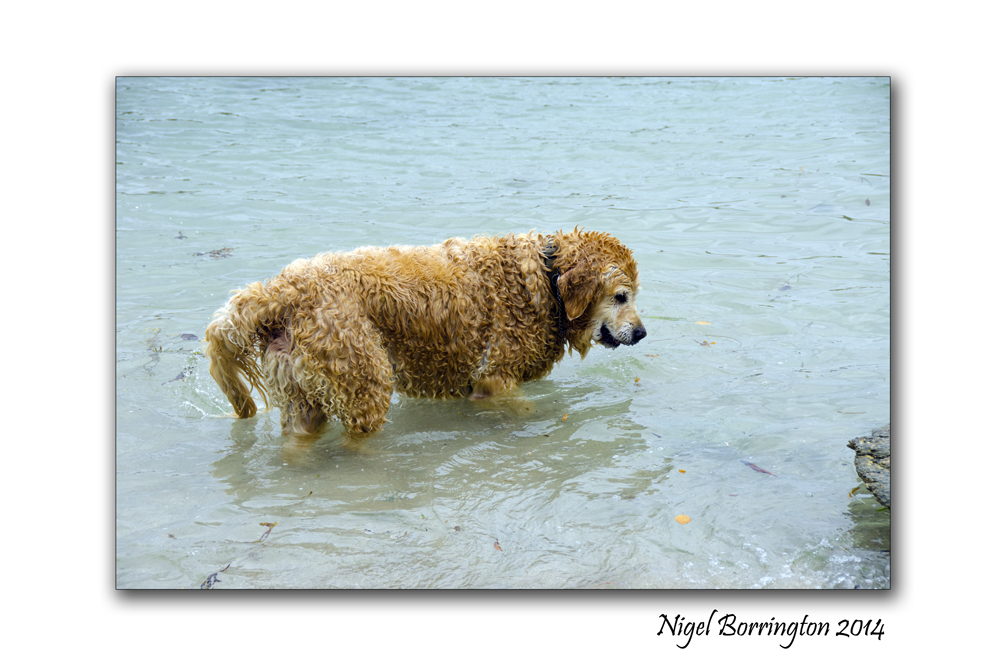
Fond memory of Molly our very special Golden Retriever
Its exactly one year ago that we lost our much loved friend Molly, she was with us for 12 1/2 year and in that time shared such a great life with us.
The gap she left is just a little smaller than this time last year but as you can imagine she is still very much loved and in our minds all the time, she was special and as lots of dog owners know she made our lives special, in that she was in it….
for the great times we had with her 🙂 🙂
Molly xxxx




Macro photography in December

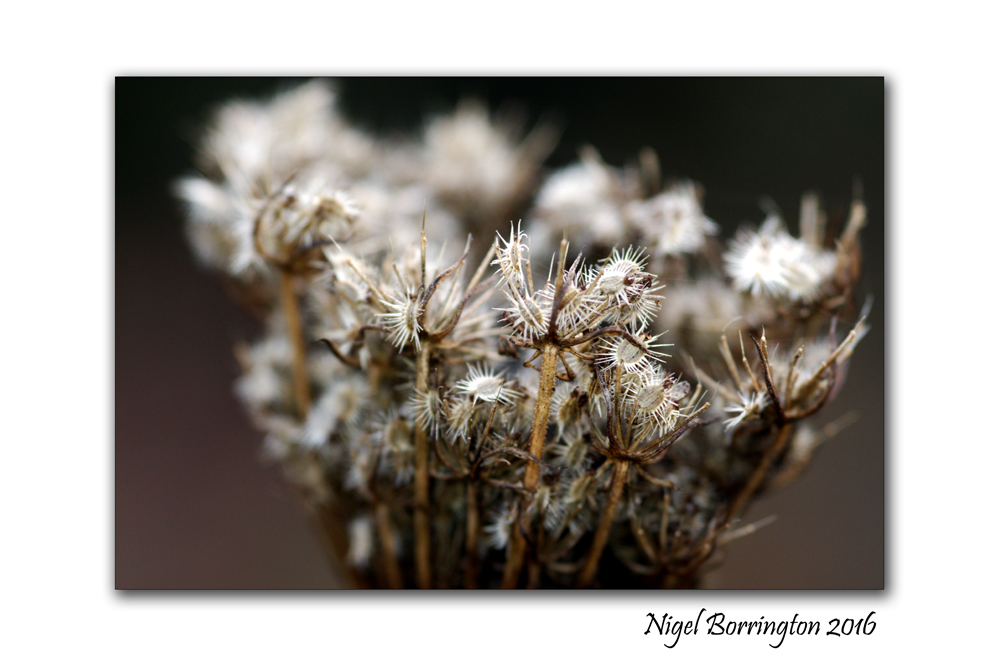
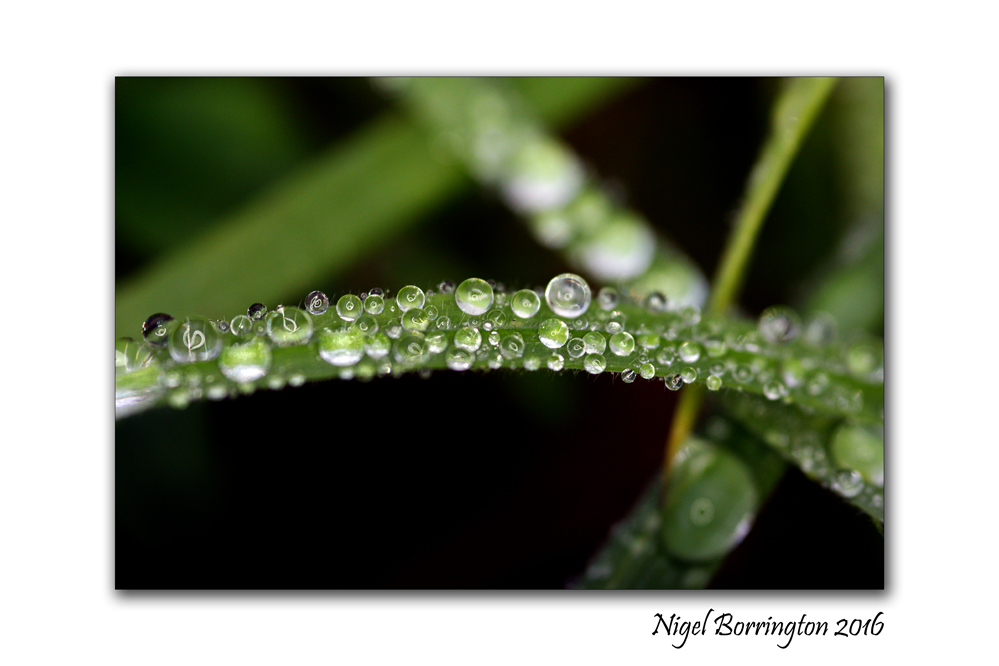
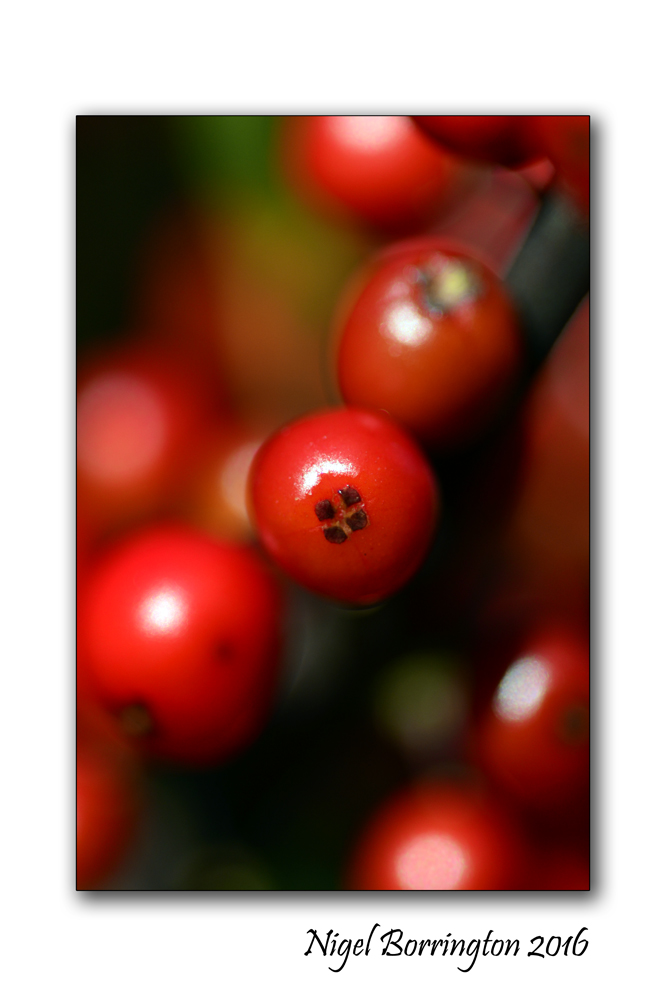
You would think that in the first week of December, it would be hard to find anything interesting in the local landscape nature wise to get good and close to with a Macro lens, however there are still some amazing thing to be seen and captured 🙂
Here are just a few macro images taken this week …….


December , the Pagan Meaning of Evergreen & Holly

Evergreen Holly
Pagan Nature
Evergreens and holly (genus Ilex) are traditionally used to decorate during the holidays. Although many simply enjoy the plants for their fragrance and holiday colors, the meaning of these plants goes deeper for others, including pagans. Historically, pagans had — and still have — specific beliefs about the power and symbolism of both evergreens and holly, and some still use the plants as decor in accordance with those beliefs.

Evergreen — Always Green
Evergreens are loosely defined as plants that retain their foliage and remain green year-round. Usually, the term refers to coniferous trees — trees that have needles or needle-like foliage, but it can refer to any plant that stays green all winter long, including holly. Today, evergreens are valued for their practical uses — as windbreaks, hedges and for use as Christmas trees. Pagans used them for more spiritual reasons.
Pagan Meaning of Evergreen
In some countries, it was believed that evergreens would keep evil out of the home — evil spirits and ghosts, and evil in the form of illnesses. For this reason, evergreen boughs were often cut down and hung over doorways and inside the home. Pagans also believed that the green branches represented everlasting life. Druids used evergreen branches to decorate their temples for this very reason, according to History.com. The green of the branches helped people to get through the long winter by having hope in the warmth and food that would come in the spring.
Holly — Pretty and Prickly
Holly plants
vary widely in leaf shape and appearance. Although there are over 400 species (Ilex opaca is the scientific name of American holly), the most popular for use during the holidays are those that produce bright red berries, which historically were seen by pagans as masculine plants even though it is the female plants that produce the fruit. Holly plants are generally hardy in U.S. Department of Agriculture plant hardiness zones 5 through 9, although this can vary by species. Most popular hollies are hardy in USDA zones 7 through 9.

Pagan Meaning of Holly
Holly has a more specific meaning for pagans. Historically, pagans believed that like evergreens, holly wards off evil spirits. They also believed that holly increased fertility. In addition to bringing in holly boughs to decorate the home and increase fertility, holly was also often planted outdoors around the house to keep out evil spirits.
Kilkenny landscape images : Novembers last sunset

Kilkenny Landscapes
Ballykeeffe
Ireland
Nigel Borrington
Its hard to Believe that it is the end of November already !!
These images are of the last sunset, November 2016 🙂

Birds in Irish Folklore, The Robin
Birds of Irish Folklore
The Robin
Nigel Borrington
The end of November and you would think that all the wildlife has vanished from the landscape , however you only need to take an early morning walk to realize that there are lots of wild creatures still around.
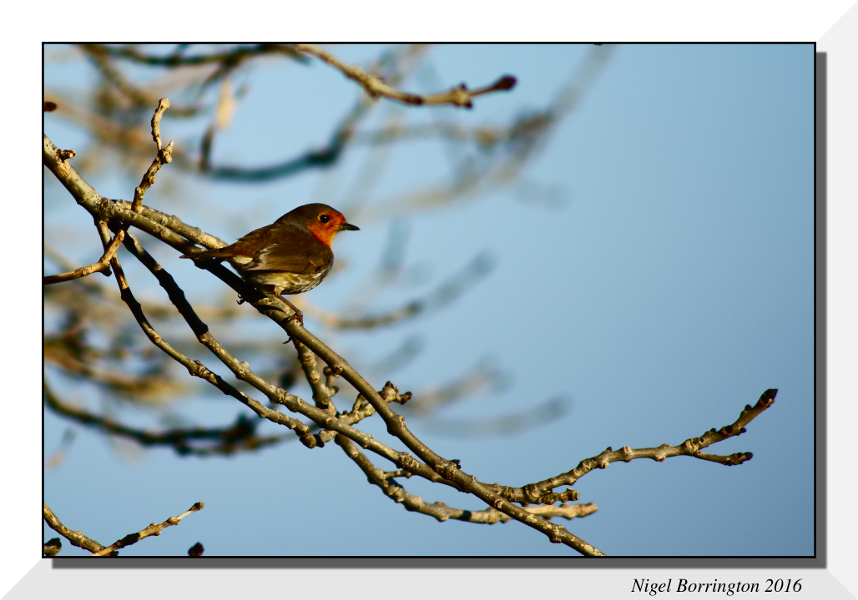
This morning on a walk through the hills near Kilmoganny, county Kilkenny, I was accompanied by this little Robin who hopped from tree to tree in front of me 🙂
Here is a little folklore about the Robin from an Irish point of view …….
The Robin
If the soul and symbol of the old sun and the Oak King was the Wren, the Robin represented the new sun. The wren was said to hide in the Ivy, the Robin in the Holly. The Pagan Neolithic Festival of the birth of the new sun, symbolized by the Robin, was at the Winter Solstice (21st December). The Robin (the new sun) killed his father the Wren (the old sun) and that is how he got his red breast, ie, from the blood of his father. A Robin coming into a house was supposed to be a sign that someone was going to die there in the near future. Despite this association with death, the Robin was praised for being the only bird capable of singing all the notes of the musical scale. And furthermore, the Robin can sing for half an hour without repeating the melody, unlike the other birds.
The Boat men of the river Suir

Fishing boat
river Suir
County Tipperary
Fishing on the River suir
The walk along the river Suir, County Tipperary is one of the best river walks in the south east of Ireland. It is currently undergoing an upgrade to a hard surface that will for the first time allow for both walkers and cyclists.
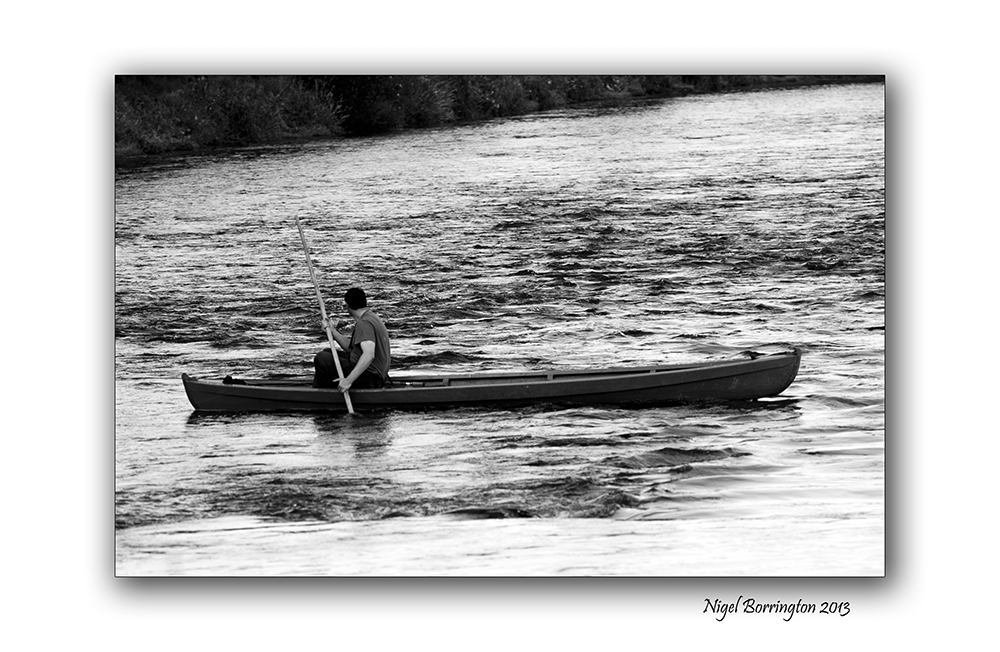
The river is used by many local people during the year but the fisher man are most probably it’s most common visitors, the River is renowned for its game angling, holding both salmon (Salmo salar) and brown trout (Salmo trutta).
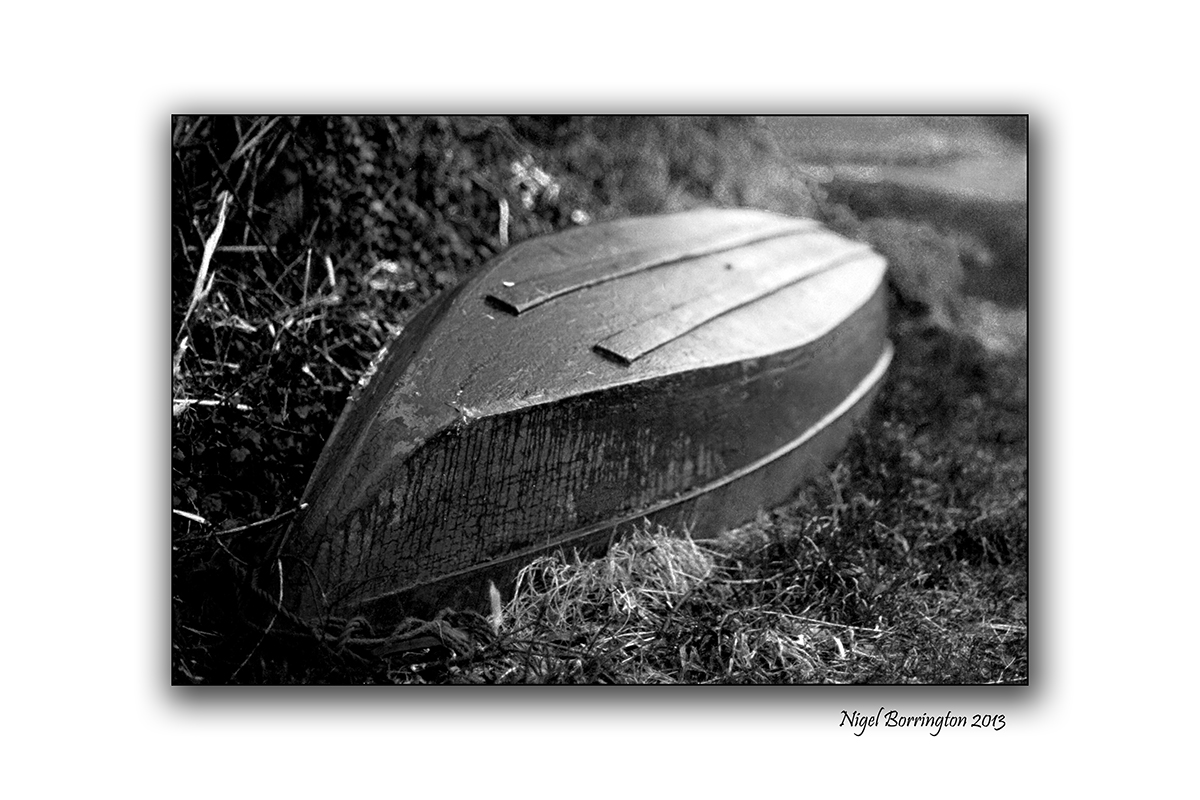
I have taken many photographs of the fishermen here over the years alone with the boats they use for their fishing, these boats ( all made locally ) are used more like punts as the have a completely flat bottom and are moved along the river with a pole.
Fishing in Ireland : CLOCULLY TO CARRICK-ON-SUIR
The River Suir from Clocully to Carrick-on-Suir is a combination of deep pools, fast glides and varying widths and depths.
From Clocully to Ballydonagh, a consortium of private landowners control the angling, these are all private fisheries. This stretch also includes parts of the River Tar and River Nire, which contain good stocks of trout of up to 30 cm.
Fishing on the river Suir : Gallery



Friday Poetry : November Sunset – Poem by Steven Federle

Black Friday Sunset
Callan
Kilkenny
Ireland
About five o clock,
the warm November day
just stops.
Bright afternoon
slams into evening
not even pausing
for twilight.
Blue sky
dims quickly
to violet,
but over ragged black woods
the orange sun
lingers

Then suddenly bursts
into astonishing gold.
Blithely ascending
the bright crescent
claims the cool
velvet night.
Steven Federle
A November weekend – Gallery ……

Images of November
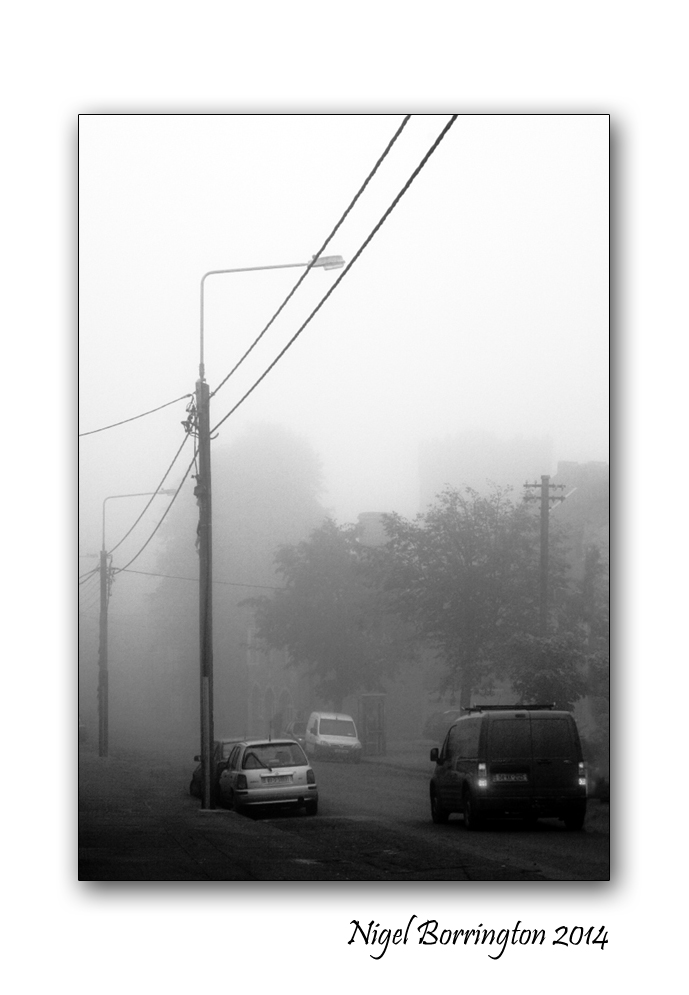
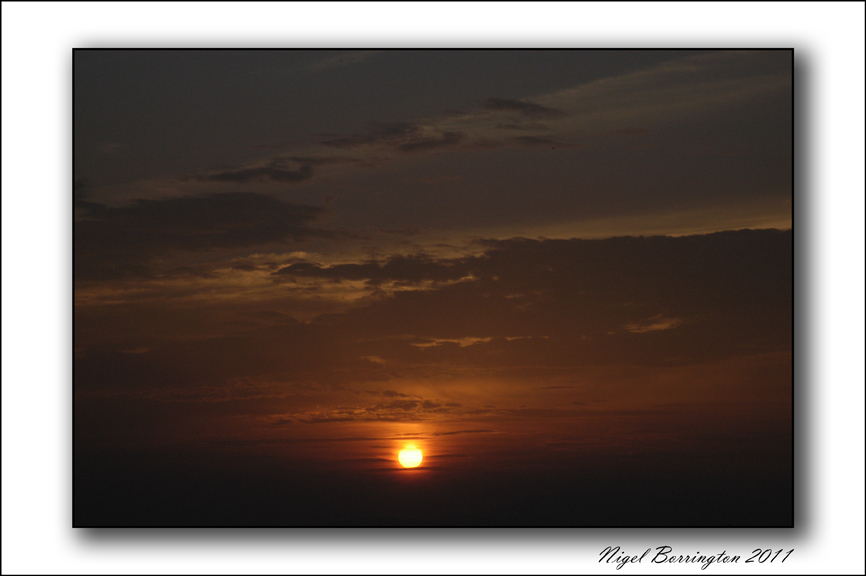
The following images are just some of the many I have posted here of my blog since 2011, in the month of November. It is one of my most loved months each year for photography as the sun is always low in the sky and the cold , moody and foggy weather is drawing in…….
As its Friday and the weekend is very close I hope you have a great one 🙂 , if you get time to capture some images I hope you Enjoy yourselves 🙂 have a great time what ever you do !!!!
November Gallery





Irish standing stones : Carrigeen, Nire Valley, County Waterford
Irish standing stones
Carrigeen
Nire Valley
County Waterford
Irish Standing stones : Carrigeen,
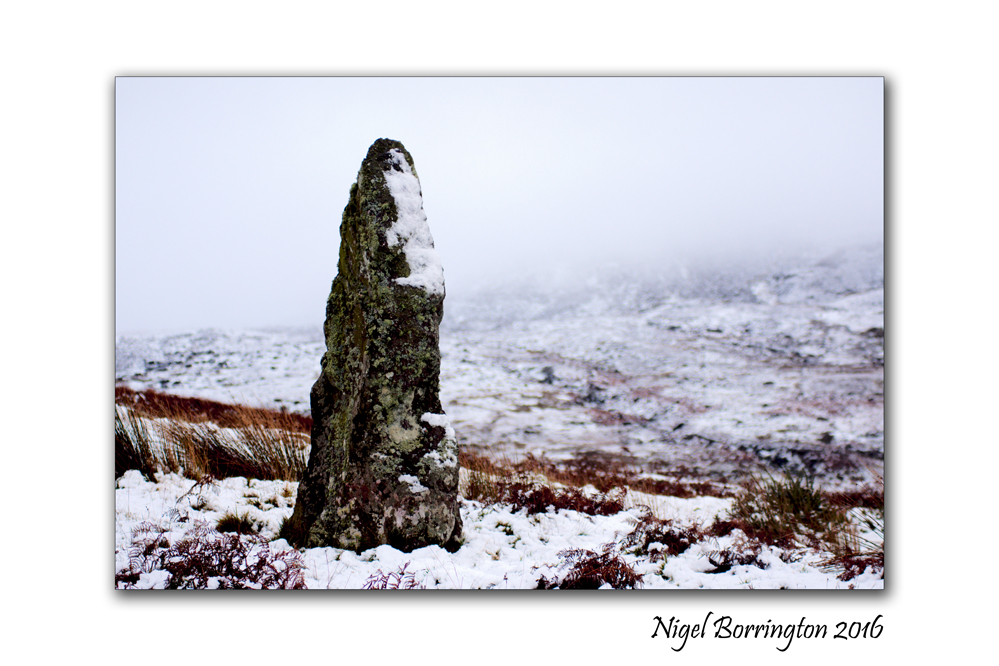
Carrigeen standing stone is among the best located stones in Ireland. It stands in a superb location at the top of the picturesque Nire valley from where there is magnificent panoramic views of the surrounding mountainous region. On the day this image was taken it was -2 degrees and the mountains had a thick covering of mist.
The stone stands some height, an impressive 2.5 meters and tapering to a sharp point. It stands solidly upright and is oriented in a WNW-ESE direction.
An interesting observation here, was when looking westwards, that the jagged crest of the stone seemed to align somewhat with the distant profile of the mountain ridge to the west. (see photo below). This may be just coincidental or was it of significance and could this jagged profile of the stone have survived through thousands of years?
Apart from this speculation, Carrigeen standing stone and its surroundings is a ‘must see’.
County Kilkenny Landscapes, New digital art works
Landscape painting
Straw Bales
County Kilkenny, Ireland
Nigel Borrington
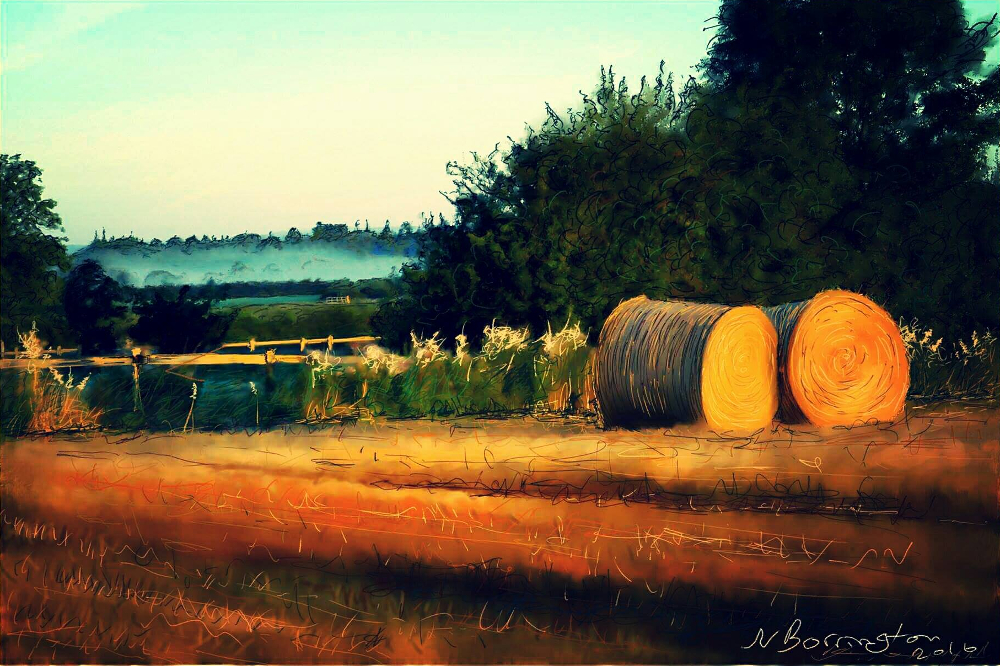
I am continuing to explore the world of digital painting using a Wacom studio art tablet and truly enjoying the creative experience it can offer.
I am planning in the new year to return to real paint and brushes but at the same time I have really taken to using digital media, I will continue to use it both to produce sketch work and finished drawings and painting. The power that digital painting offers to be creative and to be attached with modern social media is hard to escape 🙂 , the next step is to explore how to print onto more traditional papers and canvas in order to present finished work in a more traditional way.
Winter is coming once again, a poem
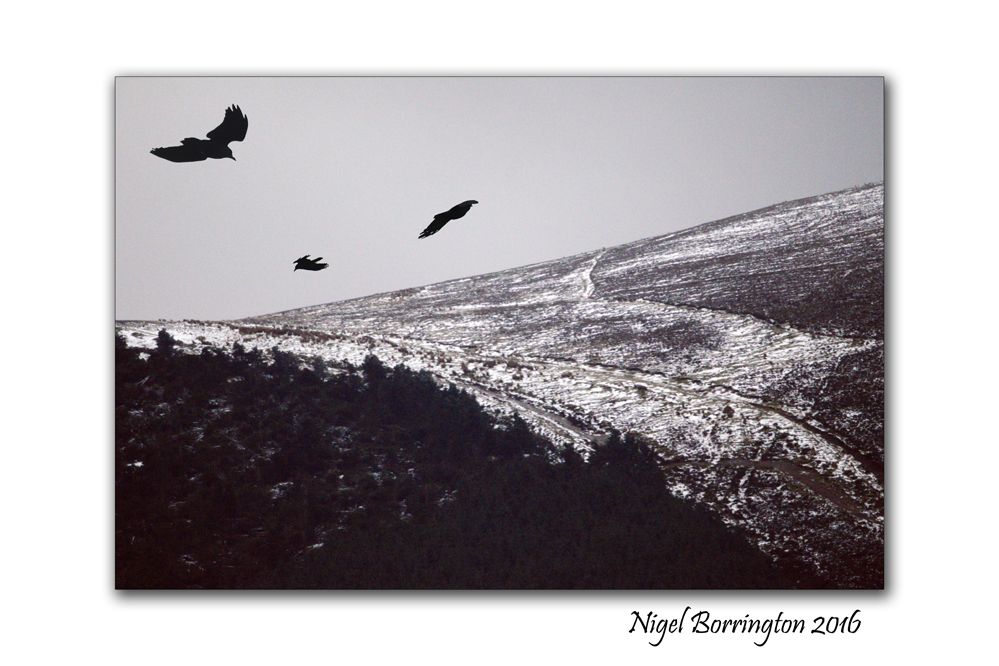
Winter and the Crows
Slievenamon
County Tipperary
Nigel Borrington
Winter Is Coming once Again
The sky is filled with broken light,
The Sun is hidden by deep snow filled clouds,
There’s a chillness to the air,
I feel it everywhere,
All through the days and nights;
Winter is coming.
The Crows fly above Slievenamon
hunting harder then before, and the ground below
Is hard beneath wing and claw,
The trees stand bare of leaves and fruits,
And all around
Is still, Silent;
Winter is coming.
The sun will soon be gone,
Obscured by cloud,
The rivers and lakes begin to freeze,
The wind will bend the trees
Until they’re bowed
In supplication.
Winter is coming, once again.
Only the dead will feed hungry crows:
Mice, rabbits, sparrows.
The light fades from the Sun
Now darker days have come,
for the high crow, cold bites to the marrow,
And Winter is here.
Again.
My November Guest, Robert Frost
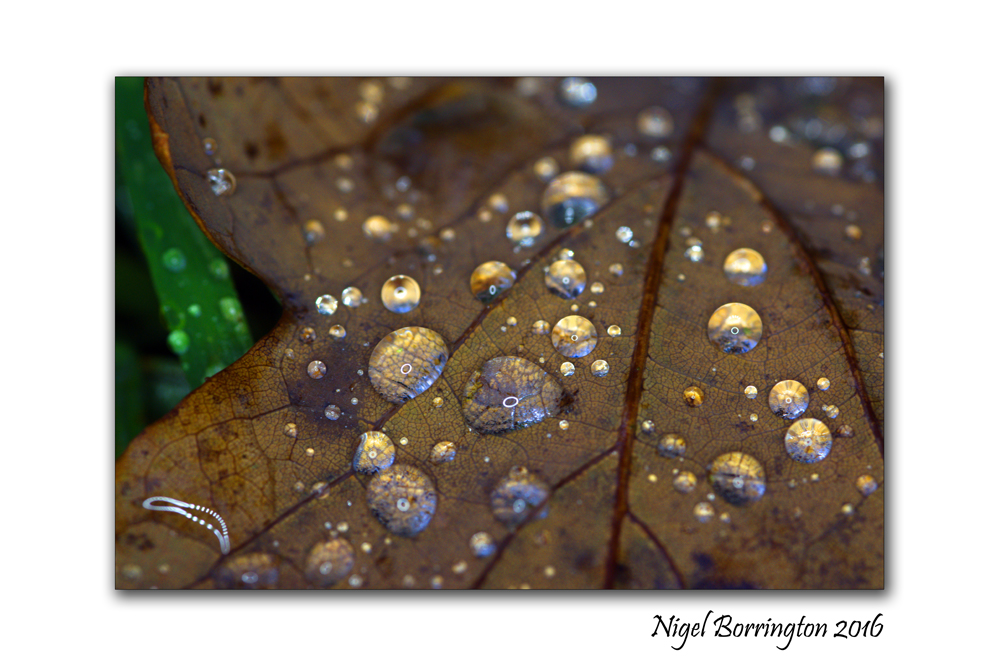
November rain
Nigel Borrington
My sorrow, when she’s here with me,
Thinks these dark days of autumn rain
Are beautiful as days can be;
She loves the bare, the withered tree;
She walks the sodden pasture lane.
Her pleasure will not let me stay.
She talks and I am fain to list:
She’s glad the birds are gone away,
She’s glad her simple worsted gray
Is silver now with clinging mist.
The desolate, deserted trees,
The faded earth, the heavy sky,
The beauties she so truly sees,
She thinks I have no eye for these,
And vexes me for reason why.
Not yesterday I learned to know
The love of bare November days
Before the coming of the snow,
But it were vain to tell her so,
And they are better for her praise.
The first Snow of the Winter , Gallery

Irish Landscapes
Nire Valley
County Waterford
Nigel Borrington
This Morning many parts of Ireland awoke to the first Snows of the Winter, Snow in November while not unusual is early for Ireland. Maybe its a sign of the winter weather that’s ahead of us, in any-case I just had to get out this morning and capture as many images as I could 🙂
Here are just a few from an early morning walk through the Nire Valley , county Waterford …….
Nire Valley , County Waterford – the first Snows of Winter


Getting close to the Landscape, Macro Photography

Macro Photography
water droplets
Nigel Borrington
This winter I want to spent sometime getting in close with nature and the local landscape, with a macro lens. I feel that even though the summer and even Autumn are almost over there are still lots of subjects that will be fascinating when captured close up.
Water and rain drops are just such a subject and when we get more frost and ice I will spend lots of time outside in the early hours capturing as many images as possible.
The image above was taken with the help of an LED ring flash gun, you can see the lighting effects produced in each drop of water…..
Monday Poetry , The Cow – Robert Louis Stevenson

The friendly cow all red and white,
I love with all my heart:
She gives me cream with all her might,
To eat with apple-tart.
She wanders lowing here and there,
And yet she cannot stray,
All in the pleasant open air,
The pleasant light of day;
And blown by all the winds that pass
And wet with all the showers,
She walks among the meadow grass
And eats the meadow flowers.
Robert Louis Stevenson
County Kilkenny landscape : A poem : Over the Fence , By jesse.vanwallene

Kilkenny Landscapes
Over the Fence
Nigel Borrington
Over the Fence
I remember the giant field that was just a house away from my parents’ house and how I could tell what season it was by what it was being used for.
I remember how in the fall the field was used for corn and how in the spring it was used for alfalfa or cotton and how at the start of summer it was used for lazy sheep to graze and get fat.
I remember when there were no crops or livestock in the field and it was just dirt and tumbleweeds and how the desert wind picked up the earth in wild dust storms and dirt devils would race onto my street.
I remember venturing out with my brother, jelly jars in hand, to the center of the field and capturing tiny black and red lady bugs before sun down, just to compare who could catch more before our mother called us back for supper.
I remember how shocked I was when they put up a fence around the field with no trespassing signs posted and when I saw the giant earth movers roaring their engines trying to produce man made hills and lakes for a retirement community golf course.
I remember how mad I was that someone had taken away my refuge and how I took it out on the Porto potties every once and a while just to let out some frustrations.
I remember when the grass came in and the sidewalks were built how quickly I stopped being mad and how we bought frozen blocks of ice to sit on and slide down the grassy hills with on long summer days.
I remember skate boarding to a spot on the course overlooking a lake where I would listen to my music and watch as the wind passed through the trees and over the water creating tiny waves that moved from one side all the way to the other where I sat, escaping.
I remember the smell of the fresh cut grass and the cold sting of the unsuspected sprinklers and the duck families and the old people and the trees and the wide open sky at the edge of the city where storms could roll up or the stars could stretch out further than my eyes could see.
But most of all I remember how wonderful it was to have a place to escape to and ease my thoughts with only the blistering sun or the chilling winds of the changing seasons to keep me company.
Kilkenny Landscape Photography, A Poem : Beyond the gate ……..
Kilkenny Landscape photography
Beyond the gate
Nigel Borrington
An open field gate, they always invite you in.
Just like anything in life when something is open it makes you want to explore !!!!
Beyond The Gate
Beyond the gate
Lies a whole new world
If you want to know
Go beyond the gate
We shall not know
Until we go beyond the gate
A Sketch of two fishing boats, Keem Strand, Achill Island, Co. Mayo
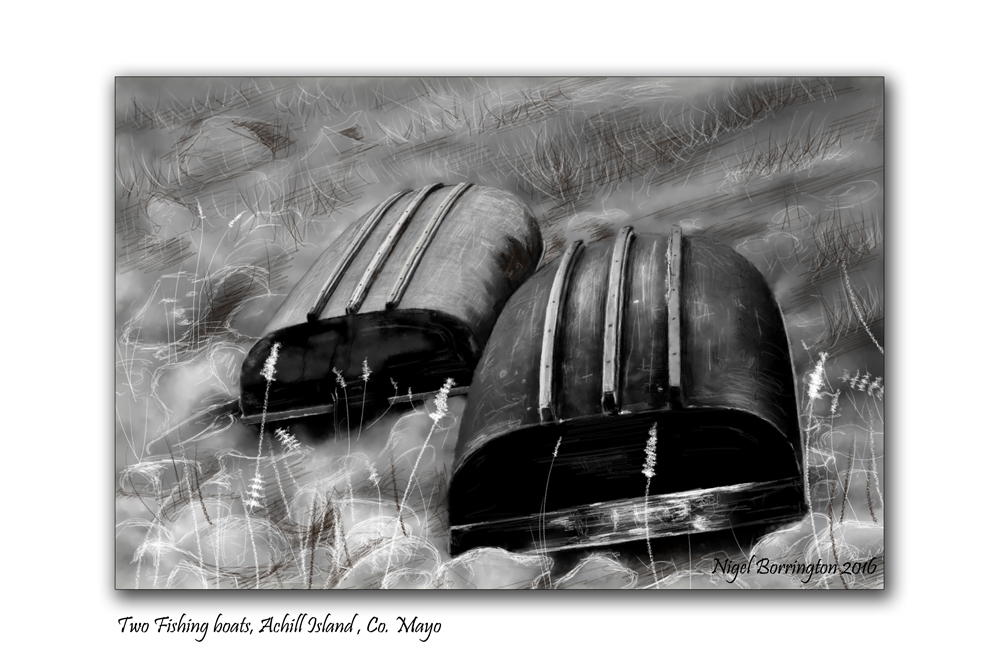
Two fishing boat
Keem Strand
Achill Island
County Mayo
Video Landscapes : Mullins mill , County Kilkenny

Frosty Morning at Mullins Mill, Kells, Co.Kilkenny : Nigel Borrington
The two videos below are of the restored waterwheel at Mullins mill on the kings river county Kilkenny.
The photograph was taken back in 2011 but the video only last week.
The morning the videos was cold with a frost and you can see the mist created from the water as it is raised up by the water wheel. it was great fun making these, the motion and sounds created a picture of past times and technology and added a true reminder of the original usage of the mill.
Today the mill is a local heritage and craft center.
Monday Poetry : Light By – Saugat Upadhyay

light
Light is a way,
Light is a zone,
Light is a past,
Which shows the future.
Light is a mountain,
Light is a hurdle,
Light is a debt,
Which leads to the quest.
Light is a beginning,
Light is a end,
Light is a truth,
Which gives us a fruit.
Light is a flower,
Light is a fragrance,
Light is a life,
Which gives hope to survive.
 Nigel Borrington
A Winters day on the farm …..
WinterFeed in the barn
County Kilkenny
Nigel Borrington
Winters on a farm are a hard time of year, dealing with the weather and the cold, the dark evenings and early mornings. Life as a farmer must have many great moments but its not hard to imagine that there are less of these in the winter months than in the summer.
I took these images while out on a walk yesterday and as you can see, on this farm some of the cows are still out in the fields while some have been returned to their winter shed, soon all of them with be inside. In the Barn close by is stored some of the feed that will be used for the cattle over the next few months. In an area of the barn next to the feed is the farmers haybob that would have been used only a few weeks back to help get the hay bales ready.
The next few weeks are all about rest for the land and keeping the live stock warm and health in the sheds, life slows down and less work out in the fields is needed. While welcome in some ways you can imagine that this lack of activity can at times feel a little to slow but this is farm life.
Here in county Kilkenny each year you develop a great sense of the farming seasons and the activities that go along with them.
Share this:
December 7, 2016 | Categories: Comment, farming, Gallery, kilkenny photography, Nature and Wildlife | Tags: Cattle, farm life, farming, Farming activities, Farming seasons, Ireland, Kilkenny, Nature, Nigel Borrington | 9 Comments