Art Project – Kilkenny winter landscape – Photo,Drawing and Acrylic painting.

January Forst
County Kilkenny
Irish Landscape Photography
Nigel Borrington 2019
Kilkenny winters Landscape project Jan 2019
This is the complete set of images including the original photograph, then the Charcoal and Pencil drawing and Acrylic painting on canvas, from the set of county Kilkenny landscape in winter photos captured last week and that I have spent most of this week working on.
This is only the first set of images and I have a lot more work to do yet to produce final drawings and painting of both this single photo and then the full set of other images I want to use. I am happy with the results so far as this is the first none digital art work that I have worked on for a while.
The main thing at the moment is that I am enjoying the process very much, its taken a while to get my art desk setup again and to get all the materials in place but now this is done I can just get working and start having some fun getting creative.

county kilkenny landscape art
The view from Ballycuddihy
Charcoal and Graphite on paper
nigel borrington 2019
This drawing uses Charcoal and Graphite pencils on paper to produce what I hope is a moody image of a winters morning over the local Kilkenny landscape.
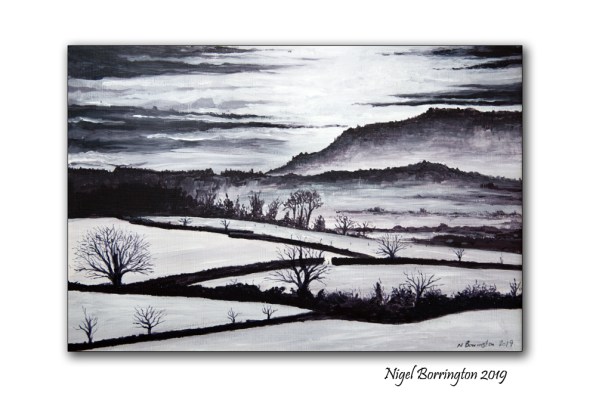
County Kilkenny in Winter
Acrylic on Canvas
Nigel Borrington 2019
This Painting was produced using greys mixed from Acrylic (Cerulean blue, Crimson, Yellow Ocha and titanuim white)to produces grades of Greys, some cool and some warmer.
I hope that this helps to set a feeling of winter in my local Kilkenny landscape, on what was a very cold and frosty morning in mid January 2019.
Berlin from the river Spree

Berlin
from the river spree nigel borrington 2019
Selecting images for an drawing and painting portfolio
Over the next few weeks any images I post on my blog will relate to a selection process I am making for producing some art work. I want to go through my blog photos posted since 2011 and select images that could related to both pencil/ink and Charcoal drawings along with images the will make good subjects for Painting in Acrylic/oil paints. I also have many images that I never posted here, as when I get my camera into the landscape I try to almost exhaust the location as much as possible by taking many images.
With this image of Berlin from the river Spree, I felt it would make a great subject for Charcoal, Pencil and Pen and ink work.
This is a process I have wanted to do for sometime, as it will help me get focused on the art work I want to produce during 2019…..
County Kilkenny Art – The view from Ballycuddihy – charcoal and graphite drawing

County Kilkenny landscape art The view from Ballycuddihy
Charcoal and Graphite on paper
nigel borrington 2019
The view from Ballycuddihy – charcoal and graphite on paper
In my last post I uploaded some photos taken in the hills at Ballycuddihy county Kilkenny, I want to use these images and others as the source for a series of both drawings and acrylic paintings.
So over the weekend I started with a charcoal and graphite drawing. I like very much using these two drawing materials as I like to strip an image down into its monochrome tonal values before returning to repeating the painting in acrylic or oil paint and bring in colour paints. I plan this time however to paint these landscape views using acrylic paint, using black and white only, keeping the finished work to a maximum of ten grey scale values.
Here I have used the charcoal in both willow stick and compressed block form to produce a series of tonal values, using a brush to soften the charcoal into different grey values and tonal grades.The fine details in the drawing are created using graphite.
I am happy with the finished results considering that the drawing was completed within four hours, I have learnt many things here and will repeat this technique many time so that I keep getting to know much more about using charcoal and pencil together.
January frost – A black and white gallery

January Frost
County Kilkenny
Irish Landscape Photography
Nigel Borrington 2019
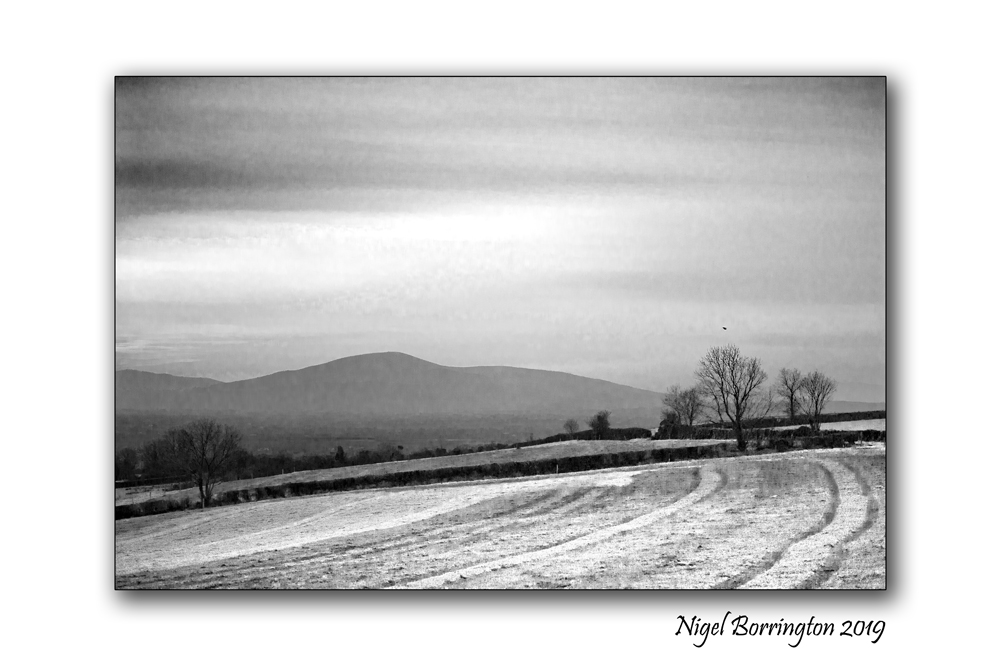
This Morning we had our first frost of the year 2019 and the view from the hillside of county kilkenny was amazing.
Here are three black and white images, I used black and white because I felt it captured the frosty landscape perfectly ….
A Frosty January Morning, Gallery

A Weekend in an Art Course – The art of colour mixing , Rod Moore

Art Courses 2019 – The art of colour mixing , Rod Moore
I have been into art and painting most of my life and you never stop needing to learn new areas or keep going back to basic and practice old ones, so at the start of this year I registered on a Udemy course run by Rod Moore (Rod Moore, Complete Colour mixing course for artists).
I started the course last week in the evenings and so far its very good, I like very much the structure of the courses run by Udemy as they are perfect for adult study allowing you to use your spare time to gain new skills.
Here are some of the basic colour mixing techniques I have covered so far…..
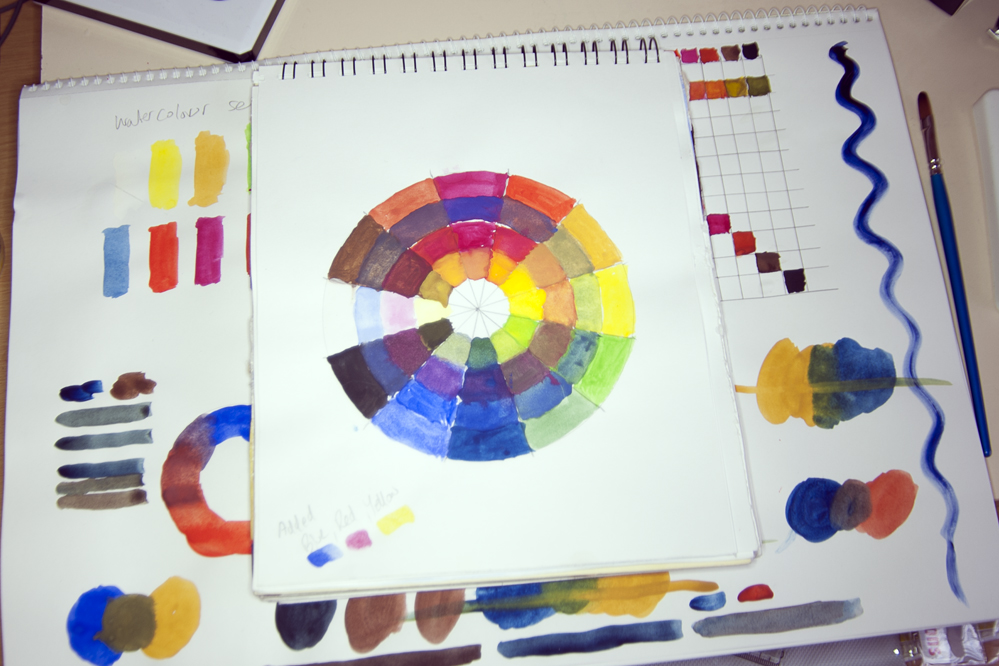
Creating a colour mixing wheel.
Here the colours provided in my watercolour palette are laid out on the very outside of the wheel, working inwards I have mixed the primary colours of Blue, Red and then Yellow to show the results of mixing primary colours.

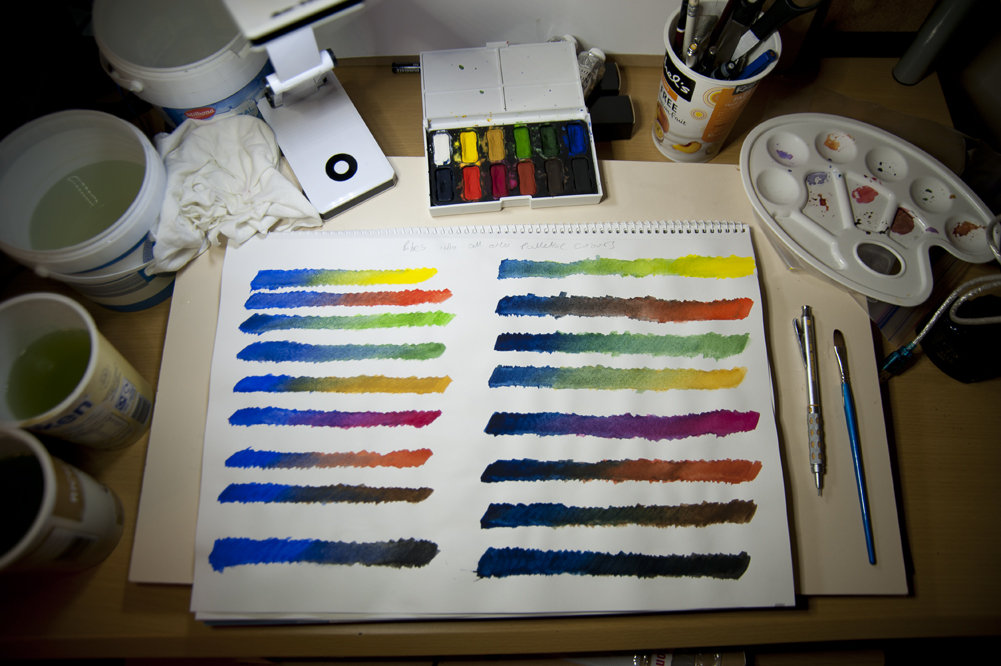
Mixing Blue, Reds, Yellow and Greens.
Most sets of paints contain more than one type of Blue, Red, Yellow and green paints, so in the above images I have worked on taking all the paints in these groups one by one and mixing them with the other paints outside the selected group. The first image for example is using two versions of green, the second two versions of blue – then mixing these with all the other remaining colours.
This type of colour mixing produces some very interesting results and helps show just how different the results of mixing different Blues, Reds, Yellows and Greens with other colours can be.
Landscape colour mixing – wheel and chart.
As said above different available paints can fall into the basic descriptions of blues or yellows and reds, but are individually very different from each other, in the images above I have painted a colour wheel that uses more earth versions of these primary colours.
These versions of the Primary colours (Blue,Red and Yellow) when mixed help to produce results much more likely to be used in Landscape Painting, you can see that they results in a much more earthy looking colour wheel than one produced by more standard primary colours.
I have also produced a colour chart on the right hand side of this page that shows the same mixing results but in block of colour, the standard mixing chart is in the centre of the page and as you can see this produces a much more vivid set of resulting colours, ones much less suitable for landscape painting.
One thing I have noticed while working through these exercises is that watercolour paint does not mix very well compared to Acrylic or Oil paints, which both produce much better stronger results. Its harder to get watercolour to produce many different levels of the mixed colour and for these results to have much depth to them , so my next stage is to repeat all these exercises using artists acrylic paints.
So all in all I feel great about working with this course and had a very enjoyable time over the weekend, I am not intending to turn my blog into just Art and Painting so for now I will return to some photography but its be great fun sharing something different 🙂
A weekend with colour …….

Colour mixing,
WaterColour and acrylics
A weekend in colour
This week I started an online course in colour mixing for watercolour and acrylic painting, so during this weekend I plan to spend as much time as possible learning colour theory.
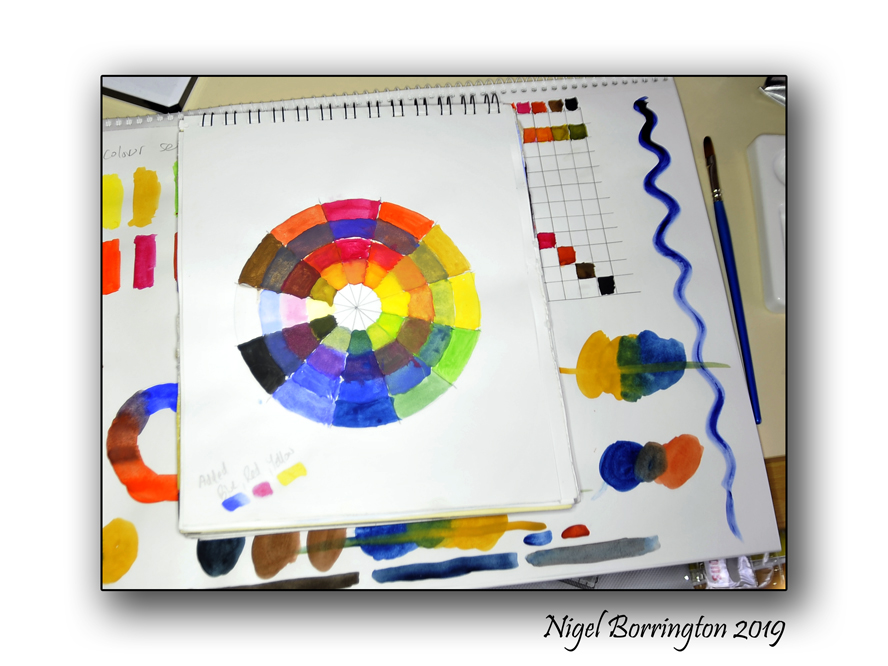
I worked on the course in the evenings and have already used up a few pages of a new sketchbook, including the pages I have posted here.
I feel that one of the most important things I have learned so far, regardless of the type of paint used (Watercolour or Acrylic) is that I am getting to know them very well, how to mix the basic colours included in a sets of paints and what the results look like. Not all colours act the same even when used without mixing them, some colours produce very smooth results others produce a very grainy texture, some colours don’t seem to go into the paper or canvas very deeply others act more like a dye and the moment they touch a painting surface they stain and fix themselves in very quickly and most likely permanently.
The use of colours
When I first stated painting some years back, I would spend a large amount of time trying to match every single colour in a landscape I was painting, however I feel that since these days I have learnt that doing this is not only exhausting it also does not always produce a good painting. Colours can be used much more effectively when limited and balanced so that they are used to compliment each other. When colour is used to highlight areas in a painting or to soften other areas they can make some parts of a painting stand out and others while still included, fall into the background of the finished work.
It’s all these areas and more that I want to study and regain complete understanding again of both in practice and theory, I can then move onto producing colour sketches and full paintings again.

Colour mixing, using just Primary colours
In order to produces all the colours you want to include in a painting you actually only need three , The primary colours (RED,YELLOW and BLUE), what does counts here however is the type of red, yellow or blue you start with in the first place as this will allow you to produces very different final results.
So this weekend I plan to uses as much paper as possible and produce a colour notebook that I can use during the year to help me when producing any paintings I start working on.
If I get time I will post on my progress but if not, I will on Monday post some results and my thoughts on what I worked on.
Connemara, Co. Galway, Ireland – The Landscape of Poetry – Poems by Mary O’Malley
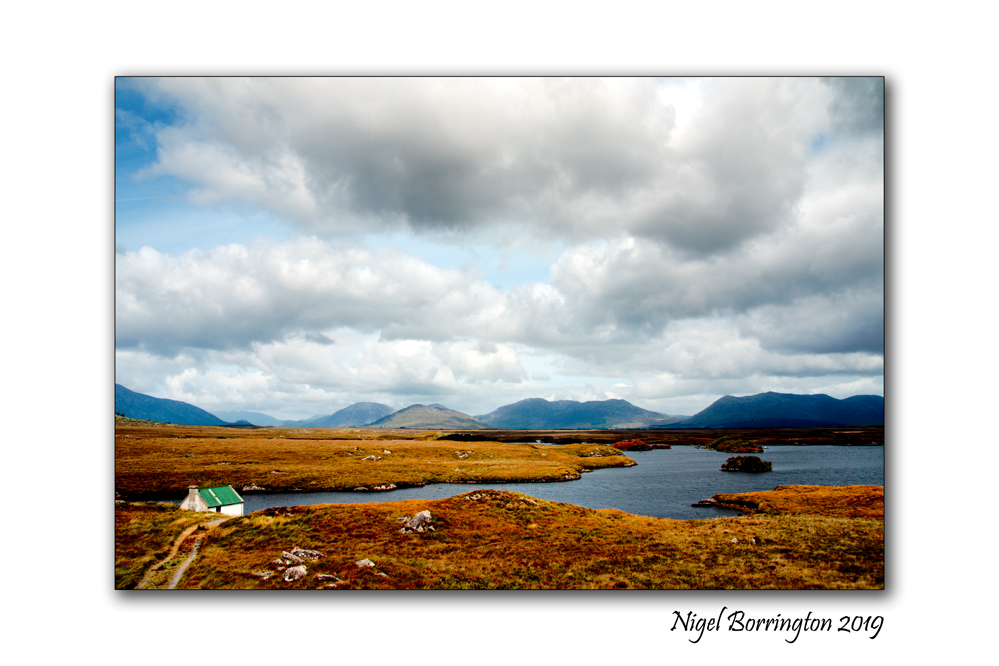
Connemara
county Galway
Ireland
Nigel Borrington
2019
Connemara, Co. Galway
Mary O’Malley is truly the person who has written Connemara, her writing laced with the fierce beauty of the landscape, and the sounds of the sea. In ‘Porpoises’ she sends our minds out to sea from the most westerly point of the county:
The sky is close.
Out from the once manned rock
White electric light
Arcs over the Water
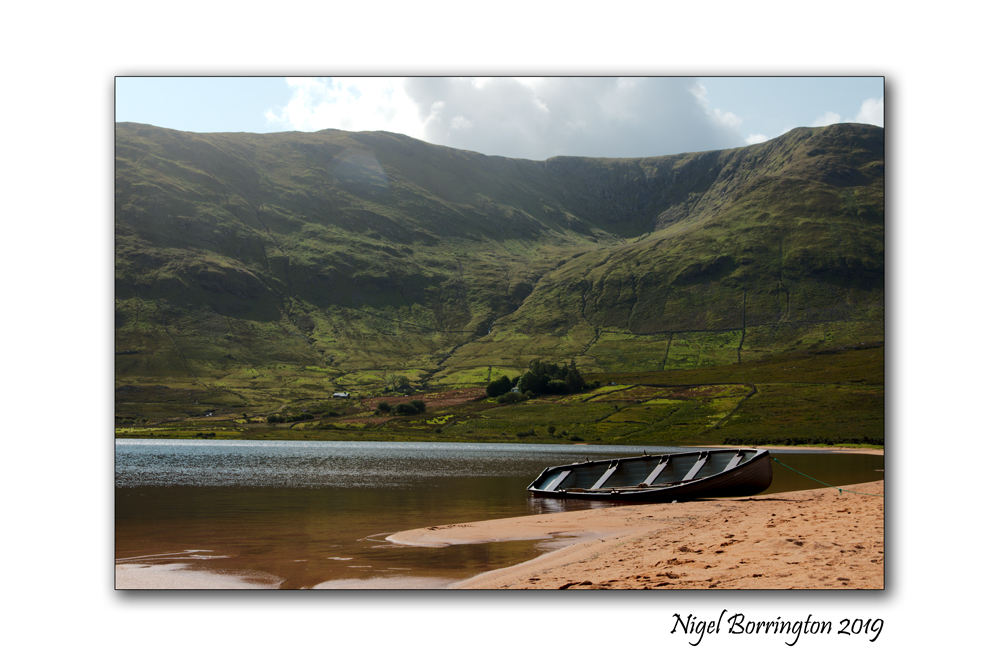
Difficult not to agree with her when she states that the sea is “just the place from which all things make sense”.
Pierce Hutchinson, also writing on Connemara, said:
There are chinks between
the neat stones to let the wind through safe,
You can see the blue sun through them.
But coming eastward in the same county,
the walls grow higher, dark grey;
an ugly grey. And the chinks disappear:
through those walls you can see nothing.
Perhaps our poetic landscapes remind us of that – to keep our hearts alert for experiences of water, wind and wonder.

2019 – A new light , sunrise over Kilkenny’s fields …….

Starting my 2019 Blogging …..
I always like to start my blogging for a new year by changing my site heading image.
This year my first image taken and posted – my new site header image was taken on Sunday Morning at first light, I was on an early morning walk and the weather was cold with a full covering of cloud. I had just about completed the 5km walk I had planned to do and had almost given up on capturing any images as the light was just so unexciting when the sun came bursting through an opening in the clouds and located itself just about some trees in the distance.
I have taken a little time off-line over the Christmas and New-Year period just to give myself an old fashioned way to celebrate and recharge my batteries, I spend some great time with family and friends 🙂 and as a result I feel great and am looking forward with new energy to 2019 and the future 🙂 , my blog and my love of photography still play a massive part in these plans 🙂
I also noticed that the number of likes and visited to my Blog (started in 2011) went well over the 350,000 mark while I was away – I would like to say a massive THANK YOU to you all for this, I don’t post here with such figures in mind , I post to share the things I see and capture around me – That said ! Getting this level of interest and support with so many likes has been a massive boost to me and a huge reason to drive me on in keeping sharing my images and a love of both Art and Photography!
THANK YOU SO MUCH !!!!
Happy Winter solstice 2018 everyone …….
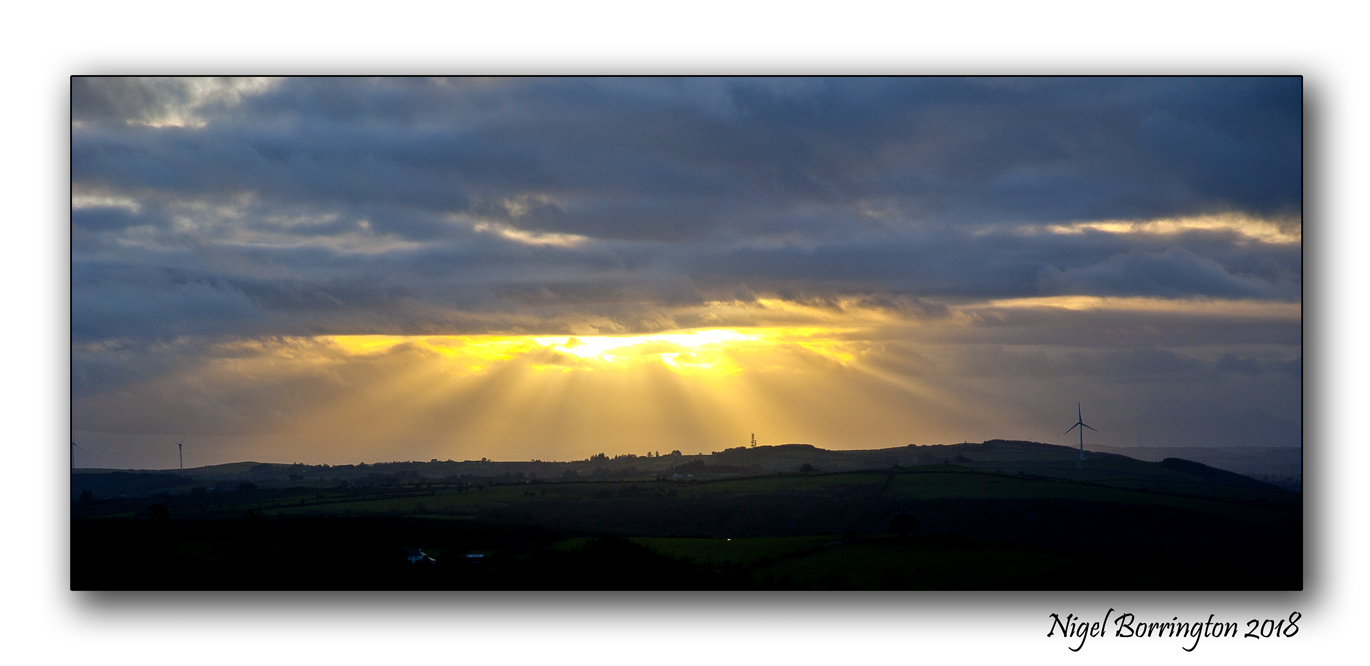
Dec 21 2018
The Winter solstice
Nigel Borrington
The winter solstice (or hibernal solstice), also known as midwinter, is an astronomical phenomenon marking the day with the shortest period of daylight and the longest night of the year. It occurs when one of the Earth’s poles has its maximum tilt away from the Sun. It happens twice yearly, once in each hemisphere. In the Northern Hemisphere this is the December solstice and in the Southern Hemisphere this is the June solstice.
The axial tilt of Earth and gyroscopic effects of its daily rotation mean that the two opposite points in the sky to which the Earth’s axis of rotation points (axial precession) change very slowly (at the current rate it would take just under 26,000 years to make a complete circle). As the Earth follows its orbit around the Sun, the polar hemisphere that faced away from the Sun, experiencing winter, will, in half a year, face towards the Sun and experience summer. This is because the two hemispheres face opposite directions along Earth’s axis, and so as one polar hemisphere experiences winter, the other experiences summer.
More evident from high latitudes, a hemisphere’s winter solstice occurs on the day with the shortest period of daylight and longest night of the year, when the sun’s daily maximum elevation in the sky is at its lowest. Although the winter solstice itself lasts only a moment in time, the term sometimes refers to the day on which it occurs. Other names are “midwinter”, the “extreme of winter” (Dongzhi), or the “shortest day”. In some cultures it is seen as the middle of winter, while in others it is seen as the beginning of winter. In meteorology, winter in the Northern Hemisphere spans the entire period of December through February. The seasonal significance of the winter solstice is in the reversal of the gradual lengthening of nights and shortening hours of daylight during the day. The earliest sunset and latest sunrise dates differ from winter solstice, however, and these depend on latitude, due to the variation in the solar day throughout the year caused by the Earth’s elliptical orbit (see earliest and latest sunrise and sunset).
Worldwide, interpretation of the event has varied across cultures, but many have held a recognition of rebirth, involving holidays, festivals, gatherings, rituals or other celebrations around that time.
Beyond The Door – Poem by Clark Ashton Smith
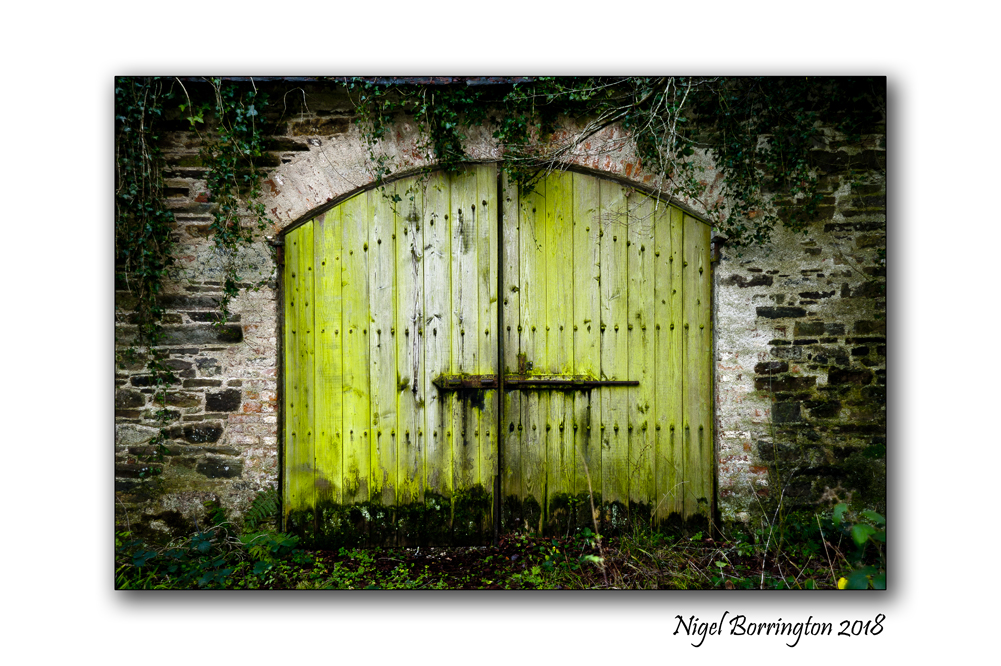
Beyond The Door – Poem by Clark Ashton Smith
Alas! the evanescence of a dream,
That, like a rose, shall never blossom more!
A glimpse of unguessed things, and then the door
Of waking sense clangs to. Alas! the Gleam,
The visioned Secret and the Light supreme,
That one at moments nears, when, lo! the pall
Of veiling darkness drops and covers all –
The darkness of the daylight’s aureate beam!
Leaving but an elusive memory –
A heavenly cadence, a supernal word,
Never but half-recalled. In dreams are heard
Who knows what tidings from Eternity,
Transcendant, strange! Alas! we may not bring
Aught past the gateway of Awakening!
Clark Ashton Smith
“At the Gate” by Henrik Nordbrandt

AT THE GATE
1.
In the dream
at the gate to your grave
you stopped me
with the same words
I had spoken in a dream
where I died before you
so now I can no longer dream.
2.
Rusty, and on squeaky hinges
all the gates I have ever
seen, heard, or described
closed one by one
under a grey sky.
That is all there was
in my mind, earth.
3.
What can I say about the world
in which your ashes sit in an urn
other than that?

4.
On every trip you stay ahead of me.
On platforms I see your footprints in fresh snow.
When the train starts to move
you jump out of the back carriage
to reach the next station ahead of me.
5.
Outside the small towns with their sleepy street lights:
stadiums bright as capitols.
The lights glinted off your glasses.
Where else should you look for the ring
which, the night the power went out,
rolled under the bed and was gone?
6.
“I miss you, too”
were my last words
on the telephone
when you said you missed me.
I miss you too, Forever!
7.
You are gone.
Three words. And not one
of them
exists now in any other context.
Digital Drawing – Winter in the Hedgerow, December 2018.

Digital Drawing
Tone Brushes, MyPaint with Wacom Pro M Tablet
Winter Hedgerow
Nigel Borrington December 2018
Brandenburg Gate, Berlin, Germany, 14 facts you most likely never knew.

Brandenburg Gate
Berlin
Germany
November 2018
The Brandenburg Gate is a military monument that has come to symbolize peace and unity. Here are a few facts about the iconic monument that you probably won’t know.
It’s one of the most iconic scenes of recent German history: Hundreds of thousands of people celebrating before the Brandenburg Gate as the Berlin Wall fell on November 9th 1989.
The Gate has now come to represent German unity and freedom since the end of the Cold War and divided country.

Not only is it “a symbol of the German-German divide”, but it also “stands for the reunification” of East and West Germany in 1990. Despite being heavily damaged in the Second World War, the Gate has withstood the test of time.
Today, people from all over the world link the Brandenburg Gate with freedom, tolerance and cosmopolitanism
But there is far more to the famous landmark than initially meets the eye.
Here are a few facts that you probably didn’t know about the Brandenburg Gate.
1. August 6th 1791 – that’s when the Gate was opened, after having been commissioned by Friedrich Wilhelm II. The Gate was erected not as a political symbol, but instead for a rather more simple reason – to mark the end of the boulevard Unter den Linden.
2. The Propylaeum of Athens’ Acropolis – that’s what the gate was modelled on.
3. 1806 – that’s when the Quadriga (the sculpture of the horse-drawn chariot on the top of the Gate) was stolen by Napoleon’s soldiers and taken back to France as a victory trophy. But after Napoleon was defeated, the Quadriga was returned to Berlin.
4. January 30th 1933 – that’s when the Nazis held a torchlit procession through the Gate to celebrate Hitler’s seizure of power.
5. 1945 until 1957 – that’s when the Soviet flag was flown on the top of the Gate. However, the flag was ripped down during the peaceful protests on June 17th 1953, when demonstrators protested against the political and economic conditions in the GDR.
6. June 12th 1987 – that’s when the then-US President Ronald Reagan made his rousing speech before the Gate, exclaiming, “As long as this gate is closed […] it is not the German question alone that remains open, but the question of freedom for all mankind […] Mr. Gorbachev, open this gate! Mr. Gorbachev, tear down this wall!”.
7. December 1989 – that’s when the Gate was opened as a border crossing by West German Chancellor Helmut Kohl and East German Premier Hans Modrow.
8. 2000 until 2002 – that’s when the Gate was renovated by Berlin’s Foundation for the Protection of Monuments, costing a massive 6 million Euros.
9. 4000 – that’s the number of counter-demonstrators who gathered to prevent 300 supporters of the anti-Islam group Pegida from marching from the city hall to the Gate on January 5th 2015. In addition, all the lights at the Gate were switched off.
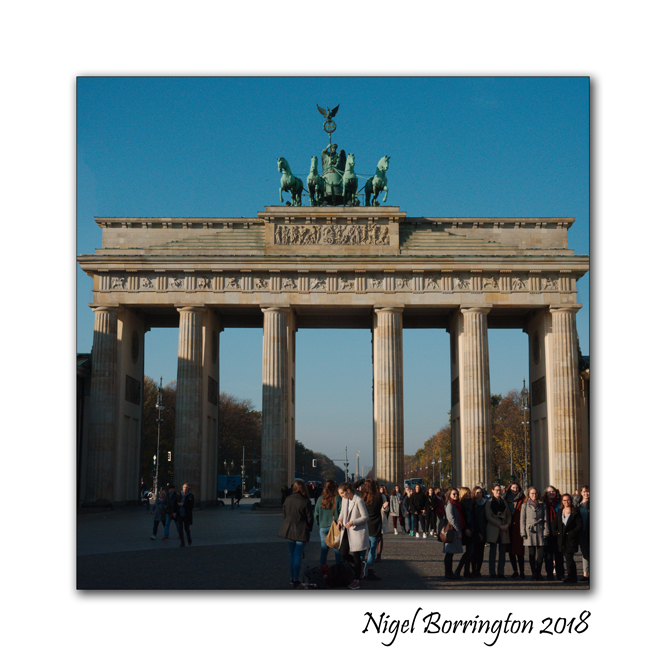
10. 26 metres – that’s the height of the the Gate, which is made up of six Doric columns on either side, supporting a transverse beam 11 metres deep. There are five walkways through the gate.
11. 130,000 – that’s the number of people who gathered at the Gate following the attacks on an Orlando gay club last year. The Gate was lit up in rainbow colours to commemorate the 49 victims.
12. The luxury Adlon Hotel, the French and the US embassies – those are the buildings which surround the Gate, in its prime location at Pariser Platz, otherwise known as Berlin’s “gute Stube” (“best room”).
13. The Märkisches Museum in Berlin – that’s where you can see the horse’s head from the Quadriga sculpture.
14. About a million – that’s the number of people who flock to the Gate every year for its famous New Year’s Eve party, complete with music and fireworks.

Monday 1 hour drawing – The Fisherman , Ink on paper sketch ……

One hour sketch
Fisher man on the rocks
Ink on paper
county Galway
Nigel Borrington 2018
Monday Poetry, In the winter forest, Emma Funnell

In the winter forest
Emma Funnell
The trees move in the Winter Forest,
They sway with the gental breeze.
Naked as the leaves fall to the ground,
And the water will slowly freeze.
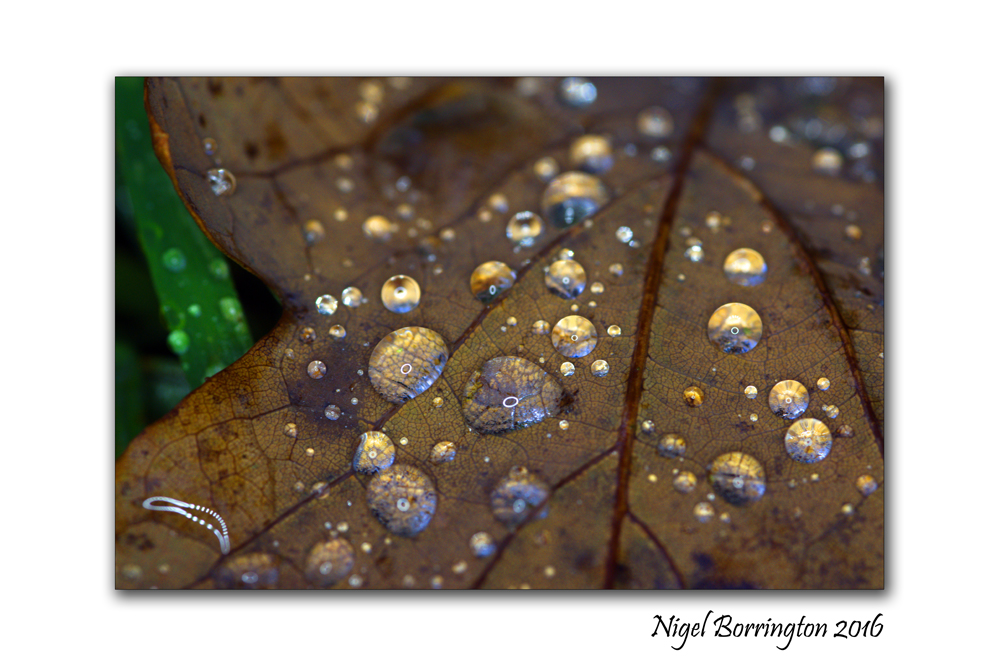
The forest casts shadows on the snowy grounds,
As the light of a thousand stars shine through.
The angels dance and sing in the snow,
As the sky turns to a midnight blue.
One angel sings of the moon and stars,
Another sings of the sun.

They play in the trees and howl with the wind,
Their wings glistening as through the forest they gracefully run.
By day the Winter Forest is quiet and peaceful,
But by night it’s alive with games and song.
The angels, fairies, moon and stars,
Beckon you to come along.

Join in with their dance in praise of the night,
Run with the wolves fast and free.
When the sun comes up they will say goodnight,
Silent again the Winter Forest will be!
EMMA Funnell
English translation of the White rose documents..
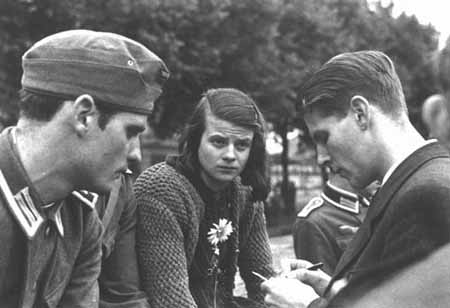
As an addition to my post on Sophie Scholl and the White rose movement , here is a link to the six documents (in English) that they publish and that in the end got them arrested!

The last Train home before it gets dark, Berlin’s Stadtbahn, November 2018
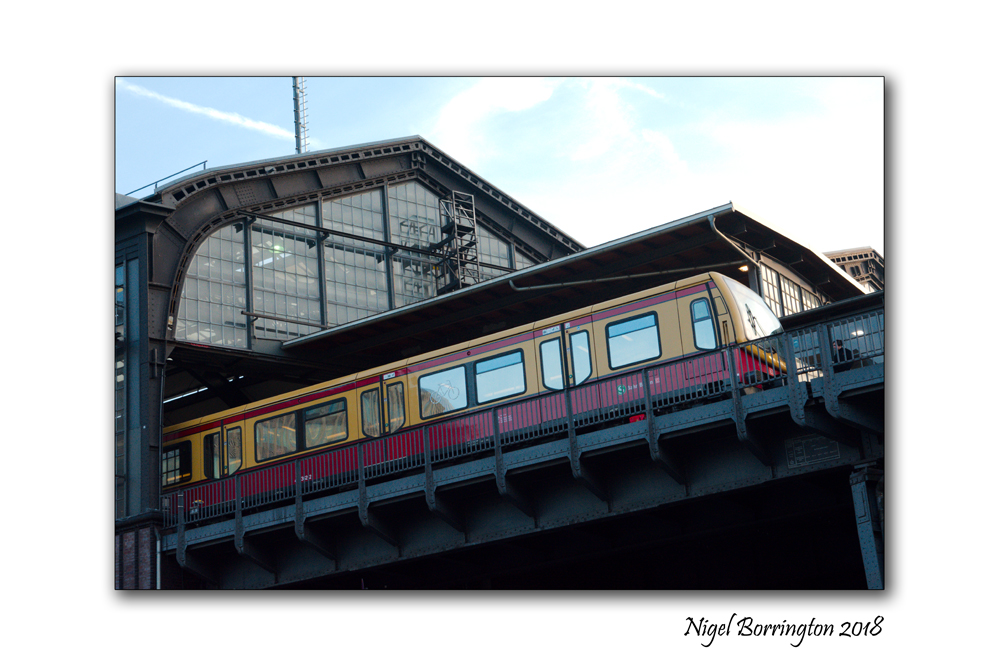
Last train before it goes dark
Berlins Stadtbahn November 2018
I have spent many years now living in the Irish countryside , so I just loved being in Berlin! the train system is just amazing, you never have to wait more than ten minutes before the next train arrives 🙂 , you can get a weekly ticket and train hop all day.
The Berlin Stadtbahn was the most fun as it sits above the city streets and offers amazing views ….
History and details
The Berlin Stadtbahn (“city railway”) is a major railway thoroughfare in the German capital Berlin, which runs through Berlin from east to west. It connects the eastern district of Friedrichshain with Charlottenburg in the west via 11 intermediate stations including Hauptbahnhof. The Berlin Stadtbahn is often also defined as the slightly longer route between Ostkreuz and Westkreuz, although this is not technically correct.

Sophie Scholl and the white rose Movement – Angles in the darkness …..
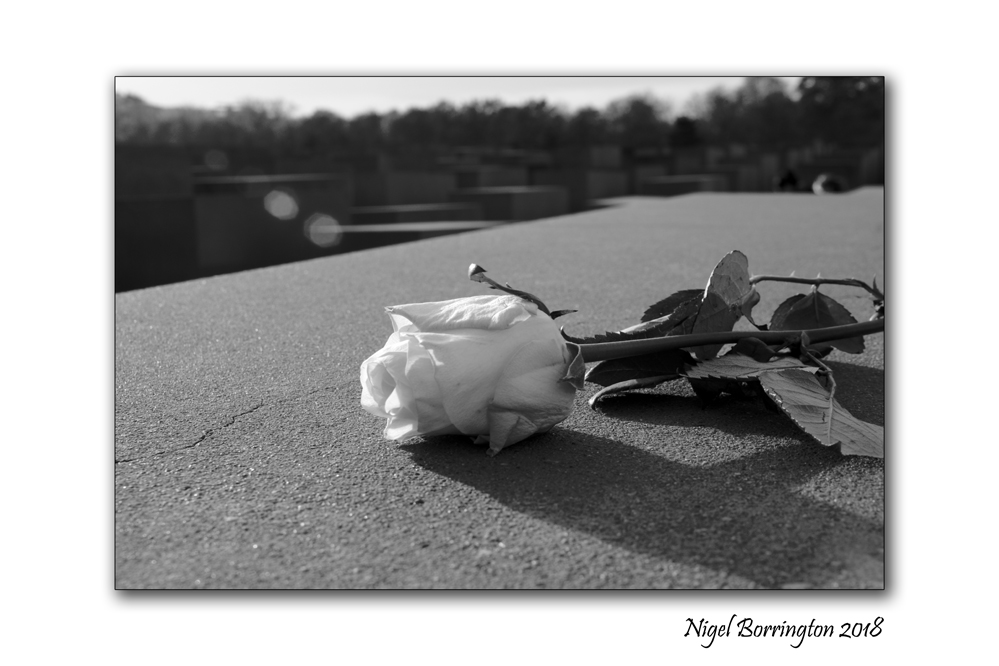
Yesterday I posted some images relating to the fantastic Jewish memorial in Berlin, I did not want to add any words to these images because I just wanted to and hoped that these images would share a feeling that I had walking and standing among the stones of this amazing public sculpture.
Today’s post is a little different, while In Berlin I came across the story of Sophie scholl and the body of Students of which she was a big part, called the “white rose“, Sophies’ story needs words, is all about words!. Words they, and she,this group used, words full of truth! yet by the simple act of using these words so many of these students including Sophie lost there lives!
If you want to try and understand what life was like under the Nazi dictatorship of the 1930’s and 1940’s, in Germany then you would be hard pushed to find any better example than the life story of Sophie scholl and the white rose movement, This was a group of German students who like many felt extremely disturbed and deeply saddened by the events they found happening around them and they simply wanted to express this feeling.
For the act of using their minds and voices to express what was a natural reaction, they lost their own lives. Sophie Scholl is one of the most famous of these student she was executed on 22 February 1943 (aged 21). She is just one individual among millions who lost their lives during the horrors, but I feel her story adds pure clarity to the events that she could not and would not tolerate unfolding around her!
How many of us today would be so brave?
“Who among us has any conception of the dimensions of shame that will befall us and our children when one day the veil has fallen from our eyes and the most horrible crimes – crimes that infinity outdistance every human measure – reach the light of day”
Sophie scholl
It is an absolute tragedy and as Sophie herself said inhuman CRIME that someone who could and should have spent a lifetime adding to the world around herself, contributing to man kind! was killed by men who only held bitterness and discrimination of all kinds in their hearts.
I feel that by knowing more about human people like Sophie scholl, I understand the history of the Nazi’s much better, these men and women who formed their ranks embodied the very heart and soul of evil and bitterness, heartless discrimination of all kinds and not just racist discrimination but ones based of what they felt was a social right to be better than other humans based on nothing!
There is no-one better than anyone else, there is no position based on wealth, location of birth or physical standing that puts anyone higher in life than anyone else !! PERIOD!
I would like to declare myself a member of the “white rose” ! as I know if I lived Back then at 21 I would have wanted to join!
Sophie Scholl – an ANGLE in the darkness !!
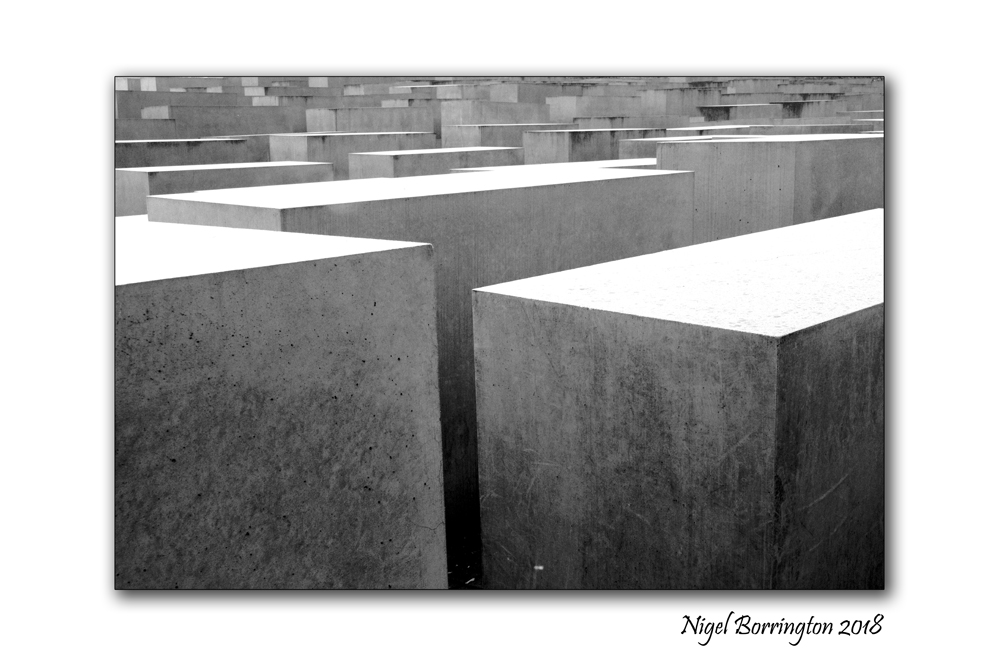
Memorial to the Murdered Jews of Europe, Images without words …….

Memorial to the murdered jews of Europe
Cora-Berliner-Straße 1, 10117 in Berlin
Nigel Borrington 2018
Link : Memorial to the Murdered Jews of Europe


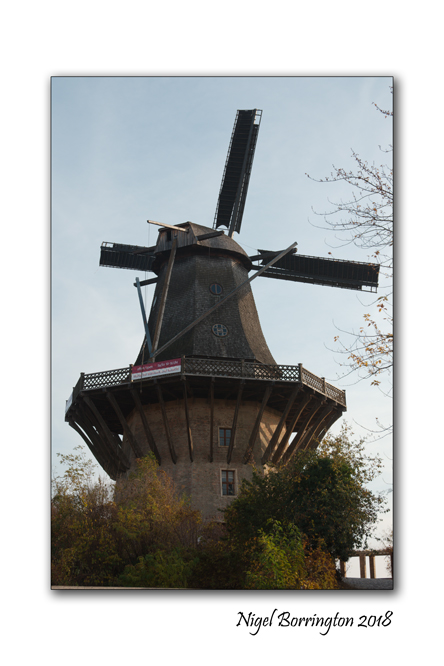
The legend of the Miller of Sanssouci, The WindMill of Sanssouci, November 2018

Sunset at the windmill,
Sanssoici,
Potsdam,
Germany
Nigel Borrington 2018
The windmill at Sanssouci, Potsdam is simply one of the best restored windmills in Germany, Potsdam was the home of the Prussian royal family and as such this windmill like many of the buildings located in and around the city are nothing other than the best of examples in German, even the world, architecture.
History of the Wind Mill
In 1736 the soldier king, Frederick William I of Prussia, gave permission for the construction of a windmill, which was started in 1737. This first windmill, completed in 1738, was a post mill, whose entire superstructure, supported on a wooden post, was turned “into the wind” depending on the wind direction. The first mill and actual Historic Mill was thus older than the nearby summer palace, built in the years 1745 to 1747 for Frederick the Great.
The legend of the Miller of Sanssouci
The legend of the Miller of Sanssouci first appeared in 1787 in a French book about the life of Frederick the Great (Vie de Frédéric II by an anonymous author) and in a watered-down form one year later in Germany.
The legend goes that Frederick the Great was being disturbed by the clatter of the mill sails and offered to buy the mill from its miller, Johann William Grävenitz. When he refused, the king is supposed to have threatened: “Does he not know that I can take the mill away from him by virtue of my royal power without paying one groschen for it?” Whereupon the miller is supposed to have replied: “Of course, your majesty, your majesty could easily do that, if – begging your pardon – it were not for the Supreme Court in Berlin.”
The mill in June 2009
This is only a legend. According to Frederick the Great the mill underscored the rural character of his summer palace and said “that, … the mill is an ornament for the palace.” The miller was reportedly a difficult man, who cheated the local farmers over their flour and constantly pestered the king with petitions. At least one of these petitions was heard by Frederick II. Grävenitz pointed to the fact that, as a result of the construction of the palace, the post mill no longer stood in the open, but was partly shielded from the wind. So he demanded that the king let him build the mill in another site and to pay him for it. Frederick II acceded to this, with the result that, shortly thereafter, the wily Grävenitz was the proud possessor of two mills thanks to the king’s grace, until he eventually resold the old mill.
View from the Erlöser Church
In 1768 there was a legal dispute at another location over water rights and the remaining lease between Christian Arnold, the tenant of a mill in Pommerzig in the Neumark, and his landlord, the Count of Schmettau. After the miller was found guilty on two accounts, he appealed to Frederick the Great, who intervened in the ongoing proceedings in favour of the miller. Wrongly, as it turned out later. The king referred the case to the Berlin Court of Appeal, who once again ruled against the miller. Frederick the Great, then demanded a condemnation of the judges and their imprisonment in Spandau Citadel for their unjust judgments and thus precipitated an abuse of his name.
This legal battle and the story of the Sanssouci miller were woven together in the legend and were intended to emphasize the king’s justice towards all his subjects. After the death of Frederick the Great, the case was reopened. His nephew and successor, Frederick William II decided in a compromise that “… the Miller Arnold case … should be viewed as the consequence of a mistake, whereby the praiseworthy judicial zeal of our royal uncle, who rests in God, was misled by incomplete, inadequate reporting of the true situation by badly informed and preoccupied [biased] people.”
In the years that followed there continued to be disputes between the reigning kings and the millers for different reasons.
Post cards from Berlin , Sunrise over the Chancellery, November 2018

Post cards from Berlin
Sunrise over the Chancellery
Bundeskanzleramt Nigel Borrington 2018
The Federal Chancellery (German: Bundeskanzleramt) in Berlin is the official seat and residence of the Chancellor of Germany as well as their executive office, the German Chancellery. As part of the move of the German Federal Government from Bonn to Berlin, the office moved into the new building planned by the architects Axel Schultes [de] and Charlotte Frank. The building is part of the ″Federal Belt″ (Band des Bundes [de]) called assembly in the Spreebogen [de], Willy-Brandt-Straße 1, 10557 Berlin. more……
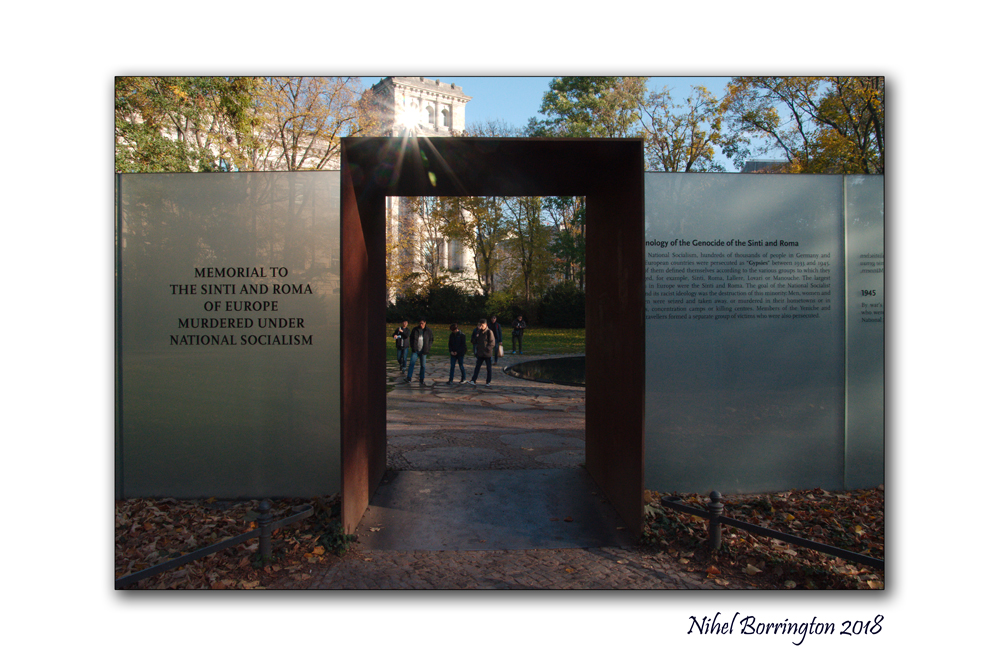
Reflections of the past , Berlin’s Memorial to the Sinti and Roma Victims of The Nazi’s

Memorial to Sinti and Roma victims of National Socialism,
Berlin 2018
One of the most moving things about a visit to Berlin is just how many public locations have been dedicated to the unavoidable history of Germany. Memorials to the victims of the first and second world wars along with the cold war are located all around the city and they are free to visit and open to all.
Germany is not hiding from its past or running away from it, they welcome both inquiry and then knowledge!
It is a true credit to newer generations that they have made sure that so many victims of what was only a selective group of German people, are remembered into the future in this way.
The Memorial to the Sinti and Roma Victims is located just across the road from the Reichstag building, the German government buildings. It is peaceful place erected in 2012. When you enter the garden you are greeted by musical tones playing from the trees around you, this experience allows you time to stop and remember so many souls that were removed from life , rejected as people not wanted, not perfect and killed for just being from a different social background,location or belief.
The establishment of a permanent memorial to Sinti and Roma victims of the Nazi regime was a long-standing demand of the Central Council of German Sinti and Roma and the German Sinti Alliance. In 1992 the Federal Government agreed to build a monument but the memorial faced years of delay and disputes over its design and location.
The city of Berlin initially wanted to place it in the less prominent district of Marzahn, where hundreds of Roma and Sinti were held in terrible conditions from 1936. In 2001 it was agreed to site it in the Tiergarten close to other Holocaust memorials but work did not officially commence until 19 December 2008, the commemoration day for victims of the Porajmos. The memorial was completed at a cost of 2.8 million euros and unveiled by Angela Merkel on 24 October 2012.



 Nigel Borrington
Histories Best Artists – Leonora Carrington
Leonora Carrington
kron-flower-1987
Leonora Carrington
Born 6 April 1917
Clayton-le-Woods, Lancashire, England
For me leonara Carrington is one of histories great Artists, Personally and I feel the best female artists of all time(IMO), although correctly she fought all her life again the label of “Female Artist” and just wanted to be call an ARTIST period !
Her work should be much better known and would be so but for a few facts , she was producing art at the same time as some the now best known European artist, who would later become house hold names but also she lived and worked during the Nazi period of European Art theft and art control, because of this she ended up in the end making her home in Mexico in a period when no one took anyone not working in Europe or America seriously.
In 1936, Leonora saw the work of the German surrealist Max Ernst at the International Surrealist Exhibition in London and was attracted to the Surrealist artist before she even met him. In 1937, Carrington met Ernst at a party held in London. The artists bonded and returned together to Paris, where Ernst promptly separated from his wife. In 1938, leaving Paris, they settled in Saint Martin d’Ardèche in southern France.
The new couple collaborated and supported each other’s artistic development. The two artists created sculptures of guardian animals (Ernst created his birds and Carrington created a plaster horse head) to decorate their home in Saint Martin d’Ardèche.
With the outbreak of World War II Ernst, who was German, was arrested by the French authorities for being a “hostile alien”. With the intercession of Paul Éluard, and other friends, including the American journalist Varian Fry, he was discharged a few weeks later. Soon after the Nazis invaded France, Ernst was arrested again, this time by the Gestapo, because his art was considered by the Nazis to be “degenerate”. He managed to escape and, leaving Carrington behind, fled to America with the help of Peggy Guggenheim, who was a sponsor of the arts.
After Ernst’s arrest, Carrington was devastated and fled to Spain. Paralyzing anxiety and growing delusions culminated in a final breakdown at the British Embassy in Madrid. Her parents intervened and had her hospitalised. She was given “convulsive therapy” and was treated with the drugs cardiazol, a powerful anxiolytic drug (eventually banned by some authorities, including the US Food and Drug Administration (FDA)), and Luminal, a barbiturate. After being released into the care of a nurse who took her to Lisbon, Carrington ran away and sought refuge in the Mexican Embassy. Meanwhile, Ernst had married Peggy Guggenheim in New York in 1941. That marriage ended a few years later. Ernst and Carrington never resumed their relationship.
In 1939, Carrington painted a portrait of Max Ernst, as a tribute to their relationship. The portrait was her first Surrealist work, and it was called The Inn of the Dawn Horse. It is now in the Metropolitan Museum of Art. The person in the painting is a cross between a male and a female, who is seated in a room with a rocking horse on the wall.
She also painting this portrait with him as the main character ..
Portrait of Max Ernst
Leonora Carrington
Oil on canvas
date created: About 1939
From the very first time I viewed Leonara’s art works I was captivated, her paintings are full of mystery and magical subjects, without falling into more traditional and classical mythological stories.
I found myself wanting to understand more about the fantasy world that her painting capture, a world of hidden meanings, I still don’t fully understand and here in this video she tells us not of over analyses art and just to enjoy living in the moment. However just looking at her creations you know she must have held many stories in her mind, I will keep looking and discovering!
Leonora Carrington
(6 April 1917 – 25 May 2011) was an English-born Mexican artist, surrealist painter, and novelist. She lived most of her adult life in Mexico City, and was one of the last surviving participants in the Surrealist movement of the 1930s. Carrington was also a founding member of the Women’s Liberation Movement in Mexico during the 1970s.
Looking at many of her painting you can clearly see that her life and work is the source for the movie Pan’s Labyrinth, Director: Guillermo del Toro, Writer: Guillermo del Toro , set in the falangist Spain of 1944, about a bookish young stepdaughter of a sadistic army officer escapes into an eerie but captivating fantasy world, the very same kind of fantasy worlds Leonora Carrington imagined and reflected on in her work.
The best surrealist movie of all time 🙂
Leonora Carrington – Imagination is everything !!!
Share this:
December 18, 2018 | Categories: art, art work, Artist Introduction, artists, Comment, Leonora Carrington, painting, Story telling gallery | Tags: artists, Clayton le Woods, Histories Best Artists, Lancashire, Leonora Carrington, Max Ernst, Mexican art, Mexico, Nigel Borrington, surrealism, surrealist art | 6 Comments