Monday Poems : Donkey of Brown

Monday Poems : Donkey in Brown
Photography : Nigel Borrington
Well What a weekend we had here in Ireland SUN on SUN , just perfect 🙂 🙂
Its hard to believe its Monday already, my post and included Poem this Morning is just a reminder that while your getting your week going , don’t forget to take the odd moment to slow down and take a look at the world around you, it’s Spring-time so take just a few moments and check out what’s really happening in the world – your meeting / phone call or email can wait for a while 🙂 🙂
Donkey of brown
By : Patricia Higgins
Please let me know
Why is it that you go so slow?
He turned round gently and to me said
I have some sense in my little brown head.
 .
.
By hurrying so as you go by
You miss the beauty in earth and sky.
So I took his advice and looked around,
And I saw diamonds in dew drops on the ground.
Daises that dance in the sun’s golden ray,
Things I missed as I hurried each day.
Gold in the buttercups, clouds in the blue,
What the donkey had said was perfectly true.
Celebrating the Spring Equinox 2015, with its Pagan traditions

Sunrise behind the standing stone.
Knockmealdown Mountains.
County Waterford.
Irish landscape Photography : Nigel Borrington
The Spring equinox 2015 celebrating
Today marks the arrival of spring, the date of the vernal equinox, or spring equinox as it is known in the northern hemisphere. Spring equinox. During an equinox, the Earth’s North and South poles are not tilted toward or away from the sun. (Ref :Wikipedia)

This means the sun will rise exactly in the east and travel through the sky for 12 hours before setting in the exactly west.An equinox happens twice a year around March 20 and September 22 when the Earth’s equator passes through the centre of the sun.
For those in the southern hemisphere, this time is the autumnal equinox that is taking people into their winter.
In English there is open access to Stonehenge tomorrow. Access will be from 05:45am until 08:30am.
Druids and Pagans like to gather at Stonehenge early in the morning to mark the Spring Equinox, to see the sunrise above the stones.

The Pagans consider this is the time of the ancient Saxon goddess, Eostre, who stands for new beginnings and fertility. This is why she is symbolized by eggs (new life) and rabbits/hares (fertility). Her name is also where we get the female hormone, oestrogen.
From Eostre also come the names “Easter” and “Esther” the Queen of the Jews, heroine of the annual celebration of Purim which was held on March 15. At Easter, Christians rejoice over the resurrection of Jesus after his death, mimicking the rebirth of nature in spring after the long death of winter.
It is also a time to cleanse your immune system with natural remedies. In Wiltshire and other parts of rural Britain it used to be tradition to drink dandelion and burdock cordials as the herbs help to cleanse the blood and are a good tonic for the body after a harsh winter.
The Equinox of the sun : Gallery


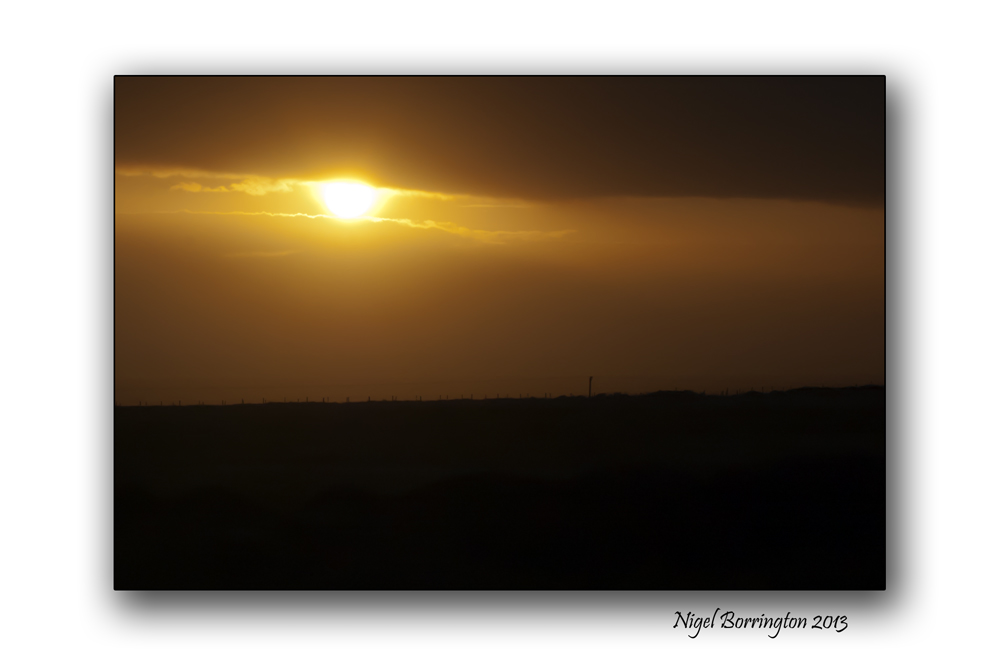
Irish Landscapes, Freedom of the Hills, Poem by : Douglas Fraser – 1968
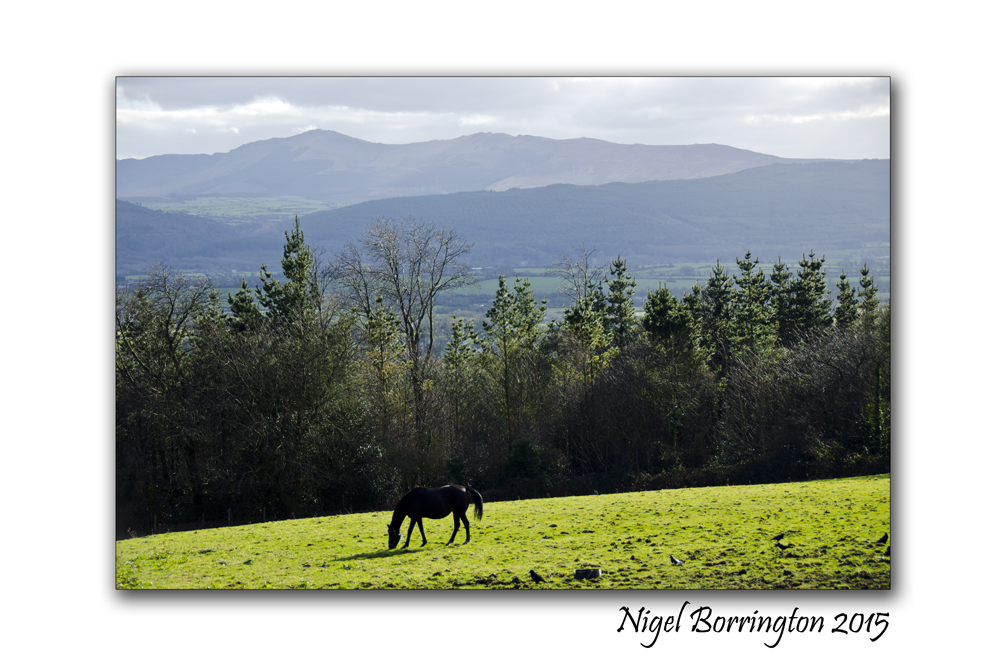
The Freedom of the hills
Irish Landscape Photography : Nigel Borrington
Freedom of the Hills
By: Douglas Fraser – 1968
Mine is the freedom of the tranquil hills
When vagrant breezes bend the sinewy grass,
While sunshine on the widespread landscape spills
And light as down the fleet cloud-shadowed pass.
Mine, still, that freedom when the storm-clouds race,
Cracking their whips against defiant crags
And mists swirl boiling up from inky space
To vanish on the instant, torn to rags.
When winter grips the mountains in a vice,
Silently stifling with its pall of snow,
Checking the streams, draping the rocks in ice,
Still to their mantled summits I would go.
Sun-drenched, I sense the message they impart;
Storm-lashed, I hear it sing through every vein;
Among the snows it whispers to my heart
“Here is your freedom. Taste – and come again.”
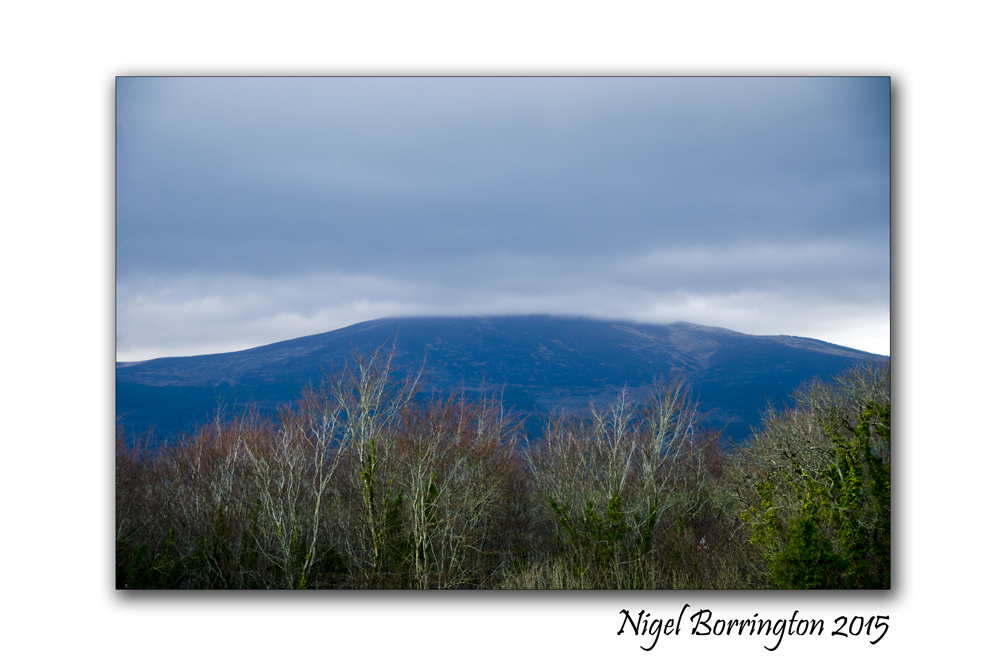
Pagan Monday : The Spiral and Nature

The Spiral In the Natural Pagan world
If you have taken many nature photographs or sketched and/or painted outside, you may have noticed just how often you come across one of natures repeating patterns, the Spiral.
From Lichen on rocks to the way the bark grows on some trees, water spinning in a rock pool and the form that galaxy’s take in the night sky.
The last image below was taken at the Local Pagan location of Knickroe, County Kilkenny where most of the stones are marked with the spiral pattern. In this image you can just about make out the form of the Triple Spiral, Possibly representing the : ( “three realms” – Land, Sea and Sky ). Clearly our Pagan ancestors noticed the spiral and give it a significant place in their lives. Today the spiral takes a leading place in Modern Re constructionist Paganism being used in Art and artifacts.
Pre-Christian symbolism
Believed by many people to be an ancient symbol of pre-Celtic and Celtic beliefs, the triple spiral appears in various forms in pre-Celtic and Celtic art, with the earliest examples having been carved on pre-Celtic stone monuments, and later examples found in the Celtic Christian illuminated manuscripts of Insular art. The triple spiral was possibly the precursor to the later triskele design found in the manuscripts.
Christian Celtic symbolism
What the symbol meant to the pagans who built Newgrange and other monuments is unknown; but, as Christianity came into the forefront in Ireland before the 5th century, AD, the triskele took on new meaning, Kidnapped somewhat as a symbol of the Trinity (i.e., Father, Son, and Holy Spirit) and, therefore, also a symbol of eternity. Its popularity continues today as a decorative symbol of faith for Christians of Celtic descent around the world.
The triple spiral
The triple spiral is one of the main symbols of Celtic Reconstructionist Paganism, often standing for the “three realms” – Land, Sea and Sky, or for one of a number of deities who are described in the lore as “threefold” or triadic.[1] The god Manannán is probably most often the one symbolized by the triskele, though some also use it for the goddess Brighid. Some Celtic-inspired Wiccans also use the triple spiral symbol, most often to represent the concept of the triple goddess.
According to Uriel’s Machine by Knight and Lomas (2003), the triple spiral may represent the nine-month period of human pregnancy, since the sun takes a fourth of a year to go from the celestial equator (an equinox) to extreme north or south declination (a solstice), and vice versa. During each three-month period, the sun’s path across the sky appears to form a closely wound quasi-helical shape, which can be likened to a spiral, so that three spirals could represent nine months, providing an explanation for a link between fertility and the triple-spiral symbol.
Natures Spirals


Its the first full weekend of March, so why not go out for a Spring time walk …….

Spring time 2015
Nigel Borrington
Its the first full weekend of March, so why not go out for a walk and see what Spring time changes you can find ….
Have a great weekend what every you do !!!!
When will I see the Bog Cotton again ?
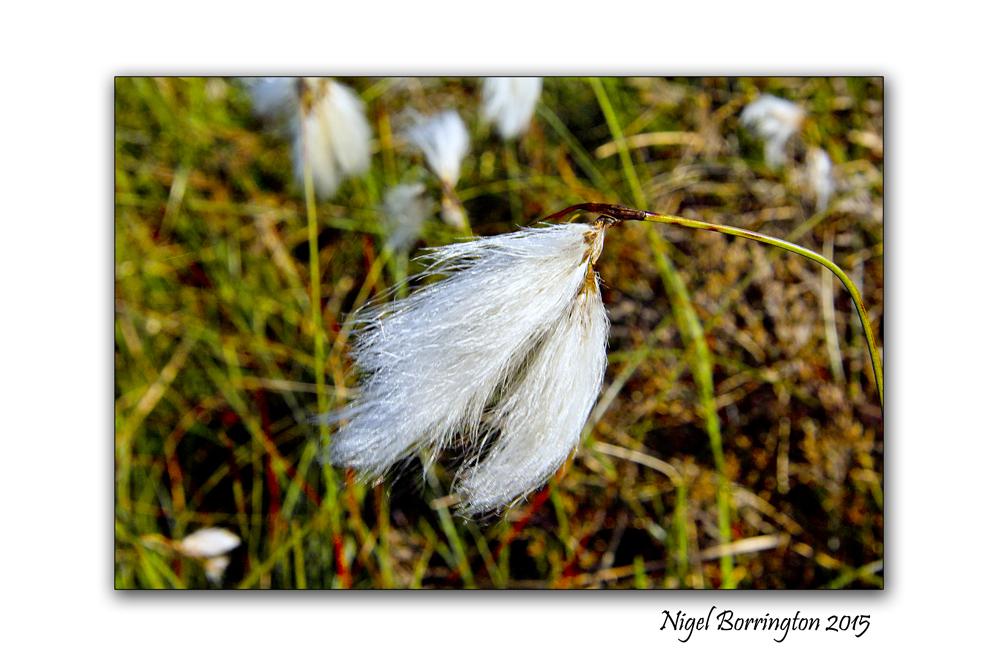
Bog Cotton
Irish Landscape Photography : Nigel Borrington
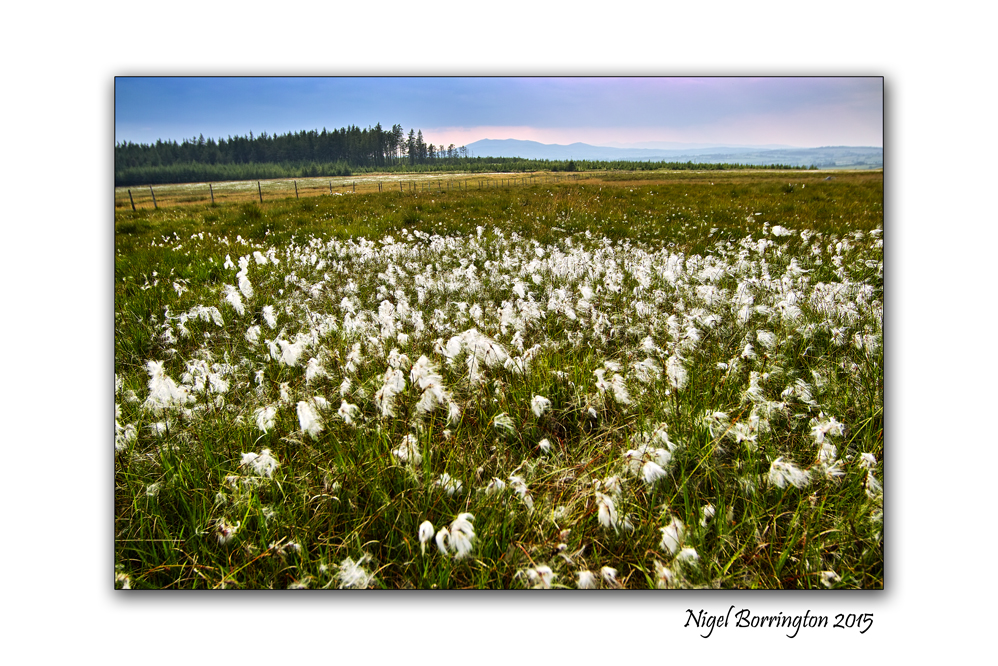
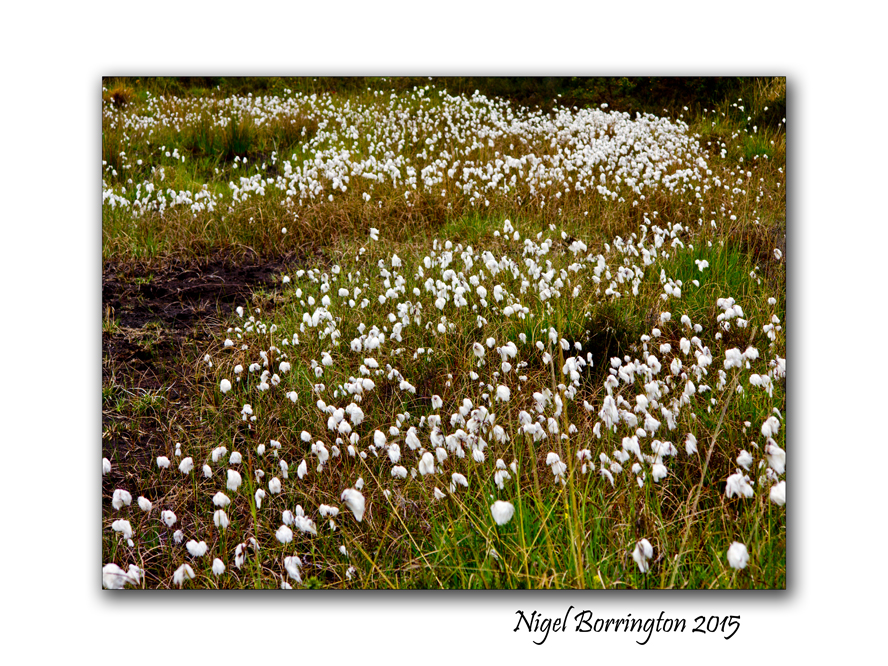
Each year that comes and goes in the Irish bog-land landscape, for me is marked by the summer Bog Cotton. This amazing grass covers many of Ireland boggy wet lands , on the mountain sides and the low lands of midlands through out the country. Only for the fact that much of the Countries bogs are farmed for peat ( leaving the landscape scraped and scared, with no plant life left ! ) then their would be huge areas in the summer months all covered with white Cotton blowing in the wind.
When Will I see the Bog Cotton again ?
Well Starting from this May and June I hope, and I will be getting lots more pictures and just taking time to appreciate the views it brings !!!


Its a Wonderful, Wonderful Life in the Killarney National Park

Grounds Keepers House
Killarney National Park
Irish Landscape Photography : Nigel Borrington
Life as a grounds keeper at the National Park of Killarney, must have been a hard one at times, however what a life this must have been working and living with these surroundings.
What a Wonderful, Wonderful life !
They say you get use too these views ?
Killarney National Park a Gallery


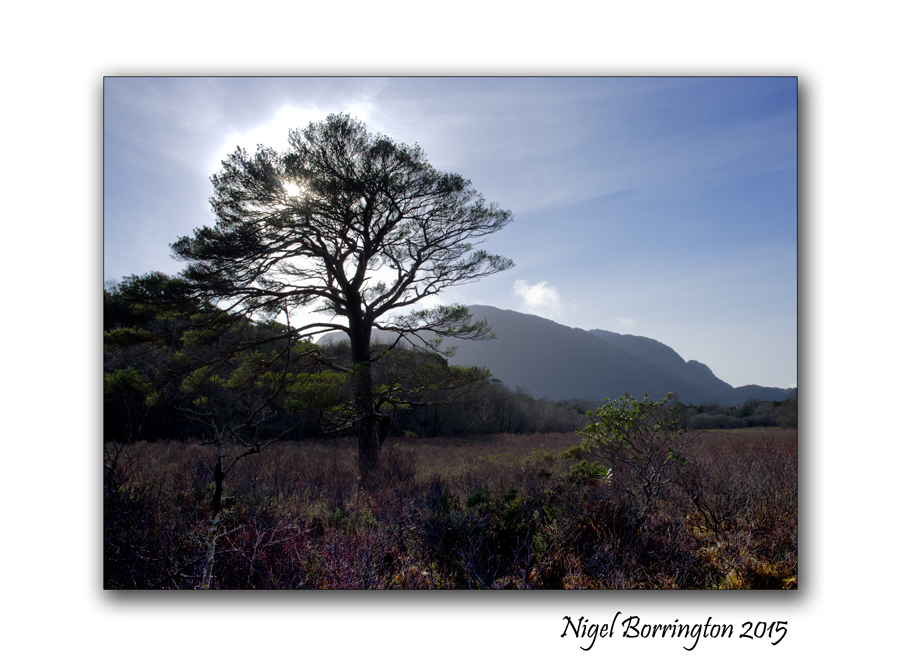

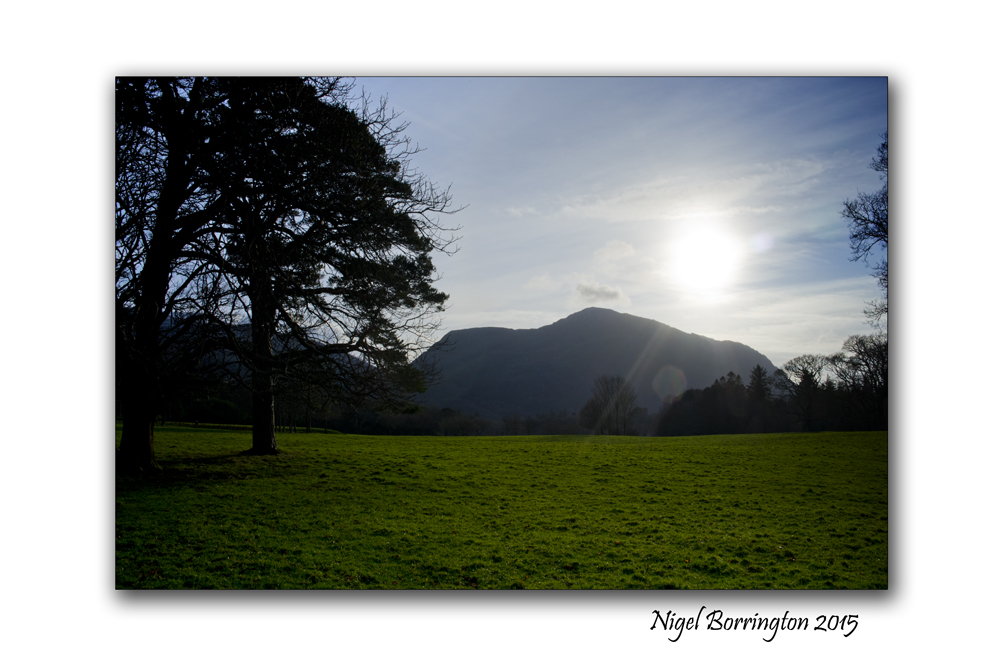
Four feet Friday !!! , “Four Feet”, by Rudyard Kipling

Four Feet Friday
Molly our Golden retriever
This is Molly our somewhat aging but much loved Golden Retriever, Aging very well I am happy to say 🙂
I took these images while on a walk with her yesterday in some local woodlands and was reminded of this Kipling Poem.
I think he captured so well the love and loyalty that pets bring to our lives and in the last, the memories that they leave when they are no longer able to be with us on their daily walks, of which I don’t think Molly has every mist a day. Mainly because I only need to go near the back door and there she is looking up and sitting down ready !!
I have enjoyed every walk with her four paws – in front and sometimes behind 🙂
Four Feet
by Rudyard Kipling
I have done mostly what most men do,
And pushed it out of my mind;
But I can’t forget, if I wanted to,
Four-Feet trotting behind.
Day after day, the whole day through —
Wherever my road inclined —
Four-Feet said, “I am coming with you!”
And trotted along behind.
 .
.
Now I must go by some other round, —
Which I shall never find —
Somewhere that does not carry the sound
Of Four-Feet trotting behind.
by Rudyard Kipling
The crows will only grow louder, by Laura Breidenthal. “Outward self-expression is a personal right , your right !!”
The crows will only grow louder.
Irish Landscape and nature photography
Nigel Borrington
I first came across Laura Breidenthal poem some two years ago and posted it the very day after, Its a great poem full of feeling and motivation !
I think we have all face these feeling at some point in our life’s and anyone who is outwardly expressive will have most of all.
I feel this poem relates to those moments we all have when other people, usually through negative and insecure motives try to put you and your creativity down in order to better themselves.!
I want to share this poem because I want it to act as a powerful motivation to keep going despite anyone Else’s opinion, if you do get someone putting you down know this its usually because they feel your creations are better than theirs if they have any and that they don’t have an idea how you do what you do.
Self expression is how your learn and how you get better at what you love !!!!!
If you read this post my advice is not to let anyone affect your personal rights to self expression, instead CROW Loader and BLOG more than ever 🙂 🙂 🙂
Outward self-expression is a personal right , your right !!
You may see a post using this Poem again and again during the year, I love this poem so much !!!!
The crows will only grow louder
By : Laura Breidenthal
There is no celestial place for you to guide my thoughts
Can you not see that I am free from you?
I am a crow perched high in the treetops
You will hear my crowing and you may hate it
But, you cannot take away my voice!
Yet still, as fire oppresses forests of life,
You can abuse my freedom to find your glory
You may discard these words for your love of gods,
And in so doing you may simply ignore
All the cries that I so passionately utter
But my infectious species will guide your mind straight back
To that once so lonely treetop where you merely glanced
And there will be multitudinous, oppressing thoughts
That shall enslave you and bind you unwillingly
The crows will only grow louder when you turn away—
When you pretend to ignore with your remaining, strangling pride
For my voice is a production sent from above
Dispatched to judge you pitilessly for your swelling lies!
And the choirs of ferocious beaks shall open forever
Harmony and dissonance as one
Irish Landscape Photography and a Poem “Secrets of the Forest” by : Wisteria Rose
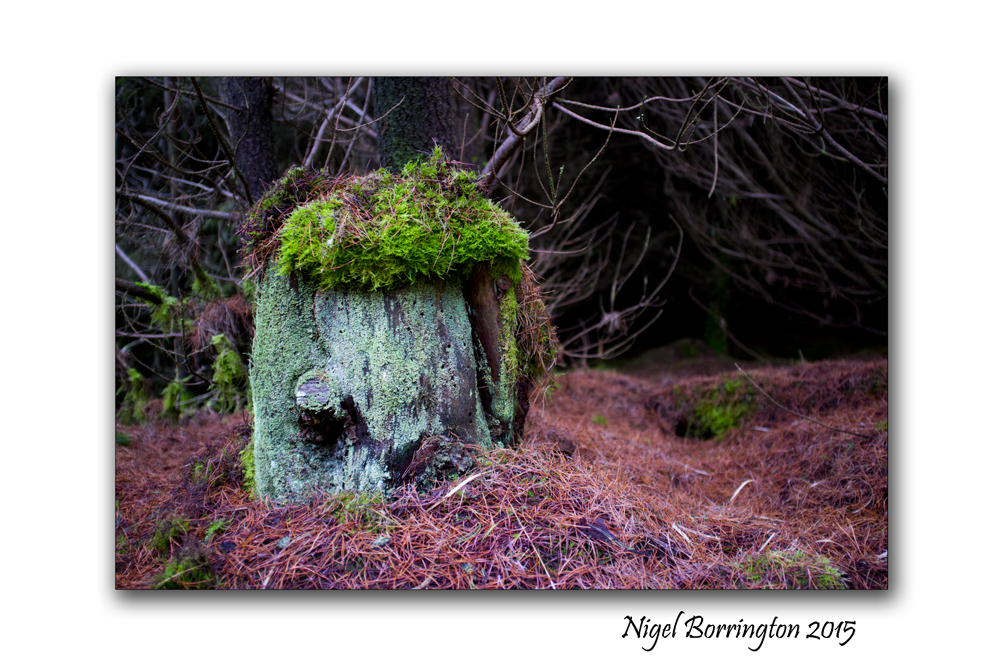
Irish Landscape Photography,
Secrets of the forest
Nigel Borrington
Secrets of the Forest
There’s a dead tree connecting the earth to my heart,
And yet it’s the most beautiful thing I’ve ever seen.
One silver root, and four dark leaves.
A branch is at my neck,
And there is a leaf telling me secrets,
Gently in my left ear.

There are vines strung elegantly from trunk to my teeth
And I’ll play them for you.
The rain is the beat,
It’s the same as your pulse.
My blood runs cherry with every note.
Irish Landscape Photography : Winter in the woodlands

Irish Landscape Photography
Winter in the Woodlands
Nigel Borrington
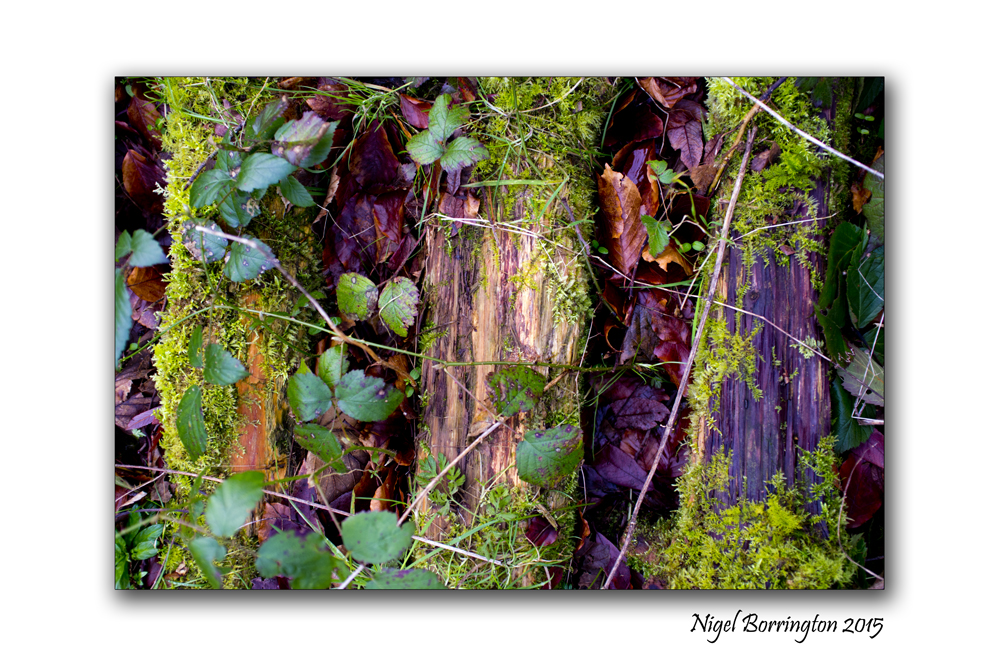
If you take a walk through some of the many Irish woodlands at this time of year, it may appear that there is little to see or take any images of. However I just love the textures and colours to be found during these months. Often the woodland floors are wet and this adds to some wonderful light to be found in photographs.
These Images are from a walk yesterday in one of out local woods.
Winter in the Irish Woodlands


Kilkenny Landscape Photography : The Simple things – A line of trees.

Kilkenny Landscape Photography
Nigel Borrington
Most of the time when I am out taking Landscape pictures, its the simple things that catch my attention, like this simple line of trees at one end of a large woodland, set in the hills above Windgap, county Kilkenny.
When trees are young like these ones they are planted very close together. later this area will be thinned out and half these trees will be cut down so that there is space for the best trees to develop and grow, the cut trees will be sold as firewood so it is not wasted.
There are so many things we just don’t notice, I think this is one thing I love most about doing about Landscape photography, it makes you look at and see things so often lost in the bigger picture of daily life.
Gorse flowers – in mythology
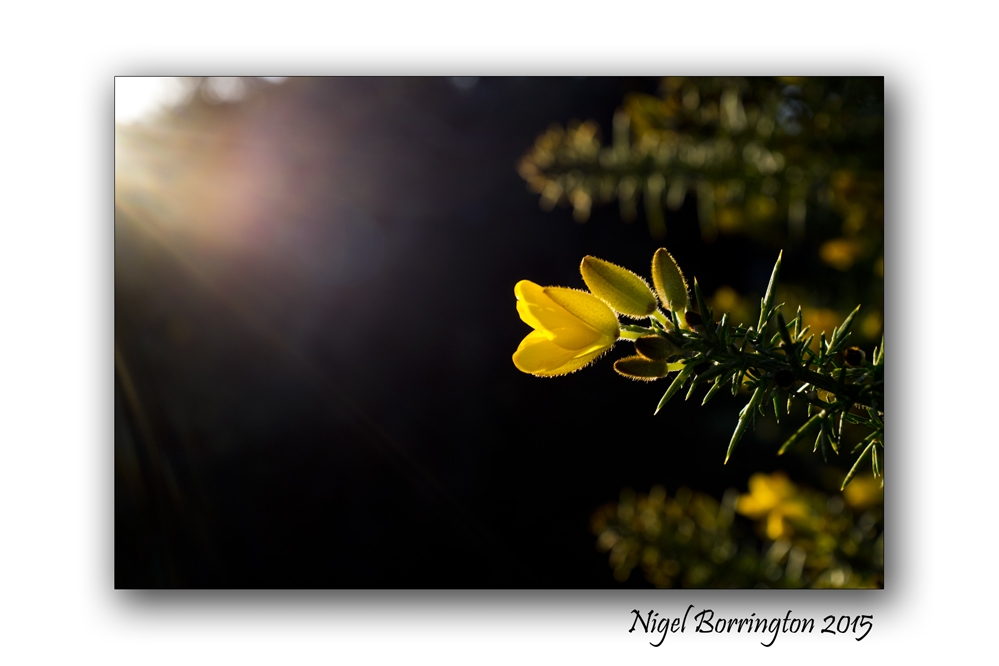
Irish Gorse flowers
Nigel Borringtpn
Gorse flowers – in mythology
Gorse, also known as furze, is a sweet scented, yellow flowered, spiny evergreen shrub that flowers all year round.
In fact, there are several species of gorse that flower at different times of the year making it a much-loved plant for the bees and giving it the appearance of being in bloom all year long. There is an old saying that goes, “When the gorse is out of bloom, kissing is out of season.”
Gorse Tree copyright Ireland Calling
Gorse is often associated with love and fertility. It was for this reason that a sprig of gorse was traditionally added to a bride’s bouquet and gorse torches were ritually burned around livestock to protect against sterility. However, one should never give gorse flowers to another as a gift for it is unlucky for both the giver and receiver.

.
Beltane bonfires
Gorse wood was used as very effective tinder. It has a high oil content which means it burns at a similar high temperature to charcoal. The ashes of the burnt gorse were high in alkali and used to make soap when mixed with animal fat.
Onn, meaning gorse, is the 17th letter of the ogham alphabet. It equates to the English letter O.
In Celtic tradition, gorse was one of the sacred woods burned on the Beltane bonfires, probably the one that got them started. It was a shrub associated with the spring equinox and the Celtic god of light, Lugh, doubtlessly because of its ever blooming vibrant yellow flowers.
In Brittany, the Celtic summer festival of Lughnastdagh, named after the god, was known as the Festival of Golden Gorse.
Flowers used in wine and whiskey
The flowers have a distinct vanilla-coconut aroma and are edible with an almond-like taste. They can be eaten raw on salads or pickled like capers. They have also been used to make wine and to add colour and flavour to Irish whiskey. However, consuming the flowers in great numbers can cause an upset stomach due to the alkalis they contain.
The prickly nature of gorse gave it a protective reputation, specifically around livestock. As well as providing an effective hedgerow, gorse made an acceptable flea repellent and the plant was often milled to make animal fodder.
From A Tree’s Point of View, a Monday poem.

Winters tree
Nigel Borrington
People pass me by without a second glance,
No one likes the ugly tree with no leaves.
My branches extend out in every which way,
Getting tangled within each other.
I look still on the outside,
Yet inside, water and nutrients course through my tissues.
I stand in wait, until the season comes,
When my arms are no longer bare and the fresh, green leaves can hide away my hideous outsides.
mdancer1399
Polk City, IA
The Holly-Tree , A Poem by : Robert Southey

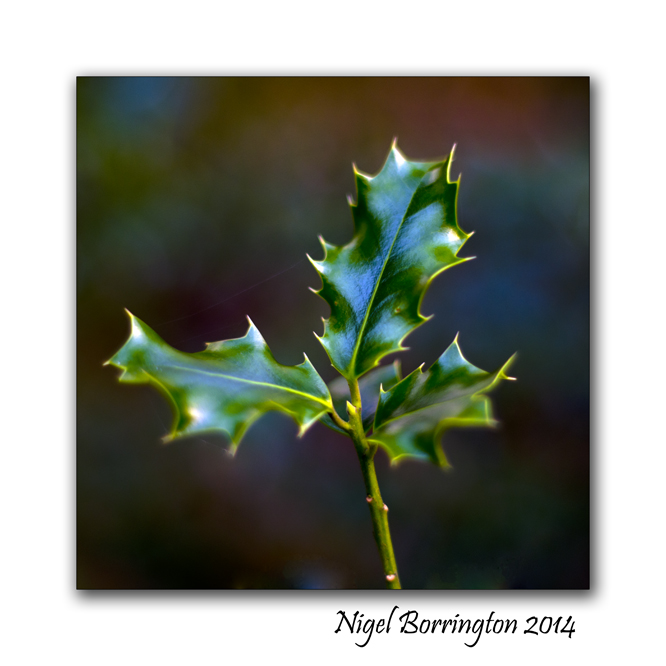
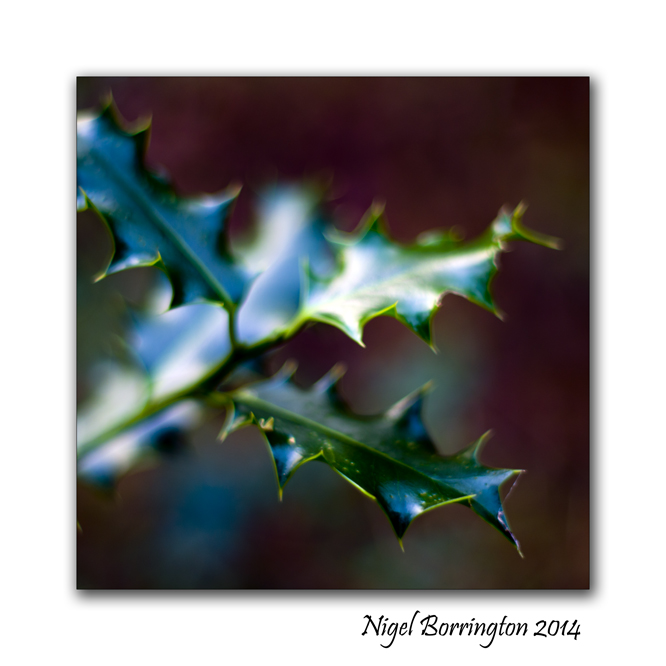
Woodland Holly,
County Kilkenny,
Nigel Borrington
The Holly-Tree
By : Robert Southey
O reader! hast thou ever stood to see
The Holly-tree?
The eye that contemplates it well perceives
Its glossy leaves
Ordered by an Intelligence so wise
As might confound the Atheist’s sophistries.
Below, a circling fence, its leaves are seen,
Wrinkled and keen;
No grazing cattle, through their prickly round,
Can reach to wound;
But, as they grow where nothing is to fear,
Smooth and unarmed the pointless leaves appear.
 .
.
I love to view these things with curious eyes,
And moralize;
And in this wisdom of the Holly-tree
Can emblem see
Wherewith, perchance, to make a pleasant rhyme, –
One which may profit in the after-time.
Thus, though abroad, perchance, I might appear
Harsh and austere;
To those who on my leisure would intrude,
Reserved and rude;
Gentle at home amid my friends I’d be,
Like the high leaves upon the Holly-tree.
And should my youth – as youth is apt, I know, –
Some harshness show,
All vain asperities I, day by day,
Would wear away,
Till the smooth temper of my age should be
Like the high leaves upon the Holly-tree.
 .
.
And as, when all the summer trees are seen
So bright and green,
The Holly-leaves their fadeless hues display
Less bright than they;
But when the bare and wintry woods we see,
What then so cheerful as the Holly-tree? –
So, serious should my youth appear among
The thoughtless throng;
So would I seem, amid the young and gay,
More grave than they;
That in my age as cheerful I might be
As the green winter of the Holly-tree.
Robert Southey
Kilkenny Landscape Photography
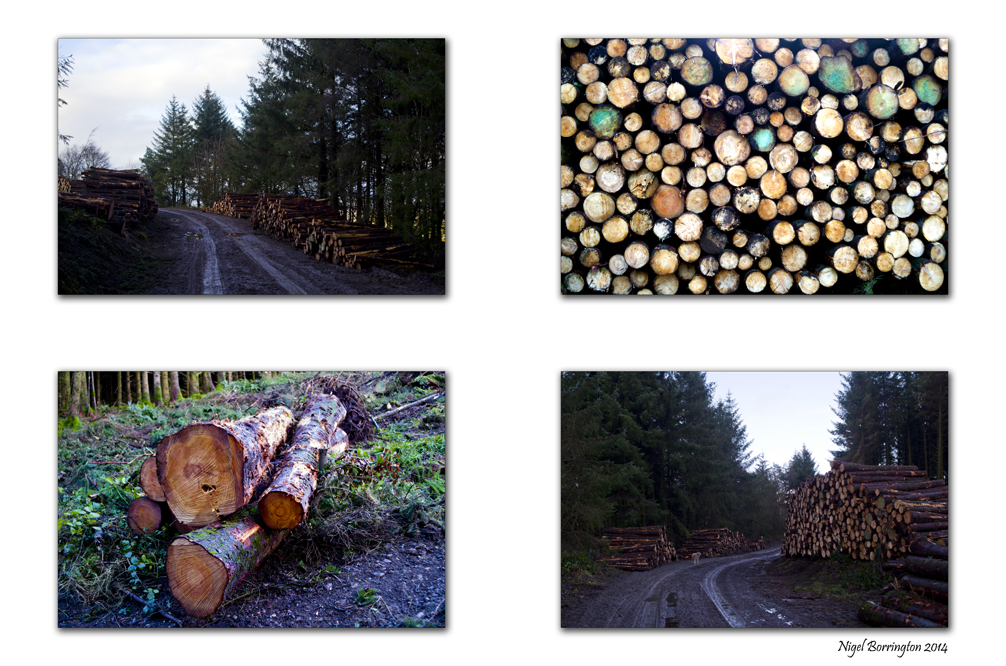
Kilkenny Landscape Photography
On the Forest Road
Nigel Borrington
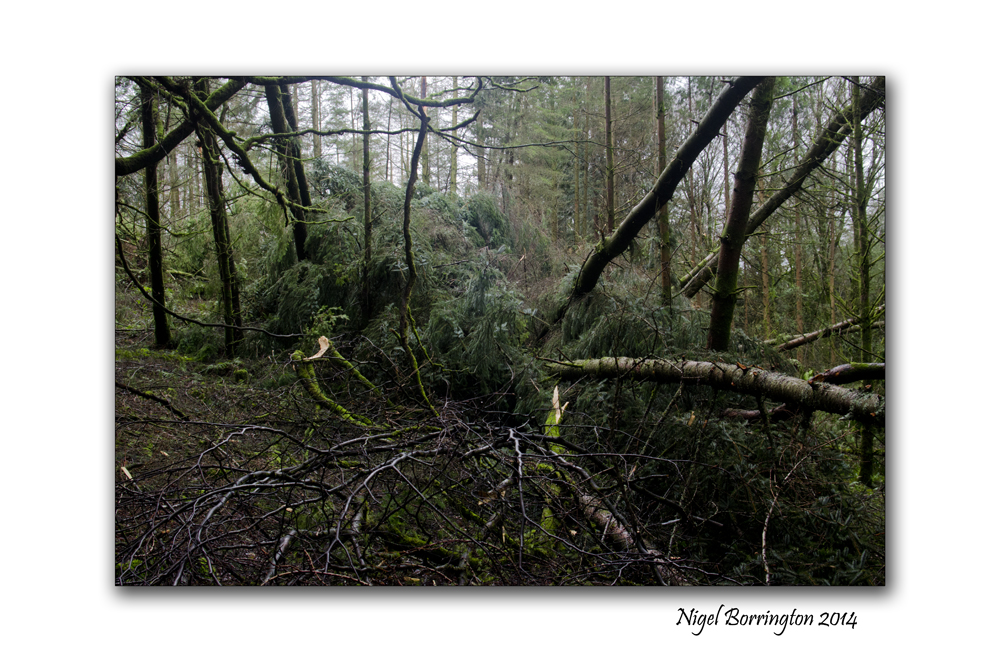
Way back in the year, February 2014 our forests here in county KIlkenny lost a lot of their trees due to very bad storms with high winds, it has taken almost ten months to clear most of this damage but the task is almost complete.
While out walking yesterday I noticed that the last of the many forest areas had been cleared of it fallen trees, I guess this is a great point to reach as the job of planting many new trees can now begin.
Kilkenny Landscape Photography, on the forest road : Gallery


Gods our Sun and its Autonomy, a Poem.

Autonomy of the Sun
Landscape Photography : Nigel Borrington
Last Night I sat down and wrote my first Poem for a while, I was sorting through some Landscape Images and found a collection that I took earlier in the year.
These images are all taken Directly into the Sun, I love to play with the effects that the sun can create in a lens.
The subject of the sun in images I also find very inspiring, its our very life force and has fascinated mankind through out our long history, in both art and all the many religions we have followed.
Sometimes I feel that to use your eyes and clear your mind and just look at the landscape in front of you, on a clear day to just look up and the sun is freedom itself ! . In these moments there is no confusion of religion or even Science, Just yourself standing and looking at the world around you !!
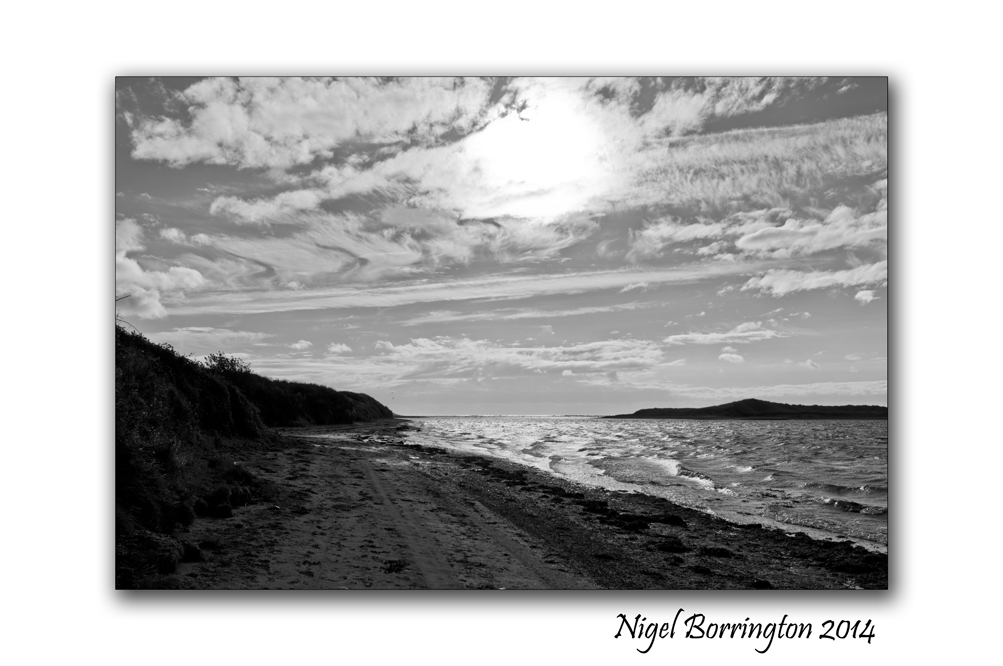
Gods our Sun and it’s Autonomy
As a single cloud floats by and winds coerce,
I desire alone the Sun to have such might and force.
When Gods Command the ageless trees,
a boundless cosmos is all I ask for to see.
Not simply the power of a signal God alone,
But infinite forgiving universal love,
contained forever within time and space.
A completely cosmic power,
open to all and with in the grasp of my simple mind,
open and without fear of a hidden world.
As the Stars stride through horizons and winds twist forests trees,
I only plead to be just as free.

Clearing the Forests following Storm Darwin , a (Before and after) Gallery.
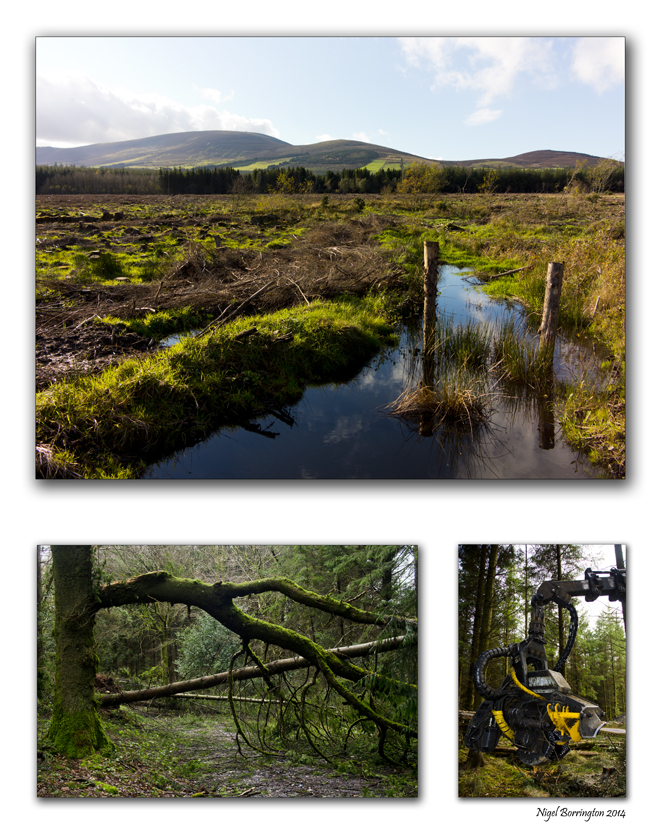
Breanomore forest, Slievenamon, county Tipperary.
Landscape Photography : Nigel Borrington
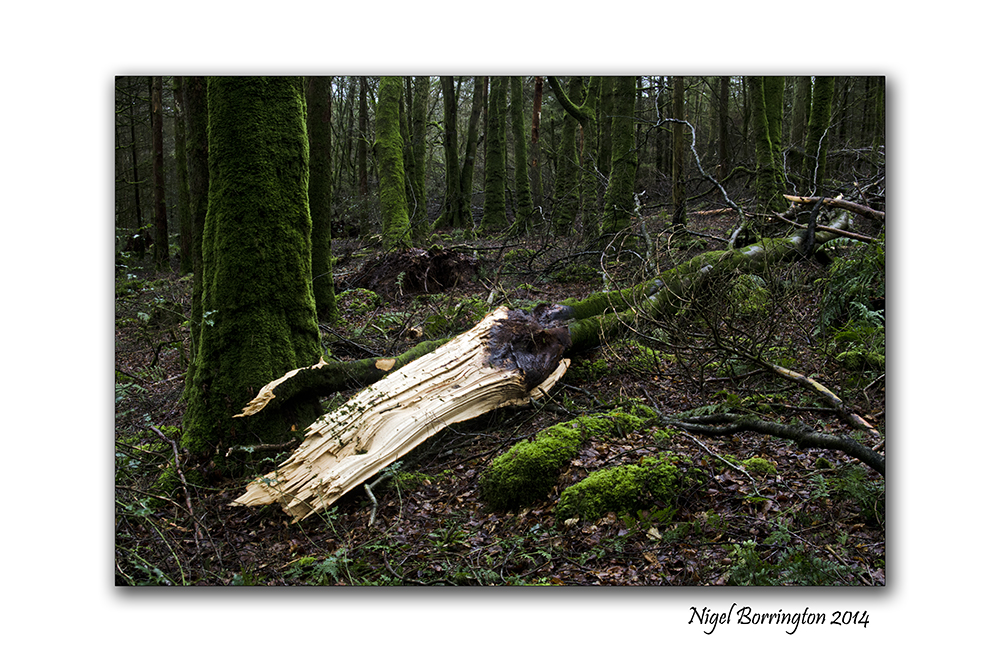
On the 12th of February this year Ireland was hit by the remains of a hurricane given the name of Darwin, by the time it hit us it was down rated to a storm but its power was truly stunning.
Locally in counties Tipperary and Kilkenny there was a lot of damage to peoples property and farm building but the forests and their trees where the most affected. Irish Forestry lost almost one years worth of timber , the same amount that would have been harvested in 2014.
It is only in the last month that most of the local fallen trees have been removed, sadly however to do this it has meant clear felling very large areas of our local woodlands.
The images here where taken during the the year and include the after effects of the storm and then images of Forest workers during the process of clearing some one sq mile of Breanomore forest near the mountain of Slievenamon, County Tipperary.
The last set of images show how the forest looks now, a vast area has been cleared. The effects of Storm Darwin are still very clear even now in November and the work to remove damaged and fallen trees will continue for sometime to come.
A true reminder of the power of nature.
The results of the February storms
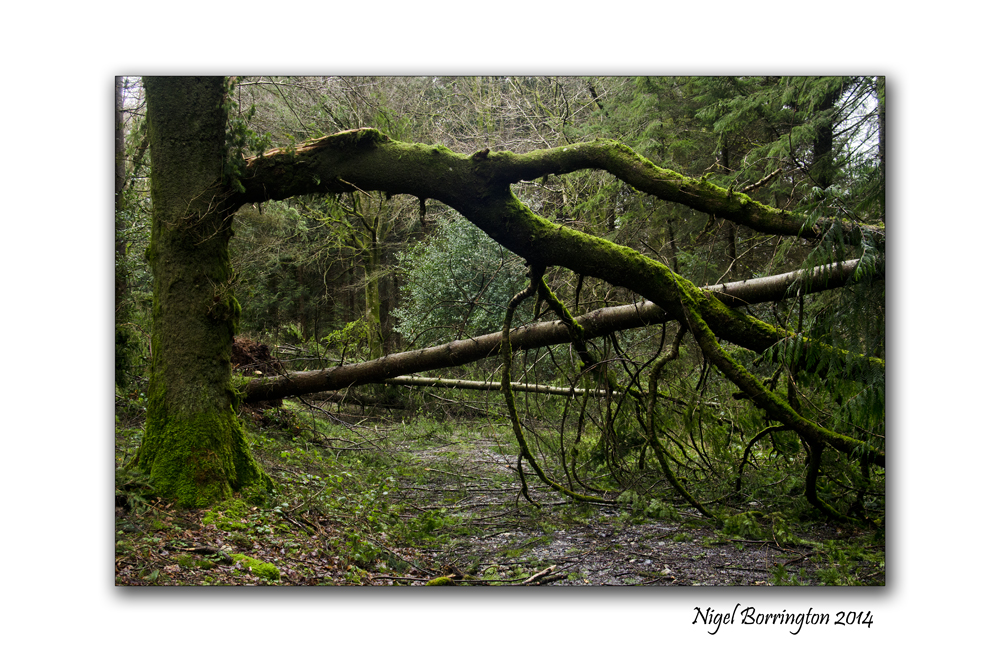
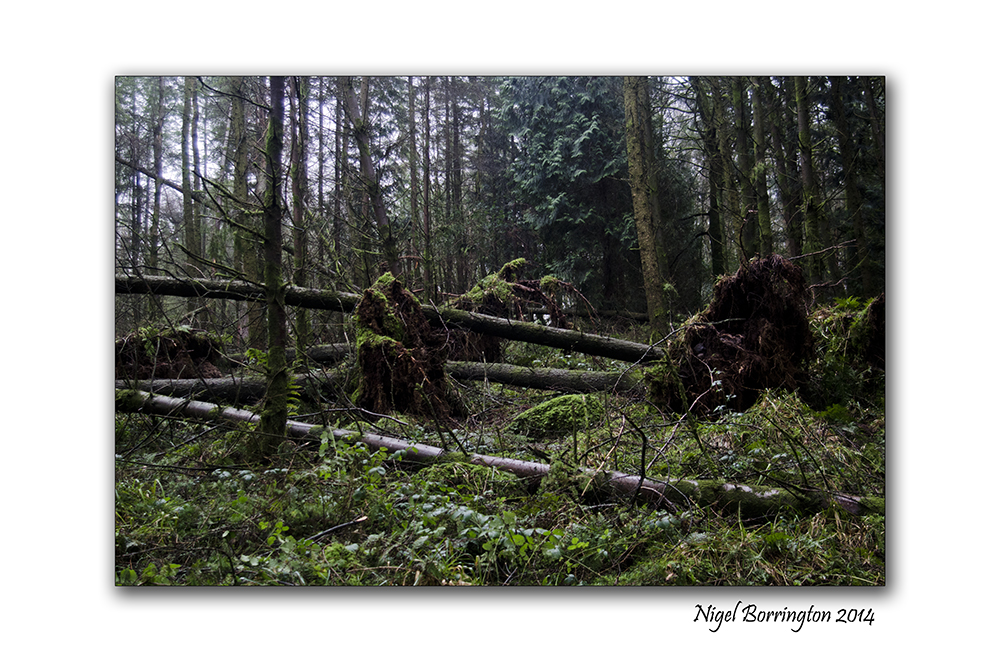
 .
.
Forest workers clearing the trees


 .
.
The Forest after being cleared


Early November mornings in the Sun.
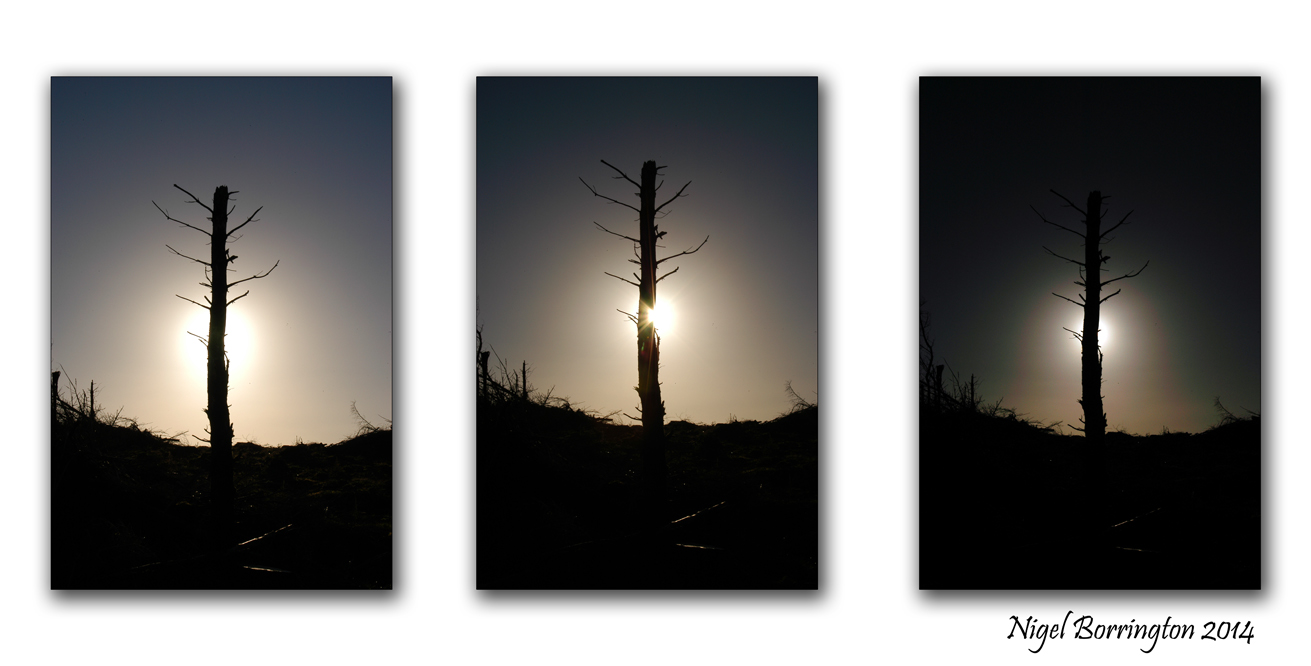
Exposing a November Sun.
Landscape Photography : Nigel Borrington
The early morning Sun in November is very different than in the mid-summer, rising closer to the south-east than its Mid-June Eastern point on the horizon. It’s rise is much slower as the angle it takes always hugs the horizon closer, it never gets as high in the sky as June even at mid-day.
With the three Images above I wanted to capture the atmosphere of the early light as the sun starts its slow daily movement through the sky, I took three exposures using a Tripod, at different exposure setting in order to get a feeling of the colours and silhouette’s that Sun light can create.
Our November Sun …….
The Elements : Fire

In modern-day Wicca and Paganism, there is a good deal of focus on the four elements – Earth, Air, Fire, and Water. A few traditions of Wicca also include a fifth element, which is Spirit or Self.
The concept is hardly a new one. A Greek philosopher named Empedocles is credited with the cosmogenic theory of these four elements being the root of all existing matter. Unfortunately, much of Empedocles’ writing has been lost, but his ideas remain with us today and are widely accepted by most Pagans and Wiccans.
Each of the elements is associated with traits and meanings, as well as with directions on the compass. The following directional associations are for the Northern hemisphere; readers in the Southern hemisphere should use the opposite correspondences.
Fire
Fire is a purifying, masculine energy, associated with the South, and connected to strong will and energy. Fire both creates and destroys, and symbolizes the fertility of the God. Fire can heal or harm, and can bring about new life or destroy the old and worn. In Tarot, Fire is connected to the Wand suit. For color correspondences, use red and orange for Fire
The element of Fire is both creative and destructive, its qualities are Brightness, Thinness and Motion and its mode is Active. It is fire that we and our ancestors used to warm our homes, we use it to cook our food, we sit around it to ward of the darkness of night, and it fuels our passions. Fire, unlike the other elements, does not exist in a natural state. Its physical form can only take place by consuming some other element. Fire is the transformer, converting the energy of other objects into other forms: heat, light, ash, and smoke.
To feel the manifestations of this power, go out on on sunny day and feel the warmth and light of the Sun, hear the crackling of logs and smell of smoke from a burning fire. As you gaze into the transformational flame of a candle, immerse yourself in the energy of Fire. Fire is the natural element of animals and mankind, and they “have, in their natures, a most fiery force, and also spring from celestial sources.”
In order to gain benefit from the energy of this element, we need to control Fire’s destructive aspect. When we light a candle, we are not only calling upon the energy of Fire, we are also limiting its power. This destructive aspect should not be seen as negative, forest fires, actually help, clearing away underbrush and encouraging seeds lying dormant within the Earth to burst forth into new life.
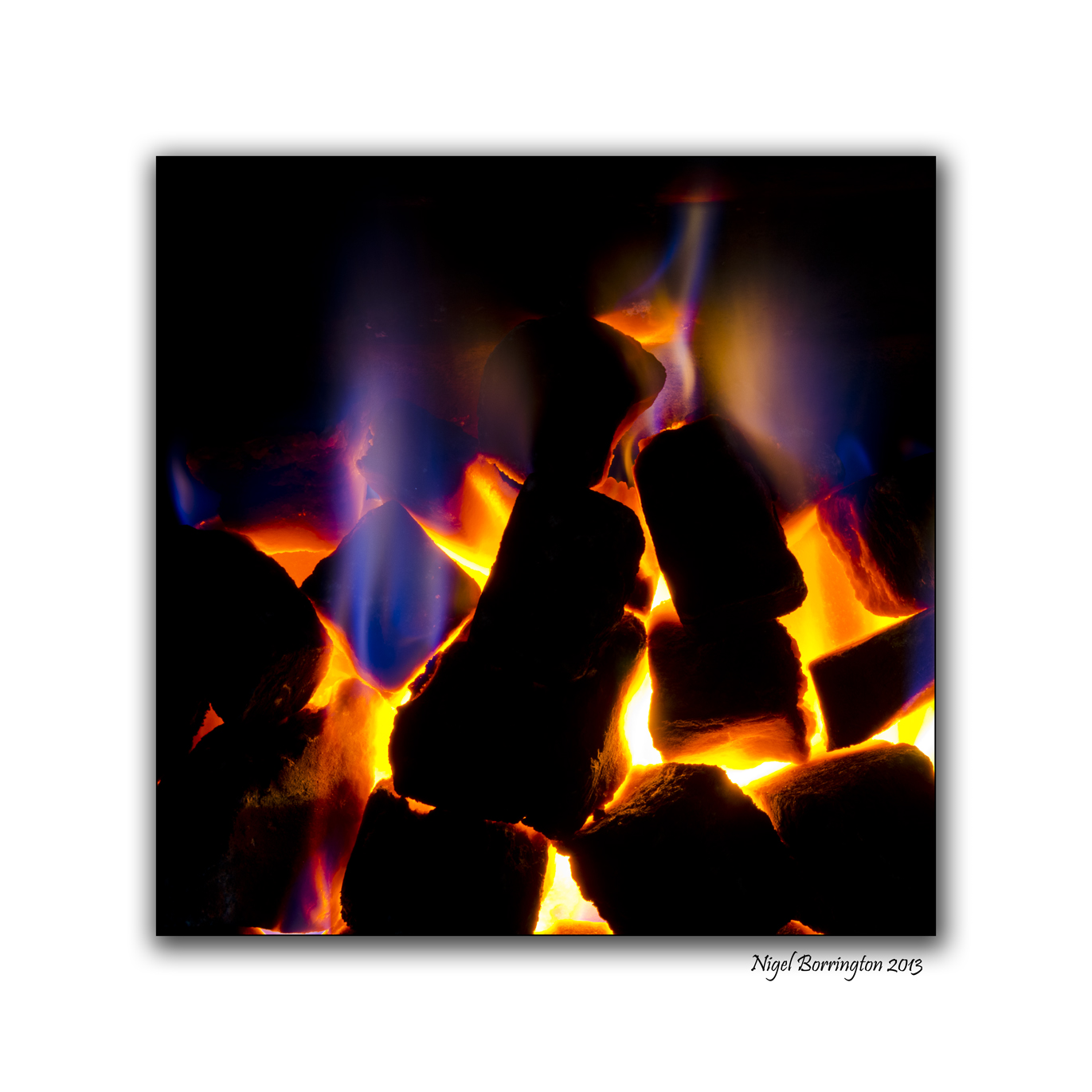
Fire is a masculine element, its aspects being change, passion, creativity, motivation, will power, drive and sensuality. It is sexuality, both physical and spiritual. Fire is used in spells, rituals and candle magick for healing, purification, sex, breaking bad habits or destroying illness and disease. Fire is the element of authority and leadership.
The properties of Fire, Heat, Making things fruitful, Celestial light, Giving Life to all things. Its opposite the Infernal Fire are a parching heat, consuming all things and darkness, making all things barren.
Each of the four cardinal elements – earth, air, fire and water – can be incorporated into magical practice and ritual. Depending on your needs and intent, you may find yourself drawn to one of these elements more so that the others.
Connected to the South, Fire is a purifying, masculine energy, and connected to strong will and energy. Fire both creates and destroys, and symbolizes the fertility of the God. Fire can heal or harm, and can bring about new life or destroy the old and worn. In Tarot, Fire is connected to the Wand suit (although in some interpretations, it is associated with Swords). For color correspondences, use red and orange for Fire associations.
Let’s look at some of the many magical myths and legends surrounding fire:
Fire Spirits & Elemental Beings:
In many magical traditions, fire is associated with various spirits and elemental beings. For instance, the salamander is an elemental entity connected with the power of fire – and this isn’t your basic garden lizard, but a magical, fantastical creature. Other fire-associated beings include the phoenix – the bird that burns itself to death and then is reborn from its own ashes – and dragons, known in many cultures as fire-breathing destroyers.
The Magic of Fire:
Fire has been important to mankind since the beginning of time. It was not only a method of cooking one’s food, but it could mean the difference between life and death on a frigid winter night. To keep a fire burning in the hearth was to ensure that one’s family might survive another day. Fire is typically seen as a bit of a magical paradox, because in addition to its role as destroyer, it can also create and regenerate. The ability to control fire – to not only harness it, but use it to suit our own needs – is one of the things that separates humans from animals. However, according to ancient myths, this has not always been the case.
Fire appears in legends going back to the classical period. The Greeks told the story of Prometheus, who stole fire from the gods in order to give it to man – thus leading to the advancement and development of civilization itself. This theme, of the theft of fire, appears in a number of myths from different culture. A Cherokee legend tells of Grandmother Spider, who stole fire from the sun, hid it in a clay pot, and gave it to the People so they could see in the darkness. A Hindu text known as the Rig Veda related the story of Mātariśvan, the hero who stole fire that had been hidden away from the eyes of man.

Fire is sometimes associated with deities of trickery and chaos – probably because while we may think we have domination over it, ultimately it is the fire itself that is in control. Fire is often connected with Loki, the Norse god of chaos, and the Greek Hephaestus (who appears in Roman legend as Vulcan) the god of metalworking, who demonstrates no small amount of deceit.
Fire and Folktales:
Fire appears in a number of folktales from around the world, many of which have to do with magical superstitions. In parts of England, the shape of cinders which jumped out of the hearth often foretold a major event – a birth, a death, or the arrival of an important visitor.
In parts of the Pacific Islands, hearths were guarded by small statues of old women. The old woman, or hearth mother, protected the fire and prevented it from burning out.
The Devil himself appears in some fire-related folktales. In parts of Europe, it is believed that if a fire won’t draw properly, it’s because the Devil is lurking nearby. In other areas, people are warned not to toss bread crusts into the fireplace, because it will attract the Devil (although there’s no clear explanation of what the Devil might want with burnt bread crusts).
Japanese children are told that if they play with fire, they will become chronic bed-wetters – a perfect way to prevent pyromania!
A German folktale claims that fire should never be given away from the house of a woman within the first six weeks after childbirth. Another tale says that if a maid is starting a fire from tinder, she should use strips from mens’ shirts as tinder – cloth from women’s garments will never catch a flame.
October’s Party By : George Cooper

October, In Gold she looks their best;
Landscape Photography : Nigel Borrington
October’s Party
By: George Cooper
October gave a party;
The leaves by hundreds came—
The Chestnuts, Oaks, and Maples,
And leaves of every name.
The Sunshine spread a carpet,
And everything was grand,
Miss Weather led the dancing,
Professor Wind the band.
The Chestnuts came in yellow,
The Oaks in crimson dressed;
The lovely Misses Maple
In scarlet looked their best;
All balanced to their partners,
And gaily fluttered by;
The sight was like a rainbow
New fallen from the sky.
Then, in the rustic hollow,
At hide-and-seek they played,
The party closed at sundown,
And everybody stayed.
Professor Wind played louder;
They flew along the ground;
And then the party ended
In jolly “hands around.”
Thirteen Ways of Looking at a Blackbird, By : Wallace Stevens

Blackbird in the light of the Moon
Nature Photography : Nigel Borrington
Thirteen Ways of Looking at a Blackbird
By Wallace Stevens
I
Among twenty snowy mountains,
The only moving thing
Was the eye of the blackbird.
II
I was of three minds,
Like a tree
In which there are three blackbirds.
III
The blackbird whirled in the autumn winds.
It was a small part of the pantomime.
IV
A man and a woman
Are one.
A man and a woman and a blackbird
Are one.
V
I do not know which to prefer,
The beauty of inflections
Or the beauty of innuendoes,
The blackbird whistling
Or just after.
VI
Icicles filled the long window
With barbaric glass.
The shadow of the blackbird
Crossed it, to and fro.
The mood
Traced in the shadow
An indecipherable cause.
VII
O thin men of Haddam,
Why do you imagine golden birds?
Do you not see how the blackbird
Walks around the feet
Of the women about you?
VIII
I know noble accents
And lucid, inescapable rhythms;
But I know, too,
That the blackbird is involved
In what I know.
IX
When the blackbird flew out of sight,
It marked the edge
Of one of many circles.
X
At the sight of blackbirds
Flying in a green light,
Even the bawds of euphony
Would cry out sharply.
XI
He rode over Connecticut
In a glass coach.
Once, a fear pierced him,
In that he mistook
The shadow of his equipage
For blackbirds.
XII
The river is moving.
The blackbird must be flying.
XIII
It was evening all afternoon.
It was snowing
And it was going to snow.
The blackbird sat
In the cedar-limbs.
Capturing Autumn in County Kilkenny (Images and a Poem by : Andrea Rieck)
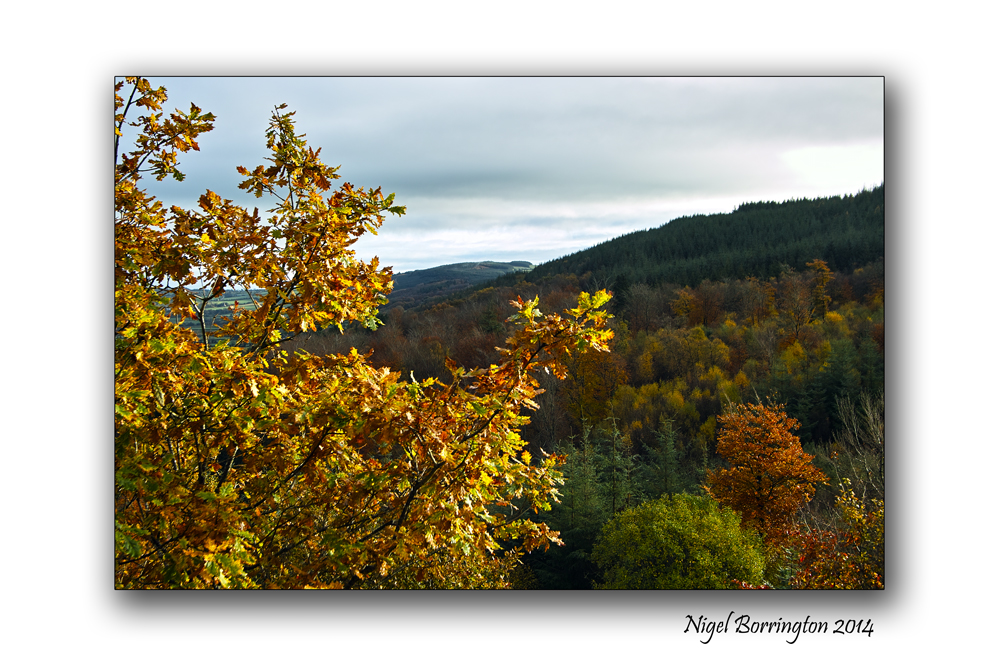
Autumn Landscape,
County Kilkenny,
Landscape Photography : Nigel Borrington
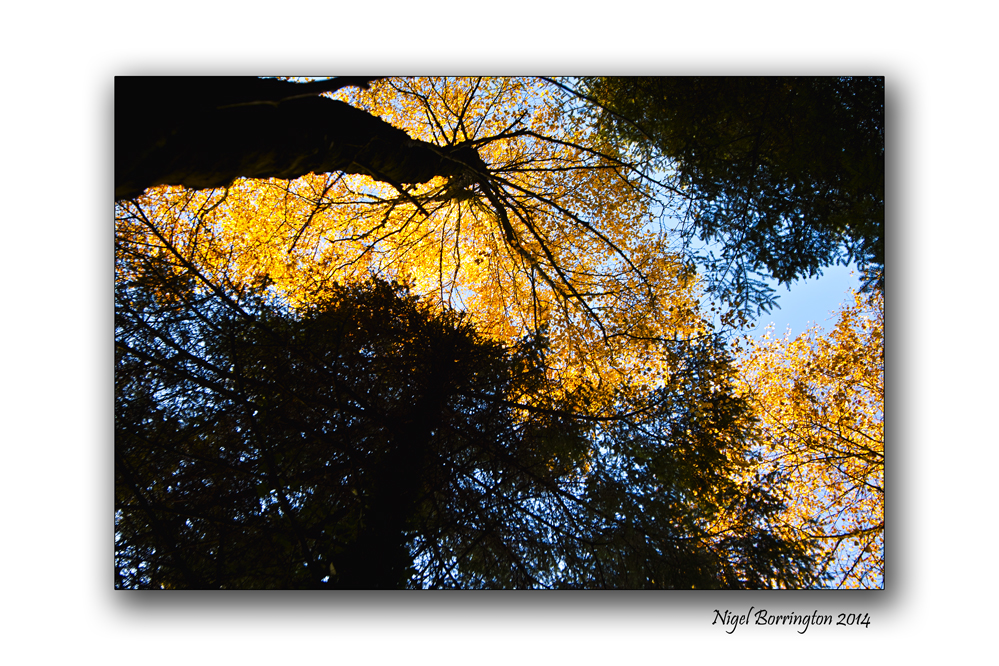
It the end of the Second week of October 2014 and Autumn is taking a hold of the county Kilkenny Landscape, We had bad weather and high winds at the start of last week so some of the trees lost a good amount of their leaves. Many however still remain and the golden browns are coming through very well.
I came across this poem by Andrea Rieck last night and wanted to share it along with some of my Autumn images.
It’s autumn again
By : Andrea Rieck
Leaves whisper the sound of our past
In loss they pay a descent
To the ground we fall
It’s autumn again
Our song is sung by the wind
Echoes of loss and grief
Through chilled air we wade
It’s autumn again
The waters grow as cold as our hearts
We are alike – crusted in ice
In ourselves we freeze
It’s autumn again
Flowers vanish from our sadness
Our beauty grows weak
Covered in frost we wither

It’s autumn again
The rain falls like our tears
Can’t dry our eyes
From the sky we descend
It’s autumn again
The sun shines then fails like us
Our sight becomes a wintry gray
Lost in darkness we will fade
It’s autumn again
 Nigel Borrington
Bee-Keeping with a mountain view, Slievenamon, Co. Tipperary
Bee Keeping with a view of SLievenamon, Co. Tipperary
Irish Landscapes : Nigel Borrington
Bee Keeping in Ireland is often a personal activity, with many hives being kept on family farms and Gardens, even sometimes with the permission of the forestry services.
I often come across a set of Hives while out walking in our local woodland. In the images here , taken last weekend the hives are located on the some hills facing to the north, the great mountain of Slievenamon just across the river Suir.
Very soon these Hives will be active again and I will return to get so more images.
The Federation of Irish Beekeepers’ Associations have a great web site and help on getting going with keeping bee’s, this must be a great activity and very needed with modern farming methods having massively reduced Bee numbers. I have included the text from this site on “How to become a beekeeper” below the following two images, if you would like to read it.
Beginning with Bees , The urge to keep bees: How do I start?
The beginner should first of all find out if he/she is in any way allergic to bee stings and if so not to attempt acquiring bees or taking up beekeeping without seeking medical advice.
When the urge to keep bees first hits you, the impulse is to go out and buy a hive straight away, and learn by doing in isolation – this is not the best approach. The best first step is to join your local branch of the Beekeepers’ Association, preferably in the Autumn.
You can then attend their classes for beginners and programme of winter lectures which are held frequently and cover all aspects of beekeeping. There are 45 such Associations scattered throughout the country.
Other benefits of membership include the use of a library – video and book, plenty of friendly advice and you are kept up to date with developments within the craft. You can also use the Association extractor, can avail of sugar at concessionary prices and benefit from the low cost of FIBKA Public Liability Insurance. The latter is an absolute must as accidents can happen.
It is worthwhile if only for your own piece of mind. Whilst a subscription to “An Beachaire” may be optional, a good book is essential and the FIBKA’s “Bees, Hives and Honey” or Ted Hooper’s “Guide to Bees and Honey” are standard references for beginners and experienced alike.
Some Associations also provide a mentoring facility whereby the beginner is assigned to an experienced beekeeper within his or her local area for the purpose of giving advice for the first couple of years. This is an excellent idea as having someone close at hand or at the end of a telephone is a useful asset.
Bee Stings
If you wish to keep bees, and irrespective of all the protective measures that you might take, you will receive the occasional sting. Everyone will show some reaction to bee stings, such as the initial pain, and later a slight swelling of the affected area, later followed by some itching.
The effects can be reduced by applying an antihistamine cream or even taking tablets such as Piriton, but generally the body will quickly become accustomed to the occasional sting and will display few adverse effects.
Bee Suit
There are many forms of protective clothing on the market which range from veils right through to full bee suits. And the prices are commensurate with the degree of cover. A full bee suit is the ideal acquisition but the prices are fairly steep and it may not be even to your taste.
A smock, together with the type of trousers worn by nurses or painters, may be more suitable.
Be wary of veils which slip over the head and are attached by straps or loops under the armpits; bees invariably find a way to gain access to your neck and face. The safest way to wear that sort of veil is in conjunction with a zip up overall.
Any protective clothing should be light in colour, nothing dark. Nylon should be avoided as it generates static, which is annoying to bees. Woolly clothing should also be shunned, as they get tangled up in it.
Gloves
When handling bees, beginners should also use gloves. With full gauntlets they are costly but should last several years. I use rubber gloves which are less clumsy – “Nitrile” or “Marigold” brands.
The ultimate objective is to obtain a strain of bee that is not overly defensive, become proficient in handling them, and so dispense with gloves altogether.
Ankles are prime targets for bees and calf length rubber boots should be worn.
Equipment
The monthly beekeeping journal carries advertisements from firms selling all types of beekeeping equipment. The first two essential items you need to acquire are a smoker and a hive tool.
Smokers come in two standard sizes, the diameters of the fireboxes being 8cms and 10cms. The smaller version is quite adequate for up to ten hives.
When servicing the smoker, ensure that the legs of the fire grate are not restricting the air entry hole at the base of the firebox and also check that this hole is directly in line with the air exit hole from the bellows.
As for fuel, I use dried grass which provides a constant supply of cool smoke. What you don’t want is a type of fuel which burns too quickly and turns your smoker into a flame thrower which scorches the bee’s wings. This aggravates the bees and they will not delay in letting you know of their displeasure.
Hive Types
There are many types of hives available on the Irish market. However, in selecting a hive type it is important to determine that the component parts for the brood chambers and supers are readily available.
The most common type of hives used in Ireland which would measure up to these requirements are the National, the Smith Hive and the Modified Commercial Hive. The approximate comb areas of the various frames are: National and Smith Deep – 5000 worker cells Commercial Deep – 7000 worker cells.
The two most popular hives are the National and the Commercial. Although the latter have larger frames, the outer dimensions of component boxes are the same, to within a quarter of an inch, so that supers, queen excluders, crown boards, floors and roofs are all compatible.
My first choice would be the National hive because it has the following advantages:
The frames are easier to handle as they have longer lugs (38mm) than the Commercial (16mm).
The National brood box and Super are also easier to handle as the design has a built in handle at both sides.
The capacity of the National brood box and super is smaller than that of the Commercial which means it is lighter to lift when examining the hive and taking off the crop of honey.
The most important advantage is the higher honey yield from the National compared to the Commercial as the National brood box is too small to accommodate brood and much stores, therefore most of the honey is stored in the supers where it can be easily taken off for extraction. This is especially true in a bad year with poor weather conditions during the Summer. The Commercial is best suited to localities where the honey crop is above average.
In addition to the brood box, varroa screen floor, crown board, queen excluder and roof you should make provision for three supers per hive.
It is usually best to treat exterior surfaces with a good preservative, like Cuprinol – green or Fencelife and taking care to air well for a week or more. Normal paint stops the wood ‘breathing’ and can lead to moisture lifting the paint in bubbles.
Obtaining your first colony : A Nucleus
By the Spring you will have a good background of knowledge to help you decide on what to buy and how to start up.
It is essential that you start with a healthy and productive stock of bees. You should contact a reputable beekeeper in your region for assistance in obtaining your first colony.
While it is also possible to start by obtaining a swarm, this is an unreliable method and you have no assurance of the health status of the resulting colony.
You may be tempted to buy a strong colony in the hope of a quick return of honey this Summer, but sometimes the difficulty of handling a large stock as a beginner can put a newcomer off for life.
It is far better to arrange with a local beekeeper to buy a four-frame nucleus with a young queen, taking delivery at the end of May or early in June. This is also the time when outdoor open hive demonstrations are organised by your Association where you can learn how to handle and control a stock of bees.
You can now expand this newly acquired nucleus by regular feeding with sugar syrup into a full hive of eleven frames by July. They will be very quiet and easy to handle and as they grow in strength you will gain in experience, confidence and the necessary manual skills of beekeeping.
There will be no swarming problems to cope with in your first year and with autumn feeding the stock will cope with the coldest winter
By the following Spring you will be well placed to increase to two stocks by making an artificial swarm from your own hive in May.
If you have built or acquired a couple of empty hives over the Winter you will also be ready to take or buy in swarms sometime in May or June, and by July you will have at least three good stocks and the experience necessary to manage them.
You should also have a crop of honey and an opportunity to learn the techniques involved in taking it off, extracting, bottling and preparing it for sale.
It will still only be fifteen months since you first owned bees but you have come a long way, and it might be wise to stay with just two or three hives for another year. It is much better to make your mistakes on two or three hives than on twenty. Possibly three hives are all you intend to have anyway.
In either case, make a four frame nucleus from your strongest stock some time in the Summer and see it through the Winter to sell to another beginner, to increase you own stocks or as a reserve in case anything goes wrong.
The Honey Crop
Honey yield is greatly influenced by seasonality. However a beekeeper who attends to the basic principles of management should be able to achieve an average of 20kg per hive per annum.
The yields obtained at the Teagasc Beekeeping Research Station at Clonroche, County Wexford confirm this view. The yield from 75 colonies managed commercially at Clonroche has been 25 kg per colony per annum. This has been achieved by working to a planned programme of management and disease control.
The beginner should be familiar with the varroa control measures as outlined in the FIBKA Guidelines on Varroa Destructor – Integrated Control Programme . The varroa mite is a major threat to the survival of all our bee colonies
Where can I keep my bees?
The newcomer to the craft of beekeeping must decide where to site his or her apiary. Even a small garden is adequate for the keeping of a few hives. Bees fly anything up to three miles to forage so you have no need to worry about that. Even the largest beehive will measure about two feet square and that is all that is needed for each hive, but don’t forget to add a little space to stand along side it to work the colony.
You might like your honeybees but it is unlikely that your neighbour will display the same enthusiasm. Bees have no need to disturb others, whether human or animals, it is just a case of ensuring that their flight paths to and from the hive do not coincide with neighbours working in their gardens. Hives standing in full sun should be avoided, try to provide some midday shade.
Some say that entrances should face south-east to catch the early morning sun. The best layout is to have a hive facing each of the four cardinal points of the compass-one facing north, one facing south etc. This does help to prevent bees drifting from their own hive into another.
Some beekeepers have an out-apiary away from their home and your local Association will have a demonstration apiary for the members to use.
How much time do I need to devote to the bees?
We usually regard the period from October to March as the ‘off-season’ so far as opening up hives, lifting out frames and manipulations generally are concerned, but a limited inspection on a mild day in March can be justified on the grounds that we can only help our bees if we know what help they need. Just three questions have to be answered at this time of year.
Have they a laying queen? In some cases the answer may be obvious; for example if the bees are flying freely around midday and taking in massive loads of pollen, then all is well with the queen.
Have they enough food? If the hive still feels really heavy when hefted, they have enough food. Possibly about 1 hive in 3 will either feel light, or show little flying activity with not much pollen going in, and in these cases some action is required.
What is the natural varroa mite mortality per day? If this figure exceeds seven mites per day then control is necessary using one of the approved treatments. Check the updated F.I.B.K.A. policy on varroa for details. You have to continue with your colony inspections right through the Summer. So the time you need to devote to your bees could be as little as 15 minutes per hive every 10-14 days during the season from April to September. Usually the problem is that new beekeepers are unable to leave the bees alone for the first season.
More…..
Share this:
March 13, 2015 | Categories: Comment, Gallery, Landscape, Nature and Wildlife | Tags: Bee Hives, Bee Keeping, beekeeping, bees, Co. Tipperary, Federation of Irish Beekeepers, hives, Irish Landscapes, Nigel Borrington, Slievenamon | 2 Comments