Time and Eternity By : Emily Dickenson, (1896)

Tintern Abbey
County Wexford
Irish Landscapes
Nigel Borrington 2018
One need not be a chamber to be haunted,
One need not be a house;
The brain has corridors surpassing
Material place.
Far safer, of a midnight meeting
External ghost,
Than an interior confronting
That whiter host.
Far safer through an Abbey gallop,
The stones achase,
Than, moonless, one’s own self encounter
In lonesome place.
Ourself, behind ourself concealed,
Should startle most;
Assassin, hid in our apartment,
Be horror’s least.
The prudent carries a revolver,
He bolts the door,
O’erlooking a superior spectre
More near.
Monday Poetry : The Ocean Shipwreck Lord Byron (1788–1824)

The Ocean Shipwreck
Lord Byron (1788–1824)
(From Don Juan)
’T WAS twilight, for the sunless day went down
Over the waste of waters; like a veil,
Which, if withdrawn, would but disclose the frown
Of one who hates us, so the night was shown,
And grimly darkled o’er their faces pale,
And hopeless eyes, which o’er the deep alone
Gazed dim and desolate; twelve days had Fear
Been their familiar, and now Death was here.
* * * * *
At half past eight o’clock, booms, hencoops, spars,
And all things, for a chance, had been cast loose,
That still could keep afloat the struggling tars,
For yet they strove, although of no great use:
There was no light in heaven but a few stars;
The boats put off o’ercrowded with their crews;
She gave a heel, and then a lurch to port,
And, going down head-foremost,—sunk, in short.

Then rose from sea to sky the wild farewell!
Then shrieked the timid, and stood still the brave;
Then some leaped overboard with dreadful yell,
As eager to anticipate their grave;
And the sea yawned around her like a hell,
And down she sucked with her the whirling wave,
Like one who grapples with his enemy,
And strives to strangle him before he die.
And first one universal shriek there rushed,
Louder than the loud ocean, like a crash
Of echoing thunder; and then all was hushed,
Save the wild wind and the remorseless dash
Of billows; but at intervals there gushed,
Accompanied with a convulsive splash,
A solitary shriek—the bubbling cry
Of some strong swimmer in his agony.
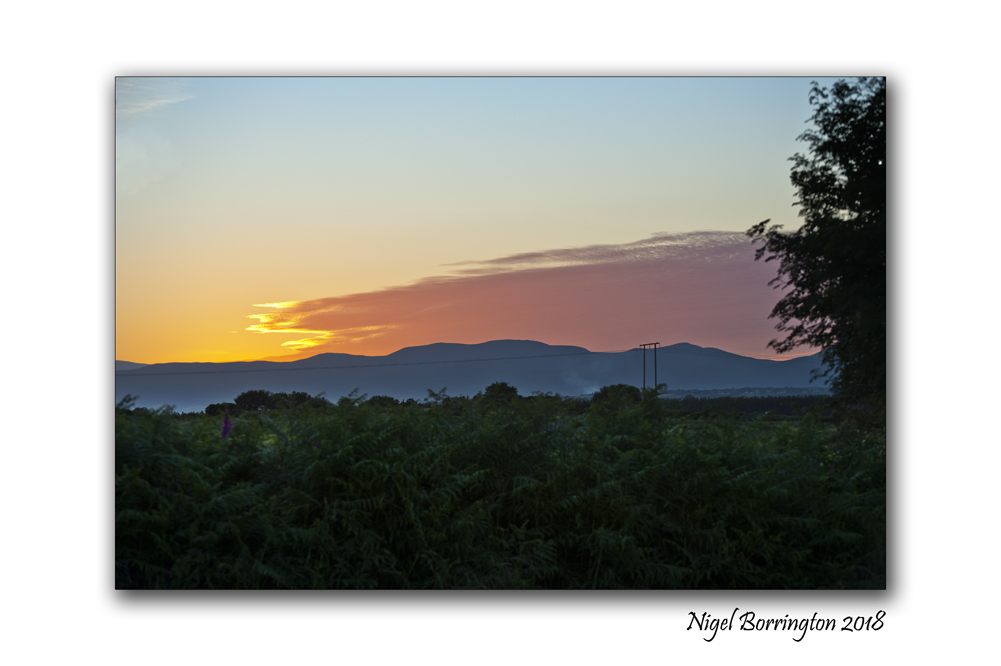
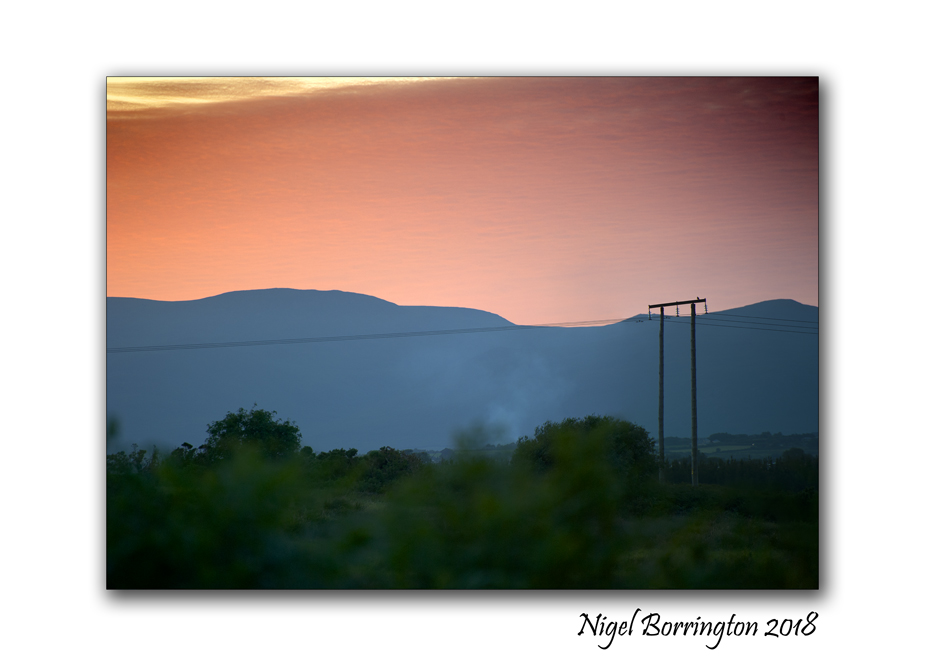
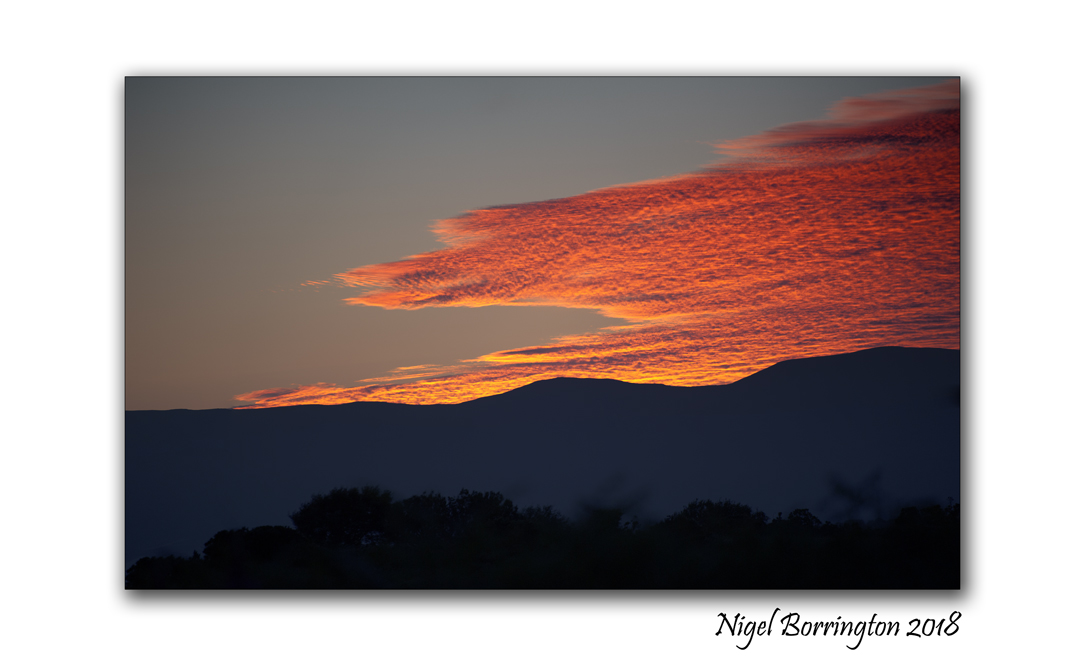
Images of Summer 2018 : Down in the Barley

Images of Summer Down in the Barley
Nigel Borrington 2018
Kilkenny Landscape images : Rain clouds return , July 15th 2018

County Kilkenny Landscapes
Rain clouds return
Nikon D700
50mm AIS f1.8 lens
Return of Rain
The cloud drops on my lip
On the tip of my nose
I get hugged by the drip
Ah, rain is so close!
The heat is now a story
The balm seems so near
Regaining its lost glory
Surely the monsoon is here!
Tip-tap on my windowpane
Dark floaters are busy
Pouring on men and women
Life is once more easy!
I’m glad the rain is back
To awaken the soil’s green
Wipe out the summer’s crack
Dance on my parched roof tin!
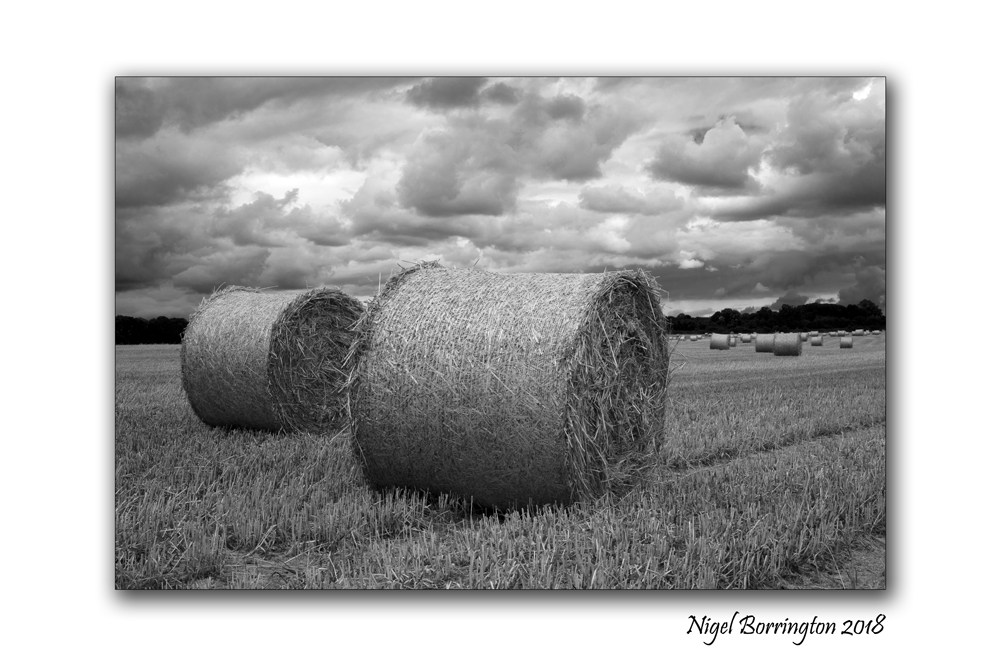
Tip-tap on my windowpane
Dark floaters are busy
Pouring on men and women
Life is once more easy!
I’m glad the rain is back
To awaken the soil’s green
Wipe out the summer’s crack
Dance on my parched roof tin!

Cutting Turf , Irish landscape History

Irish Bog lands and Turf cutting
Irish landscapes
Nigel Borrington
On Wednesday I posted some picture showing the results of a Wildfire on the bog lands of Littleton in country Tipperary, having done so I just wanted to share some more images from another Bog land in county Waterford and share some of the history of these amazing places along with some details about the history of turf cutting in Ireland.
The Irish tradition of turf cutting
In the past, Irish people heated their homes and cooked their food using turf taken from from the bog as fuel. Turf was cut from the bog by hand, using a two-sided spade called a sleán. Entire families often helped to save the turf on the bog.
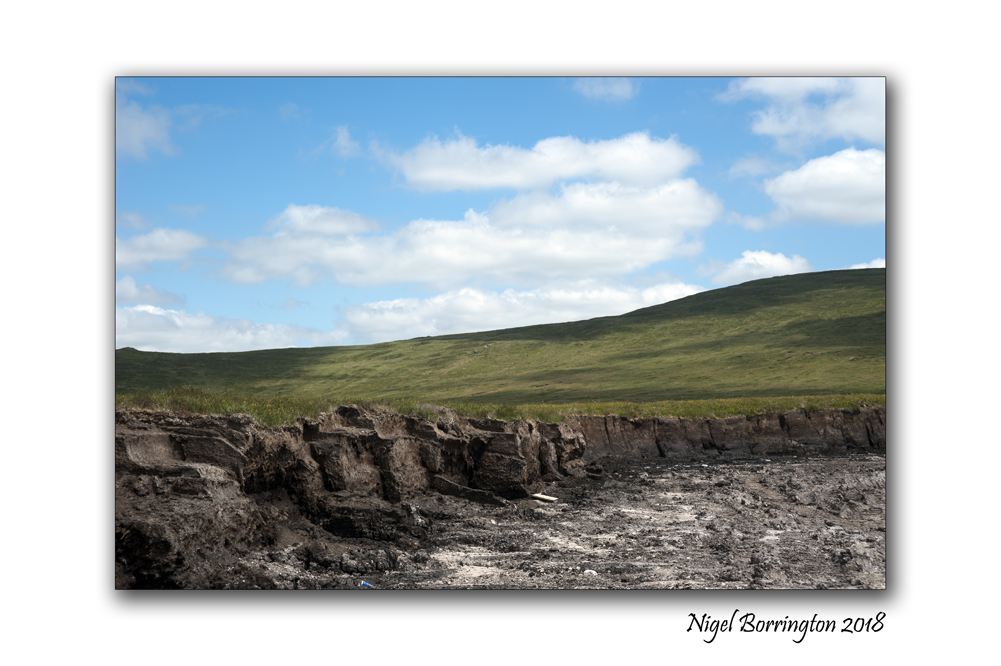
Saving the turf involved turning each sod of turf to ensure the sun and wind could help in the drying process. The turf was then placed upright or ‘footed’ for further drying. Footing the turf was a back-breaking job and involved placing five or six sods of turf upright and leaning against each other. Finally, the turf was brought home and stored in sheds or ricks.

In the midlands and the West of Ireland, the tradition of using turf or peat as fuel has continued in many homes.The turf is mainly cut by machine nowadays, but saving the turf still involves lots of work and requires good weather.


Irish landscape photography , On Summer Hill, Poem By: John K Trainer
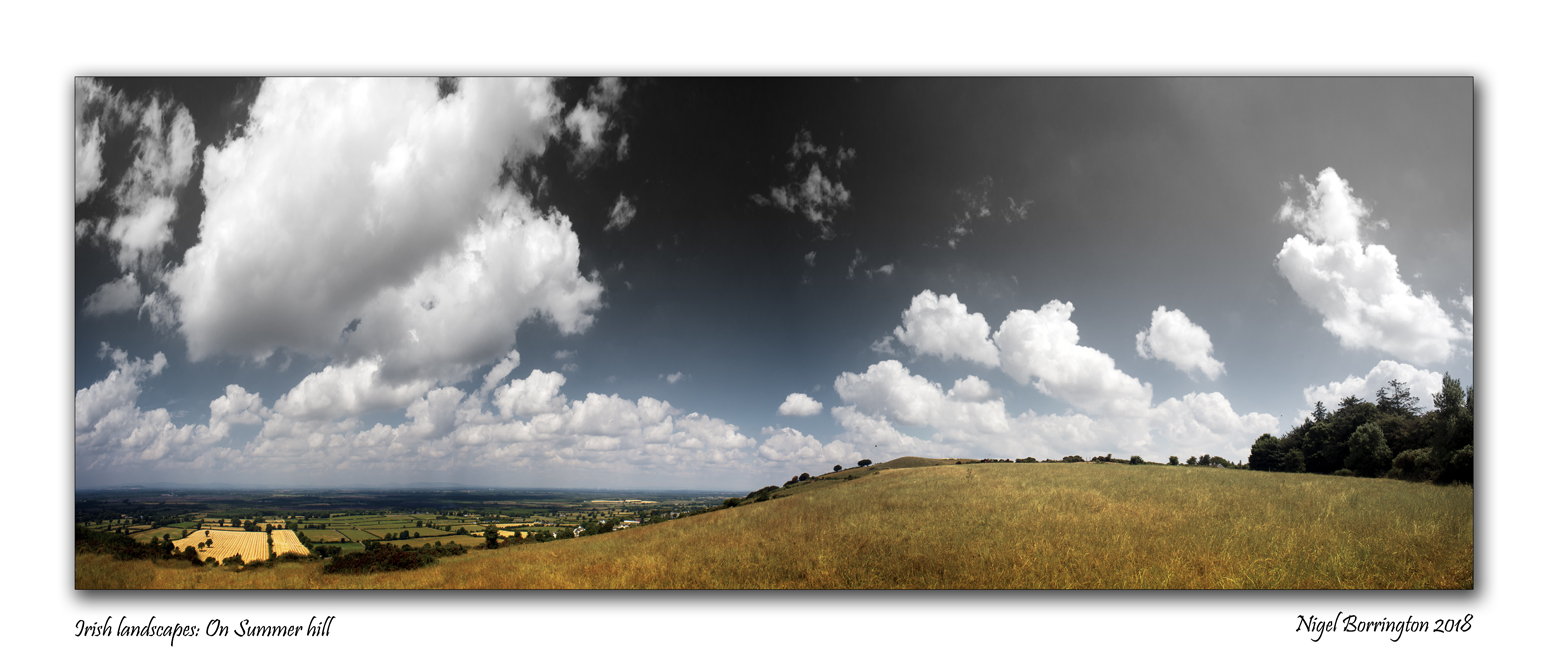
On summer hill
fading to black and white
Irish Landscape images
Nikon D700
Tamron 17mm lens
Nigel Borrington
On summer Hill
John K Trainer
The fragrance of a memory
From childhood long ago
I’m brought back
To a fenced in back yard
Crayola blue sky
Burnt umber ground
Islands of green and yellow grass
The scent of Summer Hill wafts
As the unseen is revealed
A dream remembered then forgotten
You say it didn’t happen
I recollect the aroma that says it did
Irish Landscape Photography , Mountain lane, Comeragh Mountains, County Waterford
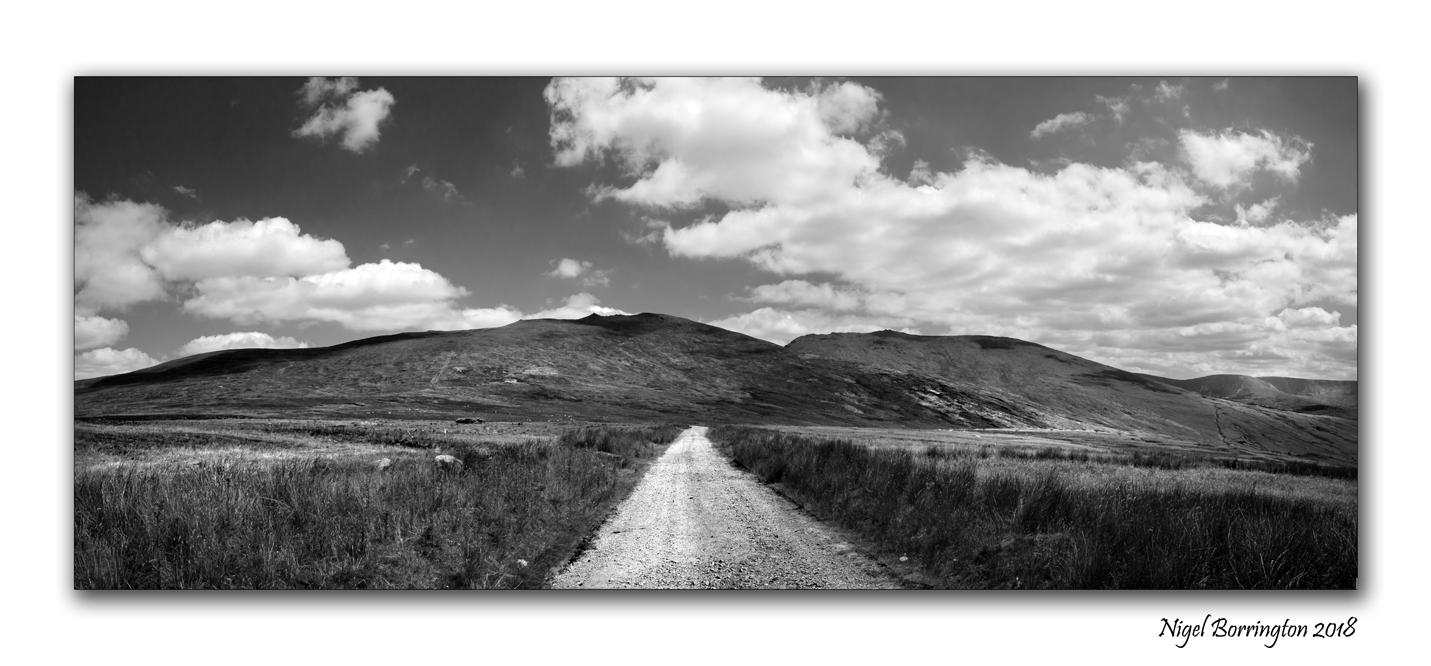
Irish Landscape Photography ,
Nigel Borrington,
Mountain lane, Comeragh Mountains, County Waterford
Nikon D700
Kilkenny Landscape Photography, Images of July 2018

Irish Landscape Images
County Kilkenny
Barley fields
July 3rd 2018
Nikon D700
Nigel Borrington

Irish Landscape Images
County Kilkenny
Barley fields
July 3rd 2018
Nikon D700
Nigel Borrington
Summer Heat Wave, In pictures ….

Irish landscape photography
County Kilkenny
The heat wave of 2018
Nigel Borrington
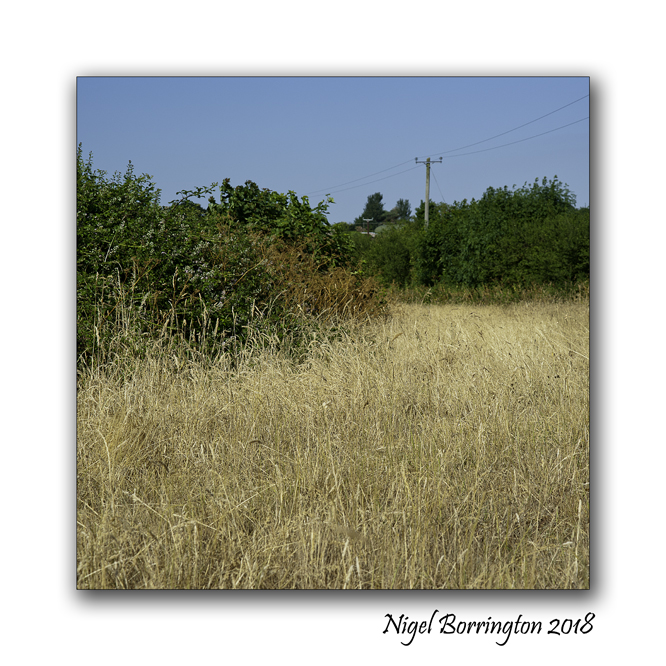
Ireland’s is currently in heat wave conditions with no big change on the horizon, so today I headed out for a walk and started to capture our local landscape in these conditions. Here in County Kilkenny we have not been affected quite as badly yet as in county Dublin but as you can see from these images the hedgerows and fields are starting to turn to a light brown and some of the trees are only just hanging on.



Summer Poems : Haymaking, By Edward Thomas

Summer Poems : Haymaking
By Edward Thomas
Aftear night’s thunder far away had rolled
The fiery day had a kernel sweet of cold,
And in the perfect blue the clouds uncurled,
Like the first gods before they made the world
And misery, swimming the stormless sea
In beauty and in divine gaiety.
The smooth white empty road was lightly strewn
With leaves—the holly’s Autumn falls in June—
And fir cones standing stiff up in the heat.
The mill-foot water tumbled white and lit
With tossing crystals, happier than any crowd
Of children pouring out of school aloud.

And in the little thickets where a sleeper
For ever might lie lost, the nettle-creeper
And garden warbler sang unceasingly;
While over them shrill shrieked in his fierce glee
The swift with wings and tail as sharp and narrow
As if the bow had flown off with the arrow.
Only the scent of woodbine and hay new-mown
Travelled the road. In the field sloping down,
Park-like, to where its willows showed the brook,
Haymakers rested. The tosser lay forsook
Out in the sun; and the long waggon stood
Without its team, it seemed it never would
Move from the shadow of that single yew.
The team, as still, until their task was due,
Beside the labourers enjoyed the shade
That three squat oaks mid-field together made
Upon a circle of grass and weed uncut,
And on the hollow, once a chalk-pit, but
Now brimmed with nut and elder-flower so clean.
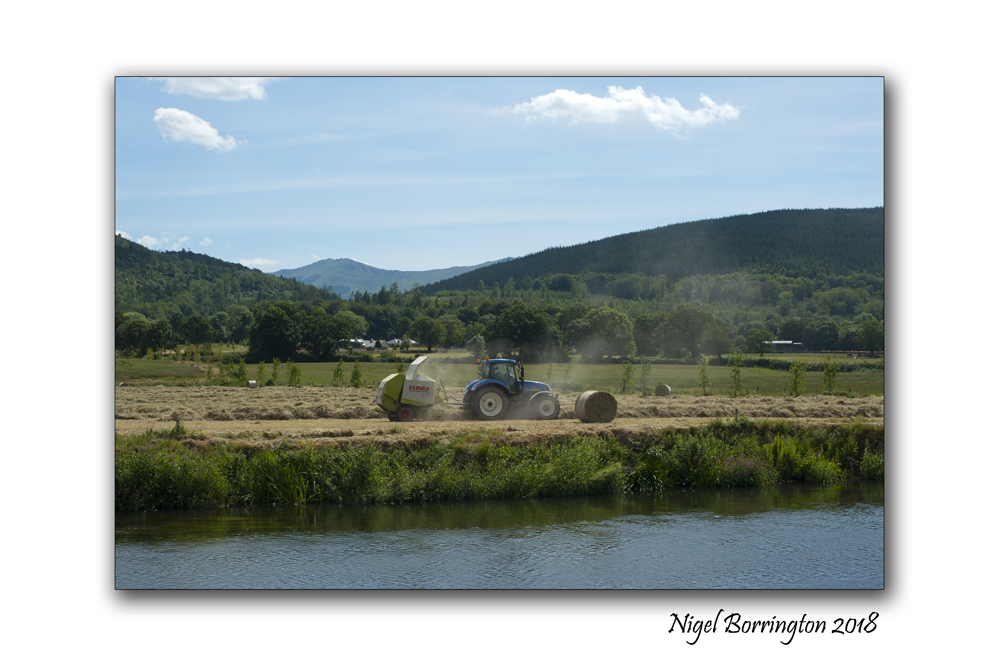
The men leaned on their rakes, about to begin,
But still. And all were silent. All was old,
This morning time, with a great age untold,
Older than Clare and Cobbett, Morland and Crome,
Than, at the field’s far edge, the farmer’s home,
A white house crouched at the foot of a great tree.

Under the heavens that know not what years be
The men, the beasts, the trees, the implements
Uttered even what they will in times far hence—
All of us gone out of the reach of change—
Immortal in a picture of an old grange.
Images without words , Evening stars above the Macgillycuddy’s Reeks, County Kerry
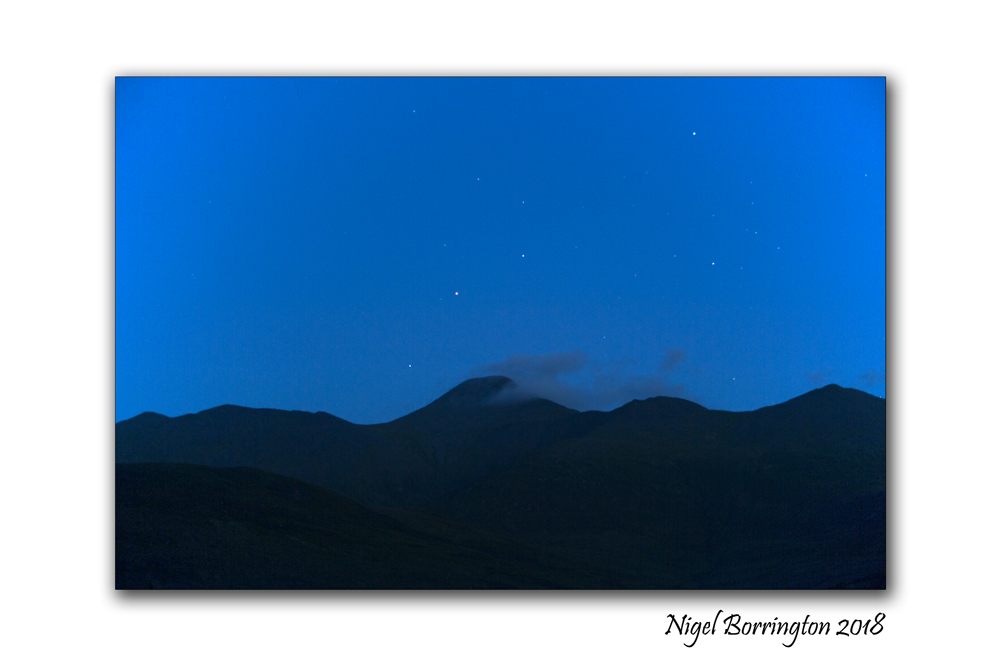
Evening Stars above the Macgillycuddy’s Reeks
County Kerry
Ireland
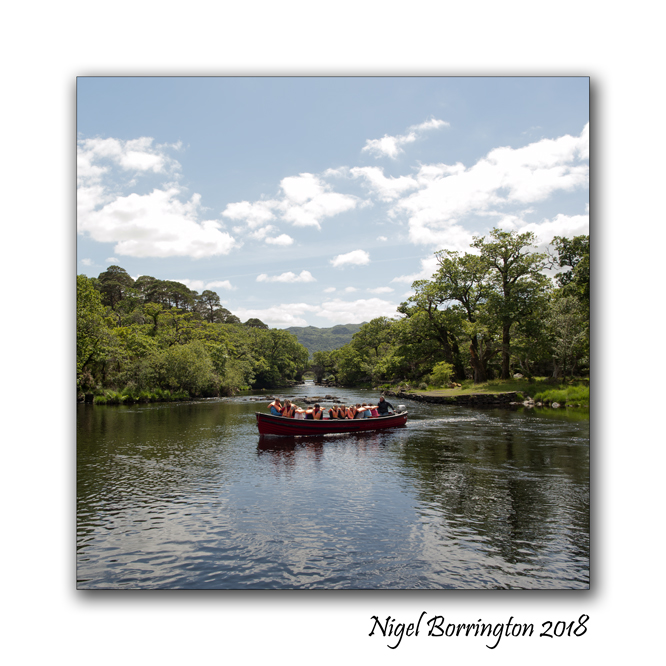
Meeting of the Waters, Killarney National park and lakes , County Kerry, Ireland
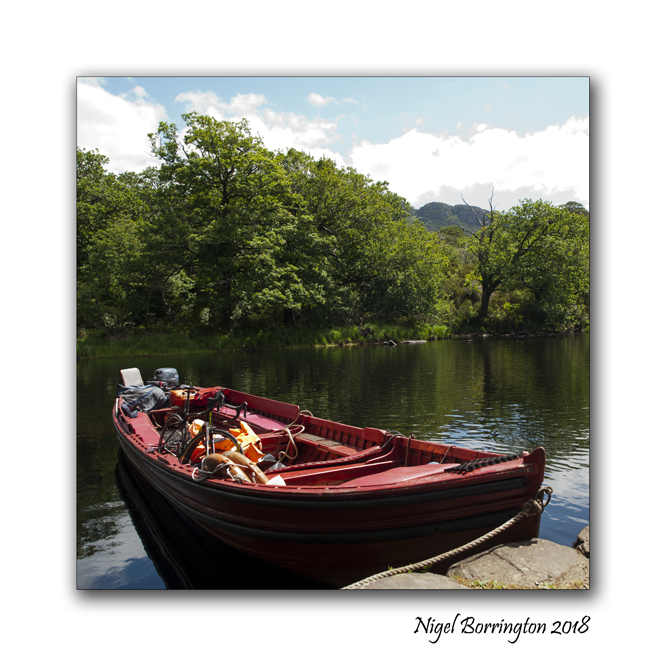
As the name implies the Meeting of the waters is where Killarney’s famous lakes converge. The Upper lake, Middle Lake (also known as Muckross Lake) and Lower Lake (Lough Leane) all come together at this beautiful spot. It is a little haven of tranquility and can only be reached by foot or bicycle. Also found in this area are Dinis cottage and “The Old Weir Bridge”.

The easiest way to reach the spot is by walking along the well signposted path from Muckross House for approximately 5km or if you don’t feel that energetic then approx one mile beyond Torc Waterfall (direction Kenmare) there is a parking spot on the right hand side of the road. Dinis cottage is signposted from here and the cottage and “the meetings of the waters” is a 15 minute walk from here. Its definitely worth the walk on a fine day.
Skyfall – Ulysses By Alfred, Lord Tennyson
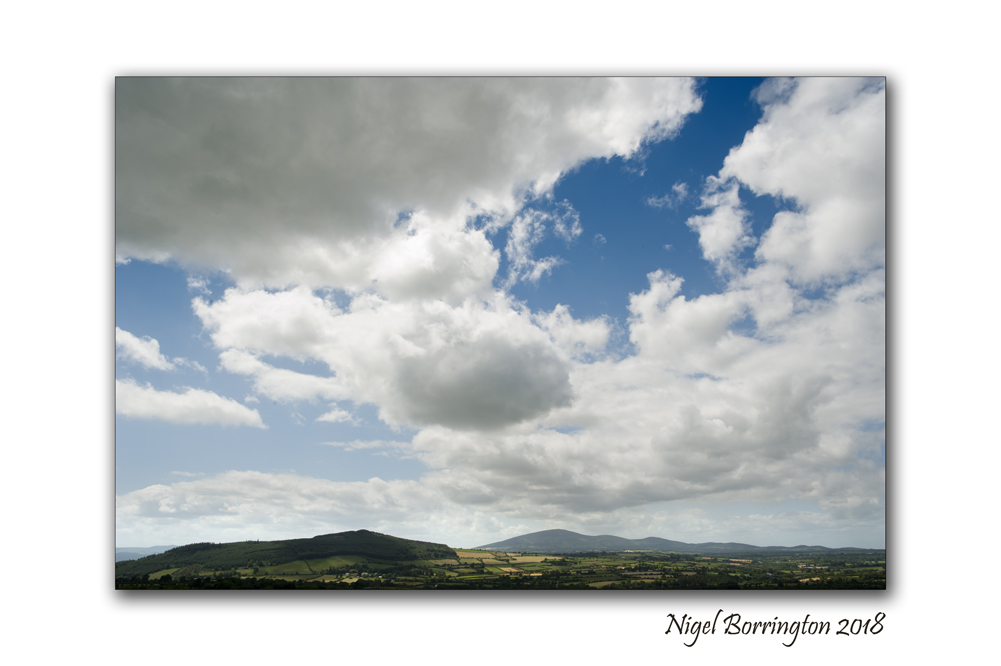
Skyfall
Kilkenny Landscapes
Nikon D700, Sigma 28mm f28 lens
Nigel Borrington
2018
Ulysses
By Alfred, Lord Tennyson
It little profits that an idle king,
By this still hearth, among these barren crags,
Matched with an aged wife, I mete and dole
Unequal laws unto a savage race,
That hoard, and sleep, and feed, and know not me.
I cannot rest from travel: I will drink
Life to the lees: All times I have enjoy’d
Greatly, have suffer’d greatly, both with those
That loved me, and alone, on shore, and when
Thro’ scudding drifts the rainy Hyades
Vext the dim sea: I am become a name;
For always roaming with a hungry heart
Much have I seen and known; cities of men
And manners, climates, councils, governments,
Myself not least, but honour’d of them all;
And drunk delight of battle with my peers,
Far on the ringing plains of windy Troy.
I am a part of all that I have met;
Yet all experience is an arch wherethro’
Gleams that untravell’d world whose margin fades
For ever and forever when I move.
How dull it is to pause, to make an end,
To rust unburnish’d, not to shine in use!
As tho’ to breathe were life! Life piled on life
Were all too little, and of one to me
Little remains: but every hour is saved
From that eternal silence, something more,
A bringer of new things; and vile it were
For some three suns to store and hoard myself,
And this gray spirit yearning in desire
To follow knowledge like a sinking star,
Beyond the utmost bound of human thought.
This is my son, mine own Telemachus,
To whom I leave the sceptre and the isle,—
Well-loved of me, discerning to fulfil
This labour, by slow prudence to make mild
A rugged people, and thro’ soft degrees
Subdue them to the useful and the good.
Most blameless is he, centred in the sphere
Of common duties, decent not to fail
In offices of tenderness, and pay
Meet adoration to my household gods,
When I am gone. He works his work, I mine.
There lies the port; the vessel puffs her sail:
There gloom the dark, broad seas. My mariners,
Souls that have toil’d, and wrought, and thought with me—
That ever with a frolic welcome took
The thunder and the sunshine, and opposed
Free hearts, free foreheads—you and I are old;
Old age hath yet his honour and his toil;
Death closes all: but something ere the end,
Some work of noble note, may yet be done,
Not unbecoming men that strove with Gods.
The lights begin to twinkle from the rocks:
The long day wanes: the slow moon climbs: the deep
Moans round with many voices. Come, my friends,
it is not too late to seek a newer world.
Push off, and sitting well in order smite
The sounding furrows; for my purpose holds
To sail beyond the sunset, and the baths
Of all the western stars, until I die.
It may be that the gulfs will wash us down:
It may be we shall touch the Happy Isles,
And see the great Achilles, whom we knew.
Tho’ much is taken, much abides; and tho’
We are not now that strength which in old days
Moved earth and heaven, that which we are, we are;
One equal temper of heroic hearts,
Made weak by time and fate, but strong in will
To strive, to seek, to find, and not to yield.
Weekend visits : Emo Court House & Gardens, County Laois, Ireland
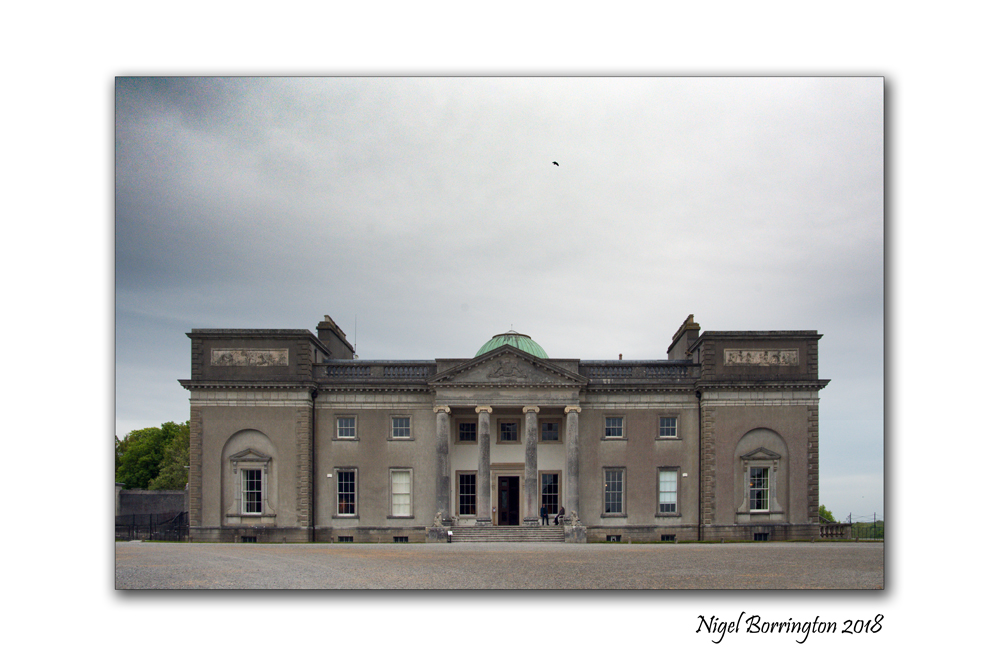
Emo Court House & Gardens
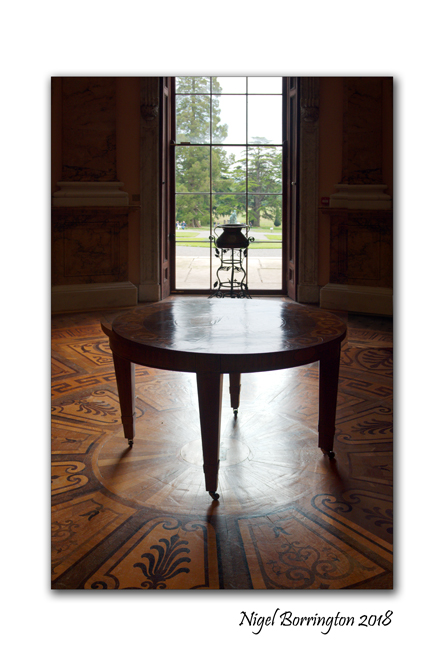
Emo Court is one of Ireland treasures and it is a location I have visited more than once over the years. Its a great place to visit on a weekend with its great walks through the wooded grounds along with a tour into the house and finally a visit to the cafe afterwards for a cake and a cup of tea ….
Emo Court House is a neo-classical mansion in County Laois that attracts visitors from all over the country and beyond. Designed by noted architect James Gandon, it features magnificent gardens and is located just 2.5 km from Emo village and 7 km from Portarlington Railway Station.
Designed in 1790 for the Earls of Portarlington, Emo Court House is a magnificent example of the neo-classical style. After some periods of lying empty, it was acquired by the Jesuits in the middle of the 20th century. Functional renovations were made to the estate before it was sold to Major Cholmeley Harrison, a former London stockbroker, in the 1960s.
Cholmeley Harrison’s vision was to restore Emo Court House to its former glory and today the results of his efforts are obvious. Leading London architect Sir Albert Richardson was commissioned to take on the restoration of the house which remained a private residence, though the public were encouraged to enjoy the gardens for a small entrance fee.
In 1994 Cholmeley Harrison presented Emo Court House to the people of Ireland, continuing to live there in private apartments until his death in 2008. Staff of the Office of Public Works (OPW) now care for the estate and preserve its stately elegance for modern visitors.

Visit Emo Court House to enjoy the beautiful gardens and parklands which were first laid out in the 18th century, containing formal lawns and a lake. Walks through the woodland are a popular way to explore the beautiful grounds.
The Cupcake Café at Emo Court House offers lunch and is open every day from 1 February to 31 October. From 1 November to 31 January it’s open on Saturdays and Sundays. Groups are welcomed at Emo Court House, but booking is required.
Emo Court A Gallery





County Kilkenny by cycle, Taking the high road to the Slieveardagh hills ….

County Kilkenny by cycle
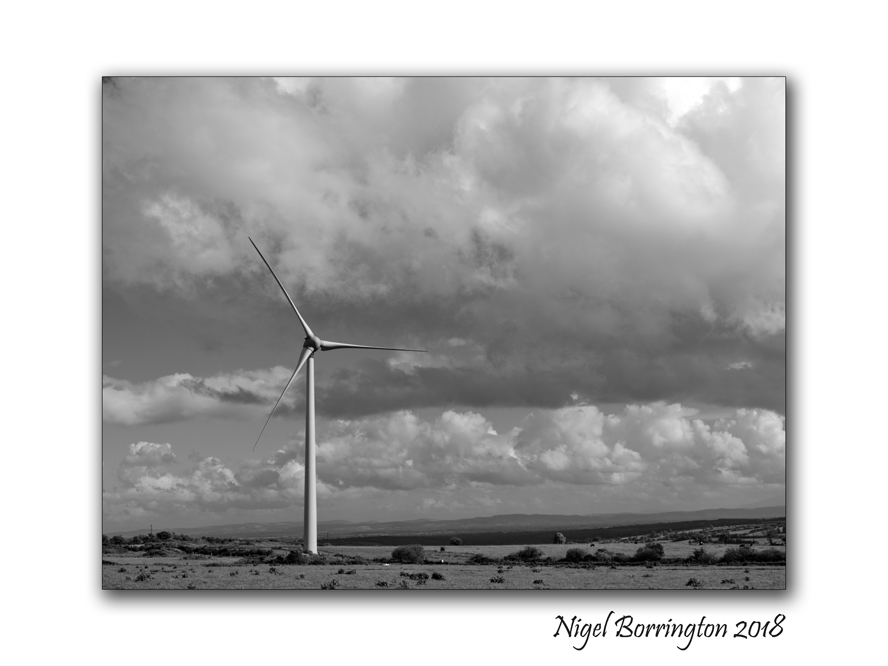
This weekend on Saturday morning, 12th May 2018 and I achieved one of my cycling aims for 2018, cycling all the way up to what well could be the highest road (at some 333 meters) in county Kilkenny, in the Slieveardagh hills at Blanchfields bog, with its wind farm of Ballybay.
There are some stunning views of county Kilkenny and Tipperary from here and on Saturday the weather was perfect, It was just a great feeling after some weeks of lower level cycling, to get ready.


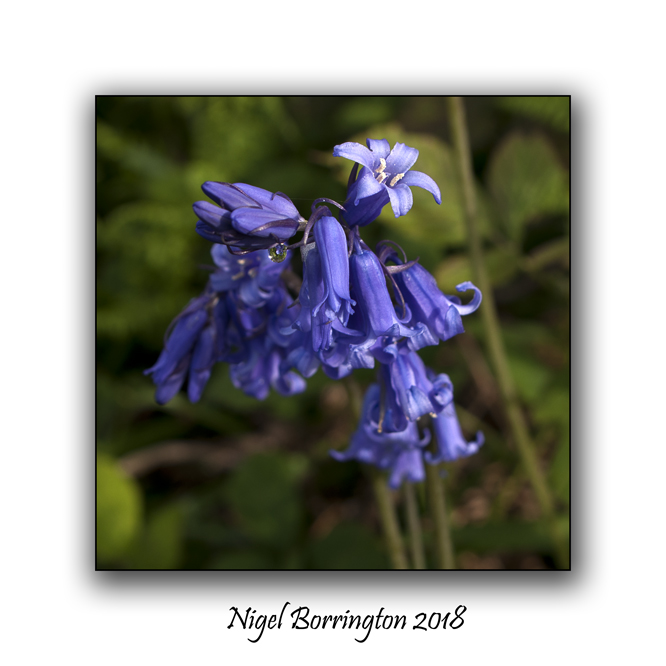
Mountain bluebells, Poem by Avetis Isahakian

Mountain bluebells, Poem by Avetis Isahakian
Armenian Legends and Poems [1916]
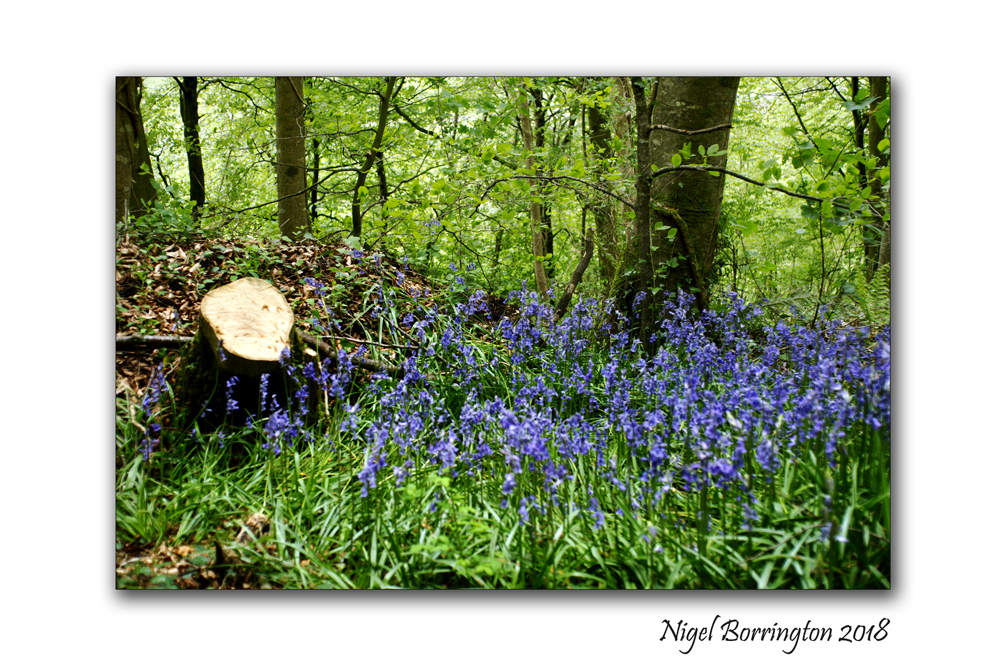
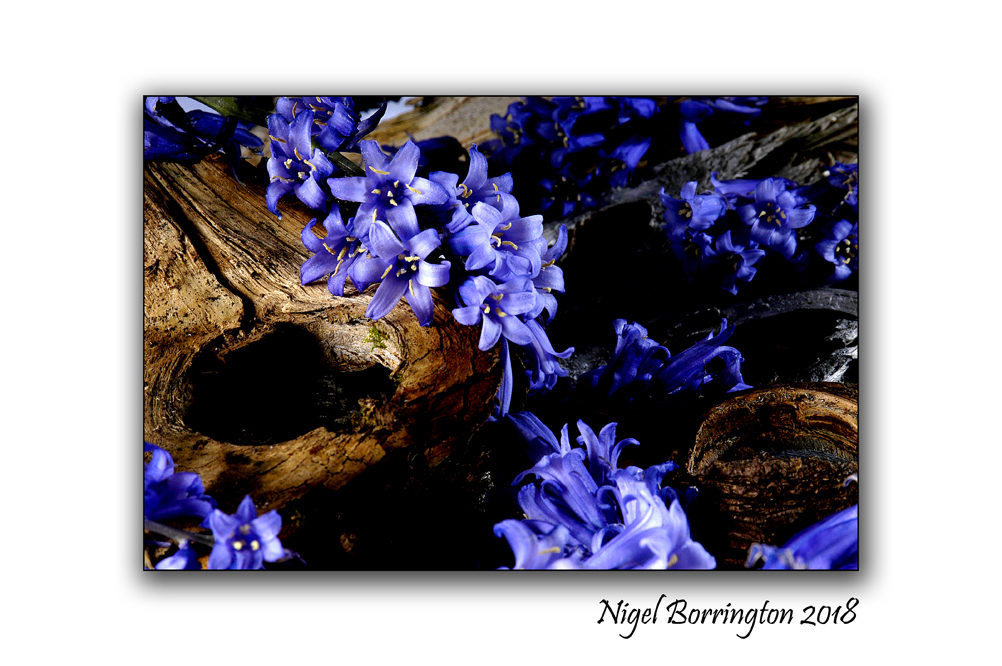
Mountain bluebells, weep with me,
And flowers in coloured crowds;
Weep, nightingale, on yonder tree,
Cool winds dropped from the clouds.
All dark around the earth and sky,
All lonely here I mourn.
My love is gone,–light of my eye;
I sob and weep forlorn.
Alas, no more he cares for me–
He left me unconsoled;
He pierced my heart, then cruelly
Left me in pain untold.
Ye mountain bluebells, weep with me,
And flowers in coloured crowds;
Weep, nightingale, on yonder tree,–
Cool winds dropped from the clouds.






Man and the Sea – Cyril Scott, Baudelaire: The Flowers of Evil (London: Elkin Mathews, 1909)

Man and the Sea
Free man! the sea is to thee ever dear!
The sea is thy mirror, thou regardest thy soul
In its mighteous waves that unendingly roll,
And thy spirit is yet not a chasm less drear.
Thou delight’st to plunge deep in thine image down;
Thou tak’st it with eyes and with arms in embrace,
And at times thine own inward voice would’st efface
With the sound of its savage ungovernable moan.

You are both of you, sombre, secretive and deep:
Oh mortal, thy depths are foraye unexplored,
Oh sea — no one knoweth thy dazzling hoard,
You both are so jealous your secrets to keep!
And endless ages have wandered by,
Yet still without pity or mercy you fight,
So mighty in plunder and death your delight:
Oh wrestlers! so constant in enmity!
Springtime poetry , After the Winter By Claude McKay

After the Winter
By Claude McKay
Some day, when trees have shed their leaves
And against the morning’s white
The shivering birds beneath the eaves
Have sheltered for the night,
We’ll turn our faces southward, love,
Toward the summer isle
Where bamboos spire the shafted grove
And wide-mouthed orchids smile.
And we will seek the quiet hill
Where towers the cotton tree,
And leaps the laughing crystal rill,
And works the droning bee.
And we will build a cottage there
Beside an open glade,
With black-ribbed blue-bells blowing near,
And ferns that never fade.
Monday Poetry, Ruins – LJ Chaplin Mar 2015

Kilkenny Landscape
Ruins
Nigel Borrington
Ruins
Dust and rubble settle at my feet,
A chaotic collapse
Inside myself that I could never
Have imagined,
The foundations are shaken,
The cracks began to show,
And piece by piece
It all spectacularly fell apart,
Nothing to hold on to,
Nothing to steady myself with
As it all crashed and burned,
Leaving me surrounded by the ruins
Of a place that took years to build
And seconds to destroy.
LJ Chaplin Mar 2015
Film Friday, Irish landscape photography, Sally Gap, Wicklow Mountains, The drama of 35mm slide film

Irish Landscapes
Sally Gap
Wicklow Mountains
Nikon f90x
Kodak 200iso slide film
Nigel Borrington
From all the possible 35mm films you could use for landscape photography, I feel that slide transparency film offered the most drama and colour depth to each shot you took. Clearly you still needed to me there at the time you found the best lighting and weather conditions but to myself there was no better film available that captured dramatic colours and tones.
This image was taken on a very moody evening, sometime back as I was walking alone the road of the Sally Gap….
Sally Gap, Wicklow Mountains
On the road to Sally Gap, there are spectacular views of the surrounding blanket bog and the Wicklow Mountains. Sally Gap is one of two east-to-west passes across the Wicklow Mountains. Sally Gaps is a cross-road that leads you North to Dublin, West to Blessington, South to Glendalough or East to Roundwood.
the Sally Gap got its road after the Irish rebellion of 1798. It was built by British Army forces looking to flush rebels from the hills, and to this day is known as the Military Road.
Whatever about giving the army a better view of the rebels, the Military Road certainly provides an enviable view of some of Ireland’s most filmed scenery.
Highlights of this winding, twisting feat of engineering include the Glencree valley, the dark waters of Lough Tay, Kippure Mountain and Glenmacnass Waterfall.
Two more unusual stops are Glencree’s Visitor Centre, originally built to house soldiers guarding the pass (and now a centre for Peace and Reconciliation), and the Glencree War Cemetery, a resting place for German soldiers who died in Ireland.
 Nigel Borrington
After the wild fire, Littleton Bog, Country Tipperary : Capturing the Irish heat wave of July 2018
After the Wild fire
littleton bog, tipperary Nigel Borringtpon
The six week long heatwave that we are experiencing here in Ireland during June and July has brought with it some of the best summer weather many can remember, yet it has also at this stage created water shortages and with the ground being so dry we have also had many forest wild fires along with fires on the open bog lands.
I enjoyed capturing these pictures a lot! as the atmosphere on the bog was amazing, the smell of smoke and the cracking of still burning small fires, with dead wood smoking all around me, nothing but deep ash on the surface.
I took these pictures this morning, they show the results of a large wild fire on the bog lands at littleton, county tipperary. Most of the trees and heather have all been burnt, these fires are mostly just on the surface and when we see the return of some rain the environment will recover very quickly. The question is just when will we see our usual Irish summer return , with its rains at least once or twice a week ?
Share this:
July 11, 2018 | Categories: Comment, Gallery, images of ireland, Images of Summer, Irish Boglands, Irish Landscapes | Tags: After the wild fire, country tipperary, irish bogs, Irish environment, Irish heat wave, irish weather, July 2018, Landscape Photography, littleton bog, Nigel Borrington, Wild fire | 2 Comments