When the Fishing Boats Go Out , By: Lucy Montgomery

When the Fishing Boats Go Out
Lucy Montgomery
When the lucent skies of morning flush with dawning rose once more,
And waves of golden glory break adown the sunrise shore,
And o’er the arch of heaven pied films of vapor float.
There’s joyance and there’s freedom when the fishing boats go out.
The wind is blowing freshly up from far, uncharted caves,
And sending sparkling kisses o’er the brows of virgin waves,
While routed dawn-mists shiveroh, far and fast they flee,
Pierced by the shafts of sunrise athwart the merry sea!
Behind us, fair, light-smitten hills in dappled splendor lie,
Before us the wide ocean runs to meet the limpid sky
Our hearts are full of poignant life, and care has fled afar
As sweeps the white-winged fishing fleet across the harbor bar.

The sea is calling to us in a blithesome voice and free,
There’s keenest rapture on its breast and boundless liberty!
Each man is master of his craft, its gleaming sails out-blown,
And far behind him on the shore a home he calls his own.
Salt is the breath of ocean slopes and fresher blows the breeze,
And swifter still each bounding keel cuts through the combing seas,
Athwart our masts the shadows of the dipping sea-gulls float,
And all the water-world’s alive when the fishing boats go out.

Pencil on Paper : Whitechurch graveyard , county Kilkenny

Whitechurch graveyard county Kilkenny
Pencil on Paper
Nigel Borrington
The last few one hour sketches I have worked on, I worked in pencil and ink but yesterday I went back to pencil only, using a B, 2B and 5B pencil. The location was a great little church and graveyard in the towns lands of Whitechurch on the south Kilkenny boarder.
I really loved working with ink but wanted to get back to pencil, although the direction I feel that my drawing is going in I am working with mainly line and shapes so there is little difference as yet. With pencil however I like the fact that I can get more tone using different grades of graphite.
I feel the main things I learn during this drawing were, how much to actually include in the drawing from the view in front of me, how I feel I want to represent different organic items such a ivy and trees along with grass and weeds! I feel I got the size of the two grave stone over very well…
I feel happy with the finished sketch, feeling that overall I got across well using the medium the view that was in front of myself. The worked flowed very well with no need to stop during working yet I got a good sense of when to finally stop working and be happy that the drawing told the full story!


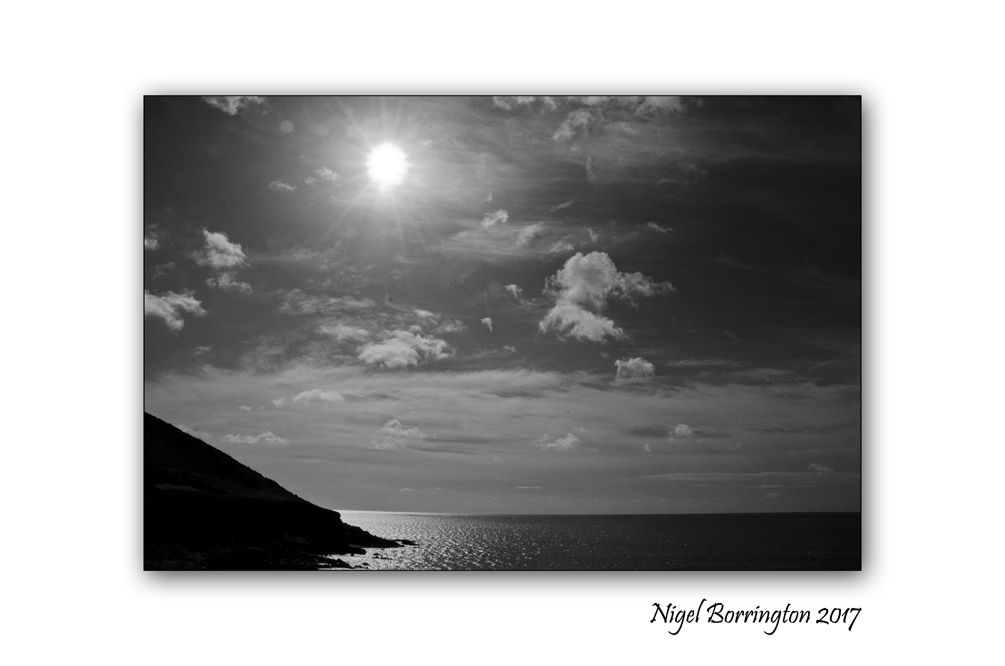


One hour sketch, views of Slievenamon county Tipperary

A view of Slievenamon
One hour sketch
Pencil and Ink on Paper
Nigel Borrington
Last week here the weather in Ireland took a wet and showery turn, its starting to feel very close to the Autumn now. As such it was a little harder to finish each of the outdoor sketches that I started, If I have to stop a drawing I intend to return to the same location the next time I have a chance. However the sketch above is one that I did manage to finish, even this one was interrupted for some 15mins while I put everything back into my waterproof pack and waited for the rain to stop.
The location of this sketch is on the hillside just south of Clonmel and the river Suir, with a great view of the woods and its trees, looking towards the mountain of Slievenamon above, about a 10 min walk from the car park.
In the last two weeks or so I have started adding in some graphics pens to my work, I am finding that using these pens helps me keep freely flowing and moving as I work, I will return to just pencils at some point but am really enjoying the look and feel of the lines that these pens are adding. With Pencil I feel I end up with more stopping and starting during working as I think about tone and depth. light and dark, while this is great just for the moment I want to think about form and shape alone.
I am happy with this finished drawing, looking at it I wonder if I have overworked it just a little but I think for the moment I am happy. These are sketches and not final works, I am very happy , more happy if something is to be found in them that I can learn from and progress with.
Images without words : The path into the light …….

Irish Landscape Images GarryDuff county Kilkenny
Nigel Borrington
Images without words : Irish Landscapes, the view from GarryDuff county Kilkenny

Irish Landscape Images GarryDuff county Kilkenny
Nigel Borrington
Images without words , A September sunset on the beach ….

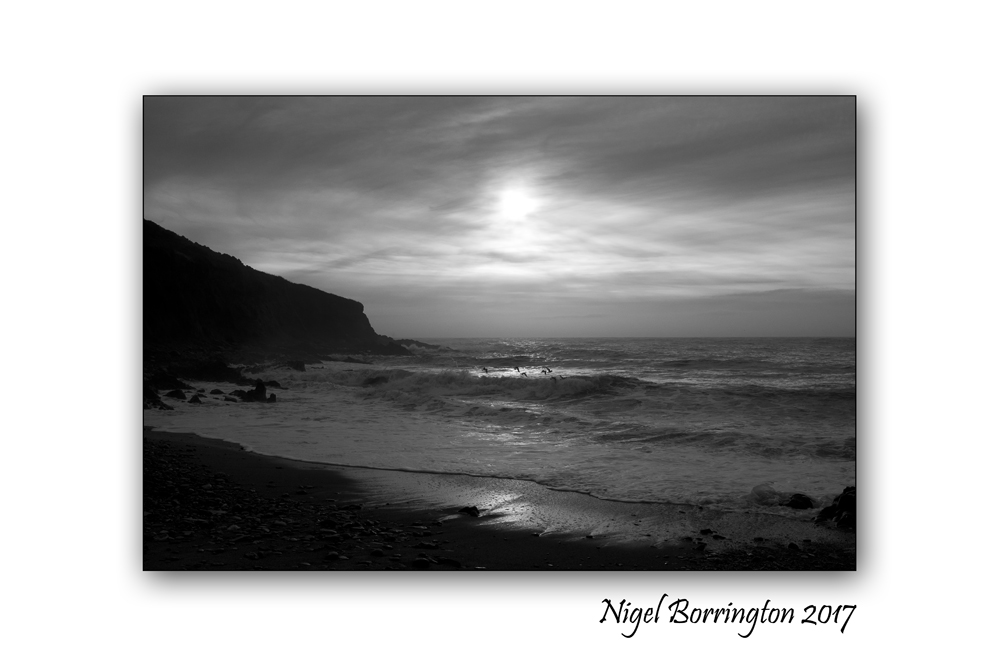
St Annes Pier at sunset
September sunset
Nigel Borrington
Ancient Ireland : Poulnabrone Dolmen and Portal Tomb, Caherconnell, county Clare Ireland
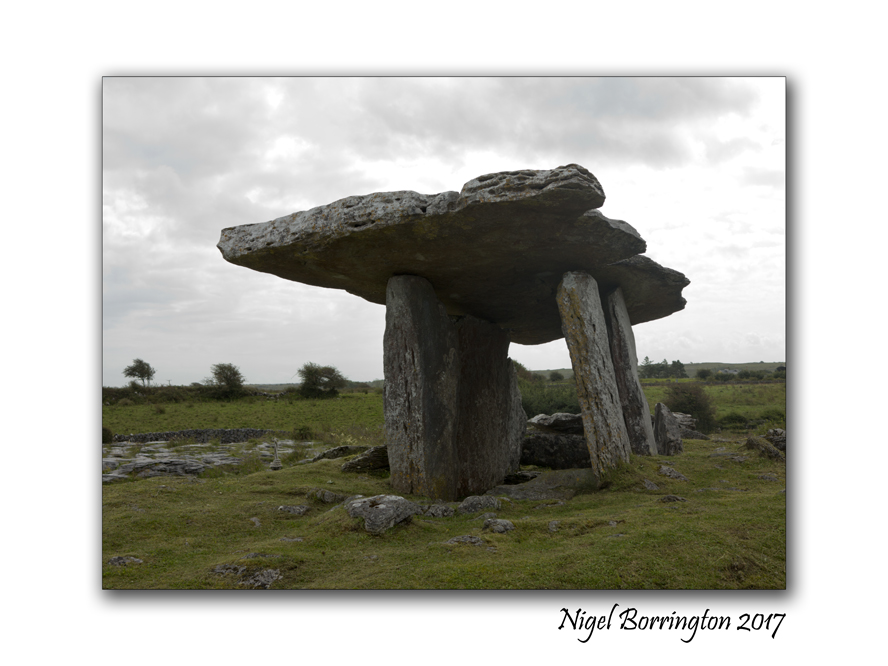
Poulnabrone Portal tomb
County Clare
Ireland
Nigel Borrington
Poulnabrone Dolmen and Portal Tomb is one of the most Dramatic megalithic sites in Ireland, it has superb sculptured form and is easily access from the road.
During the summer months it must be one of the most visited dolmens in the country. The day I visited and took these pictures it was overcast and grey, so there was less visitors than I can imagine at other times. When the site was excavated in 1986 they found some human remains some 16 adults and children plus some of their artifacts, together they dated the tomb to around 3600 B C.
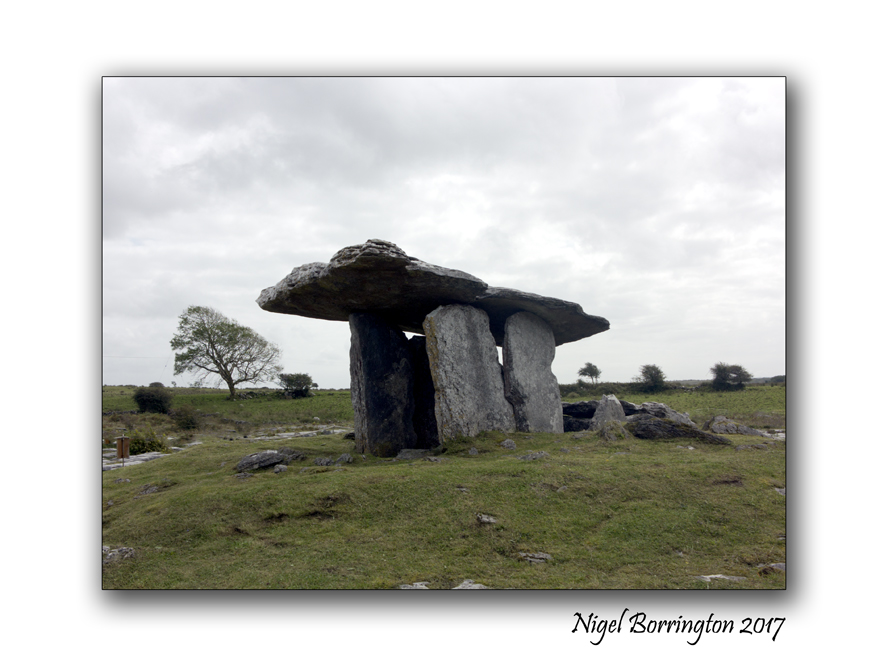
The entrance some 2 meters high faces north, The capstone is tilted at the usual angle for a Doland of this type, it measures about 3 1/2 metres long and some 2 metres wide.
The name Poulnabrone means ‘ the hole of the sorrows’ There are many other interesting sites near poulnabrone including the Wedge tomb at Gleninsheen and Baur South and the Stone Fort at Caherconnell.

Situated on Karst limestone, in a field east of the Ballyvaughan – Corrofin Road the Poulnabrone Dolmen is one of Irelands more accessable megalithic structures.
Friday Sketch, One hour drawing : Path into the woods

One hour Sketch
Path into the woods
Nigel Borrington
Over the last few weeks I have been doing my best to find time each day to get outside and draw, Today I stopped at a local public Gardens that has some amazing paths, winding their way between some old trees. Its a great location that I hope to draw many times over the winter months.
Today as an exercise, I gave myself one hour to complete a sketch, using pencil and an ink pen on paper, in order to capture as best as I am able a sense of the path as it gets deeper into the trees along side it, as it does so the light falls dramatically.
I enjoy very much these one hour exercises, working quickly as possible yet as best as I can, I feel it is helping to build my ability to see whats in front of me and then how to use basic drawing tools represent this view on paper.
Ireland’s Ancient East , Knockroe Passage Tomb, County Kilkenny

Knockroe Passage Tomb, County Kilkenny
Nigel Borrington
Knockroe Passage Tomb, County Kilkenny
Knockroe Passage tomb is located in a picturesque setting on the slopes above the Lingaun River and old slate quarries which were abandoned in the early 1900’s. The site dates to around 3,000 BC and has many similarities to the far more famous examples such as Newgrange and Knowth in the Brú na Bóinne complex in County Meath.

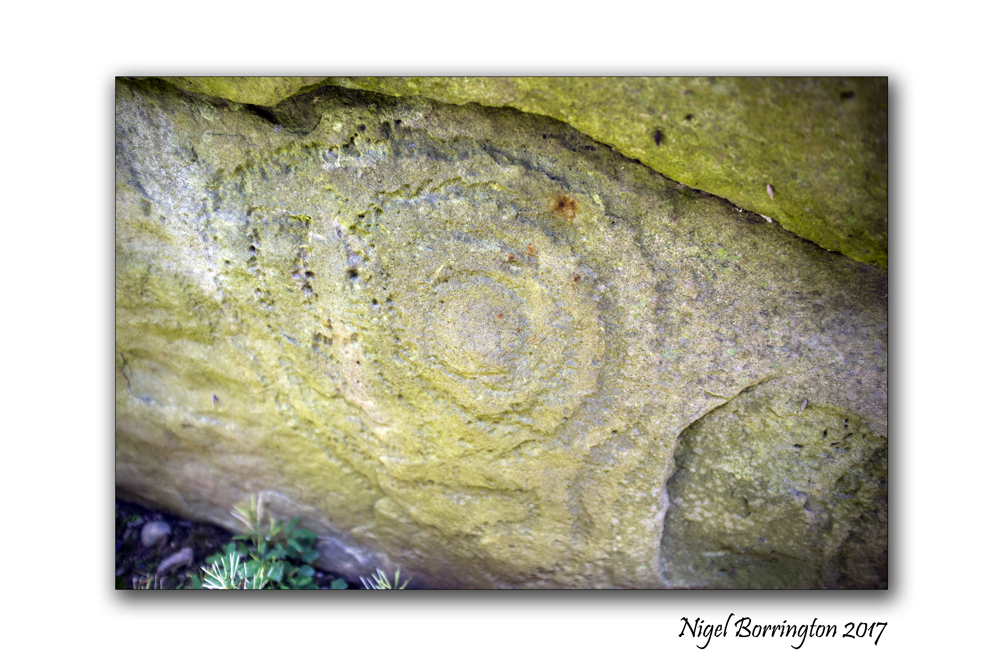
Originally Knockroe would have been a similar tomb to Newgrange, albeit on a smaller scale. It is likely that it too would have had an earthen mound surrounded by large kerbstones. However unlike Newgrange, Knockroe has two burial chambers, located at the eastern and western sides of the feature. These tombs are exposed, and had long ago lost their earthen cover. Many of the stones lining the passageways of these tombs at Knockroe are highly decorated with megalithic art such as spirals, hollowed ‘cup marks’, and zig-zags. You can still find them in their original locations, and when you see them it is impossible not to wonder about the possible meaning of the decorations – was it purely decorative or did it have a deeper symbolism, and what messages may be in that symbolism? You can also still see the quartz which possibly would have formed a wall around the entrance to the passageways.
Also like Newgrange, Knockroe is aligned with the Winter Solstice. Every year around the 21st December people gather at Knockroe to witness the sun setting in perfect alignment with the length of western tomb.
Knockroe is one of a group of tombs located in this region, all of which are aligned with the large
mound on the summit of Slievenamon in County Tipperary. Knockroe is one of those wonderful sites that you can’t help to keep thinking about long after your visit, without being encumbered with its earthen mound, Knockroe is like the stony skeleton of a Neolithic passage tomb.
Gallery



The Water Replies – Luke Kennard
Luke Kennard
The Water Replies
Maybe we have washed our hands
and drunk deep and swam
and think we know her,
but water’s reputation goes before her like a flood:
she does not suffer fools or gadflies.
Therefore I have prepared some questions.
Where do you get your ideas & your tide from?
Don’t say the moon – that’s really pretentious.
But as I clamber down the coast
I lose my footing and spend our allotted time
tossed around in her backwash,
pummeled by tiny stones.
When I am baptised I ask the water
Where have the demons gone?
Were they hiding behind the H, the 2 or the O?
I emerge finally able to see that I have not changed,
that I can of myself do nothing, that water decides.
On the towpath behind the church
I wring out my jacket. I ask the water:
Will you convey these thoughts away?
These itching hatreds, toothache of jealousy,
These squalid appetites and dog thirsts?
Just as far as the next city will do.
The ripples of the moon’s tablature.
When was the last time you cried, and why?
I ask the water. I ask the water:
Do you have plans later?
The Sound of the Sea By : Henry Wadsworth Longfellow
The Sound of the Sea
By : Henry Wadsworth Longfellow
The sea awoke at midnight from its sleep,
And round the pebbly beaches far and wide
I heard the first wave of the rising tide
Rush onward with uninterrupted sweep;
A voice out of the silence of the deep,
A sound mysteriously multiplied
As of a cataract from the mountain’s side,
Or roar of winds upon a wooded steep.
So comes to us at times, from the unknown
And inaccessible solitudes of being,
The rushing of the sea-tides of the soul;

And inspirations, that we deem our own,
Are some divine foreshadowing and foreseeing
Of things beyond our reason or control.
Loop Head Lighthouse, county Clare, Ireland

Loop Head Lighthouse,
September 2017,
county Clare, Ireland
Nigel Borrington
Loop Head Lighthouse, county Clare, Ireland
I have just spent a few days visiting County Clare, west Ireland, finishing with a visit to the great Loophead lighhouse. As you can see the day was very typical for a Septembers day here in Ireland, wet and windy.
It was still possible to visit the top of the lighthouse however which was great fun in the strong breeze.
I have very much enjoyed visiting some of Ireland’s lighthouses over the years from the north coast down to Hookhead, on the south coast, these remote location with their lighthouse keepers buildings that would have been both a place of work and a home, all year around and in all weather conditions, are a great reminder of the past.
A past that has almost gone but can in places like these still be felt very strongly.
Sometime back I found this video and have shared it before with other lighthouse posts, its still very much worth sharing again however as it reflects on the family life’s of Ireland’s lighthouse keepers …..
Here is a little history of the Loophead lighthouse
History
The first lighthouse on Loophead was one of four known Irish stone vaulted cottage type lights built about 1670. These cottages accommodated the lightkeeper and his family in two or three rooms and had an internal stone stairway between two of the rooms leading up to a platform on the roof where a coal burning brazier or chauffer was positioned. Part of the old cottage with its battered outside wall can still be seen near the lightkeepers’ dwellings.
The light must have fallen into disuse towards the end of the 17th century because it was re-established in 1720 after aldermen and merchants of Limerick petitioned the Irish Parliament in 1717 for a light on the Head.
The cottage-lighthouse with its coal fire was replaced in 1802 by a more conventional lighthouse, built by Thomas Rogers, who was also the contractor. The tower was about the same height as the present tower with four rooms and a lantern. The ground floor room was an oil store and access to the first floor or entrance room by an outside staircase of 19 steps. An internal spiral staircase connected the other two rooms and lantern. The twelve-foot diameter lantern contained twelve oil lamps, each with its own concave parabolic reflector. The reflected light shone through a 22″ diameter convex lens of solid glass, not unlike the ‘bottle glass’ or “bulls-eye” fitted into windows of modern psuedo-Georgian houses.
By 1811 the keeper was living in an adjoining cottage, rather than in the tower.
Loop Head Lighthouse, county Clare, Ireland , Gallery


Sketch book work, pencil on paper : The view from Keelkyle cottage, Ennistimon, county Clare
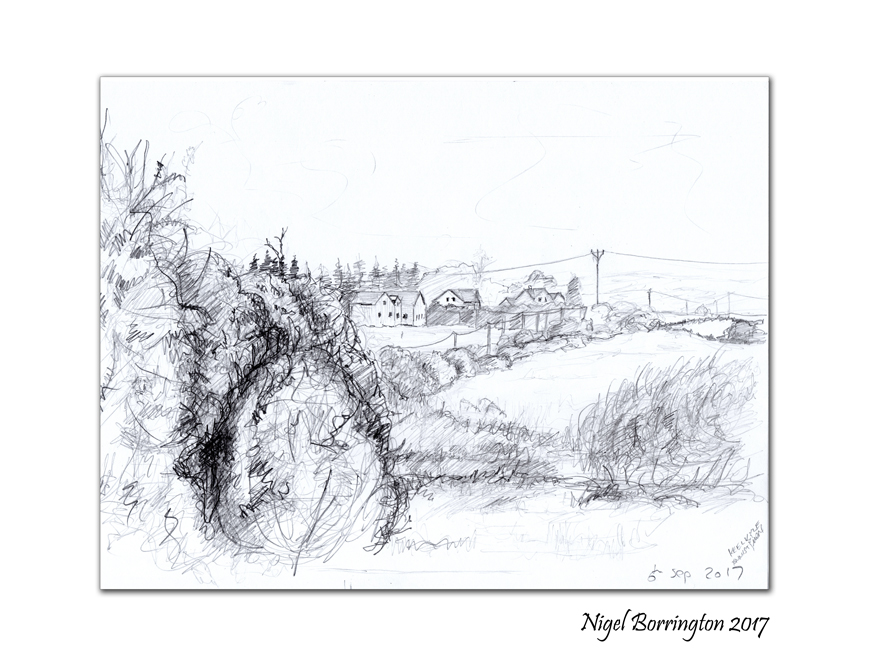
Pencil on Paper
The view from, Keelkyle cottage, Ennistimon, county Clare
nigel borrington

Sand Flesh and Sky, Poem By Clarence Major

Sand Flesh and Sky
By Clarence Major
Our ropes are the roots
of our life. We fish
low in the earth,
the river beneath runs through our veins,
blue and cold in a riverbed.
When the sun comes up,
the moon moves slowly to the left.
I tie the logs and limbs together,
holding them in place.

The ocean beats them
smooth like rock.
Here my sense of time is flat.
I find in a strip of damp sand
footprints and marks of hands,
and torn pieces of flesh.
Night is a beast.
The tide moves, gushing
back and forth.
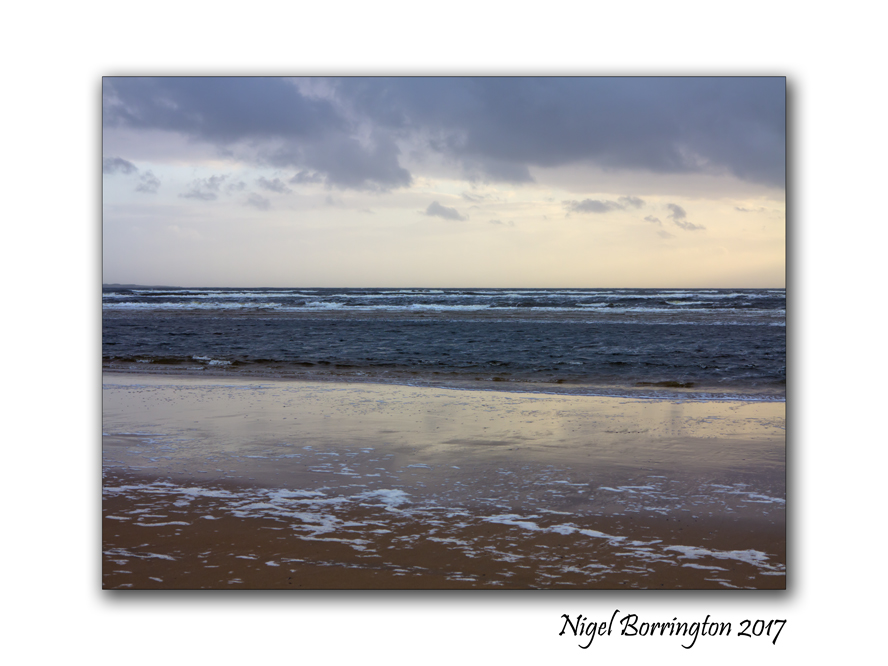
Sunlight touches our faces,
turning us, turning us, turning us
in our morning sleep.
1976
5 Images for the week, Friday.
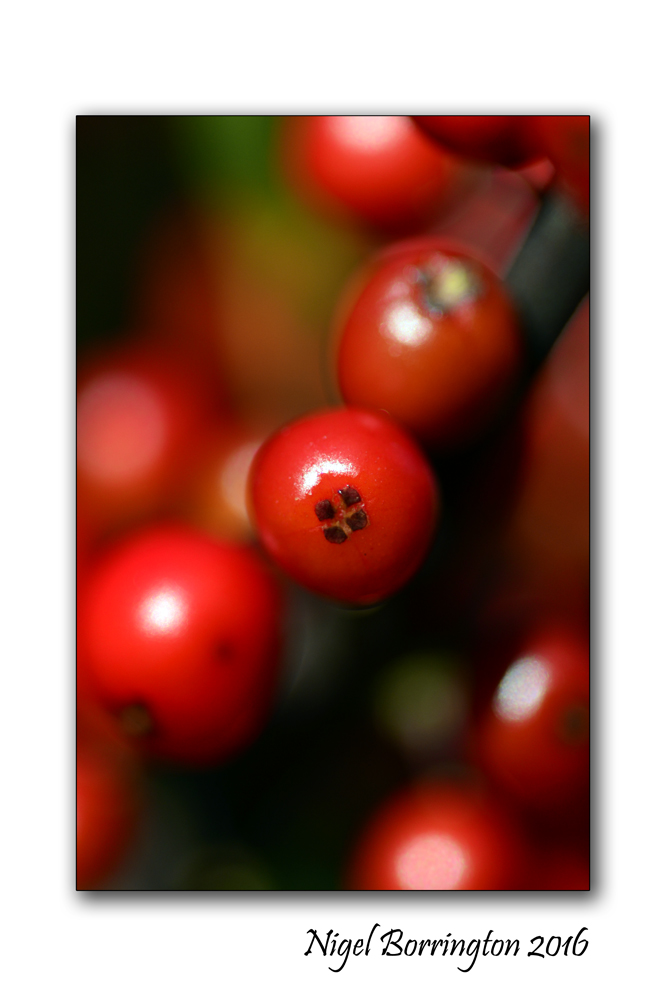
Evergreen trees
Holly tree berries
Nature photography Nigel borrington
5 Images for the week, Thursday

Lock Melfort, after the rain.
Oban – Scotland
Scottish Landscapes
Nigel Borrington
5 Images for the week, Wednesday, Wild Woodbine with a poem by – Joan McBreen

Wild flowers
wild woodbine
nigel borrington
Wild woodbine was beyond my reach
in the thick hedges round Lough Gill.
The heavy scent filled the house for days
when my father brought it in
and it stayed fresh far longer
then meadowsweet.
Because I loved the delicate
pink and white wild rose
he picked it too, cursing the thorns, muttering
“it dies too soon,
you’d be better leaving it alone”.
Yet once, when my mother
swept its petals from the floor
I saw him rescue one
and place it carefully
in the small wallet
where he kept her photograph.
5 Images for the week, Tuesday.

Coumshingaun Corrie Lake county Waterford Nigel Borrington
5 images for the week , Monday.

Tramore Strand
County Waterford
Ireland
Nigel Borrington
Friday 1st September a Poem by : T. S. Eliot, Four Quartets, East Coker No. 2, 1, 1940

Black and white Landscapes, County Tipperary, fields, 2017 Nigel Borrington
In that open field
If you do not come too close, if you do not come too close,
On a summer midnight, you can hear the music
Of the weak pipe and the little drum
And see them dancing around the bonfire
The association of man and woman
In daunsinge, signifying matrimonie—
A dignified and commodiois sacrament.
Two and two, necessarye coniunction,
Holding eche other by the hand or the arm
Whiche betokeneth concorde. Round and round the fire
Leaping through the flames, or joined in circles,
Rustically solemn or in rustic laughter
Lifting heavy feet in clumsy shoes,

Earth feet, loam feet, lifted in country mirth
Mirth of those long since under earth
Nourishing the corn. Keeping time,
Keeping the rhythm in their dancing
As in their living in the living seasons
The time of the seasons and the constellations
The time of milking and the time of harvest
The time of the coupling of man and woman
And that of beasts. Feet rising and falling.
Eating and drinking. Dung and death.

Dawn points, and another day
Prepares for heat and silence. Out at sea the dawn wind
Wrinkles and slides. I am here
Or there, or elsewhere. In my beginning.”
– T. S. Eliot, Four Quartets, East Coker No. 2, 1, 1940
On Contemplating a Sheep’s Skull ~ Poem by: John Kinsella

Sheeps skull
Nigel Borrington
On Contemplating a Sheep’s Skull
Poem by John Kinsella
A sheep’s Skull aged so much in rain and heat,
broken jawbone and chipped teeth half-
gnaw soil; zippered fuse-mark tracks
back to front, runs through to base
of neck, widening faultline under
stress: final crack close at hand.
Skull I can’t bring myself to move.
White-out red soil unearthed
from hillside fox den and cat haven,
now hideaway for short-beaked echidna
toppling rocks and stones, disrupting
artfulness a spirit might impose,
frisson at seeing counterpoint.
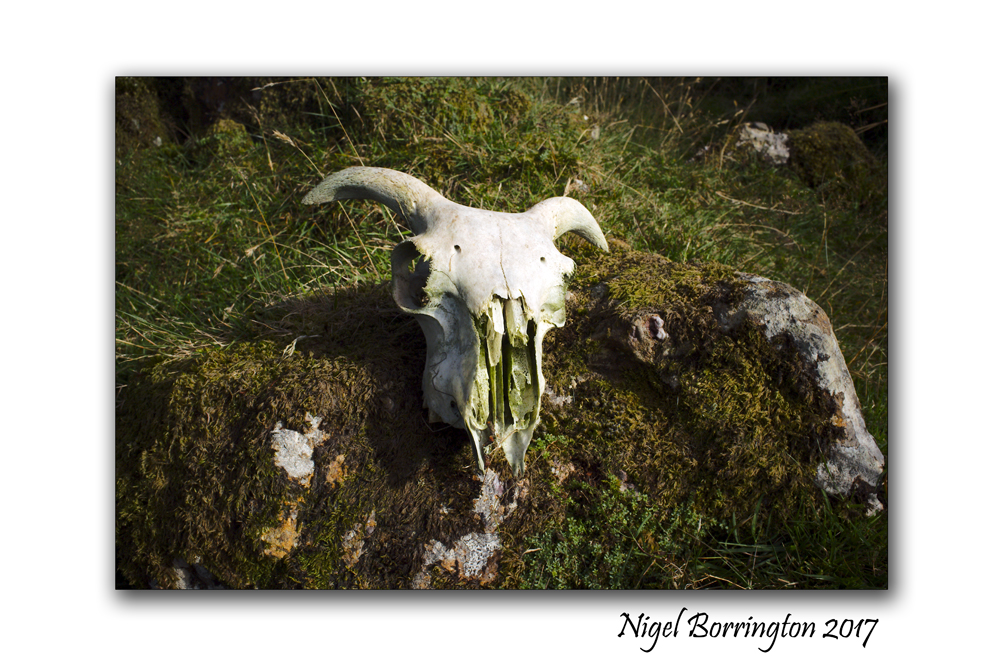
Skull I can’t bring myself to move.
Sometimes avoid the spot to avoid
looking half-hearted into its sole
remaining eye socket; mentally to join
bones strewn downhill, come apart
or torn from mountings years before
arriving with good intentions.
Skull I can’t bring myself to move.
Not something you can ‘clean up’,
shape of skull is not a measure of all
it contained: weight of light and dark,
scales of sound, vast and varied taste
of all grass eaten from these hills;
slow and steady gnawing at soil.
Skull I can’t bring myself to move.

Neither herbivore nor carnivore,
earth and sky-eater, fire in its shout
or whisper, racing through to leave a bed
of ash on which the mind might rest,
drinking sun and light and smoke,
choked up with experience.
Skull I can’t bring myself to move.
Drawn to examine
despite aversion, consider
our head on its shoulders,
drawn expression
greeting loved ones
with arms outstretched.
John Kinsella is Founding editor of the journal Salt in Australia; he serves as international editor at the Kenyon Review. His most recent volume of poetry is Divine Comedy: Journeys through a Regional Geography (W. W. Norton) with a new volume, Disturbed Ground: Jam Tree Gully/Walden, due out with W.W. Norton in November 2011.
 Nigel Borrington
Kells priory, county Kilkenny, Art work and Photography.
Kells Priory
County Kilkenny
Pencil on Paper
Nigel Borrington
One of the location that I love to take both my camera and sketch book is Kells Priory, county Kilkenny. Its an amazing location to capture in many forms and I am very lucky to live only a few miles away. I have posted here on my blog about it many time, you can used the search box to find these post if you wish.
The above is a Pencil on Paper drawing I worked on from about two weeks ago and below is a photo taken earlier in the summer when there was many more visitors around the site.
Share this:
October 9, 2017 | Categories: Art and craft work, Comment, drawings, History, irish history, kilkenny photography, Landscape, pencil on paper, Sketch book work, Travel Locations | Tags: art work, county Kilkenny, drawing, irish history, KELLS PRIORY, Kilkenny, Nigel Borrington, pencil on paper, Photography, Sketch book images, Sketchboob | 2 Comments