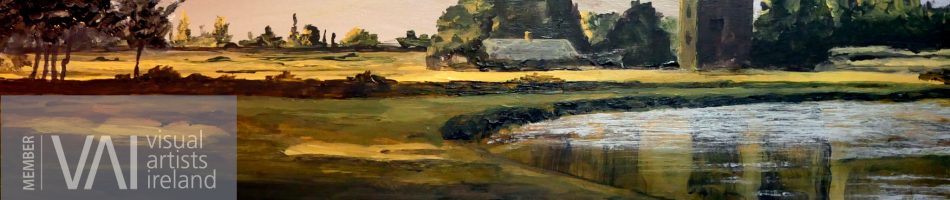
Landscape art and Painters , Artist: Fred Cuming

Landscape painter
Fred cuming
Landscape painting and photography
Painting as an art form for myself feels very much like a natural progression from the art of landscape photography which is the act of recording a representation of the view you find yourself located in.
I often find myself asking what it was about an image I capture with my camera or in a sketch / painting that I liked so much that I went to the effort of working with that location in different forms and media.
This is a quote from one of my favourite landscape painters Fred Cuming, Talking about his paintings Cuming says: ‘I am not interested in pure representation. My work is about responses to the moods and atmospheres generated by landscape’
Although there are many forms of landscape art all as valid as each other, Contemporary landscape painting tends to fall into the areas of semi abstracted to completely abstract, in that each work is making an effort to extract from the selected landscape location a sense of atmosphere or a mood. This mood and atmosphere can involve colour or light or texture, or all of these things and more.
This artistic process, from pure representation or abstraction can in a completely valid way start with photography and in fact many current artists have replaced the sketch book with the film/digital camera. The question as to if this is the best thing or not will continue for a long time, some feeling that a photo simply cannot capture a good enough sense of the location or at least not in the same way as spending time in that location with a sketch book can.
Personally I feel photographs are a very important tool and can in a very valid way capture the mood and sense of a place. However I feel that you need to spend a good amount of time with your camera exploring as much as you can while your on site, walking around and finding all the different views and angles along with all the small details you can find. The aim is to return home with as complete a memory of your landscape as you can.
Here are some details of Fred Cuming as an artist along with some more of his painting…..
Artist: Fred Cuming
Fred Cuming is a painter of International standing. Born in 1930 he studied Art at Sidcup School of Art from 1945 to 1949. After completing his National Service he studied at the Royal College of Art from 1951 to 1955 where he gained a Rome Scholarship and an Abbey Minor Scholarship.
Fred was elected a Royal Academician in 1974. He has also been a member of the New English Art Club since 1960 and is the recipient of many art awards including: the Grand Prix Fine Art (1977); the Royal Academy’s House & Garden Award and the Sir Brinsley Ford Prize (New English Art Club, 1986).
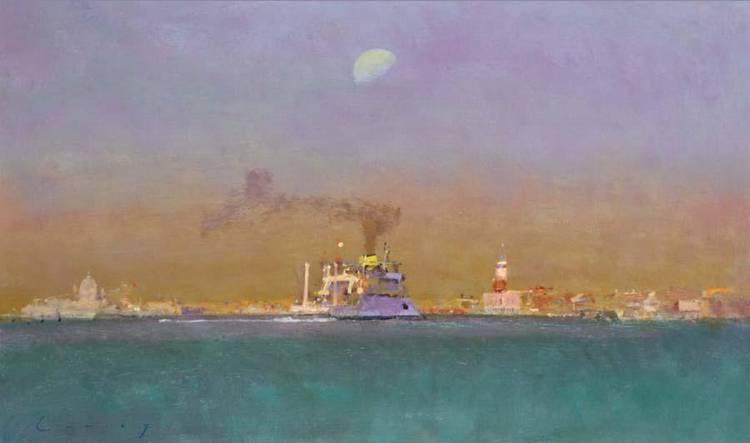
Fred Cuming has exhibited his contemporary paintings world wide. His paintings feature in many private and public modern art collections. These include: Montecarlo Museum; Royal Academy of Arts; and the Guinness Collection.
Fred Cuming paintings offer a moment for reflection. Cuming creates a relationship with nature and light – inducing observers to appreciate the calming atmosphere and realisation of the beauty around us. Many of his paintings feature the counties of Kent and Sussex where the Fred Cuming artist studio is located.
Talking about his paintings Cuming says: ‘I am not interested in pure representation. My work is about responses to the moods and atmospheres generated by landscape, still life or interior. My philosophy is that the more I work the more I discover. Drawing is essential as a tool of discovery; skill and mastery of technique are also essential, but only as a vocabulary and a means towards an idea. I struggle to keep an open mind.’

Fred Cuming has exhibited at other leading British Art Galleries. In 2001 Cuming was the featured artist at the Royal Academy Summer Exhibition with an entire gallery dedicated to his art work.In 2004 he was awarded an honourary doctorate from the University of Kent.Like all Red Rag British art and Contemporary art Fred Cuming purchases can be shipped worldwide.

Digital Art work – A December Sunset – Callan, county Kilkenny

Kilkenny Sunset
December 2016
Nigel Borrington
A December Sunset – Callan, county Kilkenny
Often when out for an evening walk at this time of year the sunsets across our local fields can be just amazing to view, the sun is low in the sky all day long in December when compared to a mid summers day. With out getting to detailed this changes the angle of the sun and it seems to make the last few moments of day light last longer. This along with the mist and early frosts that can sit of the fields, haging above the hedgerows is just great to see 🙂
This painting is created using a PC application called mypaint, I have spent the last few weeks doing my best to get up to speed with how to make the best use of it, at first just using some of the drawing tools and ink pens but as you can see – I hope that I am now getting more use to the painting and colour tools..
The paint is posted the moment I feel its finished , I very much like the idea of this as it helps me to close the processes involved and to stop me coming back and over working anything. Its a little hard to describe but its a great feeling to start and finish a painting in one session and then be able to learn when you feel that you have finished !!!
Abandoned Farmhouse, Poem By Ted Kooser

Abansoned Farmhouse
Chalk sketch
Nigel Borrington
Abandoned Farmhouse
By Ted Kooser
He was a big man, says the size of his shoes
on a pile of broken dishes by the house;
a tall man too, says the length of the bed
in an upstairs room; and a good, God-fearing man,
says the Bible with a broken back
on the floor below the window, dusty with sun;
but not a man for farming, say the fields
cluttered with boulders and the leaky barn.
A woman lived with him, says the bedroom wall
papered with lilacs and the kitchen shelves
covered with oilcloth, and they had a child,
says the sandbox made from a tractor tire.
Money was scarce, say the jars of plum preserves
and canned tomatoes sealed in the cellar hole.
And the winters cold, say the rags in the window frames.
It was lonely here, says the narrow country road.
Something went wrong, says the empty house
in the weed-choked yard. Stones in the fields
say he was not a farmer; the still-sealed jars
in the cellar say she left in a nervous haste.
And the child? Its toys are strewn in the yard
like branches after a storm—a rubber cow,
a rusty tractor with a broken plow,
a doll in overalls. Something went wrong, they say.
Friday Art and Artists : British Artist Edward Bawden

650 0072
Friday Art reviews
Back in the Summer I did a weeks worth of posts that related to some of the artists I like the most. I really enjoyed doing the research behind these posts and so I want to start looking at some more artists and their work , In the long term I am planning to put each Friday aside for these posts, this December however I may post a lot more than one day per week, as I want to dig a lot deeper into the subject of landscape and cityscape art and artists ……
Artist Edward Bawden
British Artist Edward Bawden, one of a group of artists associated with a community of artists that existed around Great Bardfield in Essex, England during the middle years of the 20th century.
Great Bardfield :
is a village in north west Essex, England. The principal artists who lived there between 1930 and 1970 were John Aldridge RA, Edward Bawden CBE RA, George Chapman, Stanley Clifford-Smith, Audrey Cruddas, Walter Hoyle (principally a printmaker, who ran the printing workshops at Cambridge Art School when I was there, and taught me to do linocuts in the style of Bawden and himself), Eric Ravilious, Sheila Robinson, Michael Rothenstein, Kenneth Rowntree and Marianne Straub. Other artists associated with the group include Duffy Ayers, John Bolam (who taught me painting at Cambridge Art School, and later became the Principal of the school), Bernard Cheese, Tirzah Garwood, Joan Glass, David Low and Laurence Scarfe. Great Bardfield Artists were diverse in style but shared a love for figurative art, making the group distinct from the better known St Ives art community in Cornwall, who, after the war, were chiefly dominated by abstractionists.
Edward Bawden (1903 – 1989)
can be seen as a key artist in the Bardfield group. His long career spanned most of the twentieth century, and comfortably straddled boundaries and borders between the fine and applied arts, boundaries which are seen as so immovable today. Even before his appointment as an Official War Artist in 1940, Bawden had established a reputation as a designer, illustrator and painter. As well as these areas his output over the years include murals, posters, designs for wallpaper, ceramics, lithographic prints and watercolours.
Edward Bawden was born in Braintree, Essex in 1903, and was perhaps more firmly rooted in Essex than any other artist represented in the North West Essex Collection. Bawden attended the Friends’ School in Saffron Walden. At the age of eleven he strained his heart and was excused participation in sports. This may have allowed him to devote more time to drawing, and his portraits and caricatures attracted the attention of his tutors who arranged for him to spend a day a week at the Cambridge School of Art. The school, now part of Anglia Ruskin University, had been founded to comply with the Ruskinian philosophies of improving design for industry, and encouraging amateur aspirations. Bawden fitted perfectly.
Before long, he had gained entry to the Royal College of Art. Here he was taught by Paul Nash (a lasting influence on Bawden and his contemporaries), and the popular E. W. Tristram. It was at the RCA that Bawden first met his ‘kindred spirit’, Eric Ravilious, the two quickly becoming firm friends, though entirely different in temperament. Shortly after leaving the college, the pair gained a prestigious commission to paint a mural for the refreshment room of Morley College in London. He first rented half of Brick House, the imposing Georgian house in Great Bardfield in the mid-1920s with Ravilious, and after his father purchased the whole house for him on his marriage to Charlotte Epton in 1932, he continued to live there until moving to Saffron Walden in 1970 after Charlotte’s death.
On a Personal note …..
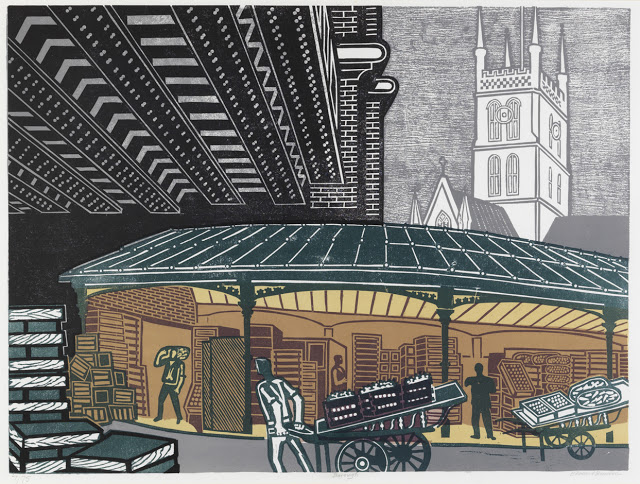
I really like Edwards London market prints, his use of limited colour and strong geometric shapes, to me this is print making at its very best. They are almost poster like yet retain strong connections to art not commercial based prints.
I like very much the sense of movement and activity that he captures from the people he includes in these prints, you can almost hear the noise and imagine the chatter that is taking place, the sound of wheels on the flag stones. The cold in the winter and the heat of the city in the summer.
These prints are full of life and capture London markets in 1967 in an almost timeless way 🙂 🙂
In 1967 Bawden made a series of six prints of London markets, commissioned by Curwen Prints. The markets were Billingsgate, Borough, Covent Garden (2), Leadenhall and Smithfield:

648 0074
646 0076

649 0073

250 0001

647 0070
650 0072
County Kilkenny Landscapes, New digital art works
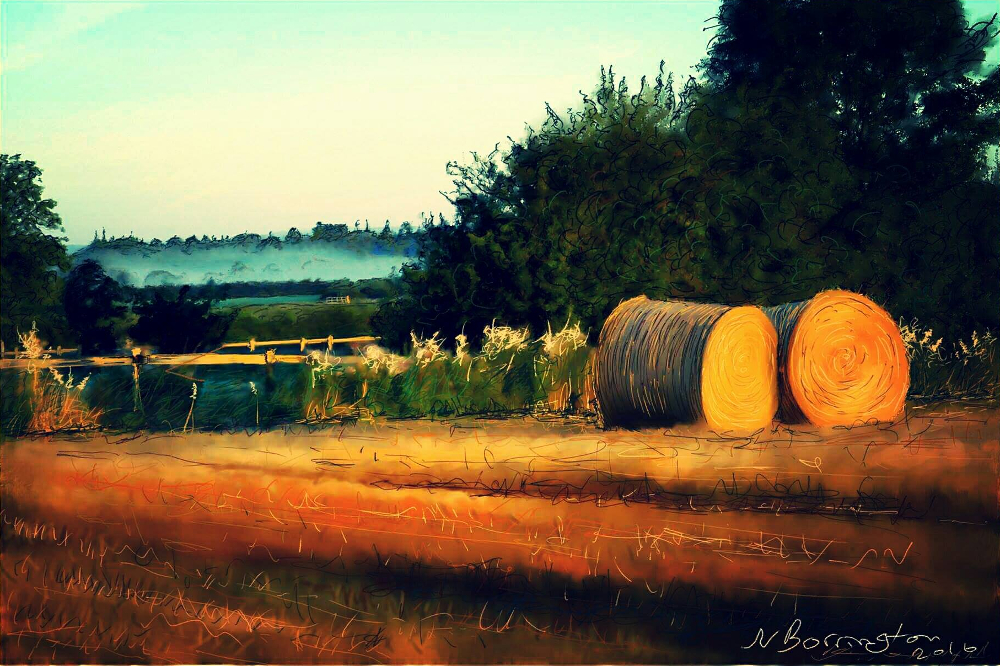
Landscape painting
Straw Bales
County Kilkenny, Ireland
Nigel Borrington
I am continuing to explore the world of digital painting using a Wacom studio art tablet and truly enjoying the creative experience it can offer.
I am planning in the new year to return to real paint and brushes but at the same time I have really taken to using digital media, I will continue to use it both to produce sketch work and finished drawings and painting. The power that digital painting offers to be creative and to be attached with modern social media is hard to escape 🙂 , the next step is to explore how to print onto more traditional papers and canvas in order to present finished work in a more traditional way.
A Sketch of two fishing boats, Keem Strand, Achill Island, Co. Mayo
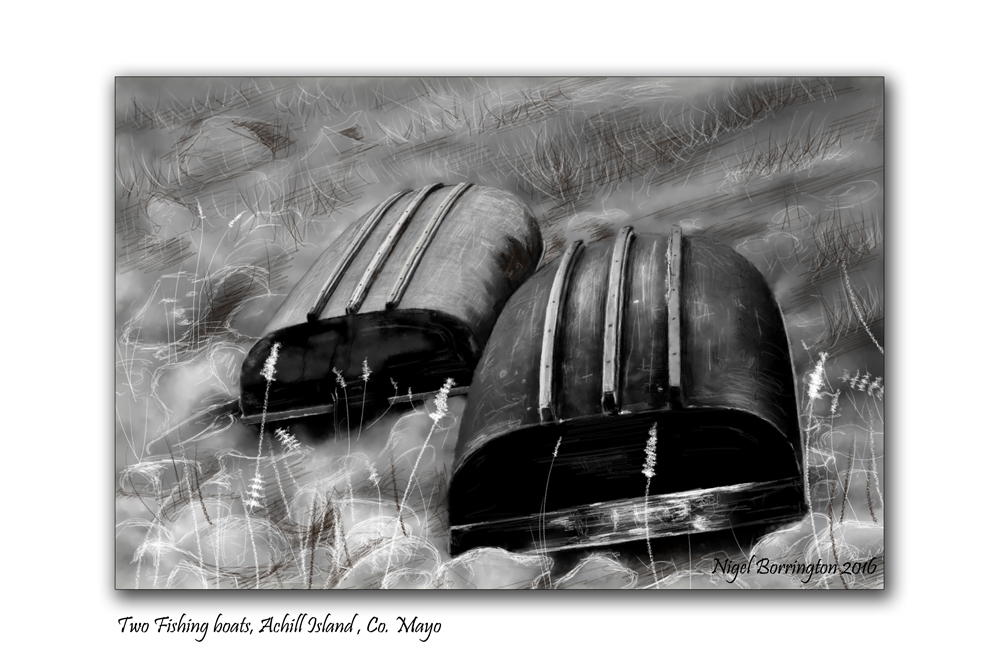
Two fishing boat
Keem Strand
Achill Island
County Mayo
A sketch of the old farm house, Keem Strand, Achill island, County Mayo
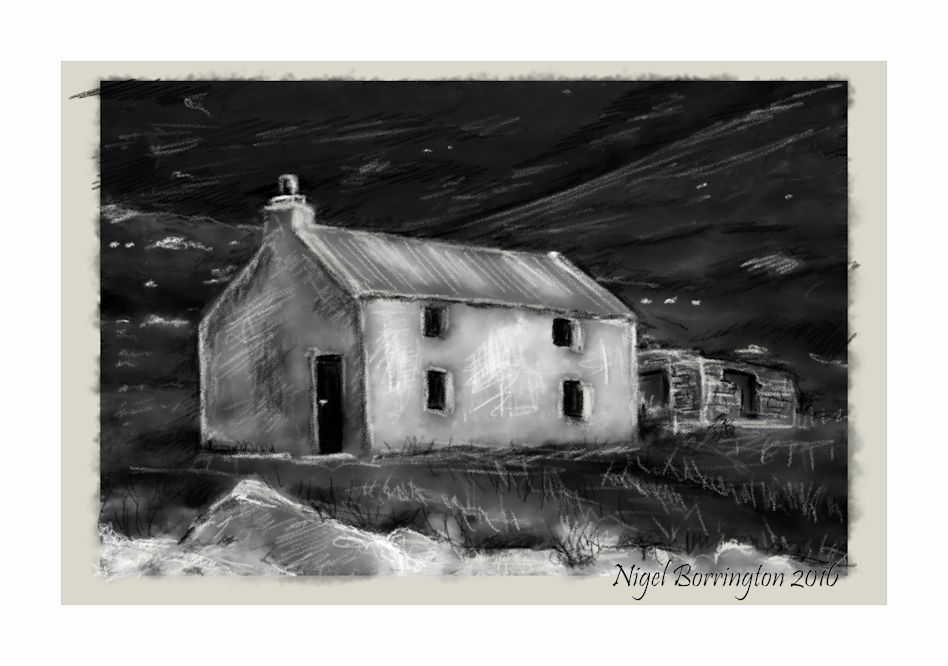
Old Farm house
Keem Strand
Achill Island
county Mayo
Nigel Borrington
Created using a Wacom Mobile Studio table …..
Landscape Art works : Ancient Rome, engraved by A. Willmore published 1859–61

Artwork details
Artist : After Joseph Mallord William Turner 1775–1851
Title : Ancient Rome, engraved by A. Willmore
Date : Published 1859–61
Medium : Engraving on paper
Collection : Tate
Acquisition: Transferred from the British Museum 1988
Its a good while since I posted here about some of my most loved artists and art work, I want to start again to share some of my most liked works of art over the next weeks.
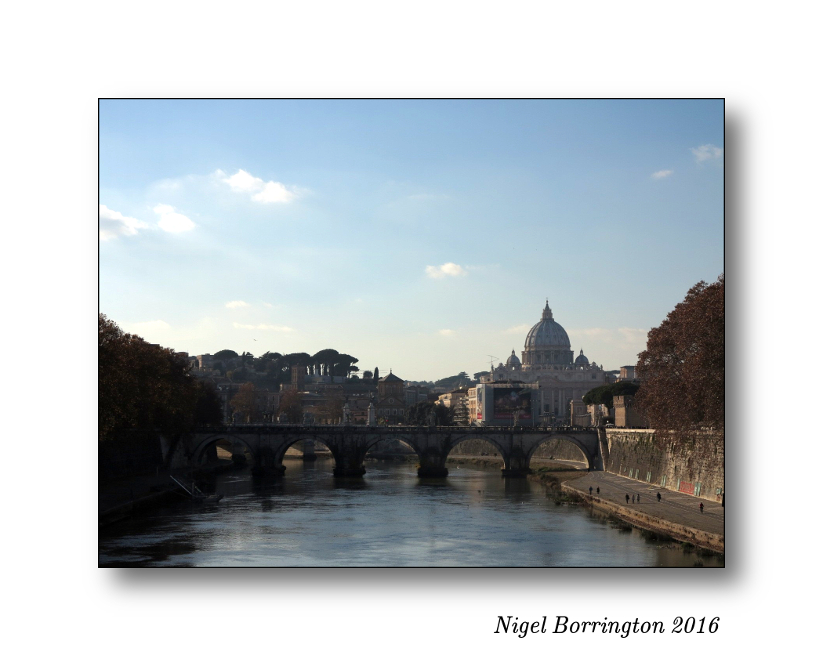
River Tiber
Rome
Nigel Borrington
I last visited Rome in December 2015 and took a few landscape images along the banks of the river Tiber, this river is a great location for photographers and artists alike.
Some years back while I was studying art history, I took a close look at the art work created by many artist who lived in Rome or who had visited this great city and done their best to capture its atmosphere.
Art work such as this great engraving by A. Willmore in the style of J._M._W._Turner, this is a fantastic etching as it captures the river and it location perfectly, live along the river banks.
it is not to hard to imaging this work as a great black and white print in modern terms.
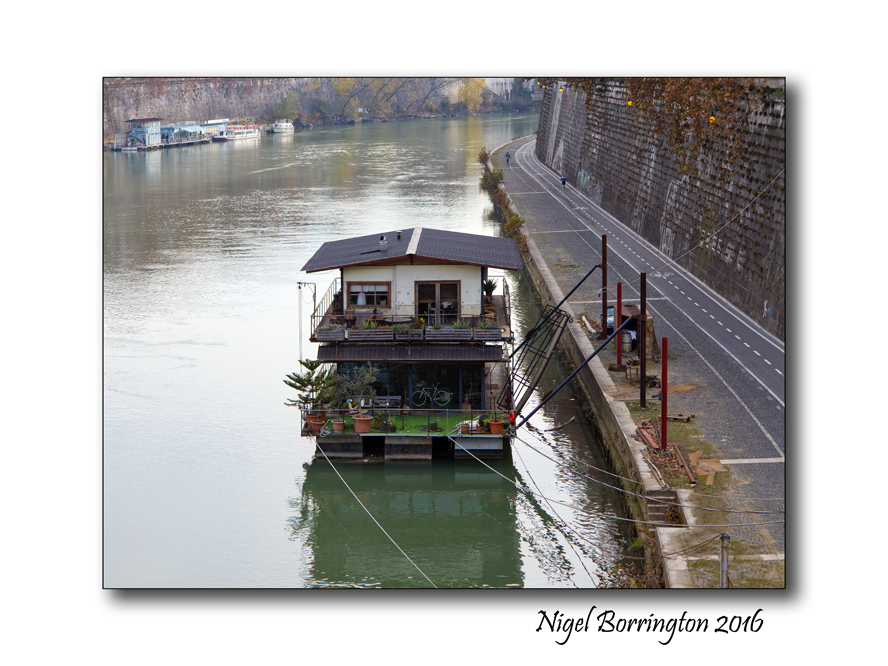
Life along the river bank
River Tiber
Rome
Nigel Borrington
Today the river Tiber is still used in many of the same ways as you can see in this drawing, it is now even the home to many people who live in house boats. the banks are today acting as walking routes and cycle paths.
Fridays Artist : Peter Collis, An Artist who Understands the Irish landscape
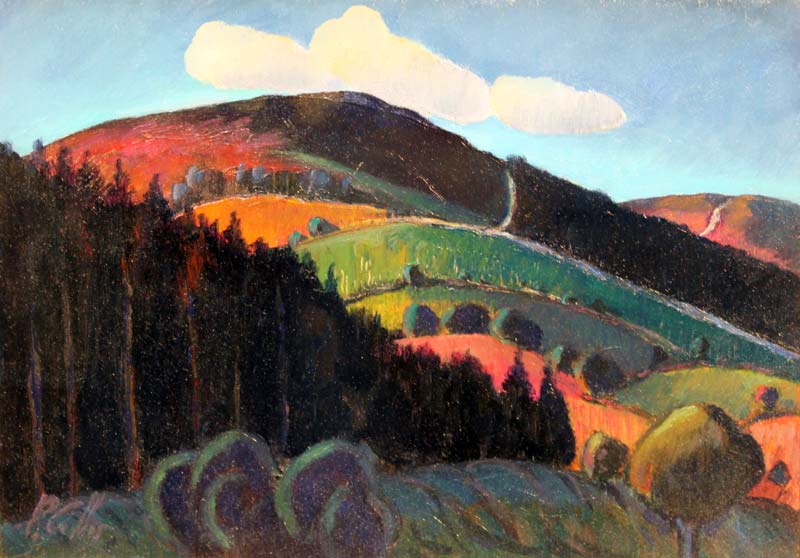
Glencrea Valley
by Peter Collis RHA
I started this week in my blog by saying that I was taking sometime each day to study some of my most loved Artists, I feel that the week has been really valuable to me in this respect and I am very pleased with how it has all worked out. At the same time the week has only scratched the surface of my full aims, being to gain an understanding of how so many great artists have used the landscape of Ireland and the UK in their art work and to define how I can take this as some personal inspiration.
While during the last few years I have taken many more photographs than produced paintings, I have been painting as a form of self-expression for many years. Oddly it was not until I decided to attend art school at Waterford(WIT) that I stopped painting so much, I think many experience this odd effect from current formal art study and art schools.
I don’t want my blog to become completely art and artists based and to move away from my own photography posts, although I personally feel that the two are very closely linked in any-case. So next week I will move a little back towards photographic images, I will however still keep posting some reviews of the artists and art work that I find the most interesting.
Has this week helped to inspired me ? , Absolutely! I feel its time to paint again as well as use my camera !!!
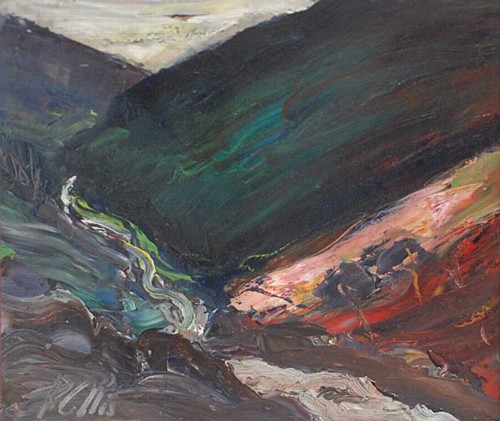
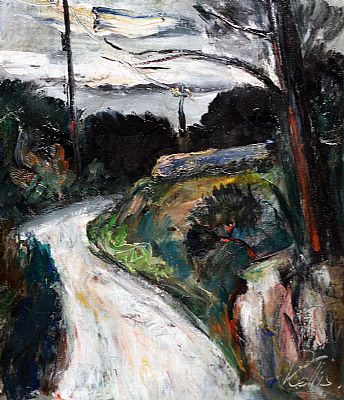
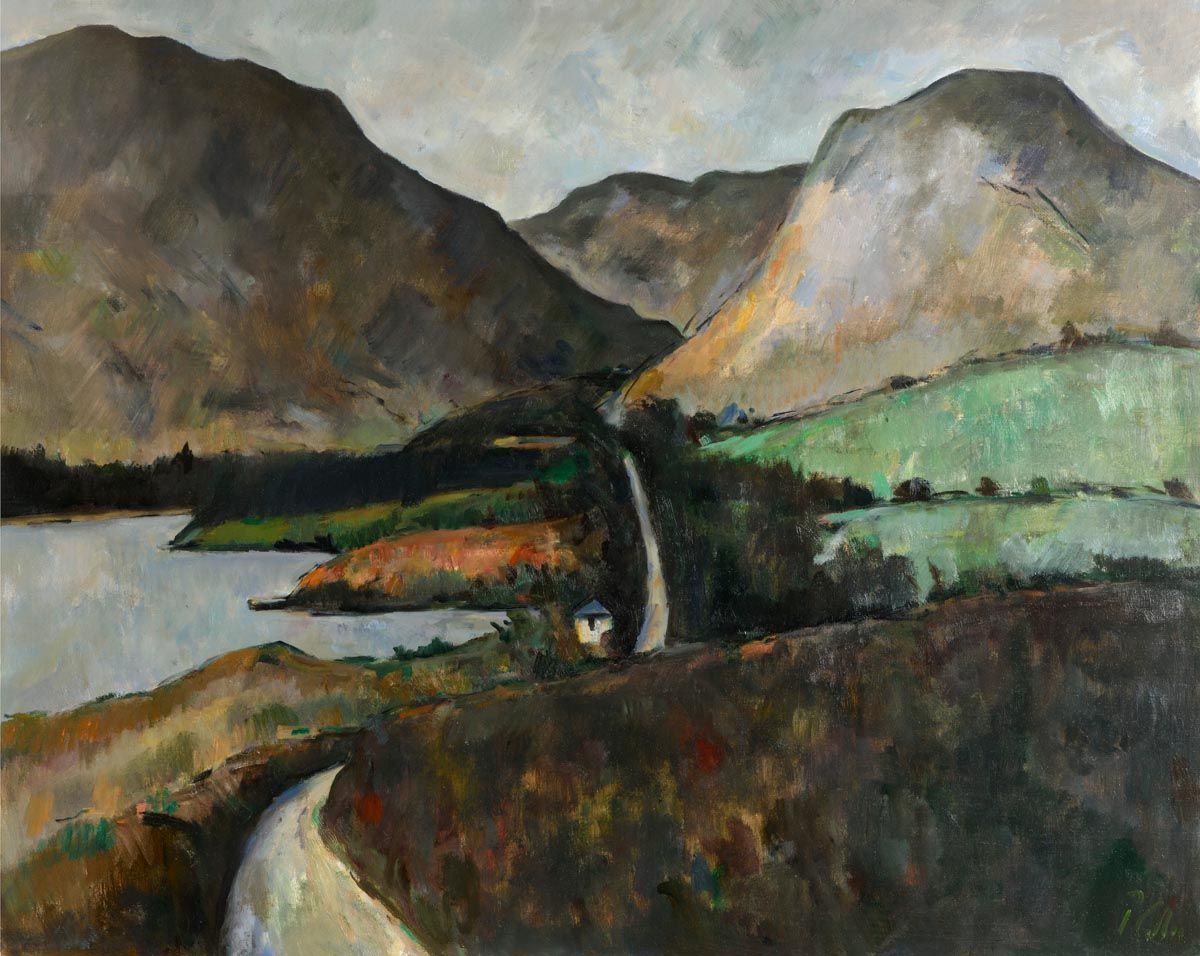
One of these very inspiring artists is Peter Collis the artist I have selected for my Friday Post. I remember visiting the Solomon Gallery, Dublin in 2002 , the first time I got to see any of peters paintings and I very much liked them from the start. I liked his style of painting of the landscapes he painted and very clearly loves, using a limited amount of colours like many artists do, I very much liked the way the movement of his brush can be so clearly viewed in his work, each gesture he made forms a feature in the landscapes he paints and each of these gestures are left alone on the canvas from the very moment they have been made.
I found this great review of Peter in the Irish independent dated 2012 – it says much more Than I can myself !!!
A little about Peter Collis by : Eamon Delaney
A lovely, gentle man’ was how veteran sculptor Imogen Stuart recalled the painter Peter Collis who has passed away at the age of 83. Collis, who was born in England and came to Ireland in 1969, was an acclaimed landscape artist and still life painter who had been a stalwart of the Royal Hibernian Academy. His canvasses are characterised by a powerful and dramatic style under the painterly influence of great masters such as Paul Cezanne, whom he adored, and Maurice de Vlaminck. In contrast to the traditional realistic depictions of the Irish countryside, Collis employed a bold brush and brought a strong expressive energy to his outdoor renderings.
He was particularly fond of Killiney, and its bay, and of the topsy turvy Wicklow countryside. The Sugar Loaf mountain became a familiar motif in his work. He also composed striking still lifes, of groups of green pears and vivid red apples, which evoked a distinctive European quality.
The physical appearance of Peter Collis often belied the rugged intensity of his work, with its rain-drenched hills and wind-bent trees. An unfailingly courteous man, who was widely popular, he wore Savile Row suits and was described by painter Mick O’Dea as possibly “the best dressed artist in the entire Irish arts scene”.

Born in London, he studied drawing and painting at the Epsom College of Art in London between 1949 and 1952. After college, he moved to Ireland where he had discovered a profound connect with the Irish landscape which would shape the course of his painting for the next four decades. Working for the Shell Oil company, Collis would paint in the early mornings from sketches and studies made on sales trips across the country, developing his craft and building a reputation as a painter of exquisite fluency. The critic Desmond McAvock wrote of him: “Like Cezanne he is really more interested in the structure of his scenes than in their transitory appearance . . . he can bind his observation into a cohesive, tightly controlled but always sensitive design.”
According to his longtime companion and fellow painter, John Coyle, Collis “saw things in the Irish countryside which the rest of us might never see”. Being something of an outsider, the Englishman was emboldened by bringing a fresh eye to it all. “He didn’t have the historical or territorial baggage that many Irish would have,” said Coyle, “and saw the landscape for what it was along with the physical, and poetic, possibilities it offered. He pursued the simplification and arrangement of shapes, just like Cezanne.”
In Dublin, Collis was most recently represented by the Solomon Gallery and only last month had a retrospective exhibition in the John Martin Gallery in London. In 1990, he was elected to full membership in the Royal Hibernian Academy and was actively involved in the activities of that body. In 2002 he was conferred a senior member of the Academy. He received many awards, including the Royal Trust Co. Lt. Award in 1975, the Maurice MacGonigal Landscape Prize of 1981 and the James Adam Salesroom Award, RHA of 1999. His paintings are represented in many public collections, including those of AIB, Bank of Ireland, Limerick University, University College Dublin, and the Office of Public Works. His paintings are also owned by many private collections including Bono, Christy Moore, and Lord Puttnam, the English film maker.
He will be missed by the artistic establishment, but also in the context of the wider artistic understanding of the Irish landscape, which he did so much to further. Most especially, of course, he will be missed by his wife Anne, and daughters, Vanessa, Mandy and Kate, as well as grandchildren. He was sadly predeceased by the untimely passing of two of his children, David and Gail. His funeral service was held in the Parish Church, Monkstown (Church of Ireland) followed by burial in Deansgrange cemetery.
Sunday Independent
Thursdays Artist is a rediscovered source of artistic energy : Joash Woodrow

Four Trees, White Fence by Woodrow, Joash (1927-2006);
I first viewed the brilliant art work of Joash Woodrow in 2005 at the Manchester Art Gallery, I was back in Manchester visiting my sister and went into the city centre for the afternoon. I was not intending to visit the Gallery but it was raining so I wondered inside to see what exhibitions where on display, this was a lucky moment and one I will never forget.
I looked around the galleries permanent exhibitions and then took the stairs to the upper floor for a guest exhibition entitled “Retrospective – Joash Woodrow”, from the very first painting I viewed, I just knew I was going to fall in love with Joash’s drawings and paintings and I have been fascinated with his work and life story ever since.
I love Joash’s work for its very honest style, by this I mean that I feel he used his brush’s and paint’s to capture his world as he found it, there is little to praises or note about how perfect his style of painting or drawing is but so much to fall in love with about how he viewed his surroundings and how well he liked and felt for the people he painted.
This is painting in the RAW, produced by someone who, I feel if you were allowed to get close to him then you would truly like him !!!

Joash Woodrow (1927-2006) Mr Woodrow’s Shop, Chapeltown Road, Leeds c
About Joash Woodrow, By :Nicholas Usherwood
Joash Woodrow, Reclusive painter whose work provides a significant link between British and European art
The chance discovery in a Harrogate bookshop in 2001, by the painter Christopher P Wood, of six volumes of an engraved Victorian art history, wildly and exuberantly annotated in a series of Picasso-esque drawings and collages by the then completely forgotten painter Joash Woodrow, led directly to the re-emergence of one of the most significant artistic figures in postwar British art. A visit a few days later by the Harrogate dealer Andrew Stewart to a small, semi-detached house in north Leeds, where Woodrow had lived alone for 20 years, uncovered an extraordinary story. The house was filled with some 750 canvases and around 4,000 works on paper, a lifetime’s achievement which a devoted family was none the less contemplating consigning to a skip.
Joash, who has died aged 78, had recently been taken into sheltered accommodation, having nearly set fire to the house, but his work itself had avoided serious damage. In the months that followed, it became apparent that this was no isolated figure at the margins of art history but an artist of sophisticated interests and training.

Born in Leeds, Woodrow was the seventh of nine children in a poor but cultured Jewish family that had escaped the pogroms in eastern Poland of the early 1900s. His father had run a Jewish bookshop in Chapeltown before working in Montague Burton’s factory to provide for a growing family. Joash trained at Leeds School of Art and, in 1950, won a scholarship to the Royal College of Art.
His intense shyness does not seem to have been suited to the competitive atmosphere there, though his tutors’ reports commented that his work already seemed more European in feeling than most of his contemporaries, among them John Bratby, Leon Kossoff and Frank Auerbach. A year or so after leaving the RCA in 1953, he suffered a nervous breakdown and took himself back to Leeds, where, supported financially by his family, he lived and worked for the rest of his life.
Advertisement
Joash Woodrows – Leeds
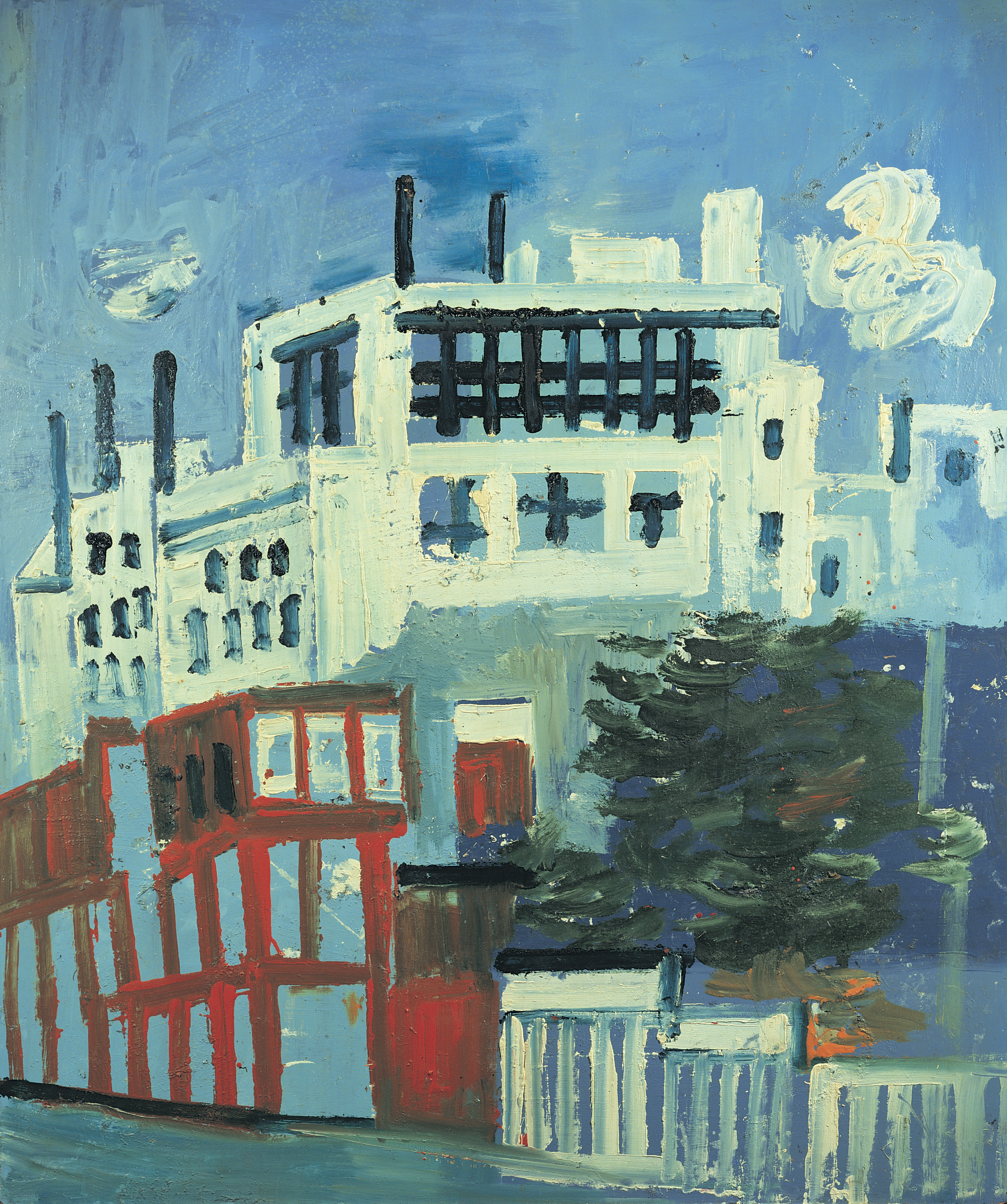
With his mother and two brothers also living in the two-up, two-down house, working conditions must have been extremely cramped, which almost certainly explains the comparatively small scale of Woodrow’s early work. Mostly portraits and landscapes, their dark tones illumined by flashes of sonorous colour and intense solemnity, they reveal the beginning of a distinctive style, one that in its understanding of the French fauvist Georges Rouault showed Woodrow already looking to European art for inspiration.
This gathered momentum with a number of visits to the huge Picasso exhibition at the Tate in 1960, the crucial impact of which was to give Woodrow an insight into his Jewish heritage, and the understanding that the roots of his art lay outside this country and were essentially European in character.
Looking to the fierce expressionism of Karel Appel, Asger Jorn and the Cobra group, the harsh, raw surfaces of Jean Dubuffet and the Art Brut circle, and the insistence on the quality of mark-making of Nicolas de Staël and the tachistes, Woodrow began to uncover the source of those artistic energies that were to carry him over the next 30 years of intense activity. With the death of his mother in 1961 – and with more room in which to paint – there was a steady increase in the scale and ambition of the work.
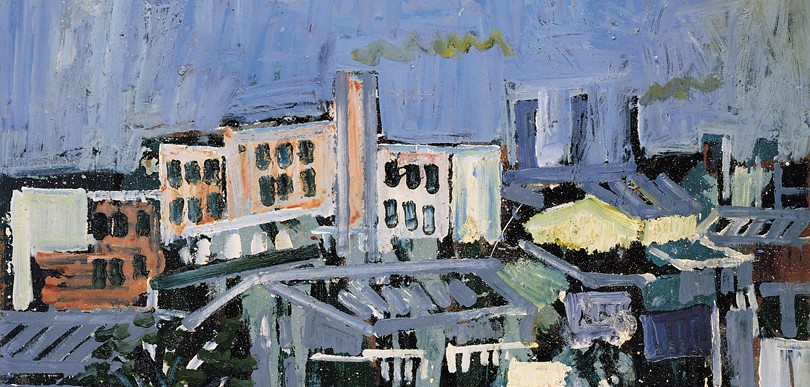
A lack of success in the work he occasionally submitted to large, open competitions like the John Moores, however, encouraged a feeling of isolation, something his reclusiveness only served to emphasise. By the early 1970s, he was living and working with very little thought for anything but the next painting, producing large-scale canvases (anything of up to 5ft x 8ft) with quite extraordinary rapidity. When not painting, he was drawing furiously in the semi-industrial and urban districts of north Leeds those subjects that were to form the basis of some of the most original and experimental works of his later career.
Advertisement
If his personal life was unhappy, there is no sign of it in the power and exuberance of the broad brush strokes, high-pitched colour and boldly flattened picture spaces with which he describes this landscape – an unprepossessing jumble of scruffy allotments, derelict factories and scattered trees.

Gilbert Looking Down, Joash Woodrow
By the early 1990s, Woodrow’s physical and mental health began to decline, and the house was too cluttered with paintings for him to do anything but draw. At the time of the 1999 fire, he seems to have stopped doing even that and, after his removal to sheltered accommodation in Manchester, he lost interest in working altogether.
Nor did he seem very interested in the public recognition that followed, when books and major exhibitions – at Leeds art gallery and then Manchester art gallery, and the Ben Uri and RCA last year – created a wave of interest that looks certain to place him firmly as a significant link between British and European artistic movements in the second half of the 20th century. His brothers Saul, John and Paul survive him.

· Joash Woodrow, artist, born April 7 1927; died February 15 2006
Wednesday’s artist’s work is full of Water and Trees : Trevor Geoghegan

A Winter Boundary by Trevor Geoghegan
Today I want to share the art work of TREVOR GEOGHEGAN he uses a ready made subject near at hand the scenic mountainous area around the upper reaches of the Liffey in county Wicklow. He paints it again and again but not exclusively his present exhibition also includes landscapes from the west Connemara, Doolin etc. However, it all ends up pretty much his own style, with plenty of heather, foaming streams, moorland and woodland.
The vision is conventional, knowing how to relate foreground to middle ground in his work. It is “picturesque” nature, but not picture postcard nature, with a real sense of emotional engagement. The angles of composition are varied The Yellow Field, one of the best pictures in the show, is seen from above and the skies are generally alive, not merely filled in.
I like and has seen lots of Trevor’s paintings overtime and love very much the closeness to the landscape that he paints, it feels very much like he walks deep into the woodlands and forest river banks in order to find his subjects and this shows in his work, I also like very much the closeness to nature that he reflects on, these are real places painted and real moments !!!
A little about : Trevor Geoghegan
Born in London 1946, Trevor studied at Worthing College of Art, Sussex before graduating from Chelsea School of Art, London in 1968. In 1971 he settled in Ireland, moving to Blessington, Co. Wicklow. He lectured at the National College of Art & Design, Dublin from 1978 to 2004 and teaches annually at the Burren School of Art, Co. Clare and also holds annual drawing workshops privately and at the National Gallery of Ireland.

Moonlight, Blessington Lake by Trevor Geoghegan
Trevor has had numerous successful solo shows since 1978, has exhibited at the RHA and his work can be found in many collections worldwide including Aras an Uachtarain, the Arts Council of Ireland, Bank of Ireland, Dail Eireann and the National Self Portrait Collection. His work is also represented in numerous private collections in Ireland, USA, Germany, Japan, Canada and UK.

Tuesdays Artist – Bernadette Kiely

Bernadette Kiely. Gorse
I first came across the drawings and paintings of the county Kilkenny based artist Bernadette Kiely, while attending a two year art course at the Grennan mill craft school.
I liked Bernadette’s art work from the very first time I viewed it, I feel she captures completely the local landscape that surrounds us here in County Kilkenny. The county while not the most spectacular in Ireland varies a lot from low boggy lands and flooded river banks and mountain tops.
A little About, Bernadette Kiely
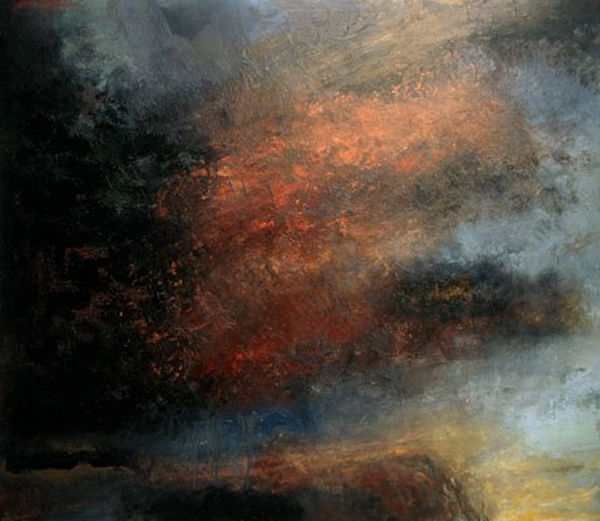
Bernadette Kiely was born in Carrick on Suir, County Tipperary and grew up beside the river Suir. She graduated from The College of Art and Design at Waterford Institute of Technology with a distinction in Graphic Design and worked in graphic design and architecture in New York and London before taking up painting full time in 1984. She attended the Slade School of Fine Art in London and has been working in her studio beside the river Nore in Thomastown, County Kilkenny since 1992. Her paintings and drawings are based on prolonged observation of specific landscape elements and are characterised by her attention to the close up worlds of bog cotton, gorse, mud, lichen and other natural phenomena including weather and atmospheric conditions on the river Nore and its environs. Bernadette Kiely is a member of Aosdana.
As with yesterday’s artist, I have linked to both web-site and to some on the painting I like the most …


A Monday look at Joseph McWilliams

Joseph McWilliams PPRUA
I am taking time this week to do a study of some landscape artists/photographers who’s work I very much like very much.
I feel the need to take a look at the work of the artists I know of again, who use the landscape of Ireland both North and South along with the British Isles, in there drawings and painting and Photographs.
I first came across the art work of Joseph McWilliams when I visited an exhibition called “Landscapes north and south”, the the exhibition was held at the Glebe House Gallery, County Donegal.

A little about : Joseph McWilliams PPRUA
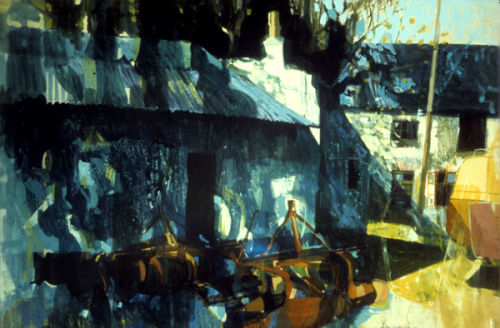
Joe McWilliams was born in Belfast in 1938. He studied at the Belfast College of Art and at the Open University. Later he lectured in Art Education at the Ulster Polytechnic in Belfast and was Senior Lecturer and Senior Course Tutor at the University of Ulster. Since 1986 he and his wife, artist Catherine McWilliams have managed the Cave Hill Gallery, Belfast. He has had numerous solo exhibitions and has been represented in major Irish group shows both in Ireland and abroad; Recently his work was seen in an exhibition entitled ‘Dreams and Traditions: 300 Years of British and Irish Painting’ from the Ulster Museum Collection which toured the USA in conjunction with the Smithsonian Institute, Washington. His work is held in numerous collections including: NI Arts Council, Queen’s University, Coras Iompair Éireann, the Department of the Environment (NI), AIB, the National Self Portrait Collection of Ireland.
McWilliams is a regular lecturer and broadcaster on the Visual Arts in Northern Ireland and has been invited to speak on the Arts a number of times in Boston, USA. He has also published articles and reviews on the subject. He has written many scripts for BBC radio and has presented, his own script “The Way that I Went” which was seen on BBC world services as well as locally and in Britain. His own work has been exhibited at a variety of venues in Ireland, Britain, Europe and the USA. He is perhaps best known for his paintings of ‘The Troubles’ evidenced in exhibitions such as ‘Art for Society’ Whitechapel Gallery, London; ‘Documenta 6’ Kassel, W.Germany; ‘A Troubled Journey 1966-1989’ and ‘Colour on the March’ both at the Cavehill Gallery, Belfast.

I liked Joseph’s paintings very much for both their painting style and the fact that he used the world around himself for subjects to paint, even using his own back Garden for much of his work.
Here I link to his web page http://www.josephmcwilliams.com/, for some of the painting I like the most.


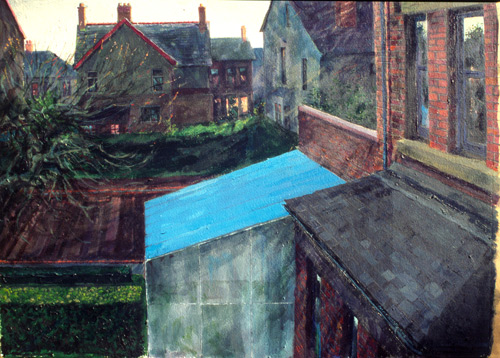


Sketches of Ireland , kilcooley Abbey, County Tipperary

Sketches of Ireland
Kilcooley Abbey
Tipperary
Nigel Borrington
Last week I revisited Kilcooley Abbey in country Tipperary with the aim of capturing some images to produce some sketches and paintings from.
The Abbey is an amazing location and this quick sketch is made on my tablet using Krita a digital painting application. I like the idea of fast sketches, they are not meant to be anything like finished work but by doing them you feel you know the location your hoping to work with very well, be it for painting/drawing or photography.

Snowy mountain peaks, Nire Valley, Co.Waterford

Following on from my last two posts relating to getting to know a pc Art based application called mypaint, I spent yesterday evening working on some quick landscape sketches of the Nire Valley in county Waterford
I am starting to feel a little more confident with the available brushes, learning just how best to make use of some of them along with using layers to help build up a painting. As with any method of producing art work, I guess the best way to learn is to keep producing image’s, so I hope to keep working on as many paintings as possible.
Painted Skys – MyPaint
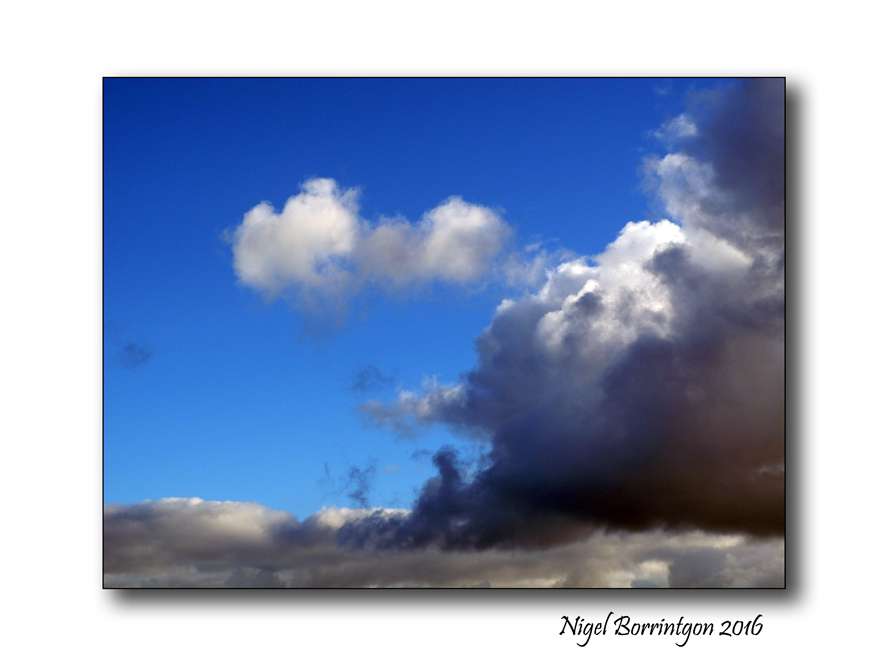

Painting Skys – MyPaint
Earlier this week I posted about MyPaint a Windows and Linux application used to produce ( Art work , digital Paintings and Graphic Designs)
Since then I have been able to spend a little time using this application to paint some sky’s using some photographs as source material. I feel that its always a good idea to practice areas of a painting and sky’s are great fun to work on by themselves.
MyPaint has a full selection of artists brushes available that are capable of reproducing such painting styles as (oil, Acrilic and watercolour), I have found the watercolour brushes and tools such as the sponge very flexible, especially when you want to blend areas of a painting together and produce some soft area.


Another area I have worked with is the colour palettes, there are many great palettes available as standard in MyPaint, I am however more use to working with artist colours from a tube and wanted to recreate some of these colours digitally.
So by downloading the Winsor & Newton Artists colours palette as a tiff file and then creating my own palette by using the colour eye proper selection tool and the tiff file I have now produced a palette that matches the one I am a little more use to working with. This palette is only a starting point and I can ether edit or added to it as needed.
As for mixing colours using this palette as a starting point, I am experimenting with the available scratch pad window along with the palette knife and smudge tools to see just how well colours can be mixed.


Digital painting and artwork with mydraw

During the weekend, I started to use an application called (my-paint), to help with some of the art work that I am starting to work on again.
I first used this application last year and along with a Wacom tablet , I have its great fun to work with.
I love the drawing control the tablet can give, almost as good as using a real pencil or brush and this combined with the pens and brushes available in my-paint, you can make a great start learning line control and layering of both tone and colour.


Slievenamon, County Tipperary , Rock Balancing on the top of the World
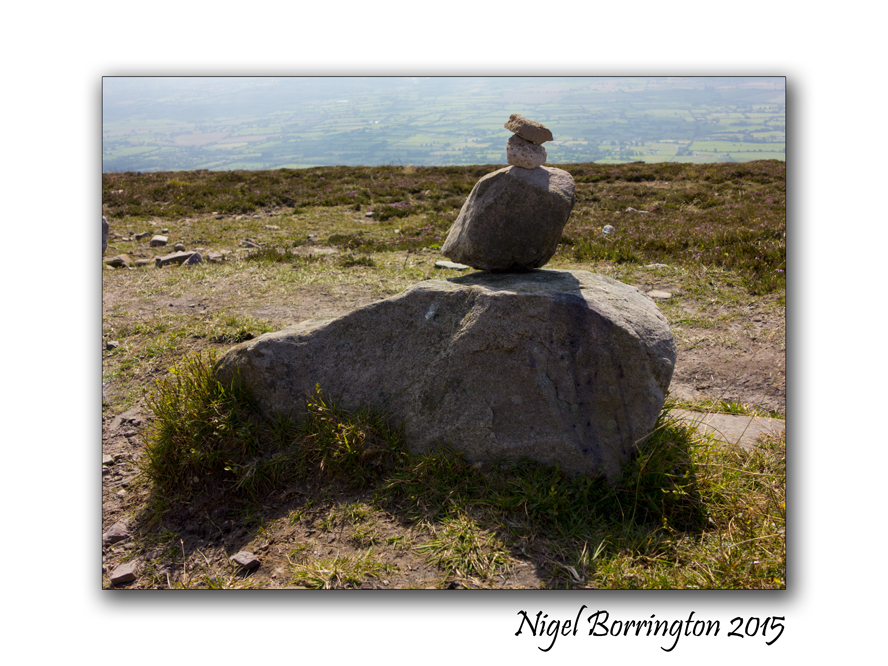
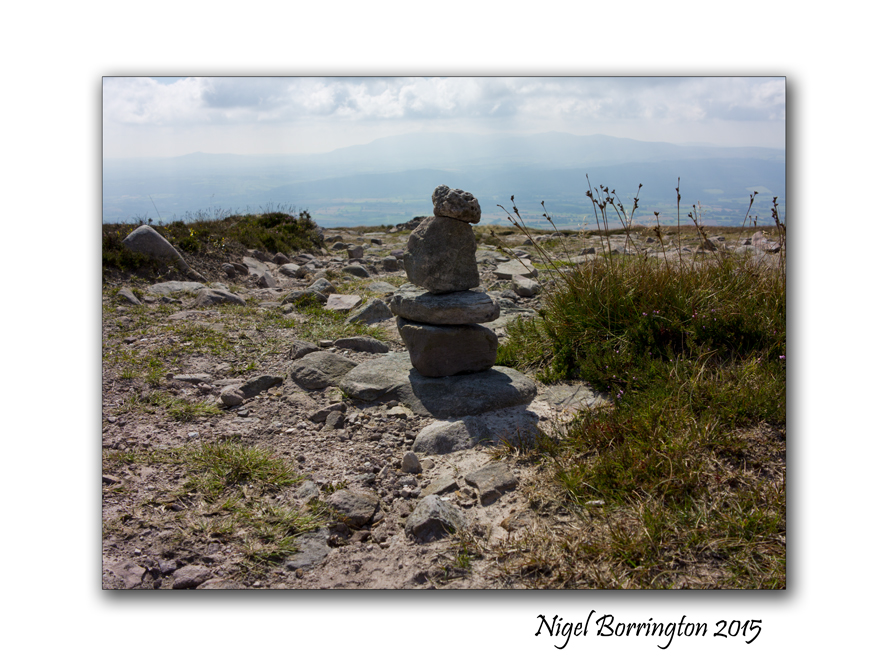
Slievenamon, County Tipperary , Rock Balancing on the top of the World.
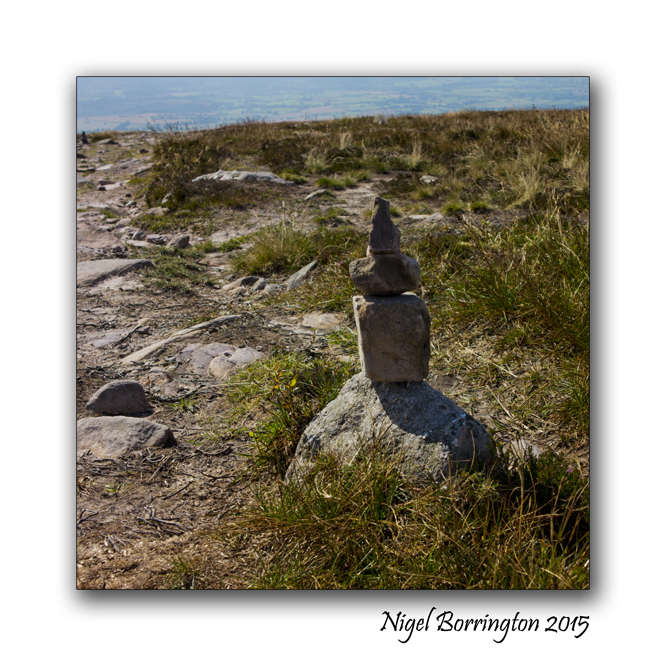
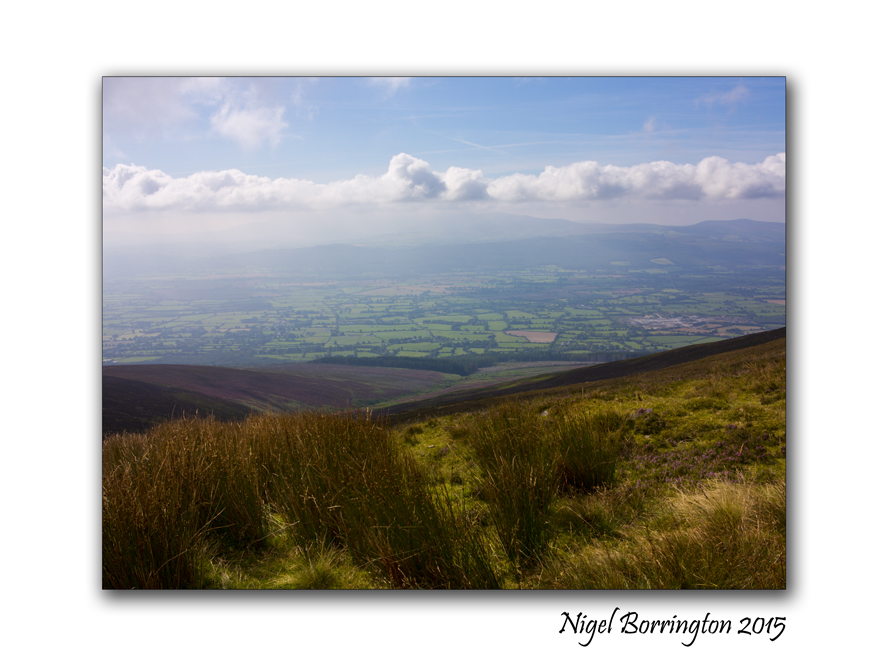
During a recent walk up to the top of our Local Mountain (Slievenamon, county Tipperary), I came across many great examples of the art of Rock Balancing, Sadly whoever it was that had spent so much time putting these sculptures together had already left so I could not get any pictures of them working so creatively.
I still got lots of images and just wanted to share them here as a record of such great acts of creativity. The thing that impressed me the most was not so much each sculpture ( Although each was great to see ! ) but the number of them and what better location for them than the roof of the world , the very top of Slievenamon the spiritual home for anyone from county Tipperary.
Gallery


Kilkenny Photography : Light through the glass windows.

Kilkenny Photography : Light through the Windows.
Nigel Borrington
The art of Glass making has always fascinated me, the skill needed to produce glass objects goes back hundreds of years and is a wonderful craft to see performed.
One area that the craft can be viewed at its best is in the making of Stain glass windows, the windows above are located in the modern chapel at west-court, Callan, County Kilkenny. the chapel is round in its structure and uses these colored windows as one of its main light sources during day light hours. I have many images of this great space but for this post just want to show the glass itself.
I very much like the handmade feel and look of this glass, containing many natural defects, these just add to the wonderful effect as the light passes through. The design and the colours used are just amazing to study and bring a great effect into the chapel building.
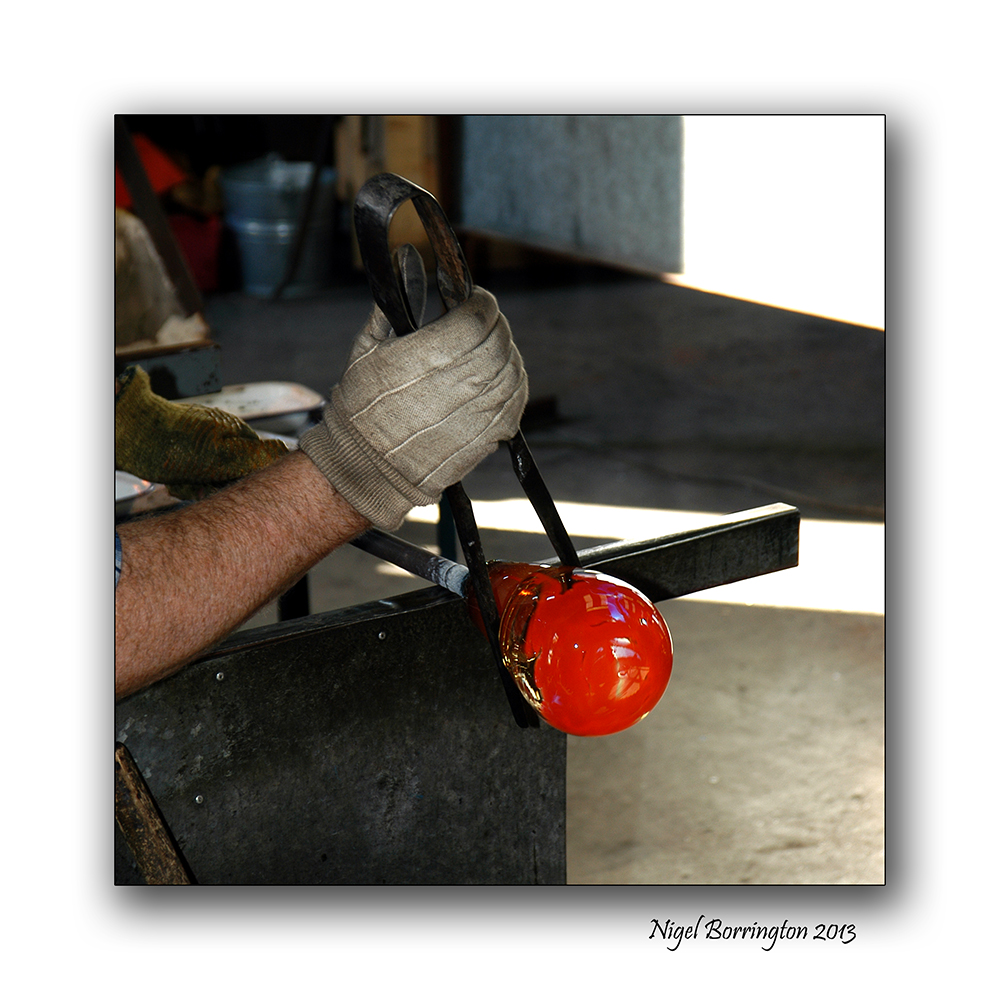 , A Glass blower at The Kilkenny Jerpoint, Glass studios
Glass windows like these are made my hand and by blowing the glass into a bubble then Breaking of the top and spinning the hot glass into a large flat sheet. This flat sheet is then cut into the needed shapes for the design of the window being constructed.
Perseus with the Head of Medusa , By: Antonio Canova (1757 – 1822), – Vatican Museum, Rome.

Perseus with the Head of Medusa , By: Antonio Canova (1757 – 1822)
Photography : Nigel Borrington
It has been a couple of years now since I last visited Rome and I am starting to think of a return visit at some point, on my last stay with my brother we visited the Vatican Museum.
One of the most amazing thing about this museum is that it holds much of the worlds fine arts along with artifacts from per-christian time, including the classical Greek period and the time of the pyramid building in Egypt.
I captured this image of “Perseus with the Head of Medusa” by Antonio Canova (1757 – 1822) as its just a wonderful work of art as with all his sculptures.
Below I have included a description of the Greek Myth “Perseus and Medusa” and then a description of the sculpture itself.
Perseus and Medusa
Medusa was one of three sisters, the gorgons, but she was the only mortal one. Some versions say all three were born as monsters, but the predominant myths had them as gorgeous maidens. Medusa was so beautiful that Poseidon was crazy about her, but she didn’t care about him; Poseidon turned her and her sisters into monsters with live snakes covering their heads. Medusa kept her beautiful face but everything else was so monstrous. And whoever dared to look into her face ended up being turned into stone.
Perseus thus had a hard task. He asked Athena and Hermes for help and two of them, together with the nymphs, provided winged sandals to fly him to the end of the world where gorgons lived, a cap that made him invisible, a sword and a mirrored shield. The latter was the most important tool Perseus had, since it allowed him to see a reflection of Medusa’s face and to avoid being turned into stone.
medusa-headWhen he cut Medusa’s head off, from the drops of her blood suddenly appeared two offspring: Pegasus, a winged horse, and Chrysaor, a giant or a winged boar. It’s believed that those two were Medusa’s children with Poseidon.
In any case, once he accomplished his task Perseus flew back and escaped Medusa’s sisters who tried to reach him. Later, Perseus used Medusa’s head as a weapon in many occasions until he gave the head to Athena to place it on her shield.
The myth of Perseus and Medusa was one the most powerful inspiration for many artists in the ancient times, but it hasn’t lost its artistic significance to the present day either. Paintings and sculptures of the moment of beheading or Medusa’s portrait itself are famous all over the world. One of the most known art work is the Medusa shield by Caravaggio, painted at the end of the 16th century. It is exposed in the Uffizi museum in Florence. Close by the museum, in the main plaza of Firenze (Florence) there is a sculpture of Perseus.
Perseus with the Head of Medusa , By: Antonio Canova (1757 – 1822)
This exquisite marble statue of Perseus is being restored thanks to the Generosity of the Northwest Chapter of the Patrons of the Arts.
Antonio Canova is one of the most important Italian sculptors of all time. His marble statues are characterized by classical beauty and they are now on display in the most important museums in the world.
Antonio Canova (1757 – 1822) was born in Possagno, a village near Venice. He spent most of his youth studying, with a strong bias towards the art of sculpture, and was greatly rewarded by the benefit of his grandfather’s stonecutting. His move to Rome as a young man gave him the opportunity to examine the splendid relics of antiquity, and put his abilities to the test.
Canova’s Perseus had not been commissioned by anyone, thus he put it up for sale. Giuseppe Bossi, secretary of the Academy of Brera, and personal friend of the sculptor wanted to place the Perseus in the Foro Bonaparte and he had already begun the payments when a letter came from Cardinal Doria informing Canova that Pope Pius VII wanted to buy the sculpture for 3,000 gold coins in order to place it in the Vatican Museum. Thus, the Perseus was moved to the Vatican and was placed on the empty pedestal of the famous Apollo Belvedere which had previously been moved to Paris by the French, following the Treaty of Tolentino. Pope Pius VII also appointed Canova with the prestigious award received by Raphael under Leo X: the Inspector General of Fine Arts. The location of the statue on the pedestal of the famous Apollo together with the nomination of the sculptor as Inspector, consecrated Canova’s success.
The imposing statue depicts the hero of Greek mythology Perseus, son of Zeus and Danaë, with the helmet of Pluto (which had the power of invisibility), the winged sandals of Mercury and the diamond sword given to him by Vulcan.
These gifts were granted to Perseus in order to allow the hero to defeat Medusa, against whom he was sent by Polykleitos, king of the island of Serifos.
Canova represented the Perseus triumphantly raising his left arm with the head of Medusa. The excitement of the action is frozen as is customary of the classical style. The Argive hero has similar proportions and positioning to the Apollo Belvedere.
By following the classical theme of the heroic male nude in action, Canova seems to have been able to achieve results as advised by Winckelmann and the Neoclassical age, according to which the only way to become great is to be inspired by ancient models. Stendhal said that Canova imitated the Greeks, but like them, his genius invented a new beauty.
Irish Boglands Art work

Painting of the Irish Bogs
By Artist : Noel Browne
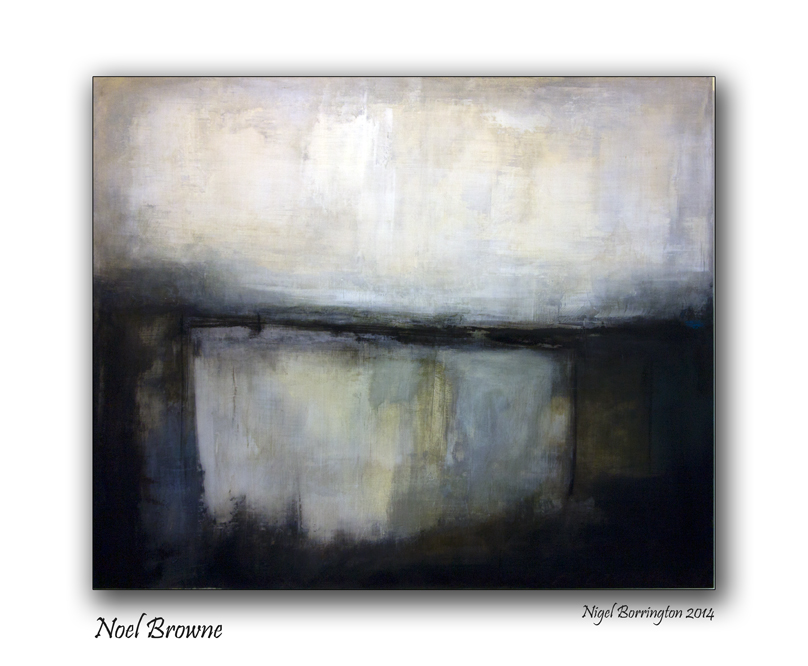
In my earlier post I posted some of my own images of the Bog of Allen, Just one of the Irish Bogs I love visiting. Last year I went to see an Art exhibition that included some painting by, county Kerry based painter Noel Browne.
Some of his paintings I share here.
I feel he has captures the wonderful feel of the Irish Bogs including the vast Landscape they produce, when they have been cut by mechanicall harvesters for Peat production. His painting capture the almost monotone landscapes with deep flooded pits created by these machines.
Paintings


Still life Painting – The Sheeps Skull (Photography and Painting)
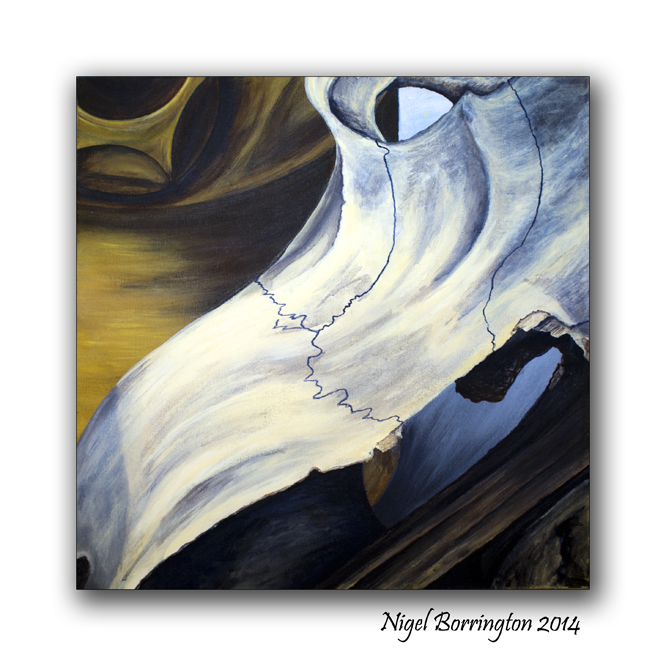
Still life Painting – The Sheeps Skull
Acrylic painting : Nigel Borrington
The Sheep’s Skull (Using Photography when Painting)
Even though most of my work on my Blog is Photographic, I still paint using Acrylic paints on canvas that I stretch and mount to the size I need.
When preparing to paint a still life like the sheep’s head and oil lamp in this painting, I will take some photo’s of the objects first. This help with getting to do a full study of the items selected, here in the photos I could clearly see all the texture of the skull and how its is made up of smaller sections of bone.
You can see all the texture in the bone and how light falls on to it, the oil lamp was photographed separately, I felt that these two item contrasted very well with each other, the gold colour of the brass lamp and bleached white of the bone.
Painting – Source photographs

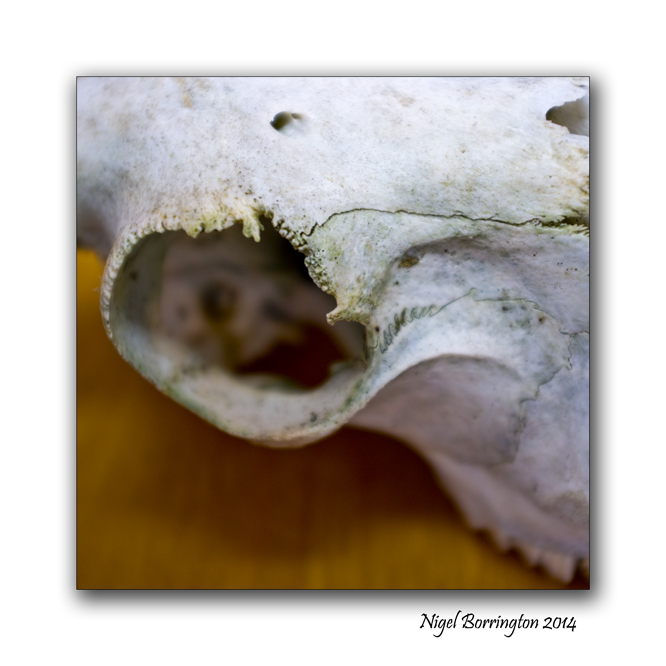

Finding art in nature, natural compositions.

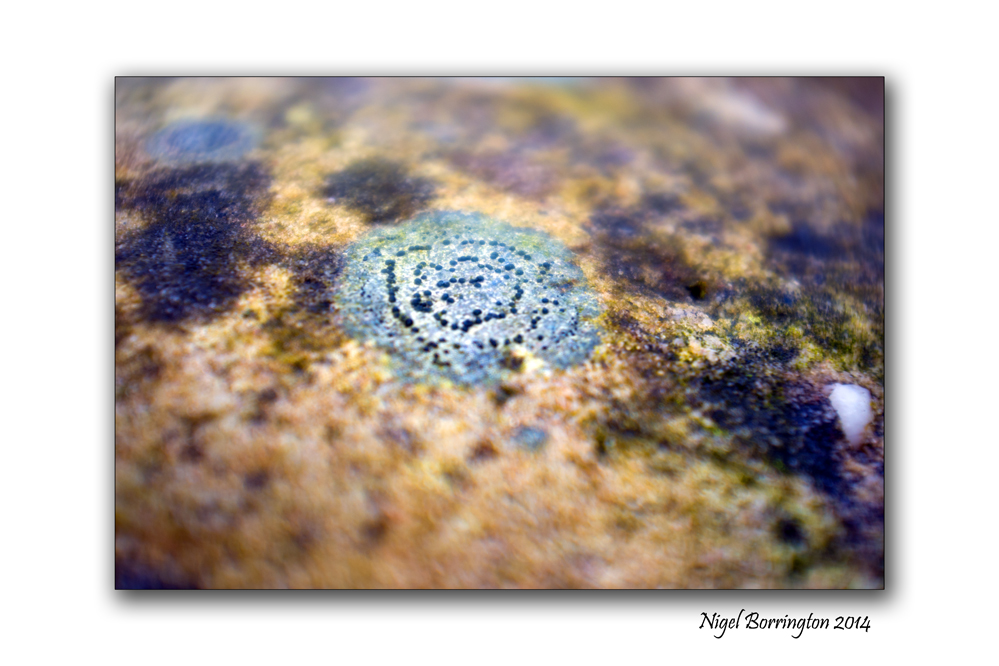
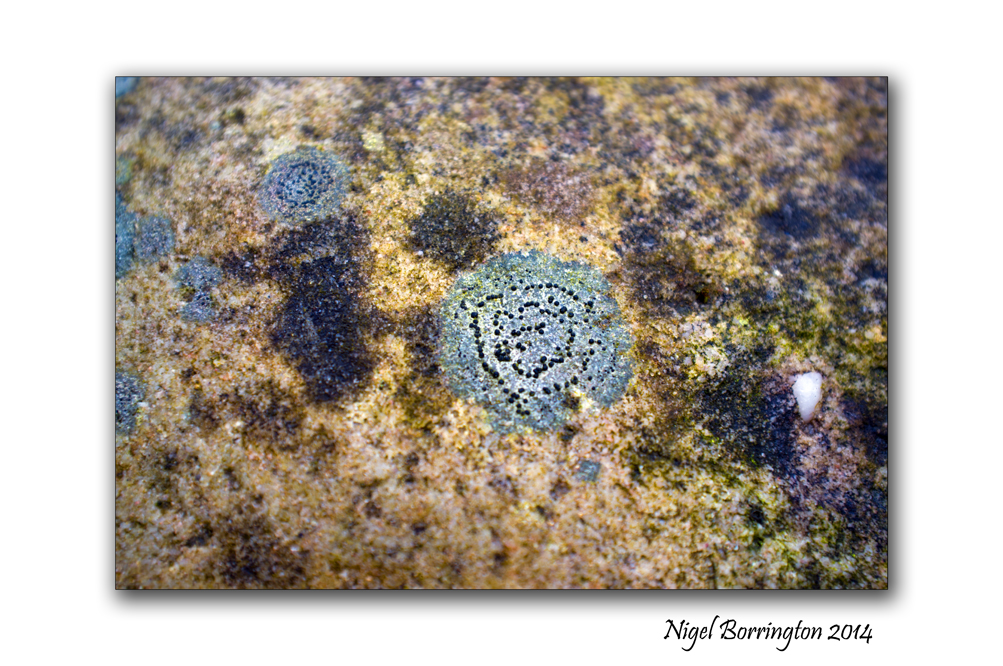
Natural compositions, Lichen and rock
Photography : Nigel Borrington
Finding art in nature, natural compositions
I am a strong believer that nature itself is an artist and that all artists are doing really is to seek out and highlight to other people what elements of our natural surroundings interests themselves the most.
I took sometime away from my Blog this weekend and had an almost technology free time, walking and relaxing and just taking time to look and take in some new locations and subjects.
I took a walk through one of our local forests here in County Kilkenny and while taking a rest for a moment I noticed some Lichen formations on the rocks around me. These rocks themselves had amazing colours from the mixed amount of Minerals that they contained, the Lichen which dies back in the summer months had left some very interesting patterns.
I feel the resulting images are worth sharing as I liked very much the colours and textures produced on this rock surface, I also liked the compositions that could be found while moving the camera around the these Lichens.
Gallery


 Nigel Borrington
Making plans and getting projects ready for 2017
Abstract Sunset
Nigel Borrington
So then 🙂 , this is my first blog post of 2017 – Happy belated New year to everyone 🙂
We returned home to Ireland a couple of days ago , following a wonderful Christmas spent with my sister and family in Manchester. It was a great time catching up sharing time, out side walking and visiting museums and art galleries, talking lots and watching the odd movie or two.
Today I spent sometime organizing my studio room and then shopping, I needed to get some new art supplies , including paint, brushes and sketch pads. Towards the end of last year I worked mainly with digital media for both photography and art work, however in 2017 I want to add real media including pencils , charcoal and acrylic paint to my work.
I am approaching this year in the form of a set of projects that I want to work on and complete by the end of the year. My main aim is to spend as much time as possible developing real skills and end up with a developed portfolio of work that records all the small steps involved with anything I do.

I feel strongly that art of all forms (including photography, drawing and painting) is a skill that involves development. This development needs in some way to be captured/recorded so that you can look back on the steps taken.
So I hope to find a method to record my year ahead, in the form of recorded steps that involve (notebooks, sketches, photos, poems, painting etc…) that all in all build towards finished works.
Above all I am looking forward very much to just getting going and being on a path again 🙂 🙂
Some work from 2016 …..
Two fishing boat
Keem Strand
Achill Island
County Mayo
Share this:
January 4, 2017 | Categories: Art and craft work, Comment, Personal skills and development | Tags: 2017, art, art materials, development, Nigel Borrington, painting, pencil, Plans, projects, skills | 19 Comments