Great Poems : Solitude a Poem By – Ella Wheeler Wilcox

Irish landscapes
Solitude
Nigel Borrington
Solitude
By Ella Wheeler Wilcox
Laugh, and the world laughs with you;
Weep, and you weep alone;
For the sad old earth must borrow its mirth,
But has trouble enough of its own.
Sing, and the hills will answer;
Sigh, it is lost on the air;
The echoes bound to a joyful sound,
But shrink from voicing care.
Rejoice, and men will seek you;
Grieve, and they turn and go;
They want full measure of all your pleasure,
But they do not need your woe.
Be glad, and your friends are many;
Be sad, and you lose them all,—
There are none to decline your nectared wine,
But alone you must drink life’s gall.

Feast, and your halls are crowded;
Fast, and the world goes by.
Succeed and give, and it helps you live,
But no man can help you die.
There is room in the halls of pleasure
For a large and lordly train,
But one by one we must all file on
Through the narrow aisles of pain.
A look at : Solitude by Ella Wheeler Wilcox
Her most popular poem, Ella Wheeler Wilcox’s “Solitude” is about the relationship between the individual and the outside world. The poem is built on a series of contrasting conditions: “Laugh, and the world laughs with you;/Weep and you weep alone.” At first, the words may seem like a guide advising the reader to maintain a positive attitude. It becomes clear, however, that the poem is more complex than that, operating as a road map for the difficult realities of life. At the core of Wilcox’s philosophy is a belief that we all exist in a state of solitude. Wilcox wrote this poem after encountering a grieving woman on her way to Madison, Wisconsin. Despite her efforts, Wilcox was not able to comfort the woman over her loss. Distraught, Wilcox returned to her hotel and after looking at her own lonely face in the mirror, began to write this poem. The context of the poem suggests that what follows is not a parade of moral platitudes but a series of choices. If you laugh, sing, rejoice, or feast, the world will be drawn to you. If you weep, sigh, fast, or grieve, the world will abandon you. After all, in the end, “one by one we must all file on.” The poem is neither an anthem of positive thinking nor a dour account of existential loneliness. It is an invitation to move through the world with practicality and self-reliance.
 Ella Wheeler Wilcox (November 5, 1850 – October 30, 1919)
The Secrets of a Tree, Growing up to the Sky …….

The trees that Climb into the Sky
Landscape Art
Nigel Borrington
The Secrets of a Tree
Because they are primeval, because they outlive us, because they are fixed, trees seem to emanate a sense of permanence. And though rooted in earth, they seem to touch the sky. For these reasons it is natural to feel we might learn wisdom from them, to haunt about them with the idea that if we could only read their silent riddle rightly we should learn some secret vital to our own lives; or even, more specifically, some secret vital to our real, our lasting and spiritual existence. (Kim Taplin)


A Country Boy in Winter , A poem by : Sarah Orne Jewett

A Country Boy in Winter
The wind may blow the snow about,
For all I care, says Jack,
And I don’t mind how cold it grows,
For then the ice won’t crack.
Old folks may shiver all day long,
But I shall never freeze;
What cares a jolly boy like me
For winter days like these?
Far down the long snow-covered hills
It is such fun to coast,
So clear the road! the fastest sled
There is in school I boast.
The paint is pretty well worn off,
But then I take the lead;
A dandy sled’s a loiterer,
And I go in for speed.
When I go home at supper-time,
Ki! but my cheeks are red!
They burn and sting like anything;
I’m cross until I’m fed.
You ought to see the biscuit go,
I am so hungry then;
And old Aunt Polly says that boys
Eat twice as much as men.
There’s always something I can do
To pass the time away;
The dark comes quick in winter-time—
A short and stormy day
And when I give my mind to it,
It’s just as father says,
I almost do a man’s work now,
And help him many ways.
I shall be glad when I grow up
And get all through with school,
I’ll show them by-and-by that I
Was not meant for a fool.
I’ll take the crops off this old farm,
I’ll do the best I can.
A jolly boy like me won’t be
A dolt when he’s a man.
I like to hear the old horse neigh
Just as I come in sight,
The oxen poke me with their horns
To get their hay at night.
Somehow the creatures seem like friends,
And like to see me come.
Some fellows talk about New York,
But I shall stay at home.
Here I Am Still Breathing ! A Poem For The Brokenhearted by : Andrew Voigt

Top Withens
Also known as Top Withins is a ruined farmhouse near Haworth, West Yorkshire,
This farmhouse is associated with “Wuthering Heights”, the Earnshaw home in Emily Brontë’s novel
Nigel Borrington
I felt this poem by Andrew Voigt matched this great location on the yorkshire moors very well !
Here I Am Still Breathing
A Poem For The Brokenhearted
The night is dark and I’m alone
Searching for a place called home
Silence rings within my ears
Fear and pain flood my tears
Hope feels far, isolation nears
What if God isn’t really there?
Well, maybe I simply fail at dreams
A hollow chord with broken strings
Stars go black, night turns grey
Light is gone, far from day
Will the sun rise once again?
A distant dream, a long-lost friend?
Maybe I simply can’t understand
A single word of this master plan
It hurts like hell, my spirit screams
Life in the land of broken dreams
I sit back down to concentrate
Reminded of the things I hate
Depression, fear, regrets of time
Desiring just to press rewind
Yet, here I am still breathing
This heartbeat song unending
This life is still worth living
This life is still worth living
I pick myself up off the floor
Remnants of the mask I’ve worn
Face the mirror while it stares back
Accepting all the things I lack
Reflections often mirror shame
Yet, tonight they simply aren’t the same
Within the tears upon my face
A light reflects in a darkened space
Could it be the day awakes?
The winter gone, new hopes to chase?
Well, maybe I’m just seeing things
Like a blind man lost in the midnight sea
But what if hope still remains?
And what if love is not in vain?
Could there be a God of love?
Who walked this earth and gave his blood?
My head is spinning within these thoughts
Could God really care for souls so lost?
We turned our backs and swore His name
Yet, still He loves us in our shame
Yes, here I am still breathing
This heartbeat song unending
This life is still worth living
This life is still worth living
Andrew Voigt
Andrew Voigt is a writer and blogger discussing thoughts on God, dreams, and brokenness. He has served as a contributing writer for publications such as Patheos, Fathom Magazine, and Kingdom Spark. Andrew holds a B.S. in Communication Studies from Liberty University and lives in Charlotte, NC with his wife and orange cat named Pumpkin.
One hour sketch (Pencil on paper), Killamery church yard, county KIlkenny
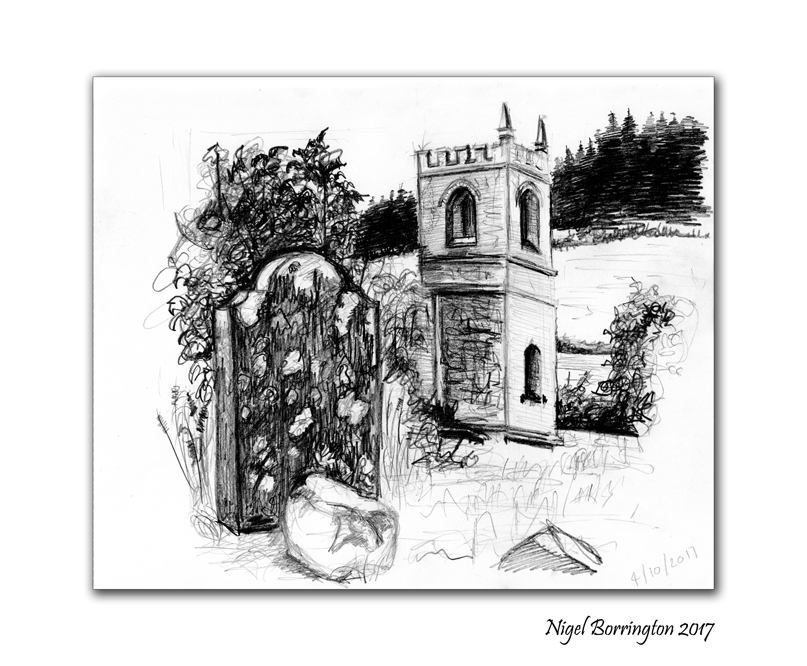
One hour sketch Killamery church yard county kilkenny
Nigel Borrrington
The old church yard at Killamery county Kilkenny is most famous for its highcross pictured here at the bottom of the post. The old church and grave yard however are just as interesting, the history of the area includes it being the location of a very large monastic site covering what would have been many large building now completely lost in time.
My sketch here I hope helps capture a sense of this wonderful place located on the boarder between county kilkenny and county Tipperary.

Killamery High cross Nov 2014
Kilkenny landscape Photography : Nigel Borrington
One hour sketch (Pencil on paper), The chapel doorway, Tullaroan, county Kilkenny
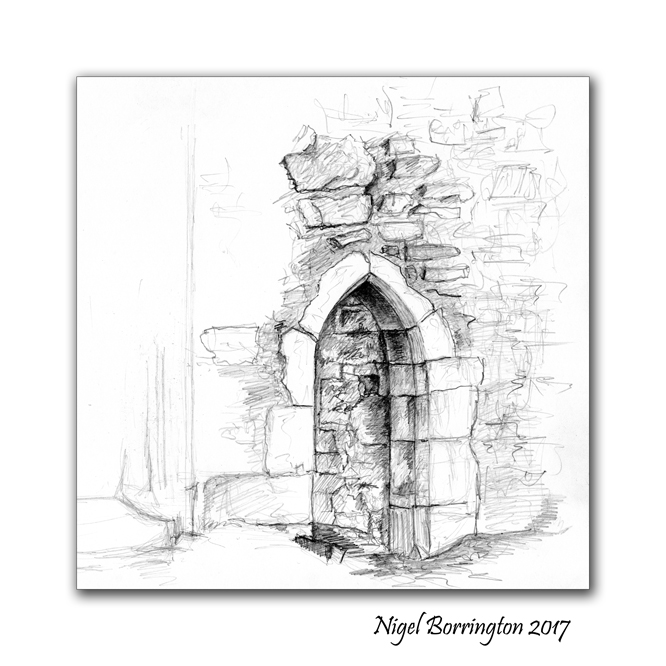
The old chapel doorway Tullaroan county kilkenny
ireland Nigel Borrington
Kells priory, county Kilkenny, Art work and Photography.

Kells Priory
County Kilkenny
Pencil on Paper
Nigel Borrington
One of the location that I love to take both my camera and sketch book is Kells Priory, county Kilkenny. Its an amazing location to capture in many forms and I am very lucky to live only a few miles away. I have posted here on my blog about it many time, you can used the search box to find these post if you wish.
The above is a Pencil on Paper drawing I worked on from about two weeks ago and below is a photo taken earlier in the summer when there was many more visitors around the site.

Pencil on Paper : Whitechurch graveyard , county Kilkenny

Whitechurch graveyard county Kilkenny
Pencil on Paper
Nigel Borrington
The last few one hour sketches I have worked on, I worked in pencil and ink but yesterday I went back to pencil only, using a B, 2B and 5B pencil. The location was a great little church and graveyard in the towns lands of Whitechurch on the south Kilkenny boarder.
I really loved working with ink but wanted to get back to pencil, although the direction I feel that my drawing is going in I am working with mainly line and shapes so there is little difference as yet. With pencil however I like the fact that I can get more tone using different grades of graphite.
I feel the main things I learn during this drawing were, how much to actually include in the drawing from the view in front of me, how I feel I want to represent different organic items such a ivy and trees along with grass and weeds! I feel I got the size of the two grave stone over very well…
I feel happy with the finished sketch, feeling that overall I got across well using the medium the view that was in front of myself. The worked flowed very well with no need to stop during working yet I got a good sense of when to finally stop working and be happy that the drawing told the full story!
One hour sketch, views of Slievenamon county Tipperary

A view of Slievenamon
One hour sketch
Pencil and Ink on Paper
Nigel Borrington
Last week here the weather in Ireland took a wet and showery turn, its starting to feel very close to the Autumn now. As such it was a little harder to finish each of the outdoor sketches that I started, If I have to stop a drawing I intend to return to the same location the next time I have a chance. However the sketch above is one that I did manage to finish, even this one was interrupted for some 15mins while I put everything back into my waterproof pack and waited for the rain to stop.
The location of this sketch is on the hillside just south of Clonmel and the river Suir, with a great view of the woods and its trees, looking towards the mountain of Slievenamon above, about a 10 min walk from the car park.
In the last two weeks or so I have started adding in some graphics pens to my work, I am finding that using these pens helps me keep freely flowing and moving as I work, I will return to just pencils at some point but am really enjoying the look and feel of the lines that these pens are adding. With Pencil I feel I end up with more stopping and starting during working as I think about tone and depth. light and dark, while this is great just for the moment I want to think about form and shape alone.
I am happy with this finished drawing, looking at it I wonder if I have overworked it just a little but I think for the moment I am happy. These are sketches and not final works, I am very happy , more happy if something is to be found in them that I can learn from and progress with.
Friday Sketch, One hour drawing : Path into the woods

One hour Sketch
Path into the woods
Nigel Borrington
Over the last few weeks I have been doing my best to find time each day to get outside and draw, Today I stopped at a local public Gardens that has some amazing paths, winding their way between some old trees. Its a great location that I hope to draw many times over the winter months.
Today as an exercise, I gave myself one hour to complete a sketch, using pencil and an ink pen on paper, in order to capture as best as I am able a sense of the path as it gets deeper into the trees along side it, as it does so the light falls dramatically.
I enjoy very much these one hour exercises, working quickly as possible yet as best as I can, I feel it is helping to build my ability to see whats in front of me and then how to use basic drawing tools represent this view on paper.
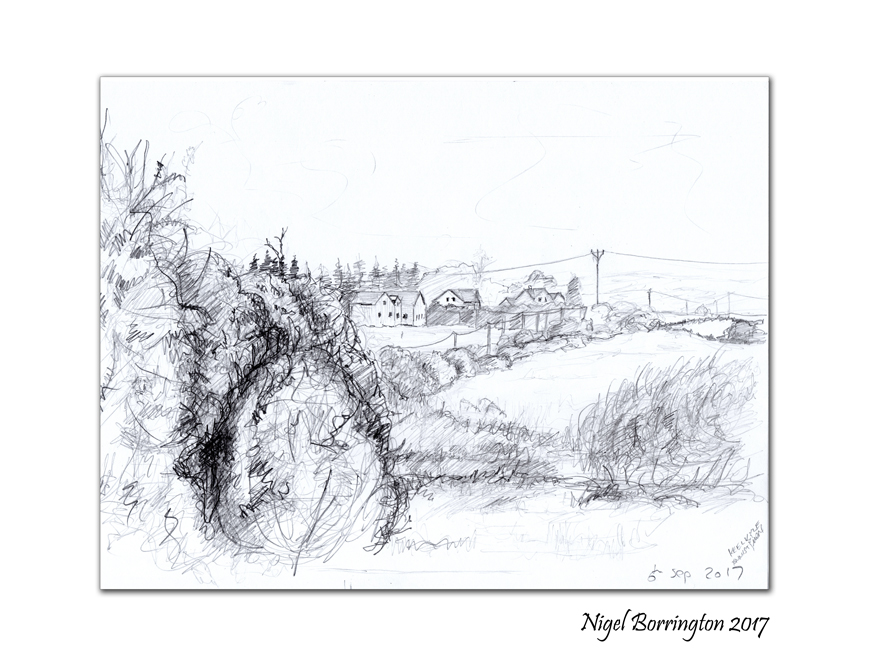
Sketch book work, pencil on paper : The view from Keelkyle cottage, Ennistimon, county Clare
Pencil on Paper
The view from, Keelkyle cottage, Ennistimon, county Clare
nigel borrington
Christ of Saint John of the Cross, by Salvador Dalí 1951, Kelvingrove Art Gallery and Museum, Glasgow

Christ of Saint John of the Cross
Salvador Dalí made in 1951
Kelvingrove Art Gallery and Museum, Glasgow
At the start of May this year (2017) I visited the Kelvingrove Art Gallery and Museum in Glasgowm, there are many great works of art there, including a full collection of works by the Glasgow boys group of artists, I will share some of their paintings very soon.

One of the most famous works of art in the Gallery is “Christ of Saint John of the Cross, by Salvador Dalí painted in 1951”, the painting has its own viewing room with subdued lighting and a set of seats, so you can spend sometime viewing this amazing work of art by Dali. It was while in this room that I captured the above image of the painting.
There is something deep and spiritually moving about this painting even if your not a believer in its subject matter.
Here are some details :
Christ of Saint John of the Cross is a painting by Salvador Dalí made in 1951. It depicts Jesus Christ on the cross in a darkened sky floating over a body of water complete with a boat and fishermen. Although it is a depiction of the crucifixion, it is devoid of nails, blood, and a crown of thorns, because, according to Dalí, he was convinced by a dream that these features would mar his depiction of Christ. Also in a dream, the importance of depicting Christ in the extreme angle evident in the painting was revealed to him.
The painting is known as the Christ of Saint John of the Cross, because its design is based on a drawing by the 16th-century Spanish friar John of the Cross. The composition of Christ is also based on a triangle and circle (the triangle is formed by Christ’s arms; the circle is formed by Christ’s head). The triangle, since it has three sides, can be seen as a reference to the Trinity, and the circle may be an allusion to Platonic thought. The circle represents Unity: all things do exist in the “three” but in the four, merry they be.
Inspiration
On the bottom of his studies for the painting, Dalí explained its inspiration: “In the first place, in 1950, I had a ‘cosmic dream’ in which I saw this image in colour and which in my dream represented the ‘nucleus of the atom.’ This nucleus later took on a metaphysical sense; I considered it ‘the very unity of the universe,’ the Christ!”
In order to create the figure of Christ, Dalí had Hollywood stuntman Russell Saunders suspended from an overhead gantry, so he could see how the body would appear from the desired angle [3] and also envisage the pull of gravity on the human body. The depicted body of water is the bay of Port Lligat, Dalí’s residence at the time of the painting.
History
The painting and intellectual property rights were acquired for Glasgow Corporation in the early 1950s by Tom Honeyman, then the Director of Glasgow Museums. Honeyman bought the painting for £8,200, a price considered high at the time although it was less than the £12,000 catalogue price, and included the copyright, which has earned Glasgow Museums back the original cost many times over.
The purchase was controversial and a petition against it, arguing that the money should be spent on exhibition space for local artists, was presented to the City Council by students at Glasgow School of Art.[6] The controversy caused Honeyman and Dalí to become friends, corresponding with each other for many years after the original acquisition.
The painting first went on display at the city’s Kelvingrove Art Gallery and Museum on 23 June 1952. In 1961 a visitor attacked the painting with a stone and tore the canvas with his hands. It was successfully restored over several months by conservators at Kelvingrove and returned to public display. In 1993, the painting was moved to the city’s St Mungo Museum of Religious Life and Art, but returned to Kelvingrove for its reopening in July 2006. It won a poll to decide Scotland’s favourite painting in 2006, with 29% of the vote.
It is said that the Spanish government offered £80 million ($127 million USD) for the painting.
Critical reception
This painting has continued to generate controversy. At the time of its purchase by Honeyman, the verdict by Modern Art critics was that producing such a traditional painting was a stunt by an artist already famous for his surrealist art. In 2009 The Guardian art critic, Jonathan Jones, described it as “kitsch and lurid,” but noted that the painting was “for better or worse, probably the most enduring vision of the crucifixion painted in the 20th century.”
In May 2013, in BBC Radio 4’s Great Lives, British poet John Cooper Clarke described this image as being utterly different from any other image of the crucifixion, as the angle of view conveys the hanging pain of this method of execution, whilst hiding the ordinarily clichéd facial expressions normally seen in such depictions.
Keighley & Worth Valley Steam Railway

Keighley & Worth Valley Railway
Nigel Borrington
Last weeks Holiday in Yorkshire was at times a true step back in time, as you can see here with the Keighley & Worth Valley Railway and our visit to Howarth, in the heart of Brontë Country we enjoyed an action packed first day out!
Keighley & Worth Valley Railway runs like a ribbon though Brontë Country, where you can expect to take in some of the most breath taking and famous landscapes in the world. A windswept land of heather and wild moors – it is hardly surprising that this area became the inspiration for the classic works of the Bronte sisters, Charlotte, Emily and Anne.

The Railway has appeared in many TV and film productions including Sherlock Holmes, Harry Potter and Where The Heart Is, A Touch Of Frost and many more. Perhaps most famously, the Railway, and in particular the charming station at Oakworth, were used as the location for the classic 1970 film The Railway Children.
If you get off the Train at Ingrow West station, you will be at the home to two award winning transport museums. You can Travel back in time at the The Ingrow Museum of Rail Travel, where restored carriages, vintage artifacts and sound and video presentations bring the past to life. The Ingrow Loco Museum boasts several locomotives as well as displays, exhibits and archive film. Both these location allow you to discover the long history that the UK has with its rail systems.
There are many special events that run throughout the year. You can get a Cream Tea . The old train lets discover the magic and glamour of the glorious days of steam-hauled, in beautiful surroundings. You can also join an annual Beer & Music Festival with over 120 real ales.
For those that like the great outdoors the railway has plenty of spectacular walks and nature trails. Every stop offers a walk, whether it’s a moorland walk or one of The Railway Children walks – you can try the Top Withens Walk, which takes you out of Haworth, the village where the Brontë sisters lived and wrote, along pathways they walked and through the moorland that inspired them.


Floating Heads Installation by Sophie Cave, Kelvingrove Art Gallery, Glasgow, Scotland.
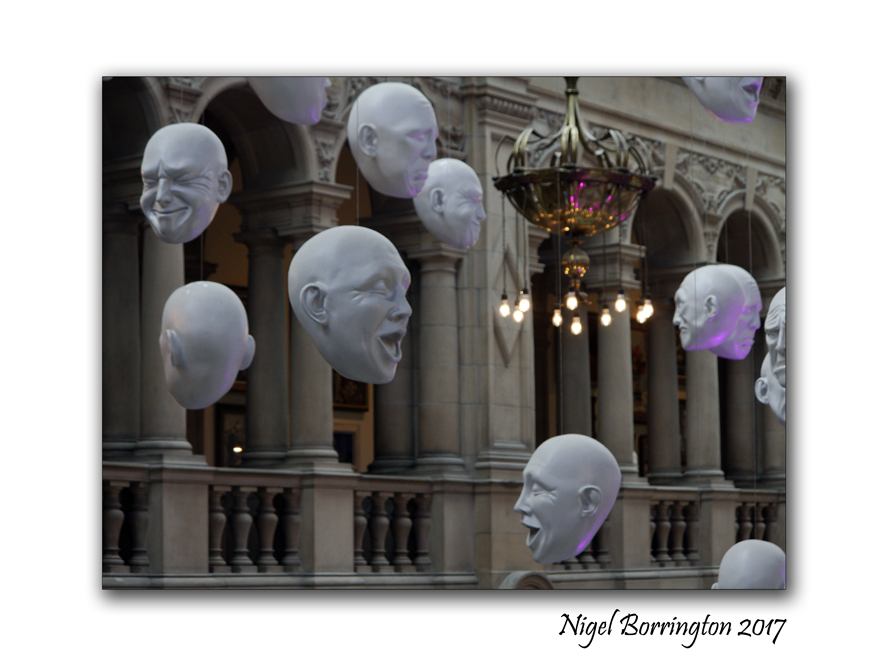
Floating Heads Installation by Sophie Cave

The Kelvingrove Art Gallery and Museum, Glasgow, Scotland.
At the start of April this year I promised myself that I would go and visit some Art Gallery’s and cultural museums one of these vists was to The Kelvingrove Art Gallery and Museum. The museum and art gallery in located in Glasgow, Scotland. It reopened in 2006 after a three-year refurbishment and since then has been one of Scotland’s most popular visitor attractions.
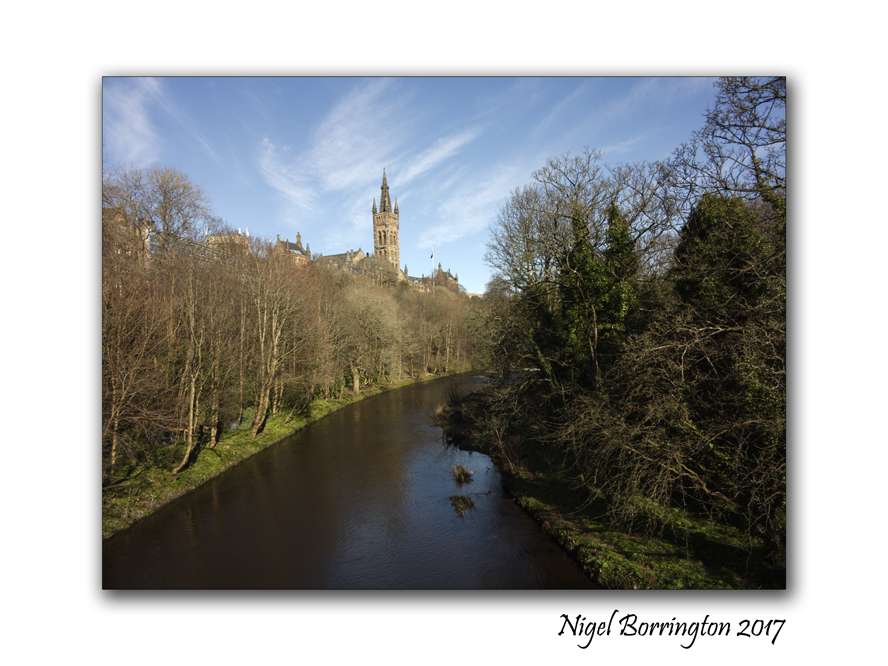
The gallery is located on Argyle Street, in the West End of the city, on the banks of the River Kelvin (opposite the architecturally similar Kelvin Hall, which was built in matching style in the 1920s, after the previous hall had been destroyed by fire). It is adjacent to Kelvingrove Park and is situated near the main campus of the University of Glasgow on Gilmorehill.
…
Floating Heads Installation by Sophie Cave
Just one of the many installations the Gallery has to offer is by Artist Sophie Cave …


If you Ever had that feeling that a hundred set of eyes are watching you then Sophie Cave sculptures turn the feeling into a reality!
The Floating Heads installation located in one of the open public areas in the Gallery, literally turn your head around the moment you first see this work. Sophie Cave has created over 50 sculptures of heads, each displaying different emotions including laughter and despair. The heads are completely white, but are lit so that their expressions are accentuated, which gives the installation a somewhat eerie feel. Since the installation is hung over the foyer, it is one of the first things youwill see when they enter the museum.
Its a great installation as it truly makes you stop and look at each of the heads as they slowly move around to face your direction, I relay enjoyed this work 🙂 🙂

Kelvingrove, Art Gallery, Glasgow
The path to Top Withens,Earnshaw family house Wuthering Heights : Wuthering Heights, a Poem by Sylvia Plaths
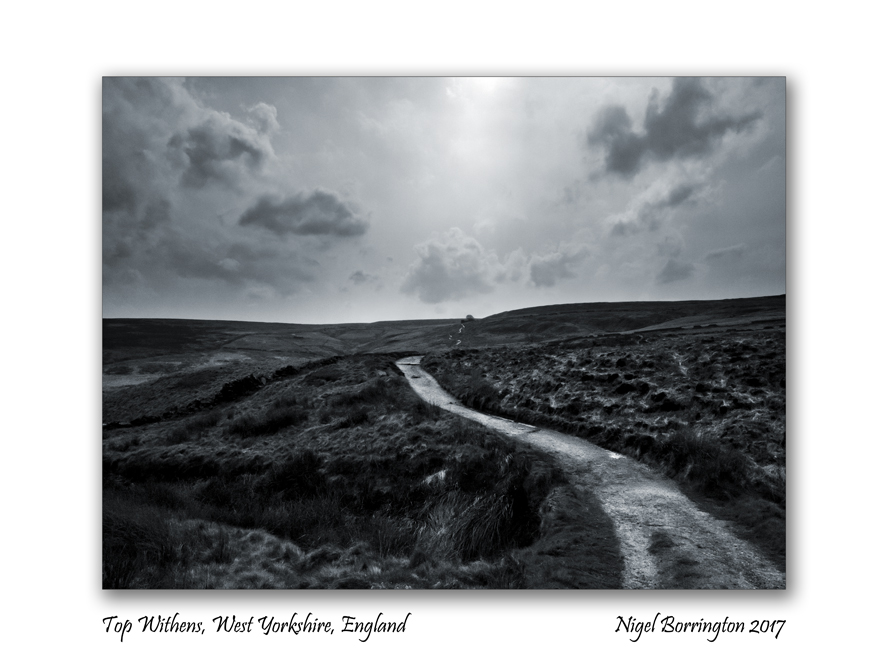
The path to Top Withens,Earnshaw family house Wuthering Heights, Emily Brontë.
Nigel Borrington
Last week we spent sometime in West Yorkshire, at Haworth the home town of the Brontë sisters, visiting the Parsonage Museum and walking upto Top Withens, the Earnshaw’s home in Emily Brontë’s novel – Wuthering heights.
The old farm house is located in some stunning landscape, the best west Yorkshire has to offer.
This is how Mr. Lockwood in the book describes his first impressions of Wuthering Heights …

Top Withens,Earnshaw family house Wuthering Heights, Emily Brontë.
Nigel Borrington
” Wuthering Heights is the name of Mr. Heathcliff’s
dwelling. ‘Wuthering’ being a significant provincial
adjective, descriptive of the atmospheric tumult to which
its station is exposed in stormy weather.
Pure, bracing ventilation they must have up there at all times, indeed:
one may guess the power of the north wind blowing over the edge, by the excessive slant of a few stunted firs at the end of the house; and by a range of gaunt thorns all stretching their limbs one way, as if craving alms of the sun.
Happily, the architect had foresight to build it strong:
the narrow windows are deeply set in the wall, and the
corners defended with large jutting stones. ”
Top Withens (also known as Top Withins)
Is a ruined farmhouse near Haworth, West Yorkshire, England which is said to have been the inspiration for the location of the Earnshaw family house Wuthering Heights in the novel of the same name by Emily Brontë.
A plaque affixed to a wall reads:
“ This farmhouse has been associated with “Wuthering Heights”, the Earnshaw home in Emily Brontë’s novel. The buildings, even when complete, bore no resemblance to the house she described, but the situation may have been in her mind when she wrote of the moorland setting of the Heights. ”
Wuthering Heights a Poem By: Sylvia Plath

Top Withens, West Yorkshire, England
English Landscapes
Nigel Borrington
The horizons ring me like faggots,
Tilted and disparate, and always unstable.
Touched by a match, they might warm me,
And their fine lines singe
The air to orange
Before the distances they pin evaporate,
Weighting the pale sky with a soldier color.
But they only dissolve and dissolve
Like a series of promises, as I step forward.
There is no life higher than the grasstops
Or the hearts of sheep, and the wind
Pours by like destiny, bending
Everything in one direction.
I can feel it trying
To funnel my heat away.
If I pay the roots of the heather
Too close attention, they will invite me
To whiten my bones among them.
The sheep know where they are,
Browsing in their dirty wool-clouds,
Grey as the weather.
The black slots of their pupils take me in.
It is like being mailed into space,
A thin, silly message.
They stand about in grandmotherly disguise,
All wig curls and yellow teeth
And hard, marbly baas.
I come to wheel ruts, and water
Limpid as the solitudes
That flee through my fingers.
Hollow doorsteps go from grass to grass;
Lintel and sill have unhinged themselves.
Of people the air only
Remembers a few odd syllables.
It rehearses them moaningly:
Black stone, black stone.
The sky leans on me, me, the one upright
Among the horizontals.
The grass is beating its head distractedly.
It is too delicate
For a life in such company;
Darkness terrifies it.
Now, in valleys narrow
And black as purses, the house lights
Gleam like small change.
Artist Introduction, Paul Walls – A painter of motion
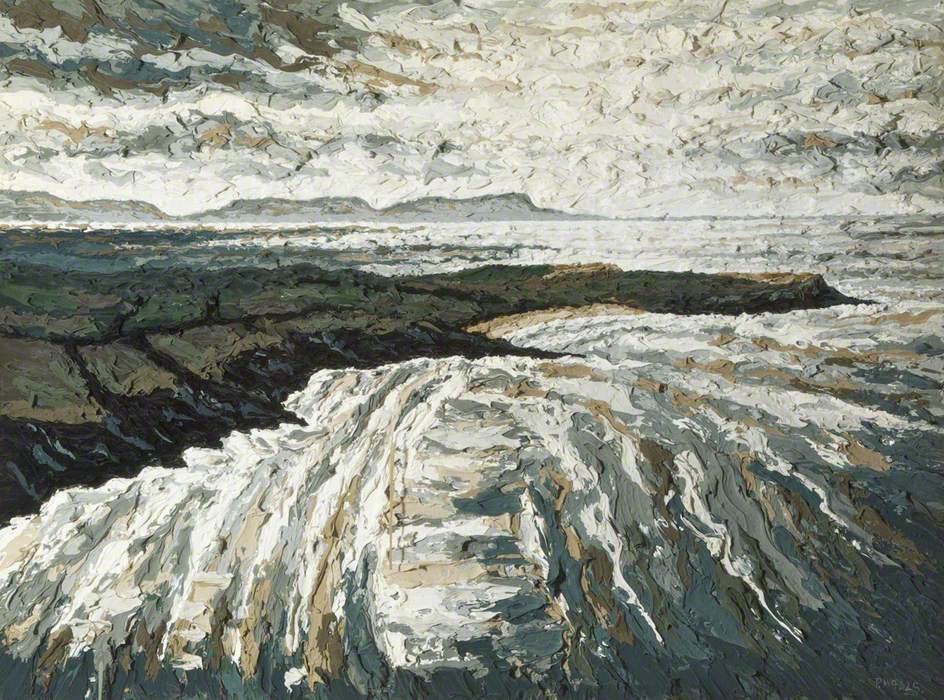
Grey Day, Muckross Head, County Donegal, By Walls, Paul
I first came across the paintings of Artist Paul Walls at an exhibition called “Currents”, held in the old friary building in Callan, County Kilkenny 2004, and instantly fell in love with his painting style and the resulting art works he produces.
I think it would be fair to say that Paul uses paint in a very loose and direct way on the canvas, I like this style very much!. Paul is one of those artists who’s work you actual need to see face to face to get a true feeling for their paintings and with Paul the depth and movement that each brush stroke has.
I feel that this style of painting is perfect for the subjects Paul captures, (Irish coastlines and countryside) on wet and windy days, days that we do so often get here.

Even when its not raining in Ireland its often windy and the above painting captures this mood so very well, Paul’s use of paint in the trees above the boats I feel captures the movement in a typical Irish day.

There will always be people who like different types of painting styles, some loving very photo realistic landscapes , others love abstract work, personally what I love most about Paul’s work is the overwhelming sense that he has captures a very active landscape and worked with it in a very pro-active fashion.
When viewing Paul’s painting you feel like you have first hand experience of the rain and the cliffs and the stormy sea.
This is the link to Paul Walls web site : Artists Paul walls

Looking at a Painting : Industrial City by Ls Lowry

Lowry, Laurence Stephen; Industrial City; British Council Collection; http://www.artuk.org/artworks/industrial-city-176858
I have posted a couple of times since the new year, relating to the Manchester Born artists Laurence Stephen Lowry (1887–1976) he was born in Old Trafford, Salford and studied in the evening at Manchester Municipal College of Art. He was a man who rarely left the North West, finding his inspiration in the landscape of North Wales and Lancashire, and in the streets of Manchester and around Salford.
Possible this painting “Industrial City” is one of my favorite cityscapes that Lowry produced, I say possibly because he was prolific in this area of his portfolio and I love so much of his inner city works.
I grow up in Altrincham, a town only a few miles away from city center Manchester and while I missed this core era that Lowry was working in, I have lots of memories of the city looking like it does in these paintings.
During my early years I can remember these streets and factories being slowly torn down and replaced with office blocks along with new more modern houses. Its hard to imagine these days what life was like for a lot of the people captures in Lowry’s drawings and painting, living and working within the same mile, most people hardly traveling very far outside their surroundings.
Industrial City
Lowry restricted his palette to black, vermillion, Prussian blue, yellow ochre and flake white. Whilst there is a naivety in his rendition, he deftly caught the hustle and bustle of men, women and dogs on the move against a background of terraced houses, mills and factories.
The things I love most about this painting , well firstly its angle of view, Lowry paints as if he was standing on top a hill overlooking the homes and industry below. I also like very much the distance in this painting, a distance that few of the people captured in it could experience themselves at street level. To me this distance captures the expanse of the city, each small area making up the whole, yet enclosing people within their own spaces of home and work and life.
City life itself is captured here, every element of the community (Home, work, shops, play, chat, church and industrial dirt – so much of it!).
In the distance through the city smog you can just make out the hills and moors, fresh air and spaces that so clearly is just out of reach.
I feel this painting is LS Lowry at his very best, some artists go in very close with life in order to capture and reflect on it , Lowry pulls back in his view and adds in so many elements that you have to spend time exploring his work, in order for you to see the full message and story he want you to see.
This was life in a Northern English town, lowry painted it and also lived it with the people he captured!!!!
Landscape drawing, Boolabrien lower, nier valley, county Waterford.

The view of
boolabrien lower
nier valley
ireland
nigel borrington
The Nire valley in county waterford offers some of the most amazing landscape views in the south east of Ireland, I used a Wacom MobileStudio Pro tablet to draw this sketch of one of my favorite positions, sitting on an old stone seat that looks across at the farm fields as they slowly make their way up into the hills above.
LS lowry his drawings and his teacher Pierre Adolphe Valette
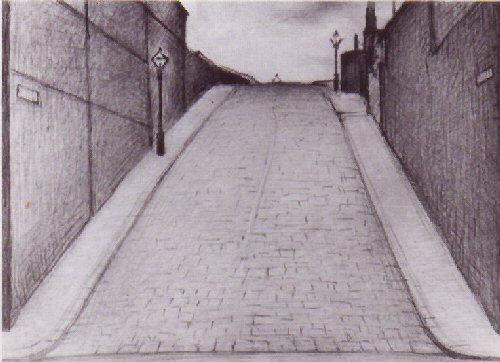
The drawings of LS Lowry
At the end of last week I posted an introduction about the artist LS Lowry, he is one of my favorite artists and from my home town of Manchester in the UK. I have started a full study of his work and intend to post a few times relating to his artistic development as well as the different styles he worked in and area he selected for his art works.
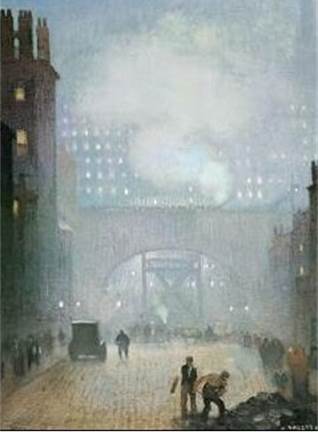
It think its important to match Lowry with his night school teach Pierre Adolphe Valette, who was a French Impressionist painter. His most acclaimed paintings are urban landscapes of Manchester, now in the collection of Manchester Art Gallery. Today, he is chiefly remembered as L. S. Lowry’s tutor. I post here some of his painting as they cover a lot of the inner Manchester city areas that Lowry also later work in.

Pierre Adolphe Valette
Lowry’s drawing
L S Lowry is known mostly for paintings,however the artist valued his drawings just as much.
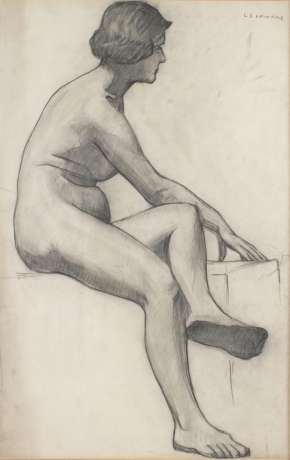
Lowry was concerned with the qualities of line and tone. He continued to draw compulsively until the last years of his life, producing a huge range of works. His work does not just consist of his industrial scenes, but also includes highly finished drawings of the life model, careful portrait studies, rapid sketches made on location and harming sketches of children and dogs.
Lowry did not merely see drawing as a means to an end in producing his paintings, but as a significant and worthwhile medium in its own right. He would often makPierre Adolphe Valettee sketches, in situ or from memory, and later produce a much more detailed, fine piece of art from this sketch. In his early work, Lowry drew in a very strict and linear style, with little or no shading. Over time, however, he came to prefer a technique of rubbing out and over-drawing. Lowry would rub heavily worked areas of tone with his finger to achieve a dense velvety smoothness.
This technique of layering often gave his work a sense of ghostliness especially where traces of an earlier drawing can be seen underneath. Lowry did use mediums other than pencil for his drawings and his collection of work includes pastel, chalk, pen and ink, felt-tip and biro drawings.
Lowrys Night school teach was Pierre Adolphe Valette, when Lowry became a pupil of Valette he expressed great admiration for his tutor, who taught him new techniques and showed him the potential of the urban landscape as a subject. He called him “a real teacher … a dedicated teacher” and added: “I cannot over-estimate the effect on me of the coming into this drab city of Adolphe Valette, full of French impressionists, aware of everything that was going on in Paris
Valette’s paintings are Impressionist, a style that suited the damp fogginess of Manchester. Manchester Art Gallery has a room devoted to him, where the viewer may compare some of his paintings with some of Lowry’s, and judge to what extent Lowry’s own style was influenced by him and by French Impressionism generally.
The Lowry hosted an exhibition of about 100 works by Valette, alongside works by Lowry, between October 2011 and January 2012. It included paintings of Manchester from Manchester Art Gallery and loans from private owners.
I feel that you can see just how well these two artists click in the night school classes, as the influence that Valette had over Lowry clearly stayed with him all his artistic life ….
The Painting of Pierre Adolphe Valette


More painting by Pierre Adolphe Valette here
Selection of drawing by LS Lowery
Life drawings


Landscape Drawings
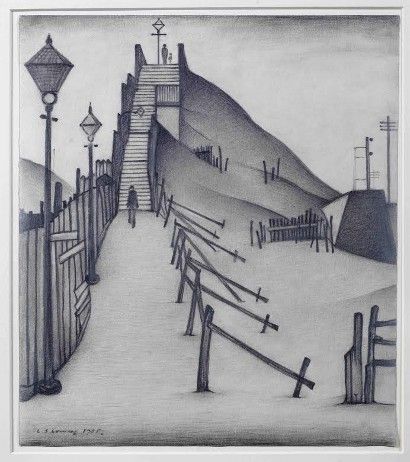


Francis Terrace, Salford 1969-72 L.S. Lowry 1887-1976 Presented by Ganymed Press 1979 http://www.tate.org.uk/art/work/P03277

2 hour painting, The town of Allihies west cork, Ireland

Allihies copper Mines and town
Irish landscape painting
Nigel Borrington
Allihies in west county cork is one of my favorite locations to visit in Ireland.
The town is located at the far end of the Béara Peninsula, west cork, the landscape scenery here is just stunning. The town itself is about as remote as it gets in this part of the world. There are many coastal walks along with paths that wind through the hills. The town is also well known for its copper mining history with many of the old mines still standing in the hills acting as a backdrop for the town.
There is a museum that you can visit details here : Allihies copper mine visitors center
My painting / sketch here was painted digitally using a combination of PC applications and taken from some sketches and photos I came home with on the return from my last visit.
Friday Art and Artists : LS Lowry

LS Lowry
Self portrait 1925
At the start of January while I was back in my home town of Manchester in The UK, I spent sometime with family members in visiting the Lowry Gallery in Salford, Manchester, UK.

The Lowry Gallery
Salford
Manchester, UK
Lowry is a much loved English artist, particularly in the North west of the UK, being born in Stretford, Manchester.
Here are some basic details about him,
Laurence Stephen Lowry was born 1 November 1887 in Barrett Street, Stretford. His father, Robert, worked as a clerk in an estate agent’s office. His mother, Elizabeth, was a talented pianist. By 1898 the family were living in Victoria Park, a leafy suburb in south Manchester, but in 1909 financial difficulties necessitated a move to Pendlebury, an industrial area between Manchester and Bolton. Lowry’s mother hated it, and so did Lowry, but, ‘After a year I got used to it. Within a few years I began to be interested and at length I became obsessed by it.’
After leaving school Lowry took a job as a clerk with a Manchester firm of chartered accountants, Thomas Aldred and Son. In 1910, after being made redundant from a second job, he became rent collector and clerk for the Pall Mall Property Company and stayed there until his retirement in 1952.
As a child he had enjoyed drawing, and he used part of his income to pay for private painting lessons with the artists William Fitz and Reginald Barber. In 1905 he began attending evening classes at Manchester Municipal College of Art. His tutor in the life drawing class there was the Frenchman Adolphe Valette, who brought first-hand knowledge of the Impressionists, such as Claude Monet and Camille Pissarro to his classes. ‘I cannot over-estimate the effect on me at that time of the coming into this drab city of Adolphe Valette… He had a freshness and a breadth of experience that exhilarated his students.’
By 1915 Lowry had begun attending evening classes at Salford School of Art, based in the Royal Technical College on the edges of Peel Park. One of his tutors there, Bernard Taylor (art critic for the Manchester Guardian) advised Lowry that his paintings were too dark. In response, Lowry tried painting on a pure white background, a technique he was to retain for the rest of his career.

Peel Park
LS Lowry
Peel Park, and the views across it from the Technical College windows, appear regularly in Lowry’s work. He had begun to see the possibilities of painting what he saw on his doorstep, rather than more conventional landscapes based on the countryside nearby. The best known story Lowry told of how he became interested in the industrial scene described how, after missing a train at Pendlebury station, he saw the Acme Spinning Company’s mill turning out, ‘I watched this scene – which I’d looked at many times without seeing – with rapture.’
A closer study of Lowry
Over the next few days and weeks I want to take a much closer look at the paintings and drawings that Laurence produced, looking at the subjects that he worked with and the technique’s he used to record his world.
As an artist he has been labeled and stereotyped as a naïve “Sunday painter”, based on the way he painted his landscapes and drew people along with animals.
During this visit to the Lowry Gallery however and with the help of the guided tour, it became very clear just what a complete artist Lowry was. Having a chance to see a collection of his work from his very early days at night school, until the final works of art he produce has helped to show me just how diverse and skilled an artist he was.
The areas of his work I want to study can be seen in his work I have selected below, including (Life drawing, pencil sketches, oil paints, landscape and city scape work), I will enjoy very much looking at his art work and I hope to learn a great deal from him, for my own efforts at drawing and painting.
Art works by LS Lowry

Life drawing
LS Lowry

City-scapes
A Northern Town 1969-70 L.S. Lowry 1887-1976

LS Lowry
Landscapes in Oil

LS Lowry
The Lake
Oil on canvas
Industrial Landscape of Manchester
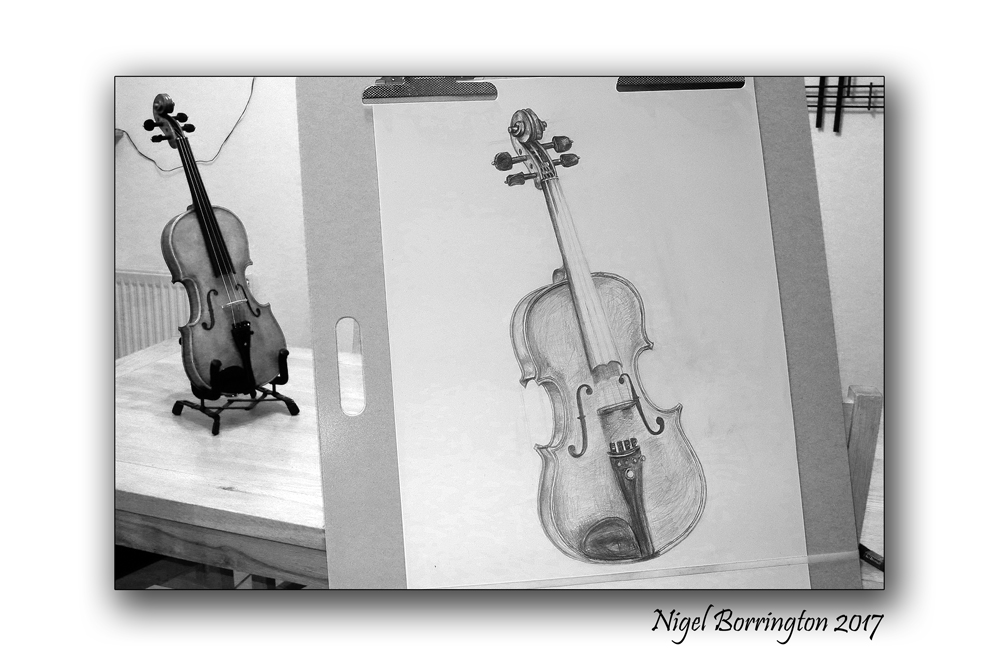
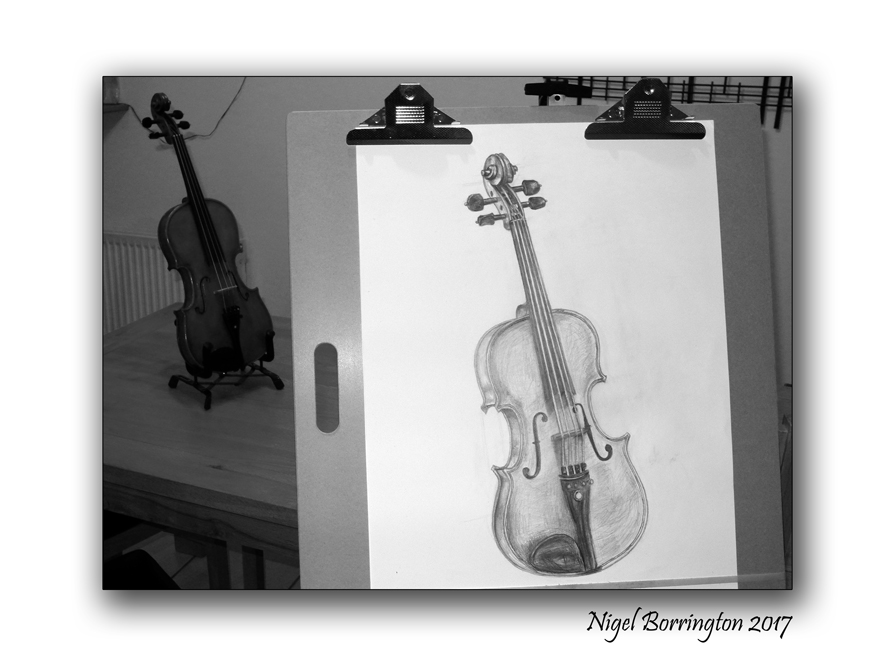
Pencil on paper, Drawing from life – My Violin

My Violin
Drawing from life
Pencil on Paper
Nigel Borrington
I am a big believer that the skills involved in producing any kind of art work come from the base level of being able to represent the world around us, even the most abstract of painting and sculpture has to come from some kind of desire to represent thing in the real world.
So I wanted to before doing any more painting, take a step back into working on basic drawing skills.
The images here are taken over two nights during the week as I started and finished a pencil drawing of my Violin. they show some of the steps as I first worked on the basic outlines of the image and then moved into adding some details and shading.
I am happy with this first effort but will keep working over the next few weeks on different angles of the violin as well as working in different mediums such as pens and ink and charcoal.
Drawing progression


Pencil and Watercolour Sketching, the great outdoors

Watercolour Sketch
County Kilkenny
Ireland
Sketching in the great outdoors
This year I hope to use other forms of recording the landscape that I find around me other than photography alone, I love creating images using my camera but I want to dig in a little deeper and spent a lot more time at each location.
There are so many art based media that can be used to create a sketch, such as (Pastels, pens, pencils, charcoal and paint).
Personally I love using Pencils and Waterolour paints, both are very simple to use and very easy to carry around. Pencil is the most direct and very easy to always have with you in a bag. Watercolour paints requires you to have a supply of water and a palette for mixing colours, both simple to have available and easy to use. A monotone Watercolour sketch is a great way to make use of this medium, used to capture all the tones that you can see in the landscape in-front of you and a lot faster than using a pencil to record the lights and dark’s in your image.
I find that the process of starting and finishing a sketch outside to be the perfect way of relaxing, its very hard to think about anything else on your mind from the moment you start working and by the time you have finished, your mind is filled with little else other than how you can use you finished sketch later for a painting or more detailed drawing.
Add your sketch to some photographs you took and you have the perfect set of images available to create larger works in oil or acrylic paints.
The sketches here are a small sample of some work produced during an art course I completed a while back …..


 Nigel Borrington
Seven day Black and white Photo challenge : The Word is light and Light is the Word !
James Hoban
Callan Kilkenny
black and white
Photo Challenge
Nigel Borrington
James Hoban Born 1755 – Died December 8, 1831, was an Irish architect, best known for designing the White House in Washington, D.C. Some years back a team of architecture students from American both designed and built the Hoben monument featured here in this post. From the moment it became clear how this monument would look, I have been fascinated by its design and construction, it stands out locally for just how unique it feels surrounded by farm land and remote country lanes.
The Feature I love most about it is the way that at sunrise and sunset the light passes through the glass, the words written in the glass cast both shadows and reflections on the stone work and grass all around them, even to simple look through the glass panels and into the sun is a great experience, it has for myself succeeded to be a great example of modern public art and architecture.
This was the last post for the Seven day – one week, black and white Challenge, Thank you to Sharon Walters Knight for tagging me on Facebook to take part, I have really enjoyed the hunt for black and white subjects, its taken me back to the basics of what photography is all about 🙂
Share this:
November 10, 2017 | Categories: Art and craft work, black and white, Comment, Gallery, Landscape, Nigel Borrington | Tags: architecture, black and white, James hoban, Kilkenny, Light is the Word, Nigel Borrington, photo challenge!, The Word is light, White house | 1 Comment