Irish Landscapes, Freedom of the Hills, Poem by : Douglas Fraser – 1968

Irish landscape images
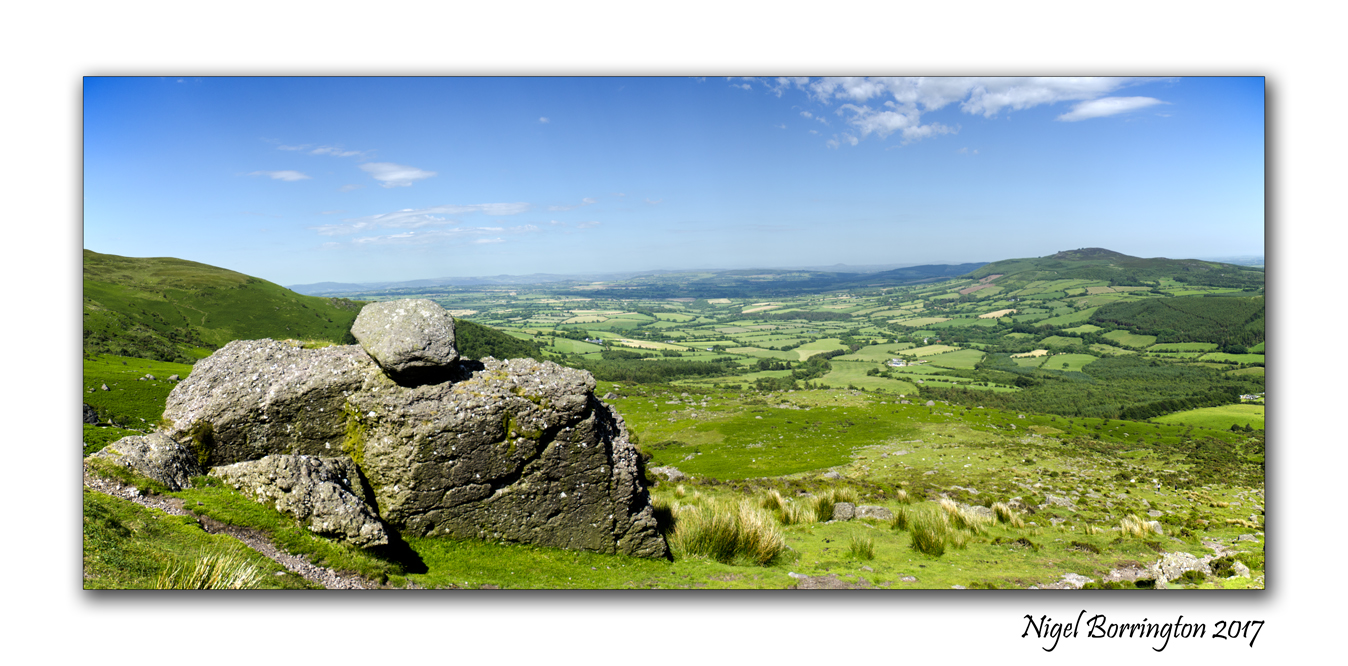
County Waterford
Nigel Borrington
Freedom of the Hills
By: Douglas Fraser – 1968
Mine is the freedom of the tranquil hills
When vagrant breezes bend the sinewy grass,
While sunshine on the widespread landscape spills
And light as down the fleet cloud-shadowed pass.
Mine, still, that freedom when the storm-clouds race,
Cracking their whips against defiant crags
And mists swirl boiling up from inky space
To vanish on the instant, torn to rags.
When winter grips the mountains in a vice,
Silently stifling with its pall of snow,
Checking the streams, draping the rocks in ice,
Still to their mantled summits I would go.
Sun-drenched, I sense the message they impart;
Storm-lashed, I hear it sing through every vein;
Among the snows it whispers to my heart
“Here is your freedom. Taste – and come again.”
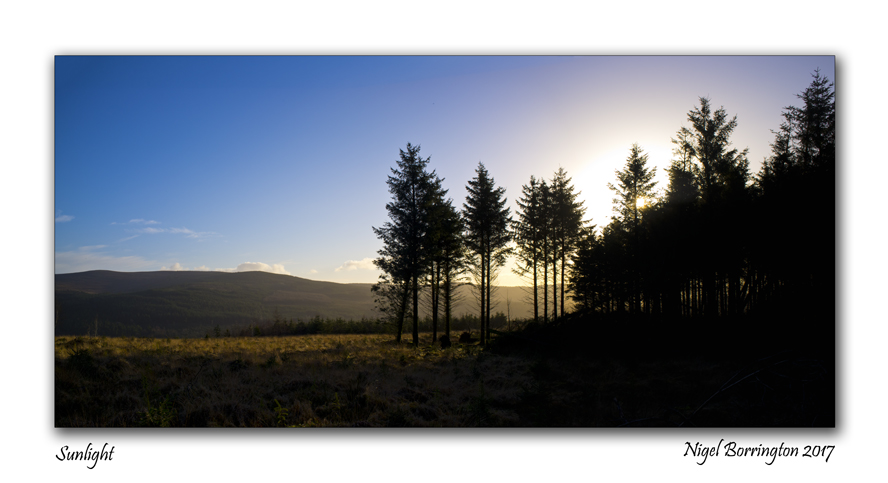
Landscape in Sunlight
Nigel Borrington
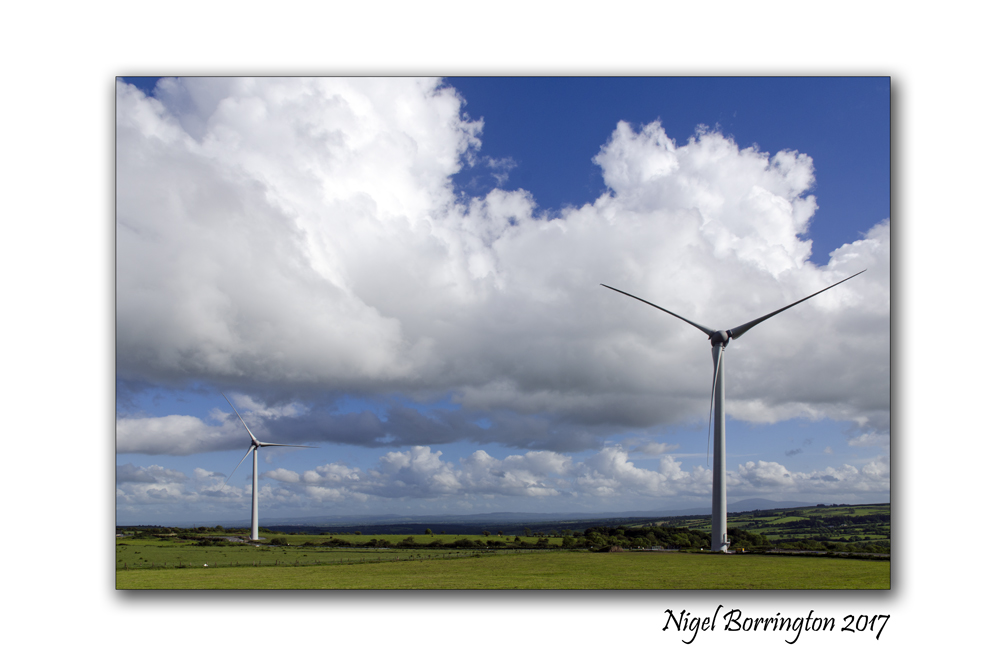
Kilkenny landscape photography : Ballybay Wind farm, county Kilkenny

Ballybay Wind Farm, near Tullaroan
Renewable energy company Gaelectric has completed a €38 million financing agreement with AIB for the construction of two wind farms in Co Kilkenny.
Ballybay Wind Farm, near Tullaroan, will feature six Enercon turbines generating 13.8MW of electricity, which will meet the demand of about 9,300 homes.
Foyle Wind Farm will have four Enercon turbines generating 9.6MW, Gaelectric said, and will meet the demand of about 6,500 homes.
Operational in 2017
Both wind farms are expected to become operational during the second quarter of 2017.




Christ of Saint John of the Cross, by Salvador Dalí 1951, Kelvingrove Art Gallery and Museum, Glasgow

Christ of Saint John of the Cross
Salvador Dalí made in 1951
Kelvingrove Art Gallery and Museum, Glasgow
At the start of May this year (2017) I visited the Kelvingrove Art Gallery and Museum in Glasgowm, there are many great works of art there, including a full collection of works by the Glasgow boys group of artists, I will share some of their paintings very soon.

One of the most famous works of art in the Gallery is “Christ of Saint John of the Cross, by Salvador Dalí painted in 1951”, the painting has its own viewing room with subdued lighting and a set of seats, so you can spend sometime viewing this amazing work of art by Dali. It was while in this room that I captured the above image of the painting.
There is something deep and spiritually moving about this painting even if your not a believer in its subject matter.
Here are some details :
Christ of Saint John of the Cross is a painting by Salvador Dalí made in 1951. It depicts Jesus Christ on the cross in a darkened sky floating over a body of water complete with a boat and fishermen. Although it is a depiction of the crucifixion, it is devoid of nails, blood, and a crown of thorns, because, according to Dalí, he was convinced by a dream that these features would mar his depiction of Christ. Also in a dream, the importance of depicting Christ in the extreme angle evident in the painting was revealed to him.
The painting is known as the Christ of Saint John of the Cross, because its design is based on a drawing by the 16th-century Spanish friar John of the Cross. The composition of Christ is also based on a triangle and circle (the triangle is formed by Christ’s arms; the circle is formed by Christ’s head). The triangle, since it has three sides, can be seen as a reference to the Trinity, and the circle may be an allusion to Platonic thought. The circle represents Unity: all things do exist in the “three” but in the four, merry they be.
Inspiration
On the bottom of his studies for the painting, Dalí explained its inspiration: “In the first place, in 1950, I had a ‘cosmic dream’ in which I saw this image in colour and which in my dream represented the ‘nucleus of the atom.’ This nucleus later took on a metaphysical sense; I considered it ‘the very unity of the universe,’ the Christ!”
In order to create the figure of Christ, Dalí had Hollywood stuntman Russell Saunders suspended from an overhead gantry, so he could see how the body would appear from the desired angle [3] and also envisage the pull of gravity on the human body. The depicted body of water is the bay of Port Lligat, Dalí’s residence at the time of the painting.
History
The painting and intellectual property rights were acquired for Glasgow Corporation in the early 1950s by Tom Honeyman, then the Director of Glasgow Museums. Honeyman bought the painting for £8,200, a price considered high at the time although it was less than the £12,000 catalogue price, and included the copyright, which has earned Glasgow Museums back the original cost many times over.
The purchase was controversial and a petition against it, arguing that the money should be spent on exhibition space for local artists, was presented to the City Council by students at Glasgow School of Art.[6] The controversy caused Honeyman and Dalí to become friends, corresponding with each other for many years after the original acquisition.
The painting first went on display at the city’s Kelvingrove Art Gallery and Museum on 23 June 1952. In 1961 a visitor attacked the painting with a stone and tore the canvas with his hands. It was successfully restored over several months by conservators at Kelvingrove and returned to public display. In 1993, the painting was moved to the city’s St Mungo Museum of Religious Life and Art, but returned to Kelvingrove for its reopening in July 2006. It won a poll to decide Scotland’s favourite painting in 2006, with 29% of the vote.
It is said that the Spanish government offered £80 million ($127 million USD) for the painting.
Critical reception
This painting has continued to generate controversy. At the time of its purchase by Honeyman, the verdict by Modern Art critics was that producing such a traditional painting was a stunt by an artist already famous for his surrealist art. In 2009 The Guardian art critic, Jonathan Jones, described it as “kitsch and lurid,” but noted that the painting was “for better or worse, probably the most enduring vision of the crucifixion painted in the 20th century.”
In May 2013, in BBC Radio 4’s Great Lives, British poet John Cooper Clarke described this image as being utterly different from any other image of the crucifixion, as the angle of view conveys the hanging pain of this method of execution, whilst hiding the ordinarily clichéd facial expressions normally seen in such depictions.
New site header , St Anne’s Pier, Lancashire, UK

St Anne’s-on-the-Sea, Lancashire, UK
Nigel Borrington
St Anne’s Pier is a Victorian era pleasure pier in the English seaside resort of St Anne’s-on-the-Sea, Lancashire. It lies on the estuary of the River Ribble. The pier, designed by A. Dowson, was completed in 1885 and was one of the earliest public buildings in St Anne’s, a 19th-century planned town. The pier was originally intended to be a sedate promenading venue for the resort’s visitors, but attractions were later added. Changes made to the estuary channels to improve access to Preston Dock left the pier on dry land and ended its steamer services to Blackpool and Liverpool.

St Anne’s Pier
St Anne’s-n-the-Sea, Lancashire
Nigel Borrington
A Tudor-style entrance was built in 1899. Early 20th-century additions included a Moorish-style pavilion in 1904 and the Floral Hall in 1910. The Moorish Pavilion was destroyed by fire in 1974, shortly after the town’s centenary; the Floral Hall burned down in 1982. Originally 914 feet (279 m) long, the pier was reduced to 600 feet (180 m) by the demolition of the seaward end. English Heritage has designated the pier a Grade II listed building.
Native Irish Wild flowers, Early Marsh Orchid , Ballykeefe, county Kilkenny
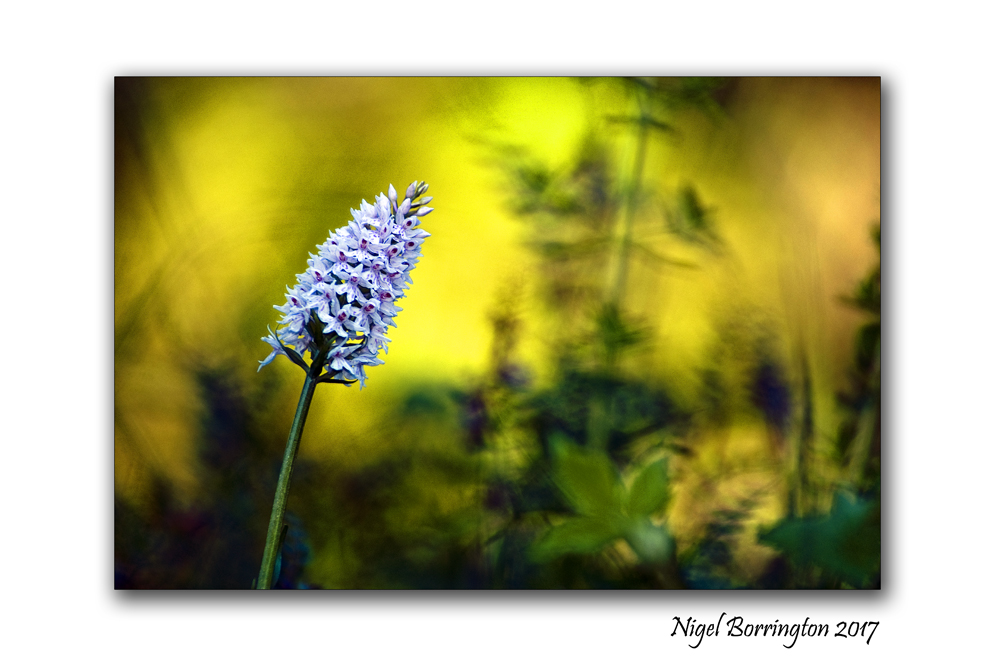
Early Marsh Orchid
Dactylorhiza incarnata
Magairlín mór
Family: Orchidaceae
Ballykeeffe, Kilkenny
Nigel Borrington
Flowering May-July. Tuberous perennial. Native.
Flowers usually white, pink or purple. (Ssp. coccinea has reddish flowers.)
Narrow, cylindrical flower-spike, lower bracts longer than flowers. Sides of lip strongly reflexed, weakly 3-lobed, 2 U-shaped loops enclosing dotted patches. Leaves erect, keeled, usually unspotted. (Ssp. cruenta, leaves spotted both sides) Hollow stem. Very variable, links to subspecies below. Identifications by Ian Denholm
Damp calcareous soils, meadows, fens, marshes, dune-slacks. Also slightly acidic bogs, damp heaths. Declining due to habitat loss.
Nature without words (Woodcock Butterfly) a moment in the sun

macro photography
Woodcock Butterfly
Nigel Borrington
Friday Poetry – Light by : Margaret Tait

Lock Melfort
Oban – Scotland
Scottish Landscapes
Nigel Borrington
Light
A Poem By Margaret Tait
Did you say it’s made of waves?
Yes, that’s it.
I wonder what the waves are made of.
Oh, waves are made of waves.
Waves are what they are,
Shimmeringness,
Oscillation,
Rhythmical movement which is the inherent essence of all things.
Ultimately, there’s only movement,
Nothing else.
The movement that light is
Comes out of the sun
And it’s so gorgeous a thing
That nothing else is ever anything unless lit by it.
Great Poems : The Evening Light – By Alfred Austin
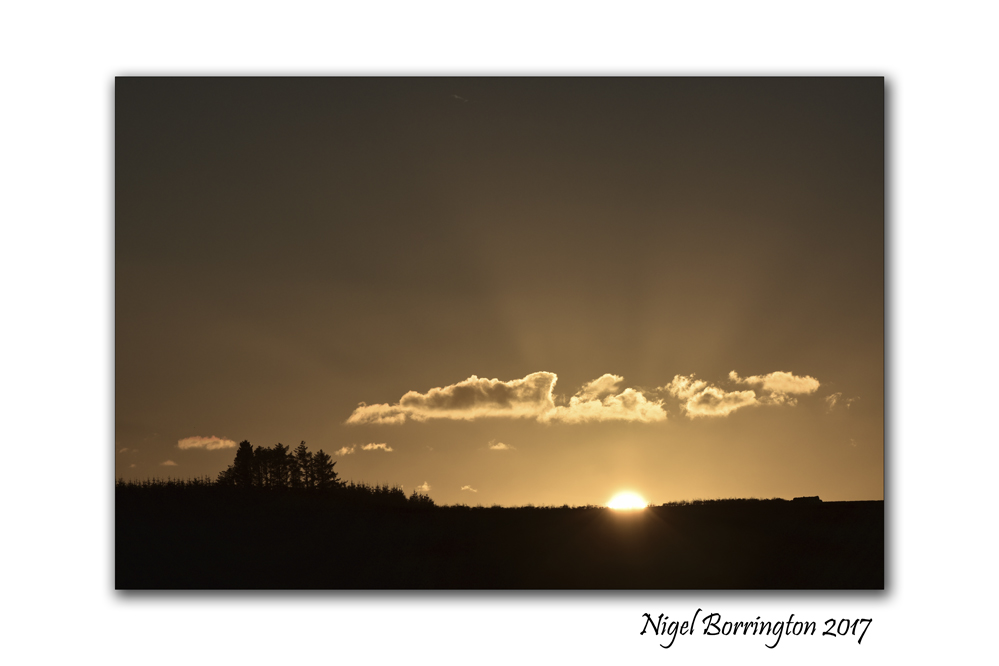
Sunrise to sunset
Nigel Borrington
The Evening Light
I
Angels their silvery trumpets blow,
At dawn, to greet the Morning Glow,
And mortals lift adoring eyes
To see the glorious sun arise.
Then, winged by Faith, and spurred by Hope
Youth scans the hill, youth scales the slope.
Its pulses bound, its thoughts exult,
It finds no danger difficult,
Quickens its pace, disdaining ease
Victor before it comes and sees,
Feeling the Universe its own,
The Sovereign of a Self—made Throne.
II
Each hope fulfilled, obtained each prayer,
We glory in the Noonday Glare.
Welcome the blinding heat of strife,
Deeming resistance part of life.
We deal the blow, return the stroke,
Fighting our way through dust and smoke,
Until, our battle—banner furled,
We tower above a conquered World;
Whether one leads mankind along
By gift of speech or grace of song,
Seizes by forceful hand the helm,
Or adds an Empire to the Realm,
Confronts the sun with forehead bare,
Exulting in the Noonday Glare.
III
But, as the lengthening shadows glide
Silent towards the eventide,
And dew baptizes leaf and flower
In twilight’s sanctuary hour,
A sacred Something haunts the air,
Tender as love, devout as prayer,
And in the lofty dome afar
Glimmers one bright outriding star,
Announcing to the watchful sight
Coming battalions of the Night.
Then Noonday Glare and Morning Glow
Fade into shadowy Long—ago.
One feels Earth’s vain ambitions fade
Into the vanished dust they made.
All that the glow of dawn foretold,
And all the glare of noon unrolled,
Seem nothing to the quiet joy
No clamour mars, no cares destroy,
‘Twixt restless day and restful night,
That cometh with the Evening Light.

Nature without words (Horse fly)- Solo images (Ballykeefe nature reserve, county Kilkenny)
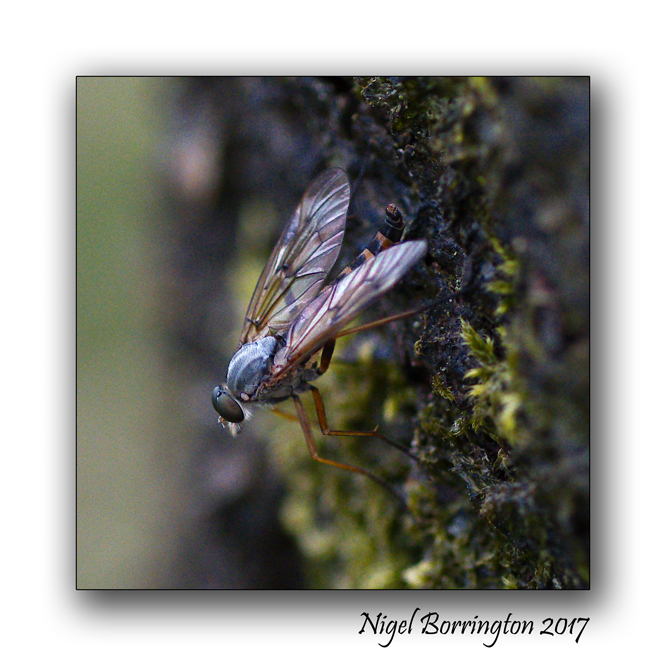
Horse fly
Ballykeefe nature reserve
County Kilkenny
Nigel Borrington
Nature without words (Bumble bees)- Solo images (Ballykeefe nature reserve, county Kilkenny)

A bumble bee collecting nectar
Ballykeefe nature reserve
County Kilkenny
Nigel Borrington
Nature without words – Solo images (Ballykeefe nature reserve, county Kilkenny)
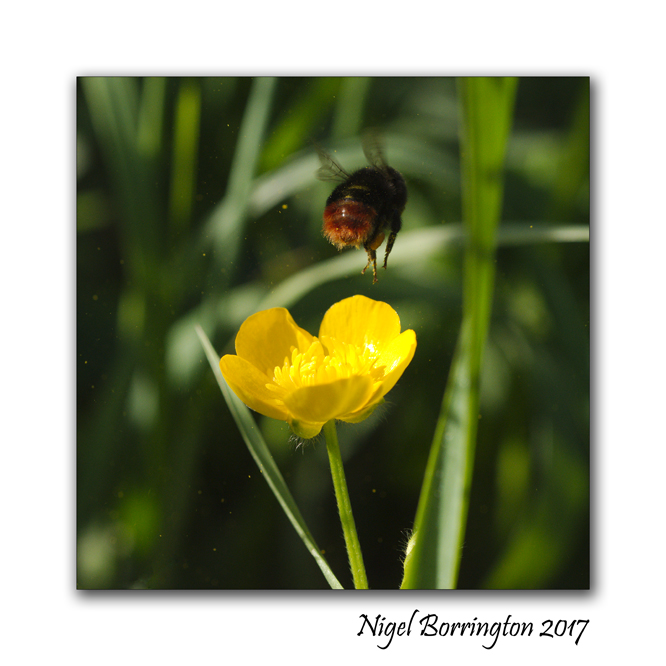
A bumble bee in flight
Ballykeefe nature reserve
County Kilkenny
Nigel Borrington
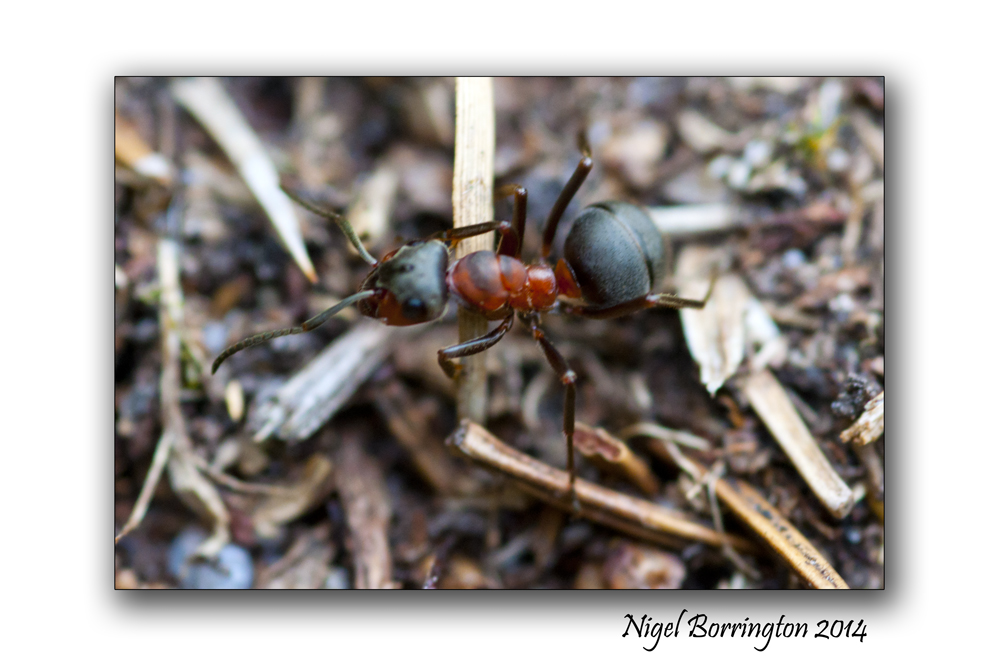
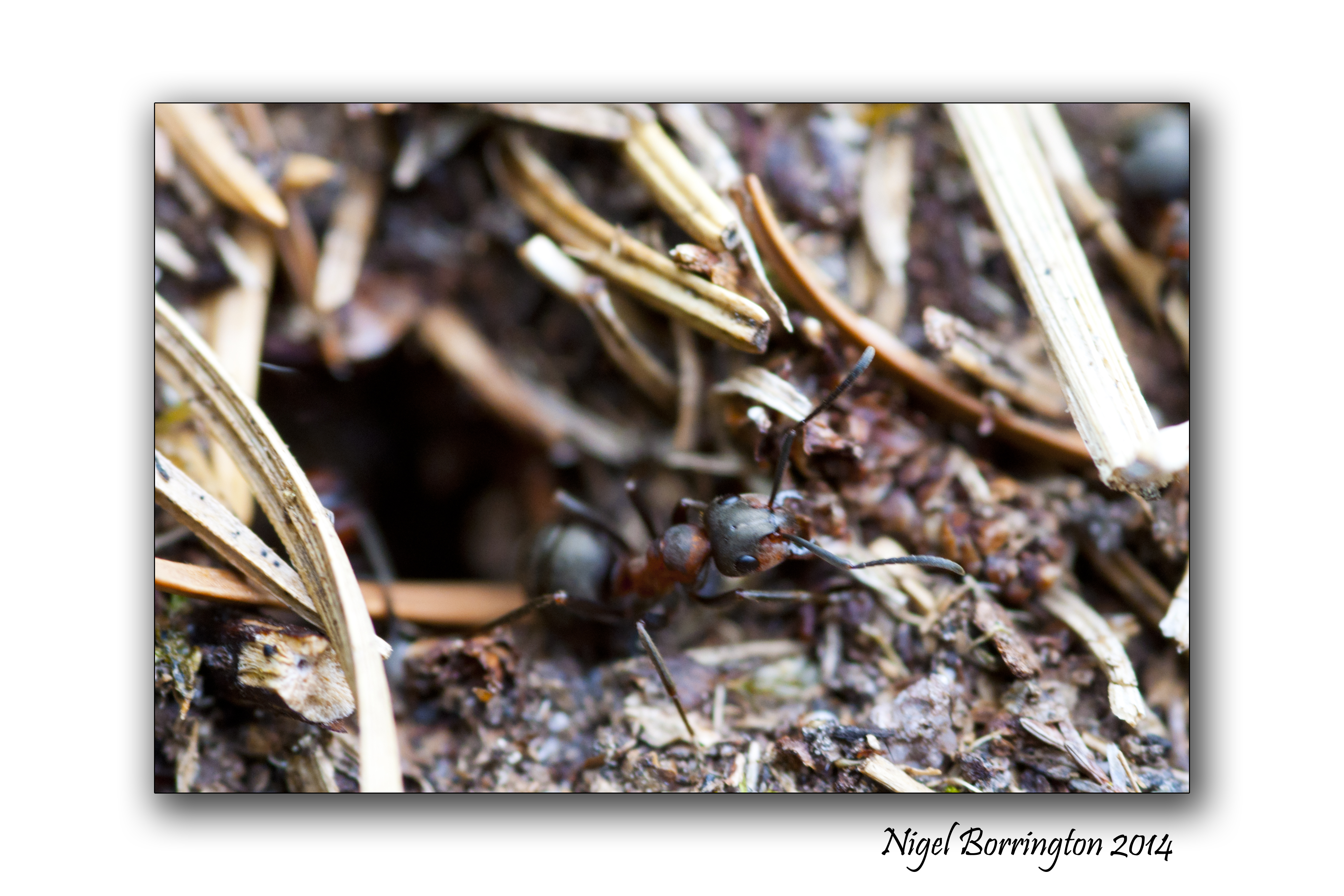
Hairy Wood Ants (Formica lugubris) photographic project

Hairy Wood Ants (Formica lugubris) photographic project
Over the last few years I been involved working on a project around county Tipperary,Ireland involving photographing nests of Irish Wood Ants (Formica lugubris), this has been one of the most interesting photo project I have ever worked on.
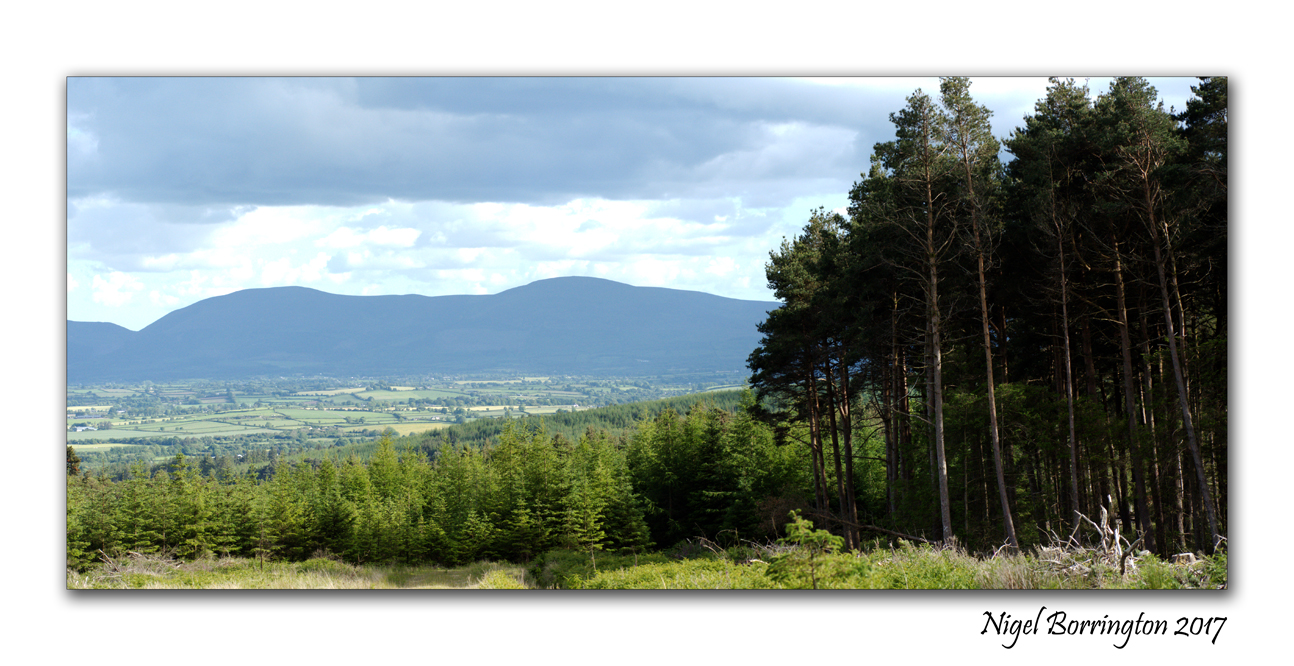
The images in this post are captured between 2014 and 2017 ….
These Ants are on the international endangered species list and exist in locations that are kept reasonably private, just to find and get to see these nests themselves is a task and an amazing feeling.
When you get closer to the nests for the first time you will notice just how large they are (3 feet off the ground) and how many Ants that each colony contains, each nest can hold tens of thousands of Ants, the entire surface of the nest is on the move with Ants coming and going from small entrance holes. This flow of movement is 24 hours long during the months that the Ants are active.
They create a clear trail through the woods as they clear a path, traveling both outwards from the nest and returning again with food for the Queen Ant living deep in the ground under the nest itself.
It is thought she lives in a protected area some two meters underground.
In order to protect themselves and nest with its queen, they can shoot out acid some four feet from their bodies.
I will be working on this project most of this summer and look forward to each return, watching these wonderful Wood Ants is an amazing experience and working around them with a camera is great fun.
Gallery 2017


Gallery 2014



The Otter, By :Seamus Heaney

Otters on the River Suir
County Tipperary
Nigel Borrington
The Otter
Seamus Heaney
When you plunged
The light of Tuscany wavered
And swung through the pool
From top to bottom.
I loved your wet head and smashing crawl,
Your fine swimmer’s back and shoulders
Surfacing and surfacing again
This year and every year since.

I sat dry-throated on the warm stones.
You were beyond me.
The mellowed clarities, the grape-deep air
Thinned and disappointed.
Thank God for the slow loadening,
When I hold you now
We are close and deep
As the atmosphere on water.
My two hands are plumbed water.
You are my palpable, lithe
Otter of memory
In the pool of the moment,

Turning to swim on your back,
Each silent, thigh-shaking kick
Re-tilting the light,
Heaving the cool at your neck.
And suddenly you’re out,
Back again, intent as ever,
Heavy and frisky in your freshened pelt,
Printing the stones.
The end of springtime – Fallen flower – a garden poem
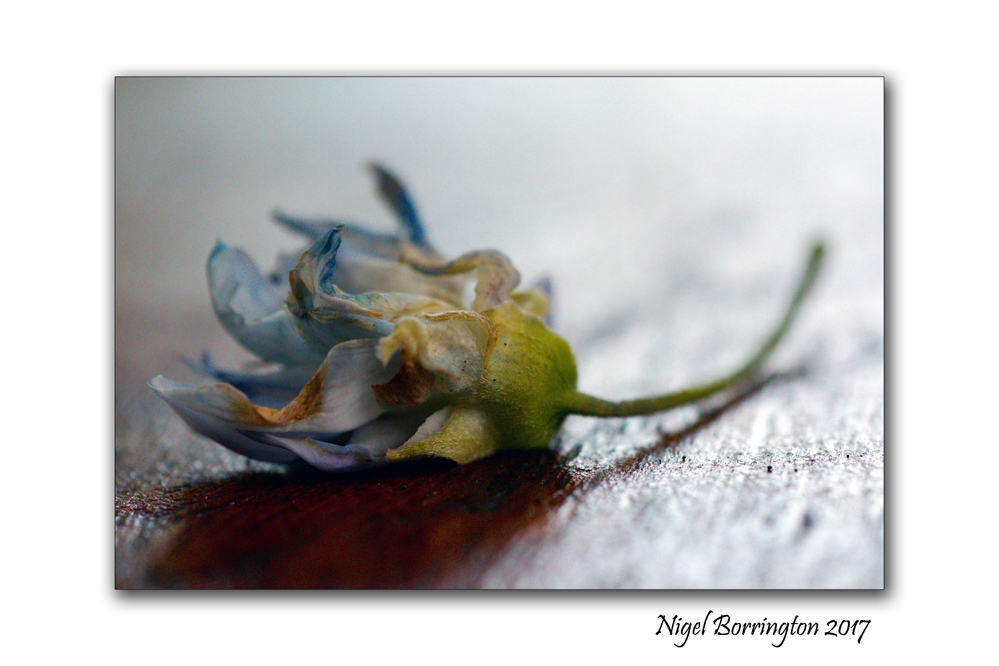
Fallen Garden flowers Nigel Borrington
In the Garden at eight am
I witness the end of Springtime
flowers of green, blue and purple
falling all over the table top
I place my cup of tea down
a moment frozen, soon moves on
as more of these blooms fall all around me
soon it will be summer time
clearly the flowers know, against all hope !
time moves on
never stopping
never frozen
never pausing for anyone ……

Herb-Robert (Geranium robertianum) in the Sun and the Rain

Irish wide flowers
Herb Robert
Nigel Borrington
Familiar little pink flower from April to November, Herb-Robert is a hairy, unpleasant-smelling plant which grows on banks, bases of walls, shingle and shady places throughout the country. Its pink flowers (8-15mm across) have five un-notched petals and in the centre of the flower are orange anthers. Each petal is marked by small lighter-pink lines running into the centre of the flower. The hairy, stalked leaves are often tinged red and have three to five deeply cut lobes. The fruit is hairy and beak-like. This is a native plant belonging to the family Geraniaceae.

Irish wide flowers
Herb Robert
Nigel Borrington
This plant has been introduced into North and South America from Europe and Asia. In traditional medicine in the Americas it has been used to stop nosebleeds. Its leaves are also made into a herbal tea which is recommended as a gargle and an eyewash.
One wonders who is the ‘Robert’ of this plant. Maybe the name comes from the Latin word ‘ruber’ meaning red which may have referred to the colouring of the leaves and stems.
Monday Poetry : The Harbour, by: Winifred Mary Letts

The Harbour, Poem By Winifred Mary Letts Nigel Borrington
The Harbour, Poem
By : Winifred Mary Letts
I think if I lay dying in some land
Where Ireland is no more than just a name,
My soul would travel back to find that strand
From whence it came.
I’d see the harbour in the evening light,
The old men staring at some distant ship,
The fishing boats they fasten left and right
Beside the slip.

The fishing boat rests along the shore,
The grey thorn bushes growing in the sand,
Our Wexford coast from Arklow to Cahore –
My native land.
The little houses climbing up the hill
Sea daises growing in the sandy grass,
The tethered goats that wait large -eyed and still
To watch you pass.
The women at the well with dripping pails,
Their men colloguing by the harbour wall,
The coils of rope, the nets, the old brown sails,
I’d know them all.
And then the sun- I’d surely see
The disk against a golden sky.
Would let me be at my rest.



Memories, A poem By : Louise Bailey
Memories a Poem
Louise Bailey
My Heart and thoughts, ever since Monday night have almost entirely been far away from my current home here in County Kilkenny, they have been very much back in Manchester the place of my birth and childhood !!
There are so many things and feelings you could express, the main feeling I have had is that it not easy being away from your spiritual home at times like these, I am so proud about the way so many great and good people have responded and offered so much support in the hours since Monday night !!!
It is with good hearts and minds and life’s that in the end true evil will be overcome !!!!
I came across this poem by : Louise Bailey so I am sharing it here 🙂
I feel a warmth around me
like your presence is so near,
And I close my eyes to visualize
your face when you were here,
I endure the times we spent together
and they are locked inside my heart,
For as long as I have those memories
we will never be apart,
Even though we cannot speak
my voice is always there,
Because tonight before I sleep
I have you in my prayer.
Memories, A poem By : Louise Bailey
This is Manchester !!!
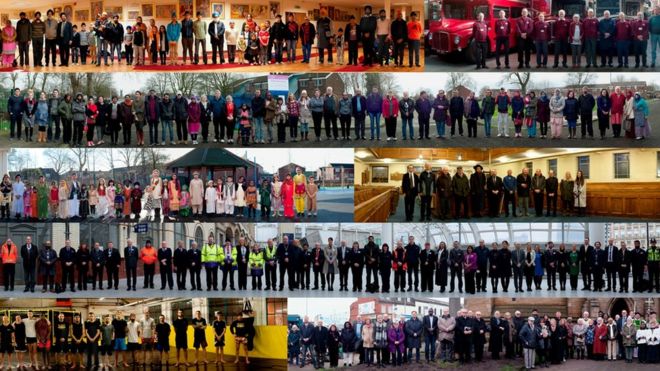
People living and working on one of the most culturally diverse streets in Britain are being celebrated in a new photographic exhibition.
Panoramic snapshots of life in Manchester’s multicultural Cheetham Hill Road
On this blog I do my best to keep away from political events and areas of life that can only affect people in a negative way !!!
However flowing last nights terrorist attack in my home town of Manchester I just wanted to make a quick comment and to share what I feel is such a great city, its people and its very heart !!!
This is Manchester, the Manchester I love and grew-up in !!!!
MULTICULTURAL !!!
LOVING!
CARING!!!
SOFT SHARING PEOPLE!!!
My Heart is Broken!! For the people who have lost loved ones last night and for anyone affected in anyway !!!!
Please go and read this article, it reflects upon the best aspects of life in the city I love the most !!! MANCHESTER , UK …..
Monday Poetry : Bicycle Beats By Christian Reid Oct 2014

Christian Reid Oct 2014
Bicycle Beats
Axels and chains and
Feet and brains
It’s the bicycle beats
And the trees and the streets
Join the lines in the sidewalk
As I ride and I talk
To myself,
“Breathe in,” &
“Breathe out,” —
Burning and churning to the
Grooves and the cracks
Red light’s the only chance to relax
Racing the bus and flashing a grin
To the sorry folks trapping themselves therein
Ecstasy building with each revolution
Wiping my sweat away, tasting pollution
Grinding and winding a path on my bike
Where cars and pedestrians hate me alike
York Minster , Inside out …..
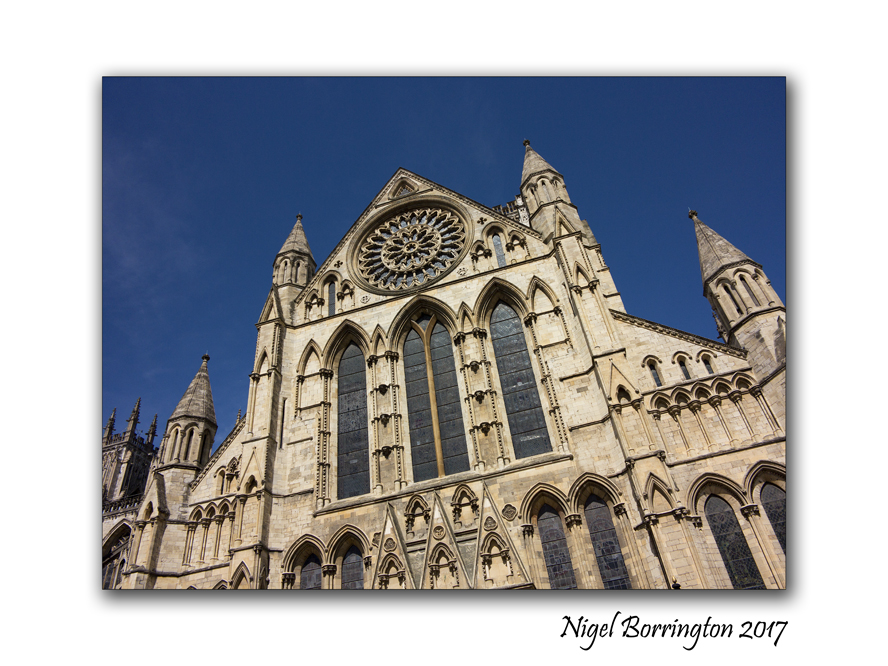
Cathedral and Metropolitical
Church of St Peter
Nigel Borrington
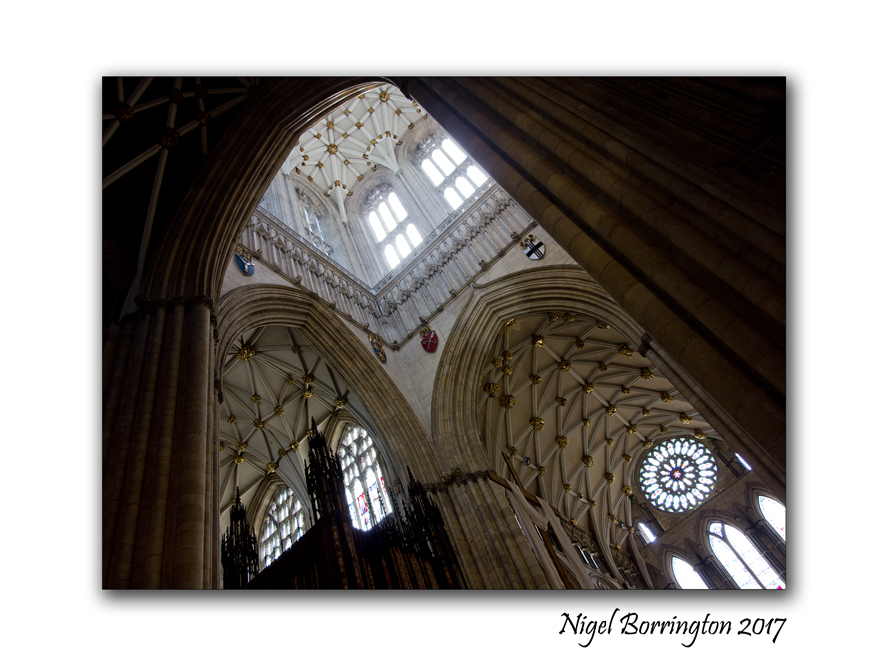
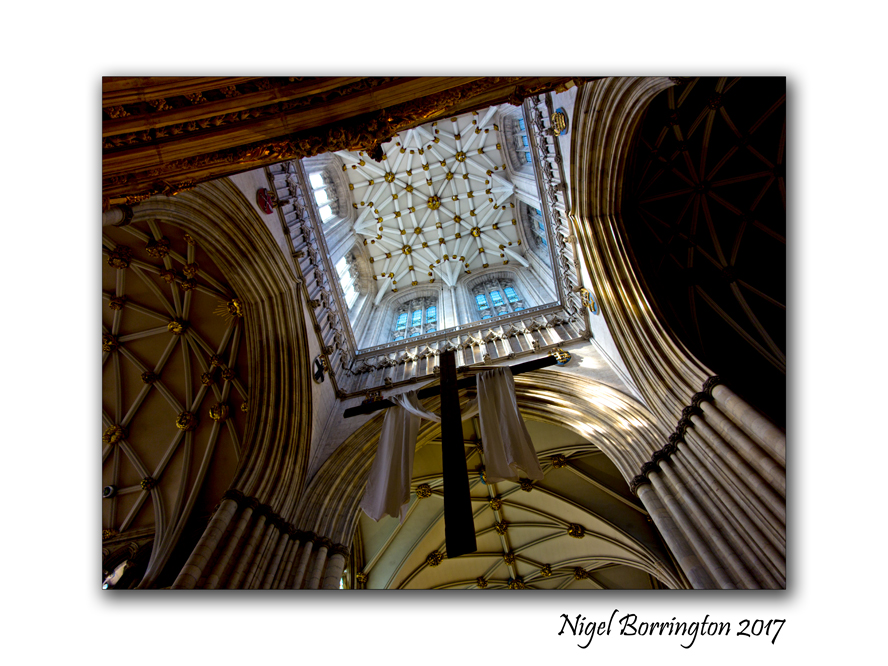
The Cathedral and Metropolitical Church of Saint Peter in York, commonly known as York Minster, is the cathedral of York, England, and is one of the largest of its kind in Northern Europe. The minster is the seat of the Archbishop of York, the second-highest office of the Church of England, and is the mother church for the Diocese of York and the Province of York. It is run by a dean and chapter, under the Dean of York. The title “minster” is attributed to churches established in the Anglo-Saxon period as missionary teaching churches, and serves now as an honorific title. Services in the minster are sometimes regarded as on the High Church or Anglo-Catholic end of the Anglican continuum.
The minster has a very wide Decorated Gothic nave and chapter house, a Perpendicular Gothic Quire and east end and Early English North and South transepts. The nave contains the West Window, constructed in 1338, and over the Lady Chapel in the east end is the Great East Window (finished in 1408), the largest expanse of medieval stained glass in the world. In the north transept is the Five Sisters Window, each lancet being over 52 feet (16 m) high. The south transept contains a rose window, while the West Window contains a heart-shaped design colloquially known as ‘The Heart of Yorkshire’.
York Minster , Inside out …..

What do Hover flies and Insect see with their compound eyes ?
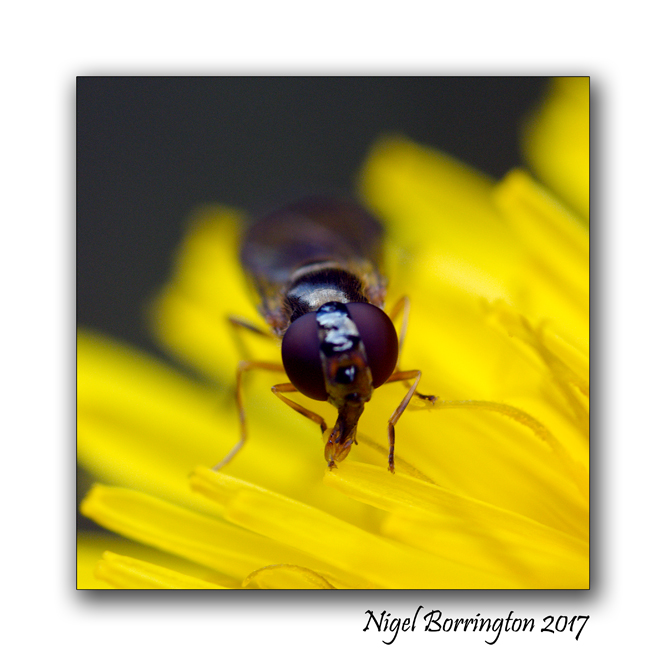
Nature Photography
Macro image of a Hover fly
Nigel Borrington
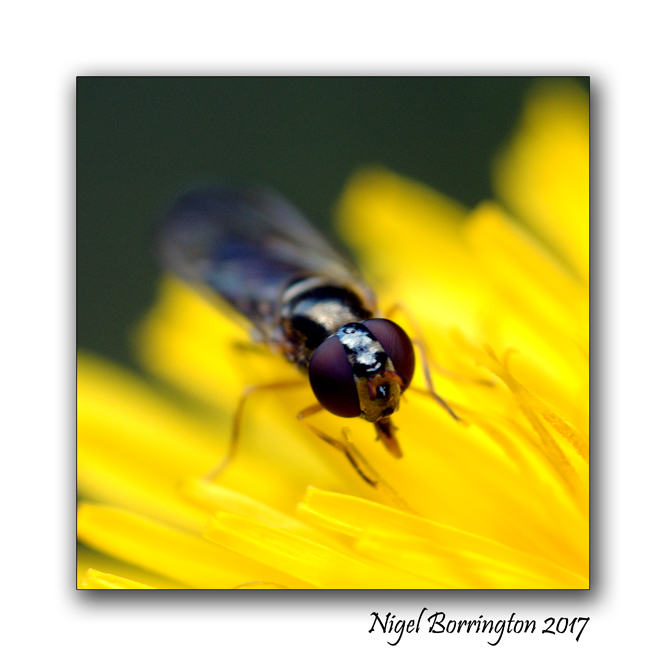
Hover Flies, such as the this one above, look at the world in quite a different way than humans do. The structure and function of a flies eye are completely different from ours, and so they see shapes, motion and color differently. Flies are also able to see light in a way humans cannot.
Structure of a Compound Eye
Compound eyes are made up of thousands of individual visual receptors, called ommatidia. Each ommatidium is a functioning eye in itself, and thousands of them together create a broad field of vision for the fly. Each ommatidium is a long, thin structure, with the lens on the outer surface of the eye, tapering to a nerve at the eye’s base. When the ommatidium receives light, it is filtered through the lens, then a crystalline cone structure, pigment cells and visual cells. Every ommatidium has its own nerve fiber connecting to the optic nerve, which relays information to the flies brain.
Flies Can’t Focus
A human’s eye is attached to muscles that allow it to move, expanding the field of vision and making it possible for the eye to gather more information about its surroundings. Instead of moving their eyes, flies receive information from several different points simultaneously. A flies eyes are immobile, but because of their spherical shape and protrusion from the flies head they give the fly an almost 360-degree view of the world. In a human eye, the pupil controls how much light comes into it, which is focused by the lens onto the retina. The retina then relays information to the brain via the optic nerve. Because fly eyes have no pupils they cannot control how much light enters the eye. With no control over how much light passes through the lens, the fly cannot focus the image it sees. Flies are also short-sighted — a visible range of a few yards is considered good for an insect.

The Mosaic Effect
The best analogy to describe a flies vision is to compare it to a mosaic — thousands of tiny images convalesce, and together represent one visual image. Each one of these pictures represents information from the fly’s individual ommatidium. The effect is much like how we see stippling or newspaper print — up close the image is a lot of tiny dots, but take a step back and it’s a complete image. The more ommatidia a compound eye contains, the clearer the image it creates.
Motion Detection
There’s a reason why flies are especially jumpy creatures that take off at the slightest flinch. A flies vision is nowhere near as clear or effective as a human’s, but it’s especially good at picking up form and movement. As an object moves across the fly’s field of view the ommatidia fire and stop firing. This is called a flicker effect. It’s similar to how a scrolling marquis works — with lights turning on and off to give the illusion of motion. Because a fly can easily see motion and form, but not necessarily what the large moving object is, they are quick to flee, even if the moving object is harmless.
Interpreting Light Waves
Flies have limited color vision. Each color has its own wave frequency, but flies have only two kinds of color receptor cells. This means they have trouble distinguishing between colors, for instance discerning between yellow and white. Insects cannot see the color red, which is the lowest color frequency humans can see. However, houseflies have the ability to see polarized light, but humans cannot differentiate between polarized and unpolarized light. Polarized light is light in which the waves travel only in one plane.
Macro Images – Wolf Spider

Macro Images
Wolf spider
Nature Images
Nigel Borrington Kilkenny
Wolf Spiders are members of the family Lycosidae. They are so named because their method of hunting is to run down their prey like that of a wolf. Wolf Spiders are robust and agile hunters that rely on good eyesight to hunt, typically at night. Wolf Spiders resemble nursery web spiders (family Pisauridae), however, they carry their egg sacs by attaching them to their spinnerets (instead of by means of their jaws and pedipalps).
Wolf spider Characteristics
Wolf Spiders range from about half an inch to 2 inches in length. They are hairy and typically brown to grey in colour with a distinct Union Jack impression on their backs. The spiders undersides are light grey, cream or black, sometimes salmon pink.
Wolf Spiders have eight eyes arranged in three rows. The bottom row consists of four small eyes, the middle row has two very large eyes and the top row has two medium-sized eyes.
Wolf Spiders depend on their good eyesight to hunt. Their sense of touch is also acute. The sides of their jaws may have a small raised orange spot or ‘boss’.
Because they depend on camouflage for protection, Wolf Spiders do not have the flashy appearance of some other kinds of spiders. In general their colouration is appropriate to their favoured habitat.
Wolf Spiders eyes reflect light well and one way of finding them is to hunt at night using a flashlight strapped to ones forehead so that the light from the light is reflected from their eyes directly back toward its source.
Wolf spider Habitat and Webs
Wolf spiders can be found in a wide range of habitats both coastal and inland. These include shrub lands, woodland, wet coastal forest, alpine meadows and suburban gardens.
Wolf spiders are commonly known as household pests as when the weather starts getting colder, they look for warm places to overwinter in homes. Wolf Spiders are commonly found around doors, windows, house plants, basements, garages and in almost all terrestrial habitats. Wolf Spiders do not spin a web, instead, they roam at night to hunt for food. Wolf spiders are often confused with the Brown Recluse spider, however, they lack the violin-shaped marking of the Recluse. The wolf spider is shy and is most likely to run away when disturbed.
Wolf spider Diet
Two Wolf spider species are known to be predators of cane toads. Lycosa lapidosa will take small toads and frogs while Lycosa obscuroides has been noted biting and killing a large toad within one hour.
Wolf spider Reproduction
Mating takes place outside the females burrow at night. Some adult male Wolf spiders of smaller-sized species are known to disperse by air in order to find mates. The male is attracted by scent markings left by the female, often associated with her drag-line silk. Males perform a courtship ritual prior to mating, often involving complex leg and palp signaling to the female.
The female Wolf spider constructs an egg sac of white papery silk, shaped like a ball with an obvious circular seam, which she then carries around attached with strong silk to her spinnerets. When the spiderlings hatch, they are carried around on the females back until they are ready to disperse by ballooning or on the ground. Such a high degree of parental care is relatively unusual among spiders. Wolf spiders live for up to 2 years.
Wolf spider Venom
The Wolf Spider is not aggressive, however, it will inject venom freely if continually provoked. Symptoms of its venomous bite include swelling, mild pain and itching. Though usually considered harmless to humans, its bite may be painful.
 Nigel Borrington
Wednesday at the gardens : Altamont Gardens, County Carlow
Altamont Gardens
Carlow
Ireland
With the aim of shopping for some new summer plants and flowers for the garden, today I spent sometime at Altamont Gardens, county Carlow.
This is a fantastic house and gardens with a great garden center, the staff know a great deal about the kind of plants that will grow well locally.
A great way to spend the afternoon, looking and plants, walking around the grounds and finally and cup of tea and cake in the little cafe …..
Share this:
June 14, 2017 | Categories: Comment, Gallery, Nature and Wildlife, Travel Locations | Tags: Altamont Gardens, Carlow, Garden centre, Gardening, Nogel Borrington, Summer plants | 2 Comments