The Bonane stone circle and an Altar for the Moon – The Pagan Moon deity : Elatha.

Bonane Stone circle and Alter for the Moon.
Irish Landscape Photography : Nigel Borrington
Bonane stone circle and altar of the Moon
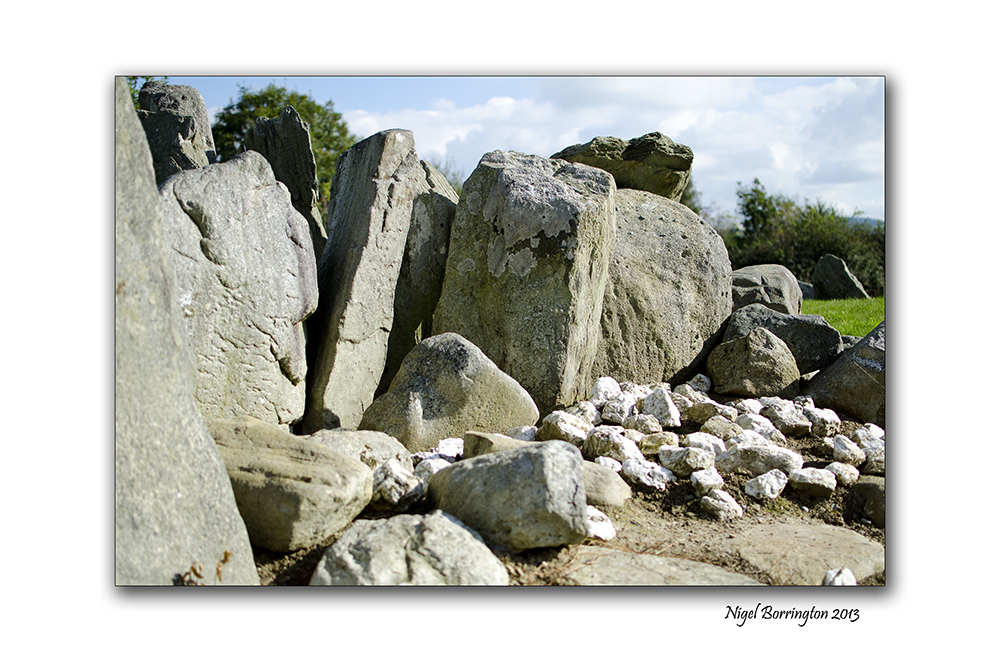
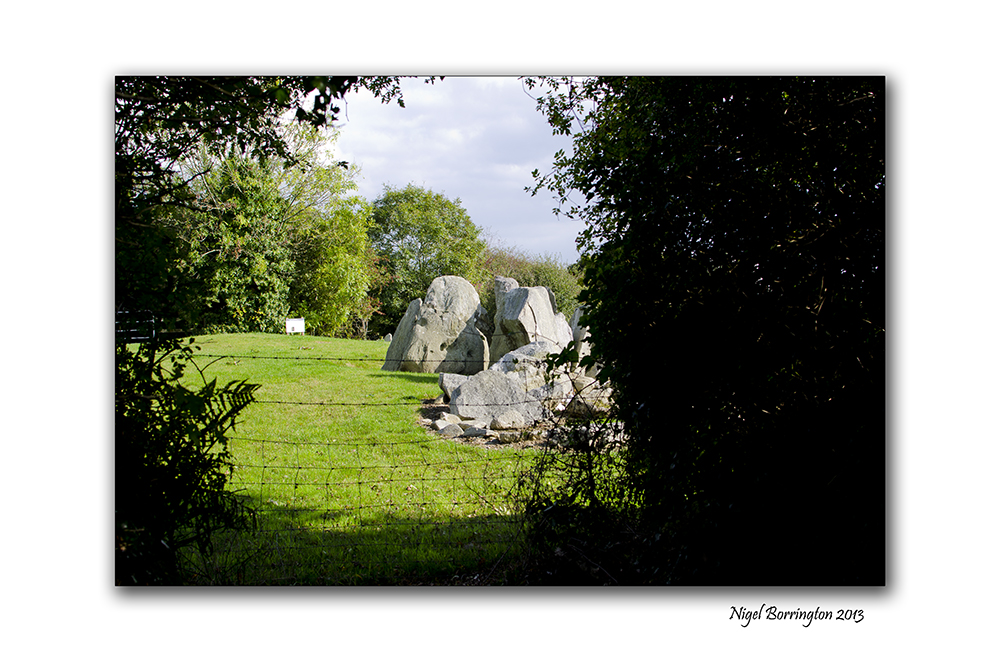
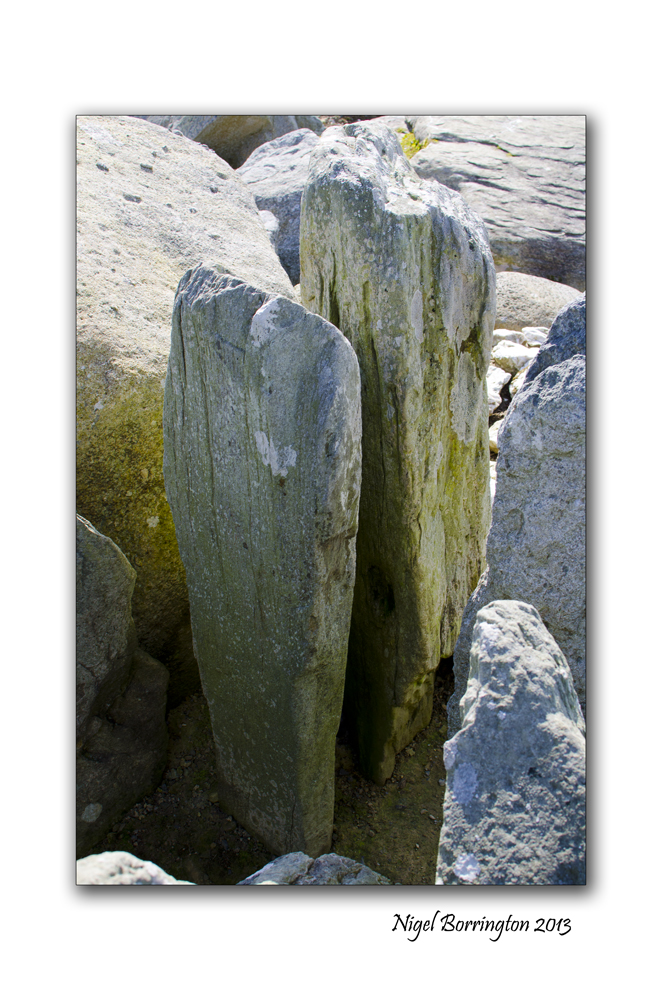
During the summer I was lucky enough to get to visit the Bonane stone circle and Alter located near Kenmare , county Kerry. This stone circle was cleared of trees and opened to the full view of the public in current times and it is a great example of a pagan stone circle.
For many centuries it has puzzled historians as to what function these circle served , some think they marks a place of worship others that they acted as a way of measuring the passage of the the year, using the shadows that they cast on the ground. The location and length of these shadows changing as the year passes.
Here at Bonane however it was discovered that the moon was being tracked over an 18.6 year period, it could be that the moon was being worshiped during its movement through the heavens.
They did this by placing an altar about a mile away on a hill side ridge and placed in-line with the center of the stone circle. The most amazing thing is than only every 18.6 years does the moon appear to rise behind the altar at its most southerly point on the horizon and only if you are standing in the center of the stone circle.
The last time this event took place was in 2006 and the next time will be during the Month of June in 2024.
The people who live here in Kerry some 5000 years ago must have been very skilled at astronomy as predicting the movement of the moon has been very difficult until in modern times with the invention of small machines called Orrery and then the use of computers have modern man been able to do so.
See : The Moon Cycles
The task they achieved here is truly amazing and takes a little time to digest, just how they moved three very large stones and placed them on a hill side ridge and then alined a stone circle a good mile away on another hill side and did so with this 18.6 years moon cycle in mind, even today some 5000 years later their achievement is still working.
The difference in thinking between a stone circle being used for the movement of the sun or the moon, or both – is very interesting. As opposed to being used to the help in planting of crops etc, this would appear to imply a function of worship but of what or of who, was it simply the moon or a moon God?
Well the main Pagan deity for this part of the world is thought to be : Elatha
Elatha
Overview
Elatha is quoted as being the “The beautiful Miltonic prince of darkness with golden hair”. He was the son of Dalbaech and a king of the Fomor, he was father of Bres by Eri, a woman of the Tuatha Dé Danann. He came to her over the sea in a vessel of silver, himself having the appearance of a young man with yellow hair, wearing clothes of gold and five gold torcs. He was one of the Fomor who took part in the Second Battle of Magh Tuireadh.
During the Second Battle of Magh Tuireadh, Elatha, son of Dalbaech, watched over Dagda’s magic harp, Uaithne, sometimes called Dur-da-Bla, “the Oak of Two Blossoms,” and sometimes Coir-cethar-chuin, “the Four-Angled Music.” He is said to have a sense of humor and a sense of nobility.
Though considered to be the Fomorian father of Eochu Bres, Elatha (Elada) was also the father of the Dagda, Ogma, a son named Delbaeth, and Elloth (the father of Manannan mac Lir) according to the Lebor Gabála Érenn. The mother of these Tuatha De Danann chiefs may have been Ethne, the mother of Lug, based on Ogma’ often cited matronymic “mac Ethliu.” Since Ethne was Fomorian, this means they are all Fomorians. This is rather confusing, but may betray the battle between the two groups as actually being about the new generation of gods displacing the older generation.
Bonane Stone circle and Altar to the Moon – Gallery


The Elements : Earth

Suir valley from Tullahought – Kilkenny landscape photography : Nigel Borrington
Connected to the North,
Earth is considered the ultimate feminine element, Earth is fertile and stable, associated with the Goddess. The planet itself is a ball of life, and as the Wheel of the Year turns, we can watch all the aspects of life take place in the Earth: birth, life, death, and finally rebirth. The Earth is nurturing and stable, solid and firm, full of endurance and strength. In color correspondences, both green and brown connect to the Earth, for fairly obvious reasons! In Tarot readings, the Earth is related to the suit of Pentacles or Coins.
Mother goddess is a term used to refer to a goddess who represents motherhood, fertility, creation, or who embodies the bounty of the Earth. When equated with the Earth or the natural world such goddesses are sometimes referred to as Mother Earth or as the Earth Mother.

Celtic Goddess
The Irish goddess Anu, sometimes known as Danu, has an impact as a mother goddess, judging from the Dá Chích Anann near Killarney, County Kerry. Irish literature names the last and most favored generation of deities as “the people of Danu” (Tuatha De Danann). The Welsh have a similar figure called Dôn who is often equated with Danu and identified as a mother goddess. Sources for this character date from the Christian period, however, so she is referred to simply as a “mother of heroes” in the Mabinogion. The character’s (assumed) origins as a goddess are obscured.
The Celts of Gaul worshipped a goddess known as Dea Matrona (“divine mother goddess”) who was associated with the Marne River. Similar figures known as the Matres (Latin for “mothers”) are found on altars in Celtic as well as Germanic areas of Europe.
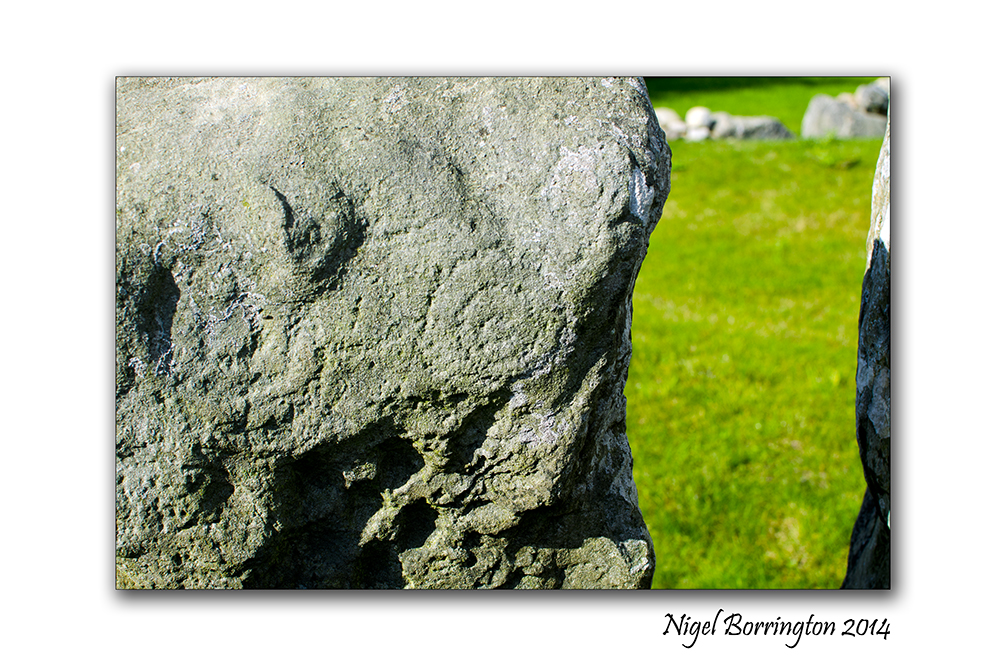
In many cultures, earth spirits are beings that are tied to the land and plant kingdom. Typically, these beings are associated with another realm, the forces of nature that inhabit a particular physical space, and landmarks like rocks and trees.
In Celtic mythology, the realm of the Fae is known to exist in a parallel space with the land of man. The Fae are part of the Tuatha de Danaan, and live underground. It’s important to watch out for them, because they’re known for their ability to trick mortals into joining them.

Gnomes feature prominently in European legend and lore. Although it’s believed that their name was coined by a Swiss alchemist named Paracelsus, these elemental beings have long been associated in one form or another with the ability to move underground.
Likewise, elves often appear in stories about the land. Jacob Grimm collected a number of stories about elves while compiling his book Teutonic Mythology, and says that elves appear in the Eddas as supernatural, magic-using beings. They appear in a number of old English and Norse legends.
The Standing Stones, Poem by : John Bliven Morin
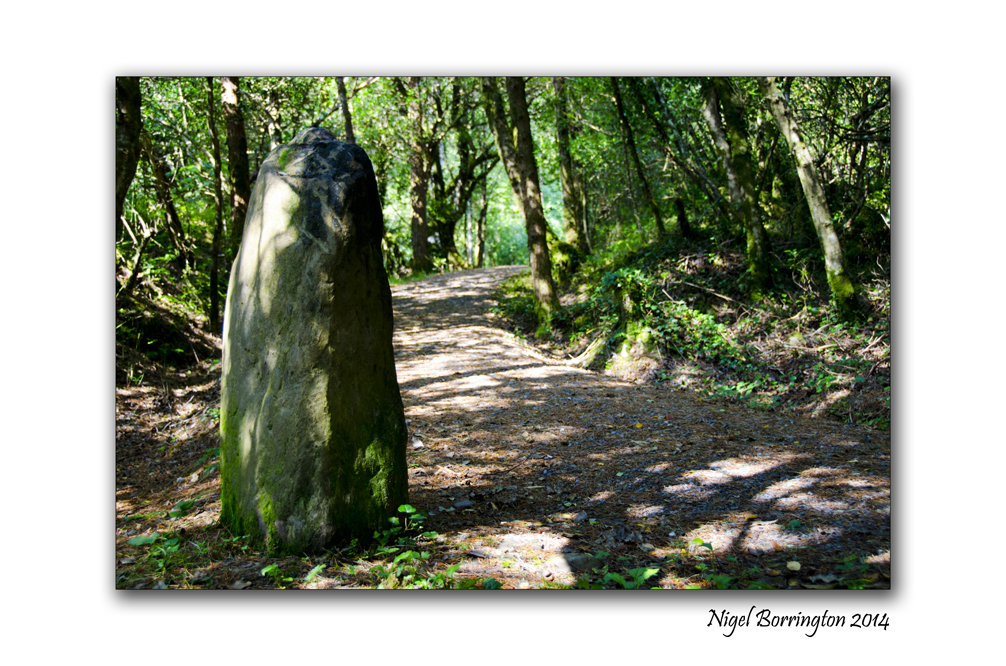
Standing stone at Glengarriff Nature Reserve.
Landscape Photography : Nigel Borrington
The Standing Stones
By : John Bliven Morin
Who will go where the standing stones stand,
when the fog rolls in and covers the land,
when the moon is hidden in a cloudy sky,
and the night is as dark as a raven’s eye,
and the wind is as cold as a winter’s chill,
What’s that? You say you’ll dare, you will?

We’re here. If you’ve courage in your mortal bones,
then go and walk through the standing stones;
yes, that way, go, though it’s hard to see
the ancient path in this obscurity;
your torch is useless for a light,
with the fog and the darkness of the night;
you go alone, for you claim the nerve;
I’ll stay right here, for I only serve.
Follow this footpath through the mist,
and keep to the path I must insist.
You step down the path and I’m lost to view,
as the fog and the mist are surrounding you;
several sounds – grinding – from all about,
startle you so that you almost shout,
but all that comes out is a muted croak,
as you wrap yourself in your winter cloak.
You feel things moving through the very ground,
huge things, horrid things sliding around,
which make your skin crawl with growing fear,
and you sense that something is drawing near;
something immense, for the earth so shakes
that a chill runs up your spine and makes
the hair on your head stand up in fright,
as the fog rolls past and hides from sight
that which you fear but cannot see;
perhaps in your nightmares previously.
Wasn’t that standing stone over there?
But now it’s so close, and that other pair
are much nearer too than they were before!
You remember tales of ancient lore,
as you fall back on some lower stones,
and the Old Ones come to crush your bones;
you scream in fear, you scream in pain,
but all your screaming is quite in vain,
for no one can hear you or see the blood
flow down the altar-stone in a flood;

Then all is quiet; you’ve paid the price,
for you were the Druid’s sacrifice.
and I, their servant. go from here
homeward, until another year.
The Elements : Water.
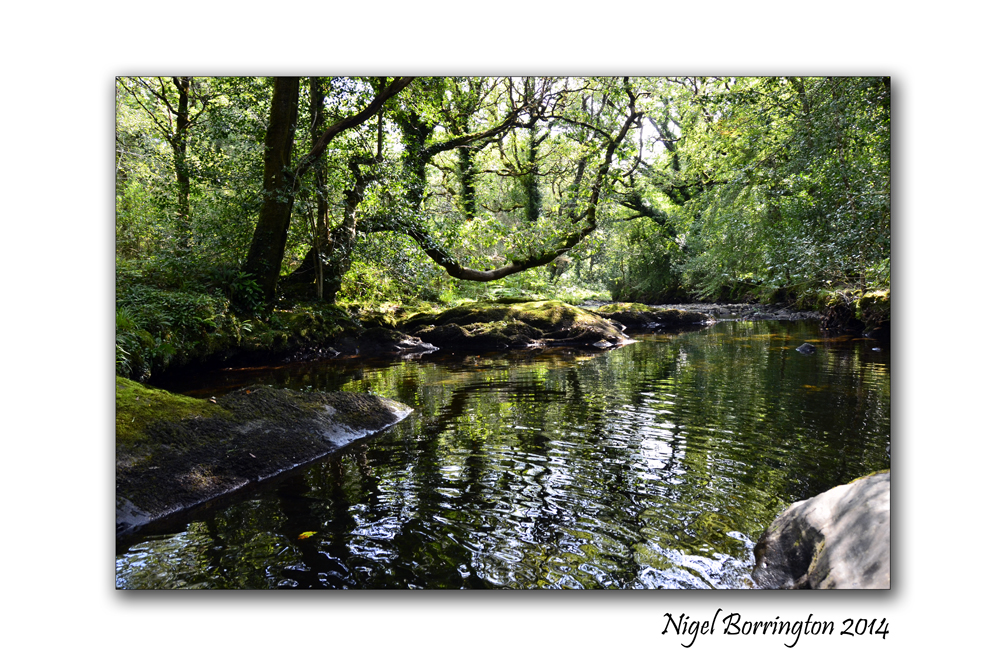
The elements , Water
Landscape Photography : Nigel Borrington
The Pagan element of Water and the pagan Irish Goddess : Boann and the Irish God : Nechtan
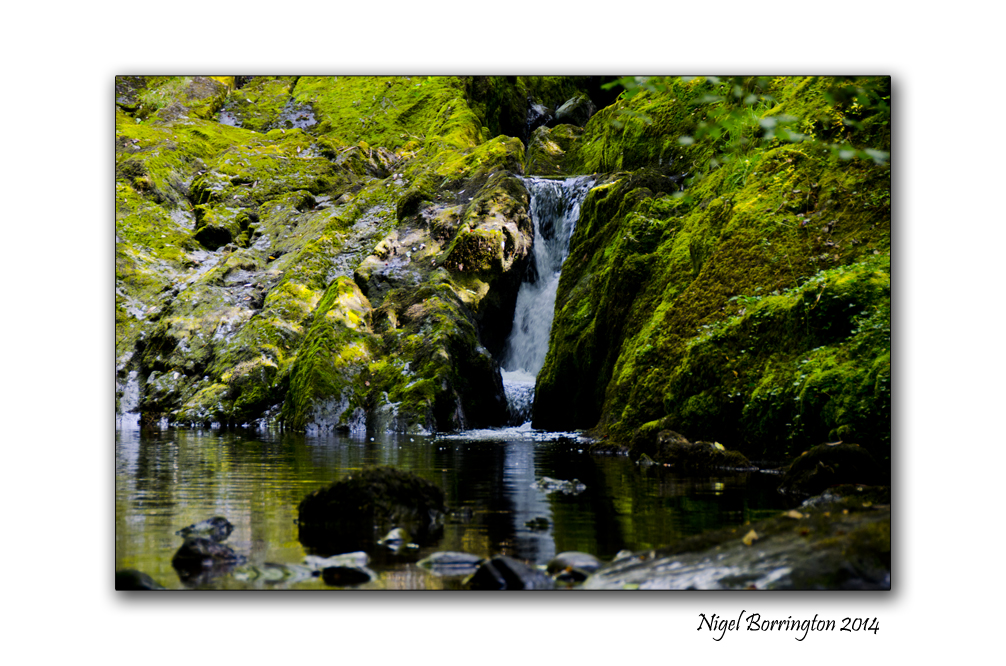
Water, is of a great necessity, without it nothing can live. Only earth and water can bring forth a living soul. Such is the greatness of water that spiritual regeneration cannot be done without it.
Thales of Miletus concluded that water was the beginning of all things and the first of all elements and most potent because of its mastery over the rest. Pliny said “Water swallow up the earth, extinguishes the flame, ascends on high, and by stretching forth as clouds challenges the heavens for their own, and the same falling down, becomes the cause of all things that grow in the earth.
Water is a cleansing, healing, psychic, and loving element. It is the feeling of friendship and love that pours over us when we are with our family, friends and loved ones. When we swim it is water that supports us, when we are thirsty, it is water the quenches our thirst, another manifestation of this element is the rainstorms that drench us, or the dew formed on plants after the sun has set.
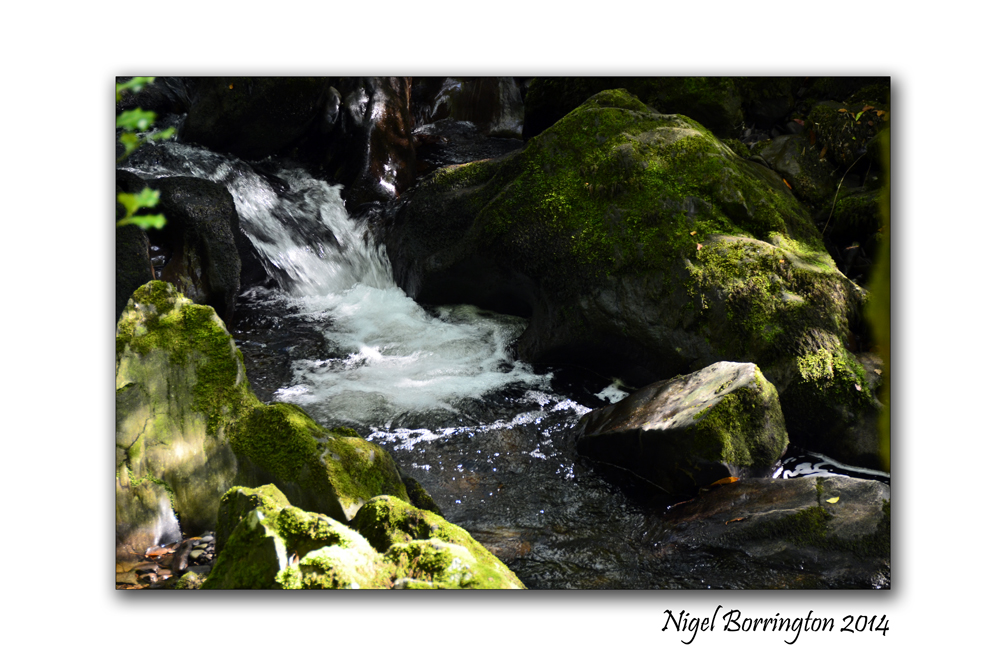
The power of the energy of Water, can be felt by tasting pure spring water, moving you hand through a stream, lake, pool, or bowl full of water. You can feel its cool liquidity; it’s soft and loving touch, this motion and fluidity is the quality of Air within Water. This Water energy is also contained within ourselves, our bodies being mostly composed of Water.
As well as being vital for life, within the energy of this element is contained the essence of love. Love is the underlying reason for all magic. Water is love.
Water is a feminine element, it also the element of emotion and subconscious, of purification, intuition, mysteries of the self, compassion and family. It is psychic ability; water can be used as a means of scrying or as an object for meditation. Water is important in spells and rituals of friendship, marriage, happiness, fertility, healing, pleasure, psychic abilities and spells involving mirrors.
Ref : Pagan elements of Water
 .
.
Irish Goddess : Boann, Irish God : Nechtan
Celtic (Irish) Goddess of the River Boyne and mother of Angus Mac Og by the Dagda. She was the wife of Nechtan, a god of the water. Likewise, Boann was herself a water-goddess, and one of her myths concerns the water. According to legend, there was a sacred well (Sidhe Nechtan) that contained the source of knowledge. All were forbidden to approach this well, with the exception of the god Nechtan (as was noted, Boann’s husband) and his servants. Boann ignored the warnings, and strode up to the sacred well, thus violating the sanctity of the area. For this act, she was punished, and the waters of the defiled well swelled and were transformed into a raging river, a river that pursued her. In some versions, she was drowned; while in others, she managed to outrun the currents. In either case, this water became the river that was known henceforth as the Boyne, and Boann thereafter became the presiding deity.
Another aspect of the myth of Boann is that she bore Angus. She and the All father of the Tuatha De Danaan, the Dagda, engaged in an illicit affair that resulted in the birth of this god of love. However, since both Boann and the Dagdha wished to keep their rendezvous a secret, they used their divine powers to cause the nine month gestation period to last but a single day – or so it seemed, for the sun was frozen in the sky for those nine months, never setting and never rising. On this magical day, Angus emerged into the world. She held the powers of healing. Variants: Boannan, Boyne.
The Elements : Air

Pagan Elements : Air
Landscape Photography : Nigel Borrington
The pagan elements :
Air
The element of Air is vital to human survival, without it we would all perish, its aspects are Thinness, Motion and Darkness and its quality is Active. Air is the manifestation of movement, freshness, communication and of the intelligence. Sound is another manifestation of this element. As an element, it is invisible, but its reality can be felt in the air that we breathe in every day.
To connect with the power of this element, find a place with clean air and breathe deeply, touch a feather or inhale the fragrance of a heavily scented flower. Let yourself experience the energy of this element, and reflect that we also possess Air energy within ourselves.
In magical terms, Air is the power of the mind, the force of intellect, inspiration, imagination. It is ideas, knowledge, dreams and wishes. Air is the element of new life and new possibilities and is essential to spells and rituals of travel, instruction, finding lost items, some types of divination, and freedom. Air aids us in visualization, a vital technique in magic.
Air is a masculine element and governs the magick of the four winds. It is the vital spirit passing through all things, giving life to all things, moving and filling all things. Thus Hebrew doctors ascribe it not as an element but as a medium or glue that binds all things together.
Air
The first element of the alchemical tradition.
Air is the essence of intuition and learning, the element of the nature of the mind.
Astrological Signs: Gemini, Libra, and Aquarius.
Represented by: Feathers, Birds, incense, fans, flags, flowing garments and sheer material.
Season: Winter
Color: White
Chakra: Crown
Celtic air god and goddess:
Arianrhod
“The Silver Wheel”, “High Fruitful Mother”. Celtic Goddess, the sister of Gwydion and wife of Donn. Deity of element of Air, reincarnation, full moons, time, karma, retribution. The palace of this sky Goddess was Caer Arianrhold (Aurora Borealis). Keeper of the Silver Wheel of Stars, a symbol of time and karma. Her ship, Oar Wheel, carried dead warriors to Emania (Moon-land).
Arianrhod (Welsh pronunciation: [arˈjanr̥ɔd]) is a figure in Welsh mythology who plays her most important role in the Fourth Branch of the Mabinogi. She is the daughter of Dôn and the sister of Gwydion and Gilfaethwy; the Welsh Triads give her father as Beli Mawr.[1] In the Mabinogi her uncle Math ap Mathonwy is the King of Gwynedd, and during the course of the story she gives birth to two sons, Dylan Ail Don and Lleu Llaw Gyffes, through magical means.
Ref:
GODDESSES: Aradia, Cardea, Nuit, Urania.
GODS: Enlil, Kheohera, Mercurym, Shu, Thoth.
Bullaun Stones – Water worship in Pagan life.

Bullaun Stone – Bonane Heritage park , county Kerry
Irish landscape Photography : Nigel Borrington
Bullaun Stones
The original purpose of bullan stones is not really known, but they have an undisputed association with water and worship. A ‘bullaun’ is a deep hemispherical cup hollowed out of a rock. Bullaun Stone refers to the rock itself, which can have many bullauns in it, although many are single.
Water in Pagan life
Water (Uisce in irish / place names after : Adare, the ford that feeds the oak tree.) is a feminine energy and highly connected with the aspects of the Goddess. Used for healing, cleansing, and purification, Water is related to the West, and associated with passion and emotion. In many spiritual paths, consecrated Water can be found – consecrated water is just regular water with salt added to it, and usually a blessing or invocation is said above it. In Wiccan covens, such water is used to consecrate the circle and all the tools within it. As you may expect, water is associated with the color blue.
Ten thousand years ago, before the coming of Christianity in Ireland, the rivers served a very important role in the lives of the people living along its banks. It was their source of food, and a place where their cattle and crops thrived on the nourished plains. It also acted as a barrier between opposing armies and clans. People saw the rivers as powerful objects and worshipped river gods. Often people placed weapons and ornaments of precious metal in the river as offerings to these gods.
Irish Goddess :Brighid
Location: Ireland.
One of the triple Goddesses of the Celtic pantheon. She is the daughter of The Dagda, the All Father of the Tuatha de Danann, one of the most ancient people of Northern Europe. Some say there are actually three Brighids; one is in charge of poetry and inspiration; one is in charge of midwifery and healing, and the last is in charge of crafts and smiths.
She probably began as a sun Goddess. According to legend, she was born at sunrise and a tower of flame beamed from her head.
As Goddess of fire and water, she is immortalized by many wells and springs. Most important of her monuments, though, was a shrine at Kildare where there was a perpetual flame burning for Brighid. It was tended by nineteen virgins called the Daughters of the Flame, wearing deep crimson habits and bearing swords. They would not talk to men, nor could men come near the shrine. Her feast is St.Brighids Days in Ireland and is the Pagan Festival of Imbolc
When Christianity began its onset, so loved was Brighid that she was made a saint. However, the upkeep on her flame was considered pagan by the church and it was extinguished out of more than a thousand years of burning. St. Brigit remains one of the most popular Irish saints today, along with Saint Patrick.
Identical to Juno, Queen of Heaven. Symbolizes human potential. Also known as Brigit, Brigid, Brigindo, Bride.
Dark the bitter winter,
cutting its sharpness,
but Bride’s mantle,
brings spring to Ireland.
Irish Goddess :Fland
Location: Ireland.
Description:
Daughter of woodland Goddess Flidais. A lake Goddess who is viewed in modern (Post Christian) folklore as an evil water faery who lures swimmers to their death.
She rules over: Water magick, rivers and lakes
Gallery


Brownshill Dolmen, county Carlow : Image Gallery

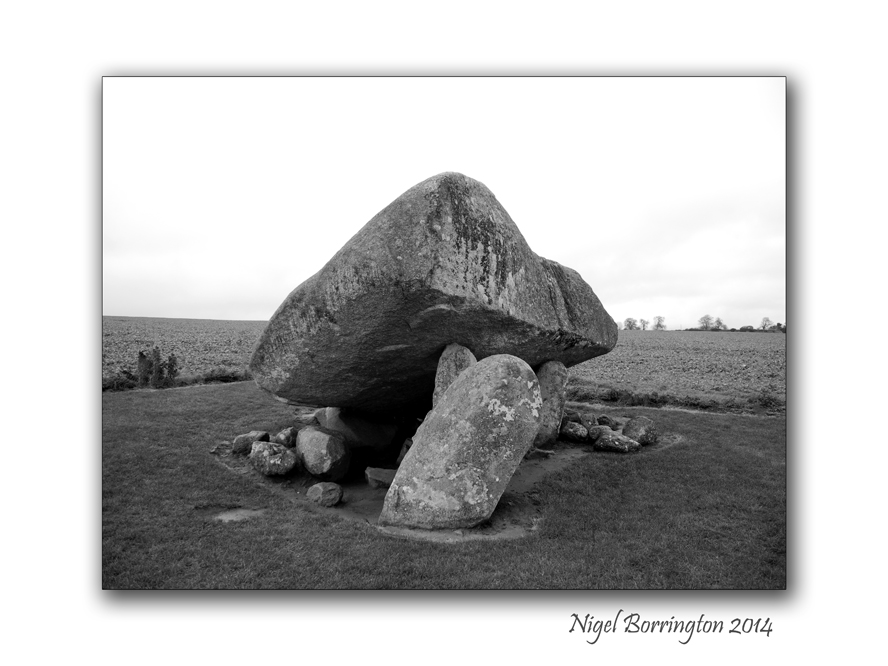
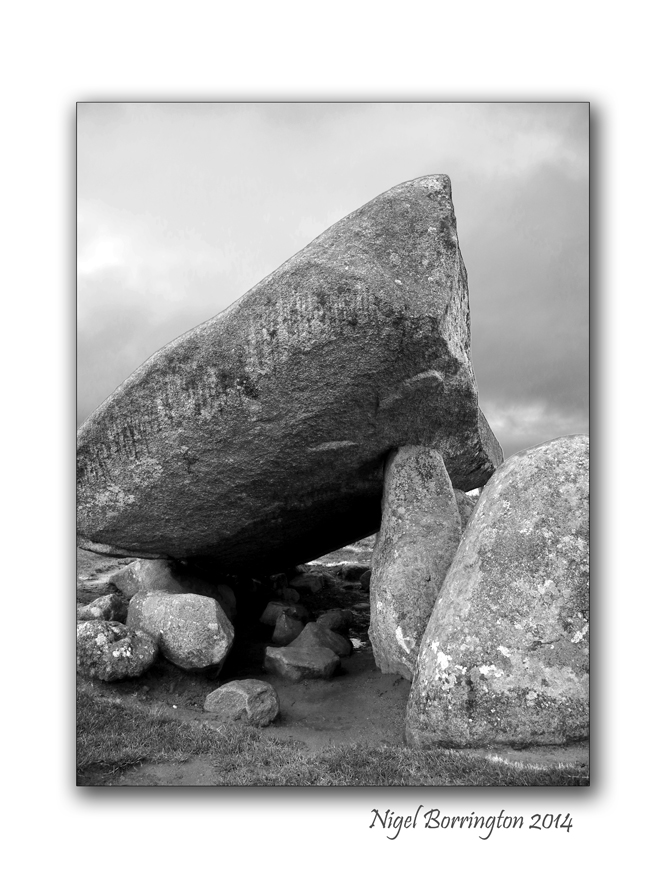
Brownshill Dolmen, county Carlow, Ireland.
Irish photography : Nigel Borrington
Brownshill Dolmen
Arriving at this great location of the Brownshill Dolmen, county Carlow on a typical overcast early autumn day in Ireland. I located the site of the largest Dolmen in this part of Europe very easily as there are plenty of road signs to help you.
There is a small walk through a field an up-to a preserved area containing the Dolmen itself, the information board is of great help and places this construction into it context.
It is the cap stone that is the most impressive part of this Dolmen.
Discover Ireland describes this monument as follows :
The Brownshill Dolmen is an unmistakable monument to the east of Carlow town dating back to pre-historic times.
Its date of construction has been estimated at between 4,900 and 5,500 years ago and it is thought that religious rites were performed here. Some authorities also suggest that it may have served as a form of border marker.
Whatever it’s original purpose, it represents a tangible link between the present and the past. The magnificent granite capstone, weighing about 103 tonnes, has excited the interest of many antiquarians and tourists for centuries.
Brownshill Dolmen, county Carlow : Gallery



The Autumnal equinox 2014 (Mabon)
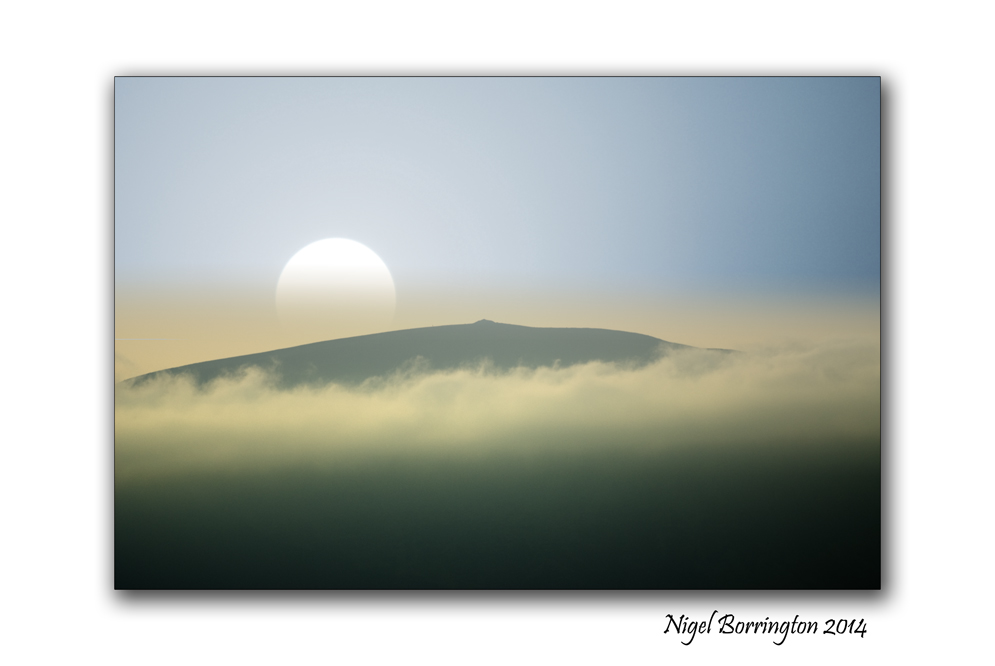
autumnal equinox 2014 over Slievenamon, County Tipperary
Irish Landscape Photography : Nigel Borrington
What is the autumnal equinox
Our year is divided into four season’s(Winter, Spring, Summer and Autumn), the starting date of these seasons is determined by the movement of the sun as our planet orbits around it with a little help by the tilt of the earth’s axis.
On the autumnal equinox, day and night are equally 12 hours long . As the Sun crosses the celestial equator going southward; it rises exactly due east and sets exactly due west.
From tomorrow we start the slow movement towards the winter season, marked my the shortest day , the 21st of December.
Autumnal equinox in the Pagan world.
The holiday of the autumnal equinox, Harvest Home, Mabon, the Feast of the Ingathering, Meán Fómhair or Alban Elfed (in Neo-Druid traditions), is a Pagan ritual of thanksgiving for the fruits of the earth and a recognition of the need to share them to secure the blessings of the Goddess and the God during the coming winter months.
The name Mabon was coined by Aidan Kelly around 1970 as a reference to Mabon ap Modron, a character from Welsh mythology. Among the sabbats, it is the second of the three Pagan harvest festivals, preceded by Lammas / Lughnasadh and followed by Samhain.
Ref : Wheel of the Year
Sunday with Kilkenny’s ancient stones , Discovering nine megalithic Court Tombs

kilmogue portal Tomb , 6000 years old,
The Standing Stone and Tombs of County Kilkenny,
Landscape Photography : Nigel Borrington
Sunday with Kilkenny’s ancient stones and tombs
Earlier in the year I posted this article about the kilmogue portal Tomb , Located Near Harristown , County Kilkenny.
Sitting at the end of a short path near Harristown, county kilkenny, it is a 6000 year old tomb, know nationally at the Kilmogue Portal Tomb but locally as, “Leac an Scail” – stone of the warrior/hero in English.
This tomb however has become just the first of many ancient remains I feel I have found in this small area of County Kilkenny, since I posted the above post in April (2014).

The above is a map of a wooded area located above the Kilmogue Portal Tomb, Harristown, Kilkenny.
When back in April when I re-visited the portal tomb, I took a good look at its surroundings, its a dairy farming area with some very defined field patterns, I had a very strong feeling that this tomb could not be the only local ancient remains, there just had to be more.
It took some weeks of walking the local roads and wood-lands to find what I was looking for and the above map shows clearly the amount of sites I feel I have now found (Ring forts, standing stones and Tombs), while walking through the above woods there are many different type of megalithic remains.
I visited the another of what I felt was a possible megalithic site last Sunday and this Sunday morning, a collection of Multiple tombs and wanted to share some of the pictures and feeling below.
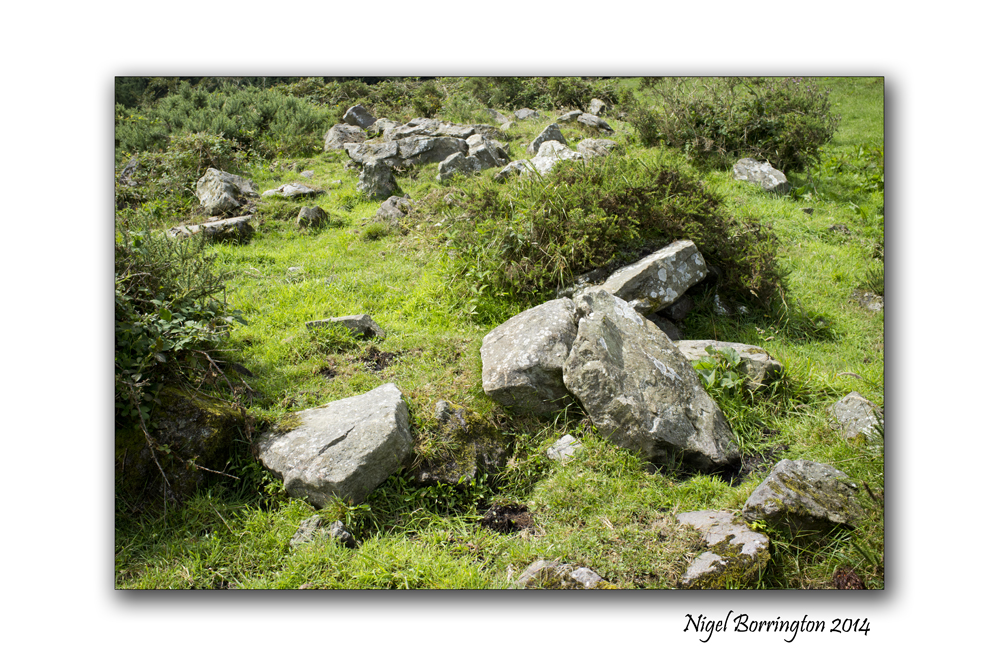
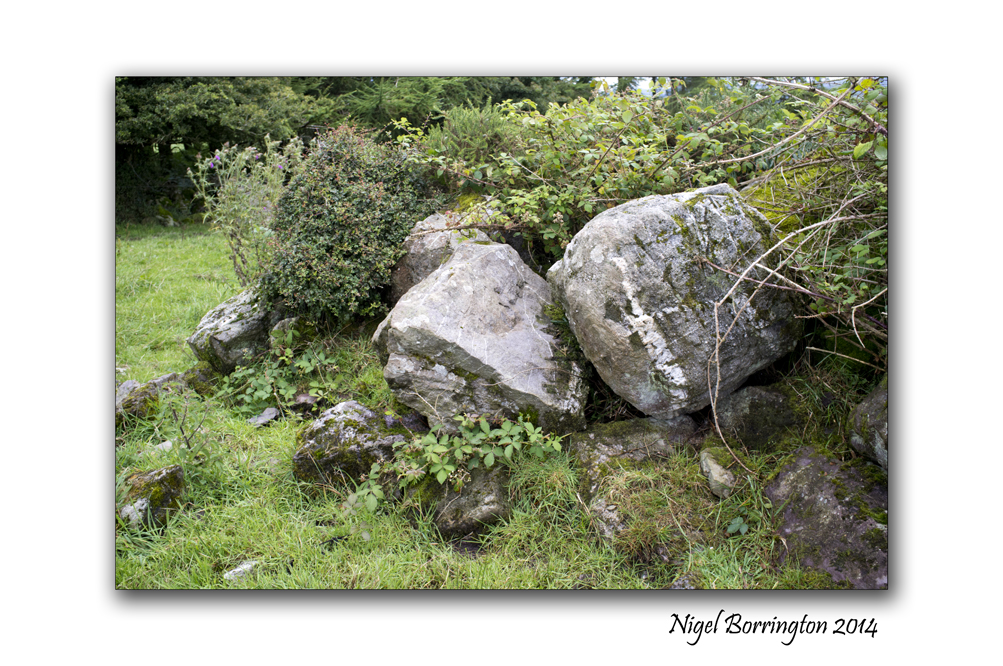
To get to this location I had to navigate through the trees and get over a wall into the field but once in I was amazed at what I found. There are a total of nine tombs that could as important as the Kilmogue Portal Tomb, they are possible megalithic Court tombs or Portal tombs. I feel that to find so many Tombs in one field is very special and reflects on just how important an area this must have been to the people who lived here over a vast period of time.
I need to keep working on this location and study a lot more as to my possible findings but feel its very exciting to find such a large collection of Tombs in one place.
I did at first wonder if these tombs where just collections of rocks that a farmer in the past had cleared from his fields but on getting closer and spending sometime walking around them, as you can see in the pictures these rocks are very large and in the correct formation and organisation to be Tombs.
They have large rocks forming a boarder with a raised area in the centre, they have a single gap forming an entrance and what looks like smaller grave area inside the tombs themselves. These features fully match the definition of what are defined as court tombs.
You are welcome to have a good looks at the pictures below and form you own impression but for the moment I am very pleased to have found such an impressive ancient location.
The Tombs of Harristown, Kilkenny ; Gallery



Local Standing Stones : Gallery

Celebrating Mid summers day 2014

Mid summers sunset over Slievenamon, county tipperary,
Landscape photography : Nigel Borrington
Mid summers day 2014
Happy Mid summers day !!!
This mornings sunrise over slievenamon county Tipperary was at 04:57am and by the time it sets again on the other side to the west the time will be 21:57 , thats seventeen hours of sun light and the most anyone can witness during the suns movement across the sky during any one year.
Today is also called the Summer Solstice
Solstice, or Litha means a stopping or standing still of the sun. It is the longest day of the year and the time when the sun is at its maximum elevation.
Wiccan blessing for Summer
As the sun spirals its longest dance,
Cleanse us
As nature shows bounty and fertility
Bless us
Let all things live with loving intent
And to fulfill their truest destiny
This date has had spiritual significance for thousands of years as humans have been amazed by the great power of the sun. The Celts celebrated with bonfires that would add to the sun’s energy, Christians placed the feast of St John the Baptist towards the end of June and it is also the festival of Li, the Chinese Goddess of light.
Pagans are in awe of the incredible strength of the sun and the divine powers that create life. For Pagans this spoke in the Wheel of the Year is a significant point. The Goddess took over the earth from the horned God at the beginning of spring and she is now at the height of her power and fertility. For some Pagans the Summer Solstice marks the marriage of the God and Goddess and see their union as the force that creates the harvest’s fruits.
This is a time to celebrate growth and life but for Pagans, who see balance in the world and are deeply aware of the ongoing shifting of the seasons it is also time to acknowledge that the sun will now begin to decline once more towards winter.
Lugh (Celtic) god of the summer soltice
Similar to the Roman god Mercury, Lugh was known as a god of both skill and the distribution of talent. He is associated with midsummer because of his role as a harvest god, and during the summer solstice the crops are flourishing, waiting to be plucked from the ground at Lughnasadh.
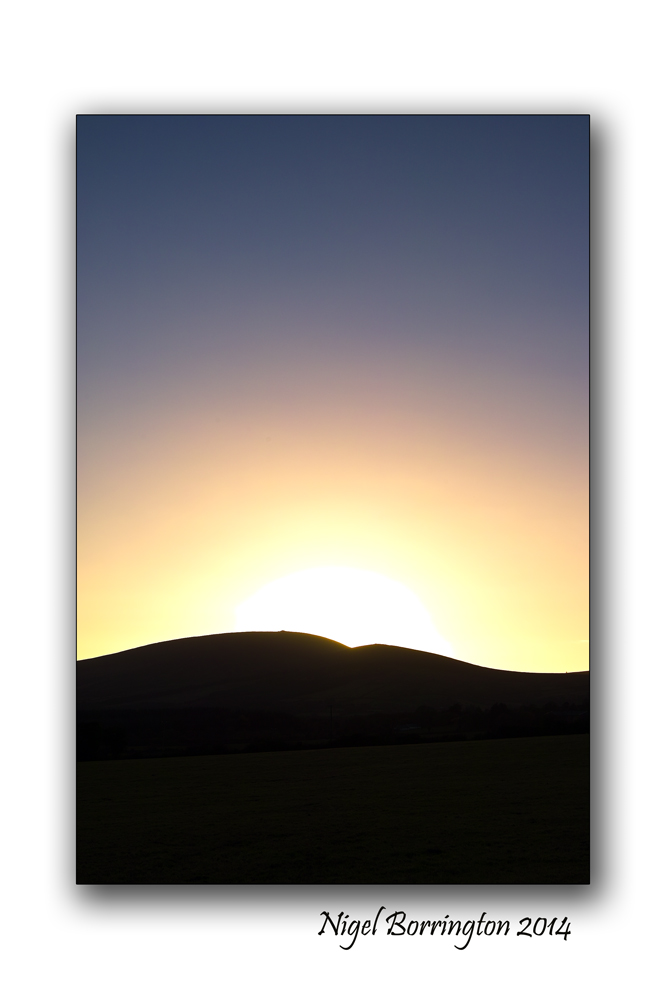
Killamery High Cross

Killamery High Cross, County Kilkenny, Ireland
Landscape Photography, Nigel Borrington
Killamery High Cross
Located in an old grave yard very near the county Kilkenny and Tipperary border, is one of the most impressive of the Irish High crosses. There was a unique early Medieval tradition in Ireland and Britain of raising large sculpted stone crosses, usually outdoors.
These probably developed from earlier traditions using wood, perhaps with metalwork attachments, and earlier pagan Celtic memorial stones; the Pictish stones of Scotland may also have influenced the form.
The earliest surviving examples seem to come from the territory of the Anglo-Saxon kingdom of Northumbria, which had been converted to Christianity by Irish missionaries; it remains unclear whether the form first developed in Ireland or Britain.
The Killamery High Cross, is one of the western Ossory group of crosses. The cross stands at 3.65 metres high and the west face of the cross bears most of the figure sculpture. The east face pictured right, is decorated with three marigolds on the shaft and has a boss in the centre of the head surrounded by intertwining serpents with an open mouthed dragon above the boss.
The cross is known as the Snake-Dragon cross and has a gabled cap-stone and the narrow sides have double mouldings. At the end of the southern arm of the cross there is a panel depicting Noah in the Ark and the end of the northern arm features four scenes centered around John the Baptist. There is also a worn inscription on the base of the western side of the cross which is said to read as ‘OR DO MAELSECHNAILL’ a prayer for Maelsechnaill. Maelsechnaill was the High King of Ireland from 846 to 862.
The western face has a Sun Swastika at the centre and has figure sculpture around the whorl, to the left is a hunting scene and to the right a chariot scene above the whorl is scene showing a figure holding a Baby with another figure to the right of them, below the sun disc is a crucifixion scene. The shaft of this face bears two ornate panels. The top one is a fret pattern and the lower panel is a key pattern.
County kilkenny has five such high crosses, most a likely still in their original setting but being over a thousand years old must of their location will have changed.
Some people have a theory that these high crosses were originally larger standing stones used in pagan stones circles or passage tombs, the form of the cross being sculpted into them during the times of the pagan’s conversion to Christianity. In Ireland this would have been during the time of Saint Patrick.
It was felt much more effective when converting people to Christianity to convert original locations for the use of the early church, including fresh water springs.

Fallen standing stone marking a well/spring
In Ireland most springs would have been the location of worship to river or fresh water gods or goddess, in post pagan times many of these locations became holy wells dedicated to a Christian saint. Most even the forgotten spring above still have the original pagan standing stone in place , used to help find and mark the location of the spring and to leave offerings to the gods and goddesses ( Well dressing ).
Gallery

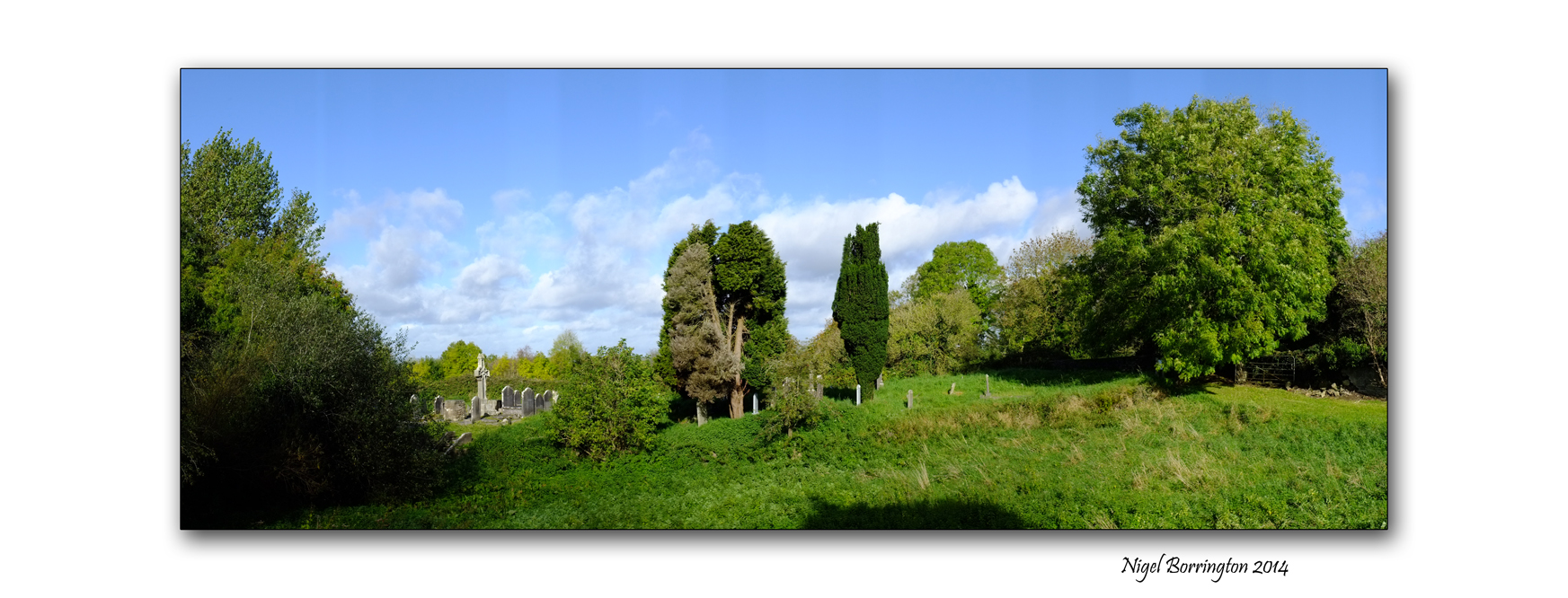
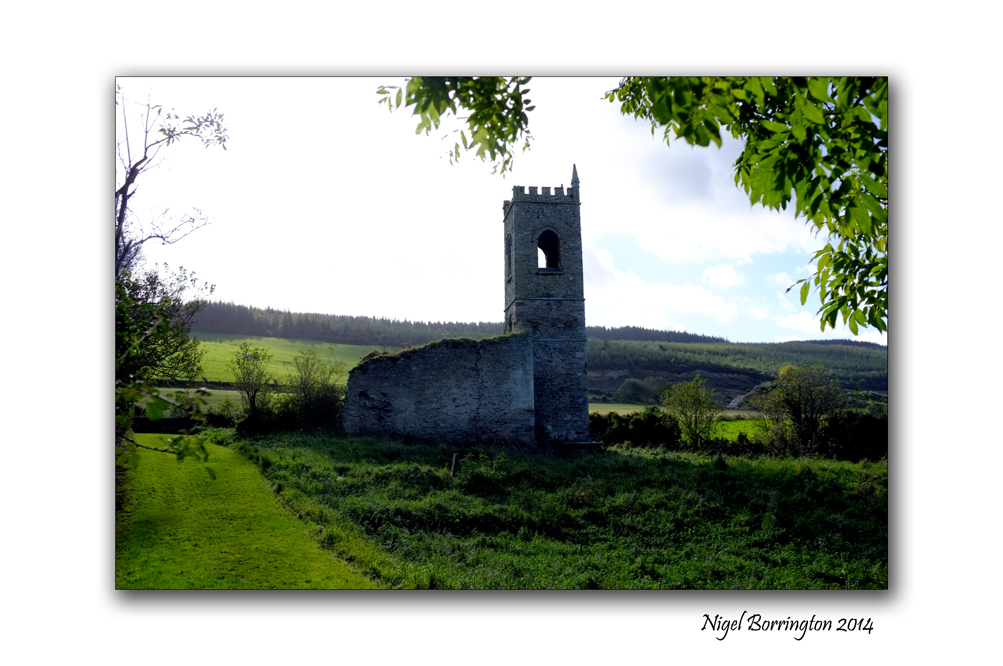

World wide megalithic Portal tomb’s a connection to county Kilkenny .

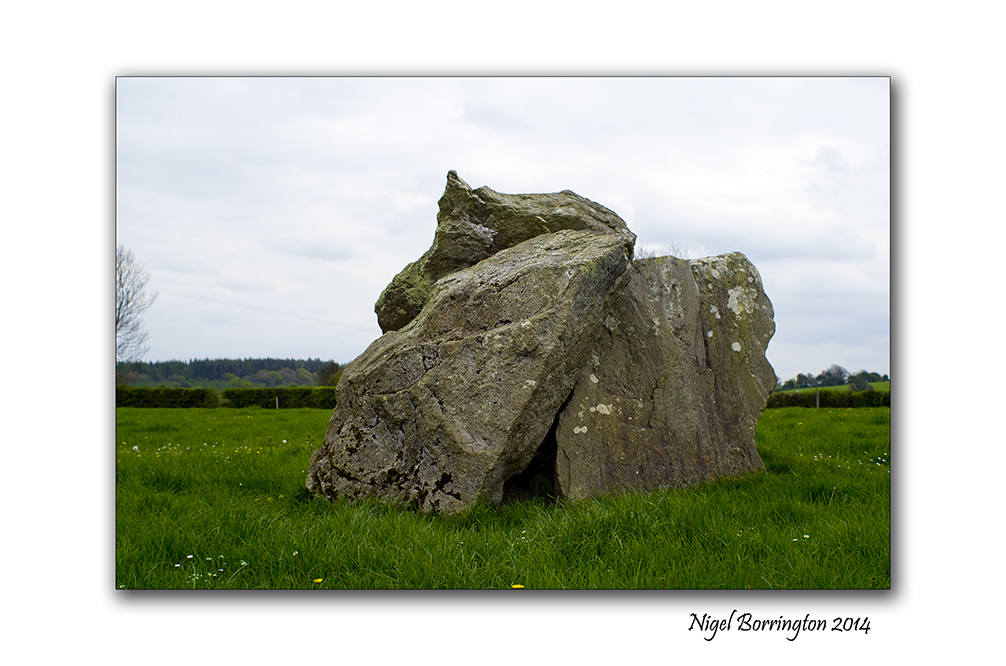
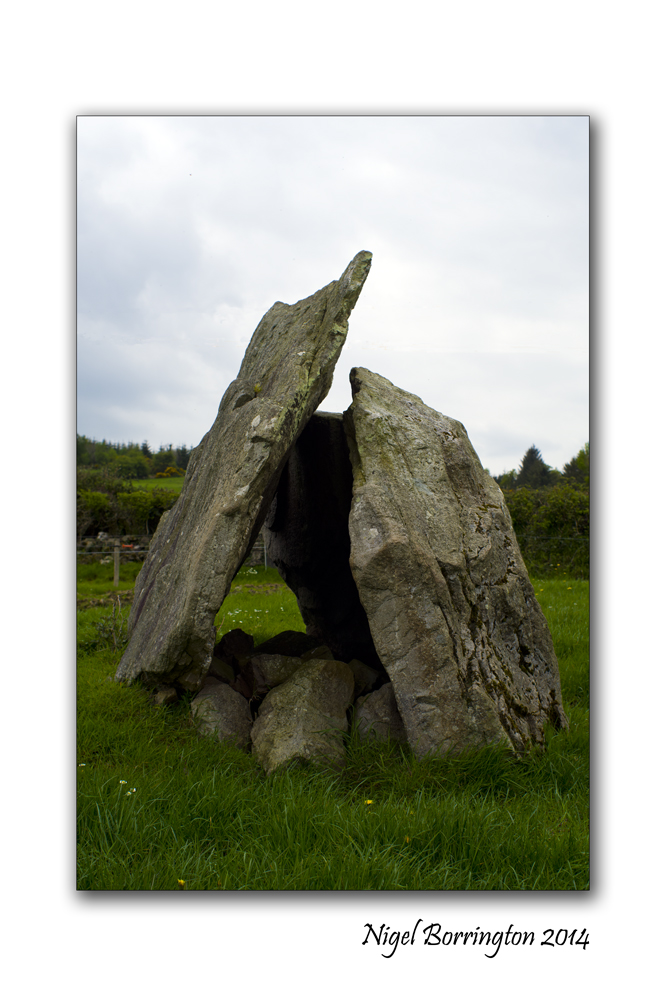
portal tomb at NewMarket, county Kilkenny
Landscape Photography : Nigel Borrington
Portal tombs, Dolmen’s, portal graves or quoit are a type of single-chamber megalithic tomb, usually consisting of two or more upright stones supporting a large flat horizontal capstone (table), although there are also more complex variants. Most date from the early Neolithic period (4000 to 3000 BC). Dolmens were typically covered with earth or smaller stones to form a barrow. In many instances, that covering has weathered away, leaving only the stone “skeleton” of the burial mound intact.
It remains unclear when, why, and by whom the earliest tomb’s were made. The oldest known tomb’s are in Western Europe, where they were set in place around 7000 years ago.
County Kilkenny has two such Tombs , the Newmarket tomb and the Kilmogue Portal Tomb at Harristown, both are dated to some 6000 years of age.
I did a little more reading on these tombs and it is very clear that they are very widely spread through out the world as the link below details :
http://en.wikipedia.org/wiki/Dolmen
The link shows their world wide locations as :
3.1 Asia
3.1.1 Korea
3.1.2 India
3.1.3 Eurasia (North Western Caucasus) Circassia
3.1.4 Middle East
3.2 Africa
3.2.1 Horn of Africa
3.2.2 North Africa
3.3 Europe
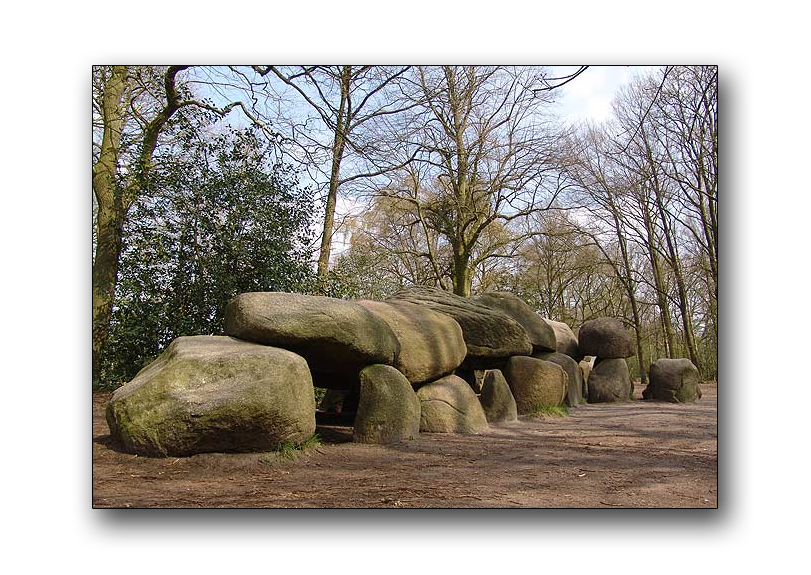
T-shaped Hunebed D27 in Borger-Odoorn, Netherlands.
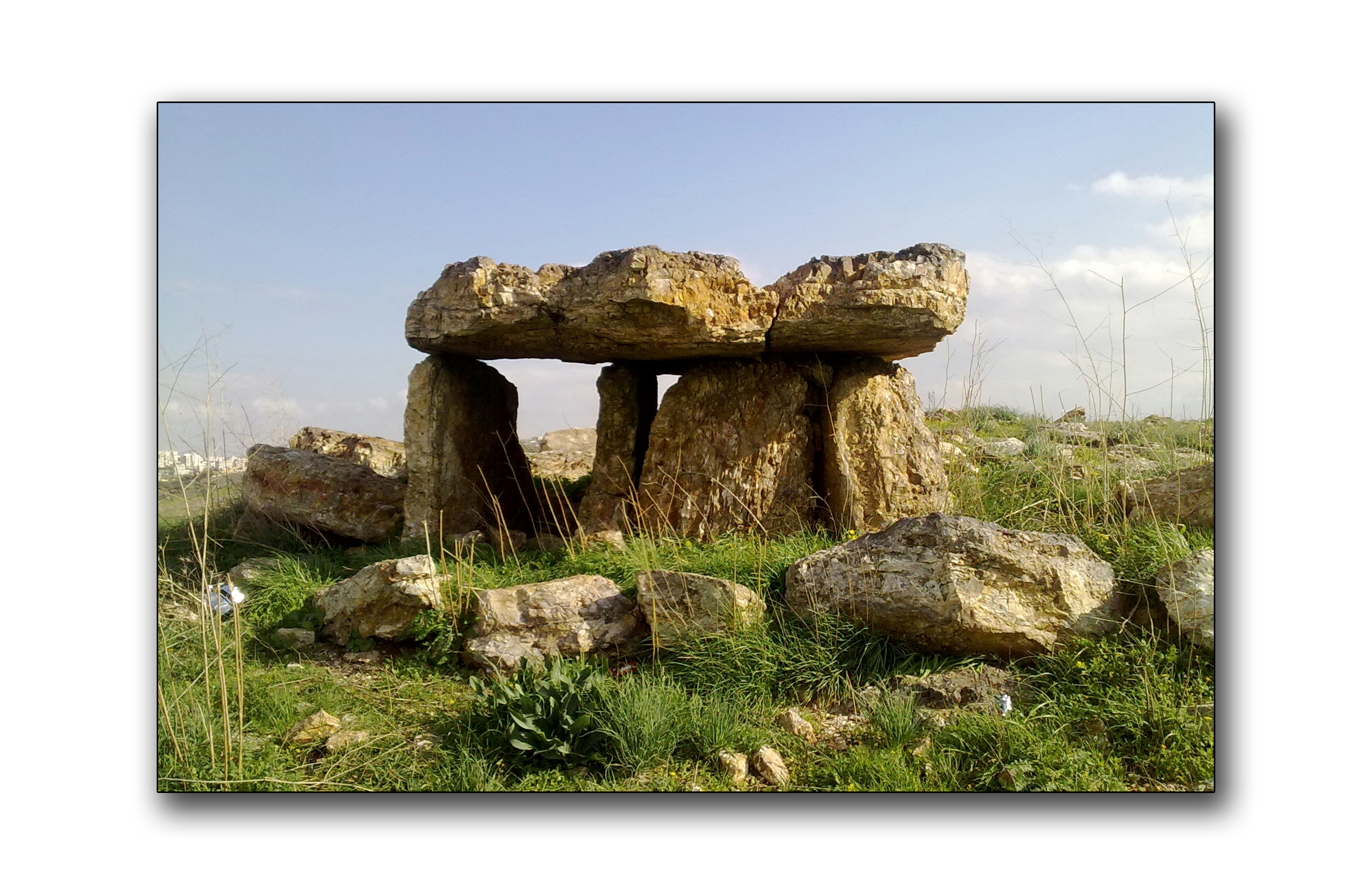
Flint Dolmen in Johfiyeh, Jordan
You can see the full details by the link above!
I have been visiting these sites in Ireland for sometime as in Ireland we have many passage tombs through out the country.
Understanding however just how international these locations are is very fascinating.
It needs to be remembered that some 6000 years ago very few of the nations we know, if any existed and people travelled without boarders.
The first time anyone gave Ireland a name as such, it was called “Hibernia”.
Hibernia is the Classical Latin name for the island of Ireland. The name Hibernia was taken from Greek geographical accounts. During exploration of northwest Europe (c. 320 BC), Pytheas of Massilia called the island Iérnē (written Ἰέρνη). In his book Geographia (c. 150 AD), Claudius Ptolemaeus (“Ptolemy”) called the island Iouerníā (written Ἰουερνία, where “ου”-ou stands for w). The Roman historian Tacitus, in his book Agricola (c. 98 AD), uses the name Hibernia. The Romans also sometimes used Scotia, “land of the Scoti”, as a geographical term for Ireland in general, as well as just the part inhabited by those people.
Something that becomes very clear is that the peoples who lived in many different world wide locations often shared the same culture, they lived very closely to and with their environment, they were clearly pagan in their beliefs and as such very close to their surroundings.
Life would have been completely different from the life we know, they lived and moved to the cycles of the seasons, they eat and lived of the wildlife and nature that surrounded them, in some season they would have little food if any.
They clearly had Gods and figure heads, yet we have a tendency to place our own modern religious understanding on-to what this meant to them directly.
It is likely that their Gods were Mythical in nature and derived from memories of real people who they connected with different elements and forces of life that affected the way they lived and survived.
This wikipedia page lists some of the celtic Gods and Goddesses and shows the forces of life and nature that they were related to.
Kilkenny Portal tomb Gallery
NewMarket Portal Tomb
 .
.
Kilmogue Portal Tomb
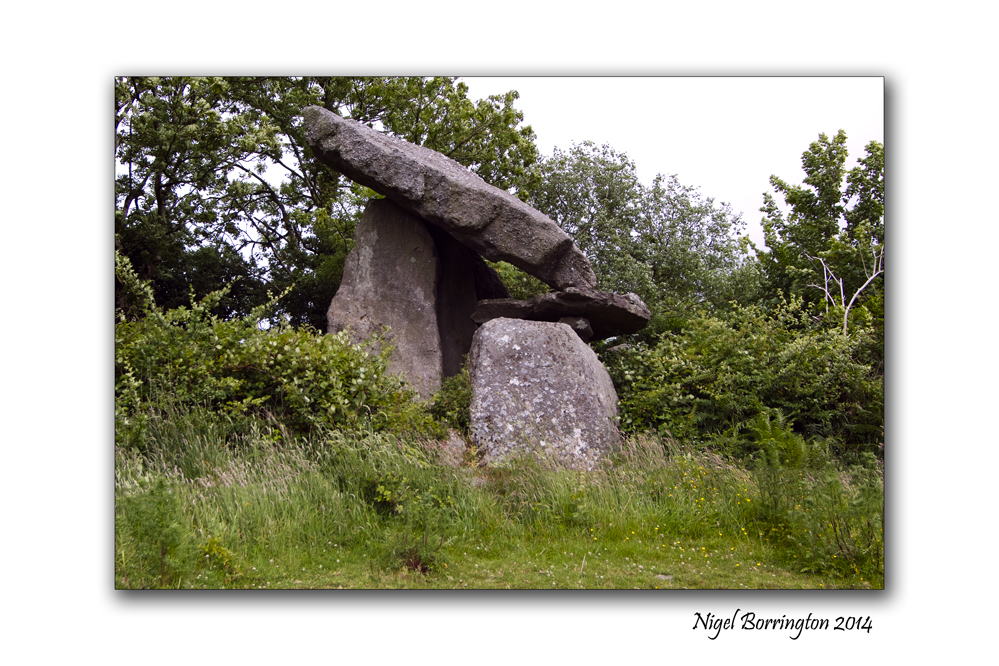

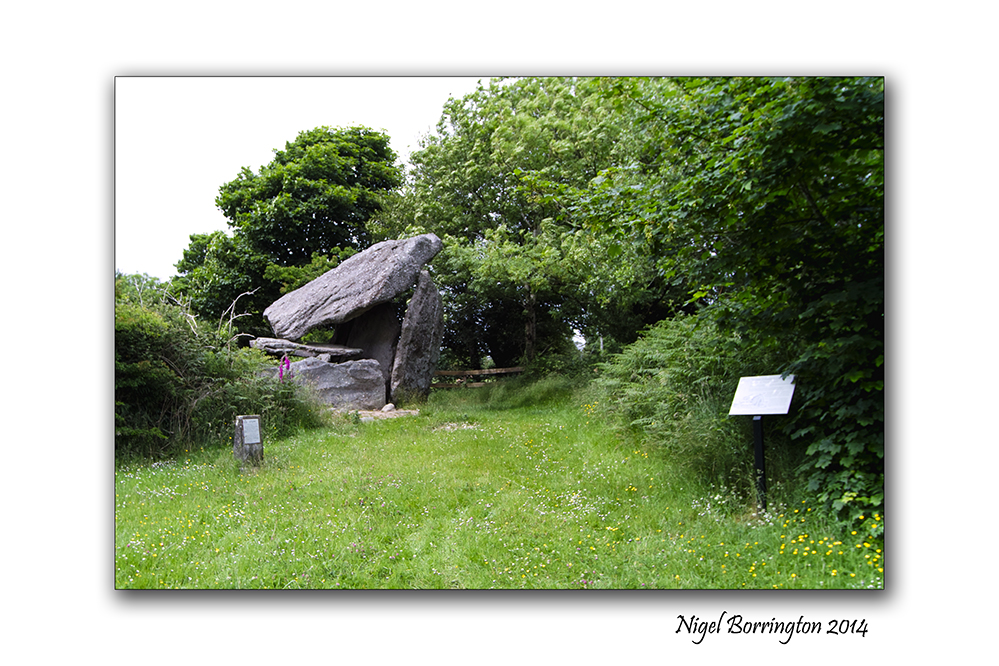
Kilmogue Portal Tomb, six thousand year of age.
Kilmogue Portal Tomb, county KIlkenny
Irish Landscape photography : Nigel Borrington
Kilmogue Portal Tomb
Sitting at the end of a short path near Harristown, county kilkenny, is a six thousand year old tomb, know nationally at the Kilmogue Portal Tomb but locally as, “Leac an Scail” – stone of the warrior/hero in English.
I have visited the site many times and I still find it an amazing location, the site has a sign placed near it that you can see below. It clearly states that the site has never been officially excavated, as is the case for many of these locations in Ireland. From evidence of Tombs constructed in exactly the same way around the European continent it is thought to be some six thousand years old. To put this in context , the great pyramids in Egypt were constructed around 2560 BC, so this tomb is some 1500 years older.
The tomb is constructed with a very large cap stone and side walls and it is hard to imagine just how the cap stone was lifted into place. The stones that can still be witnessed here would however have been surround by a mount of earth that has been long removed or washed away by six thousand years of rain. This earth mount would have been large maybe some 20 meters in diameter. It was likely then that the walls of the tomb were put in place first and supported with wood, then the earth mound constructed and finally the large cap stone rolled up the sides into its place and covered with more earth on top.
It is not known who’s tomb this was but the person buried here must have been considered very important in this Neolithic community, and the tomb would have acted as a place of memory for them and as was the tradition at the time the community would have held ceremonies here.
Each time I have visited I wonder just what these people where like, they were clearly pagan in their beliefs and very close to their surroundings and its nature. Life would have been completely different from the life we know, they lived and moved to the cycles of the seasons, they eat and lived from the wildlife and nature that surrounded them, in some season they would have little food. They most likely had Gods and figure heads yet we have a tendency to place our own modern religious understanding on-to what this meant to them.
It is likely that their Gods were Mythical in nature and derived from memories of real people who Mythically they created with different elements and forces of life and nature that affected the lives they lived.
List wikipedia page lists some of these Gods and Goddesses and shows the forces in life and nature that they related to.
I hope that the images below relate the Tomb and its location, the surrounding Landscape is very rural and one of county Kilkennys biggest dairy farming areas.
Leac an Scail, Image Gallery


The Passage tomb of (Olioll Olum), King of Munster

The Passage Tomb of , Olioll Olum ( Died 234), Galbally Limerick
Irish Landscape Photography : Nigel Borrington
Irish Passage Tombs
Located on the side of Duntryleague Hill, County Limerick and the westerly extension of Slievenamuc hill is a passage tomb. The Tomb was constructed for Olioll Olum, one of the early Kings of Munster.
The name Duntryleague is derived from Dún-Trí-Liag, meaning the fort of three pillar stones. Diarmuid and Gráinne are also said to have rested here in their flight from the angry Fionn Mac CumhaillWell.
The route through the forest leading to the burial ground is accessible and leads to this amazing rock structure of the tomb. There is one enormous rock slab resting steadily across a number of famous cairns which measures approximately 25m north -south and 22m east-west. Continuing on from the cairn you come across many natural viewing points which extend over the terrain of west Limerick.
Olioll Olum, was a King of Munster, who died in 234, he is said to have been progenitor of most of the great families of the south of Ireland. He married Sabia, daughter of Con of the Hundred Battles, ruler of the north of Ireland.
He willed that after his death the sovereignty of Munster should vest alternately in the descendants of his son Eoghan Mor (the Eugenians, or Eoganachts, occupying the southern part of Munster), and those of his son Cormac Cas (the Dalcassians, occupying the northern part of the same province).
The images below include some landscapes of the surrounding mountains, this is not a bad place to be laid to rest.
Gallery of a Passage Tomb


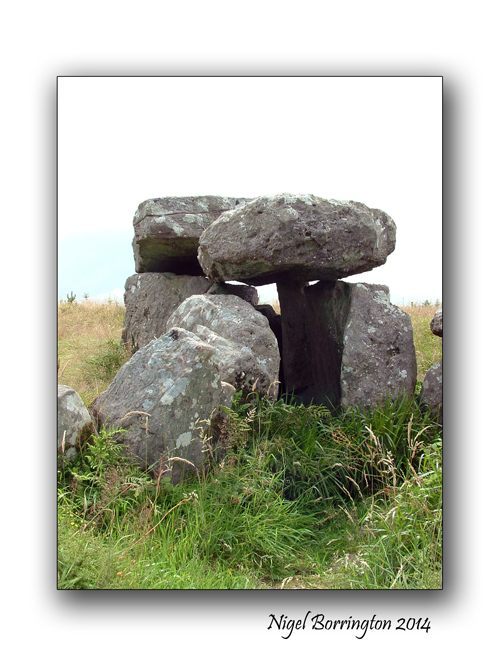

Easter (Ostara) Holidays in the Landscape.
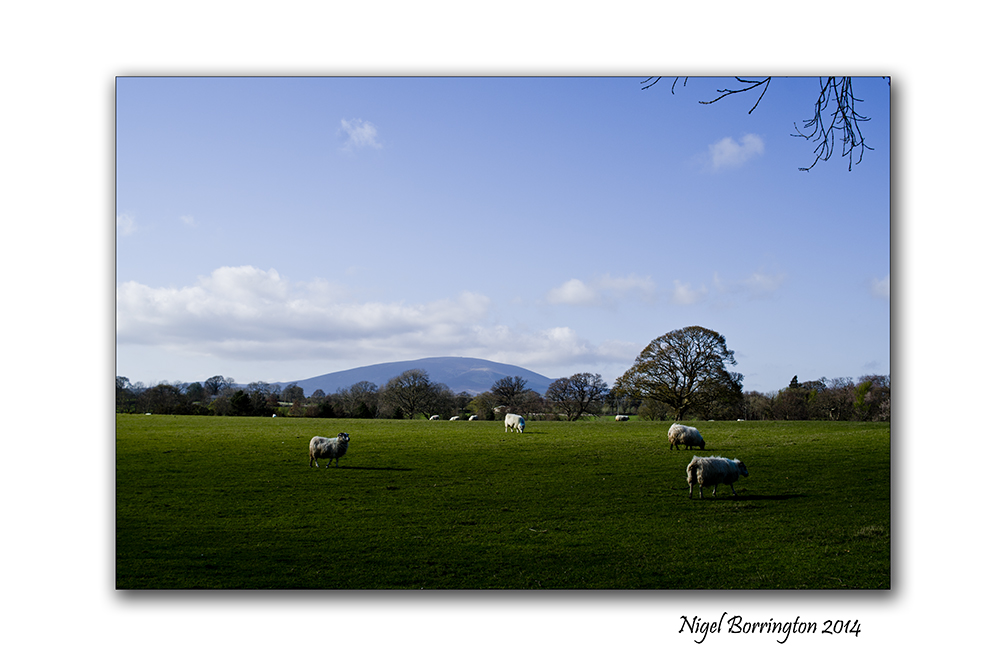
Easter Holidays in the Irish Landscape
Landscape Photography : Nigel Borrington
Easter (Ostara)
Easter to many Christians marks a religious holiday and the two weeks around Easter weekend is traditionally a Holiday time.
Before the Christian tradition however it was still marked as Ostara by the Pagan world, marking a time of rebirth and new life, Life has returned to the landscape with new growth and natural foods available. Wild life is on the move again starting to make plans for a new breeding season, finding foods themselves and getting to put some much needed body weight back on.
Over the next two weeks I want to get out and capture these changes, as the march towards the summer months feels ever closer and closer.
Image Gallery

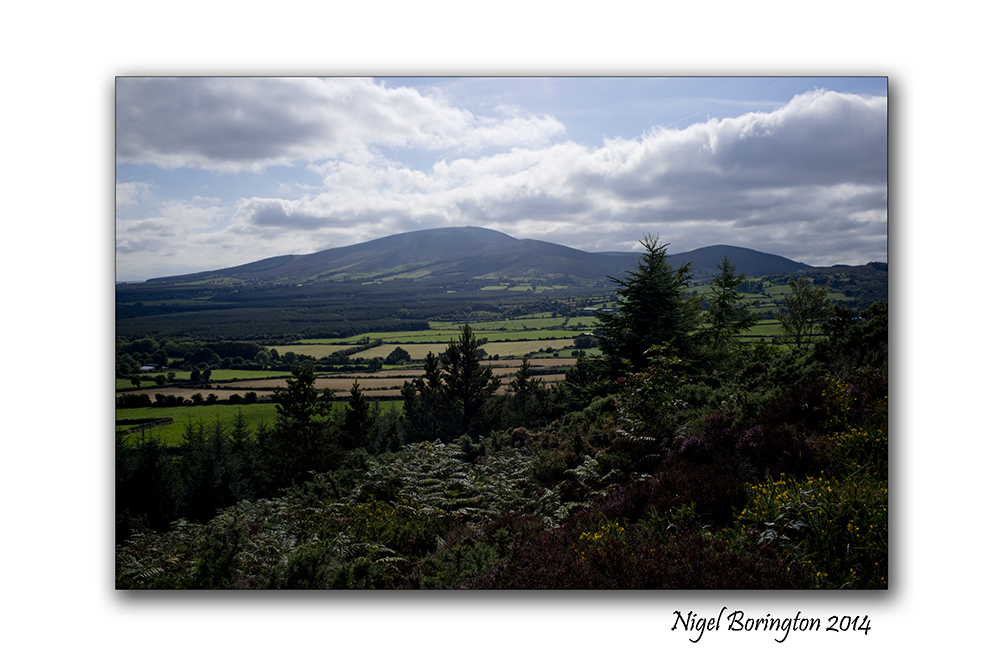


Oweynagcat cave,County Roscommon , Into the Underworld.

Oweynagat caves, County Roscommon
Landscape Photography Nigel Borrington
Oweynagat Cave
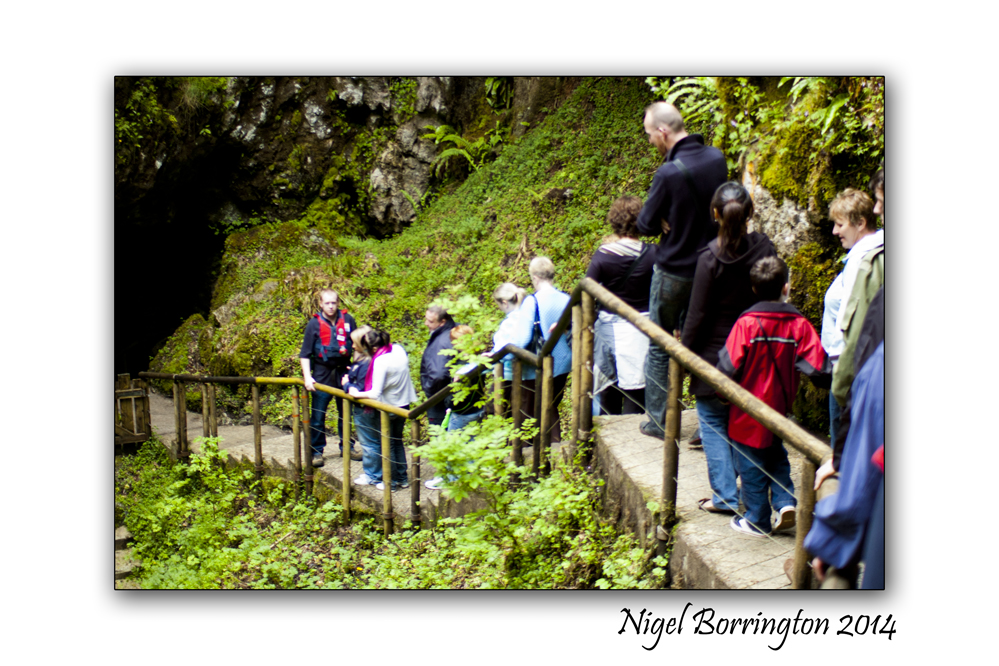
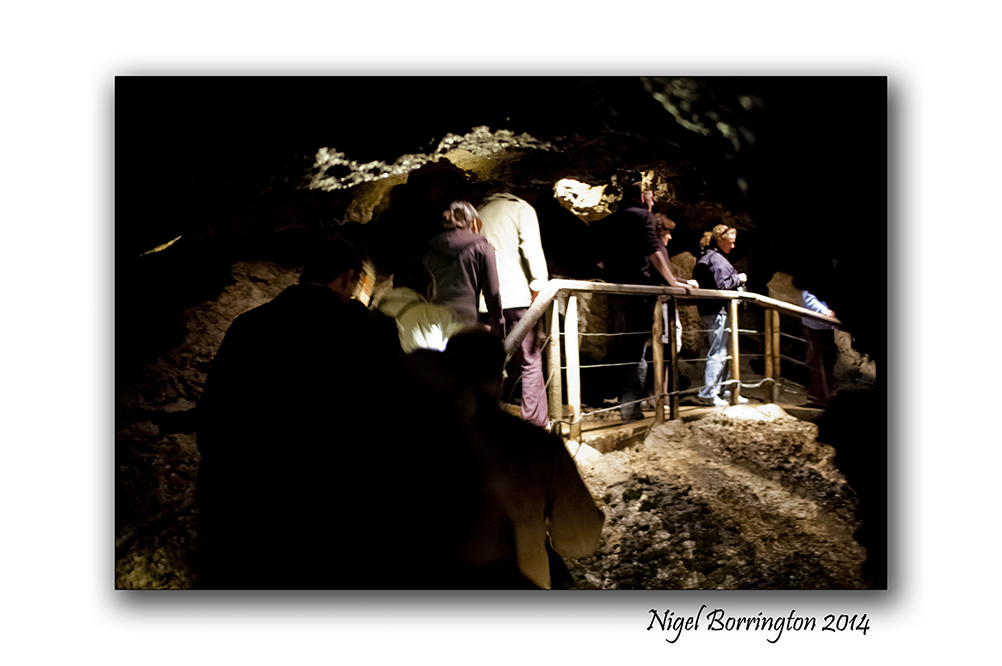
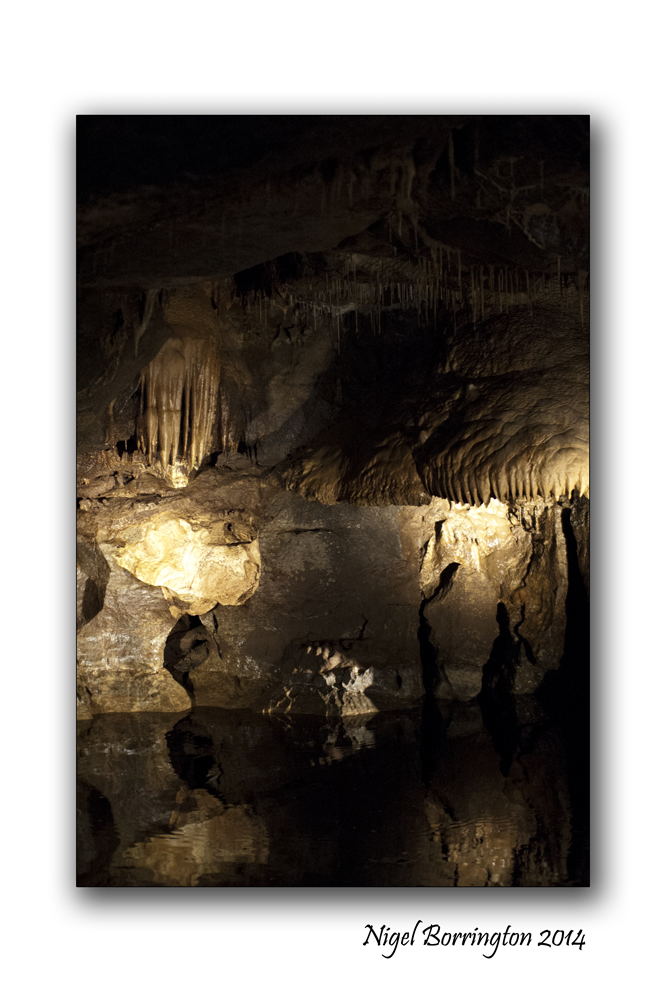
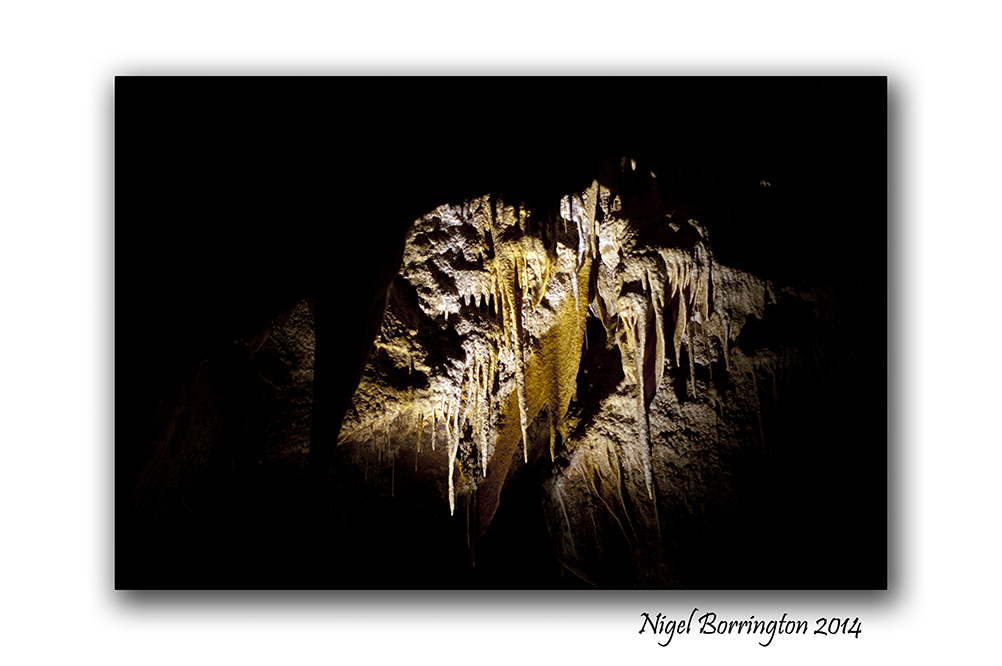
Oweynagat or the ‘Cave of Cats’ has to be one of the more unusual and unique sites in Ireland. The cave features a souterrain with a lintel supporting the entrance but then leads into a naturally formed cave. Oweynagat features heavily in Irish mythology, mainly because of its placement near Queen Medb’s fort which was at the center of the ancient Connaught capital of ‘Cruachan‘. The cave was said to be the actual birthplace of Queen Medb herself, the story goes that a goddess and fairy queen named Étain was fleeing her human husband with her fairy lover Midir. Midir wished to visit a relative named Sinech (meaning ‘large-breasted one’) who lived in the cave, the cave was said to be a great palace in the other-world and a maidservant named Crochan Crogderg (meaning ‘blood-red cup’) became enamoured with the place. She was granted the cave by Étian and it was here at Crochan gave birth to a daughter, Medb.
Many different myths from the lifetime of Medb surround the cave, it was said to have served as a portal through which the Goddess Morrigan used to pass to the other-world Morrigan was the goddess of battle and strive and was said to drive her other-world cattle into the cave at Oweynagat each sunset. Once Morrigan was said to have stolen the herds of a girl named Odras and brought them with her to the other-world, Odras tried to follow Morrigan but the unfortunate girl was turned into a lake by the goddess.
Another mention of the cave of the cats features one of Medb’s male servants Nera who had met a fairy woman in the cave and married her. His fairy bride warned that Medb’s palace would be burnt to the ground the following Samhain (November 1st) by creatures from the other-world , with this Medb stationed all her forces in the cave at Samhain to protect Cruachan from utter destruction.
The cave continued to be known as a place of power, acting as a portal to the other-world its power was extremely pronounced near Samhain as this was when the veil between the worlds lessened. Another story relates to the ‘Ellen Trechen’, this was a three headed monster that emerged from the cave and ravaged the local countryside before being killed by the Ulaid poet and hero Amergin.
As Christianity took hold in Ireland the belief in the cave being a ‘gateway to hell’ grew, an 18th century religious text describes Oweynagat as the ‘hell-mouth of Ireland’. It was believed that Oweynagat was linked to another ’hell-mouth’ many kilometres away at the Kesh Corran .
Oweynagcat cave, Gallery

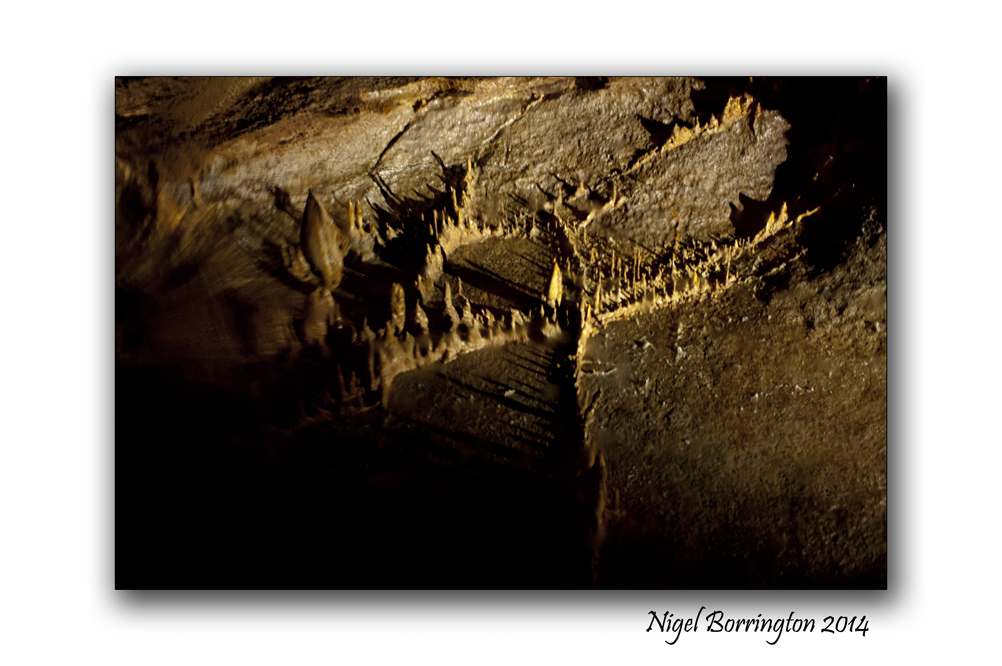

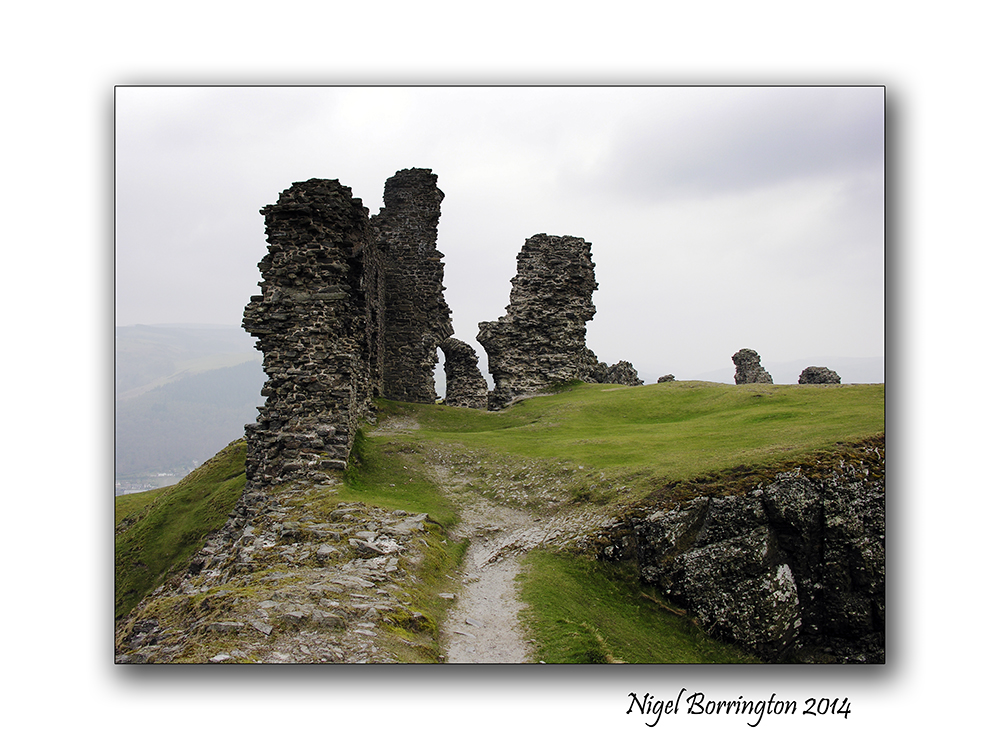
Castell Dinas Bran and the story of Myfanwy.
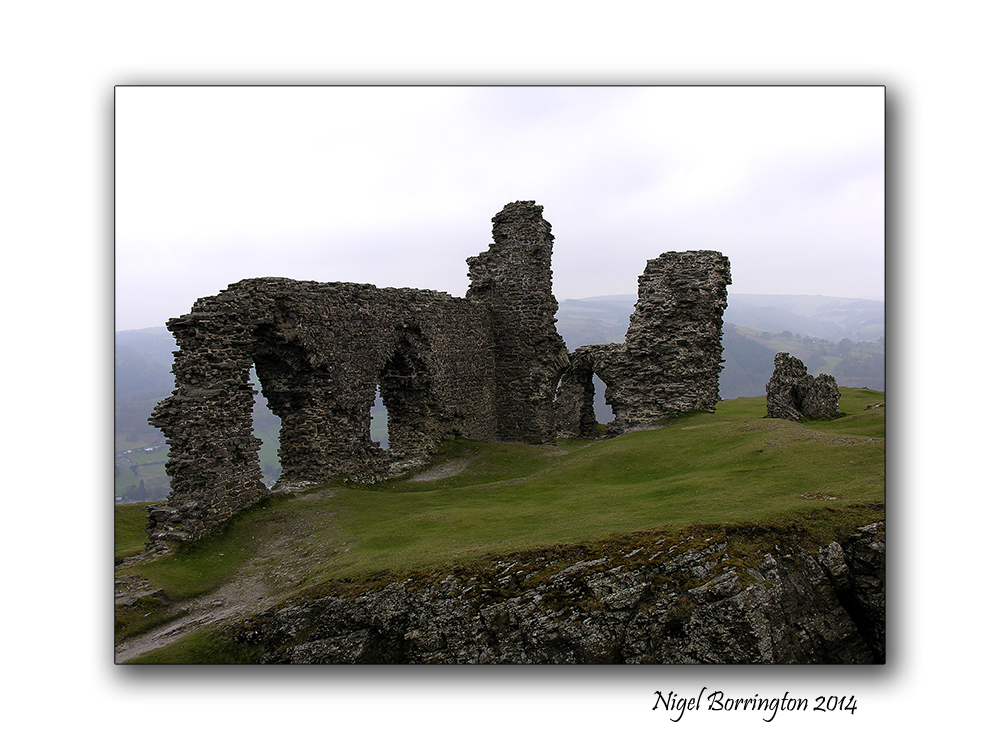
Castell Dinas Bran, Llangollen in Denbighshire, Wales
Landscape Photography : Nigel Borrington
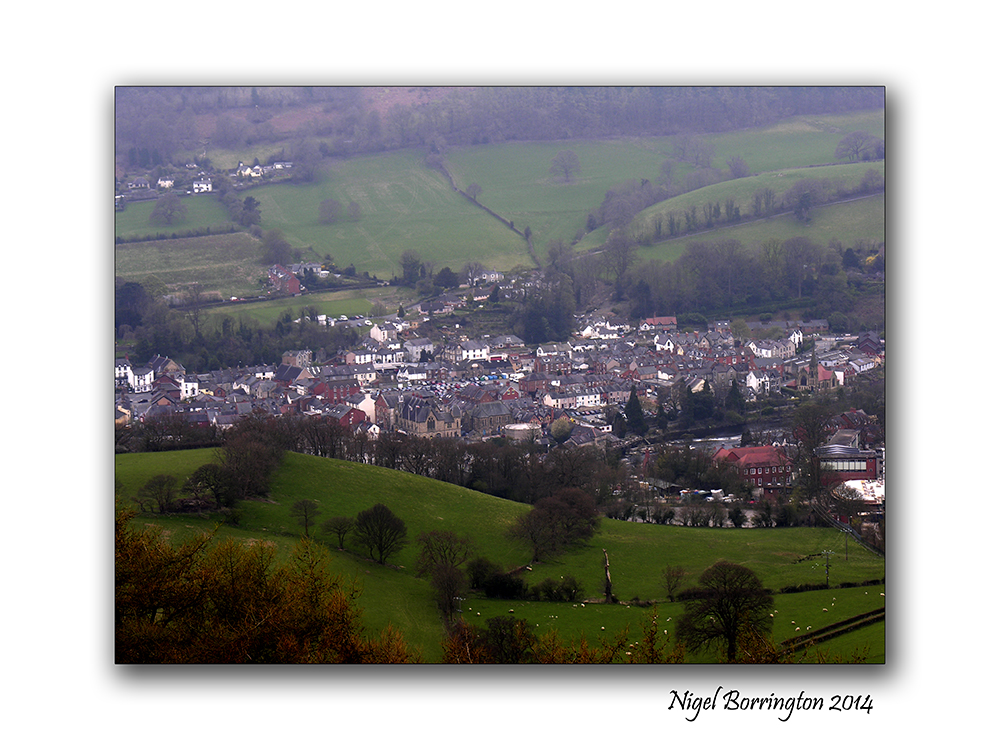
The welsh castle of Dinas Bran is located about the wonderful welsh town of Llangollen in Denbighshire, Wales.
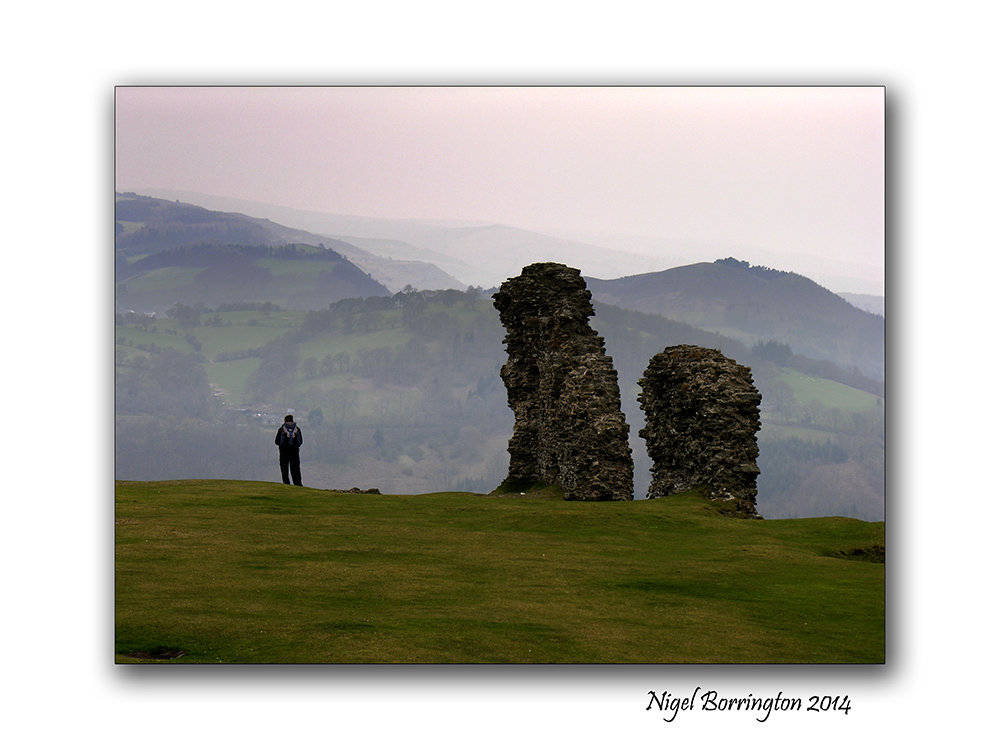
This Castle is a magical place to visit , its the location of a hill fort and remains of a later castle. The walk out of Llangollen to the top of the hill is sort but very steep yet well worth the effort. The views of the horse shoe pass and the surrounding hills is just wonderful.
Whilst the historical record for Dinas Brân is sparse, there are many myths and legends associated with the ancient site.
The popular Welsh song ‘Myfanwy’ was composed by Joseph Parry and first published in 1875. Parry wrote the music to lyrics written by Richard Davies (‘Mynyddog’; 1833–77). The lyrics were probably inspired by the fourteenth-century love-story of Myfanwy Fychan of Castell Dinas Brân, and the poet Hywel ab Einion. That story was also the subject of the popular poem, ‘Myfanwy Fychan’ (1858), by John Ceiriog Hughes (1832–87).
The castle first literary appearance is in a 12th century historical document entitled “Fouke le Fitz Waryn,” or “The Romance of Fulk Fitzwarine.” In this tale the castle, named “Chastiel Bran,” is referred to as a ruin during the early years of the Norman Conquest. The tale continues to tell of an arrogant Norman knight, Payn Peveril, who hears that no one has had courage enough to stay overnight inside the castle ruins, for fear of evil spirits. Payn and 15 ‘knightly followers’ determine to stay the night. A storm blows up and an evil, mace-wielding giant called Gogmagog, appears. Payn defends his men against the attacks of the giant with his shield and cross, then stabs Gogmagog with his sword. As the giant is dying he tells of the earlier bravery of King Bran who had built the castle to try to defeat the giant. Despite King Bran’s attempts against Gogmagog the King had been forced to flee and since then the giant had terrorised all the land around for many years. The giant also tells of a great treasury of idols buried at Dinas Bran which includes swans, peacocks, horses and a huge golden ox but dies without revealing its location.(Oman 1926, 1989)
The Story of Myfanwy
The brooding site is the backdrop for the sad love story of Myfanwy. She is a princess and renowned for her beauty throughout Powys in Wales. Myfanwy is proud of her looks and wants her many suitors to proclaim her beauty in song and verse. Many come to court her but are not able to compose songs that truly reflect her looks. She rejects them all.
However, in the valley beneath the castle lives a poor bard Hywel ap Einion. Taking his courage in his hands the young bard goes to the castle and sings and plays for Myfanwy. Whilst he performs his song to her she is captivated and will look at no other. Hywel ap Einion believes his love for her to be reciprocated because of this.
His hopes and dreams are thwarted when a rich, handsome and more articulate man comes to seek her affection. The dejected Hywel then wanders the forests and lands of Difrdwy and recites this sad poem to his unrequited love:
“Oh fairer thou, and colder too,
Than new fallen snow on Arran’s brow
Oh lovely flower of Trevor race,
Let not a cruel heart disgrace
The beauties of thy heavenly face!
Thou art my daily thought each night
Presents Myfanwy to my sight.”
Image Gallery




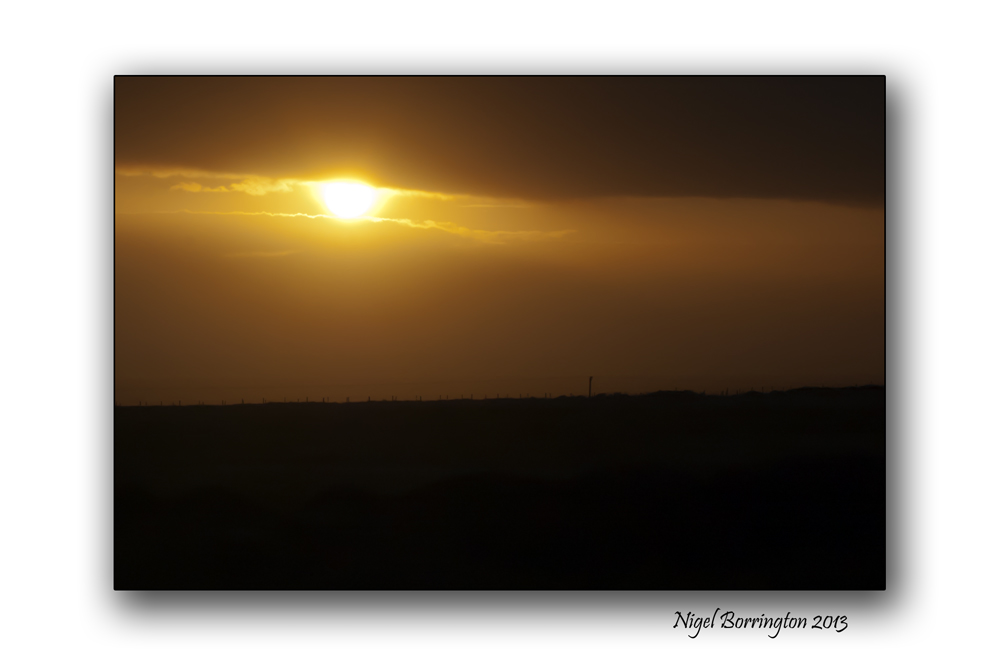
Spring equinox 2014 and Pagan traditions

Spring equinox sun sun 2014
Landscape photography : Nigel Borrington
The Spring equinox 2014
Today marks the arrival of spring, the date of the vernal equinox, or spring equinox as it is known in the northern hemisphere. Spring equinox. During an equinox, the Earth’s North and South poles are not tilted toward or away from the sun. (Ref :Wikipedia)

This means the sun will rise exactly in the east and travel through the sky for 12 hours before setting in the exactly west.An equinox happens twice a year around March 20 and September 22 when the Earth’s equator passes through the centre of the sun.
For those in the southern hemisphere, this time is the autumnal equinox that is taking people into their winter.
In English there is open access to Stonehenge tomorrow. Access will be from 05:45am until 08:30am.
Druids and Pagans like to gather at Stonehenge early in the morning to mark the Spring Equinox, to see the sunrise above the stones.

The Pagans consider this is the time of the ancient Saxon goddess, Eostre, who stands for new beginnings and fertility. This is why she is symbolized by eggs (new life) and rabbits/hares (fertility). Her name is also where we get the female hormone, oestrogen.
From Eostre also come the names “Easter” and “Esther” the Queen of the Jews, heroine of the annual celebration of Purim which was held on March 15. At Easter, Christians rejoice over the resurrection of Jesus after his death, mimicking the rebirth of nature in spring after the long death of winter.
It is also a time to cleanse your immune system with natural remedies. In Wiltshire and other parts of rural Britain it used to be tradition to drink dandelion and burdock cordials as the herbs help to cleanse the blood and are a good tonic for the body after a harsh winter.
The Equinox of the sun : Gallery



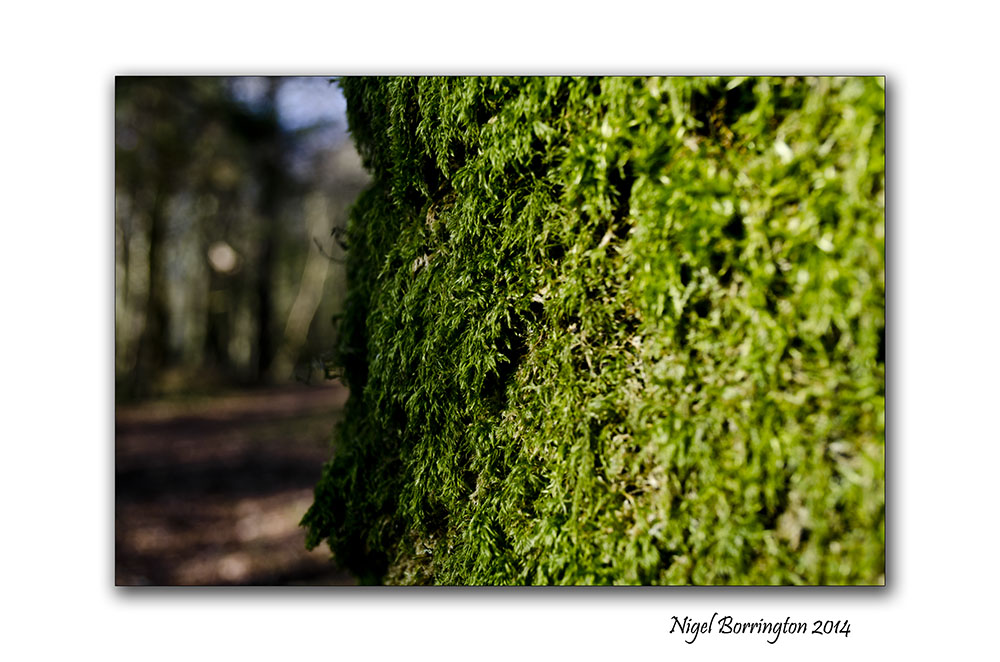
The Green man of Spring returns to the woodlands.

Knockadrina woodlands, Knocktopher, County Kilkenny
Irish Landscape photography : Nigel Borrington
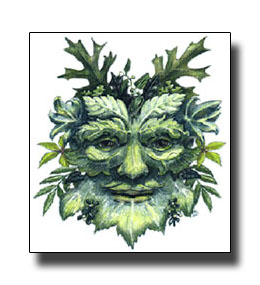
The Cult of the Green Man
Greenman :
Of all the pagan gods, the woodland spirit variously called the Green Man or Jack-in-the-Green is one that has lived on the longest in folklore.
The Green Man is seen mainly as a symbol of spring and the rebirth of the earth after winter.Carvings of Green Men can often be seen in churches, usually in the form of faces with branches and vines sprouting from nose and mouth.

The Magic of Trees
Stukeleys DruidIn Britain, the Druids worshipped such trees as the oak and the rowan and attributed great power to them. When people touch wood to ward off misfortune, this comes from the times when guardian spirits were supposed to live in trees. Touching the tree was a mark of respect to the spirit, as well as a plea for good fortune.
Woodland Gallery



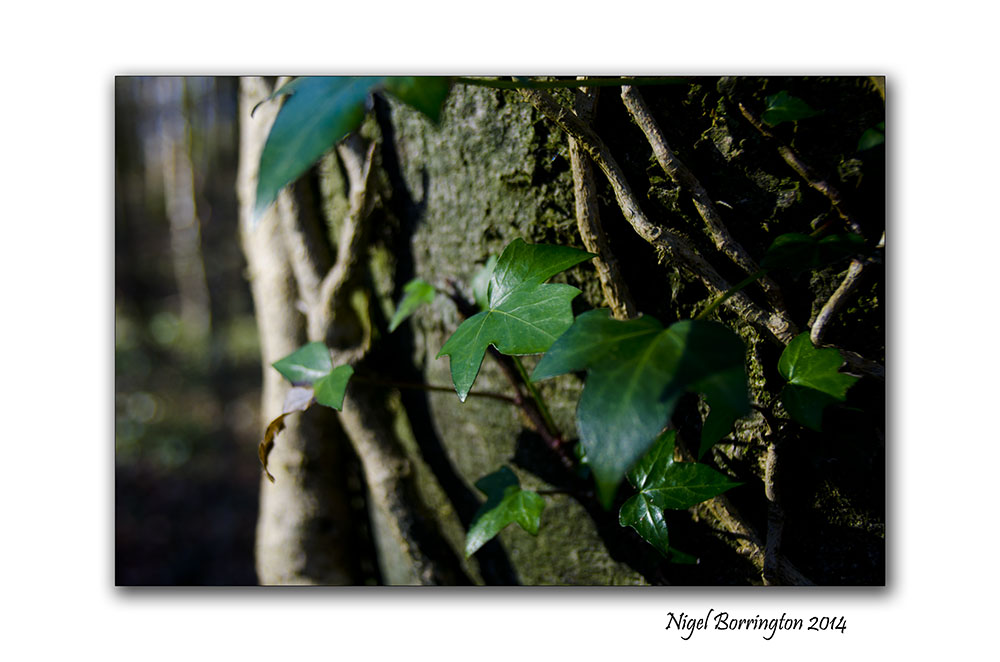
What is an Altar ?

The Altar at Aghaville Church , Castlemorris,
County KIlkenny
What is an Altar ?
I have visited an old church yard at Castlemorris, county Kilkenny for many years, its a fascinating location. Its the Altar that sits within the old church and castle that’s just drawing me back everytime.
It sits below an old chapel window and the light from the doorway highlights it even on a very wet day, the old chapel is still roofed but the water gets through the stone and drips onto the floor of the chapel.
This Alter has started me wondering about the history of such constructions and what they have been used for over time.
 .
.
Today in Christian times we think of an Altar as a place that a priest stands and performs a service for anyone who is in attendance, this however has not always been the case.
An Altar in Pagan and pre-Christian times was a place of personal worship they could be in any location but a place of spiritual meaning was common, in the woods and at a river or spring a place that meant something to the community, A pagan believer could and did have Personal Alters in their own homes.
Personally I feel that the Altar is the key to Pagan beliefs, they are places of personal dedication and an indication as to where we find ourselves as Humans.
At an Altar you usually leave an item of dedication, food, something you have made, an item that means something too you personally and that you are willing to spiritually hand over too forces that you both respect and/or rely upon for your very existence.
I feel that this alone contains a truth about our spiritual beliefs, we worship the elements the seasons , Nature because we live in it , we rely upon it and we feel the need to in some form get closer to it by forming a spiritual connection. Then to worship the elements that give us our existence and lives.
 .
.
This is the function of an Altar, or at least the function of human spirituality relating to it for many thousands of years. Many feel that the Altar is the centre piece of this worship of the forces that we exist in.
Forces that for many thousands of years mankind has noted yet not understood, The season and the growth of food. In the winter its shortage, Storms, Other Animals that we live with and in many cases in the past and even today could pray on us.
Sometimes, simply leaving out food in the hope that they did not was a form of dedication.
Midwinters day and the pagan goddess of the winter
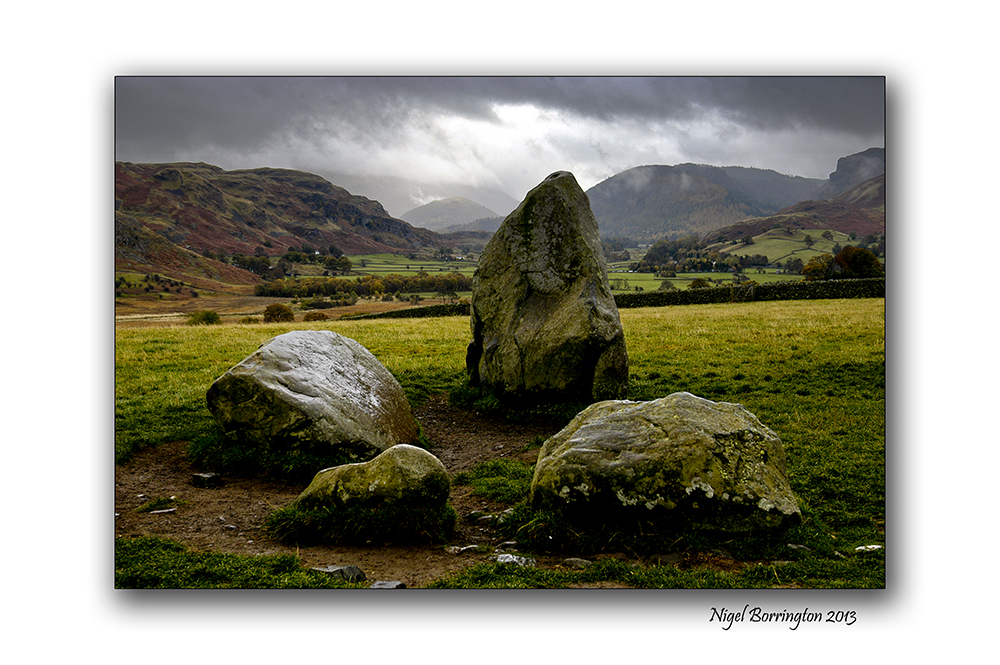
The stone circle at Castlerigg
Landscape photography: Nigel Borrington
Today is Mid winters day or the Winter Solstice.
History and cultural significance
The solstice itself may have been a special moment of the annual cycle of the year even during neolithic times. Astronomical events, which during ancient times controlled the mating of animals, sowing of crops and metering of winter reserves between harvests, show how various cultural mythologies and traditions have arisen. This is attested by physical remains in the layouts of late Neolithic and Bronze Age archaeological sites, such as Stonehenge in Britain and Newgrange in Ireland. The primary axes of both of these monuments seem to have been carefully aligned on a sight-line pointing to the winter solstice sunrise (Newgrange) and the winter solstice sunset (Stonehenge). Significant in respect of Stonehenge is the fact that the Great Trilithon was erected outwards from the centre of the monument, i.e., its smooth flat face was turned towards the midwinter Sun.
The Solstice Sun set.
The winter solstice may have been immensely important because communities were not certain of living through the winter, and had to be prepared during the previous nine months. Starvation was common during the first months of the winter, January to April (northern hemisphere) or July to October (southern hemisphere), also known as “the famine months”. In temperate climates, the midwinter festival was the last feast celebration, before deep winter began. Most cattle were slaughtered so they would not have to be fed during the winter, so it was almost the only time of year when a supply of fresh meat was available. The majority of wine and beer made during the year was finally fermented and ready for drinking at this time. The concentration of the observances were not always on the day commencing at midnight or at dawn, but the beginning of the pre-Romanized day, which falls on the previous eve.
Since the event is seen as the reversal of the Sun’s ebbing presence in the sky, concepts of the birth or rebirth of sun gods have been common and, in cultures using winter solstice based cyclic calendars, the year as reborn has been celebrated with regard to life-death-rebirth deities or new beginnings such as Hogmanay’s redding, a New Year cleaning tradition. Also reversal is yet another usual theme as in Saturnalia’s slave and master reversals.

CAILLEACH BHEUR : The Celtic Goddess of winter
CAILLEACH BHEUR : Scottish, Irish, Manx, Great Goddess in her Destroyer aspect; called “Veiled One”. Another name is Scota, from which Scotland comes. In parts of Britain she is the Goddess of Winter. She was an ancient Goddess of the pre-Celtic peoples of Ireland. She controlled the seasons and the weather; and was the goddess of earth and sky, moon and sun.
Knockroe

Nikon d7000, 35mm f1.8g lens
Knockroe passage tomb, county kilkenny
irish landscape photography
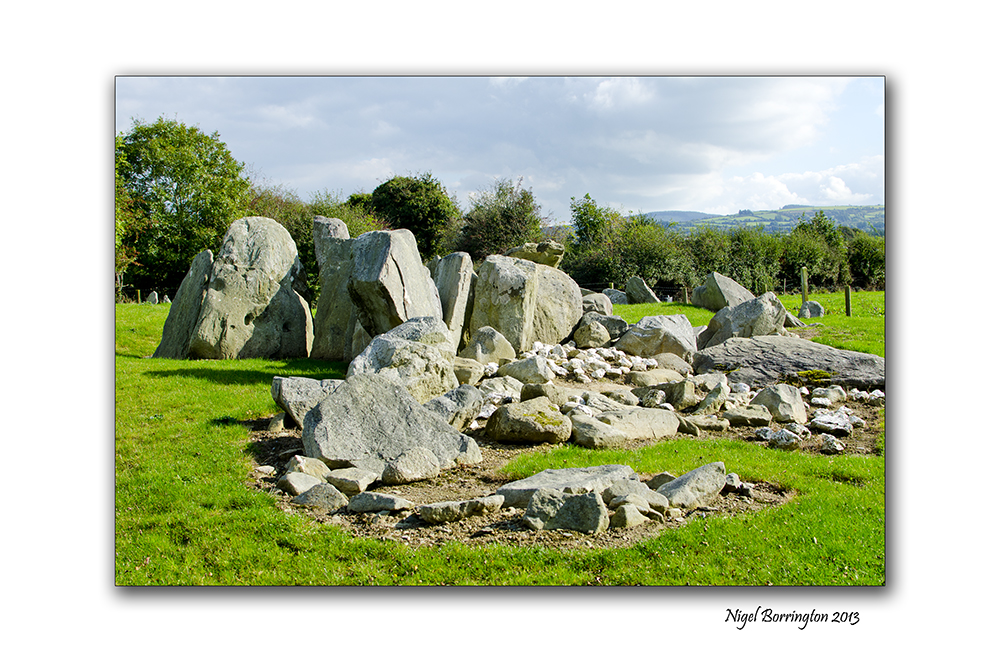
Knockrow passage tomb is located about 15km from Callan. county kilkenny and I have visited this tomb many time, The images in this post are from Monday this week, it was a warm and sunny October afternoon and a perfect day for walking around the area the tomb is located in.
Knockroe passage tomb, County Kilkenny was excavated in 1990. It has some 30 decorated stones and could be connected to Newgrange in the Boyne Valley, the front of the cairn flanking the eastern tomb was decorated with a frieze of quartz. Also, like Newgrange, the roof-box in the western tomb allows the rays of the sun to pass along the upward-sloping passage at the Winter Solstice (21st December), when it illuminates a tall red-sandstone portal.
Unlike Newgrange however these rays pass through the roofbox at sunset rather than sunrise. The other aspect of Knockroe that makes it worth investigating is that until its discovery, the prior most southern site of its kind was at Baltinglass Hill in County Wicklow. And the fact that there are two tombs on the one site also marks it out as uncommon.
Two of the images below show a track that at some point in the past was cut through the centre of the tomb, for a farm on the hill just above, thankfully it looks like any damage was not to the most important parts of the site. but no one knows for sure what was removed.
Knockroe passage tomb : Gallery


Autumnal Equinox – Sunday

Autumnal Equinox sunset.
Irish landscape photography by Nigel Borrington
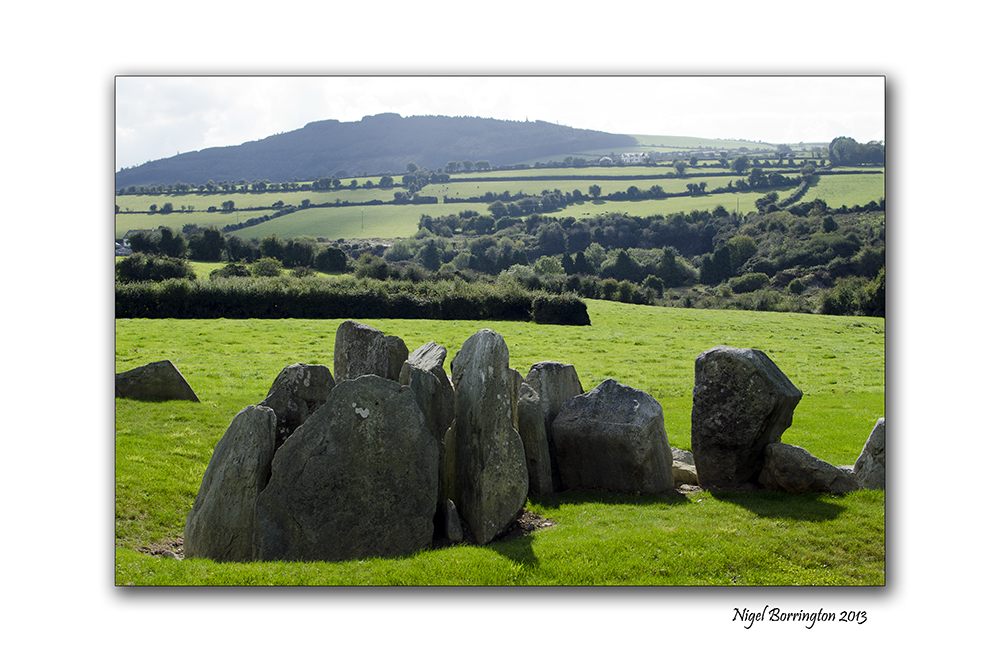
Sunday and today marks the autumnal equinox, the time when the day light and dark of the night are exactly equal.
Why is it called an Equinox?
On the equinox, night and day are nearly exactly the same length – 12 hours – all over the world. This is the reason it’s called an “equinox”, derived from Latin, meaning “equal night”/
The September equinox occurs the moment the sun crosses the celestial equator – the imaginary line in the sky above the Earth’s equator – from north to south.
This happens either on September 22, 23, or 24 every year. On any other day of the year, the Earth’s axis tilts a little away from or towards the Sun. But on the two equinoxes, the Earth’s axis tilts neither away from nor towards the Sun.
So a happy Equinox to everyone !
 Nigel Borrington
Ninemile house grave yard, Happy Halloween.
Ninemile house Grave yard,
On the Kilkenny and Tipperary county borders.
Irish Landscape photography : Nigel Borrington
Happy Halloween! – welcome to Ninemile house grave yard, a place of rest OR is it ?
I few weeks back I visited this old Graveyard at Nine mile house, County Tipperary.
This place just has to be one of the most atmospheric Grave yards in the local area. It is full of very old graves and the remains of an old chapel who’s insides have been used as the location of some graves dating from the 1800’s.
This is a place of rest however and a very peaceful location, But on Halloween night, well I just wonder ? ?
For anyone who has been following my blog, they will know I love poetry, well last night I had a go at my own poem for Halloween!
A poem for Halloween
There is nothing in the dark…
Don’t run to the light, Run towards the night.
For ever fearing the Dark .
Don’t turn on a lights, Shining a torch into the blackness.
There is nothing in the Dark, No monsters to fear.
Nothing hiding in the blackness.
No possessions
No ghosts
No evil demons
No open graves
No devils to consume your soul
No vampires
No zombies
No omen of death
No!
Don’t look towards the stars, Fires of the heavens.
Hoping forever to be alive.
Don’t fear the blackness of the woods at night.
There is nothing in the dark,
nothing that is not just asleep in the day
and awake at night.
It is not the dark you should fear,
Fear the light.
In the dark there is rest,
A peace of your mind.
There is nothing in the dark but rest and a lack of light !
Share this:
October 31, 2013 | Categories: Comment, Gallery, Kilkenny Landscape images, Landscape, Poetry Gallery, The Celtic year, The Pagan world | Tags: black and white photography, fujifilm X100, Halloween, Irish landscape photography, Irish photography, Kilkenny, Landscape, Nigel Borrington, Tipperary | 10 Comments