Flowers on the river bank

Nikon D200, 50mm f1.8 lens, iso200
Flowers on the River Nore, county kilkenny
Kilkenny photographer : Nigel Borrington
Flowers an in depth look.

Nikon D200, 50mm f1.8 lens
This afternoon has turned into a wonderful day :), the weather here in Ireland has gone from spring to almost summer like in one week and everything is coming to life. I went out with Molly our Golden retriever after lunch for a walk along the river bank and there are flowers coming out every step you take.
As always I had a camera with me and took lots of images, its always fun with flower beds to play with lens depth of field and the panel of images below shows the effects of Lens apertures f8 upto f1.8 on image depth.
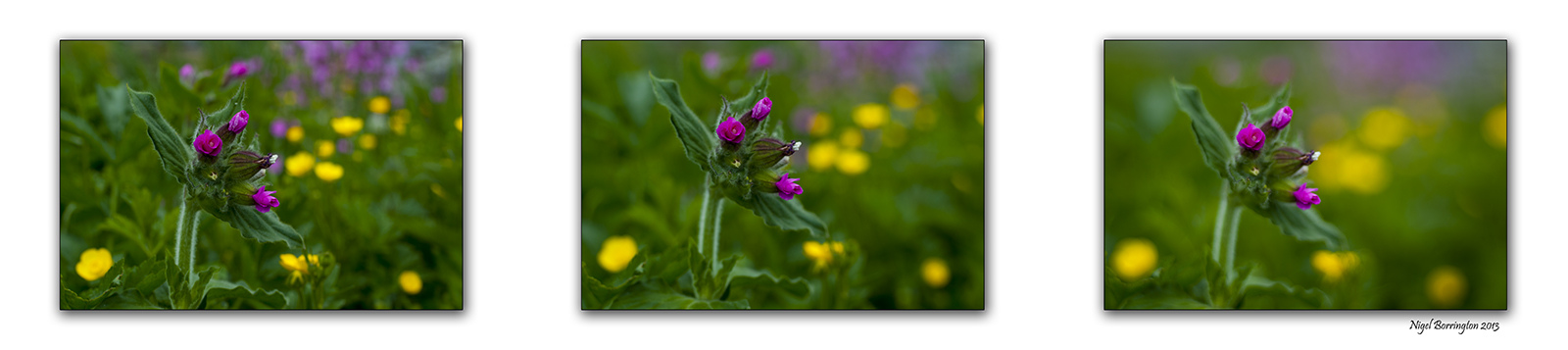
Nikon D200, 50mm f1.8 lens
More images from this walk to follow….
Irish clean water standards – ( EPA 2012 )
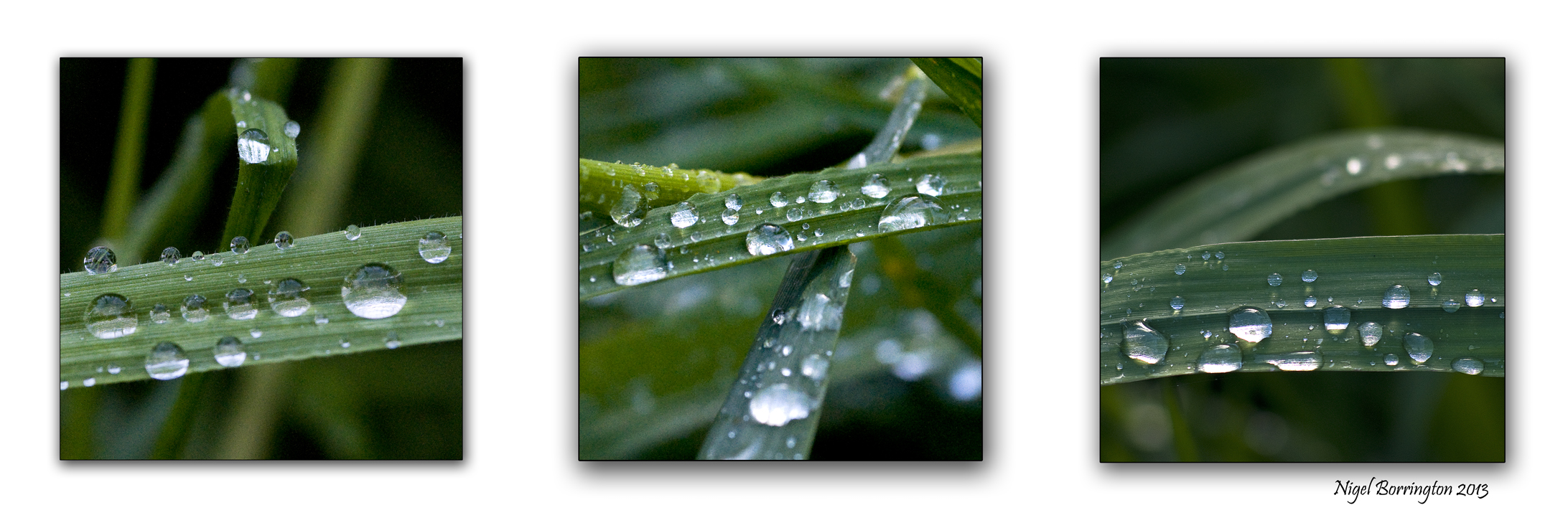
In May 2012 I received a call from the Irish EPA in Cork, they were looking for some images in order to help finish the publication of some brochures, before the launch of new European clean water standards.
In the end I got both the front cover and many of the internal images, these are just some of the work submitted, this project was a great chance to publish some of my landscape photography.
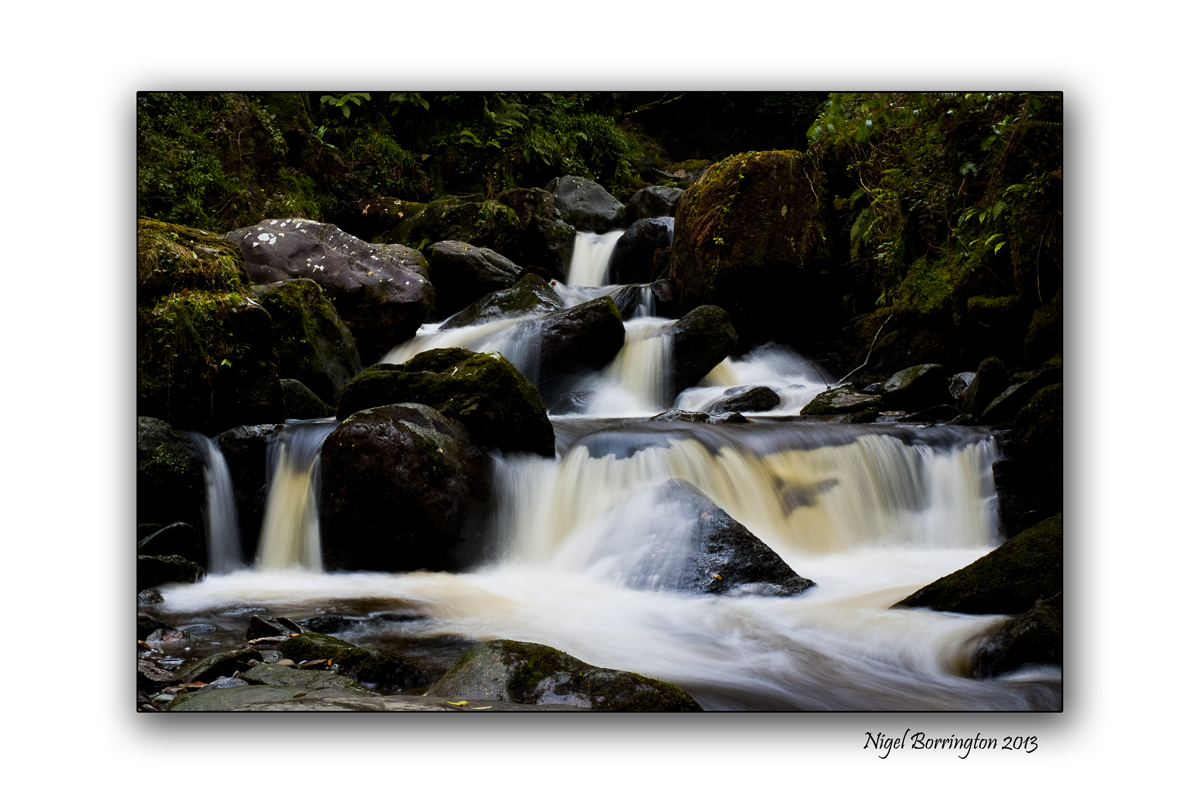
I also completed the design of the from cover as below….

Sunday evenings….

Nikon D700
Kilkenny Landscape
Landscape photography : Nigel Borrington
Sunday evenings are my favourite time of the week, hopefully your mind has been stripped down, cleared out and ready go into the new week ahead!
Great black backed gulls – Saltee Islands, wexford

Nikon D700, Nikon 300mm f2.8 vr lens
Gulls an the Saltee Islands
Wildlife photography by,
Kilkenny based Photographer : Nigel Borrington
Two young Gulls taking a rest on a cliff top, on the Saltee islands, county Wexford…
Rosebuds of May

Nikon D700, 50mm f1.4 lens
White rosebuds and flowers
Landscape photography : Nigel Borrington
I love this time of year, our hedgerow is coming alive with all kinds of life, these white wild roses are just one wonderful example.
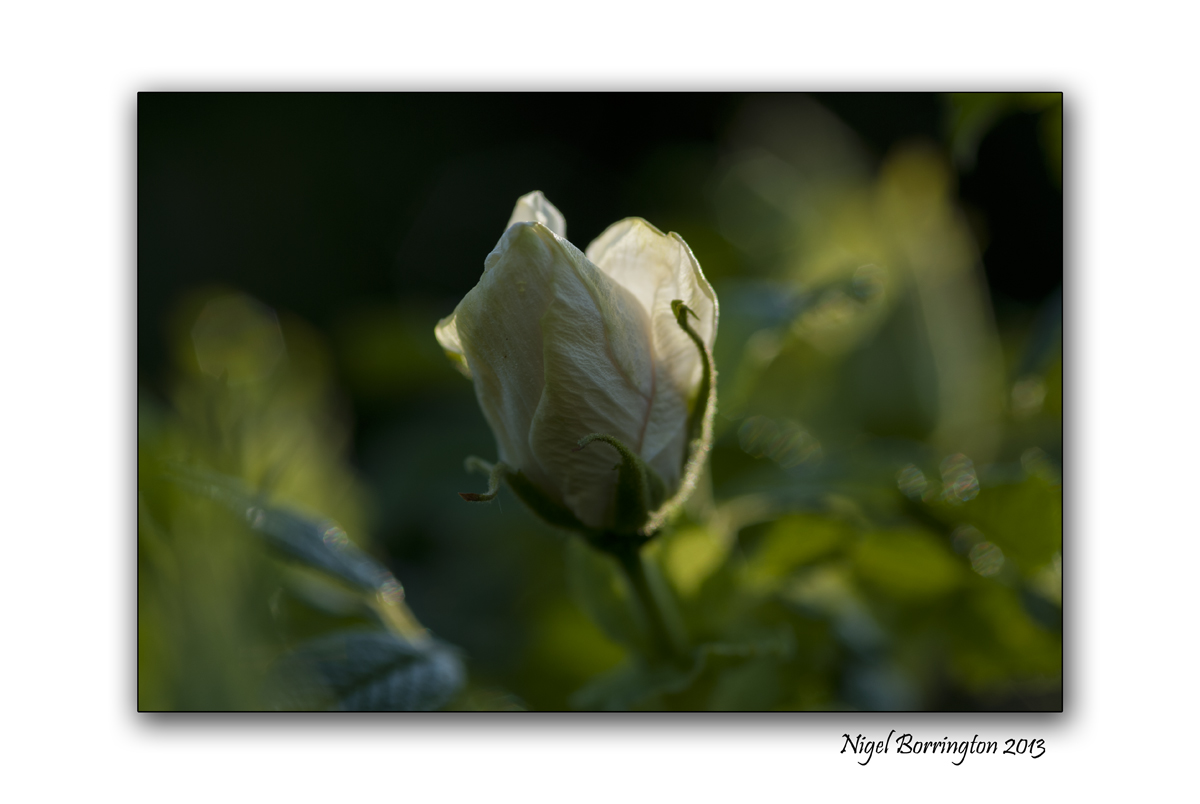
Nikon D700, 50mm f1.4 lens
White rosebuds and flowers
Landscape photography : Nigel Borrington
When these Roses come out each year they are always wonderful to look at but they last such a short time, I would love it if they flowered all summer…
A Poem by :Robert Herrick
Gather ye rose-buds while ye may,
Old Time is still a-flying:
And this same flower that smiles to-day,
To-morrow will be dying.
The glorious Lamp of Heaven, the Sun,
The higher he’s a-getting
The sooner will his race be run,
And nearer he’s to setting.
That age is best which is the first,
When youth and blood are warmer:
But being spent, the worse, and worst
Times, still succeed the former.
Then, be not coy, but use your time;
And while ye may, go marry:
For having lost but once your prime,
You may for ever tarry.

Nikon D700, 50mm f1.4 lens
White rosebuds and flowers
Landscape photography : Nigel Borrington

Nikon D700, 50mm f1.4 lens
White rosebuds and flowers
Landscape photography : Nigel Borrington
Mystery of a place – Castlemorris house and gardens
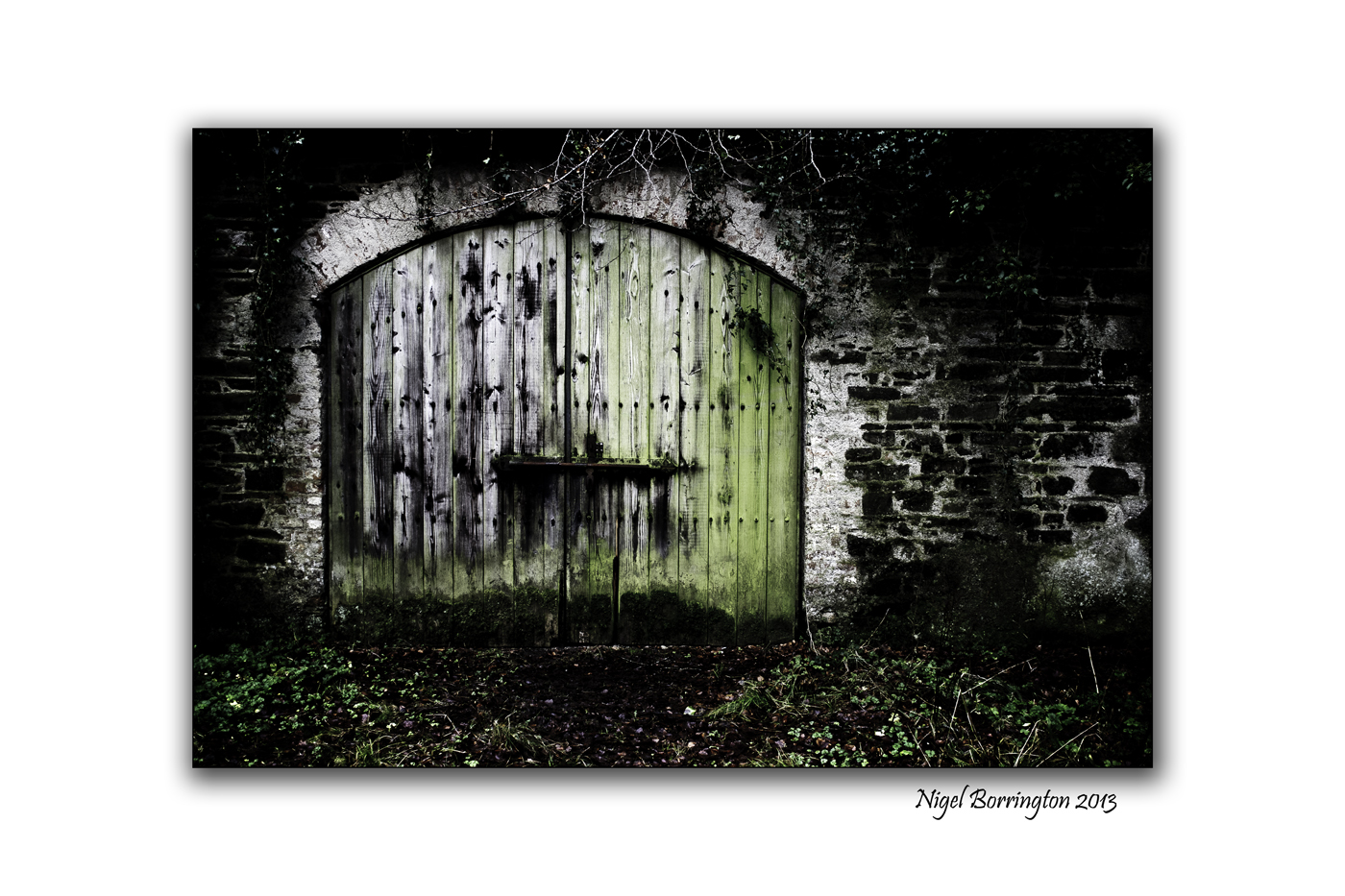
Fujifilm X100
The Green door
Irish landscape photography: Nigel Borrington
This old door and the stone shed it is attached to is all that remains of one of Ireland greatest ever country houses, The house had some 356 windows and belonged to the Montmorency family.
In its day in the mid-19th century, it was one of the finest (and largest) houses in Ireland at that time and compared well with Bessborough in Piltown.
Built around 1751 in the parish of Aghaviller, the Castlemorris estate was previously known as “Diore Lia” (a grey wood). Formerly home to the Morres and de Montmorency families, the family vault can still be seen in the local churchyard.
 The churchyard also contains the remains of an ancient round tower. Built to protect the occupants and valuables of monastic settlements from Viking raids, these towers dot the Nore valley.
In 1924 the house was sold to the Land Commission. In the early 1930s it was unroofed and a demolition sale took place. Many parts of the house can be found in houses around the country.
The house itself was finally demolished in 1978. The grounds now merge with other Coillte woods, totalling approximately 2,000 acres in the district. Ms de Montmorency-Wright gave an excellent talk and should be complimented for her extensive research into her family and their association with Castlemorris.
This old red door – Goresbridge, Kilkenny

Fujifilm X100
KIlkenny photograher, Nigel Borrington
The old Mill at Goresbridge
When I was considering posting these images, I was wondering if I should show the setting of this old and wonderful red mill door. Its located on the site of on old mill sitting on the river Barrow as it runs through Goresbridge, county Kilkenny.
Sometimes just displaying something like a door just by itself can create a Mystery.
On this occasion, I will show the door in its location, I am however thinking of creating a series of images that do separate these kind of subject’s from their surroundings.

Fujifilm X100
KIlkenny photograher, Nigel Borrington
The old Mill at Goresbridge

Fujifilm X100
KIlkenny photograher, Nigel Borrington
The old Mill at Goresbridge
In ancient woodlands, bluebells and wild garlic grow

Fujifil X100
Kilkenny Ireland
Landscape photography : Nigel Borrington
In Ancient Woodlands
We walked within an ancient wood
Beside the path
Where oak and beech and hazel stood,
Their leaves the pale shades of May.
By bole and bough, still black with rain,
The sunlight filtered where it would
Across a glowing, radiant stain—
We stood within a bluebell wood!
And stood and stood, both lost for words,
As all around the woodland rang
And echoed with the cries of birds
Who sang and sang …
My mind has marked that afternoon
To hoard against life’s stone and sling;
Should I go late, or I go soon,
The bluebells glow where wild garlic grows— the birds still sing.

Fujifilm X100
Kilkenny Ireland
Landscape photography : Nigel Borrington
St Patrick well
St Patrick’s well is located In Clonmel, County Tipperary.

The Well pre-dates Christian times by a considerable period, clearly only being referred to as belonging to St Patrick since he or the local church converted the local people to Christianity.
“The Celtic pre-Christian period.
There is a lot of evidence to show that in ancient Ireland well worship was widely practised. Many if not all of Ireland’s holy wells of later Christian times had been objects of pagan veneration, and regarded as sacred, centuries before the advent of Christianity. In fact many Irish place names which have their origins dating from pre-Christian times are derived from wells. One of those sacred springs Tipra Arann in the present Barony of Clanwilliam around Tipperary Town, gave its name to County Tipperary. In the Bronze Age there seems to have been no temples constructed for the purposes of worship. Pagan rites were performed in the open air. Those were places of popular assembly as well as centres for pagan worship and sacrifices.”
Sacrifices ? There is no evidence of this so I think the writer of the page is talking about offerings. Items of personal value placed into the well as a thank you to the water gods.
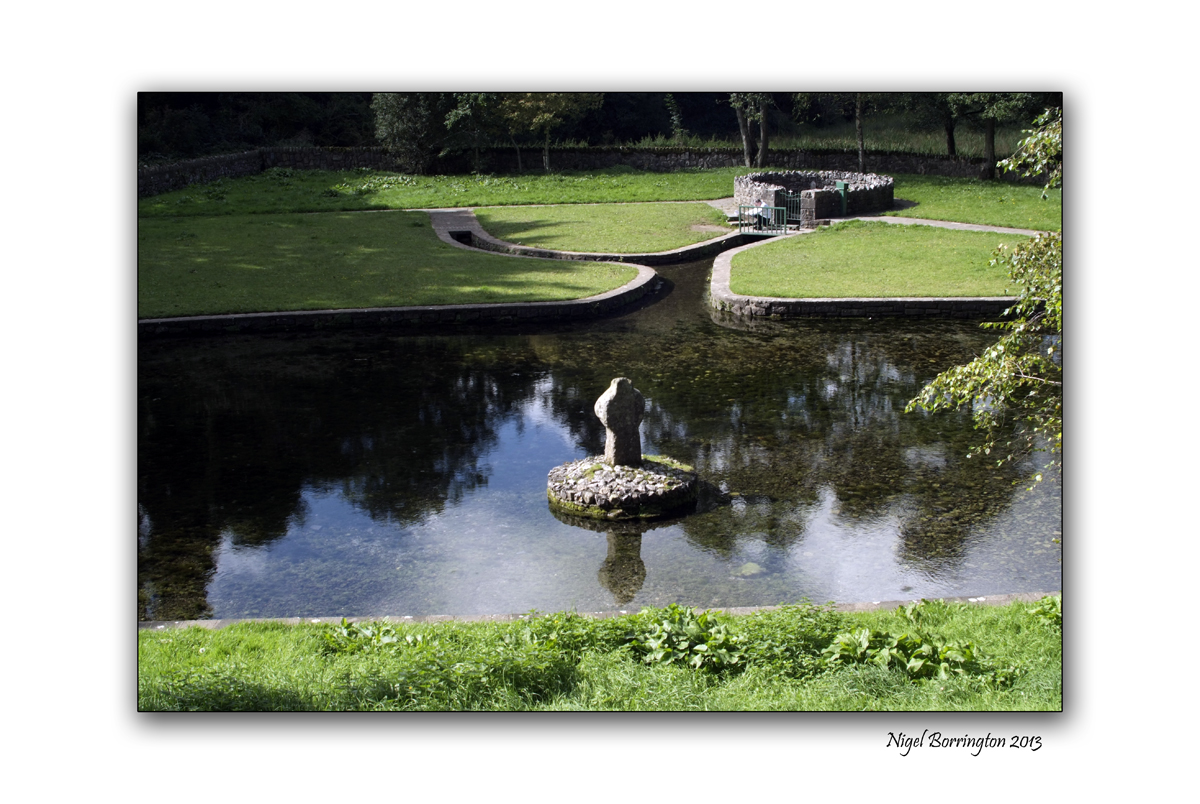
“St Patrick and his disciples on their travels throughout the country took advantage of those assemblies to preach the Gospel and to baptise the new converts. To St. Patrick coming from lands within the former Roman Empire some of those Celtic customs must have appeared strange. Well worship was re-orientated and transformed into a Christian context. In due course, from being places where pagan rites had been performed, the wells became places of Christian worship. There was a tradition which has died out that people visited St Patrick’s Well before sunrise on the first day of May – a date which coincides with the Celtic Festival of Bealtaine.”

I find the idea of Holy wells in the early Christian period to be fascinating, It appears, as covered above to be a clear attempt by the church to override the previous worship of water gods and to move this worship over to the new God that the modern christian church now worships.

Hover fly by the river Nore, County Kilkenny
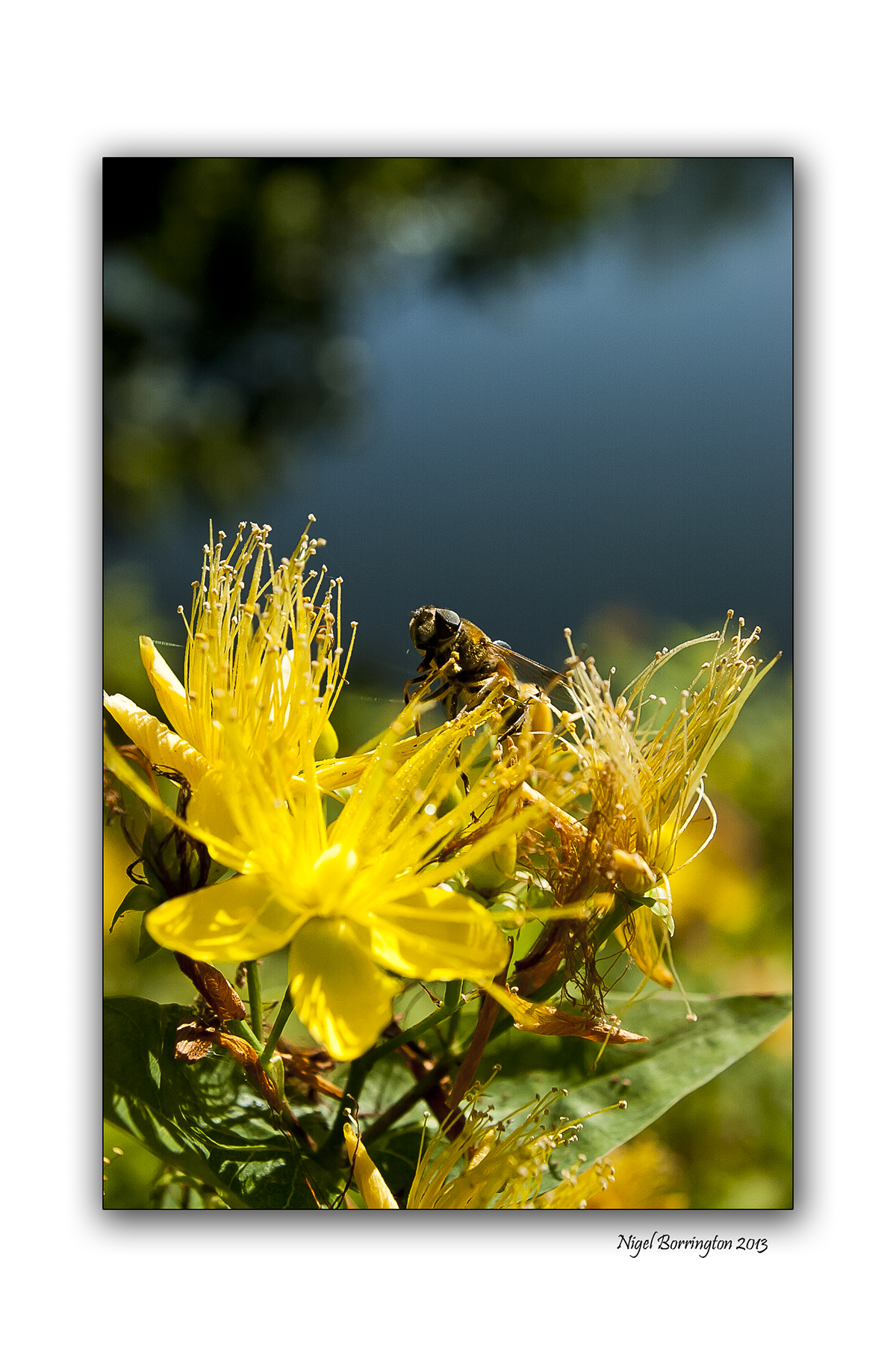
Nikon D200
Hover fly by the Nore, Kilkenny
Wildlife Photography : nigel Borrington
I am just doing a review of images that I have used for local exhibitions here in Kilkenny since 2008.
This image of a feeding Hover fly was displayed in a exhibition held in Callan, Co Kilkenny in 2009, It was printed onto photo board at A3 size.
Over the next week or so I will post some more of these images, as I would very much like to share them.
Boarding the Titanic

Fujifilm X100
Titanic Museum, Cobh, County Cork
Irish Landscape Photography : Nigel Borrington
This small pier that now looks well past its best days, helped transport one hundred and twenty three passengers from the white star line booking hall at Cobh/queenstown county cork on to small ferry’s and then on to the HMS Titanic before she set sail to New York.
This is the list of Titanic Passenger boarding at queenstown (11 April 1912 a:10:30am d:13:40pm) on that day. While visiting the museum and Pier you cannot help but feel the moment when these people boarded their boats and looked back at the harbour of Queenstown as they headed towards the Titanic. At the time of course they were only looking forward to a new life or the great experiences that they had ahead of themselves.
We however cannot help but view these moments in a different light….
In the above passenger listing, If the passenger survived the events that followed they are listed in the boat number that they were found in, if they didn’t they are listed as a body or if they were not found they have no entry in the last two columns.

Fujifilm X100
Fishing Harbour, Cobh, County Cork
Irish Landscape Photography : Nigel Borrington

Fujifilm X100
View of Cobh, County Cork
Irish Landscape Photography : Nigel Borrington

Fujifilm X100
Titanic Museum, Cobh, County Cork
Irish Landscape Photography : Nigel Borrington
Allihies
Allihies area from the old Cloan hills road.

Nikon D7000, 24-85mm f3.5 lens.
Allihies, west cork
Irish Landscape photography : Nigel Borrington
Allihies, west cork, offers one of Ireland’s most remote and stunning Landscapes, This shot was taken on a visit Last year.
The old Cloan, copper mining road out of the town gives some stunning landscape views of the area below

It also passes the old copper mines in the hills above the town.
Its the weekend So…
Why not find a remote place to visit…..

.
Watch the sun set…..

.
Stay and go for a walk in the moon light…
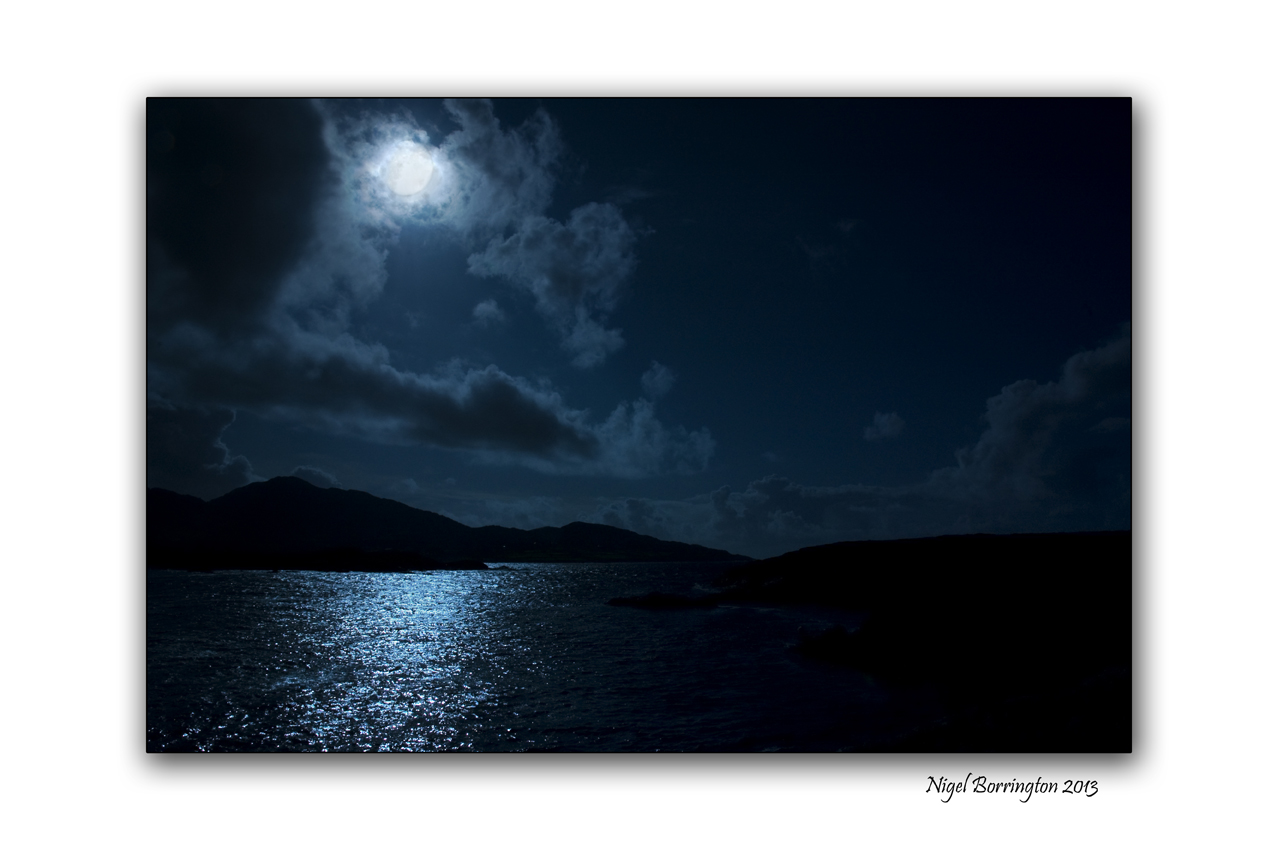
.
All images using a Fujifilm X100
Landscape photography : Nigel Borrington
Allihies (/ælˈæhiz/; Irish: Na hAilichí, meaning “the cliff fields”)[1] is a coastal parish (and townland) in the west of County Cork, Ireland.
Its the weekend so…
Why not…

Travel some old roads…..

Visit some places you have not seen for a long time !!

Stop and take in the view…
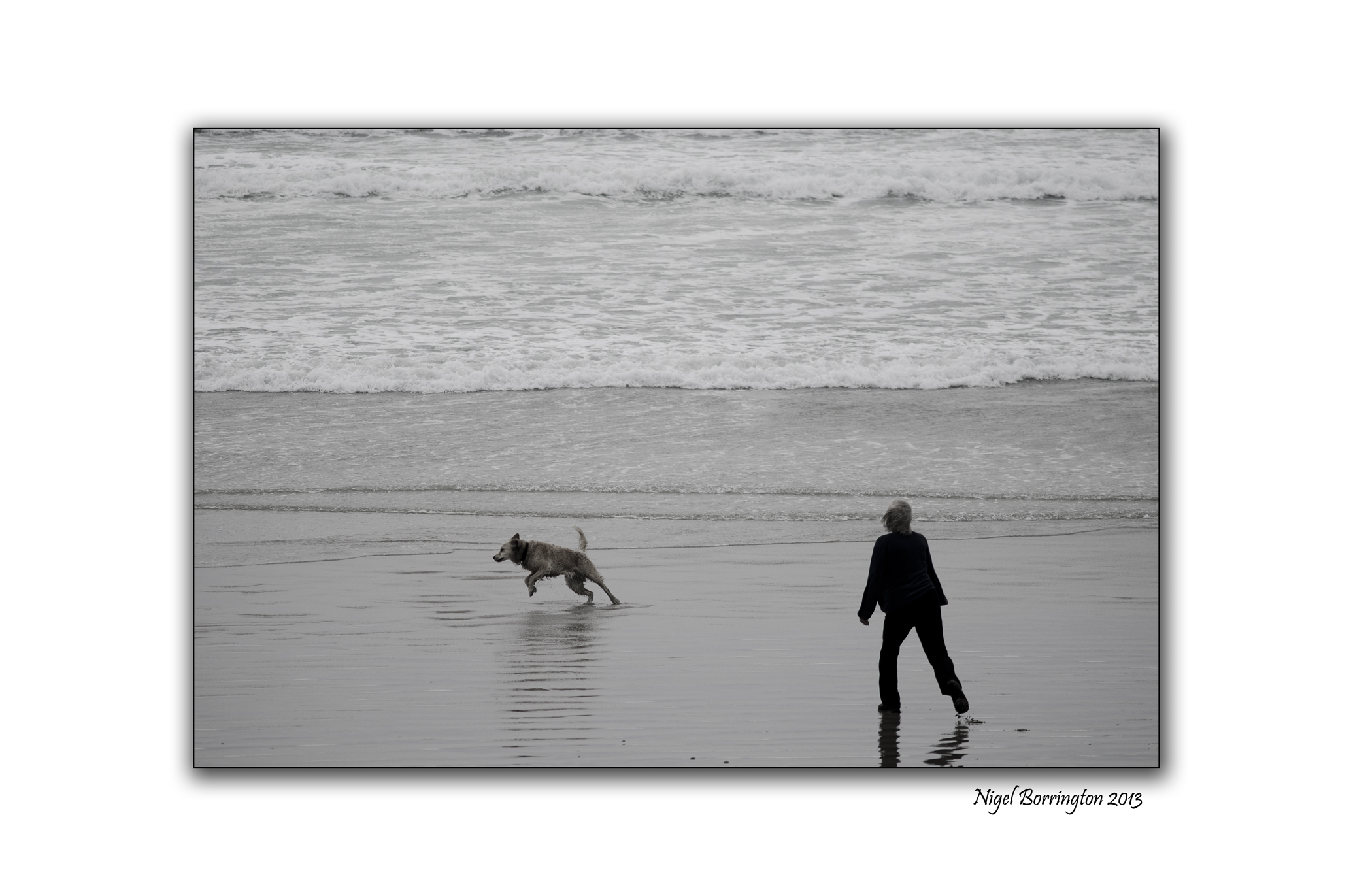
Or find a beach and have some fun….
Lake Windermere
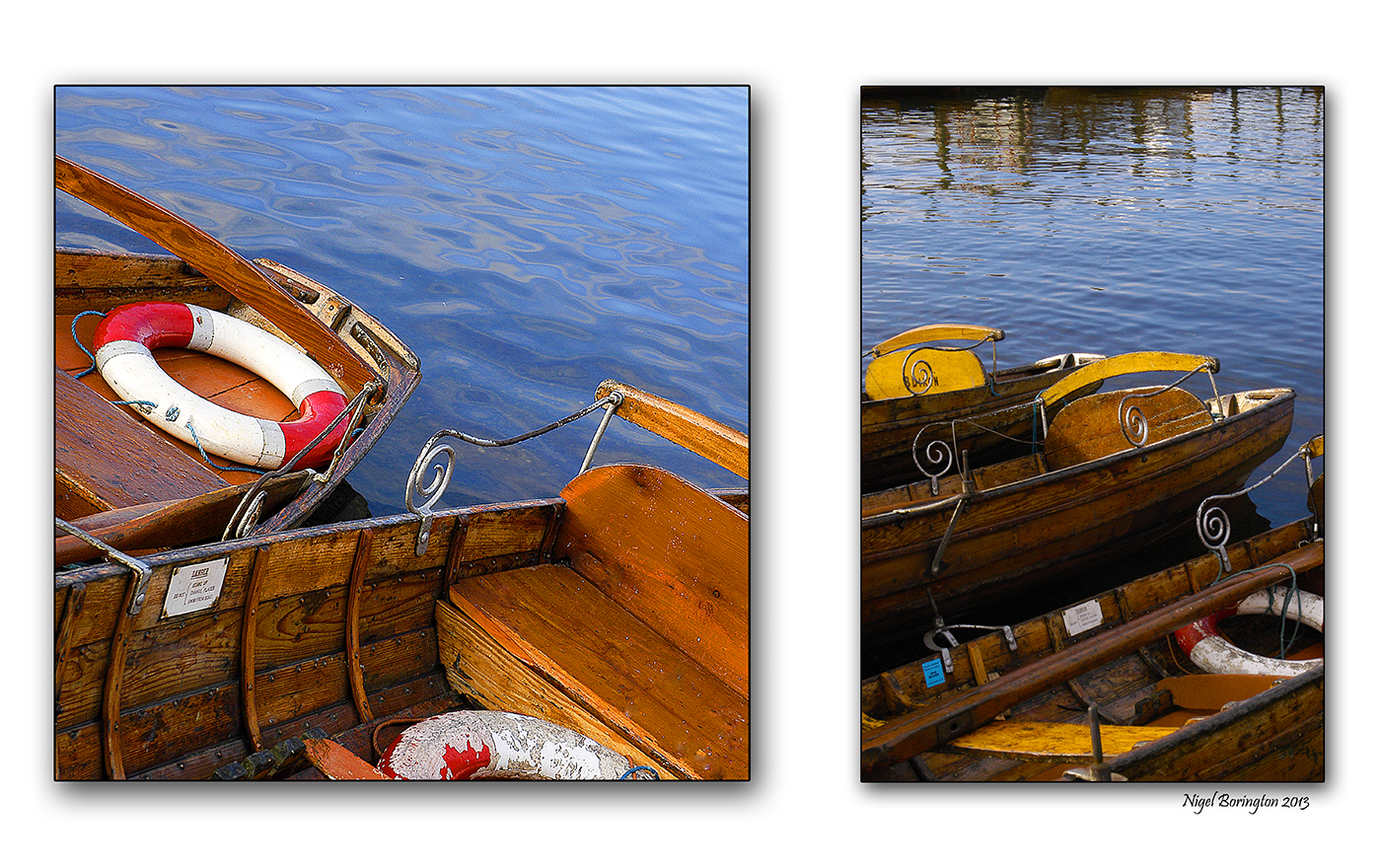
Nikon D200,50mm f1.4 lens
Rowing boats at windermere
Nigel Borrington
Rowing the waters
If you do go to Lake windermere then rowing on the lake on a good day is one thing you will never forget doing!
Rowing boats are available from the wooden huts to the right of Bowness promenade and from Waterhead (Ambleside). Rowing Boats are £13.00 for 1 or 2 adults and children under 16 are free.
They are open in the summer every day from 9.00am.
The views you will get on the windermere open water are unforgettable…

Two boats and Windermere

Nikom D200. 50mm f1.4 lens
Two Boats and Windermere
Nigel Borrington
This photo was taken one morning at a small bay on lake windermere in the lake district national park, Windermere is some 18km long and at it widest some 2km wide. Its one of the most beautiful places I know and if you can spend sometime you will find many wonderful location just to set and read and study the wildlife or nature it offers.
Even just to sit and look at these two boats moving slowly in the water is something I will always remember.
So then Windermere and two boats and one cleared out mind!
Good morning Ducks

Nikon D7000, 50mm f1.4 lens, iso 200
Russian grey geese
Nigel Borrington
This Morning is one of our last mornings for a while that we are looking after our friends farm while they are away, So I thought I would share the experience of feeding their Muscovy ducks( Thank you seeingspotsphoto ).
They sleep the night in a home made hut to keep out any interested foxes that may wonder into the field, the hut is just lovely and the work that going into both building it and keeping it looking so rustic is wonderful.
The six of them eat wet meal feed served into a dish from a bucket filled with water and soaked overnight, its just brilliant to watch them in the morning finding a place to feed from.
This time helping look after the chickens, geese and horses has just been brilliant!
Saltees Island, Gannets
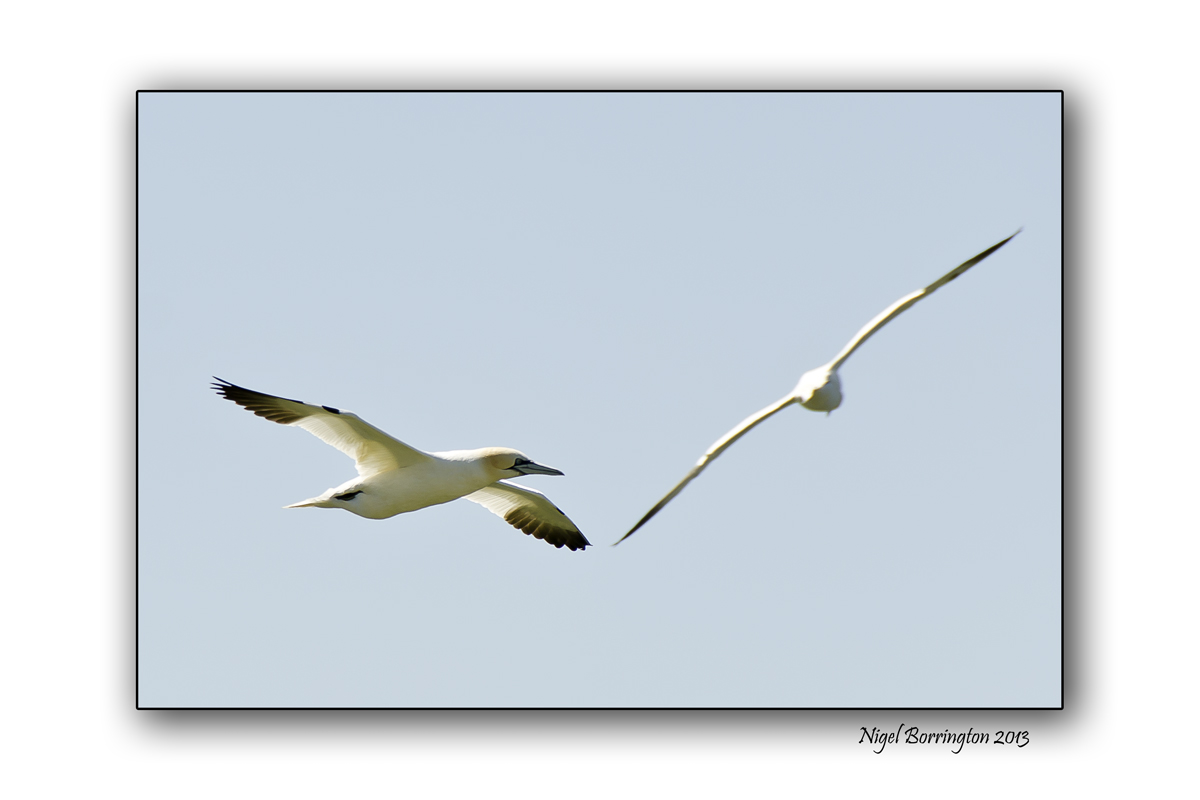
Gannets flying over the Saltees islands, Co Wexford
Nikon D7000
80-300 vr lens
Nigel Borrington

Gannets Roosting, Saltees islands, Wexford
Nikon D7000
80-300 vr lens
Nigel Borrington
The Sea
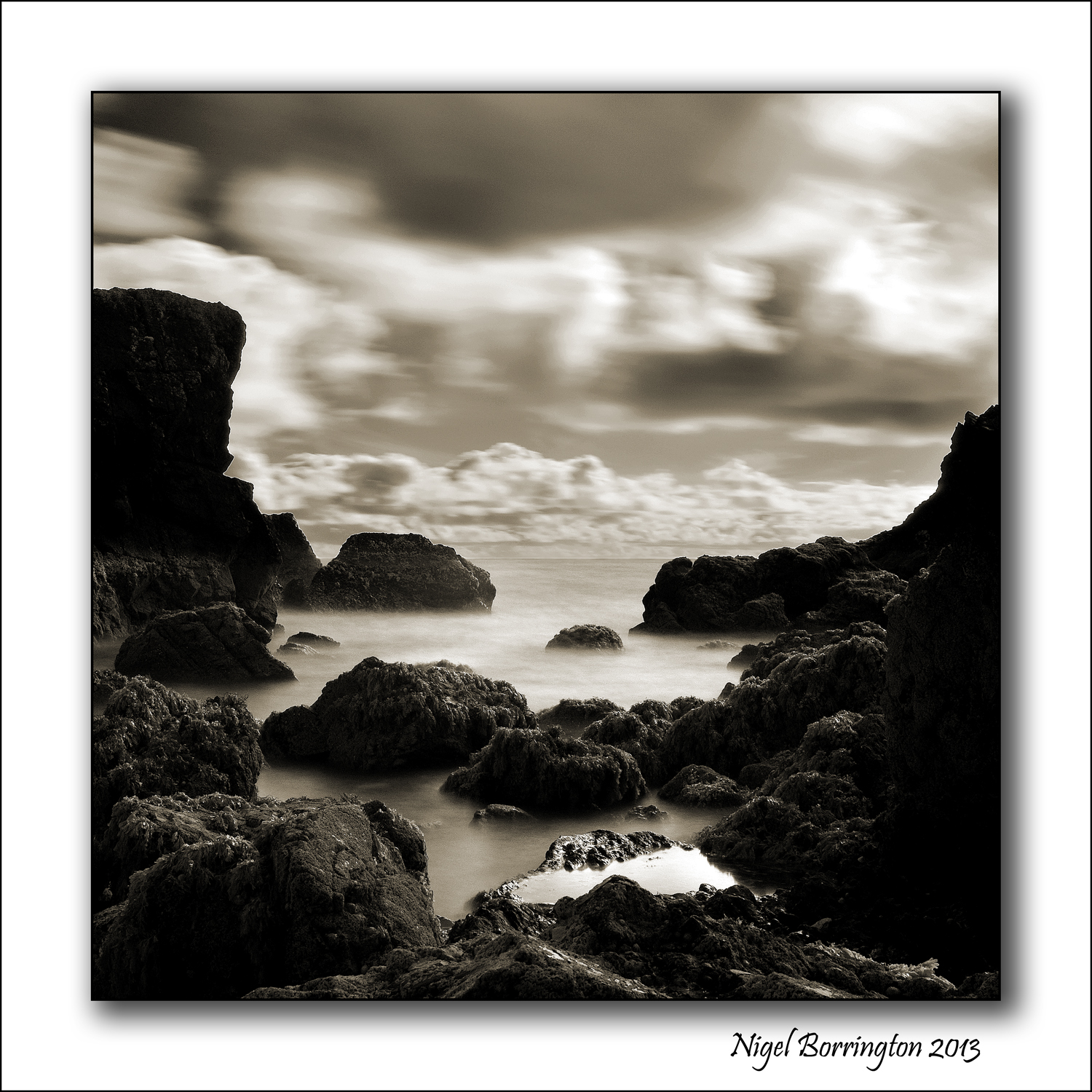
The sea is a hungry dog,
Giant and grey.
He rolls on the beach all day.
With his clashing teeth and shaggy jaws
Hour upon hour he gnaws
The rumbling, tumbling stones,
And ‘Bones, bones, bones, bones! ‘
The giant sea-dog moans,
Licking his greasy paws.
And when the night wind roars
And the moon rocks in the stormy cloud,
He bounds to his feet and snuffs and sniffs,
Shaking his wet sides over the cliffs,
And howls and hollos long and loud.
But on quiet days in May or June,
When even the grasses on the dune
Play no more their reedy tune,
With his head between his paws
He lies on the sandy shores,
So quiet, so quiet, he scarcely snores.
The sea is a hungry dog,
Giant and grey.
He rolls on the beach all day.
With his clashing teeth and shaggy jaws
Hour upon hour he gnaws
The rumbling, tumbling stones,
And ‘Bones, bones, bones, bones! ‘
The giant sea-dog moans,
Licking his greasy paws.
And when the night wind roars
And the moon rocks in the stormy cloud,
He bounds to his feet and snuffs and sniffs,
Shaking his wet sides over the cliffs,
And howls and hollos long and loud.
But on quiet days in May or June,
When even the grasses on the dune
Play no more their reedy tune,
With his head between his paws
He lies on the sandy shores,
So quiet, so quiet, he scarcely snores.
James Reeves
The Pagan tree and forest plants

Trees, herbs, and plants are very important to Druids. They represent their sacred alphabet, they are used for healing, and many Druids name themselves after trees. Trees are the connection between the realms. Ireland was said to be divided into four lands, each occupied by a sacred tree with a fifth tree at the center.
The five most important trees are the oak, rowan, birch, apple, and yew:
The oak is connected with strength, protection, and stability. Some say that the very word Druid derives from duir, the old word for oak.
The rowan is useful for protection, youth, and prophecy.
The birch is symbolic of beginnings, renewal, regeneration, and cleansing. It is also associated with the bard.
The apple tree is the tree of life and is said to reside at the center of the otherworld.
The yew is associated with death and decay because it is very poisonous, but this unique evergreen tree also lives for thousands of years. It is related to the ovate and is frequently found near sacred wells.
Other trees, such as the ash, willow, and hawthorn also frequently appear in mythology and legend.

Foremost among the herbs and plants most revered by Druids is mistletoe. Mistletoe is a parasite frequently found growing on oaks. It is said that mistletoe, which grows off trees rather than from roots in the earth, must never be allowed to touch the earth. It is sometimes called all-heal, but it is poisonous, so use it with caution. Verbena, or vervain, is gathered at Midsummer, whereas mistletoe is gathered at Midwinter. It is used as an offering to the gods. It is also considered a cure-all and is said to ward against evil spirits.

HERB ROBERT, GERANIUM ROBERTIANUM
This herb has been used in medicine for centuries, although in the 20th century, particularly in Portugal it was hailed as a folk cancer remedy when the powdered leaves were taken with a raw, fresh egg yolk. Of course this has not been proven to work. Dioscorides described it and it was known to the old herbalists, who used it mainly for blood problems, as the stalks and leaves turn bright red in autumn, a sign to these old herbalists that it was good for the blood.
This plant is known by around a hundred names some of which refer to other plants more often, such as bloodwort (red dock), and red robin (not ragged robin) and cranesbill, which is native to the US and poisonous. However Stinking Bob is a name given to this herb which is unique to it, and refers to the smell given off by its bruised leaves. It is also called the Fox Geranium, some say because of its “foxy” smell after rain. It is native to hedgerows and woodland in Europe the British isles included, and to temperate Asia as it grows as far east as Japan and in the Himalayan regions.
No one really knows how it became Herb Robert, although there are several contenders for being its namesake, including Robert Duke of Normandy, who died in 1134, St Robert of Molesme, a French monk who died in 1110, and Robin Goodfellow or Puck, the mischievous elf who has a role in Shakespeare’s play “A Midsummer Night’s Dream.” The Latin name Robertianum might be a corruption of ruber meaning red, rather than referring to any specific Robert, Robin or Rupert, names that seemed to have been linked to this plant.
The leaves of Herb Robert are the main part of the plant used for medicinal purposes and an infusion of these has been drunk and used as a wash for the skin, and for inflammation of the eyes. A poultice of the leaves has been used to relieve hardened breasts, to increase lactation in nursing mothers, to relieve irritated skin and the pain of rheumatism and reduce bruising, as well as being applied to herpes sores and ulcers. The infusion can also be used for the same external purposes.
The Fruit Garden Path
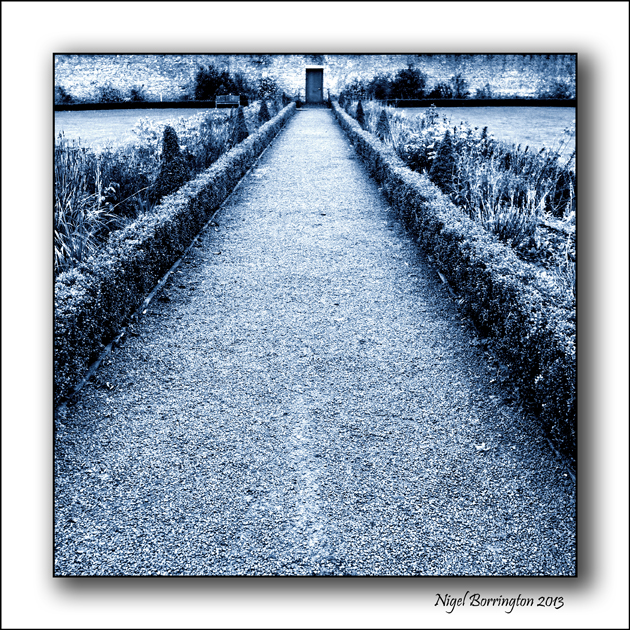
Fuji X100
Landscape photography, Nigel Borrington
The Fruit Garden Path by Amy Lowell
The path runs straight between the flowering rows,
A moonlit path, hemmed in by beds of bloom,
Where phlox and marigolds dispute for room
With tall, red dahlias and the briar rose.
Tis reckless prodigality which throws
Into the night these wafts of rich perfume
Which sweep across the garden like a plume.
Over the trees a single bright star glows.
Dear garden of my childhood, here my years
Have run away like little grains of sand;
The moments of my life, its hopes and fears
Have all found utterance here, where now I stand;
My eyes ache with the weight of unshed tears,
You are my home, do you not understand?
Light Between The Trees

Fujifilm X100
Kilkenny Landscape photography, Nigel Borrington
Title: Light Between The Trees
Author: Henry Van Dyke
Long, long, long the trail
Through the brooding forest-gloom,
Down the shadowy, lonely vale
Into silence, like a room
Where the light of life has fled,
And the jealous curtains close
Round the passionless repose
Of the silent dead.
Plod, plod, plod away,
Step by step in mouldering moss;
Thick branches bar the day
Over languid streams that cross
Softly, slowly, with a sound
Like a smothered weeping,
In their aimless creeping
Through enchanted ground.
“Yield, yield, yield thy quest,”
Whispers through the woodland deep;
“Come to me and be at rest;
I am slumber, I am sleep.”
Then the weary feet would fail,
But the never-daunted will
Urges “Forward, forward still!
Press along the trail!”
Breast, breast, breast the slope
See, the path is growing steep.
Hark! a little song of hope
Where the stream begins to leap.
Though the forest, far and wide,
Still shuts out the bending blue,
We shall finally win through,
Cross the long divide.
On, on, on we tramp!
Will the journey never end?
Over yonder lies the camp;
Welcome waits us there, my friend.
Can we reach it ere the night?
Upward, upward, never fear!
Look, the summit must be near;
See the line of light!
Red, red, red the shine
Of the splendour in the west,
 Nigel Borrington
Good Morning Chicken !
Good Morning!
Every now and then we look after a friends farm house while they go on holiday. One of the biggest Jobs is putting the chickens away in the evening, having to collect up everyone of them and shut them in for the night is Great fun!!!
This job is balanced very well though when the next morning you have to let them out and give them some feed, they look very pleased to be set free for the day!
Fujifilm X100
Fujifilm X100
Share this:
April 16, 2013 | Categories: Comment, Solo images | Tags: chicken feed, chicken run, Chickens, farm life, Fuji X100, irish photograhy, Kilkenny, Nigel Borrington | 3 Comments