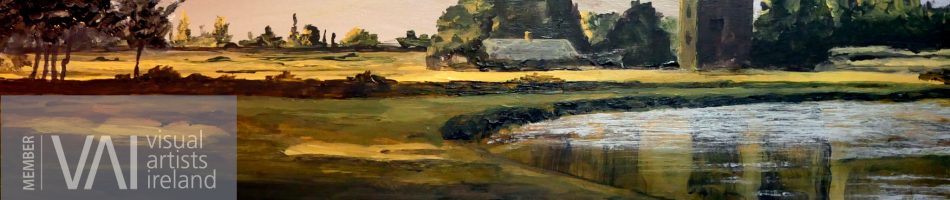
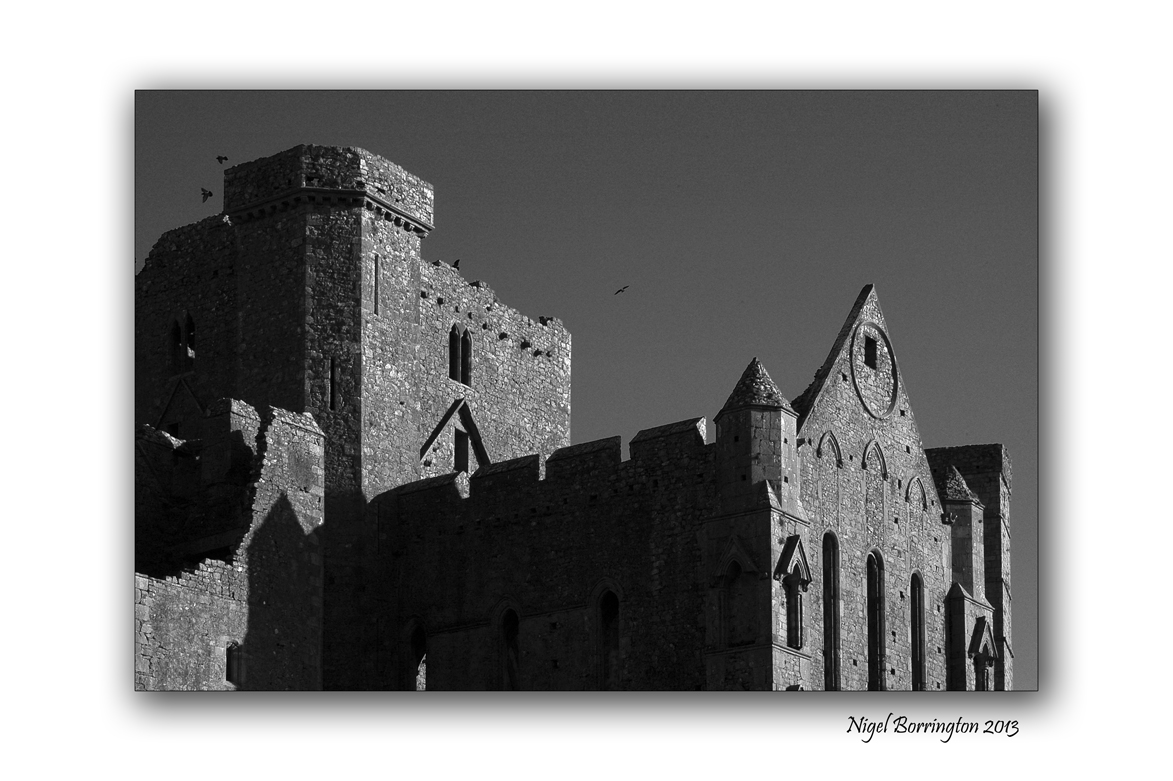
The Rock of Cashel

The Rock of Cashel, County Tipperary
Irish Landscape Photography , Nigel Borrington
The Rock of Cashel

The town of Cashel, in County Tipperary is home to one of Ireland best known and most visited locations, the Rock. It must be one of the most photographed locations in the country and has visitors all year around.
A Wikipedia page describes it as follows:
History
According to local mythology, the Rock of Cashel originated in the Devil’s Bit, a mountain 20 miles (30 km) north of Cashel when St. Patrick banished Satan from a cave, resulting in the Rock’s landing in Cashel.[1] Cashel is reputed to be the site of the conversion of the King of Munster by St. Patrick in the 5th century.
The Rock of Cashel was the traditional seat of the kings of Munster for several hundred years prior to the Norman invasion. In 1101, the King of Munster, Muirchertach Ua Briain, donated his fortress on the Rock to the Church. The picturesque complex has a character of its own and is one of the most remarkable collections of Celtic art and medieval architecture to be found anywhere in Europe, Few remnants of the early structures survive; the majority of buildings on the current site date from the 12th and 13th centuries.
Image Gallery
I took the images in this post early one cold November morning last year.


Boann, goddess of the River Boyne. A Gallery and Poem.

A Story told by: Deanne Quarrie
Boann, Deanne Quarrie
Boann is the Irish goddess of the river Boyne. Her name means “She of the white cattle.” She was the wife of Nechtain and the beloved of the Dagda, the Good God. It is possible she could be a later naming of Danu Herself. Aenghus mac Og, her son, was the product of the affair between Boann and Dagda. In order to keep the pregnancy secret, the Dagda halted the sun for the term of the goddess’s pregnancy, and so Aenghus was born out of time.
Boann is a Goddess of fertility and the stars. She connects the Way of the White Cow to the White Mound of the Boyne. She gives her name to the preeminent brugh in all of Ireland, Brugh na Boinne. She is honored mid-winter at Imbolc.

Many ancient peoples had stories of floods in which water was both honored as a life bringer and as a destroyer. Water was seen as something that “escaped” from the realms of the gods.
In many of the stories it seemed to be a female who was involved when water, would through some disaster, come to the land, bringing growth and abundance though turbulence.
Probably the most famous version of this myth in Celtic tradition is the Irish story of the Well of Segais.
Growing around this well were nine hazel trees of wisdom, whose nuts fell into the water and gave it the quality of divine illumination, much sought-after by those seeking this wisdom.
Boann was the wife of Nechtan, keeper of the sacred Well of Segais, which was a source of knowledge. Only Nechtan and his cupbearers were permitted to approach the well. The goddess Boann desired to drink from the well herself, to increase her power.

She attempted to challenge the Well of Segais, by going around the well chanting, circling widdershins (counterclockwise, or against the sun direction) . She circled the well three times, as she chanted “amrun.” The well rose against her incantations. Three waves rose up from the well which then flowed forth in five streams and drowned her. Because she was of the Sidhe, she did not die. She lost an arm, a leg and an eye in her battle with the well.
The five streams of wisdom that flowed from this well represent our five senses: taste, smell, feeling, sight and hearing. In her contest with the Well of Segais, Boann experienced “shamanic death” of drowning. In so doing, she gained the Wisdom of Segais as it swept her away.
Manannan said of this….

“I am Manannan, son of Ler, king of the Land of Promise; and to see the Land of Promise was the reason I brought [thee] hither. . . . The fountain which thou sawest, with the five streams out of it, is the Fountain of Knowledge, and the streams are the five senses through which knowledge is obtained. And no one will have knowledge who drinketh not a draught out of the fountain itself and out of the streams.”
From this, we learn that we must experience through all of who we are, through all of the five senses which must be open. This is our gift from Boann.
Boann can be a great ally for poetic composition and many other forms of artistic expression. Invoking or singing Boann’s name while sitting next to a river or stream can be a very powerful and inspiring experience. Clear the mind, open the soul, and listen to the music of Boann playing from the waters. You will always go away a new person.
Vigil at the Well
A rock ledge. A dark pool.
Pale dawn and cold rain.
And a woman alone
holding three coins.
She circles the well
three times in the rain.
She offers the coins
to a great ancient tree
then bends to the pool.
A glimmer of silver.
Dawn striking the pool?
A fish in its depths?
The pool stills again.
The sky blazes red.
The woman gets up.
Nothing seems changed.
But the next day a wind
blows warm from the sea.
Boann suite de reels
Coumfea a corrie lake, Nire Valley, County Waterford

Coumfea, Nire Valley, County Waterford
Landscape Photography, Irish photography : Nigel Borrington
Taken on the same day as the image of Milk hill, this image shows a view of Coumfea a corrie lake in the Nier valley, I have many other images of the lake that I will post in full.
A Corrie lake is formed as follows :
How Is a Corrie Formed?
Answer
A corrie is formed in different steps. First, the snow accumulates in a hillside hollow and turns to ice. Then, the hollow is deepened by abrasion and plucking and the ice in the corrie moves under the influence of gravity, deepening the hollow still further. Since the ice is at the foot of the hollow and moves more slowly, a rock lip forms. When the ice melts, a lake or tarn may be formed in the corrie. The steep back wall may be severely weathered by freeze€“thaw weathering, providing material for further abrasion.
Its the weekend so…..

All images taken at Ardmore, County Waterford
Fujifilm X100
Irish Landscape photography : Nigel Borrington
Its the weekend so why not find a coastline to walk alone, look down at the views relax, and clear you mind…..


On Contemplating a Sheep’s Skull ~ Poem by: John Kinsella

All images taken in the Nier valley, county waterford
Fujifilm X100
Irish Landscape Photography : Nigel Borrington
On Contemplating a Sheep’s Skull
Poem by John Kinsella
A sheep’s Skull aged so much in rain and heat,
broken jawbone and chipped teeth half-
gnaw soil; zippered fuse-mark tracks
back to front, runs through to base
of neck, widening faultline under
stress: final crack close at hand.
Skull I can’t bring myself to move.
White-out red soil unearthed
from hillside fox den and cat haven,
now hideaway for short-beaked echidna
toppling rocks and stones, disrupting
artfulness a spirit might impose,
frisson at seeing counterpoint.
Skull I can’t bring myself to move.
Sometimes avoid the spot to avoid
looking half-hearted into its sole
remaining eye socket; mentally to join
bones strewn downhill, come apart
or torn from mountings years before
arriving with good intentions.

Skull I can’t bring myself to move.
Not something you can ‘clean up’,
shape of skull is not a measure of all
it contained: weight of light and dark,
scales of sound, vast and varied taste
of all grass eaten from these hills;
slow and steady gnawing at soil.
Skull I can’t bring myself to move.
Neither herbivore nor carnivore,
earth and sky-eater, fire in its shout
or whisper, racing through to leave a bed
of ash on which the mind might rest,
drinking sun and light and smoke,
choked up with experience.
Skull I can’t bring myself to move.
Drawn to examine
despite aversion, consider
our head on its shoulders,
drawn expression
greeting loved ones
with arms outstretched.

John Kinsella is Founding editor of the journal Salt in Australia; he serves as international editor at the Kenyon Review. His most recent volume of poetry is Divine Comedy: Journeys through a Regional Geography (W. W. Norton) with a new volume, Disturbed Ground: Jam Tree Gully/Walden, due out with W.W. Norton in November 2011.
Lough Boora Parklands, County Offaly
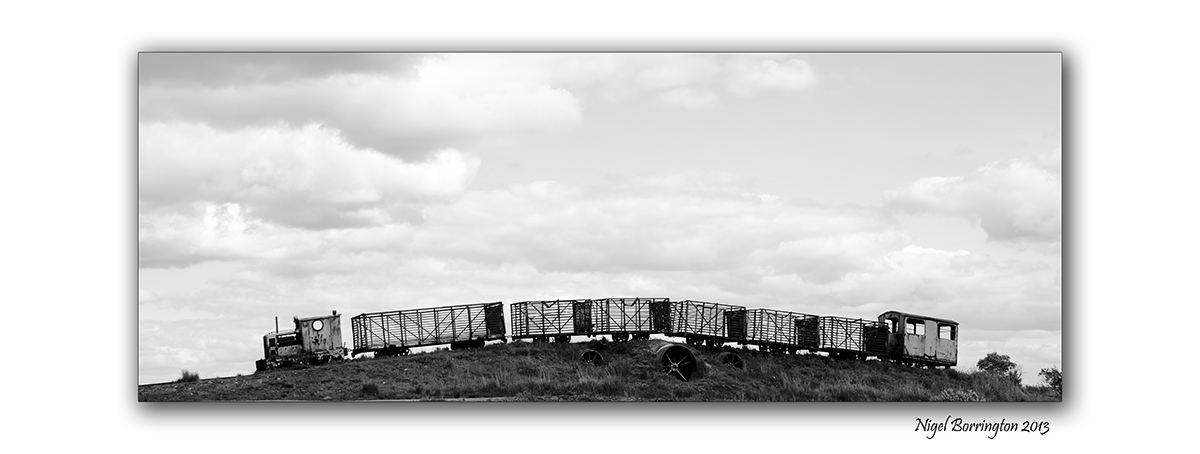
Lough Boora Parklands, County Offaly
Irish Landscape photography : Nigel Borrington
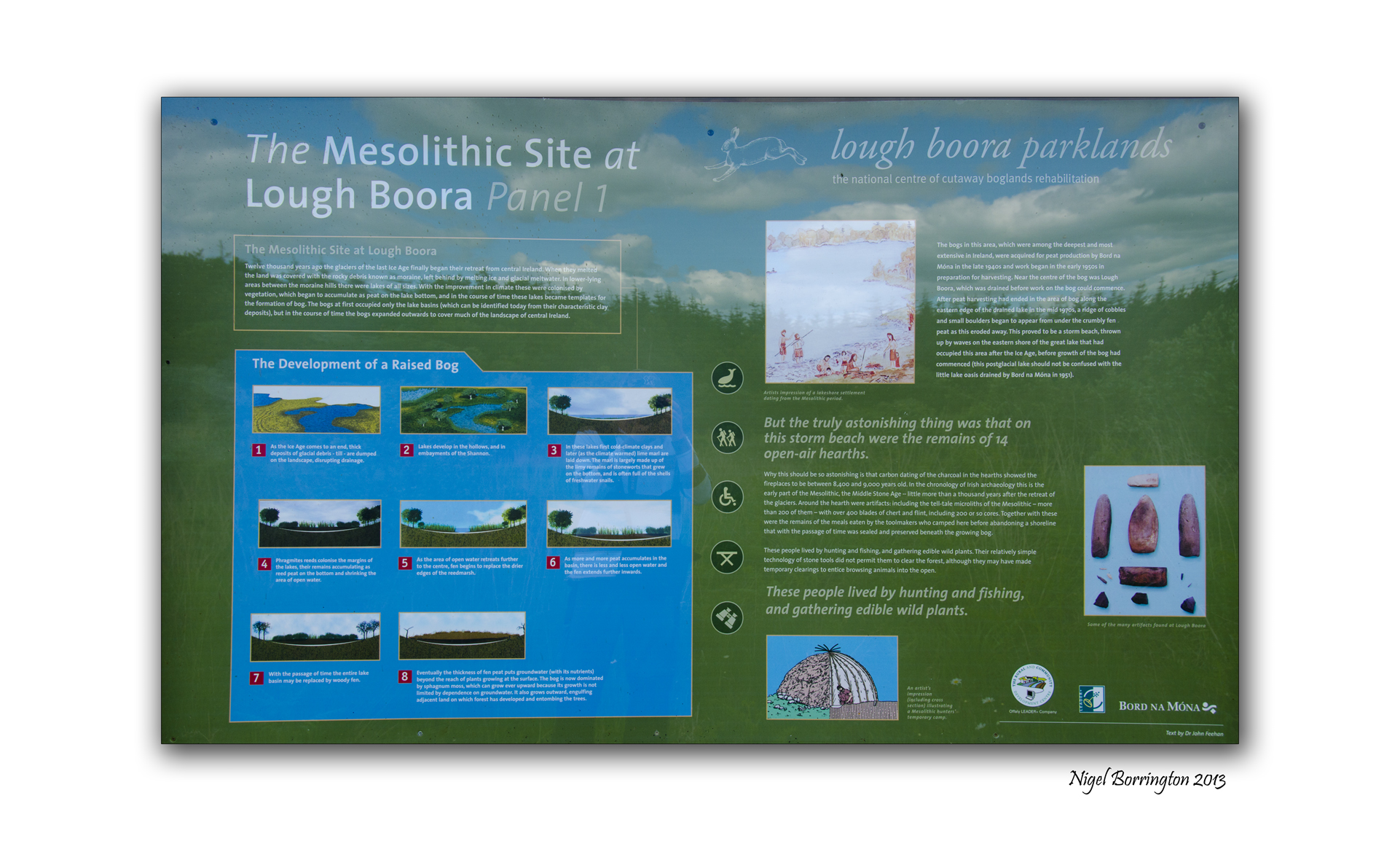
Lough Boora parklands, are one of the most interesting outdoor locations you could visit in Ireland. They cover up to 14 kilometres of scenic views and cycle routes, the parkland has many sculptures and art installations for you to view along with miles of walking routes. The location is also a nature reserve that is home to many rare birds such as lapwings. The first image in the below Gallery is of two Lapwing flying above the park.
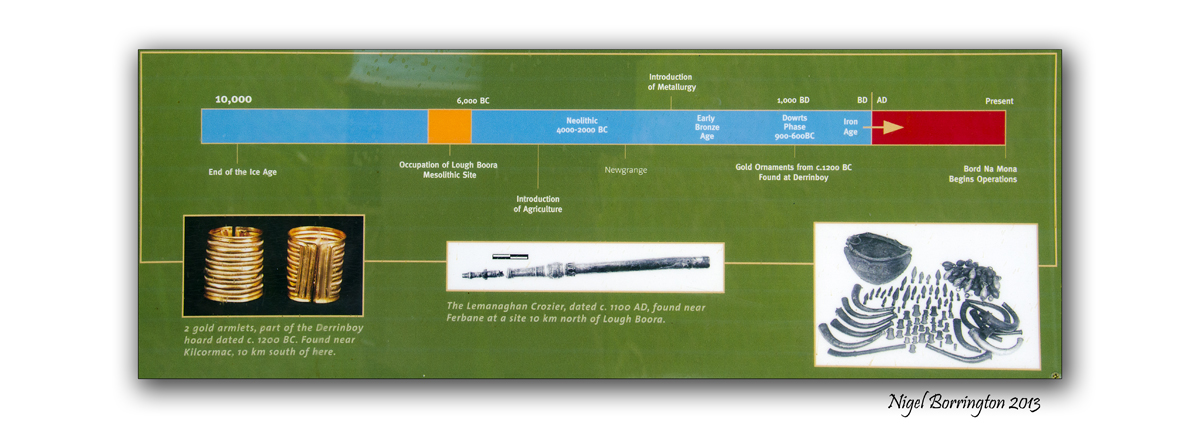
Along with the great sculptures which I will cover in full in another post, some archaeology found at the site has completely changed the history of the country. The remains of a village that would have sat on the banks of one of the biggest lakes in Europe at the time. The findings date the people living in this area back some eight and a half thousand years, this is some two and a half thousand years older than previously thought.
It also pre dates the Christian history of Ireland by some seven thousand years.
The village itself was large and well established for its time, indicating that man must have lived here for sometime before reaching this level of culture. This would indicate that Man moved back into Ireland soon after the ending of the last Ice age some ten thousand years ago.
I have taken some images of the information boards on the site, you can find them below the following images.
Image Gallery

Lapwing’s flying above the parklands.

Dog’s are fully welcomed , restrictions when the birds are nesting.

Many Installations and Sculpture’s.

Wooden Teepee Sculpture.

Bog Cotton, growing in the wetlands.
Information boards


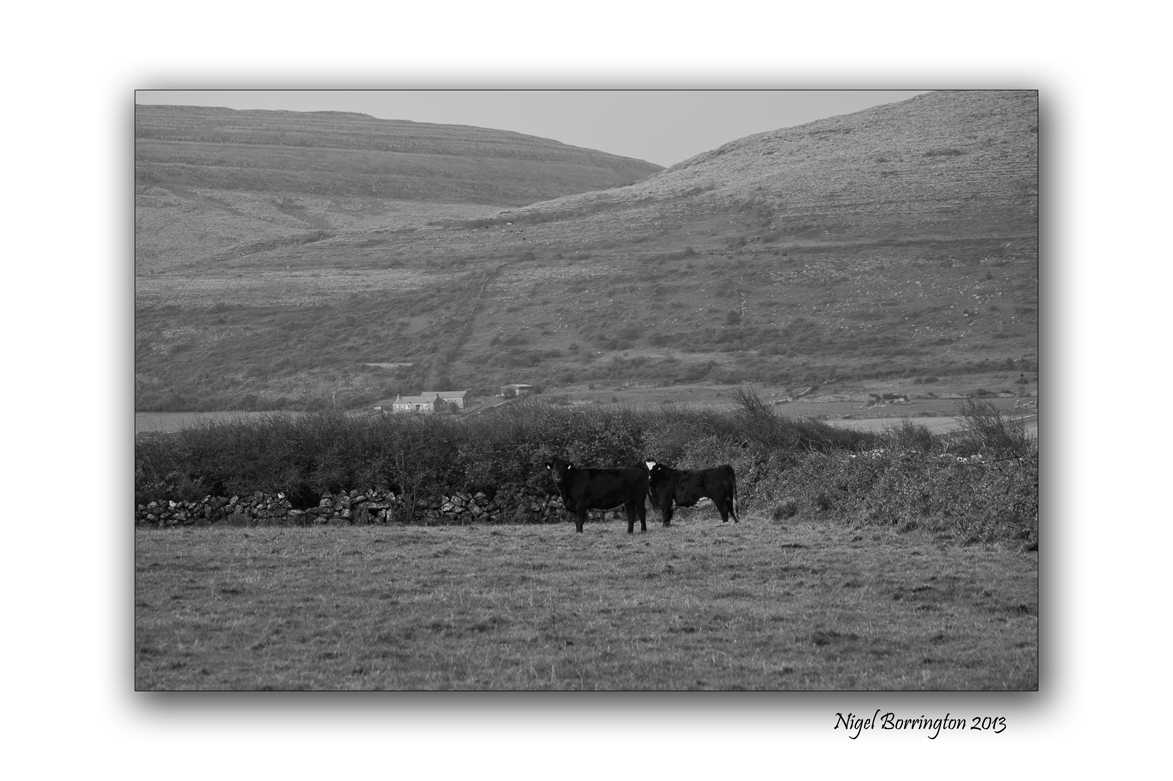
Just Grazing

Just Grazing, Taken in the Burren, County Clare
Landscape Photography : Nigel Borrington
Just taking your time walking along the country lanes around County Clare, up near the Burren is a wonderful thing to do, I took this image last year on a visit.
Sunrise in the Park
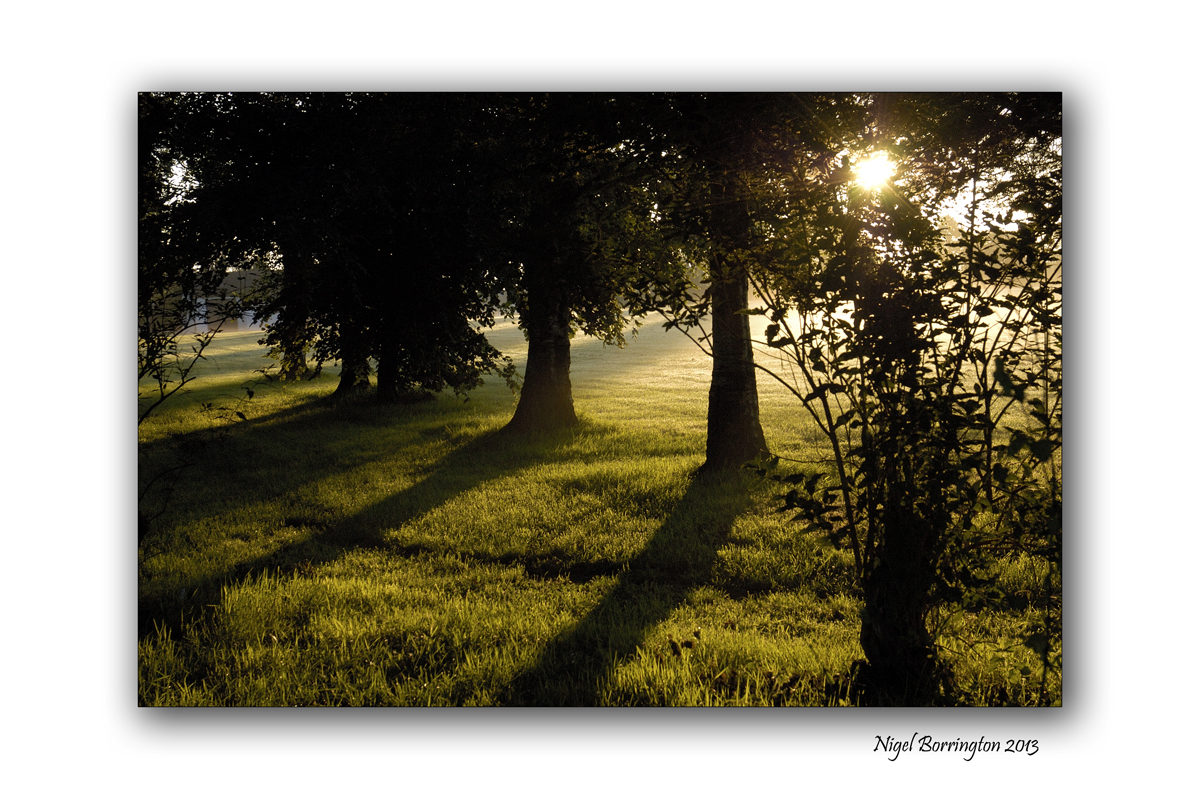
Sunrise ay Callan’s Fair green
Kilkenny Landscape Photography : Nigel Borrington
This morning’s sunrise was just as wonderful as the sunset yesterday, I took Molly our ten year old Golden Retriever out for a walk on the local green, the sight of the rising sun through the trees was a great start to the day.


Sunsets on a evening walk.
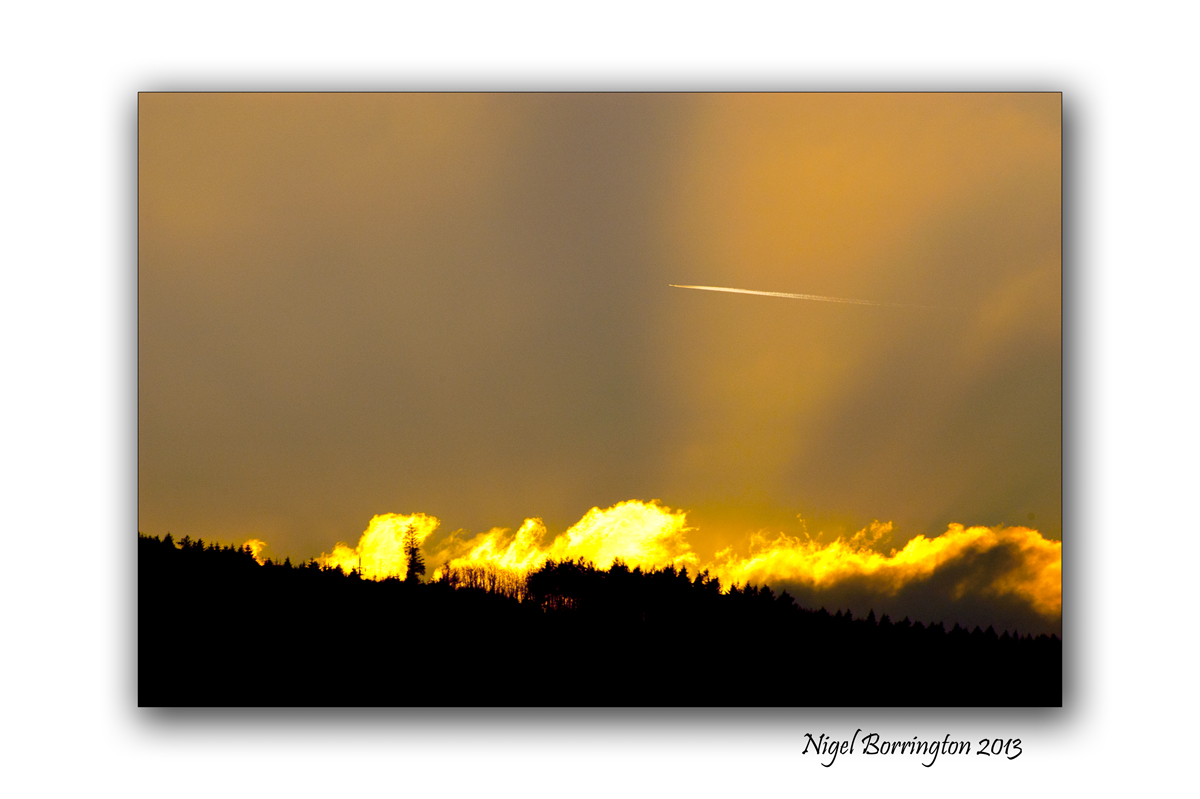
The Sunsets on a evening Walk
Kilkenny Landscape photography : Nigel Borrington
Out walking last night the sunset was just amazing, it had been raining all day but just as the last light of the day was leaving the clouds broke and the suns rays appeared over the top of the ridge I was walking below.
Just a wonderful end to a very wet day ……
Derriana lake – County Kerry
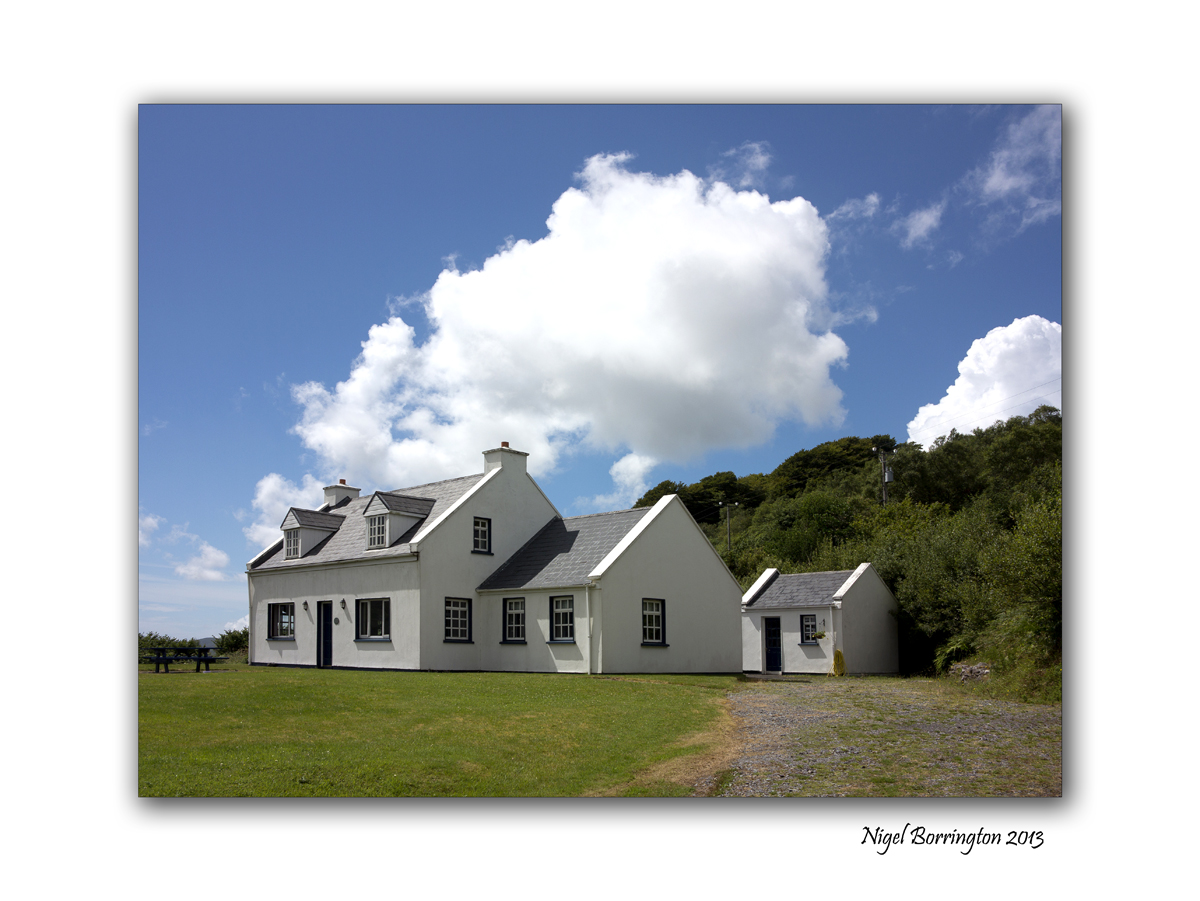
Derriana Lodge, County Kerry
Irish Landscape Photography : Nigel Borrington
Derriana Lake, a home for two weeks
On the 31st of July I reached the fine age of 50 and along with friends and family we went to Kerry for two weeks. Staying in a self-catering lodge called Derriana lodge
I would very much like to say thank you to family and friends for making the time spent away just brilliant and also some of you noticed my birthday date from my face-book page, so I would like to say thank you for sending me Happy Birthday messages !
The lodge is just a wonderful place to stay as its located above Derriana Lake, county Kerry, the below images are just some that I took during the two week’s. You have already seen some of the others from my posts during the two weeks away.
I will post more !
Thank you to everyone again for such a great time !
Panoramic views of the Lodge and Lake


Image Gallery of the Lake


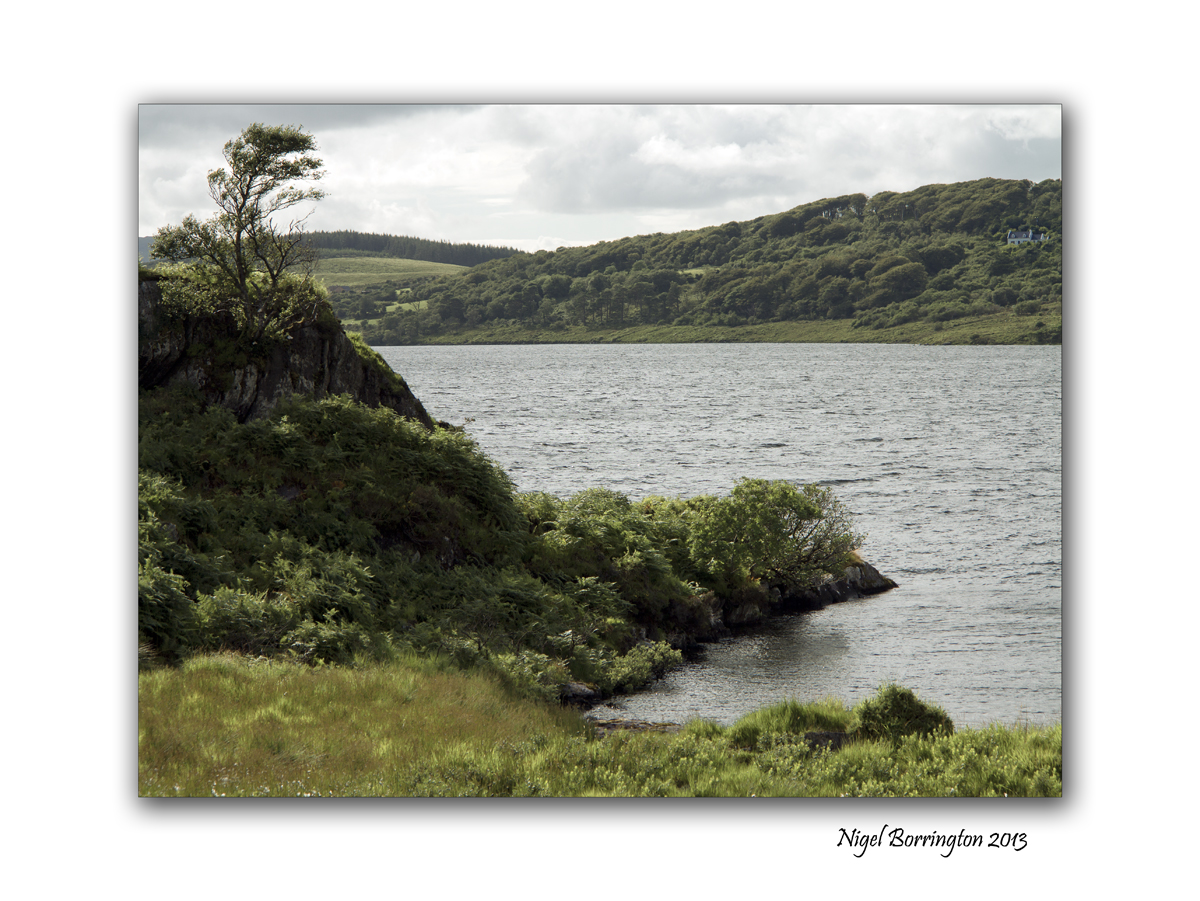

Its the weekend so….

Canon G1x
Derriana lake, county Kerry
Landscape photography by Nigel Borrington
It the weekend so, why not find a place to walk a place to relax and a place to stay and watch the sun go down over a lake.
Puffins on Skellig Michael, County Kerry
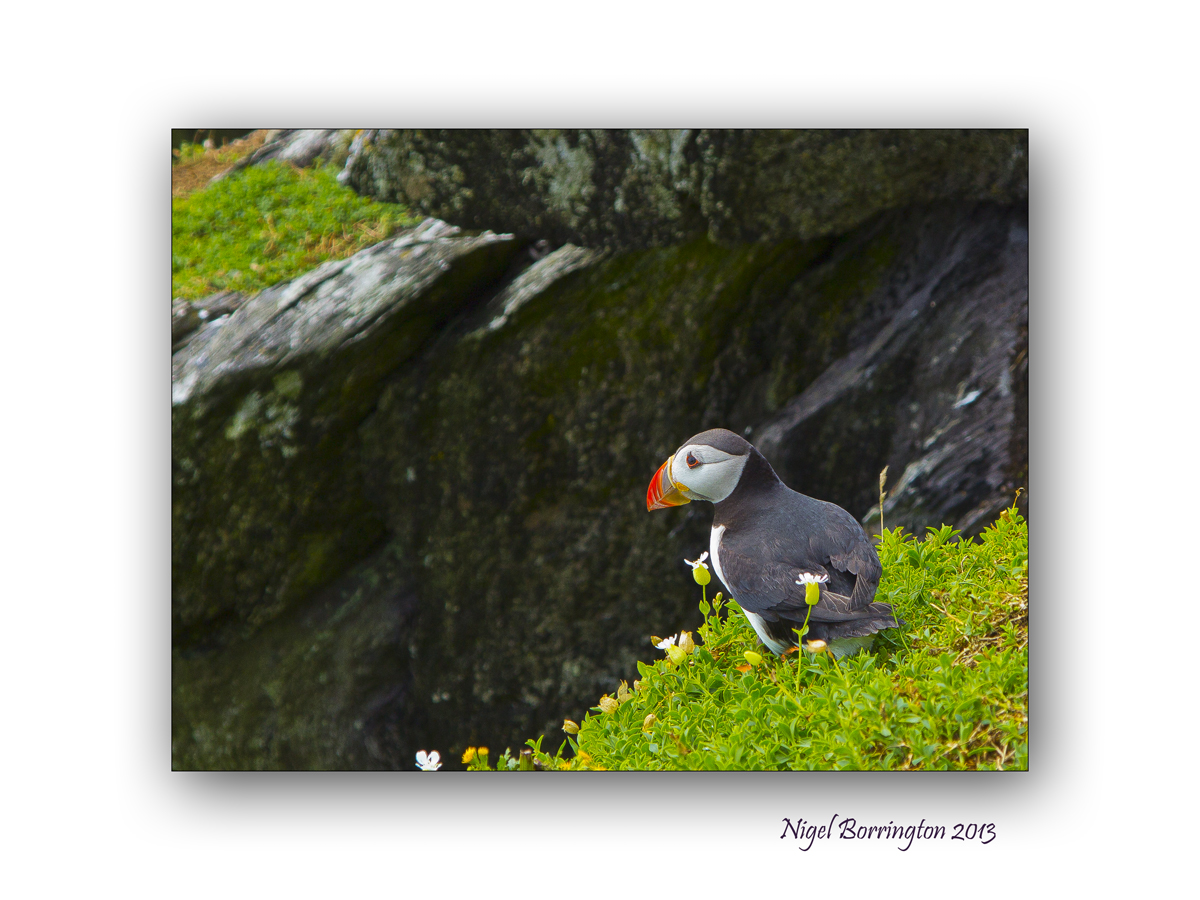
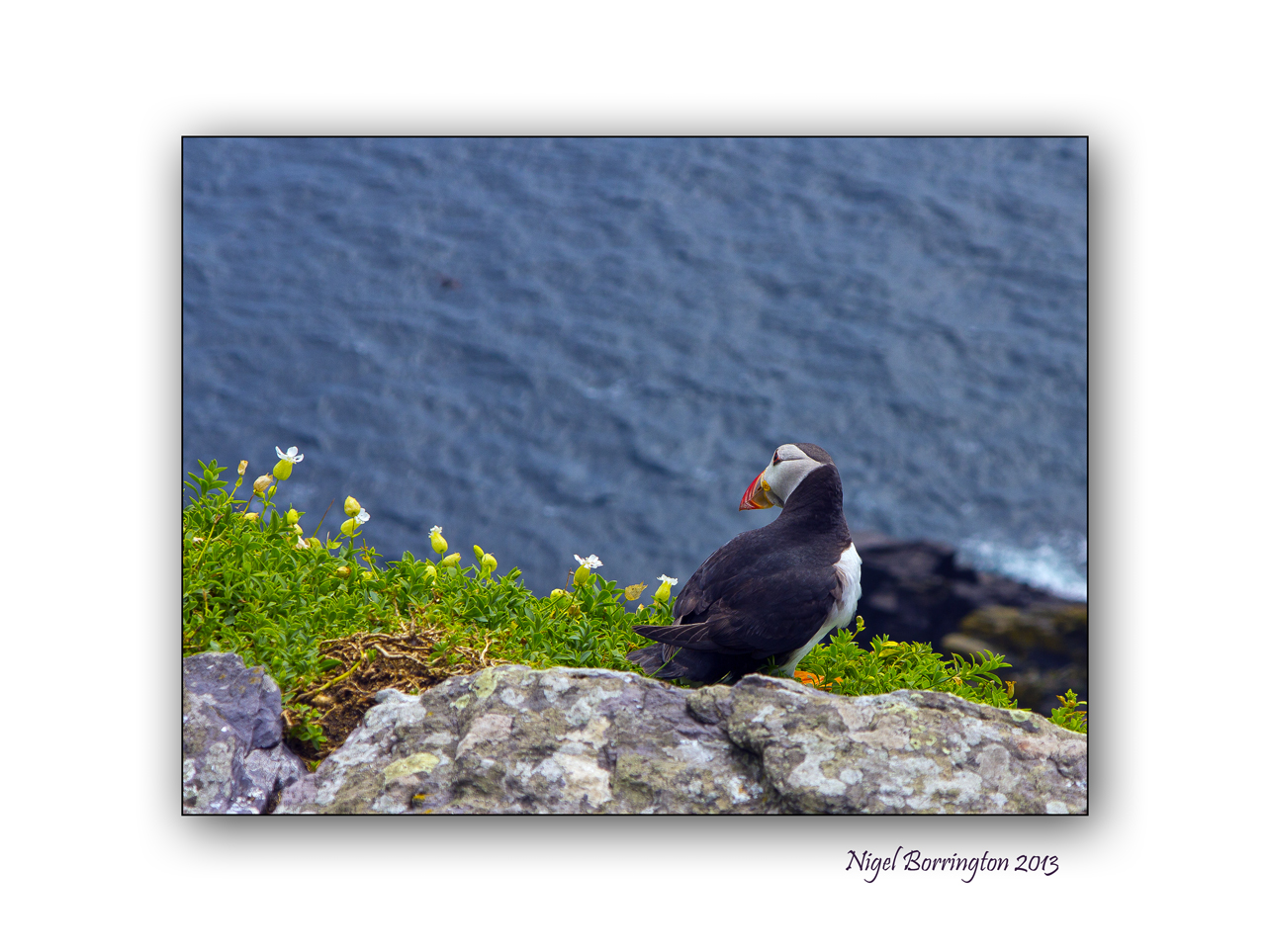
Images using a Canon G1x
Puffins on Skellig Michael, county Kerry
Irish Wildlife images by Kilkenny based photographer : Nigel Borrington
On a very recent trip to the Skellig islands I got lots of images of the puffins that nest here in large numbers each year, Ireland has two large populations of Puffins, one here and the other the Saltee islands of the Wexford coast line.
When you visit both these locations, it is very hard to be perfectly honest to miss getting great images of these birds. They are very trusting of humans and can get very close to you, so even with a camera like the Canon G1x you can get some very good images. These are just two and I got lots more.
They are a lot smaller than you may think if you have never seen them in the flesh, it’s when you see them in flight that they are at their most impressive.
Cahergall ring fort, County Kerry

All Images : Canon G1x
Irish ring forts, Co.Kerry
Irish Landscape photography : Nigel Borrington
Cahergall Ring fort
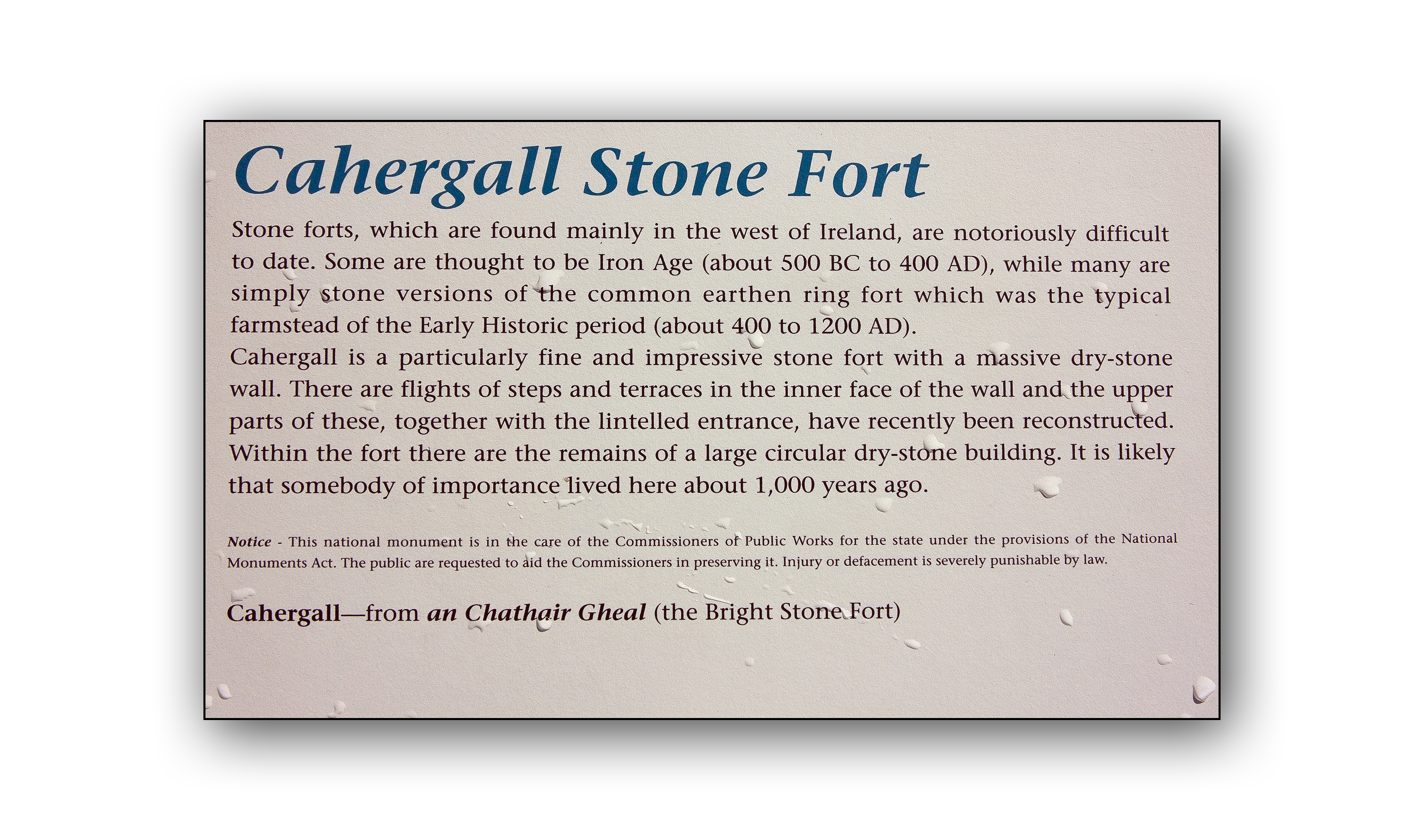
Following on from yesterdays post relating to Leacanabuile ring for in county Kerry, the area around the fort also contains more ring forts from the same period in Irish history.
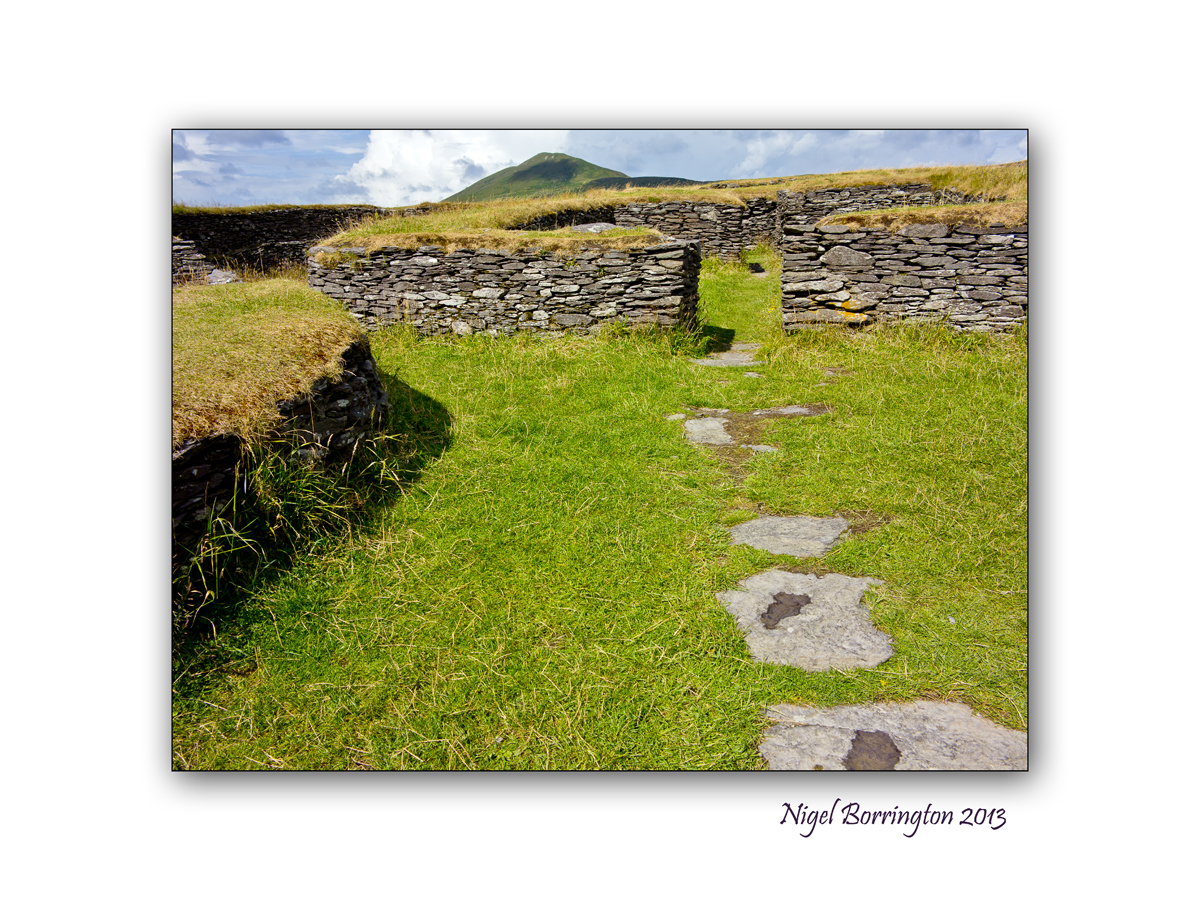
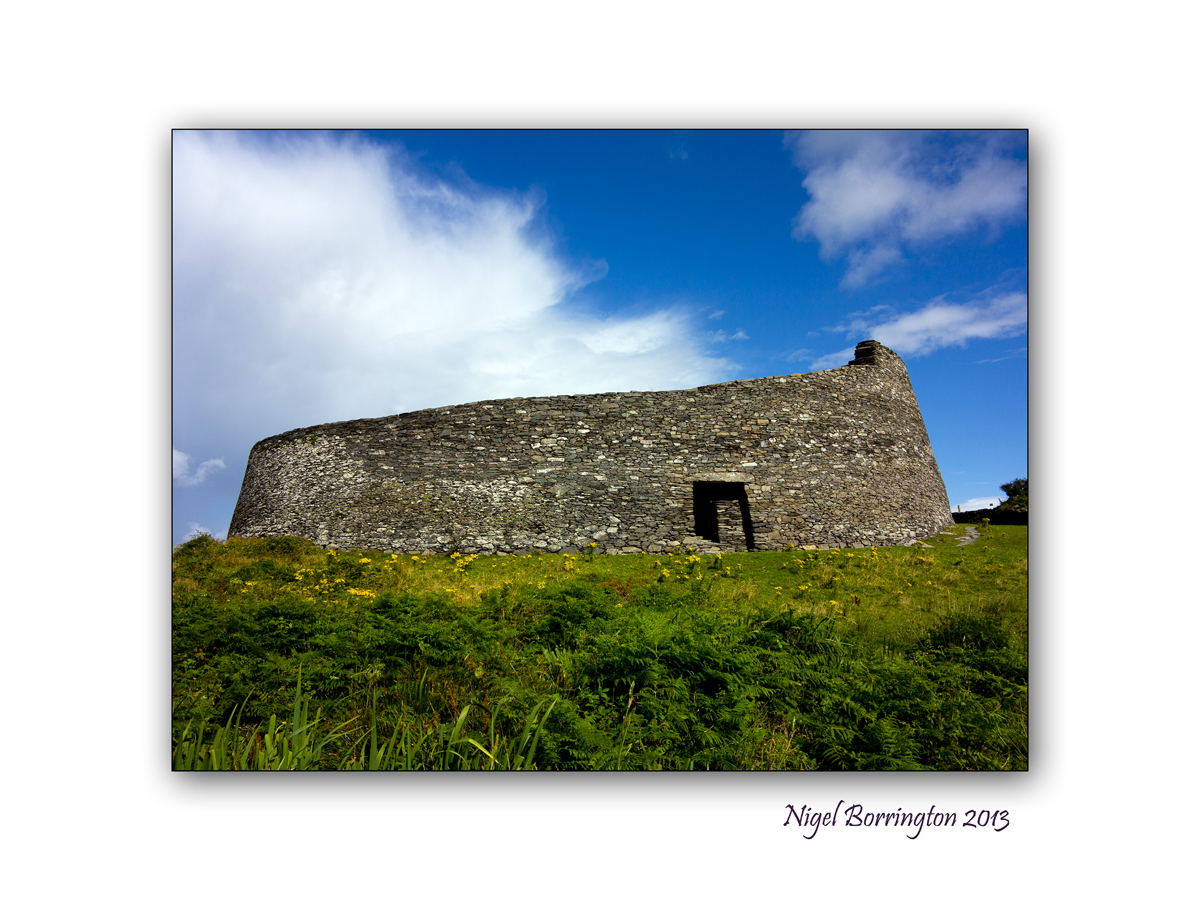
Cahergall ring fort is a massive stone construction, built between 400BC and 500AD, It can be found close to Cahersiveen, County Kerry. Leacanabuaile feels very much more like a dwelling place for people to both live and keep themselves safe from the surrounding Environment. This included raiders and wild animals stealing cattle.
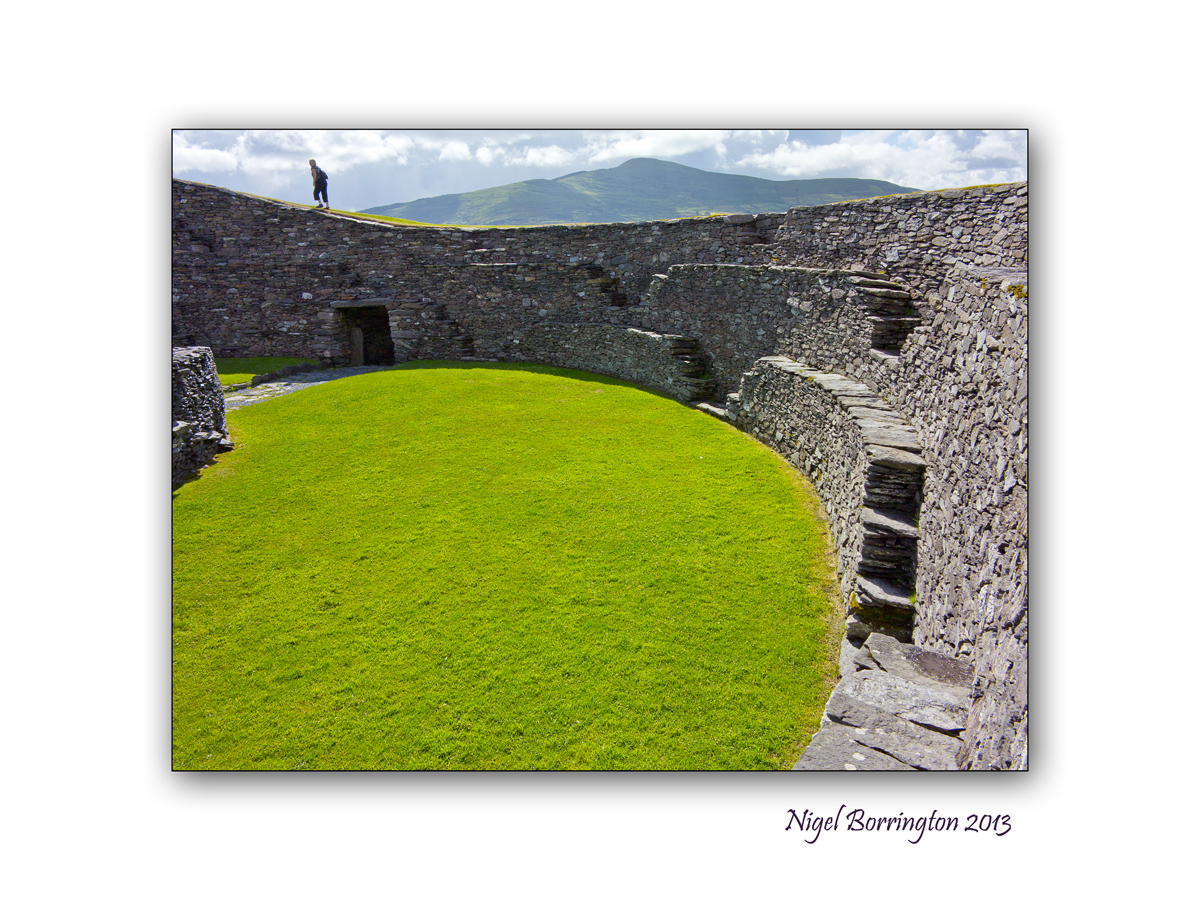
On approaching Cahergall, the scale of this fort is massive in comparison to Leacanabuaile, the walls rise some four to six meters from the ground, perfectly flat and sloping inwards from the ground towards the top. The fort is some twenty five meters wide and the walls some four meter thick.
Inside the fort the inner walls are stepped and consisting of three levels, each of these levels has a series of steps that take you the upper level. The top of the wall is full grassed and walkable. The views of the coastline and landscape around the fort is spectacular from here.
Although this fort is described as a living place, it is very different from other forts around, It has only one internal enclosure and this structure does not look like it could be lived in, at least not in the same way as the buildings within the other forts.
The semi-circular wall’s forming a circle in the center of the fort appear to be very much the focus point from the main walls, almost like this place was a ceremonial theater of some kind. You have to ask why the very different design for this place compared to the other forts and why it was built on such a grand scale. It is very much the focus point for the local community in the same way a church or public building would be today.
As to who these people where, Pat Flannery has some very interesting ideas and his views on Irish per-christian history is very interesting :
http://www.patflannery.com/IrishHistory/TheMilesians.htm
Cahergall Fort has been restored by the OPW and is owned by the Irish State.
Cahergall is well worth a visit if you are in the area and only short distance from Leacanabuaile Stone Fort.
Image Gallery



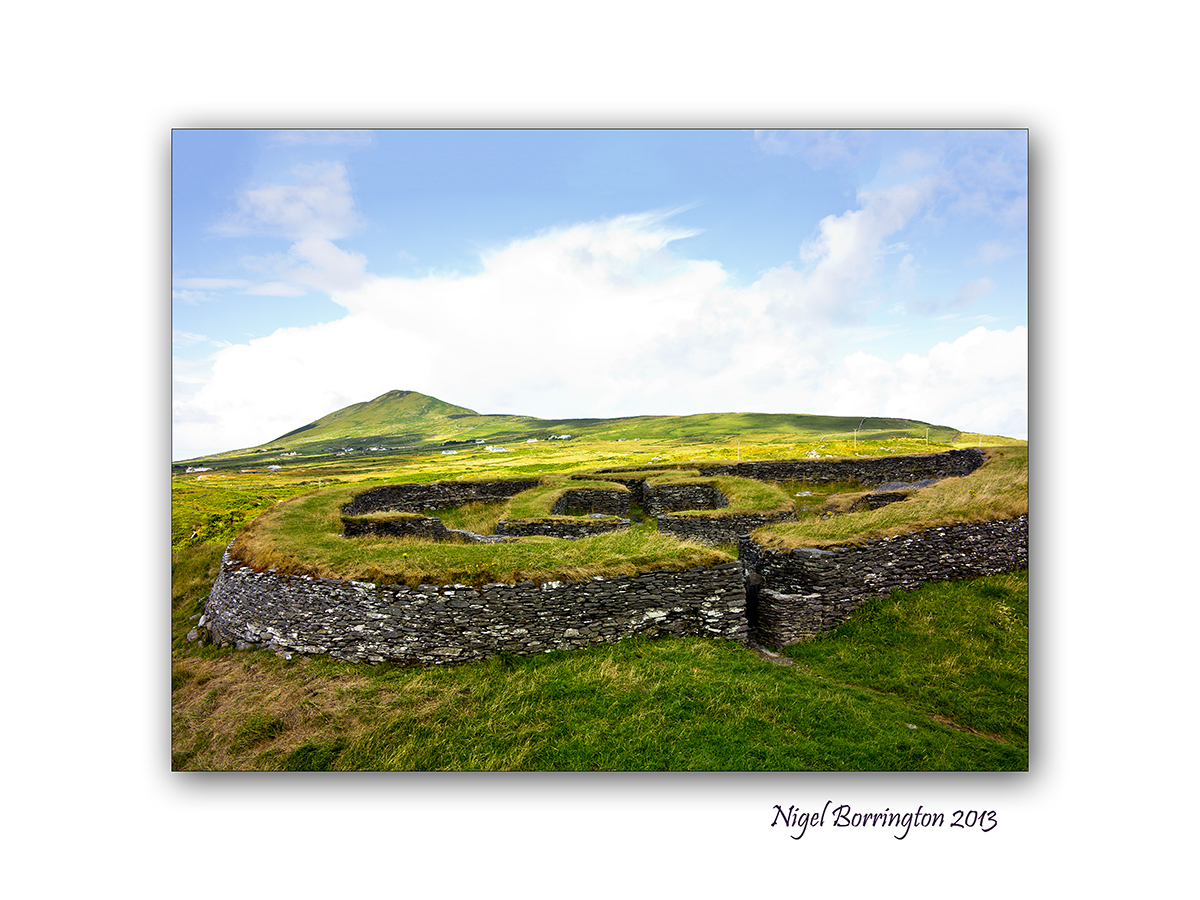
Leacanabuaile, stone ring Fort, Co.Kerry
All Images : Canon G1x
Irish ring forts, Co.Kerry
Irish Landscape photography : Nigel Borrington
Leacanabuaile, ring Fort
Sitting on a hill side near Cahersiveen in County Kerry is Leacanabuaile Stone Fort, it is considered one of the best examples of an Irish ring fort.
The name translates to ‘Hillside of the Summer Pasturage’.
This is a magical place and just the kind of prehistory site I love to be in and photograph.
This is the Ireland I have been searching for, this site predates the Irish christian period, and is a period in Irish history that is little covered and has been swallowed up by post christian teaching.
On researching this site I came across this link from Pat Flannery:
http://www.patflannery.com/IrishHistory/TheMilesians.htm
Having visited Leacanabuaile ring fort, I feel that there is some credibility to Pats views on Irish history. The site is located only a few fields in from the Kerry coast-line, it is very believable that the area around this ring fort is the landing site for peoples who settled here.
The Milesians
Around 1500 B.C. the Milisians who came from the Middle East and the Ionian sea came to Kerry in Ireland.
The most interesting thing about all these peoples is that they were Ionian people who were seafarers and thrived much, much earlier than the Celts who were totally Continental and not very good seafarers, rather like the Swiss.
The Irish language and customs would seem to support a close affinity with ancient Greece, the Middle East and Persia. Their heroic stories of warriors and chariots for example are very similar.
Spain and Portugal was merely a stepping off point for the sea journey north to Ireland, but scholars have confused the much later Iberian Celts with the Milesians. Apart from the fact that Celts did not occupy any part of Spain or Portugal until long after the Milesians, believing that everybody who came from Spain was Spanish, let alone Celtic, is similar to the belief of many Americans that their Irish ancestors came from County Cork simply because that’s where their ships left from.
Ring forts
Wikipedia description of ring forts : Ring forts
Excavation of Leacanabuaile
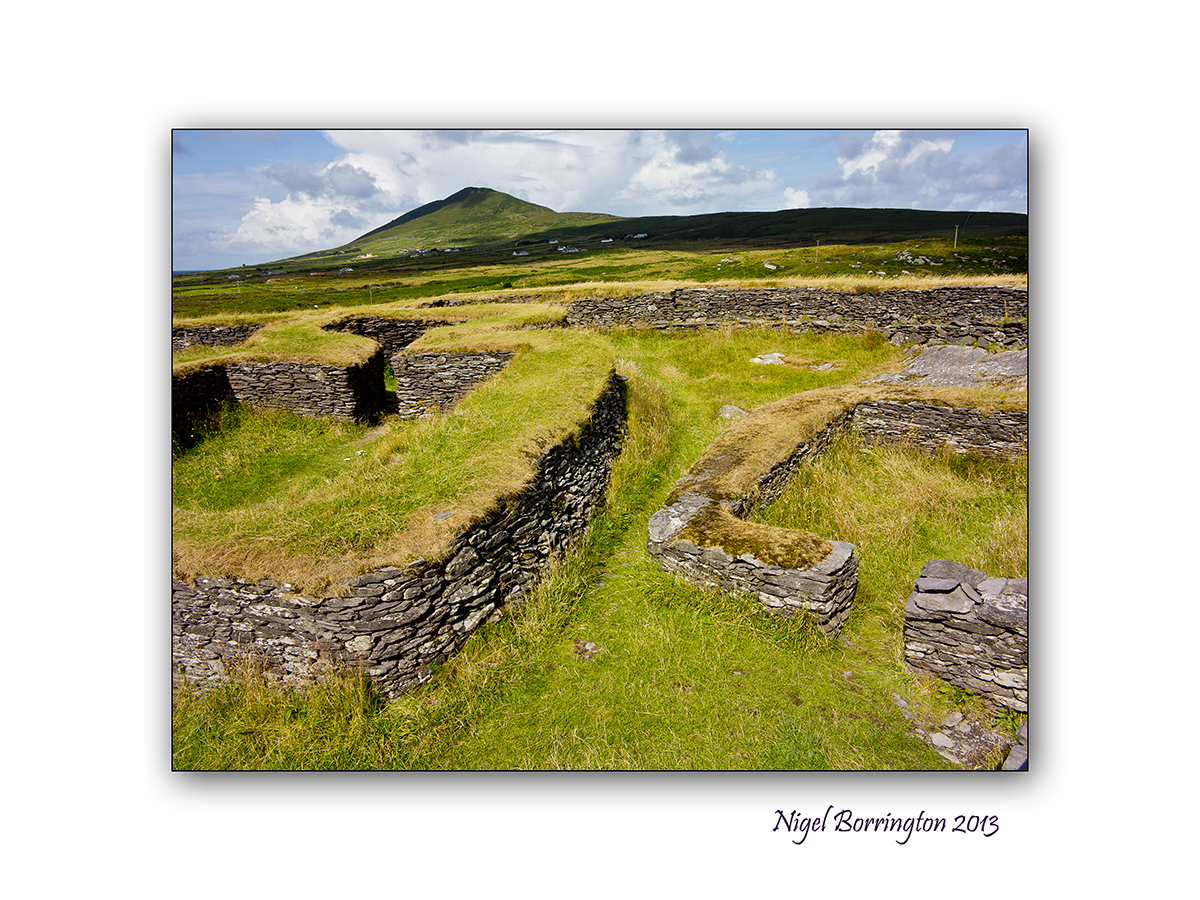
An archaeological excavation uncovered iron knives and mill stones suggesting the existence of an early farming community here. Standing atop the outer walls which are up to 3 metres thick, its great to imagine how the fort looked and how people lived in the past.
Image Gallery



—————————————-
Cahergall – ring fort
The area around Leacanabuaile also contains Cahergall – ring fort, an even more impressive fort and I will post about this very soon.
Valentia Island Lighthouse

Canon G1x
Valentia Island Light house, County Kerry
Landscape photography : Nigel Borrington
Valentia Island, county Kerry is located just west of Cahersiveen, and accessed by bridge from Portmagee or by ferry at Renards point. It is the location of the first communications cable to cross between the USA and Europe back in the 1800’s.
The Lighthouse has been restored and is now open to visitors and it is well worth doing so, I took this photo on a recent trip, just as a boat passed us, between Valentia and Beginish Islands.
Sunday evening in the mountains

Mountain views of Country Kerry
Landscape photography : Nigel Borrington
In My Dreams I was traveling, Probably in my car, through the hills of Kerry, little valleys where everyday life is lived, A voice reproached me for squandering my time on trifles , instead of writing about the essence of life, which is such a so-ness.
Probably all my voyages in dreams have a model in one, very real, by car from cork to Kerry, A boggy road with ruts, always either up or down, stubble fields on the hills in the rain, here and there a spruce grove, then alders by streams,huts,well-sweeps.
Taken from : Czeslaw Milosz
Fethard on Sea, county Wexford

Fethard on Sea, Wexford
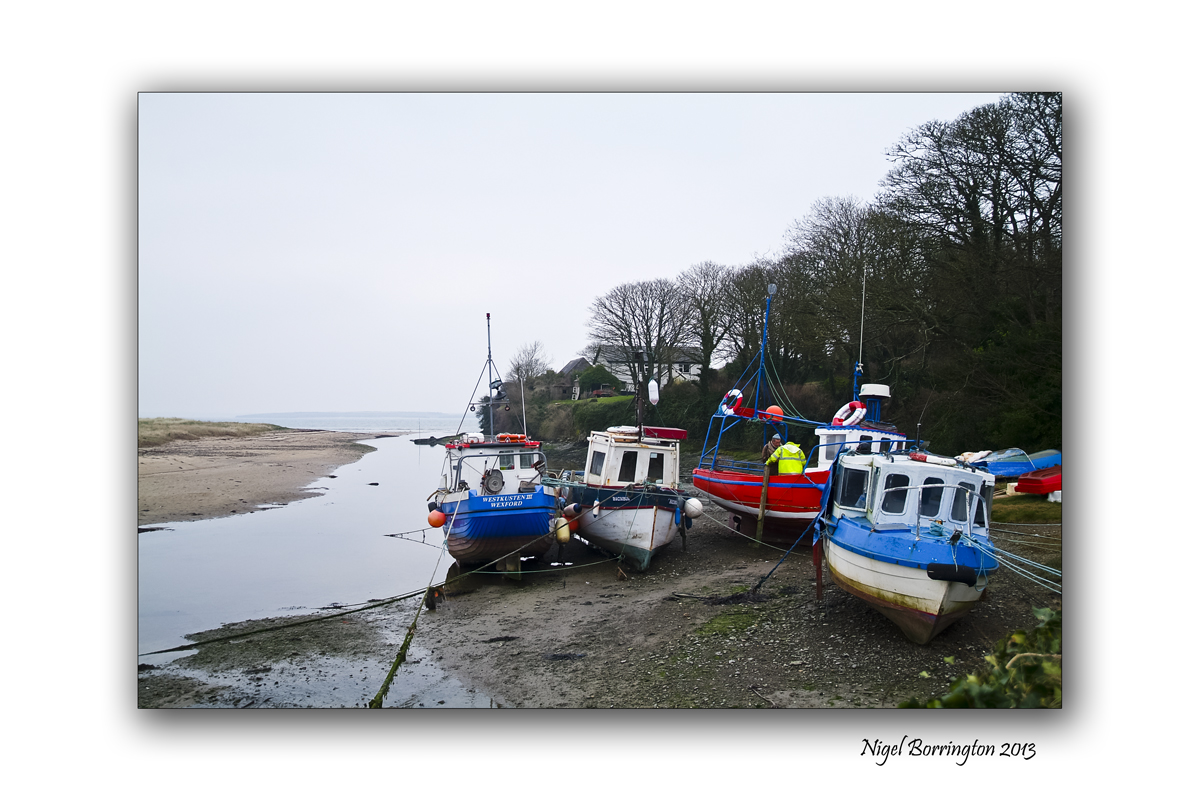
Ireland has many small fishing village’s around its coast-line, Fethard on Sea, Wexford being just one of them. There is nothing special or different about it, compared to any one of the others. Yet when you visit you will feel at home very quickly with this small town and it’s people.
The fishing Harbour is just wonderful and the relaxed feeling of the people who live and work here comes across very quickly.
I took these two images of some of the fishing boats near the harbour last year, on a weekends visit.
Canon G1x


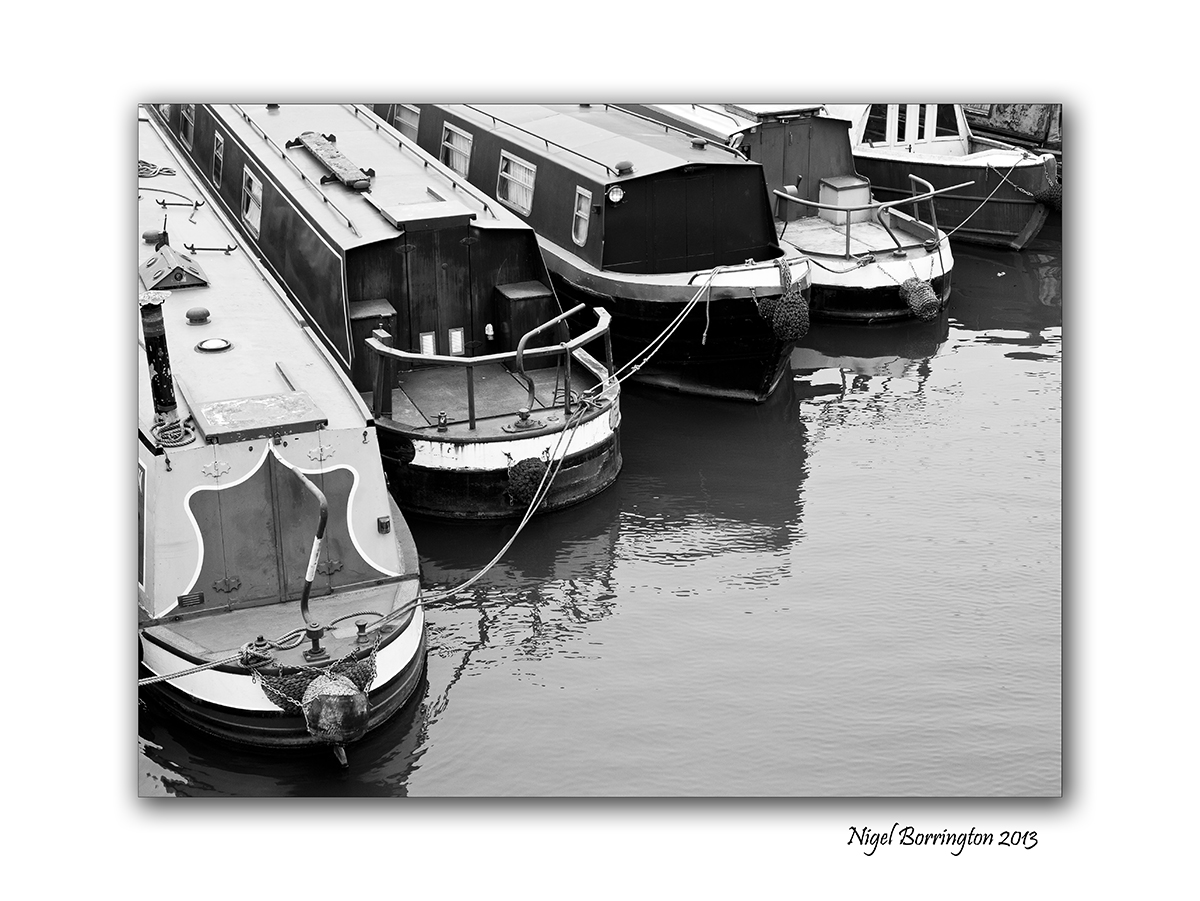
Twelve Months with a Canon G1x (Comments and Gallery)
It is just over a years since I purchased a reconditioned (Canon G1x) from Canon in the Irish republic.
I posted a personal review of the camera at the start of March here: “Canon G1x review“, so to avoid myself doing a repeat here you can read what I felt about the camera back then from this link.
I have taken about four thousand images with this camera in the first year and I have to say I just love it, before I decided to get it I was looking to replace a Contax G2 camera as I was finding it very hard to get film processed without posting it back to the UK. The idea of a compact system camera i.e. one that can work with extra items like a external flash gun, had been something I was very interested in.
For many years compact digital camera’s have not been of a good enough quality to consider purchasing and using if you intend to produce marketable images, I.e. anything from stock photography to commissioned work. The sensors where just to small to produce clean and detailed enough images.
From the moment I took collection of this camera I have to say it’s impressed me, I have most often used Film or Digital slr equipment apart from the Contax G2 that I had for many years. The camera is of good enough size a weight to feel like a good pro level compact and it is built to last that’s for sure. The body is equipped with every feature that an advanced user could need and is identical to a Digital slr.
I was looking for a camera that I could keep in a bag as a backup to my slr’s and this camera has been that, however I have found myself looking at what it is I need to do before I go out and deciding what type of Camera I need with me. I feel that If I have been booked to do some work then a customer needs to see an slr and the results are of a higher quality, but not by much. How and ever for personal work like this blog or books, holidays and events then this camera is perfect. I have produced double A3 wide prints from its images and they look as good as my Nikon pro equipment. It has all the needed quality, is fast to use acts exactly like I need it to and produces great results.
I was looking for a compact camera that didn’t make me feel like I wished I had packed an slr and this Canon camera is it, it has always filled me with confidence and been a pleasure to use.
Canon G1x Gallery




Hay Bales – Black and white

Hay Bales, coolagh, County Kilkenny
Landscape Photography : Nigel Borrington
Make Hay while the sun shines
This time of year in county kilkenny brings many great subject to take photographs of, Freshly cut fields of hay are most definitely one of them. June and July have been wonderful warm months and the farmers have been very lucky at last. This Time last year we had weeks of heavy rain and even floods.
I captured these Hay bales before they were rapped, early morning when the mist still sat on the fields, it lifted soon after but I feel it made for some great images.


Duncannon Fort, County Wexford

All images Nikon D700
Duncannon Fort, County Wexford
Irish Landscape Photography : Nigel Borrington
Duncannon Fort
If you plan to visit County Wexford, Duncannon fort is well worth a visit, I took the images in this post on a visit earlier in the summer.
The fort was built in 1588 in the expectation of an attack on the area by the Spanish Armada. The Fort is surrounded by a 30 ft high dry moat and has one of the oldest lighthouses of its kind in Ireland. All the major buildings in the Fort surround a parade ground. A walk around the outer ramparts afford spectacular views across the estuary to Co. Waterford and down to Hook Head. Located at a lower level than the moat is the croppy boy cell. After the 1798 rebellion, prisoners were detained here pending transfer to Geneva Barracks for trial and sentencing. An added attraction is the Maritime Museum which charts the maritime history of one of the most dangerous coastlines in Ireland, the Wexford coast.
incorporates a maritime museum, Arts centre, café and craft shop and is open daily to visitors from June to September. Guided tours are available. Duncannon and Fort was the location for the opening scenes of the 2002 remake of ‘The Count of Monte Cristo’, starring Jim Caviezel and Richard Harris.
Image Gallery


Stone circle in the comeragh mountains
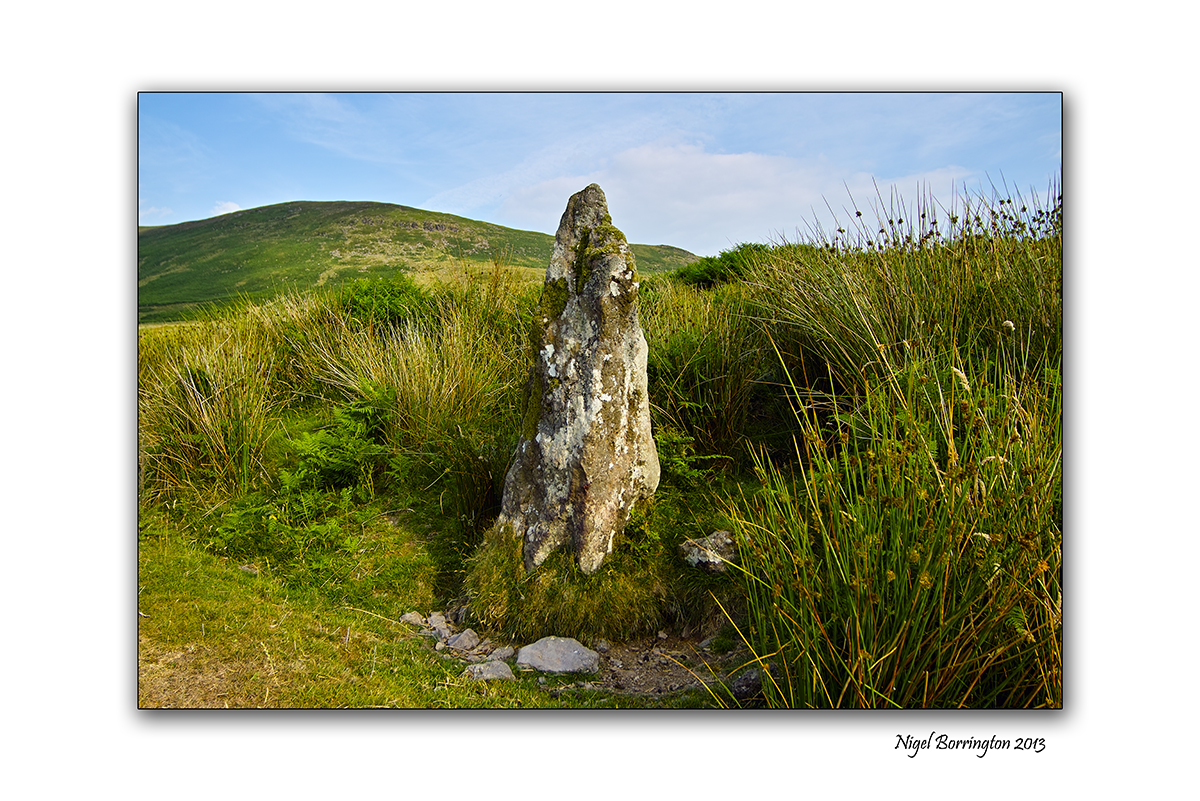
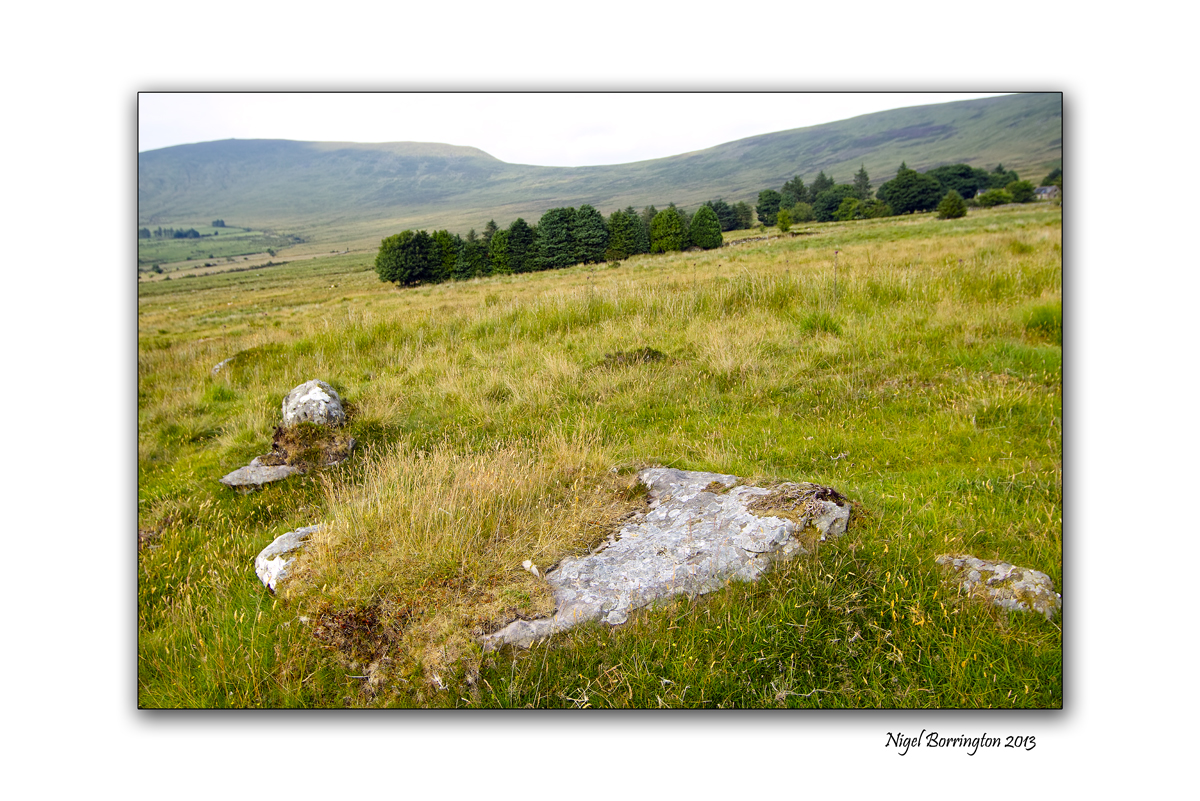
All images using a Sigma SD15, 15-30mm lens, iso 50
Comeragh mountains – stone circle
Irish landscape photography : Nigel Borrington
Stone circles

For myself I love being out on a summer evening walking in the hills, a lot of the Irish hill sides are defined as common land and even though farmed by the same families for many generations these areas are by law open land.
The Comeragh mountains in county waterford has many locations well worth finding but for myself the most interesting are the neolithic monuments and grave sites.
While out last evening I came across this stone circle resting in one of the many valleys in this area, it once would have been a monumental site with its some eight foot high standing stones used to mark the passing of the farming year.
Ireland has a wealth of prehistoric sites that few since the Christian period pay any attention to, for myself however this is where the true history of Ireland exists, People existed in small communities at a local level, however they had everything in common with and communicated with people throughout Europe.
They existed in nature, out in the wilds and they understood the world around them with their very survival in mind, they held personal skill that they learnt from each other.
This stone circle marks those skill’s very well as measuring the seasons was vital to them.
NB: I have circled the above map to locate the stone circle and give some idea as to its size.
Comeragh mountains stone circle – Gallery




Comeragh Mountains – Wild cotton grass fields
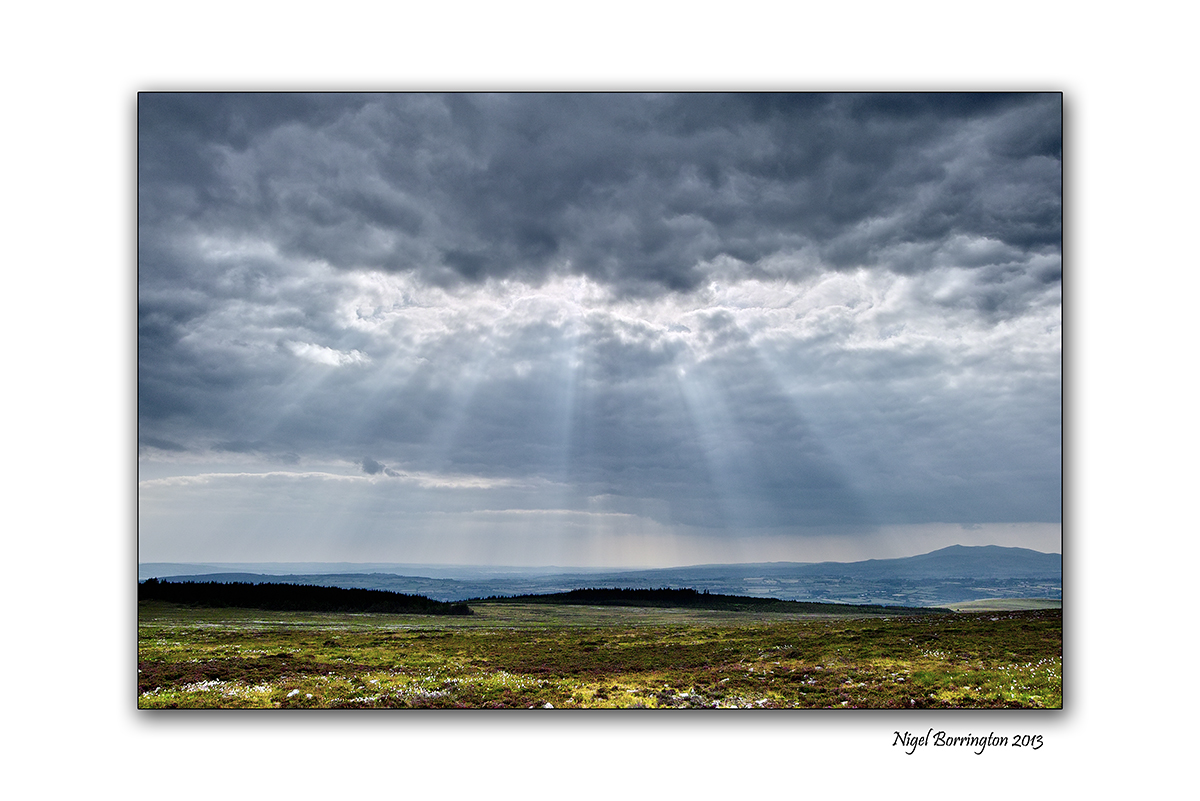
All images using a Sigma SD15, 15-30mm lens, iso 50
Comeragh Mountains, co.Waterford – Wild cotton grass fields
Landscape Photography : Nigel Borrington
Wild Cotton grass, Comeragh mountains, county Waterford
Last evening we went for a long walk with our dog through the comeragh mountains and came across an area of Bog cotton, it covered the entire hill side and valley in front of us as we walked through it.
So I just wanted to share this wonderful view and I hope get across just how amazing a view this offers on the hill sides of these mountains in the middle of a very warm July.
Common Grass Cotton
As its other common name, Bog Cotton, might suggest, this is a plant of very damp peaty ground. Its leaves mostly arise from the base of the plant, often being tinged with red or brown. It has tiny insignificant little brown flowers in April and May but it is really when it is in fruit that this becomes a most eye-catching and attractive plant. Borne on 30-50cm high, cylindrical stems, the little seeds are held in fluffy, downy, white tufts which quiver and shake in the wind, a most effective dispersal method. This is a native pant belonging to the family Cyperaceae.
Wild Cotton grass – Gallery


An evening in County Kilkenny, through its trees

All images using – Nikon D200, Mamiya sekor n 45mm f2.8 lens, iso 100
County kilkenny, through its trees
Landscape photography : Nigel Borrington
A sense of Kilkenny
Getting out and about in county Kilkenny on these summer days is just wonderful, this Gallery of images was from an evenings walk through some local country lanes. I hope they get across a sense of the county and its wonderful landscape on an evening in July.
Nigel
Kilkenny through its trees – A Gallery


 Nigel Borrington
Kerry Sea-eagles project
Sea eagles over Derriana lake, county Kerry
Landscape and nature photography : Nigel Borrington
When we first arrived at the lodge house in Kerry, Zoe the very friendly and helpful women who looks after the house told us about the Kerry sea-eagles project. She also informed us that even though they had not been seen for a couple of weeks, we did stand a great chance of spotting them.
Well one morning while walking Molly our golden retriever down to the banks of the lake, there they were soaring above the water. We watched them for about 15 minutes before they headed back towards the coast at Waterville.
I will never forget the sight of these birds just soaring high above us, well done to the people in the Kerry eagle project for reintroducing these wonderful birds to the Irish landscape.
Kerry Eagles project
Not everyone has welcomed them back to Ireland local Farmers for one, but they need to look at just how much money they bring into Scotland’s Islands since they were re-introduced, almost three million per year just because tourists come to get a view of them, above the hill’s of Mull and Skye.
Eagle on the isle of skye
Share this:
August 14, 2013 | Categories: Comment, Gallery, Landscape, Nature and Wildlife, Nigel Borrington | Tags: derriana lake, fujifilm X100, irish eagles, Irish photography, irish wildlife, kerry, kerry eagles project, Landscape, Nigel Borrington | 9 Comments