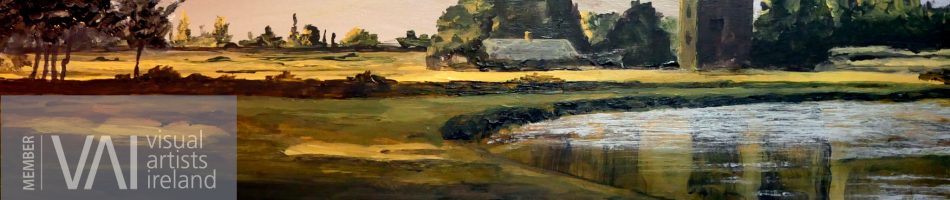
Kells Priory

Kells priory, county Kilkenny
Canon G1 x
Irish Landscape Photography : Nigel Borrington
Kells Priory is located at Kells in county Kilkenny and is a great place to visit if you are in the county.
While most of America and Canada are dealing with snow storms and sub zero temperatures this winter , Ireland has been very mild with well over 40mm of rain during the Christmas period. I visited the Priory yesterday and most of the grounds are under water from flooding. The water however added a new feeling to the priory grounds and I took the following images to capture the atmosphere of an Irish winter here.
Kells Priory, Winters Gallary


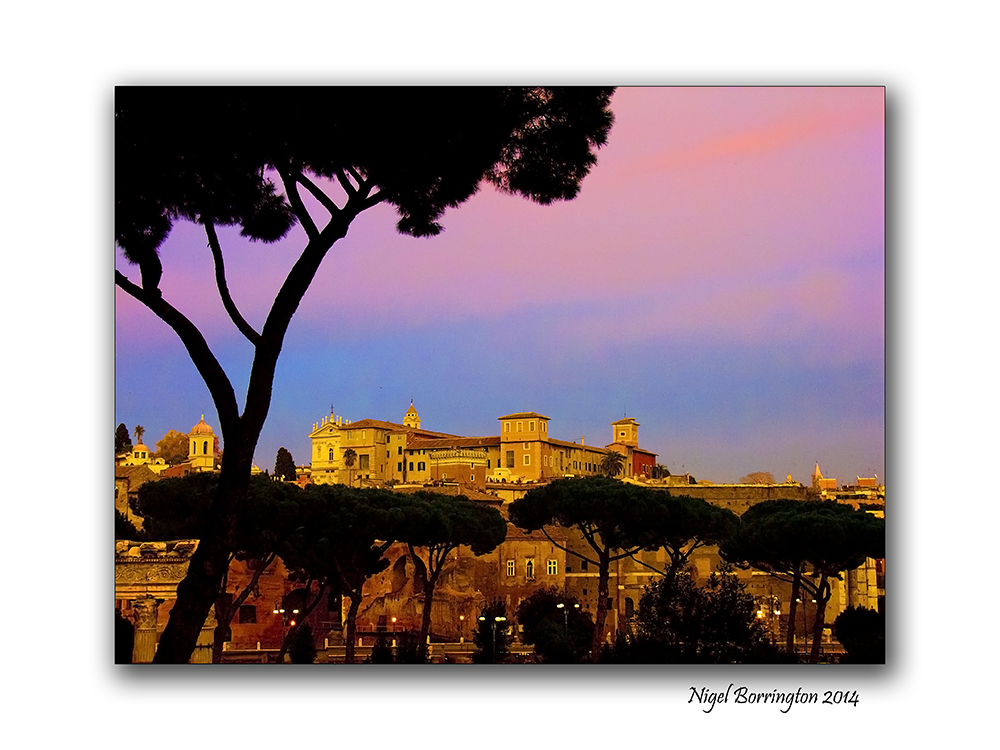
Evening Images from the , Via dei Fori Imperiali, Rome
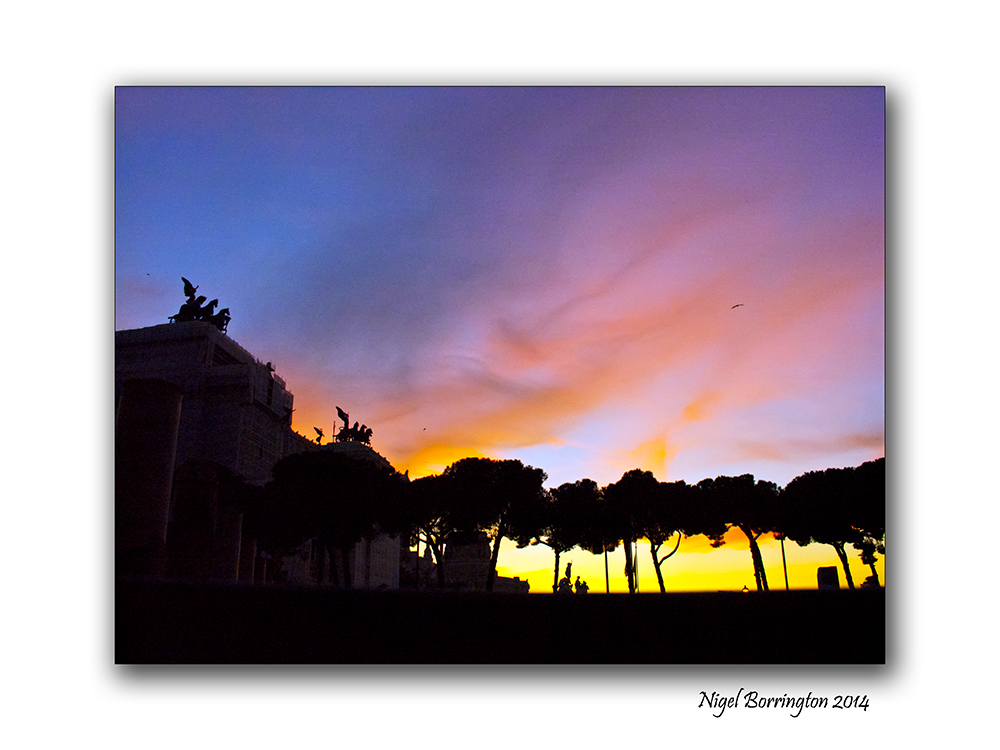
Evening on the Via Dei Fori Imperiali, Rome
Photography by : Nigel Borrington
These images are taken on an evening walk into the city of Rome along the Via Dei Fori Imperiali.
The lights had just been turned on and the day light was just finally fading, I love the mixed light so just had to get these images.
Gallery



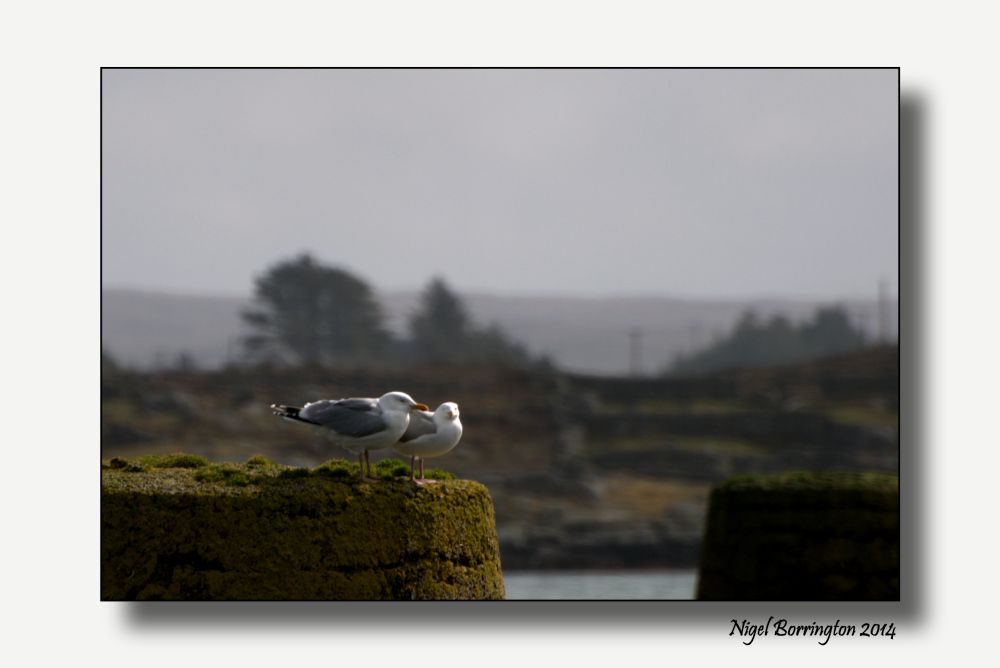
The Sea Gull’s of Galway bay, Poem: Edwin John Pratt

Sea gulls, on Galway bay
Irish nature Photography : Nigel Borrington
Sea Gulls
By : Edwin John Pratt
For one carved instant as they flew,
The language had no simile—
Silver, crystal, ivory
Were tarnished. Etched upon the horizon blue,
The frieze must go unchallenged, for the lift
And carriage of the wings would stain the drift
Of stars against a tropic indigo
Or dull the parable of snow.
 .
.
Now settling one by one
Within green hollows or where curled
Crests caught the spectrum from the sun,
A thousand wings are furled.
No clay-born lilies of the world
Could blow as free
As those wild orchids of the sea.
Irish photography – Irish rivers

River Nore, Thomastown, County Kilkenny
Digital Infra-red image
Irish landscape photography : Nigel Borrington
County KIlkenny’s rivers
The River Nore, one of the three sisters.
The River Nore, is a 140-kilometre (87 mi) long river located in south-east of Ireland. Along with the River Suir and River Barrow, it is one of the constituent rivers of the group known as the Three Sisters.
The river drains approximately 977 square kilometres (377 sq mi) of Leinster. The river rises in the Devil’s Bit Mountain, North Tipperary. Flowing generally southeast, and then south, before emptying into the Celtic Sea at Waterford Harbour, Waterford.
Kilkenny landscape photography : Nigel Borrington
Leenane

Leenane, Connemara, County Galway, Ireland
Irish Landscape photography : Nigel Borrington
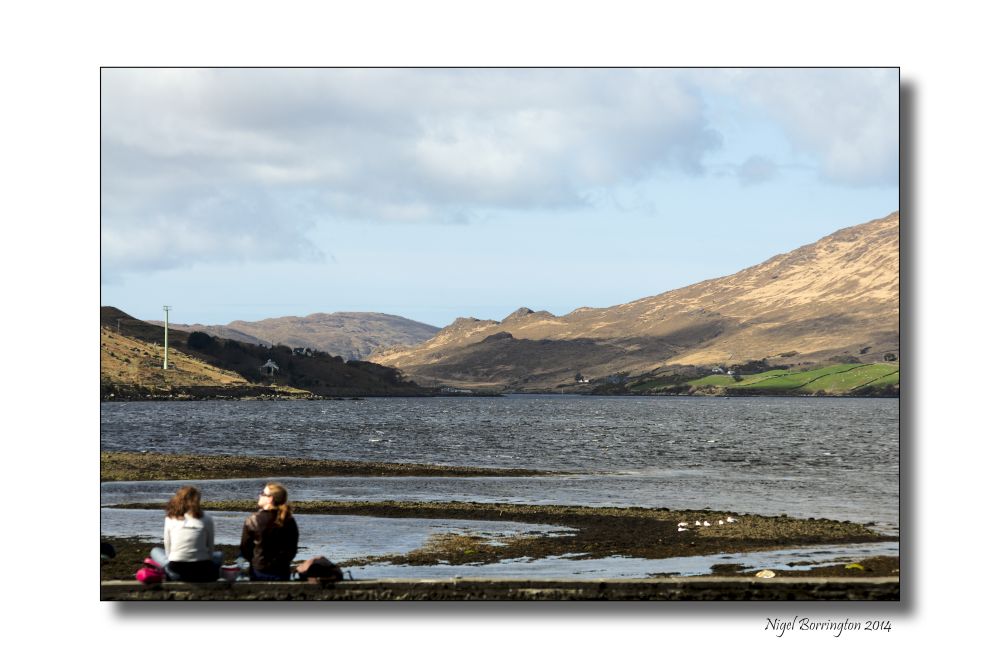
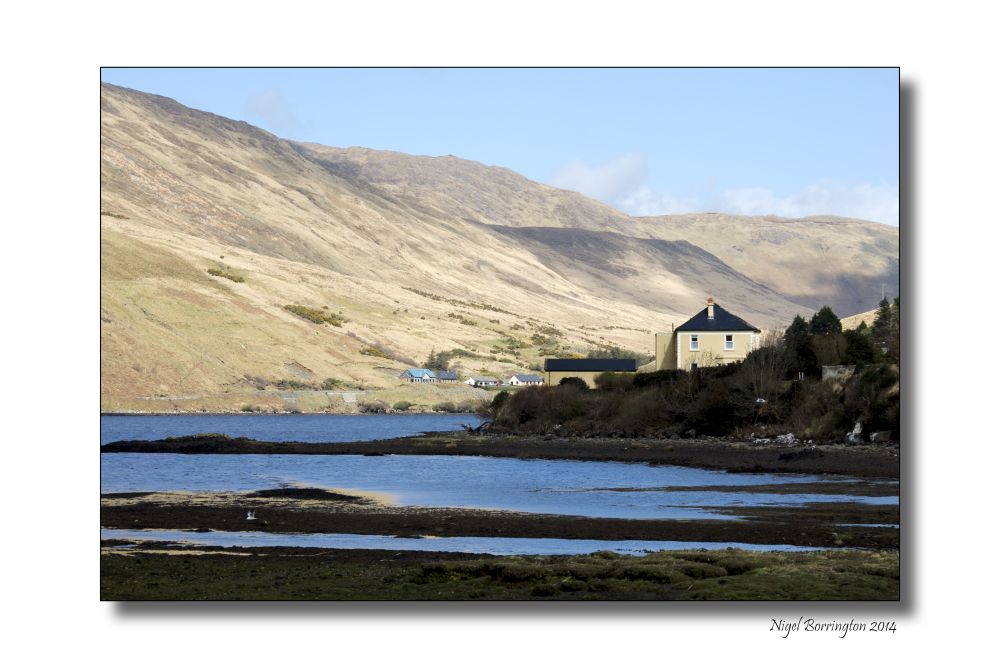
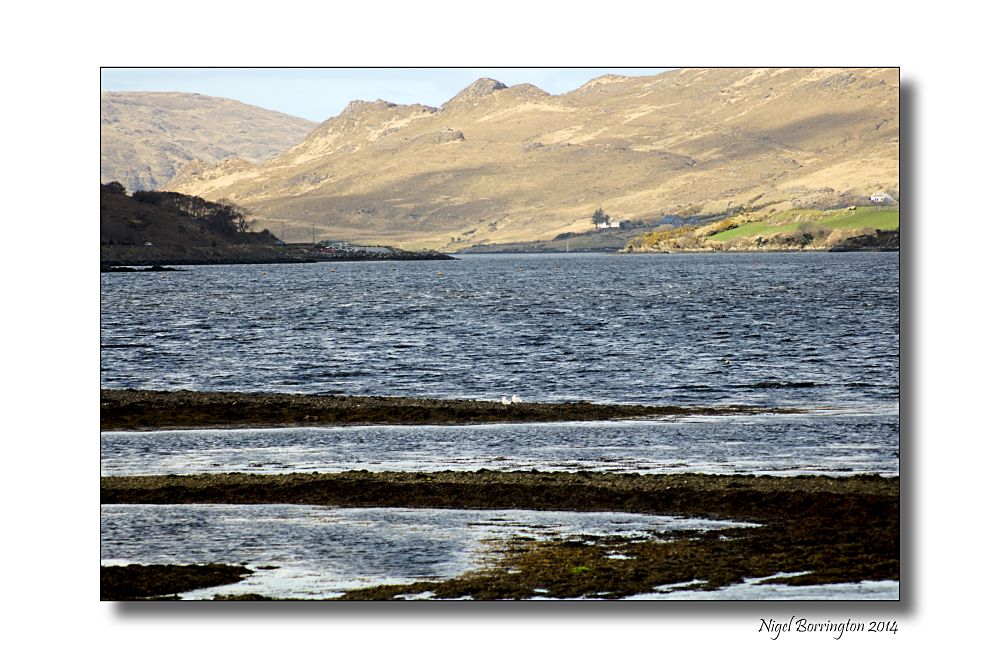
The town of Leenane, Connemara, County Galway
The beautiful village of Leenane, snugly situated at the head of Killary Harbour, is often aptly described as the ‘Gateway to Connemara’. The roads from Maam, Clifden, and Westport meet at this point. Killary Harbour extends ten miles inland and with the mountains rising steeply on either side provides what is probably the best scenery in Ireland. Walkers have access to Mweelrea, Sheefry, Paltry and Maumturk Mountains.
Leenane with its surrounds is a haven for geologists due to a great variety of sedimentary, volcanic and metamorphic rocks. There is good fishing in the local Erriff and Delphi rivers. Well known beauty spots include Aasleagh Falls and Doolough Valley, scene of the tragic famine walk. A film adaptation of John B. Keane’s famous play “The Field”, directed by Jim Sherdian, was made in Leenane in 1989. Well-known stars taking part included the late Richard Harris, John Hurt and Tom Berrenger. Visitors can visit many of the locations used as sets in the film.
Gallery




Allihies Copper Mines

Allihies copper mines
Irish Landscape Photography : Nigel Borrington
Copper mining at Allihies
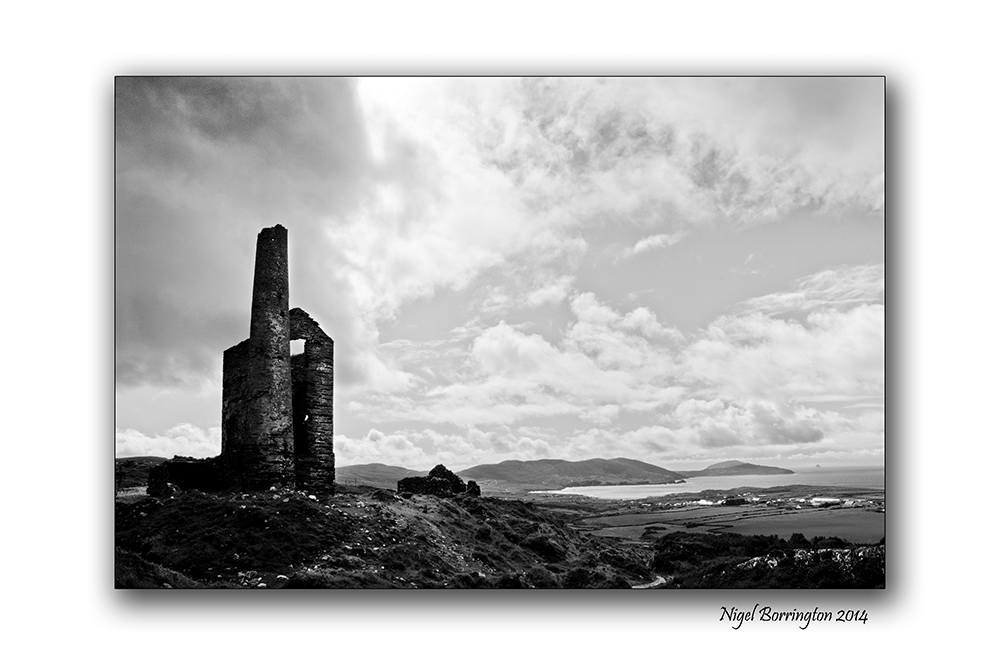
Mining at Allihies started here in 1812 by John Puxley, a local landlord, after the large quartz promontory to the left here was identified as copper bearing as can be seen by its bright Malachite staining. Dooneen
Initial mining began with a tunnel or adit driven into this quartz lode from the pebble beach below. In 1821 two shafts were sunk as can be seen either side of the road here. Flooding was a continuous problem and in 1823 the engine house was erected to house a steam engine brought over from Cornwall to pump water from the depths. The remains of this building with the base of the chimney can be seen across the road. There is also evidence of a steam powered stamp engine to the left of the chimney and dressing floors in front of the engine house. The high dam further inland is the remaining evidence of a water reservoir which stored the water that was pumped out from the bottom of the mine. It was used for the steam engines and needed to separate the copper from rock. All the rubble on the cliff at the sea side of the road is the crushed useless quartz rock left over after the copper ore was extracted.
This is one of six productive mines in the Allihies area and continued its operation until 1838 when it closed due to failing ore.
John Puxley died in 1860 and in 1868 his son Henry Puxley sold the mines to the new Berehaven Mining Company who reopened the mine and installed a new 22 inch steam engine in 1872. Little ore was produced though in this period and the mine was finally abandoned in 1878.
 .
.
Coom Mine Mianach Chúim
Coom Mine was the last mine to be opened in the Allihies area having been opened in 1870 by the new Berehaven Mining Company who had recently bought the mines from Henry Puxley in 1868.
Two shafts were sunk and the engine house erected to house a 28 inch cylinder steam engine. The site was known as Bewley’s after the Dublin family who were board members of the Berehaven Mining Company.
The working in the mines was dangerous. A Mine Captain reports:
“On the 13 inst. we had a man killed by falling out of the whim bucket in the whim shaft (winding shaft), he fell 72 feet and was killed immediately. … The whim bucket was coming up and he was rather late to get into it, when he laid hold of the edge of it with his fingers and was drawn up nearly to the top in that manner but was obliged to let go at last and fell to the bottom of the shaft. … He was a very able young man – this day we intended to carry him across the mountain to Castletown a distance of 7 miles to have him interred but the weather is so bad with a fall of sleet and snow that it was not possible. … We hope to do the last for him tomorrow.”
In 1917 a further attempt to extract ore was made by Allihies Copper Mines Ltd. which proved fruitless.
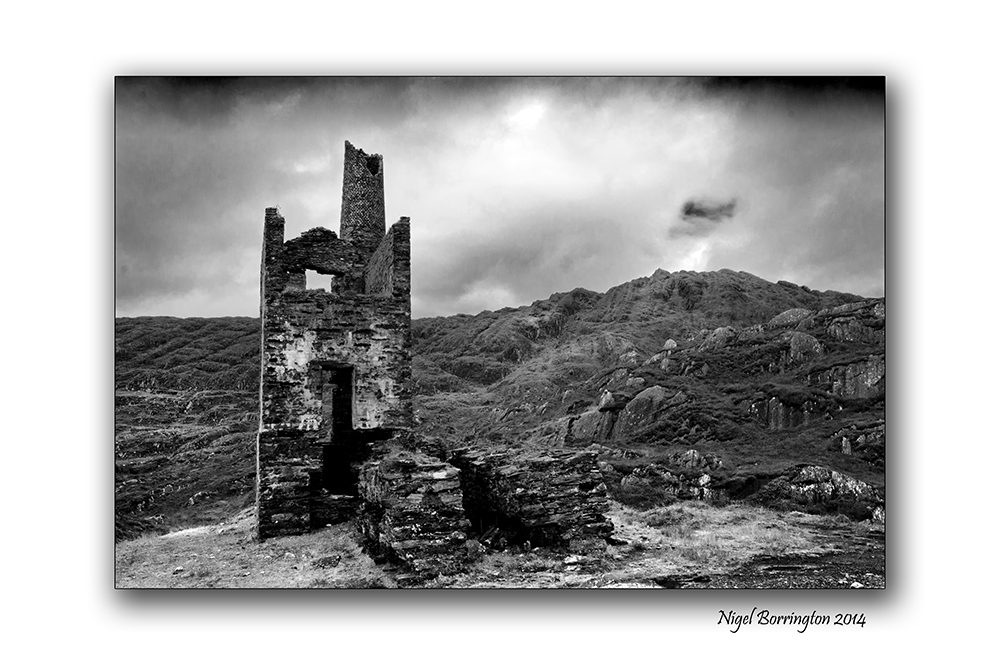
Coom Mine proved not to be a very productive mine. It had only produced 70 or 80 tons of ore when it closed in 1882.
2013, a year on the Mountain .
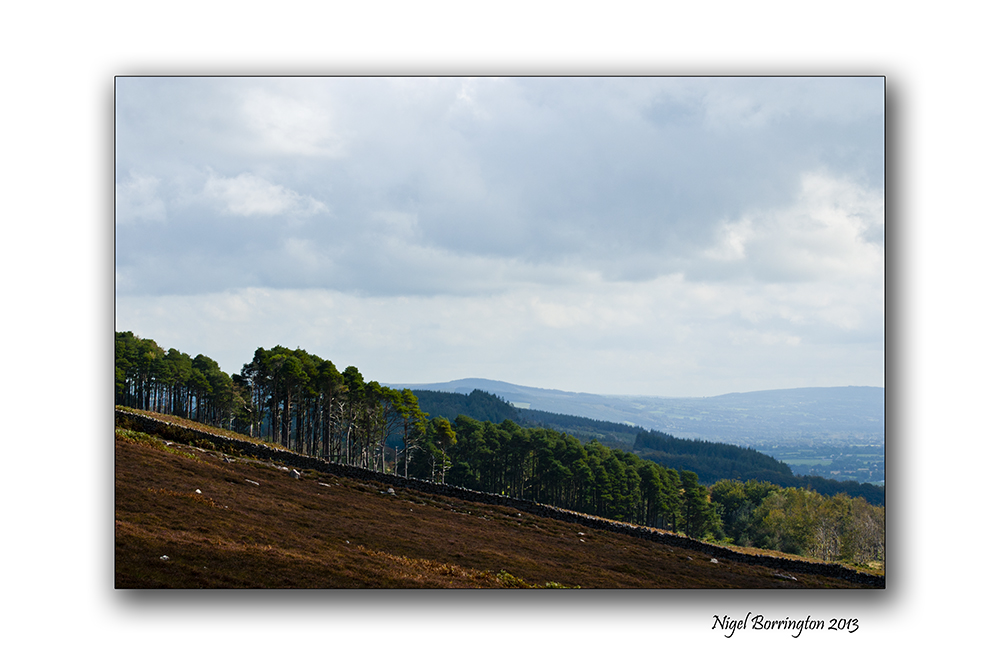
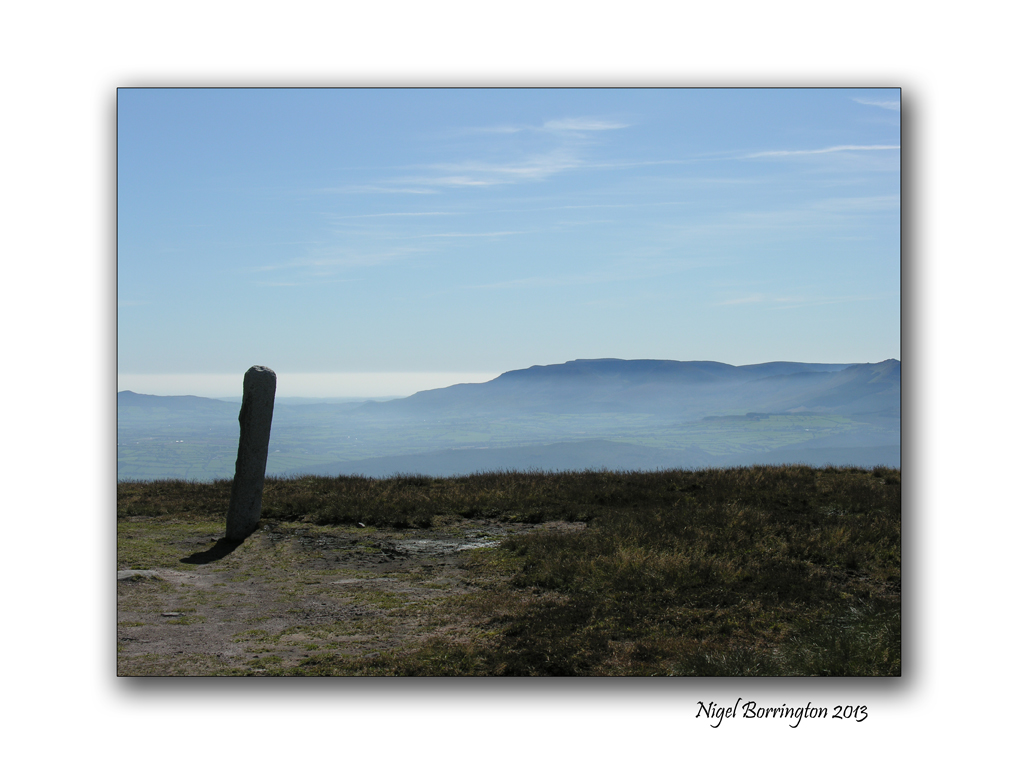
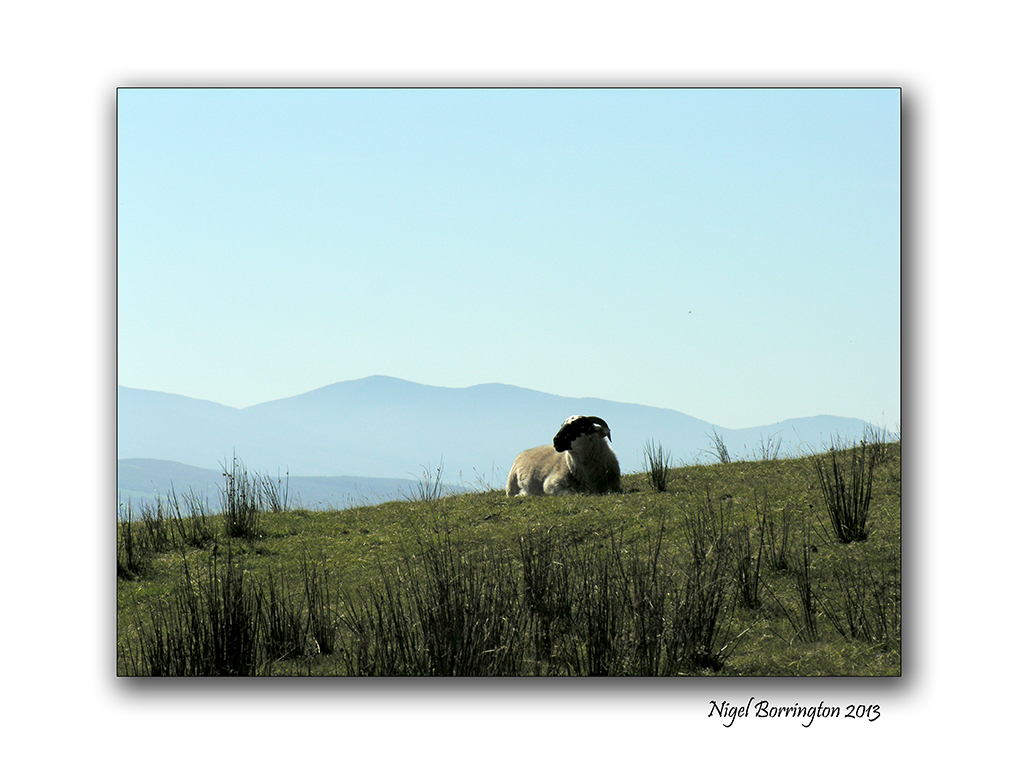
Images of slievenamon 2013
Irish Landscape Photography : Nigel Borrington
During 2013 my post have covered many different locations and landscapes around Ireland and Europe, yet selecting the location for one of my final post of the year was very simple for me.
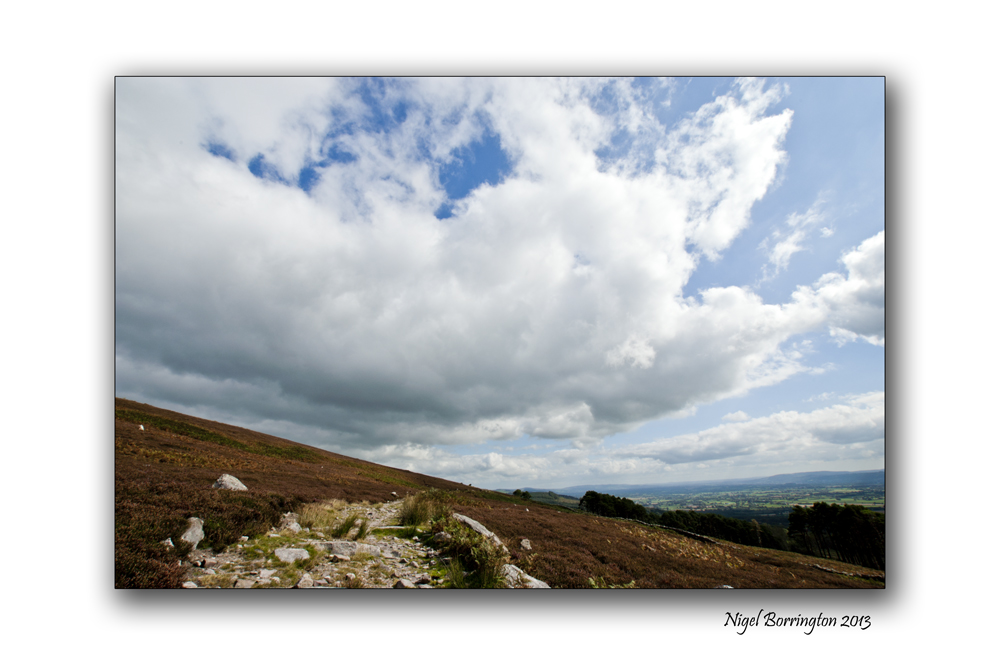
The landscape around the mountain of Slievenamon, County Tipperary is one of the most scenic in the south east of Ireland, it is very local to myself and I have taken many images during 2013 here.
So for my final Gallery I want to share some images of this wonderful location and I look forward to sharing much more in 2014.
Happy new year to everyone !!!
Slievenamon 2013 – Gallery

Images of Slieve league , County Donegal

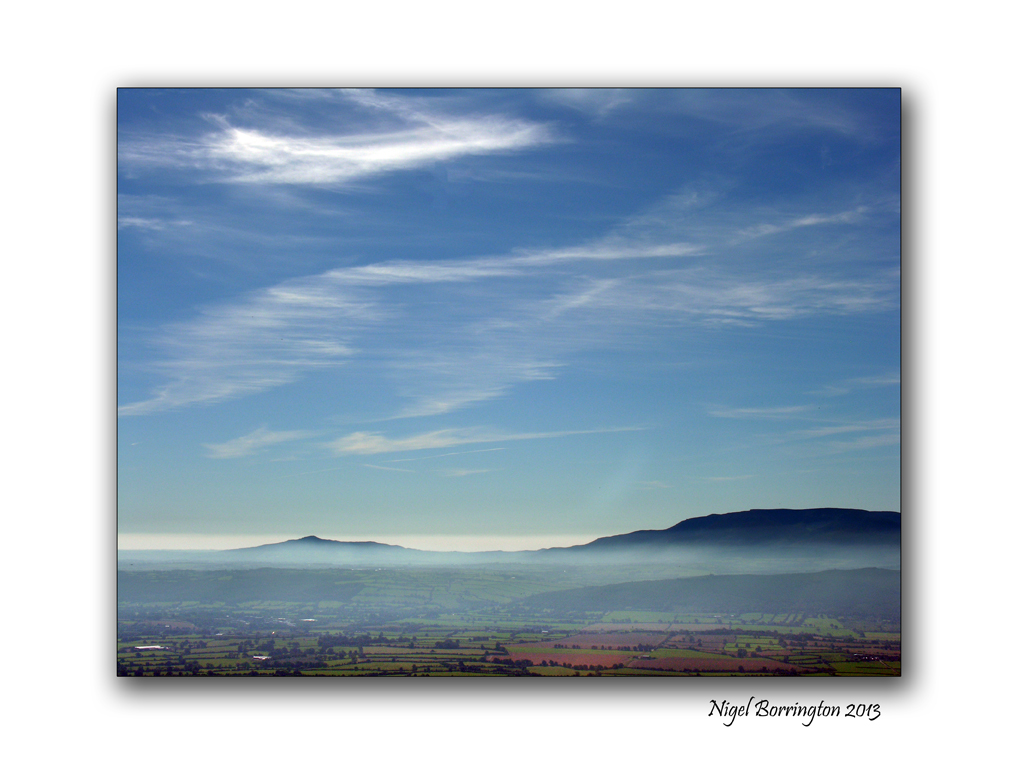
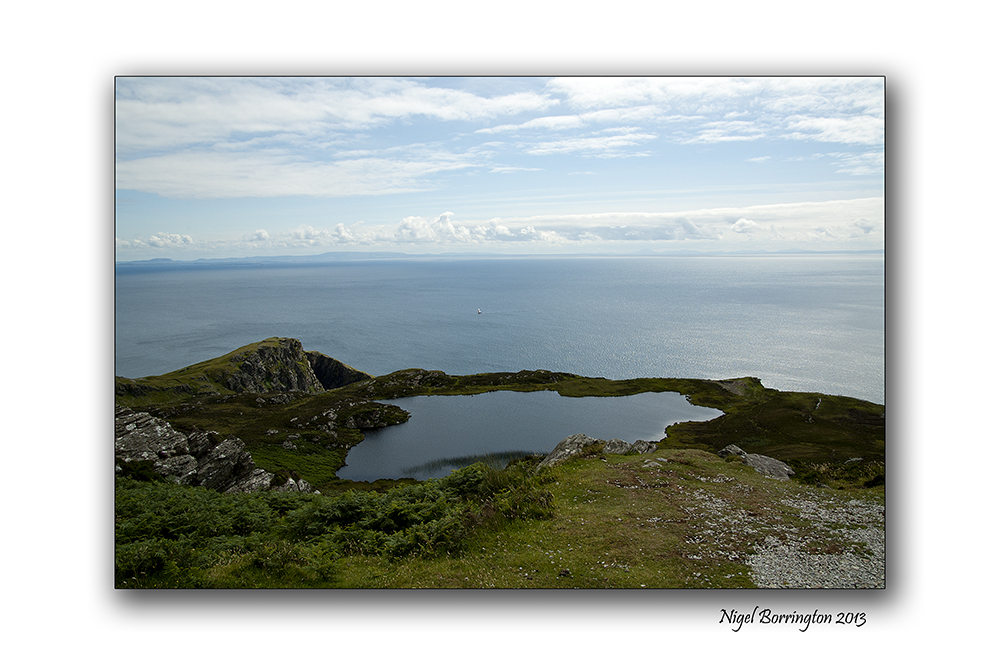
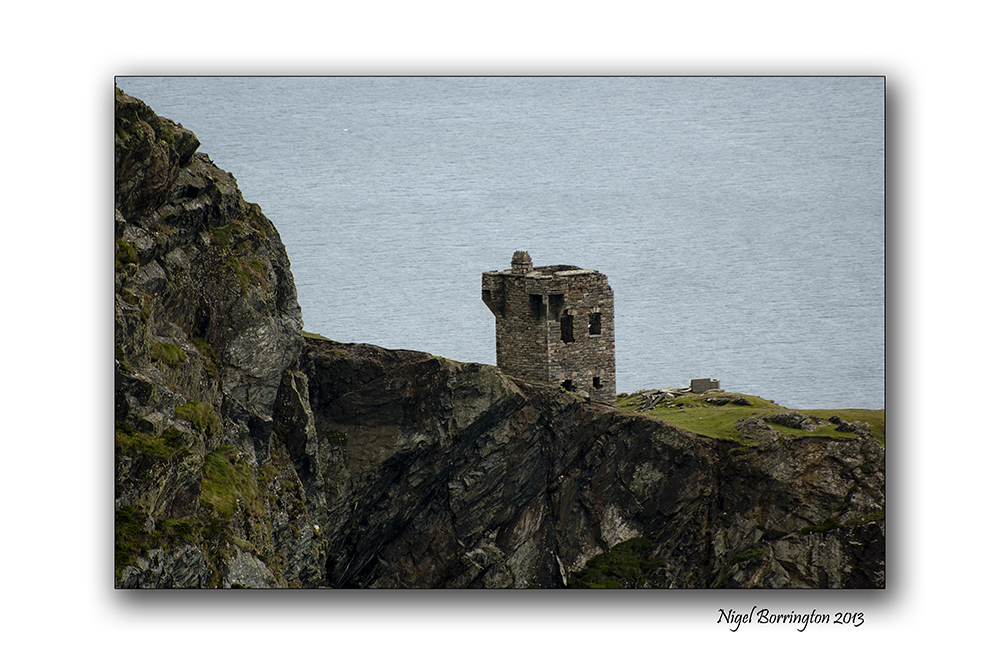
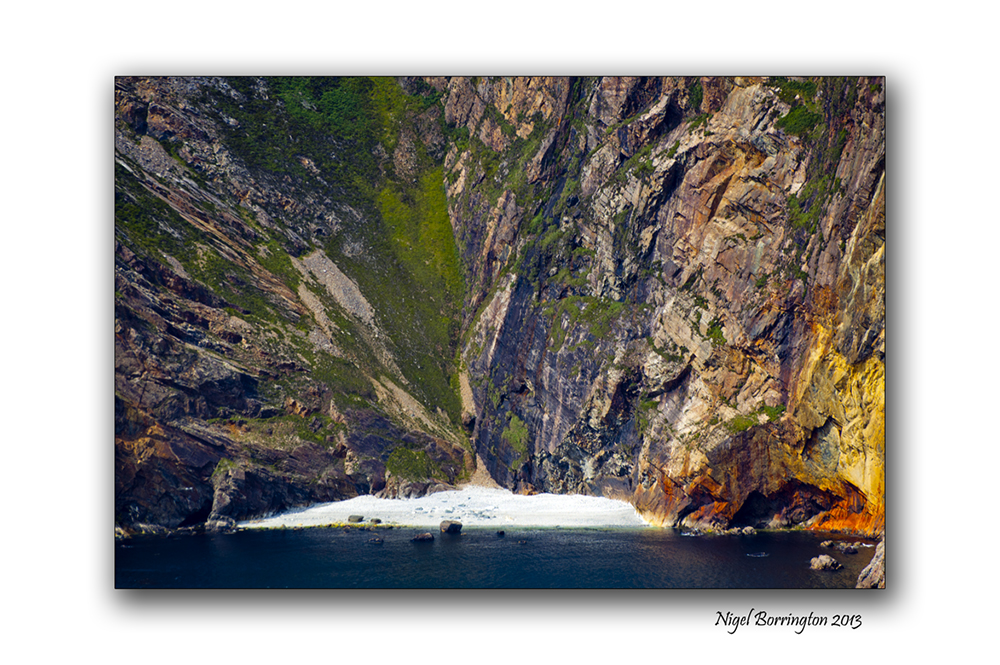
Images from Slieve League coast line, county Donegal
Irish Landscape photography : Nigel Borrington
The coastline around county Donegal offers some of the best Landscape in Europe with its wonderful small coves and mountains like Slieve league , sitting above the Atlantic ocean.
These images were taken on an October visit and walk along the cliff tops.
Midwinters day and the pagan goddess of the winter
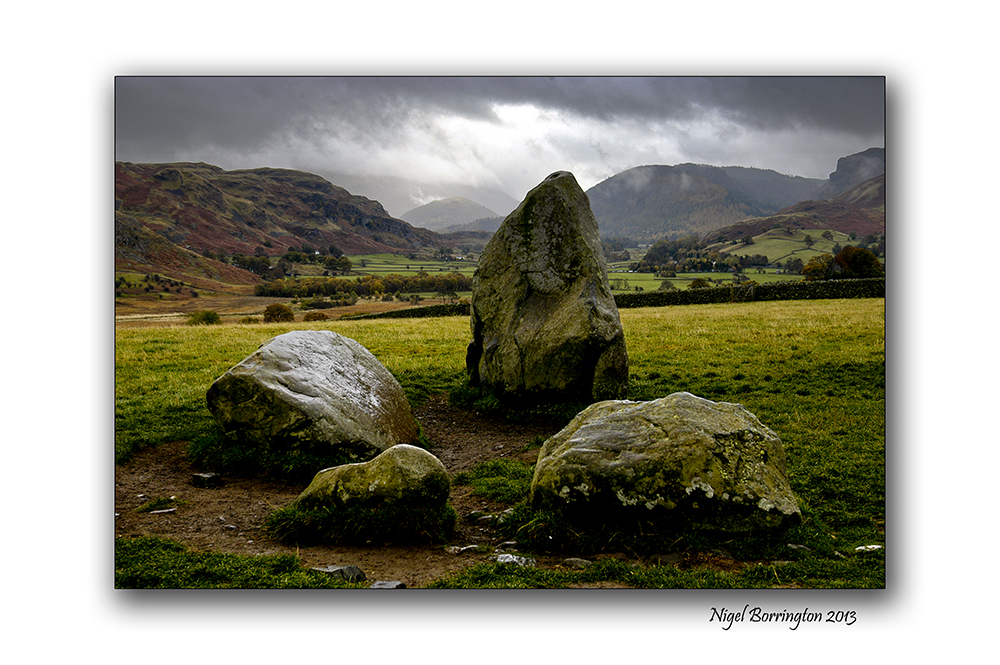
The stone circle at Castlerigg
Landscape photography: Nigel Borrington
Today is Mid winters day or the Winter Solstice.
History and cultural significance
The solstice itself may have been a special moment of the annual cycle of the year even during neolithic times. Astronomical events, which during ancient times controlled the mating of animals, sowing of crops and metering of winter reserves between harvests, show how various cultural mythologies and traditions have arisen. This is attested by physical remains in the layouts of late Neolithic and Bronze Age archaeological sites, such as Stonehenge in Britain and Newgrange in Ireland. The primary axes of both of these monuments seem to have been carefully aligned on a sight-line pointing to the winter solstice sunrise (Newgrange) and the winter solstice sunset (Stonehenge). Significant in respect of Stonehenge is the fact that the Great Trilithon was erected outwards from the centre of the monument, i.e., its smooth flat face was turned towards the midwinter Sun.
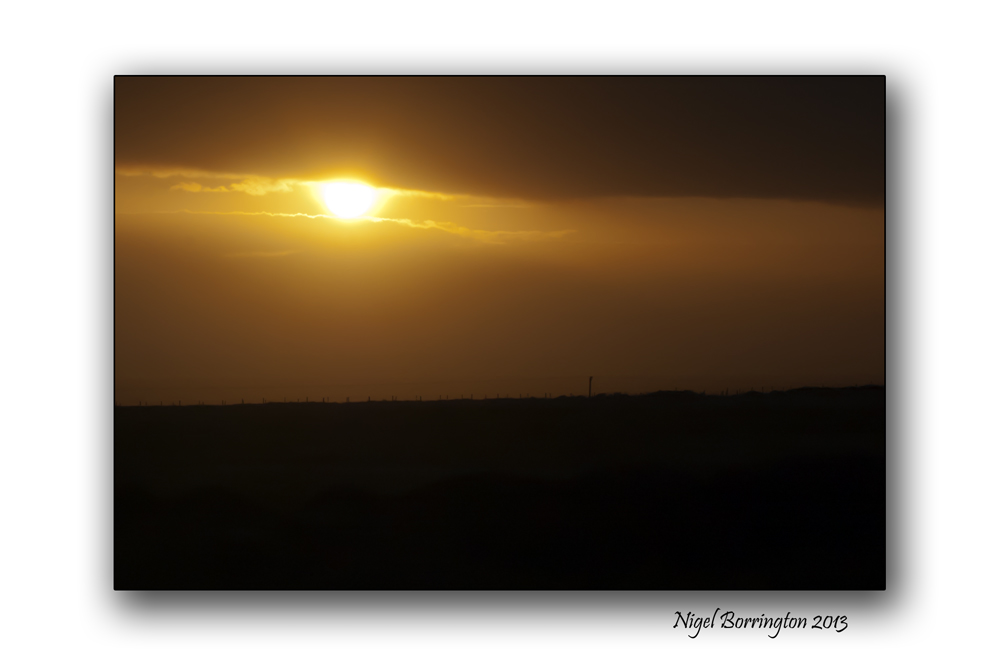
The Solstice Sun set.
The winter solstice may have been immensely important because communities were not certain of living through the winter, and had to be prepared during the previous nine months. Starvation was common during the first months of the winter, January to April (northern hemisphere) or July to October (southern hemisphere), also known as “the famine months”. In temperate climates, the midwinter festival was the last feast celebration, before deep winter began. Most cattle were slaughtered so they would not have to be fed during the winter, so it was almost the only time of year when a supply of fresh meat was available. The majority of wine and beer made during the year was finally fermented and ready for drinking at this time. The concentration of the observances were not always on the day commencing at midnight or at dawn, but the beginning of the pre-Romanized day, which falls on the previous eve.
Since the event is seen as the reversal of the Sun’s ebbing presence in the sky, concepts of the birth or rebirth of sun gods have been common and, in cultures using winter solstice based cyclic calendars, the year as reborn has been celebrated with regard to life-death-rebirth deities or new beginnings such as Hogmanay’s redding, a New Year cleaning tradition. Also reversal is yet another usual theme as in Saturnalia’s slave and master reversals.

CAILLEACH BHEUR : The Celtic Goddess of winter
CAILLEACH BHEUR : Scottish, Irish, Manx, Great Goddess in her Destroyer aspect; called “Veiled One”. Another name is Scota, from which Scotland comes. In parts of Britain she is the Goddess of Winter. She was an ancient Goddess of the pre-Celtic peoples of Ireland. She controlled the seasons and the weather; and was the goddess of earth and sky, moon and sun.
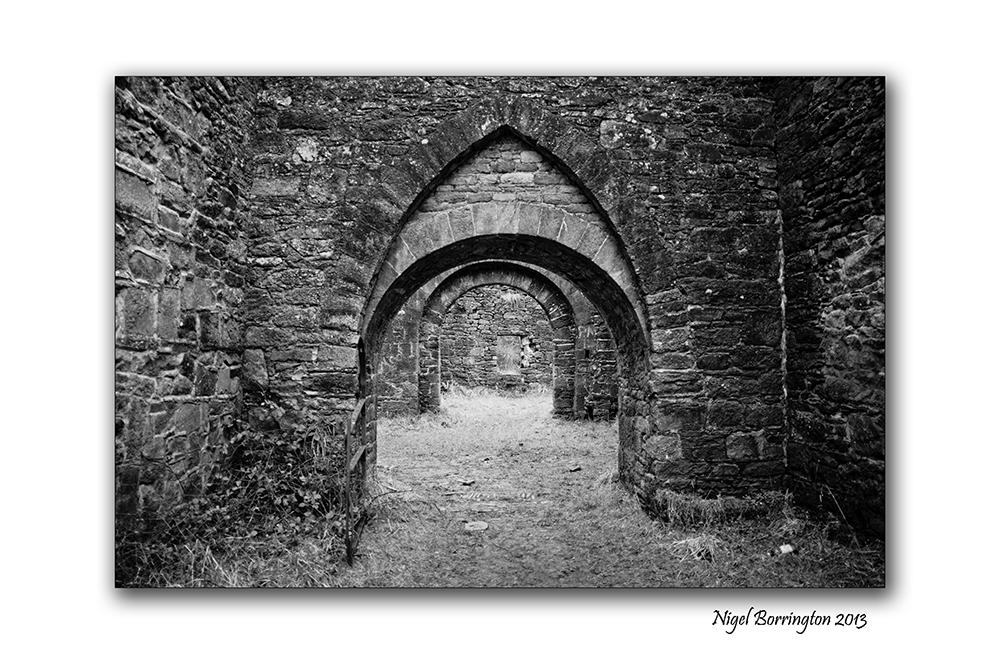
Carey’s Castle

Carey’s Castle, Clonmel in Co. Tipperary
Irish Landscape Photography : Nigel Borrington
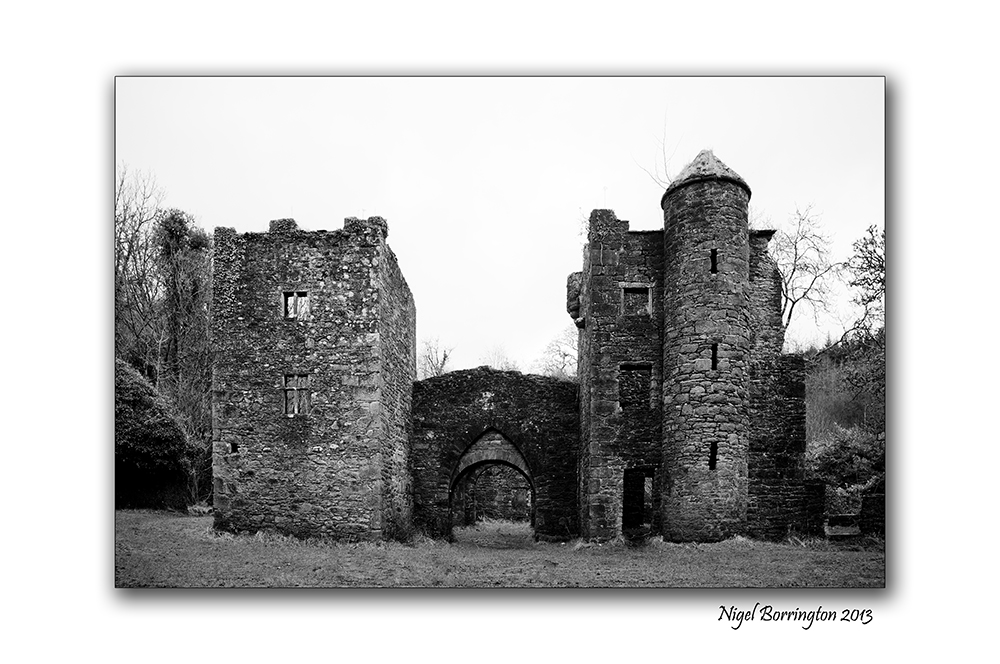
Carey’s Castle rests in a woodland setting near Clonmel in Co. Tipperary, the Glenary River running past the castle and adding to a very peaceful atmosphere here. A walk of around 500m down a wonderful woodland trail is well worth the effort when the trees part and Carey’s Castle appears before your eyes.
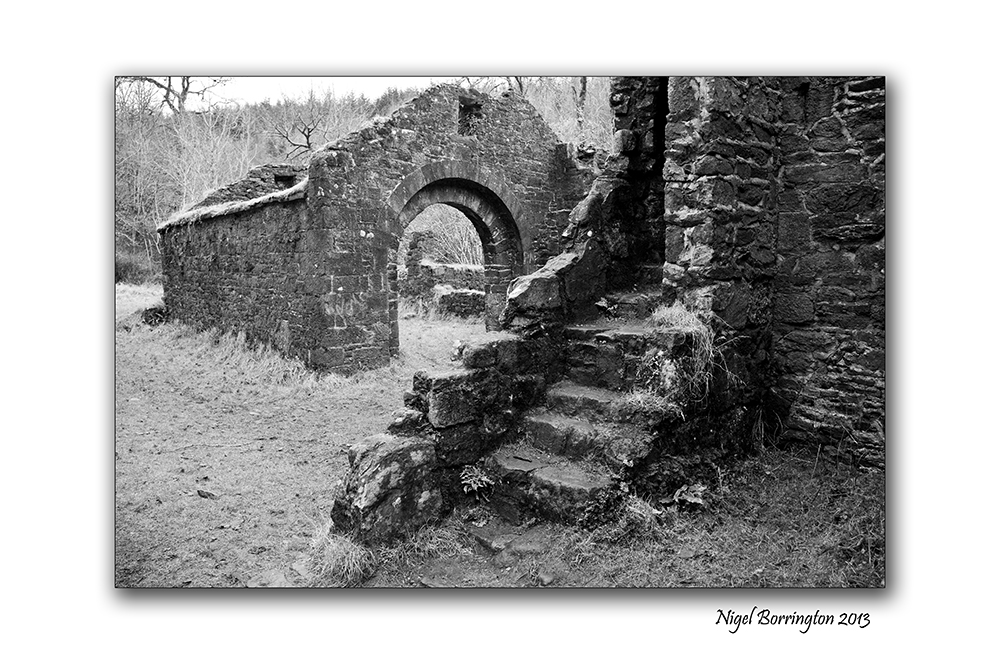
The Castle was built sometime during the 1800s by the Carey family who live locally, they were schoolmasters in the area. A mixture of architectural styles exist through out the grounds, including Romanesque and Gothic windows, Gothic arches, a Celtic round tower and a Norman Keep, which all adds up to make a beautiful building in a wonderful location.
The Castle and it grounds were occupied by monks at one stage and the remains of and older walled garden exist at the back of the Castle in the woods.
Carey’s Castle, Gallery



The fishing boats of Galway bay (Image gallery)

Fishing boats at Galway bay, county Galway
Irish Landscape Photography : Nigel Borrington
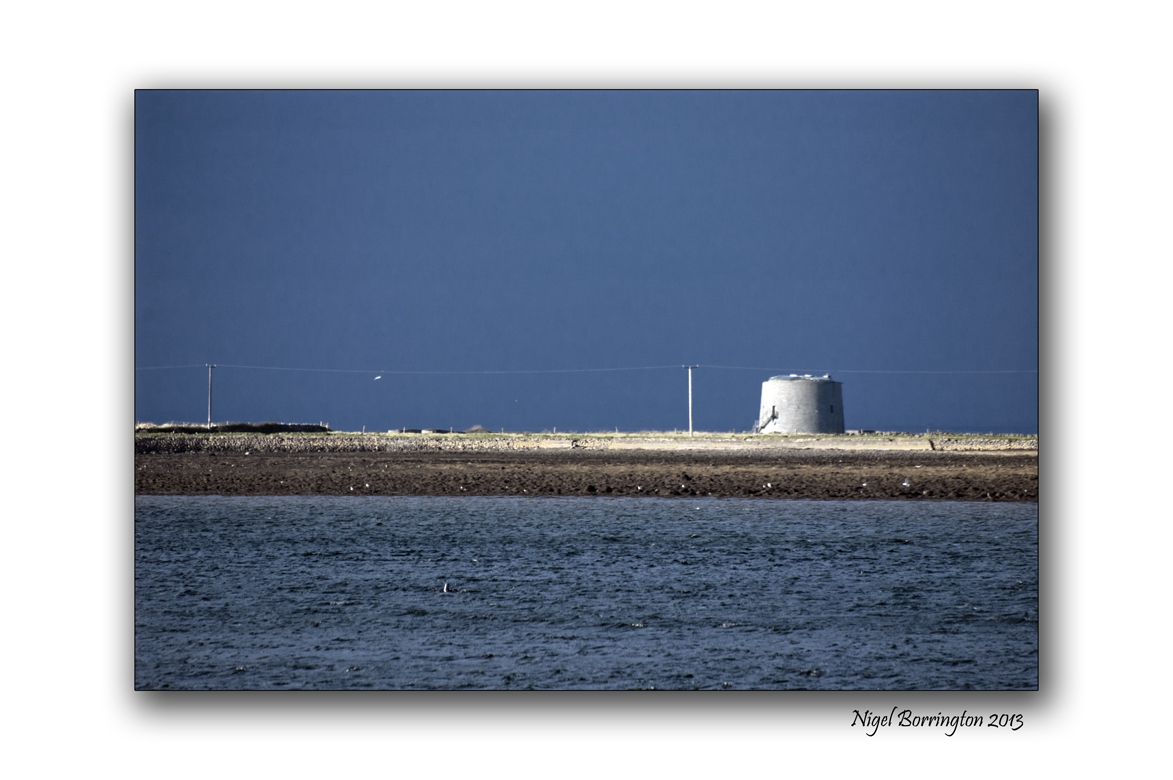
The landscape around Galway bay is one of the most beautiful in Ireland , offering long walks along sandy beach’s and scenic fishing bays.
The photographs below are from such a walk I took about two years ago during an Easter holiday in the area.
Fishing boats at Galway bay, Gallery


It the weekend so why not ….
The Burren, County Clare
Irish Landscape Photography : Nigel Borrington
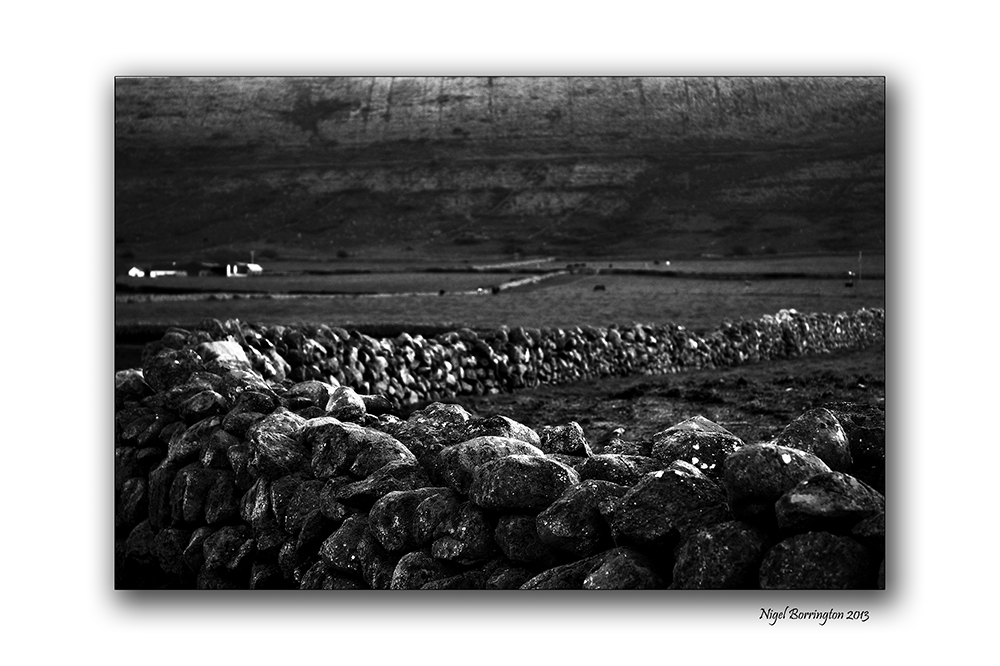
Its a winters weekend, so why not get outside and go for a walk , find some new things to look at.
Some wonderful views, roads and even the walls.

The Sea Of Time, Poem by Robert Crawford
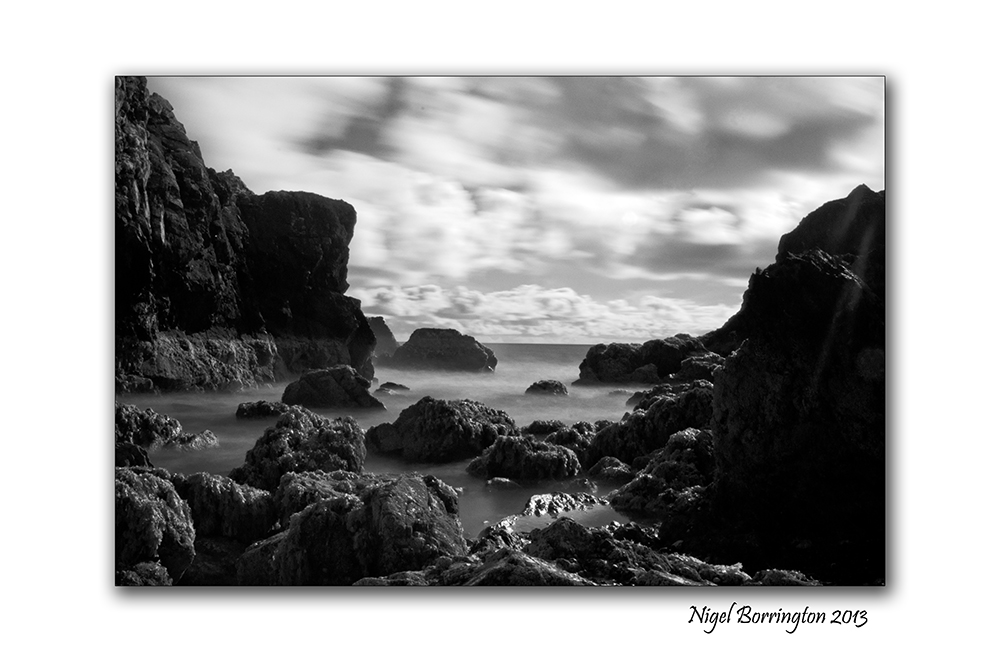
Images of the Waterford coast.
Infra-red photography
Irish landscape photography : Nigel Borrington
The Sea Of Time.
by Robert Crawford
On that strange sea
Where Man’s bark moves as toward eternity,
What sails put forth that are not seen again!
So joyous it may be, or in pain,
The mariner doth drive still on and on
Beneath no mortal star,
And to no mortal port — as one
Who may but anchor somewhere so afar,
 .
.
Not himself wrecks if he shall reach no more
In that tremendous sea another shore:
He is so like a wave himself at last,
He would toss through the future as the past —
But tethered as a whale is to a wave,
So he might still the one life have
Through all the changes that may be
On that tremendous sea!
Five images from the Comeragh Mountains.
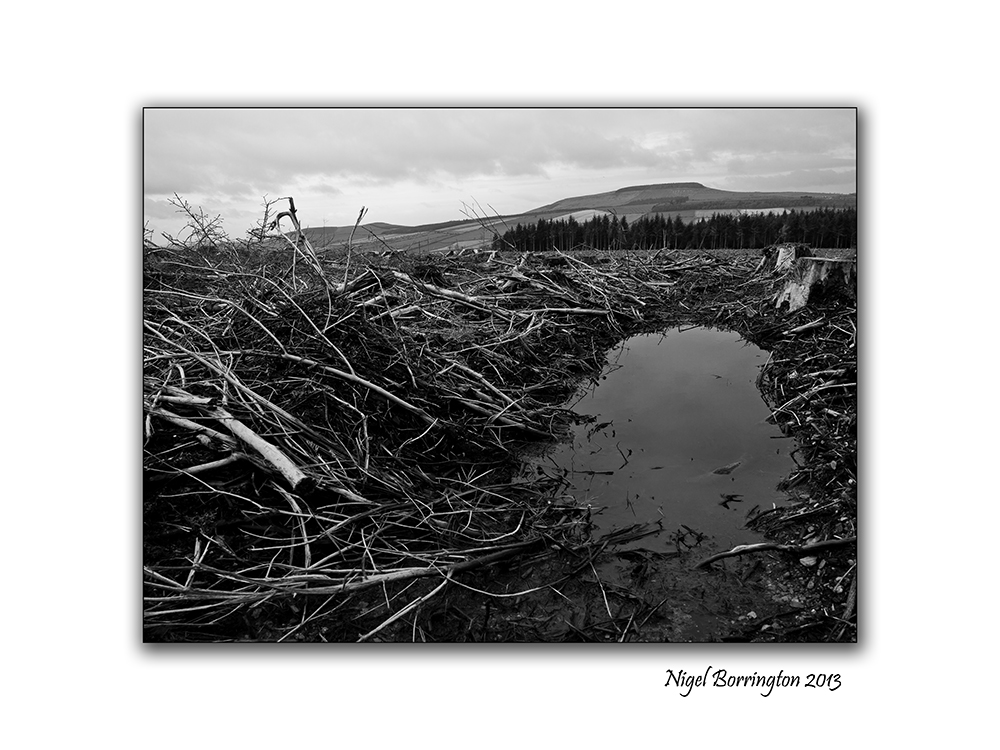
Fuji film x100 and Canon G1x
Comeragh mountains, County Waterford
Irish Landscape photography : Nigel Borrington
Five images from the Comeragh Mountains
Just a mini gallery of black and white images taken in and around the Comeragh mountains, during the winter months last year.
This coming year I will continue to capture this wild place. some how the winter feels very much at home in these mountains.


The Glassblower a Poem by : Rhonda Baker
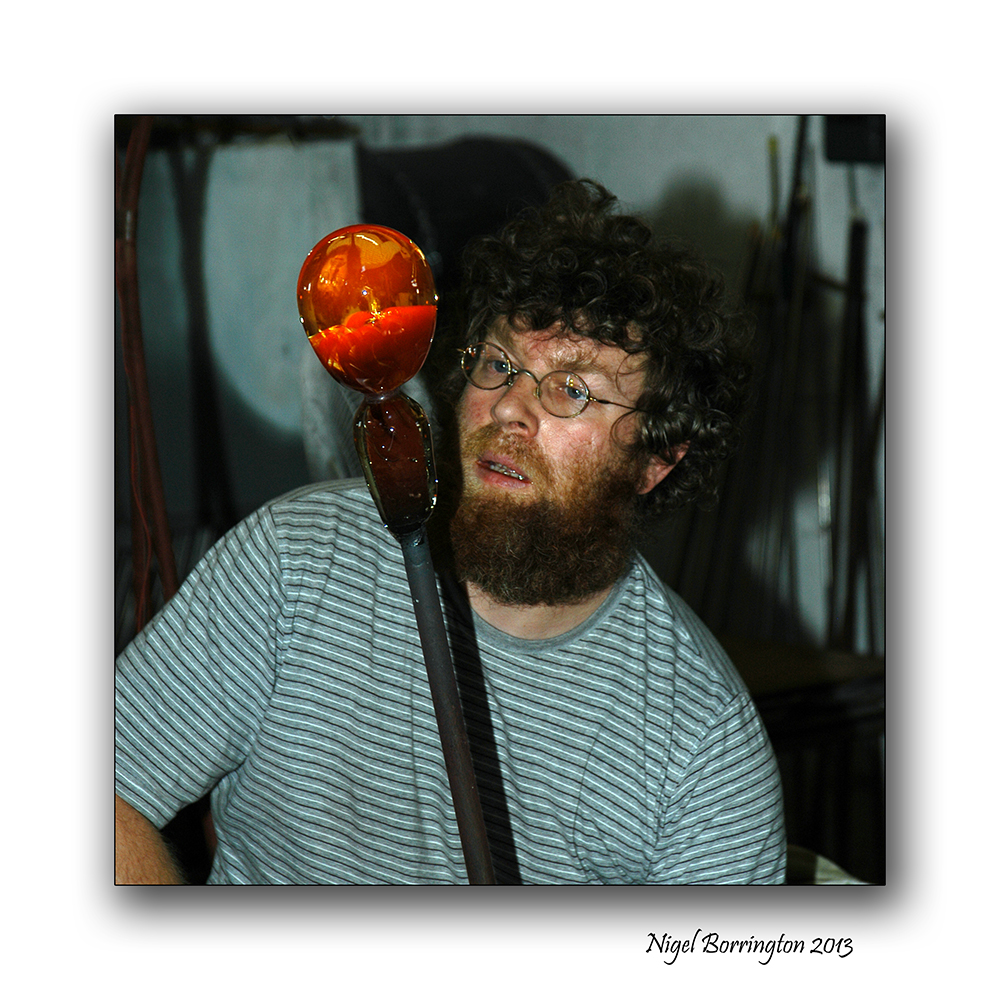
Jerpoint Glass studios, County Kilkenny
Irish Photography : Nigel Borrington
The Glassblower
by, Rhonda Baker
Inside a building near the center of town
A glassblower’s love of glass is quite profound
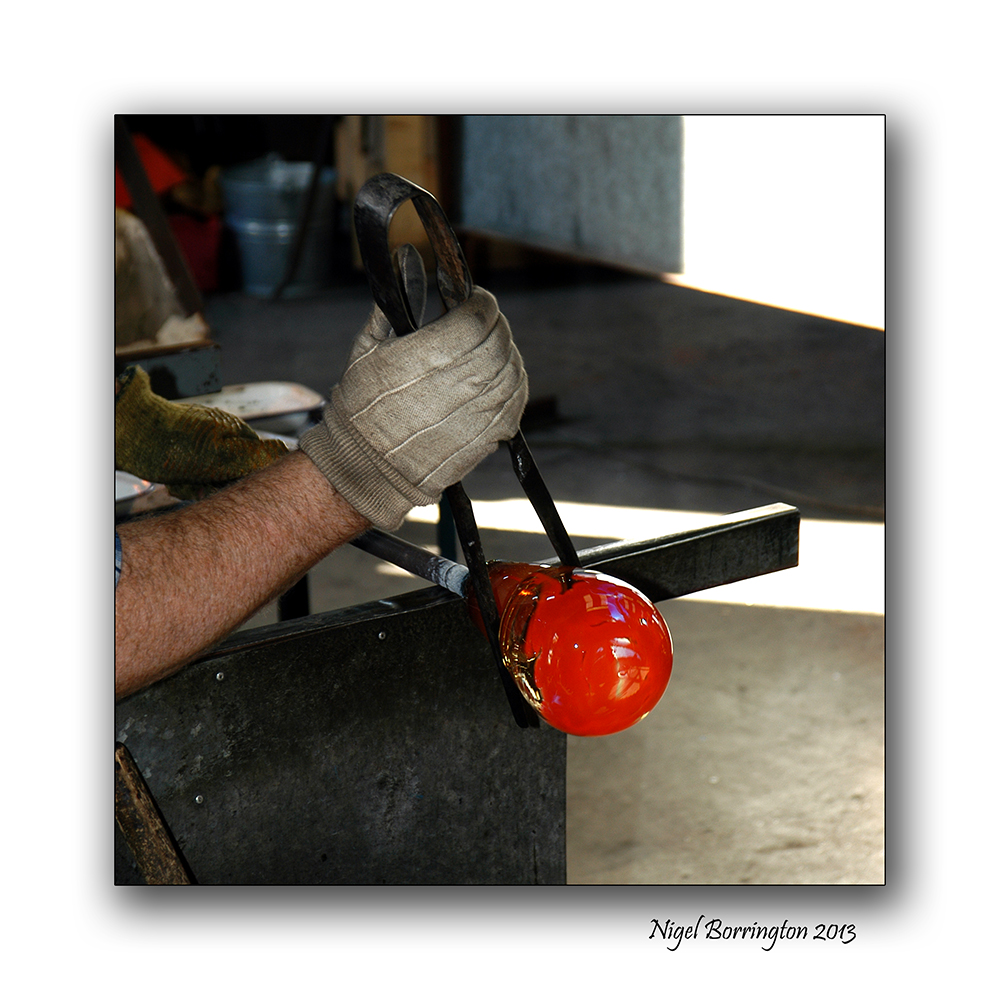
With sweat on his brow and jacks firmly in hand
Lost in a piece oblivious to the land
People are gathered to observe the dance
To watch this unexpected miracle; as if by chance
To watch someone struggle with every fiber of their soul
To make the biggest, most colorful and stunning…Bowl?
 .
.
It’s a madness for which no cure can be found
But one he’d gladly have, it’s that profound
For glass teaches a lesson that must be taught
Life; like glass must be wrought
And when illuminated, it shines so bright
Now seeing it’s beauty; what an awesome sight!
11/23/09
Rhonda Baker
Jerpoint Park

Jerpoint Park, County Kilkenny
Irish Landscape Photography : Nigel Borrington
Newtown Jerpoint the Lost Town
Jerpoint Park in County Kilkenny hosts a Monument of notable importance: The Lost Town of Newtown Jerpoint.

Map of the village
It was founded by either Earl Marshall or Griffin Fitzwilliam in 12th century, just west of the Cistercian Abbey, where the main crossing of the River Nore was formed by a tole paying bridge.
It was a vibrant town, with approx 27 dwelling houses, a court house, woollen mill, a tannery, a brewery and reputed to have had 14 taverns. It was powered by two water wheels working on the little Arrigle River and a tower house stood near the market place, where a wealthy merchant would have lived.

Traveling further up East-West Street, St. Nicholas’s Church and graveyard are situated over looking the town, where the earthly remains of St. Nicholas ( Bishop of Myra) lay a unique feature of this church is the rood-screen which dates from the 15th century; this is the gallery-like construction running across the church between the nave and the chancel. It was used to support a missive reconstruction of the crucifixion, while the floored area above could also have been used for religious plays and choirs. The final phase was the construction of a small tower over the rood-screen itself, which served as the priest’s residence.
The Heritage Council of Ireland has published a Heritage Conservation Plan about Newtown Jerpoint that you can download.
Saint Nicholas Bishop of Myra

Saint Nicholas was born in 260ad in Patara, a coastal town in what is now Turkey. The poor knew him throughout the land for his generosity, his love for children and being associated with ships, the sea and sailors. He was eventually consecrated Bishop of Myra, just miles from his hometown. The beloved Bishop died in 343ad.
Many Christian churches and many countries observe December 6th his feast day with great celebrations, processions, services and gift giving.
Images of St. Nicholas in paintings, icons, statues, collectibles, and stained glass often show him alongside three young men in a barrel that he brought back to life after an innkeeper murdered them. He is almost always seen with three bags or balls as well, symbolising the three bags of gold he tossed through the chimney of the home of a poor man in his village for the daughters dowry, so they would not be sold as slaves. Thus he is also seen as the “gift giver”. A ship and the sea are also common symbols of the saint. Western and Eastern depictions of blessed Nicholas differ in style and costume.

Saint Nicholas is a patron of many places and people. He is closely associated with Russia, Greece, Holland, Austria, Belgium, Aberdeen and New York. Pawnbrokers, travellers, unwed persons, children, sailors and many others claim a special relationship to the saintly figure. Many churches are dedicated to him as well. Saint Nicholas is third most popular subject of icons in the church, with only Jesus Christ and the blessed Virgin Mary having more representations.
Tradition in these parts tell that the earthly remains of St. Nicholas were secretly removed from Bari by returning crusader knights, who brought them back to Newtown Jerpoint for safe keeping. They buried those remains with all due reverence in the church that to this day bears the Saint’s name. The grave of St. Nicholas is marked by beautifully carved grave slab just outside the church, the tall figure of the Saint dominates the carving, and flanking him on both sides are the heads of the two crusader knights who brought his remains here.
Jerpoint Park, Black and white Gallery


Found things in the Irish woodlands : Image Gallery .

Nikon D700, 24-70mm f2.8 lens
Found objects in the Irish woodlands
Irish Landscape Photography : Nigel Borrington
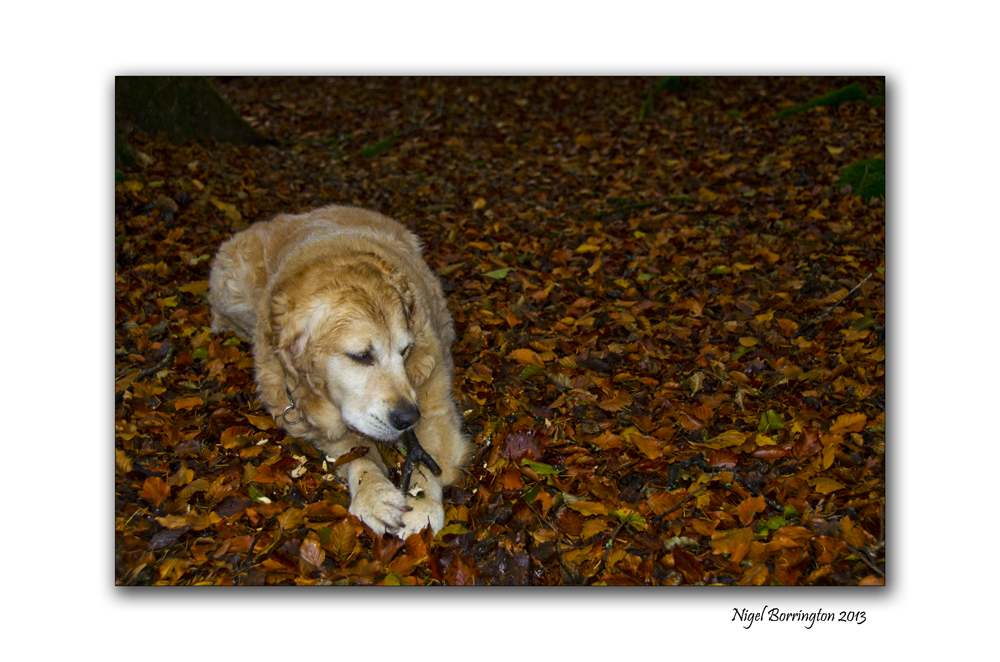
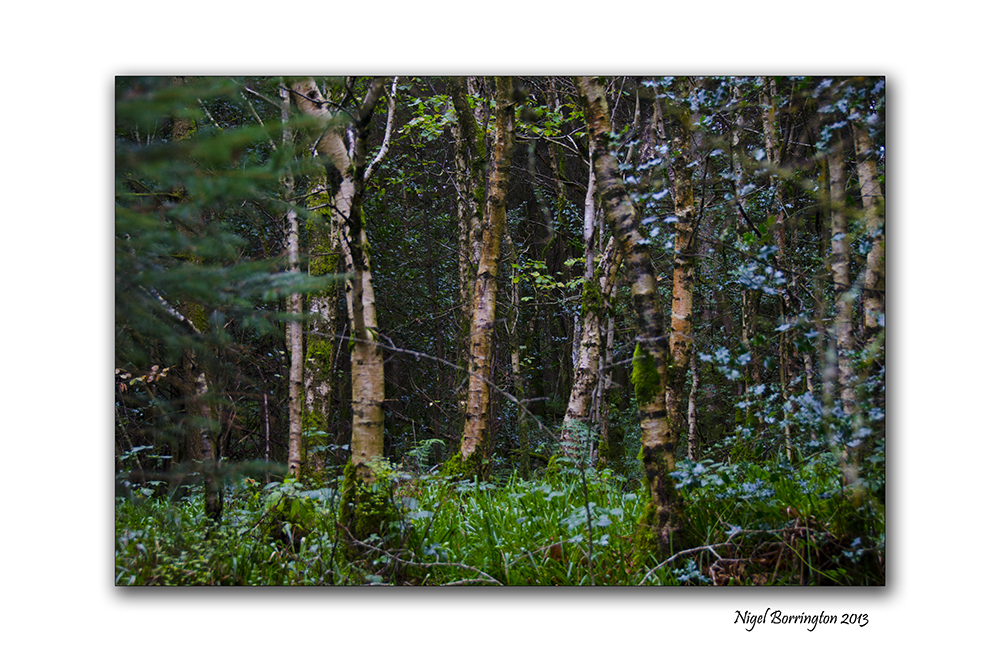
From a personal Stand point one of the things I love doing most photographically is to just explorer my Local surroundings, I walk our dog Molly a 10 1/2 year old Golden retriever everyday and carry a camera with me for most of these trips out. the Local Kilkenny woodlands in December are still surprisingly full of life and things to capture.
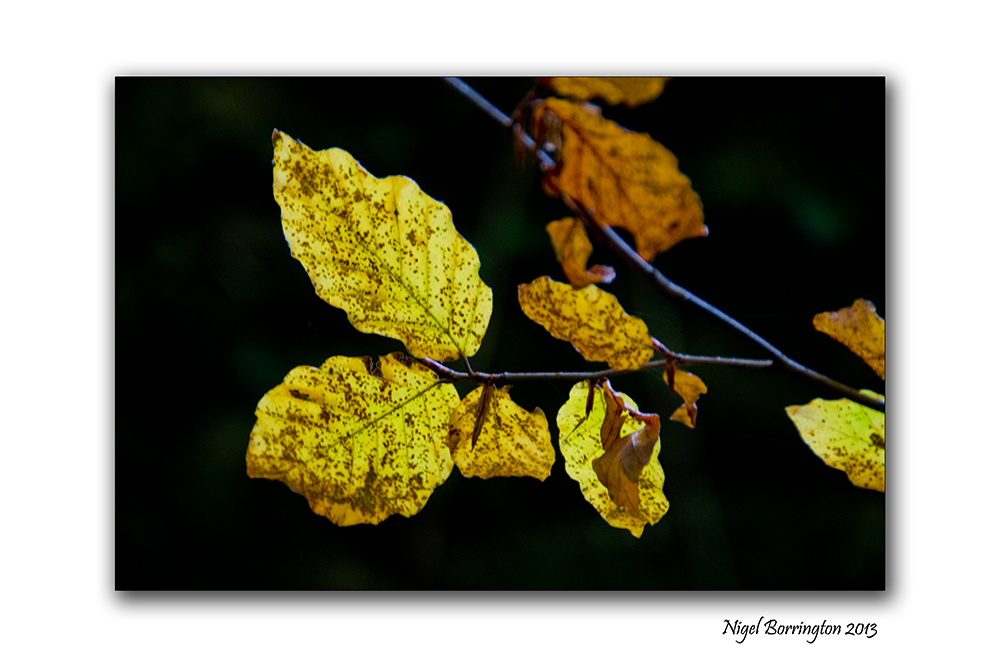
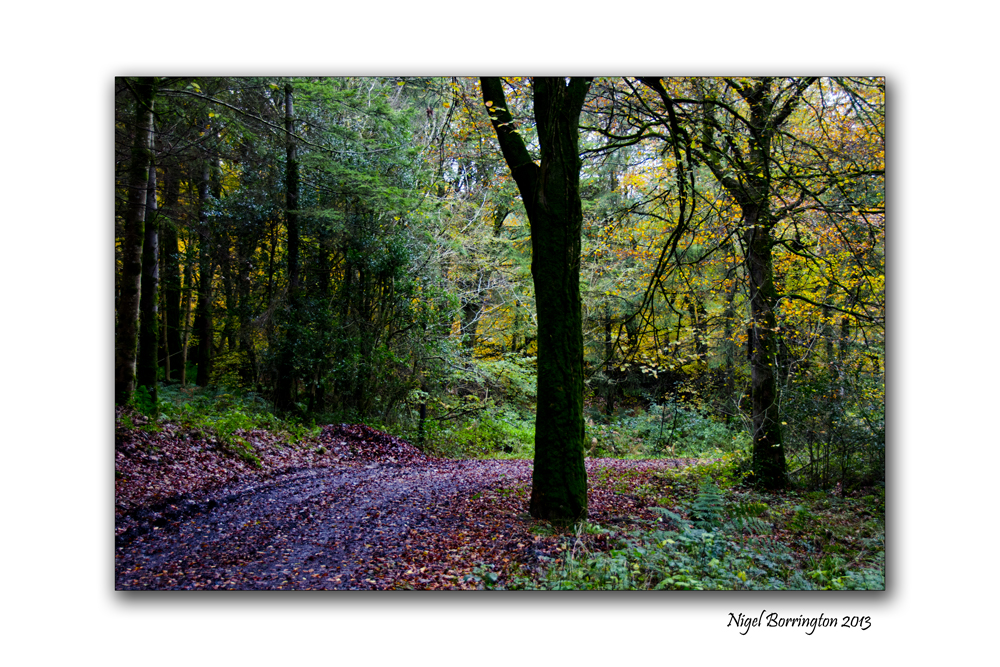
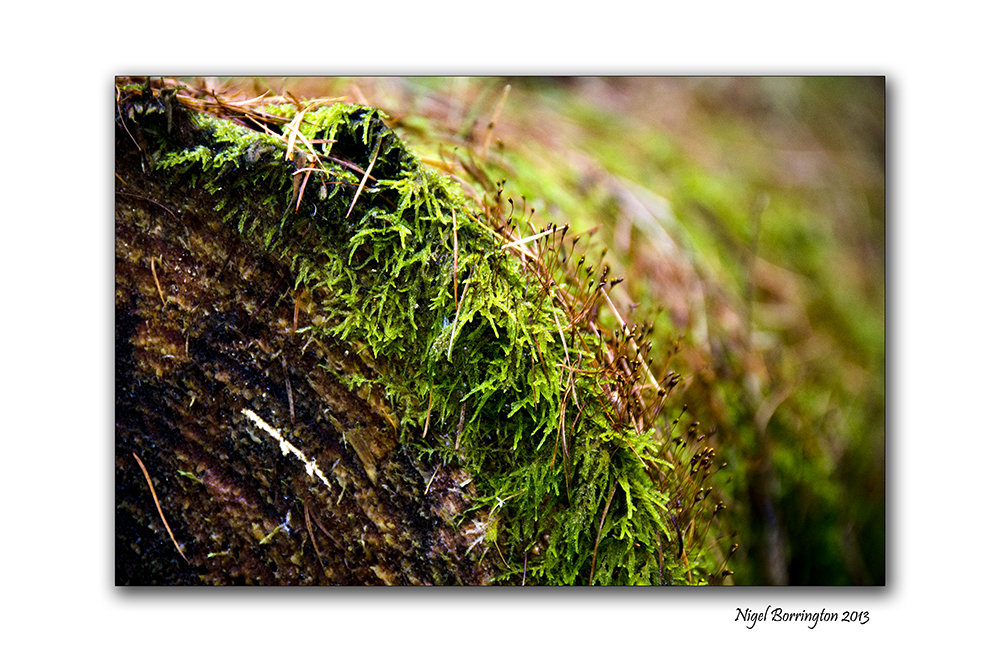
The following Gallery is from a trip to Castle Morris woodland, last week.
Found things in the Kilkenny woodlands




Images from the road , A west cork Sunrise

Nikon D7000, 35mm, f2.8 Nikon lens
The Sunrises over Reentrusk bay and the Atlantic ocean , West Cork, Ireland
Irish Landscape Photography
Nigel Borrington
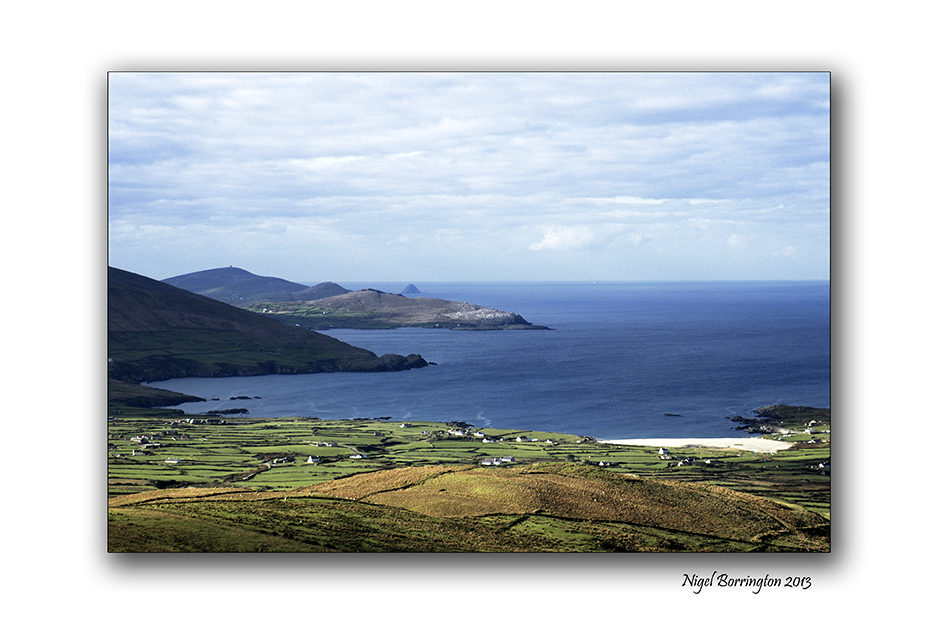
One very early Morning on the first of November, I was out walking our dog Molly along the coast road that links Reentrusk and Allihies, west cork. The Sun was just starting to rise in the distance so I took this images along the Atlantic coastline looking to the North.
These early morning coastline walks in the Autumn are wonderful after a cold a fresh night.
Poem:When I look down toward the beach, Image Gallery from the Irish coast.

Images Of the Coast at Allihies, County Cork, Ireland
Irish Landscape photography : Nigel Borrington
Poem from the Irish coast line.
When I look down toward the beach,
the distant pier seems to stride
forward from the shining sea.
I like to look beyond,
to the bands of turquoise and blue,
an ocean painted in bold,
abandoned strokes.
 .
.
Why are we drawn to the waves?
Those elemental rhythms,
sounds and colours
of a primary world,
where sparse pointillist spots
busy themselves on
yellow-ochre sands.
 .
.
Some days the morning
unfolds through mists,
groynes spacing out
the distances along the strand,
until a final fade-out,
well before the sea
can meet the sky.
 .
.
Overhead, pterodactyl shapes
patrol against fresh patches
of blue. As I approach,
the blurred semblances
of buildings appear, rectangles
feathered violet or grey,
as if stepping off the cliff.
Images of Allihies : Nigel Borrington
A visit to Haywood house gardens
Haywood house and it Gardens
Irish Landscape Photography : Nigel Borrington
Heywood Gardens
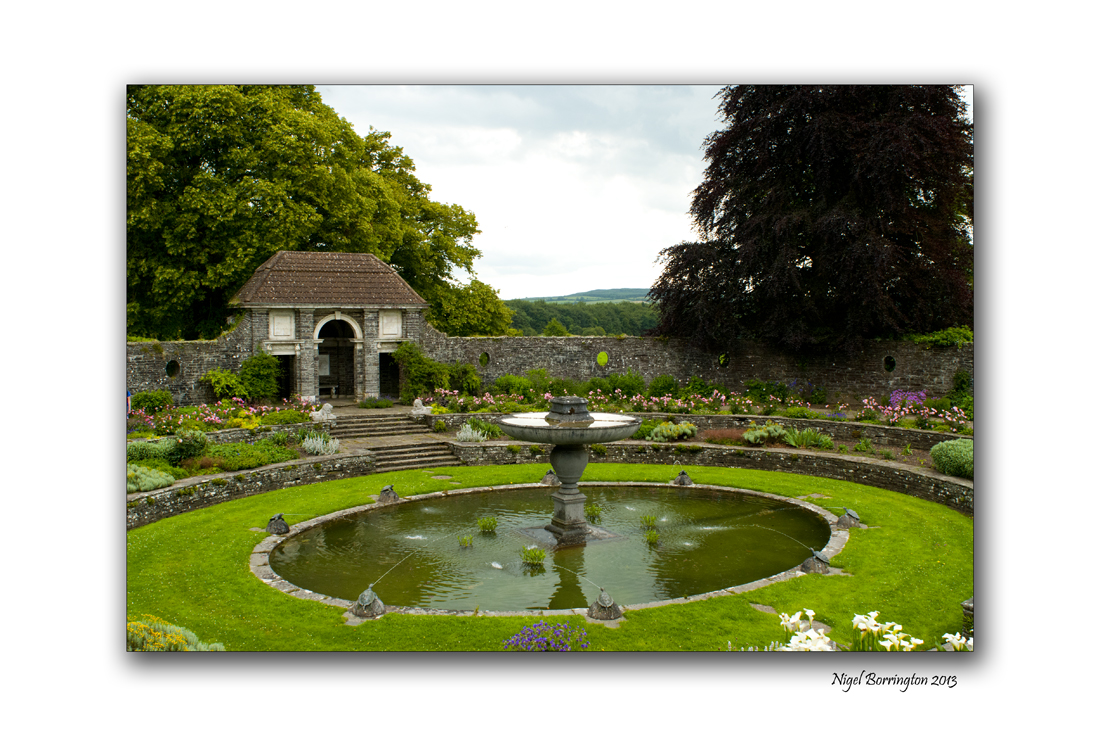
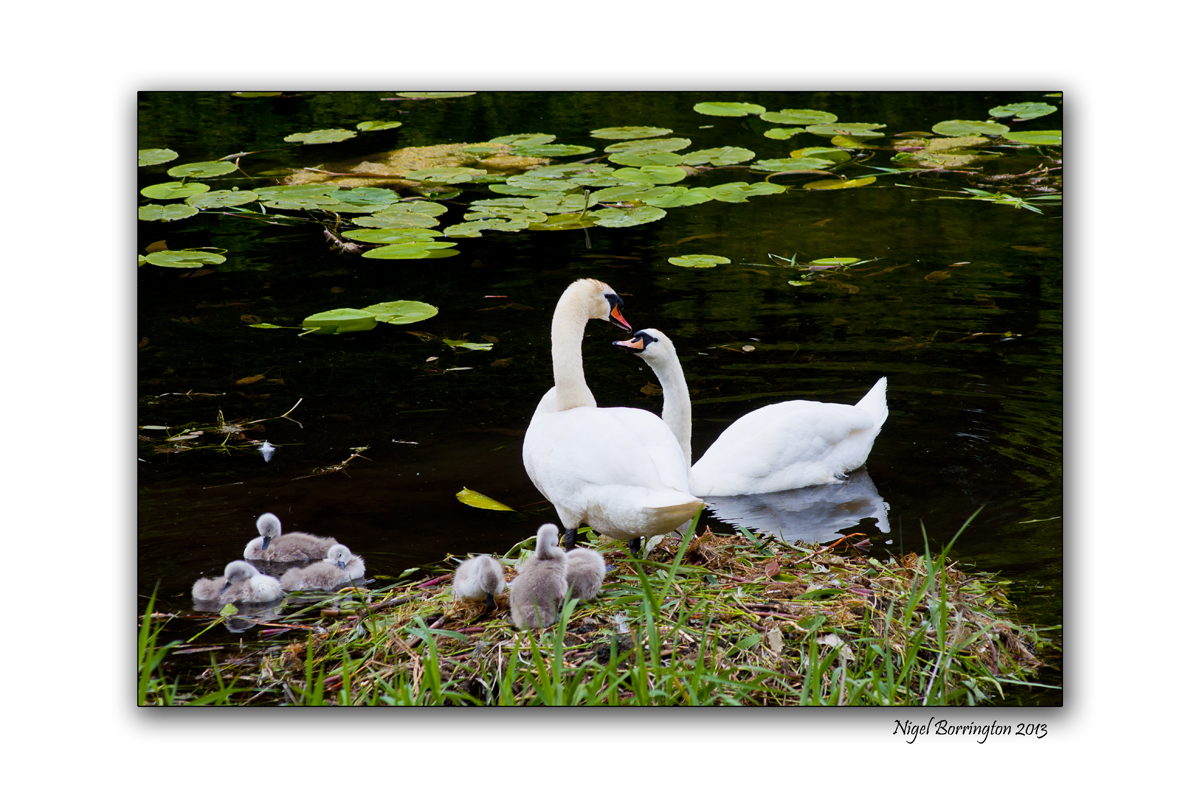
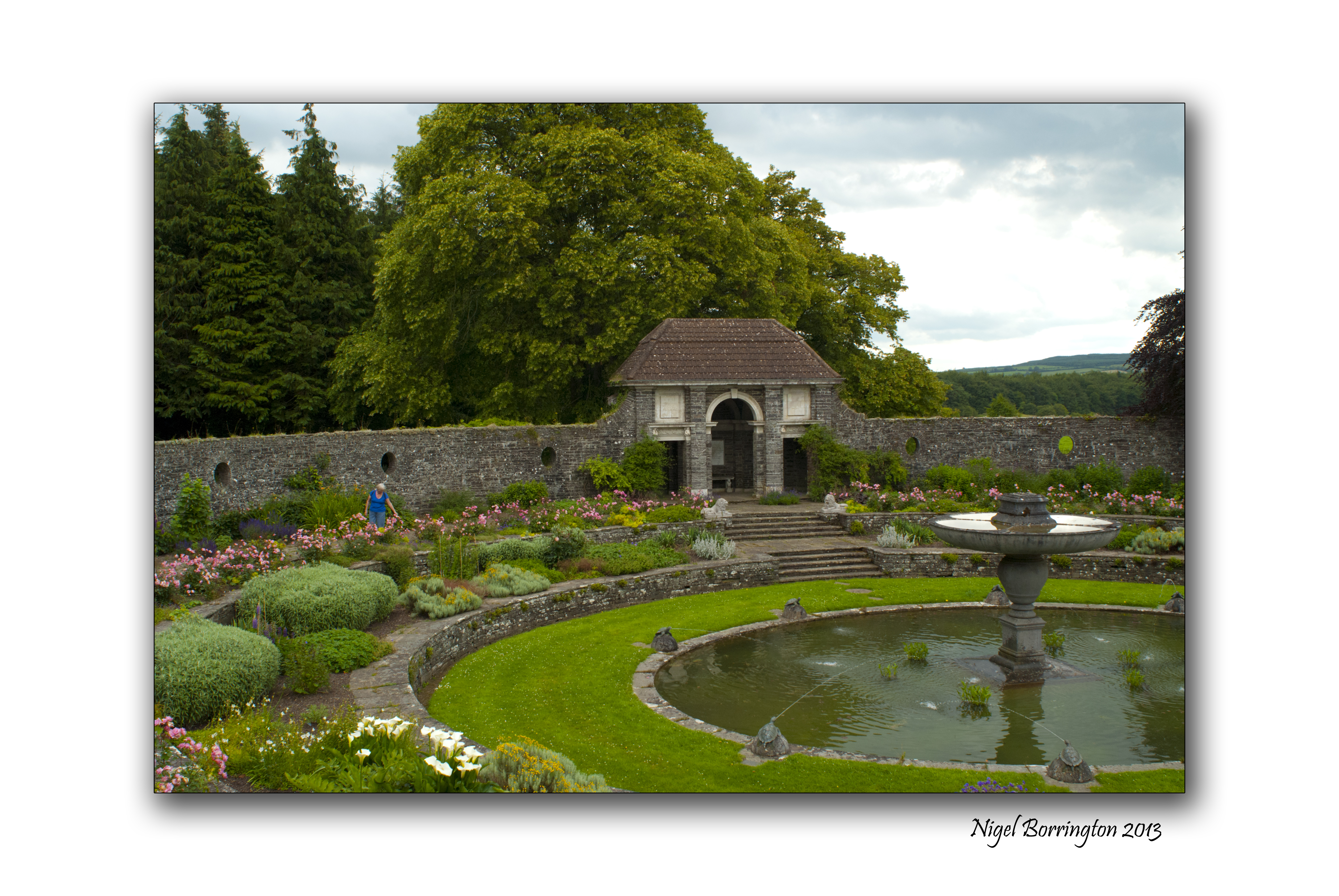
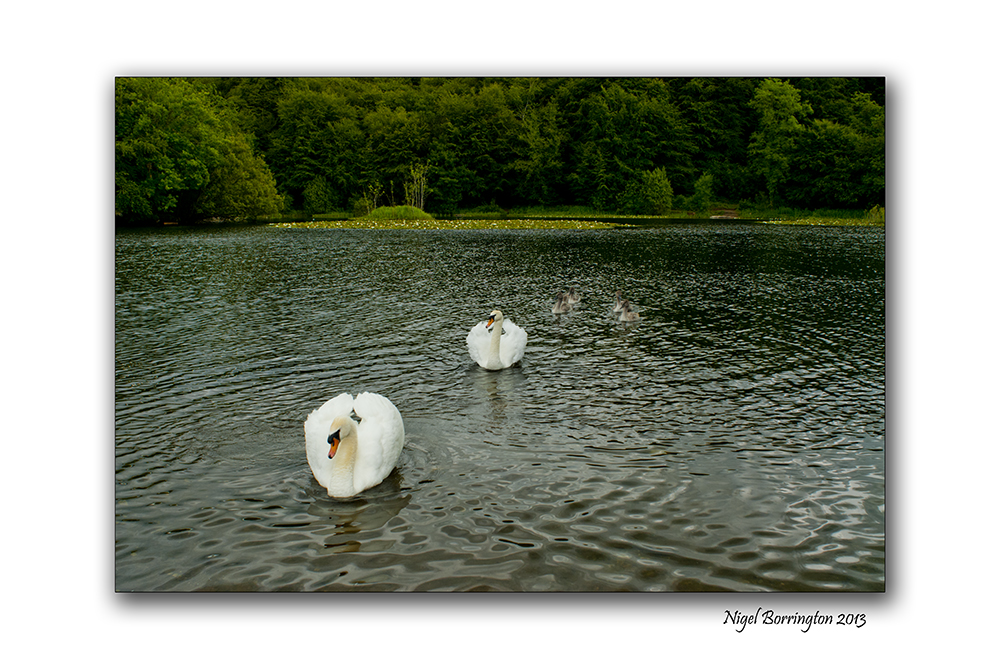
Haywood Gardens is one of Ireland best kept secret Gardens, it just a fantastic place to visit and wonderful all year around for some photography. There are two lakes in the grounds with swans nesting each year and some large woodlands. The oval walled garden is however the best feature in the grounds and has one of the most wonderful displays of flowers all summer.

Completed in 1912, the property consists of gardens, lakes, woodland and architectural features. It was transferred to State ownership in November 1993 from the Salesian Fathers who had taken care of it since 1941. The formal Gardens form the centre-piece of the property and were designed by the famous architect, Sir Edwin Lutyens (1869-1944) and probably landscaped by Gertrude Jekyll (1843-1932). It is one of four Gardens in this country designed by him, the others being in the War Memorial Park, Lambay Island and Howth Castle. The Gardens are composed of four elements linked by a terrace that ran along the front of the house which now no longer exists. An extensive re-planting programme is currently underway. There is also limited access for visitors with disabilities.
Heywood Gardens
Contact Details
Address: Heywood Gardens, Ballinakill, Co. Laois
Telephone Number: +353 5787 33563 and +353 87 6675291
Fax No: +353 5787 33563
Email: heywoodgardens@opw.ie


The old Mountains , Friday Phoetry.

Fujufilm X100
Images from Slievenamon, Tipperary
Irish Landscape Photograhy : Nigel Borrington
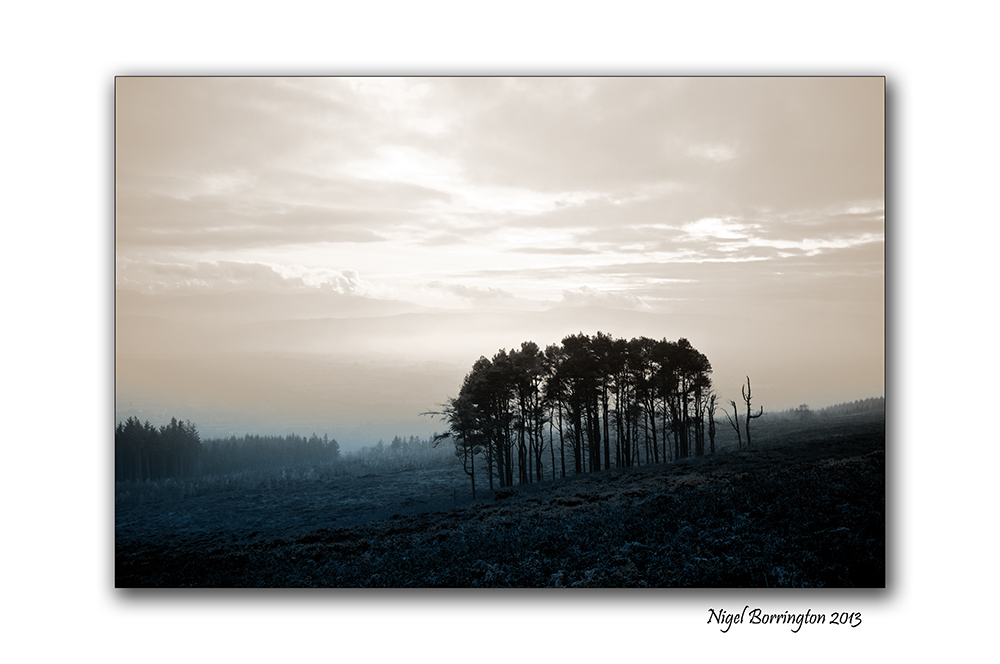
The Old Mountains
by: Edwin Curran
The old mountains are tall, silent men
Standing with folded arms, looking over the world,
Lonesome and lofty in their manner.
 .
.
They have seen empires come and go,
Civilizations rise and fall,
Stars break on their breasts.

.
They are full of history like great books,
And are merely the stone monuments that the kindly God
Built for the human race, to mark its grave tomorrow.
————————-
Thank you to Elen Grey !, for suggesting I use the word “Phoetry” in my Poetry and Photography posts 🙂 🙂
Winter Chills : Gallary and Poem by Ellen Ni Bheachain

Winter Chills
By : Ellen Ni Bheachain
Winter hills of white with silverish gleam,
Of winter season and colors that reflect,
The shades of Gray and silver,
From the suns reflection on natures winter,
Bleak and empty yet in a solitude way,
Resting or sleeping,
Hibernating and regenerated,
Till spring arrives,
Bringing back its florishing blooms,
 .
.
What is pretty to watch is cold to indure,
The chills of winter from watching it indoors,
For the nature trial of winter will,
Chill and freeze,
And numb you till,
Your lips turn color,
The freeze and chills of real winter,
And then as you warm up,
And your nose and finger tips tingle,
And looking around you on natures trails,
Will be the reminding of the hiding buds and roots,
Laying buried beneath the snows of winter,
 .
.
Reminding you,
That too in the spring,
Like the birds will return,
Bringing color and birth back into the light,
With the sounds of nature,
Becoming more musical than winter,
As the birds and the bees,
And all that return or hibernate,
All wake up to wake us up,
To the spring,
When winter chills and freezes thaw,
Taking away the winter chills,
By bringing in the springtime breeze.
The Cattle of Tullaghought hill

Nikon D700
The Cattle on Tullaghought hill
Irish Landscape photography : Nigel Borrington
One Sunday during the summer I walked to the top of the hill at Tullaghought, County Kilkenny, in order to get some photographs of the stone circle that sits on it.
Well on arriving at the circle some cattle who had followed me through the fields then decided to graze around the circle for some two hours before the headed off down the hill-side. In the end I did get some images that I was very happy with, including the last image in this set.
It was great fun sitting and waiting and looking at the great landscape of Kilkenny.


 Nigel Borrington
You must be logged in to post a comment.