Photoshop : Producing a painting from a photograph

Nikon D7000, 18-200mm lens, iso 100
Grange Crag walk, Co Tipperary
Landscape photography: Nigel Borrington
A very different post today, For many weeks I have just posted photographs and it remains my main interest here but I just wanted for a little time to talk about Abode photo-shop and an application called My-paint.
Art has always been of a big interest to myself and I view all my images as a form of artistic production, some people don’t see photographs as art they are to much of a completed process or they don’t see any artistic process involved in the taking of images using a camera. To a point I do get this view, however I think the speed and directness of a camera can offer results that a painter or an artist with a pencil will not capture.
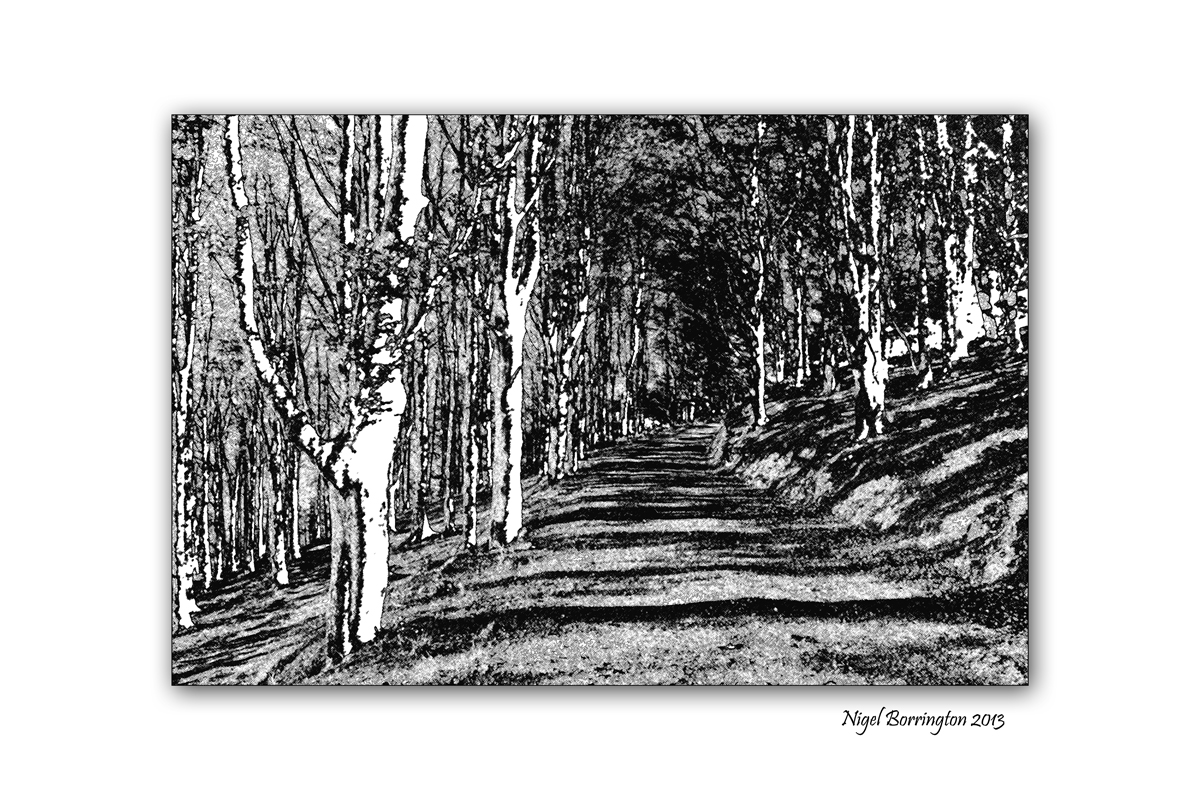
Here I post some result from working with a photograph in adobe camera raw and then photo-shop, in order to produce more developed results. In the first of the images below I have converted the photograph into black and white then using photo-shops levels and curves tools I have increased the brightness and contract until only the outlines of the trees exists.
In the third image down I have taken one of these black and white images and over painted it with photo-shops brush tool adding layers of different colour.
The last image and painting is taken from the second black and white image loading it into an application called My-paint, this is a free painting tool and is packed with great brush and pen tools. Using it I have created lots of layers of different colours and opacities in order to produce the final result.


Stone circle in the comeragh mountains
All images using a Sigma SD15, 15-30mm lens, iso 50
Comeragh mountains – stone circle
Irish landscape photography : Nigel Borrington
Stone circles

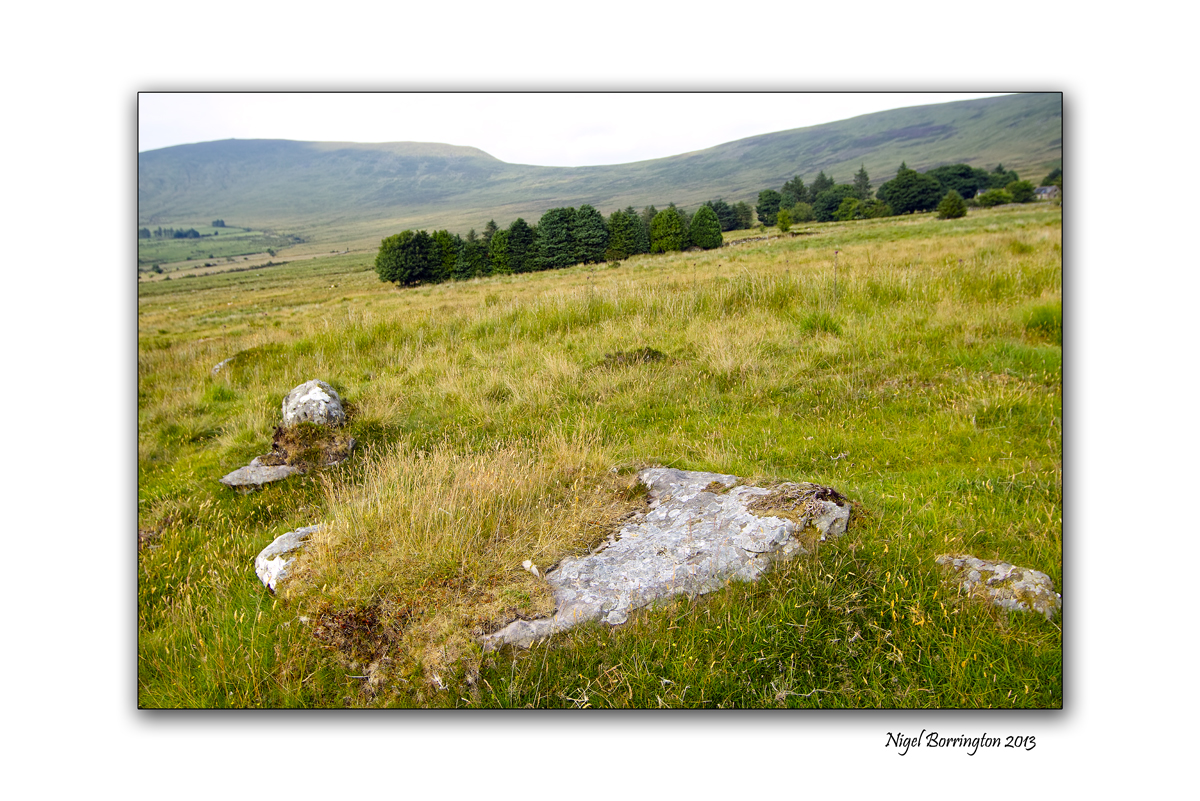
For myself I love being out on a summer evening walking in the hills, a lot of the Irish hill sides are defined as common land and even though farmed by the same families for many generations these areas are by law open land.
The Comeragh mountains in county waterford has many locations well worth finding but for myself the most interesting are the neolithic monuments and grave sites.
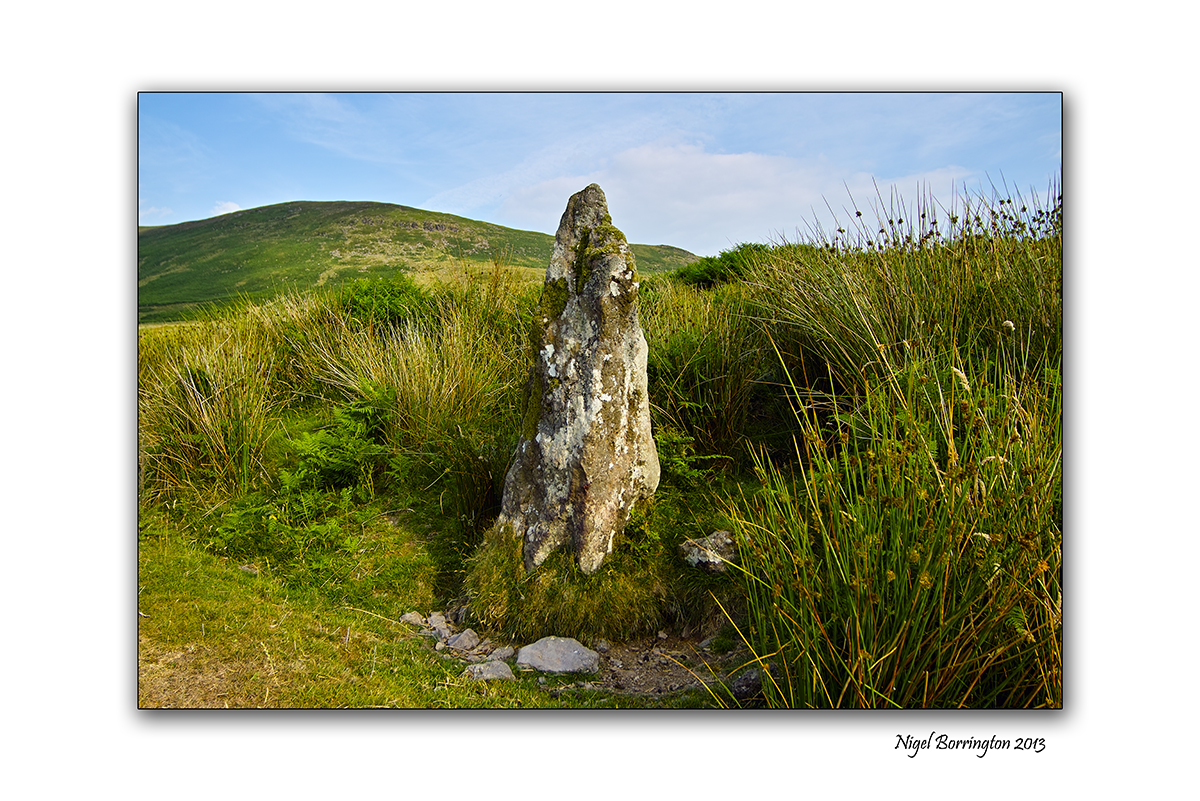
While out last evening I came across this stone circle resting in one of the many valleys in this area, it once would have been a monumental site with its some eight foot high standing stones used to mark the passing of the farming year.
Ireland has a wealth of prehistoric sites that few since the Christian period pay any attention to, for myself however this is where the true history of Ireland exists, People existed in small communities at a local level, however they had everything in common with and communicated with people throughout Europe.
They existed in nature, out in the wilds and they understood the world around them with their very survival in mind, they held personal skill that they learnt from each other.
This stone circle marks those skill’s very well as measuring the seasons was vital to them.
NB: I have circled the above map to locate the stone circle and give some idea as to its size.
Comeragh mountains stone circle – Gallery




Comeragh Mountains – Wild cotton grass fields
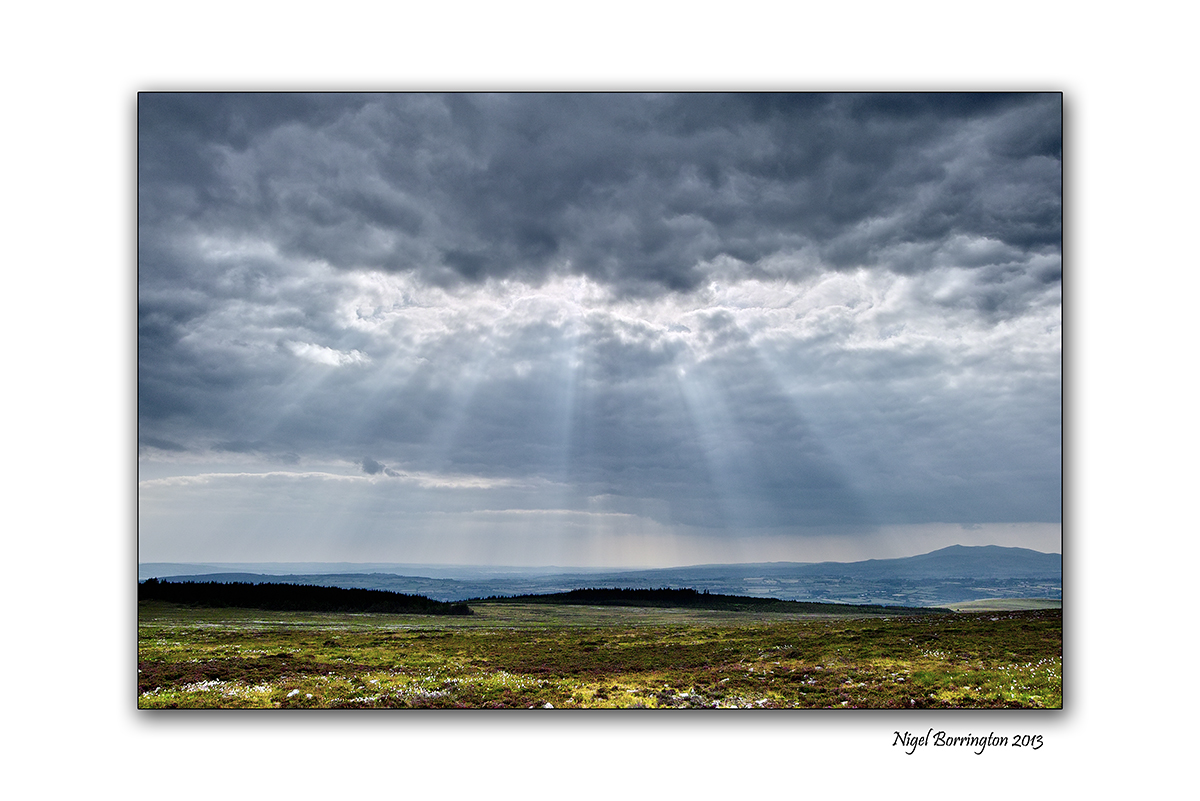
All images using a Sigma SD15, 15-30mm lens, iso 50
Comeragh Mountains, co.Waterford – Wild cotton grass fields
Landscape Photography : Nigel Borrington
Wild Cotton grass, Comeragh mountains, county Waterford
Last evening we went for a long walk with our dog through the comeragh mountains and came across an area of Bog cotton, it covered the entire hill side and valley in front of us as we walked through it.
So I just wanted to share this wonderful view and I hope get across just how amazing a view this offers on the hill sides of these mountains in the middle of a very warm July.
Common Grass Cotton
As its other common name, Bog Cotton, might suggest, this is a plant of very damp peaty ground. Its leaves mostly arise from the base of the plant, often being tinged with red or brown. It has tiny insignificant little brown flowers in April and May but it is really when it is in fruit that this becomes a most eye-catching and attractive plant. Borne on 30-50cm high, cylindrical stems, the little seeds are held in fluffy, downy, white tufts which quiver and shake in the wind, a most effective dispersal method. This is a native pant belonging to the family Cyperaceae.
Wild Cotton grass – Gallery


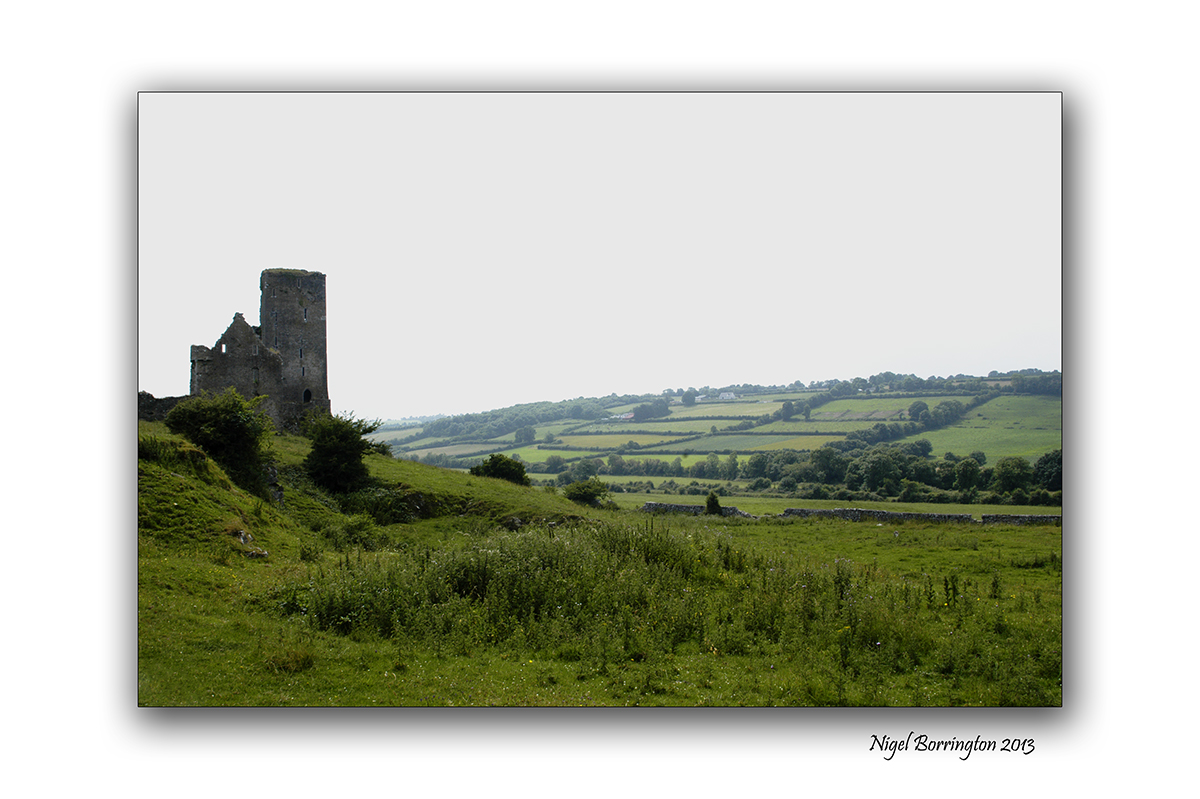
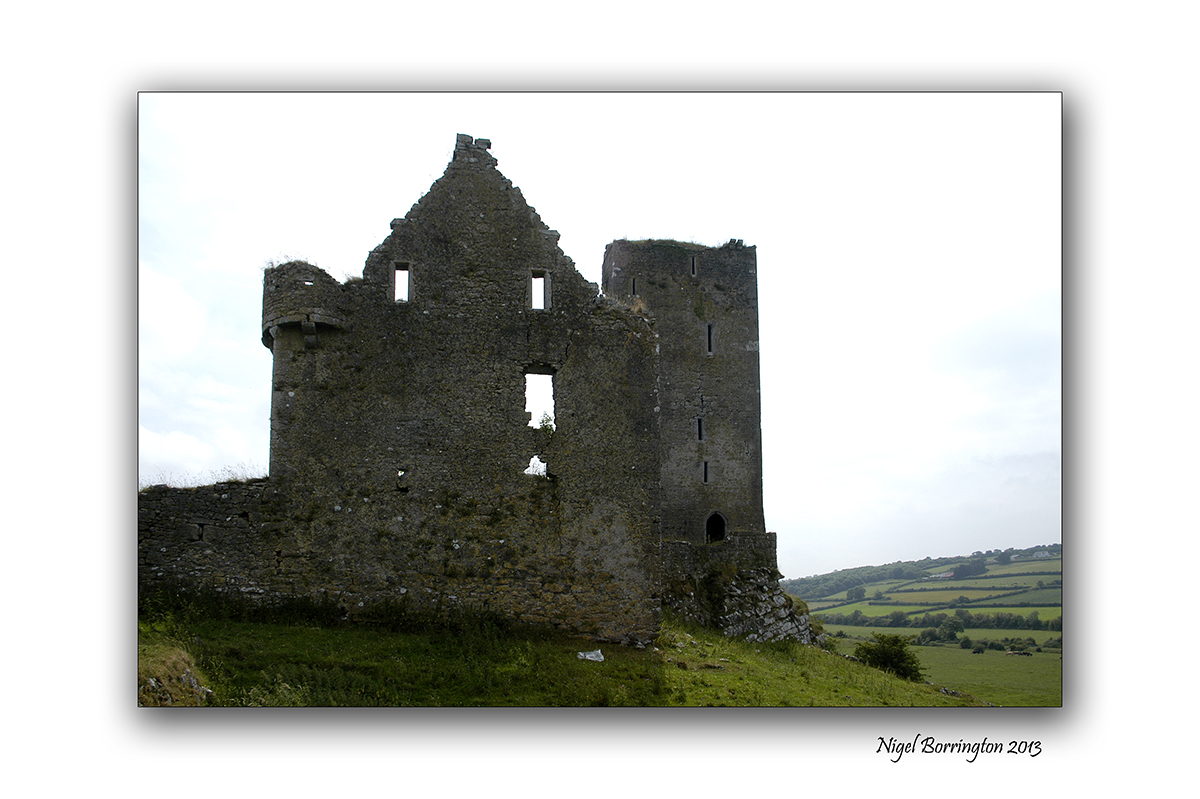
Graystown Castle – Tipperary , An Irish castles
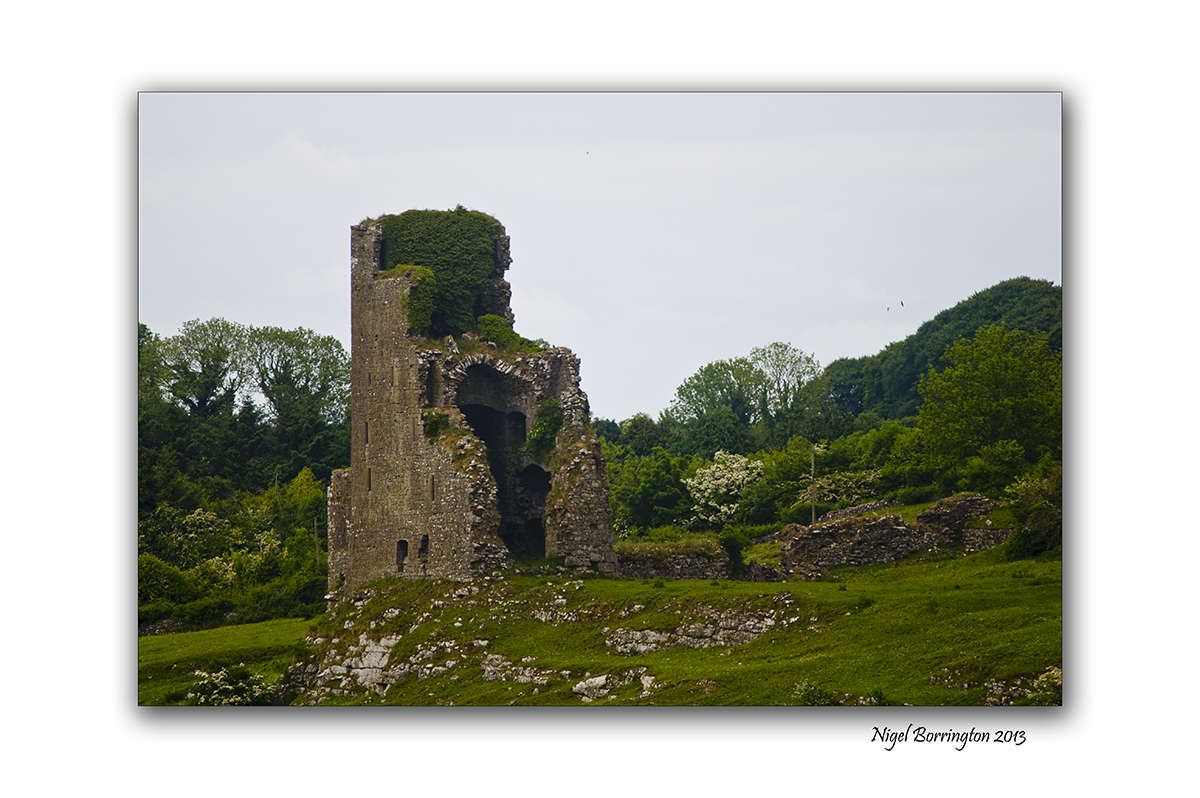
All images using a Nikon D200, 18-200 vr 2 lens, iso 100
Burnchurch Castle, County Tipperary
Landscape photography : Nigel Borrington
Graystown Castle- Tipperary
A little time back I blogged about the area of Burnchurch and Graystown, Killenaule, Co Tipperary (70 years of Potato farming), writing then about my in-laws history of farming in this area. At the time I was asked about the castle that was in one of the pictures at the end of the farm, in the distance.

The castle is Graystown Castle- Tipperary and it has stood in this area since 1654.
This is the best article I can find on the internet :

An old castle stands in ruins on the road from Moyglass to Graystown and it is called Graystown Castle. It is mentioned in Gough’s Camden as being in ruins and situated near Killynaul. It is built on a limestone rock of considerable height on west and north sides and sustaining on one extremely the north-west angle of the building.
The original castle was probably built around 1170, by a man named Raymond Le Gros who was a Norman. From the word ‘Gros’ we got we get the name Graystown or Baile Le Gros as it is known in Irish.
However, the present ruins can hardly be older than the 16th century. It is described in the Civil survey (1654) as follows “Upon this land standeth a good castle, a slate house wantinge repaire with a large bawne and severall cabbins”.
Henry Laffan who was an official of the Butler Family, acquired considerable property in Co. Tipperary at the beginning of the 14th century. In 1305 he got 120 acres in Graystown from Geruase De Raley. This Henry Laffan was said to be the first of the Laffan Family, whose chief seat was in Graystown from then on. In 1521, Thomas Laffan, Lord of Ballingarry, granted to the Earl of Ormonde, the land of Ballinure. He was probably dead before 1524, in which year James Laffan of Graystown was one of the freeholders of Tipperary, who complained to King Henry VIII of the extortions, coyne and livery levied on them by Sir James Butler of Kiltinan and Sir Edmond Butler of Cahir as dupties of the Earl of Ormonde. James Laffan died in 1607.
In 1613, Thomas Laffan of Graystown was a member of Parliament for Tipperary. The proprietor of Graystown and Noan, 3200 acres in 1640, was Henry Laffan of Graystown while Marcus Laffan, his son, apparently held the remainder of the family property in Lurgoe, 640 acres. Henry was dead before 1649, for Marcus was found in Graystown in that year and was a Commissioner for the levying of troops and taxes in Slieveardagh. Marcus was transplanted to Connaught where he was alotted 1184 acres.
The Cromwellian grantee of Graystown was Gyles Cooke. He held the title of the area in 1659 and had two hearths there in 1665 (Petty Cenus Money Records).
So here it stands today, sitting at the end of a valley in this wonderfully peaceful landscape.
Graystown Castle – Gallery

An evening in County Kilkenny, through its trees

All images using – Nikon D200, Mamiya sekor n 45mm f2.8 lens, iso 100
County kilkenny, through its trees
Landscape photography : Nigel Borrington
A sense of Kilkenny
Getting out and about in county Kilkenny on these summer days is just wonderful, this Gallery of images was from an evenings walk through some local country lanes. I hope they get across a sense of the county and its wonderful landscape on an evening in July.
Nigel
Kilkenny through its trees – A Gallery


Sunday evenings – without angels, a poem by – Mario Rossi

Sigma sd15, 15-30mm lens, iso 50
A view of slievenamon, from the red gate
Landscape images from : Nigel Borrington
Sunday evening and the last light of the weekend is fading once more, I love this time of the week. Everything that happened last week is in the past and we have a new start for our week ahead.
So then a Poem :
Evening Without Angels
—Mario Rossi
the great interests of man: air and light,
the joy of having a body, the voluptuousness
of looking.
Why seraphim are arranged
Above the trees?
Air is air,
Its vacancy glitters round us everywhere.
Its sounds are not angelic syllables
But our unfashioned spirits realized
More sharply in more furious selves.
And light
That fosters seraphim and is to them
Coiffeur of haloes, fecund jeweller—
Was the sun concoct for angels or for men?
Sad men made angels of the sun, and of
The moon they made their own attendant ghosts,
Which led them back to angels, after death.
Let this be clear that we are men of sun
And men of day and never of pointed night,
Men that repeat antiquest sounds of air
In an accord of repetitions. Yet,
If we repeat, it is because the wind
Encircling us, speaks always with our speech.
Light, too, encrusts us making visible
The motions of the mind and giving form
To moodiest nothings, as, desire for day
Accomplished in the immensely flashing East,
Desire for rest, in that descending sea
Of dark, which in its very darkening
Is rest and silence spreading into sleep.
…Evening, when the measure skips a beat
And then another, one by one, and all
To a seething minor swiftly modulate.
Bare night is best. Bare earth is best. Bare, bare,
Except for our own houses, huddled low
Beneath the arches and their spangled air,
Beneath the rhapsodies of fire and fire,
Where the voice that is in us makes a true response,
Where the voice that is great within us rises up,
As we stand gazing at the rounded moon.
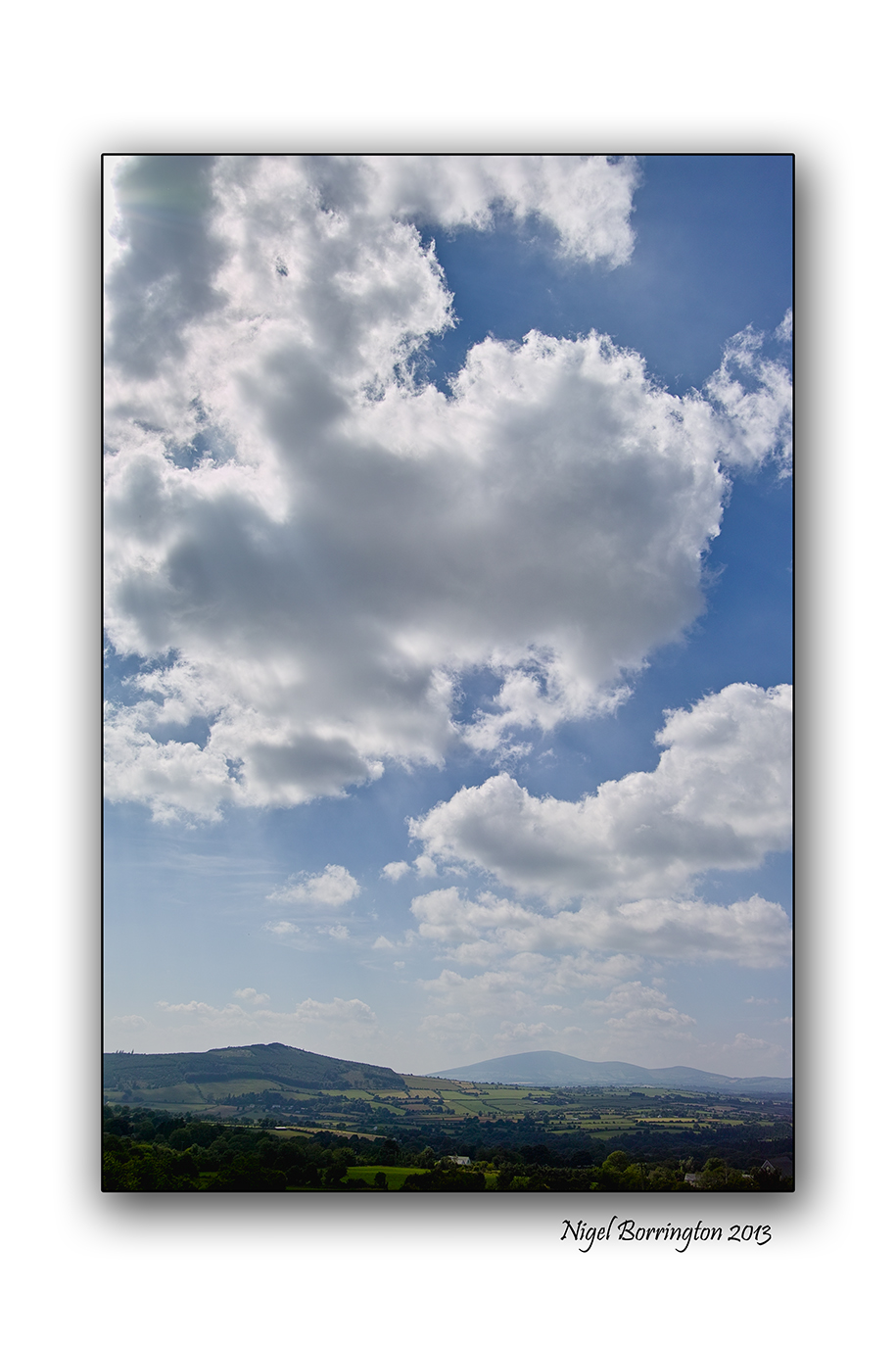
Sigma sd15, 15-30mm lens, iso 50
A view of slievenamon, from the red gate
Landscape images from : Nigel Borrington
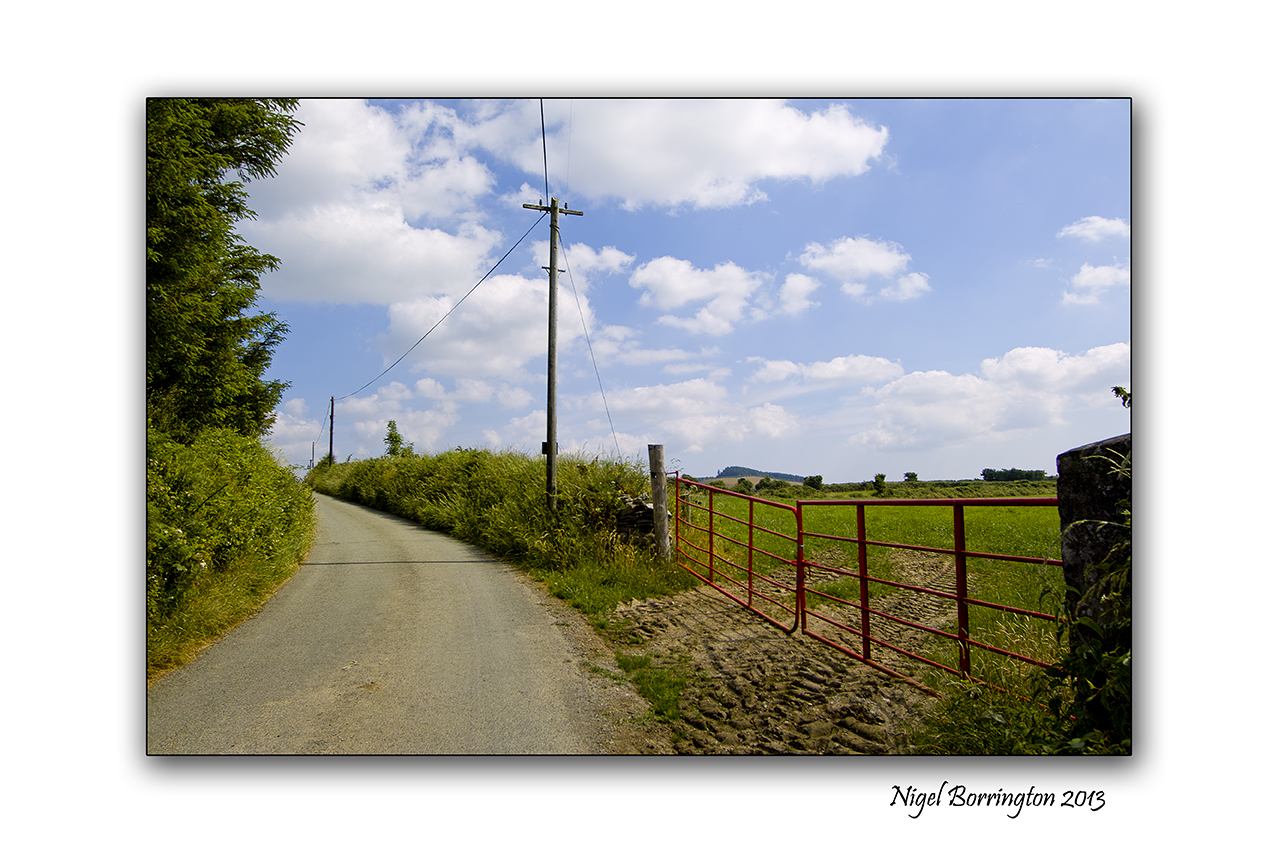
Sigma sd15, 15-30mm lens, iso 50
The red gate with a view of Slievenamon
Landscape images from : Nigel Borrington
Its the weekend so……
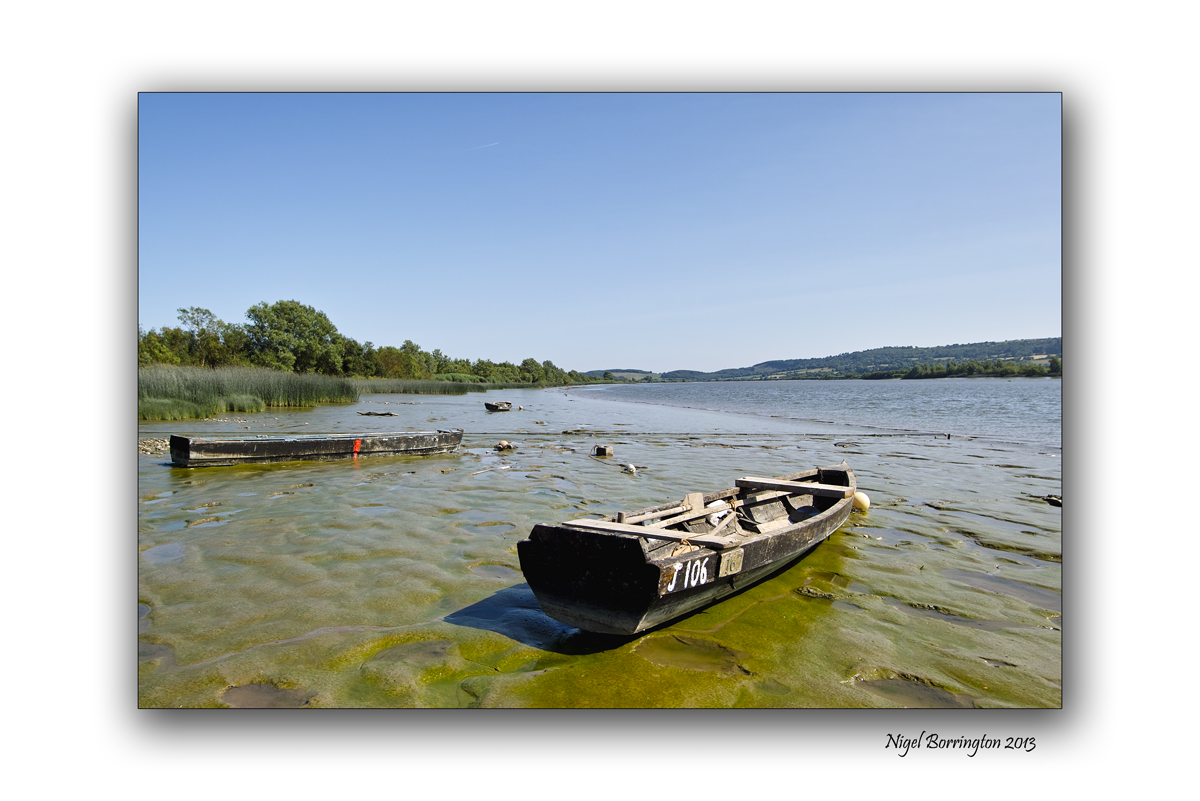
Sigma SD15, 15-30mm lens, iso 50
Fishing Boats on the River Suir, County Waterford
Landscape Photography : Nigel Borrington
Its the weekend so why not find a river bank to sit on and let time pass you by …….
Sunset over Rome
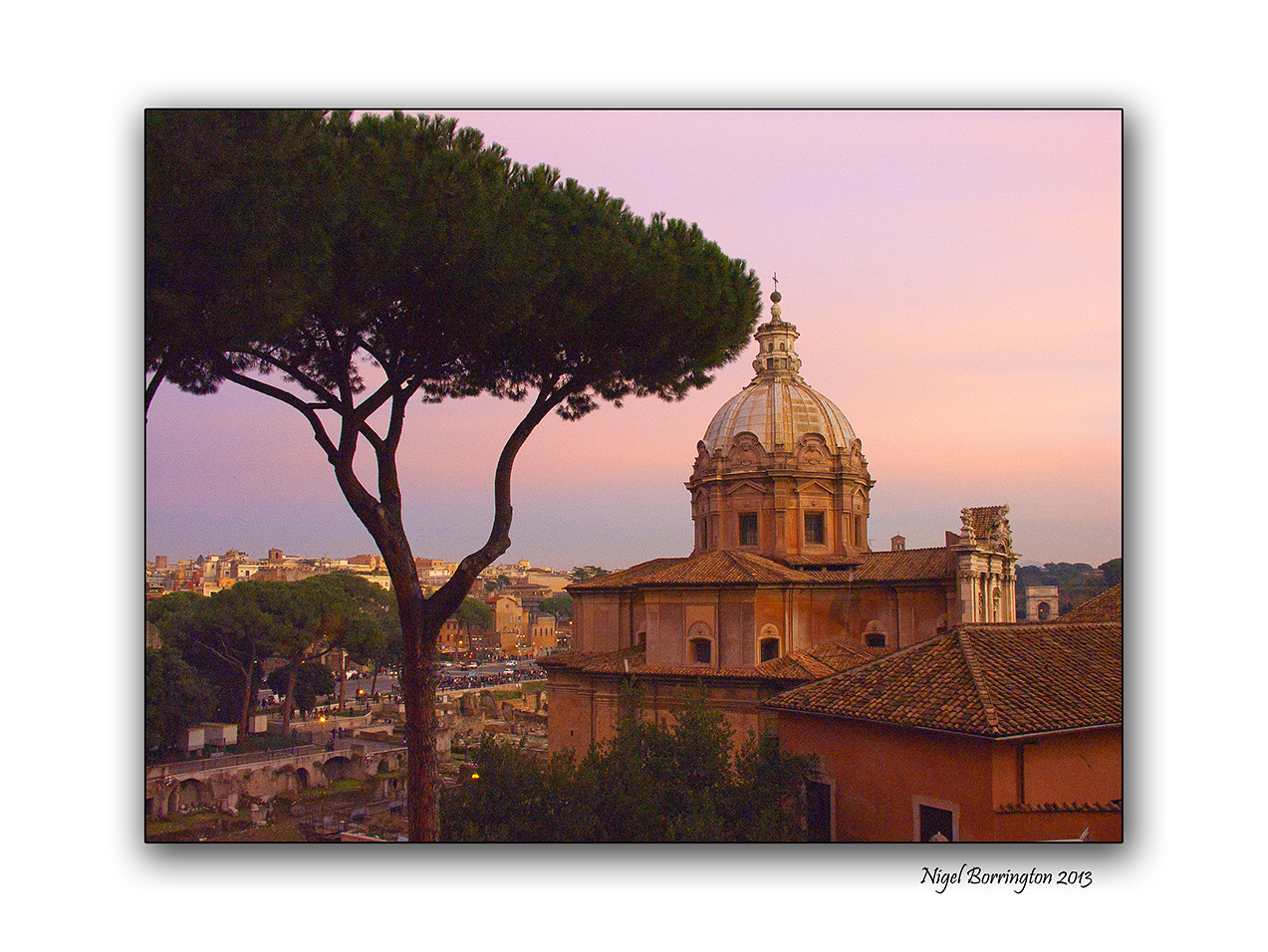
All Images using a Nikon D90, 18-200mm vr2 lens, iso 600
A Roman sunset
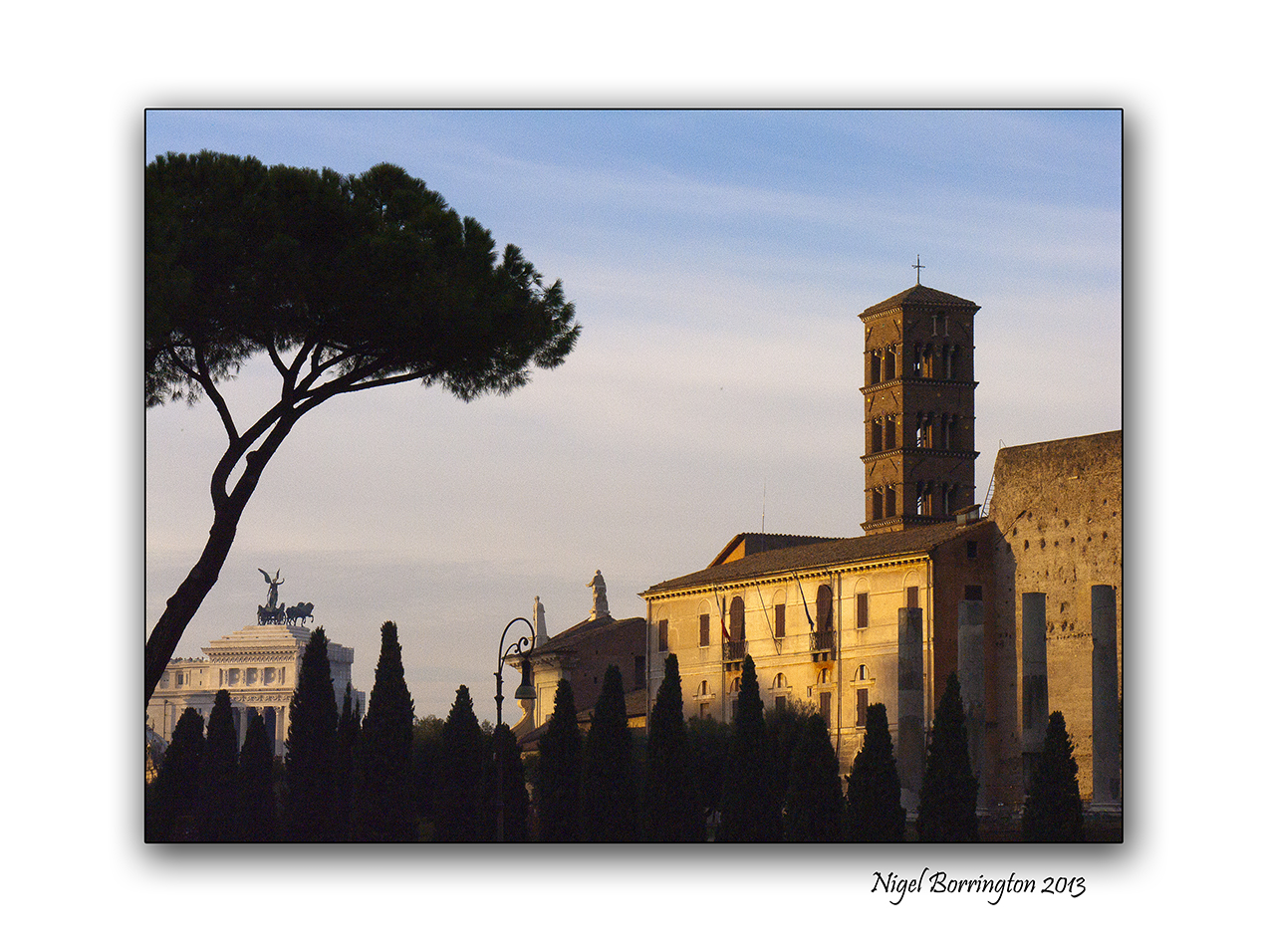
These images where taken on the last evening of a trip to Rome two years ago, its was one of the best city holidays I have ever been on and the last days weather was just amazing. My brother had already left on a train from Rome’s Termini train Station and my own bus to the airport was only about an hour away but the sunset was just wonderful so of I went in a mad rush to get some images and here they are.
They cost me €80 to get, as this was the cost of the taxi, by the time I got to the bus – well I only got a view of the back of it as it speeded away minus myself.
Sunset over Rome – a Gallery


Boating at the lake district

All images taken using a Nikon D7000, 18-200 VR2 lens.
Images from the English, Lake district national park
Landscape Photography : Nigel Borrington
The Lake district national park
I just want to spend sometime today away from Ireland, my fathers family are from the Windermere area in the lake district and until recent years we still had at least one relative living here. I have visited may times and enjoyed boating on the lakes here as much as possible.
So I just want to share some images I have taken during these trips, its a wonderful part of the UK and if you get a chance I would most definitely recommend you spend a week here.
Boating on the lakes – A Gallery


Kilkenny photography – a farming gallery
All images using a Nikon D7000, 35mm focus length, iso 200
Images of framing in county Kilkenny
Landscape photography : Nigel Borrington
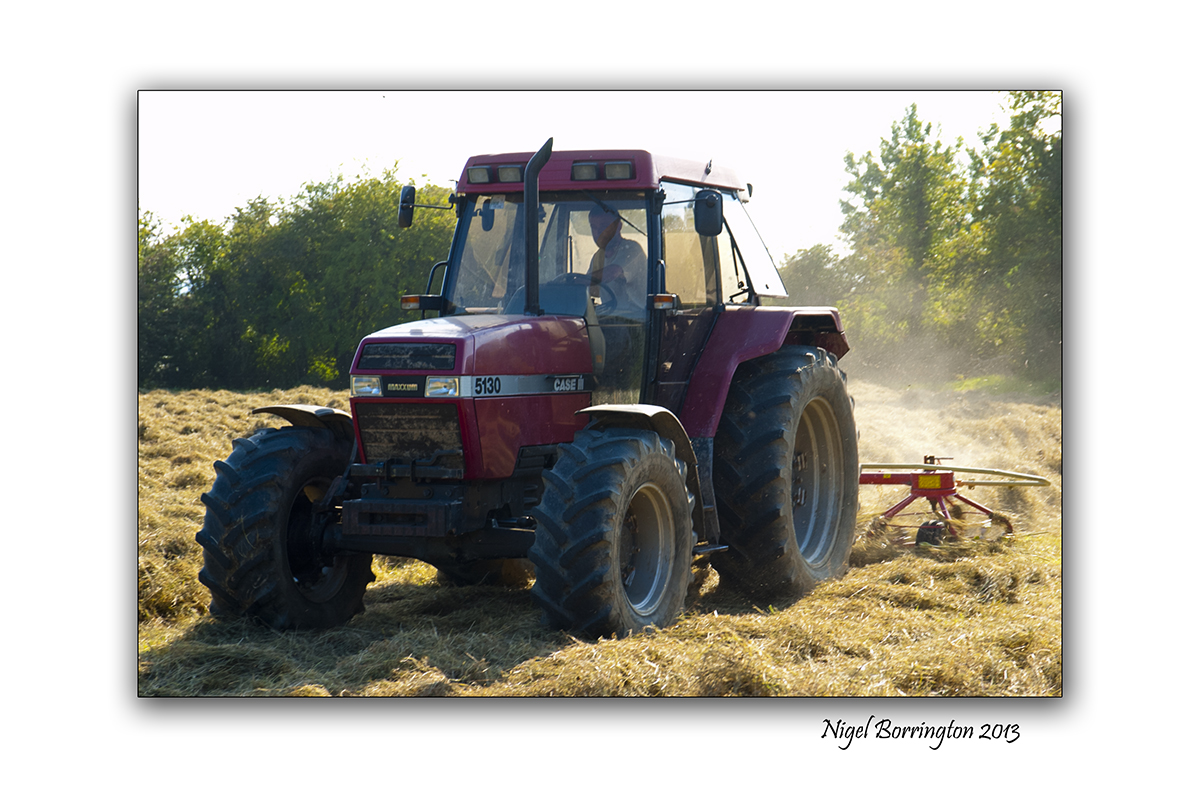
By far the biggest industry in county Kilkenny is farming, The main land use is grassland, dairy farming and tillage farming especially around Kilkenny City and in the fertile central plain of the Nore Valley. Conifer forests are found on the upland areas.
Last year I set out to produce a collection of farming images and have worked with some of the counties Farmers on this. The images below are just some of the pictures so far, its a pleasure to be working out in the fields and watches the work being carried out.
Images from the farm – Gallery


Images for a summers day – Water Lilies

Fujifilm X100, 35mm lens, iso L100
Water Lilies at the butler house gardens, county kilkenny
Irish landscape photography : Nigel Borrington
Two more images to help cool down a little on what is going to be a very warm day here in Kilkenny, these images are taken in the Butler house gardens, county kilkenny. I will post fully at some point very soon on this wonderful location but just for now here are these very cooling water lilies.

Fujifilm X100, 35mm lens, iso L100
Water Lilies at the butler house gardens, county kilkenny
Irish landscape photography : Nigel Borrington
Fishing boats at Castletownbere

Nikon D700, 18-200mm vr 2 lens, iso 100
Fishing boats at Castletownbere, west cork
Irish landscape photography : Nigel Borrington
Fishing boats at Castletownbere and a cool Sea Breeze
Another very warm morning here in Ireland it’s already 24’oc and it was warm over night, sleeping with all the bedroom windows open.
I thought I would find an image to post that at least created a cooler feeling, so here we are, these two fishing boats at the harbour of Castletownbere, West cork. I took this image a little time back while I sat on the wall of the quays in the town and watched the boats coming and going for the afternoon. From what I can remember the temperature was about the same as today.
The River Walk

Nikon D7000, 28mm f2.8 lens, iso 100
River Suir, Clonmel, County Tipperary
Irish Landscape Photography : Nigel Borrington
The River Walk
By : Joshua Bosworth
Further up the river shall we go
The tangled trees above, mirrored below.
Throwing rocks, watching as the ripples spread
on Into our lives.

Nikon D7000, 28mm f2.8 lens, iso 100
River Suir, Clonmel, County Tipperary
Irish Landscape Photography : Nigel Borrington
The thoughts within our head,
Fleeting moments as what stirs behind us
Embraced in a silence, no one can find us
Swinging, past, present, new laughs, old memory’s
faint whispers of a future, soon we’ll see.
Come further up the river with me.
.
An Irish sunset
Nikon D7000, 50mm f1.4 lens, iso 100
An Irish Sunset
Landscape photography By: Nigel Borrington
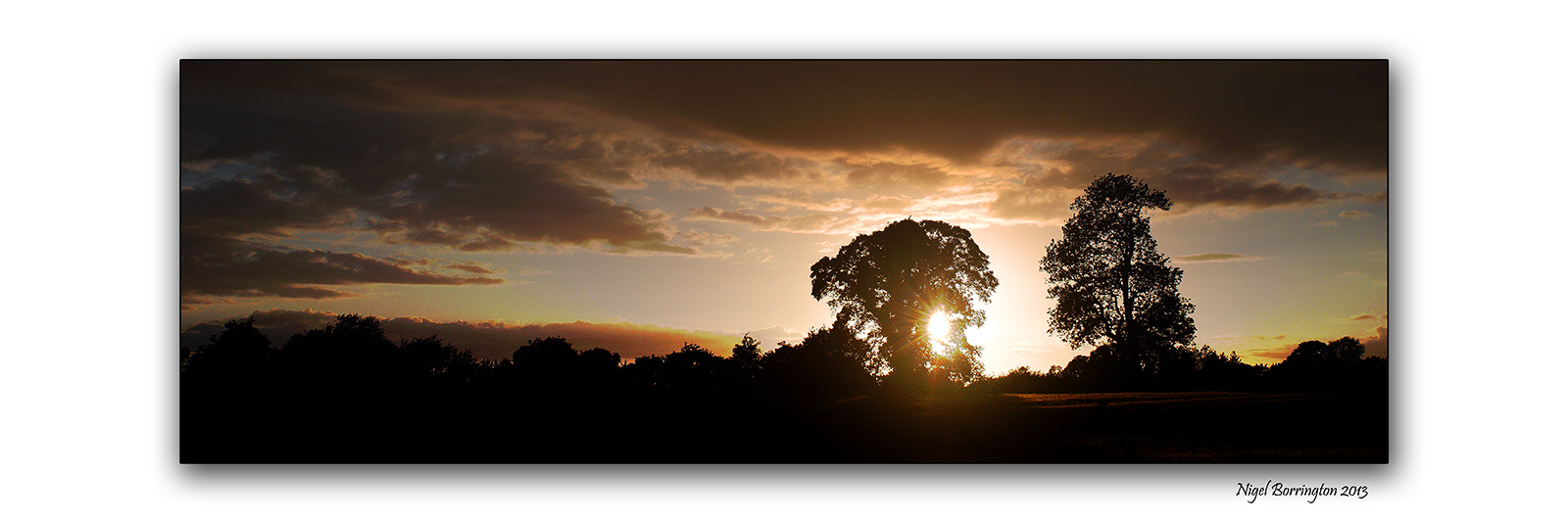
The last few days here in Ireland have been just wonderful, the weather has been like old times, long summer days in the sun and the country.
So time for a Poem :
by Lakota
As I lay in the grass,
The blades brushing against my neck,
I stare at the sky; washed with
orange; splashed with pink.
As the sun dips slowly lower,
fading from my near-distant sight.
Giving the gift of colour to the sky,
and I blink once, and it’s gone.
As I think of nature, love, and time,
I hear music, softly piercing my ears.
The pipes, and pan-flute, the beat of the bohdran and fiddle,
I let out a sigh of contentment, and close my eyes.
It’s here, that I’m home.
Lismore Castle

Sigma SD15, 15-30mm f3.5-4.5 lens, Iso 50
Lismore Castle, country Waterford
Irish Landscape photography : Nigel Borrington
Lismore Castle, county Waterford
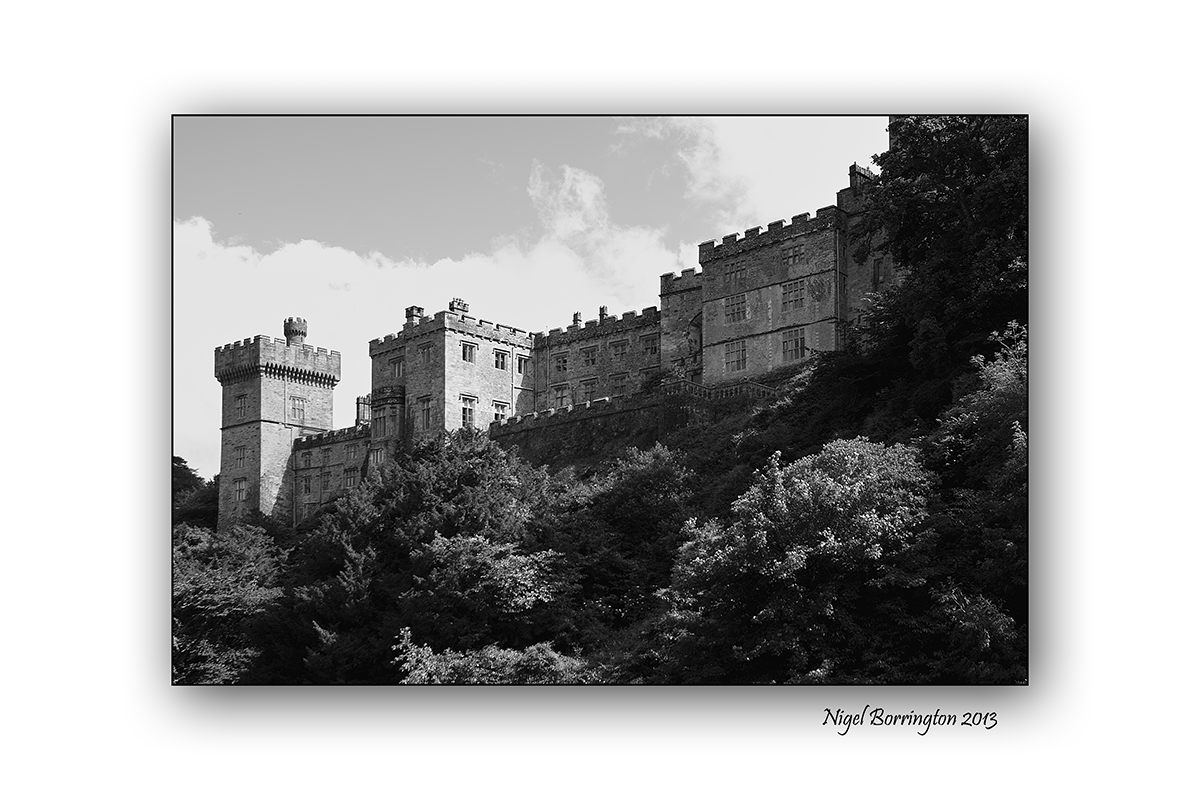
The town of lismore sits on the banks of the Blackwater river, as it flows through county waterford. The town is small with a population of about 1500 people.
I have visited the town many times, a farmers and craft market is held each Sunday morning just outside the gates of the Castle, there is also one of Ireland’s best rural arts galleries here.
The town is the location of Lismore castle and it’s one of Ireland’s longest standing building, of it’s kind.
Its described as follows below:
Lismore castle : Early history
The castle site was originally occupied by Lismore Abbey, an important monastery and seat of learning established in the early 7th century. It was still an ecclesiastical centre when Henry II, King of England stayed here in 1171, and except for a brief period after 1185 when his son King John of England built a ‘castellum’ here, it served as the episcopal residence of the local bishop. In 1589, Lismore was leased and later acquired by Sir Walter Raleigh. Raleigh sold the property during his imprisonment for High Treason in 1602 to another infamous colonial adventurer, Richard Boyle, later 1st Earl of Cork.
Boyle came to Ireland from England in 1588 with only twenty-seven pounds in capital and proceeded to amass an extraordinary fortune. After purchasing Lismore he made it his principal seat and transformed it into a magnificent residence with impressive gabled ranges each side of the courtyard. He also built a castellated outer wall and a gatehouse known as the Riding Gate. The principal apartments were decorated with fretwork plaster ceilings, tapestry hangings, embroidered silks and velvet. It was here in 1627 that Robert Boyle The Father of Modern Chemistry, the fourteenth of the Earl’s fifteen children, was born. The castle descended to another Richard Boyle, 4th Earl of Cork & 3rd Earl of Burlington, who was a noted influence on Georgian architecture (and known in architectural histories as the Earl of Burlington).
Lismore featured in the Cromwellian wars when, in 1645, a force of Catholic confederacy commanded by Lord Castlehaven sacked the town and Castle. Some restoration was carried out by Richard Boyle, 2nd Earl of Cork (1612-1698) to make it habitable again but neither he nor his successors lived at Lismore.
The Dukes of Devonshire

The castle (along with other Boyle properties – Chiswick House, Burlington House, Bolton Abbey and Londesborough Hall) was acquired by the Cavendish family in 1753.
The daughter and heiress of the 4th Earl of Cork, Lady Charlotte Boyle (1731-1754) married William Cavendish, 4th Duke of Devonshire, a future Prime Minister of Great Britain & Ireland.
Their son, the 5th Duke (1748-1811) carried out improvements at Lismore, notably the bridge across the river Blackwater in 1775 designed by Cork-born architect Thomas Ivory.
.
Castle Gardens
The castle’s gardens are open to the public and feature contemporary sculptures, including works by Anthony Gormley, Marzia Colonna and Eilís O’Connell. The upper garden is a 17th-century walled garden while much of the informal lower garden was designed in the 19th century.
You can visit the Gardens of the Castle during the summer months for a fee of €8 and they are wonderful.
Gallery of Lismore
For the best views of the castle itself you need to cross the river and enter the fields below the castle on the other side of the bridge crossing the Blackwater river.
I spent a couple of hours in these fields just walking along the river and taking some photo’s of the castle above me, its just a wonderful spot to sit down and watch the fish jumping and the Herons hunting for fish in the river.
The Images Below are just some that I took, I hope they have captures a sense of this place…..

Sigma SD15, 15-30mm f3.5-4.5 lens, Iso 50
Lismore Castle, country Waterford
Irish Landscape photography : Nigel Borrington
Sigma SD15, 15-30mm f3.5-4.5 lens, Iso 50
Lismore Castle, country Waterford
Irish Landscape photography : Nigel Borrington

Sigma SD15, 15-30mm f3.5-4.5 lens, Iso 50
Lismore Castle, country Waterford
Irish Landscape photography : Nigel Borrington

Sigma SD15, 15-30mm f3.5-4.5 lens, Iso 50
Lismore Castle, country Waterford
Irish Landscape photography : Nigel Borrington

Sigma SD15, 15-30mm f3.5-4.5 lens, Iso 50
Blackwater river/Lismore Castle, country Waterford
Irish Landscape photography : Nigel Borrington

Sigma SD15, 15-30mm f3.5-4.5 lens, Iso 50
Blackwater river/Lismore Castle, country Waterford
Irish Landscape photography : Nigel Borrington
Wild strawberries

Nikon D7000, 105mm macro lens, iso 200
Wild strawberries, slate quarries, county Kilkenny
Nature photography : Nigel Borrington
Wild Strawberries
Each June and July growing locally we have lots of wild strawberries, they do best in dry and well drained ground such a raised hedgerows or like these ones, along a river bank in a disused slate quarry near the village of Windgap, County KIlkenny.
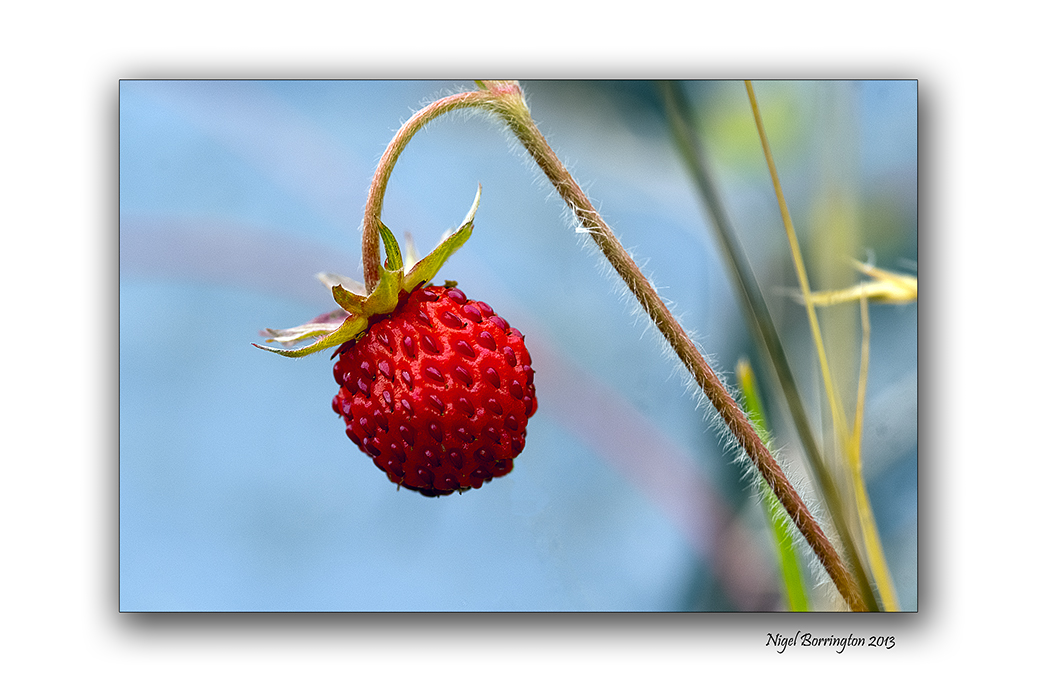
Nikon D7000, 105mm macro lens, iso 200
Wild strawberries, slate quarries, county Kilkenny
Nature photography : Nigel Borrington
Wild Strawberries : Wikipeadia
Sunday evenings, time for some sunset thinking.

Fujifilm x100, 35mm lens, iso 100
Lower Lake of Killarney, County Kerry
Irish Landscape Photography : Nigel Borrington
Sunday evenings are to myself the end of another week, they mark a time to clear your mind. To think about a new week and to define the end of the last, what-ever happened last week (good or bad) has gone.
It time for some ……..
Sunset Thinking
Do you ever watch the sunset
And just sit and think about things
Just you and the sky and darkness
Giving your thoughts some wings
Perhaps you’ve got some troubles
And don’t know what to do
Or you just plain need to get away
To spend a little time with you
Sunset beauty makes you feel as though
Your life has meaning after all
To see a sight so extraordinary
Makes you feel capable, strong and tall
It’s funny how flashes of color
Like a sunset or sunrise can inspire
It can calm your inner self a bit
It’s a scene you can never tire
The serenity gives you a chance
To put things in perspective
Life can be overwhelming at times
And a sunset can be reflective
So when the sky lights up next time
Let your gaze do some drinking
Soak up all the amazing sights
And do some sunset thinking!
Written by : Marilyn Lott
Its the weekend so…..

Nikon D7000, 18-200mm vr2 lens, iso 100
Saltee Islands, County wexford
Irish Landscape Photogrpahy : Nigel Borrington
Its the weekend so why not do something like find an island and take some pictures, sit down and draw the landscape or just take in the view and empty your mind.

Nikon D7000, 18-200mm vr2 lens, iso 100
Saltee Islands, County wexford
Irish Landscape Photogrpahy : Nigel Borrington
Kilcooley Abbey

All images using a Sigma SD15, 15-30mm lens, iso 50
A sense of place, Kilcooley Abbey, county Tipperary
Irish Landscape Photography : Nigel Borrington
Kilcooley Abbey, County Tipperary
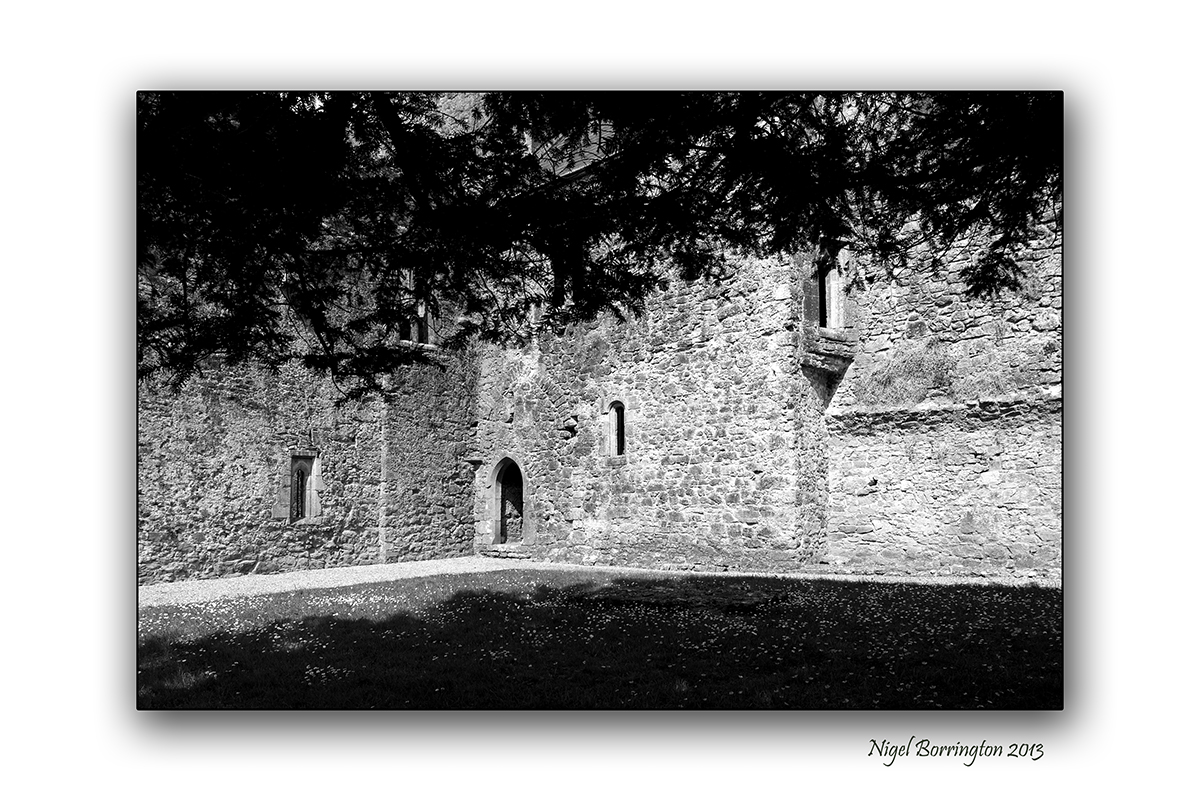
Kilcooley Abbey is a Cistercian Abbey close to the Village of Gortnahoe,in Co Tipperary, located within the grounds of the Kilcooley Estate. This abbey dates from 1182 when Donal Mor O’ Brien granted lands to the Cistercians, to build an abbey here. The abbey which is a sister house to both Jerpoint Abbey and Holy Cross Abbey, is considered to be a hidden gem,tucked away in this remote corner of Co. Tipperary. The Abbey is found inside a walled estate.
The main part of the abbey consists of the Entrance Chamber, the Church, the Tower and the Sacristy. The Entrance Chamber has a well carved baptismal font on its south wall. The nave of the church is still roofed but the rest of it is out in the open. The church has two large carved windows on its east and west side. The chancel contains two stone tombs and a stone altar. One of these tombs is that of the knight Piers Fitz Oge Butler. His tomb records his death as taking place in 1526 and has some beautiful carvings of 10 apostles on the side of it carved by Rory O Tunney who is also noted for his work in Jerpoint Abbey. On top of Butler tomb there is the effigy of a knight with a dog curled up at his feet. The knight though hasn’t fared well through the years and most of his face has been chipped off. The Sacristy is entered through a magnificent carved archway which has many carvings such as a scene depicting the crucifixion and more bizarrely a mermaid holding a mirror which was meant to depict vanity. Roger Stalley suspects this screen wall may represent the entrance to a private Butler chapel, as two Butler shields are depicted. The east end of the nave is notable, because seats for the officiating clergy have been carved into the crossing piers. The work here is very fine, but does not have the sculptural finesse of nearby Holycross Abbey.

Outside the abbey there is also a beehive shaped ruin. It isn’t known whether this was used as a Columbarium to store ashes or a dove-cote for pigeons. But most probably it was a dove-cote since there is a 3-foot (0.91 m) wide hole in the ceiling from which they would have entered and left. Also outside the abbey is the Infirmary which is still in a fairly good condition although access to the roof of it is blocked.
The Cloisters of the abbey are long gone with only one column still remaining. The path of the cloisters though still remains with a pebbled walkway around the grass square. The centre even has a large tree growing in it. Beside the Cloisters the Parlour and Chapter House are still there. Also the Calefactory (Warming room) still remains but without a roof. And on the south side of the Cloisters the Monks Dining Hall still stands. The dining hall although it has no roof still has a spiral staircase but this sadly has been barred up because of an ever increasing Irish-to-American(sue-happy)society. You’ll also find all the second floor rooms such as the Monks Dorms and the Main Tower locked up by a certain Office of Public Works and for some reason the Parlour, Chapter House and Calefactory are also barred. But don’t let this deter you from visiting one of the most comprehensive abbeys in Ireland.
Kilcooly Abbey was also used in the making of the film by John Boorman “Excalibur” based on the tale of King Arthur and the knights of the round table. There is an interesting pyramid structure on the grounds of the abbey.
Gallery images



The Poppy fields of Duckets grove

All images using a Nikon D7000, 80-200 f2.8 Manual focus lens, iso 400
Poppy field around duckets grover, county Carlow
Landscape photography : Nigel Borrington
June is the Month of the poppy here in Ireland and I just love this little flower, its mainly known for growing along the sides of roads or rail lines. This is mainly because the earth on this land has been turned over and the seeds of the poppies have been moved back to a depth that they can grow again.
It’s not that common here unlike France or main land Europe to see full fields of poppies, one location I have found were this is true is around the remains of the old house at Duckets grove, County Carlow.
These images were taken one evening in June, the light was fading and a tripod was needed with the camera but I think the low light has resulted in some strong reds and deep greens for these images. they have been enhanced this a little in photoshop but I did need to do to much work.
Gallery


This Sparrowhawk, in our Garden

Nikon D7000, 18-200mm lens, iso 400
A Sparrow-hawk in our garden
Photography by : Nigel borrington
One Saturday afternoon last summer I arrived back from a morning visit to a local wildlife reserve, I had got some good images mostly of a fox sitting in a field just outside the woods.
I sat down in our garden with a cup of tea and started looking at my fox friend on the back of the camera, Right in front of my view landed this young and fantastic looking Sparrowhawk. As he was so close to the table I wondered if even to lift the camera would make him fly off but I had to do something, so I slowly put the camera to my eye and just for a moment he did move his head but I took about five shots and stopped just to check that the noise of the camera had not made him fly off.
In the end he stayed on the fence for about four minutes looking around the garden and letting me get some more images, we have bird feeders and I think he knew exactly what he was looking for. Sometime they very thing your looking for is under your nose!
The following web page is a great little description on the Sparrowhawk in Ireland.
I walked through an ancient path, woodland poems
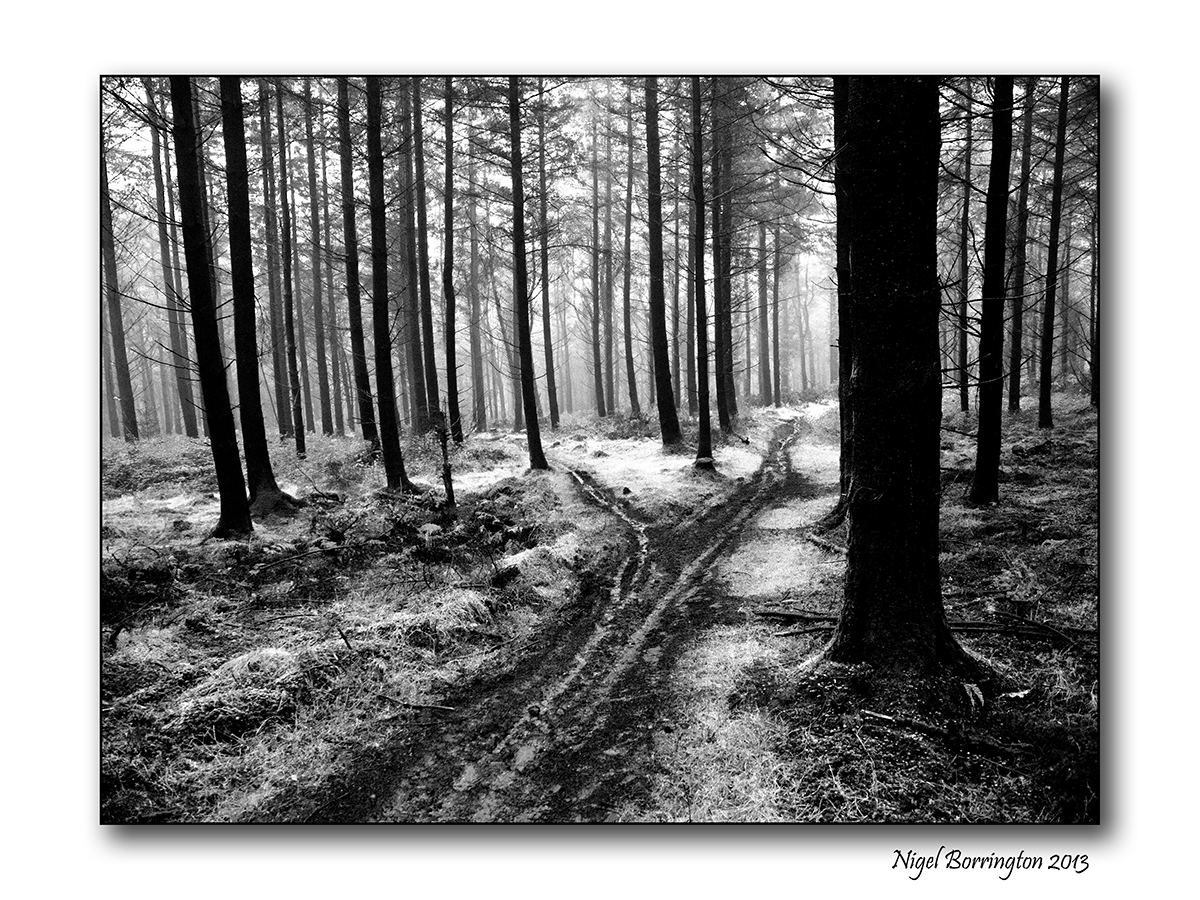
Fujifilm x100, 35mm focus length, iso 800
Kilkenny woodlands
Landscape photography : Nigel Borrington
A woodland walk
I walked through ancient paths,
where hidden mysteries lay
beneath our feet
and a choir of birds sing out loud,
with jewels dancing in the air.

Scrunching feet walk along
the twisting paths which
zigzag their way through
tall giants. Giants who
stand next to us.
While stepping on the
bones of the past,
sweet smells turn orange to red.
The giants form a roof with windows.
Sheltering the emerald flowers that
dapple the green carpet.
Spider webs shimmer like silver silk
as they whisper their secrets.
I walked those ancient paths.
………………………
A Woodland Walk
I took a walk today,
where the trees like giants,
held up the sky.
The breeze tickled the leaves

Many people have walked
on these ancient paths,
Discovering hidden secrets,
Foxes hiding in the shadows,
birds calling from the tree tops.
I took a walk today
and passed a trickling stream,
Where leaves crunched underfoot.
Water ran over boulders,
as it tumbled down the bank.
In the dappled shade,
jewel like light hits the ground.
Flies hang in the air, dancing.
What a wonderful walk!
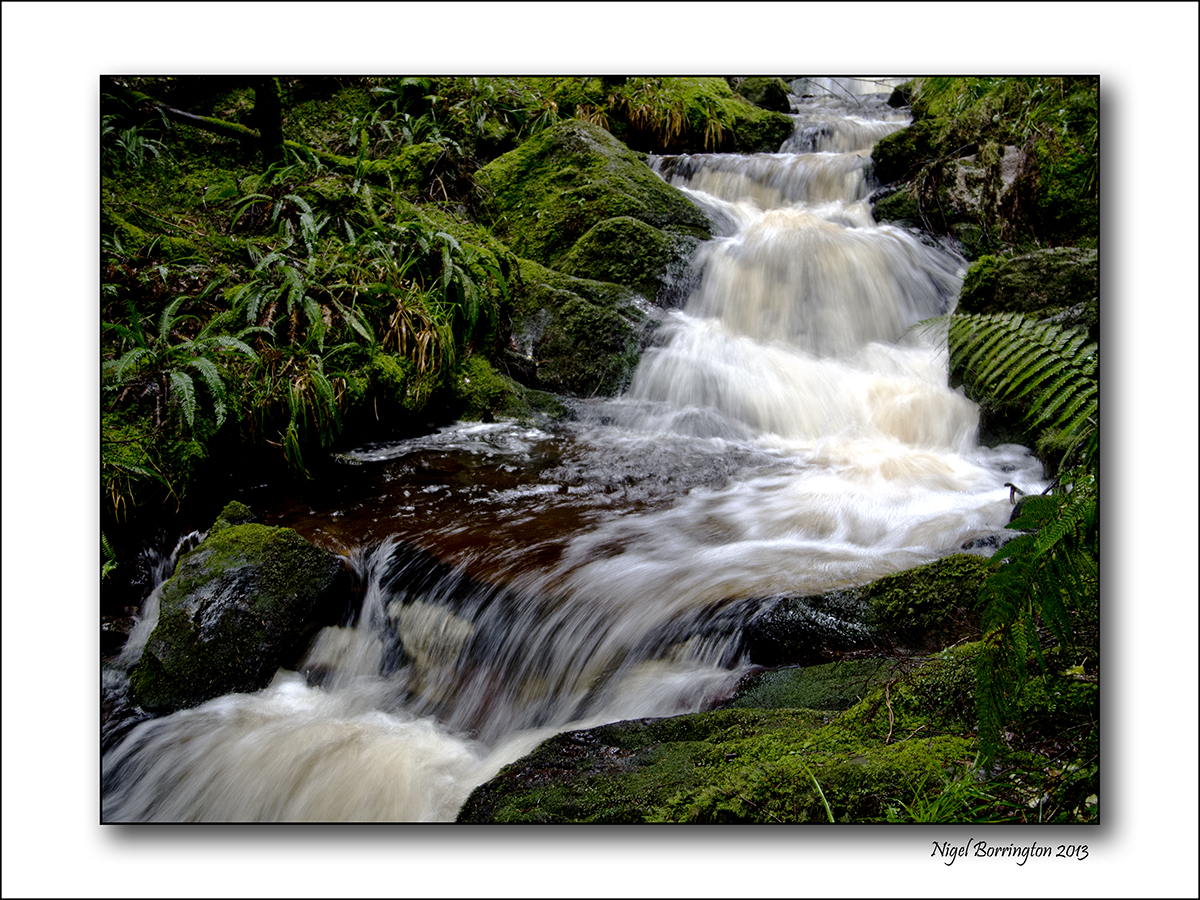
Spirit
Spirit
Wading in a river of beauty and vibrant light,
A stream of emotion where words have no sound,
In silence of feelings so ‘noisily’ present,
Invading the ‘space’, no invite, but welcomed.
In colours of raindrops entering Whole,
Captivates, Inspires, Instils formless form,
Facets of dreamtimes, of Faeries and wishes,
The Drum-Beat ‘awakens’ the feelings of Calm.
Dancing in a river of beauty and vibrant light,
A waterfall of emotion where words feel no force,
An earthquake of feelings so tenderly entered,
Accepted in Space, invited and warm.
Poem By : Ri
Pagan’s and the Immortal Spirit
Pagan’s have a belief in the immortality of the spirit and in the unending cycles of the Seasons and life itself: birth, death, and rebirth. They believe that the spirit is nature itself. Life and its Spirit is in every part of everything that surrounds us, it cannot be separated from it. Pagan God’s take their form as a part of this, they have to respect life and nature just like we do. Even though they control individual elements they cannot ignore all the other gods and their elements in doing so.
 Nigel Borrington
Monday morning, Sunrise
Nikon D7000, 35mm focus, iso 100
Monday morning sunrise
Landscape photography : Nigel Borrington
A Monday sunrise
Up early this morning I returned to the same location as I walked in yesterday afternoon.
It is near a place called Ahenny, County Kilkenny. the road from the village rises up over some hills and at the top offers some great views of both county’s Kilkenny and Tipperary. The Sun has risen a little time before and is just hiding its self behind some clouds. It has been totally blue sky’s for about ten days which for Ireland is very rare, this morning however we have some light cloud cover that is moving inland.
Monday Morning’s and starting a new week, well I feel a little cloudy myself this morning for some reason and need to get moving but just for a moment I stop to look at the views. When you work for yourself is would be very easy to just give in to these views and stay here for the day just looking at any changes that the day will bring to the landscape, the movement of the sun, farmers working in the fields, wildlife moving its way across the land.
We live our lives as part of this moving landscape below, yet how often do we stop and look at it. We just keep moving in it, life flying past.
Maybe just now and then we should press the stop button and stand still for once, maybe to truly stop and look at all this movement will give use something of a gift. A gift that we can use once we see everything for what it is.
Examining the movement of life may help you understand, needed movement the things we need to do, the things we want to do and then the things we just do for no valid reason what so ever. Pointless time spent doing things just because we always do them. Never stopping to see that we don’t need to do these things they are not doing anything for us or for anyone.
I have a feeling just looking at the week starting that my future is in this story somewhere, finding the things I should be doing, the things I want to do but most of all cutting out the things I just do not have any reason or obligation to do.
Nikon D7000, 35mm focus, iso 100
Monday morning sunrise
Landscape photography : Nigel Borrington
July 15, 2013 | Categories: Comment, Landscape | Tags: Irish photography, Landscape, monday, Nigel Borrington, Nikon D7000, organisational skills, personal development | 15 Comments