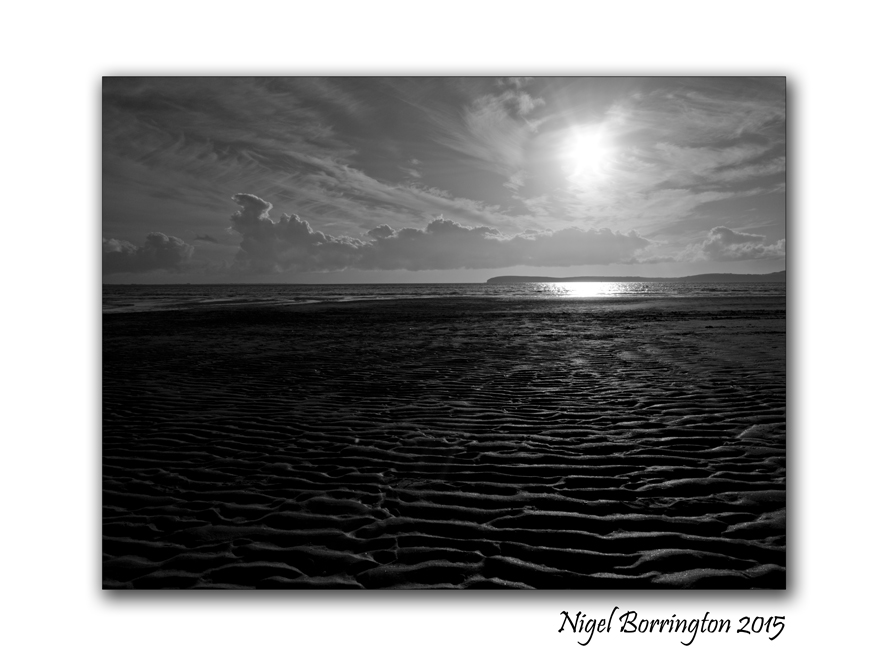
Monday Mornings , An October’s beach in Black and White ….
Irish Landscape Photography : Nigel Borrington
October in Black and white.
Monday the 5th of October !
Monday Mornings are always a little like stepping onto a beach in the early Morning light, you wonder what you will find as you walk through the dunes and take your first steps into the sand. Many – many times you have been here before but seeing the beach again each morning you never now what has changed over night.
New drift wood, the ripples in the sand from the overnight tide and foot steps left by other early morning walkers, all these things will change the path you have to take as you take your own walk!


Slievenamon, County Tipperary , Rock Balancing on the top of the World
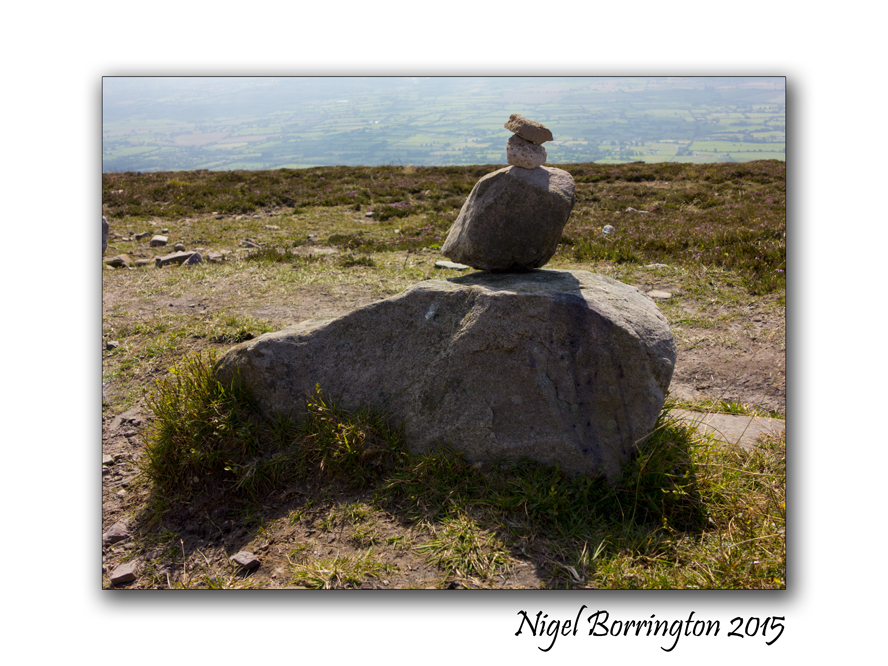
Slievenamon, County Tipperary , Rock Balancing on the top of the World.
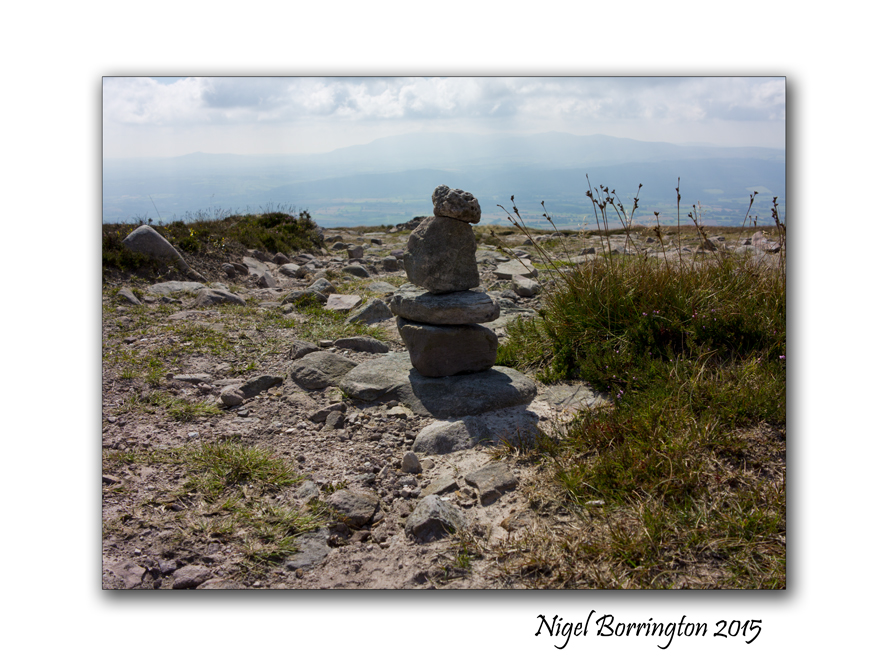
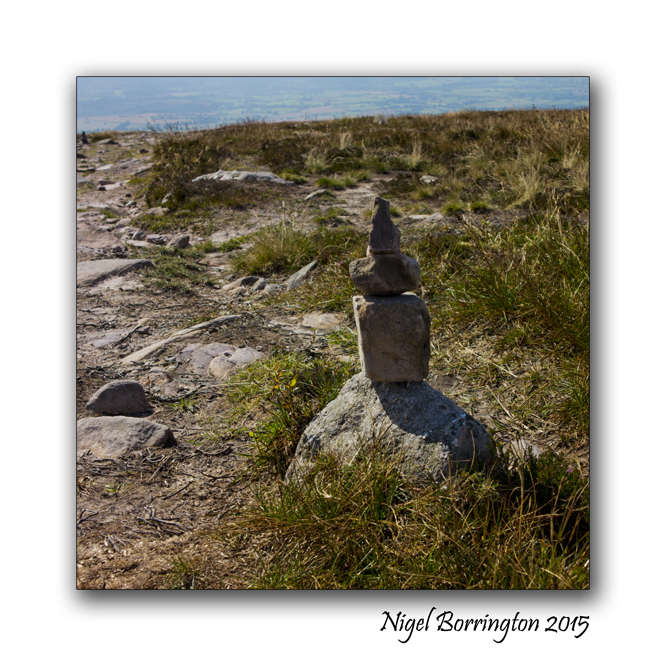
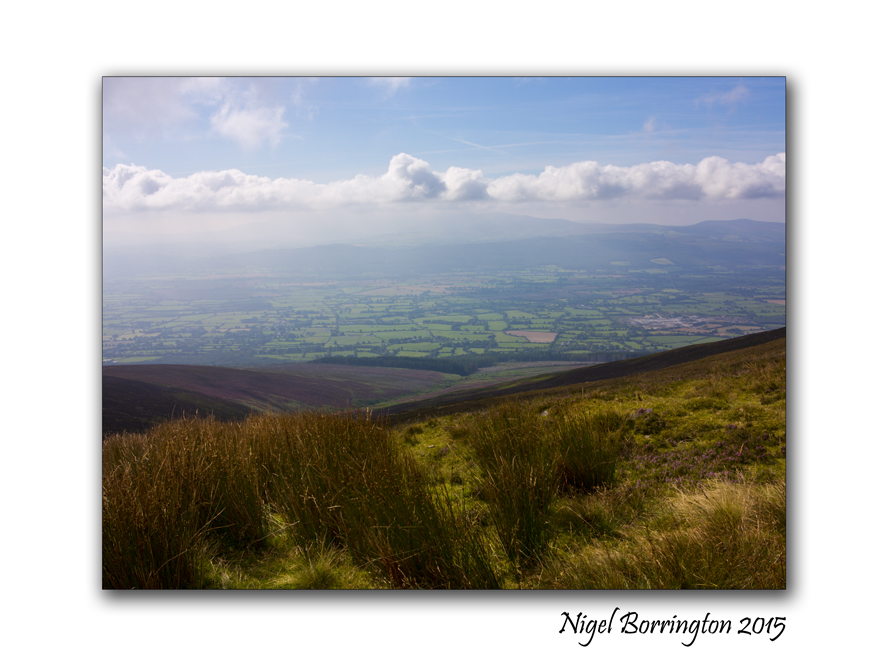
During a recent walk up to the top of our Local Mountain (Slievenamon, county Tipperary), I came across many great examples of the art of Rock Balancing, Sadly whoever it was that had spent so much time putting these sculptures together had already left so I could not get any pictures of them working so creatively.
I still got lots of images and just wanted to share them here as a record of such great acts of creativity. The thing that impressed me the most was not so much each sculpture ( Although each was great to see ! ) but the number of them and what better location for them than the roof of the world , the very top of Slievenamon the spiritual home for anyone from county Tipperary.
Gallery


County Waterford , Ireland – An October’s walk along the Coast.

An October walk along the Waterford coast
Irish Landscape Photography
Nigel Borrington
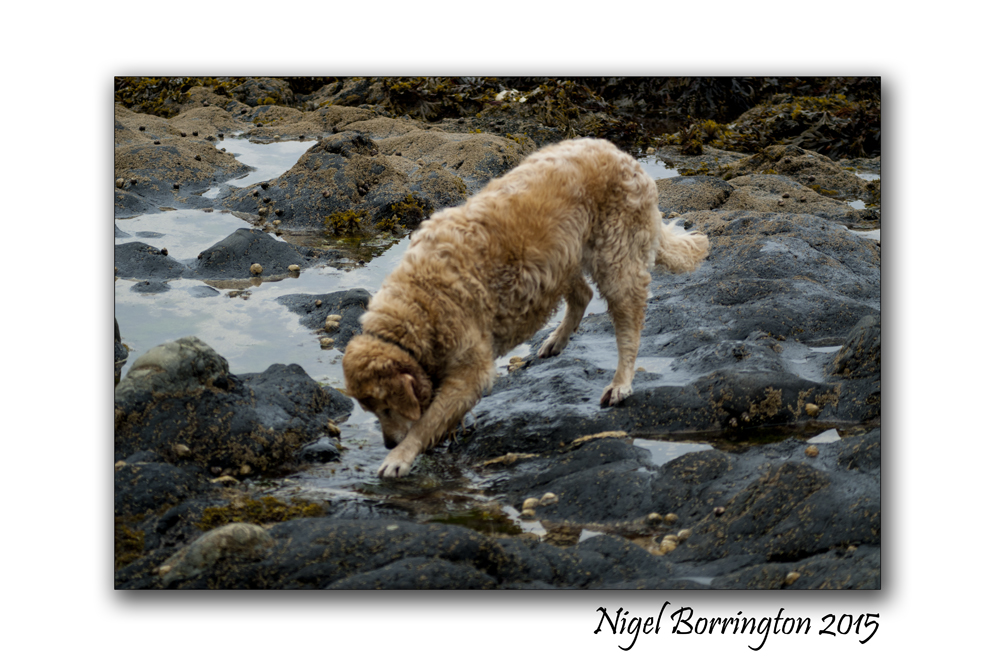
Molly is our 12 and 1/2 year old Golden retriever and she loves nothing more than being in and around water – as often as she can !!! Rivers, Lakes, and the Sea. I often think that if it was not for her I would not have visited as many wonderful places here in Ireland, just trying to keep her walked and fit!!!, but being over 12 years old now, she has slowed down a little but still loves her swimming and coastal visits.
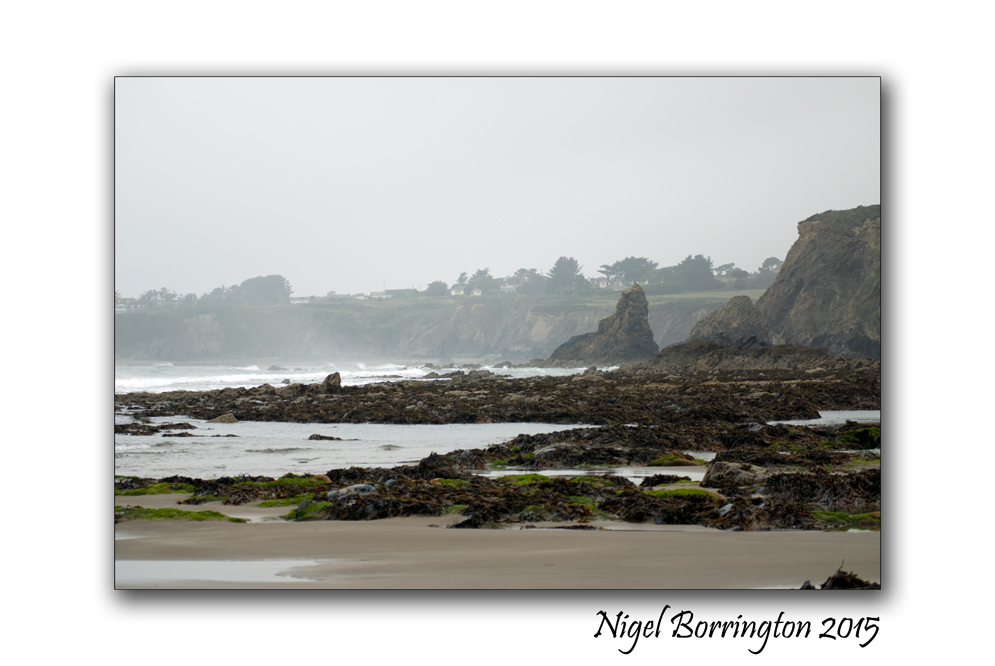
I also love visiting the Irish coastline, our nearest locations are along the county Waterford coast, with its rocky small coves and caves its just a perfect and dramatic coastline in many ways.
October is a great month for these visits as the mornings bring rolling in sea mists and dramatic waves as the temperatures slide slowly into the winter months …..
A walk along the Waterford coast line : Gallery




Once upon a time on MARS, Nasa scientists find evidence of flowing water on Mars

Nasa scientists find evidence of flowing water on Mars
Images of County Cork, Earth
Nigel Borrington
Yesterday NASA held a press conference where they announced that after many decades of exploring the planet of MARS, they have found not only evidence of a lot of water having existed on the planet in the far past but that during the current summer months, MARS has active flows of water.
Nasa scientists find evidence of flowing water on Mars

This got me to wondering, just what MARS could have looked like before it lost its surface water due to climate change. Could it have been that it looked just like the wonderful landscapes we still have here on our own planet ?
Was Mars once like the earth ?

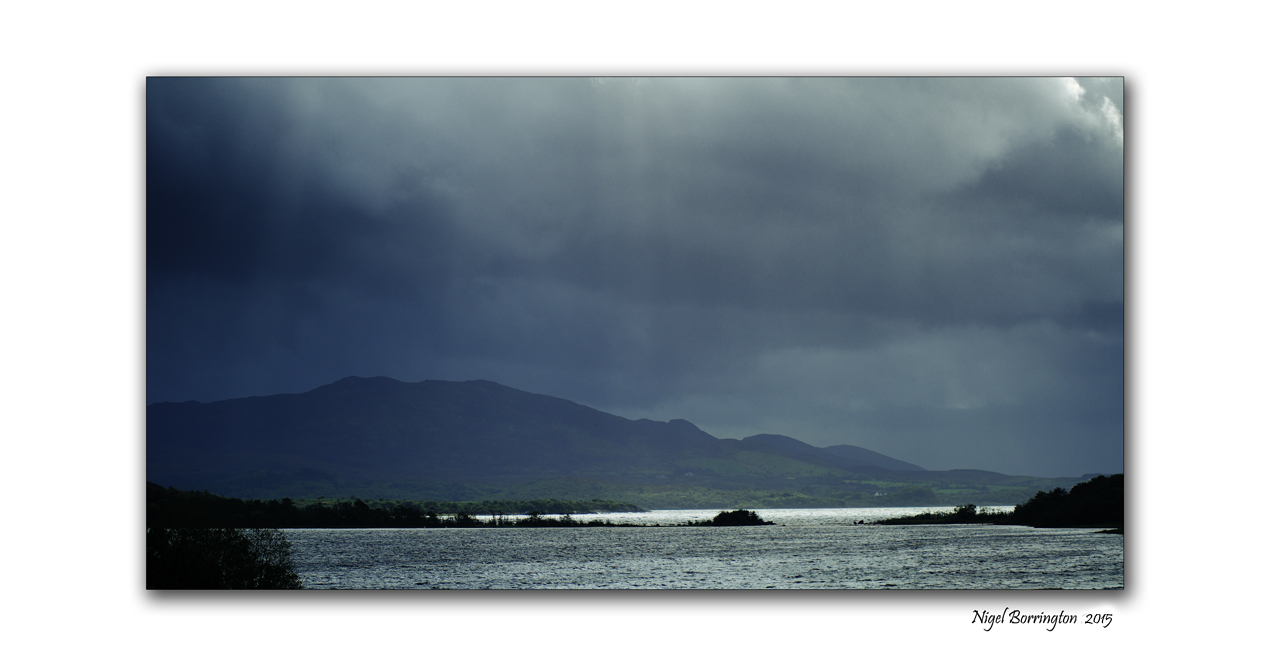

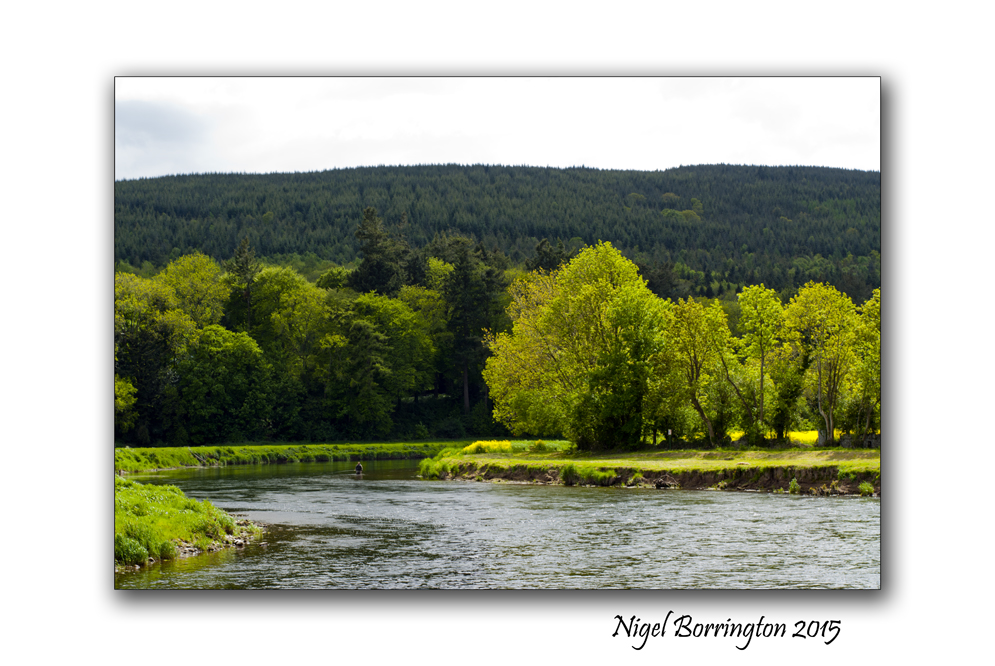


Sunday evening and its time for just drifting …….
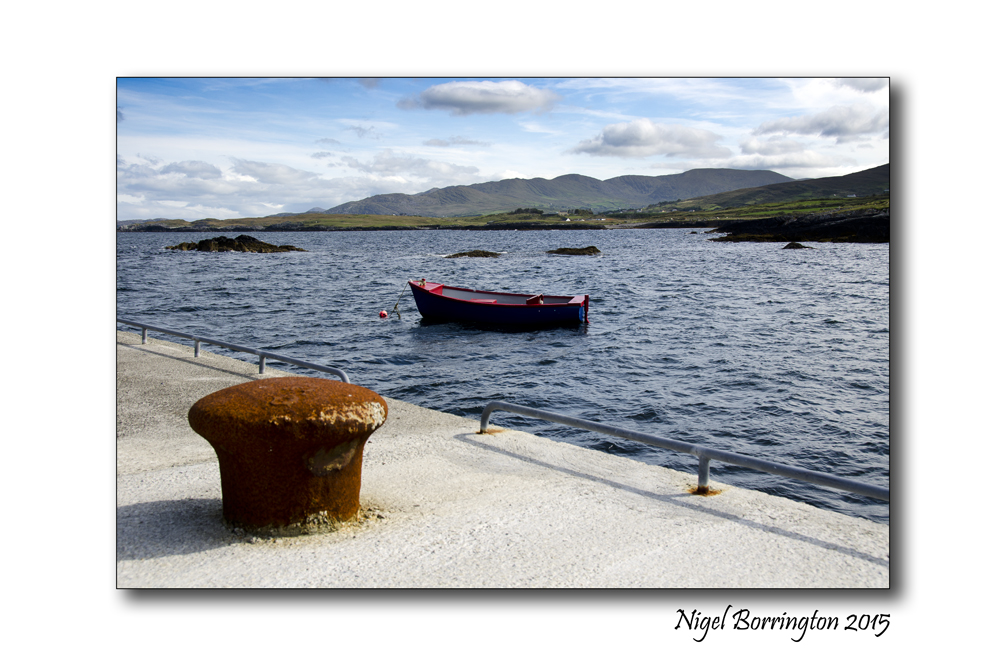
Sunday Evenings
Irish Landscape Photography
Nigel Borrington
Sunday Evenings are a great time of the week , the weekend is almost over, yet you still have a few hours just to drift and hold back the new week ahead of you.
Its all to easy thinking ahead but Sunday evenings ? well maybe they are all about living in the moment !
5 images for the week – Autumn Equinox 2015
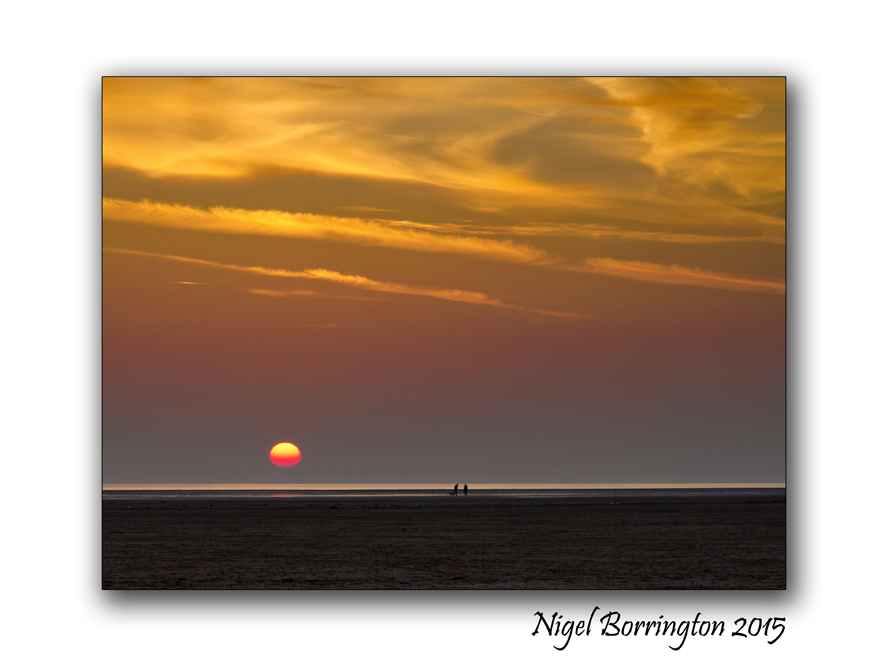
Autumn Equinox 2015
Landscape photography : Nigel Borrington
Sun Crosses Celestial Equator
The September equinox occurs the moment the Sun crosses the celestial equator – the imaginary line in the sky above the Earth’s Equator – from north to south. This happens either on September 22, 23, or 24 every year.
The Axial Tilt
The Earth’s axis is always tilted at an angle of about 23.5° in relation to the ecliptic, the imaginary plane created by the Earth’s path around the Sun. On any other day of the year, either the southern hemisphere or the Northern Hemisphere tilts a little towards the Sun. But on the two equinoxes, the tilt of the Earth’s axis is perpendicular to the Sun’s rays, like the illustration shows.
Why “Equinox”?
On the equinox, night and day are nearly exactly the same length – 12 hours – all over the world. This is the reason it’s called an “equinox”, derived from Latin, meaning “equal night”. However, even if this is widely accepted, it isn’t entirely true. In reality equinoxes don’t have exactly 12 hours of daylight
Customs around the September equinox
The September equinox coincides with many cultural events, observances and customs. It’s also called the “autumnal (fall) equinox” in the northern hemisphere and the “spring equinox” in the Southern Hemisphere.
September Equinox Customs
Ancient Greece
In many cultures, the September equinox is a sign of fall (autumn) in the northern hemisphere. In Greek mythology fall is associated with when the goddess Persephone returns to the underworld to be with her husband Hades. It was supposedly a good time to enact rituals for protection and security as well as reflect on successes or failures from the previous months.
Australia
Aboriginal Australians have, for a long time, had a good knowledge of astronomy and the seasons. Events like the September equinox, which is during the spring in Australia, played a major role in oral traditions in Indigenous Australian culture.
In China
The Mid-Autumn Festival, also known as the Moon Festival, is celebrated around the time of the September equinox. It celebrates the abundance of the summer’s harvest and one of the main foods is the mooncake filled with lotus, sesame seeds, a duck egg or dried fruit.
Japan
Higan, or Higan-e, is a week of Buddhist services observed in Japan during both the September and March equinoxes. Both equinoxes have been national holidays since the Meiji period (1868-1912). Higan means the “other shore” and refers to the spirits of the dead reaching Nirvana. It is a time to remember the dead by visiting, cleaning and decorating their graves.
Pagan celebration: Mabon
On the autumnal equinox, many pagans celebrate Mabon as one of the eight Sabbats (a celebration based on the cycles of the sun). Mabon celebrates the second harvest and the start of winter preparations. It is the time to respect the impending dark while giving thanks to the sunlight.
Christianity
The Christian church replaced many early Pagan equinox celebrations with Christianized observances. For example, Michaelmas (also known as the Feast of Michael and All Angels), on September 29, fell near the September equinox.
Kilcatherine Point Eyeries, Co. Cork

Kilcatherine Point
Eyeries, Co. Cork
Irish Landscape Photography : Nigel Borrington
Kilcatherine Point, Eyeries, Co. Cork
Kilcatherine point is on the north side of the Beara Peninsula, west cork.
This is simply a beautiful place, the Irish Landscape at its very best, I was lucky enough to get some time here at the start of September. These images are taken at the top of a hillside overlooking the Atlantic ocean.
I often feel that there is no place on earth as perfect as Ireland when the weather is good and no place as dramatic as when the winter months move across.
The Beara Peninsula, west cork.
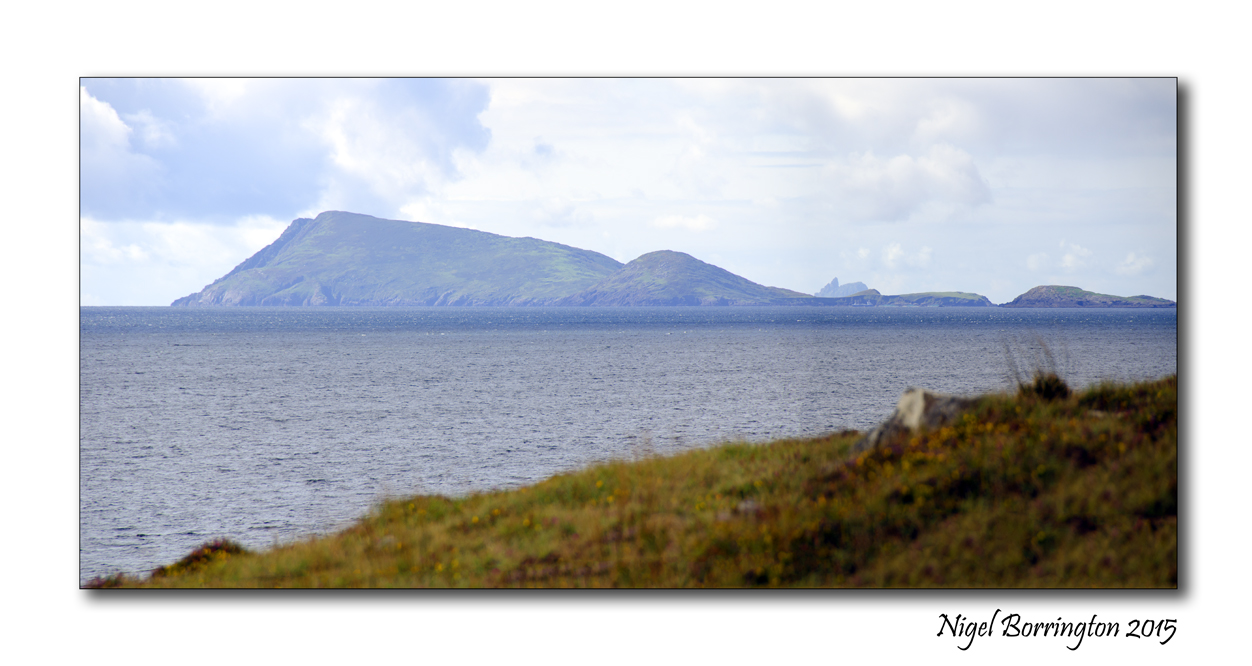


My 1000th post, a Monday Morning – Thank you …..
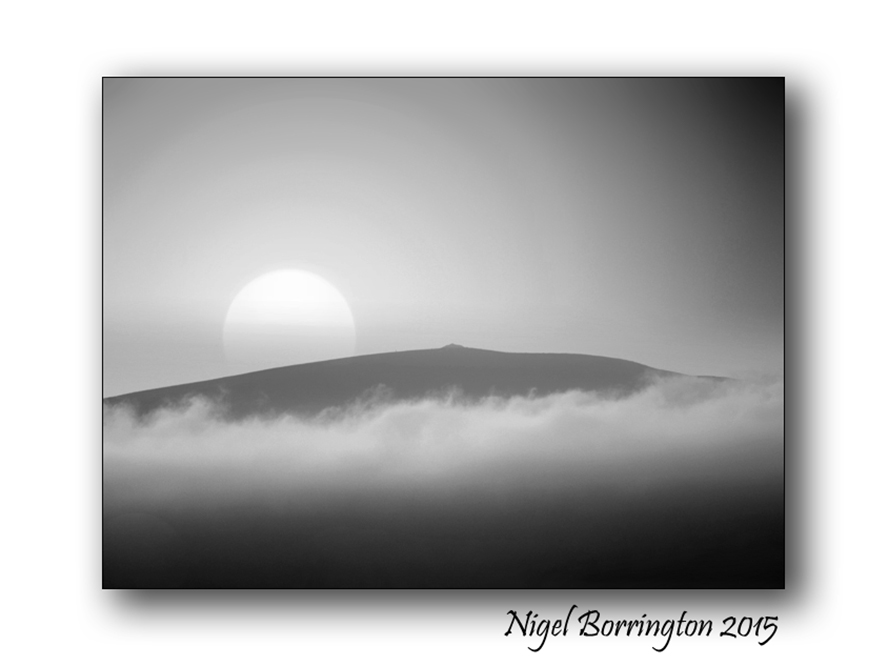
Sunrise above the Mountain
Irish landscape Photography
Nigel Borrington
Today’s Post marks the 1000th on my Blog so I just wanted to say a Massive THANK YOU!!! to anyone and everyone who has visited over the last few years.
Thank you for posting all your many thousands of comments and likes and for helping me to enjoy the landscape of Ireland that I love so much. Thank you also for allowing me to share my photography of so many of these much loved locations.
THANK YOU 🙂 🙂
I was looking through my posts and noted that these two images are the very first images I posted back in 2011, so I wanted to share them here again this morning.
I my slowdown posting a little over the next few weeks, I want to read more of your posts and enjoy them , it takes time creating a post and I don’t then always have time to read and look at your posts, something I love doing 🙂
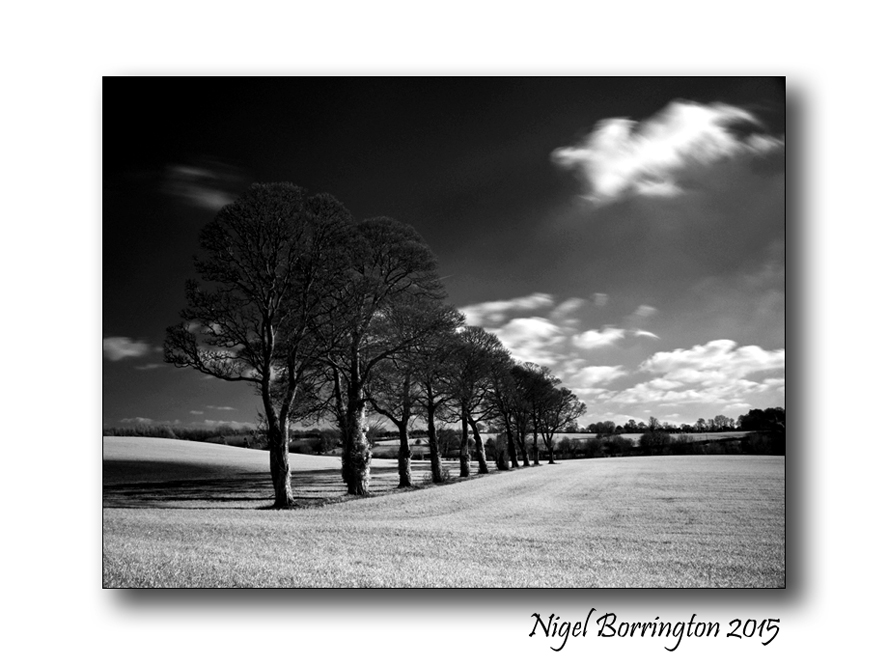
Irish landscape images , images for the weekend …….

Irish landscape images
Nigel Borrington
This weekend I am planning lots of time outside, just walking, relaxing and getting some fresh landscape images …
I hope what every you do , you have a great weekend and that if you can you get sometime to relax and enjoy your surroundings, in the country or in the city 🙂 🙂
Have a great weekend !!
Irish Landscape Gallery


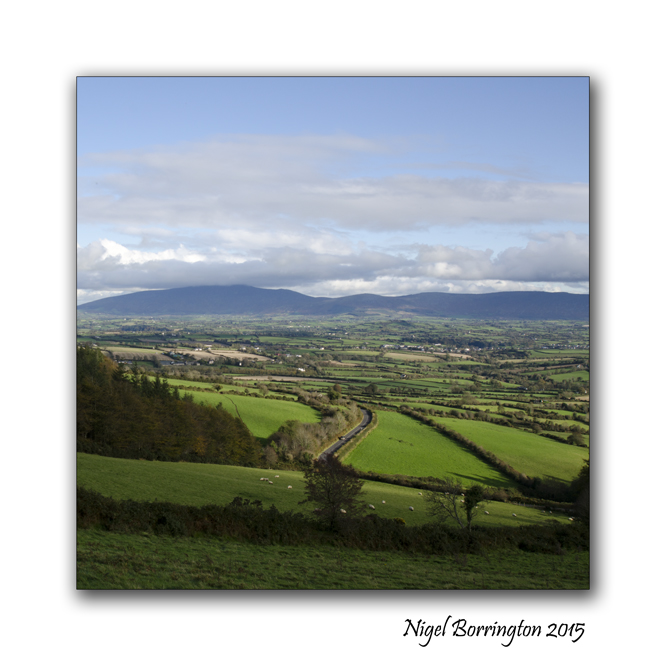


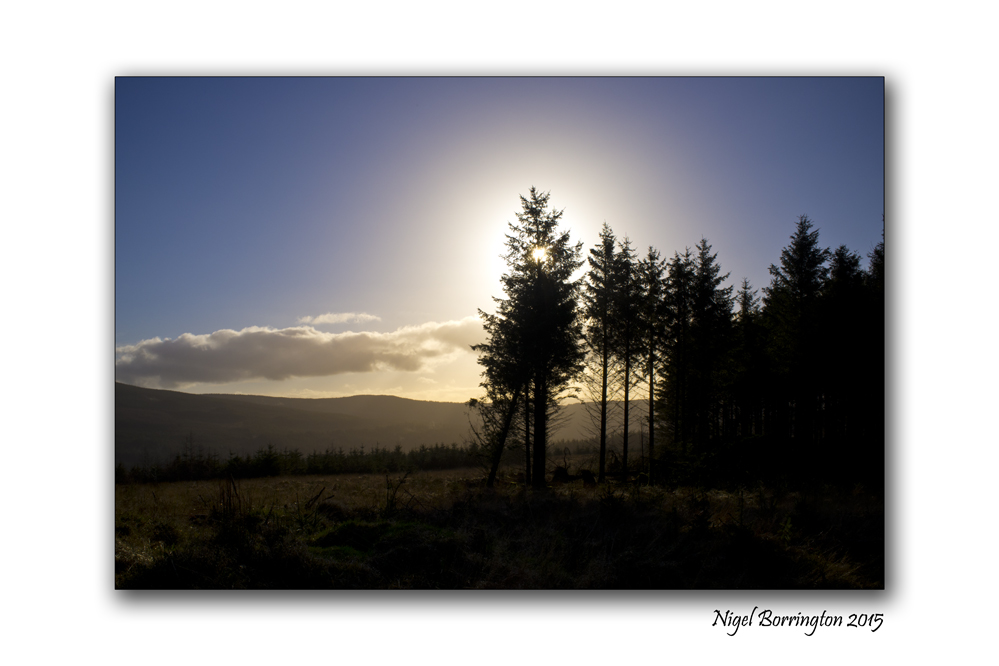


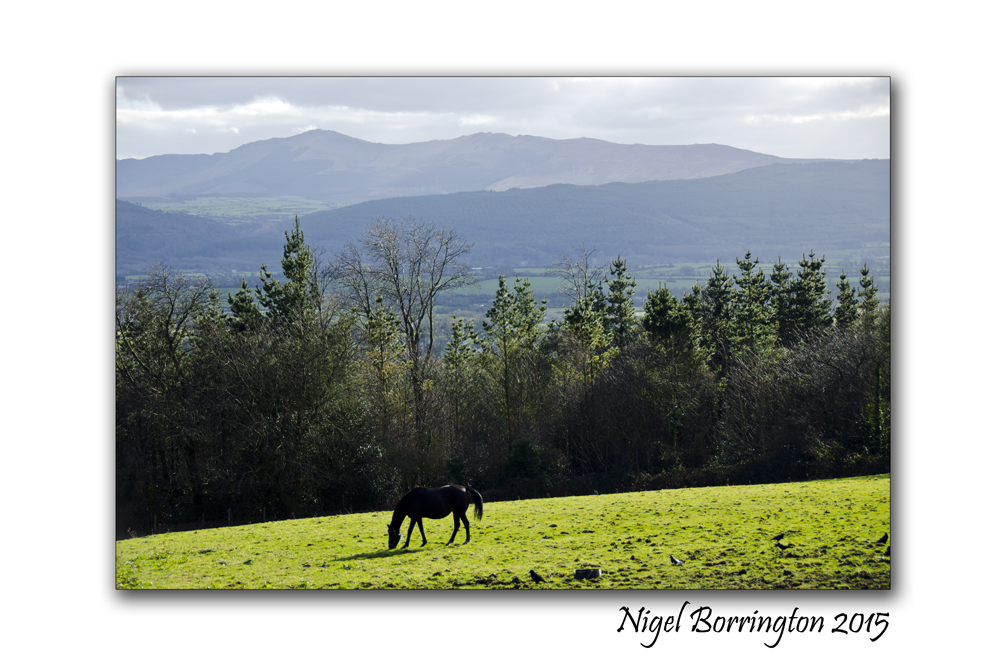

Sunday Evening in the tree tops, county Cork , Ireland

Sunday Evening, Co.cork Ireland
Landscape Photography : Nigel Borrington
Sunday evenings are some of my favorite times of the week, the weekends light is fading fast and we have a new week ahead of us, and new chances to grow and reach our aims.

It’s the weekend so why not take a long walk ……

Black water river at Youghal, county cork.
Landscape photography : Nigel Borrington
It’s the weekend so why not get outside into the landscape and take a long walk, stay for a while until your completely relax ………
Have a great weekend everyone 🙂
The Triple deity and the number three in Pagan Mythology , the Corleck Hill stone head

Corleck Hill stone head
The Triple deity
Photo : Nigel Borrington
Last weekend I visited the National Museum of Ireland in Dublin, to take a good look at some of the pagan/ per-christian objects that they have on permanent display.
One of the items that really captured my attention was the Corleck Hill – Carved stone head, a sculpture in the form of a triple deity. I think this stone is fascinating and provides a mythological link between per-christian Ireland and the wider world, well before the 1st century AD.
I have spent sometime this week doing a little study on the stone head and reading as much as I can find about its form, so I just wanted to share some on the images I took from the visit and some of the details I have found so far.
The Corleck Hill stone head

Stone Head
Object Number: IA:1998.72
Stone HeadCarved stone head. Early Iron Age, 1st – 2nd century AD. Known since it came to scientific attention in 1937 as the Corleck head, this three-faced stone idol was found in the townland of Drumeague, Co. Cavan around the year 1855. It appears that it was one of a number of carvings found, including a bearded bust now known as the Corraghy head that was later built into a barn in the nearby townland of that name. Thomas Barron, the local historian who brought the three-faced head to the attention of the National Museum spent a lifetime researching the local traditions concerning the find and he concluded that the figures were associated with a shrine located at Drumeague Hill. Nearby is Corleck Hill where it appears that between 1832 and 1900 a Passage Tomb surrounded by a stone circle and a circular embankment 70 yards in diameter were dismantled. The site of these monuments was the center of an important Lughnasa festival that celebrated the harvest, an ancient Celtic tradition that survives into modern times. Other Celtic stone heads have been found in the vicinity such as those from Corravilla and Cavan Town and the find place of the three-faced idol is but twelve miles distant from Loughcrew, Co. Meath. A little further north there is another group of Iron Age stone carvings that appear to be centred on the vicinity of Emhain Macha, the main political and ritual site of ancient Ulster. The likelihood is that the Corleck Head was associated with a shrine reflecting Romano-British traditions located close to where the carving was discovered. The three-faced carving is the finest of its type and there is a small hole in the base to assist its being stood securely, perhaps on a pedestal. One of the faces is heavy browed and all of them have bossed eyes, a broad nose and slit mouth. One of the mouths has a small circular hole at the centre and this feature is also found on two of the Co. Armagh carvings and on another from Woodlands, Co. Donegal. There are several examples of this feature from Yorkshire the best known occurring on two three-faced idols from Greetland, near Halifax. The feature also occurs on a stone head from Anglesey, Wales. H. 33cm; Max. W. 22.5cm.
What is the triple deity

A triple deity (sometimes referred to as threefold, tripled, triplicate, tripartite, triune or triadic, or as a trinity) is a deity associated with the number three. Such deities are common throughout world mythology; the number three has a long history of mythical associations. Carl Jung considered the arrangement of deities into triplets an archetype in the history of religion.
In mythological and its art,three separate beings may represent either a triad who always appear as a group (Greek Moirai, Charites, Erinnyes; Norse Norns; or the Irish Morrígna) or a single deity known from literary sources as having three aspects (Greek Hecate, Diana Nemorensis). In the case of the Irish Brigid it can be ambiguous whether she is a single goddess or three sisters, all named Brigid. The Morrígan also appears sometimes as one being, and at other times as three sisters, as do the three Irish goddesses of sovereignty, Ériu, Fódla and Banba.
The Matres or Matronae are usually represented as a group of three but sometimes with as many as 27 (3 × 3 × 3) inscriptions. They were associated with motherhood and fertility. Inscriptions to these deities have been found in Gaul, Spain, Italy, the Rhineland and Britain, as their worship was carried by Roman soldiery dating from the mid 1st century to the 3rd century AD. Miranda Green observes that “triplism” reflects a way of “expressing the divine rather than presentation of specific god-types. Triads or triple beings are ubiquitous in the Welsh and Irish mythic imagery” (she gives examples including the Irish battle-furies, Macha, and Brigit). “The religious iconographic repertoire of Gaul and Britain during the Roman period includes a wide range of triple forms: the most common triadic depiction is that of the triple mother goddess” (she lists numerous examples).
More ( A fascinating read !!!)
Derrynaflan Hoard, National Museum of Ireland

Derrynaflan Chalice
Photo : Nigel Borrington
On Saturday I spent the day in Dublin , shopping and visiting different Museums , including the National Museum of Ireland .
One of my main interests in doing so was to take a fresh look and the Derrynaflan Hoard, I posted on the items in this collection and about the Island of Derrynaflan , county Tipperary – last October.
The Derrynaflan chalice is one of the most amazing historic items to view and the story (Below) of how it was discovered just as fascinating. Seeing this hoard just make you wonder how many more items like it have yet to be found or sadly never will be.
The following two images are from Saturdays vistit :


Island of Derrynaflan
The Island of Derrynaflan is located in County Tipperary and these days it is surrounded by recovered drained land that is harvested for it’s peat, this peat being turned into fuel.
The images below and the text are from my post last year :
Discovering the Hoard
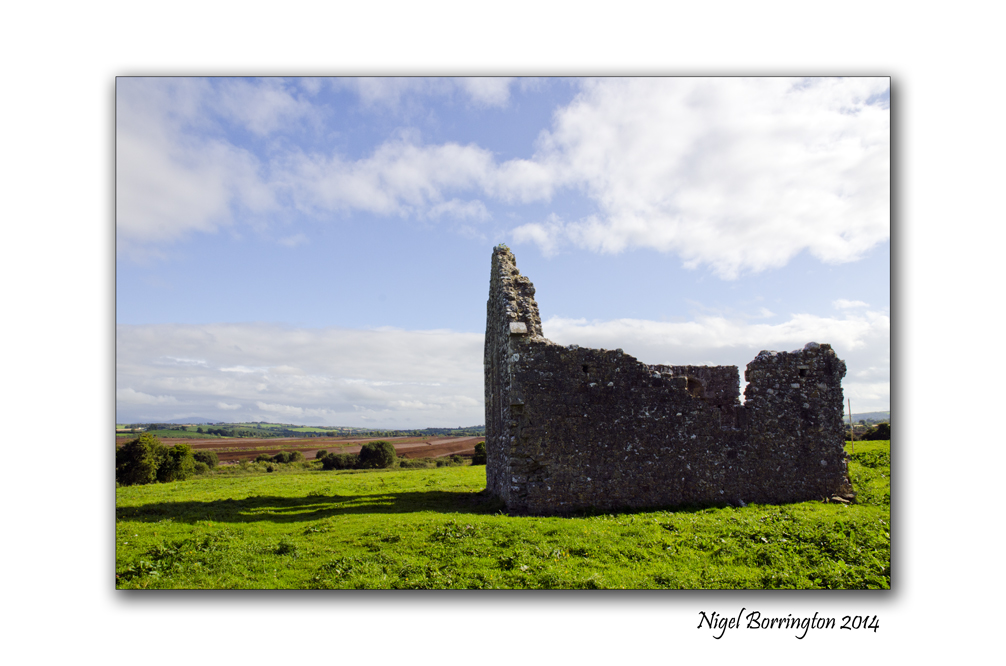
Derrynaflan Island, County Tipperary
Irish Landscape Photography : Nigel Borrington
The Derrynaflan hoard is one of the most spectacular hoard discoveries in Ireland, which led first to an increase in enthusiasm for metal detecting as a hobby, but ultimately contributed to the prohibition of unlicensed searching for archaeological material.
On 17 February 1980, Michael Webb and his son, also called Michael, discovered a significant hoard of early church treasure in Derrynaflan, in the townland of Lurgoe, County Tipperary, using metal detectors (Kelly 1994: 213; O’Riordain 1983: 1). The hoard included a chalice, a bronze strainer ladle and a paten (a kind of small plate) (and see Ryan 1983 for a detailed description), and the discovery was described as ‘one of the most exciting events in the history of Irish art’ (Stalley 1990: 186). The large monastic enclosure in which the hoard was found was partially protected as a National Monument (Kelly 1993: 378). The finders reported their discovery to an archaeologist from University College Cork, Dr. Elizabeth Shee Twohig (Kelly, pers. comm., 2012), who advised them that they must take the finds to the National Museum of Ireland in Dublin (Houses of the Oireachtas 1986; O’Riordain 1983: 1). Under Irish law at that time, the finders were entitled to a reward for making the discovery, in this case decided at IR£10,000 (Houses of the Oireachtas 1986), although this was initially rejected by the finders as insufficient compared to the value of the find (Kelly 1994: 213).

Six years later, the High Court made a ruling that the find or its value (estimated at IR£5.5 million) should be returned to the finders (Kelly 1994: 113). The public mood turned against the Webbs, who were shown on the main evening television news drinking champagne to celebrate the ruling. Ireland was then in deep recession with massive public service cuts which led to resentment that the Webbs might benefit to the tune of IR£5.5 million from the public purse (Kelly, pers comm., 2012). A year later, in 1987, a further final judgement was delivered by the Supreme Court that the Derrynaflan Hoard in fact belonged to the state and not to the finders (Kelly 1995a). The finders finally received a reward of IR£50,000 (Kelly 1994: 214).
The impact of the case on Irish law concerning the protection of heritage was significant. Debates in the Seánad Éireann (upper house of the Irish Parliament) in 1986 indicate the split in opinions regarding the validity of the claim of the finders to the hoard (as had been decided in court the previous year), with one Senator suggesting that the state should have been trying to prove that the Webbs had no legal claim to the hoard, one Senator regarding such discoveries as no more than looting, and another claiming that the finders should instead be praised for the care with which they removed the hoard from the ground and for going to the National Museum to report the discovery (Houses of the Oireachtas 1986). In 1987 the National Monuments (Amendment) Bill, which included clauses on metal detecting and ancient shipwrecks (another area becoming vulnerable to looting), passed through its final stages in the Dáil Éireann (lower house of the Irish Parliament) (Gosling 1987: 23).
Ireland’s National Monuments Act 1930 had prohibited the excavation of archaeological objects other than under license (Kelly 1995a). However, the maximum fine for a successful prosecution at that time, at IR£10[1], proved not to be a strong deterrent (Kelly 1995b: 235). The discovery of the Derrynaflan Hoard had reputedly contributed to the growth of the metal detecting hobby in Ireland, which by the time of the discovery saw hobbyists searching not only ploughed land and other locations away from archaeological sites, but also on known archaeological sites (Kelly 1993: 378). A 2012 Irish news item, which described an athlete as having ‘more gold than they found in Derrynaflan’ (Keane 2012) indicates that the finding of the hoard is still recalled in Irish popular memory. However, with the National Monuments (Amendment) Act 1987, ‘it became illegal to search for archaeological objects with metal detectors or other electronic detecting devices without license’. A further National Monuments (Amendment) Act 1994 specified the state ownership of archaeological objects, and made it ‘an offence to trade in unreported antiquities, or withhold information about archaeological discoveries’ (Kelly 1995a). Under the 1994 legislation, the maximum penalty was also increased to a fine of IR£50,000 and five years imprisonment (National Monuments (Amendment) Act 1994, Section 13). The National Monuments (Amendment) Act 1987 had been in preparation for many years and so was not a direct reaction solely to the controversy surrounding the hoard (Kelly, pers. comm., 2012), although there were observations made that the upsurge in metal detecting as a result of the discovery led to changes in the law (Kelly 1994: 214).
Ref : http://traffickingculture.org/encyclopedia/case-studies/derrynaflan-hoard/
A visit two Derrynaflan island Gallery
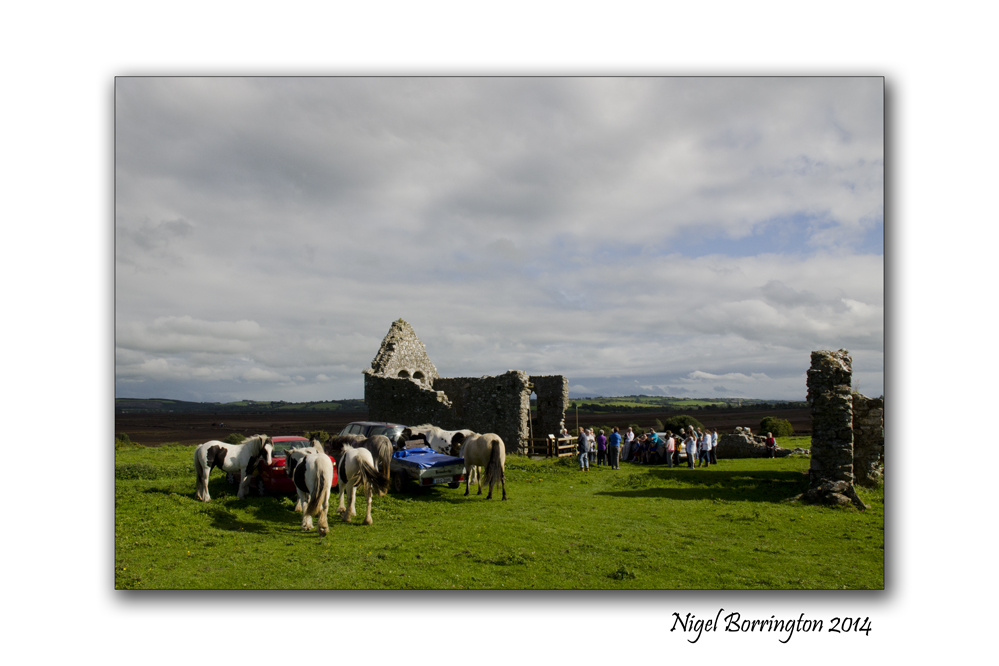


A vote for All the colors of the Rainbow, Ireland’s same-sex marriage referendum. May 22nd 2015
All the colours of the Rainbow
Nigel Borrington
This Friday (May 22nd) Ireland votes in a referendum for same-sex marriage and its a big moment for this country !!!
I don’t usually comment here , if at all about social of political issues , this is my area of personal escape in many ways from these areas !!!
However by posting one of my rainbow images here , I hope I make it very clear what I am thinking !!!
We as a race (HUMAN RACE!!!) need everyone – all ( colors, shapes and sizes ) and this involves everyone being equal and thus having the same rights in all areas of life !!!
SO Clearly I will be Voting YES!!!! 🙂 🙂
Rainbow Colors
by Sharon MacDonald
A rainbow of colors,
In the light, after rain.
There are seven of them,
And, each one has a name.
Red is the first
Rainbow color in the sky.
Orange is next
Like jack-o-lantern pie.
Yellow is the third,
Lemons come to mind.
Color four is green,
Think of grassy hills to climb
Blue is color five,
Like the water in a lake
The sixth is indigo
Blue-gray blends that you can make.
Violet is the color
Of the last rainbow band.
Violet is flowery;
Like the pedals in your hand.
So, wave your arms above you
Cast your colors high
And, try to make a rainbow
Across a cloudy sky
Free the alternatives of life !!!!!
Irish Photographer Francis Browne and his lucky escape from the RMS Titanic …..
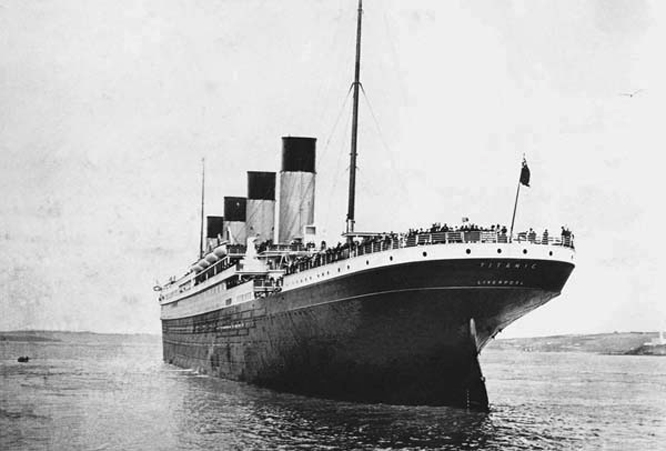
Francis Browne’s pictures of the Titanic
April 14th 1912
Francis Browne’s Finest Pictures
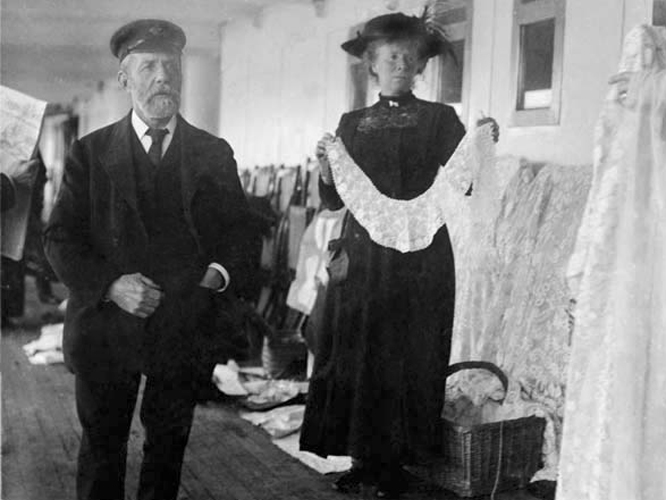
In 1985 an Edward O’Donnell was searching in the basement at the Irishjesuit Provincial’s House when he came across a large black metal trunk, in it he found a large colletion of negative albums, photographs and most amazingly of all an album containing photographs of Titanic’s voyage.
All these photographs were the work of Francis Browne who died in 1960 and was almost forgotten by this time. Subsequent investigations revealed he had enjoyed worldwide fame in 1912 when his photographs of the Titanic’s journey to Cobh were published worldwide. He had travelled first class to Cobh having been given a ticket by his uncle Robert Browne, Bishop of Cloyne. His remarkable pictures proved to be unique.
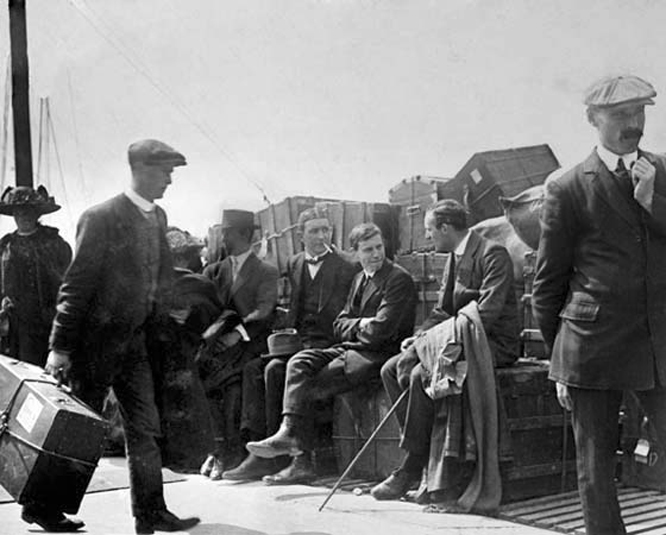
So it was that Frank was presented with a first class ticket for the Maiden Voyage of the Titanic to bring him as far as Cobh. The morning of the 12th.April 1912 he arrived at Waterloo Station in London to catch the Titanic Special. He immediately started taking photographs, first recording the train journey and then life aboard the Titanic on the initial section of the voyage. Having made friends with a wealthy American family he was offered a ticket for the remaining part of the journey and no doubt excitedly telegraphed a request for permission to go on to New York, to which he received the terse response “Get Off That Ship——Provincial!” That telegram not only saved Frank’s life but also meant that this unique record of the voyage was saved for posterity and guaranteed overnight fame for Frank Browne.
Browne later described the event as “the only time holy obedience saved a man’s life.”
“Get Off That Ship——Provincial!” – I guess many have wondered about this instruction ? , its almost prophetic in its nature – I guess we will never know how or why it was such a strong and clear order . I think it relates to the fact that while many embraced the new-world of 1912 technology, many also stood in fear of it and in this case clearly for good reason.
Frank Browne , April 1912 – Titanic Gallery


When Dorothea Lange Visited Ireland in 1954
![Dorothea Lange A Chat at the O’Halloran Farm [Ireland]](https://nigelborrington.com/wp-content/uploads/2015/04/dorothea-lange-a-chat-at-the-o_halloran-farm.jpeg)
Dorothea Lange A Chat at the O’Halloran Farm [Ireland]
It is amazing the range of her photography work and telling just how brave and out there she was to capture the vast majority of her subjects. During the great depression in the USA she captured the massive Migrant of farmers from east to west (Dorothea Lange : Migrant Farm Families ).
I have studied much of her great depression images and I am in love and have total admiration with them as a body of work, a hugely important historic study !!!!
One body of Dorothea’s work that I have until recently not looked at, is here images of 1950’s Ireland, I have shared a couple here, living in Ireland for this last ten years or so I have visited and photographed many of the locations she visited – so its wonderful to see these images and amazing to compare just how much life and these places has changed.
I am only starting to collect some books and look at the images from her 1954 Irish visit, however as you cam see the b
lack and white film images she took at just amazing !!!!
![Dorothea Lange Michael Kenneally on His 30 Acres [Ireland]](https://nigelborrington.com/wp-content/uploads/2015/04/dorothea-lange-ireland.jpeg)
Dorothea Lange Michael Kenneally on His 30 Acres [Ireland]
A Thursdays evening walk at the bay …..
Thursday evening Landscapes
Irish Landscapes : Nigel Borrington
Just a quick image share today 🙂
It is hard to believe that after all the long winter months with their dark evenings, at last we are here in the early days of the summer 2015.
Its has been a perfect start to the summer here in Ireland with long warm days right from the beginning of the Easter Holidays.
I cannot wait for the long warm evenings, with long walks until the sunsets ……….
Summer evenings Gallery


MIR-1 37mm f/2.8 lens , from 1954 to 2015 – Using old lens

Mir 1b 37mm f2.8 m42 lens
Nigel Borrington
Its a while since I posted anything about photography equipment, even though I do keep one eye on making sure I have what I feel to be very good cameras and lenses (Mainly Nikons) , I don’t feel that equipment is what photography is really all about. To me photography is about capturing the world around me and so long As I feel my camera can still do this I am very happy.
Old lenses
At the Same time some of the lenses I have, have been with me for many years and I have used then with many subjects and at many locations with both film and digital cameras.

My MIR 37mm f2.8 lens, I have had since my very first SLR camera back in the 1980’s and I still have complete confidence in it 🙂 even using a Pentax K3 24 megapixel SLR.
Why Pentax ? , The lens is an M42 lens which means that it connects to a camera body using an adapter and the best camera bodies on the Market for using these lenses are Pentax SLR bodies as they only need a metal lens mount adaptor that allows the lens to function without any changes in focus distance, basically all the lenses setting and scales work as they were originally intended to.

There are many things I love about using this lens. the focusing is manual as is the setting of the lens apertures but however the dials used for both these settings are just perfect in operation, no modern plastic jumpy manual focus rings here- just smooth and perfectly controlled movements. One thing also great about this lens is the fact that there are no click stops for the aperture blades , there are marking that show ” f 2.8, 4, 5.6, 8. 11 and 16″ but you can set the blades to any setting in between, this is a huge help for video !!
Another great thing for Video is that this lens is 100% silent , simply no noise feeds back through the camera body !!
The back of the lens shows depth of field and focus distant marks, its not a macro lens as its closest distance is only .7 meters so Landscapes only here !
Some History

The production of this lens originally started all the way back in 1954. It was manufactured in USSR (along with my favourite Helios 44-2) and was mainly made in 2 mounts, M39 and more popular M42 (although both are adaptable to modern cameras). The design of the lens was based on Carl Zeiss Jena Flektogon 35mm f/2.8 and unlike Helios 44-2 was not a complete clone, but using same optical formal as Flektogon 35mm f/2.8, which is definitely a good sign considering how much more affordable they are than just about any Zeiss glass.
In 1958 Mir-1 received a prestigious Grand-Prix Award during the Brussels World Fair. Russians were probably so proud of the award that every Mir-1 lens produced since the 1958 World Fair, sports the “Grand Prix Brussels 1958” inscription on the side of the lens, so don’t mistake these lenses for some sort of special/limited edition.
Lens Flare
Another great asset of this lens is the lens flare it can produce , this link shows some lovely deep spherical Studio flare results 🙂
.Compared to other Classic M42 lenses and modern lenses
.MIR 37mm f2.8 Gallery
The following are some local Kilkenny landscape images that I feel show just how good this lens still is at capturing some great sharp and contrasty black and white images , even with 24 megapixels to expose any defects!


Bee-Keeping with a mountain view, Slievenamon, Co. Tipperary
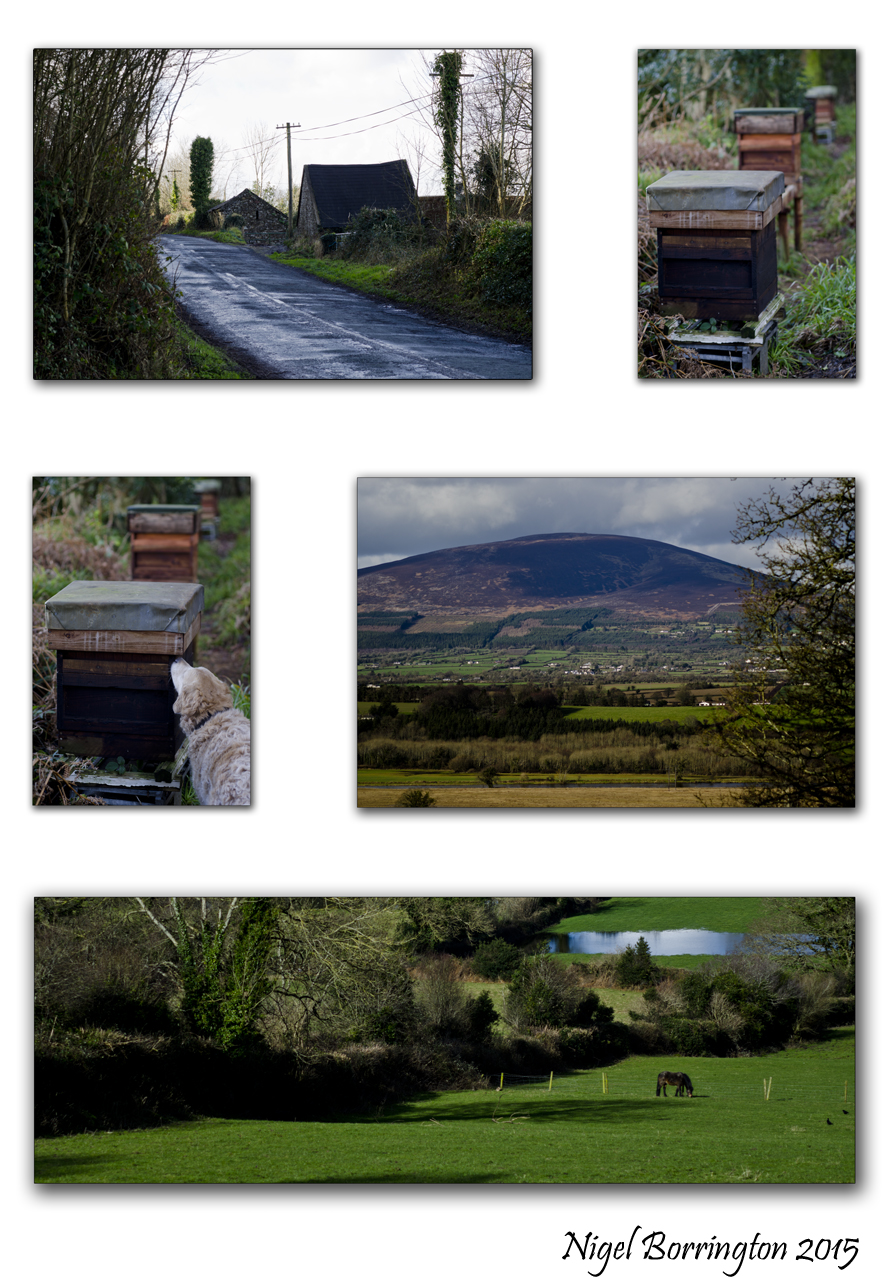
Bee Keeping with a view of SLievenamon, Co. Tipperary
Irish Landscapes : Nigel Borrington
Bee Keeping in Ireland is often a personal activity, with many hives being kept on family farms and Gardens, even sometimes with the permission of the forestry services.
I often come across a set of Hives while out walking in our local woodland. In the images here , taken last weekend the hives are located on the some hills facing to the north, the great mountain of Slievenamon just across the river Suir.
Very soon these Hives will be active again and I will return to get so more images.
The Federation of Irish Beekeepers’ Associations have a great web site and help on getting going with keeping bee’s, this must be a great activity and very needed with modern farming methods having massively reduced Bee numbers. I have included the text from this site on “How to become a beekeeper” below the following two images, if you would like to read it.

 ….
….
Beginning with Bees , The urge to keep bees: How do I start?
The beginner should first of all find out if he/she is in any way allergic to bee stings and if so not to attempt acquiring bees or taking up beekeeping without seeking medical advice.
When the urge to keep bees first hits you, the impulse is to go out and buy a hive straight away, and learn by doing in isolation – this is not the best approach. The best first step is to join your local branch of the Beekeepers’ Association, preferably in the Autumn.
You can then attend their classes for beginners and programme of winter lectures which are held frequently and cover all aspects of beekeeping. There are 45 such Associations scattered throughout the country.
Other benefits of membership include the use of a library – video and book, plenty of friendly advice and you are kept up to date with developments within the craft. You can also use the Association extractor, can avail of sugar at concessionary prices and benefit from the low cost of FIBKA Public Liability Insurance. The latter is an absolute must as accidents can happen.
It is worthwhile if only for your own piece of mind. Whilst a subscription to “An Beachaire” may be optional, a good book is essential and the FIBKA’s “Bees, Hives and Honey” or Ted Hooper’s “Guide to Bees and Honey” are standard references for beginners and experienced alike.
Some Associations also provide a mentoring facility whereby the beginner is assigned to an experienced beekeeper within his or her local area for the purpose of giving advice for the first couple of years. This is an excellent idea as having someone close at hand or at the end of a telephone is a useful asset.
Bee Stings
If you wish to keep bees, and irrespective of all the protective measures that you might take, you will receive the occasional sting. Everyone will show some reaction to bee stings, such as the initial pain, and later a slight swelling of the affected area, later followed by some itching.
The effects can be reduced by applying an antihistamine cream or even taking tablets such as Piriton, but generally the body will quickly become accustomed to the occasional sting and will display few adverse effects.
Bee Suit
There are many forms of protective clothing on the market which range from veils right through to full bee suits. And the prices are commensurate with the degree of cover. A full bee suit is the ideal acquisition but the prices are fairly steep and it may not be even to your taste.
A smock, together with the type of trousers worn by nurses or painters, may be more suitable.
Be wary of veils which slip over the head and are attached by straps or loops under the armpits; bees invariably find a way to gain access to your neck and face. The safest way to wear that sort of veil is in conjunction with a zip up overall.
Any protective clothing should be light in colour, nothing dark. Nylon should be avoided as it generates static, which is annoying to bees. Woolly clothing should also be shunned, as they get tangled up in it.
Gloves
When handling bees, beginners should also use gloves. With full gauntlets they are costly but should last several years. I use rubber gloves which are less clumsy – “Nitrile” or “Marigold” brands.
The ultimate objective is to obtain a strain of bee that is not overly defensive, become proficient in handling them, and so dispense with gloves altogether.
Ankles are prime targets for bees and calf length rubber boots should be worn.
Equipment
The monthly beekeeping journal carries advertisements from firms selling all types of beekeeping equipment. The first two essential items you need to acquire are a smoker and a hive tool.
Smokers come in two standard sizes, the diameters of the fireboxes being 8cms and 10cms. The smaller version is quite adequate for up to ten hives.
When servicing the smoker, ensure that the legs of the fire grate are not restricting the air entry hole at the base of the firebox and also check that this hole is directly in line with the air exit hole from the bellows.
As for fuel, I use dried grass which provides a constant supply of cool smoke. What you don’t want is a type of fuel which burns too quickly and turns your smoker into a flame thrower which scorches the bee’s wings. This aggravates the bees and they will not delay in letting you know of their displeasure.
Hive Types
There are many types of hives available on the Irish market. However, in selecting a hive type it is important to determine that the component parts for the brood chambers and supers are readily available.
The most common type of hives used in Ireland which would measure up to these requirements are the National, the Smith Hive and the Modified Commercial Hive. The approximate comb areas of the various frames are: National and Smith Deep – 5000 worker cells Commercial Deep – 7000 worker cells.
The two most popular hives are the National and the Commercial. Although the latter have larger frames, the outer dimensions of component boxes are the same, to within a quarter of an inch, so that supers, queen excluders, crown boards, floors and roofs are all compatible.
My first choice would be the National hive because it has the following advantages:
The frames are easier to handle as they have longer lugs (38mm) than the Commercial (16mm).
The National brood box and Super are also easier to handle as the design has a built in handle at both sides.
The capacity of the National brood box and super is smaller than that of the Commercial which means it is lighter to lift when examining the hive and taking off the crop of honey.
The most important advantage is the higher honey yield from the National compared to the Commercial as the National brood box is too small to accommodate brood and much stores, therefore most of the honey is stored in the supers where it can be easily taken off for extraction. This is especially true in a bad year with poor weather conditions during the Summer. The Commercial is best suited to localities where the honey crop is above average.
In addition to the brood box, varroa screen floor, crown board, queen excluder and roof you should make provision for three supers per hive.
It is usually best to treat exterior surfaces with a good preservative, like Cuprinol – green or Fencelife and taking care to air well for a week or more. Normal paint stops the wood ‘breathing’ and can lead to moisture lifting the paint in bubbles.
Obtaining your first colony : A Nucleus
By the Spring you will have a good background of knowledge to help you decide on what to buy and how to start up.
It is essential that you start with a healthy and productive stock of bees. You should contact a reputable beekeeper in your region for assistance in obtaining your first colony.
While it is also possible to start by obtaining a swarm, this is an unreliable method and you have no assurance of the health status of the resulting colony.
You may be tempted to buy a strong colony in the hope of a quick return of honey this Summer, but sometimes the difficulty of handling a large stock as a beginner can put a newcomer off for life.
It is far better to arrange with a local beekeeper to buy a four-frame nucleus with a young queen, taking delivery at the end of May or early in June. This is also the time when outdoor open hive demonstrations are organised by your Association where you can learn how to handle and control a stock of bees.
You can now expand this newly acquired nucleus by regular feeding with sugar syrup into a full hive of eleven frames by July. They will be very quiet and easy to handle and as they grow in strength you will gain in experience, confidence and the necessary manual skills of beekeeping.
There will be no swarming problems to cope with in your first year and with autumn feeding the stock will cope with the coldest winter
By the following Spring you will be well placed to increase to two stocks by making an artificial swarm from your own hive in May.
If you have built or acquired a couple of empty hives over the Winter you will also be ready to take or buy in swarms sometime in May or June, and by July you will have at least three good stocks and the experience necessary to manage them.
You should also have a crop of honey and an opportunity to learn the techniques involved in taking it off, extracting, bottling and preparing it for sale.
It will still only be fifteen months since you first owned bees but you have come a long way, and it might be wise to stay with just two or three hives for another year. It is much better to make your mistakes on two or three hives than on twenty. Possibly three hives are all you intend to have anyway.
In either case, make a four frame nucleus from your strongest stock some time in the Summer and see it through the Winter to sell to another beginner, to increase you own stocks or as a reserve in case anything goes wrong.
The Honey Crop
Honey yield is greatly influenced by seasonality. However a beekeeper who attends to the basic principles of management should be able to achieve an average of 20kg per hive per annum.
The yields obtained at the Teagasc Beekeeping Research Station at Clonroche, County Wexford confirm this view. The yield from 75 colonies managed commercially at Clonroche has been 25 kg per colony per annum. This has been achieved by working to a planned programme of management and disease control.
The beginner should be familiar with the varroa control measures as outlined in the FIBKA Guidelines on Varroa Destructor – Integrated Control Programme . The varroa mite is a major threat to the survival of all our bee colonies
Where can I keep my bees?
The newcomer to the craft of beekeeping must decide where to site his or her apiary. Even a small garden is adequate for the keeping of a few hives. Bees fly anything up to three miles to forage so you have no need to worry about that. Even the largest beehive will measure about two feet square and that is all that is needed for each hive, but don’t forget to add a little space to stand along side it to work the colony.
You might like your honeybees but it is unlikely that your neighbour will display the same enthusiasm. Bees have no need to disturb others, whether human or animals, it is just a case of ensuring that their flight paths to and from the hive do not coincide with neighbours working in their gardens. Hives standing in full sun should be avoided, try to provide some midday shade.
Some say that entrances should face south-east to catch the early morning sun. The best layout is to have a hive facing each of the four cardinal points of the compass-one facing north, one facing south etc. This does help to prevent bees drifting from their own hive into another.
Some beekeepers have an out-apiary away from their home and your local Association will have a demonstration apiary for the members to use.
How much time do I need to devote to the bees?
We usually regard the period from October to March as the ‘off-season’ so far as opening up hives, lifting out frames and manipulations generally are concerned, but a limited inspection on a mild day in March can be justified on the grounds that we can only help our bees if we know what help they need. Just three questions have to be answered at this time of year.
Have they a laying queen? In some cases the answer may be obvious; for example if the bees are flying freely around midday and taking in massive loads of pollen, then all is well with the queen.
Have they enough food? If the hive still feels really heavy when hefted, they have enough food. Possibly about 1 hive in 3 will either feel light, or show little flying activity with not much pollen going in, and in these cases some action is required.
What is the natural varroa mite mortality per day? If this figure exceeds seven mites per day then control is necessary using one of the approved treatments. Check the updated F.I.B.K.A. policy on varroa for details. You have to continue with your colony inspections right through the Summer. So the time you need to devote to your bees could be as little as 15 minutes per hive every 10-14 days during the season from April to September. Usually the problem is that new beekeepers are unable to leave the bees alone for the first season.
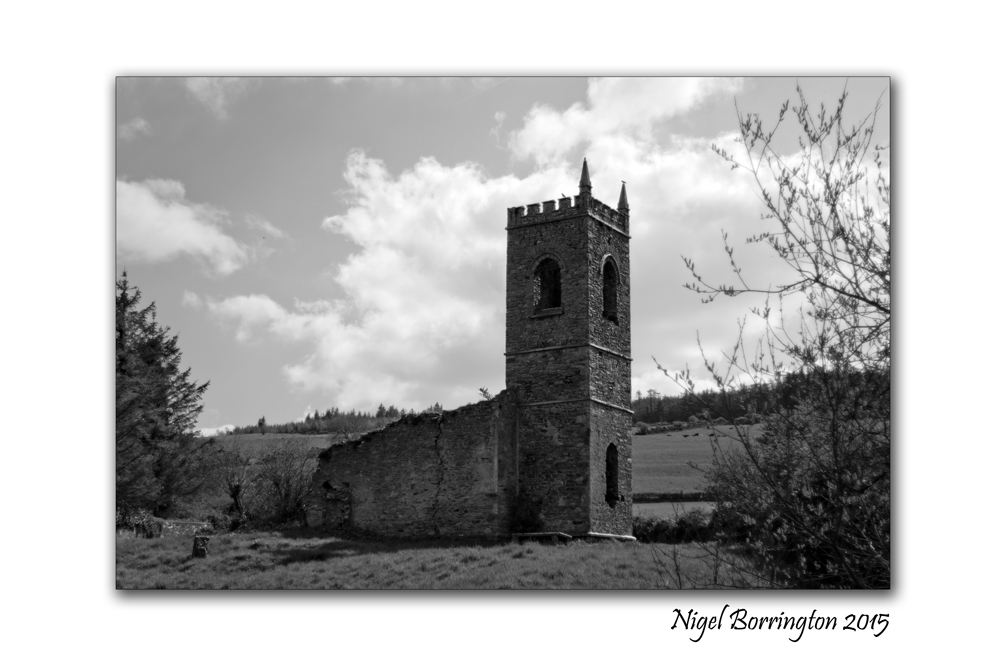
Visiting an empty Church , Kilcash parish church, Co. Tipperary

Kilcash parish church
County Tipperary
Nigel Borrington
I so very rarely visit a church when a service is being held these days, Weddings and Funerals apart. 
When I am out walking however, I will often wander into a local church, just for a look around. I am not so sure about the christian story anymore, I was as a child and into my teens but moved away the more I got into the great outdoors and into the nature that surrounds us.
Personally What I find is OK about visiting an empty church is that I have time to think about the spiritual massage they attempt to bring , the very fact however that there is no priest at the alter, well preaching! at you, just gives you a little more space to think for yourself about your own beliefs. These days my own beliefs lay more outside the church as to me if there is a God then he is to be found in nature and not inside the walls of a church.
Its not that I have anything against a church mass or service, its more that I find being outside is more spiritual than being inside a church walls, to me like many, I feel that if there is a god ( such as the church depicts ) then he is as likely if not more to be found in the life that can be found in the forests and the fields as sitting down and listening to a priest.
I feel that if he is to be found then its along a path of discovery in the world of nature that surrounds all of us.
Inside Kilcash Parish Church


How do people see Photography, Commercial or Creative?

Commercial or Creative Photography ?
How do people see Photography and creativity?
During my time here, in the WordPress blogging community the one thing I have loved the most is to see images and posts from around the planet. It is an amazing thing, how quickly you can take this for granted but this is a very recent ability!!
Before the internet with its blogs, you had to visit a book shop and look for international photography publications in order to to see images from other places around the world. These images however as a standard were highly processed and you only got to see a hand full of photographers images.
Personally I have been taking photographs for most of my life and I feel I have a reasonably good idea how this medium can be used, yet its only in recent times that I have attempted to earn some money from images, working with weddings, commercial agencies with landscape images for commercial purposes. I think the oddest job I have been asked to do is to be working in the castle at Enniscorthy, taking pictures of some 7000 historic Irish items from photographs to physical items that go back many years.
As an outsider, attempting to make a living in a small Irish town has not been the most simple of tasks, I have ever taken on in my life, I could tell a story or two for sure ( Things said and done!! ) but I move on very quickly – simple as that !!! 🙂
I think that the factors I have found to be the most limiting are in the way that local people see the subject of photography itself , photography as a medium locally here is mainly viewed as being for Weddings or for Family pictures , yet I know this not to be the case in many other parts of the world. To myself photography is a socially creative medium, one that can be used for much more than (Babies and Weddings,or is it Weddings and Babies ?) and even more so in current times with digital photography offering so many more options.
Digital photography at the same-time however has created some new problems and it does not relate to the problems that some long standing professional photographers have, in that they would love to be back in the days when they were viewed as something special, with skills that actually anyone could do but just did not want to – Sorry old pro’s but maybe its time to face facts Hay !! , anyone could do what you did and since they all went out and purchased a digital camera they have proved it , filling the world around them with wonderful images !!!
To me the problems that digital photography has created is with the drive for pure image perfection, this is the world of the photography purists who would spend a lifetime trying to achieve the unobtainable so that they can die happy ?
It is not that you should not care how good your image is , its that its not the main factor in taking images at all !!!
Personally I feel that photography as a medium is as artistic as any other art form, to make it artistic however you have to let go of pixel peeking just to check how much detail you have, along with as many areas as you can think of that drive for perfection. Where digital cameras truly come to life is in the hand of a creative mind not a perfectionists one , after all some of the best and most creative photographs in history were taken using cameras from the 1900’s that few today would even dream of using , yet the images they created still standup today!!
If I could choose the life I please, Then I would be a boatman !

Canal boats and the Boat man
Photography : Nigel Borrington
Way back in the 1990’s the Levellers an English rock band, founded in 1988 and based in Brighton, England released this song “The boats man” from their album “Levelling the Land”.
Some songs stay with you all your life and for me this is definitely one that has 🙂
It screams out to “Personal Freedoms” , being free to live your life that way you want !! “Free as the rivers breeze”
The fact it centers on the lives of boat people is perfect, for some reason the people who’s lives where lived on the canals and river banks always felt more free, free to move and travel making a living from transporting goods (Coal, timber and foods ), from boat repairs and from music played in the many pub’s along the river banks.
The levellers
If I could choose the life I please
Then I would be a boatman
On the canals and the rivers free
No hasty words are spoken
My only law is the river breeze
That takes me to the open seas
If I could choose the life I please
Then I would be a boatman
If I could choose the life I please
Then I would be a rover
And if the road was not for me
Then I MIGHT choose another
Cross mountains and the valleys deep
Where I WILL take these weary feet
If I could choose the life I please
Then I would be a rover
 .
.
But these things they’re so hard for me
I cannot choose my own destiny
And all the things that I want to see
Are so unclean
Well I wish I could choose the life I please
But I am not a free man
Others rule my destiny
But my will’s never broken
I know someday I will be
Everything that I dreamed I’d be
And when I live the life I please
Then I will be a freeman.
I know someday I will be
Everything that I dreamed I’d be
And when I live the life I please
Then I will be a freeman.
And when I live the life I please
Then I will be a freeman.
Its the weekend , so get outside and relax if you can – Have a great weekend !!

Images for the weekend
Muckross House
County Kerry
Irish Landscape Photography : Nigel Borrington
Its the weekend – so get outside if you can and walk , relax and take in some views, its good for your mental health !!!!
I hope you can and that you have a great weekend 🙂 🙂 🙂
 Nigel Borrington
A Fellow Man, A Humanist Poem : Tom White
Bramante Staircase
Vatican Museums, Vatican City State, Rome;
Nigel Borrington
A Fellow Man
A Humanist Poem : Tom White
I have no prayers or charms of faith
If God there be, He’ll know my weight
If God be nought, I’ll still do good
And practice justice as I should
We should not seek reward to do
What decency expects us to
Should Heaven be a kingly court
I’ll go elsewhere to prove my worth
Don’t get me wrong – I’ve sought belief
But lust for faith brought no relief
Mere logic leaves me where I stand
I am not blest, nor am I damned
I seek to do what good I can
I am your friend, a fellow man.
Share this:
October 14, 2015 | Categories: Comment, Gallery, Humanism, Nigel Borrington, Poetry Gallery, Travel Locations | Tags: A Fellow Man, Humanism, Humanist, poem, poetry, Rome, Tom White, Vatican City State, Vatican Museums | 2 Comments