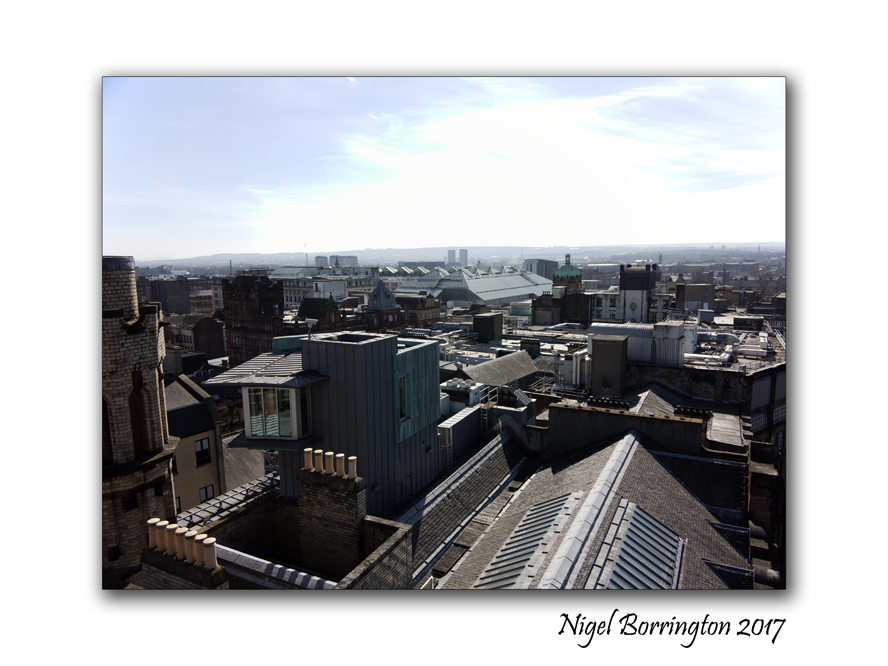
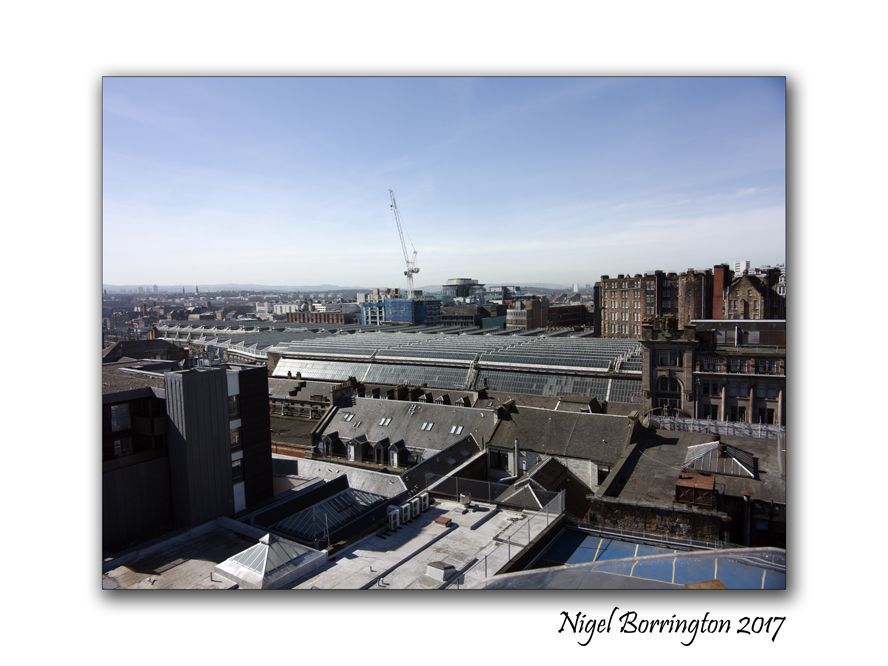
A view of Glasgow from the Lighthouse Museum
The Lighthouse Museum, Scotland’s Center for Design and Architecture, is a visitor center, exhibition space and events venue situated in the heart of Glasgow, just off the Style Mile. The Lighthouse acts as a beacon for the creative industries in Scotland and promotes design and architecture through a vibrant programme of exhibitions and events.
The Museum building formerly housed the Glasgow Herald, it was the first public commission completed by Charles Rennie Mackintosh, and is the perfect place to begin a Mackintosh tour of Glasgow, as it has a permanent exhibition of his work.
We visited both the viewing tower and all the great exhibitions three weeks ago, it was one of the highlights of our time in this great Scottish city…..
These images show the spiral staircase that accesses the viewing tower and a view from each of the platforms at the top.



Walking the bridges of the River Clyde, Glasgow, Scotland

The 21 Bridges of the River Clyde
Glasgow
As the Industrial Revolution took hold of the world, the Clyde was dredged to allow ships to sail all the way to Glasgow, rather than stopping at Port Glasgow which had previously been the case. As well as turning Glasgow into an important port, it transformed the city from one of trade to one of manufacturing, specifically steel work and shipbuilding. As factories and shipyards sprung up, the city’s population boomed to a breaking point of over one million (almost double the current number), and one of first cities in Europe to do so.
The Clyde’s reputation and success continued until World War II, when several of the shipyards were struck by the Luftwaffe during The Blitz. This, coupled with post-war competition from other nations, saw the decline of shipbuilding in Glasgow. In present day, the only two surviving yards, Yarrow and Fairfields, are both owned and operated by BAE Systems.
However, this decade has brought with it renewed investment in the waterway and its banks, thanks to the Clyde Waterfront Regeneration project. One of the prime examples is the Glasgow Digital Media Quater located at Pacific Quay; it is new home of the television companies BBC and STV, as well as other media companies. Next door to this, directly across from the Scottish Exhibition and Conference Centre (SECC), is the Glasgow Science Centre, IMAX Cinema AND Glasgow Tower. Further along, in the neighbouring town of Renfrew, lies the Braehead Shopping Centre and Xscape Leisure Centre, directly across from the King George V Docks. Next to the shopping centre is the newest of Glasgow’s parks, the Clyde View Park. It features statues by artist Kenny Munro, which he designed with the help and input of Renfrewshire’s schoolchildren.
Of course, a river would not be so handy if there were not bridges to cross the tremendous flowing waters. Thankfully, Glasgow has a staggering 21 bridges crossing the Clyde. These are a mixture of road, rail and footbridges that speak volumes about the history of the city, from their names and design to the type of transport they were designed for. In addition to these there is the Clyde Tunnel, which delves under the river connecting Govan with Scotstoun and Partick.
The Bridges can all be seen as part of the Clyde Heritage Trail. For more information and articles about the River Clyde and her features, please visit the Clyde Waterfront Heritage website, and also the Riverside Museum.
1. Millennium Bridge (2002)
2. Bells Bridge (1989)
3. Clyde Arc / The Squinty Bridge (2006)
4. Kingston Bridge (1970)
5. Tradeston Footbridge (2008)
6. George V Bridge (1929)
7. 2nd Caledonian Railway Bridge (1905)
8. 1st Caledonian Railway Bridge (1878)
9. Glasgow Bridge (1899)
10. South Portland Street Suspension Bridge (1853)
11. Victoria Bridge (1854)
12. The City Union Railway Bridge (1899)
13. Albert Bridge (1871)
14. Tidal Weir and Pipe Bridge (1901 (rebuilt 1949)
15. St. Andrew’s Suspension Bridge (1856)
16. King’s Bridge (1933)
17. Polmadic Bridge (1955)
18. Rutherglen Bridge (1896)
19. 1st Dalmarnock Railway Bridge (1861)
20. 2nd Dalmarnock Railway Bridge (1897)
21. Dalmarnock Bridge (1897)


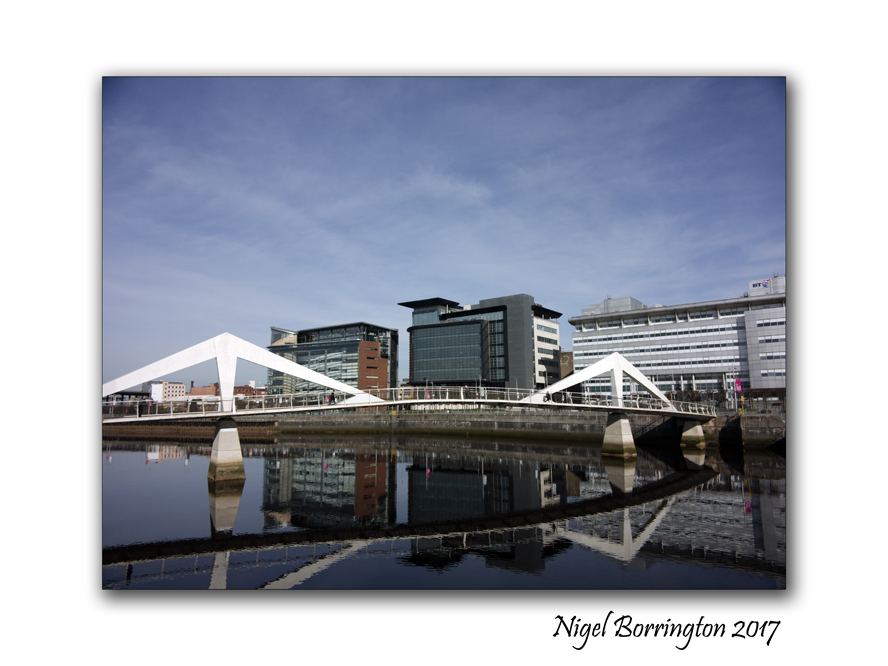
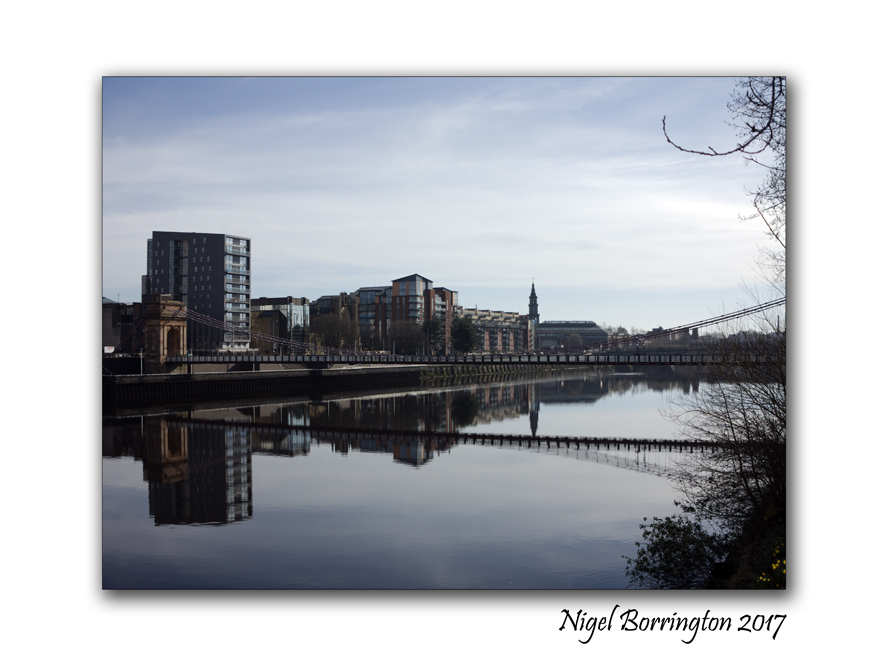
Glasgow 20-20
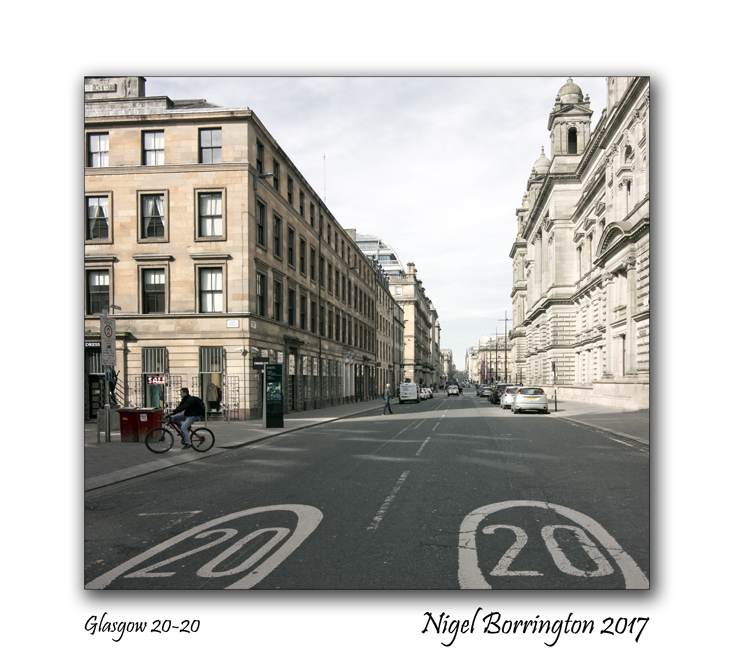
Glasgow 20-20
|Street Photography
Glasgow Scotland
Nigel Borrington
We just returned from a great long weekend in Glasgow, Scotland, visiting many of the city’s great attractions. Glasgow has always been one of my most loves European cities with its great river and surrounding mountains, stunning Victorian architecture including central station and its many hotels and city blocks.
What a wonderful weekend, the weather was perfect for the two full days, blue blue sky’s and it was warm for March 🙂 🙂

Plaza de España, Seville, Spain

Plaza de España, Seville
Nigel Borrington
The Plaza De Espana is simply one of the most amazing locations to visit in Seville, the images here are taken from our visit at the end of last month (January 2017). It was late afternoon by the time we arrived, having already visited many of the cities great locations and the Plaza was the perfect way to end a great day.
Here are some basic details, including the buildings amazing history …
The Plaza de España
(“Spain Square”, in English) is a plaza in the Parque de María Luisa (Maria Luisa Park), in Seville, Spain, built in 1928 for the Ibero-American Exposition of 1929. It is a landmark example of the Regionalism Architecture, mixing elements of the Renaissance Revival and Moorish Revival (Neo-Mudéjar) styles of Spanish architecture.
The Plaza de España, designed by Aníbal González, was a principal building built on the Maria Luisa Park’s edge to showcase Spain’s industry and technology exhibits. González combined a mix of 1920s Art Deco and “mock Mudejar”, and Neo-Mudéjar styles. The Plaza de España complex is a huge half-circle with buildings continually running around the edge accessible over the moat by numerous bridges representing the four ancient kingdoms of Spain. In the center is the Vicente Traver fountain. By the walls of the Plaza are many tiled alcoves, each representing a different province of Spain.
Today the Plaza de España mainly consists of Government buildings. The central government departments, with sensitive adaptive redesign, are located within it. The Plaza’s tiled Alcoves of the Provinces are backdrops for visitors portrait photographs, taken in their own home province’s alcove. Towards the end of the park, the grandest mansions from the fair have been adapted as museums. The farthest contains the city’s archaeology collections. The main exhibits are Roman mosaics and artefacts from nearby Italica.
The Plaza de España has been used as a filming location, including scenes for the 1962 film Lawrence of Arabia. The building was used as a location in the Star Wars movie series Star Wars: Episode II – Attack of the Clones (2002) — in which it featured in exterior shots of the City of Theed on the Planet Naboo. It also featured in the 2012 film The Dictator.
Gallery


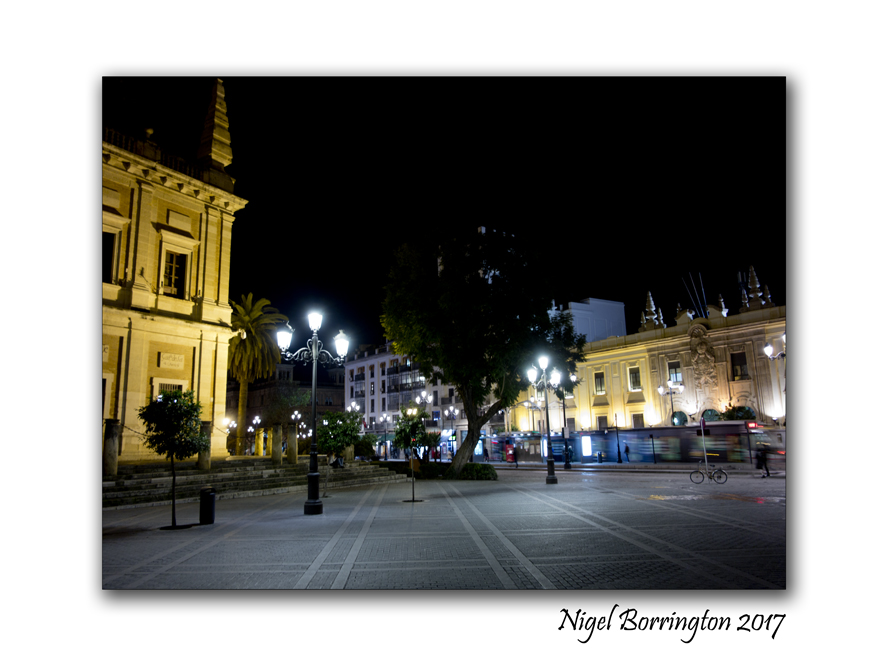
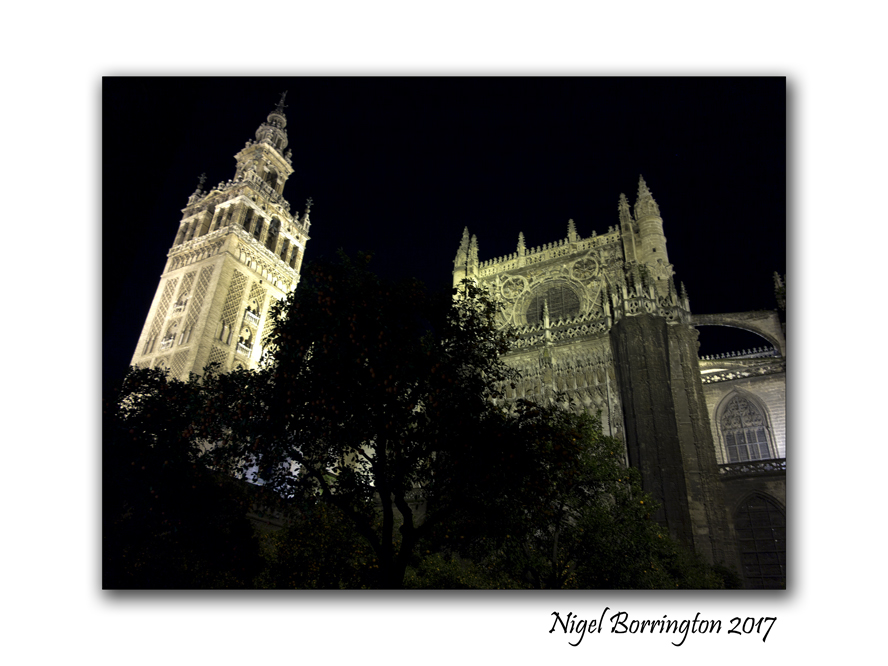

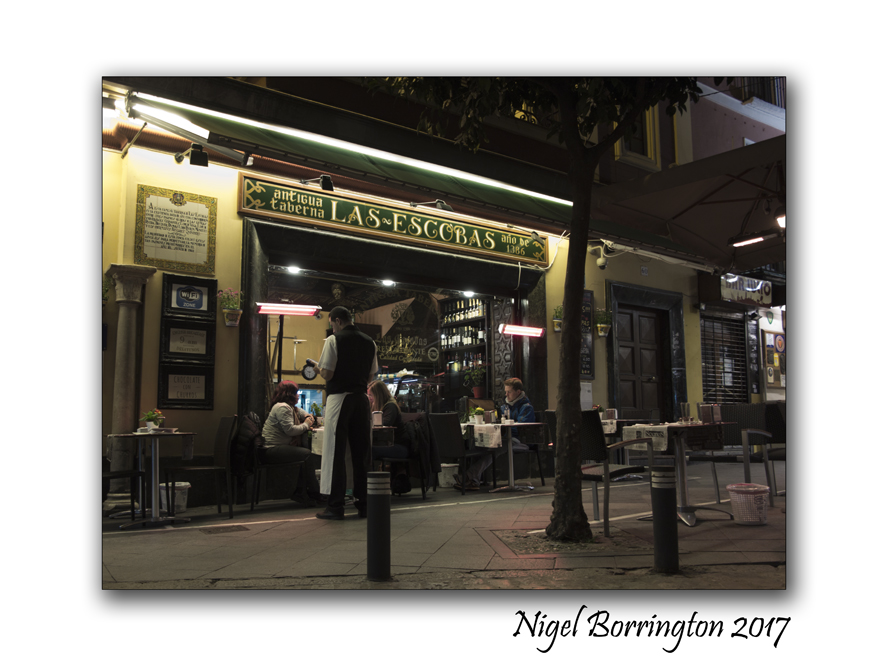

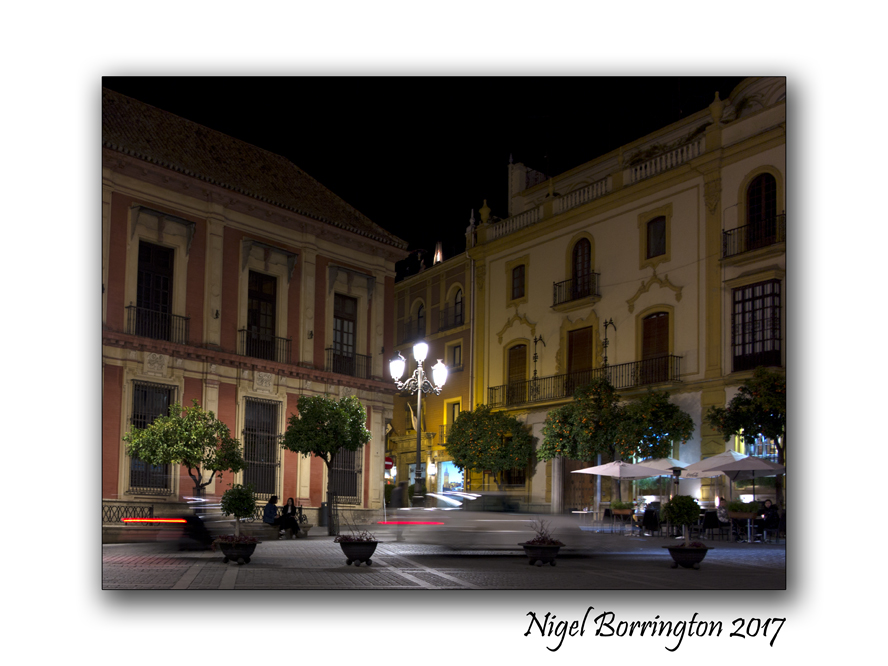
A week in Seville , Spain
Seville
Spain
Nigel Borrington
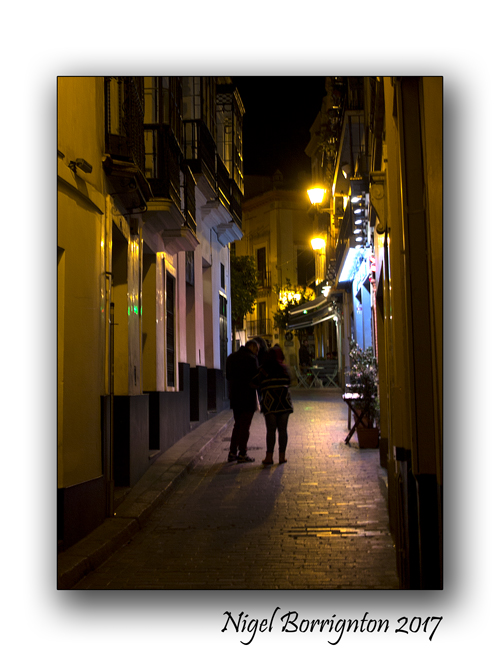
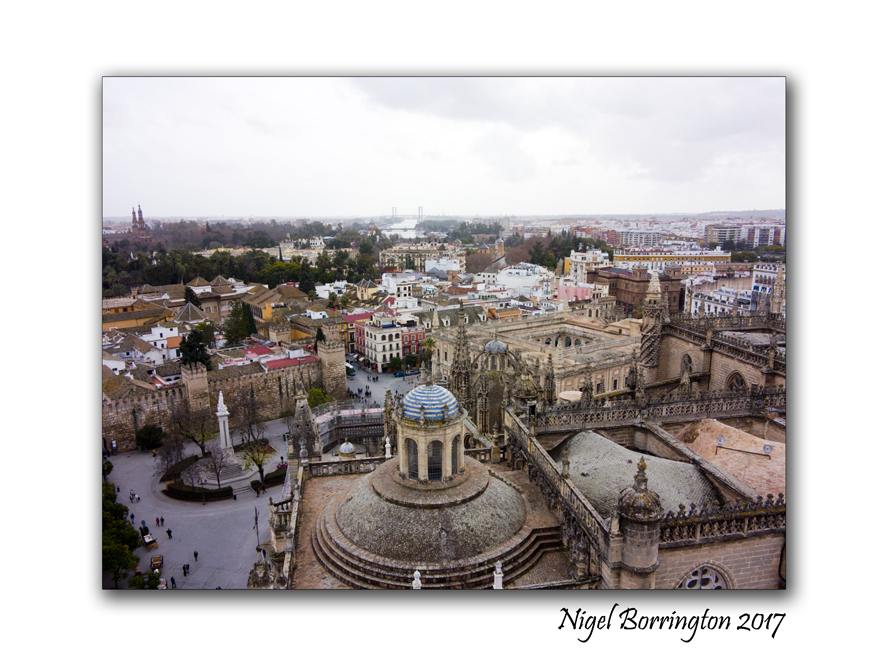
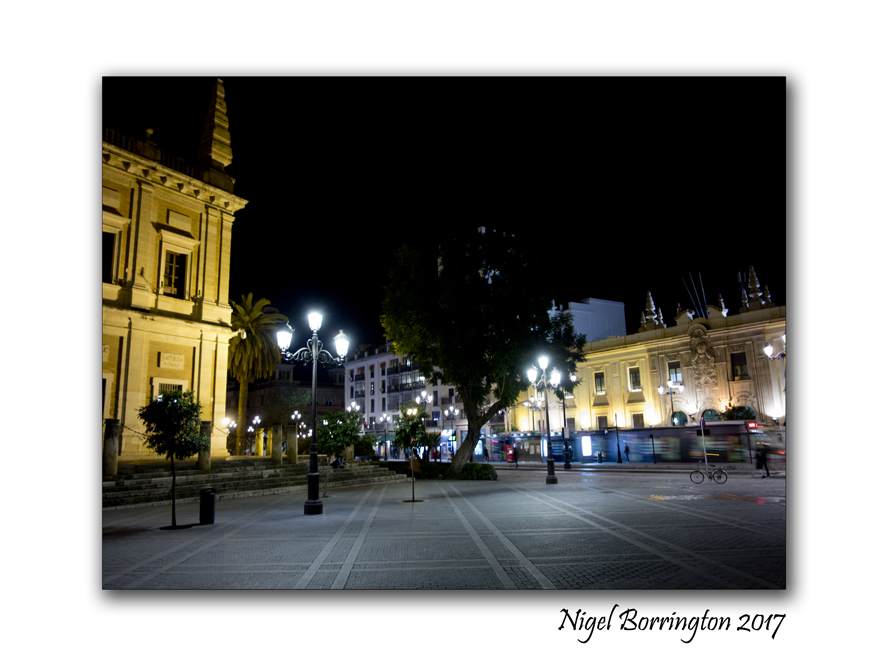
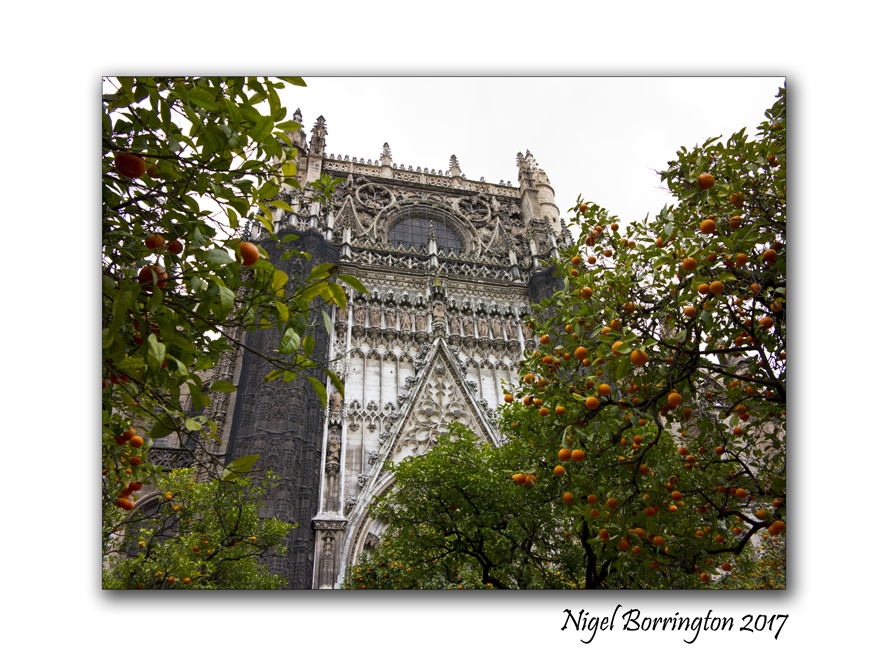
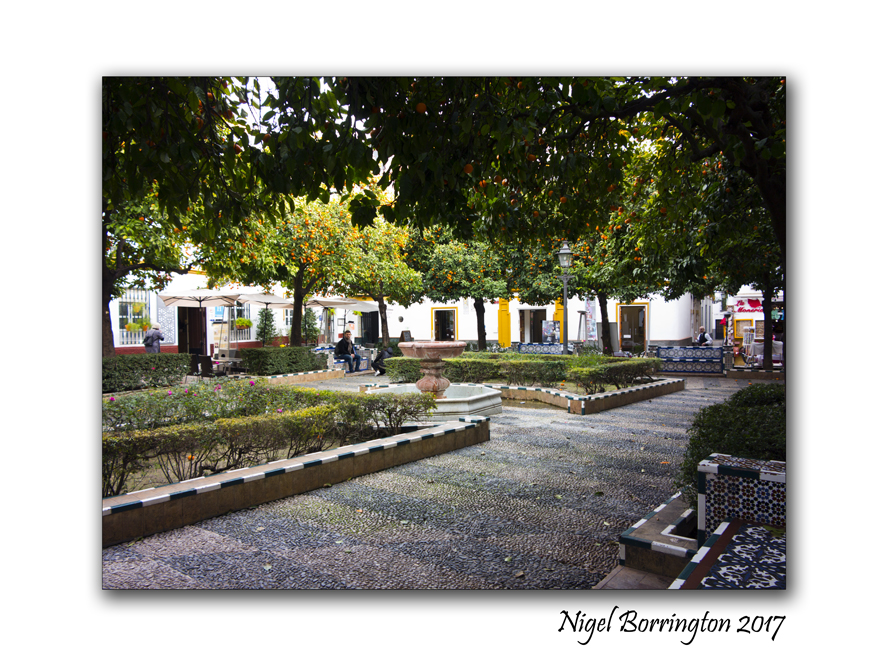
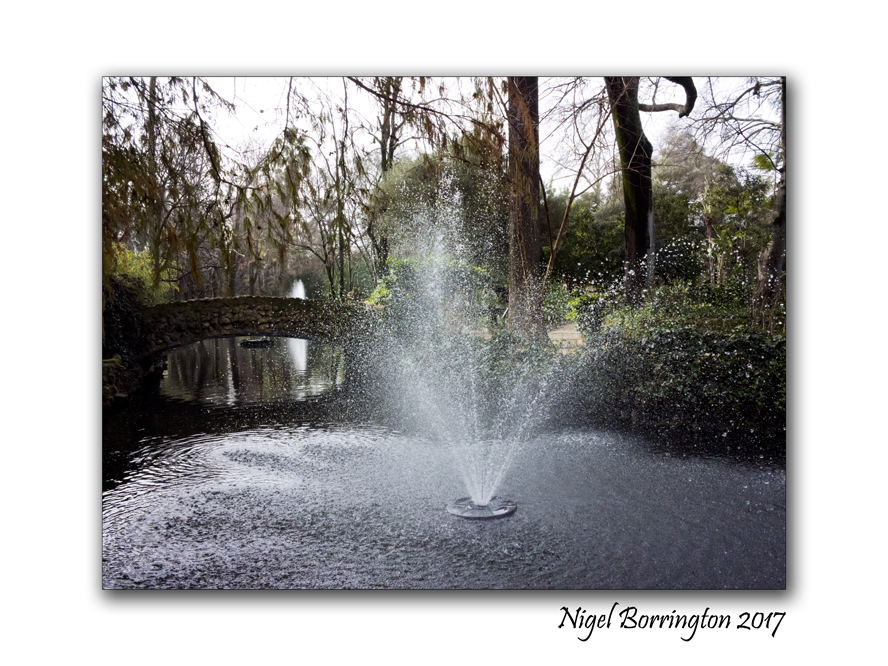
Just returned from a great weeks Holiday in Seville , Spain.
What a wonderful and historic city it is with its great cycle friendly streets, churches, royal palaces and rivers. I will post more on individual places but for now here are just some on the many places I visited and images I took.
LS lowry his drawings and his teacher Pierre Adolphe Valette
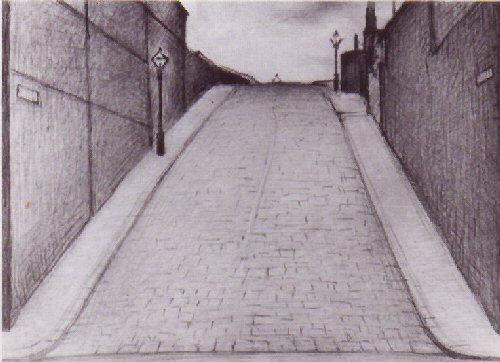
The drawings of LS Lowry
At the end of last week I posted an introduction about the artist LS Lowry, he is one of my favorite artists and from my home town of Manchester in the UK. I have started a full study of his work and intend to post a few times relating to his artistic development as well as the different styles he worked in and area he selected for his art works.
It think its important to match Lowry with his night school teach Pierre Adolphe Valette, who was a French Impressionist painter. His most acclaimed paintings are urban landscapes of Manchester, now in the collection of Manchester Art Gallery. Today, he is chiefly remembered as L. S. Lowry’s tutor. I post here some of his painting as they cover a lot of the inner Manchester city areas that Lowry also later work in.

Pierre Adolphe Valette
Lowry’s drawing
L S Lowry is known mostly for paintings,however the artist valued his drawings just as much.
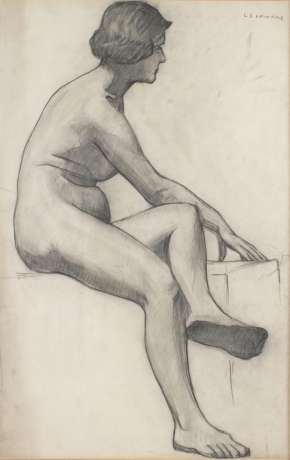
Lowry was concerned with the qualities of line and tone. He continued to draw compulsively until the last years of his life, producing a huge range of works. His work does not just consist of his industrial scenes, but also includes highly finished drawings of the life model, careful portrait studies, rapid sketches made on location and harming sketches of children and dogs.
Lowry did not merely see drawing as a means to an end in producing his paintings, but as a significant and worthwhile medium in its own right. He would often makPierre Adolphe Valettee sketches, in situ or from memory, and later produce a much more detailed, fine piece of art from this sketch. In his early work, Lowry drew in a very strict and linear style, with little or no shading. Over time, however, he came to prefer a technique of rubbing out and over-drawing. Lowry would rub heavily worked areas of tone with his finger to achieve a dense velvety smoothness.
This technique of layering often gave his work a sense of ghostliness especially where traces of an earlier drawing can be seen underneath. Lowry did use mediums other than pencil for his drawings and his collection of work includes pastel, chalk, pen and ink, felt-tip and biro drawings.
Lowrys Night school teach was Pierre Adolphe Valette, when Lowry became a pupil of Valette he expressed great admiration for his tutor, who taught him new techniques and showed him the potential of the urban landscape as a subject. He called him “a real teacher … a dedicated teacher” and added: “I cannot over-estimate the effect on me of the coming into this drab city of Adolphe Valette, full of French impressionists, aware of everything that was going on in Paris
Valette’s paintings are Impressionist, a style that suited the damp fogginess of Manchester. Manchester Art Gallery has a room devoted to him, where the viewer may compare some of his paintings with some of Lowry’s, and judge to what extent Lowry’s own style was influenced by him and by French Impressionism generally.
The Lowry hosted an exhibition of about 100 works by Valette, alongside works by Lowry, between October 2011 and January 2012. It included paintings of Manchester from Manchester Art Gallery and loans from private owners.
I feel that you can see just how well these two artists click in the night school classes, as the influence that Valette had over Lowry clearly stayed with him all his artistic life ….
The Painting of Pierre Adolphe Valette
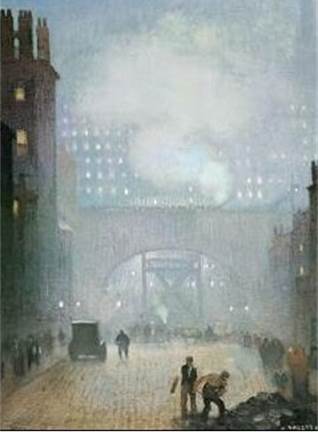


More painting by Pierre Adolphe Valette here
Selection of drawing by LS Lowery
Life drawings


Landscape Drawings
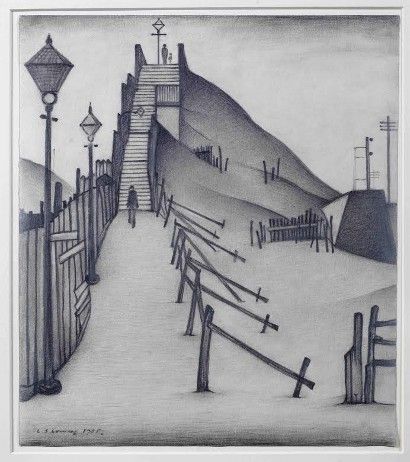


Francis Terrace, Salford 1969-72 L.S. Lowry 1887-1976 Presented by Ganymed Press 1979 http://www.tate.org.uk/art/work/P03277

Landscape Art works : Ancient Rome, engraved by A. Willmore published 1859–61

Artwork details
Artist : After Joseph Mallord William Turner 1775–1851
Title : Ancient Rome, engraved by A. Willmore
Date : Published 1859–61
Medium : Engraving on paper
Collection : Tate
Acquisition: Transferred from the British Museum 1988
Its a good while since I posted here about some of my most loved artists and art work, I want to start again to share some of my most liked works of art over the next weeks.
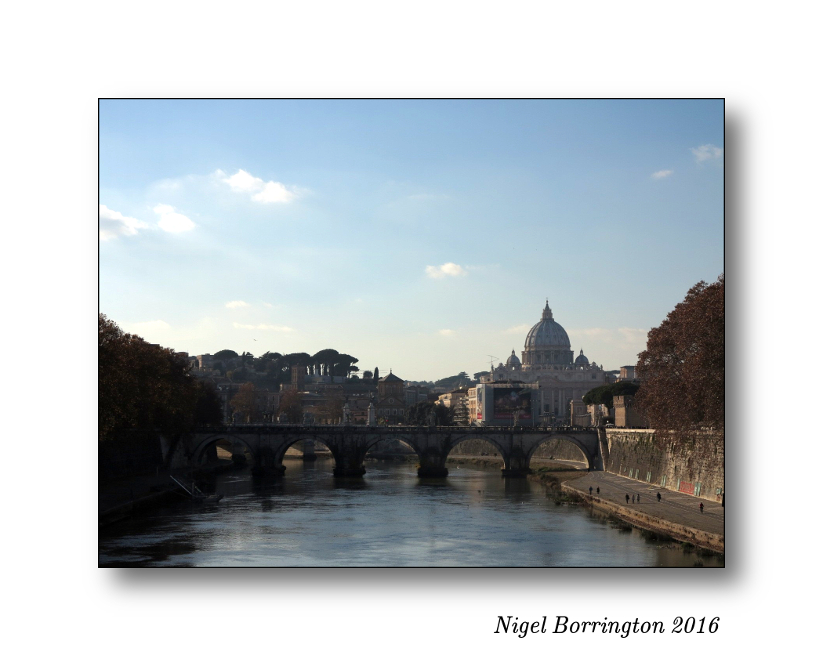
River Tiber
Rome
Nigel Borrington
I last visited Rome in December 2015 and took a few landscape images along the banks of the river Tiber, this river is a great location for photographers and artists alike.
Some years back while I was studying art history, I took a close look at the art work created by many artist who lived in Rome or who had visited this great city and done their best to capture its atmosphere.
Art work such as this great engraving by A. Willmore in the style of J._M._W._Turner, this is a fantastic etching as it captures the river and it location perfectly, live along the river banks.
it is not to hard to imaging this work as a great black and white print in modern terms.
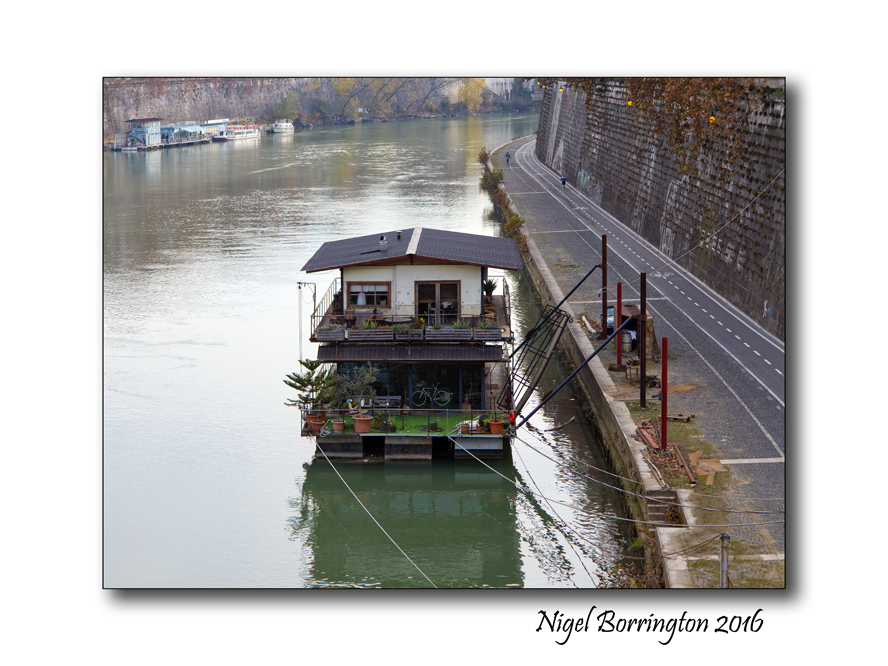
Life along the river bank
River Tiber
Rome
Nigel Borrington
Today the river Tiber is still used in many of the same ways as you can see in this drawing, it is now even the home to many people who live in house boats. the banks are today acting as walking routes and cycle paths.
Le Balcony , By : Charles Baudelaire’s
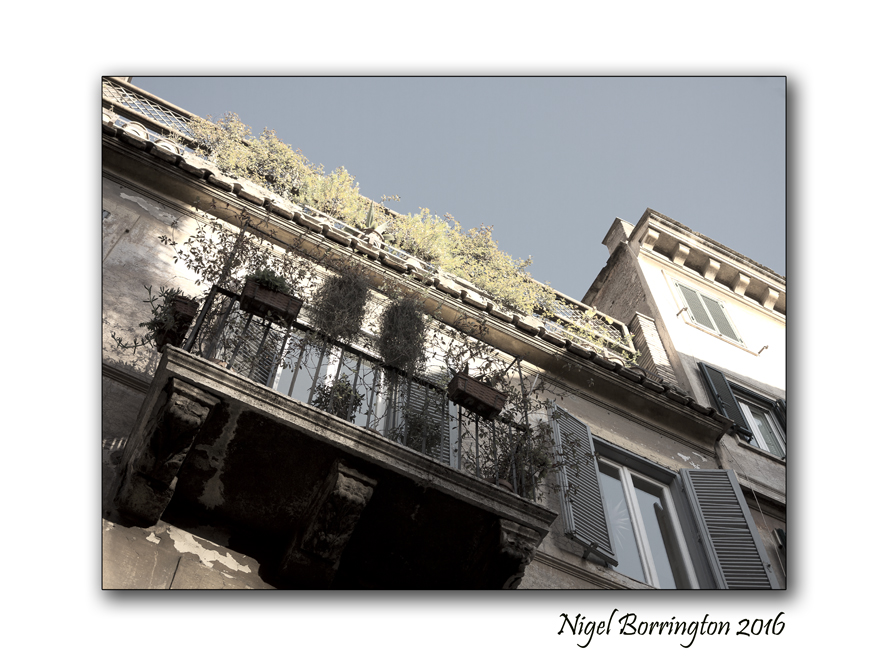
Mother of Memories
Nigel Borrington
Le Balcony , By : Charles Baudelaire’s
Mother of memories, mistress of mistresses,
O you, all my pleasure, O you, all my duty!
You’ll remember the sweetness of our caresses,
The peace of the fireside, the charm of the evenings.
Mother of memories, mistress of mistresses!
The evenings lighted by the glow of the coals,
The evenings on the balcony, veiled with rose mist;
How soft your breast was to me! how kind was your heart!
We often said imperishable things,
The evenings lighted by the glow of the coals.
How splendid the sunsets are on warm evenings!
How deep space is! how potent is the heart!
In bending over you, queen of adored women,
I thought I breathed the perfume in your blood.
How splendid the sunsets are on warm evenings!
The night was growing dense like an encircling wall,
My eyes in the darkness felt the fire of your gaze
And I drank in your breath, O sweetness, O poison!
And your feet nestled soft in my brotherly hands.
The night was growing dense like an encircling wall.
I know the art of evoking happy moments,
And live again our past, my head laid on your knees,
For what’s the good of seeking your languid beauty
Elsewhere than in your dear body and gentle heart?
I know the art of evoking happy moments.
Those vows, those perfumes, those infinite kisses,
Will they be reborn from a gulf we may not sound,
As rejuvenated suns rise in the heavens
After being bathed in the depths of deep seas?
— O vows! O perfumes! O infinite kisses!
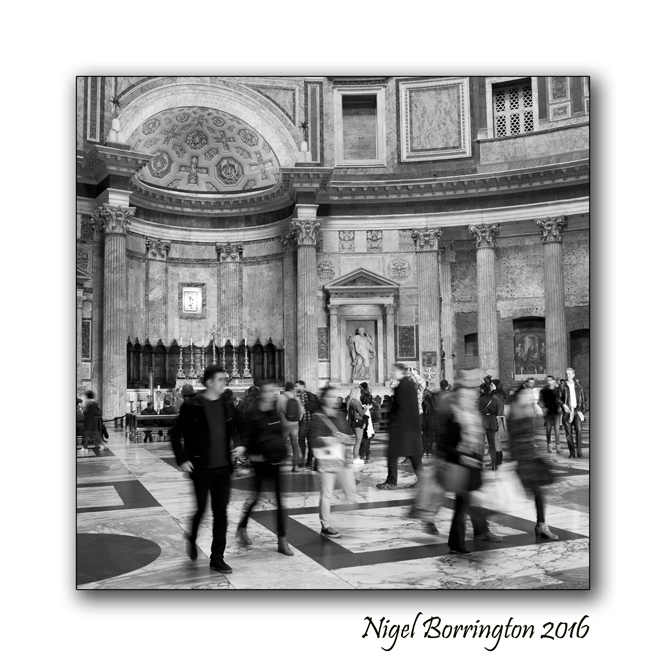
The Pantheon, Rome – in black and white and single words

The Pantheon,
Rome
Photos : Nigel Borrington
A few months back I visited Rome for a few days, I love this great city with its amazing history and people. My favourite place during this trip was the Pantheon, at some point very soon I want to post about this building in more detail, here however I want to strip this post down to the basic feelings I had on walking into this amazing space for the very first time in my life.
I am a big fan of word lists to describe personal experiences, so here goes !
The Pantheon in single words
Hight, awe, time, history, wonder, stone, granite, amazing, structure, art, architecture, human, achievement, skill, maths, space, understanding, power, time, mankind, Greek, Roman, temple, dome, circular, movement, light, time, space, years, moments, minutes, seconds, months, people, tourists, floor, roof, Walls, shapes, colour, openings, doors, markers, movement, sun, light, periods, soul, spirit, gods, existence,art, achievement, understanding, civilisation, Pantheon, Rome, Italy, life, death, memories, people, remembered, empires, lost, evolution, movement, time, love, life, people, seasons, legacy, alive, yesterday, today.
The Pantheon, Rome, a visit in space and time.


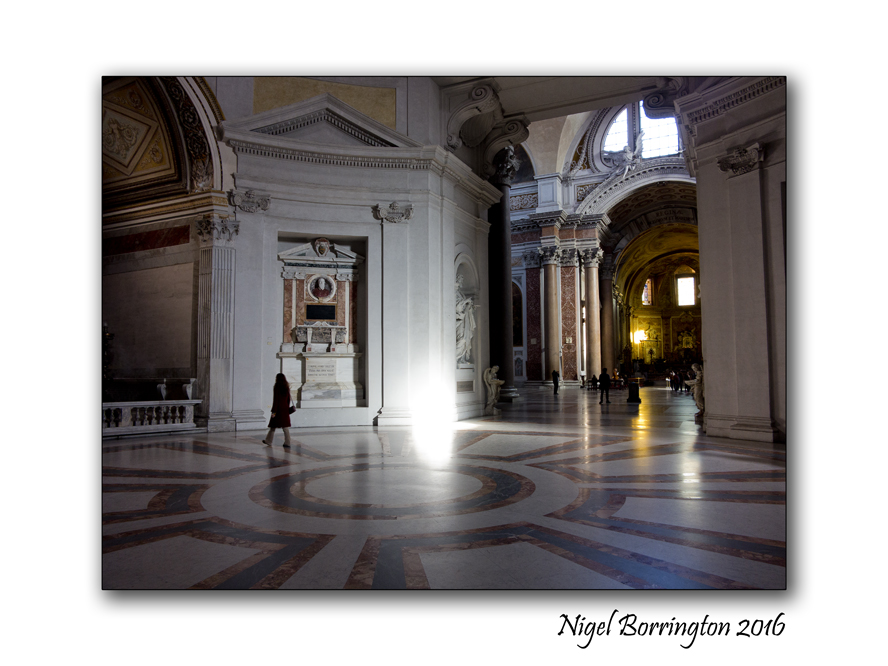
Monday in Rome , The Basilica of St. Mary of the Angels

Basilica S Maria Degli Angelie
Rome
Nigel Borrington
A Sense of Place –
The Basilica – Santa Maria degli Angeli e dei Martiri Piazza della Repubblica, in Roma just has to be one of the most beautiful Basilica’s in the city.
Located on the Piazza della Repubblica outside of the Vatican, it is only one of the cities many churches but it holds a level of peace and normality that you cannot find in the likes of St Peters.
Here is just a handful of the many images I enjoyed capturing on a recent visit ….
Gallery

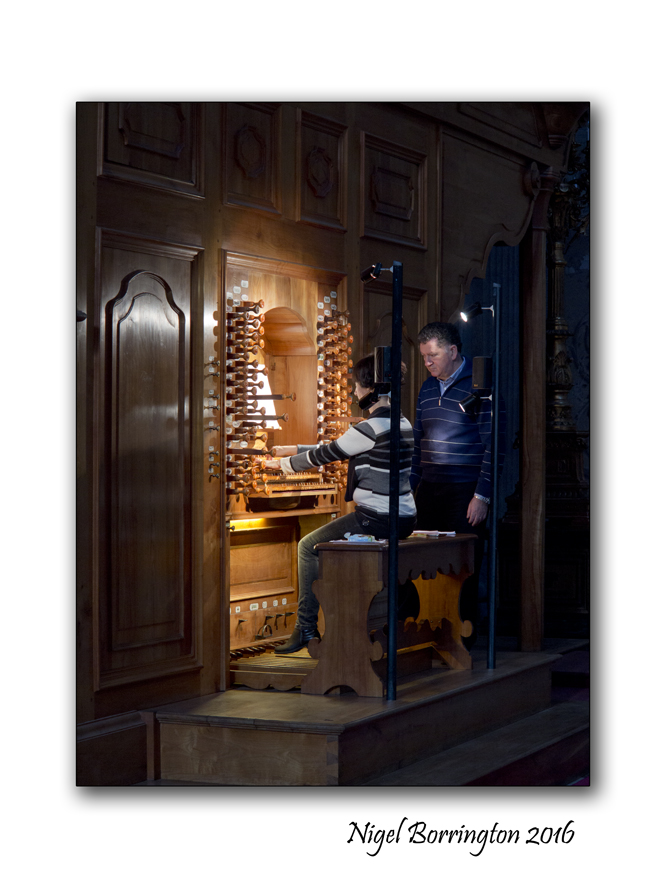


Thursdays Artist is a rediscovered source of artistic energy : Joash Woodrow

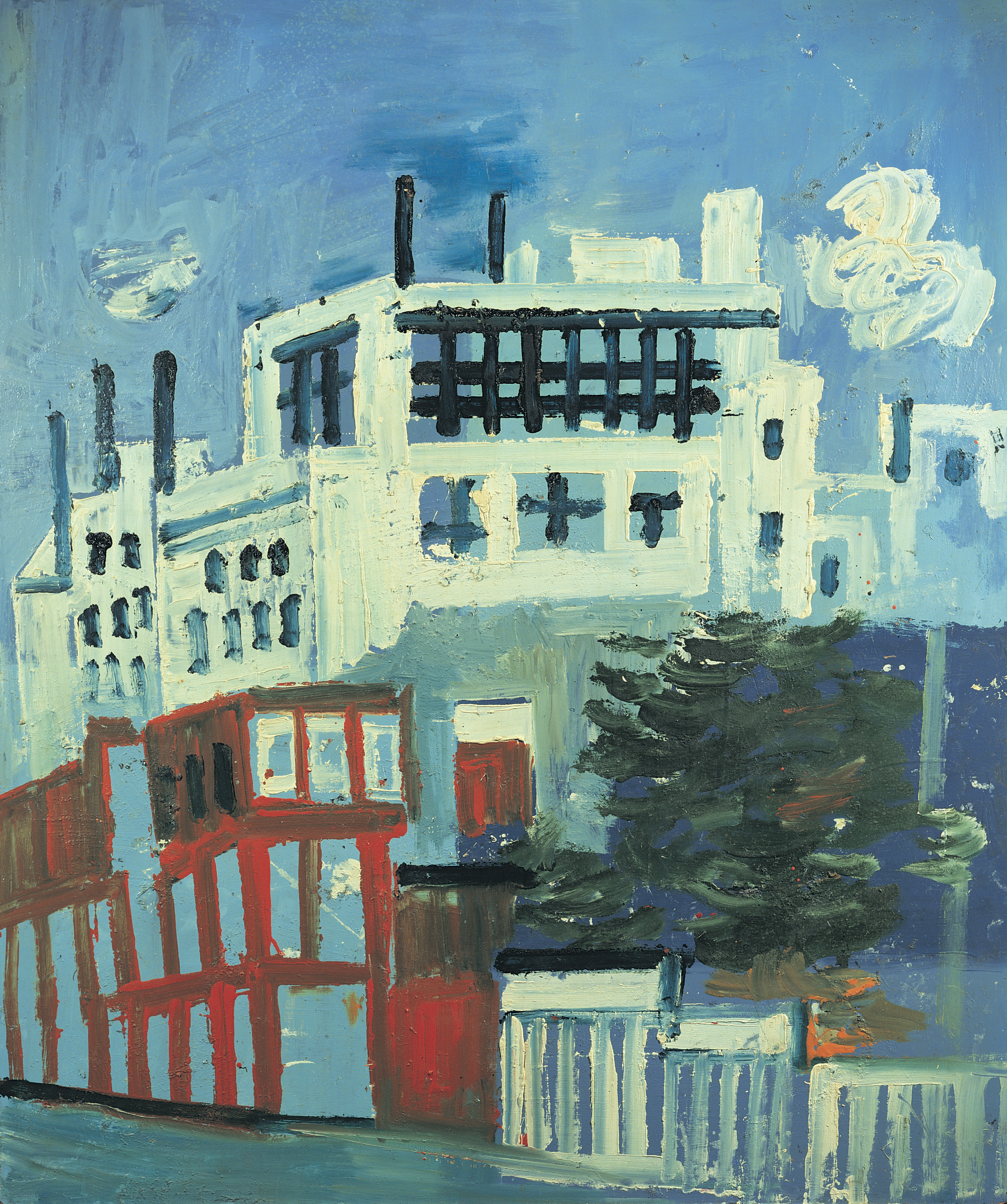
Four Trees, White Fence by Woodrow, Joash (1927-2006);
I first viewed the brilliant art work of Joash Woodrow in 2005 at the Manchester Art Gallery, I was back in Manchester visiting my sister and went into the city centre for the afternoon. I was not intending to visit the Gallery but it was raining so I wondered inside to see what exhibitions where on display, this was a lucky moment and one I will never forget.
I looked around the galleries permanent exhibitions and then took the stairs to the upper floor for a guest exhibition entitled “Retrospective – Joash Woodrow”, from the very first painting I viewed, I just knew I was going to fall in love with Joash’s drawings and paintings and I have been fascinated with his work and life story ever since.
I love Joash’s work for its very honest style, by this I mean that I feel he used his brush’s and paint’s to capture his world as he found it, there is little to praises or note about how perfect his style of painting or drawing is but so much to fall in love with about how he viewed his surroundings and how well he liked and felt for the people he painted.
This is painting in the RAW, produced by someone who, I feel if you were allowed to get close to him then you would truly like him !!!

Joash Woodrow (1927-2006) Mr Woodrow’s Shop, Chapeltown Road, Leeds c
About Joash Woodrow, By :Nicholas Usherwood
Joash Woodrow, Reclusive painter whose work provides a significant link between British and European art
The chance discovery in a Harrogate bookshop in 2001, by the painter Christopher P Wood, of six volumes of an engraved Victorian art history, wildly and exuberantly annotated in a series of Picasso-esque drawings and collages by the then completely forgotten painter Joash Woodrow, led directly to the re-emergence of one of the most significant artistic figures in postwar British art. A visit a few days later by the Harrogate dealer Andrew Stewart to a small, semi-detached house in north Leeds, where Woodrow had lived alone for 20 years, uncovered an extraordinary story. The house was filled with some 750 canvases and around 4,000 works on paper, a lifetime’s achievement which a devoted family was none the less contemplating consigning to a skip.
Joash, who has died aged 78, had recently been taken into sheltered accommodation, having nearly set fire to the house, but his work itself had avoided serious damage. In the months that followed, it became apparent that this was no isolated figure at the margins of art history but an artist of sophisticated interests and training.

Born in Leeds, Woodrow was the seventh of nine children in a poor but cultured Jewish family that had escaped the pogroms in eastern Poland of the early 1900s. His father had run a Jewish bookshop in Chapeltown before working in Montague Burton’s factory to provide for a growing family. Joash trained at Leeds School of Art and, in 1950, won a scholarship to the Royal College of Art.
His intense shyness does not seem to have been suited to the competitive atmosphere there, though his tutors’ reports commented that his work already seemed more European in feeling than most of his contemporaries, among them John Bratby, Leon Kossoff and Frank Auerbach. A year or so after leaving the RCA in 1953, he suffered a nervous breakdown and took himself back to Leeds, where, supported financially by his family, he lived and worked for the rest of his life.
Advertisement
Joash Woodrows – Leeds
With his mother and two brothers also living in the two-up, two-down house, working conditions must have been extremely cramped, which almost certainly explains the comparatively small scale of Woodrow’s early work. Mostly portraits and landscapes, their dark tones illumined by flashes of sonorous colour and intense solemnity, they reveal the beginning of a distinctive style, one that in its understanding of the French fauvist Georges Rouault showed Woodrow already looking to European art for inspiration.
This gathered momentum with a number of visits to the huge Picasso exhibition at the Tate in 1960, the crucial impact of which was to give Woodrow an insight into his Jewish heritage, and the understanding that the roots of his art lay outside this country and were essentially European in character.
Looking to the fierce expressionism of Karel Appel, Asger Jorn and the Cobra group, the harsh, raw surfaces of Jean Dubuffet and the Art Brut circle, and the insistence on the quality of mark-making of Nicolas de Staël and the tachistes, Woodrow began to uncover the source of those artistic energies that were to carry him over the next 30 years of intense activity. With the death of his mother in 1961 – and with more room in which to paint – there was a steady increase in the scale and ambition of the work.
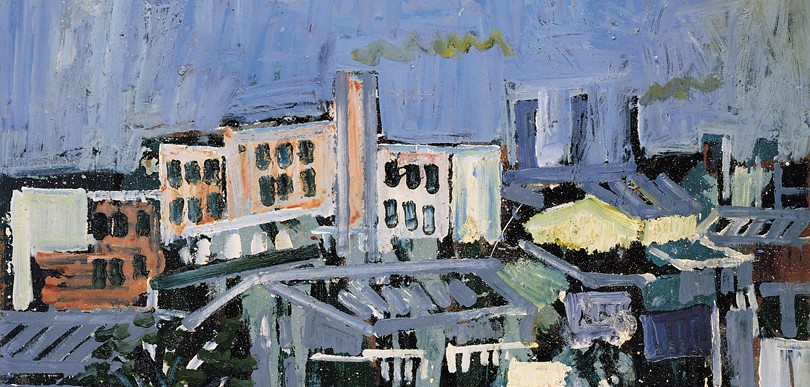
A lack of success in the work he occasionally submitted to large, open competitions like the John Moores, however, encouraged a feeling of isolation, something his reclusiveness only served to emphasise. By the early 1970s, he was living and working with very little thought for anything but the next painting, producing large-scale canvases (anything of up to 5ft x 8ft) with quite extraordinary rapidity. When not painting, he was drawing furiously in the semi-industrial and urban districts of north Leeds those subjects that were to form the basis of some of the most original and experimental works of his later career.
Advertisement
If his personal life was unhappy, there is no sign of it in the power and exuberance of the broad brush strokes, high-pitched colour and boldly flattened picture spaces with which he describes this landscape – an unprepossessing jumble of scruffy allotments, derelict factories and scattered trees.

Gilbert Looking Down, Joash Woodrow
By the early 1990s, Woodrow’s physical and mental health began to decline, and the house was too cluttered with paintings for him to do anything but draw. At the time of the 1999 fire, he seems to have stopped doing even that and, after his removal to sheltered accommodation in Manchester, he lost interest in working altogether.
Nor did he seem very interested in the public recognition that followed, when books and major exhibitions – at Leeds art gallery and then Manchester art gallery, and the Ben Uri and RCA last year – created a wave of interest that looks certain to place him firmly as a significant link between British and European artistic movements in the second half of the 20th century. His brothers Saul, John and Paul survive him.

· Joash Woodrow, artist, born April 7 1927; died February 15 2006
A Monday look at Joseph McWilliams

Joseph McWilliams PPRUA
I am taking time this week to do a study of some landscape artists/photographers who’s work I very much like very much.
I feel the need to take a look at the work of the artists I know of again, who use the landscape of Ireland both North and South along with the British Isles, in there drawings and painting and Photographs.
I first came across the art work of Joseph McWilliams when I visited an exhibition called “Landscapes north and south”, the the exhibition was held at the Glebe House Gallery, County Donegal.

A little about : Joseph McWilliams PPRUA
Joe McWilliams was born in Belfast in 1938. He studied at the Belfast College of Art and at the Open University. Later he lectured in Art Education at the Ulster Polytechnic in Belfast and was Senior Lecturer and Senior Course Tutor at the University of Ulster. Since 1986 he and his wife, artist Catherine McWilliams have managed the Cave Hill Gallery, Belfast. He has had numerous solo exhibitions and has been represented in major Irish group shows both in Ireland and abroad; Recently his work was seen in an exhibition entitled ‘Dreams and Traditions: 300 Years of British and Irish Painting’ from the Ulster Museum Collection which toured the USA in conjunction with the Smithsonian Institute, Washington. His work is held in numerous collections including: NI Arts Council, Queen’s University, Coras Iompair Éireann, the Department of the Environment (NI), AIB, the National Self Portrait Collection of Ireland.
McWilliams is a regular lecturer and broadcaster on the Visual Arts in Northern Ireland and has been invited to speak on the Arts a number of times in Boston, USA. He has also published articles and reviews on the subject. He has written many scripts for BBC radio and has presented, his own script “The Way that I Went” which was seen on BBC world services as well as locally and in Britain. His own work has been exhibited at a variety of venues in Ireland, Britain, Europe and the USA. He is perhaps best known for his paintings of ‘The Troubles’ evidenced in exhibitions such as ‘Art for Society’ Whitechapel Gallery, London; ‘Documenta 6’ Kassel, W.Germany; ‘A Troubled Journey 1966-1989’ and ‘Colour on the March’ both at the Cavehill Gallery, Belfast.

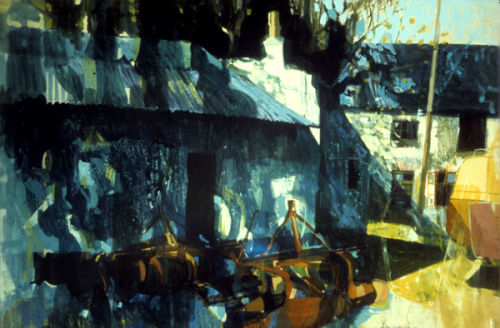
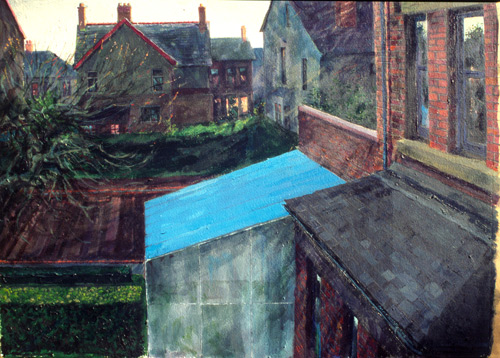
I liked Joseph’s paintings very much for both their painting style and the fact that he used the world around himself for subjects to paint, even using his own back Garden for much of his work.
Here I link to his web page http://www.josephmcwilliams.com/, for some of the painting I like the most.




Friday Poetry : The Colosseum, Brian Harris
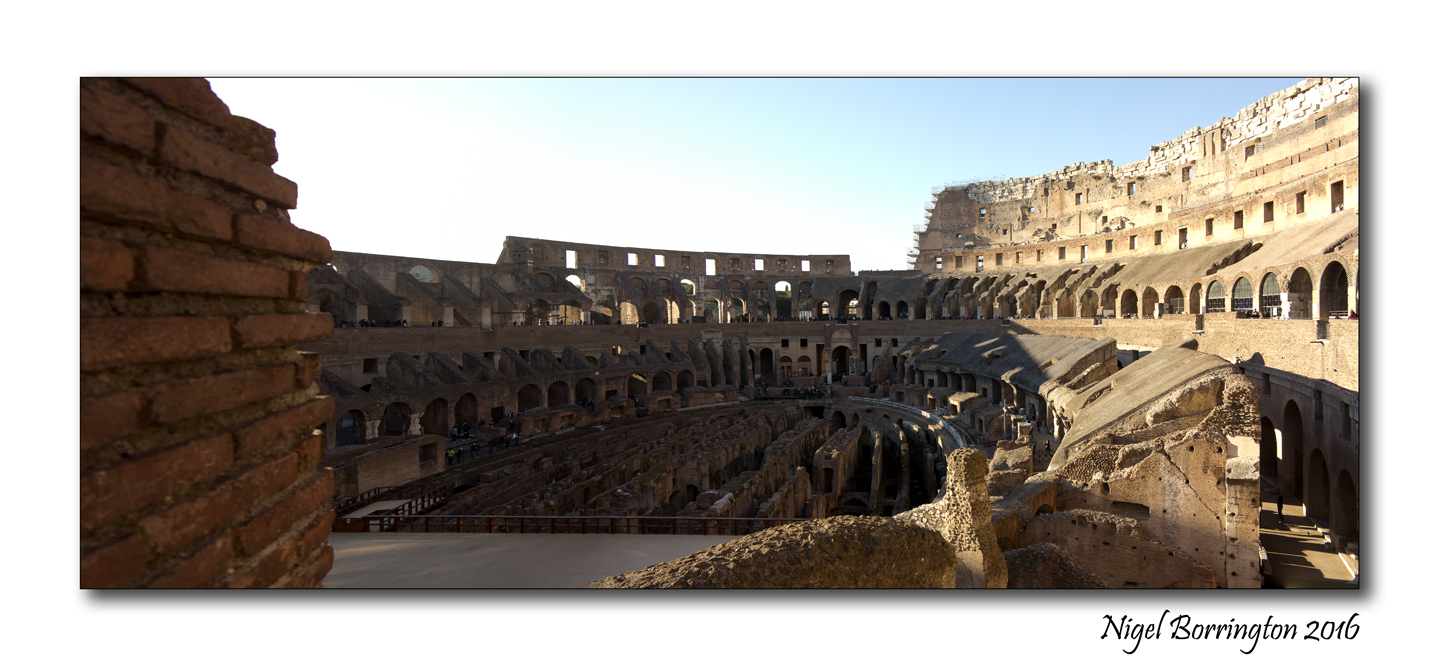
Ten million stones recall
Ten thousand Souls whose anguished cries
Of victory arose from this arena.
For such contempt that man had shown
He trod the path of pain
surmounting human weakness yet again.
He led the way through just such vales
And with two thousand years now gone
We dwell upon such Grace.
Brian Harris
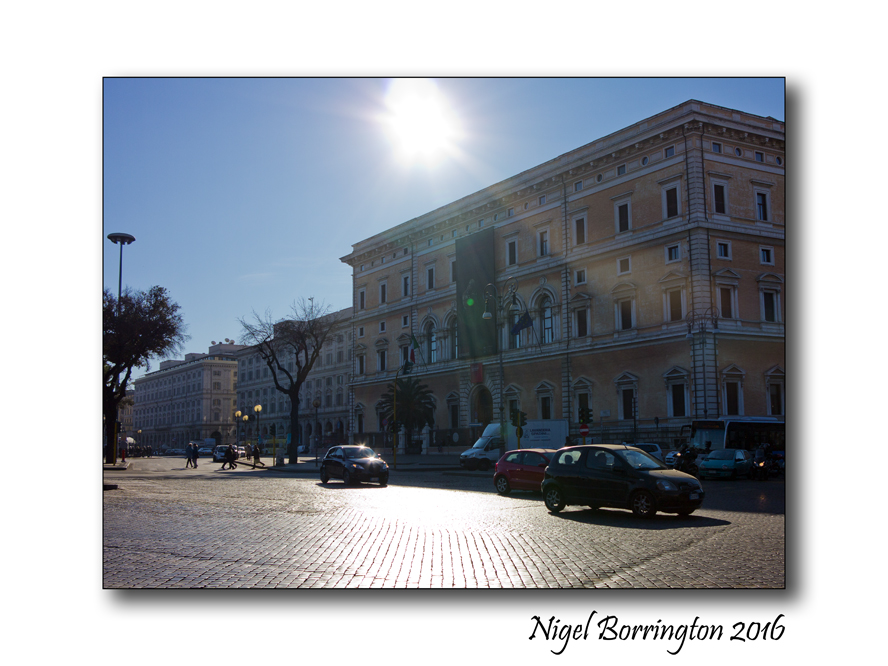
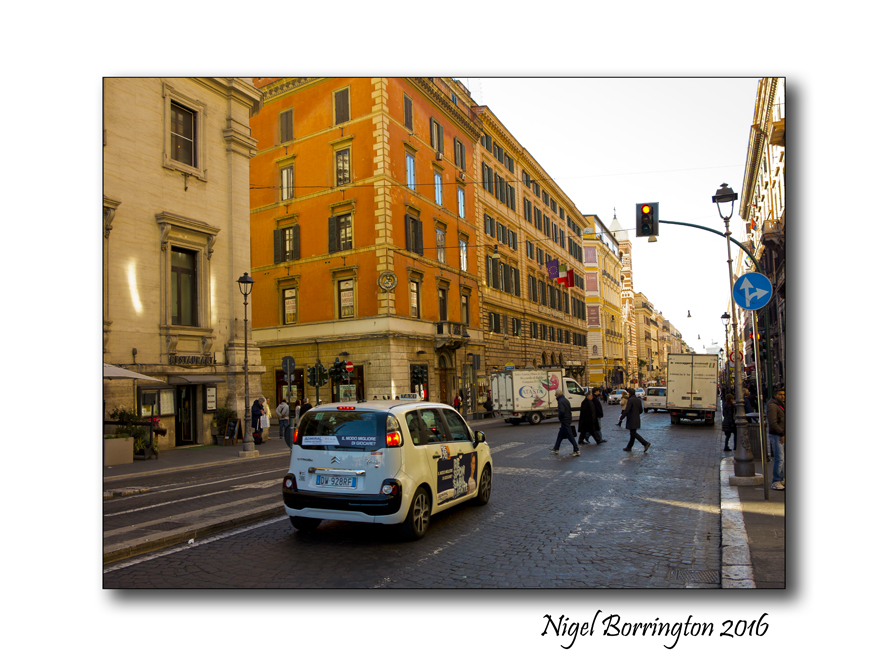

Moments in Rome – Belief : Believe… – Poem by Steven Piz.

Moments in Rome
Belief
Nigel Borrington
Believe… – Poem by Steven Piz.
I believe
I believe in a lot
I believe in music
I believe in writing
I believe in listing
I believe in mankind
I believe in work
I believe in love
I believe in laughing
I believe in paradise
I believe in safety
I believe in light
I believe in entertainment
I believe in history
I believe in time
I believe in survival
I believe in change
I believe in luck
What do you believe in?
To tell the truth…
Are any of us promised tomorrow
Live your life as if the last.
Believe
Circus Maximus, Rome

Circus Maximus
Rome
Nigel Borrington
During the Christmas and New year holidays we visited Rome, taking time to revisit some of this great cities history.
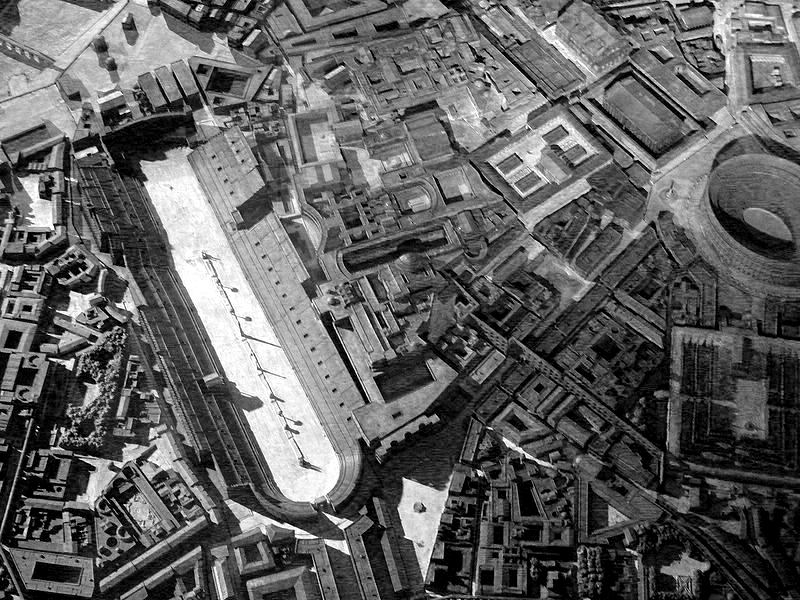
The Circus Maximus is just one of these many locations, today it has become one of Romes many city parks as much as a sports Stadium. However talking a walk around it’s still existing race track you can clearly imagine what it was like here some two thousand years ago with all the spectators, horse and chariot racers.
Circus Maximus, Rome
The Circus Maximus (Latin for greatest or largest circus, in Italian Circo Massimo) is an ancient Roman chariot racing stadium and mass entertainment venue located in Rome, Italy. Situated in the valley between the Aventine and Palatine hills, it was the first and largest stadium in ancient Rome and its later Empire. It measured 621 m (2,037 ft) in length and 118 m (387 ft) in width and could accommodate over 150,000 spectators.[1] In its fully developed form, it became the model for circuses throughout the Roman Empire. The site is now a public park.


Life along the river Tiber , Rome
Life along the river bank
River Tiber
Rome
Nigel Borrington
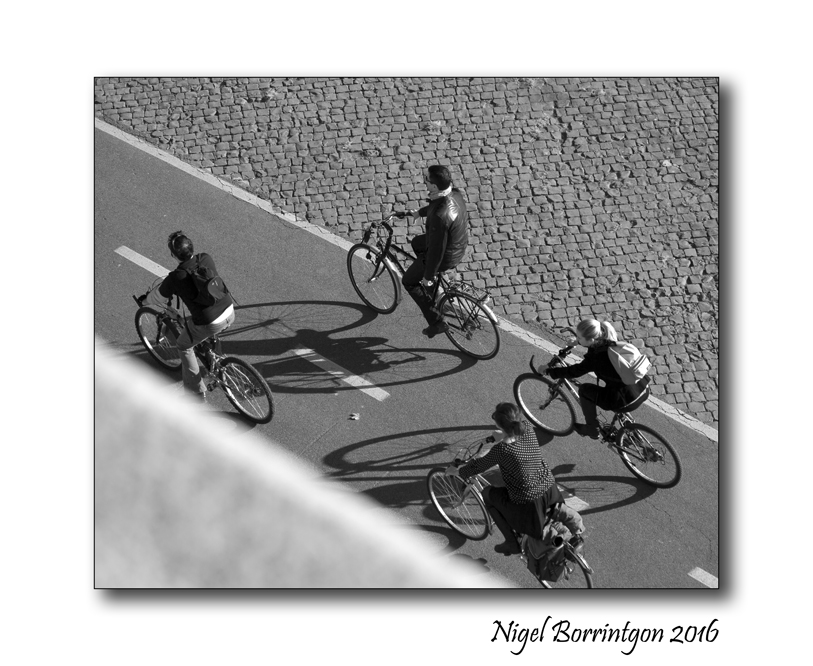
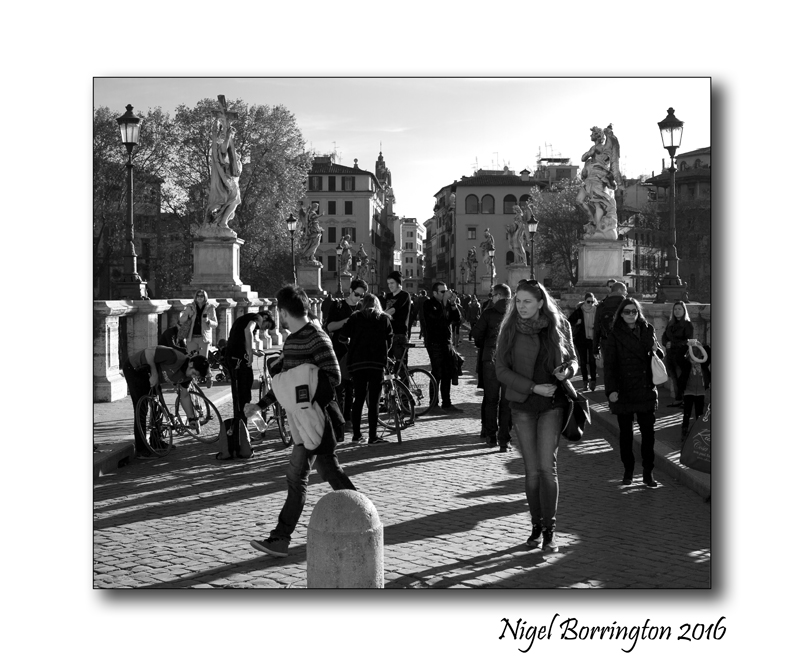
I have often wondered what life would be like living on a house boat ?
This House boat is located on the river Tiber in Rome and just by taking a quick look at the image, you can see exactly the life style that its owner much have.
For example you can see the way they get to work by bicycle using the cycle path that runs the full length of the river as it winds its way through the city.

Light of the Sun – through the Windows of St Peters , Rome

Light of The Sun
St Peters
Rome
Nigel Borrington
St Peters Rome
The Light of the Sun
Over the Christmas Holiday 2015/16 we visited Rome a city I love very much for among many things its amazing buildings.
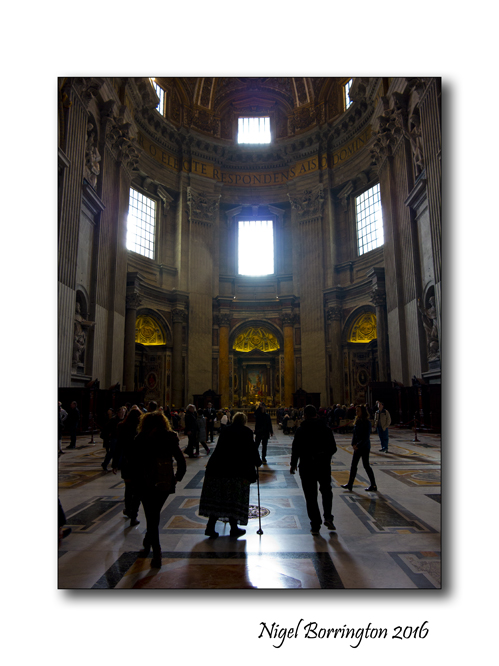
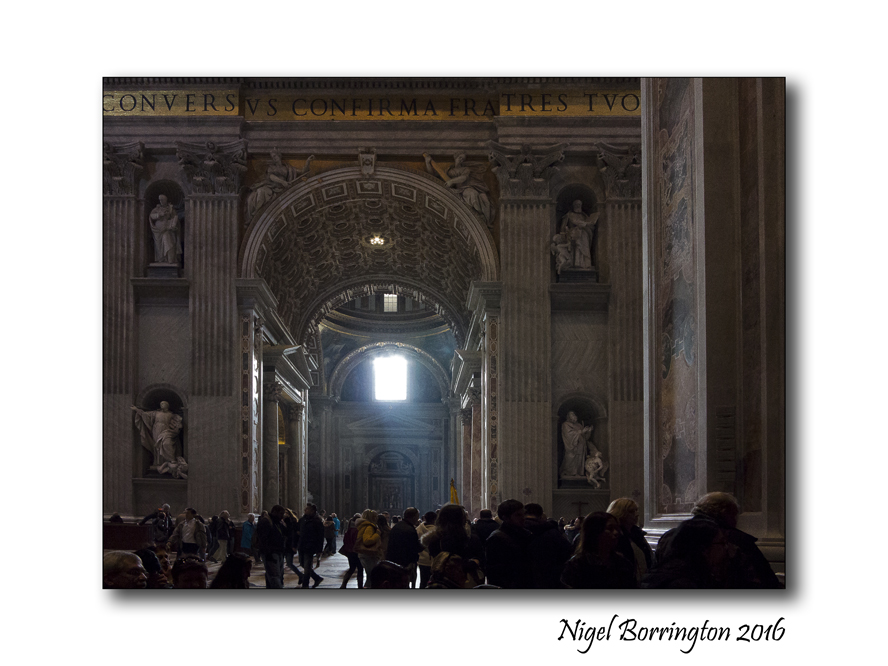
On visiting St Peters Basilica, a must do ! , the weather was just amazing for the time of year. Along with the stunning architecture and art, the one thing I could not help but notice was the light from the low December Sun flooding through the many windows located high on the walls around the many domes and chapels.
I spent a lot of time doing my best to capture the effects that this Sun light was creating and here just wanted to share a few of my attempts.
Rome is a city of outstanding churches, none however can hold a candle to St Peter’s (Basilica di San Pietro), Italy’s largest, richest and most spectacular basilica. It is Built atop an earlier 4th-century church, it was completed in 1626 after 120 years’ construction.
Its lavish interior contains many spectacular works of art, including three of Italy’s most celebrated masterpieces: Michelangelo’s Pietà, his soaring dome, and Bernini’s 29m-high baldachin over the papal altar.
Light of the Universe – A Gallery



Roman Holiday

Roman Holiday
Nigel Borrington
Happy New year everyone 🙂
I spend sometime and a great time over Christmas and New year in Rome, the weather was amazing and I just love Rome !!
I will share many more images in the coming days but for now I just wanted to share a few images from this wonderful city …..


Roman Holiday
Nigel Borrington
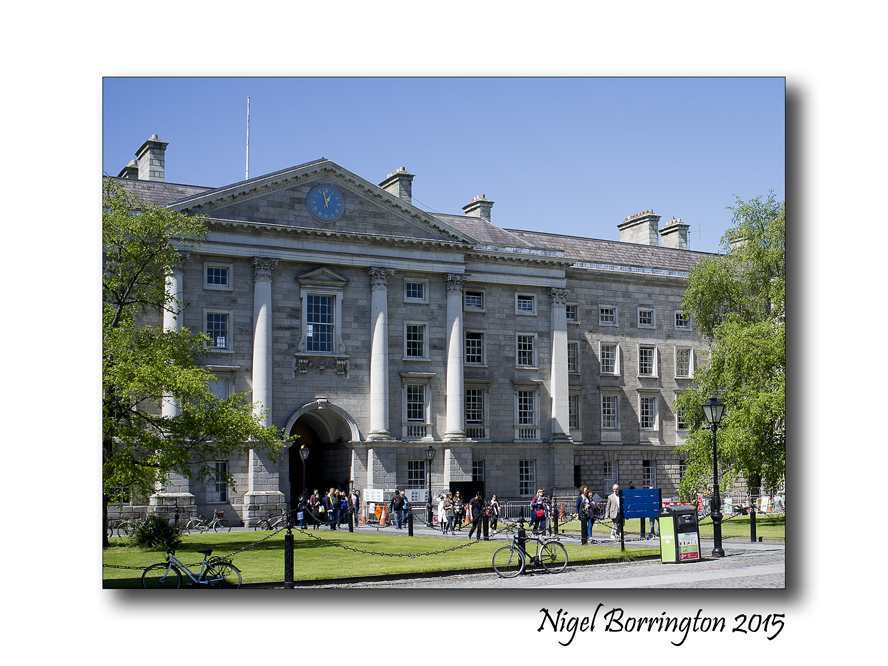
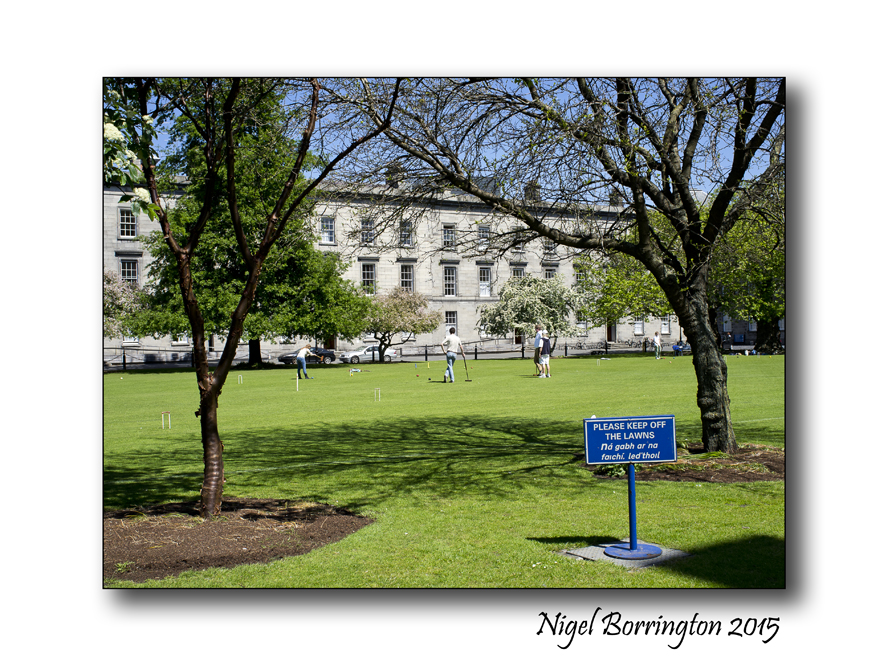
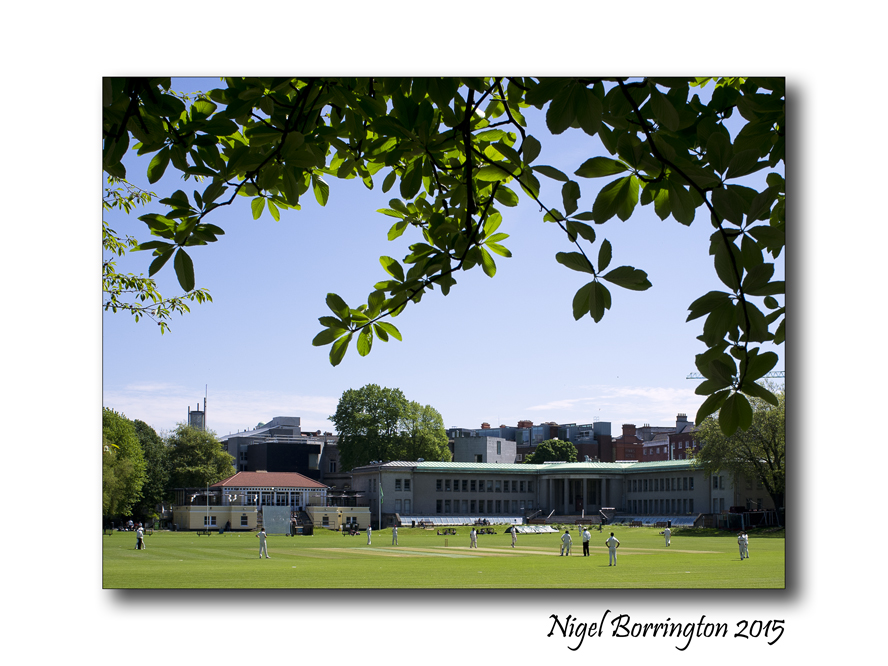
A sense of place : Trinity College, Dublin

I just want to share in this post, a set of images taken at the end of May 2015 during a visit to Dublin including one of my favorite places to walk around and people watch, while having a coffee and some lunch to eat 🙂
Trinity College, Dublin


Ruin a Poem By S. A. J. Bradley

Irish Landscape Photography : Nigel Borrington
Ruin
Wondrous the stone of these ancient walls, shattered by fate.
The districts of the city have crumbled.
The work of giants of old lies decayed.
Roofs are long tumbled down,
The lofty towers are in ruins.
Frost covers the mortar,
Tiles weathered and fallen, undermined by age.
The original builders are long in the earth’s cruel grip,
generations since have passed.
These broad walls, now reddened and lichen-aged, brown and gray:
once they withstood invading kingdoms.
Now, beneath countless seasons, they have fallen.
The rampart assembled by many, crumbles still,
Though hewn together with skill of sharpening and joining,
Strengthened ingeniously with chain and cabled rib-walls.

In the town, urbane buildings, bathhouses, lofty rooftops,
a multitude gathered.
Many a hall filled with humans
until Fate inexorably changed everything.
All the inhabitants succumbed to pestilence.
Swept away are the great warriors.
Their towers and walls are deserted,
the desolate place crumbles away.
Who could repair any of it,
for they are long dead.
So the courtyards and gates have collapsed,
and the pavilion roofs of vaulted beams crumbled.
Here where once men in resplendent clothes, proud, gazed upon their gold and silver treasure,
their gems and precious stones,
upon their wealth, and property:
the bright city of a broad kingdom.
Stone courtyards ran streams of ample water, heating the great bathes,
conveniently flowing into the great stone vats …
 Nigel Borrington
Looking at a Painting : Industrial City by Ls Lowry
Lowry, Laurence Stephen; Industrial City; British Council Collection; http://www.artuk.org/artworks/industrial-city-176858
I have posted a couple of times since the new year, relating to the Manchester Born artists Laurence Stephen Lowry (1887–1976) he was born in Old Trafford, Salford and studied in the evening at Manchester Municipal College of Art. He was a man who rarely left the North West, finding his inspiration in the landscape of North Wales and Lancashire, and in the streets of Manchester and around Salford.
Possible this painting “Industrial City” is one of my favorite cityscapes that Lowry produced, I say possibly because he was prolific in this area of his portfolio and I love so much of his inner city works.
I grow up in Altrincham, a town only a few miles away from city center Manchester and while I missed this core era that Lowry was working in, I have lots of memories of the city looking like it does in these paintings.
During my early years I can remember these streets and factories being slowly torn down and replaced with office blocks along with new more modern houses. Its hard to imagine these days what life was like for a lot of the people captures in Lowry’s drawings and painting, living and working within the same mile, most people hardly traveling very far outside their surroundings.
Industrial City
Lowry restricted his palette to black, vermillion, Prussian blue, yellow ochre and flake white. Whilst there is a naivety in his rendition, he deftly caught the hustle and bustle of men, women and dogs on the move against a background of terraced houses, mills and factories.
The things I love most about this painting , well firstly its angle of view, Lowry paints as if he was standing on top a hill overlooking the homes and industry below. I also like very much the distance in this painting, a distance that few of the people captured in it could experience themselves at street level. To me this distance captures the expanse of the city, each small area making up the whole, yet enclosing people within their own spaces of home and work and life.
City life itself is captured here, every element of the community (Home, work, shops, play, chat, church and industrial dirt – so much of it!).
In the distance through the city smog you can just make out the hills and moors, fresh air and spaces that so clearly is just out of reach.
I feel this painting is LS Lowry at his very best, some artists go in very close with life in order to capture and reflect on it , Lowry pulls back in his view and adds in so many elements that you have to spend time exploring his work, in order for you to see the full message and story he want you to see.
This was life in a Northern English town, lowry painted it and also lived it with the people he captured!!!!
Share this:
February 16, 2017 | Categories: Cityscape, Comment, LS Lowry, manchester, Nigel Borrington | Tags: art, Art History, Artist, City scape, industrial city, LS Lowry, manchester, Nigel Borrington, paintings, UK | 3 Comments