The Heron, A poem by : Linda Hogan
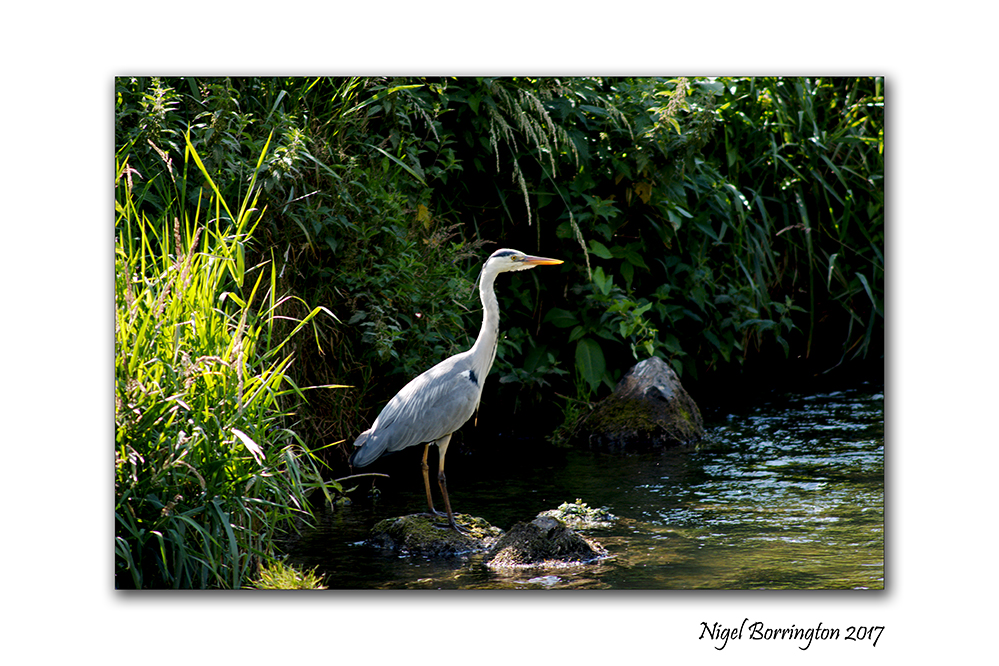
A Heron, hunting
Kings river
Kells
County Kilkenny
Nigel Borrington
The Heron
Linda Hogan
I am always watching
the single heron at its place
alone at water, its open eye,
one leg lifted
or wading without seeming to move.
It is a mystery seen
but never touched
until this morning
when I lift it from its side
where it lays breathing.
I know the beak that could attack,
that unwavering golden eye
seeing me, my own saying I am harmless,
but if I had that eye, nothing would be safe.
The claws hold tight my hand,
its dun-brown feathers, and the gray
so perfectly laid down.
The bird is more beautiful
than my hand, skin more graceful
than my foot, my own dark eye
so much more vulnerable,
the heart beating quickly,
its own language speaking,
You could kill me or help me.
I know you and I have no choice
but to give myself up
and in whatever supremacy of this moment,
hold your human hand
with my bent claws.
Beach Poetry : I Saw From the Beach by Thomas Moore
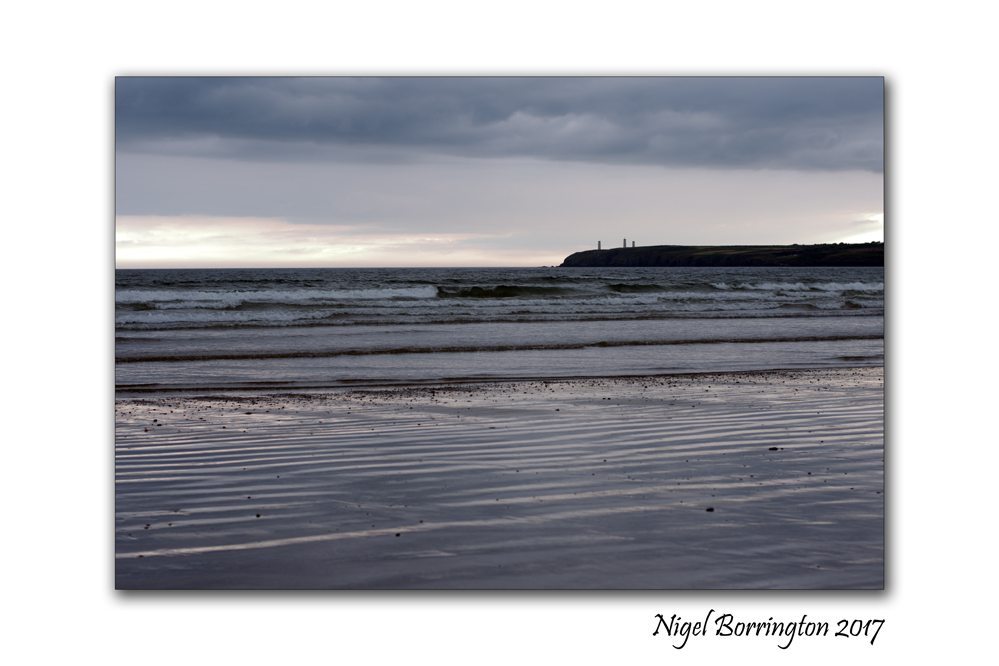
I Saw From the Beach
by Thomas Moore
I saw from the beach, when the morning was shining,
A bark o’er the waters move gloriously on;
I came when the sun o’er that beach was declining,
The bark was still there, but the waters were gone.
And such is the fate of our life’s early promise,
So passing the spring-tide of joy we have known;
Each wave that we danced on at morning ebbs from us,
And leaves us, at eve, on the bleak shore alone.

Oh, who would not welcome that moment’s returning
When passion first waked a new life through his frame,
And his soul, like the wood that grows precious in burning,
Gave out all its sweets to love’s exquisite flame.
Great Poems : The Evening Light – By Alfred Austin
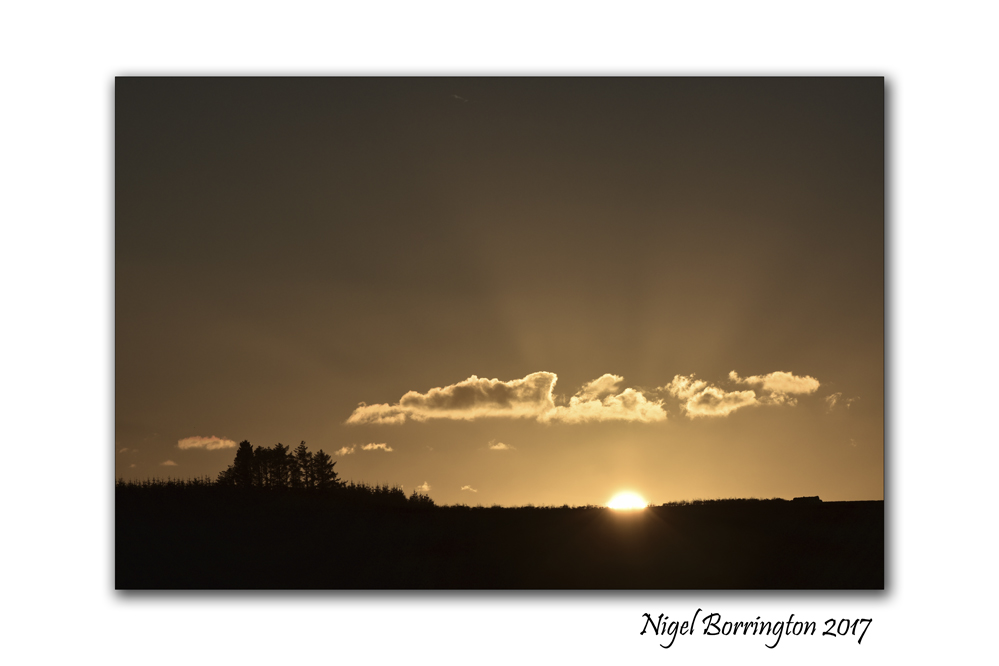
Sunrise to sunset
Nigel Borrington
The Evening Light
I
Angels their silvery trumpets blow,
At dawn, to greet the Morning Glow,
And mortals lift adoring eyes
To see the glorious sun arise.
Then, winged by Faith, and spurred by Hope
Youth scans the hill, youth scales the slope.
Its pulses bound, its thoughts exult,
It finds no danger difficult,
Quickens its pace, disdaining ease
Victor before it comes and sees,
Feeling the Universe its own,
The Sovereign of a Self—made Throne.
II
Each hope fulfilled, obtained each prayer,
We glory in the Noonday Glare.
Welcome the blinding heat of strife,
Deeming resistance part of life.
We deal the blow, return the stroke,
Fighting our way through dust and smoke,
Until, our battle—banner furled,
We tower above a conquered World;
Whether one leads mankind along
By gift of speech or grace of song,
Seizes by forceful hand the helm,
Or adds an Empire to the Realm,
Confronts the sun with forehead bare,
Exulting in the Noonday Glare.
III
But, as the lengthening shadows glide
Silent towards the eventide,
And dew baptizes leaf and flower
In twilight’s sanctuary hour,
A sacred Something haunts the air,
Tender as love, devout as prayer,
And in the lofty dome afar
Glimmers one bright outriding star,
Announcing to the watchful sight
Coming battalions of the Night.
Then Noonday Glare and Morning Glow
Fade into shadowy Long—ago.
One feels Earth’s vain ambitions fade
Into the vanished dust they made.
All that the glow of dawn foretold,
And all the glare of noon unrolled,
Seem nothing to the quiet joy
No clamour mars, no cares destroy,
‘Twixt restless day and restful night,
That cometh with the Evening Light.

The Otter, By :Seamus Heaney

Otters on the River Suir
County Tipperary
Nigel Borrington
The Otter
Seamus Heaney
When you plunged
The light of Tuscany wavered
And swung through the pool
From top to bottom.
I loved your wet head and smashing crawl,
Your fine swimmer’s back and shoulders
Surfacing and surfacing again
This year and every year since.

I sat dry-throated on the warm stones.
You were beyond me.
The mellowed clarities, the grape-deep air
Thinned and disappointed.
Thank God for the slow loadening,
When I hold you now
We are close and deep
As the atmosphere on water.
My two hands are plumbed water.
You are my palpable, lithe
Otter of memory
In the pool of the moment,

Turning to swim on your back,
Each silent, thigh-shaking kick
Re-tilting the light,
Heaving the cool at your neck.
And suddenly you’re out,
Back again, intent as ever,
Heavy and frisky in your freshened pelt,
Printing the stones.
The end of springtime – Fallen flower – a garden poem
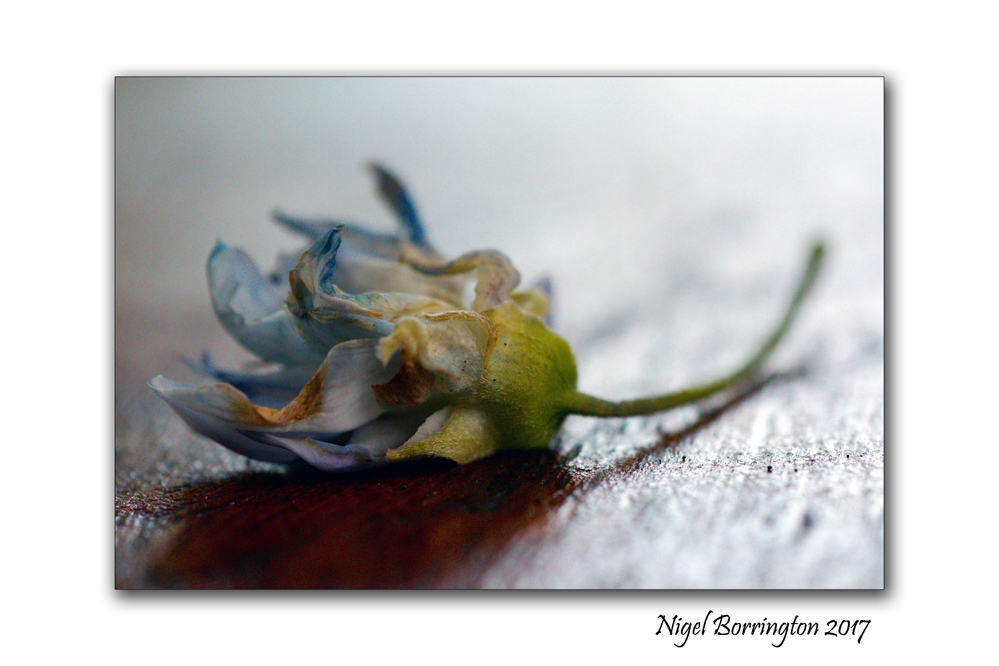
Fallen Garden flowers Nigel Borrington
In the Garden at eight am
I witness the end of Springtime
flowers of green, blue and purple
falling all over the table top
I place my cup of tea down
a moment frozen, soon moves on
as more of these blooms fall all around me
soon it will be summer time
clearly the flowers know, against all hope !
time moves on
never stopping
never frozen
never pausing for anyone ……

Monday Poetry : The Harbour, by: Winifred Mary Letts

The Harbour, Poem By Winifred Mary Letts Nigel Borrington
The Harbour, Poem
By : Winifred Mary Letts
I think if I lay dying in some land
Where Ireland is no more than just a name,
My soul would travel back to find that strand
From whence it came.
I’d see the harbour in the evening light,
The old men staring at some distant ship,
The fishing boats they fasten left and right
Beside the slip.

The fishing boat rests along the shore,
The grey thorn bushes growing in the sand,
Our Wexford coast from Arklow to Cahore –
My native land.
The little houses climbing up the hill
Sea daises growing in the sandy grass,
The tethered goats that wait large -eyed and still
To watch you pass.
The women at the well with dripping pails,
Their men colloguing by the harbour wall,
The coils of rope, the nets, the old brown sails,
I’d know them all.
And then the sun- I’d surely see
The disk against a golden sky.
Would let me be at my rest.



Monday Poetry : Bicycle Beats By Christian Reid Oct 2014

Christian Reid Oct 2014
Bicycle Beats
Axels and chains and
Feet and brains
It’s the bicycle beats
And the trees and the streets
Join the lines in the sidewalk
As I ride and I talk
To myself,
“Breathe in,” &
“Breathe out,” —
Burning and churning to the
Grooves and the cracks
Red light’s the only chance to relax
Racing the bus and flashing a grin
To the sorry folks trapping themselves therein
Ecstasy building with each revolution
Wiping my sweat away, tasting pollution
Grinding and winding a path on my bike
Where cars and pedestrians hate me alike
The Hand of Glory: The Nurse’s Story : Richard Harris Barham
The path to Top Withens,Earnshaw family house Wuthering Heights, Emily Brontë.
Nigel Borrington
The Hand of Glory: The Nurse’s Story
Richard Harris Barham
On the lone bleak moor,
At the midnight hour,
Beneath the Gallows Tree,
Hand in hand
The Murderers stand
By one, by two, by three!
And the Moon that night
With a grey, cold light
Each baleful object tips;
One half of her form
Is seen through the storm,
The other half ‘s hid in Eclipse!
And the cold Wind howls,
And the Thunder growls,
And the Lightning is broad and bright;
And altogether
It ‘s very bad weather,
And an unpleasant sort of a night!
‘Now mount who list,
And close by the wrist
Sever me quickly the Dead Man’s fist!—
Now climb who dare
Where he swings in air,
And pluck me five locks of the Dead Man’s hair!’
There ‘s an old woman dwells upon Tappington Moor,
She hath years on her back at the least fourscore,
And some people fancy a great many more;
Her nose it is hook’d,
Her back it is crook’d,
Her eyes blear and red:
On the top of her head
Is a mutch, and on that
A shocking bad hat,
Extinguisher-shaped, the brim narrow and flat!
Then,— My Gracious!— her beard!— it would sadly perplex
A spectator at first to distinguish her sex;
Nor, I’ll venture to say, without scrutiny could be
Pronounce her, off-handed, a Punch or a Judy.
Did you see her, in short, that mud-hovel within,
With her knees to her nose, and her nose to her chin,
Leering up with that queer, indescribable grin,
You’d lift up your hands in amazement, and cry,
‘— Well!— I never did see such a regular Guy!’

And now before
That old Woman’s door,
Where nought that ‘s good may be,
Hand in hand
The Murderers stand
By one, by two, by three!
Oh! ‘tis a horrible sight to view,
In that horrible hovel, that horrible crew,
By the pale blue glare of that flickering flame,
Doing the deed that hath never a name!
‘Tis awful to hear
Those words of fear!
The prayer mutter’d backwards, and said with a sneer!
(Matthew Hopkins himself has assured us that when
A witch says her prayers, she begins with ‘Amen.’) —
—’ Tis awful to see
On that Old Woman’s knee
The dead, shrivell’d hand, as she clasps it with glee!—
And now, with care,
The five locks of hair
From the skull of the Gentleman dangling up there,
With the grease and the fat
Of a black Tom Cat
She hastens to mix,
And to twist into wicks,
And one on the thumb, and each finger to fix.—
(For another receipt the same charm to prepare,
Consult Mr Ainsworth and Petit Albert.)
‘Now open lock
To the Dead Man’s knock!
Fly bolt, and bar, and band!
— Nor move, nor swerve
Joint, muscle, or nerve,
At the spell of the Dead Man’s hand!
Sleep all who sleep!— Wake all who wake!—
But be as the Dead for the Dead Man’s sake!!’
All is silent! all is still,
Save the ceaseless moan of the bubbling rill
As it wells from the bosom of Tappington Hill.
And in Tappington Hall
Great and Small,
Gentle and Simple, Squire and Groom,
Each one hath sought his separate room,
And sleep her dark mantle hath o’er them cast,
For the midnight hour hath long been past!
All is darksome in earth and sky,
Save, from yon casement, narrow and high,
A quivering beam
On the tiny stream
Plays, like some taper’s fitful gleam
By one that is watching wearily.
Within that casement, narrow and high,
In his secret lair, where none may spy,
Sits one whose brow is wrinkled with care,
And the thin grey locks of his failing hair
Have left his little bald pate all bare;
For his full-bottom’d wig
Hangs, bushy and big,
On the top of his old-fashion’d, high-back’d chair.
Unbraced are his clothes,
Ungarter’d his hose,
His gown is bedizen’d with tulip and rose,
Flowers of remarkable size and hue,
Flowers such as Eden never knew;
— And there, by many a sparkling heap
Of the good red gold,
The tale is told
What powerful spell avails to keep
That careworn man from his needful sleep!
Haply, he deems no eye can see
As he gloats on his treasure greedily,—
The shining store
Of glittering ore,
The fair Rose-Noble, the bright Moidore,
And the broad Double-Joe from beyond the sea,—
But there’s one that watches as well as he;
For, wakeful and sly,
In a closet hard by
On his truckle bed lieth a little Foot-page,
A boy who ‘s uncommonly sharp of his age,
Like young Master Horner,
Who erst in a corner
Sat eating a Christmas pie:
And, while that Old Gentleman’s counting his hoards,
Little Hugh peeps through a crack in the boards!
There ‘s a voice in the air,
There ‘s a step on the stair,
The old man starts in his cane-back’d chair;
At the first faint sound
He gazes around,
And holds up his dip of sixteen to the pound.
Then half arose
From beside his toes
His little pug-dog with his little pug nose,
But, ere he can vent one inquisitive sniff,
That little pug-dog stands stark and stiff,
For low, yet clear,
Now fall on the ear,
— Where once pronounced for ever they dwell,—
The unholy words of the Dead Man’s spell!
‘Open lock
To the Dead Man’s knock!
Fly bolt, and bar, and band!—
Nor move, nor swerve,
Joint, muscle, or nerve,
At the spell of the Dead Man’s hand!
Sleep all who sleep!— Wake all who wake!—
But be as the Dead for the Dead Man’s sake!‘Now lock, nor bolt, nor bar avails,
Nor stout oak panel thick-studded with nails.
Heavy and harsh the hinges creak,
Though they had been oil’d in the course of the week,
The door opens wide as wide may be,
And there they stand,
That murderous band,
Lit by the light of the GLORIOUS HAND,
By one!— by two!— by three!
They have pass’d through the porch, they have pass’d through the hall,
Where the Porter sat snoring against the wall;
The very snore froze,
In his very snub nose,
You’d have verily deem’d he had snored his last
When the Glorious HAND by the side of him pass’d!
E’en the little wee mouse, as it ran o’er the mat
At the top of its speed to escape from the cat,
Though half dead with affright,
Paused in its flight;
And the cat that was chasing that little wee thing
Lay crouch’d as a statue in act to spring!
And now they are there,
On the head of the stair,
And the long crooked whittle is gleaming and bare,
— I really don’t think any money would bribe
Me the horrible scene that ensued to describe,
Or the wild, wild glare
Of that old man’s eye,
His dumb despair,
And deep agony.
The kid from the pen, and the lamb from the fold,
Unmoved may the blade of the butcher behold;
They dream not — ah, happier they!— that the knife,
Though uplifted, can menace their innocent life;
It falls;— the frail thread of their being is riven,
They dread not, suspect not, the blow till ‘tis given.—
But, oh! what a thing ‘tis to see and to know
That the bare knife is raised in the hand of the foe,
Without hope to repel, or to ward off the blow!—
— Enough!— let ‘s pass over as fast as we can
The fate of that grey, that unhappy old man!
But fancy poor Hugh,
Aghast at the view,
Powerless alike to speak or to do!
In vain doth be try
To open the eye
That is shut, or close that which is clapt to the chink,
Though he’d give all the world to be able to wink!—
No!— for all that this world can give or refuse,
I would not be now in that little boy’s shoes,
Or indeed any garment at all that is Hugh’s!
—’ Tis lucky for him that the chink in the wall
He has peep’d through so long, is so narrow and small.
Wailing voices, sounds of woe
Such as follow departing friends,
That fatal night round Tappington go,
Its long-drawn roofs and its gable ends:
Ethereal Spirits, gentle and good,
Aye weep and lament o’er a deed of blood.

‘Tis early dawn — the morn is grey,
And the clouds and the tempest have pass’d away,
And all things betoken a very fine day;
But, while the lark her carol is singing,
Shrieks and screams are through Tappington ringing!
Upstarting all,
Great and small
Each one who ‘s found within Tappington Hall,
Gentle and Simple, Squire or Groom,
All seek at once that old Gentleman’s room;
And there, on the floor,
Drench’d in its gore,
A ghastly corpse lies exposed to the view,
Carotid and jugular both cut through!
And there, by its side,
‘Mid the crimson tide,
Kneels a little Foot-page of tenderest years;
Adown his pale cheek the fast-falling tears
Are coursing each other round and big,
And he ‘s staunching the blood with a full-bottom’d wig!
Alas! and alack for his staunching!—‘tis plain,
As anatomists tell us, that never again
Shall life revisit the foully slain,
When once they’ve been cut through the jugular vein.
There’s a hue and a cry through the County of Kent,
And in chase of the cut-throats a Constable’s sent,
But no one can tell the man which way they went:
There’s a little Foot-page with that Constable goes,
And a little pug-dog with a little pug nose.
In Rochester town,
At the sign of the Crown,
Three shabby-genteel men are just sitting down
To a fat stubble-goose, with potatoes done brown;
When a little Foot-page
Rushes in, in a rage,
Upsetting the apple-sauce, onions, and sage.
That little Foot-page takes the first by the throat,
And a little pug-dog takes the next by the coat,
And a Constable seizes the one more remote;
And fair rose-nobles and broad moidores,
The Waiter pulls out of their pockets by scores,
And the Boots and the Chambermaids run in and stare;
And the Constable says, with a dignified air,
‘You’re wanted, Gen’lemen, one and all,
For that ‘ere precious lark at Tappington Hall!’
There ‘a a black gibbet frowns upon Tappington Moor,
Where a former black gibbet has frown’d before:
It is as black as black may be,
And murderers there
Are dangling in air,
By one!— by two!— by three!
There ‘s a horrid old hag in a steeple-crown’d hat,
Round her neck they have tied to a hempen cravat
A Dead Man’s hand, and a dead Tom Cat!
They have tied up her thumbs, they have tied up her toes,
They have tied up her eyes, they have tied up her limbs!
Into Tappington mill-dam souse she goes,
With a whoop and a halloo!—‘She swims!— She swims!’
They have dragg’d her to land,
And every one’s hand
Is grasping a faggot, a billet, or brand,
When a queer-looking horseman, drest all in black,
Snatches up that old harridan just like a sack
To the crupper behind him, puts spurs to his hack,
Makes a dash through the crowd, and is off in a crack!
No one can tell,
Though they guess pretty well,
Which way that grim rider and old woman go,
For all see he ‘s a sort of infernal Ducrow;
And she scream’d so, and cried,
We may fairly decide
That the old woman did not much relish her ride!
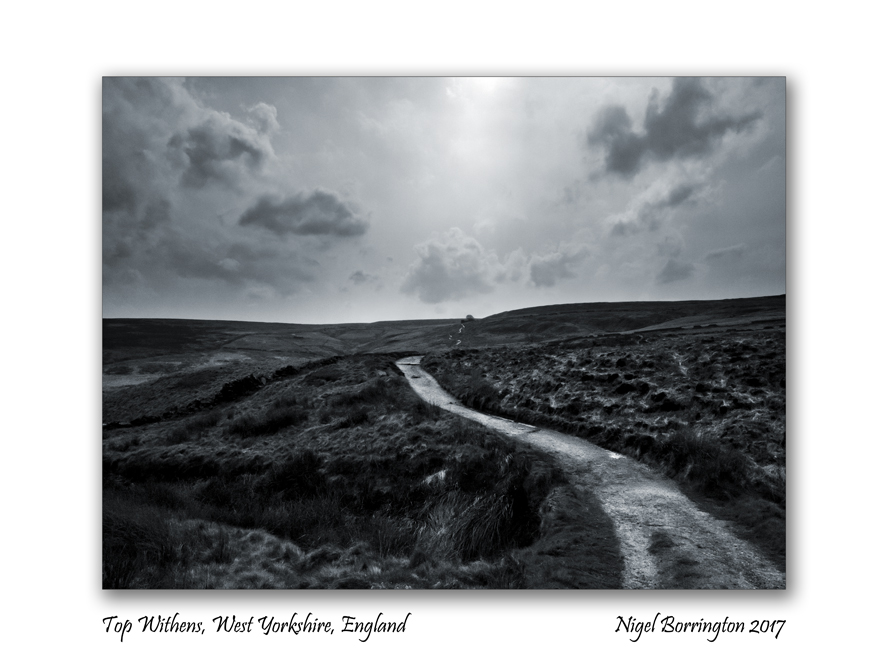
The path to Top Withens,Earnshaw family house Wuthering Heights : Wuthering Heights, a Poem by Sylvia Plaths
The path to Top Withens,Earnshaw family house Wuthering Heights, Emily Brontë.
Nigel Borrington
Last week we spent sometime in West Yorkshire, at Haworth the home town of the Brontë sisters, visiting the Parsonage Museum and walking upto Top Withens, the Earnshaw’s home in Emily Brontë’s novel – Wuthering heights.
The old farm house is located in some stunning landscape, the best west Yorkshire has to offer.
This is how Mr. Lockwood in the book describes his first impressions of Wuthering Heights …

Top Withens,Earnshaw family house Wuthering Heights, Emily Brontë.
Nigel Borrington
” Wuthering Heights is the name of Mr. Heathcliff’s
dwelling. ‘Wuthering’ being a significant provincial
adjective, descriptive of the atmospheric tumult to which
its station is exposed in stormy weather.
Pure, bracing ventilation they must have up there at all times, indeed:
one may guess the power of the north wind blowing over the edge, by the excessive slant of a few stunted firs at the end of the house; and by a range of gaunt thorns all stretching their limbs one way, as if craving alms of the sun.
Happily, the architect had foresight to build it strong:
the narrow windows are deeply set in the wall, and the
corners defended with large jutting stones. ”
Top Withens (also known as Top Withins)
Is a ruined farmhouse near Haworth, West Yorkshire, England which is said to have been the inspiration for the location of the Earnshaw family house Wuthering Heights in the novel of the same name by Emily Brontë.
A plaque affixed to a wall reads:
“ This farmhouse has been associated with “Wuthering Heights”, the Earnshaw home in Emily Brontë’s novel. The buildings, even when complete, bore no resemblance to the house she described, but the situation may have been in her mind when she wrote of the moorland setting of the Heights. ”
Wuthering Heights a Poem By: Sylvia Plath

Top Withens, West Yorkshire, England
English Landscapes
Nigel Borrington
The horizons ring me like faggots,
Tilted and disparate, and always unstable.
Touched by a match, they might warm me,
And their fine lines singe
The air to orange
Before the distances they pin evaporate,
Weighting the pale sky with a soldier color.
But they only dissolve and dissolve
Like a series of promises, as I step forward.
There is no life higher than the grasstops
Or the hearts of sheep, and the wind
Pours by like destiny, bending
Everything in one direction.
I can feel it trying
To funnel my heat away.
If I pay the roots of the heather
Too close attention, they will invite me
To whiten my bones among them.
The sheep know where they are,
Browsing in their dirty wool-clouds,
Grey as the weather.
The black slots of their pupils take me in.
It is like being mailed into space,
A thin, silly message.
They stand about in grandmotherly disguise,
All wig curls and yellow teeth
And hard, marbly baas.
I come to wheel ruts, and water
Limpid as the solitudes
That flee through my fingers.
Hollow doorsteps go from grass to grass;
Lintel and sill have unhinged themselves.
Of people the air only
Remembers a few odd syllables.
It rehearses them moaningly:
Black stone, black stone.
The sky leans on me, me, the one upright
Among the horizontals.
The grass is beating its head distractedly.
It is too delicate
For a life in such company;
Darkness terrifies it.
Now, in valleys narrow
And black as purses, the house lights
Gleam like small change.
Wonders of nature, Photography and Poetry : The Genesis of the Butterfly by Victor Hugo
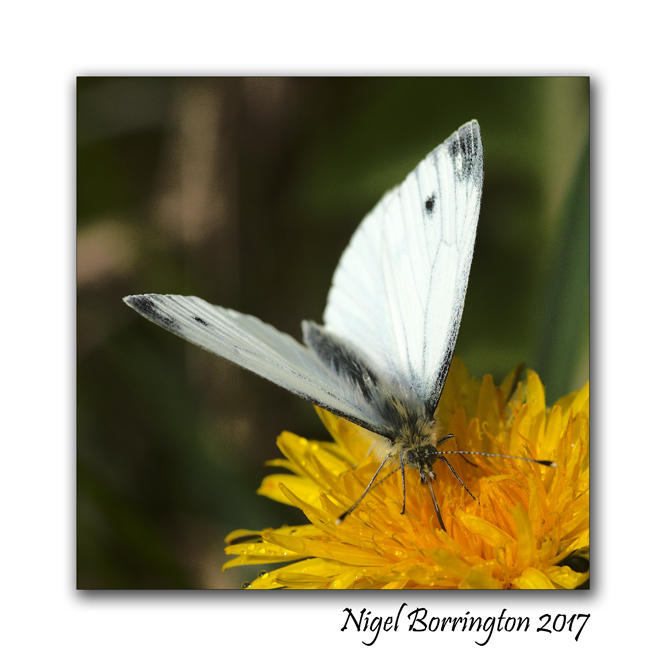
Large white Butterfly
Nature Photography
Nigel Borrington
The dawn is smiling on the dew that covers
The tearful roses; lo, the little lovers
That kiss the buds, and all the flutterings
In jasmine bloom, and privet, of white wings,
That go and come, and fly, and peep and hide,
With muffled music, murmured far and wide.
Ah, the Spring time, when we think of all the lays
That dreamy lovers send to dreamy mays,
Of the fond hearts within a billet bound,
Of all the soft silk paper that pens wound,
The messages of love that mortals write
Filled with intoxication of delight,
Written in April and before the May time
Shredded and flown, playthings for the wind’s playtime,
We dream that all white butterflies above,
Who seek through clouds or waters souls to love,
And leave their lady mistress in despair,
To flit to flowers, as kinder and more fair,
Are but torn love-letters, that through the skies
Flutter, and float, and change to butterflies
W.B. Yeats, The Land of Heart’s Desire

W.B. Yeats, The Land of Heart’s Desire
Irish Landscapes
Nigel Borrington
“God spreads the heavens above us like great wings
And gives a little round of deeds and days,
And then come the wrecked angels and set snares,
And bait them with light hopes and heavy dreams,
Until the heart is puffed with pride and goes
Half shuddering and half joyous from God’s peace;
And it was some wrecked angel, blind with tears,
Who flattered Edane’s heart with merry words.
Come, faeries, take me out of this dull house!
Let me have all the freedom I have lost;
Work when I will and idle when I will!
Faeries, come take me out of this dull world,
For I would ride with you upon the wind,
Run on the top of the dishevelled tide,
And dance upon the mountains like a flame.

I would take the world
And break it into pieces in my hands
To see you smile watching it crumble away.
Once a fly dancing in a beam of the sun,
Or the light wind blowing out of the dawn,
Could fill your heart with dreams none other knew,
But now the indissoluble sacrament
Has mixed your heart that was most proud and cold
With my warm heart for ever; the sun and moon
Must fade and heaven be rolled up like a scroll
But your white spirit still walk by my spirit.
When winter sleep is abroad my hair grows thin,
My feet unsteady. When the leaves awaken
My mother carries me in her golden arms;
I’ll soon put on my womanhood and marry
The spirits of wood and water, but who can tell
When I was born for the first time?
The wind blows out of the gates of the day,
The wind blows over the lonely of heart,
And the lonely of heart is withered away;
While the faeries dance in a place apart,
Shaking their milk-white feet in a ring,
Tossing their milk-white arms in the air;
For they hear the wind laugh and murmur and sing
Of a land where even the old are fair,
And even the wise are merry of tongue;
But I heard a reed of Coolaney say–
When the wind has laughed and murmured and sung,
The lonely of heart is withered away.”

― W.B. Yeats, The Land of Heart’s Desire
From the mountain to the sea, By Sophie Boswell
From The Mountain to the sea
Irish Landscapes
Nigel Borrington
Life is like a journey from the mountain to the sea
A struggle through many layers to finally feel free
Free to go out and see the wonders of the world
Where, in the process, one is often hurled
This way and that, through the good and the bad
Where emotions are flung lose to the point of driving you mad
Sometimes, when I’m down, and feel worn out
And everything around me seems to be in doubt
My vision is blurred; my judgment is haywire
And my demons rejoice in putting out my fire
I think about the journey from the mountain to the sea
By the light of the moon; a heavenly place to be
This place, in the mind, will always set me free
to be the happy wanderer I was meant to be
Gathering and searching in peaceful solitude
Where time and nature can alter my mood
And the Spirit of Life will breathe inside me
As I journey from the mountain to the sea.
Primrose – Poem by Patrick Kavanagh

Promrose on the River bank
County Kilkenny
Nigel Borrington
Primrose – Poem by Patrick Kavanagh
Upon a bank I sat, a child made seer
Of one small primrose flowering in my mind.
Better than wealth it is, I said, to find
One small page of Truth’s manuscript made clear.
I looked at Christ transfigured without fear–
The light was very beautiful and kind,
And where the Holy Ghost in flame had signed
I read it through the lenses of a tear.
And then my sight grew dim, I could not see
The primrose that had lighted me to Heaven,
And there was but the shadow of a tree
Ghostly among the stars. The years that pass
Like tired soldiers nevermore have given
Moments to see wonders in the grass.
The Fly, By William Blake, 1757 – 1827
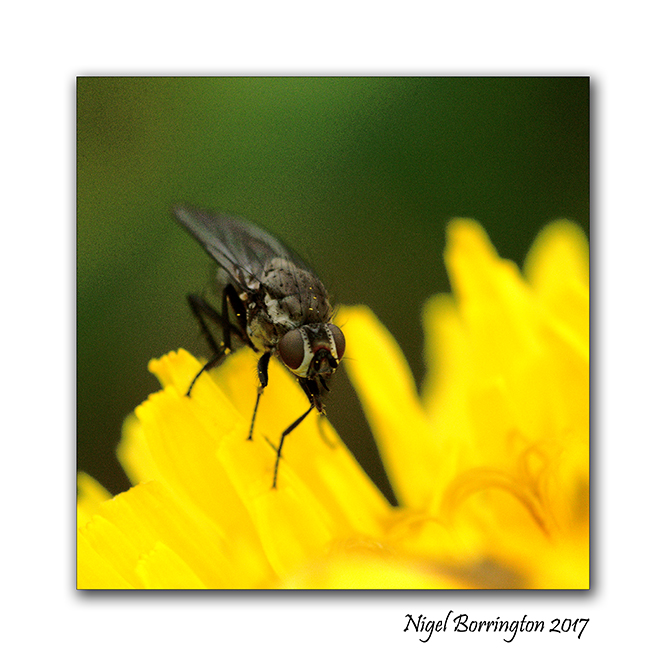
The Fly
William Blake
Nature Photography
Nigel Borrington
Little fly,
Thy summer’s play
My thoughtless hand
Has brushed away.
Am not I
A fly like thee?
Or art not thou
A man like me?
For I dance
And drink and sing,
Till some blind hand
Shall brush my wing.
If thought is life
And strength and breath,
And the want
Of thought is death,
Then am I
A happy fly,
If I live,
Or if I die.
Dear March – Come in – By Emily Dickinson(1830 – 1886)

Irish Landscape images
March 2017
Nigel Borrington
Dear March – Come in
Emily Dickinson, 1830 – 1886
Dear March – Come in –
How glad I am –
I hoped for you before –
Put down your Hat –
You must have walked –
How out of Breath you are –
Dear March, how are you, and the Rest –
Did you leave Nature well –
Oh March, Come right upstairs with me –
I have so much to tell –
I got your Letter, and the Birds –
The Maples never knew that you were coming –
I declare – how Red their Faces grew –
But March, forgive me –
And all those Hills you left for me to Hue –
There was no Purple suitable –
You took it all with you –

Who knocks? That April –
Lock the Door –
I will not be pursued –
He stayed away a Year to call
When I am occupied –
But trifles look so trivial
As soon as you have come
That blame is just as dear as Praise
And Praise as mere as Blame –

Monday Poetry, The Water Replies – Luke Kennard

The Water Replies
Waterford Coastline, Sunrise to Sunset
Nigel Borrington
Luke Kennard
The Water Replies
Maybe we have washed our hands
and drunk deep and swam
and think we know her,
but water’s reputation goes before her like a flood:
she does not suffer fools or gadflies.
Therefore I have prepared some questions.
Where do you get your ideas & your tide from?
Don’t say the moon – that’s really pretentious.
But as I clamber down the coast
I lose my footing and spend our allotted time
tossed around in her backwash,
pummelled by tiny stones.
When I am baptised I ask the water
Where have the demons gone?
Were they hiding behind the H, the 2 or the O?
I emerge finally able to see that I have not changed,
that I can of myself do nothing, that water decides.
On the towpath behind the church
I wring out my jacket. I ask the water:
Will you convey these thoughts away?
These itching hatreds, toothache of jealousy,
These squalid appetites and dog thirsts?
Just as far as the next city will do.
The ripples of the moon’s tablature.
When was the last time you cried, and why?
I ask the water. I ask the water:
Do you have plans later?

The Manor Farm, By Edward Thomas

On the Farm
Irish landscapes
Nigel Borrington
The rock-like mud unfroze a little and rills
Ran and sparkled down each side of the road
Under the catkins wagging in the hedge.
But earth would have her sleep out, spite of the sun;
Nor did I value that thin glilding beam
More than a pretty February thing
Till I came down to the old Manor Farm,
And church and yew-tree opposite, in age
Its equals and in size. The church and yew
And farmhouse slept slept in a Sunday silentness.
The air raised not a straw. The steep farm roof,
With tiles duskily glowing, entertained
The mid-day sun; and up and down the roof
White pigeons nestled. There was no sound but one.
Three cart-horses were looking over a gate
Drowsily through their forelocks, swishing their tails
Against a fly, a solitary fly.

The Winter’s cheek flushed as if he had drained
Spring, Summer, and Autumn at a drought
And smiled quietly. But ’twas not Winter—
Rather a season of bliss unchangeable
Awakened from farm and church where it had lain
Safe under tile and thatch for ages since
This country, Old already, was called Happy.
Edward Thomas
Three poems about sunlight …
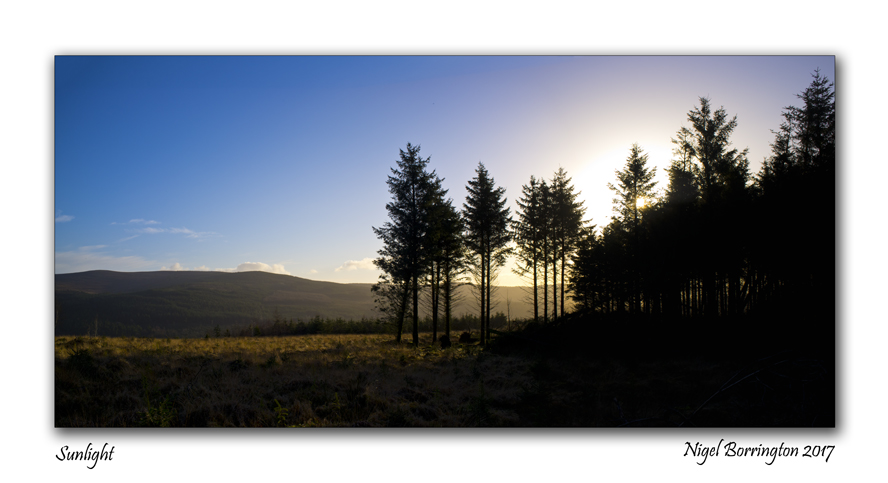
Landscape in Sunlight
Nigel Borrington
Phoebe Hynes
Dec 5, 2016
A response to sunlight
You came to me in what I thought was a dream,
but it was actually the mundane,
and the secrets my conscious brain,
was keeping from me.
You were a part of reality all along,
it’s just taken me a bit to realize it.
Sunlight can be blinding,
and raindrops are more obvious.
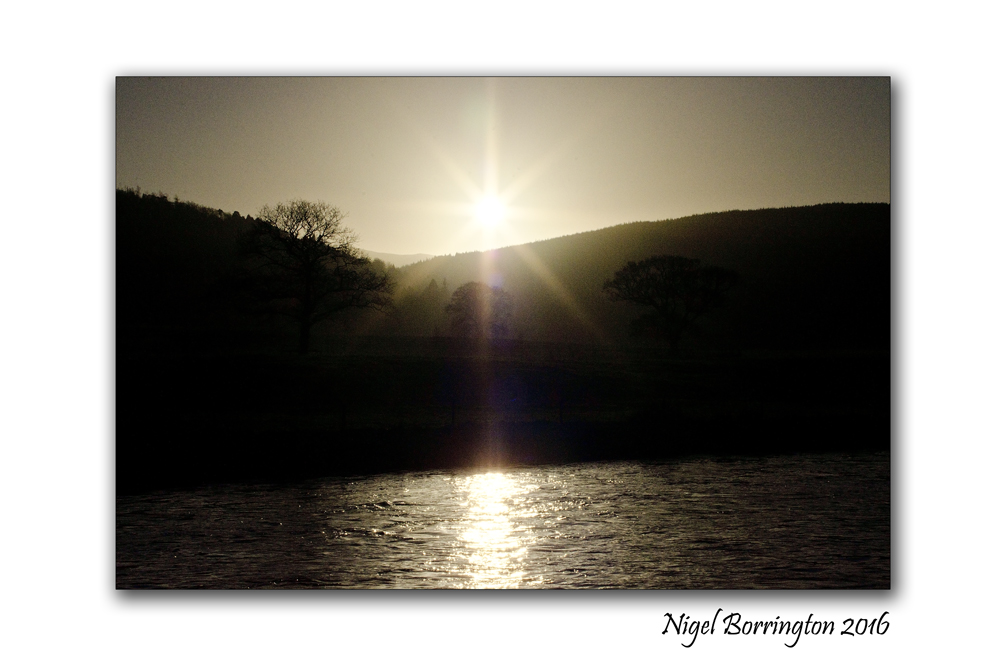
Russell
May 7, 2016
The Filter of Sunlight
The drops of gold
Break through
The cover of leaves
I’m hiding behind
Peeking through
Touching me
Warming me
Making me realize
All the good
I’m hiding from
All the things
I should be happy about
The yellow rays
Burning the bad
Purifying my thoughts
Changing my mind
And I run out
Wanting to make a memory
Of this happy
Golden moment.

Ramisa R
Sep 25, 2014
Springtime Creativity
Lilacs bloom; birds sing
sunlight falls–
enlightening these
blank pages
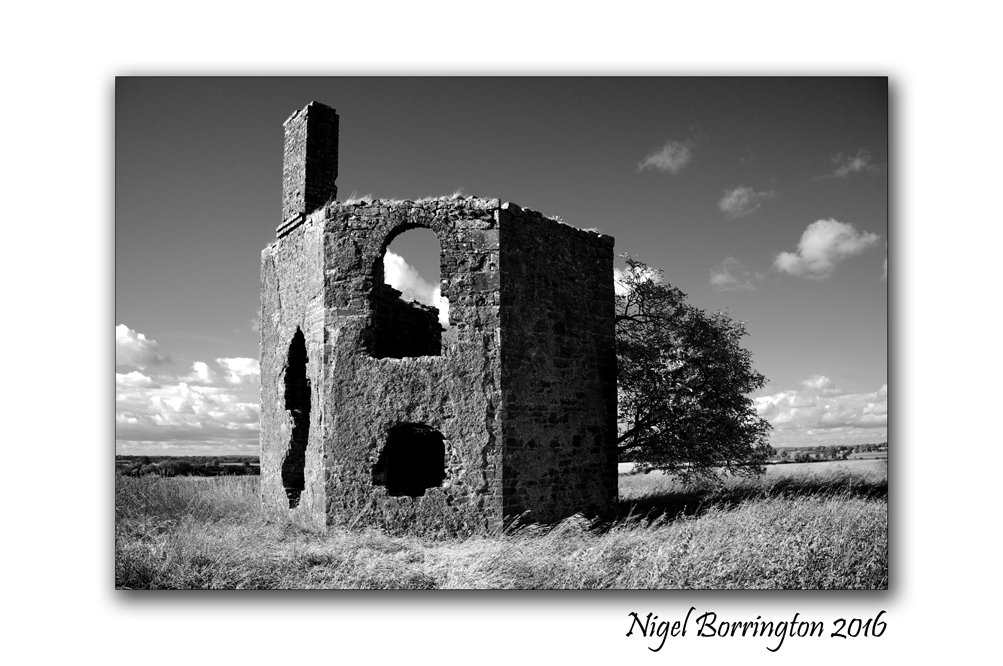
The House on the Hill, By : Edwin Arlington Robinson

The Old house on the hill
County Kilkenny
Ireland
Nigel Borrington
The House on the Hill
Edwin Arlington Robinson
They are all gone away,
The House is shut and still,
There is nothing more to say.
Through broken walls and gray
The winds blow bleak and shrill:
They are all gone away.
Nor is there one to-day
To speak them good or ill:
There is nothing more to say.
Why is it then we stray
Around the sunken sill?
They are all gone away,
And our poor fancy-play
For them is wasted skill:
There is nothing more to say.
There is ruin and decay
In the House on the Hill:
They are all gone away,
There is nothing more to say.
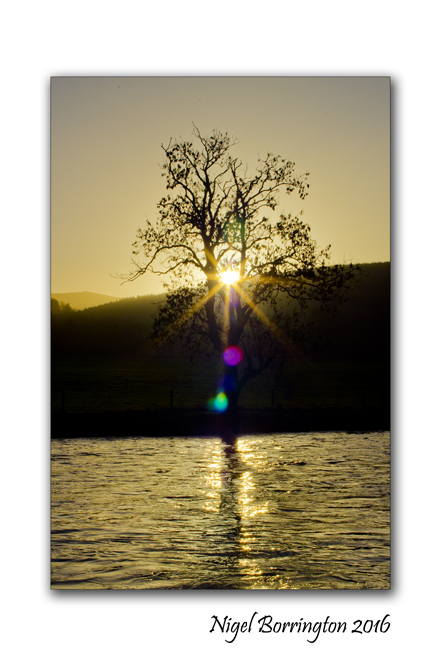
THE TREE SINGS TO THE RIVER – By Lea Goldberg

The tree sings to the river
Irish landscapes
Nigel Borrington
He who carried my golden autumn,
Swept away my blood with the leaf fall,
He who shall see my spring when it returns
To him with the turning of the year.
My brother, the river, who is forever lost,
New each day and different and one,
My brother the stream between his two shores
Who flows as I do between spring and fall.
For I am the bud and I am the fruit,
I am my future and I am my past,
I am the solitary tree trunk,
And you — you are my time and my song.
Song of Sunset on the River by Bai Juyi, Image of the river Suir at Sunset
Sunset over the river
River Suir
Tipperary
Song of Sunset on the River
by Bai Juyi
A length setting sun spread water in
Half river emerald half river red
Love ninth month first three night
Dew like pearl moon like bow
A strip of water’s spread in the setting sun,
Half the river’s emerald, half is red.
I love the third night of the ninth month,
The dew is like pearl; the moon like a bow.
Friday Poetry : November Sunset – Poem by Steven Federle

Black Friday Sunset
Callan
Kilkenny
Ireland
About five o clock,
the warm November day
just stops.
Bright afternoon
slams into evening
not even pausing
for twilight.
Blue sky
dims quickly
to violet,
but over ragged black woods
the orange sun
lingers

Then suddenly bursts
into astonishing gold.
Blithely ascending
the bright crescent
claims the cool
velvet night.
Steven Federle
Halloween Poetry : Spirits of the Dead, Edgar Allan Poe

Spirits of the Dead
By Edgar Allan Poe
I
Thy soul shall find itself alone
’Mid dark thoughts of the gray tombstone—
Not one, of all the crowd, to pry
Into thine hour of secrecy.
II
Be silent in that solitude,
Which is not loneliness—for then
The spirits of the dead who stood
In life before thee are again
In death around thee—and their will
Shall overshadow thee: be still.
III
The night, tho’ clear, shall frown—
And the stars shall look not down
From their high thrones in the heaven,
With light like Hope to mortals given—
But their red orbs, without beam,
To thy weariness shall seem
As a burning and a fever
Which would cling to thee for ever.
IV
Now are thoughts thou shalt not banish,
Now are visions ne’er to vanish;
From thy spirit shall they pass
No more—like dew-drop from the grass.
V
The breeze—the breath of God—is still—
And the mist upon the hill,
Shadowy—shadowy—yet unbroken,
Is a symbol and a token—
How it hangs upon the trees,
A mystery of mysteries!
HAPPY HALLOWEEN everyone !!!!
Monday Morning Nature Photography and a Poetry , “The Spiders web” by E.B. White
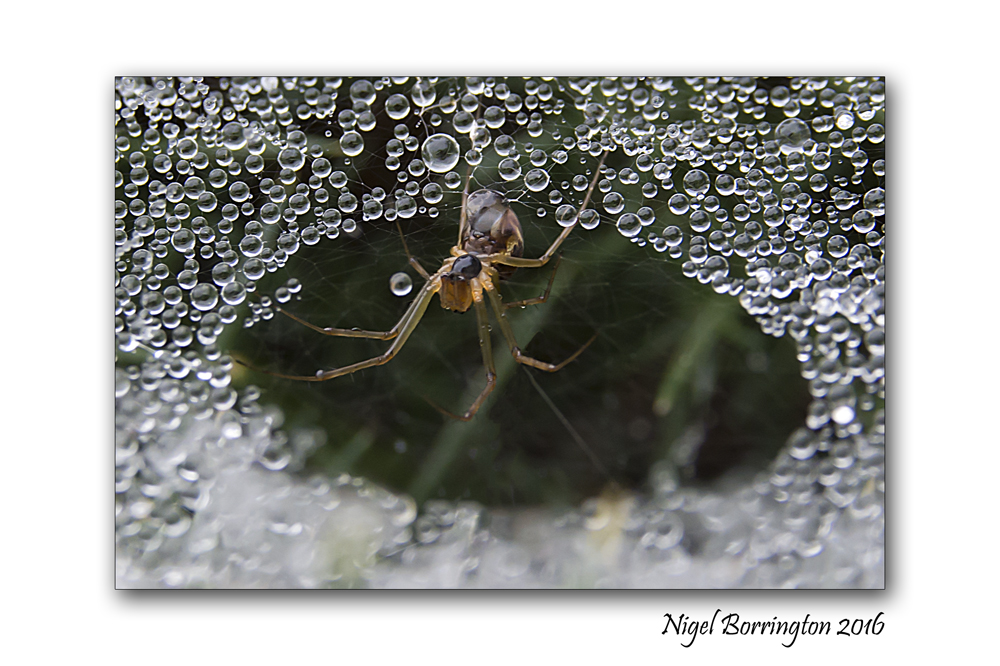
Wildlife and Nature images
Spider in her web
Nigel Borrington
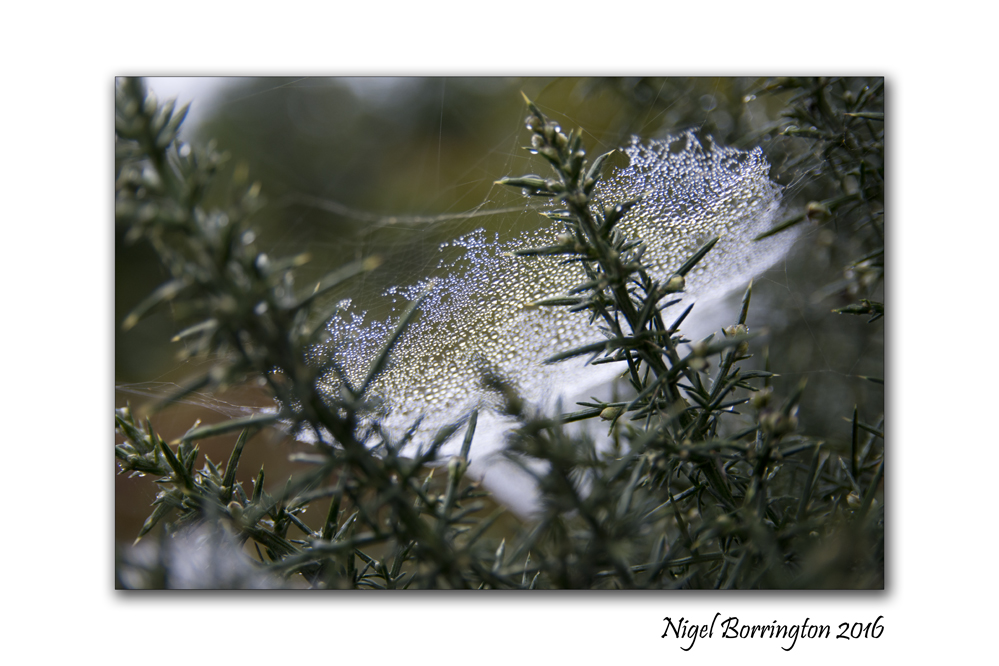
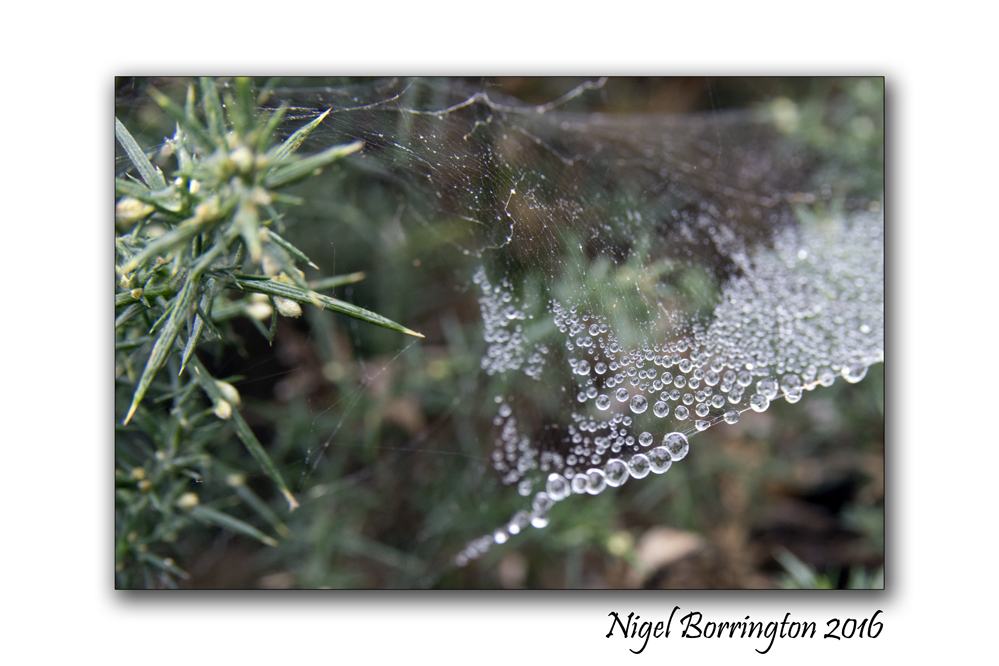
This Morning while walking through our local woods, I came across a Gorse bush and noticed that its was decorated with spiders webs. Each web was covered in early morning dew, so I started to take a few photographs, while doing so I noticed that the spider who had most likely spent most of the night creating these amazing structures was still at work.
It was a great moment! just to stop and watch her as she continued to work on finishing just another one of so many of her webs, I managed to captures some close up images , some of which I share here – 🙂 🙂
“The Spiders web” by E.B. White
The spider, dropping down from twig,
Unfolds a plan of her devising,
A thin premeditated rig
To use in rising.
And all that journey down through space,
In cool descent and loyal hearted,
She spins a ladder to the place
From where she started.
Thus I, gone forth as spiders do
In spider’s web a truth discerning,
Attach one silken thread to you
For my returning.
E.B. White
Spiders web Gallery



 Nigel Borrington
You must be logged in to post a comment.