Friday Poetry (2): The old dead tree, by David Harris

The old dead tree stood
gnarled weather torn;
its limbs were now brittle.
What stories could it tell
of the centuries it had lived,
the passing lives it had seen,
and the storms it had weathered
when it was young and strong.
When its foliage was green
and gave shelter from the rain.
Now it stands bare and broken,
a sorry sight to be seen.
It must have been beautiful
when it was young
with its canopy of green,
and a nesting place for little birds
among its evergreen.
Now they only used it
as a resting place whenever they pass by.
The old dead tree,
which had seen so much life.
Spring time Gorse flower in Irish mythology and culture

Gorse flowers
Nigel Borrington
Gorse flowers in the Irish Landscape
Gorse is very common here in county Kilkenny but this does not make it any less loved by many, as it flowers in springtime. Many of the hills sides and woodland areas come to life with their yellow flowers.
Gorse, also known as furze, is a sweet scented, yellow flowered, spiny evergreen shrub that flowers all year round.
In fact, there are several species of gorse that flower at different times of the year making it a much-loved plant for the bees and giving it the appearance of being in bloom all year long. There is an old saying that goes, “When the gorse is out of bloom, kissing is out of season.”
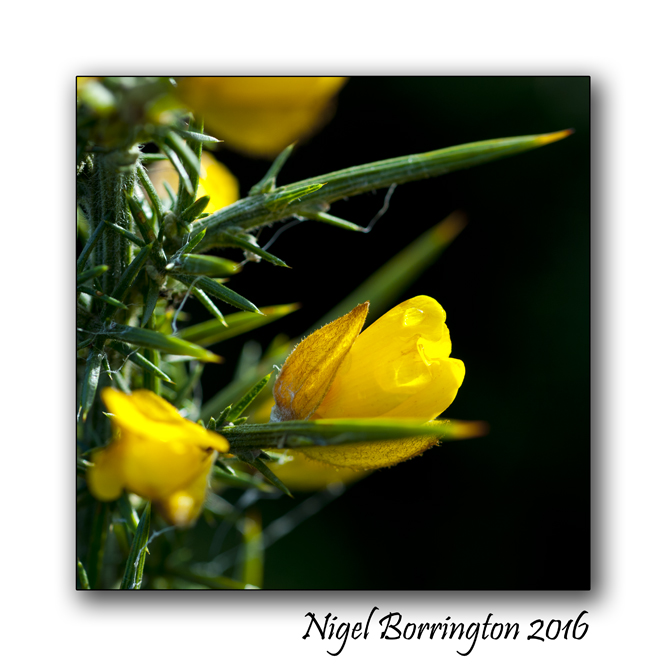
Gorse is often associated with love and fertility. It was for this reason that a sprig of gorse was traditionally added to a bride’s bouquet and gorse torches were ritually burned around livestock to protect against sterility. However, one should never give gorse flowers to another as a gift for it is unlucky for both the giver and receiver.

.
Beltane bonfires
Gorse wood was used as very effective tinder. It has a high oil content which means it burns at a similar high temperature to charcoal. The ashes of the burnt gorse were high in alkali and used to make soap when mixed with animal fat.
Onn, meaning gorse, is the 17th letter of the ogham alphabet. It equates to the English letter O.
In Celtic tradition, gorse was one of the sacred woods burned on the Beltane bonfires, probably the one that got them started. It was a shrub associated with the spring equinox and the Celtic god of light, Lugh, doubtlessly because of its ever blooming vibrant yellow flowers.
In Brittany, the Celtic summer festival of Lughnastdagh, named after the god, was known as the Festival of Golden Gorse.
Flowers used in wine and whiskey
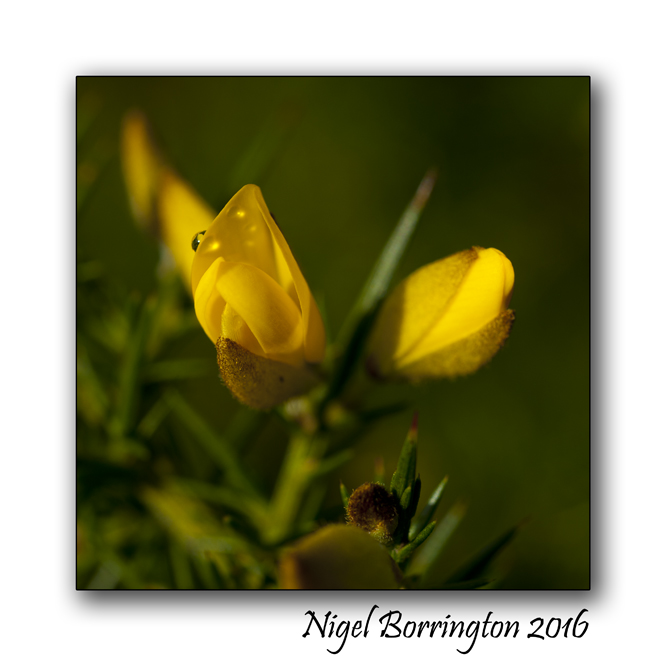
The flowers have a distinct vanilla-coconut aroma and are edible with an almond-like taste. They can be eaten raw on salads or pickled like capers. They have also been used to make wine and to add colour and flavour to Irish whiskey. However, consuming the flowers in great numbers can cause an upset stomach due to the alkalis they contain.
The prickly nature of gorse gave it a protective reputation, specifically around livestock. As well as providing an effective hedgerow, gorse made an acceptable flea repellent and the plant was often milled to make animal fodder.
Irish Gorse flowers
Nigel Borrington
Gorse in Irish Culture
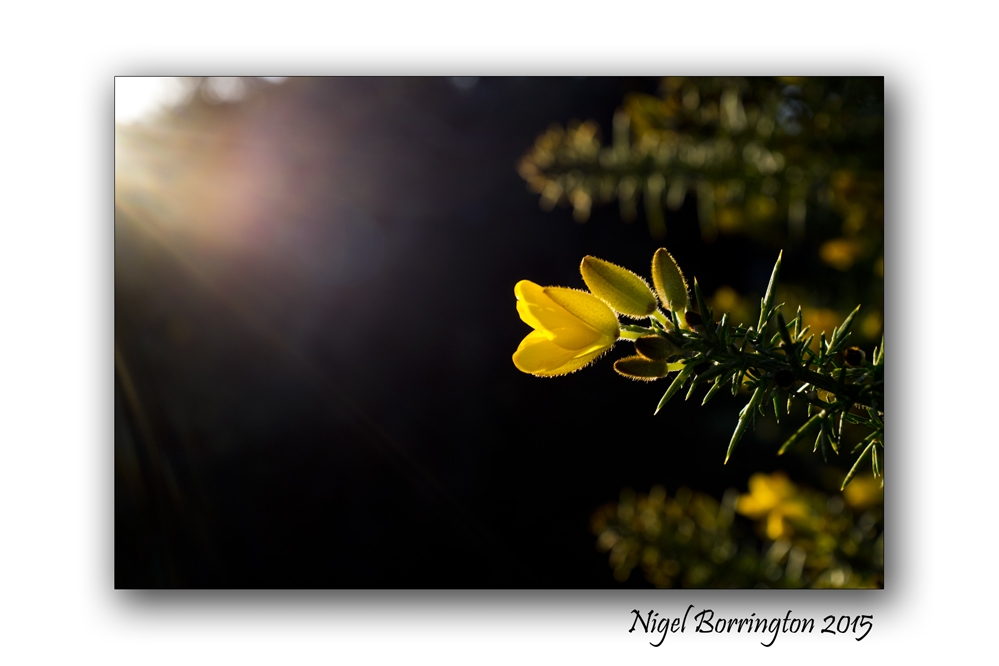
Gorse is the 15th letter of the Gaelic tree alphabet, representing O. Its old Gaelic name was Onn, and in modern Gaelic it is conasg. It’s a prickly shrub, which can almost always be found in flower somewhere, all twelve months of the year, and this means it has many positive connotations in folklore.
Snippets of lore
Here are the titbits of fact and folklore about pine tweeted by @cybercrofter on 15 December 2011.
Gorse is the 14th letter of the Gaelic tree alphabet, for O – in old Gaelic it was onn or oir (gold). In Modern Gaelic it’s conasg.
Conasg (Gaelic for gorse) means prickly or armed, appropriately enough as it’s the spiniest plant around.
As gorse’s branches, twigs and leaves are all spiny, which reduces water loss, it can survive extreme exposure to wind and salt.
Other regional names for gorse are whin or furze. In latin, it’s Ulex europaeus.
Here’s a lovely short Harry Rutherford poem about gorse. http://heracliteanfire.net/2009/01/26/poem/
Gorse bears yellow flowers all year round, and as they say, ‘When gorse is in bloom, kissing is in season.’
Gorse is a symbol of the sun god Lugh, as it carries a spark of sun all year.
Bees love gorse and it’s a good source of food for them on warm winter days and in early spring.
In late spring, gorse flowers smell of coconut and vanilla.
Here’s a poem from me, The Gorse is out behind Glencanisp. Audio too. http://www.pankmagazine.com/the-gorse-is-out-behind-glencanisp/
A decoction of gorse flowers counters jaundice.
Gorse seed pods explode in hot sun.
Gorse fixes nitrogen due to symbiosis with a bacterium in the roots.
Horses that eat gorse don’t catch colds (but presumably end up with perforated gums…)
The fierce fire of furze is ideal for baking.
Gorse boughs were used for creel-making. Ouch.
Gorse is a good windbreak and a gorse bush is the best place to dry washing – it naturally pins it in place.
A bundle of gorse is excellent for sweeping chimneys.
Here’s a recipe for gorse flower wine. http://www.celtnet.org.uk/recipes/brewing/fetch-recipe.php?rid=gorse-flower-wine
Gorse flowers give yellow and green dyes.
Gorse bark gives a dark green dye. Add a bucket of urine and wait 3 hours.
Yellowed gorse, a poem by Fay Slimm http://www.poemhunter.com/poem/yellowed-gorse/
A missing home gorse poem, by Francis Duggan http://www.poemhunter.com/poem/i-d-love-to-see-the-gorse-in-bloom/
Gorse lifts the spirits of the downhearted, and restores faith.
Festival of the Golden Gorse is celebrated on 1 August (Lughnasa).
Gorse protects against witches.
Gorse’s magic is good for bringing a piece of work, a project, a relationship or a troublesome thing to a complete and final end.
Gorse symbolises joy.
Remember the nitrogen-fixing? Grow gorse for 7 years and the ground will be excellent for corn.
In 1778 a gorse crushing mill was set up in Perth. One acre of crushed gorse bushes will keep 6 horses in fodder for 4 months.
Bring gorse into the house in May to ‘bring in the summer’.
Giving someone gorse flowers is unlucky, for both giver and receiver. Best keep them for yourself!
Irish landscapes – Kilkenny , an evening in early springtime
Irish Landscapes
Early Springtime
Kilkenny
Nigel Borrington
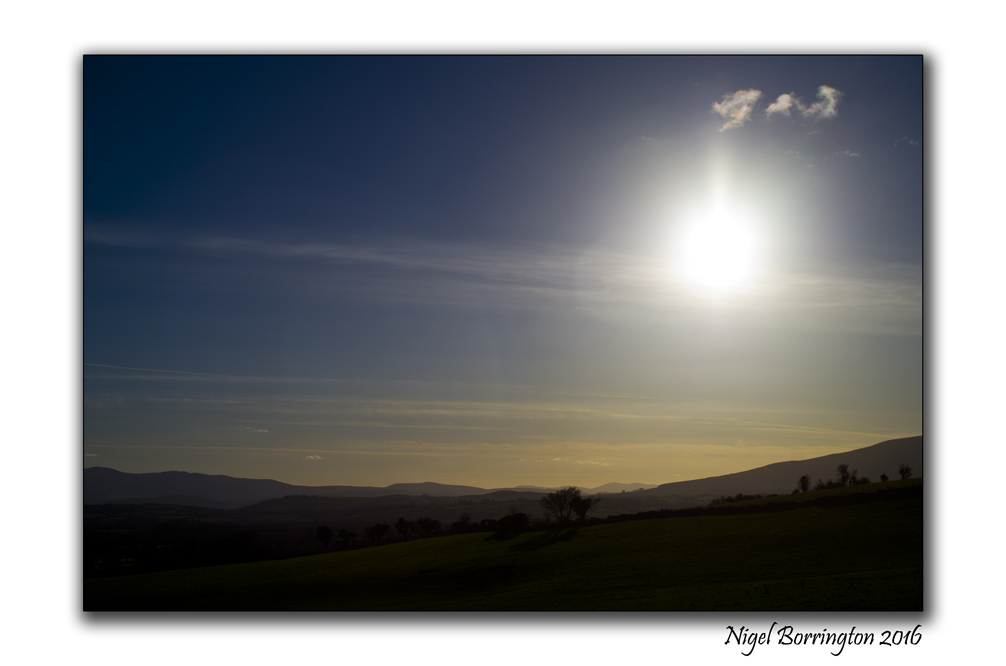
The last of today’s sunlight was just perfect ….
This evening I took a walk along some of our local lanes , up in the hills near the village of Windgap, Kilkenny. The sun hung low in the sky an hour before sunset and filled the fields with vivid greens and long shadows from the hedgerow trees, just such a wonderful sense of early springtime which is just around the corner now, you can feel it just waiting to burst through…..
This is the best time of year with so many great months ahead of us ……
Monday Poetry : The Rise Of The Blue Swan – andy fardell

The Rise Of The Blue Swan
Nature Photography
Nigel Borrington
The Rise Of The Blue Swan
He hid in the shadows of his life
For the world hurt him and all that he wanted
A mind shattered into the shards of hurt that burned
His skin at the merest thought
The blue swan laid low
Like a sunset hidden in the midday sun
Or a full moon ready in the depths of the darkest hollow
His time would come
The blossom would break and his beating wings would soon rise
For he was the blue swan
His pen ready yet she was hidden in the clouds of his uncleared mind
A mate for his remainder
Their love
His way
Swan so blue please wake from your bitter
Shine like the kindred spirit you had before the storm
Swan of the day
Love of the night
Your future is waiting
So bright is your fire
The day has come for the blue swan to fly
So beat like the earth on the run
Rise to the mountains
Shout to the sky
Fly
Blue
Fly ..
andy fardell
Feb 23, 2014
Spring in January ?

Spring In January ?
This Morning when I opened our blinds I noticed our first Flowers of Spring but In January ?
The weather this winter has been very wet and warm and many people have been saying they have spring flowers already, these are the first in our own garden.
A January walk along the Hedgerow

January in the Hedgerow
Nigel Borrington
January can seem so quite in the Irish Hedgerows, very little is moving or growing, yet there is still signs of life to be found in the remains of last years summer season.
I took these images at lunch-time while out on a walk, I feel that there is still much to see and capture, even so long after these flowers would have been at their colourful best …..
A reminder of the cycle of life …….

The Elements of Life : Water.

The Elements Water
Nature Photography
Nigel Borrington
Water, giver of life
Water, is a great necessity, without it nothing can live. Only earth and water can bring forth a living soul. Such is the greatness of water that spiritual regeneration cannot be done without it.
Thales of Miletus concluded that water was the beginning of all things and the first of all elements and most potent because of its mastery over the rest. Pliny said “Water swallow up the earth, extinguishes the flame, ascends on high, and by stretching forth as clouds challenges the heavens for their own, and the same falling down, becomes the cause of all things that grow in the earth.
Water is a cleansing, healing, psychic, and loving element. It is the feeling of friendship and love that pours over us when we are with our family, friends and loved ones. When we swim it is water that supports us, when we are thirsty, it is water the quenches our thirst, another manifestation of this element is the rainstorms that drench us, or the dew formed on plants after the sun has set.
The power of the energy of Water, can be felt by tasting pure spring water, moving you hand through a stream, lake, pool, or bowl full of water. You can feel its cool liquidity; it’s soft and loving touch, this motion and fluidity is the quality of Air within Water. This Water energy is also contained within ourselves, our bodies being mostly composed of Water.
As well as being vital for life, within the energy of this element is contained the essence of love. Love is the underlying reason for all magic. Water is love.
Water is a feminine element, it also the element of emotion and subconscious, of purification, intuition, mysteries of the self, compassion and family. It is psychic ability; water can be used as a means of scrying or as an object for meditation. Water is important in spells and rituals of friendship, marriage, happiness, fertility, healing, pleasure, psychic abilities and spells involving mirrors.

The element of Water and the pagan Irish Goddess : Boann and the Irish God : Nechtan
eltic (Irish) Goddess of the River Boyne and mother of Angus Mac Og by the Dagda. She was the wife of Nechtan, a god of the water. Likewise, Boann was herself a water-goddess, and one of her myths concerns the water. According to legend, there was a sacred well (Sidhe Nechtan) that contained the source of knowledge. All were forbidden to approach this well, with the exception of the god Nechtan (as was noted, Boann’s husband) and his servants. Boann ignored the warnings, and strode up to the sacred well, thus violating the sanctity of the area. For this act, she was punished, and the waters of the defiled well swelled and were transformed into a raging river, a river that pursued her. In some versions, she was drowned; while in others, she managed to outrun the currents. In either case, this water became the river that was known henceforth as the Boyne, and Boann thereafter became the presiding deity.
Another aspect of the myth of Boann is that she bore Angus. She and the All father of the Tuatha De Danaan, the Dagda, engaged in an illicit affair that resulted in the birth of this god of love. However, since both Boann and the Dagdha wished to keep their rendezvous a secret, they used their divine powers to cause the nine month gestation period to last but a single day – or so it seemed, for the sun was frozen in the sky for those nine months, never setting and never rising. On this magical day, Angus emerged into the world. She held the powers of healing. Variants: Boannan, Boyne.
Ref : Pagan elements of Water
Water – a life giving element

Water, giver of life
Water, is a great necessity, without it nothing can live. Only earth and water can bring forth a living soul. Such is the greatness of water that spiritual regeneration cannot be done without it.
Thales of Miletus concluded that water was the beginning of all things and the first of all elements and most potent because of its mastery over the rest. Pliny said “Water swallow up the earth, extinguishes the flame, ascends on high, and by stretching forth as clouds challenges the heavens for their own, and the same falling down, becomes the cause of all things that grow in the earth.
Water is a cleansing, healing, psychic, and loving element. It is the feeling of friendship and love that pours over us when we are with our family, friends and loved ones. When we swim it is water that supports us, when we are thirsty, it is water the quenches our thirst, another manifestation of this element is the rainstorms that drench us, or the dew formed on plants after the sun has set.
The power of the energy of Water, can be felt by tasting pure spring water, moving you hand through a stream, lake, pool, or bowl full of water. You can feel its cool liquidity; it’s soft and loving touch, this motion and fluidity is the quality of Air within Water. This Water energy is also contained within ourselves, our bodies being mostly composed of Water.
As well as being vital for life, within the energy of this element is contained the essence of love. Love is the underlying reason for all magic. Water is love.
Water is a feminine element, it also the element of emotion and subconscious, of purification, intuition, mysteries of the self, compassion and family. It is psychic ability; water can be used as a means of scrying or as an object for meditation. Water is important in spells and rituals of friendship, marriage, happiness, fertility, healing, pleasure, psychic abilities and spells involving mirrors.

The Element Water and its Natural Qualities
The Element of Water is a heavy, passive element and is contrary to Fire. It is associated with the qualities of darkness, thickness and motion.
Nature’s gifts : Celandine, Lesser
Celandine, Lesser
Nature Photography : Nigel Borrington
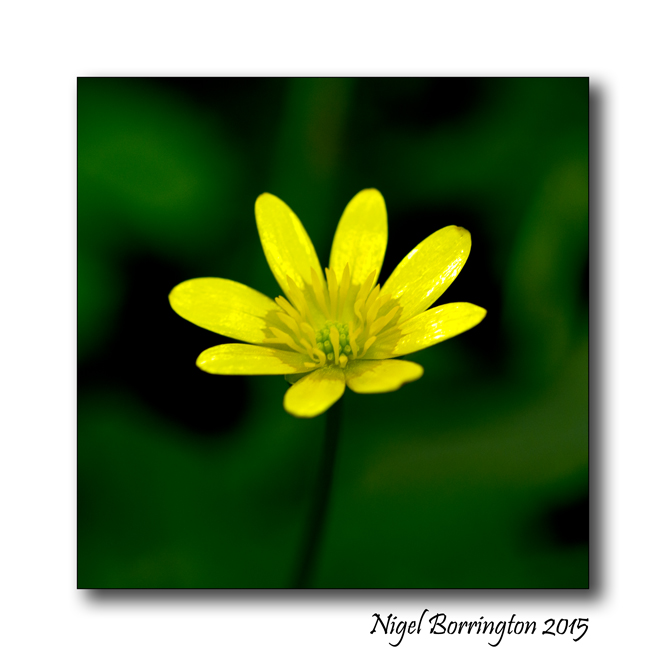
Its so easy to just walk past some of natures smaller Herbs and Flowers, however I guess that some flowers cannot help but get themselves noticed.
“Celandine, Lesser” is one of these little gems, its strong yellow flowers in the early summertime cannot help but get noticed as you walk down woodland paths or along the road sides.
Here are a many details about this wild Herb and it flowers:
Celandine, Lesser
Botanical: Ranunculus ficaria (LINN.)
Family: N.O. Ranunculaceae
Part Used
Constituents
Medicinal Action and Uses
Recipes
—Synonyms—Small Celandine. Figwort. Smallwort. Pilewort.
—Part Used—Herb.
—Habitat—The Lesser Celandine, one of the very earliest of spring flowers, its cheery, starlike blossoms lighting up our hedges even before winter is quite spent, is distributed throughout Europe, Western Asia, and North Africa, in these islands, growing up the hillsides in Wales to a height of 2,400 feet. It grows in moist corners of fields and places near watersides, but is found also on drier ground, if shady, being one of the few plants that thrive beneath the shade of trees, where its glossy foliage frequently forms a dense carpet.
Wordsworth, whose favorite flower this was (in recognition of which the blossoms are carved on his tomb), fancifully suggests that the painter who first tried to picture the rising sun, must have taken the idea of the spreading pointed rays from the Celandine’s ‘glittering countenance.’ The burnishing of the golden petals gives a brilliant effect to the flowers, which burst into bloom about the middle of February, a few days only after their bright, shining leaves. The leaves are on long stalks, arising from a short, prostrate stem, and are very variable, the first being heart-shaped, the later ones bluntly cut into, somewhat like the ivy. They often have dark markings.
The blossoms shut up before rain, and even in fine weather do not open before nine o’clock, and by 5 p.m. have already closed for the night. The Celtic name of the plant, Grian (i.e. the sun), refers to this habit. The petals are green on the underside, and directly the flowers close they become inconspicuous.
Throughout March and April, this cheerful little plant is in full bloom, but as the spring passes into summer, the flowers pale somewhat, and the whole plant looks rather sickly, the warmth of the lengthening days withdrawing from it the needed moisture. By the end of May, no flowers are to be seen, and all the plant above ground withers and dies, the virtue being stored up in the fibres of the root, which swell into the form of tubers. If the plant is dug up, late in the summer or autumn, these tubers are seen hanging in a bunch, a dozen or more together, looking like figs, hence the plant’s specific Latin name ficaria, from ficus (a fig). By these tubers, the plant is increased, as they break off readily, each tuber, like a potato, producing a new plant. To eradicate this plant from any ground, it is necessary to remove the roots bodily, for if the plants are dug into the soil, they work their way up to the surface again, the stems branching as they grow upward from the tubers, and at every branch producing fresh tubers.
The early awakening of the plant is due to these fully-stored tubers, which lie quiescent all the summer and autumn, but all necessary materials being at hand, leaves and flowers are quickly pushed upwards directly the depth of the winter has passed.
Although the Lesser Celandine has been placed by some botanists in a distinct genus, when it is called Ficaria verna, it is more generally assigned to the Buttercup or Crowfoot genus, Ranunculus. The name of this genus, first employed by Pliny, alludes to the damp and marshy localities preferred by the plants of the family, Rana, being the Latin for a frog, whose native haunts are those of the majority of this group of plants. The Lesser Celandine is distinguished from the Buttercup by having nine or ten, even sometimes a dozen narrow petals, instead of five, and only three sepals (the outer, generally green leaves of the flower), which fall off on opening, instead of the usual five, which remain after the flower has expanded, in the other species of Ranunculus. The flowers rise singly from the root, on long, slender, leafless stalks and are about 1 inch in diameter. There are a number of stamens. The fruits are not unlike those of the Buttercups being dry and distinct, set together in a globular head, somewhat like a grain of corn and whitish in colour, but comparatively few fertile seeds are produced.
The flowers would originally appear to have been designed with the object of attracting insects for their fertilization, the bright coloured, burnished petals having honey sacs at their base, but the flowers can face colder days than the insects can, for whom the honey has been provided, blooming when few of the insects have emerged, with the result that comparatively few become fertilized in this country and not many seeds are produced. The plant, therefore, has recourse to another method of reproduction, independent of all external aid. At the point where the upper leaves join the stem are to be seen little objects like minute round tumours, which grow about the size of a grain of wheat. In the early summer, when the leaves and stems are dying down, these grains become loose and drop to the ground. Each is capable of producing a new plant. A heavy rain will sometimes wash them from the plants in every direction. Kerner, in his Natural History of Plants, tells us that:
‘a sudden downpour of rain in a region abundantly overgrown with Lesser Celandine is sufficient to float away numbers of the tubers, and heap them up on the borders of irrigation channels when the rain disperses. In such places the quantity of tubers which have floated together is often so large that one can hardly gather them in one’s hands. In this way arose the idea that the tubers had fallen from heaven with the rain and the myth of a rain of potatoes.’
This fact probably accounts, also, for the ‘rains of wheat’ sometimes vouched for by country people in various parts. These bulbils (i.e. Iittle bulbs) are only produced on those plants whose fruits have failed to set.
The root of the Lesser Celandine is perennial.
Seedlings do not flower in their first year, but collect and store up material to start their accustomed course at the end of the ensuing winter.
The whole plant is glabrous.
It is called the Lesser Celandine to distinguish it from the Greater Celandine, to which it has neither relationship nor similarity, except in the colour of its flowers, though the older herbalists applied the name to both plants indiscriminately. The confusion of names existed in Gerard’s time, for he published a list of all the plants in cultivation in his garden on Holborn Hill – to wards the close of the sixteenth century and introduced in it, under the same name, both this and the Greater Celandine (Chelidonium majus) which certainly is in bloom when the swallows arrive, and continues to flower the whole summer, and so would have more right to the name Celandine than this species, which blossoms long before they come, and dies down months before they leave our shores.
A figure of the Lesser Celandine – under the name of Erdöpffel – appears in an old German Herbal of 1533, Rhodion’s Kreutterbuch, evidence that this plant was well known to the herbalists of the Middle Ages.
It is also called ‘Small-wort.’
The old English name of Pilewort is due to the fact that it has long been considered a cure for piles, one of the reasons assigned for this resting on the strange doctrine of signatures. We are told by an old writer: ‘If you dig up the root of it you will perceive the perfect image of the disease commonly called the piles.’ Gerard writes of it:
‘It presently, as Galen and Dioscorides affirm (though this perhaps refers to the Greater Celandine) exulcerateth or blistereth the skin: it maketh rough and corrupt nails to fall away. The juice of the roots mixed with honie and drawn up into the nosthrils purgeth the head of foul and filthy humours. The later age use the roots and graines for the piles . . . there be also who think that if the berbe be but carried about one that hath the piles, the pain forthwith ceaseth.’
Culpepper, writing fifty years later, tells us:
‘It is certain by good experience that the decoction of the leaves and roots doth wonderfully help piles and haemorrhoids; also kernels by the ears and throat called the King’s Evil, or any other hard wens or tumours.’
He had such faith in the virtues of this little plant that he further tells us, with more definite belief than Gerard: ‘The very herb borne about one’s body next the skin helps in such diseases though it never touch the place grieved.’
The young leaves, the substance of which is soft and mucilaginous, have sometimes been boiled and eaten as a vegetable in Sweden, but have not the reputation of being very palatable, either thus treated or raw as a salad.
Linnaeus advised farmers to eradicate the plant from their land on account of it being disliked by cattle (though wood-pigeons eat it with avidity), also for its injurious effect on other herbs in the meadow, but there seems little ground for this assumption, as although the tissues of most plants in this order contain acrid juices to a high degree, the acrimony of the Lesser Celandine is of a very mild character. A dressing of coal or wood ash is said to effectually destroy the whole plant.
Getting close to the Rhododendron, Gallery.
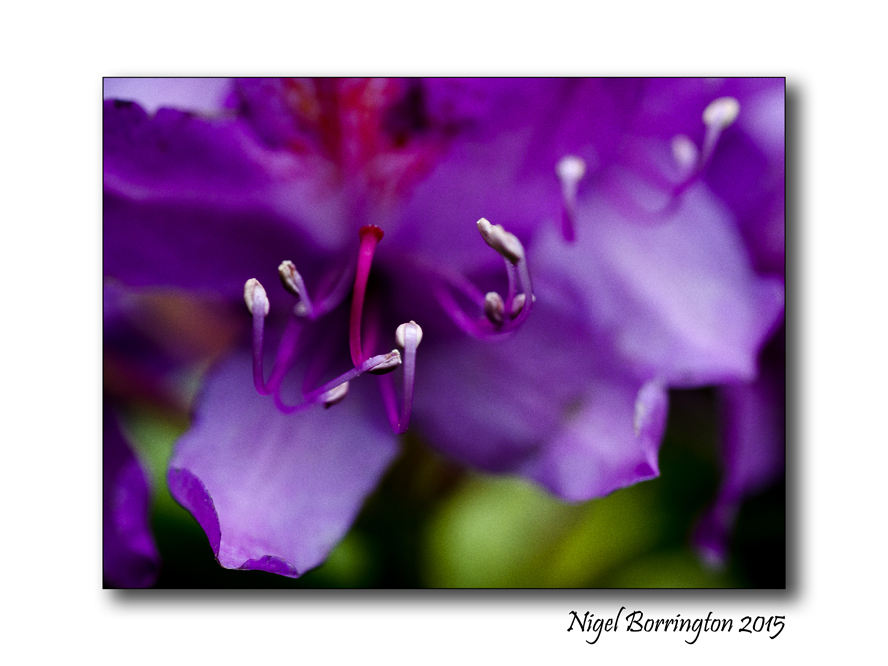
Rhododendron flowers
county Kilkenny
Nigel Borrington
At this time of year , many parts of the Irish landscape come alive with the purples and pinks of the Rhododendron flower.
These images are just a few closeup shots taken on an evening walk yesterday …..
Rhododendron (from Ancient Greek ῥόδον rhódon “rose” and δένδρον déndron “tree”) is a genus of 1,024 species of woody plants in the heath family (Ericaceae), either evergreen or deciduous, and found mainly in Asia, although it is also widespread throughout the Southern Highlands of the Appalachian Mountains of North America. It is the national flower of Nepal. Most species have showy flowers. Azaleas make up two subgenera of Rhododendron. They are distinguished from “true” rhododendrons by having only five anthers per flower.
Gallery


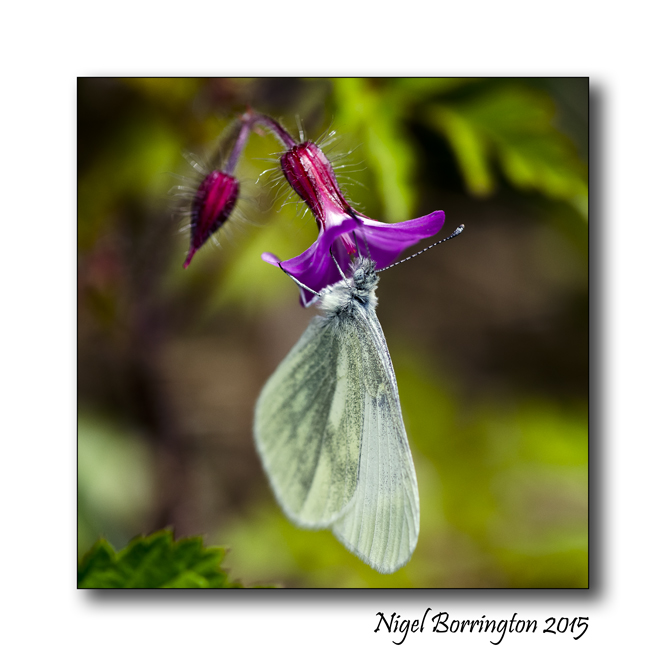
Irish nature photography :Predatory Sawfly

Predatory Sawfly
Nature Photography : Nigel Borrington
At this time of year our local woodlands are full of wildlife with the insects at the height of their activities.
I was lucky enough to capture this Predatory Sawfly, yesterday evening, just while there was enough sun-light left to help get a bright image 🙂
Sawfly is the common name for insects belonging to suborder Symphyta of the order Hymenoptera. Sawflies are distinguishable from most other hymenopterans by the broad connection between the abdomen and the thorax, and by their caterpillar-like larvae. The common name comes from the saw-like appearance of the ovipositor, which the females use to cut into the plants where they lay their eggs. Large populations of certain sawfly species can cause substantial economic damage to forests and cultivated plants.
Blue flowers , they stands for desire the infinite and unreachable

Blue flowers of , Common-Field-Speedwell
Nature Photography : Nigel Borrington
Blue flowers must be one of the hardest types of wild flowers to find, these Field-Speedwell’s are just some of a few we have in our local woodlands.
Blue in nature has been used as a powerful symbol, the following uses are just a few …..
Blue flowers
A blue flower is a central symbol of inspiration. It stands for desire, love, and the metaphysical striving for the infinite and unreachable. It symbolizes hope and the beauty of things.
Early use of the symbol of blue flowers
German author Novalis used the symbol in his unfinished Bildungsroman, entitled Heinrich von Ofterdingen. After contemplating a meeting with a stranger, the young Heinrich von Ofterdingen dreams about a blue flower which calls to him and absorbs his attention.
Explanation of the symbol of blue flowers
In the book Heinrich von Ofterdingen the blue flower symbolises the joining of human with nature and the spirit so the understanding of nature and coincident of the self is growing. In the Romantic the meaning of human was a continuation from Humanism and the Age of Enlightenment, but the focus was on the own emotions not on abstract theory. Understanding and thinking rise in the comprehension of Romantic from own individual love. Feeling is based on the self, thinking is based on the self and the development of the self leads the individual person. Also very important is contemplation. About the feeling, the thinking and contemplation personal inward cognition is possible. The process of cognition merge again with own individual love. The self and the nature is in this theory always linked.
Use of the symbol
Joseph Freiherr von Eichendorff wrote a poem called Die blaue Blume (The blue flower). Adelbert von Chamisso saw the core of Romanticism in the motif, and Goethe searched for the “Urpflanze” or “original plant” in Italy, which in some interpretations could refer to the blue flower. E. T. A. Hoffmann used the Blue Flower as a symbol for the poetry of Novalis and the “holy miracle of nature” in his short tale “Nachricht von den neuesten Schicksalen des Hundes Berganza”.
In 1902, Charles Scribner’s Sons published “The Blue Flower”, a collection of short stories by Henry Van Dyke, the first two of which, “The Blue Flower” and “The Source” refer to the blue flower as a symbol of desire and hope, and the object of the narrator’s search. This volume also includes Van Dyke’s most famous story, “The Other Wise Man”.
Blue rose
Walter Benjamin used the image of the blue flower several times in his writing. For example the opening sentence of his essay Dream Kitsch: “No one really dreams any longer of the Blue Flower. Whoever awakes as Heinrich von Ofterdingen today must have overslept.” Also in his Work of Art essay: “The equipment-free aspect of reality has here become the height of artifice, and the vision of immediate reality the Blue Flower in the land of technology.”
C.S. Lewis, in his autobiographical book, Surprised By Joy, references the “Blue Flower” when speaking of the feelings of longing that beauty ellicited when he was a child of six. He associates it with the German word sehnsucht, and states that this intense longing for things transcendent made him “a votary of the Blue Flower.”
English writer Penelope Fitzgerald’s historical novel The Blue Flower is based on Novalis’s early life. In John le Carré’s 1968 novel A Small Town in Germany, the character Bradfield says, “I used to think I was a Romantic, always looking for the blue flower.” (Pan edition, p. 286 – chap. 17) Substance D, a fictitious drug in Philip K. Dick’s 1977 novel A Scanner Darkly, is derived from a plant with blue flower.
Tennessee Williams used images of blue roses in his play, The Glass Menagerie, to symbolize the frailty and uniqueness of Laura, a central character that reflects the life of Williams’ sister, who underwent a lobotomy. In the play, Laura is nicknamed “Blue Roses” after another character misheard her say “pleurosis”.
In his fantasy series A Song of Ice and Fire, American author George R. R. Martin uses the blue flower as a reoccurring symbol to represent young women of the noble House Stark, often with hints to an illicit love affair. In one instance, Prince Rhaegar Targaryen uses blue winter roses to crown the Lady Lyanna Stark as the “Queen of Love and Beauty” at the Tournament of Harrenhal, passing over his own wife, Princess Elia of Dorne.
“Blue Flower” is the name of a song by the British avant-garde pop band of the early 1970s, Slapp Happy, later covered by the 1990s indy rock bands Pale Saints and Mazzy Star. “Blue Flowers” is a song by the alternative MC, Kool Keith (AKA Dr. Octagon), on his 1996 album, Dr. Octagonecologyst.
From Blossoms, Poem By : Li-Young Lee

From Blossoms
Nature Photography : Nigel Borrington
From Blossoms
By : Li-Young Lee
From blossoms comes
this brown paper bag of peaches
we bought from the boy
at the bend in the road where we turned toward
signs painted Peaches.
From laden boughs, from hands,
from sweet fellowship in the bins,
comes nectar at the roadside, succulent
peaches we devour, dusty skin and all,
comes the familiar dust of summer, dust we eat.
O, to take what we love inside,
to carry within us an orchard, to eat
not only the skin, but the shade,
not only the sugar, but the days, to hold
the fruit in our hands, adore it, then bite into
the round jubilance of peach.
There are days we live
as if death were nowhere
in the background; from joy
to joy to joy, from wing to wing,
from blossom to blossom to
impossible blossom, to sweet impossible blossom.
– Li-Young Lee
Spring Herb’s : Herb-Robert
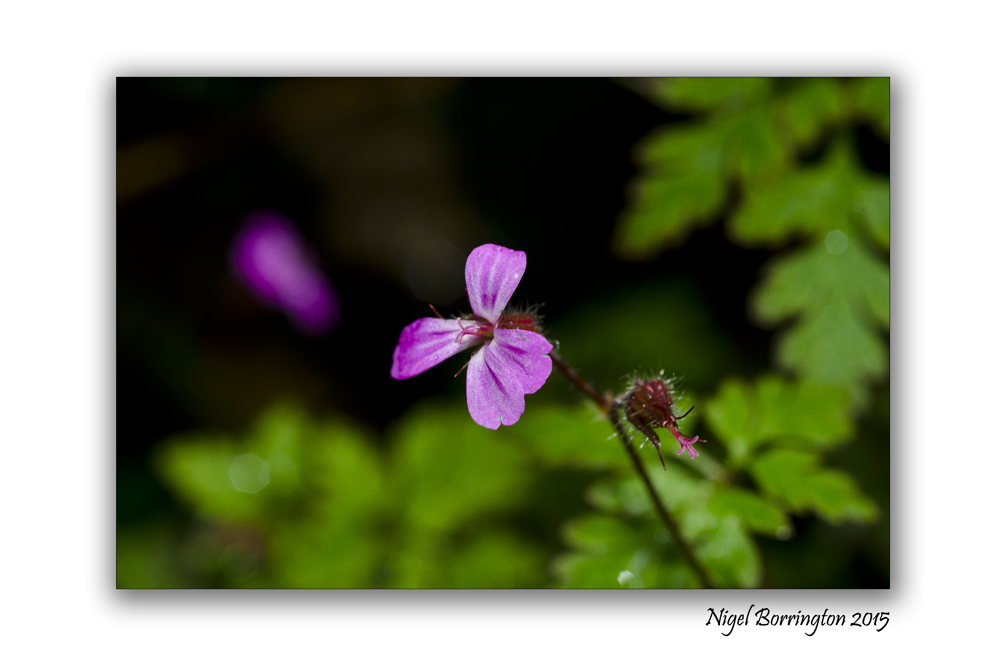
Herb Robert
Irish nature Photography : Nigel Borrington
Spring Herb’s : Herb-Robert
Familiar little pink flower from April to November, Herb-Robert is a hairy, unpleasant-smelling plant which grows on banks, bases of walls, shingle and shady places throughout the country. Its pink flowers (8-15mm across) have five un-notched petals and in the center of the flower are orange anthers. Each petal is marked by small lighter-pink lines running into the center of the flower. The hairy, stalked leaves are often tinged red and have three to five deeply cut lobes. The fruit is hairy and beak-like. This is a native plant belonging to the family Geraniaceae.
This plant has been introduced into North and South America from Europe and Asia. In traditional medicine in the Americas it has been used to stop nosebleeds. Its leaves are also made into a herbal tea which is recommended as a gargle and an eyewash. (you would not recommend this course of action).
One wonders who is the ‘Robert’ of this plant. Maybe the name comes from the Latin word ‘ruber’ meaning red which may have referred to the colouring of the leaves and stems.
Hover Fly – Poem by Michael Shepherd

Hover Fly – Poem by Michael Shepherd
Nature Photography : Nigel Borrington
Hover Fly
Poem by Michael Shepherd
The hover fly
that’s just demonstrated
that it’s one of the Creation’s greatest
and smallest, most compact miracles of lawful
imagination (imagine flying, then stopping
quite still in the air, no slowing down,
just, zap, like that, dead steady,
and it’s smaller (!) than a helicopter, wow)
right here in front of me in silhouette, but
illuminated on one wing by the PC screen,
and pausing for a freeze-frame moment of eternity
as if to tell me something
(illumination, too?) –
all this, and yet it
doesn’t know I’m writing about it.
Presumably.
Three Poems with the title : Primrose

Springtime Primrose
Nature Photography : Nigel Borrington
Primrose
By Pud
Primrose Stirs Lifts Up Her Head
Stands Up Tall On Softened Bed
Resurrected, As Winter Dreams
Primrose Smiles Or So It Seems

Primrose
By : Charlotte
You looked at me as if I were a
primrose
A delicate flower
with tiny petals
opening up to you
with little thorns to prick you with
when you make me angry
You plucked me up
away from the sun
and the moon
and the sky
and my little primrose friends
You put me in an expensive vase,
caring for me the best you could.
But sometimes you go away,
and alone
I am wilting

Primrose
William Carlos Williams
(1883 – 1963)
Yellow, yellow, yellow, yellow!
It is not a color.
It is summer!
It is the wind on a willow,
the lap of waves, the shadow
under a bush, a bird, a bluebird,
three herons, a dead hawk
rotting on a pole—
Clear yellow!
It is a piece of blue paper
in the grass or a threecluster of
green walnuts swaying, children
playing croquet or one boy
fishing, a man
swinging his pink fists
as he walks—
It is ladysthumb, forget-me-nots
in the ditch, moss under
the flange of the carrail, the
wavy lines in split rock, a
great oaktree—
It is a disinclination to be
five red petals or a rose, it is
a cluster of birdsbreast flowers
on a red stem six feet high,
four open yellow petals
above sepals curled
backward into reverse spikes—
Tufts of purple grass spot the
green meadow and clouds the sky.
Monday Poems : Donkey of Brown

Monday Poems : Donkey in Brown
Photography : Nigel Borrington
Well What a weekend we had here in Ireland SUN on SUN , just perfect 🙂 🙂
Its hard to believe its Monday already, my post and included Poem this Morning is just a reminder that while your getting your week going , don’t forget to take the odd moment to slow down and take a look at the world around you, it’s Spring-time so take just a few moments and check out what’s really happening in the world – your meeting / phone call or email can wait for a while 🙂 🙂
Donkey of brown
By : Patricia Higgins
Please let me know
Why is it that you go so slow?
He turned round gently and to me said
I have some sense in my little brown head.
 .
.
By hurrying so as you go by
You miss the beauty in earth and sky.
So I took his advice and looked around,
And I saw diamonds in dew drops on the ground.
Daises that dance in the sun’s golden ray,
Things I missed as I hurried each day.
Gold in the buttercups, clouds in the blue,
What the donkey had said was perfectly true.
Visiting an empty Church , Kilcash parish church, Co. Tipperary

Kilcash parish church
County Tipperary
Nigel Borrington
I so very rarely visit a church when a service is being held these days, Weddings and Funerals apart. 
When I am out walking however, I will often wander into a local church, just for a look around. I am not so sure about the christian story anymore, I was as a child and into my teens but moved away the more I got into the great outdoors and into the nature that surrounds us.
Personally What I find is OK about visiting an empty church is that I have time to think about the spiritual massage they attempt to bring , the very fact however that there is no priest at the alter, well preaching! at you, just gives you a little more space to think for yourself about your own beliefs. These days my own beliefs lay more outside the church as to me if there is a God then he is to be found in nature and not inside the walls of a church.
Its not that I have anything against a church mass or service, its more that I find being outside is more spiritual than being inside a church walls, to me like many, I feel that if there is a god ( such as the church depicts ) then he is as likely if not more to be found in the life that can be found in the forests and the fields as sitting down and listening to a priest.
I feel that if he is to be found then its along a path of discovery in the world of nature that surrounds all of us.
Inside Kilcash Parish Church


Pagan Monday : The Spiral and Nature

The Spiral In the Natural Pagan world
If you have taken many nature photographs or sketched and/or painted outside, you may have noticed just how often you come across one of natures repeating patterns, the Spiral.
From Lichen on rocks to the way the bark grows on some trees, water spinning in a rock pool and the form that galaxy’s take in the night sky.
The last image below was taken at the Local Pagan location of Knickroe, County Kilkenny where most of the stones are marked with the spiral pattern. In this image you can just about make out the form of the Triple Spiral, Possibly representing the : ( “three realms” – Land, Sea and Sky ). Clearly our Pagan ancestors noticed the spiral and give it a significant place in their lives. Today the spiral takes a leading place in Modern Re constructionist Paganism being used in Art and artifacts.
Pre-Christian symbolism
Believed by many people to be an ancient symbol of pre-Celtic and Celtic beliefs, the triple spiral appears in various forms in pre-Celtic and Celtic art, with the earliest examples having been carved on pre-Celtic stone monuments, and later examples found in the Celtic Christian illuminated manuscripts of Insular art. The triple spiral was possibly the precursor to the later triskele design found in the manuscripts.
Christian Celtic symbolism
What the symbol meant to the pagans who built Newgrange and other monuments is unknown; but, as Christianity came into the forefront in Ireland before the 5th century, AD, the triskele took on new meaning, Kidnapped somewhat as a symbol of the Trinity (i.e., Father, Son, and Holy Spirit) and, therefore, also a symbol of eternity. Its popularity continues today as a decorative symbol of faith for Christians of Celtic descent around the world.
The triple spiral
The triple spiral is one of the main symbols of Celtic Reconstructionist Paganism, often standing for the “three realms” – Land, Sea and Sky, or for one of a number of deities who are described in the lore as “threefold” or triadic.[1] The god Manannán is probably most often the one symbolized by the triskele, though some also use it for the goddess Brighid. Some Celtic-inspired Wiccans also use the triple spiral symbol, most often to represent the concept of the triple goddess.
According to Uriel’s Machine by Knight and Lomas (2003), the triple spiral may represent the nine-month period of human pregnancy, since the sun takes a fourth of a year to go from the celestial equator (an equinox) to extreme north or south declination (a solstice), and vice versa. During each three-month period, the sun’s path across the sky appears to form a closely wound quasi-helical shape, which can be likened to a spiral, so that three spirals could represent nine months, providing an explanation for a link between fertility and the triple-spiral symbol.
Natures Spirals


Kilkenny Landscape Photography : The Simple things – A line of trees.

Kilkenny Landscape Photography
Nigel Borrington
Most of the time when I am out taking Landscape pictures, its the simple things that catch my attention, like this simple line of trees at one end of a large woodland, set in the hills above Windgap, county Kilkenny.
When trees are young like these ones they are planted very close together. later this area will be thinned out and half these trees will be cut down so that there is space for the best trees to develop and grow, the cut trees will be sold as firewood so it is not wasted.
There are so many things we just don’t notice, I think this is one thing I love most about doing about Landscape photography, it makes you look at and see things so often lost in the bigger picture of daily life.
Gorse flowers – in mythology
Irish Gorse flowers
Nigel Borringtpn
Gorse flowers – in mythology
Gorse, also known as furze, is a sweet scented, yellow flowered, spiny evergreen shrub that flowers all year round.
In fact, there are several species of gorse that flower at different times of the year making it a much-loved plant for the bees and giving it the appearance of being in bloom all year long. There is an old saying that goes, “When the gorse is out of bloom, kissing is out of season.”
Gorse Tree copyright Ireland Calling
Gorse is often associated with love and fertility. It was for this reason that a sprig of gorse was traditionally added to a bride’s bouquet and gorse torches were ritually burned around livestock to protect against sterility. However, one should never give gorse flowers to another as a gift for it is unlucky for both the giver and receiver.
.
Beltane bonfires
Gorse wood was used as very effective tinder. It has a high oil content which means it burns at a similar high temperature to charcoal. The ashes of the burnt gorse were high in alkali and used to make soap when mixed with animal fat.
Onn, meaning gorse, is the 17th letter of the ogham alphabet. It equates to the English letter O.
In Celtic tradition, gorse was one of the sacred woods burned on the Beltane bonfires, probably the one that got them started. It was a shrub associated with the spring equinox and the Celtic god of light, Lugh, doubtlessly because of its ever blooming vibrant yellow flowers.
In Brittany, the Celtic summer festival of Lughnastdagh, named after the god, was known as the Festival of Golden Gorse.
Flowers used in wine and whiskey
The flowers have a distinct vanilla-coconut aroma and are edible with an almond-like taste. They can be eaten raw on salads or pickled like capers. They have also been used to make wine and to add colour and flavour to Irish whiskey. However, consuming the flowers in great numbers can cause an upset stomach due to the alkalis they contain.
The prickly nature of gorse gave it a protective reputation, specifically around livestock. As well as providing an effective hedgerow, gorse made an acceptable flea repellent and the plant was often milled to make animal fodder.
Clearing the Forests following Storm Darwin , a (Before and after) Gallery.
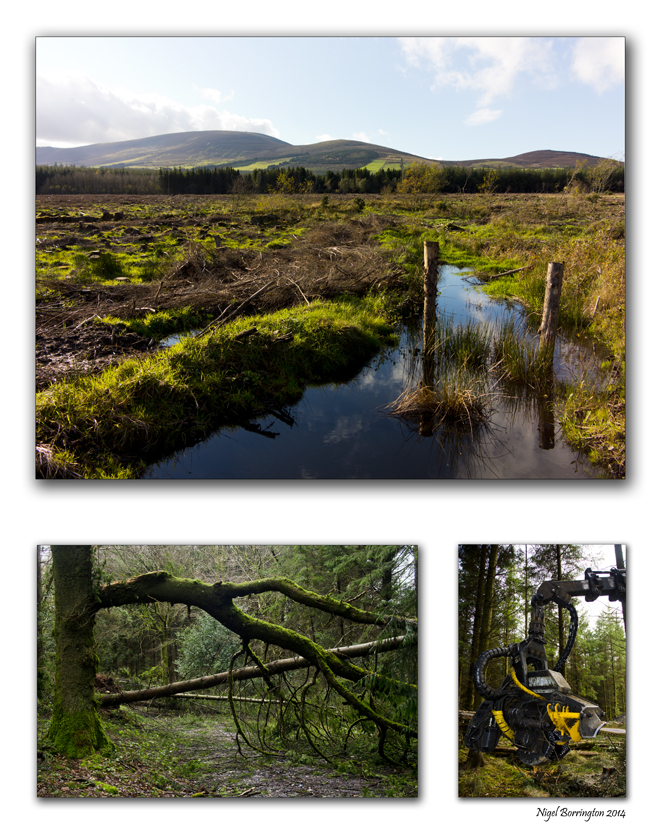
Breanomore forest, Slievenamon, county Tipperary.
Landscape Photography : Nigel Borrington
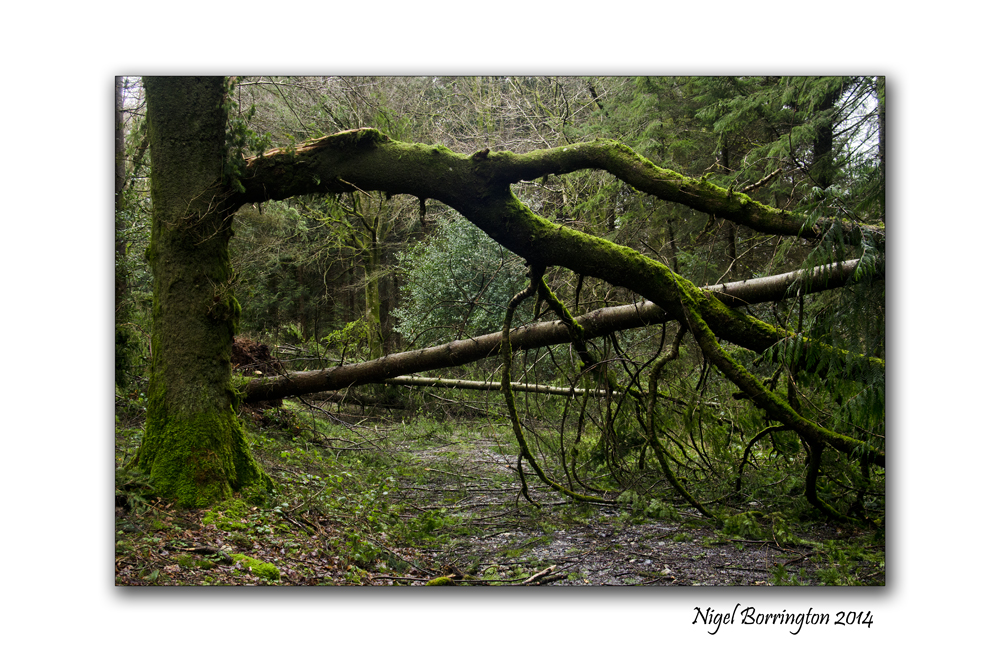
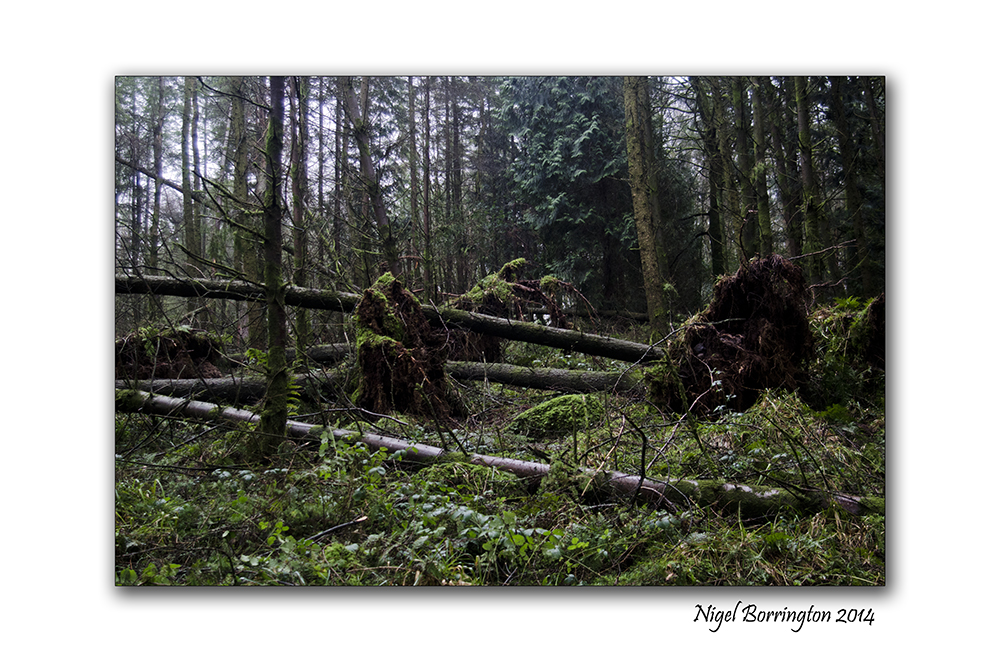
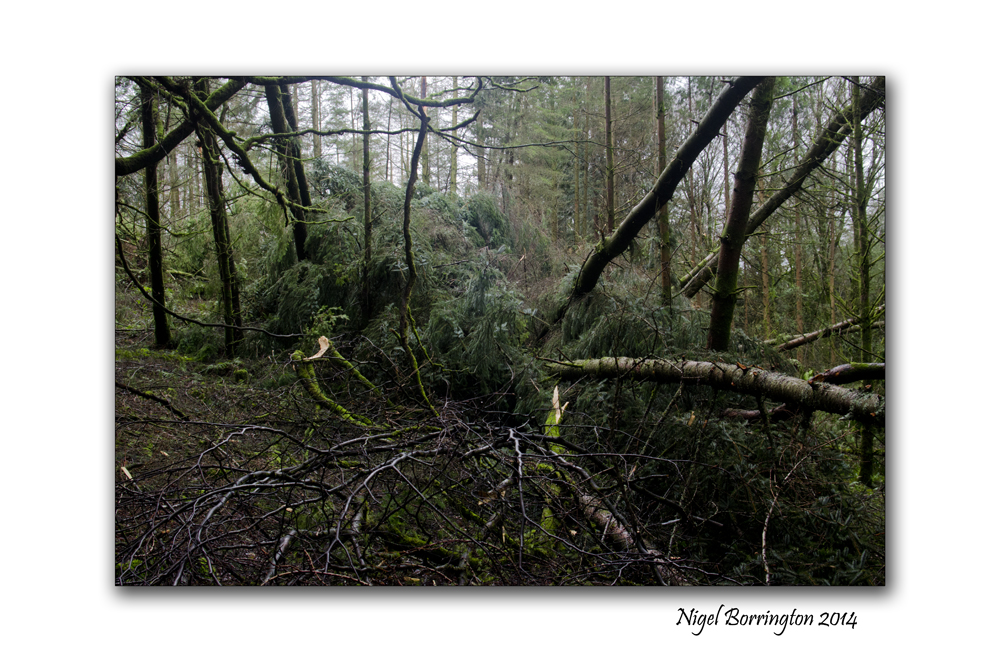
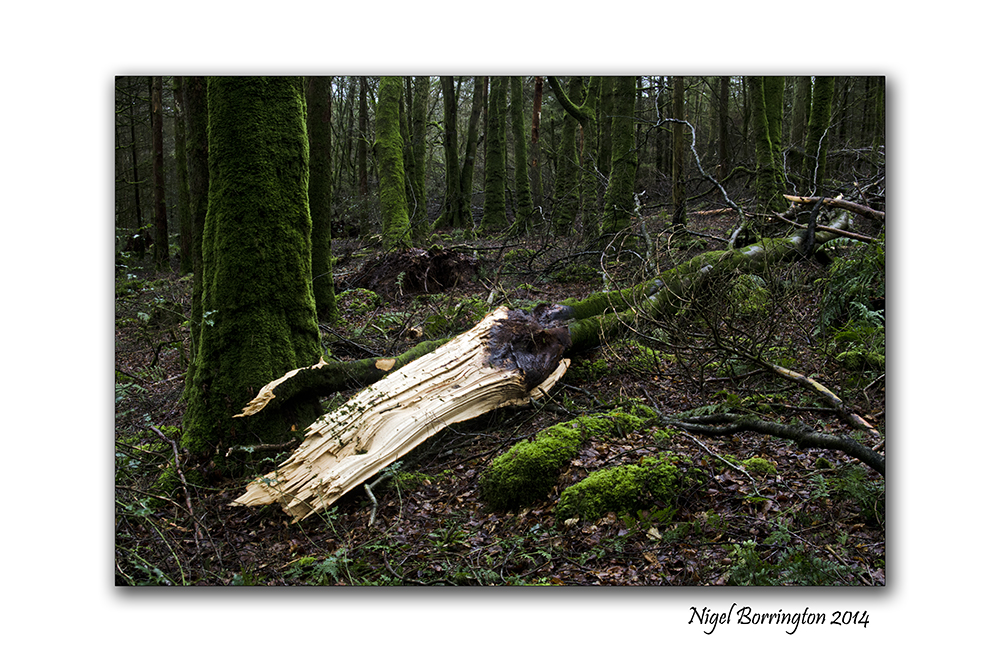
On the 12th of February this year Ireland was hit by the remains of a hurricane given the name of Darwin, by the time it hit us it was down rated to a storm but its power was truly stunning.
Locally in counties Tipperary and Kilkenny there was a lot of damage to peoples property and farm building but the forests and their trees where the most affected. Irish Forestry lost almost one years worth of timber , the same amount that would have been harvested in 2014.
It is only in the last month that most of the local fallen trees have been removed, sadly however to do this it has meant clear felling very large areas of our local woodlands.
The images here where taken during the the year and include the after effects of the storm and then images of Forest workers during the process of clearing some one sq mile of Breanomore forest near the mountain of Slievenamon, County Tipperary.
The last set of images show how the forest looks now, a vast area has been cleared. The effects of Storm Darwin are still very clear even now in November and the work to remove damaged and fallen trees will continue for sometime to come.
A true reminder of the power of nature.
The results of the February storms
 .
.
Forest workers clearing the trees


 .
.
The Forest after being cleared


 Nigel Borrington
Irish landscape Images for the week – (Monday) Irish bog lands.
During this week, I just wanted to return to some of my most loved Irish Landscape locations and Monday today’s post I want to share some images I have taken since 2014, these relate to the Irish Bog and Peat lands of the Irish Midlands and the West coast.
Ireland has internationally important peat/bog lands but they are always under serious threat. Over the last few years the Irish government has protected areas of special conservation from historic family rights to cut peat in these areas, a decision that created problems for some but one that was very much needed in order to start the process of returning the bog’s to a point of growth and sustainability.
I love these locations, they are remote and full of life both plant and wild life and I feel like many others that they do need very special care and support.
When you visit locations like the Bog of Allen, you can see a contrast between the areas that are still wild and untouched and the areas that have been harvested for peat, when you see this contrast and its different effects on local bio-diversity you would only hope that one day we can find a less damaging way to heat our homes and produce energy.
Irish Bog-lands Gallery
Share this:
April 25, 2016 | Categories: Comment, Gallery, Landscape, Nature, Nature and Wildlife, Nigel Borrington, Plants and herbs, Travel Locations | Tags: Biodiversity, bog lands, Bog of Allen, Ireland, Irish landscape photography, Nature, nature and wildlife photography, Nigel Borrington, Peat lands, wildlife | 9 Comments