Summer Poems : Haymaking, By Edward Thomas

Summer Poems : Haymaking
By Edward Thomas
Aftear night’s thunder far away had rolled
The fiery day had a kernel sweet of cold,
And in the perfect blue the clouds uncurled,
Like the first gods before they made the world
And misery, swimming the stormless sea
In beauty and in divine gaiety.
The smooth white empty road was lightly strewn
With leaves—the holly’s Autumn falls in June—
And fir cones standing stiff up in the heat.
The mill-foot water tumbled white and lit
With tossing crystals, happier than any crowd
Of children pouring out of school aloud.

And in the little thickets where a sleeper
For ever might lie lost, the nettle-creeper
And garden warbler sang unceasingly;
While over them shrill shrieked in his fierce glee
The swift with wings and tail as sharp and narrow
As if the bow had flown off with the arrow.
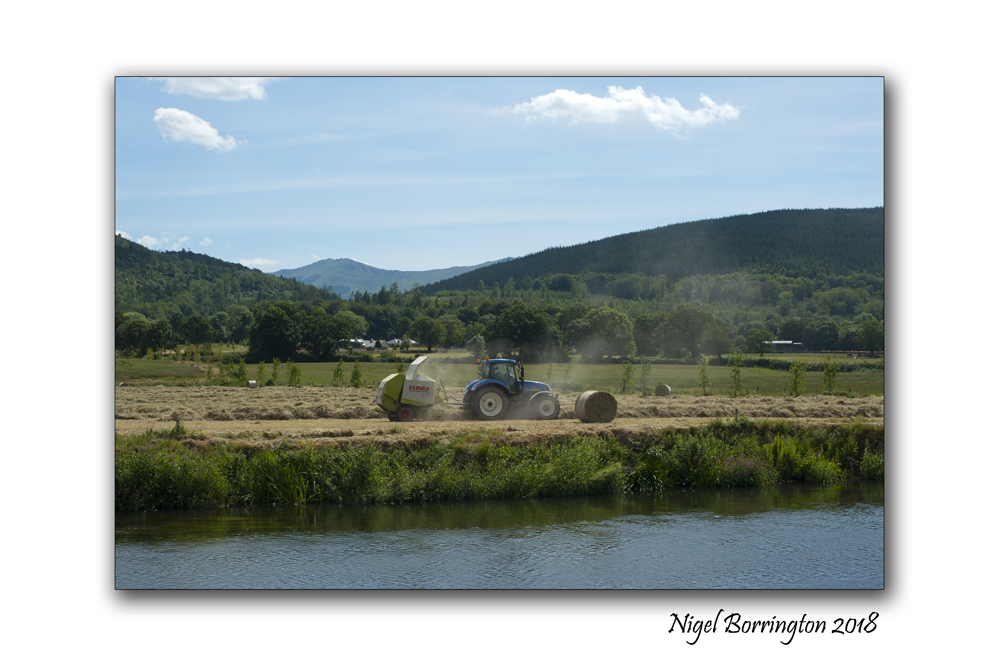
Only the scent of woodbine and hay new-mown
Travelled the road. In the field sloping down,
Park-like, to where its willows showed the brook,
Haymakers rested. The tosser lay forsook
Out in the sun; and the long waggon stood
Without its team, it seemed it never would
Move from the shadow of that single yew.
The team, as still, until their task was due,
Beside the labourers enjoyed the shade
That three squat oaks mid-field together made
Upon a circle of grass and weed uncut,
And on the hollow, once a chalk-pit, but
Now brimmed with nut and elder-flower so clean.
The men leaned on their rakes, about to begin,
But still. And all were silent. All was old,
This morning time, with a great age untold,
Older than Clare and Cobbett, Morland and Crome,
Than, at the field’s far edge, the farmer’s home,
A white house crouched at the foot of a great tree.

Under the heavens that know not what years be
The men, the beasts, the trees, the implements
Uttered even what they will in times far hence—
All of us gone out of the reach of change—
Immortal in a picture of an old grange.
Meeting of the Waters, Killarney National park and lakes , County Kerry, Ireland
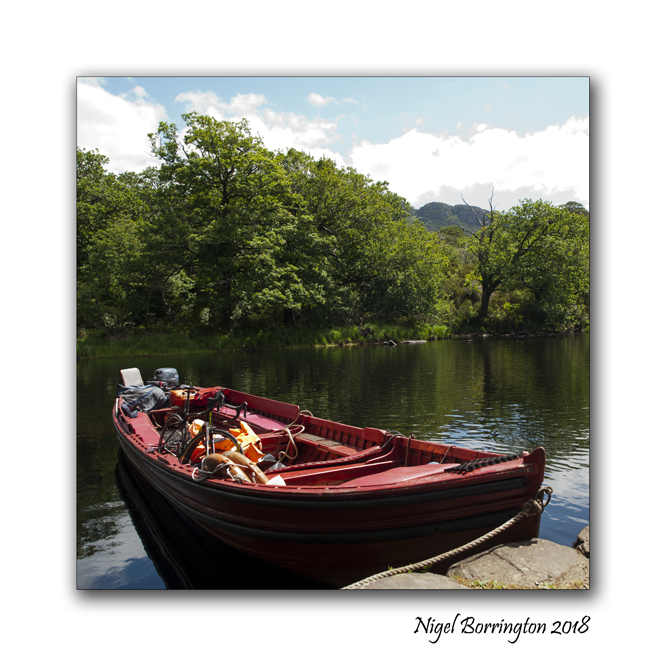
As the name implies the Meeting of the waters is where Killarney’s famous lakes converge. The Upper lake, Middle Lake (also known as Muckross Lake) and Lower Lake (Lough Leane) all come together at this beautiful spot. It is a little haven of tranquility and can only be reached by foot or bicycle. Also found in this area are Dinis cottage and “The Old Weir Bridge”.

The easiest way to reach the spot is by walking along the well signposted path from Muckross House for approximately 5km or if you don’t feel that energetic then approx one mile beyond Torc Waterfall (direction Kenmare) there is a parking spot on the right hand side of the road. Dinis cottage is signposted from here and the cottage and “the meetings of the waters” is a 15 minute walk from here. Its definitely worth the walk on a fine day.
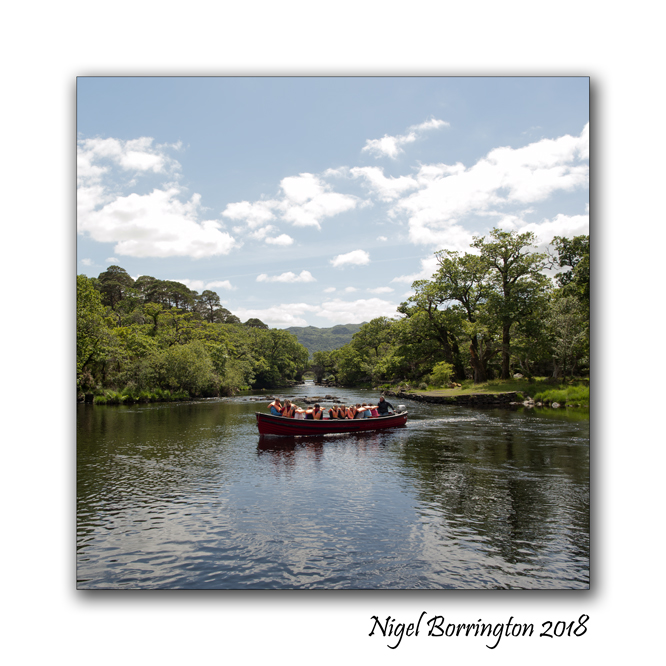


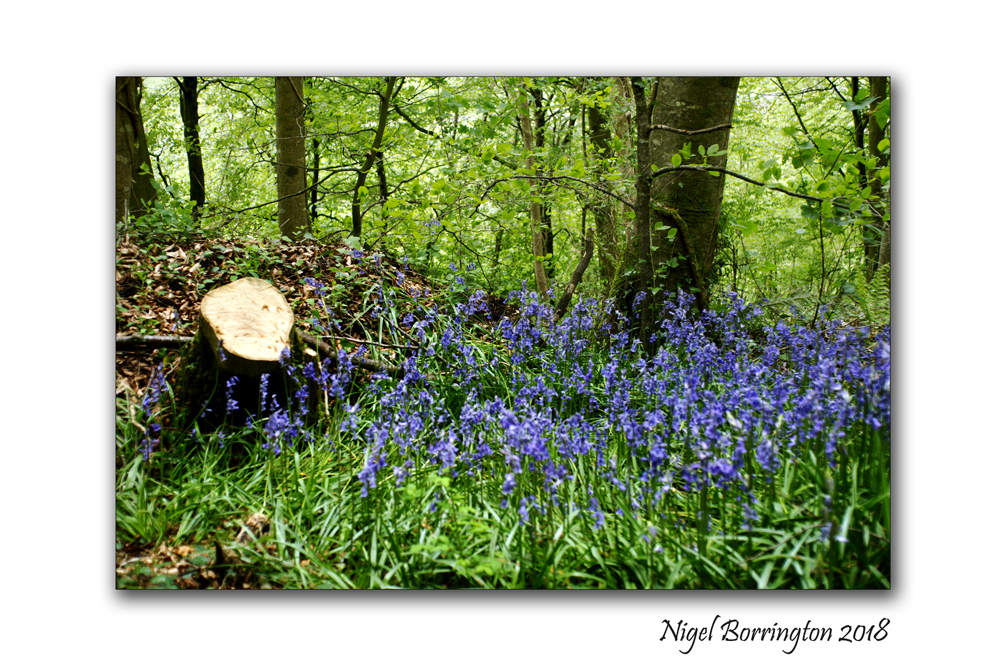


Tuesday Morning on the River, Bagenalstown, River Barrow, county Carlow

Morning on the river
Bagenalstown
county Carlow
Nigel Borrington 2018
Bagenalstown, county Carlow
One of my most loved small towns located along the river Barrow as it flows through county Carlow is Bagenalstown, it is located of the side of the hills that surround the river barrow south of Carlow town. Otherwise known in its Gaelic version as Muine Bheag it is a pleasant stretch of the River Barrow and derives its name from Walter Bagenal, who, in founding the town, had visions of mirroring the city of Versailles, in northern France.
However, his efforts became frustrated due to the re-routing of the coach road away from the town. He left more than enough for visitors to enjoy with handsome stone public buildings including the impressive Courthouse, now a public library in Bagenalstown.

The arrival of the railway in 1846 rejuvenated the town, and its neo-classical railway station is one of the finest in Ireland. Attributed to William Deane Butler it is constructed of limestone and granite and is a seven bay, two-storey building in an Italianate villa style. Today Bagenalstown station still retains its charm in a largely unaltered state. This former mill town made full use of the river Barrow to transport grain, beet, coal, turf and Guinness by barge, evidence of which can be seen in its fine industrial architecture. Near the railway bridge on the R705 Borris road is an example of the Carlow fence which consists of a decorative fence made of granite pieces, laid horizontally over vertical posts and is found nowhere else in the world.
One of the finest views of Bagenalstown may be enjoyed on the approach road from Leighlinbridge and includes the spire of St. Andrew’s Catholic Church and the fine tower of St. Mary’s Church of Ireland Church. St. Andrew’s Catholic Church was built in 1820 on a site provided by the Newton family, successors to the Bagenals. The stained glass behind the altar is worthy of particular attention. Nowadays, riverside walks, picnic tables and a picturesque lock enhance this fine town which has been twinned with the French town of Pont Pean since 1999.

ATTRACTIONS: The ruins of the early 14th century Ballymoon Castle and 13th century Ballyloughan Castle are located near the town. Wells Church, situated closeby, is the preserved ruin of a church dating back to 1262. The church is surrounded by an enclosed and well-maintained graveyard which is still in use today.
ACTIVITIES: Outdoor swimming pool. The McGrath complex offers excellent sporting facilities including cricket, hurling, soccer and Gaelic football fields, tennis court and pitch and putt courses. The River Barrow in this area is renowned for coarse fishing with wheelchair friendly fishing stands located near the swimming pool. The Barrow Way long distance walking route passes through the town.
Irish Landscape Images, Tramore Beach, County Waterford 2018

Irish landscape images Tramore beach
county Waterford Nigel Borrington
Irish Landscape Photography, Windgap County Kilkenny – in Black and white

Images of Ireland
Black and white Landscapes
Windgap
County Kilkenny
Serenity Lake By Charleigh Huston
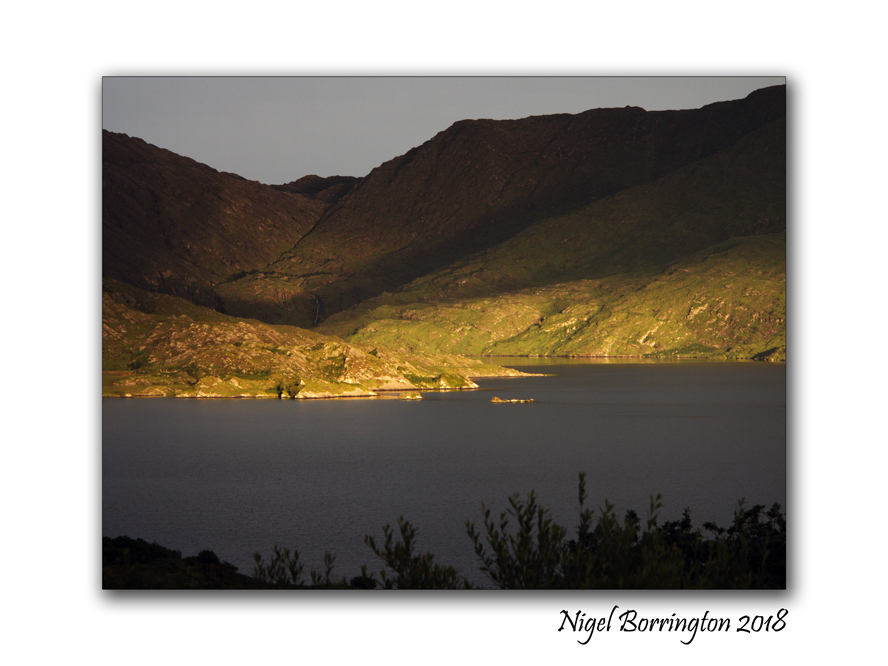
Serenity Lake
Charleigh Huston Dec 2015
‘Twas my spring of youth in that lot
That now haunts my mind by that spot
Of which I could not love less –
Wonderful loneliness,
Of the lake’s Serenity gown,
With nature circled ’round.
But when Death hath reached its grasp
Upon Serenity’s water – poured into his flask,
The sadistic sagacious wind went by
Murmuring the funeral cry –
Then – I finally awake –
To the terrors of Serenity Lake.

Yet I persist that it was not fright!
Simply Death’s delight –
Fueled by the Void of Sorrow,
Pierced by Serenity’s arrow –
No! – This Love I must define!
The trip to the lake, of thee and thine.
O! – Death’s grasp laid in that voracious wave,
Enticing Serenity to be my eternal grave,
Upon that very fatal spot –
Where the two children rot.
For no soul shall ever make,
A Heaven out of Serenity Lake.

Street views, Cobh, County Cork, Ireland, April 2018
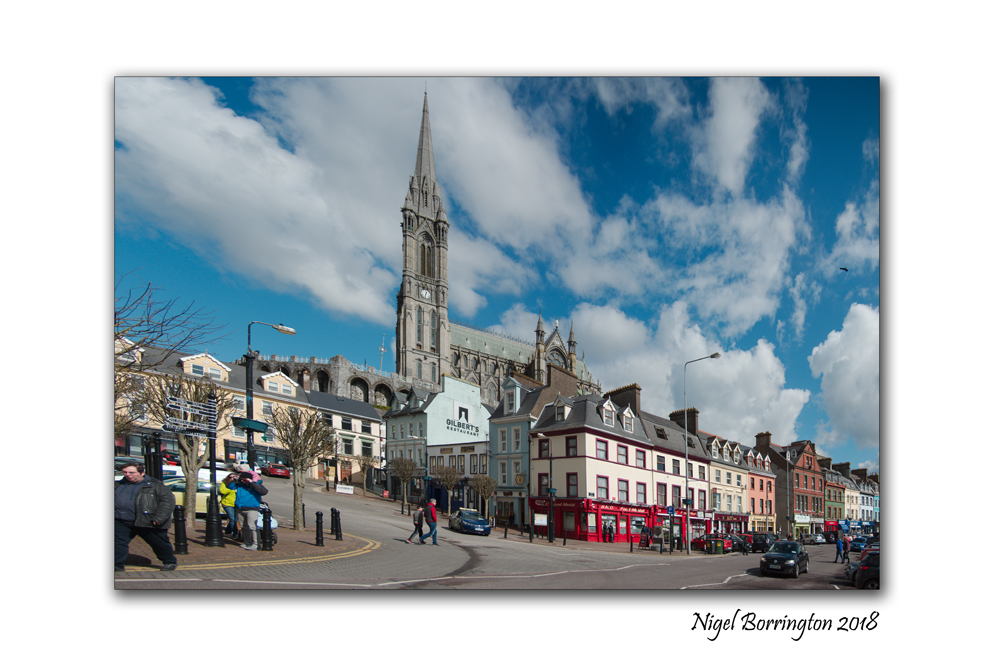
Street Views
Cobh, county Cork
Nigel Borrington
April 2018
Visiting the Underworld, Dunmore caves, county Kilkenny Ireland
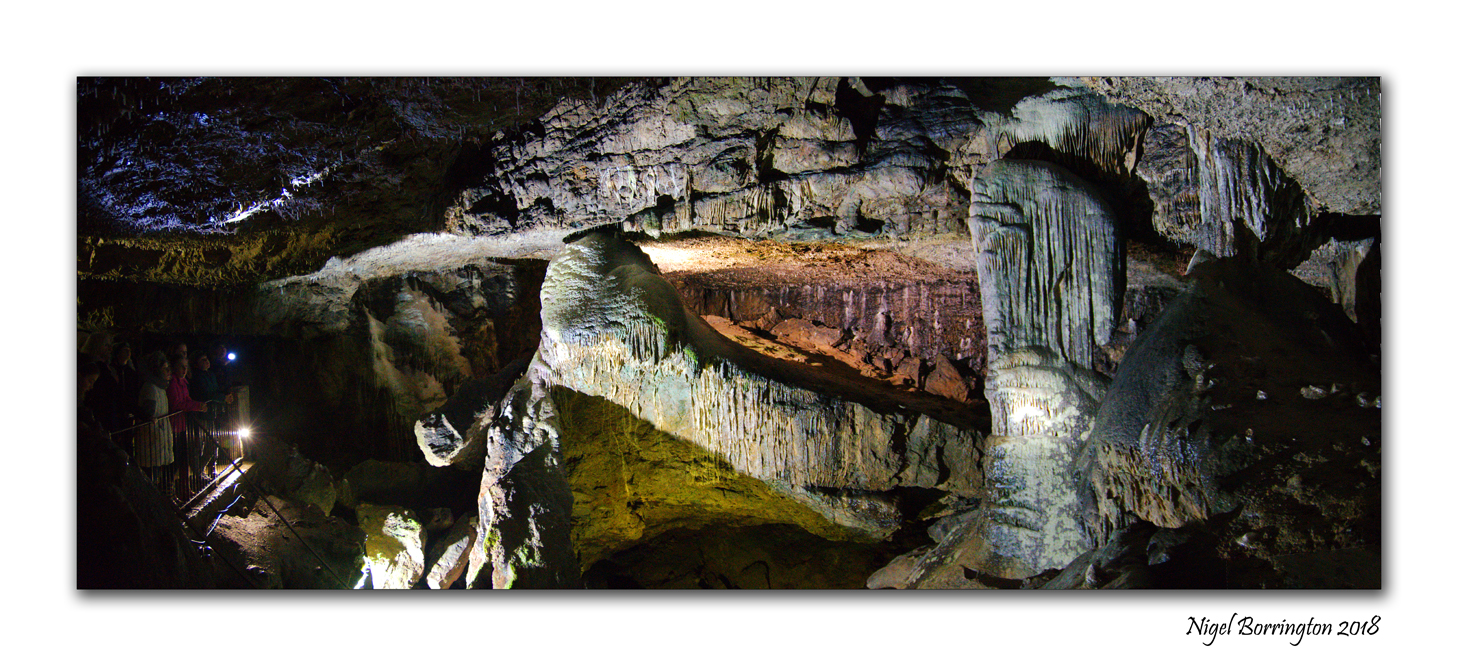
Dunmore caves
County Kilkenny
Nigel Borrington 2018
The Easter holidays are always a great time to do some different activities and visited some locations I had on my list for sometime.
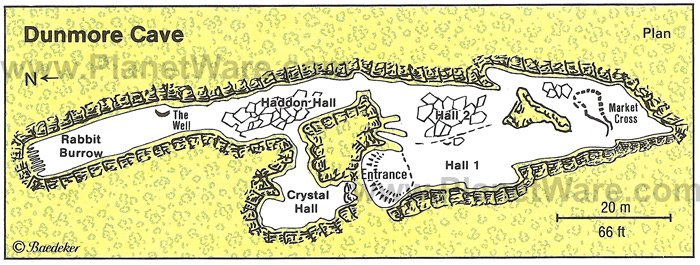
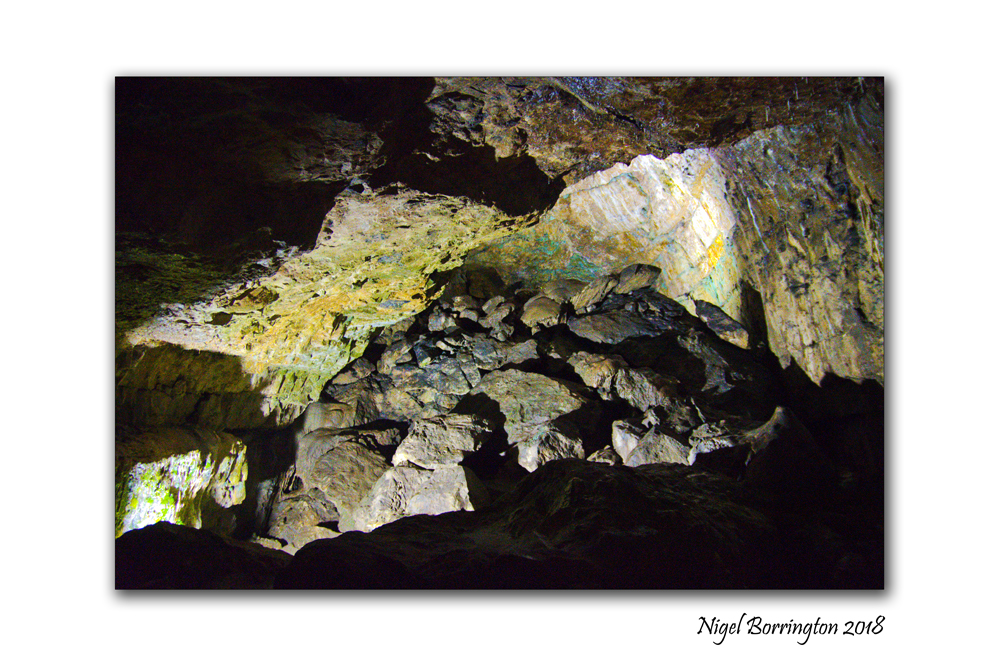
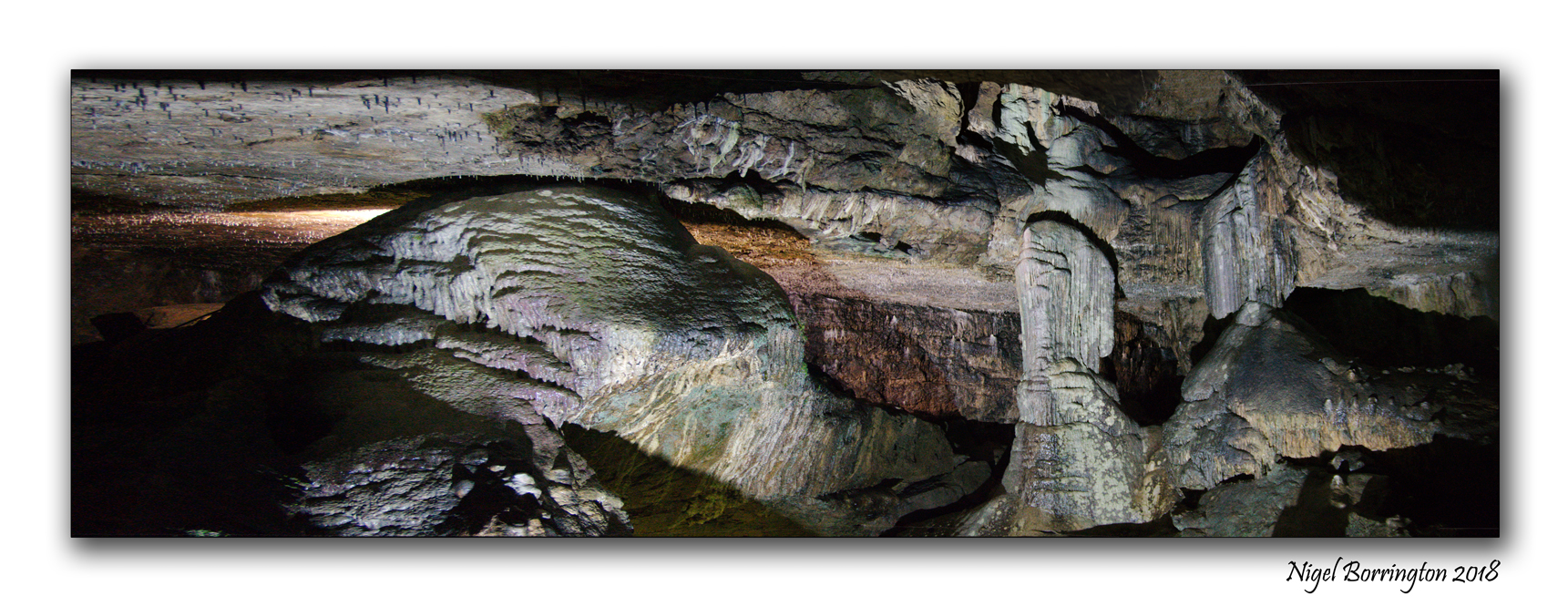
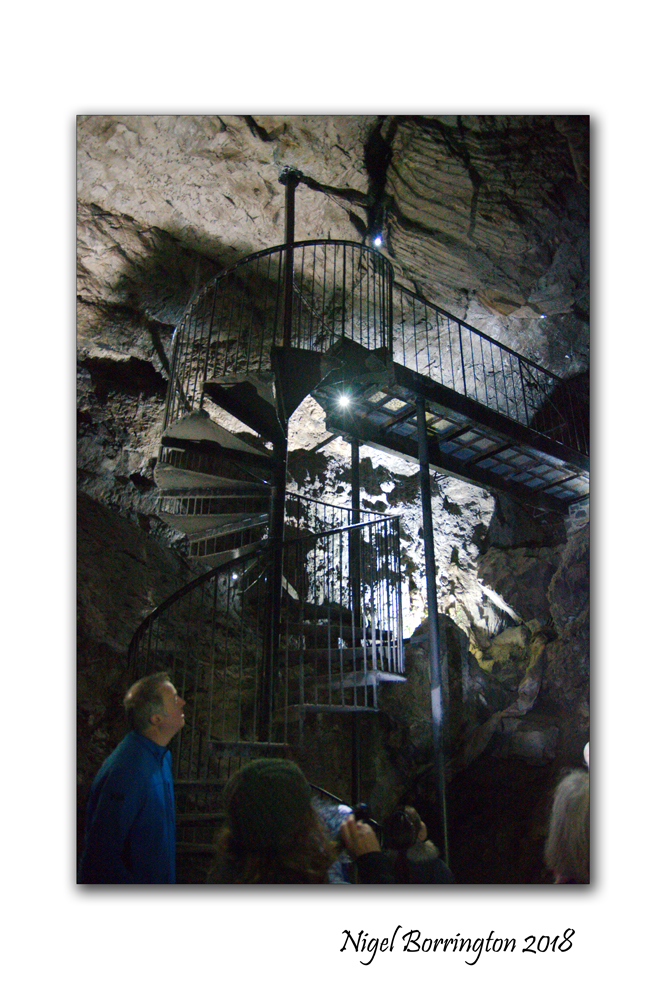
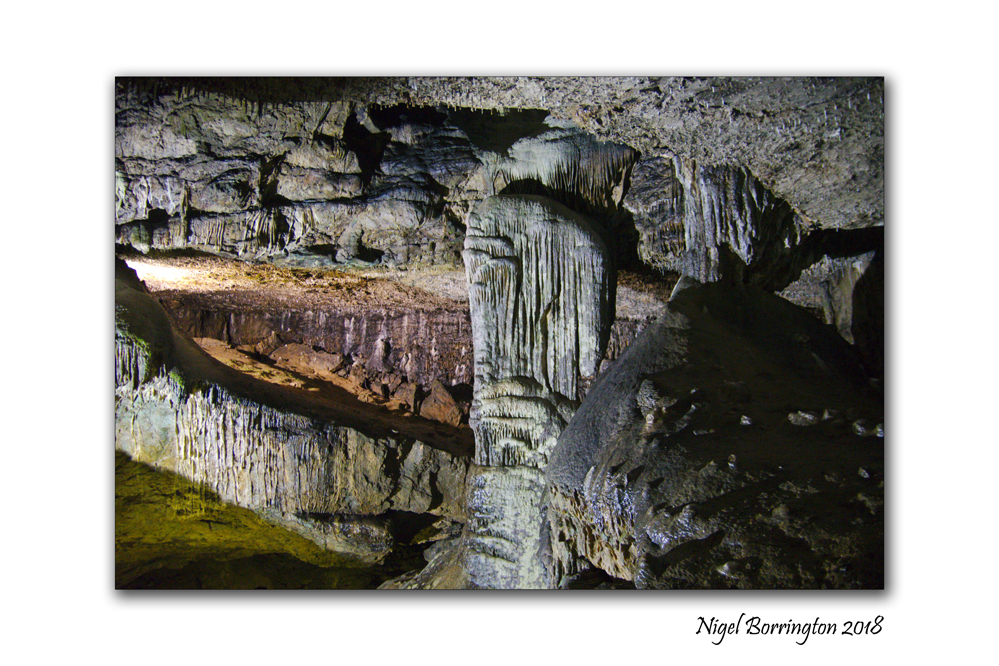
One of these locations was Dunmore caves in the north of county Kilkenny, the caves are some of the most spectacular – located here in Ireland, with a large entrance hall and a great mix of tunnels and caverns. This time was a great visit, there have been some great guides over the years but our female guide over the weekend was clearly into the geology and environment of the area and of the caves themselves along with the Pagan and Viking (history, myths and beliefs) based around the long time use of these caverns.
One local myth in Kilkenny county revolves around the belief that there is a tunnel that goes all the way from the caves into the center of kilkenny city, possibly used for escape in times when the city was under attack. This tunnel has been searched for many times but never found, so maybe it is just a story but the search goes on.
Dunmore caves facts and History
Dunmore Cave (from Irish Dún Mór, meaning ‘great fort’) is a limestone solutional cave in Ballyfoyle, County Kilkenny, Ireland. It is formed in Lower Carboniferous (Viséan) limestone of the Clogrenan Formation. It is a show cave open to the public, particularly well known for its rich archaeological discoveries and for being the site of a Viking massacre in 928.
Development
Dunmore Cave was designated a National Monument by the Commissioners of Public Works in 1944, but development as a show cave with visitor centre and tours didn’t begin until 1967, at the behest of respected archaeologist and spelaeologist J. C. Coleman. The cave was closed in 2000 for archaeological work and redevelopment, and reopened in 2003.
History
The earliest historical reference to the cave is to be found in the Triads of Ireland, dating from the 14th to the 19th century, where “Úam Chnogba, Úam Slángae and Dearc Fearna” are listed under the heading, “the three darkest places in Ireland”.The last, meaning the “Cave of the Alders,” is generally thought to be the present Dunmore Cave, while the first two translate as the caves of Knowth and Slaney. It is not known which exact system of caves/passage tombs near the river Slaney is being referred to, with the most likely, those at Baltinglass. Other sources translate the listed locations as Rath Croghan, the cave or crypt of Slane and the “Cave of the Ferns”.
In the Annals of the Four Masters, dated to the 17th century, Dearc Fearna was recorded as the site of a great Viking massacre in 928 AD:
“Godfrey Uí Ímair, with the foreigners of Ath Cliath, demolished and plundered Dearc Fearna, where one thousand persons were killed in this year as is stated in the quatrain:
Nine hundred years without sorrow, twenty-eight, it has been proved, ‘Since Christ came to our relief, to the plundering of Dearc-Fearna.”
Gofraith, ua h-Iomhair, co n-Gallaibh Atha Cliath, do thoghail & do orgain Derce Fearna,
airm in ro marbhadh míle do dhaoinibh an bhliadhain-si, amhail as-berar isin rann,
Naoi c-céd bliadhain gan doghra,
a h-ocht fichet non-dearbha,
o do-luidh Criost dár c-cobhair
co toghail Derce Ferna.
While the human remains found in the cave are thought to be victims of the Viking massacre, this has not been reliably confirmed. Many of the remains belong to women and children, and it is hypothesised that they are the bodies of people hiding in the cave who were unable to leave when the Vikings tried to smoke them out, dying from asphyxiation.
Archaeological study
The earliest writings on the cave of an archaeological nature came from the bishop George Berkeley, whose report dated 1706 detailed a visit that he made to the cave as a boy. The essay was not published until 1871. In 1869 Arthur Wynne Foot, a physician, made an archaeological visit to the cave with Rev. James Graves and Peter Burtchaell and discovered large quantities of human remains, which they collected. In his reports, Foot meticulously documented his findings, and culled references from the writings of researchers over the preceding 120 years.
In 1999, a hoard of 43 silver and bronze items was discovered in a rocky cleft deep in the cave. Archaeologists dated this hoard, consisting of silver, ingots and conical buttons woven from fine silver, to 970 AD.

Dunmore caves
Visitors center
Count Kilkenny
Ireland
Nigel Borrington 2018




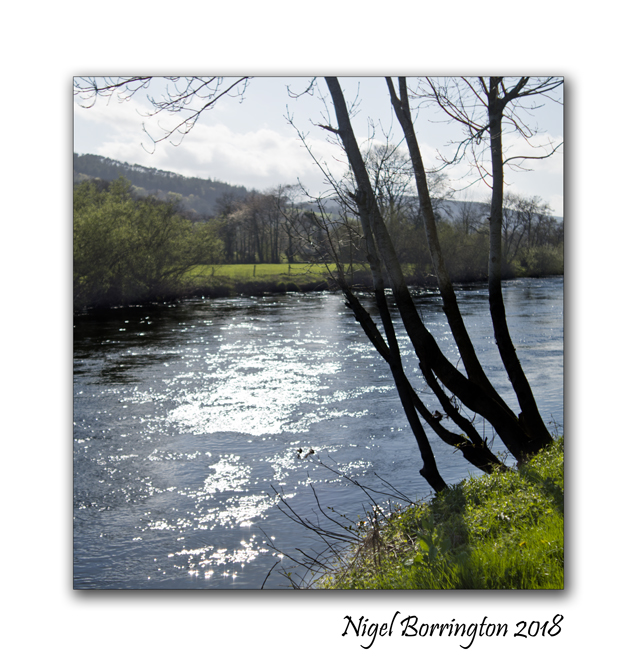
Now the Snow has gone, it’s springtime at the River. Spring On The River, Poem By Archibald Lampman

Down by the banks of river suir
County Tipperary
Nigel Borrington 2018
Spring On The River
By Archibald Lampman
O sun, shine hot on the river;
For the ice is turning an ashen hue,
And the still bright water is looking through,
And the myriad streams are greeting you
With a ballad of life to the giver,
From forest and field and sunny town,
Meeting and running and tripping down,
With laughter and song to the river.
Oh! the din on the boats by the river;
The barges are ringing while day avails,
With sound of hewing and hammering nails,
Planing and painting and swinging pails,
All day in their shrill endeavor;
For the waters brim over their wintry cup,
And the grinding ice is breaking up,
And we must away down the river.
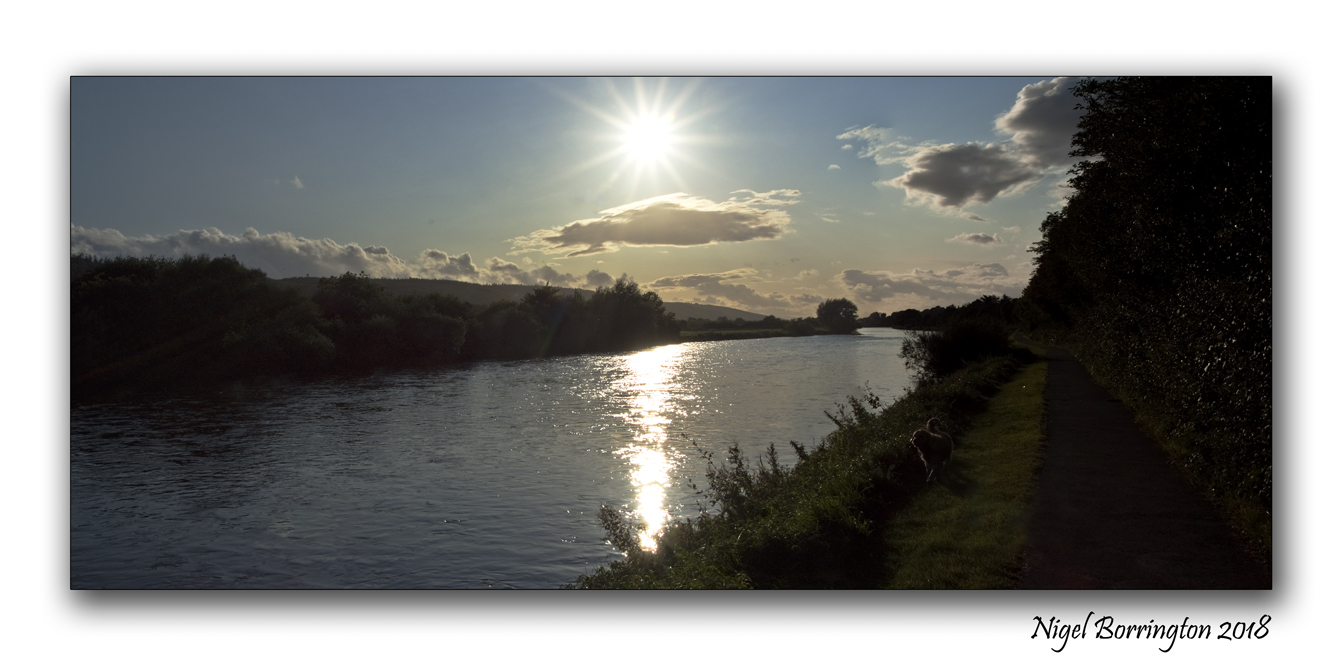
Oh! the hum and the toil of the river;
The ridge of the rapid sprays and skips:
Loud and low by the water’s lips,
Tearing the wet pines into strips,
The saw mill is moaning ever.
The little grey sparrow skips and calls
On the rocks in the rain of the water falls,
And the logs are adrift in the river.
Oh! restlessly whirls the river;
The rivulets run and the cataract drones:
The spiders are flitting over the stones:
Summer winds float and the cedar moans;
And the eddies gleam and quiver.
O sun; shine hot, shine long and abide
In the glory and power of the summer tide
On the swift longing face of the river.
River Of Life, The – Poem by Thomas Campbell
The more we live, more brief appear
Our life’s succeeding stages;
A day to childhood seems a year,
And years like passing ages.
The gladsome current of our youth,
Ere passion yet disorders,
Steals lingering like a river smooth
Along its grassy borders.
But as the careworn cheek grows wan,
And sorrow’s shafts fly thicker,
Ye stars, that measure life to man,
Why seem your courses quicker?
When joys have lost their bloom and breath,
And life itself is vapid,
Why, as we reach the Falls of Death
Feel we its tide more rapid?
It may be strange—yet who would change
Time’s course to slower speeding,
When one by one our friends have gone,
And left our bosoms bleeding?
Heaven gives our years of fading strength
Indemnifying fleetness;
And those of youth, a seeming length,
Proportion’d to their sweetness.
Thomas Campbell
Snow at coolagh old church, county Kilkenny art work, Acrylic on canvas ….

Snow at Coolagh old church
County Kilkenny
Acrylic on Canvas
Nigel Borrington
 Nigel Borrington
Summer Heat Wave, In pictures ….
Irish landscape photography
County Kilkenny
The heat wave of 2018
Nigel Borrington
Ireland’s is currently in heat wave conditions with no big change on the horizon, so today I headed out for a walk and started to capture our local landscape in these conditions. Here in County Kilkenny we have not been affected quite as badly yet as in county Dublin but as you can see from these images the hedgerows and fields are starting to turn to a light brown and some of the trees are only just hanging on.
Share this:
July 2, 2018 | Categories: Comment, Down on the farm, Gallery, images of ireland, Images of Summer, Irish Landscapes, Nature and Wildlife | Tags: Changes in the landscape, Heat wave, Ireland, Irish landscape photography, Nigel Borrington, summer, summer 2018, The Seasons | 3 Comments