Irish Landscape Images : lough callee, Carrauntoohil, Macgillycuddy’s Reeks, County Kerry
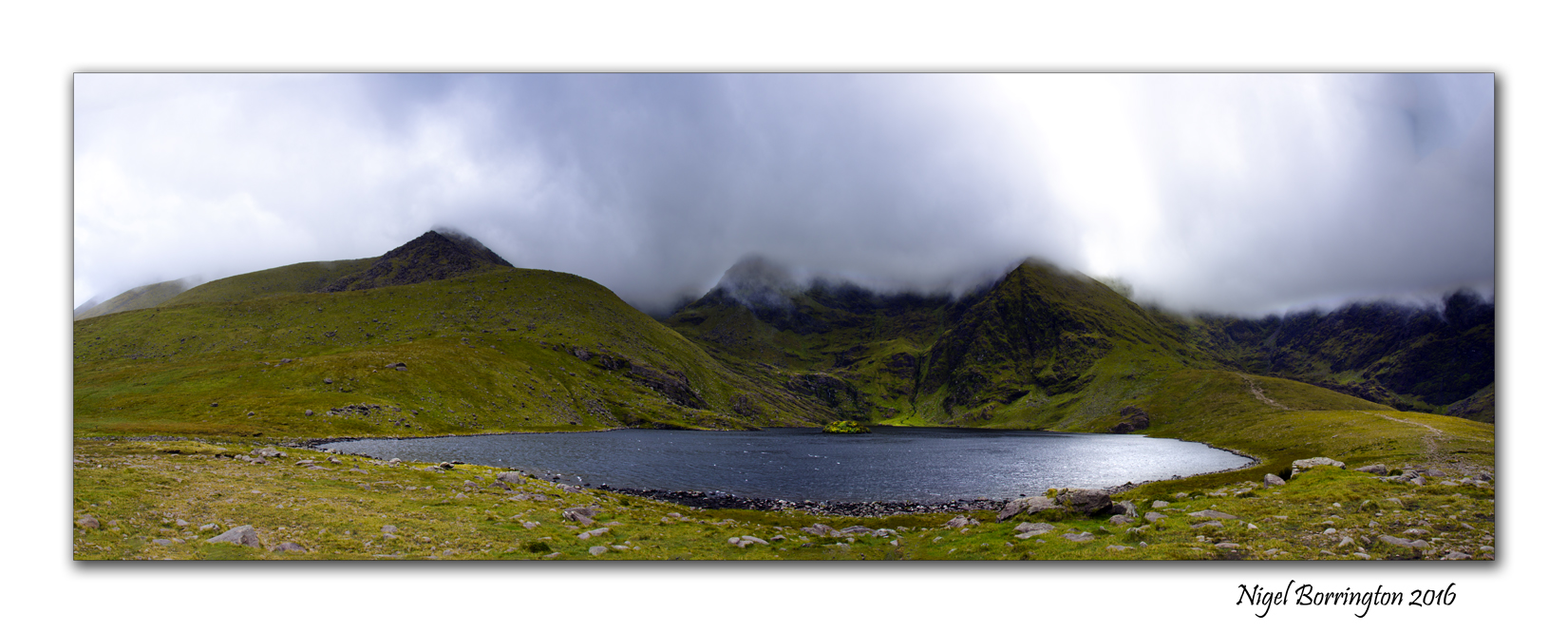
lough callee
carrauntoohil Mountain
Macgillycuddy’s Reeks range
county kerry
panorama By Nigel Borrington
Carrauntoohil (/ˌkærənˈtuːl/, Irish: Corrán Tuathail)
The highest peak on the island of Ireland. Located in County Kerry, Ireland it is 1,038 metres (3,406 ft) high and is the central peak of the Macgillycuddy’s Reeks range. The ridge northward leads to Ireland’s second-highest peak, Beenkeragh (1,010 m), while the ridge westward leads to the third-highest peak, Caher (1,001 m). Carrauntoohil overlooks three bowl-shaped valleys, each with its own lakes. To the east is Hag’s Glen or Coomcallee (Com Caillí, “hollow of the Cailleach”), to the west is Coomloughra (Com Luachra, “hollow of the rushes”) and to the south is Curragh More (Currach Mór, “great marsh”).
The summit of Carrauntoohil
Carrauntoohil is classed as a Furth by the Scottish Mountaineering Club, i.e. a mountain greater than three thousand feet high that is outside (or furth of) Scotland, which is why it is sometimes referred to as one of the Irish Munros.
The Macgillycuddy’s Reeks also contains many loughs of which lough callee is just one, the image above was taken last week while approaching the devils ladder route up to carrauntoohil Mountain peek. The morning was misty yet lots of wonderful light was finding its way on the the green slopes and the deep water of the lough, the mountain top is some distance above this level and hidden in the mist ……
Solo images : Jameson Irish Whiskey , County Cork – The Mash
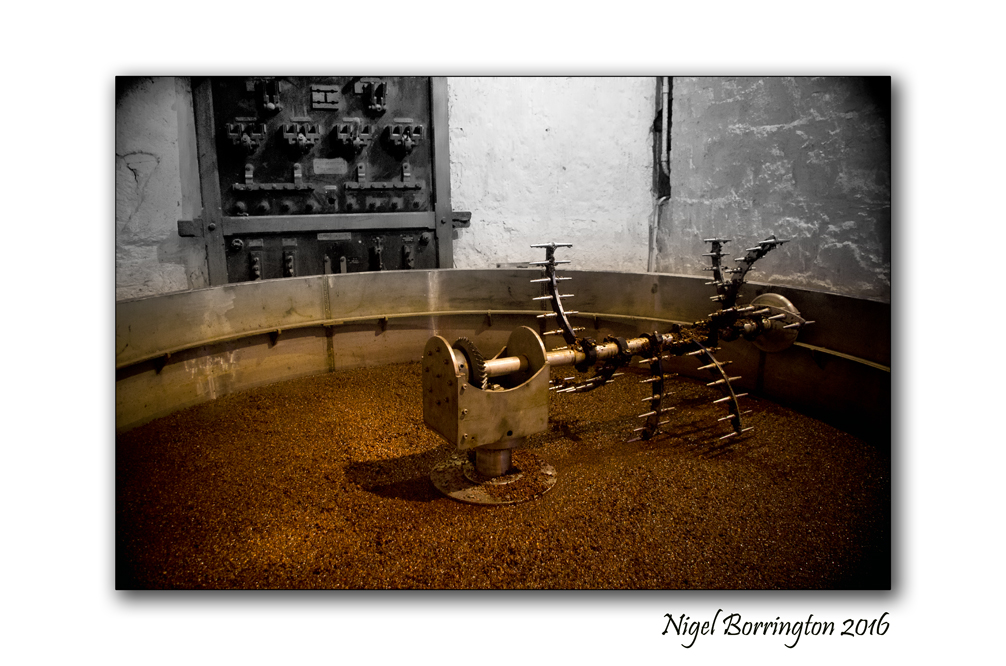
Jameson Irish Whiskey
The Mash
Nigel Borrington
The Whiskey mash
A mechanical metal stirring unit with a central bevel gear, installed to make stirring easier. That way the sugar could not only be extracted faster but also more efficiently. Less sugar was left in the husks of the grain, and the whisky became more affordable.
The mash has to be stirred for some time to extract the malt sugar from the grist. In earlier times, a lot of water used to evaporate during this process, and with the water steam the temperature fell constantly, which further impaired the extraction process. Only in the last century, when energy costs rose, nearly all mash tuns were equipped with a lid made of sheet metal (e.g. copper) in order to limit the loss of energy.
Night on the Mountain, By George Sterling
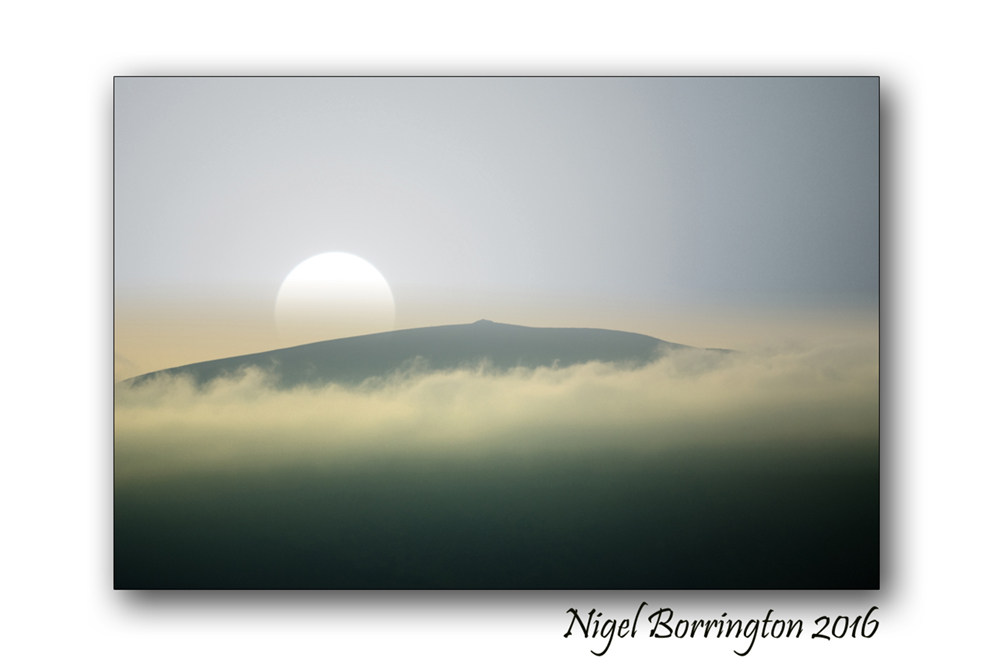
Night on the Mountain
By George Sterling
The fog has risen from the sea and crowned
The dark, untrodden summits of the coast,
Where roams a voice, in canyons uttermost,
From midnight waters vibrant and profound.
High on each granite altar dies the sound,
Deep as the trampling of an armored host,
Lone as the lamentation of a ghost,
Sad as the diapason of the drowned.
The mountain seems no more a soulless thing,
But rather as a shape of ancient fear,
In darkness and the winds of Chaos born
Amid the lordless heavens’ thundering–
A Presence crouched, enormous and austere,
Before whose feet the mighty waters mourn.
Monday Evening Poetry : Aparajhitha Sudarsan, That sunset…
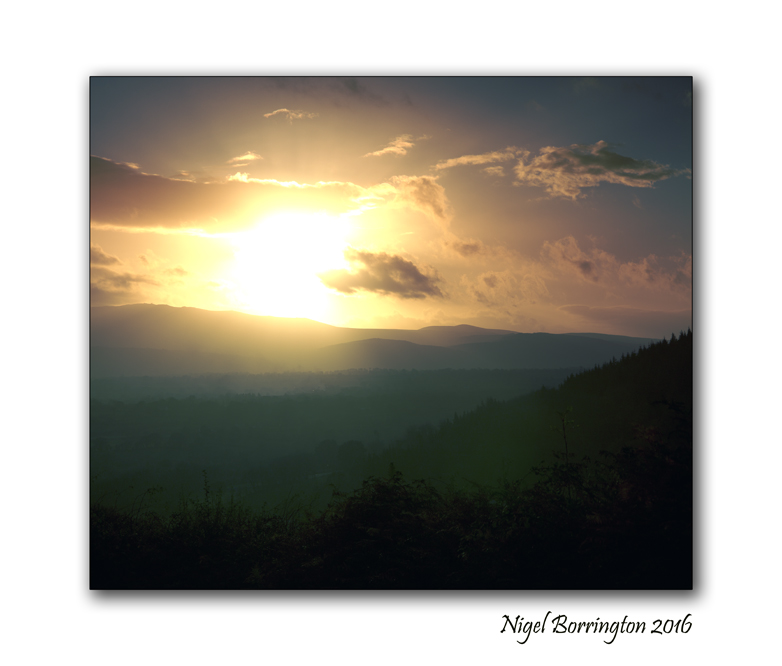
Kilkenny Sunset
Irish Landscapes
Nigel Borrington
That sunset…
A distant look in her eyes,
Stretching beyond the horizon.
A battle long fought,
In her dreams so surreal.
A thousand miles did she walk,
Before pausing to rest.
But the lights began to fade,
For it was time for her sunset.
The Presence of Trees – By Michael S. Glaser

The Presence of Trees
Nature Photography
Nigel Borrington
The Presence of Trees
by Michael S. Glaser
I have always felt the living presence
of trees
the forest that calls to me as deeply
as I breathe,
as though the woods were marrow of my bone
as though
I myself were a tree, a breathing, reaching
arc of the larger canopy
beside a brook bubbling to foam
like the one
deep in these woods,
that calls
that whispers home
Thank you !!!

Local Primroses
to say
Thank You !!
This Morning I changed the welcome text on my home page to ready as follows …..
“
Welcome
I started this blog in 2011 with the aim of sharing some of my images of many the locations here in Ireland where I live along with some great places visited on my travels. The images on this blog while I always hope are great to look at, are less about image perfection and more about sharing the moments and atmospheres in the locations I find myself in at the time I capture a scene, this is how I view my photography !. I very much hope you enjoy the posts you find here, since 2011 this blog has had well over 150,000 visits and 70,000 likes for it’s pages and I would like to say a big THANK YOU ! to everyone who has already visited this blog leaving a like or making a comment, both of which are very much appreciated. I look forward to many more posts and also reading all the great blog posts from so many great people in the WordPress community 🙂
”
Again thank you so much for visiting here and both clicking the like button and adding such great comments, I value them very much 🙂 🙂
The Sound of the Sea, By : Henry Wadsworth Longfellow

The sound of the sea
Nigel Borrington
The Sound of the Sea
By : Henry Wadsworth Longfellow
The sea awoke at midnight from its sleep,
And round the pebbly beaches far and wide
I heard the first wave of the rising tide
Rush onward with uninterrupted sweep;
A voice out of the silence of the deep,
A sound mysteriously multiplied
As of a cataract from the mountain’s side,
Or roar of winds upon a wooded steep.
So comes to us at times, from the unknown
And inaccessible solitudes of being,
The rushing of the sea-tides of the soul;
And inspirations, that we deem our own,
Are some divine foreshadowing and foreseeing
Of things beyond our reason or control.
Irish Landscape photography, a few miles from home

The Mountain of Slievenamon
County Tipperary
Ireland
Nigel Borrington
Spring in January ?

Spring In January ?
This Morning when I opened our blinds I noticed our first Flowers of Spring but In January ?
The weather this winter has been very wet and warm and many people have been saying they have spring flowers already, these are the first in our own garden.
A Poem for an Archer
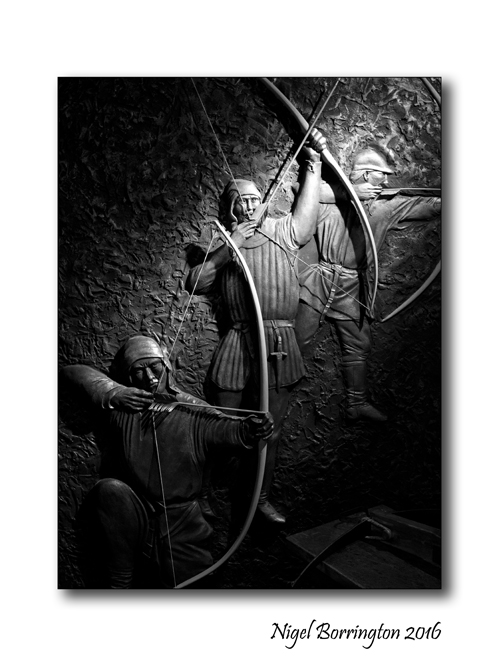
A target pinned and solid-seeming
but mine is all in motion
I draw the bowstring back
and farther back
Were I to let it fly would it sink deep?
But now my muscles shake
fingers torn against the string
velocity all poorly aimed
I cannot decipher which target is my own
Can I split this arrow with the force of my own wishes,
shower the sky with a quivering flight,
live out each peculiar path?
Or must I choose now
release my hold
wide-eyed or blindfolded
poised or confused
Images of Ireland, The Connemara Mountains Galway
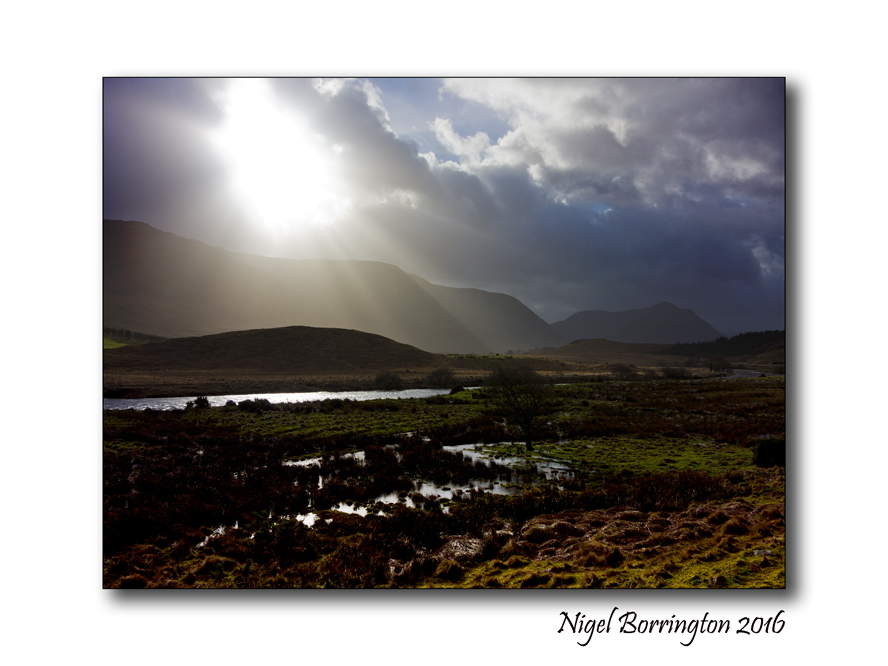
Connemara mountains
Irish Landscapes
Nigel Borrington
At the end of last week I visited the Connemara Mountains in County Galway, one of Ireland most beautiful landscape areas.
The weather was just amazing, changing every ten minutes with heavy showers moving very quickly across the mountains and lakes.
I just love this part of Ireland, the mountains here contain the following ranges ….
Mountains in County Galway
Twelve Bens
The Twelve Bens or Twelve Pins (Irish Na Beanna Beola) is a mountain range in Connemara. Dedicated hill climbers can hike all twelve in a single day. The twelve Bens are a group of small mountains that are the dominant feature of the Connemara countryside. They are easily accessible from the N59 or from the villages of Letterfrack or Recess.
Mweelrea Mountains
Mweelrea rising from the northern shores of Killary Harbour, is one of the finest mountain massifs in Ireland. It may be climbed from Delphi following the ridges to the fjord.
Maamturk Mountains
Mammturk Mountains are a picturesque mountain range in North Connemara. They are less well known than their more famous neighbours, the Twelve Bens on the other side of the Inagh Valley. They are not very big (max 667m) but a pleasant climb in fine weather, with superb views and no congestion.
Mount Gable
Mount Gable (1370 feet) is one of the most beautiful and scenic mountain walks in Ireland. It dominates the isthmus between Lough Corrib and Lough Mask and guards one of the major routes into Connemara from the east. The starting point for a walk is approximately 2km from the village of Clonbur.
Slieve Aughty Mountains
The Slieve Aughty Mountains are a mountain range spread over both County Galway and County Clare. The highest peak in the Slieve Aughty Mountains is Maghera in Clare which rises to 400m (1,314ft). The mountain range consists of two ridges divided by the Owendallaigh river which flows west into Lough Cutra.
Friday Poetry : The Colosseum, Brian Harris
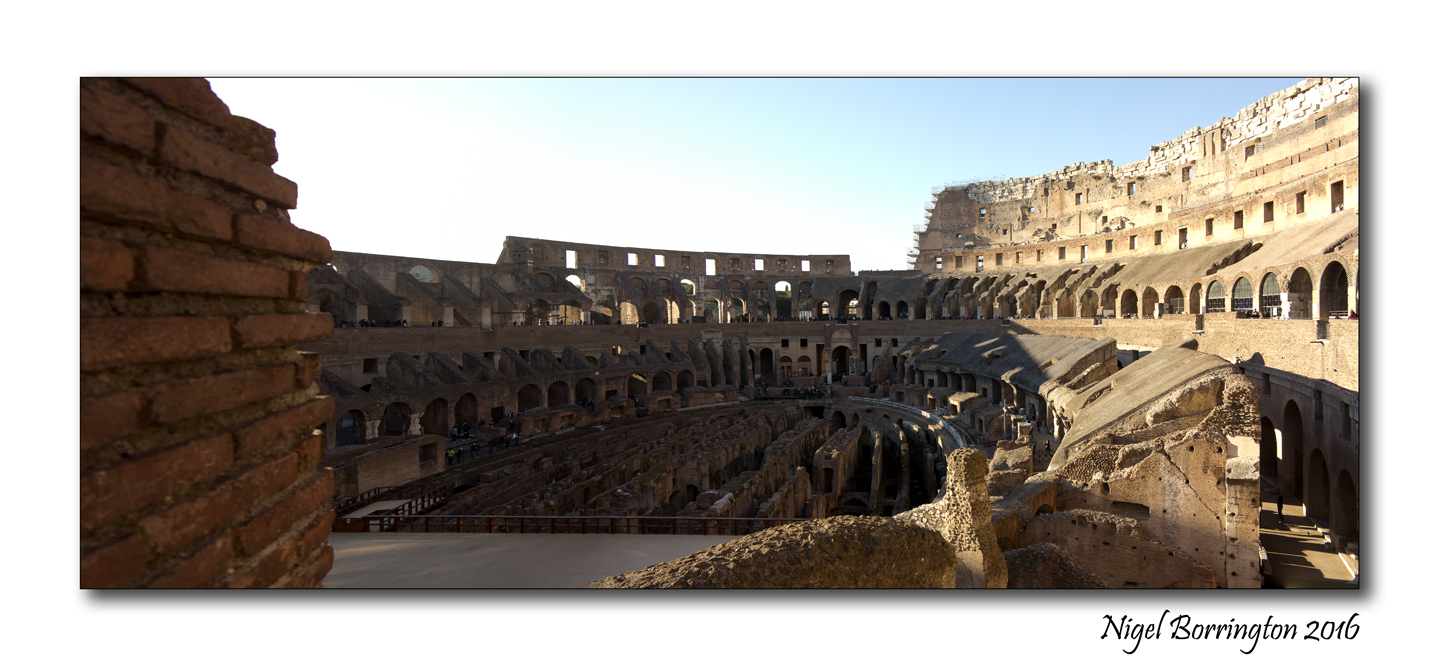
Ten million stones recall
Ten thousand Souls whose anguished cries
Of victory arose from this arena.
For such contempt that man had shown
He trod the path of pain
surmounting human weakness yet again.
He led the way through just such vales
And with two thousand years now gone
We dwell upon such Grace.
Brian Harris
Moments in Rome – Belief : Believe… – Poem by Steven Piz.

Moments in Rome
Belief
Nigel Borrington
Believe… – Poem by Steven Piz.
I believe
I believe in a lot
I believe in music
I believe in writing
I believe in listing
I believe in mankind
I believe in work
I believe in love
I believe in laughing
I believe in paradise
I believe in safety
I believe in light
I believe in entertainment
I believe in history
I believe in time
I believe in survival
I believe in change
I believe in luck
What do you believe in?
To tell the truth…
Are any of us promised tomorrow
Live your life as if the last.
Believe
Life along the river Tiber , Rome
Life along the river bank
River Tiber
Rome
Nigel Borrington
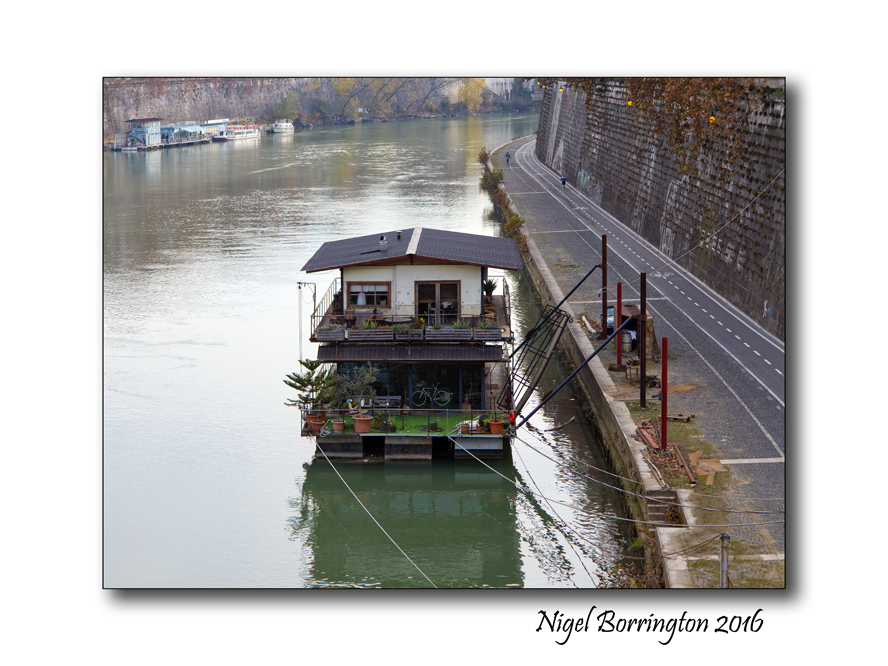
I have often wondered what life would be like living on a house boat ?
This House boat is located on the river Tiber in Rome and just by taking a quick look at the image, you can see exactly the life style that its owner much have.
For example you can see the way they get to work by bicycle using the cycle path that runs the full length of the river as it winds its way through the city.
Tower Houses of Medieval Kilkenny
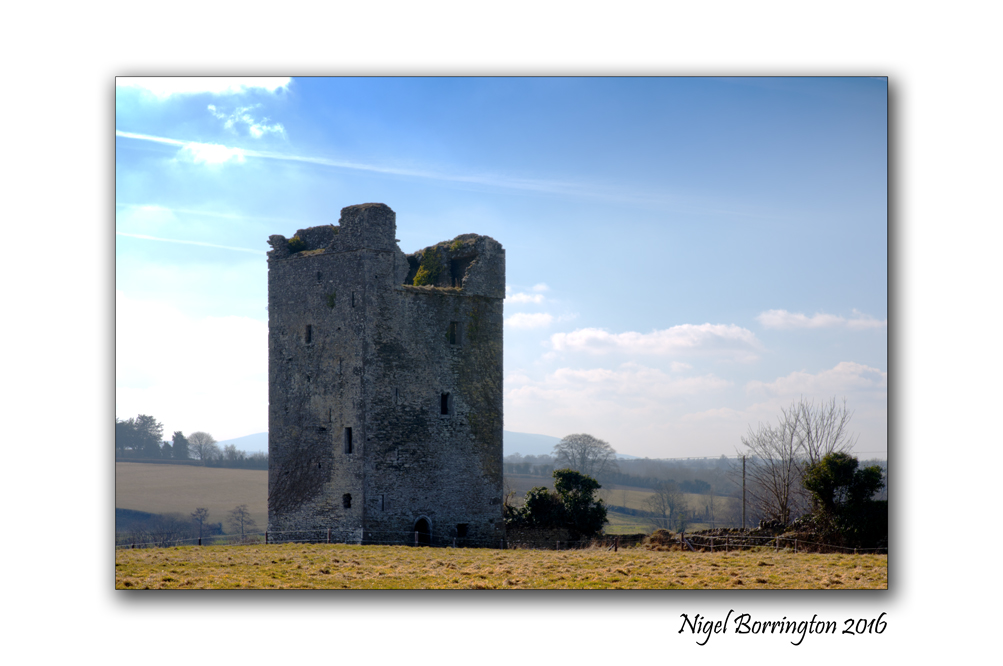
Tower House
Kells, County Kilkenny
Nigel Borrington
Tower Houses of Medieval Kilkenny, Ireland
The Landscape of County Kilkenny is full of history that covers many different era’s, including the Medieval period from around the 5th to the 15th century.
Just some of the reminders of this era are the great Tower Houses as detailed below.
A tower house is a fortified medieval residence of stone, usually four or more stories in height. Like most of the surviving monuments of our medieval past, the majority of Irish tower houses are in poor condition, with collapsed walls and ivy shrouded exteriors reflecting centuries of neglect. Yet these ruins, the remnants of a major medieval building industry, provide a valuable source of information on life in Ireland during the later Middle Ages. An increasing number are being restored through both private and state initiatives, while there has also been a marked upsurge in academic interest in recent years.
The buildings were regarded as castles by their occupants. This classification continues today and tower houses are regarded as a species within the castle genus. Their evident defensive strength should not, however, overshadow their residential nature, for tower houses were primarily the defended homes of a wealthy landowning class and were erected by both Anglo-Irish and Gaelic families during the period from circa 1400 to circa 1650.
Ref : Tower Houses
The Bright Field’ by R. S. Thomas

The Bright Field’ by R. S. Thomas
Landscape Photography : Nigel Borrington
I have seen the sun break through
to illuminate a small field
for a while, and gone my way
and forgotten it. But that was the
pearl of great price, the one field that had
treasure in it. I realise now
that I must give all that I have
to possess it. Life is not hurrying
on to a receding future, nor hankering after
an imagined past. It is the turning
aside like Moses to the miracle
of the lit bush, to a brightness
that seemed as transitory as your youth
once, but is the eternity that awaits you.
Reviewed by Emily Ardag
I hope you all enjoy this beautiful poem by Welsh poet, R. S. Thomas. Thomas was an anglican priest, as well as a poet, but I think this piece is full of profound wisdom for everyone, regardless of creed.
The Bright Field speaks about those shining moments in life — moments of grace, beauty, inspiration, epiphany — where we fleetingly encounter the divine or feel a deep connection to the universe. This image of the bright field evokes for me various ideas: the moment you see your child’s face for the first time, the moment you realise you’ve fallen in love, or when you read and understand some complicated scientific theory about the universe, become transfixed by Shakespeare or an incredible piece of music… or, of course, when you pray or meditate, and feel a connection to the divine.
The poet confides that he has often seen the sun “illuminate a small field” for a moment, and continued on his way and “forgotten it”. But, says Thomas, he knows that that field was “the pearl of great price”; that moment was something rare and beautiful, to hold on to and spend your life searching for. He is admitting here that he has experienced moments of profound connection to God, but that he has proceeded to move on, without dwelling on it. However, he has now come to realise that he must “give all that I have/ To possess” that moment — that “bright field” — again.
Another quality of these “bright” moments becomes clear as we enter the second stanza; the poem says that life is not “hurrying on/ to a receding future” or “hankering after/ and imagined past”. These lines deliver to me the notion that these bright moments of grace are in fact moments where we are intensely present. These are the moments we are most alive, and when we feel most connected to life, the universe, and/or God. This is as relevant for prayer and meditation as it is for all the other instances I have mentioned where one might experience a moment of exhilarating and glorious connection to the universe.
The poem ends with the beautiful image of the burning bush from the story of Moses. Thomas tells us that life — and these moments — is about “turning/ like Moses to the miracle/ of the lit bush”. Again, there is a real sense of intense presence in this image. I think the way the bright light — which is God, and grace — is described in the final lines is just exquisite: though it had once seemed “as transitory as your youth”, it is in fact “the eternity that awaits you.”
Monday Morning on the lake

Monday Morning on the lake
Landscape Photography : Nigel Borrington
This photo was taken one Monday morning at a small bay on lake Windermere in the lake district national park, Windermere is some 18km long and at it widest some 2km wide. Its one of the most beautiful places I know and if you can spend sometime here at Windermere , you will find many wonderful locations just to sit and read and study the wildlife and nature it offers.
Even just to sit and look at these two boats moving slowly in the water is something I will always remember.
So then lake Windermere and two boats and one clear relaxed mind!
5 images for the week – A day Sea fishing ……
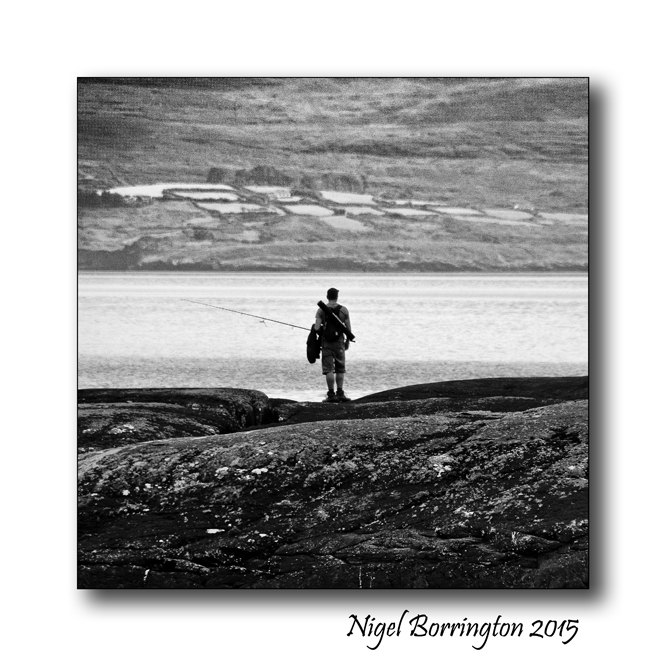
Fisherman
Early morning, smelling the ocean breeze.
Having a sharp eye for what is beneath.
Throws the empty line straight out to sea,
pulling it back up, his fish is finally found.
5 images for the week – Autumn Equinox 2015
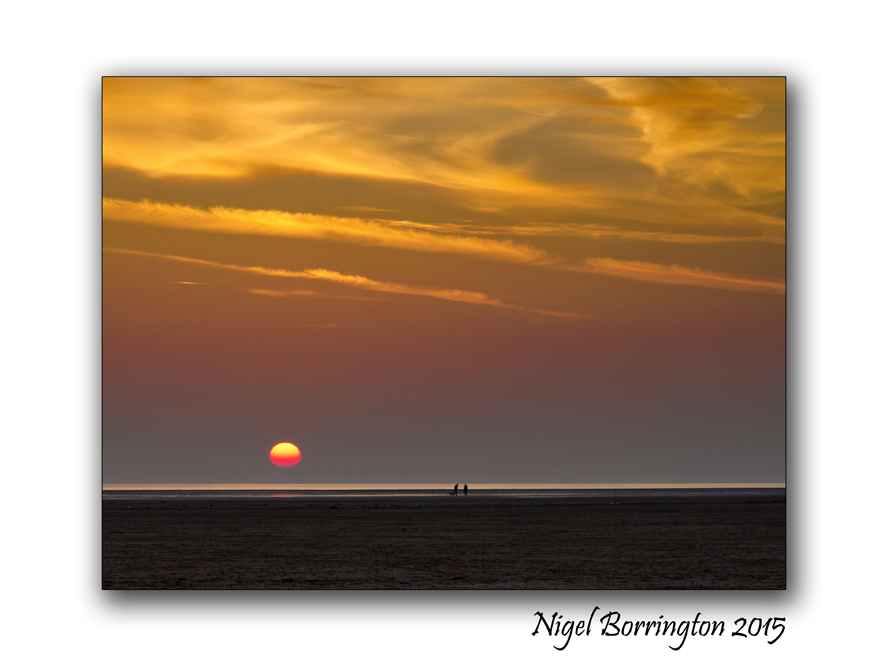
Autumn Equinox 2015
Landscape photography : Nigel Borrington
Sun Crosses Celestial Equator
The September equinox occurs the moment the Sun crosses the celestial equator – the imaginary line in the sky above the Earth’s Equator – from north to south. This happens either on September 22, 23, or 24 every year.
The Axial Tilt
The Earth’s axis is always tilted at an angle of about 23.5° in relation to the ecliptic, the imaginary plane created by the Earth’s path around the Sun. On any other day of the year, either the southern hemisphere or the Northern Hemisphere tilts a little towards the Sun. But on the two equinoxes, the tilt of the Earth’s axis is perpendicular to the Sun’s rays, like the illustration shows.
Why “Equinox”?
On the equinox, night and day are nearly exactly the same length – 12 hours – all over the world. This is the reason it’s called an “equinox”, derived from Latin, meaning “equal night”. However, even if this is widely accepted, it isn’t entirely true. In reality equinoxes don’t have exactly 12 hours of daylight
Customs around the September equinox
The September equinox coincides with many cultural events, observances and customs. It’s also called the “autumnal (fall) equinox” in the northern hemisphere and the “spring equinox” in the Southern Hemisphere.
September Equinox Customs
Ancient Greece
In many cultures, the September equinox is a sign of fall (autumn) in the northern hemisphere. In Greek mythology fall is associated with when the goddess Persephone returns to the underworld to be with her husband Hades. It was supposedly a good time to enact rituals for protection and security as well as reflect on successes or failures from the previous months.
Australia
Aboriginal Australians have, for a long time, had a good knowledge of astronomy and the seasons. Events like the September equinox, which is during the spring in Australia, played a major role in oral traditions in Indigenous Australian culture.
In China
The Mid-Autumn Festival, also known as the Moon Festival, is celebrated around the time of the September equinox. It celebrates the abundance of the summer’s harvest and one of the main foods is the mooncake filled with lotus, sesame seeds, a duck egg or dried fruit.
Japan
Higan, or Higan-e, is a week of Buddhist services observed in Japan during both the September and March equinoxes. Both equinoxes have been national holidays since the Meiji period (1868-1912). Higan means the “other shore” and refers to the spirits of the dead reaching Nirvana. It is a time to remember the dead by visiting, cleaning and decorating their graves.
Pagan celebration: Mabon
On the autumnal equinox, many pagans celebrate Mabon as one of the eight Sabbats (a celebration based on the cycles of the sun). Mabon celebrates the second harvest and the start of winter preparations. It is the time to respect the impending dark while giving thanks to the sunlight.
Christianity
The Christian church replaced many early Pagan equinox celebrations with Christianized observances. For example, Michaelmas (also known as the Feast of Michael and All Angels), on September 29, fell near the September equinox.
5 Images for the week – St Anne’s Pier

St Anne’s Pier
St Anne’s-n-the-Sea, Lancashire
Nigel Borrington
St Anne’s Pier is a Victorian era pleasure pier in the English seaside resort of St Anne’s-on-the-Sea, Lancashire. It lies on the estuary of the River Ribble. The pier, designed by A. Dowson, was completed in 1885 and was one of the earliest public buildings in St Anne’s, a 19th-century planned town.
The pier was originally intended to be a sedate promenading venue for the resort’s visitors, but attractions were later added. Changes made to the estuary channels to improve access to Preston Dock left the pier on dry land and ended its steamer services to Blackpool and Liverpool.
5 Images for the week – Red Sky in the Morning

Coulagh Bay
Eyeries, Beara, Co. Cork, Ireland
Nigel Borrington
7:30am sunrise over Coulagh Bay, Eyeries, Beara, Co. Cork, Ireland – Red Sky in the Morning
Gort, Eyeries, Beara peninsula, west cork, Where the sky meets the sea

Where the sky meets the sea
I heard you contemplating so far beyond
Just thinking about it all
And it seems to scare you more than
I ever would before
And I’m a little anxious
But I don’t know why
Trying to find me an answer that
Fits inside my head
Trying to wish away the subtleties
Wishing you would stay in bed
And I’m a little cautious
But I don’t know why
Where the sky meets the sea
We’ll be different just you see
Broken lines can only breakthrough
Heaven and shades of blue
I stumble when you’re shaking I break when you’re
Breaking away from it all
I hide when you’re hiding, and I can’t
Spend all my time holding on
And I’m a little nervous
But I don’t know why
Where the sky meets the sea
We’ll be different just you see
Broken lines can only breakthrough
Heaven and shades of blue
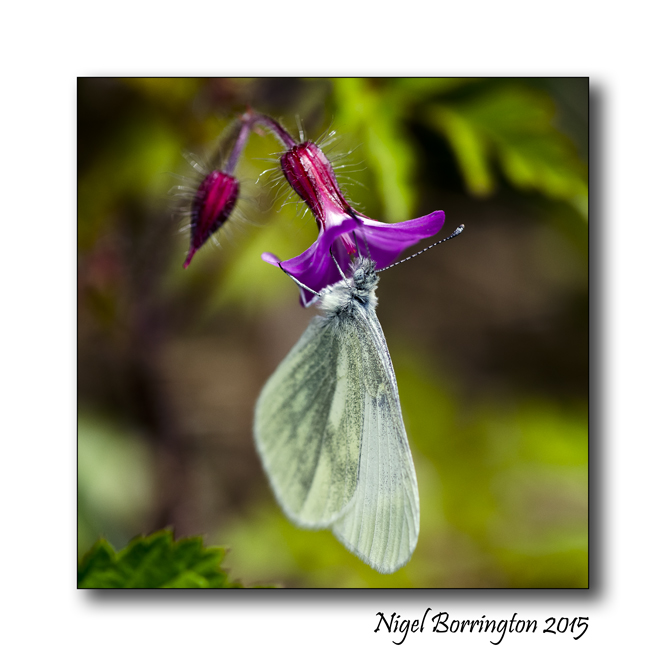
 Nigel Borrington
Reflections in the mud , Kilkenny landscape images
Reflections in the mud
Landscape images from county Kilkenny
Nigel Borrington
I often find that when I am out walking, it is the most unexpected things That capture my attention and I just have to capture with my camera. I am never sure if anyone else would even find the same things the slightest bit interesting ?
This Morning there was a thick fog sitting on all our local fields, it had rained none stop for the three days before hand and the early morning sun was just about able to break through the mist. I was walking past the open gate of a field and noticed the sun reflecting into the muddy puddles created by the farmer tractor, I just had to capture its amazing light !!
ne
Share this:
April 12, 2016 | Categories: Comment, Gallery, Landscape, Solo images | Tags: county Kilkenny, Kilkenny, Landscape Photography, Nigel Borrington, Reflections in the mud, Reflections of the sun, weather photography | 2 Comments