Culzean Castle, Maybole, Carrick, Ayrshire, Scotland

Culzean Castle, Ayrshire, Scotland
Nigel Borrington
It was back in 2014 that I last visited Culzean Castle on the west coast of Scotland, so I am planning another visit as soon as I can, Culzean Castle is in Ayrshire and just has to be one of the most treasured and interesting castles in Scotland.
Robert Adam was the architect and he designed the castles structure on a basic L shaped design. The structure is a fine country house and when completed it was the seat of the 10th of Cassilis ( David Kennedy ) , earldom.
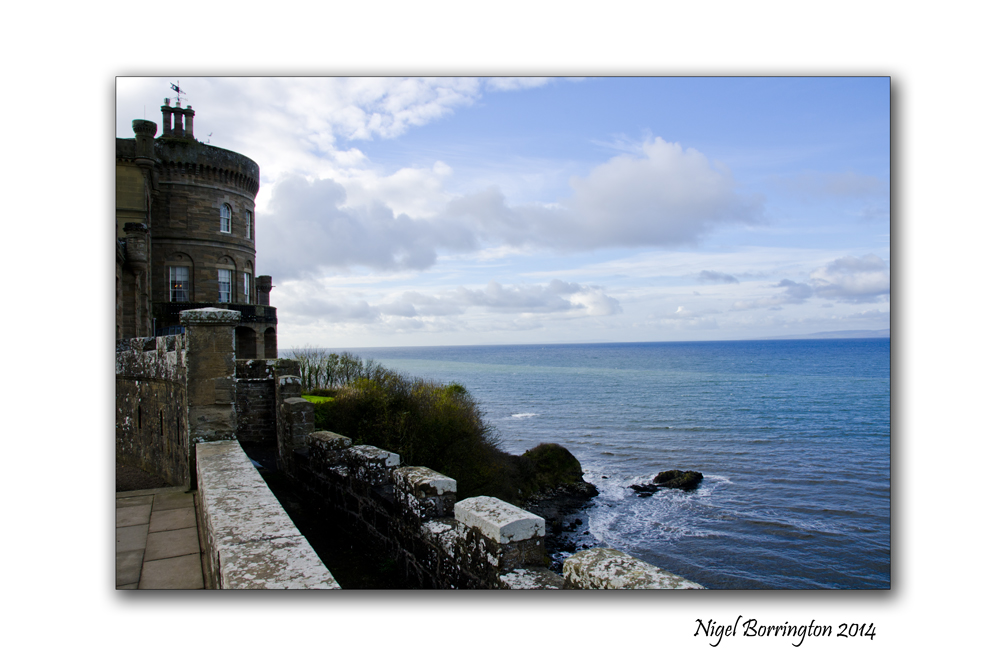
The castle was built in stages between 1777 and 1792. It incorporates a large drum shaped tower, circular inside (which overlooks the sea), a grand oval staircase and a suite of well-appointed apartments.
In 1945, the Kennedy family gave the castle and its grounds to the National Trust for Scotland (thus avoiding inheritance tax). In doing so, they stipulated that the apartment at the top of the castle be given to General of the Army Dwight D. Eisenhower in recognition of his role as Supreme Commander of the Allied Forces in Europe during the Second World War. The General first visited Culzean Castle in 1946 and stayed there four times, including once while President of the United States. An Eisenhower exhibition occupies one of the rooms, with mementoes of his lifetime.
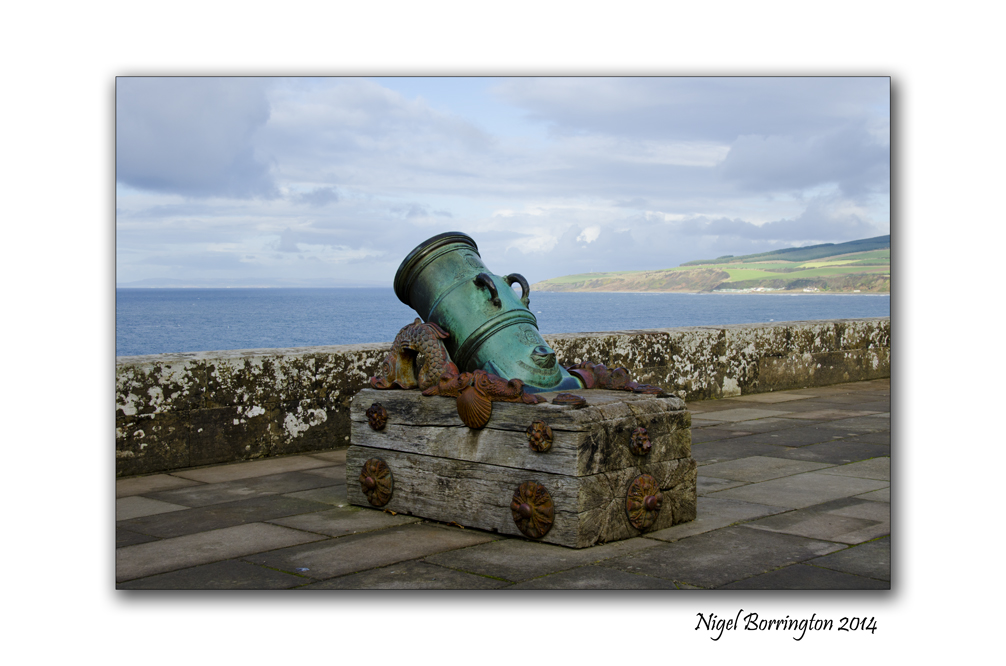
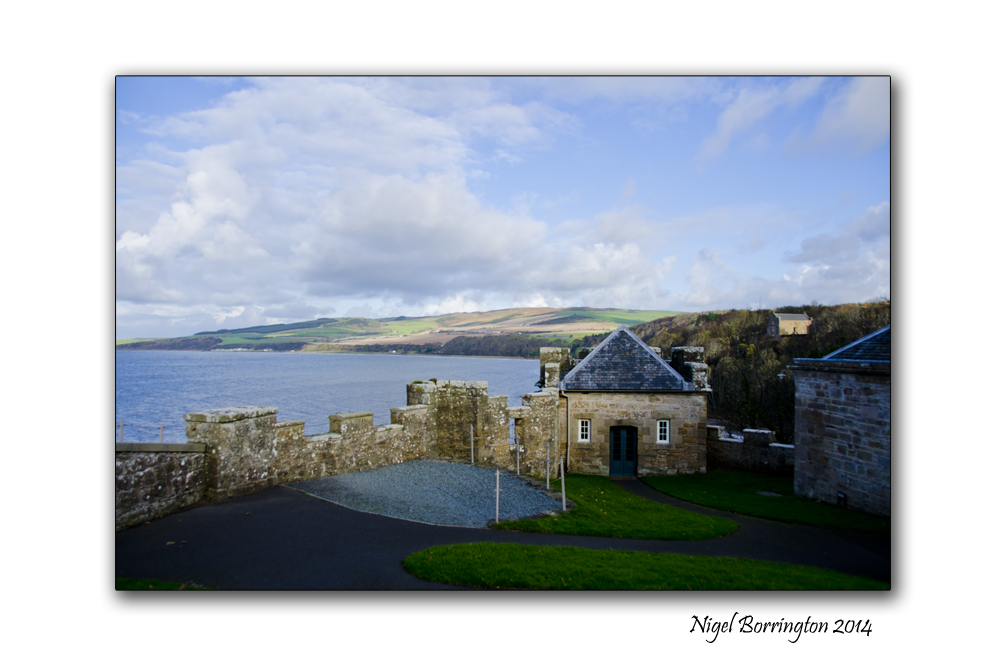
During my own days visit I took many images here as both the grounds and castle itself offer some wonderful photography, including a walked garden, cannon’s, walls, see cliffs and court yards.
If you are visiting Ayrshire , this castle has to be high on your list for a visit.
Culzean Castle , Gallery




Folktales and Fables : The North Wind and the Sun
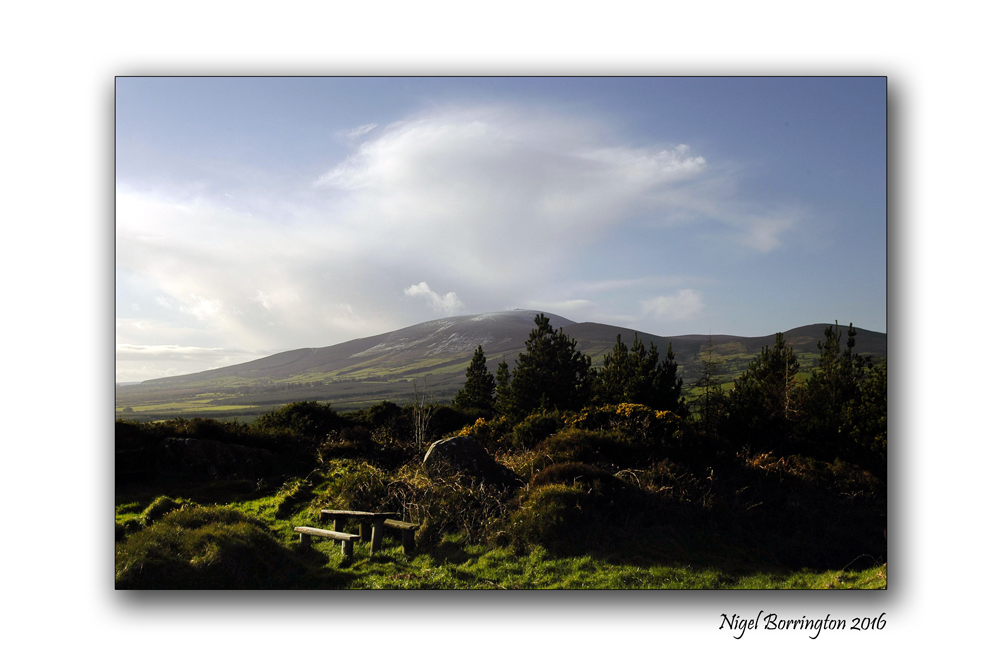
The North wind and the Sun
Irish Landscape photography : Nigel Borrington
A simple old story this one but filled with such a simple truth.
Folktales and Fables : The North Wind and the Sun
The North Wind and the Sun were disputing which was the stronger, when a traveler came along wrapped in a warm cloak. They agreed that the one who first succeeded in making the traveler take his cloak off should be considered stronger than the other.Then the North Wind blew as hard as he could, but the more he blew the more closely did the traveler fold his cloak around him; and at last the North Wind gave up the attempt. Then the Sun shined out warmly, and immediately the traveler took off his cloak.
And so the North Wind was obliged to confess that the Sun was the stronger of the two.
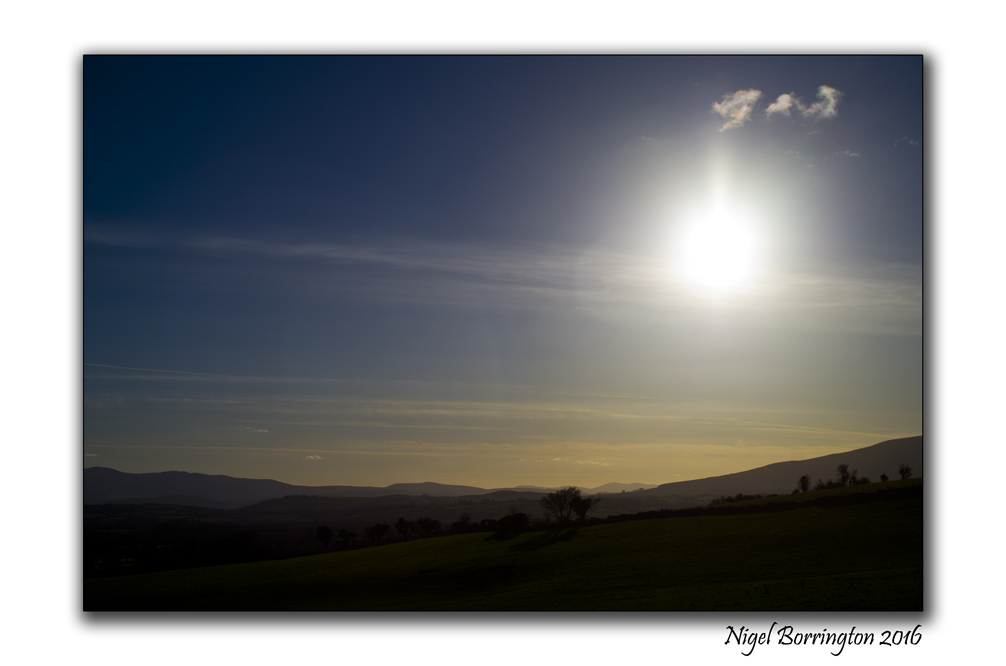
Irish Landscapes
Early Springtime
Kilkenny
Nigel Borrington
The story concerns a competition between the North wind and the Sun to decide which is the stronger of the two. The challenge was to make a passing traveler remove his cloak. However hard the North Wind blew, the traveler only wrapped his cloak tighter to keep warm, but when the Sun shone, the traveler was overcome with heat and soon took his cloak off.
The fable was well known in Ancient Greece; Athenaeus recorded that Hieronymus of Rhodes, in his Historical Notes, quotes an epigram of Sophocles against Euripides which parodies the story of Helios and Boreas. It relates how Sophocles had his cloak stolen by a boy to whom he had made love. Euripides joked that he had had that boy too and it did not cost him anything. Sophocles’ reply satirises the adulteries of Euripides: “It was the Sun, and not a boy, whose heat stripped me naked; as for you, Euripides, when you were kissing someone else’s wife the North Wind screwed you. You are unwise, you who sow in another’s field, to accuse Eros of being a snatch-thief.”
The Latin version of the fable first appears centuries later in Avianus as De Vento et Sole (Of the wind and the sun, Fable 4), early versions in English and Johann Gottfried Herder’s poetic version in German (Wind und Sonne) also give it as such. It is only in mid-Victorian times that the title “The North Wind and the Sun” begins to be used. In fact the Avianus poem refers to the characters as Boreas and Phoebus, the gods of the north wind and the sun, and it is under the title Phébus et Borée that it appears in La Fontaine’s Fables (VI.3).
Victorian versions give the moral as “Persuasion is better than force”, but it has been put in different ways at other times. In the Barlow edition of 1667, Aphra Behn teaches the Stoic lesson that there should be moderation in everything: “In every passion moderation choose,/For all extremes do bad effects produce”, while La Fontaine’s conclusion is that “Gentleness does more than violence” (Fables VI.3). In the 18th century, Herder comes to the theological conclusion that, while superior force leaves us cold, the warmth of Christ’s love dispels it, and Walter Crane’s limerick version of 1887 gives a psychological interpretation, “True strength is not bluster”. Most of these examples draw a moral lesson, but La Fontaine hints at the political application that is present also in Avianus’ conclusion: “They cannot win who start with threats”. There is evidence that this reading has had an explicit influence on the diplomacy of modern times: in South Korea’s Sunshine Policy, for instance, or Japanese relations with the military regime in Burma.
The First Morning Of April 2016

The first Morning of April 2016
River Suir
County Tipperary
Nigel Borrington
The first Morning of April 2016 has started here in Ireland with our usual spring rains
So time for a small poem to welcome it home once again ……
April rain
On your morning walk
let the rain kiss you on your face
let the rain beat upon your head with silver liquid drops,
Let the rain sing you a new song
just like the returning birds of springtime,
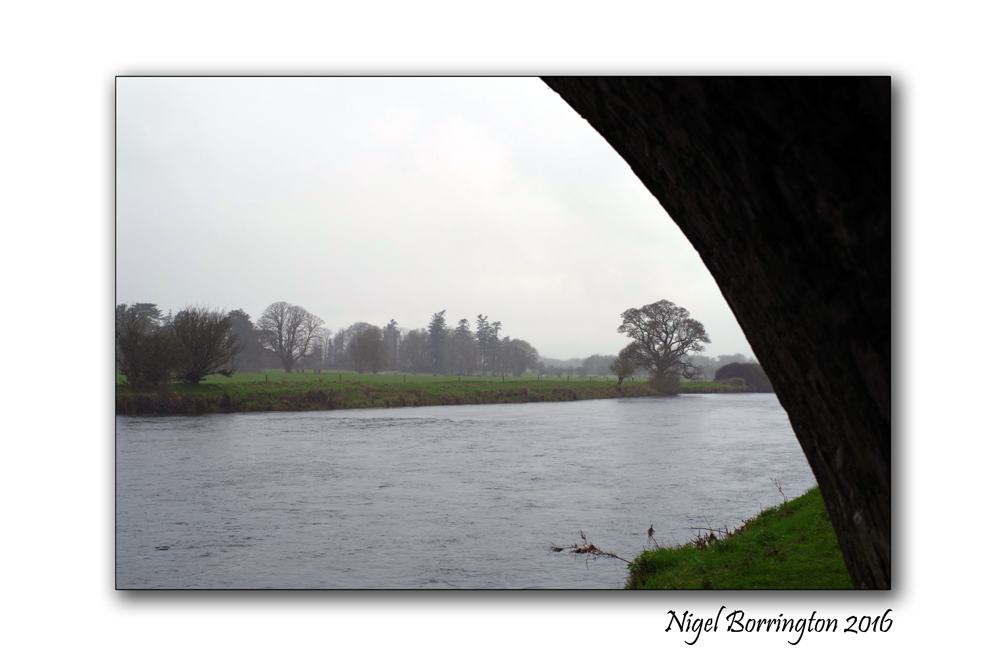
On this morning walk along the rivers bank
the rain makes waves upon the rivers flow
the rain dances on its surface,
If there are any Gods then they are in the rain
this rain that brings new life
a fresh start
this April rain.
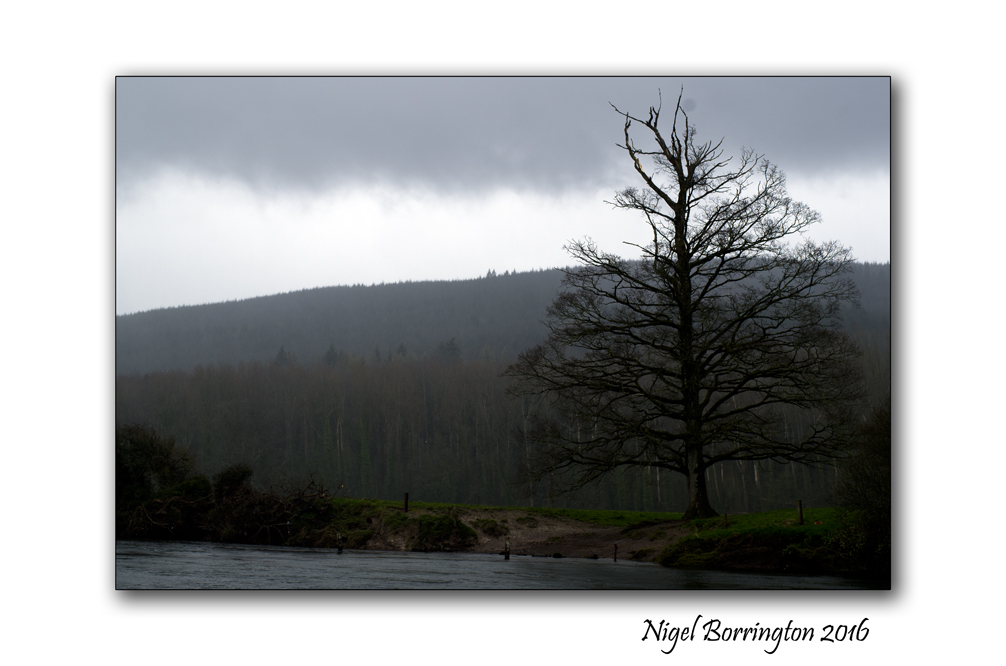
The Last Afternoon of March

That Last day of March
Irish Landscapes
Nigel Borrington
The Last afternoon of March 2016
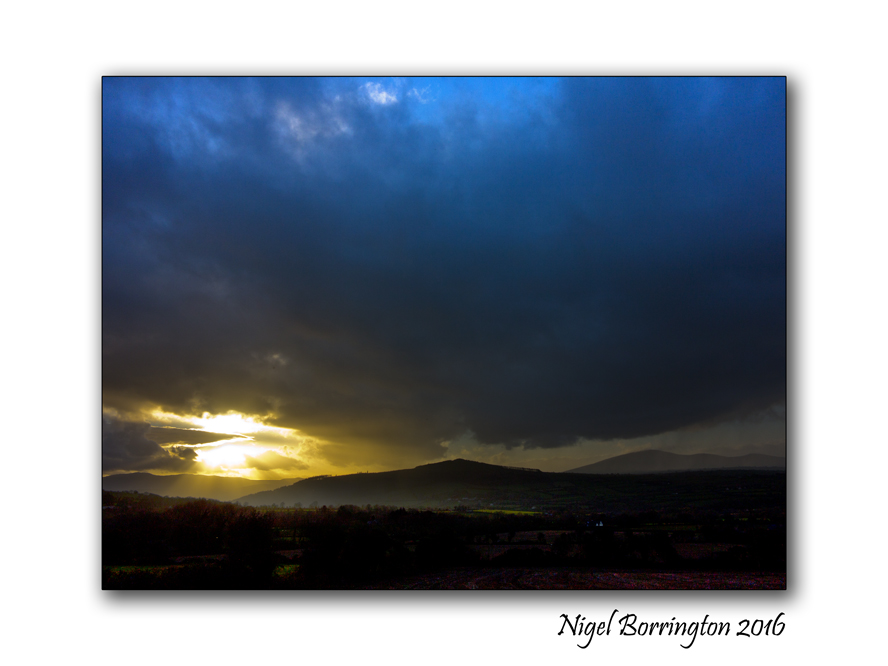
This afternoon is bright and sunny
between the mountain clouds,
Springtime is in the air,
The weather is mild on this late March afternoon,
the breath of April is rising fast,
I am alone on the quiet mountain top
looking down on an old untried illusion
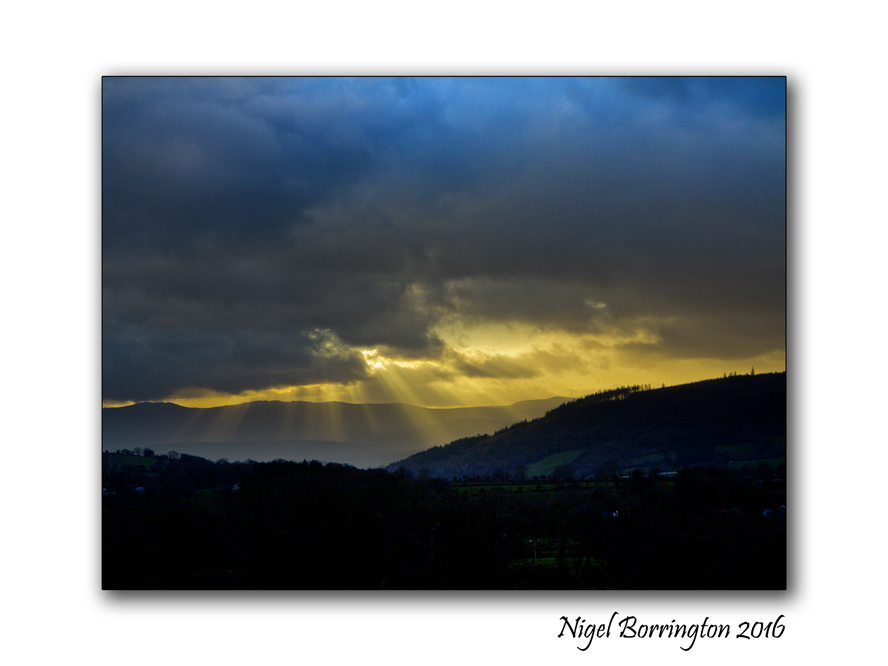
Some shadows sit on the green landscape below
memory’s rise from their sleep,
The crows fly above while others rest
on the stone walls of this mountain side,
In the air as hunting birds call
the fast hover of the kestrels wings.
Easter (Ēostre, Ostara ) time on the – Hill of Tara

Easter in Ireland is clearly these days viewed as a religious time in the sense of modern Christianity, however Easter or Ēostre, as a festival has been celebrated for many thousands of years before our current state accepted beliefs….
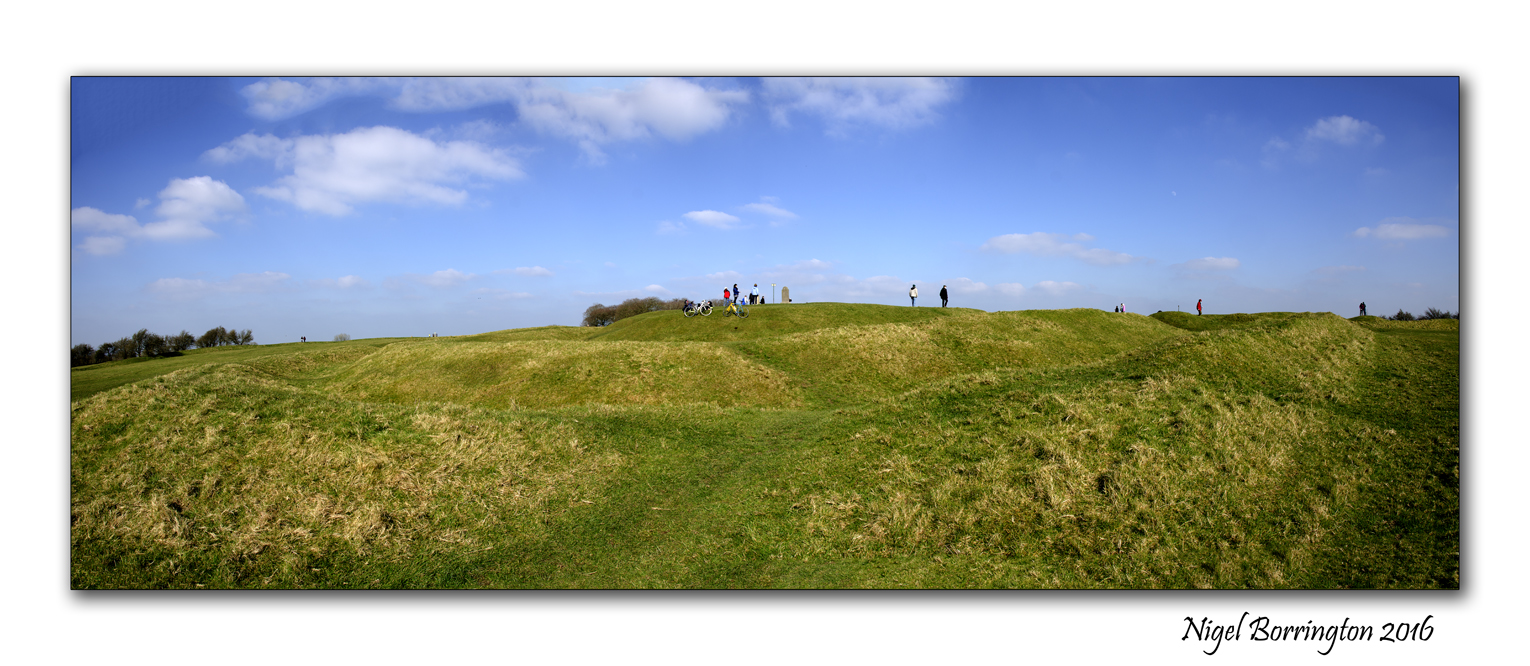
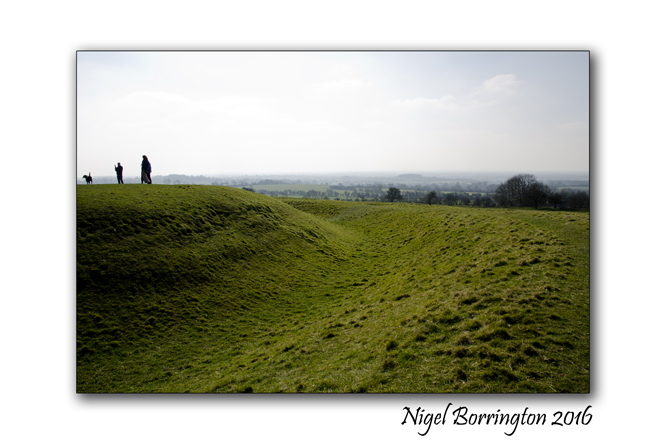
During last weekend we visited the hill of Tara one of Europe’s and Ireland’s oldest pagan monuments, It was a great time of the year to visit as the air was full of springtime with a feeling that summer was only just around the corner,warm days and long evenings. This is the exact feeling that surrounds the beliefs of the people who made this place so Sacred to their Pagan beliefs in the elements of nature and the seasons. I am never sure if these belief’s can fully be called a religion in modern terms, feeling that they were more a philosophy towards the world that they lived in and cared for very much!
here is a little about the long history of the hill of Tara:
Teamhair is the ancient name given the Hill of Tara. One of the most religious and revered sites in all of Ireland, it was from this hill that the Ard Rí, the High Kings of Ireland, ruled the land. The place was sometimes called Druim Caín (the beautiful ridge) or Druim na Descan (the ridge of the outlook). When walking the path that leads to the top of the hill today, one can easily appreciate why. The long gradual slope eventually flattens at the top for an amazing view of the broad plains in the Boyne and Blackwater valleys below. All that remains of the complex is a series of grass-covered mounds and earthworks that say little about the 5,000 years of habitation this hill has seen.
Most historians, including Biblical scholars, agree that Easter was originally a pagan festival. According to the New Unger’s Bible Dictionary says: “The word Easter is of Saxon origin, Eastra, the goddess of spring, in whose honour sacrifices were offered about Passover time each year. By the eighth century Anglo–Saxons had adopted the name to designate the celebration of Christ’s resurrection.” However, even among those who maintain that Easter has pagan roots, there is some disagreement over which pagan tradition the festival emerged from. Here we will explore some of those perspectives.
Resurrection as a symbol of rebirth
One theory that has been put forward is that the Easter story of crucifixion and resurrection is symbolic of rebirth and renewal and retells the cycle of the seasons, the death and return of the sun.
Hill of Tara Gallery
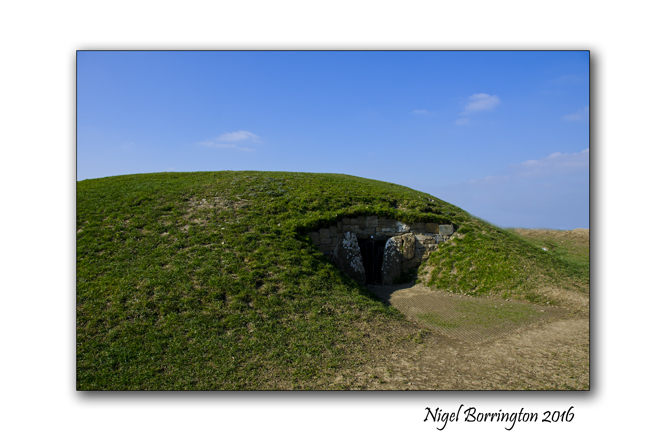


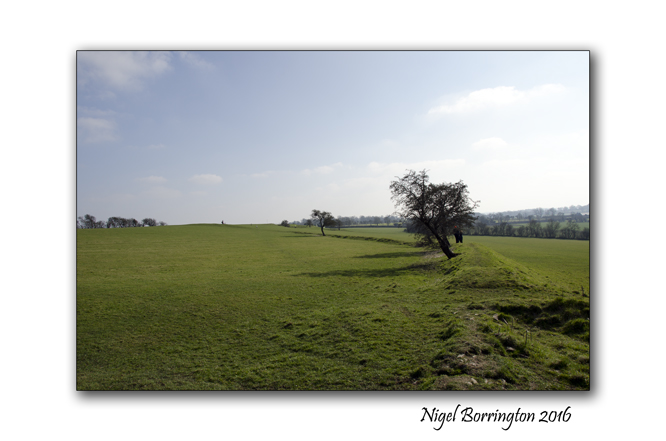

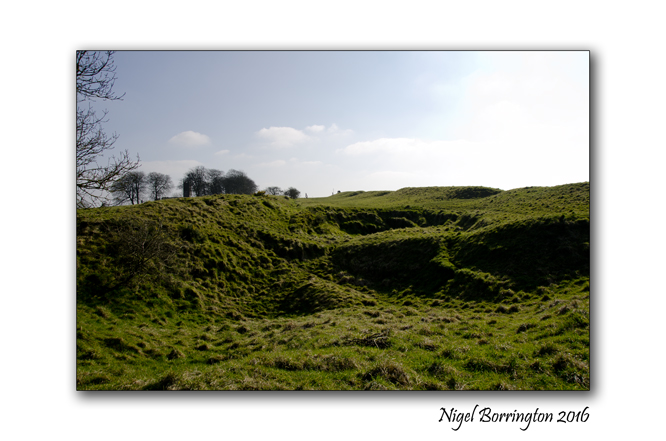
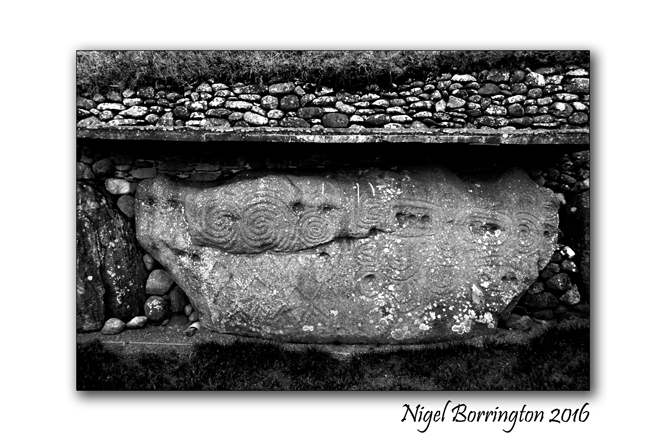
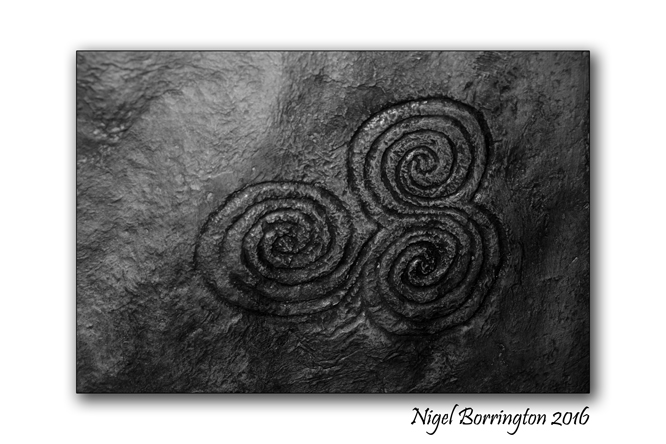
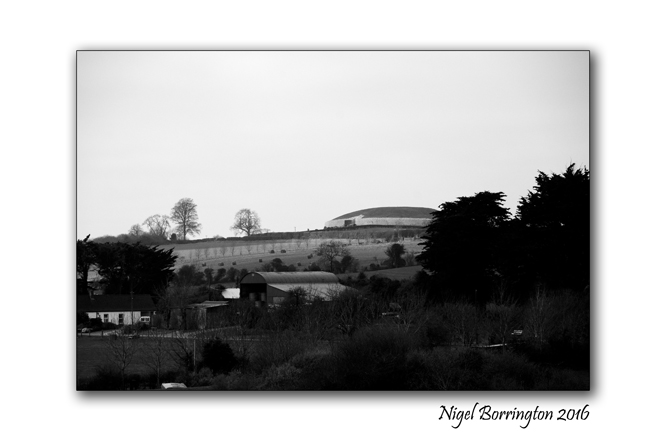
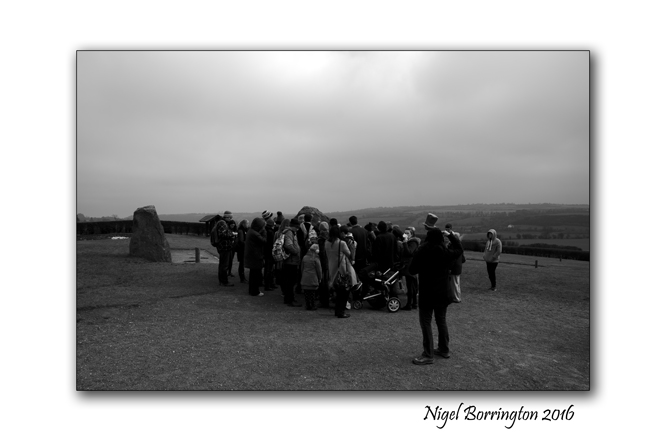
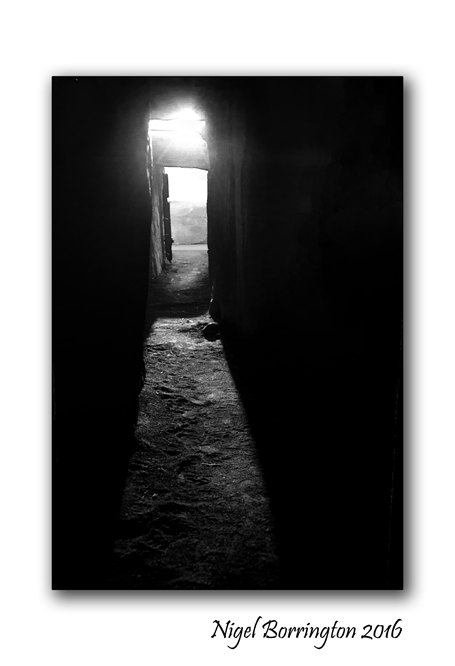
A weekend Celebrating the Spring Equinox 2016 at Newgrange, Boyne Valley, County Meath, Ireland.
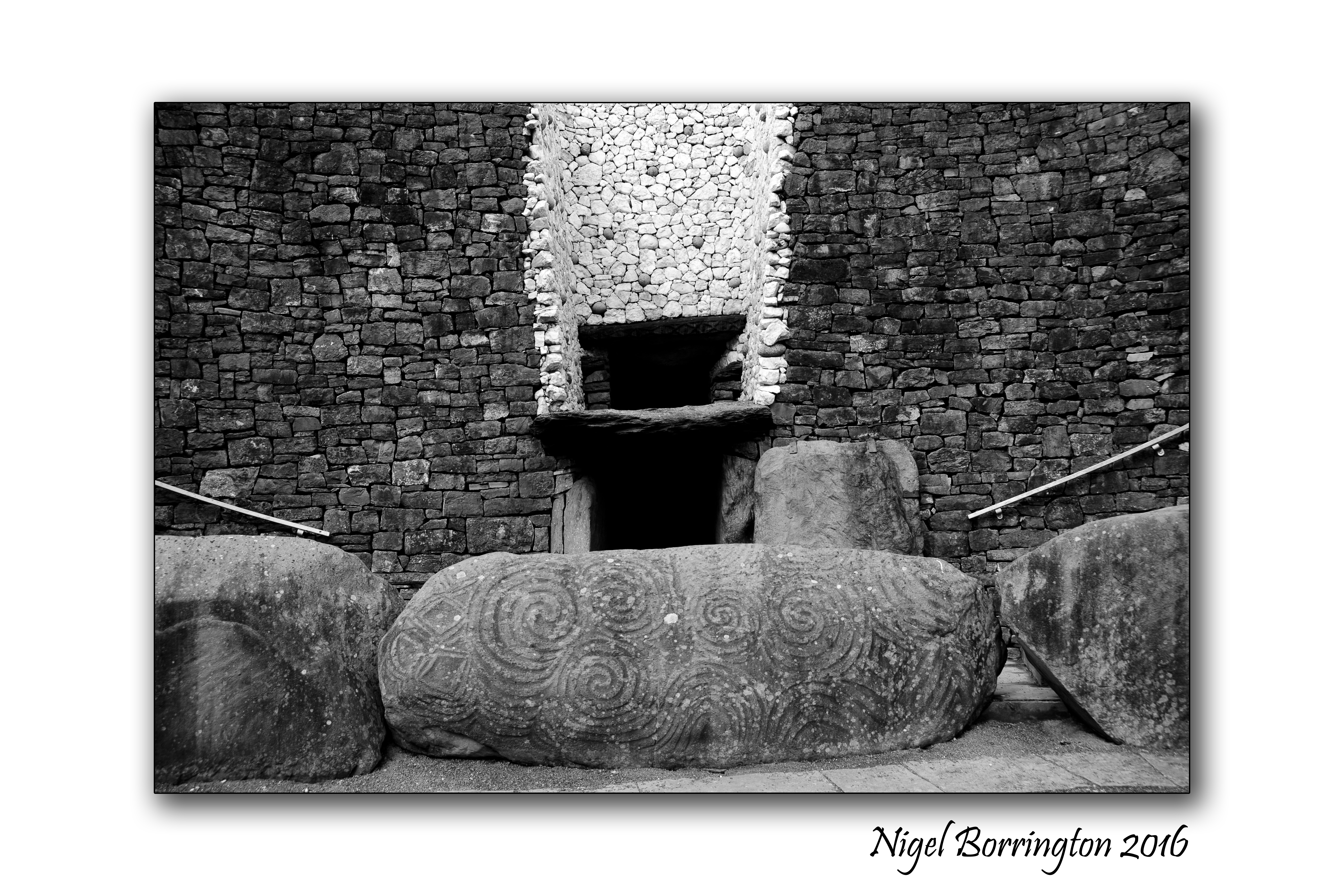
Happy Spring Equinox 2016 to everyone …..
Yesterday Marked the start of spring time, so over the weekend I spent sometime visiting both Newgrange and the Hill of Tara. Both perfect locations to gain a little understanding as to how our European pagan ancestors both recorded and celebrated the movement of the sun and universe they lived in.
It was exactly, one quarter of a year that had passed since the shortest day of the year, the day when at Newgrange the rising sun can be seen to travel all the way into the passage tomb at the centre of the monument.
The Spring equinox 2016 celebrating
Yesterday marked the arrival of spring, the date of the vernal equinox, or spring equinox as it is known in the northern hemisphere. Spring equinox. During an equinox, the Earth’s North and South poles are not tilted toward or away from the sun. (Ref :Wikipedia)
This means the sun will rise exactly in the east and travel through the sky for 12 hours before setting in the exactly west.An equinox happens twice a year around March 20 and September 22 when the Earth’s equator passes through the centre of the sun.
For those in the southern hemisphere, this time is the autumnal equinox that is taking people into their winter.
Druids and Pagans like to gather at Stonehenge early in the morning to mark the Spring Equinox, to see the sunrise above the stones.
The Pagans consider this is the time of the ancient Saxon goddess, Eostre, who stands for new beginnings and fertility. This is why she is symbolized by eggs (new life) and rabbits/hares (fertility). Her name is also where we get the female hormone, oestrogen.
From Eostre also come the names “Easter” and “Esther” the Queen of the Jews, heroine of the annual celebration of Purim which was held on March 15. At Easter, Christians rejoice over the resurrection of Jesus after his death, mimicking the rebirth of nature in spring after the long death of winter.
It is also a time to cleanse your immune system with natural remedies. In Wiltshire and other parts of rural Britain it used to be tradition to drink dandelion and burdock cordials as the herbs help to cleanse the blood and are a good tonic for the body after a harsh winter.
Newgrange a Gallery


St Patrick’s day a Landscape Gallery 2016

The Mountain of Slievenamon
County Tipperary
Ireland
Nigel Borrington
Happy St Patrick’s day everyone !!!!!
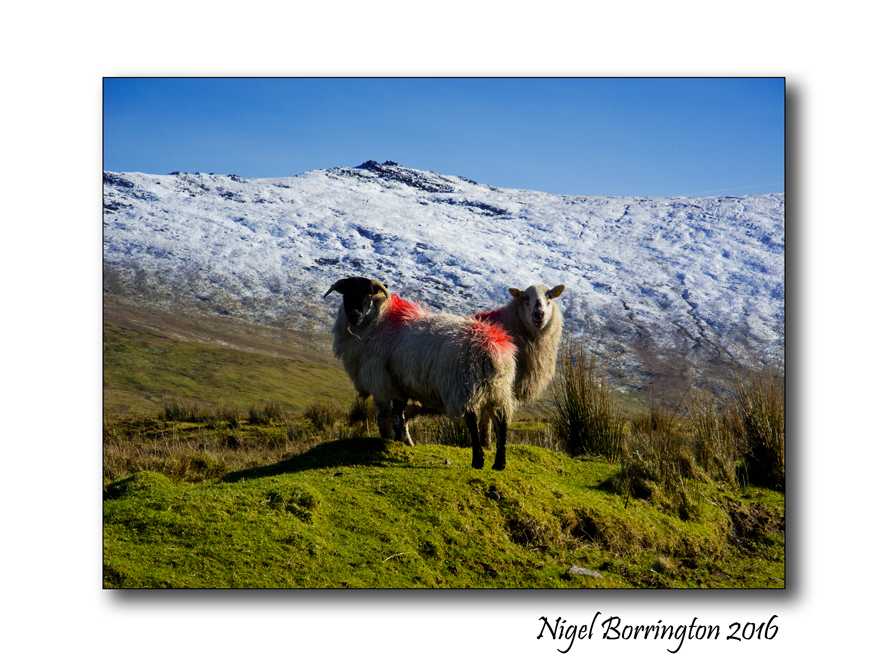
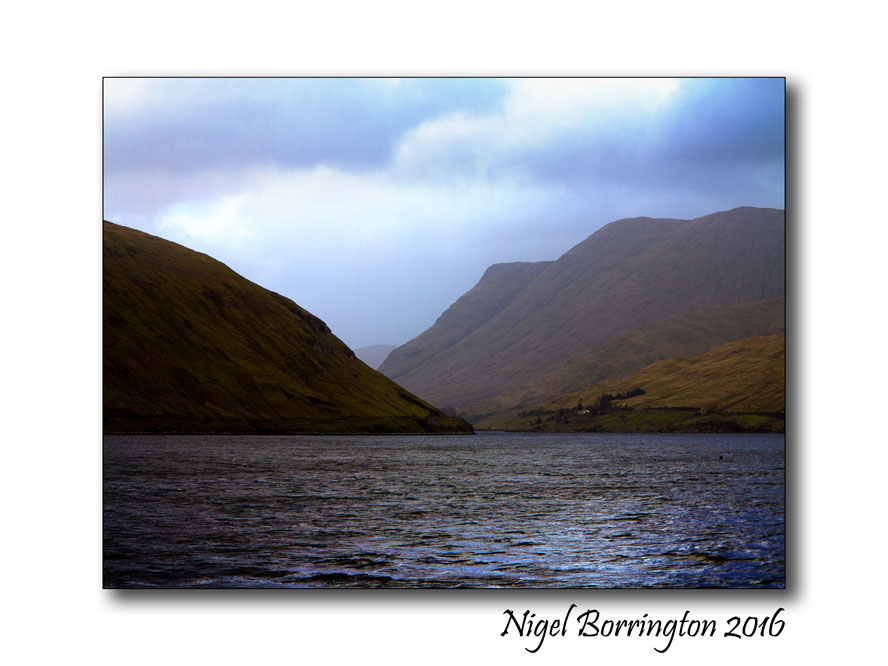
For the last few St Patrick’s day Holidays, I have posted some of my Landscape images from around Ireland , today I want to do the same as I feel that for me today is about celebrating the great landscape’s Ireland has to offer and getting outside to enjoy the real Ireland that surrounds the people who have made it their home.
Ireland: a St, Patrick’s Landscape Gallery






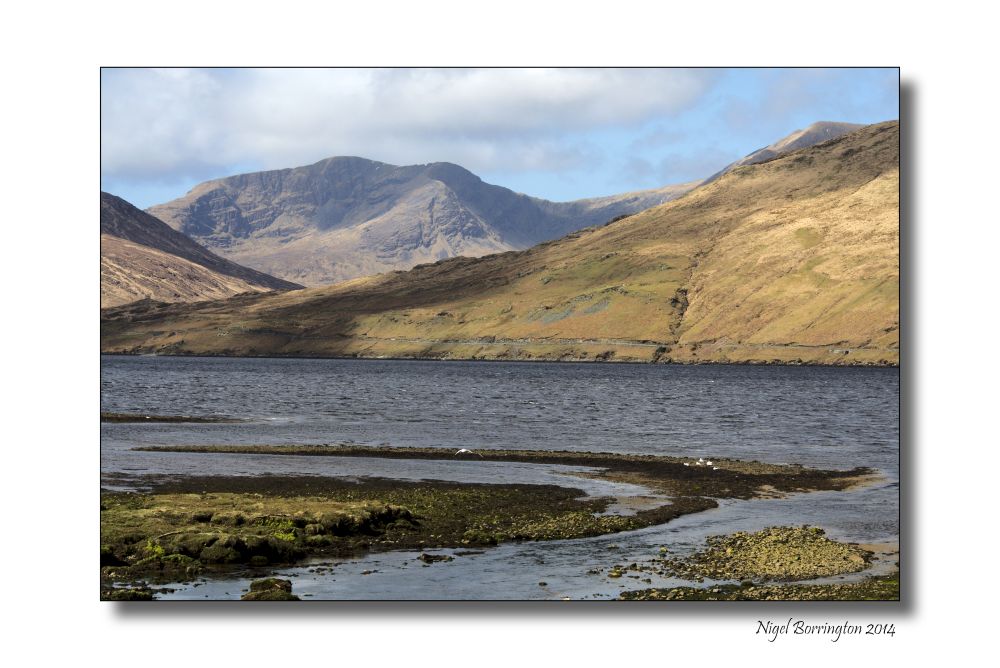
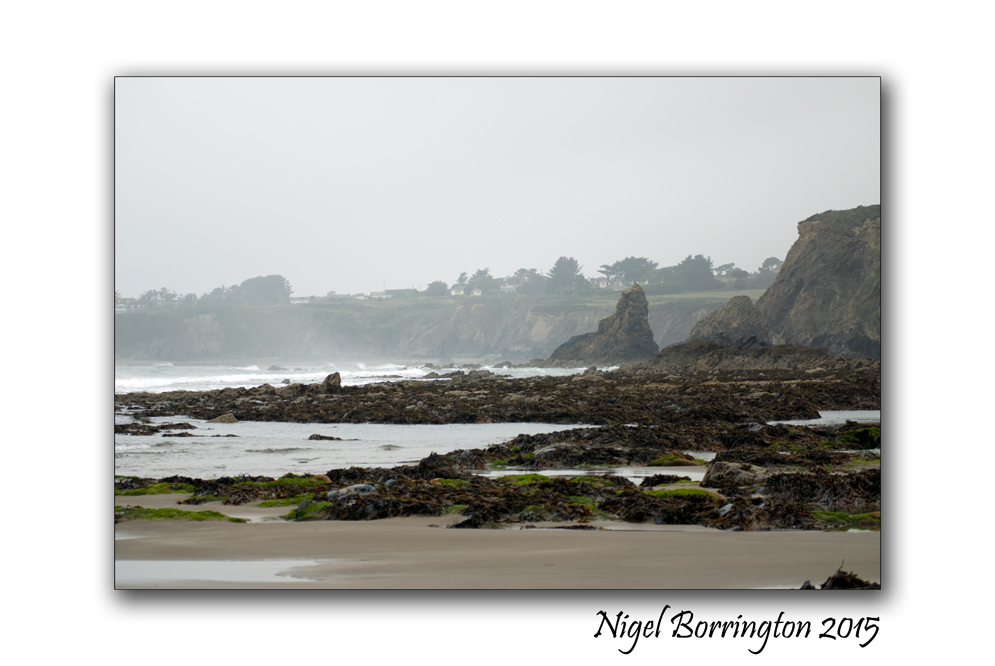

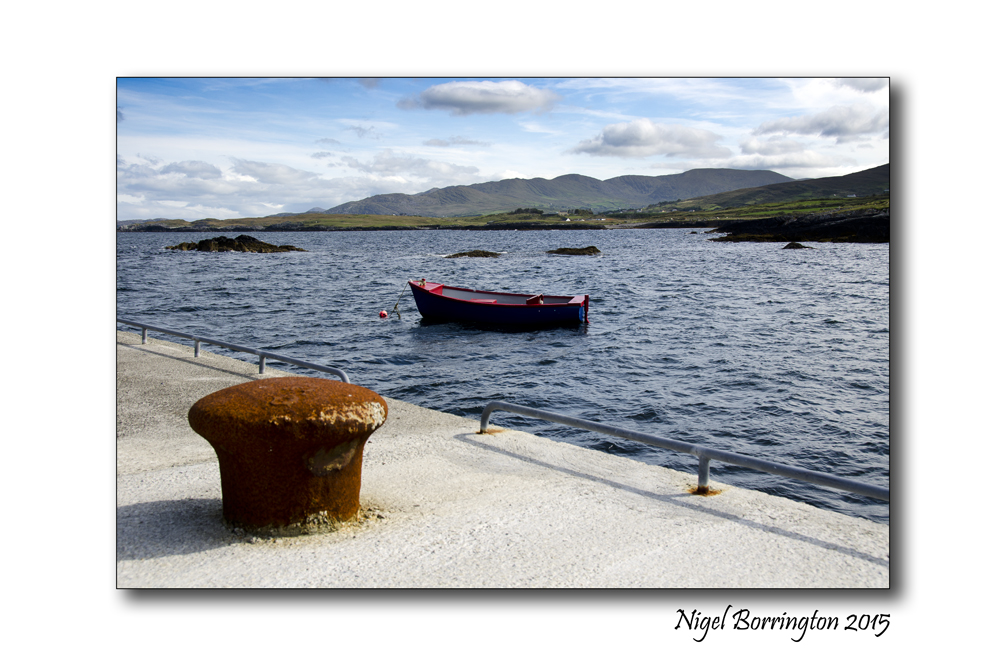

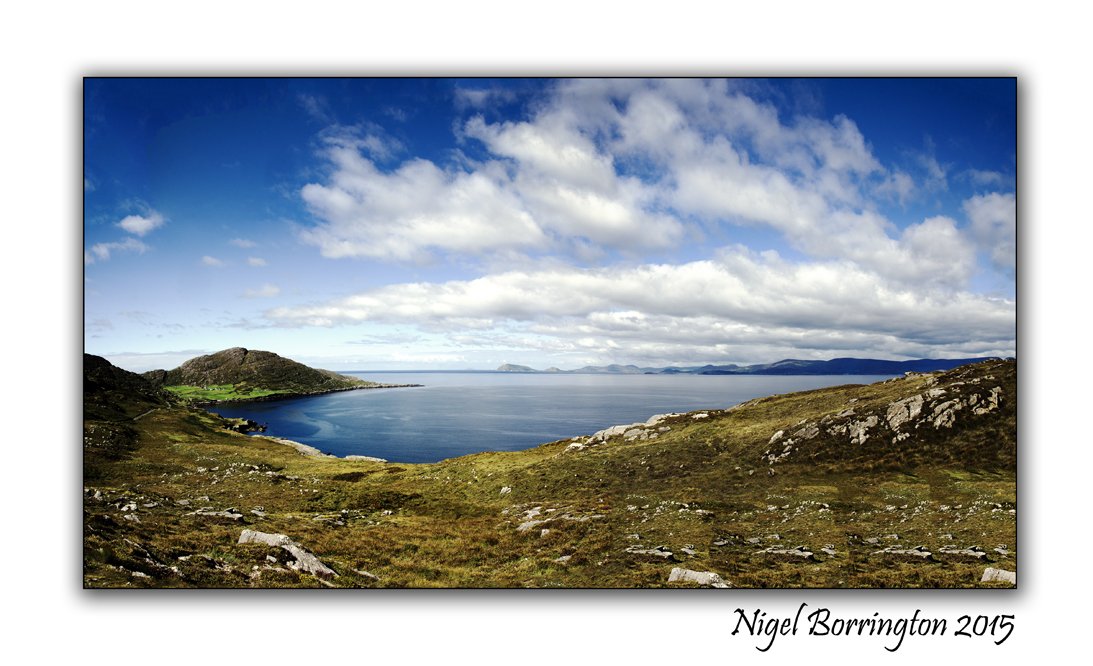


A sense of place, Wellington Tower Grange Crag, County Tipperary

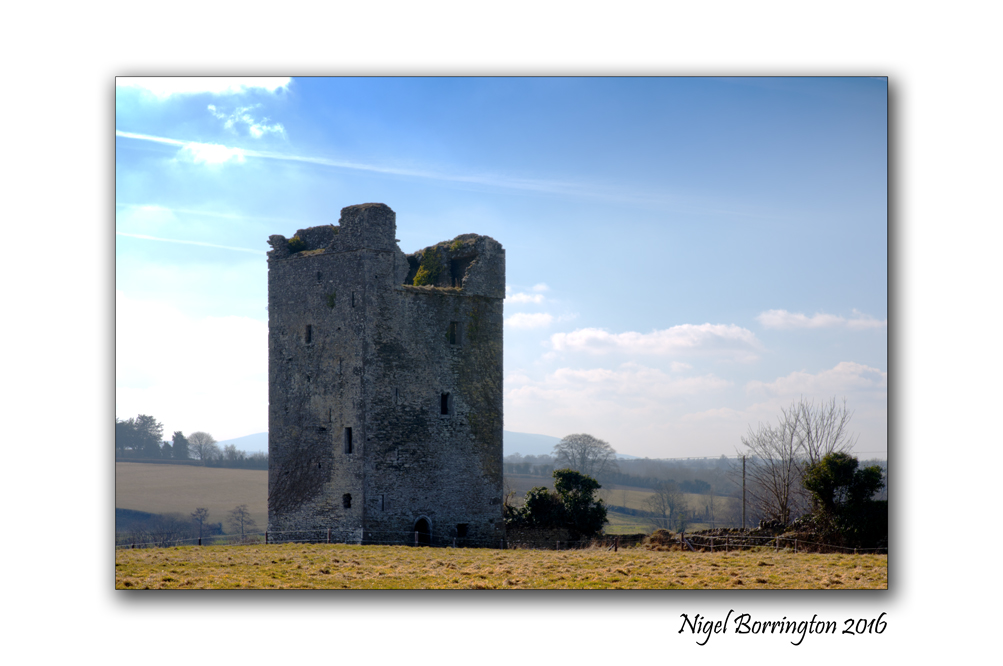
The Wellington Tower Grange Crag, County Tipperary
The Wellington Tower stands on the Crag above Grange, county Tipperary, it was built in 1817 by Sir William Barker Bar to celebrate the Duke of Wellington’s victory over the French at the battle of Waterloo. Today it is nearly two hundred years old and for a long time it has only formed a feature in the loop wall around the forest above the small village of Grange.
However over the last months it has been restored and transformed into a viewing platform as you can see from the images here, it has been amazing to see the work that has been performed to give the tower a new life and a new purpose in life.
The walk to the top of the tower is via a metal spiral staircase with a viewing platform at the top , if you are a little heady with heights its best not to look down through the steps and to just keep going until you get to the top.
Once you are on the platform above and walk to the chest-high wall in front of you the view of county Tipperary below is just amazing. There is a display of all the sights below on a board the looks out and to the distance you can see modern Ireland in it greatness form with its small towns and up to date Wind farms.
Wellington Tower , Grange Crag, Tipperary GALLEY …


My Name Is Gossip, A poem by : Oliya Charkhi

My Name Is Gossip
I am a mysterious phenomenon
I am a menace to the society and families
An element of devastation and destruction
People can’t fathom my destructive powers
I thrive on losing or questioning people’s sanity
I hurt without killing
I plant hatred and jealous in people’s heart
I break hearts and ruin lives
I am sly, cunning and malicious
And gather strength with age
The more I am quoted, the more I am believed
I flourish at every level of society
My victims are helpless
They cannot protect themselves against me,
For I have no name, no face

I sneak and sow the seed of doubt in the soil of innocent hearts
to extinguish their joy
I sometimes hide behind a smile,
Or simply behind an innocent tear
Most of the time, I creep and stab from behind
To track me down is impossible
The harder you try, the more elusive I become
I target the vulnerable or the hurt
I simply don’t let happiness chance
I am nobody’s friend
Once I tarnish a reputation it is never the same
The wound I inflict never heals
I overthrow governments and ruin marriages
I destroy careers and cause sleepless nights
I generate suspicion and grief
I make innocent people cry
My name hisses hate
Yes, my name is Gossip

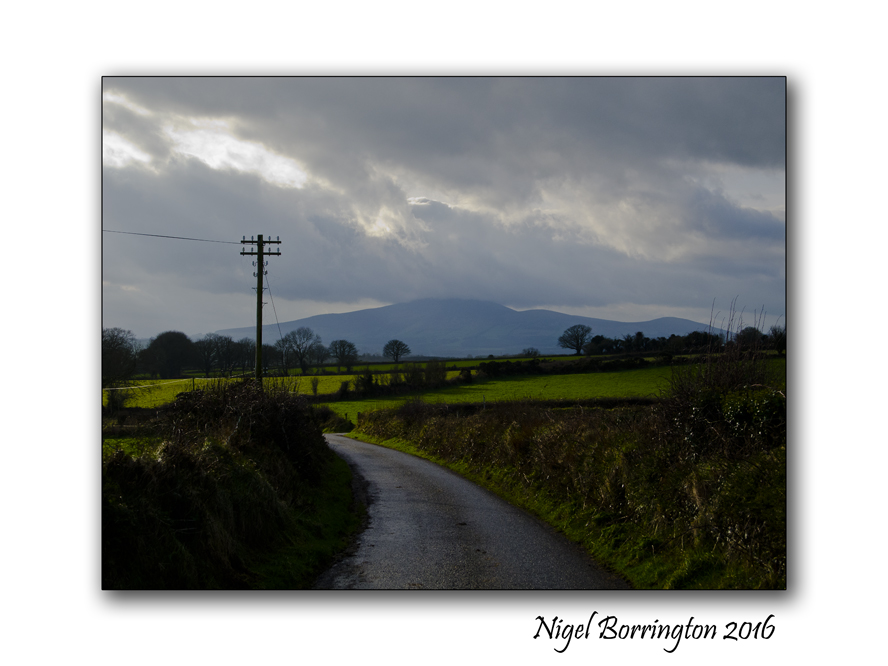
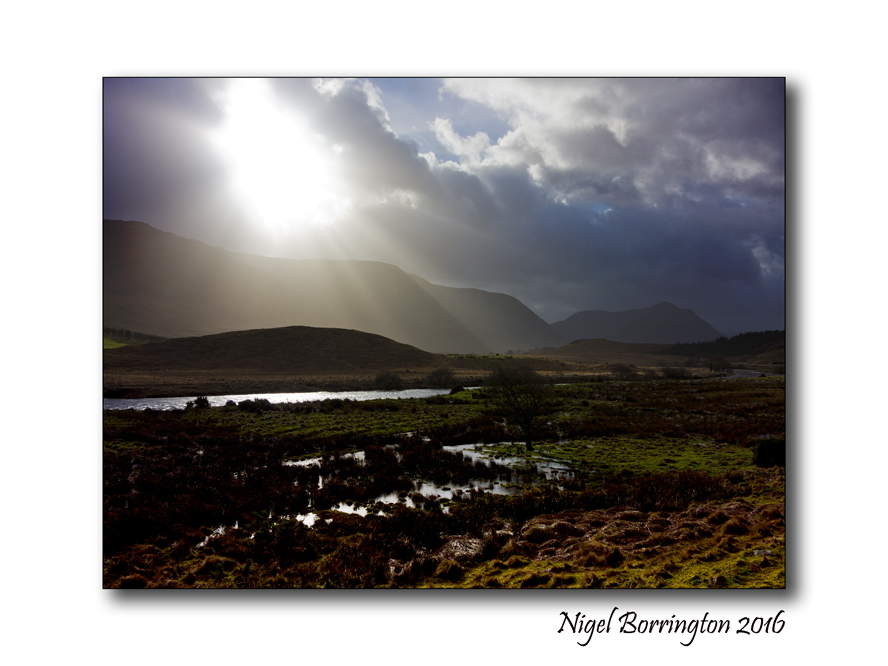
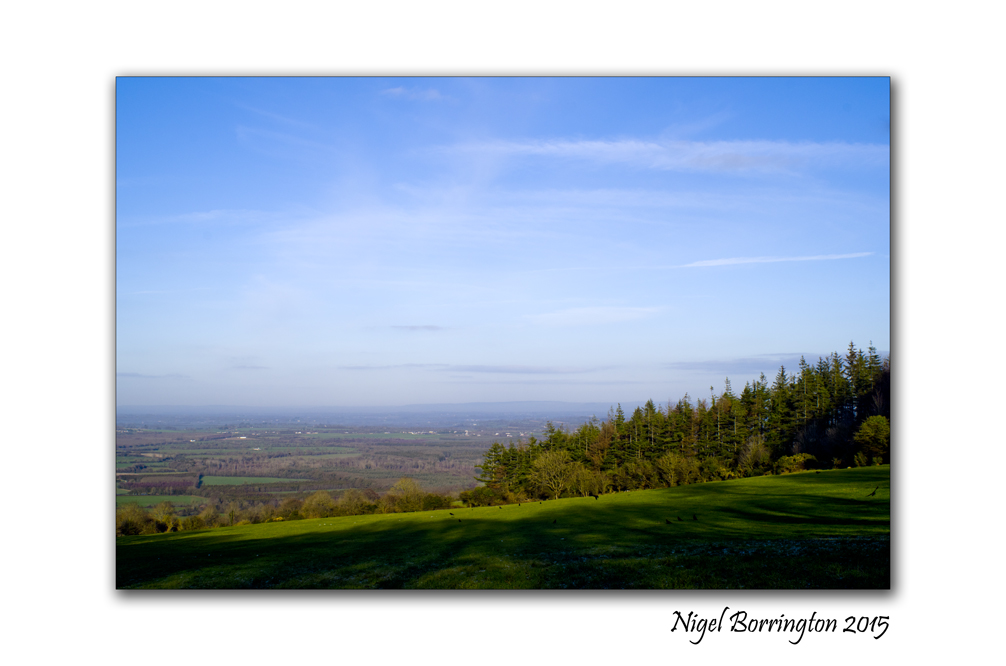
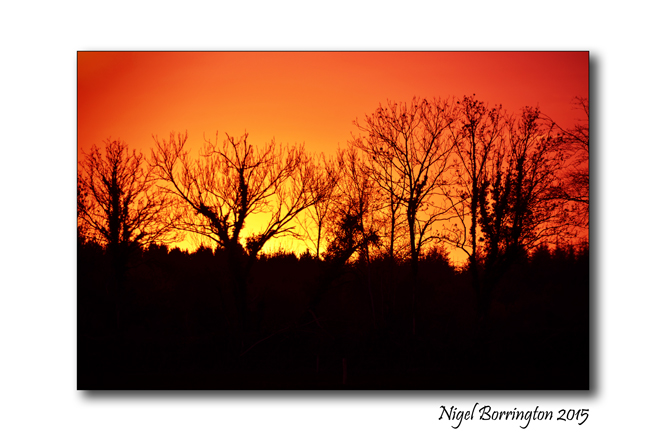

Fridays Artist : Peter Collis, An Artist who Understands the Irish landscape
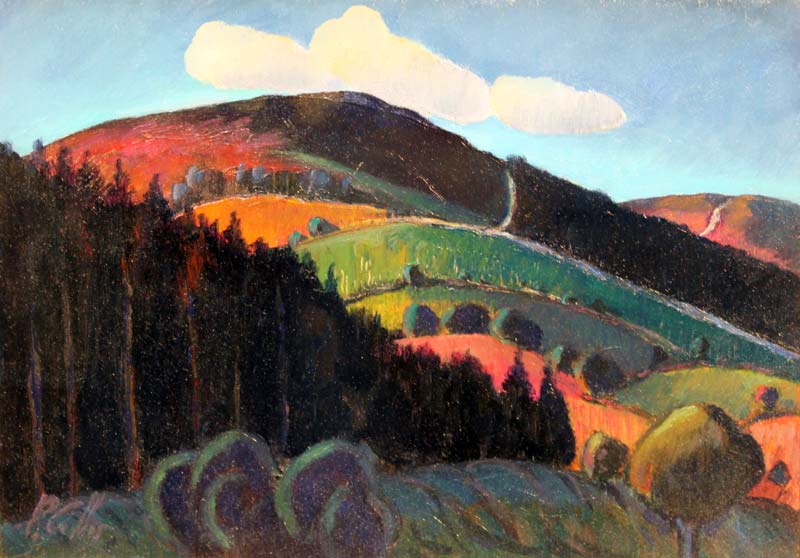
Glencrea Valley
by Peter Collis RHA
I started this week in my blog by saying that I was taking sometime each day to study some of my most loved Artists, I feel that the week has been really valuable to me in this respect and I am very pleased with how it has all worked out. At the same time the week has only scratched the surface of my full aims, being to gain an understanding of how so many great artists have used the landscape of Ireland and the UK in their art work and to define how I can take this as some personal inspiration.
While during the last few years I have taken many more photographs than produced paintings, I have been painting as a form of self-expression for many years. Oddly it was not until I decided to attend art school at Waterford(WIT) that I stopped painting so much, I think many experience this odd effect from current formal art study and art schools.
I don’t want my blog to become completely art and artists based and to move away from my own photography posts, although I personally feel that the two are very closely linked in any-case. So next week I will move a little back towards photographic images, I will however still keep posting some reviews of the artists and art work that I find the most interesting.
Has this week helped to inspired me ? , Absolutely! I feel its time to paint again as well as use my camera !!!
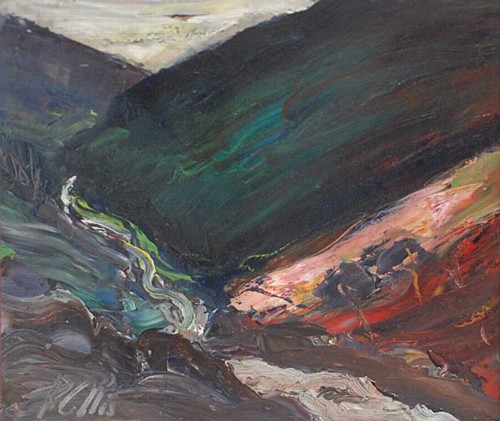
One of these very inspiring artists is Peter Collis the artist I have selected for my Friday Post. I remember visiting the Solomon Gallery, Dublin in 2002 , the first time I got to see any of peters paintings and I very much liked them from the start. I liked his style of painting of the landscapes he painted and very clearly loves, using a limited amount of colours like many artists do, I very much liked the way the movement of his brush can be so clearly viewed in his work, each gesture he made forms a feature in the landscapes he paints and each of these gestures are left alone on the canvas from the very moment they have been made.
I found this great review of Peter in the Irish independent dated 2012 – it says much more Than I can myself !!!
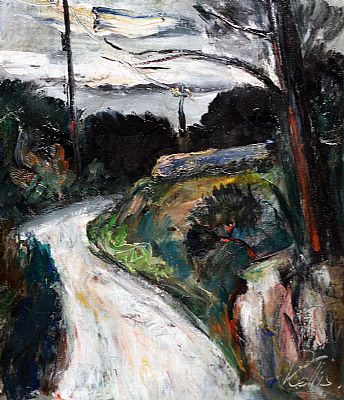
A little about Peter Collis by : Eamon Delaney
A lovely, gentle man’ was how veteran sculptor Imogen Stuart recalled the painter Peter Collis who has passed away at the age of 83. Collis, who was born in England and came to Ireland in 1969, was an acclaimed landscape artist and still life painter who had been a stalwart of the Royal Hibernian Academy. His canvasses are characterised by a powerful and dramatic style under the painterly influence of great masters such as Paul Cezanne, whom he adored, and Maurice de Vlaminck. In contrast to the traditional realistic depictions of the Irish countryside, Collis employed a bold brush and brought a strong expressive energy to his outdoor renderings.
He was particularly fond of Killiney, and its bay, and of the topsy turvy Wicklow countryside. The Sugar Loaf mountain became a familiar motif in his work. He also composed striking still lifes, of groups of green pears and vivid red apples, which evoked a distinctive European quality.
The physical appearance of Peter Collis often belied the rugged intensity of his work, with its rain-drenched hills and wind-bent trees. An unfailingly courteous man, who was widely popular, he wore Savile Row suits and was described by painter Mick O’Dea as possibly “the best dressed artist in the entire Irish arts scene”.

Born in London, he studied drawing and painting at the Epsom College of Art in London between 1949 and 1952. After college, he moved to Ireland where he had discovered a profound connect with the Irish landscape which would shape the course of his painting for the next four decades. Working for the Shell Oil company, Collis would paint in the early mornings from sketches and studies made on sales trips across the country, developing his craft and building a reputation as a painter of exquisite fluency. The critic Desmond McAvock wrote of him: “Like Cezanne he is really more interested in the structure of his scenes than in their transitory appearance . . . he can bind his observation into a cohesive, tightly controlled but always sensitive design.”
According to his longtime companion and fellow painter, John Coyle, Collis “saw things in the Irish countryside which the rest of us might never see”. Being something of an outsider, the Englishman was emboldened by bringing a fresh eye to it all. “He didn’t have the historical or territorial baggage that many Irish would have,” said Coyle, “and saw the landscape for what it was along with the physical, and poetic, possibilities it offered. He pursued the simplification and arrangement of shapes, just like Cezanne.”
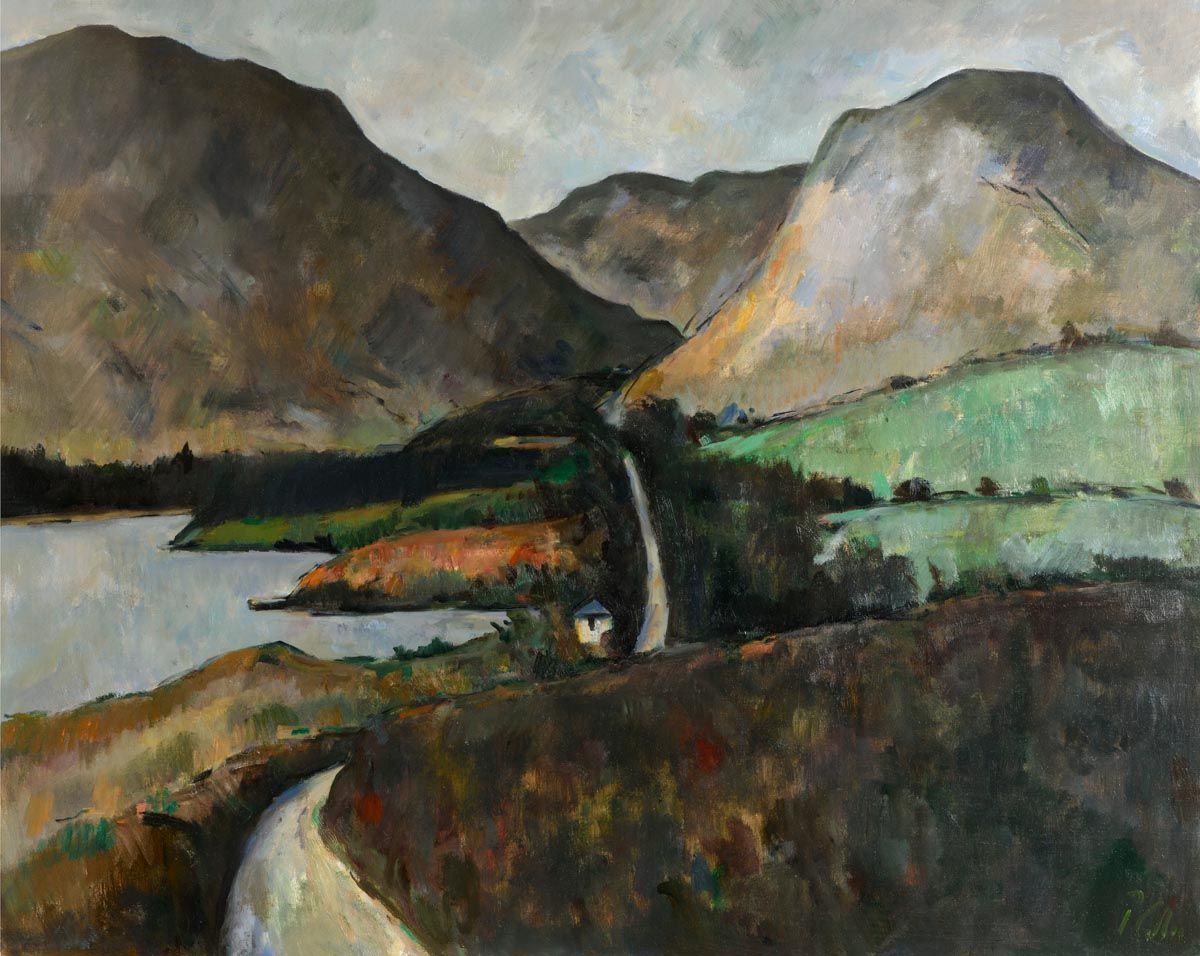
In Dublin, Collis was most recently represented by the Solomon Gallery and only last month had a retrospective exhibition in the John Martin Gallery in London. In 1990, he was elected to full membership in the Royal Hibernian Academy and was actively involved in the activities of that body. In 2002 he was conferred a senior member of the Academy. He received many awards, including the Royal Trust Co. Lt. Award in 1975, the Maurice MacGonigal Landscape Prize of 1981 and the James Adam Salesroom Award, RHA of 1999. His paintings are represented in many public collections, including those of AIB, Bank of Ireland, Limerick University, University College Dublin, and the Office of Public Works. His paintings are also owned by many private collections including Bono, Christy Moore, and Lord Puttnam, the English film maker.
He will be missed by the artistic establishment, but also in the context of the wider artistic understanding of the Irish landscape, which he did so much to further. Most especially, of course, he will be missed by his wife Anne, and daughters, Vanessa, Mandy and Kate, as well as grandchildren. He was sadly predeceased by the untimely passing of two of his children, David and Gail. His funeral service was held in the Parish Church, Monkstown (Church of Ireland) followed by burial in Deansgrange cemetery.
Sunday Independent
Thursdays Artist is a rediscovered source of artistic energy : Joash Woodrow

Four Trees, White Fence by Woodrow, Joash (1927-2006);
I first viewed the brilliant art work of Joash Woodrow in 2005 at the Manchester Art Gallery, I was back in Manchester visiting my sister and went into the city centre for the afternoon. I was not intending to visit the Gallery but it was raining so I wondered inside to see what exhibitions where on display, this was a lucky moment and one I will never forget.
I looked around the galleries permanent exhibitions and then took the stairs to the upper floor for a guest exhibition entitled “Retrospective – Joash Woodrow”, from the very first painting I viewed, I just knew I was going to fall in love with Joash’s drawings and paintings and I have been fascinated with his work and life story ever since.
I love Joash’s work for its very honest style, by this I mean that I feel he used his brush’s and paint’s to capture his world as he found it, there is little to praises or note about how perfect his style of painting or drawing is but so much to fall in love with about how he viewed his surroundings and how well he liked and felt for the people he painted.
This is painting in the RAW, produced by someone who, I feel if you were allowed to get close to him then you would truly like him !!!

Joash Woodrow (1927-2006) Mr Woodrow’s Shop, Chapeltown Road, Leeds c
About Joash Woodrow, By :Nicholas Usherwood
Joash Woodrow, Reclusive painter whose work provides a significant link between British and European art
The chance discovery in a Harrogate bookshop in 2001, by the painter Christopher P Wood, of six volumes of an engraved Victorian art history, wildly and exuberantly annotated in a series of Picasso-esque drawings and collages by the then completely forgotten painter Joash Woodrow, led directly to the re-emergence of one of the most significant artistic figures in postwar British art. A visit a few days later by the Harrogate dealer Andrew Stewart to a small, semi-detached house in north Leeds, where Woodrow had lived alone for 20 years, uncovered an extraordinary story. The house was filled with some 750 canvases and around 4,000 works on paper, a lifetime’s achievement which a devoted family was none the less contemplating consigning to a skip.
Joash, who has died aged 78, had recently been taken into sheltered accommodation, having nearly set fire to the house, but his work itself had avoided serious damage. In the months that followed, it became apparent that this was no isolated figure at the margins of art history but an artist of sophisticated interests and training.

Born in Leeds, Woodrow was the seventh of nine children in a poor but cultured Jewish family that had escaped the pogroms in eastern Poland of the early 1900s. His father had run a Jewish bookshop in Chapeltown before working in Montague Burton’s factory to provide for a growing family. Joash trained at Leeds School of Art and, in 1950, won a scholarship to the Royal College of Art.
His intense shyness does not seem to have been suited to the competitive atmosphere there, though his tutors’ reports commented that his work already seemed more European in feeling than most of his contemporaries, among them John Bratby, Leon Kossoff and Frank Auerbach. A year or so after leaving the RCA in 1953, he suffered a nervous breakdown and took himself back to Leeds, where, supported financially by his family, he lived and worked for the rest of his life.
Advertisement
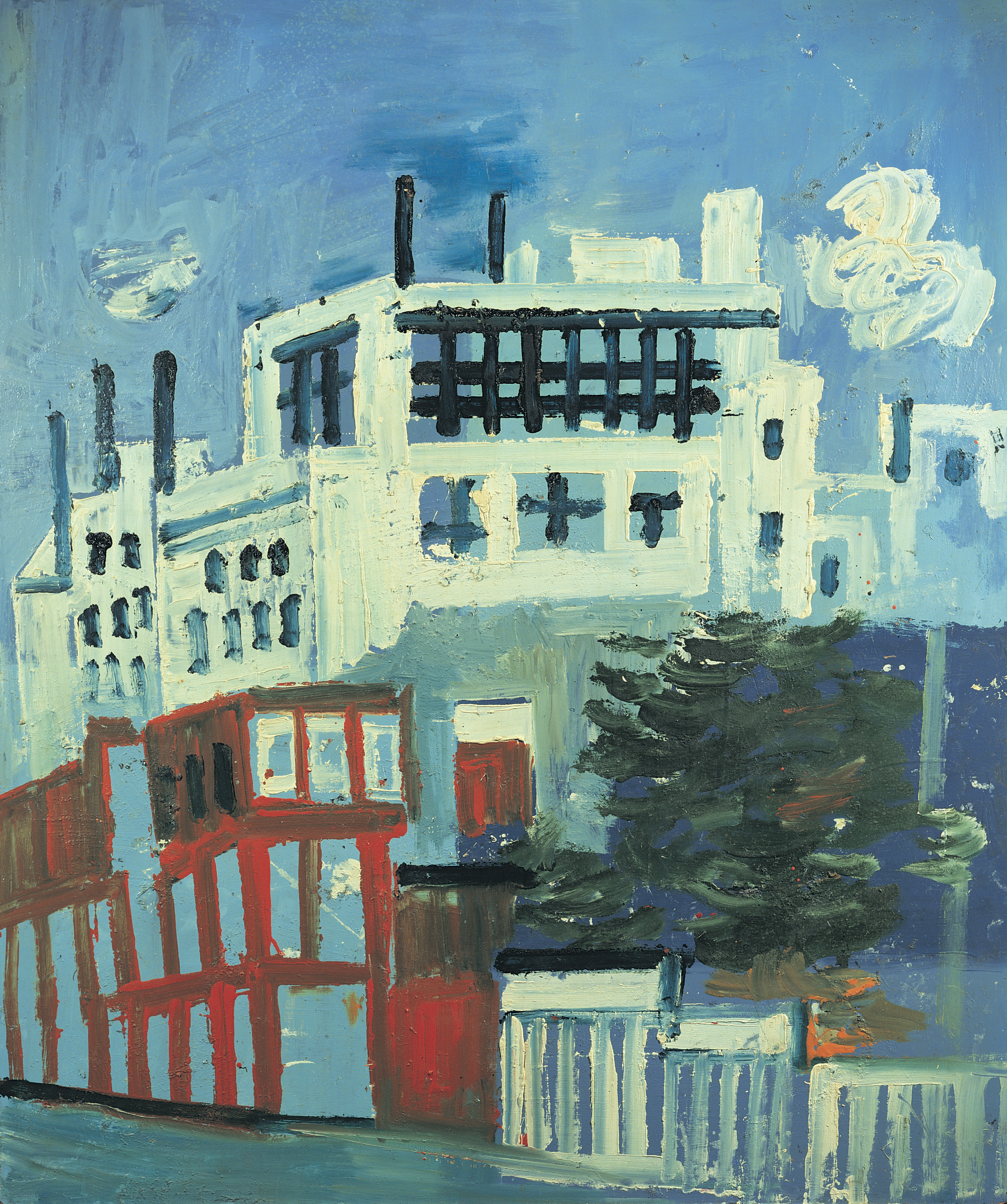
Joash Woodrows – Leeds
With his mother and two brothers also living in the two-up, two-down house, working conditions must have been extremely cramped, which almost certainly explains the comparatively small scale of Woodrow’s early work. Mostly portraits and landscapes, their dark tones illumined by flashes of sonorous colour and intense solemnity, they reveal the beginning of a distinctive style, one that in its understanding of the French fauvist Georges Rouault showed Woodrow already looking to European art for inspiration.
This gathered momentum with a number of visits to the huge Picasso exhibition at the Tate in 1960, the crucial impact of which was to give Woodrow an insight into his Jewish heritage, and the understanding that the roots of his art lay outside this country and were essentially European in character.
Looking to the fierce expressionism of Karel Appel, Asger Jorn and the Cobra group, the harsh, raw surfaces of Jean Dubuffet and the Art Brut circle, and the insistence on the quality of mark-making of Nicolas de Staël and the tachistes, Woodrow began to uncover the source of those artistic energies that were to carry him over the next 30 years of intense activity. With the death of his mother in 1961 – and with more room in which to paint – there was a steady increase in the scale and ambition of the work.
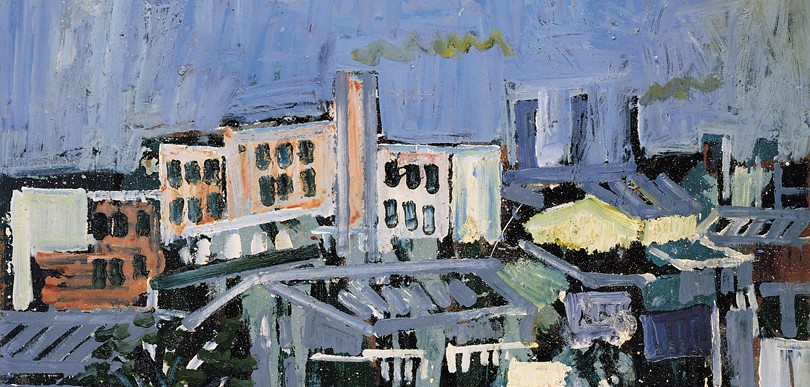
A lack of success in the work he occasionally submitted to large, open competitions like the John Moores, however, encouraged a feeling of isolation, something his reclusiveness only served to emphasise. By the early 1970s, he was living and working with very little thought for anything but the next painting, producing large-scale canvases (anything of up to 5ft x 8ft) with quite extraordinary rapidity. When not painting, he was drawing furiously in the semi-industrial and urban districts of north Leeds those subjects that were to form the basis of some of the most original and experimental works of his later career.
Advertisement
If his personal life was unhappy, there is no sign of it in the power and exuberance of the broad brush strokes, high-pitched colour and boldly flattened picture spaces with which he describes this landscape – an unprepossessing jumble of scruffy allotments, derelict factories and scattered trees.

Gilbert Looking Down, Joash Woodrow
By the early 1990s, Woodrow’s physical and mental health began to decline, and the house was too cluttered with paintings for him to do anything but draw. At the time of the 1999 fire, he seems to have stopped doing even that and, after his removal to sheltered accommodation in Manchester, he lost interest in working altogether.
Nor did he seem very interested in the public recognition that followed, when books and major exhibitions – at Leeds art gallery and then Manchester art gallery, and the Ben Uri and RCA last year – created a wave of interest that looks certain to place him firmly as a significant link between British and European artistic movements in the second half of the 20th century. His brothers Saul, John and Paul survive him.

· Joash Woodrow, artist, born April 7 1927; died February 15 2006
Wednesday’s artist’s work is full of Water and Trees : Trevor Geoghegan

A Winter Boundary by Trevor Geoghegan
Today I want to share the art work of TREVOR GEOGHEGAN he uses a ready made subject near at hand the scenic mountainous area around the upper reaches of the Liffey in county Wicklow. He paints it again and again but not exclusively his present exhibition also includes landscapes from the west Connemara, Doolin etc. However, it all ends up pretty much his own style, with plenty of heather, foaming streams, moorland and woodland.
The vision is conventional, knowing how to relate foreground to middle ground in his work. It is “picturesque” nature, but not picture postcard nature, with a real sense of emotional engagement. The angles of composition are varied The Yellow Field, one of the best pictures in the show, is seen from above and the skies are generally alive, not merely filled in.
I like and has seen lots of Trevor’s paintings overtime and love very much the closeness to the landscape that he paints, it feels very much like he walks deep into the woodlands and forest river banks in order to find his subjects and this shows in his work, I also like very much the closeness to nature that he reflects on, these are real places painted and real moments !!!
A little about : Trevor Geoghegan
Born in London 1946, Trevor studied at Worthing College of Art, Sussex before graduating from Chelsea School of Art, London in 1968. In 1971 he settled in Ireland, moving to Blessington, Co. Wicklow. He lectured at the National College of Art & Design, Dublin from 1978 to 2004 and teaches annually at the Burren School of Art, Co. Clare and also holds annual drawing workshops privately and at the National Gallery of Ireland.

Moonlight, Blessington Lake by Trevor Geoghegan
Trevor has had numerous successful solo shows since 1978, has exhibited at the RHA and his work can be found in many collections worldwide including Aras an Uachtarain, the Arts Council of Ireland, Bank of Ireland, Dail Eireann and the National Self Portrait Collection. His work is also represented in numerous private collections in Ireland, USA, Germany, Japan, Canada and UK.

Tuesdays Artist – Bernadette Kiely

Bernadette Kiely. Gorse
I first came across the drawings and paintings of the county Kilkenny based artist Bernadette Kiely, while attending a two year art course at the Grennan mill craft school.
I liked Bernadette’s art work from the very first time I viewed it, I feel she captures completely the local landscape that surrounds us here in County Kilkenny. The county while not the most spectacular in Ireland varies a lot from low boggy lands and flooded river banks and mountain tops.
A little About, Bernadette Kiely
Bernadette Kiely was born in Carrick on Suir, County Tipperary and grew up beside the river Suir. She graduated from The College of Art and Design at Waterford Institute of Technology with a distinction in Graphic Design and worked in graphic design and architecture in New York and London before taking up painting full time in 1984. She attended the Slade School of Fine Art in London and has been working in her studio beside the river Nore in Thomastown, County Kilkenny since 1992. Her paintings and drawings are based on prolonged observation of specific landscape elements and are characterised by her attention to the close up worlds of bog cotton, gorse, mud, lichen and other natural phenomena including weather and atmospheric conditions on the river Nore and its environs. Bernadette Kiely is a member of Aosdana.
As with yesterday’s artist, I have linked to both web-site and to some on the painting I like the most …


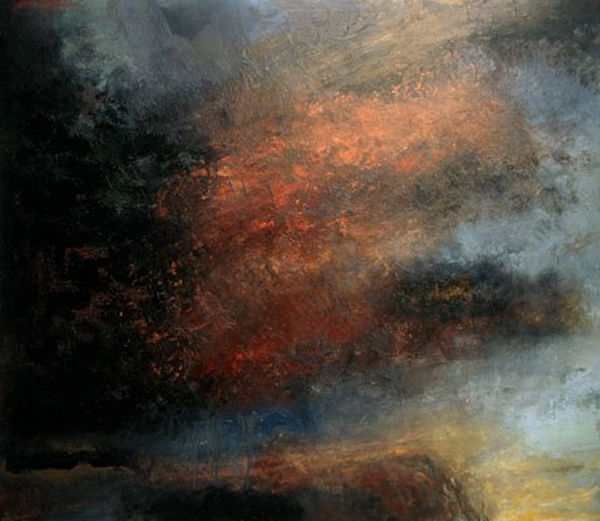
A Monday look at Joseph McWilliams

Joseph McWilliams PPRUA
I am taking time this week to do a study of some landscape artists/photographers who’s work I very much like very much.
I feel the need to take a look at the work of the artists I know of again, who use the landscape of Ireland both North and South along with the British Isles, in there drawings and painting and Photographs.
I first came across the art work of Joseph McWilliams when I visited an exhibition called “Landscapes north and south”, the the exhibition was held at the Glebe House Gallery, County Donegal.

A little about : Joseph McWilliams PPRUA
Joe McWilliams was born in Belfast in 1938. He studied at the Belfast College of Art and at the Open University. Later he lectured in Art Education at the Ulster Polytechnic in Belfast and was Senior Lecturer and Senior Course Tutor at the University of Ulster. Since 1986 he and his wife, artist Catherine McWilliams have managed the Cave Hill Gallery, Belfast. He has had numerous solo exhibitions and has been represented in major Irish group shows both in Ireland and abroad; Recently his work was seen in an exhibition entitled ‘Dreams and Traditions: 300 Years of British and Irish Painting’ from the Ulster Museum Collection which toured the USA in conjunction with the Smithsonian Institute, Washington. His work is held in numerous collections including: NI Arts Council, Queen’s University, Coras Iompair Éireann, the Department of the Environment (NI), AIB, the National Self Portrait Collection of Ireland.
McWilliams is a regular lecturer and broadcaster on the Visual Arts in Northern Ireland and has been invited to speak on the Arts a number of times in Boston, USA. He has also published articles and reviews on the subject. He has written many scripts for BBC radio and has presented, his own script “The Way that I Went” which was seen on BBC world services as well as locally and in Britain. His own work has been exhibited at a variety of venues in Ireland, Britain, Europe and the USA. He is perhaps best known for his paintings of ‘The Troubles’ evidenced in exhibitions such as ‘Art for Society’ Whitechapel Gallery, London; ‘Documenta 6’ Kassel, W.Germany; ‘A Troubled Journey 1966-1989’ and ‘Colour on the March’ both at the Cavehill Gallery, Belfast.

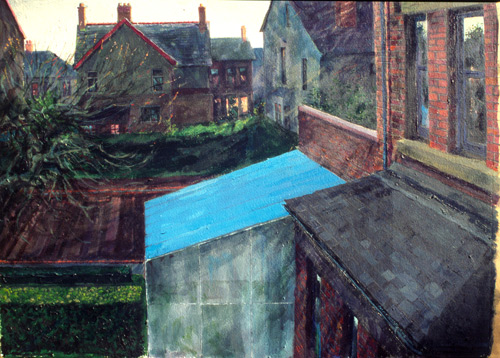
I liked Joseph’s paintings very much for both their painting style and the fact that he used the world around himself for subjects to paint, even using his own back Garden for much of his work.
Here I link to his web page http://www.josephmcwilliams.com/, for some of the painting I like the most.

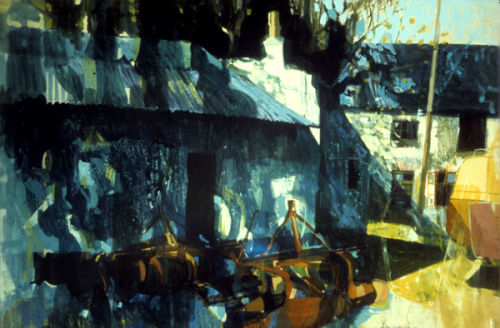



Kilkenny landscapes in March – Two Poems on March
Kilkenny Landscapes
Nigel Borrington
“The sun is brilliant in the sky but its warmth does not reach my face.
The breeze stirs the trees but leaves my hair unmoved.
The cooling rain will feed the grass but will not slake my thirst.
It is all inches away but further from me than my dreams.”
– M. Romeo LaFlamme, The First of March

The word ‘March’ comes from the Roman ‘Martius’. This was originally the first month of the Roman calendar and was named after Mars, the god of war. March was the beginning of our calendar year. We changed to the ‘New Style’ or ‘Gregorian calendar in 1752, and it is only since then when we the year began on 1st January. The Anglo-Saxons called the month Hlyd monath which means Stormy month, or Hraed monath which means Rugged month.

“Equal dark, equal light
Flow in Circle, deep insight
Blessed Be, Blessed Be
The transformation of energy!
So it flows, out it goes
Three-fold back it shall be
Blessed Be, Blessed Be
The transformation of energy!”
– Night An’Fey, Transformation of Energy
Sketches of Ireland , kilcooley Abbey, County Tipperary

Sketches of Ireland
Kilcooley Abbey
Tipperary
Nigel Borrington
Last week I revisited Kilcooley Abbey in country Tipperary with the aim of capturing some images to produce some sketches and paintings from.
The Abbey is an amazing location and this quick sketch is made on my tablet using Krita a digital painting application. I like the idea of fast sketches, they are not meant to be anything like finished work but by doing them you feel you know the location your hoping to work with very well, be it for painting/drawing or photography.

The Little Ghost, A poem by Edna St. Vincent Millay (1892-1950)
irish Landscapes
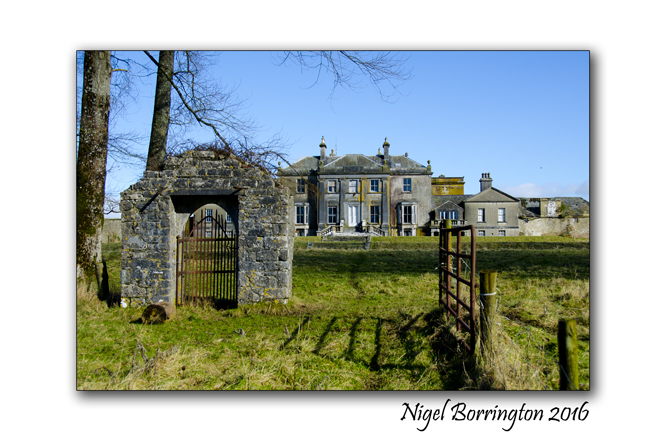
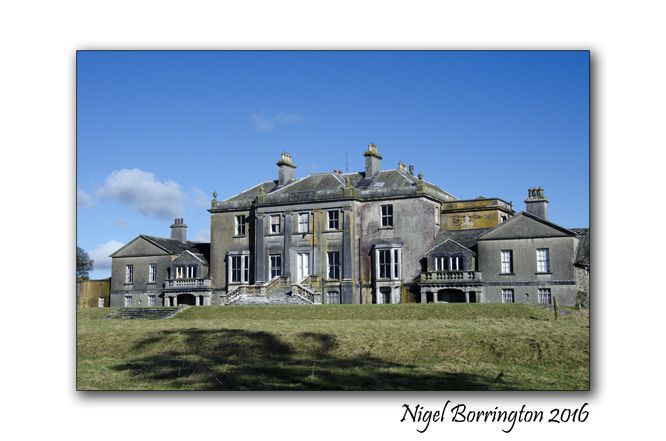
Kilcooley estate
County Tipperary
Nigel Borrington
The Little Ghost, A poem by Edna St. Vincent Millay (1892-1950)
I knew her for a little ghost
That in my garden walked;
The wall is high — higher than most —
And the green gate was locked.
And yet I did not think of that
Till after she was gone —
I knew her by the broad white hat,
All ruffled, she had on.
By the dear ruffles round her feet,
By her small hands that hung
In their lace mitts, austere and sweet,
Her gown’s white folds among.
I watched to see if she would stay,
What she would do — and oh!
She looked as if she liked the way
I let my garden grow!
She bent above my favourite mint
With conscious garden grace,
She smiled and smiled — there was no hint
Of sadness in her face.

Irish Landscape photography, a few miles from home
The Mountain of Slievenamon
County Tipperary
Ireland
Nigel Borrington
Irish landscapes – Kilkenny , an evening in early springtime
Irish Landscapes
Early Springtime
Kilkenny
Nigel Borrington
The last of today’s sunlight was just perfect ….
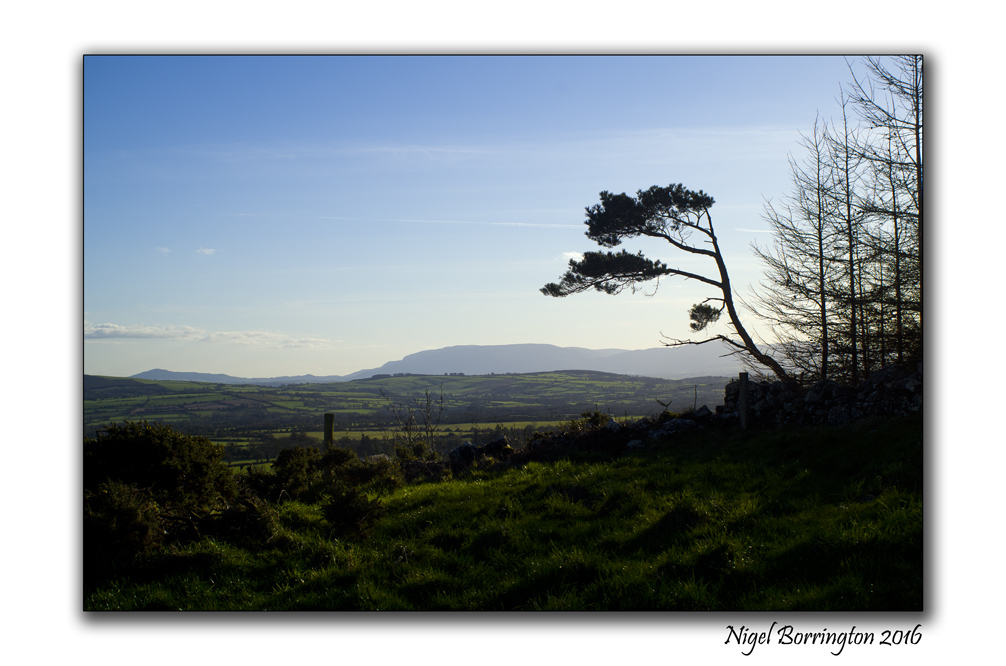
This evening I took a walk along some of our local lanes , up in the hills near the village of Windgap, Kilkenny. The sun hung low in the sky an hour before sunset and filled the fields with vivid greens and long shadows from the hedgerow trees, just such a wonderful sense of early springtime which is just around the corner now, you can feel it just waiting to burst through…..
This is the best time of year with so many great months ahead of us ……
The Train to Santa Marinella
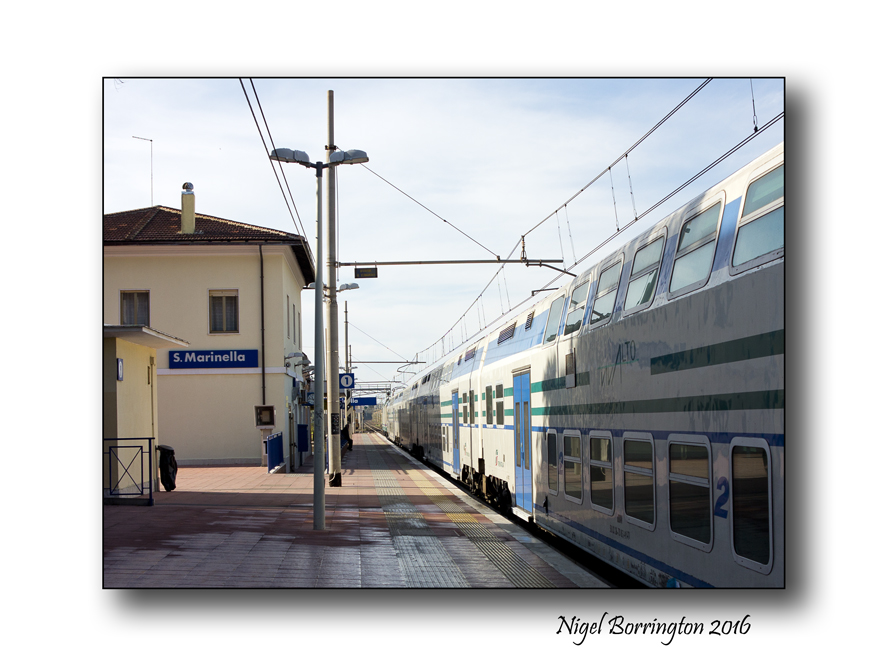
On a recent holiday to Italy we took a train from Rome to the coastal town of Santa Marinella. From Termini station in Rome this is about a 45min trip through the country north west of the capital city.
The train Station at Santa Marinella is located in the side streets of the town but you only have to walk out of the station and turn right and you are looking down the street towards the beach.
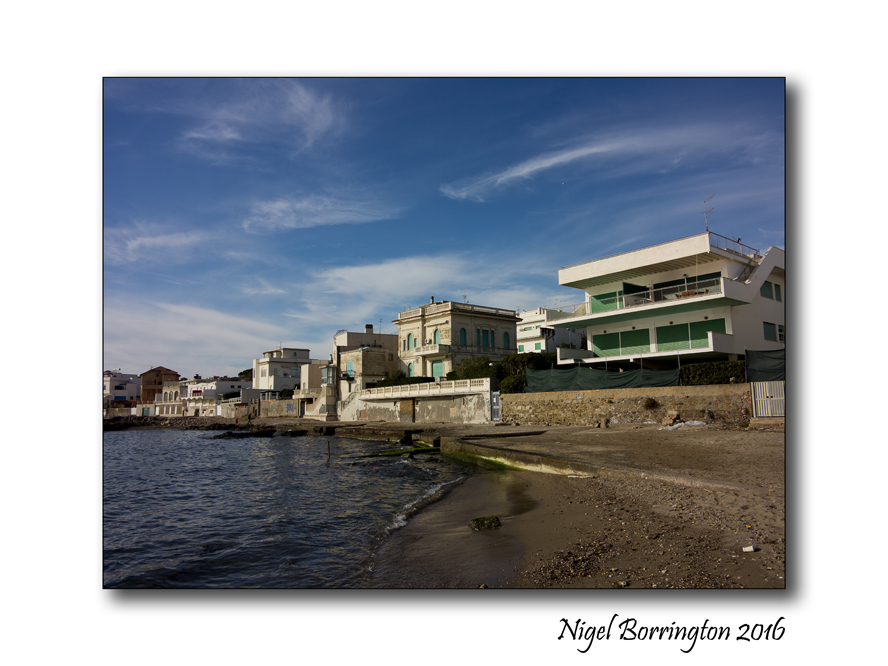
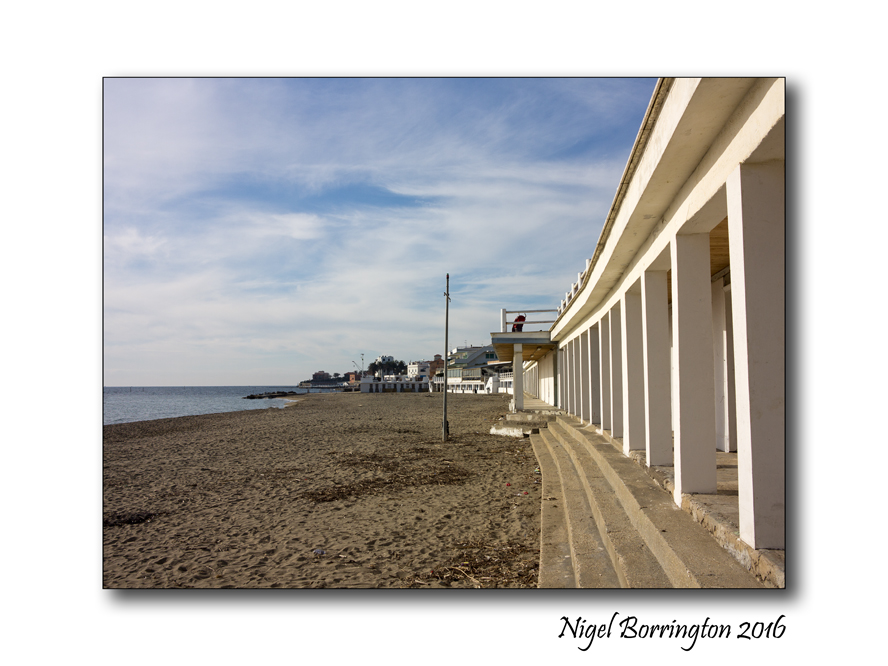
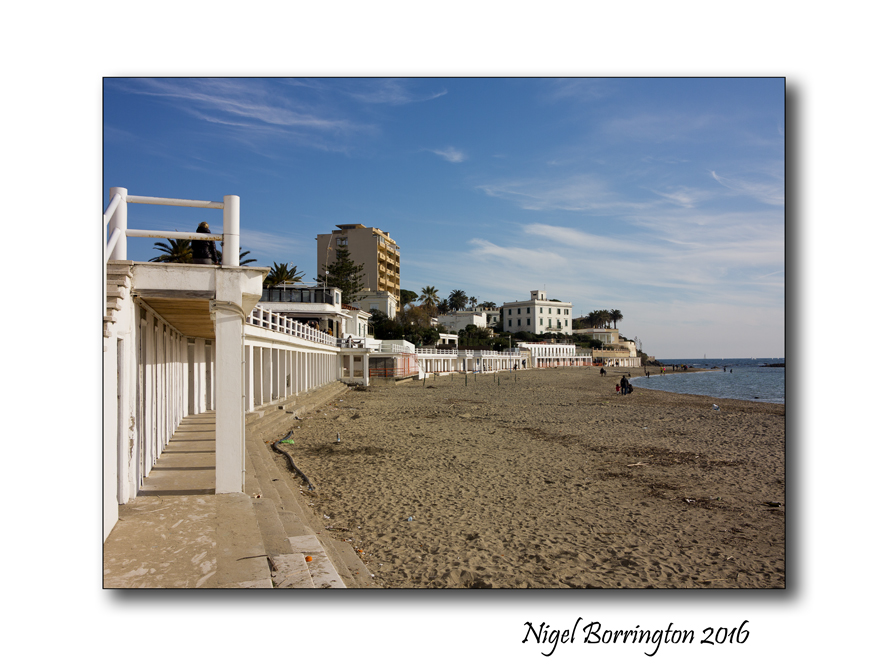
As you can see from the pictures I took around the beach area it’s is a very well kept town and beaches, this was a winters day in December 2015 so there was very few people around however because its close to Rome I can imaging in the summer it would be much busier.
If you are in Rome for a Holiday and want to get out of the city for a while then this is a great place to visit, for lunch and coffee with a view of a sea front.

Snowy mountain peaks, Nire Valley, Co.Waterford

Following on from my last two posts relating to getting to know a pc Art based application called mypaint, I spent yesterday evening working on some quick landscape sketches of the Nire Valley in county Waterford
I am starting to feel a little more confident with the available brushes, learning just how best to make use of some of them along with using layers to help build up a painting. As with any method of producing art work, I guess the best way to learn is to keep producing image’s, so I hope to keep working on as many paintings as possible.
Irish Landscapes – Mount Juliet Estate, Co.Kilkenny
Irish Landscapes
Mount Juliet Estate
county Kilkenny
Nigel Borrington
Mount Juliet was built in 1757 by the Earl of Carrick in compliment to his wife, Lady Juliana (Juliet). This estate has very strong Norman associations and in particular with the great Butler family.

The estate was originally two separate estates called Walton’s Grove and Ballylinch. The Waltons were the owners until 1653 when they were dispossessed by Oliver Cromwell. It later fell into the hands of King James II. It was then sold to a Mr Sweet, followed by a Mr Kendal who changed it’s name to ‘Kendal’s Grove’ in 1719. Mr Kendal left the entire property to the local Rev. Bushe who retrieved an important portfolio for him after being ‘mugged’ by a highway!
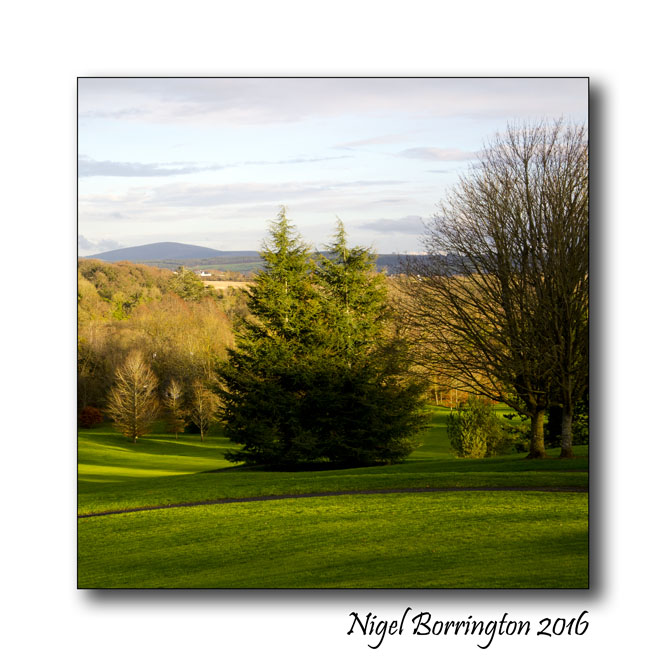
Rev. Bushe was wildly extravagant, ran up enormous debts and eventually sold the estate to his neighbour, the Earl of Carrick. It remained in this family from the 1750s until 1914, when the present Earl sold the estate to the McCalmont family who lived here until quite recently.

 Nigel Borrington
Friday poetry : The To-be-forgotten By Thomas Hardy
It does not take you very long while walking around the Irish Landscape to cross paths with an old abandoned church or two. These old churches are mainly connected to the remains of long evacuated family estates and would have been originally erected as community churches for both the occupants of the estate house and the larger community.
I find these places fascinating for many reasons, a reminder of the past and times of changes around both the 1916 Easter rising and then the Irish Civil War.
I have to be honest I avoid any area of conflict (Political and religious!) in life as much as I possible can, I feel society spends too much time as it is looking back on times of trouble, war and death and wonder sometimes if this is not the very reason why we end up with future conflicts?
For me Life is too short to spend any-time waving flags on behalf of past conflicts – NO ONE WINS IN WAR!
When I come across these old churches however I just have to stop and spend sometime because the names on these grave stones were real people and many of them would have lived full lives and been great family members, loved and been loved, real people!
The To-be-forgotten
By Thomas Hardy
.
I
I heard a small sad sound,
And stood awhile among the tombs around:
“Wherefore, old friends,” said I, “are you distrest,
Now, screened from life’s unrest?”
II
—”O not at being here;
But that our future second death is near;
When, with the living, memory of us numbs,
And blank oblivion comes!
III
“These, our sped ancestry,
Lie here embraced by deeper death than we;
Nor shape nor thought of theirs can you descry
With keenest backward eye.
IV
“They count as quite forgot;
They are as men who have existed not;
Theirs is a loss past loss of fitful breath;
It is the second death.
V
“We here, as yet, each day
Are blest with dear recall; as yet, can say
We hold in some soul loved continuance
Of shape and voice and glance.
VI
“But what has been will be —
First memory, then oblivion’s swallowing sea;
Like men foregone, shall we merge into those
Whose story no one knows.
VII
“For which of us could hope
To show in life that world-awakening scope
Granted the few whose memory none lets die,
But all men magnify?
VIII
“We were but Fortune’s sport;
Things true, things lovely, things of good report
We neither shunned nor sought … We see our bourne,
And seeing it we mourn.”
Ireland’s old churches
Share this:
April 8, 2016 | Categories: Comment, Forgotten places, Humanism, irish history, Landscape, Travel Locations | Tags: History, Ireland, Irish landscape photography, Nigel Borrington, Old churches, persoanal comment, poems, poetry, The To-be-forgotten, Thomas Hardy | 10 Comments