The Poppy
June I cannot want for you and your poppy fields!

The Red Poppy
The great thing is not having a mind.
Feelings: oh, I have those; they govern me.
I have a lord in heaven called the sun, and open for him,
showing him the fire of my own heart,
fire like his presence.
What could such glory be if not a heart?
Oh my brothers and sisters,
were you like me once, long ago,
before you were human?
Did you permit yourselves to open once,
who would never open again?
Because in truth I am speaking now the way you do.
I speak because I am shattered.
by Louise Glück

The flower’s connection with death has been known for countless centuries. The twin Greek deities Hypnos and Thanatos, were illustrated wearing crowns of poppies and the flowers were considered suitable offerings for the dead in both ancient Greece and Rome.
In other parts of the world, poppies have happier associations, In China, it is believed to be lucky to smell the scent of the flower three times a day and in Turkey, they symbolise the promise of health and peace.
Magical properties have also been attributed to the flower. In ‘A Mid Summer’s Night Dream’, Shakespeare writes ” The juice of it on sleeping eyelids laid will make a man or woman madly dote upon the next live creature that it sees”. Peering into the black centre was a traditional folk remedy for insomnia.
Whilst opium is derived from only one of the hundreds of different varieties of poppy, many poppies have sedative effects on those who consume them and poppies are sometimes inscribed on gravestones to symbolise eternal rest. In the popular film, The Wizard of Oz, a poppy field was depicted as dangerous as it caused all those who passed through it to fall asleep forever. Such are the properties of this plant that foods rich in culinary poppy seeds can even result in the failing of an opiate drug test and the sale of poppy seeds is banned in several countries.

Swanage Railway

These images were taken during a visit to the (Swanage railway, Dorset, uk) on the south coast of England. We were staying in poole and had been guided toward visiting the Swanage Railway, so one warm Sunday morning we arrived at Swanage station in order to get the ten o’clock train to Norden park and back.
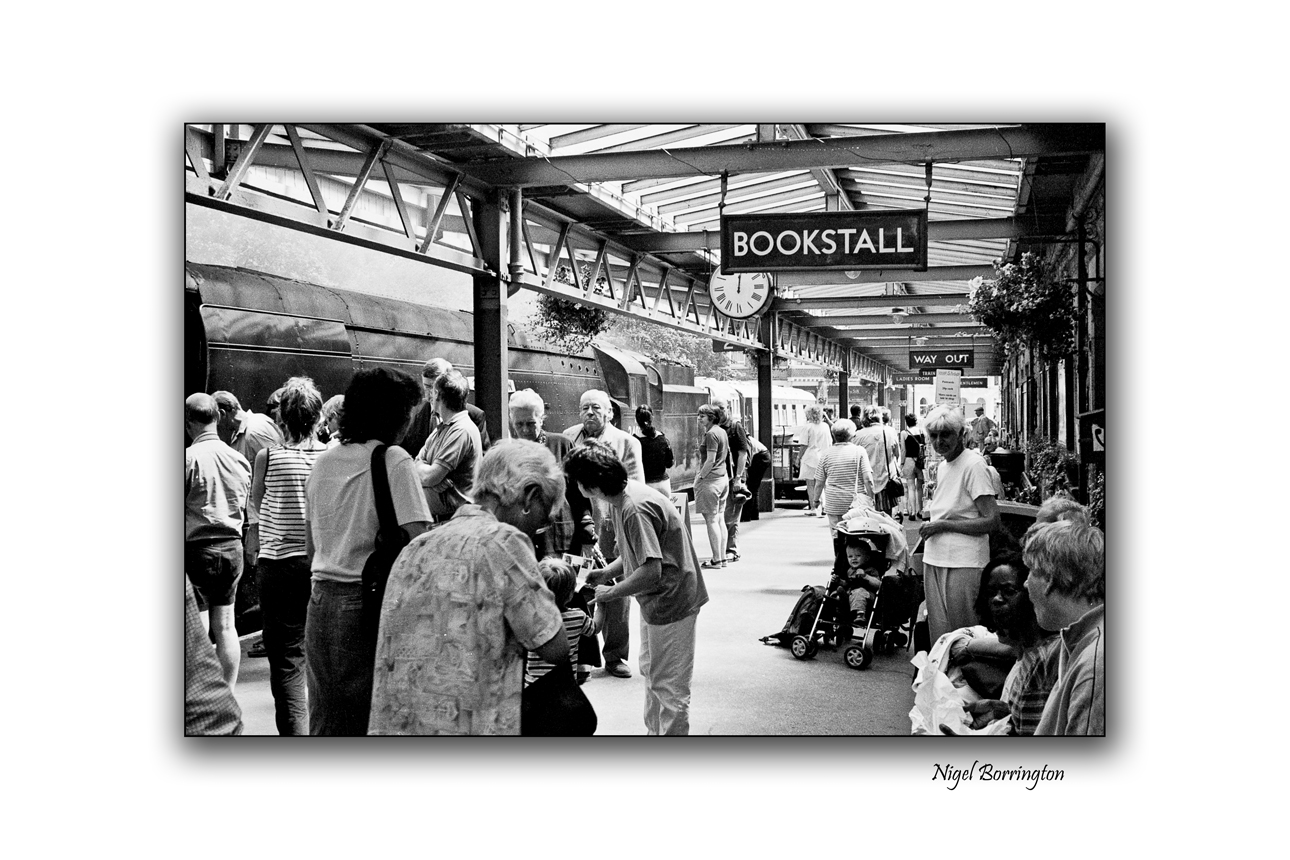
From the moment we collected our tickets and walked to the platform for the train it felt like going back in time to the nineteen thirties.
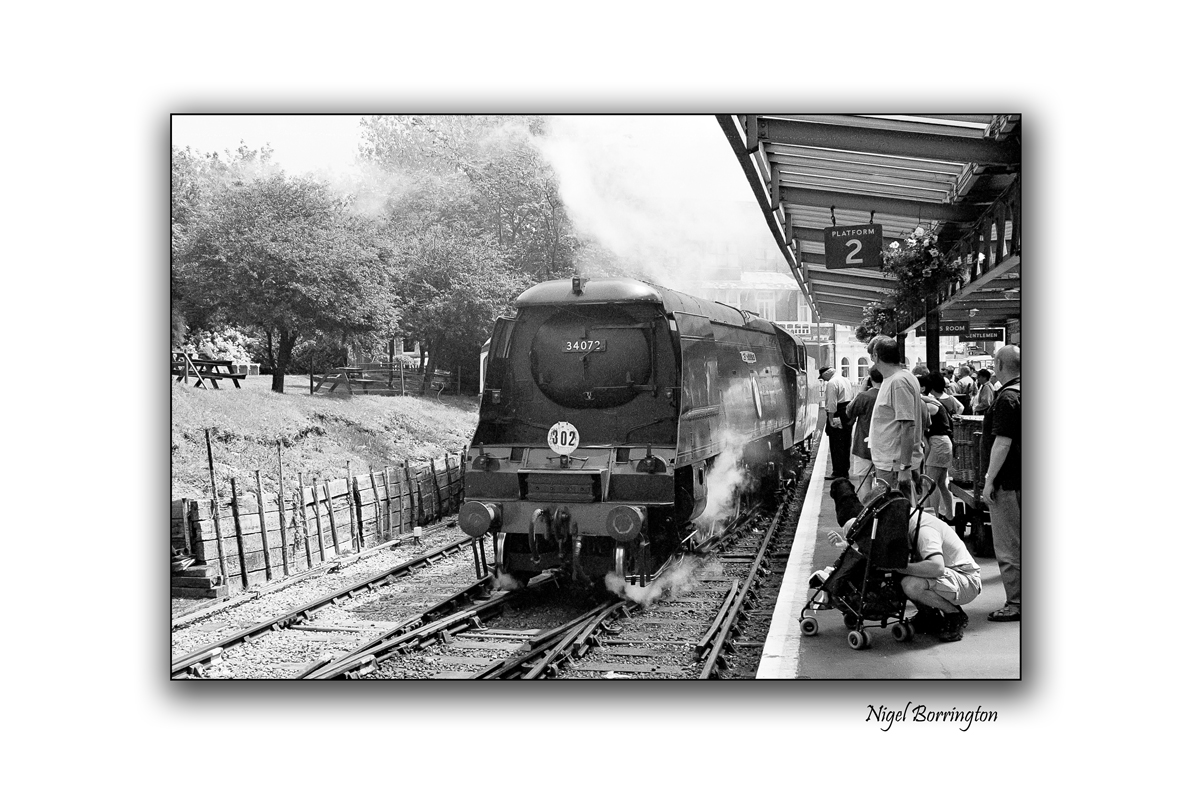
Every part of the station was setup to make you feel you had returned to times gone by. Old cases and trolleys, bookshops and tea shops with every member of staff dressed to complete the feeling.
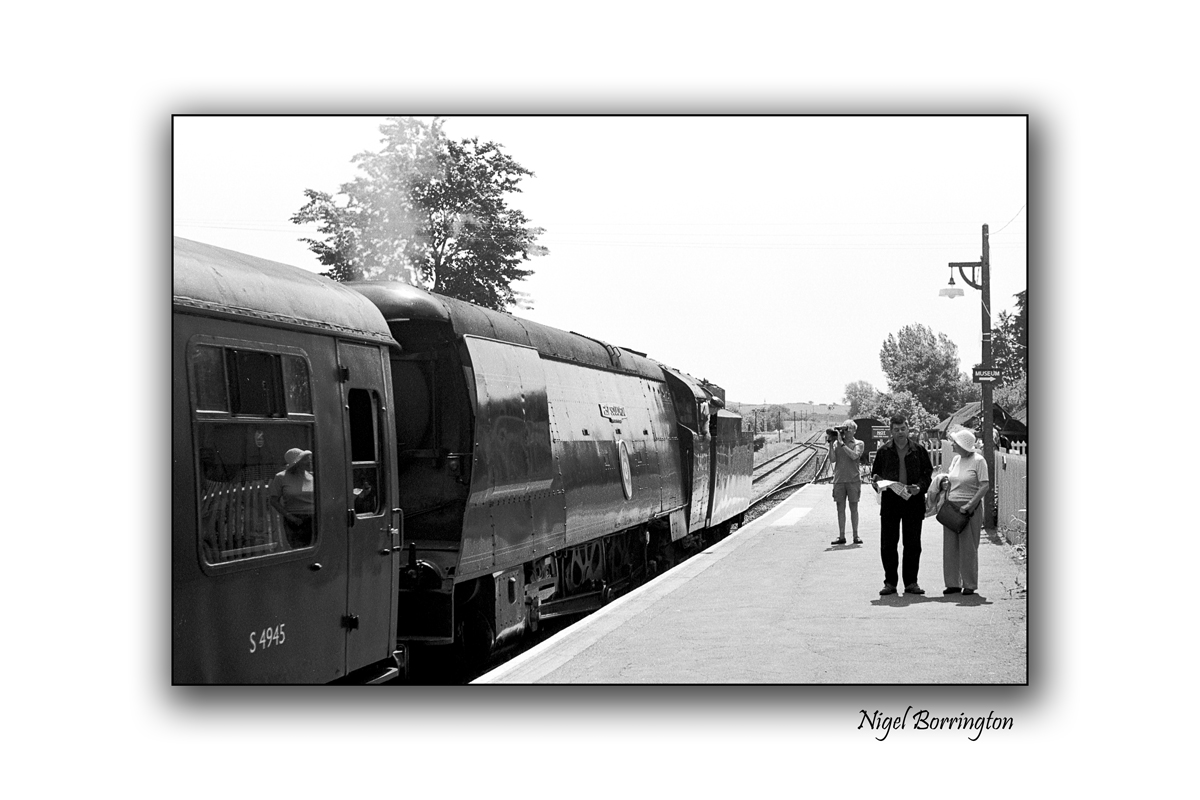
When we took our seats on the train and then got on our way the sounds and smells of the old steam engine were just brilliant. For some of these images I stuck my head out of the window and the rush of fresh air and steam as we passed the fields along the way was just unforgettable.
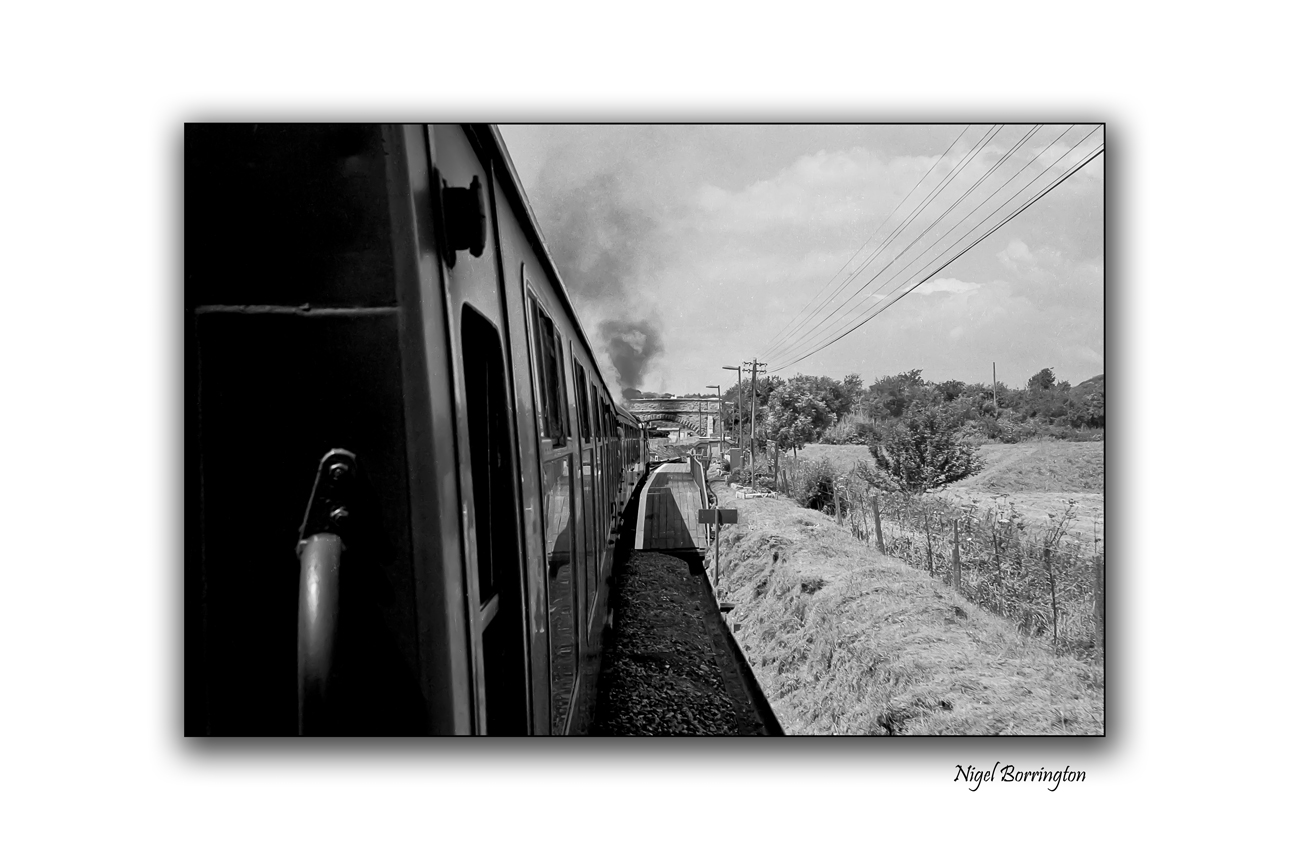
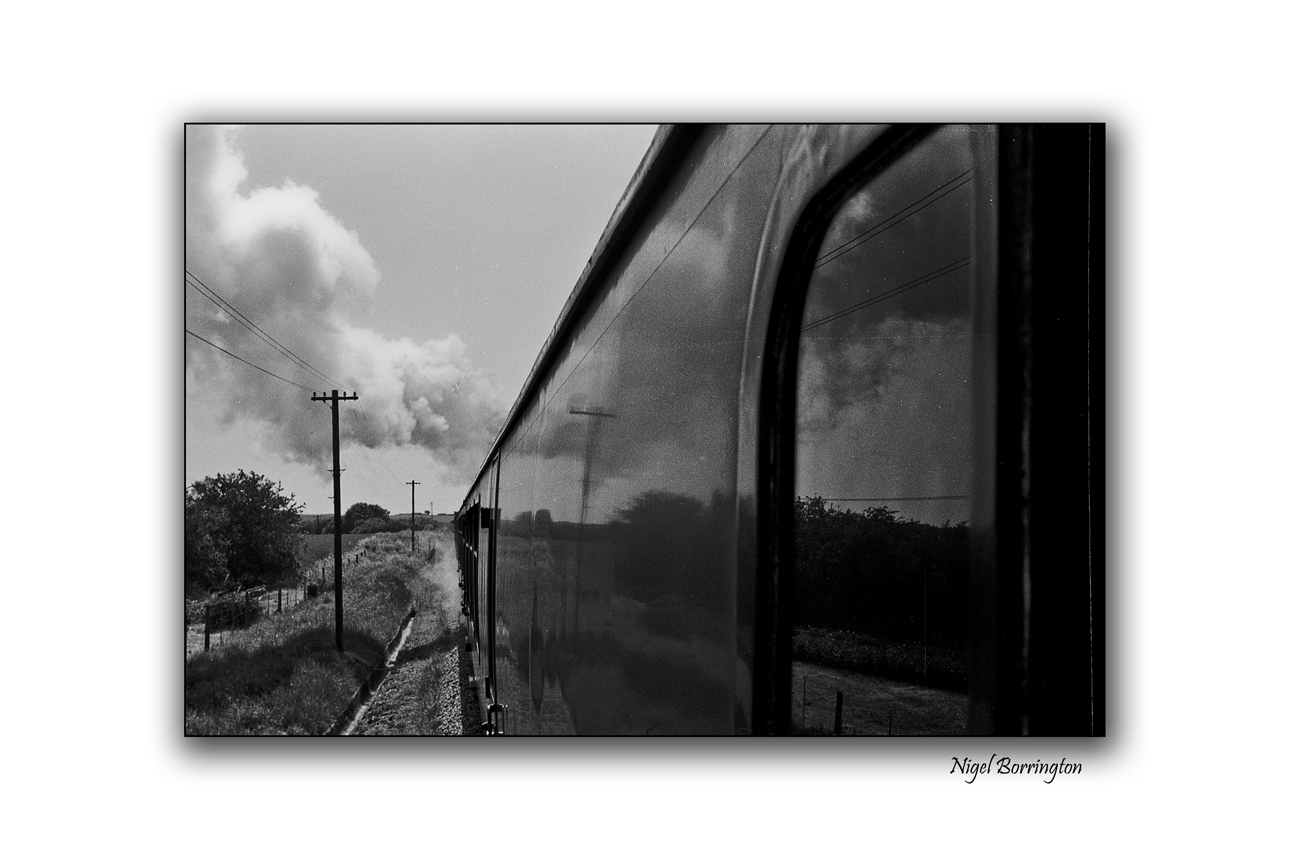
If you are ever in this part of the world you simply must visit this railway as you will enjoy the experience of a lifetime.
I include below some Wikipedia text and some more you tube links
Nigel
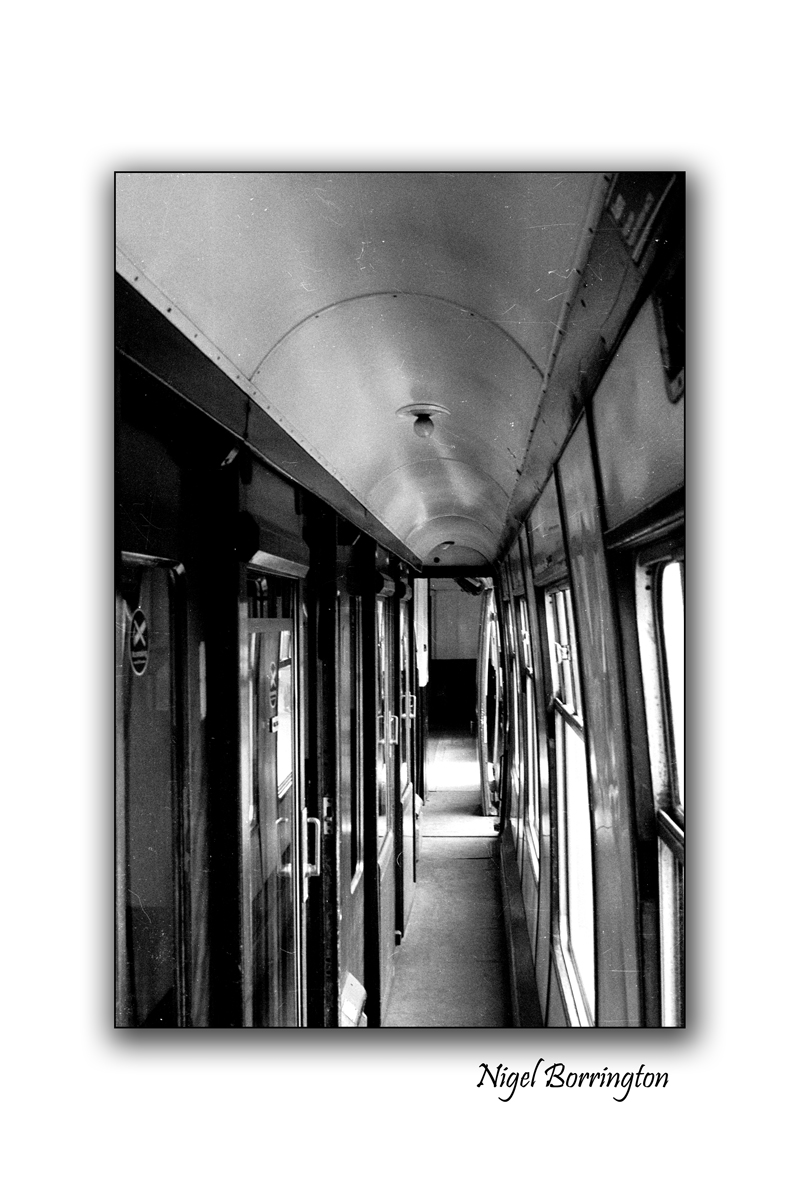
The Swanage Railway is a 6-mile (9.7 km) long heritage railway in the Purbeck district of Dorset, England. The railway line currently follows the route of the old Purbeck branch line from Norden, via Corfe Castle, Harman’s Cross and Herston Halt to Swanage.

The line was re−connected to the mainline at Wareham, Dorset, along a stretch of the branch line that had previously only remained open to freight traffic until 2005. Trains operate on the Swanage Railway between Swanage and Norden Park & Ride every weekend and Bank Holiday from mid-February to the end of the year, and every day of the week from April to October; with Santa Special services in December.
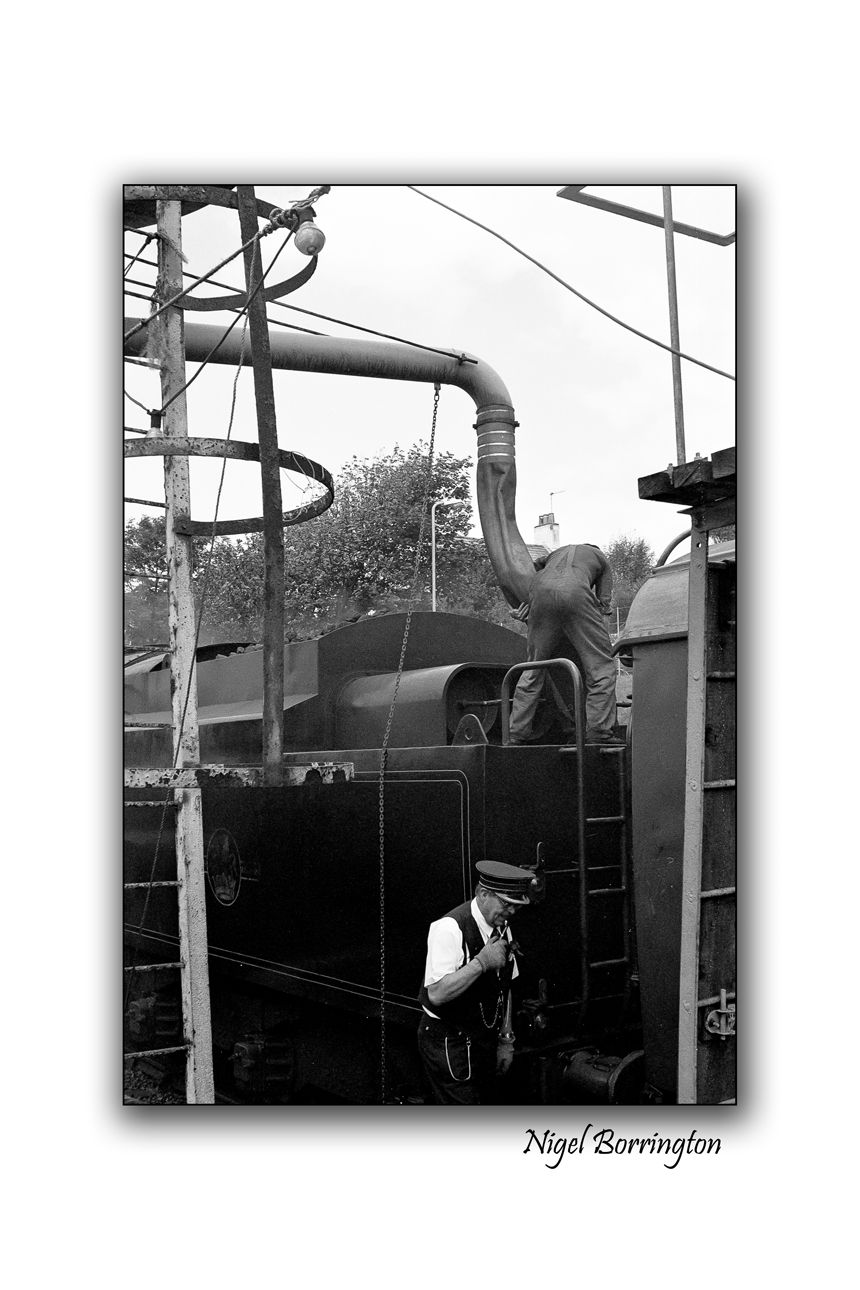
The link between the Swanage Railway and the main line at Wareham has been used for materials deliveries, special excursions, locomotive and stock movements only— work is continuing to provide the infrastructure necessary to enable regular services via Wareham to be implemented.
In April 2009 the line reopened to its first through traffic from London with occasional special services.

History
After several false starts, the branch was built by the locally promoted Swanage Railway Company. It was opened in 1885 and operated from the start by the London and South Western Railway Company. Subsequently the line became part of the Southern Railway and latterly the Southern Region of British Railways. In the 1950s the Branchline Committee identified this branch line as a possible candidate for closure. At the time such a plan was unrealistic for a branch line which carried so much seasonal holiday traffic. The closure proposal met with a great deal of opposition and was shelved. The line was not mentioned in Beeching’s 1963 report ‘The Reshaping of British Railways’.
In the mid 1960s a programme of third rail electrification took place on the main line running from Waterloo, Basingstoke, Southampton to Bournemouth in preparation for withdrawal of steam. As the third rail did not, then, extend west of Branksome the Swanage line was operated until its closure using a British Rail Class 205 DEMU.
In May 1967 the Network for Development Plans were issued by Barbara Castle MP, the then Labour Minister of Transport following a study. Where lines were at the remunerative end of the scale, such as the main trunk routes and some secondary lines, these would be developed. Lines that failed to meet the financial criterion, but served a social need were to be retained and subsidised under the 1968 Transport Act. The problem would be for lines that were not in these categories which could be candidates for closure as they did not form part of the basic railway network. The Swanage line was one of these. It was a line that may well have carried considerable traffic, and perhaps made a small profit, but it did not meet the Government’s social, economic and commercial criteria for retention.
It was in the later part of 1967 that British Railways issued a notice that the Swanage line was to be closed by September 1968. However, due in part to the level of opposition to the closure, and also by the fact that British Railways had underestimated the logistical problems in providing a replacement bus service during the summer months owing to higher traffic levels, the line remained open. Opposition from the various pressure groups was so vociferous that a public enquiry was called for. Subsequently a Department of the Environment Inspector, after hearing the evidence that a replacement bus service would be unable to handle the traffic in the summer months, ruled that the line should remain open. His decision was later overturned by the Secretary of State for the Environment. Up to this time it is possible that the line may have been in receipt of a subsidy under the terms of the 1968 Transport Act whilst all the issues concerning the pending closure of the line were discussed.
The line was closed in January 1972. In May 1972, the Swanage Railway Society was formed with the objective of restoring an all-the-year-round community railway service linking to the main line at Wareham which would be ‘subsidised’ by the operation of steam-hauled heritage trains during the holidays.
However BR responded by hiring contractors to lift the track between Swanage and Furzebrook sidings during the summer of 1972; massive protests were orchestrated by the Society and an agreement between the Society and BR followed leading to all the ballast being left in situ plus an extra half a mile of track at Furzebrook. The track from Furzebrook to the main line junction at Worgret remained in use for ball clay traffic, later also serving the oilfield at Wytch Farm. BR had intended to sell the Swanage station site to a property developer, but after the intervention of the Evelyn King, the MP for South Dorset, at the Society’s request, offered it to Swanage Town Council (STC).
At first, neither the Dorset County Council (DCC), nor the STC backed the Society’s plans to restore the railway. DCC planned to build a by-pass for Corfe Castle on the railway land, while STC actually started to demolish Swanage station. To break the impasse, the Railway Society formed two daughter organisations: the Swanage and Wareham Railway Group – composed of local residents prepared to lobby the local authorities and the Southern Steam Group – to collect historic railway rolling stock and establish a museum of steam and railway technology. After many interventions by local residents, in 1975, the STC finally granted the Society limited facilities on the Swanage station site. In 1975 DCC acquired the railway land between the end of the line at Furzebrook and Northbrook Road bridge, Swanage and to ‘give further consideration’ to routes for a Corfe By-pass. The Railway Society piloted a successful application by the Southern Steam Group to the Charity Commissioners for charitable status and subsequently both the Society and the residents group joined the new Southern Steam Trust.
In 1979 a short line re-opened, the length of King George’s playing fields. This was extended first to Herston Halt and then to Harman’s Cross in 1988. Neither Herston Halt nor Harman’s Cross had been stations previously. In 1995 the railway reopened from Swanage to Corfe Castle and Norden Park and Ride, another post BR station. The opening of Corfe Castle was delayed until Norden was ready as Dorset County Council had concerns about the effects of traffic on Corfe’s narrow main street (the A351 road between Wareham and Swanage).
On 3 January 2002 the track was temporarily joined with the Furzebrook freight line at Motala and the Purbeck branch line was once again complete, thirty years to the day after it was closed.
On 8 September 2002, a brand new Virgin Trains Class 220 “Voyager” diesel multiple unit, no. 220018, became the first mainline train to use the new track when it made a special journey for a ceremony at Swanage where it was named Dorset Voyager and began its first passenger journey.[2] Following this historic event, the efforts of the Swanage Railway’s volunteers were redoubled working with Network Rail to replace the temporary connection with a permanent ground frame and catch-point arrangement at Motala.
On 10 May 2007 history was made when the Swanage Railway’s permanent connection with Network Rail was used for the first time – four ex-BR diesel locomotives running from Eastleigh down to Swanage to participate in the Purbeck Line’s largest ever diesel gala and beer festival in May 2007. Also making the trip—the first such working since the summer of 1972 when the tracks to Corfe Castle and Swanage were lifted—was a preserved four-carriage electric 4VEP British Rail Class 423 unit provided by South West Trains.[3]
The link was again used in July 2007 when a steam locomotive for the Swanage Railway’s 40th Anniversary of the End of Southern Steam special event travelled to Swanage via the main line at Wareham.
The first public passenger service between Wareham and Swanage since 1972 was from London Victoria to Swanage, via Wareham on 1 April 2009.
The Swanage Railway’s works at Herston, on the outskirts of Swanage, are not physically connected to the running line. Movements of locomotives for overhaul are carried out by road transporter as the Swanage Railway has been unable to reach agreement with local landowners to build a branch connection into Herston Works.
Charlestown

Nikon F90x, 28mm Afd lens

Nikon F90x, 28mm Afd lens
Just two images today from a visit I made to Charlestown, Cornwall.
Throughout the nineteenth century the little dock was packed with ships and the harbourside sheds and warehouses thronged with complementary businesses: boatbuilding, ropemaking, brickworks, lime burning, net houses, bark houses and pilchard curing.
Today there are two remarkable things about Charlestown.
One is that, against all the odds, it has survived as a working port and a small amount of china clay is still exported in an average of 30-40 ships a year, and this saves the place from becoming a cosy caricature of itself with plenty of ‘heritage appeal’ but no real life.
The second is that – again, against all the odds – it has largely escaped ‘development’ and remains one of the finest and most fascinating places on the Cornish coast.
Perhaps the words “so far” should be added to these two observations, for who knows what will happen to Charlestown in the future?
At the time of writing, the harbour is the home port for a famous collection of old ships which are employed in film projects all over the world – they have brought work and life to the quays and harbour buildings and are a particular draw for visitors.”
I spent a week here and its a week I will never forget, I was working in London at the time and returned to my Job like a new person – this is a very special place!!
Wincham, – Goodbye old Girl
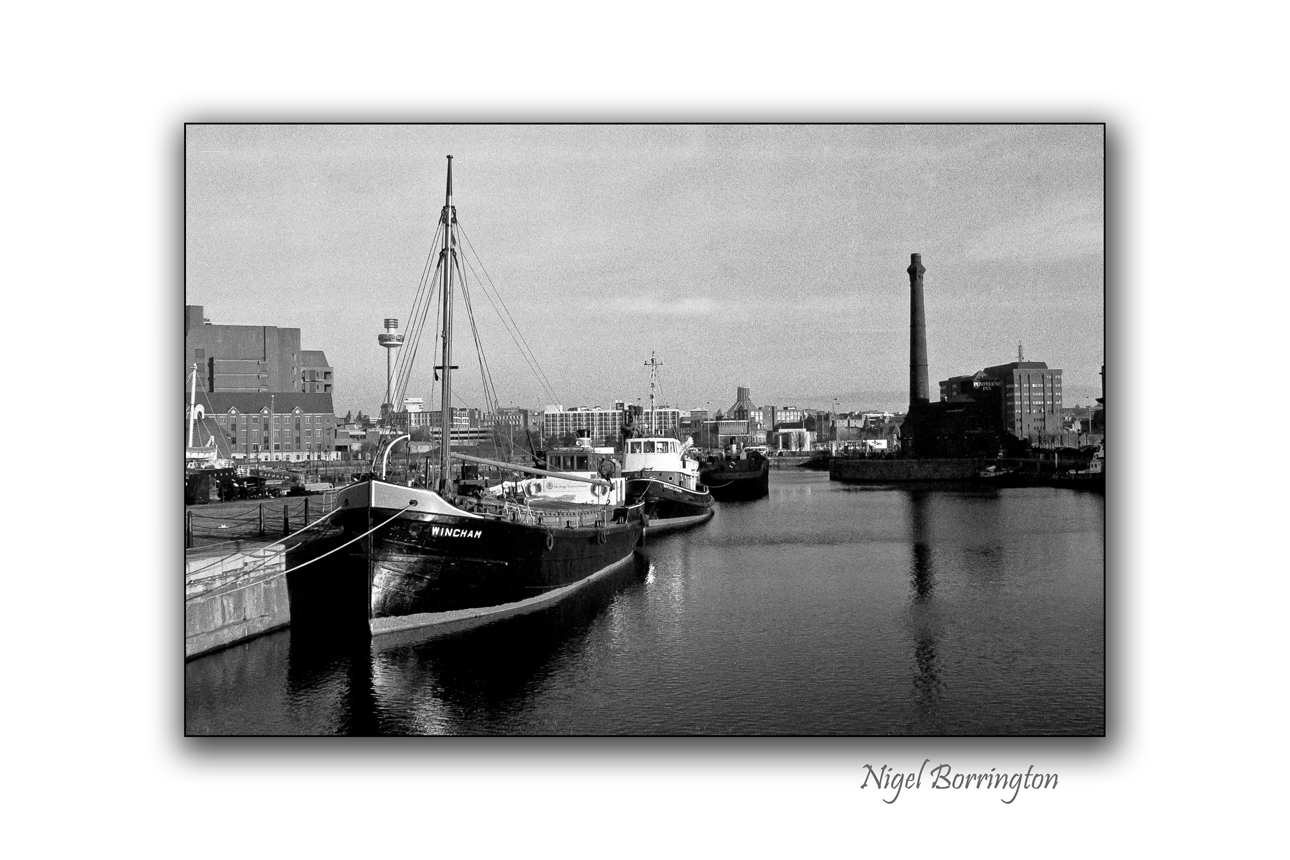
Nikon F90x, 50mm f1.4 lens
Ilford XP2
It comes to us all in the end….
Some years ago and longer than I can remember, I was in Liverpool and took this shot of the Wincham at the then new Albert docks.
Wincham’s history
Built in 1948 by Yarwoods of Northwich for ICI Liverpool, WINCHAM is a small motor cargo vessel designed to carry goods in bulk on the west coast of England. She is made of riveted steel, has a diesel engine and is the last of a class of 5 vessels built for ICI. Her working week would encompass 2 or 3 trips with chemical products from the ICI works at Winnington on the River Weaver to Liverpool and Birkenhead for transfer to deep sea vessels.
In 1977, she was sold to Bulk Cargo Handling Services Limited whose colours she still carries. In 1983 she was withdrawn from commercial service and purchased by the Wincham Preservation Society Ltd who maintain and operate her from her berth at Canning Dock alongside the Merseyside Maritime Museum. The Society received a grant of £47,500 from the Heritage Lottery Fund in 2002 and she is maintained in operating condition.
But then….
Wincham about to be broken up at Bromborough 17/04/09
The former ICI Weaver barge Wincham (built 1948) seen about to be broken up on the slipway at Bromborough 17/04/09. She was part of the Mersey maritime collection and based in Albert dock Liverpool but costly repairs meant her original owners took the decision to let her go for scrap… a disgrace.
So here she is in the better days!
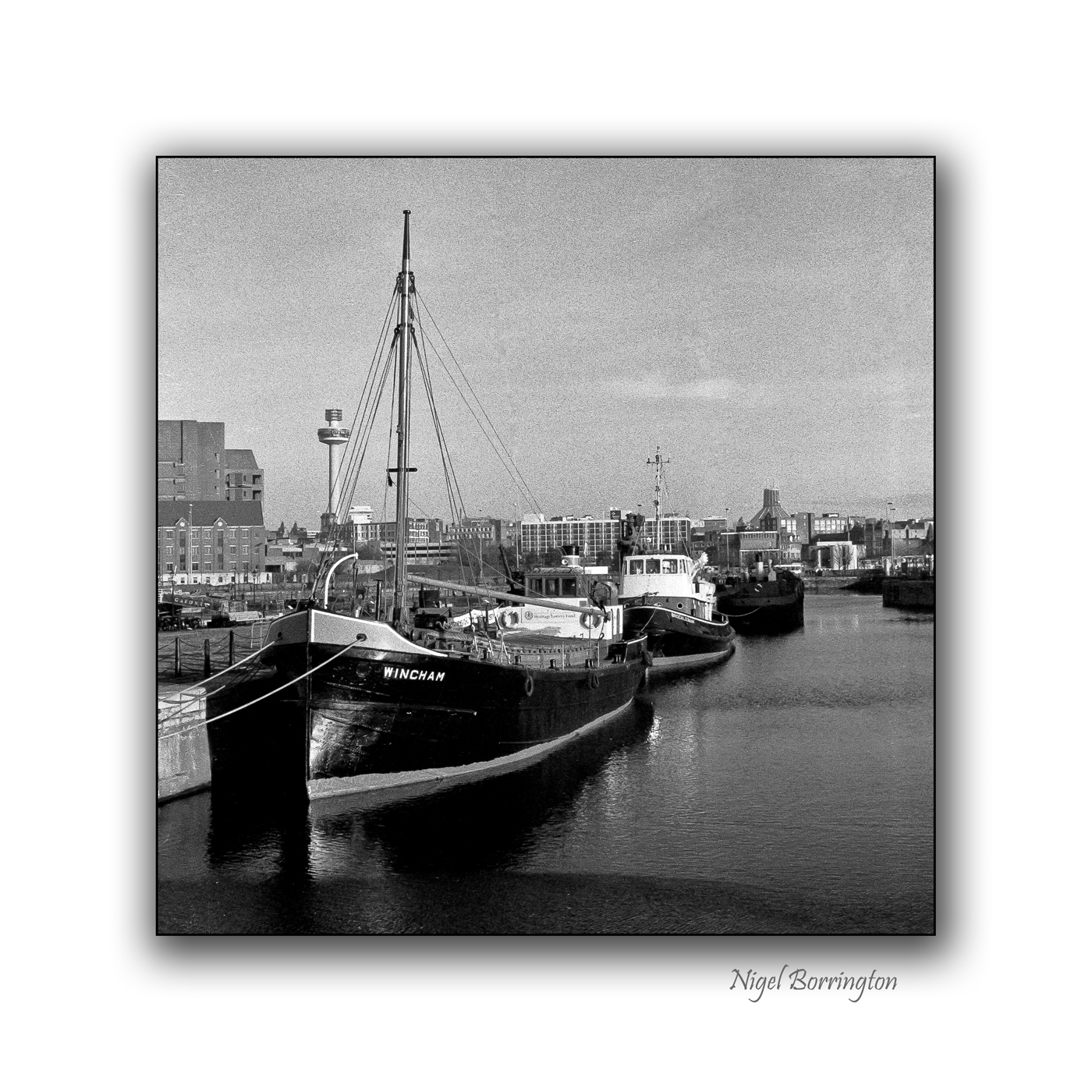
Nikon F90x, 50mm f1.4 lens
Ilford XP2
Good bye old girl, you left a big space behind!!
Good Friday

Am I a stone and not a sheep
That I can stand, O Christ, beneath Thy Cross,
To number drop by drop Thy Blood’s slow loss,
And yet not weep?
Not so those women loved
Who with exceeding grief lamented Thee;
Not so fallen Peter weeping bitterly;
Not so the thief was moved;
Not so the Sun and Moon
Which hid their faces in a starless sky,
A horror of great darkness at broad noon,–
I, only I.
Yet give not o’er,
But seek Thy sheep, true Shepherd of the flock;
Greater than Moses, turn and look once more
And smite a rock.
Poetry by Christina Georgina Rossetti
Public Domain
Say hello, Ruby
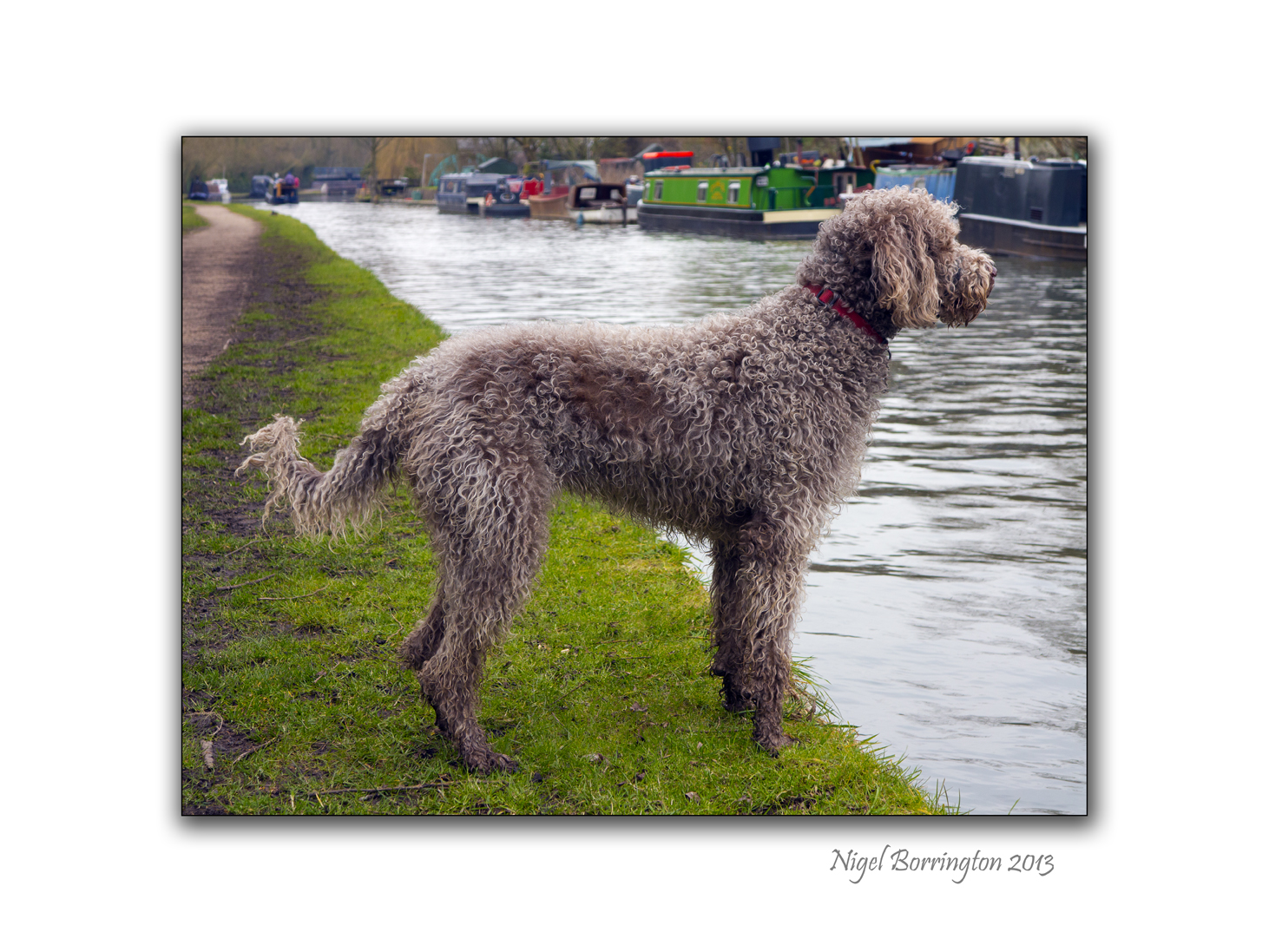
This is Ruby by brothers two year old Labradoodle, who I just got time to meet and walk with last week.
I just wanted you to meet her and say hello, we walked along the grand union canal near harefield in the uk.
I will post more about this walk soon, hope to get to spend more time with her, my brother and Ken very soon!!
Nigel
Earth

Connected to the North,
Earth is considered the ultimate feminine element, Earth is fertile and stable, associated with the Goddess. The planet itself is a ball of life, and as the Wheel of the Year turns, we can watch all the aspects of life take place in the Earth: birth, life, death, and finally rebirth. The Earth is nurturing and stable, solid and firm, full of endurance and strength. In color correspondences, both green and brown connect to the Earth, for fairly obvious reasons! In Tarot readings, the Earth is related to the suit of Pentacles or Coins.

Mother goddess is a term used to refer to a goddess who represents motherhood, fertility, creation, or who embodies the bounty of the Earth. When equated with the Earth or the natural world such goddesses are sometimes referred to as Mother Earth or as the Earth Mother.
Celtic Goddess
The Irish goddess Anu, sometimes known as Danu, has an impact as a mother goddess, judging from the Dá Chích Anann near Killarney, County Kerry. Irish literature names the last and most favored generation of deities as “the people of Danu” (Tuatha De Danann). The Welsh have a similar figure called Dôn who is often equated with Danu and identified as a mother goddess. Sources for this character date from the Christian period, however, so she is referred to simply as a “mother of heroes” in the Mabinogion. The character’s (assumed) origins as a goddess are obscured.

The Celts of Gaul worshipped a goddess known as Dea Matrona (“divine mother goddess”) who was associated with the Marne River. Similar figures known as the Matres (Latin for “mothers”) are found on altars in Celtic as well as Germanic areas of Europe.

In many cultures, earth spirits are beings that are tied to the land and plant kingdom. Typically, these beings are associated with another realm, the forces of nature that inhabit a particular physical space, and landmarks like rocks and trees.
In Celtic mythology, the realm of the Fae is known to exist in a parallel space with the land of man. The Fae are part of the Tuatha de Danaan, and live underground. It’s important to watch out for them, because they’re known for their ability to trick mortals into joining them.
Gnomes feature prominently in European legend and lore. Although it’s believed that their name was coined by a Swiss alchemist named Paracelsus, these elemental beings have long been associated in one form or another with the ability to move underground.

Likewise, elves often appear in stories about the land. Jacob Grimm collected a number of stories about elves while compiling his book Teutonic Mythology, and says that elves appear in the Eddas as supernatural, magic-using beings. They appear in a number of old English and Norse legends.
Working Together

Nikon D90, May 2011
We work together
We work as one
Though there may be times
When we don’t ‘get on’
We may not always
See ‘eye to eye’
And sometimes we feel
Like saying ‘good-bye’
When this happens
We shouldn’t lose heart
For of ‘something greater’
We are all a part
Each one of us
Has a role to play
In making this
A brighter day
Janice Walkden
Family Transport
Nikon F90x, 50mm f1.4 lens and Ilfords XP2 film
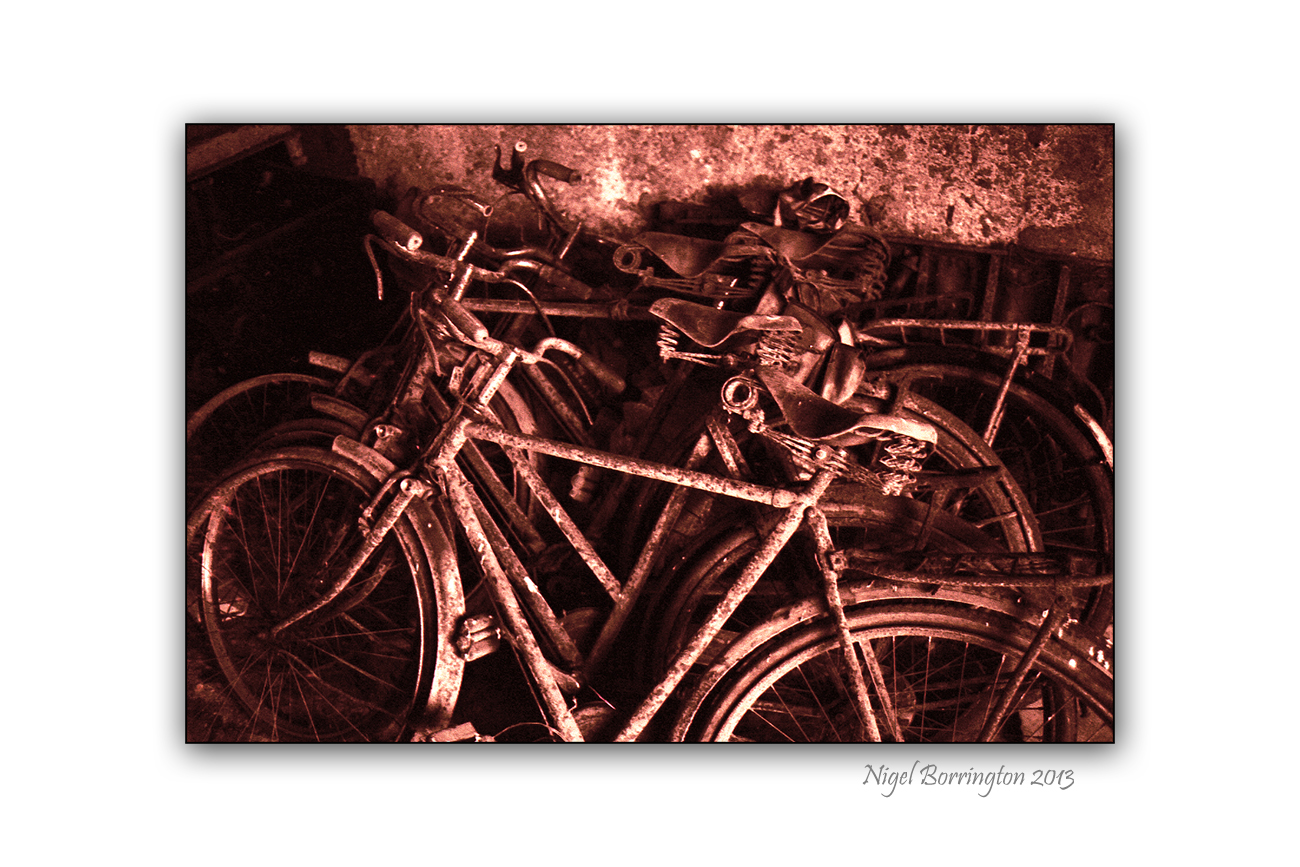
No Poems today just a picture I took way back in the 1990’s while doing a walk around the sheds on my wife’s family farm in County Kilkenny.
This collection of old bikes is everyone used by all the kids and adults in the family for many years.
Just think of all the stories they could tell!
They are still someplace hanging around waiting for someone….
Crossing the Bar

Sunset and evening star,
And one clear call for me!
And may there be no moaning of the bar,
When I put to sea
But such a tides as moving seems asleep,
Too full of sound and foam,
When that which drew from out the boundless deep
Turns again home
Twilight and evening bell
And after that the dark!
And may there be no sadness of farewell
When I embark
For tho’ from out our bourne of Time and Place
The flood may bear me far
I hope to see my Pilot face to face
When I have crost the bar
Tennyson…
What is Meditation

Wildmind.org: What happens as the mind starts to quiet down?
“And we find that interesting things start to happen. Because we’re no longer reinforcing unhelpful emotions, we feel happier. And we’re free to notice that happiness more because we’re less obsessed with our thinking. So we really notice how happy we are becoming.”
Thank you!

Its just over a month since I started posting again on this blog and I just wanted to say thank you to everyone who has sent me Likes/followings and great comments.
Thank you, you have helped lift me so much!!!!
Here are some Irish Cuckoo flowers for your St Patricks weekend
Have a great one!!!
Nigel
Galway bay

The old fishing village, Teach mor, County Galway
Fuji X100, Iso 200, 35mm lens
The Area around Teach mor, Galway bay in County Galway is one of the most beautiful in Europe in my own opinion.
I took this shot while we walked our way along the coast road, you can see an old abandoned fishing village on the far shoreline. We had the place to ourselves all afternoon and Molly got to swim with the seals as they came close in just to work out who she was.
I think they got a bit of a shock when she went in with them…
Happy, St Patrick day.
ST Patrick

For anyone who has been viewing my posts (Many thanks!) you will have noticed that I don’t have a big belief in the Christian story.
This is a personal choice and not one I have always been able to make, in my younger days I do remember being very taken by the stories I heard in church. This stage of my life lasted into my mid teens then slowly faded as I started to travel more .
But anyway, I really do wish everyone a happy St Patrick’s day.
I found this to be a very balanced and interesting article, make your own mind up!
St Patrick and the snakes of ireland
Air

Fujifilm X100
The pagan elements :
Air is one of the four classical elements, and is often invoked in Wiccan ritual. Air is the element of the East, connected to the soul and the breath of life. Air is associated with the colors yellow and white. Interestingly, in some cultures a triangle sitting on its base like this is considered masculine, and is connected to the element of Fire rather than Air.
In some traditions of Wicca, Air is represented not by the triangle, but by either a circle with a point in the center, or by a feather or leaf-like image. In other traditions, the triangle is used to mark the association of degrees or initiation rank — typically first degree, but not necessarily. In alchemy, this symbol is sometimes show with the horizontal line extending beyond the sides of the triangle.
In rituals, when the element of Air is called for, you can use this triangular symbol, or use a feather, incense, or a fan. Air is associated with communication, wisdom or the power of the mind. Do an outdoors working on a windy day, and allow the powers of air to aid you. Visualize air currents carrying away your troubles, blowing away strife, and carrying positive thoughts to those who are far away. Embrace the wind, and let its energy fill you and help you achieve your goals.
In many magical traditions, air is associated with various spirits and elemental beings. Entities known as sylphs are typically connected with the air and the wind – these winged creatures are often related to powers of wisdom and intuition. In some belief systems, angels and devas are associated with air. It should be noted that the term “deva” in New Age and metaphysical studies is not the same as the Buddhist class of beings known as devas.
Read more about the magic, mythology, and folklore of air and the wind: Air and Wind Folklore.
The first element of the alchemical tradition.
Air is the essence of intuition and learning, the element of the nature of the mind.
Astrological Signs: Gemini, Libra, and Aquarius.
Represented by: Feathers, Birds, incense, fans, flags, flowing garments and sheer material.
Season: Winter
Color: White
Chakra: Crown
Celtic gods and goddess:
Arianrhod
“The Silver Wheel”, “High Fruitful Mother”. Celtic (Welsh) Goddess, the sister of Gwydion and wife of Donn. Deity of element of Air, reincarnation, full moons, time, karma, retribution. The palace of this sky Goddess was Caer Arianrhold (Aurora Borealis). Keeper of the Silver Wheel of Stars, a symbol of time and karma. Her ship, Oar Wheel, carried dead warriors to Emania (Moon-land).
Arianrhod (Welsh pronunciation: [arˈjanr̥ɔd]) is a figure in Welsh mythology who plays her most important role in the Fourth Branch of the Mabinogi. She is the daughter of Dôn and the sister of Gwydion and Gilfaethwy; the Welsh Triads give her father as Beli Mawr.[1] In the Mabinogi her uncle Math ap Mathonwy is the King of Gwynedd, and during the course of the story she gives birth to two sons, Dylan Ail Don and Lleu Llaw Gyffes, through magical means.
Autonomy
Independent Heart
Soft words you spoken
From the heart that is broken
I know deep inside
You have a level of independence
With a mystery of suspense
You are recovering
Waiting for someone
To catch on to the discovering
Of the real you
With a heart so true
Giving of your best
Expecting nothing less
While hurt is making amends
Leaning on loving friends
Accounted for in time you spend
With words you write
Not giving into a broken hearts flight
Staying strong
Carrying others like me along
by Jodie Moore
Created on: May 22, 2007
The Lighthouse keepers of Ireland

The picture above is of St John point lighthouse, Co.Donegal.
Back in 2011 I started a project of capturing photos and information about the history and lives of the Lighthouse keepers of the Ireland.
I just want to share a small amount in this post.

St johns point is a very haunting and beautiful part of the coast line of County,Donegal.
St Johns Point Donegal
“This is a harbour light to guide from Donegal Bay and to mark the north side of the bay leading to Killybegs Harbour from the entrance up to Rotten Island.
The tower, built of cut granite, was designed by the Board’s Inspector of Works and Inspector of Lighthouses, George Halpin, and erected by the Board’s workmen under Halpin’s supervision.
The tower, painted white, had a first order catoptric fixed light 98 feet above high water with a visibility in clear weather of 14 miles. The light was first exhibited on 4 November 1831 with the buildings in an uncompleted state. The final cost at the end of 1833 was £10,507.8.5.
The Lighthouse Keeper’s videos:


This lighthouse project is ongoing and will most likely take sometime, I will keep updating..
Nigel
Killary Harbour

Nikon F90x, 50mm f1.4 lens on Kodak iso 100 film
Irish landscapes : Nigel borrington
Killary Harbour
From Wikipedia, the free encyclopedia
Jump to: navigation, search
Satellite image of Killary Harbour
“Killary Harbour/An Caoláire Rua is a fjord located in the West of Ireland in the heart of Connemara which forms a natural border between counties Galway and Mayo. It is 16 kilometres long and in the centre over 45 metres deep. It is one of three glacial fjords that exist in Ireland, the others being Lough Swilly and Carlingford Lough.[1]
On its northern shore lies the mountain of Mweelrea, Connacht’s highest mountain, rising to 814 metres. To the south rise the Maumturk Mountains and the Twelve Bens. The area contains some of Ireland’s most awe-inspiring and dramatic scenery.
There are two minor settlements nearby. On the southern side near the mouth of the fjord lies the hamlet of Rossroe while Leenaun lies inland to the east. Close to Rosroe there is an old building which now houses a hostel. This building was formerly a modest house which was used by Ludwig Wittgenstein, the famous philosopher, as a quiet place to write shortly after World War II. A plaque acknowledging this was unveiled by President Mary Robinson in 1993.
Nearby lies the so-called Green Road, a rough road running along the side of the fjord back east towards Leenane at the head of the fjord. It stretches for approximately nine kilometres and was part of the famine relief program during the 19th century. Aquaculture is important locally with a salmon farm based at Rossroe while mussel rafts are a common sight more to the east.”
One of the most beautiful landscape in Ireland, visit if you can!
Tails from the river bank
I told you it was great in here…

I know I left it here someplace, maybe right at the bottom – hang on
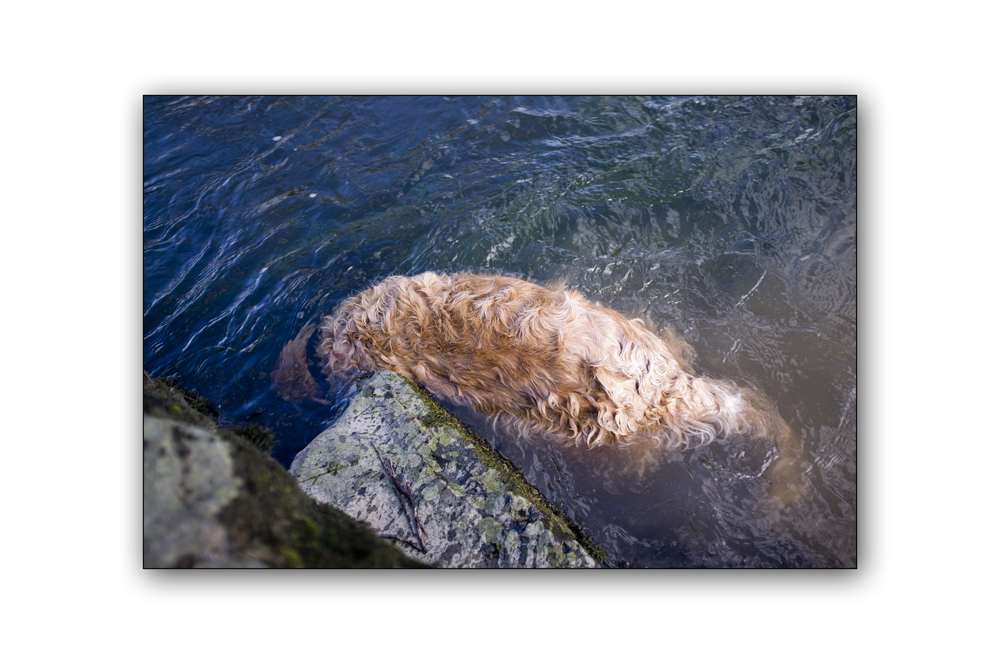
Found it

now for a good old run around
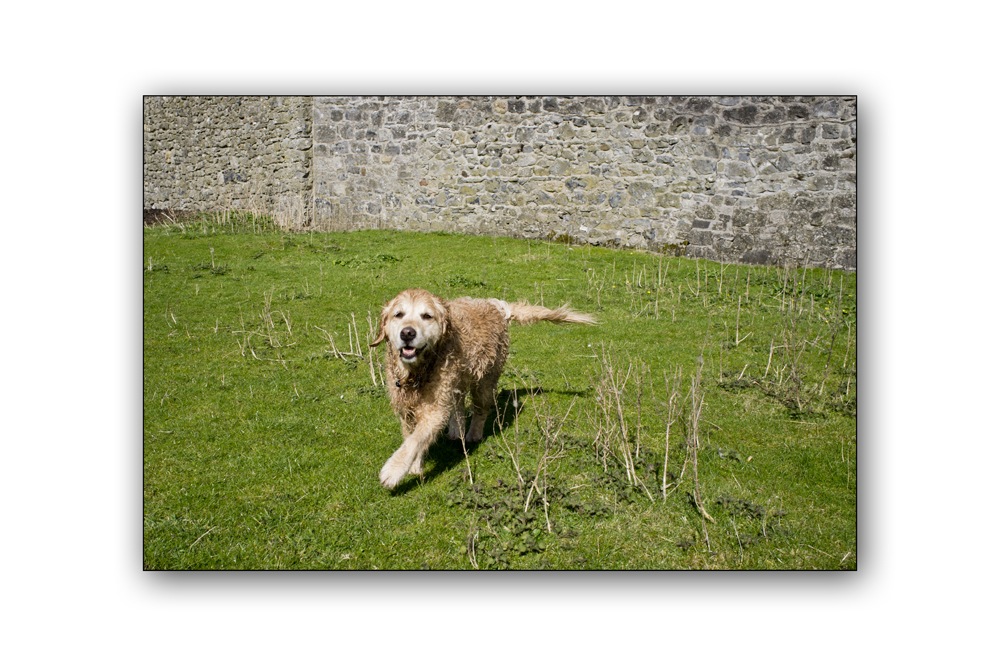
followed by sunning my belly…

So are you going to stop sitting in front of that Laptop after breakfast or what?
Can we go out please

I know your doing that blog thing again!!!!, but look the suns out and the river is going to be great this morning!
One for Monty and Anne…
Wicklow
Wicklow Landscapes on film.

Shot of the Wicklow hills.
Nikon F90x, Nikon 50mm f1.4 lens and Kodak Ektachrome
Irish landscape images : Nigel Borrington
I just started looking at my older stock of slide images and found a set that I took way back when – in County Wicklow.
Some very good and interesting colours coming from these scans, maybe just maybe people have always been correct about film. The detail however is another issue, the film grain in these images removes a lot of detail that even my old Nikon D200 would record.
Look at the black and white contrast!
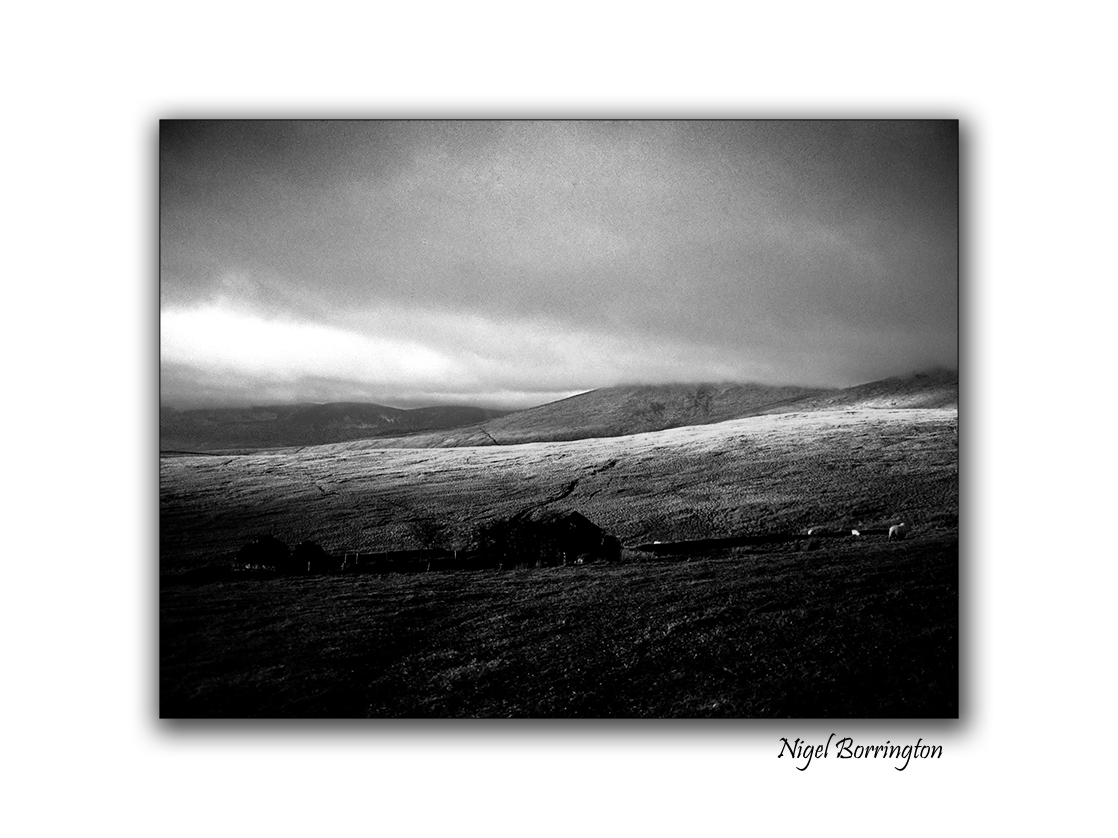


Gone walkabouts – back soon
He call me, I am following
I will keep up with everyone if I can get on line!
Talk soon
Nigel
Share this:
March 20, 2013 | Categories: Comment | Tags: Nigel Borrington | 2 Comments