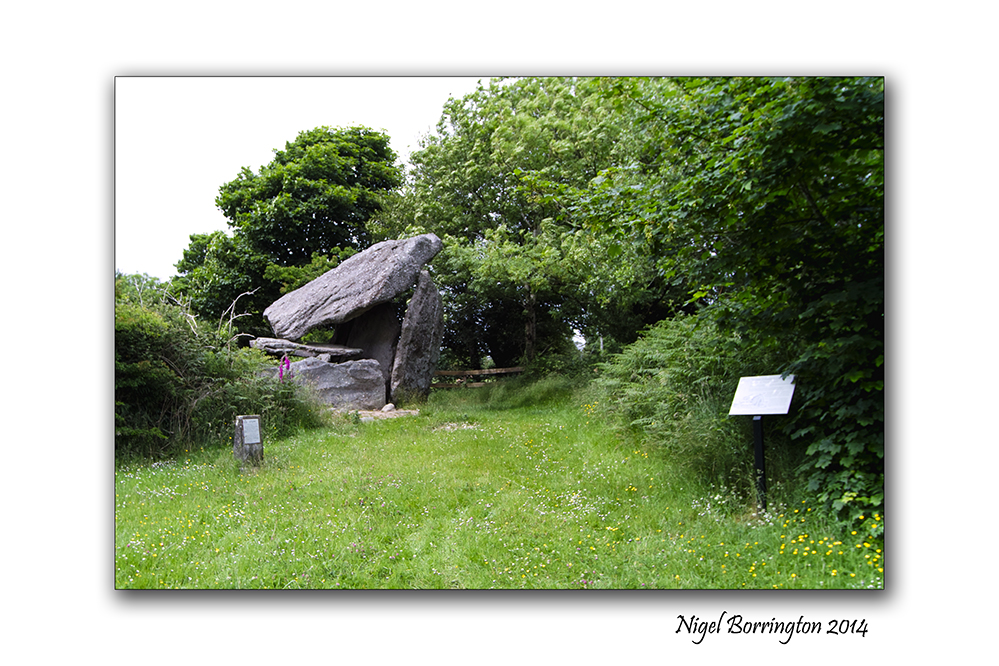
Capturing the world with Photography, Painting and Drawing

Latest

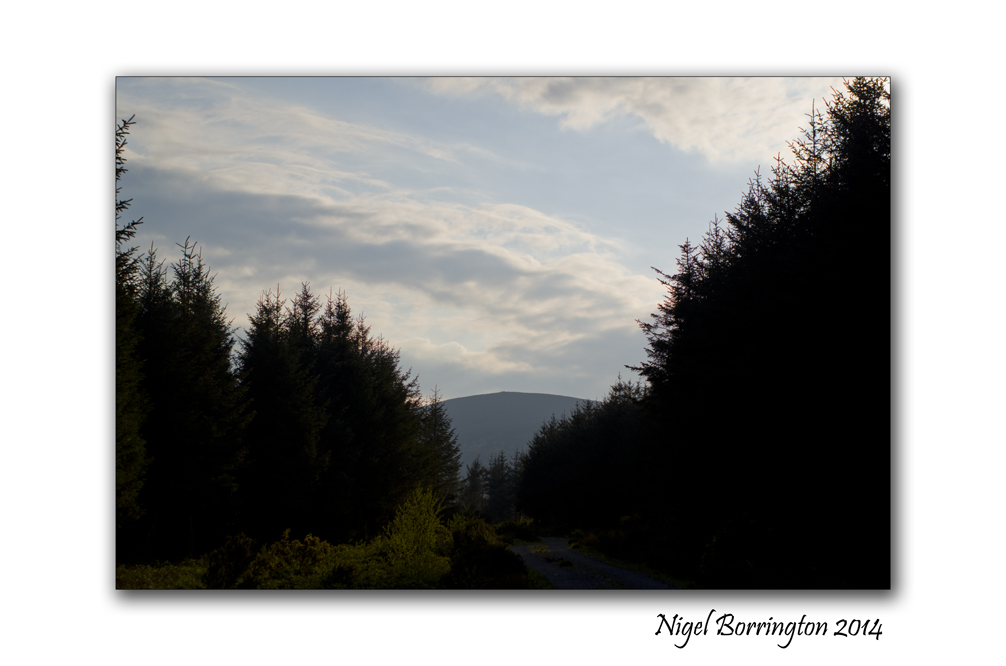
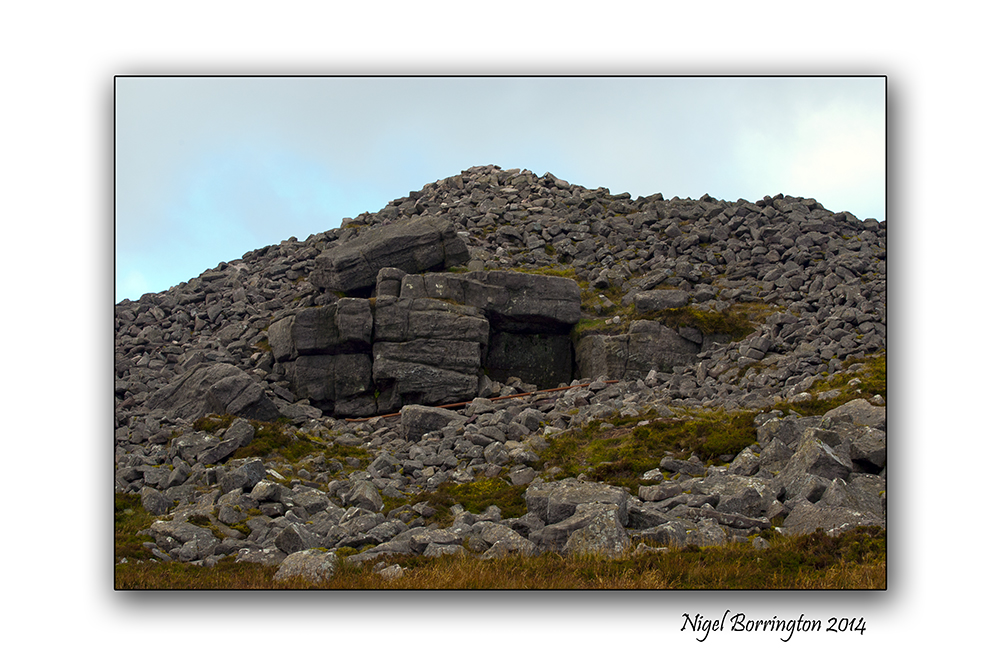
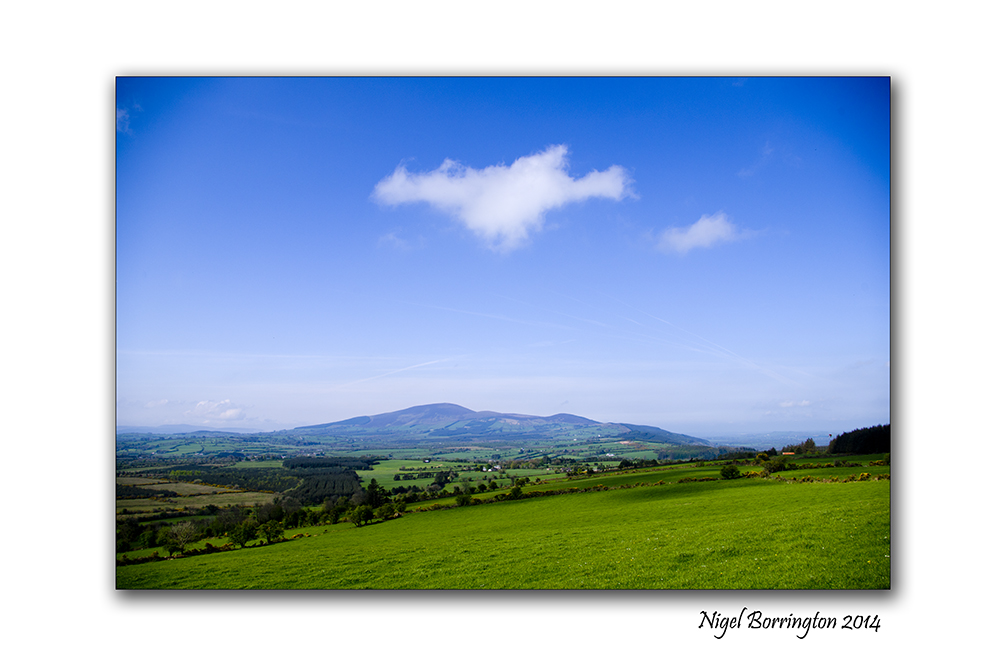
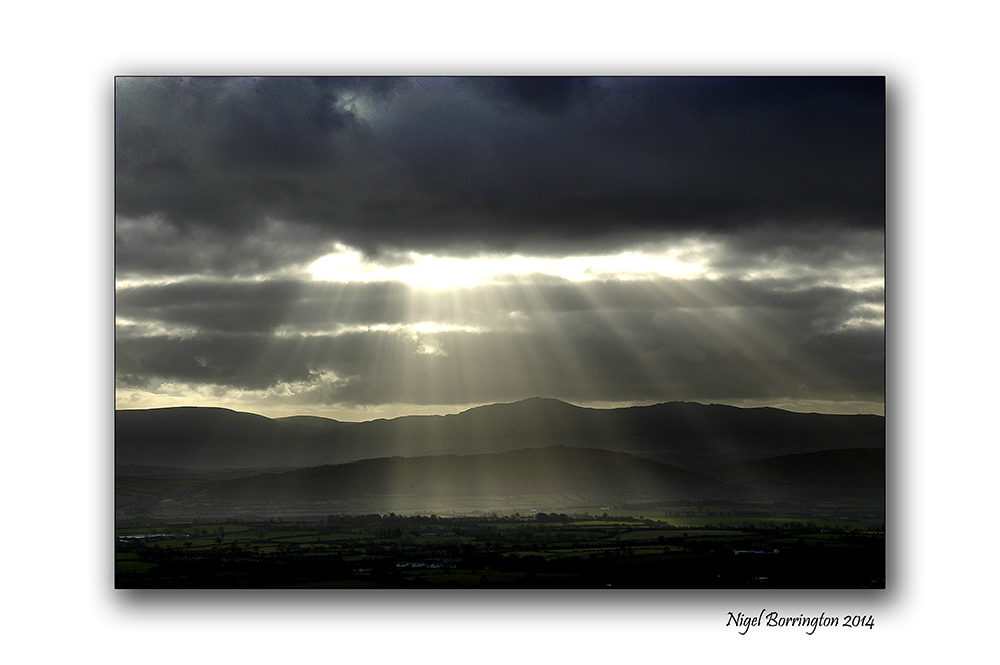
Sunset over the mountain of Slievenamon , Star break and Poem.

Sunset over the moustain 1
Sunset over slievenamon, County Tipperary
Landscape Photography : Nigel Borrington

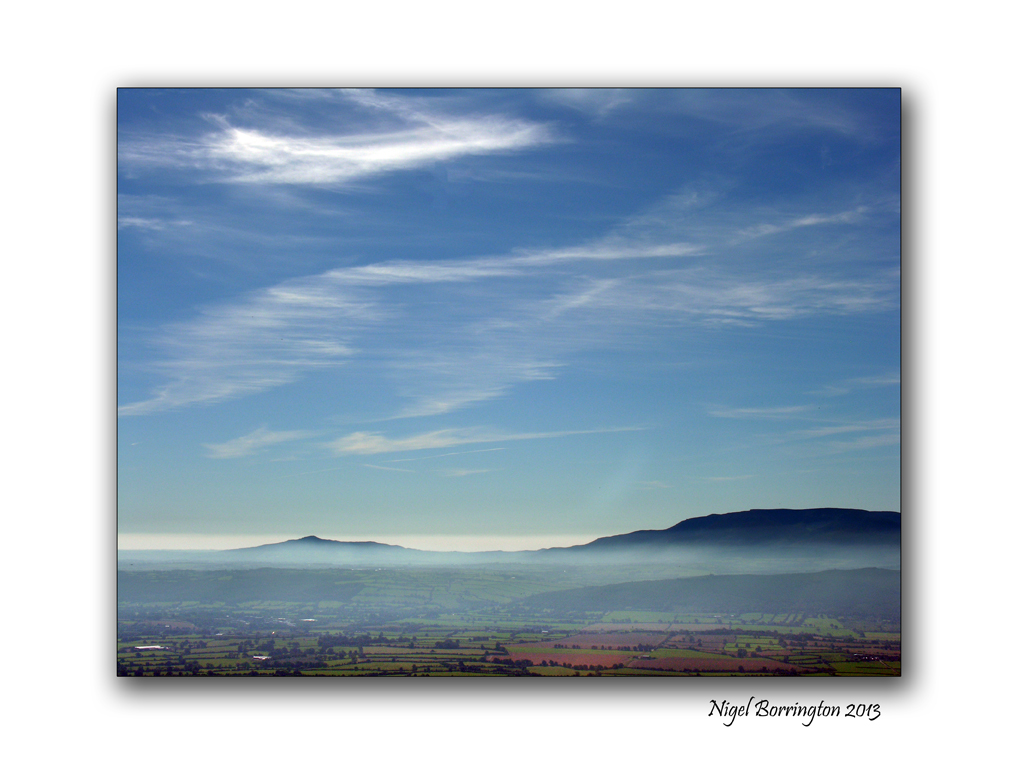
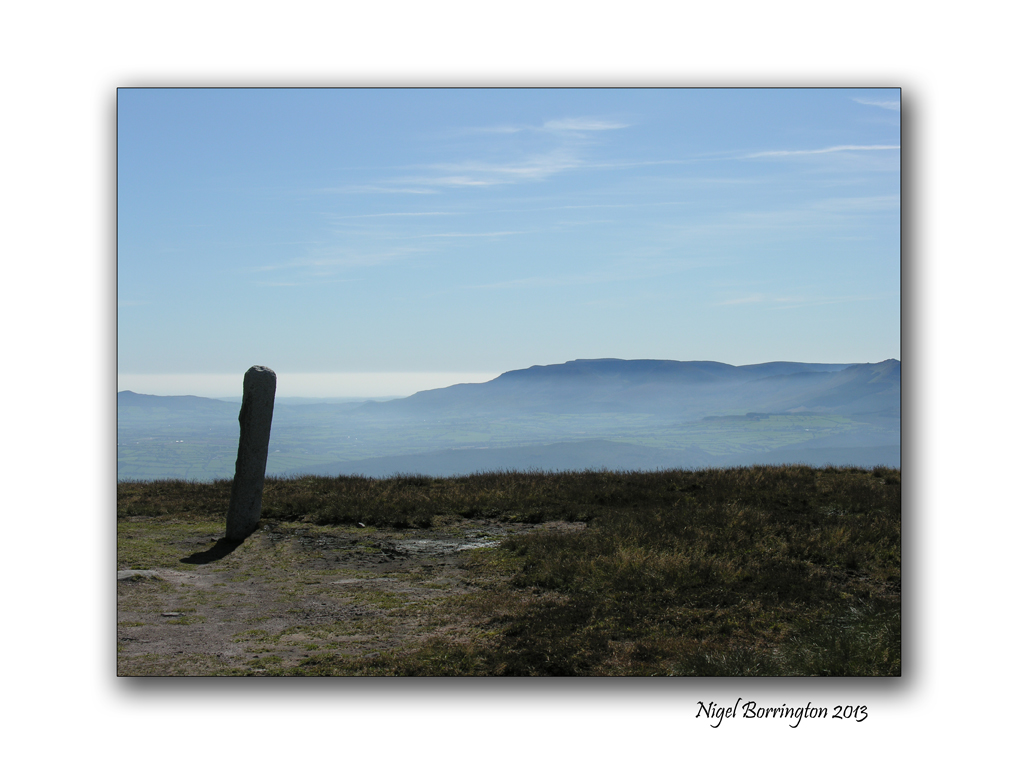
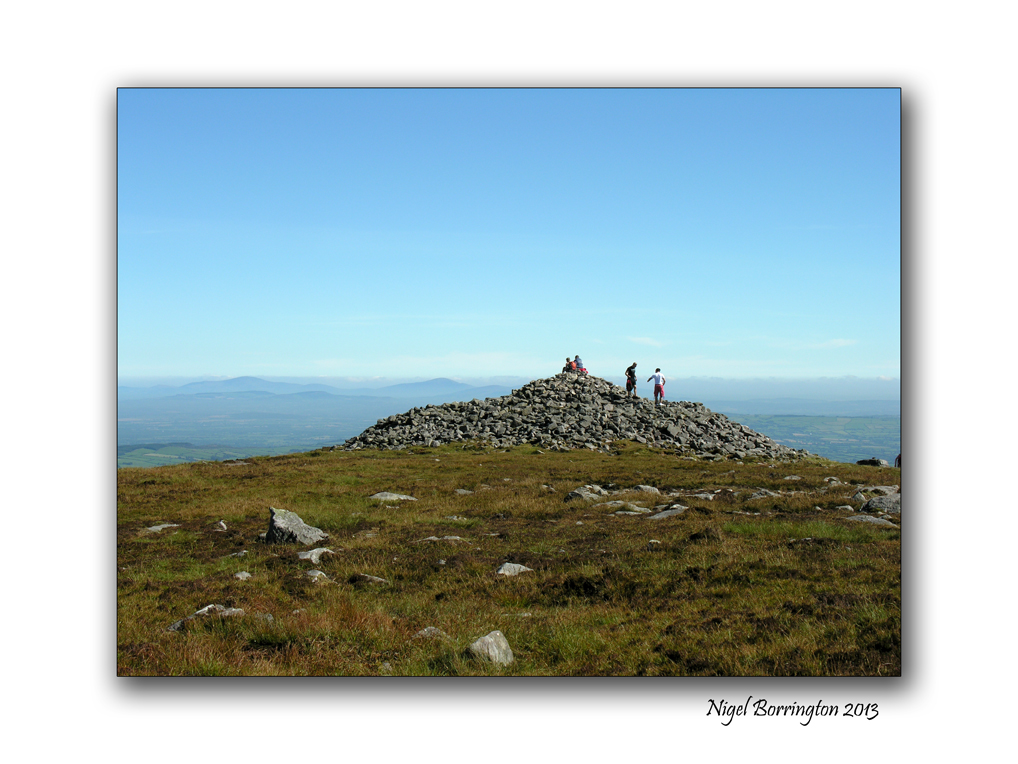
Evening walks near the mountain of Slievenamon, county Tipperary can bring some great evening views, the sun sets right over the top on the mountain where there is a cairn, a burial place of a king dating back over six thousand year.

On one of these walks I was lucky enough to get these sunset images and I put some words to them in this poem:

Star break, a Poem

Behind the High cloud the sun is coiling and uncoiling
a dragon wrapped around itself spitting fire behind the mountain top

For a moment as I think of older days it is eclipsed entirely
aith a hidden God in the ground where six thousand years ago

A star fell from nowhere and lit up this very mountain’s top
turning westward by day, into oblivion leaving its mark.

Sunset over the moustain 2.

A king wise in these things called this a “star break”
and of no danger to the integrity of his vision

Star, soon the mountain will shrug you off you will drop below
the ragged edge line into tomorrow while I take the only path.

I came to find what I left, now ahead of me and waiting behind
a light of dawn, time of ages drifting through the night.

Me…..

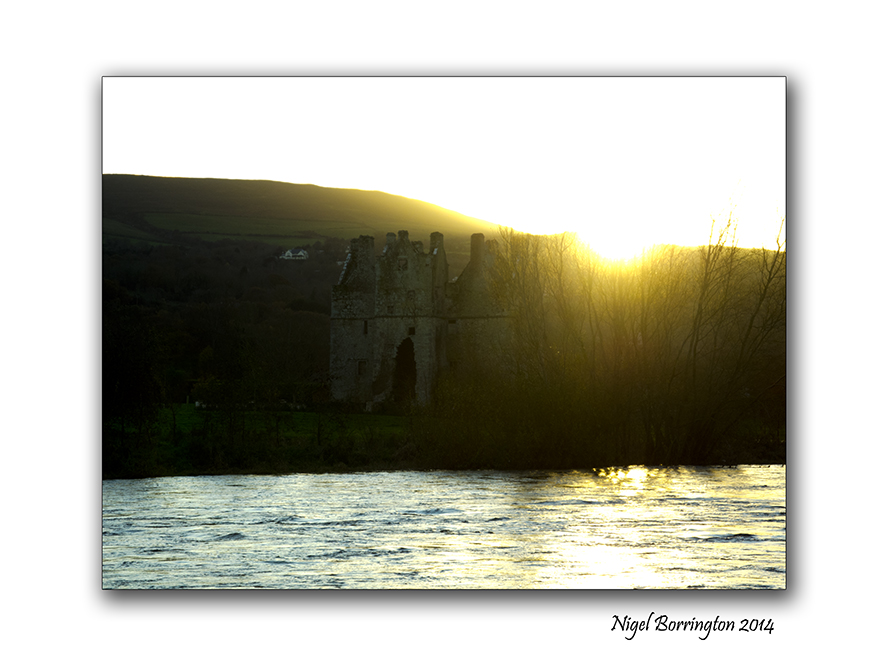
Changing light as the river flows.

Changing light
Sir Thomas bridge, clonmel, County kilkenny
Landscape photography : Nigel Borrington

The changing light as the river flows

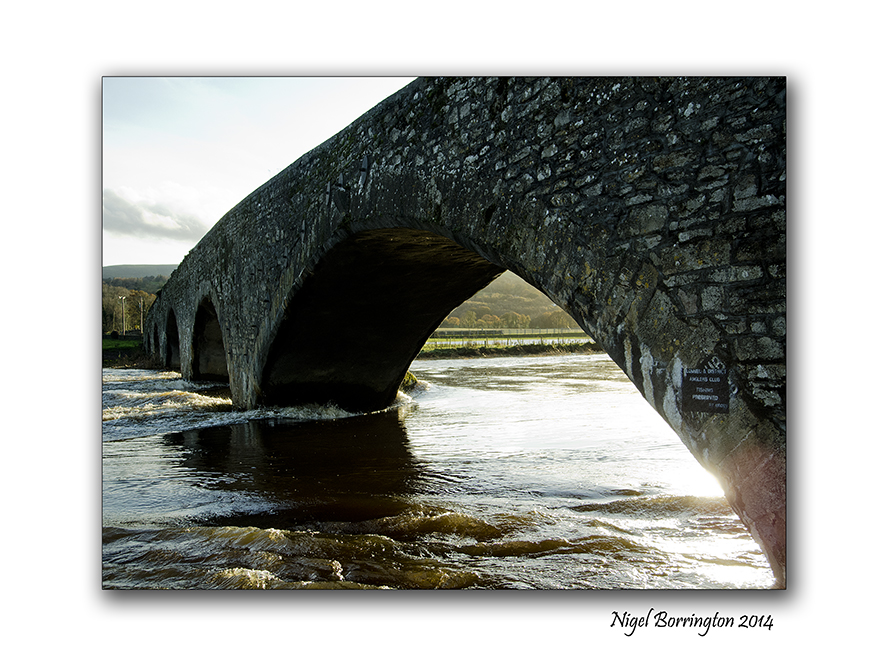
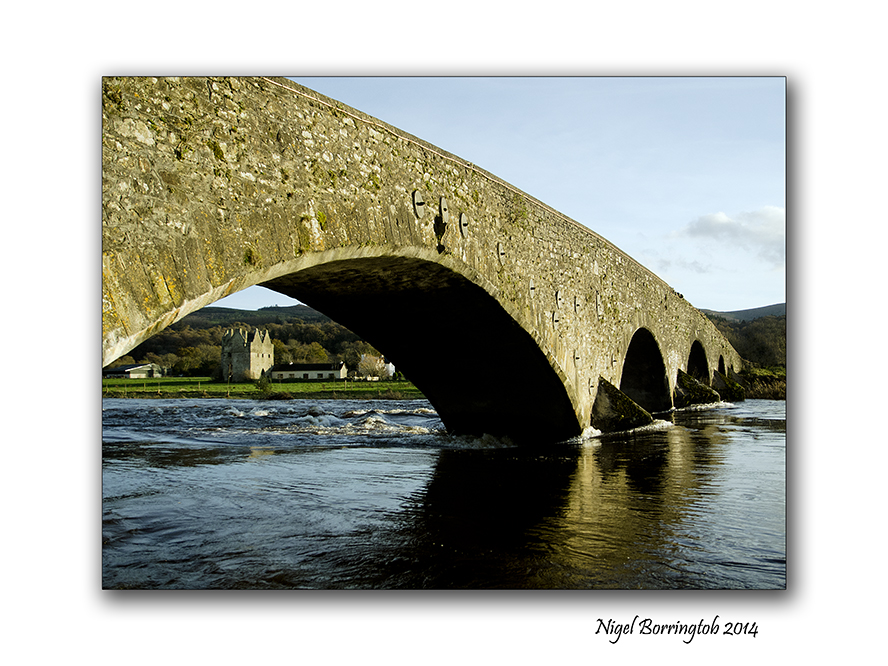
Walking along the river Suir on a springtime evening with the sun about to set, is a wonderful experience by itself but one of the things I love the most is the changing light. The light changes almost moment by moment and the reflections of the sun from the water is just amazing as you walk past some of the many bridges.

One of the best things about photography however is the ability to capture just how much this light does change, I recently put together this small collection of images and I think they show the way the light changes as the sun sets.

The entire landscape changes from yellows and and olive greens to deep blues and blue – greens.

I personally feel that the type of sun light and the different colours it brings is one of the most powerful tools in the art of photography and taking a little time to record your most loved locations at different times of day and weather conditions is a powerful learning tool for getting strong images and for you to have fun with and enjoy yourself.

The changing light as the river flows, Gallery

Changing light shade

Changing light sun

Changing light of the river bank

Changing light of the river flow

Images from a field of blue bells – Poem : ‘The Bright Field’ by R. S. Thomas

In the Blue bells field 7
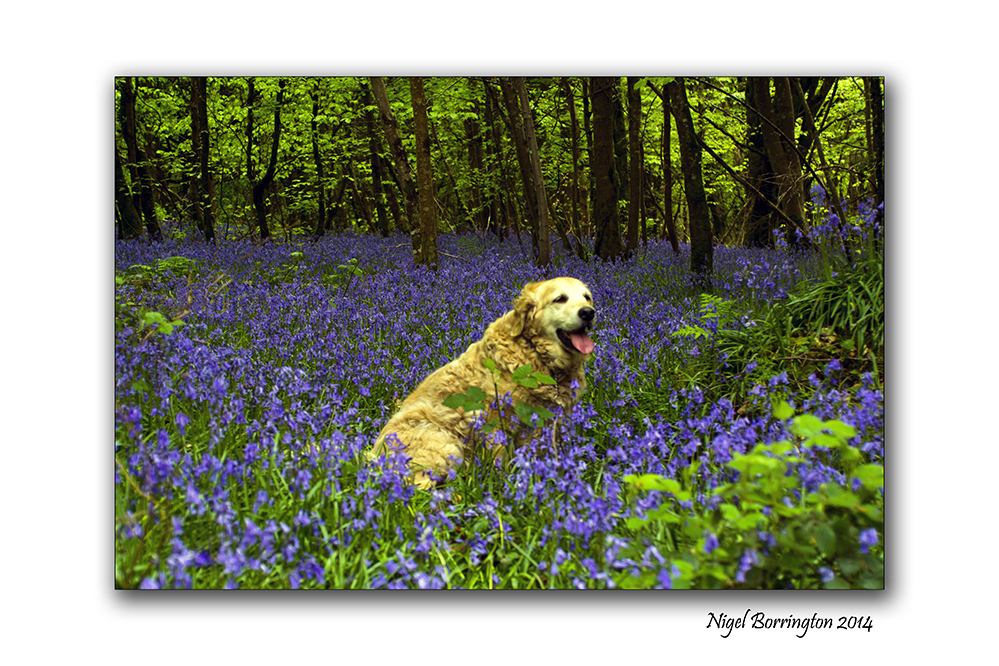
Our dog Molly, In the Blue bells field, Slievenamon, County Tipperary
Landscape Photography : Nigel Borrington

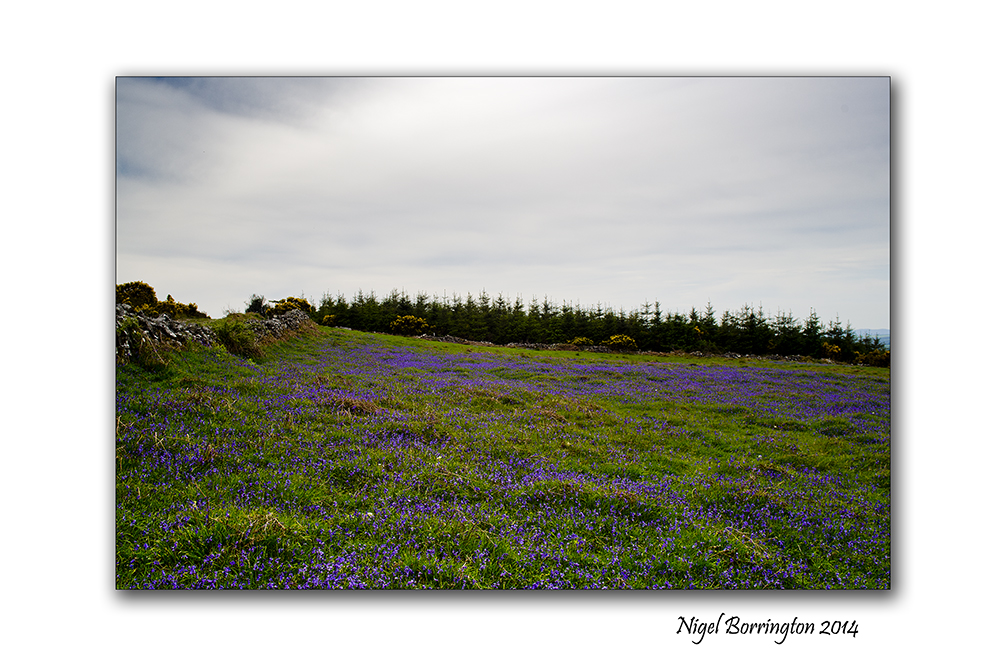
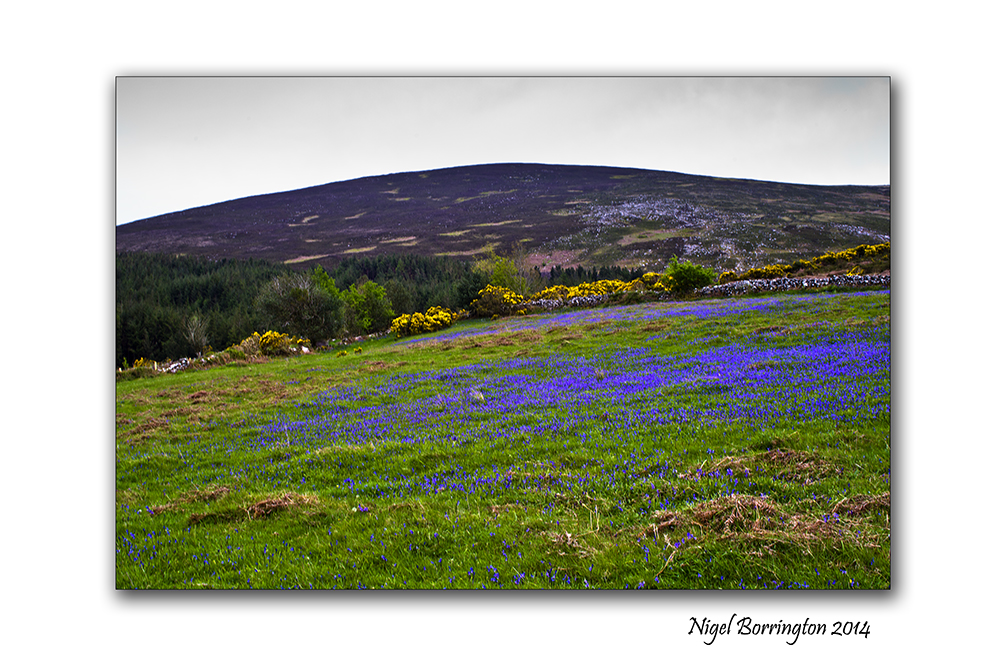
Located on the west slopes of Slievenamon , County Tipperary, is a small yet wonderful little field .

To reach it you have to walk some thirty minutes through wood-lands and up a mountain track, finally reaching a gate. The site that welcomes you in May is that of a field full of blue bells and an old derelict farm cottage. This cottage would be able to tell some amazing stories and if it only could!

Above the field are the mountain slopes that I am much more use to seeing, with mountain heather and scrub lands, streams and baths.

I have visited this field many times, its a great location during the summer and a wonderful escape and resting place after a walk to the top of the mountain.

I just wanted to share one of my most loved local locations here and also one of my most loved Poems by R. S. Thomas, which I feel is perfect for this post ….

The Bright Field

by R. S. Thomas

I have seen the sun break through
to illuminate a small field
for a while, and gone my way
and forgotten it. But that was the
pearl of great price, the one field that had
treasure in it. I realise now
that I must give all that I have
to possess it. Life is not hurrying

on to a receding future, nor hankering after
an imagined past. It is the turning
aside like Moses to the miracle
of the lit bush, to a brightness
that seemed as transitory as your youth
once, but is the eternity that awaits you.

The field a Gallery

In the Blue bells field 6

In the Blue bells field 4

In the Blue bells field 1

In the Blue bells field 2

In the Blue bells field 3

In the Blue bells field 5

Kilkenny, Ireland , 500 million years ago

500 million years 1
Landscape view of the kilkenny/Tipperary boarders
Irish Landscape photography : Nigel Borrington

Kilkenny, Ireland 500 Million years ago

Slievenamon Panorama 2

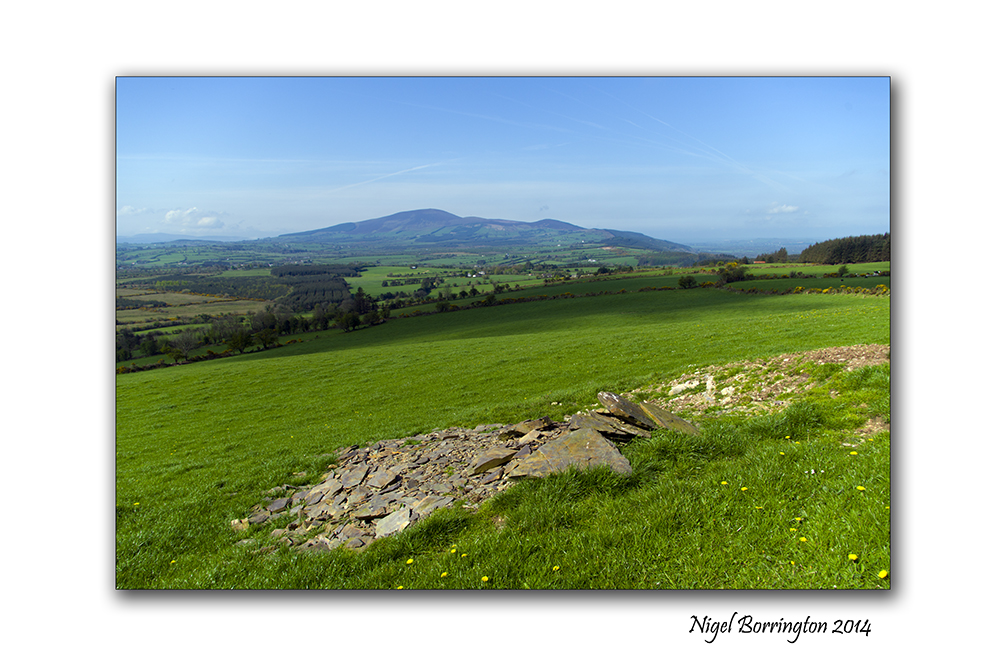
During the week I posted an article about the area around the mountain of Slievenamon, County Kilkenny.

I hope over the summer to post many times about this area and show many of the foot hills along with the main mountain itself. A fellow blogger margaret, suggested that the formation of the mountain and the oval shape of the extending foot hills could be volcanic in their origins, I do think at some point in the long distant past this could be true.

I found the following summary of the geological history of county Kilkenny so I am going to share it here as I found it fascinating to think of some 500 million years of history of Ireland and its Geology.

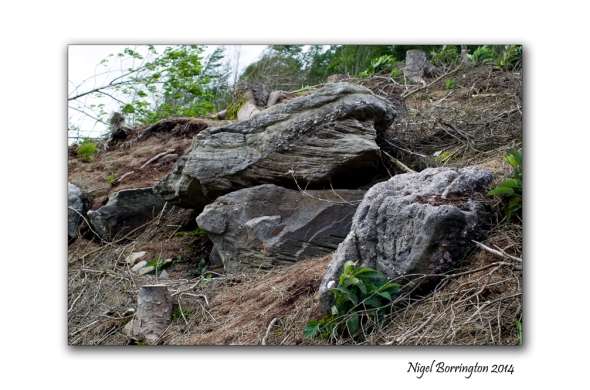
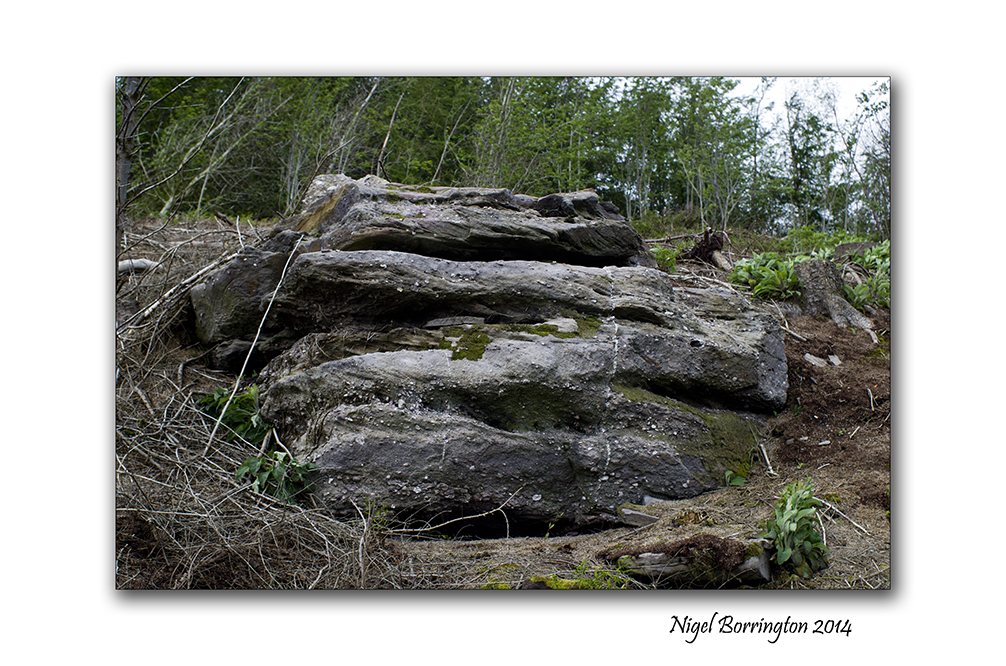
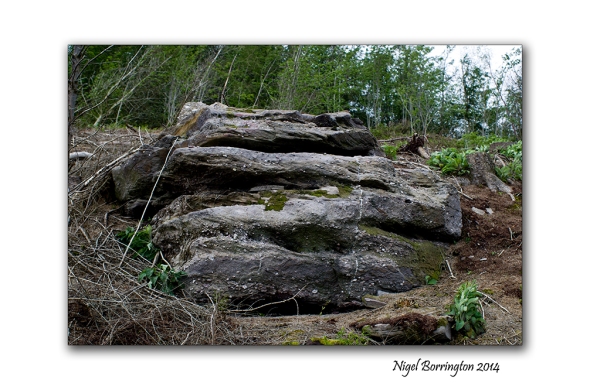
Also a Gallery of images that show some of the amazing ice age rocks and landscape formations that can be found through out this great little part of the world.

Geologic History of Kilkenny

500 Million years ago – Sedimentary rock formed under parts of eastern Kilkenny, which was
under the sea.

400 Million years ago – the two parts of Ireland, the island, were fused together under the ocean.

400 Million years ago – the mountains at Brandon and the uplands at Tullogher were formed, again
under the sea.

350 Million years ago – Kilkenny was at a dry land stage with plant life that fossilized into the
yellow sandstones of Kiltorcan.

345 Million years ago – Kilkenny was submerged for about 20 Million years under a tropical shallow
ocean. Lime deposits from this era eventually became the limestone found commonly in
Kilkenny and Ireland. The polished limestone provides the famous Kilkenny marble.

320 million years ago – Kilkenny covered by a muddy delta and swamps, with deposits eventually
forming todays sandstones and coal.

250 Million years ago – a mountain building era resulting in the east-west mountains of Munster,
and the Walsh Mountain area between Millinavat and Slievenamon.

2 Million years ago – Ice age glacial periods intermixed with cold and warm periods begin.

500,000 years ago – A warm period known as the Gortian. Kilkenny is covered by forest of birch,
oak, pine, leder, fir, holly, yew, heather and grass.

200,000 years ago – A cold period lasting 70,000 years called the Munsterian. All of Kilkenny (and
Ireland) is covered by a sea of ice. Movement of Glaciers helped form the soil of today.

130,000 years ago – A warm period known as the Glenavian lasting about 60,000 years with climate
much like today.

70,000 years ago – A cold phase lasting about 60,000 years known as the Midlandian stage. Ice
sheets covered the northern half of Kilkenny, from Callan to Goresbridge. The southern have
would have included tundra grasslands and some woodland. Animal life is noted during this
time, including wooly mammoths, wolf, arctic fox, brown bear, the giant Irish Elk, reindeer
and lemmings.

10,000 years ago – The ice begins to melt, sea levels begin to rise and plants begin to reappear
in all of Kilkenny.

9,000 years ago – A birch dominated forest covers much of Kilkenny.

8,000 years ago – Hazel and pine become part of the forest population.

Landscape and Geological Gallery
500 million years 2

500 million years 6

500 million years 5

500 million years 4

500 million years 3

Slievenamon on May mornings. Poem By : John Milton

A Morning in May 1
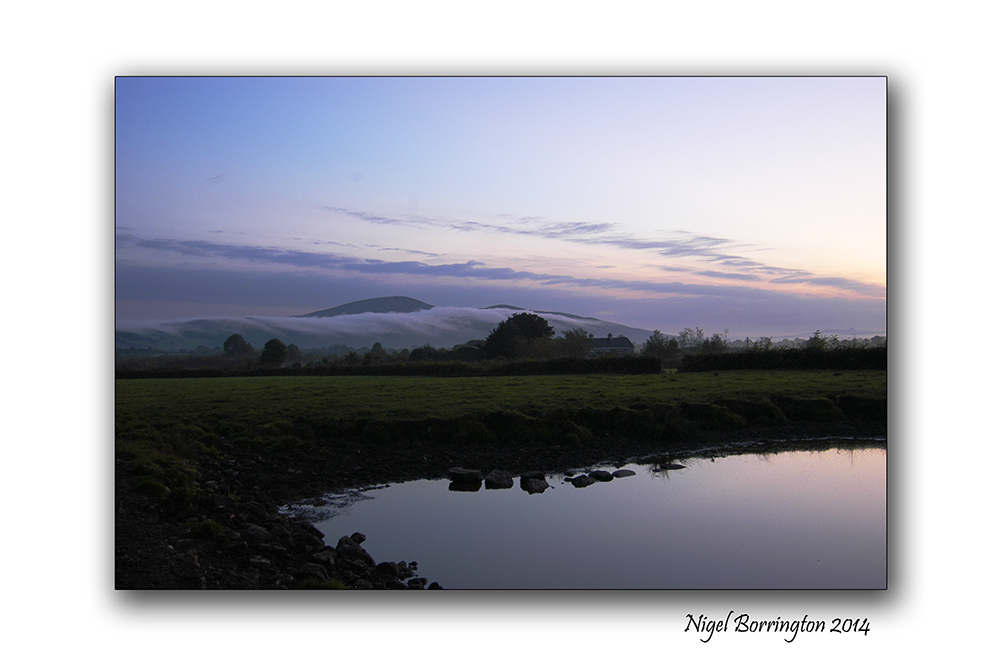
Fields around Slievenamon, early Morning mist
Landscape Photography : Nigel Borrington

On May mornings.

Poem By : John Milton

Now the bright morning Sun,
Comes dancing from the East.

leading with her the Flowers of May,
who from her green lap throws
The Cowslip, and the pale Primrose.

Hail bounteous May that dost inspire
Mirth and youth, and warm desire,
Woods and Groves, are of thy dressing,

Hill and valley, doth boast a blessing.

Thus we salute thee with our early Song,
And welcome you, and then wish you a so long.

A May Morning Gallery

A Morning in May 3

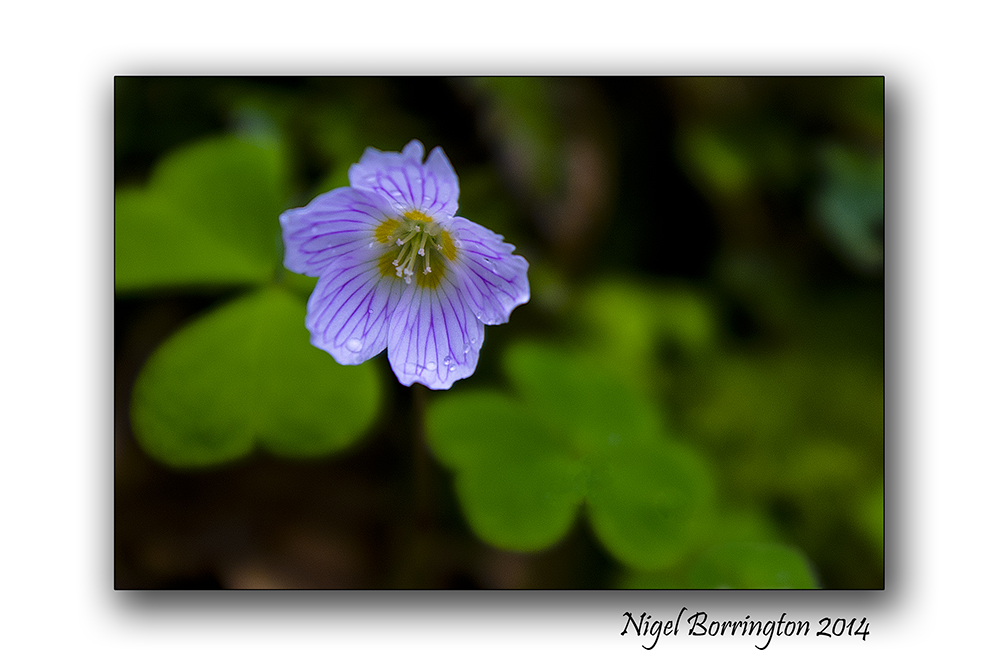
Woodland Sorrel 05

A Morning in May 2

Primrose 01

A view from the Irish hills 4

Finding the light 03

Morning light 3

Yellow Tutsan flowwers 1

Landscape and Geology around Slievenamon, county Tipperary

Slievenamon Panorama 1
Panoramic Landscape of Slievenamon, county Tipperary

Forty square miles around Slievenamon

The Mountain of Slievenamon is located about 10km from our home and over the last few years I have walked up and around the this mountain a lot.

It is an area I am very taken by and love exploring.

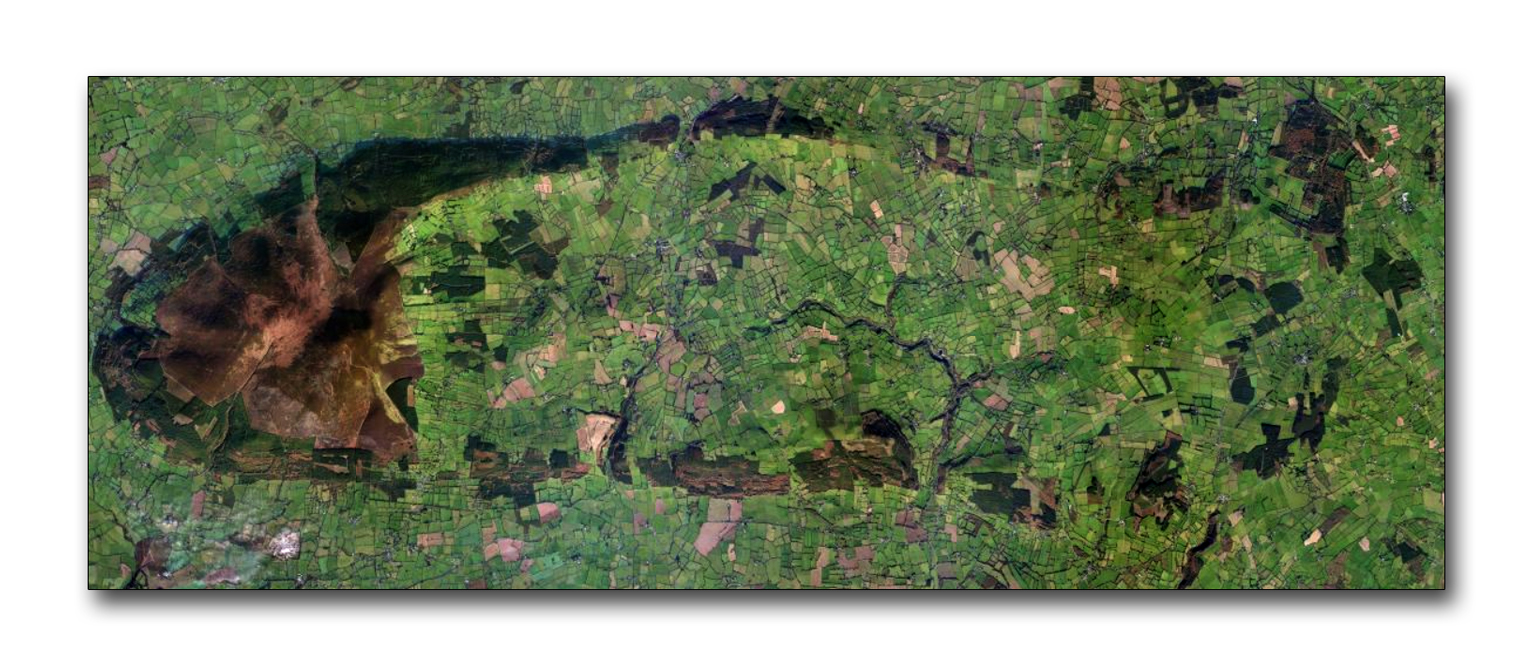
For anyone who has visited the mountain and surrounding area, something that you may not have noticed however it the complete scale and geology of the mountain. When you look at the area from a satellite image (Like the one below) the geology of the area becomes a bit clearer.

Slievenamon Panorama 2

To the left of the image above is the main mountain peek of Slievenamon, itself Rising up some 721m above the landscape below, however this is not the full extent of the mountain, spreading out towards the east and from the north and south of the mountain run two ridges of hills. These ridges them selves form an oval shape that meets some eight miles away from the mountain top.

Photographic project

Over the summer I want to record this complete area returning to the top of the mountain and then walking and recording as much of the ridge’s as possible.


History and Megalithic locations

Easter Sunday on Slievenamon 05

One of the main reason I have for starting this project on the blog, is that for sometime I have noticed that both at the very top of Sleivenamon and around the oval of the extended foot hills are many Megalithic sites ( Stone circles, Passage tombs, Graves and Standing stones).

I will come back to the satellite image above and mark the location of any landscape images I post.

Above all I just want to share the landscape that I live in and reflect upon some of its history and enjoy myself getting to know it as much as I can.

The Landscape of Slievenamon

Slievenamon April 2014

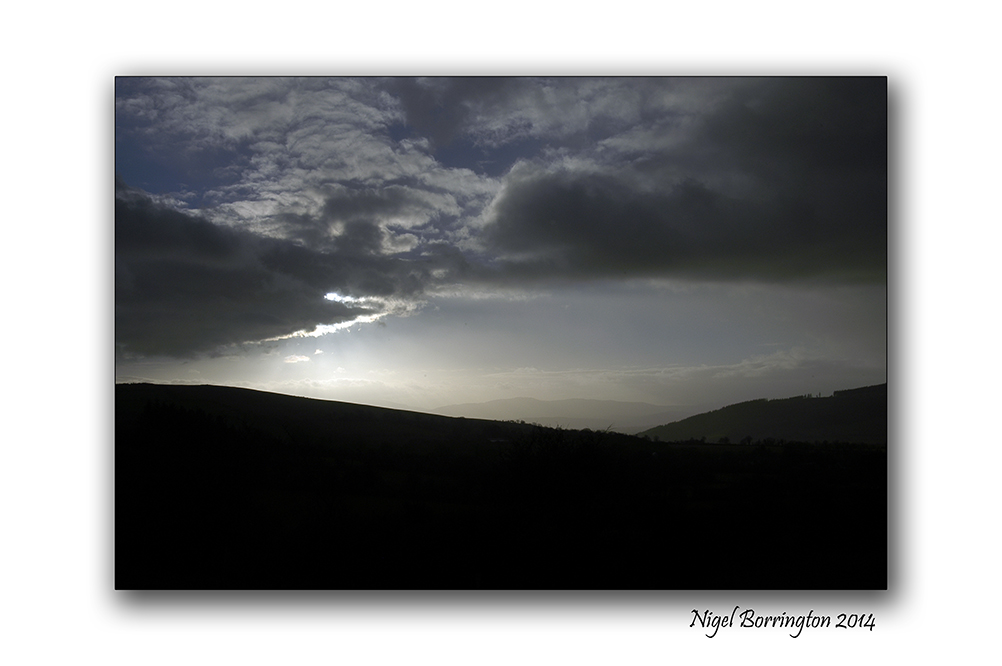
The Light through the clouds

New years eve on the mountain 3

New years eve on the mountain 5

New years eve on the mountain 1

New years eve on the mountain 6

The Blue Monday’s of May – Sitting in the Bluebells

Sitting in the blues bells 1
Bluebell Monday in Knockadrina woods, County Kilkenny
Landscape photography : Nigel Borrington

Blue Monday’s of May

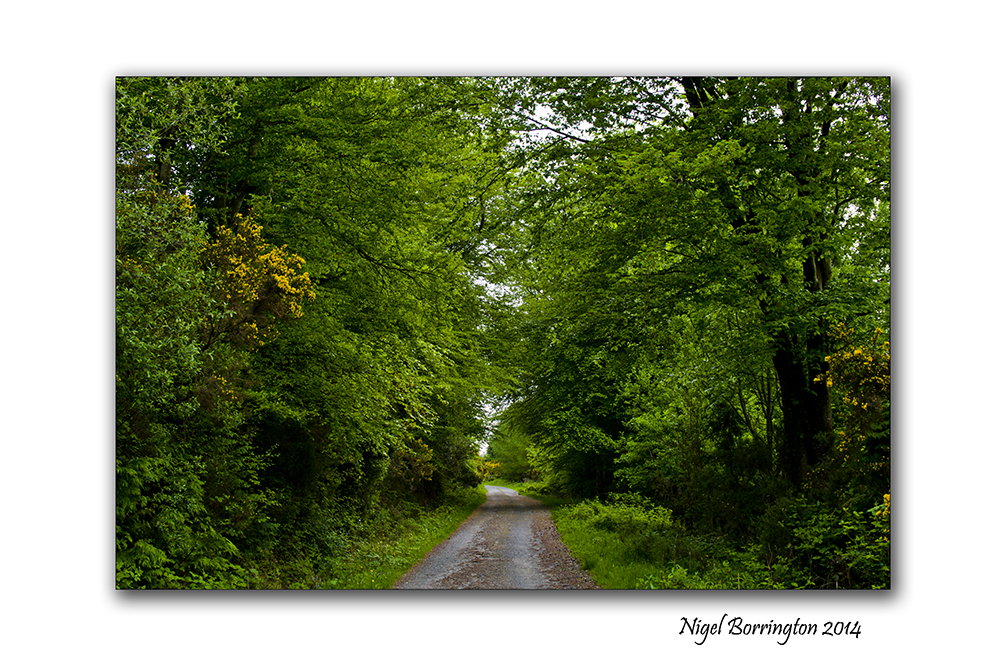
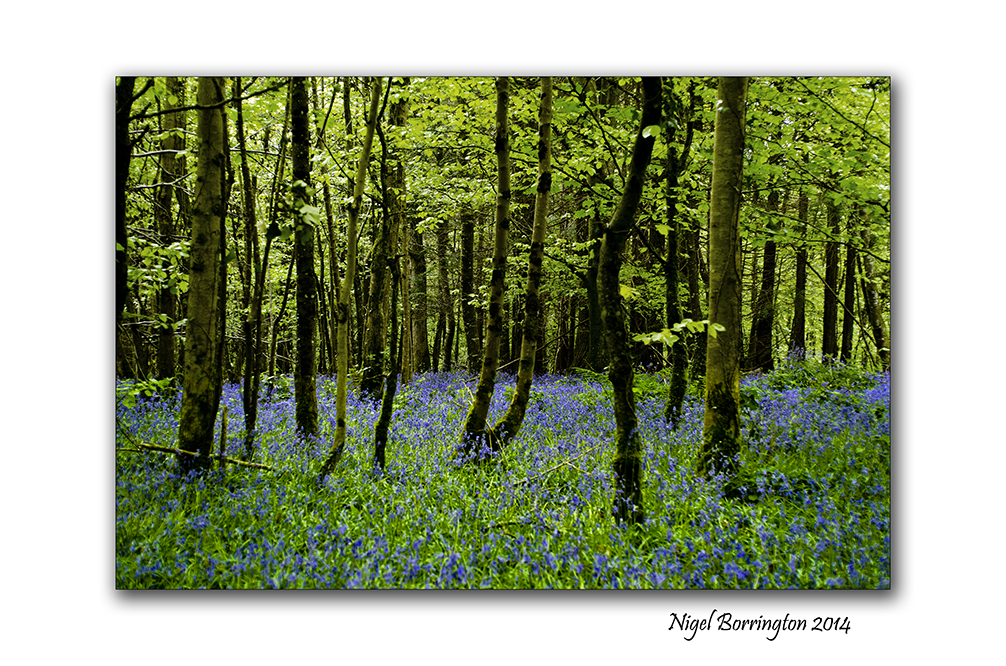
Monday again and the month of May is truly in full flight in our local woodlands, In an effort to get my week started I took Molly for a walk in the woods and found the entire woodland floor covered in Blue bells.

Each Springtime these wonderful flower, fill the woods with the colour blue and its just a fantastic moment. It easy to forget just how green the these place are for most of the year. We get the odd purple orchid and yellow of other flowers but only during May do we get the colour blue filling the forest floor in every direction.

The Month of May – a blue month…….

Sitting in the blues bells 2

Sitting in the blues bells 4

Sitting in the blues bells 3

Sitting in the blues bells 5

The greens of these trees these leaves, poem by : Shalom Freedman

Green 02
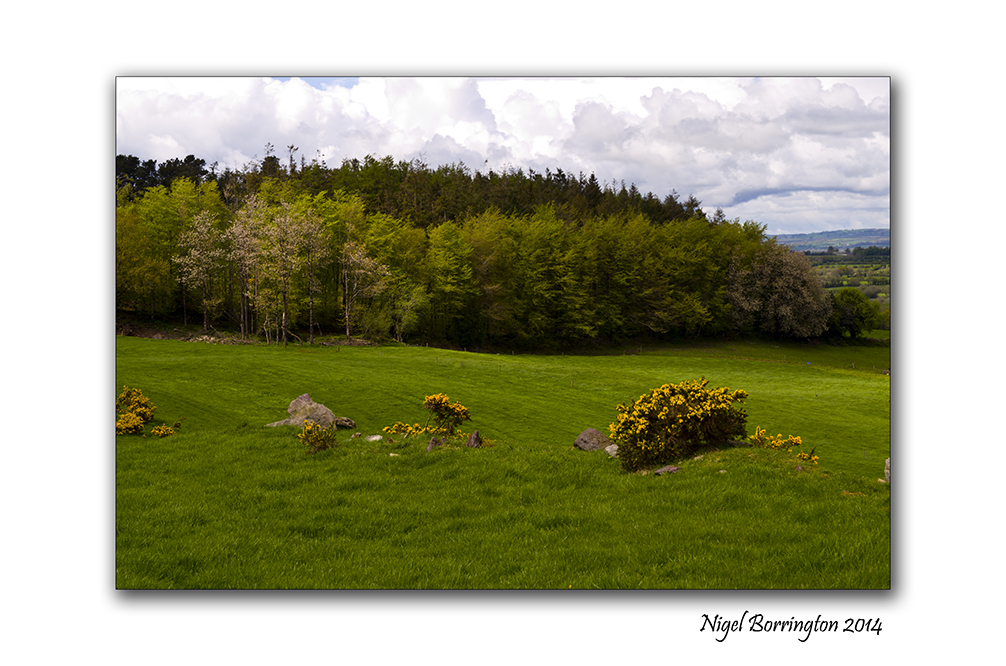
Landscape view of Ballyhenebery. County Kilkenny
Irish Landscape photography : Nigel Borrington

The greens of these trees these leaves

By : Shalom Freedman

The greens of these trees these leaves
The many shades of green-
Olive green and deep dark green and yellow green
And greens I see but have no name for-
So many shades of light and beauty in green
And I with my eyes loving them all
And delighted and made happy by them all-

Green 03.

Wondering why and how this world
Has so so much Beauty
Just in green alone –
And being deep in happiness
At being alive
And loving them more

In wondering why and how
I will not one day
be able to see them all again..

Green 04

Finding the Silver light of other days , Gallery and a Poem by : Thomas Moore

Finding memories in the light of the old farm 3
Memories of silver light, Glencommon, County Kilkenny
Landscape photography : Nigel Borrington

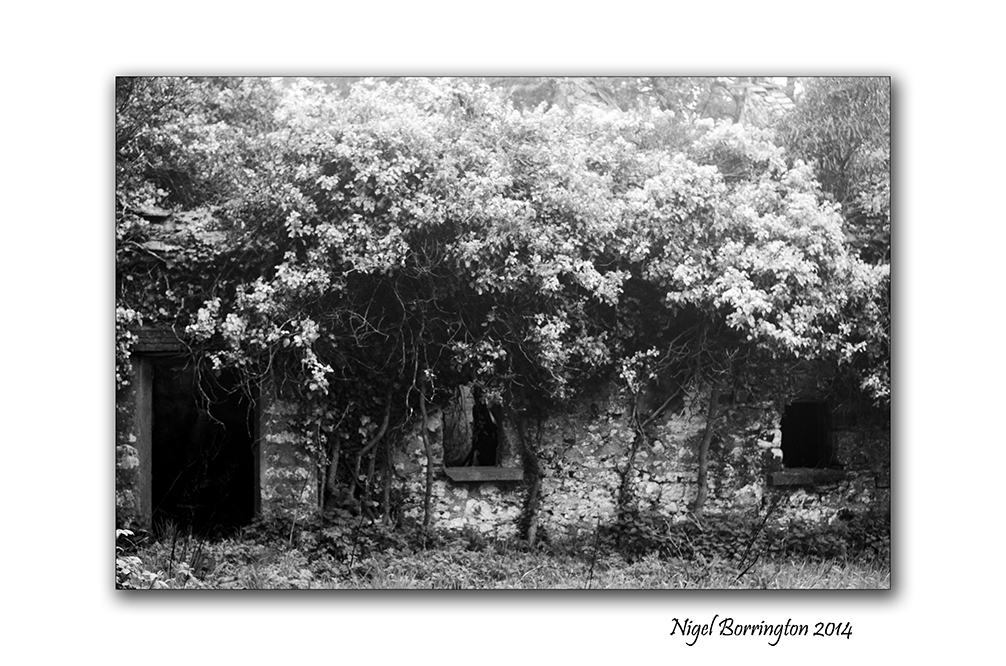
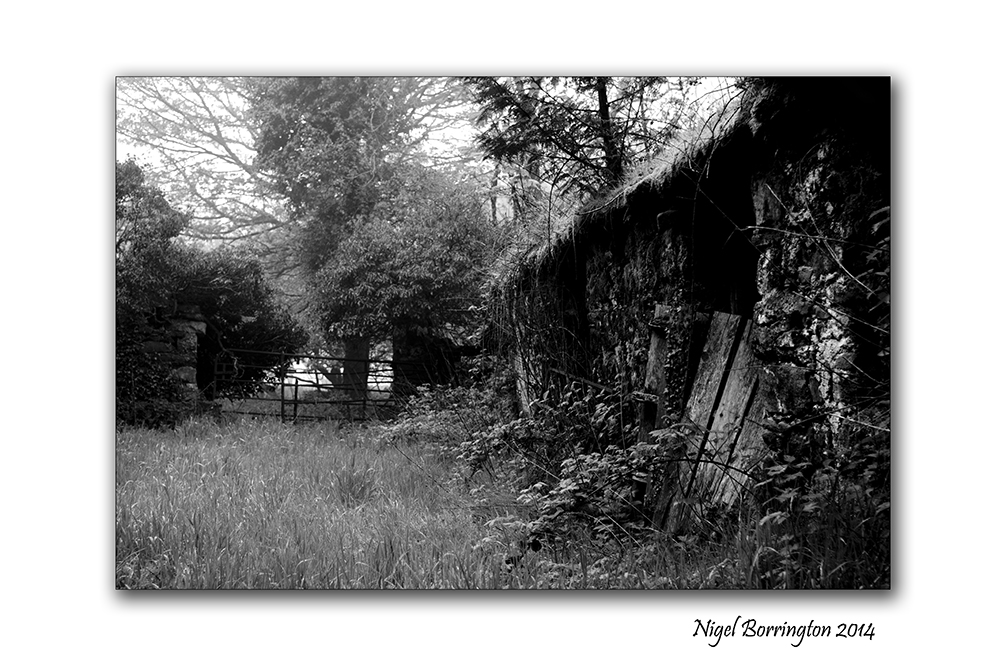
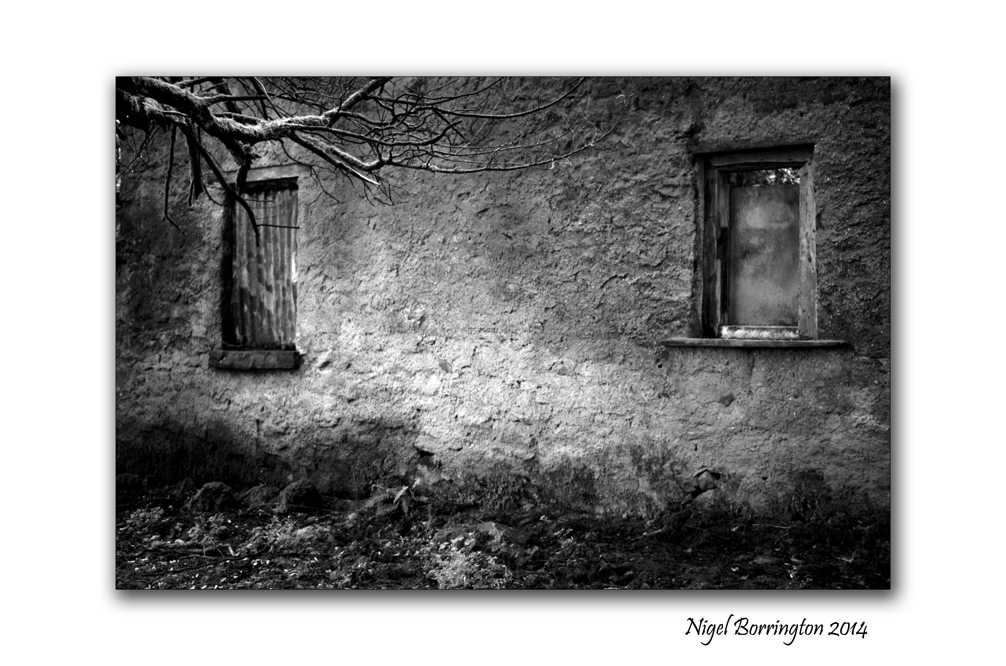
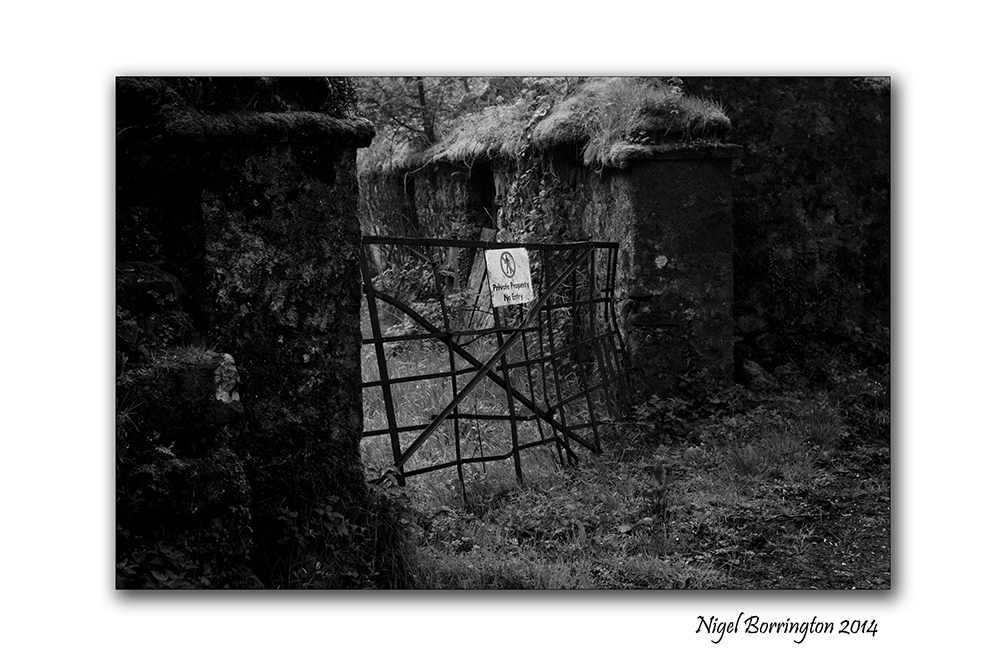
On the top of the hill at Glencommon, county Kilkenny is the Ghostly remains of an old farm.

Last Sunday morning I took a walk up the hill in the mist with my camera and took these images, it was a very haunting experience but one I really enjoyed.

The poem below by Thomas Moore came to mind as the mist of the day seamed to recreate the past of this wonderful old place, how many memories it must hold yet all of them lost in the mists of time.

The Light of Other Days

By Thomas Moore
1779-1852

Often, in the stilly night,
Ere slumber’s chain has bound me,
Fond Memory brings the light
Of other days around me:
The smiles, the tears
Of boyhood’s years,
The words of love then spoken;
The eyes that shone,
Now dimm’d and gone,
The cheerful hearts now broken!
Thus, in the stilly night,
Ere slumber’s chain has bound me,
Sad Memory brings the light
Of other days around me.

When I remember all
The friends, so link’d together,
I’ve seen around me fall
Like leaves in wintry weather,
I feel like one
Who treads alone
Some banquet-hall deserted,
Whose lights are fled,
Whose garlands dead,
And all but he departed!
Thus, in the stilly night,
Ere slumber’s chain has bound me.
Sad Memory brings the light
Of other days around me.

Finding memories in the silver light , Gallery

Finding memories in the light of the old farm 10

Finding memories in the light of the old farm 9

Finding memories in the light of the old farm 8

Finding memories in the light of the old farm 7

Finding memories in the light of the old farm 6

Finding memories in the light of the old farm 5

Finding memories in the light of the old farm 4

Finding memories in the light of the old farm 3

Finding memories in the light of the old farm 2

Finding memories in the light of the old farm 1

World wide megalithic Portal tomb’s a connection to county Kilkenny .
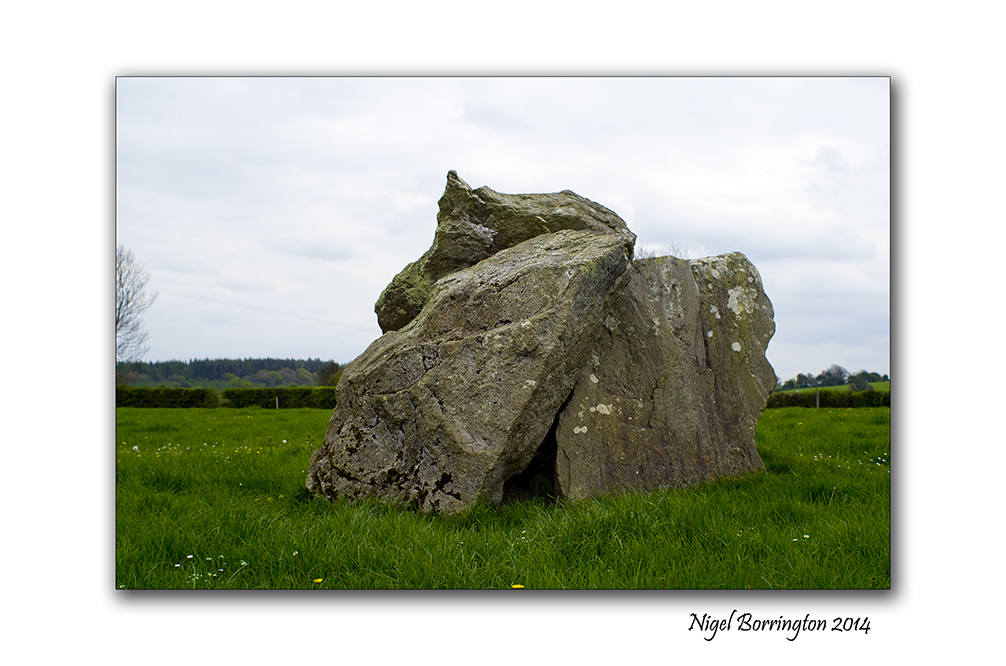
Resting place of the kings 1
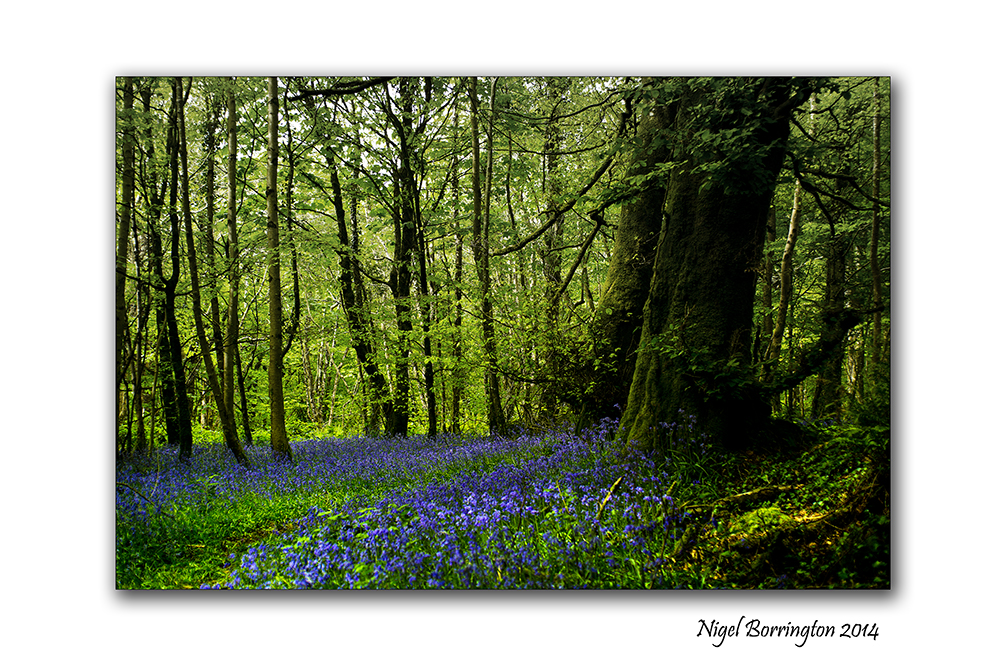
portal tomb at NewMarket, county Kilkenny
Landscape Photography : Nigel Borrington

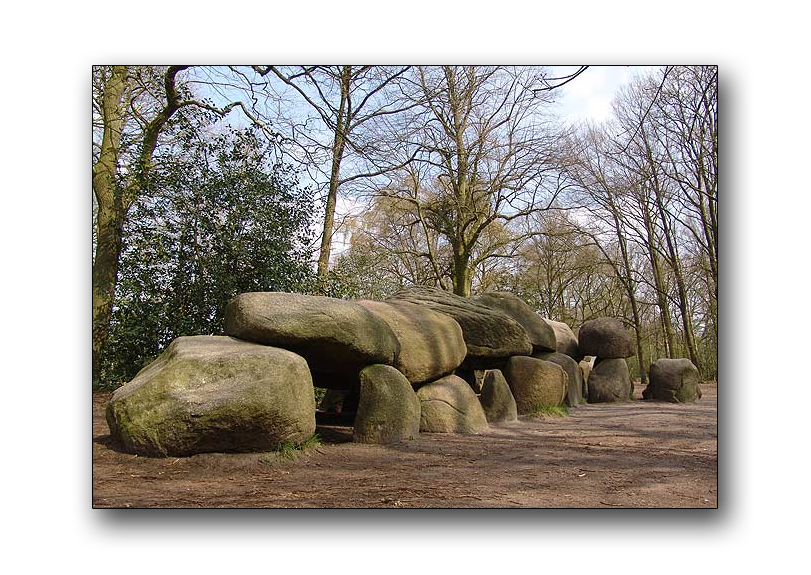
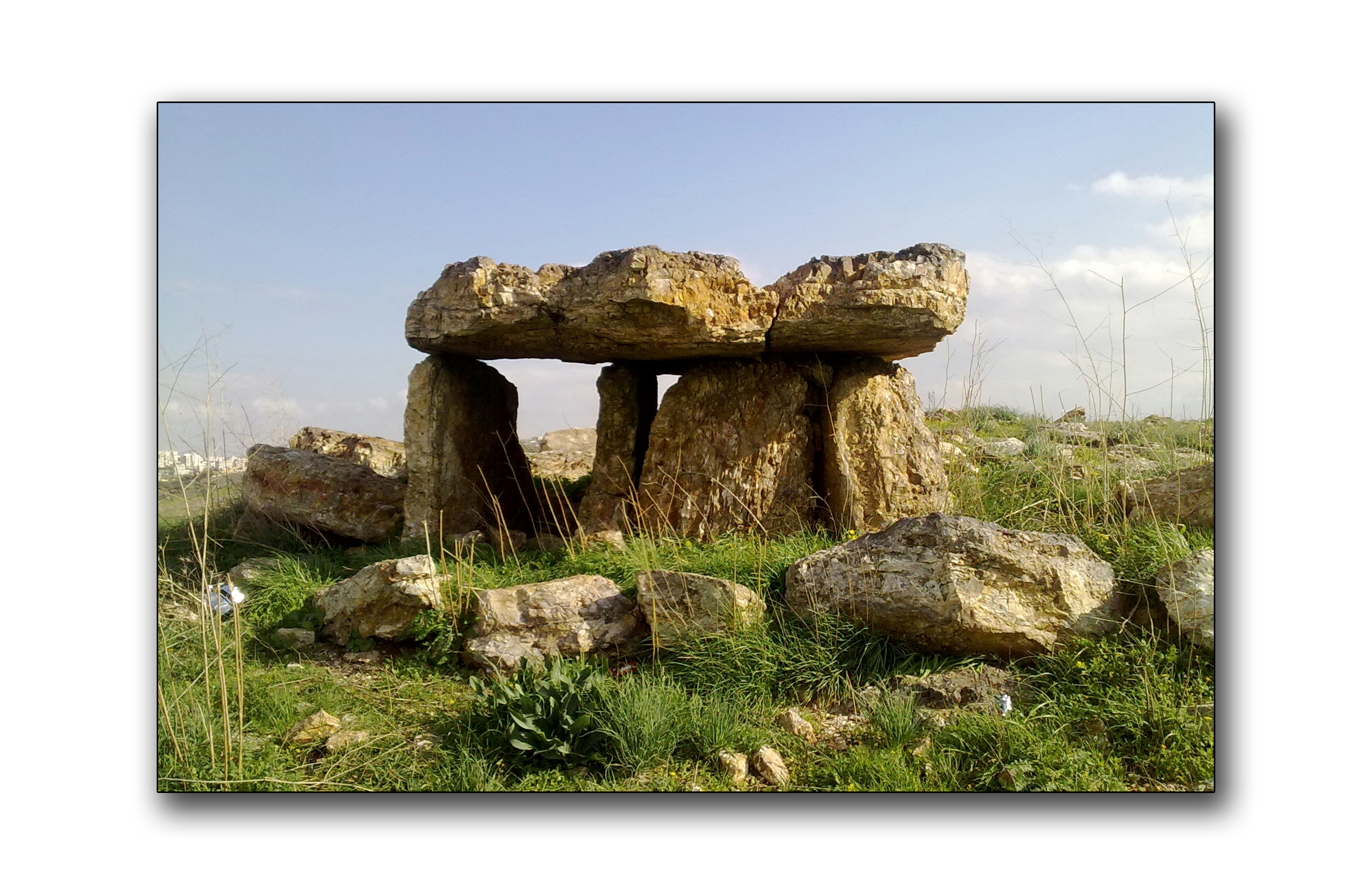
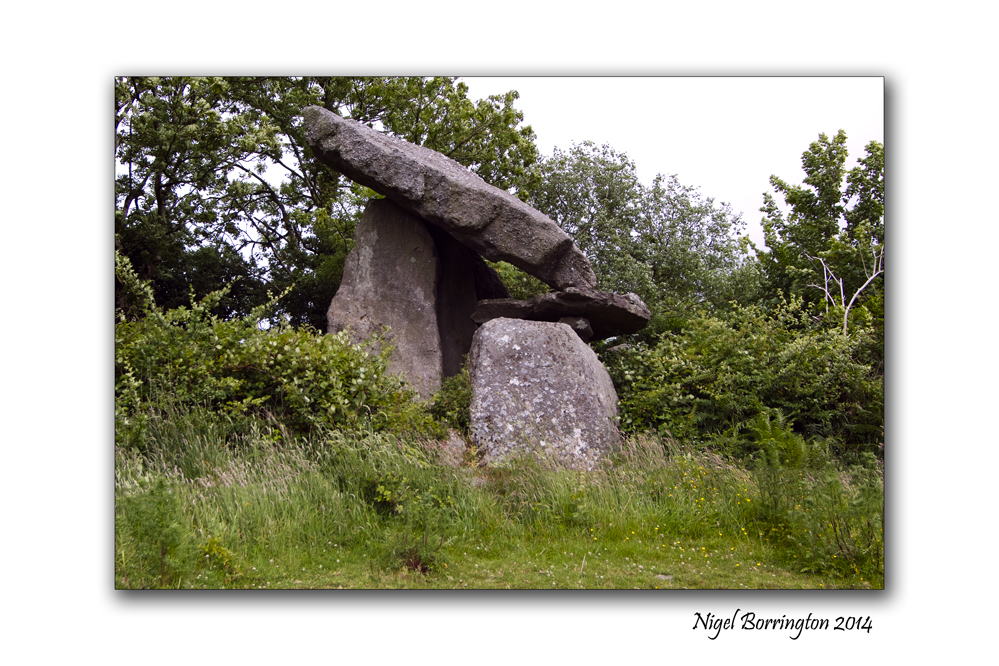
Portal tombs, Dolmen’s, portal graves or quoit are a type of single-chamber megalithic tomb, usually consisting of two or more upright stones supporting a large flat horizontal capstone (table), although there are also more complex variants. Most date from the early Neolithic period (4000 to 3000 BC). Dolmens were typically covered with earth or smaller stones to form a barrow. In many instances, that covering has weathered away, leaving only the stone “skeleton” of the burial mound intact.

It remains unclear when, why, and by whom the earliest tomb’s were made. The oldest known tomb’s are in Western Europe, where they were set in place around 7000 years ago.

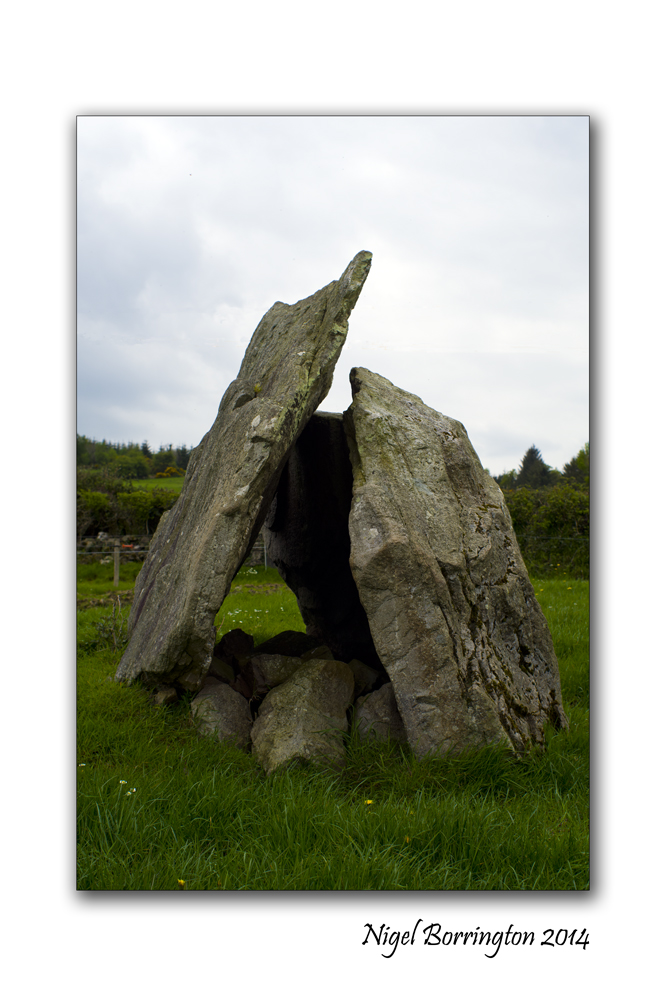
County Kilkenny has two such Tombs , the Newmarket tomb and the Kilmogue Portal Tomb at Harristown, both are dated to some 6000 years of age.

I did a little more reading on these tombs and it is very clear that they are very widely spread through out the world as the link below details :

http://en.wikipedia.org/wiki/Dolmen

The link shows their world wide locations as :

3.1 Asia
3.1.1 Korea
3.1.2 India
3.1.3 Eurasia (North Western Caucasus) Circassia
3.1.4 Middle East
3.2 Africa
3.2.1 Horn of Africa
3.2.2 North Africa
3.3 Europe

T-shaped Hunebed D27 in Borger-Odoorn, Netherlands.

Flint Dolmen in Johfiyeh, Jordan

You can see the full details by the link above!

I have been visiting these sites in Ireland for sometime as in Ireland we have many passage tombs through out the country.

Understanding however just how international these locations are is very fascinating.

It needs to be remembered that some 6000 years ago very few of the nations we know, if any existed and people travelled without boarders.

The first time anyone gave Ireland a name as such, it was called “Hibernia”.

Hibernia is the Classical Latin name for the island of Ireland. The name Hibernia was taken from Greek geographical accounts. During exploration of northwest Europe (c. 320 BC), Pytheas of Massilia called the island Iérnē (written Ἰέρνη). In his book Geographia (c. 150 AD), Claudius Ptolemaeus (“Ptolemy”) called the island Iouerníā (written Ἰουερνία, where “ου”-ou stands for w). The Roman historian Tacitus, in his book Agricola (c. 98 AD), uses the name Hibernia. The Romans also sometimes used Scotia, “land of the Scoti”, as a geographical term for Ireland in general, as well as just the part inhabited by those people.

Something that becomes very clear is that the peoples who lived in many different world wide locations often shared the same culture, they lived very closely to and with their environment, they were clearly pagan in their beliefs and as such very close to their surroundings.

Life would have been completely different from the life we know, they lived and moved to the cycles of the seasons, they eat and lived of the wildlife and nature that surrounded them, in some season they would have little food if any.

They clearly had Gods and figure heads, yet we have a tendency to place our own modern religious understanding on-to what this meant to them directly.

It is likely that their Gods were Mythical in nature and derived from memories of real people who they connected with different elements and forces of life that affected the way they lived and survived.

This wikipedia page lists some of the celtic Gods and Goddesses and shows the forces of life and nature that they were related to.

Kilkenny Portal tomb Gallery

NewMarket Portal Tomb

Resting place of the kings 2

Resting place of the kings 3.

Kilmogue Portal Tomb

harristown Tomb 8

harristown Tomb 7

harristown Tomb 2

harristown Tomb 3