Irish National Heritage park
All images using a Nikon D700
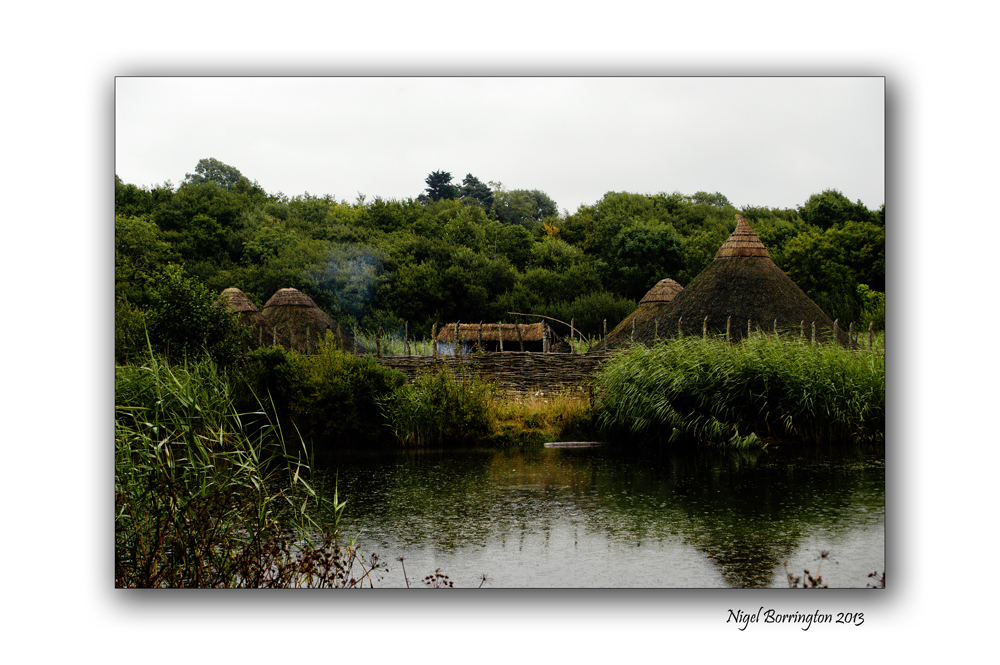
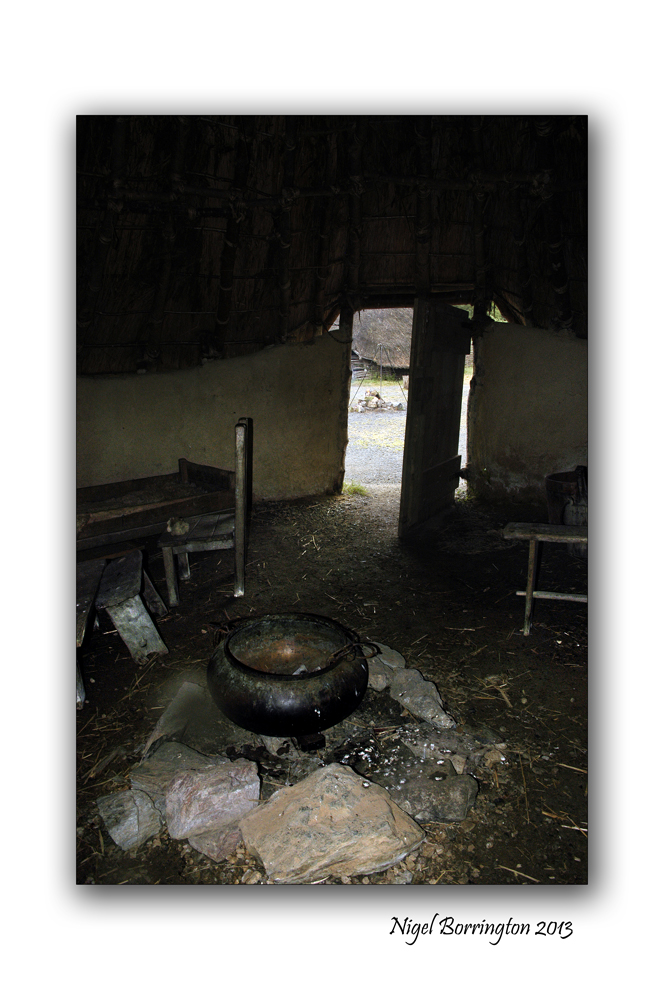
Irish National Heritage park – A Crannog
Landscape photography : Nigel borrington
One place in Ireland you have to visit, in order to get a good sense of the nations history is the National heritage park.
Location
The Irish National Heritage Park Ferrycarrig, is Located in the South East of Ireland, approximately 3 miles from Wexford Town off the Dublin (N11) Rosslare Road (N25). Eleven miles from Rosslare Europort.
Sat Nav: N: 52.348 W: -6.51673
This park is Unique in Europe, occuping 35 acres and has 16 archaeological and historical reconstructions all located in their natural settings. The Heritage Park outlines the history of Irish life as the story of 10000 years unfolds before you. It is history presented in a unique way in magical and varied settings.
A Crannog
The images in this post are from the reconstructed Crannog, Wiki-pedia defines a Crannog as follows
“Crannogs were used as dwellings over five millennia from the European Neolithic Period, to as late as the 17th/early 18th century although in Scotland, convincing evidence for Early and Middle Bronze Age or Norse Period use is not currently present in the archaeological record. The earliest radiocarbon determinations obtained from key sites such as Oakbank in Loch Tay or Redcastle, Beauly Firth approach the Late Bronze Age – Early Iron Age transition at their widest interpretation at 2 sigma or 95.4% probability, falling after c.800BC and therefore could only be considered Late Bronze Age by the narrowest of margins. Crannogs have been variously interpreted as free-standing wooden structures, as at Loch Tay, although more commonly they exist as brush, stone or timber mounds which can be revetted with timber piles. However, in areas such as the Western Isles of Scotland, timber was unavailable from the Neolithic onwards. As a result, completely stone crannogs supporting drystone architecture are common here.
Today, crannogs typically appear as small, circular islets, often 10 to 30 metres (30 to 100 ft) in diameter, covered in dense vegetation due to their inaccessibility to grazing livestock.”
http://en.wikipedia.org/wiki/Crannog
Crannog images



Castlerigg stone circle, Keswick in Cumbria, September Equinox

Castlerigg stone circle, Keswick in Cumbria
Landscape photography, Nigel Borrington
September Equinox, 22nd of September
There are two equinoxes every year – in September and March – when the sun shines directly on the equator and the length of day and night is nearly equal. Seasons are opposite on either side of the equator, so the equinox in September is also known as the “autumnal (fall) equinox” in the northern hemisphere. However, in the southern hemisphere, it’s known as the “spring (vernal) equinox”.
The Earth’s postion during the September equinox (ill. not to scale).
September Equinox in Kilkenny, Ireland is on the
Sunday, 22 September 2013, 21:44 IST
Castlerigg stone circle
The stone circle at Castlerigg (alt. Keswick Carles, Carles, Carsles or Castle-rig) is situated near Keswick in Cumbria, North West England. One of around 1,300 stone circles in the British Isles and Brittany, it was constructed as a part of a megalithic tradition that lasted from 3,300 to 900 BCE, during the Late Neolithic and Early Bronze Ages.
Various archaeologists have commented positively on the beauty and romance of the Castlerigg ring and its natural environment. In his study of the stone circles of Cumbria, archaeologist John Waterhouse commented that the site was “one of the most visually impressive prehistoric monuments in Britain.”
Every year, thousands of tourists travel to the site, making it the most visited stone circle in Cumbria. This plateau forms the raised centre of a natural amphitheatre created by the surrounding fells and from within the circle it is possible to see some of the highest peaks in Cumbria: Helvellyn, Skiddaw, Grasmoor and Blencathra.
Boann, goddess of the River Boyne. A Gallery and Poem.

A Story told by: Deanne Quarrie
Boann, Deanne Quarrie
Boann is the Irish goddess of the river Boyne. Her name means “She of the white cattle.” She was the wife of Nechtain and the beloved of the Dagda, the Good God. It is possible she could be a later naming of Danu Herself. Aenghus mac Og, her son, was the product of the affair between Boann and Dagda. In order to keep the pregnancy secret, the Dagda halted the sun for the term of the goddess’s pregnancy, and so Aenghus was born out of time.
Boann is a Goddess of fertility and the stars. She connects the Way of the White Cow to the White Mound of the Boyne. She gives her name to the preeminent brugh in all of Ireland, Brugh na Boinne. She is honored mid-winter at Imbolc.

Many ancient peoples had stories of floods in which water was both honored as a life bringer and as a destroyer. Water was seen as something that “escaped” from the realms of the gods.
In many of the stories it seemed to be a female who was involved when water, would through some disaster, come to the land, bringing growth and abundance though turbulence.
Probably the most famous version of this myth in Celtic tradition is the Irish story of the Well of Segais.
Growing around this well were nine hazel trees of wisdom, whose nuts fell into the water and gave it the quality of divine illumination, much sought-after by those seeking this wisdom.
Boann was the wife of Nechtan, keeper of the sacred Well of Segais, which was a source of knowledge. Only Nechtan and his cupbearers were permitted to approach the well. The goddess Boann desired to drink from the well herself, to increase her power.

She attempted to challenge the Well of Segais, by going around the well chanting, circling widdershins (counterclockwise, or against the sun direction) . She circled the well three times, as she chanted “amrun.” The well rose against her incantations. Three waves rose up from the well which then flowed forth in five streams and drowned her. Because she was of the Sidhe, she did not die. She lost an arm, a leg and an eye in her battle with the well.
The five streams of wisdom that flowed from this well represent our five senses: taste, smell, feeling, sight and hearing. In her contest with the Well of Segais, Boann experienced “shamanic death” of drowning. In so doing, she gained the Wisdom of Segais as it swept her away.
Manannan said of this….

“I am Manannan, son of Ler, king of the Land of Promise; and to see the Land of Promise was the reason I brought [thee] hither. . . . The fountain which thou sawest, with the five streams out of it, is the Fountain of Knowledge, and the streams are the five senses through which knowledge is obtained. And no one will have knowledge who drinketh not a draught out of the fountain itself and out of the streams.”
From this, we learn that we must experience through all of who we are, through all of the five senses which must be open. This is our gift from Boann.
Boann can be a great ally for poetic composition and many other forms of artistic expression. Invoking or singing Boann’s name while sitting next to a river or stream can be a very powerful and inspiring experience. Clear the mind, open the soul, and listen to the music of Boann playing from the waters. You will always go away a new person.
Vigil at the Well
A rock ledge. A dark pool.
Pale dawn and cold rain.
And a woman alone
holding three coins.
She circles the well
three times in the rain.
She offers the coins
to a great ancient tree
then bends to the pool.
A glimmer of silver.
Dawn striking the pool?
A fish in its depths?
The pool stills again.
The sky blazes red.
The woman gets up.
Nothing seems changed.
But the next day a wind
blows warm from the sea.
Boann suite de reels
Wooden Teepee, Lough Boora, Offaly

Wooden Teepee over a spring, Boora Parklands, County Offaly
Landscape Photography : Nigel Borrington
Boora Parklands has many works of art and sculpture and this wooden Teepee is just one, I very much liked its design and the concept behind it from the moment I first came across it.
It is constructed from old oak wood, found in the peat of the bog, the wood is held together with metal ring’s inside. The entire structure feels naturally and locally aged and stands on top of a natural spring that flows with fresh water.
I very much loved the concept of placing a natural structure like this on top of a life giving spring. A standing stone inside the teepee marks the point were the spring water reaches the surface, it may have come from very deep in the ground. Other stones inside act as seat’s and you can go in and sit around the spring just to hear the water flow over stones and flags that have been used to great effect.
Personally, I feel this is a wonderful place, a modern temple to the old gods of the elements and a place to mark the history of man here. A history that goes back some eight thousand five hundred years and maybe beyond.
Gallery


Lough Boora Parklands, County Offaly
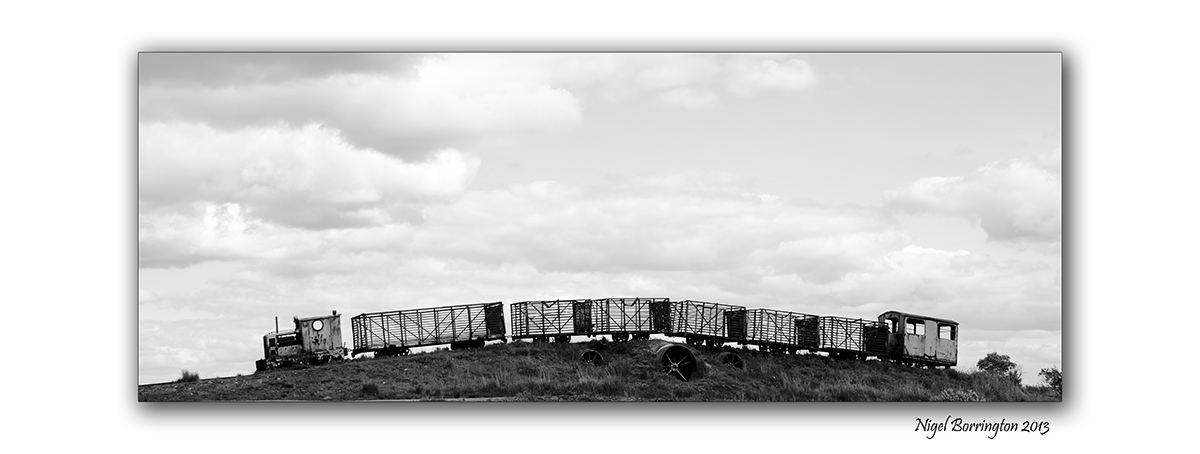
Lough Boora Parklands, County Offaly
Irish Landscape photography : Nigel Borrington
Lough Boora parklands, are one of the most interesting outdoor locations you could visit in Ireland. They cover up to 14 kilometres of scenic views and cycle routes, the parkland has many sculptures and art installations for you to view along with miles of walking routes. The location is also a nature reserve that is home to many rare birds such as lapwings. The first image in the below Gallery is of two Lapwing flying above the park.
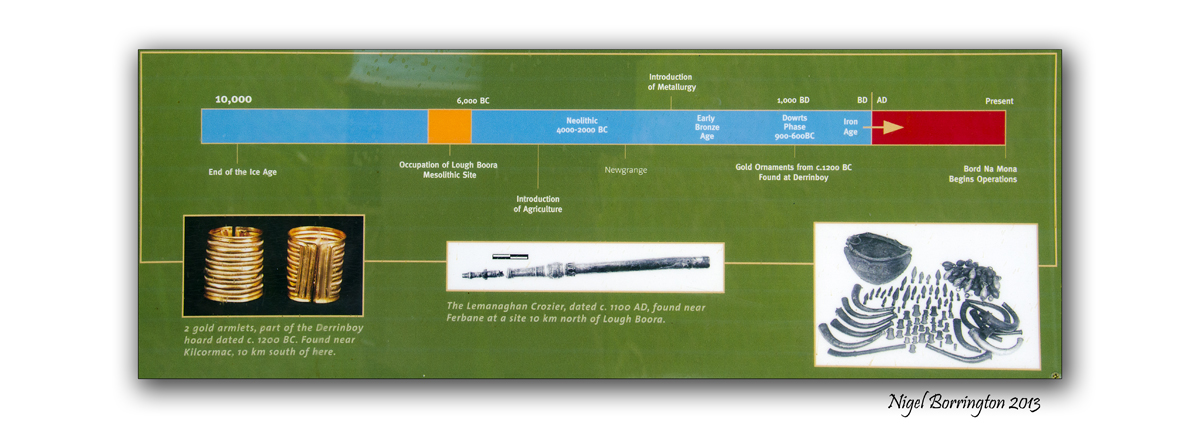
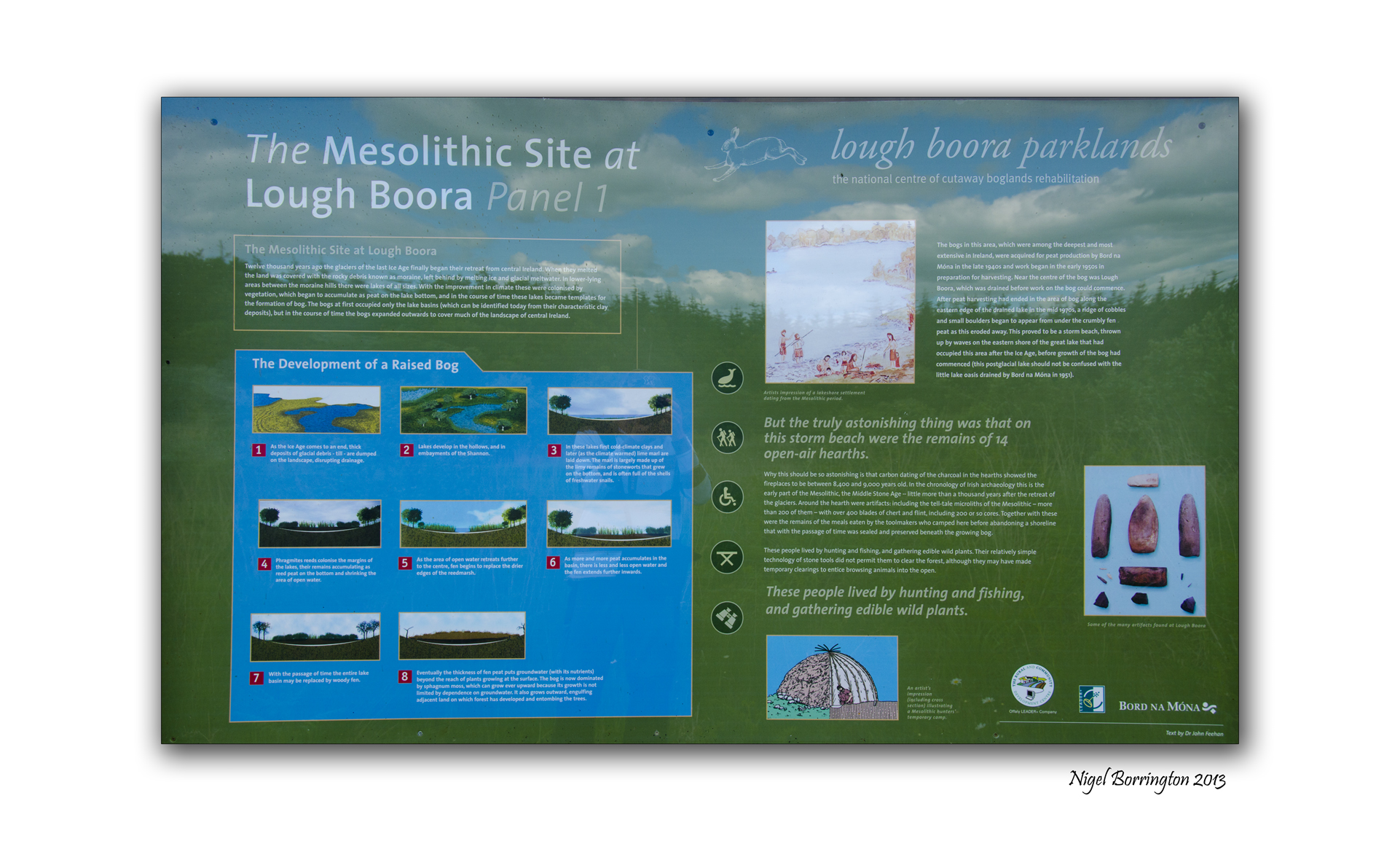
Along with the great sculptures which I will cover in full in another post, some archaeology found at the site has completely changed the history of the country. The remains of a village that would have sat on the banks of one of the biggest lakes in Europe at the time. The findings date the people living in this area back some eight and a half thousand years, this is some two and a half thousand years older than previously thought.
It also pre dates the Christian history of Ireland by some seven thousand years.
The village itself was large and well established for its time, indicating that man must have lived here for sometime before reaching this level of culture. This would indicate that Man moved back into Ireland soon after the ending of the last Ice age some ten thousand years ago.
I have taken some images of the information boards on the site, you can find them below the following images.
Image Gallery

Lapwing’s flying above the parklands.

Dog’s are fully welcomed , restrictions when the birds are nesting.

Many Installations and Sculpture’s.

Wooden Teepee Sculpture.

Bog Cotton, growing in the wetlands.
Information boards


Cahergall ring fort, County Kerry

All Images : Canon G1x
Irish ring forts, Co.Kerry
Irish Landscape photography : Nigel Borrington
Cahergall Ring fort
Following on from yesterdays post relating to Leacanabuile ring for in county Kerry, the area around the fort also contains more ring forts from the same period in Irish history.
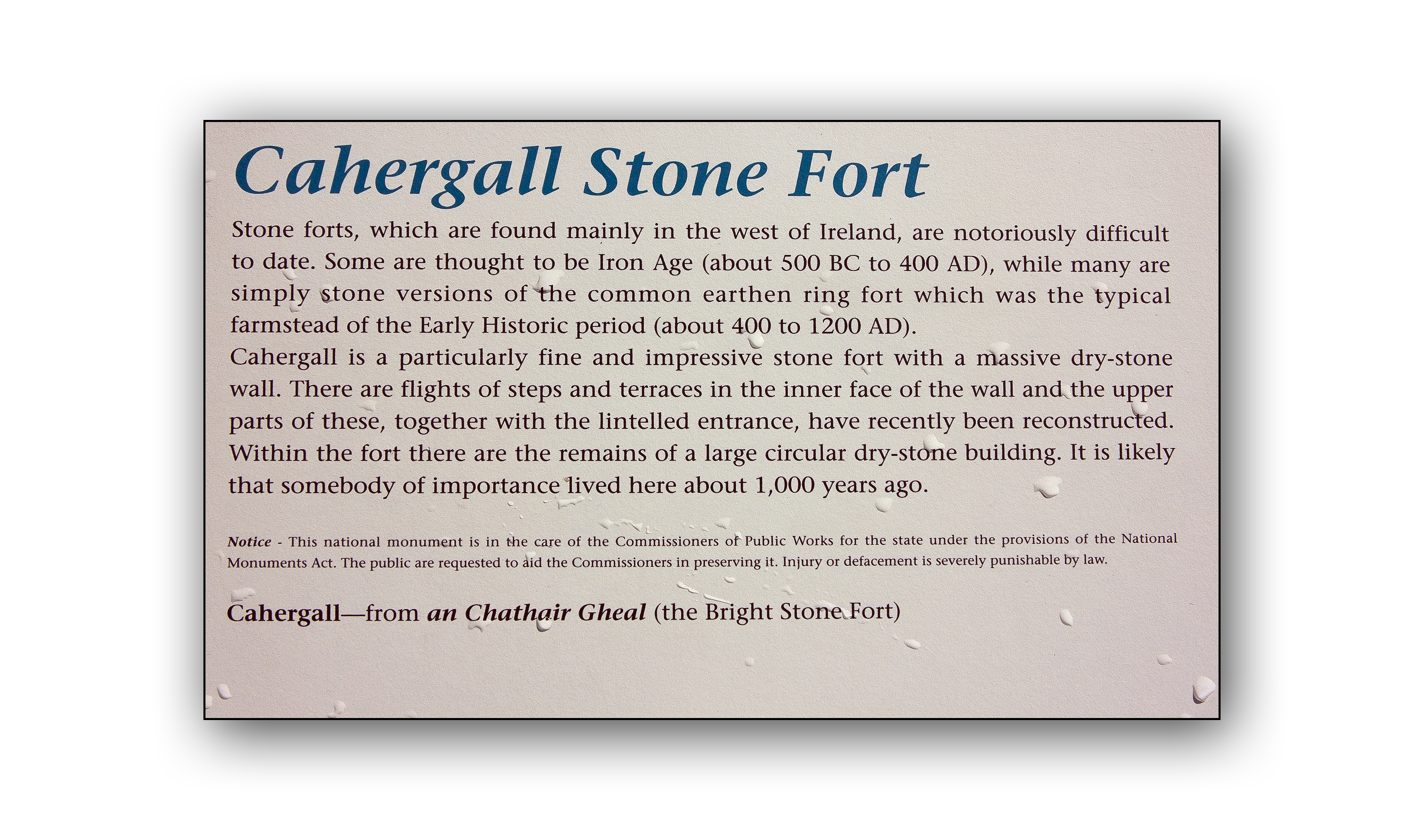
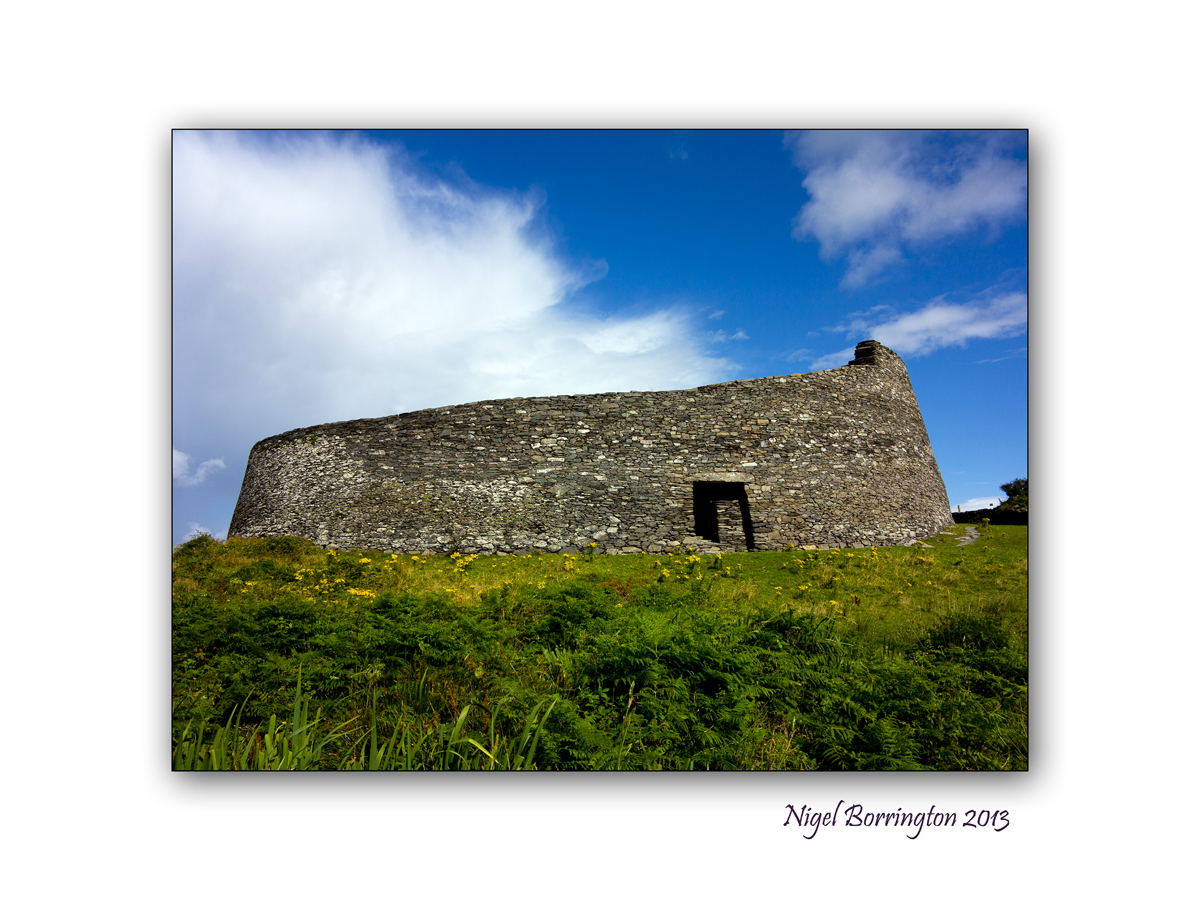
Cahergall ring fort is a massive stone construction, built between 400BC and 500AD, It can be found close to Cahersiveen, County Kerry. Leacanabuaile feels very much more like a dwelling place for people to both live and keep themselves safe from the surrounding Environment. This included raiders and wild animals stealing cattle.
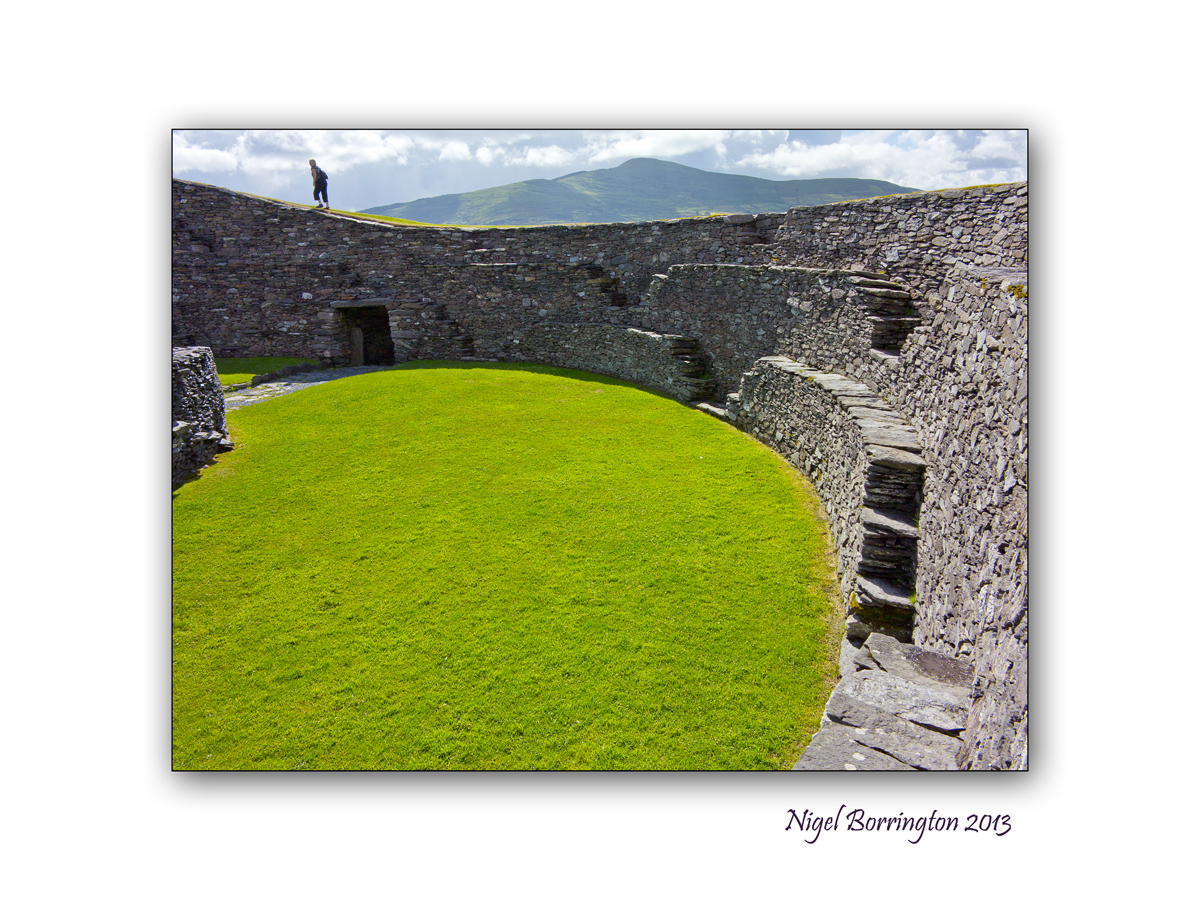
On approaching Cahergall, the scale of this fort is massive in comparison to Leacanabuaile, the walls rise some four to six meters from the ground, perfectly flat and sloping inwards from the ground towards the top. The fort is some twenty five meters wide and the walls some four meter thick.
Inside the fort the inner walls are stepped and consisting of three levels, each of these levels has a series of steps that take you the upper level. The top of the wall is full grassed and walkable. The views of the coastline and landscape around the fort is spectacular from here.
Although this fort is described as a living place, it is very different from other forts around, It has only one internal enclosure and this structure does not look like it could be lived in, at least not in the same way as the buildings within the other forts.
The semi-circular wall’s forming a circle in the center of the fort appear to be very much the focus point from the main walls, almost like this place was a ceremonial theater of some kind. You have to ask why the very different design for this place compared to the other forts and why it was built on such a grand scale. It is very much the focus point for the local community in the same way a church or public building would be today.
As to who these people where, Pat Flannery has some very interesting ideas and his views on Irish per-christian history is very interesting :
http://www.patflannery.com/IrishHistory/TheMilesians.htm
Cahergall Fort has been restored by the OPW and is owned by the Irish State.
Cahergall is well worth a visit if you are in the area and only short distance from Leacanabuaile Stone Fort.
Image Gallery



Leacanabuaile, stone ring Fort, Co.Kerry
All Images : Canon G1x
Irish ring forts, Co.Kerry
Irish Landscape photography : Nigel Borrington
Leacanabuaile, ring Fort
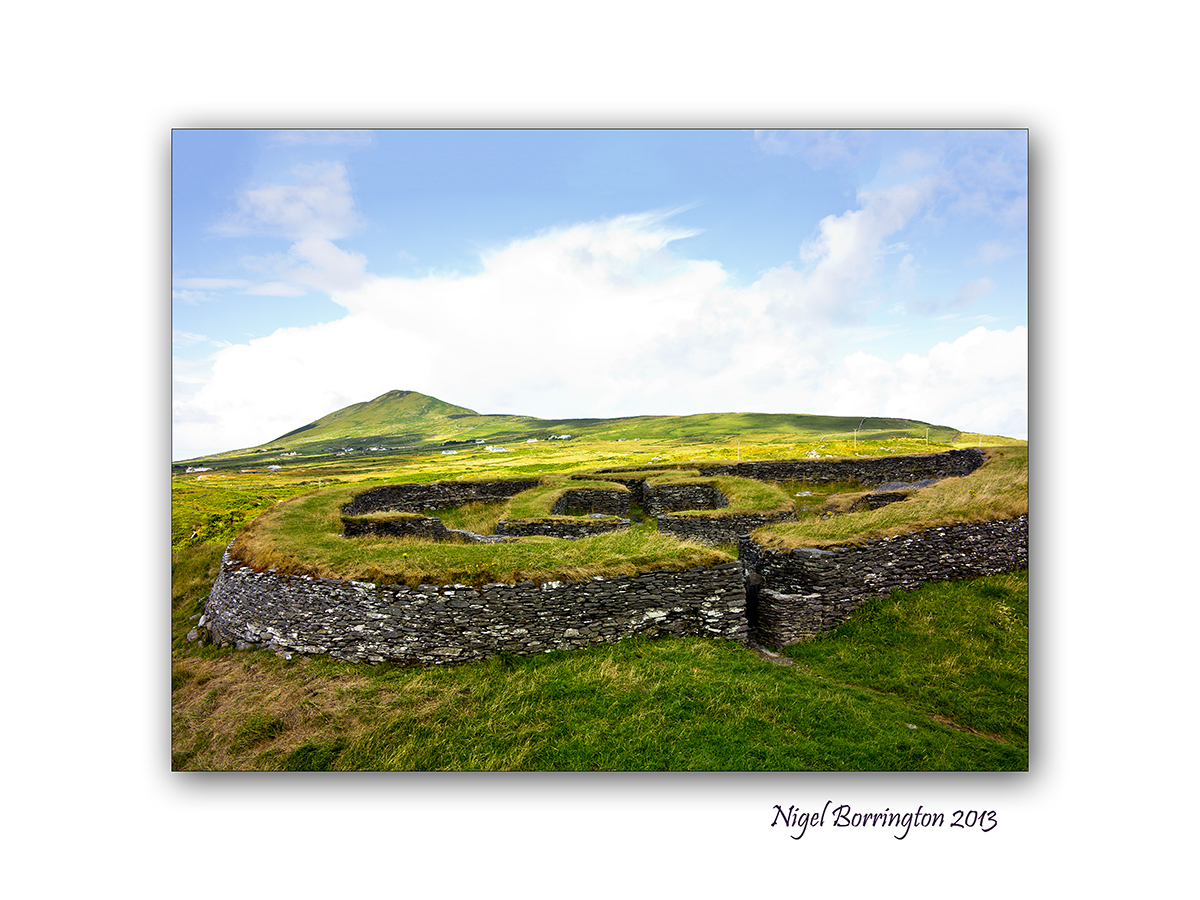
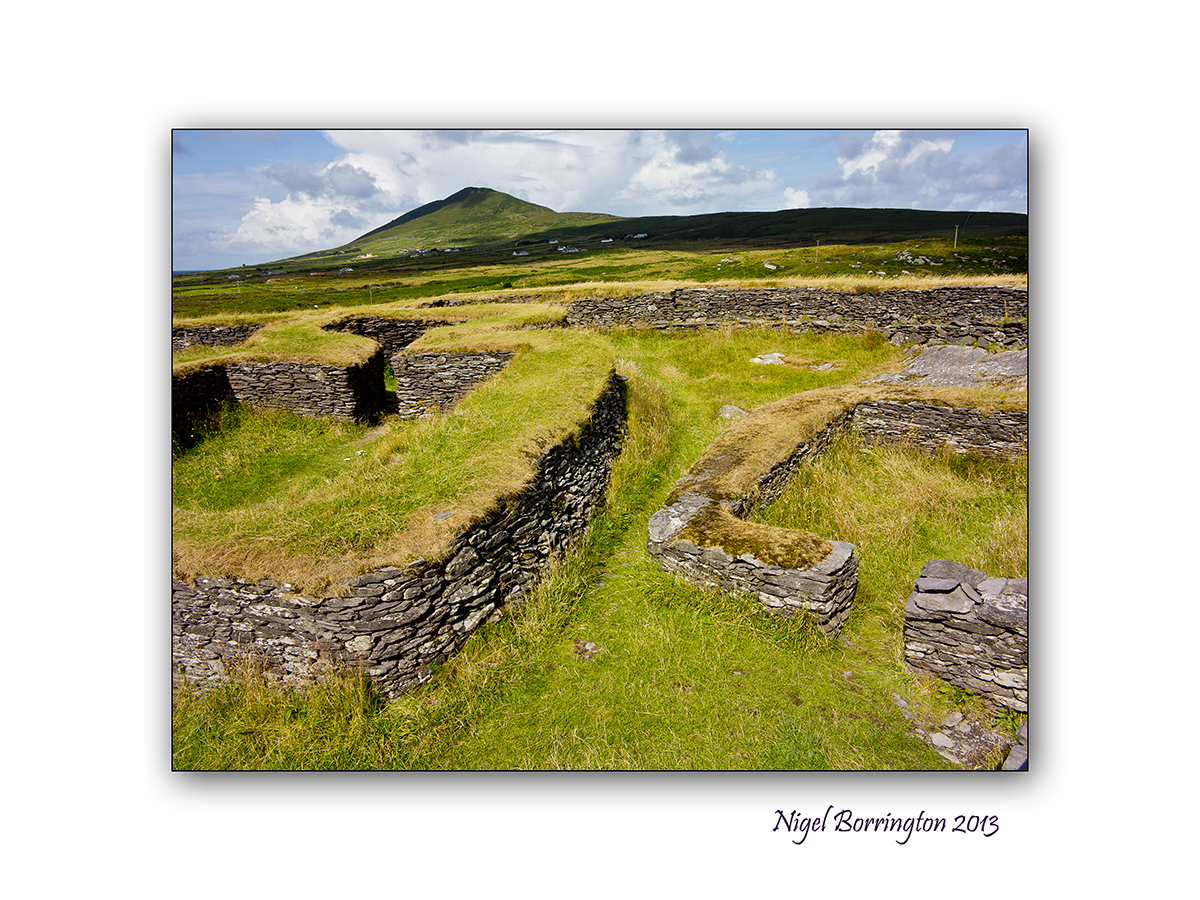
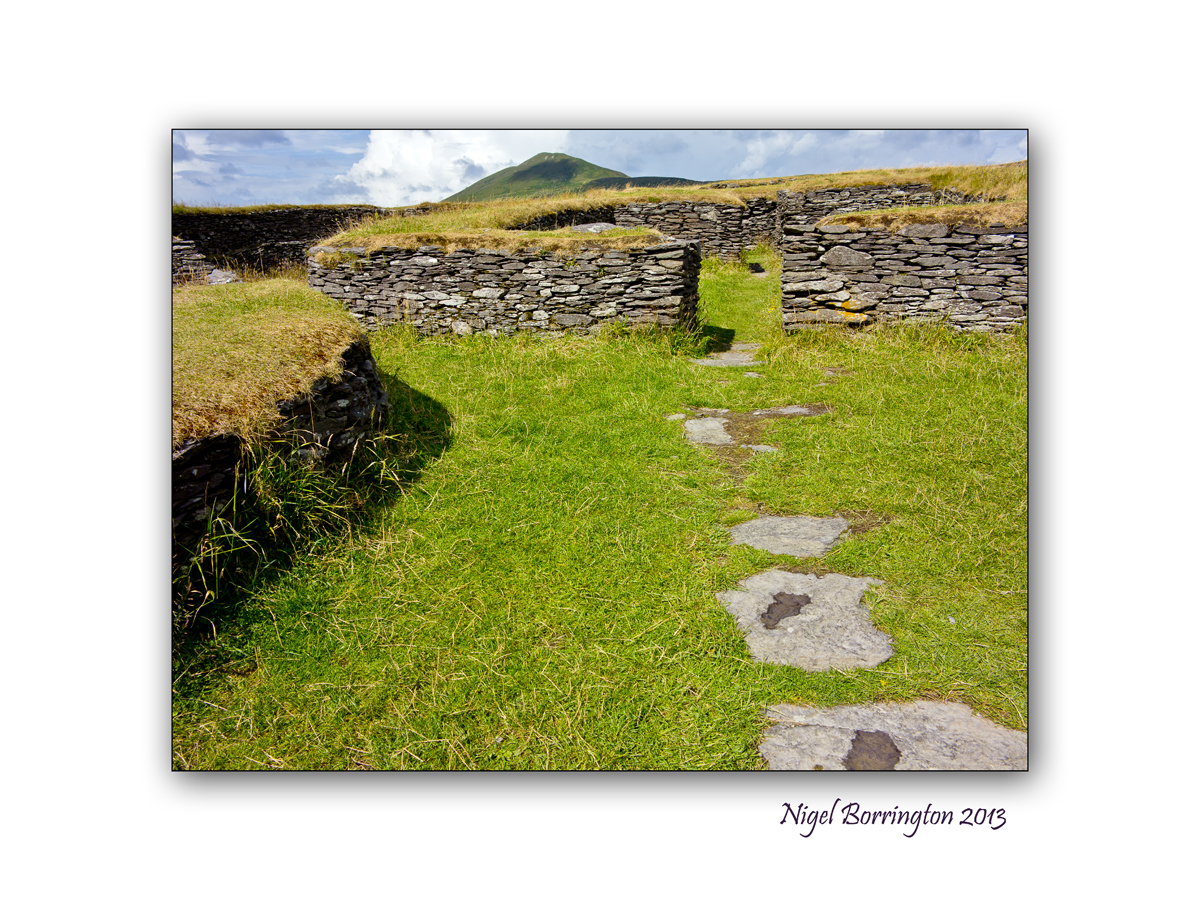
Sitting on a hill side near Cahersiveen in County Kerry is Leacanabuaile Stone Fort, it is considered one of the best examples of an Irish ring fort.
The name translates to ‘Hillside of the Summer Pasturage’.
This is a magical place and just the kind of prehistory site I love to be in and photograph.
This is the Ireland I have been searching for, this site predates the Irish christian period, and is a period in Irish history that is little covered and has been swallowed up by post christian teaching.
On researching this site I came across this link from Pat Flannery:
http://www.patflannery.com/IrishHistory/TheMilesians.htm
Having visited Leacanabuaile ring fort, I feel that there is some credibility to Pats views on Irish history. The site is located only a few fields in from the Kerry coast-line, it is very believable that the area around this ring fort is the landing site for peoples who settled here.
The Milesians
Around 1500 B.C. the Milisians who came from the Middle East and the Ionian sea came to Kerry in Ireland.
The most interesting thing about all these peoples is that they were Ionian people who were seafarers and thrived much, much earlier than the Celts who were totally Continental and not very good seafarers, rather like the Swiss.
The Irish language and customs would seem to support a close affinity with ancient Greece, the Middle East and Persia. Their heroic stories of warriors and chariots for example are very similar.
Spain and Portugal was merely a stepping off point for the sea journey north to Ireland, but scholars have confused the much later Iberian Celts with the Milesians. Apart from the fact that Celts did not occupy any part of Spain or Portugal until long after the Milesians, believing that everybody who came from Spain was Spanish, let alone Celtic, is similar to the belief of many Americans that their Irish ancestors came from County Cork simply because that’s where their ships left from.
Ring forts
Wikipedia description of ring forts : Ring forts
Excavation of Leacanabuaile
An archaeological excavation uncovered iron knives and mill stones suggesting the existence of an early farming community here. Standing atop the outer walls which are up to 3 metres thick, its great to imagine how the fort looked and how people lived in the past.
Image Gallery



—————————————-
Cahergall – ring fort
The area around Leacanabuaile also contains Cahergall – ring fort, an even more impressive fort and I will post about this very soon.
Stone circle in the comeragh mountains
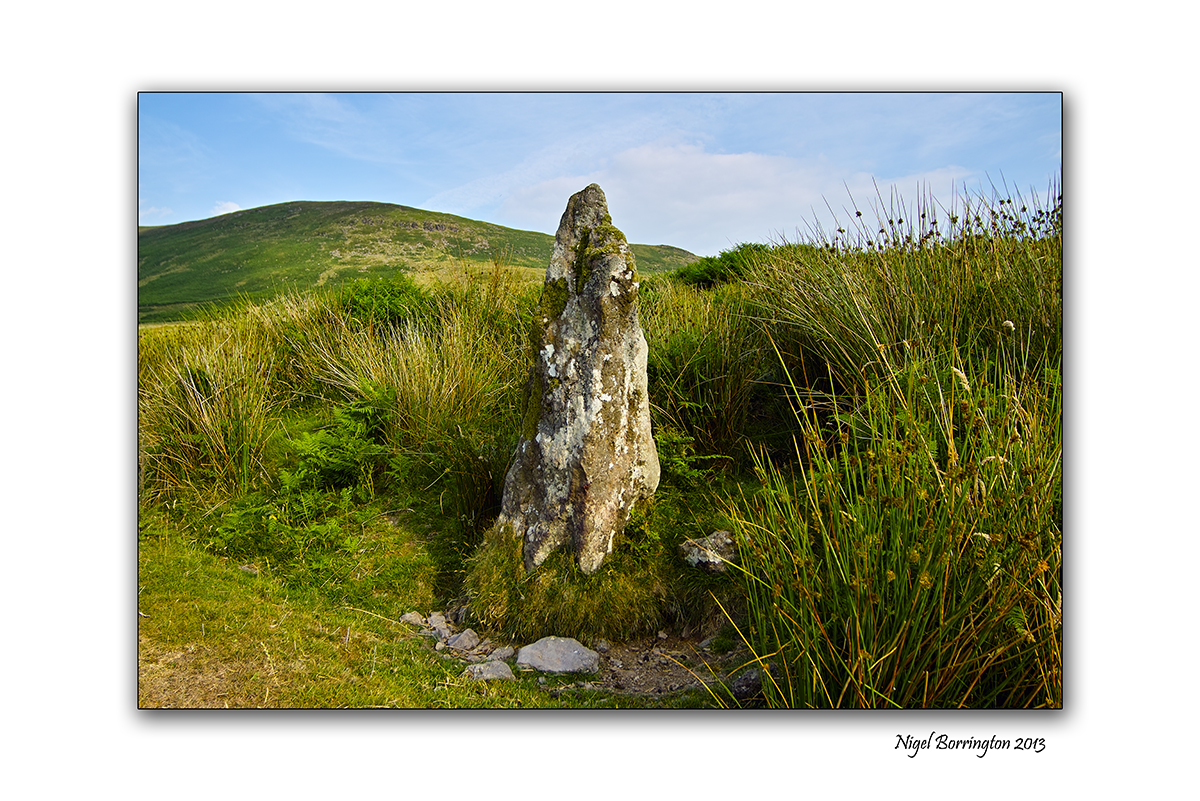
All images using a Sigma SD15, 15-30mm lens, iso 50
Comeragh mountains – stone circle
Irish landscape photography : Nigel Borrington
Stone circles

For myself I love being out on a summer evening walking in the hills, a lot of the Irish hill sides are defined as common land and even though farmed by the same families for many generations these areas are by law open land.
The Comeragh mountains in county waterford has many locations well worth finding but for myself the most interesting are the neolithic monuments and grave sites.
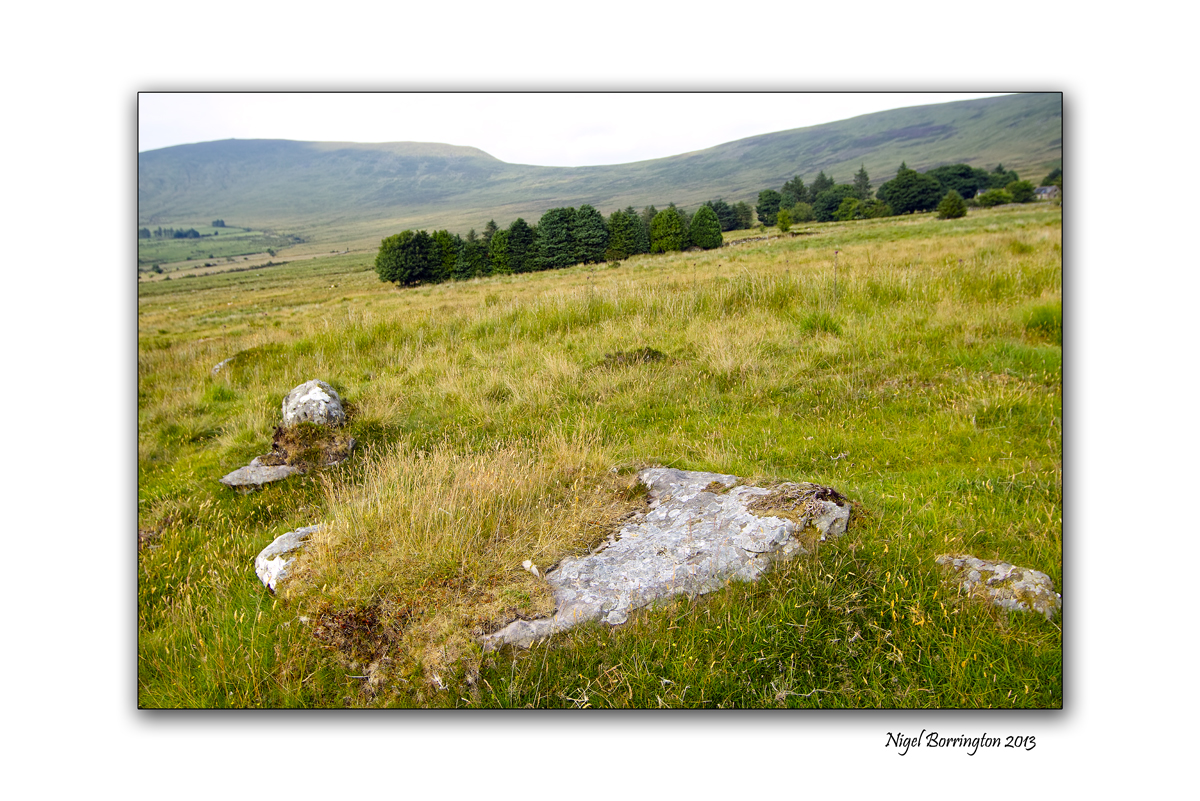
While out last evening I came across this stone circle resting in one of the many valleys in this area, it once would have been a monumental site with its some eight foot high standing stones used to mark the passing of the farming year.
Ireland has a wealth of prehistoric sites that few since the Christian period pay any attention to, for myself however this is where the true history of Ireland exists, People existed in small communities at a local level, however they had everything in common with and communicated with people throughout Europe.
They existed in nature, out in the wilds and they understood the world around them with their very survival in mind, they held personal skill that they learnt from each other.
This stone circle marks those skill’s very well as measuring the seasons was vital to them.
NB: I have circled the above map to locate the stone circle and give some idea as to its size.
Comeragh mountains stone circle – Gallery




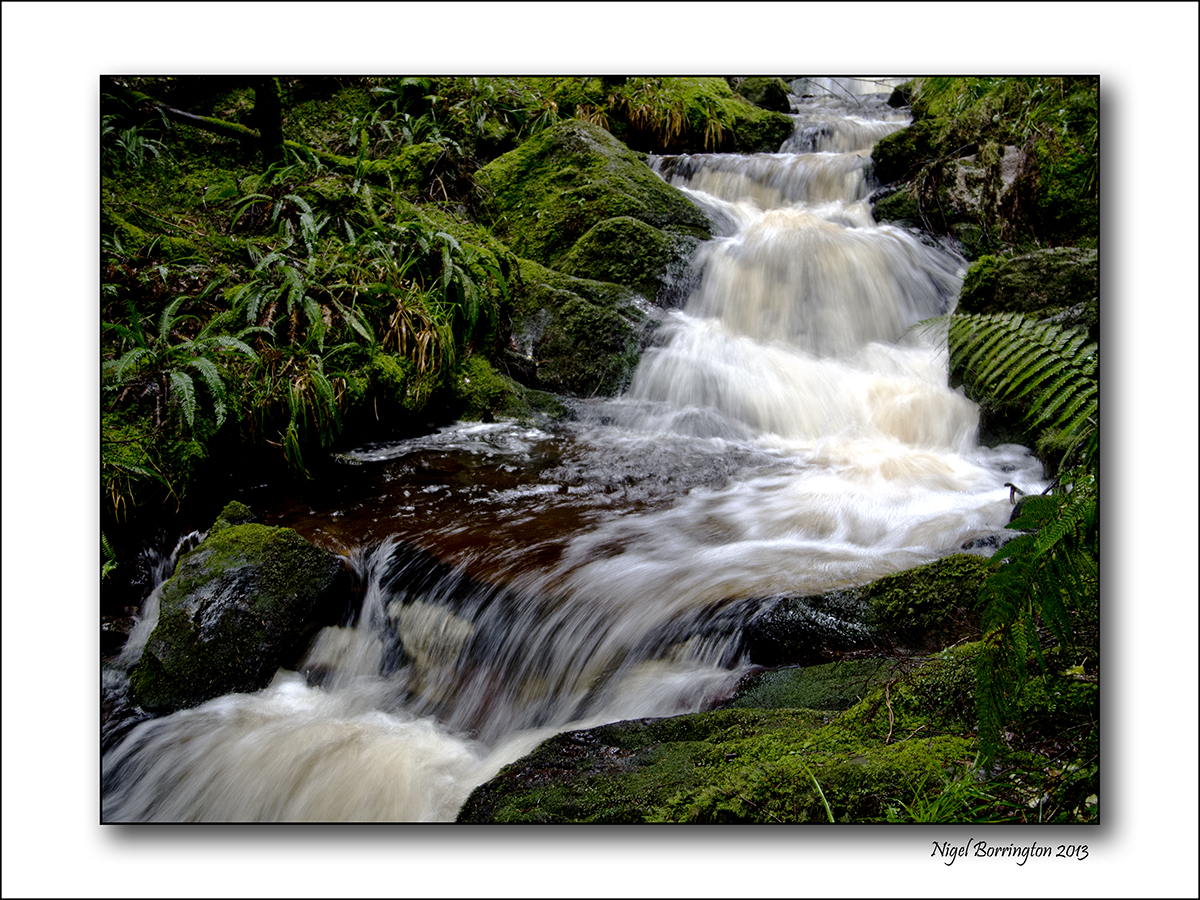
Spirit
Spirit
Wading in a river of beauty and vibrant light,
A stream of emotion where words have no sound,
In silence of feelings so ‘noisily’ present,
Invading the ‘space’, no invite, but welcomed.
In colours of raindrops entering Whole,
Captivates, Inspires, Instils formless form,
Facets of dreamtimes, of Faeries and wishes,
The Drum-Beat ‘awakens’ the feelings of Calm.
Dancing in a river of beauty and vibrant light,
A waterfall of emotion where words feel no force,
An earthquake of feelings so tenderly entered,
Accepted in Space, invited and warm.
Poem By : Ri
Pagan’s and the Immortal Spirit
Pagan’s have a belief in the immortality of the spirit and in the unending cycles of the Seasons and life itself: birth, death, and rebirth. They believe that the spirit is nature itself. Life and its Spirit is in every part of everything that surrounds us, it cannot be separated from it. Pagan God’s take their form as a part of this, they have to respect life and nature just like we do. Even though they control individual elements they cannot ignore all the other gods and their elements in doing so.
Mid-summers day 2013

Fuji film x100
Sunrise over kilkenny
Midsummer’s day 2013
Midsummer’s Eve/Litha/Feill-Sheathain/Alban Hefin/Gwyn Canol Haf
The Summer Solstice is the longest day of the year falling circa June 22 when the Sun enters Cancer (this year 20 June 2012 19:09 EDT). This is the time of celebrating the Earth’s bounty. The God is vibrant and at the peak of his power and the Goddess is fertile and pregnant. This reflects in our fertile gardens, brimming with life and and the fruits of our labor. The Sun is bright and strong. Animals in nature have established families they are showing off to the world. Midsummer is a celebration of the Earth and all she provides for us, also known as Litha after an ancient European fertility Goddess. This is also time sacred for the Fae and is one of the days one can see the them (keep a sprig of rue in your pocket so they don’t lead you away!!)…This is the time when the Oak King and Holly King battle for supremacy again, Holly King emerges triumphant this time around, they meet again at the Winter Solstice when the Oak King shall prevail.
Activities:
Midsummer is a good time to see the Fae folk; skip through your garden ensures fertility (not necessarily your own fertility) for the season; renew your vows/affirmations/bond with the God/Goddess; Stay up the entire night (old custom); harvest your herbs and other light garden work (weeding, etc.); have a bonfire (if you are oh, so lucky to have the place & clearance to do so!!); If you practice sex magic today is a powerful day to do so; ideas for family: spend a day at the beach, go birdwatching (be sure to bring a bird guide!), gather flowers and make Midsummer crowns or garlands for you hair and/or altar.
Incense: Wisteria, Rose, Mints
Decor: Suns, green plants, flowers, early garden bounty, herbs, bees, butterflies, birds, dragonflies,etc.
Herbs/Flowers: St. John’s Wort, Fennel, Vervain, Trefoil, Mugwort, Lavender, Rose, Fern, Daisy, Elder, Honeysuckle, Oak, Chamomile
Colors: Red, Yellow, Gold (represents the Sun God), various shades of green
Stones: Jade, Garnet, Lapis Lazuli=psychic awareness & fertility of mind & body (for more info on lapis visit http://www.earthbow.com/crystals/lapis.htm) ,diamonds
Knockroe, County Kilkenny

.
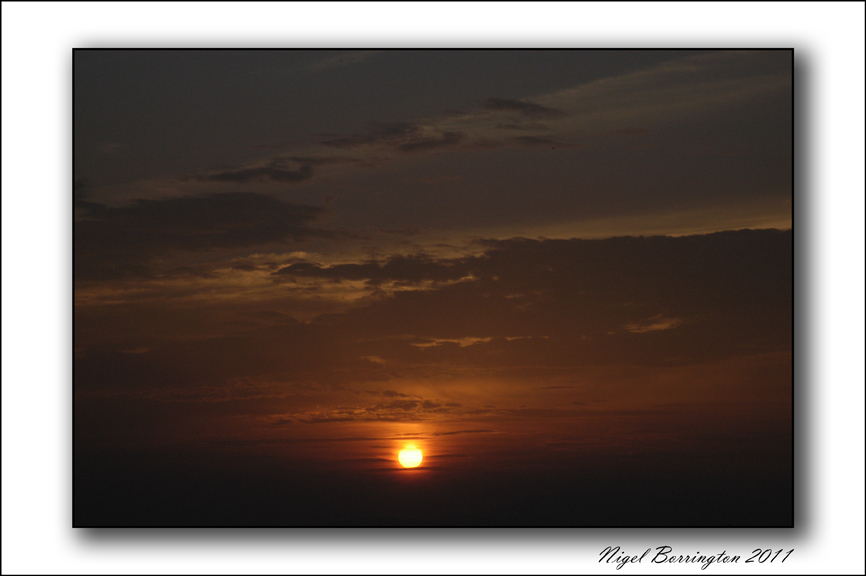
Each midsummers there is a meeting at knockroe passage grave, Co Kilkenny to mark the rising and setting of the mid summers sun.

.
We welcome in Mid summers day !
The giants causeway
Geology and Myth
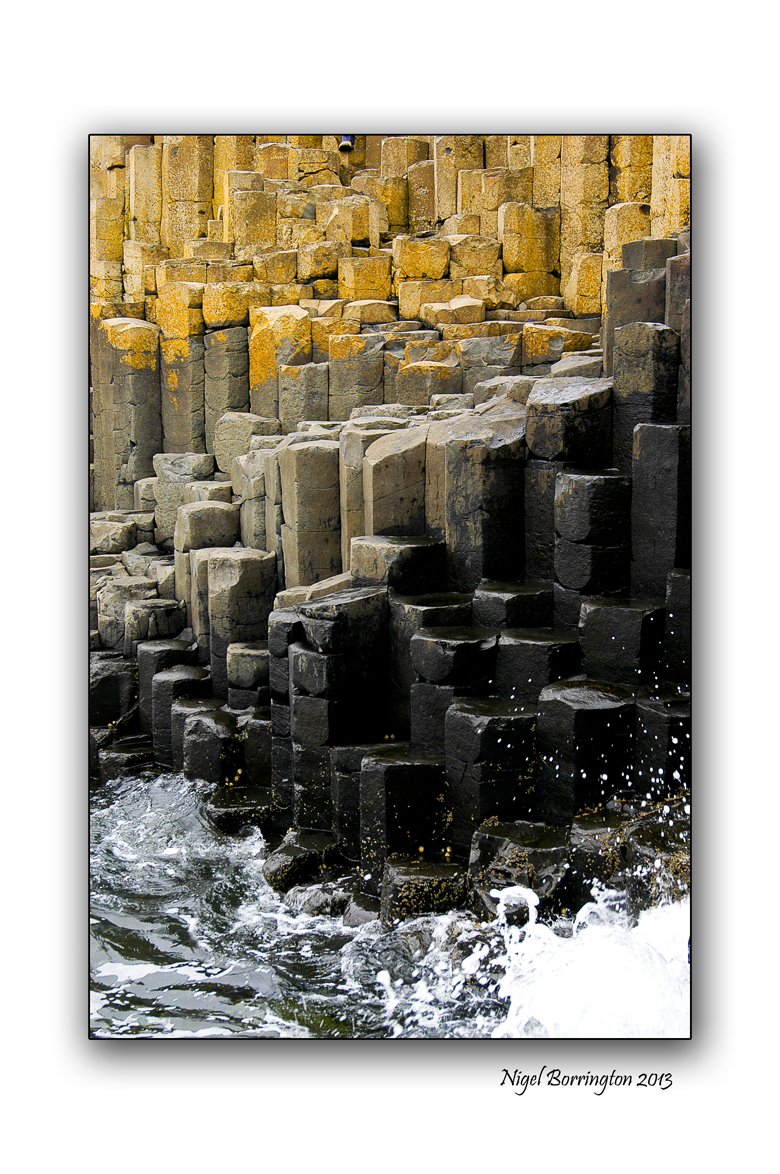
It was on a very wet October morning that we arrived at the giants causeway, its located just outside of the town of Bushmills, county Antrim, on the north Irish coast.
Its a national trust site so you have to pay a fee to get in to the area. Its a small walk from the visitors center to the causeway itself but its well worth it.
This is both a magical and mythical location and one of the worlds most geologically fascinating places.
I took the following images on the day and even though it was very wet and dull I think they get across the feeling you have when your walking around this site. I have added some information as the the geology and the myth’s associated with this truly wonderful place.

The Geology of the causeway
Giant’s Causeway, ( Irish: Clochán an Aifir) promontory of basalt columns along 4 miles (6 km) of the northern coast of Northern Ireland. It lies on the edge of the Antrim plateau between Causeway Head and Benbane Head, some 25 miles (40 km) northeast of Derry. There are approximately 40,000 of these stone pillars, each typically with five to seven irregular sides, jutting out of the cliff faces as if they were steps creeping into the sea.
Formed 50 to 60 million years ago, during the Paleogene Period, the Giant’s Causeway resulted from successive flows of lava inching toward the coast and cooling when they contacted the sea. Layers of basalt formed columns, and the pressure between these columns sculpted them into polygonal shapes that vary from 15 to 20 inches (38 to 51 cm) in diameter and measure up to 82 feet (25 metres) in height. They are arrayed along cliffs averaging some 330 feet (100 metres) in elevation.

Myths behind the magic
Thanks to Kirribilli for this re-telling:
Long, long ago there lived a mighty warrior who was known across the length and breadth of Erin for his strength and bravery, no man on the island was his match and apart from repelling the hoards and the armies that attempted to invade our green land, being the best can be a bit boring and Fionn mac Cumhaill needed a challenge, he needed to prove to himself that he was the greatest warrior both on and off the island.
At that time the scourge of Scotland was a giant called Benandonner and on hearing tales of this beast of a man, Fionn knew that if he could beat this giant, his name would be known the world over. He made his way up to the Ulster coast, shouted across the water at Benandonner and challenged him to a fight.
Now normal people would take a boat and sail across the sea but not these two, they set upon ripping huge rocks out of the ground and throwing them into the sea separating Ireland from Scotland until after hours and days of back-breaking work there stretched a rocky causeway linking the two lands.
They’d agreed to fight between their two lands and seeing that bridge was complete, they made their way across the land bridge. As they approached each other it became apparent how big Benandonner really was, this wasn’t just a big man, this was a true giant.
Now Fionn was not a small man himself but the sheer size of the Scottish giant scared him, suddenly a fight with a monster like that wasn’t as appealing…
So he ran.
But not too far, once he was out of Benandonner’s sight he disguised himself as a baby, which was somewhat apt as he always had his best ideas when he sucked his thumb.
When Benandonner found the baby he asked it who its father was, he was told the baby was Fionn mac Cumhaill’s. When he heard this and saw the size of the baby, he imagined how big the father would be, he would be gigantic, he wouldn’t stand a chance, so he ran.
He ran back to the land of the Scots and on his way back he made sure to destroy the bridge, lest Fionn ever come looking for him…
Gallery


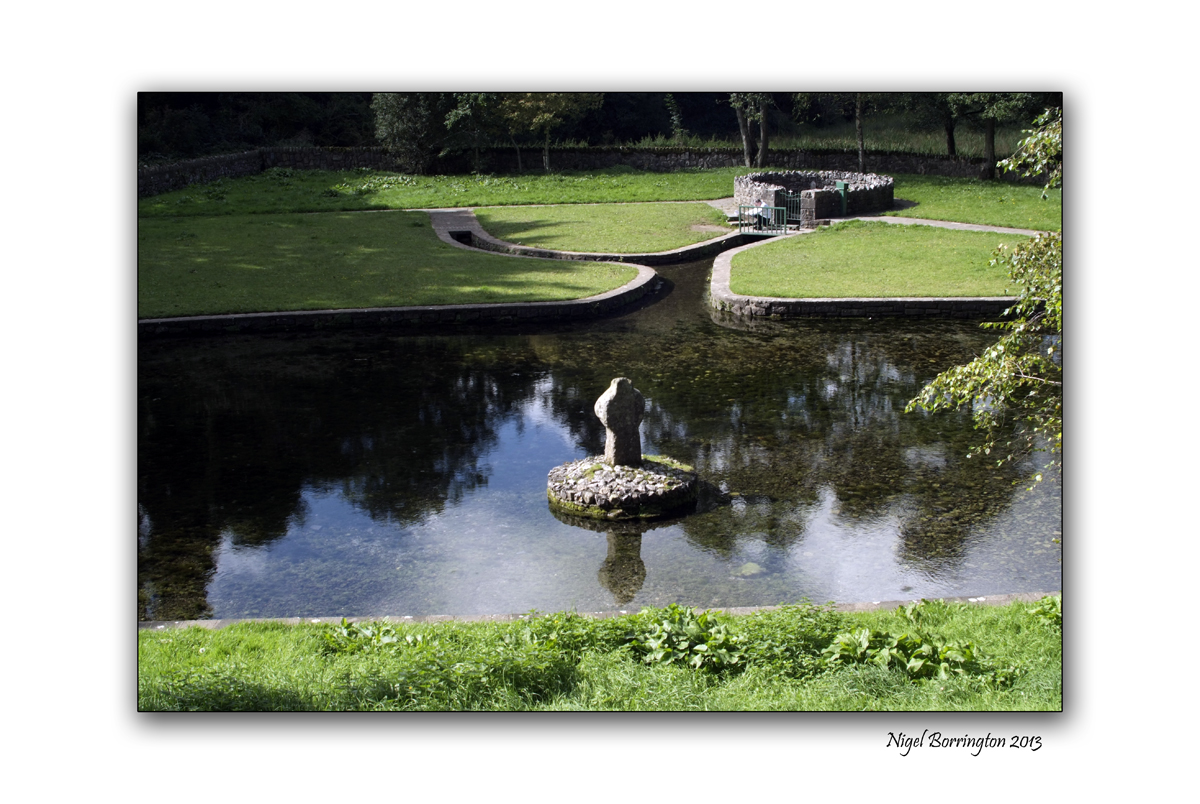
St Patrick well
St Patrick’s well is located In Clonmel, County Tipperary.

The Well pre-dates Christian times by a considerable period, clearly only being referred to as belonging to St Patrick since he or the local church converted the local people to Christianity.
“The Celtic pre-Christian period.
There is a lot of evidence to show that in ancient Ireland well worship was widely practised. Many if not all of Ireland’s holy wells of later Christian times had been objects of pagan veneration, and regarded as sacred, centuries before the advent of Christianity. In fact many Irish place names which have their origins dating from pre-Christian times are derived from wells. One of those sacred springs Tipra Arann in the present Barony of Clanwilliam around Tipperary Town, gave its name to County Tipperary. In the Bronze Age there seems to have been no temples constructed for the purposes of worship. Pagan rites were performed in the open air. Those were places of popular assembly as well as centres for pagan worship and sacrifices.”
Sacrifices ? There is no evidence of this so I think the writer of the page is talking about offerings. Items of personal value placed into the well as a thank you to the water gods.
“St Patrick and his disciples on their travels throughout the country took advantage of those assemblies to preach the Gospel and to baptise the new converts. To St. Patrick coming from lands within the former Roman Empire some of those Celtic customs must have appeared strange. Well worship was re-orientated and transformed into a Christian context. In due course, from being places where pagan rites had been performed, the wells became places of Christian worship. There was a tradition which has died out that people visited St Patrick’s Well before sunrise on the first day of May – a date which coincides with the Celtic Festival of Bealtaine.”

I find the idea of Holy wells in the early Christian period to be fascinating, It appears, as covered above to be a clear attempt by the church to override the previous worship of water gods and to move this worship over to the new God that the modern christian church now worships.

The Pagan Moon

Esbats and Moon Phases
~~~~~~~~~~~~~~~~~~~~~~
The Esbats are the Wiccan Full Moon Celebrations.
There are 12 – 13 Full Moons yearly, or one every 28.1/4 days.
The Moon is symbolic of the Goddess, as well as a source of energy.
Each Moon has a traditional name.
Each Full Moon has a different meaning and magickal purpose. Because of this, it is a good idea to plan your Full Moon Rituals to work with the meaning and purpose of the Moon. The Full Moon is also a traditional time for divinations of all kinds, as the power of the Moon aids in such work.
January – Wolf Moon Plan a ritual of protection around your home and family.
February – Storm Moon Plan a ritual to ask the Old Ones for help in planning your future.
March – Chaste Moon Plan a ritual to help fulfill your wishes is appropriate.
April – Seed Moon Plan a ritual to physically plant your seeds of desire in Mother Earth.
May – Hare Moon Plan a ritual to reaffirm your goals.
June – Dyad (pair) Moon Plan a ritual to balance your spiritual and physical desires.
July – Mead Moon Plan a ritual to decide what you will do once your goals have been met.
August – Wyrt (green plant) Moon Plan a ritual to preserve what you already have.
September – Barley Moon Plan a ritual of Thanksgiving for all the Old Ones have given you.
October – Blood Moon Plan a ritual to remember those who have passed from this world, and be sure to make an offering to them.
November – Snow Moon Plan for a ritual to work on ridding yourself of negative thoughts and vibrations.
December – Oak Moon Plan for a ritual to help you remain steadfast in your convictions.
A Blue Moon is variable and occurs when the Moon with it’s 28 day cycle
appears twice within the same calendar month, due to that month’s 31 day duration.
New Moon – Sometimes the moon phases are broken down further, where the new moon represents enchantments and temptations. These properties are also present at any other times during a lunar phase when the moon is unseen or clouded over.
Waxing Moon – New beginnings, protection, positive magick for growth, magick to bring things to you.
Full Moon – Any magick can be done during the full moon because magickal energies have reached their peek. This is the ideal time to do any magick.
Waning Moon – Banishments, bindings, removing yourself from negative influences, negative magick ONLY to protect yourself.
Irish Moon Gods
Elatha
~~~~~~
In Irish mythology, Elatha or Elathan (modern spelling: Ealadha) was a prince of the Fomorians and the father of Bres by Eri of the Tuatha Dé Danann. The imagery surrounding him (he visits Ériu at night by sea on a silver boat) suggests he may once have been a moon god.
Elatha is quoted as being the “The beautiful Miltonic prince of darkness with golden hair”. He was the son of Dalbaech and a king of the Fomor, he was father of Bres by Eri, a woman of the Tuatha de Danann. He came to her over the sea in a vessel of silver, himself having the appearance of a young man with yellow hair, wearing clothes of gold and five gold torcs. He was one of the Fomor who took part in the Second Battle of Magh Tuireadh.
During the Second Battle of Magh Tuireadh, Elatha, son of Dalbaech, watched over Dagda’s magic harp, Uaithne, sometimes called Dur-da-Bla, the Oak of Two Blossoms, and sometimes Coir-cethar-chuin, the Four-Angled Music. He is said to have a sense of humor and a sense of nobility.
Though considered to be the Fomorian father of Eochu Bres, Elatha (Elada) was also the father of the Dagda, Ogma, a son named Delbaeth, and Elloth (the father of Manannan mac Lir) according to the Lebor Gabala Erinn. The mother of these “Tuatha De Danann” chiefs may have been Ethne, the mother of Lug, based on Ogma’s often cited matronymic “mac Ethliu.” Since Ethne was Fomorian, this means they are all Fomorians. This is rather confusing, but may betray the battle between the two groups as actually being about the new generation of gods displacing the older generation.
Elatha and Bres
She told him that his father was Elatha, one of the Kings of the Fomorians; that he had come to her one time over a level sea in a great vessel that seemed to be of silver; that he himself had the appearance of a young man with yellow hair, his clothes decked with gold and five rings of gold around his neck. She had refused the love of all the young men of her own people, had given him her love and cried when he had left her.
Before he left he had given her a ring from his own hand and had bade her give it only to the man whose finger it would fit. Eri brought out the ring and put it on the finger of Bres and it fit him well. She and Bres and some of their followers then set out of the land of the Fomorians. At long last they came to that faraway land. Elatha the local King saw the ring on Bres’s hand and asked him the whole story and said that Bres was his own son. Elatha then asked Bres what it was that drove him out of his own country and his own kingship. Bres answered truthfully: “Nothing drove me out but my own injustice and my own hardness; I took away their treasures from the people and their jewels and their food itself. And there were never taxes put on them before I was their King. And still I am come to look for fighting men that I may take Ireland by force”. Elatha listened and then bade him go to the chief King of the Fomorians, Balar of the Evil Eye.
Names
These are the names that Elatha has gone by and where that name stems from.
Elatha – Rolleston (author): Myths and Legends of Celtic Race
Elathan – Squire (author): Mythology of the Celtic People
Elathan – Lady Gregory (author): Gods and Fighting Men
Elathan represents an incorrect usage by Squire and Lady Gregory as Elathan is the genitive case of Elatha and means ‘of Elatha’.
Dandelion
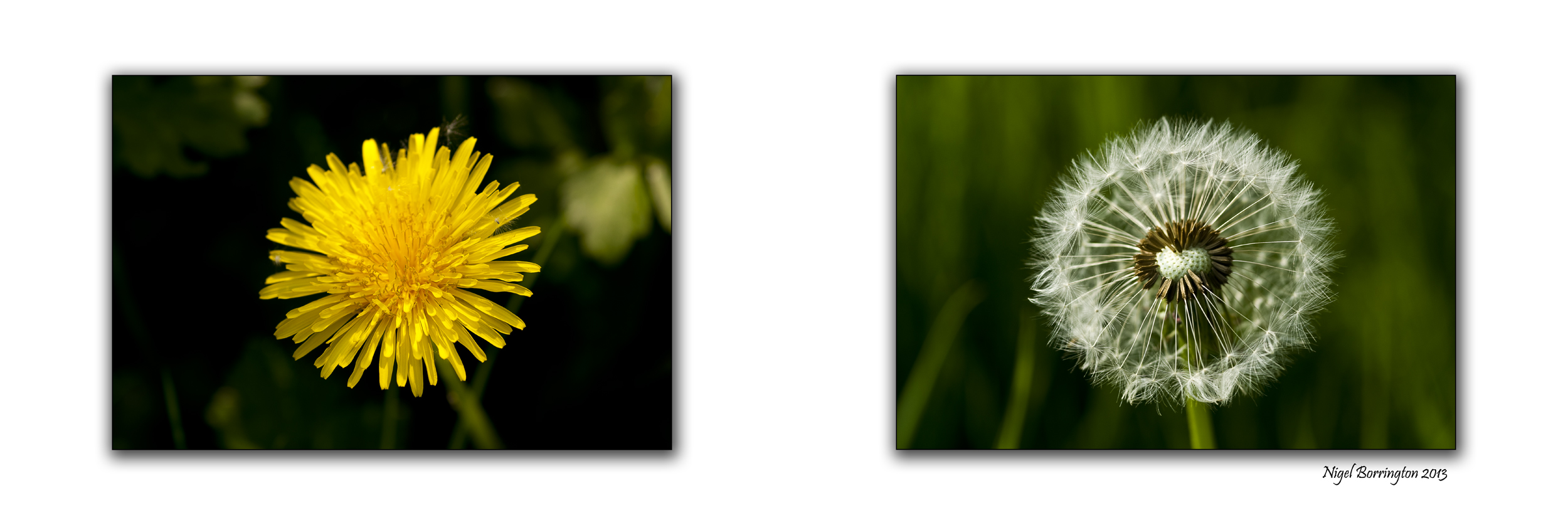
The Dandelion
The Dandelion has to be one of the most available of natures plants and flowers during the summer, but according to the following article it can be used as a very effective drug:
By Peter Gail
Suppose your doctor tells you, on your next visit, that he has just discovered a miracle drug which, when eaten as a part of your daily diet or taken as a beverage, could, depending on the peculiarities of your body chemistry: prevent or cure liver diseases, such as hepatitis or jaundice; act as a tonic and gentle diuretic to purify your blood, cleanse your system, dissolve kidney stones, and otherwise improve gastro-intestinal health; assist in weight reduction; cleanse your skin and eliminate acne; improve your bowel function, working equally well to relieve both constipation and diarrhea; prevent or lower high blood pressure; prevent or cure anemia; lower your serum cholesterol by as much as half; eliminate or drastically reduce acid indigestion and gas buildup by cutting the heaviness of fatty foods; prevent or cure various forms of cancer; prevent or control diabetes mellitus; and, at the same time, have no negative side effects and selectively act on only what ails you. If he gave you a prescription for this miracle medicine, would you use it religiously at first to solve whatever the problem is and then consistently for preventative body maintenance?
All the above curative functions, and more, have been attributed to one plant known to everyone, Taraxacum officinale, which means the “Official Remedy for Disorders.” We call it the common dandelion. It is so well respected, in fact, that it appears in the U.S. National Formulatory, and in the Pharmacopeias of Hungary, Poland, Switzerland, and the Soviet Union. It is one of the top 6 herbs in the Chinese herbal medicine chest.
According to the USDA Bulletin #8, “Composition of Foods” (Haytowitz and Matthews 1984), dandelions rank in the top 4 green vegetables in overall nutritional value. Minnich, in “Gardening for Better Nutrition” ranks them, out of all vegetables, including grains, seeds and greens, as tied for 9th best. According to these data, dandelions are nature’s richest green vegetable source of beta-carotene, from which Vitamin A is created, and the third richest source of Vitamin A of all foods, after cod-liver oil and beef liver! They also are particularly rich in fiber, potassium, iron, calcium, magnesium, phosphorus and the B vitamins, thiamine and riboflavin, and are a good source of protein.
These figures represent only those published by the USDA. Studies in Russia and Eastern Europe by Gerasimova, Racz, Vogel, and Marei (Hobbs 1985) indicate that dandelion is also rich in micronutrients such as copper, cobalt, zinc, boron, and molybdenum, as well as Vitamin D.
Much of what dandelions purportedly do in promoting good health could result from nutritional richness alone. Vogel considers the sodium in dandelions important in reducing inflammations of the liver. Gerasimova, the Russian chemist who analyzed the dandelion for, among other things, trace minerals, stated that “dandelion [is] an example of a harmonious combination of trace elements, vitamins and other biologically active substances in ratios optimal for a human organism” (Hobbs 1985).
Recent research, reported in the Natural Healing and Nutritional Annual, 1989 (Bricklin and Ferguson 1989) on the value of vitamins and minerals indicates that:
* Vitamin A is important in fighting cancers of epithelial tissue, including mouth and lung;
* Potassium rich foods, in adequate quantities, and particularly in balance with magnesium, helps keep blood pressure down and reduces risks of strokes;
* Fiber fights diabetes, lowers cholesterol, reduces cancer and heart disease
risks, and assists in weight loss. High fiber vegetables take up lots of room, are low in calories, and slow down digestion so the food stays in the stomach longer and you feel full longer;
* Calcium in high concentrations can build strong bones and can lower blood pressure;
* B vitamins help reduce stress.
Throughout history, dandelions have had a reputation as being effective in promoting weight loss and laboratory research indicates that there is some support for this reputation. Controlled tests on laboratory mice and rats by the same Romanians indicated that a loss of up to 30% of body weight in 30 days was possible when the animals were fed dandelion extract with their food. Those on grass extract lost much less. The control group on plain water actually gained weight.
Beyond nutritional richness, however, are the active chemical constituents contained in dandelions which may have specific therapeutic effects on the body. These include, as reported by Hobbs (1985):
* Inulin, which converts to fructose in the presence of cold or hydrochloric acid in the stomach. Fructose forms glycogen in the liver without requiring insulin, resulting in a slower blood sugar rise, which makes it good for diabetics and hypoglycemics;
* Tof-CFr, a glucose polymer similar to lentinan, which Japanese researchers have found to act against cancer cells in laboratory mice; Lentinan is a yeast glucan (glucose polymer) that increases resistance against protozoal and viral infections.;
* Pectin, which is anti-diarrheal and also forms ionic complexes with metal ions, which probably contributes to dandelion’s reputation as a blood and gastrointestinal detoxifying herb. Pectin is prescribed regularly in Russia to remove heavy metals and radioactive elements from body tissues. Pectin can also lower cholesterol and, combined with Vitamin C, can lower it even more. Dandelion is a good source of both Pectin and Vitamin C;
* Coumestrol, an estrogen mimic which possibly is responsible, at least in part, for stimulating milk flow and altering hormones;
* Apigenin and Luteolin, two flavonoid glycosides which have been demonstrated to have diuretic, anti-spasmodic, anti-oxidant and liver protecting actions and properties, and also to strengthen the heart and blood vessels. They also have anti-bacterial and anti-hypoglycemic properties, and, as estrogen mimics, may also stimulate milk production and alter hormones;
* Gallic Acid, which is anti-diarrheal and anti-bacterial;
* Linoleic and Linolenic Acid, which are essential fatty acids required by the body to produce prostaglandin which regulate blood pressure and such body processes as immune responses which suppress inflammation. These fatty acids can lower chronic inflammation, such as proliferative arthritis, regulate blood pressure and the menstrual cycle, and prevent platelet aggregation;
* Choline, which has been shown to help improve memory;
*Several Sesquiterpene compounds which are what make dandelions bitter. These may partly account for dandelions tonic effects on digestion, liver, spleen and gall bladder, and are highly anti-fungal;
* Several Triterpenes, which may contribute to bile or liver stimulation;
* Taraxasterol, which may contribute to liver and gall bladder health or to hormone altering.
These chemicals, individually, are not unique to dandelions, but the combination of them all in one plant, along with high levels of vitamins, minerals, carbohydrates, proteins and fiber account for the many claims made regarding the plant.
These claims include the following results of clinical and laboratory research, again as reported in Hobbs (1985):
* A doubling of bile output with leaf extracts, and a quadrupling of bile output with root extract. Bile assists with the emulsification, digestion and absorption of fats, in alkalinizing the intestines and in the prevention of putrefaction. This could explain the effectiveness of dandelion in reducing the effects of fatty foods (heartburn and acid indigestion);
* A reduction in serum cholesterol and urine bilirubin levels by as much as half in humans with severe liver imbalances has been demonstrated by Italian researchers;
* Diuretic effects with a strength approaching that of the potent diuretics Furosemide and Lasix, used for congestive heart failure and cirrhosis of the liver, with none of the serious side effects, were found by Romanian scientists. They found that water extract of dandelion leaves, administered orally, because of its high potassium content, replaced serum potassium electrolytes lost in the urine, eliminating such side effects common with the synthetics as severe potassium depletion, hepatic coma in liver patients, circulatory collapse, and transmission through mothers’ milk;
* In 1979 a Japanese patent was filed for a freeze-dried warm water extract of dandelion root for anti-tumor use. It was found that administration of the extract markedly inhibited growth of particular carcinoma cells within one week after treatment;
* Dental researchers at Indiana University in 1982 used dandelion extracts in antiplaque preparations;
* In studies from 1941 to 1952, the French scientist Henri Leclerc demonstrated the effectiveness of dandelion on chronic liver problems related to bile stones. He found that roots gathered in late summer to fall, when they are rich in bitter, white milky latex, should be used for all liver treatments;
* In 1956, Chauvin demonstrated the antibacterial effects of dandelion pollen, which may validate the centuries old use of dandelion flowers in Korean folk medicine to prevent furuncles (boils, skin infections), tuberculosis, and edema and promote blood circulation.
Also, Witt (1983) recommends dandelion tea to alleviate the water buildup in PMS (pre-menstrual syndrome).
There are many testimonials from those who have benefited from the use of dandelions in the treatment of what ailed them.
Robert Stickle, an internationally famous architect, was diagnosed as having a malignant melanoma 21 years ago, and was given, after radical surgery had not halted its spread, less than 2 years to live. He said, in a letter to Jeff Zullo, president of the Society for the Promotion of Dandelions, (June 23, 1986):
” I went on a search for the answer to my mortal problem, and [discovered] that perhaps it was a nutritional dilemma…. To me, cancer is primarily a liver failure manifestation. {Italians are very concerned about problems of the ‘fegato’]. [I discovered that] the cancer rate in native Italians is very low among the farming population (paesanos). When they get affluent and move to the city, its the same as the rest of civilized man. Paesanos eat dandelions, make brew from the roots, and are healthy, often living to over 100 years.”
He states that he began eating dandelion salad every day, and his improvement confounded the doctors. When he wrote the letter in 1986, 18 years had passed and there had been no recurrence of the melanoma.
The Vikings in Ireland
A couple of years back I was asked to create some images for a group of Co.Kerry based Re-enactors and they selected the Vikings as there historic period, this shoot was great fun to do for the day. We selected the remains and grounds of an old church yard and this worked very well.
I have posted some history of the Vikings in Ireland at the bottom of the images.
Nigel


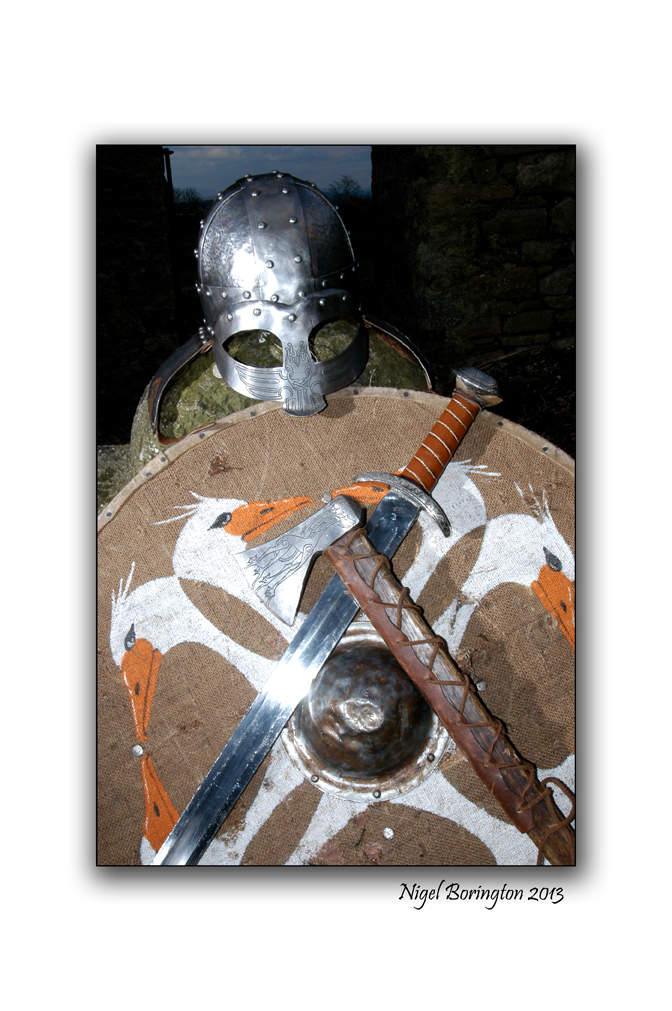
At the end of the eighth century the first Viking raiders appeared in Irish waters. These raiders came exclusively from Norway. The first recorded raid was in 795 on Rathlin Island off the coast of Antrim where the church was burned. On the west coast the monasteries on Inismurray and Inisbofin were plundered possibly by the same raiders. The Scottish island of Iona was also attacked in the same year.
For the first four decades, 795-c.836, the raids followed a clear pattern of hit-and -run affairs by small, probably independent, free-booters. Attacks were usually on coastal targets no Viking raid is recorded for areas further inland than about twenty miles. These attacks were difficult to defend but the Vikings were sometimes defeated. In 811 a raiding party was slaughtered by the Ulaid and the following year raiding parties were defeated by the men of Umall and the king of Eóganacht Locha Léin. By 823 the Vikings had raided around all the coast and in 824 the island monastery of Sceilg, off the Kerry coast, was attacked. The monastic city of Armagh was attacked three times in 832.
In the first quarter century of Viking attacks only twenty-six plunderings by Vikings are recorded in the Irish Annals. During the same time eighty-seven raids by the Irish themselves are recorded. An average of one Viking raid a year can have caused no great disorder or distress in Irish society. Attacks on Irish monasteries were common before the Viking Age. The burning of churches also was an integral part of Irish warfare. Wars and battles between monasteries also occurred in Ireland before the coming of the Vikings. Irish monasteries had become wealthy and politically important with considerable populations. The Vikings attacked the monasteries because they were rich in land, stock and provisions. They also took valuable objects but this was not their primary concern.
Intensified Raids and Settlements
From c. 830 Viking raids became more intense in Ireland. In 832 for instance, there were extensive plunderings in the lands of the Cianachta who lived near the sea in Louth. In 836 the Vikings attacked the land of the Uí Néill of southern Brega and attacked the lands of Connacht. In 837 a fleet of sixty ships appeared on the Boyne and a similar fleet on the Liffey. Soon afterwards Vikings made their way up the Shannon and the Erne and put a fleet on Lough Neagh.
The Vikings wintered for the first time on Lough Neagh in 840-41. In 841 they established a longphort at Annagassan in Louth and at Dublin and used these bases for attacks on the south and west. They wintered for the first time at Dublin in 841-842 and in 842 another large fleet arrived. Also in this year there is the first reference to co-operation between Vikings and the Irish though this may have occurred previously. A fleet was based on Lough Ree and the Shannon and built a fortified position on the shores of Lough Ree from where they ravaged the surrounding countryside in 844. Máel Seachnaill, overking of the Uí Néill attacked the Vikings, captured a leader called Turgesius and drowned him in Lough Owel in Westmeath.
From now on Irish kings began to fiercely fight back against the Vikings. Because they now had fixed settlements or fortified positions they were vulnerable to attack. Máel Seachnaill routed a Viking force near Skreen, County Meath and killed 700 of them. At Castledermot, in Kildare, the joint armies of the kings of Munster and Leinster defeated a large force of Vikings. The newly founded Viking settlement at Cork was destroyed and in 849 the Norse territory of Dublin was ravaged by Máel Seachnaill. The Vikings were now a factor in the internal politics of Ireland and were accepted as such. Norse-Irish alliances became commonplace.
During the years 849-852 new Vikings, probably from Denmark, arrived in the Irish Sea area and many battles took place between the new arrivals and the more established Vikings. In 853 Olaf the White arrived in Dublin and with Ivar, another Viking, assumed sovereignity of the Viking settlement there. Along the Irish coast were other Viking settlements. Vikings at Waterford attacked the King of Osraige but were slaughtered in 860. There was a longphort settlement at Youghal which was destroyed in 866. In 887 the Limerick Vikings were slaughtered by Connachtmen and in 892 the Vikings of Waterford, Wexford and St. Mullins were defeated.
Ivar, joint king of Dublin died in 873 and there were struggles and division in Dublin for the next two decades. In 902 the kings of Brega and of Leinster combined again the Norse of Dublin and defeated them, destroyed their settlement and expelled them from Ireland. By his time extensive cultural assimilation had taken place between the Irish and the Norse. Olaf, king of Dublin in the middle of the ninth century was married to the daughter of Áed Finnliath, king of the northern Uí Néill. The Hiberno-Norse also had gradually become christianised. The annals in recording the death of Ivar in 872 said that “he rested in Christ”.
The Second Phase of Viking Attacks on Ireland
By the first decades of the tenth century opportunities for Vikings in Britain and the Europe were limited. It is not surprising that they chose to attack Ireland again. From 914 large fleets again began to attack Ireland, these Vikings came from those already settled elsewhere in Britain. Munster was ravaged widely in 915 and the king of Tara was defeated when he went to the aid of the Munstermen. The king of Leinster was killed in a battle with Vikings under the leadership of Sitric at Leixlip. The king of Tara was killed in a combined Irish attack on the Norse of Dublin in 919. For the next two decades the Norse kings of Dublin were also trying to establish their power in York. Their activities in Ireland gradually became more confined to Dublin and its immediate hinterland. The Irish began to counter attack with growing success. Dublin was burned by the king of Tara in 936 and was sacked in 944. Its power had declined considerably by the second half of the tenth century.
The Wars of the Great Dynasties
One of the great leaders of this period was Brian Boru of Dál Cais in County Clare. He had defeated the Vikings of Munster. His great rival was Máel Sechnaill 2, King of Tara who had defeated the Norse of Dublin in 980. Brian at times made alliances with Norse as in 984 when the Norse of Waterford attacked Leinster by sea while he attacked by land. In 977 an agreement was made between Brian and Máel Sechnaill that the former would be king of the southern part of Ireland while the latter would be king of the northern part. In 998 the two kings co-operated in an attack on the Norse of Dublin.
A sculpture of Máel Seachnaill in Trim, Co. Meath, by James McKenna.
The next year the Dublin Norse allied with the Leinstermen revolted and were defeated by Brian. He spent January and February 1000 in Dublin, plundering the city and destroying its fortress. He expelled Sitric, king of Norse Dublin who could find refuge nowhere else in Ireland. He returned, gave hostages to Brian and was restored. Brian now claimed the kingship of the whole island and Máel Sechnaill submitted.
In 1012 Leinster revolted against Brian and the Norse of Dublin assisted them. Brian and Máel Sechnaill together attacked Leinster and blockaded the city of Dublin from September to Christmas before returning home. Knowing that the attack would be renewed the Norse set about getting help from allies. Sitric, king of Dublin visited Sigurd, earl of the Orkneys who agreed to be in Dublin on Palm Sunday 1014. Sitric then went to the Isle of Man and persuaded two Viking leaders Brodar and Ospak to support him.
Brian and Máel Sechnaill marched to Dublin but a dispute arose between them and Máel Sechnaill took no part in the battle. Battle was joined at Clontarf on Good Friday 1014 and after a long battle Brian’s forces were victorious. Brian himself was killed. Sigurd and Brodar were also killed though Sitric who remained inside the town during the battle survived.
In subsequent traditions, both Irish and Norse, Clontarf became a heroic battle of saga and story-telling. Fearsome portents and visions were said to have been seen by both sides on the eve of the battle. A fairy woman appeared to Brian’s followers and foretold disaster. Saint Senan appeared to Brian’s followers the night before the battle demanding compensation for an attack by Brian on a monastery years before. In the Isle of Man there were ghostly assaults on Brodar’s ships and ravens with iron beaks and claws attacked his followers. Evil portents were seen throughout the Norse world even in Iceland. Everyone wished his ancestors to have participated in the great battle.
While the battle of Clontarf was not a simple Irish against Norse battle it did signal the end of the power of Norse Dublin and the effective end of the Viking Age in Ireland.
Wild Garlic

Nikon D7000
I captured these photographs in Glenbawn Woods, Clonmel, Co Tipperary in April 2012, these woods are on the banks of the river Suir.
Wild Garlic grows very well in many Irish woodlands it needs a dark and wet part of the wood, In this wood part of the walk passed along the banks of the river. This area if covered with Garlic and the smell as you walk through the carpet of it is overpowering an wonderful. I took a large bag with me and collected enough to last me sometime.
Wild Garlic has been used throughout history as a health and healing food and it heals many complaints, this year I will be back again and its out very soon!
Ramsons Wild Garlic
(Allium ursinum)
Description:
Tall hairless perennial plant, with erect unbranched stem; usually found growing in large colonies. The leaves, normally 2, are upto 20cm long and are broad, pointed and long-stalked. The flowers are white star-shaped with 6 segments. It is readily identified by its strong scent of garlic, particularly if bruised or crushed.
The glossy green leaves of Ramsons, or Wild Garlic are delicious in sandwiches, used sparingly in salads, or added to sauces and dressings. It also makes splendid pesto. The bulb can also be eaten raw or cooked, and can be harvested all year round, though is best used when the plant is dormant from July to December or January. It has a fairly strong garlic flavour, though it is quite small and fiddly to harvest.
Flowers – raw or cooked. These are somewhat stronger than the leaves, in small quantities they make a decorative and very tasty addition to salads. The flowering heads can still be eaten as the seed pods are forming, though the flavour gets even stronger as the seeds ripen.
“maye very well be eaten in April and Maie with butter, of such as are of a strong constitution, and labouring men” – Gerard
Size: 50cm
Distribution: Throughout UK
Flowering months: April – June
Habitat: Damp woods, hedges, shady damp meadows, streamsides.
Folk Names: Broad-Leaved Garlic, Wild Garlic, Ramsons, Wood Garlic, Roman Garlic
Active ingredients; essential oils, vitamin C, allicin, iron.
Used to treat digestive problems, rheumatism, high blood pressure and asthma. When applied to the skin, this species is rubefacient. Externally, the bruised leaves may be applied to abscesses and boils. It may help the circulation and also be antiviral. A popular cure for the kidney stone and for purifying and strengthening the blood. Alone or with other ingredients it was also used in poultices and as a diuretic.
Ref : Wild Garlic
Wild Sorrel

Wild Sorrel in the irish woodland
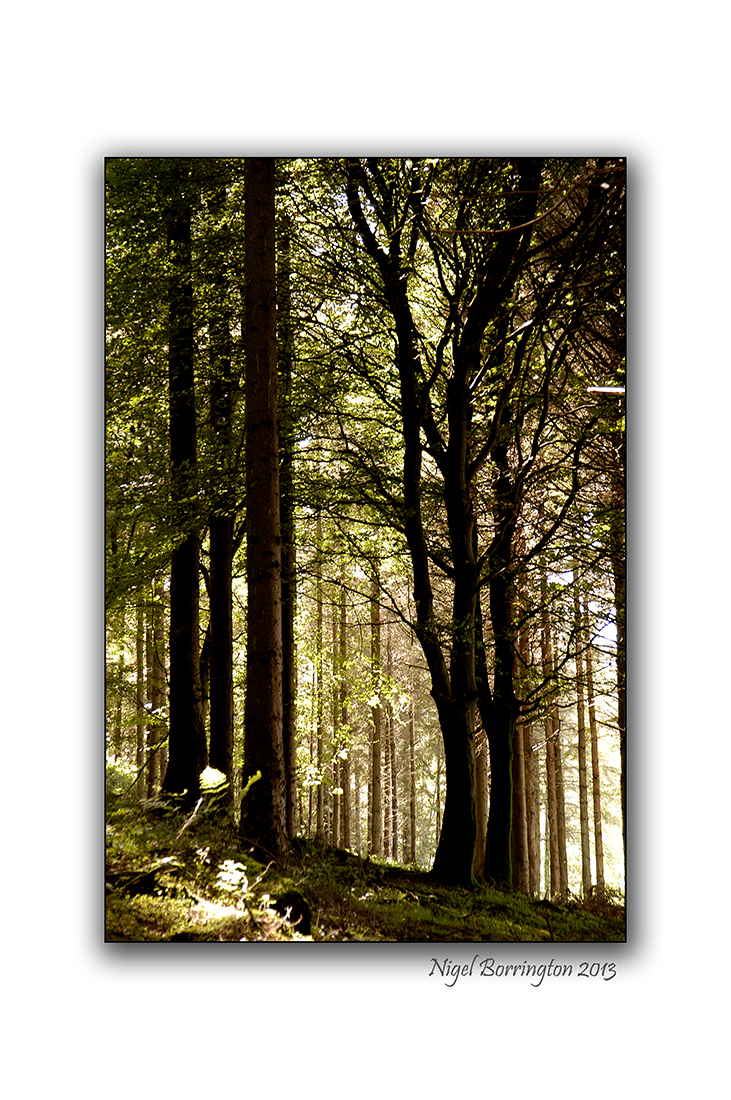
From the Middle of April until the Summer many of Irelands wood-land floors come to life with lots of different plants, Wild Sorrel is one if these that can be fully enjoyed. It can be picked and eaten on your walk or collected and taken home for you fridge.
The leafs of this plant can add to any meal that you are preparing. I love the moment when I first see wild sorrel coming out, its the start of the woodlands bursting into life after a long cold winter.
This web page has a great discription… http://www.wildflowersofireland.net/plant_detail.php?id_flower=243
“Carpeting old, undisturbed woodlands in spring, this pretty downy perennial also grows on moss-covered trees and shady walls and is widespread throughout the country. Each pretty white five-petalled bell-shaped flower (10 – 15 mm) is held solitarily on a stem which comes directly from the roots. The petals are lined with a tracery of pink veins through to the golden centre of the flower. The leaves are trifoliate, each leaflet heart-shaped and these fold up towards late afternoon or in rain as do the fragile flowers. They have a sharp taste of oxalic acid. This flower blooms from April to June, is a native plant and belongs to the family Oxalidaceae.
Also known as Wood Shamrock and Wood Sour, the leaves of this plant were used to make an ointment by early herbalists. Some people eat these leaves in salads or soups but beware, as large doses may cause oxalate poisoning. “
The Pagan tree and forest plants

Trees, herbs, and plants are very important to Druids. They represent their sacred alphabet, they are used for healing, and many Druids name themselves after trees. Trees are the connection between the realms. Ireland was said to be divided into four lands, each occupied by a sacred tree with a fifth tree at the center.
The five most important trees are the oak, rowan, birch, apple, and yew:
The oak is connected with strength, protection, and stability. Some say that the very word Druid derives from duir, the old word for oak.
The rowan is useful for protection, youth, and prophecy.
The birch is symbolic of beginnings, renewal, regeneration, and cleansing. It is also associated with the bard.
The apple tree is the tree of life and is said to reside at the center of the otherworld.
The yew is associated with death and decay because it is very poisonous, but this unique evergreen tree also lives for thousands of years. It is related to the ovate and is frequently found near sacred wells.
Other trees, such as the ash, willow, and hawthorn also frequently appear in mythology and legend.

Foremost among the herbs and plants most revered by Druids is mistletoe. Mistletoe is a parasite frequently found growing on oaks. It is said that mistletoe, which grows off trees rather than from roots in the earth, must never be allowed to touch the earth. It is sometimes called all-heal, but it is poisonous, so use it with caution. Verbena, or vervain, is gathered at Midsummer, whereas mistletoe is gathered at Midwinter. It is used as an offering to the gods. It is also considered a cure-all and is said to ward against evil spirits.

HERB ROBERT, GERANIUM ROBERTIANUM
This herb has been used in medicine for centuries, although in the 20th century, particularly in Portugal it was hailed as a folk cancer remedy when the powdered leaves were taken with a raw, fresh egg yolk. Of course this has not been proven to work. Dioscorides described it and it was known to the old herbalists, who used it mainly for blood problems, as the stalks and leaves turn bright red in autumn, a sign to these old herbalists that it was good for the blood.
This plant is known by around a hundred names some of which refer to other plants more often, such as bloodwort (red dock), and red robin (not ragged robin) and cranesbill, which is native to the US and poisonous. However Stinking Bob is a name given to this herb which is unique to it, and refers to the smell given off by its bruised leaves. It is also called the Fox Geranium, some say because of its “foxy” smell after rain. It is native to hedgerows and woodland in Europe the British isles included, and to temperate Asia as it grows as far east as Japan and in the Himalayan regions.
No one really knows how it became Herb Robert, although there are several contenders for being its namesake, including Robert Duke of Normandy, who died in 1134, St Robert of Molesme, a French monk who died in 1110, and Robin Goodfellow or Puck, the mischievous elf who has a role in Shakespeare’s play “A Midsummer Night’s Dream.” The Latin name Robertianum might be a corruption of ruber meaning red, rather than referring to any specific Robert, Robin or Rupert, names that seemed to have been linked to this plant.
The leaves of Herb Robert are the main part of the plant used for medicinal purposes and an infusion of these has been drunk and used as a wash for the skin, and for inflammation of the eyes. A poultice of the leaves has been used to relieve hardened breasts, to increase lactation in nursing mothers, to relieve irritated skin and the pain of rheumatism and reduce bruising, as well as being applied to herpes sores and ulcers. The infusion can also be used for the same external purposes.
Fire

In modern-day Wicca and Paganism, there is a good deal of focus on the four elements – Earth, Air, Fire, and Water. A few traditions of Wicca also include a fifth element, which is Spirit or Self.
The concept is hardly a new one. A Greek philosopher named Empedocles is credited with the cosmogenic theory of these four elements being the root of all existing matter. Unfortunately, much of Empedocles’ writing has been lost, but his ideas remain with us today and are widely accepted by most Pagans and Wiccans.
Each of the elements is associated with traits and meanings, as well as with directions on the compass. The following directional associations are for the Northern hemisphere; readers in the Southern hemisphere should use the opposite correspondences.
Fire
Fire is a purifying, masculine energy, associated with the South, and connected to strong will and energy. Fire both creates and destroys, and symbolizes the fertility of the God. Fire can heal or harm, and can bring about new life or destroy the old and worn. In Tarot, Fire is connected to the Wand suit. For color correspondences, use red and orange for Fire
The element of Fire is both creative and destructive, its qualities are Brightness, Thinness and Motion and its mode is Active. It is fire that we and our ancestors used to warm our homes, we use it to cook our food, we sit around it to ward of the darkness of night, and it fuels our passions. Fire, unlike the other elements, does not exist in a natural state. Its physical form can only take place by consuming some other element. Fire is the transformer, converting the energy of other objects into other forms: heat, light, ash, and smoke.
To feel the manifestations of this power, go out on on sunny day and feel the warmth and light of the Sun, hear the crackling of logs and smell of smoke from a burning fire. As you gaze into the transformational flame of a candle, immerse yourself in the energy of Fire. Fire is the natural element of animals and mankind, and they “have, in their natures, a most fiery force, and also spring from celestial sources.”
In order to gain benefit from the energy of this element, we need to control Fire’s destructive aspect. When we light a candle, we are not only calling upon the energy of Fire, we are also limiting its power. This destructive aspect should not be seen as negative, forest fires, actually help, clearing away underbrush and encouraging seeds lying dormant within the Earth to burst forth into new life.
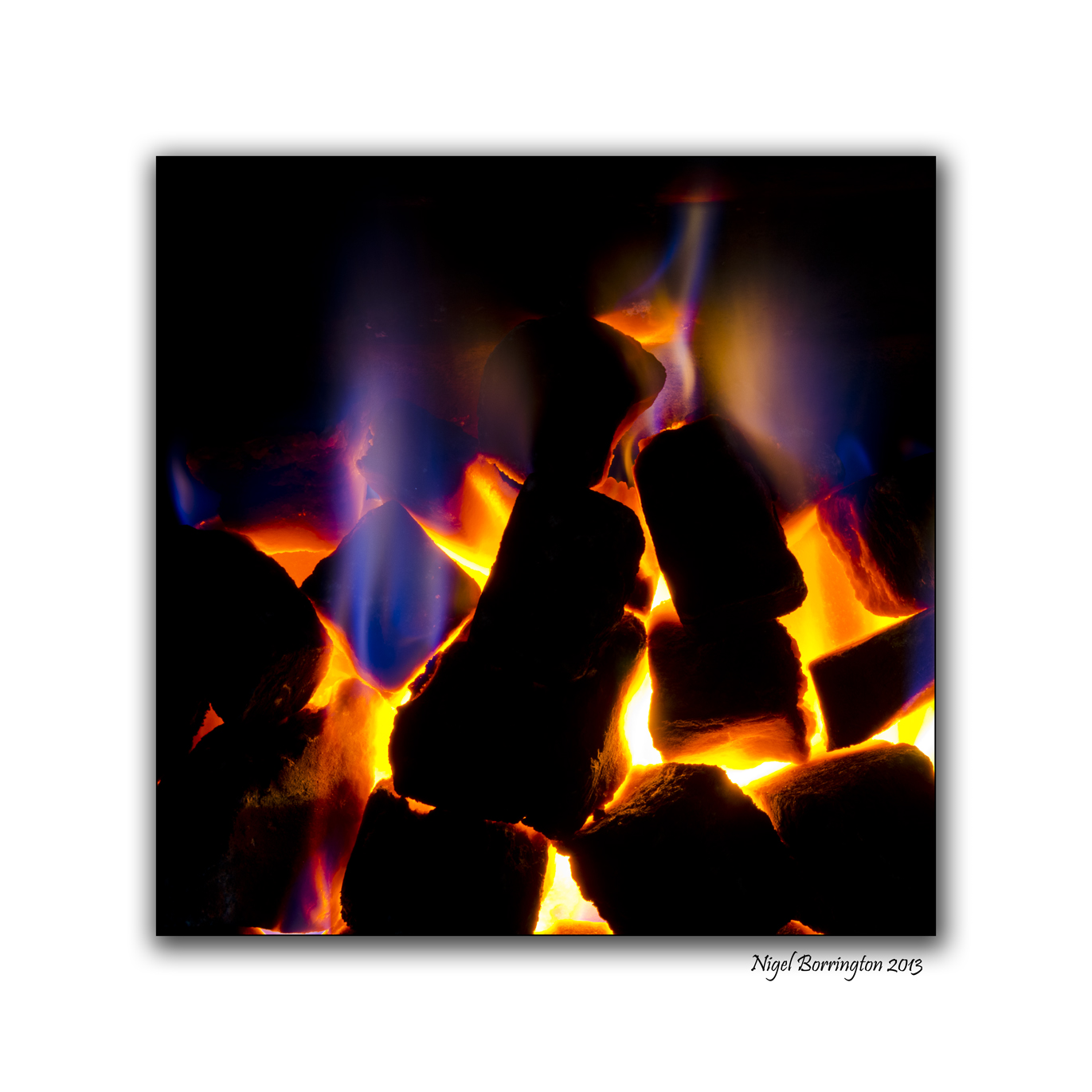
Fire is a masculine element, its aspects being change, passion, creativity, motivation, will power, drive and sensuality. It is sexuality, both physical and spiritual. Fire is used in spells, rituals and candle magick for healing, purification, sex, breaking bad habits or destroying illness and disease. Fire is the element of authority and leadership.
The properties of Fire, Heat, Making things fruitful, Celestial light, Giving Life to all things. Its opposite the Infernal Fire are a parching heat, consuming all things and darkness, making all things barren.
Each of the four cardinal elements – earth, air, fire and water – can be incorporated into magical practice and ritual. Depending on your needs and intent, you may find yourself drawn to one of these elements more so that the others.
Connected to the South, Fire is a purifying, masculine energy, and connected to strong will and energy. Fire both creates and destroys, and symbolizes the fertility of the God. Fire can heal or harm, and can bring about new life or destroy the old and worn. In Tarot, Fire is connected to the Wand suit (although in some interpretations, it is associated with Swords). For color correspondences, use red and orange for Fire associations.
Let’s look at some of the many magical myths and legends surrounding fire:
Fire Spirits & Elemental Beings:
In many magical traditions, fire is associated with various spirits and elemental beings. For instance, the salamander is an elemental entity connected with the power of fire – and this isn’t your basic garden lizard, but a magical, fantastical creature. Other fire-associated beings include the phoenix – the bird that burns itself to death and then is reborn from its own ashes – and dragons, known in many cultures as fire-breathing destroyers.
The Magic of Fire:
Fire has been important to mankind since the beginning of time. It was not only a method of cooking one’s food, but it could mean the difference between life and death on a frigid winter night. To keep a fire burning in the hearth was to ensure that one’s family might survive another day. Fire is typically seen as a bit of a magical paradox, because in addition to its role as destroyer, it can also create and regenerate. The ability to control fire – to not only harness it, but use it to suit our own needs – is one of the things that separates humans from animals. However, according to ancient myths, this has not always been the case.
Fire appears in legends going back to the classical period. The Greeks told the story of Prometheus, who stole fire from the gods in order to give it to man – thus leading to the advancement and development of civilization itself. This theme, of the theft of fire, appears in a number of myths from different culture. A Cherokee legend tells of Grandmother Spider, who stole fire from the sun, hid it in a clay pot, and gave it to the People so they could see in the darkness. A Hindu text known as the Rig Veda related the story of Mātariśvan, the hero who stole fire that had been hidden away from the eyes of man.

Fire is sometimes associated with deities of trickery and chaos – probably because while we may think we have domination over it, ultimately it is the fire itself that is in control. Fire is often connected with Loki, the Norse god of chaos, and the Greek Hephaestus (who appears in Roman legend as Vulcan) the god of metalworking, who demonstrates no small amount of deceit.
Fire and Folktales:
Fire appears in a number of folktales from around the world, many of which have to do with magical superstitions. In parts of England, the shape of cinders which jumped out of the hearth often foretold a major event – a birth, a death, or the arrival of an important visitor.
In parts of the Pacific Islands, hearths were guarded by small statues of old women. The old woman, or hearth mother, protected the fire and prevented it from burning out.
The Devil himself appears in some fire-related folktales. In parts of Europe, it is believed that if a fire won’t draw properly, it’s because the Devil is lurking nearby. In other areas, people are warned not to toss bread crusts into the fireplace, because it will attract the Devil (although there’s no clear explanation of what the Devil might want with burnt bread crusts).
Japanese children are told that if they play with fire, they will become chronic bed-wetters – a perfect way to prevent pyromania!
A German folktale claims that fire should never be given away from the house of a woman within the first six weeks after childbirth. Another tale says that if a maid is starting a fire from tinder, she should use strips from mens’ shirts as tinder – cloth from women’s garments will never catch a flame.
The Poppy
June I cannot want for you and your poppy fields!

The Red Poppy
The great thing is not having a mind.
Feelings: oh, I have those; they govern me.
I have a lord in heaven called the sun, and open for him,
showing him the fire of my own heart,
fire like his presence.
What could such glory be if not a heart?
Oh my brothers and sisters,
were you like me once, long ago,
before you were human?
Did you permit yourselves to open once,
who would never open again?
Because in truth I am speaking now the way you do.
I speak because I am shattered.
by Louise Glück

The flower’s connection with death has been known for countless centuries. The twin Greek deities Hypnos and Thanatos, were illustrated wearing crowns of poppies and the flowers were considered suitable offerings for the dead in both ancient Greece and Rome.
In other parts of the world, poppies have happier associations, In China, it is believed to be lucky to smell the scent of the flower three times a day and in Turkey, they symbolise the promise of health and peace.
Magical properties have also been attributed to the flower. In ‘A Mid Summer’s Night Dream’, Shakespeare writes ” The juice of it on sleeping eyelids laid will make a man or woman madly dote upon the next live creature that it sees”. Peering into the black centre was a traditional folk remedy for insomnia.
Whilst opium is derived from only one of the hundreds of different varieties of poppy, many poppies have sedative effects on those who consume them and poppies are sometimes inscribed on gravestones to symbolise eternal rest. In the popular film, The Wizard of Oz, a poppy field was depicted as dangerous as it caused all those who passed through it to fall asleep forever. Such are the properties of this plant that foods rich in culinary poppy seeds can even result in the failing of an opiate drug test and the sale of poppy seeds is banned in several countries.

Good Friday

Am I a stone and not a sheep
That I can stand, O Christ, beneath Thy Cross,
To number drop by drop Thy Blood’s slow loss,
And yet not weep?
Not so those women loved
Who with exceeding grief lamented Thee;
Not so fallen Peter weeping bitterly;
Not so the thief was moved;
Not so the Sun and Moon
Which hid their faces in a starless sky,
A horror of great darkness at broad noon,–
I, only I.
Yet give not o’er,
But seek Thy sheep, true Shepherd of the flock;
Greater than Moses, turn and look once more
And smite a rock.
Poetry by Christina Georgina Rossetti
Public Domain
Earth

Connected to the North,
Earth is considered the ultimate feminine element, Earth is fertile and stable, associated with the Goddess. The planet itself is a ball of life, and as the Wheel of the Year turns, we can watch all the aspects of life take place in the Earth: birth, life, death, and finally rebirth. The Earth is nurturing and stable, solid and firm, full of endurance and strength. In color correspondences, both green and brown connect to the Earth, for fairly obvious reasons! In Tarot readings, the Earth is related to the suit of Pentacles or Coins.

Mother goddess is a term used to refer to a goddess who represents motherhood, fertility, creation, or who embodies the bounty of the Earth. When equated with the Earth or the natural world such goddesses are sometimes referred to as Mother Earth or as the Earth Mother.
Celtic Goddess
The Irish goddess Anu, sometimes known as Danu, has an impact as a mother goddess, judging from the Dá Chích Anann near Killarney, County Kerry. Irish literature names the last and most favored generation of deities as “the people of Danu” (Tuatha De Danann). The Welsh have a similar figure called Dôn who is often equated with Danu and identified as a mother goddess. Sources for this character date from the Christian period, however, so she is referred to simply as a “mother of heroes” in the Mabinogion. The character’s (assumed) origins as a goddess are obscured.

The Celts of Gaul worshipped a goddess known as Dea Matrona (“divine mother goddess”) who was associated with the Marne River. Similar figures known as the Matres (Latin for “mothers”) are found on altars in Celtic as well as Germanic areas of Europe.

In many cultures, earth spirits are beings that are tied to the land and plant kingdom. Typically, these beings are associated with another realm, the forces of nature that inhabit a particular physical space, and landmarks like rocks and trees.
In Celtic mythology, the realm of the Fae is known to exist in a parallel space with the land of man. The Fae are part of the Tuatha de Danaan, and live underground. It’s important to watch out for them, because they’re known for their ability to trick mortals into joining them.
Gnomes feature prominently in European legend and lore. Although it’s believed that their name was coined by a Swiss alchemist named Paracelsus, these elemental beings have long been associated in one form or another with the ability to move underground.

Likewise, elves often appear in stories about the land. Jacob Grimm collected a number of stories about elves while compiling his book Teutonic Mythology, and says that elves appear in the Eddas as supernatural, magic-using beings. They appear in a number of old English and Norse legends.
Air
Fujifilm X100
The pagan elements :
Air is one of the four classical elements, and is often invoked in Wiccan ritual. Air is the element of the East, connected to the soul and the breath of life. Air is associated with the colors yellow and white. Interestingly, in some cultures a triangle sitting on its base like this is considered masculine, and is connected to the element of Fire rather than Air.
In some traditions of Wicca, Air is represented not by the triangle, but by either a circle with a point in the center, or by a feather or leaf-like image. In other traditions, the triangle is used to mark the association of degrees or initiation rank — typically first degree, but not necessarily. In alchemy, this symbol is sometimes show with the horizontal line extending beyond the sides of the triangle.
In rituals, when the element of Air is called for, you can use this triangular symbol, or use a feather, incense, or a fan. Air is associated with communication, wisdom or the power of the mind. Do an outdoors working on a windy day, and allow the powers of air to aid you. Visualize air currents carrying away your troubles, blowing away strife, and carrying positive thoughts to those who are far away. Embrace the wind, and let its energy fill you and help you achieve your goals.
In many magical traditions, air is associated with various spirits and elemental beings. Entities known as sylphs are typically connected with the air and the wind – these winged creatures are often related to powers of wisdom and intuition. In some belief systems, angels and devas are associated with air. It should be noted that the term “deva” in New Age and metaphysical studies is not the same as the Buddhist class of beings known as devas.
Read more about the magic, mythology, and folklore of air and the wind: Air and Wind Folklore.
The first element of the alchemical tradition.
Air is the essence of intuition and learning, the element of the nature of the mind.
Astrological Signs: Gemini, Libra, and Aquarius.
Represented by: Feathers, Birds, incense, fans, flags, flowing garments and sheer material.
Season: Winter
Color: White
Chakra: Crown
Celtic gods and goddess:
Arianrhod
“The Silver Wheel”, “High Fruitful Mother”. Celtic (Welsh) Goddess, the sister of Gwydion and wife of Donn. Deity of element of Air, reincarnation, full moons, time, karma, retribution. The palace of this sky Goddess was Caer Arianrhold (Aurora Borealis). Keeper of the Silver Wheel of Stars, a symbol of time and karma. Her ship, Oar Wheel, carried dead warriors to Emania (Moon-land).
Arianrhod (Welsh pronunciation: [arˈjanr̥ɔd]) is a figure in Welsh mythology who plays her most important role in the Fourth Branch of the Mabinogi. She is the daughter of Dôn and the sister of Gwydion and Gilfaethwy; the Welsh Triads give her father as Beli Mawr.[1] In the Mabinogi her uncle Math ap Mathonwy is the King of Gwynedd, and during the course of the story she gives birth to two sons, Dylan Ail Don and Lleu Llaw Gyffes, through magical means.
Water
In Paganism, there has always been a good deal of focus on the four elements – Earth, Air, Fire, and Water.
Water:
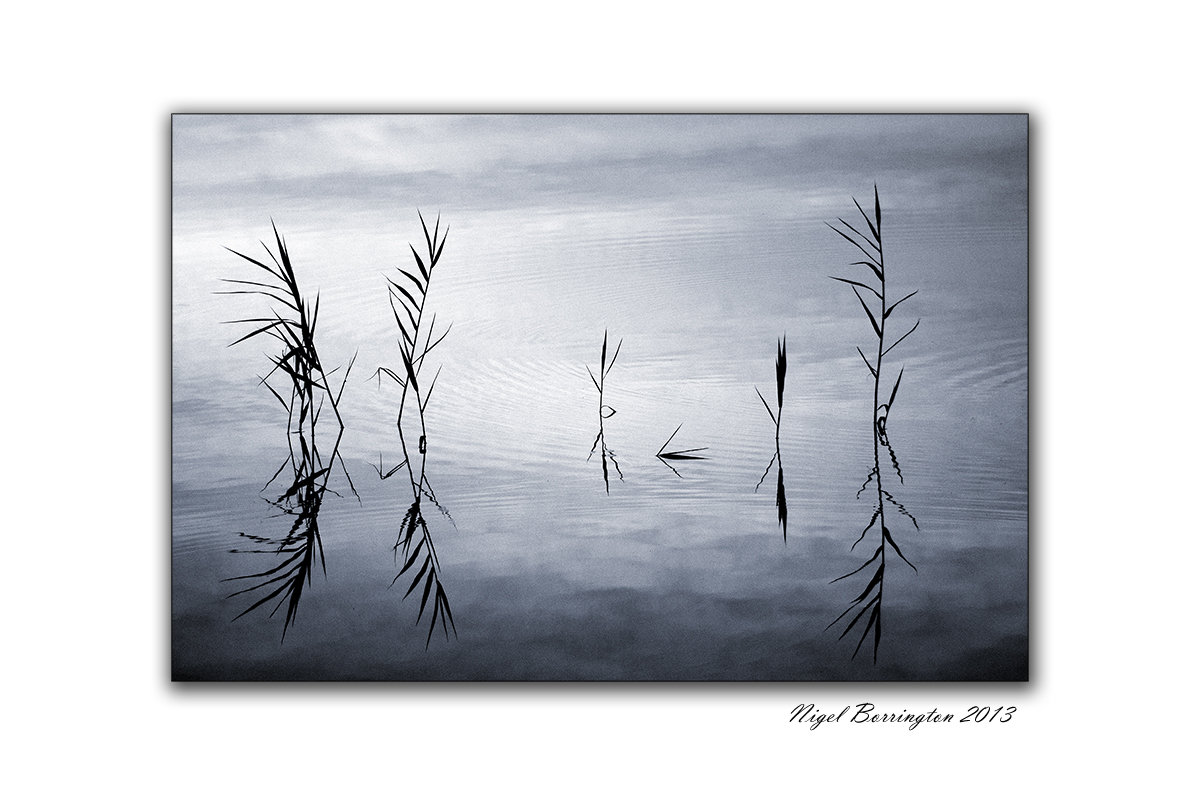
Water (Uisce in irish / place names after : Adare, the ford that feeds the oak tree.) is a feminine energy and highly connected with the aspects of the Goddess. Used for healing, cleansing, and purification, Water is related to the West, and associated with passion and emotion. In many spiritual paths, consecrated Water can be found – consecrated water is just regular water with salt added to it, and usually a blessing or invocation is said above it. In Wiccan covens, such water is used to consecrate the circle and all the tools within it. As you may expect, water is associated with the color blue.

Goddess :Fland
Location: Ireland.
Description: Daughter of woodland Goddess Flidais. A lake Goddess who is viewed in modern (Post Christian) folklore as an evil water faery who lures swimmers to their death.
She rules over: Water magick, lakes
 Nigel Borrington
You must be logged in to post a comment.