Monday Poetry, Ancient Stones By Donna Jones
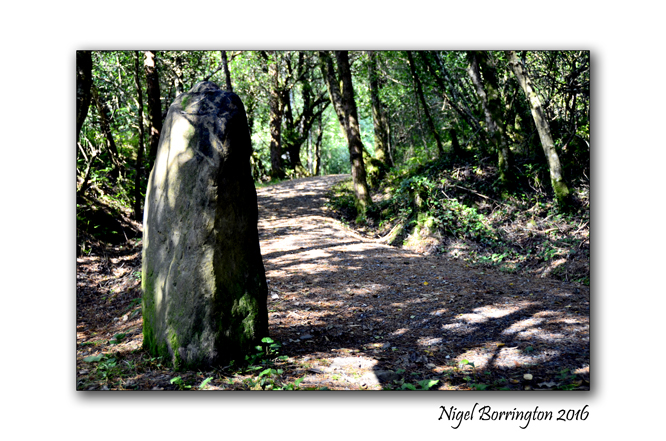
Ancient Ireland
Standing stones
Nigel Borrington
Ancient Stones
Charcoal black tip of arrowhead,
among these ancient, stones – stained red
Heartbeats share rhythms of ghostly drums..
Winds carry haunting, chanting hums
I feel your blood, flow here with mine,
outlasting, even decaying time
I’ve been told the stories, told to you,
I know we’re just spirits, passing through
When thunder, shakes awake the night,
I vision warriors by firelight
Their voices echo, around mountain’s soul,
while moon and stars watch us below
Respect the sky, and mother earth,
borrow the beauty, from time of birth
Then give in death peacefully
yourself, to rest eternally
Among these ancient, stones – stained red,
my mirror reflects traces, of those long………..
remembered…….
Donna Jones
Kilkenny landscapes in March – Two Poems on March

Kilkenny Landscapes
Nigel Borrington
“The sun is brilliant in the sky but its warmth does not reach my face.
The breeze stirs the trees but leaves my hair unmoved.
The cooling rain will feed the grass but will not slake my thirst.
It is all inches away but further from me than my dreams.”
– M. Romeo LaFlamme, The First of March

The word ‘March’ comes from the Roman ‘Martius’. This was originally the first month of the Roman calendar and was named after Mars, the god of war. March was the beginning of our calendar year. We changed to the ‘New Style’ or ‘Gregorian calendar in 1752, and it is only since then when we the year began on 1st January. The Anglo-Saxons called the month Hlyd monath which means Stormy month, or Hraed monath which means Rugged month.

“Equal dark, equal light
Flow in Circle, deep insight
Blessed Be, Blessed Be
The transformation of energy!
So it flows, out it goes
Three-fold back it shall be
Blessed Be, Blessed Be
The transformation of energy!”
– Night An’Fey, Transformation of Energy
Viking Dawn – The Boarding Party, a Poem
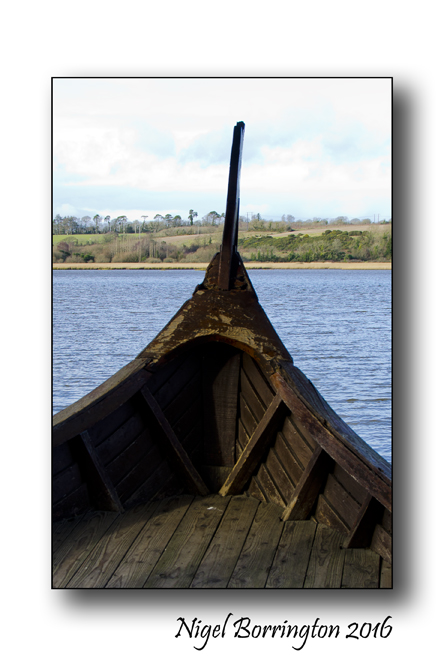
The Boarding Party
Their boat turned in towards us
ready to board our vessel
to take us to their island,
a fastness, craggy, bleak, timeless place.
To winter peat fires, gales, darkness,
weird northern tales of gods and trolls,
black nights seared by bright light curtains,
a violent Viking heritage.

A place where cold sea and ocean
overturn the crippled sea stacks,
our lives in the boarding party’s
hands and our skilful pilot.
Friday Poetry : The Colosseum, Brian Harris
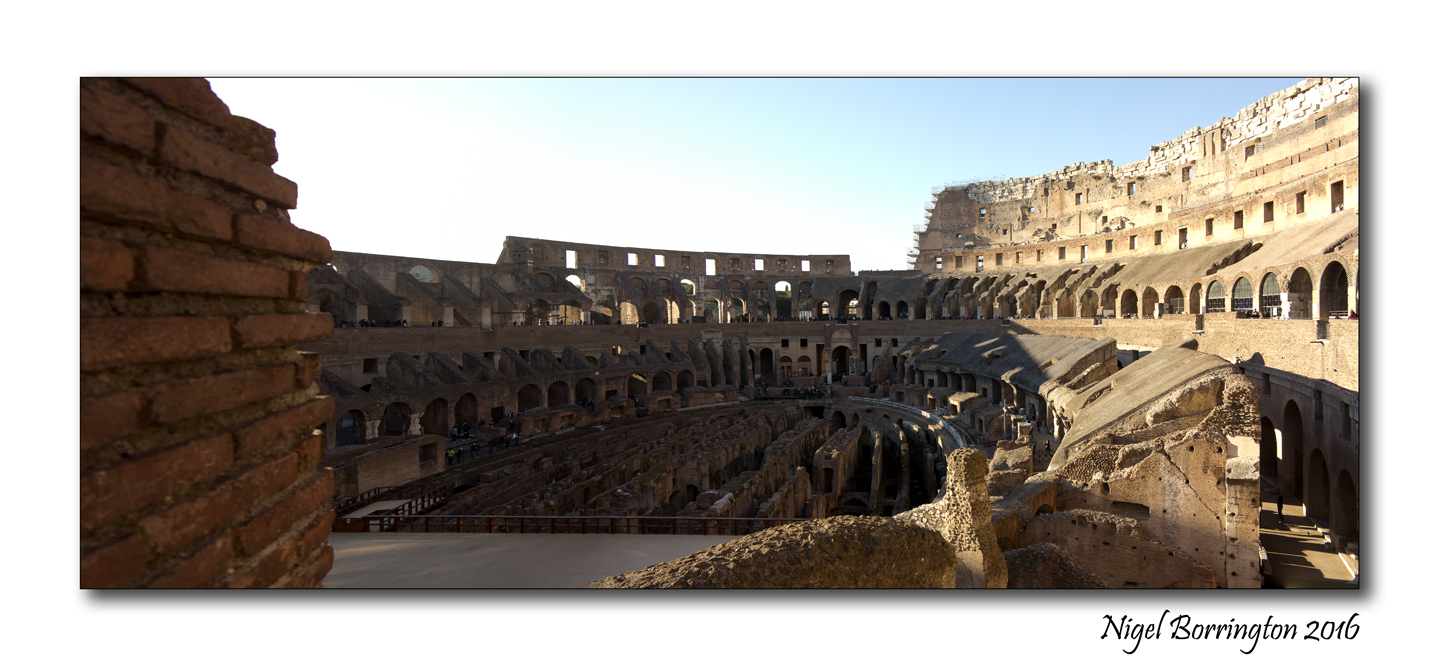
Ten million stones recall
Ten thousand Souls whose anguished cries
Of victory arose from this arena.
For such contempt that man had shown
He trod the path of pain
surmounting human weakness yet again.
He led the way through just such vales
And with two thousand years now gone
We dwell upon such Grace.
Brian Harris
The Light Bringer , a Poem by : Jude Kyrie

Irish Landscape
Nigel Borrington
The darkness of forever
a mantle that shrouds the earth
timeless stars cascade the bejeweled heavens
The silent stillness of all time
pervades the night sky
The light bringer in his infinite vigil
stands alone a silent sentry
lighting his planets one by one
Two lovers sleep in the blessed stillness
in cushions of clouds below the moon,
His starlight falls upon them
like a sweet gentle rain
Bestowing upon them
the gifts of his purest light
from the farthest
reaches of his universe.
On the earth below
lovers woo and maidens dream
as they have always been
bathing in its magical mist

The light bringer watches them
he sees the lovers share a kiss
believing they would capture each fleeting moment
preserve it forever in their memories
But their time was as a grain of sand
the deserts of time belong to him
The Elements of Life : Water.

The Elements Water
Nature Photography
Nigel Borrington
Water, giver of life
Water, is a great necessity, without it nothing can live. Only earth and water can bring forth a living soul. Such is the greatness of water that spiritual regeneration cannot be done without it.
Thales of Miletus concluded that water was the beginning of all things and the first of all elements and most potent because of its mastery over the rest. Pliny said “Water swallow up the earth, extinguishes the flame, ascends on high, and by stretching forth as clouds challenges the heavens for their own, and the same falling down, becomes the cause of all things that grow in the earth.
Water is a cleansing, healing, psychic, and loving element. It is the feeling of friendship and love that pours over us when we are with our family, friends and loved ones. When we swim it is water that supports us, when we are thirsty, it is water the quenches our thirst, another manifestation of this element is the rainstorms that drench us, or the dew formed on plants after the sun has set.
The power of the energy of Water, can be felt by tasting pure spring water, moving you hand through a stream, lake, pool, or bowl full of water. You can feel its cool liquidity; it’s soft and loving touch, this motion and fluidity is the quality of Air within Water. This Water energy is also contained within ourselves, our bodies being mostly composed of Water.
As well as being vital for life, within the energy of this element is contained the essence of love. Love is the underlying reason for all magic. Water is love.
Water is a feminine element, it also the element of emotion and subconscious, of purification, intuition, mysteries of the self, compassion and family. It is psychic ability; water can be used as a means of scrying or as an object for meditation. Water is important in spells and rituals of friendship, marriage, happiness, fertility, healing, pleasure, psychic abilities and spells involving mirrors.

The element of Water and the pagan Irish Goddess : Boann and the Irish God : Nechtan
eltic (Irish) Goddess of the River Boyne and mother of Angus Mac Og by the Dagda. She was the wife of Nechtan, a god of the water. Likewise, Boann was herself a water-goddess, and one of her myths concerns the water. According to legend, there was a sacred well (Sidhe Nechtan) that contained the source of knowledge. All were forbidden to approach this well, with the exception of the god Nechtan (as was noted, Boann’s husband) and his servants. Boann ignored the warnings, and strode up to the sacred well, thus violating the sanctity of the area. For this act, she was punished, and the waters of the defiled well swelled and were transformed into a raging river, a river that pursued her. In some versions, she was drowned; while in others, she managed to outrun the currents. In either case, this water became the river that was known henceforth as the Boyne, and Boann thereafter became the presiding deity.
Another aspect of the myth of Boann is that she bore Angus. She and the All father of the Tuatha De Danaan, the Dagda, engaged in an illicit affair that resulted in the birth of this god of love. However, since both Boann and the Dagdha wished to keep their rendezvous a secret, they used their divine powers to cause the nine month gestation period to last but a single day – or so it seemed, for the sun was frozen in the sky for those nine months, never setting and never rising. On this magical day, Angus emerged into the world. She held the powers of healing. Variants: Boannan, Boyne.
Ref : Pagan elements of Water
5 images for the week – Autumn Equinox 2015
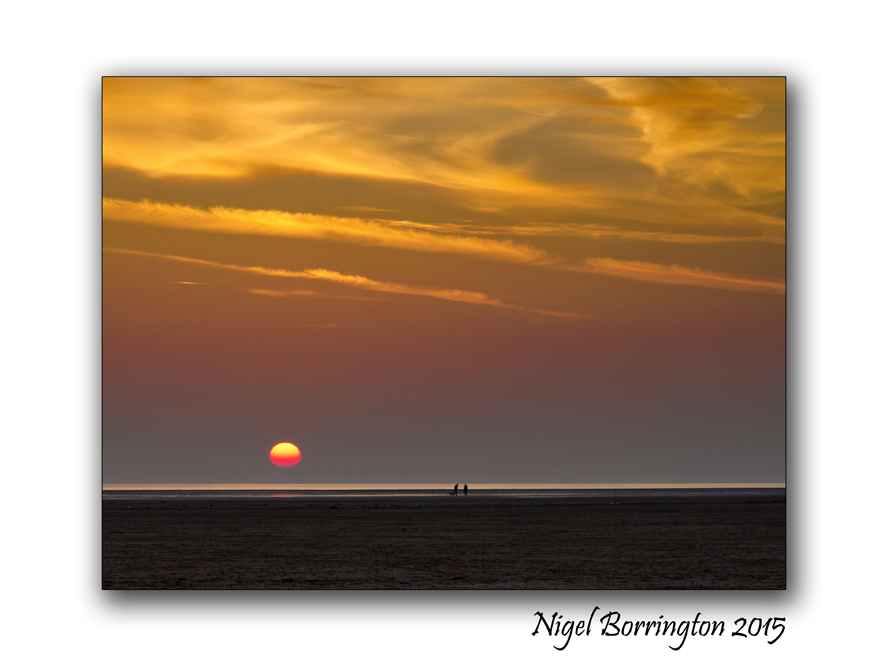
Autumn Equinox 2015
Landscape photography : Nigel Borrington
Sun Crosses Celestial Equator
The September equinox occurs the moment the Sun crosses the celestial equator – the imaginary line in the sky above the Earth’s Equator – from north to south. This happens either on September 22, 23, or 24 every year.
The Axial Tilt
The Earth’s axis is always tilted at an angle of about 23.5° in relation to the ecliptic, the imaginary plane created by the Earth’s path around the Sun. On any other day of the year, either the southern hemisphere or the Northern Hemisphere tilts a little towards the Sun. But on the two equinoxes, the tilt of the Earth’s axis is perpendicular to the Sun’s rays, like the illustration shows.
Why “Equinox”?
On the equinox, night and day are nearly exactly the same length – 12 hours – all over the world. This is the reason it’s called an “equinox”, derived from Latin, meaning “equal night”. However, even if this is widely accepted, it isn’t entirely true. In reality equinoxes don’t have exactly 12 hours of daylight
Customs around the September equinox
The September equinox coincides with many cultural events, observances and customs. It’s also called the “autumnal (fall) equinox” in the northern hemisphere and the “spring equinox” in the Southern Hemisphere.
September Equinox Customs
Ancient Greece
In many cultures, the September equinox is a sign of fall (autumn) in the northern hemisphere. In Greek mythology fall is associated with when the goddess Persephone returns to the underworld to be with her husband Hades. It was supposedly a good time to enact rituals for protection and security as well as reflect on successes or failures from the previous months.
Australia
Aboriginal Australians have, for a long time, had a good knowledge of astronomy and the seasons. Events like the September equinox, which is during the spring in Australia, played a major role in oral traditions in Indigenous Australian culture.
In China
The Mid-Autumn Festival, also known as the Moon Festival, is celebrated around the time of the September equinox. It celebrates the abundance of the summer’s harvest and one of the main foods is the mooncake filled with lotus, sesame seeds, a duck egg or dried fruit.
Japan
Higan, or Higan-e, is a week of Buddhist services observed in Japan during both the September and March equinoxes. Both equinoxes have been national holidays since the Meiji period (1868-1912). Higan means the “other shore” and refers to the spirits of the dead reaching Nirvana. It is a time to remember the dead by visiting, cleaning and decorating their graves.
Pagan celebration: Mabon
On the autumnal equinox, many pagans celebrate Mabon as one of the eight Sabbats (a celebration based on the cycles of the sun). Mabon celebrates the second harvest and the start of winter preparations. It is the time to respect the impending dark while giving thanks to the sunlight.
Christianity
The Christian church replaced many early Pagan equinox celebrations with Christianized observances. For example, Michaelmas (also known as the Feast of Michael and All Angels), on September 29, fell near the September equinox.
Irish great Elk – one of the largest deer that ever lived

Irish Elk ,
At : Cahir Castle, County. Tipperary
The Irish great elk is an extinct species of deer it was one of the largest deer that ever lived. Its range extended across Eurasia, from Ireland to northern Asia and Africa.
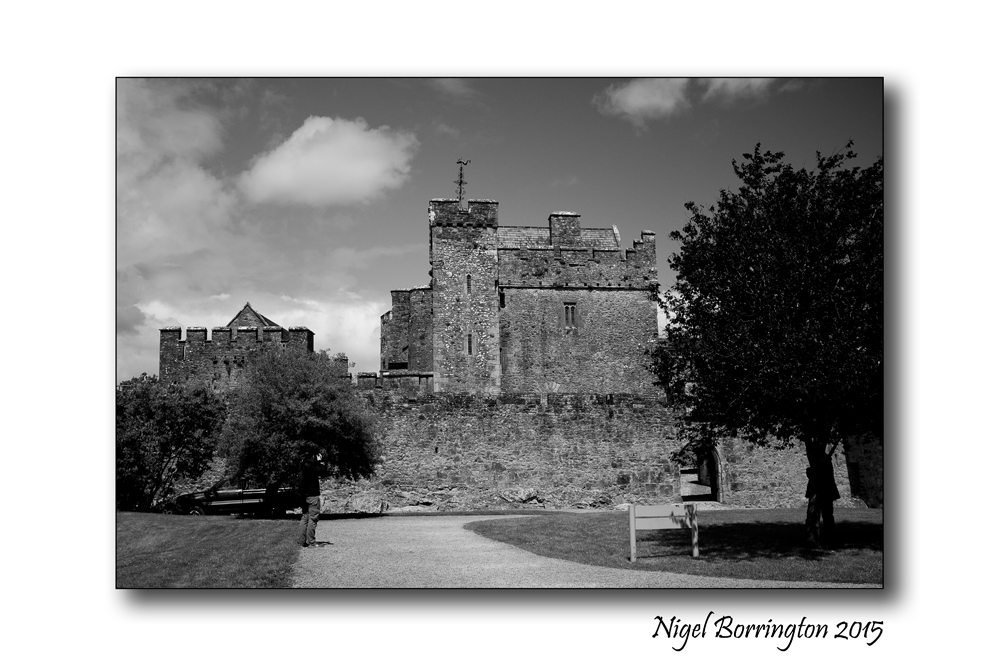
The skull and antlers in the main image above are located in the old 11th century dining hall at Cahir Castle county Tipperary Ireland. With antlers spanning 2.7 metres (8.9 ft) this Skull hangs high on one of the gable ends of the hall and seams to fill the room with its presence.
It is some 7000 to 8000 years since these amazing elk walked around the Irish landscape, it is not fully known exactly why or when the became extinct but the most recent specimen of M. giganteus in northern Siberia, dated to approximately 7,700 years ago.
Description
The Irish Elk stood about 2.1 metres (6.9 ft) tall at the shoulders carrying the largest antlers of any known cervid (a maximum of 3.65 m (12.0 ft) from tip to tip and weighing up to 40 kg (88 lb)).

In body size the Irish Elk matched the extant moose subspecies of Alaska (Alces alces gigas) as the largest known deer. The Irish Elk is estimated to have attained a total mass of 540–600 kg (1,190–1,323 lb), with large specimens having weighed 700 kg (1,543 lb) or more, roughly similar to the Alaskan Moose. A significant collection of M. giganteus skeletons can be found at the Natural History Museum in Dublin.
It is understood that the first humans to live in Ireland were the Mesolithic hunter-gatherers, settling in Ireland after 8000 BC so it is possible that the first people to live here lived along side these animals and even hunted them for food and for their very skin and bones.
Finnish paganism and the Elk

European elk
The elk is a common image in many Finnish pagan art works …
Finnish paganism was the indigenous pagan religion in Finland, Estonia and Karelia prior to Christianisation. It was a polytheistic religion, worshipping a number of different deities. The principal god was the god of thunder and the sky, Ukko; other important gods included Jumi, Ahti, and Tapio.
Shows many similarities with the religious practices of neighbouring cultures, such as Germanic, Norse and Baltic paganism. However, it has some distinct differences due to the Uralic and Finnic culture of the region.
Finnish paganism provided the inspiration for a contemporary pagan movement Suomenusko (Finnish: Finnish faith), which is an attempt to reconstruct the old religion of the Finns.

Water – a life giving element

Water, giver of life
Water, is a great necessity, without it nothing can live. Only earth and water can bring forth a living soul. Such is the greatness of water that spiritual regeneration cannot be done without it.
Thales of Miletus concluded that water was the beginning of all things and the first of all elements and most potent because of its mastery over the rest. Pliny said “Water swallow up the earth, extinguishes the flame, ascends on high, and by stretching forth as clouds challenges the heavens for their own, and the same falling down, becomes the cause of all things that grow in the earth.
Water is a cleansing, healing, psychic, and loving element. It is the feeling of friendship and love that pours over us when we are with our family, friends and loved ones. When we swim it is water that supports us, when we are thirsty, it is water the quenches our thirst, another manifestation of this element is the rainstorms that drench us, or the dew formed on plants after the sun has set.
The power of the energy of Water, can be felt by tasting pure spring water, moving you hand through a stream, lake, pool, or bowl full of water. You can feel its cool liquidity; it’s soft and loving touch, this motion and fluidity is the quality of Air within Water. This Water energy is also contained within ourselves, our bodies being mostly composed of Water.
As well as being vital for life, within the energy of this element is contained the essence of love. Love is the underlying reason for all magic. Water is love.
Water is a feminine element, it also the element of emotion and subconscious, of purification, intuition, mysteries of the self, compassion and family. It is psychic ability; water can be used as a means of scrying or as an object for meditation. Water is important in spells and rituals of friendship, marriage, happiness, fertility, healing, pleasure, psychic abilities and spells involving mirrors.

The Element Water and its Natural Qualities
The Element of Water is a heavy, passive element and is contrary to Fire. It is associated with the qualities of darkness, thickness and motion.
 Nigel Borrington
A weekend Celebrating the Spring Equinox 2016 at Newgrange, Boyne Valley, County Meath, Ireland.
Happy Spring Equinox 2016 to everyone …..
Yesterday Marked the start of spring time, so over the weekend I spent sometime visiting both Newgrange and the Hill of Tara. Both perfect locations to gain a little understanding as to how our European pagan ancestors both recorded and celebrated the movement of the sun and universe they lived in.
It was exactly, one quarter of a year that had passed since the shortest day of the year, the day when at Newgrange the rising sun can be seen to travel all the way into the passage tomb at the centre of the monument.
The Spring equinox 2016 celebrating
Yesterday marked the arrival of spring, the date of the vernal equinox, or spring equinox as it is known in the northern hemisphere. Spring equinox. During an equinox, the Earth’s North and South poles are not tilted toward or away from the sun. (Ref :Wikipedia)
This means the sun will rise exactly in the east and travel through the sky for 12 hours before setting in the exactly west.An equinox happens twice a year around March 20 and September 22 when the Earth’s equator passes through the centre of the sun.
For those in the southern hemisphere, this time is the autumnal equinox that is taking people into their winter.
Druids and Pagans like to gather at Stonehenge early in the morning to mark the Spring Equinox, to see the sunrise above the stones.
The Pagans consider this is the time of the ancient Saxon goddess, Eostre, who stands for new beginnings and fertility. This is why she is symbolized by eggs (new life) and rabbits/hares (fertility). Her name is also where we get the female hormone, oestrogen.
From Eostre also come the names “Easter” and “Esther” the Queen of the Jews, heroine of the annual celebration of Purim which was held on March 15. At Easter, Christians rejoice over the resurrection of Jesus after his death, mimicking the rebirth of nature in spring after the long death of winter.
It is also a time to cleanse your immune system with natural remedies. In Wiltshire and other parts of rural Britain it used to be tradition to drink dandelion and burdock cordials as the herbs help to cleanse the blood and are a good tonic for the body after a harsh winter.
Newgrange a Gallery
Share this:
March 21, 2016 | Categories: Comment, Gallery, Landscape, Nature and Wildlife, Nigel Borrington, Pagan, The Celtic year | Tags: Hill of tara, Ireland, Newgrange, Pagan, pagan calendar, Pagan festivals, Spring equinox, Spring sun, sun, vernal equinox | 5 Comments