Monday Morning Nature Photography and a Poetry , “The Spiders web” by E.B. White
Wildlife and Nature images
Spider in her web
Nigel Borrington
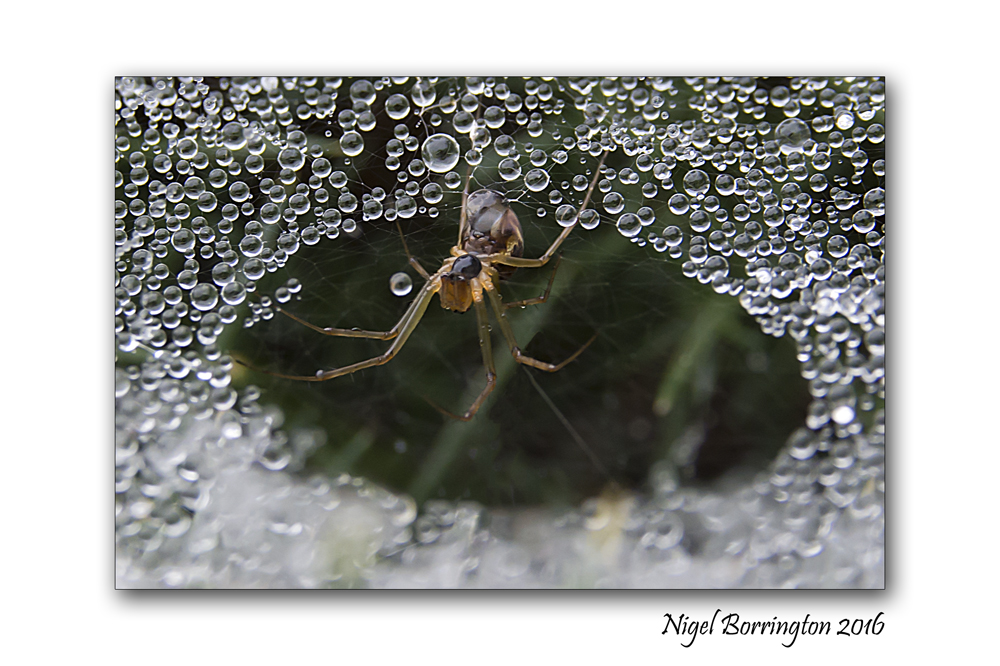
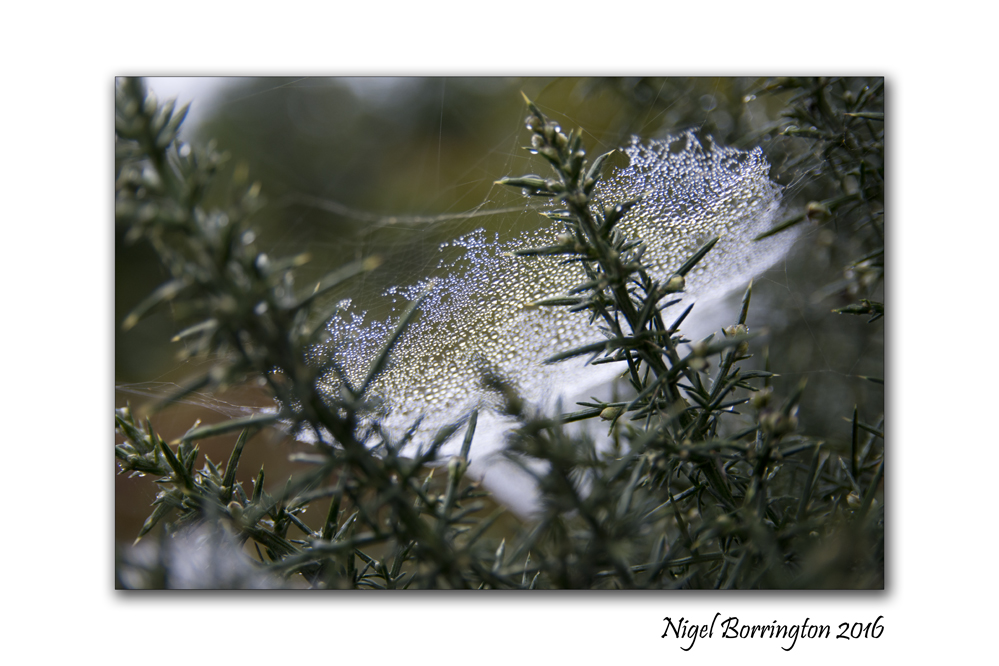
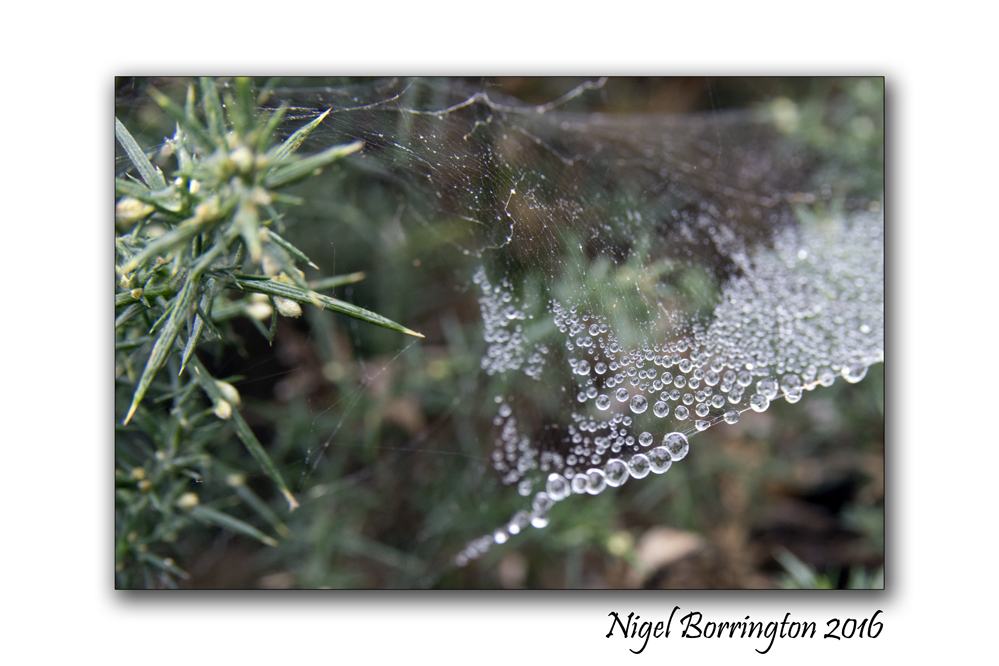
This Morning while walking through our local woods, I came across a Gorse bush and noticed that its was decorated with spiders webs. Each web was covered in early morning dew, so I started to take a few photographs, while doing so I noticed that the spider who had most likely spent most of the night creating these amazing structures was still at work.
It was a great moment! just to stop and watch her as she continued to work on finishing just another one of so many of her webs, I managed to captures some close up images , some of which I share here – 🙂 🙂
“The Spiders web” by E.B. White
The spider, dropping down from twig,
Unfolds a plan of her devising,
A thin premeditated rig
To use in rising.
And all that journey down through space,
In cool descent and loyal hearted,
She spins a ladder to the place
From where she started.
Thus I, gone forth as spiders do
In spider’s web a truth discerning,
Attach one silken thread to you
For my returning.
E.B. White
Spiders web Gallery



October’s Party a poem By: George Cooper

October’s Party
By: George Cooper
October gave a party;
The leaves by hundreds came—
The Chestnuts, Oaks, and Maples,
And leaves of every name.
The Sunshine spread a carpet,
And everything was grand,
Miss Weather led the dancing,
Professor Wind the band.
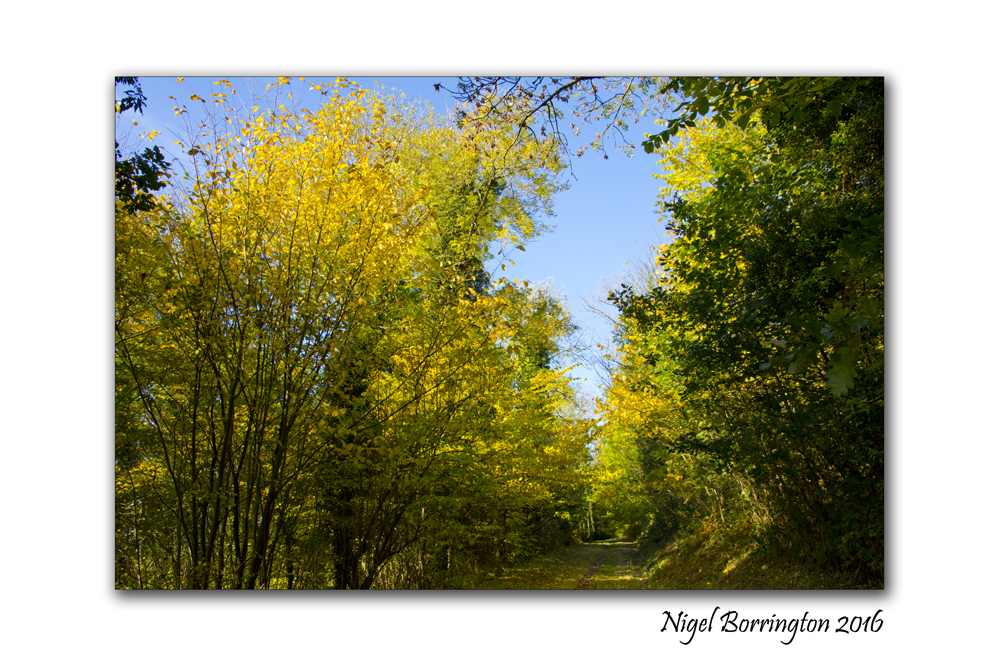
The Chestnuts came in yellow,
The Oaks in crimson dressed;
The lovely Misses Maple
In scarlet looked their best;
All balanced to their partners,
And gaily fluttered by;
The sight was like a rainbow
New fallen from the sky.

Then, in the rustic hollow,
At hide-and-seek they played,
The party closed at sundown,
And everybody stayed.
Professor Wind played louder;
They flew along the ground;
And then the party ended
In jolly “hands around.”
Eva Cassidy – Who Knows Where The Time Goes ?

Who Knows Where The Time Goes ?
Irish Landscapes
Nigel Borrington
Eva Cassidy – Who Knows Where The Time Goes ?
Across the evening sky,all the birds are leaving
Oh but then you know, it was time for them to go
By the winter fire, I will still be dreaming
I do not count the time
for who knows where the time goes?
Who knows where the time goes?
Sad,deserted shore
your fickle friends are leaving
oh, but then you know it was time for them to go
But I will still be here
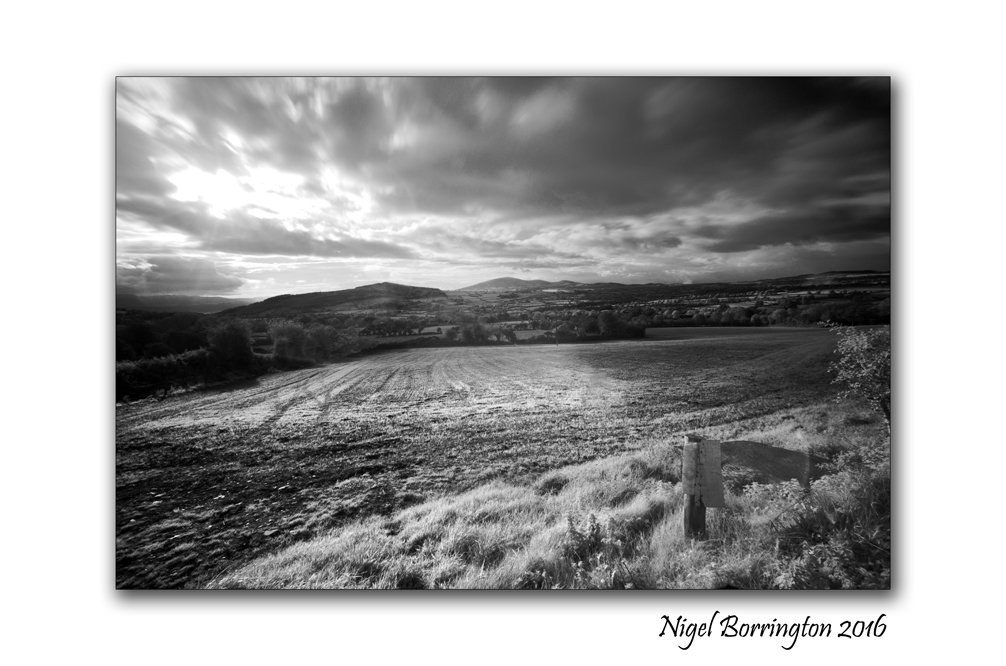
I have no thought of leaving
I do not count the time
for who knows where the time goes?
I know I’m not alone
while my love is near me
I know that its so until its time to go
All the storms in Winter and the birds in Spring again
I do not count the time
For who knows where the time goes?
who knows where the time goes?
who knows where the time goes?
“Sailing to Byzantium” a poem by William Butler Yeats

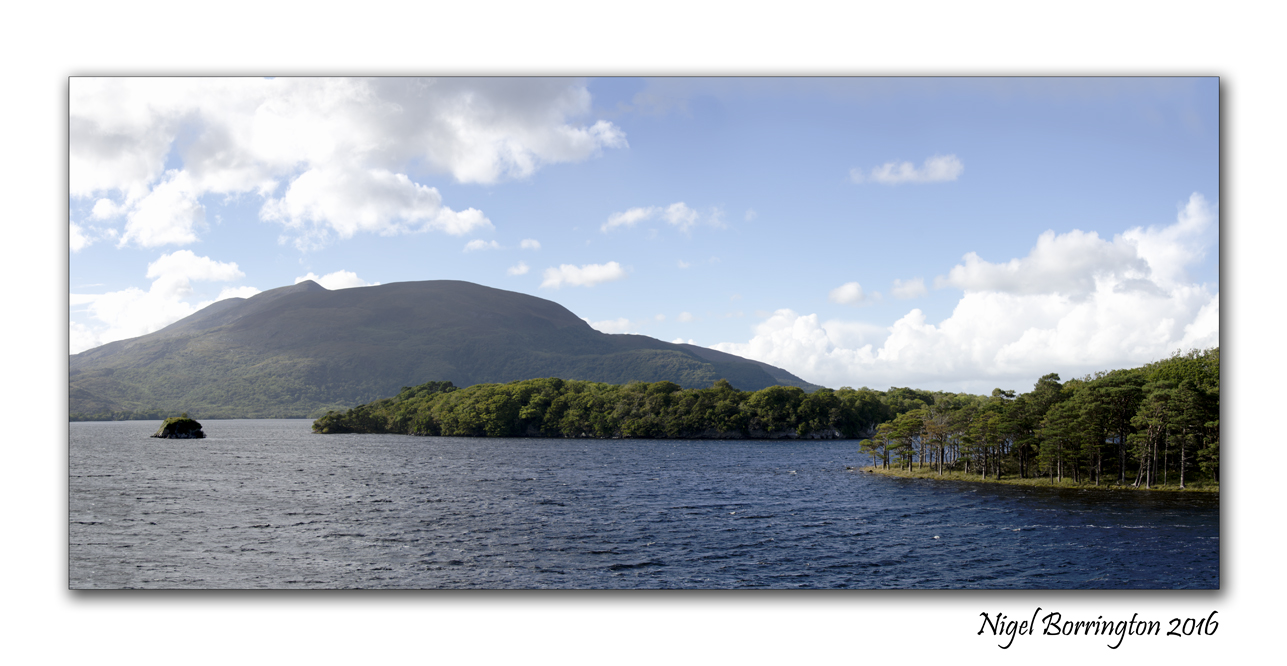
Muckross lake
lakes of Killarney
Irish landscape Photography
Nigel Borrington
Sailing to Byzantium
by William Butler Yeats
That is no country for old men. The young
In one another’s arms, birds in the trees
– Those dying generations – at their song,
The salmon‐falls, the mackerel‐crowded seas,
Fish, flesh, or fowl, commend all summer long
Whatever is begotten, born, and dies.
Caught in that sensual music all neglect
Monuments of unageing intellect.
An aged man is but a paltry thing,
A tattered coat upon a stick, unless
Soul clap its hands and sing, and louder sing
For every tatter in its mortal dress,
Nor is there singing school but studying
Monuments of its own magnificence;
And therefore I have sailed the seas and come
To the holy city of Byzantium.
O sages standing in God’s holy fire
As in the gold mosaic of a wall,
Come from the holy fire, perne in a gyre,
And be the singing‐masters of my soul.
Consume my heart away; sick with desire
And fastened to a dying animal
It knows not what it is; and gather me
Into the artifice of eternity.
Once out of nature I shall never take
My bodily form from any natural thing,
But such a form as Grecian goldsmiths make
Of hammered gold and gold enamelling
To keep a drowsy Emperor awake;
Or set upon a golden bough to sing
To lords and ladies of Byzantium
Of what is past, or passing, or to come.
Flow from the Mountain Spring : Poem “A Mountain Spring” – by Henry Kendall
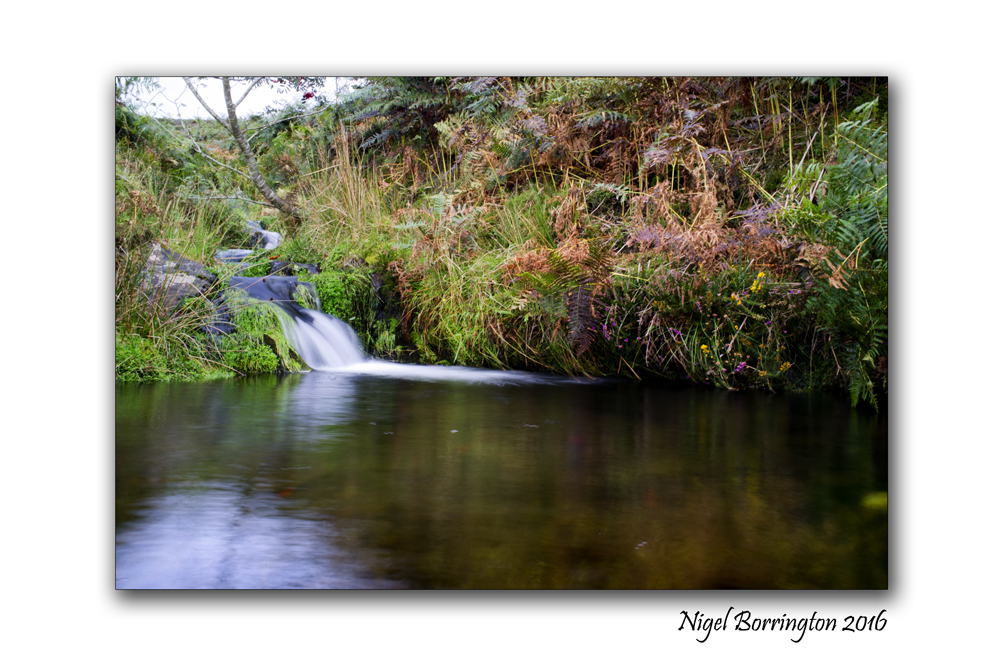
Waters flow from the mountain spring
Slievenamon
Tipperary
Nigel Borrington
Peace hath an altar there. The sounding feet
Of thunder and the wildering wings of rain
Against fire-rifted summits flash and beat,
And through grey upper gorges swoop and strain;
But round that hallowed mountain-spring remain,
Year after year, the days of tender heat,
And gracious nights whose lips with flowers are sweet,
And filtered lights, and lutes of soft refrain.
A still, bright pool. To men I may not tell
The secrets that its heart of water knows,
The story of a loved and lost repose;
Yet this I say to cliff and close-leaved dell:
A fitful spirit haunts yon limpid well,
Whose likeness is the faithless face of Rose.
Henry Kendall
Flow from the Mountain Spring : Gallery

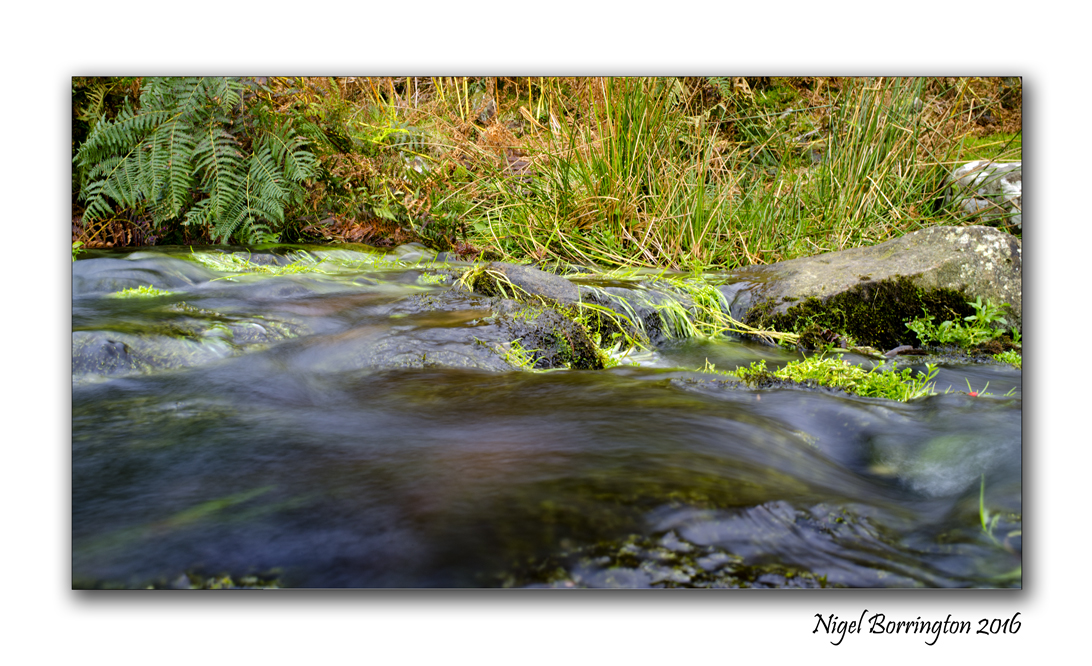
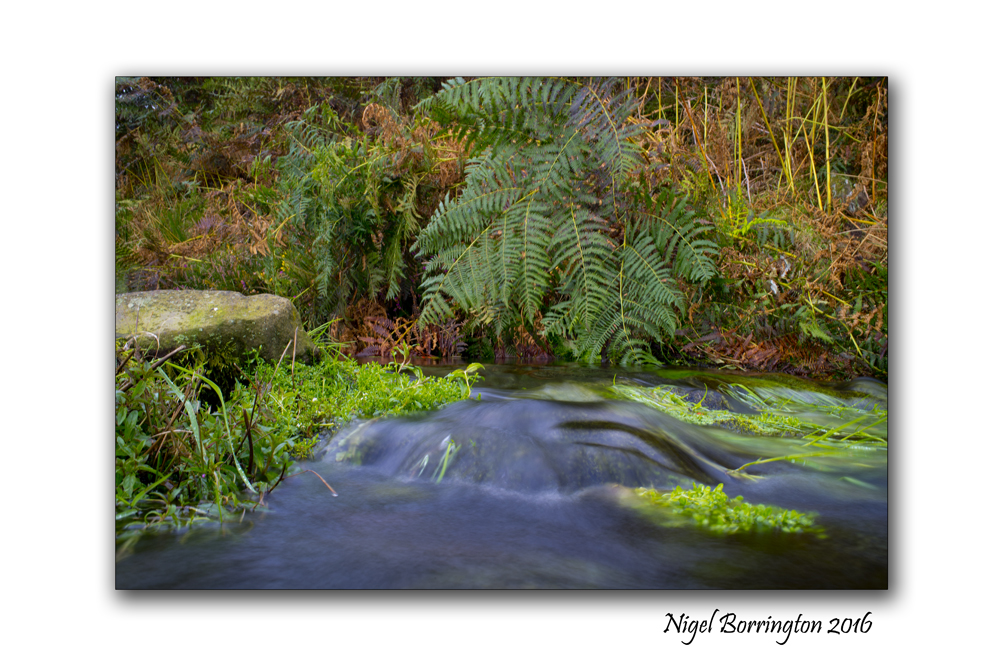

Nature Photography : Hunting for Fungi , Kyleaduhir woods, Callan, Co Kilkenny

Lactarius blennius
Beech milkcap
Kyleaduhir woods Callan , Co. Kilkenny
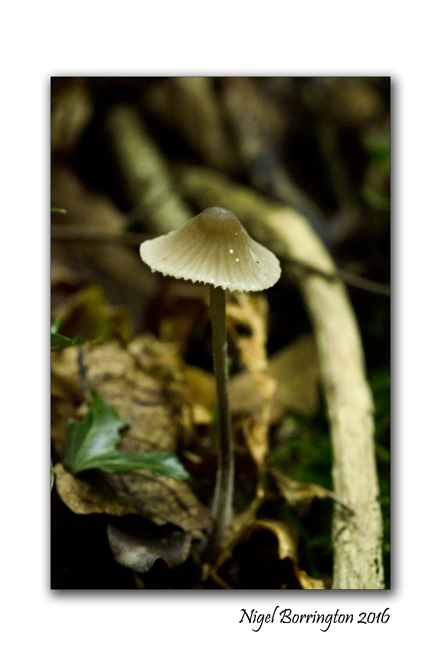
Our local woodlands in September begin to fill with many kinds of fungi, its an almost magical sight, they make great subjects for Macro photography. You need to be happy getting down into the damp and muddy forest floor but the results can be well worth the effort.
Here are some basic facts about Fungi …..
Mushroom Magic and Folklore
Go for a walk in the woods on any given summer day, and you’ll see fungi galore popping up, nestled in amongst the ferns and trees. After a rainstorm, peek out in your backyard and you may see tiny spores beginning to sprout in the grass, forming what’s known as a fairy ring. Mushrooms grow in all shapes and sizes and colors, and – depending on where you live – you might find some that are conducive to magical practice.
It is important to note that unless you are absolutely positive about the type of mushroom you have picked, you should never ingest it or take it internally. There are many toxic mushrooms which look similar to edible ones – if you’re unsure about what you have found, check with a naturalist or other mushroom expert.
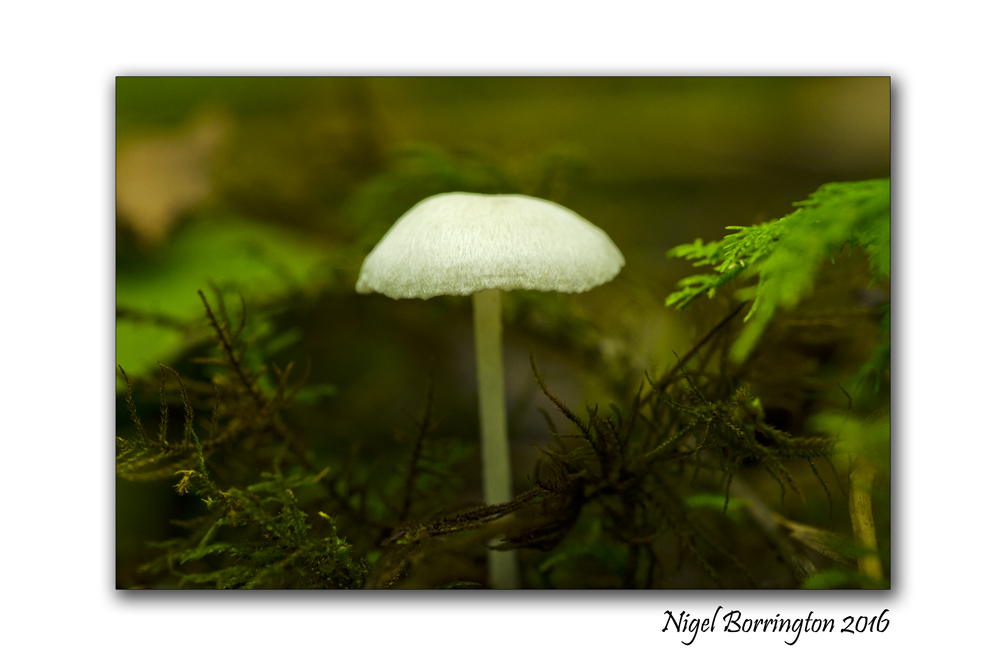
That having been said, there are a number of folk magic uses for mushrooms, and you can incorporate these at a symbolic level, rather than actually ingesting them. Let’s take a look at some of the legends and myths about mushrooms from around the world.
In many areas, the appearance of a ring of mushrooms on the ground is cause for either rejoicing or alarm. In Great Britain, these circles are known as fairy rings – and they are where the Fae come to dance and frolic after a rainstorm. However, like many other locations associated with faeries, humans who dare to enter such a ring may find themselves asleep for a hundred years, or worse yet, whisked off to the land of the wee folk, never to return.
In Holland, these rings are believed to be left when the Devil sets down his milk churn – once he picks it up, there’s a big circle left in the grass. In some countries, such as France and Austria, these rings are associated with sorcery and malevolent magic, and travelers are well-advised to steer clear of them.
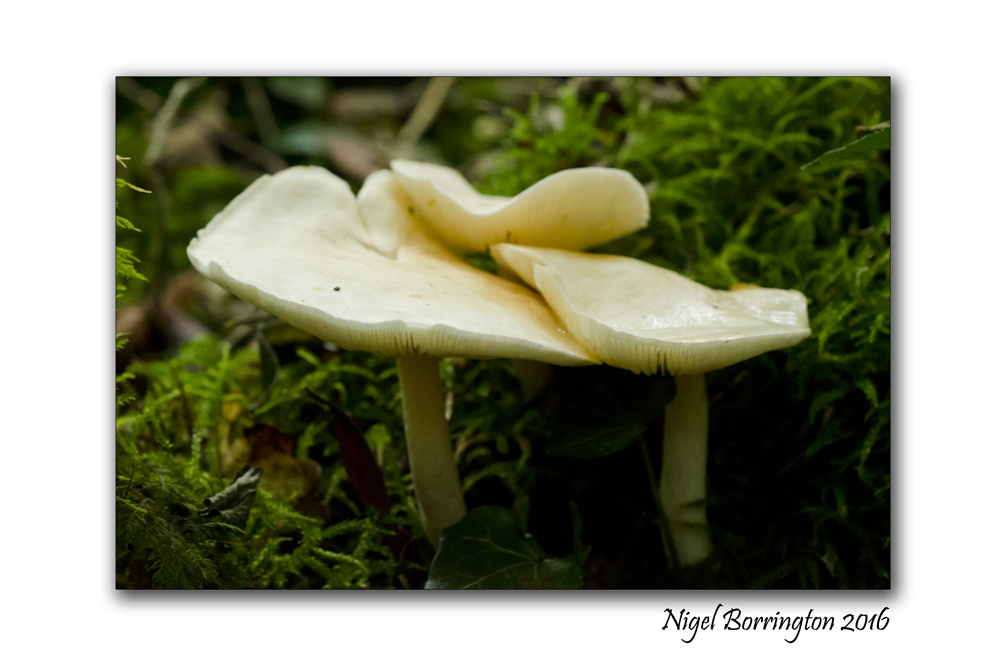
Vance Randolph says in his book Ozark Magic and Folklore that in many parts of the Ozarks, it is believed that “mushrooms must be gathered when the moon is full – gather ’em at any other time and they will be unpalatable, or perhaps even poisonous.” He adds that it is said that mushrooms growing in an orchard where apple trees are in bloom are always edible.
One of the best known mushrooms, at least in European culture, is the red-and-white Fly Agaric. This mushroom appears often in illustrations of fairy tales – you might see a gnome or a fairy perched on top of one. Experts believe that the Fly Agaric was used as a hallucinogenic by northern European shamans and religious leaders. Interestingly, it contains two toxins that reduce the body’s response to fear stimulus, so it may have been ingested by warriors prior to battle. In central Europe, the Fly Agaric is associated with the Yule season, and there is a theory that Santa Claus’ red and white suit originated in the colors of this magical mushroom.
In ancient Egypt, mushrooms were a rare delicacy indeed. They were associated with immortality, and as such, only royalty could consume them – because, after all, royal persons were descended from the Egyptian gods themselves. Hieroglyphs found in Egypt indicate that mushrooms were being consumed with meals as long as 4,500 years ago.
In China and Japan, mushrooms were associated with longevity and strength – partly because some of the most popular mushrooms that grew there were known for stimulating the immune system. Shiitake and maitake mushrooms, in particular, have been used in herbal remedies for centuries.
Mushrooms have been used by many cultures throughout time as part of ritual and religion. The toxin psilocybin is found in certain mushrooms, and the use of hallucinogenic fungi has been documented in rituals dating back thousands of years. Entheogen researcher Giorgio Samorini describes the discovery of rock art representing mushroom cults in Libya and Algeria from 7,000 – 9,000 years ago in his article The oldest Representations of Hallucinogenic Mushrooms in the world (Sahara Desert, 9000 – 7000 B.P.).
Landscape Art works : Ancient Rome, engraved by A. Willmore published 1859–61

Artwork details
Artist : After Joseph Mallord William Turner 1775–1851
Title : Ancient Rome, engraved by A. Willmore
Date : Published 1859–61
Medium : Engraving on paper
Collection : Tate
Acquisition: Transferred from the British Museum 1988
Its a good while since I posted here about some of my most loved artists and art work, I want to start again to share some of my most liked works of art over the next weeks.
River Tiber
Rome
Nigel Borrington
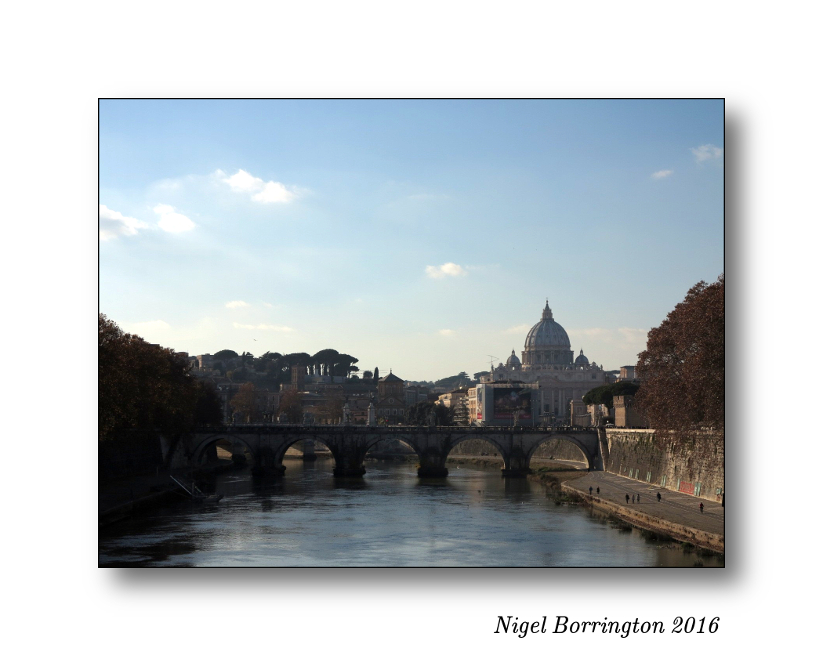
I last visited Rome in December 2015 and took a few landscape images along the banks of the river Tiber, this river is a great location for photographers and artists alike.
Some years back while I was studying art history, I took a close look at the art work created by many artist who lived in Rome or who had visited this great city and done their best to capture its atmosphere.
Art work such as this great engraving by A. Willmore in the style of J._M._W._Turner, this is a fantastic etching as it captures the river and it location perfectly, live along the river banks.
it is not to hard to imaging this work as a great black and white print in modern terms.
Life along the river bank
River Tiber
Rome
Nigel Borrington
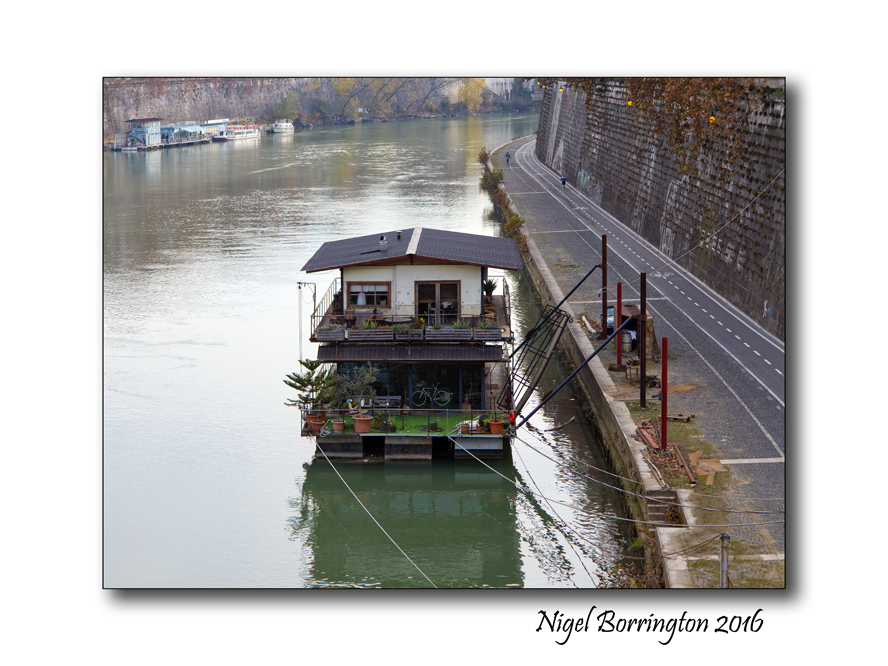
Today the river Tiber is still used in many of the same ways as you can see in this drawing, it is now even the home to many people who live in house boats. the banks are today acting as walking routes and cycle paths.
Irish Landscape Photography, River Dawn, County Waterford

Irish Landscape Photography
River Dawn
County Waterford
Nigel Borrington
Irish Landscapes

The Landscape of Ireland is some of the most idyllic on the European continent, counties Kerry and Mayo have some of the most stunning mountains and the west coast along with west cork have some of the most beautiful beaches and coast line. The North is wild in the winter months and county Wexford warm and sunny in the summer. While this is all very true and these places are great to visit, very few People live in these remote locations.
For most of us who live here it is landscapes like the one above (The River Dawn) that we get to see and visit most often, the local countryside with its low lying farm-land and rivers that flow slowly through it. Rivers like the River Dawn in the picture above that flows through county Waterford before joining the River Suir close to waterford city.
Even though I love to visit the most iconic places here, it is the everyday landscapes I love to photograph the most …..

river Dawn Joins the river Suir
county Waterford
Nigel Borrington
Friday Poetry : Mending the Wall, By Robert Frost

Irish Landscapes
The Wall,
Sleivenamon , Tipperary
Nigel Borrington
Mending the Wall
By Robert Frost
Something there is that doesn’t love a wall,
That sends the frozen-ground-swell under it,
And spills the upper boulders in the sun;
And makes gaps even two can pass abreast.
The work of hunters is another thing:
I have come after them and made repair
Where they have left not one stone on a stone,
But they would have the rabbit out of hiding,
To please the yelping dogs. The gaps I mean,
No one has seen them made or heard them made,
But at spring mending-time we find them there.
I let my neighbour know beyond the hill;
And on a day we meet to walk the line
And set the wall between us once again.
We keep the wall between us as we go.

To each the boulders that have fallen to each.
And some are loaves and some so nearly balls
We have to use a spell to make them balance:
“Stay where you are until our backs are turned!”
We wear our fingers rough with handling them.
Oh, just another kind of out-door game,
One on a side. It comes to little more:
There where it is we do not need the wall:
He is all pine and I am apple orchard.
My apple trees will never get across
And eat the cones under his pines, I tell him.
He only says, “Good fences make good neighbours.”
Spring is the mischief in me, and I wonder
If I could put a notion in his head:
“Why do they make good neighbours? Isn’t it
Where there are cows? But here there are no cows.
Before I built a wall I’d ask to know
What I was walling in or walling out,
And to whom I was like to give offence.
Something there is that doesn’t love a wall,
That wants it down.” I could say “Elves” to him,
But it’s not elves exactly, and I’d rather
He said it for himself. I see him there
Bringing a stone grasped firmly by the top
In each hand, like an old-stone savage armed.
He moves in darkness as it seems to me,
Not of woods only and the shade of trees.
He will not go behind his father’s saying,
And he likes having thought of it so well
He says again, “Good fences make good neighbours.”
Welcome to the Deise Greenway, County Waterford
The Deise Greenway
County Waterford
Ireland
Irish Landscape Photography : Nigel Borrington
The Waterford / Deise Greenway
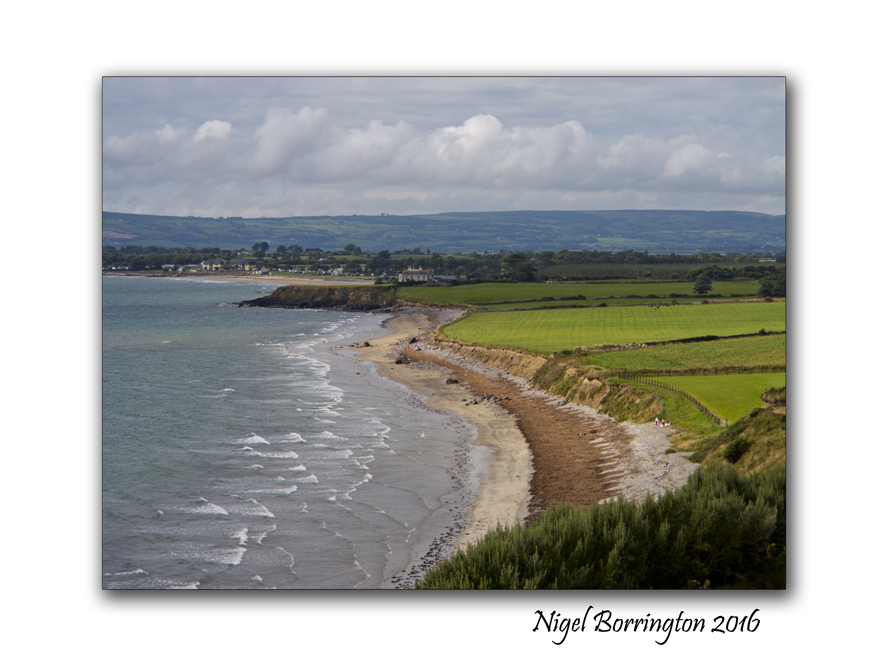
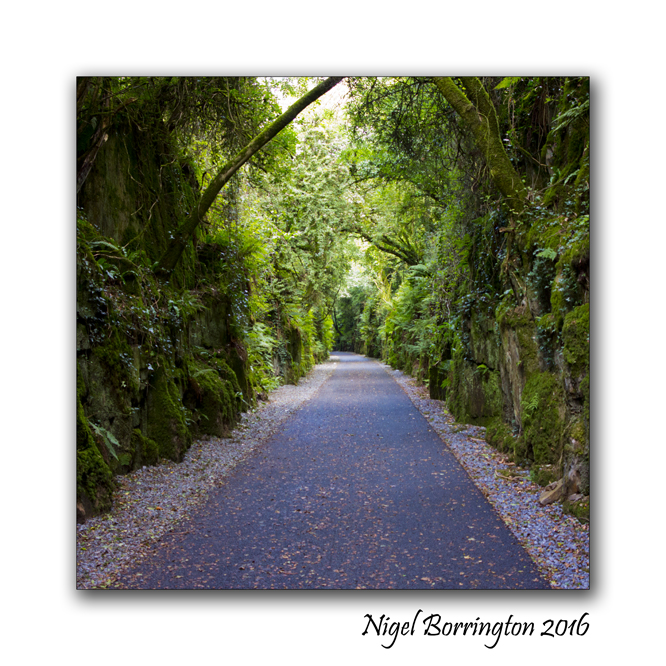
The Amazing new Deise Greenway is almost completed and for anyone who has not heard about this new public cycle and walking path in county Waterford Ireland, here is some basic information !
The History of the Greenway – A Railway history
Waterford to Dungarvan
The Railway Line from Dungarvan to Waterford was constructed during the 1870’s and was officially opened on the 12th August 1878 with the first train departing Waterford at 10.10 and arriving at Durrow just over an hour later.

The building of the Railway was a remarkable project in that it had to be contructed over very harsh terrain. From the Dungarvan side, two causeways had to be contructed, one over the Colligan estuary and one through the sea at Barnawee, a very impressive viaduct has to be built at Ballyvoile and an even more impressive tunnel, 480 yards long, fully lined was constructed just a little further down the line. Another viaduct at Kilminnion and an almost 100 feet high curved viaduct at Kilmacthomas to name just a few. It headed down towards the lovely station at Kilmeaden and then on the riverbank of the River Suir below Mount Congreve into Waterford City.

The Railway line was not just of national importance, it was also our line with the UK with many Irish people emigrating there but many used it to come over and back. In March 1967, the last passenger train left Dungarvan station for Rosslare. But it reopened again with the opening of the Magnesite ore processing plant at Ballinacourty but this plant closed in 1982. Engineers ran occasional locomotives on the line up until 1990.

CIE own the line but Waterford County Council acquired a license from them at the start of this century to make it into a pedestrian walkway/cycle path for tourism and leisure.
It has impressive history, a history we can not neglect by not taking an interest in the line, we need to preserve it for the people as an amenity for the people.
Rebirth of the rail line – The Deise Greenway
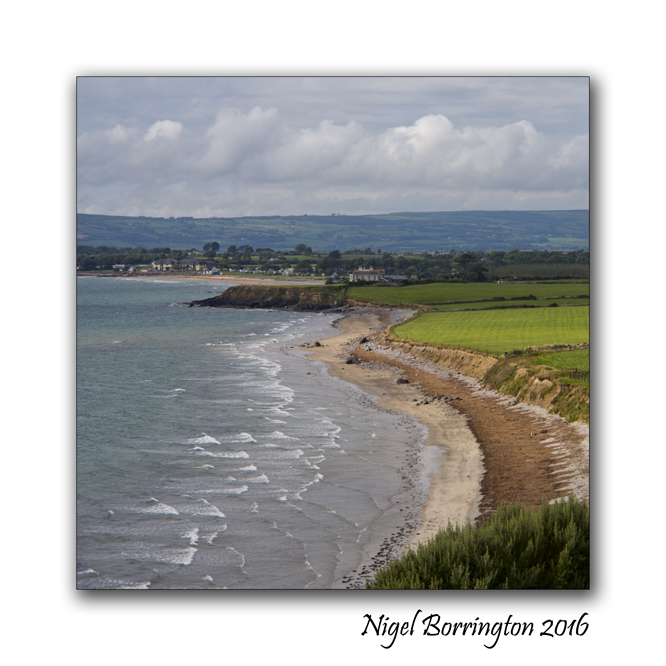
The Deise Greenway is almost complete so last weekend we took a walk along the section from Ballyvoyle brick-lined tunnel down to Dungarvan Bay. This section of the route is just fantastic to walk as it induces the Ballyvoyal tunnel and viaduct and then the wonderful views of the waterford coastline above the town of Dungarvan.
Below are some of the pictures I took on Sunday ……
Gallery





Mountain Poetry, Ride the foothills by : Denel Kessler
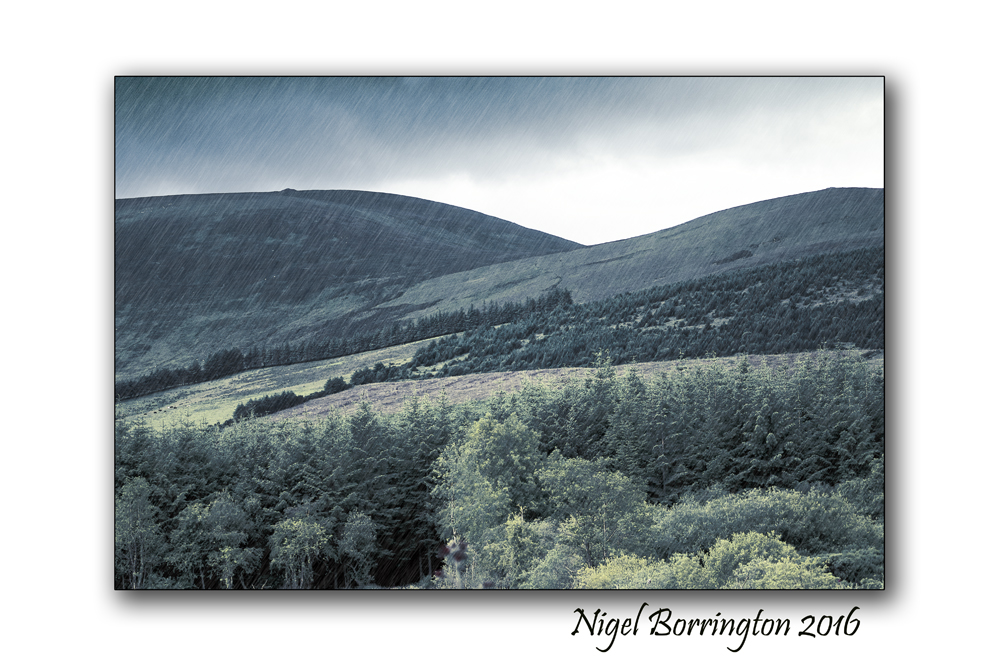
Foothills of Slievenamon
Irish Landscape images
Nigel Borrington
Denel Kessler
Chinook Skies
cobalt rain
rides the foothills
mountains conspire
in malevolent
cloud lairs
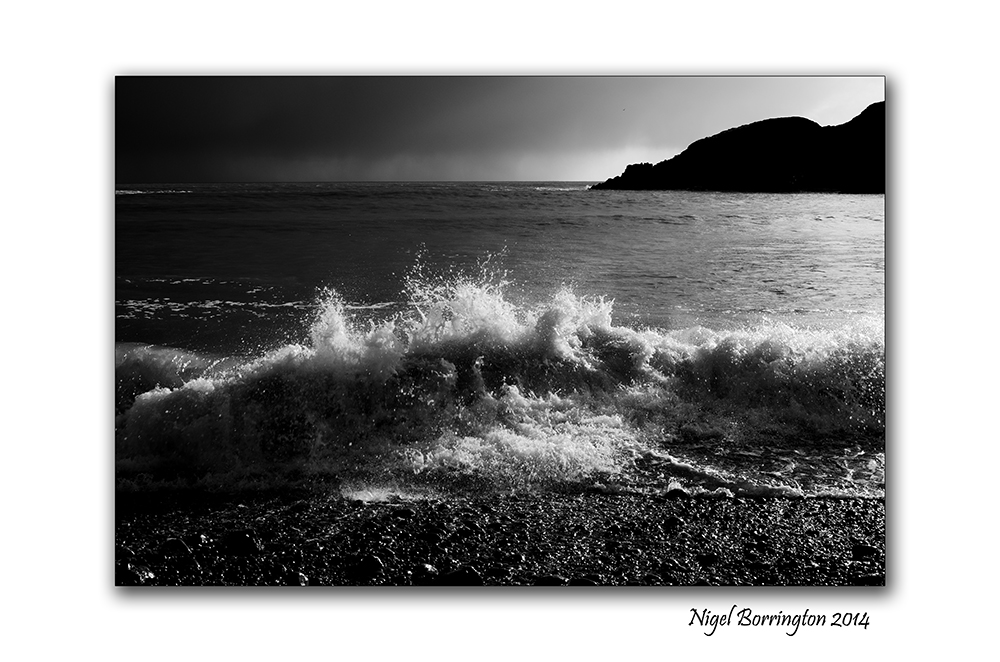
beneath gray waters
she treads
the warming sea
in constant current
scaled desire
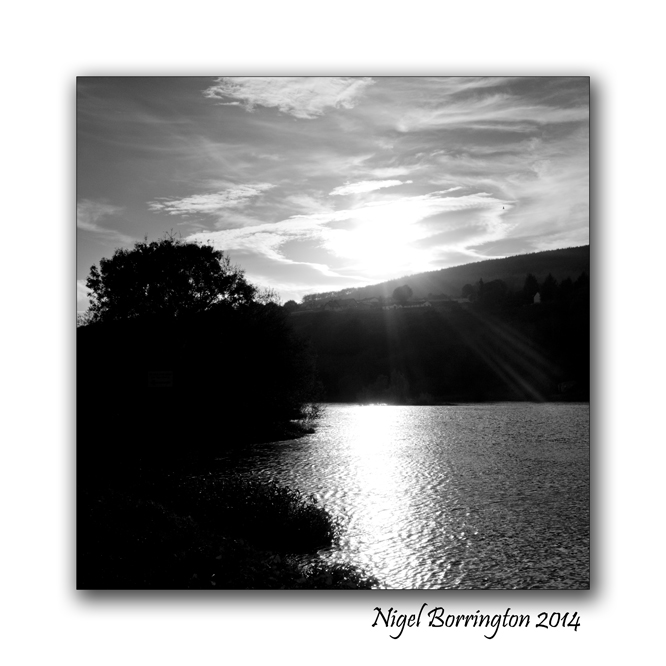
burnished crimson
silver sleek
with ripened need
she lives to die
upstream
An Old Man on the River Bank, By George Seferis

River Barrow
County Kilkenny
Nigel Borrington
An Old Man on the River Bank
By George Seferis
And yet we should consider how we go forward.
To feel is not enough, nor to think, nor to move
nor to put your body in danger in front of an old loophole
when scalding oil and molten lead furrow the walls.
And yet we should consider towards what we go forward,
not as our pain would have it, and our hungry children
and the chasm between us and the companions calling from the opposite shore;
nor as the bluish light whispers it in an improvised hospital,
the pharmaceutic glimmer on the pillow of the youth operated on at noon;
but it should be in some other way, I would say like
the long river that emerges from the great lakes enclosed deep in Africa,
that was once a god and then became a road and a benefactor, a judge and a delta;
that is never the same, as the ancient wise men taught,
and yet always remains the same body, the same bed, and the same Sign,
the same orientation.
I want nothing more than to speak simply, to be granted that grace.
Because we’ve loaded even our song with so much music that it’s slowly sinking
and we’ve decorated our art so much that its features have been eaten away by gold
and it’s time to say our few words because tomorrow our soul sets sail.

If pain is human we are not human beings merely to suffer pain;
that’s why I think so much these days about the great river,
this meaning that moves forward among herbs and greenery
and beasts that graze and drink, men who sow and harvest,
great tombs even and small habitations of the dead.
This current that goes its way and that is not so different from the blood of men,
from the eyes of men when they look straight ahead without fear in their hearts,
without the daily tremor for trivialities or even for important things;
when they look straight ahead like the traveller who is used to gauging his way by the stars,
not like us, the other day, gazing at the enclosed garden of a sleepy Arab house,
behind the lattices the cool garden changing shape, growing larger and smaller,
we too changing, as we gazed, the shape of our desire and our hearts,
at noon’s precipitation, we the patient dough of a world that throws us out and kneads us,
caught in the embroidered nets of a life that was as it should be and then became dust and sank into the sands
leaving behind it only that vague dizzying sway of a tall palm tree.
A Poem By – Thomas A Robinson Thomas , Borders and Fences

Borders and Fences
Nigel Borrington
Borders and Fences
Your borders
are mending fences
And false fiction
is the elevated
runoff of the headwaters
of your dreams
And the people black framed
in the cages
of the eternal moment’s collapse
Will gather generating
candle light wisdom
of those
who deny existence
In the Silence of it All ~ Lily Mae

In the Silence of it All, Nigel Borrington
In the silence of it All
Lily Mae
Flower, sometimes when I stare up into the clouds
I feel such a part of something divine
like there is an energy that passes through me
from all times and I feel so loved
Yet…here we are you and I
cupping our hearts in our hands
while sending unconditional love out
to the ones we love and I wonder..
Flower do they feel it?

Close your eyes Sweet Lily and you will know
Connect with the passion burning inside you
that he alone has brought luvingly to your soul
feel the vibration of the universe as thoughts intertwine
among the orange streaks across the sky
The blackened night brings favour for you and I
for in the silence is where our thoughts collide
when everything around them stops and is still
that’s when they truly feel us

That’s when they close their eyes…..and they know too

The Farrier, by : Robert L. Hinshaw
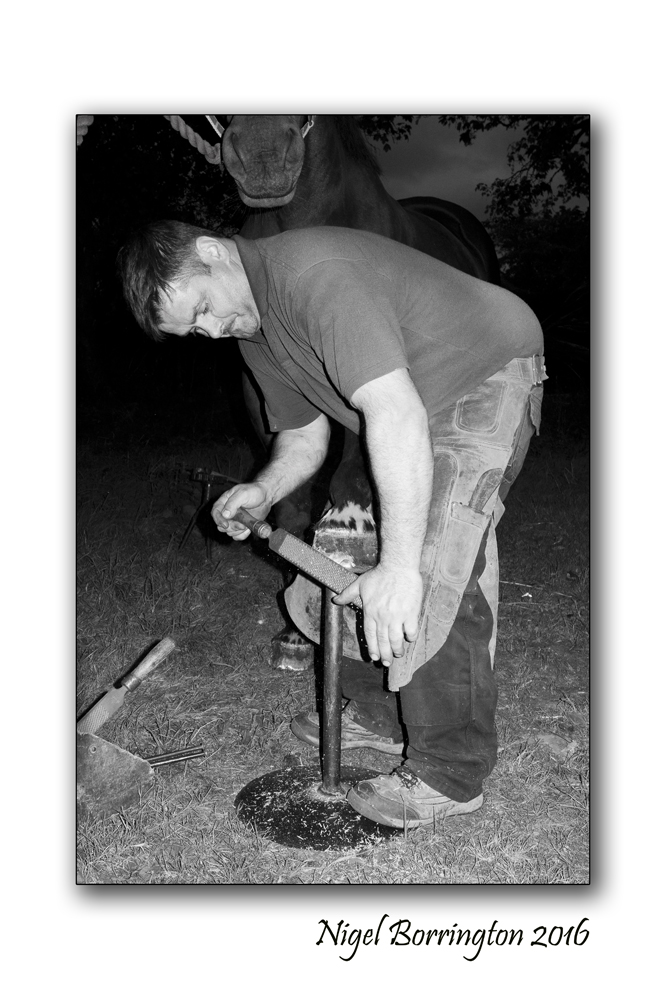
The Farrier
Kilkenny
Nigel Borrington
The Farrier
Robert L. Hinshaw
He billed himself as an expert in the field of “equine podiatry”,
Better known as a farrier for farmers and the cream of society!
Keeping horses shod and their hooves polished was his vocation.
With horseflesh he’d had many an interesting confrontation!
He always had a roll-yer-own dangling from his lips,
And a blackened leather apron wrapped about his hips.
His jaw was set and with biceps wrought of tempered steel,
He’d strike the anvil with his hammer – what a rhythmic peal!

In his jumbled shop he’d shod animals of many breeds.
Donkeys, mules, ponies and prized Arabian steeds.
He shoed critters pulling covered wagons to unknown frontiers,
And many a cowpokes cayuse for the round-up of his steers!
One detail they didn’t cover when he was in farrier school,
Was how to deal with the occasional cantankerous mule.
Many times he’d found himself sprawled upon the dirt,
With the outline of a hoof imprinted upon his shirt!
Tho’ his profession never guaranteed a life of glamour,
And knowing he’d not get rich wielding a tongs and hammer,
Yet, it was challenging working with ornery mule and horse,
Always hoisting their hindquarters very gingerly of course!
Monday Poetry , A Buttercup Tale – Poem by sylvia spencer
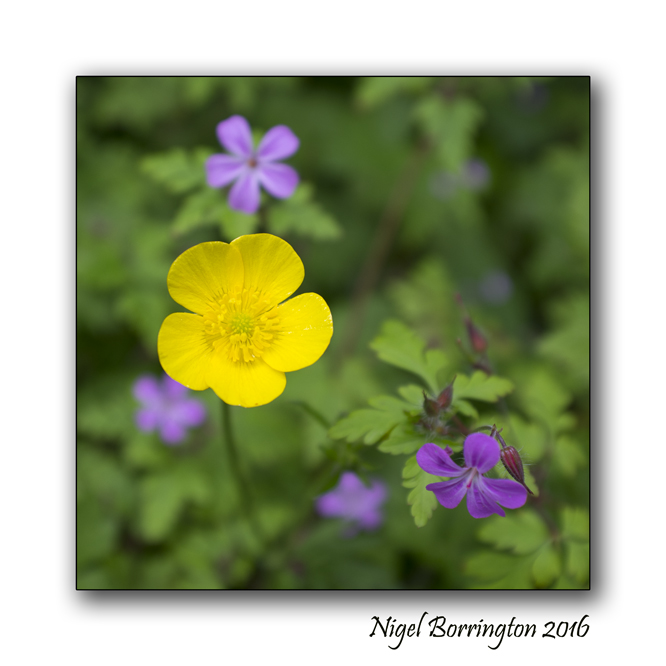
The Buttercup Poem Nigel Borrington Nature Photography
A Buttercup Tale –
Poem by sylvia spencer
I know of a buttercup with a story to tell
and I can honestly say there has never been a
story told so well. A pretty buttercup so wild and free
once made friends with an old oak tree but sadly the
tree was cut down and little Miss butercup wore a frown;
she still bows her head in the summer sun because she
feels sad about what was done.
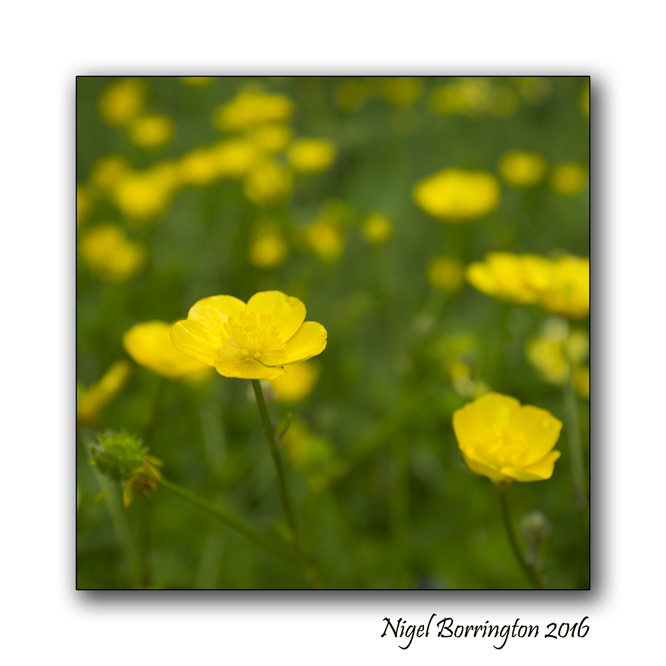
She then lived next door to a tall fox glove and she thought
in her heart that he had fallen in love, because he sheltered her
from rain all summer long and in the wind and rain he is
so brave and strong.

Sadly the foxglove did not feel the same and the buttercups
heart was jilted again.
On into the meadows she moved once more hoping that life
would be better than before. It was here she met the Dandelion
a real good catch and now they live together on the farmers
cabbage patch.
sylvia spencer

Bog cotton on the red bog, A Poem CHARLOTTE GRACE O’BRIEN (1845 – 1909)

BOG COTTON ON THE RED BOG
A Poem by
CHARLOTTE GRACE O’BRIEN (1845 –1909)
Foynes in June 1895
“ O STRONG-WINGED birds from over the moorland dark,
On this June day what have you seen?
Where have you been? ”
Where, oh! where
The golden yellow asphodel makes its boggy home,
And far and near, Spreading in broad bands of silvery silky foam
O’er the moorland drear, The slender stemmed bog cotton bends in waves of light,
Shaking out its shining tufts for its own delight,There, oh! there We have been.
“O sweet sky piercing, heaven mounting lark,
On this June day what have you seen?”
I have seen—I have seen
The dark red bog and the king fern green,
And the black
black pools lying dim between,–
The baby heather that blossoms so soon
In the splendid heat that comes after June–
———————–
Charlotte Grace O’Brien
was born in County Limerick, the daughter of
William Smith O’Brien who was a Conservative Member of Parliament for County Limerick; she championed the cause for better conditions for those emigrating to America.
Bog cotton on the red bog, images Gallery


Le Balcony , By : Charles Baudelaire’s
Mother of Memories
Nigel Borrington
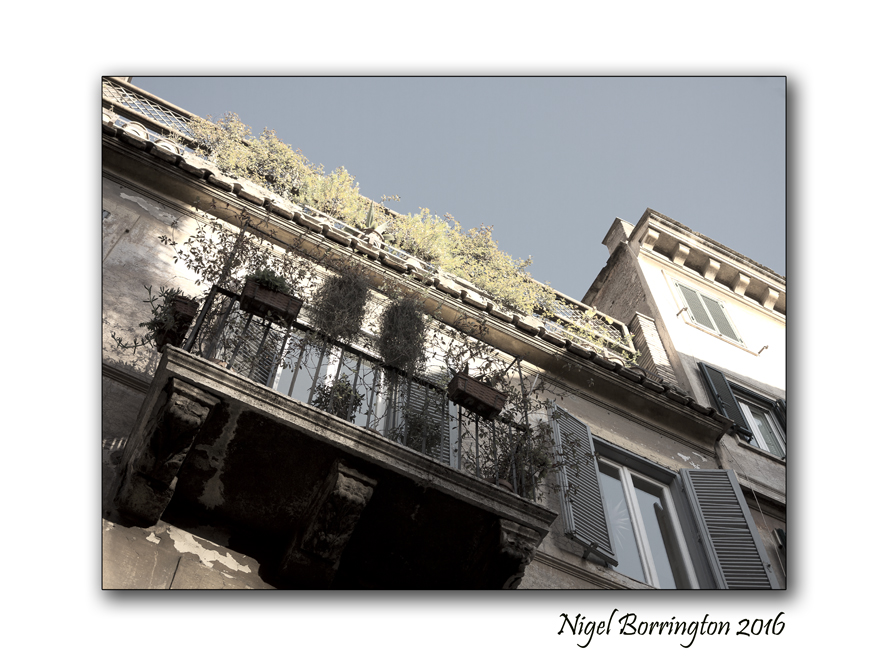
Le Balcony , By : Charles Baudelaire’s
Mother of memories, mistress of mistresses,
O you, all my pleasure, O you, all my duty!
You’ll remember the sweetness of our caresses,
The peace of the fireside, the charm of the evenings.
Mother of memories, mistress of mistresses!
The evenings lighted by the glow of the coals,
The evenings on the balcony, veiled with rose mist;
How soft your breast was to me! how kind was your heart!
We often said imperishable things,
The evenings lighted by the glow of the coals.
How splendid the sunsets are on warm evenings!
How deep space is! how potent is the heart!
In bending over you, queen of adored women,
I thought I breathed the perfume in your blood.
How splendid the sunsets are on warm evenings!
The night was growing dense like an encircling wall,
My eyes in the darkness felt the fire of your gaze
And I drank in your breath, O sweetness, O poison!
And your feet nestled soft in my brotherly hands.
The night was growing dense like an encircling wall.
I know the art of evoking happy moments,
And live again our past, my head laid on your knees,
For what’s the good of seeking your languid beauty
Elsewhere than in your dear body and gentle heart?
I know the art of evoking happy moments.
Those vows, those perfumes, those infinite kisses,
Will they be reborn from a gulf we may not sound,
As rejuvenated suns rise in the heavens
After being bathed in the depths of deep seas?
— O vows! O perfumes! O infinite kisses!
Monday Poetry : Three Poems about A Bicycle …

Jackie Wilson
MY BICYCLE, THE ARTIST
my bicycle
moves over
a clean slate
of white-snowed sidewalk,
its studded tires
sculpting a piece
of modern art
out of winter
for the city.
DJ Thomas
Bicycles and Poetry in Lisbon
Cycle chic fashion
Our slow bicycle movement
Poetry in bike lanes
Sartorialist’s on two wheels
reclaiming this cities
Bicycle
Nigel Borrington
Ellen Piper
Wilson Rd.
The bicycles were a forged parent-permission slip
But well-forged.
I lifted myself over the tear in the truck’s seat cover, not sliding
Not perforating further for today.
The road was short, short enough to have ridden the bicycles from first start to real start.
But that would not have been exotic
Connection is exotic, and channels must be followed through an antfarm
Proper etiquette must be observed with touch-me-nots
The bicycles were easier to lift from the bed with two
I gave him that, passing a front end, and jammed the wheelspokes with a jabbed finger
So that the damp spinning would not flick his face with groundwater
I expected it to hurt. My expectation tapped lightly.
That narrow pock-marked blacktop was my windtunnel
The air stroked its thumbs over my eyelids and I ached to push, breathe, push further
He held me back with his slow handlebars,
His slow kickstand clicking.
Pedaling slowly is more difficult than flying.
One finds gladness in choosing leaves to crunch with an inch-wide tire
And high-fiving low-hanging branches is socially satisfying.
He smiles behind the white mustache, and I don’t mind.
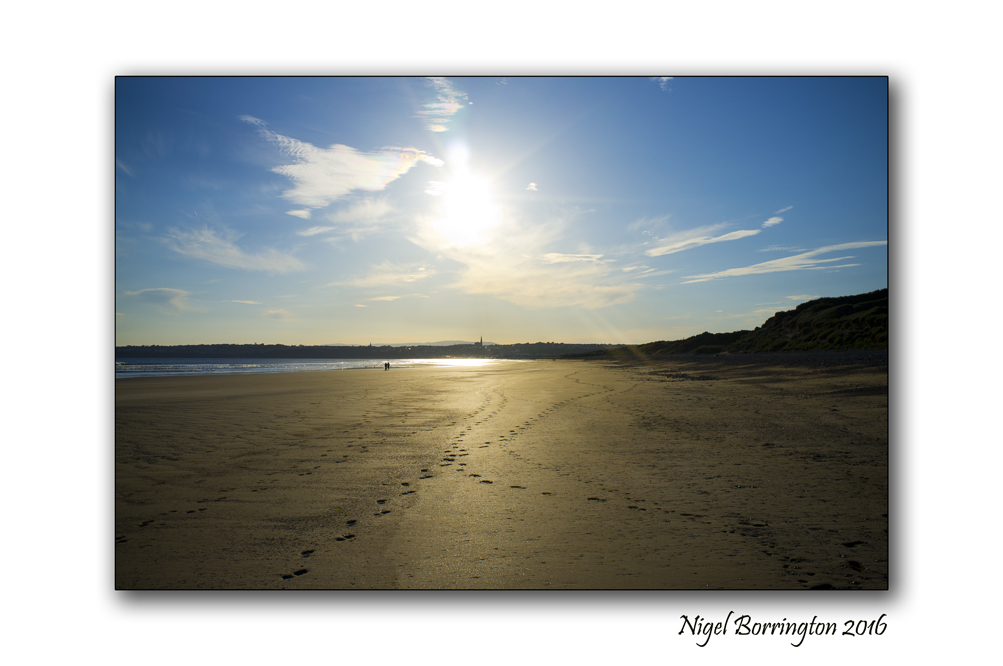
Tramore Beach in Time and the “Princess Of The Sea”, Anne-Lise Andresen and Liam Mc Daid
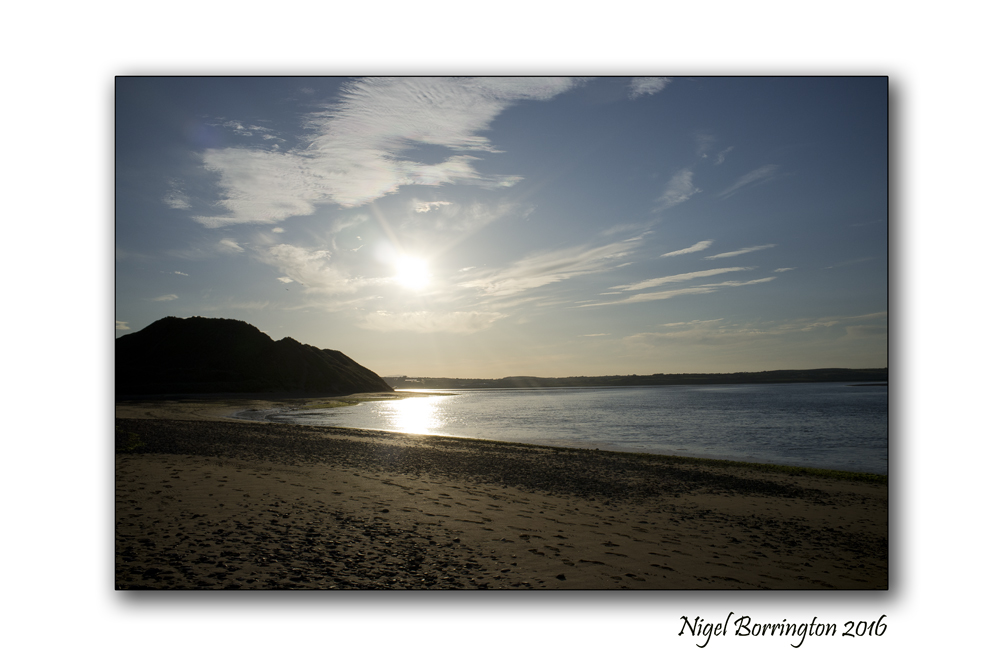
Tramore Beach
Far away in time
Irish Landscape
Nigel Borrington
– The Princess Of The Sea –
A Collaborated Poem
Anne-Lise Andresen and Liam Mc Daid
On the beach I found a seashell
luster of colors mixed with gold illuminate
Washed by the sea millions of times
tides turn as gentle footprints remain
I sit and ponder, how could it happen
salt breeze within an ocean’s breath inhales
A journey of unimaginable time
drifting murmurs echo against waves crashing
In the sunlight it shone with many shades
satin pearl treasure heart between two shells
Carefully I opened and found its soul
it was then as one on whitewashed wings we flew free

I found a beautiful princess of the sea
Upon a sigh or dream revealed its inner secret
A Collaborated Poem
Anne-Lise Andresen and Liam Mc Daid
Friday Poetry : The Road

The Road
West Cork, Ireland
Nigel Borrington
The Road
Rockie
Oct 19, 2014
If you were on the road to nowhere,
where would you go?
If you were on the road to somewhere,
would you stay where you are?
If there was no road,
what would you do?
If the road was there,
would you carry on walking?
If the road you walked upon,
was somebody else’s,
would you leave?
If the road you took,
leads to the end of yours,
would you bother turning back?
What would YOU do,
if the feet that led you,
took you onto a road,
that you didn’t know about?
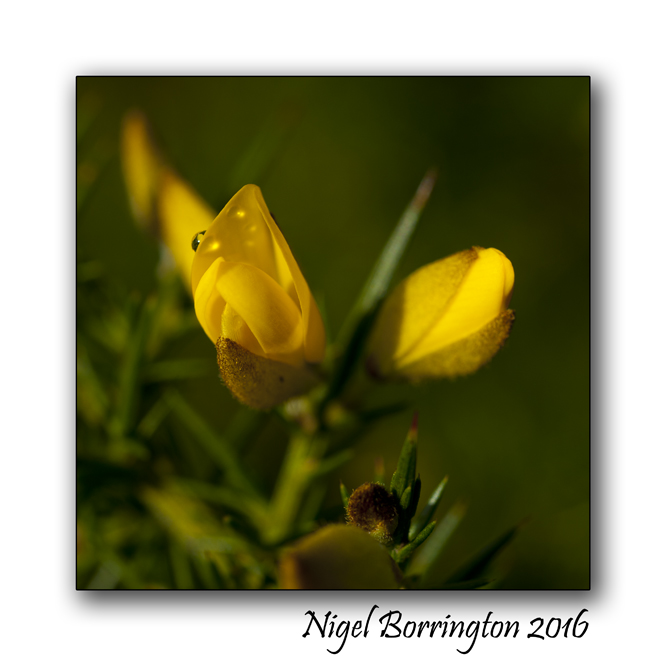
Spring time Gorse flower in Irish mythology and culture

Gorse flowers
Nigel Borrington
Gorse flowers in the Irish Landscape
Gorse is very common here in county Kilkenny but this does not make it any less loved by many, as it flowers in springtime. Many of the hills sides and woodland areas come to life with their yellow flowers.
Gorse, also known as furze, is a sweet scented, yellow flowered, spiny evergreen shrub that flowers all year round.
In fact, there are several species of gorse that flower at different times of the year making it a much-loved plant for the bees and giving it the appearance of being in bloom all year long. There is an old saying that goes, “When the gorse is out of bloom, kissing is out of season.”
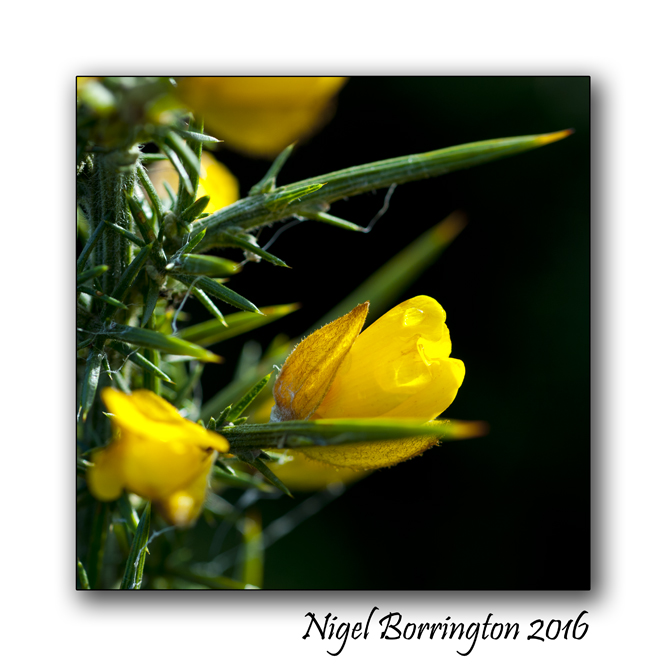
Gorse is often associated with love and fertility. It was for this reason that a sprig of gorse was traditionally added to a bride’s bouquet and gorse torches were ritually burned around livestock to protect against sterility. However, one should never give gorse flowers to another as a gift for it is unlucky for both the giver and receiver.

.
Beltane bonfires
Gorse wood was used as very effective tinder. It has a high oil content which means it burns at a similar high temperature to charcoal. The ashes of the burnt gorse were high in alkali and used to make soap when mixed with animal fat.
Onn, meaning gorse, is the 17th letter of the ogham alphabet. It equates to the English letter O.
In Celtic tradition, gorse was one of the sacred woods burned on the Beltane bonfires, probably the one that got them started. It was a shrub associated with the spring equinox and the Celtic god of light, Lugh, doubtlessly because of its ever blooming vibrant yellow flowers.
In Brittany, the Celtic summer festival of Lughnastdagh, named after the god, was known as the Festival of Golden Gorse.
Flowers used in wine and whiskey
The flowers have a distinct vanilla-coconut aroma and are edible with an almond-like taste. They can be eaten raw on salads or pickled like capers. They have also been used to make wine and to add colour and flavour to Irish whiskey. However, consuming the flowers in great numbers can cause an upset stomach due to the alkalis they contain.
The prickly nature of gorse gave it a protective reputation, specifically around livestock. As well as providing an effective hedgerow, gorse made an acceptable flea repellent and the plant was often milled to make animal fodder.
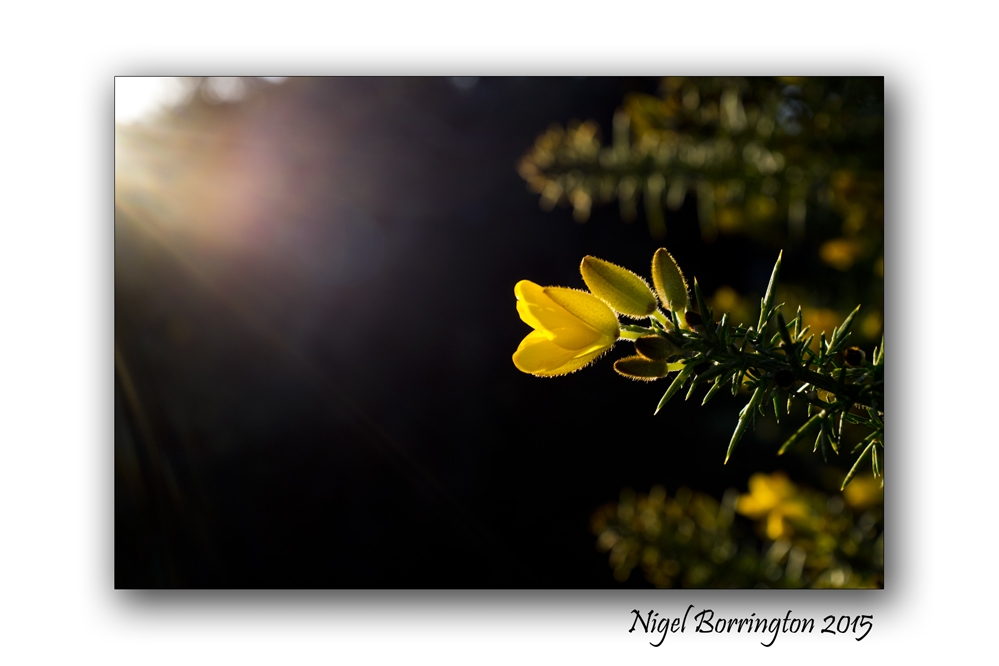
Irish Gorse flowers
Nigel Borrington
Gorse in Irish Culture
Gorse is the 15th letter of the Gaelic tree alphabet, representing O. Its old Gaelic name was Onn, and in modern Gaelic it is conasg. It’s a prickly shrub, which can almost always be found in flower somewhere, all twelve months of the year, and this means it has many positive connotations in folklore.
Snippets of lore
Here are the titbits of fact and folklore about pine tweeted by @cybercrofter on 15 December 2011.
Gorse is the 14th letter of the Gaelic tree alphabet, for O – in old Gaelic it was onn or oir (gold). In Modern Gaelic it’s conasg.
Conasg (Gaelic for gorse) means prickly or armed, appropriately enough as it’s the spiniest plant around.
As gorse’s branches, twigs and leaves are all spiny, which reduces water loss, it can survive extreme exposure to wind and salt.
Other regional names for gorse are whin or furze. In latin, it’s Ulex europaeus.
Here’s a lovely short Harry Rutherford poem about gorse. http://heracliteanfire.net/2009/01/26/poem/
Gorse bears yellow flowers all year round, and as they say, ‘When gorse is in bloom, kissing is in season.’
Gorse is a symbol of the sun god Lugh, as it carries a spark of sun all year.
Bees love gorse and it’s a good source of food for them on warm winter days and in early spring.
In late spring, gorse flowers smell of coconut and vanilla.
Here’s a poem from me, The Gorse is out behind Glencanisp. Audio too. http://www.pankmagazine.com/the-gorse-is-out-behind-glencanisp/
A decoction of gorse flowers counters jaundice.
Gorse seed pods explode in hot sun.
Gorse fixes nitrogen due to symbiosis with a bacterium in the roots.
Horses that eat gorse don’t catch colds (but presumably end up with perforated gums…)
The fierce fire of furze is ideal for baking.
Gorse boughs were used for creel-making. Ouch.
Gorse is a good windbreak and a gorse bush is the best place to dry washing – it naturally pins it in place.
A bundle of gorse is excellent for sweeping chimneys.
Here’s a recipe for gorse flower wine. http://www.celtnet.org.uk/recipes/brewing/fetch-recipe.php?rid=gorse-flower-wine
Gorse flowers give yellow and green dyes.
Gorse bark gives a dark green dye. Add a bucket of urine and wait 3 hours.
Yellowed gorse, a poem by Fay Slimm http://www.poemhunter.com/poem/yellowed-gorse/
A missing home gorse poem, by Francis Duggan http://www.poemhunter.com/poem/i-d-love-to-see-the-gorse-in-bloom/
Gorse lifts the spirits of the downhearted, and restores faith.
Festival of the Golden Gorse is celebrated on 1 August (Lughnasa).
Gorse protects against witches.
Gorse’s magic is good for bringing a piece of work, a project, a relationship or a troublesome thing to a complete and final end.
Gorse symbolises joy.
Remember the nitrogen-fixing? Grow gorse for 7 years and the ground will be excellent for corn.
In 1778 a gorse crushing mill was set up in Perth. One acre of crushed gorse bushes will keep 6 horses in fodder for 4 months.
Bring gorse into the house in May to ‘bring in the summer’.
Giving someone gorse flowers is unlucky, for both giver and receiver. Best keep them for yourself!
Irish Lighthouses – St John’s Point Lighthouse, Donegal

I have been spending a little time each evening this week sorting through by Landscape images of Ireland, it’s been a great exercise to do and has reminded be of so many of the great locations I have visited here in this great country.
I have always keep a special place in my mind and memories for the many Lighthouses I have been to visit, from the south coast to the very north of the country, like The lighthouse below, which I posted about sometime back 🙂
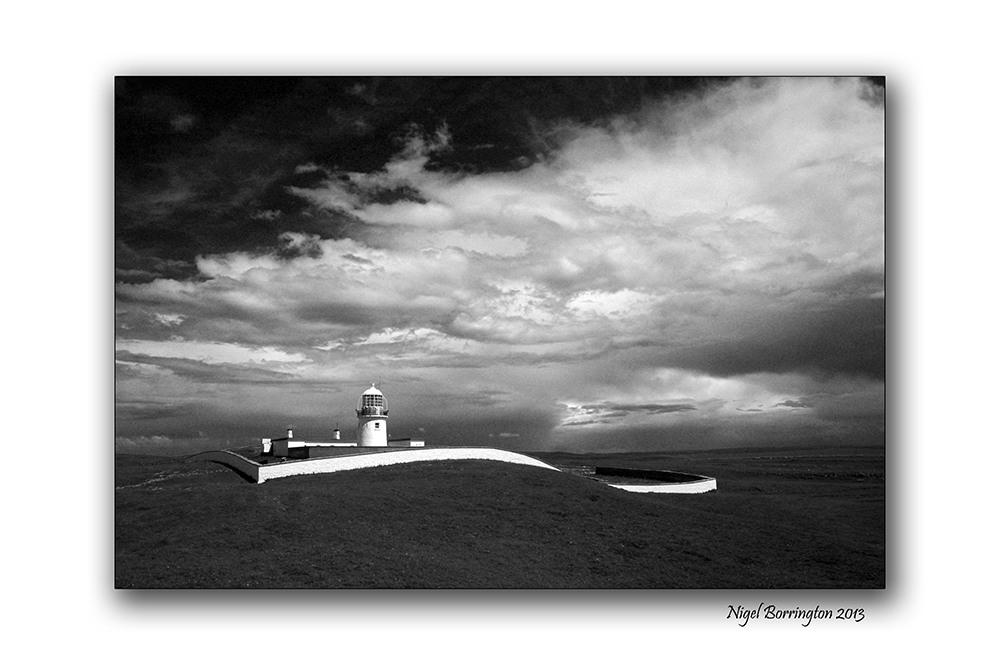
St John’s Point Lighthouse, Donegal
Last week I changed my blog header to an image of St, Johns Point Lighthouse in county Donegal, so I though I would just share some details about this great place.
Its an amazing lighthouse at the mouth of Donegal bay and like many Lighthouses it was build through hard work and taking a risk with time and money, followed with many years of hard work and care in order to keep it running so that many lives could be saved.
Some History
From the Commissioners of Irish Lights
This is a harbour light used to guide from Donegal Bay, it marks the north side of the bay leading to Killybegs Harbour from the entrance up to Rotten Island.
The Corporation for Preserving and Improving the Port of Dublin (the Ballast Board) received a request on 24 February 1825 signed by merchants and traders of Killybegs requesting a light on St John’s Point. This was not approved until April 1829, and Trinity House gave their statutory sanction the following month.
The tower, built of cut granite, was designed by the Board’s Inspector of Works and Inspector of Lighthouses, George Halpin, and erected by the Board’s workmen under Halpin’s supervision.
The tower, painted white, had a first order catoptric fixed light 98 feet above high water with a visibility in clear weather of 14 miles. The light was first used on 4 November 1831 with the buildings in an uncompleted state. The final cost at the end of 1833 was £10,507.8.5.
Gallery


A Lighthouse Poem
By : Ashley Rose
The stone facade bound into the coarse rock,
Signaling, sending, and saving,
Streaks of light alluring threat to vessels.
Like flare of alert, warning of an ominous havoc.
Sending waves of whispering light into the mute air,
Advising all to depart back to the watchful sea.
The light reflects on the storm driven oceans,
tracing the surface with an inkling of caution,
a lighthouse, beacon of hope.
The tides swoosh against the jagged cliff,
where tattered remains of a ship remain.
The waves roar as a dull overcast envelopes the sky.
The lighthouse’s beams echo off a ship,
leading the wandering adrift to safer waters,
as a guide to shelter.
 Nigel Borrington
Irish Landscape Photography : County Kilkenny
Irish Landscape Photography
County Kilkenny
Nigel Borrington
For me these wide angle views of county kilkenny, taken yesterday on an evening walk show the nature of the county very well.
Kilkenny is predominately a farming county with some lower level mountains but mainly low level farmlands. Most of my recent images have been from county Kerry with is wonderful beachs and impressive mountain views, however inland kilkenny still has much to offer in-way of open green landscapes.
So after all and on a wonderful autumn evening such as yesterdays, County kilkenny is not a bad place to return home, after some traveling to the more spectacular part of the Irish landscape.
Gallery
Share this:
October 14, 2016 | Categories: Comment, Landscape, Nigel Borrington | Tags: Ireland, Irish landscape photography, Kilkenny, Landscape Photography, Nigel Borrington | 8 Comments