Ireland’s Historic Buildings : Pearse’s Cottage (Teach an Phiarsaigh),Rosmuc, County Galway
Patrick Henry Pearse (also known as Pádraig or Pádraic Pearse; Irish: Pádraig Anraí Mac Piarais; An Piarsach) was born in Dublin on the 10th of November 1879 and he died in Kilmainham Gaol(Jail), county Dublin on the 3rd of May 1916. He was primarily an Irish teacher but was also a great barrister, poet, writer and original Irish nationalist. He was one of the leaders of the Easter Rising in 1916. Following his execution along with fifteen others, Pearse came to be seen by many as the embodiment of the rebellion.
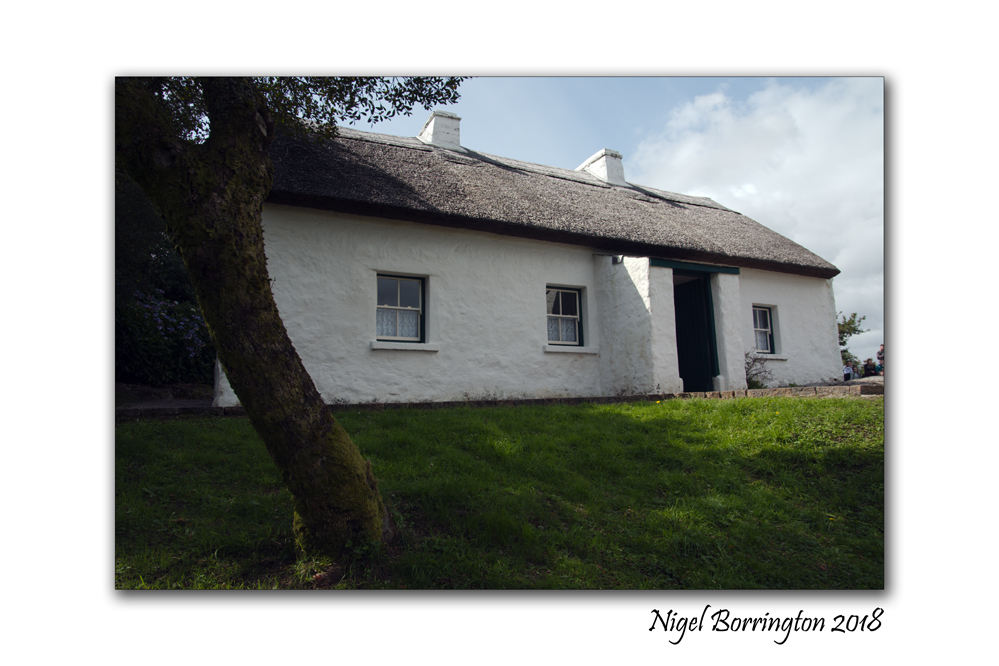
Patrick Pearse’s Cottage at Ros Muc, county Galway in the heart of the Conamara Gaeltacht, ( an Irish speaking and strongly Irish cultural area) was used by Patrick Pearse (1879 – 1916), while he spent time teaching and marking students papers.
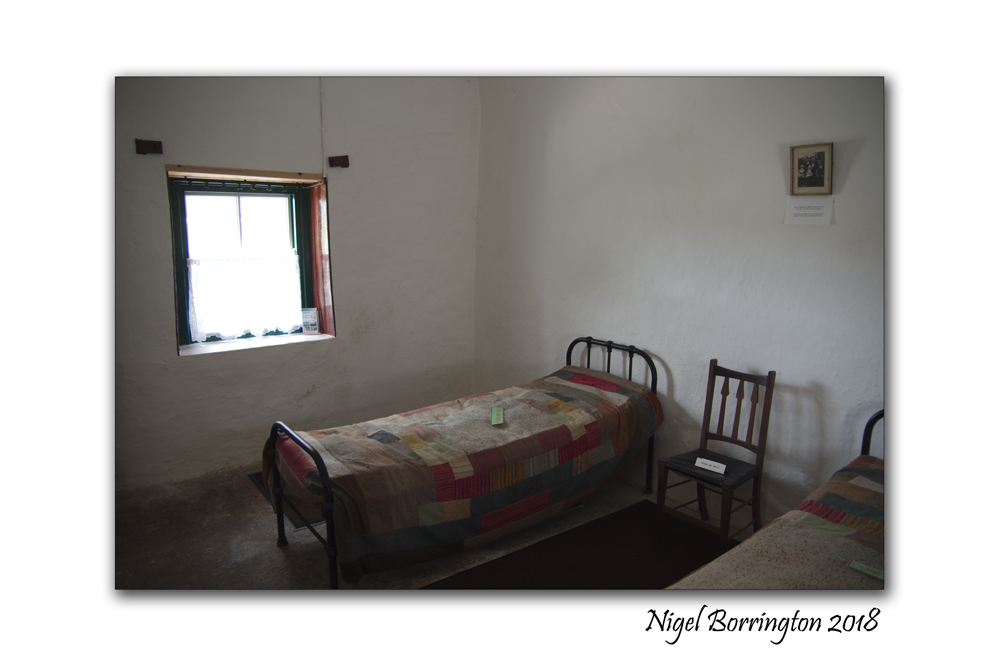
The cottage and its interior, although burned during the War of Independence, has been perfectly reconstructed and contains an exhibition and a number of momentous of Pearse’s life.
The cottage was Pearse’s summer residence between 1903 and 1915. It was also as a summer school for his pupils from St Enda’s in Dublin where he worked during the main Academic year.
The historic cottage, has been developed as a national monument and tourist attraction as part of the 1916 centenary commemorations; and is a key ‘discovery point’ on the Wild Atlantic Way route.
I was lucky enough to visit the cottage last week and enjoyed my time here very much, the staff helped greatly when it came to understanding the life of this great Irish man and his time spent here.
If your in county Galway, you just have to call in and spend some valuable time here !
Pearse’s Cottage (Teach an Phiarsaigh), County Galway, Gallery




Images from the top of “The Reek” “Croagh Patrick”
Croagh Patrick
The Reek
County Mayo
Nigel Borrington 2018
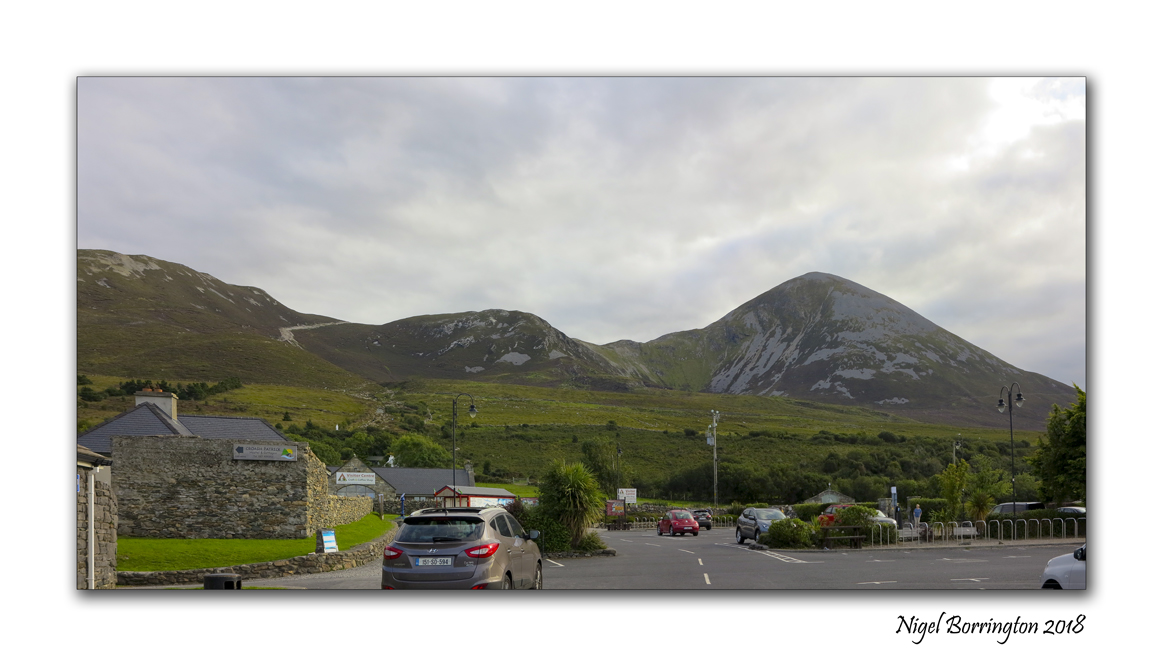
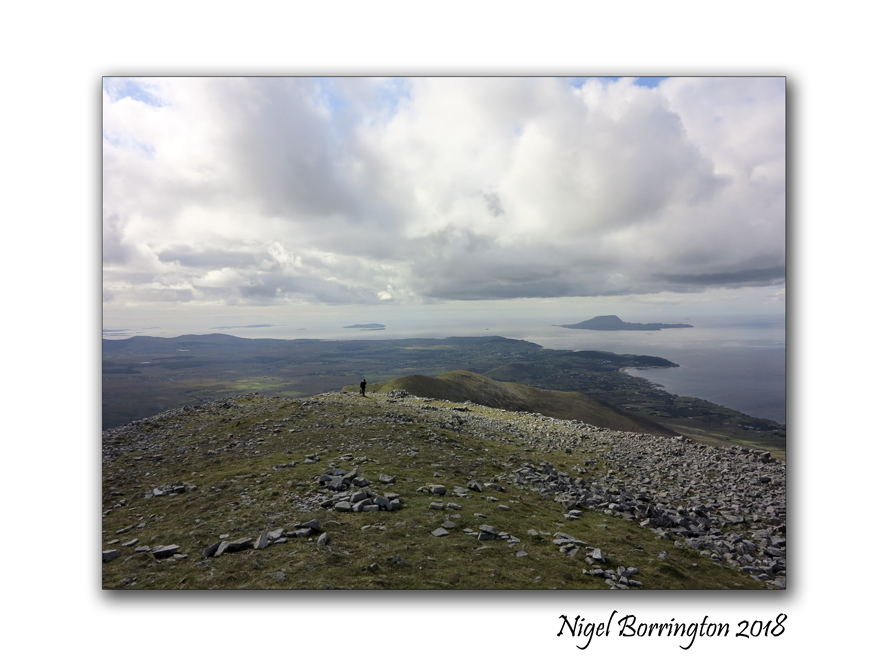
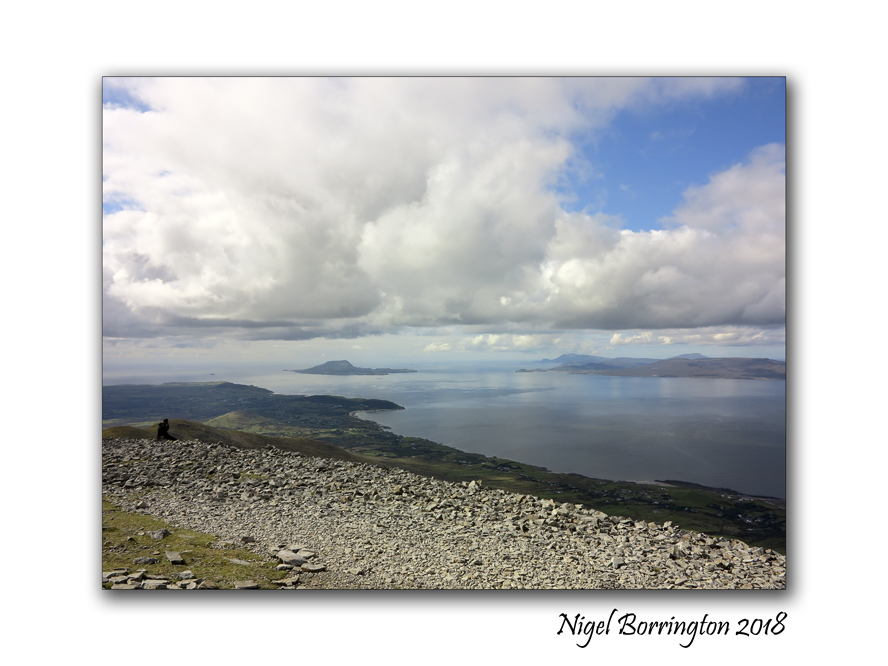
This time last week during a weeks holiday to both counties Sligo and Mayo, in the norths west of Ireland, we hiked up Croagh Patrick or “The reek” as locals know of it. This mountain is one of Irelands Highest peeks and is most famous for being climbed by pilgrims on Reek Sunday every year, which is the last Sunday of each July. On this Sunday, thousands of pilgrims climb Croagh Patrick in honor of Saint Patrick who, according to tradition, fasted and prayed on the summit for forty days in the year 441.
It has been a personal aim to walk the peeks of a list of mountains in Ireland for a couple of years and “The Reek” is just one of these mountains to hike in the next couple of years.
The weather on the day was perfect and we started our walk about Midday having driven some 80km to the main car park used to start the hike. The start of the walk is good, being flat for a while and then only slowly rising in level, so you get a little time to warmup before the main slopes higher up the mountain side. Once you hike the first slopes the path levels off for a while until you come to the bottom of the main peek.
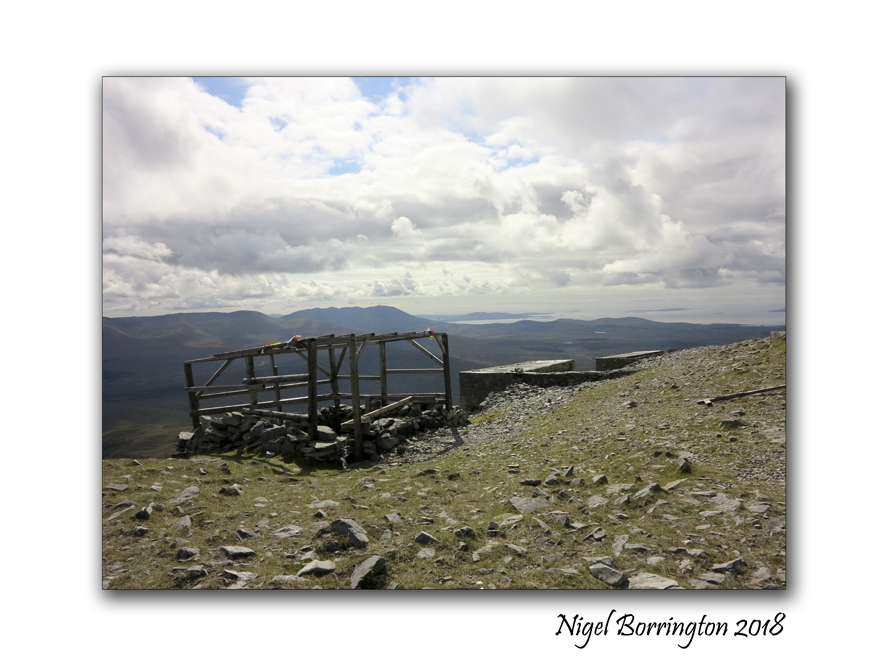
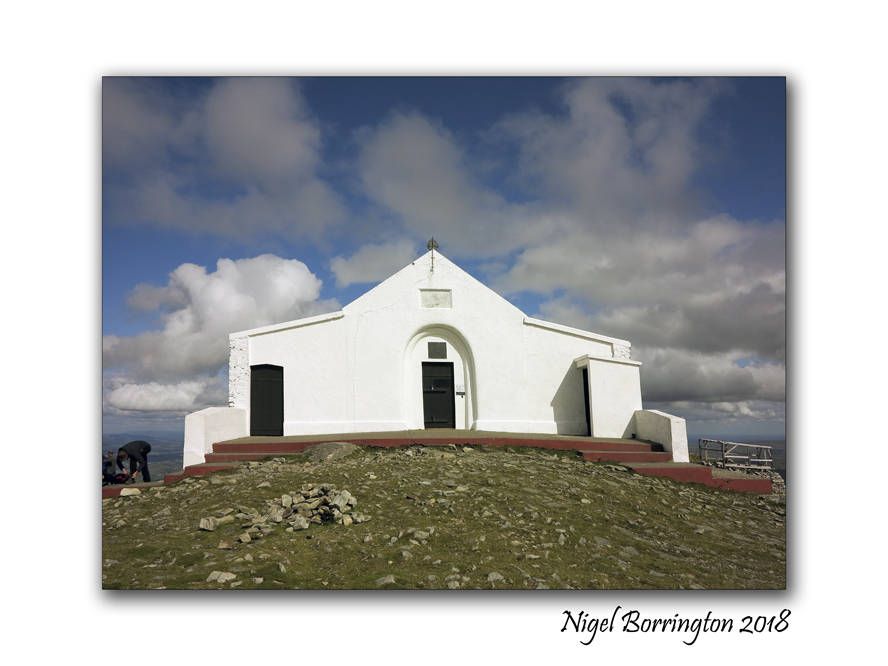
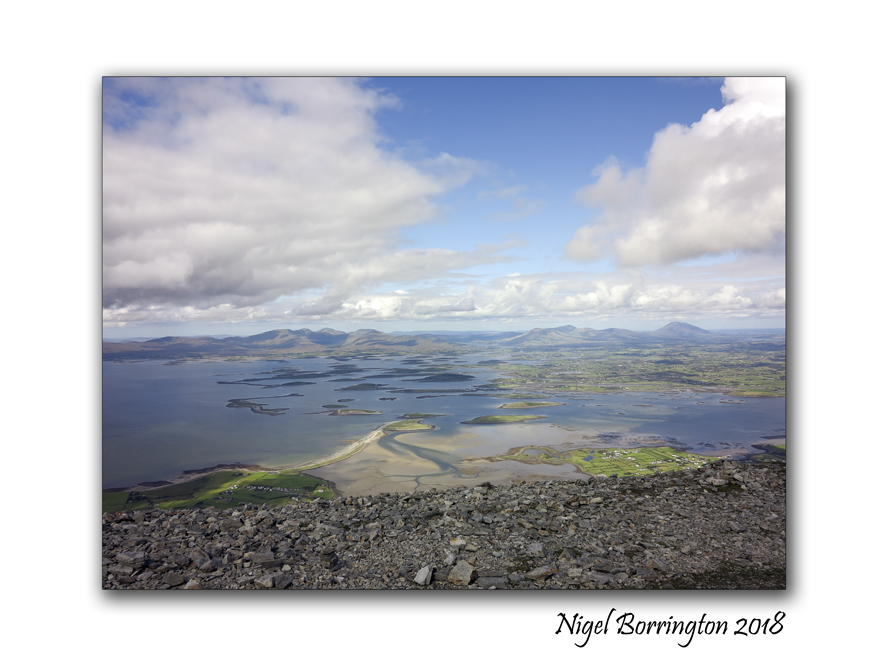
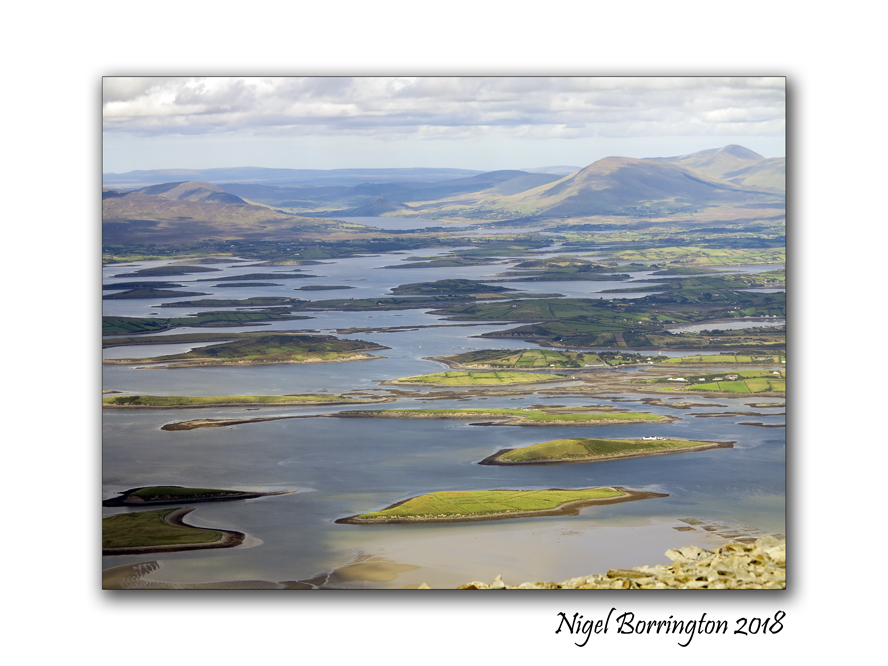
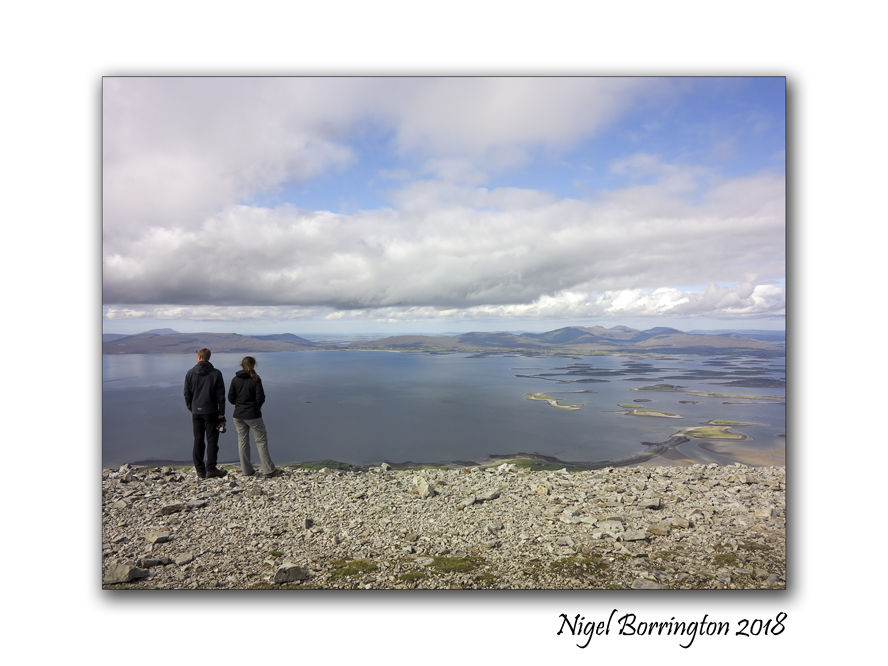
I really enjoyed this hike, its hard – no getting away from that fact but when you do finally get to the top the views are amazing, you can see most of county Mayo and well into county Sligo from here. there is a step that surrounds a small chapel that you can sit on to eat and have something to drink. We rested here for about 10 mins before walking around the top of the peek.
As you can see these images below are mostly taken at the top, when I finally go to open my bag and get my camera out. As I said you truly feel on top of the world here, this point is some 764 metres (2,507 ft) above sea level, not the highest mountain in the country by about 250 meters but here you start your walk at sea level so it could well be the highest distance you have to walk to get to the top…..
I will let these images do the rest of the talking for me other than to say , this is one of the most enjoyable walks of my life and I cannot wait to walk more Irish mountains in the months yo come ..
Croagh Patrick, County Mayo, A gallery






Irish Landscapes – Suir Valley, County Tipperary, call of the far away hills

Call of the far away hills
Suir Valley
county Tipperary
Nigel Borrington 2018
Shadows fall on the Valley
Day is done and the sun
Is slowly fading out of sight
I can hear, oh, so clear
A call that echoes in the night
Yes, I hear sweet and clear
The call of the faraway hills
There’s no rest on the Valley
There’s no rest for a restless soul
That just was born to roam
Who can say, maybe way out there
My heart may find a home
And I hear sweet and clear
The call of the faraway hills
There are trails I’ve never seen
And my dreams are getting old
And beyond the sunset
There are brand new paths
When a new dream or two
May just be one star away
I must obey the call of the faraway hills
Images of September, The Woodcock butterfly

Images of September
Woodcock Butterfly
County Kilkenny
Ireland
Nikon D700
Nigel Borrington
William Butler Yeats country, Those Images A poem

Those Images – Poem by William Butler Yeats
What if I bade you leave
The cavern of the mind?
There’s better exercise
In the sunlight and wind.
I never bade you go
To Moscow or to Rome.
Renounce that drudgery,
Call the Muses home.
Seek those images
That constitute the wild,
The lion and the virgin,
The harlot and the child.
Find in middle air
An eagle on the wing,
Recognise the five
That make the Muses sing.
William Butler Yeats
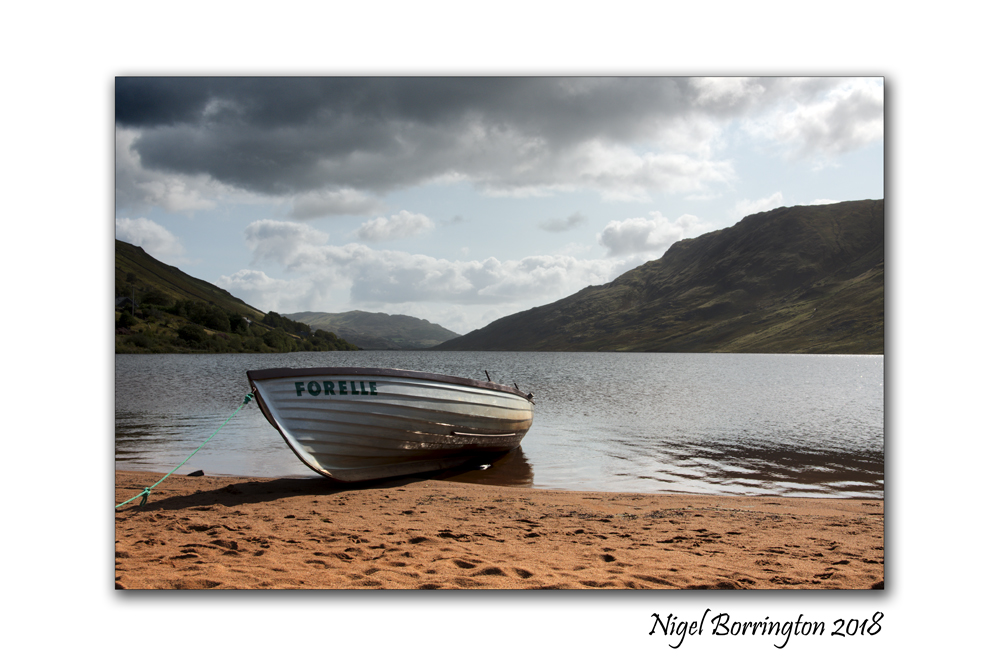

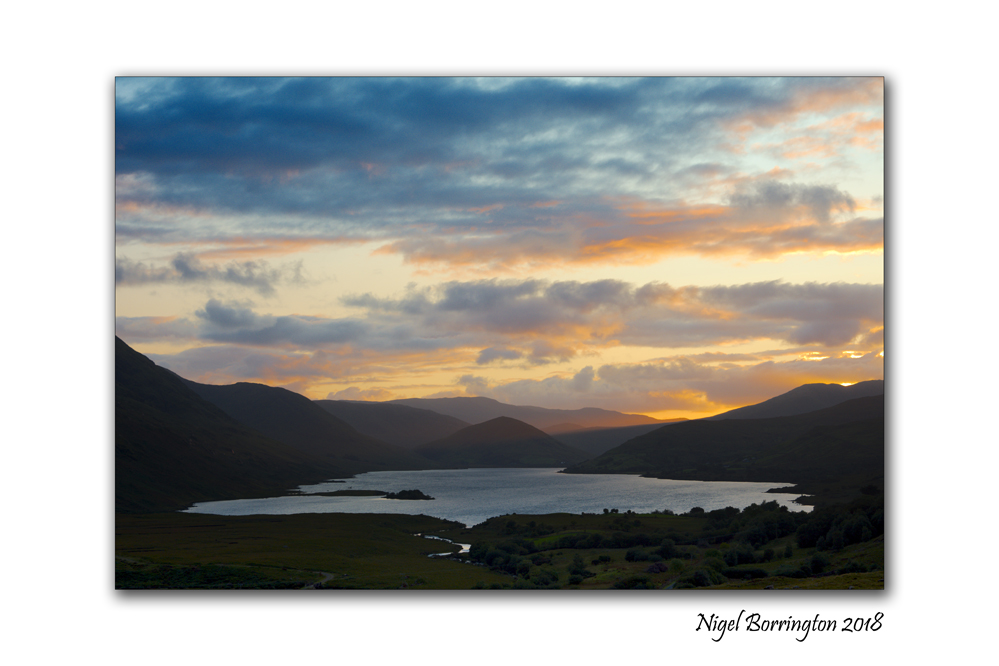

The Land of Beyond, Robert Service

The Land of Beyond
Robert Service
Have you ever heard of the Land of Beyond,
That dream at the gates of the day?
Alluring it lies at the skirts of the skies,
And ever so far away;
Alluring it calls: O ye yoke of galls,
And ye of the trails overfond,
With saddle and pack, by paddle and track,
Let’s go to the Land of Beyond!

Have ever you stood where the silences brood,
And vast the horizons begin,
At the dawn of the day to behold far away
The goal you would strive for and win?
Yet ah! in the night when you gain to the height,
With the vast pool of heaven star-spawned,
Afar and agleam, like a valley of dream,
Still mocks you the Land of Beyond.

Thank God! there is always the Land of Beyond
For us who are true to the trail;
A vision to seek, a beckoning peak,
A fairness that never will fail;
A proud in our soul that mocks at a goal,
A manhood that irks at a bond,
And try how we will, unattainable still,
Behold it, our Land of Beyond!
Irish landscapes, Curracloe beach,county wexford

Irish Landscapes
Curracloe Beach
County Wexford
Nigel Borrington
Curracloe Beach in County Wexford is one of the most popular beaches in Ireland. Located 2KM away from Curracloe Village, this soft-sand beach is frequented by sunbathers and nature-lovers alike.
During the summer months, you’ll find that the area is bustling with life, as holidaymakers leave their home counties to take up residence in the holiday homes, campsites, hotels and B&Bs that surround the area. Later on, during the autumn and winter months, Curracloe Beach and its nearby forest become a hot spot for dog-walkers, joggers and anyone else in pursuit of a peaceful stroll.
The area itself is suitable for bathing, as it has a Blue Flag certification. This certification, which is awarded by the Foundation for Environmental Education (FEE), serves as a notice to beach-goers that the area and its surrounding waters have lived up to a number of strict regulatory standards.
Its 7-mile-long beach is famous for its soft and fine sand, which puts it in contrast with many of the stony beaches that you will find around Ireland. The beach is guarded by a number of large and sprawling dunes, all of which are held together and stabilised by a seemingly-endless blanket of green marram grass. During the warmer months, these sand dunes prove to be extremely popular amongst visitors, many of whom will not pass up the opportunity to roll down them.
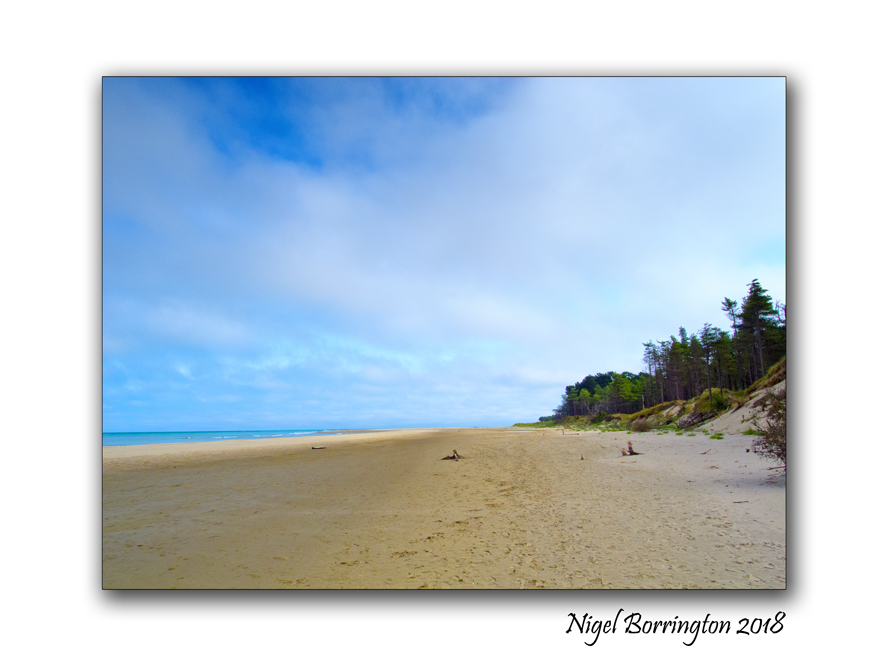
Curracloe Strand, Ballinesker, was used for the filming of the D-Day sequence in Saving Private Ryan, due to similarity to Omaha Beach in Normandy. Filming began June 27, 1997, and lasted for two months. The village of Curracloe lacked 3-phase electricity but when the film company decided to film there, it was connected.
Curracloe Strand was also used for the Irish beach scene in the movie Brooklyn.


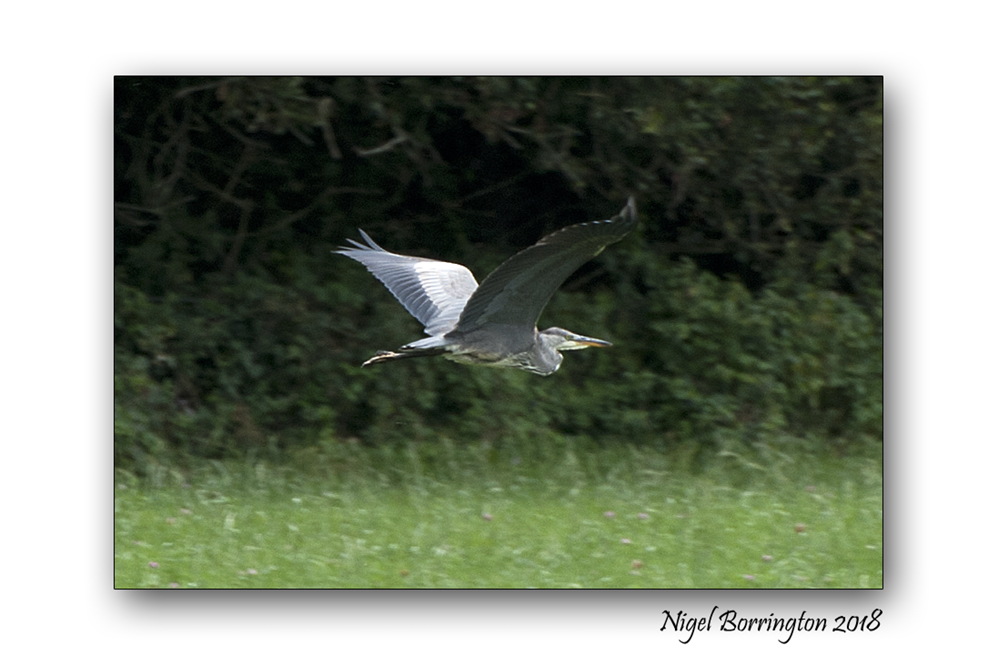
Monday at the River Suir, The Heron ……
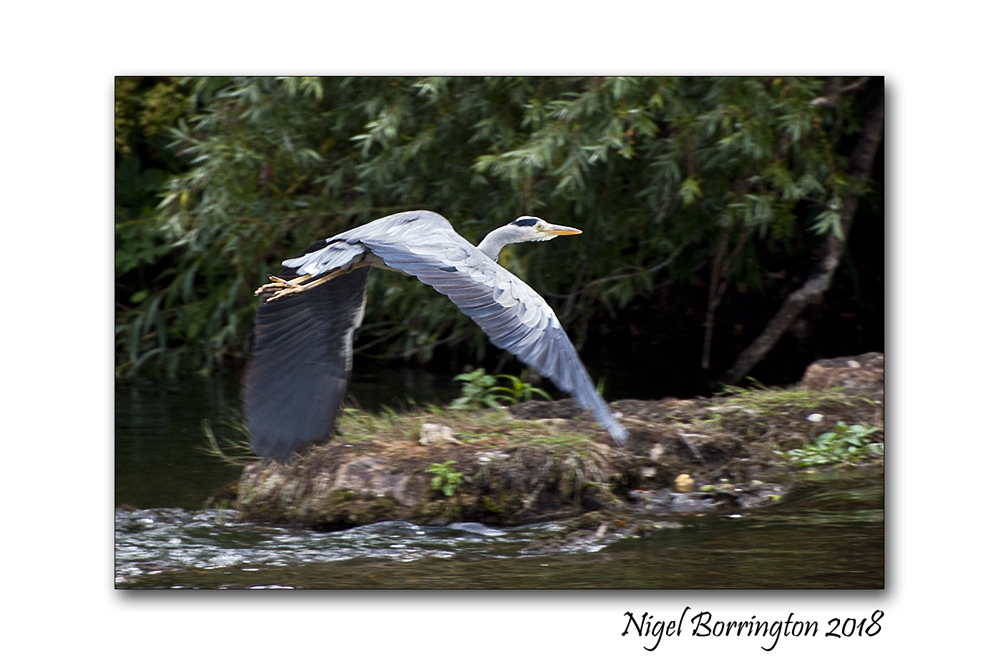
River Birds – Heron
River Suir
Country Tipperary
Nigel Borrington 2018


A Poem for August : In August – Poem by Paul Laurence Dunbar
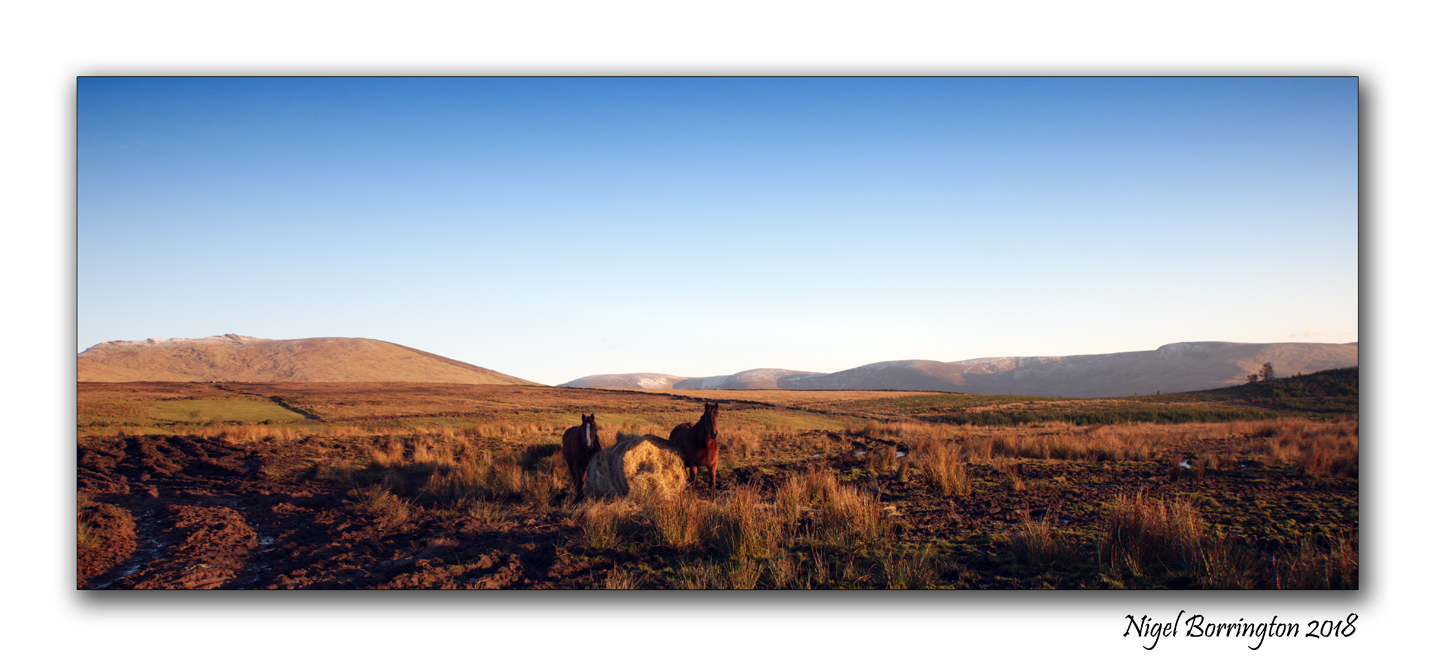
A Poem for those Augusts when it doesn’t rain …..
In August – Poem by Paul Laurence Dunbar
When August days are hot an’ dry,
When burning copper is the sky,
I ‘d rather fish than feast or fly
In airy realms serene and high.
I ‘d take a suit not made for looks,
Some easily digested books,
Some flies, some lines, some bait, some hooks,
Then would I seek the bays and brooks.
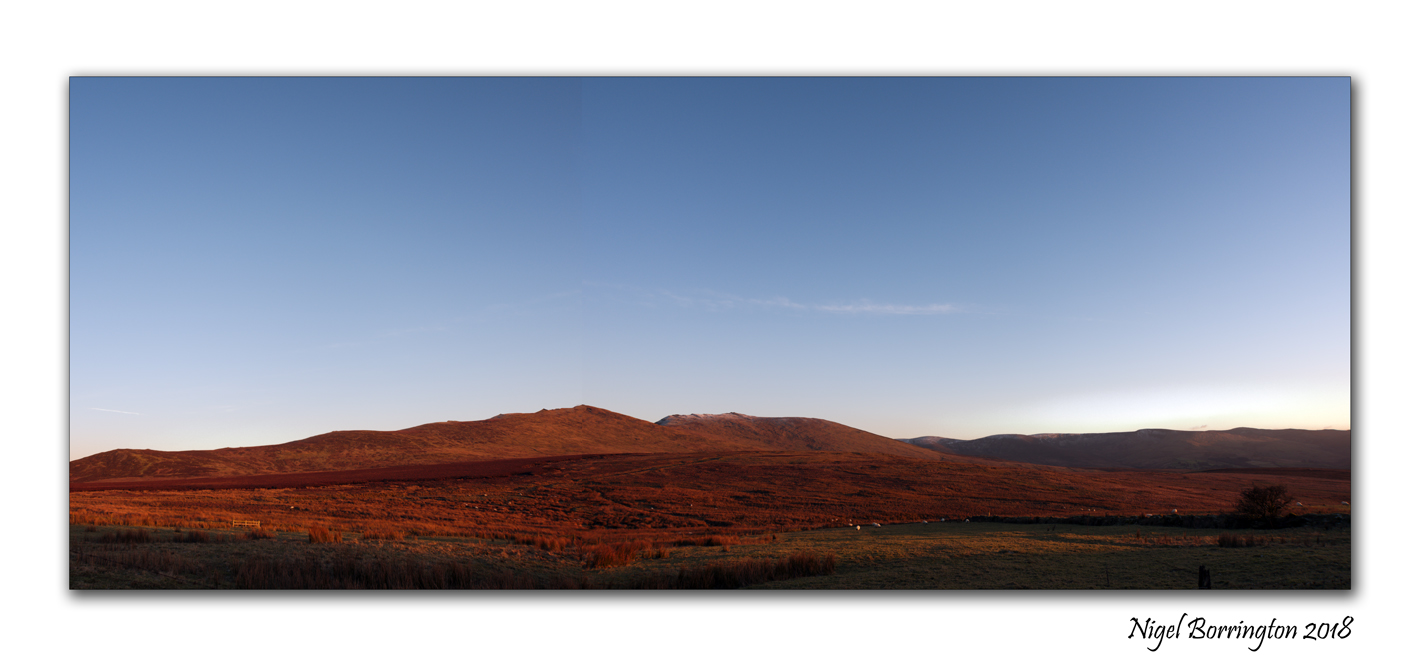
I would eschew mine every task,
In Nature’s smiles my soul should bask,
And I methinks no more could ask,
Except–perhaps–one little flask.
In case of accident, you know,
Or should the wind come on to blow,
Or I be chilled or capsized, so,
A flask would be the only go.
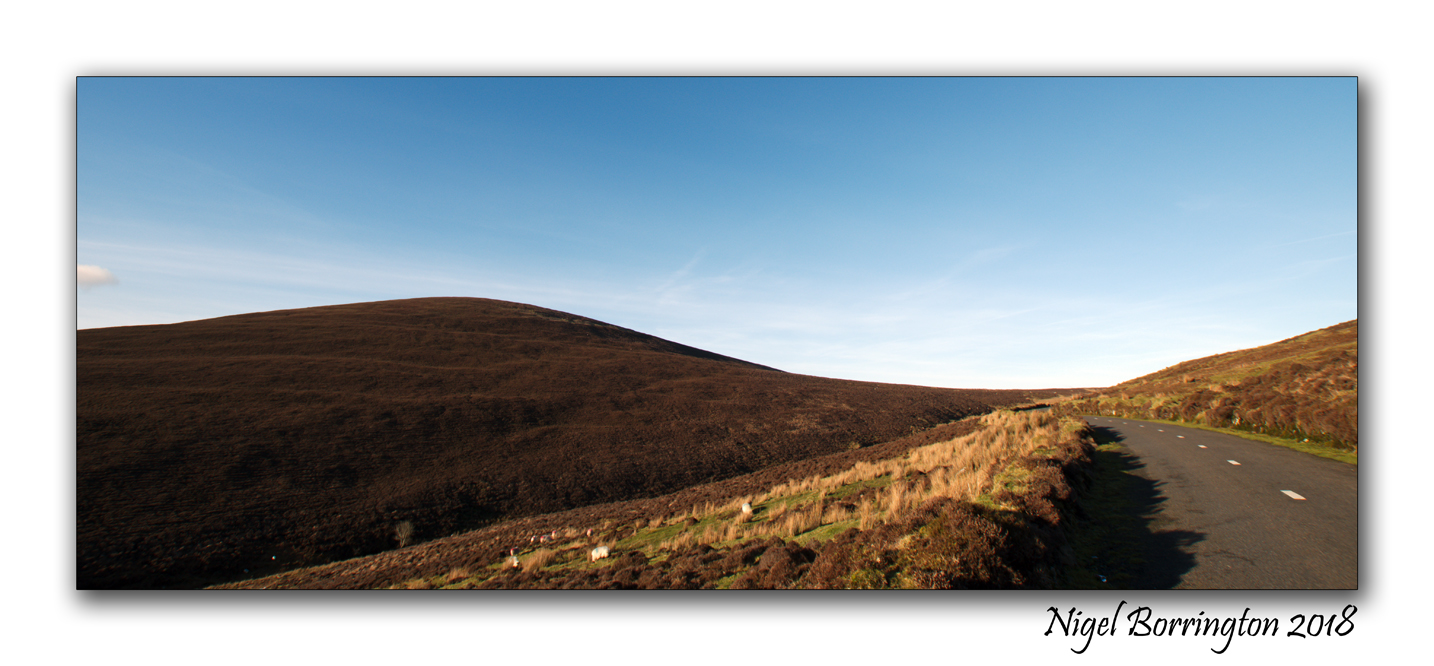
Then could I spend a happy time,–
A bit of sport, a bit of rhyme
(A bit of lemon, or of lime,
To make my bottle’s contents prime).
When August days are hot an’ dry,
I won’t sit by an’ sigh or die,
I ‘ll get my bottle (on the sly)
And go ahead, and fish, and lie!
In August
Paul Laurence Dunbar
A Poem for August : Dark August – Poem by Derek Walcott
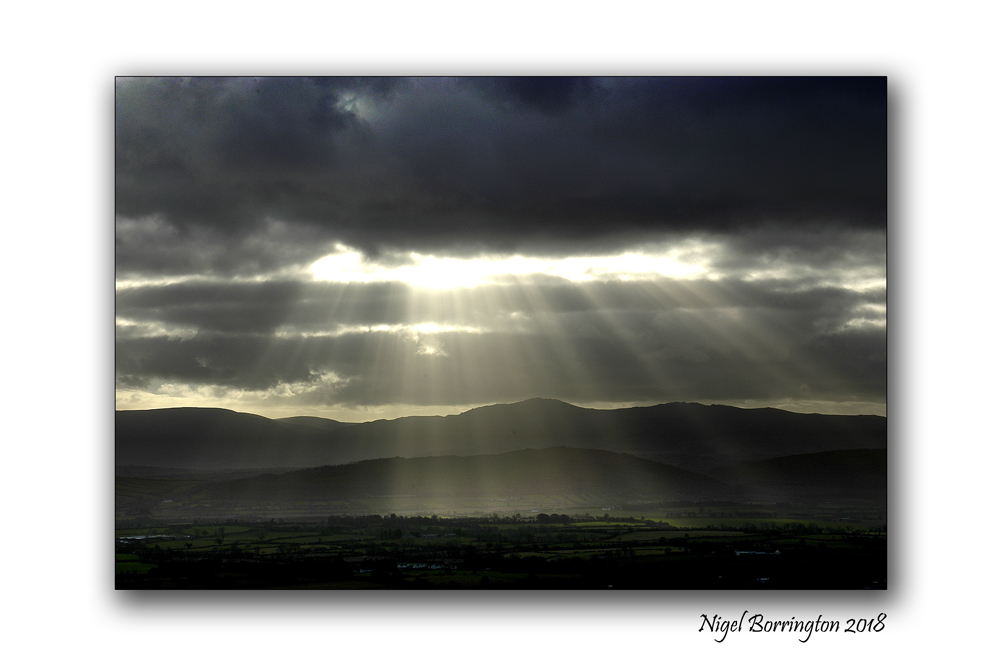
A poem for those Augusts when it does rain ! ……..
Dark August – Poem by Derek Walcott
So much rain, so much life like the swollen sky
of this black August. My sister, the sun,
broods in her yellow room and won’t come out.
Everything goes to hell; the mountains fume
like a kettle, rivers overrun; still,
she will not rise and turn off the rain.
She is in her room, fondling old things,
my poems, turning her album. Even if thunder falls
like a crash of plates from the sky,
she does not come out.
Don’t you know I love you but am hopeless
at fixing the rain ? But I am learning slowly

to love the dark days, the steaming hills,
the air with gossiping mosquitoes,
and to sip the medicine of bitterness,
so that when you emerge, my sister,
parting the beads of the rain,
with your forehead of flowers and eyes of forgiveness,
all with not be as it was, but it will be true
(you see they will not let me love
as I want), because, my sister, then
I would have learnt to love black days like bright ones,
The black rain, the white hills, when once
I loved only my happiness and you.
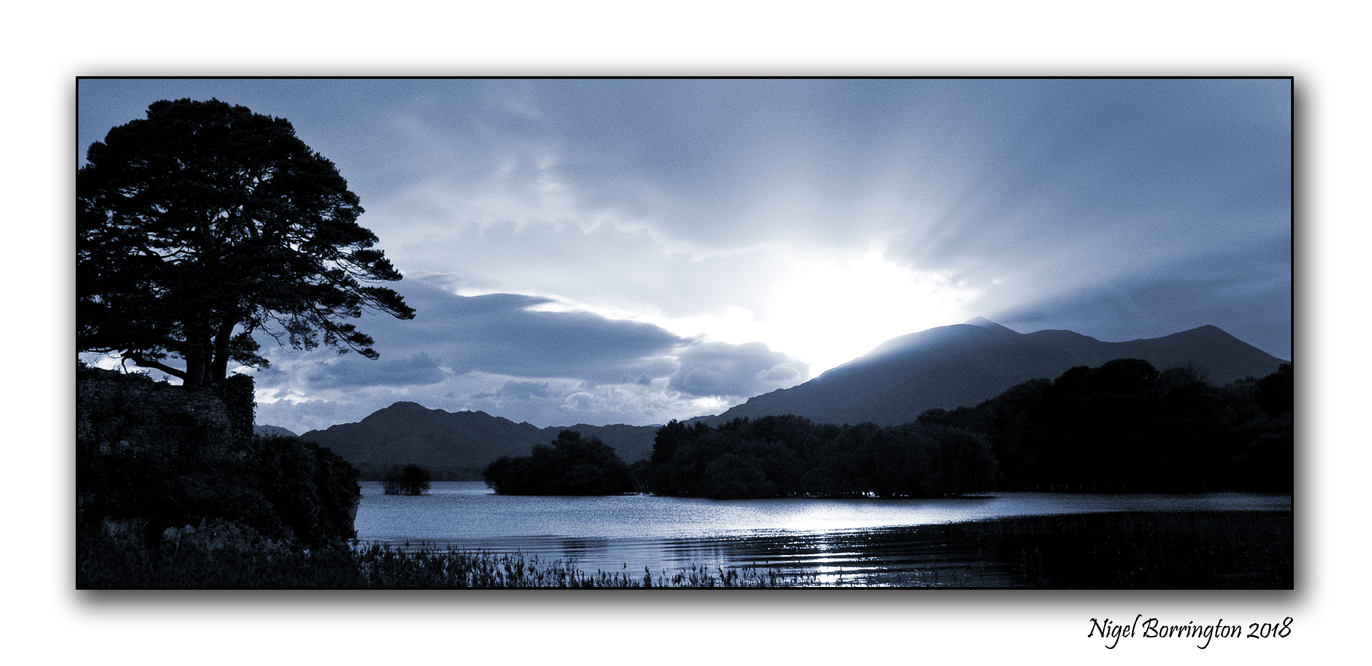
An August Midnight
Thomas Hardy
Irish Landscapes, Baylough (Bay Lough) The Vee,Knockmealdown Mountains, County Waterford, Ireland

Bay Lough is the famous Corrie Lake in the side of Knockaunabulloga, part of the Knockmealdown Mountain range.
Bay Lough and its surrounds is a strong favourite with hill walkers and recreational walkers of all sorts. The walk to the lake from the car park is not too difficult and suitable for family outings. On any fine day you will see hundreds of walkers making the trip to the lake and walking to its furthest point (it is only possible to walk about half way around, the photo to your left is taken at the most distant point to which you can walk).
The name Bay Lough (or Baylough) is only tentatively connected to the lake. It is thought the name derives from an Anglicisation of the Irish word ‘bealach’ (pronounced ‘ba-lock’) which means ‘pass’ or ‘way’. Those mapping the area, who would have been English, no doubt presumed the word ‘bealach’ referred to the lough in the mountain. You’ll find this type of mistaken Anglicisation of place names all around Ireland for the same reason.

Bay Lough is located close to the hightest point of the pass in the Knockmealdown Mountains from Waterford to Tipperary and was along the regular roadway used for this journey. It is thought this path dates back to St. Declan, who travelled from Ardmore to Cashel along the route. You can still walk along St. Declan’s Way also known as Rian Bó Phadraig. It is popular with hikers who want to experience the historical heritage as well as the beauty of the area. The road from the car park to the lake, which can be continued past the lake and on to Mount Anglesby, was in fact the main road from Cappoquin and Lismore to Clogheen before the current road, going by the Vee, was constructed in the early nineteenth century. This old road is known locally as ‘the Soldiers Path’ and is now a forestry path. It is part of a number of spectacular walks around Bay Lough, see the Walks page for more information on these.
This area is a wonderful (and totally free) resource for locals and visitors alike. Should you wish to visit the lake it is most easily accessible from a car park on the Waterford side of the lake – this is the Loc8 Code for the lake –YZS-26-53G – just be aware that you can only drive as far as this Parking Area.
The lake has a strong historical significance both in South Tipperary and West Waterford. In local folklore it is famed as the lake to which Petticoat Loose was banished for all time, ordered to empty it with a thimble.
It is also widely held that the lake is ‘bottomless’ and that it is not possible to swim across it, despite its rather modest proportions.
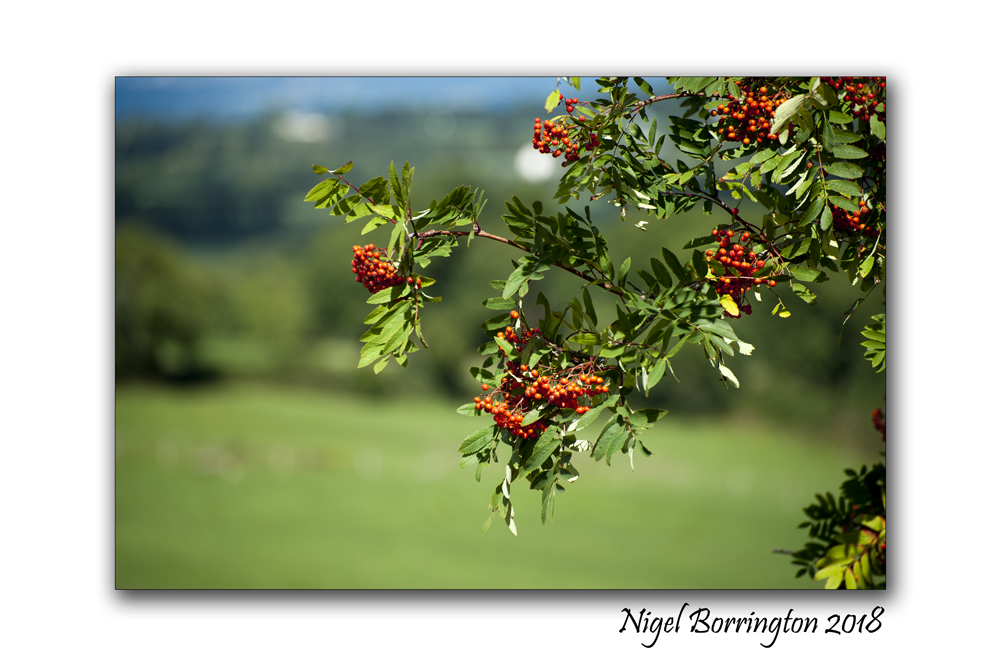
My Mountain Ash Tree, a poem ….

My Mountain Ash Tree
Season after season.
I’ve gazed upon you
through my window.
I’ve seen the snow hang low
upon your branches.
With white upon red berries.
I’ve watched the snow melt away
to reveal new buds,
opening,
ever so slowly,
to leaves so green.
In early Spring.
I’ve watched all the creatures
hop, climb, and fly among
your branches.
I’ve watched the birds taste
your blood-red berries.
I’ve seen songbirds…
Nuthatches,
finches, and chickadees.
Come to the feeders.
That hang from you.
I’ve seen the squirrels steal
seeds from the birds.
As their little paws unlatch
a little hook.
I’ve heard the birds sing among your
branches.

So sweetly.
I remember when the chickadees
built their nest in you,
and then watched their young fledge.
I remember the year the woodpecker
came knocking at your trunk’s door.
As he drilled his beak into you.
And made a hole.
After that.
You were never the same anymore…
I watched your life slowly end.
Another year.
Another season.
More dead branches to be severed.
Fewer buds.
Fewer leaves.
As your story slowly drew to a close.
Yesterday,
they chopped down what was left of you.
But I will always remember you.
And I thank the Lord for the joy
of beholding your beauty.
Of watching your story.
You have blessed so many creatures.
Including me.
Farewell,
Beautiful Mountain Ash tree.
Irish Landscape Photography : Morning in the fields

Irish Landscape Photography,
Morning in the Fields,
Nigel Borrington 2018
Irish Landscape Photography : The rain maker

The Rainmaker
Written by
Roger Turner
The weather plots his journey
Town to town in dead of night
Fields dead and on a gurney
He comes in to make it right
A rainmaker, people call him
A psuedo-scammer others say
He sells himself as godlike
He comes quick and does not stay
He tells people what they wish for
He beats the storm in to their town
He seeds their minds with his tall stories
He promises more green than brown
Like an evangelistic angel
He beats the weather to the ground
He’s a salesman like no other
He picks their pockets with no sound

A rainmaker, just a scammer
He works the towns where nothing lives
He is an alchemist non-gratta
He always takes and never gives
He sells snake oil and concoctions
He is a shaman in disguise
He promises rain where none has fallen
There is more moisture in the farmers eyes
He takes credit for a rainfall
He promises gold where once was straw
He’s a rumplestiltskin with their feelings
He sells them only what they wish they saw
He may believe in what he tells them
He always puts his name out on a stake
But, can he truly make the skies open
That is a choice the desperate make
Kilcooley Abbey, County Tipperary. The silence of the Abbey in the field.

Kilcooley abbey is located near the town of Thurles in county Tipperary, it was founded by the Cistercians in 1182AD when the lands were granted to them by Donal Mor O’Brien. It became one of the three great Abbeys in the local area, the other two being Jerpoint and Holy Cross.
It would have been in use at least until the dissolution of Abbeys in the 1500’s and it now sits hidden away on the lands of the Kilcooley estate.
I always love visiting this abbey as its one of the most peaceful of places you could wish of, surrounded by woodlands and farms, very little sound from the modern world penetrates the field its located in. As such you can sense the times when this abbey was first lived in and used on a daily basis as a refuge and place of worship for the Cistercian monks who would have lived here.
If there are such things a Ghosts then how could they not be found still living within and around the grounds of this great Abbey.


What is life, if We have no time to stand and stare ? A Poem by: William Henry Davies

What is life
By : William Henry Davies
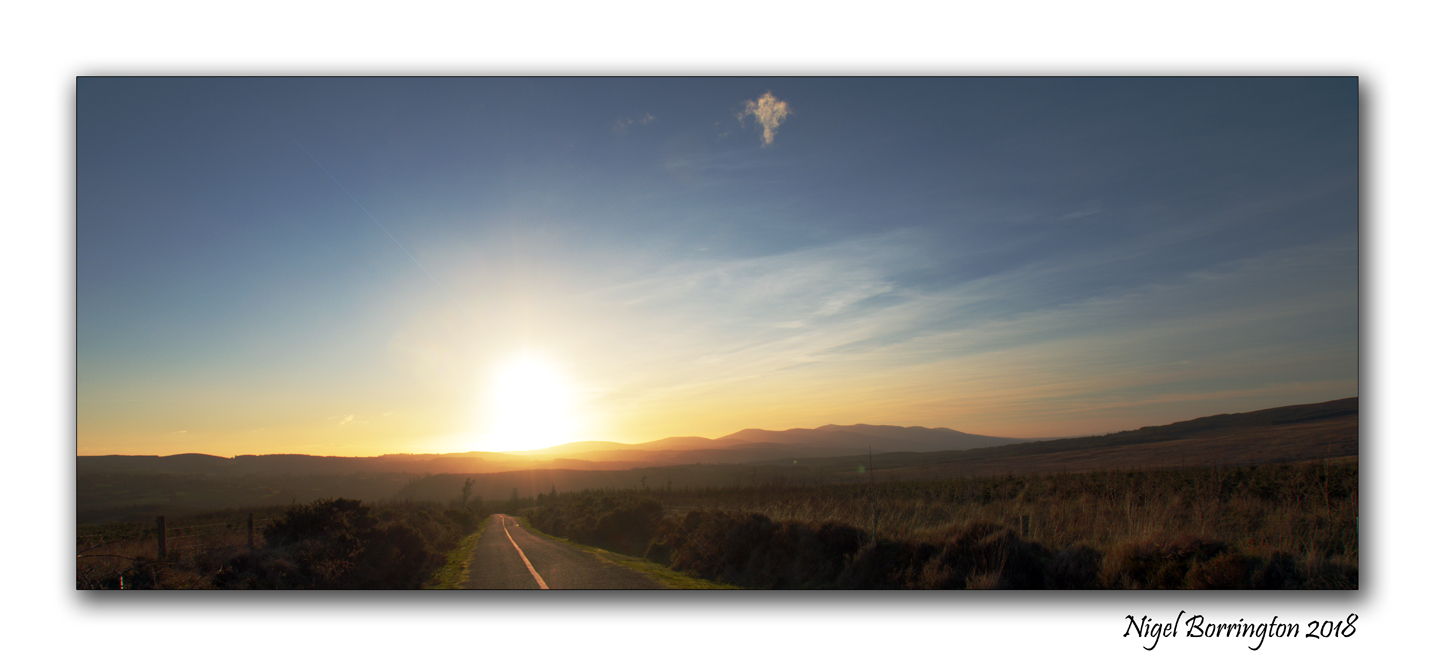
What is this life if, full of care,
We have no time to stand and stare.
No time to stand beneath the boughs
And stare as long as sheep or cows.
No time to see, when woods we pass,
Where squirrels hide their nuts in grass.
.
No time to see, in broad daylight,
Streams full of stars, like skies at night.
No time to turn at Beauty’s glance,
And watch her feet, how they can dance.
No time to wait till her mouth can
Enrich that smile her eyes began.
A poor life this if, full of care,
We have no time to stand and stare.

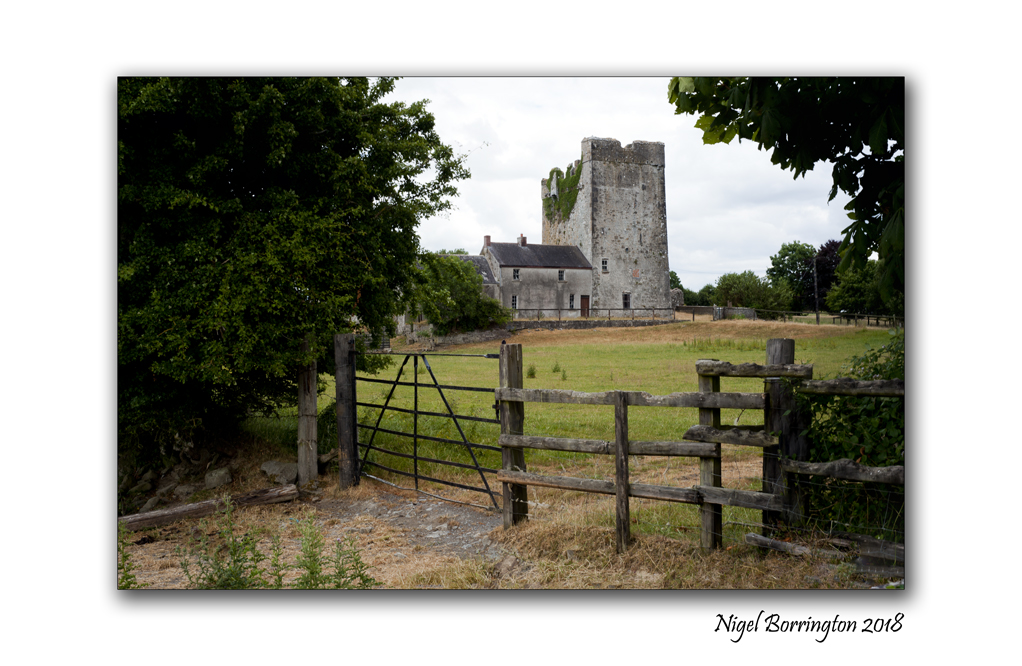
Ghost House in the Irish landscape, Poem by Robert Frost, 1874 – 1963
Ghost House
Robert Frost, 1874 – 1963
I dwell in a lonely house I know
That vanished many a summer ago,
And left no trace but the cellar walls,
And a cellar in which the daylight falls
And the purple-stemmed wild raspberries grow.
O’er ruined fences the grape-vines shield
The woods come back to the mowing field;
The orchard tree has grown one copse
Of new wood and old where the woodpecker chops;
The footpath down to the well is healed.
I dwell with a strangely aching heart
In that vanished abode there far apart
On that disused and forgotten road
That has no dust-bath now for the toad.
Night comes; the black bats tumble and dart;

The whippoorwill is coming to shout
And hush and cluck and flutter about:
I hear him begin far enough away
Full many a time to say his say
Before he arrives to say it out.
It is under the small, dim, summer star.
I know not who these mute folk are
Who share the unlit place with me—
Those stones out under the low-limbed tree
Doubtless bear names that the mosses mar.
They are tireless folk, but slow and sad—
Though two, close-keeping, are lass and lad,—
With none among them that ever sings,
And yet, in view of how many things,
As sweet companions as might be had
Post cards from the edge : Ross castle, Killarney Nation park, county Kerry , Ireland

Ross Castle
Killarney National park county Kerry
Ireland
Nikon D700
Sigma 28mm EX DG f1.8 lens
Nigel Borrington
Natural world : Working with Trees and Tree Spirits

Tree Spirits Nigel Borrington
Working with Trees and Tree Spirits
Article from Sacred serpent …..
Trees are probably the most evolved of all plants. There is a special relationship between trees and humans, as trees produce the oxygen that we need to breathe, while we exhale carbon dioxide which trees thrive on. You could say that our exhalation is their inhalation and vice versa! Trees are multidimensional beings. They have their roots deep down in the earth which signifies their connection to the Underworld. Their trunks and lower branches are in our world, the world of men, which in shamanic terms is called the Middle World. The branches of tall trees reach high in the sky which makes them a bridge into the Upper World. In fact, in many cultures shamans journey into the Upper World by visualizing themselves climbing a tall tree to the very top and then flying up into the sky! Trees also connect us to other realms, such as the Faerie Realm, which is in a parallel dimension to ours.
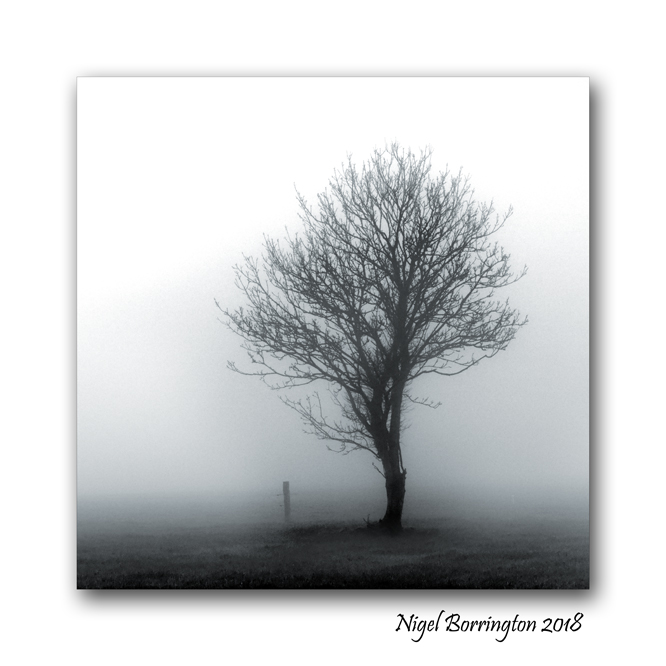
The cutting down of forests and trees in our reality gradually destroys the Faerie Realm as well. Tree spirits are only loosely connected with their physical bodies, the actual visible tree. Because they are multidimensional and enjoy great freedom on the astral, and because of their connection to other realms, they can help us in journeying and inter-dimensional travel. Besides, meditating with a tree can be very relaxing and helps us to get grounded. Trees are great energy converters as well. They can transmute our negative energies and help us heal. This is shown by the very fact that they thrive on our metabolic waste products (carbon dioxide). For this reason we can draw energy from a tree without depleting it simply by giving it some of our unwanted energy in exchange.
Time and Eternity By : Emily Dickenson, (1896)

Tintern Abbey
County Wexford
Irish Landscapes
Nigel Borrington 2018
One need not be a chamber to be haunted,
One need not be a house;
The brain has corridors surpassing
Material place.
Far safer, of a midnight meeting
External ghost,
Than an interior confronting
That whiter host.
Far safer through an Abbey gallop,
The stones achase,
Than, moonless, one’s own self encounter
In lonesome place.
Ourself, behind ourself concealed,
Should startle most;
Assassin, hid in our apartment,
Be horror’s least.
The prudent carries a revolver,
He bolts the door,
O’erlooking a superior spectre
More near.
Monday Poetry : The Ocean Shipwreck Lord Byron (1788–1824)

The Ocean Shipwreck
Lord Byron (1788–1824)
(From Don Juan)
’T WAS twilight, for the sunless day went down
Over the waste of waters; like a veil,
Which, if withdrawn, would but disclose the frown
Of one who hates us, so the night was shown,
And grimly darkled o’er their faces pale,
And hopeless eyes, which o’er the deep alone
Gazed dim and desolate; twelve days had Fear
Been their familiar, and now Death was here.
* * * * *
At half past eight o’clock, booms, hencoops, spars,
And all things, for a chance, had been cast loose,
That still could keep afloat the struggling tars,
For yet they strove, although of no great use:
There was no light in heaven but a few stars;
The boats put off o’ercrowded with their crews;
She gave a heel, and then a lurch to port,
And, going down head-foremost,—sunk, in short.

Then rose from sea to sky the wild farewell!
Then shrieked the timid, and stood still the brave;
Then some leaped overboard with dreadful yell,
As eager to anticipate their grave;
And the sea yawned around her like a hell,
And down she sucked with her the whirling wave,
Like one who grapples with his enemy,
And strives to strangle him before he die.
And first one universal shriek there rushed,
Louder than the loud ocean, like a crash
Of echoing thunder; and then all was hushed,
Save the wild wind and the remorseless dash
Of billows; but at intervals there gushed,
Accompanied with a convulsive splash,
A solitary shriek—the bubbling cry
Of some strong swimmer in his agony.
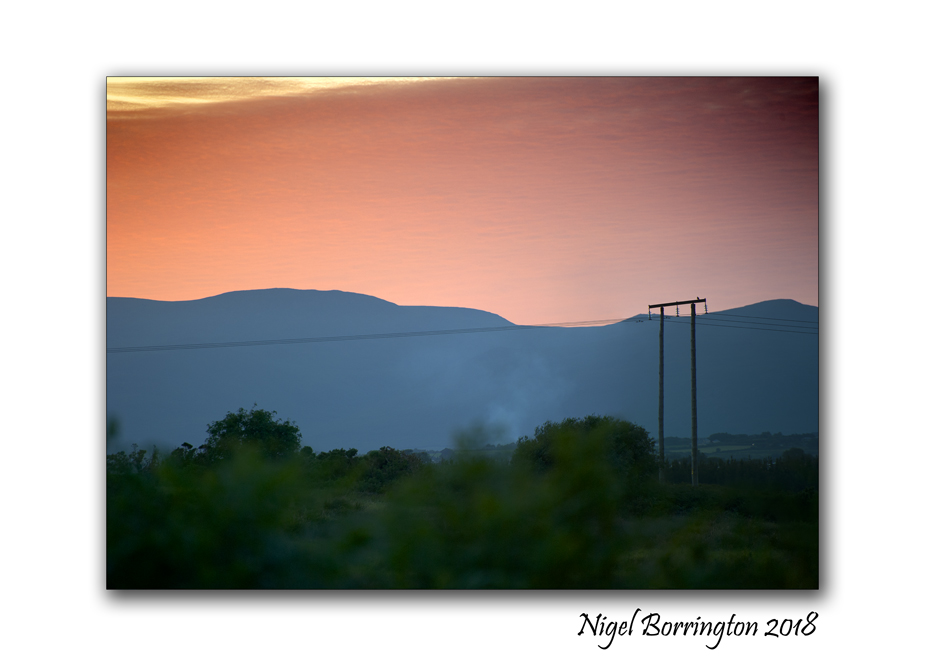
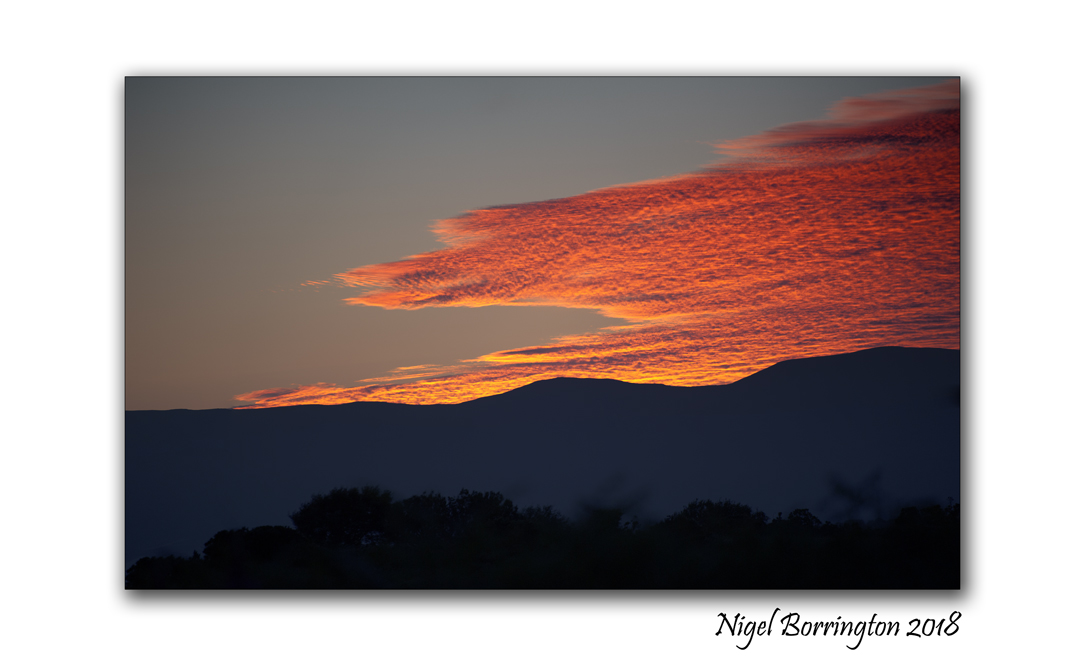
 Nigel Borrington
Irish Landscape Images – A Land so green
Irish Landscape images
A Land so green
Nigel Borrington 2018
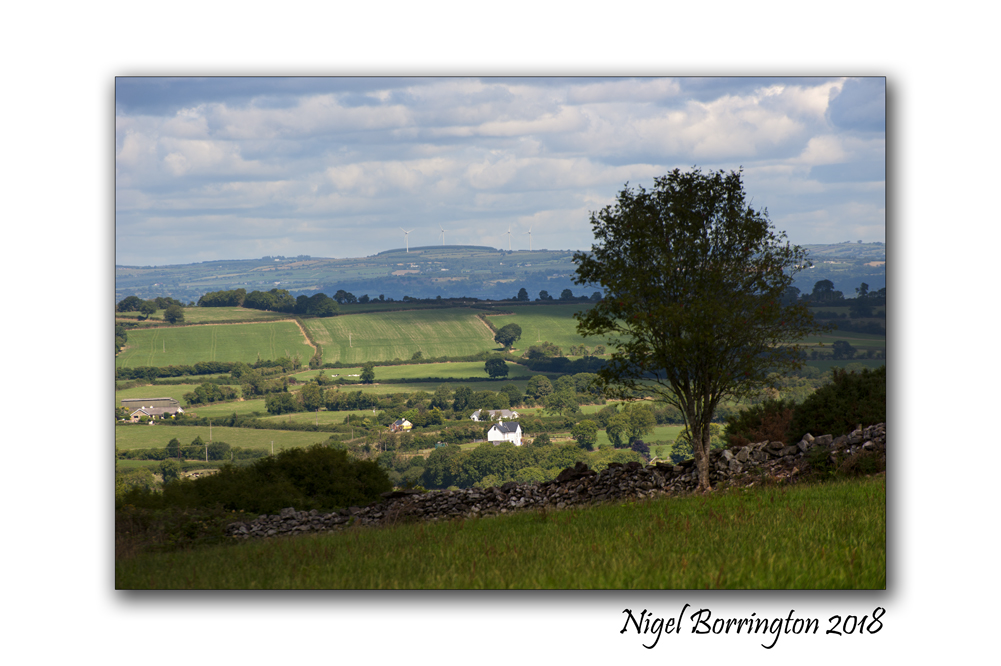
Following one of the driest summers in Irish history and with some recent rain fall in the last three weeks, the Irish landscape is slowly returning to it wonderful colour of green ….
Share this:
August 9, 2018 | Categories: Comment, Gallery, Images of Summer, Irish Landscapes, Nature and Wildlife | Tags: Images of Summer, irish landscape, Nigel Borrington, rain, summer 2018, weather photography | Leave a comment