Friday Poetry : November Sunset – Poem by Steven Federle

Black Friday Sunset
Callan
Kilkenny
Ireland
About five o clock,
the warm November day
just stops.
Bright afternoon
slams into evening
not even pausing
for twilight.
Blue sky
dims quickly
to violet,
but over ragged black woods
the orange sun
lingers

Then suddenly bursts
into astonishing gold.
Blithely ascending
the bright crescent
claims the cool
velvet night.
Steven Federle
My November Guest, Robert Frost
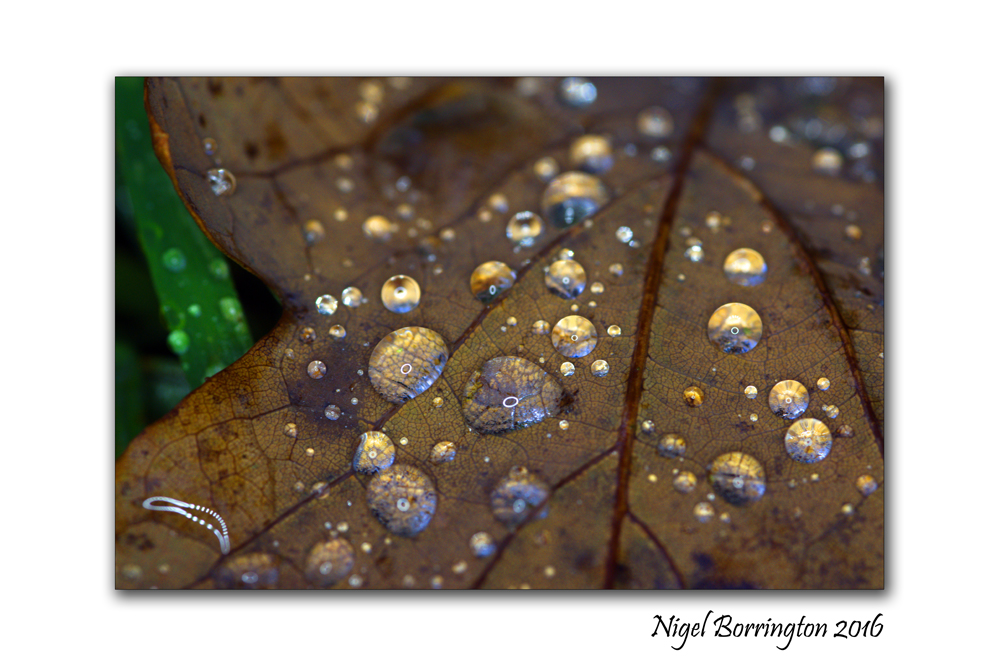
November rain
Nigel Borrington
My sorrow, when she’s here with me,
Thinks these dark days of autumn rain
Are beautiful as days can be;
She loves the bare, the withered tree;
She walks the sodden pasture lane.
Her pleasure will not let me stay.
She talks and I am fain to list:
She’s glad the birds are gone away,
She’s glad her simple worsted gray
Is silver now with clinging mist.
The desolate, deserted trees,
The faded earth, the heavy sky,
The beauties she so truly sees,
She thinks I have no eye for these,
And vexes me for reason why.
Not yesterday I learned to know
The love of bare November days
Before the coming of the snow,
But it were vain to tell her so,
And they are better for her praise.
Kilkenny Landscape Photography, A Poem : Beyond the gate ……..

Kilkenny Landscape photography
Beyond the gate
Nigel Borrington
An open field gate, they always invite you in.
Just like anything in life when something is open it makes you want to explore !!!!
Beyond The Gate
Beyond the gate
Lies a whole new world
If you want to know
Go beyond the gate
We shall not know
Until we go beyond the gate
First week of November 2016, My favorite week of posting ever …… Thank you !!!!
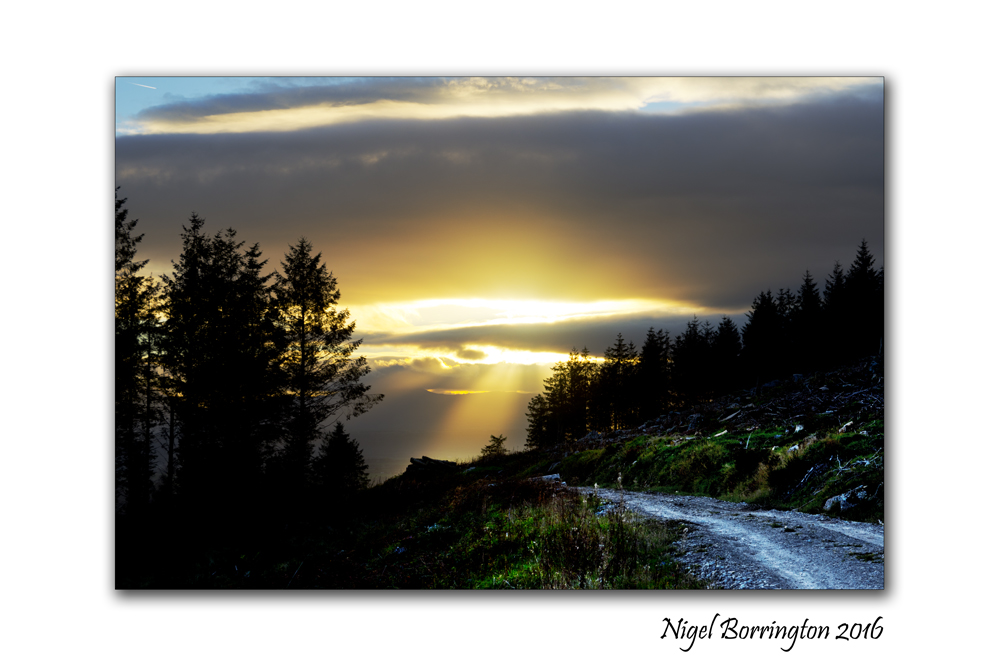
Irish Landscape
GarryDuff woods
Piltown
County Kilkenny
Nigel Borrington
Friday and the first week of November is fast approaching the weekend 🙂
I have been posting on my blog since 2011 and yet I feel that this has been my favorite week of posting here so far !!!
I was able to share a wider variety of the media that I love using to capture the Irish landscape than ever before, I love photography but it was great to also be able to share some video and one of a set of drawings from a visit to Achill island, county Mayo.
A big thank you to anyone who visited and for the many likes and comments I received, I always look forward to hearing from and connecting with you , so thank you !!! 🙂
Have a great weekend what ever you find yourselves doing !!!
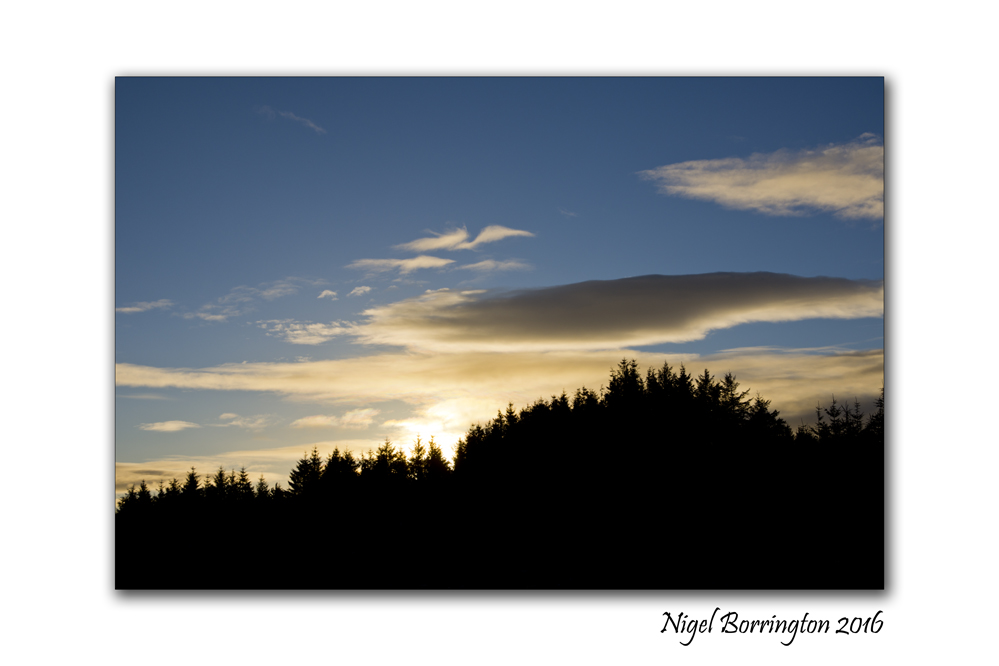
GarryDuff hill, county kilkenny, Sunset Gallery
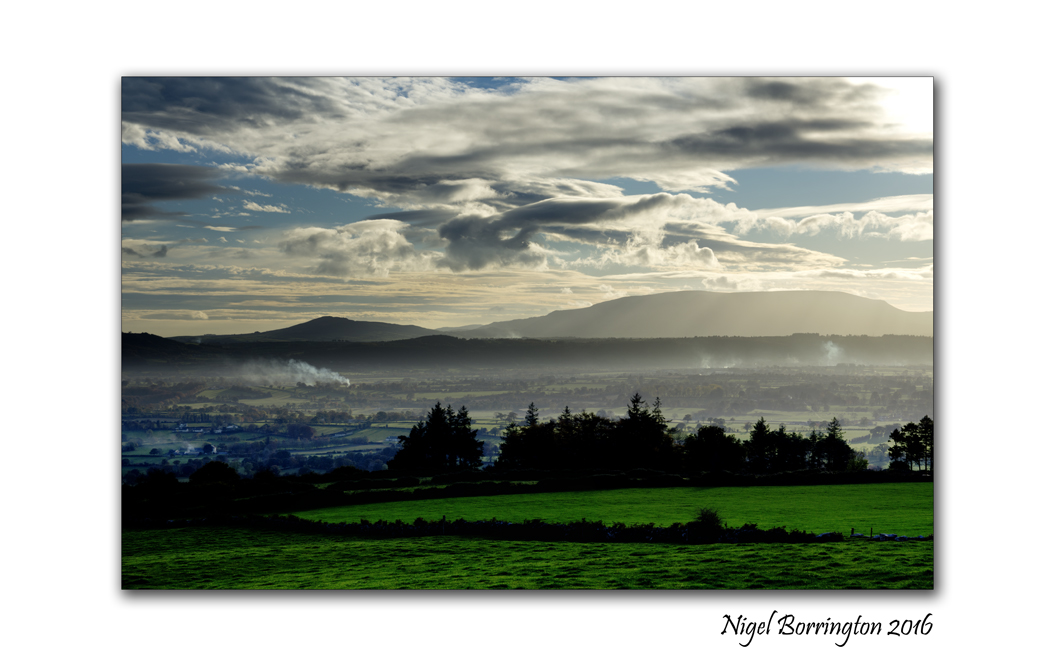

Irish Landscape Photography : County Kilkenny

Irish Landscape Photography
County Kilkenny
Nigel Borrington
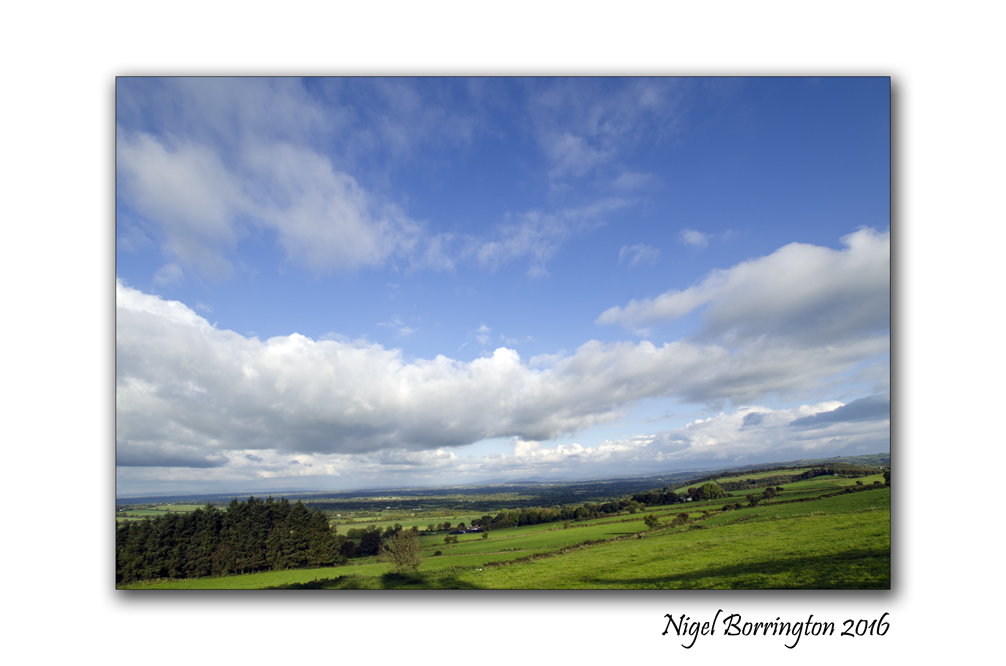
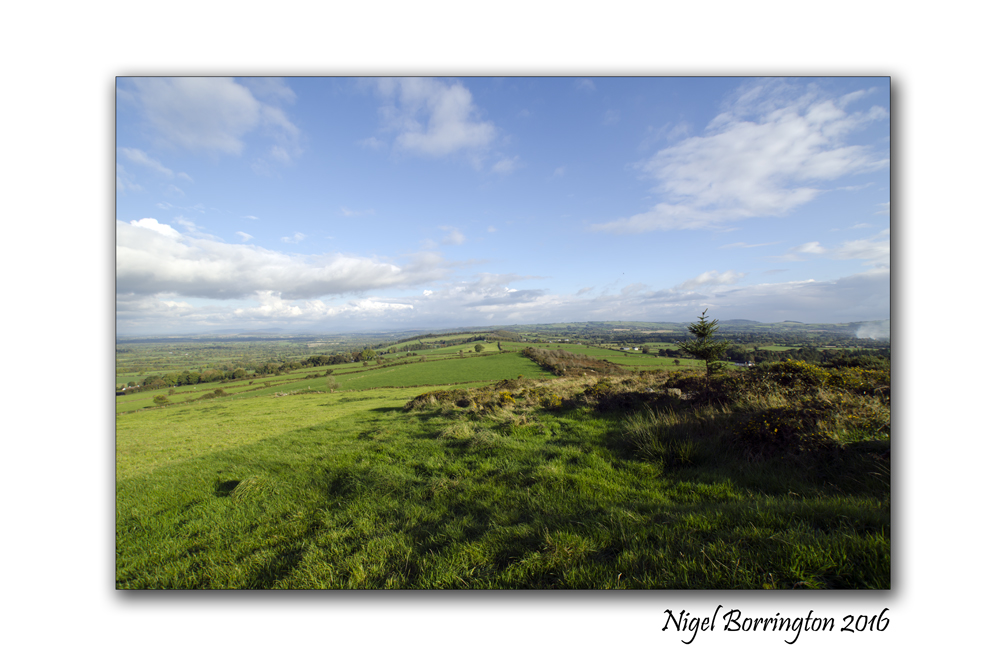
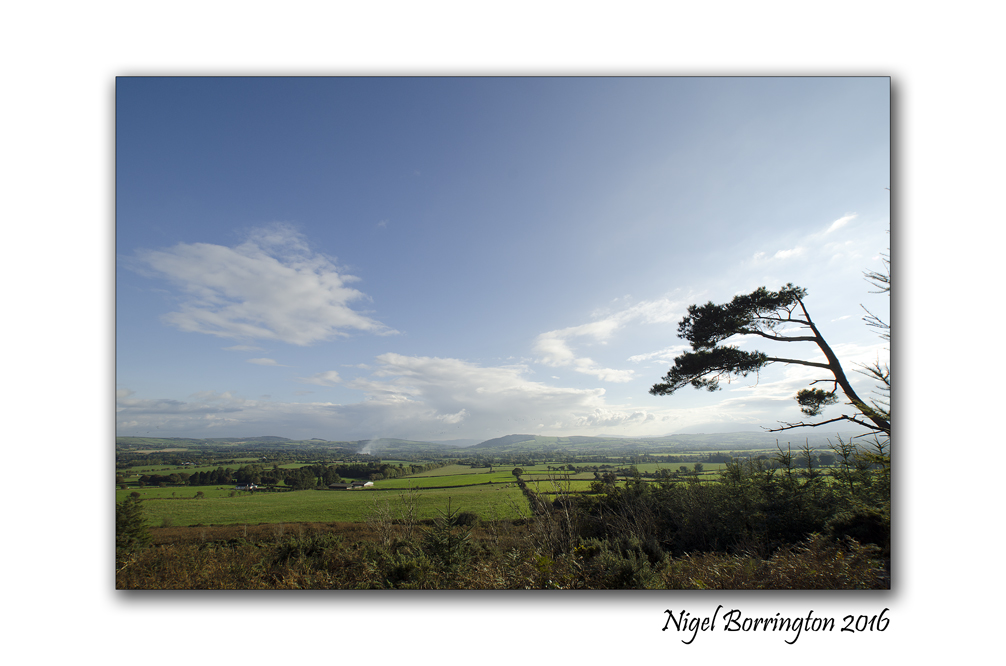
For me these wide angle views of county kilkenny, taken yesterday on an evening walk show the nature of the county very well.
Kilkenny is predominately a farming county with some lower level mountains but mainly low level farmlands. Most of my recent images have been from county Kerry with is wonderful beachs and impressive mountain views, however inland kilkenny still has much to offer in-way of open green landscapes.
So after all and on a wonderful autumn evening such as yesterdays, County kilkenny is not a bad place to return home, after some traveling to the more spectacular part of the Irish landscape.
Gallery


The Rime of the Ancient Mariner. A poem by: Samuel Taylor Coleridge, Images of Banna Strand, Kerry, Ireland

Banna Strand,
Tralee Bay,
Irish Landscape Photography,
Nigel Borrington
From “The Rime of the Ancient Mariner”
Samuel Taylor Coleridge
The “Rime“ is one of the greatest pieces of Romantic literature. And the section of this epic poem in which the dead sailors get up and start sailing the boat again without seeing anything is as terrifying as anything in the horror genre.
The thick black cloud was cleft, and still
The Moon was at its side:
Like waters shot from some high crag,
The lightning fell with never a jag,
A river steep and wide.
The loud wind never reached the ship,
Yet now the ship moved on!
Beneath the lightning and the Moon
The dead men gave a groan.
They groaned, they stirred, they all uprose,
Nor spake, nor moved their eyes;
It had been strange, even in a dream,
To have seen those dead men rise.
The helmsman steered, the ship moved on;
Yet never a breeze up-blew;
The mariners all ‘gan work the ropes,
Where they were wont to do;
They raised their limbs like lifeless tools—
We were a ghastly crew.
The body of my brother’s son
Stood by me, knee to knee:
The body and I pulled at one rope,
But he said nought to me.
‘I fear thee, ancient Mariner!’
Be calm, thou Wedding-Guest!
‘Twas not those souls that fled in pain,
Which to their corpses came again,
But a troop of spirits ablest:
For when it dawned—they dropped their arms,
And clustered round the mast;
Sweet sounds rose slowly through their mouths,
And from their bodies passed.
Around, around, flew each sweet sound,
Then darted to the Sun;
Slowly the sounds came back again,
Now mixed, now one by one.
Sometimes a-dropping from the sky
I heard the sky-lark sing;
Sometimes all little birds that are,
How they seemed to fill the sea and air
With their sweet jargoning!
And now ’twas like all instruments,
Now like a lonely flute;
And now it is an angel’s song,
That makes the heavens be mute.
It ceased; yet still the sails made on
A pleasant noise till noon,
A noise like of a hidden brook
In the leafy month of June,
That to the sleeping woods all night
Singeth a quiet tune.
Till noon we quietly sailed on,
Yet never a breeze did breathe:
Slowly and smoothly went the ship,
Moved onward from beneath.
Under the keel nine fathom deep,
From the land of mist and snow,
The spirit slid: and it was he
That made the ship to go.
The sails at noon left off their tune,
And the ship stood still also.
The Sun, right up above the mast,
Had fixed her to the ocean:
But in a minute she ‘gan stir,
With a short uneasy motion—
Backwards and forwards half her length
With a short uneasy motion.
Then like a pawing horse let go,
She made a sudden bound:
It flung the blood into my head,
And I fell down in a swound.
Irish Landscape Photography, River Dawn, County Waterford

Irish Landscape Photography
River Dawn
County Waterford
Nigel Borrington
Irish Landscapes

The Landscape of Ireland is some of the most idyllic on the European continent, counties Kerry and Mayo have some of the most stunning mountains and the west coast along with west cork have some of the most beautiful beaches and coast line. The North is wild in the winter months and county Wexford warm and sunny in the summer. While this is all very true and these places are great to visit, very few People live in these remote locations.
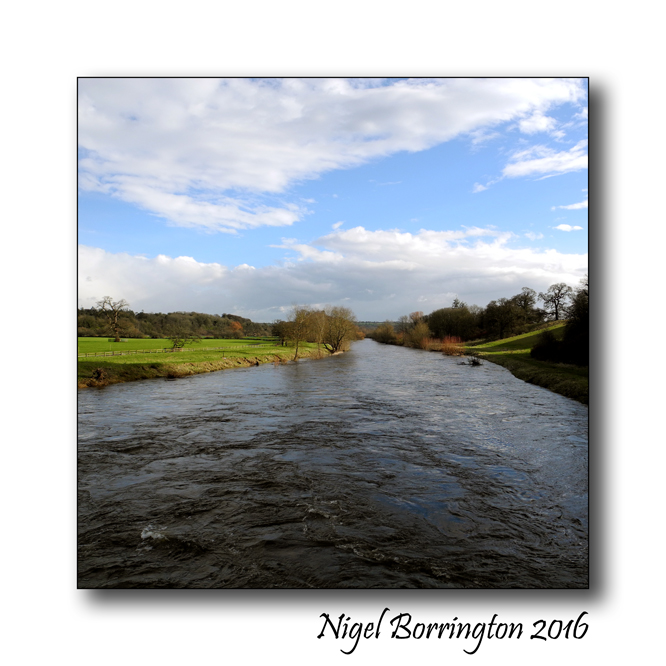
For most of us who live here it is landscapes like the one above (The River Dawn) that we get to see and visit most often, the local countryside with its low lying farm-land and rivers that flow slowly through it. Rivers like the River Dawn in the picture above that flows through county Waterford before joining the River Suir close to waterford city.
Even though I love to visit the most iconic places here, it is the everyday landscapes I love to photograph the most …..

river Dawn Joins the river Suir
county Waterford
Nigel Borrington
A Poem By – Thomas A Robinson Thomas , Borders and Fences

Borders and Fences
Nigel Borrington
Borders and Fences
Your borders
are mending fences
And false fiction
is the elevated
runoff of the headwaters
of your dreams
And the people black framed
in the cages
of the eternal moment’s collapse
Will gather generating
candle light wisdom
of those
who deny existence
Monday Poetry , A Buttercup Tale – Poem by sylvia spencer
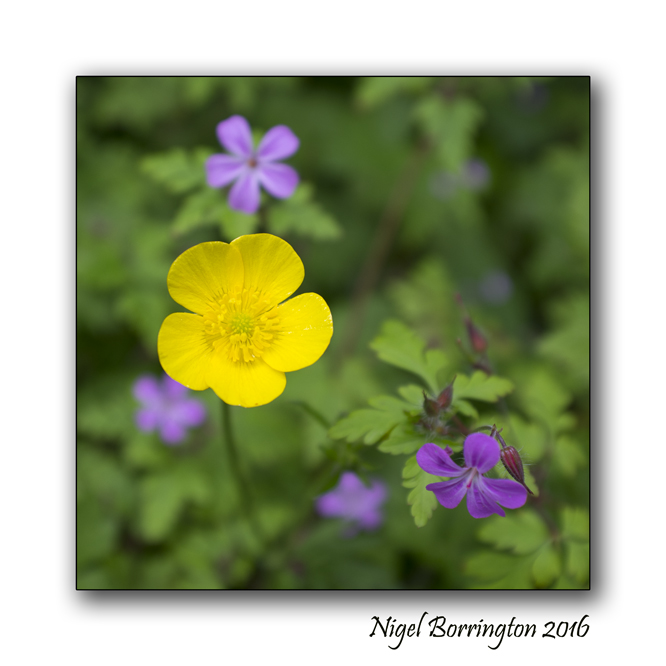
The Buttercup Poem Nigel Borrington Nature Photography
A Buttercup Tale –
Poem by sylvia spencer
I know of a buttercup with a story to tell
and I can honestly say there has never been a
story told so well. A pretty buttercup so wild and free
once made friends with an old oak tree but sadly the
tree was cut down and little Miss butercup wore a frown;
she still bows her head in the summer sun because she
feels sad about what was done.
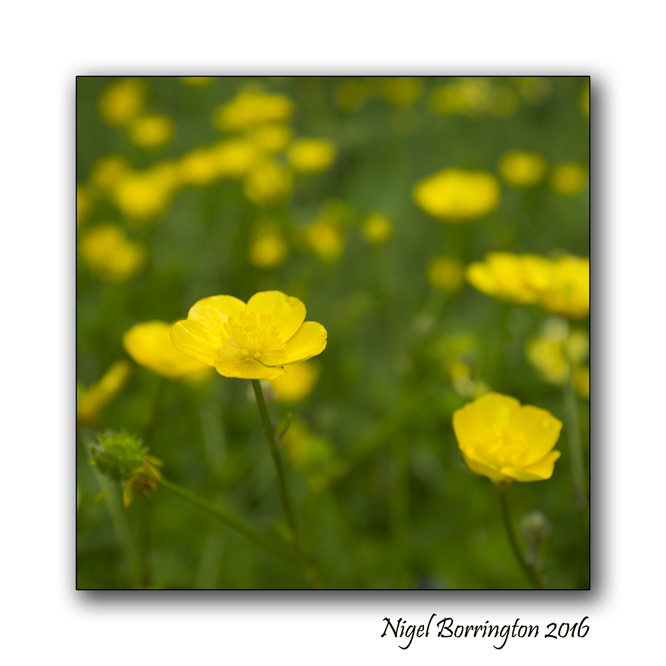
She then lived next door to a tall fox glove and she thought
in her heart that he had fallen in love, because he sheltered her
from rain all summer long and in the wind and rain he is
so brave and strong.

Sadly the foxglove did not feel the same and the buttercups
heart was jilted again.
On into the meadows she moved once more hoping that life
would be better than before. It was here she met the Dandelion
a real good catch and now they live together on the farmers
cabbage patch.
sylvia spencer

The Tree a poem by Tom Splitt
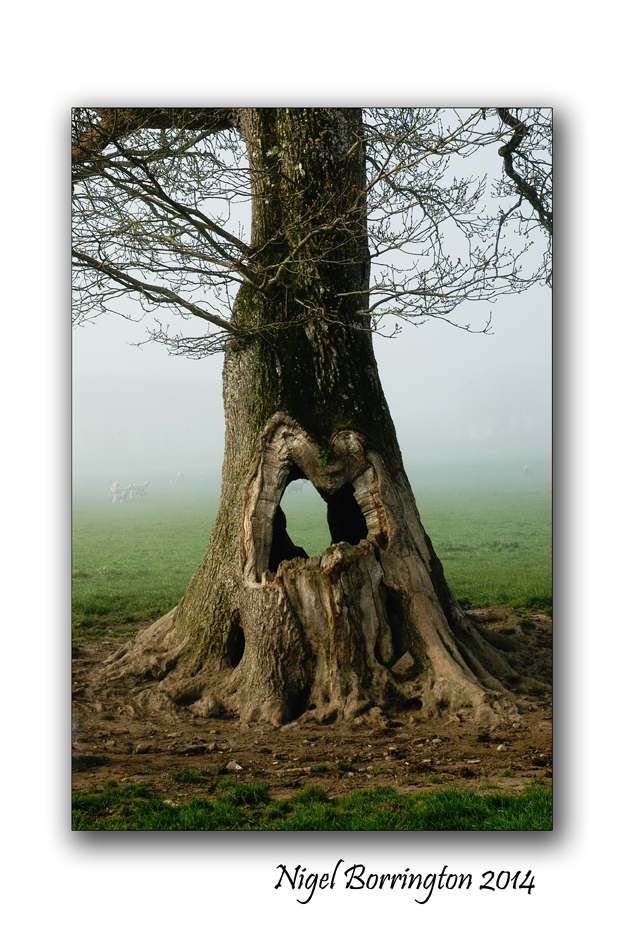
The Tree
Nigel Borrington
The Tree
by Tom Splitt
The calm quiet strength of a tree
Anchored deep in the earth
Reaching high in the sky
The calm quiet strength of a tree
The calm quiet strength of a tree
Full of life from its roots
To the tiniest branch
The calm quiet strength of a tree
And oh, how it comforts me
How it teaches me
Without a sound
Then I realize at once
That this tree and I are one
In eternity
The calm quiet strength of a tree
From the weight of its trunk
To its delicate leaves
The calm quiet strength of a tree
The calm quiet strength of a tree
Showing anyone near
All the secrets of time
The calm quiet strength of a tree
Irish landscape photography : A weekend in the Landscape.

Its the weekend so why not get outside and see the places you always wanted to !
Have a great weekend whatever your doing 🙂


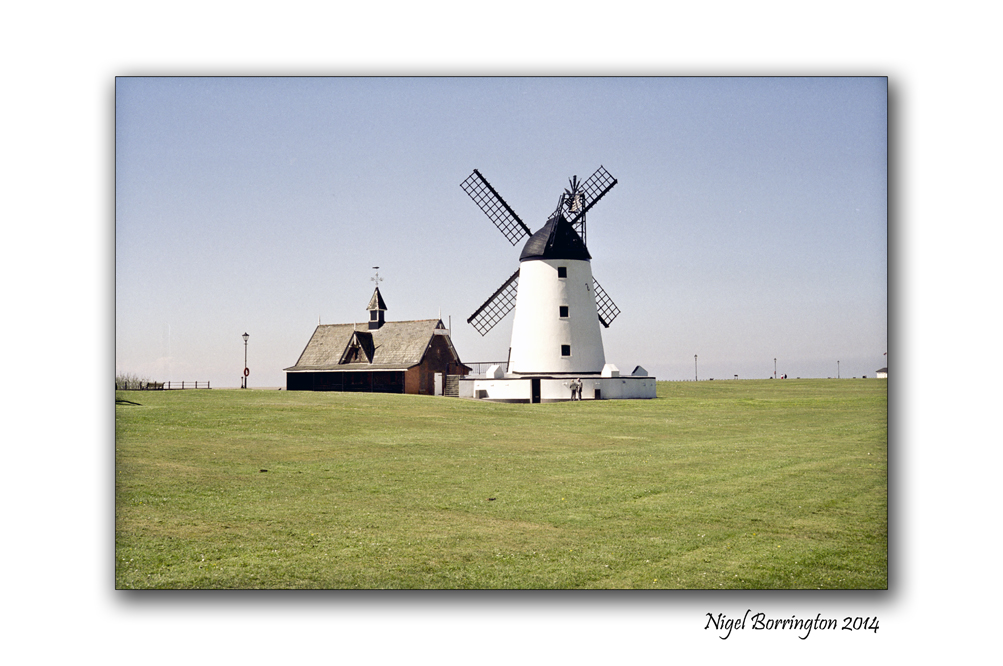

Returning to Skellig Michael, an island escape
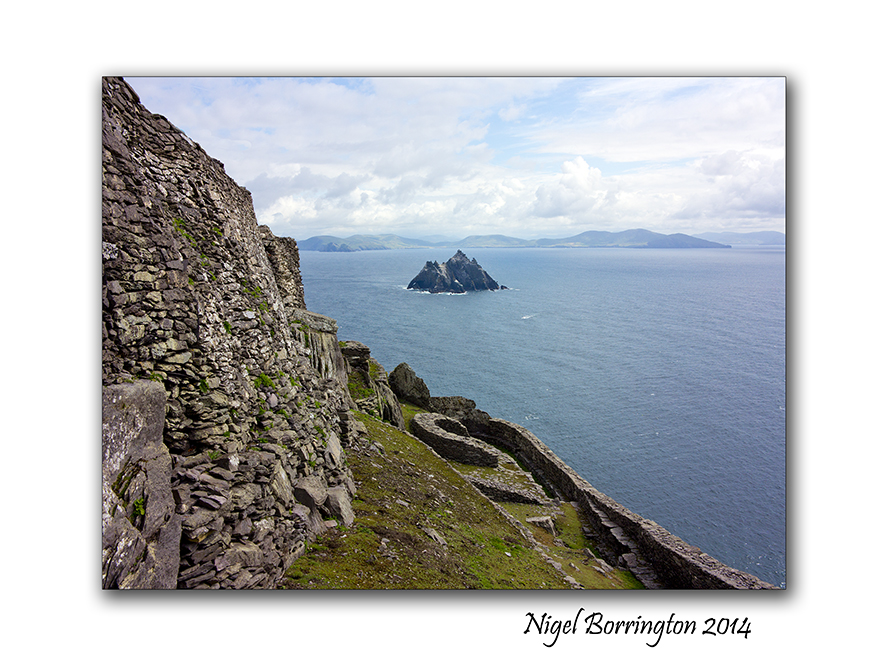
Skellig Michael, county Kerry, Ireland
Landscape Photography : Nigel Borrington
I first visited Skellig Michael in 2012 and the following images and post were taken and created during and following this visit, since then the island has been used during the making of the latest Star Wars movie “The Force Awakens”.
While no one worried too much about this remote and sacred place being used for this purpose, I think a lot of people are very much hoping that it does not mark the start of the island being openly used in such away, here it Ireland places like this are treasured and their peace is defended strongly. The Island is also the home to some very unique and protected wildlife.
Skellig Michael : an island escape
Skellig Michael is an Island some 12 to 16 kilometres by boat from the ring of kerry, county Kerry, Ireland. It is most famous for the fact that during the 6th to the 8th Century’s a religious settlement was established here.
The Island is a world heritage site and falls under the guardianship of UNESCO, you can find the official historic details from the link on the world heritage web page here : Skellig Michael
In my last two posts I shared the boat trip to the Island and then the long but wonderful walk up to the settlement at the very top of the Island some 218 meters from sea level. Today I just want to share images of the inside area , the location that the people who lived here spent their life’s and also the location in which they are buried and there final resting place.
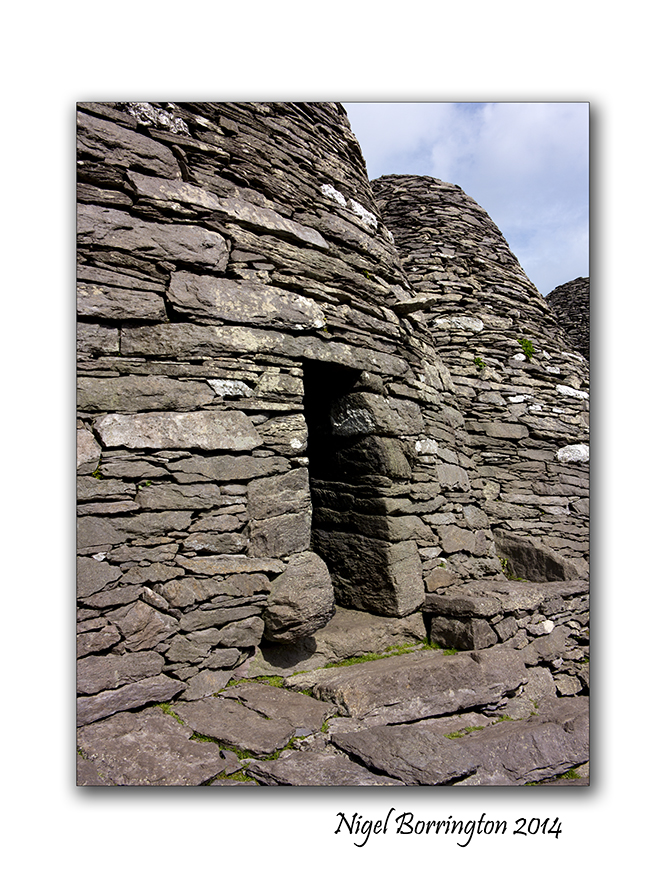
The images in the Gallery below are placed in the order that you view the buildings when you walk through the site, the only access is through a small passage in the outer walls.
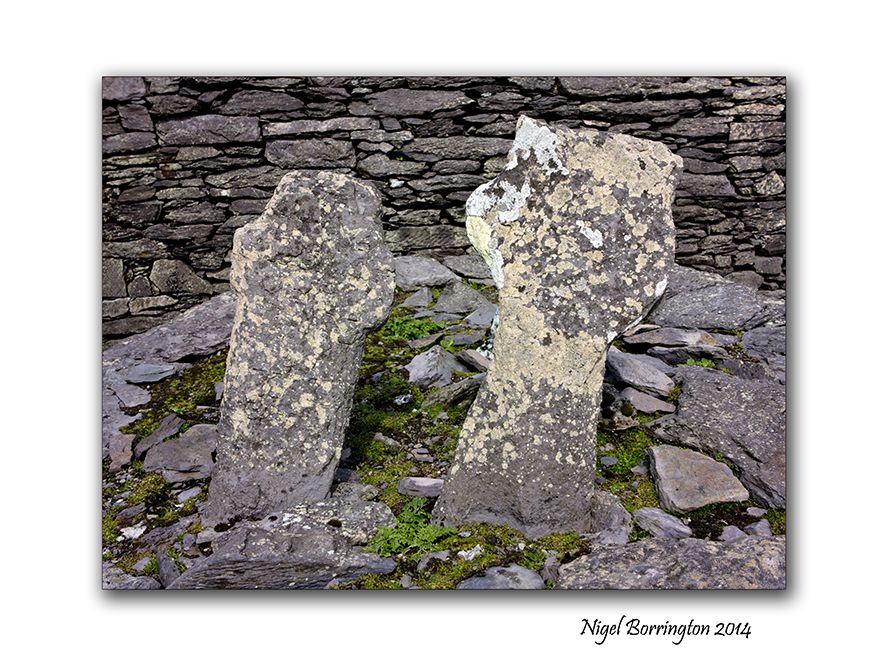
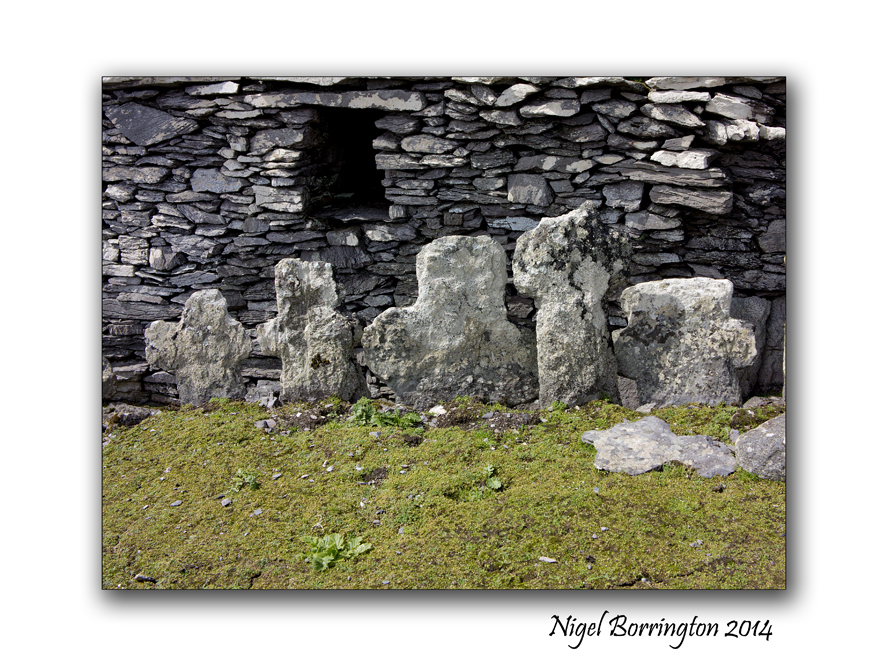
The very first thing that greets you are two small head stones, in a very small patch of grass. These are the graves of two young boys, it was a tradition that monks in this period would take very young boys as members to their orders. These boys where from families on the main land and once they moved here they would most likely never return to see there families. Our guide informed us that it is a possibility that both boys were killed by Viking invaders as when the remains where examined wounds were found that indicate that they were killed by the use of weapons, both boys did not pass the ages of ten or twelve. It is also thought that other graves in the pictures here, in the centre of the living area contain some adult victims of such attacks.
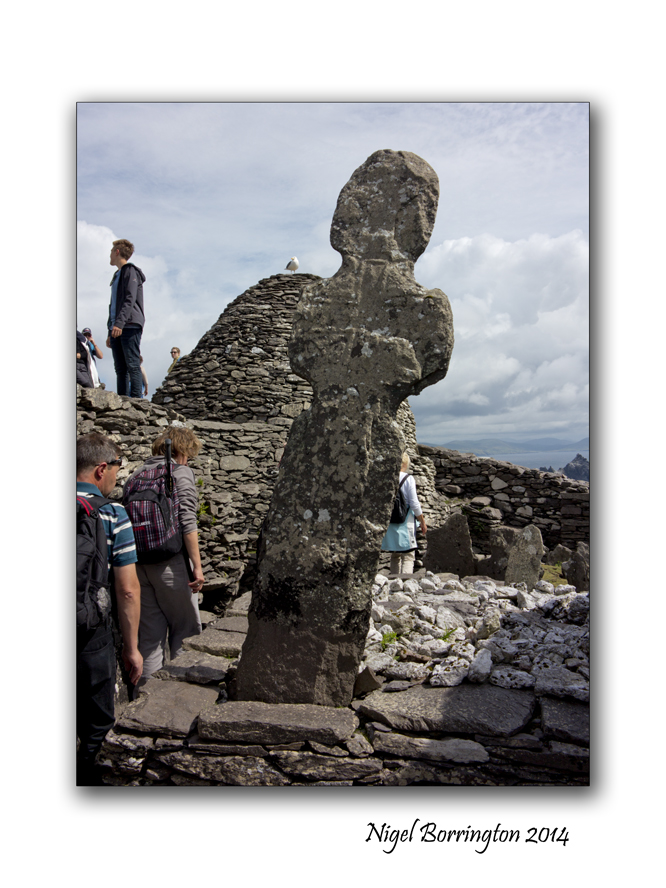
A monastery may have been founded as early as the sixth century, reputedly by Saint Fionán but in 1044 rededicated to Saint Michael, the image here shows a large sculpture that is located towards the middle of the complex. It was described by our guide as being a cross but it could also be very much in the form of a human figure, with the arms to the side and a head looking over the site.
The word Skellig is defined as meaning “splinter of a stone”, and thus this rocky island was dedicated to saint Michael, there are also other Islands around Europe and maybe further away that are dedicated to this saint ( Mont Saint-Michel France, St Michael’s Mount Cornwall)

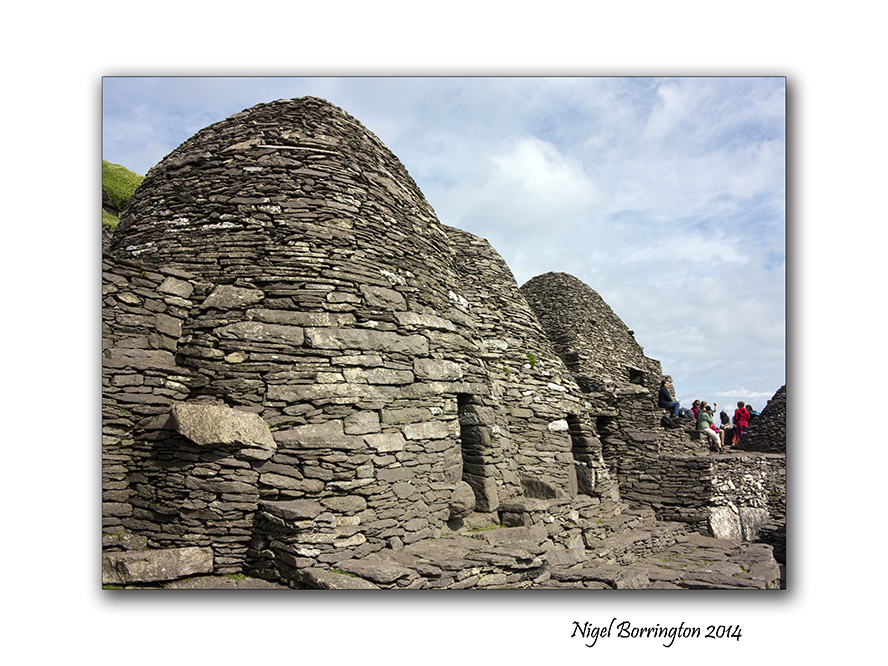
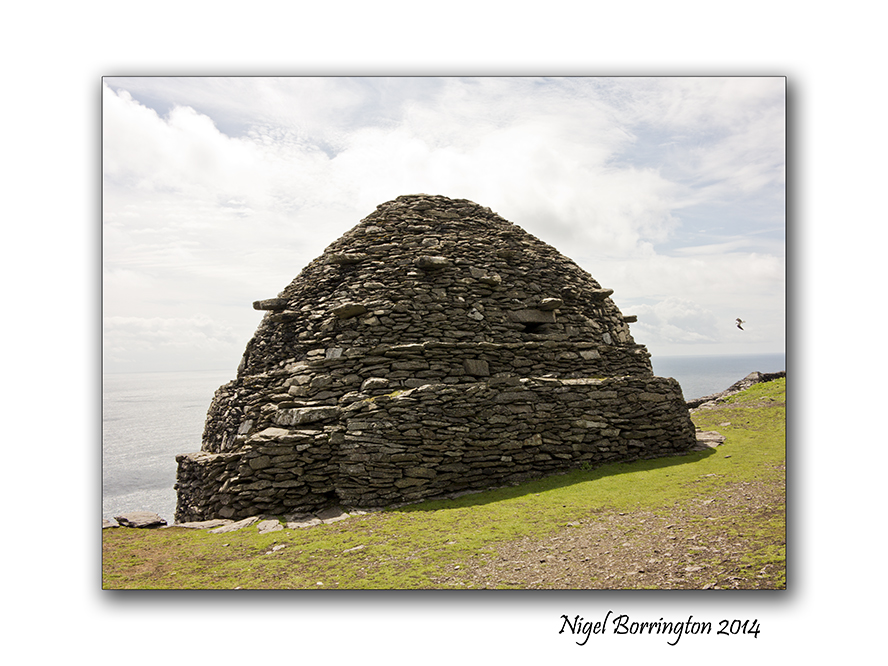
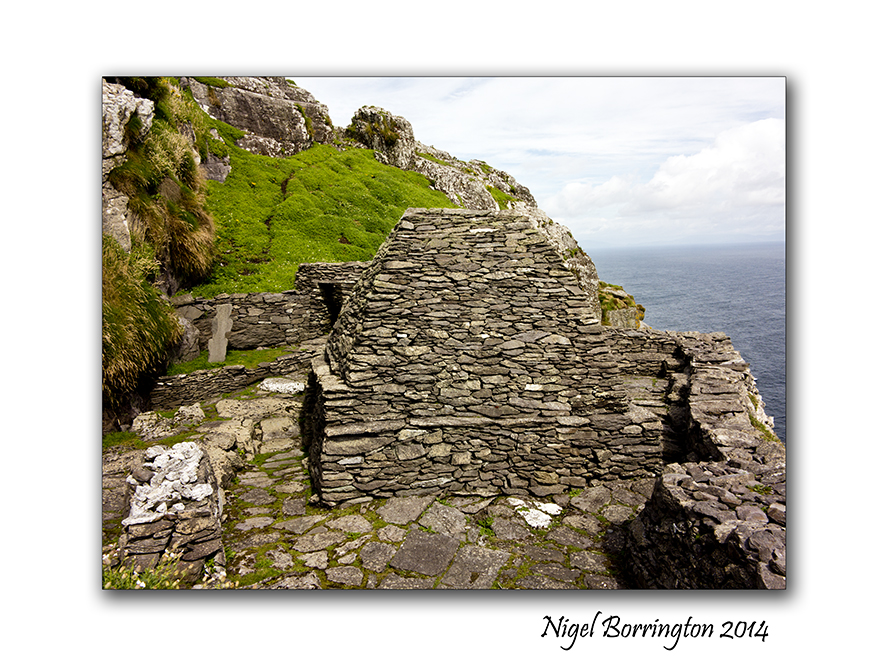
One of the most famous features of Skellig Michael are the so called Beehive structures, there were may be six or seven of these of which six are still standing, they were the living spaces for each of the monks, this fact would indicate that a maximum of seven people lived here in the beehives at any one time, there is a structure at the very end of the settlement that is constructed completely differently, It is thought that the head of the order would have lived in this building but few fact to prove this exist.
In any case the indications are that eight people lived on Skellig Michael at anyone time during its long history.
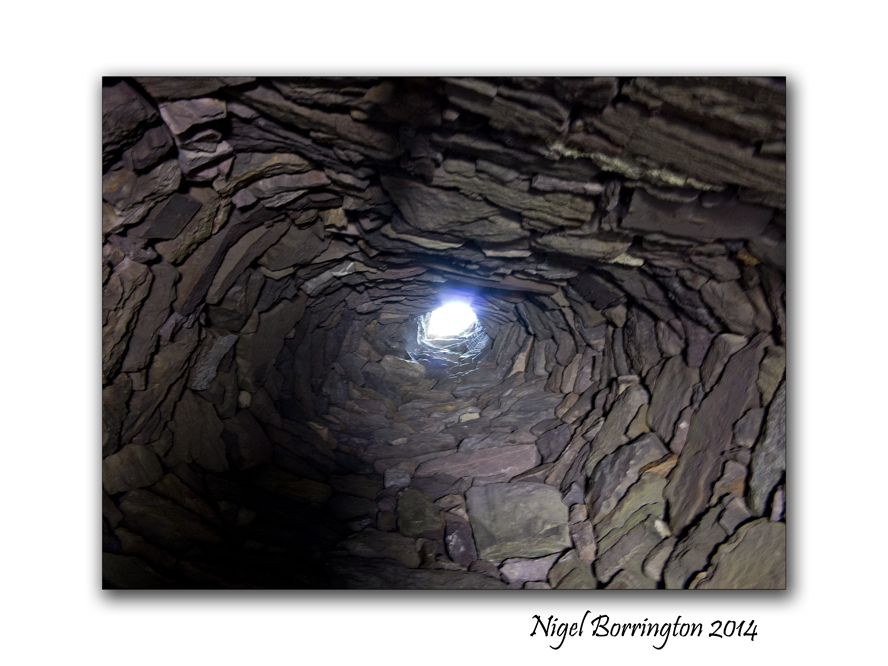
Living with in these stone constructions looks very harsh , during the time they were occupied however they would have looked very different, in some of the pictures you can see supporting stones that stick out of the main buildings by some amount, it is thought that these stones supported a covering of thatch consisting of straw and clay, this would have been deep and was used to keep the inner stone structure warn and dry. Not all but some of the Beehives have a hole in the roof that was used to let out smoke from fires inside.
At some point I want to post about the life’s of these people, who they where and why they chose to live here, I need to read a little more however , so for the moment that’s it. Three post over the last three day, that I hope share a visit to this wonderful and mystical island.
If you get a chance I would really encourage you to visit. Its an experience of a lifetime and helps you to open your mind to European history.
I cannot help however feeling that this place holds something else other than the official history, The question as to why these monks felt the need to occupy Skellig Michael, so far of the Irish coast line, is very big !
This place feels like an escape, a refuge but from what and why ?
With such massive risk’s taken by a small group of people to construct three stone stair-ways to the top of the Island and then build the walled settlement, the question of why looms very large. These were times when the word of Christianity was first being spread across Ireland so why the need to hide away here ?
I need to do much more reading, before I understand these bigger questions 🙂 and even then maybe some of the answers have been lost !
Gallery





Reflections in the mud , Kilkenny landscape images

Reflections in the mud
Landscape images from county Kilkenny
Nigel Borrington
I often find that when I am out walking, it is the most unexpected things That capture my attention and I just have to capture with my camera. I am never sure if anyone else would even find the same things the slightest bit interesting ?
This Morning there was a thick fog sitting on all our local fields, it had rained none stop for the three days before hand and the early morning sun was just about able to break through the mist. I was walking past the open gate of a field and noticed the sun reflecting into the muddy puddles created by the farmer tractor, I just had to capture its amazing light !!
ne
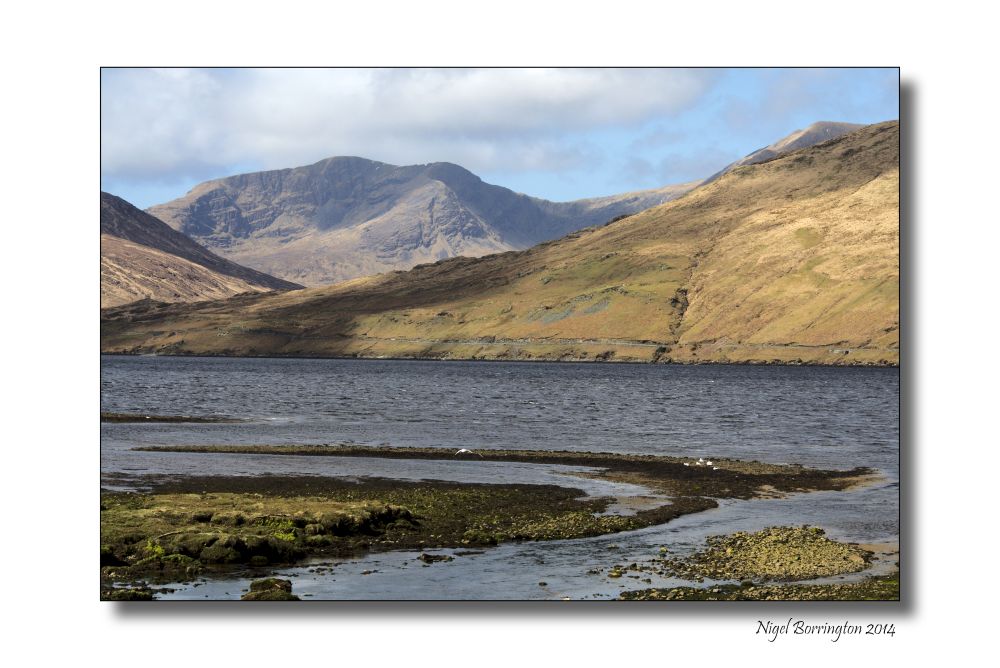
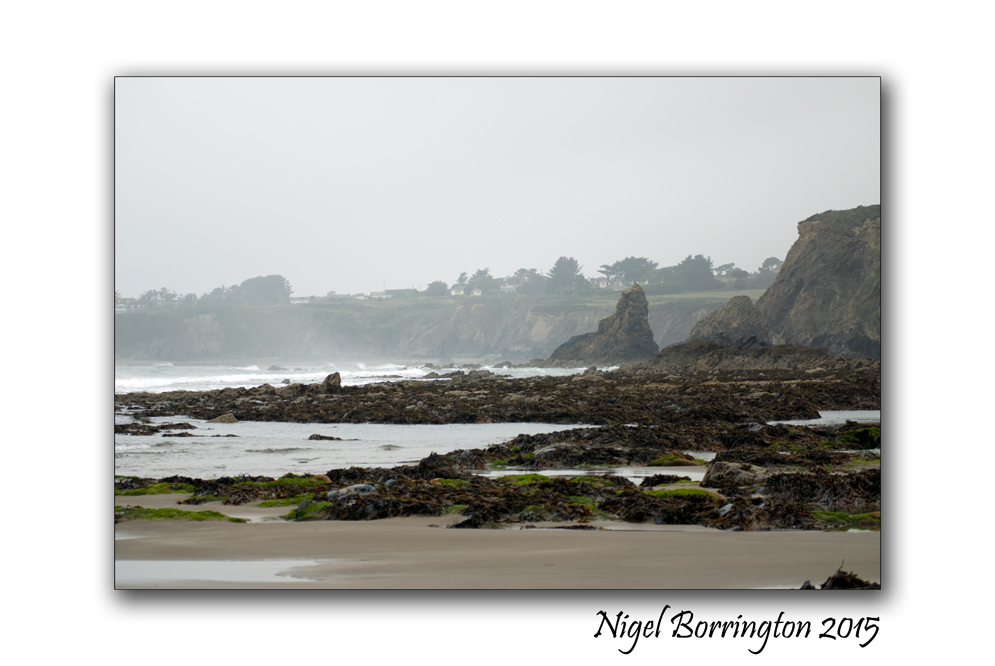
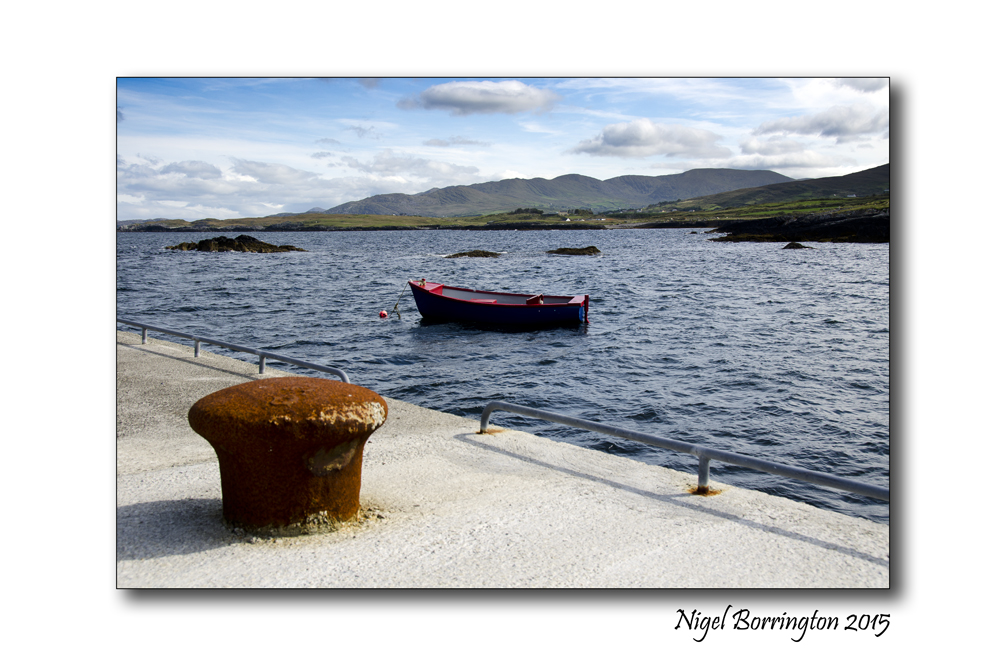
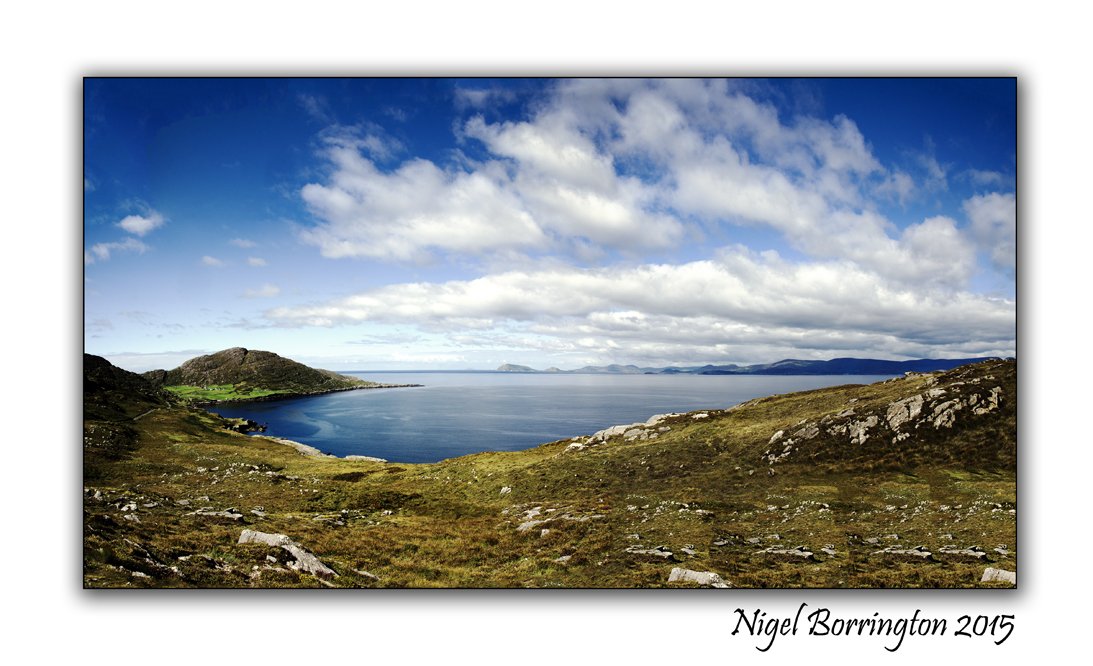
St Patrick’s day a Landscape Gallery 2016

The Mountain of Slievenamon
County Tipperary
Ireland
Nigel Borrington
Happy St Patrick’s day everyone !!!!!
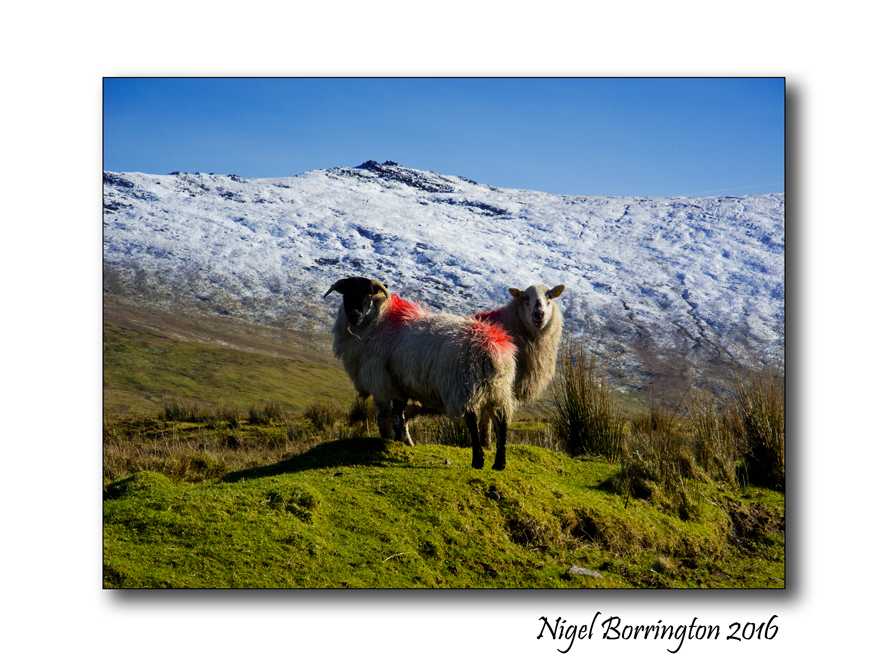
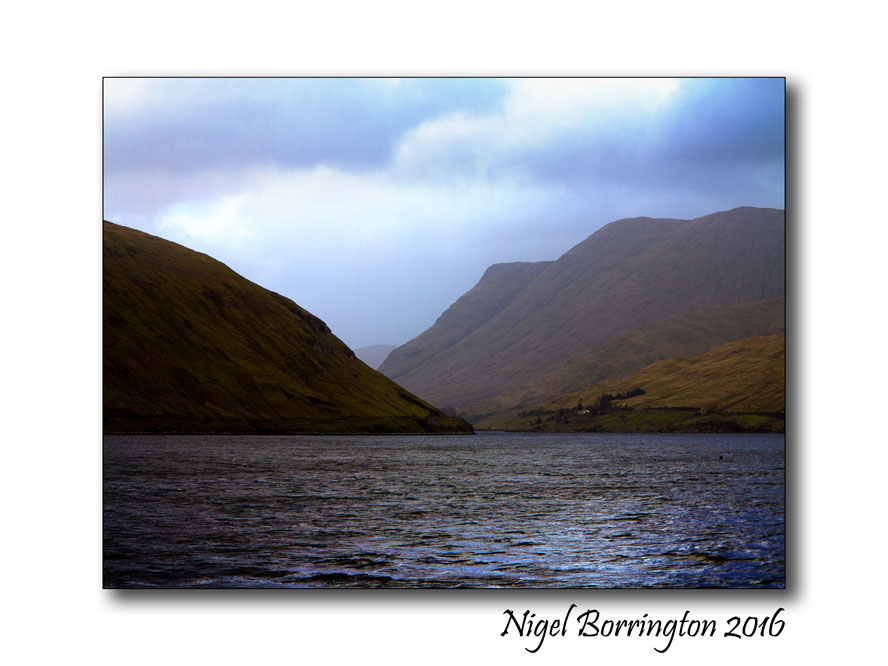
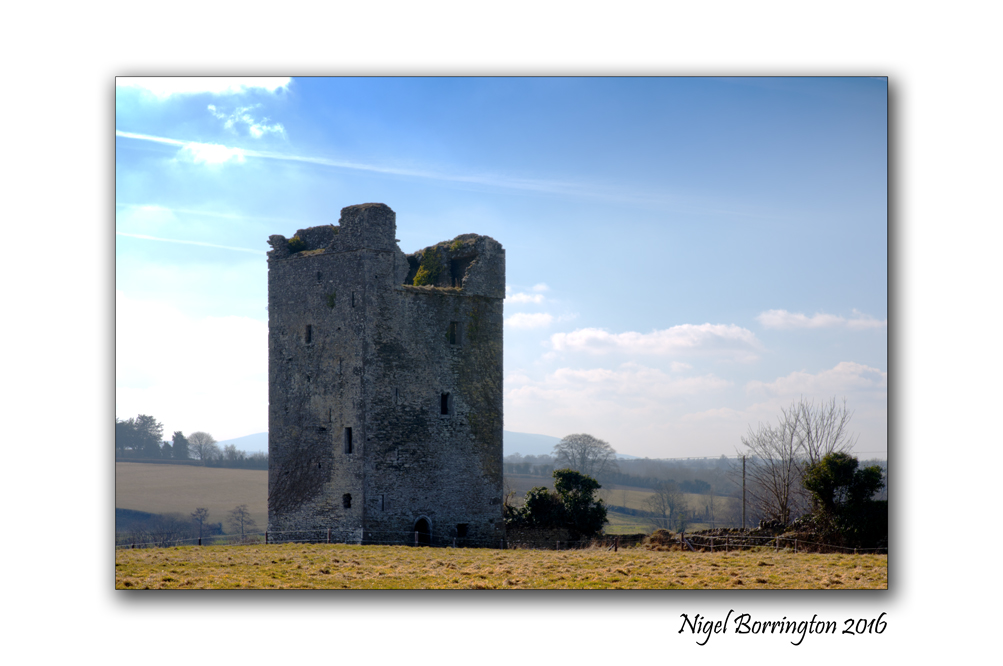
For the last few St Patrick’s day Holidays, I have posted some of my Landscape images from around Ireland , today I want to do the same as I feel that for me today is about celebrating the great landscape’s Ireland has to offer and getting outside to enjoy the real Ireland that surrounds the people who have made it their home.
Ireland: a St, Patrick’s Landscape Gallery










A Monday look at Joseph McWilliams

Joseph McWilliams PPRUA
I am taking time this week to do a study of some landscape artists/photographers who’s work I very much like very much.
I feel the need to take a look at the work of the artists I know of again, who use the landscape of Ireland both North and South along with the British Isles, in there drawings and painting and Photographs.
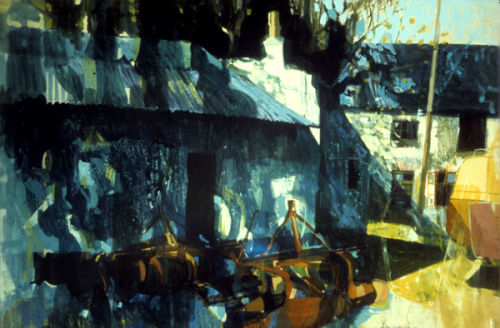
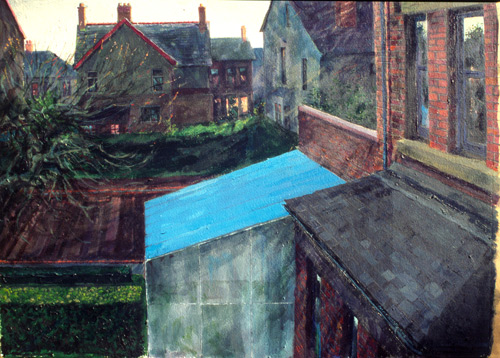
I first came across the art work of Joseph McWilliams when I visited an exhibition called “Landscapes north and south”, the the exhibition was held at the Glebe House Gallery, County Donegal.

A little about : Joseph McWilliams PPRUA
Joe McWilliams was born in Belfast in 1938. He studied at the Belfast College of Art and at the Open University. Later he lectured in Art Education at the Ulster Polytechnic in Belfast and was Senior Lecturer and Senior Course Tutor at the University of Ulster. Since 1986 he and his wife, artist Catherine McWilliams have managed the Cave Hill Gallery, Belfast. He has had numerous solo exhibitions and has been represented in major Irish group shows both in Ireland and abroad; Recently his work was seen in an exhibition entitled ‘Dreams and Traditions: 300 Years of British and Irish Painting’ from the Ulster Museum Collection which toured the USA in conjunction with the Smithsonian Institute, Washington. His work is held in numerous collections including: NI Arts Council, Queen’s University, Coras Iompair Éireann, the Department of the Environment (NI), AIB, the National Self Portrait Collection of Ireland.
McWilliams is a regular lecturer and broadcaster on the Visual Arts in Northern Ireland and has been invited to speak on the Arts a number of times in Boston, USA. He has also published articles and reviews on the subject. He has written many scripts for BBC radio and has presented, his own script “The Way that I Went” which was seen on BBC world services as well as locally and in Britain. His own work has been exhibited at a variety of venues in Ireland, Britain, Europe and the USA. He is perhaps best known for his paintings of ‘The Troubles’ evidenced in exhibitions such as ‘Art for Society’ Whitechapel Gallery, London; ‘Documenta 6’ Kassel, W.Germany; ‘A Troubled Journey 1966-1989’ and ‘Colour on the March’ both at the Cavehill Gallery, Belfast.

I liked Joseph’s paintings very much for both their painting style and the fact that he used the world around himself for subjects to paint, even using his own back Garden for much of his work.
Here I link to his web page http://www.josephmcwilliams.com/, for some of the painting I like the most.




Irish landscapes – Kilkenny , an evening in early springtime
Irish Landscapes
Early Springtime
Kilkenny
Nigel Borrington
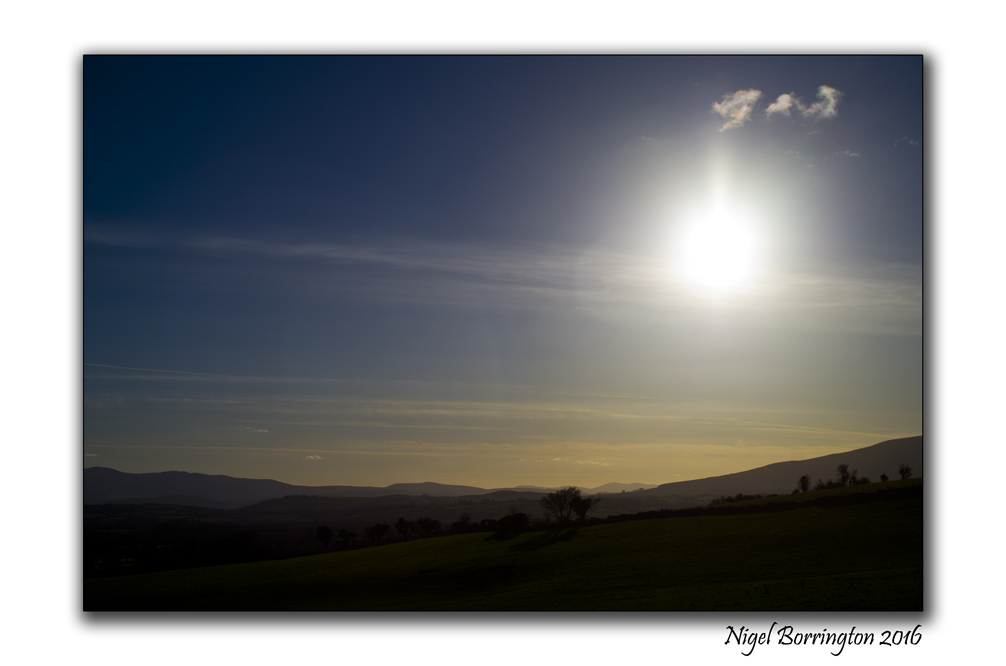
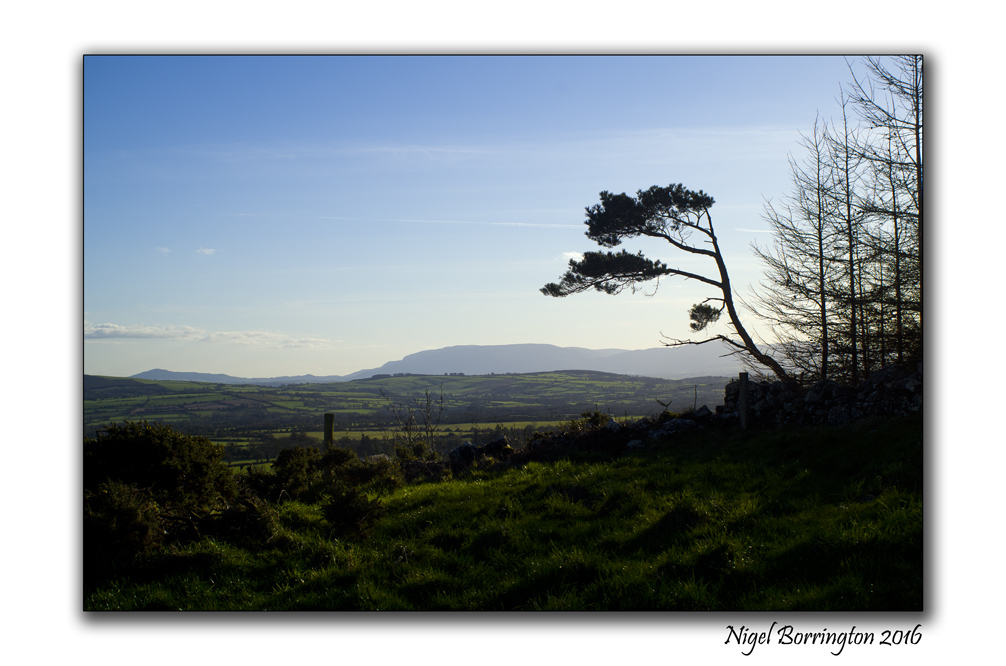
The last of today’s sunlight was just perfect ….
This evening I took a walk along some of our local lanes , up in the hills near the village of Windgap, Kilkenny. The sun hung low in the sky an hour before sunset and filled the fields with vivid greens and long shadows from the hedgerow trees, just such a wonderful sense of early springtime which is just around the corner now, you can feel it just waiting to burst through…..
This is the best time of year with so many great months ahead of us ……
Irish Landscapes – Mount Juliet Estate, Co.Kilkenny
Irish Landscapes
Mount Juliet Estate
county Kilkenny
Nigel Borrington
Mount Juliet was built in 1757 by the Earl of Carrick in compliment to his wife, Lady Juliana (Juliet). This estate has very strong Norman associations and in particular with the great Butler family.

The estate was originally two separate estates called Walton’s Grove and Ballylinch. The Waltons were the owners until 1653 when they were dispossessed by Oliver Cromwell. It later fell into the hands of King James II. It was then sold to a Mr Sweet, followed by a Mr Kendal who changed it’s name to ‘Kendal’s Grove’ in 1719. Mr Kendal left the entire property to the local Rev. Bushe who retrieved an important portfolio for him after being ‘mugged’ by a highway!
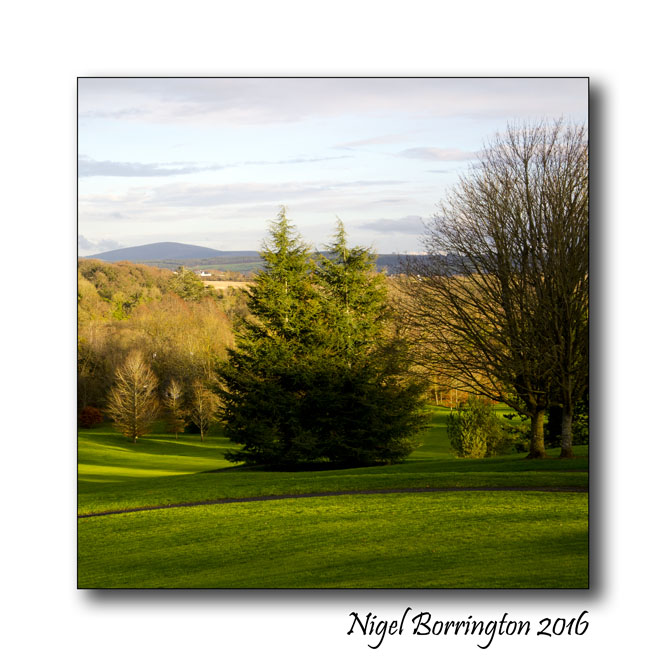
Rev. Bushe was wildly extravagant, ran up enormous debts and eventually sold the estate to his neighbour, the Earl of Carrick. It remained in this family from the 1750s until 1914, when the present Earl sold the estate to the McCalmont family who lived here until quite recently.

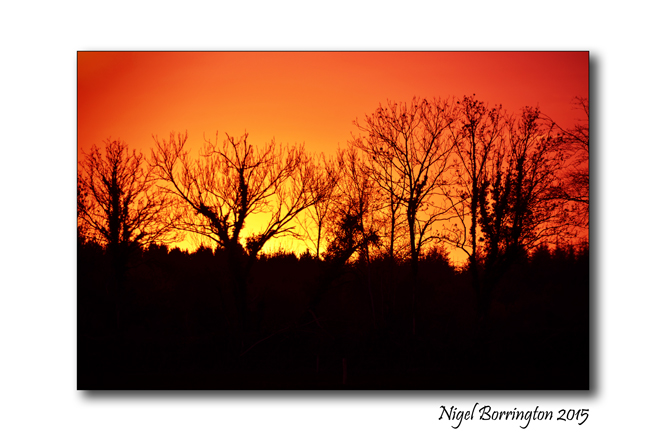
A December sunset, County Kilkenny, Ireland

Irish Landscapes
Kilkenny
Nigel Borrington
To-night the west o’er-brims with warmest dyes;
Its chalice overflows
With pools of purple colouring the skies,
Aflood with gold and rose;
And some hot soul seems throbbing close to mine,
As sinks the sun within that world of wine.

Monday Poetry : Reluctance, By Robert Frost
Kilkenny Landscapes
Nigel Borrington
Reluctance
By Robert Frost
Out through the fields and the woods
And over the walls I have wended;
I have climbed the hills of view
And looked at the world, and descended;
I have come by the highway home,
And lo, it is ended.
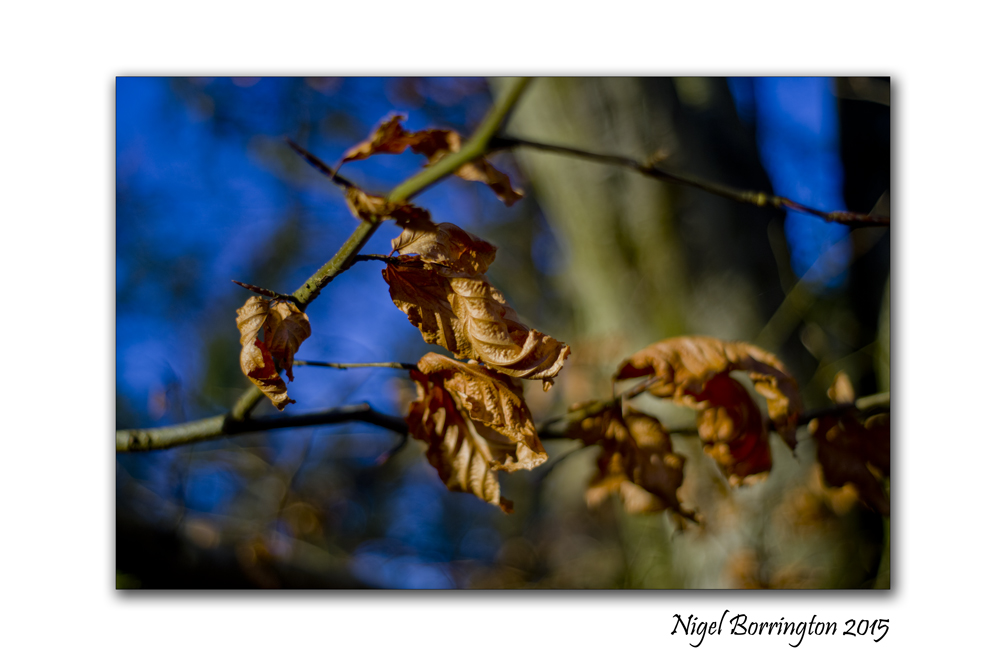
The leaves are all dead on the ground,
Save those that the oak is keeping
To ravel them one by one
And let them go scraping and creeping
Out over the crusted snow,
When others are sleeping.

And the dead leaves lie huddled and still,
No longer blown hither and thither;
The last lone aster is gone;
The flowers of the witch hazel wither;
The heart is still aching to seek,
But the feet question ‘Whither?’
Ah, when to the heart of man
Was it ever less than a treason
To go with the drift of things,
To yield with a grace to reason,
And bow and accept the end
Of a love or a season?
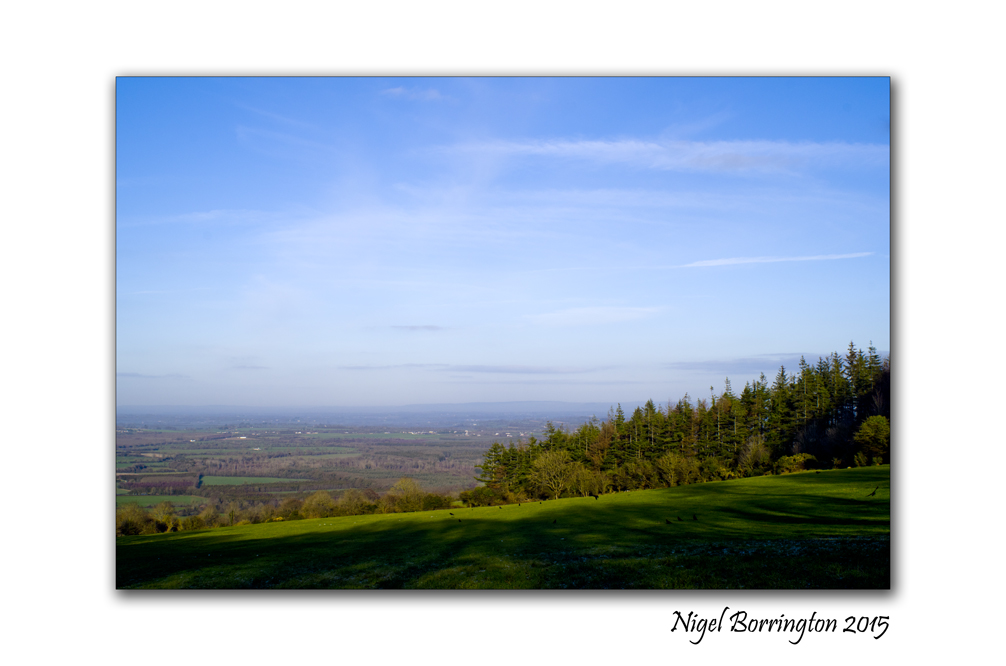
The Early Morning Sun
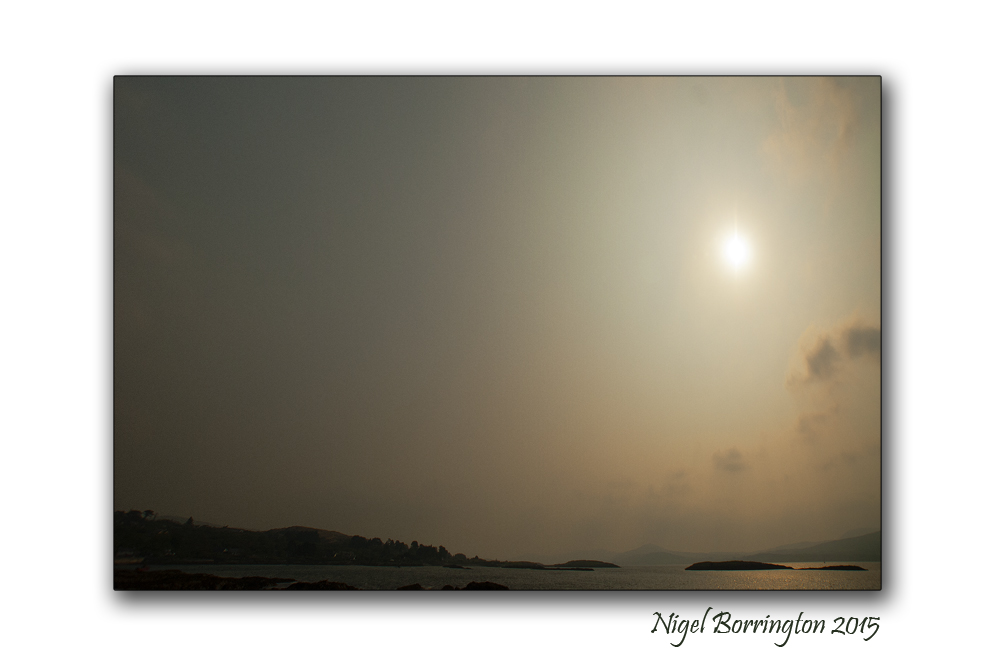
The Early Morning Sun
Colin Kohlsmith
Feb 14, 2010
It’s just so damn beautiful
And indescribable
The feeling that I get
In the early morning sun
Hanging like a golden torch
Shining with such blinding light
The glare reflecting off the lake
On the day that’s just begun
Amid the fluttering leaves the breeze

Feels like life is reaching me
Speaking in a gentle voice
Bringing tears to my eyes
Kissing me upon my face
Soft in love, as if to say
I love you my beloved one
This is your own sunrise
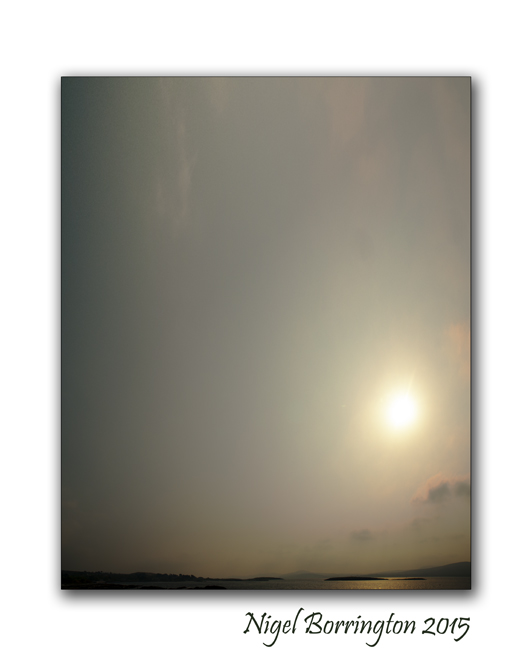
The Mountain Road – Poem by Enid Derham

Irish Landscapes
West cork Mountains
Nigel Borrington
The Mountain Road
Poem by Enid Derham
Coming down the mountain road
Light of heart and all alone,
I caught from every rill that flowed
A rapture of its own.
Heart and mind sang on together,
Rhymes began to meet and run
In the windy mountain weather
And the winter sun.
Clad in freshest light and sweet
Far and far the city lay
With her suburbs at her feet
Round the laughing bay.

Like an eagle lifted high
Half the radiant world I scanned,
Till the deep unclouded sky
Circled sea and land.
No more was thought a weary load,
Older comforts stirred within,
Coming down the mountain road
The earth and I were kin.
Poems of Remembrance (W. B. Yeats and Robert Laurence Binyon)
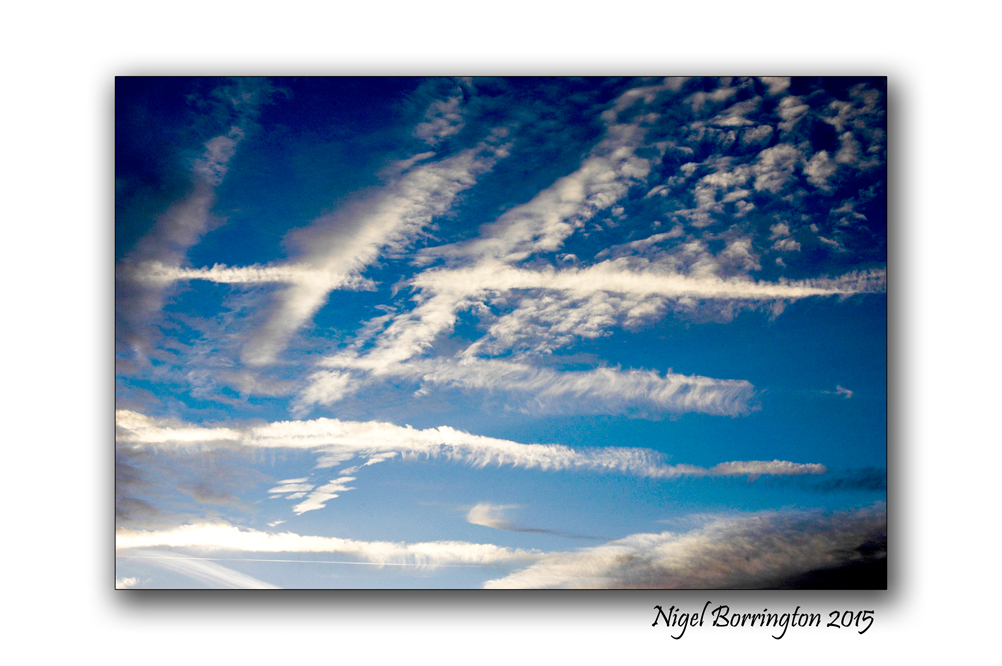
An Irish Airman Foresees His Death
W. B. Yeats, 1865 – 1939
I know that I shall meet my fate
Somewhere among the clouds above;
Those that I fight I do not hate
Those that I guard I do not love;
My country is Kiltartan Cross,
My countrymen Kiltartan’s poor,
No likely end could bring them loss
Or leave them happier than before.
Nor law, nor duty bade me fight,
Nor public man, nor cheering crowds,
A lonely impulse of delight
Drove to this tumult in the clouds;
I balanced all, brought all to mind,
The years to come seemed waste of breath,
A waste of breath the years behind
In balance with this life, this death.
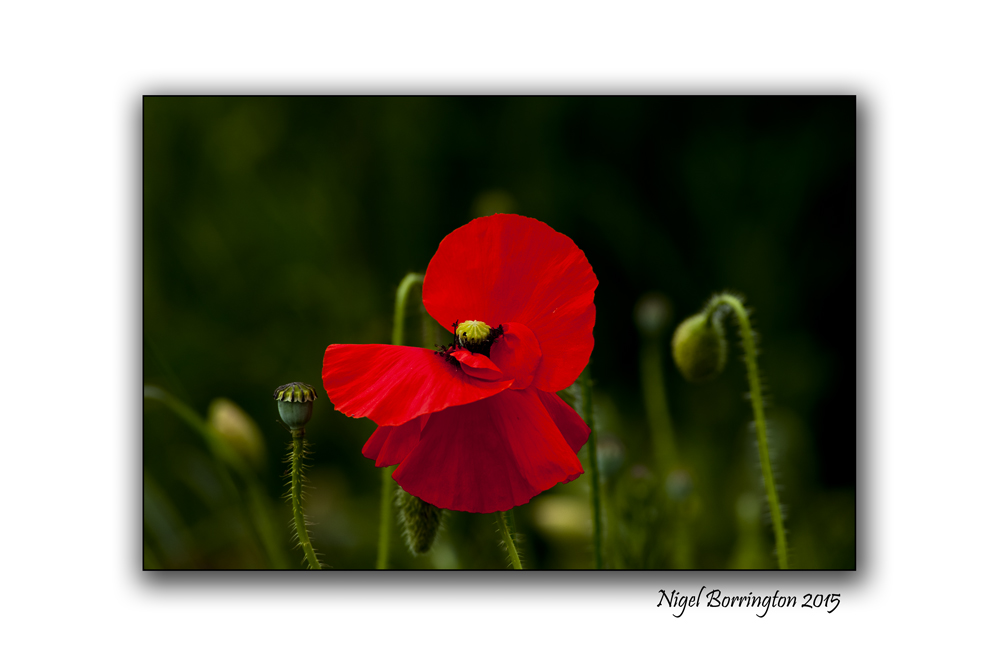
The GreatWar 1914-1918
For the Fallen
Robert Laurence Binyon, by artist William Strang. Laurence Binyon
Poem by Robert Laurence Binyon (1869-1943), published in The Times newspaper on 21st September 1914.
With proud thanksgiving, a mother for her children,
England mourns for her dead across the sea.
Flesh of her flesh they were, spirit of her spirit,
Fallen in the cause of the free.
Solemn the drums thrill: Death august and royal
Sings sorrow up into immortal spheres.
There is music in the midst of desolation
And a glory that shines upon our tears.
They went with songs to the battle, they were young,
Straight of limb, true of eye, steady and aglow.
They were staunch to the end against odds uncounted,
They fell with their faces to the foe.
They shall grow not old, as we that are left grow old:
Age shall not weary them, nor the years condemn.
At the going down of the sun and in the morning
We will remember them.
They mingle not with their laughing comrades again;
They sit no more at familiar tables of home;
They have no lot in our labour of the day-time;
They sleep beyond England’s foam.
But where our desires are and our hopes profound,
Felt as a well-spring that is hidden from sight,
To the innermost heart of their own land they are known
As the stars are known to the Night;
As the stars that shall be bright when we are dust,
Moving in marches upon the heavenly plain,
As the stars that are starry in the time of our darkness,
To the end, to the end, they remain.
Against Winter – Poem by Charles Simic

Winter is Coming
Nigel Borrington
Today is a Public Holiday here in Ireland and the last before Christmas, So I went out this morning for a long walk with The Dog. The Weather is very wintry with heavy rain, perfect weather to get some moody Images as I walked along some of our local country lanes.
The Seasons are turning very quickly now and winter is coming, these walks will be cold and wet for a few weeks, yet this time of year brings its own atmosphere, one that I love very much. Its great to return home put the fire on and have a hot drink or some warm soup.
Against Winter –
Charles Simic
The truth is dark under your eyelids.
What are you going to do about it?
The birds are silent; there’s no one to ask.
All day long you’ll squint at the gray sky.
When the wind blows you’ll shiver like straw.

A meek little lamb you grew your wool
Till they came after you with huge shears.
Flies hovered over open mouth,
Then they, too, flew off like the leaves,
The bare branches reached after them in vain.
Winter coming. Like the last heroic soldier
Of a defeated army, you’ll stay at your post,
Head bared to the first snow flake.
Till a neighbor comes to yell at you,
You’re crazier than the weather, Charlie.
 Nigel Borrington
Landscape art and Painters , Artist: Fred Cuming
Landscape painter
Fred cuming
Landscape painting and photography
Painting as an art form for myself feels very much like a natural progression from the art of landscape photography which is the act of recording a representation of the view you find yourself located in.
I often find myself asking what it was about an image I capture with my camera or in a sketch / painting that I liked so much that I went to the effort of working with that location in different forms and media.
This is a quote from one of my favourite landscape painters Fred Cuming, Talking about his paintings Cuming says: ‘I am not interested in pure representation. My work is about responses to the moods and atmospheres generated by landscape’
Although there are many forms of landscape art all as valid as each other, Contemporary landscape painting tends to fall into the areas of semi abstracted to completely abstract, in that each work is making an effort to extract from the selected landscape location a sense of atmosphere or a mood. This mood and atmosphere can involve colour or light or texture, or all of these things and more.
This artistic process, from pure representation or abstraction can in a completely valid way start with photography and in fact many current artists have replaced the sketch book with the film/digital camera. The question as to if this is the best thing or not will continue for a long time, some feeling that a photo simply cannot capture a good enough sense of the location or at least not in the same way as spending time in that location with a sketch book can.
Personally I feel photographs are a very important tool and can in a very valid way capture the mood and sense of a place. However I feel that you need to spend a good amount of time with your camera exploring as much as you can while your on site, walking around and finding all the different views and angles along with all the small details you can find. The aim is to return home with as complete a memory of your landscape as you can.
Here are some details of Fred Cuming as an artist along with some more of his painting…..
Artist: Fred Cuming
Fred Cuming is a painter of International standing. Born in 1930 he studied Art at Sidcup School of Art from 1945 to 1949. After completing his National Service he studied at the Royal College of Art from 1951 to 1955 where he gained a Rome Scholarship and an Abbey Minor Scholarship.
Fred was elected a Royal Academician in 1974. He has also been a member of the New English Art Club since 1960 and is the recipient of many art awards including: the Grand Prix Fine Art (1977); the Royal Academy’s House & Garden Award and the Sir Brinsley Ford Prize (New English Art Club, 1986).
Fred Cuming has exhibited his contemporary paintings world wide. His paintings feature in many private and public modern art collections. These include: Montecarlo Museum; Royal Academy of Arts; and the Guinness Collection.
Fred Cuming paintings offer a moment for reflection. Cuming creates a relationship with nature and light – inducing observers to appreciate the calming atmosphere and realisation of the beauty around us. Many of his paintings feature the counties of Kent and Sussex where the Fred Cuming artist studio is located.
Talking about his paintings Cuming says: ‘I am not interested in pure representation. My work is about responses to the moods and atmospheres generated by landscape, still life or interior. My philosophy is that the more I work the more I discover. Drawing is essential as a tool of discovery; skill and mastery of technique are also essential, but only as a vocabulary and a means towards an idea. I struggle to keep an open mind.’
Fred Cuming has exhibited at other leading British Art Galleries. In 2001 Cuming was the featured artist at the Royal Academy Summer Exhibition with an entire gallery dedicated to his art work.In 2004 he was awarded an honourary doctorate from the University of Kent.Like all Red Rag British art and Contemporary art Fred Cuming purchases can be shipped worldwide.
Share this:
December 12, 2016 | Categories: artists, Comment, Fred Cuming, History, Humanism, Landscape | Tags: art, Artist, artists methods, Fred Cuming, Landscape art, Landscape Photography, Nigel Borrington, Painters | 1 Comment