The path to Top Withens,Earnshaw family house Wuthering Heights : Wuthering Heights, a Poem by Sylvia Plaths
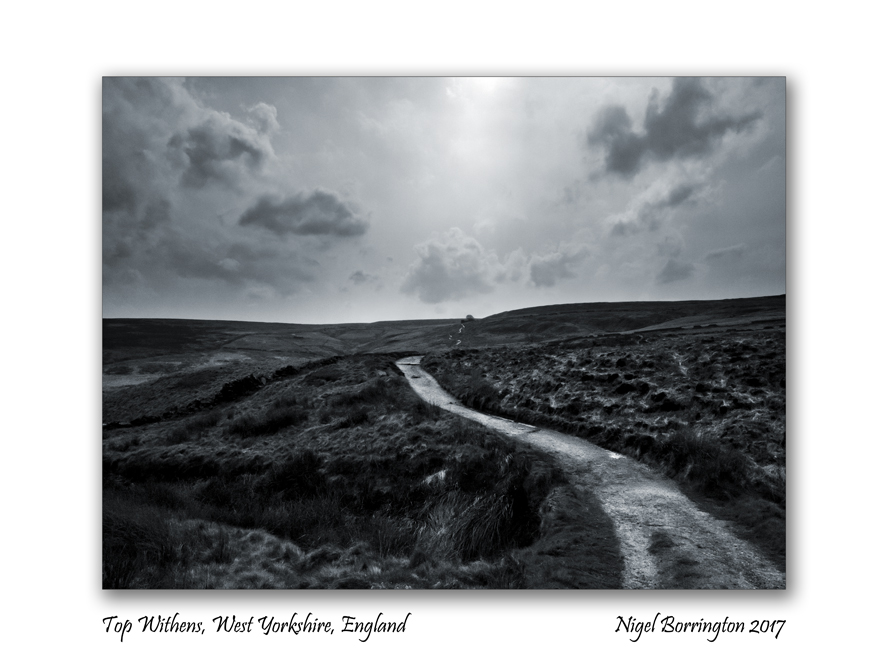
The path to Top Withens,Earnshaw family house Wuthering Heights, Emily Brontë.
Nigel Borrington
Last week we spent sometime in West Yorkshire, at Haworth the home town of the Brontë sisters, visiting the Parsonage Museum and walking upto Top Withens, the Earnshaw’s home in Emily Brontë’s novel – Wuthering heights.
The old farm house is located in some stunning landscape, the best west Yorkshire has to offer.
This is how Mr. Lockwood in the book describes his first impressions of Wuthering Heights …

Top Withens,Earnshaw family house Wuthering Heights, Emily Brontë.
Nigel Borrington
” Wuthering Heights is the name of Mr. Heathcliff’s
dwelling. ‘Wuthering’ being a significant provincial
adjective, descriptive of the atmospheric tumult to which
its station is exposed in stormy weather.
Pure, bracing ventilation they must have up there at all times, indeed:
one may guess the power of the north wind blowing over the edge, by the excessive slant of a few stunted firs at the end of the house; and by a range of gaunt thorns all stretching their limbs one way, as if craving alms of the sun.
Happily, the architect had foresight to build it strong:
the narrow windows are deeply set in the wall, and the
corners defended with large jutting stones. ”
Top Withens (also known as Top Withins)
Is a ruined farmhouse near Haworth, West Yorkshire, England which is said to have been the inspiration for the location of the Earnshaw family house Wuthering Heights in the novel of the same name by Emily Brontë.
A plaque affixed to a wall reads:
“ This farmhouse has been associated with “Wuthering Heights”, the Earnshaw home in Emily Brontë’s novel. The buildings, even when complete, bore no resemblance to the house she described, but the situation may have been in her mind when she wrote of the moorland setting of the Heights. ”
Wuthering Heights a Poem By: Sylvia Plath

Top Withens, West Yorkshire, England
English Landscapes
Nigel Borrington
The horizons ring me like faggots,
Tilted and disparate, and always unstable.
Touched by a match, they might warm me,
And their fine lines singe
The air to orange
Before the distances they pin evaporate,
Weighting the pale sky with a soldier color.
But they only dissolve and dissolve
Like a series of promises, as I step forward.
There is no life higher than the grasstops
Or the hearts of sheep, and the wind
Pours by like destiny, bending
Everything in one direction.
I can feel it trying
To funnel my heat away.
If I pay the roots of the heather
Too close attention, they will invite me
To whiten my bones among them.
The sheep know where they are,
Browsing in their dirty wool-clouds,
Grey as the weather.
The black slots of their pupils take me in.
It is like being mailed into space,
A thin, silly message.
They stand about in grandmotherly disguise,
All wig curls and yellow teeth
And hard, marbly baas.
I come to wheel ruts, and water
Limpid as the solitudes
That flee through my fingers.
Hollow doorsteps go from grass to grass;
Lintel and sill have unhinged themselves.
Of people the air only
Remembers a few odd syllables.
It rehearses them moaningly:
Black stone, black stone.
The sky leans on me, me, the one upright
Among the horizontals.
The grass is beating its head distractedly.
It is too delicate
For a life in such company;
Darkness terrifies it.
Now, in valleys narrow
And black as purses, the house lights
Gleam like small change.
W.B. Yeats, The Land of Heart’s Desire

W.B. Yeats, The Land of Heart’s Desire
Irish Landscapes
Nigel Borrington
“God spreads the heavens above us like great wings
And gives a little round of deeds and days,
And then come the wrecked angels and set snares,
And bait them with light hopes and heavy dreams,
Until the heart is puffed with pride and goes
Half shuddering and half joyous from God’s peace;
And it was some wrecked angel, blind with tears,
Who flattered Edane’s heart with merry words.
Come, faeries, take me out of this dull house!
Let me have all the freedom I have lost;
Work when I will and idle when I will!
Faeries, come take me out of this dull world,
For I would ride with you upon the wind,
Run on the top of the dishevelled tide,
And dance upon the mountains like a flame.

I would take the world
And break it into pieces in my hands
To see you smile watching it crumble away.
Once a fly dancing in a beam of the sun,
Or the light wind blowing out of the dawn,
Could fill your heart with dreams none other knew,
But now the indissoluble sacrament
Has mixed your heart that was most proud and cold
With my warm heart for ever; the sun and moon
Must fade and heaven be rolled up like a scroll
But your white spirit still walk by my spirit.
When winter sleep is abroad my hair grows thin,
My feet unsteady. When the leaves awaken
My mother carries me in her golden arms;
I’ll soon put on my womanhood and marry
The spirits of wood and water, but who can tell
When I was born for the first time?
The wind blows out of the gates of the day,
The wind blows over the lonely of heart,
And the lonely of heart is withered away;
While the faeries dance in a place apart,
Shaking their milk-white feet in a ring,
Tossing their milk-white arms in the air;
For they hear the wind laugh and murmur and sing
Of a land where even the old are fair,
And even the wise are merry of tongue;
But I heard a reed of Coolaney say–
When the wind has laughed and murmured and sung,
The lonely of heart is withered away.”

― W.B. Yeats, The Land of Heart’s Desire
The Mountain, a poem by Deloris Louise Pacheco, USA

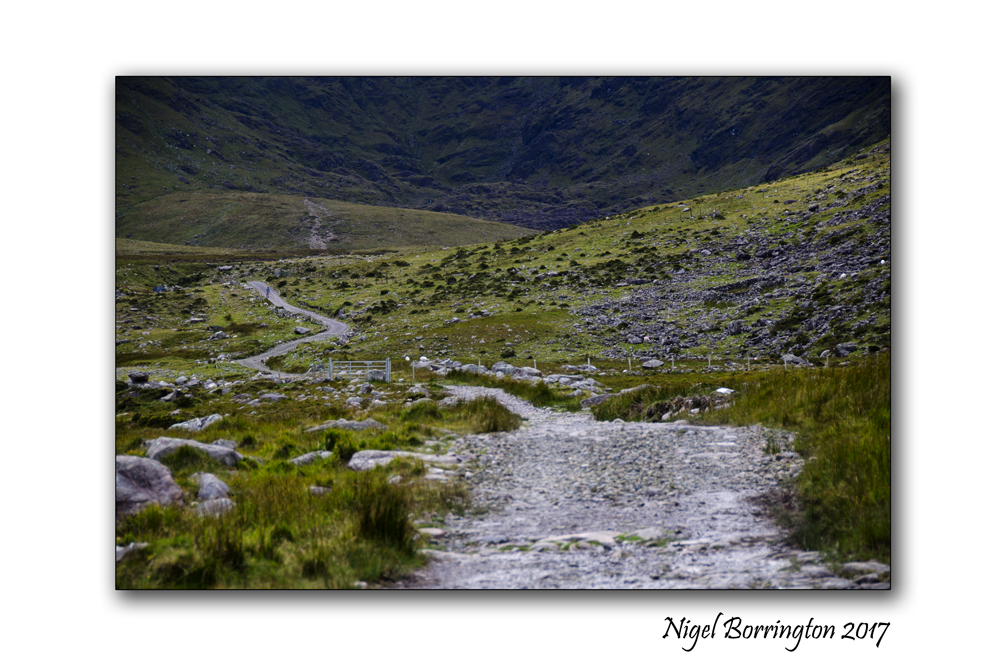
Carrauntoohil, County Kerry
Irish Landscapes
Nigel Borrington
It was just before dusk
When he started his climb
The path grew narrow
So the dog went ahead
It grew rocky and steep
But the old man kept up
Not knowing the dog
Had slowed his pace
The old man thought back
To his very first climb
That summer evening
Of his twelfth year
All alone on the mountain
A heaven full of stars
A rock for his pillow
He talked to the moon
He asked many questions
He called his ancestors by name
The heavens answered him
With many signs and sounds
That were later explained to him
By the tribal Medicine Man
A man who came to play
A very important part in his life
He became a warrior that year
He learned much from his family
The tribal customs and traditions
Were ingrained in his soul
He was a good listener
And was comfortable with words
He was accepted by the coucil
At a very young age

He had the strength of his father
The patience of his mother
The intelligence of his grandmother
And the wisdom of his grandfather
He learned how to guide
Not only himself but others
He had become all things
To all of those around him
He was a good chief
But his days were dwindling
His mind kept going back
Over all the things he had done
No regrets, no what ifs
Knowing he did his best
But things were changing
It was the dawn of a new era

The old man reached the ledge
Where he had stood many times
Since being that boy of twelve
And he was still awed
By the beauty of the heavens
The stars seemed so close
You could reach out and touch them
And that night, he did
The Cottage By The Sea – A Poem by Esme Shaw

Come my love and live with me
In a sweet little cottage by the sea
Where roses grow around the door
And flowers bloom for evermore
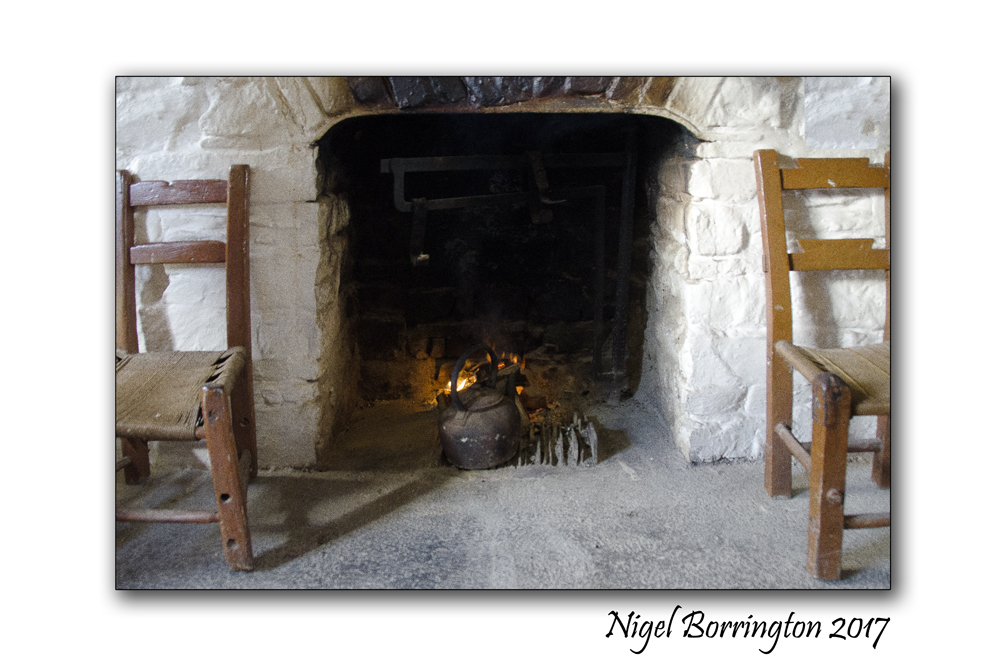
Inside my cottage clean and neat
A big brick fireplace will give out heat
Outside the birds will sing all day
And on the beach the children play
So come my love to the cottage by the sea
And see how happy we will be.
Esme Shaw
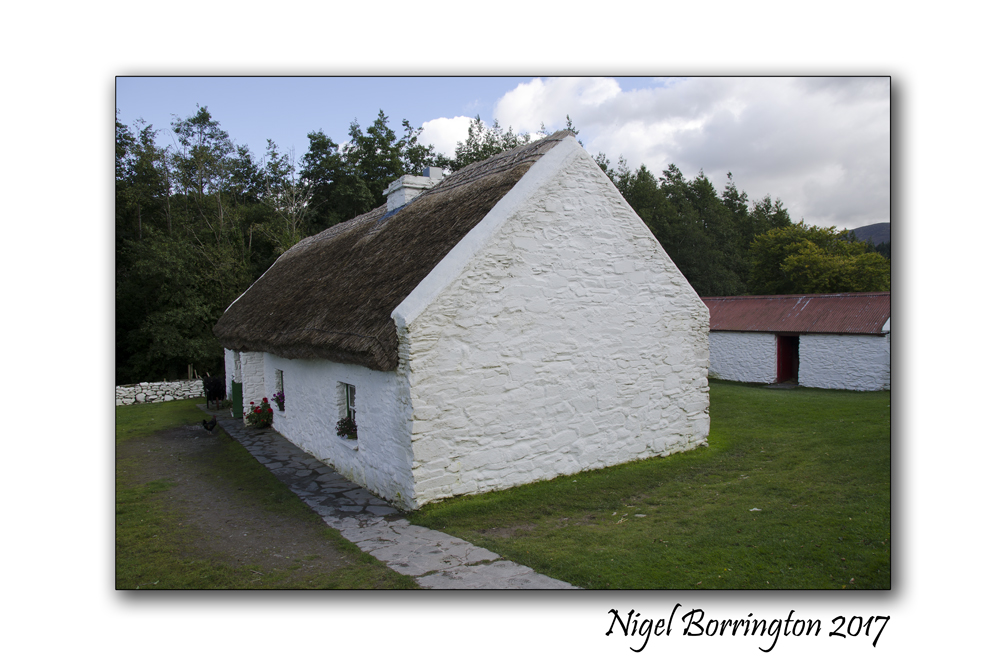
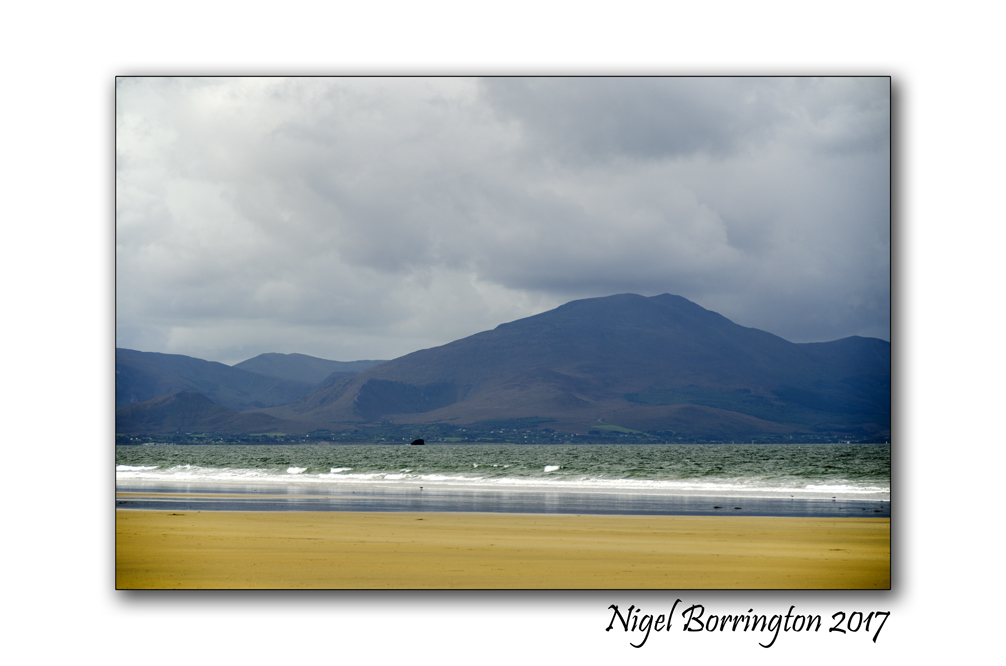
A Cottage by the Sea …




From the mountain to the sea, By Sophie Boswell

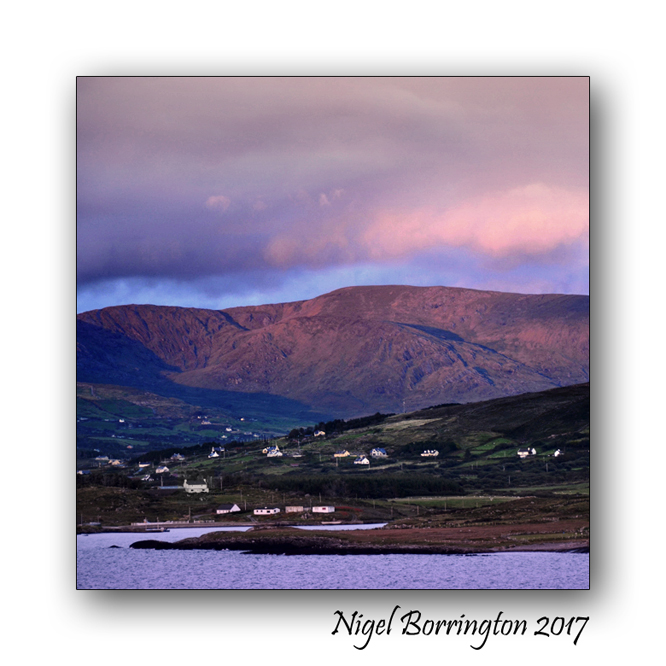
From The Mountain to the sea
Irish Landscapes
Nigel Borrington
Life is like a journey from the mountain to the sea
A struggle through many layers to finally feel free
Free to go out and see the wonders of the world
Where, in the process, one is often hurled
This way and that, through the good and the bad
Where emotions are flung lose to the point of driving you mad
Sometimes, when I’m down, and feel worn out
And everything around me seems to be in doubt
My vision is blurred; my judgment is haywire
And my demons rejoice in putting out my fire
I think about the journey from the mountain to the sea
By the light of the moon; a heavenly place to be
This place, in the mind, will always set me free
to be the happy wanderer I was meant to be
Gathering and searching in peaceful solitude
Where time and nature can alter my mood
And the Spirit of Life will breathe inside me
As I journey from the mountain to the sea.
Primrose – Poem by Patrick Kavanagh

Promrose on the River bank
County Kilkenny
Nigel Borrington
Primrose – Poem by Patrick Kavanagh
Upon a bank I sat, a child made seer
Of one small primrose flowering in my mind.
Better than wealth it is, I said, to find
One small page of Truth’s manuscript made clear.
I looked at Christ transfigured without fear–
The light was very beautiful and kind,
And where the Holy Ghost in flame had signed
I read it through the lenses of a tear.
And then my sight grew dim, I could not see
The primrose that had lighted me to Heaven,
And there was but the shadow of a tree
Ghostly among the stars. The years that pass
Like tired soldiers nevermore have given
Moments to see wonders in the grass.
Welcoming April with a Poem : The Violet By Jane Taylor
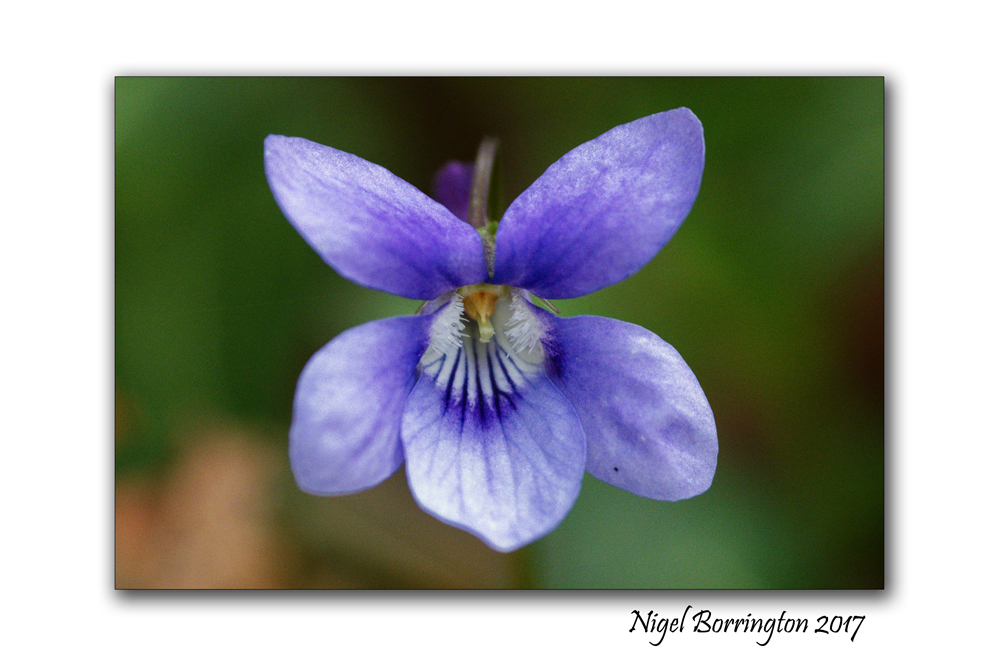
A Violet flower welcomes April 2017
Nature photography
Nigel Borrington
The Violet
By Jane Taylor
Down in a green and shady bed,
A modest violet grew,
Its stalk was bent, it hung its head,
As if to hide from view.
And yet it was a lovely flower,
Its colours bright and fair;
It might have graced a rosy bower,
Instead of hiding there,
Yet there it was content to bloom,
In modest tints arrayed;
And there diffused its sweet perfume,
Within the silent shade.
Then let me to the valley go,
This pretty flower to see;
That I may also learn to grow
In sweet humility.
Dear March – Come in – By Emily Dickinson(1830 – 1886)

Irish Landscape images
March 2017
Nigel Borrington
Dear March – Come in
Emily Dickinson, 1830 – 1886
Dear March – Come in –
How glad I am –
I hoped for you before –
Put down your Hat –
You must have walked –
How out of Breath you are –
Dear March, how are you, and the Rest –
Did you leave Nature well –
Oh March, Come right upstairs with me –
I have so much to tell –
I got your Letter, and the Birds –
The Maples never knew that you were coming –
I declare – how Red their Faces grew –
But March, forgive me –
And all those Hills you left for me to Hue –
There was no Purple suitable –
You took it all with you –

Who knocks? That April –
Lock the Door –
I will not be pursued –
He stayed away a Year to call
When I am occupied –
But trifles look so trivial
As soon as you have come
That blame is just as dear as Praise
And Praise as mere as Blame –

Monday Poetry, The Water Replies – Luke Kennard

The Water Replies
Waterford Coastline, Sunrise to Sunset
Nigel Borrington
Luke Kennard
The Water Replies
Maybe we have washed our hands
and drunk deep and swam
and think we know her,
but water’s reputation goes before her like a flood:
she does not suffer fools or gadflies.
Therefore I have prepared some questions.
Where do you get your ideas & your tide from?
Don’t say the moon – that’s really pretentious.
But as I clamber down the coast
I lose my footing and spend our allotted time
tossed around in her backwash,
pummelled by tiny stones.
When I am baptised I ask the water
Where have the demons gone?
Were they hiding behind the H, the 2 or the O?
I emerge finally able to see that I have not changed,
that I can of myself do nothing, that water decides.
On the towpath behind the church
I wring out my jacket. I ask the water:
Will you convey these thoughts away?
These itching hatreds, toothache of jealousy,
These squalid appetites and dog thirsts?
Just as far as the next city will do.
The ripples of the moon’s tablature.
When was the last time you cried, and why?
I ask the water. I ask the water:
Do you have plans later?

The Manor Farm, By Edward Thomas

On the Farm
Irish landscapes
Nigel Borrington
The rock-like mud unfroze a little and rills
Ran and sparkled down each side of the road
Under the catkins wagging in the hedge.
But earth would have her sleep out, spite of the sun;
Nor did I value that thin glilding beam
More than a pretty February thing
Till I came down to the old Manor Farm,
And church and yew-tree opposite, in age
Its equals and in size. The church and yew
And farmhouse slept slept in a Sunday silentness.
The air raised not a straw. The steep farm roof,
With tiles duskily glowing, entertained
The mid-day sun; and up and down the roof
White pigeons nestled. There was no sound but one.
Three cart-horses were looking over a gate
Drowsily through their forelocks, swishing their tails
Against a fly, a solitary fly.

The Winter’s cheek flushed as if he had drained
Spring, Summer, and Autumn at a drought
And smiled quietly. But ’twas not Winter—
Rather a season of bliss unchangeable
Awakened from farm and church where it had lain
Safe under tile and thatch for ages since
This country, Old already, was called Happy.
Edward Thomas
Three poems about sunlight …
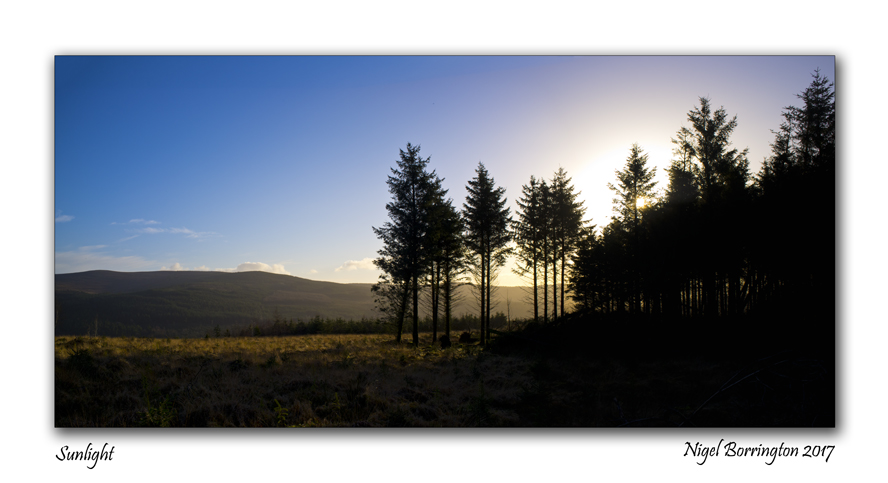
Landscape in Sunlight
Nigel Borrington
Phoebe Hynes
Dec 5, 2016
A response to sunlight
You came to me in what I thought was a dream,
but it was actually the mundane,
and the secrets my conscious brain,
was keeping from me.
You were a part of reality all along,
it’s just taken me a bit to realize it.
Sunlight can be blinding,
and raindrops are more obvious.
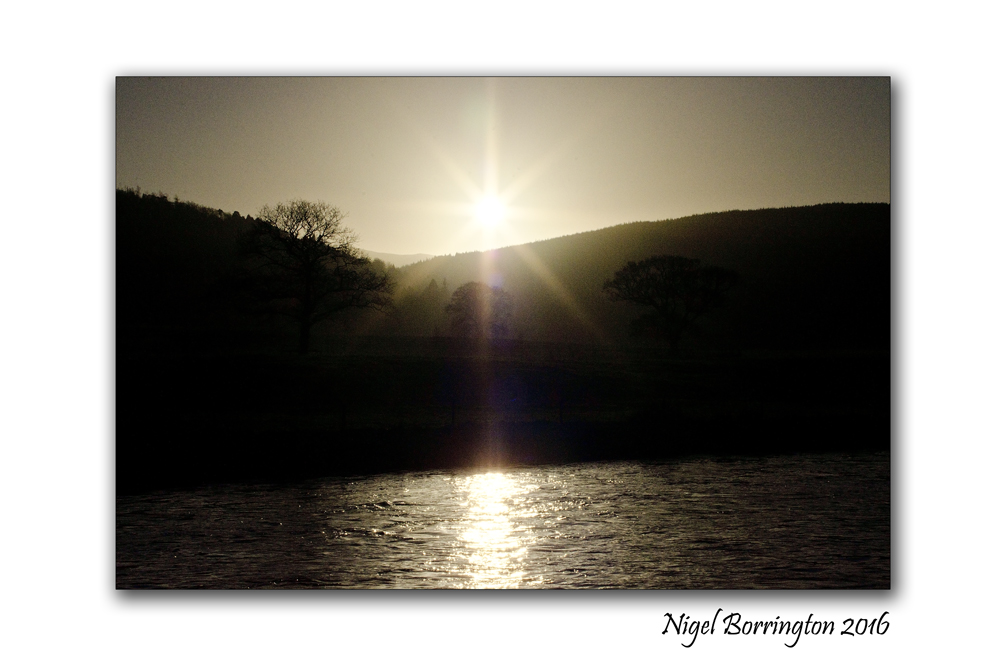
Russell
May 7, 2016
The Filter of Sunlight
The drops of gold
Break through
The cover of leaves
I’m hiding behind
Peeking through
Touching me
Warming me
Making me realize
All the good
I’m hiding from
All the things
I should be happy about
The yellow rays
Burning the bad
Purifying my thoughts
Changing my mind
And I run out
Wanting to make a memory
Of this happy
Golden moment.

Ramisa R
Sep 25, 2014
Springtime Creativity
Lilacs bloom; birds sing
sunlight falls–
enlightening these
blank pages
His Dream Of Skyland, A poem by : Li Po

His Dream Of Skyland
Nigel Borrington
His Dream Of Skyland
The seafarers tell of the Eastern Isle of Bliss,
It is lost in a wilderness of misty sea waves.
But the Sky-land of the south, the Yueh-landers say,
May be seen through cracks of the glimmering cloud.
This land of the sky stretches across the leagues of heaven;
It rises above the Five Mountains and towers over the Scarlet Castle,
While, as if staggering before it, the Tien-tai Peak
Of forty-eight thousand feet leans toward the southeast.
So, longing to dream of the southlands of Wu and Yueh,
I flew across the Mirror Lake one night under the moon.

The moon in the lake followed my flight,
Followed me to the town of Yen-chi.
Here still stands the mansion of Prince Hsieh.
I saw the green waters curl and heard the monkeys’ shrill cries.
I climbed, putting on the clogs of the prince,
Skyward on a ladder of clouds,
And half-way up from the sky-wall I saw the morning sun,
And heard the heaven’s cock crowing in the mid-air.
Now among a thousand precipices my way wound round and round;
Flowers choked the path; I leaned against a rock; I swooned.
Roaring bears and howling dragons roused me –
Oh, the clamorous waters of the rapids!
I trembled in the deep forest, and shuddered at the overhanging crags,
one heaped upon another.
Clouds on clouds gathered above, threatening rain;
The waters gushed below, breaking into mist.
A peal of blasting thunder!
The mountains crumbled.
The stone gate of the hollow heaven
Opened wide, revealing
A vasty realm of azure without bottom,
Sun and moon shining together on gold and silver palaces.

Clad in rainbow and riding on the wind,
The ladies of the air descended like flower, flakes;
The faery lords trooping in, they were thick as hemp-stalks in the fields.
Phoenix birds circled their cars, and panthers played upon harps.
Bewilderment filled me, and terror seized on my heart.
I lifted myself in amazement, and alas!
I woke and found my bed and pillow –
Gone was the radiant world of gossamer.
So with all pleasures of life.
All things pass with the east-flowing water.
I leave you and go – when shall I return?
Let the white roe feed at will among the green crags,
Let me ride and visit the lovely mountains!
How can I stoop obsequiously and serve the mighty ones!
It stifles my soul.
– Li Po. Translated by: Shigeyoshi Obata
Bogland – Poem by Seamus Heaney
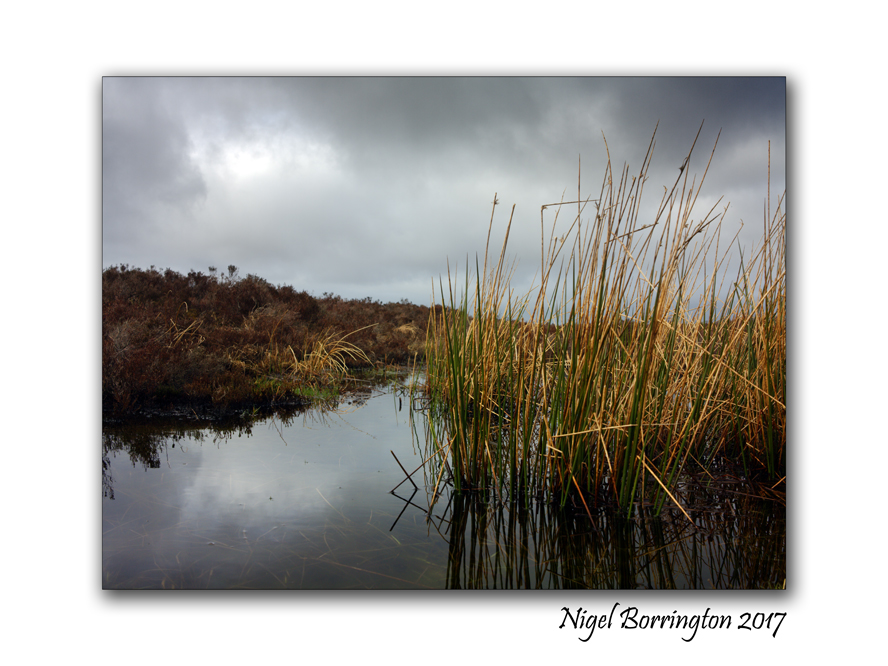
Bogland – Poem by Seamus Heaney
Image – Nigel Borrington
We have no prairies
To slice a big sun at evening–
Everywhere the eye concedes to
Encrouching horizon,
Is wooed into the cyclops’ eye
Of a tarn. Our un-fenced country
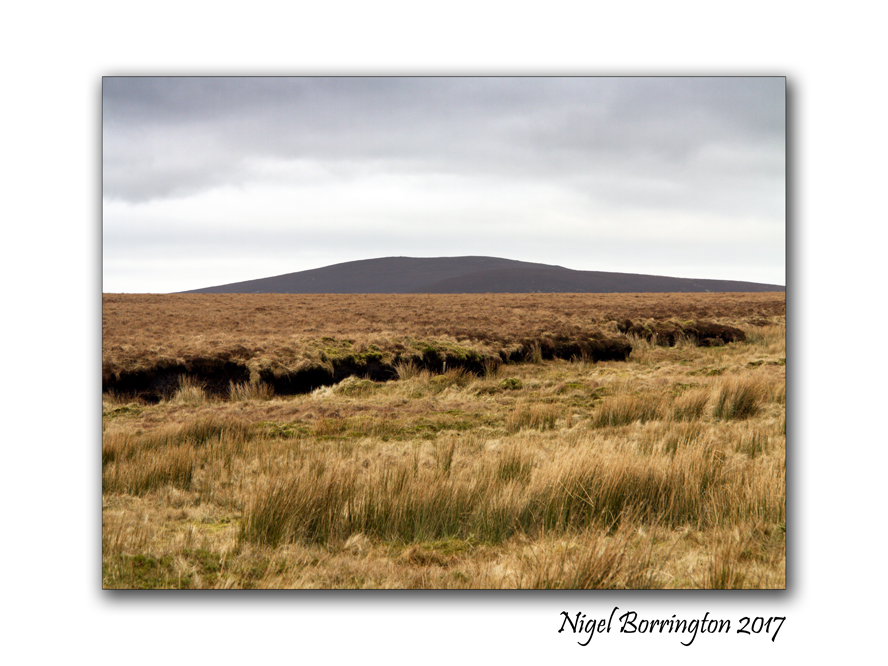
Is bog that keeps crusting
Between the sights of the sun.

They’ve taken the skeleton
Of the Great Irish Elk
Out of the peat, set it up
An astounding crate full of air.
Butter sunk under
More than a hundred years
Was recovered salty and white.
The ground itself is kind, black butter
Melting and opening underfoot,
Missing its last definition
By millions of years.
They’ll never dig coal here,
Only the waterlogged trunks
Of great firs, soft as pulp.
Our pioneers keep striking
Inwards and downwards,
Every layer they strip
Seems camped on before.
The bogholes might be Atlantic seepage.
The wet centre is bottomless.
The House on the Hill, By : Edwin Arlington Robinson

The Old house on the hill
County Kilkenny
Ireland
Nigel Borrington
The House on the Hill
Edwin Arlington Robinson
They are all gone away,
The House is shut and still,
There is nothing more to say.
Through broken walls and gray
The winds blow bleak and shrill:
They are all gone away.
Nor is there one to-day
To speak them good or ill:
There is nothing more to say.
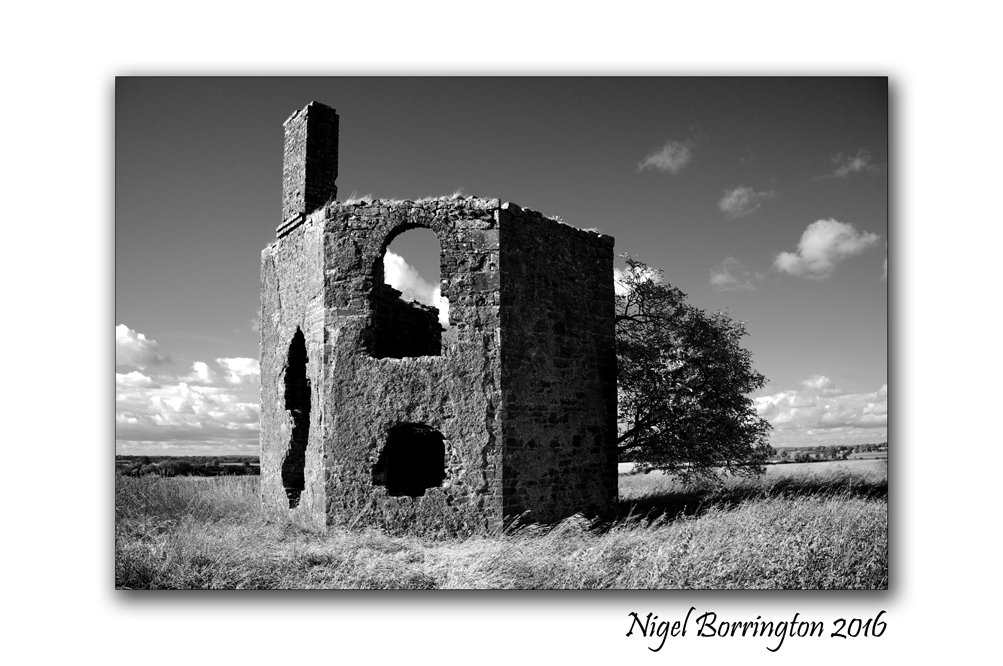
Why is it then we stray
Around the sunken sill?
They are all gone away,
And our poor fancy-play
For them is wasted skill:
There is nothing more to say.
There is ruin and decay
In the House on the Hill:
They are all gone away,
There is nothing more to say.
THE TREE SINGS TO THE RIVER – By Lea Goldberg

The tree sings to the river
Irish landscapes
Nigel Borrington
He who carried my golden autumn,
Swept away my blood with the leaf fall,
He who shall see my spring when it returns
To him with the turning of the year.
My brother, the river, who is forever lost,
New each day and different and one,
My brother the stream between his two shores
Who flows as I do between spring and fall.
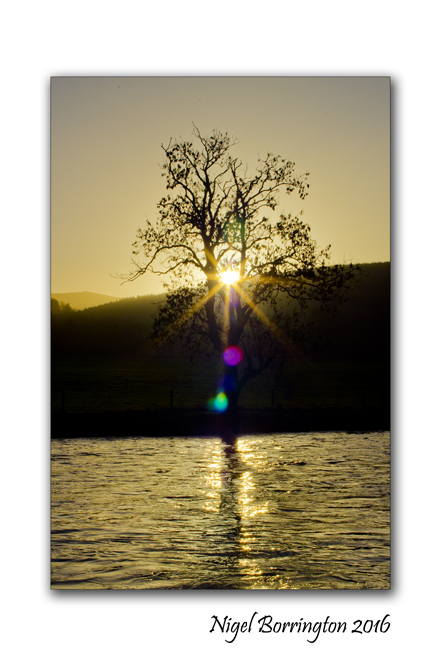
For I am the bud and I am the fruit,
I am my future and I am my past,
I am the solitary tree trunk,
And you — you are my time and my song.
Song of Sunset on the River by Bai Juyi, Image of the river Suir at Sunset
Sunset over the river
River Suir
Tipperary
Song of Sunset on the River
by Bai Juyi
A length setting sun spread water in
Half river emerald half river red
Love ninth month first three night
Dew like pearl moon like bow
A strip of water’s spread in the setting sun,
Half the river’s emerald, half is red.
I love the third night of the ninth month,
The dew is like pearl; the moon like a bow.
Irish Landscape images, county Kilkenny : The fog after the rain, a poem

Irish landscape images
County Kilkenny
after the rain
The fog after the rain , a poem
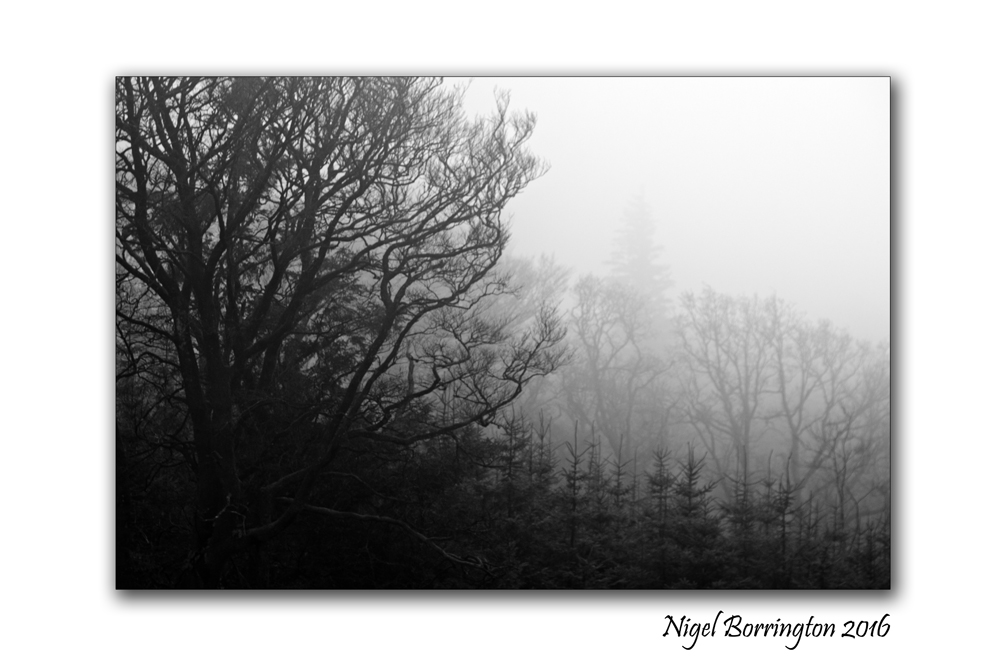
Rain falls all day in the old valley,
All the woodlands swimming underneath the steaming fog.
What peaceful sound I hear,
softly rings out of the sparkling
Woods and fields,
song of a thousand winter birds
announcing the setting sun,
Who sings loudest, after the rains.
In the bleak midwinter – Poem By Christina Rossetti
In the bleak midwinter
By Christina Rossetti
In the bleak midwinter, frosty wind made moan,
Earth stood hard as iron, water like a stone;
Snow had fallen, snow on snow, snow on snow,
In the bleak midwinter, long ago.
Our God, Heaven cannot hold Him, nor earth sustain;
Heaven and earth shall flee away when He comes to reign.
In the bleak midwinter a stable place sufficed
The Lord God Almighty, Jesus Christ.

Enough for Him, whom cherubim, worship night and day,
Breastful of milk, and a mangerful of hay;
Enough for Him, whom angels fall before,
The ox and ass and camel which adore.
Angels and archangels may have gathered there,
Cherubim and seraphim thronged the air;
But His mother only, in her maiden bliss,
Worshipped the beloved with a kiss.

What can I give Him, poor as I am?
If I were a shepherd, I would bring a lamb;
If I were a Wise Man, I would do my part;
Yet what I can I give Him: give my heart.
Abandoned Farmhouse, Poem By Ted Kooser

Abansoned Farmhouse
Chalk sketch
Nigel Borrington
Abandoned Farmhouse
By Ted Kooser
He was a big man, says the size of his shoes
on a pile of broken dishes by the house;
a tall man too, says the length of the bed
in an upstairs room; and a good, God-fearing man,
says the Bible with a broken back
on the floor below the window, dusty with sun;
but not a man for farming, say the fields
cluttered with boulders and the leaky barn.
A woman lived with him, says the bedroom wall
papered with lilacs and the kitchen shelves
covered with oilcloth, and they had a child,
says the sandbox made from a tractor tire.
Money was scarce, say the jars of plum preserves
and canned tomatoes sealed in the cellar hole.
And the winters cold, say the rags in the window frames.
It was lonely here, says the narrow country road.
Something went wrong, says the empty house
in the weed-choked yard. Stones in the fields
say he was not a farmer; the still-sealed jars
in the cellar say she left in a nervous haste.
And the child? Its toys are strewn in the yard
like branches after a storm—a rubber cow,
a rusty tractor with a broken plow,
a doll in overalls. Something went wrong, they say.
Friday Poetry : November Sunset – Poem by Steven Federle

Black Friday Sunset
Callan
Kilkenny
Ireland
About five o clock,
the warm November day
just stops.
Bright afternoon
slams into evening
not even pausing
for twilight.
Blue sky
dims quickly
to violet,
but over ragged black woods
the orange sun
lingers

Then suddenly bursts
into astonishing gold.
Blithely ascending
the bright crescent
claims the cool
velvet night.
Steven Federle
Winter is coming once again, a poem
Winter and the Crows
Slievenamon
County Tipperary
Nigel Borrington
Winter Is Coming once Again
The sky is filled with broken light,
The Sun is hidden by deep snow filled clouds,
There’s a chillness to the air,
I feel it everywhere,
All through the days and nights;
Winter is coming.
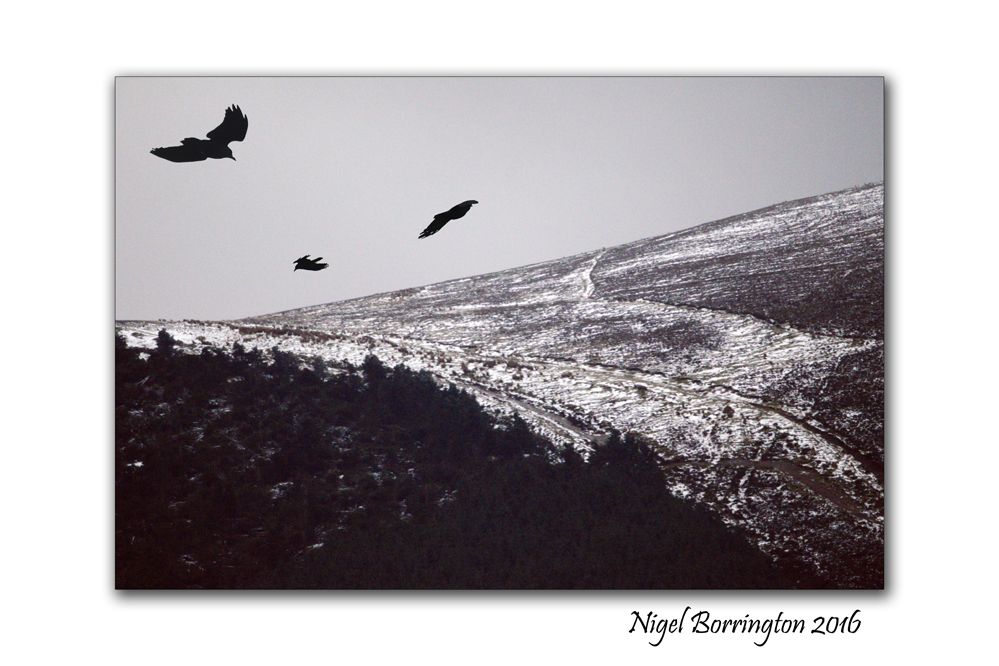
The Crows fly above Slievenamon
hunting harder then before, and the ground below
Is hard beneath wing and claw,
The trees stand bare of leaves and fruits,
And all around
Is still, Silent;
Winter is coming.
The sun will soon be gone,
Obscured by cloud,
The rivers and lakes begin to freeze,
The wind will bend the trees
Until they’re bowed
In supplication.
Winter is coming, once again.
Only the dead will feed hungry crows:
Mice, rabbits, sparrows.
The light fades from the Sun
Now darker days have come,
for the high crow, cold bites to the marrow,
And Winter is here.
Again.
My November Guest, Robert Frost
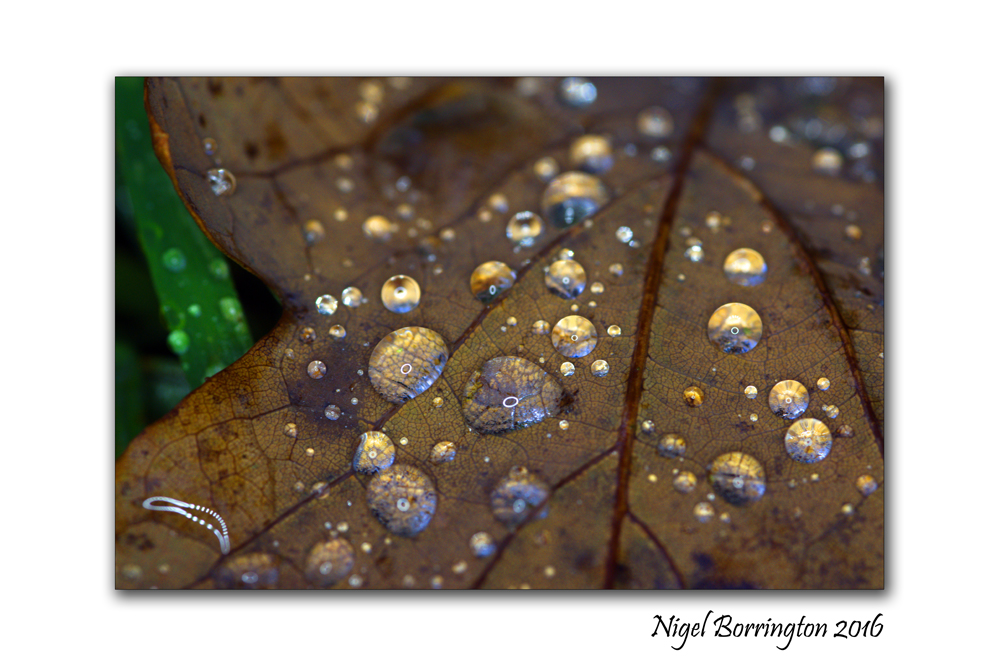
November rain
Nigel Borrington
My sorrow, when she’s here with me,
Thinks these dark days of autumn rain
Are beautiful as days can be;
She loves the bare, the withered tree;
She walks the sodden pasture lane.
Her pleasure will not let me stay.
She talks and I am fain to list:
She’s glad the birds are gone away,
She’s glad her simple worsted gray
Is silver now with clinging mist.
The desolate, deserted trees,
The faded earth, the heavy sky,
The beauties she so truly sees,
She thinks I have no eye for these,
And vexes me for reason why.
Not yesterday I learned to know
The love of bare November days
Before the coming of the snow,
But it were vain to tell her so,
And they are better for her praise.
Monday Poetry , The Cow – Robert Louis Stevenson

The friendly cow all red and white,
I love with all my heart:
She gives me cream with all her might,
To eat with apple-tart.
She wanders lowing here and there,
And yet she cannot stray,
All in the pleasant open air,
The pleasant light of day;
And blown by all the winds that pass
And wet with all the showers,
She walks among the meadow grass
And eats the meadow flowers.
Robert Louis Stevenson
 Nigel Borrington
Irish Landscape, “As above so below” Quotes by Isaac Newton from 1680.
As above so below
Irish landscapes in sunlight
Nigel Borrington
At this time of year the sky’s and the sunlight can be an amazing sight on the landscape. views like these always remind me of the words of Isaac Newton when he said “As above so below”. he was the scientist who when working with sunlight and a prism split pure white light into its colors of (red, orange, yellow, green, blue and violet).
The words “As above so below”
Quoted here is the version by Isaac Newton from circa 1680.
. Tis true without lying, certain & most true.
. That which is below is like that which is above & that which is above is like that which is below to do the miracles of one only thing.
. And as all things have been & arose from one by the meditation of one: so all things have their birth from this one thing by adaptation.
. The Sun is its father, the moon its mother,
. The wind hath carried it in its belly, the earth its nurse.
. The father of all perfection in the whole world is here.
. Its force or power is entire if it be converted into earth.
. Separate thou the earth from the fire, the subtle from the gross sweetly with great industry.
. It ascends from the earth to the heaven & again it descends to the earth and receives the force of things superior & inferior.
. By this means you shall have the glory of the whole world & thereby all obscurity shall fly from you.
. Its force is above all force, for it vanquishes every subtle thing & penetrates every solid thing.
. So was the world created.
. From this are & do come admirable adaptations where of the means (or process) is here in this.
. Hence I am called Hermes Trismegist, having the three parts of the philosophy of the whole world.
. That which I have said of the operation of the Sun is accomplished & ended.
As above so below, Gallery
Share this:
March 7, 2017 | Categories: Comment, Humanism, Irish coastline, Landscape, Nature, Nature and Wildlife, Poetry Gallery, Story telling gallery | Tags: As above so below Quotes, Creation, irish landscape, Isaac Newton, Landscape, Nigel Borrington, Quotes, verse | 5 Comments