Friday Poems : The River , Catherine, from Liverpool

The River Suir, County Tipperary
Irish Landscape Photography : Nigel Borrington
Friday and this weekend is the last one of June, I plan to do some long river walks with our Dog Molly ….
What ever you do this weekend I hope you have a great time and get to escape for a while, have a great weekend !!!
The River
Catherine, Liverpool
It starts at a source as a little trickle
Then flows down the mountain,
Following a steep and narrow path.
As it rushes down it is joined by many other tributaries,
Changing it from a small, shallow stream
To a big, deep river
The water is clear and unpolluted,
Icy blue and sparkling
But always icy cold too.
It crashes as it flows,
Forming bubbling foam
That fills the air with cold white spray.

As the current pushes it on, it erodes away the rocks,
Leaving small, smooth banks
For it to easily pass by.
It deepens and widens as it runs down the mountain,
Soon entering a valley
With the sea in view.
It finally comes to its end,
An estuary leading into the sea
Ending its long journey from the mountain.
But it will start its journey again
When the sun evaporates it from the sea
And drops it down as rain.
Tree By The River – Poem by Manonton Dalan
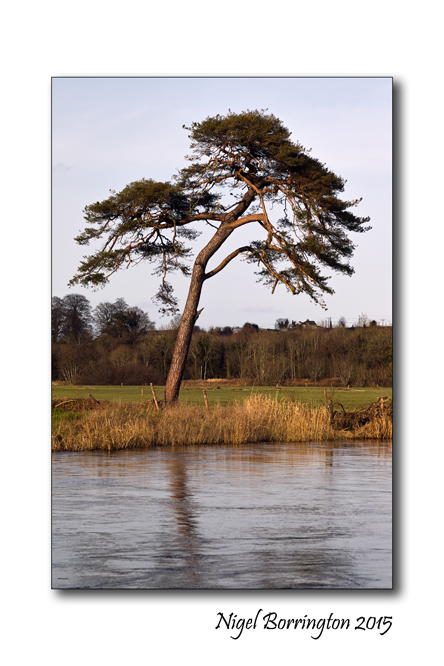
Tree by the river Barrow Kilkenny
TREE BY THE RIVER
Gigantic tree’s canopy, there I lay
Dreaming how the world could be
Beyond those clouds, the horizon
Would there be one like me, alone
Got up pick up the roundest stone
Cast to the river and glide by its own
Hits a ripple, goes airborne
For a kid like me, it is a phenom
By the grassy banks, frogs abound
Love to disturb them,
into the river they plunge
Never tried to catch them because they slime
So beautiful, shiny greenish yellow, brown
Water is crystal clear,
see fishes swimming
Stones unturned are coated with stringy green
Constantly dancing as the little shells cling
Reach down to touch the water
Felt something came to me, a power
Don’t know what it was but still here
Manonton Dalan
My secret places – a weekend at the cove

I have many favorite places to visit at the weekend here in Ireland.
The little cove in these images is just one but its high on my list, I am not going tell you where it is – its a secret 🙂 🙂
Have a great weekend everyone and I hope you manage to find sometime to visit your own little secret spaces , stay for a while if you do – so that you can escape and relax by put the week just gone behind you !


The Little Ghost, A poem by Edna St. Vincent Millay (1892-1950)

I knew her for a little ghost
That in my garden walked;
The wall is high — higher than most —
And the green gate was locked.
And yet I did not think of that
Till after she was gone —
I knew her by the broad white hat,
All ruffled, she had on.
By the dear ruffles round her feet,
By her small hands that hung
In their lace mitts, austere and sweet,
Her gown’s white folds among.
I watched to see if she would stay,
What she would do — and oh!
She looked as if she liked the way
I let my garden grow!
She bent above my favourite mint
With conscious garden grace,
She smiled and smiled — there was no hint
Of sadness in her face.
She held her gown on either side
To let her slippers show,
And up the walk she went with pride,
The way great ladies go.
And where the wall is built in new
And is of ivy bare
She paused — then opened and passed through
A gate that once was there.
Irish landscape images , images for the weekend …….

Irish landscape images
Nigel Borrington
This weekend I am planning lots of time outside, just walking, relaxing and getting some fresh landscape images …
I hope what every you do , you have a great weekend and that if you can you get sometime to relax and enjoy your surroundings, in the country or in the city 🙂 🙂
Have a great weekend !!
Irish Landscape Gallery



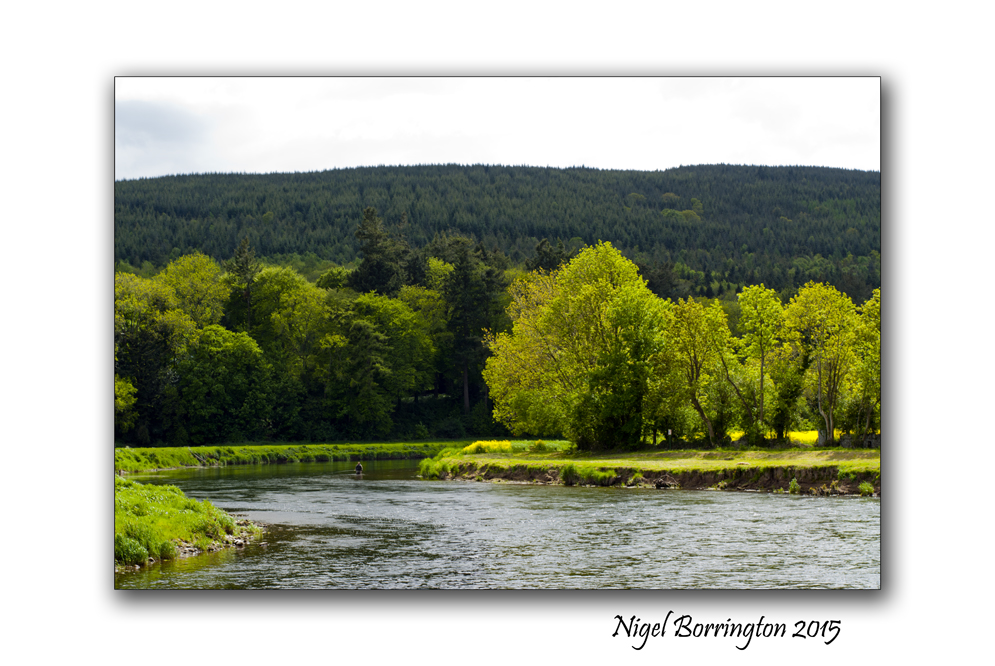


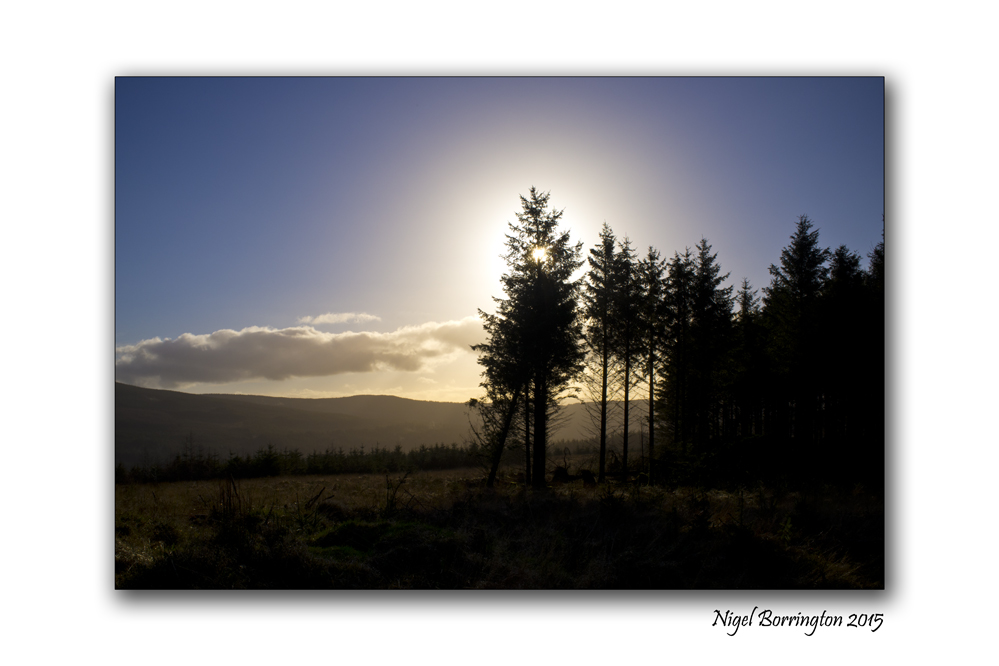


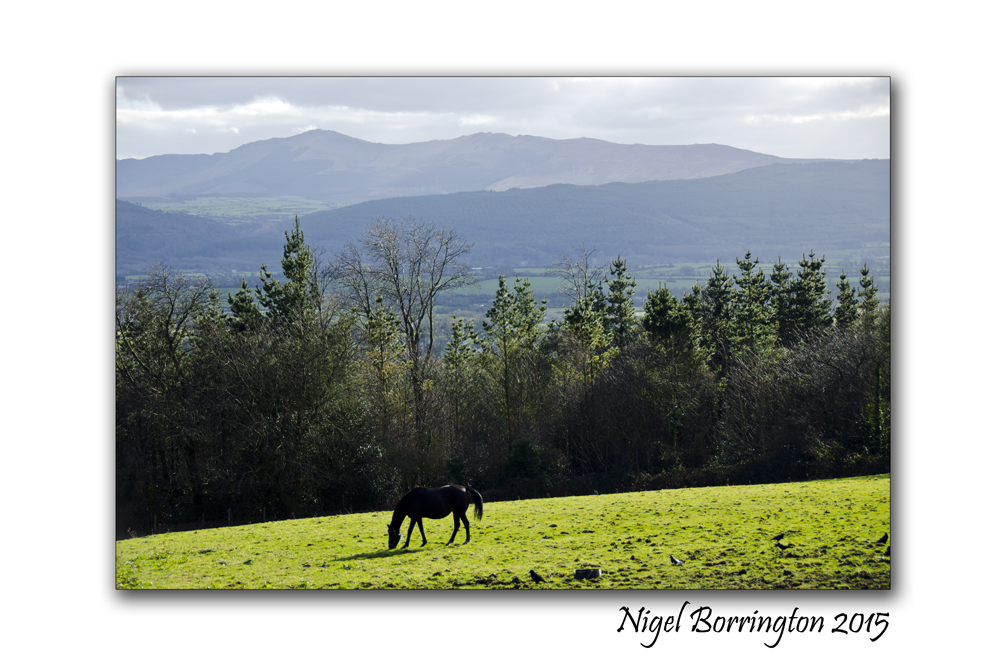

Getting close to the Rhododendron, Gallery.
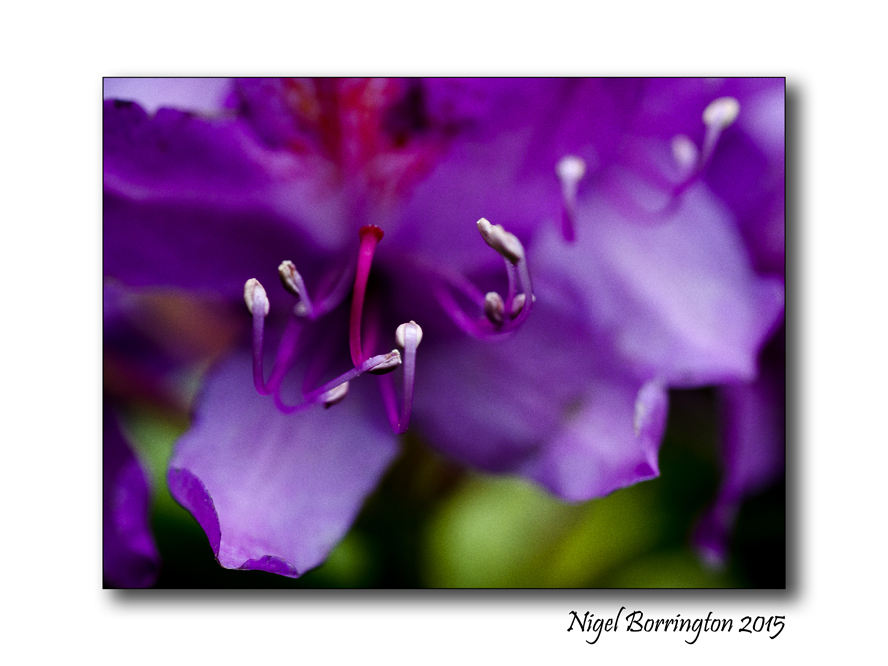
Rhododendron flowers
county Kilkenny
Nigel Borrington
At this time of year , many parts of the Irish landscape come alive with the purples and pinks of the Rhododendron flower.
These images are just a few closeup shots taken on an evening walk yesterday …..
Rhododendron (from Ancient Greek ῥόδον rhódon “rose” and δένδρον déndron “tree”) is a genus of 1,024 species of woody plants in the heath family (Ericaceae), either evergreen or deciduous, and found mainly in Asia, although it is also widespread throughout the Southern Highlands of the Appalachian Mountains of North America. It is the national flower of Nepal. Most species have showy flowers. Azaleas make up two subgenera of Rhododendron. They are distinguished from “true” rhododendrons by having only five anthers per flower.
Gallery


Sunday Evening in the tree tops, county Cork , Ireland

Sunday Evening, Co.cork Ireland
Landscape Photography : Nigel Borrington
Sunday evenings are some of my favorite times of the week, the weekends light is fading fast and we have a new week ahead of us, and new chances to grow and reach our aims.

It’s the weekend so why not take a long walk ……

Black water river at Youghal, county cork.
Landscape photography : Nigel Borrington
It’s the weekend so why not get outside into the landscape and take a long walk, stay for a while until your completely relax ………
Have a great weekend everyone 🙂
Swiss Cottage, Cahir, Co. Tipperary – A sense of place.
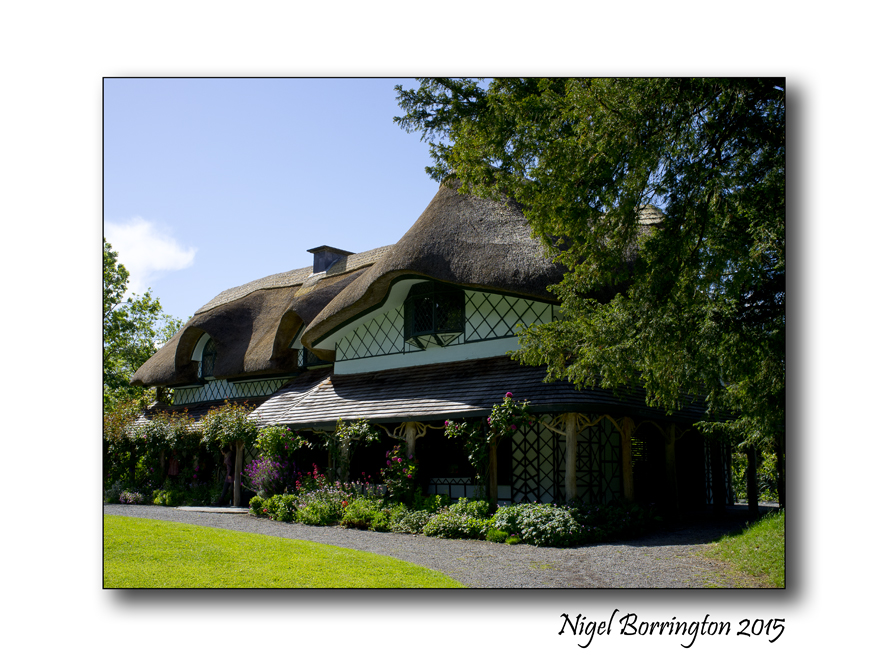
The Swiss cottage in country Tipperary is one of Ireland’s unsung treasures, it was built around 1810 and is a fine example of cottage orné, or ornamental cottage. It was originally part of the estate of Richard Butler, 10th Baron Cahir who married Emily Jefferys of Blarney , and the cottage was primarily used for entertaining day guests of the couple.
The cottage was designed by the architect John Nash, famous for designing many Regency buildings.
The cottage has been restored by the local group and the OPW and must be one of their most loved properties as the condition is just amazing.
If you are visiting county Tipperary this is a must see location !
Wiki link for John Nash
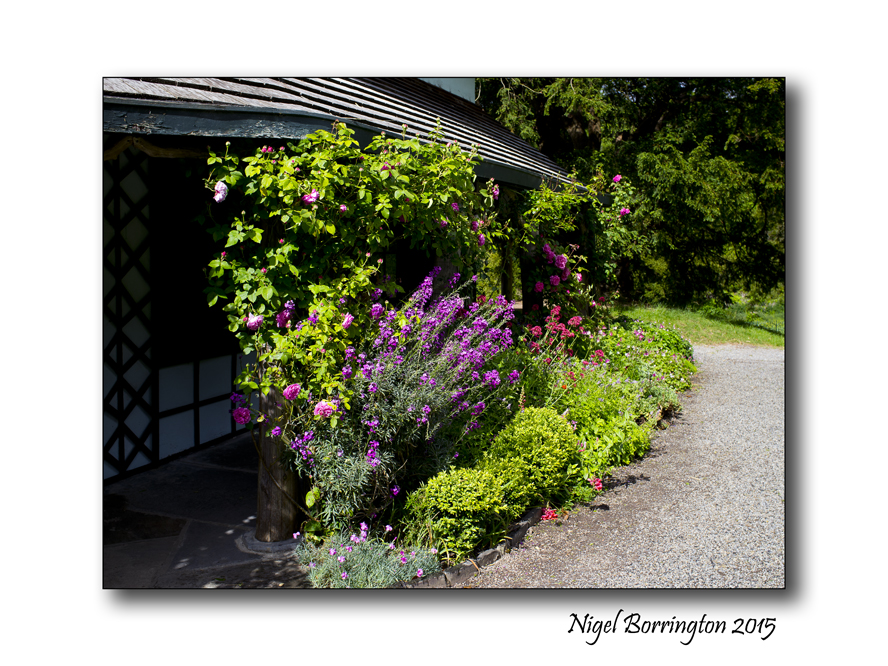
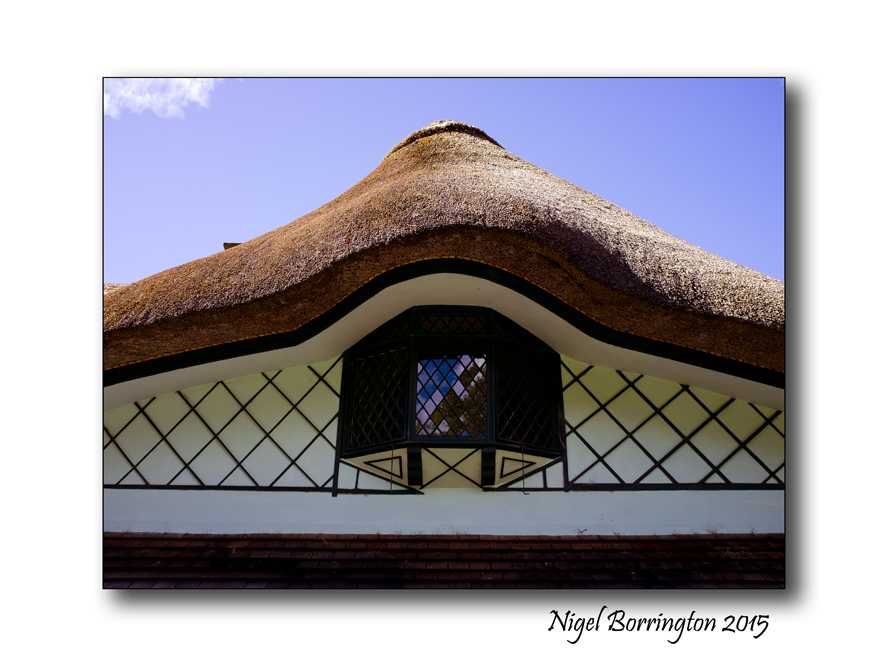
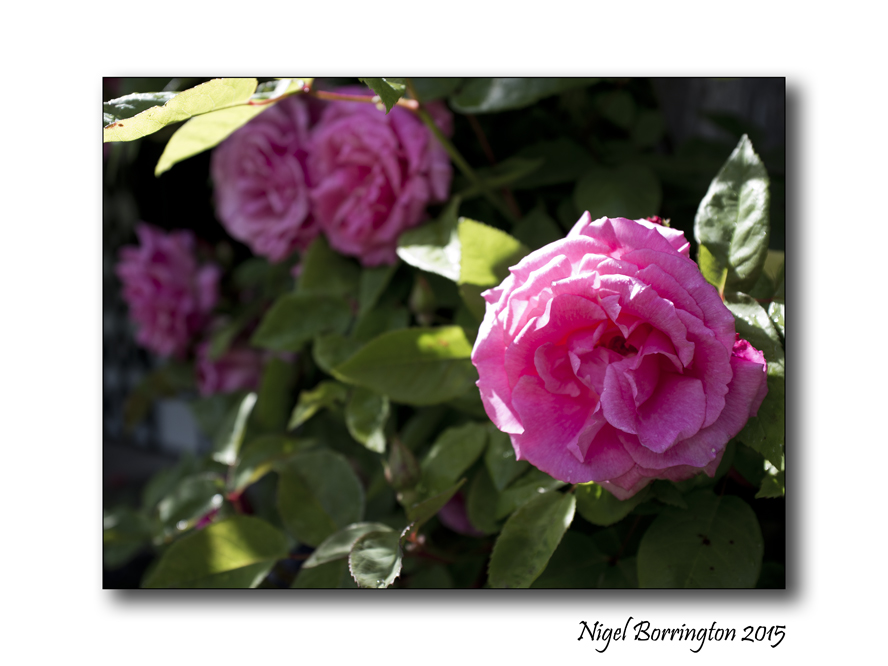
Swiss Cottage, Cahir, Co. Tipperary – A sense of place Gallery

River Bend , A poem by: Rania Moallem

Rivers bend
River Suir, Co Tipperary
Nigel Borrington
River Bend
A poem by: Rania Moallem
I believe I’ve waited too much that
patience poured wild enough to
drown me at the verge of that river
bend, where I pointlessly dwell,
where you never pass by.
And the confusion I lastly saw in your eyes
perhaps was dusk and ashes of burnt
thoughts you’ve had about me, or was it
plain puzzlement…
I wonder.
For I had you hunting me at night again
waking up breathless to find you clinging to
the last gasp of air I relief with despair,
right before I fight to sleep again.
It might be the right time to move on.
Past this rivers bend …….
Ruin a Poem By S. A. J. Bradley

Irish Landscape Photography : Nigel Borrington
Ruin
Wondrous the stone of these ancient walls, shattered by fate.
The districts of the city have crumbled.
The work of giants of old lies decayed.
Roofs are long tumbled down,
The lofty towers are in ruins.
Frost covers the mortar,
Tiles weathered and fallen, undermined by age.
The original builders are long in the earth’s cruel grip,
generations since have passed.
These broad walls, now reddened and lichen-aged, brown and gray:
once they withstood invading kingdoms.
Now, beneath countless seasons, they have fallen.
The rampart assembled by many, crumbles still,
Though hewn together with skill of sharpening and joining,
Strengthened ingeniously with chain and cabled rib-walls.

In the town, urbane buildings, bathhouses, lofty rooftops,
a multitude gathered.
Many a hall filled with humans
until Fate inexorably changed everything.
All the inhabitants succumbed to pestilence.
Swept away are the great warriors.
Their towers and walls are deserted,
the desolate place crumbles away.
Who could repair any of it,
for they are long dead.
So the courtyards and gates have collapsed,
and the pavilion roofs of vaulted beams crumbled.
Here where once men in resplendent clothes, proud, gazed upon their gold and silver treasure,
their gems and precious stones,
upon their wealth, and property:
the bright city of a broad kingdom.
Stone courtyards ran streams of ample water, heating the great bathes,
conveniently flowing into the great stone vats …
Irish Woodland flowers : Greater Stitchwort (Stellaria holostea)
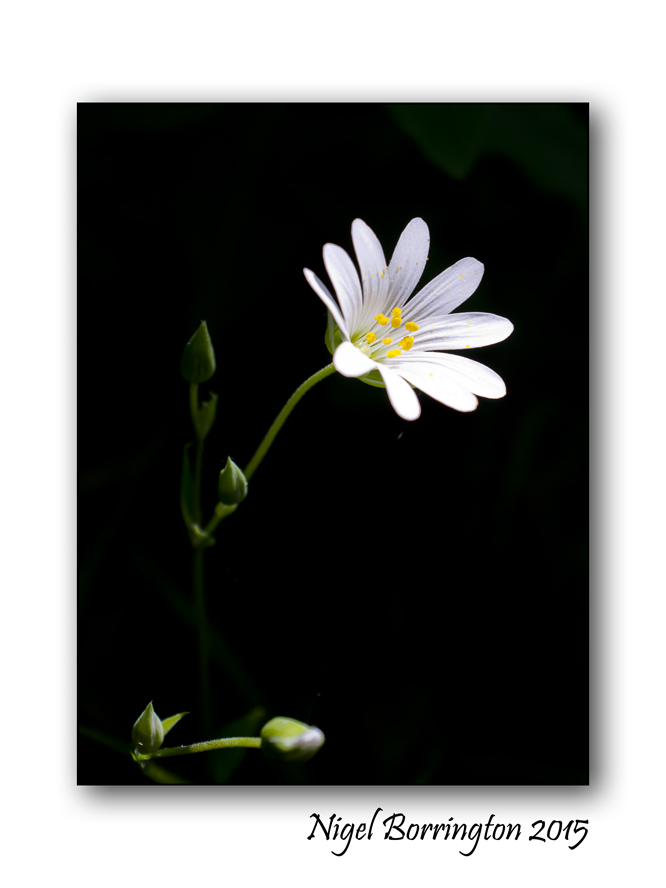
Greater Stitchwort
Stellaria holostea
Nigel Borrington
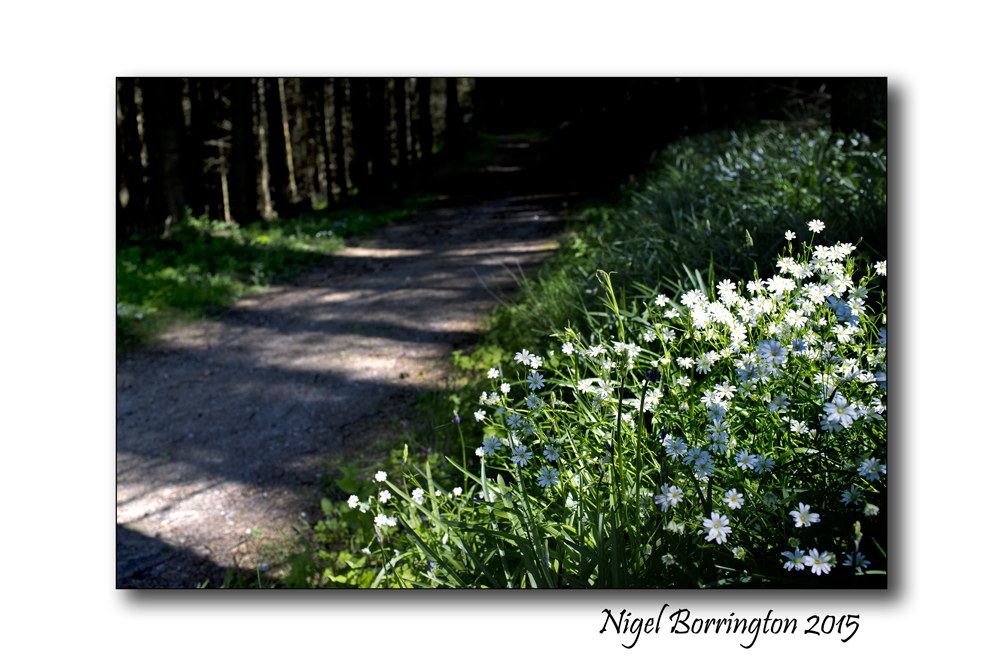
Each day this month as I go for a walk with our dog Molly, into some of our local woodland I have noticed all the wildflowers of May time and they have been a wonderful sight .
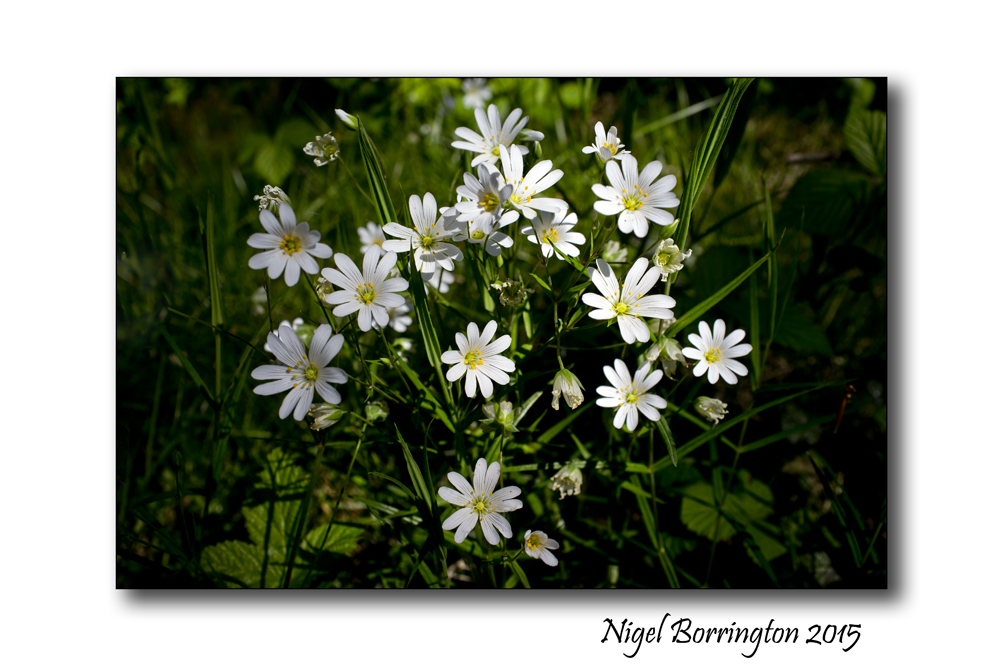
Greater Stichwort with its pure white flower heads and tall stems are just some of these.
About
Greater Stitchwort grows in woods, roadside verges, hedgerows and grassy banks. It has many other common names including ‘Wedding Cakes’, ‘Star-of-Bethlehem’, ‘Daddy’s-shirt-buttons’ and ‘Snapdragon’ – the latter because its stems are brittle and easily break. It’s pretty star-shaped, white flowers bloom from April to June; as the seed capsules ripen, they can be heard ‘popping’ in late spring.
How to identify
Greater Stitchwort has five white petals, each deeply notched and almost divided into two. Its green leaves are grass-like in appearance and its brittle stems are square. Greater Stitchwort has larger flowers (2-3cm across) than its relative, Lesser Stitchwort (0.5-1cm across).
http://www.wildlifetrusts.org/species/greater-stitchwort
County Kilkenny Landscape images, south east Ireland through a lens

Kilkenny Landscape Images
Nigel Borrington
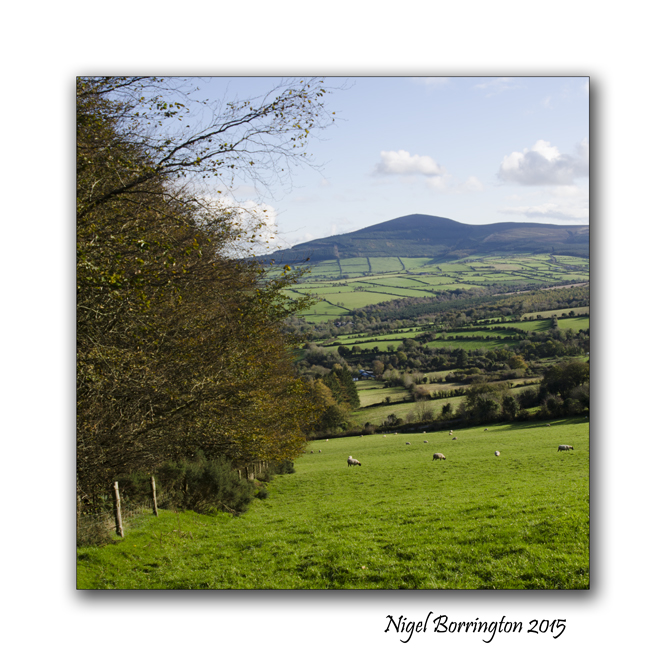
Summertime in County Kilkenny can bring some wonderful changes to the surrounding landscape and today I just want to share a gallery of images taken during the following months.
It a great time of year with so much to look forward to ……
County Kilkenny Landscape Gallery



The Old Lane Through The Woods – Poem by jim hogg , Kilkenny Landscape photography

The Old Lane Through The Woods
Black and white landscapes
Nigel Borrington
The Old Lane Through The Woods –
Poem by jim hogg
There’s a track through the trees from the White to the Black
that I walked as a kid and I often went back.
Now the years slip away and the distances grow,
but if time gives us time and we get to change tack
if the notion should take you then I’d gladly go:
in wildest November before winter’s trance,
at the height of the spring when the daffodils dance.
We could stand on the bank where the Rhodies convene,
like the first of our kind who looked down on that scene,
on a loch with no name, with no castles around,
or old burial ground of the meek and the mean;
though the rich bled the poor, by the sod they’re all bound.
Or we’ll maybe just stay on the old woodland road
and head north to the Black with the odd jumping toad.
There’s a whole constellation of things we can view.
In the summer there’s herons and sometimes deer too,
and there’s dodging and weaving through armies of leaves.
Though the foxgloves are rare I’ll find one just for you,
and then swing on the Ivy through Sycamore trees.
If you ever have time we could wander off down
that old lane through the woods whether wintry or lown.
But I know all too well that this life is a crush.
There’d be too much to do if we didn’t all rush.
And I wonder sometimes how it all went so wrong;
but they’re calling it progress with hardly a blush –
in a world where rich hippies can still sing along.
There’s a place where that craziness doesn’t hold sway;
if you’re ever back home we could go there some day
A vote for All the colors of the Rainbow, Ireland’s same-sex marriage referendum. May 22nd 2015
All the colours of the Rainbow
Nigel Borrington
This Friday (May 22nd) Ireland votes in a referendum for same-sex marriage and its a big moment for this country !!!
I don’t usually comment here , if at all about social of political issues , this is my area of personal escape in many ways from these areas !!!
However by posting one of my rainbow images here , I hope I make it very clear what I am thinking !!!
We as a race (HUMAN RACE!!!) need everyone – all ( colors, shapes and sizes ) and this involves everyone being equal and thus having the same rights in all areas of life !!!
SO Clearly I will be Voting YES!!!! 🙂 🙂
Rainbow Colors
by Sharon MacDonald
A rainbow of colors,
In the light, after rain.
There are seven of them,
And, each one has a name.
Red is the first
Rainbow color in the sky.
Orange is next
Like jack-o-lantern pie.
Yellow is the third,
Lemons come to mind.
Color four is green,
Think of grassy hills to climb
Blue is color five,
Like the water in a lake
The sixth is indigo
Blue-gray blends that you can make.
Violet is the color
Of the last rainbow band.
Violet is flowery;
Like the pedals in your hand.
So, wave your arms above you
Cast your colors high
And, try to make a rainbow
Across a cloudy sky
Free the alternatives of life !!!!!
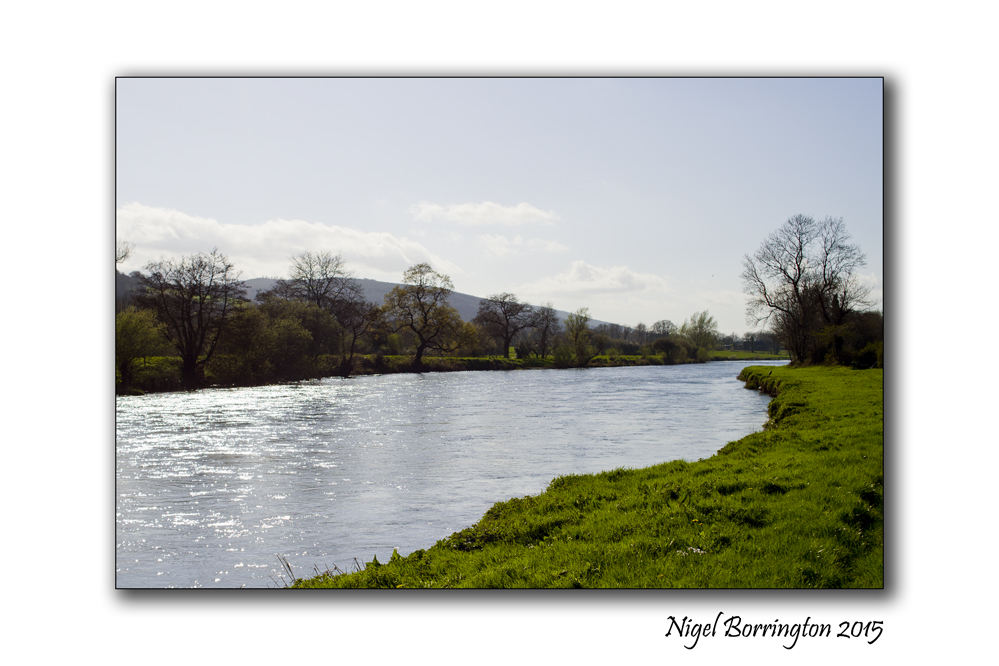
The River Of Life, A poem By Thomas Campbell

River of life, River Suir
Clonmel , Ireland
Landscape Photography : Nigel Borrington
The River Of Life
Poem by Thomas Campbell
The more we live, more brief appear
Our life’s succeeding stages;
A day to childhood seems a year,
And years like passing ages.
The gladsome current of our youth,
Ere passion yet disorders,
Steals lingering like a river smooth
Along its grassy borders.
But as the careworn cheek grows wan,
And sorrow’s shafts fly thicker,
Ye stars, that measure life to man,
Why seem your courses quicker?
When joys have lost their bloom and breath,
And life itself is vapid,
Why, as we reach the Falls of Death
Feel we its tide more rapid?
It may be strange—yet who would change
Time’s course to slower speeding,
When one by one our friends have gone,
And left our bosoms bleeding?
Heaven gives our years of fading strength
Indemnifying fleetness;
And those of youth, a seeming length,
Proportioned to their sweetness.
The River Of Life
Thomas Campbell
The Growth of a Seed – By Dan Farella

The Growth of a seed
Nature Photography : Nigel Borrington
The Growth of a Seed
– By Dan Farella
The growth of a seed
Starts with a need
A feeling inside her
Like a burning fire
Glowing to inspire
And the growth transpires
Inside her that fire
Burning brighter and brighter
Ignites her into a frenzy of burning desire
To lift herself higher, and higher, and higher…
A desire to surrender to the growth that transpires
And she never grows tired, growing, and growing
And a sprout grows out from beyond the doubt
The shadows get exposed to the light of insight
As the stem grows longer getting stronger and stronger

The days get brighter and her spirit feels lighter
The pulsing emanates from a sacred place…
Babump…. babump… babump….
Reaching for the light radiating inner sight
[And an animal comes to take a little bite]
And the nutrients they grow as the energy it flows
And the time has come for her soul to become one
So she sends out her leaves allows herself to be alive
No running no hiding and nowhere to go
So it waits and it grows and it sits and it flows
As the thoughts pass by and she holds her composure
Growing and growing flowing and flowing
Getting taller and stronger
Allowing herself to be seen

It goes on and on as she reaches her dawn
Only to know that its time for her to move on
And release her seeds to the wind, set sail
And she trusts they will grow through wind, rain, or hail
As she brings all the energy up into her crown
The wind begins to blow as she listens to the sound
And she knows its time to let her children take flight
Getting lost in the life, the love, and de-light
She completes her deed and she dies a slow death
But she knows she will go back into the goddess breath
Where she feeds the soil that will grow her kin
With the nutrients she once used to help her begin
And she feels a sense of right-ness and completeness inside
As she knows that she worked with Natures highest design
And she never grows tired, growing and growing
Reaping and sowing, reaping and sowing.
– By Dan Farella
Blue flowers , they stands for desire the infinite and unreachable

Blue flowers of , Common-Field-Speedwell
Nature Photography : Nigel Borrington
Blue flowers must be one of the hardest types of wild flowers to find, these Field-Speedwell’s are just some of a few we have in our local woodlands.
Blue in nature has been used as a powerful symbol, the following uses are just a few …..
Blue flowers
A blue flower is a central symbol of inspiration. It stands for desire, love, and the metaphysical striving for the infinite and unreachable. It symbolizes hope and the beauty of things.
Early use of the symbol of blue flowers
German author Novalis used the symbol in his unfinished Bildungsroman, entitled Heinrich von Ofterdingen. After contemplating a meeting with a stranger, the young Heinrich von Ofterdingen dreams about a blue flower which calls to him and absorbs his attention.
Explanation of the symbol of blue flowers
In the book Heinrich von Ofterdingen the blue flower symbolises the joining of human with nature and the spirit so the understanding of nature and coincident of the self is growing. In the Romantic the meaning of human was a continuation from Humanism and the Age of Enlightenment, but the focus was on the own emotions not on abstract theory. Understanding and thinking rise in the comprehension of Romantic from own individual love. Feeling is based on the self, thinking is based on the self and the development of the self leads the individual person. Also very important is contemplation. About the feeling, the thinking and contemplation personal inward cognition is possible. The process of cognition merge again with own individual love. The self and the nature is in this theory always linked.
Use of the symbol
Joseph Freiherr von Eichendorff wrote a poem called Die blaue Blume (The blue flower). Adelbert von Chamisso saw the core of Romanticism in the motif, and Goethe searched for the “Urpflanze” or “original plant” in Italy, which in some interpretations could refer to the blue flower. E. T. A. Hoffmann used the Blue Flower as a symbol for the poetry of Novalis and the “holy miracle of nature” in his short tale “Nachricht von den neuesten Schicksalen des Hundes Berganza”.
In 1902, Charles Scribner’s Sons published “The Blue Flower”, a collection of short stories by Henry Van Dyke, the first two of which, “The Blue Flower” and “The Source” refer to the blue flower as a symbol of desire and hope, and the object of the narrator’s search. This volume also includes Van Dyke’s most famous story, “The Other Wise Man”.
Blue rose
Walter Benjamin used the image of the blue flower several times in his writing. For example the opening sentence of his essay Dream Kitsch: “No one really dreams any longer of the Blue Flower. Whoever awakes as Heinrich von Ofterdingen today must have overslept.” Also in his Work of Art essay: “The equipment-free aspect of reality has here become the height of artifice, and the vision of immediate reality the Blue Flower in the land of technology.”
C.S. Lewis, in his autobiographical book, Surprised By Joy, references the “Blue Flower” when speaking of the feelings of longing that beauty ellicited when he was a child of six. He associates it with the German word sehnsucht, and states that this intense longing for things transcendent made him “a votary of the Blue Flower.”
English writer Penelope Fitzgerald’s historical novel The Blue Flower is based on Novalis’s early life. In John le Carré’s 1968 novel A Small Town in Germany, the character Bradfield says, “I used to think I was a Romantic, always looking for the blue flower.” (Pan edition, p. 286 – chap. 17) Substance D, a fictitious drug in Philip K. Dick’s 1977 novel A Scanner Darkly, is derived from a plant with blue flower.
Tennessee Williams used images of blue roses in his play, The Glass Menagerie, to symbolize the frailty and uniqueness of Laura, a central character that reflects the life of Williams’ sister, who underwent a lobotomy. In the play, Laura is nicknamed “Blue Roses” after another character misheard her say “pleurosis”.
In his fantasy series A Song of Ice and Fire, American author George R. R. Martin uses the blue flower as a reoccurring symbol to represent young women of the noble House Stark, often with hints to an illicit love affair. In one instance, Prince Rhaegar Targaryen uses blue winter roses to crown the Lady Lyanna Stark as the “Queen of Love and Beauty” at the Tournament of Harrenhal, passing over his own wife, Princess Elia of Dorne.
“Blue Flower” is the name of a song by the British avant-garde pop band of the early 1970s, Slapp Happy, later covered by the 1990s indy rock bands Pale Saints and Mazzy Star. “Blue Flowers” is a song by the alternative MC, Kool Keith (AKA Dr. Octagon), on his 1996 album, Dr. Octagonecologyst.
From Blossoms, Poem By : Li-Young Lee

From Blossoms
Nature Photography : Nigel Borrington
From Blossoms
By : Li-Young Lee
From blossoms comes
this brown paper bag of peaches
we bought from the boy
at the bend in the road where we turned toward
signs painted Peaches.
From laden boughs, from hands,
from sweet fellowship in the bins,
comes nectar at the roadside, succulent
peaches we devour, dusty skin and all,
comes the familiar dust of summer, dust we eat.
O, to take what we love inside,
to carry within us an orchard, to eat
not only the skin, but the shade,
not only the sugar, but the days, to hold
the fruit in our hands, adore it, then bite into
the round jubilance of peach.
There are days we live
as if death were nowhere
in the background; from joy
to joy to joy, from wing to wing,
from blossom to blossom to
impossible blossom, to sweet impossible blossom.
– Li-Young Lee
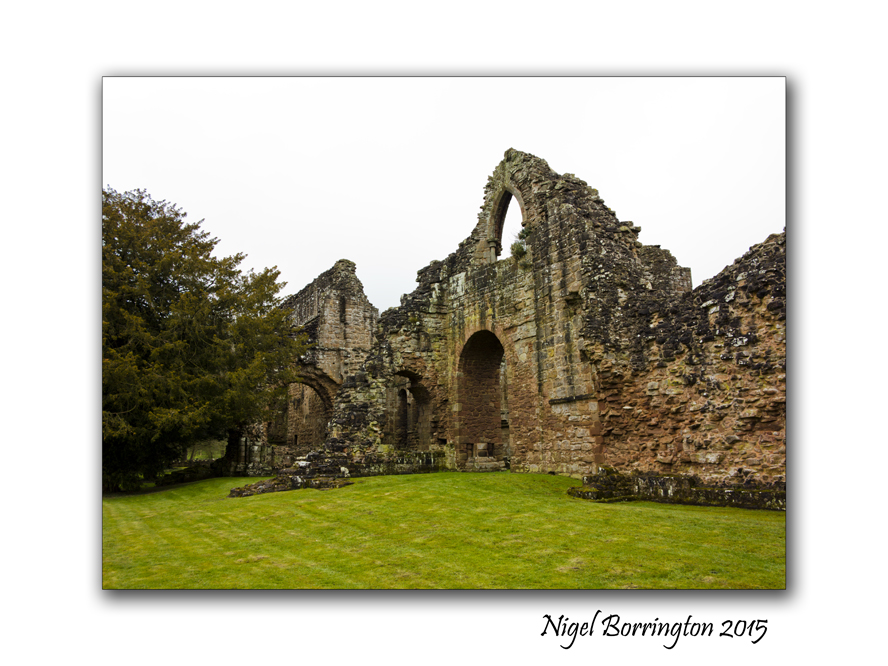
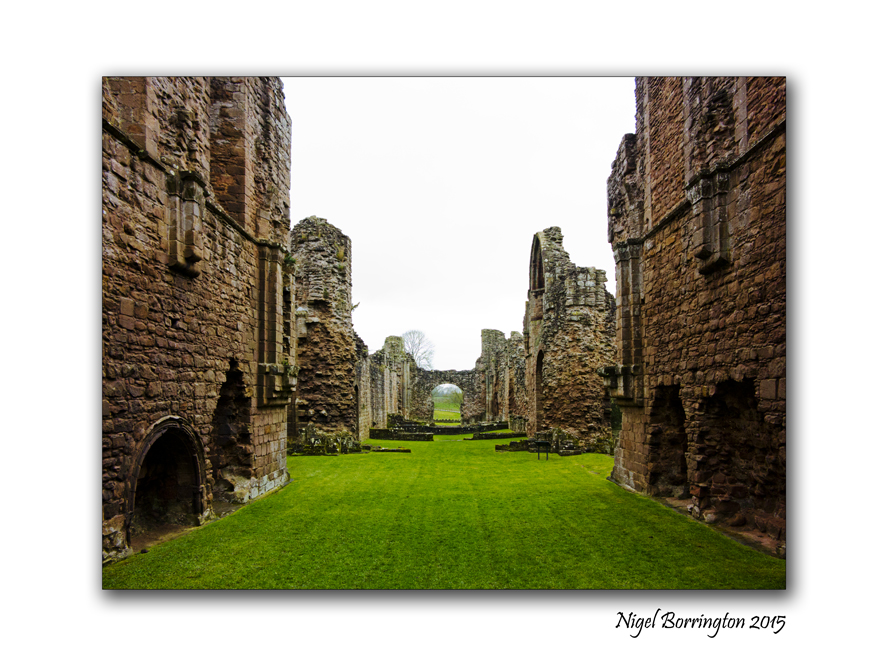
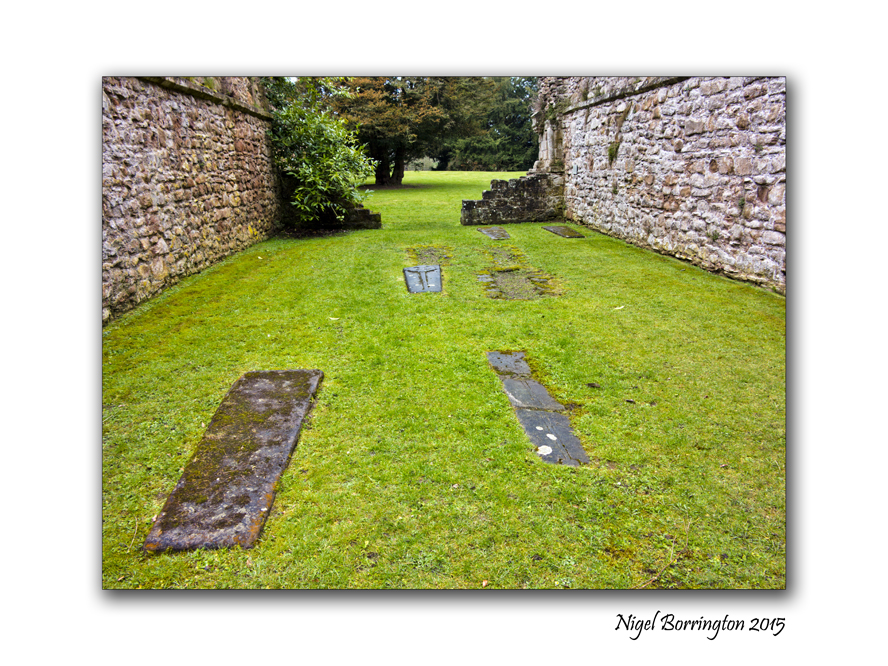
Lilleshall Abbey Shropshire, England
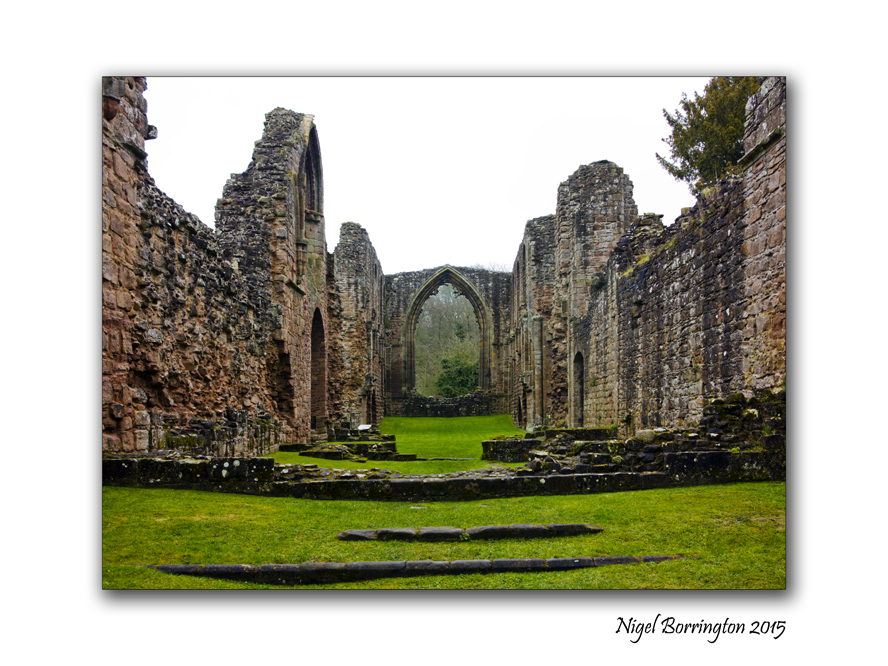
Lilleshall Abbey, Shropshire, England,
Landscape Photography : Nigel Borrington
Lilleshall Abbey Shropshire, England
On a very wet day back in April 2015, I visited Lilleshall Abbey Shropshire, while driving back from London to a friends home in North Wales. The Abbey is located just north of the M54 junction 5, near the village of Lilleshall.
To find the Abbey just follow the Brown tourist signs when you leave the motorway.
The weather was somehow fitting for making a visit here as it made it very clear just how life would have been for the 11th century monks who lived their lives here ( cold , wet and isolated ).
This text form wikipedia on the Abbey, describes very well the life of a monk and contains a great history of the Abbey …
Lilleshall Abbey Shropshire, England
The monastic life
The abbey’s community were Augustinian Canons Regular or conventual canons, not technically monks. Although the Arrouaisians were at first noted for their austerity of life, they were less enclosed than Benedictine or Cistercian monks. Arrouaisian houses were noted for the high quality of their liturgical observance. A prayer roll of about 1375 confirms that this was so at Lilleshall more than two centuries after the foundation.
There was a large number of benefactions from lay landowners and these often came with requests to be buried or prayed for at Lilleshall or for membership of the fraternity of the abbey. Late in the 12th century, for example, John Lestrange, a local baron with holdings further afield, got into a dispute with Ramsey Abbey over the church at Holme-next-the-Sea in Norfolk. In a settlement acceptable to all, he gave the church to Lilleshall Abbey, for the health of his own and his wife’s souls. Shortly afterwards he added the church at Shangton in Leicestershire, adding specifically “the body of his wife Amicia when she shall have gone the way of all flesh.” Similarly, Robert de Kayley gave the abbey two thirds of his land at Freasley, in Dordon, Warwickshire, on condition that it accept his body for burial.This suggests that its monastic life quickly built up a reputation for holiness that could be acquired by proximity, and one that clearly persisted into the later Middle Ages. John of Gaunt, 1st Duke of Lancaster, spent two days at the abbey, together with his wife Katherine Swynford and a large retinue. He had fallen ill after the 24th parliament of Richard II’s reign was held at Shrewsbury, dissolving on 31 January 1398. Gaunt himself, his wife, and his squire, William Chetwynd, were received into the fraternity, and Gaunt made a gift of twenty pounds of gold.

Although the fraternity was important in diffusing the influence of the abbey, there is no evidence of lay brothers and sisters being admitted to the abbey community itself. This is unexpected as the Abbey of Arrouaise had admitted lay members at least since the time of Abbot Gervais. There were many employees, however. In the mid-15th century, there were over twenty household servants, including two porters, a butler, a chamberlain, two cooks, a baker, a bell-ringer, a cobbler, and washerwoman, as well as a carpenter and a group of apprentices to carry out repairs. There was a tannery on the premises, as well as a brewery. Self-sufficiency was an important feature of Arrouaisian houses. Arrouaise itself had a similar but even larger and more differentiated lay labour force.
The canons were much employed in managing the abbey’s substantial estates, which seem to have been worked mainly by indentured servants and later by wage labour. A fairly high proportion of the abbey’s land was kept in demesne, cultivated from granges. The Lilleshall estate alone had four of these and there was a ring of further granges in Shropshire and Staffordshire, with two outlying at Blackfordby and Grindlow. The grange at Blackfordby seems to have absorbed a good deal of time and labour, with canons often staying there. There was even a chapel on site, with mass said three times a week. This was strictly irregular, as it was considered perilous to the soul for a canon to reside anywhere alone, and there were complaints about it from the Bishop of Lichfield. However, the nature of the abbey’s estates meant that canons would often require leave to travel. Both this and the increasingly unfavourable agrarian conditions and labour market of the 14th century meant that direct exploitation of demesnes was gradually reduced in favour of leasing out land.
The abbey was not noted for its intellectual life. However, there was some kind of library and a copy of a chronicle ascribed to Peter of Ickham has survived from it, with additions made locally. There is also evidence of a canon being licensed to study at university for 10 years from 1400.
John Mirk, a Lilleshall canon of the late 14th and early 15th centuries did make a literary mark. He wrote in the local West Midland dialect of Middle English and at least two of his works were widely copied and used. Festial is a collection of homilies for the festivals of the Liturgical year as it was celebrated in his time in Shropshire. Instructions for Parish Priests is in lively vernacular verse, using octosyllabic lines and rhyming couplets throughout. Mirk intended to ensure that priests had the resources to give good counsel to their flock. The existence of such works suggests that the canons were actively engaged with the liturgical and pastoral work of their region, if not at the highest scholarly level.
—————
I really enjoyed taking a pause in my long drive here, even in the heavy British rains and would recommend a visit if your ever passing by …..
Lilleshall Abbey a Gallery



“MAY” a Poem by: Christina Rossetti (1830-1894)

The flowers of May
Nature Photography : Nigel Borrington
May
by: Christina Rossetti (1830-1894)
I cannot tell you how it was;
But this I know: it came to pass–
Upon a bright and breezy day
When May was young, ah pleasant May!
As yet the poppies were not born
Between the blades of tender corn;
The last eggs had not hatched as yet,
Nor any bird forgone its mate.
 .
.
I cannot tell you what it was;
But this I know: it did but pass.
It passed away with sunny May,
With all sweet things it passed away,
And left me old, and cold, and grey.
Happy 1st of May to everyone, it is Beltane in the Pagan and Celtic calendar ….

1st of May and its Beltane
Kilkenny Landscape Photography : Nigel Borrington
Beltane or Beltain
(/ˈbɛl.teɪn/)is the Gaelic May Day festival. Most commonly it is held on 1 May, or about halfway between the spring equinox and the summer solstice. Historically, it was widely observed throughout Ireland, Scotland and the Isle of Man. In Irish it is Bealtaine ([ˈbʲal̪ˠt̪ˠənʲə]), in Scottish Gaelic Bealltainn ([ˈpjaul̪ˠt̪ˠɪɲ]) and in Manx Gaelic Boaltinn or Boaldyn. It is one of the four Gaelic seasonal festivals—along with Samhain, Imbolc and Lughnasadh—and is similar to the Welsh Calan Mai.

Beltane is mentioned in some of the earliest Irish literature and it is associated with important events in Irish mythology. It marked the beginning of summer and was when cattle were driven out to the summer pastures. Rituals were performed to protect the cattle, crops and people, and to encourage growth. Special bonfires were kindled, and their flames, smoke and ashes were deemed to have protective powers. The people and their cattle would walk around the bonfire, or between two bonfires, and sometimes leap over the flames or embers. All household fires would be doused and then re-lit from the Beltane bonfire. These gatherings would be accompanied by a feast, and some of the food and drink would be offered to the aos sí. Doors, windows, byres and the cattle themselves would be decorated with yellow May flowers, perhaps because they evoked fire. In parts of Ireland, people would make a May Bush; a thorn bush decorated with flowers, ribbons and bright shells. Holy wells were also visited, while Beltane dew was thought to bring beauty and maintain youthfulness. Many of these customs were part of May Day or Midsummer festivals in other parts of Great Britain and Europe.
Historic Beltane customs
Beltane was one of four Gaelic seasonal festivals: Samhain (~1 November), Imbolc (~1 February), Beltane (~1 May) and Lughnasadh (~1 August). Beltane marked the beginning of the pastoral summer season, when livestock were driven out to the summer pastures. Rituals were held at that time to protect them from harm, both natural and supernatural, and this mainly involved the “symbolic use of fire”. There were also rituals to protect crops, dairy products and people, and to encourage growth. The aos sí (often referred to as spirits or fairies) were thought to be especially active at Beltane (as at Samhain) and the goal of many Beltane rituals was to appease them. Most scholars see the aos sí as remnants of the pagan gods and nature spirits. Beltaine was a “spring time festival of optimism” during which “fertility ritual again was important, perhaps connecting with the waxing power of the sun”.
On The Beach – A Poem by Michael Williams
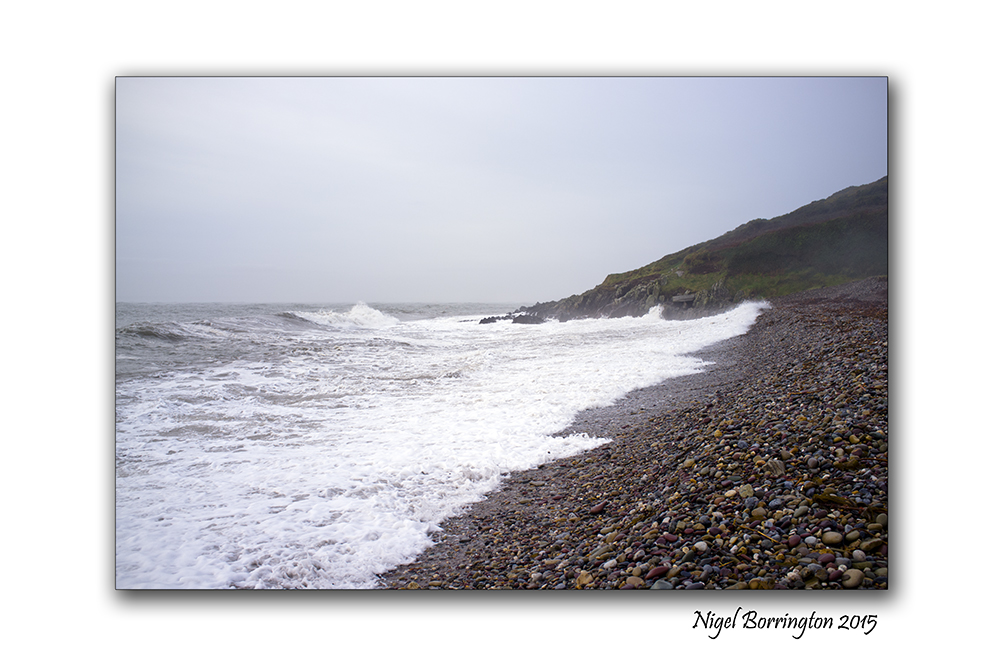
Beach Photography
Nigel Borrington
On The Beach –
A Poem by Michael Williams
At dawn, bare footed, viewing as far as eyes can reach,
the water’s edge advances and recedes along the beach.
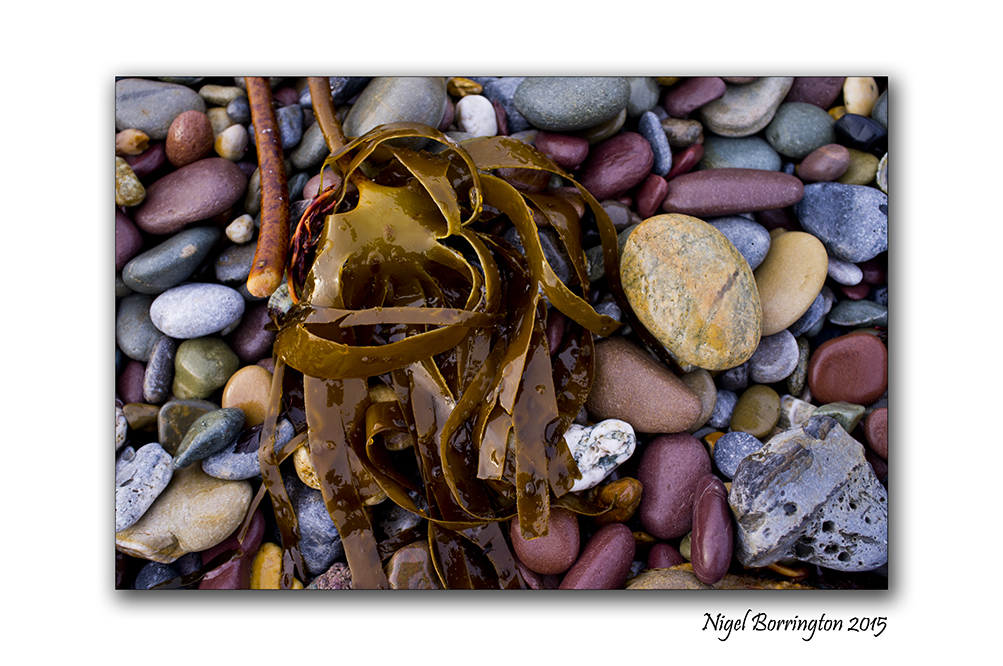
Before me I see a carpet of half-buried shells of sea-creatures,
tide washed and rippled in sodden sand along the beach.
I move, exploring, sodden sand oozing between my toes,
beyond me the wavelets breaking on the sand along the beach.
 .
.
Behind me, my wandering trail is blurred and indistinct,
as the water’s edge advances and recedes along the beach.
At mid-day, on the soft dry sand behind the water’s edge,
undressed worshippers lie in the sun that beats down along the beach.
 .
.
At night, the moon’s reflection at the water’s edge
resembles sea serpents playing in the wavelets along the beach.
 Nigel Borrington
My 1000th post, a Monday Morning – Thank you …..
Sunrise above the Mountain
Irish landscape Photography
Nigel Borrington
Today’s Post marks the 1000th on my Blog so I just wanted to say a Massive THANK YOU!!! to anyone and everyone who has visited over the last few years.
Thank you for posting all your many thousands of comments and likes and for helping me to enjoy the landscape of Ireland that I love so much. Thank you also for allowing me to share my photography of so many of these much loved locations.
THANK YOU 🙂 🙂
I was looking through my posts and noted that these two images are the very first images I posted back in 2011, so I wanted to share them here again this morning.
I my slowdown posting a little over the next few weeks, I want to read more of your posts and enjoy them , it takes time creating a post and I don’t then always have time to read and look at your posts, something I love doing 🙂
Share this:
June 22, 2015 | Categories: Comment, Gallery, Landscape | Tags: 1000th post, black and white photography, irish landscape images, landscape images, Nigel Borrington, Thank you | 22 Comments