Tramore Beach in Time and the “Princess Of The Sea”, Anne-Lise Andresen and Liam Mc Daid
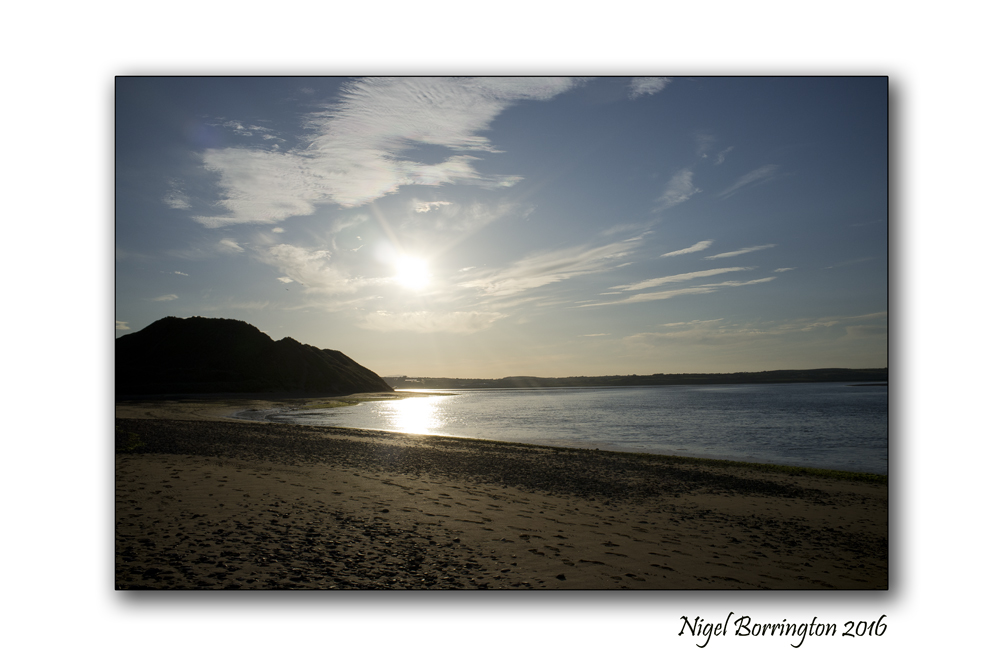
Tramore Beach
Far away in time
Irish Landscape
Nigel Borrington
– The Princess Of The Sea –
A Collaborated Poem
Anne-Lise Andresen and Liam Mc Daid
On the beach I found a seashell
luster of colors mixed with gold illuminate
Washed by the sea millions of times
tides turn as gentle footprints remain
I sit and ponder, how could it happen
salt breeze within an ocean’s breath inhales
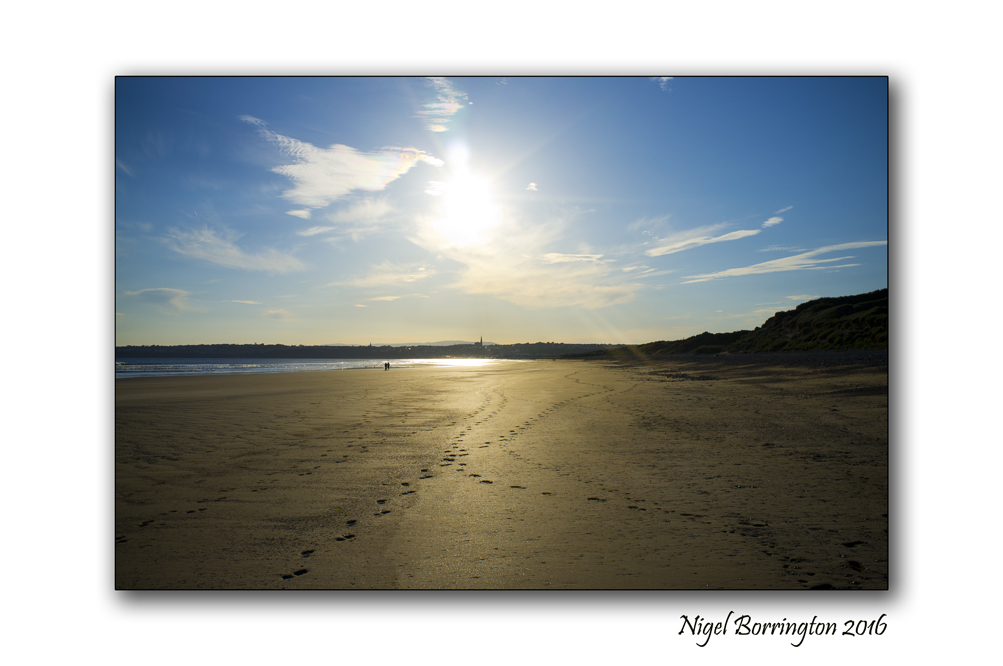
A journey of unimaginable time
drifting murmurs echo against waves crashing
In the sunlight it shone with many shades
satin pearl treasure heart between two shells
Carefully I opened and found its soul
it was then as one on whitewashed wings we flew free

I found a beautiful princess of the sea
Upon a sigh or dream revealed its inner secret
A Collaborated Poem
Anne-Lise Andresen and Liam Mc Daid
Poem: When I look down toward the beach, Images of the Irish south coast
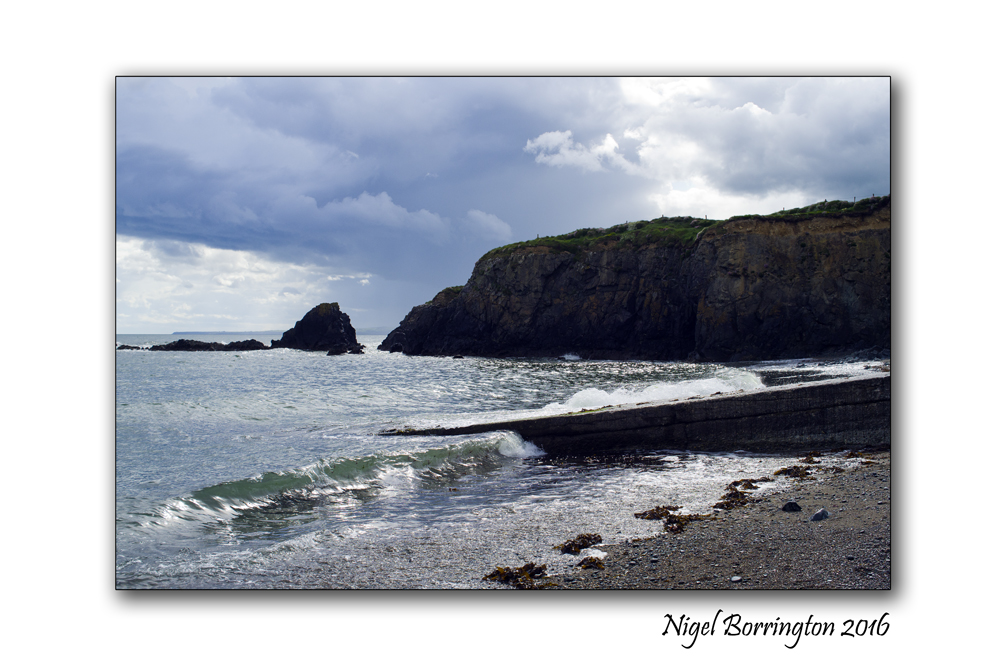
Image Of the Irish Coast , County Waterford, Ireland
Irish Landscape photography : Nigel Borrington
Images from the Irish coast.
Poem : When I look down toward the beach
When I look down toward the beach,
the distant pier seems to stride
forward from the shining sea.
I like to look beyond,
to the bands of turquoise and blue,
an ocean painted in bold,
abandoned strokes.
Why are we drawn to the waves?
Those elemental rhythms,
sounds and colours
of a primary world,
where sparse pointillist spots
busy themselves on
yellow-ochre sands.

Some days the morning
unfolds through mists,
groynes spacing out
the distances along the strand,
until a final fade-out,
well before the sea
can meet the sky.
Overhead, pterodactyl shapes
patrol against fresh patches
of blue. As I approach,
the blurred semblances
of buildings appear, rectangles
feathered violet or grey,
as if stepping off the cliff.
The Copper mine , Monday Poetry

The Copper Mine
A mine spread out its vast machinery.
Her engines with their huts and smoky stacks,
Cranks, wheels, and rods, boilers and hissing steam,
Pressed up the water from the depths below.
Here fire-whims ran till almost out of breath,
And chains cried sharply, strained with fiery force.
Here blacksmiths hammered by the sooty forge,
And there a crusher crashed the copper ore.
Here girls were cobbing under roofs of straw,
And there were giggers at the oaken hutch.
Here a man-engine glided up and down,
A blessing and a boon to mining men:
And near the spot, where many years before,
Turned round and round the rude old water wheel,
A huge fire-stamps was working evermore,
And slimy boys were swarming at the trunks.
The noisy lander by the trap-door bawled
With pincers in his hand; and troops of maids
With heavy hammers brake the mineral stones.
The cart-man cried, and shook his broken whip;
And on the steps of the account-house stood
The active agent, with his eye on all.
Below were caverns grim with greedy gloom,
And levels drunk with darkness; chambers huge
Where Fear sat silent, and the mineral-sprite
For ever chanted his bewitching song;
Shafts deep and dreadful, looking darkest things
And seeming almost running down to doom;
Rock under foot, rock standing on each side;
Rock cold and gloomy, frowning overhead;
Before; behind, at every angle, rock.
Here blazed a vein of precious copper ore,
Where lean men laboured with a zeal for fame,
With face and hands and vesture black as night,
And down their sides the perspiration ran
In steaming eddies, sickening to behold.
But they complained not, digging day and night,
And morn and eve, with lays upon their lips.
Here yawned a tin-cell like a cliff of crags,
Here Danger lurked among the groaning rocks,
And oftimes moaned in darkness. All the air
Was black with sulphur and burning up the blood.
A nameless mystery seemed to fill the void,
And wings all pitchy flapped among the flints,
And eyes that saw not sparkled min the spars.
Yet here men worked, on stages hung in ropes,
With drills and hammers blasting the rude earth,
Which fell with such a crash that he who heard
Cried, “Jesu, save the miner!” Here were the ends
Cut through hard marble by the miners’ skill,
And winzes, stopes and rizes: pitches here,
Where worked the heroic, princely tributer,
This month for nothing, next for fifty pounds.
Here lodes ran wide, and there so very small
That scarce a pick-point could be pressed between;
Here making walls as smooth as polished steel,
And there as craggy as a rended hill.
And out of sparry vagues the water oozed,
Staining the rock with mineral, so that oft
It led the labourer to a house of gems.
Across the mine a hollow cross-course ran
From north to south, an omen of much good;
And tin lay heaped on stulls and level-plots;
And in each nook a tallow taper flared,
Where pale men wasted with exhaustion huge.
Here holes exploded, and there mallets rang,
And rocks fell crashing, lifting the stiff hair
From time-worn brows, and noisy buckets roared
In echoing shafts; and through this gulf of gloom
A hollow murmur rushed for evermore.
Friday Poetry : The Road

The Road
West Cork, Ireland
Nigel Borrington
The Road
Rockie
Oct 19, 2014
If you were on the road to nowhere,
where would you go?
If you were on the road to somewhere,
would you stay where you are?
If there was no road,
what would you do?
If the road was there,
would you carry on walking?
If the road you walked upon,
was somebody else’s,
would you leave?
If the road you took,
leads to the end of yours,
would you bother turning back?
What would YOU do,
if the feet that led you,
took you onto a road,
that you didn’t know about?
Crossing The Bar – Poem by Alfred Lord Tennyson
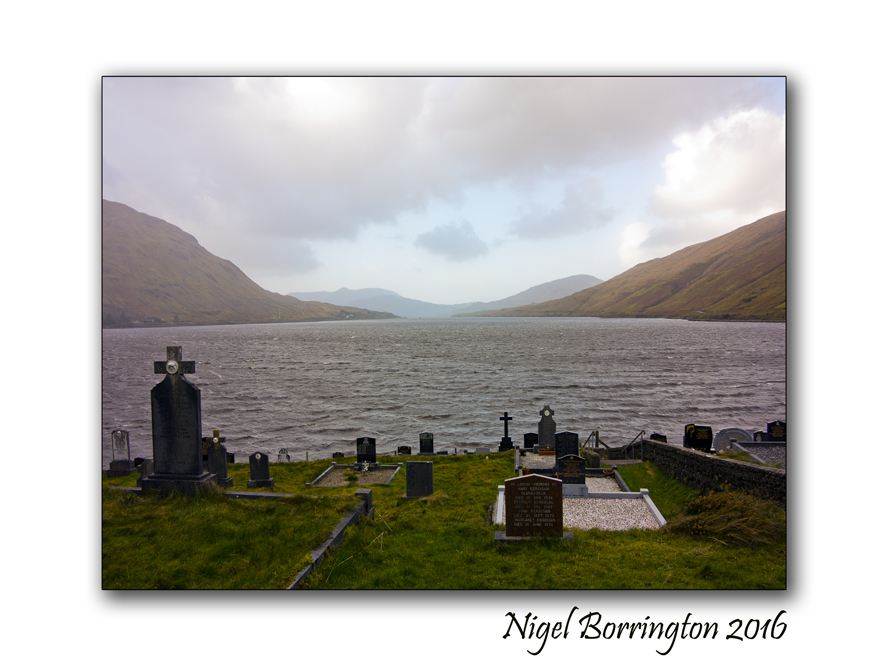
Crossing The Bar – Poem by Alfred Lord Tennyson
Irish Landscapes
Nigel Borrington
Crossing The Bar – Poem by Alfred Lord Tennyson
Sunset and evening star,
And one clear call for me!
And may there be no moaning of the bar,
When I put out to sea,
But such a tide as moving seems asleep,
Too full for sound and foam,
When that which drew from out the boundless deep
Turns again home.

Twilight and evening bell,
And after that the dark!
And may there be no sadness of farewell,
When I embark;
For though from out our bourne of Time and Place
The flood may bear me far,
I hope to see my Pilot face to face
When I have cross the bar.

The Sound of the Sea, By : Henry Wadsworth Longfellow

The sound of the sea
Nigel Borrington
The Sound of the Sea
By : Henry Wadsworth Longfellow
The sea awoke at midnight from its sleep,
And round the pebbly beaches far and wide
I heard the first wave of the rising tide
Rush onward with uninterrupted sweep;
A voice out of the silence of the deep,
A sound mysteriously multiplied
As of a cataract from the mountain’s side,
Or roar of winds upon a wooded steep.
So comes to us at times, from the unknown
And inaccessible solitudes of being,
The rushing of the sea-tides of the soul;
And inspirations, that we deem our own,
Are some divine foreshadowing and foreseeing
Of things beyond our reason or control.
Glacier, A poem by Christos Andreas Kourtis Nov 30, 2013
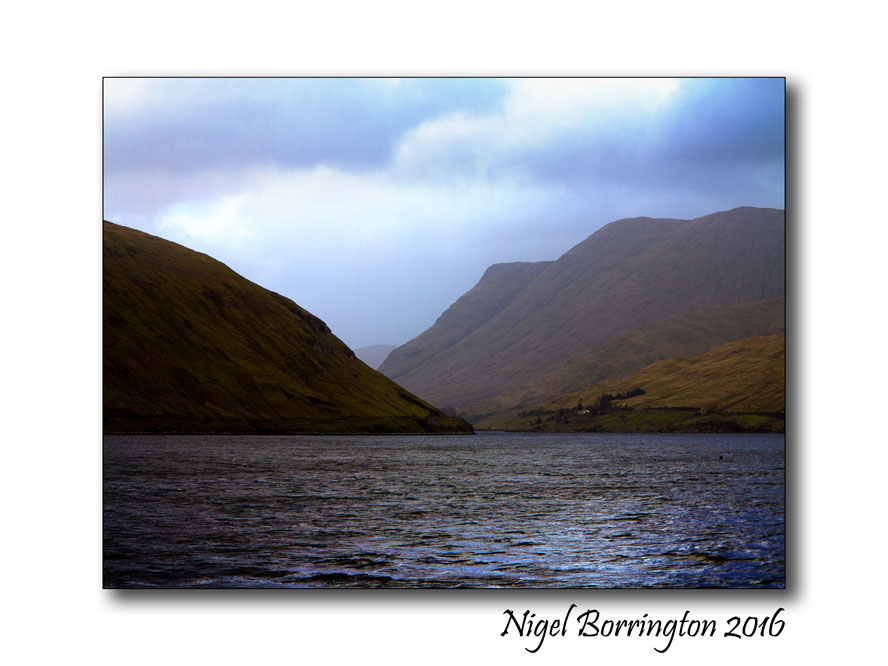
Killary Harbour/An Caoláire Rua
Irish Landscape
Nigel Borrington
Killary Harbour/An Caoláire Rua is a fjord located in the west of Ireland in the heart of Connemara which forms a natural border between counties Galway and Mayo. It is 16 kilometres long and in the centre over 45 metres deep. It is one of three glacial fjards that exist in Ireland, the others being Lough Swilly and Carlingford Lough.[1]
On its northern shore lies the mountain of Mweelrea, Connacht’s highest mountain, rising to 814 metres. To the south rise the Maumturk Mountains and the Twelve Bens. The area contains some of Ireland’s most awe-inspiring and dramatic scenery.
I visit the Fjord back in January and captures these images, I felt that Christos Andreas Kourtis poem “Glacier” matched the amazing atmosphere here perfectly …..
Glacier
Christos Andreas Kourtis
Nov 30, 2013
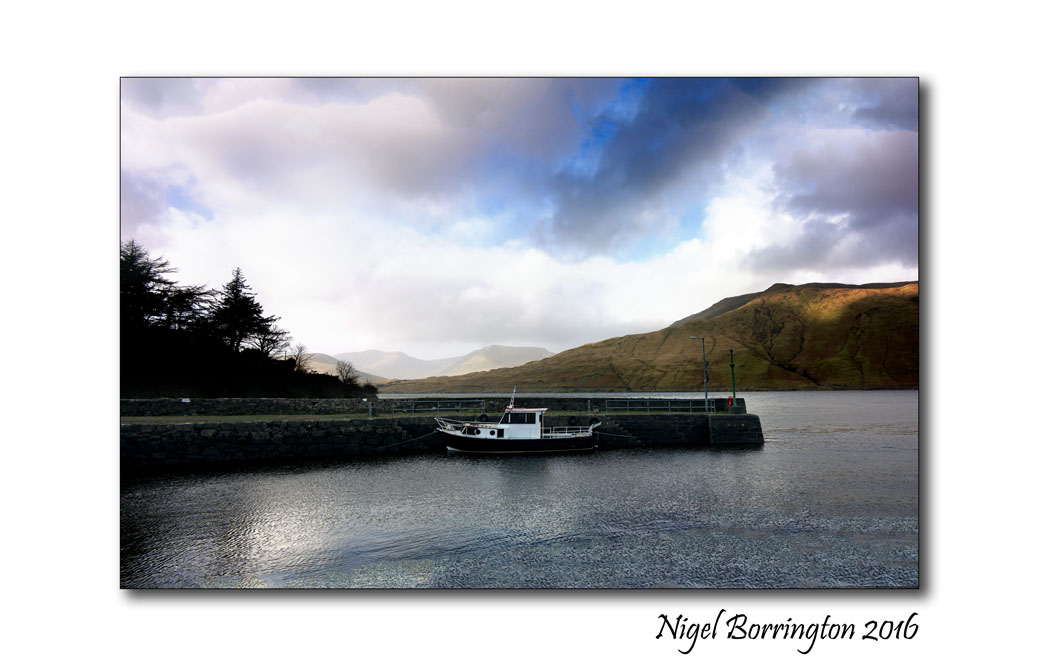
Slowly it slides on sub zero waters
trying to find a pathway to the sea
sheet of pure blue and heaven white
lumbers discreetly for aquiline is quite
From the top of the world
frozen fingers reach down
claws frantic on solid ground
No religion no sage
no saviour just age
and the relentless pull of gravity
will take it from mountain to the sea
This sculptress of valleys and dales
and fjords that can be seen for miles
travels without sound
onward bound
By Christos Andreas Kourtis

Viking Dawn – The Boarding Party, a Poem
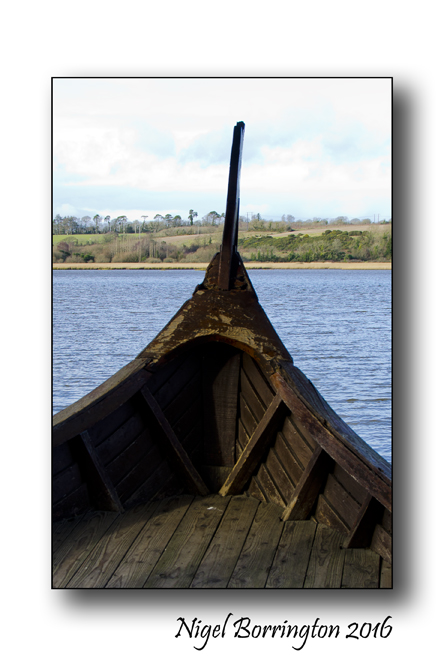
The Boarding Party
Their boat turned in towards us
ready to board our vessel
to take us to their island,
a fastness, craggy, bleak, timeless place.
To winter peat fires, gales, darkness,
weird northern tales of gods and trolls,
black nights seared by bright light curtains,
a violent Viking heritage.

A place where cold sea and ocean
overturn the crippled sea stacks,
our lives in the boarding party’s
hands and our skilful pilot.
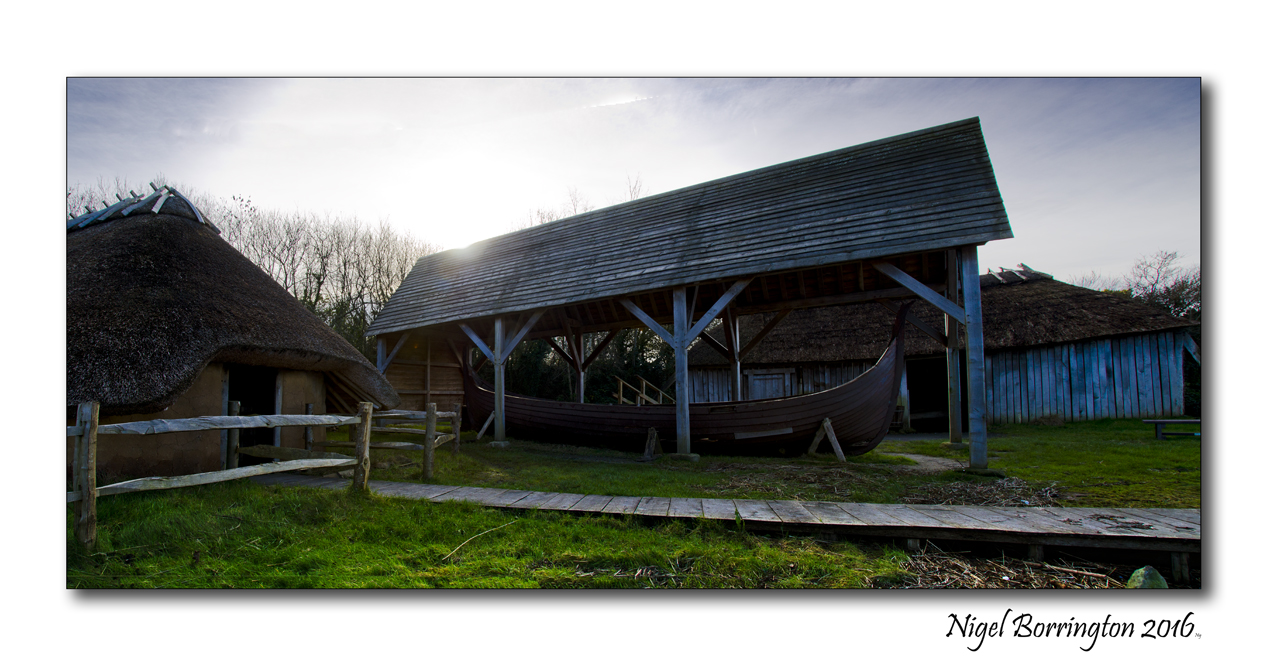
A breeze at Dawn

“The breeze at dawn has secrets to tell you.
Don’t go back to sleep.”
– Rumi

“When you arise in the morning, think of what a precious privilege it is to be alive – to breathe, to think, to enjoy, to love.”
– Marcus Aurelius
Friday Poetry : CAPTAIN OF THE LIGHTHOUSE By : Togara Muzanenhamo

CAPTAIN OF THE LIGHTHOUSE
By : Togara Muzanenhamo
The late hour trickles into morning. The cattle low profusely by the anthill
where brother and I climb and call Land’s End. We are watchmen
overlooking a sea of hazel-acacia-green, over torrents of dust whipping about
in whirlwinds and dirt tracks that reach us as firths.
We man our lighthouse – cattle as ships. We throw warning lights whenever
they come too close to our jagged shore. The anthill, the orris-earth
lighthouse, from where we hurl stones like light in every direction.

Tafara stands on its summit speaking in sea-talk, Aye-aye me lad – a ship’s a-
coming! And hurls a rock at the cow sailing in. Her beefy hulk jolts and turns.
Aye, Captain, another ship saved! I cry and furl my fingers into an air-long
telescope – searching for more vessels in the day-night.
Now they low on the anthill, stranded in the dark. Their sonorous cries haunt
through the night. Aye, methinks, me miss my brother, Captain of the
lighthouse, set sail from land’s end into the deepest seventh sea.

The Bright Field’ by R. S. Thomas

The Bright Field’ by R. S. Thomas
Landscape Photography : Nigel Borrington
I have seen the sun break through
to illuminate a small field
for a while, and gone my way
and forgotten it. But that was the
pearl of great price, the one field that had
treasure in it. I realise now
that I must give all that I have
to possess it. Life is not hurrying
on to a receding future, nor hankering after
an imagined past. It is the turning
aside like Moses to the miracle
of the lit bush, to a brightness
that seemed as transitory as your youth
once, but is the eternity that awaits you.
Reviewed by Emily Ardag
I hope you all enjoy this beautiful poem by Welsh poet, R. S. Thomas. Thomas was an anglican priest, as well as a poet, but I think this piece is full of profound wisdom for everyone, regardless of creed.
The Bright Field speaks about those shining moments in life — moments of grace, beauty, inspiration, epiphany — where we fleetingly encounter the divine or feel a deep connection to the universe. This image of the bright field evokes for me various ideas: the moment you see your child’s face for the first time, the moment you realise you’ve fallen in love, or when you read and understand some complicated scientific theory about the universe, become transfixed by Shakespeare or an incredible piece of music… or, of course, when you pray or meditate, and feel a connection to the divine.
The poet confides that he has often seen the sun “illuminate a small field” for a moment, and continued on his way and “forgotten it”. But, says Thomas, he knows that that field was “the pearl of great price”; that moment was something rare and beautiful, to hold on to and spend your life searching for. He is admitting here that he has experienced moments of profound connection to God, but that he has proceeded to move on, without dwelling on it. However, he has now come to realise that he must “give all that I have/ To possess” that moment — that “bright field” — again.
Another quality of these “bright” moments becomes clear as we enter the second stanza; the poem says that life is not “hurrying on/ to a receding future” or “hankering after/ and imagined past”. These lines deliver to me the notion that these bright moments of grace are in fact moments where we are intensely present. These are the moments we are most alive, and when we feel most connected to life, the universe, and/or God. This is as relevant for prayer and meditation as it is for all the other instances I have mentioned where one might experience a moment of exhilarating and glorious connection to the universe.
The poem ends with the beautiful image of the burning bush from the story of Moses. Thomas tells us that life — and these moments — is about “turning/ like Moses to the miracle/ of the lit bush”. Again, there is a real sense of intense presence in this image. I think the way the bright light — which is God, and grace — is described in the final lines is just exquisite: though it had once seemed “as transitory as your youth”, it is in fact “the eternity that awaits you.”
St John’s Point Lighthouse, Donegal, Irish Landscape Photography

St John’s Point Lighthouse, Donegal
Last week I changed my blog header to an image of St, Johns Point Lighthouse in county Donegal, so I though I would just share some details about this great place.
Its an amazing lighthouse at the mouth of Donegal bay and like many Lighthouses it was build through hard work and taking a risk with time and money, followed with many years of hard work and care in order to keep it running so that many lives could be saved.
Some History
From the Commissioners of Irish Lights
This is a harbour light used to guide from Donegal Bay, it marks the north side of the bay leading to Killybegs Harbour from the entrance up to Rotten Island.
The Corporation for Preserving and Improving the Port of Dublin (the Ballast Board) received a request on 24 February 1825 signed by merchants and traders of Killybegs requesting a light on St John’s Point. This was not approved until April 1829, and Trinity House gave their statutory sanction the following month.
The tower, built of cut granite, was designed by the Board’s Inspector of Works and Inspector of Lighthouses, George Halpin, and erected by the Board’s workmen under Halpin’s supervision.
The tower, painted white, had a first order catoptric fixed light 98 feet above high water with a visibility in clear weather of 14 miles. The light was first used on 4 November 1831 with the buildings in an uncompleted state. The final cost at the end of 1833 was £10,507.8.5.
Gallery


A Poem for Sunday Evening – The Sound of the Sea By : Henry Wadsworth Longfellow
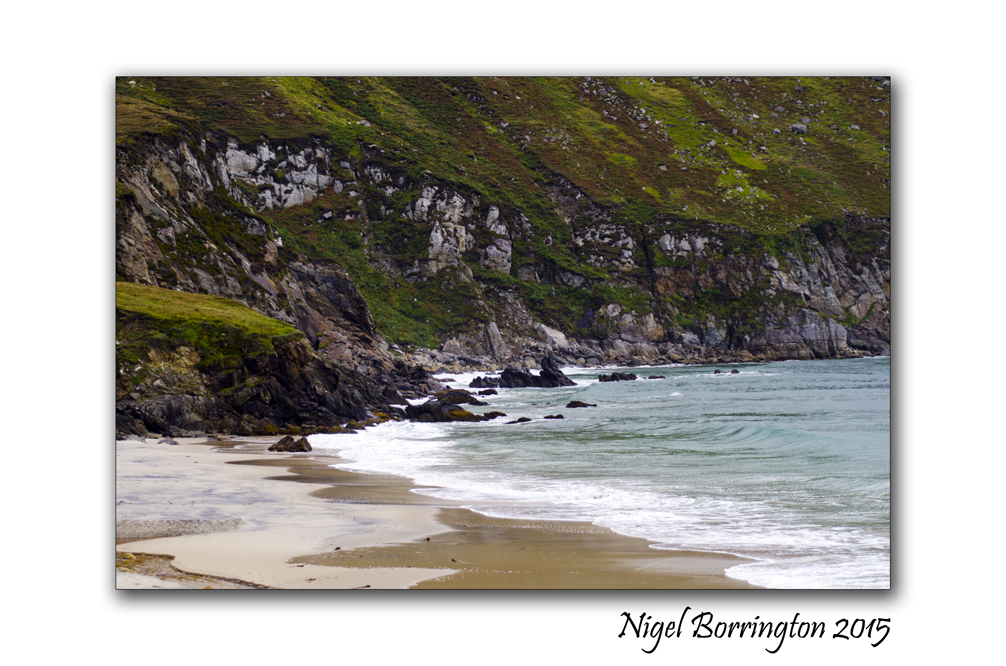
Keem Strand, Achill island, Co.Mayo
Irish Landscapes
Nigel Borrington
The Sound of the Sea
By : Henry Wadsworth Longfellow
The sea awoke at midnight from its sleep,
And round the pebbly beaches far and wide
I heard the first wave of the rising tide
Rush onward with uninterrupted sweep;
A voice out of the silence of the deep,
A sound mysteriously multiplied
As of a cataract from the mountain’s side,
Or roar of winds upon a wooded steep.
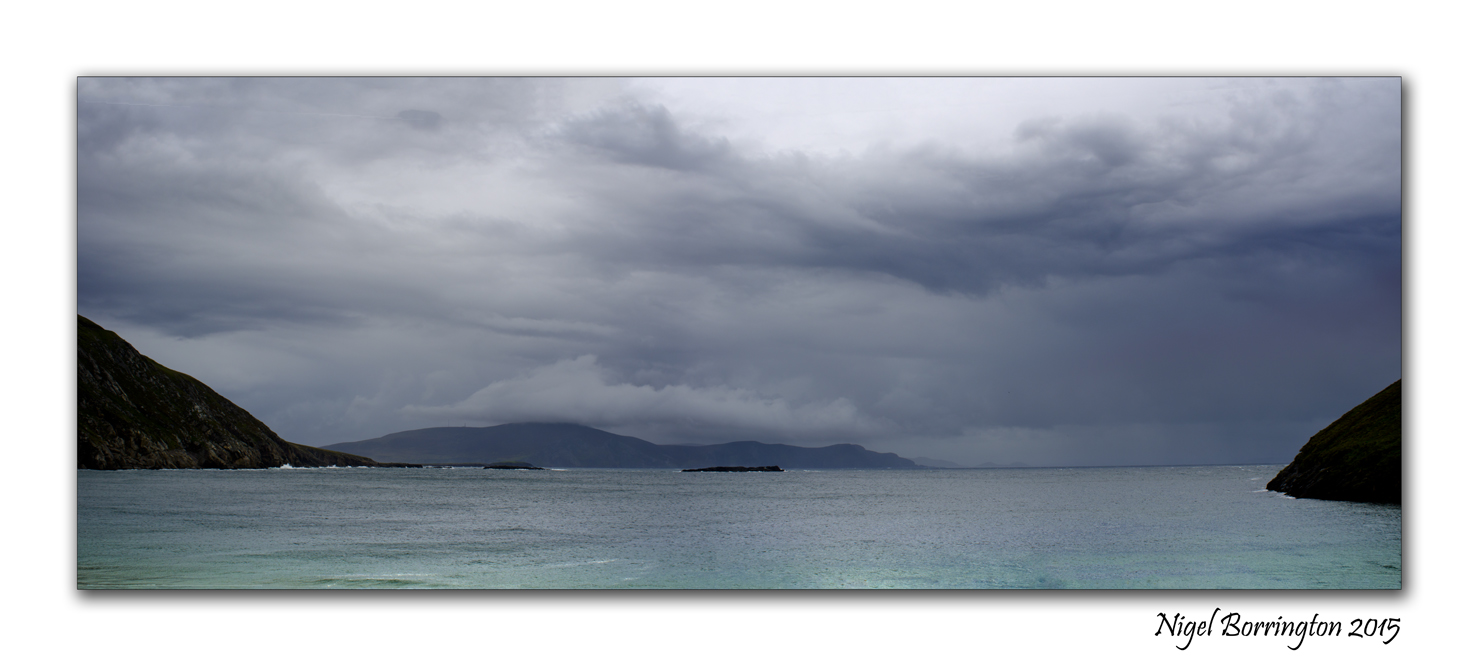
So comes to us at times, from the unknown
And inaccessible solitudes of being,
The rushing of the sea-tides of the soul;
And inspirations, that we deem our own,
Are some divine foreshadowing and foreseeing
Of things beyond our reason or control.
County Waterford , Ireland – An October’s walk along the Coast.

An October walk along the Waterford coast
Irish Landscape Photography
Nigel Borrington
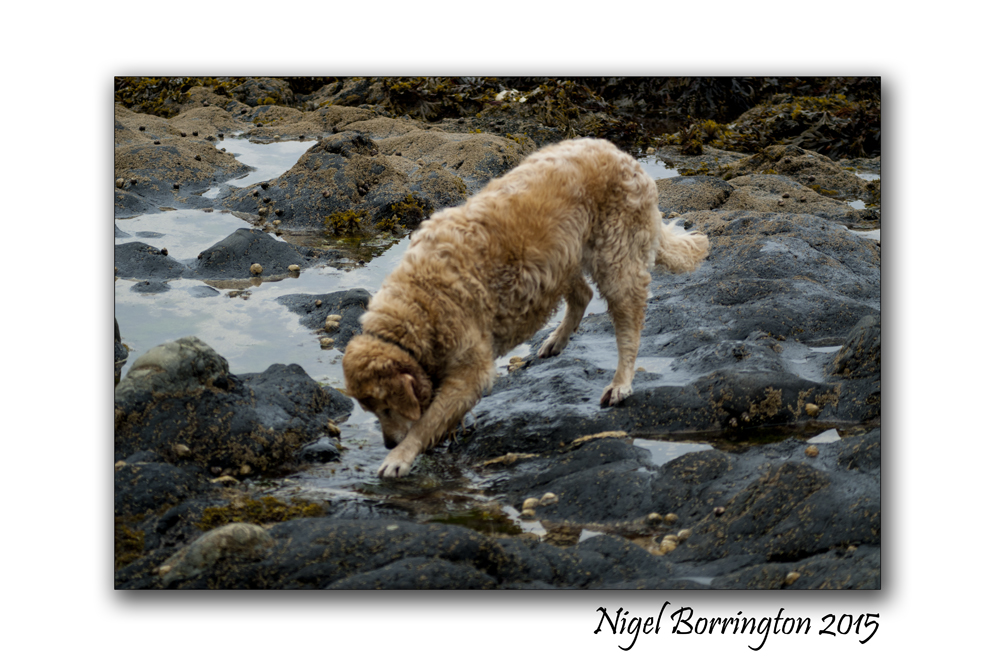
Molly is our 12 and 1/2 year old Golden retriever and she loves nothing more than being in and around water – as often as she can !!! Rivers, Lakes, and the Sea. I often think that if it was not for her I would not have visited as many wonderful places here in Ireland, just trying to keep her walked and fit!!!, but being over 12 years old now, she has slowed down a little but still loves her swimming and coastal visits.
I also love visiting the Irish coastline, our nearest locations are along the county Waterford coast, with its rocky small coves and caves its just a perfect and dramatic coastline in many ways.
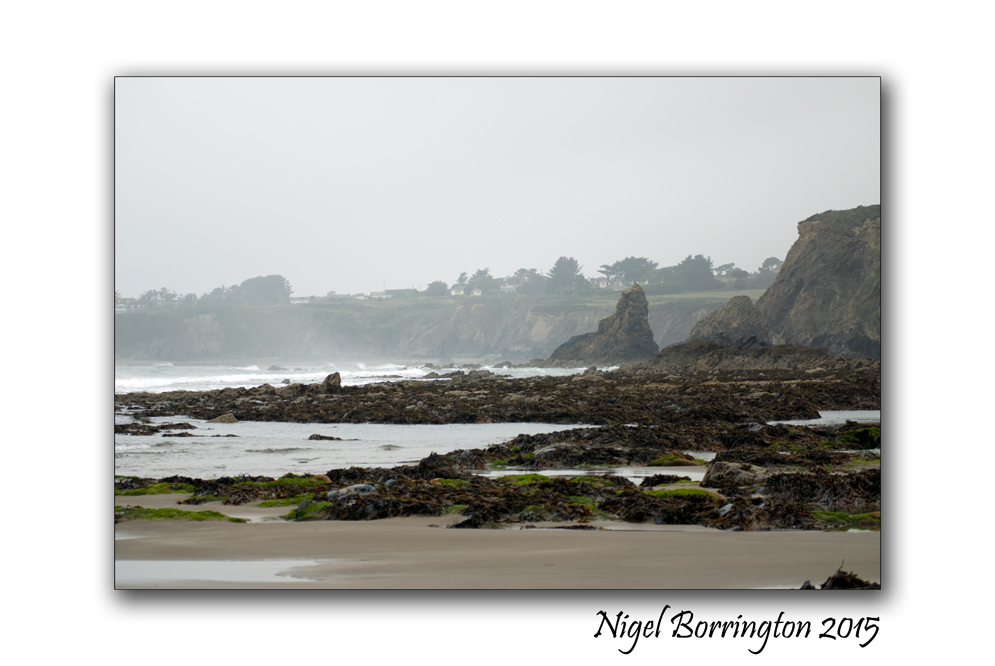
October is a great month for these visits as the mornings bring rolling in sea mists and dramatic waves as the temperatures slide slowly into the winter months …..
A walk along the Waterford coast line : Gallery




5 images for the week , Smugglers, Poem by : Beth st clair
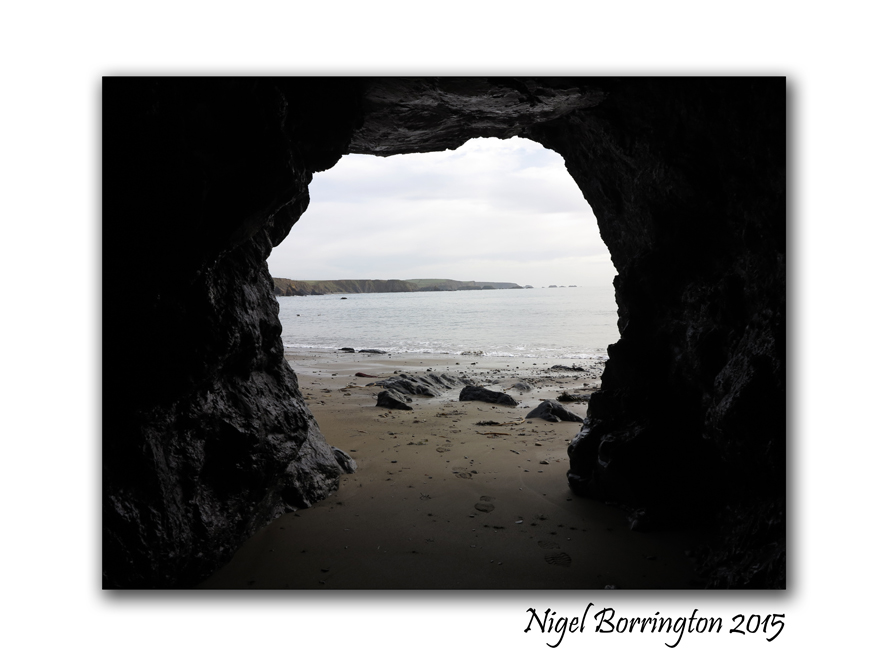
smugglers
the lapping water drifting to the sand,
the smugglers hurry o’er the silver wave,
a rose-moon blushing where the waters lave
and moonlight glistens on the breezy strand.
the oars are steady, gliding to the land
the stroke of midnight near a watery cave,
their whisp’ring feet run silent as a grave
to its dark reach to hide the contraband.
the waves roll mistily with honeyed breath
the sky, a vault of iron, weeps a tear,
the sweeping waters break and start to veer,
a gold tooth glints, the night as black as death,
a dreadful shout, the watch is drawing near,
how suddenly their faces pall with fear!
Gort, Eyeries, Beara peninsula, west cork, Where the sky meets the sea

Where the sky meets the sea
I heard you contemplating so far beyond
Just thinking about it all
And it seems to scare you more than
I ever would before
And I’m a little anxious
But I don’t know why
Trying to find me an answer that
Fits inside my head
Trying to wish away the subtleties
Wishing you would stay in bed
And I’m a little cautious
But I don’t know why
Where the sky meets the sea
We’ll be different just you see
Broken lines can only breakthrough
Heaven and shades of blue
I stumble when you’re shaking I break when you’re
Breaking away from it all
I hide when you’re hiding, and I can’t
Spend all my time holding on
And I’m a little nervous
But I don’t know why
Where the sky meets the sea
We’ll be different just you see
Broken lines can only breakthrough
Heaven and shades of blue
Ardgroom Stone Circle

Ardgroom stone circle
County Cork
Nigel Borrington
Ardgroom Stone Circle
Ardgroom (Irish: Dhá Dhroim, meaning “two drumlins”) is a village on the Beara peninsula in County Cork, Ireland.
Its name refers to two gravelly hills deposited by a glacier, Dromárd and Drombeg. It lies to the north north west of Glenbeg Lough, overlooking the Kenmare River estuary. It sits between the coast and the Slieve Miskish Mountains.

Canfea stone circle
West Cork
The area is also home to a number of megalithic monuments. Signposted is the Ardgroom stone circle to be found to the east of the village at a distance of about 1 mile, off the old Kenmare road. It has the name “Canfea” but is normally called the “Ardgroom” stone circle. About 1 mile north east lie the remains of another stone circle. The Canfea circle consists of 11 stones, 9 of which are still upright with one alignment stone outside the circle. Unusually for a stone circle, its stones tend to taper toward points.
You can park a car about 1/2km away in a small wooded area with the walk to the circle only being some five minutes. The location is wonderful with a view of the mountains behind and the west Cork, coast-line on to the front of the circle.
Just to spend sometime here is amazing as the circle is in very good condition with most of the stones still standing. This must have been some place three thousand years ago, remote, cut off from the rest of the world. These circles were most likely use to help small farming communities tell the time of the year, the passing of the seasons for which they used the moon as well as the sun.
Also in the vicinity are the remains of at least 2 ring forts, as well as a number of standing stones and stone rows.
When I’m Gone , Poem By : Lyman Hancock

When I’m Gone
by : Lyman Hancock
When I come to the end of my journey
And I travel my last weary mile
Just forget if you can, that I ever frowned
And remember only the smile
Forget unkind words I have spoken
Remember some good I have done
Forget that I ever had heartache
And remember I’ve had loads of fun
Forget that I’ve stumbled and blundered
And sometimes fell by the way
Remember I have fought some hard battles
And won, ere the close of the day

Then forget to grieve for my going
I would not have you sad for a day
But in summer just gather some flowers
And remember the place where I lay
And come in the shade of evening
When the sun paints the sky in the west
Stand for a few moments beside me
And remember only my best
Like the waves , Poem by Cyrille Octaviano
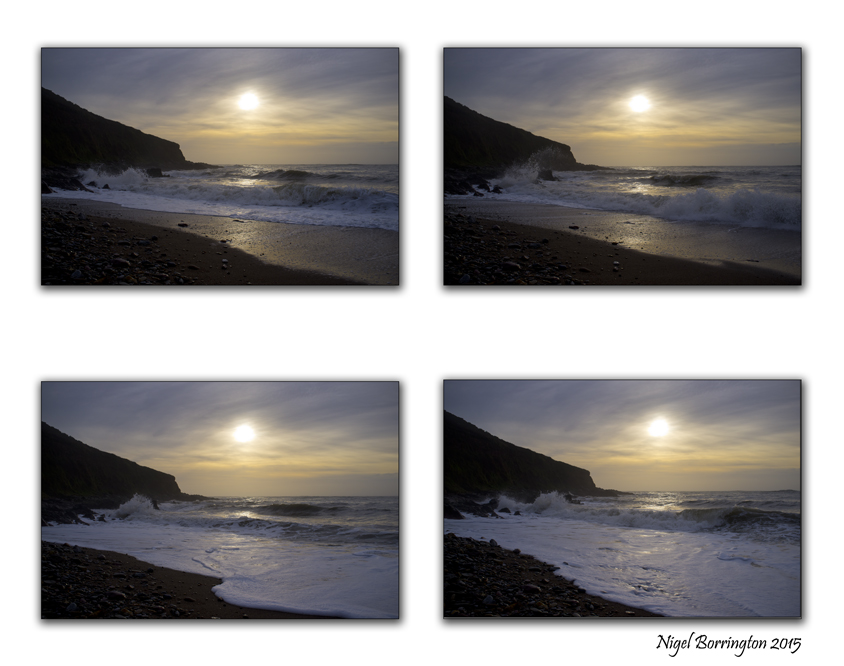
Like the waves
Cyrille Octaviano
clashing against one another
Struggling to keep up,
but aware of the power
Rising up,
streaming drown
rushing and hurdling
coming ashore
As the sun radiates
illuminating the water,
I can see crystal clear
there is hope.
Ode to the Coast , Poem By : John Cooper Clarke
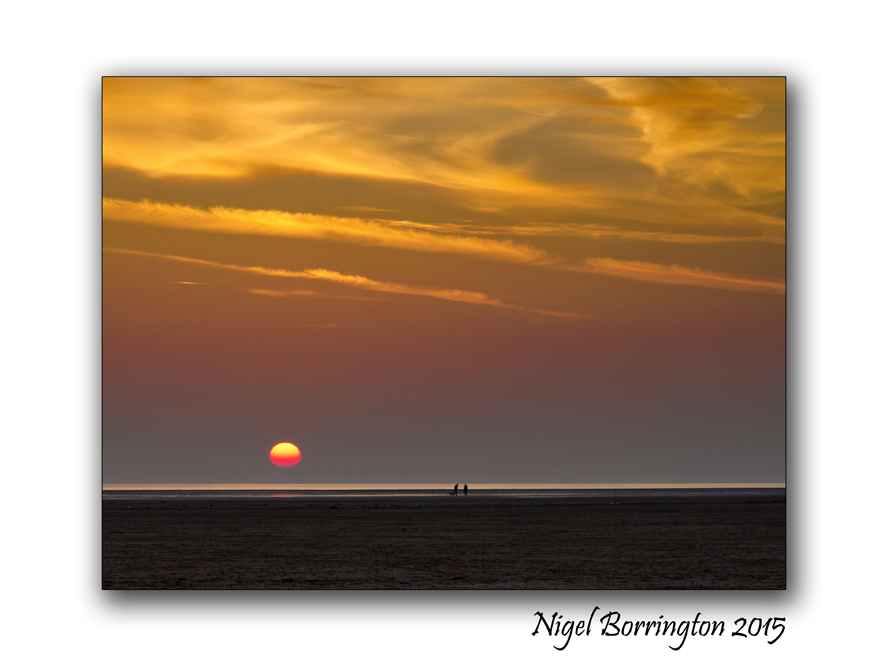
Ode to the Coast
By : John Cooper Clarke
A big fat sky and a thousand shrieks
The tide arrives and the timber creaks
A world away from the working week
Ou est la vie nautique?
That’s where the sea comes in…
Dishevelled shells and shovelled sands,

Architecture all unplanned
A spade n bucket wonderland
A golden space, a Frisbee and
The kids and dogs can run and run
And not run in to anyone
Way out! Real gone!
That’s where the sea comes in
Impervious to human speech, idle time and tidal reach
Some memories you can’t impeach
A nice cuppa splosh and a round of toast
A cursory glance at the morning post
A pointless walk along the coast
That’s what floats my boat the most
That’s where the sea comes in….
That’s where the sea comes in

My secret places – a weekend at the cove

I have many favorite places to visit at the weekend here in Ireland.
The little cove in these images is just one but its high on my list, I am not going tell you where it is – its a secret 🙂 🙂
Have a great weekend everyone and I hope you manage to find sometime to visit your own little secret spaces , stay for a while if you do – so that you can escape and relax by put the week just gone behind you !


The Rime of the Ancient Mariner. A poem by: Samuel Taylor Coleridge

The Rime of the Ancient Mariner
Image : Nigel Borrington
From “The Rime of the Ancient Mariner”
Samuel Taylor Coleridge
The “Rime“ is one of the greatest pieces of Romantic literature. And the section of this epic poem in which the dead sailors get up and start sailing the boat again without seeing anything is as terrifying as anything in the horror genre.
The thick black cloud was cleft, and still
The Moon was at its side:
Like waters shot from some high crag,
The lightning fell with never a jag,
A river steep and wide.

The loud wind never reached the ship,
Yet now the ship moved on!
Beneath the lightning and the Moon
The dead men gave a groan.
They groaned, they stirred, they all uprose,
Nor spake, nor moved their eyes;
It had been strange, even in a dream,
To have seen those dead men rise.
The helmsman steered, the ship moved on;
Yet never a breeze up-blew;
The mariners all ‘gan work the ropes,
Where they were wont to do;
They raised their limbs like lifeless tools—
We were a ghastly crew.
The body of my brother’s son
Stood by me, knee to knee:
The body and I pulled at one rope,
But he said nought to me.
‘I fear thee, ancient Mariner!’
Be calm, thou Wedding-Guest!
‘Twas not those souls that fled in pain,
Which to their corses came again,
But a troop of spirits blest:
For when it dawned—they dropped their arms,
And clustered round the mast;
Sweet sounds rose slowly through their mouths,
And from their bodies passed.
Around, around, flew each sweet sound,
Then darted to the Sun;
Slowly the sounds came back again,
Now mixed, now one by one.
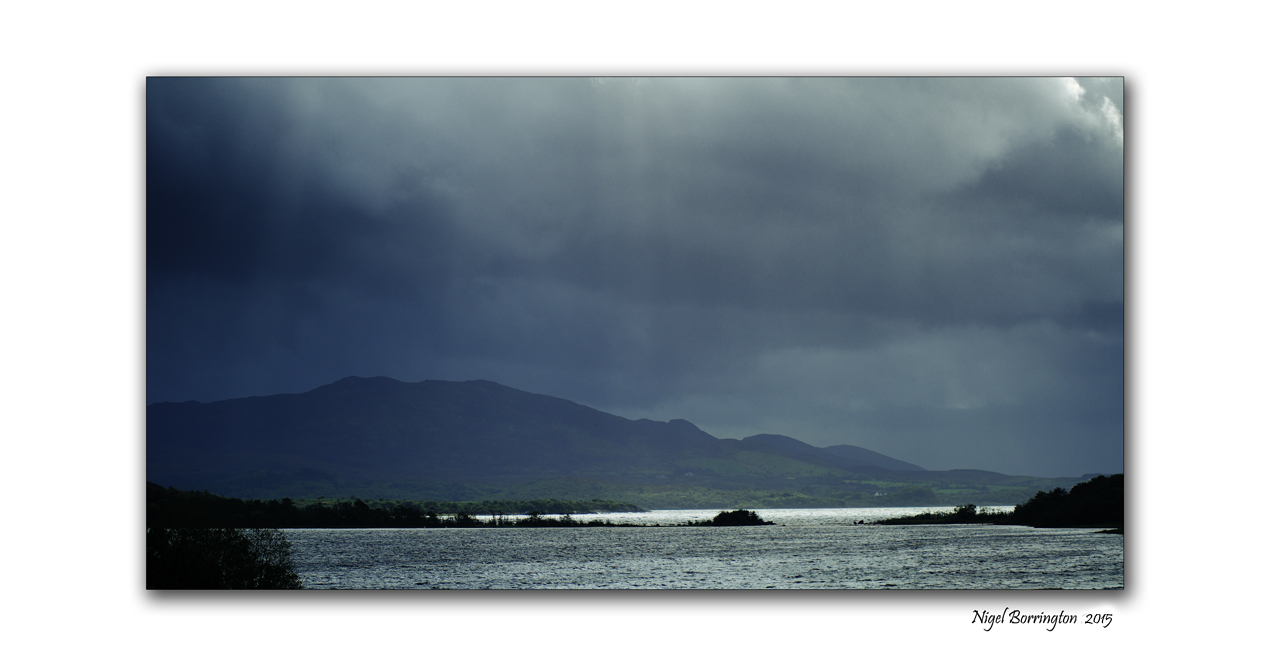
Sometimes a-dropping from the sky
I heard the sky-lark sing;
Sometimes all little birds that are,
How they seemed to fill the sea and air
With their sweet jargoning!
And now ’twas like all instruments,
Now like a lonely flute;
And now it is an angel’s song,
That makes the heavens be mute.
It ceased; yet still the sails made on
A pleasant noise till noon,
A noise like of a hidden brook
In the leafy month of June,
That to the sleeping woods all night
Singeth a quiet tune.
Till noon we quietly sailed on,
Yet never a breeze did breathe:
Slowly and smoothly went the ship,
Moved onward from beneath.
Under the keel nine fathom deep,
From the land of mist and snow,
The spirit slid: and it was he
That made the ship to go.
The sails at noon left off their tune,
And the ship stood still also.
The Sun, right up above the mast,
Had fixed her to the ocean:
But in a minute she ‘gan stir,
With a short uneasy motion—
Backwards and forwards half her length
With a short uneasy motion.
Then like a pawing horse let go,
She made a sudden bound:
It flung the blood into my head,
And I fell down in a swound.
Friday , Beach Photography day. – Taking some Easter down time :)

Irish Beach Photography
County Waterford
Nigel Borrington
Over the next two weeks of the Easter Holidays, I am taking some Offline time, I just want to get the garden ready for the summer,read and walk and maybe visit a beach or two.
I just want to say thanks to everyone for all your great comments and likes here 🙂 🙂 over the months and I look forward to sharing much more of Ireland and reading your great posts when I get back online – have a great holiday period !!!
Friday Is Beach Photography day
Taking a Friday evening trip down to the beach’s along the Waterford coastline is something I love to do in the summer months and I am very much looking forward to doing so again this summer.
I hope to get lots more images to post and share here 🙂
Beach Photography , Friday


 Nigel Borrington
Monday Mornings , An October’s beach in Black and White ….
Irish Landscape Photography : Nigel Borrington
October in Black and white.
Monday the 5th of October !
Monday Mornings are always a little like stepping onto a beach in the early Morning light, you wonder what you will find as you walk through the dunes and take your first steps into the sand. Many – many times you have been here before but seeing the beach again each morning you never now what has changed over night.
New drift wood, the ripples in the sand from the overnight tide and foot steps left by other early morning walkers, all these things will change the path you have to take as you take your own walk!
Share this:
October 5, 2015 | Categories: Comment, Irish coastline, Landscape, Story telling gallery | Tags: black and white photography, images of ireland, Irish coast, Irish landscape photography, Landscape Photography, monday, Nigel Borrington, october | 2 Comments