Nature’s gifts : Celandine, Lesser
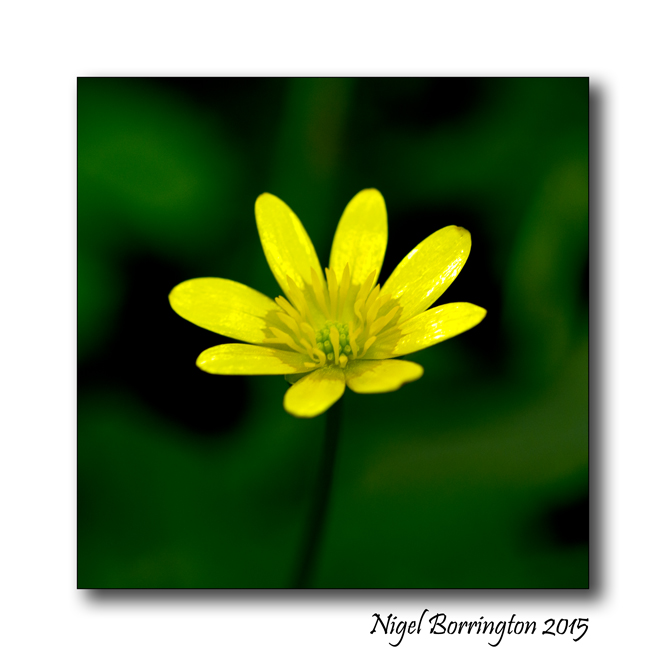
Celandine, Lesser
Nature Photography : Nigel Borrington
Its so easy to just walk past some of natures smaller Herbs and Flowers, however I guess that some flowers cannot help but get themselves noticed.
“Celandine, Lesser” is one of these little gems, its strong yellow flowers in the early summertime cannot help but get noticed as you walk down woodland paths or along the road sides.
Here are a many details about this wild Herb and it flowers:
Celandine, Lesser
Botanical: Ranunculus ficaria (LINN.)
Family: N.O. Ranunculaceae
Part Used
Constituents
Medicinal Action and Uses
Recipes
—Synonyms—Small Celandine. Figwort. Smallwort. Pilewort.
—Part Used—Herb.
—Habitat—The Lesser Celandine, one of the very earliest of spring flowers, its cheery, starlike blossoms lighting up our hedges even before winter is quite spent, is distributed throughout Europe, Western Asia, and North Africa, in these islands, growing up the hillsides in Wales to a height of 2,400 feet. It grows in moist corners of fields and places near watersides, but is found also on drier ground, if shady, being one of the few plants that thrive beneath the shade of trees, where its glossy foliage frequently forms a dense carpet.
Wordsworth, whose favorite flower this was (in recognition of which the blossoms are carved on his tomb), fancifully suggests that the painter who first tried to picture the rising sun, must have taken the idea of the spreading pointed rays from the Celandine’s ‘glittering countenance.’ The burnishing of the golden petals gives a brilliant effect to the flowers, which burst into bloom about the middle of February, a few days only after their bright, shining leaves. The leaves are on long stalks, arising from a short, prostrate stem, and are very variable, the first being heart-shaped, the later ones bluntly cut into, somewhat like the ivy. They often have dark markings.
The blossoms shut up before rain, and even in fine weather do not open before nine o’clock, and by 5 p.m. have already closed for the night. The Celtic name of the plant, Grian (i.e. the sun), refers to this habit. The petals are green on the underside, and directly the flowers close they become inconspicuous.
Throughout March and April, this cheerful little plant is in full bloom, but as the spring passes into summer, the flowers pale somewhat, and the whole plant looks rather sickly, the warmth of the lengthening days withdrawing from it the needed moisture. By the end of May, no flowers are to be seen, and all the plant above ground withers and dies, the virtue being stored up in the fibres of the root, which swell into the form of tubers. If the plant is dug up, late in the summer or autumn, these tubers are seen hanging in a bunch, a dozen or more together, looking like figs, hence the plant’s specific Latin name ficaria, from ficus (a fig). By these tubers, the plant is increased, as they break off readily, each tuber, like a potato, producing a new plant. To eradicate this plant from any ground, it is necessary to remove the roots bodily, for if the plants are dug into the soil, they work their way up to the surface again, the stems branching as they grow upward from the tubers, and at every branch producing fresh tubers.
The early awakening of the plant is due to these fully-stored tubers, which lie quiescent all the summer and autumn, but all necessary materials being at hand, leaves and flowers are quickly pushed upwards directly the depth of the winter has passed.
Although the Lesser Celandine has been placed by some botanists in a distinct genus, when it is called Ficaria verna, it is more generally assigned to the Buttercup or Crowfoot genus, Ranunculus. The name of this genus, first employed by Pliny, alludes to the damp and marshy localities preferred by the plants of the family, Rana, being the Latin for a frog, whose native haunts are those of the majority of this group of plants. The Lesser Celandine is distinguished from the Buttercup by having nine or ten, even sometimes a dozen narrow petals, instead of five, and only three sepals (the outer, generally green leaves of the flower), which fall off on opening, instead of the usual five, which remain after the flower has expanded, in the other species of Ranunculus. The flowers rise singly from the root, on long, slender, leafless stalks and are about 1 inch in diameter. There are a number of stamens. The fruits are not unlike those of the Buttercups being dry and distinct, set together in a globular head, somewhat like a grain of corn and whitish in colour, but comparatively few fertile seeds are produced.
The flowers would originally appear to have been designed with the object of attracting insects for their fertilization, the bright coloured, burnished petals having honey sacs at their base, but the flowers can face colder days than the insects can, for whom the honey has been provided, blooming when few of the insects have emerged, with the result that comparatively few become fertilized in this country and not many seeds are produced. The plant, therefore, has recourse to another method of reproduction, independent of all external aid. At the point where the upper leaves join the stem are to be seen little objects like minute round tumours, which grow about the size of a grain of wheat. In the early summer, when the leaves and stems are dying down, these grains become loose and drop to the ground. Each is capable of producing a new plant. A heavy rain will sometimes wash them from the plants in every direction. Kerner, in his Natural History of Plants, tells us that:
‘a sudden downpour of rain in a region abundantly overgrown with Lesser Celandine is sufficient to float away numbers of the tubers, and heap them up on the borders of irrigation channels when the rain disperses. In such places the quantity of tubers which have floated together is often so large that one can hardly gather them in one’s hands. In this way arose the idea that the tubers had fallen from heaven with the rain and the myth of a rain of potatoes.’
This fact probably accounts, also, for the ‘rains of wheat’ sometimes vouched for by country people in various parts. These bulbils (i.e. Iittle bulbs) are only produced on those plants whose fruits have failed to set.
The root of the Lesser Celandine is perennial.
Seedlings do not flower in their first year, but collect and store up material to start their accustomed course at the end of the ensuing winter.
The whole plant is glabrous.
It is called the Lesser Celandine to distinguish it from the Greater Celandine, to which it has neither relationship nor similarity, except in the colour of its flowers, though the older herbalists applied the name to both plants indiscriminately. The confusion of names existed in Gerard’s time, for he published a list of all the plants in cultivation in his garden on Holborn Hill – to wards the close of the sixteenth century and introduced in it, under the same name, both this and the Greater Celandine (Chelidonium majus) which certainly is in bloom when the swallows arrive, and continues to flower the whole summer, and so would have more right to the name Celandine than this species, which blossoms long before they come, and dies down months before they leave our shores.
A figure of the Lesser Celandine – under the name of Erdöpffel – appears in an old German Herbal of 1533, Rhodion’s Kreutterbuch, evidence that this plant was well known to the herbalists of the Middle Ages.
It is also called ‘Small-wort.’
The old English name of Pilewort is due to the fact that it has long been considered a cure for piles, one of the reasons assigned for this resting on the strange doctrine of signatures. We are told by an old writer: ‘If you dig up the root of it you will perceive the perfect image of the disease commonly called the piles.’ Gerard writes of it:
‘It presently, as Galen and Dioscorides affirm (though this perhaps refers to the Greater Celandine) exulcerateth or blistereth the skin: it maketh rough and corrupt nails to fall away. The juice of the roots mixed with honie and drawn up into the nosthrils purgeth the head of foul and filthy humours. The later age use the roots and graines for the piles . . . there be also who think that if the berbe be but carried about one that hath the piles, the pain forthwith ceaseth.’
Culpepper, writing fifty years later, tells us:
‘It is certain by good experience that the decoction of the leaves and roots doth wonderfully help piles and haemorrhoids; also kernels by the ears and throat called the King’s Evil, or any other hard wens or tumours.’
He had such faith in the virtues of this little plant that he further tells us, with more definite belief than Gerard: ‘The very herb borne about one’s body next the skin helps in such diseases though it never touch the place grieved.’
The young leaves, the substance of which is soft and mucilaginous, have sometimes been boiled and eaten as a vegetable in Sweden, but have not the reputation of being very palatable, either thus treated or raw as a salad.
Linnaeus advised farmers to eradicate the plant from their land on account of it being disliked by cattle (though wood-pigeons eat it with avidity), also for its injurious effect on other herbs in the meadow, but there seems little ground for this assumption, as although the tissues of most plants in this order contain acrid juices to a high degree, the acrimony of the Lesser Celandine is of a very mild character. A dressing of coal or wood ash is said to effectually destroy the whole plant.
Monday Morning Poems : “A Red, Red Rose” by : Robert Burns
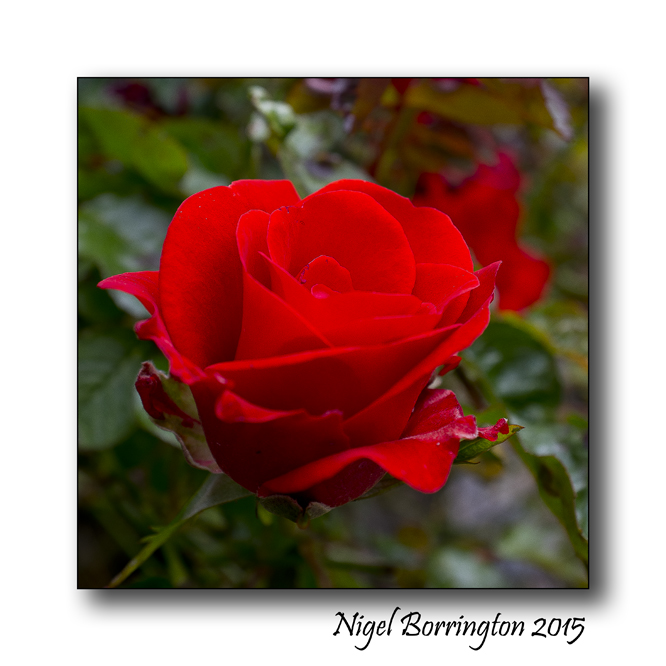
Like a Red Rose in June
Nigel Borrington
A Red, Red Rose
by Robert Burns
My love is like a red, red rose
That’s newly sprung in June :
My love is like the melody
That’s sweetly played in tune.
As fair art thou, my bonnie lass,
So deep in love am I :
And I will love thee still, my dear,
Till a’ the seas gang dry.
Till a’ the seas gang dry, my dear,
And the rocks melt wi’ the sun :
And I will love thee still, my dear,
While the sands o’ life shall run.
And fare thee weel, my only love,
And fare thee weel a while !
And I will come again, my love,
Thou’ it were ten thousand mile.
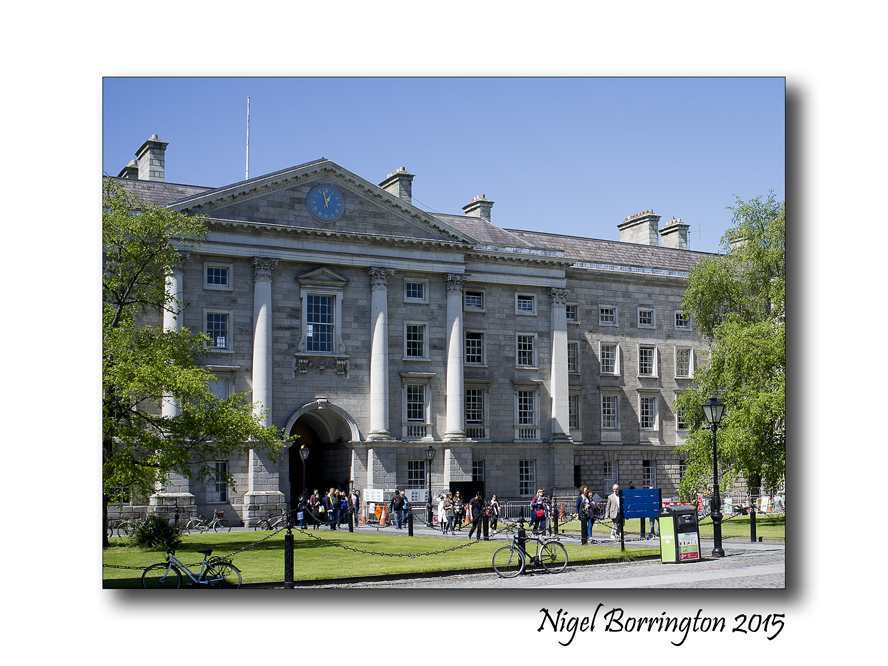
A sense of place : Trinity College, Dublin

I just want to share in this post, a set of images taken at the end of May 2015 during a visit to Dublin including one of my favorite places to walk around and people watch, while having a coffee and some lunch to eat 🙂
Trinity College, Dublin


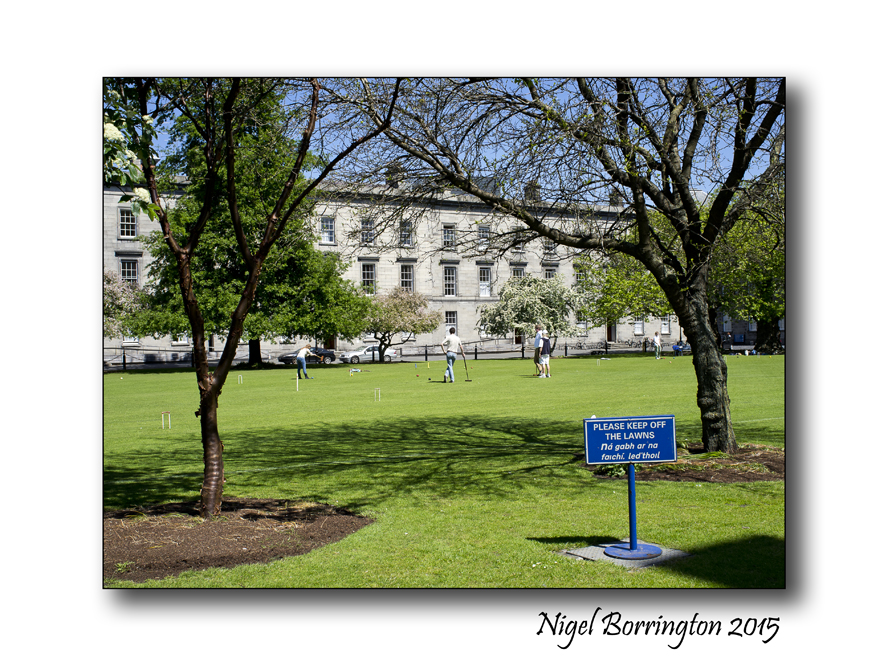
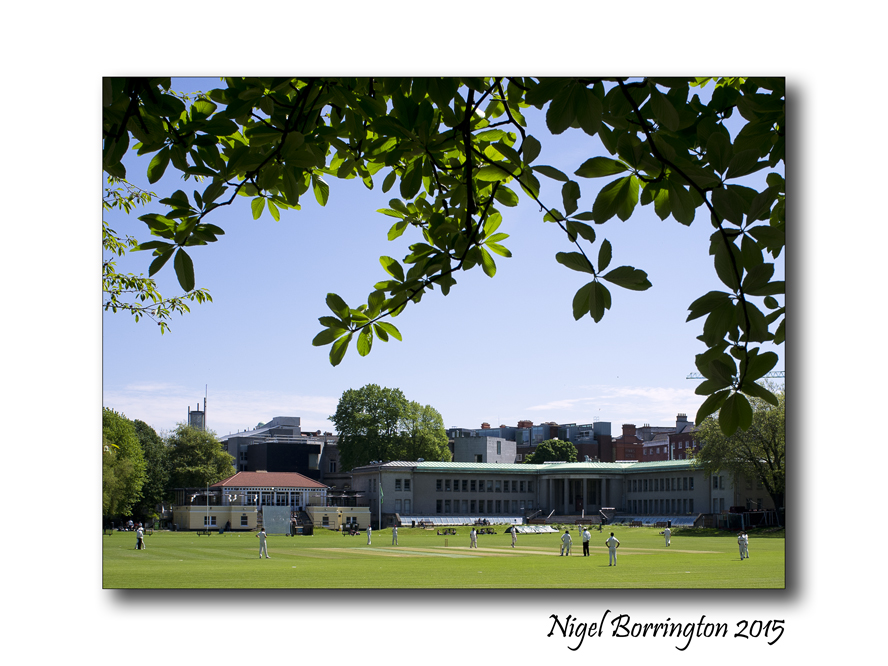
Getting close to the Rhododendron, Gallery.
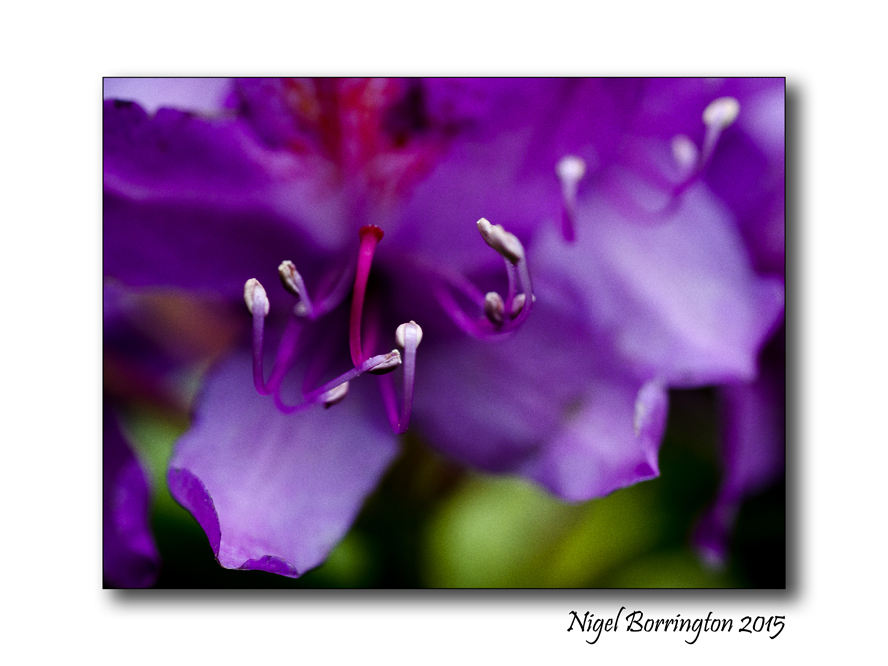
Rhododendron flowers
county Kilkenny
Nigel Borrington
At this time of year , many parts of the Irish landscape come alive with the purples and pinks of the Rhododendron flower.
These images are just a few closeup shots taken on an evening walk yesterday …..
Rhododendron (from Ancient Greek ῥόδον rhódon “rose” and δένδρον déndron “tree”) is a genus of 1,024 species of woody plants in the heath family (Ericaceae), either evergreen or deciduous, and found mainly in Asia, although it is also widespread throughout the Southern Highlands of the Appalachian Mountains of North America. It is the national flower of Nepal. Most species have showy flowers. Azaleas make up two subgenera of Rhododendron. They are distinguished from “true” rhododendrons by having only five anthers per flower.
Gallery


Monday Poetry , Canal Life, By : Ian McMillan

Ian McMillan
Canal Life
The canal tells you stories
The canal sings you songs
They hang in that space
Between memory and water
Once saw a narrowboat raised up,
Like it was cutting through the air,
Between two grass walls and the road below
Like it was sliding through history,
And a tiny vole swam across the water
So a tiny vole swam through history.
The canal tells you stories
The canal sings you songs
Once saw a man floating belly up in a canal
Like he was in the bath. He shouted
‘This is the life’ as I passed by on a narrowboat;
The sky was reflected in the surface
And we tied up in the places the map never showed us,
The man floating by, making ripples on the surface.
They hang in that space
Between memory and water
Once got waved at by a jogger as I stood gongoozling
On the towpath; her running gave rhythm
To the early afternoon, dog-strollers and kids
Who’d rather be here than sitting in school.
To gongoozle is to stand and watch narrowboats pass
And a canal is a lesson, a water-based school.
The canal tells you stories
The canal sings you songs

Once these canals were information highways
If coal and iron can be information,
And I think they can be. And there are bridges,
Pub gardens, the laughter of children
As they walk by the water; and the canals
Turn us all into curious children.
They hang in that space
Between memory and water
Once is never enough for a canal, I reckon;
You need to go back and see it again,
And sail it again, and smell it again, and
Touch it again; canals run through our veins
Like they stroll through this country
Like blood through our veins.
The canal tells you stories
The canal sings you songs
They hang in that space
Between memory and water
Sunday Evening in the tree tops, county Cork , Ireland

Sunday Evening, Co.cork Ireland
Landscape Photography : Nigel Borrington
Sunday evenings are some of my favorite times of the week, the weekends light is fading fast and we have a new week ahead of us, and new chances to grow and reach our aims.

It’s the weekend so why not take a long walk ……

Black water river at Youghal, county cork.
Landscape photography : Nigel Borrington
It’s the weekend so why not get outside into the landscape and take a long walk, stay for a while until your completely relax ………
Have a great weekend everyone 🙂
Irish nature photography :Predatory Sawfly

Predatory Sawfly
Nature Photography : Nigel Borrington
At this time of year our local woodlands are full of wildlife with the insects at the height of their activities.
I was lucky enough to capture this Predatory Sawfly, yesterday evening, just while there was enough sun-light left to help get a bright image 🙂
Sawfly is the common name for insects belonging to suborder Symphyta of the order Hymenoptera. Sawflies are distinguishable from most other hymenopterans by the broad connection between the abdomen and the thorax, and by their caterpillar-like larvae. The common name comes from the saw-like appearance of the ovipositor, which the females use to cut into the plants where they lay their eggs. Large populations of certain sawfly species can cause substantial economic damage to forests and cultivated plants.
Swiss Cottage, Cahir, Co. Tipperary – A sense of place.
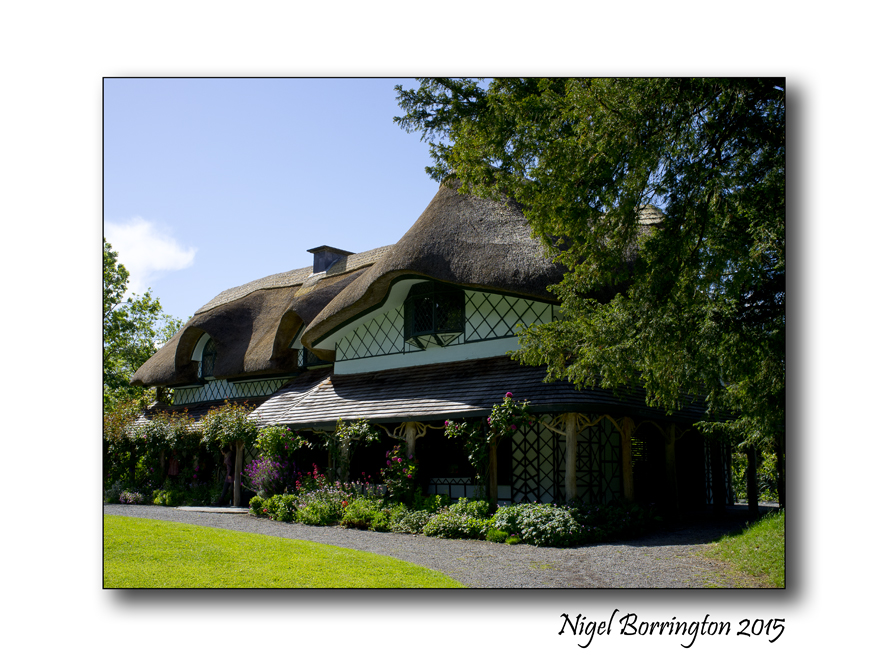
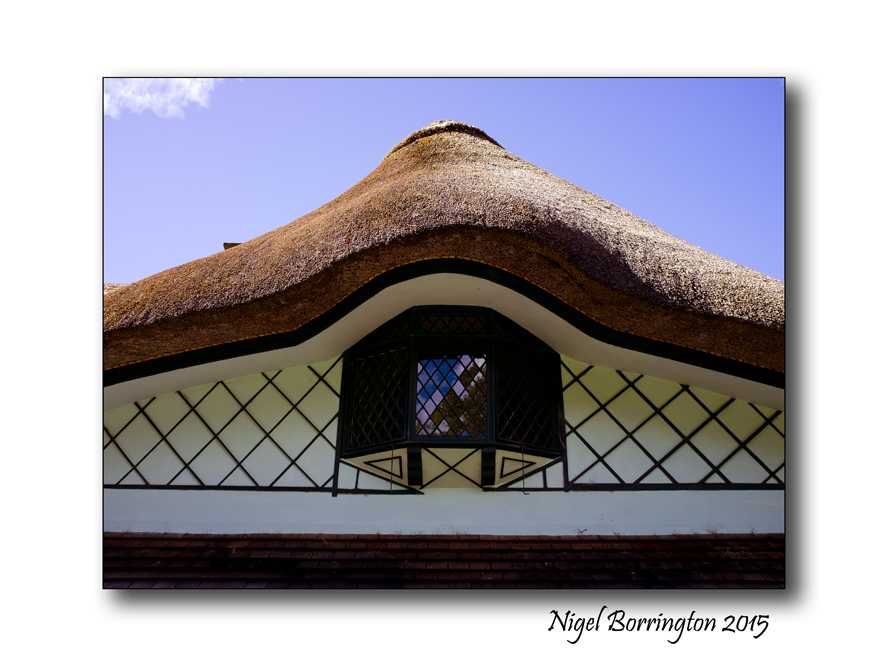
The Swiss cottage in country Tipperary is one of Ireland’s unsung treasures, it was built around 1810 and is a fine example of cottage orné, or ornamental cottage. It was originally part of the estate of Richard Butler, 10th Baron Cahir who married Emily Jefferys of Blarney , and the cottage was primarily used for entertaining day guests of the couple.
The cottage was designed by the architect John Nash, famous for designing many Regency buildings.
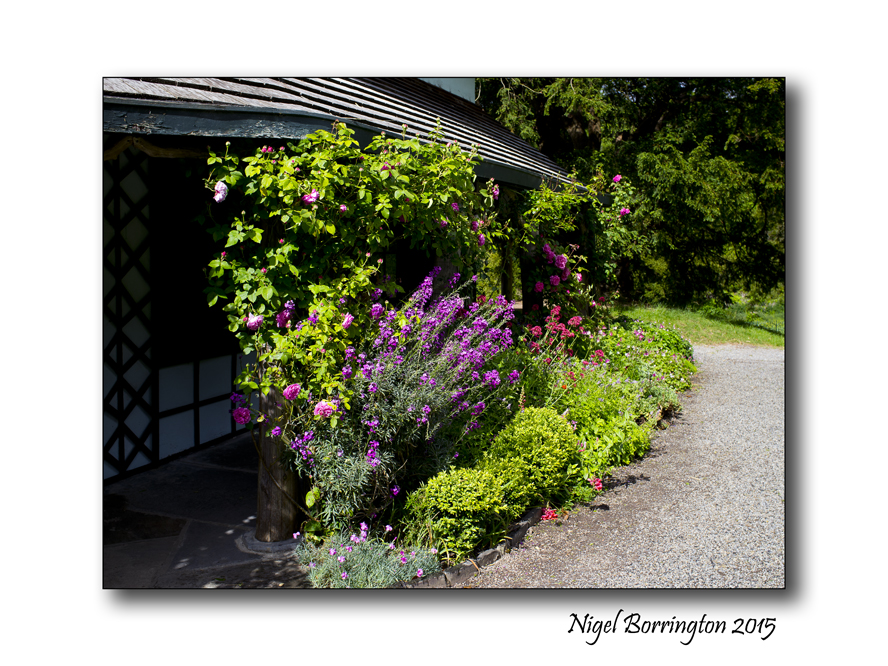
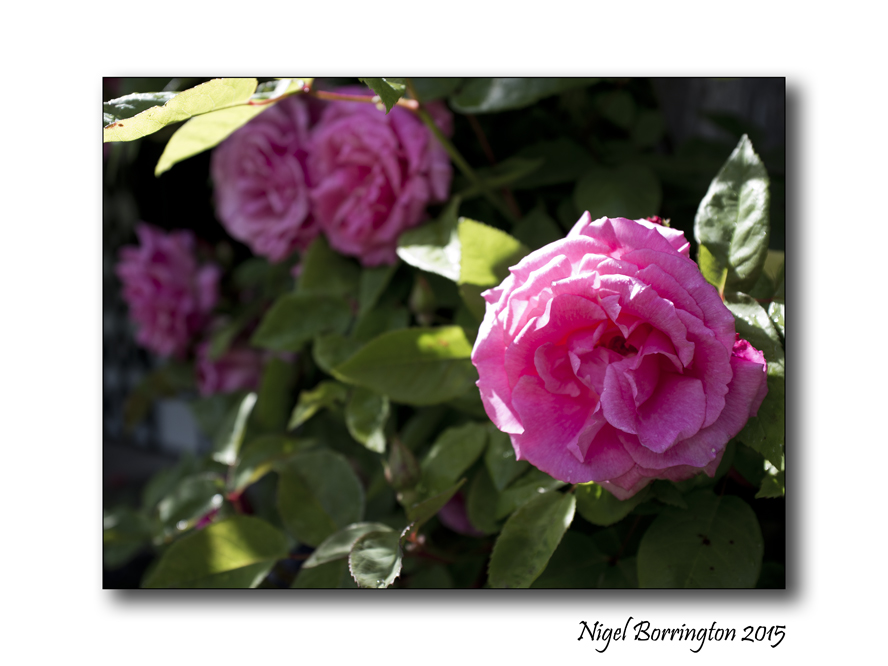
The cottage has been restored by the local group and the OPW and must be one of their most loved properties as the condition is just amazing.
If you are visiting county Tipperary this is a must see location !
Wiki link for John Nash
Swiss Cottage, Cahir, Co. Tipperary – A sense of place Gallery

“The unquiet spirit of a dandelion plume”, Ellen Mackay Hutchinson Cortissoz

Dandelion
Nature Photography : Nigel Borrington
Dandelion
By : Ellen Mackay Hutchinson Cortissoz
In the meadow-grass
The innocent white daisies blow,
The dandelion plume doth pass
Vaguely to and fro, –
The unquiet spirit of a flower
That hath too brief an hour.
A study of rain drops , macro image gallery
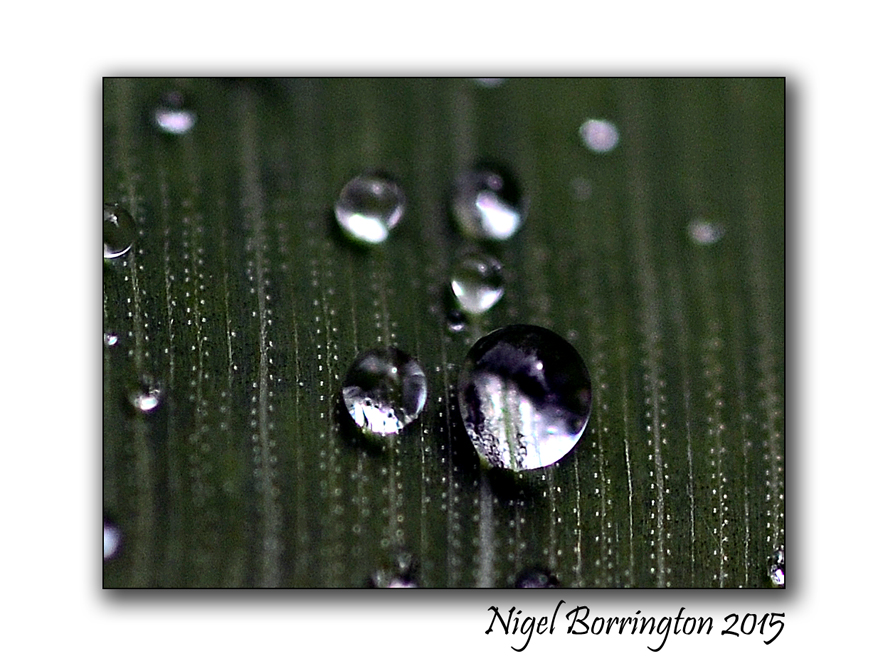
Study of Rain drops
Nature Photography : Nigel Borrington
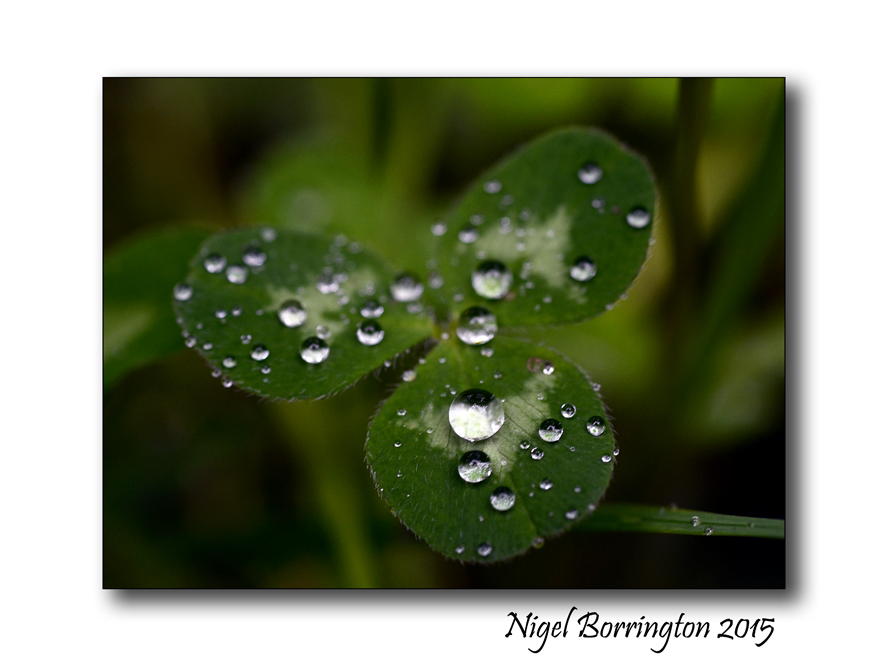
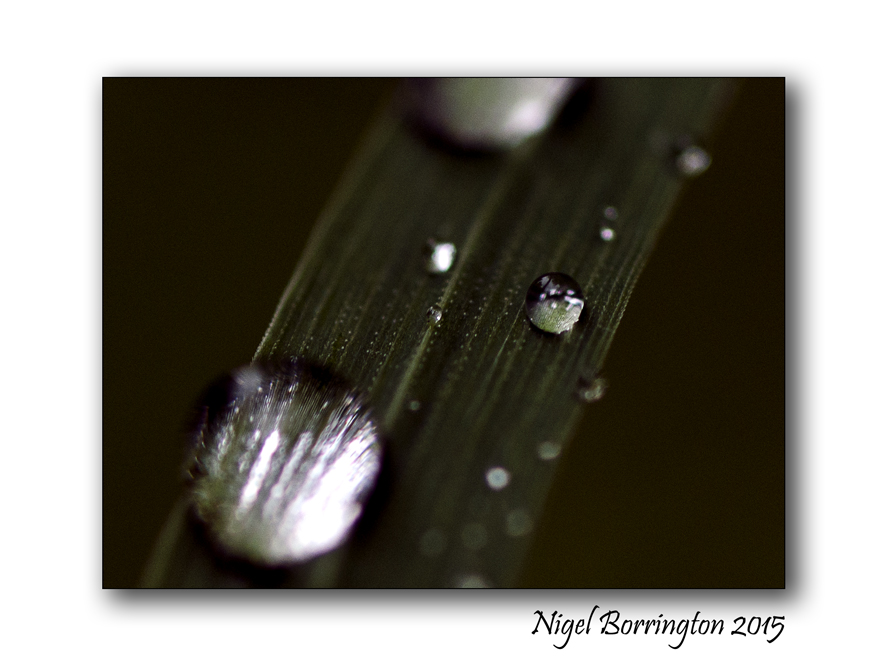
We have just had a long weekend here in Ireland , with a bank holiday and as expected 🙂 it rained yesterday (Monday) . I had intended to do lots of walking but it was just to windy and wet. So I decided after looking out of the windows for a while to do a photo study of the rain.
These images are just a small selection and include some from lunchtime today as we still have some showers, I used a macro lens for these shots and the above image has also captured the amazing structure of the grass that the rain drops rested themselves on.

River Bend , A poem by: Rania Moallem

Rivers bend
River Suir, Co Tipperary
Nigel Borrington
River Bend
A poem by: Rania Moallem
I believe I’ve waited too much that
patience poured wild enough to
drown me at the verge of that river
bend, where I pointlessly dwell,
where you never pass by.
And the confusion I lastly saw in your eyes
perhaps was dusk and ashes of burnt
thoughts you’ve had about me, or was it
plain puzzlement…
I wonder.
For I had you hunting me at night again
waking up breathless to find you clinging to
the last gasp of air I relief with despair,
right before I fight to sleep again.
It might be the right time to move on.
Past this rivers bend …….
Ruin a Poem By S. A. J. Bradley

Irish Landscape Photography : Nigel Borrington
Ruin
Wondrous the stone of these ancient walls, shattered by fate.
The districts of the city have crumbled.
The work of giants of old lies decayed.
Roofs are long tumbled down,
The lofty towers are in ruins.
Frost covers the mortar,
Tiles weathered and fallen, undermined by age.
The original builders are long in the earth’s cruel grip,
generations since have passed.
These broad walls, now reddened and lichen-aged, brown and gray:
once they withstood invading kingdoms.
Now, beneath countless seasons, they have fallen.
The rampart assembled by many, crumbles still,
Though hewn together with skill of sharpening and joining,
Strengthened ingeniously with chain and cabled rib-walls.

In the town, urbane buildings, bathhouses, lofty rooftops,
a multitude gathered.
Many a hall filled with humans
until Fate inexorably changed everything.
All the inhabitants succumbed to pestilence.
Swept away are the great warriors.
Their towers and walls are deserted,
the desolate place crumbles away.
Who could repair any of it,
for they are long dead.
So the courtyards and gates have collapsed,
and the pavilion roofs of vaulted beams crumbled.
Here where once men in resplendent clothes, proud, gazed upon their gold and silver treasure,
their gems and precious stones,
upon their wealth, and property:
the bright city of a broad kingdom.
Stone courtyards ran streams of ample water, heating the great bathes,
conveniently flowing into the great stone vats …
The Rime of the Ancient Mariner. A poem by: Samuel Taylor Coleridge

The Rime of the Ancient Mariner
Image : Nigel Borrington
From “The Rime of the Ancient Mariner”
Samuel Taylor Coleridge
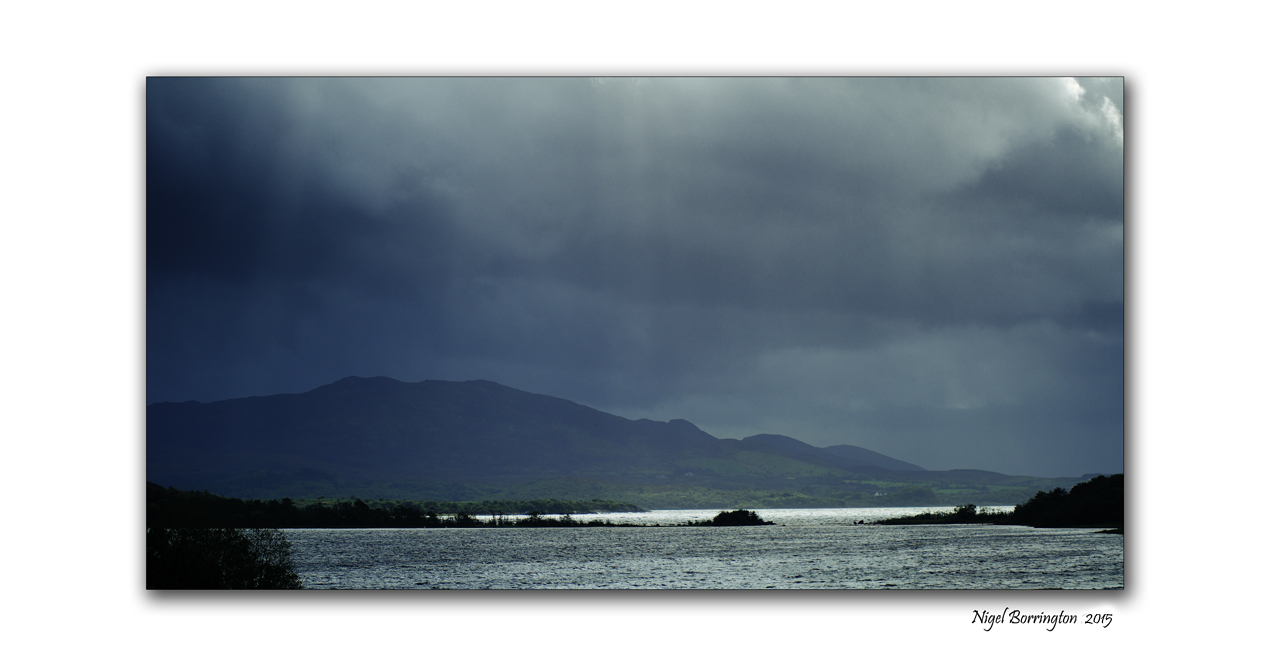
The “Rime“ is one of the greatest pieces of Romantic literature. And the section of this epic poem in which the dead sailors get up and start sailing the boat again without seeing anything is as terrifying as anything in the horror genre.
The thick black cloud was cleft, and still
The Moon was at its side:
Like waters shot from some high crag,
The lightning fell with never a jag,
A river steep and wide.

The loud wind never reached the ship,
Yet now the ship moved on!
Beneath the lightning and the Moon
The dead men gave a groan.
They groaned, they stirred, they all uprose,
Nor spake, nor moved their eyes;
It had been strange, even in a dream,
To have seen those dead men rise.
The helmsman steered, the ship moved on;
Yet never a breeze up-blew;
The mariners all ‘gan work the ropes,
Where they were wont to do;
They raised their limbs like lifeless tools—
We were a ghastly crew.
The body of my brother’s son
Stood by me, knee to knee:
The body and I pulled at one rope,
But he said nought to me.
‘I fear thee, ancient Mariner!’
Be calm, thou Wedding-Guest!
‘Twas not those souls that fled in pain,
Which to their corses came again,
But a troop of spirits blest:
For when it dawned—they dropped their arms,
And clustered round the mast;
Sweet sounds rose slowly through their mouths,
And from their bodies passed.
Around, around, flew each sweet sound,
Then darted to the Sun;
Slowly the sounds came back again,
Now mixed, now one by one.
Sometimes a-dropping from the sky
I heard the sky-lark sing;
Sometimes all little birds that are,
How they seemed to fill the sea and air
With their sweet jargoning!
And now ’twas like all instruments,
Now like a lonely flute;
And now it is an angel’s song,
That makes the heavens be mute.
It ceased; yet still the sails made on
A pleasant noise till noon,
A noise like of a hidden brook
In the leafy month of June,
That to the sleeping woods all night
Singeth a quiet tune.
Till noon we quietly sailed on,
Yet never a breeze did breathe:
Slowly and smoothly went the ship,
Moved onward from beneath.
Under the keel nine fathom deep,
From the land of mist and snow,
The spirit slid: and it was he
That made the ship to go.
The sails at noon left off their tune,
And the ship stood still also.
The Sun, right up above the mast,
Had fixed her to the ocean:
But in a minute she ‘gan stir,
With a short uneasy motion—
Backwards and forwards half her length
With a short uneasy motion.
Then like a pawing horse let go,
She made a sudden bound:
It flung the blood into my head,
And I fell down in a swound.
The Triple deity and the number three in Pagan Mythology , the Corleck Hill stone head

Corleck Hill stone head
The Triple deity
Photo : Nigel Borrington
Last weekend I visited the National Museum of Ireland in Dublin, to take a good look at some of the pagan/ per-christian objects that they have on permanent display.
One of the items that really captured my attention was the Corleck Hill – Carved stone head, a sculpture in the form of a triple deity. I think this stone is fascinating and provides a mythological link between per-christian Ireland and the wider world, well before the 1st century AD.
I have spent sometime this week doing a little study on the stone head and reading as much as I can find about its form, so I just wanted to share some on the images I took from the visit and some of the details I have found so far.
The Corleck Hill stone head

Stone Head
Object Number: IA:1998.72
Stone HeadCarved stone head. Early Iron Age, 1st – 2nd century AD. Known since it came to scientific attention in 1937 as the Corleck head, this three-faced stone idol was found in the townland of Drumeague, Co. Cavan around the year 1855. It appears that it was one of a number of carvings found, including a bearded bust now known as the Corraghy head that was later built into a barn in the nearby townland of that name. Thomas Barron, the local historian who brought the three-faced head to the attention of the National Museum spent a lifetime researching the local traditions concerning the find and he concluded that the figures were associated with a shrine located at Drumeague Hill. Nearby is Corleck Hill where it appears that between 1832 and 1900 a Passage Tomb surrounded by a stone circle and a circular embankment 70 yards in diameter were dismantled. The site of these monuments was the center of an important Lughnasa festival that celebrated the harvest, an ancient Celtic tradition that survives into modern times. Other Celtic stone heads have been found in the vicinity such as those from Corravilla and Cavan Town and the find place of the three-faced idol is but twelve miles distant from Loughcrew, Co. Meath. A little further north there is another group of Iron Age stone carvings that appear to be centred on the vicinity of Emhain Macha, the main political and ritual site of ancient Ulster. The likelihood is that the Corleck Head was associated with a shrine reflecting Romano-British traditions located close to where the carving was discovered. The three-faced carving is the finest of its type and there is a small hole in the base to assist its being stood securely, perhaps on a pedestal. One of the faces is heavy browed and all of them have bossed eyes, a broad nose and slit mouth. One of the mouths has a small circular hole at the centre and this feature is also found on two of the Co. Armagh carvings and on another from Woodlands, Co. Donegal. There are several examples of this feature from Yorkshire the best known occurring on two three-faced idols from Greetland, near Halifax. The feature also occurs on a stone head from Anglesey, Wales. H. 33cm; Max. W. 22.5cm.
What is the triple deity

A triple deity (sometimes referred to as threefold, tripled, triplicate, tripartite, triune or triadic, or as a trinity) is a deity associated with the number three. Such deities are common throughout world mythology; the number three has a long history of mythical associations. Carl Jung considered the arrangement of deities into triplets an archetype in the history of religion.
In mythological and its art,three separate beings may represent either a triad who always appear as a group (Greek Moirai, Charites, Erinnyes; Norse Norns; or the Irish Morrígna) or a single deity known from literary sources as having three aspects (Greek Hecate, Diana Nemorensis). In the case of the Irish Brigid it can be ambiguous whether she is a single goddess or three sisters, all named Brigid. The Morrígan also appears sometimes as one being, and at other times as three sisters, as do the three Irish goddesses of sovereignty, Ériu, Fódla and Banba.
The Matres or Matronae are usually represented as a group of three but sometimes with as many as 27 (3 × 3 × 3) inscriptions. They were associated with motherhood and fertility. Inscriptions to these deities have been found in Gaul, Spain, Italy, the Rhineland and Britain, as their worship was carried by Roman soldiery dating from the mid 1st century to the 3rd century AD. Miranda Green observes that “triplism” reflects a way of “expressing the divine rather than presentation of specific god-types. Triads or triple beings are ubiquitous in the Welsh and Irish mythic imagery” (she gives examples including the Irish battle-furies, Macha, and Brigit). “The religious iconographic repertoire of Gaul and Britain during the Roman period includes a wide range of triple forms: the most common triadic depiction is that of the triple mother goddess” (she lists numerous examples).
More ( A fascinating read !!!)
Flora & Fauna , A Poem by crowbarius – Hello Poetry

Flora & Fauna
Irish Nature Photography : Nigel Borrington
Flora & Fauna
Flora and Fauna, the sisters of Season
Of Spring and of Summer
Allow now our drummer
To drum out the beat
For the feet of the sisters
To glide and to creep
Like the encroaching sleep
Which may perch on your shoulder if we cannot keep you awake
And on the edge of your seat, sir.
Now the former, sweet Flora, will finger the flute
While the other continues to glide and to slide
Like a sequined Venetian harlequin bride;
And now Fauna will mimic the movements of bird and of beast
As she graces the work of our landscape artiste
And all is completely unfeasible
Completely lacks reason
We guarantee.
Presently
In the eye of the beholder
Sweet Flora seemingly draws from the aether a lyre
And with flourishing fingers she plucks from the heavens
A song of the seasons, a pagan ode to Pan!
Behold! No aid of hoops, no strings
The vestal-virgin-harlot sisters sing
Of beautiful Persephone
And with unseen damselfly wings
Ascend from mediocrity
All melody forgotten
All the drums create cacophony
And you will find serenity in chaotic monotony
Now let this climaxing crescendo banish all your sorrowing!
No more that light; no more that sacred realm
Life’s door was dappled gloam; now all is black.
A man of wax with saintly, hollow eyes
Devoid of sin, devoid of love and light
That golden room is lost – you can’t turn back.
Now love has lost its lustre – lust lost joy
And coy eyes turn to watch the empty man
Struck by eternal beauty, and condemned
To haunt the broken world of mortal men;
And shrilling wind caresses empty hand.
Irish Woodland flowers : Greater Stitchwort (Stellaria holostea)
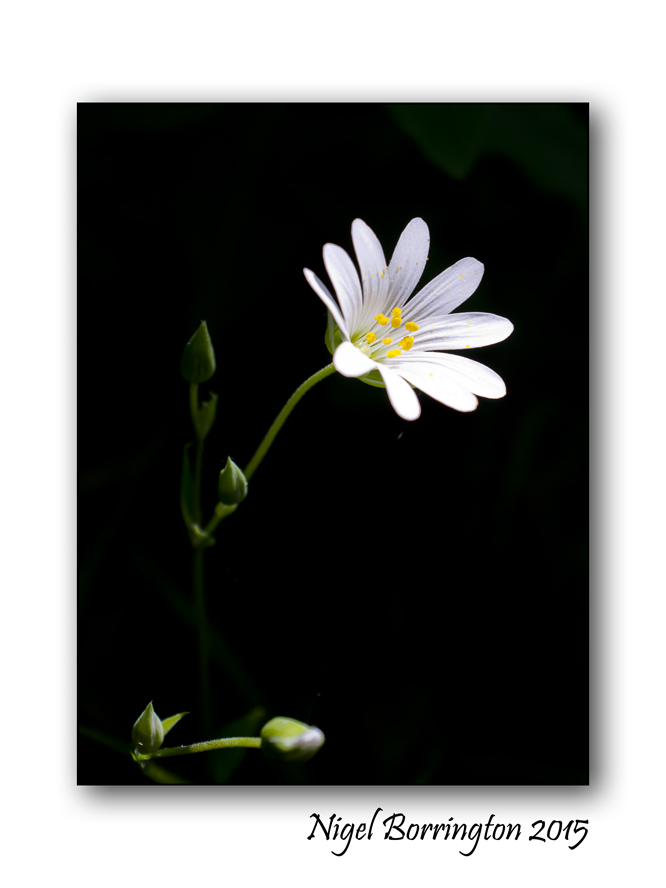
Greater Stitchwort
Stellaria holostea
Nigel Borrington
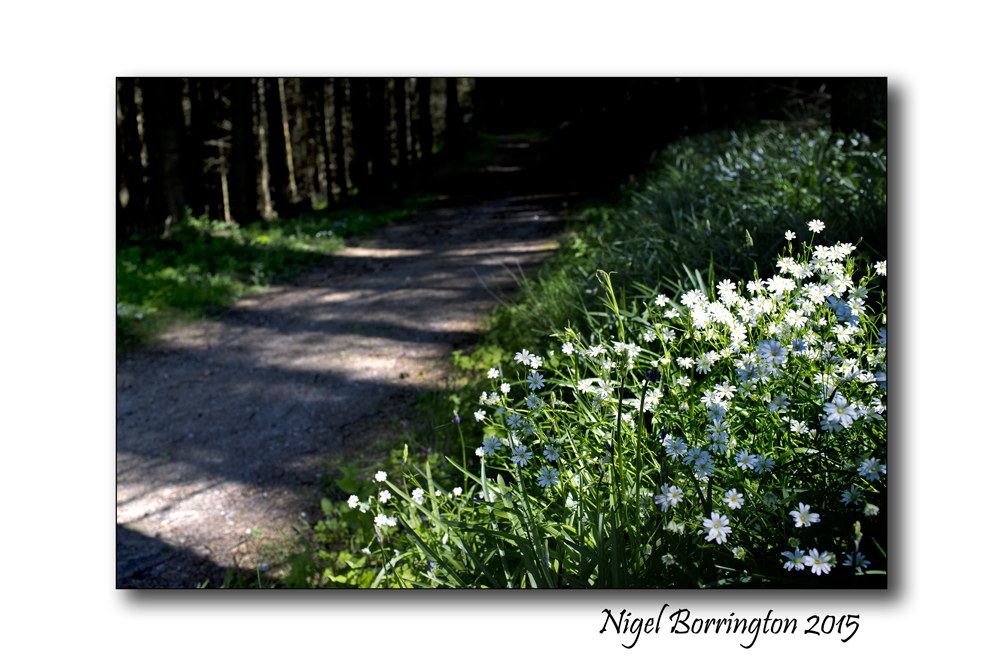
Each day this month as I go for a walk with our dog Molly, into some of our local woodland I have noticed all the wildflowers of May time and they have been a wonderful sight .
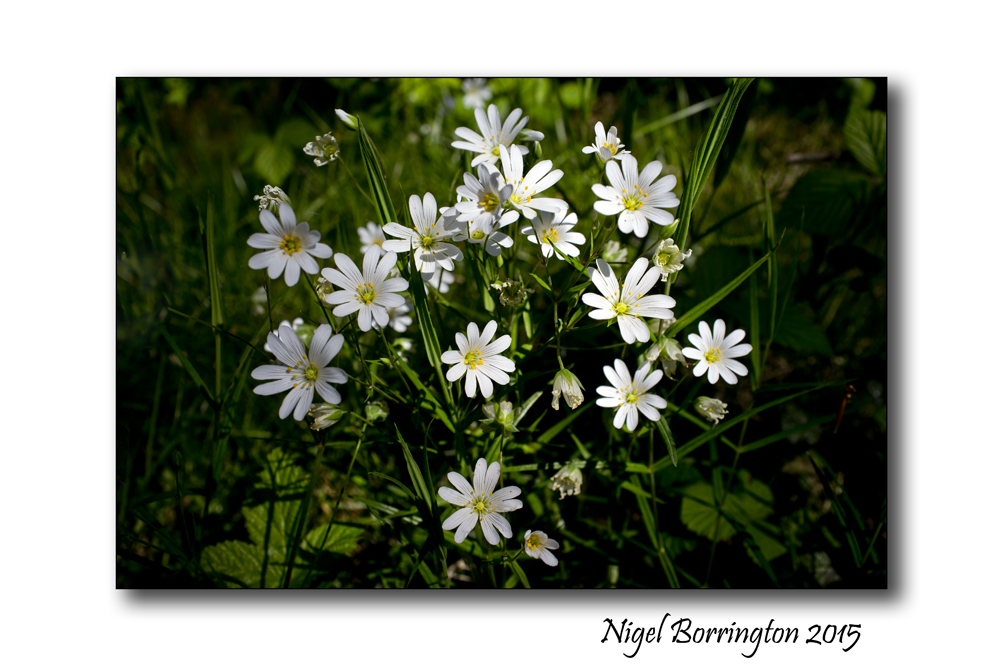
Greater Stichwort with its pure white flower heads and tall stems are just some of these.
About
Greater Stitchwort grows in woods, roadside verges, hedgerows and grassy banks. It has many other common names including ‘Wedding Cakes’, ‘Star-of-Bethlehem’, ‘Daddy’s-shirt-buttons’ and ‘Snapdragon’ – the latter because its stems are brittle and easily break. It’s pretty star-shaped, white flowers bloom from April to June; as the seed capsules ripen, they can be heard ‘popping’ in late spring.
How to identify
Greater Stitchwort has five white petals, each deeply notched and almost divided into two. Its green leaves are grass-like in appearance and its brittle stems are square. Greater Stitchwort has larger flowers (2-3cm across) than its relative, Lesser Stitchwort (0.5-1cm across).
http://www.wildlifetrusts.org/species/greater-stitchwort
County Kilkenny Landscape images, south east Ireland through a lens

Kilkenny Landscape Images
Nigel Borrington
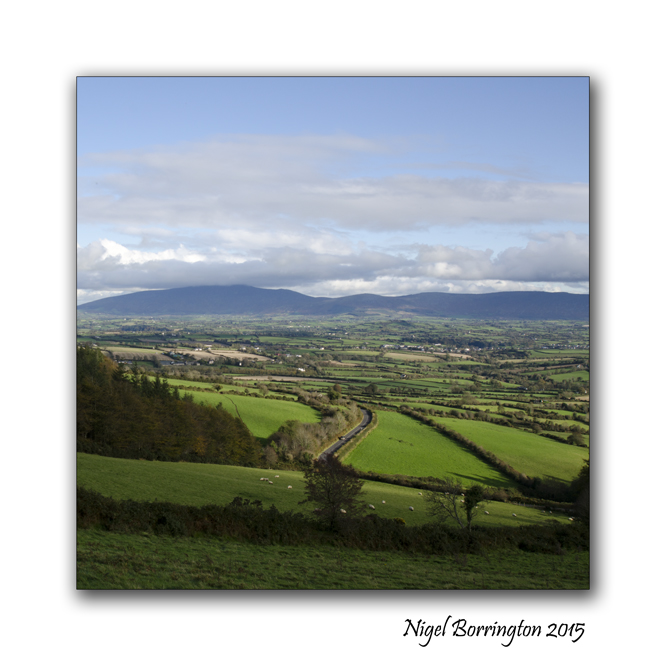
Summertime in County Kilkenny can bring some wonderful changes to the surrounding landscape and today I just want to share a gallery of images taken during the following months.
It a great time of year with so much to look forward to ……
County Kilkenny Landscape Gallery



Derrynaflan Hoard, National Museum of Ireland

Derrynaflan Chalice
Photo : Nigel Borrington
On Saturday I spent the day in Dublin , shopping and visiting different Museums , including the National Museum of Ireland .
One of my main interests in doing so was to take a fresh look and the Derrynaflan Hoard, I posted on the items in this collection and about the Island of Derrynaflan , county Tipperary – last October.
The Derrynaflan chalice is one of the most amazing historic items to view and the story (Below) of how it was discovered just as fascinating. Seeing this hoard just make you wonder how many more items like it have yet to be found or sadly never will be.
The following two images are from Saturdays vistit :


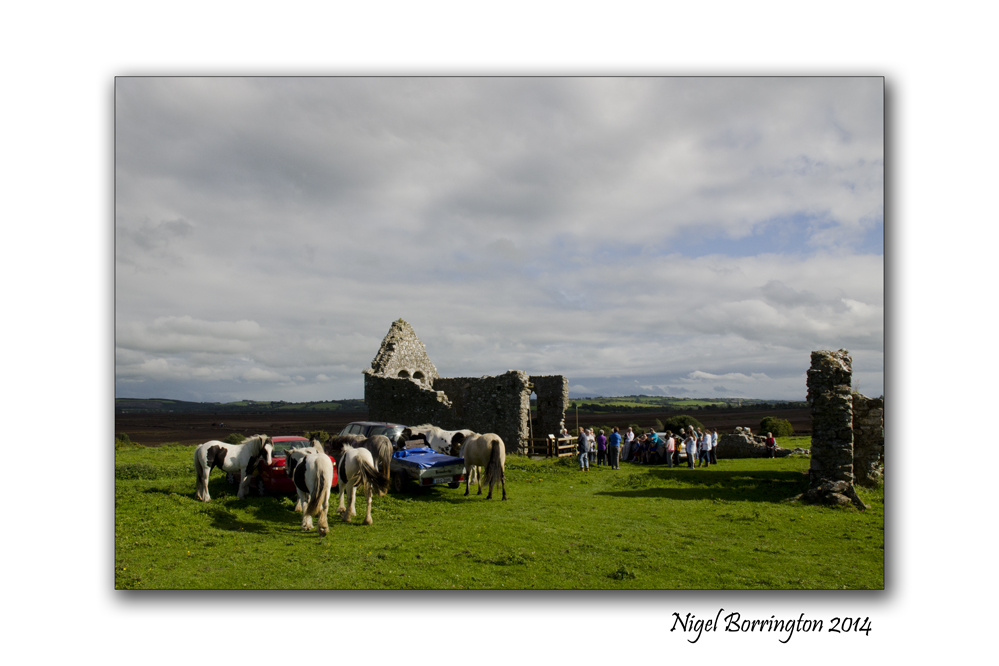
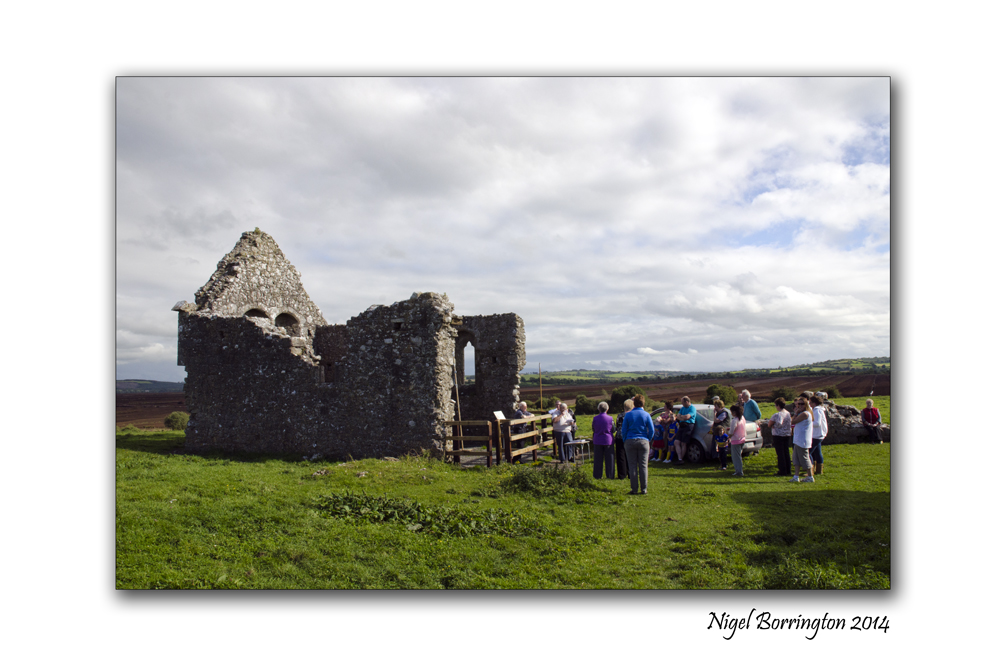
Island of Derrynaflan
The Island of Derrynaflan is located in County Tipperary and these days it is surrounded by recovered drained land that is harvested for it’s peat, this peat being turned into fuel.
The images below and the text are from my post last year :
Discovering the Hoard
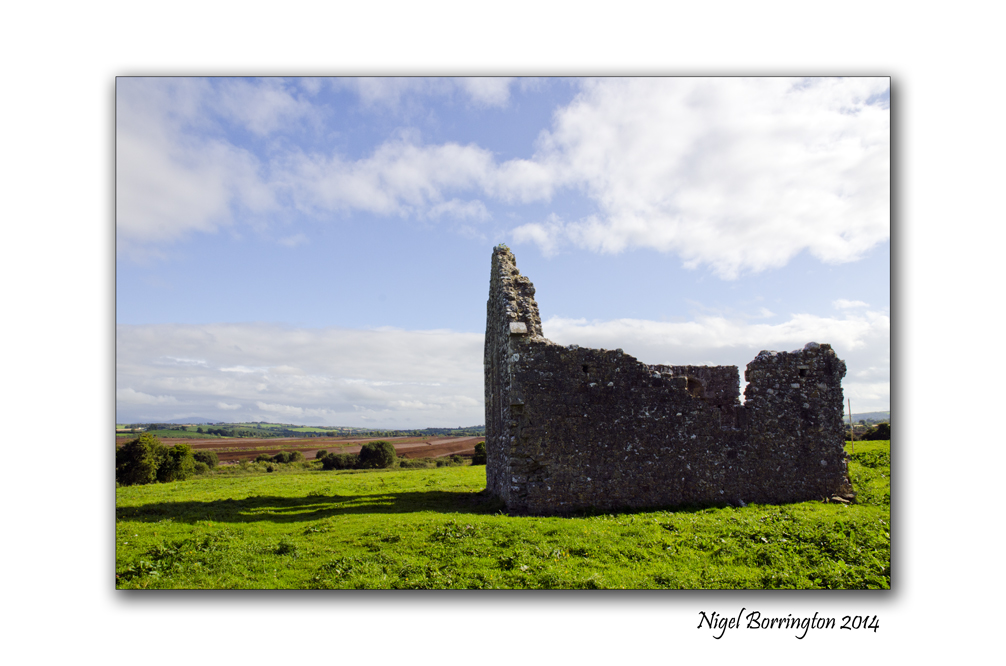
Derrynaflan Island, County Tipperary
Irish Landscape Photography : Nigel Borrington
The Derrynaflan hoard is one of the most spectacular hoard discoveries in Ireland, which led first to an increase in enthusiasm for metal detecting as a hobby, but ultimately contributed to the prohibition of unlicensed searching for archaeological material.
On 17 February 1980, Michael Webb and his son, also called Michael, discovered a significant hoard of early church treasure in Derrynaflan, in the townland of Lurgoe, County Tipperary, using metal detectors (Kelly 1994: 213; O’Riordain 1983: 1). The hoard included a chalice, a bronze strainer ladle and a paten (a kind of small plate) (and see Ryan 1983 for a detailed description), and the discovery was described as ‘one of the most exciting events in the history of Irish art’ (Stalley 1990: 186). The large monastic enclosure in which the hoard was found was partially protected as a National Monument (Kelly 1993: 378). The finders reported their discovery to an archaeologist from University College Cork, Dr. Elizabeth Shee Twohig (Kelly, pers. comm., 2012), who advised them that they must take the finds to the National Museum of Ireland in Dublin (Houses of the Oireachtas 1986; O’Riordain 1983: 1). Under Irish law at that time, the finders were entitled to a reward for making the discovery, in this case decided at IR£10,000 (Houses of the Oireachtas 1986), although this was initially rejected by the finders as insufficient compared to the value of the find (Kelly 1994: 213).

Six years later, the High Court made a ruling that the find or its value (estimated at IR£5.5 million) should be returned to the finders (Kelly 1994: 113). The public mood turned against the Webbs, who were shown on the main evening television news drinking champagne to celebrate the ruling. Ireland was then in deep recession with massive public service cuts which led to resentment that the Webbs might benefit to the tune of IR£5.5 million from the public purse (Kelly, pers comm., 2012). A year later, in 1987, a further final judgement was delivered by the Supreme Court that the Derrynaflan Hoard in fact belonged to the state and not to the finders (Kelly 1995a). The finders finally received a reward of IR£50,000 (Kelly 1994: 214).
The impact of the case on Irish law concerning the protection of heritage was significant. Debates in the Seánad Éireann (upper house of the Irish Parliament) in 1986 indicate the split in opinions regarding the validity of the claim of the finders to the hoard (as had been decided in court the previous year), with one Senator suggesting that the state should have been trying to prove that the Webbs had no legal claim to the hoard, one Senator regarding such discoveries as no more than looting, and another claiming that the finders should instead be praised for the care with which they removed the hoard from the ground and for going to the National Museum to report the discovery (Houses of the Oireachtas 1986). In 1987 the National Monuments (Amendment) Bill, which included clauses on metal detecting and ancient shipwrecks (another area becoming vulnerable to looting), passed through its final stages in the Dáil Éireann (lower house of the Irish Parliament) (Gosling 1987: 23).
Ireland’s National Monuments Act 1930 had prohibited the excavation of archaeological objects other than under license (Kelly 1995a). However, the maximum fine for a successful prosecution at that time, at IR£10[1], proved not to be a strong deterrent (Kelly 1995b: 235). The discovery of the Derrynaflan Hoard had reputedly contributed to the growth of the metal detecting hobby in Ireland, which by the time of the discovery saw hobbyists searching not only ploughed land and other locations away from archaeological sites, but also on known archaeological sites (Kelly 1993: 378). A 2012 Irish news item, which described an athlete as having ‘more gold than they found in Derrynaflan’ (Keane 2012) indicates that the finding of the hoard is still recalled in Irish popular memory. However, with the National Monuments (Amendment) Act 1987, ‘it became illegal to search for archaeological objects with metal detectors or other electronic detecting devices without license’. A further National Monuments (Amendment) Act 1994 specified the state ownership of archaeological objects, and made it ‘an offence to trade in unreported antiquities, or withhold information about archaeological discoveries’ (Kelly 1995a). Under the 1994 legislation, the maximum penalty was also increased to a fine of IR£50,000 and five years imprisonment (National Monuments (Amendment) Act 1994, Section 13). The National Monuments (Amendment) Act 1987 had been in preparation for many years and so was not a direct reaction solely to the controversy surrounding the hoard (Kelly, pers. comm., 2012), although there were observations made that the upsurge in metal detecting as a result of the discovery led to changes in the law (Kelly 1994: 214).
Ref : http://traffickingculture.org/encyclopedia/case-studies/derrynaflan-hoard/
A visit two Derrynaflan island Gallery


The Old Lane Through The Woods – Poem by jim hogg , Kilkenny Landscape photography

The Old Lane Through The Woods
Black and white landscapes
Nigel Borrington
The Old Lane Through The Woods –
Poem by jim hogg
There’s a track through the trees from the White to the Black
that I walked as a kid and I often went back.
Now the years slip away and the distances grow,
but if time gives us time and we get to change tack
if the notion should take you then I’d gladly go:
in wildest November before winter’s trance,
at the height of the spring when the daffodils dance.
We could stand on the bank where the Rhodies convene,
like the first of our kind who looked down on that scene,
on a loch with no name, with no castles around,
or old burial ground of the meek and the mean;
though the rich bled the poor, by the sod they’re all bound.
Or we’ll maybe just stay on the old woodland road
and head north to the Black with the odd jumping toad.
There’s a whole constellation of things we can view.
In the summer there’s herons and sometimes deer too,
and there’s dodging and weaving through armies of leaves.
Though the foxgloves are rare I’ll find one just for you,
and then swing on the Ivy through Sycamore trees.
If you ever have time we could wander off down
that old lane through the woods whether wintry or lown.
But I know all too well that this life is a crush.
There’d be too much to do if we didn’t all rush.
And I wonder sometimes how it all went so wrong;
but they’re calling it progress with hardly a blush –
in a world where rich hippies can still sing along.
There’s a place where that craziness doesn’t hold sway;
if you’re ever back home we could go there some day
Cuckoo-flower / Lady’s Smock , Irish Nature Photography
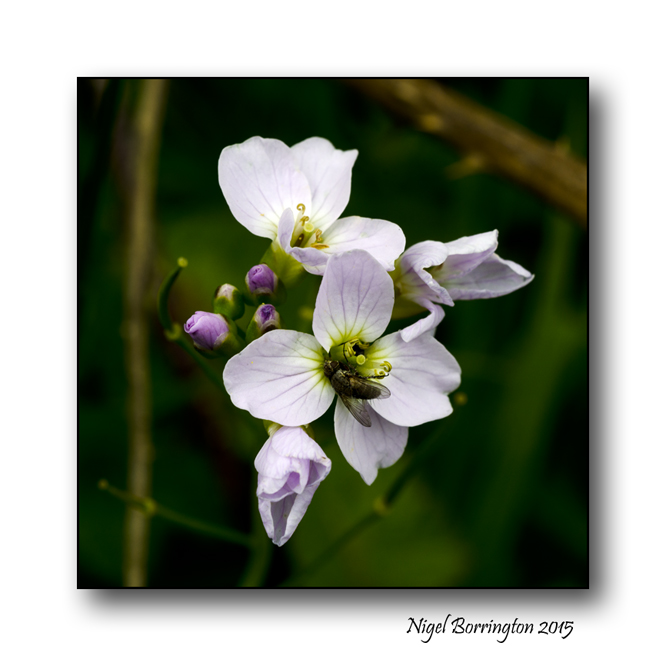
Cuckoo-flower / Lady’s Smock
Nigel Borrington
In late springtime here in county Kilkenny – Ireland, I always notice when the wild flower come out.
Some of the most noticeable are the Cuckoo flowers, they grow at the side of rivers and along damp woodland paths.
I always feel like summer has started in full when I first see them …..
Cuckoo-flower / Lady’s Smock
Cardamine pratensis
Biolar gréagáin
Family: Brassicaceae
Flowering time: March-June. Perennial. Native.

Large white to pinkish-mauve flowers. Yellow anthers. Colour depends
on habitat, pink-mauve on dryer ground. Fruit with long or short style.
Basal leaves round / oval, in rosette. Stem leaves narrow-lanceolate.
Variable plant, sometimes with runners. Height: To 60 cm
Very frequent. Damp meadows and lawns, stream sides, open moist woodland.
A vote for All the colors of the Rainbow, Ireland’s same-sex marriage referendum. May 22nd 2015

All the colours of the Rainbow
Nigel Borrington
This Friday (May 22nd) Ireland votes in a referendum for same-sex marriage and its a big moment for this country !!!
I don’t usually comment here , if at all about social of political issues , this is my area of personal escape in many ways from these areas !!!
However by posting one of my rainbow images here , I hope I make it very clear what I am thinking !!!
We as a race (HUMAN RACE!!!) need everyone – all ( colors, shapes and sizes ) and this involves everyone being equal and thus having the same rights in all areas of life !!!
SO Clearly I will be Voting YES!!!! 🙂 🙂
Rainbow Colors
by Sharon MacDonald
A rainbow of colors,
In the light, after rain.
There are seven of them,
And, each one has a name.
Red is the first
Rainbow color in the sky.
Orange is next
Like jack-o-lantern pie.
Yellow is the third,
Lemons come to mind.
Color four is green,
Think of grassy hills to climb
Blue is color five,
Like the water in a lake
The sixth is indigo
Blue-gray blends that you can make.
Violet is the color
Of the last rainbow band.
Violet is flowery;
Like the pedals in your hand.
So, wave your arms above you
Cast your colors high
And, try to make a rainbow
Across a cloudy sky
Free the alternatives of life !!!!!
 Nigel Borrington
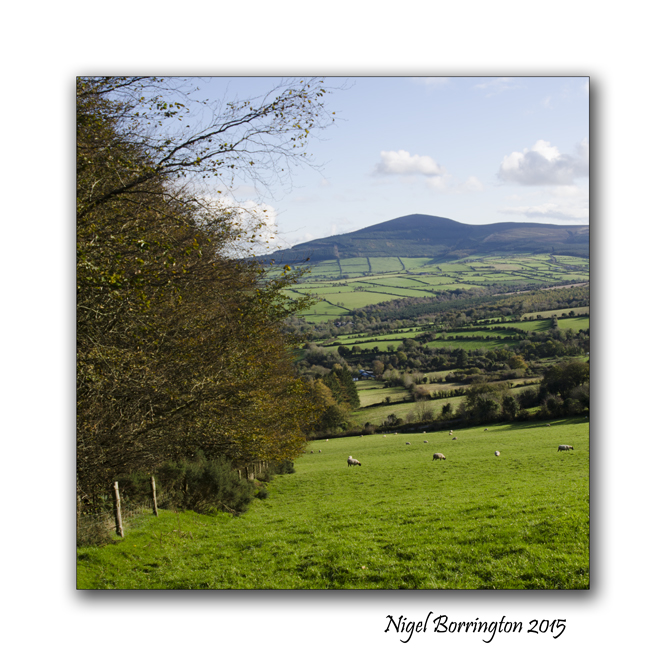
Irish landscape images , images for the weekend …….
Irish landscape images
Nigel Borrington
This weekend I am planning lots of time outside, just walking, relaxing and getting some fresh landscape images …
I hope what every you do , you have a great weekend and that if you can you get sometime to relax and enjoy your surroundings, in the country or in the city 🙂 🙂
Have a great weekend !!
Irish Landscape Gallery
June 12, 2015 | Categories: Comment, Gallery, Images for the weekend, Landscape, Nigel Borrington | Tags: images of ireland, Ireland, irish landscape, Landscape Photography, mental health, Nigel Borrington, out in the country, relaxation, walking, weekend, weekend images | 9 Comments