Train to Dublin
– Louis MacNeice

Nikon Fm2n
Nikon 50mm f1.4 lens
Kodak film
Our half-thought thoughts divide in sifted wisps
Against the basic facts repatterned without pause,
I can no more gather my mind up in my fist
Than the shadow of the smoke of this train upon the grass –
This is the way that animals’ lives pass.
The train’s rhythm never relents, the telephone posts
Go striding backwards like the legs of time to where
In a Georgian house you turn at the carpet’s edge
Turning a sentence while, outside my window here,
The smoke makes broken queries in the air.
The train keeps moving and the rain holds off,
I count the buttons on the seat, I hear a shell
Held hollow to the ear, the mere
Reiteration of integers, the bell
That tolls and tolls, the monotony of fear.
At times we are doctrinaire, at times we are frivolous,
Plastering over the cracks, a gesture making good,
But the strength of us does not come out of us.
It is we, I think, are the idols and it is God
Has set us up as men who are painted wood,
And the trains carry us about. But not consistently so,
For during a tiny portion of our lives we are not in trains,
The idol living for a moment, not muscle-bound
But walking freely through the slanting rain,
Its ankles wet, its grimace relaxed again.
Poem by : Louis MacNeice
Full version of the Poem
Artic Penguin – Inveraray
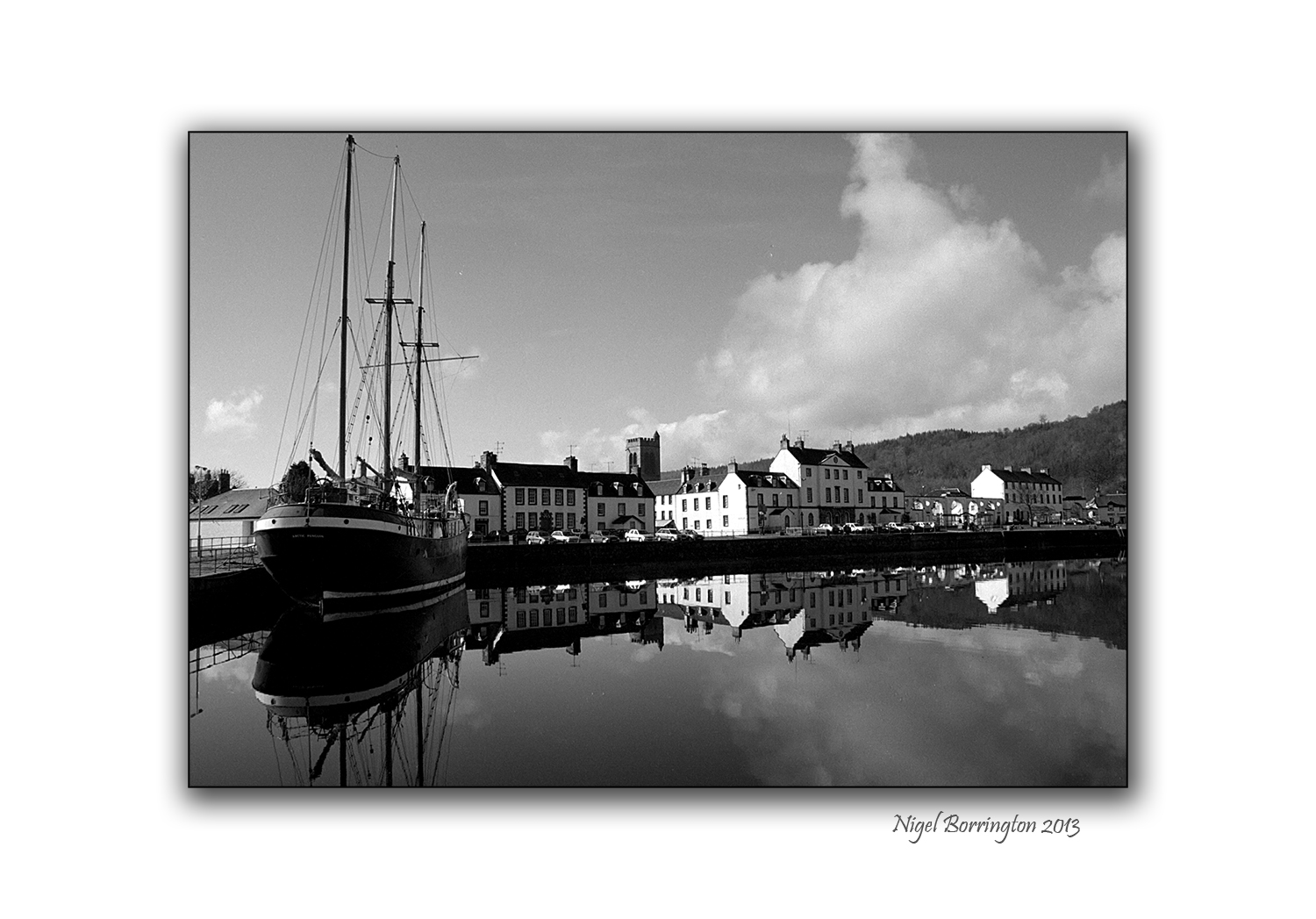
Nikon F90x
Ilford XP2
Nikon 50mm f1.4 lens
Sitting on the quays at Inveraray in Argyll and Bute, Scotland, the Artic Penguin now rests.
She had the following History
History
1910 Named: PENGUIN as lightship for the Irish Lighthouse Service – cost £7,230. Flag: Ireland
1966 Sold to T.E. McSweeney and converted into a Youth Adventure Sea Training Vessel Renamed: HALLOWE’EN Flag: United Kingdom
1982 Sold to Mr D. Norris and converted to a schooner. Cruise Boat Renamed: ARCTIC PENGUIN Moored close to the eastern shore of The Gareloch where her new owner single-handedly fitted her with twin diesel engines. All the work, the boring out of the stern propellor tubes, the fitting of the necessary external propellor shaft brackets, the propellor shafts and the propellors was all done without the ship being docked or slipped.
1995 Maritime Museum at Inveraray Pier
Today she enjoys one of the best views Scotland has to offer.

Nikon F90x
Ilford XP2
Nikon 50mm f1.4 lens
Inveraray sits on the A83 between Glasgow and Oban/Argyll, I have driven this route many times and stopping to look at the Artic Penguin and loch Fyne was something I did every time, just a fantastic view.
I am planning to return in November this year and cannot wait!

Nikon F90x
Ilford XP2
Nikon 50mm f1.4 lens
Nigel …
Wild Sorrel

Wild Sorrel in the irish woodland
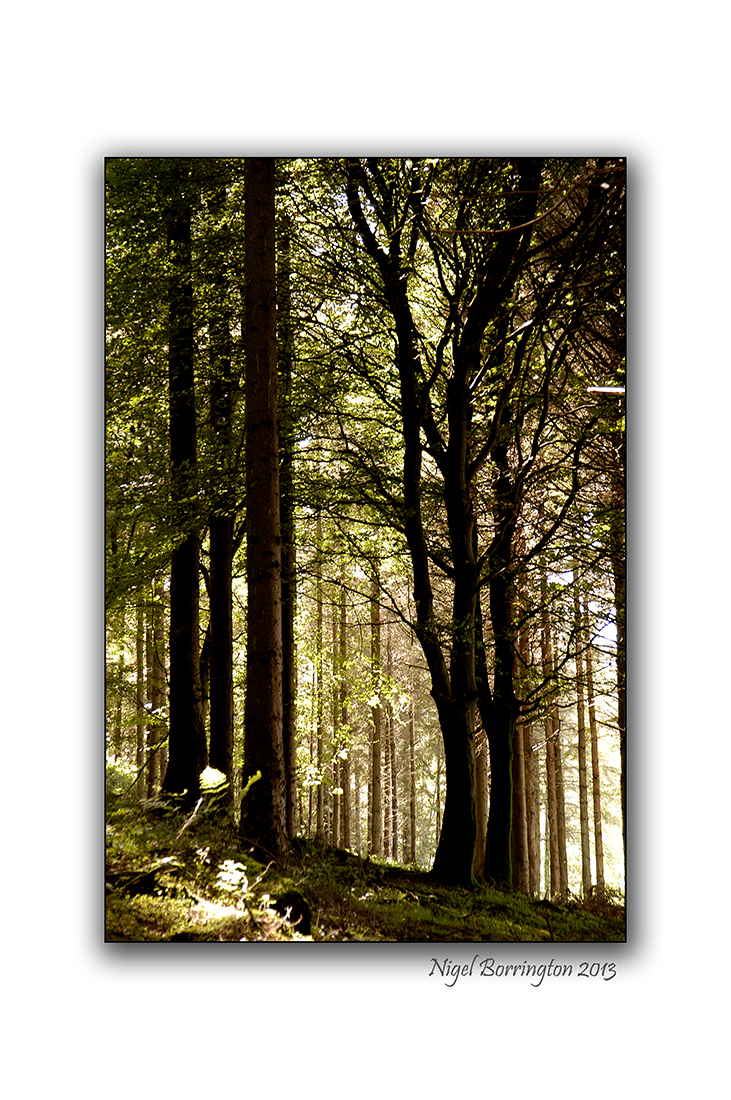
From the Middle of April until the Summer many of Irelands wood-land floors come to life with lots of different plants, Wild Sorrel is one if these that can be fully enjoyed. It can be picked and eaten on your walk or collected and taken home for you fridge.
The leafs of this plant can add to any meal that you are preparing. I love the moment when I first see wild sorrel coming out, its the start of the woodlands bursting into life after a long cold winter.
This web page has a great discription… http://www.wildflowersofireland.net/plant_detail.php?id_flower=243
“Carpeting old, undisturbed woodlands in spring, this pretty downy perennial also grows on moss-covered trees and shady walls and is widespread throughout the country. Each pretty white five-petalled bell-shaped flower (10 – 15 mm) is held solitarily on a stem which comes directly from the roots. The petals are lined with a tracery of pink veins through to the golden centre of the flower. The leaves are trifoliate, each leaflet heart-shaped and these fold up towards late afternoon or in rain as do the fragile flowers. They have a sharp taste of oxalic acid. This flower blooms from April to June, is a native plant and belongs to the family Oxalidaceae.
Also known as Wood Shamrock and Wood Sour, the leaves of this plant were used to make an ointment by early herbalists. Some people eat these leaves in salads or soups but beware, as large doses may cause oxalate poisoning. “
The Sea
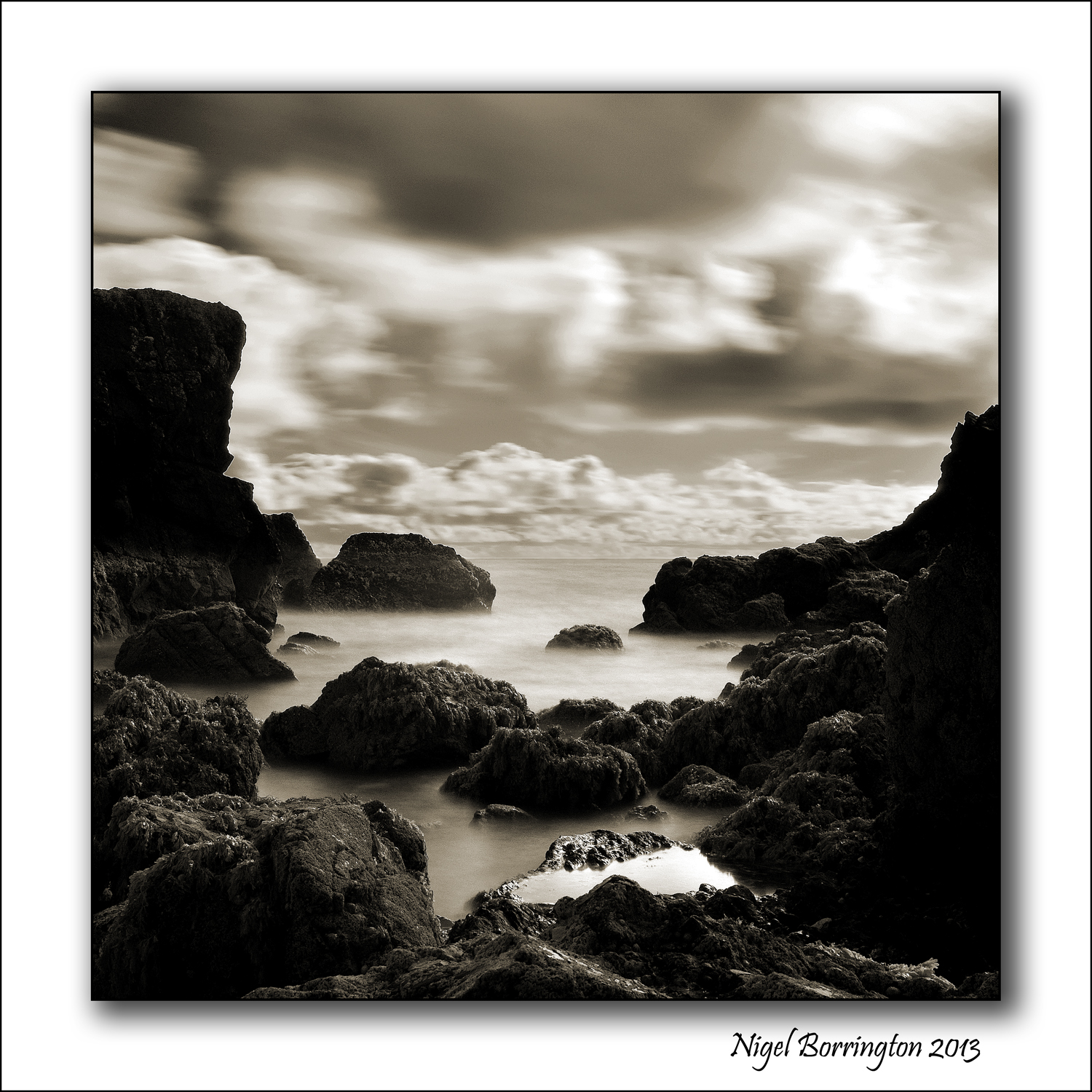
The sea is a hungry dog,
Giant and grey.
He rolls on the beach all day.
With his clashing teeth and shaggy jaws
Hour upon hour he gnaws
The rumbling, tumbling stones,
And ‘Bones, bones, bones, bones! ‘
The giant sea-dog moans,
Licking his greasy paws.
And when the night wind roars
And the moon rocks in the stormy cloud,
He bounds to his feet and snuffs and sniffs,
Shaking his wet sides over the cliffs,
And howls and hollos long and loud.
But on quiet days in May or June,
When even the grasses on the dune
Play no more their reedy tune,
With his head between his paws
He lies on the sandy shores,
So quiet, so quiet, he scarcely snores.
The sea is a hungry dog,
Giant and grey.
He rolls on the beach all day.
With his clashing teeth and shaggy jaws
Hour upon hour he gnaws
The rumbling, tumbling stones,
And ‘Bones, bones, bones, bones! ‘
The giant sea-dog moans,
Licking his greasy paws.
And when the night wind roars
And the moon rocks in the stormy cloud,
He bounds to his feet and snuffs and sniffs,
Shaking his wet sides over the cliffs,
And howls and hollos long and loud.
But on quiet days in May or June,
When even the grasses on the dune
Play no more their reedy tune,
With his head between his paws
He lies on the sandy shores,
So quiet, so quiet, he scarcely snores.
James Reeves
The Pagan tree and forest plants

Trees, herbs, and plants are very important to Druids. They represent their sacred alphabet, they are used for healing, and many Druids name themselves after trees. Trees are the connection between the realms. Ireland was said to be divided into four lands, each occupied by a sacred tree with a fifth tree at the center.
The five most important trees are the oak, rowan, birch, apple, and yew:
The oak is connected with strength, protection, and stability. Some say that the very word Druid derives from duir, the old word for oak.
The rowan is useful for protection, youth, and prophecy.
The birch is symbolic of beginnings, renewal, regeneration, and cleansing. It is also associated with the bard.
The apple tree is the tree of life and is said to reside at the center of the otherworld.
The yew is associated with death and decay because it is very poisonous, but this unique evergreen tree also lives for thousands of years. It is related to the ovate and is frequently found near sacred wells.
Other trees, such as the ash, willow, and hawthorn also frequently appear in mythology and legend.

Foremost among the herbs and plants most revered by Druids is mistletoe. Mistletoe is a parasite frequently found growing on oaks. It is said that mistletoe, which grows off trees rather than from roots in the earth, must never be allowed to touch the earth. It is sometimes called all-heal, but it is poisonous, so use it with caution. Verbena, or vervain, is gathered at Midsummer, whereas mistletoe is gathered at Midwinter. It is used as an offering to the gods. It is also considered a cure-all and is said to ward against evil spirits.

HERB ROBERT, GERANIUM ROBERTIANUM
This herb has been used in medicine for centuries, although in the 20th century, particularly in Portugal it was hailed as a folk cancer remedy when the powdered leaves were taken with a raw, fresh egg yolk. Of course this has not been proven to work. Dioscorides described it and it was known to the old herbalists, who used it mainly for blood problems, as the stalks and leaves turn bright red in autumn, a sign to these old herbalists that it was good for the blood.
This plant is known by around a hundred names some of which refer to other plants more often, such as bloodwort (red dock), and red robin (not ragged robin) and cranesbill, which is native to the US and poisonous. However Stinking Bob is a name given to this herb which is unique to it, and refers to the smell given off by its bruised leaves. It is also called the Fox Geranium, some say because of its “foxy” smell after rain. It is native to hedgerows and woodland in Europe the British isles included, and to temperate Asia as it grows as far east as Japan and in the Himalayan regions.
No one really knows how it became Herb Robert, although there are several contenders for being its namesake, including Robert Duke of Normandy, who died in 1134, St Robert of Molesme, a French monk who died in 1110, and Robin Goodfellow or Puck, the mischievous elf who has a role in Shakespeare’s play “A Midsummer Night’s Dream.” The Latin name Robertianum might be a corruption of ruber meaning red, rather than referring to any specific Robert, Robin or Rupert, names that seemed to have been linked to this plant.
The leaves of Herb Robert are the main part of the plant used for medicinal purposes and an infusion of these has been drunk and used as a wash for the skin, and for inflammation of the eyes. A poultice of the leaves has been used to relieve hardened breasts, to increase lactation in nursing mothers, to relieve irritated skin and the pain of rheumatism and reduce bruising, as well as being applied to herpes sores and ulcers. The infusion can also be used for the same external purposes.
Wild Woodbine

Wild Woodbine
Joan McBreen
Wild woodbine was beyond my reach
in the thick hedges round Lough Gill.
The heavy scent filled the house for days
when my father brought it in
and it stayed fresh far longer
then meadowsweet.
Because I loved the delicate
pink and white wild rose
he picked it too, cursing the thorns, muttering
“it dies too soon,
you’d be better leaving it alone”.
Yet once, when my mother
swept its petals from the floor
I saw him rescue one
and place it carefully
in the small wallet
where he kept her photograph.
Hampton Court
A day with Black and white film.
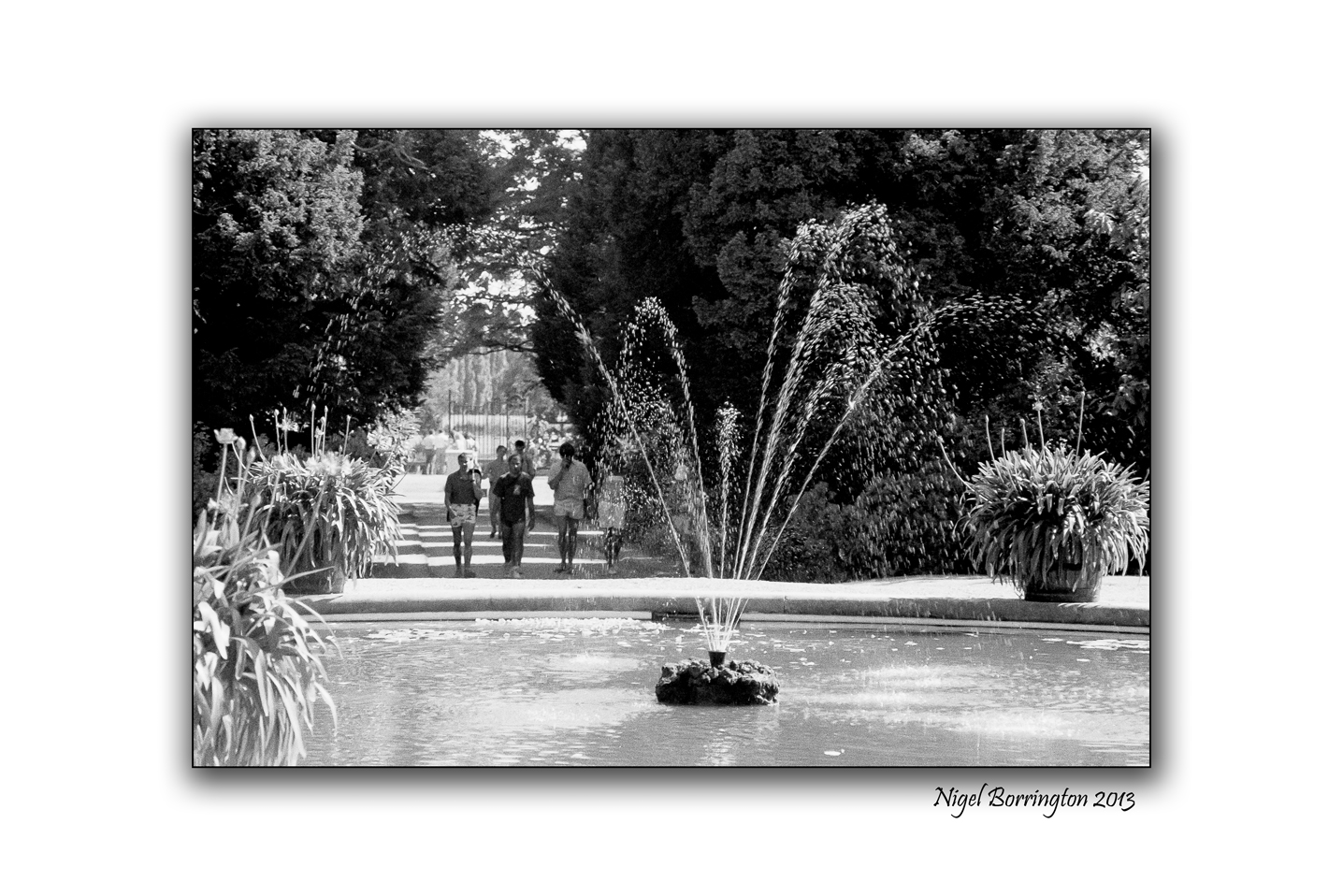
Nikon FM2n, Ilford’s HP5
Nigel Borrington
Some years ago myself and my brother and a friend Neil, headed to Hampton court to do some photography. It was the first time I had loaded Black and white film into my Nikon FM2 camera in a location like this so full of colour from the June flowers on display.
However Neil owned his own black and white dark room so Ilford’s HP5 it was. We spent about four hours at Hampton Court and then some hours processing the film making some prints and drinking a lot from what I can remember.

The images here are some of the results, I cannot find anything else. The prints are long gone so I have scanned any negatives I can find.
I am more than happy with these images and it’s very interesting to look back and think about what I felt made a good image way back then.


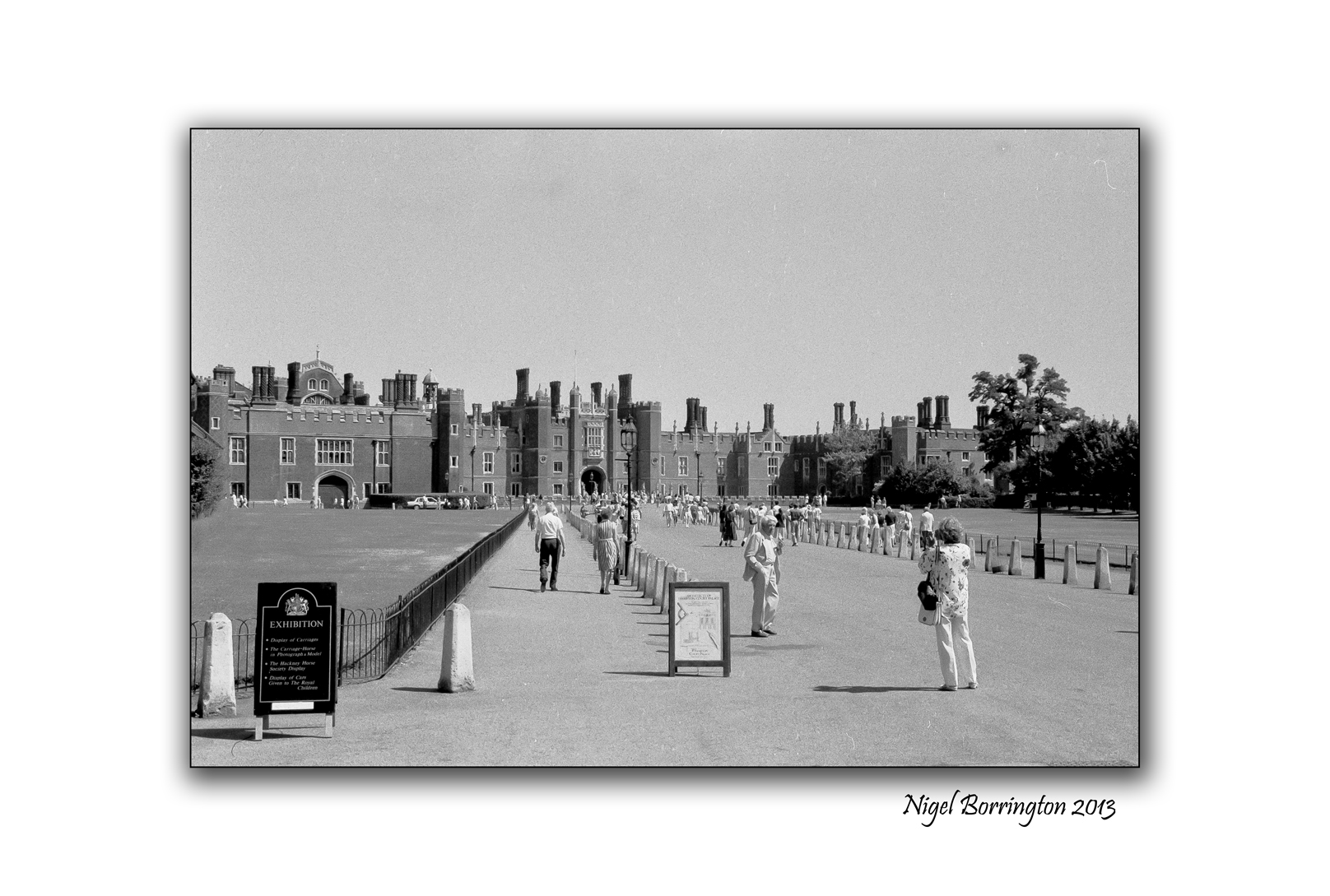
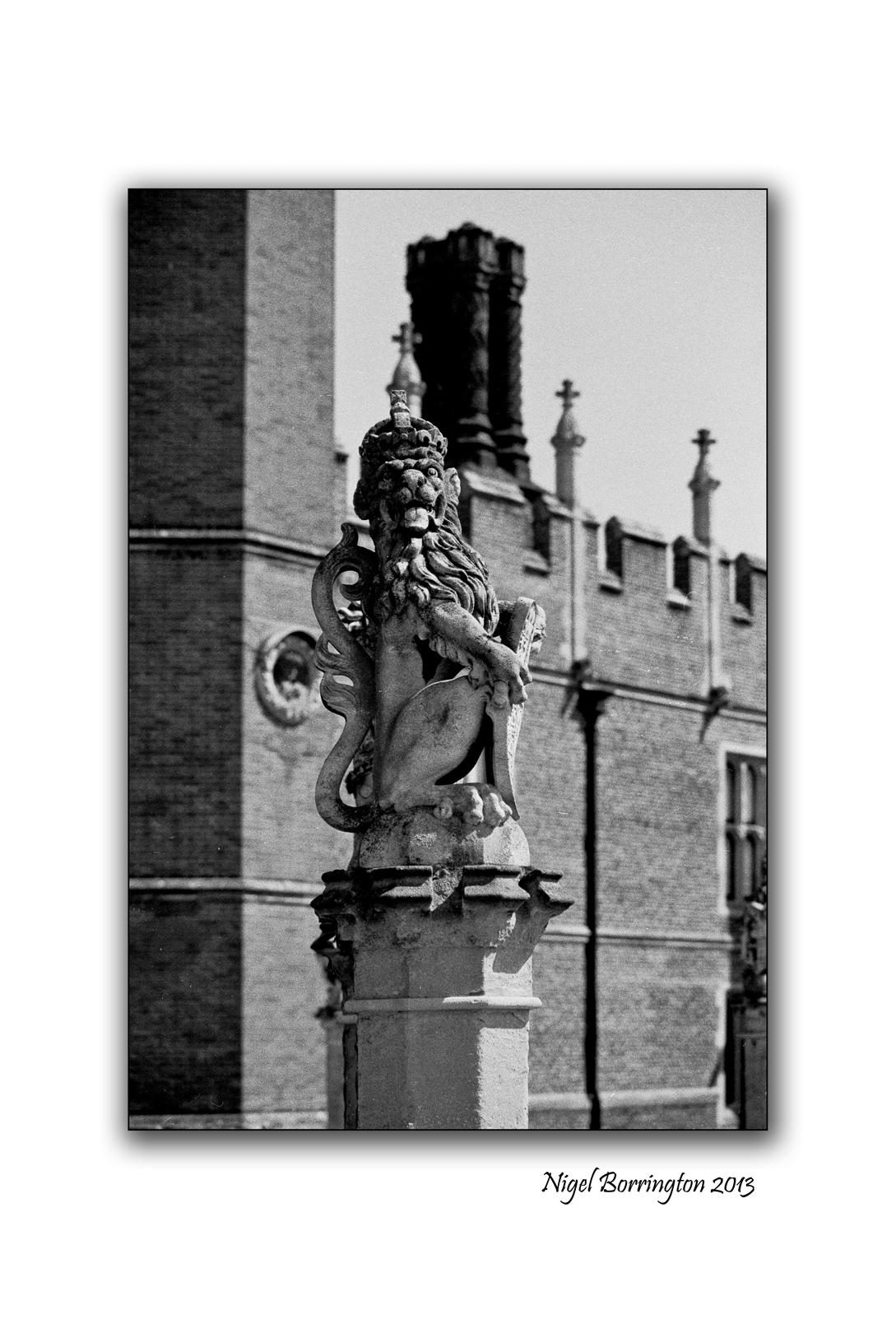

Nikon FM2n, Ilford’s HP5
Nigel Borrington
Spring rabbit
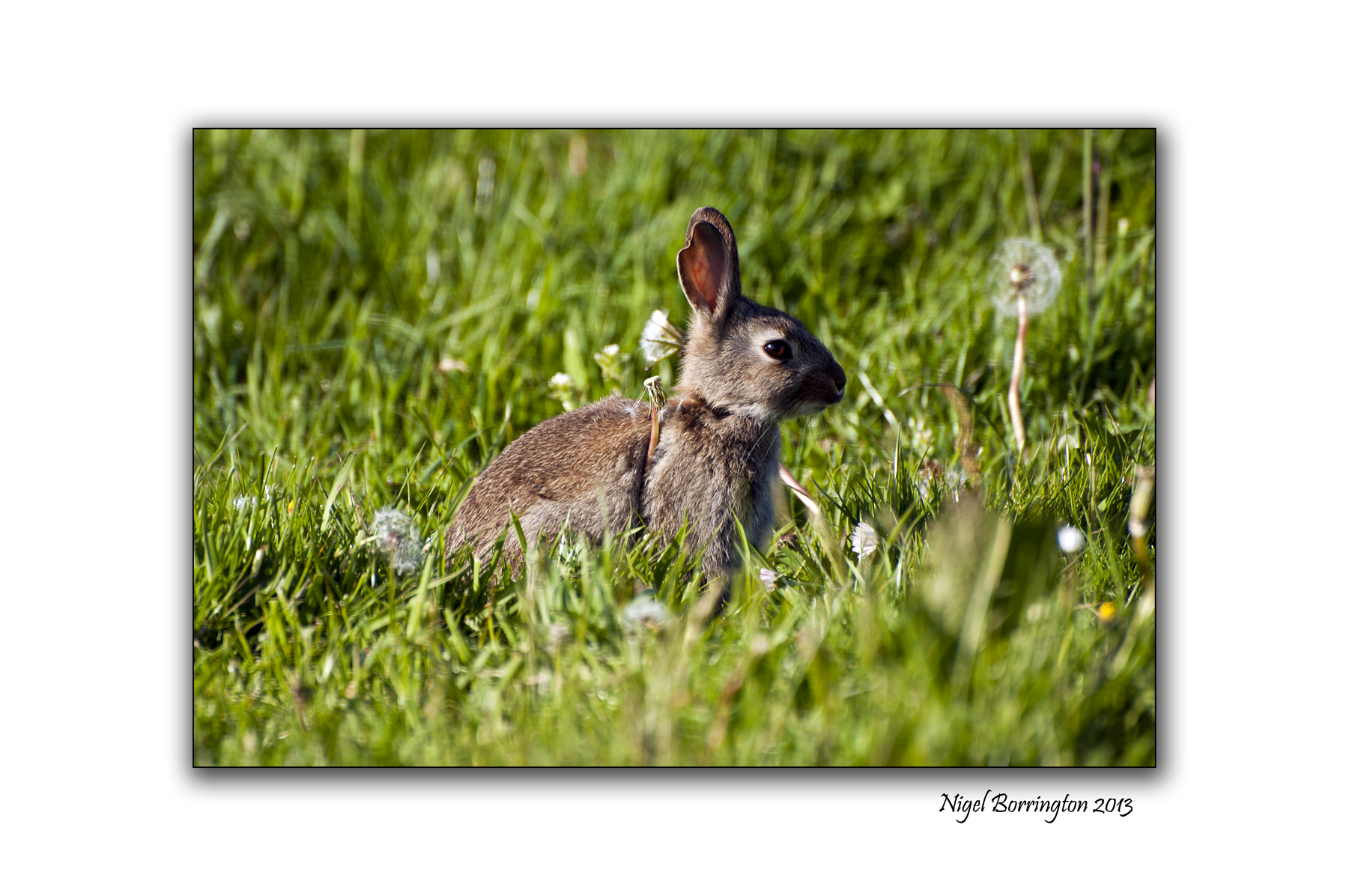
Nikon D7000, 70-300 vr lens
Last Year I posted this image Spring Rabbit, well they are back in the same field and looking as fruitful as ever. Although this little one looks like something almost had him for dinner. Notice the bite out of his ear….
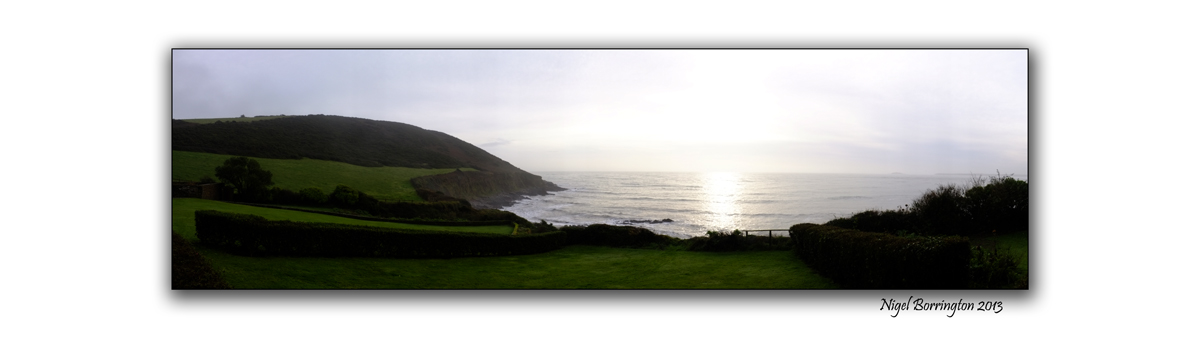
View from the window

Fuji X100
Irish landscape photography, Nigel Borrington
Glenbeg,Youghal, Co Cork
If you took-up my offer of a seat over the last weekend then this is the view from the window..

Fuji X100
Irish landscape photography, Nigel Borrington
Glenbeg,Youghal, Co Cork
Glenbeg is a small cove just east of Youghal on the south coast of Ireland and Its a special little place that I hope to return to this year for some more picture….
Light Between The Trees

Fujifilm X100
Kilkenny Landscape photography, Nigel Borrington
Title: Light Between The Trees
Author: Henry Van Dyke
Long, long, long the trail
Through the brooding forest-gloom,
Down the shadowy, lonely vale
Into silence, like a room
Where the light of life has fled,
And the jealous curtains close
Round the passionless repose
Of the silent dead.
Plod, plod, plod away,
Step by step in mouldering moss;
Thick branches bar the day
Over languid streams that cross
Softly, slowly, with a sound
Like a smothered weeping,
In their aimless creeping
Through enchanted ground.
“Yield, yield, yield thy quest,”
Whispers through the woodland deep;
“Come to me and be at rest;
I am slumber, I am sleep.”
Then the weary feet would fail,
But the never-daunted will
Urges “Forward, forward still!
Press along the trail!”
Breast, breast, breast the slope
See, the path is growing steep.
Hark! a little song of hope
Where the stream begins to leap.
Though the forest, far and wide,
Still shuts out the bending blue,
We shall finally win through,
Cross the long divide.
On, on, on we tramp!
Will the journey never end?
Over yonder lies the camp;
Welcome waits us there, my friend.
Can we reach it ere the night?
Upward, upward, never fear!
Look, the summit must be near;
See the line of light!
Red, red, red the shine
Of the splendour in the west,

Liverpool
A weekend in Liverpool, Sometime back….

Ablert docks – Saturday Morning
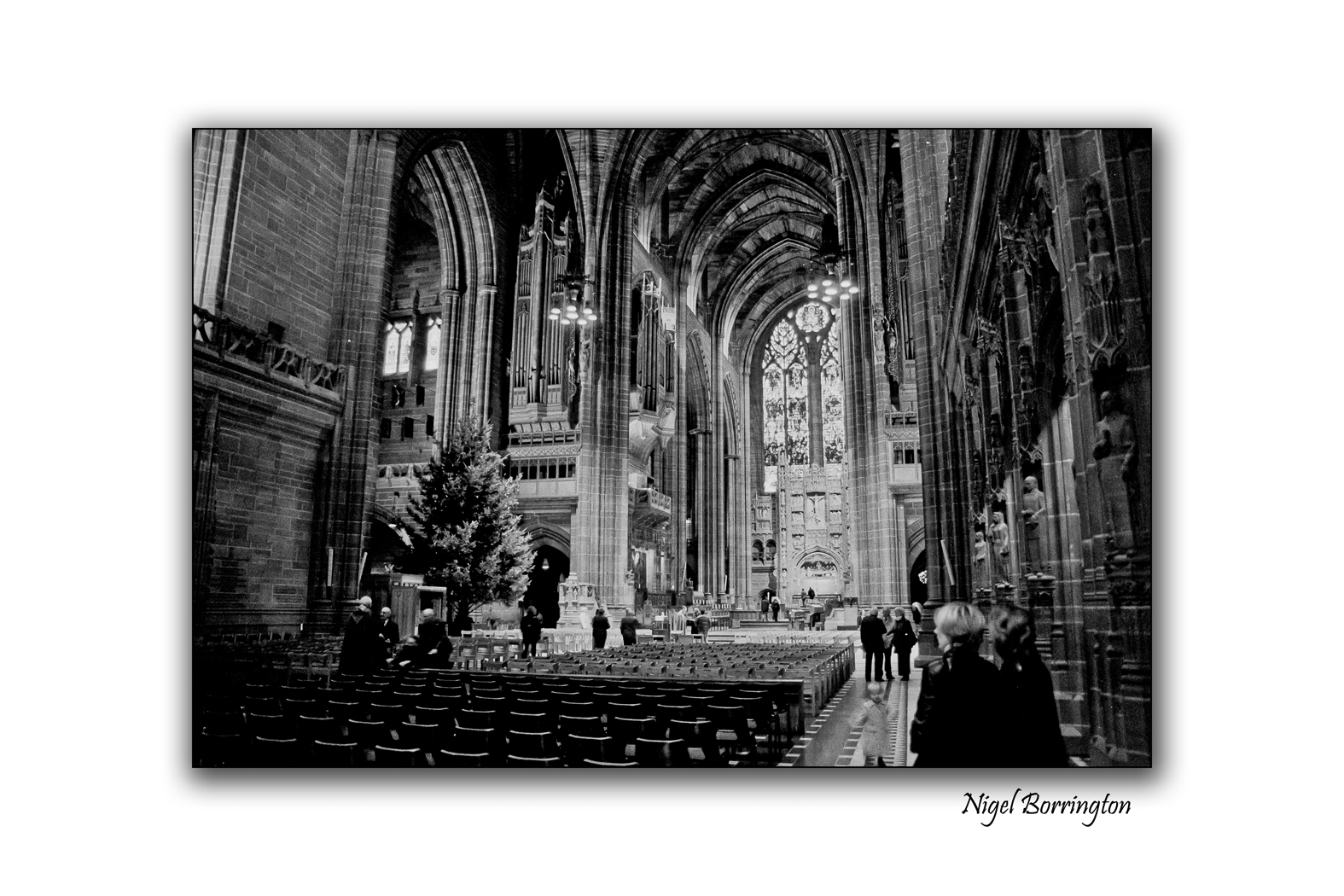
Liverpool Cathedral – getting ready for Christmas

The Cavern – Home of the Beatles
Images from a weekend I spent in Liverpool sometime back….
Also… Along with many others (Thank you!) I received a very kind comment from Paul Scribbles about my McCarthys hotel post and Ilfords film so these are more for yourselve Paul, Ilfords XP2 using a Nikon Fm2n..
Last Night as I was sleeping

Last night as I was sleeping,
I dreamt—marvelous error!—
that a spring was breaking
out in my heart.
I said: Along which secret aqueduct,
Oh water, are you coming to me,
water of a new life
that I have never drunk?
Last night as I was sleeping,
I dreamt—marvelous error!—
that I had a beehive
here inside my heart.
And the golden bees
were making white combs
and sweet honey
from my old failures.
Last night as I was sleeping,
I dreamt—marvelous error!—
that a fiery sun was giving
light inside my heart.
It was fiery because I felt
warmth as from a hearth,
and sun because it gave light
and brought tears to my eyes.
Last night as I slept,
I dreamt—marvelous error!—
that it was life I had
here inside my heart.
Antonio Machado
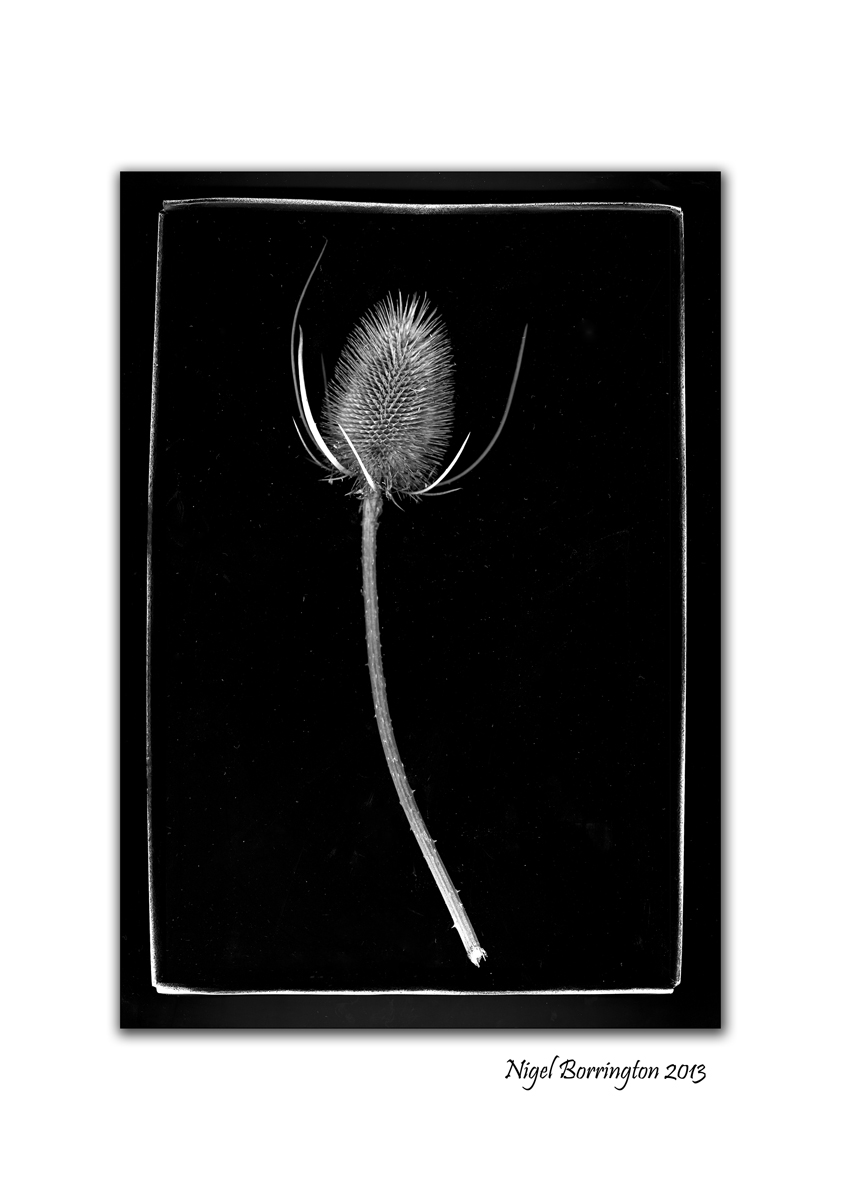
Scanning Nature

Photo challenge
photography a definition
n.
1. the process in art of producing images of objects on sensitized surfaces by the chemical action of light or of other forms of radiant energy.

Over the last few years I have listened to many opinions from all levels of photographers and artists relating to what they think photography actually is, people with big photography studios to others with camera phones and Ipads.
Among this collection of people are people who put themselves firmly into one seat or the other.
Personally I think that photography is the use of any device to produce an image that people like including yourself.
As I kid I remember getting a packet of photo paper from the photography teacher at school and placing an oak leaf over it then placing them both on a window ledge in the sun for a minute or so. I then put the paper back in a black bag and fixed the image in the school dark room. I did one of my photography projects that year based on this and never laid my hands on a camera for it.
So last autumn I returned to this concept and collected as much as I could find from our local woods and hedgerows and using a scanner created the following set of images.

If you would like to have a go all you need is a scanner and old shoe box and some black spray paint and paper. The black paint is for the inside of the shoe box (Spray two or three coats until fully black) the paper you lay on top of the upside down box as follows.
Place your selected object on the scanner screen and cover this with the upside down shoe box, the black paper covers this, it needs to be A3 in size for an A4 scanner. The edged border you see around my scanned objects is the edged of the shoe box.
So my school project comes of age and into the digital world!

Things you wish you still had?

Going through some old film I found this frame and its years since I looked at this old bike, during the 1990’s I used it for work everyday.
I had to sell it at some point and move on but it occurred to me that we all must have things we remember and maybe wish deep down we still had them.
Whats yours?
McCarthy’s Hotel
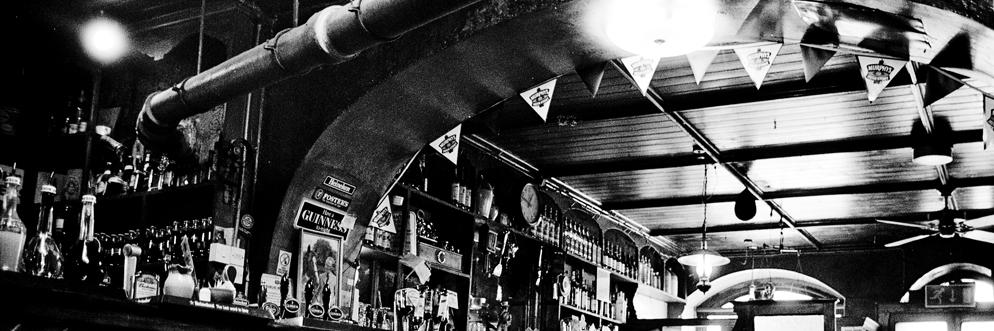
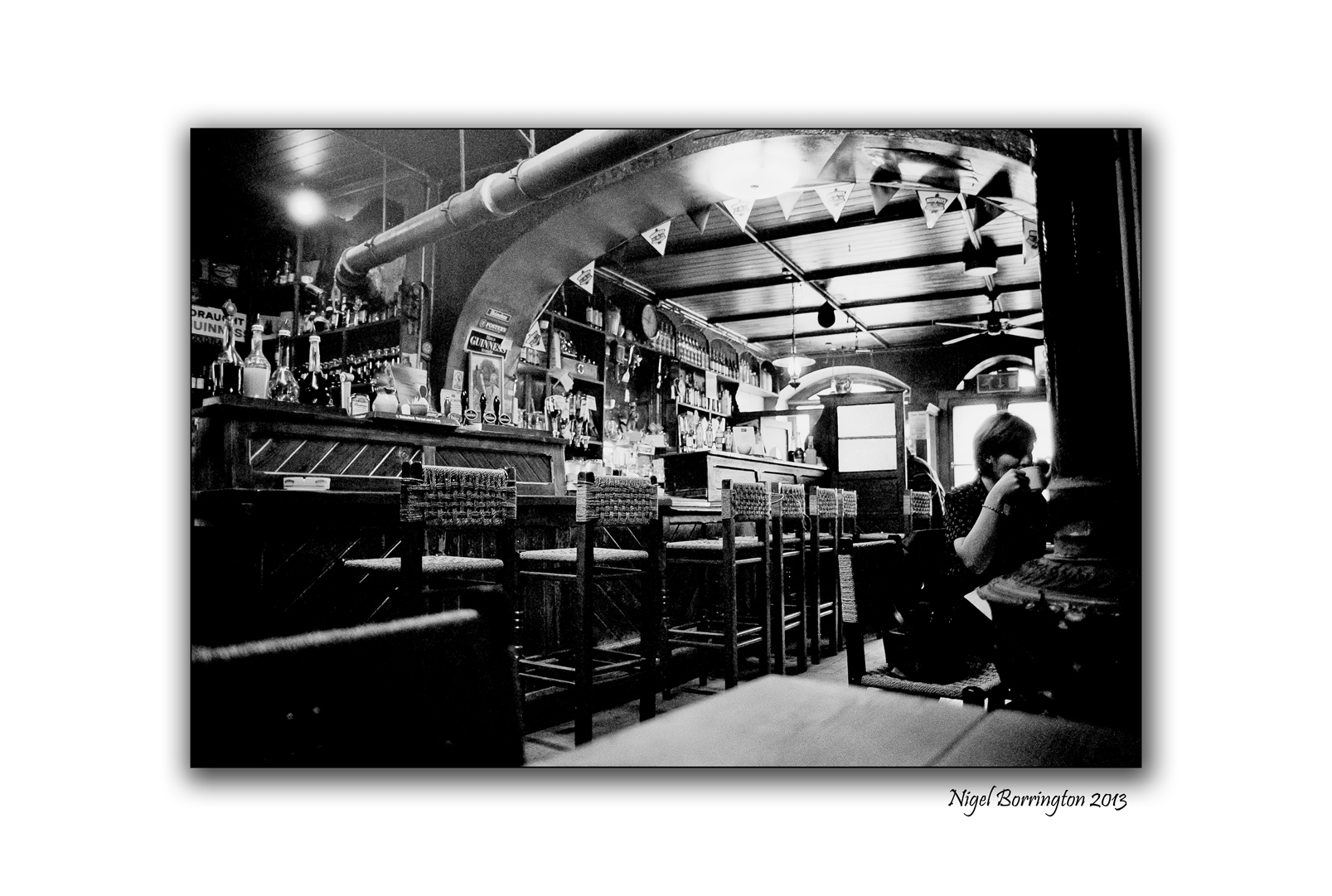
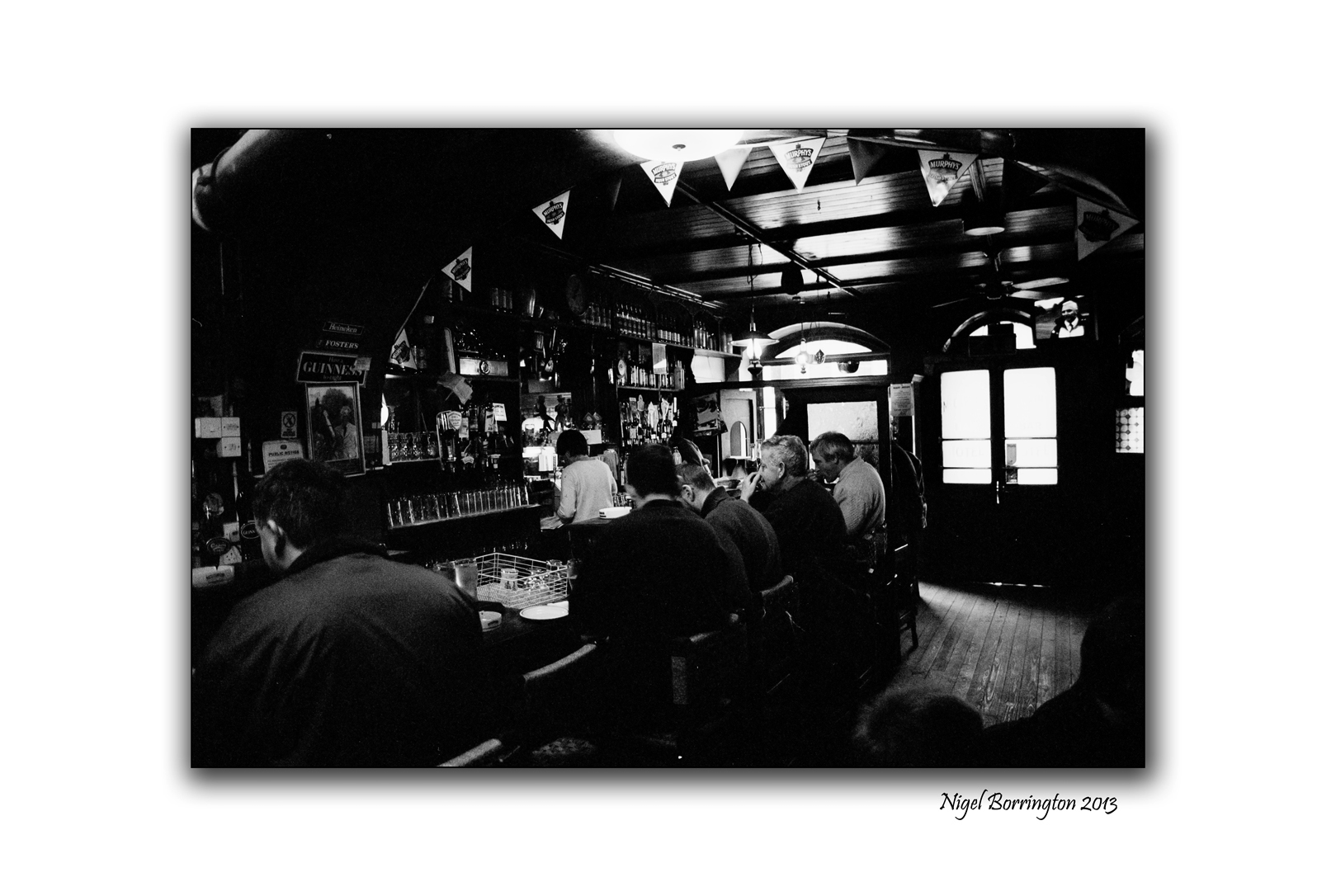
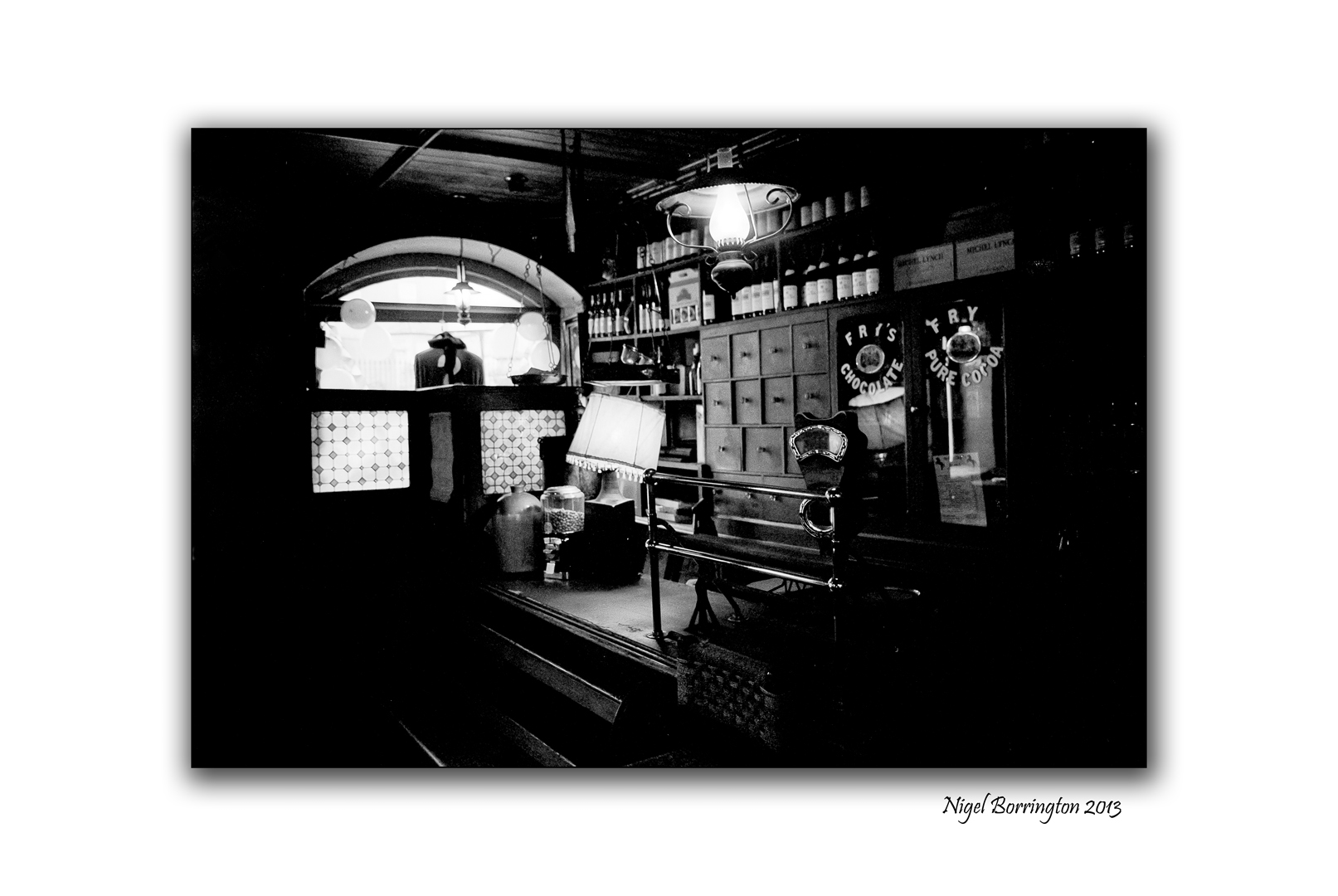
McCarthys Hotel/Pub in Fethard in Co. Tipperary, is just one of those place that you cannot help but fall in love with.
Whenever anyone says lets go to McCarthys the hairs on the back of my neck stand up and the car keys are in my hands as fast as I can find them. Food, Coffee or a pint a good old chat for a Saturday afternoon.
I took the following three images about four years ago:
Contax G2, 45mm lens, Ilford Xp2 400iso film
Established in the 1850’s
Established by Richard McCarthy in the 1850’s McCarthy’s Hotel provided the services of a spirit merchant, restaurant, hotel, undertaker, draper, grocer, baker, hackney service, glass, delph and china shop and if you still couldn’t get what you want – hire a few horses to take you elsewhere. Continuing in this tradition the present proprietor, Annette Murphy (fourth generation McCarthy), has a pub, restaurant and undertaker business which she runs with her family (fifth generation McCarthy).
McCarthy’s is situated in the medieval town of Fethard in Co. Tipperary. Formerly a very important market town in the 16th century, the town fell into decline. In the past twenty years the country in general, and Fethard in particular, has thrived – due in no small part to the equine scene in Coolmore and its associated farms plus numerous trainers and breeders dotted around Fethard. The re-discovery of our medieval past is of great importance to Fethard. Much of the medieval walls which surround the town have remained intact and a large portion of these walls have been restored. The town has been described as the most important walled town in Ireland next to Derry and is fast becoming the focal point for medieval scholars and tourists alike. For more information visit the Fethard Web Site: http://www.fethard.com
McCarthy’s success is based on a mix of the old and the new. The interior is unchanged since Richard McCarthy opened for business in the 1850’s. McCarthy’s were lucky that in the 1970’s, when great changes swept Ireland, three old ladies, Beatty, Kitty and Nell, ruled McCarthy’s and were unwilling to modernise the premises to a “lounge bar”. People still return expecting to meet the old ladies (now deceased) sitting in the office drinking tea and surveying the comings and goings of life from the office door.
The McCarthy’s are closely involved with sporting activities and with horses in particular. Dick was a professional jockey who also played hurling, football, rugby, polo and was a champion amateur boxer. His brothers Gus and Chris were amateur jockeys. Gus was also a noted footballer who won an all-Ireland medal with Tipperary and who also played on the ill-fated Bloody Sunday Tipperary team in Croke Park on Nov. 21, 1920. The current generation are as keenly involved in both horses and Gaelic games.
Ghosts
McCarthy’s is also a place of interest for those who believe in the supernatural. A sign was given before the deaths of the last generation of McCarthy’s, usually a picture falls from the wall for no apparent reason. Three loud knocks on the front door were heard by people at both sides of the door before Beattie’s death. Ghosts were spotted recently by Mark Lonergan and John O’Connor (at night) and by Ciarán Hayes in the afternoon!
So next time you see somebody sitting quietly sipping a pint in the corner – you might be the only one who can see him!
McCarthy’s is well known the world over and has been filmed by Channel 4, BBC, Good Morning America, Sky News and many more. Many well known personalities have also visited McCarthy’s over the years including Eamon De Valera, Michael Collins, Mick Doyle, John Magnier, Vincent O’Brien, Robert Sangster, Julian Wilson, Lester Pigott, Richard Dunwoody, Adrian Maguire, Martin Pipe, Charlie Swan, Tommy Stack, Tommy Carberry, Alex Ferguson,
Dr. A. J. F. O’Reilly, Lord Lloyd Webber and his brother Julian. Sir David Frost, Alan Parker, Rod Taylor, Angela Rippon, Peter Curling and of course Paul Carberry – the only jockey to ride into McCarthy’s on a horse.
Fujifilm X100
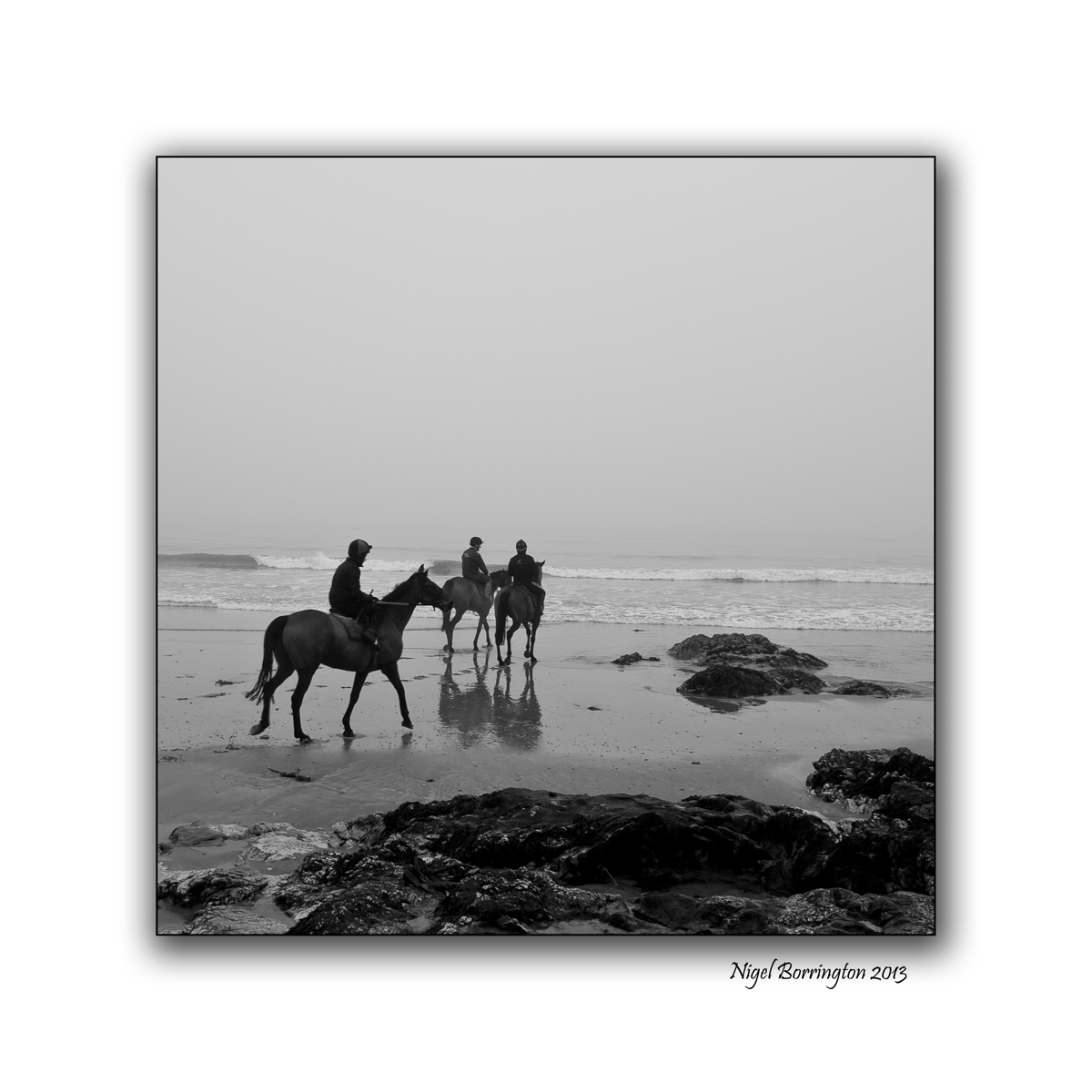
Fujifilm X100
A morning run out – Clonea strand, Co Waterford
Fuji X100 review, it’s coming soon.
My love of this little camera continues and I am working on a full review relating to my feelings of it from a photographers point of view. Its one of the most usable cameras I have ever owned.
I will post more very soon!
Nigel
The Poppy
June I cannot want for you and your poppy fields!

The Red Poppy
The great thing is not having a mind.
Feelings: oh, I have those; they govern me.
I have a lord in heaven called the sun, and open for him,
showing him the fire of my own heart,
fire like his presence.
What could such glory be if not a heart?
Oh my brothers and sisters,
were you like me once, long ago,
before you were human?
Did you permit yourselves to open once,
who would never open again?
Because in truth I am speaking now the way you do.
I speak because I am shattered.
by Louise Glück

The flower’s connection with death has been known for countless centuries. The twin Greek deities Hypnos and Thanatos, were illustrated wearing crowns of poppies and the flowers were considered suitable offerings for the dead in both ancient Greece and Rome.
In other parts of the world, poppies have happier associations, In China, it is believed to be lucky to smell the scent of the flower three times a day and in Turkey, they symbolise the promise of health and peace.
Magical properties have also been attributed to the flower. In ‘A Mid Summer’s Night Dream’, Shakespeare writes ” The juice of it on sleeping eyelids laid will make a man or woman madly dote upon the next live creature that it sees”. Peering into the black centre was a traditional folk remedy for insomnia.
Whilst opium is derived from only one of the hundreds of different varieties of poppy, many poppies have sedative effects on those who consume them and poppies are sometimes inscribed on gravestones to symbolise eternal rest. In the popular film, The Wizard of Oz, a poppy field was depicted as dangerous as it caused all those who passed through it to fall asleep forever. Such are the properties of this plant that foods rich in culinary poppy seeds can even result in the failing of an opiate drug test and the sale of poppy seeds is banned in several countries.

Swanage Railway

These images were taken during a visit to the (Swanage railway, Dorset, uk) on the south coast of England. We were staying in poole and had been guided toward visiting the Swanage Railway, so one warm Sunday morning we arrived at Swanage station in order to get the ten o’clock train to Norden park and back.
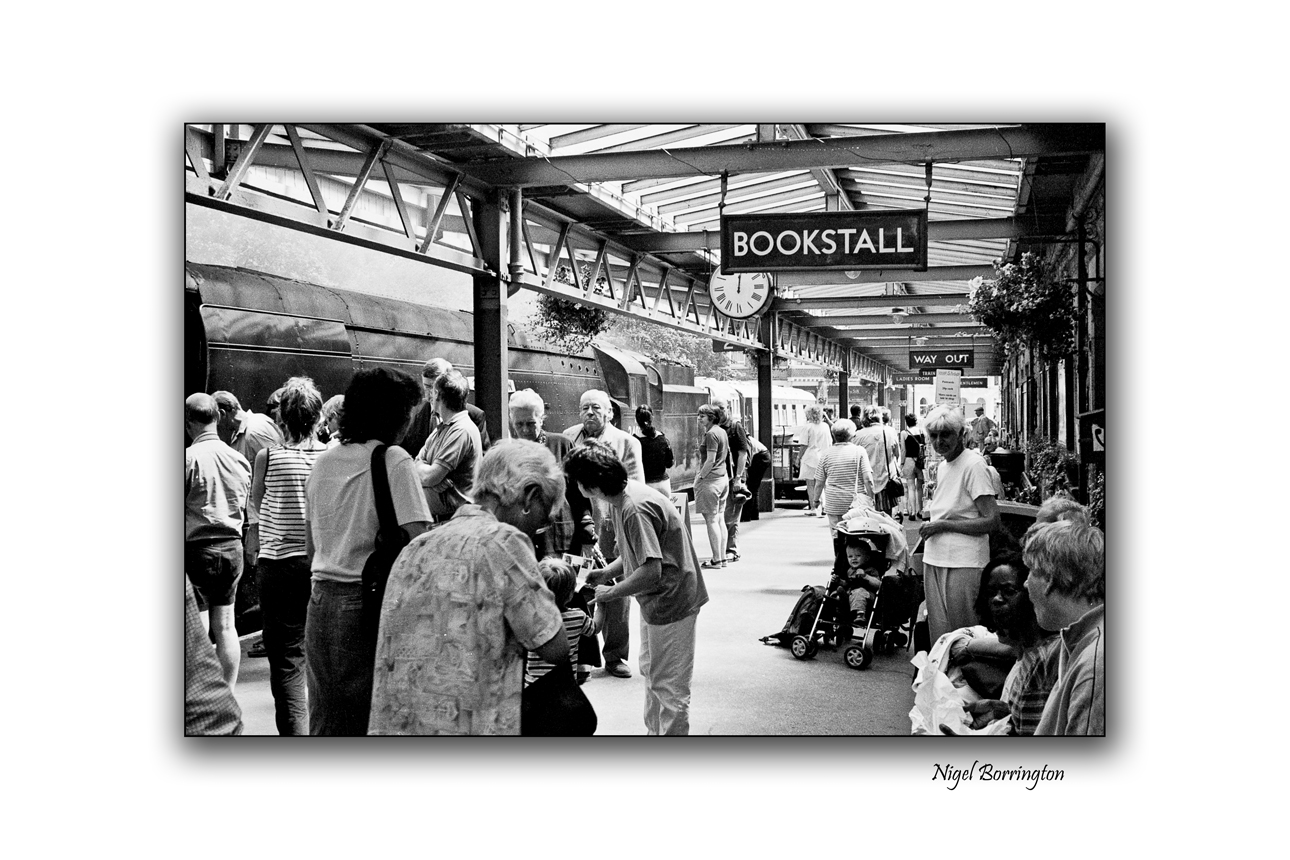
From the moment we collected our tickets and walked to the platform for the train it felt like going back in time to the nineteen thirties.
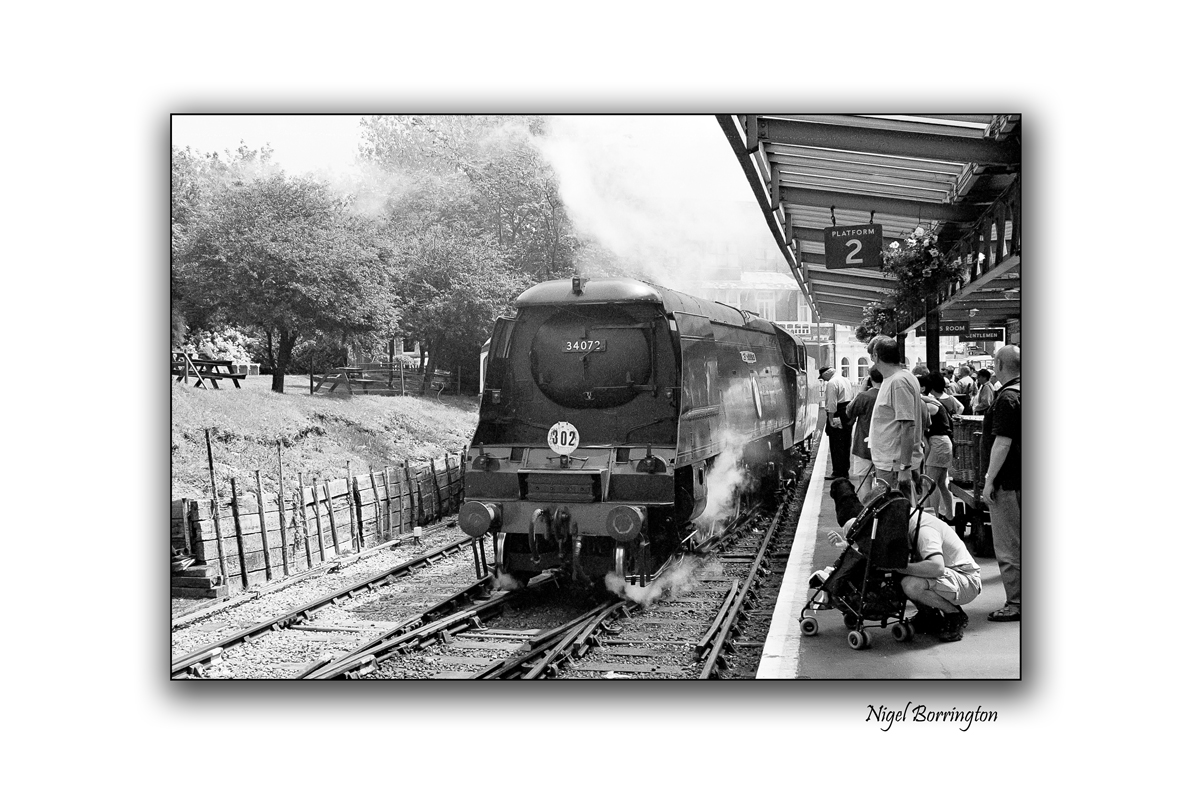
Every part of the station was setup to make you feel you had returned to times gone by. Old cases and trolleys, bookshops and tea shops with every member of staff dressed to complete the feeling.
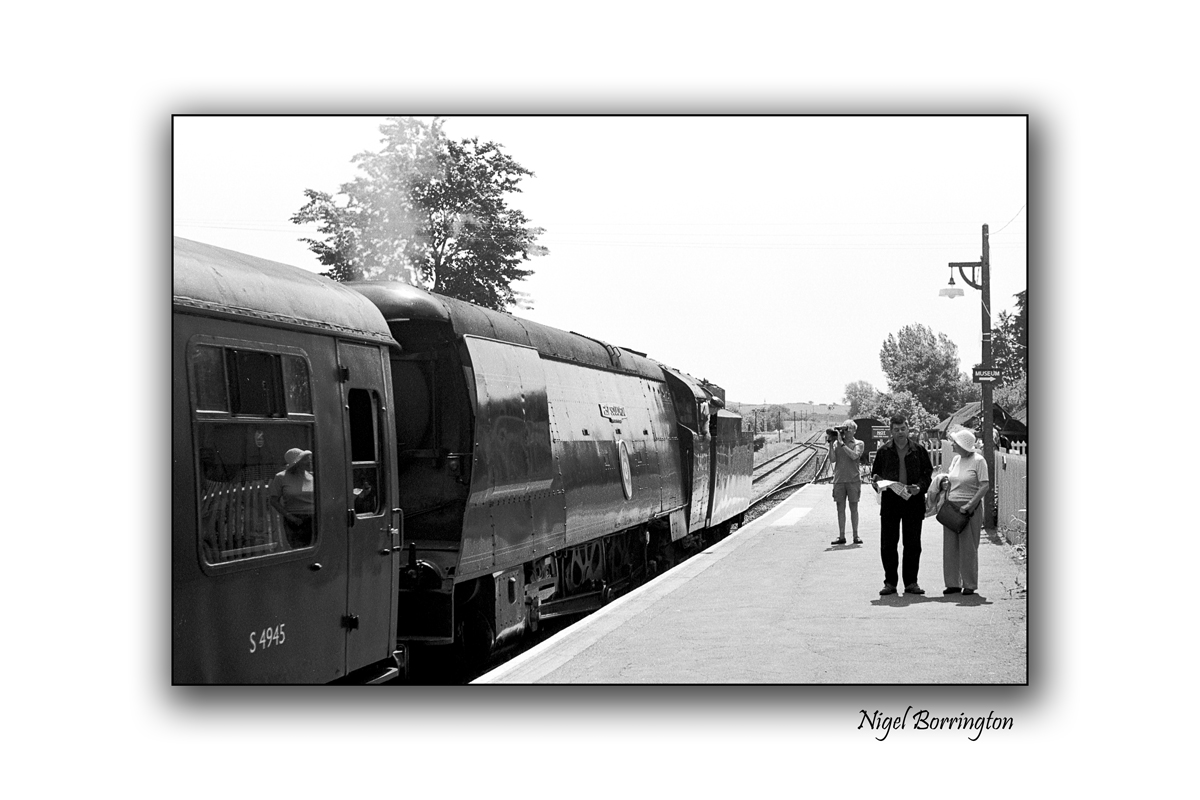
When we took our seats on the train and then got on our way the sounds and smells of the old steam engine were just brilliant. For some of these images I stuck my head out of the window and the rush of fresh air and steam as we passed the fields along the way was just unforgettable.
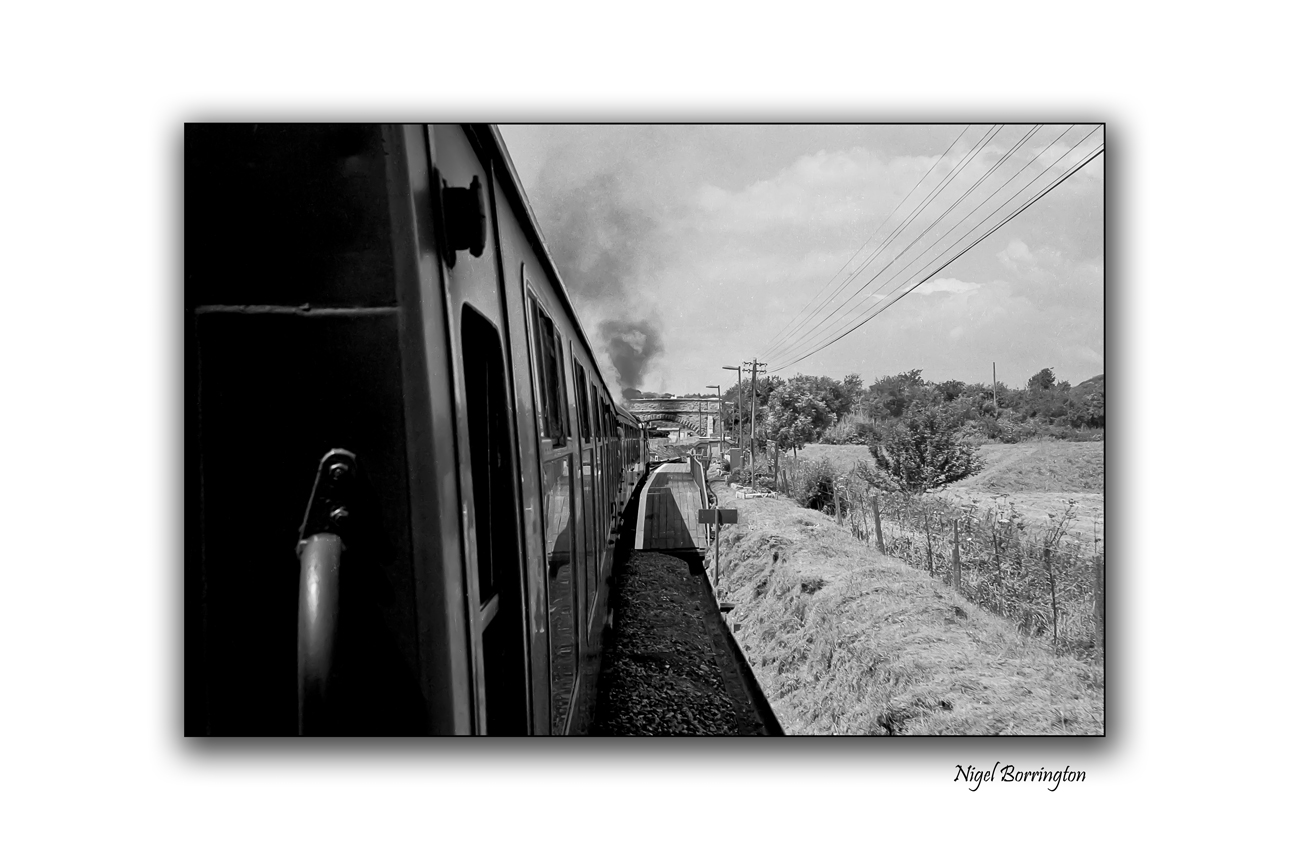
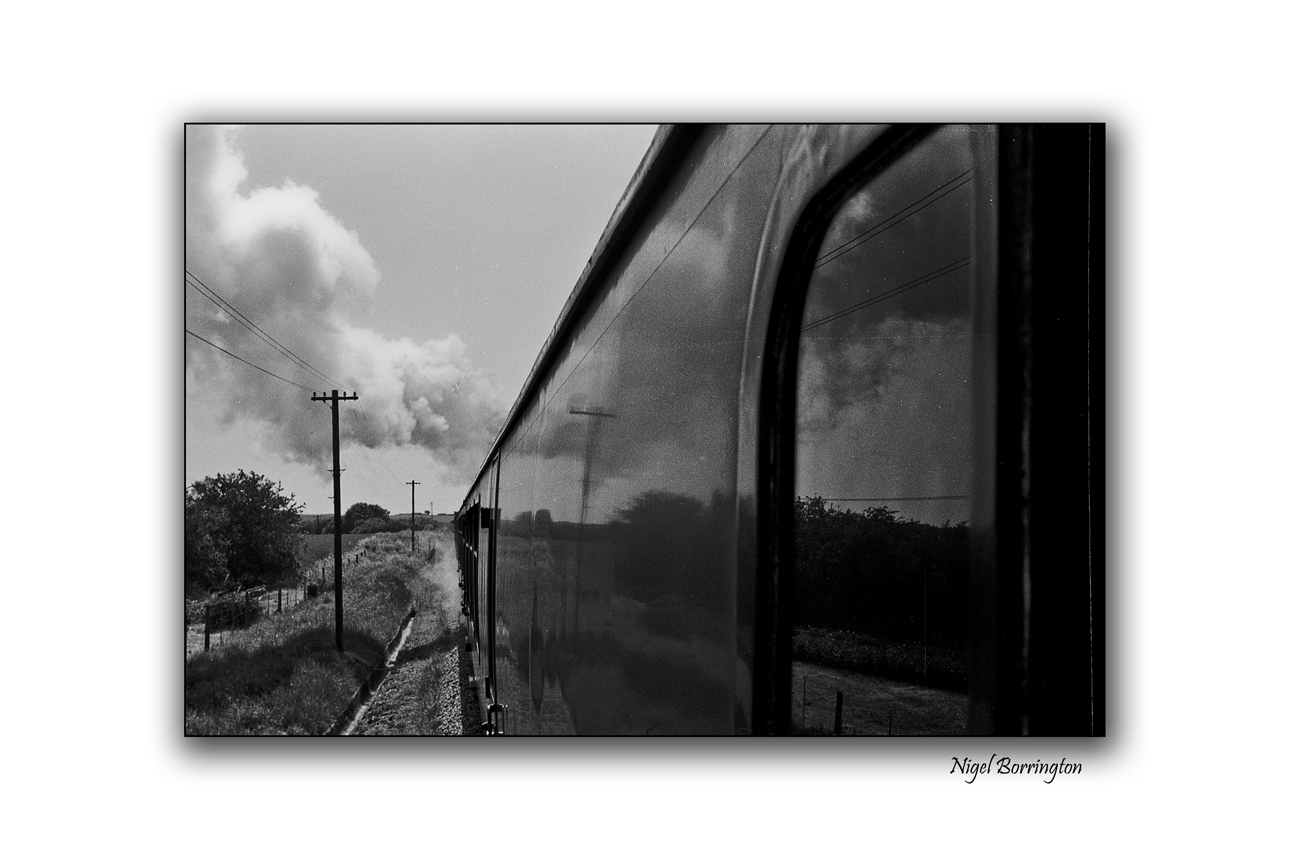
If you are ever in this part of the world you simply must visit this railway as you will enjoy the experience of a lifetime.
I include below some Wikipedia text and some more you tube links
Nigel
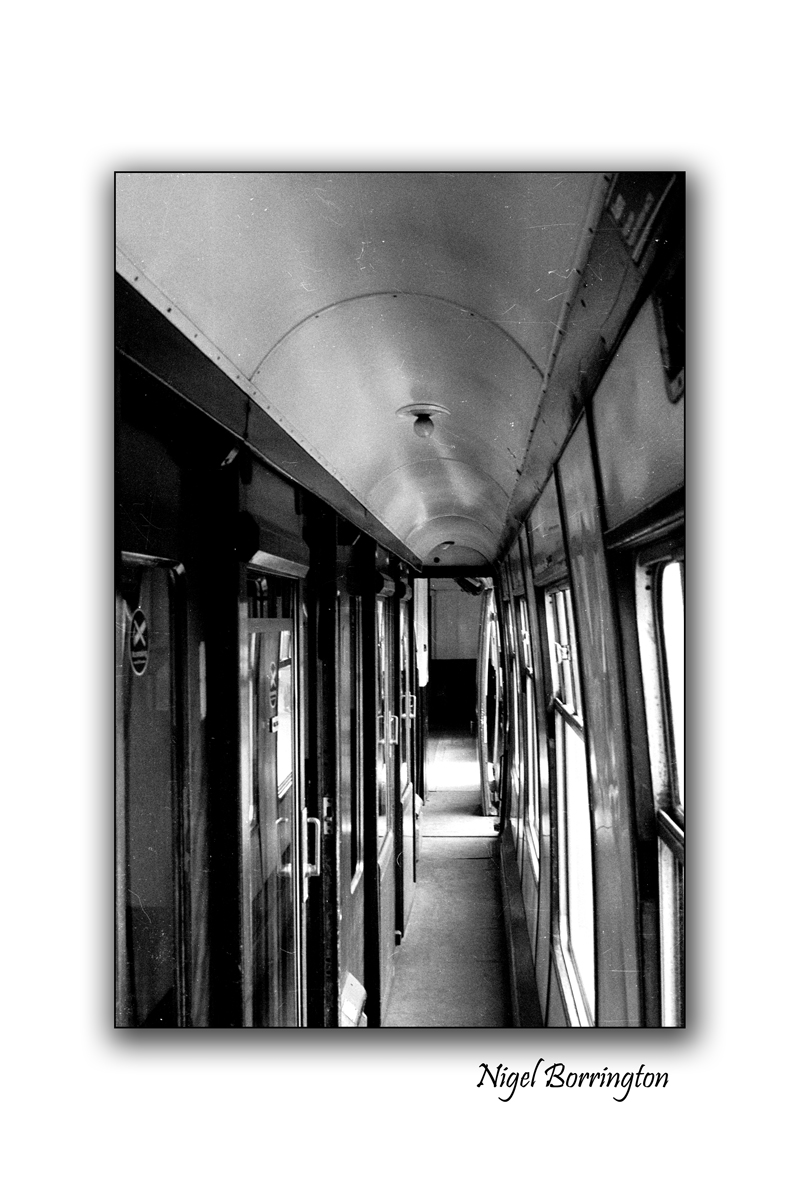
The Swanage Railway is a 6-mile (9.7 km) long heritage railway in the Purbeck district of Dorset, England. The railway line currently follows the route of the old Purbeck branch line from Norden, via Corfe Castle, Harman’s Cross and Herston Halt to Swanage.

The line was re−connected to the mainline at Wareham, Dorset, along a stretch of the branch line that had previously only remained open to freight traffic until 2005. Trains operate on the Swanage Railway between Swanage and Norden Park & Ride every weekend and Bank Holiday from mid-February to the end of the year, and every day of the week from April to October; with Santa Special services in December.
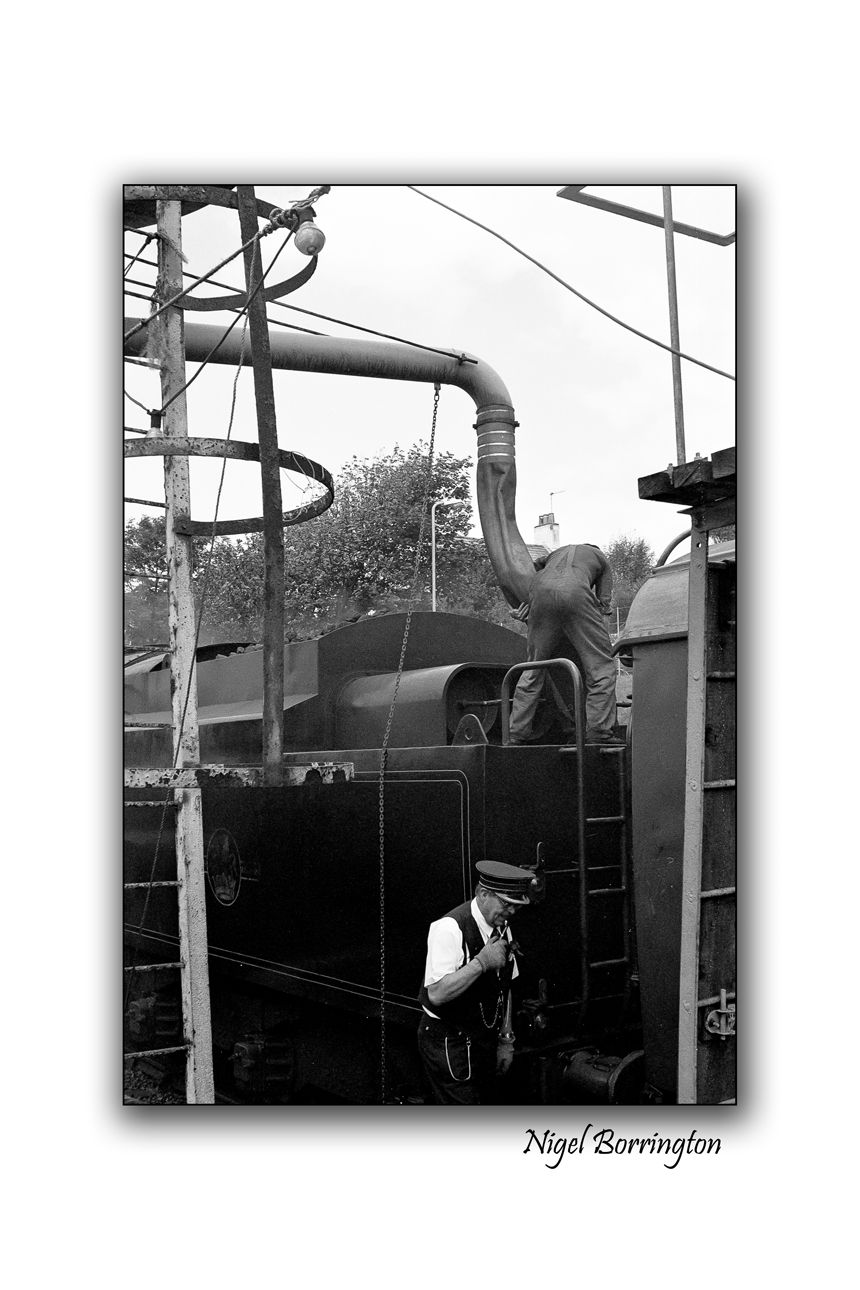
The link between the Swanage Railway and the main line at Wareham has been used for materials deliveries, special excursions, locomotive and stock movements only— work is continuing to provide the infrastructure necessary to enable regular services via Wareham to be implemented.
In April 2009 the line reopened to its first through traffic from London with occasional special services.

History
After several false starts, the branch was built by the locally promoted Swanage Railway Company. It was opened in 1885 and operated from the start by the London and South Western Railway Company. Subsequently the line became part of the Southern Railway and latterly the Southern Region of British Railways. In the 1950s the Branchline Committee identified this branch line as a possible candidate for closure. At the time such a plan was unrealistic for a branch line which carried so much seasonal holiday traffic. The closure proposal met with a great deal of opposition and was shelved. The line was not mentioned in Beeching’s 1963 report ‘The Reshaping of British Railways’.
In the mid 1960s a programme of third rail electrification took place on the main line running from Waterloo, Basingstoke, Southampton to Bournemouth in preparation for withdrawal of steam. As the third rail did not, then, extend west of Branksome the Swanage line was operated until its closure using a British Rail Class 205 DEMU.
In May 1967 the Network for Development Plans were issued by Barbara Castle MP, the then Labour Minister of Transport following a study. Where lines were at the remunerative end of the scale, such as the main trunk routes and some secondary lines, these would be developed. Lines that failed to meet the financial criterion, but served a social need were to be retained and subsidised under the 1968 Transport Act. The problem would be for lines that were not in these categories which could be candidates for closure as they did not form part of the basic railway network. The Swanage line was one of these. It was a line that may well have carried considerable traffic, and perhaps made a small profit, but it did not meet the Government’s social, economic and commercial criteria for retention.
It was in the later part of 1967 that British Railways issued a notice that the Swanage line was to be closed by September 1968. However, due in part to the level of opposition to the closure, and also by the fact that British Railways had underestimated the logistical problems in providing a replacement bus service during the summer months owing to higher traffic levels, the line remained open. Opposition from the various pressure groups was so vociferous that a public enquiry was called for. Subsequently a Department of the Environment Inspector, after hearing the evidence that a replacement bus service would be unable to handle the traffic in the summer months, ruled that the line should remain open. His decision was later overturned by the Secretary of State for the Environment. Up to this time it is possible that the line may have been in receipt of a subsidy under the terms of the 1968 Transport Act whilst all the issues concerning the pending closure of the line were discussed.
The line was closed in January 1972. In May 1972, the Swanage Railway Society was formed with the objective of restoring an all-the-year-round community railway service linking to the main line at Wareham which would be ‘subsidised’ by the operation of steam-hauled heritage trains during the holidays.
However BR responded by hiring contractors to lift the track between Swanage and Furzebrook sidings during the summer of 1972; massive protests were orchestrated by the Society and an agreement between the Society and BR followed leading to all the ballast being left in situ plus an extra half a mile of track at Furzebrook. The track from Furzebrook to the main line junction at Worgret remained in use for ball clay traffic, later also serving the oilfield at Wytch Farm. BR had intended to sell the Swanage station site to a property developer, but after the intervention of the Evelyn King, the MP for South Dorset, at the Society’s request, offered it to Swanage Town Council (STC).
At first, neither the Dorset County Council (DCC), nor the STC backed the Society’s plans to restore the railway. DCC planned to build a by-pass for Corfe Castle on the railway land, while STC actually started to demolish Swanage station. To break the impasse, the Railway Society formed two daughter organisations: the Swanage and Wareham Railway Group – composed of local residents prepared to lobby the local authorities and the Southern Steam Group – to collect historic railway rolling stock and establish a museum of steam and railway technology. After many interventions by local residents, in 1975, the STC finally granted the Society limited facilities on the Swanage station site. In 1975 DCC acquired the railway land between the end of the line at Furzebrook and Northbrook Road bridge, Swanage and to ‘give further consideration’ to routes for a Corfe By-pass. The Railway Society piloted a successful application by the Southern Steam Group to the Charity Commissioners for charitable status and subsequently both the Society and the residents group joined the new Southern Steam Trust.
In 1979 a short line re-opened, the length of King George’s playing fields. This was extended first to Herston Halt and then to Harman’s Cross in 1988. Neither Herston Halt nor Harman’s Cross had been stations previously. In 1995 the railway reopened from Swanage to Corfe Castle and Norden Park and Ride, another post BR station. The opening of Corfe Castle was delayed until Norden was ready as Dorset County Council had concerns about the effects of traffic on Corfe’s narrow main street (the A351 road between Wareham and Swanage).
On 3 January 2002 the track was temporarily joined with the Furzebrook freight line at Motala and the Purbeck branch line was once again complete, thirty years to the day after it was closed.
On 8 September 2002, a brand new Virgin Trains Class 220 “Voyager” diesel multiple unit, no. 220018, became the first mainline train to use the new track when it made a special journey for a ceremony at Swanage where it was named Dorset Voyager and began its first passenger journey.[2] Following this historic event, the efforts of the Swanage Railway’s volunteers were redoubled working with Network Rail to replace the temporary connection with a permanent ground frame and catch-point arrangement at Motala.
On 10 May 2007 history was made when the Swanage Railway’s permanent connection with Network Rail was used for the first time – four ex-BR diesel locomotives running from Eastleigh down to Swanage to participate in the Purbeck Line’s largest ever diesel gala and beer festival in May 2007. Also making the trip—the first such working since the summer of 1972 when the tracks to Corfe Castle and Swanage were lifted—was a preserved four-carriage electric 4VEP British Rail Class 423 unit provided by South West Trains.[3]
The link was again used in July 2007 when a steam locomotive for the Swanage Railway’s 40th Anniversary of the End of Southern Steam special event travelled to Swanage via the main line at Wareham.
The first public passenger service between Wareham and Swanage since 1972 was from London Victoria to Swanage, via Wareham on 1 April 2009.
The Swanage Railway’s works at Herston, on the outskirts of Swanage, are not physically connected to the running line. Movements of locomotives for overhaul are carried out by road transporter as the Swanage Railway has been unable to reach agreement with local landowners to build a branch connection into Herston Works.
Charlestown

Nikon F90x, 28mm Afd lens

Nikon F90x, 28mm Afd lens
Just two images today from a visit I made to Charlestown, Cornwall.
Throughout the nineteenth century the little dock was packed with ships and the harbourside sheds and warehouses thronged with complementary businesses: boatbuilding, ropemaking, brickworks, lime burning, net houses, bark houses and pilchard curing.
Today there are two remarkable things about Charlestown.
One is that, against all the odds, it has survived as a working port and a small amount of china clay is still exported in an average of 30-40 ships a year, and this saves the place from becoming a cosy caricature of itself with plenty of ‘heritage appeal’ but no real life.
The second is that – again, against all the odds – it has largely escaped ‘development’ and remains one of the finest and most fascinating places on the Cornish coast.
Perhaps the words “so far” should be added to these two observations, for who knows what will happen to Charlestown in the future?
At the time of writing, the harbour is the home port for a famous collection of old ships which are employed in film projects all over the world – they have brought work and life to the quays and harbour buildings and are a particular draw for visitors.”
I spent a week here and its a week I will never forget, I was working in London at the time and returned to my Job like a new person – this is a very special place!!
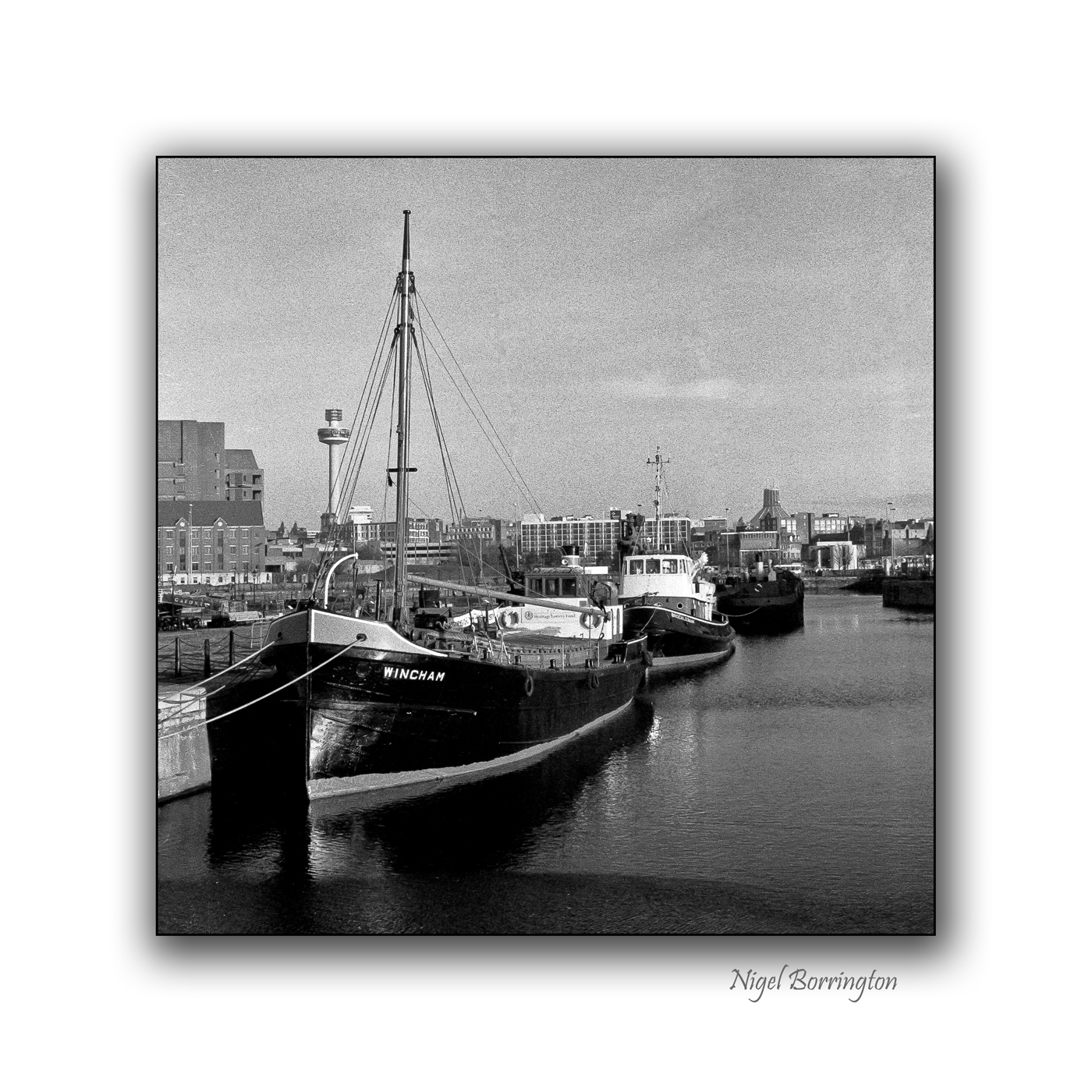
Wincham, – Goodbye old Girl
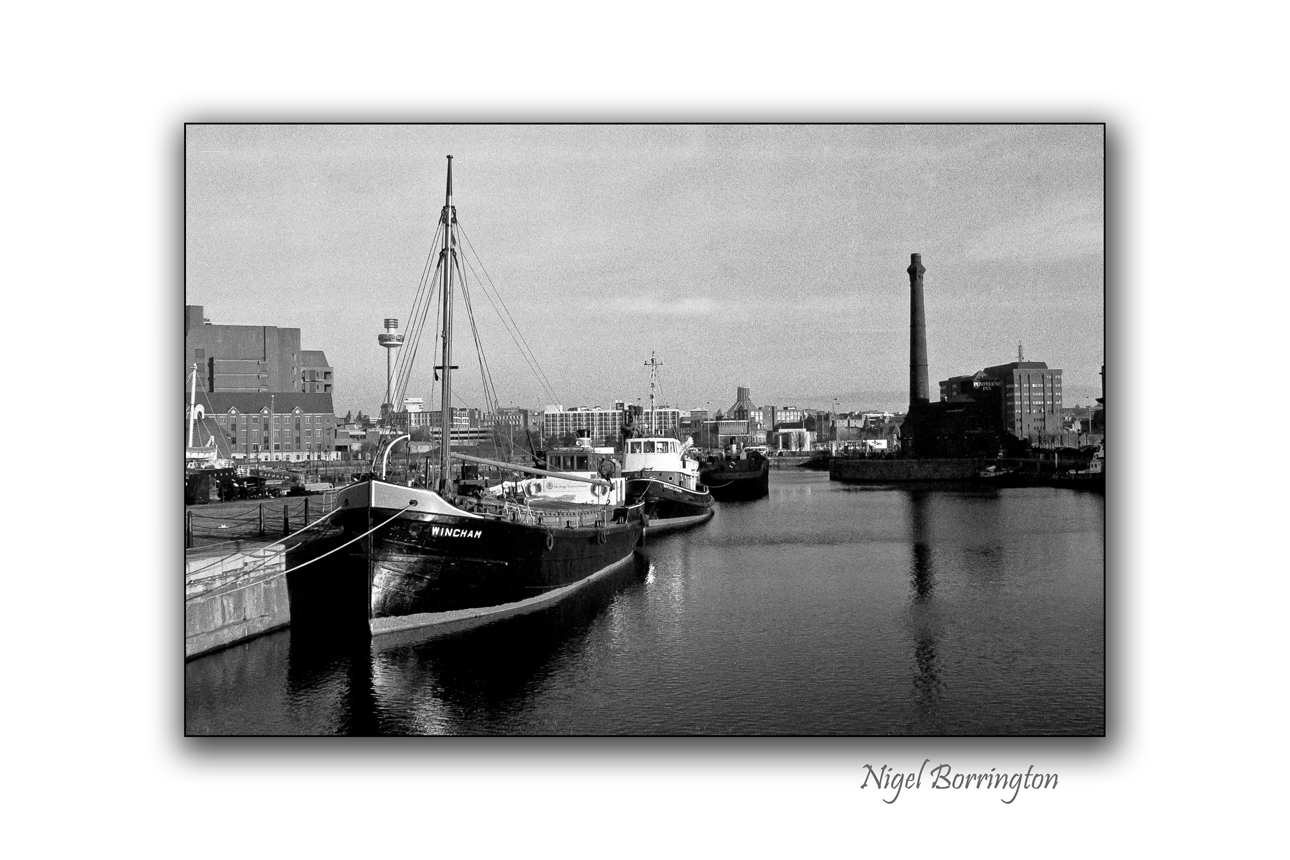
Nikon F90x, 50mm f1.4 lens
Ilford XP2
It comes to us all in the end….
Some years ago and longer than I can remember, I was in Liverpool and took this shot of the Wincham at the then new Albert docks.
Wincham’s history
Built in 1948 by Yarwoods of Northwich for ICI Liverpool, WINCHAM is a small motor cargo vessel designed to carry goods in bulk on the west coast of England. She is made of riveted steel, has a diesel engine and is the last of a class of 5 vessels built for ICI. Her working week would encompass 2 or 3 trips with chemical products from the ICI works at Winnington on the River Weaver to Liverpool and Birkenhead for transfer to deep sea vessels.
In 1977, she was sold to Bulk Cargo Handling Services Limited whose colours she still carries. In 1983 she was withdrawn from commercial service and purchased by the Wincham Preservation Society Ltd who maintain and operate her from her berth at Canning Dock alongside the Merseyside Maritime Museum. The Society received a grant of £47,500 from the Heritage Lottery Fund in 2002 and she is maintained in operating condition.
But then….
Wincham about to be broken up at Bromborough 17/04/09
The former ICI Weaver barge Wincham (built 1948) seen about to be broken up on the slipway at Bromborough 17/04/09. She was part of the Mersey maritime collection and based in Albert dock Liverpool but costly repairs meant her original owners took the decision to let her go for scrap… a disgrace.
So here she is in the better days!
Nikon F90x, 50mm f1.4 lens
Ilford XP2
Good bye old girl, you left a big space behind!!
Good Friday

Am I a stone and not a sheep
That I can stand, O Christ, beneath Thy Cross,
To number drop by drop Thy Blood’s slow loss,
And yet not weep?
Not so those women loved
Who with exceeding grief lamented Thee;
Not so fallen Peter weeping bitterly;
Not so the thief was moved;
Not so the Sun and Moon
Which hid their faces in a starless sky,
A horror of great darkness at broad noon,–
I, only I.
Yet give not o’er,
But seek Thy sheep, true Shepherd of the flock;
Greater than Moses, turn and look once more
And smite a rock.
Poetry by Christina Georgina Rossetti
Public Domain
 Nigel Borrington
Its the weekend
Nikon f90x
Kodak film
50mm f1.4 lens
Its the weekend so find a place with a view and relax
April 13, 2013 | Categories: Comment, Landscape, Solo images | Tags: 35mm film, 35mm slr, Film photography, film slr, Inveraray, kodak, kodak film, Landscape, Landscape Photography, Nikon F90x, scotland | 12 Comments