Wild flowers and Woodland plants , Viola riviniana
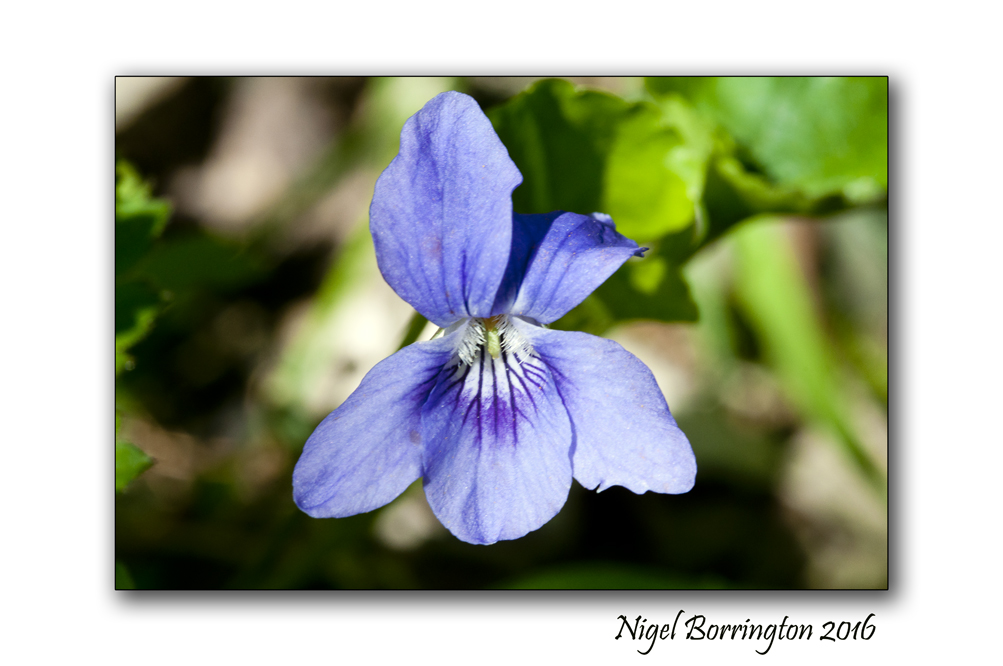
Common Dog Violet
Viola riviniana
Nigel Borrington
At this time of the year our local woodlands here in county Kilkenny fill with new life and colours, one of the the wild flowers I love the most are the Violets.
They are a familiar little wildflower of the woodlands and grassy hedge-banks, this plant is quite similar to Early Dog-violet and is easily confused. The unscented, blue-violet flower is always solitary on the stem, and is open with five petals, the lower of which has a stout, blunt, pale, curved spur which is notched at the tip.
The mouth of the flower is absolutely wonderful to view through a hand-lens or magnifying glass. It has a pattern of deep purple lines which run into the throat over a paler violet patch, becoming white. The upper petals have a fringe which is over the opening. The dark-green, heart-shaped leaves are on long, slender stalks. This native plant which blooms from April until June is a larval foodplant of the Dark Green Fritillary. It belongs to the family Violaceae.
‘Look at us, said the violets blooming at her feet, all last winter we slept in the seeming death but at the right time God awakened us, and here we are to comfort you’.
Edward Payson Roe 1838-1888
‘I would give you some violets, but they withered all when my father died.’
William Shakespeare 1564 -1616
Meerkat’s at Fota Wildlife Park , County Cork, Ireland

A Meerkat at Fota Wildlife Park
County Cork
Ireland
There are so many wild species at Fota Wildlife park, county Cork – but few as sweet and attractive as the little Meerkat’s. Like many of animals they occupy their own island and you view them from across the water of a lake.
I spent a good time during my visit with these little creatures and found it difficult to move on, they are such great fun to watch 🙂 🙂
Here is their introduction and details, provided by Fota wildlife park themselves !
About the Meerkat
A favourite of visitors young and old, the Meerkat is a smaller member of the Mongoose family. Measuring up to 35cm in length and weighing up to 730grams, it has four long, strong claws on each paw to aid with burrowing and likes to stand on its hind legs from high vantage points when possible.
Habitat
The Meerkat is found across southern Africa in the wild, particularly around the savannahs and open plains of Botswana, Namibia, Angola and South Africa.
Wild Notes
The Meerkat is a social and curious animal that lives underground in groups called mobs, gangs or clans. Much of its time is spent digging and foraging for food including insects, roots, eggs, small reptiles and scorpions – the Meerkat is immune to the latter’s poison unlike mankind.
While pack members are feeding, at least one of the mob will be on guard, standing on its back legs and watching for predators such as eagles, foxes for jackals. Should any danger arise, an alarm call will alert the entire group who will then quickly venture underground.
Meerkats share the job of looking after their young. When born, the pups are mostly hairless and cannot see or hear. They generally open their eyes after two weeks and start to eat food other than milk a week later. Females tend to be larger than males and can have as many as four litters of up to five pups a year – generally around rainy season when food is plentiful.
Conservation
Considered to be of Least Concern, local populations of the species are susceptible to disturbances and habitat loss caused by mankind.
Did you know?
The fur on the Meerkat’s belly is thin and helps it to regulate its own body temperature. It sits up or lies on warm ground in order to increase its temperature and reduces it by lying belly-down in a cool, dark burrow.
The Fota Connection
The Park’s Meerkat clan arrived in 2010 and took up residence in a new exhibit near the main entrance. Its habitat has since been revamped further with the addition of a new viewing house, allowing visitors more intimate interaction with one of the world’s most interesting and active species. The original group, Tippy and her three daughters, came from Belfast Zoo but Fota’s numbers have since increased into double figures.
A
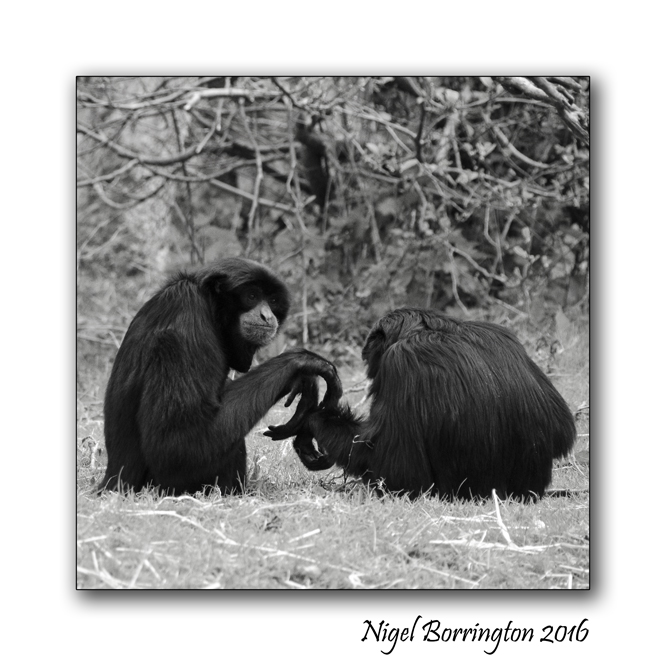
Portraits of Siamang Gibbon’s, Fota Island wildlife park , County Cork
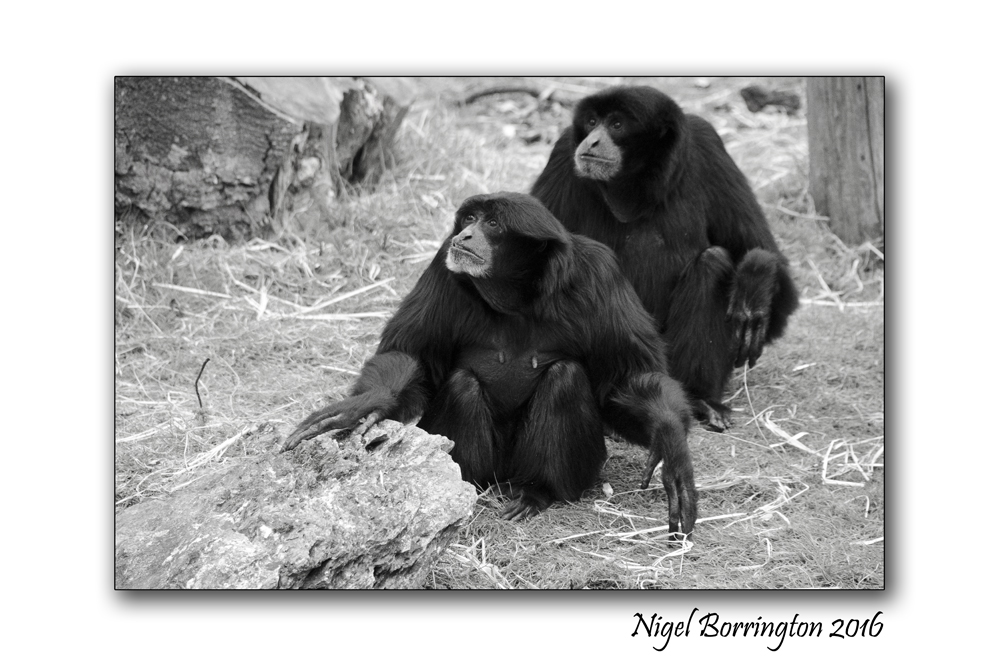
Siamang Gibbon
Fota Wildlife Park
County Cork
Nigel Borrington
During last weekend we visited Fota wildlife park in county cork and spent many great hours getting to know many of the animals they have in their care.
The Siamang Gibbon at the park are all member of the same family 🙂
Here are some details and fact about them , just to help you get to know them a little better 🙂
About the Siamang Gibbon
With a Latin name that means ‘Dweller in the trees’, the Siamang Gibbon is a tailless, black-furred ape that can grow to be twice the size of other Gibbons. Like other apes, the Siamang Gibbon has quite an upright posture and well-developed brain. However, it can weigh up to 14kg and has a special throat sac to amplify its call, which can be heard up to two miles away in the forest canopy.
Habitat
Native to the forests of Sumatra, Malaysia and Thailand, its home range overlaps with both the Lar and Agile Gibbons 0 though because of its largely leaf-eating habits, it does not compete for what the forest has to offer the other species.

Wild Notes
Siamangs are very agile and acrobatic creatures and their extra-long arms help them swing up to 15 feet in one move. Its arms stretch out to help with balance while walking and because it uses its hands so frequently while traveling, the Gibbon tends to carry items with its feet.
Conservation
Siamang Gibbons are considered to be Endangered as 70-80% of their primary habitat has been lost to palm oil production in recent decades. The illegal pet trade has also taken a toll on wild populations, but there are a growing number in existence in captivity across the world.
Did you know?
The Siamang Gibbon mates for life with both parents playing a role in rearing offspring. Breeding males and females also sing duets in order to maintain their bond and establish territory boundaries.
As a fellow ape, the Siamang is also the closest related animal to Mankind in the Park.
The Fota Connection
One of the noisiest crews in the Park, the Siamang Gibbons are hard to ignore and have been at Fota right from the beginning.
They feed on fruit, vegetables, nuts and willow branches and can often engage in long bouts of calling out if the Park is busy and they feel their territory might be under threat. Situated on Monkey Island, their location allows visitors get right up close.
Taking a nap, Bennett’s wallaby (mother and babies) at Fota wildlife park, County Cork

Taking a Nap
Bennetts Wallaby and baby
Nigel Borrington
During the last weekend we visited Fota wildlife park in county cork and spent many great hours getting to know many of the animals they have in their care.
The weather was perfect during the time needed to walk around all the islands and planned routes around the park, with many of the animal on open display and very easy to view you get a very personal experience.
The image above is of a female Bennett’s Walley, with two of her babies resting Snuggly in her pouch, I felt very lucky to get a great view of the three of them as they all napped in the midday sun 🙂

About the Bennett’s Wallaby
Sometimes called the Red-necked Wallaby, the species has a mainly grey coat with reddish shoulders and a black nose and paws. The male’s body can measure up to 90cm in length and weigh up to 18kg; the female, in contrast, is smaller – though both have five clawed-tipped fingers that are used for feeding and grooming.
Habitat
A native of the east coast of Australia and Tasmania, the Bennett’s Wallaby is noctural – resting during the day and coming out to feed at night. Largely a solitary animal, it follows a herbivorous diet and gains most of the water it needs through the food sources it consumes. Breeding can occur at any time of the year with females giving birth to one offspring – known as a Joey – once every 12 months.
Wild Notes
The Wallaby’s ears are very sensitive and are its first line of defence in that it will bound away from a predator as soon as it hears one nearby. Each of its hind legs has an elastic tendon that allows the species catapult itself forward as its tail acts like a rudder, enabling the Wallaby to change direction quickly.

Conservation
Once hunted for their meat and fur and persecuted by ranchers and farmers, Wallabies are now a protected species. The move has seen their numbers in the wild increase in recent years and as the species is tolerant of alternative habitats, it is of Least Concern on the Endangered List.
Did you know?
Similar in size to a grape when born, Joeys grow to 2,000 times its birth weight during the first six months of its life. They begin to leave their mother’s pouch from about seven months and are fully independent at a year old.
The Fota park Connection
The Park’s Wallabies are free ranging and now number between 50 and 70 animals around the island. More easily spotted in the early morning or late evening when the Park is quieter, this species feeds on the grass of the African Savanah or Woodlands areas and tends to be timid and hard to get too close to
——————-
I will post lots more images of all these great creatures at Fota park and do my best to introduce them to you 🙂
The Presence of Trees – By Michael S. Glaser

The Presence of Trees
Nature Photography
Nigel Borrington
The Presence of Trees
by Michael S. Glaser
I have always felt the living presence
of trees
the forest that calls to me as deeply
as I breathe,
as though the woods were marrow of my bone
as though
I myself were a tree, a breathing, reaching
arc of the larger canopy
beside a brook bubbling to foam
like the one
deep in these woods,
that calls
that whispers home
Its A Sheeps Soul, Poem By : fayaz bhat
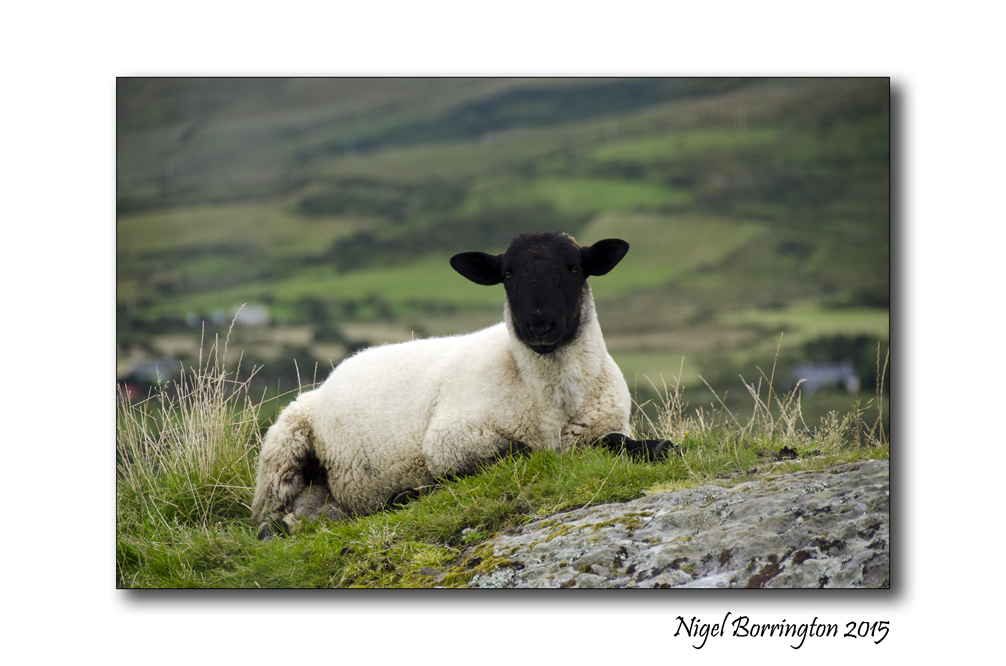
Its A Sheeps Soul
By : fayaz bhat
O cherisher! Of hairy goats, rocky ridges,
Still vales and white-woolen sheep;
Of my love, of melodies, of muses, of her beau;
It’s the soul of a forgotten sheep
Looking for her poor pastor, his white drove
And, the rest in shade;
Or ‘tis a shepherd, a shepherdess more,
Singing in solitude, rhyme, underneath a tree
In the relaxed midday of jubilant springs,
Ballads, lounged beside the sitting slept sheep.
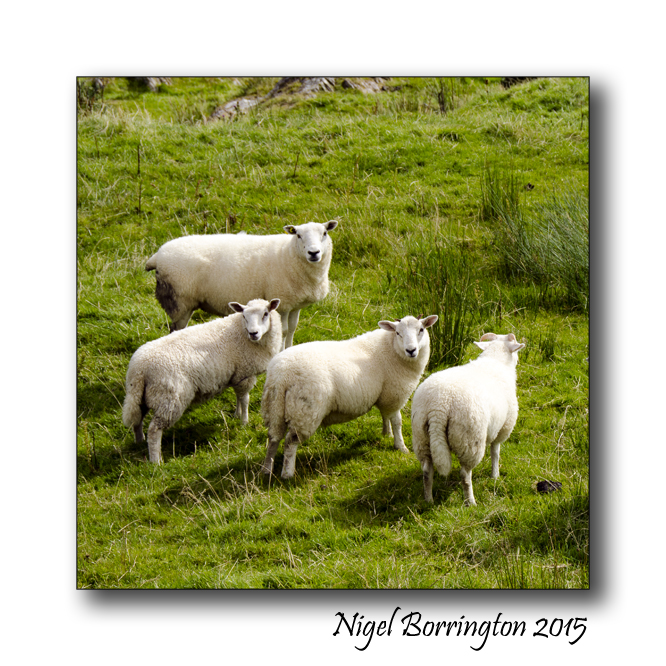
Or; ‘tis that boy in the wild highs
Playing floyera reclined on the mossy rock—
Goats bleat and forget to graze;
Waking up the beasts, waking up the breeze,
Eared by the deer, cheered by the crows,
’lauded by the woods, echoed by the vale.
Free her! Guide her! For it says so sweet:
My abode’s among the weeds,
The wild flowers grow, the stony meads live.
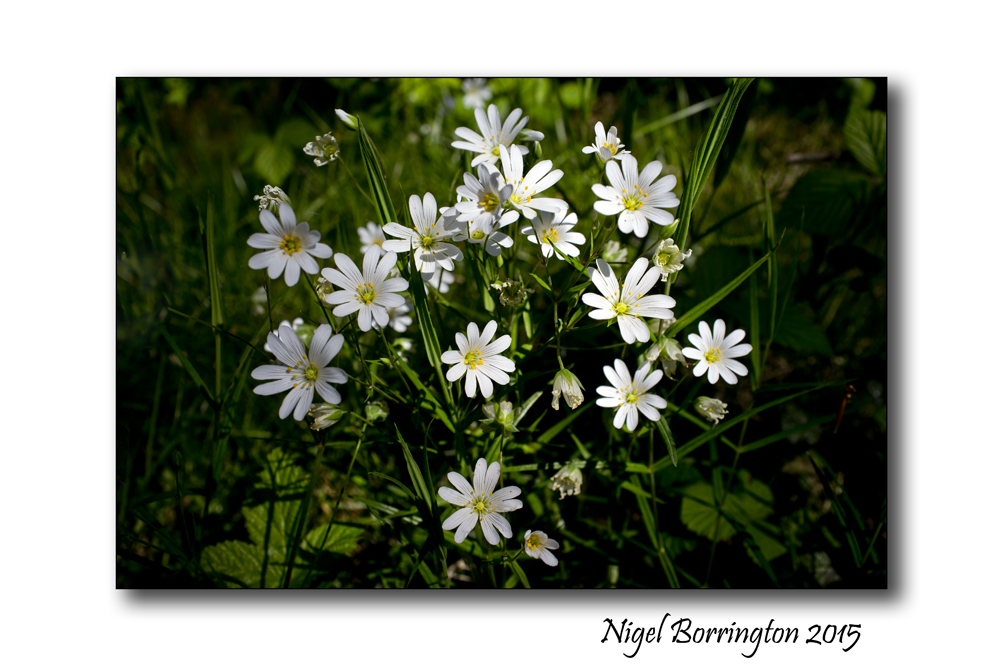
Monday Poetry , Wild Woodbine By : Joan McBreen

Wild Woodbine
Joan McBreen
Wild woodbine was beyond my reach
in the thick hedges round Lough Gill.
The heavy scent filled the house for days
when my father brought it in
and it stayed fresh far longer
then meadowsweet.
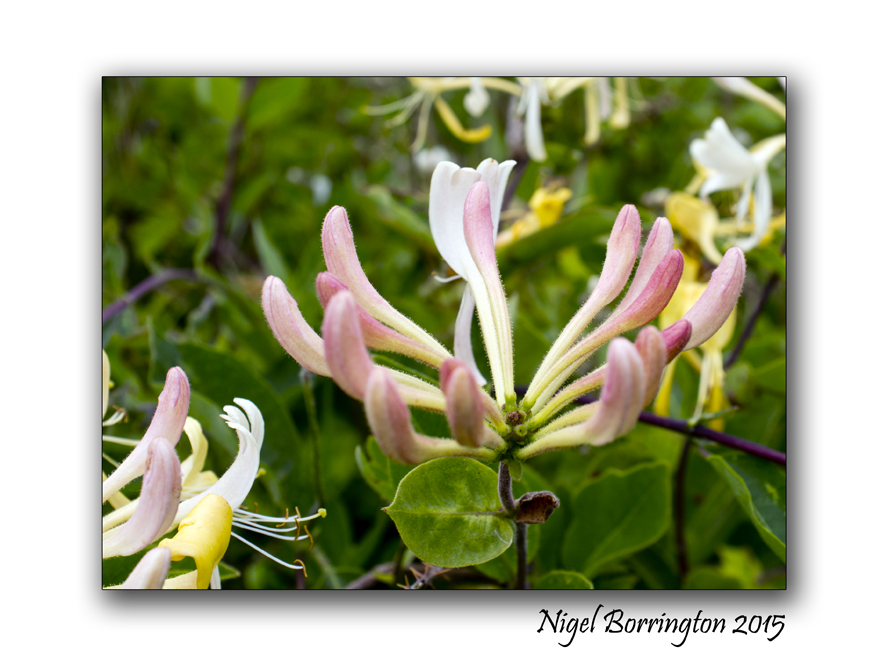
Because I loved the delicate
pink and white wild rose
he picked it too, cursing the thorns, muttering
“it dies too soon,
you’d be better leaving it alone”.
Yet once, when my mother
swept its petals from the floor
I saw him rescue one
and place it carefully
in the small wallet
where he kept her photograph.
 Wild Woodbine
Nature’s gifts : Celandine, Lesser
Celandine, Lesser
Nature Photography : Nigel Borrington
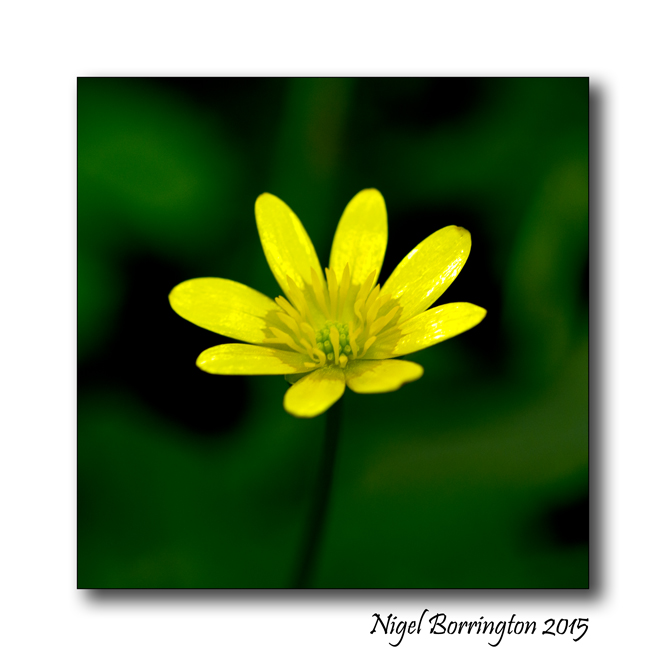
Its so easy to just walk past some of natures smaller Herbs and Flowers, however I guess that some flowers cannot help but get themselves noticed.
“Celandine, Lesser” is one of these little gems, its strong yellow flowers in the early summertime cannot help but get noticed as you walk down woodland paths or along the road sides.
Here are a many details about this wild Herb and it flowers:
Celandine, Lesser
Botanical: Ranunculus ficaria (LINN.)
Family: N.O. Ranunculaceae
Part Used
Constituents
Medicinal Action and Uses
Recipes
—Synonyms—Small Celandine. Figwort. Smallwort. Pilewort.
—Part Used—Herb.
—Habitat—The Lesser Celandine, one of the very earliest of spring flowers, its cheery, starlike blossoms lighting up our hedges even before winter is quite spent, is distributed throughout Europe, Western Asia, and North Africa, in these islands, growing up the hillsides in Wales to a height of 2,400 feet. It grows in moist corners of fields and places near watersides, but is found also on drier ground, if shady, being one of the few plants that thrive beneath the shade of trees, where its glossy foliage frequently forms a dense carpet.
Wordsworth, whose favorite flower this was (in recognition of which the blossoms are carved on his tomb), fancifully suggests that the painter who first tried to picture the rising sun, must have taken the idea of the spreading pointed rays from the Celandine’s ‘glittering countenance.’ The burnishing of the golden petals gives a brilliant effect to the flowers, which burst into bloom about the middle of February, a few days only after their bright, shining leaves. The leaves are on long stalks, arising from a short, prostrate stem, and are very variable, the first being heart-shaped, the later ones bluntly cut into, somewhat like the ivy. They often have dark markings.
The blossoms shut up before rain, and even in fine weather do not open before nine o’clock, and by 5 p.m. have already closed for the night. The Celtic name of the plant, Grian (i.e. the sun), refers to this habit. The petals are green on the underside, and directly the flowers close they become inconspicuous.
Throughout March and April, this cheerful little plant is in full bloom, but as the spring passes into summer, the flowers pale somewhat, and the whole plant looks rather sickly, the warmth of the lengthening days withdrawing from it the needed moisture. By the end of May, no flowers are to be seen, and all the plant above ground withers and dies, the virtue being stored up in the fibres of the root, which swell into the form of tubers. If the plant is dug up, late in the summer or autumn, these tubers are seen hanging in a bunch, a dozen or more together, looking like figs, hence the plant’s specific Latin name ficaria, from ficus (a fig). By these tubers, the plant is increased, as they break off readily, each tuber, like a potato, producing a new plant. To eradicate this plant from any ground, it is necessary to remove the roots bodily, for if the plants are dug into the soil, they work their way up to the surface again, the stems branching as they grow upward from the tubers, and at every branch producing fresh tubers.
The early awakening of the plant is due to these fully-stored tubers, which lie quiescent all the summer and autumn, but all necessary materials being at hand, leaves and flowers are quickly pushed upwards directly the depth of the winter has passed.
Although the Lesser Celandine has been placed by some botanists in a distinct genus, when it is called Ficaria verna, it is more generally assigned to the Buttercup or Crowfoot genus, Ranunculus. The name of this genus, first employed by Pliny, alludes to the damp and marshy localities preferred by the plants of the family, Rana, being the Latin for a frog, whose native haunts are those of the majority of this group of plants. The Lesser Celandine is distinguished from the Buttercup by having nine or ten, even sometimes a dozen narrow petals, instead of five, and only three sepals (the outer, generally green leaves of the flower), which fall off on opening, instead of the usual five, which remain after the flower has expanded, in the other species of Ranunculus. The flowers rise singly from the root, on long, slender, leafless stalks and are about 1 inch in diameter. There are a number of stamens. The fruits are not unlike those of the Buttercups being dry and distinct, set together in a globular head, somewhat like a grain of corn and whitish in colour, but comparatively few fertile seeds are produced.
The flowers would originally appear to have been designed with the object of attracting insects for their fertilization, the bright coloured, burnished petals having honey sacs at their base, but the flowers can face colder days than the insects can, for whom the honey has been provided, blooming when few of the insects have emerged, with the result that comparatively few become fertilized in this country and not many seeds are produced. The plant, therefore, has recourse to another method of reproduction, independent of all external aid. At the point where the upper leaves join the stem are to be seen little objects like minute round tumours, which grow about the size of a grain of wheat. In the early summer, when the leaves and stems are dying down, these grains become loose and drop to the ground. Each is capable of producing a new plant. A heavy rain will sometimes wash them from the plants in every direction. Kerner, in his Natural History of Plants, tells us that:
‘a sudden downpour of rain in a region abundantly overgrown with Lesser Celandine is sufficient to float away numbers of the tubers, and heap them up on the borders of irrigation channels when the rain disperses. In such places the quantity of tubers which have floated together is often so large that one can hardly gather them in one’s hands. In this way arose the idea that the tubers had fallen from heaven with the rain and the myth of a rain of potatoes.’
This fact probably accounts, also, for the ‘rains of wheat’ sometimes vouched for by country people in various parts. These bulbils (i.e. Iittle bulbs) are only produced on those plants whose fruits have failed to set.
The root of the Lesser Celandine is perennial.
Seedlings do not flower in their first year, but collect and store up material to start their accustomed course at the end of the ensuing winter.
The whole plant is glabrous.
It is called the Lesser Celandine to distinguish it from the Greater Celandine, to which it has neither relationship nor similarity, except in the colour of its flowers, though the older herbalists applied the name to both plants indiscriminately. The confusion of names existed in Gerard’s time, for he published a list of all the plants in cultivation in his garden on Holborn Hill – to wards the close of the sixteenth century and introduced in it, under the same name, both this and the Greater Celandine (Chelidonium majus) which certainly is in bloom when the swallows arrive, and continues to flower the whole summer, and so would have more right to the name Celandine than this species, which blossoms long before they come, and dies down months before they leave our shores.
A figure of the Lesser Celandine – under the name of Erdöpffel – appears in an old German Herbal of 1533, Rhodion’s Kreutterbuch, evidence that this plant was well known to the herbalists of the Middle Ages.
It is also called ‘Small-wort.’
The old English name of Pilewort is due to the fact that it has long been considered a cure for piles, one of the reasons assigned for this resting on the strange doctrine of signatures. We are told by an old writer: ‘If you dig up the root of it you will perceive the perfect image of the disease commonly called the piles.’ Gerard writes of it:
‘It presently, as Galen and Dioscorides affirm (though this perhaps refers to the Greater Celandine) exulcerateth or blistereth the skin: it maketh rough and corrupt nails to fall away. The juice of the roots mixed with honie and drawn up into the nosthrils purgeth the head of foul and filthy humours. The later age use the roots and graines for the piles . . . there be also who think that if the berbe be but carried about one that hath the piles, the pain forthwith ceaseth.’
Culpepper, writing fifty years later, tells us:
‘It is certain by good experience that the decoction of the leaves and roots doth wonderfully help piles and haemorrhoids; also kernels by the ears and throat called the King’s Evil, or any other hard wens or tumours.’
He had such faith in the virtues of this little plant that he further tells us, with more definite belief than Gerard: ‘The very herb borne about one’s body next the skin helps in such diseases though it never touch the place grieved.’
The young leaves, the substance of which is soft and mucilaginous, have sometimes been boiled and eaten as a vegetable in Sweden, but have not the reputation of being very palatable, either thus treated or raw as a salad.
Linnaeus advised farmers to eradicate the plant from their land on account of it being disliked by cattle (though wood-pigeons eat it with avidity), also for its injurious effect on other herbs in the meadow, but there seems little ground for this assumption, as although the tissues of most plants in this order contain acrid juices to a high degree, the acrimony of the Lesser Celandine is of a very mild character. A dressing of coal or wood ash is said to effectually destroy the whole plant.
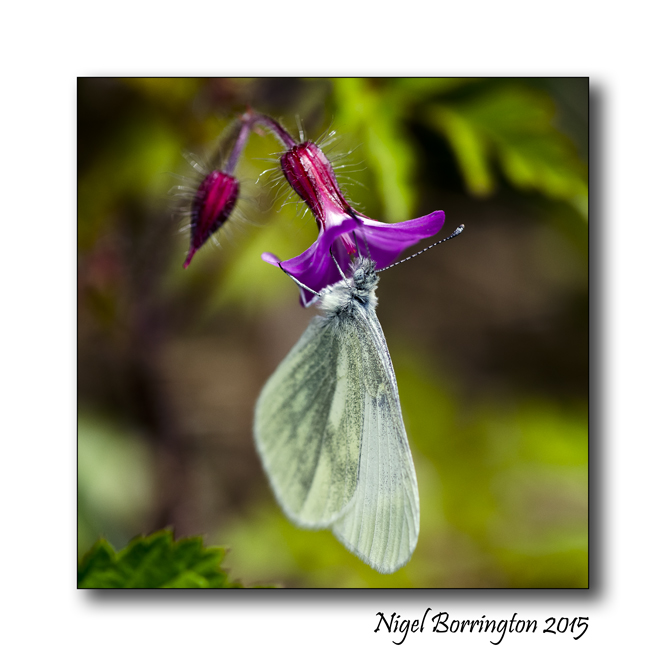
“The unquiet spirit of a dandelion plume”, Ellen Mackay Hutchinson Cortissoz

Dandelion
Nature Photography : Nigel Borrington
Dandelion
By : Ellen Mackay Hutchinson Cortissoz
In the meadow-grass
The innocent white daisies blow,
The dandelion plume doth pass
Vaguely to and fro, –
The unquiet spirit of a flower
That hath too brief an hour.
A study of rain drops , macro image gallery
Study of Rain drops
Nature Photography : Nigel Borrington
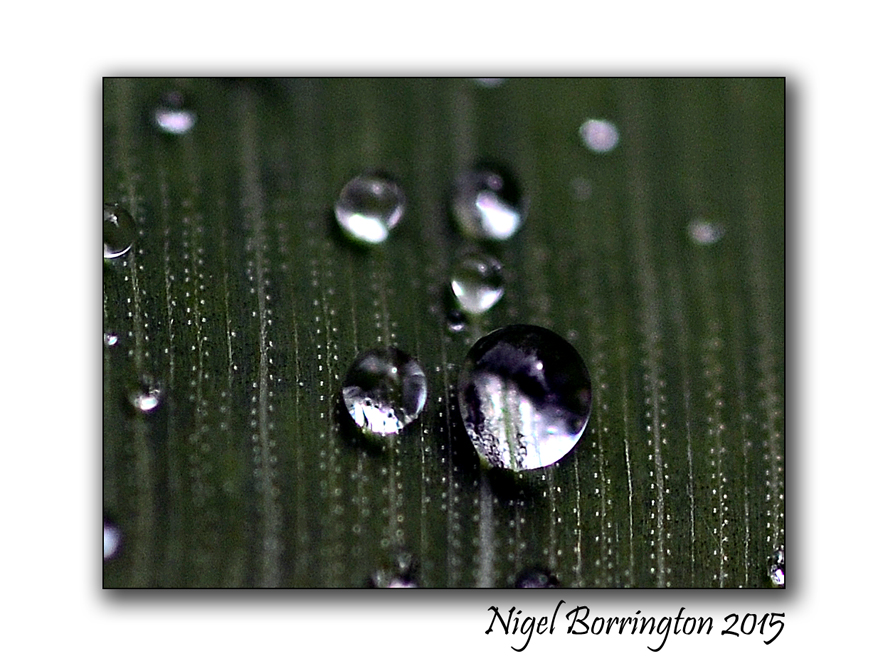
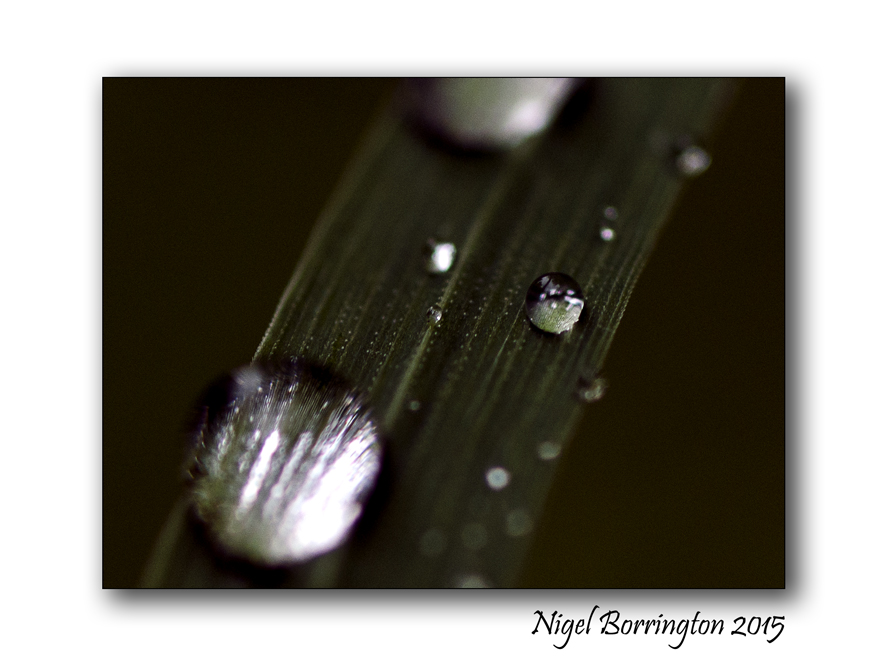
We have just had a long weekend here in Ireland , with a bank holiday and as expected 🙂 it rained yesterday (Monday) . I had intended to do lots of walking but it was just to windy and wet. So I decided after looking out of the windows for a while to do a photo study of the rain.
These images are just a small selection and include some from lunchtime today as we still have some showers, I used a macro lens for these shots and the above image has also captured the amazing structure of the grass that the rain drops rested themselves on.

Flora & Fauna , A Poem by crowbarius – Hello Poetry

Flora & Fauna
Irish Nature Photography : Nigel Borrington
Flora & Fauna
Flora and Fauna, the sisters of Season
Of Spring and of Summer
Allow now our drummer
To drum out the beat
For the feet of the sisters
To glide and to creep
Like the encroaching sleep
Which may perch on your shoulder if we cannot keep you awake
And on the edge of your seat, sir.
Now the former, sweet Flora, will finger the flute
While the other continues to glide and to slide
Like a sequined Venetian harlequin bride;
And now Fauna will mimic the movements of bird and of beast
As she graces the work of our landscape artiste
And all is completely unfeasible
Completely lacks reason
We guarantee.
Presently
In the eye of the beholder
Sweet Flora seemingly draws from the aether a lyre
And with flourishing fingers she plucks from the heavens
A song of the seasons, a pagan ode to Pan!
Behold! No aid of hoops, no strings
The vestal-virgin-harlot sisters sing
Of beautiful Persephone
And with unseen damselfly wings
Ascend from mediocrity
All melody forgotten
All the drums create cacophony
And you will find serenity in chaotic monotony
Now let this climaxing crescendo banish all your sorrowing!
No more that light; no more that sacred realm
Life’s door was dappled gloam; now all is black.
A man of wax with saintly, hollow eyes
Devoid of sin, devoid of love and light
That golden room is lost – you can’t turn back.
Now love has lost its lustre – lust lost joy
And coy eyes turn to watch the empty man
Struck by eternal beauty, and condemned
To haunt the broken world of mortal men;
And shrilling wind caresses empty hand.
Cuckoo-flower / Lady’s Smock , Irish Nature Photography
Cuckoo-flower / Lady’s Smock
Nigel Borrington
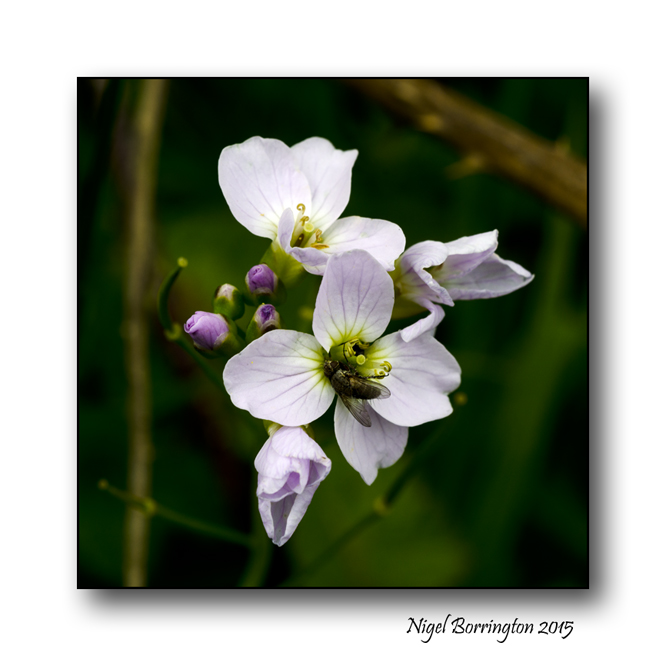
In late springtime here in county Kilkenny – Ireland, I always notice when the wild flower come out.
Some of the most noticeable are the Cuckoo flowers, they grow at the side of rivers and along damp woodland paths.
I always feel like summer has started in full when I first see them …..
Cuckoo-flower / Lady’s Smock
Cardamine pratensis
Biolar gréagáin
Family: Brassicaceae
Flowering time: March-June. Perennial. Native.

Large white to pinkish-mauve flowers. Yellow anthers. Colour depends
on habitat, pink-mauve on dryer ground. Fruit with long or short style.
Basal leaves round / oval, in rosette. Stem leaves narrow-lanceolate.
Variable plant, sometimes with runners. Height: To 60 cm
Very frequent. Damp meadows and lawns, stream sides, open moist woodland.
The Growth of a Seed – By Dan Farella

The Growth of a seed
Nature Photography : Nigel Borrington
The Growth of a Seed
– By Dan Farella
The growth of a seed
Starts with a need
A feeling inside her
Like a burning fire
Glowing to inspire
And the growth transpires
Inside her that fire
Burning brighter and brighter
Ignites her into a frenzy of burning desire
To lift herself higher, and higher, and higher…
A desire to surrender to the growth that transpires
And she never grows tired, growing, and growing
And a sprout grows out from beyond the doubt
The shadows get exposed to the light of insight
As the stem grows longer getting stronger and stronger

The days get brighter and her spirit feels lighter
The pulsing emanates from a sacred place…
Babump…. babump… babump….
Reaching for the light radiating inner sight
[And an animal comes to take a little bite]
And the nutrients they grow as the energy it flows
And the time has come for her soul to become one
So she sends out her leaves allows herself to be alive
No running no hiding and nowhere to go
So it waits and it grows and it sits and it flows
As the thoughts pass by and she holds her composure
Growing and growing flowing and flowing
Getting taller and stronger
Allowing herself to be seen

It goes on and on as she reaches her dawn
Only to know that its time for her to move on
And release her seeds to the wind, set sail
And she trusts they will grow through wind, rain, or hail
As she brings all the energy up into her crown
The wind begins to blow as she listens to the sound
And she knows its time to let her children take flight
Getting lost in the life, the love, and de-light
She completes her deed and she dies a slow death
But she knows she will go back into the goddess breath
Where she feeds the soil that will grow her kin
With the nutrients she once used to help her begin
And she feels a sense of right-ness and completeness inside
As she knows that she worked with Natures highest design
And she never grows tired, growing and growing
Reaping and sowing, reaping and sowing.
– By Dan Farella
Blue flowers , they stands for desire the infinite and unreachable

Blue flowers of , Common-Field-Speedwell
Nature Photography : Nigel Borrington
Blue flowers must be one of the hardest types of wild flowers to find, these Field-Speedwell’s are just some of a few we have in our local woodlands.
Blue in nature has been used as a powerful symbol, the following uses are just a few …..
Blue flowers
A blue flower is a central symbol of inspiration. It stands for desire, love, and the metaphysical striving for the infinite and unreachable. It symbolizes hope and the beauty of things.
Early use of the symbol of blue flowers
German author Novalis used the symbol in his unfinished Bildungsroman, entitled Heinrich von Ofterdingen. After contemplating a meeting with a stranger, the young Heinrich von Ofterdingen dreams about a blue flower which calls to him and absorbs his attention.
Explanation of the symbol of blue flowers
In the book Heinrich von Ofterdingen the blue flower symbolises the joining of human with nature and the spirit so the understanding of nature and coincident of the self is growing. In the Romantic the meaning of human was a continuation from Humanism and the Age of Enlightenment, but the focus was on the own emotions not on abstract theory. Understanding and thinking rise in the comprehension of Romantic from own individual love. Feeling is based on the self, thinking is based on the self and the development of the self leads the individual person. Also very important is contemplation. About the feeling, the thinking and contemplation personal inward cognition is possible. The process of cognition merge again with own individual love. The self and the nature is in this theory always linked.
Use of the symbol
Joseph Freiherr von Eichendorff wrote a poem called Die blaue Blume (The blue flower). Adelbert von Chamisso saw the core of Romanticism in the motif, and Goethe searched for the “Urpflanze” or “original plant” in Italy, which in some interpretations could refer to the blue flower. E. T. A. Hoffmann used the Blue Flower as a symbol for the poetry of Novalis and the “holy miracle of nature” in his short tale “Nachricht von den neuesten Schicksalen des Hundes Berganza”.
In 1902, Charles Scribner’s Sons published “The Blue Flower”, a collection of short stories by Henry Van Dyke, the first two of which, “The Blue Flower” and “The Source” refer to the blue flower as a symbol of desire and hope, and the object of the narrator’s search. This volume also includes Van Dyke’s most famous story, “The Other Wise Man”.
Blue rose
Walter Benjamin used the image of the blue flower several times in his writing. For example the opening sentence of his essay Dream Kitsch: “No one really dreams any longer of the Blue Flower. Whoever awakes as Heinrich von Ofterdingen today must have overslept.” Also in his Work of Art essay: “The equipment-free aspect of reality has here become the height of artifice, and the vision of immediate reality the Blue Flower in the land of technology.”
C.S. Lewis, in his autobiographical book, Surprised By Joy, references the “Blue Flower” when speaking of the feelings of longing that beauty ellicited when he was a child of six. He associates it with the German word sehnsucht, and states that this intense longing for things transcendent made him “a votary of the Blue Flower.”
English writer Penelope Fitzgerald’s historical novel The Blue Flower is based on Novalis’s early life. In John le Carré’s 1968 novel A Small Town in Germany, the character Bradfield says, “I used to think I was a Romantic, always looking for the blue flower.” (Pan edition, p. 286 – chap. 17) Substance D, a fictitious drug in Philip K. Dick’s 1977 novel A Scanner Darkly, is derived from a plant with blue flower.
Tennessee Williams used images of blue roses in his play, The Glass Menagerie, to symbolize the frailty and uniqueness of Laura, a central character that reflects the life of Williams’ sister, who underwent a lobotomy. In the play, Laura is nicknamed “Blue Roses” after another character misheard her say “pleurosis”.
In his fantasy series A Song of Ice and Fire, American author George R. R. Martin uses the blue flower as a reoccurring symbol to represent young women of the noble House Stark, often with hints to an illicit love affair. In one instance, Prince Rhaegar Targaryen uses blue winter roses to crown the Lady Lyanna Stark as the “Queen of Love and Beauty” at the Tournament of Harrenhal, passing over his own wife, Princess Elia of Dorne.
“Blue Flower” is the name of a song by the British avant-garde pop band of the early 1970s, Slapp Happy, later covered by the 1990s indy rock bands Pale Saints and Mazzy Star. “Blue Flowers” is a song by the alternative MC, Kool Keith (AKA Dr. Octagon), on his 1996 album, Dr. Octagonecologyst.
To The Daisy, Poems by William Wordsworth
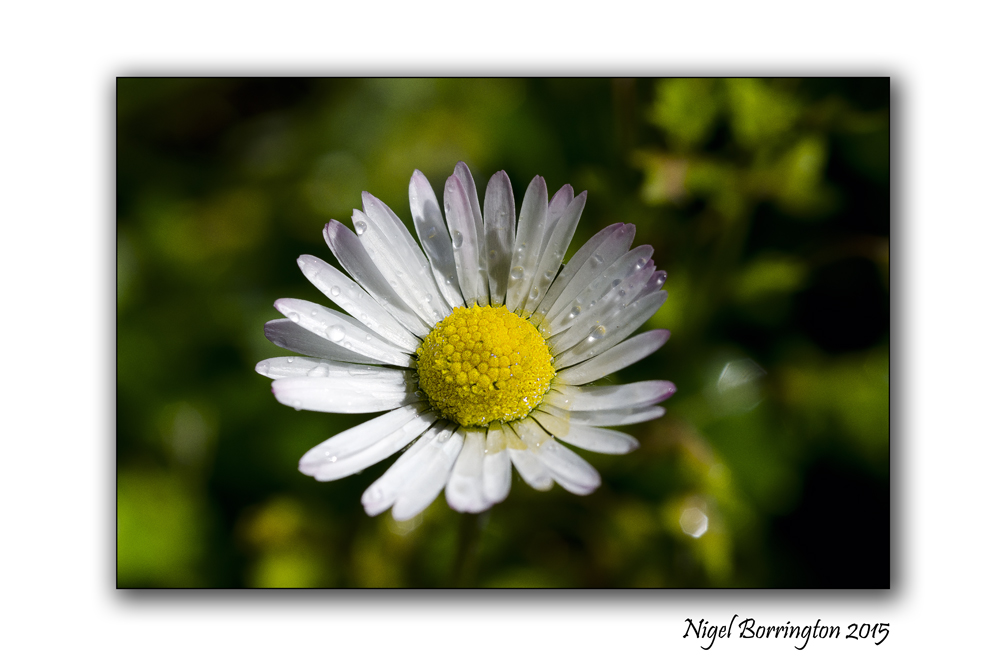
The Daisy
Nature Photography : Nigel Borrington
Her divine skill taught me this,
That from every thing I saw
I could some instruction draw,
And raise pleasure to the height
Through the meanest objects sight.
By the murmur of a spring,
Or the least bough’s rustelling;
By a Daisy whose leaves spread
Shut when Titan goes to bed;
Or a shady bush or tree;
She could more infuse in me
Than all Nature’s beauties can
In some other wiser man.
in youth from rock to rock I went,
From hill to hill in discontent
Of pleasure high and turbulent,
Most pleased when most uneasy;
But now my own delights I make,–
My thirst at every rill can slake,
And gladly Nature’s love partake,
Of Thee, sweet Daisy!
Thee Winter in the garland wears
That thinly decks his few grey hairs;
Spring parts the clouds with softest airs,
That she may sun thee;
Whole Summer-fields are thine by right;
And Autumn, melancholy Wight!
Doth in thy crimson head delight
When rains are on thee.
In shoals and bands, a morrice train,
Thou greet’st the traveller in the lane;
Pleased at his greeting thee again;
Yet nothing daunted,
Nor grieved if thou be set at nought:
And oft alone in nooks remote
We meet thee, like a pleasant thought,
When such are wanted.
Be violets in their secret mews
The flowers the wanton Zephyrs choose;
Proud be the rose, with rains and dews
Her head impearling,
Thou liv’st with less ambitious aim,
Yet hast not gone without thy fame;
Thou art indeed by many a claim
The Poet’s darling.
If to a rock from rains he fly,
Or, some bright day of April sky,
Imprisoned by hot sunshine lie
Near the green holly,
And wearily at length should fare;
He needs but look about, and there
Thou art!–a friend at hand, to scare
His melancholy.
A hundred times, by rock or bower,
Ere thus I have lain couched an hour,
Have I derived from thy sweet power
Some apprehension;
Some steady love; some brief delight;
Some memory that had taken flight;
Some chime of fancy wrong or right;
Or stray invention.
If stately passions in me burn,
And one chance look to Thee should turn,
I drink out of an humbler urn
A lowlier pleasure;
The homely sympathy that heeds
The common life, our nature breeds;
A wisdom fitted to the needs
Of hearts at leisure.
Fresh-smitten by the morning ray,
When thou art up, alert and gay,
Then, cheerful Flower! my spirits play
With kindred gladness:
And when, at dusk, by dews opprest
Thou sink’st, the image of thy rest
Hath often eased my pensive breast
Of careful sadness.
And all day long I number yet,
All seasons through, another debt,
Which I, wherever thou art met,
To thee am owing;
An instinct call it, a blind sense;
A happy, genial influence,
Coming one knows not how, nor whence,
Nor whither going.
Child of the Year! that round dost run
Thy pleasant course,–when day’s begun
As ready to salute the sun
As lark or leveret,
Thy long-lost praise thou shalt regain;
Nor be less dear to future men
Than in old time;–thou not in vain
Art Nature’s favourite
Spring Herb’s : Herb-Robert
Herb Robert
Irish nature Photography : Nigel Borrington
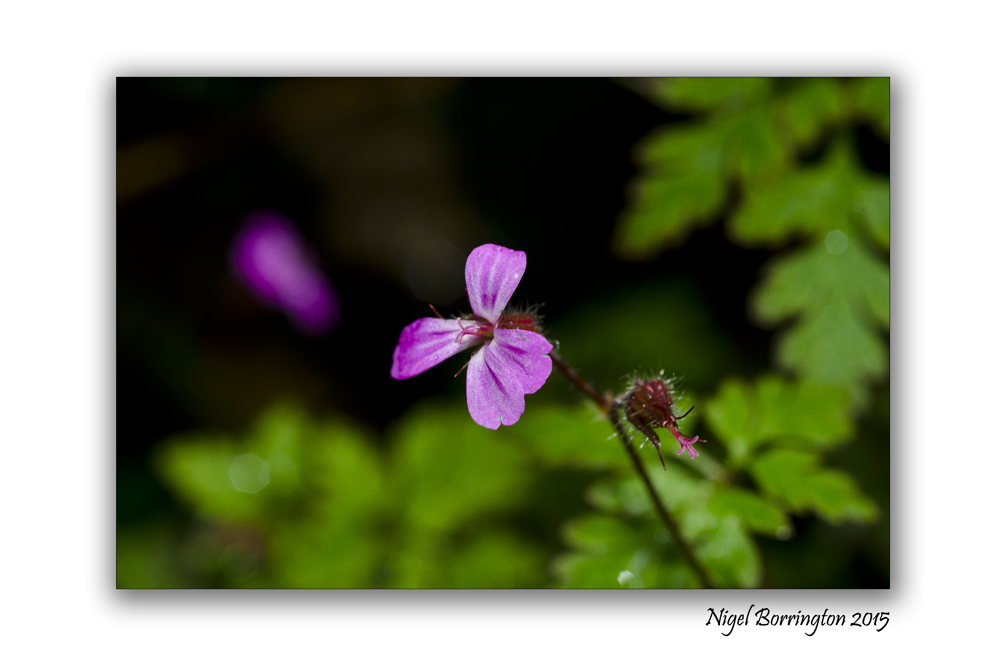
Spring Herb’s : Herb-Robert
Familiar little pink flower from April to November, Herb-Robert is a hairy, unpleasant-smelling plant which grows on banks, bases of walls, shingle and shady places throughout the country. Its pink flowers (8-15mm across) have five un-notched petals and in the center of the flower are orange anthers. Each petal is marked by small lighter-pink lines running into the center of the flower. The hairy, stalked leaves are often tinged red and have three to five deeply cut lobes. The fruit is hairy and beak-like. This is a native plant belonging to the family Geraniaceae.
This plant has been introduced into North and South America from Europe and Asia. In traditional medicine in the Americas it has been used to stop nosebleeds. Its leaves are also made into a herbal tea which is recommended as a gargle and an eyewash. (you would not recommend this course of action).
One wonders who is the ‘Robert’ of this plant. Maybe the name comes from the Latin word ‘ruber’ meaning red which may have referred to the colouring of the leaves and stems.
Hover Fly – Poem by Michael Shepherd

Hover Fly – Poem by Michael Shepherd
Nature Photography : Nigel Borrington
Hover Fly
Poem by Michael Shepherd
The hover fly
that’s just demonstrated
that it’s one of the Creation’s greatest
and smallest, most compact miracles of lawful
imagination (imagine flying, then stopping
quite still in the air, no slowing down,
just, zap, like that, dead steady,
and it’s smaller (!) than a helicopter, wow)
right here in front of me in silhouette, but
illuminated on one wing by the PC screen,
and pausing for a freeze-frame moment of eternity
as if to tell me something
(illumination, too?) –
all this, and yet it
doesn’t know I’m writing about it.
Presumably.
The Fly – Poem by William Blake

The Fly – Poem by William Blake
Nature photography : Nigel Borrington
The Fly
Poem by William Blake
Little Fly,
Thy summer’s play
My thoughtless hand
Has brushed away.
Am not I
A fly like thee?
Or art not thou
A man like me?
 .
.
For I dance
And drink, and sing,
Till some blind hand
Shall brush my wing.
If thought is life
And strength and breath
And the want
Of thought is death;
Then am I
A happy fly,
If I live,
Or if I die.
Three Poems with the title : Primrose

Springtime Primrose
Nature Photography : Nigel Borrington
Primrose
By Pud
Primrose Stirs Lifts Up Her Head
Stands Up Tall On Softened Bed
Resurrected, As Winter Dreams
Primrose Smiles Or So It Seems

Primrose
By : Charlotte
You looked at me as if I were a
primrose
A delicate flower
with tiny petals
opening up to you
with little thorns to prick you with
when you make me angry
You plucked me up
away from the sun
and the moon
and the sky
and my little primrose friends
You put me in an expensive vase,
caring for me the best you could.
But sometimes you go away,
and alone
I am wilting

Primrose
William Carlos Williams
(1883 – 1963)
Yellow, yellow, yellow, yellow!
It is not a color.
It is summer!
It is the wind on a willow,
the lap of waves, the shadow
under a bush, a bird, a bluebird,
three herons, a dead hawk
rotting on a pole—
Clear yellow!
It is a piece of blue paper
in the grass or a threecluster of
green walnuts swaying, children
playing croquet or one boy
fishing, a man
swinging his pink fists
as he walks—
It is ladysthumb, forget-me-nots
in the ditch, moss under
the flange of the carrail, the
wavy lines in split rock, a
great oaktree—
It is a disinclination to be
five red petals or a rose, it is
a cluster of birdsbreast flowers
on a red stem six feet high,
four open yellow petals
above sepals curled
backward into reverse spikes—
Tufts of purple grass spot the
green meadow and clouds the sky.
When will I see the Bog Cotton again ?
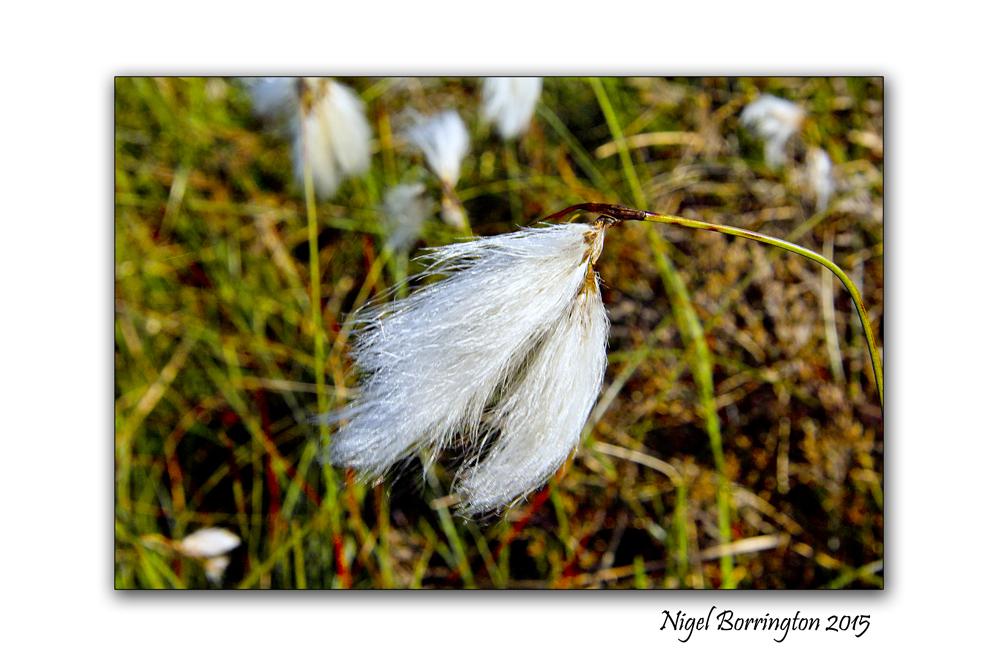
Bog Cotton
Irish Landscape Photography : Nigel Borrington
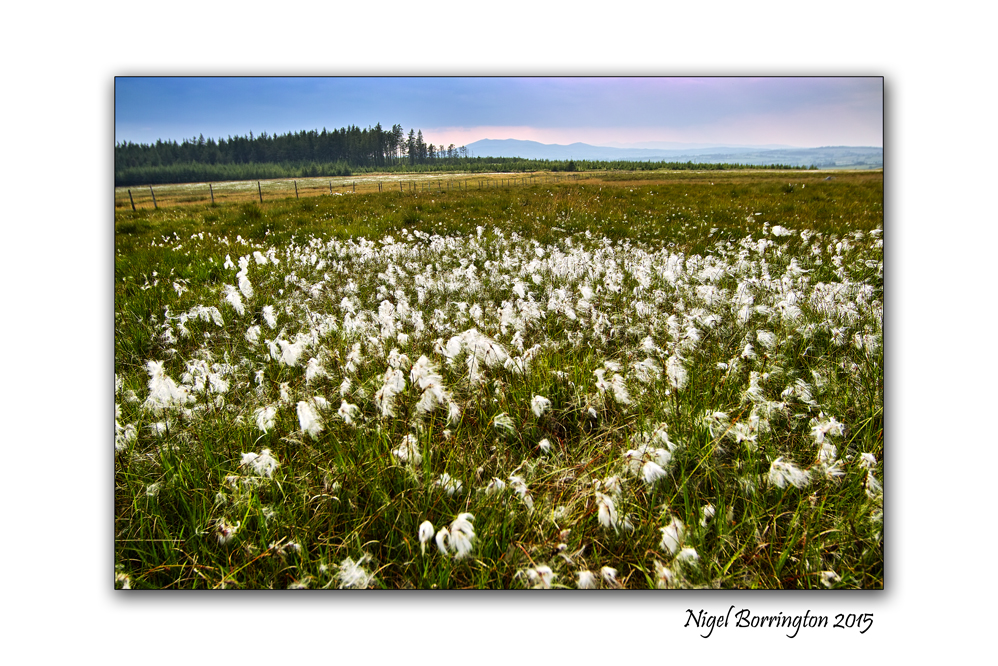
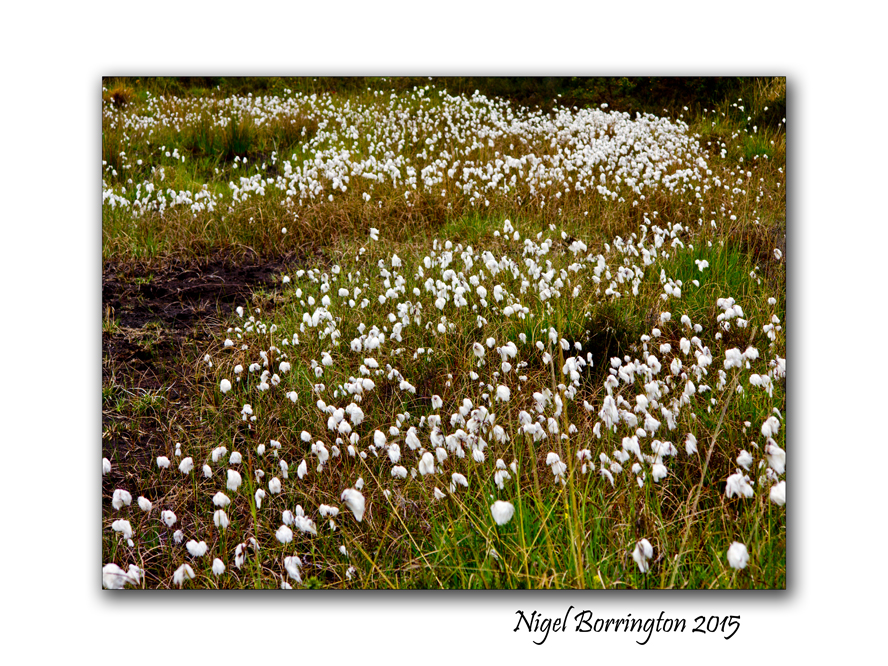
Each year that comes and goes in the Irish bog-land landscape, for me is marked by the summer Bog Cotton. This amazing grass covers many of Ireland boggy wet lands , on the mountain sides and the low lands of midlands through out the country. Only for the fact that much of the Countries bogs are farmed for peat ( leaving the landscape scraped and scared, with no plant life left ! ) then their would be huge areas in the summer months all covered with white Cotton blowing in the wind.
When Will I see the Bog Cotton again ?
Well Starting from this May and June I hope, and I will be getting lots more pictures and just taking time to appreciate the views it brings !!!


Irish Landscape Photography : Winter in the woodlands

Irish Landscape Photography
Winter in the Woodlands
Nigel Borrington
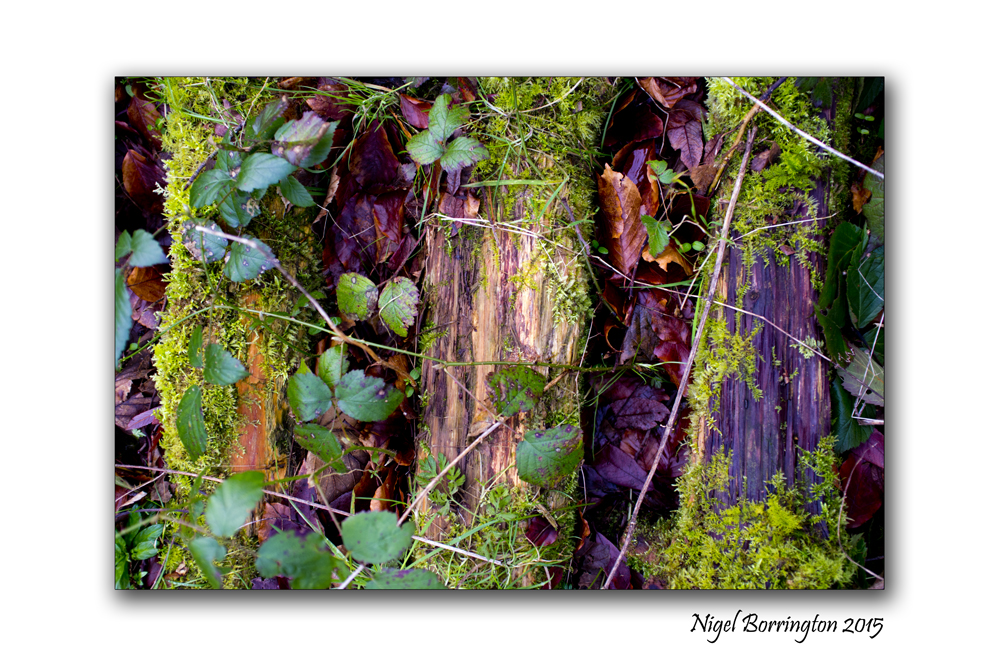
If you take a walk through some of the many Irish woodlands at this time of year, it may appear that there is little to see or take any images of. However I just love the textures and colours to be found during these months. Often the woodland floors are wet and this adds to some wonderful light to be found in photographs.
These Images are from a walk yesterday in one of out local woods.
Winter in the Irish Woodlands


The Holly-Tree , A Poem by : Robert Southey

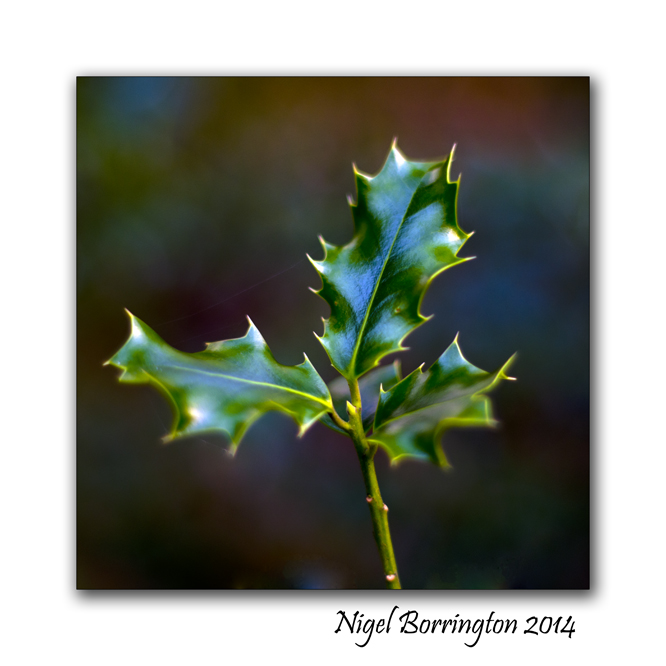
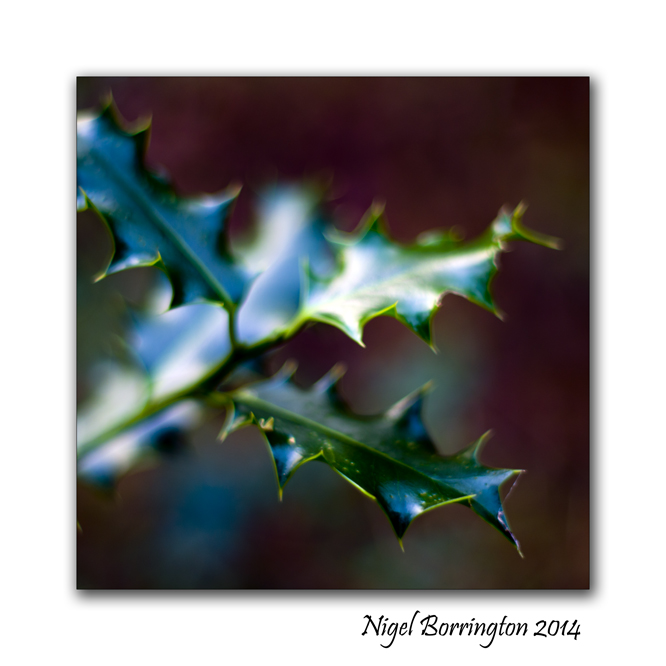
Woodland Holly,
County Kilkenny,
Nigel Borrington
The Holly-Tree
By : Robert Southey
O reader! hast thou ever stood to see
The Holly-tree?
The eye that contemplates it well perceives
Its glossy leaves
Ordered by an Intelligence so wise
As might confound the Atheist’s sophistries.
Below, a circling fence, its leaves are seen,
Wrinkled and keen;
No grazing cattle, through their prickly round,
Can reach to wound;
But, as they grow where nothing is to fear,
Smooth and unarmed the pointless leaves appear.
 .
.
I love to view these things with curious eyes,
And moralize;
And in this wisdom of the Holly-tree
Can emblem see
Wherewith, perchance, to make a pleasant rhyme, –
One which may profit in the after-time.
Thus, though abroad, perchance, I might appear
Harsh and austere;
To those who on my leisure would intrude,
Reserved and rude;
Gentle at home amid my friends I’d be,
Like the high leaves upon the Holly-tree.
And should my youth – as youth is apt, I know, –
Some harshness show,
All vain asperities I, day by day,
Would wear away,
Till the smooth temper of my age should be
Like the high leaves upon the Holly-tree.
 .
.
And as, when all the summer trees are seen
So bright and green,
The Holly-leaves their fadeless hues display
Less bright than they;
But when the bare and wintry woods we see,
What then so cheerful as the Holly-tree? –
So, serious should my youth appear among
The thoughtless throng;
So would I seem, amid the young and gay,
More grave than they;
That in my age as cheerful I might be
As the green winter of the Holly-tree.
Robert Southey
 Nigel Borrington
Sunday, taking pictures in the Rain
Study of Rain drops
Nature Photography : Nigel Borrington
We have had all seasons in one weekend here in Ireland , with Sun Snow and today Rain :). I had intended to do lots of walking today but it is just to windy for mountain walks. So I have decided after looking out of the windows for a while to do a photo study of the rain when the winds dye a little.
These images are form a day just like this one last year and I will use them as some inspiration today, I used a macro lens for these shots and the above image also captured the amazing structure of the grass that the rain drops rested themselves on.
Share this:
April 10, 2016 | Categories: Comment, Gallery, Nature and Wildlife, Nigel Borrington | Tags: images of rain drops, macro photography, Nature photography, rain, Rain drops, Sunday | Leave a comment