
The flowers of May
Nature Photography : Nigel Borrington
May
by: Christina Rossetti (1830-1894)
I cannot tell you how it was;
But this I know: it came to pass–
Upon a bright and breezy day
When May was young, ah pleasant May!
As yet the poppies were not born
Between the blades of tender corn;
The last eggs had not hatched as yet,
Nor any bird forgone its mate.
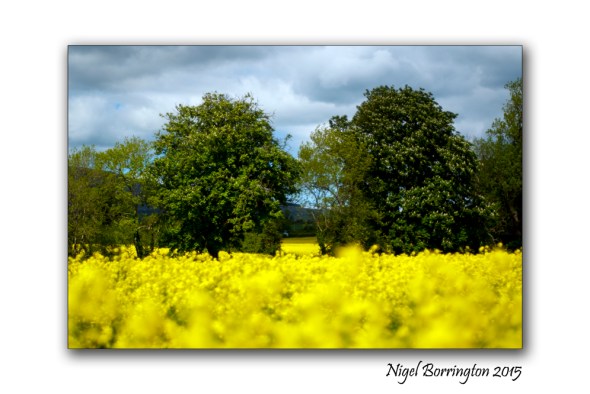 .
.
I cannot tell you what it was;
But this I know: it did but pass.
It passed away with sunny May,
With all sweet things it passed away,
And left me old, and cold, and grey.

May 5, 2015 | Categories: Gallery, Irish rivers, Landscape | Tags: Christina Rossetti, flowers, images of ireland, Irish Landscapes, Landscape, May, Nigel Borrington, poems, poetry, rapeseed, Springtime, the month of MAY, Tipperary | 11 Comments

Bee Keeping with a view of SLievenamon, Co. Tipperary
Irish Landscapes : Nigel Borrington
Bee Keeping in Ireland is often a personal activity, with many hives being kept on family farms and Gardens, even sometimes with the permission of the forestry services.
I often come across a set of Hives while out walking in our local woodland. In the images here , taken last weekend the hives are located on the some hills facing to the north, the great mountain of Slievenamon just across the river Suir.
Very soon these Hives will be active again and I will return to get so more images.
The Federation of Irish Beekeepers’ Associations have a great web site and help on getting going with keeping bee’s, this must be a great activity and very needed with modern farming methods having massively reduced Bee numbers. I have included the text from this site on “How to become a beekeeper” below the following two images, if you would like to read it.

 ….
….
Beginning with Bees , The urge to keep bees: How do I start?
The beginner should first of all find out if he/she is in any way allergic to bee stings and if so not to attempt acquiring bees or taking up beekeeping without seeking medical advice.
When the urge to keep bees first hits you, the impulse is to go out and buy a hive straight away, and learn by doing in isolation – this is not the best approach. The best first step is to join your local branch of the Beekeepers’ Association, preferably in the Autumn.
You can then attend their classes for beginners and programme of winter lectures which are held frequently and cover all aspects of beekeeping. There are 45 such Associations scattered throughout the country.
Other benefits of membership include the use of a library – video and book, plenty of friendly advice and you are kept up to date with developments within the craft. You can also use the Association extractor, can avail of sugar at concessionary prices and benefit from the low cost of FIBKA Public Liability Insurance. The latter is an absolute must as accidents can happen.
It is worthwhile if only for your own piece of mind. Whilst a subscription to “An Beachaire” may be optional, a good book is essential and the FIBKA’s “Bees, Hives and Honey” or Ted Hooper’s “Guide to Bees and Honey” are standard references for beginners and experienced alike.
Some Associations also provide a mentoring facility whereby the beginner is assigned to an experienced beekeeper within his or her local area for the purpose of giving advice for the first couple of years. This is an excellent idea as having someone close at hand or at the end of a telephone is a useful asset.
Bee Stings
If you wish to keep bees, and irrespective of all the protective measures that you might take, you will receive the occasional sting. Everyone will show some reaction to bee stings, such as the initial pain, and later a slight swelling of the affected area, later followed by some itching.
The effects can be reduced by applying an antihistamine cream or even taking tablets such as Piriton, but generally the body will quickly become accustomed to the occasional sting and will display few adverse effects.
Bee Suit
There are many forms of protective clothing on the market which range from veils right through to full bee suits. And the prices are commensurate with the degree of cover. A full bee suit is the ideal acquisition but the prices are fairly steep and it may not be even to your taste.
A smock, together with the type of trousers worn by nurses or painters, may be more suitable.
Be wary of veils which slip over the head and are attached by straps or loops under the armpits; bees invariably find a way to gain access to your neck and face. The safest way to wear that sort of veil is in conjunction with a zip up overall.
Any protective clothing should be light in colour, nothing dark. Nylon should be avoided as it generates static, which is annoying to bees. Woolly clothing should also be shunned, as they get tangled up in it.
Gloves
When handling bees, beginners should also use gloves. With full gauntlets they are costly but should last several years. I use rubber gloves which are less clumsy – “Nitrile” or “Marigold” brands.
The ultimate objective is to obtain a strain of bee that is not overly defensive, become proficient in handling them, and so dispense with gloves altogether.
Ankles are prime targets for bees and calf length rubber boots should be worn.
Equipment
The monthly beekeeping journal carries advertisements from firms selling all types of beekeeping equipment. The first two essential items you need to acquire are a smoker and a hive tool.
Smokers come in two standard sizes, the diameters of the fireboxes being 8cms and 10cms. The smaller version is quite adequate for up to ten hives.
When servicing the smoker, ensure that the legs of the fire grate are not restricting the air entry hole at the base of the firebox and also check that this hole is directly in line with the air exit hole from the bellows.
As for fuel, I use dried grass which provides a constant supply of cool smoke. What you don’t want is a type of fuel which burns too quickly and turns your smoker into a flame thrower which scorches the bee’s wings. This aggravates the bees and they will not delay in letting you know of their displeasure.
Hive Types
There are many types of hives available on the Irish market. However, in selecting a hive type it is important to determine that the component parts for the brood chambers and supers are readily available.
The most common type of hives used in Ireland which would measure up to these requirements are the National, the Smith Hive and the Modified Commercial Hive. The approximate comb areas of the various frames are: National and Smith Deep – 5000 worker cells Commercial Deep – 7000 worker cells.
The two most popular hives are the National and the Commercial. Although the latter have larger frames, the outer dimensions of component boxes are the same, to within a quarter of an inch, so that supers, queen excluders, crown boards, floors and roofs are all compatible.
My first choice would be the National hive because it has the following advantages:
The frames are easier to handle as they have longer lugs (38mm) than the Commercial (16mm).
The National brood box and Super are also easier to handle as the design has a built in handle at both sides.
The capacity of the National brood box and super is smaller than that of the Commercial which means it is lighter to lift when examining the hive and taking off the crop of honey.
The most important advantage is the higher honey yield from the National compared to the Commercial as the National brood box is too small to accommodate brood and much stores, therefore most of the honey is stored in the supers where it can be easily taken off for extraction. This is especially true in a bad year with poor weather conditions during the Summer. The Commercial is best suited to localities where the honey crop is above average.
In addition to the brood box, varroa screen floor, crown board, queen excluder and roof you should make provision for three supers per hive.
It is usually best to treat exterior surfaces with a good preservative, like Cuprinol – green or Fencelife and taking care to air well for a week or more. Normal paint stops the wood ‘breathing’ and can lead to moisture lifting the paint in bubbles.
Obtaining your first colony : A Nucleus
By the Spring you will have a good background of knowledge to help you decide on what to buy and how to start up.
It is essential that you start with a healthy and productive stock of bees. You should contact a reputable beekeeper in your region for assistance in obtaining your first colony.
While it is also possible to start by obtaining a swarm, this is an unreliable method and you have no assurance of the health status of the resulting colony.
You may be tempted to buy a strong colony in the hope of a quick return of honey this Summer, but sometimes the difficulty of handling a large stock as a beginner can put a newcomer off for life.
It is far better to arrange with a local beekeeper to buy a four-frame nucleus with a young queen, taking delivery at the end of May or early in June. This is also the time when outdoor open hive demonstrations are organised by your Association where you can learn how to handle and control a stock of bees.
You can now expand this newly acquired nucleus by regular feeding with sugar syrup into a full hive of eleven frames by July. They will be very quiet and easy to handle and as they grow in strength you will gain in experience, confidence and the necessary manual skills of beekeeping.
There will be no swarming problems to cope with in your first year and with autumn feeding the stock will cope with the coldest winter
By the following Spring you will be well placed to increase to two stocks by making an artificial swarm from your own hive in May.
If you have built or acquired a couple of empty hives over the Winter you will also be ready to take or buy in swarms sometime in May or June, and by July you will have at least three good stocks and the experience necessary to manage them.
You should also have a crop of honey and an opportunity to learn the techniques involved in taking it off, extracting, bottling and preparing it for sale.
It will still only be fifteen months since you first owned bees but you have come a long way, and it might be wise to stay with just two or three hives for another year. It is much better to make your mistakes on two or three hives than on twenty. Possibly three hives are all you intend to have anyway.
In either case, make a four frame nucleus from your strongest stock some time in the Summer and see it through the Winter to sell to another beginner, to increase you own stocks or as a reserve in case anything goes wrong.
The Honey Crop
Honey yield is greatly influenced by seasonality. However a beekeeper who attends to the basic principles of management should be able to achieve an average of 20kg per hive per annum.
The yields obtained at the Teagasc Beekeeping Research Station at Clonroche, County Wexford confirm this view. The yield from 75 colonies managed commercially at Clonroche has been 25 kg per colony per annum. This has been achieved by working to a planned programme of management and disease control.
The beginner should be familiar with the varroa control measures as outlined in the FIBKA Guidelines on Varroa Destructor – Integrated Control Programme . The varroa mite is a major threat to the survival of all our bee colonies
Where can I keep my bees?
The newcomer to the craft of beekeeping must decide where to site his or her apiary. Even a small garden is adequate for the keeping of a few hives. Bees fly anything up to three miles to forage so you have no need to worry about that. Even the largest beehive will measure about two feet square and that is all that is needed for each hive, but don’t forget to add a little space to stand along side it to work the colony.
You might like your honeybees but it is unlikely that your neighbour will display the same enthusiasm. Bees have no need to disturb others, whether human or animals, it is just a case of ensuring that their flight paths to and from the hive do not coincide with neighbours working in their gardens. Hives standing in full sun should be avoided, try to provide some midday shade.
Some say that entrances should face south-east to catch the early morning sun. The best layout is to have a hive facing each of the four cardinal points of the compass-one facing north, one facing south etc. This does help to prevent bees drifting from their own hive into another.
Some beekeepers have an out-apiary away from their home and your local Association will have a demonstration apiary for the members to use.
How much time do I need to devote to the bees?
We usually regard the period from October to March as the ‘off-season’ so far as opening up hives, lifting out frames and manipulations generally are concerned, but a limited inspection on a mild day in March can be justified on the grounds that we can only help our bees if we know what help they need. Just three questions have to be answered at this time of year.
Have they a laying queen? In some cases the answer may be obvious; for example if the bees are flying freely around midday and taking in massive loads of pollen, then all is well with the queen.
Have they enough food? If the hive still feels really heavy when hefted, they have enough food. Possibly about 1 hive in 3 will either feel light, or show little flying activity with not much pollen going in, and in these cases some action is required.
What is the natural varroa mite mortality per day? If this figure exceeds seven mites per day then control is necessary using one of the approved treatments. Check the updated F.I.B.K.A. policy on varroa for details. You have to continue with your colony inspections right through the Summer. So the time you need to devote to your bees could be as little as 15 minutes per hive every 10-14 days during the season from April to September. Usually the problem is that new beekeepers are unable to leave the bees alone for the first season.
More…..
March 13, 2015 | Categories: Comment, Gallery, Landscape, Nature and Wildlife | Tags: Bee Hives, Bee Keeping, beekeeping, bees, Co. Tipperary, Federation of Irish Beekeepers, hives, Irish Landscapes, Nigel Borrington, Slievenamon | 2 Comments

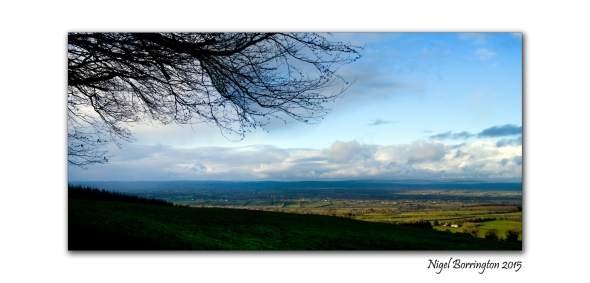
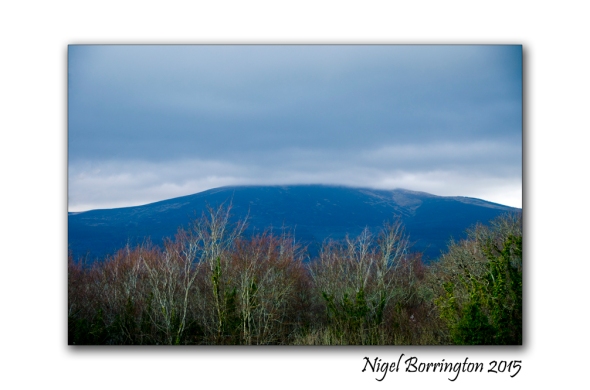
The Freedom of the hills
Irish Landscape Photography : Nigel Borrington
Freedom of the Hills
By: Douglas Fraser – 1968
Mine is the freedom of the tranquil hills
When vagrant breezes bend the sinewy grass,
While sunshine on the widespread landscape spills
And light as down the fleet cloud-shadowed pass.
Mine, still, that freedom when the storm-clouds race,
Cracking their whips against defiant crags
And mists swirl boiling up from inky space
To vanish on the instant, torn to rags.
When winter grips the mountains in a vice,
Silently stifling with its pall of snow,
Checking the streams, draping the rocks in ice,
Still to their mantled summits I would go.
Sun-drenched, I sense the message they impart;
Storm-lashed, I hear it sing through every vein;
Among the snows it whispers to my heart
“Here is your freedom. Taste – and come again.”
March 10, 2015 | Categories: Gallery, Landscape, Nature and Wildlife, Poetry Gallery | Tags: Douglas Fraser, Freedom of the Hills, Ireland, Irish Landscapes, Landscape Photography, Nigel Borrington, poems, poetry | 2 Comments
Solo images
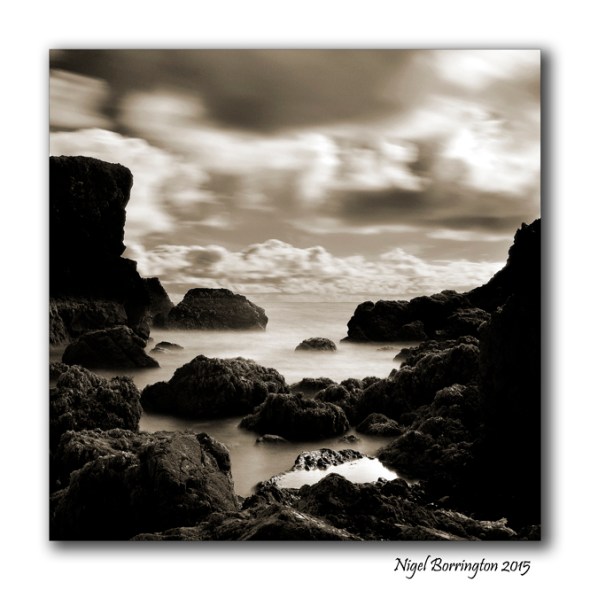
Tide and Time : Nigel Borrington
“But now in the dusk the tide is turning, Lower the sea gulls soar, And the waves that rose in resistless yearning Are broken forevermore.”
February 25, 2015 | Categories: Gallery, Landscape, Poetry Gallery | Tags: beach photography, Irish Landscapes, Nigel Borrington, poem, poetry, Waterford | 3 Comments

Yashica 35mm m42
Using classic lenses
Nigel Borrigton
Yashica DX 35mm f2.8, M42 Lens
Over the years I have collected a few classic camera lenses, the Yashica f35mm f2.8 m42 lens has to be one of my most valued and liked.
Back in the 1960’s this lens would have cost a good amount of cash as it was at the top of Yashica’s Slr lens range, the main reason for this being that it had the then New DX coating and a 35mm focus length was becoming very valued for 35mm film camera.
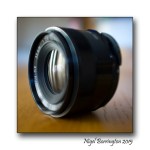
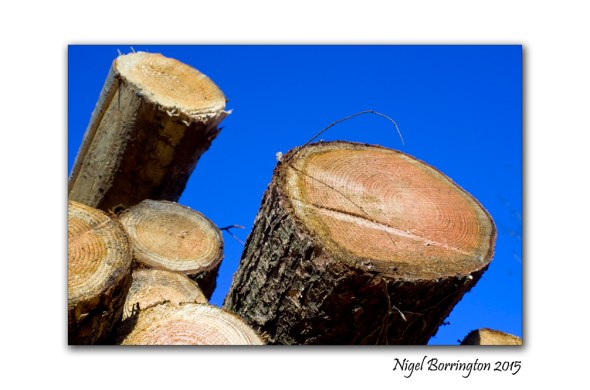
I use this lens a lot, not all the time but its always at hand if I need it, I think you can see from the images below why.
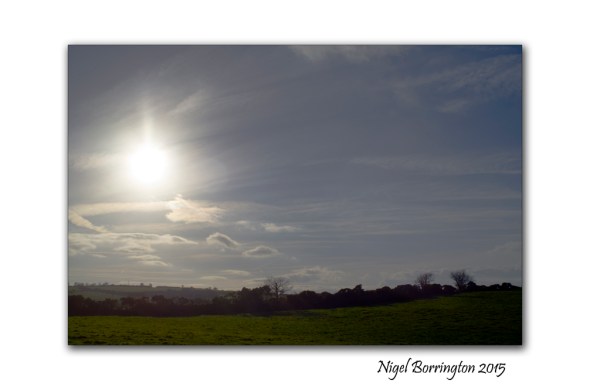
If I use it on a dx sensor camera it provides for a 50mm focus length, a length that I like a lot for framing landscapes. As for the famed DX coating, well I think that you can see form the images below that it still works very well. The colors and the contrast in these images ( taken last week ), are just great. The images taken facing right at the sun show just how little flair this lens produces.
Gallery

January 16, 2015 | Categories: Camera reviews, Gallery, Landscape, photography review | Tags: classic camera lenses, Classic lenses, Irish Landscapes, Landscape Photography, M42 lenses, Nigel Borrington, old lenses, Photography, Yashica | Leave a comment

December in Ballykeefe, County Kilkenny
Irish Landscape Photography : Nigel Borrington
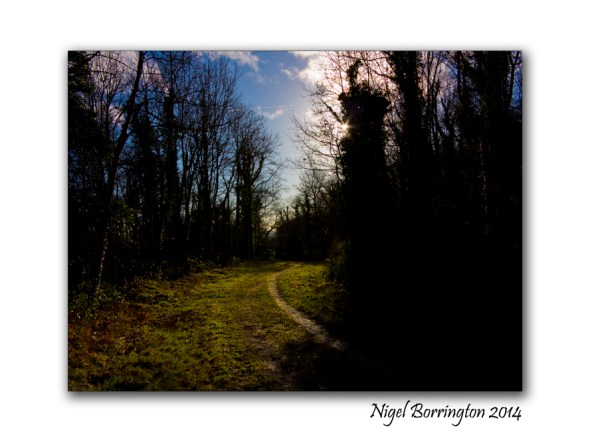
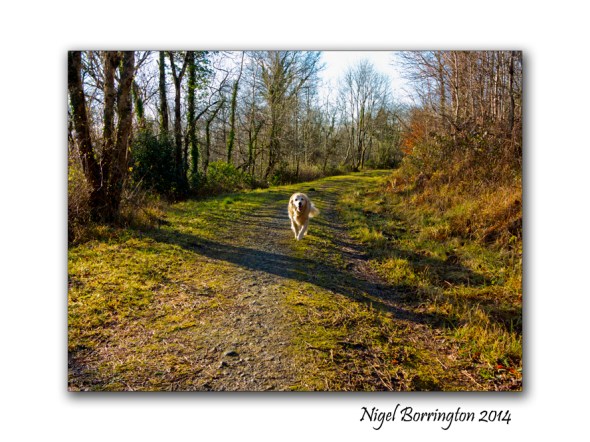
So far the early mornings this week, the first week of December 2014 have been perfect , bright clear blue sky’s, an overnight frost that has melted away by 9am leaving the fields and woodland paths very wet and damp.
One walk with molly I love doing on mornings like this is in Ballykeefe woods county Kilkenny, this is a circular walk around the nature reserve that slowly claiming to a viewing point at the top of the hill, the view here is just wonderful. There is a bench to sit on after the walk and the landscape views below are of all the farms between the these woods and the mountain of Slievenamon just across the county border from county Kilkenny and into county Tipperary.
The images below are from this walk and the last image shows the landscape views from the wooden bench at the top of the hill


December 4, 2014 | Categories: Gallery, Kilkenny Landscape images, Landscape, Nigel Borrington, Travel Locations | Tags: December, Dog walks, Irish Landscapes, Kilkenny, Landscape, morning walks, Nigel Borrington, Photography, Slievenamon, Tippereary, woodlands | 6 Comments
Killamery High cross Nov 2014
Kilkenny landscape Photography : Nigel Borrington
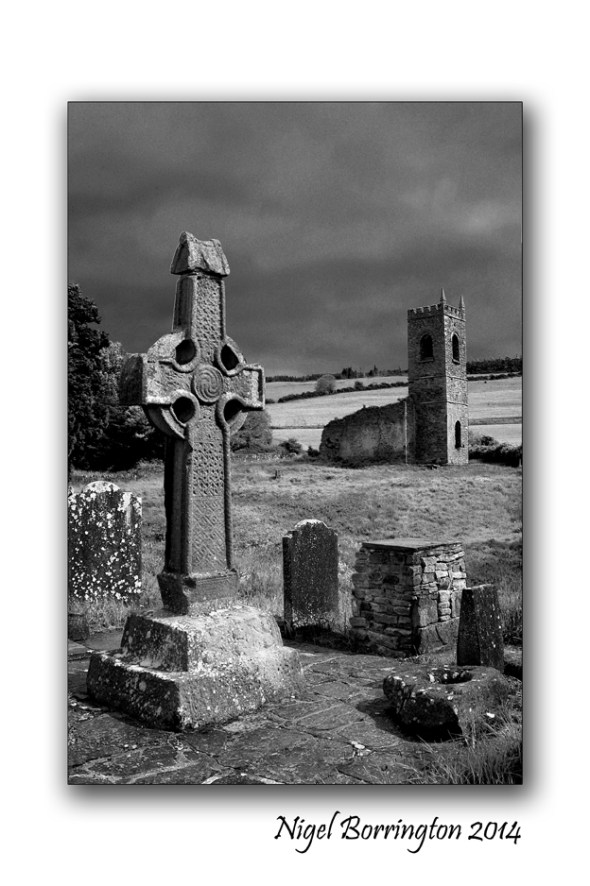
The Killamery high cross
The Killamery High cross is one of the most Iconic high crosses in Ireland, It is used as a model for many of the small high crosses sold across the world as an Irish symbol.
I am very lucky that it is situated in an old graveyard in Kilkenny at Killamery. The cross is one of the western Ossory group of crosses.
The cross stands at 3.65 metres high and the west face of the cross bears most of the figure sculpture. The east face pictured right, is decorated with three marigolds on the shaft and has a boss in the centre of the head surrounded by intertwining serpents with an open mouthed dragon above the boss. The cross is known as the Snake-Dragon cross. The cross has a gabled cap-stone and the narrow sides have double mouldings. At the end of the southern arm of the cross there is a panel depicting Noah in the Ark and the end of the northern arm features four scenes centered around John the Baptist. There is also a worn inscription on the base of the western side of the cross which is said to read as ‘OR DO MAELSECHNAILL’ a prayer for Maelsechnaill. Maelsechnaill was the High King of Ireland from 846 to 862.
The western face has a Sun Swastika at the center and has figure sculpture around the whorl, to the left is a hunting scene and to the right a chariot scene above the whorl is scene showing a figure holding a Baby with another figure to the right of them, below the sun disc is a crucifixion scene. The shaft of this face bears two ornate panels. The top one is a fret pattern and the lower panel is a key pattern.
November 15, 2014 | Categories: Kilkenny Landscape images, Landscape, Nigel Borrington, Travel Locations | Tags: high cross, High King of Ireland, Ireland, Irish Landscapes, Kilkenny, Killamery high cross, Maelsechnaill, Nigel Borrington, Ossory | 12 Comments
Images of Ireland
Nigel Borrington
Reach
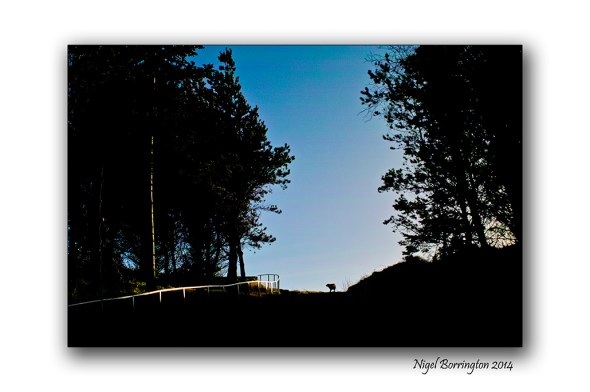
I want to walk with you to the highest peak
then watch your eyes,
gaze out into the night sky
wide with wonder,
as they see the very stars
they hope to one day conquer
 .
.
I want you to go and see the sights
you never imagined you’d ever see
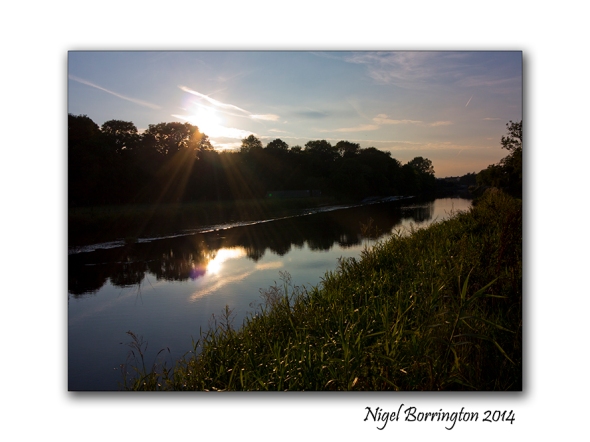
Walk along the canals, a swim in the lakes,
Walk down rivers so clear.
 .
.
I want you to stand
and reach for the furthest cloud,
grab at the sunshine
and trace patterns in the cold winds from the north

.
November 12, 2014 | Categories: Gallery, Landscape, Nigel Borrington, photography, Poetry Gallery | Tags: Evening words, images of ireland, Irish Landscapes, Nigel Borrington, poems, poetry, sunsets, Wednesday | 8 Comments

Standing stone at Glengarriff Nature Reserve.
Landscape Photography : Nigel Borrington
The Standing Stones
By : John Bliven Morin
Who will go where the standing stones stand,
when the fog rolls in and covers the land,
when the moon is hidden in a cloudy sky,
and the night is as dark as a raven’s eye,
and the wind is as cold as a winter’s chill,
What’s that? You say you’ll dare, you will?

We’re here. If you’ve courage in your mortal bones,
then go and walk through the standing stones;
yes, that way, go, though it’s hard to see
the ancient path in this obscurity;
your torch is useless for a light,
with the fog and the darkness of the night;
you go alone, for you claim the nerve;
I’ll stay right here, for I only serve.
Follow this footpath through the mist,
and keep to the path I must insist.
You step down the path and I’m lost to view,
as the fog and the mist are surrounding you;
several sounds – grinding – from all about,
startle you so that you almost shout,
but all that comes out is a muted croak,
as you wrap yourself in your winter cloak.
You feel things moving through the very ground,
huge things, horrid things sliding around,
which make your skin crawl with growing fear,
and you sense that something is drawing near;
something immense, for the earth so shakes
that a chill runs up your spine and makes
the hair on your head stand up in fright,
as the fog rolls past and hides from sight
that which you fear but cannot see;
perhaps in your nightmares previously.
Wasn’t that standing stone over there?
But now it’s so close, and that other pair
are much nearer too than they were before!
You remember tales of ancient lore,
as you fall back on some lower stones,
and the Old Ones come to crush your bones;
you scream in fear, you scream in pain,
but all your screaming is quite in vain,
for no one can hear you or see the blood
flow down the altar-stone in a flood;

Then all is quiet; you’ve paid the price,
for you were the Druid’s sacrifice.
and I, their servant. go from here
homeward, until another year.
October 9, 2014 | Categories: Forgotten places, megalithic people and remains, Nigel Borrington, Poetry Gallery, The Pagan world | Tags: Irish Landscapes, John Bliven Morin, Nigel Borrington, poems, poetry, Standing stones, west cork | 4 Comments

Kilkash castle
County Tipperary
Irish Landscapes : Nigel Borrington
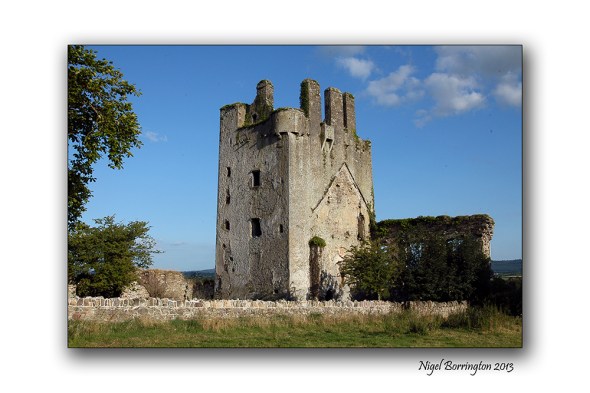
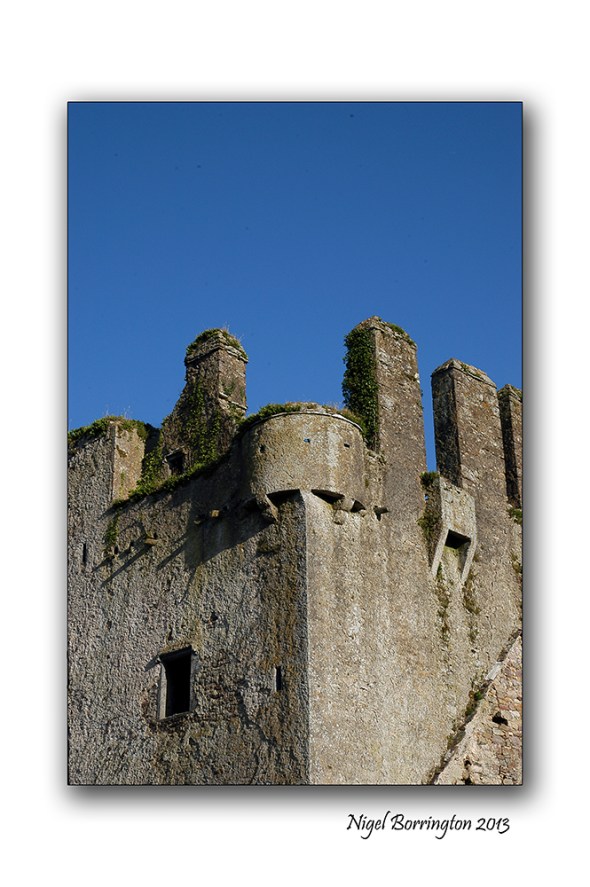
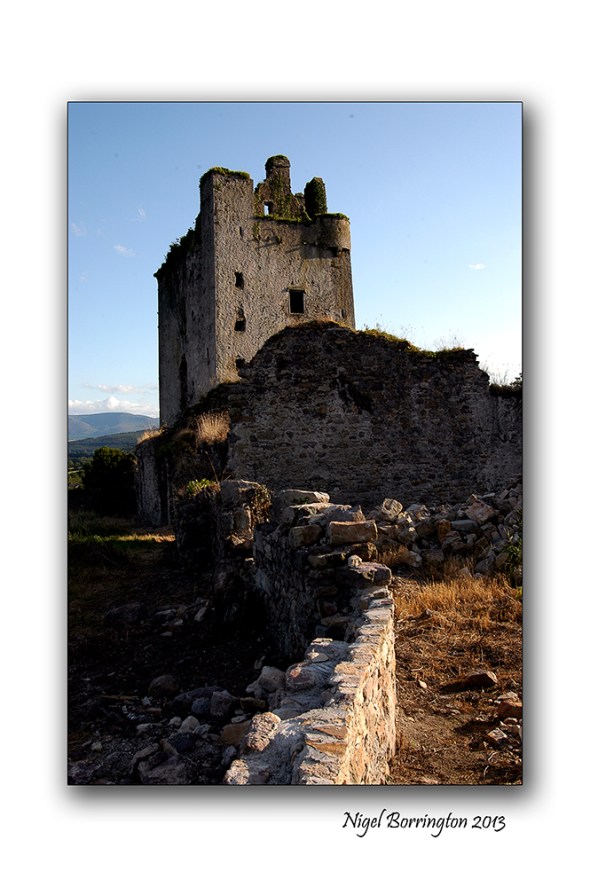
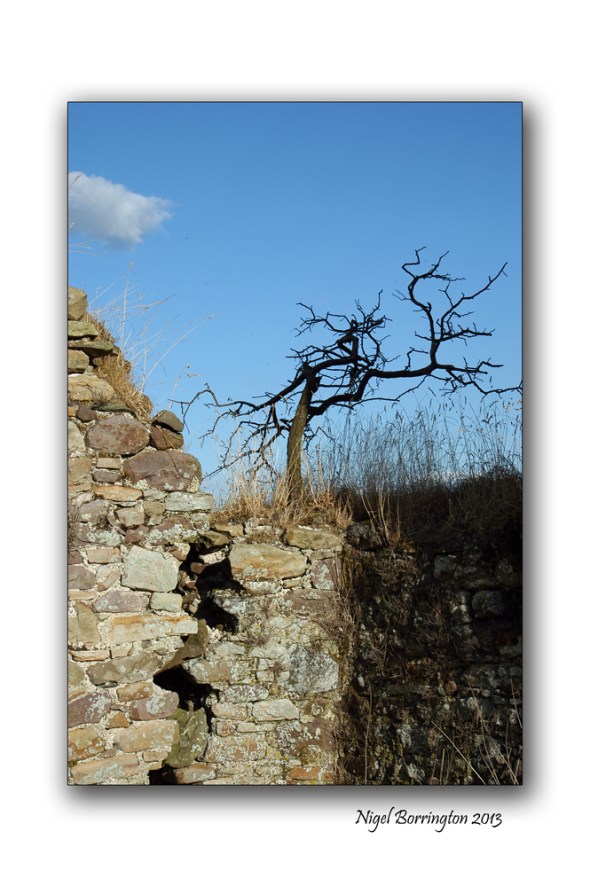
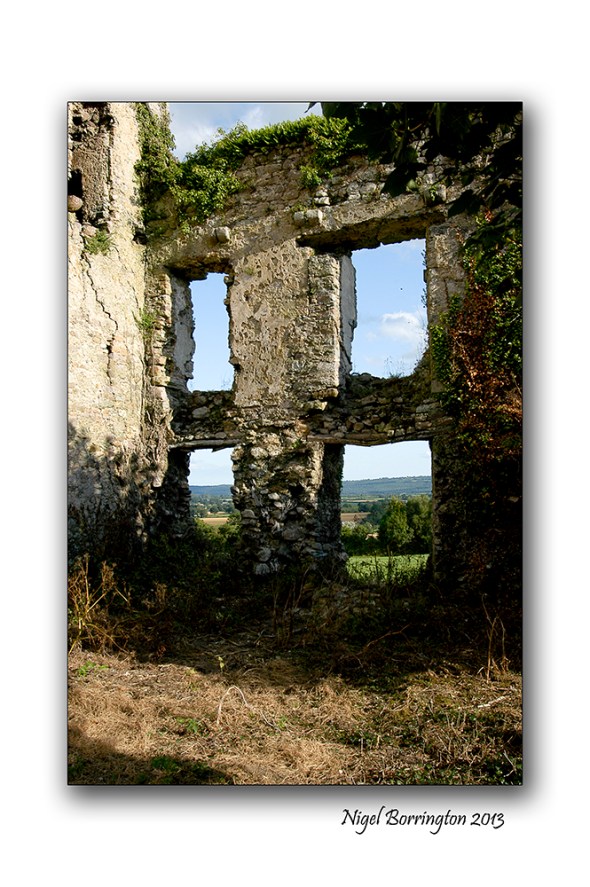
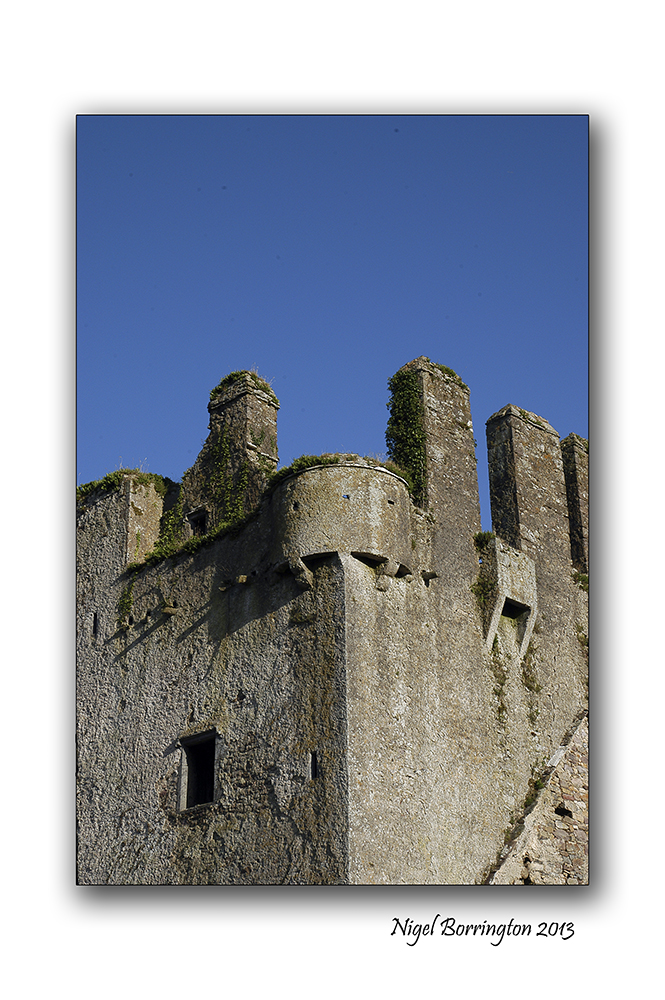
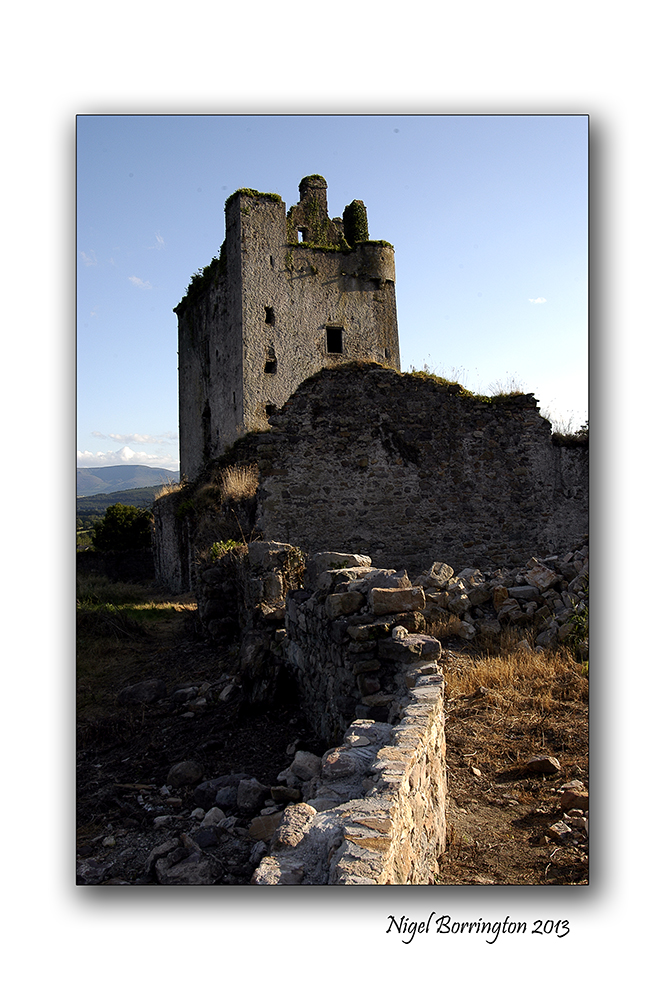
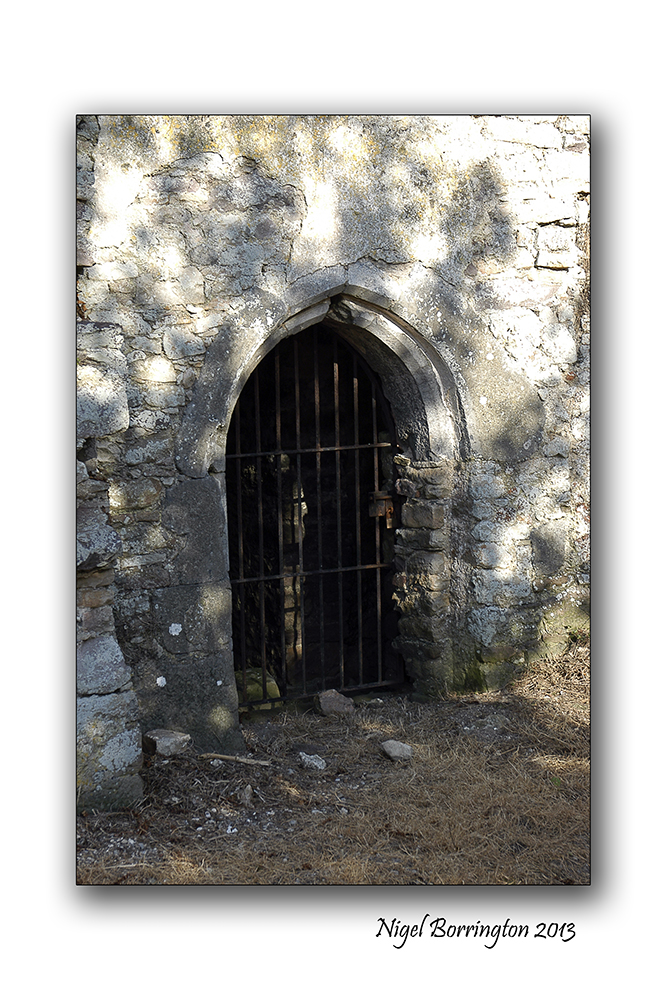
Kilcash Castle is a ruined castle off the N24 road just west of Ballydine in South Tipperary, Ireland. The castle consists of a fortified sixteenth-century tower and an adjoining hall added at a later date.
I have visited this Castle many times over the years, however in more resent months it has been under renovations by the OPW (Office of public works). All the images in this post were taken before this work started.
I noticed last week however that the work is about to complete and I hope to revisit in order to take some new images, when the castle reopens to the public.
Kilcash castle : History
Kilcash may have been a monastic foundation of the mid sixth century. The Butler dynasty has important links to the area. The third son of James Butler, 9th Earl of Ormond was John Butler of Kilcash who occupied lands in Kilcash. His heirs went on to provide four immediate heirs to the earldom of Ormond when the senior line failed through lack of legitimate male issue.
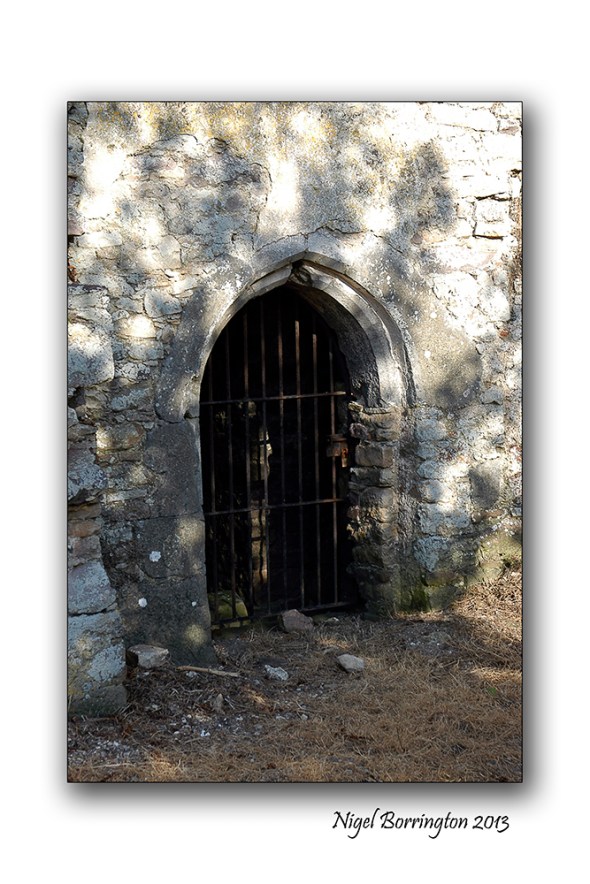
Near the castle are the remains of a medieval church with a Romanesque doorway. This building was partially repaired in the 1980s and is now safe to visit. In the graveyard, the mausoleum (a building nearly as large as the church) contains the tombs of Archbishop Christopher Butler (1673–1757), Margaret, Viscountess Iveagh (see below), Walter Butler, the 16th Earl of Ormond (d. 1773) and John Butler, the 17th Earl (d. 1795). Some of the eighteenth-century headstones are carved with elaborate scenes of the crucifixion.
The main castle building is a fortified tower dating from the sixteenth-century. An adjoining hall was added at a later date, when the need for defence gave way to the large windows associated with settled times. In the sixteenth century the manor of Kilcash passed from the Wall family into the possession of the Butlers of Ormond until the latter sold it to the Irish State in 1997 for £500.
The castle was visited by James Tuchet, 3rd Earl of Castlehaven, a noted Confederate Catholic commander in the 1641-52 war, who wrote his memoirs at Kilcash where his sister, Lady Frances, was married to another Confederate commander, Richard Butler of Kilcash (d. 1701).
By the 19th century, the castle had fallen into ruin after parts of the Kilcash estate were sold c. 1800. During the Irish Civil War, the castle was occupied by anti-treaty forces in an attempt to slow the approach of pro-treaty forces towards Clonmel. They were finally dislodged by artillery fire under the command of General Prout, further damaging the already dilapidated structure.
By the late twentieth century the castle was in a dangerous state of repair. It is currently undergoing extensive repairs which will prevent it from collapsing.
Kilcash Castle : Gallery

October 6, 2014 | Categories: Nigel Borrington | Tags: Ireland, irish history, Irish Landscapes, Irish photography, kilcash castle, Nigel Borrington, Tipperary | 4 Comments
Dzogchen Retreat center, Beara Peninsula” title=”Dzogchen Beara
Landscape Photography : Nigel Borrington
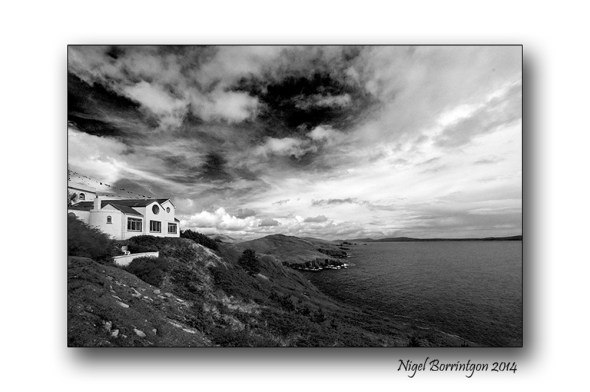
The last time I visited Allihies in West Cork someone Suggested calling into the Dzogchen centre. Its located on the south side of the Beara Peninsula and as you can see, it is located in one of the most peaceful locations in Ireland, I was a great place to produce some landscape images and a fascinating centre to visit.
One day soon I may stay for a little longer?
About
“Dzogchen Beara is a long-term retreat centre for Rigpa, and is registered as a Charitable Trust in Ireland. Sogyal Rinpoche is the spiritual director of Dzogchen Beara.
The Centre is situated on the wild and beautiful Beara Peninsula in south-west Ireland, and sits high on cliffs overlooking the Atlantic Ocean with breathtaking views of sea and sky. Many Tibetan masters, and almost everyone who visits, comment on the extraordinary qualities of Dzogchen Beara – its beautiful natural environment and atmosphere of profound peace which comes from deep spiritual practice. We welcome everyone, from all walks of life and of any faith or none, and offer many different ways to visit Dzogchen Beara. ”
Ref: Dzogchen Beara
July 10, 2014 | Categories: Gallery, Landscape, Nigel Borrington, Solo images, Travel Locations | Tags: Beara Peninsula, Beara Retreat Centre, Buddhist teacher, Dzogchen Beara, Irish Landscapes, Irish photography, Nigel Borrington, Rigpa, Sogyal Rinpoche | 6 Comments
The River Erkina, Durrow, County Kilkenny
Landscape Photography : Nigel Borrington
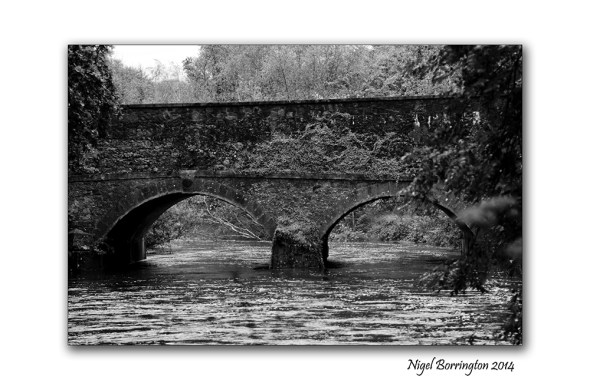
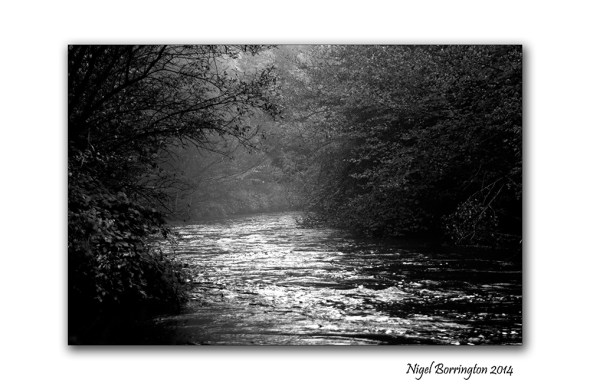
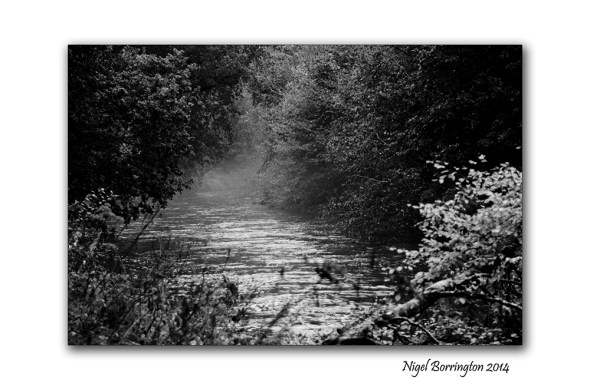
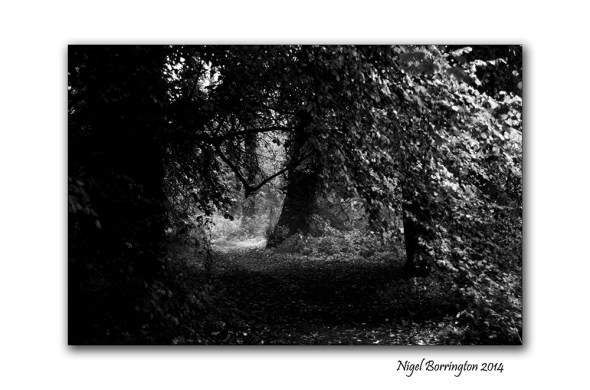
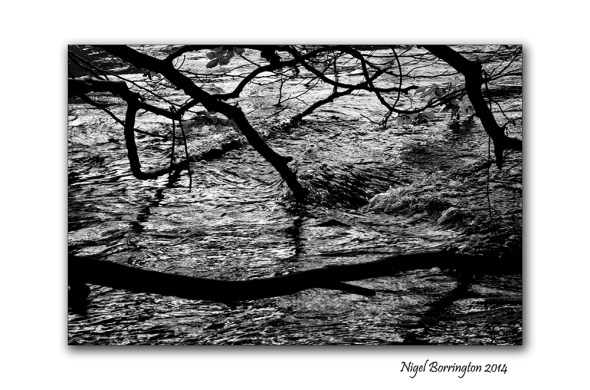
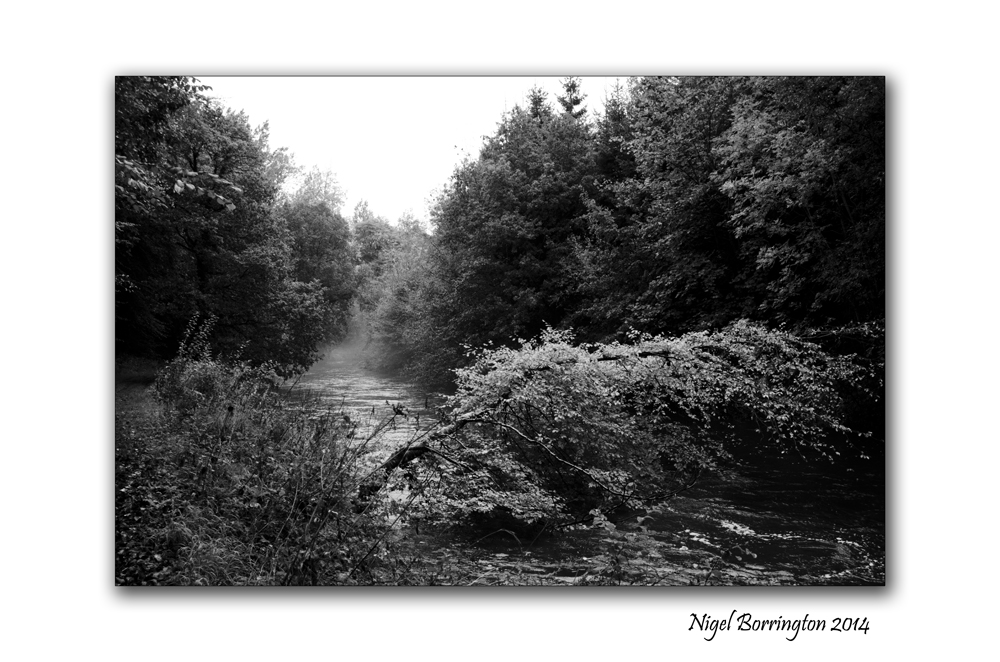
County Kilkenny has many rivers some are wide and flow the full length of the county, others like the river Erkina are much smaller and act as tributaries.
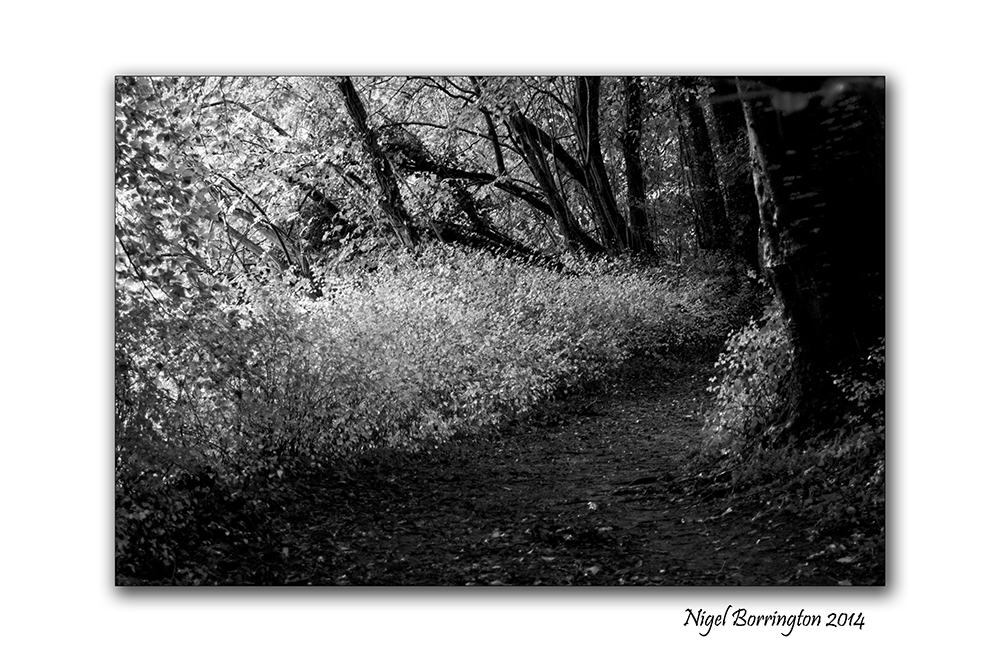
One Morning last year just after a big storm I took a walk along the banks of the Erkina, its was a damp and misty morning full of atmosphere as the river was clouded in a mist.
Misty river Erkina black and white gallery



March 18, 2014 | Categories: Gallery, Irish rivers, irish woodlands, Landscape, Travel Locations | Tags: Durrow, Irish Landscapes, Irish photography, irish rivers, Kilkenny, Misty river walks, Nigel Borrington, River Erkina, river mist | 3 Comments

Knockanaffrin,Comeragh Mountains, County Waterford
Landscape Photography : Nigel Borrington
Sunrise from the Mountains
Poem by : Anna Katherine Green
Hung thick with jets of burning gold, the sky
Crowns with its glorious dome the sleeping earth,
Illuminating hill and vale. O’erhead,
The nebulous splendor of the milky way

Stretches afar; while, crowding up the heavens,
The planets worship ‘fore the thrones of God,
Casting their crowns of gold beneath His feet.
It is a scene refulgent! and the very stars
Tremble above, as though the voice divine
Reverberated through the dread expanse.
But soft! a change!
A timid creeping up of gray in east–
A loss of stars on the horizon’s verge–
Gray fades to pearl and spreads up zenithward,
The while a wind runs low from hill to hill,
As if to stir the birds awake, rouse up
The nodding trees, and draw off silence like
A garment from the drowsy earth. The heavens
Are full of points of light that go and come
And go, and leave a tender ashy sky.
The pearl has pushed its way to north and south,
Save where a line spun ‘tween two peaks at east,

Gleams like a cobweb silvered by the sun.
It grows–a gilded cable binding hill
To hill! it widens to a dazzling belt
Half circling earth, then stretches up on high–
A golden cloth laid down ‘fore kingly feet.
Thus spreads the light upon the heavens above,
While earth hails each advancing step, and lifts
Clear into view her rich empurpled hills,
To keep at even beauty with the sky.

The neutral tints are deeply saffroned now;
In streaks, auroral beams of colored light
Shoot up and play about the long straight clouds
And flood the earth in seas of crimson. Ah,
A thrill of light in serpentine, quick waves,
A stooping of the eager clouds, and lo,
Majestic, lordly, blinding bright, the sun
Spans the horizon with its rim of fire!
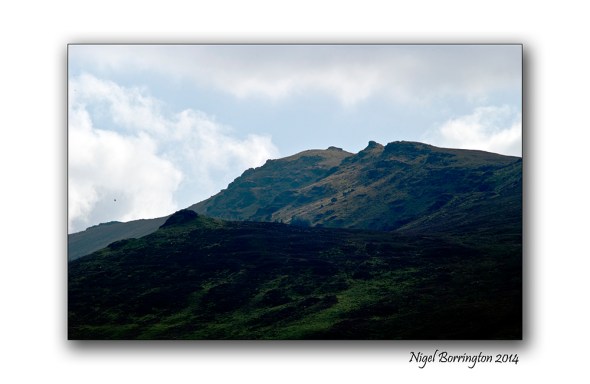
March 18, 2014 | Categories: Gallery, irish woodlands, Landscape, Poetry Gallery, Travel Locations | Tags: Anna Katherine Green, County Waterford Landscape Photography, Ireland, Irish Landscapes, Irish photography, Landscape, Mountains, Nigel Borrington, poems, poetry, Sunrise from the Mountains, Waterford | 3 Comments

 .
.


 .
. .
.








 Nigel Borrington
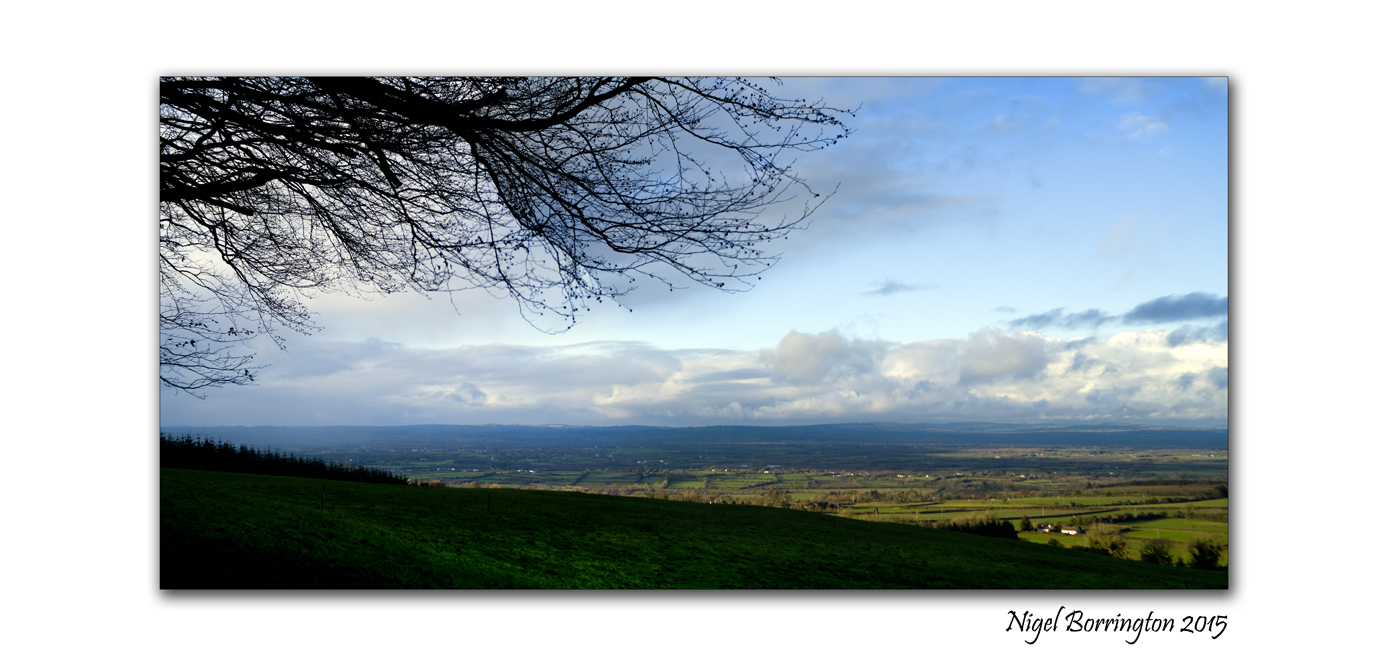
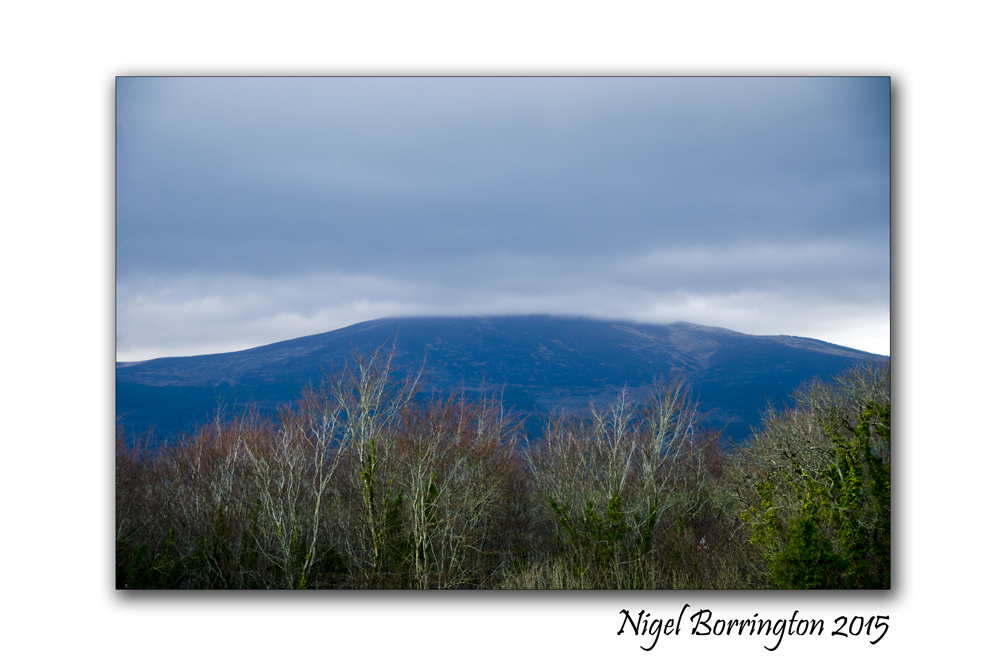
Bee-Keeping with a mountain view, Slievenamon, Co. Tipperary
Bee Keeping with a view of SLievenamon, Co. Tipperary
Irish Landscapes : Nigel Borrington
Bee Keeping in Ireland is often a personal activity, with many hives being kept on family farms and Gardens, even sometimes with the permission of the forestry services.
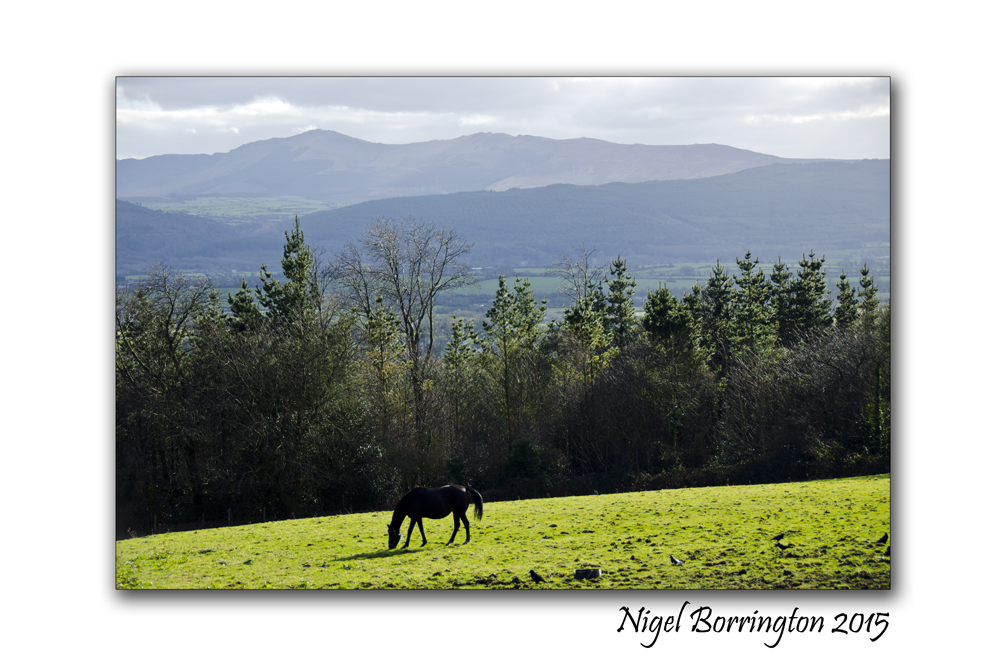
I often come across a set of Hives while out walking in our local woodland. In the images here , taken last weekend the hives are located on the some hills facing to the north, the great mountain of Slievenamon just across the river Suir.
Very soon these Hives will be active again and I will return to get so more images.
The Federation of Irish Beekeepers’ Associations have a great web site and help on getting going with keeping bee’s, this must be a great activity and very needed with modern farming methods having massively reduced Bee numbers. I have included the text from this site on “How to become a beekeeper” below the following two images, if you would like to read it.
Beginning with Bees , The urge to keep bees: How do I start?
The beginner should first of all find out if he/she is in any way allergic to bee stings and if so not to attempt acquiring bees or taking up beekeeping without seeking medical advice.
When the urge to keep bees first hits you, the impulse is to go out and buy a hive straight away, and learn by doing in isolation – this is not the best approach. The best first step is to join your local branch of the Beekeepers’ Association, preferably in the Autumn.
You can then attend their classes for beginners and programme of winter lectures which are held frequently and cover all aspects of beekeeping. There are 45 such Associations scattered throughout the country.
Other benefits of membership include the use of a library – video and book, plenty of friendly advice and you are kept up to date with developments within the craft. You can also use the Association extractor, can avail of sugar at concessionary prices and benefit from the low cost of FIBKA Public Liability Insurance. The latter is an absolute must as accidents can happen.
It is worthwhile if only for your own piece of mind. Whilst a subscription to “An Beachaire” may be optional, a good book is essential and the FIBKA’s “Bees, Hives and Honey” or Ted Hooper’s “Guide to Bees and Honey” are standard references for beginners and experienced alike.
Some Associations also provide a mentoring facility whereby the beginner is assigned to an experienced beekeeper within his or her local area for the purpose of giving advice for the first couple of years. This is an excellent idea as having someone close at hand or at the end of a telephone is a useful asset.
Bee Stings
If you wish to keep bees, and irrespective of all the protective measures that you might take, you will receive the occasional sting. Everyone will show some reaction to bee stings, such as the initial pain, and later a slight swelling of the affected area, later followed by some itching.
The effects can be reduced by applying an antihistamine cream or even taking tablets such as Piriton, but generally the body will quickly become accustomed to the occasional sting and will display few adverse effects.
Bee Suit
There are many forms of protective clothing on the market which range from veils right through to full bee suits. And the prices are commensurate with the degree of cover. A full bee suit is the ideal acquisition but the prices are fairly steep and it may not be even to your taste.
A smock, together with the type of trousers worn by nurses or painters, may be more suitable.
Be wary of veils which slip over the head and are attached by straps or loops under the armpits; bees invariably find a way to gain access to your neck and face. The safest way to wear that sort of veil is in conjunction with a zip up overall.
Any protective clothing should be light in colour, nothing dark. Nylon should be avoided as it generates static, which is annoying to bees. Woolly clothing should also be shunned, as they get tangled up in it.
Gloves
When handling bees, beginners should also use gloves. With full gauntlets they are costly but should last several years. I use rubber gloves which are less clumsy – “Nitrile” or “Marigold” brands.
The ultimate objective is to obtain a strain of bee that is not overly defensive, become proficient in handling them, and so dispense with gloves altogether.
Ankles are prime targets for bees and calf length rubber boots should be worn.
Equipment
The monthly beekeeping journal carries advertisements from firms selling all types of beekeeping equipment. The first two essential items you need to acquire are a smoker and a hive tool.
Smokers come in two standard sizes, the diameters of the fireboxes being 8cms and 10cms. The smaller version is quite adequate for up to ten hives.
When servicing the smoker, ensure that the legs of the fire grate are not restricting the air entry hole at the base of the firebox and also check that this hole is directly in line with the air exit hole from the bellows.
As for fuel, I use dried grass which provides a constant supply of cool smoke. What you don’t want is a type of fuel which burns too quickly and turns your smoker into a flame thrower which scorches the bee’s wings. This aggravates the bees and they will not delay in letting you know of their displeasure.
Hive Types
There are many types of hives available on the Irish market. However, in selecting a hive type it is important to determine that the component parts for the brood chambers and supers are readily available.
The most common type of hives used in Ireland which would measure up to these requirements are the National, the Smith Hive and the Modified Commercial Hive. The approximate comb areas of the various frames are: National and Smith Deep – 5000 worker cells Commercial Deep – 7000 worker cells.
The two most popular hives are the National and the Commercial. Although the latter have larger frames, the outer dimensions of component boxes are the same, to within a quarter of an inch, so that supers, queen excluders, crown boards, floors and roofs are all compatible.
My first choice would be the National hive because it has the following advantages:
The frames are easier to handle as they have longer lugs (38mm) than the Commercial (16mm).
The National brood box and Super are also easier to handle as the design has a built in handle at both sides.
The capacity of the National brood box and super is smaller than that of the Commercial which means it is lighter to lift when examining the hive and taking off the crop of honey.
The most important advantage is the higher honey yield from the National compared to the Commercial as the National brood box is too small to accommodate brood and much stores, therefore most of the honey is stored in the supers where it can be easily taken off for extraction. This is especially true in a bad year with poor weather conditions during the Summer. The Commercial is best suited to localities where the honey crop is above average.
In addition to the brood box, varroa screen floor, crown board, queen excluder and roof you should make provision for three supers per hive.
It is usually best to treat exterior surfaces with a good preservative, like Cuprinol – green or Fencelife and taking care to air well for a week or more. Normal paint stops the wood ‘breathing’ and can lead to moisture lifting the paint in bubbles.
Obtaining your first colony : A Nucleus
By the Spring you will have a good background of knowledge to help you decide on what to buy and how to start up.
It is essential that you start with a healthy and productive stock of bees. You should contact a reputable beekeeper in your region for assistance in obtaining your first colony.
While it is also possible to start by obtaining a swarm, this is an unreliable method and you have no assurance of the health status of the resulting colony.
You may be tempted to buy a strong colony in the hope of a quick return of honey this Summer, but sometimes the difficulty of handling a large stock as a beginner can put a newcomer off for life.
It is far better to arrange with a local beekeeper to buy a four-frame nucleus with a young queen, taking delivery at the end of May or early in June. This is also the time when outdoor open hive demonstrations are organised by your Association where you can learn how to handle and control a stock of bees.
You can now expand this newly acquired nucleus by regular feeding with sugar syrup into a full hive of eleven frames by July. They will be very quiet and easy to handle and as they grow in strength you will gain in experience, confidence and the necessary manual skills of beekeeping.
There will be no swarming problems to cope with in your first year and with autumn feeding the stock will cope with the coldest winter
By the following Spring you will be well placed to increase to two stocks by making an artificial swarm from your own hive in May.
If you have built or acquired a couple of empty hives over the Winter you will also be ready to take or buy in swarms sometime in May or June, and by July you will have at least three good stocks and the experience necessary to manage them.
You should also have a crop of honey and an opportunity to learn the techniques involved in taking it off, extracting, bottling and preparing it for sale.
It will still only be fifteen months since you first owned bees but you have come a long way, and it might be wise to stay with just two or three hives for another year. It is much better to make your mistakes on two or three hives than on twenty. Possibly three hives are all you intend to have anyway.
In either case, make a four frame nucleus from your strongest stock some time in the Summer and see it through the Winter to sell to another beginner, to increase you own stocks or as a reserve in case anything goes wrong.
The Honey Crop
Honey yield is greatly influenced by seasonality. However a beekeeper who attends to the basic principles of management should be able to achieve an average of 20kg per hive per annum.
The yields obtained at the Teagasc Beekeeping Research Station at Clonroche, County Wexford confirm this view. The yield from 75 colonies managed commercially at Clonroche has been 25 kg per colony per annum. This has been achieved by working to a planned programme of management and disease control.
The beginner should be familiar with the varroa control measures as outlined in the FIBKA Guidelines on Varroa Destructor – Integrated Control Programme . The varroa mite is a major threat to the survival of all our bee colonies
Where can I keep my bees?
The newcomer to the craft of beekeeping must decide where to site his or her apiary. Even a small garden is adequate for the keeping of a few hives. Bees fly anything up to three miles to forage so you have no need to worry about that. Even the largest beehive will measure about two feet square and that is all that is needed for each hive, but don’t forget to add a little space to stand along side it to work the colony.
You might like your honeybees but it is unlikely that your neighbour will display the same enthusiasm. Bees have no need to disturb others, whether human or animals, it is just a case of ensuring that their flight paths to and from the hive do not coincide with neighbours working in their gardens. Hives standing in full sun should be avoided, try to provide some midday shade.
Some say that entrances should face south-east to catch the early morning sun. The best layout is to have a hive facing each of the four cardinal points of the compass-one facing north, one facing south etc. This does help to prevent bees drifting from their own hive into another.
Some beekeepers have an out-apiary away from their home and your local Association will have a demonstration apiary for the members to use.
How much time do I need to devote to the bees?
We usually regard the period from October to March as the ‘off-season’ so far as opening up hives, lifting out frames and manipulations generally are concerned, but a limited inspection on a mild day in March can be justified on the grounds that we can only help our bees if we know what help they need. Just three questions have to be answered at this time of year.
Have they a laying queen? In some cases the answer may be obvious; for example if the bees are flying freely around midday and taking in massive loads of pollen, then all is well with the queen.
Have they enough food? If the hive still feels really heavy when hefted, they have enough food. Possibly about 1 hive in 3 will either feel light, or show little flying activity with not much pollen going in, and in these cases some action is required.
What is the natural varroa mite mortality per day? If this figure exceeds seven mites per day then control is necessary using one of the approved treatments. Check the updated F.I.B.K.A. policy on varroa for details. You have to continue with your colony inspections right through the Summer. So the time you need to devote to your bees could be as little as 15 minutes per hive every 10-14 days during the season from April to September. Usually the problem is that new beekeepers are unable to leave the bees alone for the first season.
More…..
Share this:
March 13, 2015 | Categories: Comment, Gallery, Landscape, Nature and Wildlife | Tags: Bee Hives, Bee Keeping, beekeeping, bees, Co. Tipperary, Federation of Irish Beekeepers, hives, Irish Landscapes, Nigel Borrington, Slievenamon | 2 Comments