Capturing the world with Photography, Painting and Drawing

Latest

The Elements : Earth

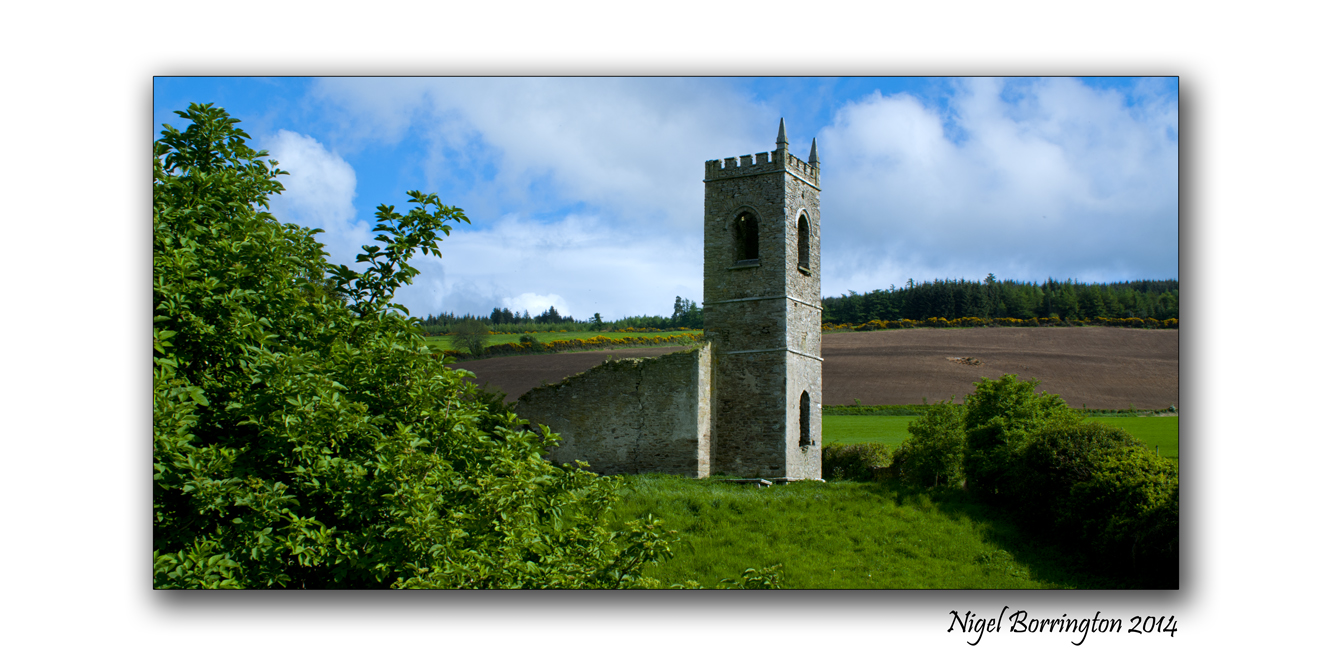
Suir valley from Tullahought - Kilkenny landscape photography : Nigel Borrington

Suir valley from Tullahought – Kilkenny landscape photography : Nigel Borrington

Connected to the North,

Earth is considered the ultimate feminine element, Earth is fertile and stable, associated with the Goddess. The planet itself is a ball of life, and as the Wheel of the Year turns, we can watch all the aspects of life take place in the Earth: birth, life, death, and finally rebirth. The Earth is nurturing and stable, solid and firm, full of endurance and strength. In color correspondences, both green and brown connect to the Earth, for fairly obvious reasons! In Tarot readings, the Earth is related to the suit of Pentacles or Coins.

Mother goddess is a term used to refer to a goddess who represents motherhood, fertility, creation, or who embodies the bounty of the Earth. When equated with the Earth or the natural world such goddesses are sometimes referred to as Mother Earth or as the Earth Mother.

Kerry Ring forts 3

Celtic Goddess

The Irish goddess Anu, sometimes known as Danu, has an impact as a mother goddess, judging from the Dá Chích Anann near Killarney, County Kerry. Irish literature names the last and most favored generation of deities as “the people of Danu” (Tuatha De Danann). The Welsh have a similar figure called Dôn who is often equated with Danu and identified as a mother goddess. Sources for this character date from the Christian period, however, so she is referred to simply as a “mother of heroes” in the Mabinogion. The character’s (assumed) origins as a goddess are obscured.

The Celts of Gaul worshipped a goddess known as Dea Matrona (“divine mother goddess”) who was associated with the Marne River. Similar figures known as the Matres (Latin for “mothers”) are found on altars in Celtic as well as Germanic areas of Europe.
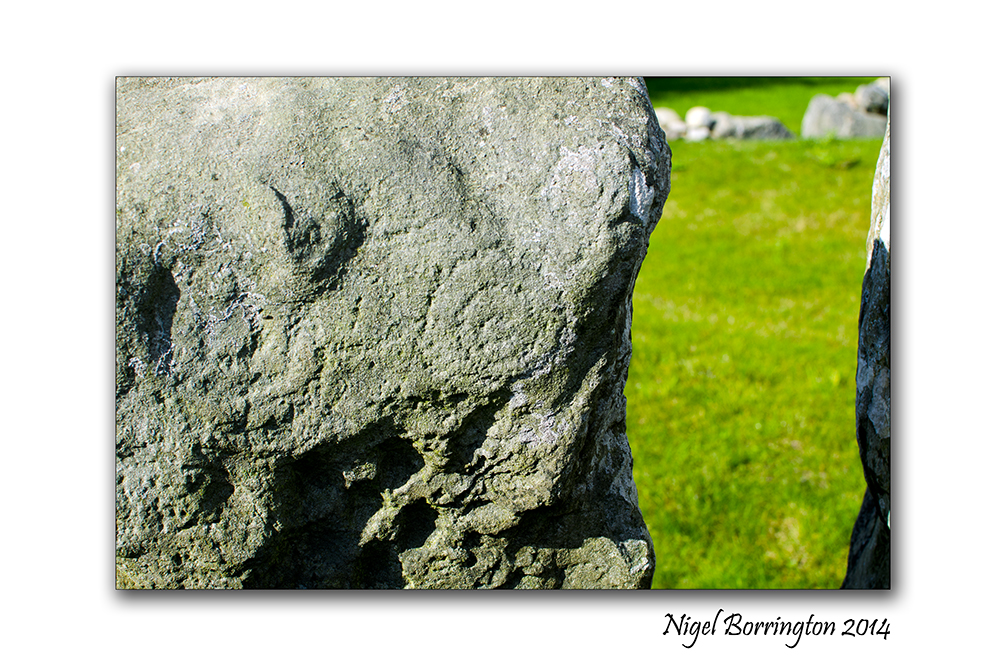
KIlkenny and tipperary ring forts 16

In many cultures, earth spirits are beings that are tied to the land and plant kingdom. Typically, these beings are associated with another realm, the forces of nature that inhabit a particular physical space, and landmarks like rocks and trees.

In Celtic mythology, the realm of the Fae is known to exist in a parallel space with the land of man. The Fae are part of the Tuatha de Danaan, and live underground. It’s important to watch out for them, because they’re known for their ability to trick mortals into joining them.

Grange Crag Walk 5

Gnomes feature prominently in European legend and lore. Although it’s believed that their name was coined by a Swiss alchemist named Paracelsus, these elemental beings have long been associated in one form or another with the ability to move underground.

Likewise, elves often appear in stories about the land. Jacob Grimm collected a number of stories about elves while compiling his book Teutonic Mythology, and says that elves appear in the Eddas as supernatural, magic-using beings. They appear in a number of old English and Norse legends.
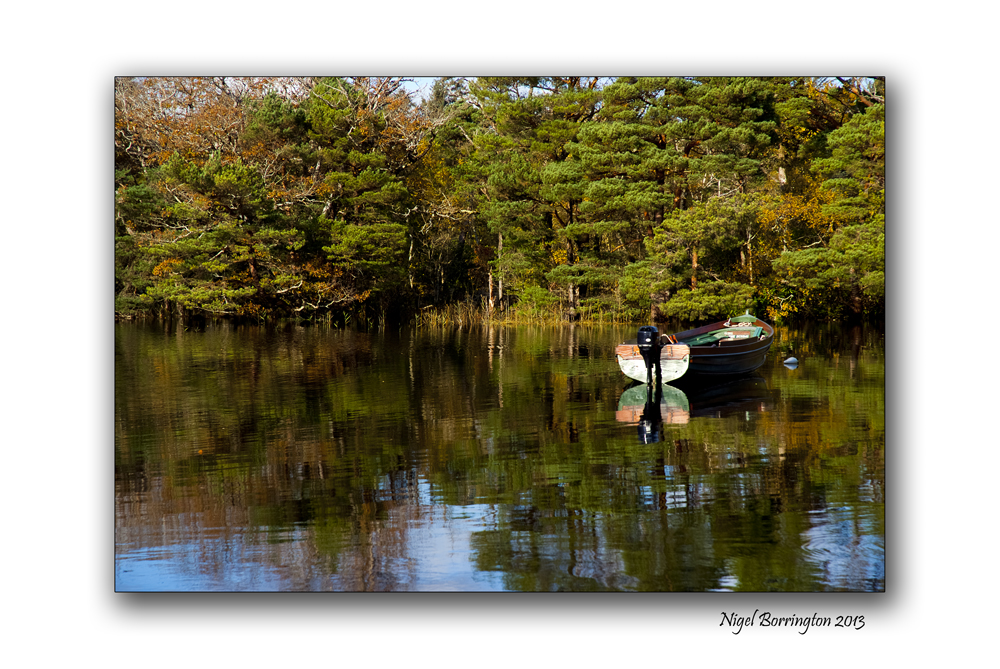
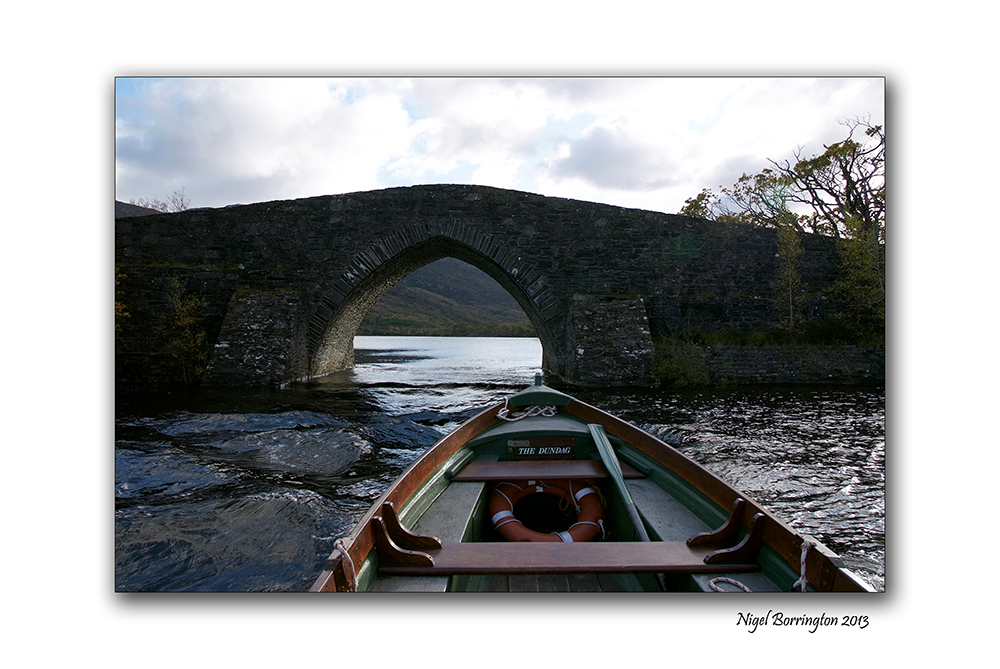
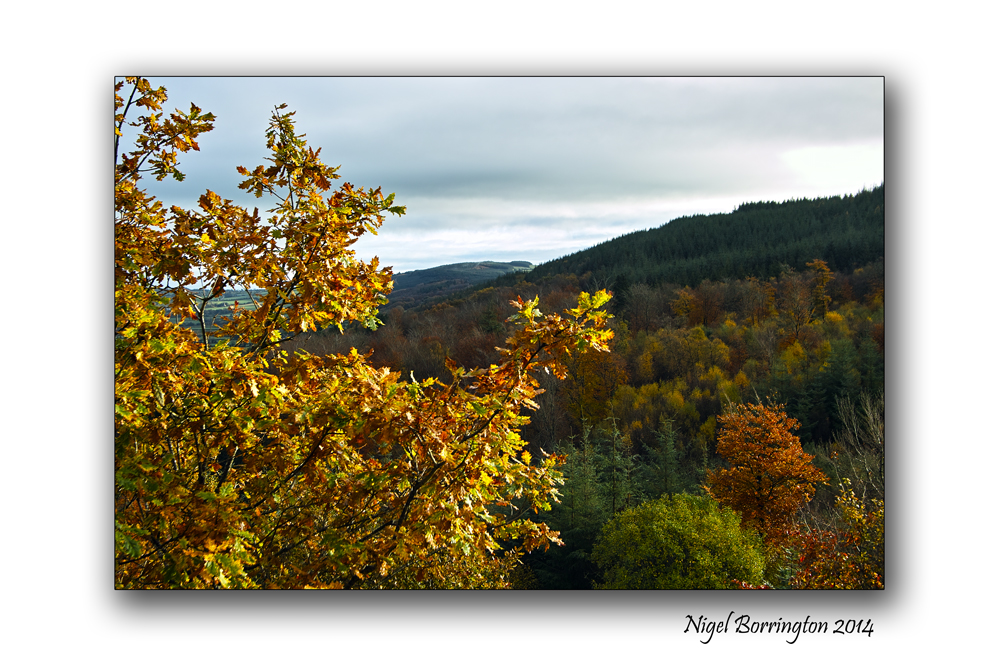
Autumn in Ireland is a wonderful time of the year.

Upper lake Killarney 5
lakes of Killarney in the Autumn time
Irish Landscape Photography : Nigel Borrington

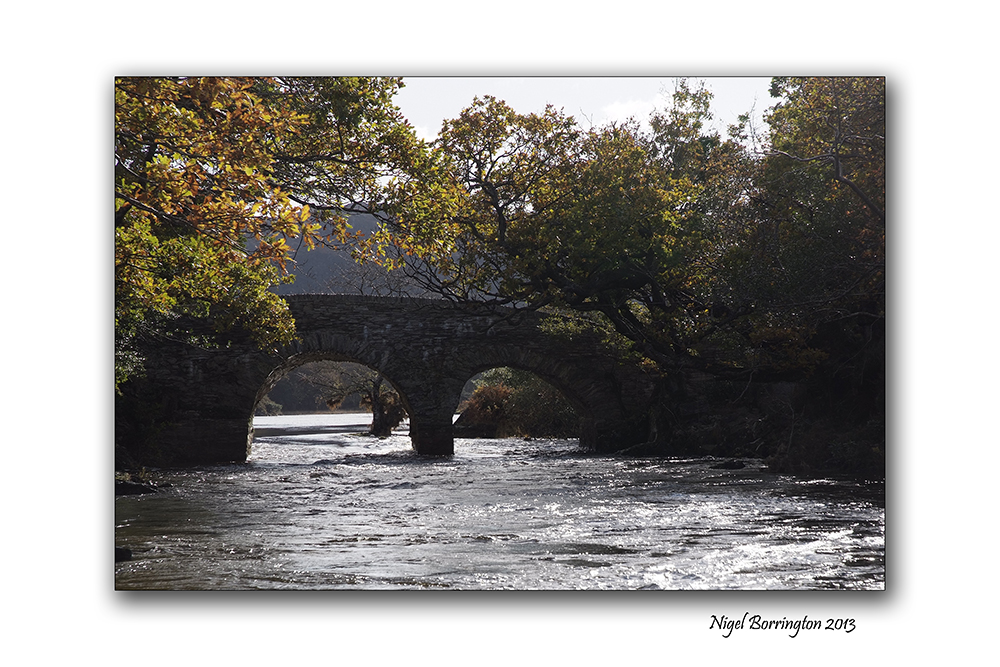
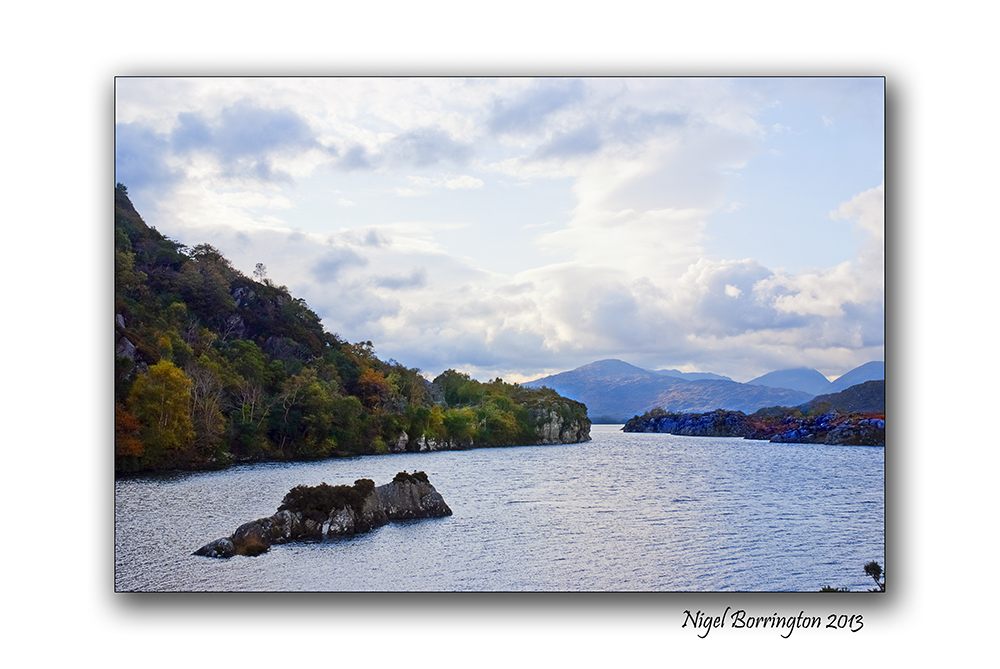
Out on the lakes of Killarney, Autumn time and colours

Autumn time in Ireland is a wonderful time to be a photographer or an artist, the landscape comes alive with colour.

There are many locations to be captured but one place I always think of at this time of year is the lakes at Killarney. It is possible to do boat trips around the lakes here almost all year around and hiring a small boat is great fun.

These images are taken from auch a boat you can see in the first image with some taken on parts of the banks of the lake that would just not reachable with out use of this boats.

It’s great fun to do something like this packing an lunch, loading a camera and tripod in to the boat and just heading off for the day.

The lakes of Killarney, an Autumn gallery

Upper lake Killarney 7

Upper lake Killarney 8

Upper lake Killarney 2

Upper lake Killarney 1

Upper lake Killarney 4

Upper lake Killarney 3

Upper lake Killarney 6

Compact Cameras and their image sensor size.

Canon G1x and Nikon P7000

Canon G1x and Nikon P7000

Digital Compacts and Sensor size

Sensor size comp

Ever since Digital cameras became available to the professional and the Consumer market alike there has been an ongoing debate about the sensor size that the manufacture selects for each Model.

You can see all the possible types and sizes of sensors here : Image Sensor types and sizes

As well as SLR cameras , I own two cameras that have sensor sizes below what most people, stereotypically would consider are professional, by which people mean that you would be able to sell the images to be printed in magazines or used for commercial reasons.

Most of the time I use these cameras when I know that their images will be used for the Internet or for personal reasons like Holidays or Family pictures.

However the Boss of Nikon-USA last year made a statement that the size of the sensor is now being made less important than ever before, simply because the image quality being produced by most sensors over that of a pocket camera or an i-phone was increasing year on year.

His statement was sure to and did raise some debate, specially from the owners of very expensive Nikon Cameras !

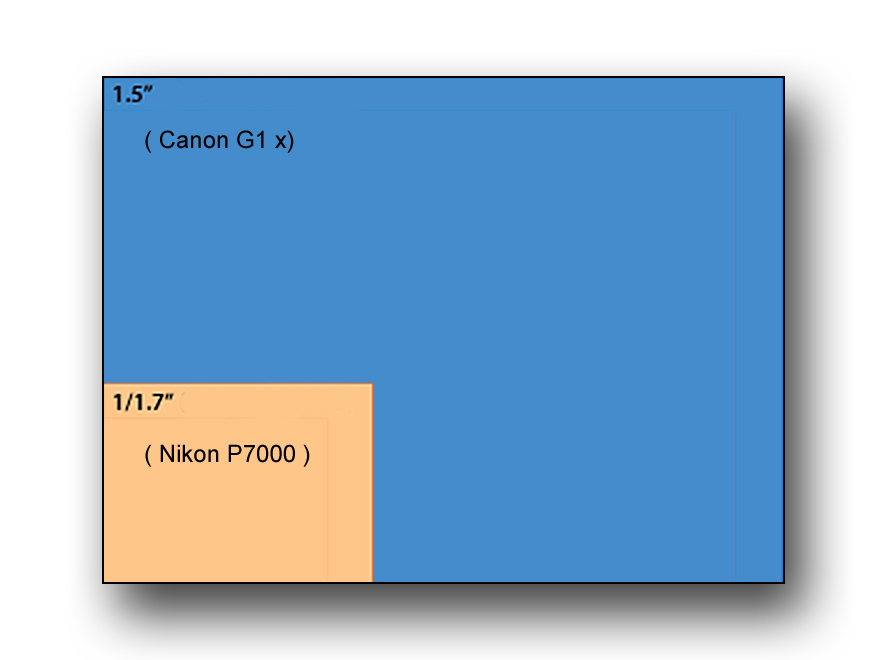
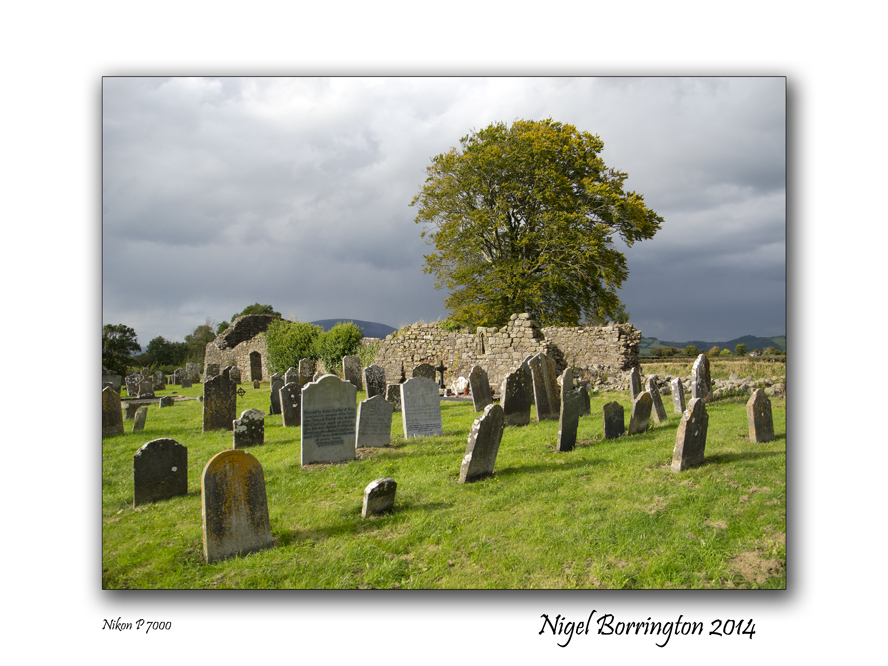
So , over the last few months I have taken a closer look at what he was talking about and the results are very interesting, below I have posted six images taken by a Nikon P7000 and then a Canon G1x , which as you can see from the diagram above on the left, has a much larger sensor that the other camera used here a Nikon P7000.

Many top end compact Cameras have a sensor size of 7.60mm x 5.70mm in size, the Canon G1x has a much larger sensor that measures 18.70mm x 14mm.

Many Photographers who make money selling images fell that the Canon G1x has a very acceptable image quality for a good 80% of image types and keep this compact-camera as a backup or as a carry anywhere camera. Sometimes a large and heavy SLR is just a pain to carry and makes you very conspicuous !!

So the question I was asking myself is , is there a big difference in image quality between these two Cameras here ?

Well the images below don’t appear to show many if any at all, the Nikon has a 10mp output and the Canon 14mp so if your are printing the images you could get a 36x27cm print from the little Canon and a 30cm x 23cm print from the Nikon, both at 300dpi.

This is a large surprise to me and I am sure could and would be questioned in a camera review lab but I am taking real world images from both sensor sizes and comparing them.

In all other respects I can see little defects in the RAW images coming from the Nikon as opposed to the Canon, the Colors are very good they both contain about the same level of detail in the shadow areas and the highlights such as bright areas of sky and clouds and have an image noise level that is acceptable.

So is the Boss of Nikon America correct, well yes, in many respects from looking at the results of most cameras with a sensor size of and over the 1/1.7″, with these sensors you will get some great images provided the camera itself is designed to let you do so!

Will I be throwing my full sized sensor SLR in the bin , well NO! not just yet but it is very reassuring to know that at last you can take these kind of cameras anywhere (Holidays, long walks, tops of mountains and family events) and get very good results , something that has not always been the case!

Just as some final comments,

At some point I will compare these cameras to my SLR and study these difference’s, However the very fact that a close study of the image quality difference’s is even needed shows just how good top end compact cameras have become.

I started the post by saying that this area , sensor size has always been a hot topic and it always will be but you will hear many people tell you that a type of camera is not good, when you ask “OH!!! why ?” they will bring up areas such as depth of field being Shallower with full frame sensor slr’s, very  true , what they will not say however is how often they need this ability and how often they use it !!

What they also leave out is that in Macro photography you want a much deeper depth of field, otherwise that Bee your trying to get a picture of will only have its head and not its body in focus!

Three images of the same image scene

Canon G1x followed by Nikon P7000

Canon G1x 1

Nikon P7000 1

Canon G1x 2

Nikon P7000 2

Canon G1x 3

Nikon P7000 3

Thirteen Ways of Looking at a Blackbird, By : Wallace Stevens

blackbird
Blackbird in the light of the Moon
Nature Photography : Nigel Borrington

Thirteen Ways of Looking at a Blackbird

By Wallace Stevens

I
Among twenty snowy mountains,
The only moving thing
Was the eye of the blackbird.

II
I was of three minds,
Like a tree
In which there are three blackbirds.

III
The blackbird whirled in the autumn winds.
It was a small part of the pantomime.

IV
A man and a woman
Are one.
A man and a woman and a blackbird
Are one.

V
I do not know which to prefer,
The beauty of inflections
Or the beauty of innuendoes,
The blackbird whistling
Or just after.

VI
Icicles filled the long window
With barbaric glass.
The shadow of the blackbird
Crossed it, to and fro.
The mood
Traced in the shadow
An indecipherable cause.

VII
O thin men of Haddam,
Why do you imagine golden birds?
Do you not see how the blackbird
Walks around the feet
Of the women about you?

VIII
I know noble accents
And lucid, inescapable rhythms;
But I know, too,
That the blackbird is involved
In what I know.

IX
When the blackbird flew out of sight,
It marked the edge
Of one of many circles.

X
At the sight of blackbirds
Flying in a green light,
Even the bawds of euphony
Would cry out sharply.

XI
He rode over Connecticut
In a glass coach.
Once, a fear pierced him,
In that he mistook
The shadow of his equipage
For blackbirds.
XII
The river is moving.
The blackbird must be flying.

XIII
It was evening all afternoon.
It was snowing
And it was going to snow.
The blackbird sat
In the cedar-limbs.
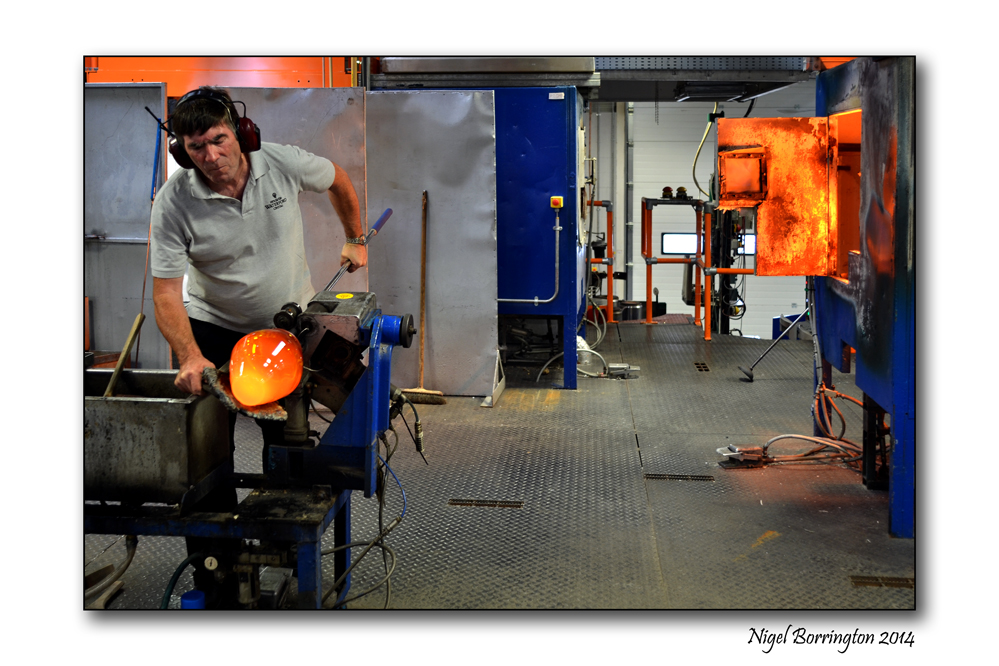
The Glassblower , Images from Waterford crystal and a Poem By : Jeff Crandall

Waterford Crystal Glass blower  Photography : Nigel Borrington

Waterford Crystal Glass blower
Photography : Nigel Borrington

The Glassblower

By : Jeff Crandall

This vessel has curves
pleasing to the eye, a soft lip,
a flat foot to rest on. I want to cup my palms
over the glowing color of its cooling,
but later. . . .

Now my eye is caught in the heat
of its final fire polish.
What dripped from the pipe
—radiant, thick as semen—
achieves fulfillment in the motions
of my own turning.

The amorphous, the malleable
awakens. There is a taste to the air here.
Steel. Iron in your mouth.

Waterford Crystal Glass blower 2

What formed at the glory hole
delicate as an adolescent
reflection in a mirror
cools in the first few minutes from that heat,
cools to the rigid shatter state.

If I hold this glass
suspended in the lit gas heat
I can watch it slump. I can let the thin walls
collapse and tear
back to a puddle of clear:

Waterford Crystal Glass blower 4

I wipe saliva from my chin.
I anneal myself with hugs.
I contain the polarized stresses.
I return to the cold of the holding shelf.

Waterford Crystal Glass blower 3

Monday Poetry , “Ulysses” By : Alfred Tennyson

A distant view of Slievenamon, County Tipperary, Ireland. Irish Landscape Photography : Nigel Borrington

A distant view of Slievenamon, County Tipperary, Ireland.
Irish Landscape Photography : Nigel Borrington

Sometimes walking around the counties of Kilkenny and Tipperary you get an overwhelming sense of history , old church yards with old graves, Monuments left by ancient peoples and their tribes.

Places left as a reminder of Leaders and Kings and people long past.

Places and people that could be contained in “Ulysses” a poem by Alfred Tennyson.

Ulysses

By : Alfred Tennyson

It little profits that an idle king,
By this still hearth, among these barren crags,
Matched with an agèd wife, I mete and dole
Unequal laws unto a savage race,
That hoard, and sleep, and feed, and know not me.

I cannot rest from travel: I will drink
Life to the lees: all times I have enjoyed
Greatly, have suffered greatly, both with those
That loved me, and alone; on shore, and when
Through scudding drifts the rainy Hyades
Vexed the dim sea: I am become a name;
For always roaming with a hungry heart
Much have I seen and known; cities of men
And manners, climates, councils, governments,
Myself not least, but honoured of them all;
And drunk delight of battle with my peers,
Far on the ringing plains of windy Troy.

Ulysses 3.

I am a part of all that I have met;
Yet all experience is an arch wherethrough
Gleams that untravelled world, whose margin fades
For ever and for ever when I move.
How dull it is to pause, to make an end,
To rust unburnished, not to shine in use!
As though to breathe were life. Life piled on life
Were all too little, and of one to me
Little remains: but every hour is saved
From that eternal silence, something more,
A bringer of new things; and vile it were
For some three suns to store and hoard myself,
And this grey spirit yearning in desire
To follow knowledge like a sinking star,
Beyond the utmost bound of human thought.

This my son, mine own Telemachus,
To whom I leave the sceptre and the isle—
Well-loved of me, discerning to fulfil
This labour, by slow prudence to make mild
A rugged people, and through soft degrees
Subdue them to the useful and the good.
Most blameless is he, centred in the sphere
Of common duties, decent not to fail
In offices of tenderness, and pay
Meet adoration to my household gods,
When I am gone. He works his work, I mine.

There lies the port; the vessel puffs her sail:
There gloom the dark broad seas. My mariners,
Souls that have toiled, and wrought, and thought
with me—

Ulysses 2.

That ever with a frolic welcome took
The thunder and the sunshine, and opposed
Free hearts, free foreheads—you and I are old;
Old age hath yet his honour and his toil;
Death closes all: but something ere the end,
Some work of noble note, may yet be done,
Not unbecoming men that strove with Gods.
The lights begin to twinkle from the rocks:
The long day wanes: the slow moon climbs: the deep
Moans round with many voices. Come, my friends,
‘Tis not too late to seek a newer world.
Push off, and sitting well in order smite
The sounding furrows; for my purpose holds
To sail beyond the sunset, and the baths
Of all the western stars, until I die.

Ulysses 4.

It may be that the gulfs will wash us down:
It may be we shall touch the Happy Isles,
And see the great Achilles, whom we knew
Though much is taken, much abides; and though
We are not now that strength which in old days
Moved earth and heaven; that which we are, we are;
One equal temper of heroic hearts,
Made weak by time and fate, but strong in will
To strive, to seek, to find, and not to yield.

Ulysses 5

Capturing Autumn in County Kilkenny (Images and a Poem by : Andrea Rieck)

Autumn Landscape, County Kilkenny, Landscape Photography : Nigel Borrington

Autumn Landscape,
County Kilkenny,
Landscape Photography : Nigel Borrington

It the end of the Second week of October 2014 and Autumn is taking a hold of the county Kilkenny Landscape, We had bad weather and high winds at the start of last week so some of the trees lost a good amount of their leaves. Many however still remain and the golden browns are coming through very well.

I came across this poem by Andrea Rieck last night and wanted to share it along with some of my Autumn images.

It’s autumn again

By : Andrea Rieck

Leaves whisper the sound of our past
In loss they pay a descent
To the ground we fall

It’s autumn again
Our song is sung by the wind
Echoes of loss and grief
Through chilled air we wade

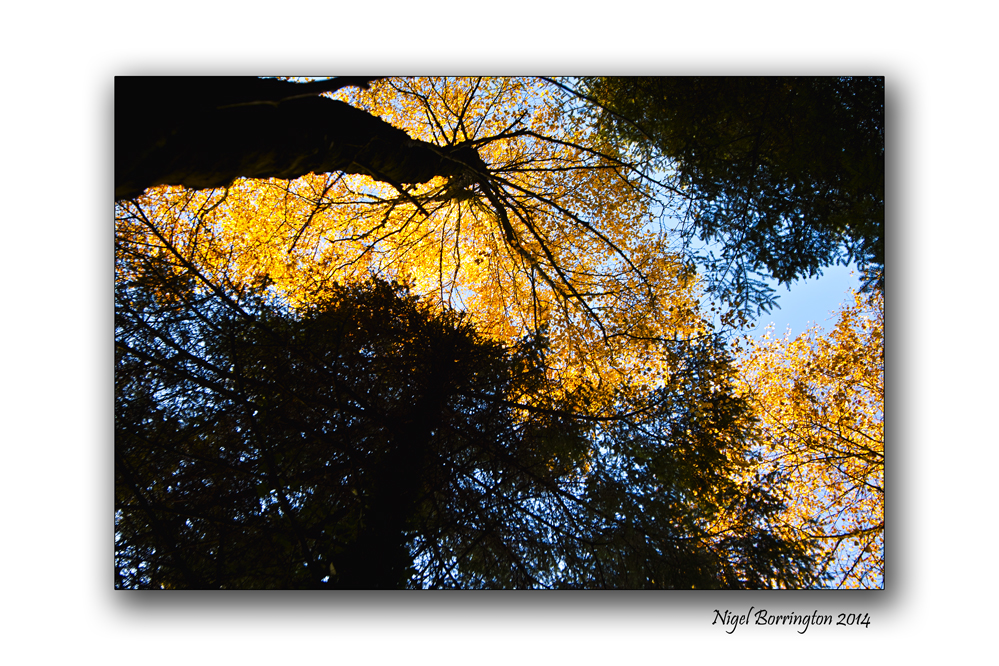
Golden Trees of Autumn 10

It’s autumn again
The waters grow as cold as our hearts
We are alike – crusted in ice
In ourselves we freeze

It’s autumn again
Flowers vanish from our sadness
Our beauty grows weak
Covered in frost we wither

Golden Trees of Autumn 1

It’s autumn again
The rain falls like our tears
Can’t dry our eyes
From the sky we descend

It’s autumn again
The sun shines then fails like us
Our sight becomes a wintry gray
Lost in darkness we will fade

It’s autumn again

Images of the sheep shearing shed and a Poem by Lorna Madson

The Sheep Shearing Shed, Country Kerry, Irish Photography : Nigel Borrington

The Sheep Shearing Shed,
Country Kerry,
Irish Photography : Nigel Borrington

Shearing

– by Lorna Madson

I still recall shearing at Dad’s place,
All those early starts,
Learning to skirt the fleeces,
Pulling off the daggy parts.

I remember Dad sewing up sheep that were cut,
With a needle and big piece of cotton,
Sometimes we helped him yard up the sheep,
Or bring in some the dog had forgotten.

There’s a definite art to throwing a fleece,
One that i’m still yet to master,
The only time I ever tried,
Was a complete and utter disaster!

Sheep Shearers 3

It was always a guess as to when we would shear,
Dad never knew quite when they’d come,
But you always knew by their thirsty look,
When they were about to do the last run.

Mum prepared meals and worked in the shed,
While us kids got up to mischief,
One time we shore so late in October,
Mum asked if they’d be there for Christmas!

Every year without a doubt,
The straw broom went down to the shed,
Either Dad forgot to buy one,
Or it was easier to take Mum’s instead.

On school days we’d race from the bus to the shed,
There was no time for homework or chores,
Getting tossed in a wool press, riding sheep in the pen,
Our hands full of prickles and sore.

Sheep Shearing 2

When we cut-out half the district would come,
The wool table would be covered in grub,
Plenty to drink and the odd song or two,
It was better than any session at the pub!

This is a glimpse of what shearing was like,
Or at least it’s the bits I remember,
The shearing shed’s where all the action was at,
Usually somewhere around August-September.

But I doubt if Dad’s memories of shearing,
Are as fond to him as mine are to me,
For I didn’t have to worry ’bout microns,
Wool packs and presses you see!

The Standing Stones, Poem by : John Bliven Morin

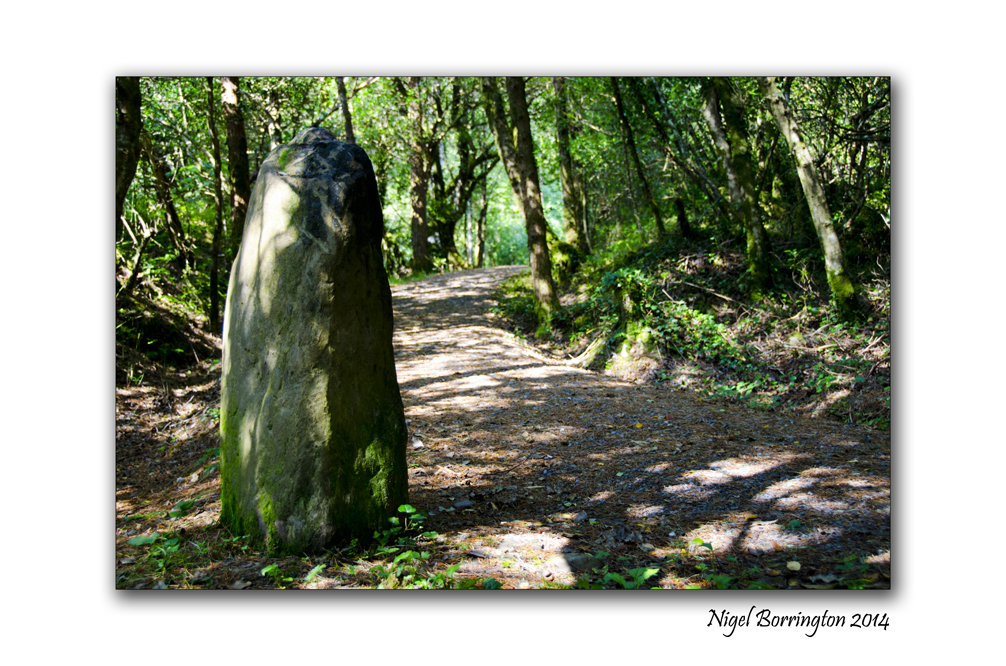
Standing stone at Glengarriff Nature Reserve. Landscape Photography : Nigel Borrington

Standing stone at Glengarriff Nature Reserve.
Landscape Photography : Nigel Borrington

The Standing Stones

By : John Bliven Morin

Who will go where the standing stones stand,
when the fog rolls in and covers the land,
when the moon is hidden in a cloudy sky,
and the night is as dark as a raven’s eye,
and the wind is as cold as a winter’s chill,
What’s that? You say you’ll dare, you will?

Standing stones 2

We’re here. If you’ve courage in your mortal bones,
then go and walk through the standing stones;
yes, that way, go, though it’s hard to see
the ancient path in this obscurity;
your torch is useless for a light,
with the fog and the darkness of the night;
you go alone, for you claim the nerve;
I’ll stay right here, for I only serve.
Follow this footpath through the mist,
and keep to the path I must insist.

You step down the path and I’m lost to view,
as the fog and the mist are surrounding you;
several sounds – grinding – from all about,
startle you so that you almost shout,
but all that comes out is a muted croak,
as you wrap yourself in your winter cloak.
You feel things moving through the very ground,
huge things, horrid things sliding around,
which make your skin crawl with growing fear,
and you sense that something is drawing near;
something immense, for the earth so shakes
that a chill runs up your spine and makes
the hair on your head stand up in fright,
as the fog rolls past and hides from sight
that which you fear but cannot see;
perhaps in your nightmares previously.
Wasn’t that standing stone over there?
But now it’s so close, and that other pair
are much nearer too than they were before!
You remember tales of ancient lore,
as you fall back on some lower stones,
and the Old Ones come to crush your bones;
you scream in fear, you scream in pain,
but all your screaming is quite in vain,
for no one can hear you or see the blood
flow down the altar-stone in a flood;

Standing stones 3

Then all is quiet; you’ve paid the price,
for you were the Druid’s sacrifice.
and I, their servant. go from here
homeward, until another year.

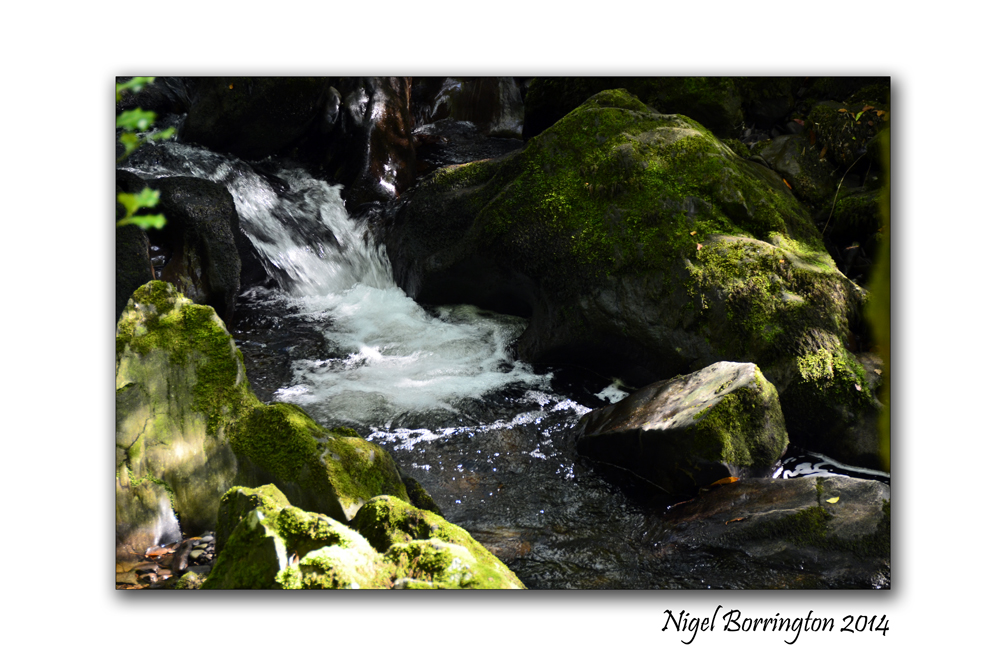
The Elements : Water.

The elements , Water Landscape Photography : Nigel Borrington

The elements , Water
Landscape Photography : Nigel Borrington

The Pagan element of Water and the pagan Irish Goddess : Boann and the Irish God : Nechtan

Water, is of a great necessity, without it nothing can live. Only earth and water can bring forth a living soul. Such is the greatness of water that spiritual regeneration cannot be done without it.

Thales of Miletus concluded that water was the beginning of all things and the first of all elements and most potent because of its mastery over the rest. Pliny said “Water swallow up the earth, extinguishes the flame, ascends on high, and by stretching forth as clouds challenges the heavens for their own, and the same falling down, becomes the cause of all things that grow in the earth.

Water is a cleansing, healing, psychic, and loving element. It is the feeling of friendship and love that pours over us when we are with our family, friends and loved ones. When we swim it is water that supports us, when we are thirsty, it is water the quenches our thirst, another manifestation of this element is the rainstorms that drench us, or the dew formed on plants after the sun has set.

The power of the energy of Water, can be felt by tasting pure spring water, moving you hand through a stream, lake, pool, or bowl full of water. You can feel its cool liquidity; it’s soft and loving touch, this motion and fluidity is the quality of Air within Water. This Water energy is also contained within ourselves, our bodies being mostly composed of Water.

As well as being vital for life, within the energy of this element is contained the essence of love. Love is the underlying reason for all magic. Water is love.

Water is a feminine element, it also the element of emotion and subconscious, of purification, intuition, mysteries of the self, compassion and family. It is psychic ability; water can be used as a means of scrying or as an object for meditation. Water is important in spells and rituals of friendship, marriage, happiness, fertility, healing, pleasure, psychic abilities and spells involving mirrors.

Ref : Pagan elements of Water

The Elements Water 2.

Irish Goddess : Boann, Irish God : Nechtan

Celtic (Irish) Goddess of the River Boyne and mother of Angus Mac Og by the Dagda. She was the wife of Nechtan, a god of the water. Likewise, Boann was herself a water-goddess, and one of her myths concerns the water. According to legend, there was a sacred well (Sidhe Nechtan) that contained the source of knowledge. All were forbidden to approach this well, with the exception of the god Nechtan (as was noted, Boann’s husband) and his servants. Boann ignored the warnings, and strode up to the sacred well, thus violating the sanctity of the area. For this act, she was punished, and the waters of the defiled well swelled and were transformed into a raging river, a river that pursued her. In some versions, she was drowned; while in others, she managed to outrun the currents. In either case, this water became the river that was known henceforth as the Boyne, and Boann thereafter became the presiding deity.

Another aspect of the myth of Boann is that she bore Angus. She and the All father of the Tuatha De Danaan, the Dagda, engaged in an illicit affair that resulted in the birth of this god of love. However, since both Boann and the Dagdha wished to keep their rendezvous a secret, they used their divine powers to cause the nine month gestation period to last but a single day – or so it seemed, for the sun was frozen in the sky for those nine months, never setting and never rising. On this magical day, Angus emerged into the world. She held the powers of healing. Variants: Boannan, Boyne.

The Elements Water 3