
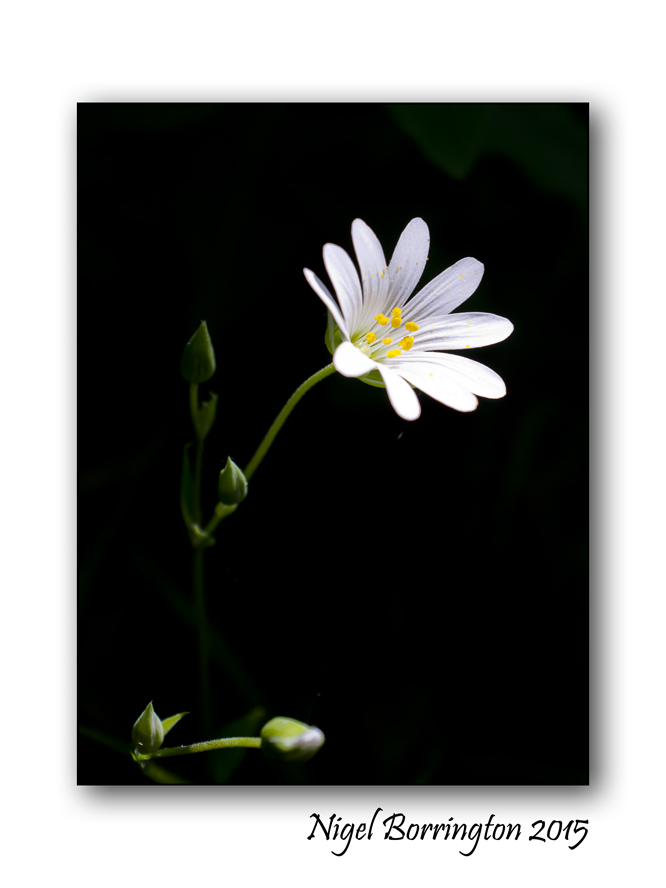
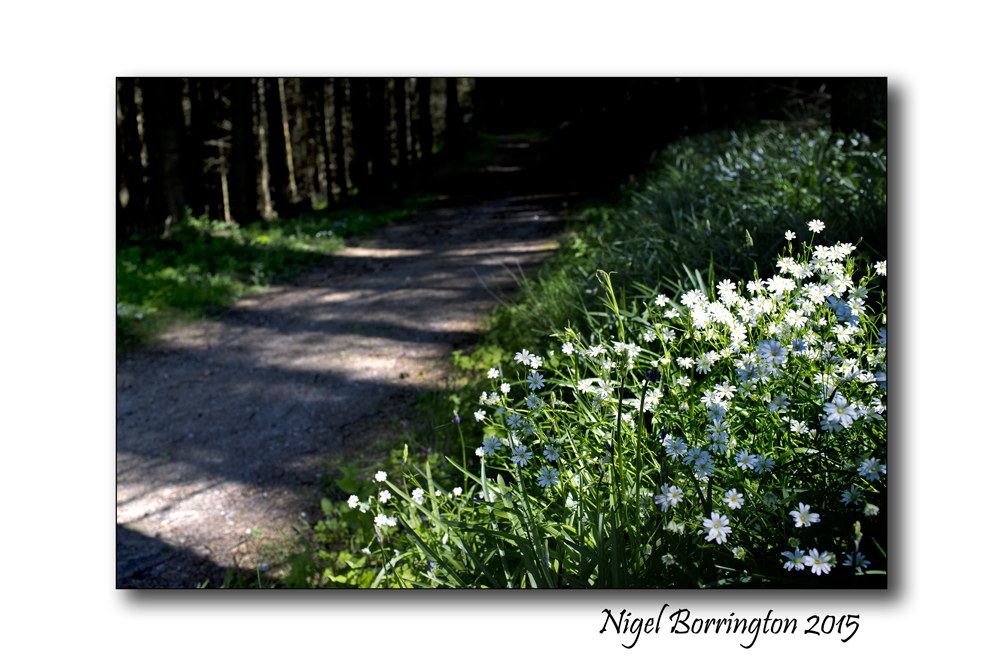
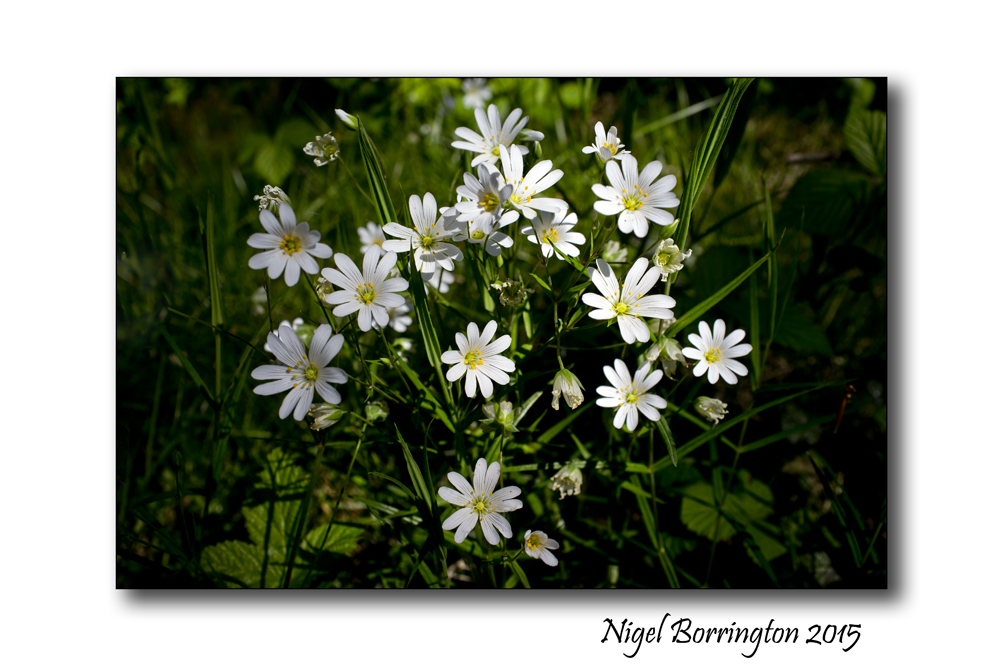
Blue flowers of , Common-Field-Speedwell
Nature Photography : Nigel Borrington
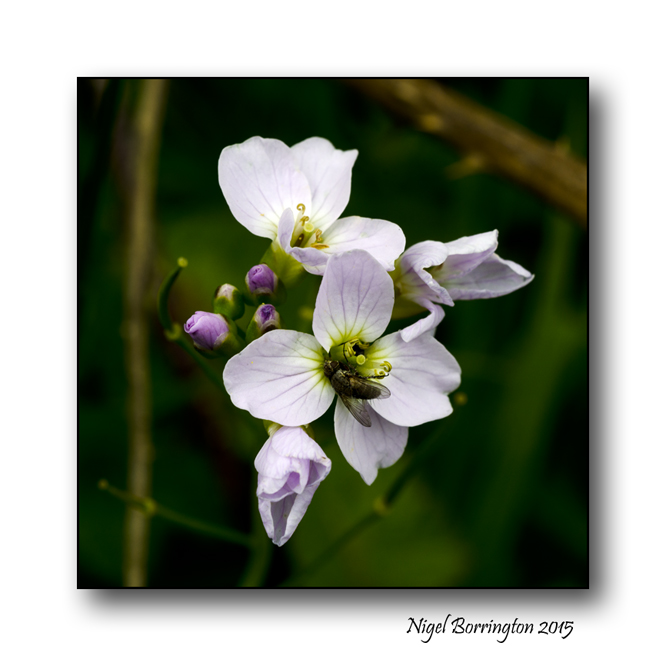
Blue flowers must be one of the hardest types of wild flowers to find, these Field-Speedwell’s are just some of a few we have in our local woodlands.
Blue in nature has been used as a powerful symbol, the following uses are just a few …..
Blue flowers
A blue flower is a central symbol of inspiration. It stands for desire, love, and the metaphysical striving for the infinite and unreachable. It symbolizes hope and the beauty of things.
Early use of the symbol of blue flowers
German author Novalis used the symbol in his unfinished Bildungsroman, entitled Heinrich von Ofterdingen. After contemplating a meeting with a stranger, the young Heinrich von Ofterdingen dreams about a blue flower which calls to him and absorbs his attention.
Explanation of the symbol of blue flowers
In the book Heinrich von Ofterdingen the blue flower symbolises the joining of human with nature and the spirit so the understanding of nature and coincident of the self is growing. In the Romantic the meaning of human was a continuation from Humanism and the Age of Enlightenment, but the focus was on the own emotions not on abstract theory. Understanding and thinking rise in the comprehension of Romantic from own individual love. Feeling is based on the self, thinking is based on the self and the development of the self leads the individual person. Also very important is contemplation. About the feeling, the thinking and contemplation personal inward cognition is possible. The process of cognition merge again with own individual love. The self and the nature is in this theory always linked.
Use of the symbol
Joseph Freiherr von Eichendorff wrote a poem called Die blaue Blume (The blue flower). Adelbert von Chamisso saw the core of Romanticism in the motif, and Goethe searched for the “Urpflanze” or “original plant” in Italy, which in some interpretations could refer to the blue flower. E. T. A. Hoffmann used the Blue Flower as a symbol for the poetry of Novalis and the “holy miracle of nature” in his short tale “Nachricht von den neuesten Schicksalen des Hundes Berganza”.
In 1902, Charles Scribner’s Sons published “The Blue Flower”, a collection of short stories by Henry Van Dyke, the first two of which, “The Blue Flower” and “The Source” refer to the blue flower as a symbol of desire and hope, and the object of the narrator’s search. This volume also includes Van Dyke’s most famous story, “The Other Wise Man”.
Blue rose
Walter Benjamin used the image of the blue flower several times in his writing. For example the opening sentence of his essay Dream Kitsch: “No one really dreams any longer of the Blue Flower. Whoever awakes as Heinrich von Ofterdingen today must have overslept.” Also in his Work of Art essay: “The equipment-free aspect of reality has here become the height of artifice, and the vision of immediate reality the Blue Flower in the land of technology.”
C.S. Lewis, in his autobiographical book, Surprised By Joy, references the “Blue Flower” when speaking of the feelings of longing that beauty ellicited when he was a child of six. He associates it with the German word sehnsucht, and states that this intense longing for things transcendent made him “a votary of the Blue Flower.”
English writer Penelope Fitzgerald’s historical novel The Blue Flower is based on Novalis’s early life. In John le Carré’s 1968 novel A Small Town in Germany, the character Bradfield says, “I used to think I was a Romantic, always looking for the blue flower.” (Pan edition, p. 286 – chap. 17) Substance D, a fictitious drug in Philip K. Dick’s 1977 novel A Scanner Darkly, is derived from a plant with blue flower.
Tennessee Williams used images of blue roses in his play, The Glass Menagerie, to symbolize the frailty and uniqueness of Laura, a central character that reflects the life of Williams’ sister, who underwent a lobotomy. In the play, Laura is nicknamed “Blue Roses” after another character misheard her say “pleurosis”.
In his fantasy series A Song of Ice and Fire, American author George R. R. Martin uses the blue flower as a reoccurring symbol to represent young women of the noble House Stark, often with hints to an illicit love affair. In one instance, Prince Rhaegar Targaryen uses blue winter roses to crown the Lady Lyanna Stark as the “Queen of Love and Beauty” at the Tournament of Harrenhal, passing over his own wife, Princess Elia of Dorne.
“Blue Flower” is the name of a song by the British avant-garde pop band of the early 1970s, Slapp Happy, later covered by the 1990s indy rock bands Pale Saints and Mazzy Star. “Blue Flowers” is a song by the alternative MC, Kool Keith (AKA Dr. Octagon), on his 1996 album, Dr. Octagonecologyst.









 Nigel Borrington
Derrynaflan Hoard, National Museum of Ireland
Derrynaflan Chalice
Photo : Nigel Borrington
On Saturday I spent the day in Dublin , shopping and visiting different Museums , including the National Museum of Ireland .
One of my main interests in doing so was to take a fresh look and the Derrynaflan Hoard, I posted on the items in this collection and about the Island of Derrynaflan , county Tipperary – last October.
The Derrynaflan chalice is one of the most amazing historic items to view and the story (Below) of how it was discovered just as fascinating. Seeing this hoard just make you wonder how many more items like it have yet to be found or sadly never will be.
The following two images are from Saturdays vistit :
Island of Derrynaflan
The Island of Derrynaflan is located in County Tipperary and these days it is surrounded by recovered drained land that is harvested for it’s peat, this peat being turned into fuel.
The images below and the text are from my post last year :
Discovering the Hoard
Derrynaflan Island, County Tipperary
Irish Landscape Photography : Nigel Borrington
The Derrynaflan hoard is one of the most spectacular hoard discoveries in Ireland, which led first to an increase in enthusiasm for metal detecting as a hobby, but ultimately contributed to the prohibition of unlicensed searching for archaeological material.
On 17 February 1980, Michael Webb and his son, also called Michael, discovered a significant hoard of early church treasure in Derrynaflan, in the townland of Lurgoe, County Tipperary, using metal detectors (Kelly 1994: 213; O’Riordain 1983: 1). The hoard included a chalice, a bronze strainer ladle and a paten (a kind of small plate) (and see Ryan 1983 for a detailed description), and the discovery was described as ‘one of the most exciting events in the history of Irish art’ (Stalley 1990: 186). The large monastic enclosure in which the hoard was found was partially protected as a National Monument (Kelly 1993: 378). The finders reported their discovery to an archaeologist from University College Cork, Dr. Elizabeth Shee Twohig (Kelly, pers. comm., 2012), who advised them that they must take the finds to the National Museum of Ireland in Dublin (Houses of the Oireachtas 1986; O’Riordain 1983: 1). Under Irish law at that time, the finders were entitled to a reward for making the discovery, in this case decided at IR£10,000 (Houses of the Oireachtas 1986), although this was initially rejected by the finders as insufficient compared to the value of the find (Kelly 1994: 213).
Six years later, the High Court made a ruling that the find or its value (estimated at IR£5.5 million) should be returned to the finders (Kelly 1994: 113). The public mood turned against the Webbs, who were shown on the main evening television news drinking champagne to celebrate the ruling. Ireland was then in deep recession with massive public service cuts which led to resentment that the Webbs might benefit to the tune of IR£5.5 million from the public purse (Kelly, pers comm., 2012). A year later, in 1987, a further final judgement was delivered by the Supreme Court that the Derrynaflan Hoard in fact belonged to the state and not to the finders (Kelly 1995a). The finders finally received a reward of IR£50,000 (Kelly 1994: 214).
The impact of the case on Irish law concerning the protection of heritage was significant. Debates in the Seánad Éireann (upper house of the Irish Parliament) in 1986 indicate the split in opinions regarding the validity of the claim of the finders to the hoard (as had been decided in court the previous year), with one Senator suggesting that the state should have been trying to prove that the Webbs had no legal claim to the hoard, one Senator regarding such discoveries as no more than looting, and another claiming that the finders should instead be praised for the care with which they removed the hoard from the ground and for going to the National Museum to report the discovery (Houses of the Oireachtas 1986). In 1987 the National Monuments (Amendment) Bill, which included clauses on metal detecting and ancient shipwrecks (another area becoming vulnerable to looting), passed through its final stages in the Dáil Éireann (lower house of the Irish Parliament) (Gosling 1987: 23).
Ireland’s National Monuments Act 1930 had prohibited the excavation of archaeological objects other than under license (Kelly 1995a). However, the maximum fine for a successful prosecution at that time, at IR£10[1], proved not to be a strong deterrent (Kelly 1995b: 235). The discovery of the Derrynaflan Hoard had reputedly contributed to the growth of the metal detecting hobby in Ireland, which by the time of the discovery saw hobbyists searching not only ploughed land and other locations away from archaeological sites, but also on known archaeological sites (Kelly 1993: 378). A 2012 Irish news item, which described an athlete as having ‘more gold than they found in Derrynaflan’ (Keane 2012) indicates that the finding of the hoard is still recalled in Irish popular memory. However, with the National Monuments (Amendment) Act 1987, ‘it became illegal to search for archaeological objects with metal detectors or other electronic detecting devices without license’. A further National Monuments (Amendment) Act 1994 specified the state ownership of archaeological objects, and made it ‘an offence to trade in unreported antiquities, or withhold information about archaeological discoveries’ (Kelly 1995a). Under the 1994 legislation, the maximum penalty was also increased to a fine of IR£50,000 and five years imprisonment (National Monuments (Amendment) Act 1994, Section 13). The National Monuments (Amendment) Act 1987 had been in preparation for many years and so was not a direct reaction solely to the controversy surrounding the hoard (Kelly, pers. comm., 2012), although there were observations made that the upsurge in metal detecting as a result of the discovery led to changes in the law (Kelly 1994: 214).
Ref : http://traffickingculture.org/encyclopedia/case-studies/derrynaflan-hoard/
A visit two Derrynaflan island Gallery
Share this:
Posted by nigel borrington | May 25, 2015 | Categories: a closer look, Comment, Forgotten places, Nigel Borrington, Travel Locations | Tags: Archaeology, Derrynaflan, Derrynaflan Chalice, Derrynaflan Hoard, Ireland, irish histroy, National Museum of Ireland, Nigel Borrington, Tipperary | 4 Comments