Capturing the world with Photography, Painting and Drawing

Latest

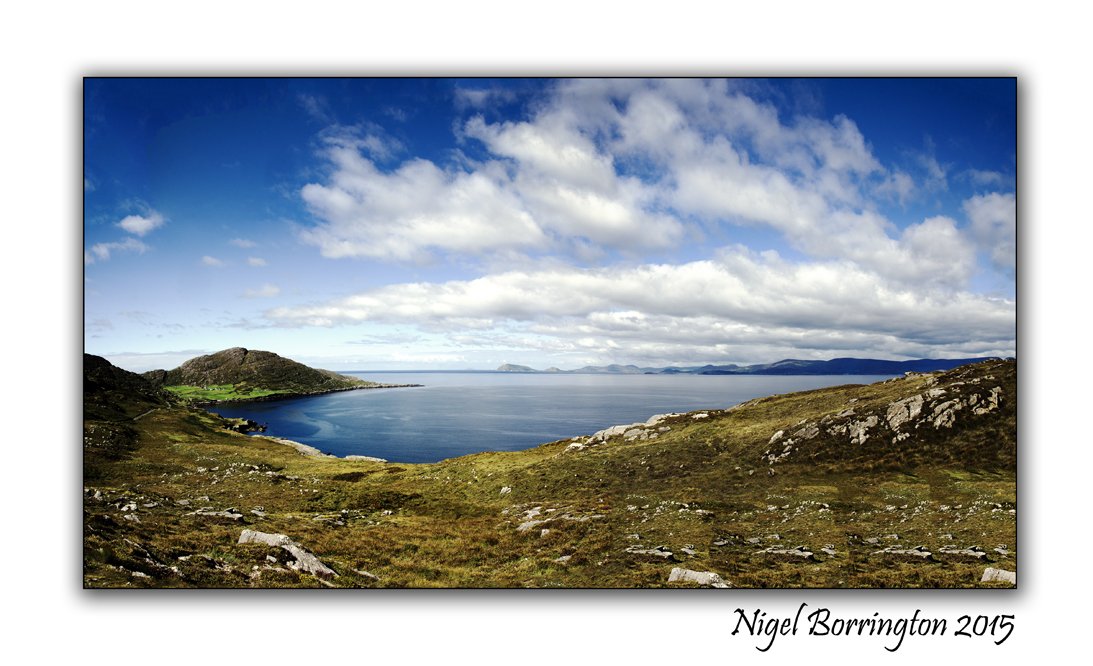
Returning to Skellig Michael, an island escape

Skellig Michael 30
Skellig Michael, county Kerry, Ireland
Landscape Photography : Nigel Borrington

I first visited Skellig Michael in 2012 and the following images and post were taken and created during and following this visit, since then the island has been used during the making of the latest Star Wars movie “The Force Awakens”.

While no one worried too much about this remote and sacred place being used for this purpose, I think a lot of people are very much hoping that it does not mark the start of the island being openly used in such away, here it Ireland places like this are treasured and their peace is defended strongly. The Island is also the home to some very unique and protected wildlife.

Skellig Michael : an island escape

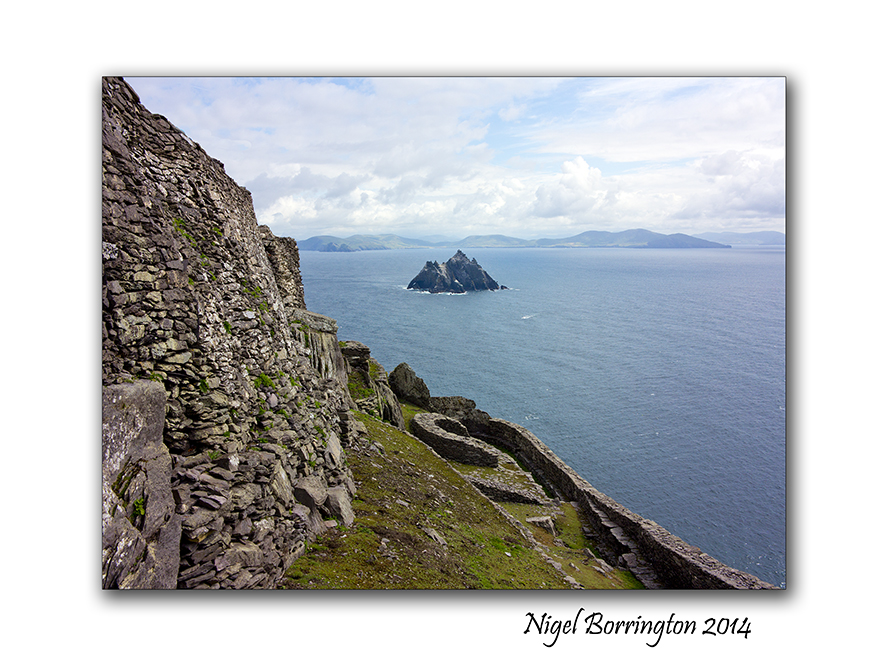
Skellig Michael is an Island some 12 to 16 kilometres by boat from the ring of kerry, county Kerry, Ireland. It is most famous for the fact that during the 6th to the 8th Century’s a religious settlement was established here.

The Island is a world heritage site and falls under the guardianship of UNESCO, you can find the official historic details from the link on the world heritage web page here : Skellig Michael

In my last two posts I shared the boat trip to the Island and then the long but wonderful walk up to the settlement at the very top of the Island some 218 meters from sea level. Today I just want to share images of the inside area , the location that the people who lived here spent their life’s and also the location in which they are buried and there final resting place.

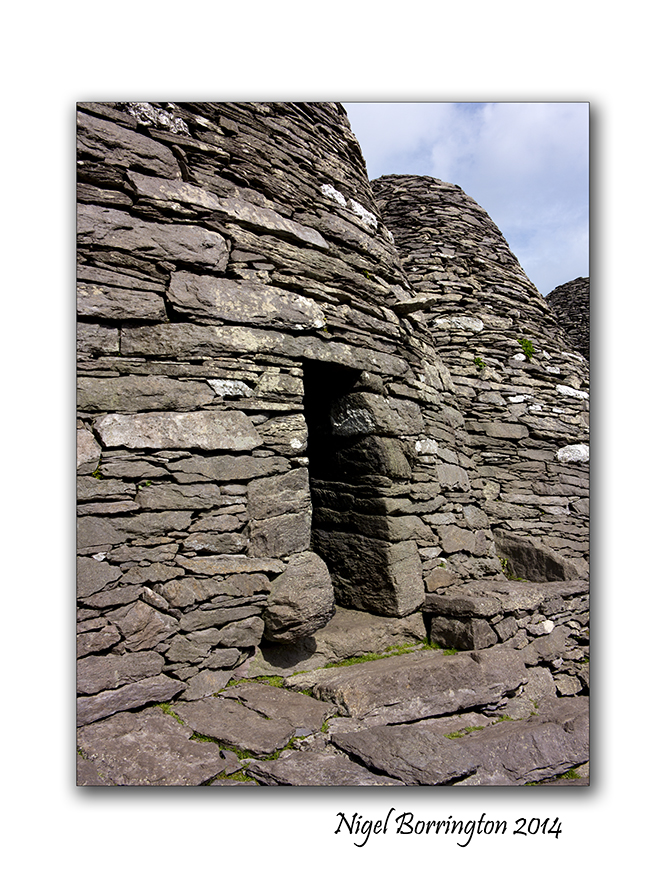
The images in the Gallery below are placed in the order that you view the buildings when you walk through the site, the only access is through a small passage in the outer walls.
Skellig Michael 33

Skellig Michael 37

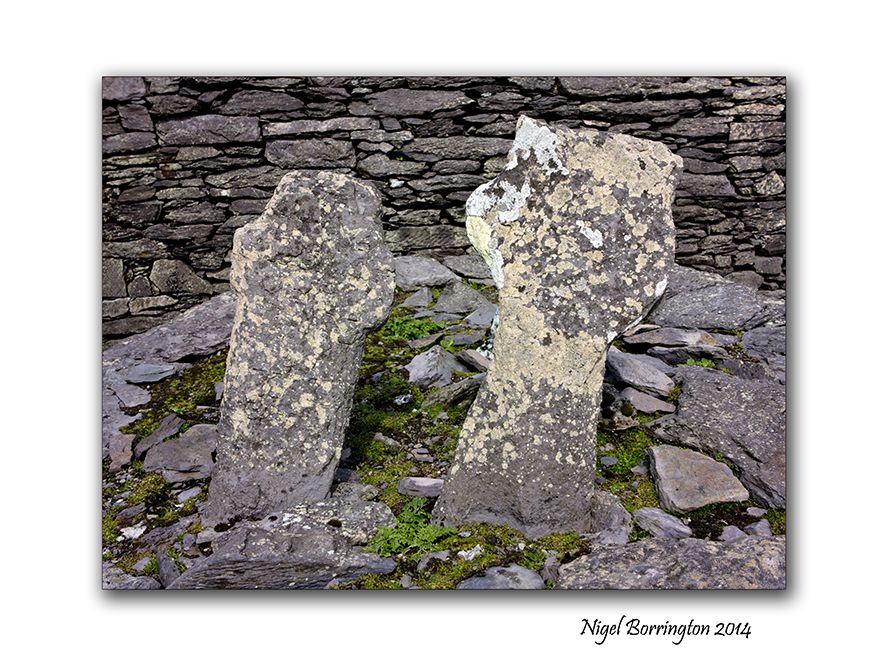
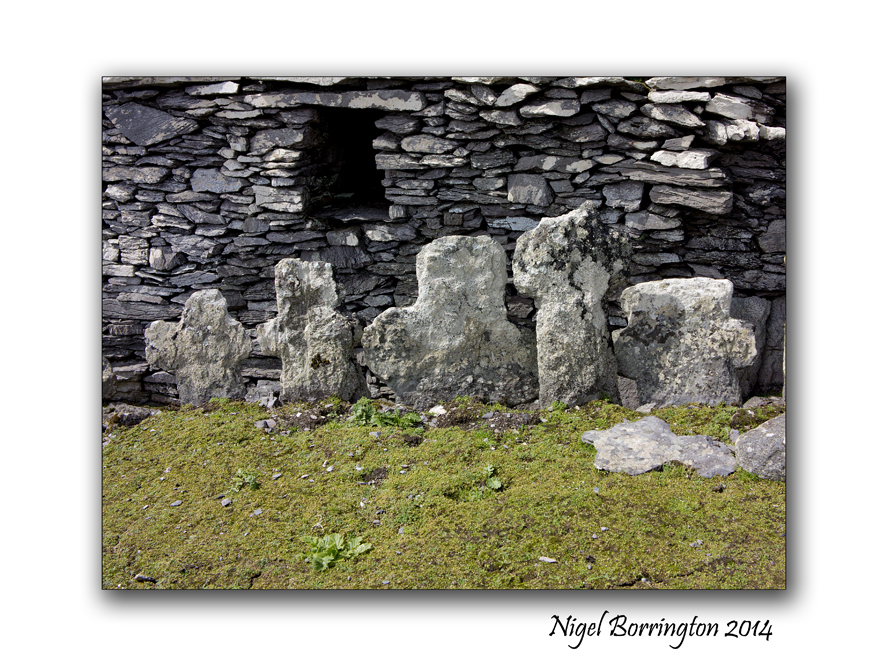
The very first thing that greets you are two small head stones, in a very small patch of grass. These are the graves of two young boys, it was a tradition that monks in this period would take very young boys as members to their orders. These boys where from families on the main land and once they moved here they would most likely never return to see there families. Our guide informed us that it is a possibility that both boys were killed by Viking invaders as when the remains where examined wounds were found that indicate that they were killed by the use of weapons, both boys did not pass the ages of ten or twelve. It is also thought that other graves in the pictures here, in the centre of the living area contain some adult victims of such attacks.
Skellig Michael 35

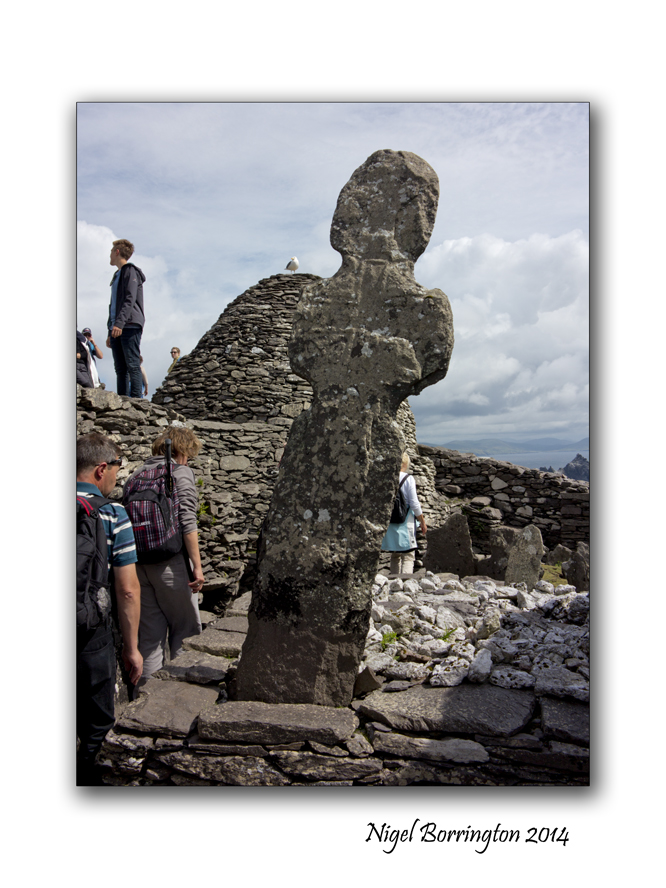
A monastery may have been founded as early as the sixth century, reputedly by Saint Fionán but in 1044 rededicated to Saint Michael, the image here shows a large sculpture that is located towards the middle of the complex. It was described by our guide as being a cross but it could also be very much in the form of a human figure, with the arms to the side and a head looking over the site.

The word Skellig is defined as meaning “splinter of a stone”, and thus this rocky island was dedicated to saint Michael, there are also other Islands around Europe and maybe further away that are dedicated to this saint ( Mont Saint-Michel France, St Michael’s Mount Cornwall)

Skellig Michael 24

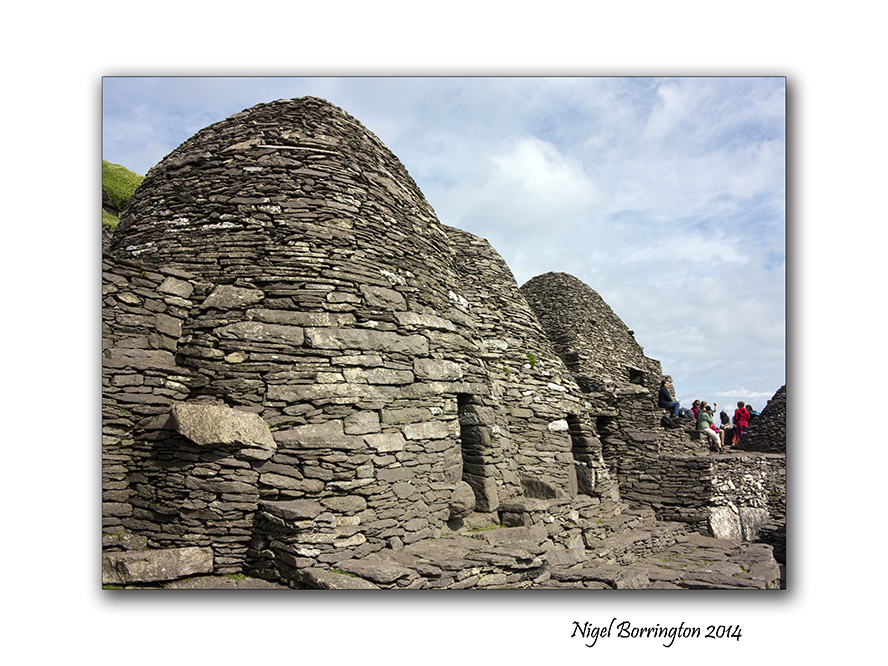
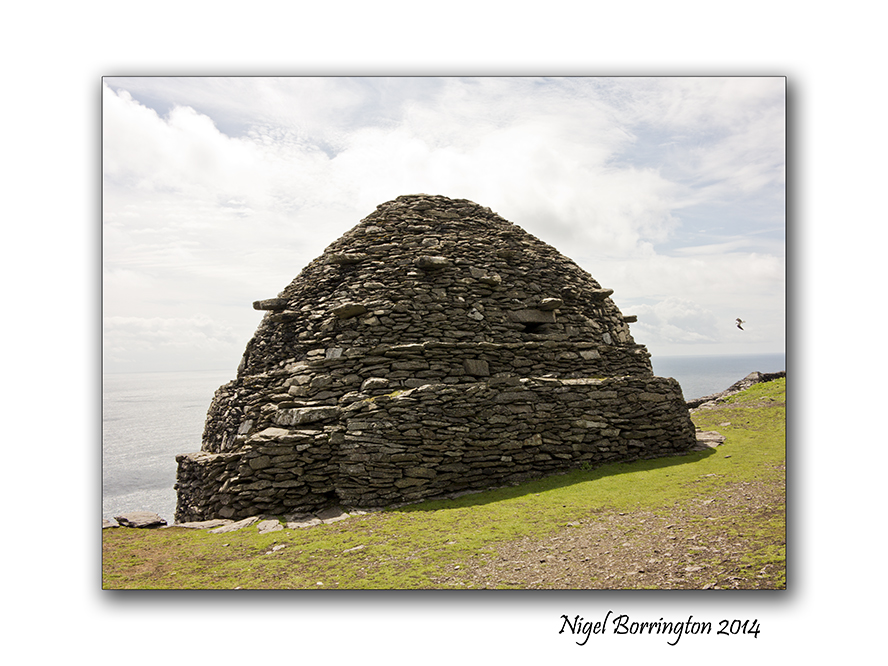
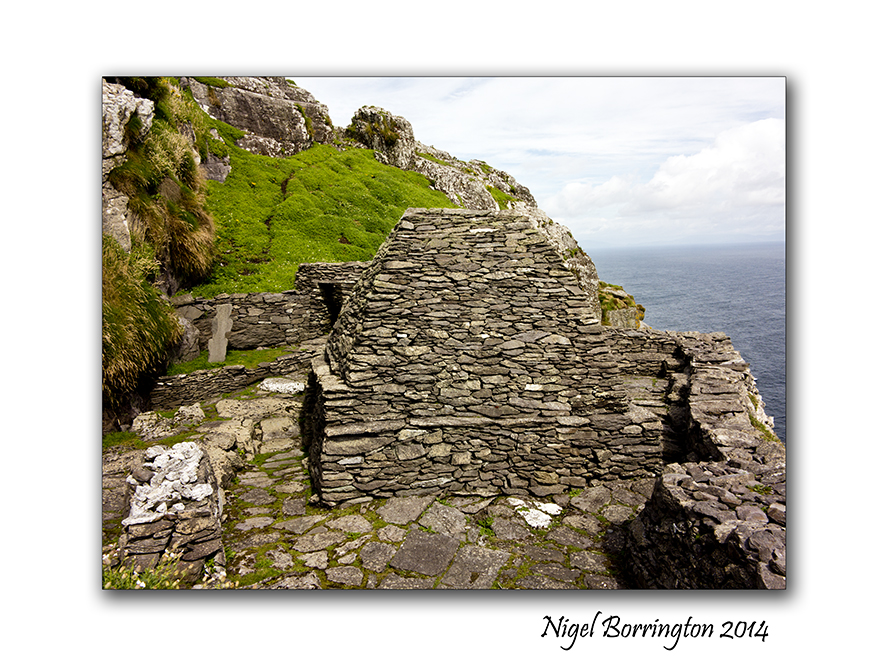
One of the most famous features of Skellig Michael are the so called Beehive structures, there were may be six or seven of these of which six are still standing, they were the living spaces for each of the monks, this fact would indicate that a maximum of seven people lived here in the beehives at any one time, there is a structure at the very end of the settlement that is constructed completely differently, It is thought that the head of the order would have lived in this building but few fact to prove this exist.

In any case the indications are that eight people lived on Skellig Michael at anyone time during its long history.

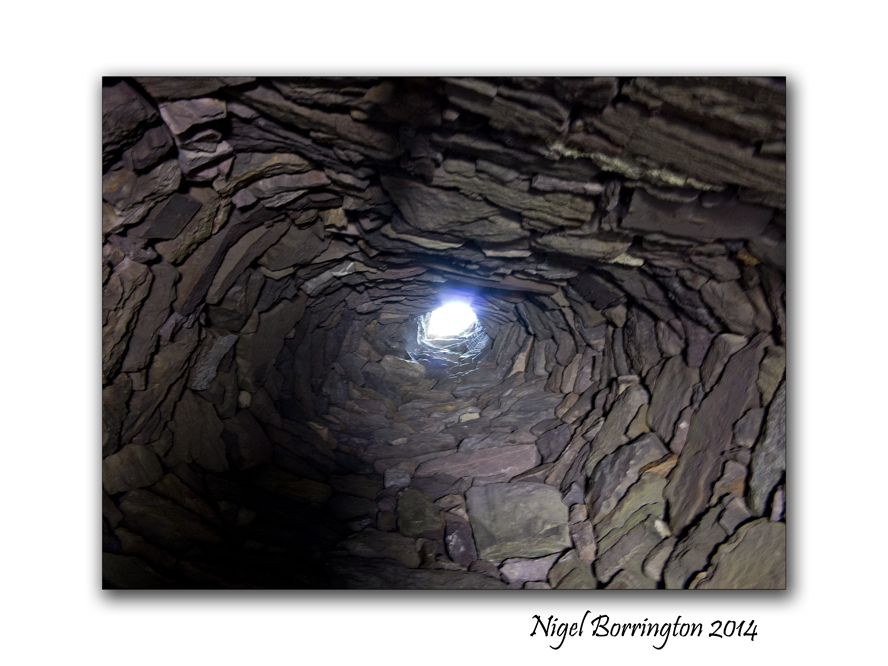
Living with in these stone constructions looks very harsh , during the time they were occupied however they would have looked very different, in some of the pictures you can see supporting stones that stick out of the main buildings by some amount, it is thought that these stones supported a covering of thatch consisting of straw and clay, this would have been deep and was used to keep the inner stone structure warn and dry. Not all but some of the Beehives have a hole in the roof that was used to let out smoke from fires inside.

At some point I want to post about the life’s of these people, who they where and why they chose to live here, I need to read a little more however , so for the moment that’s it. Three post over the last three day, that I hope share a visit to this wonderful and mystical island.

If you get a chance I would really encourage you to visit. Its an experience of a lifetime and helps you to open your mind to European history.

I cannot help however feeling that this place holds something else other than the official history, The question as to why these monks felt the need to occupy Skellig Michael, so far of the Irish coast line, is very big !

This place feels like an escape, a refuge but from what and why ?

With such massive risk’s taken by a small group of people to construct three stone stair-ways to the top of the Island and then build the walled settlement, the question of why looms very large. These were times when the word of Christianity was first being spread across Ireland so why the need to hide away here ?

I need to do much more reading, before I understand these bigger questions 🙂 and even then maybe some of the answers have been lost !

Gallery

Skellig Michael 23

Skellig Michael 31

Skellig Michael 33

Skellig Michael 34

Skellig Michael 35

Skellig Michael 43

Skellig Michael 38

Skellig Michael 40

Skellig Michael 39

Skellig Michael 42

Skellig Michael 37

Skellig Michael 36

Skellig Michael 41

Irish landscape Images for the week – (Monday) Irish bog lands.

Connemara National Park Galway 5

During this week, I just wanted to return to some of my most loved Irish Landscape locations and Monday today’s post I want to share some images I have taken since 2014, these relate to the Irish Bog and Peat lands of the Irish Midlands and the West coast.

Ireland has internationally important peat/bog lands but they are always under serious threat. Over the last few years the Irish government has protected areas of special conservation from historic family rights to cut peat in these areas, a decision that created problems for some but one that was very much needed in order to start the process of returning the bog’s to a point of growth and sustainability.

I love these locations, they are remote and full of life both plant and wild life and I feel like many others that they do need very special care and support.

When you visit locations like the Bog of Allen, you can see a contrast between the areas that are still wild and untouched and the areas that have been harvested for peat, when you see this contrast and its different effects on local bio-diversity you would only hope that one day we can find a less damaging way to heat our homes and produce energy.

Irish Bog-lands Gallery

Connemara National Park Galway 4

Connemara National Park Galway 3

Connemara National Park Galway 2

Will I get to see the Bog cotton again 5

Will I get to see the Bog cotton again 1

Will I get to see the Bog cotton again 2

The bog of Allen 2

The bog of Allen 3

The bog of Allen 4

The bog of Allen 5

The bog of Allen 6

Meerkat’s at Fota Wildlife Park , County Cork, Ireland

 Meerkat at Fota Wildlife Park Cork Ireland

A Meerkat at Fota Wildlife Park
County Cork
Ireland

There are so many wild species at Fota Wildlife park, county Cork – but few as sweet and attractive as the little Meerkat’s. Like many of animals they occupy their own island and you view them from across the water of a lake.

I spent a good time during my visit with these little creatures and found it difficult to move on, they are such great fun to watch 🙂 🙂

Here is their introduction and details, provided by Fota wildlife park themselves !

About the Meerkat

A favourite of visitors young and old, the Meerkat is a smaller member of the Mongoose family. Measuring up to 35cm in length and weighing up to 730grams, it has four long, strong claws on each paw to aid with burrowing and likes to stand on its hind legs from high vantage points when possible.

Habitat

The Meerkat is found across southern Africa in the wild, particularly around the savannahs and open plains of Botswana, Namibia, Angola and South Africa.

Wild Notes

The Meerkat is a social and curious animal that lives underground in groups called mobs, gangs or clans. Much of its time is spent digging and foraging for food including insects, roots, eggs, small reptiles and scorpions – the Meerkat is immune to the latter’s poison unlike mankind.

While pack members are feeding, at least one of the mob will be on guard, standing on its back legs and watching for predators such as eagles, foxes for jackals. Should any danger arise, an alarm call will alert the entire group who will then quickly venture underground.

Meerkats share the job of looking after their young. When born, the pups are mostly hairless and cannot see or hear. They generally open their eyes after two weeks and start to eat food other than milk a week later. Females tend to be larger than males and can have as many as four litters of up to five pups a year – generally around rainy season when food is plentiful.

Conservation

Considered to be of Least Concern, local populations of the species are susceptible to disturbances and habitat loss caused by mankind.

Did you know?

The fur on the Meerkat’s belly is thin and helps it to regulate its own body temperature. It sits up or lies on warm ground in order to increase its temperature and reduces it by lying belly-down in a cool, dark burrow.

The Fota Connection

The Park’s Meerkat clan arrived in 2010 and took up residence in a new exhibit near the main entrance. Its habitat has since been revamped further with the addition of a new viewing house, allowing visitors more intimate interaction with one of the world’s most interesting and active species. The original group, Tippy and her three daughters, came from Belfast Zoo but Fota’s numbers have since increased into double figures.
A

Spring On The River – Poem by Archibald Lampman

Springtime at the River Irish landscapes Nigel Borrington

Springtime at the River
Irish landscapes
Nigel Borrington

This weekend i am planning to do some river walks, Springtime down near the rivers here in Kilkenny is a great experience with so much new life around.

What-ever you are doing I hope you have a great time 🙂

Spring On The River

By Archibald Lampman

O sun, shine hot on the river;
For the ice is turning an ashen hue,
And the still bright water is looking through,
And the myriad streams are greeting you
With a ballad of life to the giver,
From forest and field and sunny town,
Meeting and running and tripping down,
With laughter and song to the river.

Oh! the din on the boats by the river;
The barges are ringing while day avails,
With sound of hewing and hammering nails,
Planing and painting and swinging pails,
All day in their shrill endeavor;
For the waters brim over their wintry cup,
And the grinding ice is breaking up,
And we must away down the river.

Spring on the river Nigel Borrington 01

Oh! the hum and the toil of the river;
The ridge of the rapid sprays and skips:
Loud and low by the water’s lips,
Tearing the wet pines into strips,
The saw mill is moaning ever.
The little grey sparrow skips and calls
On the rocks in the rain of the water falls,
And the logs are adrift in the river.

Oh! restlessly whirls the river;
The rivulets run and the cataract drones:
The spiders are flitting over the stones:
Summer winds float and the cedar moans;
And the eddies gleam and quiver.
O sun; shine hot, shine long and abide
In the glory and power of the summer tide
On the swift longing face of the river.

The Rivers source Nigel Borrington 02

The Red Ruffed Lemur from Madagascar, Fota Wildlife Park, County Cork

Red Ruffed Lemur Fota Wildlife Park County Cork Nigel Borrington

Red Ruffed Lemur
Fota Wildlife Park
County Cork
Nigel Borrington

There are so many different Species of Wildlife at Corks Fota Wildlife park that you would need many visits in order to get to know as much as you can about them all, along with getting enough time to observer their individual personalities.

During last weekends visit I found so much that I liked about them all but for me the Red Ruffed Lemurs were very special fun to spend some time with. They never stopped moving around their island and their climbing and balancing skills were just amazing to take in.

Here are some basic details about these wonderful Lemur’s

About the Red Ruffed Lemur

Named for the long thick fur that grows around its head and body, the Red Ruffed Lemur is an agile primate that has made the island of Madagascar its home. Males and females look the same – its body is close to its feet, the animal has piercing (sometimes reddish) eyes and it usually weighs between seven and 12 pounds.

Habitat

Ruffed Lemurs are found exclusively on the island of Madagascar off the continent of African, and are generally found in the upper canopy of the tropical rainforests on the eastern side of the island.

Red Ruffed Lemur Fota wildlife Park Nigel Borrington 02

Wild Notes

The species is considered to be crepuscular, which simply means that they are most active at dawn and dusk. Their diet consists mainly of fruits, seeds, nectar and plant matter and the animal scent marks its territories and uses an elaborate system of alarm calls to alert other group members if predators are nearby.

Female Red Ruffed Lemurs don’t carry their offspring like most other primates; instead, mothers give birth and leave their young in nests that are generally found between ten and 20 metres above ground level. However, infant mortality is high with about 65% of newborns not reaching three months.

Conservation

The species is listed as being Critically Endangered after a significant decline in population in recent decades because of agriculture, logging and mining activities across its habitat. In fact, over 90% of Madagascar’s original rainforest is gone.

It is estimated that there could be as few as 1,000 to 10,000 left in the wild, while the Black & White Lemur is the most Endangered of the two Ruffed Lemurs.

Did you know?

The Ruffed Lemur feeds on nectar by sticking its long nose deep into the flower. The Lemur’s snout becomes coated with pollen in the process, which is then transported to other flowers – making the animal an important pollinator within its local habitat.

The Fota Connection

The Park is home to three of the 16 species of Lemur and two varieties of the Ruffed Lemur – the Red and Black and White species.

The Ruffed Lemurs are maintained on separate islands alongside each other in the lakes area as they are territorial animals, while Fota has been actively involved in a series of projects aimed at preserving what remains of their natural habitat in Madagascar.

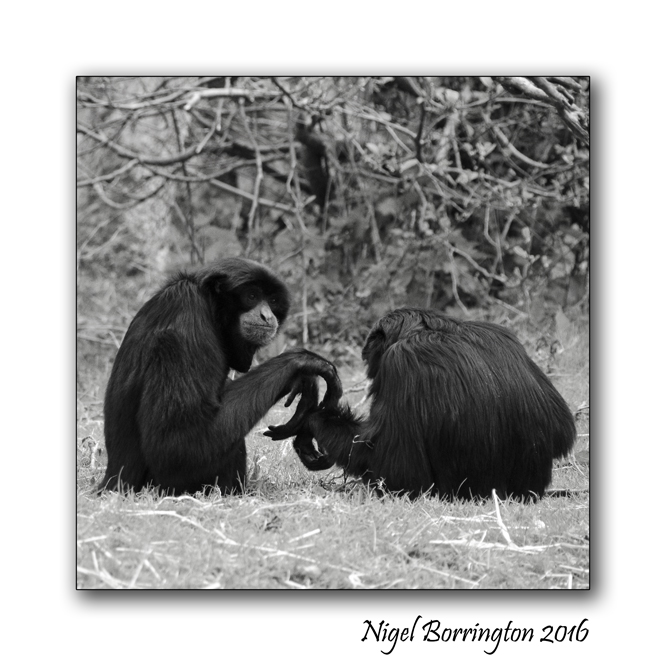
Portraits of Siamang Gibbon’s, Fota Island wildlife park , County Cork

Siamang Gibbon Fota Wildlife Park County Cork Nigel Borrington

Siamang Gibbon
Fota Wildlife Park
County Cork
Nigel Borrington

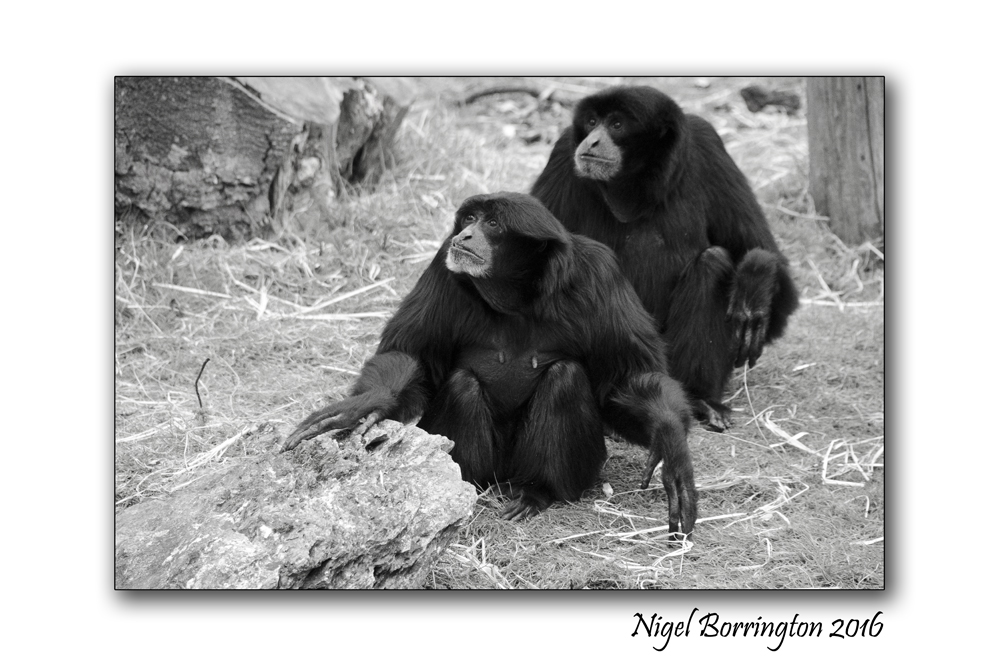
During last weekend we visited Fota wildlife park in county cork and spent many great hours getting to know many of the animals they have in their care.

The Siamang Gibbon at the park are all member of the same family 🙂

Here are some details and fact about them , just to help you get to know them a little better 🙂

About the Siamang Gibbon

With a Latin name that means ‘Dweller in the trees’, the Siamang Gibbon is a tailless, black-furred ape that can grow to be twice the size of other Gibbons. Like other apes, the Siamang Gibbon has quite an upright posture and well-developed brain. However, it can weigh up to 14kg and has a special throat sac to amplify its call, which can be heard up to two miles away in the forest canopy.
Habitat

Native to the forests of Sumatra, Malaysia and Thailand, its home range overlaps with both the Lar and Agile Gibbons 0 though because of its largely leaf-eating habits, it does not compete for what the forest has to offer the other species.

Siamang Gibbon Fota wildlife Park Nigel Borrington 02

Wild Notes

Siamangs are very agile and acrobatic creatures and their extra-long arms help them swing up to 15 feet in one move. Its arms stretch out to help with balance while walking and because it uses its hands so frequently while traveling, the Gibbon tends to carry items with its feet.

Conservation

Siamang Gibbons are considered to be Endangered as 70-80% of their primary habitat has been lost to palm oil production in recent decades. The illegal pet trade has also taken a toll on wild populations, but there are a growing number in existence in captivity across the world.

Did you know?

The Siamang Gibbon mates for life with both parents playing a role in rearing offspring. Breeding males and females also sing duets in order to maintain their bond and establish territory boundaries.

As a fellow ape, the Siamang is also the closest related animal to Mankind in the Park.

The Fota Connection

One of the noisiest crews in the Park, the Siamang Gibbons are hard to ignore and have been at Fota right from the beginning.

They feed on fruit, vegetables, nuts and willow branches and can often engage in long bouts of calling out if the Park is busy and they feel their territory might be under threat. Situated on Monkey Island, their location allows visitors get right up close.

Siamang Gibbon Fota wildlife Park Nigel Borrington 03

Taking a nap, Bennett’s wallaby (mother and babies) at Fota wildlife park, County Cork

Taking a Nap  Bennetts Wallaby and baby Nigel Borrington

Taking a Nap
Bennetts Wallaby and baby
Nigel Borrington

During the last weekend we visited Fota wildlife park in county cork and spent many great hours getting to know many of the animals they have in their care.

The weather was perfect during the time needed to walk around all the islands and planned routes around the park, with many of the animal on open display and very easy to view you get a very personal experience.

The image above is of a female Bennett’s Walley, with two of her babies resting Snuggly in her pouch, I felt very lucky to get a great view of the three of them as they all napped in the midday sun 🙂

Bennetts Wallaby at fota wild life park nigel borrington 3

About the Bennett’s Wallaby

Sometimes called the Red-necked Wallaby, the species has a mainly grey coat with reddish shoulders and a black nose and paws. The male’s body can measure up to 90cm in length and weigh up to 18kg; the female, in contrast, is smaller – though both have five clawed-tipped fingers that are used for feeding and grooming.

Habitat

A native of the east coast of Australia and Tasmania, the Bennett’s Wallaby is noctural – resting during the day and coming out to feed at night. Largely a solitary animal, it follows a herbivorous diet and gains most of the water it needs through the food sources it consumes. Breeding can occur at any time of the year with females giving birth to one offspring – known as a Joey – once every 12 months.

Wild Notes

The Wallaby’s ears are very sensitive and are its first line of defence in that it will bound away from a predator as soon as it hears one nearby. Each of its hind legs has an elastic tendon that allows the species catapult itself forward as its tail acts like a rudder, enabling the Wallaby to change direction quickly.

Bennetts Wallaby at fota wild life park nigel borrington 2

Conservation

Once hunted for their meat and fur and persecuted by ranchers and farmers, Wallabies are now a protected species. The move has seen their numbers in the wild increase in recent years and as the species is tolerant of alternative habitats, it is of Least Concern on the Endangered List.
Did you know?

Similar in size to a grape when born, Joeys grow to 2,000 times its birth weight during the first six months of its life. They begin to leave their mother’s pouch from about seven months and are fully independent at a year old.

The Fota park Connection

The Park’s Wallabies are free ranging and now number between 50 and 70 animals around the island. More easily spotted in the early morning or late evening when the Park is quieter, this species feeds on the grass of the African Savanah or Woodlands areas and tends to be timid and hard to get too close to

——————-

I will post lots more images of all these great creatures at Fota park and do my best to introduce them to you 🙂

Friday Poetry , Home stretch

Gort eyeries west cork

Home stretch

By : K.D..

Views of  Rome 1

End of Friday, I float out, slide out, glide outside,
weekend feeling starts from first waking I confide,

One foot in front of another, quickens apace, work-gate in sight,
threshold crossed and happy stride full of departed delight,

Cars swerved, by fast-approaching buggies I am unnerved,
station observed, seat on the 2-free day 16.09 train reserved,

Disembark, footfalls skip a nifty 2-step through the post-work park,
the free-time frieze en route, a sanctuary breeze of homewards commute,

Those demons cars evenly spaced, at every turn they are placed,
but the finishing line streets dissolve as I brandish my relaxed resolve,

Safely settled in a cosy cuddle of creative mind, alligned, now to unwind,
thoughts to etch, ideas to sketch, inhaling hearty breaths of home stretch.

Irish Landscapes Kilkenny Nigel Borrington

Have a great weekend 🙂 🙂

The Presence of Trees – By Michael S. Glaser

The Presence of Trees Nature Photography Nigel Borrington

The Presence of Trees
Nature Photography
Nigel Borrington

The Presence of Trees

by Michael S. Glaser

I have always felt the living presence
of trees

the forest that calls to me as deeply
as I breathe,

as though the woods were marrow of my bone
as though

I myself were a tree, a breathing, reaching
arc of the larger canopy

beside a brook bubbling to foam
like the one

deep in these woods,
that calls

that whispers home

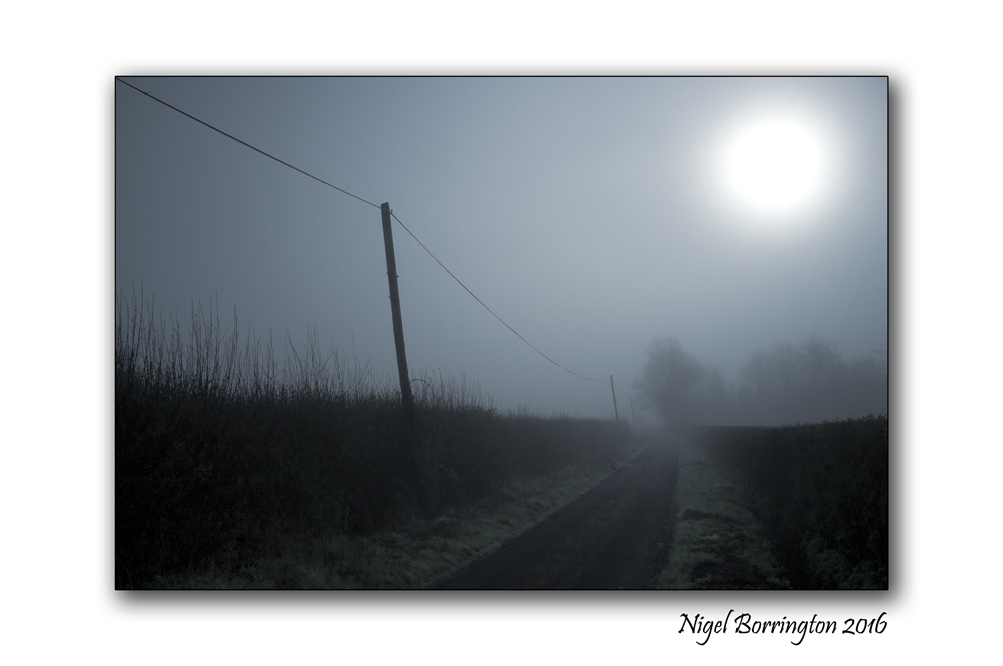
A foggy Morning Poem , 12 O’clock In the Morning

Foggy Mornings  Kilkenny Nigel Borrington

Foggy Midnight poems
Kilkenny
Nigel Borrington

12 O’clock In the Morning

Late nights are when my thoughts linger
I think too deep and begin to ponder
Why life has no purpose but to bring joy or pain
We have so much to lose but much more to gain
Many people give up too fast
Instead of living in the present, they focused on the past
These thoughts strike in the middle of the night
And they make me wonder with all of my might

Foggy Morning Kilkenny Nigel borrington 02

I haven’t lost that much
The only thing I fear is to lose all trust
Half of that is already gone
It got swept away with old love songs
My thoughts are getting foggy an hard to see
The midnight hour is the key

Jo Hello Poetry