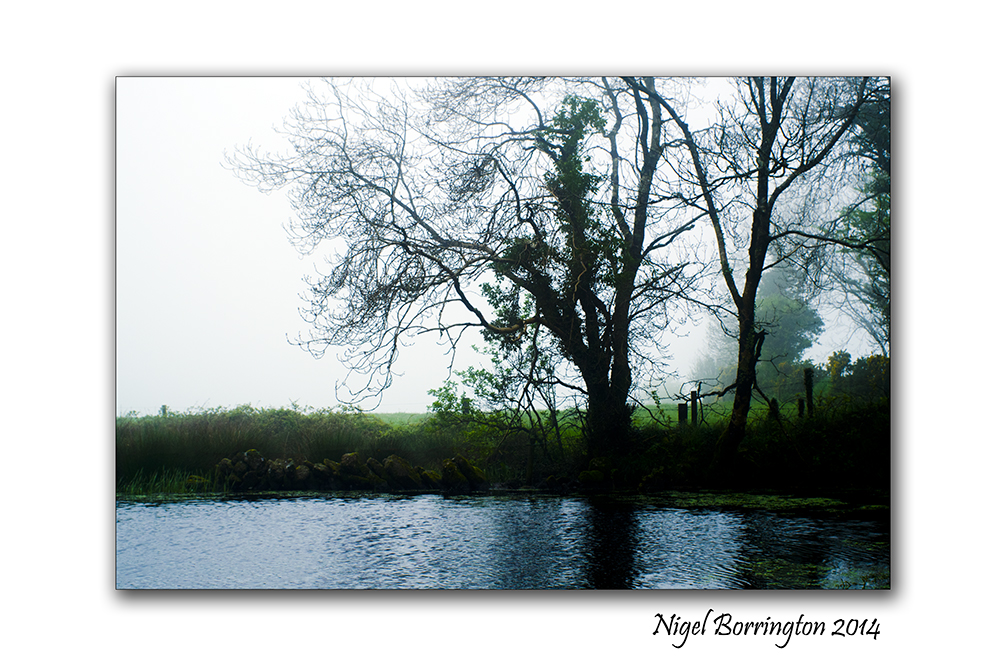
The Pond on the hill, Glencommon, County Tipperary
Landscape Photography : Nigel Borrington
The Pond
By Amy Lowell
Cold, wet leaves
Floating on moss-coloured water
And the croaking of frogs—
Cracked bell-notes in the twilight.
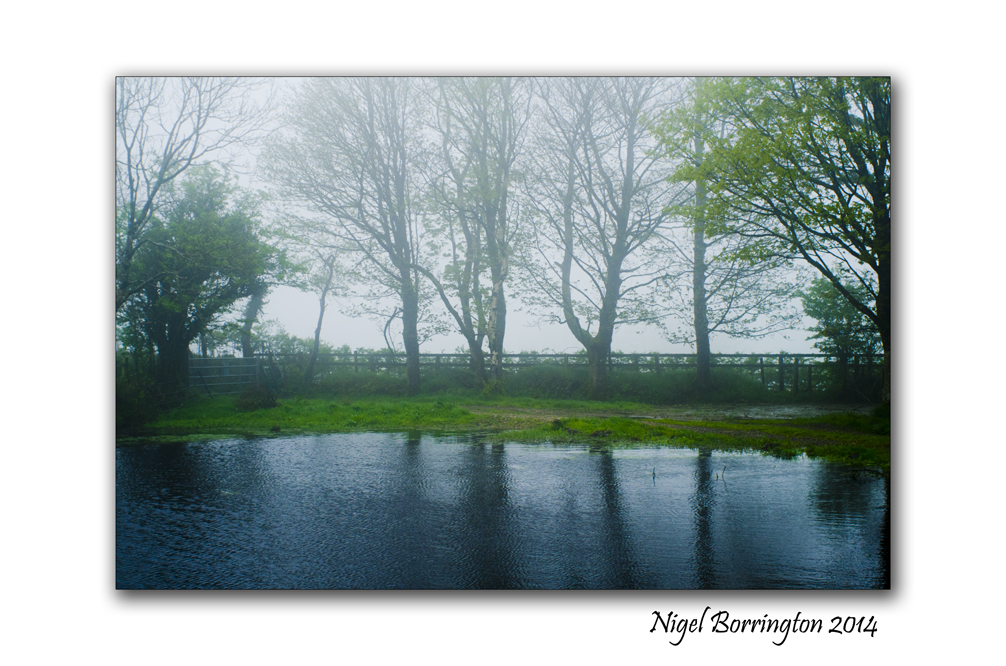
The Pond on the hill, Glencommon, County Tipperary
Landscape Photography : Nigel Borrington
The Pond
By Amy Lowell
Cold, wet leaves
Floating on moss-coloured water
And the croaking of frogs—
Cracked bell-notes in the twilight.

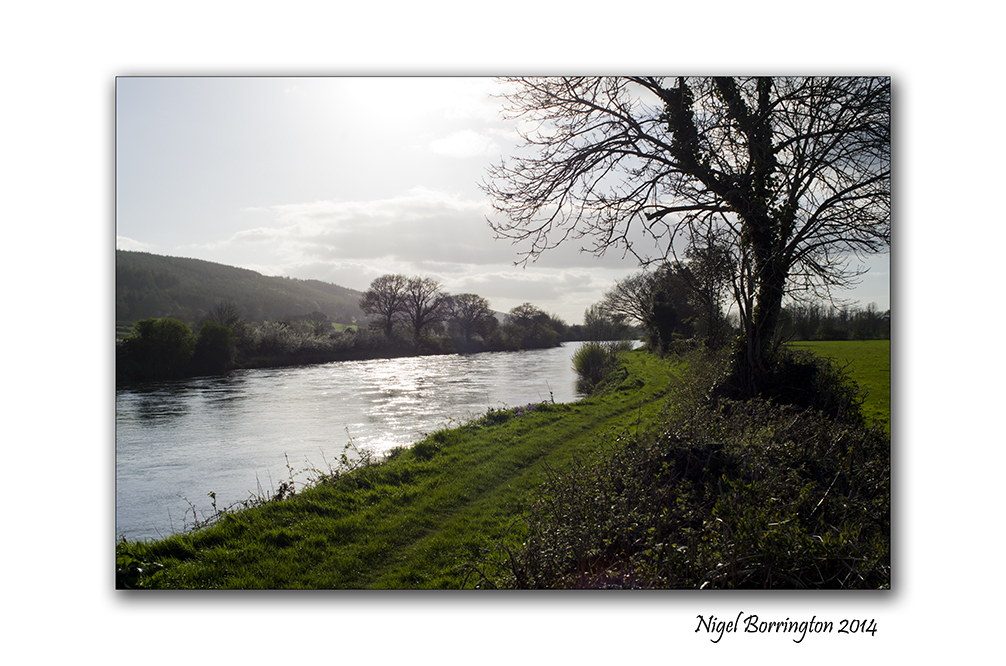
A walk along the river Suir , County Tipperary
Landscape photography : Nigel Borrington
As River flows.
By : Peter Duggan
As river flows so peacefully
I sit here just content to be
As Ravens fly so high above
This morning, it was made for love
It enters deep into my soul
It’s sweetness making me so whole
This softest morning mystery
Oh, how it reaches out to me
The trees, they dance so gracefully
They wave, and flow upon the breeze
Bird song drifts from happy branches
Oh lord, how this my heart enhances
Silence rules above all this
A kind of stillness filled with bliss
Captivates my very core
Oh, I’d not wish for any more.
The river peaceful, calm and still
So wonderful it makes me feel
As it reflects those dancing trees
I watch and let the morning breeze
Caress my skin so tenderly
Then all is gone, there’s only me
The emptiness of all that is
I’m sailing on the waves of bliss.
River Suir Image Gallery


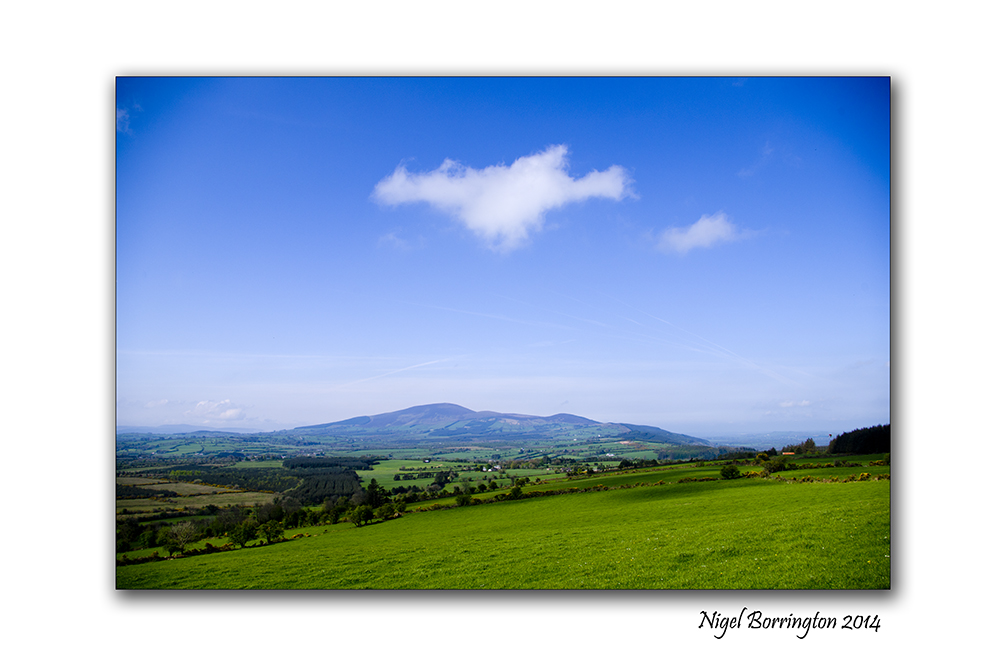
Freedom On The foothills of Slievenamon, County Tipperary
Landscape Photography : Nigel Borrington
Freedom of the Hills
By: Douglas Fraser – 1968
Mine is the freedom of the tranquil hills
When vagrant breezes bend the sinewy grass,
While sunshine on the widespread landscape spills
And light as down the fleet cloud-shadowed pass.
Mine, still, that freedom when the storm-clouds race,
Cracking their whips against defiant crags
And mists swirl boiling up from inky space
To vanish on the instant, torn to rags.
 .
.
When winter grips the mountains in a vice,
Silently stifling with its pall of snow,
Checking the streams, draping the rocks in ice,
Still to their mantled summits I would go.
Sun-drenched, I sense the message they impart;
Storm-lashed, I hear it sing through every vein;
Among the snows it whispers to my heart
“Here is your freedom. Taste – and come again.”
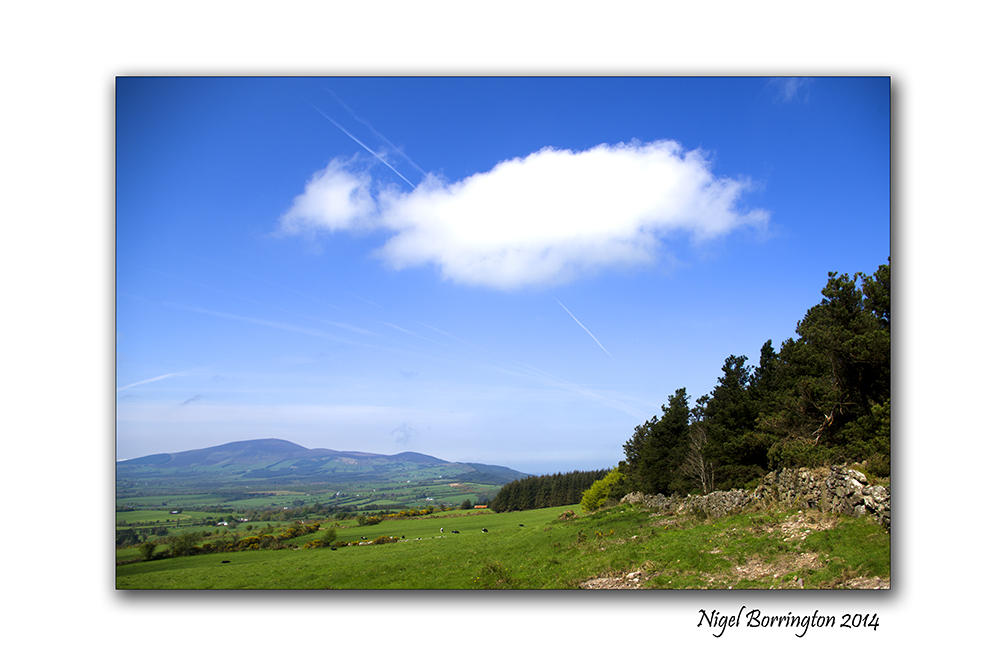

Primrose along the river Lingaun
Nature Photography : Nigel Borrington
At the end of June 2013 I posted about the “last of the Primrose” , well its hard to believe that its a full year since the first Primrose’s flowered in 2013 but these wonderful little river bank flowers are back again.
These Primrose grow beside the banks of the river Linguan as it works its way down towards the river suir, at Carrick -on-suir. I take Molly our golden retriever here for a swim in the rock pools, its a perfect place on a spring day.
I found the following information about Primrose’s :
Botanical Information
Primrose Flowers
Primroses grow on shady river banks, and in woods and hedges and are common in Ireland. The characteristic rosette of green crinkled leaves appears first in March. The flowers then come up on individual stalks and open in the month of April. The flowers have five pale yellow petals.
In some flowers the stems are very long and the centre is small – these are called thrum flowers. If on the other hand you are looking at a flower with very short stem, it is called a pin flower.
They are perennial flowers, which means that they survive from year to year and grow again every Spring without having to be planted.
Folklore
Primroses were very important to farmers long ago for their cows. The butter-making season began in May and in order to be sure that the cows would produce lots of milk for butter, primroses were rubbed on their udders. In other houses primroses were scattered on the thresholds of houses before dawn on May day to protect the butter from the fairies.
Primroses were also associated with hens and the laying of eggs. It was considered unlucky to bring primroses into the house if eggs were being hatched there.
Primroses were often gathered and given as a gift. However it was considered to be very unlucky to give just a single primrose, whereas a very full bunch would be a protection against evil spirits.
Primroses bloomed in Tír na nÓg and people returning from there in the old Irish legends always brought primroses as proof that they had been there.
In folk medicine, rubbing a toothache with a primrose leaf for two minutes would give relief from the pain. It was also widely used as a cure for jaundice.
Poem
What is a Primrose?
To the question, “what is a primrose?”
There are several valid answers
One person says,
“A primrose by the river´s brim”
A yellow plant was to him, just that.
Nothing more.
Another, a scientist, says,
“A primrose is a delicately balanced
Biochemical mechanism requiring
Potash, phosphates, nitrogen and water
In definite proportions”
A third person says they are,
“Primrose of spring from the gods”
All these statements are true.
Primrose along the river Lingaun, Gallery



Swans at Haywood house Gardens
Nature and Wildlife photography : Nigel Borrington
The Children of Lir is a very old Irish legend. The original Irish title is “Clann Lir or Leanaí Lir”, but Lir is the genitive case of Lear. Lir is more often used as the name of the character in English. The legend is part of the Irish Mythological Cycle, which consists of numerous prose tales and poems found in medieval manuscripts.
The Children of Lir
Long ago there lived a king called Lir. He lived with his wife and four children: Fionnuala, Aodh, Fiachra and Conn. They lived in a castle in the middle of a forest. When Lir’s wife died they were all very sad. After a few years Lir got married again. He married a jealous wife called Aoife.
Aoife thought that Lir loved his children more than he loved her. Aoife hated the children. Soon she thought of a plan to get rid of the children.
One summer’s day Aoife took the children to swim in a lake near the castle. The children were really happy to be playing in the water. Suddenly Aoife took out a magic wand. There was a flash of light and the children were nowhere to be seen. All there was to be seen was four beautiful swans, with their feathers as white as snow.
Aoife said, “I have put you under a spell. You will be swans for nine hundred years,” she cackled. “You will spend three hundred years in Lough Derravaragh, three hundred years in the Sea of Moyle and three hundred years in the waters of Inish Glora,” Aoife said. She also said, “You will remain swans for nine hundred years until you hear the ring of a Christian bell.”
She went back to the castle and told Lir that his children had drowned. Lir was so sad he started crying. He rushed down to the lake and saw no children. He saw only four beautiful swans.
One of them spoke to him. It was Fionnuala who spoke to him. She told him what Aoife had done to them. Lir got very angry and turned Aoife into an ugly moth. When Lir died the children were very sad. When the time came they moved to the Sea of Moyle.
Soon the time came for their final journey. When they reached Inish Glora they were very tired. Early one morning they heard the sound of a Christian bell. They were so happy that they were human again. The monk (some even say it was St. Patrick himself) sprinkled holy water on them and then Fionnuala put her arms around her brothers and then the four of them fell on the ground. The monk buried them in one grave. That night he dreamed he saw four swans flying up through the clouds. He knew the children of Lir were with their mother and father.

A Damselfly along the Kings river,
County Kilkenny,
Nature and Wildlife Photography : Nigel Borrington
Damselfly
By : Sara Nummenpää
you’ve swept me away
in your rivers,
completely.
do you know you steal my breath?
I can’t help it, I surrender
to you, so
surround me, encompass me,
cover me with your skin,
your flesh and wings;
lead me, I know you can.
lead me,
for just a while, and
I’ll lead you,
follow you,
until you find
what you are looking for.
 .
.
I am yours to break.
and if you ever want
to forget me for a while,
to lead me no longer –
that is okay,
for you’ve loved me once,
and that is enough.

Kilmogue Portal Tomb, county KIlkenny
Irish Landscape photography : Nigel Borrington
Kilmogue Portal Tomb
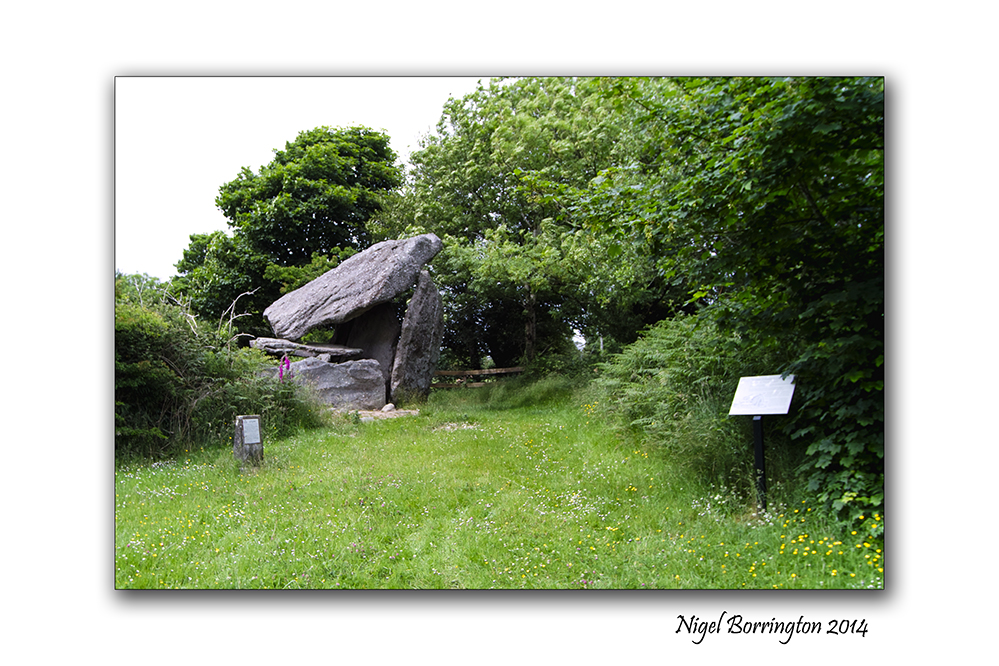
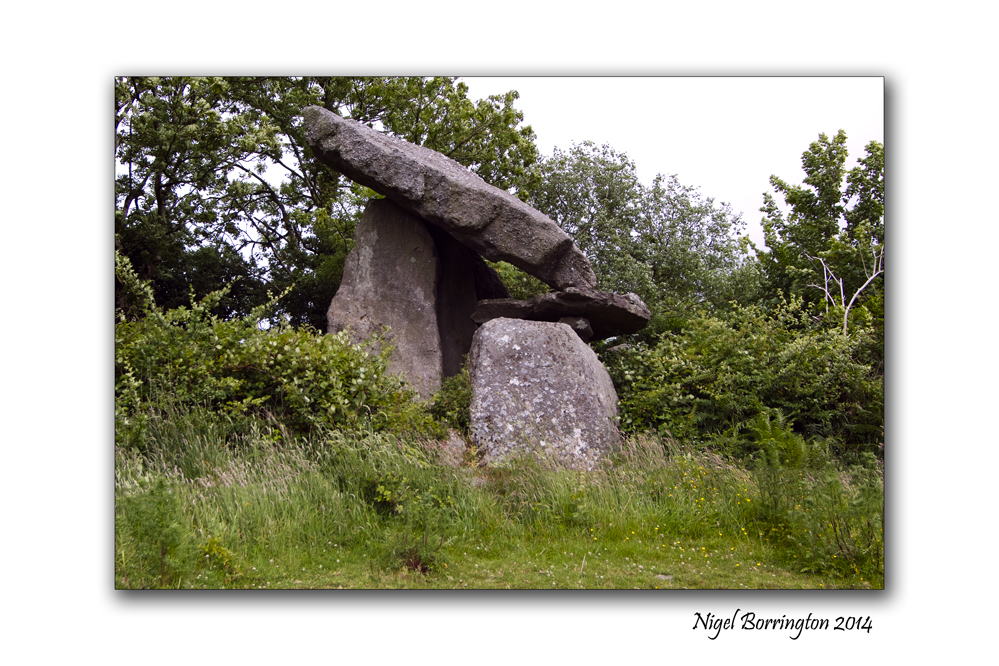
Sitting at the end of a short path near Harristown, county kilkenny, is a six thousand year old tomb, know nationally at the Kilmogue Portal Tomb but locally as, “Leac an Scail” – stone of the warrior/hero in English.
I have visited the site many times and I still find it an amazing location, the site has a sign placed near it that you can see below. It clearly states that the site has never been officially excavated, as is the case for many of these locations in Ireland. From evidence of Tombs constructed in exactly the same way around the European continent it is thought to be some six thousand years old. To put this in context , the great pyramids in Egypt were constructed around 2560 BC, so this tomb is some 1500 years older.
The tomb is constructed with a very large cap stone and side walls and it is hard to imagine just how the cap stone was lifted into place. The stones that can still be witnessed here would however have been surround by a mount of earth that has been long removed or washed away by six thousand years of rain. This earth mount would have been large maybe some 20 meters in diameter. It was likely then that the walls of the tomb were put in place first and supported with wood, then the earth mound constructed and finally the large cap stone rolled up the sides into its place and covered with more earth on top.
It is not known who’s tomb this was but the person buried here must have been considered very important in this Neolithic community, and the tomb would have acted as a place of memory for them and as was the tradition at the time the community would have held ceremonies here.
Each time I have visited I wonder just what these people where like, they were clearly pagan in their beliefs and very close to their surroundings and its nature. Life would have been completely different from the life we know, they lived and moved to the cycles of the seasons, they eat and lived from the wildlife and nature that surrounded them, in some season they would have little food. They most likely had Gods and figure heads yet we have a tendency to place our own modern religious understanding on-to what this meant to them.
It is likely that their Gods were Mythical in nature and derived from memories of real people who Mythically they created with different elements and forces of life and nature that affected the lives they lived.
List wikipedia page lists some of these Gods and Goddesses and shows the forces in life and nature that they related to.
I hope that the images below relate the Tomb and its location, the surrounding Landscape is very rural and one of county Kilkennys biggest dairy farming areas.
Leac an Scail, Image Gallery





The Passage Tomb of , Olioll Olum ( Died 234), Galbally Limerick
Irish Landscape Photography : Nigel Borrington
Irish Passage Tombs
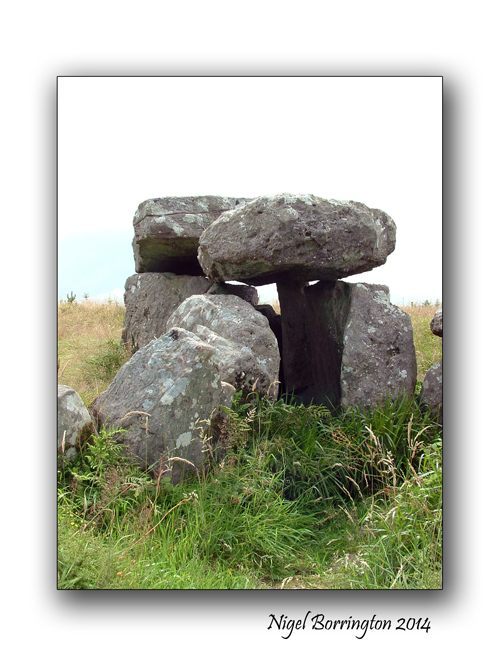
Located on the side of Duntryleague Hill, County Limerick and the westerly extension of Slievenamuc hill is a passage tomb. The Tomb was constructed for Olioll Olum, one of the early Kings of Munster.
The name Duntryleague is derived from Dún-Trí-Liag, meaning the fort of three pillar stones. Diarmuid and Gráinne are also said to have rested here in their flight from the angry Fionn Mac CumhaillWell.
The route through the forest leading to the burial ground is accessible and leads to this amazing rock structure of the tomb. There is one enormous rock slab resting steadily across a number of famous cairns which measures approximately 25m north -south and 22m east-west. Continuing on from the cairn you come across many natural viewing points which extend over the terrain of west Limerick.
Olioll Olum, was a King of Munster, who died in 234, he is said to have been progenitor of most of the great families of the south of Ireland. He married Sabia, daughter of Con of the Hundred Battles, ruler of the north of Ireland.
He willed that after his death the sovereignty of Munster should vest alternately in the descendants of his son Eoghan Mor (the Eugenians, or Eoganachts, occupying the southern part of Munster), and those of his son Cormac Cas (the Dalcassians, occupying the northern part of the same province).
The images below include some landscapes of the surrounding mountains, this is not a bad place to be laid to rest.
Gallery of a Passage Tomb




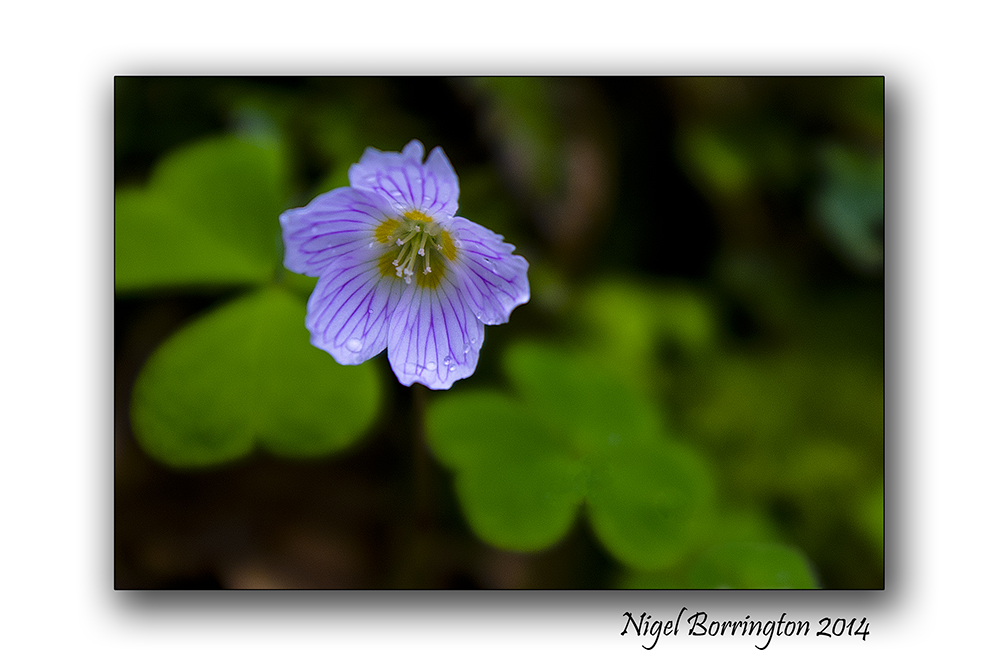
Wild woodland Sorrel, Glenbower, Owning, county kilkenny
Irish Nature photography Nigel Borrington
In a Sleepy Hollow, Wild Sorrel grows
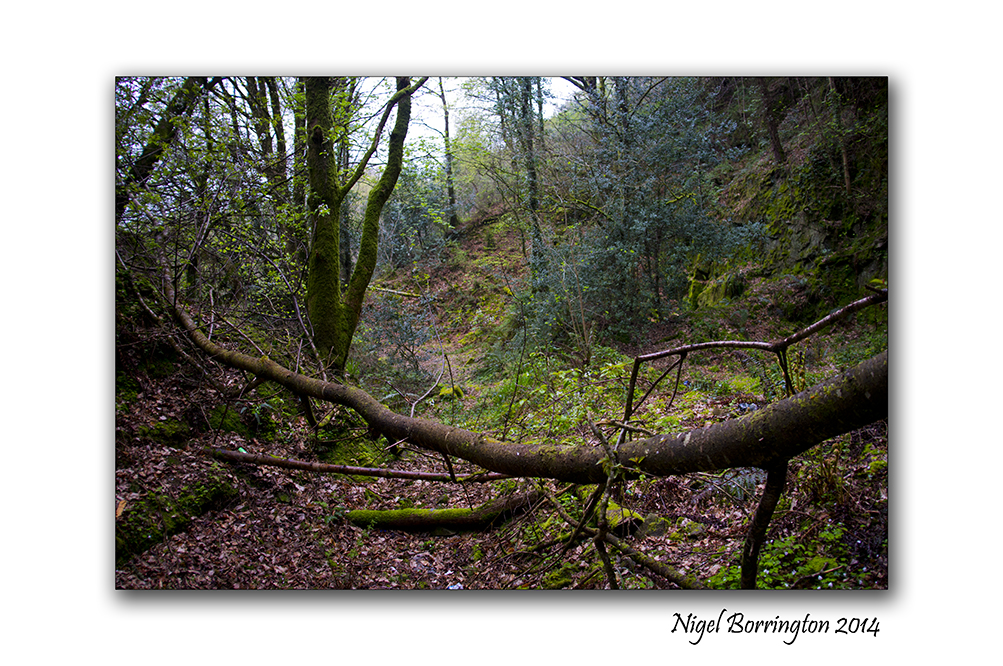
Glenbower woodlands is located near the village of owning in the south of county Kilkenn. In the middle of the wood is located a deep and very sleepy hollow, in winter the hollow is covered in fallen leaves from the trees that are located on the very edges of cliffs above.
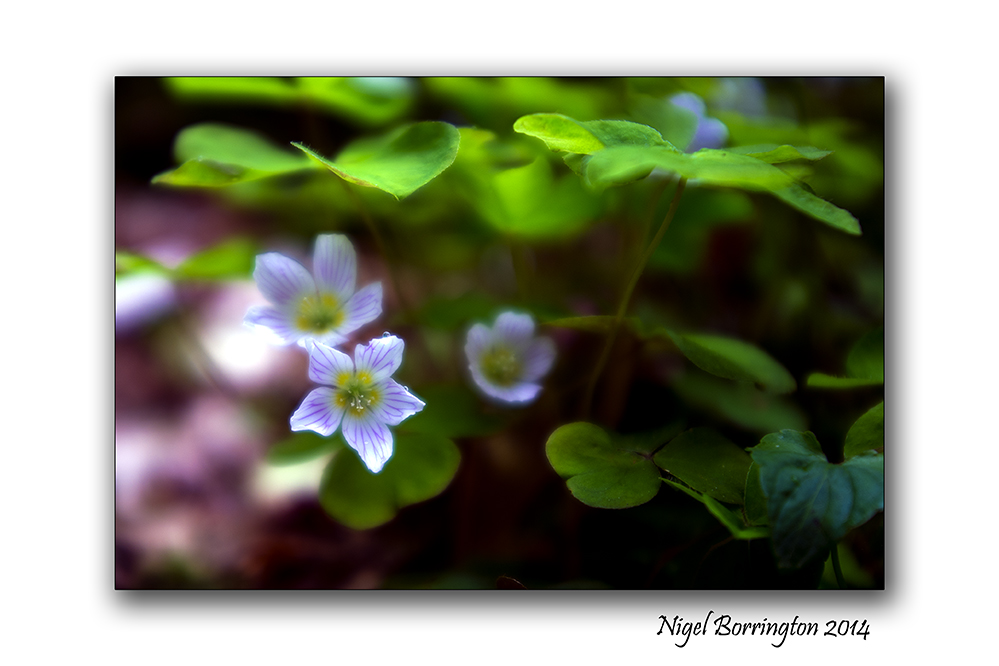
Spring time however brings new life with fox dens located in the cliffs and a carpet of ferns and Wild woodland Sorrel with its many white and purple flowers.
Sorrel is found carpeting many Irish old, undisturbed woodlands in spring, this pretty downy perennial also grows on moss-covered trees and shady stone walls and is widespread throughout the country.
Each pretty white flower has five petals, bell-shaped some (10 – 15 mm), held on a stem which comes directly from the roots. The petals are lined with a tracery of purple veins through to the golden centre of the flower. The three petalled heart-shaped leafs fold up towards late afternoon or in rain as do the fragile flowers.
They Can be eaten and have a sharp taste of oxalic acid, wonderful with salads and as a garnish. The flowers blooms from April to June.
Wild Sorrel is a native plant to Ireland and belongs to the family Oxalidaceae.
Sleepy Hollow Image Gallery




 Nigel Borrington
You must be logged in to post a comment.