
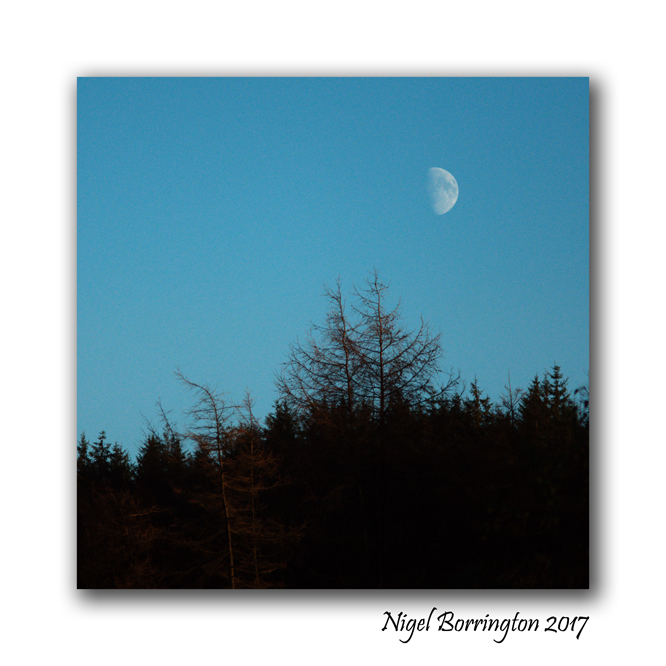
Four Poems about Autumn (Katherine Towers,Emily Brontë, Robert Louis Stevenson and Robert Frost)
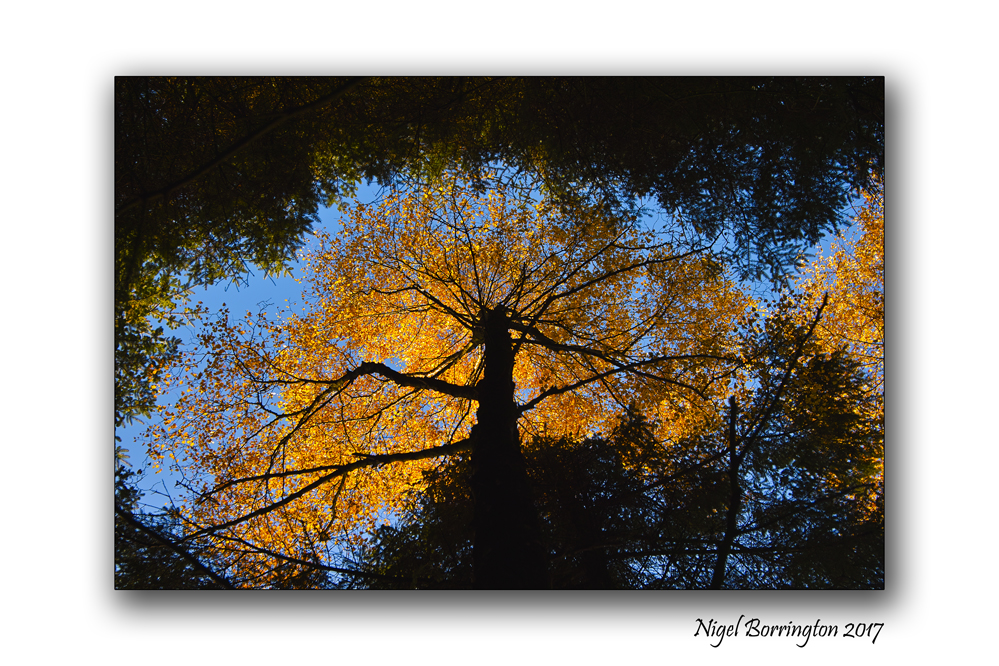
Whim Wood
Katherine Towers
into the coppery halls
of beech and intricate oak
to be close to the trees
as they whisper together
let fall their leaves,
and we die for the winter
From Katherine Towers’ The Remedies

Emily Brontë
Fall, leaves, fall; die, flowers, away;
Lengthen night and shorten day;
Every leaf speaks bliss to me
Fluttering from the autumn tree.
I shall smile when wreaths of snow
Blossom where the rose should grow;
I shall sing when night’s decay
Ushers in a drearier day.

Autumn Fires
Robert Louis Stevenson
In the other gardens
And all up in the vale,
From the autumn bonfires
See the smoke trail!
Pleasant summer over,
And all the summer flowers,
The red fire blazes,
The grey smoke towers.
Sing a song of seasons!
Something bright in all!
Flowers in the summer,
Fires in the fall!

Nothing Gold Can Stay
Robert Frost
Nature’s first green is gold,
Her hardest hue to hold.
Her early leaf’s a flower;
But only so an hour.
Then leaf subsides to leaf.
So Eden sank to grief,
So dawn goes down to day.
Nothing gold can stay.
5 Images for the week, Friday.
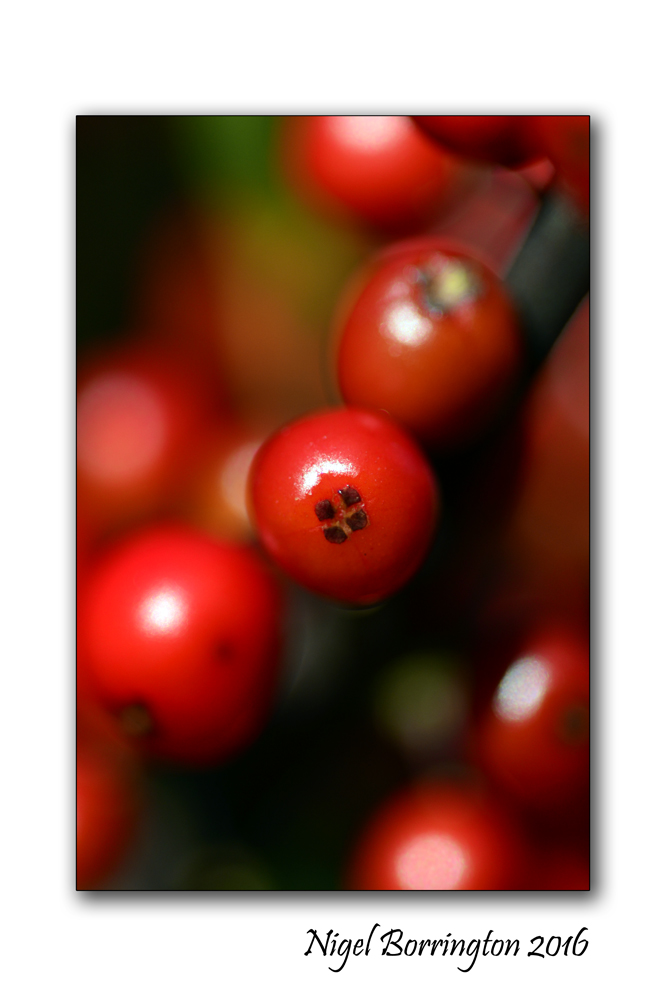
Evergreen trees
Holly tree berries
Nature photography Nigel borrington
5 Images for the week, Wednesday, Wild Woodbine with a poem by – Joan McBreen

Wild flowers
wild woodbine
nigel borrington
Wild woodbine was beyond my reach
in the thick hedges round Lough Gill.
The heavy scent filled the house for days
when my father brought it in
and it stayed fresh far longer
then meadowsweet.
Because I loved the delicate
pink and white wild rose
he picked it too, cursing the thorns, muttering
“it dies too soon,
you’d be better leaving it alone”.
Yet once, when my mother
swept its petals from the floor
I saw him rescue one
and place it carefully
in the small wallet
where he kept her photograph.
Friday 1st September a Poem by : T. S. Eliot, Four Quartets, East Coker No. 2, 1, 1940

Black and white Landscapes, County Tipperary, fields, 2017 Nigel Borrington
In that open field
If you do not come too close, if you do not come too close,
On a summer midnight, you can hear the music
Of the weak pipe and the little drum
And see them dancing around the bonfire
The association of man and woman
In daunsinge, signifying matrimonie—
A dignified and commodiois sacrament.
Two and two, necessarye coniunction,
Holding eche other by the hand or the arm
Whiche betokeneth concorde. Round and round the fire
Leaping through the flames, or joined in circles,
Rustically solemn or in rustic laughter
Lifting heavy feet in clumsy shoes,

Earth feet, loam feet, lifted in country mirth
Mirth of those long since under earth
Nourishing the corn. Keeping time,
Keeping the rhythm in their dancing
As in their living in the living seasons
The time of the seasons and the constellations
The time of milking and the time of harvest
The time of the coupling of man and woman
And that of beasts. Feet rising and falling.
Eating and drinking. Dung and death.

Dawn points, and another day
Prepares for heat and silence. Out at sea the dawn wind
Wrinkles and slides. I am here
Or there, or elsewhere. In my beginning.”
– T. S. Eliot, Four Quartets, East Coker No. 2, 1, 1940
On Contemplating a Sheep’s Skull ~ Poem by: John Kinsella

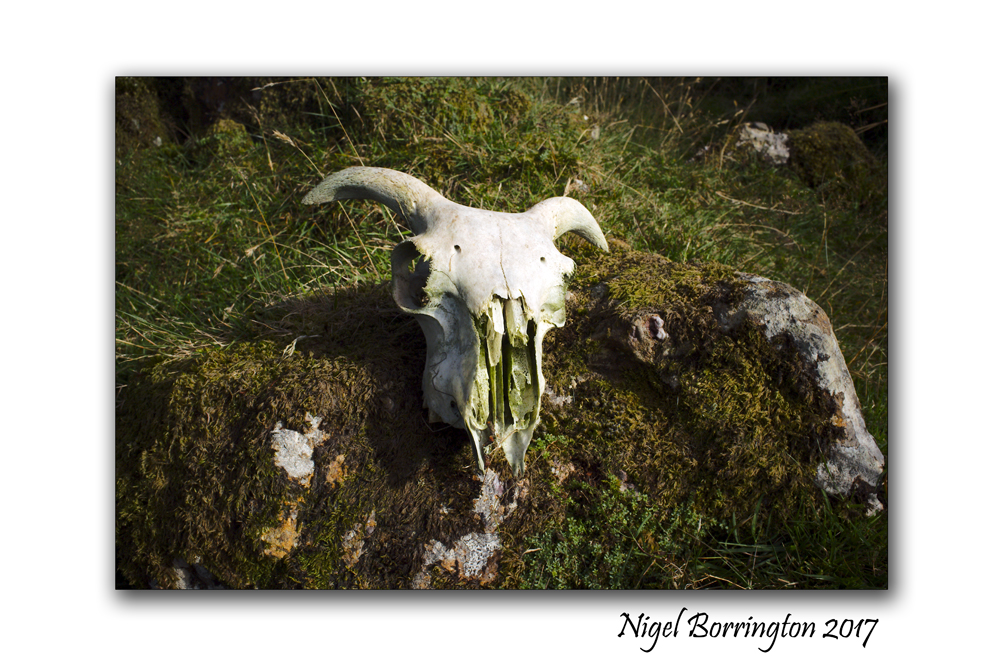
Sheeps skull
Nigel Borrington
On Contemplating a Sheep’s Skull
Poem by John Kinsella
A sheep’s Skull aged so much in rain and heat,
broken jawbone and chipped teeth half-
gnaw soil; zippered fuse-mark tracks
back to front, runs through to base
of neck, widening faultline under
stress: final crack close at hand.
Skull I can’t bring myself to move.
White-out red soil unearthed
from hillside fox den and cat haven,
now hideaway for short-beaked echidna
toppling rocks and stones, disrupting
artfulness a spirit might impose,
frisson at seeing counterpoint.
Skull I can’t bring myself to move.
Sometimes avoid the spot to avoid
looking half-hearted into its sole
remaining eye socket; mentally to join
bones strewn downhill, come apart
or torn from mountings years before
arriving with good intentions.
Skull I can’t bring myself to move.
Not something you can ‘clean up’,
shape of skull is not a measure of all
it contained: weight of light and dark,
scales of sound, vast and varied taste
of all grass eaten from these hills;
slow and steady gnawing at soil.
Skull I can’t bring myself to move.

Neither herbivore nor carnivore,
earth and sky-eater, fire in its shout
or whisper, racing through to leave a bed
of ash on which the mind might rest,
drinking sun and light and smoke,
choked up with experience.
Skull I can’t bring myself to move.
Drawn to examine
despite aversion, consider
our head on its shoulders,
drawn expression
greeting loved ones
with arms outstretched.
John Kinsella is Founding editor of the journal Salt in Australia; he serves as international editor at the Kenyon Review. His most recent volume of poetry is Divine Comedy: Journeys through a Regional Geography (W. W. Norton) with a new volume, Disturbed Ground: Jam Tree Gully/Walden, due out with W.W. Norton in November 2011.
Friday Poetry : The Genesis of the Butterfly, by Victor Hugo
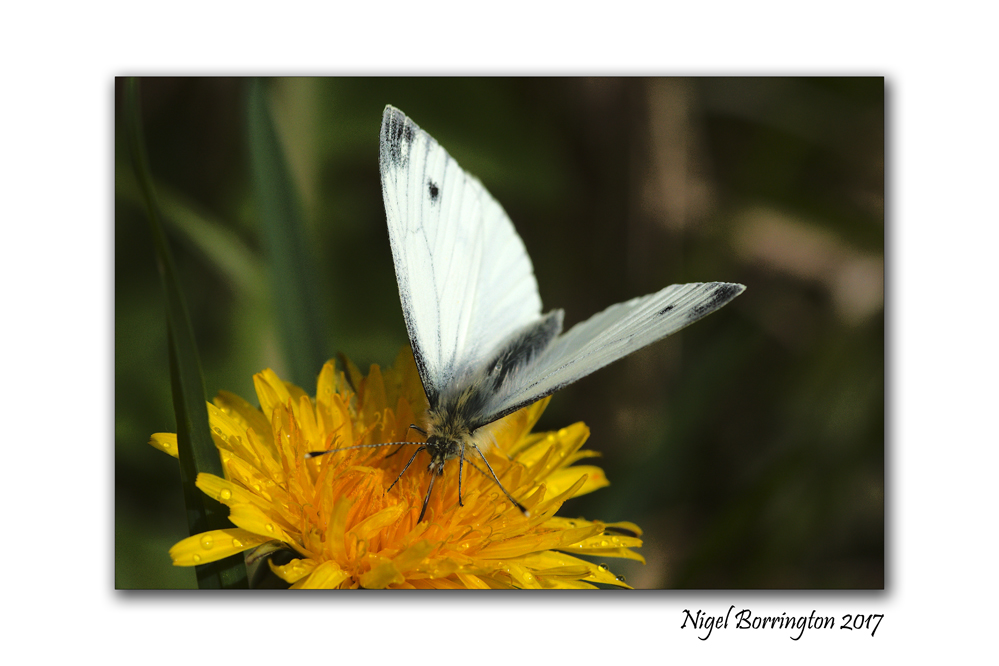
The Genesis of the Butterfly
Nature Photography
Nigel Borrington
The dawn is smiling on the dew that covers
The tearful roses; lo, the little lovers
That kiss the buds, and all the flutterings
In jasmine bloom, and privet, of white wings,
That go and come, and fly, and peep and hide,
With muffled music, murmured far and wide.
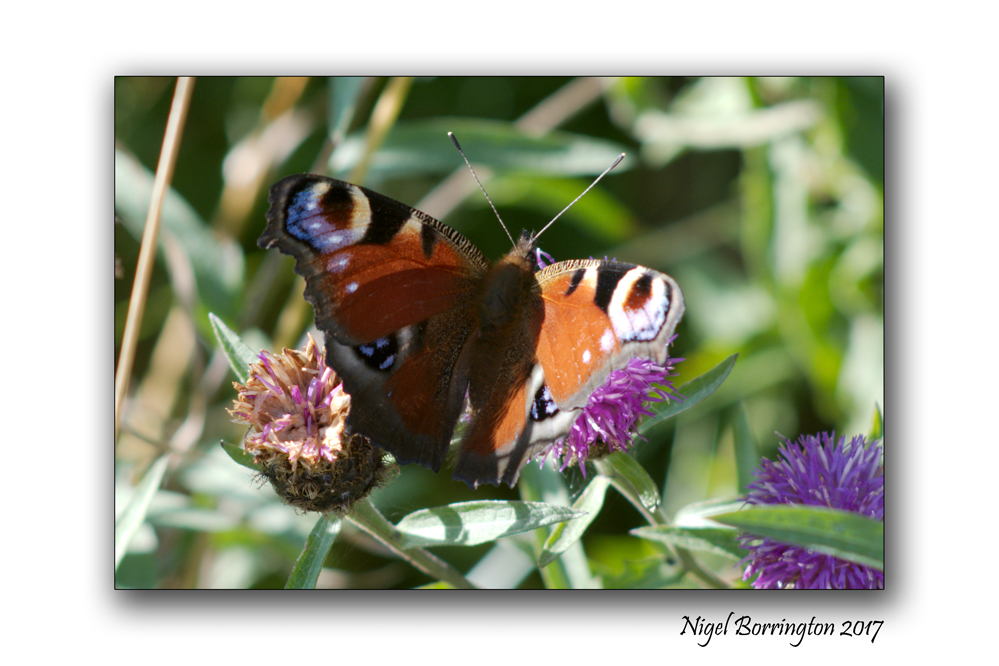
Ah, the Spring time, when we think of all the lays
That dreamy lovers send to dreamy mays,
Of the fond hearts within a billet bound,
Of all the soft silk paper that pens wound,
The messages of love that mortals write
Filled with intoxication of delight,
Written in April and before the May time
Shredded and flown, playthings for the wind’s playtime,
We dream that all white butterflies above,
Who seek through clouds or waters souls to love,
And leave their lady mistress in despair,
To flit to flowers, as kinder and more fair,
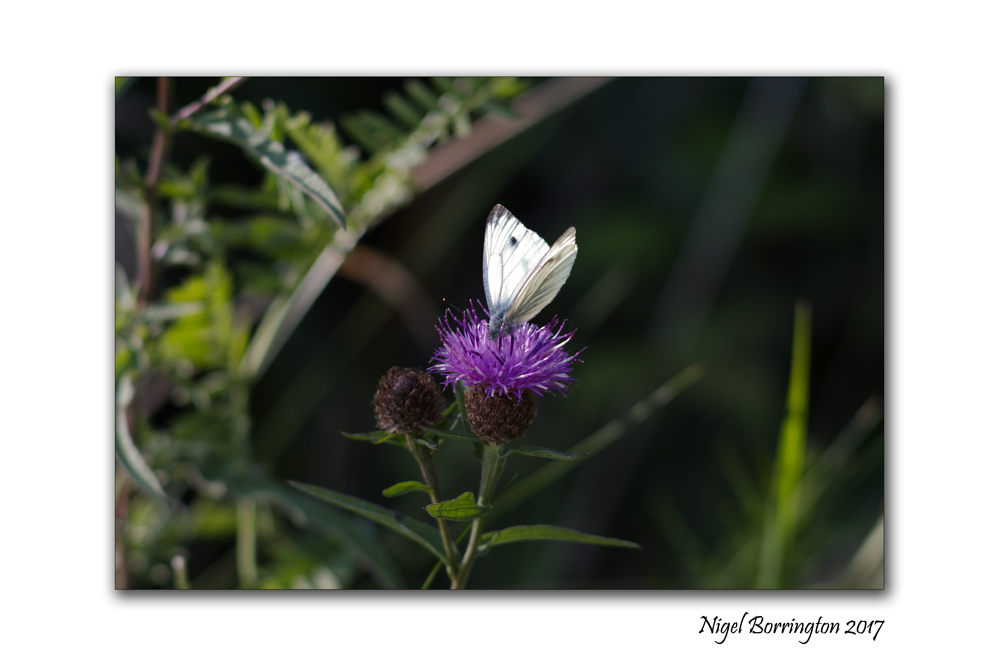
Are but torn love-letters, that through the skies
Flutter, and float, and change to butterflies
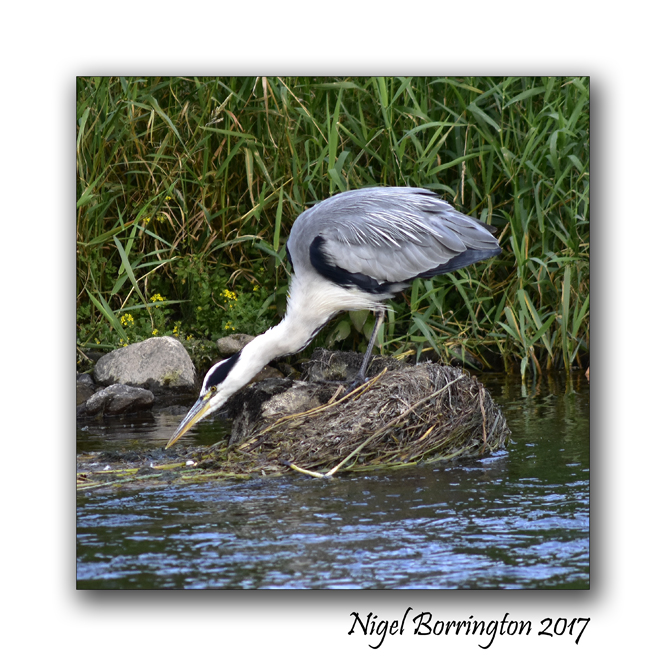
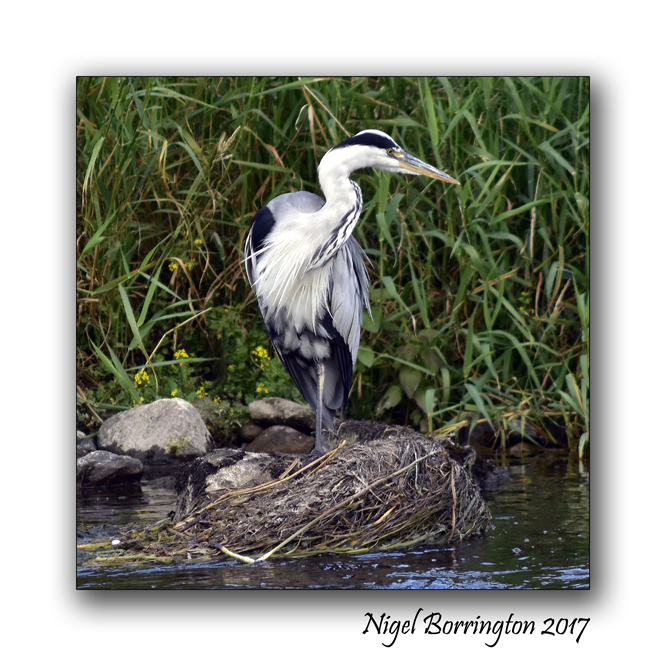
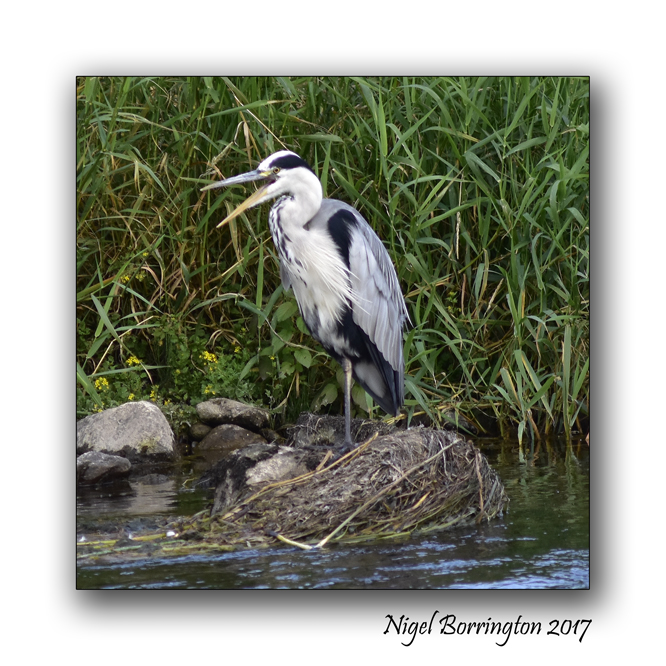
Monday Wildlife : A Heron on a stone, River Suir, County Tipperary

Wildlife Images
A Heron, resting and hunting
River Suir, Tipperary
A Seven image study of a Heron as it rests and hunts for Fish, standing on a stone at the river bank ……



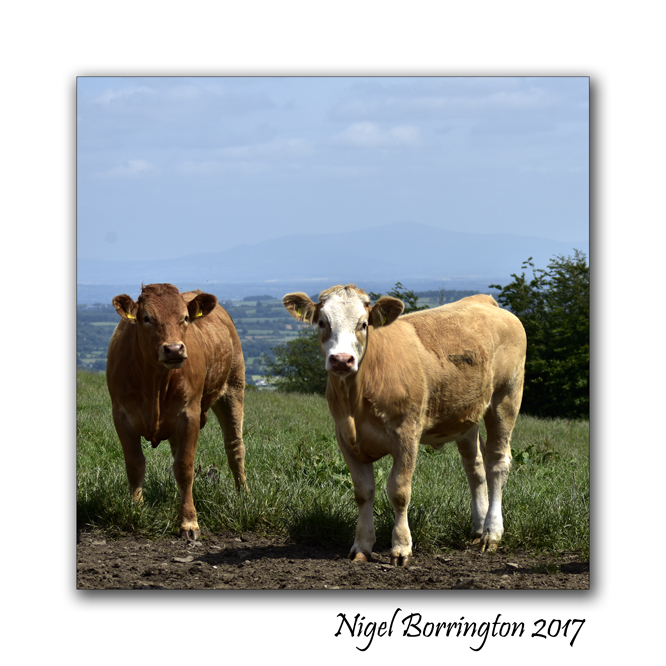
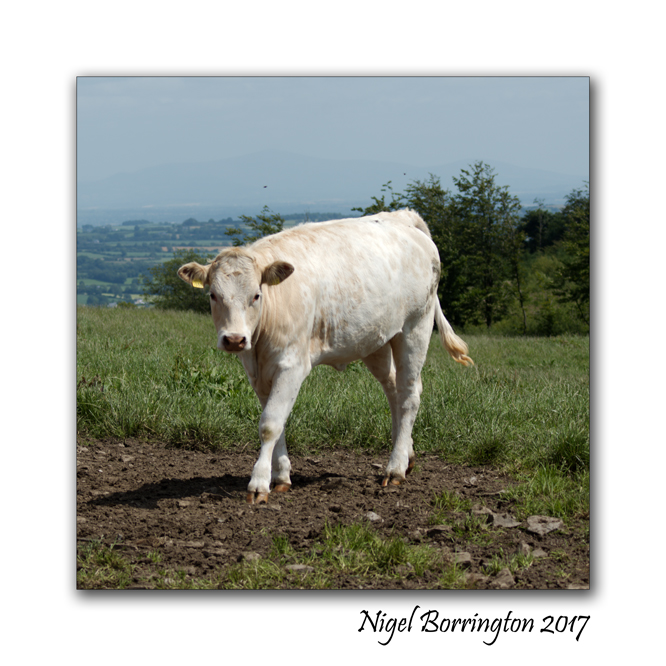
The Farming landscape of county Kilkenny : Cows, Bulls and a field with a view …..
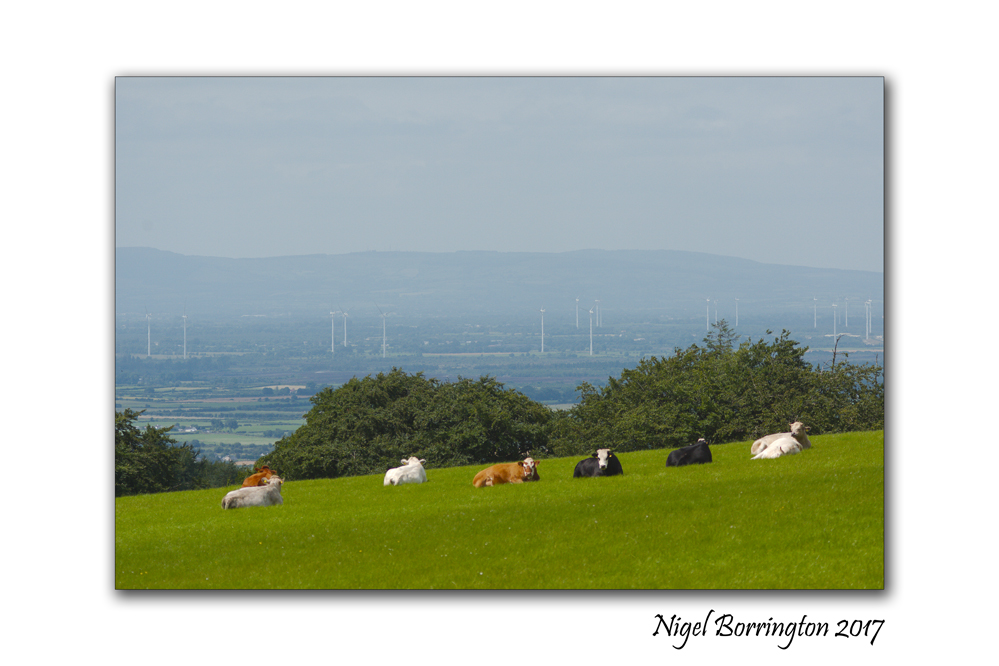
Farming landscapes Grange hills
kilkenny County Kilkenny
Nigel Borrington
The Hills above Grange in County Killkenny, offer some of the most stunning landscape views in the county, here you are looking across the boarder into county Tipperary.
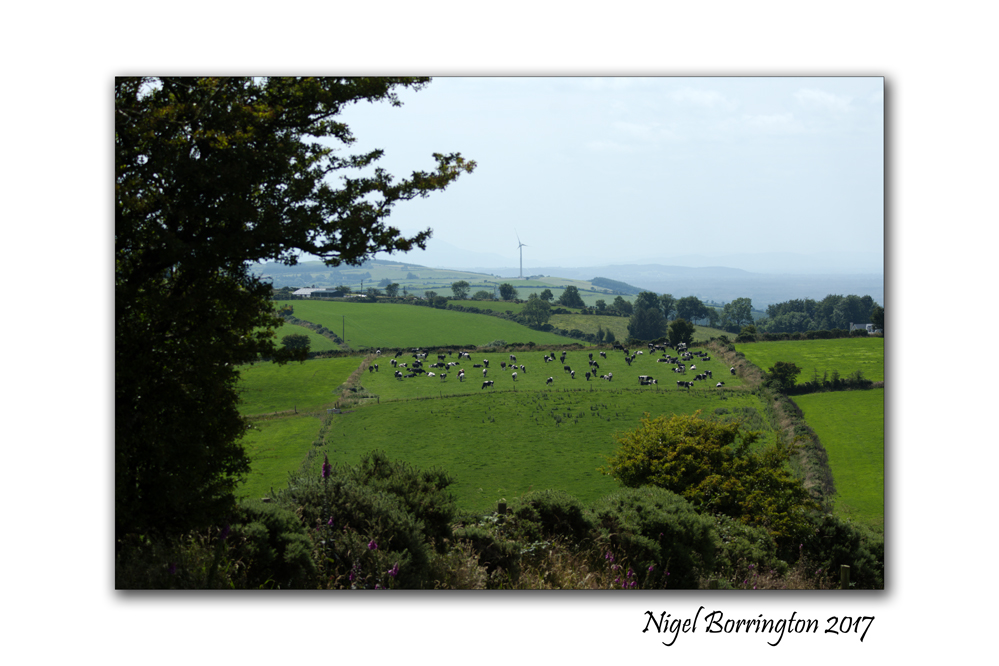
The day I took the following images I had been walking for a little while when I took a rest at a gate, there is that moment in the county when you see some cows resting on a sunny morning and they spot you from a distance. It only take a little time before they all stand and walk over to the gate, I think they are wondering if your the farmer and it time for their feed. Sadly for them I was not and all I could do for them was take some pictures of them to share on WordPress 🙂 🙂



The Heron, A poem by : Linda Hogan
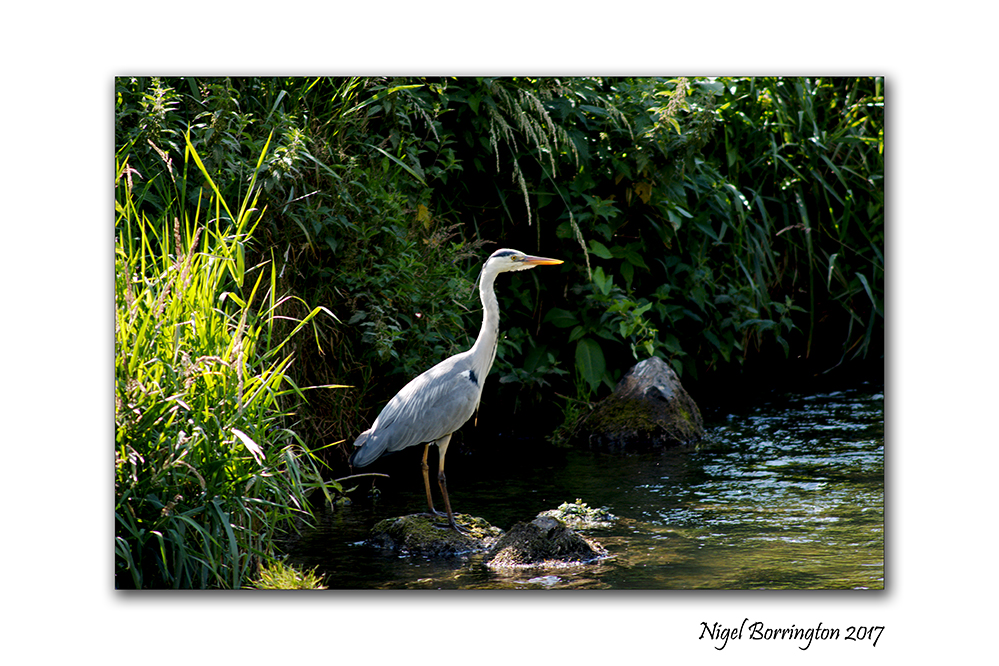
A Heron, hunting
Kings river
Kells
County Kilkenny
Nigel Borrington
The Heron
Linda Hogan
I am always watching
the single heron at its place
alone at water, its open eye,
one leg lifted
or wading without seeming to move.
It is a mystery seen
but never touched
until this morning
when I lift it from its side
where it lays breathing.
I know the beak that could attack,
that unwavering golden eye
seeing me, my own saying I am harmless,
but if I had that eye, nothing would be safe.
The claws hold tight my hand,
its dun-brown feathers, and the gray
so perfectly laid down.
The bird is more beautiful
than my hand, skin more graceful
than my foot, my own dark eye
so much more vulnerable,
the heart beating quickly,
its own language speaking,
You could kill me or help me.
I know you and I have no choice
but to give myself up
and in whatever supremacy of this moment,
hold your human hand
with my bent claws.
County Kilkenny Landscape photography in Black and white, Kyle, coolagh, Kilkenny

Black and white Landscapes
Kyle, county Kilkenny June 2017
Nigel Borrington
They say that some animals see the world in black and white , I would love to be able to switch this ability on and off when out and about with my Nikon, you can see the results of taking a shot in black and white very quickly on the back of the camera but having the ability to view the world in-front of you in monochrome would be a perfect gift for many photographers, even more so if you love the light that can be captured using only the shades from white to black.
This image was taken a while back, one early spring morning while out for a walk, up a lane that passed through a local community of special needs people near Callan, county Kilkenny. It was a foggy morning but by the time of this shot a lot of the mist had lifted. the atmosphere was wonderful.
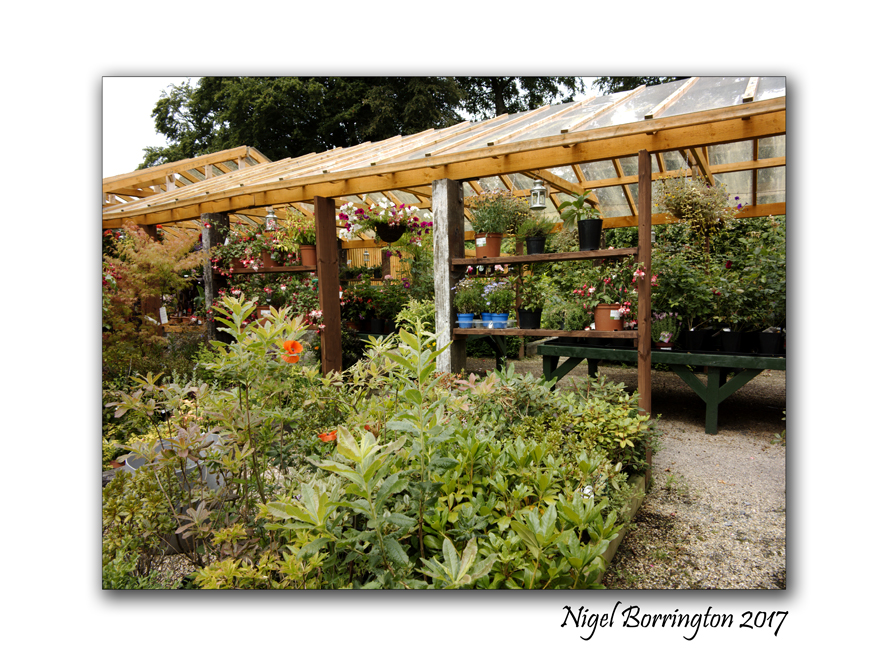
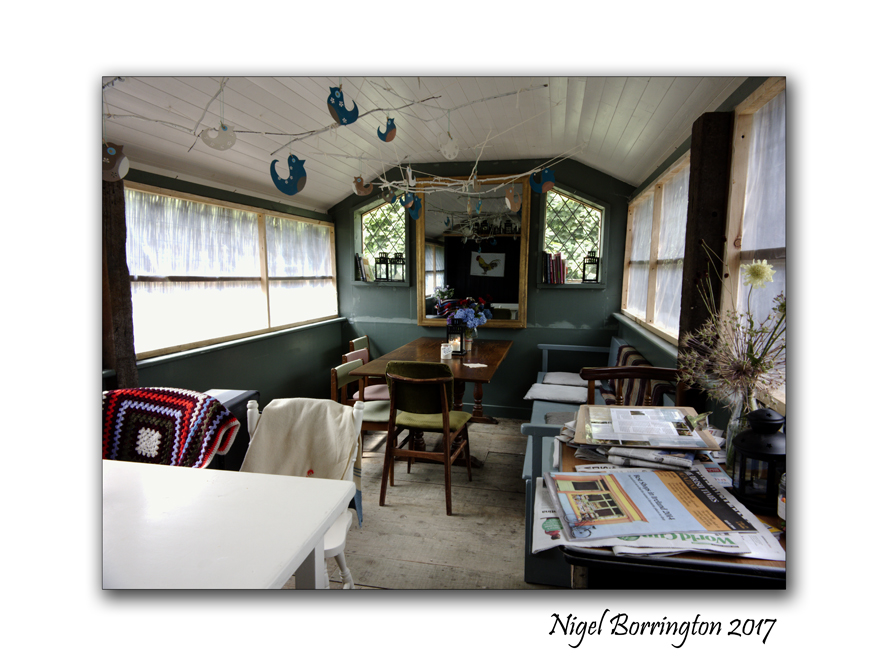
Wednesday at the gardens : Altamont Gardens, County Carlow
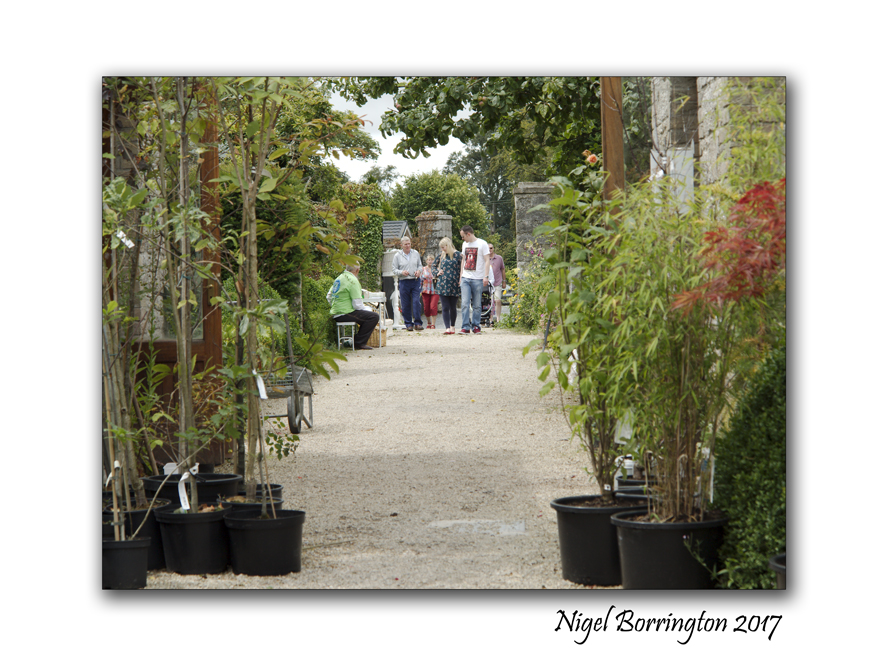
Altamont Gardens
Carlow
Ireland
With the aim of shopping for some new summer plants and flowers for the garden, today I spent sometime at Altamont Gardens, county Carlow.
This is a fantastic house and gardens with a great garden center, the staff know a great deal about the kind of plants that will grow well locally.
A great way to spend the afternoon, looking and plants, walking around the grounds and finally and cup of tea and cake in the little cafe …..


Native Irish Wild flowers, Early Marsh Orchid , Ballykeefe, county Kilkenny
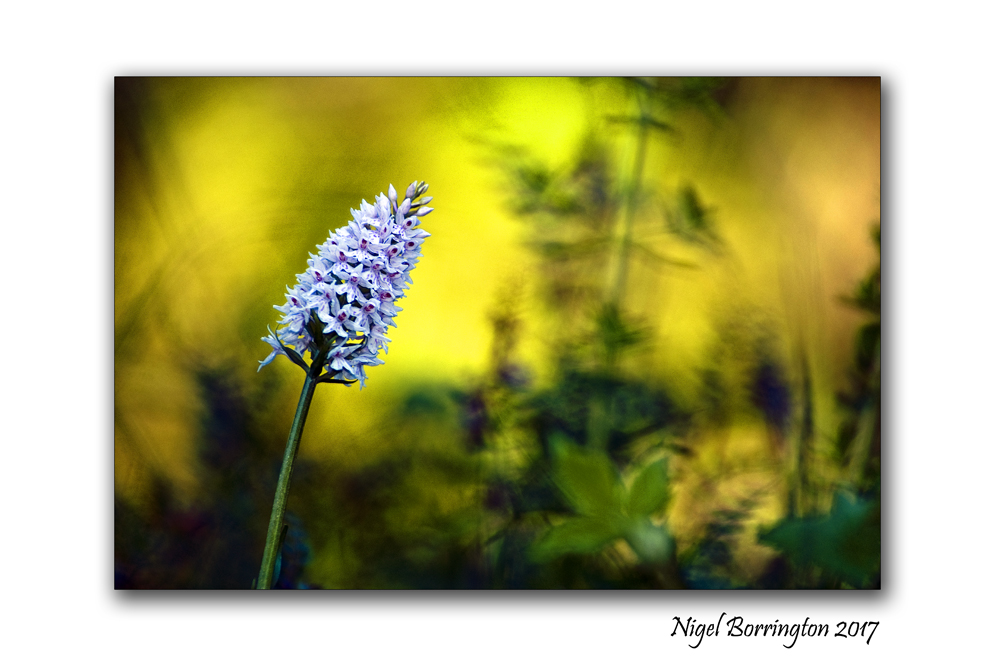
Early Marsh Orchid
Dactylorhiza incarnata
Magairlín mór
Family: Orchidaceae
Ballykeeffe, Kilkenny
Nigel Borrington
Flowering May-July. Tuberous perennial. Native.
Flowers usually white, pink or purple. (Ssp. coccinea has reddish flowers.)
Narrow, cylindrical flower-spike, lower bracts longer than flowers. Sides of lip strongly reflexed, weakly 3-lobed, 2 U-shaped loops enclosing dotted patches. Leaves erect, keeled, usually unspotted. (Ssp. cruenta, leaves spotted both sides) Hollow stem. Very variable, links to subspecies below. Identifications by Ian Denholm
Damp calcareous soils, meadows, fens, marshes, dune-slacks. Also slightly acidic bogs, damp heaths. Declining due to habitat loss.
Nature without words (Woodcock Butterfly) a moment in the sun

macro photography
Woodcock Butterfly
Nigel Borrington
Nature without words (Bumble bees)- Solo images (Ballykeefe nature reserve, county Kilkenny)

A bumble bee collecting nectar
Ballykeefe nature reserve
County Kilkenny
Nigel Borrington
Nature without words – Solo images (Ballykeefe nature reserve, county Kilkenny)
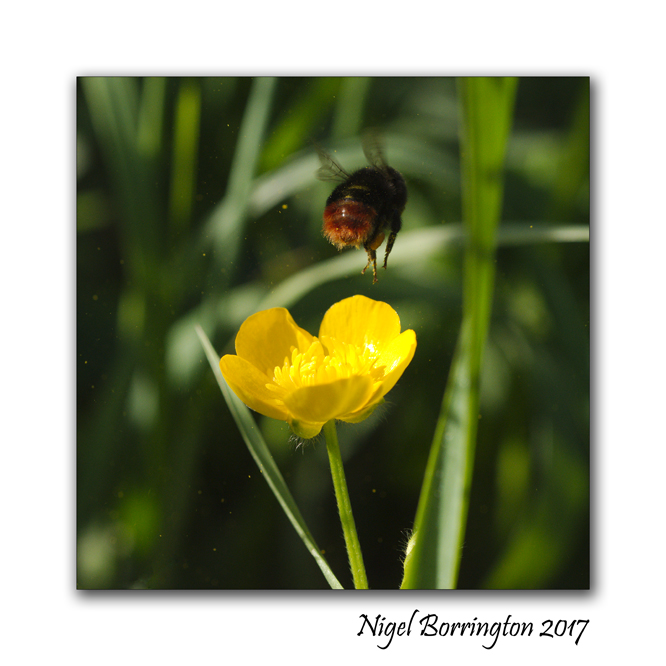
A bumble bee in flight
Ballykeefe nature reserve
County Kilkenny
Nigel Borrington
Hairy Wood Ants (Formica lugubris) photographic project

Hairy Wood Ants (Formica lugubris) photographic project
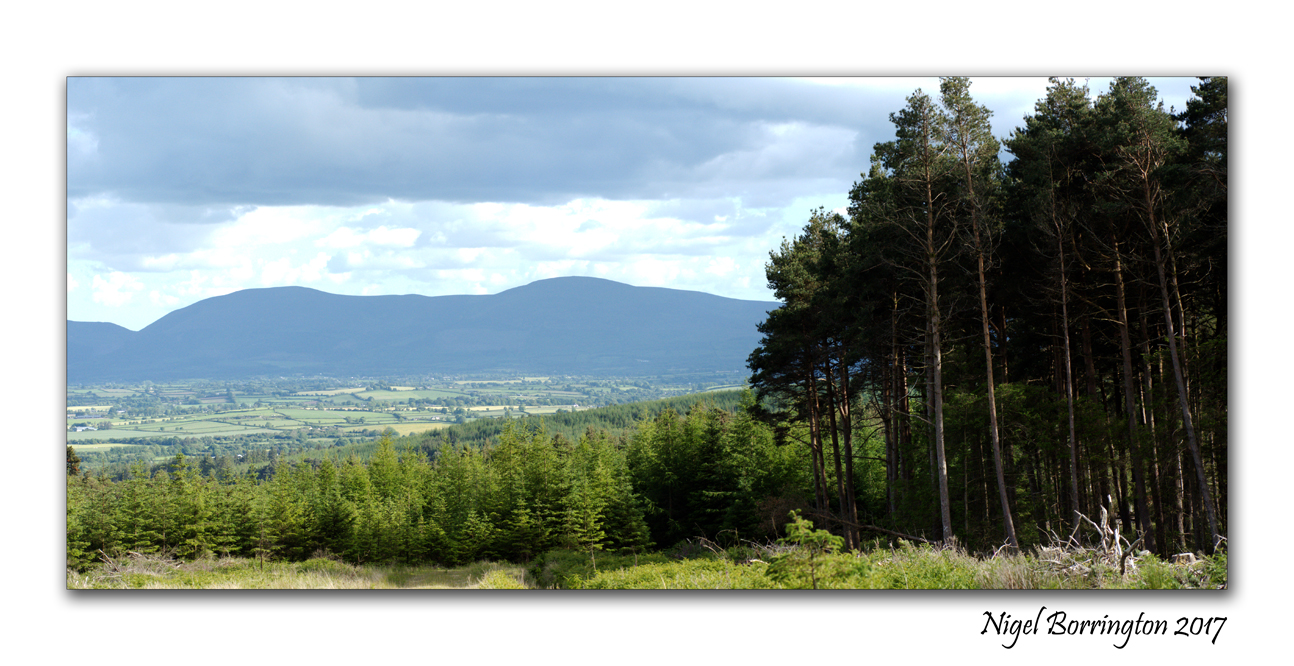
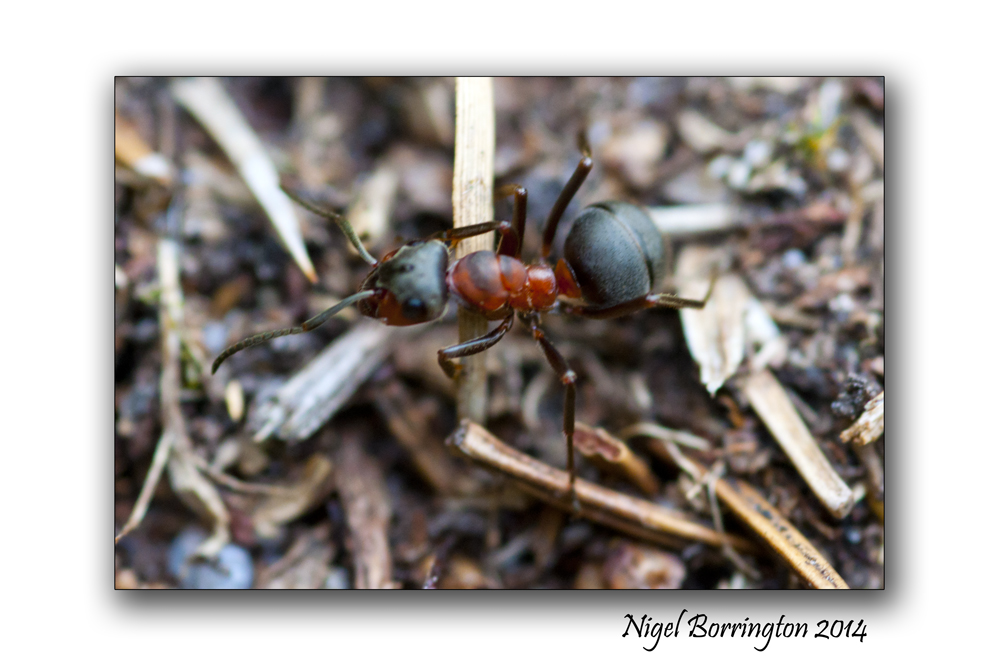
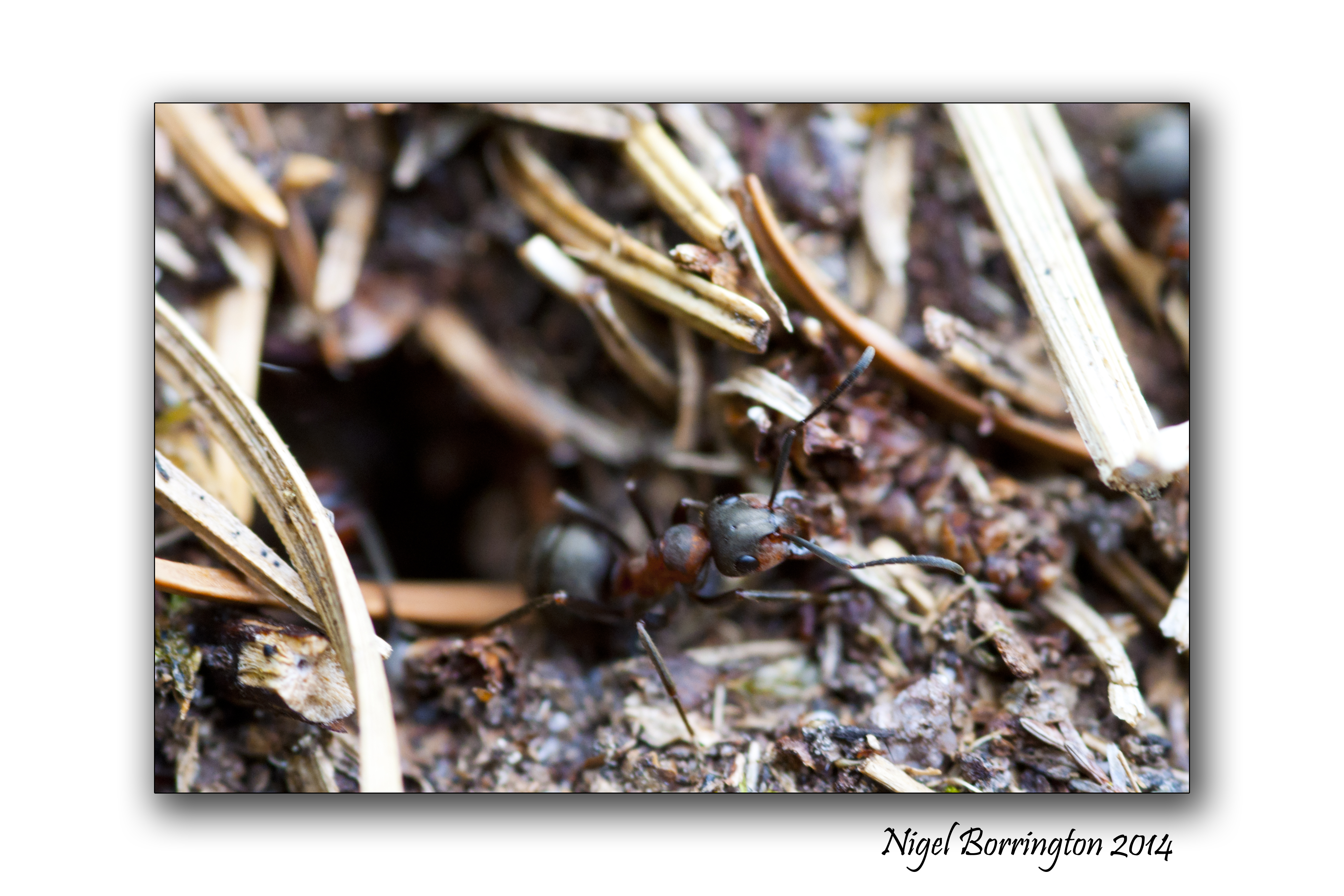
Over the last few years I been involved working on a project around county Tipperary,Ireland involving photographing nests of Irish Wood Ants (Formica lugubris), this has been one of the most interesting photo project I have ever worked on.
The images in this post are captured between 2014 and 2017 ….
These Ants are on the international endangered species list and exist in locations that are kept reasonably private, just to find and get to see these nests themselves is a task and an amazing feeling.
When you get closer to the nests for the first time you will notice just how large they are (3 feet off the ground) and how many Ants that each colony contains, each nest can hold tens of thousands of Ants, the entire surface of the nest is on the move with Ants coming and going from small entrance holes. This flow of movement is 24 hours long during the months that the Ants are active.
They create a clear trail through the woods as they clear a path, traveling both outwards from the nest and returning again with food for the Queen Ant living deep in the ground under the nest itself.
It is thought she lives in a protected area some two meters underground.
In order to protect themselves and nest with its queen, they can shoot out acid some four feet from their bodies.
I will be working on this project most of this summer and look forward to each return, watching these wonderful Wood Ants is an amazing experience and working around them with a camera is great fun.
Gallery 2017


Gallery 2014



The Otter, By :Seamus Heaney

Otters on the River Suir
County Tipperary
Nigel Borrington
The Otter
Seamus Heaney
When you plunged
The light of Tuscany wavered
And swung through the pool
From top to bottom.
I loved your wet head and smashing crawl,
Your fine swimmer’s back and shoulders
Surfacing and surfacing again
This year and every year since.

I sat dry-throated on the warm stones.
You were beyond me.
The mellowed clarities, the grape-deep air
Thinned and disappointed.
Thank God for the slow loadening,
When I hold you now
We are close and deep
As the atmosphere on water.
My two hands are plumbed water.
You are my palpable, lithe
Otter of memory
In the pool of the moment,

Turning to swim on your back,
Each silent, thigh-shaking kick
Re-tilting the light,
Heaving the cool at your neck.
And suddenly you’re out,
Back again, intent as ever,
Heavy and frisky in your freshened pelt,
Printing the stones.
The end of springtime – Fallen flower – a garden poem
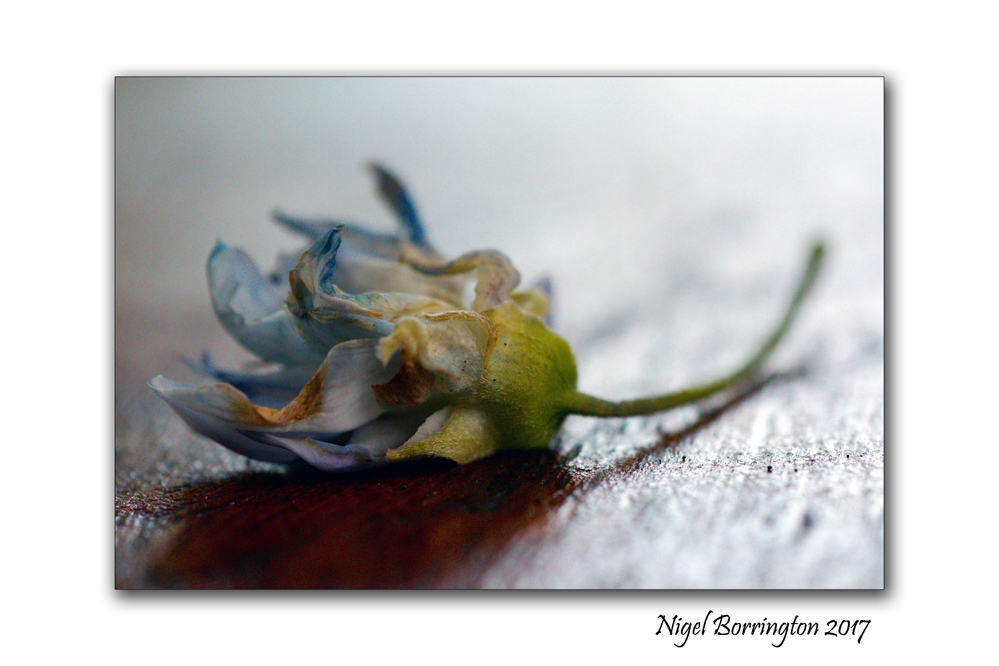
Fallen Garden flowers Nigel Borrington
In the Garden at eight am
I witness the end of Springtime
flowers of green, blue and purple
falling all over the table top
I place my cup of tea down
a moment frozen, soon moves on
as more of these blooms fall all around me
soon it will be summer time
clearly the flowers know, against all hope !
time moves on
never stopping
never frozen
never pausing for anyone ……

Herb-Robert (Geranium robertianum) in the Sun and the Rain

Irish wide flowers
Herb Robert
Nigel Borrington
Familiar little pink flower from April to November, Herb-Robert is a hairy, unpleasant-smelling plant which grows on banks, bases of walls, shingle and shady places throughout the country. Its pink flowers (8-15mm across) have five un-notched petals and in the centre of the flower are orange anthers. Each petal is marked by small lighter-pink lines running into the centre of the flower. The hairy, stalked leaves are often tinged red and have three to five deeply cut lobes. The fruit is hairy and beak-like. This is a native plant belonging to the family Geraniaceae.

Irish wide flowers
Herb Robert
Nigel Borrington
This plant has been introduced into North and South America from Europe and Asia. In traditional medicine in the Americas it has been used to stop nosebleeds. Its leaves are also made into a herbal tea which is recommended as a gargle and an eyewash.
One wonders who is the ‘Robert’ of this plant. Maybe the name comes from the Latin word ‘ruber’ meaning red which may have referred to the colouring of the leaves and stems.
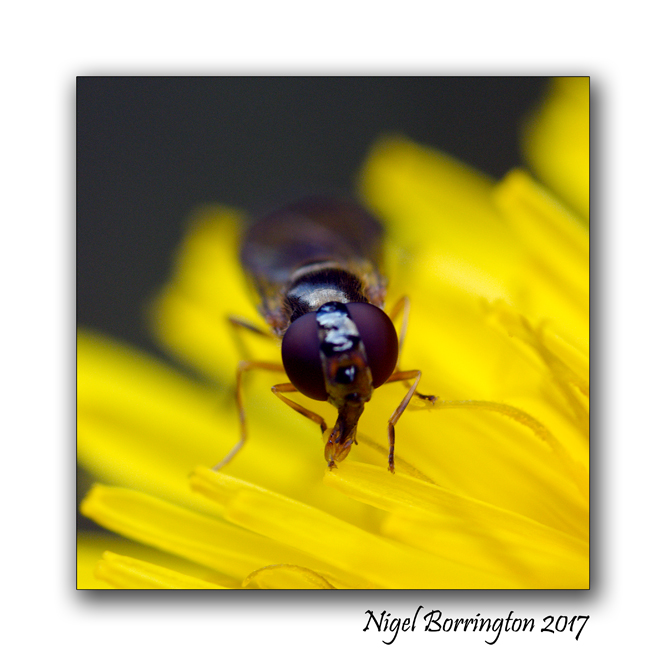
What do Hover flies and Insect see with their compound eyes ?
Nature Photography
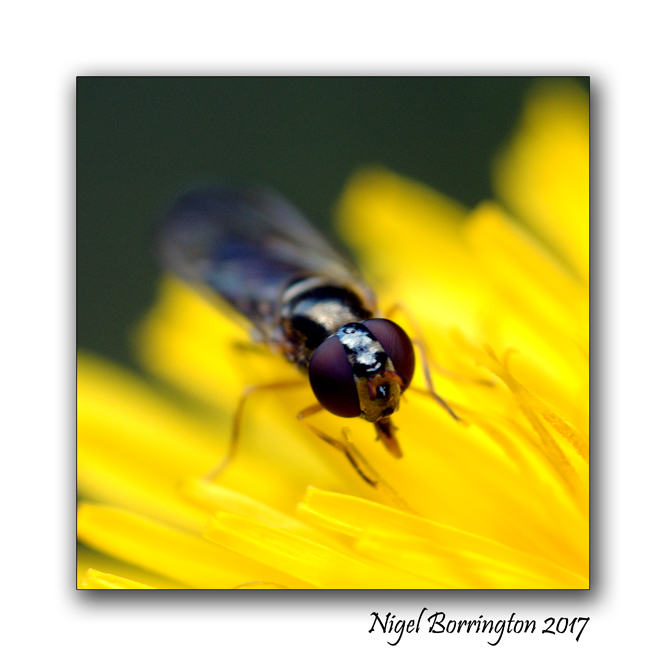
Macro image of a Hover fly
Nigel Borrington
Hover Flies, such as the this one above, look at the world in quite a different way than humans do. The structure and function of a flies eye are completely different from ours, and so they see shapes, motion and color differently. Flies are also able to see light in a way humans cannot.
Structure of a Compound Eye
Compound eyes are made up of thousands of individual visual receptors, called ommatidia. Each ommatidium is a functioning eye in itself, and thousands of them together create a broad field of vision for the fly. Each ommatidium is a long, thin structure, with the lens on the outer surface of the eye, tapering to a nerve at the eye’s base. When the ommatidium receives light, it is filtered through the lens, then a crystalline cone structure, pigment cells and visual cells. Every ommatidium has its own nerve fiber connecting to the optic nerve, which relays information to the flies brain.
Flies Can’t Focus
A human’s eye is attached to muscles that allow it to move, expanding the field of vision and making it possible for the eye to gather more information about its surroundings. Instead of moving their eyes, flies receive information from several different points simultaneously. A flies eyes are immobile, but because of their spherical shape and protrusion from the flies head they give the fly an almost 360-degree view of the world. In a human eye, the pupil controls how much light comes into it, which is focused by the lens onto the retina. The retina then relays information to the brain via the optic nerve. Because fly eyes have no pupils they cannot control how much light enters the eye. With no control over how much light passes through the lens, the fly cannot focus the image it sees. Flies are also short-sighted — a visible range of a few yards is considered good for an insect.

The Mosaic Effect
The best analogy to describe a flies vision is to compare it to a mosaic — thousands of tiny images convalesce, and together represent one visual image. Each one of these pictures represents information from the fly’s individual ommatidium. The effect is much like how we see stippling or newspaper print — up close the image is a lot of tiny dots, but take a step back and it’s a complete image. The more ommatidia a compound eye contains, the clearer the image it creates.
Motion Detection
There’s a reason why flies are especially jumpy creatures that take off at the slightest flinch. A flies vision is nowhere near as clear or effective as a human’s, but it’s especially good at picking up form and movement. As an object moves across the fly’s field of view the ommatidia fire and stop firing. This is called a flicker effect. It’s similar to how a scrolling marquis works — with lights turning on and off to give the illusion of motion. Because a fly can easily see motion and form, but not necessarily what the large moving object is, they are quick to flee, even if the moving object is harmless.
Interpreting Light Waves
Flies have limited color vision. Each color has its own wave frequency, but flies have only two kinds of color receptor cells. This means they have trouble distinguishing between colors, for instance discerning between yellow and white. Insects cannot see the color red, which is the lowest color frequency humans can see. However, houseflies have the ability to see polarized light, but humans cannot differentiate between polarized and unpolarized light. Polarized light is light in which the waves travel only in one plane.
Macro Images – Wolf Spider

Macro Images
Wolf spider
Nature Images
Nigel Borrington Kilkenny
Wolf Spiders are members of the family Lycosidae. They are so named because their method of hunting is to run down their prey like that of a wolf. Wolf Spiders are robust and agile hunters that rely on good eyesight to hunt, typically at night. Wolf Spiders resemble nursery web spiders (family Pisauridae), however, they carry their egg sacs by attaching them to their spinnerets (instead of by means of their jaws and pedipalps).
Wolf spider Characteristics
Wolf Spiders range from about half an inch to 2 inches in length. They are hairy and typically brown to grey in colour with a distinct Union Jack impression on their backs. The spiders undersides are light grey, cream or black, sometimes salmon pink.
Wolf Spiders have eight eyes arranged in three rows. The bottom row consists of four small eyes, the middle row has two very large eyes and the top row has two medium-sized eyes.
Wolf Spiders depend on their good eyesight to hunt. Their sense of touch is also acute. The sides of their jaws may have a small raised orange spot or ‘boss’.
Because they depend on camouflage for protection, Wolf Spiders do not have the flashy appearance of some other kinds of spiders. In general their colouration is appropriate to their favoured habitat.
Wolf Spiders eyes reflect light well and one way of finding them is to hunt at night using a flashlight strapped to ones forehead so that the light from the light is reflected from their eyes directly back toward its source.
Wolf spider Habitat and Webs
Wolf spiders can be found in a wide range of habitats both coastal and inland. These include shrub lands, woodland, wet coastal forest, alpine meadows and suburban gardens.
Wolf spiders are commonly known as household pests as when the weather starts getting colder, they look for warm places to overwinter in homes. Wolf Spiders are commonly found around doors, windows, house plants, basements, garages and in almost all terrestrial habitats. Wolf Spiders do not spin a web, instead, they roam at night to hunt for food. Wolf spiders are often confused with the Brown Recluse spider, however, they lack the violin-shaped marking of the Recluse. The wolf spider is shy and is most likely to run away when disturbed.
Wolf spider Diet
Two Wolf spider species are known to be predators of cane toads. Lycosa lapidosa will take small toads and frogs while Lycosa obscuroides has been noted biting and killing a large toad within one hour.
Wolf spider Reproduction
Mating takes place outside the females burrow at night. Some adult male Wolf spiders of smaller-sized species are known to disperse by air in order to find mates. The male is attracted by scent markings left by the female, often associated with her drag-line silk. Males perform a courtship ritual prior to mating, often involving complex leg and palp signaling to the female.
The female Wolf spider constructs an egg sac of white papery silk, shaped like a ball with an obvious circular seam, which she then carries around attached with strong silk to her spinnerets. When the spiderlings hatch, they are carried around on the females back until they are ready to disperse by ballooning or on the ground. Such a high degree of parental care is relatively unusual among spiders. Wolf spiders live for up to 2 years.
Wolf spider Venom
The Wolf Spider is not aggressive, however, it will inject venom freely if continually provoked. Symptoms of its venomous bite include swelling, mild pain and itching. Though usually considered harmless to humans, its bite may be painful.
Macro Wednesday Dolycoris baccarum (Sloe Bug) – Hairy Shieldbug Family: Pentatomidae
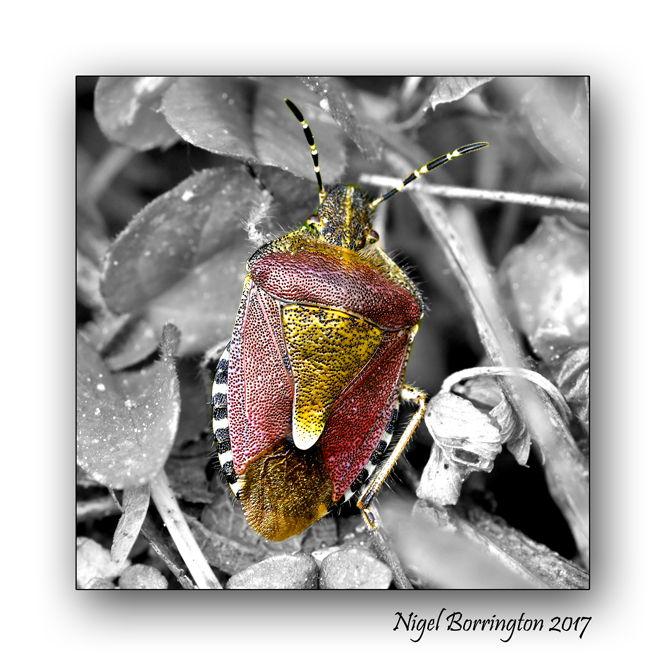
Dolycoris baccarum Hairy Shieldbug
Family: Pentatomidae
A large and distinctive purple-brown and greenish shieldbug which is covered with long hairs. The antennae and connexivum are banded black and white. During the winter, the ground colour becomes uniformly dull brown.
This bug overwinters as an adult, emerging in the spring. Larvae, which are also hairy, may be found on numerous plants, particularly those in the Roasaceae. The new generation is complete from August onwards.
Common and widepsread in many habitats throughout Britain, particularly hedgerows and woodland edges, becoming scarcer and mainly coastal in the north.
Adult: All year
Length 11-12 mm

 Nigel Borrington
The day after Hurricane Ophelia: the slow return to normality
Hurricane Ophelia
Just hours before it hit ireland
Monday 16th 2017
The day after Hurricane Ophelia
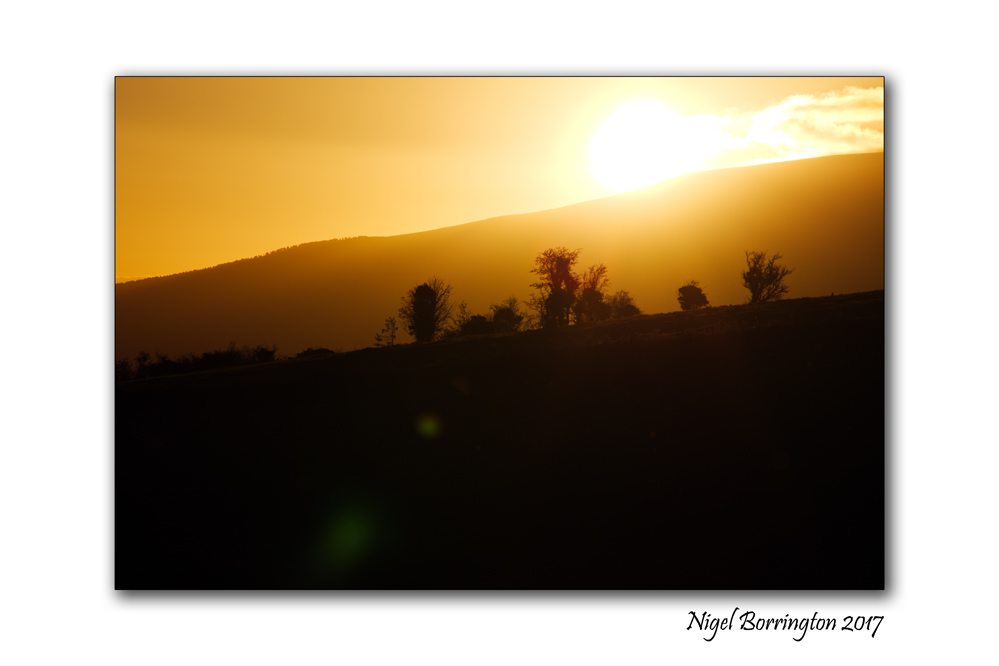
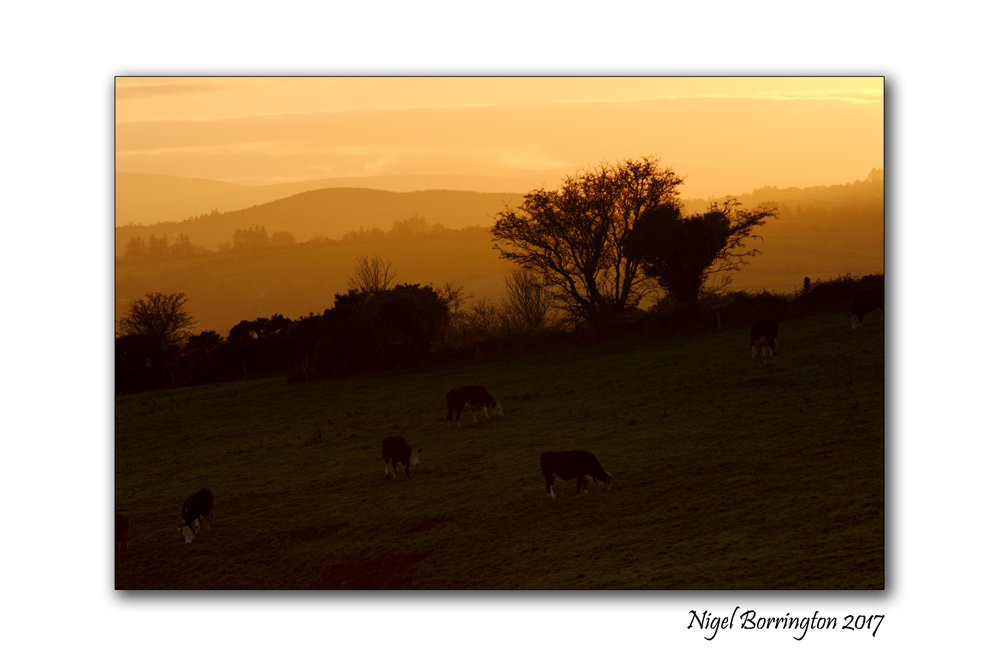
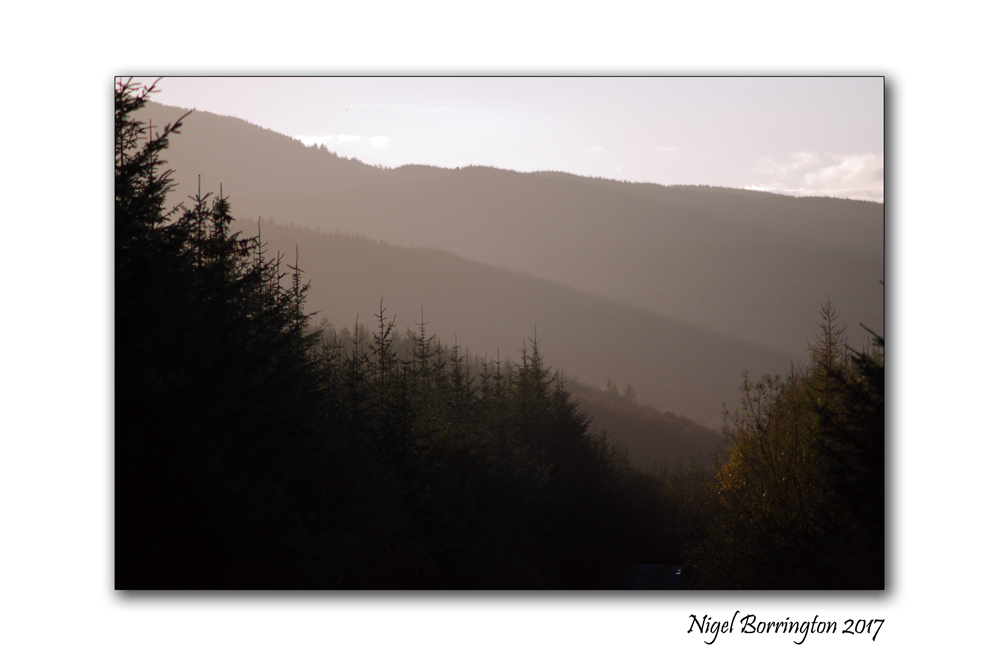
The below images taken during on a walk up in the Grange hills between south county Kilkenny and Tipperary are from lunch time today, looking at them its hard to believe that only yesterday, Ireland for the first time ever in its history was hit by a full Hurricane force storm. Yesterday between the hours of 9am for county’s Kerry and Cork and then around 2pm for ourselves locally we had storm force winds of between 150kph and 130kph.
In the Morning the Irish met office via the media had informed everyone to stay inside and had issued a RED weather alert for the complete country, again for the first time in Irish history. In a very impressive way, almost everyone pulled a chair close to the fire and waited for Ophelia to arrive. When she finally did get to county Kilkenny, she did not come calling slowly or with any manners, she just came at us with full force gusts and left some three hours later. We have had two such storms locally since 2014 with storm Darwin back in February 2014, which I posted on back then, Darwin being however just a very strong Atlantic storm. During both these storms you can do little but sit and wait, however listening and looking out of the window is just shocking and basically very hard to do.
In 2014 when Darwin left she left with many of our local forests lying on the floor, as such I think Ophelia had little left to get her teeth into, as its only just over two years in the forests themselves since, the areas Darwin cleared are still empty of trees.
Yesterday evening we had many roads blocked with roadside trees, along with trees down on the river banks and in public parks .
The main effects this time nationally has been the loss of power with some 360,000 homes left without any electric supply, Ireland’s water systems also works mainly from electric water pumps so this supply for many has also been cut off.
This morning the weather had returned to normal , in fact it was a great and clear and sunny day, walking around at lunchtime for me the most noticeable thing is that the trees have all been stripped of any leaves, they have gone from the start of autumn colors to winter nakedness in only 3 hours, it’s really noticeable that instead of yellow and brown leaves sitting by the road sides, having naturally fallen, we have roadsides covered in green.
So Goodbye Ophelia and welcome to a peaceful sunny Tuesday in the Irish landscape, even if we are still in shock and only just starting to recover ……
Gallery from 17th Oct 2017 – the day after Ophelia
Share this:
October 17, 2017 | Categories: Comment, Gallery, irish woodlands, Landscape, Nature, Nature and Wildlife, Nigel Borrington, Weather photography | Tags: Hurricane, Hurricane Ophelia, Ireland, Kilkenny, Nature, Nigel Borrington, Ophelia, Power of nature, Storm, The day after, the slow return to normality, weather, WInds | 10 Comments