Do Not Go Gentle Into That Good Night – Poem by : Dylan Thomas

Do Not Go Gentle Into That Good Night
Photography : Nigel Borrington
Do Not Go Gentle Into That Good Night
By : Dylan Thomas
Do not go gentle into that good night,
Old age should burn and rave at close of day;
Rage, rage against the dying of the light.
Though wise men at their end know dark is right,
Because their words had forked no lightning they
Do not go gentle into that good night.
 .
.
Good men, the last wave by, crying how bright
Their frail deeds might have danced in a green bay,
Rage, rage against the dying of the light.
Wild men who caught and sang the sun in flight,
And learn, too late, they grieved it on its way,
Do not go gentle into that good night.
 .
.
Grave men, near death, who see with blinding sight
Blind eyes could blaze like meteors and be gay,
Rage, rage against the dying of the light.
And you, my father, there on that sad height,
Curse, bless, me now with your fierce tears, I pray.
Do not go gentle into that good night.
Rage, rage against the dying of the light.
MIR-1 37mm f/2.8 lens , from 1954 to 2015 – Using old lens

Mir 1b 37mm f2.8 m42 lens
Nigel Borrington
Its a while since I posted anything about photography equipment, even though I do keep one eye on making sure I have what I feel to be very good cameras and lenses (Mainly Nikons) , I don’t feel that equipment is what photography is really all about. To me photography is about capturing the world around me and so long As I feel my camera can still do this I am very happy.
Old lenses
At the Same time some of the lenses I have, have been with me for many years and I have used then with many subjects and at many locations with both film and digital cameras.

My MIR 37mm f2.8 lens, I have had since my very first SLR camera back in the 1980’s and I still have complete confidence in it 🙂 even using a Pentax K3 24 megapixel SLR.
Why Pentax ? , The lens is an M42 lens which means that it connects to a camera body using an adapter and the best camera bodies on the Market for using these lenses are Pentax SLR bodies as they only need a metal lens mount adaptor that allows the lens to function without any changes in focus distance, basically all the lenses setting and scales work as they were originally intended to.

There are many things I love about using this lens. the focusing is manual as is the setting of the lens apertures but however the dials used for both these settings are just perfect in operation, no modern plastic jumpy manual focus rings here- just smooth and perfectly controlled movements. One thing also great about this lens is the fact that there are no click stops for the aperture blades , there are marking that show ” f 2.8, 4, 5.6, 8. 11 and 16″ but you can set the blades to any setting in between, this is a huge help for video !!
Another great thing for Video is that this lens is 100% silent , simply no noise feeds back through the camera body !!
The back of the lens shows depth of field and focus distant marks, its not a macro lens as its closest distance is only .7 meters so Landscapes only here !
Some History

The production of this lens originally started all the way back in 1954. It was manufactured in USSR (along with my favourite Helios 44-2) and was mainly made in 2 mounts, M39 and more popular M42 (although both are adaptable to modern cameras). The design of the lens was based on Carl Zeiss Jena Flektogon 35mm f/2.8 and unlike Helios 44-2 was not a complete clone, but using same optical formal as Flektogon 35mm f/2.8, which is definitely a good sign considering how much more affordable they are than just about any Zeiss glass.
In 1958 Mir-1 received a prestigious Grand-Prix Award during the Brussels World Fair. Russians were probably so proud of the award that every Mir-1 lens produced since the 1958 World Fair, sports the “Grand Prix Brussels 1958” inscription on the side of the lens, so don’t mistake these lenses for some sort of special/limited edition.
Lens Flare
Another great asset of this lens is the lens flare it can produce , this link shows some lovely deep spherical Studio flare results 🙂
.Compared to other Classic M42 lenses and modern lenses
.MIR 37mm f2.8 Gallery
The following are some local Kilkenny landscape images that I feel show just how good this lens still is at capturing some great sharp and contrasty black and white images , even with 24 megapixels to expose any defects!
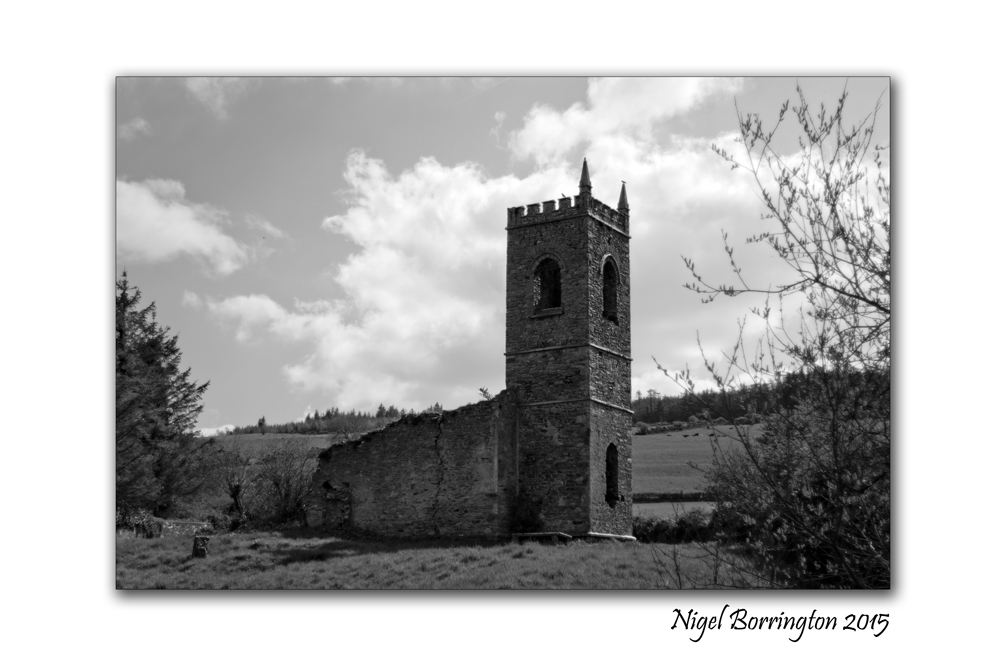


My father moved through dooms of love , By : E. E. Cummings, 1894 – 1962

Pentredwr, Hourseshoe pass,
Llangollen,
North Wales
Landscape Photography Nigel Borrington
Its a personal post this one but a post I very much enjoyed getting together !!!
My Father and Mother sadly split when I was six years of age, something that these days I have very much been a peace with.
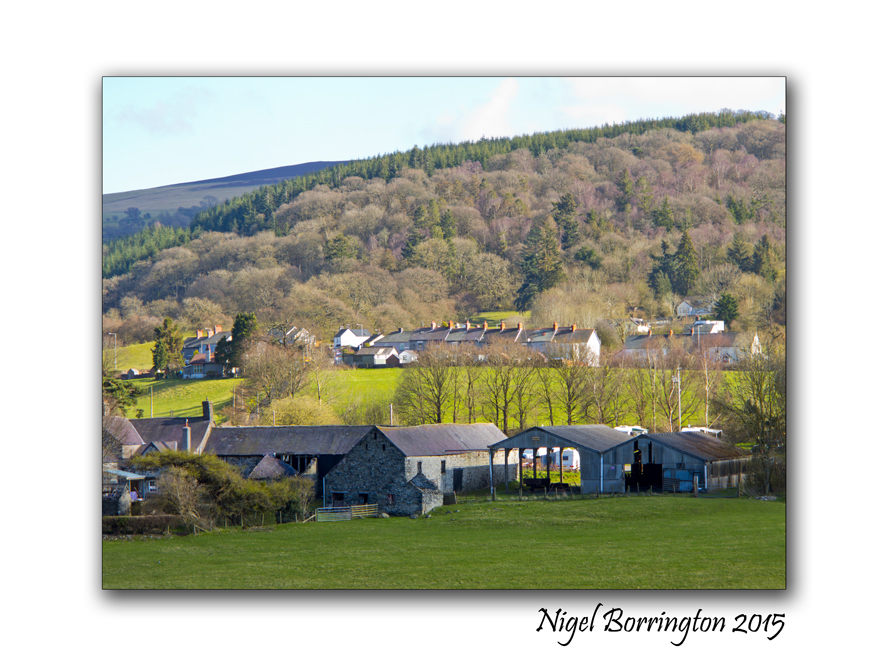
Over the last few years through accident more that any planning, I found the place he spend the last few years of his life with his second wife and family. He moved to a village “Pentredwr” in a valley near the horseshoe pass, Llangollen , North wales, Its a truly beautiful part of the world.
I visited again during the Easter Holidays and took these pictures of the landscape he must have enjoyed for so many years 🙂 🙂
my father moved through dooms of love
By E. E. Cummings, 1894 – 1962
My father moved through dooms of love
through sames of am through haves of give,
singing each morning out of each night
my father moved through depths of height
this motionless forgetful where
turned at his glance to shining here;
that if(so timid air is firm)
under his eyes would stir and squirm
 .
.
newly as from unburied which
floats the first who,his april touch
drove sleeping selves to swarm their fates
woke dreamers to their ghostly roots
and should some why completely weep
my father’s fingers brought her sleep:
vainly no smallest voice might cry
for he could feel the mountains grow.
Lifting the valleys of the sea
my father moved through griefs of joy;
praising a forehead called the moon
singing desire into begin
joy was his song and joy so pure
a heart of star by him could steer
and pure so now and now so yes
the wrists of twilight would rejoice
 .
.
keen as midsummer’s keen beyond
conceiving mind of sun will stand,
so strictly(over utmost him
so hugely) stood my father’s dream
his flesh was flesh his blood was blood:
no hungry man but wished him food;
no cripple wouldn’t creep one mile
uphill to only see him smile.
Scorning the Pomp of must and shall
my father moved through dooms of feel;
his anger was as right as rain
his pity was as green as grain
septembering arms of year extend
less humbly wealth to foe and friend
than he to foolish and to wise
offered immeasurable is
 .
.
proudly and(by octobering flame
beckoned)as earth will downward climb,
so naked for immortal work
his shoulders marched against the dark
his sorrow was as true as bread:
no liar looked him in the head;
if every friend became his foe
he’d laugh and build a world with snow.
My father moved through theys of we,
singing each new leaf out of each tree
(and every child was sure that spring
danced when she heard my father sing)
then let men kill which cannot share,
let blood and flesh be mud and mire,
scheming imagine,passion willed,
freedom a drug that’s bought and sold
 .
.
giving to steal and cruel kind,
a heart to fear,to doubt a mind,
to differ a disease of same,
conform the pinnacle of am
though dull were all we taste as bright,
bitter all utterly things sweet,
maggoty minus and dumb death
all we inherit,all bequeath
and nothing quite so least as truth
—i say though hate were why men breathe—
because my Father lived his soul
love is the whole and more than all
St Anne’s Pier, a Sunset beach walk…..
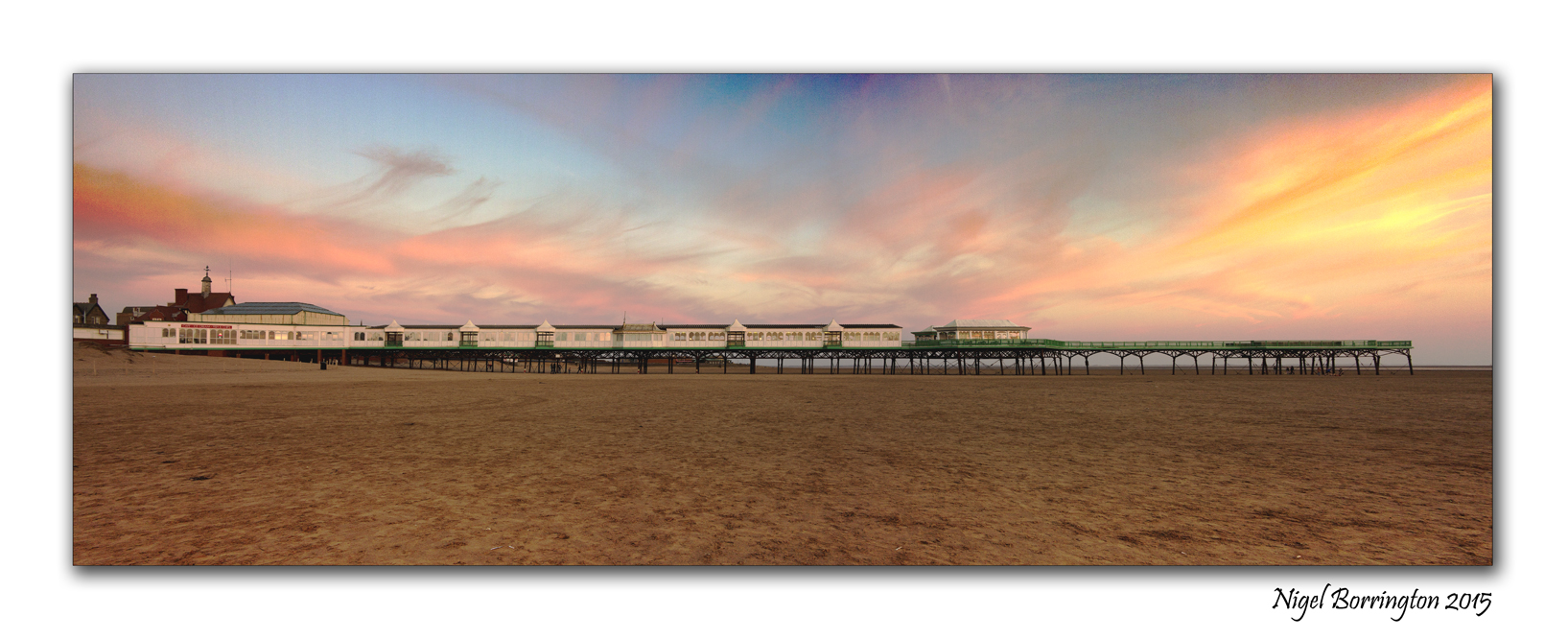
St Anne’s Pier,
St Anne’s-on-the-Sea, Lancashire
Landscape Photography : Nigel Borrington
Well I am back on my Blog following a great Easter holiday, spent visiting much loved family and friends. It was great to see them and to visit some great locations and share some time with, food and drinks and chat.
My Aunt lives near the town of St Anne’s Lancashire, located in the north west of England.
I can remember visiting the town as a kid and one of the most exciting locations was the Pier.
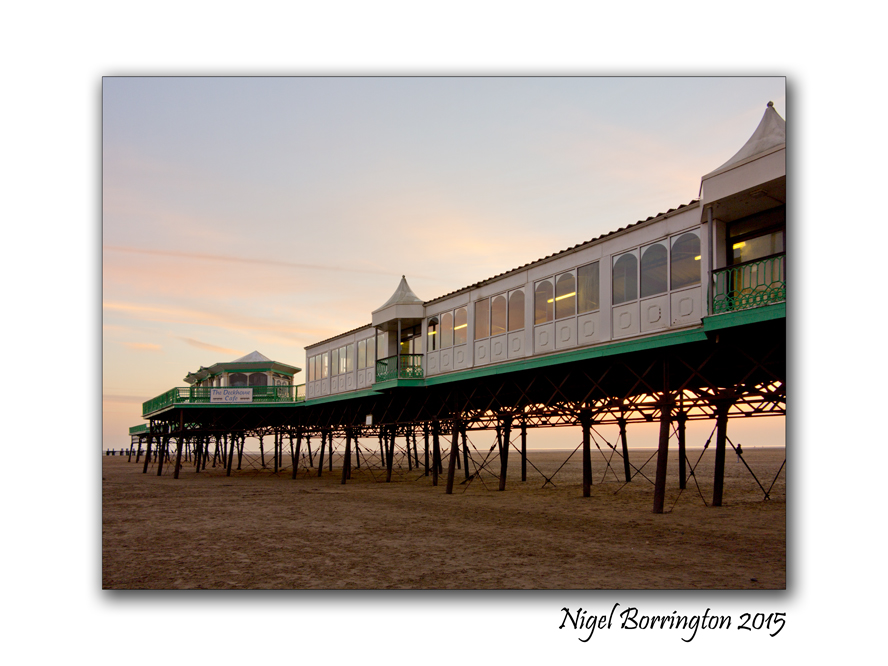
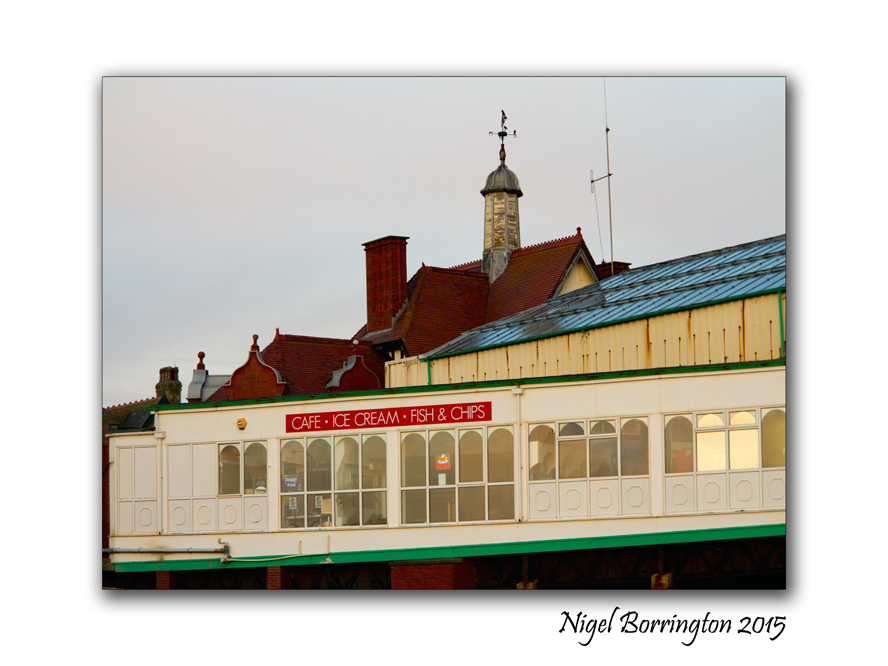
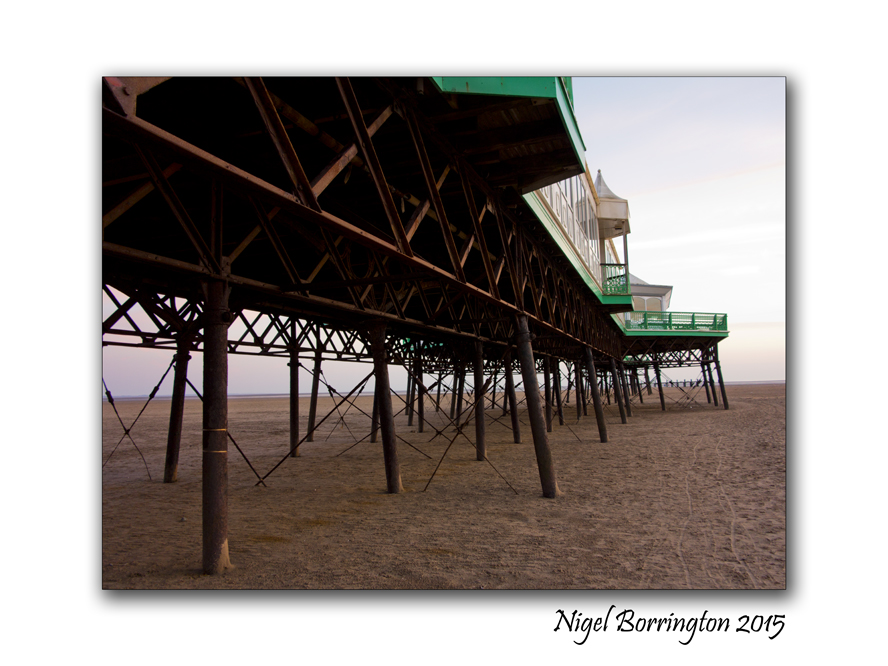
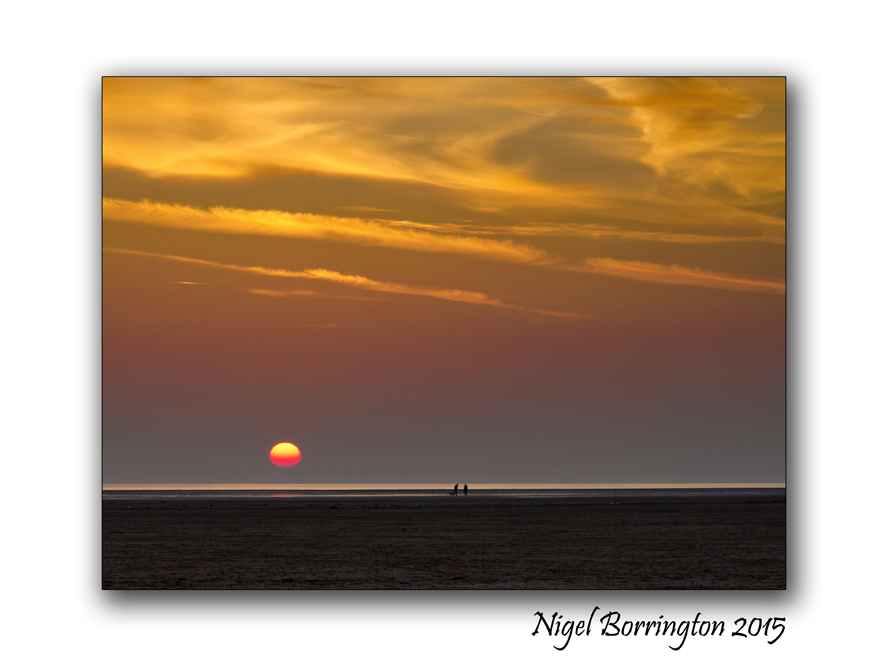
Half way through this last visit I took an evening walk to the Pier and took this series of images.
These days the Pier looks a little less visited than I remember when I was younger but its looking in great condition and it was perfect to see in just as the sunset out at sea…..
St Anne’s Pier, St Anne’s-on-the-Sea, Lancashire, UK
St Anne’s Pier is a Victorian era pleasure pier in the English seaside resort of St Anne’s-on-the-Sea, Lancashire. It lies on the estuary of the River Ribble. The pier, designed by A. Dowson, was completed in 1885 and was one of the earliest public buildings in St Anne’s, a 19th-century planned town. The pier was originally intended to be a sedate promenading venue for the resort’s visitors, but attractions were later added. Changes made to the estuary channels to improve access to Preston Dock left the pier on dry land and ended its steamer services to Blackpool and Liverpool.
A Tudor-style entrance was built in 1899. Early 20th-century additions included a Moorish-style pavilion in 1904 and the Floral Hall in 1910. The Moorish Pavilion was destroyed by fire in 1974, shortly after the town’s centenary; the Floral Hall burned down in 1982. Originally 914 feet (279 m) long, the pier was reduced to 600 feet (180 m) by the demolition of the seaward end. English Heritage has designated the pier a Grade II listed building.
St Anne’s-on-the-Sea is a planned seaside resort on the Fylde coast, at the mouth of the River Ribble, in Lancashire. It was developed in the 19th century, largely by the St Anne’s Land & Building Company. The company was formed in 1874 and leased land for the new town from the estate of the local Clifton family. Towards the end of the 19th century, pleasure piers became a common feature of English seaside resorts, and by the 1870s there were already two piers in nearby Blackpool, one in Southport and one 3.5 miles (5.6 km) away in Lytham. The wording of the land company’s original lease indicates that a pier was probably planned for St Anne’s from its beginning. A subsidiary, the St Anne’s-on-the-Sea Pier and Improvements Company was formed in 1877. The company directors believed that a pier at St Anne’s would offer visitors better conditions for fishing and boating than those at neighbouring resorts.
St Anne’s Pier, a Sunset walk beach walk : Image Gallery


Friday , Beach Photography day. – Taking some Easter down time :)

Irish Beach Photography
County Waterford
Nigel Borrington
Over the next two weeks of the Easter Holidays, I am taking some Offline time, I just want to get the garden ready for the summer,read and walk and maybe visit a beach or two.
I just want to say thanks to everyone for all your great comments and likes here 🙂 🙂 over the months and I look forward to sharing much more of Ireland and reading your great posts when I get back online – have a great holiday period !!!
Friday Is Beach Photography day
Taking a Friday evening trip down to the beach’s along the Waterford coastline is something I love to do in the summer months and I am very much looking forward to doing so again this summer.
I hope to get lots more images to post and share here 🙂
Beach Photography , Friday


The Ice house , Woodstock Gardens , County Kilkenny
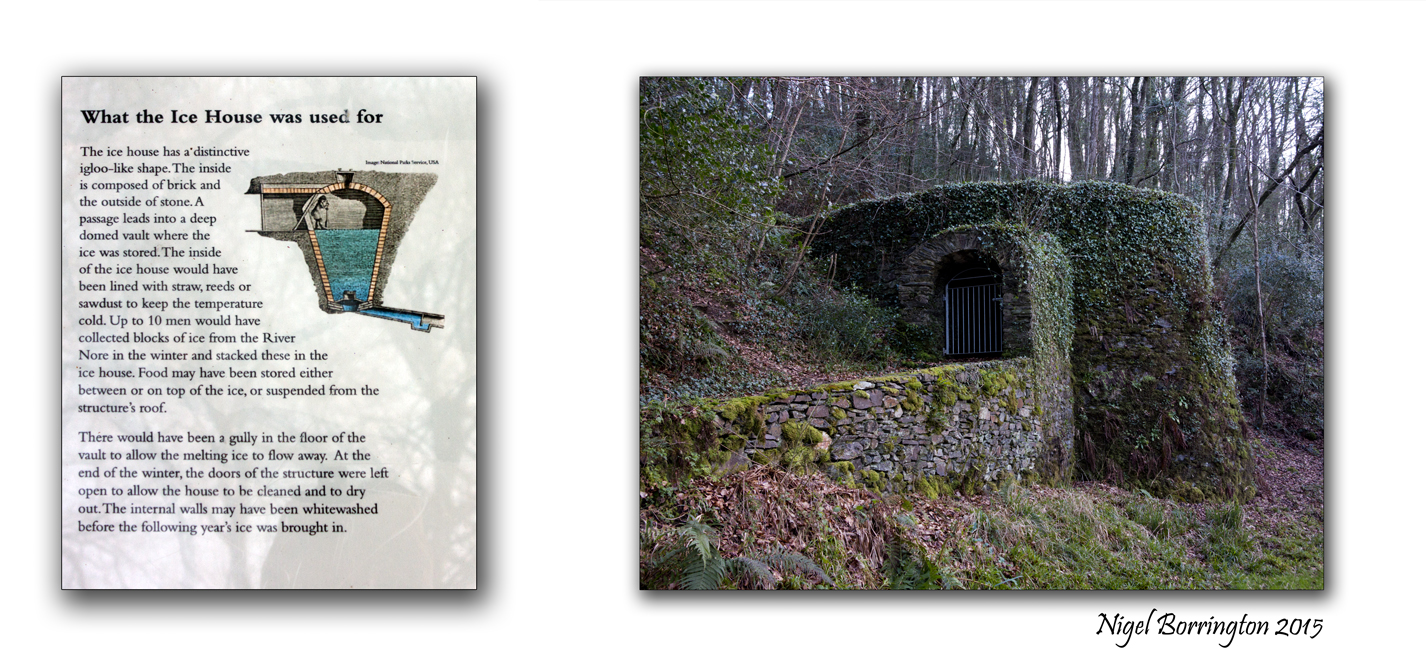
The Ice House,
Woodstock Gardens, Co. Kilkenny
Irish Landscape Photography : Nigel Borrington
Woodstock Gardens, County Kilkenny – dates back to 1737.
The Gardens and the remains of the old house are one of county Kilkenny’s most popular locations, located above the River Nore and the small town of Inistioge.
The Ice house is most likely less known, as it is located on the banks of the river Nore on the very limits of the grounds, it is however one of the best preserved ICE houses you could wish to find.
The details on the information board nearby are a little unclear as to when this building was constructed but it is considered to be sometime in the 1800’s, it was used for visitors to the smaller river side lodge, named the “Red House”.
The ‘Red House’ was a hunting lodge that at the time could only be accessed via boat along the river, today however you can find this location via a half an hour walk from the town of Inistioge.
A General History of ice houses

The Romans were the first to build ice houses, though not very widely in the UK and Not at all in Ireland. Ice houses were usually built close to sources of winter ice, such as freshwater lakes. In the 17th century, grand country houses followed the fashion of having one built, and then ice houses fell from fashion until about the late 18th century.
—————–
Uses of ice houses

On country estates from about 1660, the ice was mainly used not to chill food, but for its own sake: for ice creams and increasingly popular desserts such as syllabubs.
Meat and fish did not need to be preserved on a large estate because they could simply be caught from estate lakes and ponds when needed. Ice was also used for medicinal purposes: to treat fever and inflammation. At one time, a common prescription for indigestion was being told to suck on ice.
—————–
Woodstock House,
now a ruin, was for generations the home to the Tighe family. In 1737, the twenty-six-year-old Sir William Fownes inherited the estate and commissioned an elegant mansion, completed in 1745. He hoped to establish himself with the gentry of the area and to impress the 2nd Viscount Duncannon, soon to become the first Earl of Bessborough, whose daughter Elisabeth he planned to marry. Over the next forty-five years, Woodstock was the background to a series of dramas that led to the deaths of William, Elisabeth and their son-in-law William Tighe.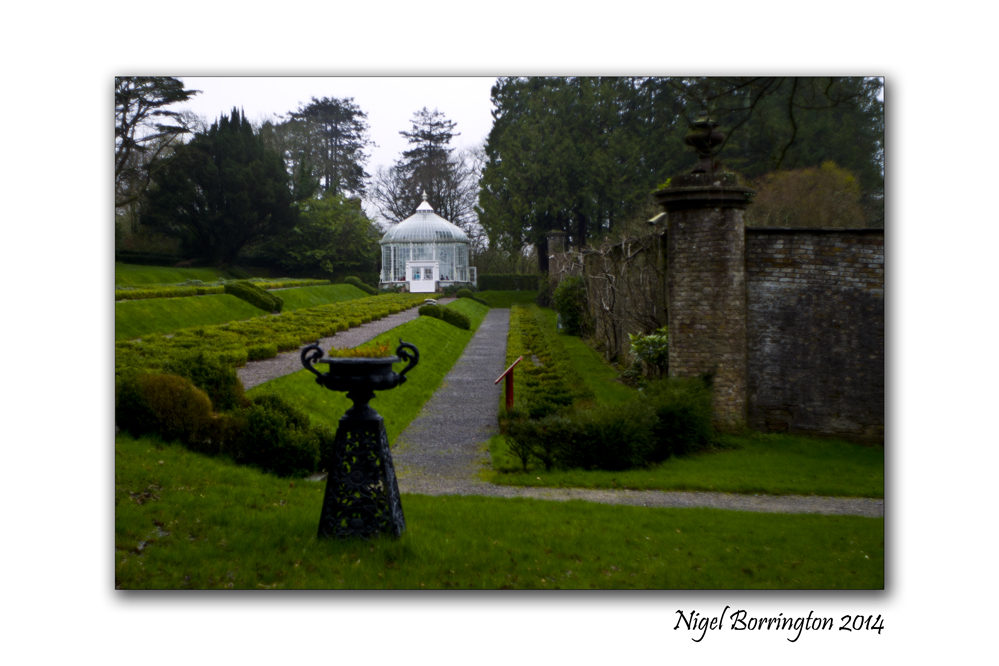
Many gardens and walks were laid out between 1840 and 1900 by another William Tighe and his wife Lady Louisa Lennox.[1] The gardens contain many exotic plants from Asia and South America, including the Monkey Puzzle tree and the Noble Fir tree which form two of the walks in the gardens,[2] as well as specimens of the Coast Redwood.
In 1921, the property was occupied by the Black and Tans and Auxiliaries, which caused much local resentment, and then by troops of the Free State Army, who were withdrawn from the premises during the Irish Civil War, on 1 July 1922. The house, left unguarded, was burnt down the next day, and remains a derelict empty shell, overgrown with vegetation

The River Nore, County Kilkenny,
located below the Ice House.
Nigel Borrington
Twilight on the Beach : A poem by : Mary Dow Brine

When Twilight falls upon the beach,
Irish Landscape Photography : Nigel Borrington
Twilight on the Beach.
By : Mary Dow Brine
The crimson glory of the setting sun
Hath lain a moment on the ocean’s breast,
Till twilight shadows, gathering one by one,
Bring us the tidings, day is gone to rest.
Far out upon the waters, like a veil,
The mists of evening rise and stretch away
Between the horizon and the distant sail,
And earth and sea are clothed in sombre gray.

The tide comes higher up the smooth, wide beach,
Singing the song it has for ages sung;
Recedes, and carries far beyond our reach
The freight my idle hands have seaward flung.
Over the white-capped waves the seagulls soar
With heavy-flapping wing and restless cry,
As darkness spreads its deeper mantle o’er
The changing shadows of the twilight sky.
 .
.
No voice but mine to mingle with the sound
Of ocean’s melody- as one by one
The stars light up the vast concave around,
And live the glory that is never done.
Still higher creeps the tide with subtle power,
And still the waves advance with sullen roar;
But with the last faint gleam of twilight hour
I turn me homeward from the lonely shore.
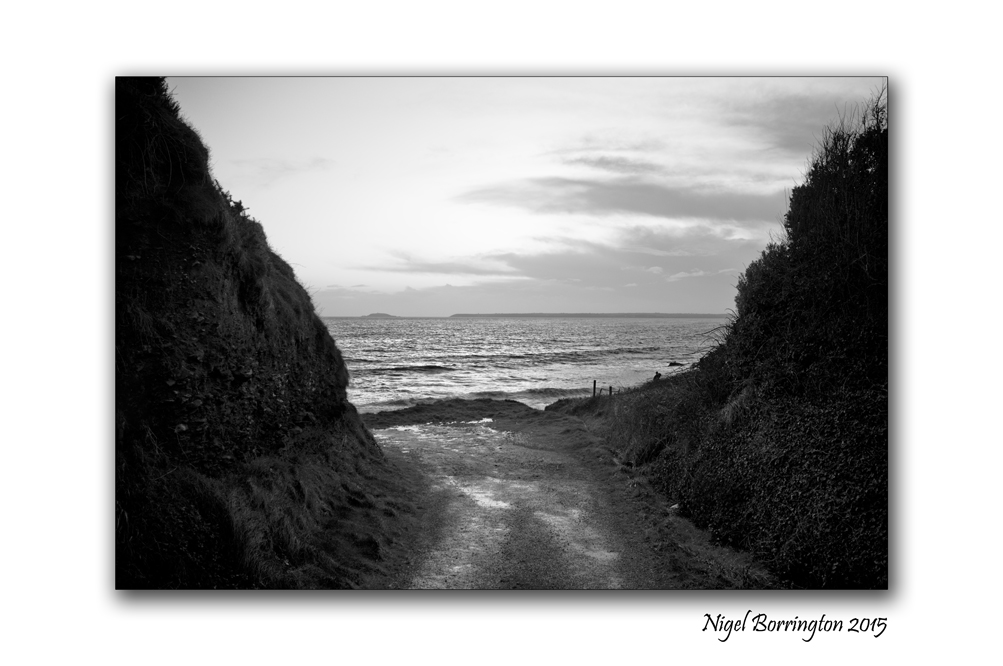
An Evening walk above – Clonmel , County Tipperary , (Image Gallery)
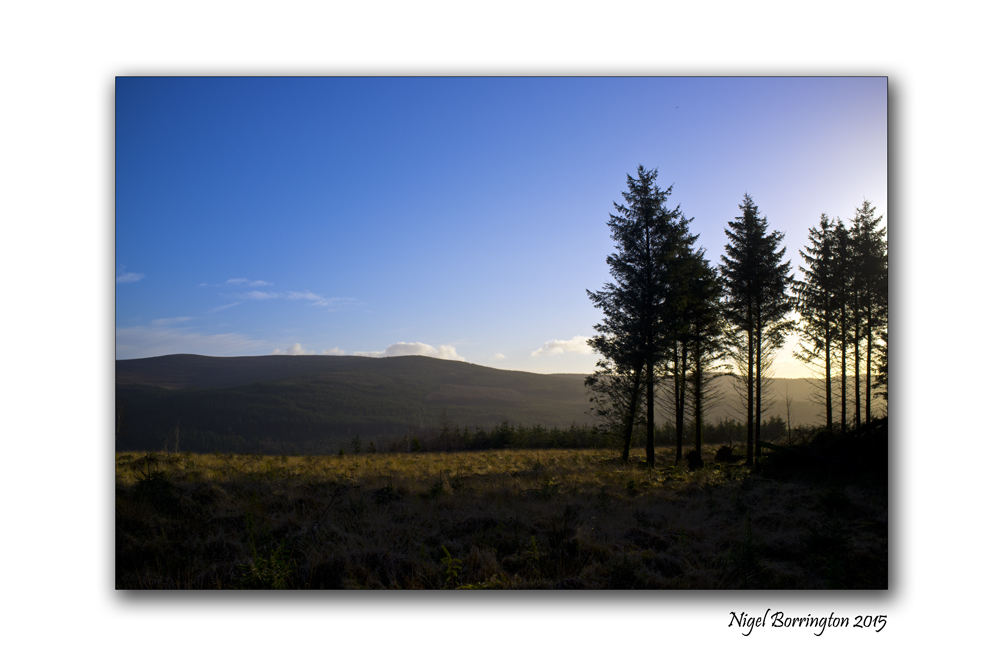
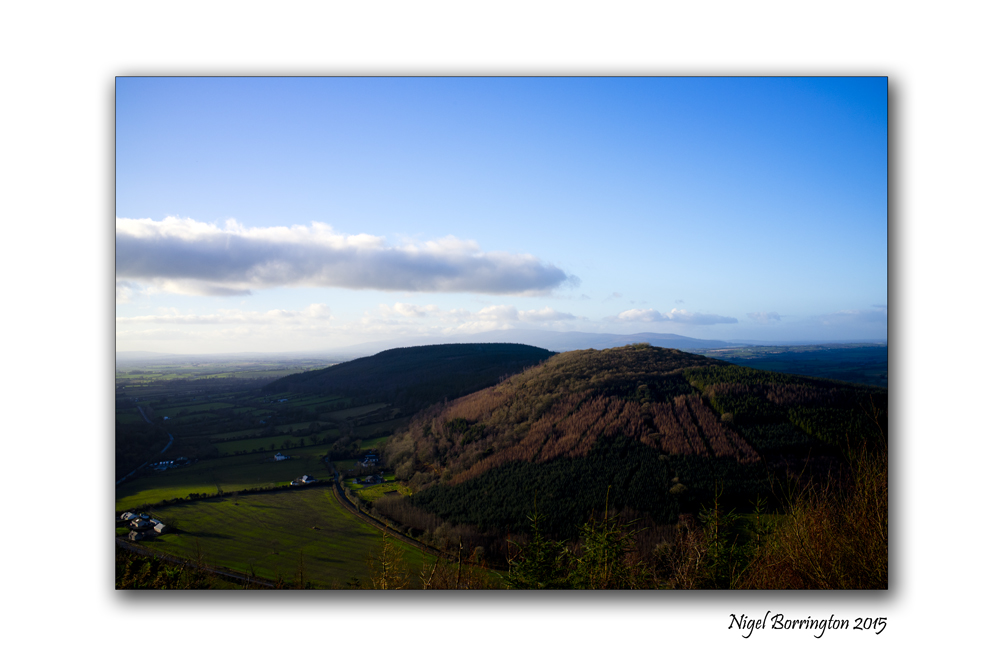
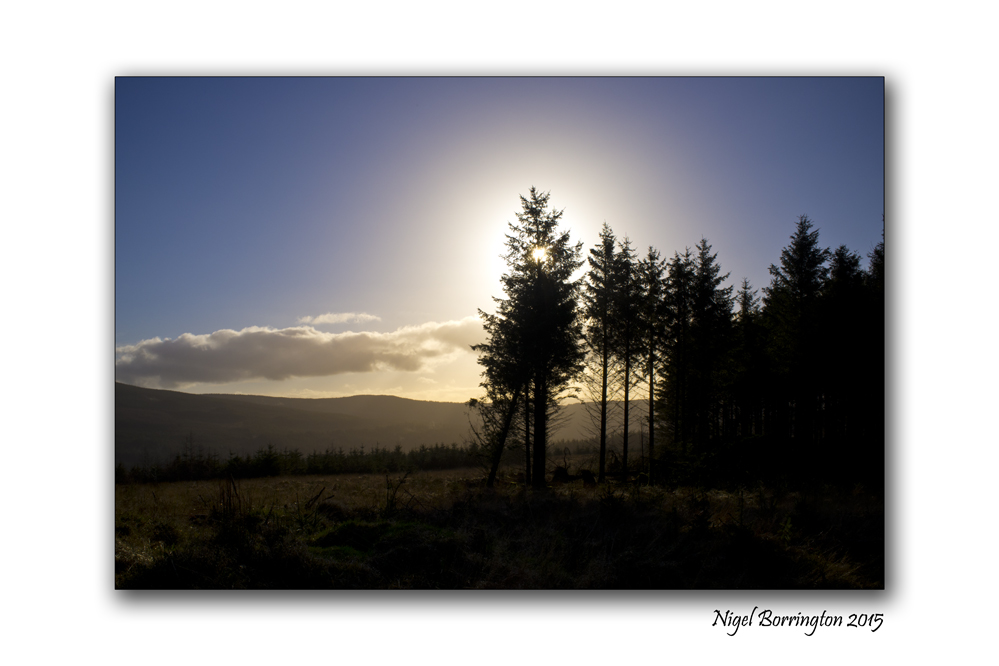
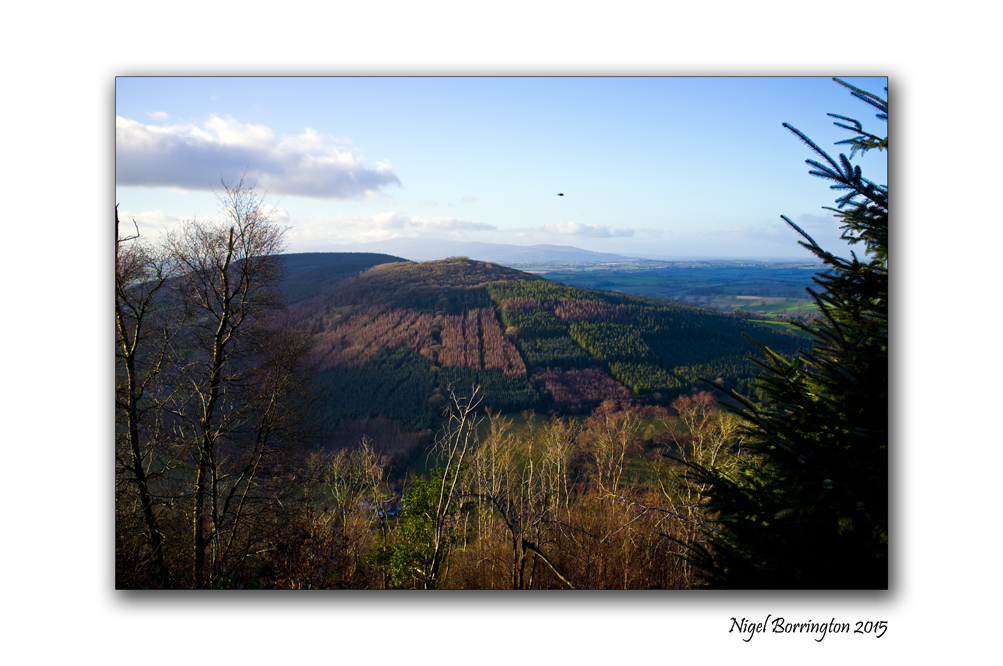
An Evening Walk in the hillside woodland,
Clonmel, County Tipperary,
Irish Landscape Photography : Nigel Borrington
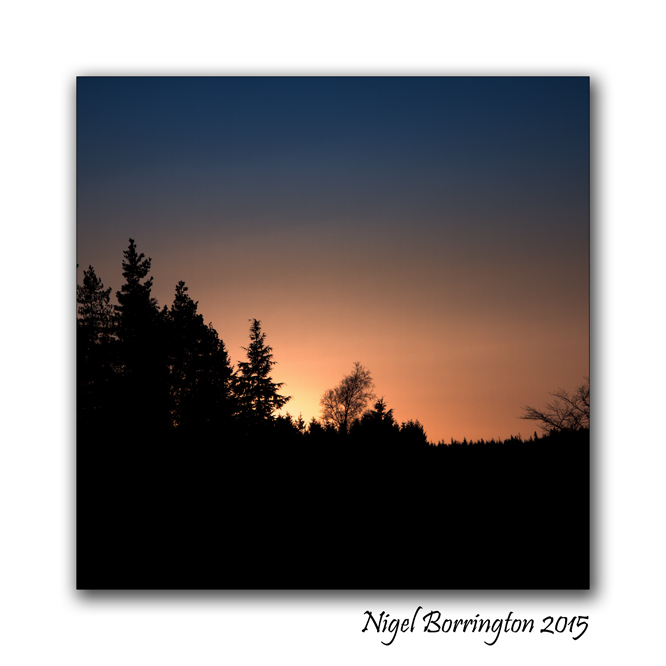
I just love taking a evening walk at this time of year, the evenings are staying lighter but we still get the chance to be out when the sun is very low in the sky, ready to set.
These recent images, show just how perfect I feel our local landscape looks in the early springtime evenings, with deep colours.
I love making the most of the Sun in my images, as it sinks behind the forest trees.
Evening walk , March 2015


Monday Poems : “Monday Mornings” By : Emily Helen Culver
Monday Mornings
By : Emily Helen Culver
breathing in and out
looking forward, ready to shout
the day might have started
but my brain just won’t function
it’s funny how they demand my attention
yelling out my name
won’t win you this game
keep on playing it
while I lay down and sleep a bit
the weekend hangover
taking over
Monday Poems : Donkey of Brown

Monday Poems : Donkey in Brown
Photography : Nigel Borrington
Well What a weekend we had here in Ireland SUN on SUN , just perfect 🙂 🙂
Its hard to believe its Monday already, my post and included Poem this Morning is just a reminder that while your getting your week going , don’t forget to take the odd moment to slow down and take a look at the world around you, it’s Spring-time so take just a few moments and check out what’s really happening in the world – your meeting / phone call or email can wait for a while 🙂 🙂
Donkey of brown
By : Patricia Higgins
Please let me know
Why is it that you go so slow?
He turned round gently and to me said
I have some sense in my little brown head.
 .
.
By hurrying so as you go by
You miss the beauty in earth and sky.
So I took his advice and looked around,
And I saw diamonds in dew drops on the ground.
Daises that dance in the sun’s golden ray,
Things I missed as I hurried each day.
Gold in the buttercups, clouds in the blue,
What the donkey had said was perfectly true.
Saturday Morning on the Mountain : Slievenamon . Co, Tipperary

The Mountain of Slievenamon,
County Tipperary
Landscape Photography : Nigel Borrington
Its the weekend, so its a great time to get outside, Relax, walk or just sit and take in the landscape around you 🙂
From yesterday the Spring Equinox, the days are getting longer all the way until the 21st of June, the long evening will soon be here 🙂 🙂


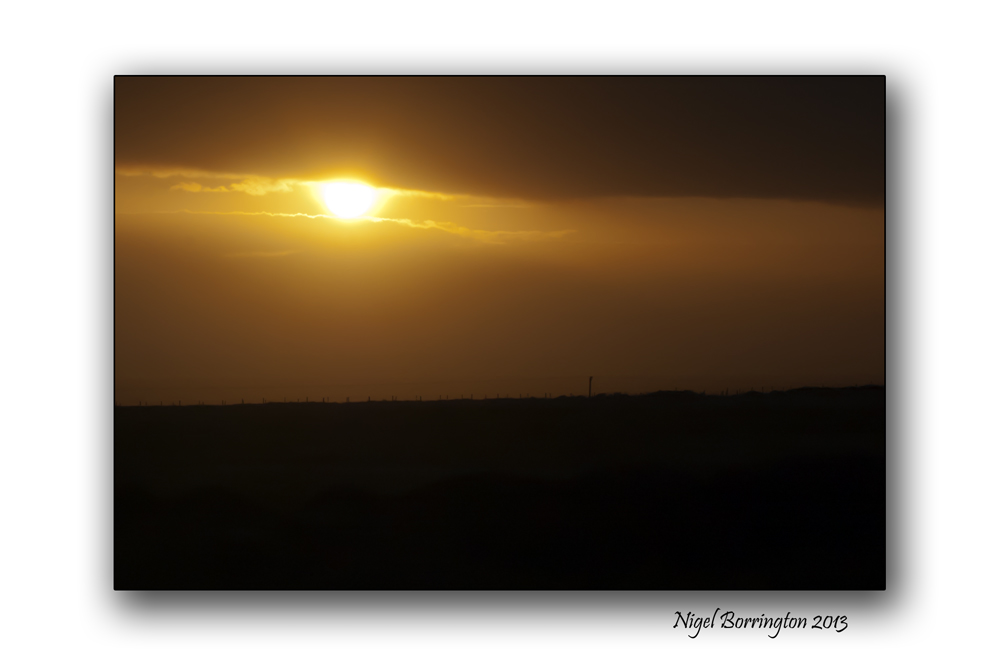
Celebrating the Spring Equinox 2015, with its Pagan traditions

Sunrise behind the standing stone.
Knockmealdown Mountains.
County Waterford.
Irish landscape Photography : Nigel Borrington
The Spring equinox 2015 celebrating
Today marks the arrival of spring, the date of the vernal equinox, or spring equinox as it is known in the northern hemisphere. Spring equinox. During an equinox, the Earth’s North and South poles are not tilted toward or away from the sun. (Ref :Wikipedia)

This means the sun will rise exactly in the east and travel through the sky for 12 hours before setting in the exactly west.An equinox happens twice a year around March 20 and September 22 when the Earth’s equator passes through the centre of the sun.
For those in the southern hemisphere, this time is the autumnal equinox that is taking people into their winter.
In English there is open access to Stonehenge tomorrow. Access will be from 05:45am until 08:30am.
Druids and Pagans like to gather at Stonehenge early in the morning to mark the Spring Equinox, to see the sunrise above the stones.

The Pagans consider this is the time of the ancient Saxon goddess, Eostre, who stands for new beginnings and fertility. This is why she is symbolized by eggs (new life) and rabbits/hares (fertility). Her name is also where we get the female hormone, oestrogen.
From Eostre also come the names “Easter” and “Esther” the Queen of the Jews, heroine of the annual celebration of Purim which was held on March 15. At Easter, Christians rejoice over the resurrection of Jesus after his death, mimicking the rebirth of nature in spring after the long death of winter.
It is also a time to cleanse your immune system with natural remedies. In Wiltshire and other parts of rural Britain it used to be tradition to drink dandelion and burdock cordials as the herbs help to cleanse the blood and are a good tonic for the body after a harsh winter.
The Equinox of the sun : Gallery


Three Poems , all with the Title “Morning star”

Morning Star, over Slievenamon , Co Tipperary
Irish Landscape Photography : Nigel Borrington
Morning Star.
By : Connor Sean McMurrick Crow
A kingdom in ancient history,
long before man was thought to exist,
stood in Hyperborean heartland.
Ruled in peace by a woman of antediluvian
beauty and her King-Groom.
Leviathan, a queen of rare black hair and eyes of velt,
rose every morning to greet the sunrise.
On this particular day, she woke Archon.
With a trailing gown of violet, she led him
by hand through perfumed gardens of
exotic sights.
Sunna broke over the hedges and
burnt the mist from frail orchids,
and all that was left of that kingdom
of runic beauty were two lovers entwined in stone.
 .
.
By : Scott Madden
Dec 22, 2014
The Morning Star
Have you seen the morning star?
It keeps it’s vigil in the East,
A prophet of the dawn.
It rises when the night is at its coldest,
The warmest light in the vast blackness.
It rises when the night is at its darkest,
The brightest light in the black vastness.
Have you seen the morning star?
 .
.
By : Justinian
Feb 2, 2010
Morning Star
The sun wakes and stretches its rays over the horizon.
Embraced is my heart and my smile shines on.
In my dreams,
you I did miss.
When I awake,
your lips I shall kiss.
Irish Landscape Photography : The River Suir

Irish Landscape Photography
The River Suir, County Waterford
Nigel Borrington
The River Suir that flows through Counties (Tipperary and Waterford) is only one of Ireland many rivers, with so many here its hard to say that its the most loved or the most beautiful but it cannot be far from it. I spend a lot of time walking the banks of this river so a little time ago I decided to get a flight booked from Kilkenny’s small Airport and get some pictures of the Suir from above, the above image being just one.
This was one of the most amazing things I have done with a Camera and it was a perfect day to do this trip, I will never forget looking down the river Suir towards Waterford city and seeing the river vanish into the setting sun …..
The River Suir
Irish pronunciation:, Irish An tSiúr or Abhainn na Siúire, is a river in Ireland that flows into the Atlantic Ocean near Waterford after a distance of 185 kilometres (115 mi).[1] The catchment area of the River Suir is 3,610 km2. The long term average flow rate of the River Suir is 76.9 Cubic Metres per second (m3/s)- This is more than twice the flow of the River Barrow (37.4 m3/s)
Popular with anglers, it holds plentiful reserves of brown trout. While the Suir holds the record for a salmon taken from an Irish river (weighing 57 lb/26 kg, taken on a fly in 1874), as is the case in many other Atlantic rivers, salmon stocks have been in decline in recent years.
Rising on the slopes of Devil’s Bit Mountain, just north of Templemore in County Tipperary, the Suir flows south through Loughmore, Thurles, Holycross, Golden and Knockgraffon. Merging with the River Aherlow at Kilmoyler and further on with the Tar, it turns east at the Comeragh Mountains, forming the border between County Waterford and County Tipperary. It then passes through Cahir, Clonmel and Carrick-on-Suir before reaching Waterford. Near the Port of Waterford it meets the River Barrow at Cheekpoint to form a wide navigable estuary, capable of accommodating seagoing vessels up to 32,000 tons dwt. It exits to the sea between Dunmore East and Hook Head.
Together with the Nore and the Barrow, the river is one of the trio known as The Three Sisters.
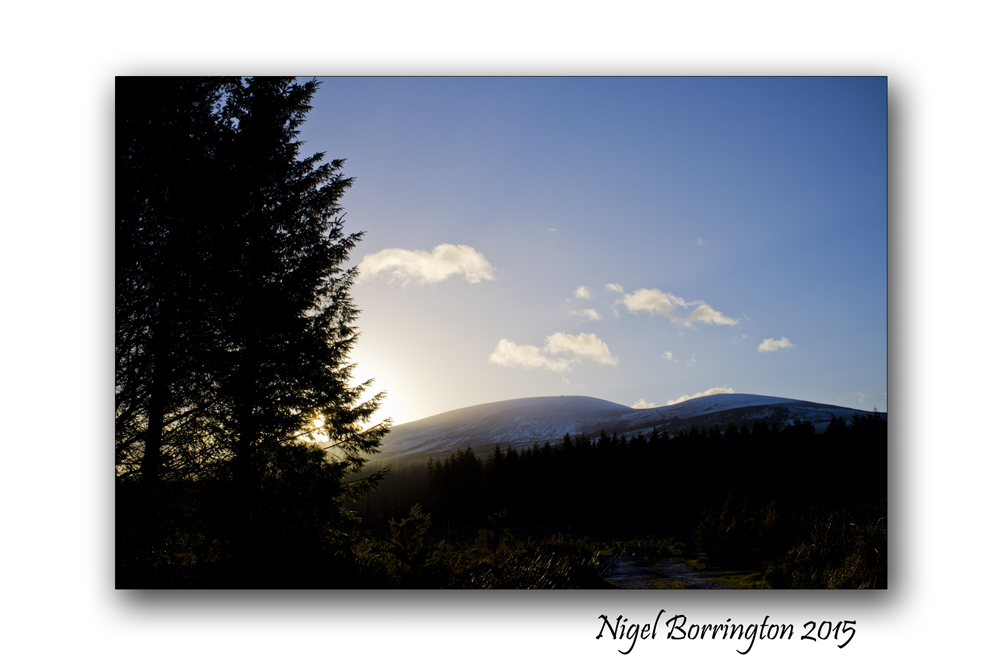
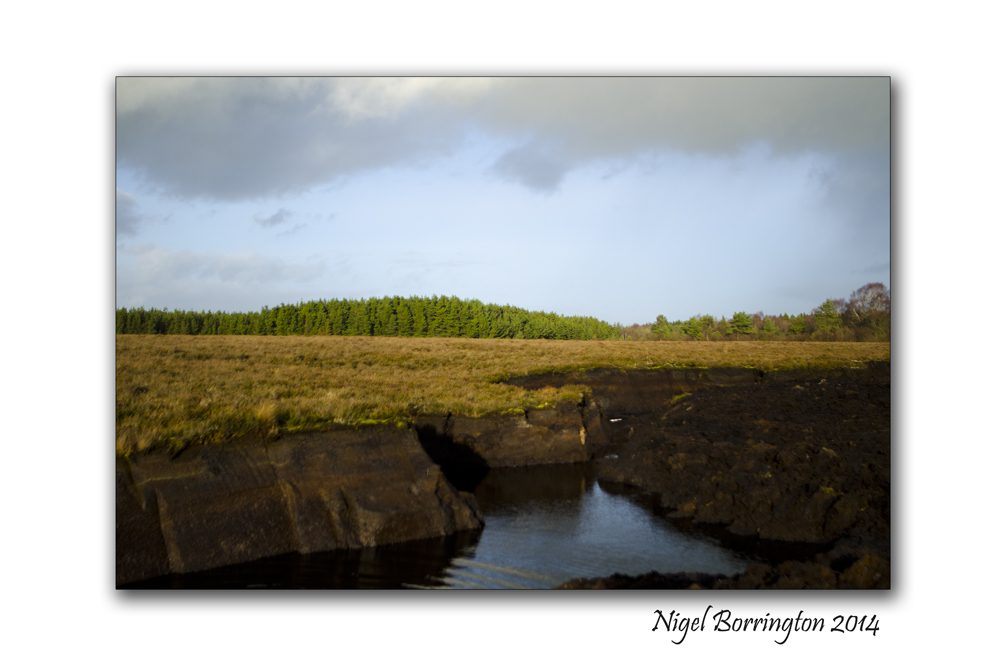
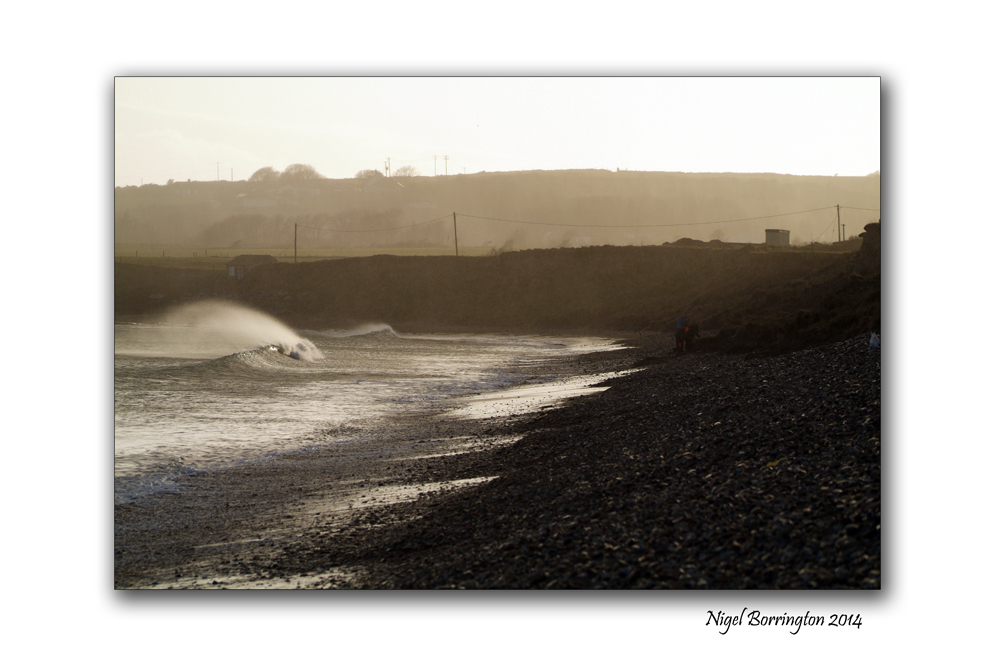
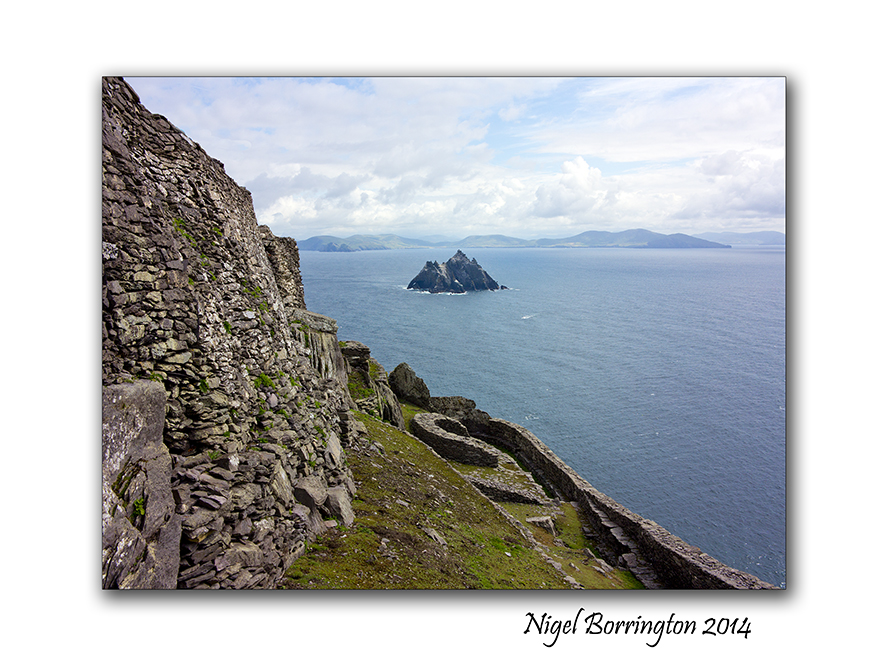
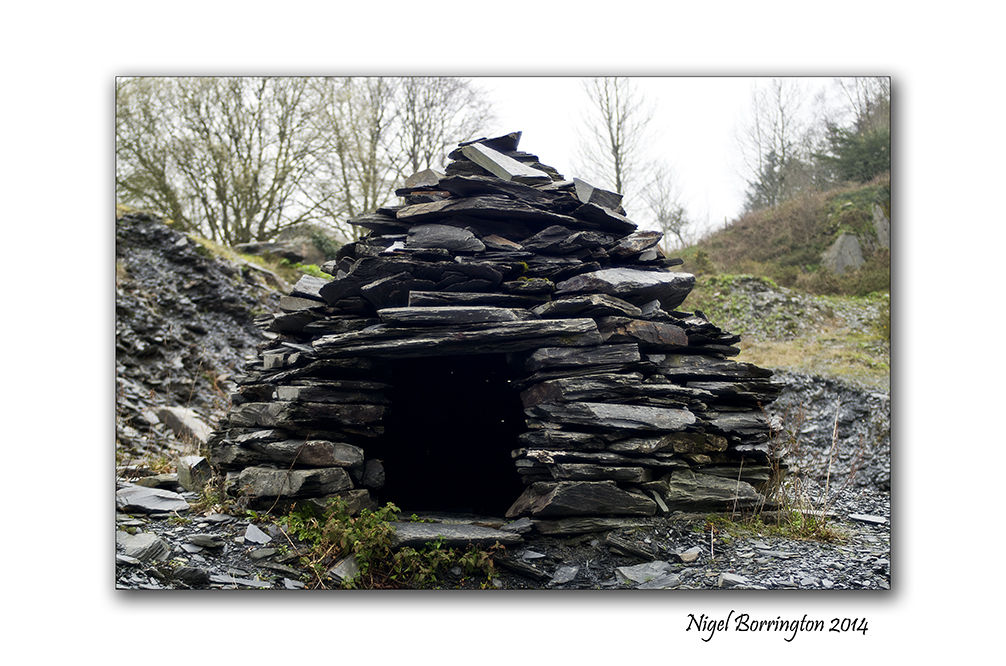
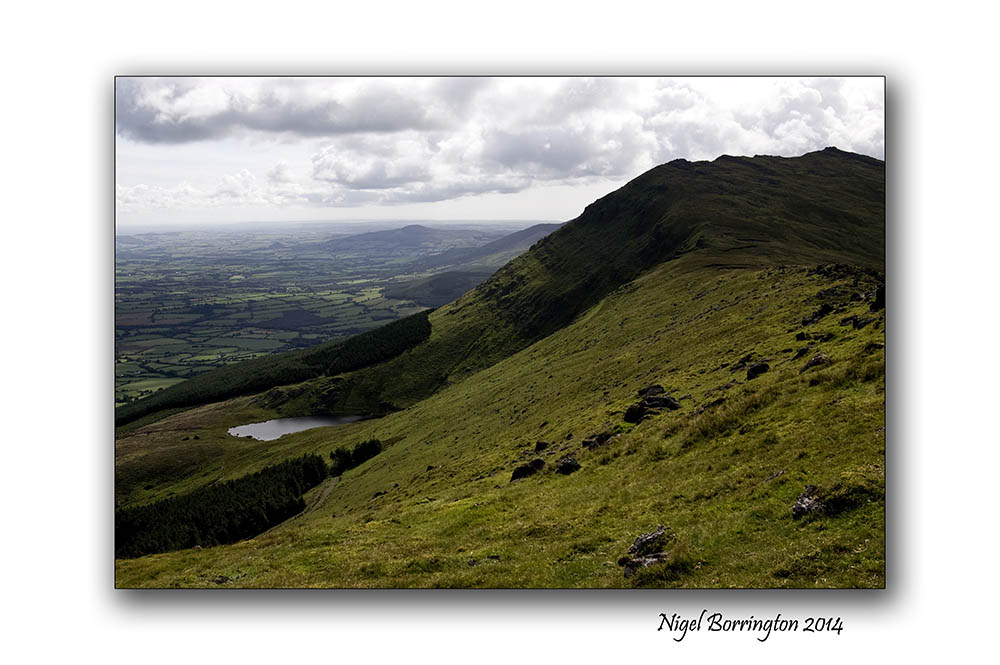
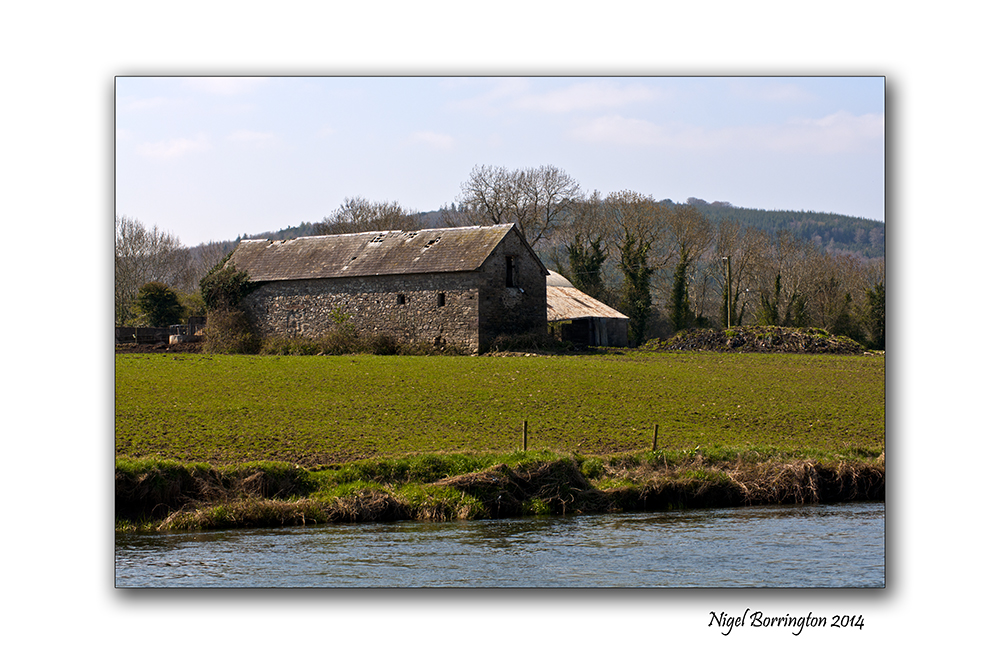
50 + Landscape images of Ireland : Happy St Patricks Day !

Happy St Patricks day everyone 🙂 🙂
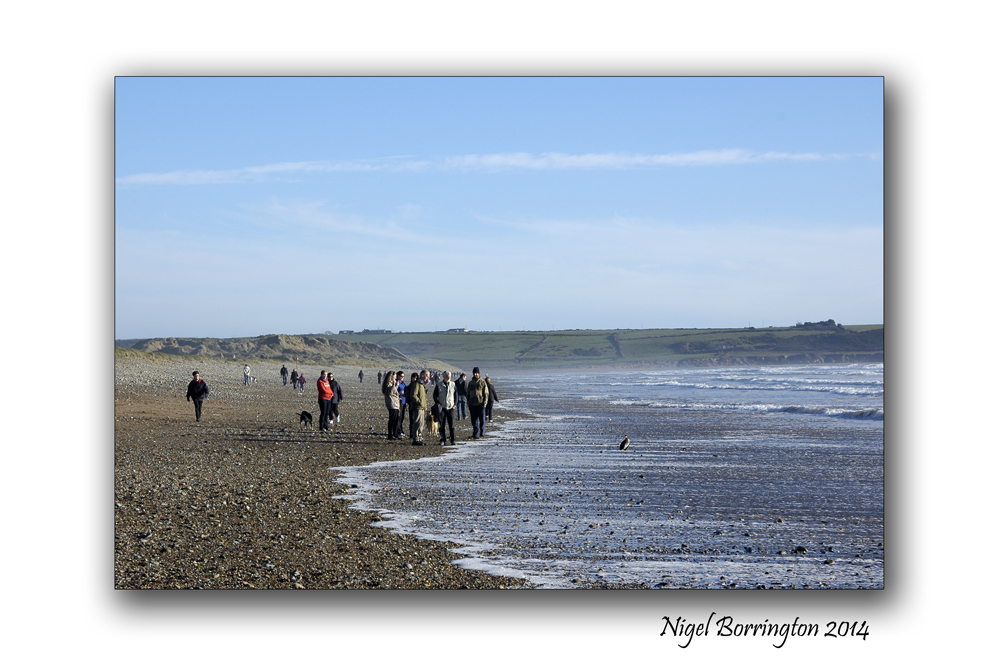
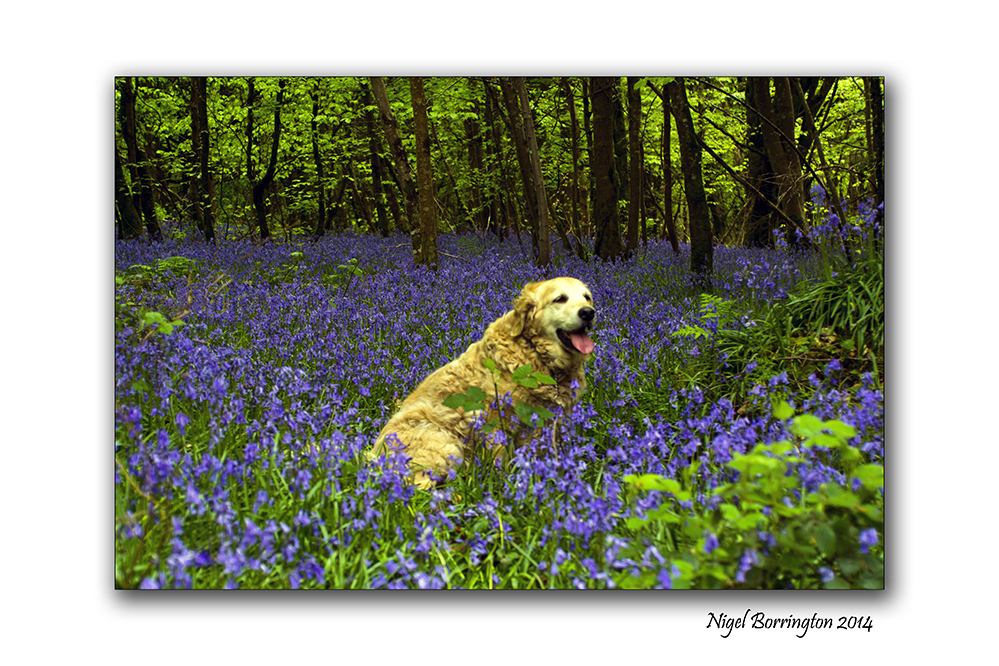
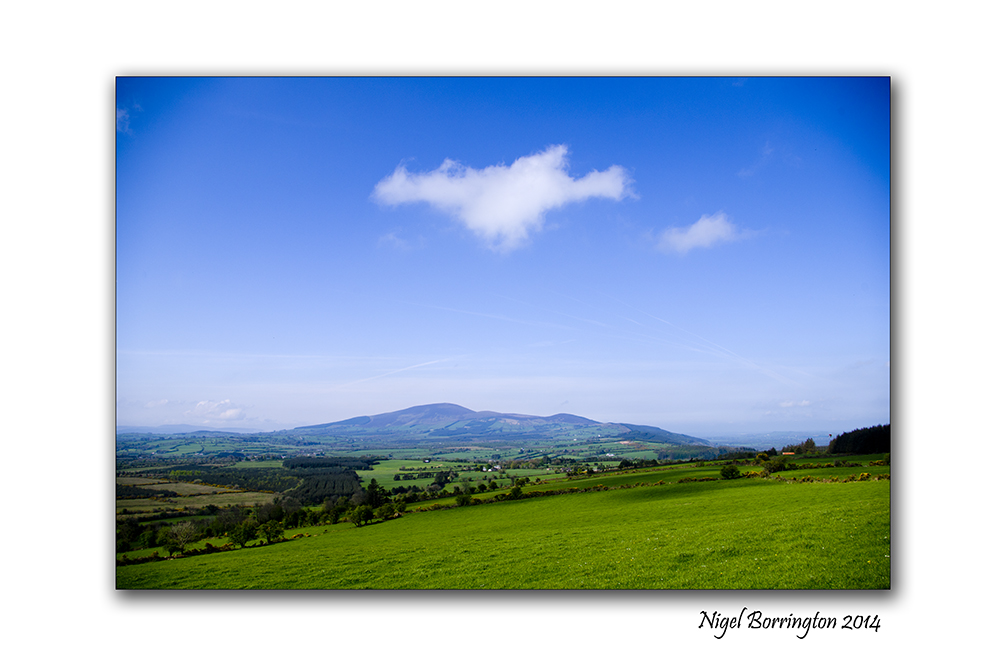
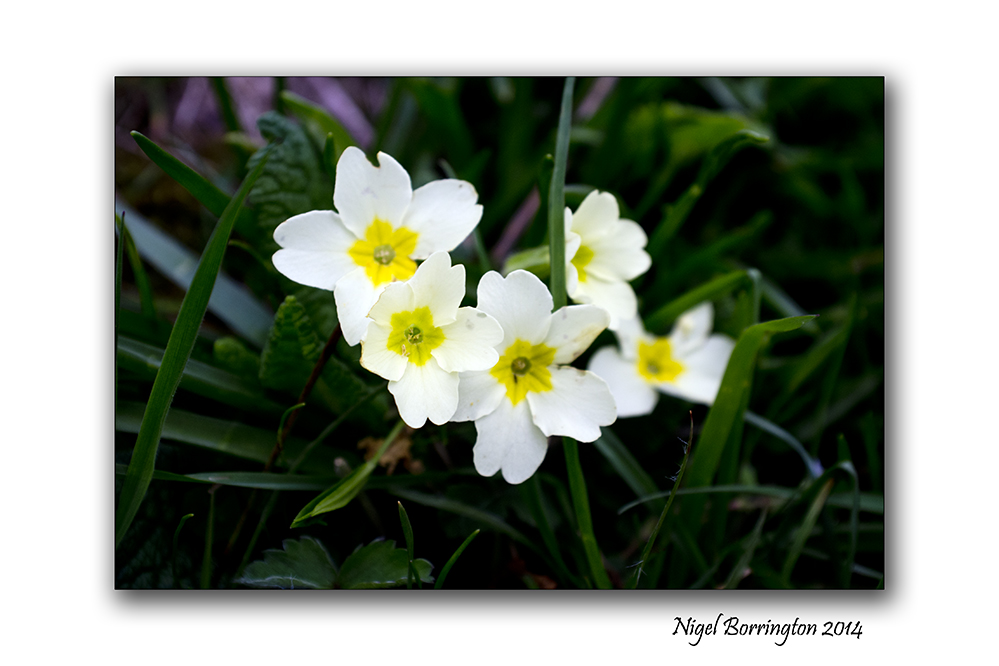
Below I have posted lots of images from the last few years, all Landscape images of this great Island of Ireland !
St Particks day 2015, an Irish Landscape Gallery















The Old stone bridge, a Poem by, Tony Mitton

Irish Landscapes : Nigel Borrington
The old stone bridge
By, Tony Mitton
The old stone bridge
is where folk stood to talk,
watching the water go under,
hearing its fluent music
gather their words
to carry notions, ruminations, gossip
away in a silver wrapping
of rippled sound.

Sometimes, too, the women would come,
down the stone steps to the brookside
to launder the linen, the clothes.
And again, all the soil,
the sweat and the swear of life,
would be washed in that water,
rolled in that bundle
of tinkling, tumbling sound,
to be carried down,
out of sight and of mind,
rinsed by the workings of water.
Monday Morning Poems – Dark Wood, Dark Water, by – Sylvia Plath

Dark Wood, Dark Water
By : Sylvia Plath
This wood burns a dark
Incense. Pale moss drips
In elbow-scarves, beards
From the archaic
Bones of the great trees.
Blue mists move over

A lake thick with fish.
Snails scroll the border
Of the glazed water
With coils of ram’s-horn.
Out in the open
Down there the late year

Hammers her rare and
Various metals.
Old pewter roots twist
Up from the jet-backed
Mirror of water
And while the air’s clear

Hourglass sifts a
Drift of goldpieces
Bright waterlights are
Sliding their quoits one
After the other
Down boles of the fir.
Its the weekend, so why not find a local lane and take a slow relaxing walk ……..

Images for the weekend
Landscape Photography : Nigel Borrington
Have a great weekend , what ever you do 🙂
Bee-Keeping with a mountain view, Slievenamon, Co. Tipperary
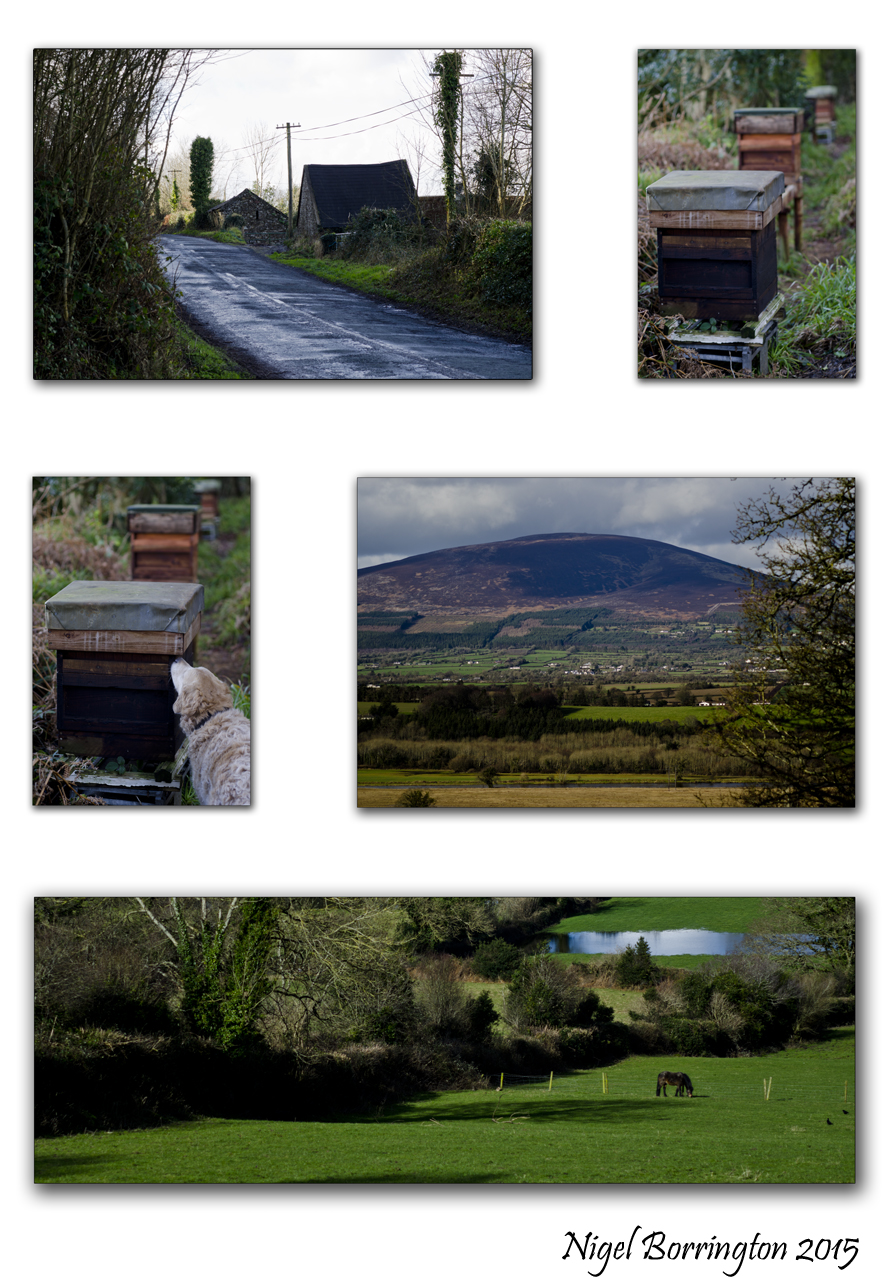
Bee Keeping with a view of SLievenamon, Co. Tipperary
Irish Landscapes : Nigel Borrington
Bee Keeping in Ireland is often a personal activity, with many hives being kept on family farms and Gardens, even sometimes with the permission of the forestry services.
I often come across a set of Hives while out walking in our local woodland. In the images here , taken last weekend the hives are located on the some hills facing to the north, the great mountain of Slievenamon just across the river Suir.
Very soon these Hives will be active again and I will return to get so more images.
The Federation of Irish Beekeepers’ Associations have a great web site and help on getting going with keeping bee’s, this must be a great activity and very needed with modern farming methods having massively reduced Bee numbers. I have included the text from this site on “How to become a beekeeper” below the following two images, if you would like to read it.

 ….
….
Beginning with Bees , The urge to keep bees: How do I start?
The beginner should first of all find out if he/she is in any way allergic to bee stings and if so not to attempt acquiring bees or taking up beekeeping without seeking medical advice.
When the urge to keep bees first hits you, the impulse is to go out and buy a hive straight away, and learn by doing in isolation – this is not the best approach. The best first step is to join your local branch of the Beekeepers’ Association, preferably in the Autumn.
You can then attend their classes for beginners and programme of winter lectures which are held frequently and cover all aspects of beekeeping. There are 45 such Associations scattered throughout the country.
Other benefits of membership include the use of a library – video and book, plenty of friendly advice and you are kept up to date with developments within the craft. You can also use the Association extractor, can avail of sugar at concessionary prices and benefit from the low cost of FIBKA Public Liability Insurance. The latter is an absolute must as accidents can happen.
It is worthwhile if only for your own piece of mind. Whilst a subscription to “An Beachaire” may be optional, a good book is essential and the FIBKA’s “Bees, Hives and Honey” or Ted Hooper’s “Guide to Bees and Honey” are standard references for beginners and experienced alike.
Some Associations also provide a mentoring facility whereby the beginner is assigned to an experienced beekeeper within his or her local area for the purpose of giving advice for the first couple of years. This is an excellent idea as having someone close at hand or at the end of a telephone is a useful asset.
Bee Stings
If you wish to keep bees, and irrespective of all the protective measures that you might take, you will receive the occasional sting. Everyone will show some reaction to bee stings, such as the initial pain, and later a slight swelling of the affected area, later followed by some itching.
The effects can be reduced by applying an antihistamine cream or even taking tablets such as Piriton, but generally the body will quickly become accustomed to the occasional sting and will display few adverse effects.
Bee Suit
There are many forms of protective clothing on the market which range from veils right through to full bee suits. And the prices are commensurate with the degree of cover. A full bee suit is the ideal acquisition but the prices are fairly steep and it may not be even to your taste.
A smock, together with the type of trousers worn by nurses or painters, may be more suitable.
Be wary of veils which slip over the head and are attached by straps or loops under the armpits; bees invariably find a way to gain access to your neck and face. The safest way to wear that sort of veil is in conjunction with a zip up overall.
Any protective clothing should be light in colour, nothing dark. Nylon should be avoided as it generates static, which is annoying to bees. Woolly clothing should also be shunned, as they get tangled up in it.
Gloves
When handling bees, beginners should also use gloves. With full gauntlets they are costly but should last several years. I use rubber gloves which are less clumsy – “Nitrile” or “Marigold” brands.
The ultimate objective is to obtain a strain of bee that is not overly defensive, become proficient in handling them, and so dispense with gloves altogether.
Ankles are prime targets for bees and calf length rubber boots should be worn.
Equipment
The monthly beekeeping journal carries advertisements from firms selling all types of beekeeping equipment. The first two essential items you need to acquire are a smoker and a hive tool.
Smokers come in two standard sizes, the diameters of the fireboxes being 8cms and 10cms. The smaller version is quite adequate for up to ten hives.
When servicing the smoker, ensure that the legs of the fire grate are not restricting the air entry hole at the base of the firebox and also check that this hole is directly in line with the air exit hole from the bellows.
As for fuel, I use dried grass which provides a constant supply of cool smoke. What you don’t want is a type of fuel which burns too quickly and turns your smoker into a flame thrower which scorches the bee’s wings. This aggravates the bees and they will not delay in letting you know of their displeasure.
Hive Types
There are many types of hives available on the Irish market. However, in selecting a hive type it is important to determine that the component parts for the brood chambers and supers are readily available.
The most common type of hives used in Ireland which would measure up to these requirements are the National, the Smith Hive and the Modified Commercial Hive. The approximate comb areas of the various frames are: National and Smith Deep – 5000 worker cells Commercial Deep – 7000 worker cells.
The two most popular hives are the National and the Commercial. Although the latter have larger frames, the outer dimensions of component boxes are the same, to within a quarter of an inch, so that supers, queen excluders, crown boards, floors and roofs are all compatible.
My first choice would be the National hive because it has the following advantages:
The frames are easier to handle as they have longer lugs (38mm) than the Commercial (16mm).
The National brood box and Super are also easier to handle as the design has a built in handle at both sides.
The capacity of the National brood box and super is smaller than that of the Commercial which means it is lighter to lift when examining the hive and taking off the crop of honey.
The most important advantage is the higher honey yield from the National compared to the Commercial as the National brood box is too small to accommodate brood and much stores, therefore most of the honey is stored in the supers where it can be easily taken off for extraction. This is especially true in a bad year with poor weather conditions during the Summer. The Commercial is best suited to localities where the honey crop is above average.
In addition to the brood box, varroa screen floor, crown board, queen excluder and roof you should make provision for three supers per hive.
It is usually best to treat exterior surfaces with a good preservative, like Cuprinol – green or Fencelife and taking care to air well for a week or more. Normal paint stops the wood ‘breathing’ and can lead to moisture lifting the paint in bubbles.
Obtaining your first colony : A Nucleus
By the Spring you will have a good background of knowledge to help you decide on what to buy and how to start up.
It is essential that you start with a healthy and productive stock of bees. You should contact a reputable beekeeper in your region for assistance in obtaining your first colony.
While it is also possible to start by obtaining a swarm, this is an unreliable method and you have no assurance of the health status of the resulting colony.
You may be tempted to buy a strong colony in the hope of a quick return of honey this Summer, but sometimes the difficulty of handling a large stock as a beginner can put a newcomer off for life.
It is far better to arrange with a local beekeeper to buy a four-frame nucleus with a young queen, taking delivery at the end of May or early in June. This is also the time when outdoor open hive demonstrations are organised by your Association where you can learn how to handle and control a stock of bees.
You can now expand this newly acquired nucleus by regular feeding with sugar syrup into a full hive of eleven frames by July. They will be very quiet and easy to handle and as they grow in strength you will gain in experience, confidence and the necessary manual skills of beekeeping.
There will be no swarming problems to cope with in your first year and with autumn feeding the stock will cope with the coldest winter
By the following Spring you will be well placed to increase to two stocks by making an artificial swarm from your own hive in May.
If you have built or acquired a couple of empty hives over the Winter you will also be ready to take or buy in swarms sometime in May or June, and by July you will have at least three good stocks and the experience necessary to manage them.
You should also have a crop of honey and an opportunity to learn the techniques involved in taking it off, extracting, bottling and preparing it for sale.
It will still only be fifteen months since you first owned bees but you have come a long way, and it might be wise to stay with just two or three hives for another year. It is much better to make your mistakes on two or three hives than on twenty. Possibly three hives are all you intend to have anyway.
In either case, make a four frame nucleus from your strongest stock some time in the Summer and see it through the Winter to sell to another beginner, to increase you own stocks or as a reserve in case anything goes wrong.
The Honey Crop
Honey yield is greatly influenced by seasonality. However a beekeeper who attends to the basic principles of management should be able to achieve an average of 20kg per hive per annum.
The yields obtained at the Teagasc Beekeeping Research Station at Clonroche, County Wexford confirm this view. The yield from 75 colonies managed commercially at Clonroche has been 25 kg per colony per annum. This has been achieved by working to a planned programme of management and disease control.
The beginner should be familiar with the varroa control measures as outlined in the FIBKA Guidelines on Varroa Destructor – Integrated Control Programme . The varroa mite is a major threat to the survival of all our bee colonies
Where can I keep my bees?
The newcomer to the craft of beekeeping must decide where to site his or her apiary. Even a small garden is adequate for the keeping of a few hives. Bees fly anything up to three miles to forage so you have no need to worry about that. Even the largest beehive will measure about two feet square and that is all that is needed for each hive, but don’t forget to add a little space to stand along side it to work the colony.
You might like your honeybees but it is unlikely that your neighbour will display the same enthusiasm. Bees have no need to disturb others, whether human or animals, it is just a case of ensuring that their flight paths to and from the hive do not coincide with neighbours working in their gardens. Hives standing in full sun should be avoided, try to provide some midday shade.
Some say that entrances should face south-east to catch the early morning sun. The best layout is to have a hive facing each of the four cardinal points of the compass-one facing north, one facing south etc. This does help to prevent bees drifting from their own hive into another.
Some beekeepers have an out-apiary away from their home and your local Association will have a demonstration apiary for the members to use.
How much time do I need to devote to the bees?
We usually regard the period from October to March as the ‘off-season’ so far as opening up hives, lifting out frames and manipulations generally are concerned, but a limited inspection on a mild day in March can be justified on the grounds that we can only help our bees if we know what help they need. Just three questions have to be answered at this time of year.
Have they a laying queen? In some cases the answer may be obvious; for example if the bees are flying freely around midday and taking in massive loads of pollen, then all is well with the queen.
Have they enough food? If the hive still feels really heavy when hefted, they have enough food. Possibly about 1 hive in 3 will either feel light, or show little flying activity with not much pollen going in, and in these cases some action is required.
What is the natural varroa mite mortality per day? If this figure exceeds seven mites per day then control is necessary using one of the approved treatments. Check the updated F.I.B.K.A. policy on varroa for details. You have to continue with your colony inspections right through the Summer. So the time you need to devote to your bees could be as little as 15 minutes per hive every 10-14 days during the season from April to September. Usually the problem is that new beekeepers are unable to leave the bees alone for the first season.
Last night as I was sleeping, Poem by : Antonio Machado

Last night as I was sleeping
Kilkenny Landscapes : Nigel Borrington
Antonio Machado
Last night as I was sleeping,
I dreamt—marvelous dreams
that a spring was breaking
out in my heart.
I said: Along which secret aqueduct,
Oh water, are you coming to me,
water of a new life
that I have never drunk?
Last night as I was sleeping,
I dreamt—marvelous dreams
that I had a beehive
here inside my heart.
And the golden bees
were making white combs
and sweet honey
from my old failures.
Last night as I was sleeping,
I dreamt—marvelous dreams
that a fiery sun was giving
light inside my heart.
It was fiery because I felt
warmth as from a hearth,
and sun because it gave light
and brought tears to my eyes.
Last night as I slept,
I dreamt—marvelous dreams
that it was life I had
here inside my heart.
When the fishing boats go out , Poem and Images, By L. M. Montgomery

When the fishing boats go out.
Irish Landscape Photography : Nigel Borrington
WHEN THE FISHING BOATS GO OUT
By L. M. Montgomery
WHEN the lucent skies of morning flush with dawning rose once more,
And waves of golden glory break adown the sunrise shore,
And o’er the arch of heaven pied films of vapor float.
There’s joyance and there’s freedom when the fishing boats go out.
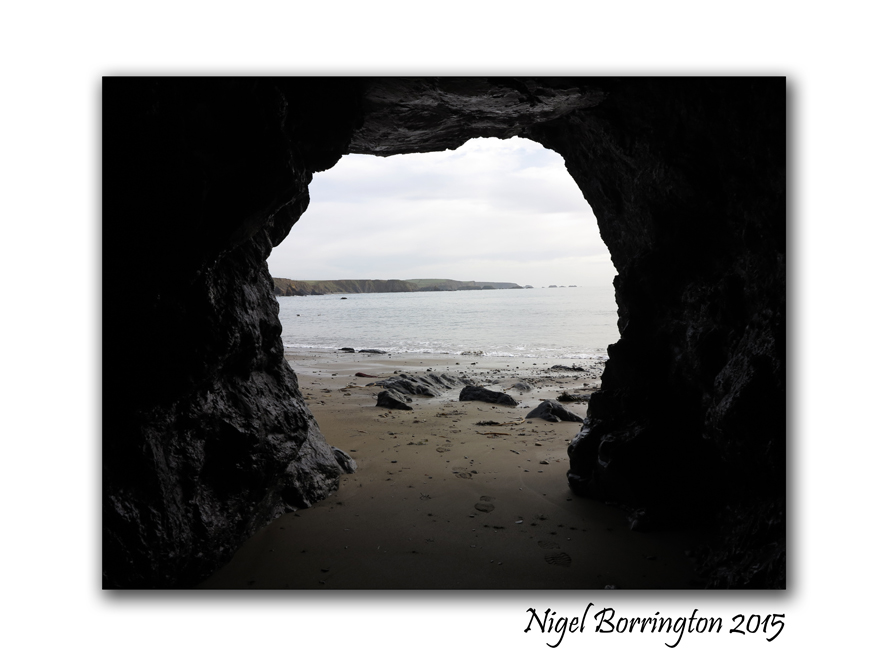
The wind is blowing freshly up from far, uncharted caves,
And sending sparkling kisses o’er the brows of virgin waves,
While routed dawn-mists shiver–oh, far and fast they flee,
Pierced by the shafts of sunrise athwart the merry sea!
Behind us, fair, light-smitten hills in dappled splendor lie,
Before us the wide ocean runs to meet the limpid sky–
Our hearts are full of poignant life, and care has fled afar
As sweeps the white-winged fishing fleet across the harbor bar.
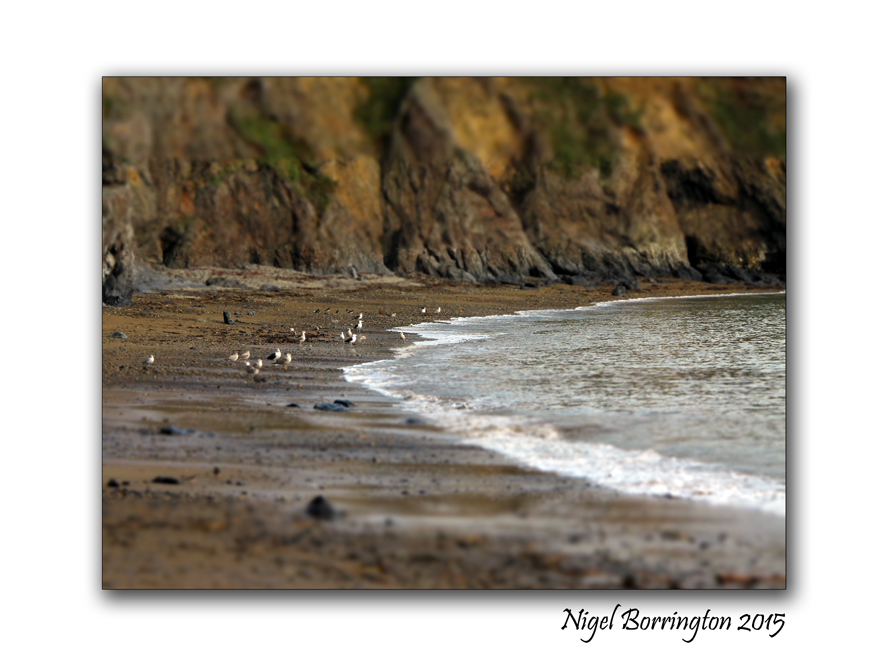
The sea is calling to us in a blithesome voice and free,
There’s keenest rapture on its breast and boundless liberty!
Each man is master of his craft, its gleaming sails out-blown,
And far behind him on the shore a home he calls his own.
Salt is the breath of ocean slopes and fresher blows the breeze,
And swifter still each bounding keel cuts through the combing seas,
Athwart our masts the shadows of the dipping sea-gulls float,
And all the water-world’s alive when the fishing boats go out.
Visiting an empty Church , Kilcash parish church, Co. Tipperary

Kilcash parish church
County Tipperary
Nigel Borrington
I so very rarely visit a church when a service is being held these days, Weddings and Funerals apart.
When I am out walking however, I will often wander into a local church, just for a look around. I am not so sure about the christian story anymore, I was as a child and into my teens but moved away the more I got into the great outdoors and into the nature that surrounds us.
Personally What I find is OK about visiting an empty church is that I have time to think about the spiritual massage they attempt to bring , the very fact however that there is no priest at the alter, well preaching! at you, just gives you a little more space to think for yourself about your own beliefs. These days my own beliefs lay more outside the church as to me if there is a God then he is to be found in nature and not inside the walls of a church.
Its not that I have anything against a church mass or service, its more that I find being outside is more spiritual than being inside a church walls, to me like many, I feel that if there is a god ( such as the church depicts ) then he is as likely if not more to be found in the life that can be found in the forests and the fields as sitting down and listening to a priest.
I feel that if he is to be found then its along a path of discovery in the world of nature that surrounds all of us.
Inside Kilcash Parish Church


Irish Landscapes, Freedom of the Hills, Poem by : Douglas Fraser – 1968
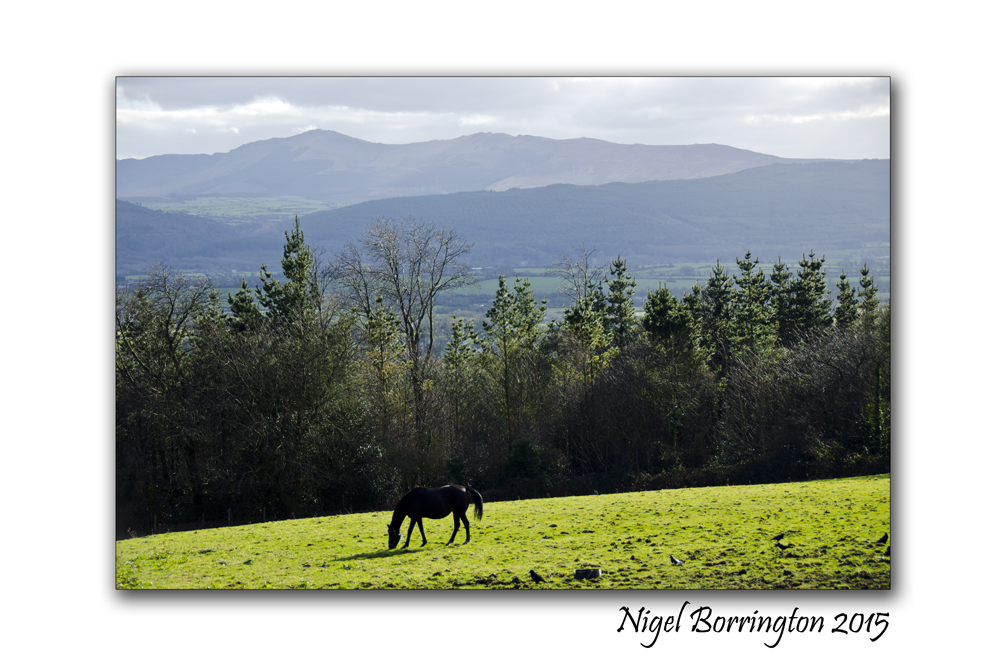
The Freedom of the hills
Irish Landscape Photography : Nigel Borrington
Freedom of the Hills
By: Douglas Fraser – 1968
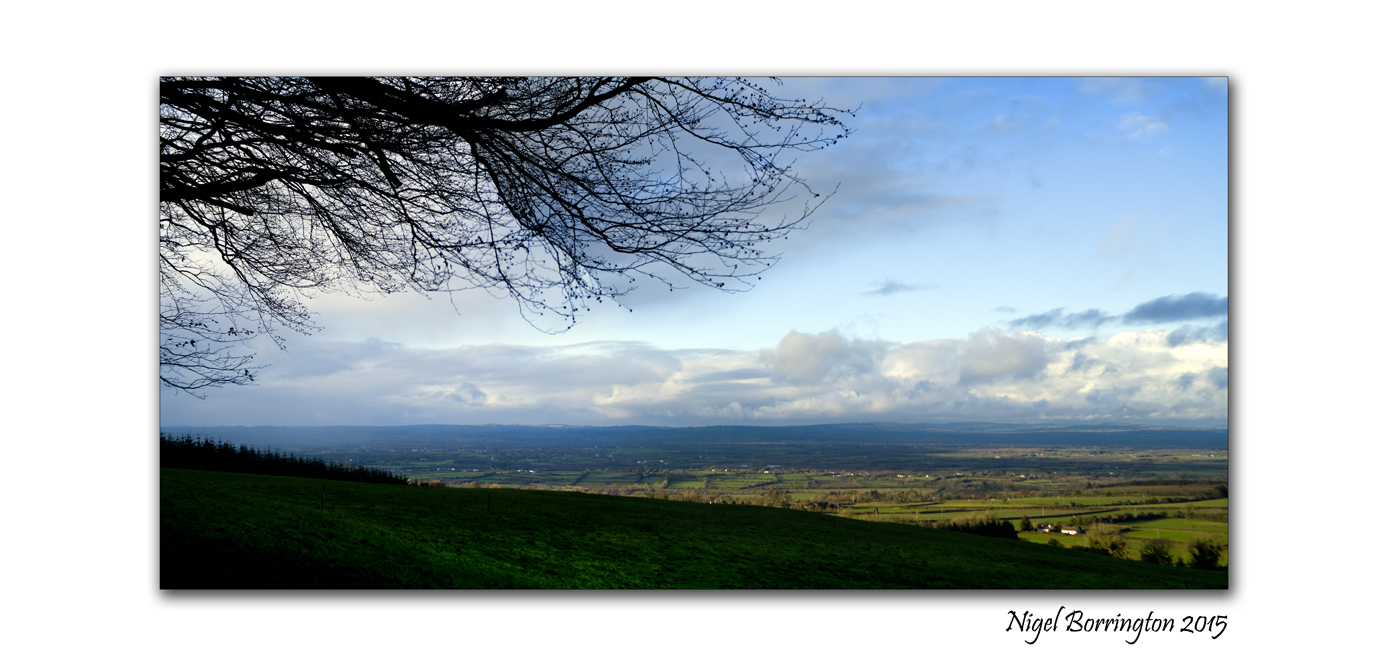
Mine is the freedom of the tranquil hills
When vagrant breezes bend the sinewy grass,
While sunshine on the widespread landscape spills
And light as down the fleet cloud-shadowed pass.
Mine, still, that freedom when the storm-clouds race,
Cracking their whips against defiant crags
And mists swirl boiling up from inky space
To vanish on the instant, torn to rags.
When winter grips the mountains in a vice,
Silently stifling with its pall of snow,
Checking the streams, draping the rocks in ice,
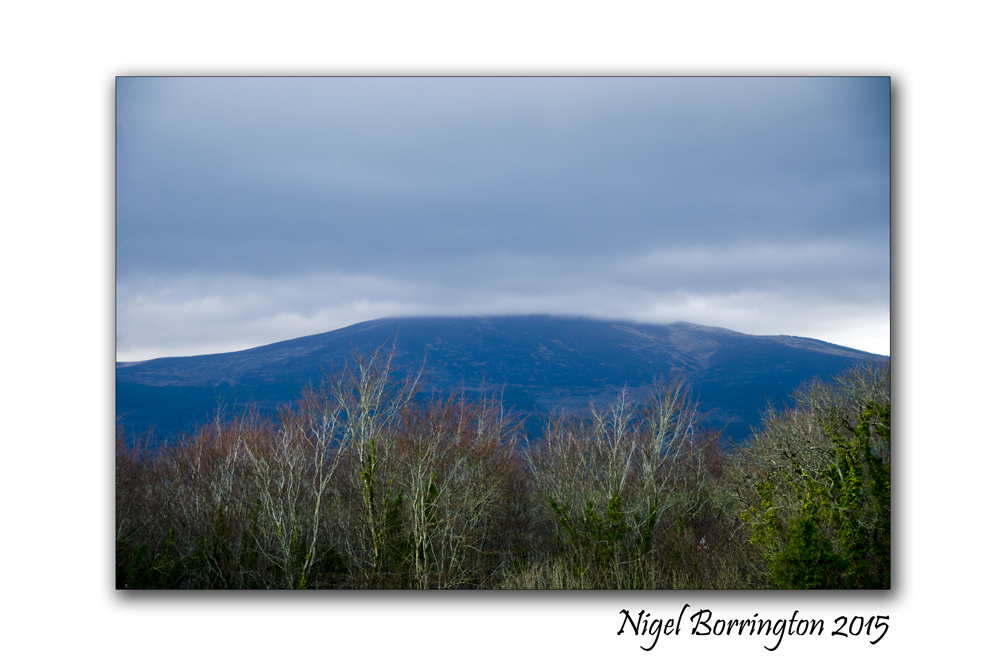
Still to their mantled summits I would go.
Sun-drenched, I sense the message they impart;
Storm-lashed, I hear it sing through every vein;
Among the snows it whispers to my heart
“Here is your freedom. Taste – and come again.”
 Nigel Borrington
A Thursdays evening walk at the bay …..
Thursday evening Landscapes
Irish Landscapes : Nigel Borrington
Just a quick image share today 🙂
It is hard to believe that after all the long winter months with their dark evenings, at last we are here in the early days of the summer 2015.
Its has been a perfect start to the summer here in Ireland with long warm days right from the beginning of the Easter Holidays.
I cannot wait for the long warm evenings, with long walks until the sunsets ……….
Summer evenings Gallery
Share this:
April 23, 2015 | Categories: Comment, Gallery, Landscape | Tags: evening walks, Irish landscape photography, Landscape, Nigel Borrington, Photography, summer 2015, Summer evenings | 6 Comments