Glengarriff, west Cork, Ireland : Gallery

Glengarriff, Beara Peninsula of County Cork, Ireland.
Irish landscapes : Nigel Borrington
Glengarriff, Beara Peninsula of County Cork, Ireland.
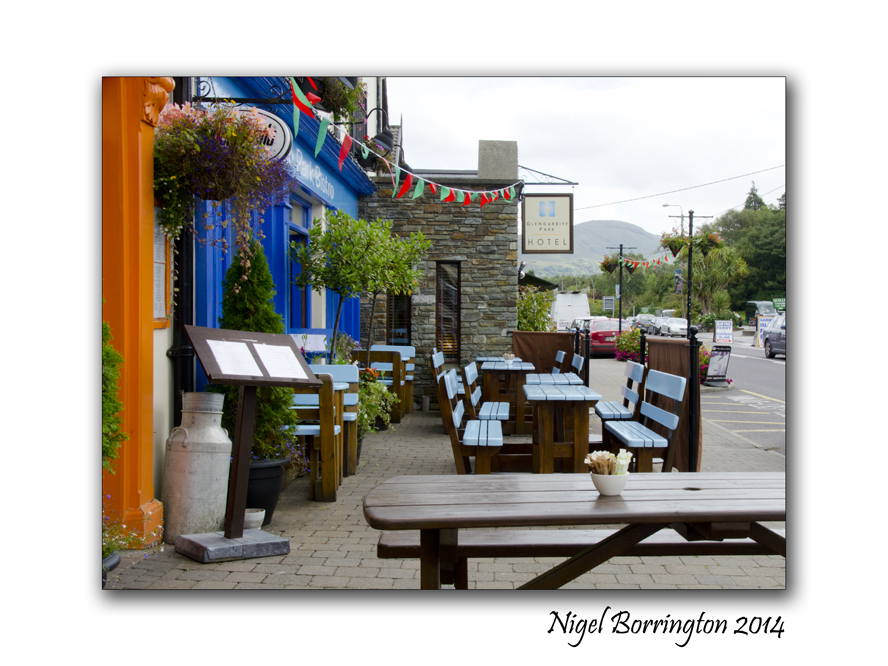
These images where taken on a visit to the west Cork town of Glengarriff during September 2014.
To me the town is at the top of my personal list of best visits in Ireland, for its size it has plenty of places to eat and drink and some great little shops. The surrounding area is full of great places to visit with a wonderful coast line , Mountain walks and Historic parks and nature reserves.
The Town has an official web site here : Glengarriff
Glengarriff the town
Glengarriff (Irish: Gleann Garbh, meaning “Rough glen”) is a village of approximately 800 people on the N71 national secondary road in the Beara Peninsula of County Cork, Ireland. Known internationally as a tourism venue, it boasts many natural attractions. It sits at the northern head of Glengarriff Bay, a smaller enclave of Bantry Bay.
Located 20 km (~12 miles) west of Bantry, and 30 km (~18 miles) east of Castletownbere, it is a popular stop along the routes around the area. In recent years, its importance as a waypoint along the Castletownbere to Cork fish-delivery route has declined as local infrastructure improves.
Glengarriff : Gallery


Landscape Photography of Ireland
 Caha Mountains, Healy Pass, Ring of Beara, West Cork
Irish Landscapes : Nigel Borrington[/caption]
A view of the Caha Mountains, Healy Pass, Ring of Beara, West Cork
This image was taken on one evening in early September 2014.
I was on a walk through the Healy pass on the Breara , west cork. On getting to the top of the pass I looked back towards Lauragh and the view was just amazing with the ice-age lake at Lauragh upper below. The image is made up of five frames taken using a nikon 18-200 zoom lens at 35mm.
Landscape photography of Ireland

Kilkash castle
County Tipperary
Irish Landscapes : Nigel Borrington
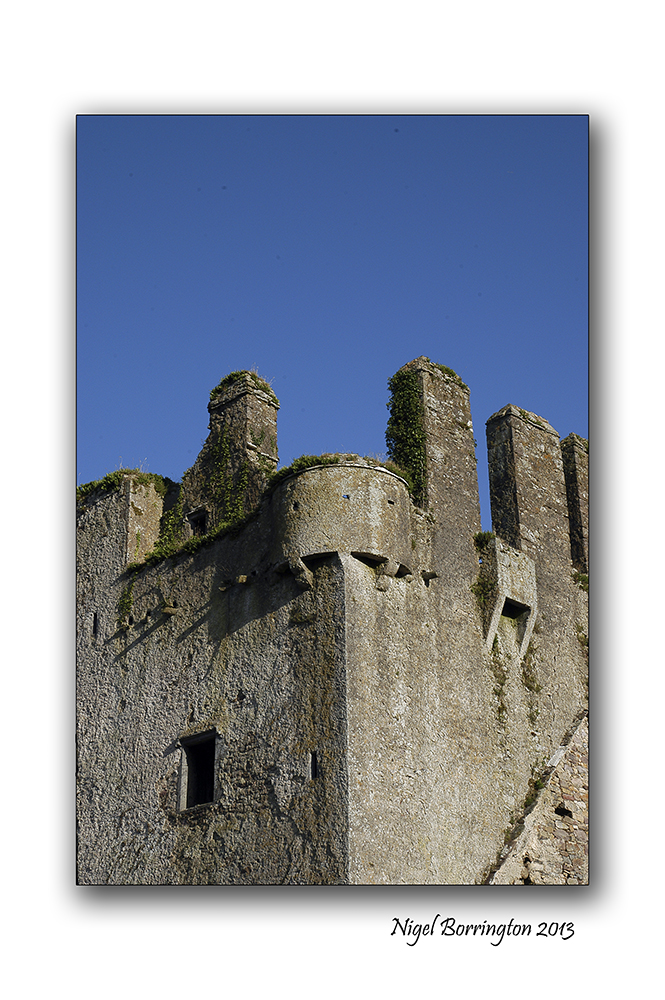
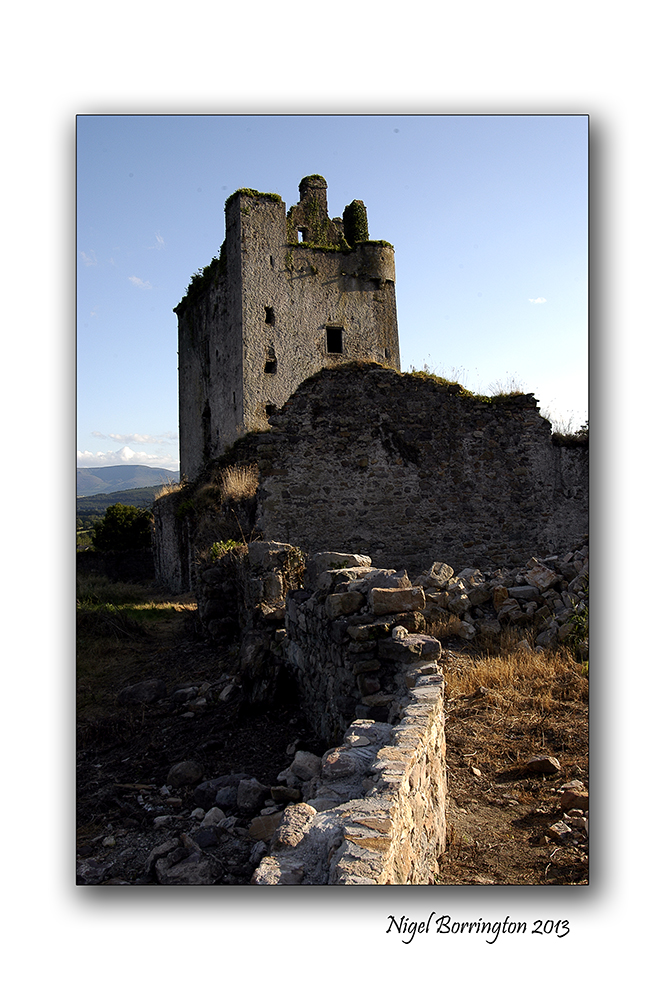
Kilcash Castle is a ruined castle off the N24 road just west of Ballydine in South Tipperary, Ireland. The castle consists of a fortified sixteenth-century tower and an adjoining hall added at a later date.
I have visited this Castle many times over the years, however in more resent months it has been under renovations by the OPW (Office of public works). All the images in this post were taken before this work started.
I noticed last week however that the work is about to complete and I hope to revisit in order to take some new images, when the castle reopens to the public.
Kilcash castle : History
Kilcash may have been a monastic foundation of the mid sixth century. The Butler dynasty has important links to the area. The third son of James Butler, 9th Earl of Ormond was John Butler of Kilcash who occupied lands in Kilcash. His heirs went on to provide four immediate heirs to the earldom of Ormond when the senior line failed through lack of legitimate male issue.
Near the castle are the remains of a medieval church with a Romanesque doorway. This building was partially repaired in the 1980s and is now safe to visit. In the graveyard, the mausoleum (a building nearly as large as the church) contains the tombs of Archbishop Christopher Butler (1673–1757), Margaret, Viscountess Iveagh (see below), Walter Butler, the 16th Earl of Ormond (d. 1773) and John Butler, the 17th Earl (d. 1795). Some of the eighteenth-century headstones are carved with elaborate scenes of the crucifixion.
The main castle building is a fortified tower dating from the sixteenth-century. An adjoining hall was added at a later date, when the need for defence gave way to the large windows associated with settled times. In the sixteenth century the manor of Kilcash passed from the Wall family into the possession of the Butlers of Ormond until the latter sold it to the Irish State in 1997 for £500.
The castle was visited by James Tuchet, 3rd Earl of Castlehaven, a noted Confederate Catholic commander in the 1641-52 war, who wrote his memoirs at Kilcash where his sister, Lady Frances, was married to another Confederate commander, Richard Butler of Kilcash (d. 1701).
By the 19th century, the castle had fallen into ruin after parts of the Kilcash estate were sold c. 1800. During the Irish Civil War, the castle was occupied by anti-treaty forces in an attempt to slow the approach of pro-treaty forces towards Clonmel. They were finally dislodged by artillery fire under the command of General Prout, further damaging the already dilapidated structure.
By the late twentieth century the castle was in a dangerous state of repair. It is currently undergoing extensive repairs which will prevent it from collapsing.
Kilcash Castle : Gallery


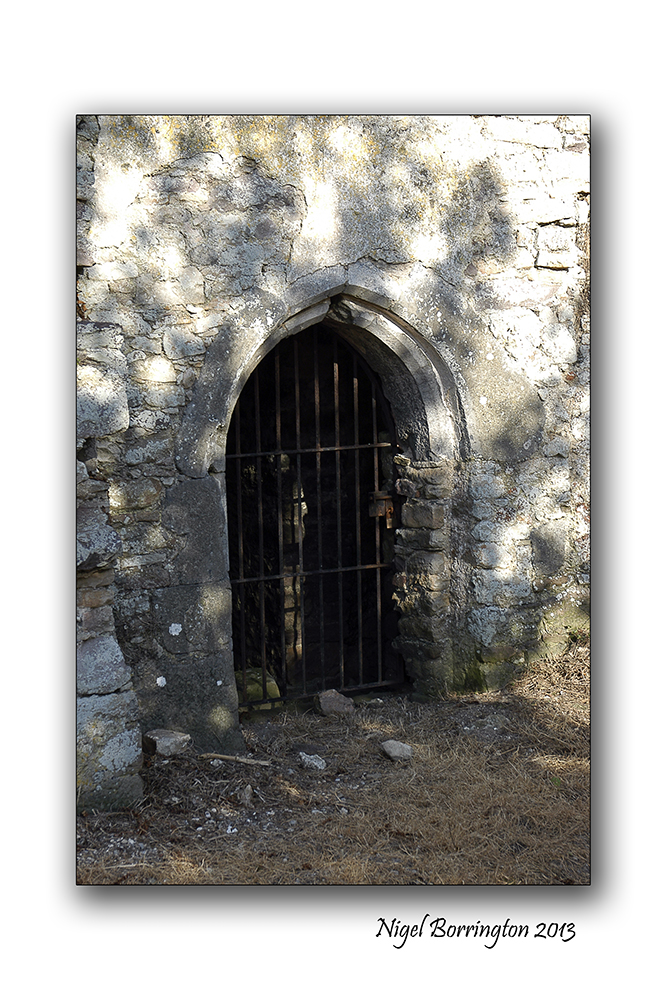


Monday Morning Images and Poetry – You And your free range chickens, by : James Jarrett

You And your free range chickens
Farming Photography : Nigel Borrington
your free range chickens
by : James Jarrett
I often thought about you
And your free range chickens
Being happy on the land
Living life free
Both pecking and scraping
Getting life from the dust

But I didn’t know
That it could never be enough
Tho’ scratch might make some happy
I found out too late
That it wouldn’t do for you
But if I could
Believe me true
I’d bring you chickens
Instead of flowers
To brighten up your room

Its the Weekend so why not ……… , A Weekend Gallery.

Irish Landscape Photography : Nigel Borrington
It the weekend so why not get out and take a country walk, go down to beach or head for the hills …….
Have yourselves a great weekend !
Weekend Gallery


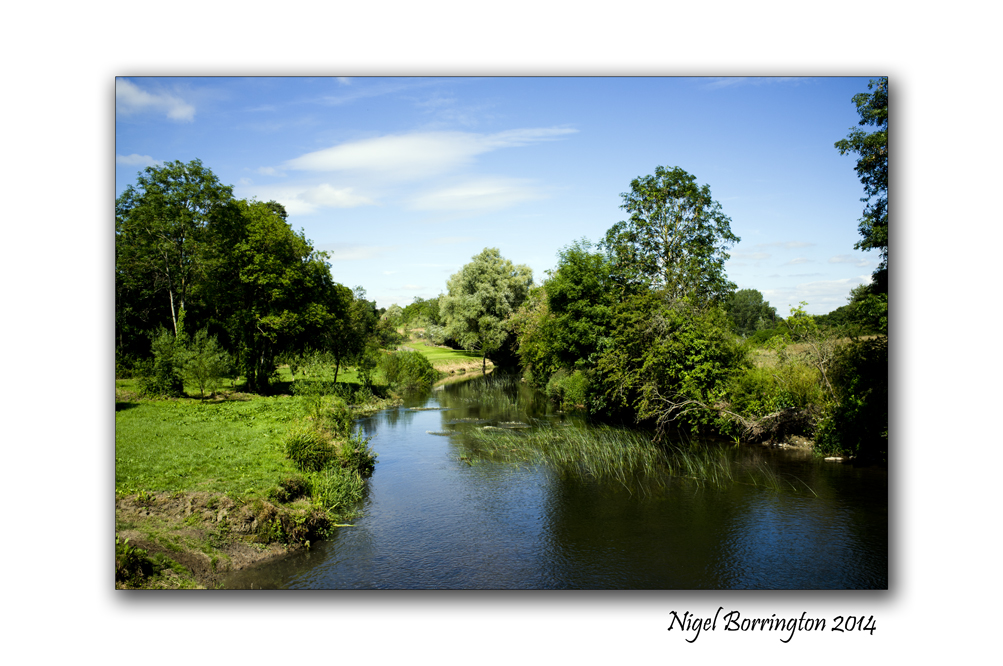


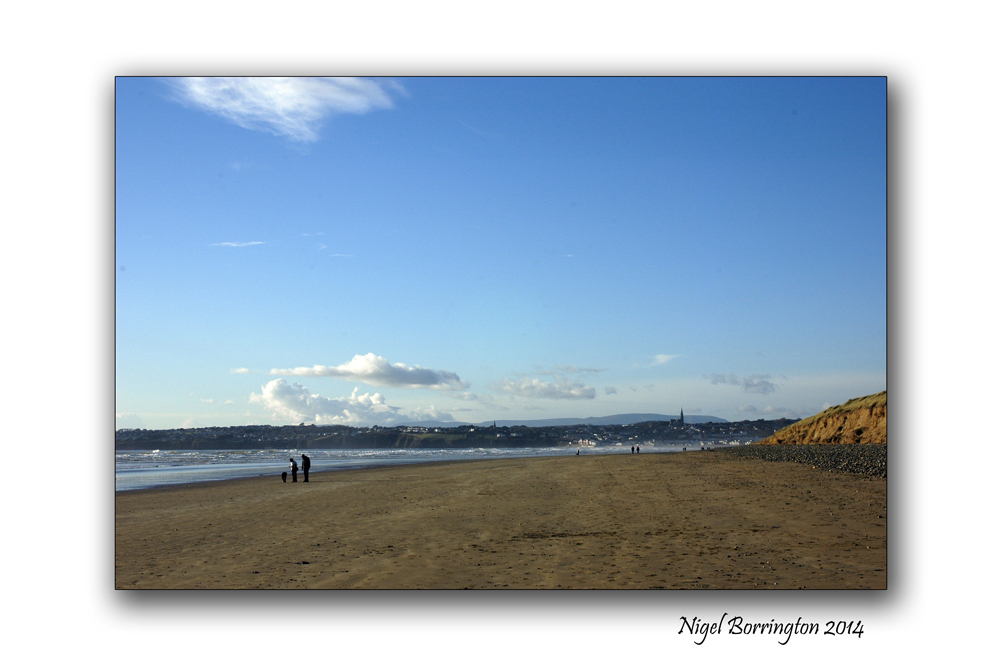
The Elements : Air

Pagan Elements : Air
Landscape Photography : Nigel Borrington
The pagan elements :
Air
The element of Air is vital to human survival, without it we would all perish, its aspects are Thinness, Motion and Darkness and its quality is Active. Air is the manifestation of movement, freshness, communication and of the intelligence. Sound is another manifestation of this element. As an element, it is invisible, but its reality can be felt in the air that we breathe in every day.
To connect with the power of this element, find a place with clean air and breathe deeply, touch a feather or inhale the fragrance of a heavily scented flower. Let yourself experience the energy of this element, and reflect that we also possess Air energy within ourselves.
In magical terms, Air is the power of the mind, the force of intellect, inspiration, imagination. It is ideas, knowledge, dreams and wishes. Air is the element of new life and new possibilities and is essential to spells and rituals of travel, instruction, finding lost items, some types of divination, and freedom. Air aids us in visualization, a vital technique in magic.
Air is a masculine element and governs the magick of the four winds. It is the vital spirit passing through all things, giving life to all things, moving and filling all things. Thus Hebrew doctors ascribe it not as an element but as a medium or glue that binds all things together.
Air
The first element of the alchemical tradition.
Air is the essence of intuition and learning, the element of the nature of the mind.
Astrological Signs: Gemini, Libra, and Aquarius.
Represented by: Feathers, Birds, incense, fans, flags, flowing garments and sheer material.
Season: Winter
Color: White
Chakra: Crown
Celtic air god and goddess:
Arianrhod
“The Silver Wheel”, “High Fruitful Mother”. Celtic Goddess, the sister of Gwydion and wife of Donn. Deity of element of Air, reincarnation, full moons, time, karma, retribution. The palace of this sky Goddess was Caer Arianrhold (Aurora Borealis). Keeper of the Silver Wheel of Stars, a symbol of time and karma. Her ship, Oar Wheel, carried dead warriors to Emania (Moon-land).
Arianrhod (Welsh pronunciation: [arˈjanr̥ɔd]) is a figure in Welsh mythology who plays her most important role in the Fourth Branch of the Mabinogi. She is the daughter of Dôn and the sister of Gwydion and Gilfaethwy; the Welsh Triads give her father as Beli Mawr.[1] In the Mabinogi her uncle Math ap Mathonwy is the King of Gwynedd, and during the course of the story she gives birth to two sons, Dylan Ail Don and Lleu Llaw Gyffes, through magical means.
Ref:
GODDESSES: Aradia, Cardea, Nuit, Urania.
GODS: Enlil, Kheohera, Mercurym, Shu, Thoth.
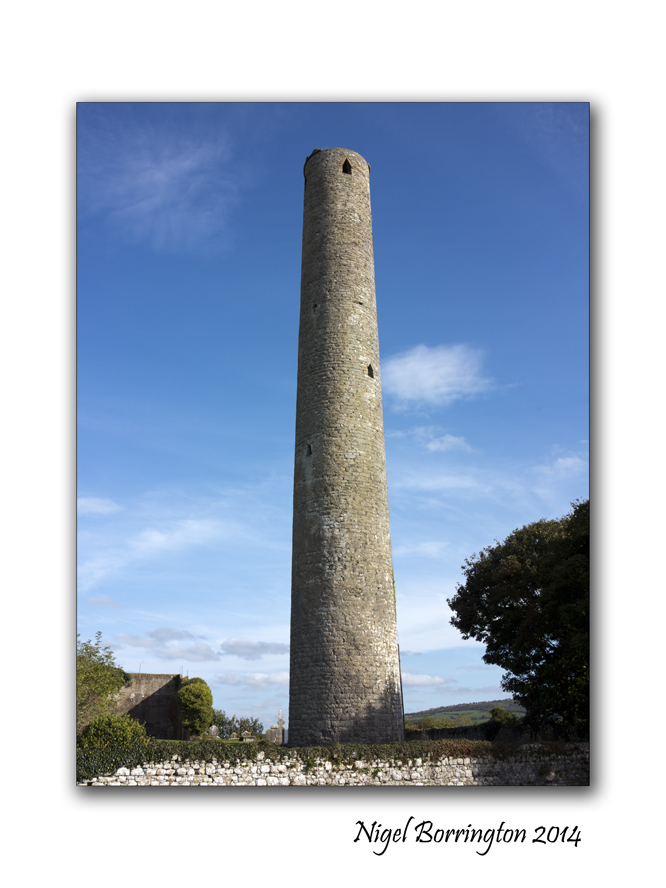
Kilkenny Landscape photography – Grangefertagh Round tower, Co. Kilkenny

Grangefertagh Roundtower, near Johnstown, Co. Kilkenny
Irish Landscape Photography : Nigel Borrington
Grangefertagh Round tower, Co. Kilkenny
I have passed the round tower at Grangefertagh many time but it is only in the last week that I had time to stop and get some images.
The Round tower at Grangefertagh, County Kilkenny stands some 31 metres tall and forms a striking image above the Kilkenny countryside.
The northeast facing doorway which is situated 3.3 metres above ground level has been badly damaged. A farmer removed the original stones and used them to form a fireplace, mistakenly believing they were fireproof. It contains nine windows in total , six angle headed and three lintel-led. Four of the angle headed windows are on the top storey facing the four cardinal points. The tower is complete to the cornice but only part of the cap remains.
A modern doorway has been inserted by the O.P.W. The round tower is the last remnant of the early monastery founded by St Ciaran of Seir in the 6th century. It was raided by vikings in 861 and in 1156 the high king Murtagh McNeale burned the tower with the lector inside. To the north of the tower is a church that belonged to the 13th century monastery founded by the Blanchevilles for the Canons Regular of St Augustine
Wikipedia : What are Irish Roundtowers
Gallery
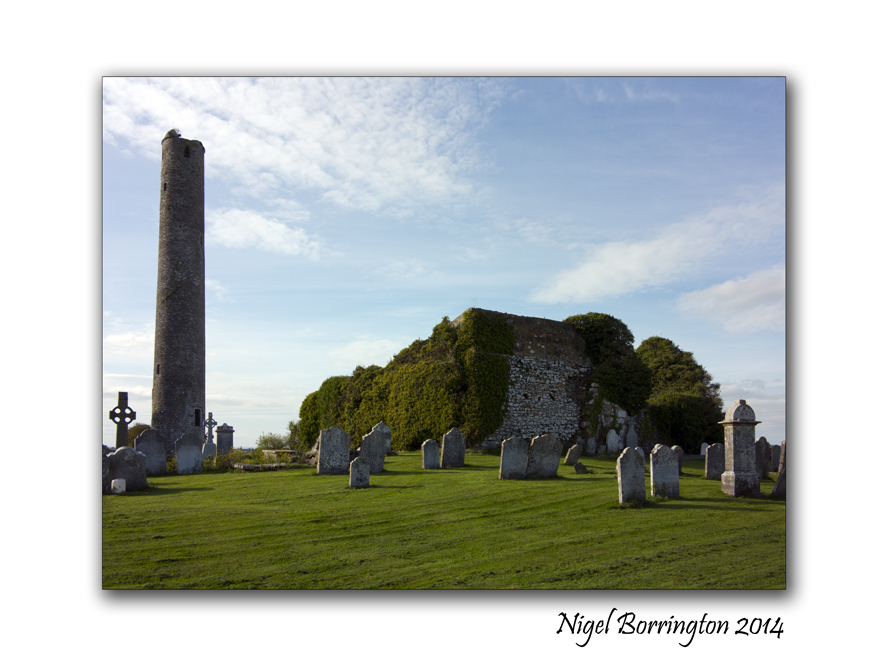
Harvest time, an Image then a Poem by : Darryl Davis
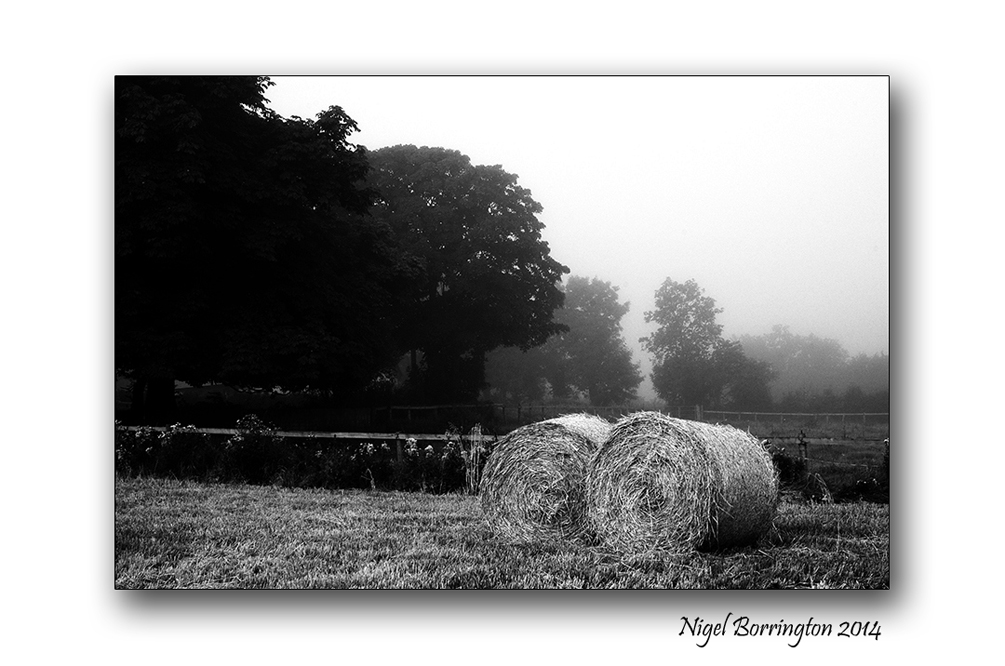
Harvest time. October 2014
Irish Landscape Photography : Nigel Borrington
Harvest Time (Bois-De-Villers)
October is the month of knots.
Loose ends find each other,
Life is defined once more.
At least, this was how I saw it,
As a visitor, an urban tourist,
There to play peasant at the
Granite knob on the green knoll,
Which was always well worked into
A sticky brown smear by the time
The first tree had blushed.
For the leathery people who lived there,
It was but another day with no name beyond
That which had been scratched
On the calendar at the beginning of the year.
A single stroke which dotted one line
And indented another in calculated haste.
Indeed, it was just something else to be done.
Just another list to be compiled
Through calluses and brown sweat.
In the fields we pulled our backs bent.
Each individual plant represented six months of sun and rain,
Weeks of drying after picking and
One hard-earned day of food more.
As we lumbered about, marveling
At our clothes covered in clay
And the soreness of our hands,
They were careful to pick up everything
Which had fallen from our floundering wheelbarrow
And studiously counted each load before
Sliding everything down the chipped hole
To the root cellar for stacking and drying.
At the day’s yawn, they scurried around us still,
Too busy warming creaking chairs,
Too tired to much care.
Cramped from thumb to elbow,
Our fingers were crinkled walnut branches,
Knotted and done like the damp bundles
We wouldn’t need to bear a thought of
For another year to come.
County Kilkenny Landscape photography

Callan, County Kilkenny,
Irish Landscape Photography : Nigel Borrington
This image is of the Friary Green, Callan, County Kilkenny on an early Autumn walk.
Bullaun Stones – Water worship in Pagan life.

Bullaun Stone – Bonane Heritage park , county Kerry
Irish landscape Photography : Nigel Borrington
Bullaun Stones
The original purpose of bullan stones is not really known, but they have an undisputed association with water and worship. A ‘bullaun’ is a deep hemispherical cup hollowed out of a rock. Bullaun Stone refers to the rock itself, which can have many bullauns in it, although many are single.
Water in Pagan life
Water (Uisce in irish / place names after : Adare, the ford that feeds the oak tree.) is a feminine energy and highly connected with the aspects of the Goddess. Used for healing, cleansing, and purification, Water is related to the West, and associated with passion and emotion. In many spiritual paths, consecrated Water can be found – consecrated water is just regular water with salt added to it, and usually a blessing or invocation is said above it. In Wiccan covens, such water is used to consecrate the circle and all the tools within it. As you may expect, water is associated with the color blue.
Ten thousand years ago, before the coming of Christianity in Ireland, the rivers served a very important role in the lives of the people living along its banks. It was their source of food, and a place where their cattle and crops thrived on the nourished plains. It also acted as a barrier between opposing armies and clans. People saw the rivers as powerful objects and worshipped river gods. Often people placed weapons and ornaments of precious metal in the river as offerings to these gods.
Irish Goddess :Brighid
Location: Ireland.
One of the triple Goddesses of the Celtic pantheon. She is the daughter of The Dagda, the All Father of the Tuatha de Danann, one of the most ancient people of Northern Europe. Some say there are actually three Brighids; one is in charge of poetry and inspiration; one is in charge of midwifery and healing, and the last is in charge of crafts and smiths.
She probably began as a sun Goddess. According to legend, she was born at sunrise and a tower of flame beamed from her head.
As Goddess of fire and water, she is immortalized by many wells and springs. Most important of her monuments, though, was a shrine at Kildare where there was a perpetual flame burning for Brighid. It was tended by nineteen virgins called the Daughters of the Flame, wearing deep crimson habits and bearing swords. They would not talk to men, nor could men come near the shrine. Her feast is St.Brighids Days in Ireland and is the Pagan Festival of Imbolc
When Christianity began its onset, so loved was Brighid that she was made a saint. However, the upkeep on her flame was considered pagan by the church and it was extinguished out of more than a thousand years of burning. St. Brigit remains one of the most popular Irish saints today, along with Saint Patrick.
Identical to Juno, Queen of Heaven. Symbolizes human potential. Also known as Brigit, Brigid, Brigindo, Bride.
Dark the bitter winter,
cutting its sharpness,
but Bride’s mantle,
brings spring to Ireland.
Irish Goddess :Fland
Location: Ireland.
Description:
Daughter of woodland Goddess Flidais. A lake Goddess who is viewed in modern (Post Christian) folklore as an evil water faery who lures swimmers to their death.
She rules over: Water magick, rivers and lakes
Gallery


 Nigel Borrington
You must be logged in to post a comment.