Rainbow over the river Suir, Clonmel, County Tipperary
Irish landscape photography : Nigel Borrington
Walking in the mountains and forests above Clonmel in county Tipperary is one on the most enjoyable things I can find myself doing. The views over the river Suir as it flows through the town of Clonmel down towards the port of Waterford are just wonderful.
The Saturday Morning I took these two images, the weather was very mixed with rain showers never that far away, the sun however was breaking through the clouds and producing rainbows every now and then.
These two photos are amongst the best I got during the walk.
Rainbow over the river Suir, Clonmel, County Tipperary
Irish landscape photography : Nigel Borrington
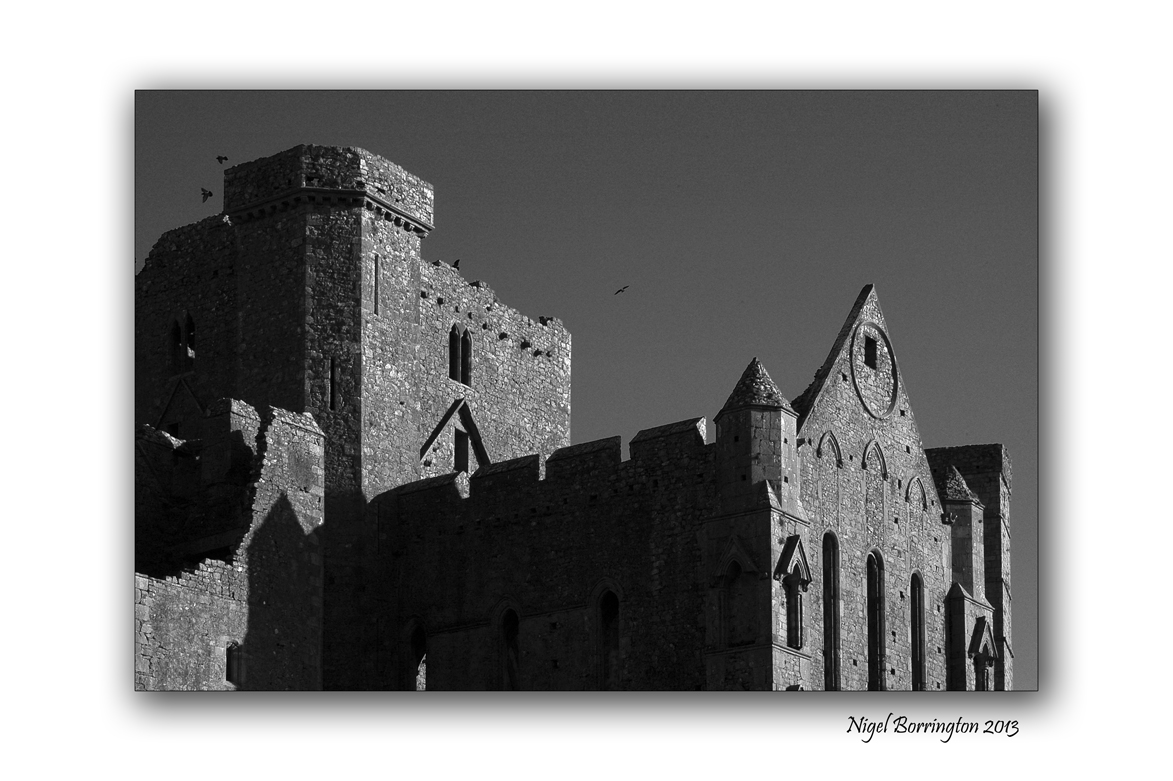
The Rock of Cashel, County Tipperary
Irish Landscape Photography , Nigel Borrington
The Rock of Cashel
The town of Cashel, in County Tipperary is home to one of Ireland best known and most visited locations, the Rock. It must be one of the most photographed locations in the country and has visitors all year around.
A Wikipedia page describes it as follows:
History
According to local mythology, the Rock of Cashel originated in the Devil’s Bit, a mountain 20 miles (30 km) north of Cashel when St. Patrick banished Satan from a cave, resulting in the Rock’s landing in Cashel.[1] Cashel is reputed to be the site of the conversion of the King of Munster by St. Patrick in the 5th century.
The Rock of Cashel was the traditional seat of the kings of Munster for several hundred years prior to the Norman invasion. In 1101, the King of Munster, Muirchertach Ua Briain, donated his fortress on the Rock to the Church. The picturesque complex has a character of its own and is one of the most remarkable collections of Celtic art and medieval architecture to be found anywhere in Europe, Few remnants of the early structures survive; the majority of buildings on the current site date from the 12th and 13th centuries.
An Apple-ripe September morning.
Irish Landscape Photography,
Kilkenny based photographer : Nigel Borrington
On An Apple-Ripe September Morning
Patrick Kavanagh
On an apple-ripe September morning
Through the mist-chill fields I went
With a pitch-fork on my shoulder
Less for use than for devilment.
The threshing mill was set-up, I knew,
In Cassidy’s haggard last night,
And we owed them a day at the threshing
Since last year. O it was delight
To be paying bills of laughter
And chaffy gossip in kind
With work thrown in to ballast
The fantasy-soaring mind.
As I crossed the wooden bridge I wondered
As I looked into the drain
If ever a summer morning should find me
Shovelling up eels again.
And I thought of the wasps’ nest in the bank
And how I got chased one day
Leaving the drag and the scraw-knife behind,
How I covered my face with hay.
The wet leaves of the cocksfoot
Polished my boots as I
Went round by the glistening bog-holes
Lost in unthinking joy.
I’ll be carrying bags to-day, I mused,
The best job at the mill
With plenty of time to talk of our loves
As we wait for the bags to fill.
Maybe Mary might call round…
And then I came to the haggard gate,
And I knew as I entered that I had come
Through fields that were part of no earthly estate.
Sir Thomas’s Bridge, Clonmel, County Tipperary
Irish landscape Photography : Nigel Borrington
The river Suir is one of Ireland most loved and visited rivers. It flows through counties Tipperary and Waterford before reaching the Atlantic at Hook -head lighthouse. I have taken a lot of photographs of this river over the years. one of my favourite subject are the old bridges that cross the river, most of them are some hundreds of years old and even though they were designed for horse and cart they still stand strong today and cope very well with modern demands
Sir Thomas’s Bridge is just on the edge of Clonmel in county Tipperary and has been used in many films and advertisements.
The photograph above was taken one early September morning a couple of years ago, the river Suir and the hills above were covered in early morning fog, this just added too the atmosphere. I decided to develop the image in black and white as I felt that this photograph was all about tones and not colour.
Boann is the Irish goddess of the river Boyne. Her name means “She of the white cattle.” She was the wife of Nechtain and the beloved of the Dagda, the Good God. It is possible she could be a later naming of Danu Herself. Aenghus mac Og, her son, was the product of the affair between Boann and Dagda. In order to keep the pregnancy secret, the Dagda halted the sun for the term of the goddess’s pregnancy, and so Aenghus was born out of time.
Boann is a Goddess of fertility and the stars. She connects the Way of the White Cow to the White Mound of the Boyne. She gives her name to the preeminent brugh in all of Ireland, Brugh na Boinne. She is honored mid-winter at Imbolc.
Many ancient peoples had stories of floods in which water was both honored as a life bringer and as a destroyer. Water was seen as something that “escaped” from the realms of the gods.
In many of the stories it seemed to be a female who was involved when water, would through some disaster, come to the land, bringing growth and abundance though turbulence.
Probably the most famous version of this myth in Celtic tradition is the Irish story of the Well of Segais.
Growing around this well were nine hazel trees of wisdom, whose nuts fell into the water and gave it the quality of divine illumination, much sought-after by those seeking this wisdom.
Boann was the wife of Nechtan, keeper of the sacred Well of Segais, which was a source of knowledge. Only Nechtan and his cupbearers were permitted to approach the well. The goddess Boann desired to drink from the well herself, to increase her power.
She attempted to challenge the Well of Segais, by going around the well chanting, circling widdershins (counterclockwise, or against the sun direction) . She circled the well three times, as she chanted “amrun.” The well rose against her incantations. Three waves rose up from the well which then flowed forth in five streams and drowned her. Because she was of the Sidhe, she did not die. She lost an arm, a leg and an eye in her battle with the well.
The five streams of wisdom that flowed from this well represent our five senses: taste, smell, feeling, sight and hearing. In her contest with the Well of Segais, Boann experienced “shamanic death” of drowning. In so doing, she gained the Wisdom of Segais as it swept her away.
Manannan said of this….
“I am Manannan, son of Ler, king of the Land of Promise; and to see the Land of Promise was the reason I brought [thee] hither. . . . The fountain which thou sawest, with the five streams out of it, is the Fountain of Knowledge, and the streams are the five senses through which knowledge is obtained. And no one will have knowledge who drinketh not a draught out of the fountain itself and out of the streams.”
From this, we learn that we must experience through all of who we are, through all of the five senses which must be open. This is our gift from Boann.
Boann can be a great ally for poetic composition and many other forms of artistic expression. Invoking or singing Boann’s name while sitting next to a river or stream can be a very powerful and inspiring experience. Clear the mind, open the soul, and listen to the music of Boann playing from the waters. You will always go away a new person.
Vigil at the Well
A rock ledge. A dark pool.
Pale dawn and cold rain.
And a woman alone
holding three coins.
She circles the well
three times in the rain.
She offers the coins
to a great ancient tree
then bends to the pool.
Dunmore east, fishing village in County Waterford, Ireland.
All images using a Fujifilm x100
Irish landscape photography : Nigel Borrington
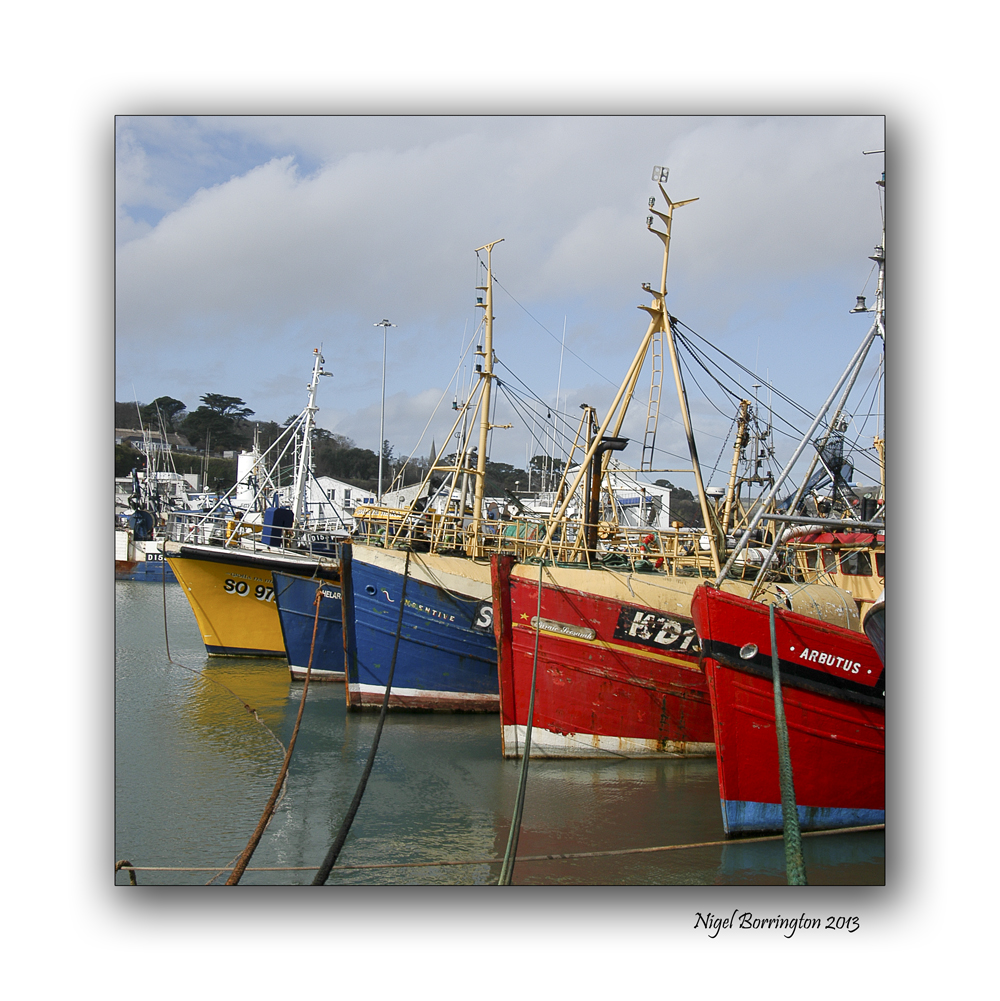
Dunmore east is one of my favourite places in Ireland to visit with a camera, its fishing harbour is the countries second busiest and on the day the fish is landed for the fish-market, it is full of life and colour with the boats all being in port.
The day I went down to capture these images I took my then new fuji-film X100 and took many images along the quays, the following gallery I hope captures a sense of this wonderful place to visit and take photographs.
Peacock butterfly in the Irish woodlands
Irish wildlife and nature photography : Nigel Borrington
One sight I love to see in the summertime is the Peacock butterfly as I walk through the local county kilkenny woodlands, They add so much life and colour to the green of the hedgerows and paths.
Unlike some wildlife they are not hard to find or take pictures of, you do need to move very slowly in order not to disturbed them and you need a camera with a macro lens.
Red wings with black markings and distinctive eyespots on tips of fore and hind wings.
The Peacock’s spectacular pattern of eyespots, evolved to startle or confuse predators, make it one of the most easily recognized and best known species. It is from these wing markings that the butterfly gained its common name. Undersides of the wings are very dark and look like dead leaves. A fairly large butterfly and a strong flyer.
Although a familiar visitor to garden buddleias in late summer, the Peacock’s strong flight and nomadic instincts lead it to range widely through the countryside, often finding its preferred habitats in the shelter of woodland clearings, rides, and edges.
The species is widespread and has continued to expand its range in northern parts of Britain and Ireland.
Size and Family
Family – Nymphalids
Medium/Large Sized
Wing Span Range (male to female) – 63-69mm
Conservation status
UK BAP status: Not listed
Butterfly Conservation priority: Low
European status: Not threatened
Caterpillar Foodplants
Common Nettle (Urtica dioica), although eggs and larvae are occasionally reported on Small Nettle (U. urens) and Hop (Humulus lupulus)
Distribution
Countries – England, Scotland, Ireland and Wales
Throughout Britain and Ireland
Distribution Trend Since 1970’s = +17%








 Nigel Borrington
You must be logged in to post a comment.