On Contemplating a Sheep’s Skull ~ Poem by: John Kinsella

All images taken in the Nier valley, county waterford
Fujifilm X100
Irish Landscape Photography : Nigel Borrington
On Contemplating a Sheep’s Skull
Poem by John Kinsella
A sheep’s Skull aged so much in rain and heat,
broken jawbone and chipped teeth half-
gnaw soil; zippered fuse-mark tracks
back to front, runs through to base
of neck, widening faultline under
stress: final crack close at hand.
Skull I can’t bring myself to move.
White-out red soil unearthed
from hillside fox den and cat haven,
now hideaway for short-beaked echidna
toppling rocks and stones, disrupting
artfulness a spirit might impose,
frisson at seeing counterpoint.
Skull I can’t bring myself to move.
Sometimes avoid the spot to avoid
looking half-hearted into its sole
remaining eye socket; mentally to join
bones strewn downhill, come apart
or torn from mountings years before
arriving with good intentions.

Skull I can’t bring myself to move.
Not something you can ‘clean up’,
shape of skull is not a measure of all
it contained: weight of light and dark,
scales of sound, vast and varied taste
of all grass eaten from these hills;
slow and steady gnawing at soil.
Skull I can’t bring myself to move.
Neither herbivore nor carnivore,
earth and sky-eater, fire in its shout
or whisper, racing through to leave a bed
of ash on which the mind might rest,
drinking sun and light and smoke,
choked up with experience.
Skull I can’t bring myself to move.
Drawn to examine
despite aversion, consider
our head on its shoulders,
drawn expression
greeting loved ones
with arms outstretched.

John Kinsella is Founding editor of the journal Salt in Australia; he serves as international editor at the Kenyon Review. His most recent volume of poetry is Divine Comedy: Journeys through a Regional Geography (W. W. Norton) with a new volume, Disturbed Ground: Jam Tree Gully/Walden, due out with W.W. Norton in November 2011.
Bog cotton on the red bog, A Poem CHARLOTTE GRACE O’BRIEN (1845 – 1909)

BOG COTTON ON THE RED BOG
A Poem by
CHARLOTTE GRACE O’BRIEN (1845 –1909)
Foynes in June 1895
“ O STRONG-WINGED birds from over the moorland dark,
On this June day what have you seen?
Where have you been? ”
Where, oh! where
The golden yellow asphodel makes its boggy home,
And far and near, Spreading in broad bands of silvery silky foam
O’er the moorland drear, The slender stemmed bog cotton bends in waves of light,
Shaking out its shining tufts for its own delight,There, oh! there We have been.
“O sweet sky piercing, heaven mounting lark,
On this June day what have you seen?”
I have seen—I have seen
The dark red bog and the king fern green,
And the black
black pools lying dim between,–
The baby heather that blossoms so soon
In the splendid heat that comes after June–
———————–
Charlotte Grace O’Brien
was born in County Limerick, the daughter of
William Smith O’Brien who was a Conservative Member of Parliament for County Limerick; she championed the cause for better conditions for those emigrating to America.
Bog cotton on the red bog, images Gallery


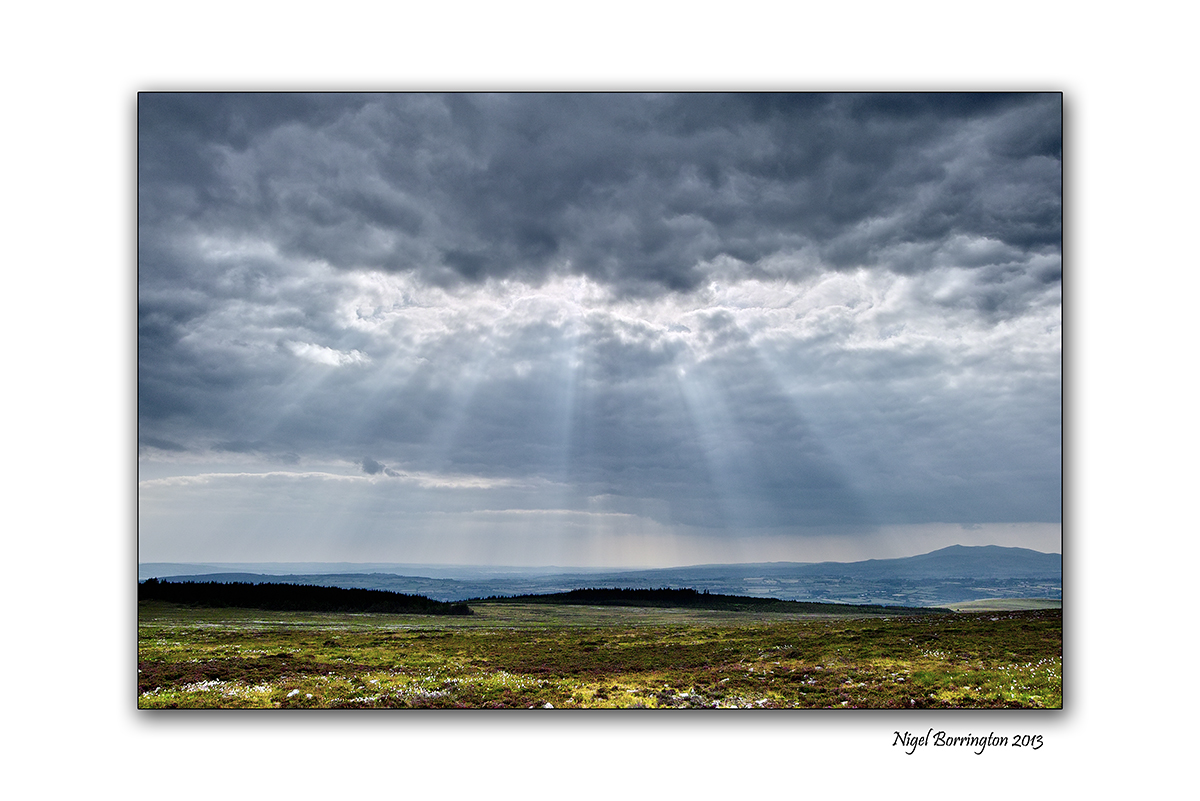
Monday Evening Poetry : Aparajhitha Sudarsan, That sunset…
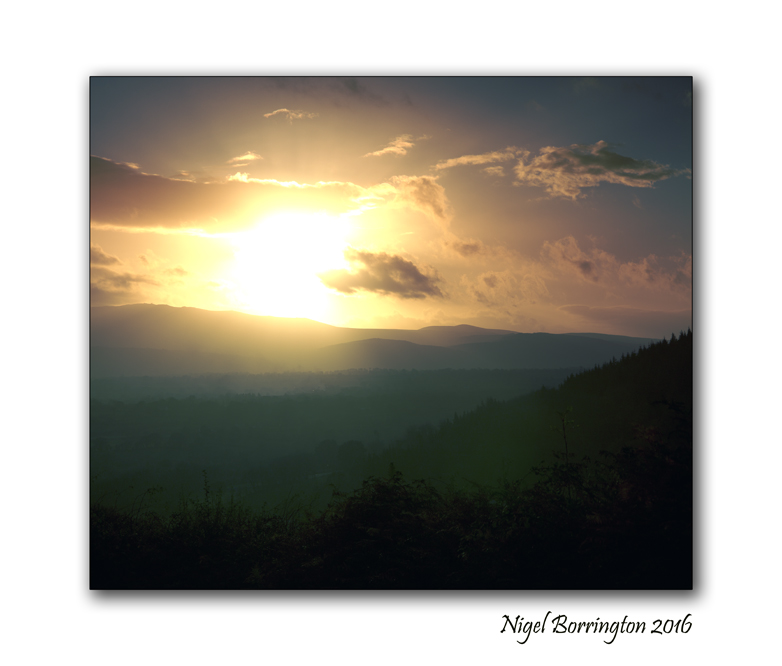
Kilkenny Sunset
Irish Landscapes
Nigel Borrington
That sunset…
A distant look in her eyes,
Stretching beyond the horizon.
A battle long fought,
In her dreams so surreal.
A thousand miles did she walk,
Before pausing to rest.
But the lights began to fade,
For it was time for her sunset.
Thistles By : Ted Hughes (1930 – 1998)

Thistles
Nature photography
By : Nigel Borrington
Thistles
By : Ted Hughes
(1930 – 1998)
Against the rubber tongues of cows and the hoeing hands of men
Thistles spike the summer air
And crackle open under a blue-black pressure.
Every one a revengeful burst
Of resurrection, a grasphed fistful
Of splintered weapons and Icelandic frost thrust up

From the underground stain of a decayed Viking.
They are like pale hair and the gutturals of dialects.
Every one manages a plume of blood.
Then they grow grey like men.
Mown down, it is a feud. Their sons appear
Stiff with weapons, fighting back over the same ground.
Wild Rose Poetry – Poems by Margaret O Driscoll and Dennis gunsteen

The Wild Rose
Nigel Borrington
The Guelder Rose – Poem by Margaret O Driscoll
Fragrance drifts from the Guelder Rose
Lacey blossoms of Summer cream
I sit under it’s leafy shade
Drifting into a daydream
Embroidered bright red Kalina berries
Beloved emblem of Ukraine
The smiling market seller holds
Kalina berries in the Winter rain
————————————–
Dennis gunsteen – Wild rose flower
wild rose flower of the dawn.
a soft touch one heart bring tears
to my eyes.
wild rose
wild rose
how i wonder how you are.
the silkiness of lips of
wine.
in the meadow and in the grove
O’wild rose of loveliness
my spring flower of life you are
a song with in a song.
as pure as lily of spring water of life.
what is in a song but with in your heart
to love pure and warm.
Slievenamon, county Tipperary : The last Sunset of May 2016

Slievenamon, County Tipperary
May 31st 2016
Nigel Borrington
The last Sunset of May 2016
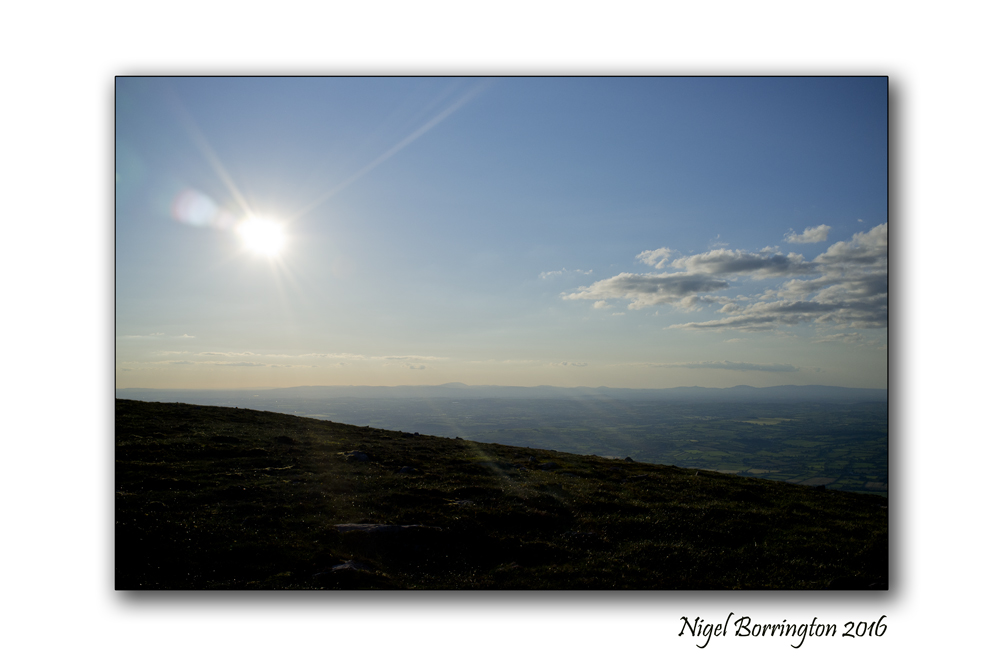
The last days of May 2016, here in Ireland have been blessed with prefect springtime weather, bright and warm until well into the evening time, so yesterday evening when we both got home around 6pm we decided to pack a small meal and get outside to walk up our local mountain of Slievenamon, county tipperary.
It was a perfect evening and the views from the top of the mountain were just stunning in the evening sun. On getting to the top we eat our food and just enjoyed walking around the summit, taking in the 380deg view of the landscape below.
This was a perfect way the end the Month of May 2016 🙂 🙂
Slievenamon, county Tipperary : The last Sunset of May 2016, Gallery



The Fly – Poem by William Blake
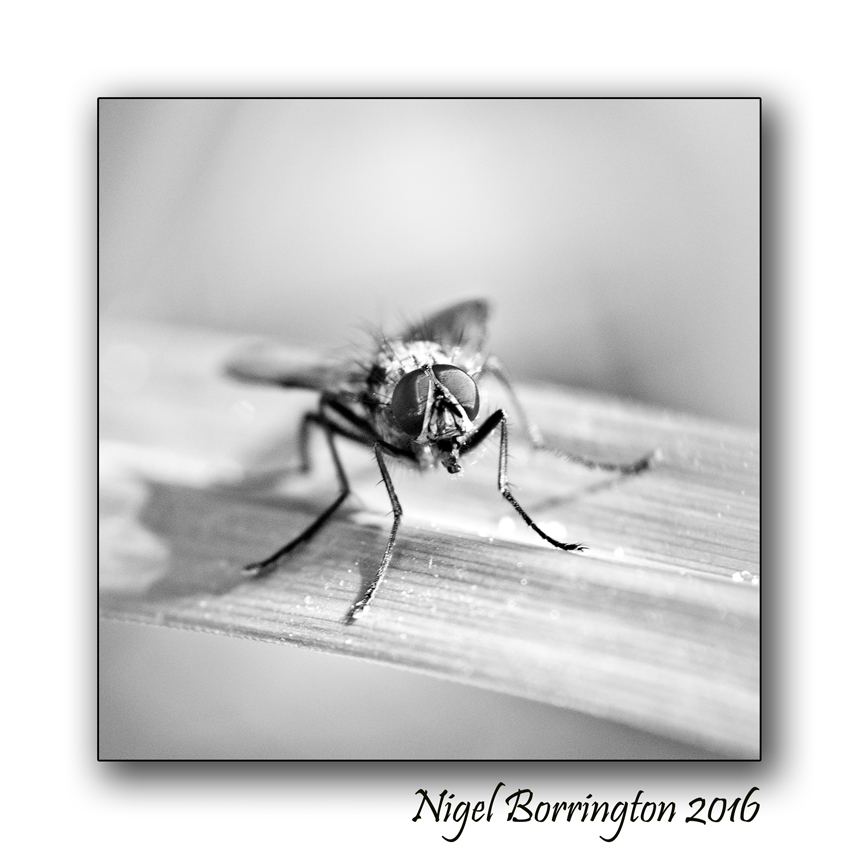
The Fly
Poem by William Blake
Little Fly,
Thy summer’s play
My thoughtless hand
Has brushed away.
Am not I
A fly like thee?
Or art not thou
A man like me?
For I dance
And drink, and sing,
Till some blind hand
Shall brush my wing.
If thought is life
And strength and breath
And the want
Of thought is death;
Then am I
A happy fly,
If I live,
Or if I die.
Hover Fly – Poem by Michael Shepherd

Hover fly
Nigel Borrington
Poem by Michael Shepherd
The hover fly
that’s just demonstrated
that it’s one of the Creation’s greatest
and smallest, most compact miracles of lawful
imagination (imagine flying, then stopping
quite still in the air, no slowing down,
just, zap, like that, dead steady,
and it’s smaller (!) than a helicopter, wow)
right here in front of me in silhouette, but
illuminated on one wing by the PC screen,
and pausing for a freeze-frame moment of eternity
as if to tell me something
(illumination, too?) –
all this, and yet it
doesn’t know I’m writing about it.
Presumably.
Wild flowers and Woodland plants , Viola riviniana
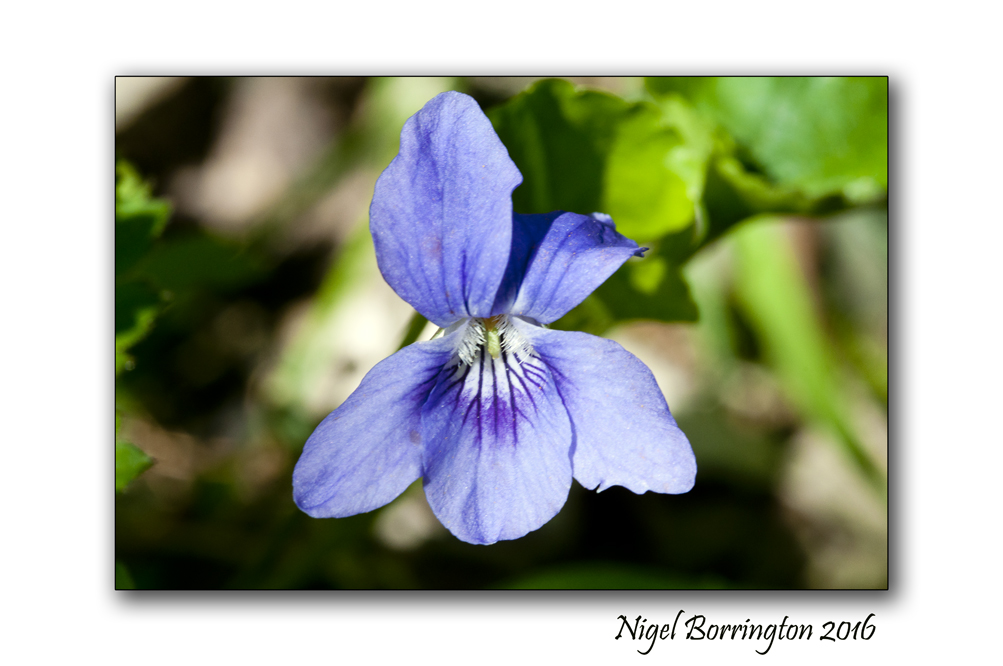
Common Dog Violet
Viola riviniana
Nigel Borrington
At this time of the year our local woodlands here in county Kilkenny fill with new life and colours, one of the the wild flowers I love the most are the Violets.
They are a familiar little wildflower of the woodlands and grassy hedge-banks, this plant is quite similar to Early Dog-violet and is easily confused. The unscented, blue-violet flower is always solitary on the stem, and is open with five petals, the lower of which has a stout, blunt, pale, curved spur which is notched at the tip.
The mouth of the flower is absolutely wonderful to view through a hand-lens or magnifying glass. It has a pattern of deep purple lines which run into the throat over a paler violet patch, becoming white. The upper petals have a fringe which is over the opening. The dark-green, heart-shaped leaves are on long, slender stalks. This native plant which blooms from April until June is a larval foodplant of the Dark Green Fritillary. It belongs to the family Violaceae.
‘Look at us, said the violets blooming at her feet, all last winter we slept in the seeming death but at the right time God awakened us, and here we are to comfort you’.
Edward Payson Roe 1838-1888
‘I would give you some violets, but they withered all when my father died.’
William Shakespeare 1564 -1616
The cycle of life – Spring time, Hoverflys feeding and new garden flowers.

Hoverfly feeding
Wildlife photogrpahy
Nigel Borrington
Last week we took sometime to visit my Family in a holiday home in South Wales, it was a great week together and very special as we have a new baby in the family 🙂
Before we left for Wales, spring was just staring but on our return it was in full flow with so much new life all around, the cycle of life continues in so many different ways 🙂

Friday Poetry (1) – Evening ghosts along the rivers bank

Ghosts along the river bank
Nigel Borrington
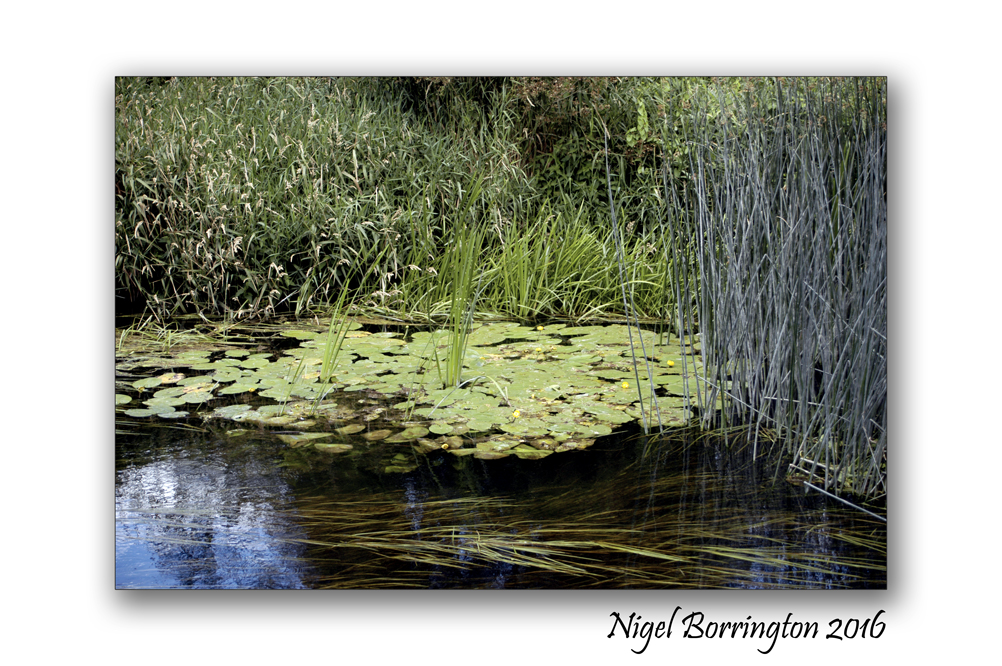
Evening ghosts along the river
I could tell you how the river looks
sketched in evening light;
I know the smell of dew so fresh over the river,
and evening air that parts like tired curtains,
with wet heat that sighs
and slaps the grass when you move on;
I’ve felt what a violin says
to the heart of the river ghosts
over waters edge,
and how an old man’s voice sounds best after smoking,
but a woman’s is best talking.

There are ghosts on these paths,
but they don’t hunger anymore;
hunger is for the living
not satisfied
with morning light.

Spring time Gorse flower in Irish mythology and culture

Gorse flowers
Nigel Borrington
Gorse flowers in the Irish Landscape
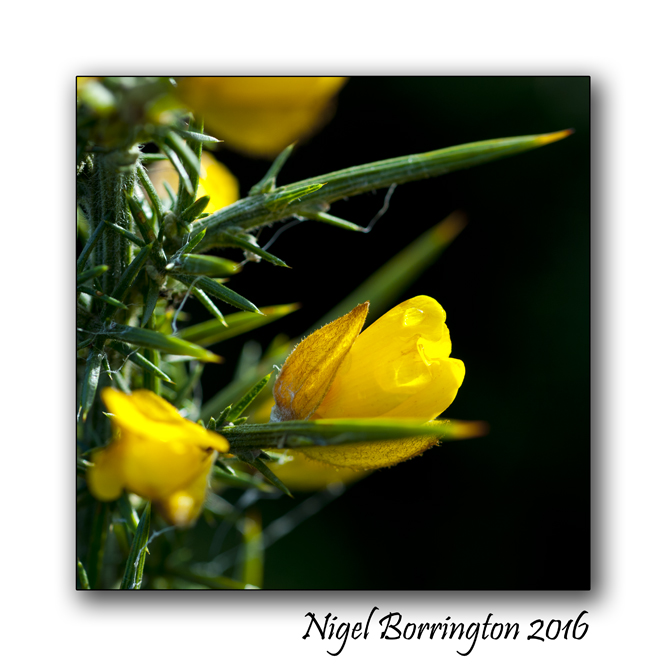
Gorse is very common here in county Kilkenny but this does not make it any less loved by many, as it flowers in springtime. Many of the hills sides and woodland areas come to life with their yellow flowers.
Gorse, also known as furze, is a sweet scented, yellow flowered, spiny evergreen shrub that flowers all year round.
In fact, there are several species of gorse that flower at different times of the year making it a much-loved plant for the bees and giving it the appearance of being in bloom all year long. There is an old saying that goes, “When the gorse is out of bloom, kissing is out of season.”
Gorse is often associated with love and fertility. It was for this reason that a sprig of gorse was traditionally added to a bride’s bouquet and gorse torches were ritually burned around livestock to protect against sterility. However, one should never give gorse flowers to another as a gift for it is unlucky for both the giver and receiver.

.
Beltane bonfires
Gorse wood was used as very effective tinder. It has a high oil content which means it burns at a similar high temperature to charcoal. The ashes of the burnt gorse were high in alkali and used to make soap when mixed with animal fat.
Onn, meaning gorse, is the 17th letter of the ogham alphabet. It equates to the English letter O.
In Celtic tradition, gorse was one of the sacred woods burned on the Beltane bonfires, probably the one that got them started. It was a shrub associated with the spring equinox and the Celtic god of light, Lugh, doubtlessly because of its ever blooming vibrant yellow flowers.
In Brittany, the Celtic summer festival of Lughnastdagh, named after the god, was known as the Festival of Golden Gorse.
Flowers used in wine and whiskey
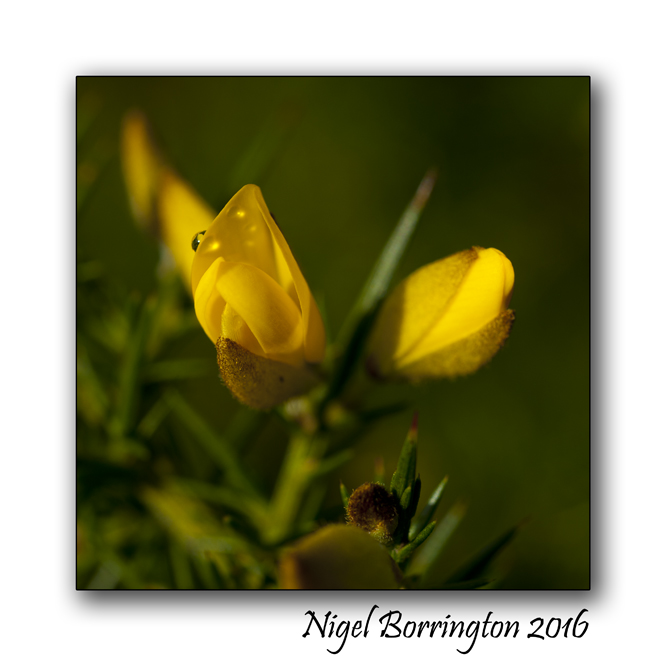
The flowers have a distinct vanilla-coconut aroma and are edible with an almond-like taste. They can be eaten raw on salads or pickled like capers. They have also been used to make wine and to add colour and flavour to Irish whiskey. However, consuming the flowers in great numbers can cause an upset stomach due to the alkalis they contain.
The prickly nature of gorse gave it a protective reputation, specifically around livestock. As well as providing an effective hedgerow, gorse made an acceptable flea repellent and the plant was often milled to make animal fodder.
Irish Gorse flowers
Nigel Borrington
Gorse in Irish Culture
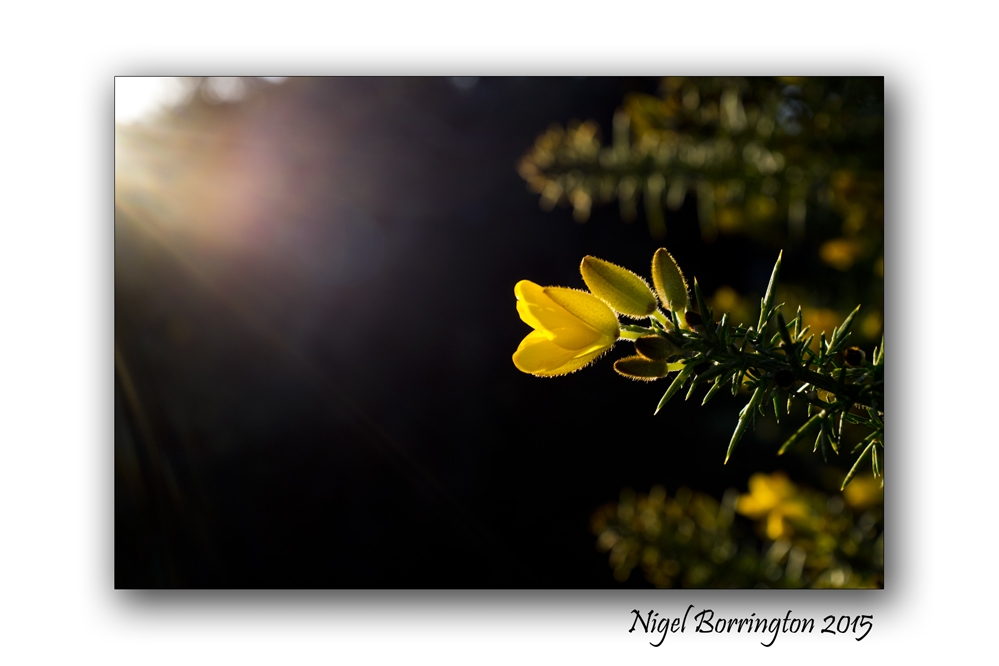
Gorse is the 15th letter of the Gaelic tree alphabet, representing O. Its old Gaelic name was Onn, and in modern Gaelic it is conasg. It’s a prickly shrub, which can almost always be found in flower somewhere, all twelve months of the year, and this means it has many positive connotations in folklore.
Snippets of lore
Here are the titbits of fact and folklore about pine tweeted by @cybercrofter on 15 December 2011.
Gorse is the 14th letter of the Gaelic tree alphabet, for O – in old Gaelic it was onn or oir (gold). In Modern Gaelic it’s conasg.
Conasg (Gaelic for gorse) means prickly or armed, appropriately enough as it’s the spiniest plant around.
As gorse’s branches, twigs and leaves are all spiny, which reduces water loss, it can survive extreme exposure to wind and salt.
Other regional names for gorse are whin or furze. In latin, it’s Ulex europaeus.
Here’s a lovely short Harry Rutherford poem about gorse. http://heracliteanfire.net/2009/01/26/poem/
Gorse bears yellow flowers all year round, and as they say, ‘When gorse is in bloom, kissing is in season.’
Gorse is a symbol of the sun god Lugh, as it carries a spark of sun all year.
Bees love gorse and it’s a good source of food for them on warm winter days and in early spring.
In late spring, gorse flowers smell of coconut and vanilla.
Here’s a poem from me, The Gorse is out behind Glencanisp. Audio too. http://www.pankmagazine.com/the-gorse-is-out-behind-glencanisp/
A decoction of gorse flowers counters jaundice.
Gorse seed pods explode in hot sun.
Gorse fixes nitrogen due to symbiosis with a bacterium in the roots.
Horses that eat gorse don’t catch colds (but presumably end up with perforated gums…)
The fierce fire of furze is ideal for baking.
Gorse boughs were used for creel-making. Ouch.
Gorse is a good windbreak and a gorse bush is the best place to dry washing – it naturally pins it in place.
A bundle of gorse is excellent for sweeping chimneys.
Here’s a recipe for gorse flower wine. http://www.celtnet.org.uk/recipes/brewing/fetch-recipe.php?rid=gorse-flower-wine
Gorse flowers give yellow and green dyes.
Gorse bark gives a dark green dye. Add a bucket of urine and wait 3 hours.
Yellowed gorse, a poem by Fay Slimm http://www.poemhunter.com/poem/yellowed-gorse/
A missing home gorse poem, by Francis Duggan http://www.poemhunter.com/poem/i-d-love-to-see-the-gorse-in-bloom/
Gorse lifts the spirits of the downhearted, and restores faith.
Festival of the Golden Gorse is celebrated on 1 August (Lughnasa).
Gorse protects against witches.
Gorse’s magic is good for bringing a piece of work, a project, a relationship or a troublesome thing to a complete and final end.
Gorse symbolises joy.
Remember the nitrogen-fixing? Grow gorse for 7 years and the ground will be excellent for corn.
In 1778 a gorse crushing mill was set up in Perth. One acre of crushed gorse bushes will keep 6 horses in fodder for 4 months.
Bring gorse into the house in May to ‘bring in the summer’.
Giving someone gorse flowers is unlucky, for both giver and receiver. Best keep them for yourself!
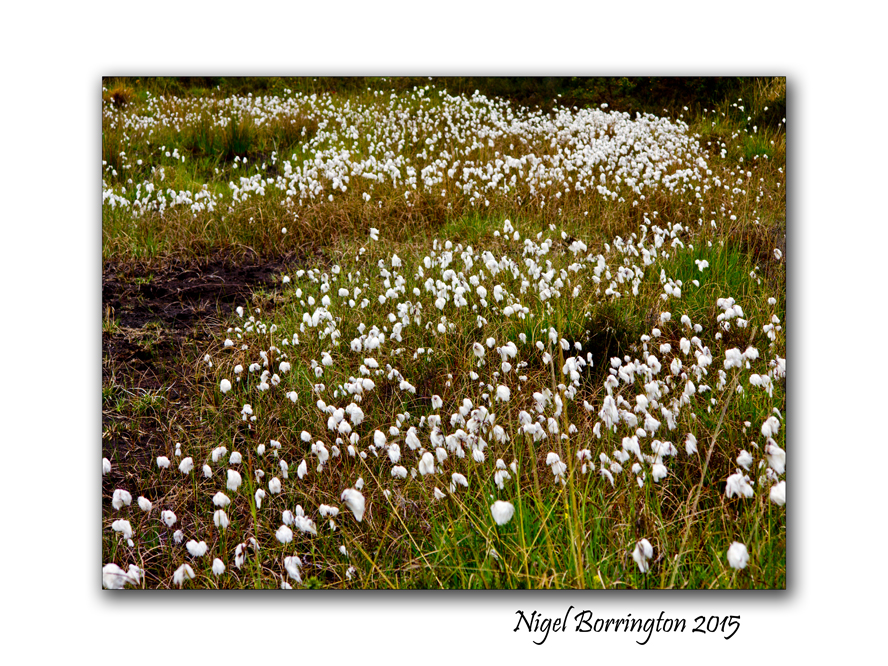
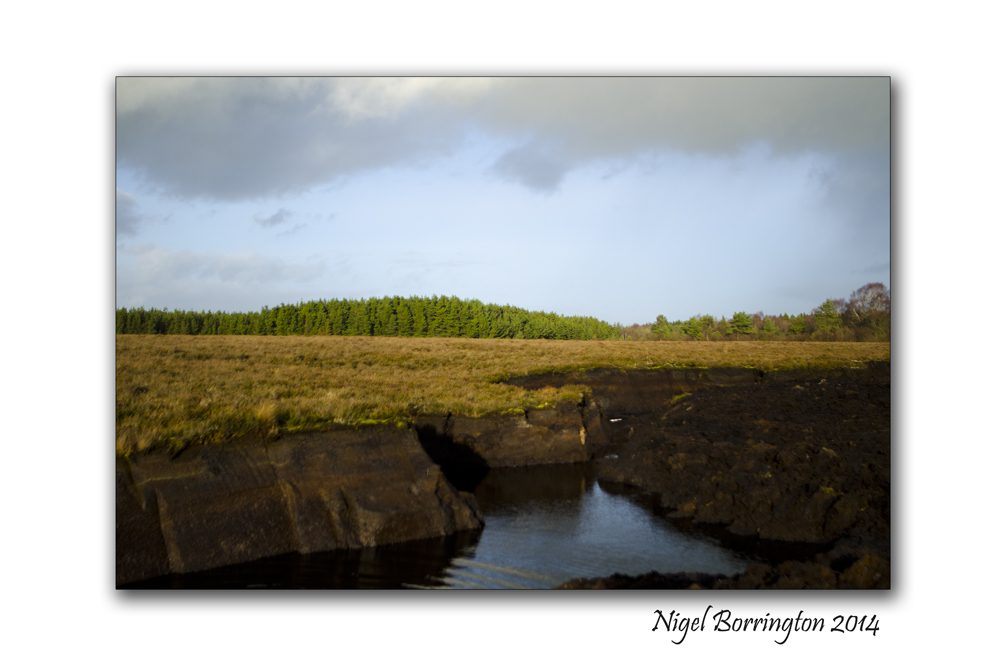
Irish landscape Images for the week – (Monday) Irish bog lands.

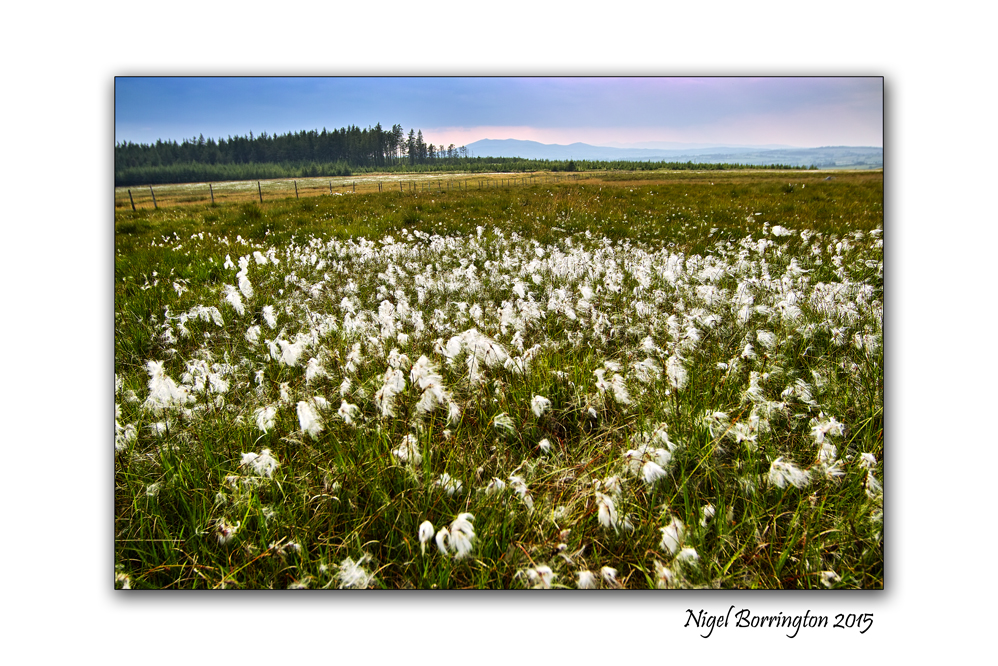
During this week, I just wanted to return to some of my most loved Irish Landscape locations and Monday today’s post I want to share some images I have taken since 2014, these relate to the Irish Bog and Peat lands of the Irish Midlands and the West coast.
Ireland has internationally important peat/bog lands but they are always under serious threat. Over the last few years the Irish government has protected areas of special conservation from historic family rights to cut peat in these areas, a decision that created problems for some but one that was very much needed in order to start the process of returning the bog’s to a point of growth and sustainability.
I love these locations, they are remote and full of life both plant and wild life and I feel like many others that they do need very special care and support.
When you visit locations like the Bog of Allen, you can see a contrast between the areas that are still wild and untouched and the areas that have been harvested for peat, when you see this contrast and its different effects on local bio-diversity you would only hope that one day we can find a less damaging way to heat our homes and produce energy.
Irish Bog-lands Gallery






Portraits of Siamang Gibbon’s, Fota Island wildlife park , County Cork
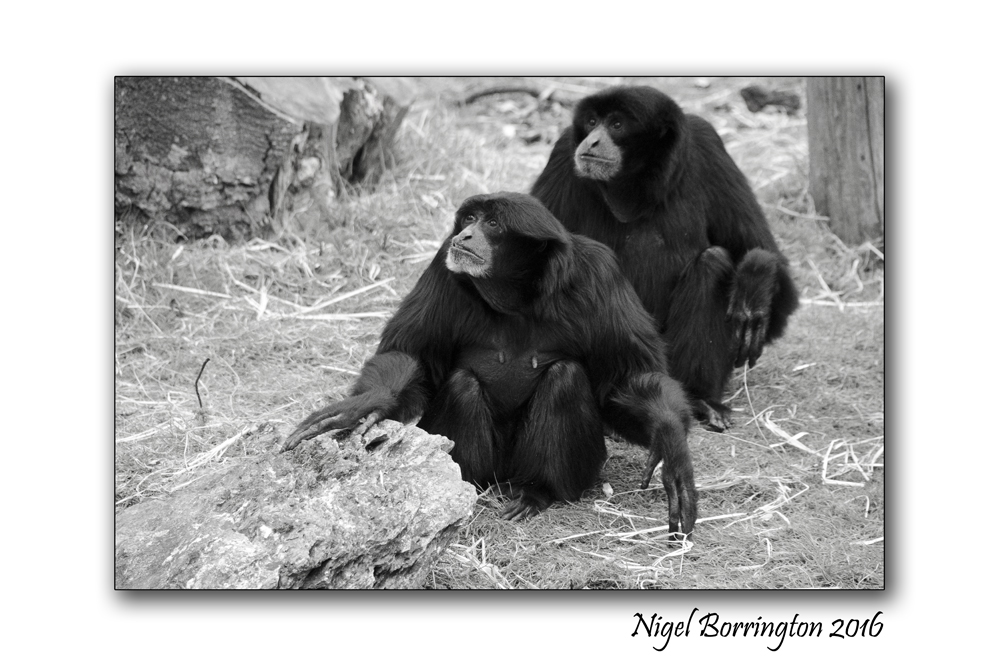
Siamang Gibbon
Fota Wildlife Park
County Cork
Nigel Borrington
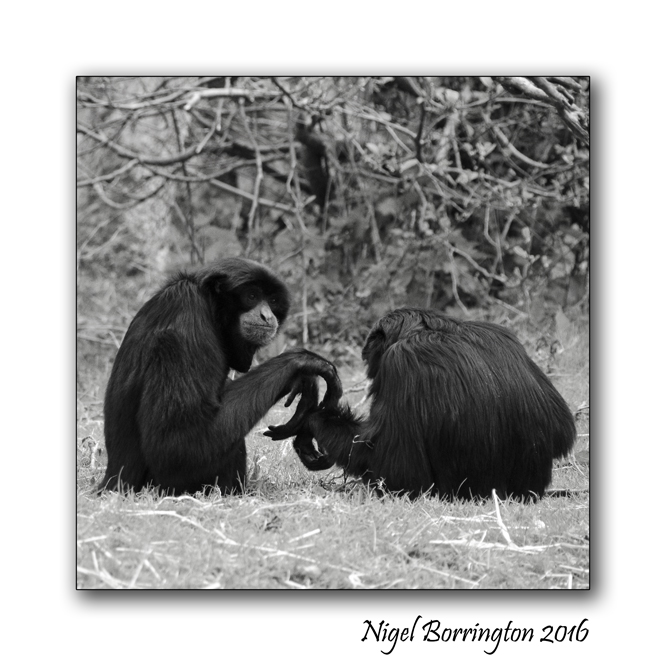
During last weekend we visited Fota wildlife park in county cork and spent many great hours getting to know many of the animals they have in their care.
The Siamang Gibbon at the park are all member of the same family 🙂
Here are some details and fact about them , just to help you get to know them a little better 🙂
About the Siamang Gibbon
With a Latin name that means ‘Dweller in the trees’, the Siamang Gibbon is a tailless, black-furred ape that can grow to be twice the size of other Gibbons. Like other apes, the Siamang Gibbon has quite an upright posture and well-developed brain. However, it can weigh up to 14kg and has a special throat sac to amplify its call, which can be heard up to two miles away in the forest canopy.
Habitat
Native to the forests of Sumatra, Malaysia and Thailand, its home range overlaps with both the Lar and Agile Gibbons 0 though because of its largely leaf-eating habits, it does not compete for what the forest has to offer the other species.

Wild Notes
Siamangs are very agile and acrobatic creatures and their extra-long arms help them swing up to 15 feet in one move. Its arms stretch out to help with balance while walking and because it uses its hands so frequently while traveling, the Gibbon tends to carry items with its feet.
Conservation
Siamang Gibbons are considered to be Endangered as 70-80% of their primary habitat has been lost to palm oil production in recent decades. The illegal pet trade has also taken a toll on wild populations, but there are a growing number in existence in captivity across the world.
Did you know?
The Siamang Gibbon mates for life with both parents playing a role in rearing offspring. Breeding males and females also sing duets in order to maintain their bond and establish territory boundaries.
As a fellow ape, the Siamang is also the closest related animal to Mankind in the Park.
The Fota Connection
One of the noisiest crews in the Park, the Siamang Gibbons are hard to ignore and have been at Fota right from the beginning.
They feed on fruit, vegetables, nuts and willow branches and can often engage in long bouts of calling out if the Park is busy and they feel their territory might be under threat. Situated on Monkey Island, their location allows visitors get right up close.
The Presence of Trees – By Michael S. Glaser

The Presence of Trees
Nature Photography
Nigel Borrington
The Presence of Trees
by Michael S. Glaser
I have always felt the living presence
of trees
the forest that calls to me as deeply
as I breathe,
as though the woods were marrow of my bone
as though
I myself were a tree, a breathing, reaching
arc of the larger canopy
beside a brook bubbling to foam
like the one
deep in these woods,
that calls
that whispers home
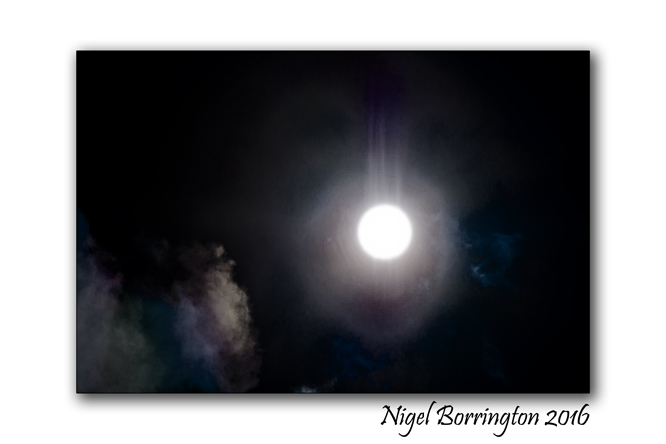
Never shot into the Sun ?

Never shot into the sun ?
Abstract photography
Nigel Borrington
The idea of never pointing your camera into the sun always makes me smile, because you can create some amazing effects when you do ….
Just remember to use the LCD screen as a viewfinder !
Abstractions of the Sun , A Gallery


The Sound of the Sea, By : Henry Wadsworth Longfellow

The sound of the sea
Nigel Borrington
The Sound of the Sea
By : Henry Wadsworth Longfellow
The sea awoke at midnight from its sleep,
And round the pebbly beaches far and wide
I heard the first wave of the rising tide
Rush onward with uninterrupted sweep;
A voice out of the silence of the deep,
A sound mysteriously multiplied
As of a cataract from the mountain’s side,
Or roar of winds upon a wooded steep.
So comes to us at times, from the unknown
And inaccessible solitudes of being,
The rushing of the sea-tides of the soul;
And inspirations, that we deem our own,
Are some divine foreshadowing and foreseeing
Of things beyond our reason or control.
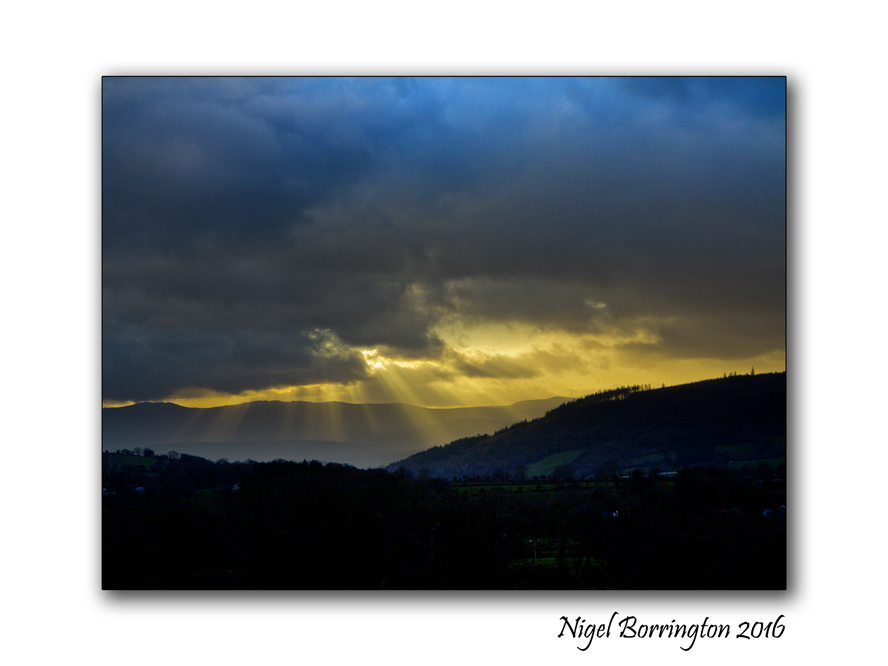
The Last Afternoon of March

That Last day of March
Irish Landscapes
Nigel Borrington
The Last afternoon of March 2016
This afternoon is bright and sunny
between the mountain clouds,
Springtime is in the air,
The weather is mild on this late March afternoon,
the breath of April is rising fast,
I am alone on the quiet mountain top
looking down on an old untried illusion
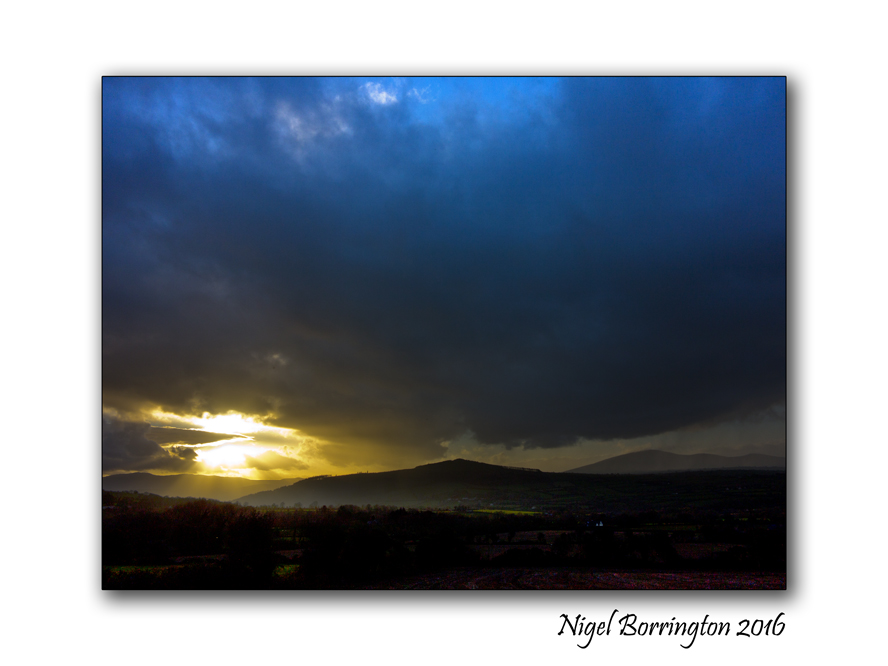
Some shadows sit on the green landscape below
memory’s rise from their sleep,
The crows fly above while others rest
on the stone walls of this mountain side,
In the air as hunting birds call
the fast hover of the kestrels wings.
Glacier, A poem by Christos Andreas Kourtis Nov 30, 2013
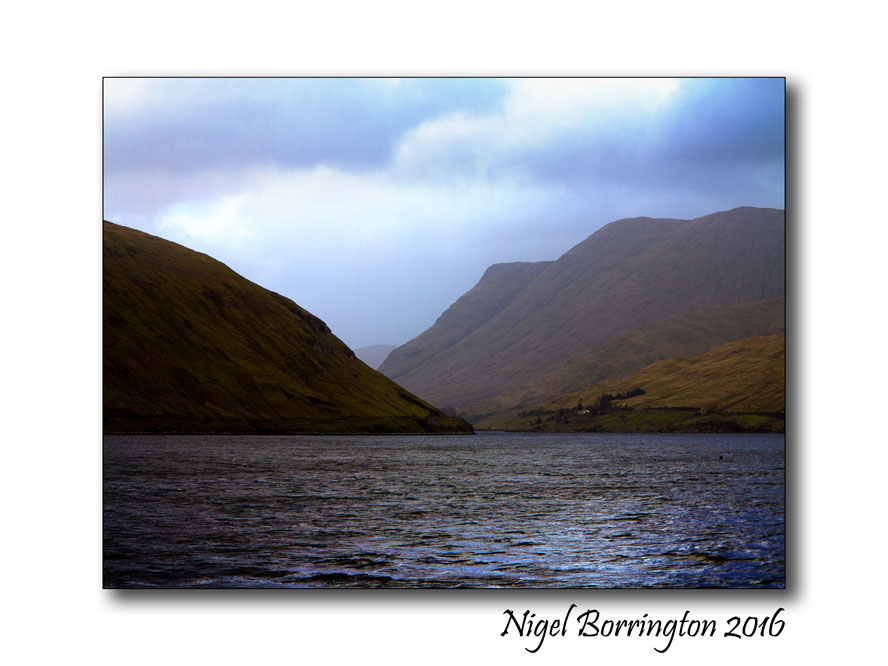
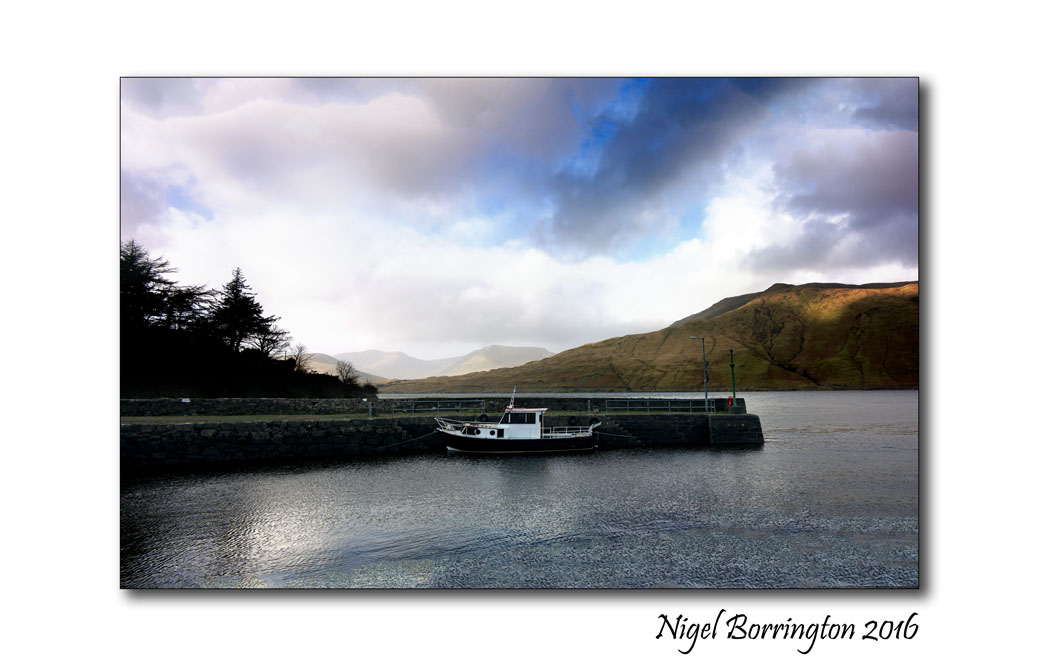
Killary Harbour/An Caoláire Rua
Irish Landscape
Nigel Borrington
Killary Harbour/An Caoláire Rua is a fjord located in the west of Ireland in the heart of Connemara which forms a natural border between counties Galway and Mayo. It is 16 kilometres long and in the centre over 45 metres deep. It is one of three glacial fjards that exist in Ireland, the others being Lough Swilly and Carlingford Lough.[1]
On its northern shore lies the mountain of Mweelrea, Connacht’s highest mountain, rising to 814 metres. To the south rise the Maumturk Mountains and the Twelve Bens. The area contains some of Ireland’s most awe-inspiring and dramatic scenery.
I visit the Fjord back in January and captures these images, I felt that Christos Andreas Kourtis poem “Glacier” matched the amazing atmosphere here perfectly …..
Glacier
Christos Andreas Kourtis
Nov 30, 2013
Slowly it slides on sub zero waters
trying to find a pathway to the sea
sheet of pure blue and heaven white
lumbers discreetly for aquiline is quite
From the top of the world
frozen fingers reach down
claws frantic on solid ground
No religion no sage
no saviour just age
and the relentless pull of gravity
will take it from mountain to the sea
This sculptress of valleys and dales
and fjords that can be seen for miles
travels without sound
onward bound
By Christos Andreas Kourtis

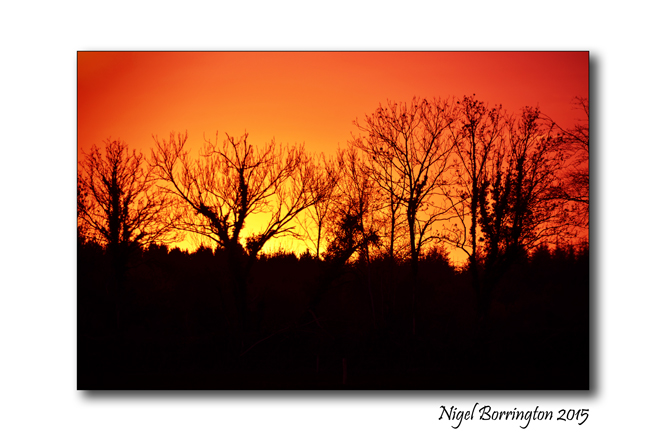
A December sunset, County Kilkenny, Ireland

Irish Landscapes
Kilkenny
Nigel Borrington
To-night the west o’er-brims with warmest dyes;
Its chalice overflows
With pools of purple colouring the skies,
Aflood with gold and rose;
And some hot soul seems throbbing close to mine,
As sinks the sun within that world of wine.

Against Winter – Poem by Charles Simic

Winter is Coming
Nigel Borrington
Today is a Public Holiday here in Ireland and the last before Christmas, So I went out this morning for a long walk with The Dog. The Weather is very wintry with heavy rain, perfect weather to get some moody Images as I walked along some of our local country lanes.
The Seasons are turning very quickly now and winter is coming, these walks will be cold and wet for a few weeks, yet this time of year brings its own atmosphere, one that I love very much. Its great to return home put the fire on and have a hot drink or some warm soup.
Against Winter –
Charles Simic
The truth is dark under your eyelids.
What are you going to do about it?
The birds are silent; there’s no one to ask.
All day long you’ll squint at the gray sky.
When the wind blows you’ll shiver like straw.

A meek little lamb you grew your wool
Till they came after you with huge shears.
Flies hovered over open mouth,
Then they, too, flew off like the leaves,
The bare branches reached after them in vain.
Winter coming. Like the last heroic soldier
Of a defeated army, you’ll stay at your post,
Head bared to the first snow flake.
Till a neighbor comes to yell at you,
You’re crazier than the weather, Charlie.
The Elements of Life : Water.

The Elements Water
Nature Photography
Nigel Borrington
Water, giver of life
Water, is a great necessity, without it nothing can live. Only earth and water can bring forth a living soul. Such is the greatness of water that spiritual regeneration cannot be done without it.
Thales of Miletus concluded that water was the beginning of all things and the first of all elements and most potent because of its mastery over the rest. Pliny said “Water swallow up the earth, extinguishes the flame, ascends on high, and by stretching forth as clouds challenges the heavens for their own, and the same falling down, becomes the cause of all things that grow in the earth.
Water is a cleansing, healing, psychic, and loving element. It is the feeling of friendship and love that pours over us when we are with our family, friends and loved ones. When we swim it is water that supports us, when we are thirsty, it is water the quenches our thirst, another manifestation of this element is the rainstorms that drench us, or the dew formed on plants after the sun has set.
The power of the energy of Water, can be felt by tasting pure spring water, moving you hand through a stream, lake, pool, or bowl full of water. You can feel its cool liquidity; it’s soft and loving touch, this motion and fluidity is the quality of Air within Water. This Water energy is also contained within ourselves, our bodies being mostly composed of Water.
As well as being vital for life, within the energy of this element is contained the essence of love. Love is the underlying reason for all magic. Water is love.
Water is a feminine element, it also the element of emotion and subconscious, of purification, intuition, mysteries of the self, compassion and family. It is psychic ability; water can be used as a means of scrying or as an object for meditation. Water is important in spells and rituals of friendship, marriage, happiness, fertility, healing, pleasure, psychic abilities and spells involving mirrors.

The element of Water and the pagan Irish Goddess : Boann and the Irish God : Nechtan
eltic (Irish) Goddess of the River Boyne and mother of Angus Mac Og by the Dagda. She was the wife of Nechtan, a god of the water. Likewise, Boann was herself a water-goddess, and one of her myths concerns the water. According to legend, there was a sacred well (Sidhe Nechtan) that contained the source of knowledge. All were forbidden to approach this well, with the exception of the god Nechtan (as was noted, Boann’s husband) and his servants. Boann ignored the warnings, and strode up to the sacred well, thus violating the sanctity of the area. For this act, she was punished, and the waters of the defiled well swelled and were transformed into a raging river, a river that pursued her. In some versions, she was drowned; while in others, she managed to outrun the currents. In either case, this water became the river that was known henceforth as the Boyne, and Boann thereafter became the presiding deity.
Another aspect of the myth of Boann is that she bore Angus. She and the All father of the Tuatha De Danaan, the Dagda, engaged in an illicit affair that resulted in the birth of this god of love. However, since both Boann and the Dagdha wished to keep their rendezvous a secret, they used their divine powers to cause the nine month gestation period to last but a single day – or so it seemed, for the sun was frozen in the sky for those nine months, never setting and never rising. On this magical day, Angus emerged into the world. She held the powers of healing. Variants: Boannan, Boyne.
Ref : Pagan elements of Water
Reflection – A Poem by Paul Hansford
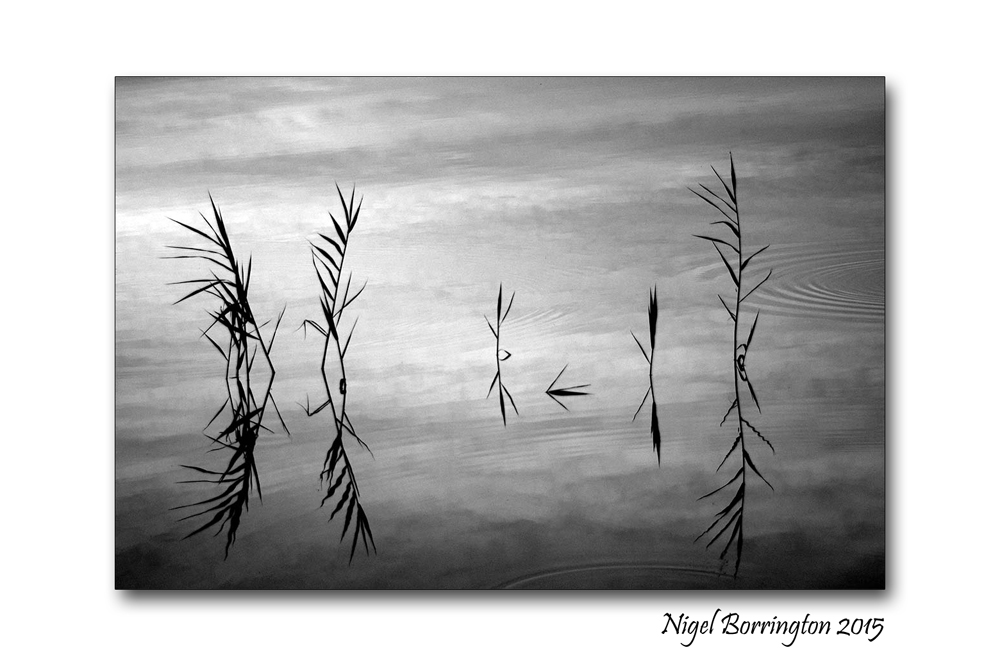
Reflection
Nigel Borrington
Reflection – A Poem by Paul Hansford
Still waters, deep,
surface like glass reflecting green above;
and below are trees, sky,
shadows, leaves, sunlight,
moving and motionless.
Here silent images shimmer now,
and – air breathing suddenly – break.
Unbidden feelings confuse
reality and fantasy.
Which is which?
Fantasy and reality confuse;
feelings unbidden break, suddenly breathing air;
and now shimmer images,
silent here, motionless
and moving….
(sunlight leaves shadows) .
Sky, trees are
below – and above –
green, reflecting, glass-like surface.
Deep waters, still.
 Nigel Borrington
The World from an Insects point of view .
The World from and insects point of view
To be an Insect ?
Very often when I am out in our local woodlands with a Macro lens, I like to get in close and find all kinds of Insects to photograph. Its like a completely different universe down at this level, I find that I also end-up studying what these little creatures are doing in-order to keep existing day to day.
I often wonder how they see the same world that we share with them, what perspective they have on life without our daily activities and life styles.
Life without News and Media communication, life without TV or Radio and the latest phone, Life without Cars or Vans and Motorways – No Banks or need for Money with Tax to pay.
I wonder if we could even for one moment, a single day, begin to understand just how much of life in our world exists without all the things that we surround ourselves with, thinking that we actually need then in order to exist?
I also wonder when capturing nature with a camera, if its possible at all to capture these questions, to get across the true existence of a bee or a hover-fly, not only showing the outwards wonder of these insects but capturing the life that they are actually living ?
Share this:
June 16, 2016 | Categories: Comment, irish woodlands, Nature, Nature and Wildlife, Story telling gallery, The Pagan world | Tags: existance, insects, irish nature and wildlife, life, Nature, nature and wildlife, Nigel Borrington, Photography, planet earth | 2 Comments