Capturing the world with Photography, Painting and Drawing

Latest

It’s the weekend so why not take a long walk ……

Black water river at Youghal, county cork. Landscape photography : Nigel Borrington

Black water river at Youghal, county cork.
Landscape photography : Nigel Borrington

It’s the weekend so why not get outside into the landscape and take a long walk, stay for a while until your completely relax ………

Have a great weekend everyone 🙂

Irish nature photography :Predatory Sawfly

Ruby tailed wasp Nature Photography : Nigel Borrington

Predatory Sawfly
Nature Photography : Nigel Borrington

At this time of year our local woodlands are full of wildlife with the insects at the height of their activities.

I was lucky enough to capture this Predatory Sawfly, yesterday evening, just while there was enough sun-light left to help get a bright image 🙂

Sawfly is the common name for insects belonging to suborder Symphyta of the order Hymenoptera. Sawflies are distinguishable from most other hymenopterans by the broad connection between the abdomen and the thorax, and by their caterpillar-like larvae. The common name comes from the saw-like appearance of the ovipositor, which the females use to cut into the plants where they lay their eggs. Large populations of certain sawfly species can cause substantial economic damage to forests and cultivated plants.

“The unquiet spirit of a dandelion plume”, Ellen Mackay Hutchinson Cortissoz

Dandelion  Nature Photography : Nigel Borrington

Dandelion
Nature Photography : Nigel Borrington

Dandelion

By : Ellen Mackay Hutchinson Cortissoz

In the meadow-grass
The innocent white daisies blow,
The dandelion plume doth pass
Vaguely to and fro, –
The unquiet spirit of a flower
That hath too brief an hour.

A study of rain drops , macro image gallery

Study of Rain drops Nature Photography : Nigel Borrington

Study of Rain drops
Nature Photography : Nigel Borrington

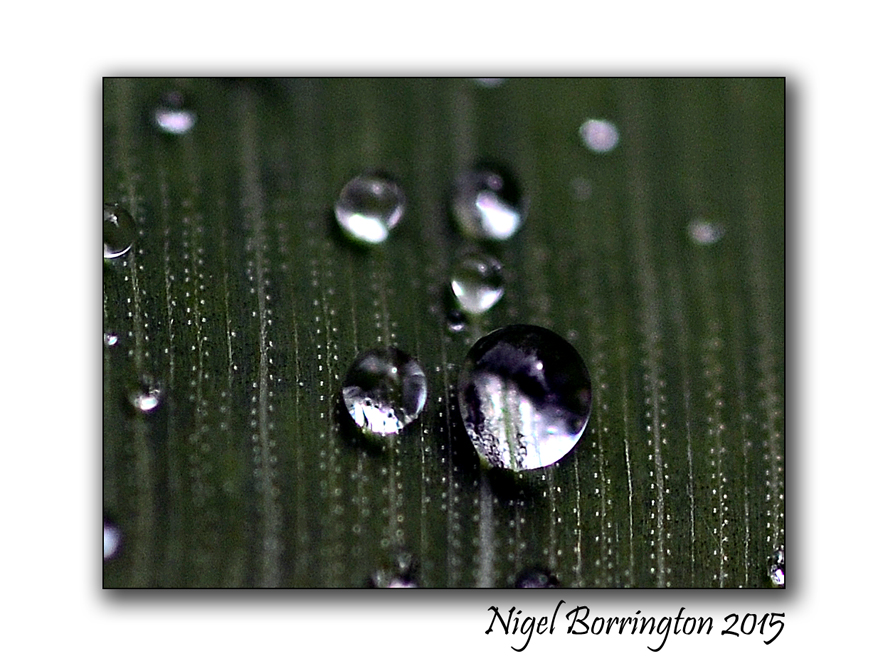
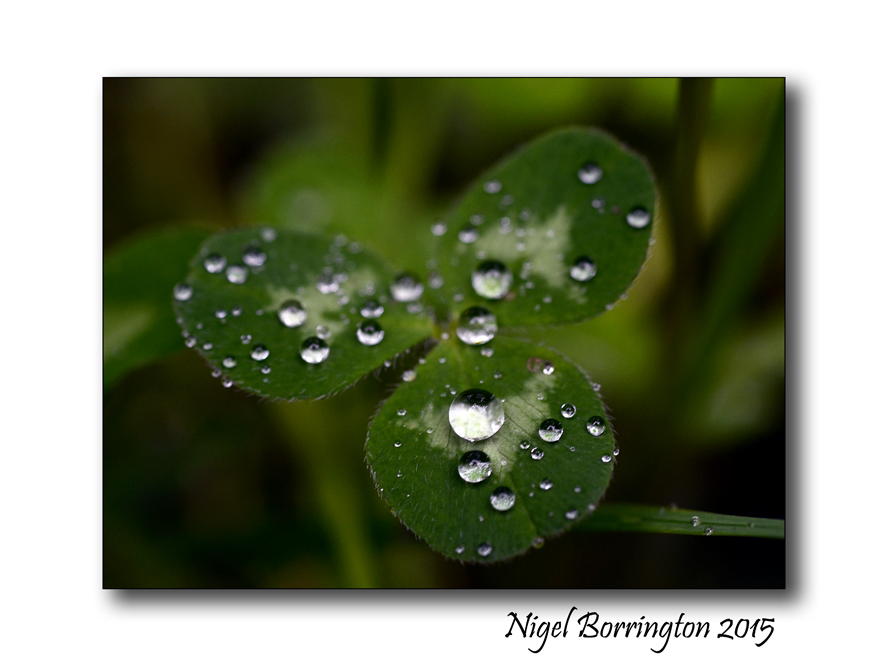
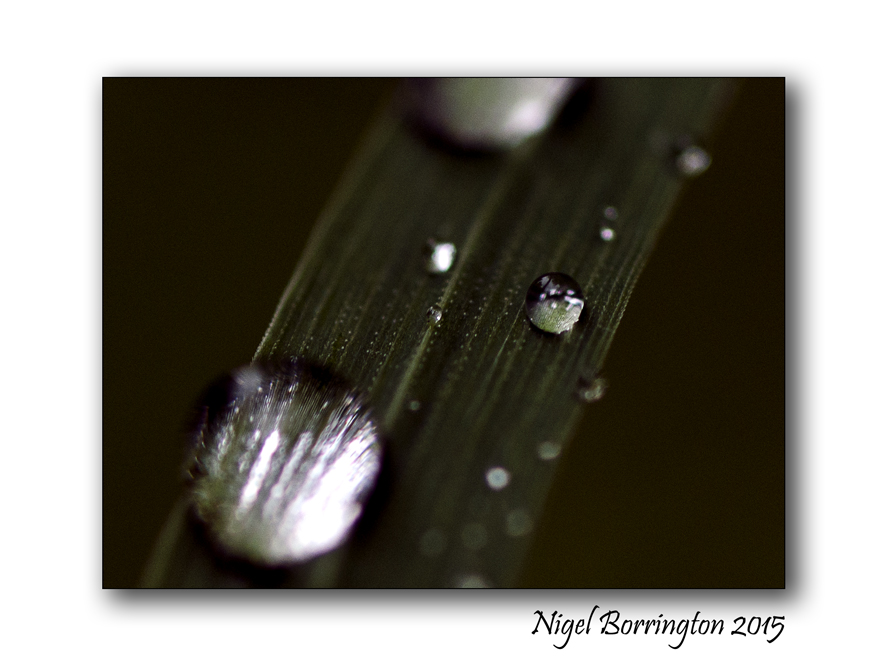
We have just had a long weekend here in Ireland , with a bank holiday and as expected 🙂 it rained yesterday (Monday) . I had intended to do lots of walking but it was just to windy and wet. So I decided after looking out of the windows for a while to do a photo study of the rain.

These images are just a small selection and include some from lunchtime today as we still have some showers, I used a macro lens for these shots and the above image has also captured the amazing structure of the grass that the rain drops rested themselves on.

The Rain 1

The Rain

Rain drops small and large

River Bend , A poem by: Rania Moallem

Rivers bend River Suir, Co Tipperary Nigel Borrington

Rivers bend
River Suir, Co Tipperary
Nigel Borrington


River Bend

A poem by: Rania Moallem

I believe I’ve waited too much that
patience poured wild enough to
drown me at the verge of that river
bend, where I pointlessly dwell,
where you never pass by.

And the confusion I lastly saw in your eyes
perhaps was dusk and ashes of burnt
thoughts you’ve had about me, or was it
plain puzzlement…
I wonder.

For I had you hunting me at night again
waking up breathless to find you clinging to
the last gasp of air I relief with despair,
right before I fight to sleep again.

It might be the right time to move on.

Past this rivers bend …….

Ruin a Poem By S. A. J. Bradley

Kells Priory 100
Irish Landscape Photography : Nigel Borrington

Ruin

Wondrous the stone of these ancient walls, shattered by fate.
The districts of the city have crumbled.
The work of giants of old lies decayed.
Roofs are long tumbled down,
The lofty towers are in ruins.
Frost covers the mortar,
Tiles weathered and fallen, undermined by age.

The original builders are long in the earth’s cruel grip,
generations since have passed.
These broad walls, now reddened and lichen-aged, brown and gray:
once they withstood invading kingdoms.
Now, beneath countless seasons, they have fallen.
The rampart assembled by many, crumbles still,
Though hewn together with skill of sharpening and joining,
Strengthened ingeniously with chain and cabled rib-walls.

Kells Priory 102

In the town, urbane buildings, bathhouses, lofty rooftops,
a multitude gathered.
Many a hall filled with humans
until Fate inexorably changed everything.

All the inhabitants succumbed to pestilence.
Swept away are the great warriors.
Their towers and walls are deserted,
the desolate place crumbles away.
Who could repair any of it,
for they are long dead.

So the courtyards and gates have collapsed,
and the pavilion roofs of vaulted beams crumbled.
Here where once men in resplendent clothes, proud, gazed upon their gold and silver treasure,
their gems and precious stones,
upon their wealth, and property:
the bright city of a broad kingdom.

Stone courtyards ran streams of ample water, heating the great bathes,
conveniently flowing into the great stone vats …

The Rime of the Ancient Mariner. A poem by: Samuel Taylor Coleridge

The Rime of the Ancient Mariner Image : Nigel Borrington

The Rime of the Ancient Mariner
Image : Nigel Borrington

From “The Rime of the Ancient Mariner”
Samuel Taylor Coleridge

The “Rime“ is one of the greatest pieces of Romantic literature. And the section of this epic poem in which the dead sailors get up and start sailing the boat again without seeing anything is as terrifying as anything in the horror genre.

The thick black cloud was cleft, and still
The Moon was at its side:
Like waters shot from some high crag,
The lightning fell with never a jag,
A river steep and wide.

Fishing boats on Galway bay

The loud wind never reached the ship,
Yet now the ship moved on!
Beneath the lightning and the Moon
The dead men gave a groan.

They groaned, they stirred, they all uprose,
Nor spake, nor moved their eyes;
It had been strange, even in a dream,
To have seen those dead men rise.

The helmsman steered, the ship moved on;
Yet never a breeze up-blew;
The mariners all ‘gan work the ropes,
Where they were wont to do;
They raised their limbs like lifeless tools—
We were a ghastly crew.

The body of my brother’s son
Stood by me, knee to knee:
The body and I pulled at one rope,
But he said nought to me.

‘I fear thee, ancient Mariner!’
Be calm, thou Wedding-Guest!
‘Twas not those souls that fled in pain,
Which to their corses came again,
But a troop of spirits blest:
For when it dawned—they dropped their arms,
And clustered round the mast;
Sweet sounds rose slowly through their mouths,
And from their bodies passed.

Around, around, flew each sweet sound,
Then darted to the Sun;
Slowly the sounds came back again,
Now mixed, now one by one.
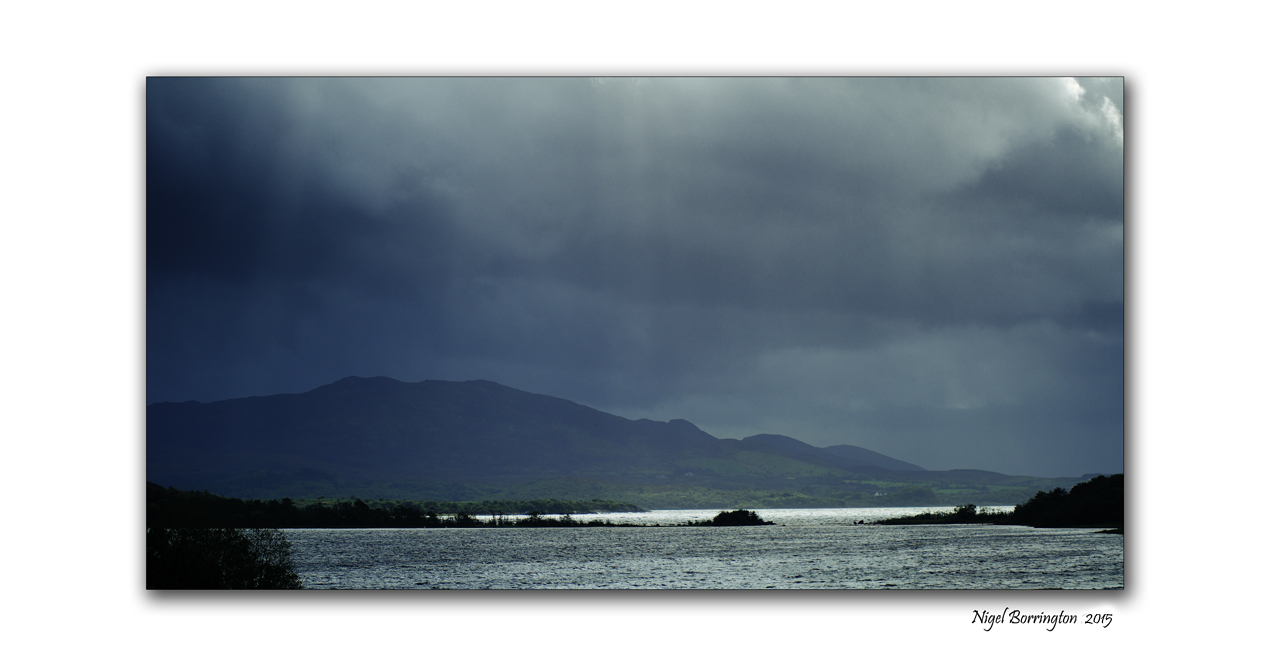
Storm clouds over the lake

Sometimes a-dropping from the sky
I heard the sky-lark sing;
Sometimes all little birds that are,
How they seemed to fill the sea and air
With their sweet jargoning!
And now ’twas like all instruments,
Now like a lonely flute;
And now it is an angel’s song,
That makes the heavens be mute.

It ceased; yet still the sails made on
A pleasant noise till noon,
A noise like of a hidden brook
In the leafy month of June,
That to the sleeping woods all night
Singeth a quiet tune.

Till noon we quietly sailed on,
Yet never a breeze did breathe:
Slowly and smoothly went the ship,
Moved onward from beneath.

Under the keel nine fathom deep,
From the land of mist and snow,
The spirit slid: and it was he
That made the ship to go.

The sails at noon left off their tune,
And the ship stood still also.
The Sun, right up above the mast,
Had fixed her to the ocean:
But in a minute she ‘gan stir,
With a short uneasy motion—
Backwards and forwards half her length
With a short uneasy motion.

Then like a pawing horse let go,
She made a sudden bound:
It flung the blood into my head,
And I fell down in a swound.
The Triple deity and the number three in Pagan Mythology , the Corleck Hill stone head

Corleck Hill stone head  The Triple deity Photo : Nigel Borrington

Corleck Hill stone head
The Triple deity
Photo : Nigel Borrington

Last weekend I visited the National Museum of Ireland in Dublin, to take a good look at some of the pagan/ per-christian objects that they have on permanent display.

One of the items that really captured my attention was the Corleck Hill – Carved stone head, a sculpture in the form of a triple deity. I think this stone is fascinating and provides a mythological link between per-christian Ireland and the wider world, well before the 1st century AD.

I have spent sometime this week doing a little study on the stone head and reading as much as I can find about its form, so I just wanted to share some on the images I took from the visit and some of the details I have found so far.

The Corleck Hill stone head

Corleck Hill stone head 2

Stone Head

Object Number: IA:1998.72

Stone HeadCarved stone head. Early Iron Age, 1st – 2nd century AD. Known since it came to scientific attention in 1937 as the Corleck head, this three-faced stone idol was found in the townland of Drumeague, Co. Cavan around the year 1855. It appears that it was one of a number of carvings found, including a bearded bust now known as the Corraghy head that was later built into a barn in the nearby townland of that name. Thomas Barron, the local historian who brought the three-faced head to the attention of the National Museum spent a lifetime researching the local traditions concerning the find and he concluded that the figures were associated with a shrine located at Drumeague Hill. Nearby is Corleck Hill where it appears that between 1832 and 1900 a Passage Tomb surrounded by a stone circle and a circular embankment 70 yards in diameter were dismantled. The site of these monuments was the center of an important Lughnasa festival that celebrated the harvest, an ancient Celtic tradition that survives into modern times. Other Celtic stone heads have been found in the vicinity such as those from Corravilla and Cavan Town and the find place of the three-faced idol is but twelve miles distant from Loughcrew, Co. Meath. A little further north there is another group of Iron Age stone carvings that appear to be centred on the vicinity of Emhain Macha, the main political and ritual site of ancient Ulster. The likelihood is that the Corleck Head was associated with a shrine reflecting Romano-British traditions located close to where the carving was discovered. The three-faced carving is the finest of its type and there is a small hole in the base to assist its being stood securely, perhaps on a pedestal. One of the faces is heavy browed and all of them have bossed eyes, a broad nose and slit mouth. One of the mouths has a small circular hole at the centre and this feature is also found on two of the Co. Armagh carvings and on another from Woodlands, Co. Donegal. There are several examples of this feature from Yorkshire the best known occurring on two three-faced idols from Greetland, near Halifax. The feature also occurs on a stone head from Anglesey, Wales. H. 33cm; Max. W. 22.5cm.

What is the triple deity

Corleck Hill stone head 3

A triple deity (sometimes referred to as threefold, tripled, triplicate, tripartite, triune or triadic, or as a trinity) is a deity associated with the number three. Such deities are common throughout world mythology; the number three has a long history of mythical associations. Carl Jung considered the arrangement of deities into triplets an archetype in the history of religion.

In mythological and its art,three separate beings may represent either a triad who always appear as a group (Greek Moirai, Charites, Erinnyes; Norse Norns; or the Irish Morrígna) or a single deity known from literary sources as having three aspects (Greek Hecate, Diana Nemorensis). In the case of the Irish Brigid it can be ambiguous whether she is a single goddess or three sisters, all named Brigid. The Morrígan also appears sometimes as one being, and at other times as three sisters, as do the three Irish goddesses of sovereignty, Ériu, Fódla and Banba.

The Matres or Matronae are usually represented as a group of three but sometimes with as many as 27 (3 × 3 × 3) inscriptions. They were associated with motherhood and fertility. Inscriptions to these deities have been found in Gaul, Spain, Italy, the Rhineland and Britain, as their worship was carried by Roman soldiery dating from the mid 1st century to the 3rd century AD. Miranda Green observes that “triplism” reflects a way of “expressing the divine rather than presentation of specific god-types. Triads or triple beings are ubiquitous in the Welsh and Irish mythic imagery” (she gives examples including the Irish battle-furies, Macha, and Brigit). “The religious iconographic repertoire of Gaul and Britain during the Roman period includes a wide range of triple forms: the most common triadic depiction is that of the triple mother goddess” (she lists numerous examples).

More ( A fascinating read !!!)

Flora & Fauna , A Poem by crowbarius – Hello Poetry

Flora & Fauna Irish Nature Photography : Nigel Borrington

Flora & Fauna
Irish Nature Photography : Nigel Borrington

Flora & Fauna

Flora and Fauna, the sisters of Season
Of Spring and of Summer
Allow now our drummer
To drum out the beat
For the feet of the sisters
To glide and to creep
Like the encroaching sleep
Which may perch on your shoulder if we cannot keep you awake
And on the edge of your seat, sir.

Now the former, sweet Flora, will finger the flute
While the other continues to glide and to slide
Like a sequined Venetian harlequin bride;
And now Fauna will mimic the movements of bird and of beast
As she graces the work of our landscape artiste
And all is completely unfeasible
Completely lacks reason
We guarantee.

Presently
In the eye of the beholder
Sweet Flora seemingly draws from the aether a lyre
And with flourishing fingers she plucks from the heavens
A song of the seasons, a pagan ode to Pan!

Behold! No aid of hoops, no strings
The vestal-virgin-harlot sisters sing
Of beautiful Persephone
And with unseen damselfly wings
Ascend from mediocrity
All melody forgotten
All the drums create cacophony
And you will find serenity in chaotic monotony
Now let this climaxing crescendo banish all your sorrowing!

No more that light; no more that sacred realm
Life’s door was dappled gloam; now all is black.
A man of wax with saintly, hollow eyes
Devoid of sin, devoid of love and light
That golden room is lost – you can’t turn back.
Now love has lost its lustre – lust lost joy
And coy eyes turn to watch the empty man
Struck by eternal beauty, and condemned
To haunt the broken world of mortal men;
And shrilling wind caresses empty hand.