Capturing the world with Photography, Painting and Drawing

Latest

My Secret Place, Jeremy – all poetry . com

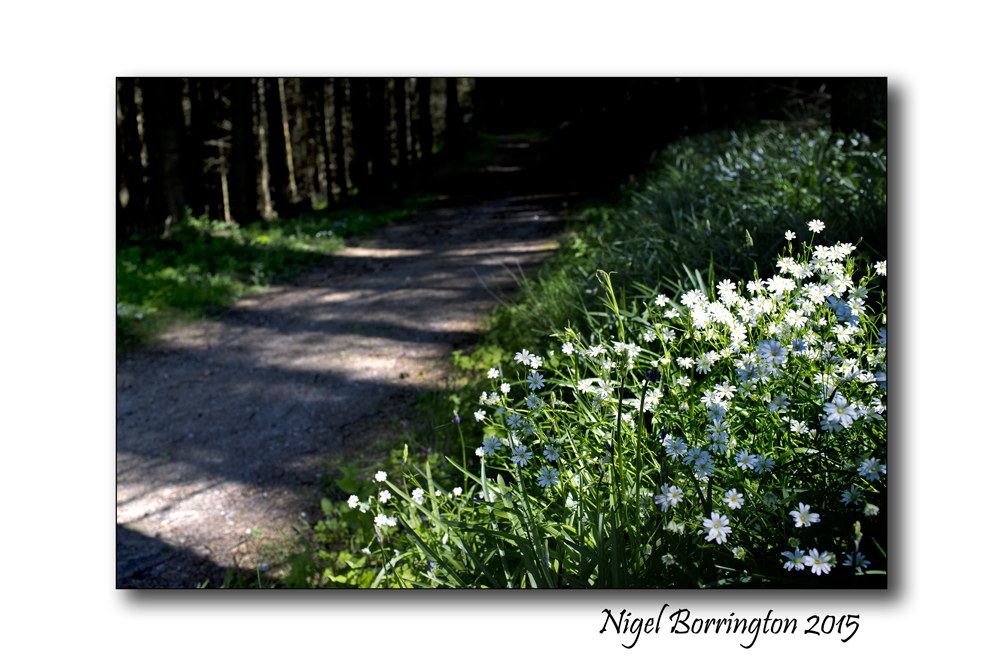
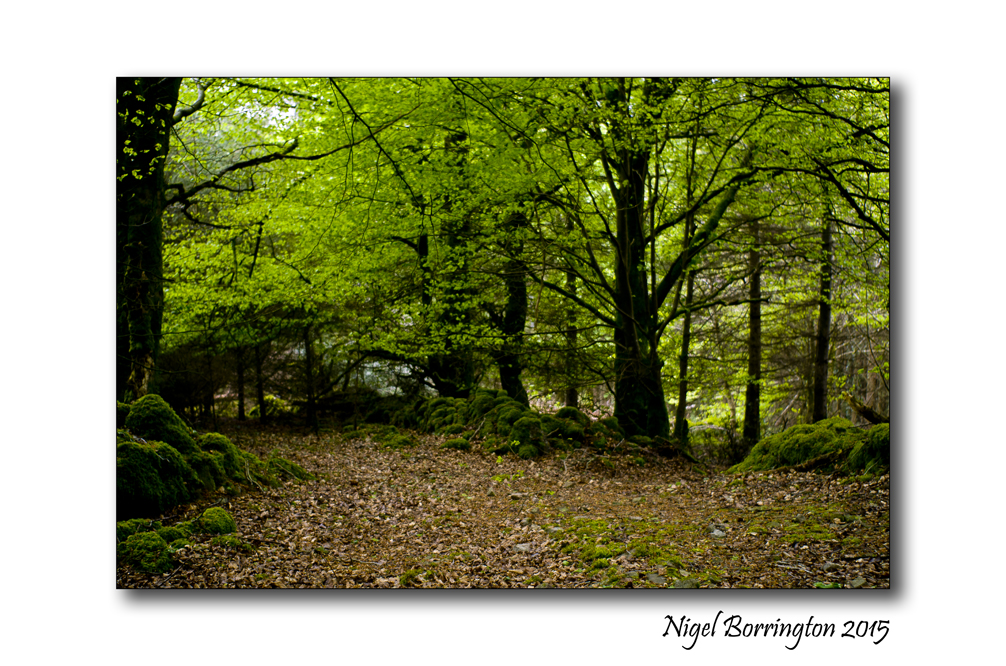
Irish woodlands 2

My Secret Place

There’s a magical place that I often visit,
where all of my dreams and wishes come true.
A special place where I can be myself,
where happiness always seems to follow through.

In this place are creatures that roam,
so beautiful, magnificent, and free.
Just like us they have open hearts,
and a special language that they speak.

The forests here are so alive,
plentiful are the fruits that they bare.
Nothing but peace and harmony dwells within,
and tranquility floats in and around the air.

There is no sun or moon,
the temperature is always just right.
You can sleep all day and never have to worry,
about having to leave here at night.

Patience is a way of life here,
no one rushes to get to where they want to be.
People hold their heads up high and smile,
they’re always proud to have you in their company.

Irish woodlands 1

You can find all of the solitude that you seek,
love and peace are so ominous here.
Every one respects and supports one another,
and their trust and loyalty will never disappear.

In tiny little caves live the most beautiful elves,
many with families of their very own.
Each one is unique with his or her own colors,
always seeking friends, never wanting to be alone.

The elves come out and frolic in the forests,
while unicorns roam and graze in the grassy fields.
With their powerful and majestic wings,
they bring a feeling of strength and security.

Fairies fly free throughout,
their fluttering wings sparkling bright.
Lighting up this magical universe,
like thousands of lanterns dancing in the night.

Stars decorate the clear night sky,
blazing afar, wanting to be seen.
They bring hope and encouragement to one and all,
creating a wonderful and tranquil scene.

Forest flowers 1

The unicorns are so delicate yet strong,
their awesome presence will captivate you instantly.
Enchanting the hearts of all who come across them,
nothing can ever stand up to their uniqueness and beauty.

This is a place that I turn to,
whenever I am down and blue.
A wonderful and exciting trip,
that I would recommend for everyone, even you.

Friends, please take my hand and join me,
let us fly away into the sky.
Where miracles happen every day,
so that you don’t have to wish or cry.

You will love this enchanted place,
my special and wonderful escape from time.
It helps me to forget about my problems and sorrows,
Even though it only exists in the back of my mind.

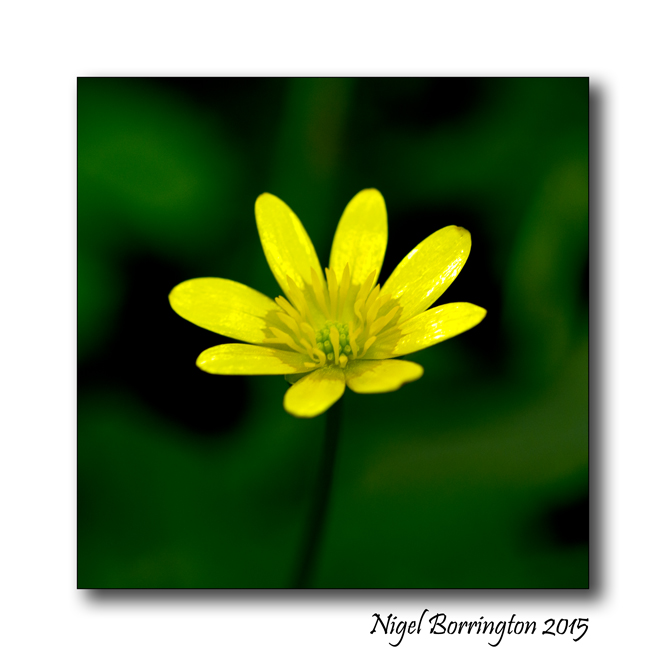
Nature’s gifts : Celandine, Lesser

Celandine, Lesser Nature Photography : Nigel Borrington

Celandine, Lesser
Nature Photography : Nigel Borrington

Its so easy to just walk past some of natures smaller Herbs and Flowers, however I guess that some flowers cannot help but get themselves noticed.

“Celandine, Lesser” is one of these little gems, its strong yellow flowers in the early summertime cannot help but get noticed as you walk down woodland paths or along the road sides.

Here are a many details about this wild Herb and it flowers:

Celandine, Lesser
Botanical: Ranunculus ficaria (LINN.)
Family: N.O. Ranunculaceae

Part Used
Constituents
Medicinal Action and Uses
Recipes

—Synonyms—Small Celandine. Figwort. Smallwort. Pilewort.
—Part Used—Herb.
—Habitat—The Lesser Celandine, one of the very earliest of spring flowers, its cheery, starlike blossoms lighting up our hedges even before winter is quite spent, is distributed throughout Europe, Western Asia, and North Africa, in these islands, growing up the hillsides in Wales to a height of 2,400 feet. It grows in moist corners of fields and places near watersides, but is found also on drier ground, if shady, being one of the few plants that thrive beneath the shade of trees, where its glossy foliage frequently forms a dense carpet.

Wordsworth, whose favorite flower this was (in recognition of which the blossoms are carved on his tomb), fancifully suggests that the painter who first tried to picture the rising sun, must have taken the idea of the spreading pointed rays from the Celandine’s ‘glittering countenance.’ The burnishing of the golden petals gives a brilliant effect to the flowers, which burst into bloom about the middle of February, a few days only after their bright, shining leaves. The leaves are on long stalks, arising from a short, prostrate stem, and are very variable, the first being heart-shaped, the later ones bluntly cut into, somewhat like the ivy. They often have dark markings.

The blossoms shut up before rain, and even in fine weather do not open before nine o’clock, and by 5 p.m. have already closed for the night. The Celtic name of the plant, Grian (i.e. the sun), refers to this habit. The petals are green on the underside, and directly the flowers close they become inconspicuous.

Throughout March and April, this cheerful little plant is in full bloom, but as the spring passes into summer, the flowers pale somewhat, and the whole plant looks rather sickly, the warmth of the lengthening days withdrawing from it the needed moisture. By the end of May, no flowers are to be seen, and all the plant above ground withers and dies, the virtue being stored up in the fibres of the root, which swell into the form of tubers. If the plant is dug up, late in the summer or autumn, these tubers are seen hanging in a bunch, a dozen or more together, looking like figs, hence the plant’s specific Latin name ficaria, from ficus (a fig). By these tubers, the plant is increased, as they break off readily, each tuber, like a potato, producing a new plant. To eradicate this plant from any ground, it is necessary to remove the roots bodily, for if the plants are dug into the soil, they work their way up to the surface again, the stems branching as they grow upward from the tubers, and at every branch producing fresh tubers.

The early awakening of the plant is due to these fully-stored tubers, which lie quiescent all the summer and autumn, but all necessary materials being at hand, leaves and flowers are quickly pushed upwards directly the depth of the winter has passed.

Although the Lesser Celandine has been placed by some botanists in a distinct genus, when it is called Ficaria verna, it is more generally assigned to the Buttercup or Crowfoot genus, Ranunculus. The name of this genus, first employed by Pliny, alludes to the damp and marshy localities preferred by the plants of the family, Rana, being the Latin for a frog, whose native haunts are those of the majority of this group of plants. The Lesser Celandine is distinguished from the Buttercup by having nine or ten, even sometimes a dozen narrow petals, instead of five, and only three sepals (the outer, generally green leaves of the flower), which fall off on opening, instead of the usual five, which remain after the flower has expanded, in the other species of Ranunculus. The flowers rise singly from the root, on long, slender, leafless stalks and are about 1 inch in diameter. There are a number of stamens. The fruits are not unlike those of the Buttercups being dry and distinct, set together in a globular head, somewhat like a grain of corn and whitish in colour, but comparatively few fertile seeds are produced.

The flowers would originally appear to have been designed with the object of attracting insects for their fertilization, the bright coloured, burnished petals having honey sacs at their base, but the flowers can face colder days than the insects can, for whom the honey has been provided, blooming when few of the insects have emerged, with the result that comparatively few become fertilized in this country and not many seeds are produced. The plant, therefore, has recourse to another method of reproduction, independent of all external aid. At the point where the upper leaves join the stem are to be seen little objects like minute round tumours, which grow about the size of a grain of wheat. In the early summer, when the leaves and stems are dying down, these grains become loose and drop to the ground. Each is capable of producing a new plant. A heavy rain will sometimes wash them from the plants in every direction. Kerner, in his Natural History of Plants, tells us that:
‘a sudden downpour of rain in a region abundantly overgrown with Lesser Celandine is sufficient to float away numbers of the tubers, and heap them up on the borders of irrigation channels when the rain disperses. In such places the quantity of tubers which have floated together is often so large that one can hardly gather them in one’s hands. In this way arose the idea that the tubers had fallen from heaven with the rain and the myth of a rain of potatoes.’

This fact probably accounts, also, for the ‘rains of wheat’ sometimes vouched for by country people in various parts. These bulbils (i.e. Iittle bulbs) are only produced on those plants whose fruits have failed to set.

The root of the Lesser Celandine is perennial.

Seedlings do not flower in their first year, but collect and store up material to start their accustomed course at the end of the ensuing winter.

The whole plant is glabrous.

It is called the Lesser Celandine to distinguish it from the Greater Celandine, to which it has neither relationship nor similarity, except in the colour of its flowers, though the older herbalists applied the name to both plants indiscriminately. The confusion of names existed in Gerard’s time, for he published a list of all the plants in cultivation in his garden on Holborn Hill – to wards the close of the sixteenth century and introduced in it, under the same name, both this and the Greater Celandine (Chelidonium majus) which certainly is in bloom when the swallows arrive, and continues to flower the whole summer, and so would have more right to the name Celandine than this species, which blossoms long before they come, and dies down months before they leave our shores.

A figure of the Lesser Celandine – under the name of Erdöpffel – appears in an old German Herbal of 1533, Rhodion’s Kreutterbuch, evidence that this plant was well known to the herbalists of the Middle Ages.

It is also called ‘Small-wort.’

The old English name of Pilewort is due to the fact that it has long been considered a cure for piles, one of the reasons assigned for this resting on the strange doctrine of signatures. We are told by an old writer: ‘If you dig up the root of it you will perceive the perfect image of the disease commonly called the piles.’ Gerard writes of it:
‘It presently, as Galen and Dioscorides affirm (though this perhaps refers to the Greater Celandine) exulcerateth or blistereth the skin: it maketh rough and corrupt nails to fall away. The juice of the roots mixed with honie and drawn up into the nosthrils purgeth the head of foul and filthy humours. The later age use the roots and graines for the piles . . . there be also who think that if the berbe be but carried about one that hath the piles, the pain forthwith ceaseth.’

Culpepper, writing fifty years later, tells us:
‘It is certain by good experience that the decoction of the leaves and roots doth wonderfully help piles and haemorrhoids; also kernels by the ears and throat called the King’s Evil, or any other hard wens or tumours.’

He had such faith in the virtues of this little plant that he further tells us, with more definite belief than Gerard: ‘The very herb borne about one’s body next the skin helps in such diseases though it never touch the place grieved.’

The young leaves, the substance of which is soft and mucilaginous, have sometimes been boiled and eaten as a vegetable in Sweden, but have not the reputation of being very palatable, either thus treated or raw as a salad.

Linnaeus advised farmers to eradicate the plant from their land on account of it being disliked by cattle (though wood-pigeons eat it with avidity), also for its injurious effect on other herbs in the meadow, but there seems little ground for this assumption, as although the tissues of most plants in this order contain acrid juices to a high degree, the acrimony of the Lesser Celandine is of a very mild character. A dressing of coal or wood ash is said to effectually destroy the whole plant.

Monday Morning Poems : “A Red, Red Rose” by : Robert Burns

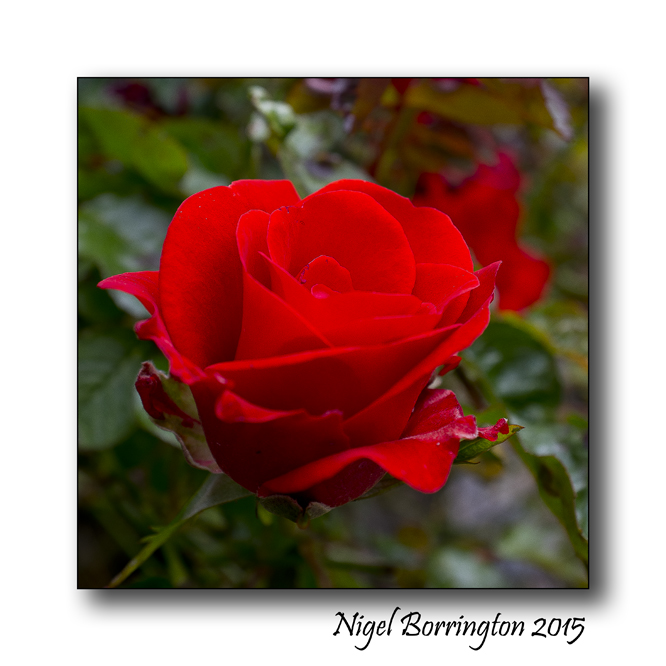
Like a Red Rose on June Nigel Borrington

Like a Red Rose in June
Nigel Borrington

A Red, Red Rose

by Robert Burns

My love is like a red, red rose
That’s newly sprung in June :
My love is like the melody
That’s sweetly played in tune.

As fair art thou, my bonnie lass,
So deep in love am I :
And I will love thee still, my dear,
Till a’ the seas gang dry.

Till a’ the seas gang dry, my dear,
And the rocks melt wi’ the sun :
And I will love thee still, my dear,
While the sands o’ life shall run.

And fare thee weel, my only love,
And fare thee weel a while !
And I will come again, my love,
Thou’ it were ten thousand mile.

Irish landscape images , images for the weekend …….

Irish landscape images Nigel Borrington

Irish landscape images
Nigel Borrington

This weekend I am planning lots of time outside, just walking, relaxing and getting some fresh landscape images …

I hope what every you do , you have a great weekend and that if you can you get sometime to relax and enjoy your surroundings, in the country or in the city 🙂 🙂

Have a great weekend !!

Irish Landscape Gallery

Friday images for the weekend 3

Friday images for the weekend 1

Kilkenny Landscape Images 02

All the colours of the Rainbow Nigel Borrington


River Suir in May 2015

Thursday evening Landscapes Irish Landscapes : Nigel Borrington


Do Not Go Gentle Into That Good Night  Photography : Nigel Borrington


An evening in the hill side woods 5

Morning Star 3

Images for the weekend Landscape Photography : Nigel Borrington

The Freedom of the hills Irish Landscape Photography : Nigel Borrington


Fishing boats on teh River Suir Irish Landscape Photography : Nigel Borrington


Memories Of My Old Country Church – Poem by Sandra Morton

Memories Of My Old Country Church -  Photography : Nigel Borrington

Memories Of My Old Country Church –
Photography : Nigel Borrington

Memories Of My Old Country Church

Poem by Sandra Morto
n

In days of long ago, dad would hitch up Pet and, Topsy
away we’d go

To the neighborhood grocery for something to eat.
Me sitting beside dad, on that old wagon seat.
On the way we passed by this “OLD COUNTRY CHURCH”,
I always looked it over as I sat upon my perch.

For, you see, in those days we didn’t go.
But, Dad believed in God, for he told me so. Once we went
to revival, the preacher came back to talk.
I could tell Dad was going to be like old Pet and balk.

Dad told the preacher I’ll go forward if I ever feel God’s call,
but, for right now I don’t feel it’s the time at all.

The years came and went, and mom met this cousin, It’s been
years, since she’d seen him, over two dozen.

He’d become a preacher in years gone by. She ask if he’d
start up the “OLD COUNTRY CHURCH”, and he said he’d try.
Mom had been a Christian, since about twenty two, but didn’t
like to go, for the times dad went were few.

Mom made arrangements with members of the church board.
the preacher wouldn’t accept pay, many gave love offerings,
as they could afford. This was in the fall of 1955, along
about that time Grandmother died.

She was like a second mother to me, this was my first experience
with another dying. I thought my heart would break, an I’d
never stop crying. It would have helped to have known JESUS,
for, I couldn’t understand why she was taken from us.

Along, in July 1956, there was a revival, I’d decided to go,
if dad got the call, a lot got the call that night, 10 of us in all.
Relatives, neighbors, and friends. Surely God must have covered
a multitude of sins, and there, must have been joy in Heaven.

Oh! It must have been joy divine for mom to see so many baptized
on July 29. She was in failing health even then in 1956, but
what a joy, it must have been to see so many saved before the end.

Later on many more received the call. Two daughters, a brother-
in-law, and many more not family at all

The Moral of My Story is if she’d started sooner, think how many
more stars might have been in her crown of Glory.

Memories The old church

In 1976, Mom was called to that far and distant land. At the age,
of 57, why?, I could never understand, surely Gods work through
her was done, and her crown of victory won.

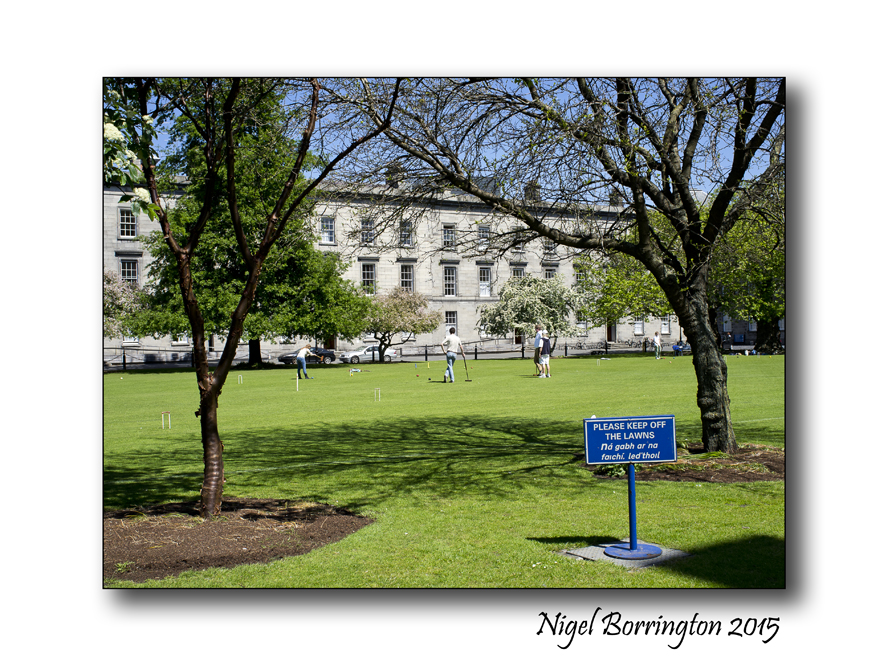
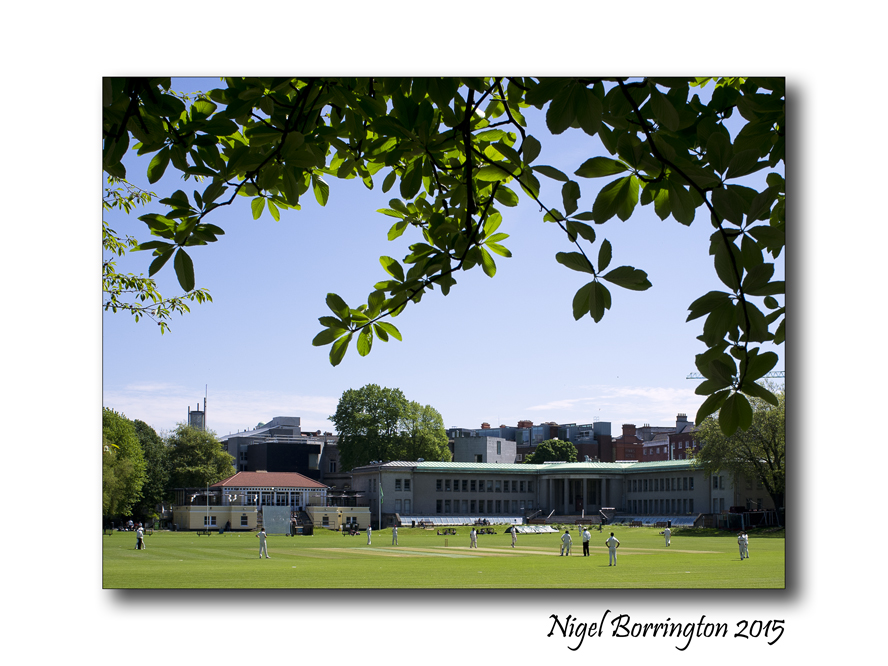
A sense of place : Trinity College, Dublin

Trinity Dublin 2

I just want to share in this post, a set of images taken at the end of May 2015 during a visit to Dublin including one of my favorite places to walk around and people watch, while having a coffee and some lunch to eat 🙂

Trinity College, Dublin

Trinity Dublin 1

Trinity Dublin 3

Trinity Dublin 6

Trinity Dublin 4

Trinity Dublin 5

Getting close to the Rhododendron, Gallery.

Rhododendron flowers county Kilkenny Nigel Borrington

Rhododendron flowers
county Kilkenny
Nigel Borrington

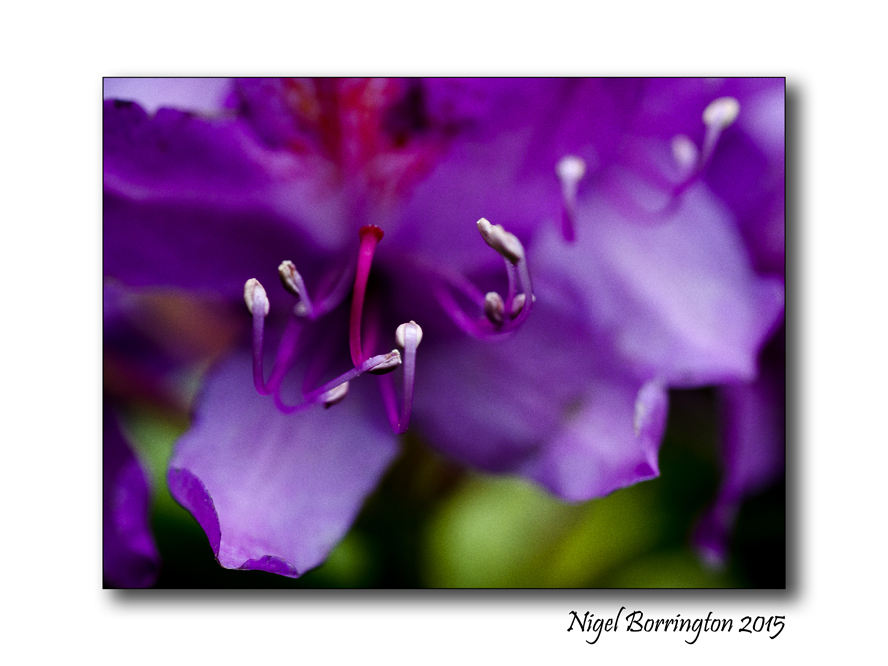
At this time of year , many parts of the Irish landscape come alive with the purples and pinks of the Rhododendron flower.

These images are just a few closeup shots taken on an evening walk yesterday …..

Rhododendron (from Ancient Greek ῥόδον rhódon “rose” and δένδρον déndron “tree”) is a genus of 1,024 species of woody plants in the heath family (Ericaceae), either evergreen or deciduous, and found mainly in Asia, although it is also widespread throughout the Southern Highlands of the Appalachian Mountains of North America. It is the national flower of Nepal. Most species have showy flowers. Azaleas make up two subgenera of Rhododendron. They are distinguished from “true” rhododendrons by having only five anthers per flower.

More …..

Gallery

Rhododendro full

Rhododendro macro 3

Rhododendro macro 2

Rhododendro macro 1

Mischievous Joy, Johann Wolfgang von Goethe

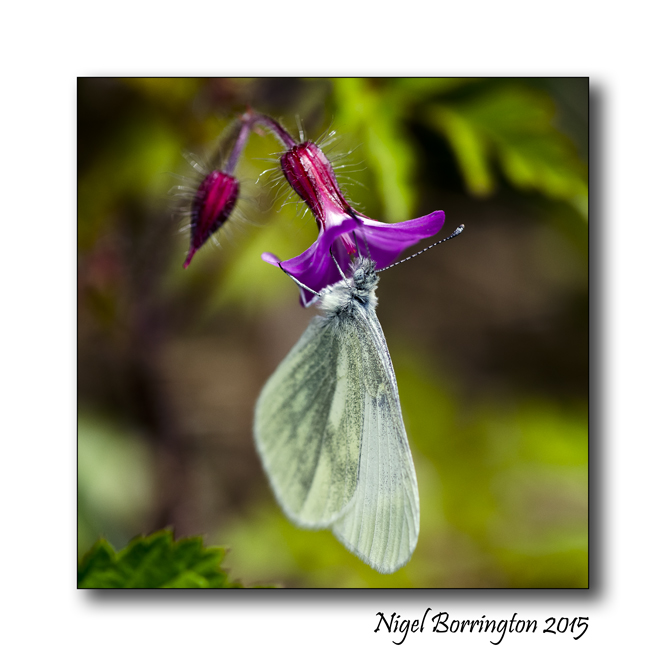
Mischievous Joy of a butterfly  Image : Nigel Borrington

Mischievous Joy of a butterfly
Image : Nigel Borrington

Mischievous Joy

Poem by : Johann Wolfgang von Goethe

AS a butterfly renew’d,

When in life I breath’d my last,
To the spots my flight I wing,
Scenes of heav’nly rapture past,
Over meadows, to the spring,
Round the hill, and through the wood.

Soon a tender pair I spy,
And I look down from my seat
On the beauteous maiden’s head–
When embodied there I meet
All I lost as soon as dead,
Happy as before am I.

Him she clasps with silent smile,
And his mouth the hour improves,
Sent by kindly Deities;
First from breast to mouth it roves,
Then from mouth to hands it flies,
And I round him sport the while.

And she sees me hov’ring near;
Trembling at her lovers rapture,
Up she springs–I fly away,
“Dearest! let’s the insect capture
Come! I long to make my prey
Yonder pretty little dear!”

Monday Poetry , Canal Life, By : Ian McMillan

St Mullins Kilkenny on the canal

Ian McMillan
Canal Life

The canal tells you stories
The canal sings you songs
They hang in that space
Between memory and water

Once saw a narrowboat raised up,
Like it was cutting through the air,
Between two grass walls and the road below
Like it was sliding through history,
And a tiny vole swam across the water
So a tiny vole swam through history.

The canal tells you stories
The canal sings you songs

Once saw a man floating belly up in a canal
Like he was in the bath. He shouted
‘This is the life’ as I passed by on a narrowboat;
The sky was reflected in the surface
And we tied up in the places the map never showed us,
The man floating by, making ripples on the surface.

They hang in that space
Between memory and water

Once got waved at by a jogger as I stood gongoozling
On the towpath; her running gave rhythm
To the early afternoon, dog-strollers and kids
Who’d rather be here than sitting in school.
To gongoozle is to stand and watch narrowboats pass
And a canal is a lesson, a water-based school.

The canal tells you stories
The canal sings you songs

St Mullins Kilkenny

Once these canals were information highways
If coal and iron can be information,
And I think they can be. And there are bridges,
Pub gardens, the laughter of children
As they walk by the water; and the canals
Turn us all into curious children.

They hang in that space
Between memory and water

Once is never enough for a canal, I reckon;
You need to go back and see it again,
And sail it again, and smell it again, and
Touch it again; canals run through our veins
Like they stroll through this country
Like blood through our veins.

The canal tells you stories
The canal sings you songs
They hang in that space
Between memory and water

Sunday Evening in the tree tops, county Cork , Ireland

Sunday Evening Landscape Photography : Nigel Borrington

Sunday Evening, Co.cork Ireland
Landscape Photography : Nigel Borrington

Sunday evenings are some of my favorite times of the week, the weekends light is fading fast and we have a new week ahead of us, and new chances to grow and reach our aims.

Sunday Evening in the tree tops