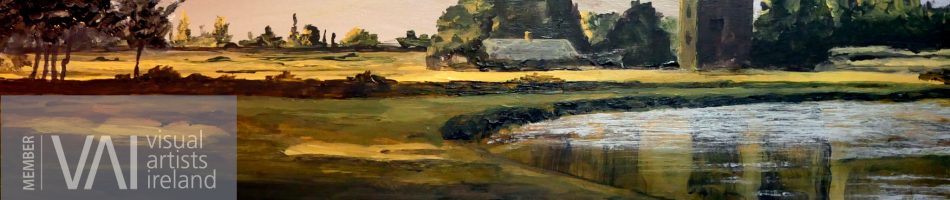
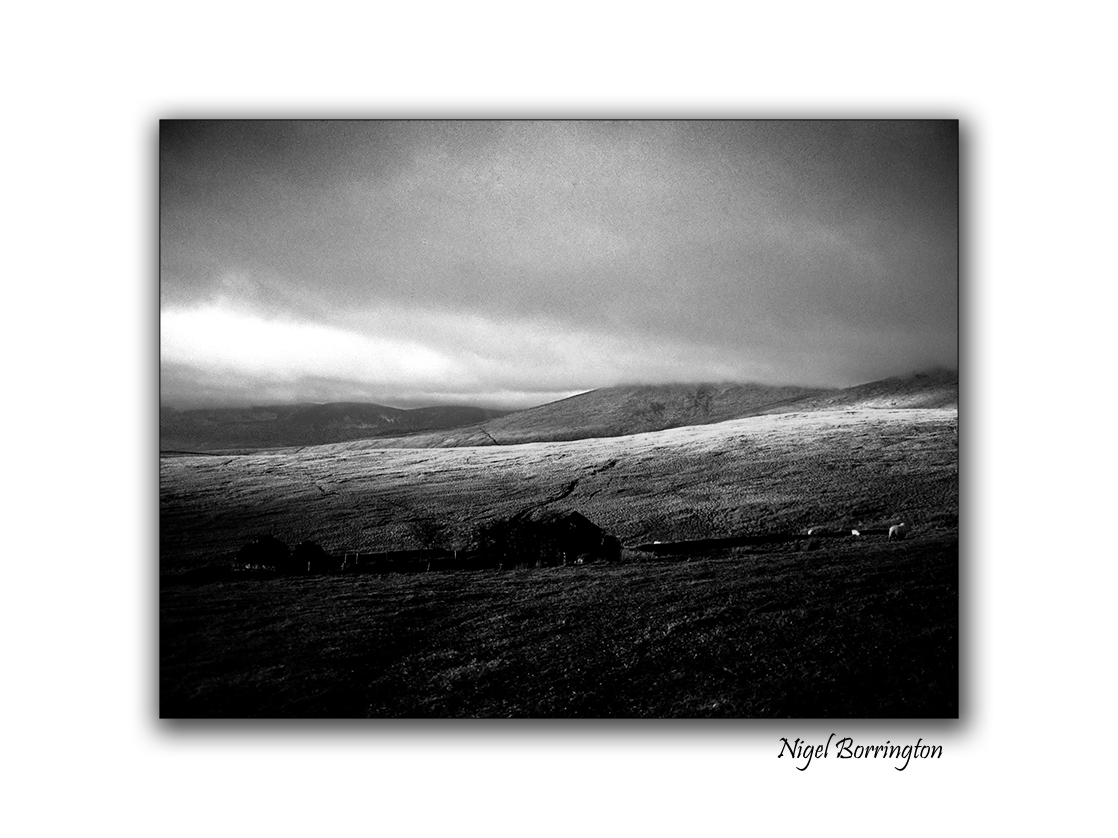
Killary Harbour

Nikon F90x, 50mm f1.4 lens on Kodak iso 100 film
Irish landscapes : Nigel borrington
Killary Harbour
From Wikipedia, the free encyclopedia
Jump to: navigation, search
Satellite image of Killary Harbour
“Killary Harbour/An Caoláire Rua is a fjord located in the West of Ireland in the heart of Connemara which forms a natural border between counties Galway and Mayo. It is 16 kilometres long and in the centre over 45 metres deep. It is one of three glacial fjords that exist in Ireland, the others being Lough Swilly and Carlingford Lough.[1]
On its northern shore lies the mountain of Mweelrea, Connacht’s highest mountain, rising to 814 metres. To the south rise the Maumturk Mountains and the Twelve Bens. The area contains some of Ireland’s most awe-inspiring and dramatic scenery.
There are two minor settlements nearby. On the southern side near the mouth of the fjord lies the hamlet of Rossroe while Leenaun lies inland to the east. Close to Rosroe there is an old building which now houses a hostel. This building was formerly a modest house which was used by Ludwig Wittgenstein, the famous philosopher, as a quiet place to write shortly after World War II. A plaque acknowledging this was unveiled by President Mary Robinson in 1993.
Nearby lies the so-called Green Road, a rough road running along the side of the fjord back east towards Leenane at the head of the fjord. It stretches for approximately nine kilometres and was part of the famine relief program during the 19th century. Aquaculture is important locally with a salmon farm based at Rossroe while mussel rafts are a common sight more to the east.”
One of the most beautiful landscape in Ireland, visit if you can!
Wicklow
Wicklow Landscapes on film.

Shot of the Wicklow hills.
Nikon F90x, Nikon 50mm f1.4 lens and Kodak Ektachrome
Irish landscape images : Nigel Borrington
I just started looking at my older stock of slide images and found a set that I took way back when – in County Wicklow.
Some very good and interesting colours coming from these scans, maybe just maybe people have always been correct about film. The detail however is another issue, the film grain in these images removes a lot of detail that even my old Nikon D200 would record.
Look at the black and white contrast!
Samuel Coulthurst
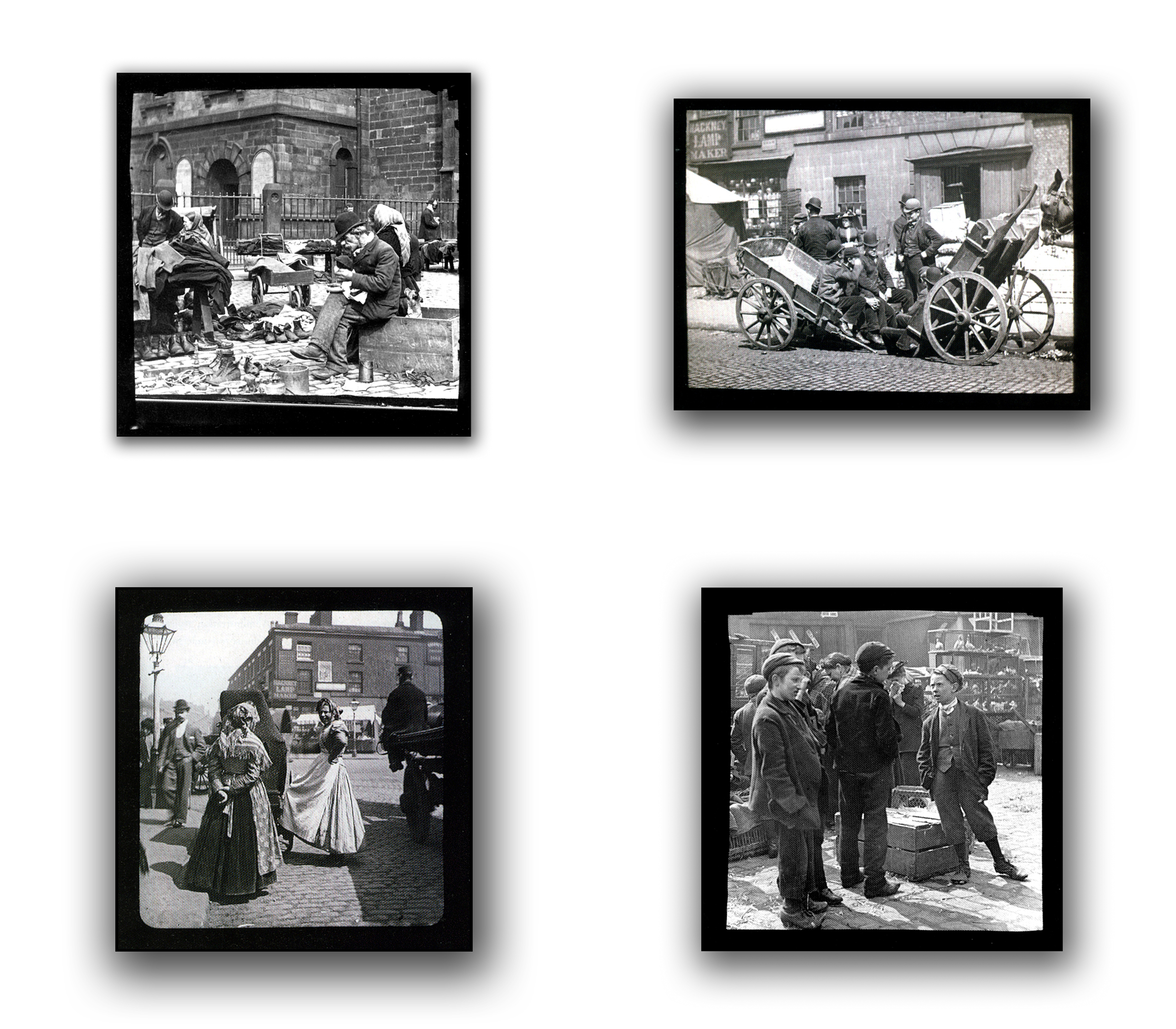
Samuel Coulthurst: Victorian Salford, Manchester(UK) – (1889 – 1890)
19th Century street photography
Back in 2002 I was back home in Manchester and visited the Lowry art museum and gallery at the Salford Quays, Manchester. This exhibition has stayed in my memory ever since so I thought I would share a post about the display of work I attended that day.
During a two year period (1889 and 1990), Samuel Coulthurst and his brother-in-law James Higson both members of the Lancashire and Cheshire photography union, dressed as what was known then as rag and bone men.
They carried their camera on the back of a cart they used and took many photographs of the people they met and got to know. Many of these photographs have been archived along with details of who these people were and what they did.
They were not simply doing a street walk about with a camera but spent time both living the lives and getting to know the people of Salford.
Many for the street children that the two photographed would have attended the Charter Street Ragged School, they had either lost parents to industrial accidents or to famine or disease. In the grounds of this church owned school is a grave yard that contains 6000 such parents. The city of Manchester has many such locations from this period.
It was in such conditions that these two photographers lived and worked taking pictures that made history. Without them most people would have forgotten in part at least, the kind of live’s that the 19th century people of Manchester lived including my Own Ancestors.
The exhibition is repeated by the Lowry Gallery so if you are in Manchester and into history/photography then maybe you could call in.
Gallery:
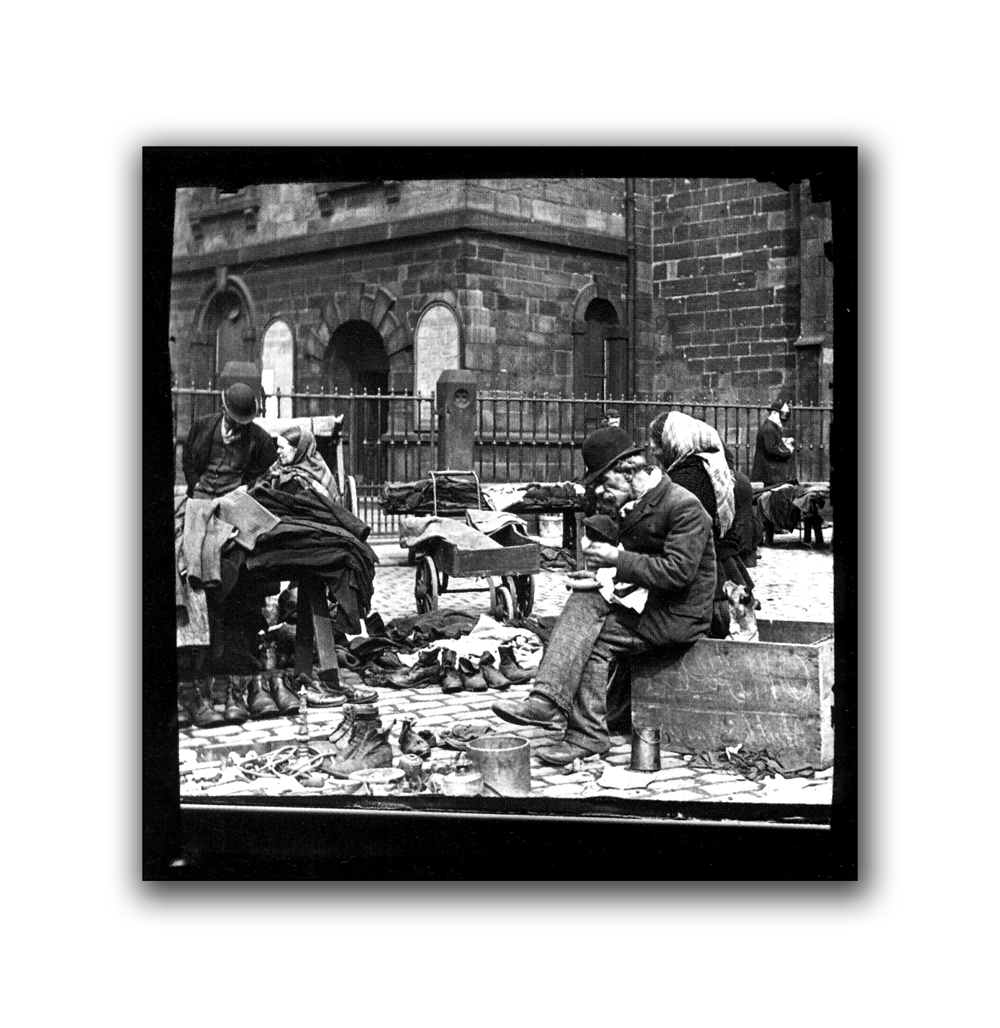
Flat Iron Market Salford. Manchester 1890.

Swan Street, Salford Manchester 1890.

Organ Grinder – Swan Street Salford, Manchester 1890.

Tom Shudehill, Poultry Market. Manchester 1890.
Dorothea Lange
As its a wet and slow afternoon I thought I would just do a quick post to pass on some study links for Dorothea Lange:
.
.
A biography worthy of its subject (Linda Gordon’s DOROTHEA LANGE)
@ The historian’s lens
One of the best people and documentary photographers of all time

No she didn’t go digital!
A great book on her work was published by Phaidon and written by Mark Durden (ISBN 0-7148-4619-8)
James Ravilious

Who was James Ravilious ?
“James Ravilious was an English photographer born in Southern England in 1939. He was the son of the artist Eric Ravilious and studied art himself at St Martin’s School of Art in London. James Ravilious took up photography in the early 1970′s, teaching himself, and he is most famous for his work for the Beaford Archive. The Beaford Archive was started in 1971 by Roger Deakins and was built into a collection of more than 80,000 images by Ravilious between 1972 and 1989 documenting rural life in North Devon. Ravilious’ photographs feature many everyday activities over the seventeen year period and provide a very interesting historical documentary about disappearing ways of life in rural England. James Ravilious was awarded Honorary Membership of the Royal Photographic Society as recognition of his contribution to photography in 1997. Ravilious died in 1999. His images are largely black and white and taken on film. By spending so much time with the inhabitants of the area and over such a long period of time Ravilious has managed to capture very natural looking images, as though he weren’t there in many of them or with the subject looking comfortable. From a single photograph his images all tell a story. His photographs include little objects or daily events that build a picture of their way of life. From each one you can imaging the scenario and more than just the moment at time when the image was shot. By shooting all year round his images also capture the moods of the seasons and the traditions of the year.
Images such as the one of John Bennett the traveller. The image captures the warmth of the season, and by including all of his belongings within the frame tells you lots of things about Mr Bennett’s lifestyle. You can pick out his walking stick, his boots, his pans and this all creates images within your head of Mr Bennett walking along a country lane with his belongings on his back, or perhaps cooking at the side of a stream. The image tells much more than a man lying on the grass in the sun.”
I like James work very much, A photographers lifetime in his work….
You see a great video on James work here:
Offical Web site:
Canon G1x
Canon G1x

So since I sold my Contax G2 kit on ebay.ie last summer and then purchased a Canon G1x what have I be using it for and what’s my feeling about this Camera.

I am a big believer that a camera has to fit its owner before good images can even be approached, if you’re going out to get images with something that you just don’t feel good with then yes you may still get some good photos but you will always feel that bit removed from what you’re taking pictures of.
To me when you get your camera out of its bag and move toward the things you want to record, if you just don’t feel good about the camera in your hands then any issues you have with it will be in the front of your mind and not your subjects. Good photography is all about mind just like any other areas of life.
So what about this little Canon, I have to say from the first time I held and took some shots it was clear that I could just get on and use it. I don’t care that much about camera spec’s. It’s been a long time since any camera lacked a feature that I needed and I think that most photographers just know the kind of camera to pass on.
What counts for me is how the camera feels in my hands and how simply I can make a change to a setting that I need. The Canon G1x is about as good as it gets in both these areas. Yes its different from an SLR but not so different that it takes more than ten minutes to feel at home.
I can only point out one thing that I didn’t like, this being the placement of the video button. It’s far too simple to press it when you just holding the camera and walking around. You will also find that its not fast to cancel this mode when you want to, it takes at least two second to get out of recording and go back to stills mode. Next to the video button is a rubber rest for the thumb, make sure your thumb stays on this and this problem won’t happen.
The one thing that I felt I would have a problem with was the viewfinder or lack of it but even after using 100% view, optical viewfinder cameras for so long like Slr’s or rangefinder cameras I did’nt have any problems from the start. The single reason for this was the LCD screen, its crystal clear and I have always been able to see it in any lighting conditions.
The process of holding the camera in front of yourself is very different but I felt that it went hand in hand with the type of photography this camera is so good at, this being photography in the environment. Just being outside and going on a walk about, heading in town and doing some street photography or up the top of a mountain with a camera that’s not so heavy that its all you can think about. Using the LCD screen to frame your shot somehow keeps you feeling involved with the very things you’re taking pictures of.
I will post much more about this camera and talk about the C1 and C2 modes and how I have set them up to store things like my preferred focus length (35mm) and how to use the front dial to zoom to fixed focus positions.
The following pictures below are just some samples from the first few weeks I have owned this camera, as you can see its got me out taking lots of subjects. The image quality is second to none when put against the size and usability of this type of camera.
If I had one simple comment it would be, well done canon for making a camera that with no fuss gets people involved with the subjects they want to photo, while not spend any-time thinking about the camera you just sold them. Well done!
Black and white landscapes
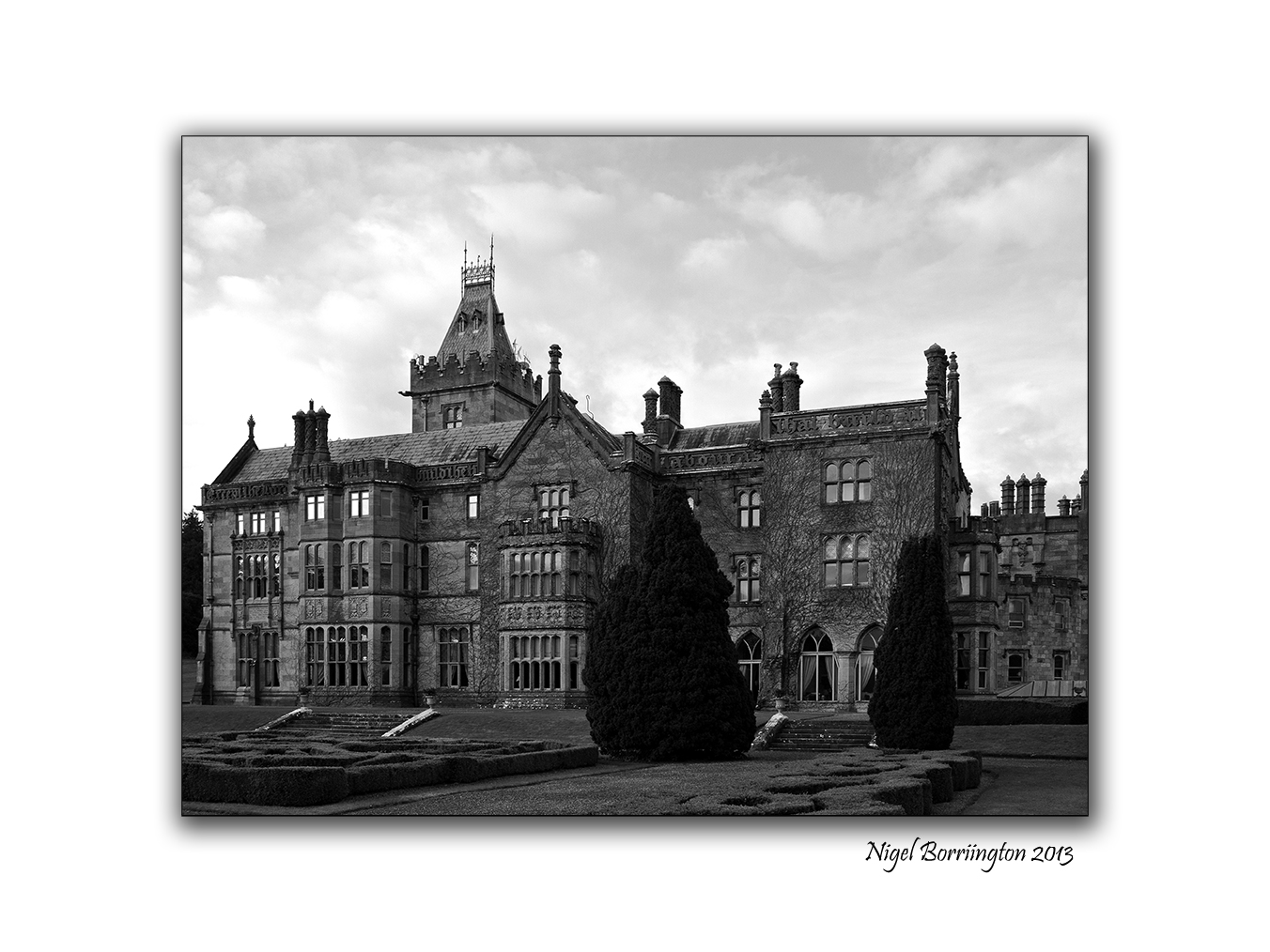

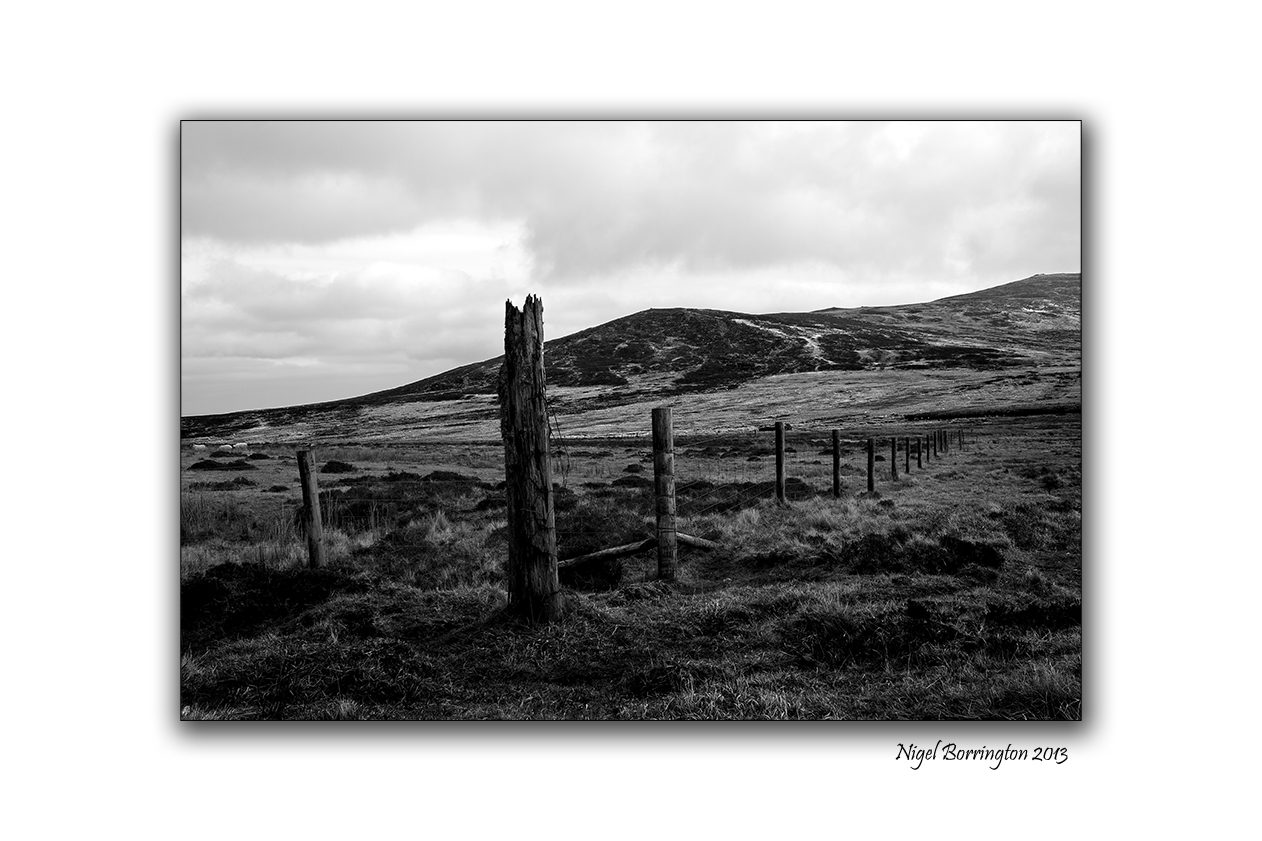

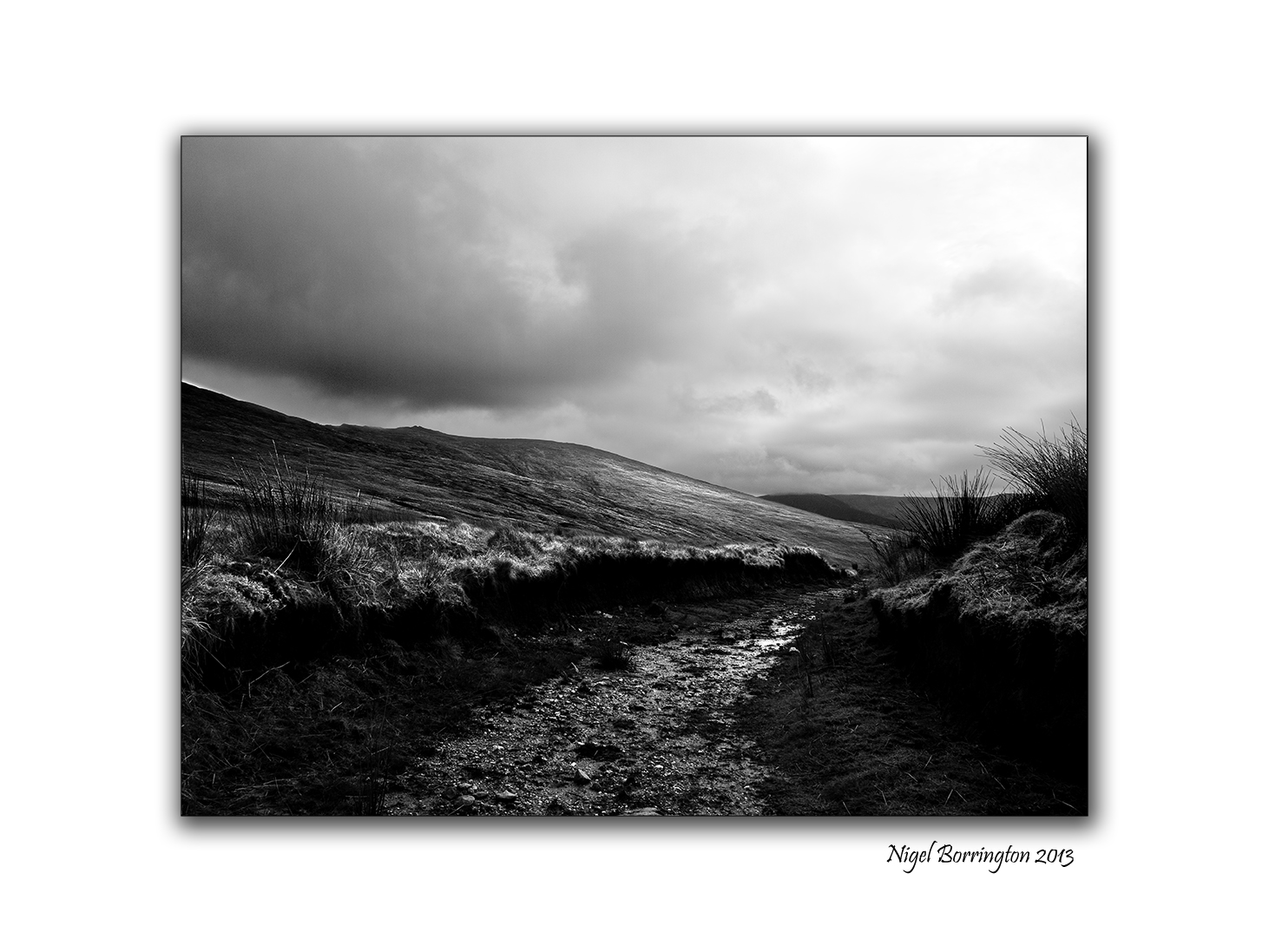
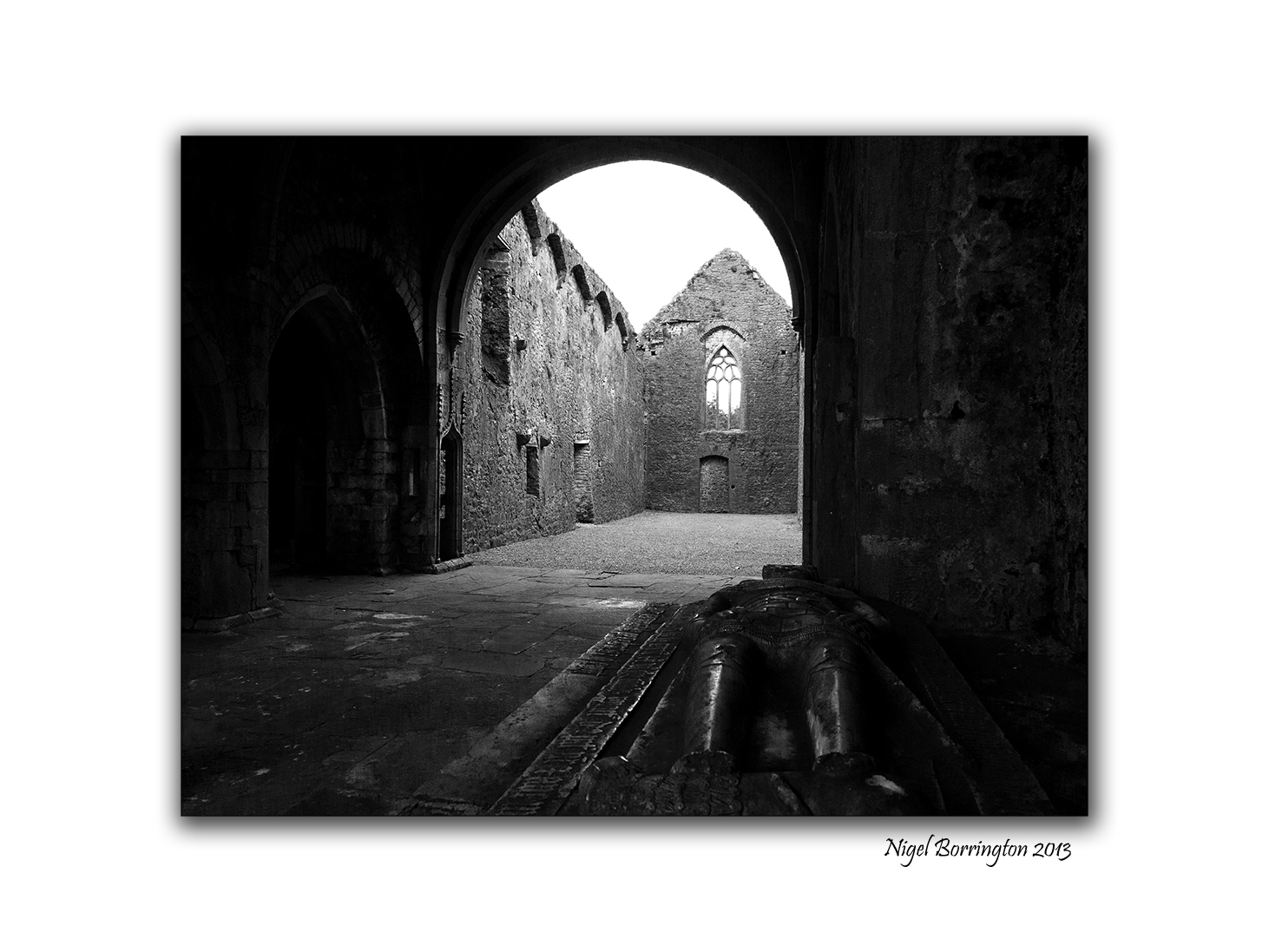
Canon G1x
Nigel Borrington
Paula Dawn

I was sorting through some old films this morning and wondering what to do with them when I came across this shot above, The Paula Dawn one very early morning in September 1998 on the north Norfolk Broads.
I also found her being talked about on the following web site. Paula Dawn
I don’t think we had one spot of rain all week and what a boat.
This is her some years before

Slievenamon

Canon G1x
Landscape photography by : Nigel Borrington
Rising as a huge heathery dome amid gentle green countryside, Slievenamon’s profile naturally attracts the eye. This is an easy mountainwith with a broad and clear track leading all the way to the summit cairn.
On fine days there are extensive views, taking in all the best walking areas in the South East of Ireland.
Slievenamon is a mountain of history and mystery of lore and legends. Its name means the ‘Mountain of the Women’ and the story is told how all the fairest women raced to the top to claim the hand of the warrior, Fionn Mac Cumhail. Fionn secretly fancied Grainne, the daughter of the High King of Ireland, so he advised her how to win the race!
Although it looks like a solitary height, Slievenamon is surrounded by a series of lower heathery humps. Some of these, like the main summit, are crowned by ancient burial Cairns. The highest cairn is said to mark the entrance to the mysterious Celtic underworld.
The Celtic Underworld … and the Otherworld
According to the Celtic myths, the Celtic deities and the fairy folk lived in the spiritual domain that was generally called the “Otherworld”. These domains were usually hidden from mortal eyes, though not always. Sometimes, human beings are admitted, sometimes against their will or better judgement.
In Irish myths, the Otherworld could be an island, such as Glastonbury, or a dun or hill-fort. Sometimes, the Otherworld was called Sidhe, the fairy hill-fort (dun) or palace.
In the Welsh myths, the Otherworld was often called Annwfn or Annwyn, and the fort or castle was usually known as Caer.
The Underworld is what many people today might call the afterlife, referring to the spiritual realm in which newly dead spirits and souls go. Sometimes the underworld is identified as being like the Christian Hell because Hell is sometimes pictured as being under the Earth. The Underworld is possibly linked to the Earth because that is where the body goes after death.

One night in Dubrovnik
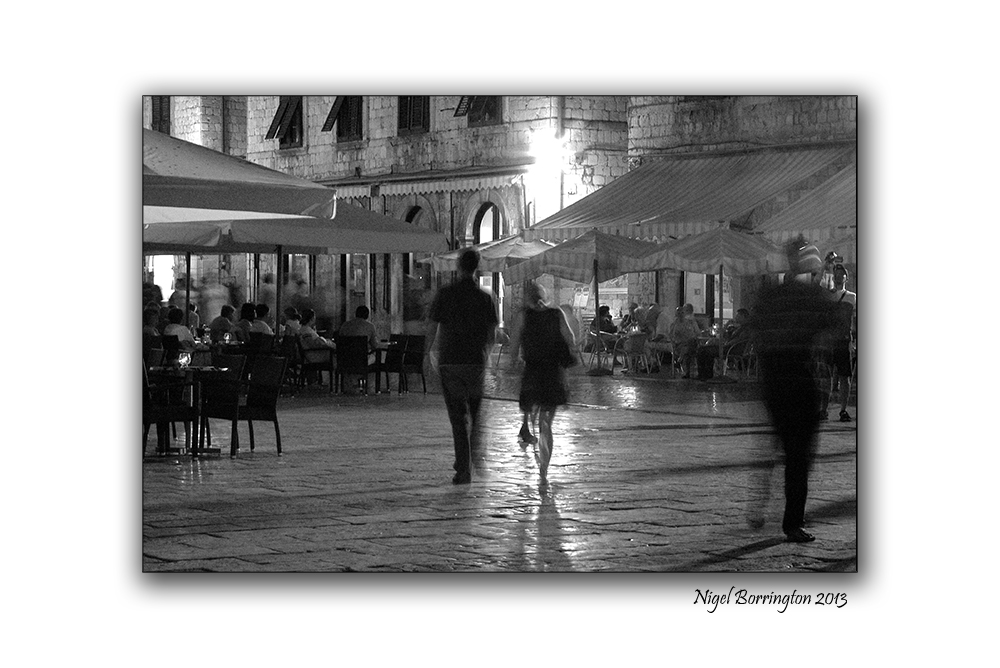
One night on the streets of Dubrovnik.
Kilkenny photographer : Nigel borrington
Kilkenny Photography

Portrait of Kilkenny sculpture artist : Saturio Alonso
Outside KCAT art center Callan, Co.Kilkenny
Nikon D700
Kilkenny Photographer: nigel borrington
 Nigel Borrington
You must be logged in to post a comment.